

#clsk
clsk
3,059 views
62 Discussing
Hot
Latest

$CLSK SHORT
🏁Entry: 13.12
✅Take 1: 12.91419982 (+1.57%)
✅Take 2: 12.63839964 (+3.67%)
✅Take 3: 12.22469936 (+6.82%)
🛡Protection: 13.60370027 (-3.69%)
The instrument is trading in a short-position zone from the 13.12 level, where sellers are trying to seize initiative and put pressure on the quotes. The movement structure suggests a likely continuation of the downward dynamics if the bears manage to maintain their current control over the price. The risk of an upside correction remains, but the downside scenario looks quite workable while the current market sentiment holds.
⚠️ This is not financial advice. Trade at your own risk. DYOR.
#CLSK #SenateReadiesSeptemberCLARITYActVote #BerkshireMakes19.8BNetStockPurchases 📈
$CLSK
$CLSK SHORT
🏁Entry: 13.12
✅Take 1: 12.91419982 (+1.57%)
✅Take 2: 12.63839964 (+3.67%)
✅Take 3: 12.22469936 (+6.82%)
🛡Protection: 13.60370027 (-3.69%)
The instrument is trading in a short-position zone from the 13.12 level, where sellers are trying to seize initiative and put pressure on the quotes. The movement structure suggests a likely continuation of the downward dynamics if the bears manage to maintain their current control over the price. The risk of an upside correction remains, but the downside scenario looks quite workable while the current market sentiment holds.
⚠️ This is not financial advice. Trade at your own risk. DYOR.
#CLSK #SenateReadiesSeptemberCLARITYActVote #BerkshireMakes19.8BNetStockPurchases 📈
$CLSK
🏁Entry: 13.12
✅Take 1: 12.91419982 (+1.57%)
✅Take 2: 12.63839964 (+3.67%)
✅Take 3: 12.22469936 (+6.82%)
🛡Protection: 13.60370027 (-3.69%)
The instrument is trading in a short-position zone from the 13.12 level, where sellers are trying to seize initiative and put pressure on the quotes. The movement structure suggests a likely continuation of the downward dynamics if the bears manage to maintain their current control over the price. The risk of an upside correction remains, but the downside scenario looks quite workable while the current market sentiment holds.
⚠️ This is not financial advice. Trade at your own risk. DYOR.
#CLSK #SenateReadiesSeptemberCLARITYActVote #BerkshireMakes19.8BNetStockPurchases 📈
$CLSK
11

·
--
🚨 $CLSK SECURES $2.27B INSTITUTIONAL WAR CHEST TO DOMINATE BITCOIN MINING! ⚡
Institutional smart money just handed $CLSK over two billion dollars in senior secured notes. 🏦 This massive cash injection arms them to aggressively scale hash rate and expand infrastructure while weaker market participants get squeezed out. 📊
When institutional whales drop this level of capital into miner balance sheets, it signals deep long-term conviction across the entire $BTC landscape. 💡 Capital flexes of this magnitude usually set the stage for major structural momentum shifts. 💬 How do you see this liquidity wave impacting miner valuation cycles? 👇
⚠️ Not financial advice. Always manage your risk. 🛡️
🏷️ #CLSK #BTC #Bitcoin #Crypto #SmartMoney
🔥 💎
🚨 $CLSK SECURES $2.27B INSTITUTIONAL WAR CHEST TO DOMINATE BITCOIN MINING! ⚡
Institutional smart money just handed $CLSK over two billion dollars in senior secured notes. 🏦 This massive cash injection arms them to aggressively scale hash rate and expand infrastructure while weaker market participants get squeezed out. 📊
When institutional whales drop this level of capital into miner balance sheets, it signals deep long-term conviction across the entire $BTC landscape. 💡 Capital flexes of this magnitude usually set the stage for major structural momentum shifts. 💬 How do you see this liquidity wave impacting miner valuation cycles? 👇
⚠️ Not financial advice. Always manage your risk. 🛡️
🏷️ #CLSK #BTC #Bitcoin #Crypto #SmartMoney
🔥 💎
Institutional smart money just handed $CLSK over two billion dollars in senior secured notes. 🏦 This massive cash injection arms them to aggressively scale hash rate and expand infrastructure while weaker market participants get squeezed out. 📊
When institutional whales drop this level of capital into miner balance sheets, it signals deep long-term conviction across the entire $BTC landscape. 💡 Capital flexes of this magnitude usually set the stage for major structural momentum shifts. 💬 How do you see this liquidity wave impacting miner valuation cycles? 👇
⚠️ Not financial advice. Always manage your risk. 🛡️
🏷️ #CLSK #BTC #Bitcoin #Crypto #SmartMoney
🔥 💎
21

🚨 $CLSK SECURES $2.276B SENIOR NOTES ISSUANCE TO STRENGTHEN INSTITUTIONAL CAPITAL TREASURY! 🏦
Institutional liquidity is moving aggressively into mining infrastructure balance sheets. CleanSpark completed a massive $2.276 billion senior secured notes offering at 7.875% maturing in 2031. 📊 This long-duration capital injection provides significant strategic runway to absorb market volatility and fund structural expansion without immediate equity dilution.
From a market structure perspective, large-scale fixed-income debt issuance by major miners often signals strong institutional confidence in long-term cycle fundamentals. 🔍 As balance sheets lock in multi-year capital, smart money positioning is hardening around key infrastructure plays. 💬 How do you see this massive debt raise impacting mining sector valuations over the coming quarter? 👇
⚠️ Not financial advice. Always manage your risk. 🛡️
🏷️ #CLSK #CryptoMining #InstitutionalMoney #MarketStructure #Crypto
📊 🦈
🚨 $CLSK SECURES $2.276B SENIOR NOTES ISSUANCE TO STRENGTHEN INSTITUTIONAL CAPITAL TREASURY! 🏦
Institutional liquidity is moving aggressively into mining infrastructure balance sheets. CleanSpark completed a massive $2.276 billion senior secured notes offering at 7.875% maturing in 2031. 📊 This long-duration capital injection provides significant strategic runway to absorb market volatility and fund structural expansion without immediate equity dilution.
From a market structure perspective, large-scale fixed-income debt issuance by major miners often signals strong institutional confidence in long-term cycle fundamentals. 🔍 As balance sheets lock in multi-year capital, smart money positioning is hardening around key infrastructure plays. 💬 How do you see this massive debt raise impacting mining sector valuations over the coming quarter? 👇
⚠️ Not financial advice. Always manage your risk. 🛡️
🏷️ #CLSK #CryptoMining #InstitutionalMoney #MarketStructure #Crypto
📊 🦈
Institutional liquidity is moving aggressively into mining infrastructure balance sheets. CleanSpark completed a massive $2.276 billion senior secured notes offering at 7.875% maturing in 2031. 📊 This long-duration capital injection provides significant strategic runway to absorb market volatility and fund structural expansion without immediate equity dilution.
From a market structure perspective, large-scale fixed-income debt issuance by major miners often signals strong institutional confidence in long-term cycle fundamentals. 🔍 As balance sheets lock in multi-year capital, smart money positioning is hardening around key infrastructure plays. 💬 How do you see this massive debt raise impacting mining sector valuations over the coming quarter? 👇
⚠️ Not financial advice. Always manage your risk. 🛡️
🏷️ #CLSK #CryptoMining #InstitutionalMoney #MarketStructure #Crypto
📊 🦈
14

$CLSK.US
{stock_us}(CLSK.US)
CLSK Breakout Watch — Bulls Reclaiming Momentum
◆━━━━━━━━━━━━━━━━━━━━━━━━━━━━━━━━◆
✔︎ Market Overview
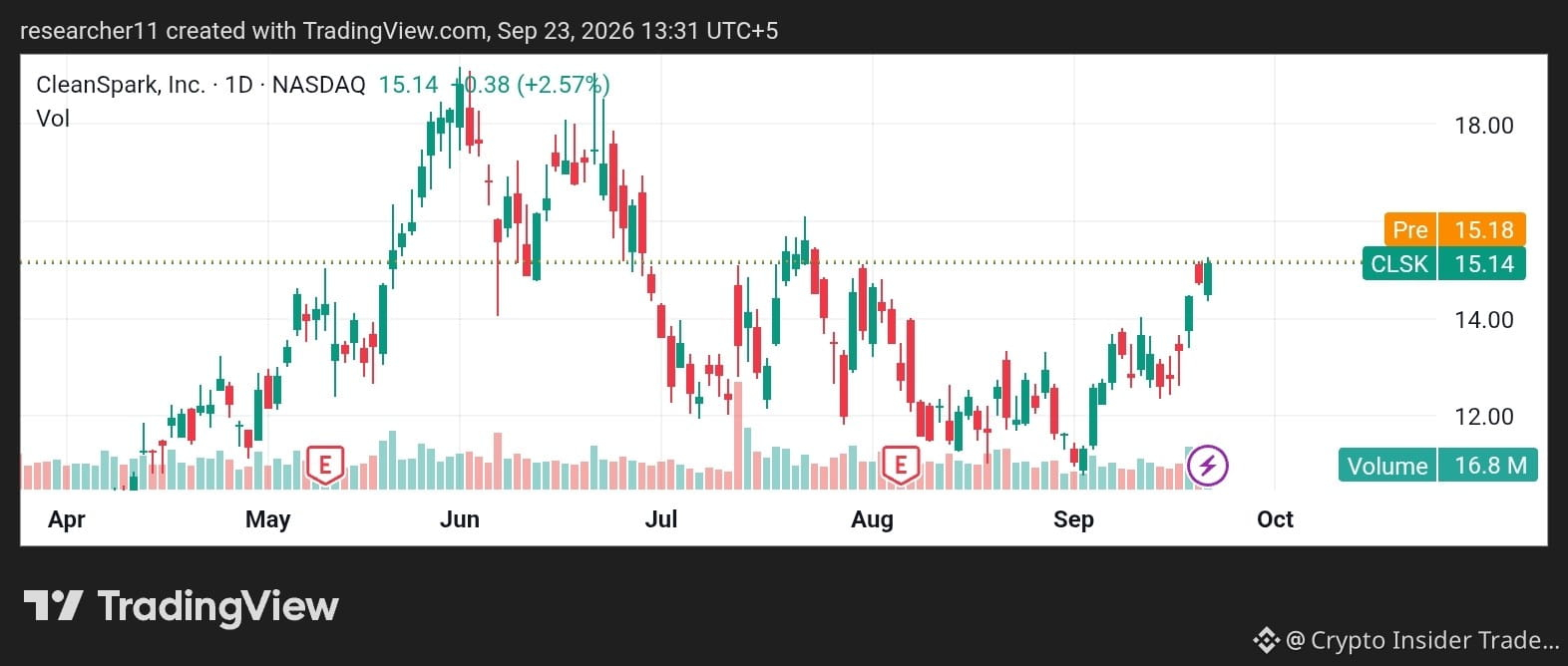
CleanSpark (CLSK) is trading at $15.14 (+2.57%), pushing back toward a key supply zone after months of choppy trading. Following a multi-week base around $12, buyers have regained control, driving price back into a major resistance area that could determine the next directional move.
◆━━━━━━━━━━━━━━━━━━━━━━━━━━━━━━━━◆
➤ Technical Analysis
✔︎ Trend: Recovering from a previous downtrend and testing short-term resistance.
✔︎ Structure: A higher low formed near $12, with price climbing back toward the $15 region that capped several August rallies.
✔︎ Volume: Green volume is increasing during the advance, suggesting renewed buying activity.
✔︎ Momentum: CLSK has reclaimed its mid-range pivot and continues to build bullish pressure.
◆━━━━━━━━━━━━━━━━━━━━━━━━━━━━━━━━◆
➤ Scenario Analysis
🟢 Bullish Scenario:
A strong breakout and hold above $15.20–15.50 could trigger a move toward $16.50–18.00, aligning with previous June highs.
🔴 Bearish Scenario:
Rejection from current levels followed by a drop below $13.50 may send price back toward the $12 support zone.
⚪ Neutral Scenario:
Price remains trapped between $13.50–15.50 while the market waits for a clearer directional catalyst.
◆━━━━━━━━━━━━━━━━━━━━━━━━━━━━━━━━◆
➤ Key Levels
✔︎ Resistance: $15.50 | $18.00
✔︎ Support: $13.50 | $12.00
◆━━━━━━━━━━━━━━━━━━━━━━━━━━━━━━━━◆
💡 Final Take
CLSK is approaching a critical decision zone. A confirmed breakout above $15.50 with strong volume could strengthen the bullish case, while failure at resistance may extend the consolidation phase.
#AIStocksWhatNext #CLSK
$CLSK.US
CLSK Breakout Watch — Bulls Reclaiming Momentum
◆━━━━━━━━━━━━━━━━━━━━━━━━━━━━━━━━◆
✔︎ Market Overview
CleanSpark (CLSK) is trading at $15.14 (+2.57%), pushing back toward a key supply zone after months of choppy trading. Following a multi-week base around $12, buyers have regained control, driving price back into a major resistance area that could determine the next directional move.
◆━━━━━━━━━━━━━━━━━━━━━━━━━━━━━━━━◆
➤ Technical Analysis
✔︎ Trend: Recovering from a previous downtrend and testing short-term resistance.
✔︎ Structure: A higher low formed near $12, with price climbing back toward the $15 region that capped several August rallies.
✔︎ Volume: Green volume is increasing during the advance, suggesting renewed buying activity.
✔︎ Momentum: CLSK has reclaimed its mid-range pivot and continues to build bullish pressure.
◆━━━━━━━━━━━━━━━━━━━━━━━━━━━━━━━━◆
➤ Scenario Analysis
🟢 Bullish Scenario:
A strong breakout and hold above $15.20–15.50 could trigger a move toward $16.50–18.00, aligning with previous June highs.
🔴 Bearish Scenario:
Rejection from current levels followed by a drop below $13.50 may send price back toward the $12 support zone.
⚪ Neutral Scenario:
Price remains trapped between $13.50–15.50 while the market waits for a clearer directional catalyst.
◆━━━━━━━━━━━━━━━━━━━━━━━━━━━━━━━━◆
➤ Key Levels
✔︎ Resistance: $15.50 | $18.00
✔︎ Support: $13.50 | $12.00
◆━━━━━━━━━━━━━━━━━━━━━━━━━━━━━━━━◆
💡 Final Take
CLSK is approaching a critical decision zone. A confirmed breakout above $15.50 with strong volume could strengthen the bullish case, while failure at resistance may extend the consolidation phase.
#AIStocksWhatNext #CLSK
CLSK Breakout Watch — Bulls Reclaiming Momentum
◆━━━━━━━━━━━━━━━━━━━━━━━━━━━━━━━━◆
✔︎ Market Overview
CleanSpark (CLSK) is trading at $15.14 (+2.57%), pushing back toward a key supply zone after months of choppy trading. Following a multi-week base around $12, buyers have regained control, driving price back into a major resistance area that could determine the next directional move.
◆━━━━━━━━━━━━━━━━━━━━━━━━━━━━━━━━◆
➤ Technical Analysis
✔︎ Trend: Recovering from a previous downtrend and testing short-term resistance.
✔︎ Structure: A higher low formed near $12, with price climbing back toward the $15 region that capped several August rallies.
✔︎ Volume: Green volume is increasing during the advance, suggesting renewed buying activity.
✔︎ Momentum: CLSK has reclaimed its mid-range pivot and continues to build bullish pressure.
◆━━━━━━━━━━━━━━━━━━━━━━━━━━━━━━━━◆
➤ Scenario Analysis
🟢 Bullish Scenario:
A strong breakout and hold above $15.20–15.50 could trigger a move toward $16.50–18.00, aligning with previous June highs.
🔴 Bearish Scenario:
Rejection from current levels followed by a drop below $13.50 may send price back toward the $12 support zone.
⚪ Neutral Scenario:
Price remains trapped between $13.50–15.50 while the market waits for a clearer directional catalyst.
◆━━━━━━━━━━━━━━━━━━━━━━━━━━━━━━━━◆
➤ Key Levels
✔︎ Resistance: $15.50 | $18.00
✔︎ Support: $13.50 | $12.00
◆━━━━━━━━━━━━━━━━━━━━━━━━━━━━━━━━◆
💡 Final Take
CLSK is approaching a critical decision zone. A confirmed breakout above $15.50 with strong volume could strengthen the bullish case, while failure at resistance may extend the consolidation phase.
#AIStocksWhatNext #CLSK
CLSKUS+2.81%
3
$CLSK LONG
The technical setup is designed for continuing purchases within the current formation. The bulls are trying to consolidate their advantage by using a local structure to develop an upward impulse. If buyers maintain the pace, the scenario of reaching the target levels will remain the priority.
➡️ Entry point: 13.59
🎯 Take 1: 13.7564971 (+1.23%)
🎯 Take 2: 13.9929942 (+2.97%)
🎯 Take 3: 14.34773985 (+5.58%)
⛔️ Stop: 13.16525435 (-3.13%)
⚠️ This is not financial advice. Trade at your own risk. DYOR.
#CLSK #RWA #AIcrypto 📈
$CLSK
$CLSK LONG
The technical setup is designed for continuing purchases within the current formation. The bulls are trying to consolidate their advantage by using a local structure to develop an upward impulse. If buyers maintain the pace, the scenario of reaching the target levels will remain the priority.
➡️ Entry point: 13.59
🎯 Take 1: 13.7564971 (+1.23%)
🎯 Take 2: 13.9929942 (+2.97%)
🎯 Take 3: 14.34773985 (+5.58%)
⛔️ Stop: 13.16525435 (-3.13%)
⚠️ This is not financial advice. Trade at your own risk. DYOR.
#CLSK #RWA #AIcrypto 📈
$CLSK
The technical setup is designed for continuing purchases within the current formation. The bulls are trying to consolidate their advantage by using a local structure to develop an upward impulse. If buyers maintain the pace, the scenario of reaching the target levels will remain the priority.
➡️ Entry point: 13.59
🎯 Take 1: 13.7564971 (+1.23%)
🎯 Take 2: 13.9929942 (+2.97%)
🎯 Take 3: 14.34773985 (+5.58%)
⛔️ Stop: 13.16525435 (-3.13%)
⚠️ This is not financial advice. Trade at your own risk. DYOR.
#CLSK #RWA #AIcrypto 📈
$CLSK
19
$CLSK LONG
A fresh setup for a buy on the asset.
The initiative is gradually shifting toward buyers after testing the 11.89 area.
The bullish scenario remains a priority for the market.
➡️Entry point: 11.94
✅Take 1: 12.11061344 (+1.43%)
✅Take 2: 12.33122688 (+3.28%)
✅Take 3: 12.66214703 (+6.05%)
❌Stop-loss: 11.55907984 (-3.19%)
⚠️ This is not financial advice. Trade at your own risk. DYOR.
#CLSK #ionet #Home 📈
$CLSK
$CLSK LONG
A fresh setup for a buy on the asset.
The initiative is gradually shifting toward buyers after testing the 11.89 area.
The bullish scenario remains a priority for the market.
➡️Entry point: 11.94
✅Take 1: 12.11061344 (+1.43%)
✅Take 2: 12.33122688 (+3.28%)
✅Take 3: 12.66214703 (+6.05%)
❌Stop-loss: 11.55907984 (-3.19%)
⚠️ This is not financial advice. Trade at your own risk. DYOR.
#CLSK #ionet #Home 📈
$CLSK
A fresh setup for a buy on the asset.
The initiative is gradually shifting toward buyers after testing the 11.89 area.
The bullish scenario remains a priority for the market.
➡️Entry point: 11.94
✅Take 1: 12.11061344 (+1.43%)
✅Take 2: 12.33122688 (+3.28%)
✅Take 3: 12.66214703 (+6.05%)
❌Stop-loss: 11.55907984 (-3.19%)
⚠️ This is not financial advice. Trade at your own risk. DYOR.
#CLSK #ionet #Home 📈
$CLSK
23

·
--
$CLSK SURGES 24% ON $6.6B DATA CENTER DEAL 🔥
CleanSpark just announced a 20-year, $6.6 billion data center lease with an undisclosed global tech company. The agreement also gives exclusive rights to 885 MW of Texas capacity — a massive vote of confidence in their infrastructure pipeline.
Pre-market volume exploded 24%, and the stock is still up 16.42% as this news settles. Institutional capital is flowing into crypto-adjacent plays like this at a pace we haven't seen since late 2021.
Are you positioned for the infrastructure buildout or waiting for a pullback to the moving averages?
Not financial advice. Always manage your risk.
#CLSK #FundamentalBreakout #CryptoInfrastructure #StockSurge #DataCenter
🔥
$CLSK SURGES 24% ON $6.6B DATA CENTER DEAL 🔥
CleanSpark just announced a 20-year, $6.6 billion data center lease with an undisclosed global tech company. The agreement also gives exclusive rights to 885 MW of Texas capacity — a massive vote of confidence in their infrastructure pipeline.
Pre-market volume exploded 24%, and the stock is still up 16.42% as this news settles. Institutional capital is flowing into crypto-adjacent plays like this at a pace we haven't seen since late 2021.
Are you positioned for the infrastructure buildout or waiting for a pullback to the moving averages?
Not financial advice. Always manage your risk.
#CLSK #FundamentalBreakout #CryptoInfrastructure #StockSurge #DataCenter
🔥
CleanSpark just announced a 20-year, $6.6 billion data center lease with an undisclosed global tech company. The agreement also gives exclusive rights to 885 MW of Texas capacity — a massive vote of confidence in their infrastructure pipeline.
Pre-market volume exploded 24%, and the stock is still up 16.42% as this news settles. Institutional capital is flowing into crypto-adjacent plays like this at a pace we haven't seen since late 2021.
Are you positioned for the infrastructure buildout or waiting for a pullback to the moving averages?
Not financial advice. Always manage your risk.
#CLSK #FundamentalBreakout #CryptoInfrastructure #StockSurge #DataCenter
🔥
CLSKUS+2.81%
51

$CLSK SURGES 21% AFTER THE WHALE DUMP — IS THIS THE ULTIMATE CAPITULATION SIGNAL? 💥📈
The legend Leopold sold his entire position, then mining stocks exploded like clockwork. CleanSpark +21%, Riot +23%, IREN +28% — a textbook "sell the rumor, buy the news" flip executed by smarter hands. 🦈
📌 What looks like chaos is actually liquidity hunting. When the most famous AI stock guru exits, the retail crowd hesitates — exactly when the big money steps in and front-runs the next leg. Price action on these names is screaming accumulation beneath the surface. 📊
🤔 Is this a dead cat bounce or the start of a coordinated miner rally? Drop your take below. 👇
⚠️ Not financial advice. Always manage your risk. 🛡️
🏷️ #CLSK #BitcoinMining #CryptoStocks #MarketPsychology
🔥 🦈
$CLSK SURGES 21% AFTER THE WHALE DUMP — IS THIS THE ULTIMATE CAPITULATION SIGNAL? 💥📈
The legend Leopold sold his entire position, then mining stocks exploded like clockwork. CleanSpark +21%, Riot +23%, IREN +28% — a textbook "sell the rumor, buy the news" flip executed by smarter hands. 🦈
📌 What looks like chaos is actually liquidity hunting. When the most famous AI stock guru exits, the retail crowd hesitates — exactly when the big money steps in and front-runs the next leg. Price action on these names is screaming accumulation beneath the surface. 📊
🤔 Is this a dead cat bounce or the start of a coordinated miner rally? Drop your take below. 👇
⚠️ Not financial advice. Always manage your risk. 🛡️
🏷️ #CLSK #BitcoinMining #CryptoStocks #MarketPsychology
🔥 🦈
The legend Leopold sold his entire position, then mining stocks exploded like clockwork. CleanSpark +21%, Riot +23%, IREN +28% — a textbook "sell the rumor, buy the news" flip executed by smarter hands. 🦈
📌 What looks like chaos is actually liquidity hunting. When the most famous AI stock guru exits, the retail crowd hesitates — exactly when the big money steps in and front-runs the next leg. Price action on these names is screaming accumulation beneath the surface. 📊
🤔 Is this a dead cat bounce or the start of a coordinated miner rally? Drop your take below. 👇
⚠️ Not financial advice. Always manage your risk. 🛡️
🏷️ #CLSK #BitcoinMining #CryptoStocks #MarketPsychology
🔥 🦈
29

·
--
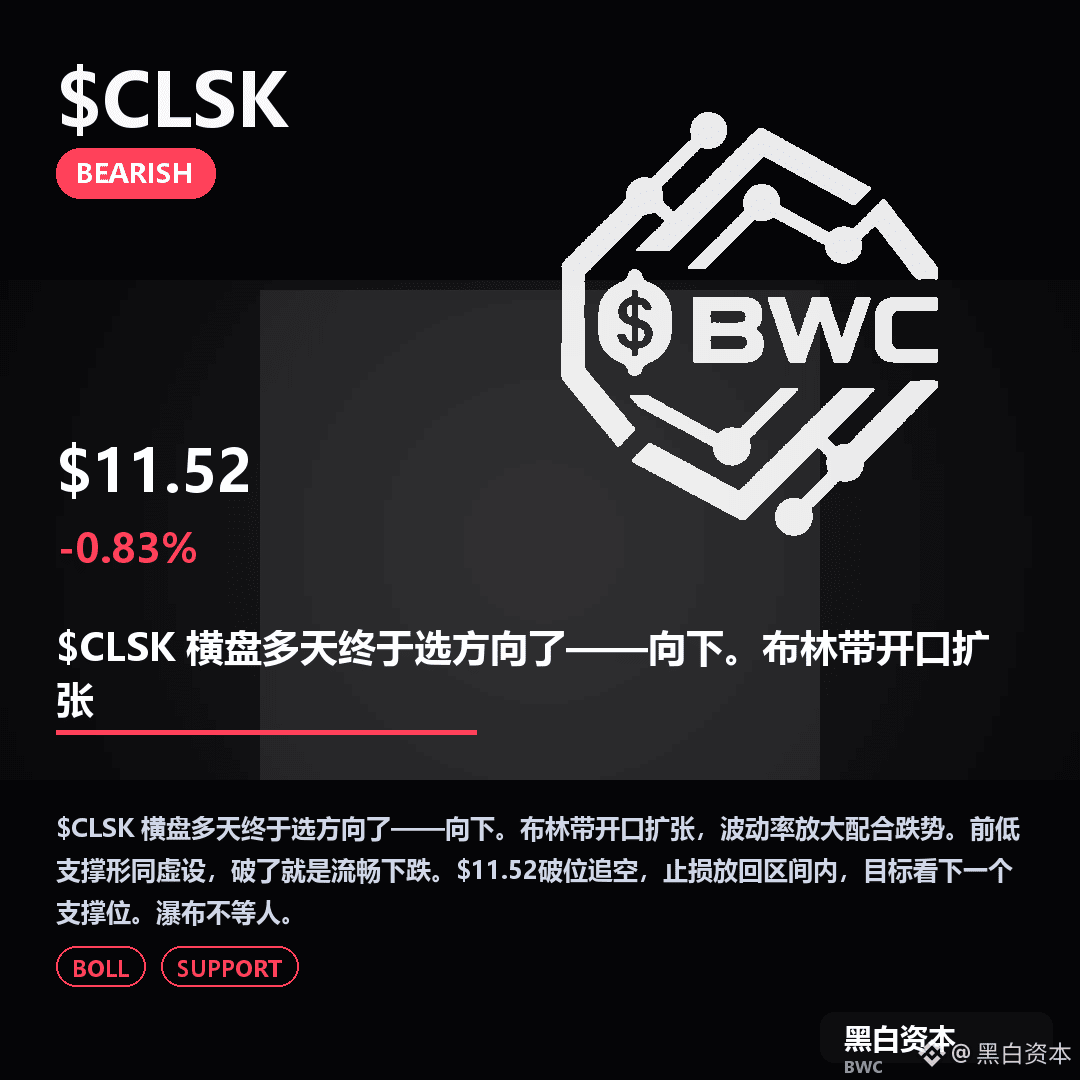
$CLSK has been ranging for days and finally chose a direction—down. The Bollinger Bands are widening, and the volatility expansion pairs with the selloff. The prior low support is essentially ineffective; once it breaks, you get a smooth decline. If $11.52 is broken, chase the short; place the stop back within the range, with targets looking at the next support level. The waterfall won’t wait. #CLSK #US stocks
$CLSK has been ranging for days and finally chose a direction—down. The Bollinger Bands are widening, and the volatility expansion pairs with the selloff. The prior low support is essentially ineffective; once it breaks, you get a smooth decline. If $11.52 is broken, chase the short; place the stop back within the range, with targets looking at the next support level. The waterfall won’t wait. #CLSK #US stocks
20
·
--
📊 AI CONTRACTS SPLIT THE MINERS: $CLSK TARGETED AT $24, $MARA STUCK AT $17 💥
$CLSK Target: $24 🚀
$MARA Target: $17 🎯
The institutional tape is drawing a sharp structural line between these two miners. 📊 Bernstein tags CleanSpark with a $24 target and Outperform rating, backed by a $6.6B valuation and a 20-year AI leasing contract. 🏦 That's contracted cash flow converting a miner into a compute landlord.
MARA receives a $17 Market Perform while still hunting for its first commercial AI agreement. 🐻 One name is accumulating yield-bearing infrastructure; the other is selling optionality. 💡 The market isn't rewarding hashrate anymore — it's rewarding revenue visibility.
💬 Will MARA need to ink an AI lease before its valuation catches up to CleanSpark's? 👇
⚠️ Not financial advice. Always manage your risk. 🛡️
🏷️ #CLSK #MARA #AI #BitcoinMining #Crypto
🏦 🎯
📊 AI CONTRACTS SPLIT THE MINERS: $CLSK TARGETED AT $24, $MARA STUCK AT $17 💥
$CLSK Target: $24 🚀
$MARA Target: $17 🎯
The institutional tape is drawing a sharp structural line between these two miners. 📊 Bernstein tags CleanSpark with a $24 target and Outperform rating, backed by a $6.6B valuation and a 20-year AI leasing contract. 🏦 That's contracted cash flow converting a miner into a compute landlord.
MARA receives a $17 Market Perform while still hunting for its first commercial AI agreement. 🐻 One name is accumulating yield-bearing infrastructure; the other is selling optionality. 💡 The market isn't rewarding hashrate anymore — it's rewarding revenue visibility.
💬 Will MARA need to ink an AI lease before its valuation catches up to CleanSpark's? 👇
⚠️ Not financial advice. Always manage your risk. 🛡️
🏷️ #CLSK #MARA #AI #BitcoinMining #Crypto
🏦 🎯
$CLSK Target: $24 🚀
$MARA Target: $17 🎯
The institutional tape is drawing a sharp structural line between these two miners. 📊 Bernstein tags CleanSpark with a $24 target and Outperform rating, backed by a $6.6B valuation and a 20-year AI leasing contract. 🏦 That's contracted cash flow converting a miner into a compute landlord.
MARA receives a $17 Market Perform while still hunting for its first commercial AI agreement. 🐻 One name is accumulating yield-bearing infrastructure; the other is selling optionality. 💡 The market isn't rewarding hashrate anymore — it's rewarding revenue visibility.
💬 Will MARA need to ink an AI lease before its valuation catches up to CleanSpark's? 👇
⚠️ Not financial advice. Always manage your risk. 🛡️
🏷️ #CLSK #MARA #AI #BitcoinMining #Crypto
🏦 🎯
7

$CLSK JUST SIGNED A $6.6B DATA CENTER LEASE – UP 24% 🚀
CleanSpark locked in a 20-year deal with a global tech giant for its Georgia campus, plus exclusive rights to 885 MW of Texas capacity. Pre-market surged 24%, currently holding at +16.42%.
This isn't just mining anymore – they're playing in the AI infrastructure game now. Volume spiking hard and the market is pricing in the shift fast. Are you already positioned or waiting for a pullback?
Not financial advice. Always manage your risk.
#CLSK #BitcoinMining #DataCenter #Breakout #Crypto
🚀
$CLSK JUST SIGNED A $6.6B DATA CENTER LEASE – UP 24% 🚀
CleanSpark locked in a 20-year deal with a global tech giant for its Georgia campus, plus exclusive rights to 885 MW of Texas capacity. Pre-market surged 24%, currently holding at +16.42%.
This isn't just mining anymore – they're playing in the AI infrastructure game now. Volume spiking hard and the market is pricing in the shift fast. Are you already positioned or waiting for a pullback?
Not financial advice. Always manage your risk.
#CLSK #BitcoinMining #DataCenter #Breakout #Crypto
🚀
CleanSpark locked in a 20-year deal with a global tech giant for its Georgia campus, plus exclusive rights to 885 MW of Texas capacity. Pre-market surged 24%, currently holding at +16.42%.
This isn't just mining anymore – they're playing in the AI infrastructure game now. Volume spiking hard and the market is pricing in the shift fast. Are you already positioned or waiting for a pullback?
Not financial advice. Always manage your risk.
#CLSK #BitcoinMining #DataCenter #Breakout #Crypto
🚀
27
$CLSK LONG
Will buyers be able to build a confident upward move after breaking through the local barrier Swing High 12.57? Bulls are still holding the initiative, setting the stage for continued growth. If buying pressure persists, the asset has a good chance to gradually work through the predefined target levels.
🏁Entry: 12.66
🎯Take 1: 12.93376003 (+2.16%)
🎯Take 2: 13.29752006 (+5.04%)
🎯Take 3: 13.84316011 (+9.35%)
⛔️Stop: 12.02435995 (-5.02%)
⚠️ This is not financial advice. Trade at your own risk. DYOR.
#CLSK #AIcrypto #SpotTrading 📈
$CLSK
$CLSK LONG
Will buyers be able to build a confident upward move after breaking through the local barrier Swing High 12.57? Bulls are still holding the initiative, setting the stage for continued growth. If buying pressure persists, the asset has a good chance to gradually work through the predefined target levels.
🏁Entry: 12.66
🎯Take 1: 12.93376003 (+2.16%)
🎯Take 2: 13.29752006 (+5.04%)
🎯Take 3: 13.84316011 (+9.35%)
⛔️Stop: 12.02435995 (-5.02%)
⚠️ This is not financial advice. Trade at your own risk. DYOR.
#CLSK #AIcrypto #SpotTrading 📈
$CLSK
Will buyers be able to build a confident upward move after breaking through the local barrier Swing High 12.57? Bulls are still holding the initiative, setting the stage for continued growth. If buying pressure persists, the asset has a good chance to gradually work through the predefined target levels.
🏁Entry: 12.66
🎯Take 1: 12.93376003 (+2.16%)
🎯Take 2: 13.29752006 (+5.04%)
🎯Take 3: 13.84316011 (+9.35%)
⛔️Stop: 12.02435995 (-5.02%)
⚠️ This is not financial advice. Trade at your own risk. DYOR.
#CLSK #AIcrypto #SpotTrading 📈
$CLSK
50

🚨 $CLSK JUST LANDED A $24 TARGET AS THE AI MINER DIVIDE WIDENS! 💥
Target: $24 🚀
📊 Bernstein's call is bigger than hash rate — it's about who's turning data centers into AI cash machines. CleanSpark holds a $6.6B valuation plus a 20-year AI leasing contract, while MARA is still hunting for its first commercial AI deal. 🦈
⚡ That lease is a structural moat. Recurring AI revenue vs. knocking on doors. Wall Street is pricing the gap, and the tape is already voting. 💡
💬 Can MARA close the AI gap, or is CLSK the clear leader here? 👇
⚠️ Not financial advice. Always manage your risk. 🛡️
🏷️ #CLSK #MARA #AI #BitcoinMining #Crypto
🎯 🦈
🚨 $CLSK JUST LANDED A $24 TARGET AS THE AI MINER DIVIDE WIDENS! 💥
Target: $24 🚀
📊 Bernstein's call is bigger than hash rate — it's about who's turning data centers into AI cash machines. CleanSpark holds a $6.6B valuation plus a 20-year AI leasing contract, while MARA is still hunting for its first commercial AI deal. 🦈
⚡ That lease is a structural moat. Recurring AI revenue vs. knocking on doors. Wall Street is pricing the gap, and the tape is already voting. 💡
💬 Can MARA close the AI gap, or is CLSK the clear leader here? 👇
⚠️ Not financial advice. Always manage your risk. 🛡️
🏷️ #CLSK #MARA #AI #BitcoinMining #Crypto
🎯 🦈
Target: $24 🚀
📊 Bernstein's call is bigger than hash rate — it's about who's turning data centers into AI cash machines. CleanSpark holds a $6.6B valuation plus a 20-year AI leasing contract, while MARA is still hunting for its first commercial AI deal. 🦈
⚡ That lease is a structural moat. Recurring AI revenue vs. knocking on doors. Wall Street is pricing the gap, and the tape is already voting. 💡
💬 Can MARA close the AI gap, or is CLSK the clear leader here? 👇
⚠️ Not financial advice. Always manage your risk. 🛡️
🏷️ #CLSK #MARA #AI #BitcoinMining #Crypto
🎯 🦈
16
·
--
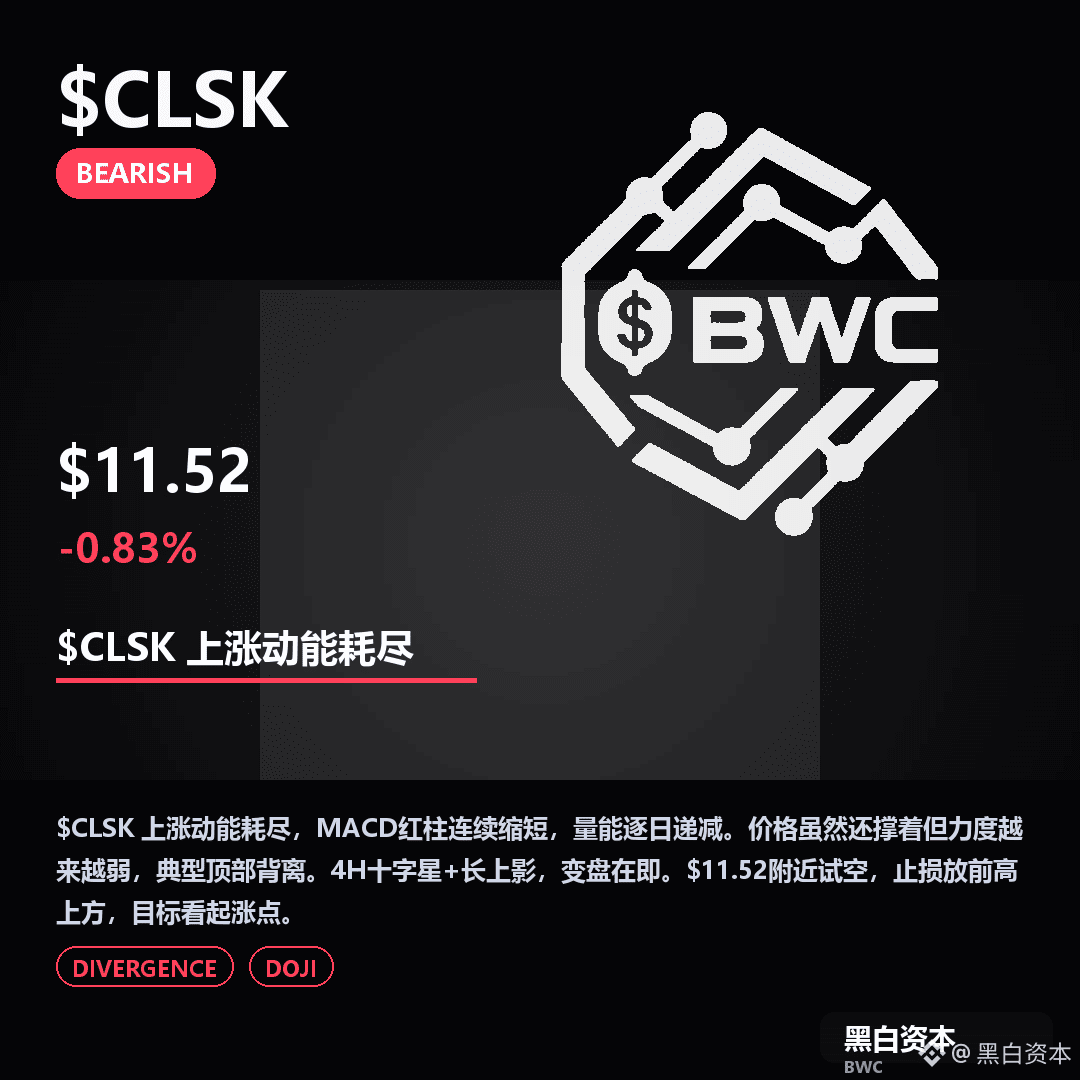
$CLSK upward momentum runs out, MACD red histogram bars continue to shorten, and volume steadily declines day by day. Although the price is still holding up, its strength is getting weaker and weaker—typical top divergence. A 4H doji star plus a long upper shadow suggests a turnaround is imminent. Consider shorting near $11.52, place a stop-loss above the prior high, and target a quick uptick. #CLSK #US stocks
$CLSK upward momentum runs out, MACD red histogram bars continue to shorten, and volume steadily declines day by day. Although the price is still holding up, its strength is getting weaker and weaker—typical top divergence. A 4H doji star plus a long upper shadow suggests a turnaround is imminent. Consider shorting near $11.52, place a stop-loss above the prior high, and target a quick uptick. #CLSK #US stocks
178
$CLSK LONG
An ascending structure is given a chance to develop while buyers maintain control over the price.
Bulls form a local impulse, expecting further upward movement, leaning on the current demand zone.
The risk of a pullback remains moderate, yet the growth continuation scenario looks workable if the current momentum is maintained.
🏁Entry: 12.32
✅Take 1: 12.50463186 (+1.50%)
✅Take 2: 12.72926372 (+3.32%)
✅Take 3: 13.0662115 (+6.06%)
⛔️Stop: 11.94305221 (-3.06%)
⚠️ This is not financial advice. Trade at your own risk. DYOR.
#CLSK #CryptoCommunity #BTCUSDT 📈
$CLSK
$CLSK LONG
An ascending structure is given a chance to develop while buyers maintain control over the price.
Bulls form a local impulse, expecting further upward movement, leaning on the current demand zone.
The risk of a pullback remains moderate, yet the growth continuation scenario looks workable if the current momentum is maintained.
🏁Entry: 12.32
✅Take 1: 12.50463186 (+1.50%)
✅Take 2: 12.72926372 (+3.32%)
✅Take 3: 13.0662115 (+6.06%)
⛔️Stop: 11.94305221 (-3.06%)
⚠️ This is not financial advice. Trade at your own risk. DYOR.
#CLSK #CryptoCommunity #BTCUSDT 📈
$CLSK
An ascending structure is given a chance to develop while buyers maintain control over the price.
Bulls form a local impulse, expecting further upward movement, leaning on the current demand zone.
The risk of a pullback remains moderate, yet the growth continuation scenario looks workable if the current momentum is maintained.
🏁Entry: 12.32
✅Take 1: 12.50463186 (+1.50%)
✅Take 2: 12.72926372 (+3.32%)
✅Take 3: 13.0662115 (+6.06%)
⛔️Stop: 11.94305221 (-3.06%)
⚠️ This is not financial advice. Trade at your own risk. DYOR.
#CLSK #CryptoCommunity #BTCUSDT 📈
$CLSK
101
·
--
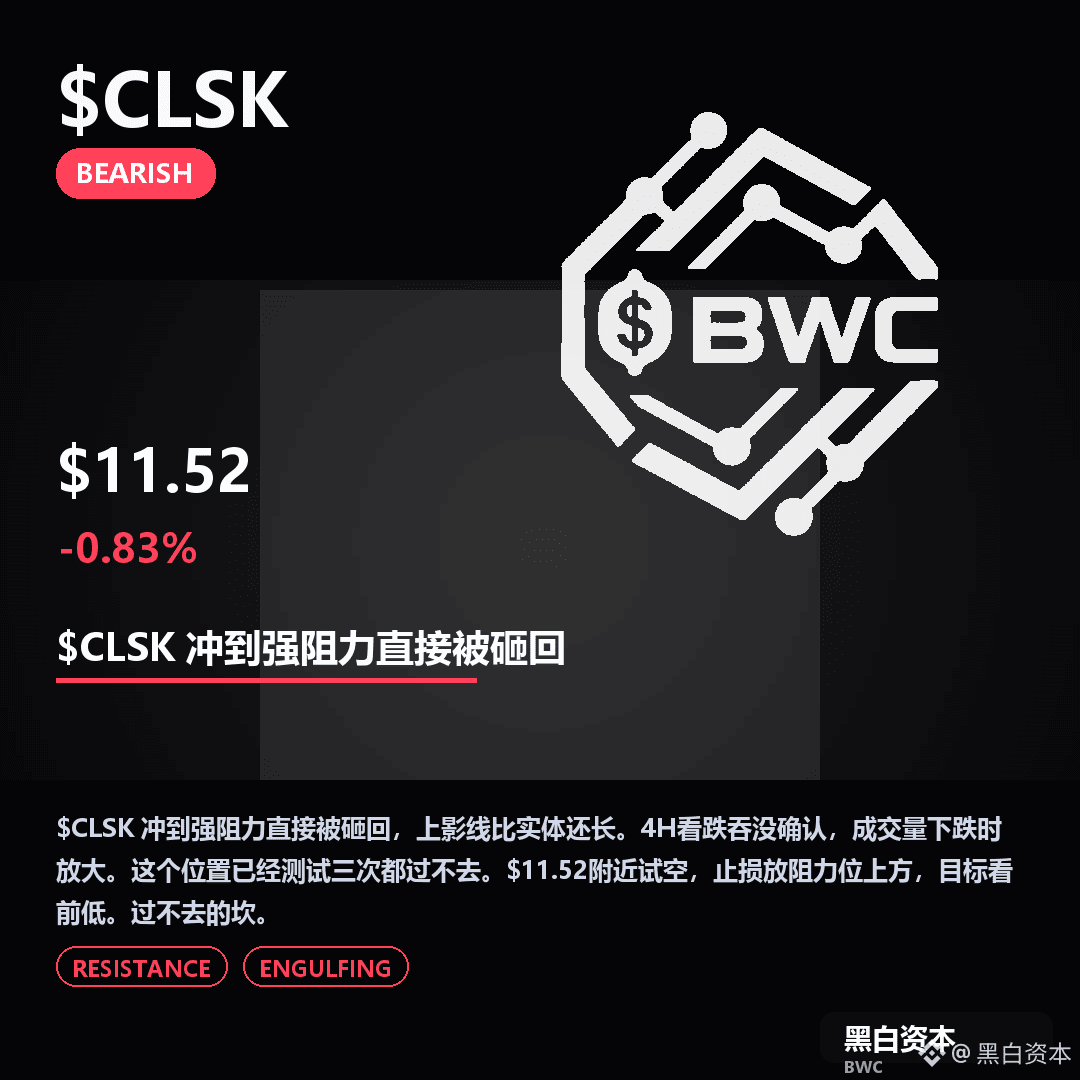
$CLSK surged into strong resistance and was directly knocked back, with a longer upper shadow than the body. A 4H bearish engulfing is confirmed, and when the volume declines, it amplifies. This level has been tested three times and failed to break through. Try a short near $11.52, place the stop-loss above the resistance level, and target the prior low. A ceiling that can’t be crossed. #CLSK #US stocks
$CLSK surged into strong resistance and was directly knocked back, with a longer upper shadow than the body. A 4H bearish engulfing is confirmed, and when the volume declines, it amplifies. This level has been tested three times and failed to break through. Try a short near $11.52, place the stop-loss above the resistance level, and target the prior low. A ceiling that can’t be crossed. #CLSK #US stocks
22
🦈 $CLSK SURGES 21% AFTER WHALE SELLS—TEXTBOOK LIQUIDITY TRAP? 💥
📌 The same day Leopold unloaded his $CLSK position, the stock ripped 21% higher—while RIOT jumped 23% and APLD surged 21%. This isn't coincidence; it's a classic liquidity grab. 🧐 Smart money likely absorbed the sell-side pressure, triggering a cascade of short squeezes and FOMO bids.
📊 Volume on these names spiked well above the 20-day average, confirming institutional participation. When a high-profile holder exits and the stock runs, it often signals accumulation by deeper pockets—or a deliberate sweep of resting orders. 👁️ Could this pattern repeat across other mining names like CORZ and IREN? 💬 Are you tracking where the next liquidity cluster lies? 👇
⚠️ Not financial advice. Always manage your risk. 🛡️
🏷️ #CLSK #RIOT #APLD #CryptoMining #StockMarket
🎯 🦈
🦈 $CLSK SURGES 21% AFTER WHALE SELLS—TEXTBOOK LIQUIDITY TRAP? 💥
📌 The same day Leopold unloaded his $CLSK position, the stock ripped 21% higher—while RIOT jumped 23% and APLD surged 21%. This isn't coincidence; it's a classic liquidity grab. 🧐 Smart money likely absorbed the sell-side pressure, triggering a cascade of short squeezes and FOMO bids.
📊 Volume on these names spiked well above the 20-day average, confirming institutional participation. When a high-profile holder exits and the stock runs, it often signals accumulation by deeper pockets—or a deliberate sweep of resting orders. 👁️ Could this pattern repeat across other mining names like CORZ and IREN? 💬 Are you tracking where the next liquidity cluster lies? 👇
⚠️ Not financial advice. Always manage your risk. 🛡️
🏷️ #CLSK #RIOT #APLD #CryptoMining #StockMarket
🎯 🦈
📌 The same day Leopold unloaded his $CLSK position, the stock ripped 21% higher—while RIOT jumped 23% and APLD surged 21%. This isn't coincidence; it's a classic liquidity grab. 🧐 Smart money likely absorbed the sell-side pressure, triggering a cascade of short squeezes and FOMO bids.
📊 Volume on these names spiked well above the 20-day average, confirming institutional participation. When a high-profile holder exits and the stock runs, it often signals accumulation by deeper pockets—or a deliberate sweep of resting orders. 👁️ Could this pattern repeat across other mining names like CORZ and IREN? 💬 Are you tracking where the next liquidity cluster lies? 👇
⚠️ Not financial advice. Always manage your risk. 🛡️
🏷️ #CLSK #RIOT #APLD #CryptoMining #StockMarket
🎯 🦈
17

·
--
🔥 $AR
{spot}(ARUSDT)
vs $TRUMP
{spot}(TRUMPUSDT)
vs $CLSK.US
{stock_us}(CLSK.US)
— TRADER WATCH
The three have very different catalysts: AR is showing explosive momentum, TRUMP is high-volatility meme exposure, while CLSK is a Bitcoin/mining + data-center equity. AR has recently seen a major volume expansion.
🟢 AR — MOMENTUM BREAKOUT
Price: ~4.18
Bullish: Strong volume + sharp upside move.
Long idea: Entry 4.05–4.20 after support holds
SL: 3.75
TP1: 4.50
TP2: 4.85
🔻 Short only if: 3.75 breaks with strong selling volume.
Risk: After a huge move, chasing the candle can be dangerous.
🟡 TRUMP — HIGH VOLATILITY
Price: ~2.05
Recent data shows large daily swings and heavy volume.
Long trigger: 2.10+ with volume
SL: 1.98
TP1: 2.25
TP2: 2.40
🔻 Short trigger: Below 1.98
TP: 1.85 → 1.75
⚠️ TRUMP can move violently around headlines, so smaller position size makes sense.
🔵 CLSK — BTC LEVERAGE PLAY
Recent trading activity has been linked to Bitcoin strength and attention around CleanSpark's data-center financing.
Long: Only after breakout + volume confirmation
SL: Below the breakout/retest low
TP1/TP2: Use the latest daily resistance levels rather than chasing a fixed target.
🔻 Bearish: BTC weakness can pressure CLSK quickly.
🎯 TRADER CHECKLIST
AR: Momentum 🔥 | Volume 🔥 | Risk ⚠️
TRUMP: Volatility 🔥🔥 | News sensitivity 🔥🔥 | Risk 🔴
CLSK: BTC correlation 🔥 | Equity volatility ⚠️ | Catalyst-driven
Most important: Don't enter just because price is moving. Wait for breakout → volume confirmation → retest → entry.
*Levels are scenario-based, not guaranteed targets; verify the live chart before placing an order.*
#ar #TRUMP #CLSK #BinanceSquareFamily
🔥 $AR
vs $TRUMP
vs $CLSK.US
— TRADER WATCH
The three have very different catalysts: AR is showing explosive momentum, TRUMP is high-volatility meme exposure, while CLSK is a Bitcoin/mining + data-center equity. AR has recently seen a major volume expansion.
🟢 AR — MOMENTUM BREAKOUT
Price: ~4.18
Bullish: Strong volume + sharp upside move.
Long idea: Entry 4.05–4.20 after support holds
SL: 3.75
TP1: 4.50
TP2: 4.85
🔻 Short only if: 3.75 breaks with strong selling volume.
Risk: After a huge move, chasing the candle can be dangerous.
🟡 TRUMP — HIGH VOLATILITY
Price: ~2.05
Recent data shows large daily swings and heavy volume.
Long trigger: 2.10+ with volume
SL: 1.98
TP1: 2.25
TP2: 2.40
🔻 Short trigger: Below 1.98
TP: 1.85 → 1.75
⚠️ TRUMP can move violently around headlines, so smaller position size makes sense.
🔵 CLSK — BTC LEVERAGE PLAY
Recent trading activity has been linked to Bitcoin strength and attention around CleanSpark's data-center financing.
Long: Only after breakout + volume confirmation
SL: Below the breakout/retest low
TP1/TP2: Use the latest daily resistance levels rather than chasing a fixed target.
🔻 Bearish: BTC weakness can pressure CLSK quickly.
🎯 TRADER CHECKLIST
AR: Momentum 🔥 | Volume 🔥 | Risk ⚠️
TRUMP: Volatility 🔥🔥 | News sensitivity 🔥🔥 | Risk 🔴
CLSK: BTC correlation 🔥 | Equity volatility ⚠️ | Catalyst-driven
Most important: Don't enter just because price is moving. Wait for breakout → volume confirmation → retest → entry.
*Levels are scenario-based, not guaranteed targets; verify the live chart before placing an order.*
#ar #TRUMP #CLSK #BinanceSquareFamily
vs $TRUMP
vs $CLSK.US
— TRADER WATCH
The three have very different catalysts: AR is showing explosive momentum, TRUMP is high-volatility meme exposure, while CLSK is a Bitcoin/mining + data-center equity. AR has recently seen a major volume expansion.
🟢 AR — MOMENTUM BREAKOUT
Price: ~4.18
Bullish: Strong volume + sharp upside move.
Long idea: Entry 4.05–4.20 after support holds
SL: 3.75
TP1: 4.50
TP2: 4.85
🔻 Short only if: 3.75 breaks with strong selling volume.
Risk: After a huge move, chasing the candle can be dangerous.
🟡 TRUMP — HIGH VOLATILITY
Price: ~2.05
Recent data shows large daily swings and heavy volume.
Long trigger: 2.10+ with volume
SL: 1.98
TP1: 2.25
TP2: 2.40
🔻 Short trigger: Below 1.98
TP: 1.85 → 1.75
⚠️ TRUMP can move violently around headlines, so smaller position size makes sense.
🔵 CLSK — BTC LEVERAGE PLAY
Recent trading activity has been linked to Bitcoin strength and attention around CleanSpark's data-center financing.
Long: Only after breakout + volume confirmation
SL: Below the breakout/retest low
TP1/TP2: Use the latest daily resistance levels rather than chasing a fixed target.
🔻 Bearish: BTC weakness can pressure CLSK quickly.
🎯 TRADER CHECKLIST
AR: Momentum 🔥 | Volume 🔥 | Risk ⚠️
TRUMP: Volatility 🔥🔥 | News sensitivity 🔥🔥 | Risk 🔴
CLSK: BTC correlation 🔥 | Equity volatility ⚠️ | Catalyst-driven
Most important: Don't enter just because price is moving. Wait for breakout → volume confirmation → retest → entry.
*Levels are scenario-based, not guaranteed targets; verify the live chart before placing an order.*
#ar #TRUMP #CLSK #BinanceSquareFamily
bullish
75%
bearish
25%
36 votes • Voting closed
3
5
2.2k

·
--
CleanSpark finalizes $2.276B in debt: Continued construction of the Sandersville data centerA mining company issues bonds to build data centers—this is more solid than just shouting AI slogans.
CleanSpark (Nasdaq: CLSK) announced on September 25: wholly owned indirect subsidiary CSDC Finance I, LLC completed the previously priced issuance of $2.276B senior secured notes, with a coupon of 7.875% and maturity on October 1, 2031; the issue price was 98.5% of par value.
1️⃣ Very “dead-serious” stated purpose: cover remaining construction costs for the Sandersville (Georgia) data center; reimburse the parent company for part of its equity contribution to this project made earlier; replenish the debt reserve fund.
2️⃣ Completion guarantee from the parent company—if the notes plus existing funds aren’t enough to complete the project, CleanSpark will step in to cover the shortfall.
CleanSpark finalizes $2.276B in debt: Continued construction of the Sandersville data center
A mining company issues bonds to build data centers—this is more solid than just shouting AI slogans.
CleanSpark (Nasdaq: CLSK) announced on September 25: wholly owned indirect subsidiary CSDC Finance I, LLC completed the previously priced issuance of $2.276B senior secured notes, with a coupon of 7.875% and maturity on October 1, 2031; the issue price was 98.5% of par value.
1️⃣ Very “dead-serious” stated purpose: cover remaining construction costs for the Sandersville (Georgia) data center; reimburse the parent company for part of its equity contribution to this project made earlier; replenish the debt reserve fund.
2️⃣ Completion guarantee from the parent company—if the notes plus existing funds aren’t enough to complete the project, CleanSpark will step in to cover the shortfall.
CleanSpark (Nasdaq: CLSK) announced on September 25: wholly owned indirect subsidiary CSDC Finance I, LLC completed the previously priced issuance of $2.276B senior secured notes, with a coupon of 7.875% and maturity on October 1, 2031; the issue price was 98.5% of par value.
1️⃣ Very “dead-serious” stated purpose: cover remaining construction costs for the Sandersville (Georgia) data center; reimburse the parent company for part of its equity contribution to this project made earlier; replenish the debt reserve fund.
2️⃣ Completion guarantee from the parent company—if the notes plus existing funds aren’t enough to complete the project, CleanSpark will step in to cover the shortfall.
80

·
--
The geopolitical “string” has tightened again. Early this morning, Iran signaled it would expand uranium enrichment capacity, and Israel’s response was also unusually tough in its wording. Neither side actually fired, but the expected risk of an accidental escalation has jumped quickly. The reaction in traditional asset classes was pretty typical: energy and defense-related futures caught a bid, while gold and BTC drew near-synchronous safe-haven buying. $MSTR 24 was up 4.55% over the past 24 hours, hovering around 105.35. The move isn’t wildly aggressive, but the rhythm matches. In essence, it’s the contract in the on-chain US equities space with the tightest linkage to BTC exposure. As long as geopolitical anxiety warms up and pushes BTC toward the “digital gold” narrative, $MSTR will be forced to accumulate alongside.
In terms of market structure, this rally isn’t being driven by hard leverage money. The funding rate is currently only about 0.00022—below the intensity seen in the last burst of sentiment. Around OI 273895, there hasn’t been much change either, suggesting neither bulls nor bears are rushing to expand their positions again. Prices are rising but the funding rate isn’t keeping up; in my view, bulls are cautiously probing, and bears aren’t in a hurry to come in and meet them at the top. This combination is actually fairly healthy in a geopolitical risk-driven market: it suggests the rally hasn’t yet burned through the safe-haven narrative, and the risk of a forced squeeze for shorts is temporarily not high.
What I’m most focused on isn’t the 4.5% move itself, but the main players’ expression of risk: if the market truly treats the Middle East situation as near-term noise, the funding rate would likely be pushed negative and OI should contract in volume. Instead, we have a positive funding rate with OI roughly flat—this implies that capital is more inclined to price in risk-off sentiment rather than immediately dumping. Combined with the fact that MicroStrategy itself is still steadily adding to its BTC holdings, as long as BTC isn’t subject to a systemic sell-off, the $MSTR contract is likely to exhibit a “upward-easier, downward-harder” structure.
Next, let’s run two scenarios. Geopolitically, if it continues to stay at the stage of exchanging harsh threats without any real supply-side shock, $MSTR will likely digest gains in the 100 to 108 range. Near-term support can be watched around 102. As long as price doesn’t break 102 effectively and the funding rate stays positive, I’m inclined to add longs with small position sizes on pullbacks, with risk control placed below 100. To the upside, if the situation eases even slightly and BTC retests its prior highs, $MSTR could have a chance to catch up toward around 110, because the sentiment that has been suppressed for these past few days—once released—should still have decent elasticity.
Trading tag: #TradFi #链上美股 #MSTR #CLSK
How will MSTR move under risk-off sentiment?
Agent · funding $0.01: pay.clawpk.ai/api/alpha/funding-rate?asset=MSTRUSDT
The geopolitical “string” has tightened again. Early this morning, Iran signaled it would expand uranium enrichment capacity, and Israel’s response was also unusually tough in its wording. Neither side actually fired, but the expected risk of an accidental escalation has jumped quickly. The reaction in traditional asset classes was pretty typical: energy and defense-related futures caught a bid, while gold and BTC drew near-synchronous safe-haven buying. $MSTR 24 was up 4.55% over the past 24 hours, hovering around 105.35. The move isn’t wildly aggressive, but the rhythm matches. In essence, it’s the contract in the on-chain US equities space with the tightest linkage to BTC exposure. As long as geopolitical anxiety warms up and pushes BTC toward the “digital gold” narrative, $MSTR will be forced to accumulate alongside.
In terms of market structure, this rally isn’t being driven by hard leverage money. The funding rate is currently only about 0.00022—below the intensity seen in the last burst of sentiment. Around OI 273895, there hasn’t been much change either, suggesting neither bulls nor bears are rushing to expand their positions again. Prices are rising but the funding rate isn’t keeping up; in my view, bulls are cautiously probing, and bears aren’t in a hurry to come in and meet them at the top. This combination is actually fairly healthy in a geopolitical risk-driven market: it suggests the rally hasn’t yet burned through the safe-haven narrative, and the risk of a forced squeeze for shorts is temporarily not high.
What I’m most focused on isn’t the 4.5% move itself, but the main players’ expression of risk: if the market truly treats the Middle East situation as near-term noise, the funding rate would likely be pushed negative and OI should contract in volume. Instead, we have a positive funding rate with OI roughly flat—this implies that capital is more inclined to price in risk-off sentiment rather than immediately dumping. Combined with the fact that MicroStrategy itself is still steadily adding to its BTC holdings, as long as BTC isn’t subject to a systemic sell-off, the $MSTR contract is likely to exhibit a “upward-easier, downward-harder” structure.
Next, let’s run two scenarios. Geopolitically, if it continues to stay at the stage of exchanging harsh threats without any real supply-side shock, $MSTR will likely digest gains in the 100 to 108 range. Near-term support can be watched around 102. As long as price doesn’t break 102 effectively and the funding rate stays positive, I’m inclined to add longs with small position sizes on pullbacks, with risk control placed below 100. To the upside, if the situation eases even slightly and BTC retests its prior highs, $MSTR could have a chance to catch up toward around 110, because the sentiment that has been suppressed for these past few days—once released—should still have decent elasticity.
Trading tag: #TradFi #链上美股 #MSTR #CLSK
How will MSTR move under risk-off sentiment?
Agent · funding $0.01: pay.clawpk.ai/api/alpha/funding-rate?asset=MSTRUSDT
In terms of market structure, this rally isn’t being driven by hard leverage money. The funding rate is currently only about 0.00022—below the intensity seen in the last burst of sentiment. Around OI 273895, there hasn’t been much change either, suggesting neither bulls nor bears are rushing to expand their positions again. Prices are rising but the funding rate isn’t keeping up; in my view, bulls are cautiously probing, and bears aren’t in a hurry to come in and meet them at the top. This combination is actually fairly healthy in a geopolitical risk-driven market: it suggests the rally hasn’t yet burned through the safe-haven narrative, and the risk of a forced squeeze for shorts is temporarily not high.
What I’m most focused on isn’t the 4.5% move itself, but the main players’ expression of risk: if the market truly treats the Middle East situation as near-term noise, the funding rate would likely be pushed negative and OI should contract in volume. Instead, we have a positive funding rate with OI roughly flat—this implies that capital is more inclined to price in risk-off sentiment rather than immediately dumping. Combined with the fact that MicroStrategy itself is still steadily adding to its BTC holdings, as long as BTC isn’t subject to a systemic sell-off, the $MSTR contract is likely to exhibit a “upward-easier, downward-harder” structure.
Next, let’s run two scenarios. Geopolitically, if it continues to stay at the stage of exchanging harsh threats without any real supply-side shock, $MSTR will likely digest gains in the 100 to 108 range. Near-term support can be watched around 102. As long as price doesn’t break 102 effectively and the funding rate stays positive, I’m inclined to add longs with small position sizes on pullbacks, with risk control placed below 100. To the upside, if the situation eases even slightly and BTC retests its prior highs, $MSTR could have a chance to catch up toward around 110, because the sentiment that has been suppressed for these past few days—once released—should still have decent elasticity.
Trading tag: #TradFi #链上美股 #MSTR #CLSK
How will MSTR move under risk-off sentiment?
Agent · funding $0.01: pay.clawpk.ai/api/alpha/funding-rate?asset=MSTRUSDT
1
221
Log in to explore more content
Join global crypto users on Binance Square
⚡️ Get latest and useful information about crypto.
💬 Trusted by the world’s largest crypto exchange.
👍 Discover real insights from verified creators.
Email / Phone number
Trending Topics
1
#NFPWatch
10.6M views
18,006 Discussing
2
#BitcoinFundingRateTriplesTo10%
14,811 views
326 Discussing
3
#BitcoinSurpasses$86KUp2.99%
4,667 views
44 Discussing
4
#ZcashFalls21%FromSeptemberPeak
17,348 views
338 Discussing
5
#USSeptemberPayrollsAdd29KUnemploymentRises4.2%
10,551 views
168 Discussing
6
#XRPPostsFirstThreeGreenMonthsInQ3
16,808 views
373 Discussing
7
#BNBChainTokenizedStocksTop$1BAt30%Share
232 views
24 Discussing
8
#BitcoinRisesToward$85K
59,113 views
121 Discussing
9
#AmazonPlansToSell$8BNvidiaChips
6,134 views
80 Discussing
10
#NEARFallsToAround$4.70Down14%
41,152 views
106 Discussing