
#adnocresumesoilloadinginsidehormuz
adnocresumesoilloadinginsidehormuz
22,022 views
272 Discussing
Hot
Latest

·
--
Bullish
#adnocresumesoilloadinginsidehormuz
🚨 OIL MARKET ALERT 🚨
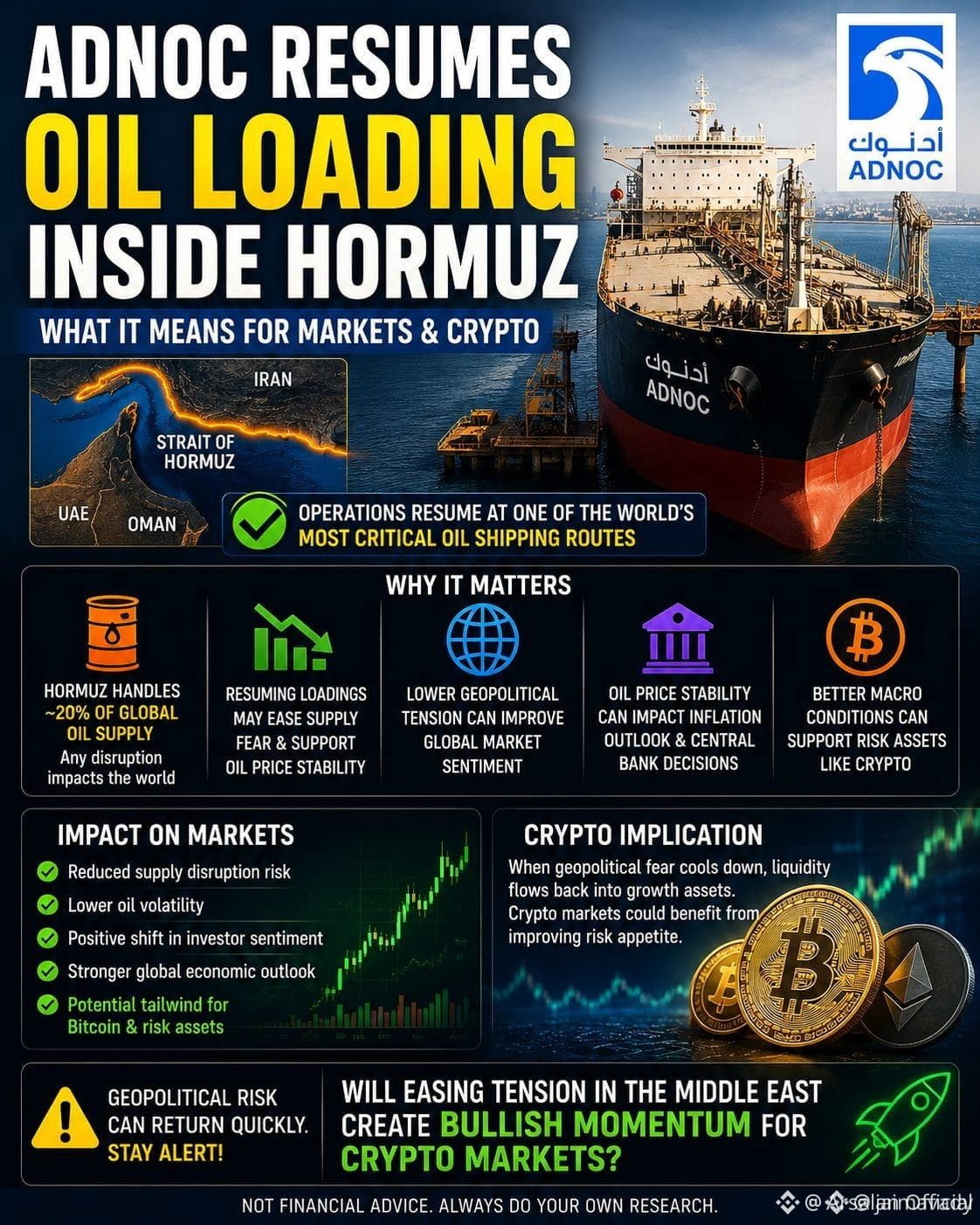
ADNOC has reportedly resumed oil loading operations inside the Strait of Hormuz. 🌍🛢️
Why does this matter?
The Strait of Hormuz handles a huge share of the world's oil supply. Any disruption—or recovery—can send shockwaves through global markets.
📈 Oil traders are watching closely.
📈 Inflation expectations could shift.
📈 Crypto and risk assets may react as macro sentiment changes.
Most people focus on candles.
Smart traders follow the events that move the candles. 👀
Could this be the beginning of a major shift in market sentiment?
$BTC $ETH #oil #Hormuz #adnoc
#adnocresumesoilloadinginsidehormuz
🚨 OIL MARKET ALERT 🚨
ADNOC has reportedly resumed oil loading operations inside the Strait of Hormuz. 🌍🛢️
Why does this matter?
The Strait of Hormuz handles a huge share of the world's oil supply. Any disruption—or recovery—can send shockwaves through global markets.
📈 Oil traders are watching closely.
📈 Inflation expectations could shift.
📈 Crypto and risk assets may react as macro sentiment changes.
Most people focus on candles.
Smart traders follow the events that move the candles. 👀
Could this be the beginning of a major shift in market sentiment?
$BTC $ETH #oil #Hormuz #adnoc
🚨 OIL MARKET ALERT 🚨
ADNOC has reportedly resumed oil loading operations inside the Strait of Hormuz. 🌍🛢️
Why does this matter?
The Strait of Hormuz handles a huge share of the world's oil supply. Any disruption—or recovery—can send shockwaves through global markets.
📈 Oil traders are watching closely.
📈 Inflation expectations could shift.
📈 Crypto and risk assets may react as macro sentiment changes.
Most people focus on candles.
Smart traders follow the events that move the candles. 👀
Could this be the beginning of a major shift in market sentiment?
$BTC $ETH #oil #Hormuz #adnoc
229

·
--
Bearish
Verified
#adnocresumesoilloadinginsidehormuz
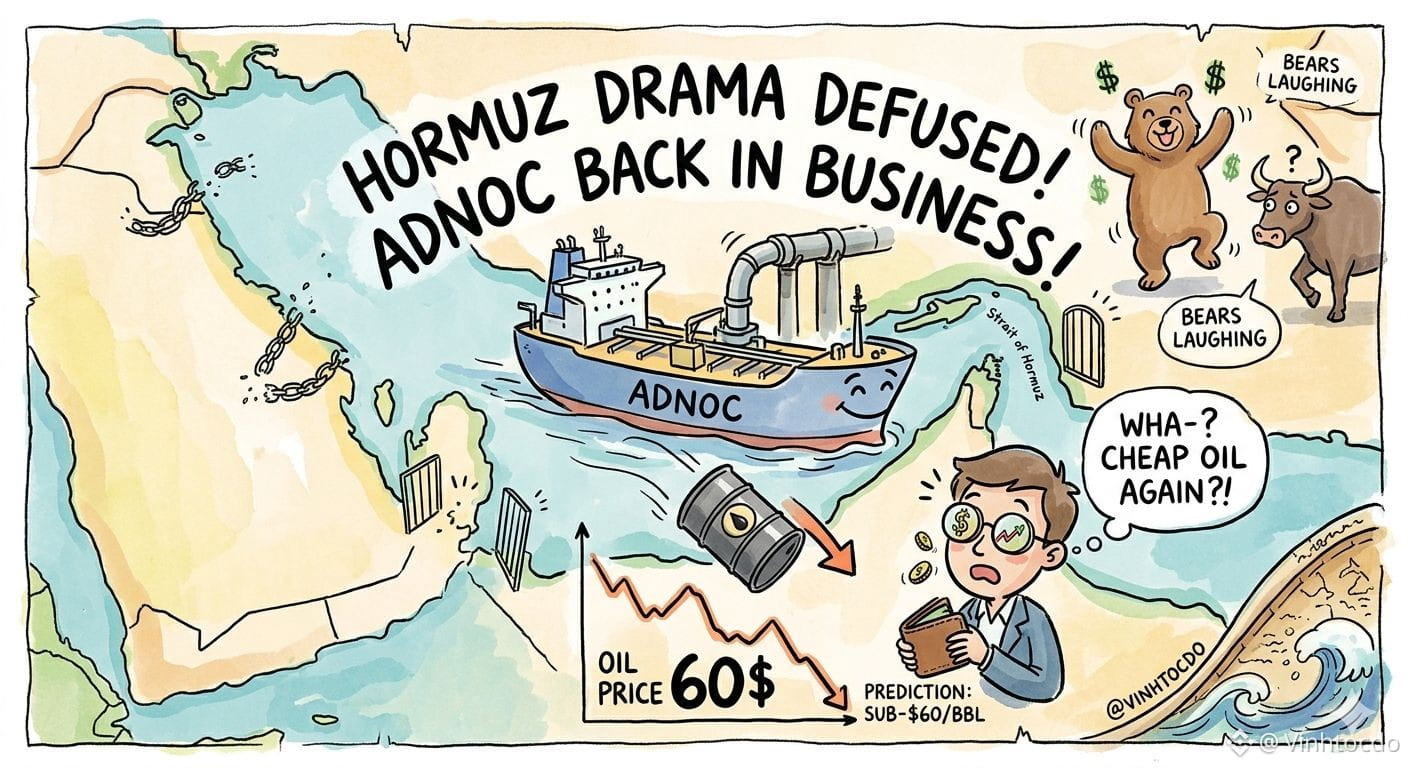
🚨 Tensions in the Strait of Hormuz have cooled off, ADNOC is back to pumping oil 🛢️
Turns out all the financial "drama" really stems from oil and gas!
📉 Supply is flowing smoothly, the bearish oil crowd is grinning. Analysts predict oil prices could "dive" below $60/barrel. Are we heading into an era of cheap energy?
🤔 What should investors do right now?
1️⃣ Stop staring at the ticker like it's a horror movie.
2️⃣ Accumulate USDT to "catch the bottom" on potential assets.
3️⃣ Pack your bags, cheap oil means cheaper flight tickets!
⚠️ This is not financial advice! Sign up for Binance, use code VINHTOCDO to accelerate to the shore, fellow traders! 🚀
#hormuzopen #adnoc #OilPrice #VINHTOCDO $CL $BZ $LAB
{future}(BZUSDT)
{future}(CLUSDT)
#adnocresumesoilloadinginsidehormuz
🚨 Tensions in the Strait of Hormuz have cooled off, ADNOC is back to pumping oil 🛢️
Turns out all the financial "drama" really stems from oil and gas!
📉 Supply is flowing smoothly, the bearish oil crowd is grinning. Analysts predict oil prices could "dive" below $60/barrel. Are we heading into an era of cheap energy?
🤔 What should investors do right now?
1️⃣ Stop staring at the ticker like it's a horror movie.
2️⃣ Accumulate USDT to "catch the bottom" on potential assets.
3️⃣ Pack your bags, cheap oil means cheaper flight tickets!
⚠️ This is not financial advice! Sign up for Binance, use code VINHTOCDO to accelerate to the shore, fellow traders! 🚀
#hormuzopen #adnoc #OilPrice #VINHTOCDO $CL $BZ $LAB
🚨 Tensions in the Strait of Hormuz have cooled off, ADNOC is back to pumping oil 🛢️
Turns out all the financial "drama" really stems from oil and gas!
📉 Supply is flowing smoothly, the bearish oil crowd is grinning. Analysts predict oil prices could "dive" below $60/barrel. Are we heading into an era of cheap energy?
🤔 What should investors do right now?
1️⃣ Stop staring at the ticker like it's a horror movie.
2️⃣ Accumulate USDT to "catch the bottom" on potential assets.
3️⃣ Pack your bags, cheap oil means cheaper flight tickets!
⚠️ This is not financial advice! Sign up for Binance, use code VINHTOCDO to accelerate to the shore, fellow traders! 🚀
#hormuzopen #adnoc #OilPrice #VINHTOCDO $CL $BZ $LAB
5
1.6k

·
--
#adnocresumesoilloadinginsidehormuz
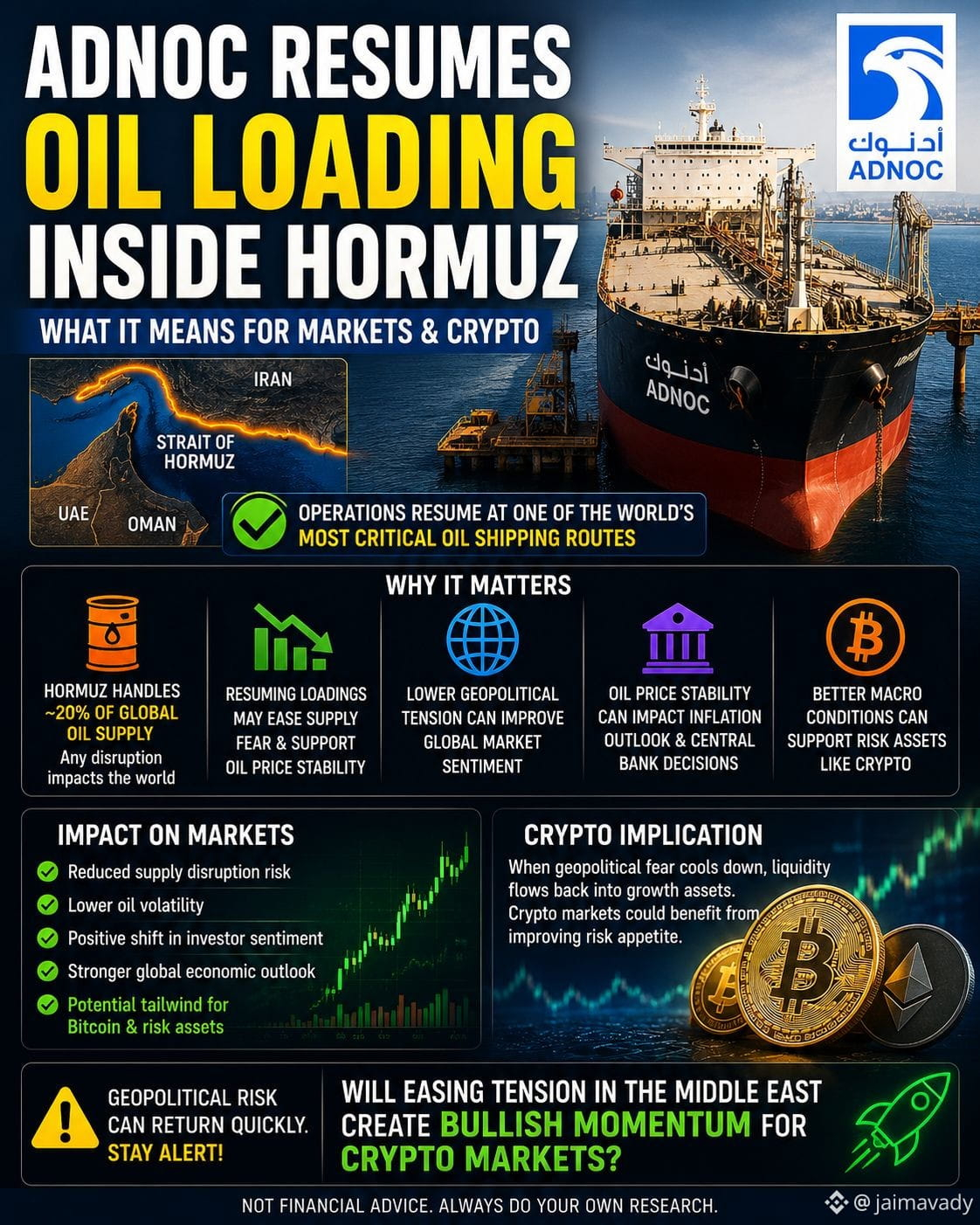
🛢️ Abu Dhabi National Oil Company resumes oil loading inside the Strait of Hormuz… Are global markets pricing out geopolitical fear? 👀🌍
Energy markets are watching closely after ADNOC restarted oil loading operations near one of the world’s most critical shipping routes — the Strait of Hormuz. ⚡
Why does this matter for crypto traders? 👇
🔹 Hormuz handles a major share of global oil transport 🛢️
🔹 Resuming operations may reduce immediate supply disruption fears 📉
🔹 Lower geopolitical tension can shift sentiment across global markets 🌐
🔹 Oil price stability often impacts inflation expectations and central bank policy 📊
🔹 Macro shifts like this can influence Bitcoin and risk assets 🚀
When major geopolitical hotspots calm down…
Markets often react fast.
Less fear in energy markets can improve global confidence and push investors back toward growth assets. 🔥
But smart traders know one thing:
Geopolitical risk can return instantly — and volatility never stays quiet for long. 👀
#BTC #OilMarket #ADNOC #CryptoNews
{spot}(SPCXBUSDT)
{spot}(SNDKBUSDT)
{future}(BNBUSDT)
#adnocresumesoilloadinginsidehormuz
🛢️ Abu Dhabi National Oil Company resumes oil loading inside the Strait of Hormuz… Are global markets pricing out geopolitical fear? 👀🌍
Energy markets are watching closely after ADNOC restarted oil loading operations near one of the world’s most critical shipping routes — the Strait of Hormuz. ⚡
Why does this matter for crypto traders? 👇
🔹 Hormuz handles a major share of global oil transport 🛢️
🔹 Resuming operations may reduce immediate supply disruption fears 📉
🔹 Lower geopolitical tension can shift sentiment across global markets 🌐
🔹 Oil price stability often impacts inflation expectations and central bank policy 📊
🔹 Macro shifts like this can influence Bitcoin and risk assets 🚀
When major geopolitical hotspots calm down…
Markets often react fast.
Less fear in energy markets can improve global confidence and push investors back toward growth assets. 🔥
But smart traders know one thing:
Geopolitical risk can return instantly — and volatility never stays quiet for long. 👀
#BTC #OilMarket #ADNOC #CryptoNews
🛢️ Abu Dhabi National Oil Company resumes oil loading inside the Strait of Hormuz… Are global markets pricing out geopolitical fear? 👀🌍
Energy markets are watching closely after ADNOC restarted oil loading operations near one of the world’s most critical shipping routes — the Strait of Hormuz. ⚡
Why does this matter for crypto traders? 👇
🔹 Hormuz handles a major share of global oil transport 🛢️
🔹 Resuming operations may reduce immediate supply disruption fears 📉
🔹 Lower geopolitical tension can shift sentiment across global markets 🌐
🔹 Oil price stability often impacts inflation expectations and central bank policy 📊
🔹 Macro shifts like this can influence Bitcoin and risk assets 🚀
When major geopolitical hotspots calm down…
Markets often react fast.
Less fear in energy markets can improve global confidence and push investors back toward growth assets. 🔥
But smart traders know one thing:
Geopolitical risk can return instantly — and volatility never stays quiet for long. 👀
#BTC #OilMarket #ADNOC #CryptoNews
1
4
2k

·
--
ADNOC has resumed oil loading operations inside the Strait of Hormuz, easing some concerns about energy supply disruptions. 🛢️ Markets will continue monitoring geopolitical developments, as any changes in this key shipping route could influence both oil prices and broader financial markets.#ADNOCResumesOilLoadingInsideHormuz
ADNOC has resumed oil loading operations inside the Strait of Hormuz, easing some concerns about energy supply disruptions. 🛢️ Markets will continue monitoring geopolitical developments, as any changes in this key shipping route could influence both oil prices and broader financial markets.#ADNOCResumesOilLoadingInsideHormuz
1
144

·
--
ADNOC just told buyers: "Come load inside the Gulf. Or you're in breach."
Here's why that message just got a lot more powerful.
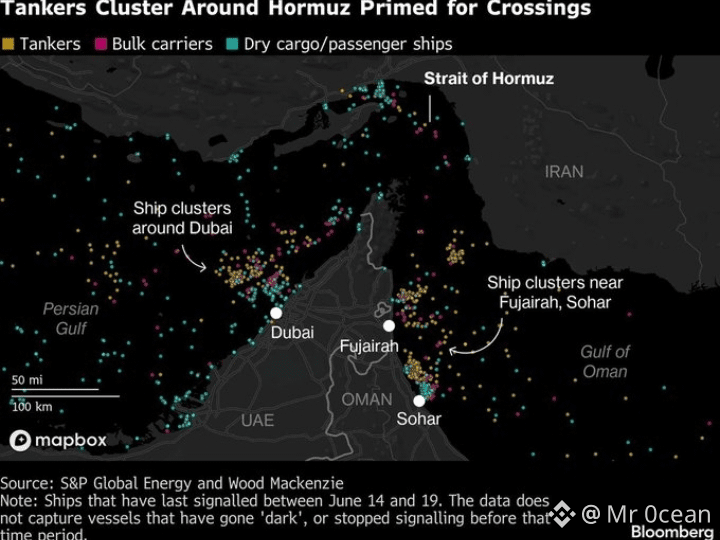
40 fully loaded supertankers are sitting inside the Persian Gulf right now.
80 million barrels.
Ready to move.
Just waiting for shipowners to feel safe enough to transit Hormuz.
21 of those VLCCs are pointed at Asia.
5 specifically showing China as destination.
5 more headed to Singapore for trans-shipment.
As of this morning, at least 3 supertankers are already steaming east toward the strait at normal speeds owners starting to test the route.
This is the near-term bearish reality I won't hide from you.
Once those ships move, the market gets a sudden burst of delayed supply on top of ongoing production ramps.
That's why Brent softened on the deal headlines.
Traders are pricing these "shadow barrels" coming out.
$CL
{future}(CLUSDT)
$BZ $BTC
{future}(BTCUSDT)
#ADNOCResumesOilLoadingInsideHormuz #AsianStocksHitRecord #BOJGovernorUedaDischarged #SocialSecurityFundDepletedQ42032
ADNOC just told buyers: "Come load inside the Gulf. Or you're in breach."
Here's why that message just got a lot more powerful.
40 fully loaded supertankers are sitting inside the Persian Gulf right now.
80 million barrels.
Ready to move.
Just waiting for shipowners to feel safe enough to transit Hormuz.
21 of those VLCCs are pointed at Asia.
5 specifically showing China as destination.
5 more headed to Singapore for trans-shipment.
As of this morning, at least 3 supertankers are already steaming east toward the strait at normal speeds owners starting to test the route.
This is the near-term bearish reality I won't hide from you.
Once those ships move, the market gets a sudden burst of delayed supply on top of ongoing production ramps.
That's why Brent softened on the deal headlines.
Traders are pricing these "shadow barrels" coming out.
$CL
$BZ $BTC
#ADNOCResumesOilLoadingInsideHormuz #AsianStocksHitRecord #BOJGovernorUedaDischarged #SocialSecurityFundDepletedQ42032
Here's why that message just got a lot more powerful.
40 fully loaded supertankers are sitting inside the Persian Gulf right now.
80 million barrels.
Ready to move.
Just waiting for shipowners to feel safe enough to transit Hormuz.
21 of those VLCCs are pointed at Asia.
5 specifically showing China as destination.
5 more headed to Singapore for trans-shipment.
As of this morning, at least 3 supertankers are already steaming east toward the strait at normal speeds owners starting to test the route.
This is the near-term bearish reality I won't hide from you.
Once those ships move, the market gets a sudden burst of delayed supply on top of ongoing production ramps.
That's why Brent softened on the deal headlines.
Traders are pricing these "shadow barrels" coming out.
$CL
$BZ $BTC
#ADNOCResumesOilLoadingInsideHormuz #AsianStocksHitRecord #BOJGovernorUedaDischarged #SocialSecurityFundDepletedQ42032
1
251

#ADNOCResumesOilLoadingInsideHormuz This hashtag points to a shipping/energy-market development: ADNOC has said its operations continue amid regional disruption, while acknowledging that shipping through the Strait of Hormuz has been affected. In an official update dated March 7, 2026, ADNOC said it was still operating, using export capacity that bypasses the Strait plus international storage to help maintain supply continuity. (adnoc.ae)
ADNOC has also publicly emphasized the importance of freedom of navigation through Hormuz and said it is accelerating infrastructure that bypasses the chokepoint, including a second pipeline toward Fujairah. That suggests the market takeaway is not just “loading resumed,” but that the UAE is actively trying to reduce dependence on the Strait for exports. (adnoc.ae)
Why markets care:
If loading resumes or disruptions ease, that is usually bearish for immediate oil-spike risk.
But if traffic through Hormuz remains fragile, traders may still price in a geopolitical risk premium for crude, shipping, and inflation-sensitive assets. This is an inference based on the operational updates and chokepoint risk ADNOC itself highlighted. (adnoc.ae)
Crypto angle: if oil-risk headlines cool down, BTC and broader crypto can sometimes benefit from a mild risk-on shift; if tensions flare again, markets often rotate toward defensive positioning first. That part is market interpretation rather than a direct ADNOC statement.
If you want, I can also give you:
a 1-minute market summary of what this means for BTC, ETH, and oil-sensitive sentiment, or
the latest Binance market reaction for major crypto pairs.$CL
{future}(CLUSDT)
$BZ
{future}(BZUSDT)
$VELVET
{future}(VELVETUSDT)
@Binance_Announcement @Binance_Square_Official @Binance_News
#ADNOCResumesOilLoadingInsideHormuz This hashtag points to a shipping/energy-market development: ADNOC has said its operations continue amid regional disruption, while acknowledging that shipping through the Strait of Hormuz has been affected. In an official update dated March 7, 2026, ADNOC said it was still operating, using export capacity that bypasses the Strait plus international storage to help maintain supply continuity. (adnoc.ae)
ADNOC has also publicly emphasized the importance of freedom of navigation through Hormuz and said it is accelerating infrastructure that bypasses the chokepoint, including a second pipeline toward Fujairah. That suggests the market takeaway is not just “loading resumed,” but that the UAE is actively trying to reduce dependence on the Strait for exports. (adnoc.ae)
Why markets care:
If loading resumes or disruptions ease, that is usually bearish for immediate oil-spike risk.
But if traffic through Hormuz remains fragile, traders may still price in a geopolitical risk premium for crude, shipping, and inflation-sensitive assets. This is an inference based on the operational updates and chokepoint risk ADNOC itself highlighted. (adnoc.ae)
Crypto angle: if oil-risk headlines cool down, BTC and broader crypto can sometimes benefit from a mild risk-on shift; if tensions flare again, markets often rotate toward defensive positioning first. That part is market interpretation rather than a direct ADNOC statement.
If you want, I can also give you:
a 1-minute market summary of what this means for BTC, ETH, and oil-sensitive sentiment, or
the latest Binance market reaction for major crypto pairs.$CL
$BZ
$VELVET
@Binance Announcement @Binance Square Official @Binance News
ADNOC has also publicly emphasized the importance of freedom of navigation through Hormuz and said it is accelerating infrastructure that bypasses the chokepoint, including a second pipeline toward Fujairah. That suggests the market takeaway is not just “loading resumed,” but that the UAE is actively trying to reduce dependence on the Strait for exports. (adnoc.ae)
Why markets care:
If loading resumes or disruptions ease, that is usually bearish for immediate oil-spike risk.
But if traffic through Hormuz remains fragile, traders may still price in a geopolitical risk premium for crude, shipping, and inflation-sensitive assets. This is an inference based on the operational updates and chokepoint risk ADNOC itself highlighted. (adnoc.ae)
Crypto angle: if oil-risk headlines cool down, BTC and broader crypto can sometimes benefit from a mild risk-on shift; if tensions flare again, markets often rotate toward defensive positioning first. That part is market interpretation rather than a direct ADNOC statement.
If you want, I can also give you:
a 1-minute market summary of what this means for BTC, ETH, and oil-sensitive sentiment, or
the latest Binance market reaction for major crypto pairs.$CL
$BZ
$VELVET
@Binance Announcement @Binance Square Official @Binance News
1
184

#ADNOCResumesOilLoadingInsideHormuz #ADNOCResumesOilLoadingInsideHormuz
ADNOC resuming crude loading inside the Strait of Hormuz signals a continued normalization of Gulf oil shipping flows, after weeks of disruption-driven rerouting and insurance risk premiums.
What’s happening
• ADNOC has instructed buyers to resume standard lifting schedules directly from UAE export terminals inside Hormuz, instead of relying on workaround logistics used during the crisis period.
• The move reflects improving maritime security conditions and smoother tanker traffic through the chokepoint.
• It aligns with broader regional normalization as more crude flows resume through the strait.
Why it matters
• The Strait of Hormuz handles roughly a fifth of global seaborne oil trade, making even small disruptions material for pricing and shipping costs.
• Returning to normal loading reduces:
shipping insurance premiums
freight rerouting costs
near-term supply uncertainty
• It also improves export efficiency for Gulf producers like ADNOC.
Market impact
• Bearish pressure on oil (better supply certainty)
• Lower tanker risk premiums if stability holds
• Positive for Asian importers reliant on Middle East crude
• Reduced “crisis premium” in crude pricing tied to the Strait of Hormuz region (Strait of Hormuz)
Short take
Resuming normal loading inside Hormuz is a clear signal that oil logistics in the Gulf are stabilizing again, easing supply-risk fears and gradually removing geopolitical premium from crude markets.
#ADNOCResumesOilLoadingInsideHormuz #ADNOCResumesOilLoadingInsideHormuz
ADNOC resuming crude loading inside the Strait of Hormuz signals a continued normalization of Gulf oil shipping flows, after weeks of disruption-driven rerouting and insurance risk premiums.
What’s happening
• ADNOC has instructed buyers to resume standard lifting schedules directly from UAE export terminals inside Hormuz, instead of relying on workaround logistics used during the crisis period.
• The move reflects improving maritime security conditions and smoother tanker traffic through the chokepoint.
• It aligns with broader regional normalization as more crude flows resume through the strait.
Why it matters
• The Strait of Hormuz handles roughly a fifth of global seaborne oil trade, making even small disruptions material for pricing and shipping costs.
• Returning to normal loading reduces:
shipping insurance premiums
freight rerouting costs
near-term supply uncertainty
• It also improves export efficiency for Gulf producers like ADNOC.
Market impact
• Bearish pressure on oil (better supply certainty)
• Lower tanker risk premiums if stability holds
• Positive for Asian importers reliant on Middle East crude
• Reduced “crisis premium” in crude pricing tied to the Strait of Hormuz region (Strait of Hormuz)
Short take
Resuming normal loading inside Hormuz is a clear signal that oil logistics in the Gulf are stabilizing again, easing supply-risk fears and gradually removing geopolitical premium from crude markets.
ADNOC resuming crude loading inside the Strait of Hormuz signals a continued normalization of Gulf oil shipping flows, after weeks of disruption-driven rerouting and insurance risk premiums.
What’s happening
• ADNOC has instructed buyers to resume standard lifting schedules directly from UAE export terminals inside Hormuz, instead of relying on workaround logistics used during the crisis period.
• The move reflects improving maritime security conditions and smoother tanker traffic through the chokepoint.
• It aligns with broader regional normalization as more crude flows resume through the strait.
Why it matters
• The Strait of Hormuz handles roughly a fifth of global seaborne oil trade, making even small disruptions material for pricing and shipping costs.
• Returning to normal loading reduces:
shipping insurance premiums
freight rerouting costs
near-term supply uncertainty
• It also improves export efficiency for Gulf producers like ADNOC.
Market impact
• Bearish pressure on oil (better supply certainty)
• Lower tanker risk premiums if stability holds
• Positive for Asian importers reliant on Middle East crude
• Reduced “crisis premium” in crude pricing tied to the Strait of Hormuz region (Strait of Hormuz)
Short take
Resuming normal loading inside Hormuz is a clear signal that oil logistics in the Gulf are stabilizing again, easing supply-risk fears and gradually removing geopolitical premium from crude markets.
95

·
--
Bullish
#ADNOCResumesOilLoadingInsideHormuz
Global energy logistics are shifting back toward baseline structures as Abu Dhabi National Oil Co. officially instructs long-term buyers to resume crude oil loading from ports situated within the Persian Gulf. Following the diplomatic breakthrough of the United States-Iran peace treaty and the subsequent stabilization of traffic through the critical Strait of Hormuz, ADNOC confirmed that contractual allocations from Das and Zirku islands are fully operational. The state-owned producer explicitly noted that a failure to pick up scheduled cargoes would constitute a breach of lifting obligations subject to financial compensation. This decisive mandate underscores the UAE's confidence in regional maritime security and marks a vital milestone in the normalization of global seaborne crude distribution networks. #ADNOCResumesOilLoadingInsideHormuz #ADNOC #OilExporters #StraitofHormuz #EnergyLogistics #BinanceSquare $TSLAB $MUB
#ADNOCResumesOilLoadingInsideHormuz
Global energy logistics are shifting back toward baseline structures as Abu Dhabi National Oil Co. officially instructs long-term buyers to resume crude oil loading from ports situated within the Persian Gulf. Following the diplomatic breakthrough of the United States-Iran peace treaty and the subsequent stabilization of traffic through the critical Strait of Hormuz, ADNOC confirmed that contractual allocations from Das and Zirku islands are fully operational. The state-owned producer explicitly noted that a failure to pick up scheduled cargoes would constitute a breach of lifting obligations subject to financial compensation. This decisive mandate underscores the UAE's confidence in regional maritime security and marks a vital milestone in the normalization of global seaborne crude distribution networks. #ADNOCResumesOilLoadingInsideHormuz #ADNOC #OilExporters #StraitofHormuz #EnergyLogistics #BinanceSquare $TSLAB $MUB
Global energy logistics are shifting back toward baseline structures as Abu Dhabi National Oil Co. officially instructs long-term buyers to resume crude oil loading from ports situated within the Persian Gulf. Following the diplomatic breakthrough of the United States-Iran peace treaty and the subsequent stabilization of traffic through the critical Strait of Hormuz, ADNOC confirmed that contractual allocations from Das and Zirku islands are fully operational. The state-owned producer explicitly noted that a failure to pick up scheduled cargoes would constitute a breach of lifting obligations subject to financial compensation. This decisive mandate underscores the UAE's confidence in regional maritime security and marks a vital milestone in the normalization of global seaborne crude distribution networks. #ADNOCResumesOilLoadingInsideHormuz #ADNOC #OilExporters #StraitofHormuz #EnergyLogistics #BinanceSquare $TSLAB $MUB
176


·
--
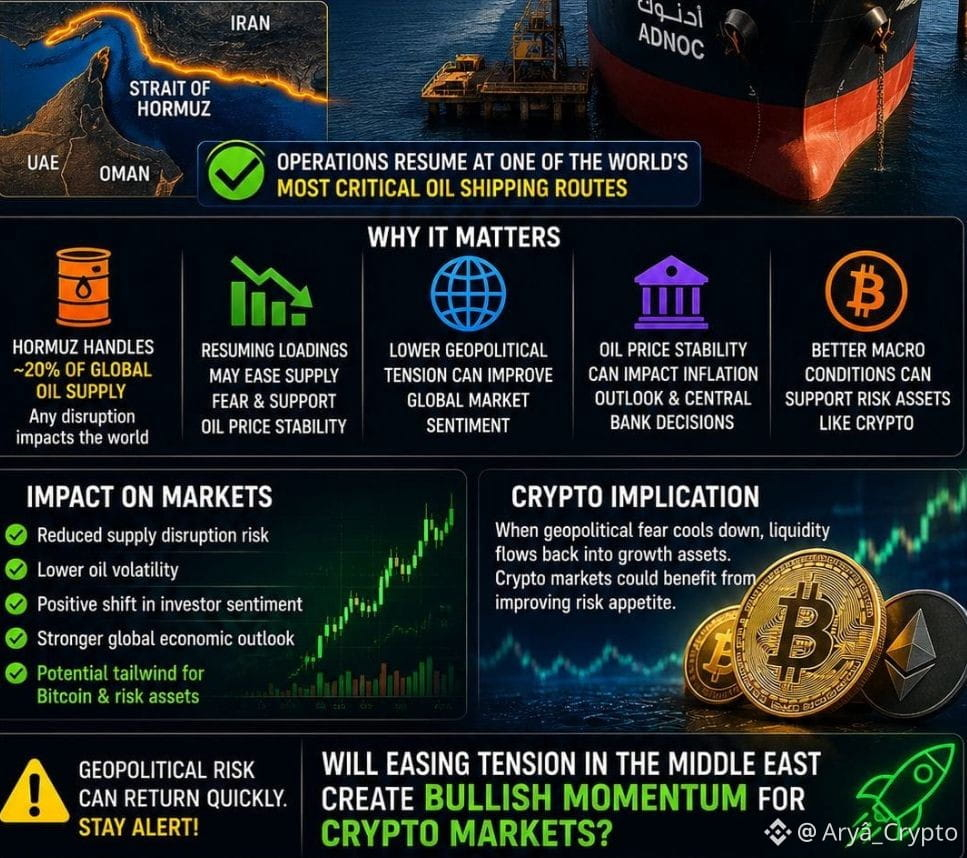
🛢️ #ADNOC has resumed oil loading inside the Strait of Hormuz.
This is one of those updates that can quietly shift market mood, even if price action doesn’t react instantly.
The Strait of Hormuz is a major global oil route, so when operations restart, it usually takes some pressure off supply disruption fears. In simple terms, it helps calm things down a bit in energy markets.
For crypto traders, the link is indirect but still relevant. When oil stabilizes, inflation expectations can ease and that often feeds into a more risk-on tone across markets, including Bitcoin and other major assets.
But this kind of thing can flip fast. Geopolitical risk doesn’t really go away, it just fades into the background until the next trigger brings it back.
So for now, it’s a slight cooling-off signal for fear but not something to overread as a long-term resolution.
#CryptoMarket #ADNOCResumesOilLoadingInsideHormuz #OilMarket #bitcoin
🛢️ #ADNOC has resumed oil loading inside the Strait of Hormuz.
This is one of those updates that can quietly shift market mood, even if price action doesn’t react instantly.
The Strait of Hormuz is a major global oil route, so when operations restart, it usually takes some pressure off supply disruption fears. In simple terms, it helps calm things down a bit in energy markets.
For crypto traders, the link is indirect but still relevant. When oil stabilizes, inflation expectations can ease and that often feeds into a more risk-on tone across markets, including Bitcoin and other major assets.
But this kind of thing can flip fast. Geopolitical risk doesn’t really go away, it just fades into the background until the next trigger brings it back.
So for now, it’s a slight cooling-off signal for fear but not something to overread as a long-term resolution.
#CryptoMarket #ADNOCResumesOilLoadingInsideHormuz #OilMarket #bitcoin
This is one of those updates that can quietly shift market mood, even if price action doesn’t react instantly.
The Strait of Hormuz is a major global oil route, so when operations restart, it usually takes some pressure off supply disruption fears. In simple terms, it helps calm things down a bit in energy markets.
For crypto traders, the link is indirect but still relevant. When oil stabilizes, inflation expectations can ease and that often feeds into a more risk-on tone across markets, including Bitcoin and other major assets.
But this kind of thing can flip fast. Geopolitical risk doesn’t really go away, it just fades into the background until the next trigger brings it back.
So for now, it’s a slight cooling-off signal for fear but not something to overread as a long-term resolution.
#CryptoMarket #ADNOCResumesOilLoadingInsideHormuz #OilMarket #bitcoin
1
2
91

·
--
Bearish
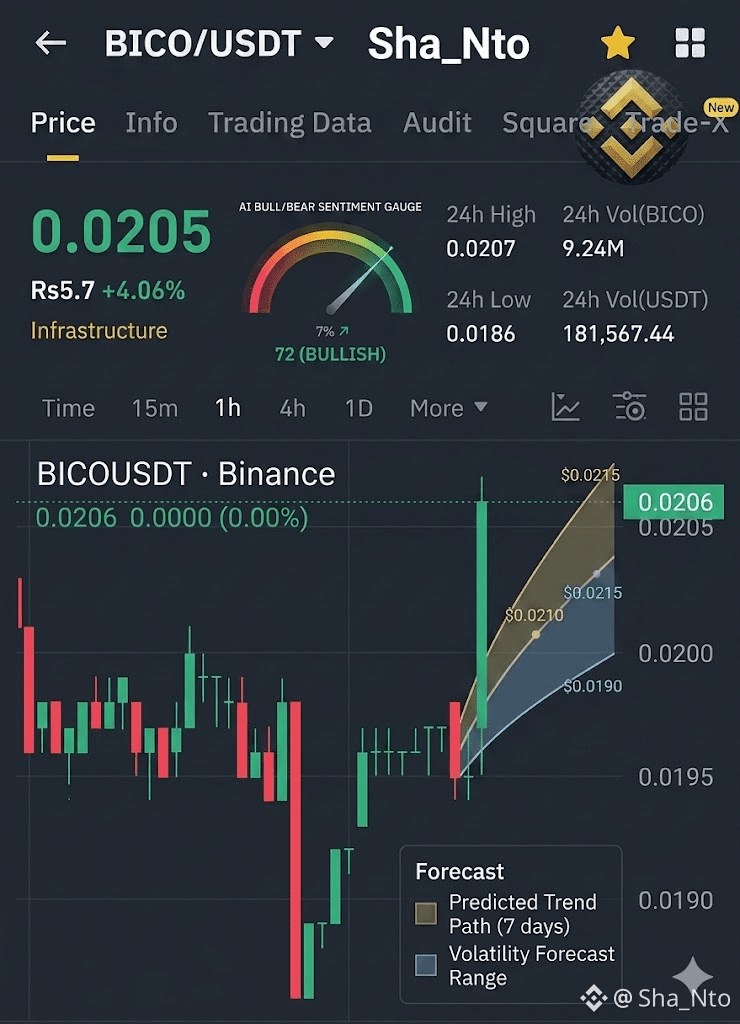
Global energy markets are experiencing a notable structural shift following official announcements that ADNOC has successfully resumed full oil loading operations inside the strategic Strait of Hormuz. This critical logistics reactivation is effectively lowering short-term geopolitical risk premiums and stabilizing international commodity supply chains across the board. In macro financial models, a normalized energy corridor helps cool down global supply-side inflation fears, building a significantly safer environment for institutional capital to deploy into risk-on positions. As macro fears subside, expect a healthy rotation of capital moving steadily back into decentralized ecosystems and smart-contract networks. What are your core target levels for major digital assets this week? 🛢️🌐 #ADNOCResumesOilLoadingInsideHormuz #EnergyMarkets #GlobalTrade
{spot}(BTCUSDT)
{spot}(REUSDT)
{spot}(ATMUSDT)
Global energy markets are experiencing a notable structural shift following official announcements that ADNOC has successfully resumed full oil loading operations inside the strategic Strait of Hormuz. This critical logistics reactivation is effectively lowering short-term geopolitical risk premiums and stabilizing international commodity supply chains across the board. In macro financial models, a normalized energy corridor helps cool down global supply-side inflation fears, building a significantly safer environment for institutional capital to deploy into risk-on positions. As macro fears subside, expect a healthy rotation of capital moving steadily back into decentralized ecosystems and smart-contract networks. What are your core target levels for major digital assets this week? 🛢️🌐 #ADNOCResumesOilLoadingInsideHormuz #EnergyMarkets #GlobalTrade
189

·
--
#adnocresumesoilloadinginsidehormuz #bnb
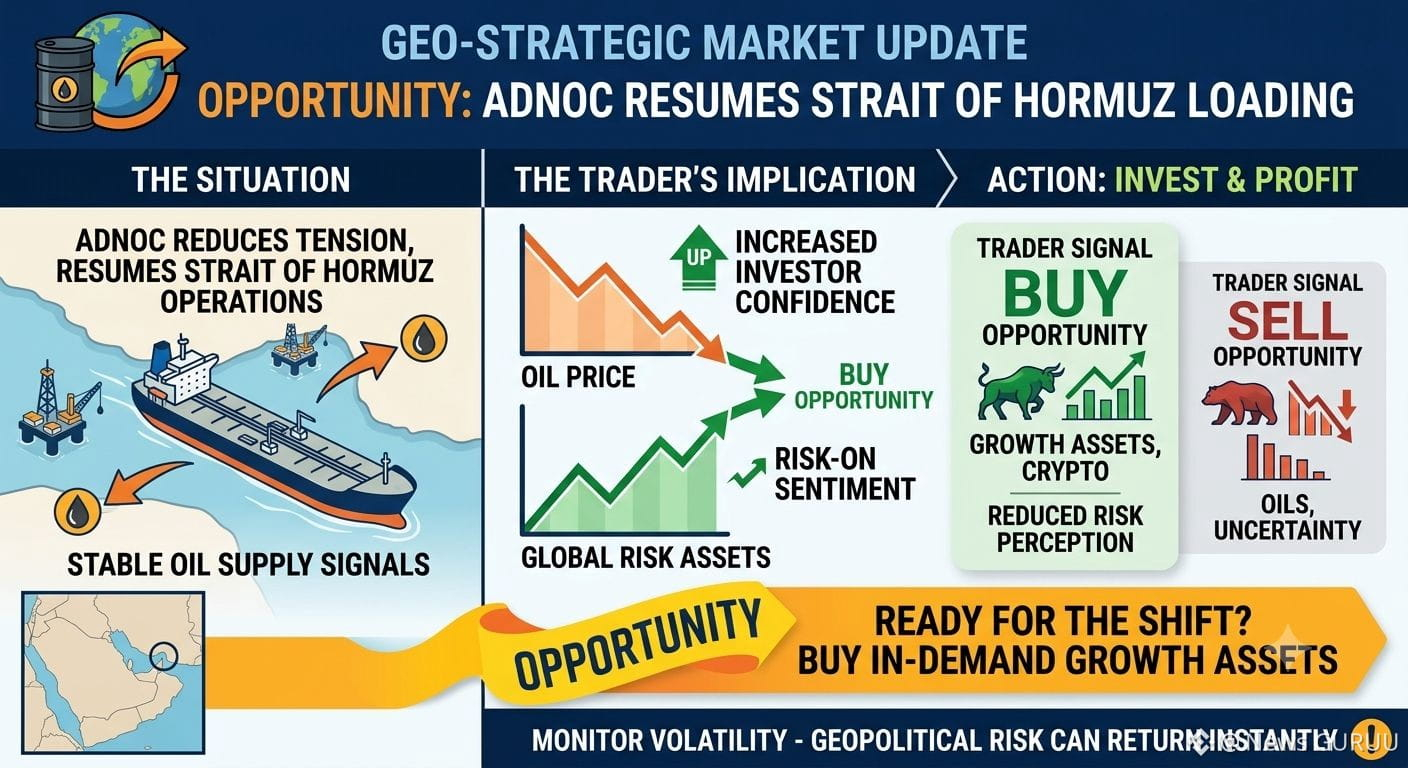
🛢️ Oil loading has resumed in the Strait of Hormuz, easing fears of a major supply disruption.
✅ Reduced geopolitical tension concerns
✅ Oil supply routes operating normally
✅ Lower risk of an immediate energy shock
✅ Improved sentiment across global markets
✅ Positive backdrop for Bitcoin and risk assets
If stability continues, investors may rotate back into growth assets and crypto markets.
Current momentum favors buyers, making pullbacks attractive for accumulation.
📈 Trading View: BUY on dips or ride the breakout if risk sentiment continues improving.
👇 CLICK ON THE YELLOW COIN TAG BELOW TO GO TO THE TRADING PAGE TO GET BENEFIT TRADE OK." $BNB $BTC $CL
{future}(CLUSDT)
{spot}(BTCUSDT)
{spot}(BNBUSDT)
#adnocresumesoilloadinginsidehormuz #bnb
🛢️ Oil loading has resumed in the Strait of Hormuz, easing fears of a major supply disruption.
✅ Reduced geopolitical tension concerns
✅ Oil supply routes operating normally
✅ Lower risk of an immediate energy shock
✅ Improved sentiment across global markets
✅ Positive backdrop for Bitcoin and risk assets
If stability continues, investors may rotate back into growth assets and crypto markets.
Current momentum favors buyers, making pullbacks attractive for accumulation.
📈 Trading View: BUY on dips or ride the breakout if risk sentiment continues improving.
👇 CLICK ON THE YELLOW COIN TAG BELOW TO GO TO THE TRADING PAGE TO GET BENEFIT TRADE OK." $BNB $BTC $CL
🛢️ Oil loading has resumed in the Strait of Hormuz, easing fears of a major supply disruption.
✅ Reduced geopolitical tension concerns
✅ Oil supply routes operating normally
✅ Lower risk of an immediate energy shock
✅ Improved sentiment across global markets
✅ Positive backdrop for Bitcoin and risk assets
If stability continues, investors may rotate back into growth assets and crypto markets.
Current momentum favors buyers, making pullbacks attractive for accumulation.
📈 Trading View: BUY on dips or ride the breakout if risk sentiment continues improving.
👇 CLICK ON THE YELLOW COIN TAG BELOW TO GO TO THE TRADING PAGE TO GET BENEFIT TRADE OK." $BNB $BTC $CL
1
114

·
--
Bullish
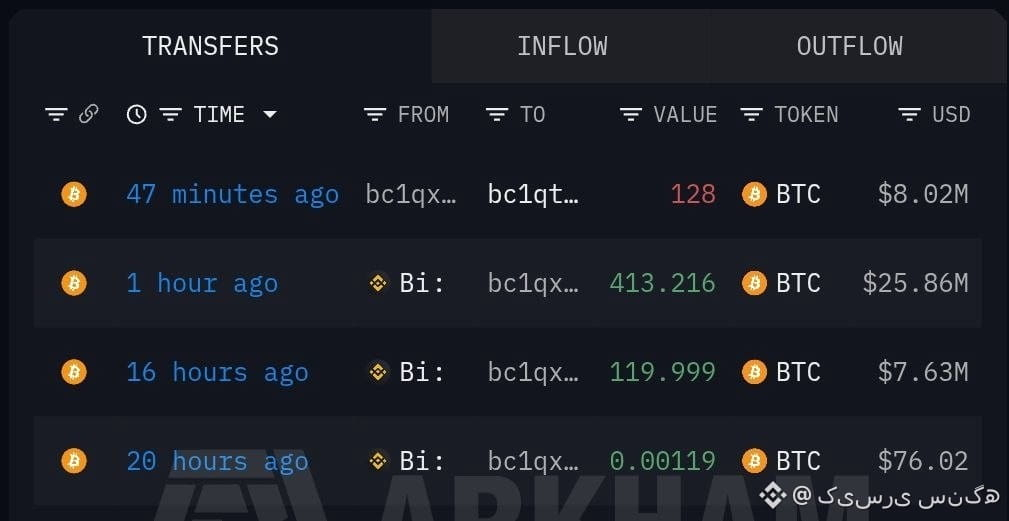
🚨 530 BTC Just Left Binance to a Brand New Wallet. Someone Is Making a Move.
530 Bitcoin. Approximately $33 million at current prices. Withdrawn to a freshly created wallet with zero transaction history.
New wallet withdrawals of this scale are a consistent fingerprint of institutional players or high-net-worth individuals moving to self-custody outside exchange infrastructure — a pattern running hard throughout 2026 as centralized exchanges shed over $26 billion in Bitcoin and Ethereum since January.
Here's what a new wallet tells you that an old wallet doesn't:
Old wallets accumulate. New wallets initiate. When $33 million moves to a brand new address, it means someone just decided — right now, at this price — that holding Bitcoin in self-custody is worth the setup cost and operational complexity of cold storage management.
Nobody creates a new wallet to sell. You sell on the exchange. You withdraw to self-custody when you're done selling and ready to hold.
This pattern runs alongside a constructive demand picture — Bitcoin ETFs have been recording strong inflow days and whale wallets have been quietly accumulating thousands of coins over extended windows according to CryptoQuant data.
530 BTC withdrawn to cold storage while Bitcoin trades below miner production cost, five months into one of the longest capitulations on record, with the Iran peace dividend beginning to flow through global markets.
Someone just made a $33 million bet that this is the bottom.
They didn't announce it. They didn't post a thread. They just moved the coins and went quiet.
That's what conviction looks like at scale.
$HEI
{future}(HEIUSDT)
$SYN
{future}(SYNUSDT)
$BTC
{future}(BTCUSDT)
#US301ProbeOnGermanyDrugPricing #ECBWunschCallsForJulyHikeIfDataWeakens #EmergingMarketStocksHitRecordHigh #YenNears40YearLow #ADNOCResumesOilLoadingInsideHormuz
🚨 530 BTC Just Left Binance to a Brand New Wallet. Someone Is Making a Move.
530 Bitcoin. Approximately $33 million at current prices. Withdrawn to a freshly created wallet with zero transaction history.
New wallet withdrawals of this scale are a consistent fingerprint of institutional players or high-net-worth individuals moving to self-custody outside exchange infrastructure — a pattern running hard throughout 2026 as centralized exchanges shed over $26 billion in Bitcoin and Ethereum since January.
Here's what a new wallet tells you that an old wallet doesn't:
Old wallets accumulate. New wallets initiate. When $33 million moves to a brand new address, it means someone just decided — right now, at this price — that holding Bitcoin in self-custody is worth the setup cost and operational complexity of cold storage management.
Nobody creates a new wallet to sell. You sell on the exchange. You withdraw to self-custody when you're done selling and ready to hold.
This pattern runs alongside a constructive demand picture — Bitcoin ETFs have been recording strong inflow days and whale wallets have been quietly accumulating thousands of coins over extended windows according to CryptoQuant data.
530 BTC withdrawn to cold storage while Bitcoin trades below miner production cost, five months into one of the longest capitulations on record, with the Iran peace dividend beginning to flow through global markets.
Someone just made a $33 million bet that this is the bottom.
They didn't announce it. They didn't post a thread. They just moved the coins and went quiet.
That's what conviction looks like at scale.
$HEI
$SYN
$BTC
#US301ProbeOnGermanyDrugPricing #ECBWunschCallsForJulyHikeIfDataWeakens #EmergingMarketStocksHitRecordHigh #YenNears40YearLow #ADNOCResumesOilLoadingInsideHormuz
530 Bitcoin. Approximately $33 million at current prices. Withdrawn to a freshly created wallet with zero transaction history.
New wallet withdrawals of this scale are a consistent fingerprint of institutional players or high-net-worth individuals moving to self-custody outside exchange infrastructure — a pattern running hard throughout 2026 as centralized exchanges shed over $26 billion in Bitcoin and Ethereum since January.
Here's what a new wallet tells you that an old wallet doesn't:
Old wallets accumulate. New wallets initiate. When $33 million moves to a brand new address, it means someone just decided — right now, at this price — that holding Bitcoin in self-custody is worth the setup cost and operational complexity of cold storage management.
Nobody creates a new wallet to sell. You sell on the exchange. You withdraw to self-custody when you're done selling and ready to hold.
This pattern runs alongside a constructive demand picture — Bitcoin ETFs have been recording strong inflow days and whale wallets have been quietly accumulating thousands of coins over extended windows according to CryptoQuant data.
530 BTC withdrawn to cold storage while Bitcoin trades below miner production cost, five months into one of the longest capitulations on record, with the Iran peace dividend beginning to flow through global markets.
Someone just made a $33 million bet that this is the bottom.
They didn't announce it. They didn't post a thread. They just moved the coins and went quiet.
That's what conviction looks like at scale.
$HEI
$SYN
$BTC
#US301ProbeOnGermanyDrugPricing #ECBWunschCallsForJulyHikeIfDataWeakens #EmergingMarketStocksHitRecordHigh #YenNears40YearLow #ADNOCResumesOilLoadingInsideHormuz
2
226

Partly True
Article
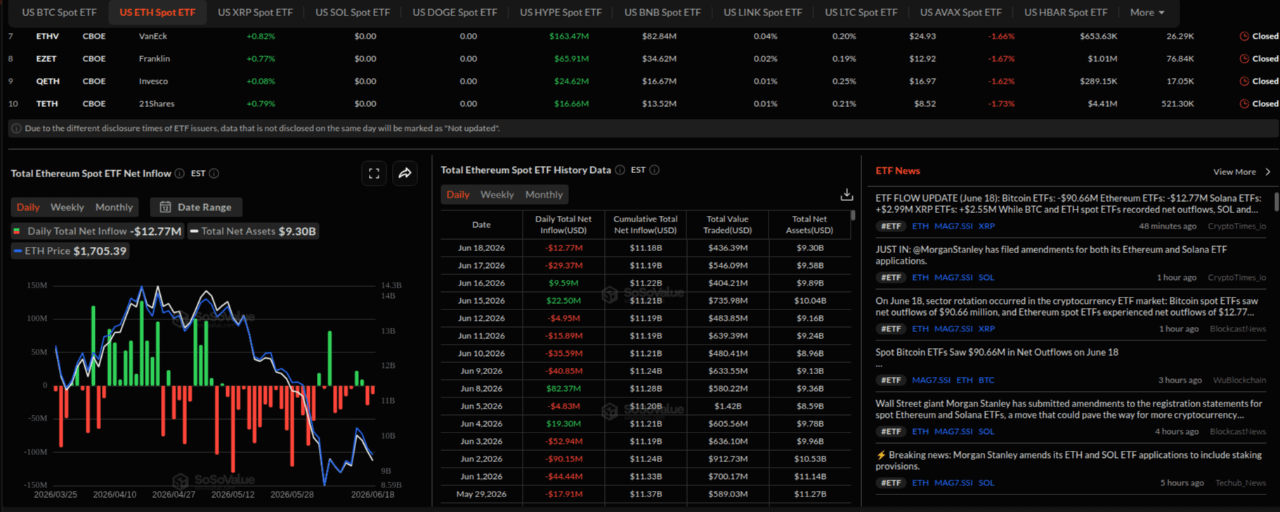
$12.77 Billion and Counting: What Spot ETH ETF Flows Reveal About Institutional Strategy{spot}(ETHUSDT)
Are Wall Street Giants Secretly Accumulating Ethereum? What the ETF Data Tells Us.
Most crypto traders are watching
$ETH 's price chart. Institutional money managers are watching something else entirely — the net flow data inside spot Ethereum ETFs. And what that data reveals about the next phase of this cycle may surprise you.
🏦 The Numbers Institutions Don't Talk About
When the SEC approved spot Ethereum ETFs in July 2024, the crypto market expected an instant repeat of Bitcoin's ETF launch. What actually unfolded was more complex — and ultimately more interesting.
Spot ETH ETFs pulled in $9.9 billion in 2025 alone, marking a breakout year for the category. BlackRock's iShares Ethereum Trust (ETHA) dominated, leading with $9.1 billion of inflows, followed by Fidelity Ethereum Fund (FETH) with $1.1 billion and Grayscale Ethereum Mini Trust with $901 million. ETF.comETF.com
Spot ETH ETFs accumulated approximately $11.6 billion cumulatively through early 2026 — substantial capital, but roughly one-fifth of Bitcoin ETF flows, reflecting ETH's higher complexity and lower institutional name recognition relative to BTC's decade-plus of mainstream coverage. Spoted Crypto
That gap is now narrowing fast. In August 2025, ETHA attracted $2.4 billion in monthly flows while Bitcoin's IBIT pulled in just $459 million — only the second time ever that an ETH ETF topped its $BTC counterpart in monthly flows. ETF.com
📊 ETH vs BTC: The Institutional Scorecard
To understand where ETH stands, you need the historical baseline:
In the first 30 days of spot Bitcoin ETF trading, a total of 670,000 BTC — equivalent to $47 billion — was brought under management, representing approximately 3.2% of Bitcoin's total supply. Amberdata
$ETH's ETF ramp was slower out of the gate, but the trajectory is shifting. ETH's 2025 rally was fueled by ETF inflows rising from roughly $0.4 billion in June to $2.27 billion in August, driving price from approximately $1,519 to $4,739. Some analysts have noted that $ETH's ETF cycle lags $BTC's by roughly six months — which, based on past cycles, could carry meaningful implications for where institutional demand peaks. DropsTab
As of mid-June 2026, the picture is more nuanced. The week of June 8–12, Ethereum spot ETFs recorded a net outflow of $14.91 million, marking five consecutive weeks of net outflows. BlackRock's staking ETF ETHB led inflows at $28.57 million for the week, while Grayscale's ETHE continued to bleed, posting $17.42 million in outflows. The total historical net inflow across all ETH ETFs remains at $11.19 billion — real, structural capital that did not exist two years ago. WEEXWEEX
🔗 Why ETF Flows Move $ETH's Circulating Supply
Here is the mechanism most retail traders overlook:
Every dollar flowing into a spot ETF requires the fund issuer to purchase actual Ethereum on the open market. Each dollar invested into a spot ETF requires the fund's issuer to purchase an equivalent amount of physical Ethereum, typically on the open market — creating a constant, underlying buy-pressure that can absorb selling activity and contribute to market stability. CryptoRank.io
This matters for ETH specifically because those coins are then held in cold custody and effectively removed from active circulating supply. The total net asset value of Ethereum spot ETFs currently stands at approximately $9.16 billion, representing around 4.56% of Ethereum's total market capitalization. That's a meaningful slice of supply silently leaving the liquid market — quietly, week by week. KuCoin
Now layer in ETH staking (roughly 28% of supply is staked on-chain) and the result is a supply squeeze that doesn't make headlines but shows up in price structure over time.
🛠️ How to Track ETF Flow Data Yourself — Step by Step
You don't need a Bloomberg terminal. Here's how to monitor this data in under five minutes:
Step 1 — Go to SoSoValue This is the most widely cited daily ETF flow tracker. Check the "Net Flow" column — green means net inflows, red means net outflows. The cumulative chart shows you the full picture since launch.
Step 2 — Cross-reference with Farside Investors This London-based firm publishes a clean daily table of every fund's flows. It's updated each trading day and is the source most institutional analysts cite.
Step 3 — Check CoinGlass a fund-by-fund breakdown. Compare ETHA, FETH, ETHB, and ETHE individually — because the headline net number can mask rotation between funds, not genuine new demand.
Step 4 — Watch for divergence. When ETH price drops but ETF flows remain positive (or neutral), that signals institutional buyers are absorbing retail selling. When flows turn negative while price holds, it suggests on-chain demand or derivatives are compensating.
Step 5 — Set a weekly calendar reminder. ETF flow data is a medium- to long-term signal. One day of outflows is noise. Five consecutive weeks of outflows — like we're seeing now — is a data point worth monitoring.
🔭 What to Watch Next
The SEC's approval of staked Ethereum ETF structures in early 2026 has opened the door for additional filings from other major asset managers, with yield — not just price exposure — becoming a primary driver of institutional crypto demand. BlackRock's ETHB, which stakes between 70% and 95% of its underlying ETH and distributes rewards to holders monthly, is already attracting consistent inflows even during the broader ETH ETF outflow period. Bitget
Some analysts believe this second generation of yield-bearing ETH products represents a structural shift in how institutions price and hold the asset. If the trend continues, the competition for ETH custody between spot and staking products could create a persistent supply drain the market has not yet fully priced in.
Whether ETH's ETF flows re-accelerate or continue to lag $BTC's pace, the infrastructure is now in place. Historically, that has mattered more than the short-term flow direction.The data is public. The question is whether you're reading it.
⚠️ This is not financial advice. Always do your own research (DYOR) before making any investment decisions.
#ECBWunschCallsForJulyHikeIfDataWeakens #EmergingMarketStocksHitRecordHigh #YenNears40YearLow #ADNOCResumesOilLoadingInsideHormuz #NasdaqEndsSessionUp2%
{spot}(BTCUSDT)
$12.77 Billion and Counting: What Spot ETH ETF Flows Reveal About Institutional Strategy
Are Wall Street Giants Secretly Accumulating Ethereum? What the ETF Data Tells Us.
Most crypto traders are watching
$ETH 's price chart. Institutional money managers are watching something else entirely — the net flow data inside spot Ethereum ETFs. And what that data reveals about the next phase of this cycle may surprise you.
🏦 The Numbers Institutions Don't Talk About
When the SEC approved spot Ethereum ETFs in July 2024, the crypto market expected an instant repeat of Bitcoin's ETF launch. What actually unfolded was more complex — and ultimately more interesting.
Spot ETH ETFs pulled in $9.9 billion in 2025 alone, marking a breakout year for the category. BlackRock's iShares Ethereum Trust (ETHA) dominated, leading with $9.1 billion of inflows, followed by Fidelity Ethereum Fund (FETH) with $1.1 billion and Grayscale Ethereum Mini Trust with $901 million. ETF.comETF.com
Spot ETH ETFs accumulated approximately $11.6 billion cumulatively through early 2026 — substantial capital, but roughly one-fifth of Bitcoin ETF flows, reflecting ETH's higher complexity and lower institutional name recognition relative to BTC's decade-plus of mainstream coverage. Spoted Crypto
That gap is now narrowing fast. In August 2025, ETHA attracted $2.4 billion in monthly flows while Bitcoin's IBIT pulled in just $459 million — only the second time ever that an ETH ETF topped its $BTC counterpart in monthly flows. ETF.com
📊 ETH vs BTC: The Institutional Scorecard
To understand where ETH stands, you need the historical baseline:
In the first 30 days of spot Bitcoin ETF trading, a total of 670,000 BTC — equivalent to $47 billion — was brought under management, representing approximately 3.2% of Bitcoin's total supply. Amberdata
$ETH 's ETF ramp was slower out of the gate, but the trajectory is shifting. ETH's 2025 rally was fueled by ETF inflows rising from roughly $0.4 billion in June to $2.27 billion in August, driving price from approximately $1,519 to $4,739. Some analysts have noted that $ETH 's ETF cycle lags $BTC 's by roughly six months — which, based on past cycles, could carry meaningful implications for where institutional demand peaks. DropsTab
As of mid-June 2026, the picture is more nuanced. The week of June 8–12, Ethereum spot ETFs recorded a net outflow of $14.91 million, marking five consecutive weeks of net outflows. BlackRock's staking ETF ETHB led inflows at $28.57 million for the week, while Grayscale's ETHE continued to bleed, posting $17.42 million in outflows. The total historical net inflow across all ETH ETFs remains at $11.19 billion — real, structural capital that did not exist two years ago. WEEXWEEX
🔗 Why ETF Flows Move $ETH 's Circulating Supply
Here is the mechanism most retail traders overlook:
Every dollar flowing into a spot ETF requires the fund issuer to purchase actual Ethereum on the open market. Each dollar invested into a spot ETF requires the fund's issuer to purchase an equivalent amount of physical Ethereum, typically on the open market — creating a constant, underlying buy-pressure that can absorb selling activity and contribute to market stability. CryptoRank.io
This matters for ETH specifically because those coins are then held in cold custody and effectively removed from active circulating supply. The total net asset value of Ethereum spot ETFs currently stands at approximately $9.16 billion, representing around 4.56% of Ethereum's total market capitalization. That's a meaningful slice of supply silently leaving the liquid market — quietly, week by week. KuCoin
Now layer in ETH staking (roughly 28% of supply is staked on-chain) and the result is a supply squeeze that doesn't make headlines but shows up in price structure over time.
🛠️ How to Track ETF Flow Data Yourself — Step by Step
You don't need a Bloomberg terminal. Here's how to monitor this data in under five minutes:
Step 1 — Go to SoSoValue This is the most widely cited daily ETF flow tracker. Check the "Net Flow" column — green means net inflows, red means net outflows. The cumulative chart shows you the full picture since launch.
Step 2 — Cross-reference with Farside Investors This London-based firm publishes a clean daily table of every fund's flows. It's updated each trading day and is the source most institutional analysts cite.
Step 3 — Check CoinGlass a fund-by-fund breakdown. Compare ETHA, FETH, ETHB, and ETHE individually — because the headline net number can mask rotation between funds, not genuine new demand.
Step 4 — Watch for divergence. When ETH price drops but ETF flows remain positive (or neutral), that signals institutional buyers are absorbing retail selling. When flows turn negative while price holds, it suggests on-chain demand or derivatives are compensating.
Step 5 — Set a weekly calendar reminder. ETF flow data is a medium- to long-term signal. One day of outflows is noise. Five consecutive weeks of outflows — like we're seeing now — is a data point worth monitoring.
🔭 What to Watch Next
The SEC's approval of staked Ethereum ETF structures in early 2026 has opened the door for additional filings from other major asset managers, with yield — not just price exposure — becoming a primary driver of institutional crypto demand. BlackRock's ETHB, which stakes between 70% and 95% of its underlying ETH and distributes rewards to holders monthly, is already attracting consistent inflows even during the broader ETH ETF outflow period. Bitget
Some analysts believe this second generation of yield-bearing ETH products represents a structural shift in how institutions price and hold the asset. If the trend continues, the competition for ETH custody between spot and staking products could create a persistent supply drain the market has not yet fully priced in.
Whether ETH's ETF flows re-accelerate or continue to lag $BTC 's pace, the infrastructure is now in place. Historically, that has mattered more than the short-term flow direction.The data is public. The question is whether you're reading it.
⚠️ This is not financial advice. Always do your own research (DYOR) before making any investment decisions.
#ECBWunschCallsForJulyHikeIfDataWeakens #EmergingMarketStocksHitRecordHigh #YenNears40YearLow #ADNOCResumesOilLoadingInsideHormuz #NasdaqEndsSessionUp2%
Most crypto traders are watching
$ETH 's price chart. Institutional money managers are watching something else entirely — the net flow data inside spot Ethereum ETFs. And what that data reveals about the next phase of this cycle may surprise you.
🏦 The Numbers Institutions Don't Talk About
When the SEC approved spot Ethereum ETFs in July 2024, the crypto market expected an instant repeat of Bitcoin's ETF launch. What actually unfolded was more complex — and ultimately more interesting.
Spot ETH ETFs pulled in $9.9 billion in 2025 alone, marking a breakout year for the category. BlackRock's iShares Ethereum Trust (ETHA) dominated, leading with $9.1 billion of inflows, followed by Fidelity Ethereum Fund (FETH) with $1.1 billion and Grayscale Ethereum Mini Trust with $901 million. ETF.comETF.com
Spot ETH ETFs accumulated approximately $11.6 billion cumulatively through early 2026 — substantial capital, but roughly one-fifth of Bitcoin ETF flows, reflecting ETH's higher complexity and lower institutional name recognition relative to BTC's decade-plus of mainstream coverage. Spoted Crypto
That gap is now narrowing fast. In August 2025, ETHA attracted $2.4 billion in monthly flows while Bitcoin's IBIT pulled in just $459 million — only the second time ever that an ETH ETF topped its $BTC counterpart in monthly flows. ETF.com
📊 ETH vs BTC: The Institutional Scorecard
To understand where ETH stands, you need the historical baseline:
In the first 30 days of spot Bitcoin ETF trading, a total of 670,000 BTC — equivalent to $47 billion — was brought under management, representing approximately 3.2% of Bitcoin's total supply. Amberdata
$ETH 's ETF ramp was slower out of the gate, but the trajectory is shifting. ETH's 2025 rally was fueled by ETF inflows rising from roughly $0.4 billion in June to $2.27 billion in August, driving price from approximately $1,519 to $4,739. Some analysts have noted that $ETH 's ETF cycle lags $BTC 's by roughly six months — which, based on past cycles, could carry meaningful implications for where institutional demand peaks. DropsTab
As of mid-June 2026, the picture is more nuanced. The week of June 8–12, Ethereum spot ETFs recorded a net outflow of $14.91 million, marking five consecutive weeks of net outflows. BlackRock's staking ETF ETHB led inflows at $28.57 million for the week, while Grayscale's ETHE continued to bleed, posting $17.42 million in outflows. The total historical net inflow across all ETH ETFs remains at $11.19 billion — real, structural capital that did not exist two years ago. WEEXWEEX
🔗 Why ETF Flows Move $ETH 's Circulating Supply
Here is the mechanism most retail traders overlook:
Every dollar flowing into a spot ETF requires the fund issuer to purchase actual Ethereum on the open market. Each dollar invested into a spot ETF requires the fund's issuer to purchase an equivalent amount of physical Ethereum, typically on the open market — creating a constant, underlying buy-pressure that can absorb selling activity and contribute to market stability. CryptoRank.io
This matters for ETH specifically because those coins are then held in cold custody and effectively removed from active circulating supply. The total net asset value of Ethereum spot ETFs currently stands at approximately $9.16 billion, representing around 4.56% of Ethereum's total market capitalization. That's a meaningful slice of supply silently leaving the liquid market — quietly, week by week. KuCoin
Now layer in ETH staking (roughly 28% of supply is staked on-chain) and the result is a supply squeeze that doesn't make headlines but shows up in price structure over time.
🛠️ How to Track ETF Flow Data Yourself — Step by Step
You don't need a Bloomberg terminal. Here's how to monitor this data in under five minutes:
Step 1 — Go to SoSoValue This is the most widely cited daily ETF flow tracker. Check the "Net Flow" column — green means net inflows, red means net outflows. The cumulative chart shows you the full picture since launch.
Step 2 — Cross-reference with Farside Investors This London-based firm publishes a clean daily table of every fund's flows. It's updated each trading day and is the source most institutional analysts cite.
Step 3 — Check CoinGlass a fund-by-fund breakdown. Compare ETHA, FETH, ETHB, and ETHE individually — because the headline net number can mask rotation between funds, not genuine new demand.
Step 4 — Watch for divergence. When ETH price drops but ETF flows remain positive (or neutral), that signals institutional buyers are absorbing retail selling. When flows turn negative while price holds, it suggests on-chain demand or derivatives are compensating.
Step 5 — Set a weekly calendar reminder. ETF flow data is a medium- to long-term signal. One day of outflows is noise. Five consecutive weeks of outflows — like we're seeing now — is a data point worth monitoring.
🔭 What to Watch Next
The SEC's approval of staked Ethereum ETF structures in early 2026 has opened the door for additional filings from other major asset managers, with yield — not just price exposure — becoming a primary driver of institutional crypto demand. BlackRock's ETHB, which stakes between 70% and 95% of its underlying ETH and distributes rewards to holders monthly, is already attracting consistent inflows even during the broader ETH ETF outflow period. Bitget
Some analysts believe this second generation of yield-bearing ETH products represents a structural shift in how institutions price and hold the asset. If the trend continues, the competition for ETH custody between spot and staking products could create a persistent supply drain the market has not yet fully priced in.
Whether ETH's ETF flows re-accelerate or continue to lag $BTC 's pace, the infrastructure is now in place. Historically, that has mattered more than the short-term flow direction.The data is public. The question is whether you're reading it.
⚠️ This is not financial advice. Always do your own research (DYOR) before making any investment decisions.
#ECBWunschCallsForJulyHikeIfDataWeakens #EmergingMarketStocksHitRecordHigh #YenNears40YearLow #ADNOCResumesOilLoadingInsideHormuz #NasdaqEndsSessionUp2%
1
24

1
1
212

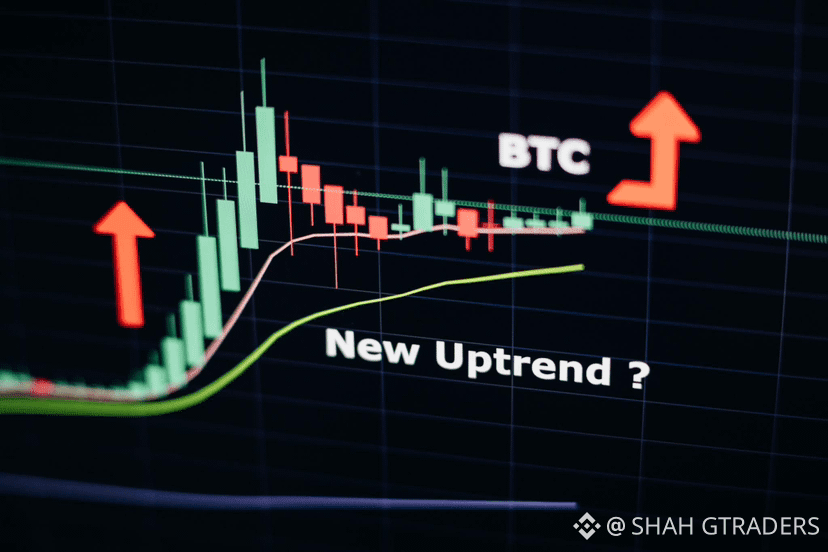
Market Outlook (19 June 2026):
Bitcoin is trading under pressure around the $62k–$63k area after recent weakness in the crypto market.
The main reason is uncertainty about future U.S. interest rates and weaker institutional buying activity.
Short-term momentum remains cautious, but $BTC is still holding above the important $60,000 psychological support zone.
Key Levels
🟢 Support: $60,000 – $62,000
🔵 Resistance: $64,000 – $65,000
🚀 Bullish breakout above $65,000 could target higher levels.
⚠️ A break below $60,000 may open the door to further downside.
My Technical View
Current trend: Neutral to Bearish
Best approach: Wait for confirmation above $65k before aggressive buying.
For beginners, avoid high leverage futures; focus on risk management.
BTC Signal (Educational Only)
Above $65k = Bullish bias 📈
Below $60k = Bearish bias 📉
This is market analysis, not financial advice. Crypto markets are highly volatile.#YenNears40YearLow #ADNOCResumesOilLoadingInsideHormuz #NasdaqEndsSessionUp2% #AsianStocksHitRecord #BTCBelowMinerProductionCost5Months
{spot}(BTCUSDT)
Market Outlook (19 June 2026):
Bitcoin is trading under pressure around the $62k–$63k area after recent weakness in the crypto market.
The main reason is uncertainty about future U.S. interest rates and weaker institutional buying activity.
Short-term momentum remains cautious, but $BTC is still holding above the important $60,000 psychological support zone.
Key Levels
🟢 Support: $60,000 – $62,000
🔵 Resistance: $64,000 – $65,000
🚀 Bullish breakout above $65,000 could target higher levels.
⚠️ A break below $60,000 may open the door to further downside.
My Technical View
Current trend: Neutral to Bearish
Best approach: Wait for confirmation above $65k before aggressive buying.
For beginners, avoid high leverage futures; focus on risk management.
BTC Signal (Educational Only)
Above $65k = Bullish bias 📈
Below $60k = Bearish bias 📉
This is market analysis, not financial advice. Crypto markets are highly volatile.#YenNears40YearLow #ADNOCResumesOilLoadingInsideHormuz #NasdaqEndsSessionUp2% #AsianStocksHitRecord #BTCBelowMinerProductionCost5Months
Bitcoin is trading under pressure around the $62k–$63k area after recent weakness in the crypto market.
The main reason is uncertainty about future U.S. interest rates and weaker institutional buying activity.
Short-term momentum remains cautious, but $BTC is still holding above the important $60,000 psychological support zone.
Key Levels
🟢 Support: $60,000 – $62,000
🔵 Resistance: $64,000 – $65,000
🚀 Bullish breakout above $65,000 could target higher levels.
⚠️ A break below $60,000 may open the door to further downside.
My Technical View
Current trend: Neutral to Bearish
Best approach: Wait for confirmation above $65k before aggressive buying.
For beginners, avoid high leverage futures; focus on risk management.
BTC Signal (Educational Only)
Above $65k = Bullish bias 📈
Below $60k = Bearish bias 📉
This is market analysis, not financial advice. Crypto markets are highly volatile.#YenNears40YearLow #ADNOCResumesOilLoadingInsideHormuz #NasdaqEndsSessionUp2% #AsianStocksHitRecord #BTCBelowMinerProductionCost5Months
1
1
88

·
--
Bearish
$SPY Down #Alert🔴
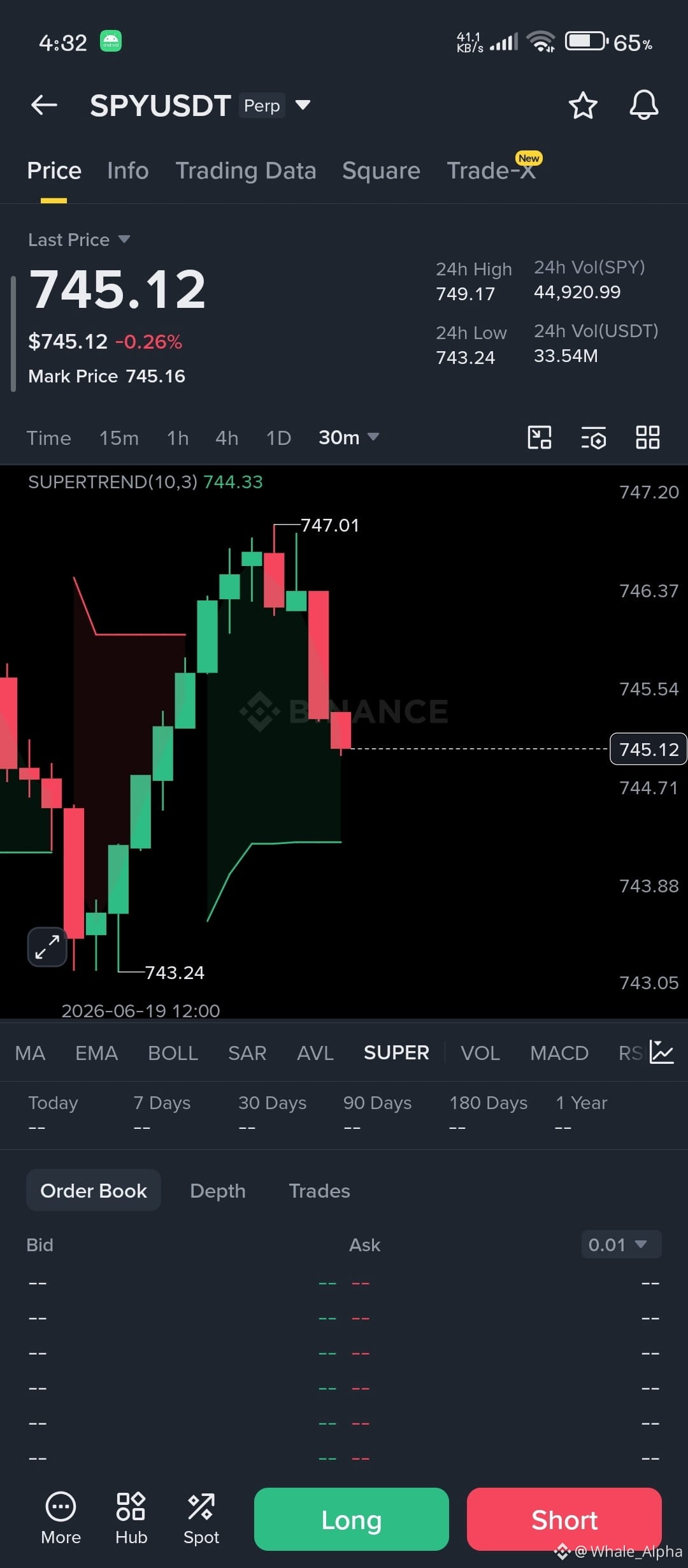
🔥 Price hits extreme overextended buying exhaustion after sharply rejecting from the 747.01 local peak—secure your short entry before the dump accelerates
{future}(SPYUSDT)
📉💥
📍 Entry: 745.12 — 746.50
🛑 SL: 747.20
🎯 TP1: 744.33
🎯 TP2: 743.24
🎯 TP3: 741.50
🎯 TP4: 739.00
Technical View: In file SPY/USDT Perpetual on the 30m frame exhibits a clear rejection profile after its recent upward markup sequence aggressively topped out precisely at the 747.01 structural resistance ceiling. The asset immediately encountered overhead distribution pressure, carving out a sharp bearish retracement candle. While the tracking Supertrend support baseline currently sits right below the live price action at 744.33, the intense velocity of the preceding rejection heavily favors a sustained downside continuation. If buyers fail to immediately defend this local 744.33 trendline, it will quickly trigger automated downward sell loops straight back through the localized low at 743.24 to aggressively test deeper historical discount floors.
#Write2Earn #YenNears40YearLow #NasdaqEndsSessionUp2% #ADNOCResumesOilLoadingInsideHormuz $HEI
{future}(HEIUSDT)
$RE
$SPY Down #Alert🔴
🔥 Price hits extreme overextended buying exhaustion after sharply rejecting from the 747.01 local peak—secure your short entry before the dump accelerates
📉💥
📍 Entry: 745.12 — 746.50
🛑 SL: 747.20
🎯 TP1: 744.33
🎯 TP2: 743.24
🎯 TP3: 741.50
🎯 TP4: 739.00
Technical View: In file SPY/USDT Perpetual on the 30m frame exhibits a clear rejection profile after its recent upward markup sequence aggressively topped out precisely at the 747.01 structural resistance ceiling. The asset immediately encountered overhead distribution pressure, carving out a sharp bearish retracement candle. While the tracking Supertrend support baseline currently sits right below the live price action at 744.33, the intense velocity of the preceding rejection heavily favors a sustained downside continuation. If buyers fail to immediately defend this local 744.33 trendline, it will quickly trigger automated downward sell loops straight back through the localized low at 743.24 to aggressively test deeper historical discount floors.
#Write2Earn #YenNears40YearLow #NasdaqEndsSessionUp2% #ADNOCResumesOilLoadingInsideHormuz $HEI
$RE
🔥 Price hits extreme overextended buying exhaustion after sharply rejecting from the 747.01 local peak—secure your short entry before the dump accelerates
📉💥
📍 Entry: 745.12 — 746.50
🛑 SL: 747.20
🎯 TP1: 744.33
🎯 TP2: 743.24
🎯 TP3: 741.50
🎯 TP4: 739.00
Technical View: In file SPY/USDT Perpetual on the 30m frame exhibits a clear rejection profile after its recent upward markup sequence aggressively topped out precisely at the 747.01 structural resistance ceiling. The asset immediately encountered overhead distribution pressure, carving out a sharp bearish retracement candle. While the tracking Supertrend support baseline currently sits right below the live price action at 744.33, the intense velocity of the preceding rejection heavily favors a sustained downside continuation. If buyers fail to immediately defend this local 744.33 trendline, it will quickly trigger automated downward sell loops straight back through the localized low at 743.24 to aggressively test deeper historical discount floors.
#Write2Earn #YenNears40YearLow #NasdaqEndsSessionUp2% #ADNOCResumesOilLoadingInsideHormuz $HEI
$RE
2
237

·
--
Bullish
$ZEREBRO
LONG SIGNAL | VIP CONVICTION
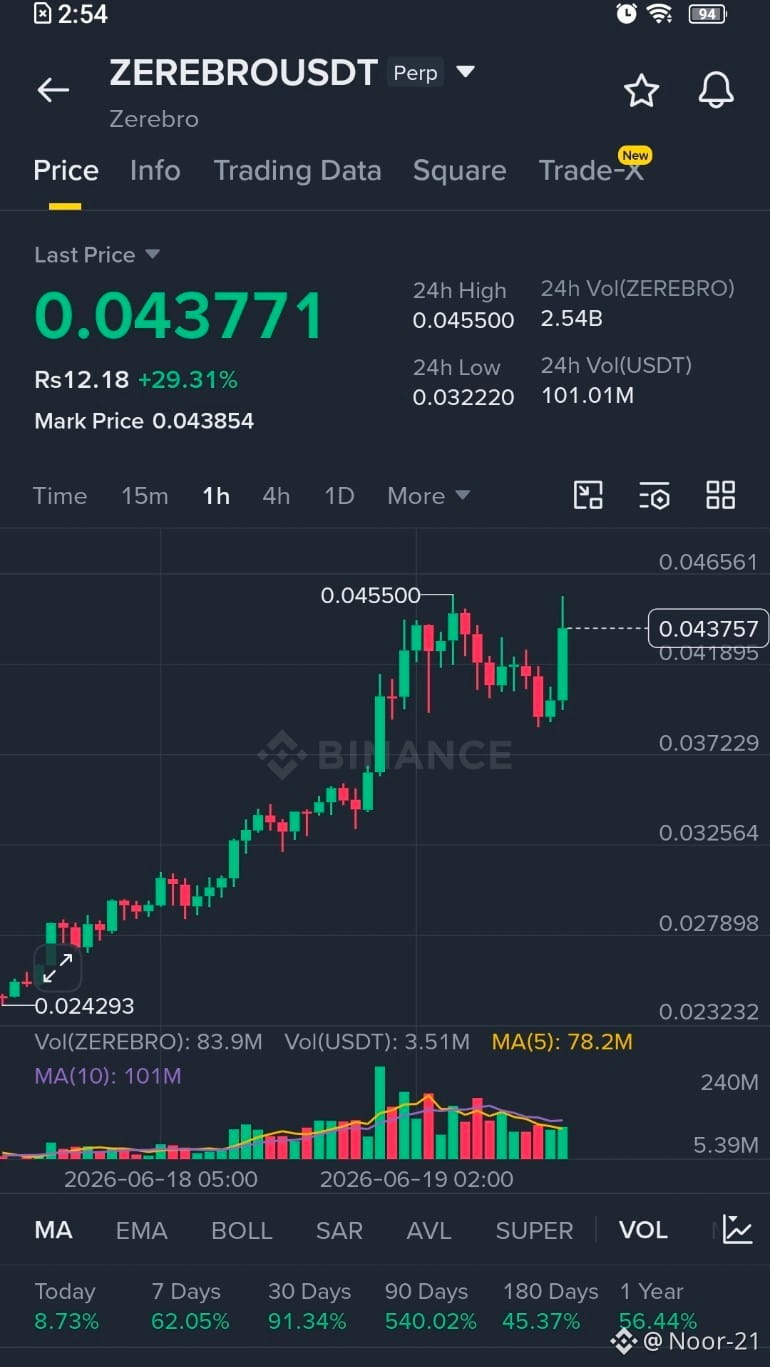
Monster breakout continuing. Price rejecting 24H high with volume surging — 2.54B traded. Structure coiling for next leg up after holding 0.0418 support.
EP: 0.0437
TP1: 0.0480
TP2: 0.0520
TP3: 0.0580
SL: 0.0400
90-day gain of 540% confirms parabolic trend. Pullback to entry offers premium risk-reward. Break below 0.0400 signals weakness.
Risk 2% per trade.
$ZEREBRO
#NasdaqEndsSessionUp2% #ADNOCResumesOilLoadingInsideHormuz
{future}(ZEREBROUSDT)
$ZEREBRO
LONG SIGNAL | VIP CONVICTION
Monster breakout continuing. Price rejecting 24H high with volume surging — 2.54B traded. Structure coiling for next leg up after holding 0.0418 support.
EP: 0.0437
TP1: 0.0480
TP2: 0.0520
TP3: 0.0580
SL: 0.0400
90-day gain of 540% confirms parabolic trend. Pullback to entry offers premium risk-reward. Break below 0.0400 signals weakness.
Risk 2% per trade.
$ZEREBRO
#NasdaqEndsSessionUp2% #ADNOCResumesOilLoadingInsideHormuz
LONG SIGNAL | VIP CONVICTION
Monster breakout continuing. Price rejecting 24H high with volume surging — 2.54B traded. Structure coiling for next leg up after holding 0.0418 support.
EP: 0.0437
TP1: 0.0480
TP2: 0.0520
TP3: 0.0580
SL: 0.0400
90-day gain of 540% confirms parabolic trend. Pullback to entry offers premium risk-reward. Break below 0.0400 signals weakness.
Risk 2% per trade.
$ZEREBRO
#NasdaqEndsSessionUp2% #ADNOCResumesOilLoadingInsideHormuz
91

·
--
Bearish
$INJ
{spot}(INJUSDT)
Trede now👆👆👆👆👆
l USDT - Trade Setup
SHORT SCENARIO
Entry: 5.110664 - 5.157252
SL: 5.357583
TP: 4.966239 / 4.854427 / 4.686708
Reason: SHORT setup has the better momentum score, with 4h still supportive.
#ECBWunschCallsForJulyHikeIfDataWeakens #EmergingMarketStocksHitRecordHigh #YenNears40YearLow #ADNOCResumesOilLoadingInsideHormuz #AsianStocksHitRecord $RE
{spot}(REUSDT)
$POL
$INJ
Trede now👆👆👆👆👆
l USDT - Trade Setup
SHORT SCENARIO
Entry: 5.110664 - 5.157252
SL: 5.357583
TP: 4.966239 / 4.854427 / 4.686708
Reason: SHORT setup has the better momentum score, with 4h still supportive.
#ECBWunschCallsForJulyHikeIfDataWeakens #EmergingMarketStocksHitRecordHigh #YenNears40YearLow #ADNOCResumesOilLoadingInsideHormuz #AsianStocksHitRecord $RE
$POL
Trede now👆👆👆👆👆
l USDT - Trade Setup
SHORT SCENARIO
Entry: 5.110664 - 5.157252
SL: 5.357583
TP: 4.966239 / 4.854427 / 4.686708
Reason: SHORT setup has the better momentum score, with 4h still supportive.
#ECBWunschCallsForJulyHikeIfDataWeakens #EmergingMarketStocksHitRecordHigh #YenNears40YearLow #ADNOCResumesOilLoadingInsideHormuz #AsianStocksHitRecord $RE
$POL
34
·
--
Bullish
$BICO
LONG SIGNAL | VIP CONVICTION
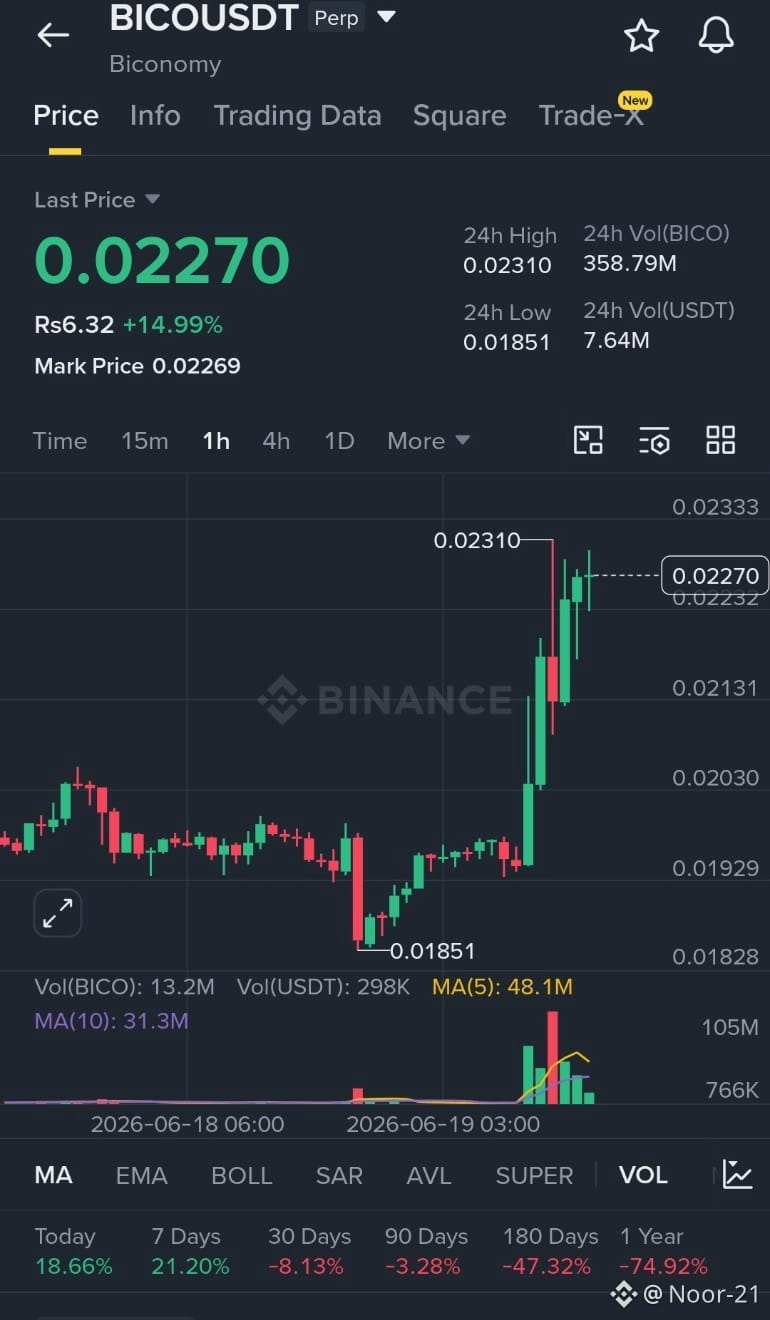
Breakout retest confirming. Price holding above 0.0225 after rejecting 24H low — volume expanding on recovery. MA(10) flipping support.
EP: 0.0227
TP1: 0.0245
TP2: 0.0265
TP3: 0.0285
SL: 0.0212
7-day +21% momentum intact. Stop below structure.
Risk 2% per trade.
$BICO
#NasdaqEndsSessionUp2% #ADNOCResumesOilLoadingInsideHormuz
{future}(BICOUSDT)
$BICO
LONG SIGNAL | VIP CONVICTION
Breakout retest confirming. Price holding above 0.0225 after rejecting 24H low — volume expanding on recovery. MA(10) flipping support.
EP: 0.0227
TP1: 0.0245
TP2: 0.0265
TP3: 0.0285
SL: 0.0212
7-day +21% momentum intact. Stop below structure.
Risk 2% per trade.
$BICO
#NasdaqEndsSessionUp2% #ADNOCResumesOilLoadingInsideHormuz
LONG SIGNAL | VIP CONVICTION
Breakout retest confirming. Price holding above 0.0225 after rejecting 24H low — volume expanding on recovery. MA(10) flipping support.
EP: 0.0227
TP1: 0.0245
TP2: 0.0265
TP3: 0.0285
SL: 0.0212
7-day +21% momentum intact. Stop below structure.
Risk 2% per trade.
$BICO
#NasdaqEndsSessionUp2% #ADNOCResumesOilLoadingInsideHormuz
14

·
--
Bullish
Breaking: The dollar is shaking up the markets with its strong gains
Interest rates ignite the biggest wave of bets in months
- Forex traders, including hedge funds, are ramping up their bets on the continued rise of the US dollar following the hawkish decision from the Federal Reserve this week, which boosted expectations of keeping US interest rates elevated or even hiking them in the near term.
According to market participants, leveraged funds started buying options contracts on Wednesday that give them the right to capitalize on the dollar's rise, which are instruments that gain value as the dollar continues to climb against major currencies.#US301ProbeOnGermanyDrugPricing #ECBWunschCallsForJulyHikeIfDataWeakens #EmergingMarketStocksHitRecordHigh #YenNears40YearLow #ADNOCResumesOilLoadingInsideHormuz $$BTC
{future}(BTCUSDT)
Breaking: The dollar is shaking up the markets with its strong gains
Interest rates ignite the biggest wave of bets in months
- Forex traders, including hedge funds, are ramping up their bets on the continued rise of the US dollar following the hawkish decision from the Federal Reserve this week, which boosted expectations of keeping US interest rates elevated or even hiking them in the near term.
According to market participants, leveraged funds started buying options contracts on Wednesday that give them the right to capitalize on the dollar's rise, which are instruments that gain value as the dollar continues to climb against major currencies.#US301ProbeOnGermanyDrugPricing #ECBWunschCallsForJulyHikeIfDataWeakens #EmergingMarketStocksHitRecordHigh #YenNears40YearLow #ADNOCResumesOilLoadingInsideHormuz $$BTC
Interest rates ignite the biggest wave of bets in months
- Forex traders, including hedge funds, are ramping up their bets on the continued rise of the US dollar following the hawkish decision from the Federal Reserve this week, which boosted expectations of keeping US interest rates elevated or even hiking them in the near term.
According to market participants, leveraged funds started buying options contracts on Wednesday that give them the right to capitalize on the dollar's rise, which are instruments that gain value as the dollar continues to climb against major currencies.#US301ProbeOnGermanyDrugPricing #ECBWunschCallsForJulyHikeIfDataWeakens #EmergingMarketStocksHitRecordHigh #YenNears40YearLow #ADNOCResumesOilLoadingInsideHormuz $$BTC

60
Log in to explore more content
Join global crypto users on Binance Square
⚡️ Get latest and useful information about crypto.
💬 Trusted by the world’s largest crypto exchange.
👍 Discover real insights from verified creators.
Email / Phone number
Trending Topics
1
#BitcoinReboundsTo$79K
14,786 views
141 Discussing
2
#SouthKoreaCryptoTaxDelayPetitionTops50000
1,216 views
75 Discussing
3
#SolanaTransactionV1GoesLiveOnMainnet
675 views
53 Discussing
4
#RussianCentralBankFlagsCryptoAsFinancialRisk
2,402 views
105 Discussing
5
#GrayscalePutsXRPAt26.11%InAdvisorPortfolio
7,275 views
189 Discussing
6
#PhiladelphiaSemiconductorIndexFalls5.9%
3,178 views
116 Discussing
7
#SECChairUrgesCongressToAdvanceClarityAct
7,381 views
114 Discussing
8
#FedHikeOddsRiseTo89%
91,510 views
1,125 Discussing
9
#RLUSDSupplyHitsRecord$2.442B
6,909 views
66 Discussing
10
#AvalancheIntegratesIntoUAEPassDigitalVault
81,137 views
1,044 Discussing