
#restaking
restaking
723,146 views
2,558 සාකච්ඡා කරමින්
උණුසුම්
නවතම

·
--
පරිවර්තනය බලන්න
"Free yield" should always make you ask what's being bundled underneath it.
Restaking tokens like eETH look like a simple yield stack — base $ETH staking plus a bonus from securing external networks. But look at what's actually nested inside: your ETH's fate now depends on Ether.fi's contract integrity, plus EigenLayer's, plus every individual AVS (Actively Validated Service) it's plugged into. If any single one of those external networks suffers a bad validator sync or a critical exploit, your underlying ETH can get slashed — even if you did everything right on Ethereum itself.
That's structurally the same problem 2008-era CDOs had: bundle enough separately-rated risks together and repackage them as one clean product, and the product looks safer than the sum of its parts actually is.
Bias: restaking yield should be priced as compensation for multi-protocol tail risk, not treated as a free bonus. Before chasing the extra APY — do you actually know how many external contracts your ETH is now exposed to? #restaking
"Free yield" should always make you ask what's being bundled underneath it.
Restaking tokens like eETH look like a simple yield stack — base $ETH staking plus a bonus from securing external networks. But look at what's actually nested inside: your ETH's fate now depends on Ether.fi's contract integrity, plus EigenLayer's, plus every individual AVS (Actively Validated Service) it's plugged into. If any single one of those external networks suffers a bad validator sync or a critical exploit, your underlying ETH can get slashed — even if you did everything right on Ethereum itself.
That's structurally the same problem 2008-era CDOs had: bundle enough separately-rated risks together and repackage them as one clean product, and the product looks safer than the sum of its parts actually is.
Bias: restaking yield should be priced as compensation for multi-protocol tail risk, not treated as a free bonus. Before chasing the extra APY — do you actually know how many external contracts your ETH is now exposed to? #restaking
Restaking tokens like eETH look like a simple yield stack — base $ETH staking plus a bonus from securing external networks. But look at what's actually nested inside: your ETH's fate now depends on Ether.fi's contract integrity, plus EigenLayer's, plus every individual AVS (Actively Validated Service) it's plugged into. If any single one of those external networks suffers a bad validator sync or a critical exploit, your underlying ETH can get slashed — even if you did everything right on Ethereum itself.
That's structurally the same problem 2008-era CDOs had: bundle enough separately-rated risks together and repackage them as one clean product, and the product looks safer than the sum of its parts actually is.
Bias: restaking yield should be priced as compensation for multi-protocol tail risk, not treated as a free bonus. Before chasing the extra APY — do you actually know how many external contracts your ETH is now exposed to? #restaking
81

·
--
පරිවර්තනය බලන්න
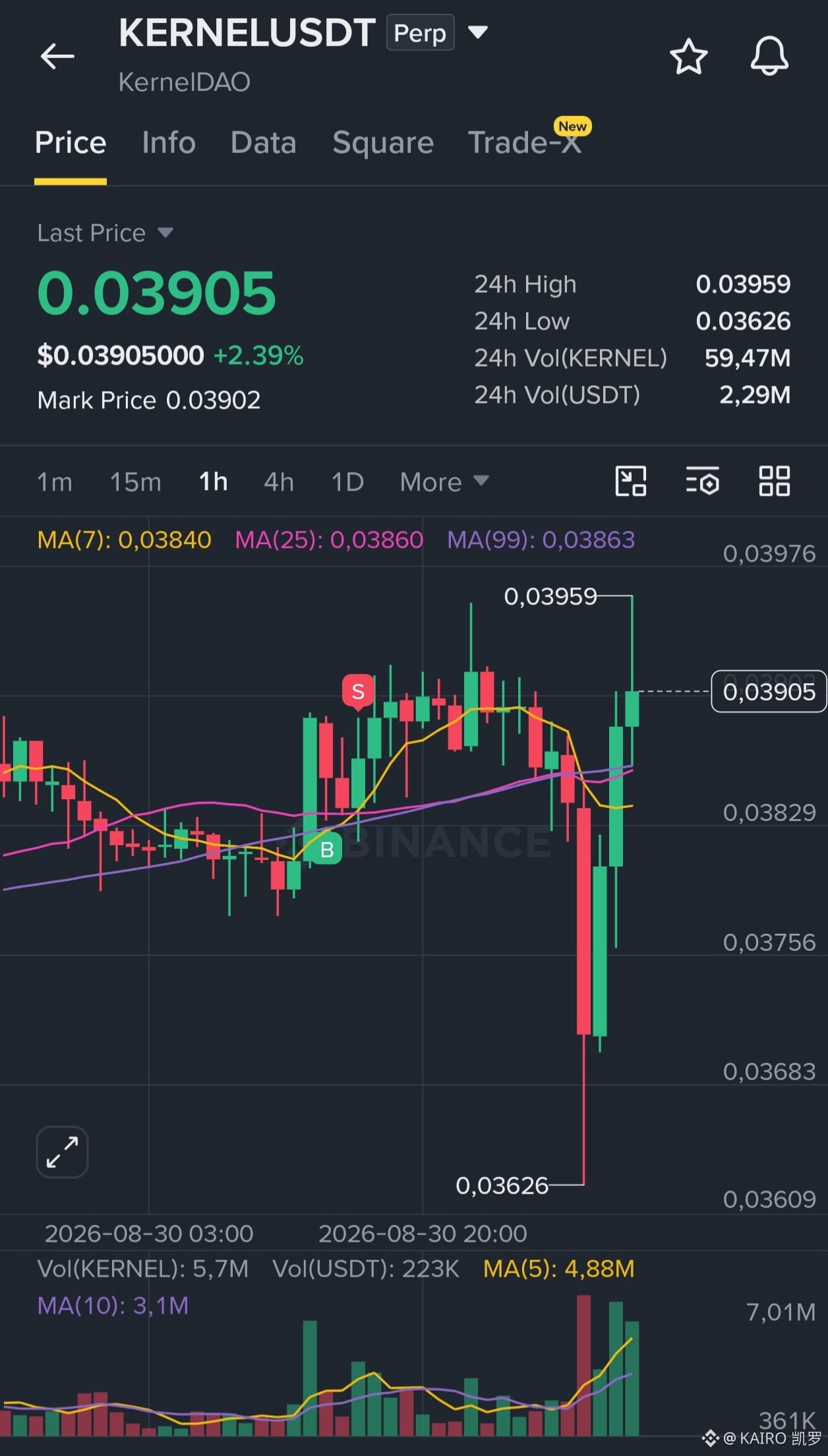
$KERNEL /USDT LONG 🔵
$KERNEL is a low-cap restaking & DeFi play 📊 powering KernelDAO across Ethereum and BNB Chain, with ~$11M market cap and ~$4.2M daily volume ⚡
$KERNEL is reclaiming the $0.039 area after bouncing from its August low, with the restaking narrative supporting a potential continuation 🧭
🟢 Buyzone: 0.03905
🔴 Stoploss: 0.03530
🎯 Target 1: 0.04100
🎯 Target 2: 0.04350
🎯 Target 3: 0.04800
⚠️ Risk: FOMO — don't chase if price spikes too fast.
Not financial advice and not a recommendation to buy or sell. Crypto is highly risky, DYOR and you are solely responsible. No coin promotion.
#kernel #restaking #DeFi #Write2Earn!
$KERNEL /USDT LONG 🔵
$KERNEL is a low-cap restaking & DeFi play 📊 powering KernelDAO across Ethereum and BNB Chain, with ~$11M market cap and ~$4.2M daily volume ⚡
$KERNEL is reclaiming the $0.039 area after bouncing from its August low, with the restaking narrative supporting a potential continuation 🧭
🟢 Buyzone: 0.03905
🔴 Stoploss: 0.03530
🎯 Target 1: 0.04100
🎯 Target 2: 0.04350
🎯 Target 3: 0.04800
⚠️ Risk: FOMO — don't chase if price spikes too fast.
Not financial advice and not a recommendation to buy or sell. Crypto is highly risky, DYOR and you are solely responsible. No coin promotion.
#kernel #restaking #DeFi #Write2Earn!
$KERNEL is a low-cap restaking & DeFi play 📊 powering KernelDAO across Ethereum and BNB Chain, with ~$11M market cap and ~$4.2M daily volume ⚡
$KERNEL is reclaiming the $0.039 area after bouncing from its August low, with the restaking narrative supporting a potential continuation 🧭
🟢 Buyzone: 0.03905
🔴 Stoploss: 0.03530
🎯 Target 1: 0.04100
🎯 Target 2: 0.04350
🎯 Target 3: 0.04800
⚠️ Risk: FOMO — don't chase if price spikes too fast.
Not financial advice and not a recommendation to buy or sell. Crypto is highly risky, DYOR and you are solely responsible. No coin promotion.
#kernel #restaking #DeFi #Write2Earn!
1
7
208

·
--
පරිවර්තනය බලන්න
🔥 $MAGMA — Restaking Narrative Ignites: +17.6% in 24 Hours
Magma ($MAGMA), the Mantle-native liquid restaking protocol, is one of the standout movers on August 28, 2026, as restaking continues to dominate DeFi narratives.
📊 Live Market Snapshot (Binance Futures | 03:42 UTC)
• Price: $0.3533
• 24h Change: +17.60% 🟢
• 24h High / Low: $0.3846 / $0.2833
• 24h Volume: ~270.95M MAGMA ($91.4M notional)
• Open Interest: ~21.7M MAGMA
📈 Today's Market Narrative
Restaking protocols are capturing fresh capital flows as yields on vanilla staking compress. MAGMA's 24h candle shows a powerful breakout from the $0.30 resistance band — volume surged to $93.7M yesterday, confirming strong participation. The move aligns with broader DeFi rotation into yield-amplification protocols, with Mantle ecosystem tokens outperforming on sustained TVL growth.
🛡️ Key Technical Levels
Support:
• S1: $0.3360 — today's intraday low / breakout zone
• S2: $0.2994 — yesterday's close / consolidation base
Resistance:
• R1: $0.3846 — today's swing high
• R2: $0.4200 — psychological level & Fibonacci extension target
⚠️ Main Risk
Restaking tokens carry layered smart-contract risk: slashing events or protocol exploits can cascade rapidly. If broader market sentiment reverses, leveraged altcoin positions can see swift 20–30% drawdowns. Always size positions accordingly and use stop-losses.
📢 Quick Poll — What's your $MAGMA play this week?
A) 🟢 Buying the breakout — targeting $0.42+
B) ⏳ Waiting for a retest of $0.33 before entering
C) 🔴 Taking profits here — looks overextended short-term
Drop your vote below 👇 and share your thesis!
#MAGMA #Restaking #BinanceSquare
🔥 $MAGMA — Restaking Narrative Ignites: +17.6% in 24 Hours
Magma ($MAGMA ), the Mantle-native liquid restaking protocol, is one of the standout movers on August 28, 2026, as restaking continues to dominate DeFi narratives.
📊 Live Market Snapshot (Binance Futures | 03:42 UTC)
• Price: $0.3533
• 24h Change: +17.60% 🟢
• 24h High / Low: $0.3846 / $0.2833
• 24h Volume: ~270.95M MAGMA ($91.4M notional)
• Open Interest: ~21.7M MAGMA
📈 Today's Market Narrative
Restaking protocols are capturing fresh capital flows as yields on vanilla staking compress. MAGMA's 24h candle shows a powerful breakout from the $0.30 resistance band — volume surged to $93.7M yesterday, confirming strong participation. The move aligns with broader DeFi rotation into yield-amplification protocols, with Mantle ecosystem tokens outperforming on sustained TVL growth.
🛡️ Key Technical Levels
Support:
• S1: $0.3360 — today's intraday low / breakout zone
• S2: $0.2994 — yesterday's close / consolidation base
Resistance:
• R1: $0.3846 — today's swing high
• R2: $0.4200 — psychological level & Fibonacci extension target
⚠️ Main Risk
Restaking tokens carry layered smart-contract risk: slashing events or protocol exploits can cascade rapidly. If broader market sentiment reverses, leveraged altcoin positions can see swift 20–30% drawdowns. Always size positions accordingly and use stop-losses.
📢 Quick Poll — What's your $MAGMA play this week?
A) 🟢 Buying the breakout — targeting $0.42+
B) ⏳ Waiting for a retest of $0.33 before entering
C) 🔴 Taking profits here — looks overextended short-term
Drop your vote below 👇 and share your thesis!
#MAGMA #Restaking #BinanceSquare
Magma ($MAGMA ), the Mantle-native liquid restaking protocol, is one of the standout movers on August 28, 2026, as restaking continues to dominate DeFi narratives.
📊 Live Market Snapshot (Binance Futures | 03:42 UTC)
• Price: $0.3533
• 24h Change: +17.60% 🟢
• 24h High / Low: $0.3846 / $0.2833
• 24h Volume: ~270.95M MAGMA ($91.4M notional)
• Open Interest: ~21.7M MAGMA
📈 Today's Market Narrative
Restaking protocols are capturing fresh capital flows as yields on vanilla staking compress. MAGMA's 24h candle shows a powerful breakout from the $0.30 resistance band — volume surged to $93.7M yesterday, confirming strong participation. The move aligns with broader DeFi rotation into yield-amplification protocols, with Mantle ecosystem tokens outperforming on sustained TVL growth.
🛡️ Key Technical Levels
Support:
• S1: $0.3360 — today's intraday low / breakout zone
• S2: $0.2994 — yesterday's close / consolidation base
Resistance:
• R1: $0.3846 — today's swing high
• R2: $0.4200 — psychological level & Fibonacci extension target
⚠️ Main Risk
Restaking tokens carry layered smart-contract risk: slashing events or protocol exploits can cascade rapidly. If broader market sentiment reverses, leveraged altcoin positions can see swift 20–30% drawdowns. Always size positions accordingly and use stop-losses.
📢 Quick Poll — What's your $MAGMA play this week?
A) 🟢 Buying the breakout — targeting $0.42+
B) ⏳ Waiting for a retest of $0.33 before entering
C) 🔴 Taking profits here — looks overextended short-term
Drop your vote below 👇 and share your thesis!
#MAGMA #Restaking #BinanceSquare
68


$REZ
{future}(REZUSDT)
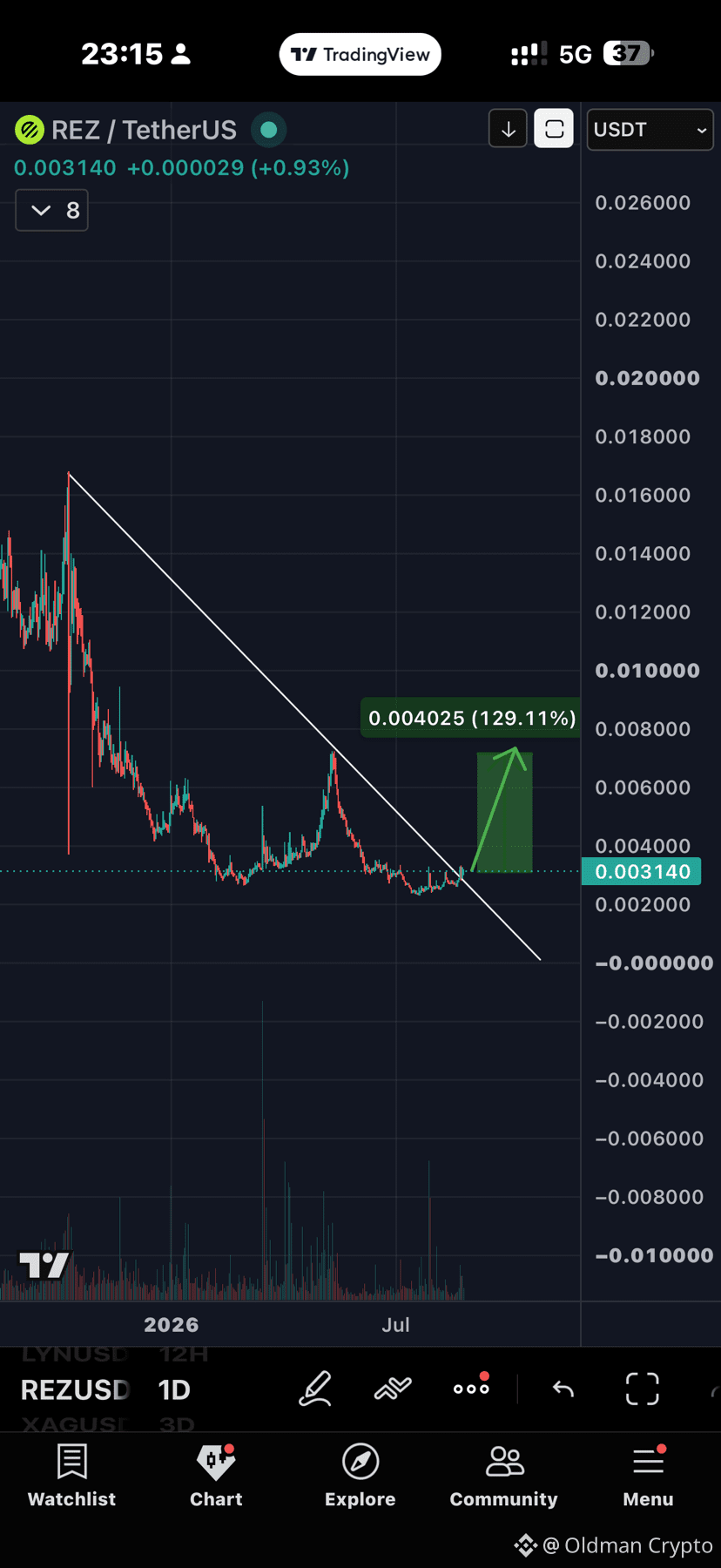
💵 මිල 0.003140, +0.93%, වසර පුරා එය සීමා කර තිබූ ප්රතිරෝධ රේඛාව හරහා ඉදිරියට යමින්
🎯 ඉලක්කයේ ප්රස්තාරය ~0.004025, සනාථ වුණොත් ආසන්න +129%
📊 පරිමාව නිහඬ හා සම්පීඩිතයි, ක්ලැසික් pre-move lowcap සැකසුම 🔋
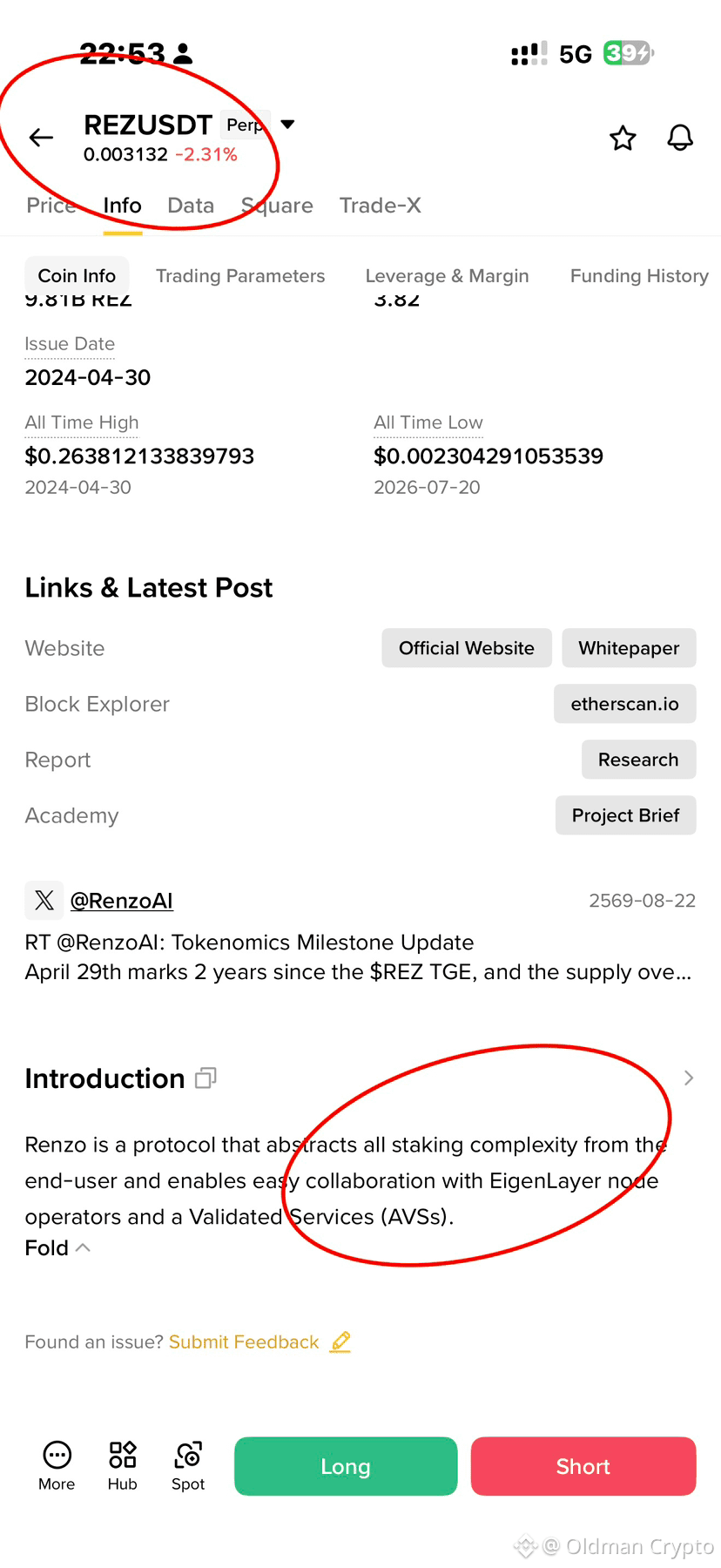
🌊 REZ යනු EigenLayer restaking ටෝකනයක්; පිරිසිදු ETH පරිසර පද්ධති beta එක 💧 ETH පළමුව (👑), පසුව restaking (ETHFI, EIGEN, REZ). කුඩා ~$21M market cap එක = කුඩා ප්රවාහයන් එය දැඩි ලෙස චලනය කරයි. ප්රස්තාරය බොරු කියන්නේ නැහැ 📊
❓ සැබෑ breakout ද? fake out ද? 👇
#REZ #Renzo #Restaking #EigenLayer #Breakout
📌 මගේ පුද්ගලික අදහස් පමණි
මූල්ය උපදෙස් නොවේ හෝ මිලදී ගැනීම/විකිණීම සඳහා නිර්දේශයක් නොවේ. ක්රිප්ටෝ ඉතා අවදානම්; DYOR කරන්න, ඔබම පමණක් වගකිව යුතුය. කිසිදු කාසි ප්රචාරයක් නොවේ.
$REZ
💵 මිල 0.003140, +0.93%, වසර පුරා එය සීමා කර තිබූ ප්රතිරෝධ රේඛාව හරහා ඉදිරියට යමින්
🎯 ඉලක්කයේ ප්රස්තාරය ~0.004025, සනාථ වුණොත් ආසන්න +129%
📊 පරිමාව නිහඬ හා සම්පීඩිතයි, ක්ලැසික් pre-move lowcap සැකසුම 🔋
🌊 REZ යනු EigenLayer restaking ටෝකනයක්; පිරිසිදු ETH පරිසර පද්ධති beta එක 💧 ETH පළමුව (👑), පසුව restaking (ETHFI, EIGEN, REZ). කුඩා ~$21M market cap එක = කුඩා ප්රවාහයන් එය දැඩි ලෙස චලනය කරයි. ප්රස්තාරය බොරු කියන්නේ නැහැ 📊
❓ සැබෑ breakout ද? fake out ද? 👇
#REZ #Renzo #Restaking #EigenLayer #Breakout
📌 මගේ පුද්ගලික අදහස් පමණි
මූල්ය උපදෙස් නොවේ හෝ මිලදී ගැනීම/විකිණීම සඳහා නිර්දේශයක් නොවේ. ක්රිප්ටෝ ඉතා අවදානම්; DYOR කරන්න, ඔබම පමණක් වගකිව යුතුය. කිසිදු කාසි ප්රචාරයක් නොවේ.
💵 මිල 0.003140, +0.93%, වසර පුරා එය සීමා කර තිබූ ප්රතිරෝධ රේඛාව හරහා ඉදිරියට යමින්
🎯 ඉලක්කයේ ප්රස්තාරය ~0.004025, සනාථ වුණොත් ආසන්න +129%
📊 පරිමාව නිහඬ හා සම්පීඩිතයි, ක්ලැසික් pre-move lowcap සැකසුම 🔋
🌊 REZ යනු EigenLayer restaking ටෝකනයක්; පිරිසිදු ETH පරිසර පද්ධති beta එක 💧 ETH පළමුව (👑), පසුව restaking (ETHFI, EIGEN, REZ). කුඩා ~$21M market cap එක = කුඩා ප්රවාහයන් එය දැඩි ලෙස චලනය කරයි. ප්රස්තාරය බොරු කියන්නේ නැහැ 📊
❓ සැබෑ breakout ද? fake out ද? 👇
#REZ #Renzo #Restaking #EigenLayer #Breakout
📌 මගේ පුද්ගලික අදහස් පමණි
මූල්ය උපදෙස් නොවේ හෝ මිලදී ගැනීම/විකිණීම සඳහා නිර්දේශයක් නොවේ. ක්රිප්ටෝ ඉතා අවදානම්; DYOR කරන්න, ඔබම පමණක් වගකිව යුතුය. කිසිදු කාසි ප්රචාරයක් නොවේ.
3
1
16
5.7k
පරිවර්තනය බලන්න
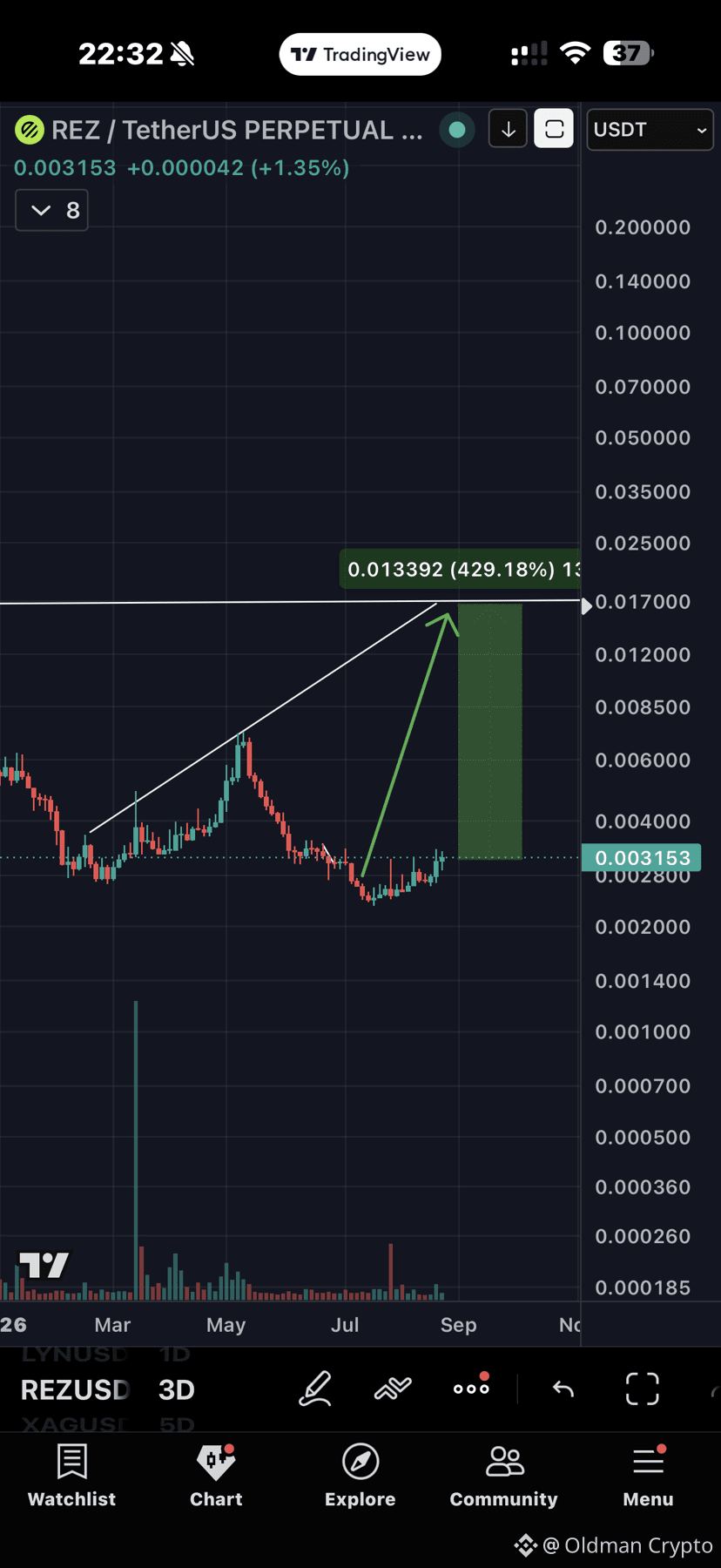
🚀 $REZ bouncing off the floor and the restaking narrative is waking up 🔋
📊 The numbers:
💵 Price around $0.0025, sitting roughly 16 to 20% above its all-time low from July
🧮 Market cap only ~$21M, ranked near #568, this is a deep lowcap
📉 Down ~99% from the $0.264 ATH (April 2024), fully bombed out and basing
🔄 Supply is ~87% circulating (8.7B of 10B), so most of the unlock overhang is already behind it
🔥 Buyback proposal on the table: routing protocol revenue to buy back and burn REZ, a real supply-side tailwind if it sustains
🌊 The thesis is clean: REZ is a liquid restaking token on EigenLayer, pure ETH ecosystem beta 💧 ETH leads 👑 then the restaking and LST names follow (LDO, ETHFI, EIGEN, REZ). On a $21M cap the Vol / MCap ratio means small flow moves it hard. Wave 1 done, Wave 2 loading. Nobody is talking about it right now, and quiet base = accumulation. Slowly but surely 📈
❓ Deep-value restaking laggard, or dead protocol? Where do you stand on REZ? 👇
#REZ #Renzo #Restaking #EigenLayer #Ethereum #Altcoins
📌 Sharing personal opinions only
not financial advice or a recommendation to buy/sell. Crypto is highly risky; DYOR and you are solely responsible. No coin promotion.
{future}(REZUSDT)
🚀 $REZ bouncing off the floor and the restaking narrative is waking up 🔋
📊 The numbers:
💵 Price around $0.0025, sitting roughly 16 to 20% above its all-time low from July
🧮 Market cap only ~$21M, ranked near #568, this is a deep lowcap
📉 Down ~99% from the $0.264 ATH (April 2024), fully bombed out and basing
🔄 Supply is ~87% circulating (8.7B of 10B), so most of the unlock overhang is already behind it
🔥 Buyback proposal on the table: routing protocol revenue to buy back and burn REZ, a real supply-side tailwind if it sustains
🌊 The thesis is clean: REZ is a liquid restaking token on EigenLayer, pure ETH ecosystem beta 💧 ETH leads 👑 then the restaking and LST names follow (LDO, ETHFI, EIGEN, REZ). On a $21M cap the Vol / MCap ratio means small flow moves it hard. Wave 1 done, Wave 2 loading. Nobody is talking about it right now, and quiet base = accumulation. Slowly but surely 📈
❓ Deep-value restaking laggard, or dead protocol? Where do you stand on REZ? 👇
#REZ #Renzo #Restaking #EigenLayer #Ethereum #Altcoins
📌 Sharing personal opinions only
not financial advice or a recommendation to buy/sell. Crypto is highly risky; DYOR and you are solely responsible. No coin promotion.
📊 The numbers:
💵 Price around $0.0025, sitting roughly 16 to 20% above its all-time low from July
🧮 Market cap only ~$21M, ranked near #568, this is a deep lowcap
📉 Down ~99% from the $0.264 ATH (April 2024), fully bombed out and basing
🔄 Supply is ~87% circulating (8.7B of 10B), so most of the unlock overhang is already behind it
🔥 Buyback proposal on the table: routing protocol revenue to buy back and burn REZ, a real supply-side tailwind if it sustains
🌊 The thesis is clean: REZ is a liquid restaking token on EigenLayer, pure ETH ecosystem beta 💧 ETH leads 👑 then the restaking and LST names follow (LDO, ETHFI, EIGEN, REZ). On a $21M cap the Vol / MCap ratio means small flow moves it hard. Wave 1 done, Wave 2 loading. Nobody is talking about it right now, and quiet base = accumulation. Slowly but surely 📈
❓ Deep-value restaking laggard, or dead protocol? Where do you stand on REZ? 👇
#REZ #Renzo #Restaking #EigenLayer #Ethereum #Altcoins
📌 Sharing personal opinions only
not financial advice or a recommendation to buy/sell. Crypto is highly risky; DYOR and you are solely responsible. No coin promotion.
3
1
12
3.9k

·
--
පරිවර්තනය බලන්න
Everyone expects the $ETH restaking craze to be a simple yield-farming buffet.
It’s actually a five-team scramble where you’re burying collateral under layers of hidden risk. Watch for the moment your AVS security model stops protecting the network and starts holding up a house of cards. This isn't financial advice.
$ETH $BTC #restaking #defi #Altcoins
Everyone expects the $ETH restaking craze to be a simple yield-farming buffet.
It’s actually a five-team scramble where you’re burying collateral under layers of hidden risk. Watch for the moment your AVS security model stops protecting the network and starts holding up a house of cards. This isn't financial advice.
$ETH $BTC #restaking #defi #Altcoins
It’s actually a five-team scramble where you’re burying collateral under layers of hidden risk. Watch for the moment your AVS security model stops protecting the network and starts holding up a house of cards. This isn't financial advice.
$ETH $BTC #restaking #defi #Altcoins
61

·
--
උසබ තත්ත්වය
🚀 EIGEN සමඟින් Ethereum පරිමාණය ඉහළට: Restaking හි බලය
EigenLayer ප්රොටෝකෝලය restaking යන සංකල්පය හඳුන්වා දීමෙන් Ethereum පරිසර පද්ධතිය සුවිශේෂී ලෙස වෙනස් කර ඇත. මේගඟින් validators හට ඔවුන්ගේ stake කර ඇති ETH භාවිතා කරමින් එකවරම විවිධ අතිවිශාල decentralised සේවාවන් කිහිපයක් ආරක්ෂා කිරීමට හැකි වේ.
එය පරිමාණය (scaling) මෙහෙයවන්නේ කෙසේද:
Shared Security Model: නව ප්රොටෝකෝලයන්ට තමන්ගේම ඉතාමත් resource-heavy validator කට්ටලයක් ස්වාධීනව ආරම්භ කරගැනීමට අවශ්ය වෙනුවට, ඔවුන්ට Ethereum හි දැවැන්ත හා පිහිටුවා ඇති ආර්ථික ආරක්ෂක ස්ථරය සෘජුවම කුලියට ගෙන (rent) භාවිතා කළ හැක.
High-Throughput Data Availability: EigenDA වැනි විසඳුම් මඟින් Layer 2 rollups සඳහා කැපවූ, පිරිවැය-කාර්යක්ෂම දත්ත කළමනාකරණයක් ලබාදේ. දත්ත availability ක්රමය Ethereum හි මූලික consensus වෙතින් වෙන් කිරීමෙන්, rollup පරිසර පද්ධතිය පුරාම transaction throughput ඉතා විශාල ලෙස වැඩි වන අතර ගෑස් ගාස්තුද පහළ යයි.
EIGEN හි විශේෂ භූමිකාව: ETH මගින් යටින් පවතින blockchain consensus ආරක්ෂා කරන අතර, theEIGEN ටෝකනය uniquely අරක්ගෙන ඇත්තේ intersubjective faults හඳුනා ගැනීමටය—ස්වයංක්රීය කේතයක් පමණක් නිවැරදිව තීරණය කළ නොහැකි සංකීර්ණ මානව හා ආර්ථික හැසිරීම්. ජාලය පුළුල් වන විට මේ තීරණාත්මක විශ්වාස හිඩැස පියවයි.
EigenCloud හරහා Utility පුළුල් කිරීම: ප්රොටෝකෝලය තවදුරටත් වැඩි වැඩියෙන් පුළුල් verifiable cloud යටිතල පහසුකම් වෙත විකාශනය වෙමින් පවතින අතර, අති නව දත්ත-බාහිර (off-chain) ගණනය කිරීම් සහ decentralized execution පරිසරයන්ට සහාය දක්වයි. ඒවා next-generation යෙදුම් සවිබල ගන්වයි.
පරිසර පද්ධති අනුකූලතාව: ටෝකනොමික්ස් (tokenomics) අඛණ්ඩව සංශෝධනය කිරීම සහ දක්ෂ operator සහභාගීත්වය හරහා, ආකෘතිය දිගුකාලීන පරිමාණය (scalability), ආරක්ෂාව (security) සහ Ethereum හි decentralization යන අරමුණු සමඟ ආර්ථික පෙළඹවීම් තදින් ගැළපී පවතින බව සහතික කරයි.
$EIGEN
{spot}(EIGENUSDT)
$ETH
{spot}(ETHUSDT)
$INDI.US
{stock_us}(INDI.US)
#EigenLayer #Ethereum #BlockchainScaling #CryptoInsights #Restaking
වියාචනය (Disclaimer): මෙම පෝස්ට් එක තොරතුරු සඳහා පමණි. එය මූල්ය, ආයෝජන හෝ නීතිමය උපදෙස් ලෙස නොසලකන්න. Cryptocurrency ආයෝජන ඉහළ අවදානමක් ඇති අතර මුලධනය අහිමි වීමේ හැකියාවද ඇත. කිසියම් මූල්ය තීරණයක් ගැනීමට පෙර ඔබ විසින්ම ඔබේම පර්යේෂණ කරන්න සහ වෘත්තීය උපදේශකයෙකුගෙන් උපදෙස් ලබාගන්න.
🚀 EIGEN සමඟින් Ethereum පරිමාණය ඉහළට: Restaking හි බලය
EigenLayer ප්රොටෝකෝලය restaking යන සංකල්පය හඳුන්වා දීමෙන් Ethereum පරිසර පද්ධතිය සුවිශේෂී ලෙස වෙනස් කර ඇත. මේගඟින් validators හට ඔවුන්ගේ stake කර ඇති ETH භාවිතා කරමින් එකවරම විවිධ අතිවිශාල decentralised සේවාවන් කිහිපයක් ආරක්ෂා කිරීමට හැකි වේ.
එය පරිමාණය (scaling) මෙහෙයවන්නේ කෙසේද:
Shared Security Model: නව ප්රොටෝකෝලයන්ට තමන්ගේම ඉතාමත් resource-heavy validator කට්ටලයක් ස්වාධීනව ආරම්භ කරගැනීමට අවශ්ය වෙනුවට, ඔවුන්ට Ethereum හි දැවැන්ත හා පිහිටුවා ඇති ආර්ථික ආරක්ෂක ස්ථරය සෘජුවම කුලියට ගෙන (rent) භාවිතා කළ හැක.
High-Throughput Data Availability: EigenDA වැනි විසඳුම් මඟින් Layer 2 rollups සඳහා කැපවූ, පිරිවැය-කාර්යක්ෂම දත්ත කළමනාකරණයක් ලබාදේ. දත්ත availability ක්රමය Ethereum හි මූලික consensus වෙතින් වෙන් කිරීමෙන්, rollup පරිසර පද්ධතිය පුරාම transaction throughput ඉතා විශාල ලෙස වැඩි වන අතර ගෑස් ගාස්තුද පහළ යයි.
EIGEN හි විශේෂ භූමිකාව: ETH මගින් යටින් පවතින blockchain consensus ආරක්ෂා කරන අතර, theEIGEN ටෝකනය uniquely අරක්ගෙන ඇත්තේ intersubjective faults හඳුනා ගැනීමටය—ස්වයංක්රීය කේතයක් පමණක් නිවැරදිව තීරණය කළ නොහැකි සංකීර්ණ මානව හා ආර්ථික හැසිරීම්. ජාලය පුළුල් වන විට මේ තීරණාත්මක විශ්වාස හිඩැස පියවයි.
EigenCloud හරහා Utility පුළුල් කිරීම: ප්රොටෝකෝලය තවදුරටත් වැඩි වැඩියෙන් පුළුල් verifiable cloud යටිතල පහසුකම් වෙත විකාශනය වෙමින් පවතින අතර, අති නව දත්ත-බාහිර (off-chain) ගණනය කිරීම් සහ decentralized execution පරිසරයන්ට සහාය දක්වයි. ඒවා next-generation යෙදුම් සවිබල ගන්වයි.
පරිසර පද්ධති අනුකූලතාව: ටෝකනොමික්ස් (tokenomics) අඛණ්ඩව සංශෝධනය කිරීම සහ දක්ෂ operator සහභාගීත්වය හරහා, ආකෘතිය දිගුකාලීන පරිමාණය (scalability), ආරක්ෂාව (security) සහ Ethereum හි decentralization යන අරමුණු සමඟ ආර්ථික පෙළඹවීම් තදින් ගැළපී පවතින බව සහතික කරයි.
$EIGEN
$ETH
$INDI.US
#EigenLayer #Ethereum #BlockchainScaling #CryptoInsights #Restaking
වියාචනය (Disclaimer): මෙම පෝස්ට් එක තොරතුරු සඳහා පමණි. එය මූල්ය, ආයෝජන හෝ නීතිමය උපදෙස් ලෙස නොසලකන්න. Cryptocurrency ආයෝජන ඉහළ අවදානමක් ඇති අතර මුලධනය අහිමි වීමේ හැකියාවද ඇත. කිසියම් මූල්ය තීරණයක් ගැනීමට පෙර ඔබ විසින්ම ඔබේම පර්යේෂණ කරන්න සහ වෘත්තීය උපදේශකයෙකුගෙන් උපදෙස් ලබාගන්න.
EigenLayer ප්රොටෝකෝලය restaking යන සංකල්පය හඳුන්වා දීමෙන් Ethereum පරිසර පද්ධතිය සුවිශේෂී ලෙස වෙනස් කර ඇත. මේගඟින් validators හට ඔවුන්ගේ stake කර ඇති ETH භාවිතා කරමින් එකවරම විවිධ අතිවිශාල decentralised සේවාවන් කිහිපයක් ආරක්ෂා කිරීමට හැකි වේ.
එය පරිමාණය (scaling) මෙහෙයවන්නේ කෙසේද:
Shared Security Model: නව ප්රොටෝකෝලයන්ට තමන්ගේම ඉතාමත් resource-heavy validator කට්ටලයක් ස්වාධීනව ආරම්භ කරගැනීමට අවශ්ය වෙනුවට, ඔවුන්ට Ethereum හි දැවැන්ත හා පිහිටුවා ඇති ආර්ථික ආරක්ෂක ස්ථරය සෘජුවම කුලියට ගෙන (rent) භාවිතා කළ හැක.
High-Throughput Data Availability: EigenDA වැනි විසඳුම් මඟින් Layer 2 rollups සඳහා කැපවූ, පිරිවැය-කාර්යක්ෂම දත්ත කළමනාකරණයක් ලබාදේ. දත්ත availability ක්රමය Ethereum හි මූලික consensus වෙතින් වෙන් කිරීමෙන්, rollup පරිසර පද්ධතිය පුරාම transaction throughput ඉතා විශාල ලෙස වැඩි වන අතර ගෑස් ගාස්තුද පහළ යයි.
EIGEN හි විශේෂ භූමිකාව: ETH මගින් යටින් පවතින blockchain consensus ආරක්ෂා කරන අතර, theEIGEN ටෝකනය uniquely අරක්ගෙන ඇත්තේ intersubjective faults හඳුනා ගැනීමටය—ස්වයංක්රීය කේතයක් පමණක් නිවැරදිව තීරණය කළ නොහැකි සංකීර්ණ මානව හා ආර්ථික හැසිරීම්. ජාලය පුළුල් වන විට මේ තීරණාත්මක විශ්වාස හිඩැස පියවයි.
EigenCloud හරහා Utility පුළුල් කිරීම: ප්රොටෝකෝලය තවදුරටත් වැඩි වැඩියෙන් පුළුල් verifiable cloud යටිතල පහසුකම් වෙත විකාශනය වෙමින් පවතින අතර, අති නව දත්ත-බාහිර (off-chain) ගණනය කිරීම් සහ decentralized execution පරිසරයන්ට සහාය දක්වයි. ඒවා next-generation යෙදුම් සවිබල ගන්වයි.
පරිසර පද්ධති අනුකූලතාව: ටෝකනොමික්ස් (tokenomics) අඛණ්ඩව සංශෝධනය කිරීම සහ දක්ෂ operator සහභාගීත්වය හරහා, ආකෘතිය දිගුකාලීන පරිමාණය (scalability), ආරක්ෂාව (security) සහ Ethereum හි decentralization යන අරමුණු සමඟ ආර්ථික පෙළඹවීම් තදින් ගැළපී පවතින බව සහතික කරයි.
$EIGEN
$ETH
$INDI.US
#EigenLayer #Ethereum #BlockchainScaling #CryptoInsights #Restaking
වියාචනය (Disclaimer): මෙම පෝස්ට් එක තොරතුරු සඳහා පමණි. එය මූල්ය, ආයෝජන හෝ නීතිමය උපදෙස් ලෙස නොසලකන්න. Cryptocurrency ආයෝජන ඉහළ අවදානමක් ඇති අතර මුලධනය අහිමි වීමේ හැකියාවද ඇත. කිසියම් මූල්ය තීරණයක් ගැනීමට පෙර ඔබ විසින්ම ඔබේම පර්යේෂණ කරන්න සහ වෘත්තීය උපදේශකයෙකුගෙන් උපදෙස් ලබාගන්න.

1.1k
1
48
1.1k

·
--
පරිවර්තනය බලන්න
Restaking Is Quietly Rewiring Crypto Security
For years, security in crypto was siloed. Each chain bootstrapped its own validator set, staked its own tokens, and hoped it was enough. That model worked — until it became a bottleneck. New protocols needed security before they had value. The bootstrapping problem was real.
Restaking flips the model. Instead of building validator sets from scratch, protocols can rent battle-tested economic security from established chains like $ETH. The staked capital is already there — restaking lets it secure multiple systems simultaneously. It is efficient by design.
But efficiency and risk are two sides of the same coin. A validator running restaking commitments across five systems faces slashing exposure across all five. Security amplification is also risk amplification if you are not careful about what you opt into.
The deeper shift is architectural. $DOT pioneered shared security with its parachain model years ago. Now Ethereum is layering restaking natively on top of its base settlement guarantee, while $BNB builds parallel infrastructure through BNB Greenfield and opBNB.
The endgame: security becomes a commodity that the most credibly neutral, most decentralized base layers supply. Winning that competition matters enormously for long-term protocol value.
Restaking is not a feature. It is a structural reordering of where security comes from in crypto.
#Restaking #CryptoSecurity #SharedSecurity #BlockchainInfrastructure #CryptoInsights
Restaking Is Quietly Rewiring Crypto Security
For years, security in crypto was siloed. Each chain bootstrapped its own validator set, staked its own tokens, and hoped it was enough. That model worked — until it became a bottleneck. New protocols needed security before they had value. The bootstrapping problem was real.
Restaking flips the model. Instead of building validator sets from scratch, protocols can rent battle-tested economic security from established chains like $ETH . The staked capital is already there — restaking lets it secure multiple systems simultaneously. It is efficient by design.
But efficiency and risk are two sides of the same coin. A validator running restaking commitments across five systems faces slashing exposure across all five. Security amplification is also risk amplification if you are not careful about what you opt into.
The deeper shift is architectural. $DOT pioneered shared security with its parachain model years ago. Now Ethereum is layering restaking natively on top of its base settlement guarantee, while $BNB builds parallel infrastructure through BNB Greenfield and opBNB.
The endgame: security becomes a commodity that the most credibly neutral, most decentralized base layers supply. Winning that competition matters enormously for long-term protocol value.
Restaking is not a feature. It is a structural reordering of where security comes from in crypto.
#Restaking #CryptoSecurity #SharedSecurity #BlockchainInfrastructure #CryptoInsights
For years, security in crypto was siloed. Each chain bootstrapped its own validator set, staked its own tokens, and hoped it was enough. That model worked — until it became a bottleneck. New protocols needed security before they had value. The bootstrapping problem was real.
Restaking flips the model. Instead of building validator sets from scratch, protocols can rent battle-tested economic security from established chains like $ETH . The staked capital is already there — restaking lets it secure multiple systems simultaneously. It is efficient by design.
But efficiency and risk are two sides of the same coin. A validator running restaking commitments across five systems faces slashing exposure across all five. Security amplification is also risk amplification if you are not careful about what you opt into.
The deeper shift is architectural. $DOT pioneered shared security with its parachain model years ago. Now Ethereum is layering restaking natively on top of its base settlement guarantee, while $BNB builds parallel infrastructure through BNB Greenfield and opBNB.
The endgame: security becomes a commodity that the most credibly neutral, most decentralized base layers supply. Winning that competition matters enormously for long-term protocol value.
Restaking is not a feature. It is a structural reordering of where security comes from in crypto.
#Restaking #CryptoSecurity #SharedSecurity #BlockchainInfrastructure #CryptoInsights
1
48

·
--
පරිවර්තනය බලන්න
Restaking narrative is BACK and ETHFI is leading the charge — up +5.8% with volume surging 1.89x average. When everyone's fearful, the ones running in the opposite direction deserve attention. 🔥
📊 Current Picture:
$0.45, strong uptrend with RSI(4H) at 69.8 — bullish momentum but not yet extreme. Daily RSI at 62.9, still room to run. Price above all key SMAs, structure is clean.
💡 Why This Trade?
Restaking is the next evolution of ETH staking yields. ETHFI is positioned as a core protocol in this space. When narrative + volume + technicals all align, the trend tends to sustain. Scale in on dips.
📋 Trade Plan:
Entry: $0.43 - $0.45 (pullback to SMA25-4H zone)
Stop Loss: $0.40 (below recent base)
TP1: $0.50 | TP2: $0.55
R/R: 1.5
🤔 Is restaking the next big narrative or just hype? Thoughts? 👇
#ETHFI #Restaking #DYOR
⚠️ Not financial advice. Always do your own research and manage risk responsibly.
Restaking narrative is BACK and ETHFI is leading the charge — up +5.8% with volume surging 1.89x average. When everyone's fearful, the ones running in the opposite direction deserve attention. 🔥
📊 Current Picture:
$0.45, strong uptrend with RSI(4H) at 69.8 — bullish momentum but not yet extreme. Daily RSI at 62.9, still room to run. Price above all key SMAs, structure is clean.
💡 Why This Trade?
Restaking is the next evolution of ETH staking yields. ETHFI is positioned as a core protocol in this space. When narrative + volume + technicals all align, the trend tends to sustain. Scale in on dips.
📋 Trade Plan:
Entry: $0.43 - $0.45 (pullback to SMA25-4H zone)
Stop Loss: $0.40 (below recent base)
TP1: $0.50 | TP2: $0.55
R/R: 1.5
🤔 Is restaking the next big narrative or just hype? Thoughts? 👇
#ETHFI #Restaking #DYOR
⚠️ Not financial advice. Always do your own research and manage risk responsibly.
📊 Current Picture:
$0.45, strong uptrend with RSI(4H) at 69.8 — bullish momentum but not yet extreme. Daily RSI at 62.9, still room to run. Price above all key SMAs, structure is clean.
💡 Why This Trade?
Restaking is the next evolution of ETH staking yields. ETHFI is positioned as a core protocol in this space. When narrative + volume + technicals all align, the trend tends to sustain. Scale in on dips.
📋 Trade Plan:
Entry: $0.43 - $0.45 (pullback to SMA25-4H zone)
Stop Loss: $0.40 (below recent base)
TP1: $0.50 | TP2: $0.55
R/R: 1.5
🤔 Is restaking the next big narrative or just hype? Thoughts? 👇
#ETHFI #Restaking #DYOR
⚠️ Not financial advice. Always do your own research and manage risk responsibly.
116

·
--
පරිවර්තනය බලන්න
Menatap masa depan DeFi, Babylon Trustless Bitcoin Vaults hadir sebagai game-changer! 🔥 Dengan memanfaatkan mekanisme restaking yang aman, para HODLer $BTC kini bisa meminjamkan likuiditas tanpa melepas kepemilikan aset. Efisiensi modal? Terasa nyata! 💎 Ini bukan sekadar vault, tapi jembatan menuju yield berkelanjutan. Bagi pemegang jangka panjang, ini kunci untuk membuka potensi idle asset. #baby @BabylonLabs_io $BABY #Bitcoin #DeFi #Restaking
Menatap masa depan DeFi, Babylon Trustless Bitcoin Vaults hadir sebagai game-changer! 🔥 Dengan memanfaatkan mekanisme restaking yang aman, para HODLer $BTC kini bisa meminjamkan likuiditas tanpa melepas kepemilikan aset. Efisiensi modal? Terasa nyata! 💎 Ini bukan sekadar vault, tapi jembatan menuju yield berkelanjutan. Bagi pemegang jangka panjang, ini kunci untuk membuka potensi idle asset. #baby @BabylonLabs_io $BABY #Bitcoin #DeFi #Restaking
10

පරිවර්තනය බලන්න
💎 $ETHFI
{spot}(ETHFIUSDT)
is driving the liquid restaking narrative.
🚀 $EIGEN
{spot}(EIGENUSDT)
continues shaping Ethereum security.
⚡ $PUFFER
{alpha}(560x87d00066cf131ff54b72b134a217d5401e5392b6)
is gaining attention in the staking ecosystem.
#Ethereum #Restaking
💎 $ETHFI
is driving the liquid restaking narrative.
🚀 $EIGEN
continues shaping Ethereum security.
⚡ $PUFFER
is gaining attention in the staking ecosystem.
#Ethereum #Restaking
is driving the liquid restaking narrative.
🚀 $EIGEN
continues shaping Ethereum security.
⚡ $PUFFER
is gaining attention in the staking ecosystem.
#Ethereum #Restaking
36

·
--
පරිවර්තනය බලන්න
#bedrock $BR
🚀 Is $BR the Next Big Liquid Restaking Play? 🚀
With Bedrock 2.0 picking up major steam, the multi-asset liquid restaking protocol is proving it’s more than just a passing trend. Built heavily to maximize yield across the BNB Chain and beyond, Bedrock is tackling DeFi inefficiency head-on.
The fundamentals are locking in nicely:
✅ Robust institutional backing
✅ Seamless security framework
✅ Streamlined yield farming for restaked assets
Keep an eye on $BR as liquid restaking protocols continue to dominate the market narrative this quarter. The momentum is just getting started! 📈
What are your price targets for $BR? Let me know below! 👇@Bedrock #Crypto #DeFi #restaking
#bedrock $BR
🚀 Is $BR the Next Big Liquid Restaking Play? 🚀
With Bedrock 2.0 picking up major steam, the multi-asset liquid restaking protocol is proving it’s more than just a passing trend. Built heavily to maximize yield across the BNB Chain and beyond, Bedrock is tackling DeFi inefficiency head-on.
The fundamentals are locking in nicely:
✅ Robust institutional backing
✅ Seamless security framework
✅ Streamlined yield farming for restaked assets
Keep an eye on $BR as liquid restaking protocols continue to dominate the market narrative this quarter. The momentum is just getting started! 📈
What are your price targets for $BR ? Let me know below! 👇@Bedrock #Crypto #DeFi #restaking
🚀 Is $BR the Next Big Liquid Restaking Play? 🚀
With Bedrock 2.0 picking up major steam, the multi-asset liquid restaking protocol is proving it’s more than just a passing trend. Built heavily to maximize yield across the BNB Chain and beyond, Bedrock is tackling DeFi inefficiency head-on.
The fundamentals are locking in nicely:
✅ Robust institutional backing
✅ Seamless security framework
✅ Streamlined yield farming for restaked assets
Keep an eye on $BR as liquid restaking protocols continue to dominate the market narrative this quarter. The momentum is just getting started! 📈
What are your price targets for $BR ? Let me know below! 👇@Bedrock #Crypto #DeFi #restaking
59

පරිවර්තනය බලන්න
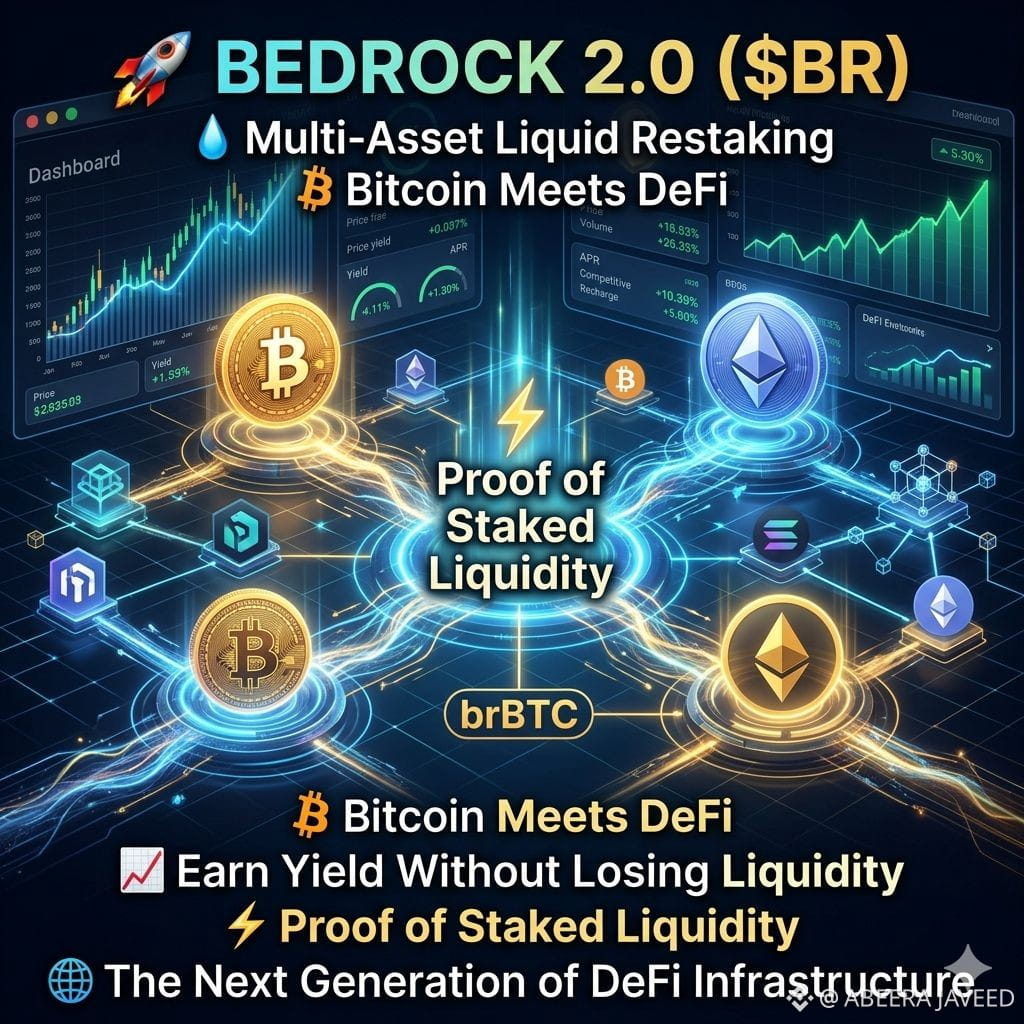
🚀 Bedrock 2.0 ($BR) Is Redefining $DEFI Efficiency
Bedrock 2.0 is introducing a new approach to decentralized finance through its multi-asset liquid restaking model. Instead of locking assets away, users can stake $BTC , $ETH, and other supported assets while still keeping them active across the DeFi ecosystem.
💡 The result?
Enhanced capital efficiency, sustainable yield opportunities, and greater flexibility without sacrificing liquidity.
One of the platform's key innovations is its Proof of Staked Liquidity framework, which directly connects rewards to liquidity participation, creating a more efficient and scalable ecosystem for users.
🔥 Bitcoin's role is evolving too.
With solutions like brBTC, Bitcoin is no longer limited to being a passive store of value. Users can generate yield, participate in governance, earn rewards, and access DeFi opportunities while maintaining exposure to their BTC holdings.
✅ Multi-asset liquid restaking
✅ Enhanced capital efficiency
✅ Active Bitcoin utility in DeFi
✅ Flexible yield generation
Bedrock 2.0 is building infrastructure designed for the next generation of DeFi, where liquidity, rewards, and usability work together seamlessly.
#BlockchainAssocBacks401kCrypto #DeFi #restaking #BTC #ETH $BR
🚀 Bedrock 2.0 ($BR ) Is Redefining $DEFI Efficiency
Bedrock 2.0 is introducing a new approach to decentralized finance through its multi-asset liquid restaking model. Instead of locking assets away, users can stake $BTC , $ETH, and other supported assets while still keeping them active across the DeFi ecosystem.
💡 The result?
Enhanced capital efficiency, sustainable yield opportunities, and greater flexibility without sacrificing liquidity.
One of the platform's key innovations is its Proof of Staked Liquidity framework, which directly connects rewards to liquidity participation, creating a more efficient and scalable ecosystem for users.
🔥 Bitcoin's role is evolving too.
With solutions like brBTC, Bitcoin is no longer limited to being a passive store of value. Users can generate yield, participate in governance, earn rewards, and access DeFi opportunities while maintaining exposure to their BTC holdings.
✅ Multi-asset liquid restaking
✅ Enhanced capital efficiency
✅ Active Bitcoin utility in DeFi
✅ Flexible yield generation
Bedrock 2.0 is building infrastructure designed for the next generation of DeFi, where liquidity, rewards, and usability work together seamlessly.
#BlockchainAssocBacks401kCrypto #DeFi #restaking #BTC #ETH $BR
Bedrock 2.0 is introducing a new approach to decentralized finance through its multi-asset liquid restaking model. Instead of locking assets away, users can stake $BTC , $ETH, and other supported assets while still keeping them active across the DeFi ecosystem.
💡 The result?
Enhanced capital efficiency, sustainable yield opportunities, and greater flexibility without sacrificing liquidity.
One of the platform's key innovations is its Proof of Staked Liquidity framework, which directly connects rewards to liquidity participation, creating a more efficient and scalable ecosystem for users.
🔥 Bitcoin's role is evolving too.
With solutions like brBTC, Bitcoin is no longer limited to being a passive store of value. Users can generate yield, participate in governance, earn rewards, and access DeFi opportunities while maintaining exposure to their BTC holdings.
✅ Multi-asset liquid restaking
✅ Enhanced capital efficiency
✅ Active Bitcoin utility in DeFi
✅ Flexible yield generation
Bedrock 2.0 is building infrastructure designed for the next generation of DeFi, where liquidity, rewards, and usability work together seamlessly.
#BlockchainAssocBacks401kCrypto #DeFi #restaking #BTC #ETH $BR
1
108

පරිවර්තනය බලන්න
#bedrock $BR 🪨 BEDROCK 2.0 — LE PROTOCOLE QUI
FAIT TRAVAILLER TON BITCOIN POUR TOI
Tu détiens du BTC mais il ne génère
aucun rendement ? C'est exactement
le problème que @Bedrock résout.
🔍 C'est quoi Bedrock ?
Bedrock est le premier protocole
multi-actifs de restaking liquide
au monde. Il te permet de staker
ton BTC, ETH ou IOTX et de recevoir
en échange des tokens liquides comme
uniBTC ou brBTC — que tu peux
réutiliser dans la DeFi pour générer
du rendement supplémentaire.
En clair : ton BTC continue de
travailler SANS être bloqué. 🔥
📊 Les chiffres parlent d'eux-mêmes :
• TVL atteint : 1,2 milliard $
• Partenariats : Babylon, Eigenlayer,
Curve, Pendle et plus encore
• Token $BR : +90% de hausse en 2026
• Prévision analystes fin 2026 :
entre 0,186 $ et 0,232 $
🏆 Campagne en cours sur Binance :
600 000 BR à gagner !
13 642 participants déjà inscrits.
Rejoins la compétition maintenant.
💡 Pourquoi Bedrock 2.0 est important :
Avec Bedrock 2.0, le protocole entre
dans une nouvelle ère — gouvernance
décentralisée via le système veBR,
sécurité renforcée par Chainlink
Proof-of-Reserve, et expansion
multi-chain accélérée.
🧠 Conclusion :
Bedrock est l'un des projets BTCFi
les plus solides de 2026. Il résout
un vrai problème : des milliards de
BTC qui dorment sans générer de
rendement. La solution est là.
⚠️ Pas de conseil financier.
Faites vos propres recherches
avant toute décision.
@Bedrock BR#Bedrock #BTCFi
#BinanceSquare #DYOR #Crypto2026
#Restaking
#bedrock $BR 🪨 BEDROCK 2.0 — LE PROTOCOLE QUI
FAIT TRAVAILLER TON BITCOIN POUR TOI
Tu détiens du BTC mais il ne génère
aucun rendement ? C'est exactement
le problème que @Bedrock résout.
🔍 C'est quoi Bedrock ?
Bedrock est le premier protocole
multi-actifs de restaking liquide
au monde. Il te permet de staker
ton BTC, ETH ou IOTX et de recevoir
en échange des tokens liquides comme
uniBTC ou brBTC — que tu peux
réutiliser dans la DeFi pour générer
du rendement supplémentaire.
En clair : ton BTC continue de
travailler SANS être bloqué. 🔥
📊 Les chiffres parlent d'eux-mêmes :
• TVL atteint : 1,2 milliard $
• Partenariats : Babylon, Eigenlayer,
Curve, Pendle et plus encore
• Token $BR : +90% de hausse en 2026
• Prévision analystes fin 2026 :
entre 0,186 $ et 0,232 $
🏆 Campagne en cours sur Binance :
600 000 BR à gagner !
13 642 participants déjà inscrits.
Rejoins la compétition maintenant.
💡 Pourquoi Bedrock 2.0 est important :
Avec Bedrock 2.0, le protocole entre
dans une nouvelle ère — gouvernance
décentralisée via le système veBR,
sécurité renforcée par Chainlink
Proof-of-Reserve, et expansion
multi-chain accélérée.
🧠 Conclusion :
Bedrock est l'un des projets BTCFi
les plus solides de 2026. Il résout
un vrai problème : des milliards de
BTC qui dorment sans générer de
rendement. La solution est là.
⚠️ Pas de conseil financier.
Faites vos propres recherches
avant toute décision.
@Bedrock BR#Bedrock #BTCFi
#BinanceSquare #DYOR #Crypto2026
#Restaking
FAIT TRAVAILLER TON BITCOIN POUR TOI
Tu détiens du BTC mais il ne génère
aucun rendement ? C'est exactement
le problème que @Bedrock résout.
🔍 C'est quoi Bedrock ?
Bedrock est le premier protocole
multi-actifs de restaking liquide
au monde. Il te permet de staker
ton BTC, ETH ou IOTX et de recevoir
en échange des tokens liquides comme
uniBTC ou brBTC — que tu peux
réutiliser dans la DeFi pour générer
du rendement supplémentaire.
En clair : ton BTC continue de
travailler SANS être bloqué. 🔥
📊 Les chiffres parlent d'eux-mêmes :
• TVL atteint : 1,2 milliard $
• Partenariats : Babylon, Eigenlayer,
Curve, Pendle et plus encore
• Token $BR : +90% de hausse en 2026
• Prévision analystes fin 2026 :
entre 0,186 $ et 0,232 $
🏆 Campagne en cours sur Binance :
600 000 BR à gagner !
13 642 participants déjà inscrits.
Rejoins la compétition maintenant.
💡 Pourquoi Bedrock 2.0 est important :
Avec Bedrock 2.0, le protocole entre
dans une nouvelle ère — gouvernance
décentralisée via le système veBR,
sécurité renforcée par Chainlink
Proof-of-Reserve, et expansion
multi-chain accélérée.
🧠 Conclusion :
Bedrock est l'un des projets BTCFi
les plus solides de 2026. Il résout
un vrai problème : des milliards de
BTC qui dorment sans générer de
rendement. La solution est là.
⚠️ Pas de conseil financier.
Faites vos propres recherches
avant toute décision.
@Bedrock BR#Bedrock #BTCFi
#BinanceSquare #DYOR #Crypto2026
#Restaking
49

·
--
පරිවර්තනය බලන්න
#bedrock $BR
Still letting your crypto sit idle? It’s time to unlock its full potential with Bedrock Protocol.Bedrock is a multi-asset liquid restaking platform that turns your dormant assets into yield-generating powerhouses.
What you get:
💎 Keep 100% liquidity with wrappers like uniBTC and uniETH
📈 Earn compounding rewards from top restaking networks (Babylon, EigenLayer)
🔐 Institutional-grade, non-custodial security backed by RockX
🗳️ Governance power via the native $BR tokenStop choosing between staking rewards and trading liquidity. Do both.
#Restaking #BTCFi #Ethereum
#bedrock $BR
Still letting your crypto sit idle? It’s time to unlock its full potential with Bedrock Protocol.Bedrock is a multi-asset liquid restaking platform that turns your dormant assets into yield-generating powerhouses.
What you get:
💎 Keep 100% liquidity with wrappers like uniBTC and uniETH
📈 Earn compounding rewards from top restaking networks (Babylon, EigenLayer)
🔐 Institutional-grade, non-custodial security backed by RockX
🗳️ Governance power via the native $BR tokenStop choosing between staking rewards and trading liquidity. Do both.
#Restaking #BTCFi #Ethereum
Still letting your crypto sit idle? It’s time to unlock its full potential with Bedrock Protocol.Bedrock is a multi-asset liquid restaking platform that turns your dormant assets into yield-generating powerhouses.
What you get:
💎 Keep 100% liquidity with wrappers like uniBTC and uniETH
📈 Earn compounding rewards from top restaking networks (Babylon, EigenLayer)
🔐 Institutional-grade, non-custodial security backed by RockX
🗳️ Governance power via the native $BR tokenStop choosing between staking rewards and trading liquidity. Do both.
#Restaking #BTCFi #Ethereum
79

·
--
පරිවර්තනය බලන්න
Excited to explore what @BedrockBedrock (BR) is redefining yield opportunities by offering a multi-asset liquid restaking protocol that allows users to maximize rewards across Ethereum, Bitcoin, and DePIN ecosystems while maintaining liquidity. 🔥
By combining flexibility, capital efficiency, and enhanced earning potential, Bedrock is helping users unlock more value from their digital assets without sacrificing accessibility.
The future of restaking is evolving, and @Bedrock_DeFi is positioning itself at the forefront of that innovation. 🌍⚡ #Restaking #Crypto #BlockchainInnovation
#bedrock $BR
Excited to explore what @Bedrock
Bedrock (BR) is redefining yield opportunities by offering a multi-asset liquid restaking protocol that allows users to maximize rewards across Ethereum, Bitcoin, and DePIN ecosystems while maintaining liquidity. 🔥
By combining flexibility, capital efficiency, and enhanced earning potential, Bedrock is helping users unlock more value from their digital assets without sacrificing accessibility.
The future of restaking is evolving, and @Bedrock_DeFi is positioning itself at the forefront of that innovation. 🌍⚡ #Restaking #Crypto #BlockchainInnovation
#bedrock $BR
By combining flexibility, capital efficiency, and enhanced earning potential, Bedrock is helping users unlock more value from their digital assets without sacrificing accessibility.
The future of restaking is evolving, and @Bedrock_DeFi is positioning itself at the forefront of that innovation. 🌍⚡ #Restaking #Crypto #BlockchainInnovation
#bedrock $BR
2
94

පරිවර්තනය බලන්න
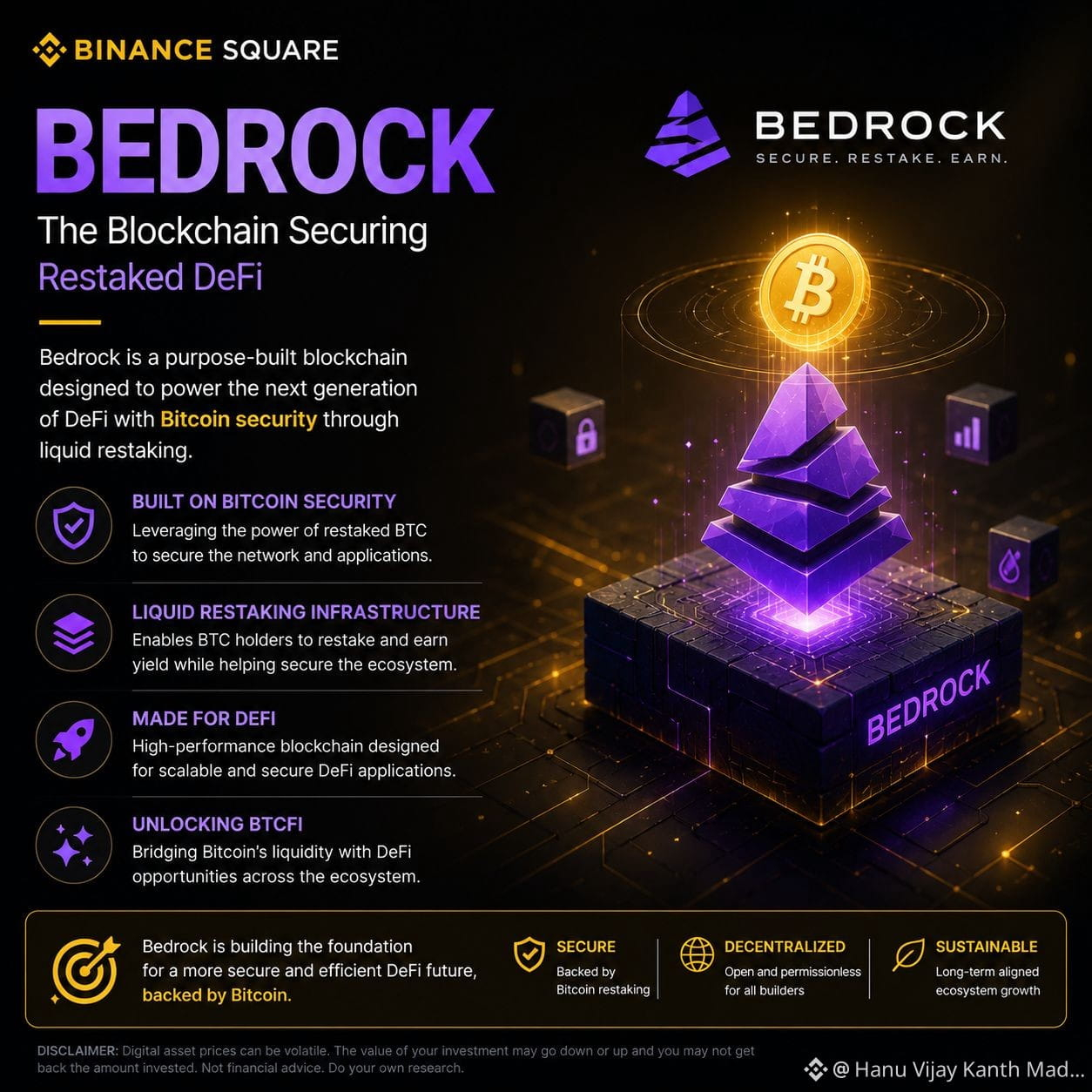
#bedrock $BR 🪨⚡ Bedrock is redefining Bitcoin-powered DeFi through liquid restaking innovation.
Instead of letting assets stay idle, Bedrock enables users to unlock more utility while helping strengthen decentralized ecosystems. By combining Bitcoin security with restaking infrastructure, it opens new opportunities for yield, liquidity, and scalable DeFi growth.
🔹 Bitcoin-backed security
🔹 Liquid restaking infrastructure
🔹 DeFi-focused ecosystem
🔹 Unlocking BTCFi potential
As BTCFi continues to evolve, projects like Bedrock are pushing the space toward a more capital-efficient and secure future.
Are you watching the rise of Bitcoin-powered DeFi? 👀
#Bedrock #BTCFi #DeFi #Bitcoin #restaking #crypto #BinanceSquare
#bedrock $BR 🪨⚡ Bedrock is redefining Bitcoin-powered DeFi through liquid restaking innovation.
Instead of letting assets stay idle, Bedrock enables users to unlock more utility while helping strengthen decentralized ecosystems. By combining Bitcoin security with restaking infrastructure, it opens new opportunities for yield, liquidity, and scalable DeFi growth.
🔹 Bitcoin-backed security
🔹 Liquid restaking infrastructure
🔹 DeFi-focused ecosystem
🔹 Unlocking BTCFi potential
As BTCFi continues to evolve, projects like Bedrock are pushing the space toward a more capital-efficient and secure future.
Are you watching the rise of Bitcoin-powered DeFi? 👀
#Bedrock #BTCFi #DeFi #Bitcoin #restaking #crypto #BinanceSquare
Instead of letting assets stay idle, Bedrock enables users to unlock more utility while helping strengthen decentralized ecosystems. By combining Bitcoin security with restaking infrastructure, it opens new opportunities for yield, liquidity, and scalable DeFi growth.
🔹 Bitcoin-backed security
🔹 Liquid restaking infrastructure
🔹 DeFi-focused ecosystem
🔹 Unlocking BTCFi potential
As BTCFi continues to evolve, projects like Bedrock are pushing the space toward a more capital-efficient and secure future.
Are you watching the rise of Bitcoin-powered DeFi? 👀
#Bedrock #BTCFi #DeFi #Bitcoin #restaking #crypto #BinanceSquare
1
3
81

පරිවර්තනය බලන්න
#bedrock $BR
Il panorama del restaking si sta evolvendo rapidamente e @Bedrock si conferma uno dei protagonisti più interessanti da tenere d'occhio. Con l'arrivo di Bedrock 2.0, il protocollo punta a ridefinire gli standard di sicurezza, scalabilità ed efficienza del capitale per gli utenti DeFi.
L'introduzione di nuove funzionalità e l'ottimizzazione dei rendimenti multi-asset dimostrano la solidità di questo ecosistema, rendendolo una soluzione d'eccellenza per chi cerca una rendita passiva ottimizzata e sicura. Se state monitorando i trend del Web3, l'evoluzione di $BR e le novità della versione 2.0 meritano assolutamente la massima attenzione.
Cosa vi aspettate di più da questo aggiornamento? 🚀
#Bedrock #DeFi #Restaking l
#bedrock $BR
Il panorama del restaking si sta evolvendo rapidamente e @Bedrock si conferma uno dei protagonisti più interessanti da tenere d'occhio. Con l'arrivo di Bedrock 2.0, il protocollo punta a ridefinire gli standard di sicurezza, scalabilità ed efficienza del capitale per gli utenti DeFi.
L'introduzione di nuove funzionalità e l'ottimizzazione dei rendimenti multi-asset dimostrano la solidità di questo ecosistema, rendendolo una soluzione d'eccellenza per chi cerca una rendita passiva ottimizzata e sicura. Se state monitorando i trend del Web3, l'evoluzione di $BR e le novità della versione 2.0 meritano assolutamente la massima attenzione.
Cosa vi aspettate di più da questo aggiornamento? 🚀
#Bedrock #DeFi #Restaking l
Il panorama del restaking si sta evolvendo rapidamente e @Bedrock si conferma uno dei protagonisti più interessanti da tenere d'occhio. Con l'arrivo di Bedrock 2.0, il protocollo punta a ridefinire gli standard di sicurezza, scalabilità ed efficienza del capitale per gli utenti DeFi.
L'introduzione di nuove funzionalità e l'ottimizzazione dei rendimenti multi-asset dimostrano la solidità di questo ecosistema, rendendolo una soluzione d'eccellenza per chi cerca una rendita passiva ottimizzata e sicura. Se state monitorando i trend del Web3, l'evoluzione di $BR e le novità della versione 2.0 meritano assolutamente la massima attenzione.
Cosa vi aspettate di più da questo aggiornamento? 🚀
#Bedrock #DeFi #Restaking l

Tanti auguri!
Rolf Jarrett RLRO වෙතින්
4

·
--
පරිවර්තනය බලන්න
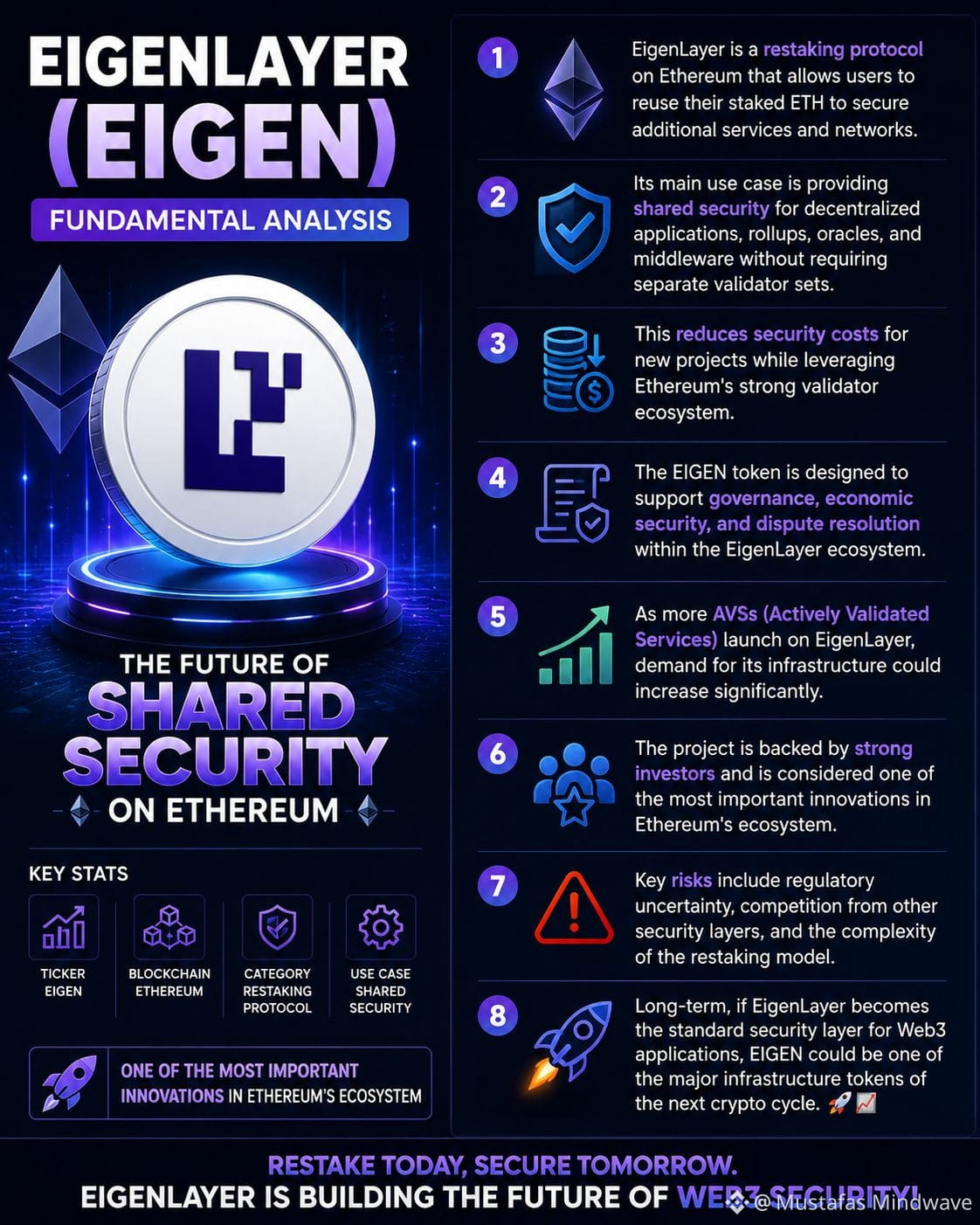
TOP GAINER COIN EigenLayer ($EIGEN ) – Fundamental Analysis
1. EigenLayer is a restaking protocol on Ethereum that allows users to reuse their staked $ETH to secure additional services and networks.
2. Its main use case is providing shared security for decentralized applications, rollups, oracles, and middleware without requiring separate validator sets.
3. This reduces security costs for new projects while leveraging Ethereum's strong validator ecosystem.
4. The $EIGEN token is designed to support governance, economic security, and dispute resolution within the EigenLayer ecosystem.
5. As more AVSs (Actively Validated Services) launch on EigenLayer, demand for its infrastructure could increase significantly.
6. The project is backed by strong investors and is considered one of the most important innovations in Ethereum's ecosystem.
7. Key risks include regulatory uncertainty, competition from other security layers, and the complexity of the restaking model.
8. Long-term, if EigenLayer becomes the standard security layer for Web3 applications, EIGEN could be one of the major infrastructure tokens of the next crypto cycle. 🚀📈
{spot}(EIGENUSDT)
{spot}(ETHUSDT)
#Eigenlayer
#eigen
#Ethereum
#restaking
#Web3
TOP GAINER COIN EigenLayer ($EIGEN ) – Fundamental Analysis
1. EigenLayer is a restaking protocol on Ethereum that allows users to reuse their staked $ETH to secure additional services and networks.
2. Its main use case is providing shared security for decentralized applications, rollups, oracles, and middleware without requiring separate validator sets.
3. This reduces security costs for new projects while leveraging Ethereum's strong validator ecosystem.
4. The $EIGEN token is designed to support governance, economic security, and dispute resolution within the EigenLayer ecosystem.
5. As more AVSs (Actively Validated Services) launch on EigenLayer, demand for its infrastructure could increase significantly.
6. The project is backed by strong investors and is considered one of the most important innovations in Ethereum's ecosystem.
7. Key risks include regulatory uncertainty, competition from other security layers, and the complexity of the restaking model.
8. Long-term, if EigenLayer becomes the standard security layer for Web3 applications, EIGEN could be one of the major infrastructure tokens of the next crypto cycle. 🚀📈
#Eigenlayer
#eigen
#Ethereum
#restaking
#Web3
1. EigenLayer is a restaking protocol on Ethereum that allows users to reuse their staked $ETH to secure additional services and networks.
2. Its main use case is providing shared security for decentralized applications, rollups, oracles, and middleware without requiring separate validator sets.
3. This reduces security costs for new projects while leveraging Ethereum's strong validator ecosystem.
4. The $EIGEN token is designed to support governance, economic security, and dispute resolution within the EigenLayer ecosystem.
5. As more AVSs (Actively Validated Services) launch on EigenLayer, demand for its infrastructure could increase significantly.
6. The project is backed by strong investors and is considered one of the most important innovations in Ethereum's ecosystem.
7. Key risks include regulatory uncertainty, competition from other security layers, and the complexity of the restaking model.
8. Long-term, if EigenLayer becomes the standard security layer for Web3 applications, EIGEN could be one of the major infrastructure tokens of the next crypto cycle. 🚀📈
#Eigenlayer
#eigen
#Ethereum
#restaking
#Web3
87

සත්යායනය කළ
පරිවර්තනය බලන්න
Most Underrated Sector Right Now? (Give ur opinion through the poll)
Crypto is entering a new phase where holding assets isn’t enough anymore. Capital is expected to stay productive at all times, and that’s exactly where Bedrock is gaining attention. 🚀
Bedrock is a liquid restaking protocol focused on unlocking more utility from assets like Bitcoin through products such as uniBTC and brBTC. Instead of leaving BTC idle, users can participate in DeFi ecosystems while still maintaining liquidity.
The timing is interesting too. Restaking has become one of the strongest narratives in crypto because it introduces shared security models and better capital efficiency across ecosystems. Projects building infrastructure around this trend are attracting increasing attention from both developers and investors.
Bedrock also pushes into the growing BitcoinFi sector, which many believe could become the next major expansion area for decentralized finance. Bitcoin holds enormous dormant liquidity, and protocols enabling BTC to become productive may play a critical role in the next cycle.
While many projects chase short-term hype, Bedrock appears focused on building infrastructure that could remain relevant long after narratives rotate. That’s usually where the smart money starts paying attention first. 👀
$BR #bedrock #BitcoinFi #Restaking @Bedrock
Most Underrated Sector Right Now? (Give ur opinion through the poll)
Crypto is entering a new phase where holding assets isn’t enough anymore. Capital is expected to stay productive at all times, and that’s exactly where Bedrock is gaining attention. 🚀
Bedrock is a liquid restaking protocol focused on unlocking more utility from assets like Bitcoin through products such as uniBTC and brBTC. Instead of leaving BTC idle, users can participate in DeFi ecosystems while still maintaining liquidity.
The timing is interesting too. Restaking has become one of the strongest narratives in crypto because it introduces shared security models and better capital efficiency across ecosystems. Projects building infrastructure around this trend are attracting increasing attention from both developers and investors.
Bedrock also pushes into the growing BitcoinFi sector, which many believe could become the next major expansion area for decentralized finance. Bitcoin holds enormous dormant liquidity, and protocols enabling BTC to become productive may play a critical role in the next cycle.
While many projects chase short-term hype, Bedrock appears focused on building infrastructure that could remain relevant long after narratives rotate. That’s usually where the smart money starts paying attention first. 👀
$BR #bedrock #BitcoinFi #Restaking @Bedrock
Crypto is entering a new phase where holding assets isn’t enough anymore. Capital is expected to stay productive at all times, and that’s exactly where Bedrock is gaining attention. 🚀
Bedrock is a liquid restaking protocol focused on unlocking more utility from assets like Bitcoin through products such as uniBTC and brBTC. Instead of leaving BTC idle, users can participate in DeFi ecosystems while still maintaining liquidity.
The timing is interesting too. Restaking has become one of the strongest narratives in crypto because it introduces shared security models and better capital efficiency across ecosystems. Projects building infrastructure around this trend are attracting increasing attention from both developers and investors.
Bedrock also pushes into the growing BitcoinFi sector, which many believe could become the next major expansion area for decentralized finance. Bitcoin holds enormous dormant liquidity, and protocols enabling BTC to become productive may play a critical role in the next cycle.
While many projects chase short-term hype, Bedrock appears focused on building infrastructure that could remain relevant long after narratives rotate. That’s usually where the smart money starts paying attention first. 👀
$BR #bedrock #BitcoinFi #Restaking @Bedrock
RWA
50%
AI
50%
Gaming
0%
BitcoinFi
0%
2 ඡන්ද • ඡන්දය අවසන්
1
86
තවත් අන්තර්ගතයන් ගවේෂණය කිරීමට ඇතුල් වන්න
Binance චතුරශ්රය හි ගෝලීය ක්රිප්ටෝ පරිශීලකයින් හා එක්වන්න
⚡️ ක්රිප්ටෝ පිළිබඳ නවතම සහ ප්රයෝජනවත් තොරතුරු ලබා ගන්න.
💬 ලොව විශාලතම ක්රිප්ටෝ හුවමාරුව මගින් විශ්වාස කෙරේ.
👍 සත්යායනය කරන ලද නිර්මාණකරුවන්ගෙන් සැබෑ විදසුන් සොයා ගන්න.
විද්යුත් තැපෑල / දුරකථන අංකය
නැගී එන මාතෘකා
1
#AppleDebutsFoldablePhone
24,900 views
530 සාකච්ඡා කරමින්
2
#TSMCAugustRevenueUp53.3%YoY
135 views
56 සාකච්ඡා කරමින්
3
#IranSaysReadyToEscalateWarWithUS
3,148 views
114 සාකච්ඡා කරමින්
4
#EUExtendsCentralContactPointToCASPs
6,871 views
193 සාකච්ඡා කරමින්
5
#US10YTreasuryYieldHitsHighestSinceNov2023
25,306 views
413 සාකච්ඡා කරමින්
6
#USTreasuryToBuyBackUpTo$6BLongDatedDebt
16,959 views
165 සාකච්ඡා කරමින්
7
#BitcoinSurpasses$79K
66,768 views
278 සාකච්ඡා කරමින්
8
#BrentCrudeTops$100
124,561 views
404 සාකච්ඡා කරමින්
9
#USADPWeeklyEmploymentRises12000
109,424 views
1,326 සාකච්ඡා කරමින්
10
#BankOfAmericaGroupPilotsUSBDCStablecoin
81,620 views
1,053 සාකච්ඡා කරමින්