

#privatekey
privatekey
4,915 views
25 සාකච්ඡා කරමින්
උණුසුම්
නවතම

·
--
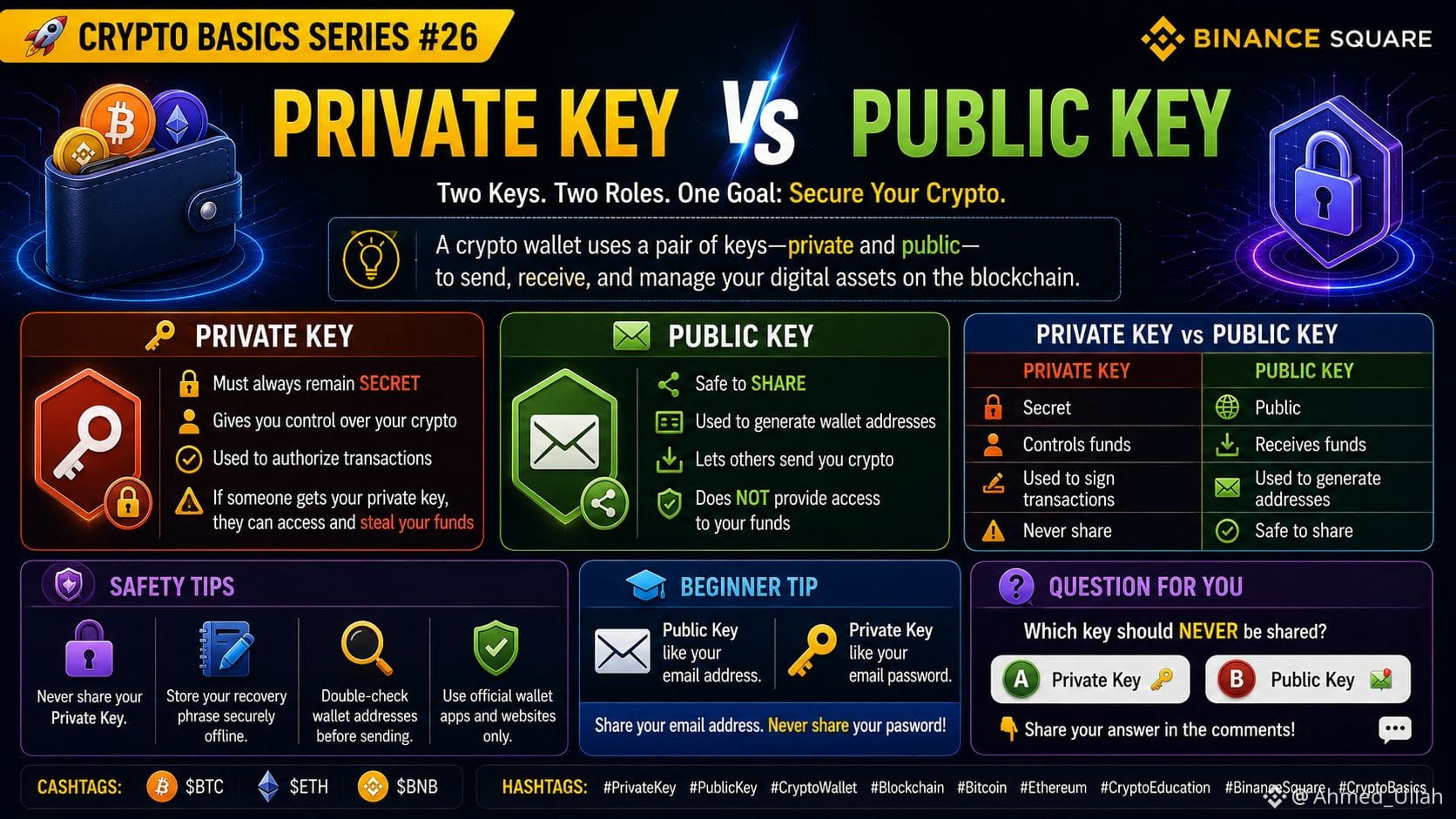
🚀 Crypto Basics Series #26: Private Key vs Public Key
📌 What Are Private Keys and Public Keys?
Every crypto wallet has two important keys:
- 🔑 Private Key – A secret key that gives you control over your crypto.
- 📬 Public Key – A key that can be shared so others can send you cryptocurrency.
Think of them as the foundation of wallet security.
---
🔑 Private Key
- Must always remain secret
- Gives access to your crypto assets
- Used to authorize transactions
- If someone gets your private key, they may gain control of your funds
---
📬 Public Key
- Safe to share
- Used to generate wallet addresses
- Lets others send you crypto
- Does not provide access to your funds
---
⚖️ Private Key vs Public Key
🔑 Private Key| 📬 Public Key
Secret| Public
Controls funds| Receives funds
Never share| Safe to share
---
🛡️ Safety Tips
- Never share your Private Key.
- Store your recovery phrase securely offline.
- Double-check wallet addresses before sending crypto.
- Use official wallet apps only.
---
💡 Beginner Tip
Think of your Public Key like an email address—you can share it.
Think of your Private Key like your email password—you should never share it.
---
💬 Question
Which key should never be shared?
🅰️ Private Key 🔑
🅱️ Public Key 📬
👇 Share your answer in the comments!
$BTC $ETH $BNB
#PrivateKey #PublicKey #CryptoWallet #Blockchain #Bitcoin
🚀 Crypto Basics Series #26: Private Key vs Public Key
📌 What Are Private Keys and Public Keys?
Every crypto wallet has two important keys:
- 🔑 Private Key – A secret key that gives you control over your crypto.
- 📬 Public Key – A key that can be shared so others can send you cryptocurrency.
Think of them as the foundation of wallet security.
---
🔑 Private Key
- Must always remain secret
- Gives access to your crypto assets
- Used to authorize transactions
- If someone gets your private key, they may gain control of your funds
---
📬 Public Key
- Safe to share
- Used to generate wallet addresses
- Lets others send you crypto
- Does not provide access to your funds
---
⚖️ Private Key vs Public Key
🔑 Private Key| 📬 Public Key
Secret| Public
Controls funds| Receives funds
Never share| Safe to share
---
🛡️ Safety Tips
- Never share your Private Key.
- Store your recovery phrase securely offline.
- Double-check wallet addresses before sending crypto.
- Use official wallet apps only.
---
💡 Beginner Tip
Think of your Public Key like an email address—you can share it.
Think of your Private Key like your email password—you should never share it.
---
💬 Question
Which key should never be shared?
🅰️ Private Key 🔑
🅱️ Public Key 📬
👇 Share your answer in the comments!
$BTC $ETH $BNB
#PrivateKey #PublicKey #CryptoWallet #Blockchain #Bitcoin
📌 What Are Private Keys and Public Keys?
Every crypto wallet has two important keys:
- 🔑 Private Key – A secret key that gives you control over your crypto.
- 📬 Public Key – A key that can be shared so others can send you cryptocurrency.
Think of them as the foundation of wallet security.
---
🔑 Private Key
- Must always remain secret
- Gives access to your crypto assets
- Used to authorize transactions
- If someone gets your private key, they may gain control of your funds
---
📬 Public Key
- Safe to share
- Used to generate wallet addresses
- Lets others send you crypto
- Does not provide access to your funds
---
⚖️ Private Key vs Public Key
🔑 Private Key| 📬 Public Key
Secret| Public
Controls funds| Receives funds
Never share| Safe to share
---
🛡️ Safety Tips
- Never share your Private Key.
- Store your recovery phrase securely offline.
- Double-check wallet addresses before sending crypto.
- Use official wallet apps only.
---
💡 Beginner Tip
Think of your Public Key like an email address—you can share it.
Think of your Private Key like your email password—you should never share it.
---
💬 Question
Which key should never be shared?
🅰️ Private Key 🔑
🅱️ Public Key 📬
👇 Share your answer in the comments!
$BTC $ETH $BNB
#PrivateKey #PublicKey #CryptoWallet #Blockchain #Bitcoin
1
1
41

·
--
ලිපිය
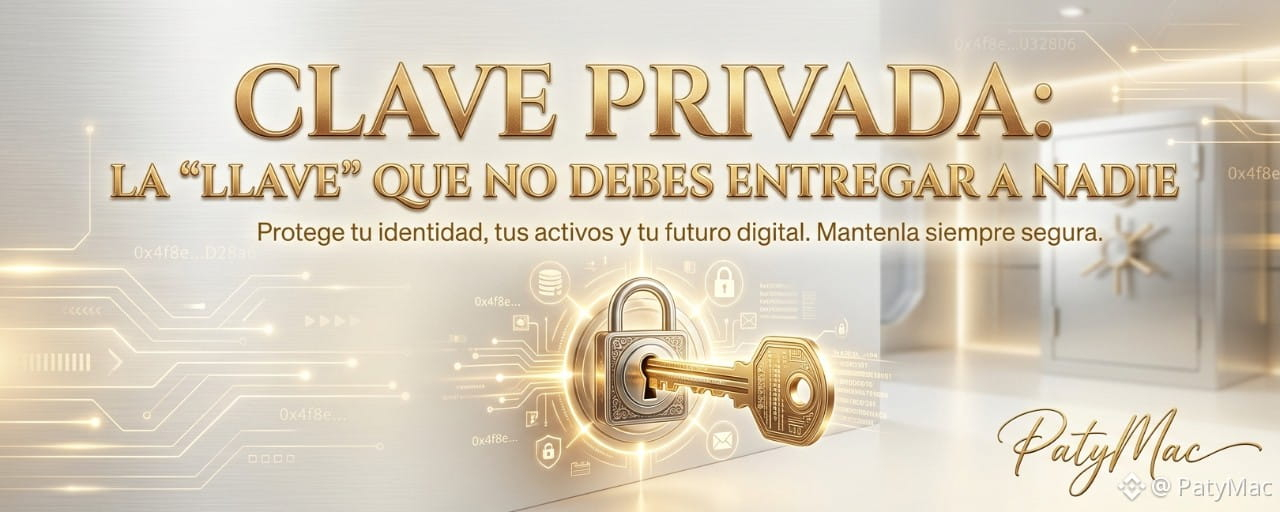
CLAVE PRIVADA: LA “LLAVE” QUE NO DEBES ENTREGAR A NADIEEn los dos primeros episodios hablamos de wallets y de la diferencia entre hot wallet y cold wallet.
Ahora llegamos a uno de los conceptos más importantes de todo el mundo cripto:
¿Qué es una clave privada?
Si estás entrando en criptomonedas, probablemente hayas escuchado frases como:
“Not your keys, not your coins”.
Pero ¿qué significa realmente?
La respuesta empieza con algo que no puedes ver a simple vista:
🔐 La clave privada.
¿QUÉ ES UNA CLAVE PRIVADA?
Una clave privada es un dato criptográfico generado para permitir la autorización de determinadas operaciones sobre activos controlados mediante una blockchain.
En términos sencillos:
La clave privada funciona como una credencial criptográfica que permite demostrar autoridad para mover determinados fondos.
No es un nombre de usuario.
No es una contraseña tradicional.
Y no es la dirección que compartes para recibir criptomonedas.
Es algo mucho más sensible.
🏦 UNA COMPARACIÓN SENCILLA
Imagina una cuenta bancaria.
Tienes:
Número de cuenta → puedes compartirlo para recibir dinero.
Credenciales de acceso → te permiten entrar.
Mecanismos de autorización → permiten realizar determinadas operaciones.
En blockchain la arquitectura es diferente, pero la analogía ayuda a entender algo fundamental:
La dirección pública puede compartirse.
La clave privada debe mantenerse secreta.
Si alguien obtiene tu clave privada y puede utilizarla, puede tener la capacidad de autorizar movimientos de los activos asociados.
¿LA CLAVE PRIVADA ES MI DIRECCIÓN?
No.
Este es uno de los errores más comunes.
Tenemos que diferenciar:
🟢 DIRECCIÓN PÚBLICA
Puedes compartirla para recibir determinados activos.
🔴 CLAVE PRIVADA
Debe mantenerse secreta.
🟠 SEED PHRASE
Es una frase de recuperación que puede utilizarse para reconstruir las claves de una wallet, dependiendo del estándar y la implementación utilizada.
Por eso, aunque están relacionadas, no son lo mismo.
⚠️ ¿QUÉ PASA SI ALGUIEN OBTIENE MI CLAVE PRIVADA?
Aquí está el punto crítico.
En muchos sistemas basados en criptografía de clave pública, quien tiene control sobre la clave privada puede generar las firmas necesarias para autorizar operaciones desde las direcciones correspondientes.
Por eso:
La blockchain puede estar funcionando perfectamente mientras el usuario pierde sus fondos.
No necesariamente hace falta “romper Bitcoin”.
No hace falta hackear toda una blockchain.
Puede bastar con comprometer las credenciales que permiten autorizar una operación.
EL ATAQUE NO SIEMPRE PARECE UN ATAQUE
Un delincuente puede intentar conseguir tu clave privada mediante:
phishing;páginas falsas;aplicaciones fraudulentas;falsos servicios de soporte;archivos maliciosos;extensiones de navegador comprometidas;ingeniería social;falsas promociones;supuestas recompensas;o engaños relacionados con recuperación de cuentas.
Por eso muchas estafas no comienzan con:
“Voy a hackear tu wallet”.
Comienzan con:
“Necesito que verifiques tu wallet”.
Y ahí puede estar el verdadero peligro.
UNA FRASE QUE DEBES RECORDAR
Si alguien te pide:
“Envíame tu clave privada para ayudarte”.
NO LA ENVÍES.
Si alguien te dice:
“Necesito tu seed phrase para recuperar tus fondos”.
NO LA ENVÍES.
Si alguien afirma:
“Soy soporte técnico y necesito tus palabras de recuperación”.
DETENTE.
Un supuesto servicio de soporte que necesita tu secreto para “proteger” tus fondos debería ser tratado como una señal de alarma.
¿Y QUÉ PASA CON UNA COLD WALLET?
Aquí conectamos este episodio con el anterior.
Una hardware wallet está diseñada para proteger las claves privadas y reducir su exposición a determinados entornos conectados.
Pero hay una diferencia fundamental:
El dispositivo no es necesariamente lo más importante.
La información de recuperación puede ser crítica.
Puedes perder el dispositivo y, dependiendo del sistema y de que conserves correctamente la información de recuperación, recuperar el acceso.
Pero si otra persona obtiene la información secreta que permite reconstruir o controlar tus claves, el problema puede ser mucho mayor.
Por eso:
La seguridad no termina cuando compras una hardware wallet.
En realidad, comienza ahí.
¿LA CLAVE PRIVADA “ESTÁ” EN LA BLOCKCHAIN?
No.
La blockchain registra información sobre las transacciones y el estado de los activos según las reglas de esa red.
La clave privada es un secreto criptográfico utilizado para generar firmas que permiten autorizar determinadas operaciones.
Esta distinción es importantísima:
Blockchain → registro distribuido.
Clave privada → secreto criptográfico.
Firma → evidencia criptográfica de autorización.
Dirección → identificador utilizado para recibir o controlar activos según las reglas de la red.
¿QUIÉN CONTROLA REALMENTE MIS CRIPTOMONEDAS?
Aquí aparece una cuestión económica y jurídica interesante.
Si utilizas autocustodia, normalmente tú controlas las claves.
Si utilizas un servicio custodial, la plataforma puede mantener las claves y administrar los activos en tu nombre conforme a sus condiciones.
Por eso dos personas pueden decir:
“Tengo 1 BTC”.
Pero estar en situaciones muy diferentes.
Una puede tenerlo bajo autocustodia.
La otra puede tener un saldo equivalente en una plataforma custodial.
Desde el punto de vista tecnológico y jurídico, no necesariamente es la misma relación con el activo.
Y eso nos lleva nuevamente al concepto de:
riesgo de contraparte.
🇵🇾 ¿POR QUÉ ESTO IMPORTA EN PARAGUAY?
Porque el crecimiento de los activos virtuales también plantea preguntas jurídicas:
¿Quién controla el activo?
¿Quién puede demostrar ese control?
¿Qué ocurre ante una sucesión?
¿Qué pasa ante un conflicto entre las partes?
¿Qué ocurre si el activo está en un exchange extranjero?
¿Qué información puede solicitar una autoridad competente?
No basta con saber cuánto Bitcoin tienes.
También es importante comprender cómo se encuentra custodiado y quién controla las credenciales necesarias para disponer de él.
🔐 5 REGLAS DE ORO
1. Nunca compartas tu clave privada.
2. Nunca compartas tu seed phrase.
3. No introduzcas tus secretos en páginas desconocidas.
4. Desconfía de cualquier persona que te contacte pidiendo credenciales para “ayudarte”.
5. Antes de firmar o enviar una operación, verifica qué estás autorizando.
💡 LA IDEA CENTRAL
La criptografía permite que una persona pueda controlar activos digitales sin depender necesariamente de una institución central para cada transferencia.
Pero esa autonomía tiene un precio:
La responsabilidad sobre las credenciales.
En el sistema financiero tradicional, muchas veces existe una institución que puede intervenir ante determinados problemas.
En autocustodia, la situación puede ser radicalmente diferente.
Por eso la pregunta no debería ser solamente:
“¿Cuánto Bitcoin tengo?”
Sino:
“¿Quién tiene la capacidad de autorizar el movimiento de ese Bitcoin?”
Y la respuesta empieza por entender la clave privada.
❓ PREGUNTAS INTERESANTES
¿Puedo compartir mi clave privada con alguien de confianza?
No es recomendable. Quien tenga acceso a ella puede tener capacidad para autorizar movimientos de los activos asociados.
¿La clave privada es igual a mi contraseña de Binance?
No. Son conceptos completamente diferentes.
¿Una dirección pública puede revelar mi clave privada?
No. Una dirección pública está diseñada para poder compartirse; la clave privada debe permanecer secreta.
¿Puedo perder mi clave privada?
Sí. Y dependiendo de cómo esté estructurada la wallet, perder las credenciales necesarias para recuperar el acceso puede significar perder el control de los fondos.
¿Una hardware wallet elimina este riesgo?
No. Puede mejorar la protección de las claves frente a determinadas amenazas, pero la gestión de la información de recuperación sigue siendo fundamental.
📌 GLOSARIO CRIPTO #3
CLAVE PRIVADA = secreto criptográfico utilizado para generar las autorizaciones necesarias para mover determinados activos mediante una blockchain.
Y ahora viene una pregunta todavía más importante:
¿Qué pasa si pierdes el dispositivo que contiene tus claves?
La respuesta nos lleva al siguiente episodio:
🧩 SEED PHRASE
Las palabras que pueden permitir recuperar tu wallet… y que nunca deberían caer en manos equivocadas.
$BTC
{future}(BTCUSDT)
$ETH
{future}(ETHUSDT)
$BNB
{future}(BNBUSDT)
#GlosarioCripto #PrivateKey #CryptoSecurity #SelfCustody #CryptoEducation
CLAVE PRIVADA: LA “LLAVE” QUE NO DEBES ENTREGAR A NADIE
En los dos primeros episodios hablamos de wallets y de la diferencia entre hot wallet y cold wallet.
Ahora llegamos a uno de los conceptos más importantes de todo el mundo cripto:
¿Qué es una clave privada?
Si estás entrando en criptomonedas, probablemente hayas escuchado frases como:
“Not your keys, not your coins”.
Pero ¿qué significa realmente?
La respuesta empieza con algo que no puedes ver a simple vista:
🔐 La clave privada.
¿QUÉ ES UNA CLAVE PRIVADA?
Una clave privada es un dato criptográfico generado para permitir la autorización de determinadas operaciones sobre activos controlados mediante una blockchain.
En términos sencillos:
La clave privada funciona como una credencial criptográfica que permite demostrar autoridad para mover determinados fondos.
No es un nombre de usuario.
No es una contraseña tradicional.
Y no es la dirección que compartes para recibir criptomonedas.
Es algo mucho más sensible.
🏦 UNA COMPARACIÓN SENCILLA
Imagina una cuenta bancaria.
Tienes:
Número de cuenta → puedes compartirlo para recibir dinero.
Credenciales de acceso → te permiten entrar.
Mecanismos de autorización → permiten realizar determinadas operaciones.
En blockchain la arquitectura es diferente, pero la analogía ayuda a entender algo fundamental:
La dirección pública puede compartirse.
La clave privada debe mantenerse secreta.
Si alguien obtiene tu clave privada y puede utilizarla, puede tener la capacidad de autorizar movimientos de los activos asociados.
¿LA CLAVE PRIVADA ES MI DIRECCIÓN?
No.
Este es uno de los errores más comunes.
Tenemos que diferenciar:
🟢 DIRECCIÓN PÚBLICA
Puedes compartirla para recibir determinados activos.
🔴 CLAVE PRIVADA
Debe mantenerse secreta.
🟠 SEED PHRASE
Es una frase de recuperación que puede utilizarse para reconstruir las claves de una wallet, dependiendo del estándar y la implementación utilizada.
Por eso, aunque están relacionadas, no son lo mismo.
⚠️ ¿QUÉ PASA SI ALGUIEN OBTIENE MI CLAVE PRIVADA?
Aquí está el punto crítico.
En muchos sistemas basados en criptografía de clave pública, quien tiene control sobre la clave privada puede generar las firmas necesarias para autorizar operaciones desde las direcciones correspondientes.
Por eso:
La blockchain puede estar funcionando perfectamente mientras el usuario pierde sus fondos.
No necesariamente hace falta “romper Bitcoin”.
No hace falta hackear toda una blockchain.
Puede bastar con comprometer las credenciales que permiten autorizar una operación.
EL ATAQUE NO SIEMPRE PARECE UN ATAQUE
Un delincuente puede intentar conseguir tu clave privada mediante:
phishing;páginas falsas;aplicaciones fraudulentas;falsos servicios de soporte;archivos maliciosos;extensiones de navegador comprometidas;ingeniería social;falsas promociones;supuestas recompensas;o engaños relacionados con recuperación de cuentas.
Por eso muchas estafas no comienzan con:
“Voy a hackear tu wallet”.
Comienzan con:
“Necesito que verifiques tu wallet”.
Y ahí puede estar el verdadero peligro.
UNA FRASE QUE DEBES RECORDAR
Si alguien te pide:
“Envíame tu clave privada para ayudarte”.
NO LA ENVÍES.
Si alguien te dice:
“Necesito tu seed phrase para recuperar tus fondos”.
NO LA ENVÍES.
Si alguien afirma:
“Soy soporte técnico y necesito tus palabras de recuperación”.
DETENTE.
Un supuesto servicio de soporte que necesita tu secreto para “proteger” tus fondos debería ser tratado como una señal de alarma.
¿Y QUÉ PASA CON UNA COLD WALLET?
Aquí conectamos este episodio con el anterior.
Una hardware wallet está diseñada para proteger las claves privadas y reducir su exposición a determinados entornos conectados.
Pero hay una diferencia fundamental:
El dispositivo no es necesariamente lo más importante.
La información de recuperación puede ser crítica.
Puedes perder el dispositivo y, dependiendo del sistema y de que conserves correctamente la información de recuperación, recuperar el acceso.
Pero si otra persona obtiene la información secreta que permite reconstruir o controlar tus claves, el problema puede ser mucho mayor.
Por eso:
La seguridad no termina cuando compras una hardware wallet.
En realidad, comienza ahí.
¿LA CLAVE PRIVADA “ESTÁ” EN LA BLOCKCHAIN?
No.
La blockchain registra información sobre las transacciones y el estado de los activos según las reglas de esa red.
La clave privada es un secreto criptográfico utilizado para generar firmas que permiten autorizar determinadas operaciones.
Esta distinción es importantísima:
Blockchain → registro distribuido.
Clave privada → secreto criptográfico.
Firma → evidencia criptográfica de autorización.
Dirección → identificador utilizado para recibir o controlar activos según las reglas de la red.
¿QUIÉN CONTROLA REALMENTE MIS CRIPTOMONEDAS?
Aquí aparece una cuestión económica y jurídica interesante.
Si utilizas autocustodia, normalmente tú controlas las claves.
Si utilizas un servicio custodial, la plataforma puede mantener las claves y administrar los activos en tu nombre conforme a sus condiciones.
Por eso dos personas pueden decir:
“Tengo 1 BTC”.
Pero estar en situaciones muy diferentes.
Una puede tenerlo bajo autocustodia.
La otra puede tener un saldo equivalente en una plataforma custodial.
Desde el punto de vista tecnológico y jurídico, no necesariamente es la misma relación con el activo.
Y eso nos lleva nuevamente al concepto de:
riesgo de contraparte.
🇵🇾 ¿POR QUÉ ESTO IMPORTA EN PARAGUAY?
Porque el crecimiento de los activos virtuales también plantea preguntas jurídicas:
¿Quién controla el activo?
¿Quién puede demostrar ese control?
¿Qué ocurre ante una sucesión?
¿Qué pasa ante un conflicto entre las partes?
¿Qué ocurre si el activo está en un exchange extranjero?
¿Qué información puede solicitar una autoridad competente?
No basta con saber cuánto Bitcoin tienes.
También es importante comprender cómo se encuentra custodiado y quién controla las credenciales necesarias para disponer de él.
🔐 5 REGLAS DE ORO
1. Nunca compartas tu clave privada.
2. Nunca compartas tu seed phrase.
3. No introduzcas tus secretos en páginas desconocidas.
4. Desconfía de cualquier persona que te contacte pidiendo credenciales para “ayudarte”.
5. Antes de firmar o enviar una operación, verifica qué estás autorizando.
💡 LA IDEA CENTRAL
La criptografía permite que una persona pueda controlar activos digitales sin depender necesariamente de una institución central para cada transferencia.
Pero esa autonomía tiene un precio:
La responsabilidad sobre las credenciales.
En el sistema financiero tradicional, muchas veces existe una institución que puede intervenir ante determinados problemas.
En autocustodia, la situación puede ser radicalmente diferente.
Por eso la pregunta no debería ser solamente:
“¿Cuánto Bitcoin tengo?”
Sino:
“¿Quién tiene la capacidad de autorizar el movimiento de ese Bitcoin?”
Y la respuesta empieza por entender la clave privada.
❓ PREGUNTAS INTERESANTES
¿Puedo compartir mi clave privada con alguien de confianza?
No es recomendable. Quien tenga acceso a ella puede tener capacidad para autorizar movimientos de los activos asociados.
¿La clave privada es igual a mi contraseña de Binance?
No. Son conceptos completamente diferentes.
¿Una dirección pública puede revelar mi clave privada?
No. Una dirección pública está diseñada para poder compartirse; la clave privada debe permanecer secreta.
¿Puedo perder mi clave privada?
Sí. Y dependiendo de cómo esté estructurada la wallet, perder las credenciales necesarias para recuperar el acceso puede significar perder el control de los fondos.
¿Una hardware wallet elimina este riesgo?
No. Puede mejorar la protección de las claves frente a determinadas amenazas, pero la gestión de la información de recuperación sigue siendo fundamental.
📌 GLOSARIO CRIPTO #3
CLAVE PRIVADA = secreto criptográfico utilizado para generar las autorizaciones necesarias para mover determinados activos mediante una blockchain.
Y ahora viene una pregunta todavía más importante:
¿Qué pasa si pierdes el dispositivo que contiene tus claves?
La respuesta nos lleva al siguiente episodio:
🧩 SEED PHRASE
Las palabras que pueden permitir recuperar tu wallet… y que nunca deberían caer en manos equivocadas.
$BTC
$ETH
$BNB
#GlosarioCripto #PrivateKey #CryptoSecurity #SelfCustody #CryptoEducation
Ahora llegamos a uno de los conceptos más importantes de todo el mundo cripto:
¿Qué es una clave privada?
Si estás entrando en criptomonedas, probablemente hayas escuchado frases como:
“Not your keys, not your coins”.
Pero ¿qué significa realmente?
La respuesta empieza con algo que no puedes ver a simple vista:
🔐 La clave privada.
¿QUÉ ES UNA CLAVE PRIVADA?
Una clave privada es un dato criptográfico generado para permitir la autorización de determinadas operaciones sobre activos controlados mediante una blockchain.
En términos sencillos:
La clave privada funciona como una credencial criptográfica que permite demostrar autoridad para mover determinados fondos.
No es un nombre de usuario.
No es una contraseña tradicional.
Y no es la dirección que compartes para recibir criptomonedas.
Es algo mucho más sensible.
🏦 UNA COMPARACIÓN SENCILLA
Imagina una cuenta bancaria.
Tienes:
Número de cuenta → puedes compartirlo para recibir dinero.
Credenciales de acceso → te permiten entrar.
Mecanismos de autorización → permiten realizar determinadas operaciones.
En blockchain la arquitectura es diferente, pero la analogía ayuda a entender algo fundamental:
La dirección pública puede compartirse.
La clave privada debe mantenerse secreta.
Si alguien obtiene tu clave privada y puede utilizarla, puede tener la capacidad de autorizar movimientos de los activos asociados.
¿LA CLAVE PRIVADA ES MI DIRECCIÓN?
No.
Este es uno de los errores más comunes.
Tenemos que diferenciar:
🟢 DIRECCIÓN PÚBLICA
Puedes compartirla para recibir determinados activos.
🔴 CLAVE PRIVADA
Debe mantenerse secreta.
🟠 SEED PHRASE
Es una frase de recuperación que puede utilizarse para reconstruir las claves de una wallet, dependiendo del estándar y la implementación utilizada.
Por eso, aunque están relacionadas, no son lo mismo.
⚠️ ¿QUÉ PASA SI ALGUIEN OBTIENE MI CLAVE PRIVADA?
Aquí está el punto crítico.
En muchos sistemas basados en criptografía de clave pública, quien tiene control sobre la clave privada puede generar las firmas necesarias para autorizar operaciones desde las direcciones correspondientes.
Por eso:
La blockchain puede estar funcionando perfectamente mientras el usuario pierde sus fondos.
No necesariamente hace falta “romper Bitcoin”.
No hace falta hackear toda una blockchain.
Puede bastar con comprometer las credenciales que permiten autorizar una operación.
EL ATAQUE NO SIEMPRE PARECE UN ATAQUE
Un delincuente puede intentar conseguir tu clave privada mediante:
phishing;páginas falsas;aplicaciones fraudulentas;falsos servicios de soporte;archivos maliciosos;extensiones de navegador comprometidas;ingeniería social;falsas promociones;supuestas recompensas;o engaños relacionados con recuperación de cuentas.
Por eso muchas estafas no comienzan con:
“Voy a hackear tu wallet”.
Comienzan con:
“Necesito que verifiques tu wallet”.
Y ahí puede estar el verdadero peligro.
UNA FRASE QUE DEBES RECORDAR
Si alguien te pide:
“Envíame tu clave privada para ayudarte”.
NO LA ENVÍES.
Si alguien te dice:
“Necesito tu seed phrase para recuperar tus fondos”.
NO LA ENVÍES.
Si alguien afirma:
“Soy soporte técnico y necesito tus palabras de recuperación”.
DETENTE.
Un supuesto servicio de soporte que necesita tu secreto para “proteger” tus fondos debería ser tratado como una señal de alarma.
¿Y QUÉ PASA CON UNA COLD WALLET?
Aquí conectamos este episodio con el anterior.
Una hardware wallet está diseñada para proteger las claves privadas y reducir su exposición a determinados entornos conectados.
Pero hay una diferencia fundamental:
El dispositivo no es necesariamente lo más importante.
La información de recuperación puede ser crítica.
Puedes perder el dispositivo y, dependiendo del sistema y de que conserves correctamente la información de recuperación, recuperar el acceso.
Pero si otra persona obtiene la información secreta que permite reconstruir o controlar tus claves, el problema puede ser mucho mayor.
Por eso:
La seguridad no termina cuando compras una hardware wallet.
En realidad, comienza ahí.
¿LA CLAVE PRIVADA “ESTÁ” EN LA BLOCKCHAIN?
No.
La blockchain registra información sobre las transacciones y el estado de los activos según las reglas de esa red.
La clave privada es un secreto criptográfico utilizado para generar firmas que permiten autorizar determinadas operaciones.
Esta distinción es importantísima:
Blockchain → registro distribuido.
Clave privada → secreto criptográfico.
Firma → evidencia criptográfica de autorización.
Dirección → identificador utilizado para recibir o controlar activos según las reglas de la red.
¿QUIÉN CONTROLA REALMENTE MIS CRIPTOMONEDAS?
Aquí aparece una cuestión económica y jurídica interesante.
Si utilizas autocustodia, normalmente tú controlas las claves.
Si utilizas un servicio custodial, la plataforma puede mantener las claves y administrar los activos en tu nombre conforme a sus condiciones.
Por eso dos personas pueden decir:
“Tengo 1 BTC”.
Pero estar en situaciones muy diferentes.
Una puede tenerlo bajo autocustodia.
La otra puede tener un saldo equivalente en una plataforma custodial.
Desde el punto de vista tecnológico y jurídico, no necesariamente es la misma relación con el activo.
Y eso nos lleva nuevamente al concepto de:
riesgo de contraparte.
🇵🇾 ¿POR QUÉ ESTO IMPORTA EN PARAGUAY?
Porque el crecimiento de los activos virtuales también plantea preguntas jurídicas:
¿Quién controla el activo?
¿Quién puede demostrar ese control?
¿Qué ocurre ante una sucesión?
¿Qué pasa ante un conflicto entre las partes?
¿Qué ocurre si el activo está en un exchange extranjero?
¿Qué información puede solicitar una autoridad competente?
No basta con saber cuánto Bitcoin tienes.
También es importante comprender cómo se encuentra custodiado y quién controla las credenciales necesarias para disponer de él.
🔐 5 REGLAS DE ORO
1. Nunca compartas tu clave privada.
2. Nunca compartas tu seed phrase.
3. No introduzcas tus secretos en páginas desconocidas.
4. Desconfía de cualquier persona que te contacte pidiendo credenciales para “ayudarte”.
5. Antes de firmar o enviar una operación, verifica qué estás autorizando.
💡 LA IDEA CENTRAL
La criptografía permite que una persona pueda controlar activos digitales sin depender necesariamente de una institución central para cada transferencia.
Pero esa autonomía tiene un precio:
La responsabilidad sobre las credenciales.
En el sistema financiero tradicional, muchas veces existe una institución que puede intervenir ante determinados problemas.
En autocustodia, la situación puede ser radicalmente diferente.
Por eso la pregunta no debería ser solamente:
“¿Cuánto Bitcoin tengo?”
Sino:
“¿Quién tiene la capacidad de autorizar el movimiento de ese Bitcoin?”
Y la respuesta empieza por entender la clave privada.
❓ PREGUNTAS INTERESANTES
¿Puedo compartir mi clave privada con alguien de confianza?
No es recomendable. Quien tenga acceso a ella puede tener capacidad para autorizar movimientos de los activos asociados.
¿La clave privada es igual a mi contraseña de Binance?
No. Son conceptos completamente diferentes.
¿Una dirección pública puede revelar mi clave privada?
No. Una dirección pública está diseñada para poder compartirse; la clave privada debe permanecer secreta.
¿Puedo perder mi clave privada?
Sí. Y dependiendo de cómo esté estructurada la wallet, perder las credenciales necesarias para recuperar el acceso puede significar perder el control de los fondos.
¿Una hardware wallet elimina este riesgo?
No. Puede mejorar la protección de las claves frente a determinadas amenazas, pero la gestión de la información de recuperación sigue siendo fundamental.
📌 GLOSARIO CRIPTO #3
CLAVE PRIVADA = secreto criptográfico utilizado para generar las autorizaciones necesarias para mover determinados activos mediante una blockchain.
Y ahora viene una pregunta todavía más importante:
¿Qué pasa si pierdes el dispositivo que contiene tus claves?
La respuesta nos lleva al siguiente episodio:
🧩 SEED PHRASE
Las palabras que pueden permitir recuperar tu wallet… y que nunca deberían caer en manos equivocadas.
$BTC
$ETH
$BNB
#GlosarioCripto #PrivateKey #CryptoSecurity #SelfCustody #CryptoEducation
1
197

ලිපිය
What Is a Crypto Wallet? How Wallets Work for BeginnersIntroduction
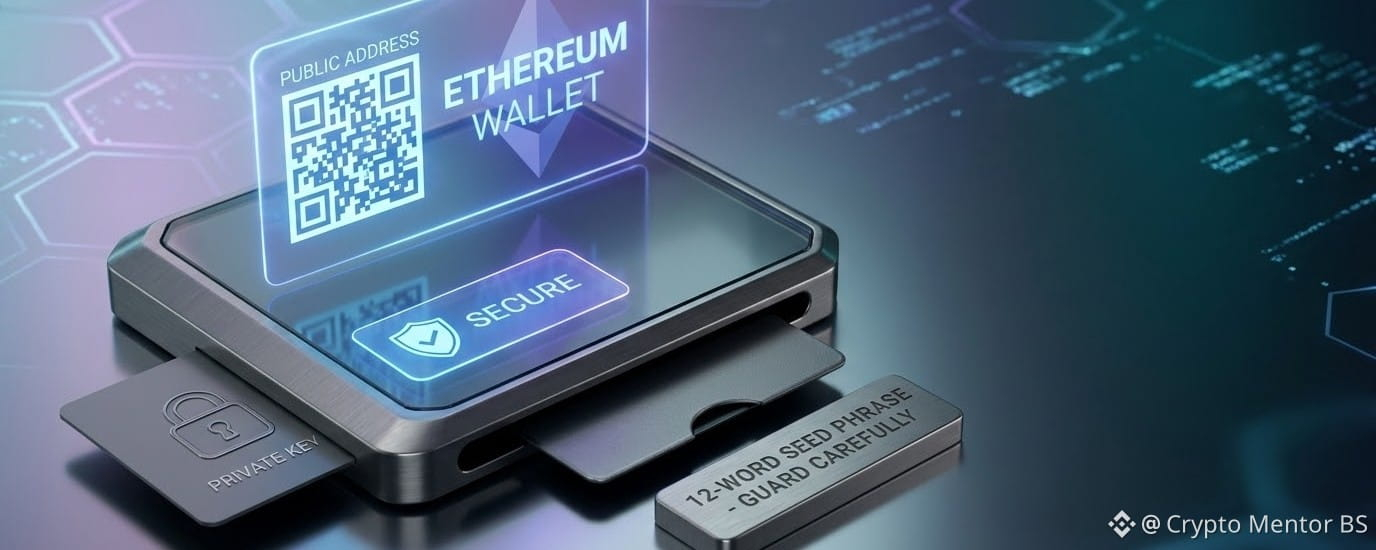
A crypto wallet is one of the first things every beginner should understand before using Bitcoin, Ethereum, or any other blockchain-based asset. In simple terms, it is the tool that lets you receive, store, and send crypto by managing the keys that control access to your funds.
This topic matters because many beginners confuse wallets with exchanges, or assume a wallet literally “stores coins.” In reality, the blockchain records ownership, and the wallet helps you control that ownership safely.
What Is a Crypto Wallet?
A crypto wallet is software or hardware that lets you manage blockchain accounts and sign transactions. It does not physically hold coins in the same way a leather wallet holds cash.
Instead, it stores or helps you manage the cryptographic keys that prove you control your crypto. Those keys are what let you receive funds, authorize transfers, and recover access if you lose your device
Wallets vs exchanges
A crypto wallet is not the same as a crypto exchange. An exchange is usually custodial, which means the platform holds the assets and manages the keys for you.
A wallet can be custodial or non-custodial, but beginners usually hear “wallet” in the context of self-custody. That means you control the private keys yourself, which gives you more freedom but also more responsibility
How Crypto Wallets Work
Crypto wallets work by creating and managing a pair of cryptographic keys: a public key and a private key. The public side is used to receive funds, while the private side is used to sign transactions.
When you send crypto, your wallet uses the private key to prove that you have permission to move those funds. The blockchain network then verifies the transaction and records it if everything checks out.
Public keys and wallet addresses
A wallet address is the shareable destination someone uses to send crypto to you. It is derived from your public key and is safe to share.
Think of it like an email address: people can send you messages using it, but they do not get control of your account just by knowing it
Private keys and transaction signing
A private key is the secret that gives you control over the funds associated with a wallet. It is like the master password, except it is much more sensitive.
If someone gets your private key, they can move your funds without your permission. That is why private keys should never be shared with anyone.
Seed phrases and wallet recovery
A seed phrase, also called a recovery phrase or mnemonic phrase, is a set of words that can restore access to a wallet. It is the most important backup for many self-custody wallets.
If you lose your phone or delete your wallet app, the seed phrase can help you recover your wallet in a compatible app or device. If someone else sees it, they may be able to take your funds, so it must be protected carefully.
Types of Crypto Wallets
Different wallets serve different needs. The main trade-off is usually convenience versus security.
Hot wallets
Hot wallets are connected to the internet. They are convenient for frequent transfers, daily use, and interacting with apps like DeFi platforms.
Examples include mobile wallets, browser wallets, and desktop wallets. Because they stay online, they are generally more exposed to phishing and malware risks.
Cold wallets
Cold wallets keep keys offline, or as close to offline as possible. They are usually used for storing larger amounts of crypto more securely.
Because they are not constantly connected to the internet, cold wallets reduce exposure to online attacks. The trade-off is that they are less convenient for frequent use.
Hardware wallets
A hardware wallet is a physical device built to store private keys securely. It is one of the most common cold-wallet options for people who want stronger protection.
When used properly, hardware wallets can make it much harder for attackers to steal keys remotely. However, they still depend on safe handling of the seed phrase.
Custodial vs self-custody wallets
Custodial wallets are managed by a third party, usually an exchange or service provider. Self-custody wallets are controlled directly by the user.
Beginners often start with custodial wallets because they are easier to use. More experienced users may prefer self-custody for greater control and independence
Security Fundamentals
Wallet security starts with understanding what must be kept secret. The rule is simple: never share your private key or seed phrase.
Why private keys must stay secret
Your private key authorizes spending. If someone gets it, they do not need your permission to move your funds.
That is why legitimate support teams should never ask for it. No genuine recovery process should require you to reveal it.
Why seed phrases should be offline
A seed phrase is often the only way to restore a self-custody wallet. If it is stored in screenshots, cloud notes, or email, it becomes easier for hackers or malware to find.
The safest habit is to write it down and store it in a secure offline location. Many users also keep more than one backup in separate safe places.
Common phishing and scam tactics
One common scam is a fake support message asking for your seed phrase “to verify your wallet.” Another is a fake wallet website that imitates the real one and tries to trick users into entering their recovery words.
These scams work because they create urgency and fear. A good rule is to pause before entering any wallet information anywhere.
How to Choose a Wallet
Choosing the right wallet depends on how often you use crypto and how much security you want. There is no single best wallet for everyone.
If you only need to make occasional transfers and learn the basics, a simple mobile wallet may be enough. If you hold a larger amount or want stronger security, a hardware wallet is often a better fit.
When comparing wallets, look for ease of use, support for the networks you need, recovery options, security features, and whether the wallet is widely trusted by the crypto community.
Practical Examples
If you want to receive Bitcoin from a friend, you open your wallet and copy your receiving address. Your friend sends BTC to that address, and once the network confirms the transaction, the balance appears in your wallet.
If you want to send Ethereum to another person, your wallet creates and signs the transaction using your private key. The network checks the signature, processes the transfer, and then updates the blockchain record.
If your phone is lost but you still have your seed phrase, you can usually restore the wallet in another compatible app or device. That is why the backup phrase matters so much.
Common Mistakes
One common mistake is thinking a wallet app alone is enough to recover access. In many self-custody wallets, the seed phrase is the real recovery method.
Another mistake is storing the seed phrase in a screenshot, notes app, or cloud drive. That creates an easy target for malware, account compromise, or accidental exposure.
A third mistake is confusing a wallet address with a private key. The address is safe to share; the private key is not.
Best Practices
Use a wallet from a trusted source and download it only from official channels. This reduces the chance of installing a fake app or visiting a phishing site.
Keep your seed phrase offline and never type it into random websites or forms. If anyone asks for it, treat that as a serious warning sign.
For larger balances, consider a hardware wallet or another form of cold storage. For smaller, everyday use, a hot wallet can be more convenient.
Always test with a small transaction first, especially when using a new wallet or new network. A small test can prevent expensive mistakes.
FAQ
What is a crypto wallet in simple words?
A crypto wallet is a tool that helps you control crypto by managing keys and signing transactions.
Does a crypto wallet store my coins?
No. The blockchain records the assets, while the wallet holds the keys that let you access them.
What is a seed phrase?
A seed phrase is a backup phrase that can restore your wallet in a compatible app or device.
Is it safe to share my wallet address?
Yes. A wallet address is meant to be shared so people can send you crypto.
What happens if I lose my seed phrase?
For most self-custody wallets, you may lose access permanently if you do not have the seed phrase or another recovery method.
Are hardware wallets safer than mobile wallets?
Hardware wallets are generally considered a strong security option because they keep keys offline, but no wallet is safe if the seed phrase is exposed.
Key Takeaways
A crypto wallet helps you manage and control blockchain assets.
The wallet does not store coins; it manages the keys that give you access.
Public addresses are safe to share, but private keys and seed phrases are not.
Hot wallets are convenient, while cold wallets and hardware wallets offer stronger security.
Good wallet security starts with offline seed phrase storage and careful scam avoidance.
Conclusion
Understanding crypto wallets is essential before using $BTC $ETH or any other blockchain app. Once you understand addresses, private keys, and seed phrases, the rest of crypto becomes much easier to navigate.
For beginners, the most important habit is simple: protect your recovery phrase, use trusted apps, and treat wallet security as part of everyday crypto use. This content is for educational purposes only and is not financial advice
{spot}(BTCUSDT)
{spot}(ETHUSDT)
#CryptoWallet #CryptoEducation #Ethereum #PrivateKey #Web3
What Is a Crypto Wallet? How Wallets Work for Beginners
Introduction
A crypto wallet is one of the first things every beginner should understand before using Bitcoin, Ethereum, or any other blockchain-based asset. In simple terms, it is the tool that lets you receive, store, and send crypto by managing the keys that control access to your funds.
This topic matters because many beginners confuse wallets with exchanges, or assume a wallet literally “stores coins.” In reality, the blockchain records ownership, and the wallet helps you control that ownership safely.
What Is a Crypto Wallet?
A crypto wallet is software or hardware that lets you manage blockchain accounts and sign transactions. It does not physically hold coins in the same way a leather wallet holds cash.
Instead, it stores or helps you manage the cryptographic keys that prove you control your crypto. Those keys are what let you receive funds, authorize transfers, and recover access if you lose your device
Wallets vs exchanges
A crypto wallet is not the same as a crypto exchange. An exchange is usually custodial, which means the platform holds the assets and manages the keys for you.
A wallet can be custodial or non-custodial, but beginners usually hear “wallet” in the context of self-custody. That means you control the private keys yourself, which gives you more freedom but also more responsibility
How Crypto Wallets Work
Crypto wallets work by creating and managing a pair of cryptographic keys: a public key and a private key. The public side is used to receive funds, while the private side is used to sign transactions.
When you send crypto, your wallet uses the private key to prove that you have permission to move those funds. The blockchain network then verifies the transaction and records it if everything checks out.
Public keys and wallet addresses
A wallet address is the shareable destination someone uses to send crypto to you. It is derived from your public key and is safe to share.
Think of it like an email address: people can send you messages using it, but they do not get control of your account just by knowing it
Private keys and transaction signing
A private key is the secret that gives you control over the funds associated with a wallet. It is like the master password, except it is much more sensitive.
If someone gets your private key, they can move your funds without your permission. That is why private keys should never be shared with anyone.
Seed phrases and wallet recovery
A seed phrase, also called a recovery phrase or mnemonic phrase, is a set of words that can restore access to a wallet. It is the most important backup for many self-custody wallets.
If you lose your phone or delete your wallet app, the seed phrase can help you recover your wallet in a compatible app or device. If someone else sees it, they may be able to take your funds, so it must be protected carefully.
Types of Crypto Wallets
Different wallets serve different needs. The main trade-off is usually convenience versus security.
Hot wallets
Hot wallets are connected to the internet. They are convenient for frequent transfers, daily use, and interacting with apps like DeFi platforms.
Examples include mobile wallets, browser wallets, and desktop wallets. Because they stay online, they are generally more exposed to phishing and malware risks.
Cold wallets
Cold wallets keep keys offline, or as close to offline as possible. They are usually used for storing larger amounts of crypto more securely.
Because they are not constantly connected to the internet, cold wallets reduce exposure to online attacks. The trade-off is that they are less convenient for frequent use.
Hardware wallets
A hardware wallet is a physical device built to store private keys securely. It is one of the most common cold-wallet options for people who want stronger protection.
When used properly, hardware wallets can make it much harder for attackers to steal keys remotely. However, they still depend on safe handling of the seed phrase.
Custodial vs self-custody wallets
Custodial wallets are managed by a third party, usually an exchange or service provider. Self-custody wallets are controlled directly by the user.
Beginners often start with custodial wallets because they are easier to use. More experienced users may prefer self-custody for greater control and independence
Security Fundamentals
Wallet security starts with understanding what must be kept secret. The rule is simple: never share your private key or seed phrase.
Why private keys must stay secret
Your private key authorizes spending. If someone gets it, they do not need your permission to move your funds.
That is why legitimate support teams should never ask for it. No genuine recovery process should require you to reveal it.
Why seed phrases should be offline
A seed phrase is often the only way to restore a self-custody wallet. If it is stored in screenshots, cloud notes, or email, it becomes easier for hackers or malware to find.
The safest habit is to write it down and store it in a secure offline location. Many users also keep more than one backup in separate safe places.
Common phishing and scam tactics
One common scam is a fake support message asking for your seed phrase “to verify your wallet.” Another is a fake wallet website that imitates the real one and tries to trick users into entering their recovery words.
These scams work because they create urgency and fear. A good rule is to pause before entering any wallet information anywhere.
How to Choose a Wallet
Choosing the right wallet depends on how often you use crypto and how much security you want. There is no single best wallet for everyone.
If you only need to make occasional transfers and learn the basics, a simple mobile wallet may be enough. If you hold a larger amount or want stronger security, a hardware wallet is often a better fit.
When comparing wallets, look for ease of use, support for the networks you need, recovery options, security features, and whether the wallet is widely trusted by the crypto community.
Practical Examples
If you want to receive Bitcoin from a friend, you open your wallet and copy your receiving address. Your friend sends BTC to that address, and once the network confirms the transaction, the balance appears in your wallet.
If you want to send Ethereum to another person, your wallet creates and signs the transaction using your private key. The network checks the signature, processes the transfer, and then updates the blockchain record.
If your phone is lost but you still have your seed phrase, you can usually restore the wallet in another compatible app or device. That is why the backup phrase matters so much.
Common Mistakes
One common mistake is thinking a wallet app alone is enough to recover access. In many self-custody wallets, the seed phrase is the real recovery method.
Another mistake is storing the seed phrase in a screenshot, notes app, or cloud drive. That creates an easy target for malware, account compromise, or accidental exposure.
A third mistake is confusing a wallet address with a private key. The address is safe to share; the private key is not.
Best Practices
Use a wallet from a trusted source and download it only from official channels. This reduces the chance of installing a fake app or visiting a phishing site.
Keep your seed phrase offline and never type it into random websites or forms. If anyone asks for it, treat that as a serious warning sign.
For larger balances, consider a hardware wallet or another form of cold storage. For smaller, everyday use, a hot wallet can be more convenient.
Always test with a small transaction first, especially when using a new wallet or new network. A small test can prevent expensive mistakes.
FAQ
What is a crypto wallet in simple words?
A crypto wallet is a tool that helps you control crypto by managing keys and signing transactions.
Does a crypto wallet store my coins?
No. The blockchain records the assets, while the wallet holds the keys that let you access them.
What is a seed phrase?
A seed phrase is a backup phrase that can restore your wallet in a compatible app or device.
Is it safe to share my wallet address?
Yes. A wallet address is meant to be shared so people can send you crypto.
What happens if I lose my seed phrase?
For most self-custody wallets, you may lose access permanently if you do not have the seed phrase or another recovery method.
Are hardware wallets safer than mobile wallets?
Hardware wallets are generally considered a strong security option because they keep keys offline, but no wallet is safe if the seed phrase is exposed.
Key Takeaways
A crypto wallet helps you manage and control blockchain assets.
The wallet does not store coins; it manages the keys that give you access.
Public addresses are safe to share, but private keys and seed phrases are not.
Hot wallets are convenient, while cold wallets and hardware wallets offer stronger security.
Good wallet security starts with offline seed phrase storage and careful scam avoidance.
Conclusion
Understanding crypto wallets is essential before using $BTC $ETH or any other blockchain app. Once you understand addresses, private keys, and seed phrases, the rest of crypto becomes much easier to navigate.
For beginners, the most important habit is simple: protect your recovery phrase, use trusted apps, and treat wallet security as part of everyday crypto use. This content is for educational purposes only and is not financial advice
#CryptoWallet #CryptoEducation #Ethereum #PrivateKey #Web3
A crypto wallet is one of the first things every beginner should understand before using Bitcoin, Ethereum, or any other blockchain-based asset. In simple terms, it is the tool that lets you receive, store, and send crypto by managing the keys that control access to your funds.
This topic matters because many beginners confuse wallets with exchanges, or assume a wallet literally “stores coins.” In reality, the blockchain records ownership, and the wallet helps you control that ownership safely.
What Is a Crypto Wallet?
A crypto wallet is software or hardware that lets you manage blockchain accounts and sign transactions. It does not physically hold coins in the same way a leather wallet holds cash.
Instead, it stores or helps you manage the cryptographic keys that prove you control your crypto. Those keys are what let you receive funds, authorize transfers, and recover access if you lose your device
Wallets vs exchanges
A crypto wallet is not the same as a crypto exchange. An exchange is usually custodial, which means the platform holds the assets and manages the keys for you.
A wallet can be custodial or non-custodial, but beginners usually hear “wallet” in the context of self-custody. That means you control the private keys yourself, which gives you more freedom but also more responsibility
How Crypto Wallets Work
Crypto wallets work by creating and managing a pair of cryptographic keys: a public key and a private key. The public side is used to receive funds, while the private side is used to sign transactions.
When you send crypto, your wallet uses the private key to prove that you have permission to move those funds. The blockchain network then verifies the transaction and records it if everything checks out.
Public keys and wallet addresses
A wallet address is the shareable destination someone uses to send crypto to you. It is derived from your public key and is safe to share.
Think of it like an email address: people can send you messages using it, but they do not get control of your account just by knowing it
Private keys and transaction signing
A private key is the secret that gives you control over the funds associated with a wallet. It is like the master password, except it is much more sensitive.
If someone gets your private key, they can move your funds without your permission. That is why private keys should never be shared with anyone.
Seed phrases and wallet recovery
A seed phrase, also called a recovery phrase or mnemonic phrase, is a set of words that can restore access to a wallet. It is the most important backup for many self-custody wallets.
If you lose your phone or delete your wallet app, the seed phrase can help you recover your wallet in a compatible app or device. If someone else sees it, they may be able to take your funds, so it must be protected carefully.
Types of Crypto Wallets
Different wallets serve different needs. The main trade-off is usually convenience versus security.
Hot wallets
Hot wallets are connected to the internet. They are convenient for frequent transfers, daily use, and interacting with apps like DeFi platforms.
Examples include mobile wallets, browser wallets, and desktop wallets. Because they stay online, they are generally more exposed to phishing and malware risks.
Cold wallets
Cold wallets keep keys offline, or as close to offline as possible. They are usually used for storing larger amounts of crypto more securely.
Because they are not constantly connected to the internet, cold wallets reduce exposure to online attacks. The trade-off is that they are less convenient for frequent use.
Hardware wallets
A hardware wallet is a physical device built to store private keys securely. It is one of the most common cold-wallet options for people who want stronger protection.
When used properly, hardware wallets can make it much harder for attackers to steal keys remotely. However, they still depend on safe handling of the seed phrase.
Custodial vs self-custody wallets
Custodial wallets are managed by a third party, usually an exchange or service provider. Self-custody wallets are controlled directly by the user.
Beginners often start with custodial wallets because they are easier to use. More experienced users may prefer self-custody for greater control and independence
Security Fundamentals
Wallet security starts with understanding what must be kept secret. The rule is simple: never share your private key or seed phrase.
Why private keys must stay secret
Your private key authorizes spending. If someone gets it, they do not need your permission to move your funds.
That is why legitimate support teams should never ask for it. No genuine recovery process should require you to reveal it.
Why seed phrases should be offline
A seed phrase is often the only way to restore a self-custody wallet. If it is stored in screenshots, cloud notes, or email, it becomes easier for hackers or malware to find.
The safest habit is to write it down and store it in a secure offline location. Many users also keep more than one backup in separate safe places.
Common phishing and scam tactics
One common scam is a fake support message asking for your seed phrase “to verify your wallet.” Another is a fake wallet website that imitates the real one and tries to trick users into entering their recovery words.
These scams work because they create urgency and fear. A good rule is to pause before entering any wallet information anywhere.
How to Choose a Wallet
Choosing the right wallet depends on how often you use crypto and how much security you want. There is no single best wallet for everyone.
If you only need to make occasional transfers and learn the basics, a simple mobile wallet may be enough. If you hold a larger amount or want stronger security, a hardware wallet is often a better fit.
When comparing wallets, look for ease of use, support for the networks you need, recovery options, security features, and whether the wallet is widely trusted by the crypto community.
Practical Examples
If you want to receive Bitcoin from a friend, you open your wallet and copy your receiving address. Your friend sends BTC to that address, and once the network confirms the transaction, the balance appears in your wallet.
If you want to send Ethereum to another person, your wallet creates and signs the transaction using your private key. The network checks the signature, processes the transfer, and then updates the blockchain record.
If your phone is lost but you still have your seed phrase, you can usually restore the wallet in another compatible app or device. That is why the backup phrase matters so much.
Common Mistakes
One common mistake is thinking a wallet app alone is enough to recover access. In many self-custody wallets, the seed phrase is the real recovery method.
Another mistake is storing the seed phrase in a screenshot, notes app, or cloud drive. That creates an easy target for malware, account compromise, or accidental exposure.
A third mistake is confusing a wallet address with a private key. The address is safe to share; the private key is not.
Best Practices
Use a wallet from a trusted source and download it only from official channels. This reduces the chance of installing a fake app or visiting a phishing site.
Keep your seed phrase offline and never type it into random websites or forms. If anyone asks for it, treat that as a serious warning sign.
For larger balances, consider a hardware wallet or another form of cold storage. For smaller, everyday use, a hot wallet can be more convenient.
Always test with a small transaction first, especially when using a new wallet or new network. A small test can prevent expensive mistakes.
FAQ
What is a crypto wallet in simple words?
A crypto wallet is a tool that helps you control crypto by managing keys and signing transactions.
Does a crypto wallet store my coins?
No. The blockchain records the assets, while the wallet holds the keys that let you access them.
What is a seed phrase?
A seed phrase is a backup phrase that can restore your wallet in a compatible app or device.
Is it safe to share my wallet address?
Yes. A wallet address is meant to be shared so people can send you crypto.
What happens if I lose my seed phrase?
For most self-custody wallets, you may lose access permanently if you do not have the seed phrase or another recovery method.
Are hardware wallets safer than mobile wallets?
Hardware wallets are generally considered a strong security option because they keep keys offline, but no wallet is safe if the seed phrase is exposed.
Key Takeaways
A crypto wallet helps you manage and control blockchain assets.
The wallet does not store coins; it manages the keys that give you access.
Public addresses are safe to share, but private keys and seed phrases are not.
Hot wallets are convenient, while cold wallets and hardware wallets offer stronger security.
Good wallet security starts with offline seed phrase storage and careful scam avoidance.
Conclusion
Understanding crypto wallets is essential before using $BTC $ETH or any other blockchain app. Once you understand addresses, private keys, and seed phrases, the rest of crypto becomes much easier to navigate.
For beginners, the most important habit is simple: protect your recovery phrase, use trusted apps, and treat wallet security as part of everyday crypto use. This content is for educational purposes only and is not financial advice
#CryptoWallet #CryptoEducation #Ethereum #PrivateKey #Web3
89

🔑 A LEAKED PRIVATE KEY SWEPT $25M OUT OF A WHALE WALLET IN 15 MINUTES 💀
15 minutes. That's all it took for a private key exposure to drain a whale's wallet of roughly $25M across DAI, WBTC, aUSDC, LDO, sUSDe, and native ETH. All assets moved to a fresh address in one sweeping motion. 🔍
Here's the brutal part — this isn't the usual phishing approval. This is a straight-up private key leak. The same wallet got hit back in September 2023 for ~$24M via an increaseAllowance trick, and the attacker actually returned about 90% of it. This time, there's no guardian angel. 💀
The lesson is cold and simple: your private key is the one thing no protocol, no insurance, no top-tier exchange can protect once it's exposed. If it ever touched the wrong clipboard, a screenshot, or a shady import, assume it's compromised. ⚡
💬 When did you last audit exactly where your private keys live — and who or what could ever see them? 👇
⚠️ Not financial advice. Always manage your risk. 🛡️
🏷️ #CryptoSecurity #PrivateKey #WhaleAlert #SelfCustody #Crypto
🛡️ 🔑
🔑 A LEAKED PRIVATE KEY SWEPT $25M OUT OF A WHALE WALLET IN 15 MINUTES 💀
15 minutes. That's all it took for a private key exposure to drain a whale's wallet of roughly $25M across DAI, WBTC, aUSDC, LDO, sUSDe, and native ETH. All assets moved to a fresh address in one sweeping motion. 🔍
Here's the brutal part — this isn't the usual phishing approval. This is a straight-up private key leak. The same wallet got hit back in September 2023 for ~$24M via an increaseAllowance trick, and the attacker actually returned about 90% of it. This time, there's no guardian angel. 💀
The lesson is cold and simple: your private key is the one thing no protocol, no insurance, no top-tier exchange can protect once it's exposed. If it ever touched the wrong clipboard, a screenshot, or a shady import, assume it's compromised. ⚡
💬 When did you last audit exactly where your private keys live — and who or what could ever see them? 👇
⚠️ Not financial advice. Always manage your risk. 🛡️
🏷️ #CryptoSecurity #PrivateKey #WhaleAlert #SelfCustody #Crypto
🛡️ 🔑
15 minutes. That's all it took for a private key exposure to drain a whale's wallet of roughly $25M across DAI, WBTC, aUSDC, LDO, sUSDe, and native ETH. All assets moved to a fresh address in one sweeping motion. 🔍
Here's the brutal part — this isn't the usual phishing approval. This is a straight-up private key leak. The same wallet got hit back in September 2023 for ~$24M via an increaseAllowance trick, and the attacker actually returned about 90% of it. This time, there's no guardian angel. 💀
The lesson is cold and simple: your private key is the one thing no protocol, no insurance, no top-tier exchange can protect once it's exposed. If it ever touched the wrong clipboard, a screenshot, or a shady import, assume it's compromised. ⚡
💬 When did you last audit exactly where your private keys live — and who or what could ever see them? 👇
⚠️ Not financial advice. Always manage your risk. 🛡️
🏷️ #CryptoSecurity #PrivateKey #WhaleAlert #SelfCustody #Crypto
🛡️ 🔑
22

·
--
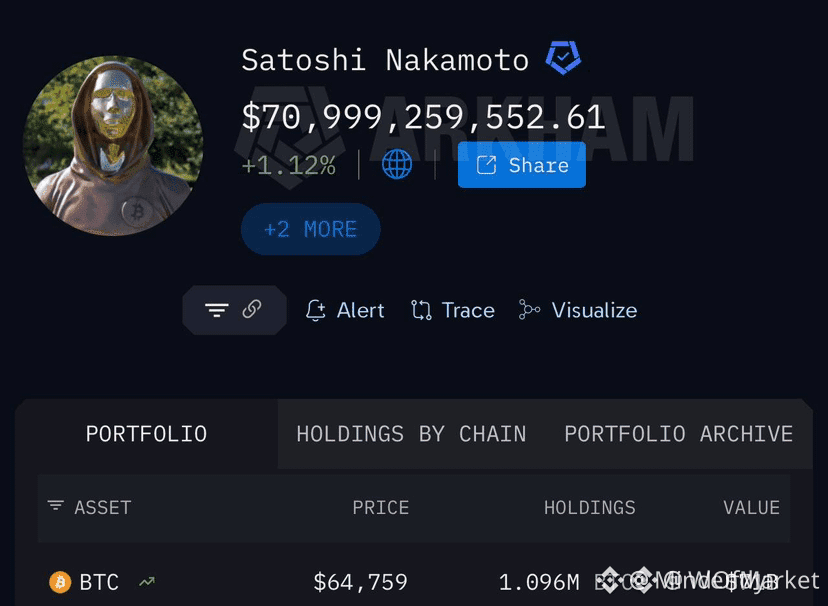
BITCOIN PRIVATE KEYS: THE REASON SATOSHI'S 1.1M BTC REMAINS UNTOUCHED AFTER 15 YEARS 🔐
Entry: Not provided
Target: Not provided
Stop Loss: Not provided
Bitcoin's security rests on 256-bit private keys, offering 2²⁵⁶ possible combinations — a number exceeding the estimated atoms in the observable universe. This computational infeasibility is why the wallet holding ~1.096M BTC (roughly $71B) has remained dormant since the network's earliest days. No public evidence exists of a successful brute-force attack or even a credible threat to Satoshi's wallet.
The takeaway is structural: Bitcoin's ownership model is absolute. Without the private key, the network offers no recovery mechanism. Does knowing this change how you think about Bitcoin's long-term security?
Not financial advice. Always manage your risk.
#BTC #CryptoSecurity #Bitcoin #PrivateKey #CryptoEducation
🔐
BITCOIN PRIVATE KEYS: THE REASON SATOSHI'S 1.1M BTC REMAINS UNTOUCHED AFTER 15 YEARS 🔐
Entry: Not provided
Target: Not provided
Stop Loss: Not provided
Bitcoin's security rests on 256-bit private keys, offering 2²⁵⁶ possible combinations — a number exceeding the estimated atoms in the observable universe. This computational infeasibility is why the wallet holding ~1.096M BTC (roughly $71B) has remained dormant since the network's earliest days. No public evidence exists of a successful brute-force attack or even a credible threat to Satoshi's wallet.
The takeaway is structural: Bitcoin's ownership model is absolute. Without the private key, the network offers no recovery mechanism. Does knowing this change how you think about Bitcoin's long-term security?
Not financial advice. Always manage your risk.
#BTC #CryptoSecurity #Bitcoin #PrivateKey #CryptoEducation
🔐
Entry: Not provided
Target: Not provided
Stop Loss: Not provided
Bitcoin's security rests on 256-bit private keys, offering 2²⁵⁶ possible combinations — a number exceeding the estimated atoms in the observable universe. This computational infeasibility is why the wallet holding ~1.096M BTC (roughly $71B) has remained dormant since the network's earliest days. No public evidence exists of a successful brute-force attack or even a credible threat to Satoshi's wallet.
The takeaway is structural: Bitcoin's ownership model is absolute. Without the private key, the network offers no recovery mechanism. Does knowing this change how you think about Bitcoin's long-term security?
Not financial advice. Always manage your risk.
#BTC #CryptoSecurity #Bitcoin #PrivateKey #CryptoEducation
🔐
36
තවත් අන්තර්ගතයන් ගවේෂණය කිරීමට ඇතුල් වන්න
Binance චතුරශ්රය හි ගෝලීය ක්රිප්ටෝ පරිශීලකයින් හා එක්වන්න
⚡️ ක්රිප්ටෝ පිළිබඳ නවතම සහ ප්රයෝජනවත් තොරතුරු ලබා ගන්න.
💬 ලොව විශාලතම ක්රිප්ටෝ හුවමාරුව මගින් විශ්වාස කෙරේ.
👍 සත්යායනය කරන ලද නිර්මාණකරුවන්ගෙන් සැබෑ විදසුන් සොයා ගන්න.
විද්යුත් තැපෑල / දුරකථන අංකය
නැගී එන මාතෘකා
1
#US10YearYieldNears5.3%
1,585 views
85 සාකච්ඡා කරමින්
2
#BitcoinETFsTake$6.34BillionInQ3
234 views
14 සාකච්ඡා කරමින්
3
#KoreaProposesTokenizingStocksAndBonds
24,454 views
361 සාකච්ඡා කරමින්
4
#MetaMaskExitsLidoValidatorsAfterSecurityIncident
92,764 views
1,071 සාකච්ඡා කරමින්
5
#MicronBeatsEarningsLiftsGuidance
52,764 views
817 සාකච්ඡා කරමින්
6
#CFTCSubmitsTwoEventContractRulesToWhiteHouse
36,745 views
664 සාකච්ඡා කරමින්
7
#BitcoinClears$85200
40,727 views
367 සාකච්ඡා කරමින්
8
#AltcoinSeasonIndexHoldsAbove60For5Days
190,897 views
2,276 සාකච්ඡා කරමින්
9
#USADPAdds90000JobsInSeptember
90,923 views
1,293 සාකච්ඡා කරමින්
10
#USCorePCEEasesTo3%InAugust
64,312 views
834 සාකච්ඡා කරමින්