

#cryptobasics
cryptobasics
550,521 නැරඹීම්
3,323 සාකච්ඡා කරමින්
උණුසුම්
නවතම

·
--
උසබ තත්ත්වය
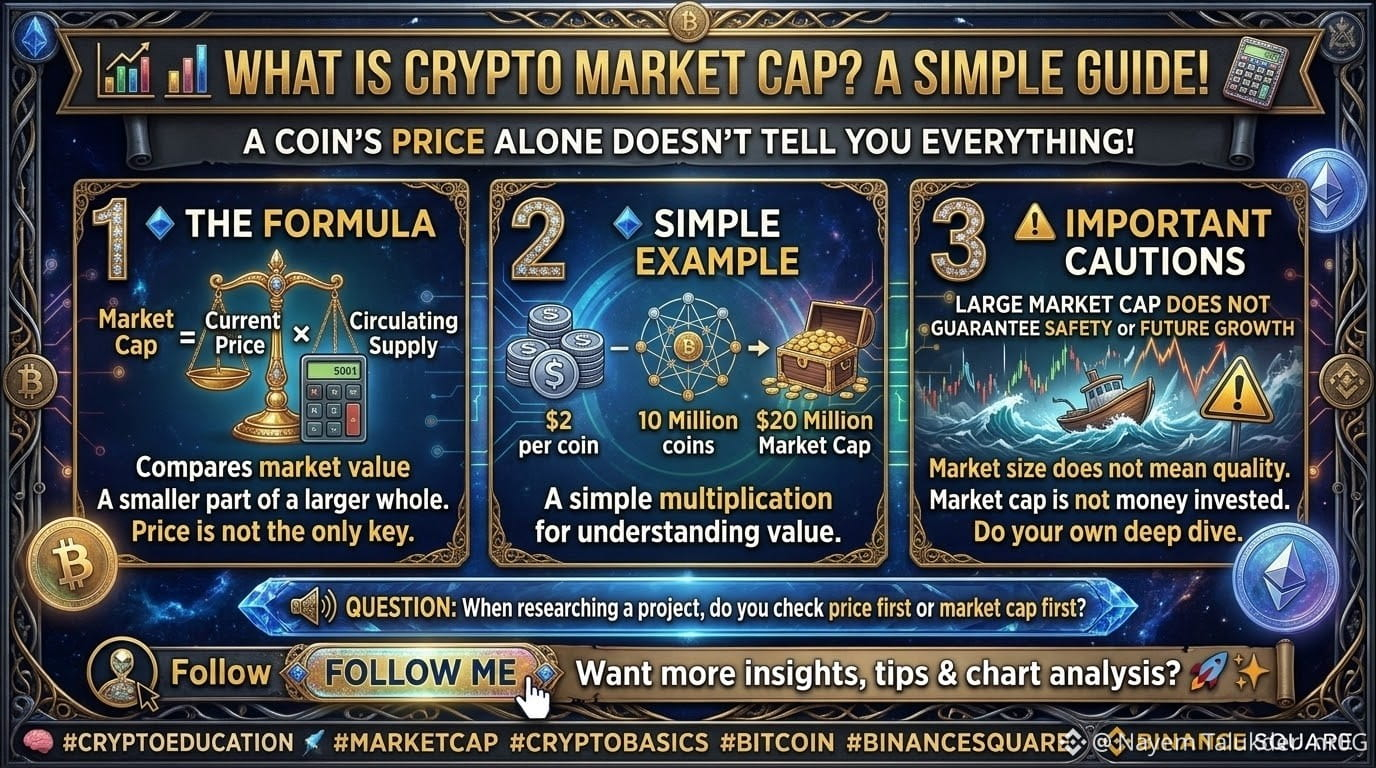
📊 What Is Crypto Market Cap? A Simple Guide!
A coin's price alone doesn't tell you everything!
🔹 The Formula: Market Cap = Current Price × Circulating Supply
🔹 Simple Example: If a coin trades at $2 and has 10 million coins in circulation, its market cap is $20 million.
{spot}(ZECUSDT)
{spot}(TRXUSDT)
{spot}(BNBUSDT)
🔹 Why Does It Matter? It helps compare the market value of different crypto assets.
⚠️ A larger market cap does not guarantee safety, quality, or future growth. Market cap is not the same as money invested.
💬 Question: When researching a crypto project, do you check price first or market cap first?
#MarketCap #CryptoBasics #Bitcoin❗ #BinanceSquare
$ZEC $TRX $BNB
📊 What Is Crypto Market Cap? A Simple Guide!
A coin's price alone doesn't tell you everything!
🔹 The Formula: Market Cap = Current Price × Circulating Supply
🔹 Simple Example: If a coin trades at $2 and has 10 million coins in circulation, its market cap is $20 million.
🔹 Why Does It Matter? It helps compare the market value of different crypto assets.
⚠️ A larger market cap does not guarantee safety, quality, or future growth. Market cap is not the same as money invested.
💬 Question: When researching a crypto project, do you check price first or market cap first?
#MarketCap #CryptoBasics #Bitcoin❗ #BinanceSquare
$ZEC $TRX $BNB
A coin's price alone doesn't tell you everything!
🔹 The Formula: Market Cap = Current Price × Circulating Supply
🔹 Simple Example: If a coin trades at $2 and has 10 million coins in circulation, its market cap is $20 million.
🔹 Why Does It Matter? It helps compare the market value of different crypto assets.
⚠️ A larger market cap does not guarantee safety, quality, or future growth. Market cap is not the same as money invested.
💬 Question: When researching a crypto project, do you check price first or market cap first?
#MarketCap #CryptoBasics #Bitcoin❗ #BinanceSquare
$ZEC $TRX $BNB
260

·
--
What Is a Stablecoin? A Simple Guide for Beginners 💵
Have you ever wondered why some cryptocurrencies are designed to maintain a stable price?
Stablecoins are cryptocurrencies designed to maintain a relatively stable value. Many are linked to traditional currencies, such as the US dollar.
For example, USDT is designed to track the value of the US dollar. However, its price can sometimes move away from $1.
Why do people use stablecoins?
To transfer funds between crypto platforms.
To hold digital assets with less price volatility than Bitcoin.
To make certain crypto transactions easier.
Remember, stablecoins still carry risks. Always check the issuer, reserves, and platform before using one.
Do you use stablecoins? Why or why not? Share your thoughts below! 👇
#CryptoEducation #Stablecoin #USDT #CryptoBasics
What Is a Stablecoin? A Simple Guide for Beginners 💵
Have you ever wondered why some cryptocurrencies are designed to maintain a stable price?
Stablecoins are cryptocurrencies designed to maintain a relatively stable value. Many are linked to traditional currencies, such as the US dollar.
For example, USDT is designed to track the value of the US dollar. However, its price can sometimes move away from $1.
Why do people use stablecoins?
To transfer funds between crypto platforms.
To hold digital assets with less price volatility than Bitcoin.
To make certain crypto transactions easier.
Remember, stablecoins still carry risks. Always check the issuer, reserves, and platform before using one.
Do you use stablecoins? Why or why not? Share your thoughts below! 👇
#CryptoEducation #Stablecoin #USDT #CryptoBasics
Have you ever wondered why some cryptocurrencies are designed to maintain a stable price?
Stablecoins are cryptocurrencies designed to maintain a relatively stable value. Many are linked to traditional currencies, such as the US dollar.
For example, USDT is designed to track the value of the US dollar. However, its price can sometimes move away from $1.
Why do people use stablecoins?
To transfer funds between crypto platforms.
To hold digital assets with less price volatility than Bitcoin.
To make certain crypto transactions easier.
Remember, stablecoins still carry risks. Always check the issuer, reserves, and platform before using one.
Do you use stablecoins? Why or why not? Share your thoughts below! 👇
#CryptoEducation #Stablecoin #USDT #CryptoBasics

90

·
--
📘 WHAT IS SPOT TRADING? CRYPTO EXPLAINED FOR BEGINNERS
Confused by crypto trading? Let's make it simple 👇
🪙 1. You buy a cryptocurrency at its current market price or a price you choose.
📈 2. If its price rises, your holding may increase in value.
📉 3. If its price falls, your holding loses value.
💸 4. Trading fees may apply when you buy or sell.
⚠️ 5. Profit is NEVER guaranteed. Prices can fall sharply.
Example 👇
You buy $10 worth of a cryptocurrency.
If its value rises by 10%, it becomes $11 before fees.
If its value falls by 10%, it becomes $9 before fees.
That's how price movement works — no magic, no guaranteed money.
👇 Which topic should I explain next?
A — Spot trading
B — Futures trading
C — Reading charts
D — Trading fees
Comment A, B, C, or D 👇
#CryptoBasics #LearnCrypto #FinanceEducation #Binance
📘 WHAT IS SPOT TRADING? CRYPTO EXPLAINED FOR BEGINNERS
Confused by crypto trading? Let's make it simple 👇
🪙 1. You buy a cryptocurrency at its current market price or a price you choose.
📈 2. If its price rises, your holding may increase in value.
📉 3. If its price falls, your holding loses value.
💸 4. Trading fees may apply when you buy or sell.
⚠️ 5. Profit is NEVER guaranteed. Prices can fall sharply.
Example 👇
You buy $10 worth of a cryptocurrency.
If its value rises by 10%, it becomes $11 before fees.
If its value falls by 10%, it becomes $9 before fees.
That's how price movement works — no magic, no guaranteed money.
👇 Which topic should I explain next?
A — Spot trading
B — Futures trading
C — Reading charts
D — Trading fees
Comment A, B, C, or D 👇
#CryptoBasics #LearnCrypto #FinanceEducation #Binance
Confused by crypto trading? Let's make it simple 👇
🪙 1. You buy a cryptocurrency at its current market price or a price you choose.
📈 2. If its price rises, your holding may increase in value.
📉 3. If its price falls, your holding loses value.
💸 4. Trading fees may apply when you buy or sell.
⚠️ 5. Profit is NEVER guaranteed. Prices can fall sharply.
Example 👇
You buy $10 worth of a cryptocurrency.
If its value rises by 10%, it becomes $11 before fees.
If its value falls by 10%, it becomes $9 before fees.
That's how price movement works — no magic, no guaranteed money.
👇 Which topic should I explain next?
A — Spot trading
B — Futures trading
C — Reading charts
D — Trading fees
Comment A, B, C, or D 👇
#CryptoBasics #LearnCrypto #FinanceEducation #Binance
43

·
--
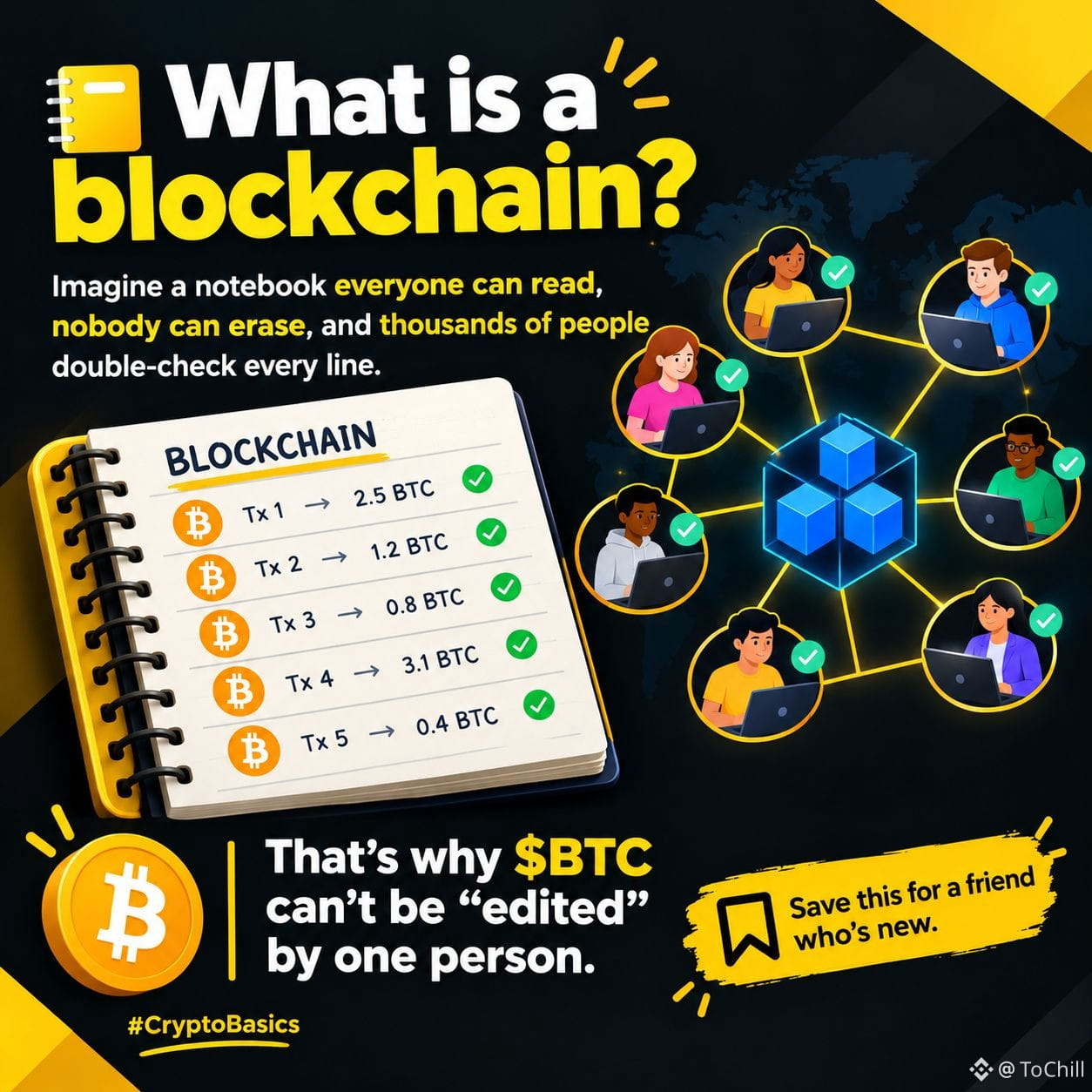
📒 What is a blockchain? Imagine a notebook everyone can read, nobody can erase, and thousands of people double-check every line. That's why $BTC can't be "edited" by one person. Save this for a friend who's new. #CryptoBasics
📒 What is a blockchain? Imagine a notebook everyone can read, nobody can erase, and thousands of people double-check every line. That's why $BTC can't be "edited" by one person. Save this for a friend who's new. #CryptoBasics
71

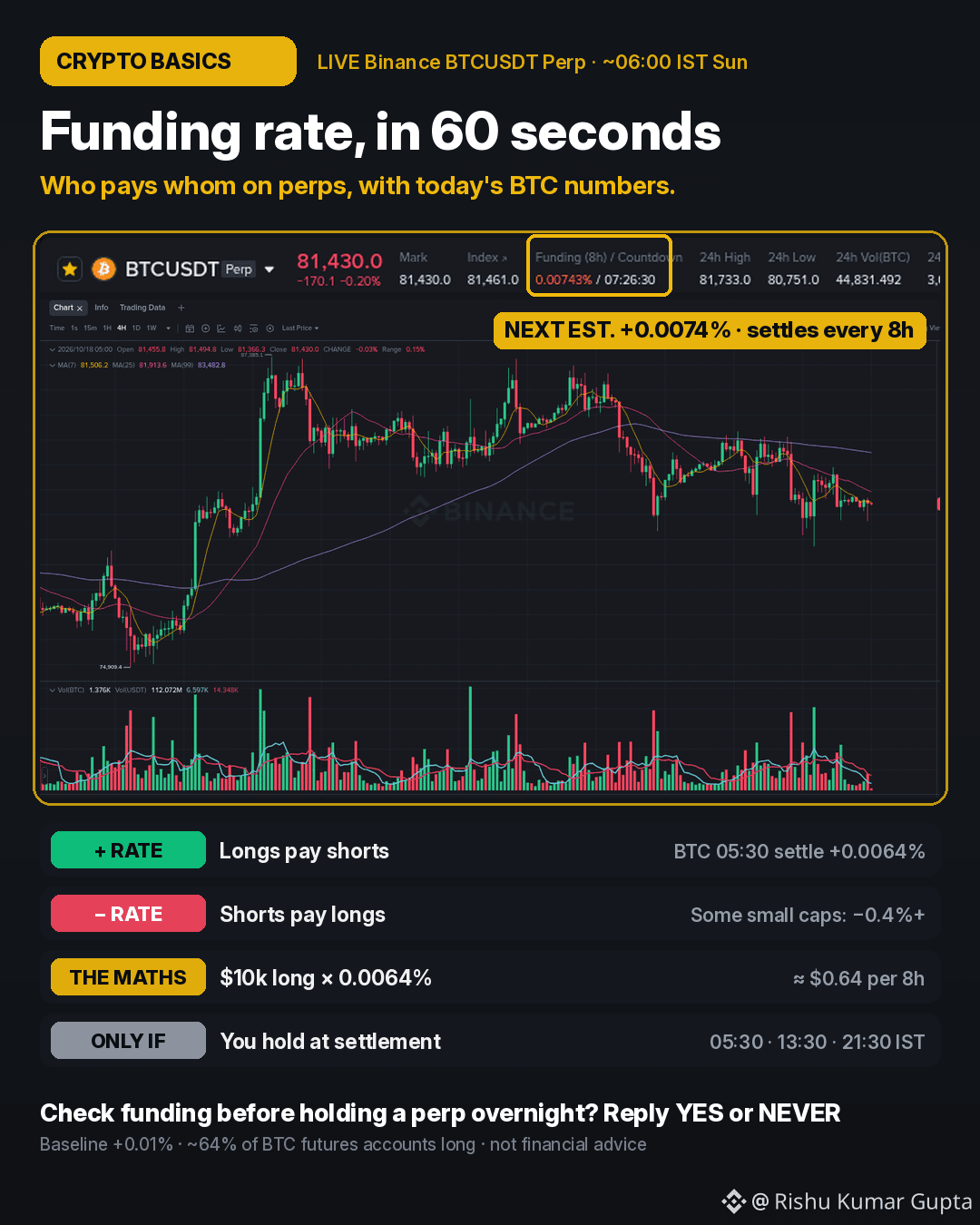
Funding rate, explained with today's BTC numbers.
On Binance perpetual futures, funding is a small payment between longs and shorts at set times (every 8h for BTCUSDT: 05:30, 13:30, 21:30 IST). It keeps the perp price close to spot.
Positive rate: longs pay shorts. Negative rate: shorts pay longs.
$BTC right now (~06:00 IST Sunday, ~$81.4k): the 05:30 settlement was +0.0064%, and the live estimate for the next one is about +0.0074%. That's under the +0.01% baseline, so longs aren't overpaying, even with ~64% of futures accounts long.
The maths: a $10,000 long at +0.0064% pays about $0.64 per 8h.
Where it bites: a few small-cap perps are sitting at −0.4% or worse per interval today. That's roughly $40+ per $10k, every settlement.
3 rules I use:
1. Check funding before holding a leveraged position for days.
2. Extreme funding shows a crowded side. It is not a buy or sell signal by itself.
3. You only pay or receive it if you hold the position at the settlement time.
Not financial advice, just the basics.
Do you check funding before holding a perp overnight? Reply YES or NEVER.
#BinanceSquare #FundingRate #CryptoBasics
Funding rate, explained with today's BTC numbers.
On Binance perpetual futures, funding is a small payment between longs and shorts at set times (every 8h for BTCUSDT: 05:30, 13:30, 21:30 IST). It keeps the perp price close to spot.
Positive rate: longs pay shorts. Negative rate: shorts pay longs.
$BTC right now (~06:00 IST Sunday, ~$81.4k): the 05:30 settlement was +0.0064%, and the live estimate for the next one is about +0.0074%. That's under the +0.01% baseline, so longs aren't overpaying, even with ~64% of futures accounts long.
The maths: a $10,000 long at +0.0064% pays about $0.64 per 8h.
Where it bites: a few small-cap perps are sitting at −0.4% or worse per interval today. That's roughly $40+ per $10k, every settlement.
3 rules I use:
1. Check funding before holding a leveraged position for days.
2. Extreme funding shows a crowded side. It is not a buy or sell signal by itself.
3. You only pay or receive it if you hold the position at the settlement time.
Not financial advice, just the basics.
Do you check funding before holding a perp overnight? Reply YES or NEVER.
#BinanceSquare #FundingRate #CryptoBasics
On Binance perpetual futures, funding is a small payment between longs and shorts at set times (every 8h for BTCUSDT: 05:30, 13:30, 21:30 IST). It keeps the perp price close to spot.
Positive rate: longs pay shorts. Negative rate: shorts pay longs.
$BTC right now (~06:00 IST Sunday, ~$81.4k): the 05:30 settlement was +0.0064%, and the live estimate for the next one is about +0.0074%. That's under the +0.01% baseline, so longs aren't overpaying, even with ~64% of futures accounts long.
The maths: a $10,000 long at +0.0064% pays about $0.64 per 8h.
Where it bites: a few small-cap perps are sitting at −0.4% or worse per interval today. That's roughly $40+ per $10k, every settlement.
3 rules I use:
1. Check funding before holding a leveraged position for days.
2. Extreme funding shows a crowded side. It is not a buy or sell signal by itself.
3. You only pay or receive it if you hold the position at the settlement time.
Not financial advice, just the basics.
Do you check funding before holding a perp overnight? Reply YES or NEVER.
#BinanceSquare #FundingRate #CryptoBasics
74

·
--
What is Bitcoin? Explained in simple words.
Bitcoin $BTC is digital money that works on the internet, without any bank or company controlling it.
3 simple facts every beginner should know:
• There will only ever be 21 million bitcoins — no one can print more
• Every transaction is recorded on a public list called the blockchain, so it cannot be quietly changed
• People send Bitcoin directly to each other, wallet to wallet, anywhere in the world
Think of it like digital gold: limited in supply, owned by you, and moved online.
Prices go up and down, sometimes a lot — so always learn first, and never invest money you cannot afford to lose.
Educational content only, not financial advice.
#BinanceSquare #WriteToEarn #Bitcoin #CryptoBasics
What is Bitcoin? Explained in simple words.
Bitcoin $BTC is digital money that works on the internet, without any bank or company controlling it.
3 simple facts every beginner should know:
• There will only ever be 21 million bitcoins — no one can print more
• Every transaction is recorded on a public list called the blockchain, so it cannot be quietly changed
• People send Bitcoin directly to each other, wallet to wallet, anywhere in the world
Think of it like digital gold: limited in supply, owned by you, and moved online.
Prices go up and down, sometimes a lot — so always learn first, and never invest money you cannot afford to lose.
Educational content only, not financial advice.
#BinanceSquare #WriteToEarn #Bitcoin #CryptoBasics
Bitcoin $BTC is digital money that works on the internet, without any bank or company controlling it.
3 simple facts every beginner should know:
• There will only ever be 21 million bitcoins — no one can print more
• Every transaction is recorded on a public list called the blockchain, so it cannot be quietly changed
• People send Bitcoin directly to each other, wallet to wallet, anywhere in the world
Think of it like digital gold: limited in supply, owned by you, and moved online.
Prices go up and down, sometimes a lot — so always learn first, and never invest money you cannot afford to lose.
Educational content only, not financial advice.
#BinanceSquare #WriteToEarn #Bitcoin #CryptoBasics
73

·
--
ලිපිය
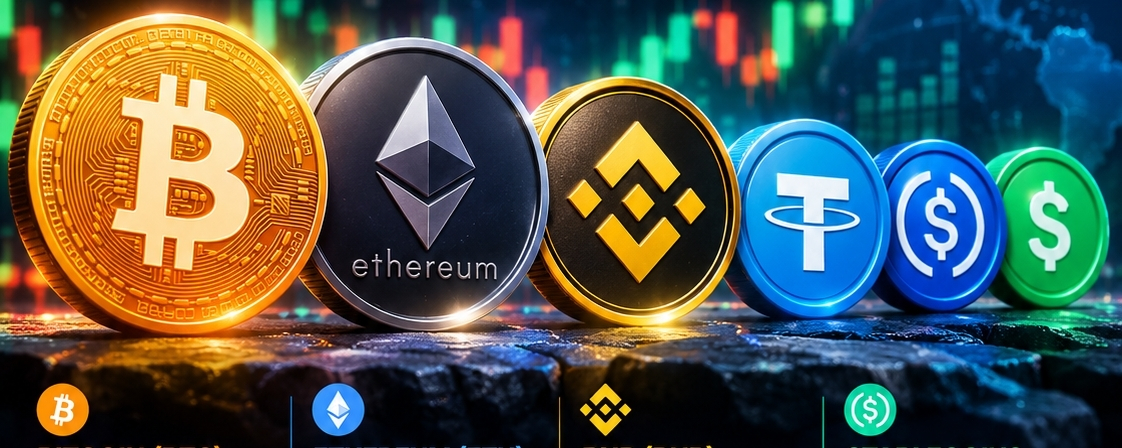
Crypto Basics: BTC, ETH, BNB & Stablecoins Explained# 📚
The crypto ecosystem has different digital assets, each serving a unique purpose.
🟠 **1. Bitcoin (BTC) — Digital Gold**
Bitcoin is a decentralized cryptocurrency with a maximum supply of 21 million coins. It is often viewed as a store of value, although its price can be highly volatile.
🔷 **2. Ethereum (ETH) — Smart Contract Powerhouse**
Ethereum supports smart contracts and decentralized applications, including DeFi, NFTs, and other Web3 services. ETH is used to pay network transaction fees.
🟡 **3. BNB — BNB Chain Utility Token**
BNB powers activity across the BNB Chain ecosystem. It is used for network gas fees and various applications, including DeFi and Web3 services.
🟢 **4. Stablecoins — Digital Assets Designed for Stability**
Stablecoins such as USDT and USDC aim to maintain a stable value, commonly against the US dollar. They are widely used for trading, transfers, and payments, but they still carry risks.
💡 **Key Takeaway:**
* BTC focuses on decentralized digital money and scarcity.
* ETH enables smart contracts and decentralized applications.
* BNB supports the BNB Chain ecosystem.
* Stablecoins aim to reduce price volatility relative to their reference asset.
Different assets. Different purposes. One evolving crypto ecosystem.
⚠️ **Disclaimer:** This content is for educational purposes only, not financial advice. Always research independently before making investment decisions.
💬 **Question:** Which crypto asset would you like to understand better — BTC, ETH, BNB, or stablecoins?
#CryptoBasics #Bitcoin #Ethereum #bnb
Crypto Basics: BTC, ETH, BNB & Stablecoins Explained
# 📚
The crypto ecosystem has different digital assets, each serving a unique purpose.
🟠 **1. Bitcoin (BTC) — Digital Gold**
Bitcoin is a decentralized cryptocurrency with a maximum supply of 21 million coins. It is often viewed as a store of value, although its price can be highly volatile.
🔷 **2. Ethereum (ETH) — Smart Contract Powerhouse**
Ethereum supports smart contracts and decentralized applications, including DeFi, NFTs, and other Web3 services. ETH is used to pay network transaction fees.
🟡 **3. BNB — BNB Chain Utility Token**
BNB powers activity across the BNB Chain ecosystem. It is used for network gas fees and various applications, including DeFi and Web3 services.
🟢 **4. Stablecoins — Digital Assets Designed for Stability**
Stablecoins such as USDT and USDC aim to maintain a stable value, commonly against the US dollar. They are widely used for trading, transfers, and payments, but they still carry risks.
💡 **Key Takeaway:**
* BTC focuses on decentralized digital money and scarcity.
* ETH enables smart contracts and decentralized applications.
* BNB supports the BNB Chain ecosystem.
* Stablecoins aim to reduce price volatility relative to their reference asset.
Different assets. Different purposes. One evolving crypto ecosystem.
⚠️ **Disclaimer:** This content is for educational purposes only, not financial advice. Always research independently before making investment decisions.
💬 **Question:** Which crypto asset would you like to understand better — BTC, ETH, BNB, or stablecoins?
#CryptoBasics #Bitcoin #Ethereum #bnb
The crypto ecosystem has different digital assets, each serving a unique purpose.
🟠 **1. Bitcoin (BTC) — Digital Gold**
Bitcoin is a decentralized cryptocurrency with a maximum supply of 21 million coins. It is often viewed as a store of value, although its price can be highly volatile.
🔷 **2. Ethereum (ETH) — Smart Contract Powerhouse**
Ethereum supports smart contracts and decentralized applications, including DeFi, NFTs, and other Web3 services. ETH is used to pay network transaction fees.
🟡 **3. BNB — BNB Chain Utility Token**
BNB powers activity across the BNB Chain ecosystem. It is used for network gas fees and various applications, including DeFi and Web3 services.
🟢 **4. Stablecoins — Digital Assets Designed for Stability**
Stablecoins such as USDT and USDC aim to maintain a stable value, commonly against the US dollar. They are widely used for trading, transfers, and payments, but they still carry risks.
💡 **Key Takeaway:**
* BTC focuses on decentralized digital money and scarcity.
* ETH enables smart contracts and decentralized applications.
* BNB supports the BNB Chain ecosystem.
* Stablecoins aim to reduce price volatility relative to their reference asset.
Different assets. Different purposes. One evolving crypto ecosystem.
⚠️ **Disclaimer:** This content is for educational purposes only, not financial advice. Always research independently before making investment decisions.
💬 **Question:** Which crypto asset would you like to understand better — BTC, ETH, BNB, or stablecoins?
#CryptoBasics #Bitcoin #Ethereum #bnb
125

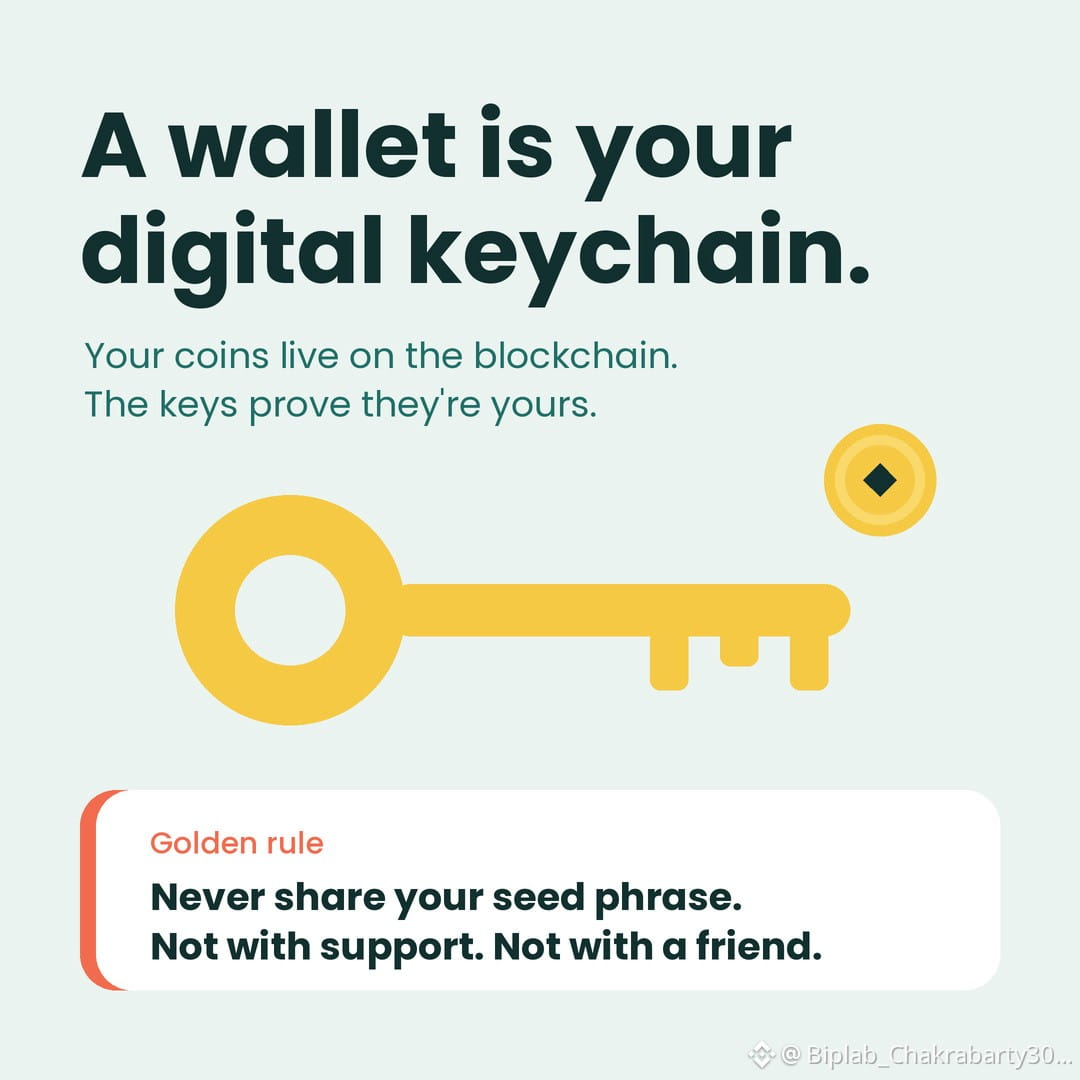
What is a wallet? 🤔
Think of it like your personal digital keychain. Your coins live on the blockchain, and your wallet holds the keys that prove they're yours.
Golden rule: never share your seed phrase with anyone. Not support, not a "friend," nobody. 🔐
Want more basics like this? Comment a topic below 👇
#CryptoBasics s #Wallet #security
What is a wallet? 🤔
Think of it like your personal digital keychain. Your coins live on the blockchain, and your wallet holds the keys that prove they're yours.
Golden rule: never share your seed phrase with anyone. Not support, not a "friend," nobody. 🔐
Want more basics like this? Comment a topic below 👇
#CryptoBasics s #Wallet #security
Think of it like your personal digital keychain. Your coins live on the blockchain, and your wallet holds the keys that prove they're yours.
Golden rule: never share your seed phrase with anyone. Not support, not a "friend," nobody. 🔐
Want more basics like this? Comment a topic below 👇
#CryptoBasics s #Wallet #security
1
235

·
--
ලිපිය
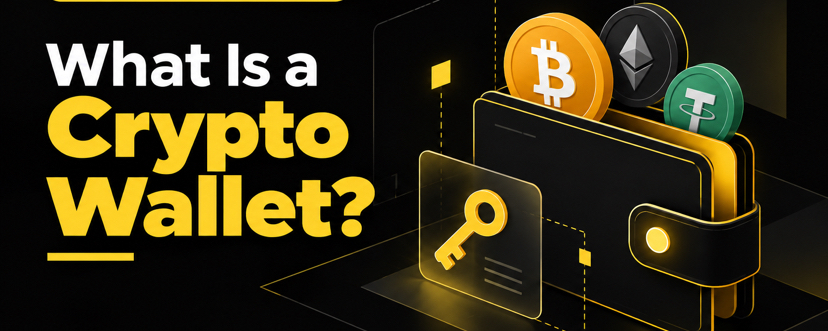
What Does a Crypto Wallet Actually Hold?You might think a crypto wallet stores your coins, just like a physical wallet holds cash.
But here’s the interesting part: your crypto doesn’t actually sit inside your wallet. 👀
So, what does a crypto wallet really do? Let’s break it down.
🔑 1. What Is a Crypto Wallet?
A crypto wallet is a tool that allows you to access and manage your digital assets on a blockchain.
It helps you send and receive crypto, check your balances, and authorize transactions.
Your assets remain recorded on the blockchain. The wallet manages the keys that allow you to access them.
🔐 2. What Are Private Keys?
Private keys are essential for controlling crypto assets.
Think of them as the secret credentials that allow you to authorize transactions from your wallet.
Anyone who gains control of your private keys may be able to access your funds.
Never share your private keys or recovery phrase with anyone.
🔥 3. Hot Wallets vs. Cold Wallets
Crypto wallets can be grouped into two common categories:
🔥 Hot Wallets
Connected to the internet.Convenient for frequent transactions.More exposed to online threats.
❄️ Cold Wallets
Keep private keys offline.Reduce exposure to online attacks.Often preferred for storing assets that don’t need frequent access.
Neither option is automatically perfect for everyone. The right choice depends on how you use your crypto and how you manage security.
🧠 4. Does a Wallet Actually Store Your Crypto?
Not in the way a physical wallet stores cash.
Your crypto exists as records on the blockchain. A wallet manages the keys used to access and control those assets.
That’s why protecting your keys and recovery phrase is so important.
💡 The Key Takeaway
A crypto wallet isn’t simply a place where your coins are stored. It’s your way to access and manage your assets on the blockchain.
Before choosing a wallet, understand how it works, how its keys are protected, and what responsibilities come with using it.
📚 Learn more with Binance Academy:
[Crypto Wallet Types Explained](https://academy.binance.com/en/articles/crypto-wallet-types-explained)
This content is for educational purposes only and isn’t financial advice.
#Binance #CryptoBasics #cryptoeducation #crypto 🌟
What Does a Crypto Wallet Actually Hold?
You might think a crypto wallet stores your coins, just like a physical wallet holds cash.
But here’s the interesting part: your crypto doesn’t actually sit inside your wallet. 👀
So, what does a crypto wallet really do? Let’s break it down.
🔑 1. What Is a Crypto Wallet?
A crypto wallet is a tool that allows you to access and manage your digital assets on a blockchain.
It helps you send and receive crypto, check your balances, and authorize transactions.
Your assets remain recorded on the blockchain. The wallet manages the keys that allow you to access them.
🔐 2. What Are Private Keys?
Private keys are essential for controlling crypto assets.
Think of them as the secret credentials that allow you to authorize transactions from your wallet.
Anyone who gains control of your private keys may be able to access your funds.
Never share your private keys or recovery phrase with anyone.
🔥 3. Hot Wallets vs. Cold Wallets
Crypto wallets can be grouped into two common categories:
🔥 Hot Wallets
Connected to the internet.Convenient for frequent transactions.More exposed to online threats.
❄️ Cold Wallets
Keep private keys offline.Reduce exposure to online attacks.Often preferred for storing assets that don’t need frequent access.
Neither option is automatically perfect for everyone. The right choice depends on how you use your crypto and how you manage security.
🧠 4. Does a Wallet Actually Store Your Crypto?
Not in the way a physical wallet stores cash.
Your crypto exists as records on the blockchain. A wallet manages the keys used to access and control those assets.
That’s why protecting your keys and recovery phrase is so important.
💡 The Key Takeaway
A crypto wallet isn’t simply a place where your coins are stored. It’s your way to access and manage your assets on the blockchain.
Before choosing a wallet, understand how it works, how its keys are protected, and what responsibilities come with using it.
📚 Learn more with Binance Academy:
Crypto Wallet Types Explained
This content is for educational purposes only and isn’t financial advice.
#Binance #CryptoBasics #cryptoeducation #crypto 🌟
But here’s the interesting part: your crypto doesn’t actually sit inside your wallet. 👀
So, what does a crypto wallet really do? Let’s break it down.
🔑 1. What Is a Crypto Wallet?
A crypto wallet is a tool that allows you to access and manage your digital assets on a blockchain.
It helps you send and receive crypto, check your balances, and authorize transactions.
Your assets remain recorded on the blockchain. The wallet manages the keys that allow you to access them.
🔐 2. What Are Private Keys?
Private keys are essential for controlling crypto assets.
Think of them as the secret credentials that allow you to authorize transactions from your wallet.
Anyone who gains control of your private keys may be able to access your funds.
Never share your private keys or recovery phrase with anyone.
🔥 3. Hot Wallets vs. Cold Wallets
Crypto wallets can be grouped into two common categories:
🔥 Hot Wallets
Connected to the internet.Convenient for frequent transactions.More exposed to online threats.
❄️ Cold Wallets
Keep private keys offline.Reduce exposure to online attacks.Often preferred for storing assets that don’t need frequent access.
Neither option is automatically perfect for everyone. The right choice depends on how you use your crypto and how you manage security.
🧠 4. Does a Wallet Actually Store Your Crypto?
Not in the way a physical wallet stores cash.
Your crypto exists as records on the blockchain. A wallet manages the keys used to access and control those assets.
That’s why protecting your keys and recovery phrase is so important.
💡 The Key Takeaway
A crypto wallet isn’t simply a place where your coins are stored. It’s your way to access and manage your assets on the blockchain.
Before choosing a wallet, understand how it works, how its keys are protected, and what responsibilities come with using it.
📚 Learn more with Binance Academy:
Crypto Wallet Types Explained
This content is for educational purposes only and isn’t financial advice.
#Binance #CryptoBasics #cryptoeducation #crypto 🌟
1
58
·
--

ලිපිය
Why Did Your Crypto Trade Execute at a Different Price?You see a crypto priced at $100, place an order, and end up buying it at $101.
What happened?
It could be slippage — and understanding it can help you make more informed trading decisions.
📊 What Is Slippage?
Slippage is the difference between the expected price of a trade and the actual price at which it executes.
For example, imagine you want to buy a cryptocurrency at $100.
By the time your order executes, the price you receive is $101.
That $1 difference is slippage.
🔎 Why Does Slippage Happen?
Slippage can occur for several reasons:
1. Market Volatility
Crypto prices can move quickly. The price may change between the moment you place an order and when it executes.
2. Low Liquidity
When there aren’t enough suitable buy or sell orders available at the expected price, your order may execute at a different price.
3. Large Orders
A large order may need to match with several available orders at different prices, resulting in a different average execution price.
🟢 Can Slippage Be Positive or Negative?
Yes!
Positive Slippage: Your trade executes at a better price than expected.Negative Slippage: Your trade executes at a worse price than expected.
Slippage can affect both buying and selling.
🛡️ How Can You Manage Slippage?
Here are a few things to consider:
Consider Limit Orders: You can specify the maximum price you’re willing to pay when buying or the minimum price you’re willing to accept when selling. However, your order may not execute.Check Market Conditions: Be cautious when prices are moving rapidly.Review Available Liquidity: Before placing a large order, consider the available orders at different price levels.
Remember, no method eliminates every trading risk.
💡 The Key Takeaway
The price you see isn’t always the price you receive.
Understanding slippage helps explain why execution prices can differ from expectations, especially in fast-moving or less liquid markets.
The more you understand how trades execute, the better prepared you are to navigate the crypto market.
📚 Learn more with Binance Academy:
[Slippage — Binance Academy](https://academy.binance.com/en/glossary/slippage)
Educational content only. Not financial advice. DYOR and verify information through official sources.
#Binance #BinanceAcademy #CryptoBasics #cryptoeducation 🚀
Why Did Your Crypto Trade Execute at a Different Price?
You see a crypto priced at $100, place an order, and end up buying it at $101.
What happened?
It could be slippage — and understanding it can help you make more informed trading decisions.
📊 What Is Slippage?
Slippage is the difference between the expected price of a trade and the actual price at which it executes.
For example, imagine you want to buy a cryptocurrency at $100.
By the time your order executes, the price you receive is $101.
That $1 difference is slippage.
🔎 Why Does Slippage Happen?
Slippage can occur for several reasons:
1. Market Volatility
Crypto prices can move quickly. The price may change between the moment you place an order and when it executes.
2. Low Liquidity
When there aren’t enough suitable buy or sell orders available at the expected price, your order may execute at a different price.
3. Large Orders
A large order may need to match with several available orders at different prices, resulting in a different average execution price.
🟢 Can Slippage Be Positive or Negative?
Yes!
Positive Slippage: Your trade executes at a better price than expected.Negative Slippage: Your trade executes at a worse price than expected.
Slippage can affect both buying and selling.
🛡️ How Can You Manage Slippage?
Here are a few things to consider:
Consider Limit Orders: You can specify the maximum price you’re willing to pay when buying or the minimum price you’re willing to accept when selling. However, your order may not execute.Check Market Conditions: Be cautious when prices are moving rapidly.Review Available Liquidity: Before placing a large order, consider the available orders at different price levels.
Remember, no method eliminates every trading risk.
💡 The Key Takeaway
The price you see isn’t always the price you receive.
Understanding slippage helps explain why execution prices can differ from expectations, especially in fast-moving or less liquid markets.
The more you understand how trades execute, the better prepared you are to navigate the crypto market.
📚 Learn more with Binance Academy:
Slippage — Binance Academy
Educational content only. Not financial advice. DYOR and verify information through official sources.
#Binance #BinanceAcademy #CryptoBasics #cryptoeducation 🚀
What happened?
It could be slippage — and understanding it can help you make more informed trading decisions.
📊 What Is Slippage?
Slippage is the difference between the expected price of a trade and the actual price at which it executes.
For example, imagine you want to buy a cryptocurrency at $100.
By the time your order executes, the price you receive is $101.
That $1 difference is slippage.
🔎 Why Does Slippage Happen?
Slippage can occur for several reasons:
1. Market Volatility
Crypto prices can move quickly. The price may change between the moment you place an order and when it executes.
2. Low Liquidity
When there aren’t enough suitable buy or sell orders available at the expected price, your order may execute at a different price.
3. Large Orders
A large order may need to match with several available orders at different prices, resulting in a different average execution price.
🟢 Can Slippage Be Positive or Negative?
Yes!
Positive Slippage: Your trade executes at a better price than expected.Negative Slippage: Your trade executes at a worse price than expected.
Slippage can affect both buying and selling.
🛡️ How Can You Manage Slippage?
Here are a few things to consider:
Consider Limit Orders: You can specify the maximum price you’re willing to pay when buying or the minimum price you’re willing to accept when selling. However, your order may not execute.Check Market Conditions: Be cautious when prices are moving rapidly.Review Available Liquidity: Before placing a large order, consider the available orders at different price levels.
Remember, no method eliminates every trading risk.
💡 The Key Takeaway
The price you see isn’t always the price you receive.
Understanding slippage helps explain why execution prices can differ from expectations, especially in fast-moving or less liquid markets.
The more you understand how trades execute, the better prepared you are to navigate the crypto market.
📚 Learn more with Binance Academy:
Slippage — Binance Academy
Educational content only. Not financial advice. DYOR and verify information through official sources.
#Binance #BinanceAcademy #CryptoBasics #cryptoeducation 🚀
1
94

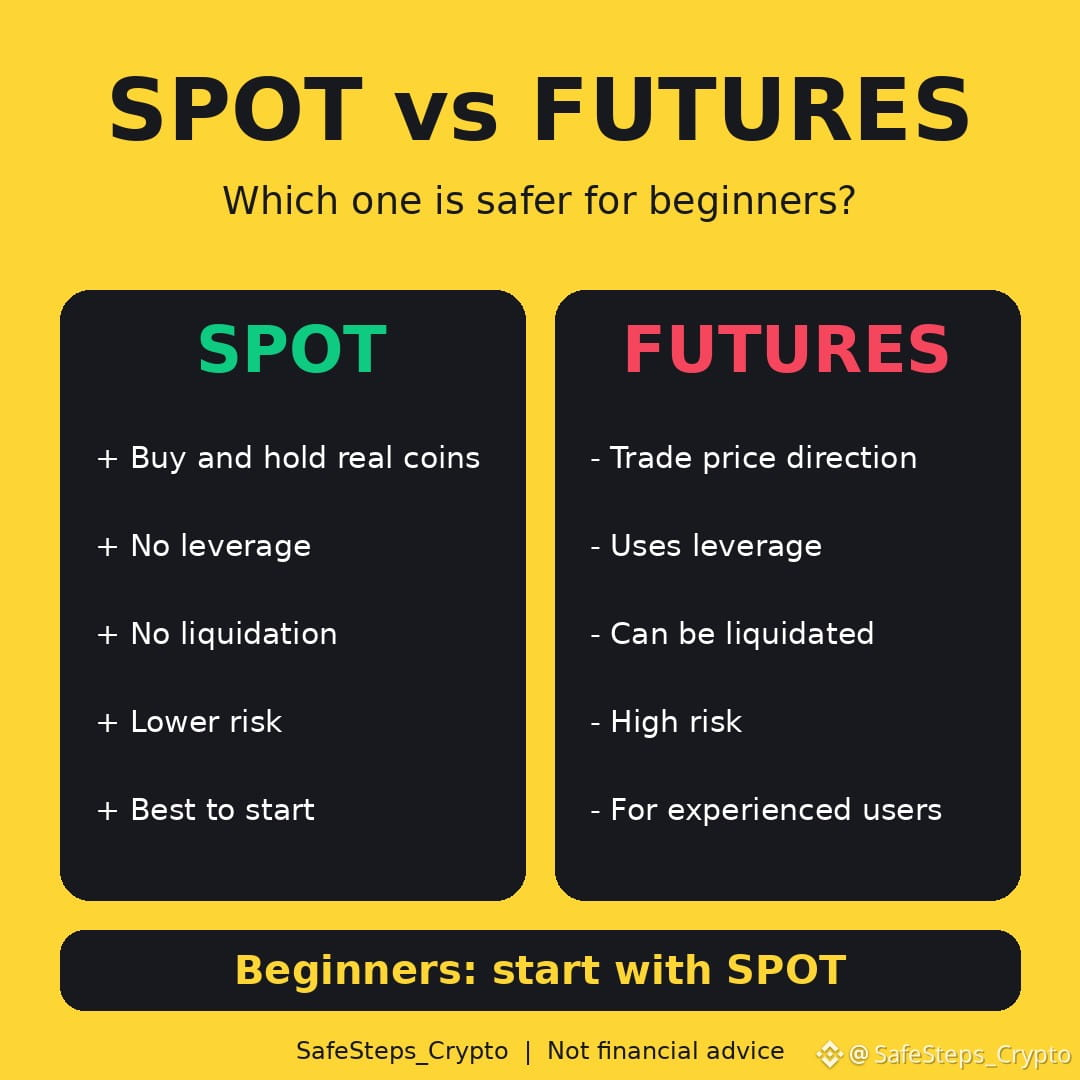
Spot vs Futures: which one should a beginner start with? 🤔
🟢 SPOT
You buy and hold real coins. No leverage, no liquidation, lower risk.
🔴 FUTURES
You trade price direction with leverage. Gains can be bigger, but losses can wipe out your balance fast.
My advice: start with Spot, learn the basics, then decide if Futures is for you.
Which one do you trade, Spot or Futures? 👇
$BTC $BNB
#Binance #Spot #Futures #BinanceSquare #CryptoBasics
Spot vs Futures: which one should a beginner start with? 🤔
🟢 SPOT
You buy and hold real coins. No leverage, no liquidation, lower risk.
🔴 FUTURES
You trade price direction with leverage. Gains can be bigger, but losses can wipe out your balance fast.
My advice: start with Spot, learn the basics, then decide if Futures is for you.
Which one do you trade, Spot or Futures? 👇
$BTC $BNB
#Binance #Spot #Futures #BinanceSquare #CryptoBasics
🟢 SPOT
You buy and hold real coins. No leverage, no liquidation, lower risk.
🔴 FUTURES
You trade price direction with leverage. Gains can be bigger, but losses can wipe out your balance fast.
My advice: start with Spot, learn the basics, then decide if Futures is for you.
Which one do you trade, Spot or Futures? 👇
$BTC $BNB
#Binance #Spot #Futures #BinanceSquare #CryptoBasics
1
140

Spot vs Futures: the difference every beginner should know
Spot trading: You buy or sell the actual asset. If you buy BTC on Spot, it goes into your wallet balance.
Futures trading: You trade a contract based on price movement. It can involve leverage, liquidation risk, and much faster losses.
Spot is generally easier to understand for beginners. Futures requires a clear understanding of margin, leverage, funding, and risk controls.
Learn the mechanics first. Crypto markets are volatile, and losses are possible.
#CryptoBasics #SpotTrading #FuturesTrading $BTC
{future}(BTCUSDT)
Spot vs Futures: the difference every beginner should know
Spot trading: You buy or sell the actual asset. If you buy BTC on Spot, it goes into your wallet balance.
Futures trading: You trade a contract based on price movement. It can involve leverage, liquidation risk, and much faster losses.
Spot is generally easier to understand for beginners. Futures requires a clear understanding of margin, leverage, funding, and risk controls.
Learn the mechanics first. Crypto markets are volatile, and losses are possible.
#CryptoBasics #SpotTrading #FuturesTrading $BTC
Spot trading: You buy or sell the actual asset. If you buy BTC on Spot, it goes into your wallet balance.
Futures trading: You trade a contract based on price movement. It can involve leverage, liquidation risk, and much faster losses.
Spot is generally easier to understand for beginners. Futures requires a clear understanding of margin, leverage, funding, and risk controls.
Learn the mechanics first. Crypto markets are volatile, and losses are possible.
#CryptoBasics #SpotTrading #FuturesTrading $BTC
74

·
--
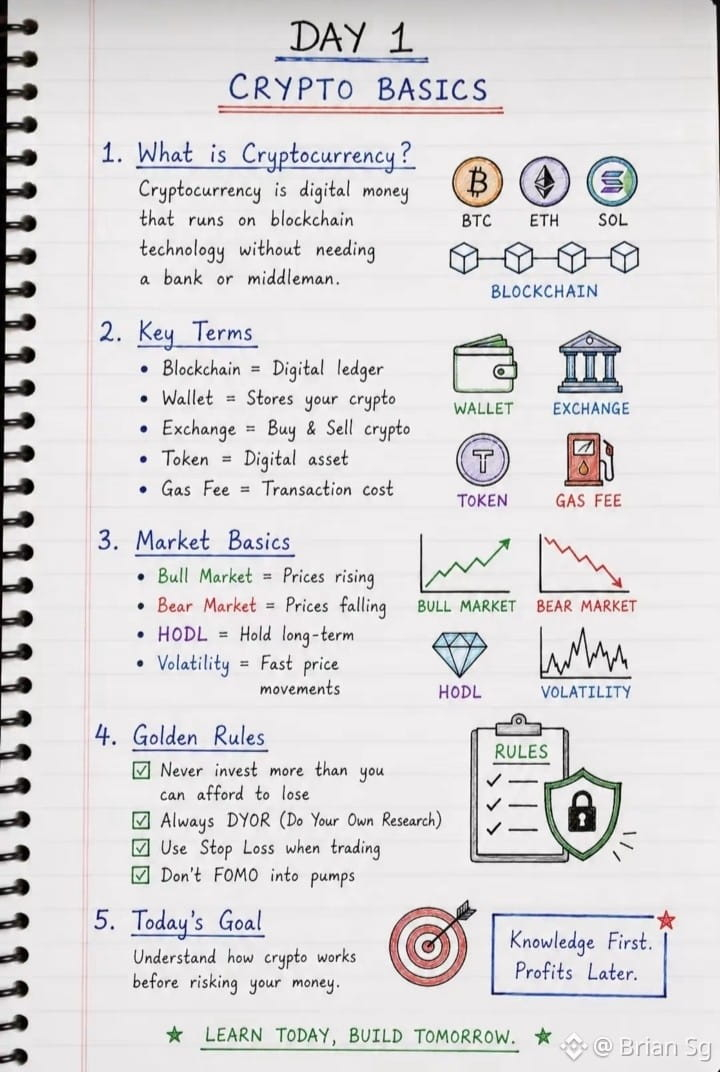
📚 CRYPTO BASICS — DAY 1: Before You Buy Your First Coin
New to crypto? Start here. 👇
You don't need to be a trading expert to understand the basics. You need to understand what you're putting your money into.
🔹 Blockchain: A digital record of transactions shared across a network.
🔹 Wallet: A tool for managing your crypto. Your private keys control access to your assets.
🔹 Exchange: A platform where you can buy and sell crypto.
🔹 Token: A digital asset issued on a blockchain.
🔹 Bull vs. Bear Market: Bull means prices are generally rising; bear means they're generally falling.
🔹 Volatility: Crypto prices can move sharply in either direction.
⚠️ 4 rules every beginner should remember:
✅ Never risk money you can't afford to lose.
✅ Research before buying.
✅ Understand the risks before using leverage.
✅ Don't buy just because a coin is pumping.
The biggest beginner mistake? Chasing profits before understanding the market.
🎯 Today's challenge: Learn one concept before making your next trade.
👇 YOUR TURN: What's the most confusing thing about crypto right now — wallets, Bitcoin, altcoins, or trading?
Comment below. I'll cover the most requested topic in Day 2.
Follow for simple, practical crypto lessons. Knowledge first. Profits later.
#CryptoBasics #bitcoin #CryptoEducationCryptoGuid #BinanceSquare
📚 CRYPTO BASICS — DAY 1: Before You Buy Your First Coin
New to crypto? Start here. 👇
You don't need to be a trading expert to understand the basics. You need to understand what you're putting your money into.
🔹 Blockchain: A digital record of transactions shared across a network.
🔹 Wallet: A tool for managing your crypto. Your private keys control access to your assets.
🔹 Exchange: A platform where you can buy and sell crypto.
🔹 Token: A digital asset issued on a blockchain.
🔹 Bull vs. Bear Market: Bull means prices are generally rising; bear means they're generally falling.
🔹 Volatility: Crypto prices can move sharply in either direction.
⚠️ 4 rules every beginner should remember:
✅ Never risk money you can't afford to lose.
✅ Research before buying.
✅ Understand the risks before using leverage.
✅ Don't buy just because a coin is pumping.
The biggest beginner mistake? Chasing profits before understanding the market.
🎯 Today's challenge: Learn one concept before making your next trade.
👇 YOUR TURN: What's the most confusing thing about crypto right now — wallets, Bitcoin, altcoins, or trading?
Comment below. I'll cover the most requested topic in Day 2.
Follow for simple, practical crypto lessons. Knowledge first. Profits later.
#CryptoBasics #bitcoin #CryptoEducationCryptoGuid #BinanceSquare
New to crypto? Start here. 👇
You don't need to be a trading expert to understand the basics. You need to understand what you're putting your money into.
🔹 Blockchain: A digital record of transactions shared across a network.
🔹 Wallet: A tool for managing your crypto. Your private keys control access to your assets.
🔹 Exchange: A platform where you can buy and sell crypto.
🔹 Token: A digital asset issued on a blockchain.
🔹 Bull vs. Bear Market: Bull means prices are generally rising; bear means they're generally falling.
🔹 Volatility: Crypto prices can move sharply in either direction.
⚠️ 4 rules every beginner should remember:
✅ Never risk money you can't afford to lose.
✅ Research before buying.
✅ Understand the risks before using leverage.
✅ Don't buy just because a coin is pumping.
The biggest beginner mistake? Chasing profits before understanding the market.
🎯 Today's challenge: Learn one concept before making your next trade.
👇 YOUR TURN: What's the most confusing thing about crypto right now — wallets, Bitcoin, altcoins, or trading?
Comment below. I'll cover the most requested topic in Day 2.
Follow for simple, practical crypto lessons. Knowledge first. Profits later.
#CryptoBasics #bitcoin #CryptoEducationCryptoGuid #BinanceSquare
105

Crypto Basics for New Traders
Bitcoin (BTC): The first and largest cryptocurrency by market cap.
Ethereum (ETH): The native coin of a network used for smart contracts and apps.
Stablecoins (USDT, USDC): Typically pegged to the U.S. dollar and used for trading pairs.
Altcoins: Any coin other than Bitcoin. Prices tend to swing more.
Before you buy: Check what the project does, its market cap, 24-hour volume, and liquidity.
Risk rules: Invest only what you can afford to lose, start small, avoid leverage, and spread your funds across assets.
Crypto prices are highly volatile and losses are possible. This post is for educational purposes only and is not financial advice.$BTC $ETH
#Binance #CryptoBasics #BinanceSquare
Crypto Basics for New Traders
Bitcoin (BTC): The first and largest cryptocurrency by market cap.
Ethereum (ETH): The native coin of a network used for smart contracts and apps.
Stablecoins (USDT, USDC): Typically pegged to the U.S. dollar and used for trading pairs.
Altcoins: Any coin other than Bitcoin. Prices tend to swing more.
Before you buy: Check what the project does, its market cap, 24-hour volume, and liquidity.
Risk rules: Invest only what you can afford to lose, start small, avoid leverage, and spread your funds across assets.
Crypto prices are highly volatile and losses are possible. This post is for educational purposes only and is not financial advice.$BTC $ETH
#Binance #CryptoBasics #BinanceSquare
Bitcoin (BTC): The first and largest cryptocurrency by market cap.
Ethereum (ETH): The native coin of a network used for smart contracts and apps.
Stablecoins (USDT, USDC): Typically pegged to the U.S. dollar and used for trading pairs.
Altcoins: Any coin other than Bitcoin. Prices tend to swing more.
Before you buy: Check what the project does, its market cap, 24-hour volume, and liquidity.
Risk rules: Invest only what you can afford to lose, start small, avoid leverage, and spread your funds across assets.
Crypto prices are highly volatile and losses are possible. This post is for educational purposes only and is not financial advice.$BTC $ETH
#Binance #CryptoBasics #BinanceSquare
56

·
--
NFTs, or Non-Fungible Tokens, are digital items that prove ownership of something unique on the blockchain.
Think of a concert ticket with a special seat number. The ticket isn’t just “one of many” — it points to a specific, unique spot. NFTs work the same way for digital art, collectibles, game items, and more.
Unlike $BTC, which is interchangeable with every other BTC, each NFT can be different and have its own identity.
Important: owning an NFT usually means you own the token, not necessarily the copyright or full commercial rights to the underlying content.
#CryptoBasics #NFT
Takeaway: NFTs are like digital certificates of ownership for unique assets.
NFTs, or Non-Fungible Tokens, are digital items that prove ownership of something unique on the blockchain.
Think of a concert ticket with a special seat number. The ticket isn’t just “one of many” — it points to a specific, unique spot. NFTs work the same way for digital art, collectibles, game items, and more.
Unlike $BTC , which is interchangeable with every other BTC, each NFT can be different and have its own identity.
Important: owning an NFT usually means you own the token, not necessarily the copyright or full commercial rights to the underlying content.
#CryptoBasics #NFT
Takeaway: NFTs are like digital certificates of ownership for unique assets.
Think of a concert ticket with a special seat number. The ticket isn’t just “one of many” — it points to a specific, unique spot. NFTs work the same way for digital art, collectibles, game items, and more.
Unlike $BTC , which is interchangeable with every other BTC, each NFT can be different and have its own identity.
Important: owning an NFT usually means you own the token, not necessarily the copyright or full commercial rights to the underlying content.
#CryptoBasics #NFT
Takeaway: NFTs are like digital certificates of ownership for unique assets.

111
·
--
What does “market cap” mean in crypto?
Market cap is the total value of a coin or token. You can think of it like the market’s “price tag” for the whole project.
Simple formula:
Price per coin × number of coins in circulation = market cap
Example: if a token costs $2 and there are 100 million tokens circulating, the market cap is $200 million.
Why it matters:
It helps you compare projects by size, but it does not tell you everything about risk, utility, or future results.
A higher market cap usually means a larger project, but always look deeper than the headline number.
#CryptoBasics #MarketCap
What does “market cap” mean in crypto?
Market cap is the total value of a coin or token. You can think of it like the market’s “price tag” for the whole project.
Simple formula:
Price per coin × number of coins in circulation = market cap
Example: if a token costs $2 and there are 100 million tokens circulating, the market cap is $200 million.
Why it matters:
It helps you compare projects by size, but it does not tell you everything about risk, utility, or future results.
A higher market cap usually means a larger project, but always look deeper than the headline number.
#CryptoBasics #MarketCap
Market cap is the total value of a coin or token. You can think of it like the market’s “price tag” for the whole project.
Simple formula:
Price per coin × number of coins in circulation = market cap
Example: if a token costs $2 and there are 100 million tokens circulating, the market cap is $200 million.
Why it matters:
It helps you compare projects by size, but it does not tell you everything about risk, utility, or future results.
A higher market cap usually means a larger project, but always look deeper than the headline number.
#CryptoBasics #MarketCap

79

Against the crowd here but...
Roughly 20% of all bitcoin supply still sits on exchanges, according to on-chain data. After FTX, Celsius, and BlockFi froze withdrawals in 2022, that number should be closer to zero.
→ Exchange balances are counterparty exposure. You hold an IOU, not bitcoin. When withdrawals halted in 2022, users waited months or never recovered funds.
→ Hardware wallet sales spiked over 300% in the weeks after FTX collapsed. That is reactive behavior. Self custody works best as a default, not a panic response.
→ A hardware wallet keeps private keys offline. Your seed phrase is the actual asset. Lose it, and no support ticket will help you.
→ Self custody has tradeoffs. You manage backups, verify addresses, and accept full responsibility for mistakes. That is the cost of removing intermediaries.
→ Diversification applies to custody too. Splitting holdings across exchanges and cold storage reduces single points of failure while keeping some liquidity accessible.
The lesson from every exchange failure is the same. Custody determines ownership. If you cannot move the asset yourself, you do not control it. Verify your keys, test your backups, and treat self custody as a skill worth practicing before you actually need it.
Like if this was helpful
#CryptoTips #CryptoBasics #CryptoCommunity #Blockchain #Investing
📱 Follow @PoorCryptoMan
Against the crowd here but...
Roughly 20% of all bitcoin supply still sits on exchanges, according to on-chain data. After FTX, Celsius, and BlockFi froze withdrawals in 2022, that number should be closer to zero.
→ Exchange balances are counterparty exposure. You hold an IOU, not bitcoin. When withdrawals halted in 2022, users waited months or never recovered funds.
→ Hardware wallet sales spiked over 300% in the weeks after FTX collapsed. That is reactive behavior. Self custody works best as a default, not a panic response.
→ A hardware wallet keeps private keys offline. Your seed phrase is the actual asset. Lose it, and no support ticket will help you.
→ Self custody has tradeoffs. You manage backups, verify addresses, and accept full responsibility for mistakes. That is the cost of removing intermediaries.
→ Diversification applies to custody too. Splitting holdings across exchanges and cold storage reduces single points of failure while keeping some liquidity accessible.
The lesson from every exchange failure is the same. Custody determines ownership. If you cannot move the asset yourself, you do not control it. Verify your keys, test your backups, and treat self custody as a skill worth practicing before you actually need it.
Like if this was helpful
#CryptoTips #CryptoBasics #CryptoCommunity #Blockchain #Investing
📱 Follow @PoorCryptoMan
Roughly 20% of all bitcoin supply still sits on exchanges, according to on-chain data. After FTX, Celsius, and BlockFi froze withdrawals in 2022, that number should be closer to zero.
→ Exchange balances are counterparty exposure. You hold an IOU, not bitcoin. When withdrawals halted in 2022, users waited months or never recovered funds.
→ Hardware wallet sales spiked over 300% in the weeks after FTX collapsed. That is reactive behavior. Self custody works best as a default, not a panic response.
→ A hardware wallet keeps private keys offline. Your seed phrase is the actual asset. Lose it, and no support ticket will help you.
→ Self custody has tradeoffs. You manage backups, verify addresses, and accept full responsibility for mistakes. That is the cost of removing intermediaries.
→ Diversification applies to custody too. Splitting holdings across exchanges and cold storage reduces single points of failure while keeping some liquidity accessible.
The lesson from every exchange failure is the same. Custody determines ownership. If you cannot move the asset yourself, you do not control it. Verify your keys, test your backups, and treat self custody as a skill worth practicing before you actually need it.
Like if this was helpful
#CryptoTips #CryptoBasics #CryptoCommunity #Blockchain #Investing
📱 Follow @PoorCryptoMan
38
·
--
ලිපිය
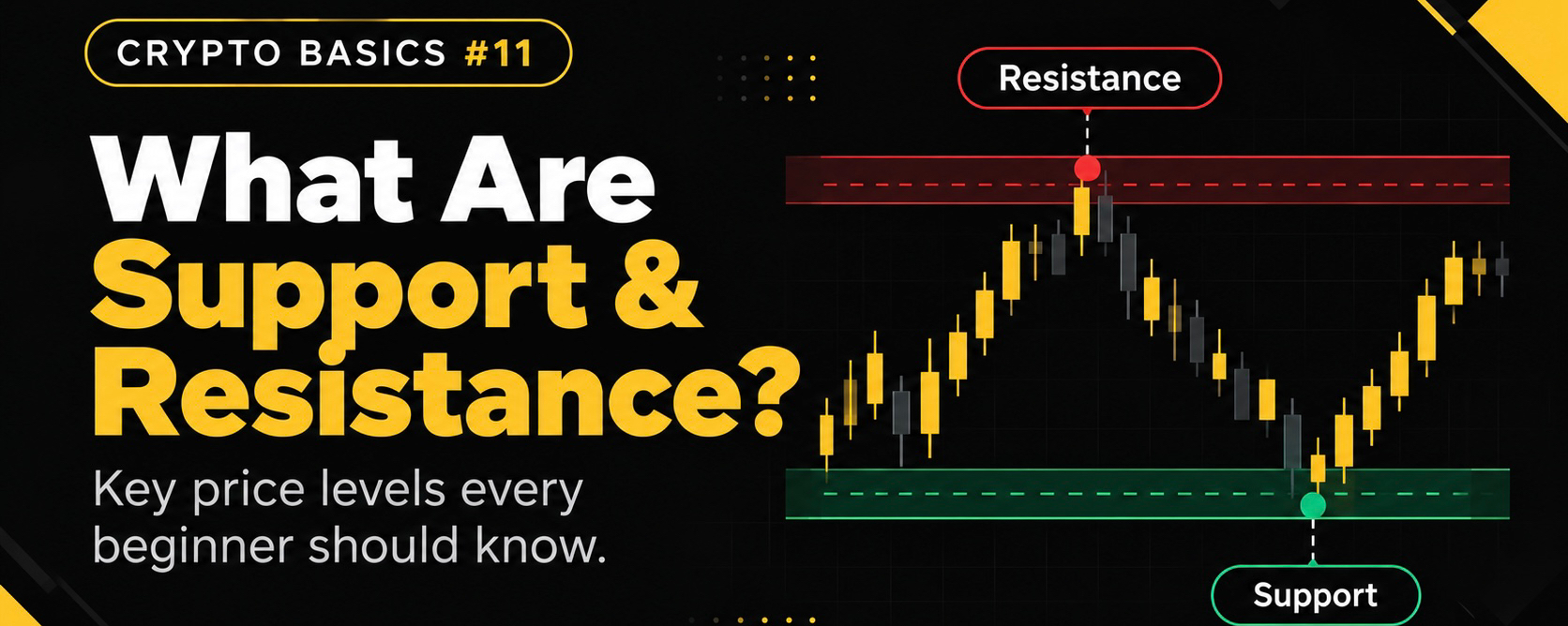
CRYPTO BASICS #11 — Support & Resistance ExplainedWhen you look at a crypto chart, you’ll often hear traders talk about Support and Resistance.
But what do these terms actually mean?
🟢 What is Support?
Support is a price area where buying interest may increase, making it harder for the price to move lower.
Think of it as a potential floor.
🔴 What is Resistance?
Resistance is a price area where selling pressure may increase, making it harder for the price to move higher.
Think of it as a potential ceiling.
📍 They are zones, not exact prices
One important thing to understand:
Support and resistance aren’t always a single price point.
They’re better viewed as zones where price has previously shown stronger buying or selling activity.
That’s why price can move slightly above or below a level without automatically invalidating it.
🔄 When levels switch roles
A support zone can later become resistance.
For example:
Support → Price breaks below → Retest → Resistance
The opposite can happen too:
Resistance → Price breaks above → Retest → Support
This is often called a support-resistance flip.
The simple takeaway
Support = potential floor
Resistance = potential ceiling
They can help you understand how price has behaved around certain areas, but they don’t guarantee that price will hold or reverse.
📚 Want to go deeper? Learn more through Binance Academy.
Educational content only, not financial advice. DYOR and use official Binance sources.
#Binance #BinanceAcademy #CryptoBasics #cryptoeducation
CRYPTO BASICS #11 — Support & Resistance Explained
When you look at a crypto chart, you’ll often hear traders talk about Support and Resistance.
But what do these terms actually mean?
🟢 What is Support?
Support is a price area where buying interest may increase, making it harder for the price to move lower.
Think of it as a potential floor.
🔴 What is Resistance?
Resistance is a price area where selling pressure may increase, making it harder for the price to move higher.
Think of it as a potential ceiling.
📍 They are zones, not exact prices
One important thing to understand:
Support and resistance aren’t always a single price point.
They’re better viewed as zones where price has previously shown stronger buying or selling activity.
That’s why price can move slightly above or below a level without automatically invalidating it.
🔄 When levels switch roles
A support zone can later become resistance.
For example:
Support → Price breaks below → Retest → Resistance
The opposite can happen too:
Resistance → Price breaks above → Retest → Support
This is often called a support-resistance flip.
The simple takeaway
Support = potential floor
Resistance = potential ceiling
They can help you understand how price has behaved around certain areas, but they don’t guarantee that price will hold or reverse.
📚 Want to go deeper? Learn more through Binance Academy.
Educational content only, not financial advice. DYOR and use official Binance sources.
#Binance #BinanceAcademy #CryptoBasics #cryptoeducation
But what do these terms actually mean?
🟢 What is Support?
Support is a price area where buying interest may increase, making it harder for the price to move lower.
Think of it as a potential floor.
🔴 What is Resistance?
Resistance is a price area where selling pressure may increase, making it harder for the price to move higher.
Think of it as a potential ceiling.
📍 They are zones, not exact prices
One important thing to understand:
Support and resistance aren’t always a single price point.
They’re better viewed as zones where price has previously shown stronger buying or selling activity.
That’s why price can move slightly above or below a level without automatically invalidating it.
🔄 When levels switch roles
A support zone can later become resistance.
For example:
Support → Price breaks below → Retest → Resistance
The opposite can happen too:
Resistance → Price breaks above → Retest → Support
This is often called a support-resistance flip.
The simple takeaway
Support = potential floor
Resistance = potential ceiling
They can help you understand how price has behaved around certain areas, but they don’t guarantee that price will hold or reverse.
📚 Want to go deeper? Learn more through Binance Academy.
Educational content only, not financial advice. DYOR and use official Binance sources.
#Binance #BinanceAcademy #CryptoBasics #cryptoeducation
2
107
Crypto 101: Spot vs Futures
The version I wish I'd read first...
Spot is simple: you buy the coin, you own it. Even if the price tanks, you're still holding it.
Futures is different. You're not buying the coin, you're betting on direction, usually with leverage.
Long if you think it pumps, short if you think it dumps.
Borrowed money makes wins bigger and losses way bigger.
My first futures trade? Yeah, we're not talking about that one. 😅 I went back to spot, and my sleep improved.
Futures can wipe an account in minutes if you don't have a risk plan. Spot is slower and boring, and tbh that's why it's the safer place to learn.
New here? Start with spot. Futures can wait.
Not financial advice.
$ETH $BTC $BNB
#Cryptollegiate
#CryptoForBeginners
#CryptoBasics
#SpotVsFutures
{spot}(ETHUSDT)
{spot}(BNBUSDT)
{spot}(BTCUSDT)
Crypto 101: Spot vs Futures
The version I wish I'd read first...
Spot is simple: you buy the coin, you own it. Even if the price tanks, you're still holding it.
Futures is different. You're not buying the coin, you're betting on direction, usually with leverage.
Long if you think it pumps, short if you think it dumps.
Borrowed money makes wins bigger and losses way bigger.
My first futures trade? Yeah, we're not talking about that one. 😅 I went back to spot, and my sleep improved.
Futures can wipe an account in minutes if you don't have a risk plan. Spot is slower and boring, and tbh that's why it's the safer place to learn.
New here? Start with spot. Futures can wait.
Not financial advice.
$ETH $BTC $BNB
#Cryptollegiate
#CryptoForBeginners
#CryptoBasics
#SpotVsFutures
The version I wish I'd read first...
Spot is simple: you buy the coin, you own it. Even if the price tanks, you're still holding it.
Futures is different. You're not buying the coin, you're betting on direction, usually with leverage.
Long if you think it pumps, short if you think it dumps.
Borrowed money makes wins bigger and losses way bigger.
My first futures trade? Yeah, we're not talking about that one. 😅 I went back to spot, and my sleep improved.
Futures can wipe an account in minutes if you don't have a risk plan. Spot is slower and boring, and tbh that's why it's the safer place to learn.
New here? Start with spot. Futures can wait.
Not financial advice.
$ETH $BTC $BNB
#Cryptollegiate
#CryptoForBeginners
#CryptoBasics
#SpotVsFutures
120
·
--
Binance Academy: Crypto Basics 🟡
Topic: Crypto Basics for Beginners
Hook:
📚 New to crypto? Start with the basics before you start trading.
5 concepts every beginner should understand:
Blockchain — A decentralized digital ledger that records transactions.
Bitcoin (BTC) — The first and largest cryptocurrency by market capitalization.
Wallet — A tool used to manage your crypto keys and interact with blockchain networks.
Exchange — A platform where users can buy, sell, or trade crypto assets.
Gas Fees — Transaction fees paid to process activity on certain blockchain networks.
💡 Beginner rule: Learn how crypto works, understand wallets and security, and research an asset before putting money into it.
Question:
👉 Which crypto concept should I explain next in simple language?
#BinanceAcademy #CryptoBasics #EvernorthPlansNasdaqListingOct8 $BTC
{spot}(BTCUSDT)
Binance Academy: Crypto Basics 🟡
Topic: Crypto Basics for Beginners
Hook:
📚 New to crypto? Start with the basics before you start trading.
5 concepts every beginner should understand:
Blockchain — A decentralized digital ledger that records transactions.
Bitcoin (BTC) — The first and largest cryptocurrency by market capitalization.
Wallet — A tool used to manage your crypto keys and interact with blockchain networks.
Exchange — A platform where users can buy, sell, or trade crypto assets.
Gas Fees — Transaction fees paid to process activity on certain blockchain networks.
💡 Beginner rule: Learn how crypto works, understand wallets and security, and research an asset before putting money into it.
Question:
👉 Which crypto concept should I explain next in simple language?
#BinanceAcademy #CryptoBasics #EvernorthPlansNasdaqListingOct8 $BTC
Topic: Crypto Basics for Beginners
Hook:
📚 New to crypto? Start with the basics before you start trading.
5 concepts every beginner should understand:
Blockchain — A decentralized digital ledger that records transactions.
Bitcoin (BTC) — The first and largest cryptocurrency by market capitalization.
Wallet — A tool used to manage your crypto keys and interact with blockchain networks.
Exchange — A platform where users can buy, sell, or trade crypto assets.
Gas Fees — Transaction fees paid to process activity on certain blockchain networks.
💡 Beginner rule: Learn how crypto works, understand wallets and security, and research an asset before putting money into it.
Question:
👉 Which crypto concept should I explain next in simple language?
#BinanceAcademy #CryptoBasics #EvernorthPlansNasdaqListingOct8 $BTC
103
තවත් අන්තර්ගතයන් ගවේෂණය කිරීමට ඇතුල් වන්න
Binance චතුරශ්රය හි ගෝලීය ක්රිප්ටෝ පරිශීලකයින් හා එක්වන්න
⚡️ ක්රිප්ටෝ පිළිබඳ නවතම සහ ප්රයෝජනවත් තොරතුරු ලබා ගන්න.
💬 ලොව විශාලතම ක්රිප්ටෝ හුවමාරුව මගින් විශ්වාස කෙරේ.
👍 සත්යායනය කරන ලද නිර්මාණකරුවන්ගෙන් සැබෑ විදසුන් සොයා ගන්න.
විද්යුත් තැපෑල / දුරකථන අංකය
නැගී එන මාතෘකා
1
#BinancePick
2.9M නැරඹීම්
149,602 සාකච්ඡා කරමින්
2
#EarningsSeason
5.2M නැරඹීම්
25,538 සාකච්ඡා කරමින්
3
#AnthropicTTMRevenueGrewAbout1200%
9,136 නැරඹීම්
240 සාකච්ඡා කරමින්
4
#AnthropicS1ExpectedToday
12,593 නැරඹීම්
224 සාකච්ඡා කරමින්
5
#SouthKoreaReportedlyWeighsFourthCryptoTaxDelay
20,162 නැරඹීම්
363 සාකච්ඡා කරමින්
6
#FranklinTempletonFilesForTwoDividendToBitcoinETFs
27,393 නැරඹීම්
467 සාකච්ඡා කරමින්
7
#StrategyMSTRSurpassesNasdaqInMarketCap
20,964 නැරඹීම්
343 සාකච්ඡා කරමින්
8
#CanadaProposesStablecoinRedemptionWithin3BusinessDays
958 නැරඹීම්
33 සාකච්ඡා කරමින්
9
#ElectrumWalletBugLetRogueServersStealFunds
24,144 නැරඹීම්
433 සාකච්ඡා කරමින්
10
#ArgentineCourtDismissesLIBRACaseAgainstMilei
36,448 නැරඹීම්
529 සාකච්ඡා කරමින්