

#cryptoeducation
cryptoeducation
3.6M නැරඹීම්
22,432 සාකච්ඡා කරමින්
උණුසුම්
නවතම
·
--
You Saw the Price. You Placed the Trade. So Why Did You Pay More?
Here is a crypto concept every trader should understand: slippage.
Imagine a token is displayed at $1.00.
You place a market buy order, expecting to pay $1.00 per token. But your order executes at an average price of $1.03.
That difference is slippage.
Why can this happen?
🔹 Low liquidity: There may not be enough sellers at the displayed price.
🔹 Large orders: Your order may consume several price levels in the order book.
🔹 Fast markets: Prices can change between the moment you submit an order and when it executes.
Here is the important distinction:
Price impact is the effect your own order has on the market price. Slippage is the difference between the expected execution price and the actual execution price. They are related, but they are not identical.
Before trading, ask yourself three questions:
1. Is the market liquid enough for my order size?
2. Am I using a market order when a limit order would better suit my plan?
3. Have I checked the spread and estimated trading fees?
A limit order can help control the price you are willing to accept, but it may not execute at all.
Your turn: Have you ever received a worse execution price than expected? Was it caused by low liquidity, a fast-moving market, or a large order?
#cryptoeducation #tradingbasics #Liquidity #BinanceSquare
Educational content only. This is not a recommendation to buy or sell any asset.
$BTC $USDC $ETH

139

·
--
Myth vs Fact 🧐
❌ Myth: Bitcoin is anonymous.
✅ Fact: Bitcoin is pseudonymous. Your name isn't on the chain, but every transaction ever made is public and permanent 🔍
Anyone can look up an address, see its balance and follow where the coins went. Once an address is linked to a real identity (a KYC exchange account, a public post, a shipping address), its whole history can be traced.
Simple takeaways 👇
• Don't post your wallet address next to your name
• Treat the blockchain like a public ledger, because it is
• Privacy in crypto takes effort, it isn't the default
Did you think Bitcoin was anonymous when you started? 👀
$BTC #bitcoin #cryptoeducation #Binance #crypto
1

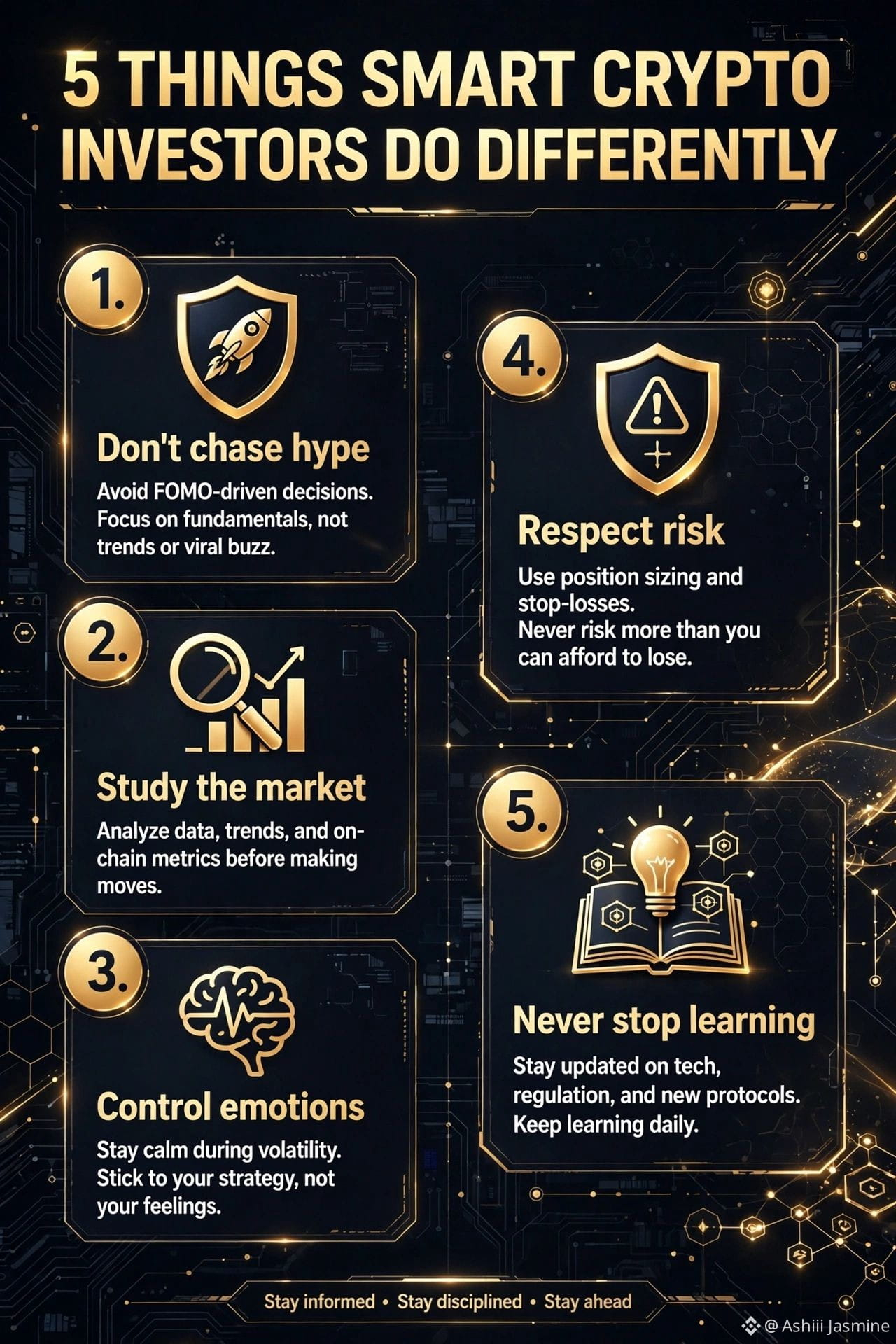
🚨 THE NEXT CRYPTO MILLIONAIRES? 5 THINGS SMART INVESTORS DO DIFFERENTLY! 🚀
Everyone wants to make money in crypto, but not everyone is willing to learn how the market works. 👀
The difference between gambling on prices and making informed decisions often comes down to research, patience, and risk management.
💎 1️⃣ They Don't Chase Hype
When a coin suddenly pumps, beginners often rush to buy. Experienced investors investigate why the price is moving before making decisions.
📊 2️⃣ They Study the Market
Bitcoin's price, trading volume, market sentiment, and major news can all provide useful information. No single indicator guarantees what happens next.
🧠 3️⃣ They Control Their Emotions
Fear can cause panic selling, while greed can encourage risky decisions. A clear plan can help investors avoid impulsive reactions.
🛡️ 4️⃣ They Respect Risk
Crypto is volatile. Smart investors understand that losses are possible and never assume that every trade will be profitable.
📚 5️⃣ They Never Stop Learning
Blockchain technology, market conditions, and regulations continue to evolve. Staying informed is an important part of becoming a more knowledgeable investor.
🔥 HERE'S THE REAL QUESTION!
If you could give ONE piece of advice to someone entering crypto today, what would it be?
💬 Comment below! Let's learn from each other.
❤️ Like this post if you believe knowledge is more valuable than hype.
🔔 Follow for more crypto education, Bitcoin analysis, and market discussions!
#Crypto #Bitcoin #BinanceSquare #CryptoEducation
#TradingPsychology
$BTC
{future}(BTCUSDT)
🚨 THE NEXT CRYPTO MILLIONAIRES? 5 THINGS SMART INVESTORS DO DIFFERENTLY! 🚀
Everyone wants to make money in crypto, but not everyone is willing to learn how the market works. 👀
The difference between gambling on prices and making informed decisions often comes down to research, patience, and risk management.
💎 1️⃣ They Don't Chase Hype
When a coin suddenly pumps, beginners often rush to buy. Experienced investors investigate why the price is moving before making decisions.
📊 2️⃣ They Study the Market
Bitcoin's price, trading volume, market sentiment, and major news can all provide useful information. No single indicator guarantees what happens next.
🧠 3️⃣ They Control Their Emotions
Fear can cause panic selling, while greed can encourage risky decisions. A clear plan can help investors avoid impulsive reactions.
🛡️ 4️⃣ They Respect Risk
Crypto is volatile. Smart investors understand that losses are possible and never assume that every trade will be profitable.
📚 5️⃣ They Never Stop Learning
Blockchain technology, market conditions, and regulations continue to evolve. Staying informed is an important part of becoming a more knowledgeable investor.
🔥 HERE'S THE REAL QUESTION!
If you could give ONE piece of advice to someone entering crypto today, what would it be?
💬 Comment below! Let's learn from each other.
❤️ Like this post if you believe knowledge is more valuable than hype.
🔔 Follow for more crypto education, Bitcoin analysis, and market discussions!
#Crypto #Bitcoin #BinanceSquare #CryptoEducation
#TradingPsychology
$BTC
53

·
--
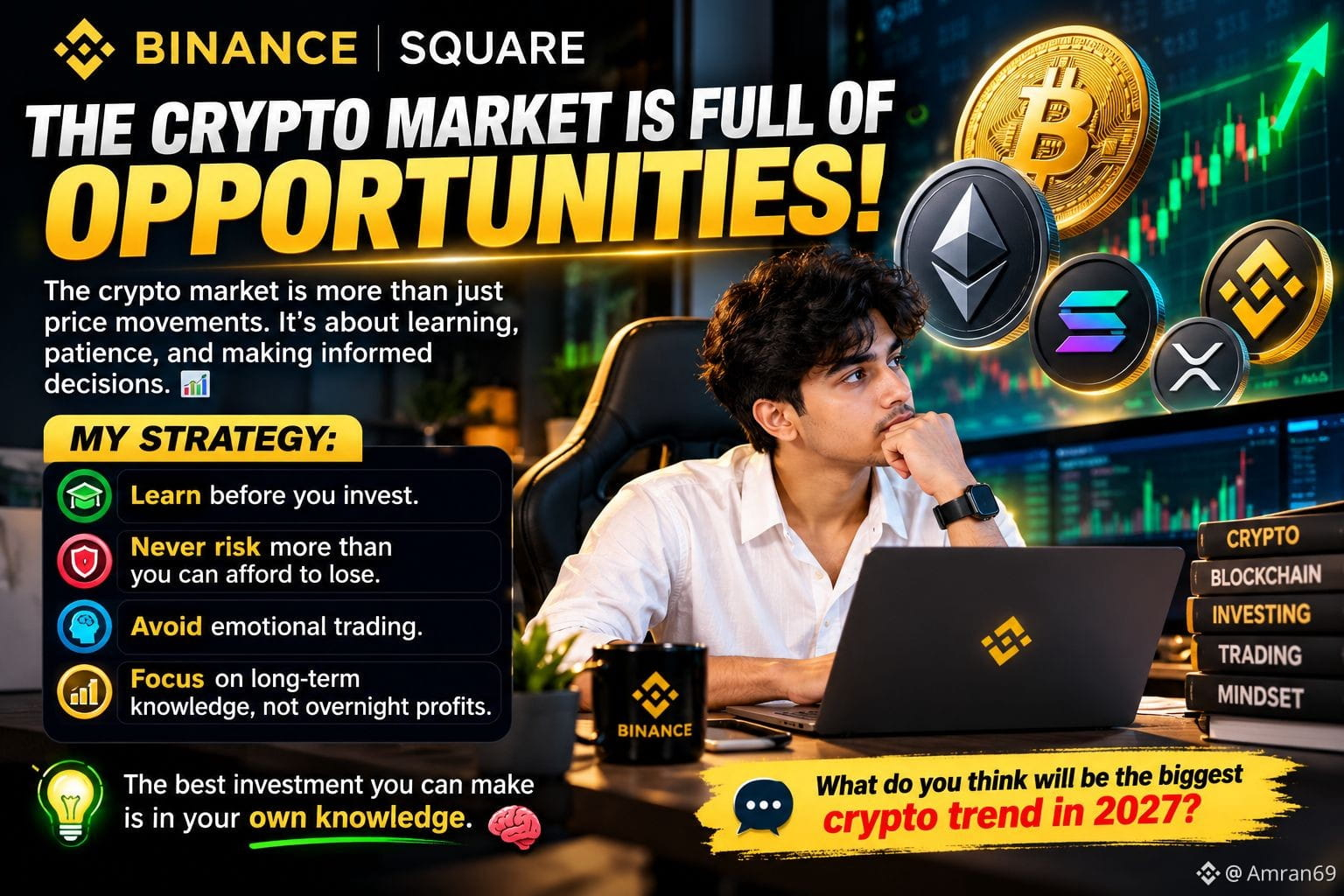
🚀 The Crypto Market Is Full of Opportunities!
The crypto market is more than just price movements. It's about learning, patience, and making informed decisions. 📊
Bitcoin, Ethereum, and promising altcoins continue to create discussions about the future of digital finance.
💡 My strategy:
🔹 Learn before you invest.
🔹 Never risk more than you can afford to lose.
🔹 Avoid emotional trading.
🔹 Focus on long-term knowledge, not overnight profits.
Remember: The best investment you can make is in your own knowledge. 🧠
What do you think will be the biggest crypto trend in 2027? 👇
#BinanceSquare #Crypto #Bitcoin #Ethereum #CryptoEducation #Web3 #Blockchain$BTC $NVDA.US
BTC-0.70%
NVDAUS+0.19%
71

·
--
💰 DeFi 收益究竟从哪里来?
流动性挖矿、加密货币借贷、质押,看起来都能赚取收益,但背后的机制完全不同。
🔹 流动性挖矿:收益可能来自交易手续费和协议奖励。
🔹 借贷:收益通常与借款需求和利率机制有关。
🔹 质押:奖励通常与区块链的验证和共识机制有关。
⚠️ 高年化收益不等于高回报,更不等于低风险。智能合约漏洞、代币价格下跌、流动性不足,都可能影响最终结果。
先弄清楚收益从哪里来,再决定是否值得承担风险。
#ONEANetwork #DeFi #CryptoEducation
💰 DeFi 收益究竟从哪里来?
流动性挖矿、加密货币借贷、质押,看起来都能赚取收益,但背后的机制完全不同。
🔹 流动性挖矿:收益可能来自交易手续费和协议奖励。
🔹 借贷:收益通常与借款需求和利率机制有关。
🔹 质押:奖励通常与区块链的验证和共识机制有关。
⚠️ 高年化收益不等于高回报,更不等于低风险。智能合约漏洞、代币价格下跌、流动性不足,都可能影响最终结果。
先弄清楚收益从哪里来,再决定是否值得承担风险。
#ONEANetwork #DeFi #CryptoEducation
流动性挖矿、加密货币借贷、质押,看起来都能赚取收益,但背后的机制完全不同。
🔹 流动性挖矿:收益可能来自交易手续费和协议奖励。
🔹 借贷:收益通常与借款需求和利率机制有关。
🔹 质押:奖励通常与区块链的验证和共识机制有关。
⚠️ 高年化收益不等于高回报,更不等于低风险。智能合约漏洞、代币价格下跌、流动性不足,都可能影响最终结果。
先弄清楚收益从哪里来,再决定是否值得承担风险。
#ONEANetwork #DeFi #CryptoEducation
1
2

🌟 🚀 MONDAY CRYPTO MOTIVATION 🚀
💰 Every Expert Was Once a Beginner!
₿ $BTC (Bitcoin): Think long-term.
⟠ $ETH (Ethereum): Build for the future.
💵 $USDT (Tether): Stay aware of market opportunities.
📚 Today's Crypto Reminder:
✅ Learn before you invest.
✅ Research before you buy.
✅ Never invest more than you can afford to lose.
✅ Be patient—success takes time!
🔥 The crypto market creates opportunities, but smart decisions make the difference.
💬 Question of the Day:
If you could hold only ONE coin, which would you choose: $BTC, $ETH, or $BNB? 👇
❤️ Like • 🔄 Share • 💬 Comment
#Binance #Crypto #Bitcoin #Ethereum #BNB #CryptoEducation
🌟 🚀 MONDAY CRYPTO MOTIVATION 🚀
💰 Every Expert Was Once a Beginner!
₿ $BTC (Bitcoin): Think long-term.
⟠ $ETH (Ethereum): Build for the future.
💵 $USDT (Tether): Stay aware of market opportunities.
📚 Today's Crypto Reminder:
✅ Learn before you invest.
✅ Research before you buy.
✅ Never invest more than you can afford to lose.
✅ Be patient—success takes time!
🔥 The crypto market creates opportunities, but smart decisions make the difference.
💬 Question of the Day:
If you could hold only ONE coin, which would you choose: $BTC , $ETH , or $BNB? 👇
❤️ Like • 🔄 Share • 💬 Comment
#Binance #Crypto #Bitcoin #Ethereum #BNB #CryptoEducation
98

·
--
- No markdown (so plain text, no formatting like **, # etc? But final line includes hashtags, that's okay, just plain text).
- Start with "Crypto Term of the Day:"
- 120-160 words total.
- Use one simple analogy from everyday life.
- Explain why a crypto investor needs to understand this.
- End with: "Save this post and share it with your crypto friends!"
- Final line: "#CryptoInvesting #DigitalAssets #CryptoEducation #Blockchain"
- No extra commentary.
We must count words. Let's craft a paragraph around 130-150 words.
Word count: Let's aim for ~140 words.
We need to include analogy: e.g., gas limit = size of fuel tank, gas price = price per liter.
Explain why investor needs to understand: to control transaction cost, avoid overpaying, avoid failed tx.
Structure: Start with "Crypto Term of the Day:" then explanation.
We must ensure final line exactly "Save this post and share it with your crypto friends!" then newline then hashtags line.
No markdown.
Let's draft and count words.
Draft:
"Crypto Term of the Day: Gas limit and gas price together determine the fee you pay for an Ethereum transaction. Think of a car trip: the gas limit is the size of your fuel tank — the maximum amount of fuel you’re willing to use — while the gas price is the price per liter at the pump. The total fee equals gas limit multiplied by gas price, measured in gwei. If you set the limit too low, the
3

Staking explained in 30 seconds 🪙
Think of it like a savings account for crypto.
🔹 You lock your coins to help a blockchain run and stay secure
🔹 In return, the network pays you rewards
🔹 Your coins keep working while you hold them
But know the risks:
⚠️ Some staking has lock-up periods, so you can't sell instantly
⚠️ Rewards are paid in the same coin, so if its price drops, your total value can still fall
⚠️ Rates change over time and aren't guaranteed
Staking works best for coins you already planned to hold long term.
Do you stake anything? Which coin? 👇
$ETH $BNB $SOL
#staking #PassiveIncome #cryptoeducation #BinanceSquare
Not financial advice. DYOR.
82

·
--
🚀 Every Expert Was Once a Beginner!
Success in crypto isn't about getting rich overnight. It's about learning, patience, discipline, and managing risk. 📈
💡 My crypto principles: ✅ Learn before you invest ✅ Never trade with emotions ✅ Manage your risk ✅ Focus on long-term knowledge, not quick profits
The market will always have opportunities. The key is being prepared. 💎
What is the most important lesson crypto has taught you? 👇
#BinanceSquare #Crypto #Bitcoin #Trading #CryptoEducation

follow me
EXCHANGE54 වෙතින්
8

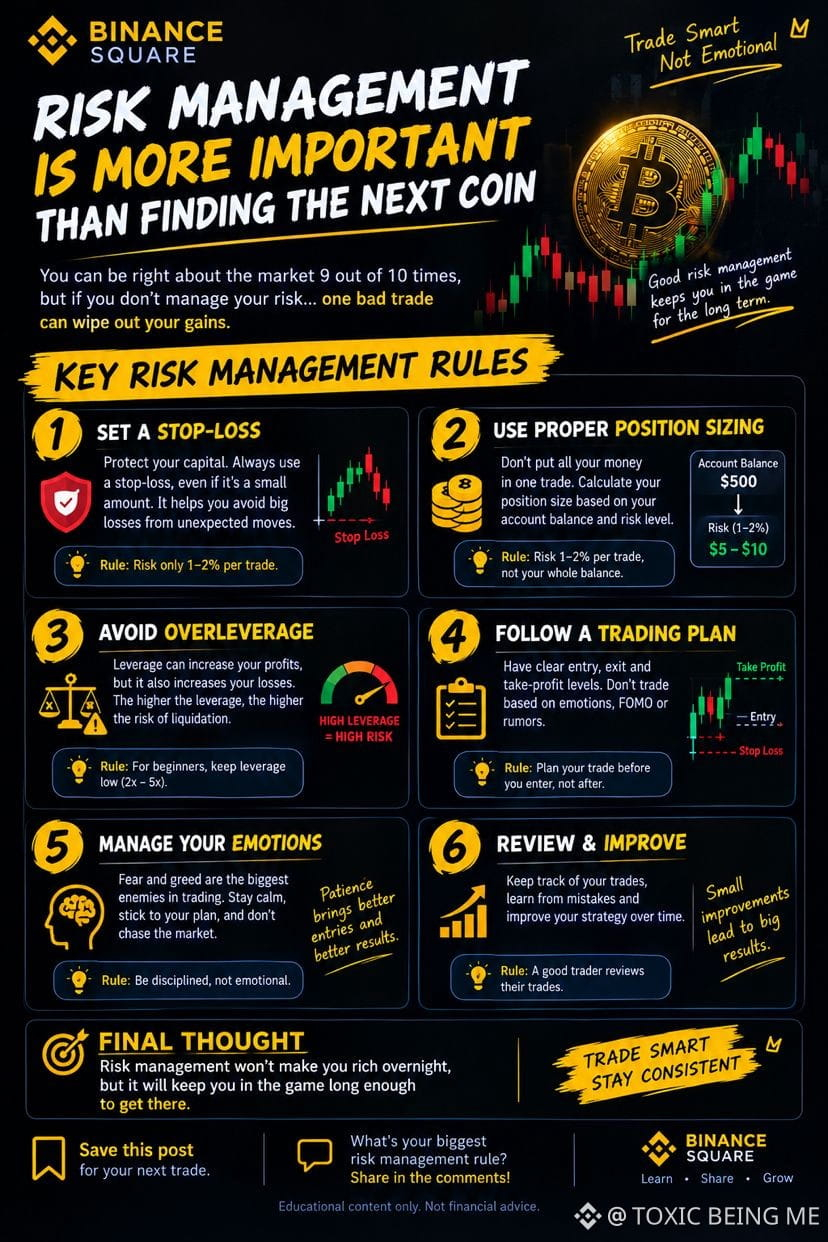
💰 You don’t need to win every trade. You just need to protect your money.
A few simple rules can make a big difference:
🛑 1. Use a stop-loss
Don’t let one bad trade become a huge loss.
📊 2. Control your position size
Don’t put your whole balance into one trade.
⚠️ 3. Don’t overuse leverage
Higher leverage = higher risk.
📝 4. Have a plan
Know where you want to enter, take profit, and exit.
🧠 5. Control your emotions
Don’t chase a coin just because it’s pumping.
📖 6. Learn from your trades
Look at what went wrong and improve.
The goal isn’t to make money on every trade.
The goal is to stay in the game.
💬 What’s the most important rule for you?
⚠️ Educational content only. Not financial advice.
#Crypto #Trading #RiskManagement #BinanceSquare #CryptoEducation
1
1
144

Decoding Market Depth: How to Read Order Books and Avoid Crypto Trading PitfallsPrice charts show where an asset has been, but market depth reveals the underlying structural mechanics holding it up. Intermediate crypto traders frequently transition from relying solely on basic technical analysis—such as trendlines, relative strength index (RSI), or moving averages—to realizing that price action is ultimately driven by order execution against available market liquidity.
Understanding market depth allows traders to look beneath the surface of candlestick charts. By examining real-time supply and demand across various price levels, you can better evaluate execution costs, detect potential manipulation, and make more informed trading decisions.
---
### 1. The Core Mechanics of an Order Book
To understand market depth, you must first understand the central limit order book (CLOB). A CLOB is a dynamic, real-time ledger that aggregates all outstanding open buy and sell limit orders for a specific asset pair.
The order book is divided into two main sides:
* **Bids (Buy Orders):** Located below the current market price, bids represent traders who are willing to purchase the asset at specific price points.
* **Asks or Offers (Sell Orders):** Located above the current market price, asks represent traders who are willing to sell the asset at specific price points.
The intersection where the highest bid meets the lowest ask determines the prevailing spot price of the asset. The gap between these two figures is known as the **bid-ask spread**.
```
[ ASKS ] 102.00 USDT — 5.0 Tokens
101.50 USDT — 3.0 Tokens
101.00 USDT — 1.5 Tokens <-- Lowest Ask
---------------------------------------- <-- Bid-Ask Spread
[ BIDS ] 100.50 USDT — 2.0 Tokens <-- Highest Bid
100.00 USDT — 4.0 Tokens
99.50 USDT — 8.0 Tokens
```
Market participants are broadly categorized into two roles based on how they interact with this structure:
1. **Liquidity Providers (Makers):** Traders who place limit orders that do not fill immediately. These orders sit in the book, adding "depth" and structure to the market.
2. **Liquidity Takers (Takers):** Traders who place market orders (or marketable limit orders) that execute instantly against existing orders in the book, removing depth.
Market depth is simply the cumulative measure of all open bid and ask limit orders at various price distances from the mid-market price.
---
### 2. Visualizing Depth: The Depth Chart Explained
Most cryptocurrency exchanges visualize this order book data through a graphical representation known as a **depth chart**.
A depth chart plots price along the horizontal (X) axis and cumulative order volume along the vertical (Y) axis. It typically displays two opposing colored slopes:
* **Green Side (Bids):** Represents the cumulative buy order volume extending downward from the current market price.
* **Red Side (Asks):** Represents the cumulative sell order volume extending upward from the current market price.
#### How to Read the Slopes
* **Steep Incline (Liquidity Wall):** A sudden, near-vertical jump in the depth chart indicates a massive concentration of limit orders at a specific price level. This represents a significant cluster of buying interest (bid wall) or selling pressure (ask wall).
* **Gradual Slope (Flat Depth):** A gently sloping line suggests that orders are evenly distributed across price tiers. In this environment, price tends to move smoothly without sudden structural resistance.
---
### 3. Practical Application: Calculating Slippage and Order Impact
One of the most practical uses of market depth is estimating **slippage**—the difference between the expected price of a trade and the actual price at which the trade executes.
When a trader places a large market order, it consumes the nearest available limit orders in the order book. If the volume of the market order exceeds the volume available at the top bid or ask, the order "walks the book," filling remaining portions at progressively worse prices.
#### Practical Scenario: Executing a Large Trade
Imagine an intermediate-cap altcoin with a current top ask price of 10.00 USDT. A trader wishes to execute a market buy order for 1,000 tokens using stablecoins.
Suppose the order book looks like this:
* **Level 1 Ask:** 200 tokens at 10.00 USDT
* **Level 2 Ask:** 300 tokens at 10.10 USDT
* **Level 3 Ask:** 500 tokens at 10.30 USDT
Here is how the 1,000-token market buy order fills:
1. Fills 200 tokens at 10.00 USDT = 2,000 USDT
2. Fills 300 tokens at 10.10 USDT = 3,030 USDT
3. Fills 500 tokens at 10.30 USDT = 5,150 USDT
* **Total Cost:** 10,180 USDT
* **Average Execution Price:** 10.18 USDT per token
* **Effective Slippage:** 1.8% higher than the initial top-of-book price (10.00 USDT).
If the same 1,000-token order were placed in a high-depth market like Bitcoin or Ethereum, the top level of the book would easily absorb the entire order volume. The order would fill completely at the top ask price with virtually zero slippage.
Understanding this distinction prevents traders from experiencing unexpected losses due to execution inefficiencies in low-depth markets.
---
### 4. Advanced Dynamics: Spoofing, Icebergs, and Phantom Depth
While order books provide essential transparency, interpreting market depth is not always straightforward. Experienced market participants and automated trading algorithms can manipulate or obscure order book data.
#### Spoofing and Layering
Spoofing occurs when a trader places large limit orders on one side of the order book with no intention of letting them execute. For example, a trader might place a massive buy wall at 95 USDT to create the illusion of strong support.
Retail traders, seeing this artificial support, may buy the asset, pushing the price up. Once the price rises, the spoofer cancels the non-bona-fide buy order and sells their inventory into the market-driven rally.
#### Iceberg Orders
Large institutional traders often avoid revealing their full intentions to the public order book. To achieve this, they use **iceberg orders**.
An iceberg order splits a massive order into smaller visible tranches. Once one small tranche fills, another is automatically submitted. A market depth chart may show only 10 Bitcoin available at a specific price, but as soon as those 10 are bought, another 10 appear at the exact same price. The true depth remains hidden beneath the surface.
#### Dynamic Liquidity
Order books represent *intent*, not binding commitment. During periods of sharp macroeconomic volatility, market makers often pull their limit orders to reduce risk exposure. As a result, market depth can evaporate in seconds, causing market spreads to widen significantly and price volatility to spike dramatically.
---
### 5. Best Practices for Incorporating Market Depth into Risk Management
To use market depth effectively without falling for common traps, intermediate traders should integrate the following practices into their workflow:
1. **Size Positions Relative to Depth:** Before opening a trade, verify that the market depth within a 1% to 2% price range can absorb your position size without severe slippage.
2. **Use Limit Orders for Entry and Exit:** By utilizing limit orders instead of market orders, you act as a liquidity provider. This eliminates slippage and typically qualifies you for lower fee tiers on most trading platforms.
3. **Cross-Reference Multiple Data Points:** Never rely on an order book wall in isolation. Combine market depth analysis with volume profiles, historic support/resistance levels, and overall market context.
4. **Monitor Order Flow, Not Just Static Walls:** A genuine buy or ask wall is often filled or held firmly, whereas artificial walls tend to move or disappear entirely as the spot price approaches them.
---
### Final Thoughts
Market depth offers a fundamental look at the balance between supply and demand in crypto trading. It shifts the trader's perspective from reacting to past price movements to understanding real-time liquidity conditions.
By analyzing order book dynamics, accounting for execution slippage, and remaining mindful of phantom order strategies, intermediate traders can significantly refine their execution techniques and strengthen their overall risk management framework.
---
#CryptoEducation #MarketDepth #TradingStrategy
Decoding Market Depth: How to Read Order Books and Avoid Crypto Trading Pitfalls
Price charts show where an asset has been, but market depth reveals the underlying structural mechanics holding it up. Intermediate crypto traders frequently transition from relying solely on basic technical analysis—such as trendlines, relative strength index (RSI), or moving averages—to realizing that price action is ultimately driven by order execution against available market liquidity.
Understanding market depth allows traders to look beneath the surface of candlestick charts. By examining real-time supply and demand across various price levels, you can better evaluate execution costs, detect potential manipulation, and make more informed trading decisions.
---
### 1. The Core Mechanics of an Order Book
To understand market depth, you must first understand the central limit order book (CLOB). A CLOB is a dynamic, real-time ledger that aggregates all outstanding open buy and sell limit orders for a specific asset pair.
The order book is divided into two main sides:
* **Bids (Buy Orders):** Located below the current market price, bids represent traders who are willing to purchase the asset at specific price points.
* **Asks or Offers (Sell Orders):** Located above the current market price, asks represent traders who are willing to sell the asset at specific price points.
The intersection where the highest bid meets the lowest ask determines the prevailing spot price of the asset. The gap between these two figures is known as the **bid-ask spread**.
```
[ ASKS ] 102.00 USDT — 5.0 Tokens
101.50 USDT — 3.0 Tokens
101.00 USDT — 1.5 Tokens <-- Lowest Ask
---------------------------------------- <-- Bid-Ask Spread
[ BIDS ] 100.50 USDT — 2.0 Tokens <-- Highest Bid
100.00 USDT — 4.0 Tokens
99.50 USDT — 8.0 Tokens
```
Market participants are broadly categorized into two roles based on how they interact with this structure:
1. **Liquidity Providers (Makers):** Traders who place limit orders that do not fill immediately. These orders sit in the book, adding "depth" and structure to the market.
2. **Liquidity Takers (Takers):** Traders who place market orders (or marketable limit orders) that execute instantly against existing orders in the book, removing depth.
Market depth is simply the cumulative measure of all open bid and ask limit orders at various price distances from the mid-market price.
---
### 2. Visualizing Depth: The Depth Chart Explained
Most cryptocurrency exchanges visualize this order book data through a graphical representation known as a **depth chart**.
A depth chart plots price along the horizontal (X) axis and cumulative order volume along the vertical (Y) axis. It typically displays two opposing colored slopes:
* **Green Side (Bids):** Represents the cumulative buy order volume extending downward from the current market price.
* **Red Side (Asks):** Represents the cumulative sell order volume extending upward from the current market price.
#### How to Read the Slopes
* **Steep Incline (Liquidity Wall):** A sudden, near-vertical jump in the depth chart indicates a massive concentration of limit orders at a specific price level. This represents a significant cluster of buying interest (bid wall) or selling pressure (ask wall).
* **Gradual Slope (Flat Depth):** A gently sloping line suggests that orders are evenly distributed across price tiers. In this environment, price tends to move smoothly without sudden structural resistance.
---
### 3. Practical Application: Calculating Slippage and Order Impact
One of the most practical uses of market depth is estimating **slippage**—the difference between the expected price of a trade and the actual price at which the trade executes.
When a trader places a large market order, it consumes the nearest available limit orders in the order book. If the volume of the market order exceeds the volume available at the top bid or ask, the order "walks the book," filling remaining portions at progressively worse prices.
#### Practical Scenario: Executing a Large Trade
Imagine an intermediate-cap altcoin with a current top ask price of 10.00 USDT. A trader wishes to execute a market buy order for 1,000 tokens using stablecoins.
Suppose the order book looks like this:
* **Level 1 Ask:** 200 tokens at 10.00 USDT
* **Level 2 Ask:** 300 tokens at 10.10 USDT
* **Level 3 Ask:** 500 tokens at 10.30 USDT
Here is how the 1,000-token market buy order fills:
1. Fills 200 tokens at 10.00 USDT = 2,000 USDT
2. Fills 300 tokens at 10.10 USDT = 3,030 USDT
3. Fills 500 tokens at 10.30 USDT = 5,150 USDT
* **Total Cost:** 10,180 USDT
* **Average Execution Price:** 10.18 USDT per token
* **Effective Slippage:** 1.8% higher than the initial top-of-book price (10.00 USDT).
If the same 1,000-token order were placed in a high-depth market like Bitcoin or Ethereum, the top level of the book would easily absorb the entire order volume. The order would fill completely at the top ask price with virtually zero slippage.
Understanding this distinction prevents traders from experiencing unexpected losses due to execution inefficiencies in low-depth markets.
---
### 4. Advanced Dynamics: Spoofing, Icebergs, and Phantom Depth
While order books provide essential transparency, interpreting market depth is not always straightforward. Experienced market participants and automated trading algorithms can manipulate or obscure order book data.
#### Spoofing and Layering
Spoofing occurs when a trader places large limit orders on one side of the order book with no intention of letting them execute. For example, a trader might place a massive buy wall at 95 USDT to create the illusion of strong support.
Retail traders, seeing this artificial support, may buy the asset, pushing the price up. Once the price rises, the spoofer cancels the non-bona-fide buy order and sells their inventory into the market-driven rally.
#### Iceberg Orders
Large institutional traders often avoid revealing their full intentions to the public order book. To achieve this, they use **iceberg orders**.
An iceberg order splits a massive order into smaller visible tranches. Once one small tranche fills, another is automatically submitted. A market depth chart may show only 10 Bitcoin available at a specific price, but as soon as those 10 are bought, another 10 appear at the exact same price. The true depth remains hidden beneath the surface.
#### Dynamic Liquidity
Order books represent *intent*, not binding commitment. During periods of sharp macroeconomic volatility, market makers often pull their limit orders to reduce risk exposure. As a result, market depth can evaporate in seconds, causing market spreads to widen significantly and price volatility to spike dramatically.
---
### 5. Best Practices for Incorporating Market Depth into Risk Management
To use market depth effectively without falling for common traps, intermediate traders should integrate the following practices into their workflow:
1. **Size Positions Relative to Depth:** Before opening a trade, verify that the market depth within a 1% to 2% price range can absorb your position size without severe slippage.
2. **Use Limit Orders for Entry and Exit:** By utilizing limit orders instead of market orders, you act as a liquidity provider. This eliminates slippage and typically qualifies you for lower fee tiers on most trading platforms.
3. **Cross-Reference Multiple Data Points:** Never rely on an order book wall in isolation. Combine market depth analysis with volume profiles, historic support/resistance levels, and overall market context.
4. **Monitor Order Flow, Not Just Static Walls:** A genuine buy or ask wall is often filled or held firmly, whereas artificial walls tend to move or disappear entirely as the spot price approaches them.
---
### Final Thoughts
Market depth offers a fundamental look at the balance between supply and demand in crypto trading. It shifts the trader's perspective from reacting to past price movements to understanding real-time liquidity conditions.
By analyzing order book dynamics, accounting for execution slippage, and remaining mindful of phantom order strategies, intermediate traders can significantly refine their execution techniques and strengthen their overall risk management framework.
---
#CryptoEducation #MarketDepth #TradingStrategy
93

VOLATILITY CAN CATCH TRADERS OFF GUARD!
Crypto derivatives can experience rapid liquidations when prices move sharply against leveraged positions.
High volatility can increase risk in both directions.
Understanding leverage, liquidation mechanics and market conditions is essential before making financial decisions.
#CryptoRisk #Liquidations #Bitcoin #CryptoEducation
11
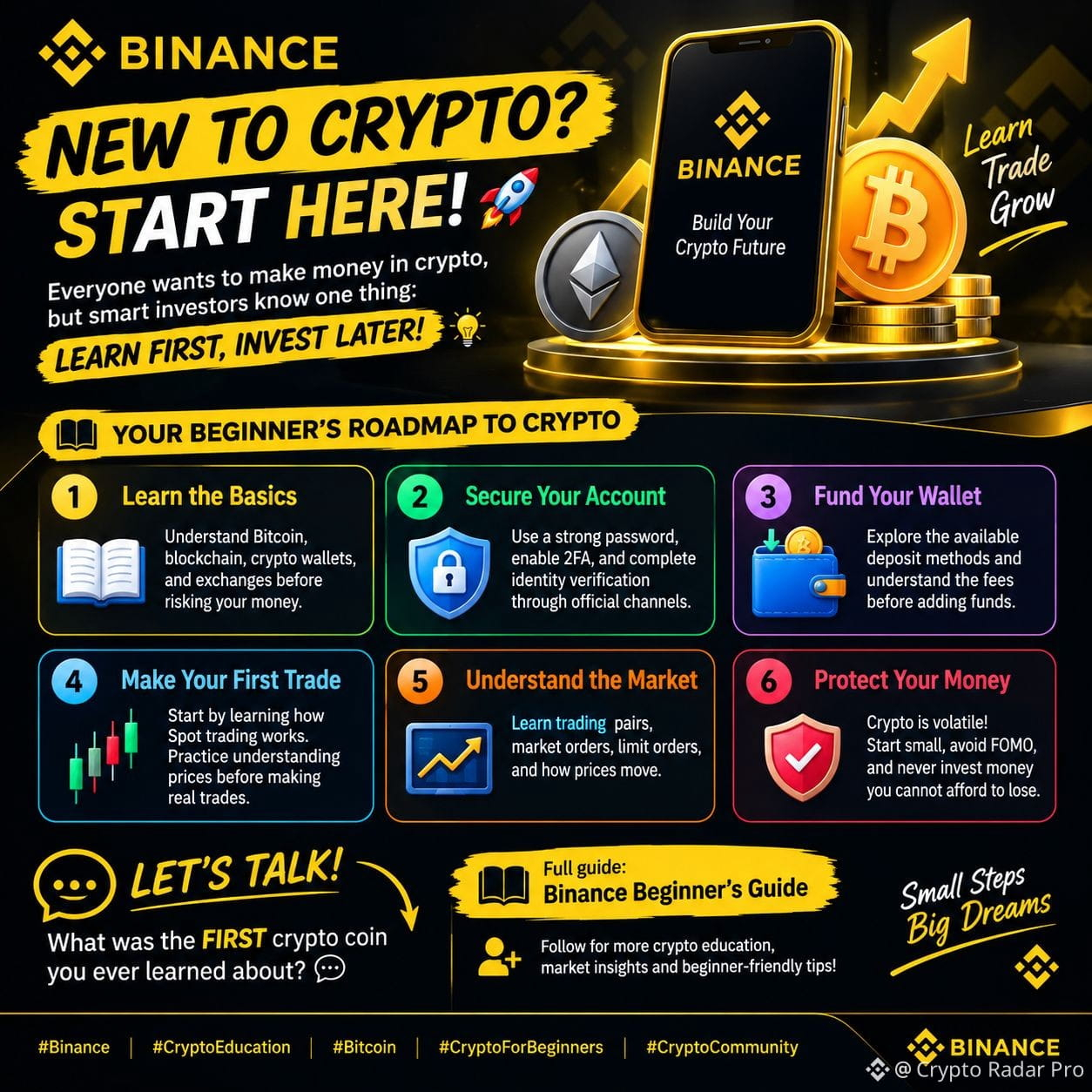
$🟡 🚀 NEW TO CRYPTO? START HERE!
Everyone wants to make money in crypto, but smart investors know one thing: LEARN FIRST, INVEST LATER! 💡
🔥 Your Beginner's Roadmap to Crypto:
🧠 1. Learn the Basics
Understand Bitcoin, blockchain, crypto wallets, and exchanges before risking your money.
🔐 2. Secure Your Account
Use a strong password, enable 2FA, and complete identity verification through official channels.
💰 3. Fund Your Wallet
Explore the available deposit methods and understand the fees before adding funds.
📈 4. Make Your First Trade
Start by learning how Spot trading works. Practice understanding prices before making real trades.
📊 5. Understand the Market
Learn trading pairs, market orders, limit orders, and how prices move.
🛡️ 6. Protect Your Money
Crypto is volatile! Start small, avoid FOMO, and never invest money you cannot afford to lose.
💬 LET'S TALK!
What was the FIRST crypto coin you ever learned about? 👇
Follow for more crypto education, market insights, and beginner-friendly tips! 🚀
#Binance #CryptoEducation #bitcoin #CryptoForBeginners #CryptoCommunity
66

·
--
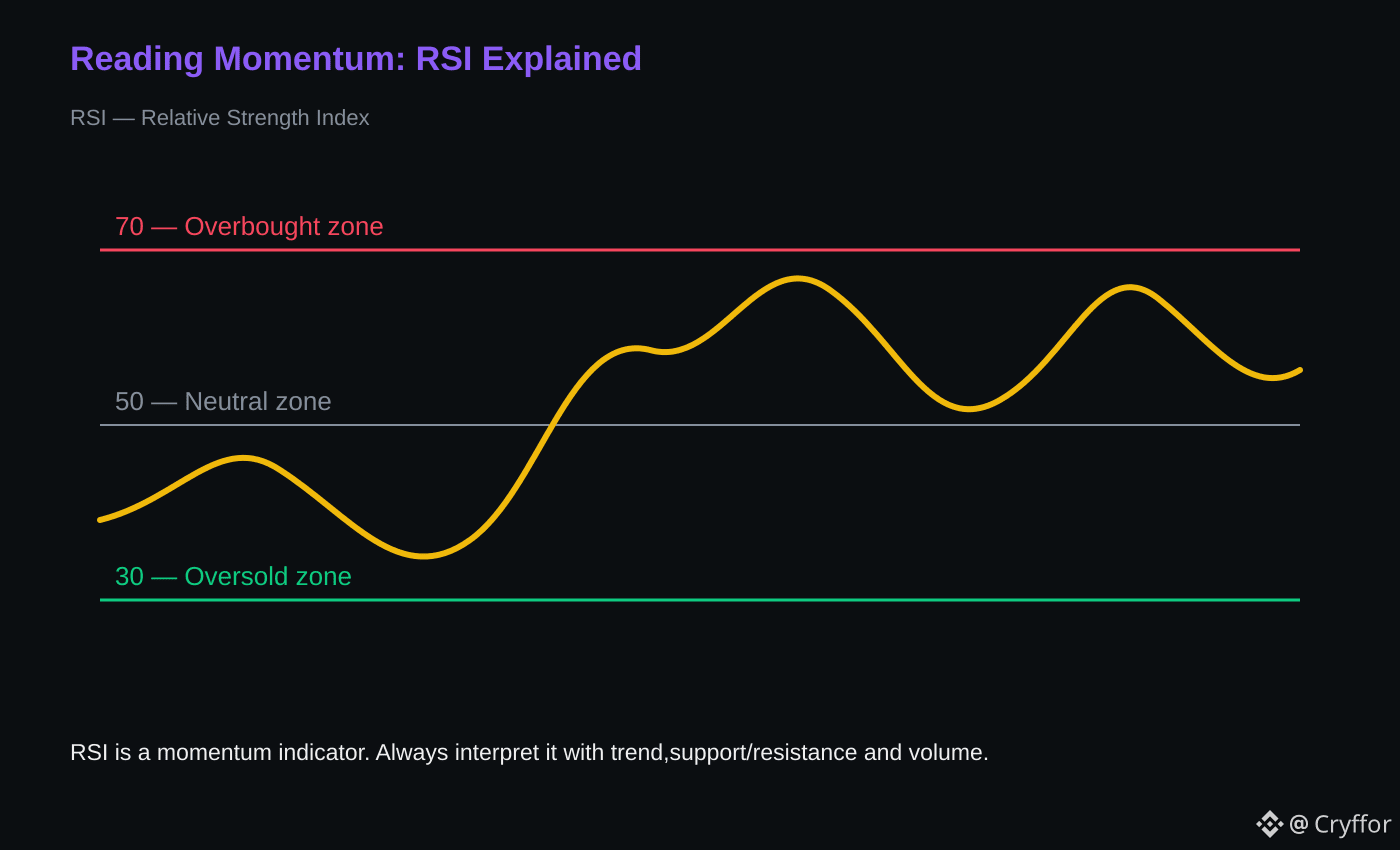
📚 Crypto Education — RSI
⚡ RSI measures momentum.
🟢 Above 70: strong momentum / potentially overextended
🟡 Around 50: balanced momentum
🔴 Below 30: weak momentum / potentially oversold
📊 RSI should not be used alone.
🔎 Price structure, volume and trend can provide confirmation.
👀 Context matters.
🤔 Do you combine RSI with another indicator?
#CryptoEducation #Binance #RSI #TechnicalAnalysis
1

·
--
ලිපිය
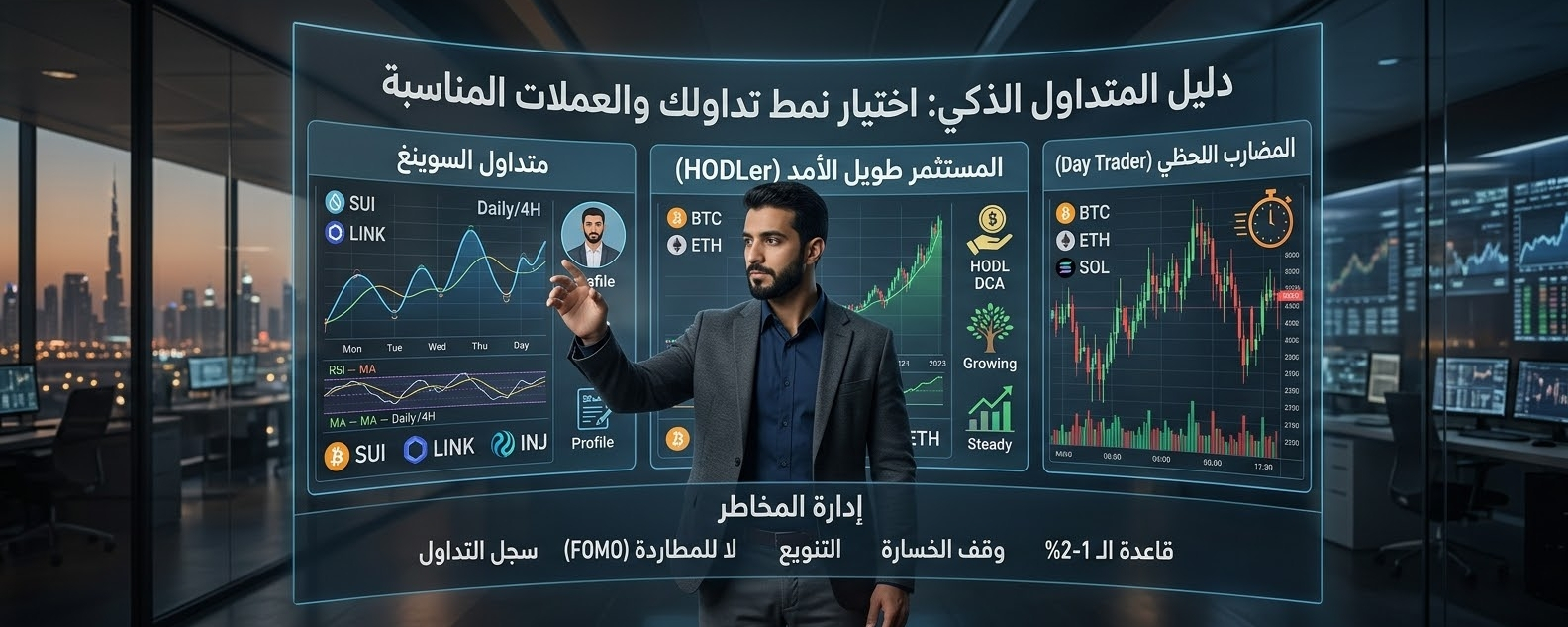
دليل المتداول الذكي: كيف تختار نمط تداولك والعملات المناسبة لك؟في عالم العملات الرقمية سريع التغير، لا توجد استراتيجية واحدة تناسب الجميع. النجاح في هذا السوق لا يعتمد على حفظ أسماء العملات، بل على فهم شخصيتك، والوقت الذي يمكنك استثماره، وقدرتك على تحمل المخاطر. الخطوة الأولى نحو الربحية هي التوقف عن التداول العشوائي، واختيار النمط الذي يتوافق مع حياتك.
إليك تفصيل لأنماط التداول الرئيسية، والعملات التي تناسب كل نمط، مع أهم النصائح لحماية رأس مالك.
1. المضارب اللحظي (المتداول اليومي)
من هو؟ هو المتداول الذي يفتح ويغلق صفقاته في نفس اليوم (أو خلال ساعات قليلة)، بهدف اقتناص تحركات الأسعار الصغيرة. يتطلب هذا النمط مراقبة مستمرة للشاشة، وردود فعل سريعة، واعتماداً كبيراً على التحليل الفني.
· العملات المناسبة: العملات ذات السيولة العالية جداً والتقلب العالي، مثل $BTC و$ETH وSOL. السيولة العالية تضمن تنفيذ أوامرك بسرعة دون انزلاق سعري كبير، والتقلب يوفر فرصاً للربح السريع.
· نصيحة ذهبية: لا تحول صفقة لحظية فاشلة إلى استثمار طويل الأمد على أمل الارتداد. حدد نوع الصفقة قبل الدخول، والتزم بوقف الخسارة فوراً.
2. متداول السوينغ (الموجي)
من هو؟ هو المتداول الذي يحتفظ بالمراكز من عدة أيام إلى أسابيع، مستفيداً من التقلبات ضمن اتجاهات السوق الأوسع. هذا النمط مثالي لمن لديه وظيفة بدوام كامل أو التزامات أخرى، حيث يمكنه تحليل الرسوم البيانية في المساء أو عطلة نهاية الأسبوع.
· العملات المناسبة: العملات البديلة القوية ذات المشاريع الواضحة والاتجاهات الواضحة (مثل $SUI وLINK وINJ)، حيث تظهر حركات سعرية أكبر على المدى المتوسط. كما يمكن تخصيص جزء من المحفظة (30-40%) لهذا النمط.
· نصيحة ذهبية: ابحث عن اختراق واضح لمستويات المقاومة الرئيسية على الإطار اليومي أو 4 ساعات، مصحوباً بارتفاع في حجم التداول لتأكيد قوة الزخم قبل الدخول.
3. المستثمر طويل الأمد (HODLer)
من هو؟ هو الشخص الذي يشتري الأصول ويحتفظ بها لسنوات، متجاهلاً التقلبات اليومية. يعتمد على البحث الأساسي والإيمان بمستقبل التكنولوجيا، ويتحلى بأعصاب فولاذية أمام فترات الهبوط الحادة.
· العملات المناسبة: العملات الرئيسية "الكبيرة" ذات القيمة السوقية الضخمة والتبني المؤسسي، مثل BTC وETH. تُعتبر هذه العملات أساس أي محفظة استثمارية طويلة الأمد، ويُنصح بتخصيص 70-80% من المحفظة لها في استراتيجية "النواة والساتل".
· نصيحة ذهبية: استخدم استراتيجية "التكلفة المتوسطة للدولار" (DCA) بالشراء على دفعات عند التراجعات الكبيرة، بدلاً من محاولة توقيت القاع المثالي.
نصائح جوهرية لحماية رأس المال (إدارة المخاطر)
بغض النظر عن النمط الذي تختاره، فإن إدارة المخاطر هي الفاصل بين المتداول المحترف والمقامر. إليك القواعد الأساسية:
· قاعدة الـ 1-2%: لا تخاطر بأكثر من 1% إلى 2% من إجمالي رأس مالك في صفقة واحدة. هذا يضمن بقاءك في اللعبة حتى لو تعرضت لسلسلة خسائر متتالية.
· حدد وقف الخسارة مسبقاً: قبل الضغط على زر الشراء، يجب أن تعرف بالضبط أين ستبيع إذا سار السوق ضدك. وقف الخسارة ليس استسلاماً، بل هو تكلفة التأمين على حسابك.
· لا تضع كل البيض في سلة واحدة: التنويع بين العملات والقطاعات المختلفة (مثل التمويل اللامركزي DeFi، أو الذكاء الاصطناعي AI، أو البنية التحتية) يحميك من الانهيارات المفاجئة لعملة واحدة.
· احذر من المطاردة: لا تشترِ عند القمم بدافع الخوف من فوات الفرصة (FOMO). انتظر دائماً تأكيداً أو تراجعاً إلى مناطق دعم معقولة.
· احتفظ بسجل تداول: دوّن سبب دخولك، ونقاط الخروج، ومشاعرك. المراجعة الدورية هي أسرع طريقة لتصحيح الأخطاء وتطوير أدائك.
في النهاية، التداول الناجح هو رحلة تعلم مستمرة. ابدأ صغيراً، وركز على الحفاظ على رأس مالك أولاً، وستأتي الأرباح كنتاج طبيعي للانضباط والصبر.
⚠️ تنبيه: هذه المقالة لأغراض تعليمية وتحليلية فقط، ولا تُعد نصيحة استثمارية. تداول العملات الرقمية ينطوي على مخاطر عالية، وأنت المسؤول الوحيد عن قراراتك المالية.
💬 إذا وجدت المقالة مفيدة، يسعدني دعمك بإعادة نشرها ومشاركتها مع من قد يهتم بالمحتوى 😊
شكراً لثقتكم وتقديركم 💛
#CryptoEducation #RiskManagement #BinanceSquare
دليل المتداول الذكي: كيف تختار نمط تداولك والعملات المناسبة لك؟
في عالم العملات الرقمية سريع التغير، لا توجد استراتيجية واحدة تناسب الجميع. النجاح في هذا السوق لا يعتمد على حفظ أسماء العملات، بل على فهم شخصيتك، والوقت الذي يمكنك استثماره، وقدرتك على تحمل المخاطر. الخطوة الأولى نحو الربحية هي التوقف عن التداول العشوائي، واختيار النمط الذي يتوافق مع حياتك.
إليك تفصيل لأنماط التداول الرئيسية، والعملات التي تناسب كل نمط، مع أهم النصائح لحماية رأس مالك.
1. المضارب اللحظي (المتداول اليومي)
من هو؟ هو المتداول الذي يفتح ويغلق صفقاته في نفس اليوم (أو خلال ساعات قليلة)، بهدف اقتناص تحركات الأسعار الصغيرة. يتطلب هذا النمط مراقبة مستمرة للشاشة، وردود فعل سريعة، واعتماداً كبيراً على التحليل الفني.
· العملات المناسبة: العملات ذات السيولة العالية جداً والتقلب العالي، مثل $BTC و$ETH وSOL. السيولة العالية تضمن تنفيذ أوامرك بسرعة دون انزلاق سعري كبير، والتقلب يوفر فرصاً للربح السريع.
· نصيحة ذهبية: لا تحول صفقة لحظية فاشلة إلى استثمار طويل الأمد على أمل الارتداد. حدد نوع الصفقة قبل الدخول، والتزم بوقف الخسارة فوراً.
2. متداول السوينغ (الموجي)
من هو؟ هو المتداول الذي يحتفظ بالمراكز من عدة أيام إلى أسابيع، مستفيداً من التقلبات ضمن اتجاهات السوق الأوسع. هذا النمط مثالي لمن لديه وظيفة بدوام كامل أو التزامات أخرى، حيث يمكنه تحليل الرسوم البيانية في المساء أو عطلة نهاية الأسبوع.
· العملات المناسبة: العملات البديلة القوية ذات المشاريع الواضحة والاتجاهات الواضحة (مثل $SUI وLINK وINJ)، حيث تظهر حركات سعرية أكبر على المدى المتوسط. كما يمكن تخصيص جزء من المحفظة (30-40%) لهذا النمط.
· نصيحة ذهبية: ابحث عن اختراق واضح لمستويات المقاومة الرئيسية على الإطار اليومي أو 4 ساعات، مصحوباً بارتفاع في حجم التداول لتأكيد قوة الزخم قبل الدخول.
3. المستثمر طويل الأمد (HODLer)
من هو؟ هو الشخص الذي يشتري الأصول ويحتفظ بها لسنوات، متجاهلاً التقلبات اليومية. يعتمد على البحث الأساسي والإيمان بمستقبل التكنولوجيا، ويتحلى بأعصاب فولاذية أمام فترات الهبوط الحادة.
· العملات المناسبة: العملات الرئيسية "الكبيرة" ذات القيمة السوقية الضخمة والتبني المؤسسي، مثل BTC وETH. تُعتبر هذه العملات أساس أي محفظة استثمارية طويلة الأمد، ويُنصح بتخصيص 70-80% من المحفظة لها في استراتيجية "النواة والساتل".
· نصيحة ذهبية: استخدم استراتيجية "التكلفة المتوسطة للدولار" (DCA) بالشراء على دفعات عند التراجعات الكبيرة، بدلاً من محاولة توقيت القاع المثالي.
نصائح جوهرية لحماية رأس المال (إدارة المخاطر)
بغض النظر عن النمط الذي تختاره، فإن إدارة المخاطر هي الفاصل بين المتداول المحترف والمقامر. إليك القواعد الأساسية:
· قاعدة الـ 1-2%: لا تخاطر بأكثر من 1% إلى 2% من إجمالي رأس مالك في صفقة واحدة. هذا يضمن بقاءك في اللعبة حتى لو تعرضت لسلسلة خسائر متتالية.
· حدد وقف الخسارة مسبقاً: قبل الضغط على زر الشراء، يجب أن تعرف بالضبط أين ستبيع إذا سار السوق ضدك. وقف الخسارة ليس استسلاماً، بل هو تكلفة التأمين على حسابك.
· لا تضع كل البيض في سلة واحدة: التنويع بين العملات والقطاعات المختلفة (مثل التمويل اللامركزي DeFi، أو الذكاء الاصطناعي AI، أو البنية التحتية) يحميك من الانهيارات المفاجئة لعملة واحدة.
· احذر من المطاردة: لا تشترِ عند القمم بدافع الخوف من فوات الفرصة (FOMO). انتظر دائماً تأكيداً أو تراجعاً إلى مناطق دعم معقولة.
· احتفظ بسجل تداول: دوّن سبب دخولك، ونقاط الخروج، ومشاعرك. المراجعة الدورية هي أسرع طريقة لتصحيح الأخطاء وتطوير أدائك.
في النهاية، التداول الناجح هو رحلة تعلم مستمرة. ابدأ صغيراً، وركز على الحفاظ على رأس مالك أولاً، وستأتي الأرباح كنتاج طبيعي للانضباط والصبر.
⚠️ تنبيه: هذه المقالة لأغراض تعليمية وتحليلية فقط، ولا تُعد نصيحة استثمارية. تداول العملات الرقمية ينطوي على مخاطر عالية، وأنت المسؤول الوحيد عن قراراتك المالية.
💬 إذا وجدت المقالة مفيدة، يسعدني دعمك بإعادة نشرها ومشاركتها مع من قد يهتم بالمحتوى 😊
شكراً لثقتكم وتقديركم 💛
#CryptoEducation #RiskManagement #BinanceSquare
6

·
--
𝗘𝘃𝗲𝗿 𝘄𝗼𝗻𝗱𝗲𝗿𝗲𝗱 𝗵𝗼𝘄 𝗼𝗿𝗱𝗲𝗿 𝗯𝗼𝗼𝗸𝘀 𝗲𝘅𝗲𝗰𝘂𝘁𝗲 𝘁𝗿𝗮𝗱𝗲𝘀 𝗶𝗻𝘀𝘁𝗮𝗻𝘁𝗹𝘆 𝘄𝗶𝘁𝗵 𝗺𝗶𝗻𝗶𝗺𝗮𝗹 𝗽𝗿𝗶𝗰𝗲 𝘀𝗹𝗶𝗽𝗽𝗮𝗴𝗲, 𝗲𝘃𝗲𝗻 𝗱𝘂𝗿𝗶𝗻𝗴 𝗲𝘅𝘁𝗿𝗲𝗺𝗲 𝗺𝗮𝗿𝗸𝗲𝘁 𝘃𝗼𝗹𝗮𝘁𝗶𝗹𝗶𝘁𝘆? 𝗘𝗻𝘁𝗲𝗿 𝗠𝗮𝗿𝗸𝗲𝘁 𝗠𝗮𝗸𝗶𝗻𝗴 & 𝗟𝗶𝗾𝘂𝗶𝗱𝗶𝘁𝘆 𝗜𝗻𝗳𝗿𝗮𝘀𝘁𝗿𝘂𝗰𝘁𝘂𝗿𝗲 📈⚡
𝘋𝘳𝘢𝘸𝘪𝘯𝘨 𝘧𝘳𝘰𝘮 𝘧𝘰𝘶𝘯𝘥𝘢𝘵𝘪𝘰𝘯𝘢𝘭 𝘭𝘦𝘴𝘴𝘰𝘯𝘴 𝘰𝘯 #BinanceAcademy, 𝘩𝘦𝘳𝘦 𝘪𝘴 𝘺𝘰𝘶𝘳 𝘲𝘶𝘪𝘤𝘬 𝘮𝘢𝘳𝘬𝘦𝘵 𝘮𝘪𝘤𝘳𝘰𝘴𝘵𝘳𝘶𝘤𝘵𝘶𝘳𝘦 𝘣𝘳𝘦𝘢𝘬𝘥𝘰𝘸𝘯:
1️⃣ 𝗧𝗵𝗲 𝗥𝗼𝗹𝗲 𝗼𝗳 𝗠𝗮𝗿𝗸𝗲𝘁 𝗠𝗮𝗸𝗲𝗿𝘀:
• Entities or automated systems that continuously quote bid (buy) and ask (sell) prices, providing essential depth to exchange order books.
2️⃣ 𝗕𝗶𝗱-𝗔𝘀𝗸 𝗦𝗽𝗿𝗲𝗮𝗱 & 𝗢𝗿𝗱𝗲𝗿 𝗗𝗲𝗽𝘁𝗵:
• The spread is the gap between the highest buy order and the lowest sell order, deeper order books usually mean tighter spreads and smoother execution for traders.
3️⃣ 𝗠𝗮𝗿𝗸𝗲𝘁 𝗟𝗶𝗾𝘂𝗶𝗱𝗶𝘁𝘆 𝘃𝘀. 𝗩𝗼𝗹𝗮𝘁𝗶𝗹𝗶𝘁𝘆:
• Robust liquidity helps absorb large orders with less price impact, reducing the risk of drastic spikes or sudden crashes and supporting market efficiency.
📖 Learn more on Binance Academy: https://www.binance.com/en/academy/articles/what-are-makers-and-takers
Expand your technical literacy, analyze order books 📊
Crypto involves risk, this is not financial advice, Always DYOR 💡
#MarketMaking #Liquidity #CryptoEducation
Follow me for more 💛

2
78

·
--
🚨 STOP SCROLLING! ⚠️ Every Crypto Beginner Should Know This! 📚
💰 Bitcoin: The King of Crypto 👑
Bitcoin ($BTC) is the world's first cryptocurrency. Many people are interested in Bitcoin, but beginners should understand the risks before investing.
🔥 3 Things You Should Know:
✅ Bitcoin prices can rise or fall dramatically. ✅ Never invest money just because someone on social media recommends a coin. ✅ Learning about crypto is more important than chasing quick profits.
💡 My Strategy: Learn first, research carefully, and manage risk!
👇 LET'S TALK!
Do you think Bitcoin will reach a new all-time high in the future? 📈
Comment your opinion below! 👇
#Bitcoin $BTC #CryptoEducation #BinanceSquare
{spot}(BTCUSDT)
🚨 STOP SCROLLING! ⚠️ Every Crypto Beginner Should Know This! 📚
💰 Bitcoin: The King of Crypto 👑
Bitcoin ($BTC ) is the world's first cryptocurrency. Many people are interested in Bitcoin, but beginners should understand the risks before investing.
🔥 3 Things You Should Know:
✅ Bitcoin prices can rise or fall dramatically. ✅ Never invest money just because someone on social media recommends a coin. ✅ Learning about crypto is more important than chasing quick profits.
💡 My Strategy: Learn first, research carefully, and manage risk!
👇 LET'S TALK!
Do you think Bitcoin will reach a new all-time high in the future? 📈
Comment your opinion below! 👇
#Bitcoin $BTC #CryptoEducation #BinanceSquare
107

·
--
🔥 CRYPTO IS MORE THAN MONEY — IT’S A NEW WAY OF THINKING! 🚀
Many people look at crypto and see only prices. 📈
But smart learners see technology, innovation, and opportunity. 🌐
💡 5 Golden Rules Every Crypto Beginner Should Know:
✅ Learn before you invest.
✅ Never invest money you can't afford to lose.
✅ Do your own research (DYOR).
✅ Stay away from fake promises and guaranteed profits.
✅ Think long-term about knowledge, not short-term hype.
Remember: The goal isn't to get rich overnight. The goal is to make smarter decisions every day. 💎
🔥 What do you think is the future of crypto — Bitcoin, Web3, or AI-powered blockchain?
👇 Share your thoughts in the comments!
#crypto #bitcoin #BinanceSquare #Web3 #cryptoeducation
70

🚀 Your Crypto Journey Starts Here! 💰
Crypto is not just about making money, it's about learning, patience, and smart decisions. 📈
🔥 Learn crypto step by step
📊 Explore market trends
💡 Share knowledge and grow together
🤝 Follow me for valuable crypto insights!
Let's build our crypto knowledge together! 🌍
Follow @ZorvexaTrade for more! 🚀
#BinanceSquare #crypto #bitcoin #trading #cryptoeducation
1
5

·
--
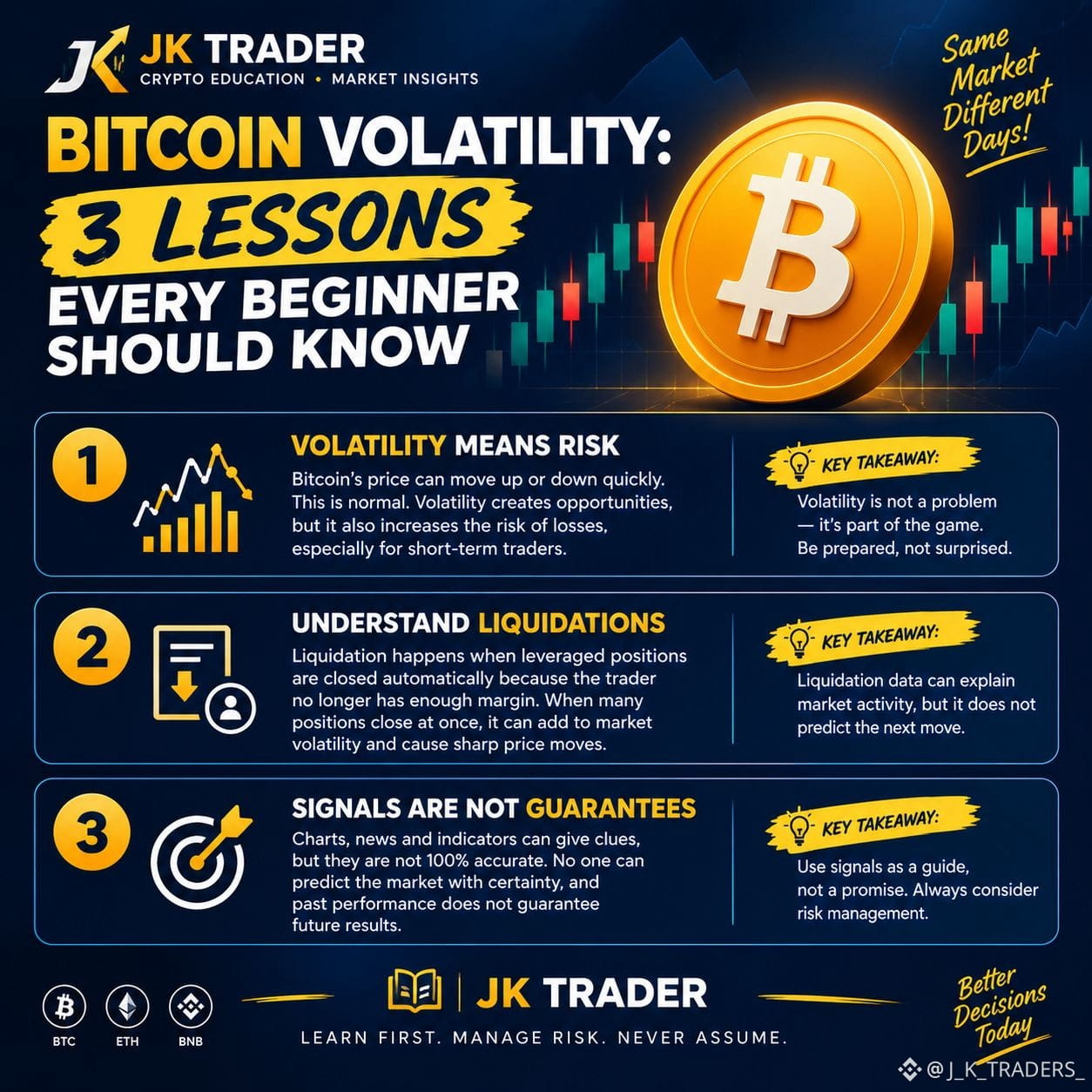
🟠 BITCOIN VOLATILITY: 3 LESSONS EVERY BEGINNER SHOULD KNOW
Bitcoin ($BTC) can move sharply in either direction. But a big price move does not automatically mean the next move will be predictable.
Here are 3 important lessons for beginners:
1️⃣ Volatility means risk
Fast price changes can create opportunities, but they can also lead to sudden losses.
2️⃣ Understand liquidations
When a leveraged trader cannot maintain enough margin, their position may be automatically closed. During sharp market moves, many liquidations can happen close together.
3️⃣ Never confuse a signal with a guarantee
Price charts and liquidation data can help explain market activity, but neither can tell you with certainty what Bitcoin will do next.
💡 Beginner tip: Learn the basics before using leverage. You do not need to trade every market move.
💬 Your turn: What do you find hardest to understand about Bitcoin — volatility, liquidations, or reading charts?
#bitcoin #BTC #cryptoeducation #BinanceSquare
82
තවත් අන්තර්ගතයන් ගවේෂණය කිරීමට ඇතුල් වන්න
Binance චතුරශ්රය හි ගෝලීය ක්රිප්ටෝ පරිශීලකයින් හා එක්වන්න
⚡️ ක්රිප්ටෝ පිළිබඳ නවතම සහ ප්රයෝජනවත් තොරතුරු ලබා ගන්න.
💬 ලොව විශාලතම ක්රිප්ටෝ හුවමාරුව මගින් විශ්වාස කෙරේ.
👍 සත්යායනය කරන ලද නිර්මාණකරුවන්ගෙන් සැබෑ විදසුන් සොයා ගන්න.
විද්යුත් තැපෑල / දුරකථන අංකය
නැගී එන මාතෘකා
1
#BinancePick
2.5M නැරඹීම්
137,927 සාකච්ඡා කරමින්
2
#EarningsSeason
4.9M නැරඹීම්
23,915 සාකච්ඡා කරමින්
3
#ElectrumWalletBugLetRogueServersStealFunds
2,613 නැරඹීම්
137 සාකච්ඡා කරමින්
4
#ArgentineCourtDismissesLIBRACaseAgainstMilei
10,382 නැරඹීම්
226 සාකච්ඡා කරමින්
5
#SKHynixReportedlyPlansSpecialDividendFromKioxiaStakeSale
2,277 නැරඹීම්
36 සාකච්ඡා කරමින්
6
#KeystoneWebsiteBreachExposesBuyersShippingAddresses
1,254 නැරඹීම්
27 සාකච්ඡා කරමින්
7
#USQ3GDPAndSeptemberPCEDueNextWeek
83,532 නැරඹීම්
1,036 සාකච්ඡා කරමින්
8
#SouthKoreaDelaysCryptoIncomeTax
153,799 නැරඹීම්
1,078 සාකච්ඡා කරමින්
9
#ElectrumFixesHighRiskExploitInVersionsBefore4.8.3
67,559 නැරඹීම්
772 සාකච්ඡා කරමින්
10
#SouthKoreaPlansToRegulateStablecoinsUnderFXLaw
65,704 නැරඹීම්
688 සාකච්ඡා කරමින්