
schrodinger
138 Публикации

schrodinger
Отправить жалобу
Заблокировать пользователя
Crypto _writer
Открытая сделка
Трейдер с частыми сделками
5.7 г
117 подписок(и/а)
63 подписчиков(а)
87 понравилось
Посты
Портфель
Все
Цитирования
·
--
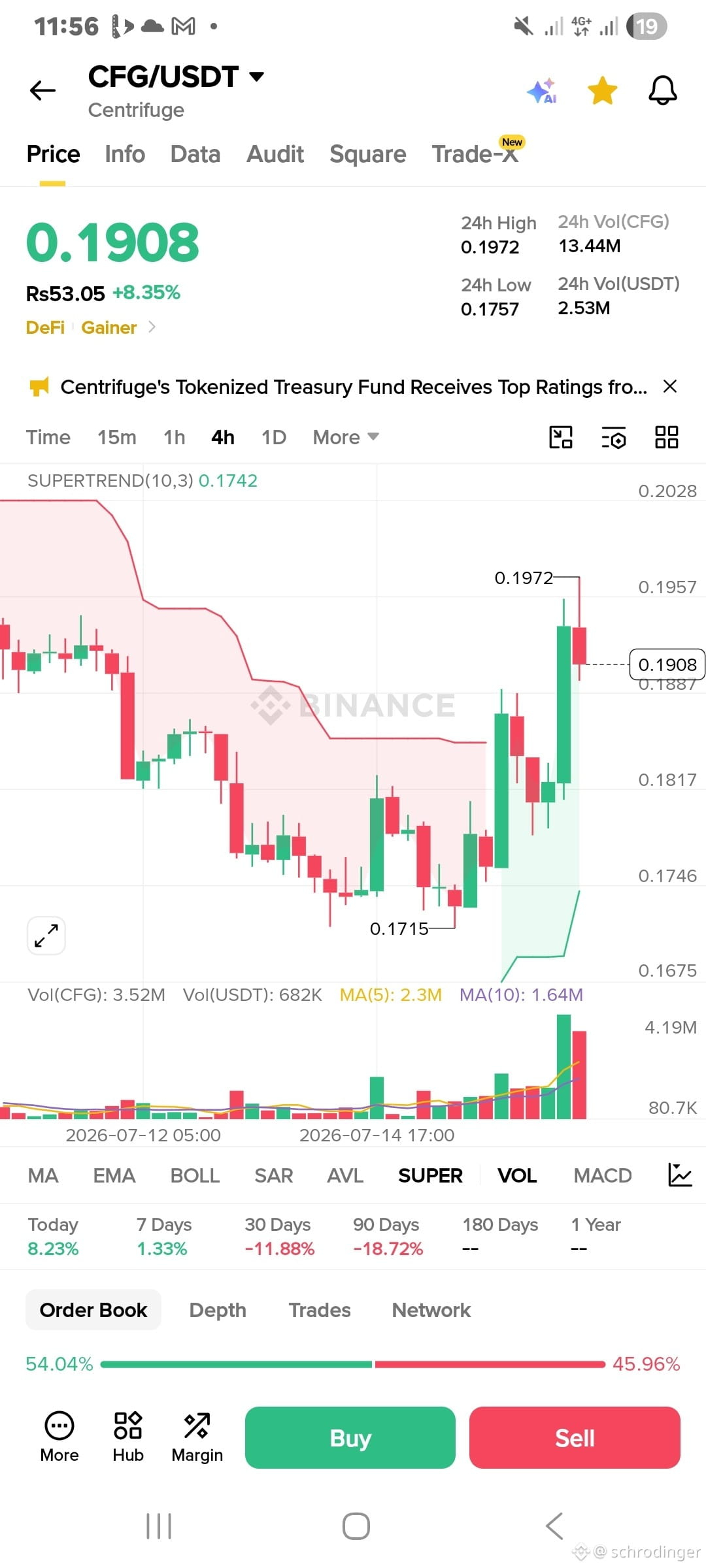
CFG находится на критической точке принятия решения после масштабного падения с $0.30.
🔍 Анализ графика: Что происходит
· Текущий тренд: Медвежий в краткосрочной перспективе. Цена ($0.1908) сильно ниже индикатора Supertrend (который выступает как динамическое сопротивление), что сигнализирует: продавцы все еще контролируют ситуацию.
· Недавний импульс: За 30 дней монета упала на -11.88%, а за 90 дней — на -18.72%, подтверждая более долгосрочный нисходящий тренд. Недавнее падение с $0.30 соответствует медвежьей структуре, отмеченной ранее в этом месяце.
🚀 Бычий сценарий (отскок)
Если покупатели начнут активно входить на этом уровне:
· Ближайшее сопротивление: Первый крупный барьер — максимум за 24 часа на $0.1972. Пробой выше него при сильном объеме будет первым признаком силы.
· Основная цель: Линия Supertrend около $0.2028. Возврат выше неё вернет краткосрочный тренд обратно в бычий.
· Цель в рамках движения: Если импульс продолжится, зона $0.218 - $0.220 станет следующим крупным сопротивлением.
🐻 Медвежий сценарий (продолжение)
С учетом слабых фундаментальных факторов (высокое давление продаж) путь наименьшего сопротивления все еще направлен вниз:
· Ключевая поддержка: Минимум за 24 часа на $0.1757 должен удержаться. Если он будет пробит, пол может заметно снизиться.
· Следующая крупная зона: Последняя зона существенного спроса перед потенциальным восстановлением находится примерно в диапазоне $0.12 - $0.14.
🛡️ Мой торговый план
1. Не гнаться: Не покупайте по текущей цене ($0.1908) без подтверждения.
2. Вход “Ждать и смотреть”: Рассматривайте спотовый вход только если цена закроется выше $0.1972 (максимум за 24 часа) на графике 1 часа или 4 часов. Это подтвердит, что покупатели действительно входят.
3. Для агрессивных трейдеров: Если цена сделает ретест поддержки $0.1757 и удержится, не пробивая её, можно зайти небольшой позицией там со стоп-лоссом чуть ниже уровня.
4. В случае пробоя: Если цена пробьет уровень **$0.1757**, отойдите в сторону. Подождите, пока цена найдет надежную опору возле зоны $0.14, прежде чем рассматривать любые долгосрочные спотовые покупки.
#Btc
#CFG_USDT
CFG находится на критической точке принятия решения после масштабного падения с $0.30.
🔍 Анализ графика: Что происходит
· Текущий тренд: Медвежий в краткосрочной перспективе. Цена ($0.1908) сильно ниже индикатора Supertrend (который выступает как динамическое сопротивление), что сигнализирует: продавцы все еще контролируют ситуацию.
· Недавний импульс: За 30 дней монета упала на -11.88%, а за 90 дней — на -18.72%, подтверждая более долгосрочный нисходящий тренд. Недавнее падение с $0.30 соответствует медвежьей структуре, отмеченной ранее в этом месяце.
🚀 Бычий сценарий (отскок)
Если покупатели начнут активно входить на этом уровне:
· Ближайшее сопротивление: Первый крупный барьер — максимум за 24 часа на $0.1972. Пробой выше него при сильном объеме будет первым признаком силы.
· Основная цель: Линия Supertrend около $0.2028. Возврат выше неё вернет краткосрочный тренд обратно в бычий.
· Цель в рамках движения: Если импульс продолжится, зона $0.218 - $0.220 станет следующим крупным сопротивлением.
🐻 Медвежий сценарий (продолжение)
С учетом слабых фундаментальных факторов (высокое давление продаж) путь наименьшего сопротивления все еще направлен вниз:
· Ключевая поддержка: Минимум за 24 часа на $0.1757 должен удержаться. Если он будет пробит, пол может заметно снизиться.
· Следующая крупная зона: Последняя зона существенного спроса перед потенциальным восстановлением находится примерно в диапазоне $0.12 - $0.14.
🛡️ Мой торговый план
1. Не гнаться: Не покупайте по текущей цене ($0.1908) без подтверждения.
2. Вход “Ждать и смотреть”: Рассматривайте спотовый вход только если цена закроется выше $0.1972 (максимум за 24 часа) на графике 1 часа или 4 часов. Это подтвердит, что покупатели действительно входят.
3. Для агрессивных трейдеров: Если цена сделает ретест поддержки $0.1757 и удержится, не пробивая её, можно зайти небольшой позицией там со стоп-лоссом чуть ниже уровня.
4. В случае пробоя: Если цена пробьет уровень **$0.1757**, отойдите в сторону. Подождите, пока цена найдет надежную опору возле зоны $0.14, прежде чем рассматривать любые долгосрочные спотовые покупки.
#Btc
#CFG_USDT
🔍 Анализ графика: Что происходит
· Текущий тренд: Медвежий в краткосрочной перспективе. Цена ($0.1908) сильно ниже индикатора Supertrend (который выступает как динамическое сопротивление), что сигнализирует: продавцы все еще контролируют ситуацию.
· Недавний импульс: За 30 дней монета упала на -11.88%, а за 90 дней — на -18.72%, подтверждая более долгосрочный нисходящий тренд. Недавнее падение с $0.30 соответствует медвежьей структуре, отмеченной ранее в этом месяце.
🚀 Бычий сценарий (отскок)
Если покупатели начнут активно входить на этом уровне:
· Ближайшее сопротивление: Первый крупный барьер — максимум за 24 часа на $0.1972. Пробой выше него при сильном объеме будет первым признаком силы.
· Основная цель: Линия Supertrend около $0.2028. Возврат выше неё вернет краткосрочный тренд обратно в бычий.
· Цель в рамках движения: Если импульс продолжится, зона $0.218 - $0.220 станет следующим крупным сопротивлением.
🐻 Медвежий сценарий (продолжение)
С учетом слабых фундаментальных факторов (высокое давление продаж) путь наименьшего сопротивления все еще направлен вниз:
· Ключевая поддержка: Минимум за 24 часа на $0.1757 должен удержаться. Если он будет пробит, пол может заметно снизиться.
· Следующая крупная зона: Последняя зона существенного спроса перед потенциальным восстановлением находится примерно в диапазоне $0.12 - $0.14.
🛡️ Мой торговый план
1. Не гнаться: Не покупайте по текущей цене ($0.1908) без подтверждения.
2. Вход “Ждать и смотреть”: Рассматривайте спотовый вход только если цена закроется выше $0.1972 (максимум за 24 часа) на графике 1 часа или 4 часов. Это подтвердит, что покупатели действительно входят.
3. Для агрессивных трейдеров: Если цена сделает ретест поддержки $0.1757 и удержится, не пробивая её, можно зайти небольшой позицией там со стоп-лоссом чуть ниже уровня.
4. В случае пробоя: Если цена пробьет уровень **$0.1757**, отойдите в сторону. Подождите, пока цена найдет надежную опору возле зоны $0.14, прежде чем рассматривать любые долгосрочные спотовые покупки.
#Btc
#CFG_USDT
76
·
--
🚀 10 монет на взлёте в ближайшие 24 часа (спотовая торговля)
Краткий обзор: настройка рынка
🔥 Топ-10 монет для наблюдения в спотовой торговле
1. ONDO (Ondo Finance) — лидер сектора RWA
· Прирост за 24ч: +14,41% до +15,92%
· Катализатор: запустила первые токены на акции США, напрямую обеспеченные ценными бумагами, хранящимися в DTCC
· Почему сейчас: сектор RWA — сегодня самый сильный по результатам
2. HYPE (Hyperliquid) — расширение RWA + новый продукт
· Всплеск дневного объёма: +36% до $433 млн
· Катализатор: запустила Pre-IPO Perpetual Market (IPOP) для токенизированных активов; открытый интерес по RWA достиг рекордных $2,13 млрд
· Технически: торгуется выше всех ключевых скользящих средних; Stochastic RSI откатывает вверх после перепроданности
· Почему сейчас: фундаментальные показатели и техника совпали—новые катализаторы привлекают свежий капитал.
---
3. ZERO (ZeroLend) — ставка на импульс в DeFi
· Прирост за 24ч: +28,87%
· Катализатор: сегодня сектор DeFi вырос на 0,96%, при этом ZERO был лидером
· Почему сейчас: самый сильный игрок в DeFi; высокая волатильность даёт быстрые возможности для скальпинга.
---
4. XEC (eCash) — яркий представитель сектора PayFi
· Прирост за 24ч: +13,68%
· Катализатор: сектор PayFi вырос на 0,32%, а XEC — лучший по росту
· Почему сейчас: сильный всплеск объёма; ротация сектора в проекты, ориентированные на платежи.
5. INJ (Injective) — сила Layer 1
· Прирост за 24ч: +3,24%
· Технически: бычье согласование на нескольких таймфреймах
· Почему сейчас: сектор Layer 1 во время сессии разогнал INJ; сильные индикаторы импульса.
6. LDO (Lido DAO) — сетап для бычьего пробоя
· Технически: сильное бычье согласование; ADX на 50,51, ROC на 5,50%, RSI на 72,81
· Почему сейчас: все 6 ключевых таймфреймов совпадают в бычью сторону; импульс ускоряется.
7. RIF (RSK Infrastructure Framework) — самый сильный бычий сигнал
· Технически: «Сильный бычий» на ВСЕХ 6 таймфреймах — 15м, 30м, 1ч, 4ч, 1д, 1н
· ROC: 8,51% импульса
· Почему сейчас: редко встретишь такой уровень технического совпадения. Спот
8. DGB (DigiByte) — игра на высоком импульсе
· Технически: 49,83 ADX, 41,95% ROC, RSI на 93,83
· Почему сейчас: экстремальный импульс — только для агрессивных трейдеров.
9. GMX (GMX) — DeFi перпетуальный биржевой инструмент
🚀 10 монет на взлёте в ближайшие 24 часа (спотовая торговля)
Краткий обзор: настройка рынка
🔥 Топ-10 монет для наблюдения в спотовой торговле
1. ONDO (Ondo Finance) — лидер сектора RWA
· Прирост за 24ч: +14,41% до +15,92%
· Катализатор: запустила первые токены на акции США, напрямую обеспеченные ценными бумагами, хранящимися в DTCC
· Почему сейчас: сектор RWA — сегодня самый сильный по результатам
2. HYPE (Hyperliquid) — расширение RWA + новый продукт
· Всплеск дневного объёма: +36% до $433 млн
· Катализатор: запустила Pre-IPO Perpetual Market (IPOP) для токенизированных активов; открытый интерес по RWA достиг рекордных $2,13 млрд
· Технически: торгуется выше всех ключевых скользящих средних; Stochastic RSI откатывает вверх после перепроданности
· Почему сейчас: фундаментальные показатели и техника совпали—новые катализаторы привлекают свежий капитал.
---
3. ZERO (ZeroLend) — ставка на импульс в DeFi
· Прирост за 24ч: +28,87%
· Катализатор: сегодня сектор DeFi вырос на 0,96%, при этом ZERO был лидером
· Почему сейчас: самый сильный игрок в DeFi; высокая волатильность даёт быстрые возможности для скальпинга.
---
4. XEC (eCash) — яркий представитель сектора PayFi
· Прирост за 24ч: +13,68%
· Катализатор: сектор PayFi вырос на 0,32%, а XEC — лучший по росту
· Почему сейчас: сильный всплеск объёма; ротация сектора в проекты, ориентированные на платежи.
5. INJ (Injective) — сила Layer 1
· Прирост за 24ч: +3,24%
· Технически: бычье согласование на нескольких таймфреймах
· Почему сейчас: сектор Layer 1 во время сессии разогнал INJ; сильные индикаторы импульса.
6. LDO (Lido DAO) — сетап для бычьего пробоя
· Технически: сильное бычье согласование; ADX на 50,51, ROC на 5,50%, RSI на 72,81
· Почему сейчас: все 6 ключевых таймфреймов совпадают в бычью сторону; импульс ускоряется.
7. RIF (RSK Infrastructure Framework) — самый сильный бычий сигнал
· Технически: «Сильный бычий» на ВСЕХ 6 таймфреймах — 15м, 30м, 1ч, 4ч, 1д, 1н
· ROC: 8,51% импульса
· Почему сейчас: редко встретишь такой уровень технического совпадения. Спот
8. DGB (DigiByte) — игра на высоком импульсе
· Технически: 49,83 ADX, 41,95% ROC, RSI на 93,83
· Почему сейчас: экстремальный импульс — только для агрессивных трейдеров.
9. GMX (GMX) — DeFi перпетуальный биржевой инструмент
Краткий обзор: настройка рынка
🔥 Топ-10 монет для наблюдения в спотовой торговле
1. ONDO (Ondo Finance) — лидер сектора RWA
· Прирост за 24ч: +14,41% до +15,92%
· Катализатор: запустила первые токены на акции США, напрямую обеспеченные ценными бумагами, хранящимися в DTCC
· Почему сейчас: сектор RWA — сегодня самый сильный по результатам
2. HYPE (Hyperliquid) — расширение RWA + новый продукт
· Всплеск дневного объёма: +36% до $433 млн
· Катализатор: запустила Pre-IPO Perpetual Market (IPOP) для токенизированных активов; открытый интерес по RWA достиг рекордных $2,13 млрд
· Технически: торгуется выше всех ключевых скользящих средних; Stochastic RSI откатывает вверх после перепроданности
· Почему сейчас: фундаментальные показатели и техника совпали—новые катализаторы привлекают свежий капитал.
---
3. ZERO (ZeroLend) — ставка на импульс в DeFi
· Прирост за 24ч: +28,87%
· Катализатор: сегодня сектор DeFi вырос на 0,96%, при этом ZERO был лидером
· Почему сейчас: самый сильный игрок в DeFi; высокая волатильность даёт быстрые возможности для скальпинга.
---
4. XEC (eCash) — яркий представитель сектора PayFi
· Прирост за 24ч: +13,68%
· Катализатор: сектор PayFi вырос на 0,32%, а XEC — лучший по росту
· Почему сейчас: сильный всплеск объёма; ротация сектора в проекты, ориентированные на платежи.
5. INJ (Injective) — сила Layer 1
· Прирост за 24ч: +3,24%
· Технически: бычье согласование на нескольких таймфреймах
· Почему сейчас: сектор Layer 1 во время сессии разогнал INJ; сильные индикаторы импульса.
6. LDO (Lido DAO) — сетап для бычьего пробоя
· Технически: сильное бычье согласование; ADX на 50,51, ROC на 5,50%, RSI на 72,81
· Почему сейчас: все 6 ключевых таймфреймов совпадают в бычью сторону; импульс ускоряется.
7. RIF (RSK Infrastructure Framework) — самый сильный бычий сигнал
· Технически: «Сильный бычий» на ВСЕХ 6 таймфреймах — 15м, 30м, 1ч, 4ч, 1д, 1н
· ROC: 8,51% импульса
· Почему сейчас: редко встретишь такой уровень технического совпадения. Спот
8. DGB (DigiByte) — игра на высоком импульсе
· Технически: 49,83 ADX, 41,95% ROC, RSI на 93,83
· Почему сейчас: экстремальный импульс — только для агрессивных трейдеров.
9. GMX (GMX) — DeFi перпетуальный биржевой инструмент
233
·
--
Обзор рынка: «Трусливое» ралли
Сегодня криптовалютный рынок выглядит осторожно. Индекс Страха и Жадности находится на уровне 26 («Страх»). Это среда, где особенно важен безопасный подход.
Биткоин (BTC): около $64,750** .
**Ethereum (ETH):** около **$1,918 .
🧐 Ключевые риски рынка и настроения
· Скрытая хрупкость: сила цен BTC поддерживается чрезмерным кредитным плечом, а не реальным спросом на споте, из-за чего повышается риск резкой коррекции .
· Макро-колебания: охлаждение инфляции в США (CPI/PPI) — позитивный фактор, поскольку снижает страх перед повышением ставок . Однако эскалация напряженности США—Иран подталкивает цены на нефть вверх и ухудшает общую склонность к риску .
· Бычьи техсигналы: BTC превратил уровень $64,000 в краткосрочную поддержку**. Устойчивый пробой выше **$64,700 может открыть путь к $67,500-$68,000 . Ключевая поддержка на снижении находится на $61,100-$61,500 .
🔥 Перспективный сектор: RWA (Реальные активы)
Сегодня выделяется сектор RWA — он прибавил 6,40% . Этот тренд подпитывают крупные институции (DTCC, JPMorgan, BlackRock), которые продвигают токенизацию реальных активов, таких как акции и U.S. Treasuries .
Лучший результат:
· ONDO (Ondo Finance): вырос более чем на +14% после запуска первых токенов акций США, напрямую обеспеченных ценными бумагами, хранящимися через DTCC .
🛡️ 3 правила безопасности на сегодня
1. Контролируйте размер позиции: никогда не рискуйте более чем 1–2% от вашего общего капитала в одной сделке с высоким риском в этой волатильной обстановке .
2. Ужесточайте стоп-лоссы: из-за повышенного риска плеча используйте строгие стоп-лоссы. Пробой ниже $64,000 может спровоцировать быструю распродажу .
3. Держите резервы в кэше: сохраняйте 10–20% портфеля в стейблкоинах. Это позволит купить просадку, если произойдет коррекция, и даст буфер во время спадов .#BTC
Обзор рынка: «Трусливое» ралли
Сегодня криптовалютный рынок выглядит осторожно. Индекс Страха и Жадности находится на уровне 26 («Страх»). Это среда, где особенно важен безопасный подход.
Биткоин (BTC): около $64,750** .
**Ethereum (ETH):** около **$1,918 .
🧐 Ключевые риски рынка и настроения
· Скрытая хрупкость: сила цен BTC поддерживается чрезмерным кредитным плечом, а не реальным спросом на споте, из-за чего повышается риск резкой коррекции .
· Макро-колебания: охлаждение инфляции в США (CPI/PPI) — позитивный фактор, поскольку снижает страх перед повышением ставок . Однако эскалация напряженности США—Иран подталкивает цены на нефть вверх и ухудшает общую склонность к риску .
· Бычьи техсигналы: BTC превратил уровень $64,000 в краткосрочную поддержку**. Устойчивый пробой выше **$64,700 может открыть путь к $67,500-$68,000 . Ключевая поддержка на снижении находится на $61,100-$61,500 .
🔥 Перспективный сектор: RWA (Реальные активы)
Сегодня выделяется сектор RWA — он прибавил 6,40% . Этот тренд подпитывают крупные институции (DTCC, JPMorgan, BlackRock), которые продвигают токенизацию реальных активов, таких как акции и U.S. Treasuries .
Лучший результат:
· ONDO (Ondo Finance): вырос более чем на +14% после запуска первых токенов акций США, напрямую обеспеченных ценными бумагами, хранящимися через DTCC .
🛡️ 3 правила безопасности на сегодня
1. Контролируйте размер позиции: никогда не рискуйте более чем 1–2% от вашего общего капитала в одной сделке с высоким риском в этой волатильной обстановке .
2. Ужесточайте стоп-лоссы: из-за повышенного риска плеча используйте строгие стоп-лоссы. Пробой ниже $64,000 может спровоцировать быструю распродажу .
3. Держите резервы в кэше: сохраняйте 10–20% портфеля в стейблкоинах. Это позволит купить просадку, если произойдет коррекция, и даст буфер во время спадов .#BTC
Сегодня криптовалютный рынок выглядит осторожно. Индекс Страха и Жадности находится на уровне 26 («Страх»). Это среда, где особенно важен безопасный подход.
Биткоин (BTC): около $64,750** .
**Ethereum (ETH):** около **$1,918 .
🧐 Ключевые риски рынка и настроения
· Скрытая хрупкость: сила цен BTC поддерживается чрезмерным кредитным плечом, а не реальным спросом на споте, из-за чего повышается риск резкой коррекции .
· Макро-колебания: охлаждение инфляции в США (CPI/PPI) — позитивный фактор, поскольку снижает страх перед повышением ставок . Однако эскалация напряженности США—Иран подталкивает цены на нефть вверх и ухудшает общую склонность к риску .
· Бычьи техсигналы: BTC превратил уровень $64,000 в краткосрочную поддержку**. Устойчивый пробой выше **$64,700 может открыть путь к $67,500-$68,000 . Ключевая поддержка на снижении находится на $61,100-$61,500 .
🔥 Перспективный сектор: RWA (Реальные активы)
Сегодня выделяется сектор RWA — он прибавил 6,40% . Этот тренд подпитывают крупные институции (DTCC, JPMorgan, BlackRock), которые продвигают токенизацию реальных активов, таких как акции и U.S. Treasuries .
Лучший результат:
· ONDO (Ondo Finance): вырос более чем на +14% после запуска первых токенов акций США, напрямую обеспеченных ценными бумагами, хранящимися через DTCC .
🛡️ 3 правила безопасности на сегодня
1. Контролируйте размер позиции: никогда не рискуйте более чем 1–2% от вашего общего капитала в одной сделке с высоким риском в этой волатильной обстановке .
2. Ужесточайте стоп-лоссы: из-за повышенного риска плеча используйте строгие стоп-лоссы. Пробой ниже $64,000 может спровоцировать быструю распродажу .
3. Держите резервы в кэше: сохраняйте 10–20% портфеля в стейблкоинах. Это позволит купить просадку, если произойдет коррекция, и даст буфер во время спадов .#BTC

118
·
--
#XUAT
🎯 Лучшая покупательская позиция (Spot Buy Position)
Текущая цена: 4,208.58
Стратегия: Покупай понемногу (DCA) — не покупай всё сразу
---
📥 План покупки в трех частях
Приоритетная ценовая зона Сколько покупать Причина
Первая покупка (сейчас или при небольшом падении) 4,180 – 4,210 30% от общего капитала SUPERTREND поддержка + средняя линия
Вторая покупка (при хорошем падении) 4,050 – 4,080 40% от общего капитала Лучшая зона скидки
Третья покупка (при глубоком падении) 3,960 – 4,000 30% от общего капитала Сильная историческая поддержка (зона подарков)
Если у вас нет позиции, создайте 30-40% позиции в первой зоне.
---
📊 Технические причины
· SUPERTREND (10,3): 4,180.51 — это сильная поддержка
· Объем: объем растет на падении → вероятно, умные деньги накапливаются
· Индикатор KDJ: снизу (перепродан) → вероятен скорый рост
· Сопротивление (Resistance): около 4,230 — сейчас покупать немного дорого
---
⚠️ Управление рисками (Risk Management)
· XAUT может внезапно сделать верхнюю тень (wick) → ставь лимитный ордер, не давай рыночный ордер
· Не ставь всю сумму по одной цене
· Всегда оставляй немного USDT — чтобы иметь возможность покупать, если цена упадет
---
✅ Резюме (Final Advice)
Лучшая зона для покупки = 4,050 – 4,080 (это вторая зона)
· Если собираешься покупать сейчас, покупай немного (30% от капитала)
· Оставь оставшиеся средства для покупки на нижних зонах
#XUAT
🎯 Лучшая покупательская позиция (Spot Buy Position)
Текущая цена: 4,208.58
Стратегия: Покупай понемногу (DCA) — не покупай всё сразу
---
📥 План покупки в трех частях
Приоритетная ценовая зона Сколько покупать Причина
Первая покупка (сейчас или при небольшом падении) 4,180 – 4,210 30% от общего капитала SUPERTREND поддержка + средняя линия
Вторая покупка (при хорошем падении) 4,050 – 4,080 40% от общего капитала Лучшая зона скидки
Третья покупка (при глубоком падении) 3,960 – 4,000 30% от общего капитала Сильная историческая поддержка (зона подарков)
Если у вас нет позиции, создайте 30-40% позиции в первой зоне.
---
📊 Технические причины
· SUPERTREND (10,3): 4,180.51 — это сильная поддержка
· Объем: объем растет на падении → вероятно, умные деньги накапливаются
· Индикатор KDJ: снизу (перепродан) → вероятен скорый рост
· Сопротивление (Resistance): около 4,230 — сейчас покупать немного дорого
---
⚠️ Управление рисками (Risk Management)
· XAUT может внезапно сделать верхнюю тень (wick) → ставь лимитный ордер, не давай рыночный ордер
· Не ставь всю сумму по одной цене
· Всегда оставляй немного USDT — чтобы иметь возможность покупать, если цена упадет
---
✅ Резюме (Final Advice)
Лучшая зона для покупки = 4,050 – 4,080 (это вторая зона)
· Если собираешься покупать сейчас, покупай немного (30% от капитала)
· Оставь оставшиеся средства для покупки на нижних зонах
🎯 Лучшая покупательская позиция (Spot Buy Position)
Текущая цена: 4,208.58
Стратегия: Покупай понемногу (DCA) — не покупай всё сразу
---
📥 План покупки в трех частях
Приоритетная ценовая зона Сколько покупать Причина
Первая покупка (сейчас или при небольшом падении) 4,180 – 4,210 30% от общего капитала SUPERTREND поддержка + средняя линия
Вторая покупка (при хорошем падении) 4,050 – 4,080 40% от общего капитала Лучшая зона скидки
Третья покупка (при глубоком падении) 3,960 – 4,000 30% от общего капитала Сильная историческая поддержка (зона подарков)
Если у вас нет позиции, создайте 30-40% позиции в первой зоне.
---
📊 Технические причины
· SUPERTREND (10,3): 4,180.51 — это сильная поддержка
· Объем: объем растет на падении → вероятно, умные деньги накапливаются
· Индикатор KDJ: снизу (перепродан) → вероятен скорый рост
· Сопротивление (Resistance): около 4,230 — сейчас покупать немного дорого
---
⚠️ Управление рисками (Risk Management)
· XAUT может внезапно сделать верхнюю тень (wick) → ставь лимитный ордер, не давай рыночный ордер
· Не ставь всю сумму по одной цене
· Всегда оставляй немного USDT — чтобы иметь возможность покупать, если цена упадет
---
✅ Резюме (Final Advice)
Лучшая зона для покупки = 4,050 – 4,080 (это вторая зона)
· Если собираешься покупать сейчас, покупай немного (30% от капитала)
· Оставь оставшиеся средства для покупки на нижних зонах
111
·
--
На основании недавних отчетов, вот самое значительное событие, вызывающее серьезные потрясения на рынке
🚨 Крупная Уязвимость Безопасности: Эксплойт Drift Protocol
Самая громкая новость — это атака на Drift Protocol 1 апреля 2026 года. Эта биржа на базе Solana подверглась эксплойту, который вызвал шоковые волны в экосистеме.
· Оценка Потерь: Оценки потерь варьируются от примерно $136 миллионов** (CertiK) до высоких **$285 миллионов (TechCrunch/Arkham).
· Влияние на Рынок: Общая Заблокированная Стоимость (TVL) протокола сократилась вдвое (падение на 55%), упав с $550 миллионов до около $245 миллионов. Коренной токен DRIFT рухнул более чем на 36% всего за 24 часа.
· Эффект Домино: Эксплойт затронул не только Drift; он повлиял на более чем 20 других проектов Solana, подчеркивая "эффект домино" и хрупкость взаимосвязанных систем DeFi.
· Текущий статус: Команда заморозила депозиты и выводы, чтобы сдержать атаку. На начало апреля ни одного официального финального постмортема не было опубликовано.
📈 Обновление Рынкового Настроения
Несмотря на хак Drift, более широкий рынок демонстрирует признаки восстановления благодаря другим событиям. Биткойн недавно пробил уровень $80,000, достигнув четырехмесячного максимума. Этот рост был частично вызван объявлением администрации Трампа о "Проекте Свобода", которое снизило геополитическую напряженность, наряду с сильными институциональными вливаниями в биткойн ETF.
На основании недавних отчетов, вот самое значительное событие, вызывающее серьезные потрясения на рынке
🚨 Крупная Уязвимость Безопасности: Эксплойт Drift Protocol
Самая громкая новость — это атака на Drift Protocol 1 апреля 2026 года. Эта биржа на базе Solana подверглась эксплойту, который вызвал шоковые волны в экосистеме.
· Оценка Потерь: Оценки потерь варьируются от примерно $136 миллионов** (CertiK) до высоких **$285 миллионов (TechCrunch/Arkham).
· Влияние на Рынок: Общая Заблокированная Стоимость (TVL) протокола сократилась вдвое (падение на 55%), упав с $550 миллионов до около $245 миллионов. Коренной токен DRIFT рухнул более чем на 36% всего за 24 часа.
· Эффект Домино: Эксплойт затронул не только Drift; он повлиял на более чем 20 других проектов Solana, подчеркивая "эффект домино" и хрупкость взаимосвязанных систем DeFi.
· Текущий статус: Команда заморозила депозиты и выводы, чтобы сдержать атаку. На начало апреля ни одного официального финального постмортема не было опубликовано.
📈 Обновление Рынкового Настроения
Несмотря на хак Drift, более широкий рынок демонстрирует признаки восстановления благодаря другим событиям. Биткойн недавно пробил уровень $80,000, достигнув четырехмесячного максимума. Этот рост был частично вызван объявлением администрации Трампа о "Проекте Свобода", которое снизило геополитическую напряженность, наряду с сильными институциональными вливаниями в биткойн ETF.
🚨 Крупная Уязвимость Безопасности: Эксплойт Drift Protocol
Самая громкая новость — это атака на Drift Protocol 1 апреля 2026 года. Эта биржа на базе Solana подверглась эксплойту, который вызвал шоковые волны в экосистеме.
· Оценка Потерь: Оценки потерь варьируются от примерно $136 миллионов** (CertiK) до высоких **$285 миллионов (TechCrunch/Arkham).
· Влияние на Рынок: Общая Заблокированная Стоимость (TVL) протокола сократилась вдвое (падение на 55%), упав с $550 миллионов до около $245 миллионов. Коренной токен DRIFT рухнул более чем на 36% всего за 24 часа.
· Эффект Домино: Эксплойт затронул не только Drift; он повлиял на более чем 20 других проектов Solana, подчеркивая "эффект домино" и хрупкость взаимосвязанных систем DeFi.
· Текущий статус: Команда заморозила депозиты и выводы, чтобы сдержать атаку. На начало апреля ни одного официального финального постмортема не было опубликовано.
📈 Обновление Рынкового Настроения
Несмотря на хак Drift, более широкий рынок демонстрирует признаки восстановления благодаря другим событиям. Биткойн недавно пробил уровень $80,000, достигнув четырехмесячного максимума. Этот рост был частично вызван объявлением администрации Трампа о "Проекте Свобода", которое снизило геополитическую напряженность, наряду с сильными институциональными вливаниями в биткойн ETF.

1
180
·
--
#jasmy
только спот
купить за 0.00530
продать за .00600
40 долларов прибыли при 200 $ инвестированных
#jasmy
только спот
купить за 0.00530
продать за .00600
40 долларов прибыли при 200 $ инвестированных
только спот
купить за 0.00530
продать за .00600
40 долларов прибыли при 200 $ инвестированных
80
·
--
Анализ цены Solana (SOL): Борьба за $90 – что дальше? По состоянию на 23 марта 2026 года Solana торгуется около $90, находясь в критической борьбе между медвежьими техническими факторами и бычьим накоплением в блокчейне. Дальнейшее движение зависит от того, какая сторона пробьет защиту первой.
1. Медвежий сценарий: техническое давление сохраняется
Техническая структура по-прежнему хрупкая. Ключевые уровни сопротивления сосредоточены выше текущей цены:
· $96–$97: зона сопротивления супертренда, которая удерживала продавцов под контролем с октября 2025 года
· $100: критический психологический и структурный уровень – SOL не удалось его преодолеть, что ослабило тренды на более высоких таймфреймах. Аналитики указывают на завершение формирования фигуры «голова и плечи» с определенной целью снижения около $70–$75. Если SOL пробьет поддержку $85–$86, откроется путь к $70.
Дополнительное давление оказывает тот факт, что 21 марта крупный инвестор вывел из стейкинга 1,8 млн SOL (163 млн долларов), что увеличило потенциальное предложение со стороны продавцов. Доходы DApp также достигли 18-месячного минимума в марте, что сигнализирует о снижении экономической активности в блокчейне. 2. Бычий сценарий: Накопление под поверхностью
Несмотря на слабую динамику цен, данные блокчейна говорят об обратном. За последние дни из бирж было выведено более 11,8 млн SOL — классический сигнал накопления, снижающий непосредственное давление со стороны продавцов.
Кроме того, на графиках формируется «золотой крест» — технический паттерн, часто предшествующий восходящему импульсу. Общая стоимость активов DeFi остается стабильной на уровне около 6,9 млрд долларов, а институциональный интерес сохраняется, при этом наблюдается приток средств в спотовые ETF на SOL.
3. Вердикт: Смешанные сигналы — Следующий шаг решающий
Рынок находится в точке разворота. Медвежья техническая структура предполагает риск снижения до 70–75 долларов, если поддержка на уровне 85 долларов будет пробита. Однако **активное накопление**, наблюдаемое в настоящее время, предполагает, что если SOL сможет пробить уровень **96–100 долларов**, за этим может последовать более резкое восстановление до уровня **115 долларов и выше**.
#Btc #ETH
Анализ цены Solana (SOL): Борьба за $90 – что дальше? По состоянию на 23 марта 2026 года Solana торгуется около $90, находясь в критической борьбе между медвежьими техническими факторами и бычьим накоплением в блокчейне. Дальнейшее движение зависит от того, какая сторона пробьет защиту первой.
1. Медвежий сценарий: техническое давление сохраняется
Техническая структура по-прежнему хрупкая. Ключевые уровни сопротивления сосредоточены выше текущей цены:
· $96–$97: зона сопротивления супертренда, которая удерживала продавцов под контролем с октября 2025 года
· $100: критический психологический и структурный уровень – SOL не удалось его преодолеть, что ослабило тренды на более высоких таймфреймах. Аналитики указывают на завершение формирования фигуры «голова и плечи» с определенной целью снижения около $70–$75. Если SOL пробьет поддержку $85–$86, откроется путь к $70.
Дополнительное давление оказывает тот факт, что 21 марта крупный инвестор вывел из стейкинга 1,8 млн SOL (163 млн долларов), что увеличило потенциальное предложение со стороны продавцов. Доходы DApp также достигли 18-месячного минимума в марте, что сигнализирует о снижении экономической активности в блокчейне. 2. Бычий сценарий: Накопление под поверхностью
Несмотря на слабую динамику цен, данные блокчейна говорят об обратном. За последние дни из бирж было выведено более 11,8 млн SOL — классический сигнал накопления, снижающий непосредственное давление со стороны продавцов.
Кроме того, на графиках формируется «золотой крест» — технический паттерн, часто предшествующий восходящему импульсу. Общая стоимость активов DeFi остается стабильной на уровне около 6,9 млрд долларов, а институциональный интерес сохраняется, при этом наблюдается приток средств в спотовые ETF на SOL.
3. Вердикт: Смешанные сигналы — Следующий шаг решающий
Рынок находится в точке разворота. Медвежья техническая структура предполагает риск снижения до 70–75 долларов, если поддержка на уровне 85 долларов будет пробита. Однако **активное накопление**, наблюдаемое в настоящее время, предполагает, что если SOL сможет пробить уровень **96–100 долларов**, за этим может последовать более резкое восстановление до уровня **115 долларов и выше**.
#Btc #ETH
1. Медвежий сценарий: техническое давление сохраняется
Техническая структура по-прежнему хрупкая. Ключевые уровни сопротивления сосредоточены выше текущей цены:
· $96–$97: зона сопротивления супертренда, которая удерживала продавцов под контролем с октября 2025 года
· $100: критический психологический и структурный уровень – SOL не удалось его преодолеть, что ослабило тренды на более высоких таймфреймах. Аналитики указывают на завершение формирования фигуры «голова и плечи» с определенной целью снижения около $70–$75. Если SOL пробьет поддержку $85–$86, откроется путь к $70.
Дополнительное давление оказывает тот факт, что 21 марта крупный инвестор вывел из стейкинга 1,8 млн SOL (163 млн долларов), что увеличило потенциальное предложение со стороны продавцов. Доходы DApp также достигли 18-месячного минимума в марте, что сигнализирует о снижении экономической активности в блокчейне. 2. Бычий сценарий: Накопление под поверхностью
Несмотря на слабую динамику цен, данные блокчейна говорят об обратном. За последние дни из бирж было выведено более 11,8 млн SOL — классический сигнал накопления, снижающий непосредственное давление со стороны продавцов.
Кроме того, на графиках формируется «золотой крест» — технический паттерн, часто предшествующий восходящему импульсу. Общая стоимость активов DeFi остается стабильной на уровне около 6,9 млрд долларов, а институциональный интерес сохраняется, при этом наблюдается приток средств в спотовые ETF на SOL.
3. Вердикт: Смешанные сигналы — Следующий шаг решающий
Рынок находится в точке разворота. Медвежья техническая структура предполагает риск снижения до 70–75 долларов, если поддержка на уровне 85 долларов будет пробита. Однако **активное накопление**, наблюдаемое в настоящее время, предполагает, что если SOL сможет пробить уровень **96–100 долларов**, за этим может последовать более резкое восстановление до уровня **115 долларов и выше**.
#Btc #ETH
118
·
--
Midnight Network: уровень конфиденциальности, которого ждал Web3В течение многих лет индустрия блокчейна функционировала в условиях сложного компромисса: прозрачность или конфиденциальность? Публичные реестры предлагают неизменяемость и возможность аудита, но они также раскрывают каждую транзакцию, каждый баланс кошелька и каждое взаимодействие со смарт-контрактом миру. Для децентрализованных финансов такая открытость является особенностью. Но для предприятий, учреждений и индивидуумов, которые требуют конфиденциальности, это остается значительным барьером для принятия.
Введите @MidnightNetwork.
Midnight — это не просто еще один блокчейн первого уровня. Он специально создан, чтобы решить парадокс конфиденциальности, не жертвуя соблюдением норм или децентрализацией. В своей основе Midnight использует передовую криптографию с нулевым разглашением — в частности, новый подход под названием Kachina — чтобы предоставить разработчикам и пользователям детальный контроль над тем, какие данные делятся в блокчейне, а какие остаются конфиденциальными.
Midnight Network: уровень конфиденциальности, которого ждал Web3
В течение многих лет индустрия блокчейна функционировала в условиях сложного компромисса: прозрачность или конфиденциальность? Публичные реестры предлагают неизменяемость и возможность аудита, но они также раскрывают каждую транзакцию, каждый баланс кошелька и каждое взаимодействие со смарт-контрактом миру. Для децентрализованных финансов такая открытость является особенностью. Но для предприятий, учреждений и индивидуумов, которые требуют конфиденциальности, это остается значительным барьером для принятия.
Введите @MidnightNetwork.
Midnight — это не просто еще один блокчейн первого уровня. Он специально создан, чтобы решить парадокс конфиденциальности, не жертвуя соблюдением норм или децентрализацией. В своей основе Midnight использует передовую криптографию с нулевым разглашением — в частности, новый подход под названием Kachina — чтобы предоставить разработчикам и пользователям детальный контроль над тем, какие данные делятся в блокчейне, а какие остаются конфиденциальными.
Введите @MidnightNetwork.
Midnight — это не просто еще один блокчейн первого уровня. Он специально создан, чтобы решить парадокс конфиденциальности, не жертвуя соблюдением норм или децентрализацией. В своей основе Midnight использует передовую криптографию с нулевым разглашением — в частности, новый подход под названием Kachina — чтобы предоставить разработчикам и пользователям детальный контроль над тем, какие данные делятся в блокчейне, а какие остаются конфиденциальными.
20
·
--
#night $NIGHT
Конфиденциальность — это не функция, а основа.
В мире, где утечки данных и наблюдение становятся нормой, @MidnightNetwork строит что-то совершенно иное: блокчейн, где то, что вы делаете, является вашим делом и только вашим.
Midnight использует передовые доказательства нулевого знания, чтобы гарантировать, что, хотя транзакции и смарт-контракты остаются подвержены проверке в цепочке, чувствительные детали остаются зашифрованными и конфиденциальными. Это не просто о анонимности; это о предоставлении разработчикам и предприятиям инструментов для создания соответствующих, реальных приложений, не раскрывающих конфиденциальные данные или идентичности пользователей в публичном реестре.
Для таких секторов, как здравоохранение, финансы и цепочка поставок, где конфиденциальность не подлежит обсуждению, это революционное изменение. $NIGHT не просто токен; это ключ к открытию новой парадигмы утилитарных, ориентированных на конфиденциальность децентрализованных приложений.
Будущее Web3 принадлежит тем, кто уважает суверенитет пользователей. Midnight ведет эту инициативу.
#night $NIGHT @MidnightNetwork
#night $NIGHT
Конфиденциальность — это не функция, а основа.
В мире, где утечки данных и наблюдение становятся нормой, @MidnightNetwork строит что-то совершенно иное: блокчейн, где то, что вы делаете, является вашим делом и только вашим.
Midnight использует передовые доказательства нулевого знания, чтобы гарантировать, что, хотя транзакции и смарт-контракты остаются подвержены проверке в цепочке, чувствительные детали остаются зашифрованными и конфиденциальными. Это не просто о анонимности; это о предоставлении разработчикам и предприятиям инструментов для создания соответствующих, реальных приложений, не раскрывающих конфиденциальные данные или идентичности пользователей в публичном реестре.
Для таких секторов, как здравоохранение, финансы и цепочка поставок, где конфиденциальность не подлежит обсуждению, это революционное изменение. $NIGHT не просто токен; это ключ к открытию новой парадигмы утилитарных, ориентированных на конфиденциальность децентрализованных приложений.
Будущее Web3 принадлежит тем, кто уважает суверенитет пользователей. Midnight ведет эту инициативу.
#night $NIGHT @MidnightNetwork
Конфиденциальность — это не функция, а основа.
В мире, где утечки данных и наблюдение становятся нормой, @MidnightNetwork строит что-то совершенно иное: блокчейн, где то, что вы делаете, является вашим делом и только вашим.
Midnight использует передовые доказательства нулевого знания, чтобы гарантировать, что, хотя транзакции и смарт-контракты остаются подвержены проверке в цепочке, чувствительные детали остаются зашифрованными и конфиденциальными. Это не просто о анонимности; это о предоставлении разработчикам и предприятиям инструментов для создания соответствующих, реальных приложений, не раскрывающих конфиденциальные данные или идентичности пользователей в публичном реестре.
Для таких секторов, как здравоохранение, финансы и цепочка поставок, где конфиденциальность не подлежит обсуждению, это революционное изменение. $NIGHT не просто токен; это ключ к открытию новой парадигмы утилитарных, ориентированных на конфиденциальность децентрализованных приложений.
Будущее Web3 принадлежит тем, кто уважает суверенитет пользователей. Midnight ведет эту инициативу.
#night $NIGHT @MidnightNetwork
2
1
32
·
--
: Цифровой Суверенитет: Пропавшая Связь в Экономической Трансформации Ближнего ВостокаБлижний Восток переживает историческую экономическую метаморфозу. От амбициозного плана Vision 2030 в Саудовской Аравии до возникающих цифровых активов в ОАЭ и Бахрейне, регион активно позиционирует себя как глобальный центр инноваций. Но пока мы строим эти сверкающие новые экономики, остается основной вопрос: Кто на самом деле владеет цифровой инфраструктурой?
Слишком долго глобальная цифровая экономика строилась на основе централизованного контроля — где пользователи являются арендаторами, а не владельцами своих данных, активов и цифровых идентичностей. Для региона, стремящегося к истинной экономической независимости и диверсификации, эта модель представляет собой критическую уязвимость.
: Цифровой Суверенитет: Пропавшая Связь в Экономической Трансформации Ближнего Востока
Ближний Восток переживает историческую экономическую метаморфозу. От амбициозного плана Vision 2030 в Саудовской Аравии до возникающих цифровых активов в ОАЭ и Бахрейне, регион активно позиционирует себя как глобальный центр инноваций. Но пока мы строим эти сверкающие новые экономики, остается основной вопрос: Кто на самом деле владеет цифровой инфраструктурой?
Слишком долго глобальная цифровая экономика строилась на основе централизованного контроля — где пользователи являются арендаторами, а не владельцами своих данных, активов и цифровых идентичностей. Для региона, стремящегося к истинной экономической независимости и диверсификации, эта модель представляет собой критическую уязвимость.
Слишком долго глобальная цифровая экономика строилась на основе централизованного контроля — где пользователи являются арендаторами, а не владельцами своих данных, активов и цифровых идентичностей. Для региона, стремящегося к истинной экономической независимости и диверсификации, эта модель представляет собой критическую уязвимость.
43
·
--
#sign
🚀 Будущее экономического роста Ближнего Востока заключается не только в нефти — это вопрос цифрового суверенитета.
Поскольку регион ускоряется к постнефтяной экономике, необходимость в самосохранении и проверяемой цифровой идентичности становится критически важной. @SignOfficial строит основу для этого перехода.
С $SIGN мы не просто спекулируем; мы обеспечиваем основную инфраструктуру, которая позволяет бизнесу и отдельным лицам в регионе МЕНА владеть своими данными и активами без зависимости от централизованных посредников.
Истинная экономическая независимость начинается с цифровой независимости.
#SignDigitalSovereignInfra $SIGN
#sign
🚀 Будущее экономического роста Ближнего Востока заключается не только в нефти — это вопрос цифрового суверенитета.
Поскольку регион ускоряется к постнефтяной экономике, необходимость в самосохранении и проверяемой цифровой идентичности становится критически важной. @SignOfficial строит основу для этого перехода.
С $SIGN мы не просто спекулируем; мы обеспечиваем основную инфраструктуру, которая позволяет бизнесу и отдельным лицам в регионе МЕНА владеть своими данными и активами без зависимости от централизованных посредников.
Истинная экономическая независимость начинается с цифровой независимости.
#SignDigitalSovereignInfra $SIGN
🚀 Будущее экономического роста Ближнего Востока заключается не только в нефти — это вопрос цифрового суверенитета.
Поскольку регион ускоряется к постнефтяной экономике, необходимость в самосохранении и проверяемой цифровой идентичности становится критически важной. @SignOfficial строит основу для этого перехода.
С $SIGN мы не просто спекулируем; мы обеспечиваем основную инфраструктуру, которая позволяет бизнесу и отдельным лицам в регионе МЕНА владеть своими данными и активами без зависимости от централизованных посредников.
Истинная экономическая независимость начинается с цифровой независимости.
#SignDigitalSovereignInfra $SIGN

24
·
--
#Binance Март Супер Эирдроп: $50,000 USDT Распределение, Завершите Задания & Фермерские Очки https://www.binance.com/activity/trading-competition/march-super-airdrop?ref=59554247
#Binance Март Супер Эирдроп: $50,000 USDT Распределение, Завершите Задания & Фермерские Очки https://www.binance.com/activity/trading-competition/march-super-airdrop?ref=59554247
16
·
--
Проблема галлюцинаций убивает потенциал ИИ—Вот как @mira_network это исправляет
МыМы все видели скриншоты: ИИ уверенно заявляет, что столицей Канады является Торонто (это Оттава), или выдумывает судебные дела из ниоткуда. Мы смеемся над этим, называя это "галлюцинациями."
Но что происходит, когда эти галлюцинации начинают влиять на реальный мир?
Представьте себе, что ИИ-агент управляет цепочкой поставок, проверяет счет-фактуру или выполняет смарт-контракт на основе неправильной информации. Галлюцинация перестает быть смешной и начинает быть дорогой. Это невидимая стена, с которой ИИ в настоящее время сталкивается: Ненадежность.
Проблема галлюцинаций убивает потенциал ИИ—Вот как @mira_network это исправляет Мы
Мы все видели скриншоты: ИИ уверенно заявляет, что столицей Канады является Торонто (это Оттава), или выдумывает судебные дела из ниоткуда. Мы смеемся над этим, называя это "галлюцинациями."
Но что происходит, когда эти галлюцинации начинают влиять на реальный мир?
Представьте себе, что ИИ-агент управляет цепочкой поставок, проверяет счет-фактуру или выполняет смарт-контракт на основе неправильной информации. Галлюцинация перестает быть смешной и начинает быть дорогой. Это невидимая стена, с которой ИИ в настоящее время сталкивается: Ненадежность.
Но что происходит, когда эти галлюцинации начинают влиять на реальный мир?
Представьте себе, что ИИ-агент управляет цепочкой поставок, проверяет счет-фактуру или выполняет смарт-контракт на основе неправильной информации. Галлюцинация перестает быть смешной и начинает быть дорогой. Это невидимая стена, с которой ИИ в настоящее время сталкивается: Ненадежность.
2
27
·
--
#mira $MIRA
Когда ИИ делает ошибку, кто платит цену?
В современном мире мы слепо доверяем результатам ИИ — даже несмотря на то, что LLM всего лишь вероятностные генераторы утверждений, а не машины фактов.
@mira_network строит что-то критически важное: децентрализованный слой верификации для ИИ. Вместо того чтобы доверять одной модели, Mira использует экономические стимулы и консенсус узлов для проверки того, действительно ли результат ИИ является правильным.
Операторы узлов ставят $MIRA , чтобы подтвердить результаты. Получилось правильно? Заработайте награды. Получилось неправильно? Потерпите убытки.
Это трансформирует ИИ из черного ящика в подотчетную инфраструктуру. Поскольку агенты ИИ начинают управлять деньгами и цепочками поставок, мы больше не можем позволить себе галлюцинации.
Доверие больше не абстрактно — оно экономически подкреплено.
#Mira $MIRA @mira_network
#mira $MIRA
Когда ИИ делает ошибку, кто платит цену?
В современном мире мы слепо доверяем результатам ИИ — даже несмотря на то, что LLM всего лишь вероятностные генераторы утверждений, а не машины фактов.
@mira_network строит что-то критически важное: децентрализованный слой верификации для ИИ. Вместо того чтобы доверять одной модели, Mira использует экономические стимулы и консенсус узлов для проверки того, действительно ли результат ИИ является правильным.
Операторы узлов ставят $MIRA , чтобы подтвердить результаты. Получилось правильно? Заработайте награды. Получилось неправильно? Потерпите убытки.
Это трансформирует ИИ из черного ящика в подотчетную инфраструктуру. Поскольку агенты ИИ начинают управлять деньгами и цепочками поставок, мы больше не можем позволить себе галлюцинации.
Доверие больше не абстрактно — оно экономически подкреплено.
#Mira $MIRA @mira_network
Когда ИИ делает ошибку, кто платит цену?
В современном мире мы слепо доверяем результатам ИИ — даже несмотря на то, что LLM всего лишь вероятностные генераторы утверждений, а не машины фактов.
@mira_network строит что-то критически важное: децентрализованный слой верификации для ИИ. Вместо того чтобы доверять одной модели, Mira использует экономические стимулы и консенсус узлов для проверки того, действительно ли результат ИИ является правильным.
Операторы узлов ставят $MIRA , чтобы подтвердить результаты. Получилось правильно? Заработайте награды. Получилось неправильно? Потерпите убытки.
Это трансформирует ИИ из черного ящика в подотчетную инфраструктуру. Поскольку агенты ИИ начинают управлять деньгами и цепочками поставок, мы больше не можем позволить себе галлюцинации.
Доверие больше не абстрактно — оно экономически подкреплено.
#Mira $MIRA @mira_network
1
13
·
--
За пределами хайпа ИИ: почему Fabric Foundation строит финансовый слой с $ROBO.Мы много говорим о том, как Искусственный Интеллект захватывает мир, но редко обсуждаем скучные вещи: Как робот платит за свой собственный счет за электроэнергию? Как он нанимает другого робота, чтобы помочь ему поднять тяжелую коробку?
Это именно та проблема, которую решает Fabric Foundation с $ROBO. Пока все сосредоточены на том, чтобы сделать роботов умнее, Fabric сосредоточен на том, чтобы сделать их платежеспособными.
Думайте об этом так: мы дали роботам мозги (AI модели, такие как ChatGPT) и тела (аппаратное обеспечение от компаний, таких как Unitree или Fourier). Но у них нет кошелька. В текущей системе робот — это просто дорогостоящее устройство, привязанное к банковскому счету человека. Если вы хотите развернуть флот роботов-доставщиков, вам нужен огромный корпоративный банковский счет для управления операционными расходами.
За пределами хайпа ИИ: почему Fabric Foundation строит финансовый слой с $ROBO.
Мы много говорим о том, как Искусственный Интеллект захватывает мир, но редко обсуждаем скучные вещи: Как робот платит за свой собственный счет за электроэнергию? Как он нанимает другого робота, чтобы помочь ему поднять тяжелую коробку?
Это именно та проблема, которую решает Fabric Foundation с $ROBO. Пока все сосредоточены на том, чтобы сделать роботов умнее, Fabric сосредоточен на том, чтобы сделать их платежеспособными.
Думайте об этом так: мы дали роботам мозги (AI модели, такие как ChatGPT) и тела (аппаратное обеспечение от компаний, таких как Unitree или Fourier). Но у них нет кошелька. В текущей системе робот — это просто дорогостоящее устройство, привязанное к банковскому счету человека. Если вы хотите развернуть флот роботов-доставщиков, вам нужен огромный корпоративный банковский счет для управления операционными расходами.
Это именно та проблема, которую решает Fabric Foundation с $ROBO. Пока все сосредоточены на том, чтобы сделать роботов умнее, Fabric сосредоточен на том, чтобы сделать их платежеспособными.
Думайте об этом так: мы дали роботам мозги (AI модели, такие как ChatGPT) и тела (аппаратное обеспечение от компаний, таких как Unitree или Fourier). Но у них нет кошелька. В текущей системе робот — это просто дорогостоящее устройство, привязанное к банковскому счету человека. Если вы хотите развернуть флот роботов-доставщиков, вам нужен огромный корпоративный банковский счет для управления операционными расходами.
2
99
·
--
🎁 Опция: Сосредоточьтесь на взаимной ценности
"Активно создавая контент на Binance Creator Pad, чтобы зарабатывать и делиться инсайтами о новых проектах. 📝
Если вы интересуетесь крипто доходами и качественным контентом, давайте поддерживать друг друга! Подпишитесь, и я подпишусь в ответ. Давайте развивать нашу сеть Square! 🤝 #Binance #CreatorPad #Web3"
🎁 Опция: Сосредоточьтесь на взаимной ценности
"Активно создавая контент на Binance Creator Pad, чтобы зарабатывать и делиться инсайтами о новых проектах. 📝
Если вы интересуетесь крипто доходами и качественным контентом, давайте поддерживать друг друга! Подпишитесь, и я подпишусь в ответ. Давайте развивать нашу сеть Square! 🤝 #Binance #CreatorPad #Web3"
"Активно создавая контент на Binance Creator Pad, чтобы зарабатывать и делиться инсайтами о новых проектах. 📝
Если вы интересуетесь крипто доходами и качественным контентом, давайте поддерживать друг друга! Подпишитесь, и я подпишусь в ответ. Давайте развивать нашу сеть Square! 🤝 #Binance #CreatorPad #Web3"
8
Войдите, чтобы посмотреть больше материала
Присоединяйтесь к пользователям криптовалют по всему миру на Binance Square
⚡️ Получайте новейшую и полезную информацию о криптоактивах.
💬 Нам доверяет крупнейшая в мире криптобиржа.
👍 Получите достоверные аналитические данные от верифицированных создателей контента.
Эл. почта/номер телефона
В тренде
fomcотслеживание
Просмотров: 17,331
279 обсуждают
Рынок сейчас затаил дыхание.
Биткоин находится примерно на уровне $77 100–77 300.
Эфир около $2 510–2 520.
Движение цены почти мертво, потому что все ждут двух событий, которые могут взорвать рынок:
1. Заседание FOMC (15–16 сентября)
Вероятность повышения ставки уже на уровне 87–90%.
Если ФРС действительно повысит ставки — ждите жесткого удара. Ликвидации, кровавый откат по альткоинам и тест BTC $74–75k минимум.
Если они смягчат тон даже чуть-чуть — можно увидеть резкий рост вверх.
2. Законопроект CLARITY
Голосование в Сенате уже не за горами.
Это один из самых важных регуляторных моментов для крипто в США за последние годы.
Принятие = сильный позитивный катализатор для всего сектора.
Провал или серьезные поправки = новая волна неопределенности.
А пока:
• Биткоин-ETF уже показали заметные оттоки на этой неделе.
• Lisk (LSK) взлетел на +250–270% после объявления о закрытии своей сети и токен-бёрне.
• Revolut попался на утечке данных, связанной с историями транзакций клиентов в биткоине.
Что будет громко звучать на рынках в ближайшие 48–72 часа:
• Любой ястребиный сигнал от ФРС → рост давления на риск-активы.
• Позитивные сигналы по CLARITY → мгновенный разворот настроений.
• Продолжающиеся оттоки из ETF + высокая вероятность повышения ставки → рынок остается в режиме «продавай на отскок».
Сейчас не время быть героем.
Сейчас время следить за уровнями, держать риск под контролем и ждать, кто первым моргнет — ФРС или Сенат.
Кто уже занял позицию под эти события?
Или вы сидите в кэше и ждете?
#bitcoin #CryptoNewss #fomcотслеживание #CLARITY
Vlados_Matros
·Лайков: 0
·Просмотров: 159
ПротоколFOMC
Просмотров: 11,651
78 обсуждают
SECReceivesGrayscaleLitecoinTrustETFFiling
Просмотров: 40,271
823 обсуждают