
Sahil_crypto1
297 Публикации
Sahil_crypto1
Отправить жалобу
Заблокировать пользователя
Открытая сделка
Трейдер с регулярными сделками
1.9 г
24 подписок(и/а)
121 подписчиков(а)
455 понравилось
Посты
Портфель
Все
Активно
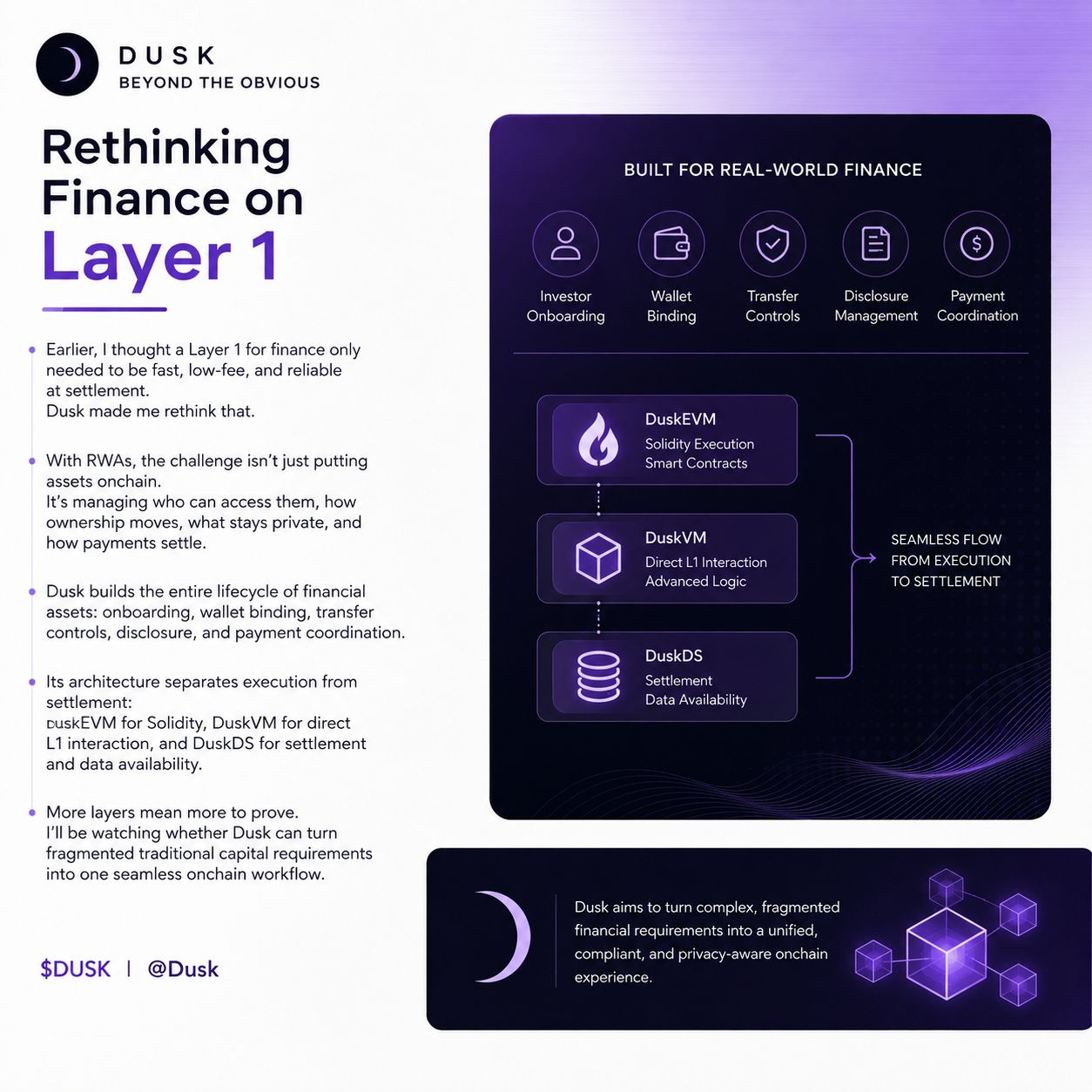
#dusk $DUSK @Dusk_Foundation Раньше я думал, что для финансового Layer 1 в первую очередь нужны скорость, низкие комиссии и надежное окончательное расчётное урегулирование. Dusk заставил меня пересмотреть эту точку зрения.
С RWА сложность заключается не просто в том, чтобы разместить активы в onchain. Нужно управлять тем, кто может получить к ним доступ, как перемещается право собственности, что должно оставаться приватным и как осуществляется расчёт по платежам.
Поэтому мне интересно, как устроен Dusk. Его архитектура объединяет DuskEVM, DuskVM и DuskDS вокруг исполнения, приложений, расчётов и доступности данных.
Я всё ещё наблюдаю, станет ли эта сложность реальным фактором принятия, но более общий вопрос звучит особенно интригующе:
Сможет ли Dusk превратить разрозненные традиционные финансовые требования в единый бесшовный onchain-рабочий процесс?
$DUSK @Dusk_Foundation
{spot}(DUSKUSDT)
#dusk $DUSK @Dusk Раньше я думал, что для финансового Layer 1 в первую очередь нужны скорость, низкие комиссии и надежное окончательное расчётное урегулирование. Dusk заставил меня пересмотреть эту точку зрения.
С RWА сложность заключается не просто в том, чтобы разместить активы в onchain. Нужно управлять тем, кто может получить к ним доступ, как перемещается право собственности, что должно оставаться приватным и как осуществляется расчёт по платежам.
Поэтому мне интересно, как устроен Dusk. Его архитектура объединяет DuskEVM, DuskVM и DuskDS вокруг исполнения, приложений, расчётов и доступности данных.
Я всё ещё наблюдаю, станет ли эта сложность реальным фактором принятия, но более общий вопрос звучит особенно интригующе:
Сможет ли Dusk превратить разрозненные традиционные финансовые требования в единый бесшовный onchain-рабочий процесс?
$DUSK @Dusk
С RWА сложность заключается не просто в том, чтобы разместить активы в onchain. Нужно управлять тем, кто может получить к ним доступ, как перемещается право собственности, что должно оставаться приватным и как осуществляется расчёт по платежам.
Поэтому мне интересно, как устроен Dusk. Его архитектура объединяет DuskEVM, DuskVM и DuskDS вокруг исполнения, приложений, расчётов и доступности данных.
Я всё ещё наблюдаю, станет ли эта сложность реальным фактором принятия, но более общий вопрос звучит особенно интригующе:
Сможет ли Dusk превратить разрозненные традиционные финансовые требования в единый бесшовный onchain-рабочий процесс?
$DUSK @Dusk
69
$BTC Биткоин снова начинает выглядеть интересно, поскольку бычий импульс нарастает по всему рынку. Если покупатели продолжат защищать текущие уровни и сопротивление будет пробито, я наблюдаю зону $73 000 как потенциальную следующую цель.
Движение к $73K может привлечь новое внимание к BTC и потенциально укрепить общий рыночный настрой. Конечно, биткоин может быстро двигаться в обе стороны, поэтому подтверждение и управление рисками по-прежнему важны.
Пока что я слежу за объемом, импульсом и тем, как BTC реагирует на ключевом сопротивлении, прежде чем действовать слишком агрессивно.
Биткоин по-прежнему один из графиков, за которыми я внимательно наблюдаю. 🚀
#Bitcoin #BTC #Crypto $BTC
{spot}(BTCUSDT)
$BTC Биткоин снова начинает выглядеть интересно, поскольку бычий импульс нарастает по всему рынку. Если покупатели продолжат защищать текущие уровни и сопротивление будет пробито, я наблюдаю зону $73 000 как потенциальную следующую цель.
Движение к $73K может привлечь новое внимание к BTC и потенциально укрепить общий рыночный настрой. Конечно, биткоин может быстро двигаться в обе стороны, поэтому подтверждение и управление рисками по-прежнему важны.
Пока что я слежу за объемом, импульсом и тем, как BTC реагирует на ключевом сопротивлении, прежде чем действовать слишком агрессивно.
Биткоин по-прежнему один из графиков, за которыми я внимательно наблюдаю. 🚀
#Bitcoin #BTC #Crypto $BTC
Движение к $73K может привлечь новое внимание к BTC и потенциально укрепить общий рыночный настрой. Конечно, биткоин может быстро двигаться в обе стороны, поэтому подтверждение и управление рисками по-прежнему важны.
Пока что я слежу за объемом, импульсом и тем, как BTC реагирует на ключевом сопротивлении, прежде чем действовать слишком агрессивно.
Биткоин по-прежнему один из графиков, за которыми я внимательно наблюдаю. 🚀
#Bitcoin #BTC #Crypto $BTC
1
65
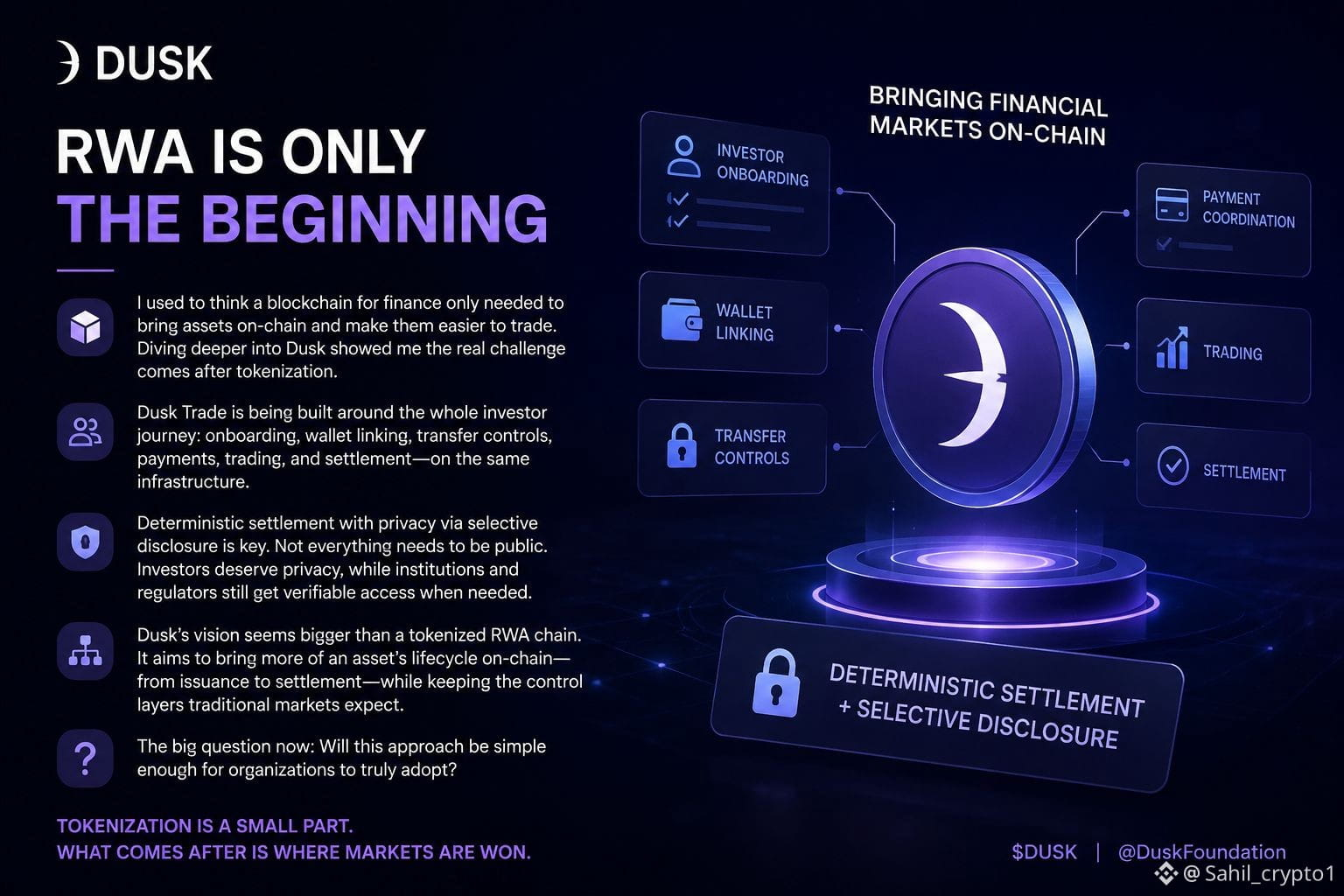
#dusk $DUSK @Dusk_Foundation Раньше я думал, что блокчейну для финансов достаточно хорошо делать всего две вещи: выводить реальные активы в ончейн и делать их проще для торговли.
Но углубившись в Dusk, я по-новому взглянул на нарратив RWA.
Токенизация — это только начало. Главная сложность возникает после того, как актив уже существует в ончейне: нужно, чтобы вместе работали онбординг инвесторов, привязка кошельков, контроль переводов, координация платежей, торговля и расчёты.
Именно поэтому Dusk Trade мне кажется интересным. Амбиции выглядят шире, чем просто создание ещё одного маркетплейса для токенизированных активов. Dusk пытается построить инфраструктуру для большей части жизненного цикла актива, сочетая детерминированные расчёты с избирательным раскрытием информации.
Раньше я предполагал, что чем больше прозрачности в блокчейне, тем лучше. Но финансовые рынки показали мне, почему это не всегда так. Инвесторам может понадобиться конфиденциальность, при этом институтам и регуляторам всё равно нужен надёжный способ проверять информацию, когда это необходимо.
Поэтому я начинаю воспринимать Dusk меньше как «ещё одну RWA-цепочку с токенизацией» и больше как попытку перенести традиционные финансовые процессы в ончейн, не лишая эти рынки тех элементов контроля, от которых они зависят.
Теперь для меня главный вопрос не в том, звучит ли технология убедительно.
В том, найдут ли организации всю систему достаточно простой, чтобы действительно ею пользоваться.
{spot}(DUSKUSDT)
#dusk $DUSK @Dusk Раньше я думал, что блокчейну для финансов достаточно хорошо делать всего две вещи: выводить реальные активы в ончейн и делать их проще для торговли.
Но углубившись в Dusk, я по-новому взглянул на нарратив RWA.
Токенизация — это только начало. Главная сложность возникает после того, как актив уже существует в ончейне: нужно, чтобы вместе работали онбординг инвесторов, привязка кошельков, контроль переводов, координация платежей, торговля и расчёты.
Именно поэтому Dusk Trade мне кажется интересным. Амбиции выглядят шире, чем просто создание ещё одного маркетплейса для токенизированных активов. Dusk пытается построить инфраструктуру для большей части жизненного цикла актива, сочетая детерминированные расчёты с избирательным раскрытием информации.
Раньше я предполагал, что чем больше прозрачности в блокчейне, тем лучше. Но финансовые рынки показали мне, почему это не всегда так. Инвесторам может понадобиться конфиденциальность, при этом институтам и регуляторам всё равно нужен надёжный способ проверять информацию, когда это необходимо.
Поэтому я начинаю воспринимать Dusk меньше как «ещё одну RWA-цепочку с токенизацией» и больше как попытку перенести традиционные финансовые процессы в ончейн, не лишая эти рынки тех элементов контроля, от которых они зависят.
Теперь для меня главный вопрос не в том, звучит ли технология убедительно.
В том, найдут ли организации всю систему достаточно простой, чтобы действительно ею пользоваться.
Но углубившись в Dusk, я по-новому взглянул на нарратив RWA.
Токенизация — это только начало. Главная сложность возникает после того, как актив уже существует в ончейне: нужно, чтобы вместе работали онбординг инвесторов, привязка кошельков, контроль переводов, координация платежей, торговля и расчёты.
Именно поэтому Dusk Trade мне кажется интересным. Амбиции выглядят шире, чем просто создание ещё одного маркетплейса для токенизированных активов. Dusk пытается построить инфраструктуру для большей части жизненного цикла актива, сочетая детерминированные расчёты с избирательным раскрытием информации.
Раньше я предполагал, что чем больше прозрачности в блокчейне, тем лучше. Но финансовые рынки показали мне, почему это не всегда так. Инвесторам может понадобиться конфиденциальность, при этом институтам и регуляторам всё равно нужен надёжный способ проверять информацию, когда это необходимо.
Поэтому я начинаю воспринимать Dusk меньше как «ещё одну RWA-цепочку с токенизацией» и больше как попытку перенести традиционные финансовые процессы в ончейн, не лишая эти рынки тех элементов контроля, от которых они зависят.
Теперь для меня главный вопрос не в том, звучит ли технология убедительно.
В том, найдут ли организации всю систему достаточно простой, чтобы действительно ею пользоваться.
1
63
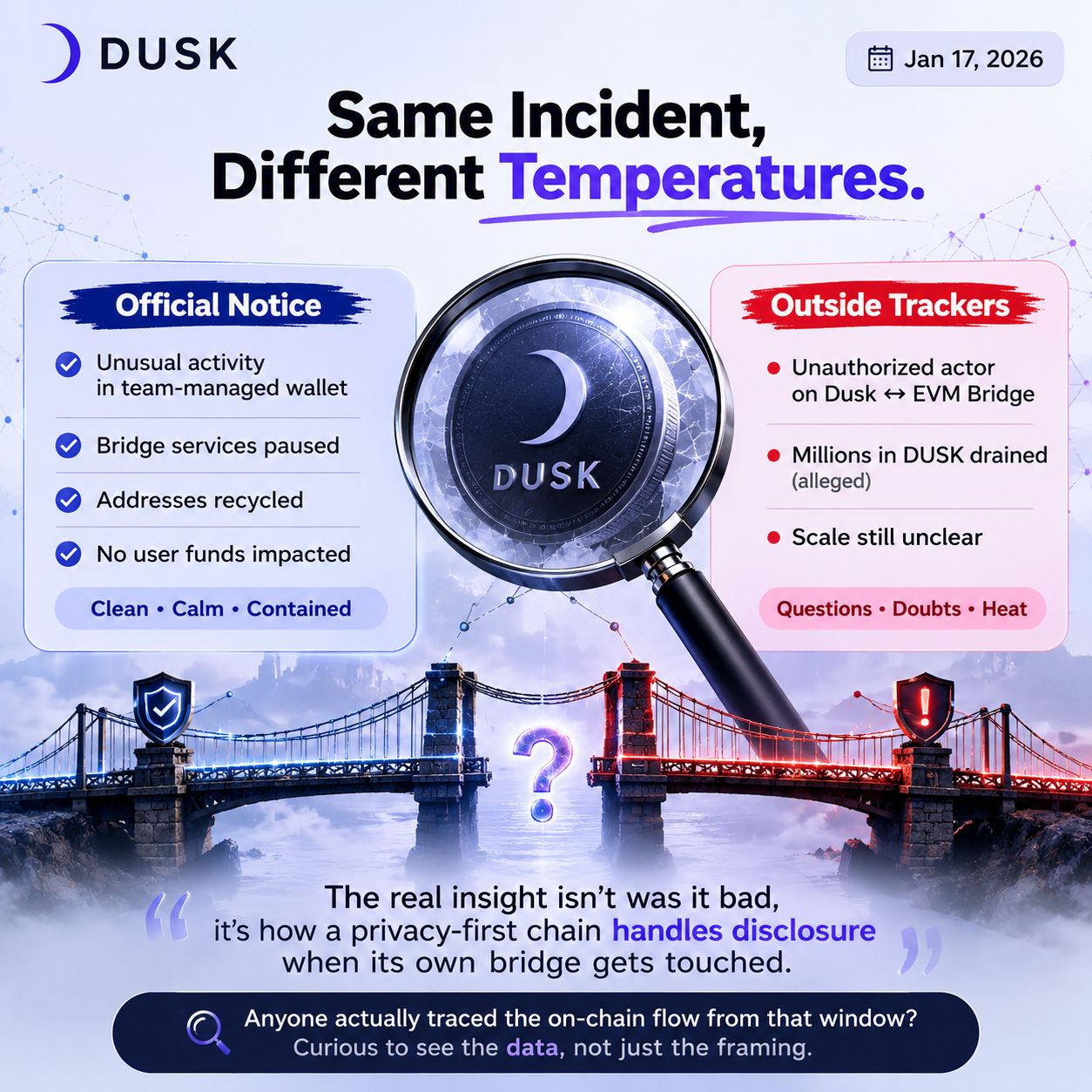
#dusk $DUSK @Dusk_Foundation Я снова и снова возвращался к уведомлению о январском инциденте от Dusk, и формулировки бросались в глаза больше, чем сам эксплойт.
Официально: необычная активность, кошелёк, управляемый командой, сервисы моста приостановлены, адреса перераспределены, средства пользователей не затронуты.
Но внешние трекеры описывали, как через мост Dusk-to-EVM было выведено миллионы DUSK.
Один и тот же инцидент, но совершенно разные температуры.
Этот разрыв важен. Не потому, что я знаю окончательное число — я его не знаю, — а потому что раскрытие — это тоже часть безопасности.
Если кто-то действительно отследил ончейн-поток с того окна, мне искренне хотелось бы посмотреть, что вы нашли.
{spot}(DUSKUSDT)
#dusk $DUSK @Dusk Я снова и снова возвращался к уведомлению о январском инциденте от Dusk, и формулировки бросались в глаза больше, чем сам эксплойт.
Официально: необычная активность, кошелёк, управляемый командой, сервисы моста приостановлены, адреса перераспределены, средства пользователей не затронуты.
Но внешние трекеры описывали, как через мост Dusk-to-EVM было выведено миллионы DUSK.
Один и тот же инцидент, но совершенно разные температуры.
Этот разрыв важен. Не потому, что я знаю окончательное число — я его не знаю, — а потому что раскрытие — это тоже часть безопасности.
Если кто-то действительно отследил ончейн-поток с того окна, мне искренне хотелось бы посмотреть, что вы нашли.
Официально: необычная активность, кошелёк, управляемый командой, сервисы моста приостановлены, адреса перераспределены, средства пользователей не затронуты.
Но внешние трекеры описывали, как через мост Dusk-to-EVM было выведено миллионы DUSK.
Один и тот же инцидент, но совершенно разные температуры.
Этот разрыв важен. Не потому, что я знаю окончательное число — я его не знаю, — а потому что раскрытие — это тоже часть безопасности.
Если кто-то действительно отследил ончейн-поток с того окна, мне искренне хотелось бы посмотреть, что вы нашли.
1
76
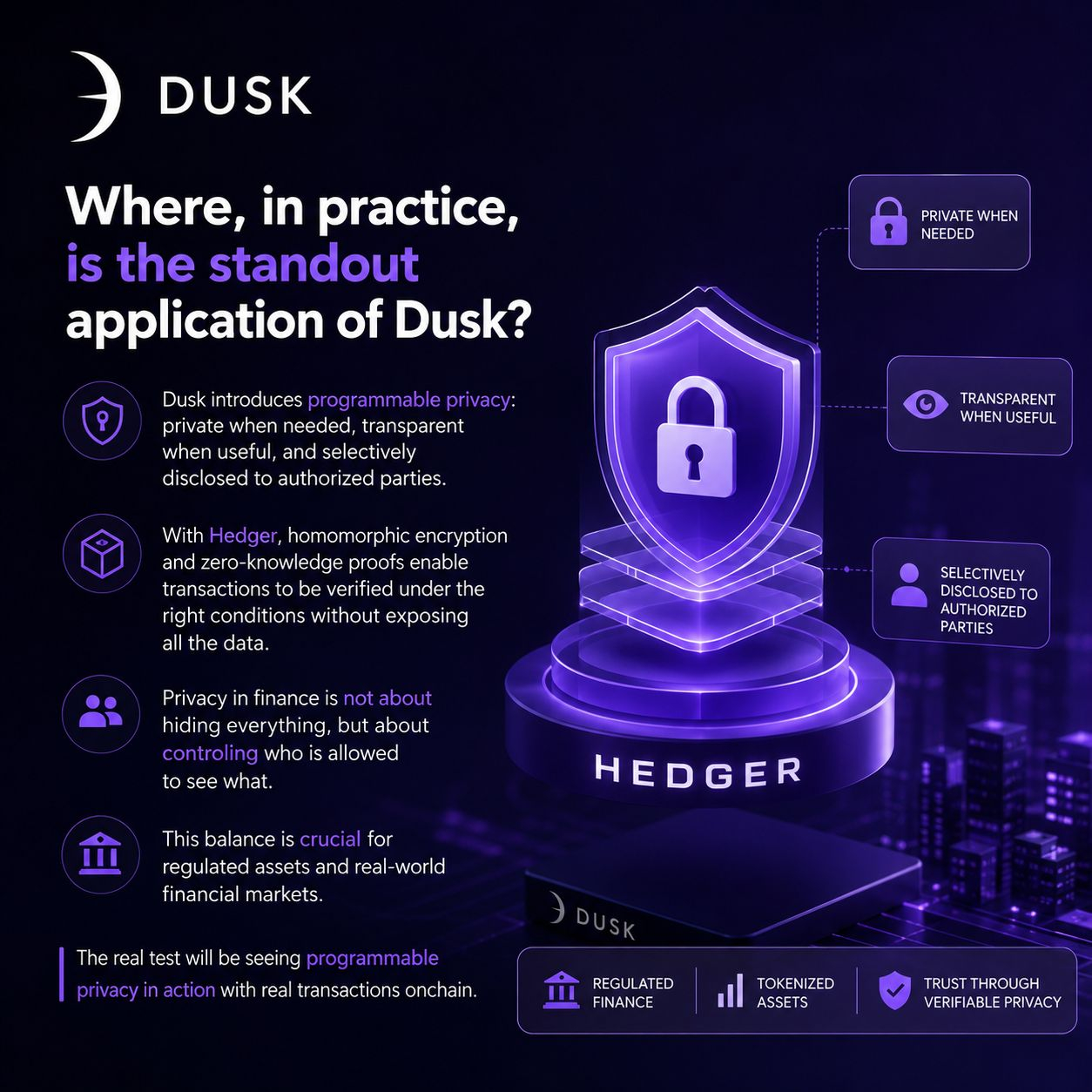
Провёл больше времени с Dusk и всё снова возвращался к одному вопросу: где на самом деле начинает работать его модель приватности?
Раньше я связывал финансовую прозрачность с доверием. Если все могут видеть данные, я предполагал, что проверка станет проще. Но регулируемые финансы меняют это уравнение.
Идея Dusk о программируемой приватности кажется более практичной: держать чувствительную информацию в тайне, при этом позволяя уполномоченным сторонам проверять то, что важно.
Вот где меня заинтересовал Hedger. Гомоморфное шифрование и доказательства с нулевым разглашением — это не просто про сокрытие транзакций. Главная мысль — создать систему, в которой финансовая активность может оставаться конфиденциальной, но при этом быть проверяемой при правильных условиях.
Так приватность ощущается не как «скрыть всё», а скорее как «контролировать, кто что может видеть».
Для токенизированных активов и регулируемых рынков такое различие может иметь огромное значение.
Я всё ещё внимательно наблюдаю. Настоящая проверка — увидеть, как Dusk работает с реальной финансовой активностью в ончейне, а не только насколько убедительно звучит архитектура на бумаге.
#dusk @Dusk_Foundation $DUSK
{spot}(DUSKUSDT)
Провёл больше времени с Dusk и всё снова возвращался к одному вопросу: где на самом деле начинает работать его модель приватности?
Раньше я связывал финансовую прозрачность с доверием. Если все могут видеть данные, я предполагал, что проверка станет проще. Но регулируемые финансы меняют это уравнение.
Идея Dusk о программируемой приватности кажется более практичной: держать чувствительную информацию в тайне, при этом позволяя уполномоченным сторонам проверять то, что важно.
Вот где меня заинтересовал Hedger. Гомоморфное шифрование и доказательства с нулевым разглашением — это не просто про сокрытие транзакций. Главная мысль — создать систему, в которой финансовая активность может оставаться конфиденциальной, но при этом быть проверяемой при правильных условиях.
Так приватность ощущается не как «скрыть всё», а скорее как «контролировать, кто что может видеть».
Для токенизированных активов и регулируемых рынков такое различие может иметь огромное значение.
Я всё ещё внимательно наблюдаю. Настоящая проверка — увидеть, как Dusk работает с реальной финансовой активностью в ончейне, а не только насколько убедительно звучит архитектура на бумаге.
#dusk @Dusk $DUSK
Раньше я связывал финансовую прозрачность с доверием. Если все могут видеть данные, я предполагал, что проверка станет проще. Но регулируемые финансы меняют это уравнение.
Идея Dusk о программируемой приватности кажется более практичной: держать чувствительную информацию в тайне, при этом позволяя уполномоченным сторонам проверять то, что важно.
Вот где меня заинтересовал Hedger. Гомоморфное шифрование и доказательства с нулевым разглашением — это не просто про сокрытие транзакций. Главная мысль — создать систему, в которой финансовая активность может оставаться конфиденциальной, но при этом быть проверяемой при правильных условиях.
Так приватность ощущается не как «скрыть всё», а скорее как «контролировать, кто что может видеть».
Для токенизированных активов и регулируемых рынков такое различие может иметь огромное значение.
Я всё ещё внимательно наблюдаю. Настоящая проверка — увидеть, как Dusk работает с реальной финансовой активностью в ончейне, а не только насколько убедительно звучит архитектура на бумаге.
#dusk @Dusk $DUSK
1
72
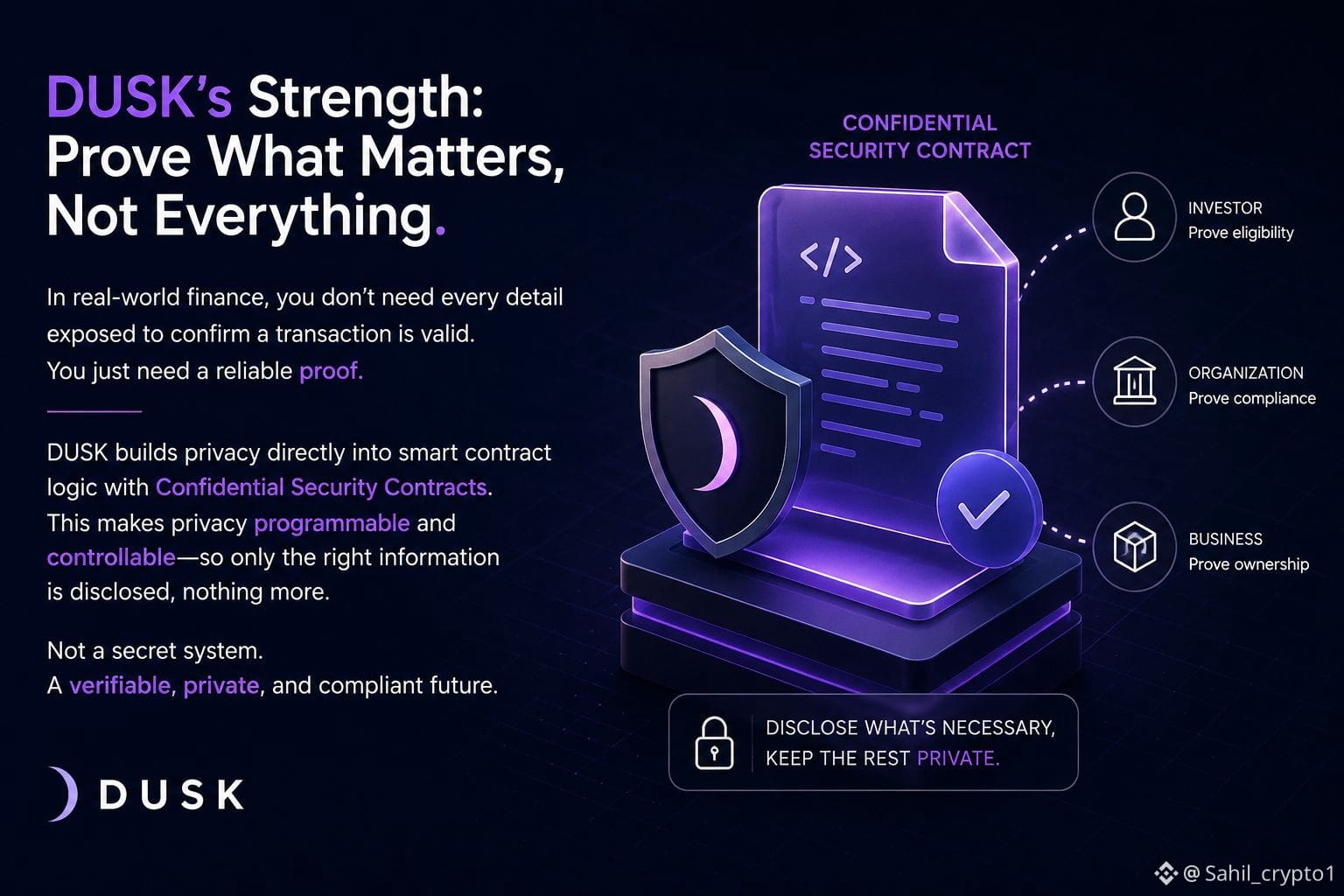
#dusk $DUSK Чем глубже я изучаю DUSK, тем больше его модель приватности кажется мне логичной.
Реальным финансам не нужно раскрывать каждую деталь, чтобы доказать, что транзакция действительна. Инвестору может понадобиться подтвердить право участия, компании — проверить принадлежность, а учреждениям — продемонстрировать соответствие нормативным требованиям.
Именно здесь DUSK привлёк моё внимание. Его подход рассматривает приватность как часть логики смарт-контракта, а не как то, что добавляют постфактум.
Возможно, будущее приватности в блокчейне — это не делать всё невидимым. Это делать раскрытие программируемым — доказывать ровно то, что нужно доказывать, сохраняя при этом ненужную информацию приватной.
Это могло бы стать гораздо более практичным путём к внедрению регулируемой финансовой активности в ончейн.@Dusk_Foundation $DUSK
{spot}(DUSKUSDT)
#dusk $DUSK Чем глубже я изучаю DUSK, тем больше его модель приватности кажется мне логичной.
Реальным финансам не нужно раскрывать каждую деталь, чтобы доказать, что транзакция действительна. Инвестору может понадобиться подтвердить право участия, компании — проверить принадлежность, а учреждениям — продемонстрировать соответствие нормативным требованиям.
Именно здесь DUSK привлёк моё внимание. Его подход рассматривает приватность как часть логики смарт-контракта, а не как то, что добавляют постфактум.
Возможно, будущее приватности в блокчейне — это не делать всё невидимым. Это делать раскрытие программируемым — доказывать ровно то, что нужно доказывать, сохраняя при этом ненужную информацию приватной.
Это могло бы стать гораздо более практичным путём к внедрению регулируемой финансовой активности в ончейн.@Dusk $DUSK
Реальным финансам не нужно раскрывать каждую деталь, чтобы доказать, что транзакция действительна. Инвестору может понадобиться подтвердить право участия, компании — проверить принадлежность, а учреждениям — продемонстрировать соответствие нормативным требованиям.
Именно здесь DUSK привлёк моё внимание. Его подход рассматривает приватность как часть логики смарт-контракта, а не как то, что добавляют постфактум.
Возможно, будущее приватности в блокчейне — это не делать всё невидимым. Это делать раскрытие программируемым — доказывать ровно то, что нужно доказывать, сохраняя при этом ненужную информацию приватной.
Это могло бы стать гораздо более практичным путём к внедрению регулируемой финансовой активности в ончейн.@Dusk $DUSK
2
73
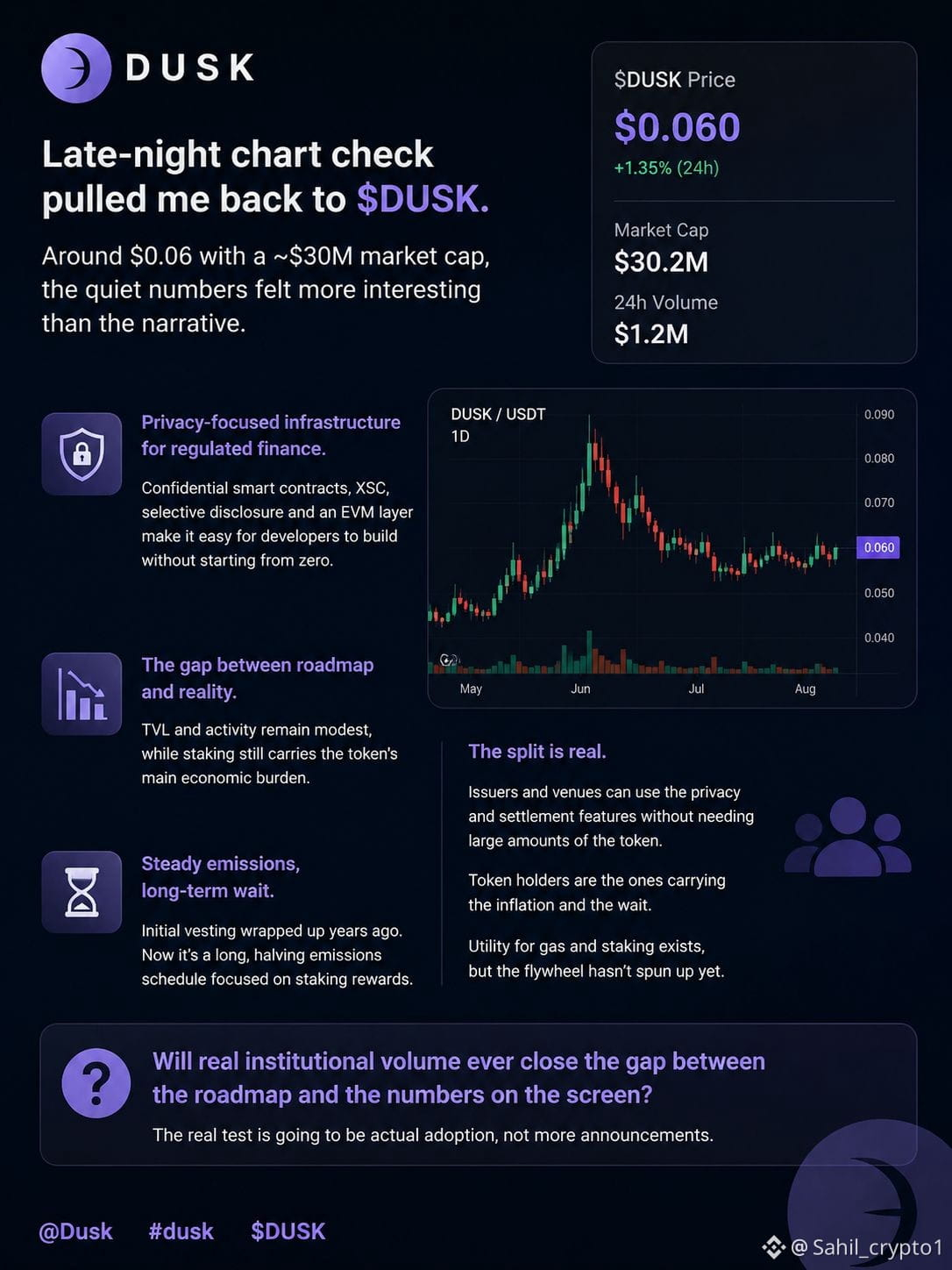
Проверка графика поздно ночью вернула меня обратно к $DUSK. Около $0,06 при капитализации ~ $30 млн — тихие цифры казались интереснее, чем нарратив.
@Dusk_Foundation строит инфраструктуру для приватных вычислений в регулируемых финансах: конфиденциальные смарт-контракты, XSC, выборочное раскрытие и слой EVM.
Техническая история выглядит логично. Сейчас я наблюдаю за разрывом между дорожной картой и реальным использованием. TVL и активность остаются скромными, а стейкинг по-прежнему несёт основную экономическую нагрузку токена.
Реальный институциональный объём — вот что важно. Пока он не появится, $DUSK всё ещё ощущается как история, ожидающая, когда её цифры догонят ожидания.
#dusk $ACE
{spot}(ACEUSDT)
$CYS
{future}(CYSUSDT)
{spot}(DUSKUSDT)
Проверка графика поздно ночью вернула меня обратно к $DUSK . Около $0,06 при капитализации ~ $30 млн — тихие цифры казались интереснее, чем нарратив.
@Dusk строит инфраструктуру для приватных вычислений в регулируемых финансах: конфиденциальные смарт-контракты, XSC, выборочное раскрытие и слой EVM.
Техническая история выглядит логично. Сейчас я наблюдаю за разрывом между дорожной картой и реальным использованием. TVL и активность остаются скромными, а стейкинг по-прежнему несёт основную экономическую нагрузку токена.
Реальный институциональный объём — вот что важно. Пока он не появится, $DUSK всё ещё ощущается как история, ожидающая, когда её цифры догонят ожидания.
#dusk $ACE
$CYS
@Dusk строит инфраструктуру для приватных вычислений в регулируемых финансах: конфиденциальные смарт-контракты, XSC, выборочное раскрытие и слой EVM.
Техническая история выглядит логично. Сейчас я наблюдаю за разрывом между дорожной картой и реальным использованием. TVL и активность остаются скромными, а стейкинг по-прежнему несёт основную экономическую нагрузку токена.
Реальный институциональный объём — вот что важно. Пока он не появится, $DUSK всё ещё ощущается как история, ожидающая, когда её цифры догонят ожидания.
#dusk $ACE
$CYS
1
1
81
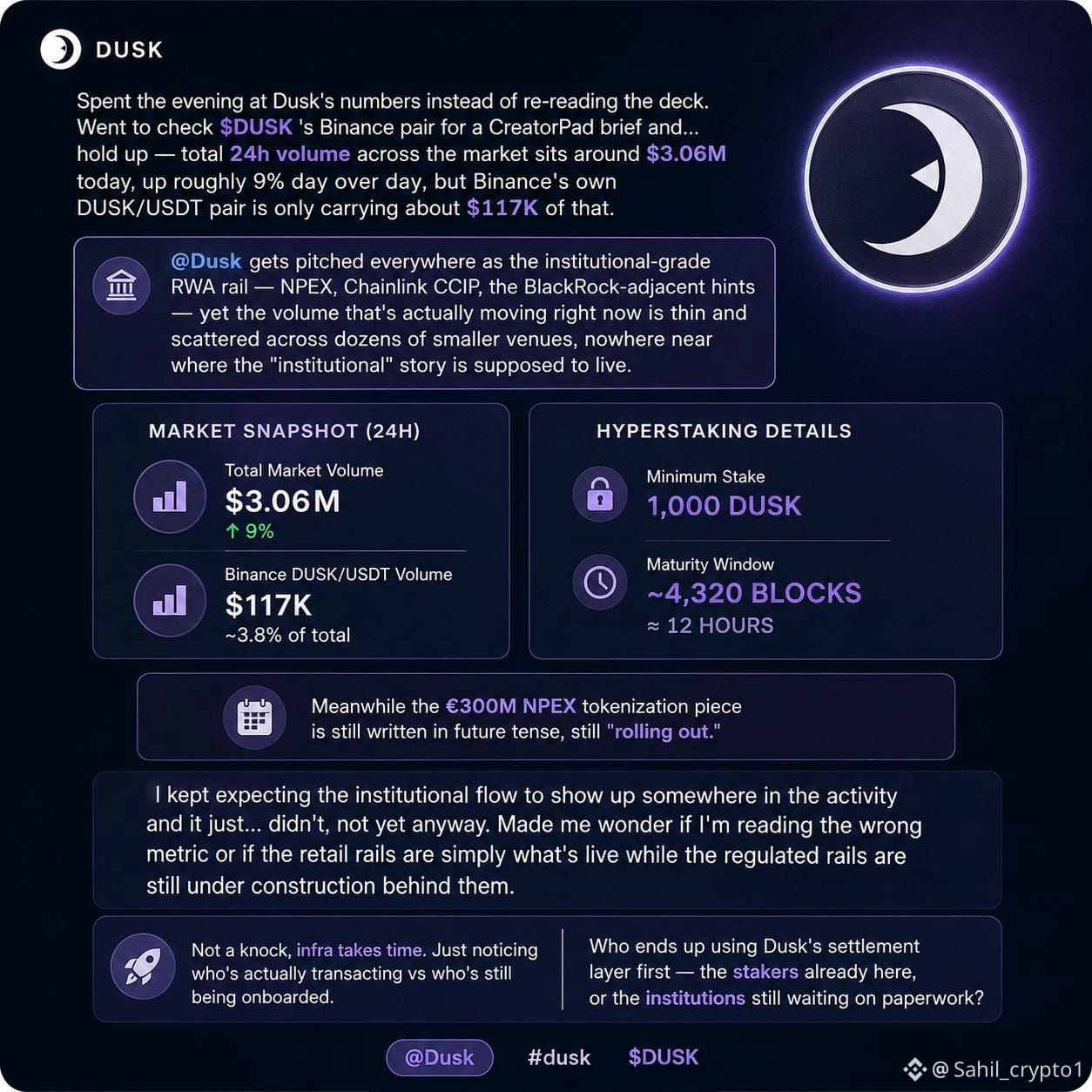
Потратил некоторое время, вчитываясь в $DUSK чисел вместо привычных заголовков дорожной карты.
24-часовой объём рынка — около 3 млн долларов, но торговая пара Binance DUSK/USDT — лишь небольшая часть этого потока. Для проекта, который позиционируется вокруг инфраструктуры институциональных RWA, этот разрыв привлёк моё внимание.
Даже Hyperstaking выглядит довольно доступным: минимум 1 000 DUSK и примерно окно зрелости в 12 часов.
Так что у меня остаётся один вопрос: розничная активность Dusk — это просто та часть, которая уже доступна сегодня, а более крупные институциональные «рельсы» пока ещё строятся?
Не медвежий прогноз — просто наблюдаю, где фактическая активность проявляется.
Кто придёт туда первым: действующие стейкеры или институции?
@Dusk_Foundation #dusk $DUSK
{spot}(DUSKUSDT)
Потратил некоторое время, вчитываясь в $DUSK чисел вместо привычных заголовков дорожной карты.
24-часовой объём рынка — около 3 млн долларов, но торговая пара Binance DUSK/USDT — лишь небольшая часть этого потока. Для проекта, который позиционируется вокруг инфраструктуры институциональных RWA, этот разрыв привлёк моё внимание.
Даже Hyperstaking выглядит довольно доступным: минимум 1 000 DUSK и примерно окно зрелости в 12 часов.
Так что у меня остаётся один вопрос: розничная активность Dusk — это просто та часть, которая уже доступна сегодня, а более крупные институциональные «рельсы» пока ещё строятся?
Не медвежий прогноз — просто наблюдаю, где фактическая активность проявляется.
Кто придёт туда первым: действующие стейкеры или институции?
@Dusk #dusk $DUSK
24-часовой объём рынка — около 3 млн долларов, но торговая пара Binance DUSK/USDT — лишь небольшая часть этого потока. Для проекта, который позиционируется вокруг инфраструктуры институциональных RWA, этот разрыв привлёк моё внимание.
Даже Hyperstaking выглядит довольно доступным: минимум 1 000 DUSK и примерно окно зрелости в 12 часов.
Так что у меня остаётся один вопрос: розничная активность Dusk — это просто та часть, которая уже доступна сегодня, а более крупные институциональные «рельсы» пока ещё строятся?
Не медвежий прогноз — просто наблюдаю, где фактическая активность проявляется.
Кто придёт туда первым: действующие стейкеры или институции?
@Dusk #dusk $DUSK
1
69
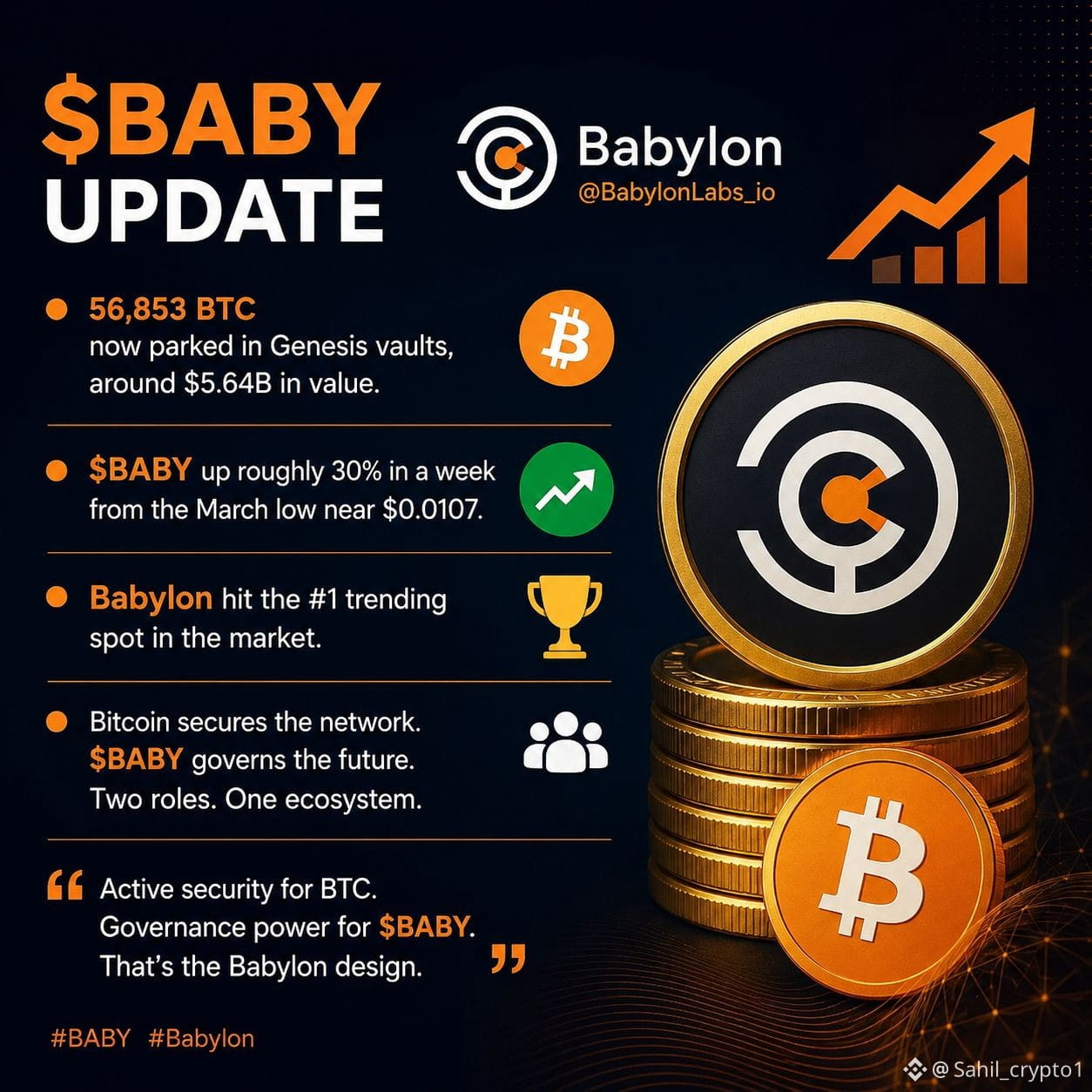
Следил за @babylonlabs_io сегодня, и один момент выделился помимо ценовых графиков. Сейчас примерно 56,853 BTC размещено в хранилищах Genesis, а $BABY заметно восстановился после недавних минимумов.
Чем больше я читал, тем яснее понимал: роль Биткоина — это обеспечение безопасности, а не управление. Держатели BTC помогают защитить сеть и получают вознаграждения, но обновления протокола, изменения параметров и решения в сфере управления остаются в руках $BABY holders через делегирование.
Это интересное разделение ответственности. Биткоин обеспечивает экономическую безопасность, а BABY — власть принимать решения. Такая конструкция может поддерживать эффективность управления, но также означает, что актив, обеспечивающий безопасность, не определяет напрямую будущее протокола.
Любопытно посмотреть, получат ли когда-нибудь стейкеры BTC более сильную роль в управлении, или же эта двухуровневая модель рассчитана на то, чтобы оставаться постоянной.
#Baby $BTC
{spot}(BTCUSDT)
{spot}(BABYUSDT)
Следил за @BabylonLabs_io сегодня, и один момент выделился помимо ценовых графиков. Сейчас примерно 56,853 BTC размещено в хранилищах Genesis, а $BABY заметно восстановился после недавних минимумов.
Чем больше я читал, тем яснее понимал: роль Биткоина — это обеспечение безопасности, а не управление. Держатели BTC помогают защитить сеть и получают вознаграждения, но обновления протокола, изменения параметров и решения в сфере управления остаются в руках $BABY holders через делегирование.
Это интересное разделение ответственности. Биткоин обеспечивает экономическую безопасность, а BABY — власть принимать решения. Такая конструкция может поддерживать эффективность управления, но также означает, что актив, обеспечивающий безопасность, не определяет напрямую будущее протокола.
Любопытно посмотреть, получат ли когда-нибудь стейкеры BTC более сильную роль в управлении, или же эта двухуровневая модель рассчитана на то, чтобы оставаться постоянной.
#Baby $BTC
Чем больше я читал, тем яснее понимал: роль Биткоина — это обеспечение безопасности, а не управление. Держатели BTC помогают защитить сеть и получают вознаграждения, но обновления протокола, изменения параметров и решения в сфере управления остаются в руках $BABY holders через делегирование.
Это интересное разделение ответственности. Биткоин обеспечивает экономическую безопасность, а BABY — власть принимать решения. Такая конструкция может поддерживать эффективность управления, но также означает, что актив, обеспечивающий безопасность, не определяет напрямую будущее протокола.
Любопытно посмотреть, получат ли когда-нибудь стейкеры BTC более сильную роль в управлении, или же эта двухуровневая модель рассчитана на то, чтобы оставаться постоянной.
#Baby $BTC
2
97
Потратил некоторое время на сравнение того, что происходило вокруг @babylonlabs_io , с тем, что на самом деле происходило внутри протокола, и контраст оказался любопытным.
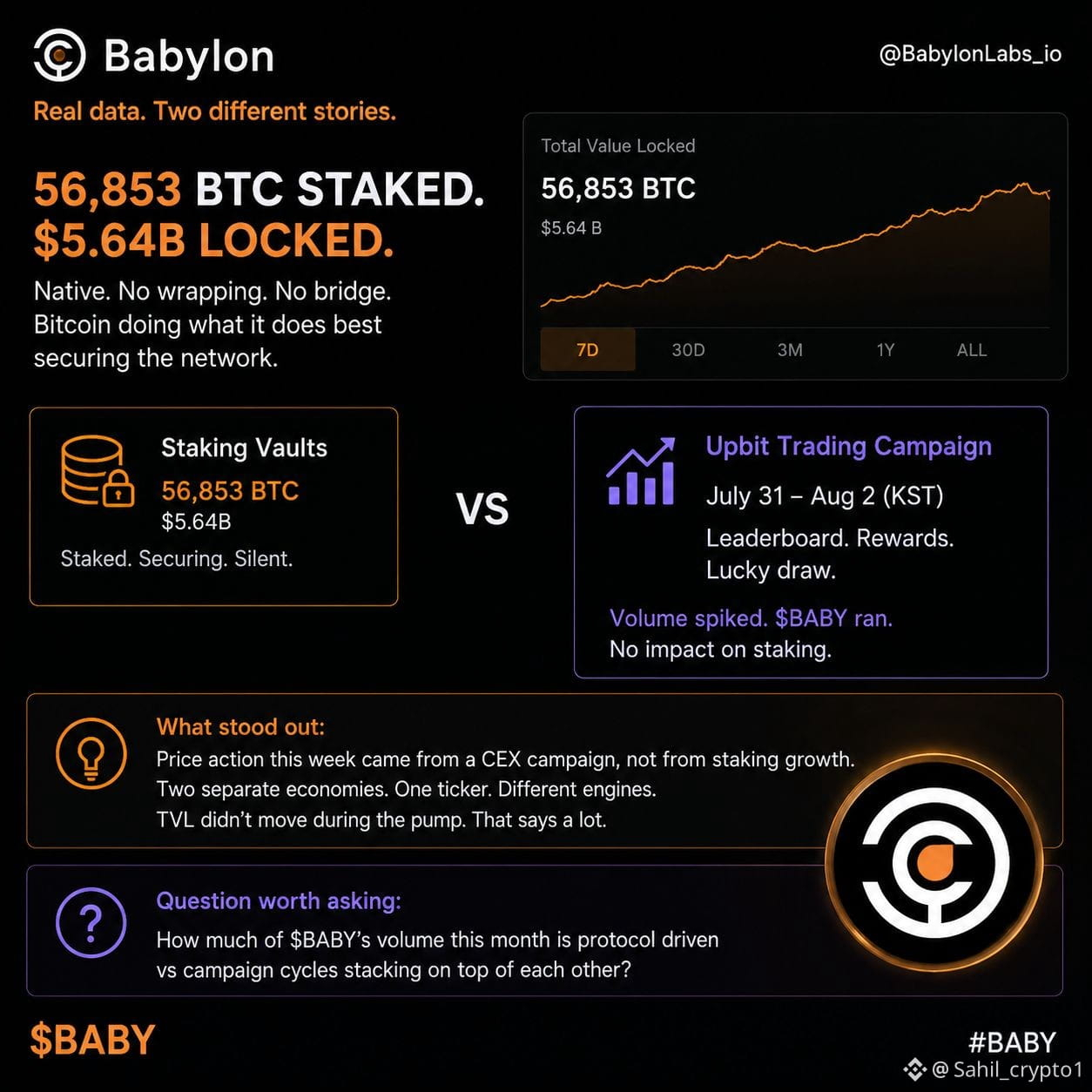
С одной стороны, биткоин-стейкинг оставался удивительно стабильным. Более 56K BTC оставались заблокированными в нативной системе стейкинга Babylon, что показывало: долгосрочные участники не спешили переводить свой капитал.
С другой стороны, волнение этой недели в основном, похоже, исходило от торговой кампании Upbit. Более высокая торговая активность, конкуренция в лидерборде и стимулирующие вознаграждения перетягивали внимание на $BABY , не меняя по сути активность ончейн-стейкинга.
Это напомнило мне, что ценовой импульс и принятие протокола не всегда идут рука об руку. Иногда рынок реагирует на биржевые стимулы, в то время как лежащая в основе сеть тихо продолжает делать свою работу в фоне.
Наблюдение за обоими показателями бок о бок, вероятно, рассказывает более полную историю, чем слежение за одной ценой.
#BABY $BTC $BABY
{future}(BABYUSDT)
{spot}(BTCUSDT)
Потратил некоторое время на сравнение того, что происходило вокруг @BabylonLabs_io , с тем, что на самом деле происходило внутри протокола, и контраст оказался любопытным.
С одной стороны, биткоин-стейкинг оставался удивительно стабильным. Более 56K BTC оставались заблокированными в нативной системе стейкинга Babylon, что показывало: долгосрочные участники не спешили переводить свой капитал.
С другой стороны, волнение этой недели в основном, похоже, исходило от торговой кампании Upbit. Более высокая торговая активность, конкуренция в лидерборде и стимулирующие вознаграждения перетягивали внимание на $BABY , не меняя по сути активность ончейн-стейкинга.
Это напомнило мне, что ценовой импульс и принятие протокола не всегда идут рука об руку. Иногда рынок реагирует на биржевые стимулы, в то время как лежащая в основе сеть тихо продолжает делать свою работу в фоне.
Наблюдение за обоими показателями бок о бок, вероятно, рассказывает более полную историю, чем слежение за одной ценой.
#BABY $BTC $BABY
С одной стороны, биткоин-стейкинг оставался удивительно стабильным. Более 56K BTC оставались заблокированными в нативной системе стейкинга Babylon, что показывало: долгосрочные участники не спешили переводить свой капитал.
С другой стороны, волнение этой недели в основном, похоже, исходило от торговой кампании Upbit. Более высокая торговая активность, конкуренция в лидерборде и стимулирующие вознаграждения перетягивали внимание на $BABY , не меняя по сути активность ончейн-стейкинга.
Это напомнило мне, что ценовой импульс и принятие протокола не всегда идут рука об руку. Иногда рынок реагирует на биржевые стимулы, в то время как лежащая в основе сеть тихо продолжает делать свою работу в фоне.
Наблюдение за обоими показателями бок о бок, вероятно, рассказывает более полную историю, чем слежение за одной ценой.
#BABY $BTC $BABY
5
2
95
🚨Открыл графики для $BABY , после того как увидел недавний ажиотаж вокруг @babylonlabs_io , и решил копнуть глубже, а не останавливаться на одном лишь ценовом движении.
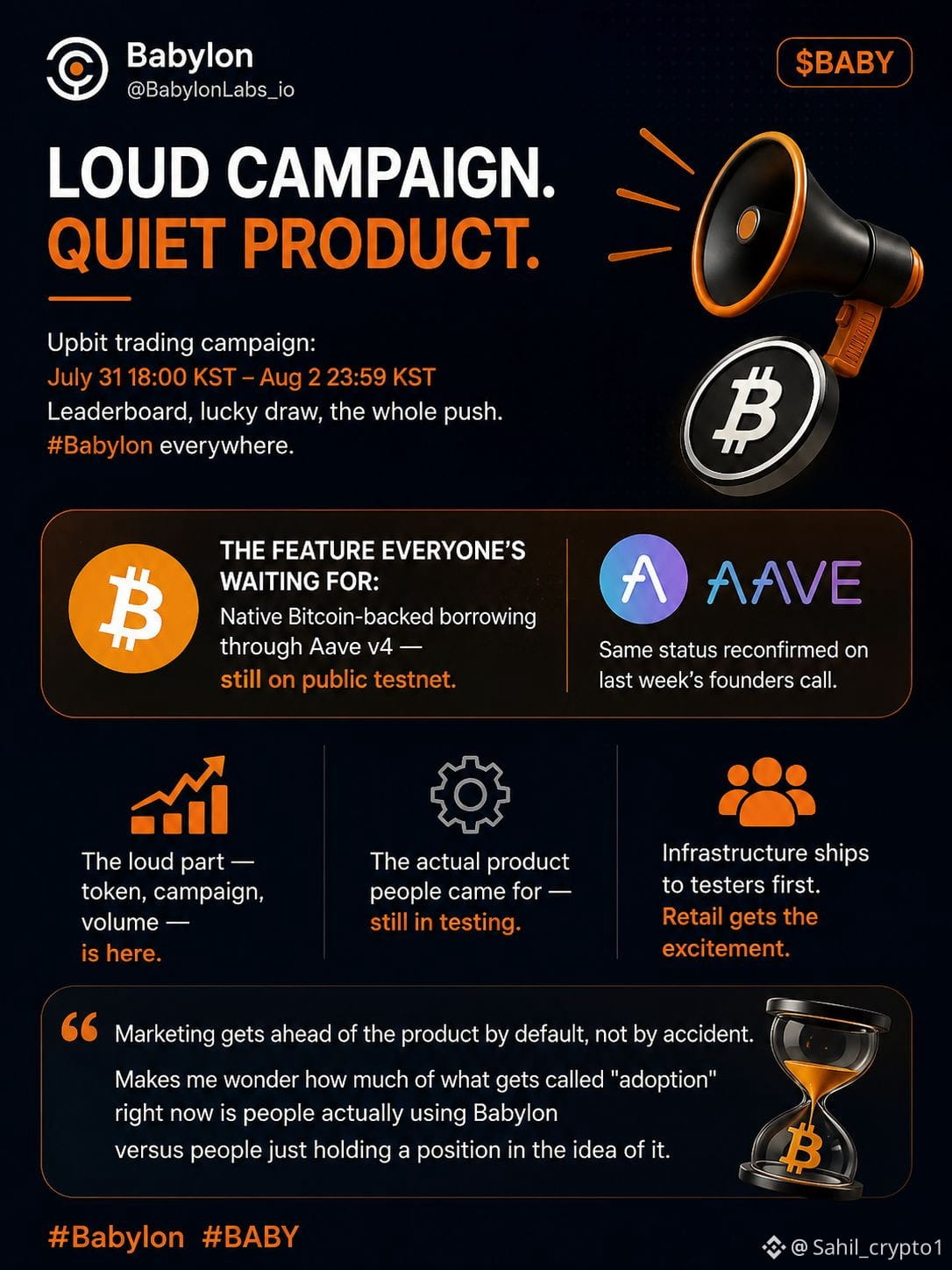
Торговая кампания привлекла много внимания, но меня больше интересовала та возможность, которую Babylon постоянно подчёркивает: использовать нативный Bitcoin в качестве залога, не отказываясь от контроля. После проверки последних обновлений я выяснил, что заимствования через интеграцию Aave v4 по-прежнему доступны на публичном тестнете, а не на основной сети.
Это не разочаровало — скорее, напомнило, как обычно развиваются криптопроекты. Кампании для сообщества, активность бирж и торговля токенами часто появляются раньше, чем флагманский продукт доходит до обычных пользователей. Разработчики собирают обратную связь, исправляют пограничные случаи и укрепляют инфраструктуру, пока рынок оценивает будущее потенциала.
В результате возникает интересный разрыв. Цена отражает ожидания, а внедрение зависит от того, будут ли люди пользоваться продуктом, когда он выйдет в прод. Эти две вещи не всегда идут вместе.
Я буду следить меньше за цифрами кампаний и больше — за моментом, когда нативное Bitcoin-закреплённое заимствование дойдёт до продакшена. Именно тогда мы получим более ясную картину того, сколько спроса есть помимо ажиотажа.
#Babylon #BABY $BTC
{spot}(BABYUSDT)
{spot}(BTCUSDT)
🚨Открыл графики для $BABY , после того как увидел недавний ажиотаж вокруг @BabylonLabs_io , и решил копнуть глубже, а не останавливаться на одном лишь ценовом движении.
Торговая кампания привлекла много внимания, но меня больше интересовала та возможность, которую Babylon постоянно подчёркивает: использовать нативный Bitcoin в качестве залога, не отказываясь от контроля. После проверки последних обновлений я выяснил, что заимствования через интеграцию Aave v4 по-прежнему доступны на публичном тестнете, а не на основной сети.
Это не разочаровало — скорее, напомнило, как обычно развиваются криптопроекты. Кампании для сообщества, активность бирж и торговля токенами часто появляются раньше, чем флагманский продукт доходит до обычных пользователей. Разработчики собирают обратную связь, исправляют пограничные случаи и укрепляют инфраструктуру, пока рынок оценивает будущее потенциала.
В результате возникает интересный разрыв. Цена отражает ожидания, а внедрение зависит от того, будут ли люди пользоваться продуктом, когда он выйдет в прод. Эти две вещи не всегда идут вместе.
Я буду следить меньше за цифрами кампаний и больше — за моментом, когда нативное Bitcoin-закреплённое заимствование дойдёт до продакшена. Именно тогда мы получим более ясную картину того, сколько спроса есть помимо ажиотажа.
#Babylon #BABY $BTC
Торговая кампания привлекла много внимания, но меня больше интересовала та возможность, которую Babylon постоянно подчёркивает: использовать нативный Bitcoin в качестве залога, не отказываясь от контроля. После проверки последних обновлений я выяснил, что заимствования через интеграцию Aave v4 по-прежнему доступны на публичном тестнете, а не на основной сети.
Это не разочаровало — скорее, напомнило, как обычно развиваются криптопроекты. Кампании для сообщества, активность бирж и торговля токенами часто появляются раньше, чем флагманский продукт доходит до обычных пользователей. Разработчики собирают обратную связь, исправляют пограничные случаи и укрепляют инфраструктуру, пока рынок оценивает будущее потенциала.
В результате возникает интересный разрыв. Цена отражает ожидания, а внедрение зависит от того, будут ли люди пользоваться продуктом, когда он выйдет в прод. Эти две вещи не всегда идут вместе.
Я буду следить меньше за цифрами кампаний и больше — за моментом, когда нативное Bitcoin-закреплённое заимствование дойдёт до продакшена. Именно тогда мы получим более ясную картину того, сколько спроса есть помимо ажиотажа.
#Babylon #BABY $BTC
2
1
113
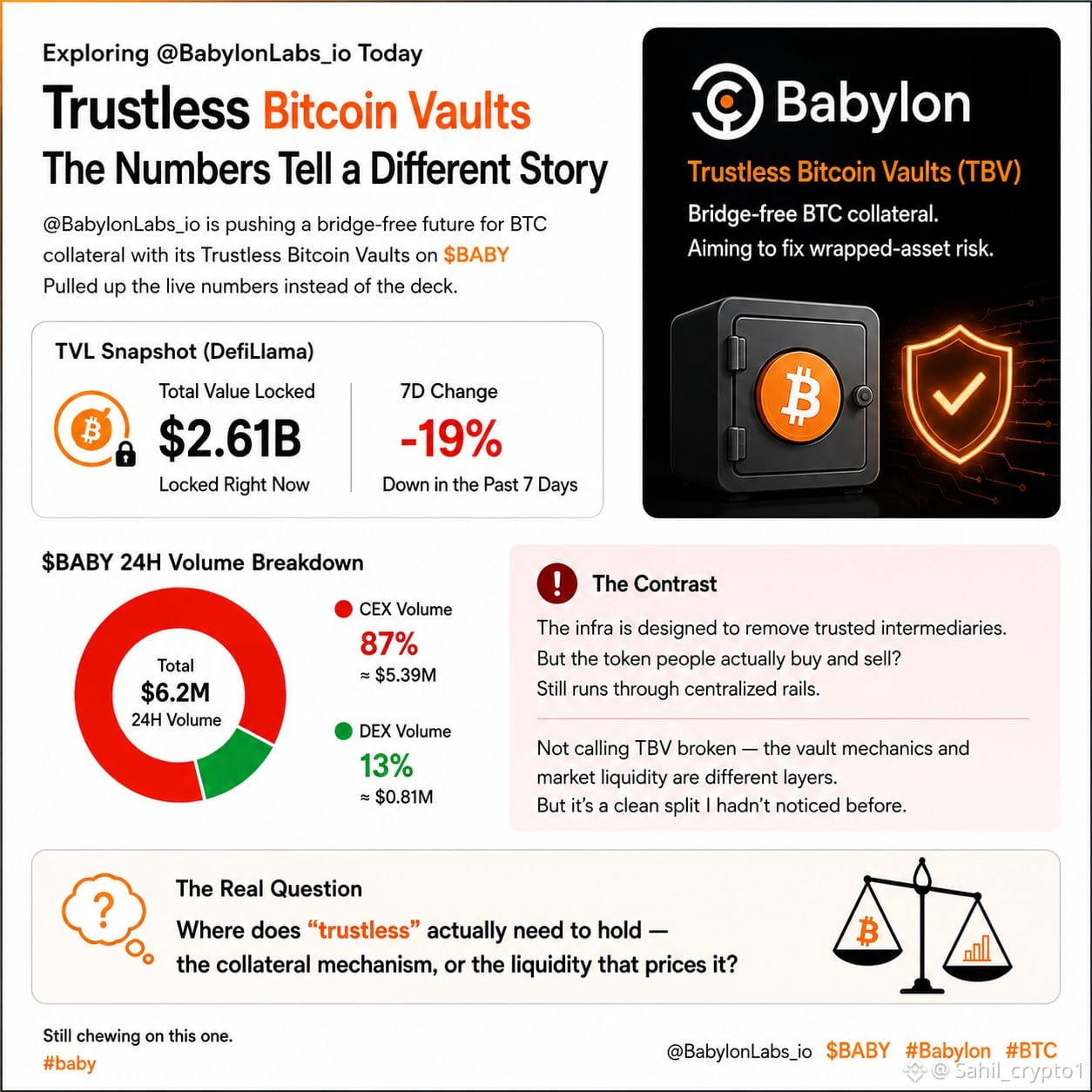
Потратил немного времени, чтобы изучить @babylonlabs_io today, и одна вещь снова и снова тянула меня обратно. Все говорят о «бездоверительных» биткоин-валютах (vaults), потому что они позволяют BTC оставаться нативным, не полагаясь на обёрнутые активы, но рынок рассказывает другую историю.
Протокол продвигает биткоин в будущее без мостов, тогда как большая часть $BABY trading всё ещё происходит через централизованные площадки. Этот контраст показался мне интересным. Децентрализованная инфраструктура не обязательно автоматически создаёт децентрализованную ликвидность.
Это заставило меня понять, что «бездоверие» — это не один-единственный флажок. Обеспечение может быть минимально доверительным, но при этом ценовое открытие токена (price discovery) всё ещё может зависеть от потоков на традиционных биржах. Возможно, именно так всё устроено в экосистеме сегодня — или, возможно, это следующая задача, которую Babylon должен решить.
Любопытно посмотреть, как этот баланс будет меняться по мере роста экосистемы.
#Baby #Babylon $BTC
{future}(BABYUSDT)
{spot}(BTCUSDT)
Потратил немного времени, чтобы изучить @BabylonLabs_io today, и одна вещь снова и снова тянула меня обратно. Все говорят о «бездоверительных» биткоин-валютах (vaults), потому что они позволяют BTC оставаться нативным, не полагаясь на обёрнутые активы, но рынок рассказывает другую историю.
Протокол продвигает биткоин в будущее без мостов, тогда как большая часть $BABY trading всё ещё происходит через централизованные площадки. Этот контраст показался мне интересным. Децентрализованная инфраструктура не обязательно автоматически создаёт децентрализованную ликвидность.
Это заставило меня понять, что «бездоверие» — это не один-единственный флажок. Обеспечение может быть минимально доверительным, но при этом ценовое открытие токена (price discovery) всё ещё может зависеть от потоков на традиционных биржах. Возможно, именно так всё устроено в экосистеме сегодня — или, возможно, это следующая задача, которую Babylon должен решить.
Любопытно посмотреть, как этот баланс будет меняться по мере роста экосистемы.
#Baby #Babylon $BTC
Протокол продвигает биткоин в будущее без мостов, тогда как большая часть $BABY trading всё ещё происходит через централизованные площадки. Этот контраст показался мне интересным. Децентрализованная инфраструктура не обязательно автоматически создаёт децентрализованную ликвидность.
Это заставило меня понять, что «бездоверие» — это не один-единственный флажок. Обеспечение может быть минимально доверительным, но при этом ценовое открытие токена (price discovery) всё ещё может зависеть от потоков на традиционных биржах. Возможно, именно так всё устроено в экосистеме сегодня — или, возможно, это следующая задача, которую Babylon должен решить.
Любопытно посмотреть, как этот баланс будет меняться по мере роста экосистемы.
#Baby #Babylon $BTC
2
1
80
Провел немного времени, разбираясь сегодня в документации @babylonlabs_io , и одна деталь снова и снова притягивала мое внимание. Биткоин, заблокированный через Trustless Vault, остается нативным в сети Bitcoin, при этом он используется как продуктивный залог в других местах. В этом технически есть элегантность.
Затем я посмотрел на рынок. $BABY по-прежнему торгуется примерно с относительно небольшой оценкой по сравнению с десятками миллиардов долларов в BTC, которые экосистема помогает защищать. Этот контраст трудно игнорировать.
Инфраструктура может работать ровно так, как задумано, в то время как рынку нужно гораздо больше времени, чтобы осознать ее ценность. Будет ли этот разрыв сокращаться, вероятнее всего, зависит от внедрения, спроса на заимствования и реальной активности протокола — а не только от нарративов.
Пока что я слежу за базовыми показателями больше, чем за ценой.
#BABY #Bitcoin $BTC
{spot}(BTCUSDT)
{spot}(BABYUSDT)
Провел немного времени, разбираясь сегодня в документации @BabylonLabs_io , и одна деталь снова и снова притягивала мое внимание. Биткоин, заблокированный через Trustless Vault, остается нативным в сети Bitcoin, при этом он используется как продуктивный залог в других местах. В этом технически есть элегантность.
Затем я посмотрел на рынок. $BABY по-прежнему торгуется примерно с относительно небольшой оценкой по сравнению с десятками миллиардов долларов в BTC, которые экосистема помогает защищать. Этот контраст трудно игнорировать.
Инфраструктура может работать ровно так, как задумано, в то время как рынку нужно гораздо больше времени, чтобы осознать ее ценность. Будет ли этот разрыв сокращаться, вероятнее всего, зависит от внедрения, спроса на заимствования и реальной активности протокола — а не только от нарративов.
Пока что я слежу за базовыми показателями больше, чем за ценой.
#BABY #Bitcoin $BTC
Затем я посмотрел на рынок. $BABY по-прежнему торгуется примерно с относительно небольшой оценкой по сравнению с десятками миллиардов долларов в BTC, которые экосистема помогает защищать. Этот контраст трудно игнорировать.
Инфраструктура может работать ровно так, как задумано, в то время как рынку нужно гораздо больше времени, чтобы осознать ее ценность. Будет ли этот разрыв сокращаться, вероятнее всего, зависит от внедрения, спроса на заимствования и реальной активности протокола — а не только от нарративов.
Пока что я слежу за базовыми показателями больше, чем за ценой.
#BABY #Bitcoin $BTC
3
1
112
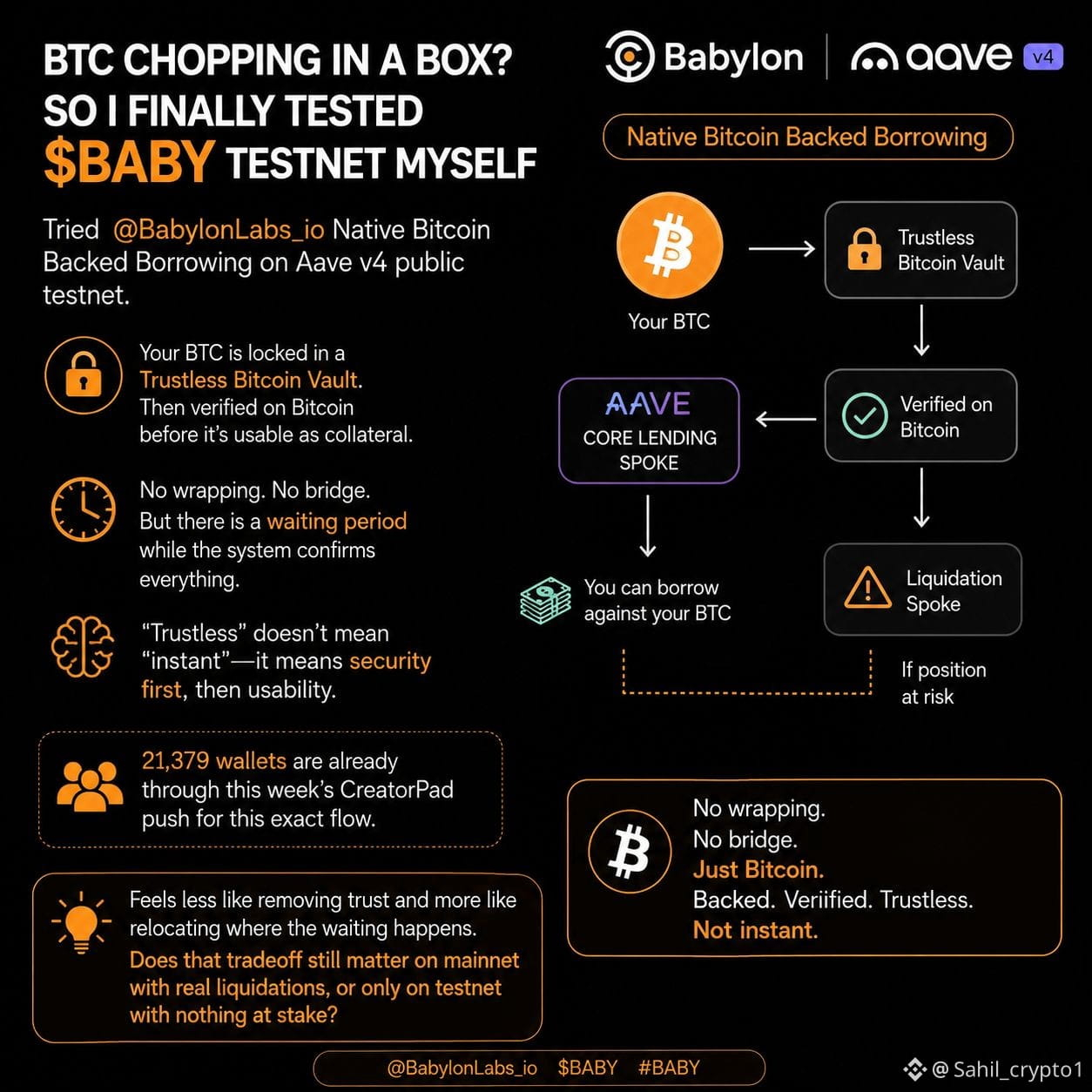
Биткоин почти не двигался несколько дней, так что я наконец перестал смотреть графики и сам протестировал поток Native Bitcoin Backed Borrowing от Babylon.
Одно бросилось в глаза: «без доверия» не означает «мгновенно».
Ваш BTC заперт внутри Trustless Bitcoin Vault, затем проверяется в сети Bitcoin, прежде чем станет доступным в качестве залога. Никакого обёртывания, никакого моста — но всё же есть период ожидания, пока протокол подтверждает всё.
Эта задержка заставила меня задуматься. Возможно, цель не в том, чтобы убрать трение, а в том, чтобы перенести его в сторону более надёжной безопасности.
Интересно посмотреть, как это ощущается, когда на mainnet появятся ликвидность, лимиты на заимствования и реальные ликвидации.
@babylonlabs_io o #BABY $BABY
{spot}(BABYUSDT)
$BTC
{spot}(BTCUSDT)
Биткоин почти не двигался несколько дней, так что я наконец перестал смотреть графики и сам протестировал поток Native Bitcoin Backed Borrowing от Babylon.
Одно бросилось в глаза: «без доверия» не означает «мгновенно».
Ваш BTC заперт внутри Trustless Bitcoin Vault, затем проверяется в сети Bitcoin, прежде чем станет доступным в качестве залога. Никакого обёртывания, никакого моста — но всё же есть период ожидания, пока протокол подтверждает всё.
Эта задержка заставила меня задуматься. Возможно, цель не в том, чтобы убрать трение, а в том, чтобы перенести его в сторону более надёжной безопасности.
Интересно посмотреть, как это ощущается, когда на mainnet появятся ликвидность, лимиты на заимствования и реальные ликвидации.
@BabylonLabs_io o #BABY $BABY
$BTC
Одно бросилось в глаза: «без доверия» не означает «мгновенно».
Ваш BTC заперт внутри Trustless Bitcoin Vault, затем проверяется в сети Bitcoin, прежде чем станет доступным в качестве залога. Никакого обёртывания, никакого моста — но всё же есть период ожидания, пока протокол подтверждает всё.
Эта задержка заставила меня задуматься. Возможно, цель не в том, чтобы убрать трение, а в том, чтобы перенести его в сторону более надёжной безопасности.
Интересно посмотреть, как это ощущается, когда на mainnet появятся ликвидность, лимиты на заимствования и реальные ликвидации.
@BabylonLabs_io o #BABY $BABY
$BTC
5
1
76
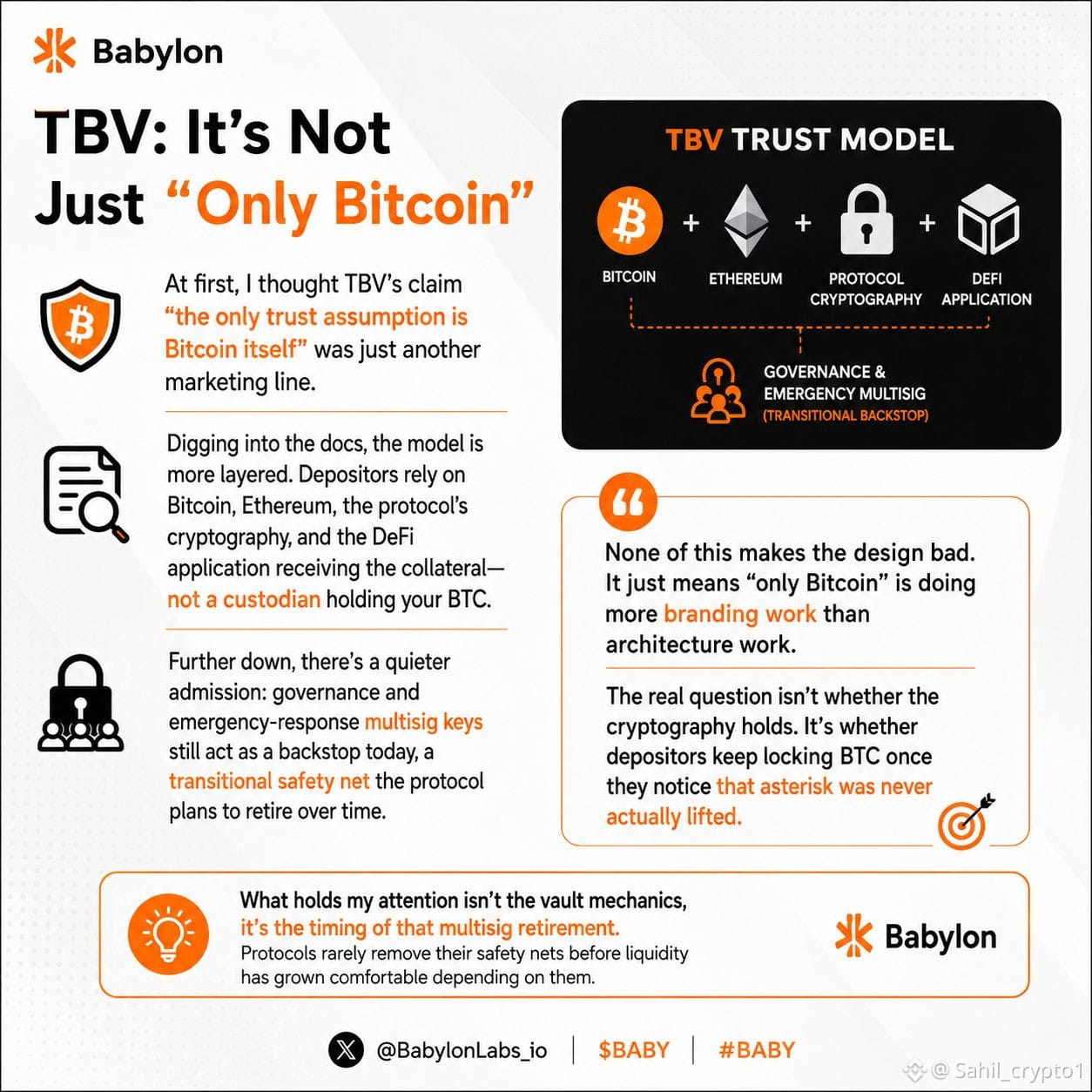
Я зашел в TBV, думая, что заголовок простой: доверяй биткоину и ничему больше. После того как я углубился, стало ясно, что модель более нюансированная. Депозиторы полагаются на Bitcoin, Ethereum, протокольную криптографию и целевое DeFi-приложение — а не на кастодиана. Это важный сдвиг, но это еще не вся история.
Больше всего мое внимание привлекли управление и аварийный multisig. В документации это подается как временная мера защиты, которую со временем уберут, когда система повзрослеет. Это не похоже на недостаток — скорее, на важную веху, за которой стоит наблюдать.
Для меня главный сигнал будет не только в TVL. Это будет момент, когда эти резервные механизмы исчезнут и протокол будет работать ровно так, как задумано его долгосрочным дизайном. Именно тогда модель доверия будет по-настоящему проверена.
@babylonlabs_io $BABY #BABY $BTC $ETH
Я зашел в TBV, думая, что заголовок простой: доверяй биткоину и ничему больше. После того как я углубился, стало ясно, что модель более нюансированная. Депозиторы полагаются на Bitcoin, Ethereum, протокольную криптографию и целевое DeFi-приложение — а не на кастодиана. Это важный сдвиг, но это еще не вся история.
Больше всего мое внимание привлекли управление и аварийный multisig. В документации это подается как временная мера защиты, которую со временем уберут, когда система повзрослеет. Это не похоже на недостаток — скорее, на важную веху, за которой стоит наблюдать.
Для меня главный сигнал будет не только в TVL. Это будет момент, когда эти резервные механизмы исчезнут и протокол будет работать ровно так, как задумано его долгосрочным дизайном. Именно тогда модель доверия будет по-настоящему проверена.
@BabylonLabs_io $BABY #BABY $BTC $ETH
Больше всего мое внимание привлекли управление и аварийный multisig. В документации это подается как временная мера защиты, которую со временем уберут, когда система повзрослеет. Это не похоже на недостаток — скорее, на важную веху, за которой стоит наблюдать.
Для меня главный сигнал будет не только в TVL. Это будет момент, когда эти резервные механизмы исчезнут и протокол будет работать ровно так, как задумано его долгосрочным дизайном. Именно тогда модель доверия будет по-настоящему проверена.
@BabylonLabs_io $BABY #BABY $BTC $ETH
4
1
111
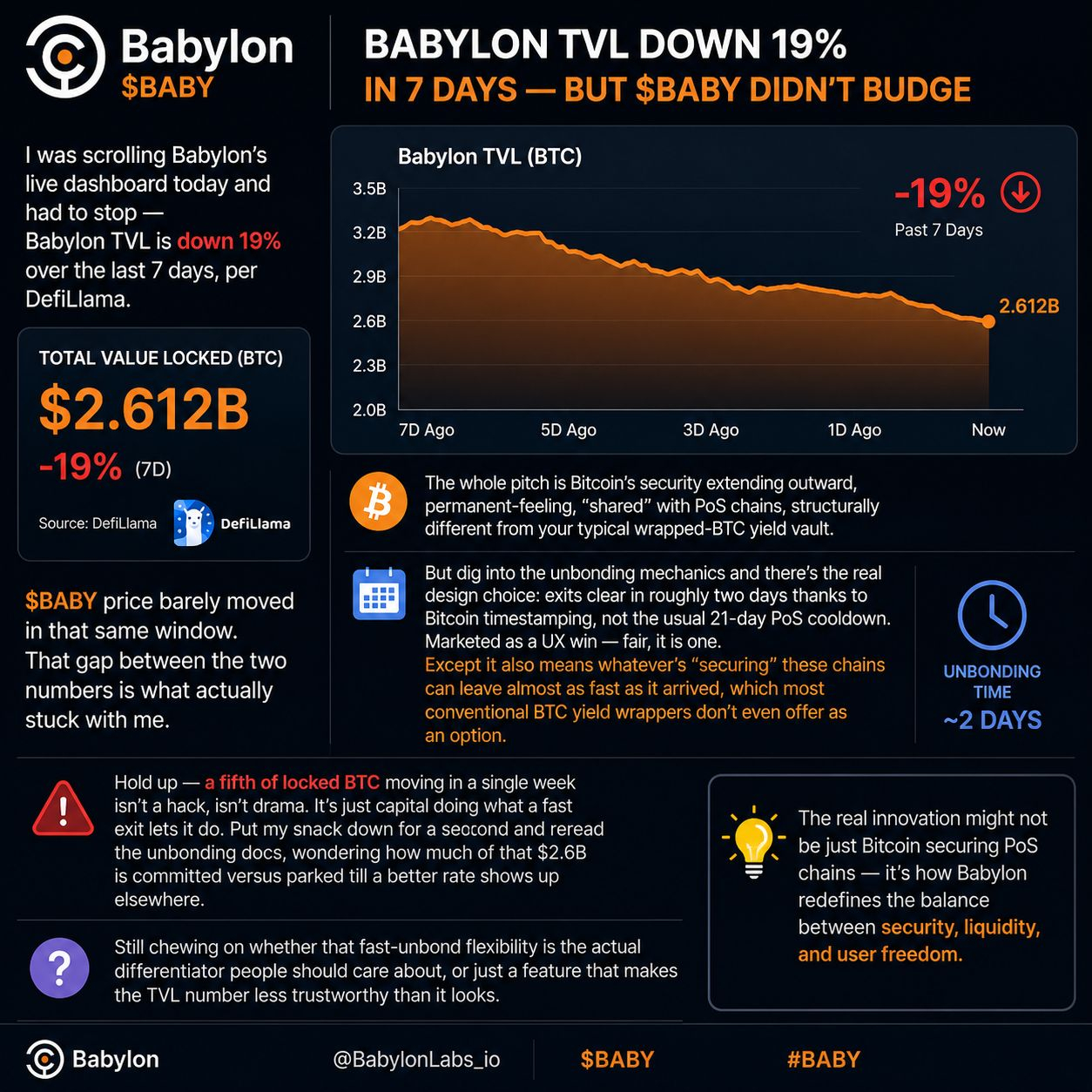
Я открыл дашборд Babylon в ожидании привычных ровных цифр, но один показатель заставил меня остановиться. За прошедшую неделю BTC TVL Babylon резко снизился, в то время как $BABY почти не отреагировал. Этот разрыв кажется интереснее самой цены.
Чем больше я читал, тем яснее понимал: быстрые изменения Babylon в анбандлинге по-иному заставляют интерпретировать TVL. Поскольку выход занимает около двух дней вместо долгого ожидания, характерного для многих PoS-сетей, капитал может вращаться гораздо быстрее. Это отлично для гибкости, но также означает, что TVL может отражать скорее краткосрочную возможность, чем долгосрочную убежденность.
Падающий TVL не всегда автоматически сигнализирует о слабости. Иногда дело просто в ликвидности, которая уходит туда, где доходность или стимулы выглядят лучше. Главный вопрос в другом: насколько устойчива безопасность Bitcoin, если участники имеют такой низкий барьер для выхода.
Мне начинает казаться, что настоящая инновация — не только в том, что Bitcoin обеспечивает PoS-цепочки. Дело в том, как Babylon заново определяет баланс между безопасностью, ликвидностью и свободой пользователей.
@babylonlabs_io #Baby $BABY
{spot}(BABYUSDT)
Я открыл дашборд Babylon в ожидании привычных ровных цифр, но один показатель заставил меня остановиться. За прошедшую неделю BTC TVL Babylon резко снизился, в то время как $BABY почти не отреагировал. Этот разрыв кажется интереснее самой цены.
Чем больше я читал, тем яснее понимал: быстрые изменения Babylon в анбандлинге по-иному заставляют интерпретировать TVL. Поскольку выход занимает около двух дней вместо долгого ожидания, характерного для многих PoS-сетей, капитал может вращаться гораздо быстрее. Это отлично для гибкости, но также означает, что TVL может отражать скорее краткосрочную возможность, чем долгосрочную убежденность.
Падающий TVL не всегда автоматически сигнализирует о слабости. Иногда дело просто в ликвидности, которая уходит туда, где доходность или стимулы выглядят лучше. Главный вопрос в другом: насколько устойчива безопасность Bitcoin, если участники имеют такой низкий барьер для выхода.
Мне начинает казаться, что настоящая инновация — не только в том, что Bitcoin обеспечивает PoS-цепочки. Дело в том, как Babylon заново определяет баланс между безопасностью, ликвидностью и свободой пользователей.
@BabylonLabs_io #Baby $BABY
Чем больше я читал, тем яснее понимал: быстрые изменения Babylon в анбандлинге по-иному заставляют интерпретировать TVL. Поскольку выход занимает около двух дней вместо долгого ожидания, характерного для многих PoS-сетей, капитал может вращаться гораздо быстрее. Это отлично для гибкости, но также означает, что TVL может отражать скорее краткосрочную возможность, чем долгосрочную убежденность.
Падающий TVL не всегда автоматически сигнализирует о слабости. Иногда дело просто в ликвидности, которая уходит туда, где доходность или стимулы выглядят лучше. Главный вопрос в другом: насколько устойчива безопасность Bitcoin, если участники имеют такой низкий барьер для выхода.
Мне начинает казаться, что настоящая инновация — не только в том, что Bitcoin обеспечивает PoS-цепочки. Дело в том, как Babylon заново определяет баланс между безопасностью, ликвидностью и свободой пользователей.
@BabylonLabs_io #Baby $BABY
1
2
80
🚀Я всё время спрашивал себя, что на самом деле представляет @BabylonLabs_io.
Сначала я подумал, что это просто ещё одна стейкинг-экосистема. Больше TVL, больше наград, больше цифр для сравнения.
Но потом я провёл время внутри сообщества.
То, что выделялось, было не графики и не разговоры о рынке. Важнее всего было то, как люди поддерживали друг друга. Разговоры плавно перетекали от Bitcoin к обычной повседневной жизни — от технических вопросов к случайным моментам, которые каким-то образом заставляли улыбаться всех.
Крипто может ощущаться шумным. Цены двигаются, настроение меняется, сроки догоняют следующий тренд. Но сильное сообщество даёт вам повод оставаться, когда ажиотаж утихает.
Именно это я вижу в Babylon. Место, где люди учатся вместе, отмечают небольшие победы и напоминают друг другу, что в этом пространстве есть нечто большее, чем просто зелёные свечи.
Иногда самая большая ценность — это не токен у вас в кошельке.
Это люди, которые стоят рядом с вами через каждый цикл.
💚 @babylonlabs_io #BABY $BABY $VANRY $DEXE
{future}(DEXEUSDT)
{spot}(VANRYUSDT)
{spot}(BABYUSDT)
🚀Я всё время спрашивал себя, что на самом деле представляет @BabylonLabs_io.
Сначала я подумал, что это просто ещё одна стейкинг-экосистема. Больше TVL, больше наград, больше цифр для сравнения.
Но потом я провёл время внутри сообщества.
То, что выделялось, было не графики и не разговоры о рынке. Важнее всего было то, как люди поддерживали друг друга. Разговоры плавно перетекали от Bitcoin к обычной повседневной жизни — от технических вопросов к случайным моментам, которые каким-то образом заставляли улыбаться всех.
Крипто может ощущаться шумным. Цены двигаются, настроение меняется, сроки догоняют следующий тренд. Но сильное сообщество даёт вам повод оставаться, когда ажиотаж утихает.
Именно это я вижу в Babylon. Место, где люди учатся вместе, отмечают небольшие победы и напоминают друг другу, что в этом пространстве есть нечто большее, чем просто зелёные свечи.
Иногда самая большая ценность — это не токен у вас в кошельке.
Это люди, которые стоят рядом с вами через каждый цикл.
💚 @BabylonLabs_io #BABY $BABY $VANRY $DEXE
Сначала я подумал, что это просто ещё одна стейкинг-экосистема. Больше TVL, больше наград, больше цифр для сравнения.
Но потом я провёл время внутри сообщества.
То, что выделялось, было не графики и не разговоры о рынке. Важнее всего было то, как люди поддерживали друг друга. Разговоры плавно перетекали от Bitcoin к обычной повседневной жизни — от технических вопросов к случайным моментам, которые каким-то образом заставляли улыбаться всех.
Крипто может ощущаться шумным. Цены двигаются, настроение меняется, сроки догоняют следующий тренд. Но сильное сообщество даёт вам повод оставаться, когда ажиотаж утихает.
Именно это я вижу в Babylon. Место, где люди учатся вместе, отмечают небольшие победы и напоминают друг другу, что в этом пространстве есть нечто большее, чем просто зелёные свечи.
Иногда самая большая ценность — это не токен у вас в кошельке.
Это люди, которые стоят рядом с вами через каждый цикл.
💚 @BabylonLabs_io #BABY $BABY $VANRY $DEXE
1
2
297
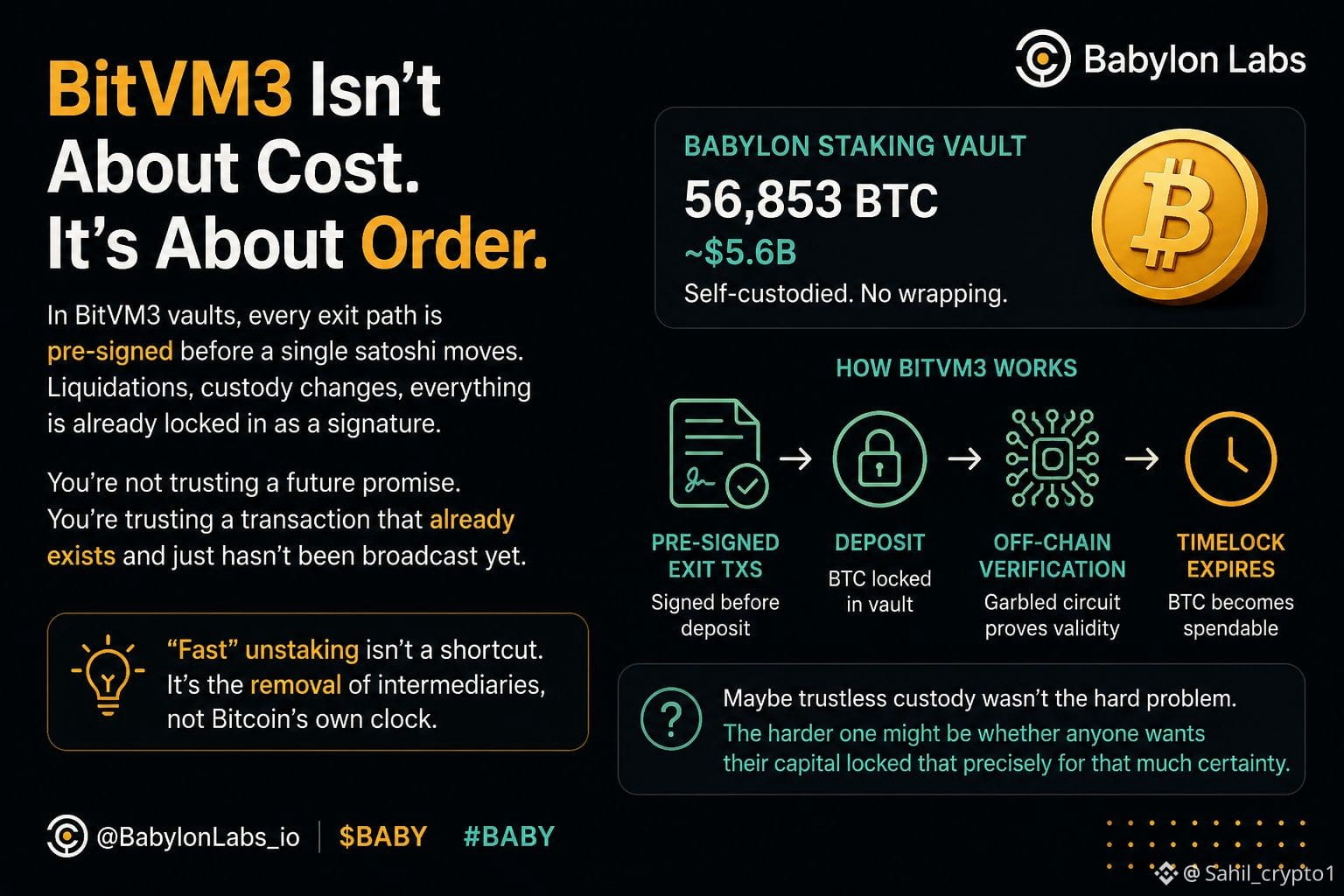
@babylonlabs_io I сначала я думал, что «быстрое анстейкинг» Babylon означает, что BTC становится доступным намного раньше. Но при более внимательном рассмотрении интереснее не сокращённый срок ожидания — а устранение ненужного доверия.
Babylon по-прежнему следует нативному для Bitcoin графику разанстейкинга. Меняется то, что происходит потом. Нет дополнительной транзакции требования, одобрения со стороны кастодиана или посредников, которые нужны, прежде чем вы снова получите контроль. Как только период разанстейкинга заканчивается, ваш BTC просто снова становится тратимым.
Эта разница важна. «Быстрое» не значит обходить модель безопасности Bitcoin. Это означает исключение дополнительных уровней, которые многие BTC-обёртки добавляют после анстейкинга. При более чем 56 853 BTC, размещённых в стейкинг-системе Babylon, этот дизайнерский выбор кажется важнее, чем сама формулировка на заголовке.
#baby $BTC $BABY
{future}(BABYUSDT)
{spot}(BTCUSDT)
@BabylonLabs_io I сначала я думал, что «быстрое анстейкинг» Babylon означает, что BTC становится доступным намного раньше. Но при более внимательном рассмотрении интереснее не сокращённый срок ожидания — а устранение ненужного доверия.
Babylon по-прежнему следует нативному для Bitcoin графику разанстейкинга. Меняется то, что происходит потом. Нет дополнительной транзакции требования, одобрения со стороны кастодиана или посредников, которые нужны, прежде чем вы снова получите контроль. Как только период разанстейкинга заканчивается, ваш BTC просто снова становится тратимым.
Эта разница важна. «Быстрое» не значит обходить модель безопасности Bitcoin. Это означает исключение дополнительных уровней, которые многие BTC-обёртки добавляют после анстейкинга. При более чем 56 853 BTC, размещённых в стейкинг-системе Babylon, этот дизайнерский выбор кажется важнее, чем сама формулировка на заголовке.
#baby $BTC $BABY
Babylon по-прежнему следует нативному для Bitcoin графику разанстейкинга. Меняется то, что происходит потом. Нет дополнительной транзакции требования, одобрения со стороны кастодиана или посредников, которые нужны, прежде чем вы снова получите контроль. Как только период разанстейкинга заканчивается, ваш BTC просто снова становится тратимым.
Эта разница важна. «Быстрое» не значит обходить модель безопасности Bitcoin. Это означает исключение дополнительных уровней, которые многие BTC-обёртки добавляют после анстейкинга. При более чем 56 853 BTC, размещённых в стейкинг-системе Babylon, этот дизайнерский выбор кажется важнее, чем сама формулировка на заголовке.
#baby $BTC $BABY
4
2
101
🚀Провёл некоторое время, копаясь в @BabylonLabs_io, и одна деталь выделилась больше, чем цифры в заголовке.
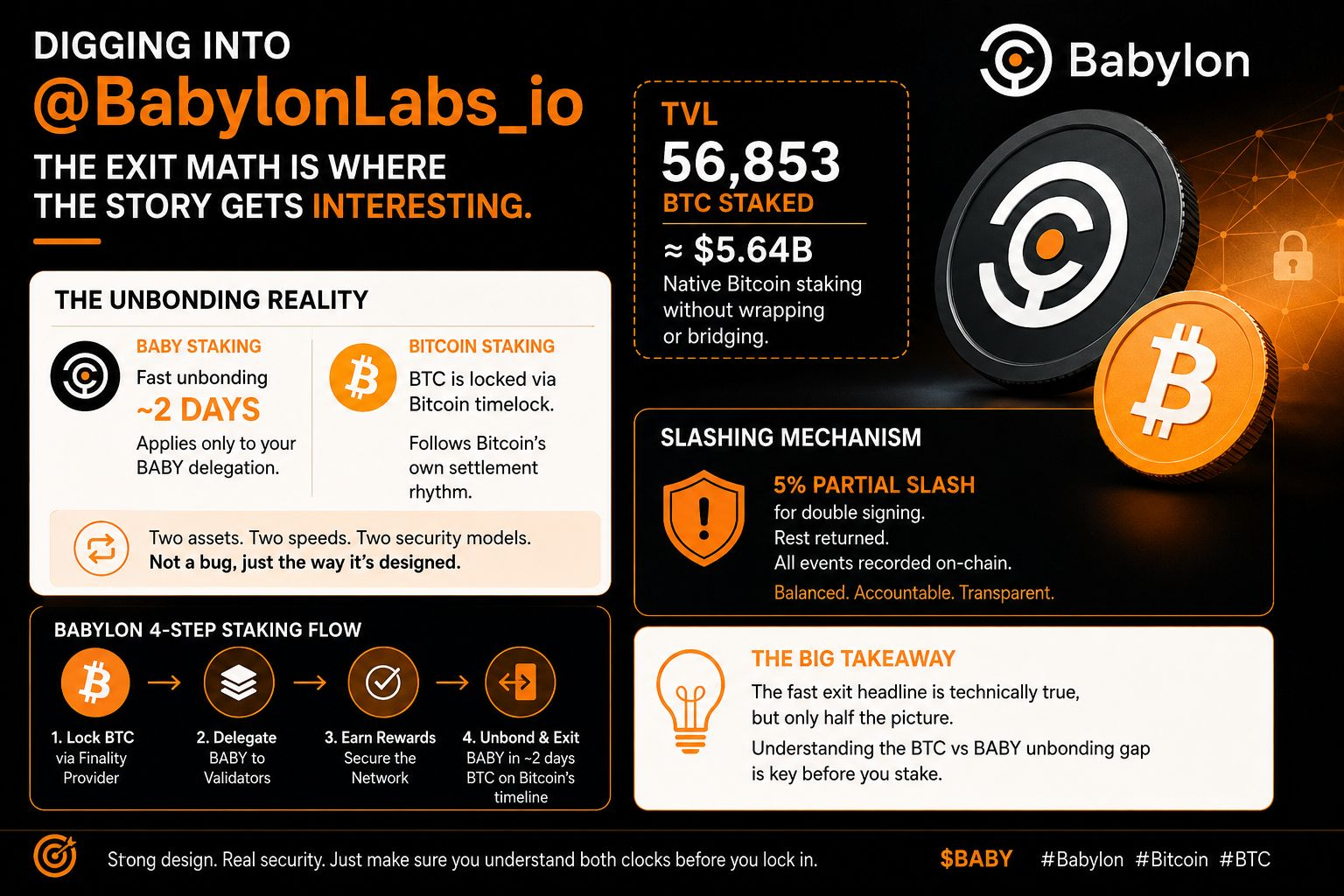
При более чем 56 853 BTC, размещённых в стейкинг, Babylon доказал, что есть сильный спрос на нативный стейкинг биткоина без обёртывания или бриджинга активов. Но наиболее интересная часть — как протокол обрабатывает выходы.
Стейкинг BABY обеспечивает быстрое анбандлинг (размещение на вывод), около 2 дней — это звучит впечатляюще с первого взгляда. Но подвох в том, что это касается только вашей делегации BABY. BTC, обеспеченный биткоиновыми таймлоками, проходит собственный процесс расчётов, работая независимо от валидаторских эпох Babylon.
Эта разница важна, потому что два актива движутся в рамках двух разных моделей безопасности. Это не вводит в заблуждение, но является важным нюансом, который многие могут упустить при сравнении опыта стейкинга.
Я также уделил время изучению дизайна слэшинга. Двойное подписание приводит к частичному слэшу в 5%, при этом оставшаяся часть стейка возвращается, а каждое событие фиксируется в ончейне. Механизм ощущается сбалансированным: он делает упор на ответственность, не будучи чрезмерно карательным.
Главный вывод был не в TVL или в заявлении о быстром анбандлинге. Суть в том, что понимание Babylon означает понимание разделения между гарантиями безопасности биткоина и механикой стейкинга BABY.
Именно там становятся очевидны реальные компромиссы в дизайне.
$BABY #Baby #Bitcoin $BTC @babylonlabs_io
{spot}(BTCUSDT)
{spot}(BABYUSDT)
🚀Провёл некоторое время, копаясь в @BabylonLabs_io, и одна деталь выделилась больше, чем цифры в заголовке.
При более чем 56 853 BTC, размещённых в стейкинг, Babylon доказал, что есть сильный спрос на нативный стейкинг биткоина без обёртывания или бриджинга активов. Но наиболее интересная часть — как протокол обрабатывает выходы.
Стейкинг BABY обеспечивает быстрое анбандлинг (размещение на вывод), около 2 дней — это звучит впечатляюще с первого взгляда. Но подвох в том, что это касается только вашей делегации BABY. BTC, обеспеченный биткоиновыми таймлоками, проходит собственный процесс расчётов, работая независимо от валидаторских эпох Babylon.
Эта разница важна, потому что два актива движутся в рамках двух разных моделей безопасности. Это не вводит в заблуждение, но является важным нюансом, который многие могут упустить при сравнении опыта стейкинга.
Я также уделил время изучению дизайна слэшинга. Двойное подписание приводит к частичному слэшу в 5%, при этом оставшаяся часть стейка возвращается, а каждое событие фиксируется в ончейне. Механизм ощущается сбалансированным: он делает упор на ответственность, не будучи чрезмерно карательным.
Главный вывод был не в TVL или в заявлении о быстром анбандлинге. Суть в том, что понимание Babylon означает понимание разделения между гарантиями безопасности биткоина и механикой стейкинга BABY.
Именно там становятся очевидны реальные компромиссы в дизайне.
$BABY #Baby #Bitcoin $BTC @BabylonLabs_io
При более чем 56 853 BTC, размещённых в стейкинг, Babylon доказал, что есть сильный спрос на нативный стейкинг биткоина без обёртывания или бриджинга активов. Но наиболее интересная часть — как протокол обрабатывает выходы.
Стейкинг BABY обеспечивает быстрое анбандлинг (размещение на вывод), около 2 дней — это звучит впечатляюще с первого взгляда. Но подвох в том, что это касается только вашей делегации BABY. BTC, обеспеченный биткоиновыми таймлоками, проходит собственный процесс расчётов, работая независимо от валидаторских эпох Babylon.
Эта разница важна, потому что два актива движутся в рамках двух разных моделей безопасности. Это не вводит в заблуждение, но является важным нюансом, который многие могут упустить при сравнении опыта стейкинга.
Я также уделил время изучению дизайна слэшинга. Двойное подписание приводит к частичному слэшу в 5%, при этом оставшаяся часть стейка возвращается, а каждое событие фиксируется в ончейне. Механизм ощущается сбалансированным: он делает упор на ответственность, не будучи чрезмерно карательным.
Главный вывод был не в TVL или в заявлении о быстром анбандлинге. Суть в том, что понимание Babylon означает понимание разделения между гарантиями безопасности биткоина и механикой стейкинга BABY.
Именно там становятся очевидны реальные компромиссы в дизайне.
$BABY #Baby #Bitcoin $BTC @BabylonLabs_io
2
1
87
Войдите, чтобы посмотреть больше материала
Присоединяйтесь к пользователям криптовалют по всему миру на Binance Square
⚡️ Получайте новейшую и полезную информацию о криптоактивах.
💬 Нам доверяет крупнейшая в мире криптобиржа.
👍 Получите достоверные аналитические данные от верифицированных создателей контента.
Эл. почта/номер телефона
В тренде
ПротоколFOMC
Просмотров: 11,564
78 обсуждают
#ПротоколFOMC 🚨 Протокол FOMC: что важно для рынка?
ФРС сохранила процентную ставку на уровне 3,50–3,75%, однако внутри Комитета появились серьёзные разногласия.
🔥 Три члена FOMC выступили за повышение ставки на 25 б.п.
При этом инфляция остаётся выше целевого уровня 2%, а экономика продолжает расти устойчивыми темпами.
📌 Что это значит?
Ястребиная позиция ФРС может поддерживать доллар и доходности облигаций, создавая дополнительное давление на BTC и другие рисковые активы.
Но окончательное решение по сентябрю пока не принято.
📅 Следующее заседание FOMC состоится 15–16 сентября.
Именно новые данные по инфляции и рынку труда могут определить дальнейший курс ФРС.
👀 Сентябрь может стать ключевым месяцем для рынков.
MuskFutures
·Лайков: 0
·Просмотров: 153
fomcотслеживание
Просмотров: 17,215
277 обсуждают
SECReceivesGrayscaleLitecoinTrustETFFiling
Просмотров: 10,904
233 обсуждают