

Sienna Leo-你真棒-带我走
10.1k Публикации

Sienna Leo-你真棒-带我走
 Square Verified+
Отправить жалобу
Заблокировать пользователя
内容创作者🔹积极思考者🔹高级分析者🔹高精准预测者🔹影响力人物🔹深度研究与高频现货交易策略🔹区块链 | WEB3 | 未来科技研究 | 🔹 ID#285783567 🔹X.@SiennaLeo80
797 подписок(и/а)
36.1K+ подписчиков(а)
28.7K+ понравилось
Посты
Портфель
Все
Цитирования
Видео
Активно
PINNED
💥🌹❤️ SIENNA LEO Square Family 🏡
✳️ Follow & 🔃🔃 REPOST
✳️ LIKE & COMMENT
✳️ SHARE
✳️ GO FAST ⏩ ➡️ ⏩ ➡️
#BinanceSquareFamily #GrowWithSAC #Write2Earn
💥🌹❤️ SIENNA LEO Square Family 🏡
✳️ Follow & 🔃🔃 REPOST
✳️ LIKE & COMMENT
✳️ SHARE
✳️ GO FAST ⏩ ➡️ ⏩ ➡️
#BinanceSquareFamily #GrowWithSAC #Write2Earn
✳️ Follow & 🔃🔃 REPOST
✳️ LIKE & COMMENT
✳️ SHARE
✳️ GO FAST ⏩ ➡️ ⏩ ➡️
#BinanceSquareFamily #GrowWithSAC #Write2Earn

300
9
490
#RussiaProposedNonCustodialWalletLimitsExcludeIntlSettlements
🇷🇺 Russia Proposes Non-Custodial Wallet Limits, but International Settlements Get an Exception 🌍
Imagine holding crypto in your own wallet, controlling every key yourself, then discovering that new rules could limit how you use it. But cross a national border for a business payment, and the rules may look very different.
Russia's proposed crypto framework draws a distinction between personal investment and international settlements. Central Bank officials have clarified that restrictions on non-custodial wallets for investment purposes do not extend to international settlement scenarios.
A non-custodial wallet lets users control their private keys without relying on an exchange or another company to hold their assets. That independence offers flexibility, but regulators often view it as harder to monitor for money laundering and compliance risks.
The international-settlement exception is significant. Russian businesses could retain a route to use crypto for cross-border transactions, even as domestic investment activity faces tighter controls and greater reliance on regulated intermediaries.
My take: This is not simply a story about Russia restricting crypto. It reflects a more selective strategy: tighter oversight of private investment, while preserving blockchain-based payment options for international trade.
The practical impact will depend on the final rules, how authorities implement them, and which transactions qualify. A regulatory exception does not mean every wallet transfer or cross-border payment will automatically be permitted.
The future of crypto regulation may depend on who is transacting, why they are transacting, and across which borders.
Can governments restrict personal crypto ownership while still encouraging crypto for international trade?
Disclaimer: For educational purposes only. Not financial advice.
#CryptoRegulation #BitcoinNews #GrowWithSAC $PEPE $SPX $BNB

132
#alphabetsharesslide10%inlatetrading
📉 Alphabet Shares Slide 10% in Late Trading: AI Spending Fears Hit Google 🔍
The earnings report arrives, the numbers flash across trading screens, and investors rush for the exit. One of the world's biggest technology companies has a booming AI business, yet the market suddenly sees a problem.
Alphabet shares dropped around 10% in after-hours trading after its latest quarterly results fell short of Wall Street expectations. Revenue reached $127.6 billion, but earnings disappointed and free cash flow turned sharply negative.
The twist? Google Cloud revenue more than doubled to approximately $30.7 billion. Demand for AI infrastructure remains strong, but building that capacity is extremely expensive.
Alphabet spent roughly $51.4 billion on capital expenditures during the quarter, while free cash flow fell to about negative $9.1 billion. Investors are questioning whether the returns from massive AI investments will arrive quickly enough to justify the cost.
My take: This is not simply a story about weak earnings. It is a test of the AI business model. Investors increasingly want proof that growing AI usage can translate into sustainable profits, stronger cash flow, and advertising revenue.
Alphabet still has powerful assets, from Google Search to YouTube and Google Cloud. One disappointing quarter does not erase those strengths, but it can force investors to reconsider the price they are willing to pay.
In the AI race, impressive technology attracts attention, but cash flow ultimately tests the business.
Would you buy Alphabet after this sharp decline, or wait for clearer evidence that AI spending is paying off?
Disclaimer: For educational purposes only. Not financial advice.
#Alphabet #AIStocks #GrowWithSAC $AERGO $PEPE $SPX
#AlphabetSharesSlide10%InLateTrading

GOOGUS-11,79%
GOOGLB-11,37%
162
#nasdaq100futuresfall0.9%
📉 Nasdaq 100 Futures Fall 0.9%: AI Spending Fears Shake Tech Stocks 💻
The trading screen flashes red before the opening bell. Investors who were betting on the next AI boom suddenly face a harder question: how much spending is too much when profits have yet to catch up?
Nasdaq 100 futures fell around 0.9% on October 29 as fresh Big Tech earnings intensified concerns about the cost and profitability of artificial intelligence investments.
Alphabet became a major pressure point after its results revived worries about advertising performance and the scale of AI spending. Microsoft, however, offered a contrasting signal with stronger cash flow and cloud-growth expectations.
That contrast matters. Markets are not necessarily turning against AI itself. Investors are becoming more selective about which companies can turn massive infrastructure investments into sustainable revenue and profits.
The wider backdrop also matters. Traders were watching upcoming US economic data and interest-rate expectations, both of which can influence valuations for technology companies whose future earnings carry significant weight today.
Crypto traders should pay attention, too. When risk appetite weakens across major technology stocks, Bitcoin and other digital assets may face pressure as investors reassess exposure to risk. But a Nasdaq decline alone does not confirm that crypto prices must fall.
The next phase of the AI trade may reward execution, not promises.
Will this pullback create a buying opportunity in technology stocks, or signal that AI expectations have run too far?
Disclaimer: For educational purposes only. Not financial advice.
#Nasdaq100 #AIStocks #GrowWithSAC $PEPE $SPX $BNB
#Nasdaq100FuturesFall0.9%

247
#bitcoincore32.1raisespeerconnectionlimit
🟠 $BITCOIN Core 32.1 Raises Peer Connection Limit: Why This Network Upgrade Matters 🔗
Imagine running a Bitcoin node while dozens of peers knock on its door. Some connections carry transactions, others help relay blocks. The challenge is making room without weakening the network's balance.
Bitcoin Core 32.1 raises the default maximum number of automatic peer connections from 125 to 200, creating more inbound capacity, particularly for block-relay-only peers.
The important detail is that automatic outbound connections remain unchanged. This is not simply about connecting to more nodes in every direction. It changes how inbound connection capacity is allocated.
The release also introduces -inboundrelaypercent, set to 50% by default. This controls the maximum share of inbound slots available to transaction-relaying peers, leaving room for other types of connections.
My take: Bitcoin's strength depends not just on how many nodes participate, but on how effectively they exchange information. Better connection management can support network communication, although the real impact depends on how node operators configure and run their systems.
More connections also mean potential resource demands. Operators should consider bandwidth, memory, CPU capacity, and their existing setup instead of assuming that the highest possible connection count is always best.
Bitcoin's resilience comes from thousands of independent operators making smart choices, not from one number getting bigger.
What matters more for Bitcoin's long-term decentralization: more peer connections or greater diversity among independent nodes?
Disclaimer: For educational purposes only. Not financial advice.
#BitcoinCore #BitcoinNetwork #GrowWithSAC $BTC $SPX
#BitcoinCore32.1RaisesPeerConnectionLimit

1
69
#VisaStablecoinSettlementTops$25BAnnualized
💳 Visa’s Stablecoin Settlement Tops $25 Billion Annualized: Is Crypto Becoming Financial Infrastructure? 🌐
Imagine sending money across borders on a weekend, without waiting for banks to reopen on Monday. What once sounded like a crypto promise is increasingly becoming a real payment option.
Visa has crossed a major milestone: its stablecoin settlement volume has surpassed a $25 billion annualized run rate, roughly 10 times its level a year earlier.
The expansion goes beyond one blockchain. Visa now supports settlement across 10 blockchain networks and five stablecoins, while its stablecoin-linked card programs have exceeded 225 globally.
Here is the important distinction: $25 billion annualized is a projected pace based on recent activity, not the amount processed over a completed year. Still, the growth suggests stablecoins are gaining traction beyond crypto trading.
⚡ Why does this matter? Blockchain settlement can operate around the clock, potentially helping payment providers move funds across borders and manage liquidity beyond traditional banking hours. Visa Direct has also moved stablecoin prefunding into commercial production.
But there is another side. Visa is integrating blockchain technology into its existing network, not abandoning traditional payments. Regulation, liquidity, transaction costs, and real-world adoption will determine how far this model expands.
My take: The bigger story is not that stablecoins will replace banks overnight. It is that established financial companies are increasingly willing to use blockchain rails when they solve practical problems.
When a global payments giant starts scaling crypto infrastructure, the technology moves closer to everyday finance.
Will stablecoins become a mainstream payment layer, or remain a specialized tool for financial institutions?
Disclaimer: For educational purposes only. Not financial advice.
#Stablecoins #CryptoPayments #GrowWithSAC $PEPE $BNB $SPX

58
#russiaplansstandardizedtestforcryptoinvestors
🧠 Russia Plans a Standardized Test for Crypto Investors: Is Buying Bitcoin About to Get Harder? 🇷🇺
Imagine opening your crypto trading app, ready to buy Bitcoin, only to discover that you must pass a test before making your first trade. For some Russian investors, this scenario could soon become reality.
Russia has developed a common testing standard for crypto investors, with regulated brokers expected to begin assessments by late November 2026. The framework has reportedly been submitted to a Bank of Russia committee for review.
The proposed approach separates qualified and nonqualified investors. Earlier proposals included a potential annual purchase limit of 300,000 rubles per intermediary for retail investors buying approved, highly liquid crypto assets.
Here is the crucial detail: the testing framework is not the same as a fully implemented law. Final requirements, test content, and the precise impact on market access remain subject to clarification.
My take: Russia is attempting to put a knowledge barrier between inexperienced investors and crypto market risks. A standardized test could improve awareness, but it could also add friction for ordinary buyers.
For the market, regulation matters because access influences participation. If restrictions become tighter, some investors may reconsider their strategies, although the actual impact on trading volumes remains uncertain.
Crypto's next battle may not be about who can buy it, but who regulators consider prepared to own it.
Would you support a basic crypto knowledge test before someone can invest, or should every adult decide independently?
Disclaimer: For educational purposes only. Not financial advice.
#CryptoRegulation #GrowWithSAC $BTC $ETH $USDT
#RussiaPlansStandardizedTestForCryptoInvestors

408
Проверено
#earningsseason
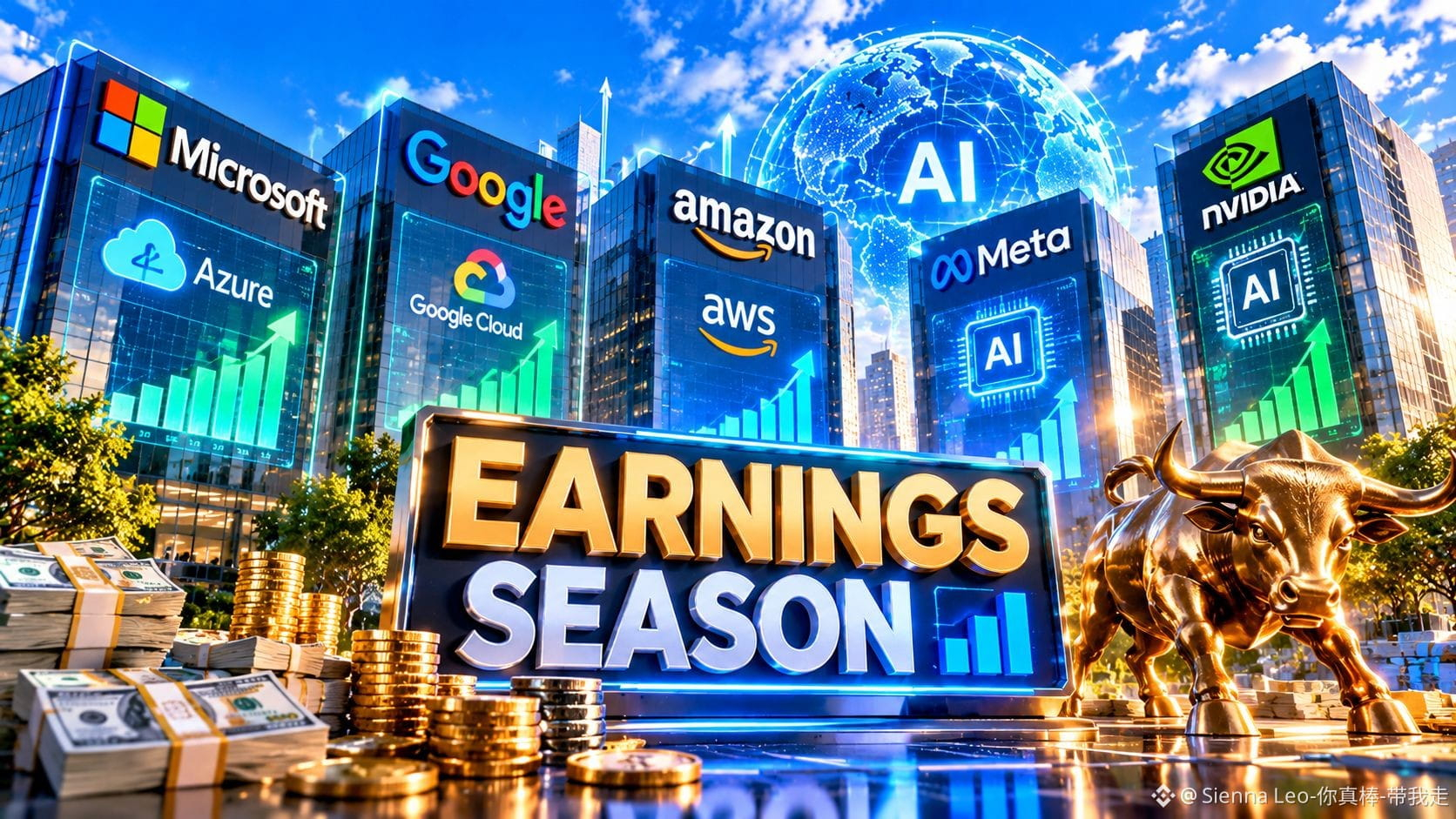
🚨 Earnings Season: Big Tech’s AI Bill Is Exploding, But Who Can Actually Turn It Into Profit? 💰
Imagine building the most powerful AI infrastructure in the world, spending billions every quarter, and then facing Wall Street’s toughest question: where is the return?
This Earnings Season, the contrast is becoming impossible to ignore. Microsoft reported quarterly revenue of $92.3 billion, up 20% year over year, while Azure grew 48%. Strong cloud demand is helping justify its enormous AI investments.
Alphabet’s latest results tell a more complicated story. Revenue reached $127.6 billion, but missed expectations, while free cash flow turned negative at $9.1 billion. Google Cloud more than doubled its revenue, yet rising infrastructure costs are putting pressure on the financial picture.
That is the real AI investment dilemma: demand can be genuine while profitability remains uncertain. Building data centers is only the first step. Companies must turn computing capacity into paying customers, recurring revenue, and sustainable cash flow.
My take: Investors should stop judging AI companies by announcements alone. Watch cloud growth, capital expenditure, operating margins, and free cash flow. These metrics reveal whether AI is becoming a profitable business or simply an expensive race for market share.
The winners may not be those spending the most, but those converting each dollar of AI investment into the strongest long-term returns.
In this Earnings Season, revenue tells us who is growing. Cash flow may reveal who is winning.
Which company do you believe will turn its AI spending into sustainable profits first?
Disclaimer: For educational purposes only. Not financial advice.
#ArtificialIntelligence #GrowWithSAC $MSFTB $AMZNB $GOOGLB
#EarningsSeason
647
#bitcoincoreidentifiesthreevulnerabilities
🛡️ $BITCOIN Core Identifies Three Vulnerabilities: What $BTC Users Should Know 🔍
Imagine your computer quietly helping secure Bitcoin around the clock. Then developers discover flaws that could cause some nodes to crash or shut down. The immediate question is simple: how serious are these risks, and what happens next?
On October 28, Bitcoin Core disclosed three security vulnerabilities after fixes became available across supported release branches. The findings were identified through an automated AI-assisted security scan, then validated by developers.
Two vulnerabilities could allow malicious peers to exhaust node memory under specific conditions. One particularly affected non-Linux systems, including Windows, macOS, and BSD. The third involved undo-file overflow under extreme conditions and could cause node failures.
Here is the important distinction: these findings do not mean Bitcoin's entire network or users' funds have been compromised. The disclosed issues primarily concern node stability, and the advisories do not report whether any were exploited.
Bitcoin Core released fixes in versions 29.5, 30.4, 31.2, and 32.1. However, 32-bit systems and nodes storing blocks on FAT32 remain affected by the undo-file issue.
My take: Bitcoin's resilience depends not on pretending vulnerabilities never exist, but on finding, disclosing, and fixing them responsibly. AI-assisted security research could help developers identify weaknesses earlier, although human validation remains essential.
A strong network is not one without bugs. It is one that responds when bugs are found.
Do you think AI-assisted security scanning will become essential for protecting Bitcoin and other blockchain networks?
Disclaimer: For educational purposes only. Not financial or investment advice.
#BitcoinSecurity #Bitcoin #GrowWithSAC $EVAA
#BitcoinCoreIdentifiesThreeVulnerabilities

154
#cangoogledefinditscore
🔎 Can Google Define Its Core? Will AI Strengthen Search or Challenge Its Business Model? 🤖
Imagine opening Google to find one simple answer, but instead of ten links, AI gives you the solution instantly. Convenient for you, perhaps. But what happens when fewer clicks mean fewer opportunities to earn advertising revenue?
Alphabet’s latest Q3 2026 results reveal this tension. Revenue rose 25% year over year to $127.6 billion, while Google Search and other revenue grew 12%. Google Cloud surged 103%, showing how AI is creating powerful new growth opportunities.
Here is the real challenge: Google must make AI Search more useful without weakening the advertising engine that made its business so successful.
AI Overviews and AI Mode can attract more complex questions and increase search activity. Yet answering users directly may change how they discover websites, interact with ads, and make purchasing decisions.
Google has important advantages: its search ecosystem, Gemini models, advertising technology, and cloud infrastructure. But turning AI engagement into sustainable revenue while controlling infrastructure costs remains a critical test.
My take: Google does not need to abandon its identity to win the AI race. It needs to evolve its business model without sacrificing the commercial value of Search. That balance may matter more than launching another impressive AI model.
The next AI winner may not be the company with the smartest answers, but the one that can make those answers profitable.
Can Google successfully monetize AI Search without damaging the advertising model behind its dominance?
Disclaimer: This content is for educational purposes only and is not financial advice.
#GoogleAI #ArtificialIntelligence #GrowWithSAC $GOOGL $GOOGLB $INIT
#CanGoogleDefindItsCore

GOOGUS-11,79%
GOOGLB-11,37%
1
422
#westpactocapcryptopaymentsataud10kpermonth
🏦 Westpac to Cap Crypto Payments at AUD 10K Per Month: Is Australia Tightening the Gate? 🚨
Imagine trying to buy crypto after months of saving, only to discover your bank has stopped another transfer. Your money is still yours, but accessing the crypto market may suddenly become harder.
Westpac plans to introduce a cumulative AUD 10,000 monthly limit on payments it identifies as going to cryptocurrency exchanges, starting December 1, 2026. The bank says the measure is designed to protect customers from scams.
The restriction can apply across eligible Westpac accounts and payment methods, including online banking, its app, and cards. Once the limit is reached, additional identified payments may be rejected until the next calendar month.
Here is the important distinction: this is a limit on certain outgoing payments to crypto exchanges, not a blanket ban on owning cryptocurrency. Westpac says withdrawals from exchanges into bank accounts are not changing.
My take: The immediate concern is not Bitcoin's technology, but the banking access that many everyday investors rely on to enter the market. If other banks adopt similar controls, buying crypto through traditional channels could become less convenient.
However, the actual market impact remains uncertain. Some users may adjust their funding habits, while others may simply use different legitimate payment options. Stronger safeguards can reduce certain scam risks, but broad restrictions may also inconvenience genuine customers.
Crypto may be decentralized, but the path between your bank account and the blockchain still has gatekeepers.
Should banks set monthly crypto payment limits to fight scams, or should customers decide how to use their money?
Disclaimer: For educational purposes only. Not financial advice.
#CryptoRegulation #Bitcoin #GrowWithSAC $PEPE $BNB $XAUT
#WestpacToCapCryptoPaymentsAtAUD10KPerMonth

122
#canmicrosoftdeliveronai
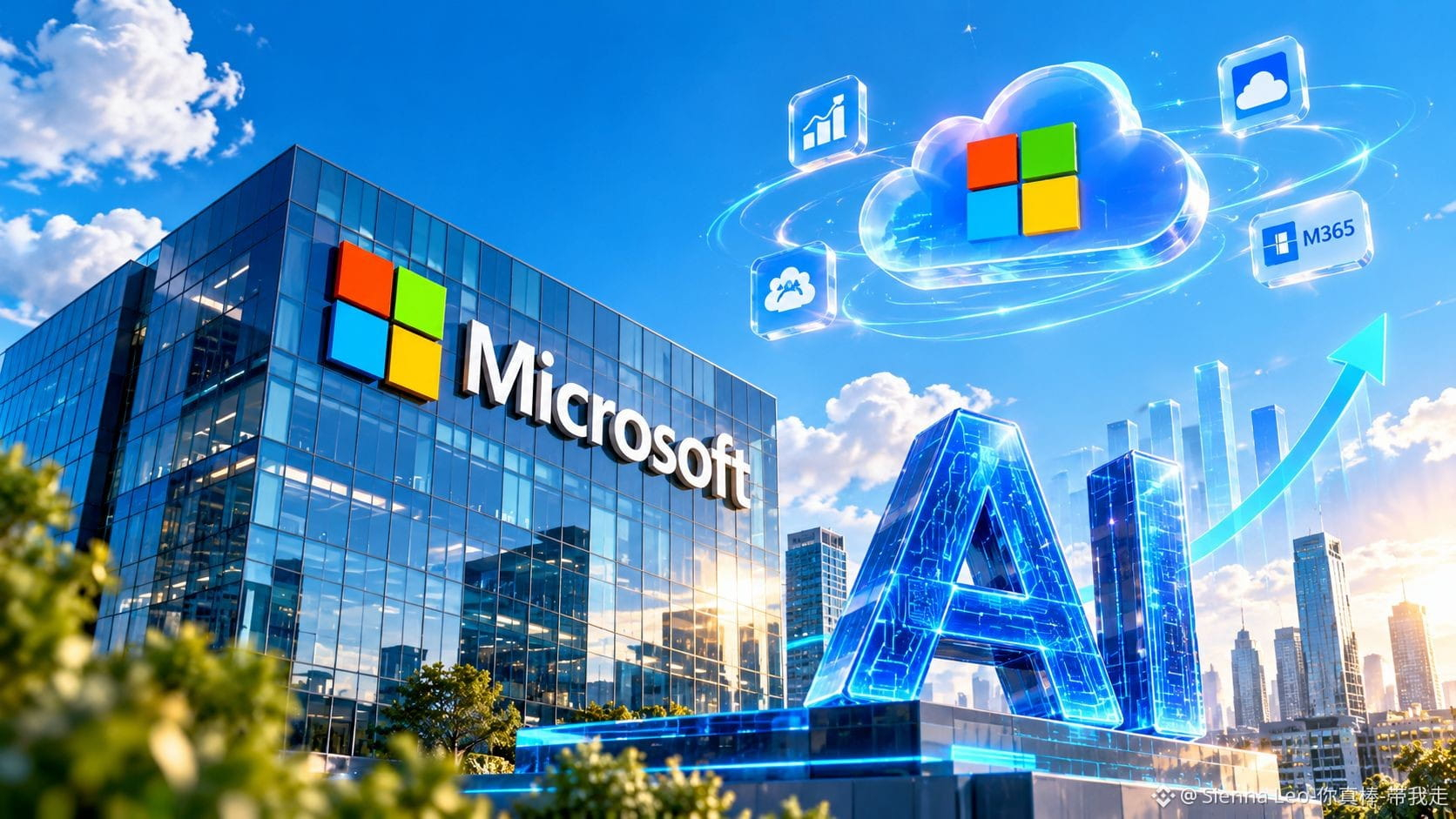
🤖 Can Microsoft Deliver on AI? Is Its Strategy Ready to Prove Its Value? 🚀
Imagine spending billions building the future, only to face one question: will customers pay enough to make it worthwhile? That is the challenge Microsoft must answer as AI transforms its business.
Microsoft’s latest results offer encouraging evidence. For its fiscal first quarter of 2027, revenue reached $92.3 billion, up 19% year over year, while Azure revenue surged 48%. AI demand is clearly supporting its cloud business.
But here is the real test: cloud growth is not the same as proving every AI investment will generate attractive returns.
Microsoft has a powerful advantage. Azure, Microsoft 365, and Copilot give it multiple ways to bring AI into existing business workflows. The opportunity is to turn experimentation into everyday usage that saves time, reduces costs, and justifies recurring payments.
The risk lies in execution. Data centers, advanced chips, and energy require enormous investment. If AI adoption and customer spending fail to keep pace, infrastructure costs could pressure future returns.
For investors, the key signals are Azure growth, Copilot adoption, capital expenditure, and cash flow. Strong revenue matters, but profitable growth matters more.
My take: Microsoft is demonstrating that AI demand is real. Its next challenge is proving that this demand can produce durable economic value, not just impressive growth figures.
What matters more for Microsoft's future: Azure's AI growth or Copilot's ability to generate lasting profits?
Disclaimer: This article is for informational and educational purposes only, not financial advice.
#MicrosoftAI #ArtificialIntelligence #GrowWithSAC $MSFTB $SHELL $MSFT
#CanMicrosoftDeliverOnAI
203
Проверено
#canmicrosoftdeliveronai
🚀 💻 Can Microsoft Deliver on AI, or Is Wall Street Expecting Too Much? 💻
Every technological revolution creates two winners: those who build the future and those who prove it can pay for itself.
Microsoft reports its fiscal Q1 2027 results today, October 28, after the US market closes. Its stock was recently trading near $528.59 at 11:16 a.m. ET, down 0.52% at that timestamp.
The central question is Azure. Microsoft previously delivered 43% Azure growth, while management's latest guidance pointed to approximately 45% growth in constant currency. Investors now want evidence that AI demand can justify the enormous cost of data centers, chips, and infrastructure.
My take: AI adoption is only half the story. The real test is whether Microsoft can turn that demand into recurring revenue and stronger returns on investment. Even impressive growth may disappoint if spending rises faster than the profits it generates.
24 to 48-hour prediction: If Azure growth and forward guidance exceed elevated expectations, $MSFT could rebound as buyers regain confidence. If AI spending disappoints or management signals weaker momentum, profit-taking could push shares lower. The earnings release and subsequent guidance will determine which scenario gains credibility.
Short-term traders may find opportunities in the post-earnings move, but both bullish and bearish positions carry heightened gap and volatility risk.
The AI race will not be won by spending the most, but by turning innovation into sustainable profits.
Will Microsoft's AI investments deliver enough growth to justify Wall Street's expectations?
For educational purposes only. Not financial advice.
#MicrosoftAI #Azure #GrowWithSAC #EarningsSeason #BinancePick #CanGoogleDefindItsCore
$GOOGL
#CanMicrosoftDeliverOnAI

1
958
Проверено
#cangoogledefinditscore
🌌 🔎 Can Google Defend Its Core as AI Rewrites Search? 🔎
The biggest threat to a giant is not always a stronger rival. Sometimes, it is a better way of doing what made the giant successful.
Google faces that test tonight. Alphabet is scheduled to report Q3 2026 earnings after the US market closes on October 28, with investors watching whether AI can strengthen its search business without weakening its advertising engine.
Market check: $GOOGL traded around $324.13, up 1.11% on October 28 during the US session. The earnings report is still pending, so the next move depends heavily on actual results and management's outlook.
Google's challenge is bigger than competing with ChatGPT or Microsoft. AI-generated answers could change how people discover information, click links, and interact with advertisements. Google must turn that shift into a profitable opportunity while funding expensive AI infrastructure.
My take: Google does not need to protect traditional search forever. It needs to protect the commercial value behind search. If Gemini makes answers more useful while keeping advertising effective, AI could reinforce Google's core instead of destroying it.
24 to 48-hour prediction: If earnings, Search growth, and AI monetization guidance exceed expectations, $GOOGL could extend its recovery. Disappointing results, rising AI costs, or cautious guidance could trigger a pullback. The outcome remains uncertain until the report arrives.
Short-term traders may benefit from a confirmed post-earnings move, but chasing the first reaction risks losses if volatility reverses direction.
Google's future depends not on winning every AI race, but on making AI strengthen the business that pays for it.
Would you trust Google's AI strategy to protect its advertising dominance, or is Microsoft gaining the advantage?
⚠️ For educational purposes only. Not financial advice.
#GoogleAI #EarningsPreview #GrowWithSAC #EarningsSeason #BinancePick #CanMicrosoftDeliverOnAI $MSFT
#CanGoogleDefindItsCore

2
575
#robinhoodfalls8.4%afteritsresults
📉 🚨 Robinhood Falls 8.4% After Earnings: The Crypto Warning Wall Street Can’t Ignore 🚨
Imagine a company announcing record revenue, yet investors rush to sell its stock. That is the uncomfortable message behind Robinhood’s latest earnings reaction.
On October 27, Robinhood reported third-quarter 2026 revenue of $1.42 billion, up 12% year over year. Yet its shares fell sharply in premarket trading on October 28 as investors focused on weaker profitability and disappointing revenue.
The biggest concern for crypto watchers? Cryptocurrency transaction revenue plunged 55% to $120 million, while crypto trading volume declined 38%. Stronger options, equities, and prediction-market activity could not fully erase those concerns.
Net income fell 14% to $476 million, while operating expenses climbed 16% to $739 million. Adjusted earnings per share reached $0.60, beating analyst expectations, but the revenue shortfall still weighed on sentiment.
My take: Markets do not reward growth blindly. They reward growth that can translate into sustainable earnings. Robinhood is expanding beyond crypto, but this quarter shows how sensitive its business remains to changes in digital-asset trading activity.
For crypto investors, the lesson is important: weaker exchange-related trading revenue can signal reduced activity, but it does not automatically mean crypto prices must fall. Market prices, trading volumes, and company earnings tell different parts of the story.
The next test is whether Robinhood can rebuild crypto revenue while controlling costs and sustaining growth across its other businesses.
A strong business grows when its revenue engine keeps working, even when market excitement fades.
Does Robinhood’s diversification make it stronger, or does falling crypto revenue remain its biggest vulnerability?
Disclaimer: This post is for educational purposes only, not financial advice.
#Robinhood #CryptoNews #GrowWithSAC $HAEDAL $BLUR $SHELL
#RobinhoodFalls8.4%AfterItsResults

1
259
Проверено
#kospisurges6.63%backabove6000
🚀 📈 KOSPI Surges 6.63% Back Above 6,000: What Sparked the Comeback? 📈
Imagine watching a major stock market struggle for days, only to see buyers return with overwhelming force. By the closing bell, South Korea’s KOSPI had reclaimed a level investors were waiting to see again.
On October 28, the KOSPI jumped 6.63% to close at 6,012.44, recovering the 6,000 mark for the first time in 10 trading sessions.
The biggest catalyst was semiconductor strength. SK hynix reported record quarterly earnings and announced a substantial shareholder-return plan, while Samsung Electronics also surged. Their gains helped pull the broader market higher.
Foreign and institutional investors added further buying pressure, reinforcing the rebound. A market-wide surge of this size reflects more than a few green candles: it signals a sharp shift in investor positioning and confidence.
My take: The real story is the connection between artificial intelligence and semiconductor demand. When earnings support expectations for AI infrastructure growth, chipmakers can become powerful drivers of market sentiment.
However, one explosive session does not guarantee a lasting recovery. Investors should watch whether buying continues, upcoming earnings support current valuations, and the index holds above 6,000.
For crypto traders, this is a reminder that traditional markets matter too. Shifts in technology-sector sentiment and global risk appetite can influence how investors approach digital assets, although the relationship is not automatic.
A breakout makes headlines; sustained buying determines whether it becomes a trend.
Do you think the KOSPI can hold above 6,000, or will profit-taking trigger another pullback?
Disclaimer: This content is for educational purposes only and is not financial advice.
#KOSPI #StockMarket #GrowWithSAC $BLUR $BLZ $XAN
#KOSPISurges6.63%BackAbove6000

743
Проверено
#earningsseason
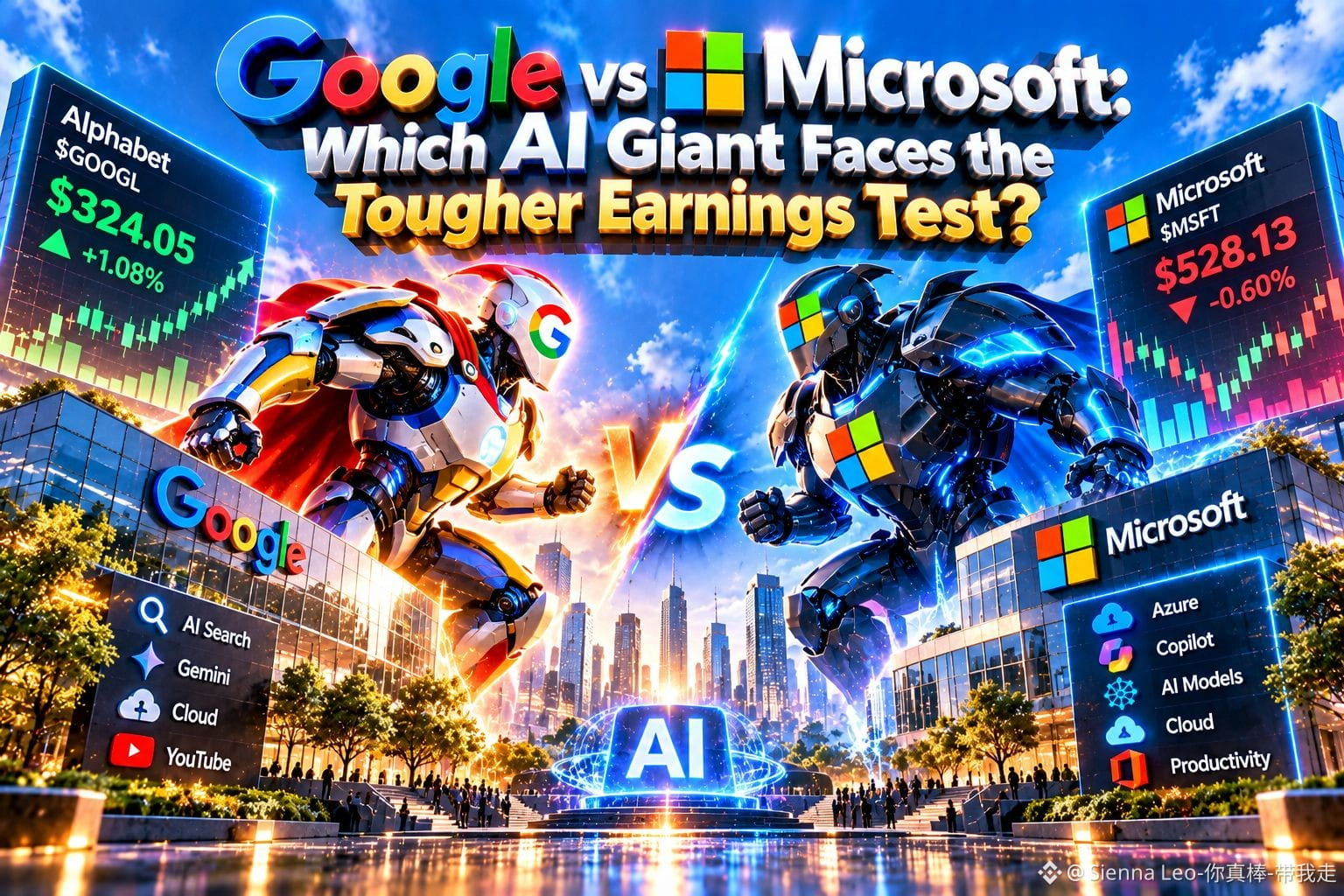
🌌 ⚔️ Google vs Microsoft: Which AI Giant Faces the Tougher Earnings Test? ⚔️
Two technology giants are building the future, but tonight the market wants proof that artificial intelligence can deliver profits, not just promises.
October 28 market check: Alphabet ($GOOGL ) traded at approximately $324.05, up 1.08%, while Microsoft ($MSFT ) traded near $528.13, down 0.60%, during the US session. Both companies are scheduled to report earnings after today's market close.
Google's challenge: Can AI-powered Search protect its advertising business while Gemini reshapes how people find information? Investors need evidence that innovation can strengthen Google's core revenue engine.
Microsoft's challenge: Can Azure sustain strong growth while massive investments in AI infrastructure generate attractive returns? Cloud demand matters, but so do capital expenditure and profit margins.
My take: Microsoft faces a particularly demanding test of AI monetization because investors must weigh cloud growth against infrastructure costs. Google faces a different risk: changing search behavior could reshape the economics of its advertising business. Neither company can win on AI excitement alone.
24 to 48-hour prediction: Strong results and confident guidance could lift both stocks, while disappointing growth or rising cost concerns could trigger selling. The initial reaction may reverse as investors digest management commentary, making earnings volatility the key short-term risk.
Traders who wait for confirmation may find clearer opportunities; chasing the first price spike risks losses in either direction.
The real AI winner will be the company that turns technological leadership into durable profits.
Which company has the stronger AI business model: Google or Microsoft?
For educational purposes only. Not financial advice.
#ArtificialIntelligence #TechEarnings #GrowWithSAC #BinancePick #CanGoogleDefindItsCore #CanMicrosoftDeliverOnAI
#EarningsSeason
1.5k
#$10.9BBitcoinOptionsExpireFriday
⏳ ₿ $10.9B Bitcoin Options Expire Friday: Is Volatility About to Return? ₿
A trader watches Bitcoin hover near a critical price level. Positions are building, Friday’s deadline is approaching, and one question matters: will the market hold its ground or surprise everyone?
On October 30, approximately $10.92 billion in Bitcoin options are scheduled to expire on Deribit. That is a significant concentration of contracts settling at one time, potentially influencing short-term trading activity.
The reported put-to-call ratio is 0.53, meaning open call positions outnumber puts. The reported max-pain level is $78,000, compared with Bitcoin trading near $81,400 when the figures were reported.
Here is the detail many traders overlook: max pain is not a guaranteed price target. It represents the theoretical settlement level where aggregate option-holder payouts would be lowest. It does not tell us where Bitcoin must trade.
The real focus should be how traders adjust positions before expiry, how dealers hedge their exposure, and whether spot-market buying or selling confirms the move. These forces can amplify volatility, but they do not guarantee a breakout or a crash.
My take: The expiry creates a reason to watch Bitcoin closely, not a reason to predict blindly. Price action, liquidity, and broader macroeconomic developments will matter more than one options metric alone.
Big expiries create pressure points, but the market still decides the direction.
Will Bitcoin defend $80,000 through Friday’s expiry, or could volatility push it toward $78,000?
Disclaimer: For educational purposes only. Not financial advice.
#Bitcoin #CryptoMarket #GrowWithSAC $BTC $ETH $BCH

1
2
344
Проверено
#datavaultaicantwithdrawbitcoinfrombiconomy
🚨 DataVault AI Can’t Withdraw Bitcoin From Biconomy: A $92.2M Wake-Up Call? 🚨
Imagine opening your account, seeing your Bitcoin balance, and then discovering you cannot move those coins out. For Datavault AI, this nightmare has become a serious financial problem.
On October 28, reports revealed that Datavault AI (NASDAQ: DVLT) has been unable to withdraw Bitcoin from Biconomy since June 2026. The company now plans to restate its financial results.
The issue traces back to a 2025 deal involving Scilex Holding Company, which transferred 1,309.04 BTC to Datavault AI’s account through off-chain transactions. The company later sold 491.4 BTC back to Scilex for approximately $40.5 million.
The most striking detail? Datavault AI expects the accounting correction to reduce its reported assets by $92.2 million at the end of 2025 and $49 million as of June 2026. Its shares plunged nearly 50% on October 27 following the disclosure.
My take: This is bigger than a failed withdrawal. It highlights the difference between seeing a Bitcoin balance on a platform and having practical control over those funds. Access, ownership records, and reliable withdrawal processes matter just as much as the displayed balance.
This does not establish that Bitcoin itself failed, nor does the available information explain why the withdrawal remains incomplete. Investors should distinguish the company-specific issue from risks affecting the wider crypto market.
In crypto, a balance you cannot access is a risk you cannot ignore.
Would this incident change how much Bitcoin you keep on a centralized exchange?
Disclaimer: This post is for educational purposes only, not financial advice.
#Bitcoin #CryptoNews #GrowWithSAC $BTC $XAN $NEAR
#DatavaultAICantWithdrawBitcoinFromBiconomy

2
3.4k
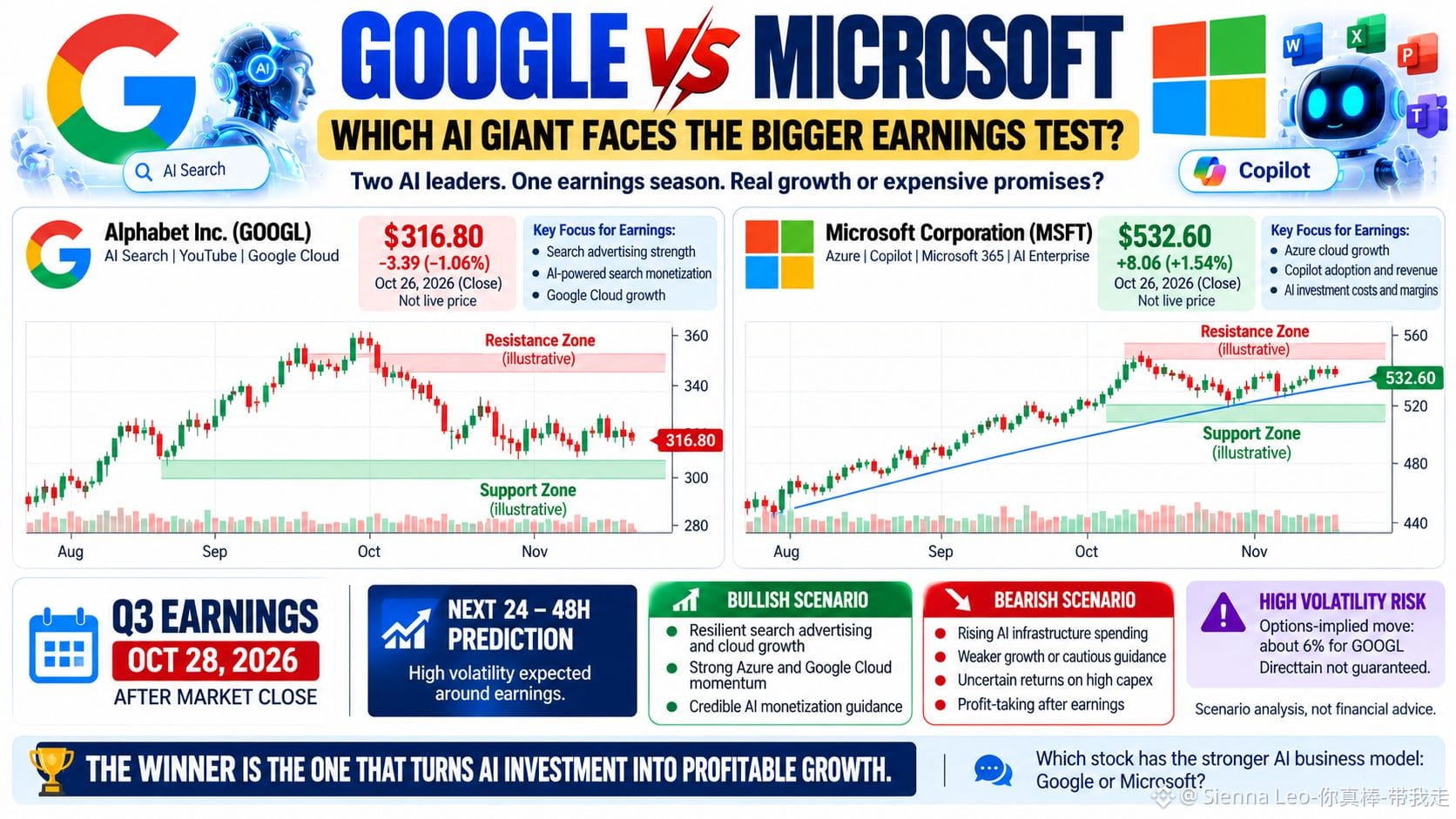
Google vs. Microsoft: Which AI Giant Faces the Bigger Earnings Test? 🤖📊
Two technology giants. One AI revolution. And one earnings season that could separate real growth from expensive promises.
Alphabet and Microsoft face a crucial test on October 28, 2026. Investors want proof that AI is generating sustainable revenue, not simply driving bigger infrastructure bills.
Google’s Advantage: Alphabet reported $119.8 billion in Q2 revenue, up 24% year over year. Google Search revenue grew 17%, while Google Cloud surged 82%. Its challenge is monetizing AI-powered search without weakening its advertising engine.
Microsoft’s Challenge: Azure, Copilot, and enterprise AI offer enormous potential. But investors need evidence that cloud demand and AI adoption can justify the cost of computing infrastructure.
Latest Verified Prices:
$GOOGL: $318.26, October 26 close.
$MSFT: $532.60, October 26 close.
These are closing prices, not live October 27 quotes.
Prediction | Next 24–48 Hours
Both stocks could experience sharp moves around earnings.
Bullish scenario: Strong cloud growth, resilient advertising, and credible AI monetization guidance could lift investor confidence.
Bearish scenario: Rising AI expenses, weaker growth, or cautious guidance could trigger profit-taking.
Microsoft faces a particularly important test of cloud growth versus AI investment costs, while Google must demonstrate that AI strengthens its core search business. Neither outcome is guaranteed.
Earnings traders may benefit from volatility, but overnight gaps can create substantial losses in either direction.
The real winner will not be the company with the loudest AI story, but the one that turns innovation into profitable growth.
Which stock has the stronger AI business model: Google or Microsoft?
For educational purposes only. Not financial advice.
#GrowWithSAC #EarningsSeason #BinancePick $GOOGL $MSFT #CanGoogleDefindItsCore #CanMicrosoftDeliverOnAI
Google vs. Microsoft: Which AI Giant Faces the Bigger Earnings Test? 🤖📊
Two technology giants. One AI revolution. And one earnings season that could separate real growth from expensive promises.
Alphabet and Microsoft face a crucial test on October 28, 2026. Investors want proof that AI is generating sustainable revenue, not simply driving bigger infrastructure bills.
Google’s Advantage: Alphabet reported $119.8 billion in Q2 revenue, up 24% year over year. Google Search revenue grew 17%, while Google Cloud surged 82%. Its challenge is monetizing AI-powered search without weakening its advertising engine.
Microsoft’s Challenge: Azure, Copilot, and enterprise AI offer enormous potential. But investors need evidence that cloud demand and AI adoption can justify the cost of computing infrastructure.
Latest Verified Prices:
$GOOGL : $318.26, October 26 close.
$MSFT : $532.60, October 26 close.
These are closing prices, not live October 27 quotes.
Prediction | Next 24–48 Hours
Both stocks could experience sharp moves around earnings.
Bullish scenario: Strong cloud growth, resilient advertising, and credible AI monetization guidance could lift investor confidence.
Bearish scenario: Rising AI expenses, weaker growth, or cautious guidance could trigger profit-taking.
Microsoft faces a particularly important test of cloud growth versus AI investment costs, while Google must demonstrate that AI strengthens its core search business. Neither outcome is guaranteed.
Earnings traders may benefit from volatility, but overnight gaps can create substantial losses in either direction.
The real winner will not be the company with the loudest AI story, but the one that turns innovation into profitable growth.
Which stock has the stronger AI business model: Google or Microsoft?
For educational purposes only. Not financial advice.
#GrowWithSAC #EarningsSeason #BinancePick $GOOGL $MSFT #CanGoogleDefindItsCore #CanMicrosoftDeliverOnAI
2
433
Войдите, чтобы посмотреть больше материала
Присоединяйтесь к пользователям криптовалют по всему миру на Binance Square
⚡️ Получайте новейшую и полезную информацию о криптоактивах.
💬 Нам доверяет крупнейшая в мире криптобиржа.
👍 Получите достоверные аналитические данные от верифицированных создателей контента.
Эл. почта/номер телефона