
#ukfcareportedlyplansdefiauthorizationrules
ukfcareportedlyplansdefiauthorizationrules
Популярные
Новые

🇬🇧 The UK is drawing a hard line around DeFi—and it’s stricter than both the US and EU.
According to new reports, the UK Financial Conduct Authority (FCA) plans to require formal authorization for DeFi platforms. FCA digital assets head Jane Moore cited fraud risks, consumer protection gaps, and how fast illicit funds move through DeFi before they can be frozen.
What traders need to watch:
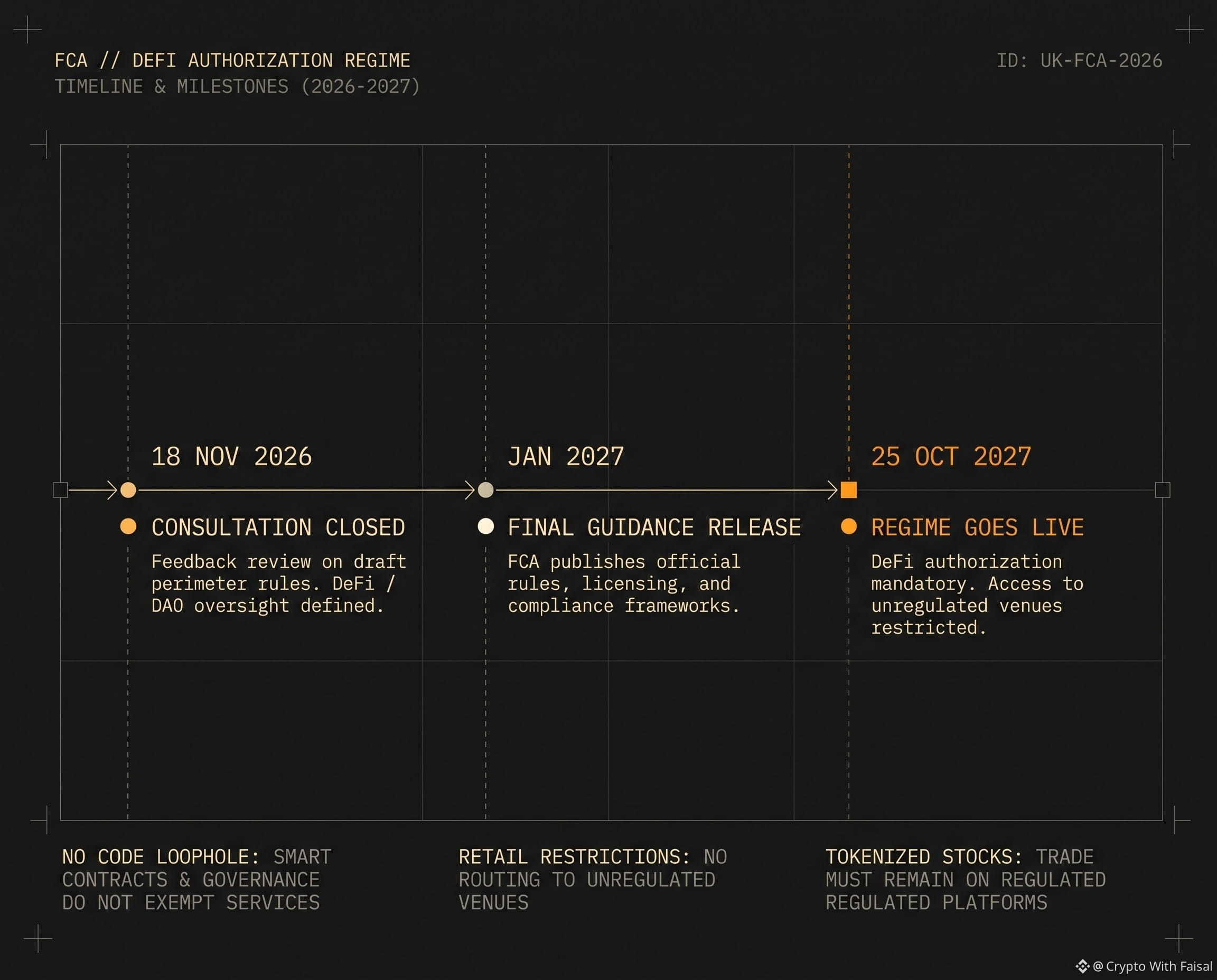
🔹 No Code Loophole: Smart contracts and distributed governance alone won’t exempt UK-facing DeFi services.
🔹 Retail Divide: Regulated UK platforms won’t be allowed to route retail orders to unregulated DeFi venues.
🔹 Tokenized Stocks: Retail tokenized equity trades must stay on regulated platforms, blocking offshore DeFi access.
🔹 Timeline: Consultations closed Nov 18, 2026. Final guidance drops Jan 2027 before the regime goes live Oct 25, 2027.
The UK is choosing strict oversight over open access. Will this protect retail or push DeFi liquidity offshore? Share your take 👇
$ETH
{future}(ETHUSDT)
$UNI
{future}(UNIUSDT)
$AAVE
{future}(AAVEUSDT)
#UKFCAReportedlyPlansDeFiAuthorizationRules
🇬🇧 The UK is drawing a hard line around DeFi—and it’s stricter than both the US and EU.
According to new reports, the UK Financial Conduct Authority (FCA) plans to require formal authorization for DeFi platforms. FCA digital assets head Jane Moore cited fraud risks, consumer protection gaps, and how fast illicit funds move through DeFi before they can be frozen.
What traders need to watch:
🔹 No Code Loophole: Smart contracts and distributed governance alone won’t exempt UK-facing DeFi services.
🔹 Retail Divide: Regulated UK platforms won’t be allowed to route retail orders to unregulated DeFi venues.
🔹 Tokenized Stocks: Retail tokenized equity trades must stay on regulated platforms, blocking offshore DeFi access.
🔹 Timeline: Consultations closed Nov 18, 2026. Final guidance drops Jan 2027 before the regime goes live Oct 25, 2027.
The UK is choosing strict oversight over open access. Will this protect retail or push DeFi liquidity offshore? Share your take 👇
$ETH
$UNI
$AAVE
#UKFCAReportedlyPlansDeFiAuthorizationRules
1
153

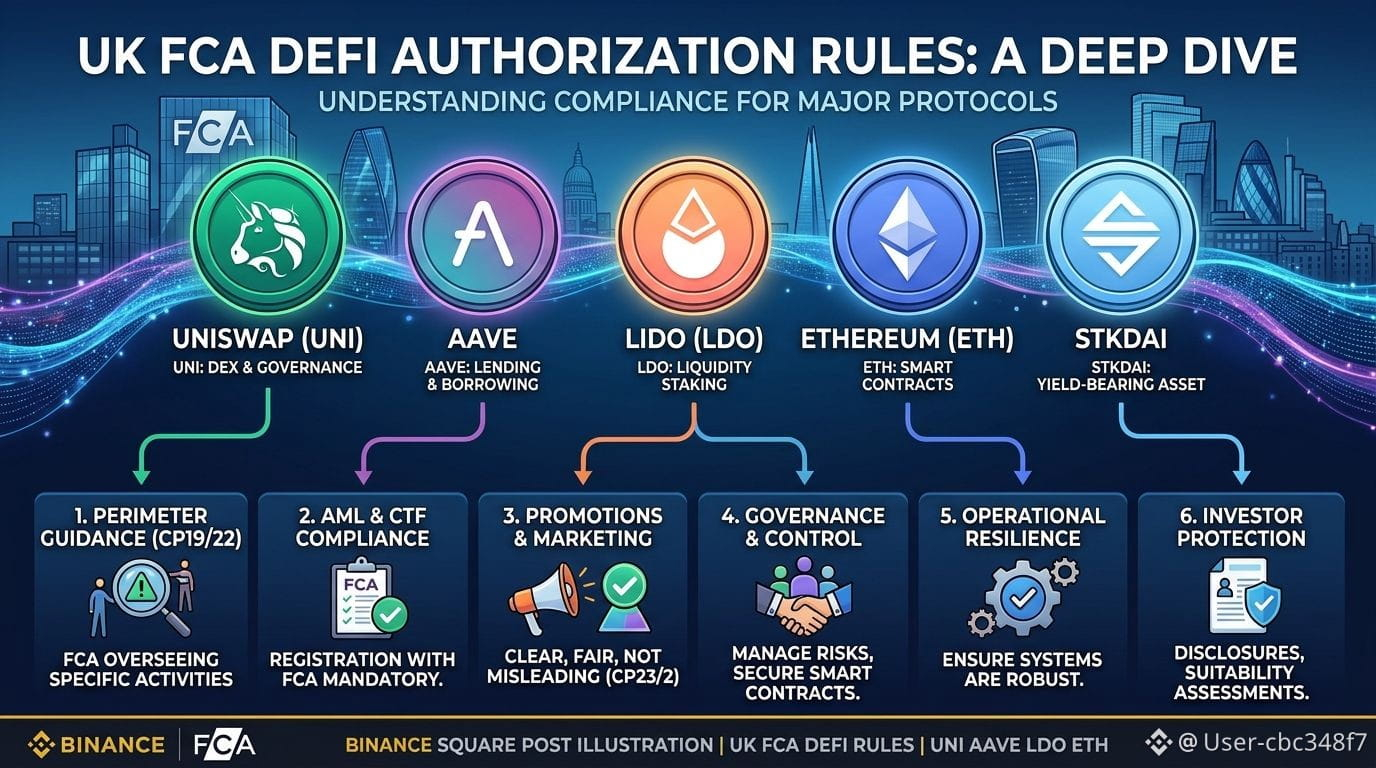
#ukfcareportedlyplansdefiauthorizationrules The UK's Financial Conduct Authority (FCA) reportedly plans to bring decentralized finance (DeFi) under formal authorization rules—targeting protocols and interfaces with sufficient control or commercial activity to boost consumer protection and market integrity. While clearer rules could legitimize institutional DeFi access in Britain, strict compliance and decentralization gray areas risk raising friction for builders and liquidity. Will UK DeFi authorization rules build institutional trust or push on-chain innovation offshore? $BTC $ETH $UNI
{spot}(UNIUSDT)
{spot}(ETHUSDT)
{spot}(BTCUSDT)
#ukfcareportedlyplansdefiauthorizationrules The UK's Financial Conduct Authority (FCA) reportedly plans to bring decentralized finance (DeFi) under formal authorization rules—targeting protocols and interfaces with sufficient control or commercial activity to boost consumer protection and market integrity. While clearer rules could legitimize institutional DeFi access in Britain, strict compliance and decentralization gray areas risk raising friction for builders and liquidity. Will UK DeFi authorization rules build institutional trust or push on-chain innovation offshore? $BTC $ETH $UNI
20

If you're still treating DeFi like it will never face real authorization rules, stop now.
The pain is watching a protocol you actually use get squeezed by headlines while your capital sits trapped. People keep rotating into $ETH and $SOL yields without asking what happens when a major regulator decides those pools need a license.
Reports that the UK FCA is planning DeFi authorization rules already split the room. One camp says this is overdue after years of rugs. Some guardrails might restore trust and even pull in institutions parking $USDT on the sidelines. The other camp is right that you cannot authorize something designed to have no central operator. That is not a bug. That is the product.
I land with the second group. You can regulate on-ramps and front ends. The moment you try to license the protocol itself, you gut what made DeFi different. In extreme fear like this, extra regulatory fog just delays any rebound instead of protecting anyone.
Anyone else seeing this as a longer-term drag on DeFi, or do you think clear rules actually help $ETH from here?
#UKFCAReportedlyPlansDeFiAuthorizationRules #KoreaFSCSeeksPowerToSuspendCryptoListings #CanMarketsReboundAfterThanksgiving
1

·
--
The same UK regulator that oversees traditional banks is reportedly planning to require DeFi protocols to get full authorization just to operate, flipping the whole permissionless model on its head.
Most people still farming yields have no idea a change like this could lock them out of their positions overnight if protocols start blocking UK wallets to stay legal.
This would mean KYC gates on swaps and treating DAOs like they need capital requirements. We've watched it happen in other jurisdictions where liquidity in $ETH pools just disappeared after geo-restrictions kicked in.
$SOL DeFi could see the same squeeze since a lot of its volume still runs without those controls. With the fear and greed index at 10 the added pressure on $USDT farms might push more people to dump rather than wait it out.
Where do you think this goes from here?
#UKFCAReportedlyPlansDeFiAuthorizationRules #KoreaFSCSeeksPowerToSuspendCryptoListings #SouthKoreaPlansToRequireTetherCircleLocalReserves
2
·
--
Рост
#ukfcareportedlyplansdefiauthorizationrules
The UK's Financial Conduct Authority (FCA) reportedly plans stricter authorization requirements for DeFi platforms, citing fraud, scams, money laundering, and weak consumer protection. The move follows the reported $6.3 billion Binance hack, where stolen funds moved through decentralized protocols. The proposal could reshape Britain's crypto industry and spark debate over innovation and regulation. #DeFi #UK #FCA #CryptoRegulation$BNB $ETH $BTC
{spot}(BTCUSDT)
{spot}(ETHUSDT)
{spot}(BNBUSDT)
#ukfcareportedlyplansdefiauthorizationrules
The UK's Financial Conduct Authority (FCA) reportedly plans stricter authorization requirements for DeFi platforms, citing fraud, scams, money laundering, and weak consumer protection. The move follows the reported $6.3 billion Binance hack, where stolen funds moved through decentralized protocols. The proposal could reshape Britain's crypto industry and spark debate over innovation and regulation. #DeFi #UK #FCA #CryptoRegulation$BNB $ETH $BTC
The UK's Financial Conduct Authority (FCA) reportedly plans stricter authorization requirements for DeFi platforms, citing fraud, scams, money laundering, and weak consumer protection. The move follows the reported $6.3 billion Binance hack, where stolen funds moved through decentralized protocols. The proposal could reshape Britain's crypto industry and spark debate over innovation and regulation. #DeFi #UK #FCA #CryptoRegulation$BNB $ETH $BTC
5
·
--
Рост
#ukfcareportedlyplansdefiauthorizationrules Here's a ~60-word Binance Square post:
The UK is taking a harder line on DeFi. The Financial Times reports the FCA plans to proceed with authorization requirements for DeFi platforms, citing fraud, money laundering, and weak consumer protection. The FCA has said its rules apply where there is an identifiable controlling entity. Firms offering crypto services to UK customers will need FCA authorization from October 25, 2027. DYOR, not financial advice. #DeFi #FCA #BinanceSquare
I can make it more neutral or add a question to prompt comments.$BNB $ETH $BTC
{spot}(BTCUSDT)
{spot}(ETHUSDT)
{spot}(BNBUSDT)
#ukfcareportedlyplansdefiauthorizationrules Here's a ~60-word Binance Square post:
The UK is taking a harder line on DeFi. The Financial Times reports the FCA plans to proceed with authorization requirements for DeFi platforms, citing fraud, money laundering, and weak consumer protection. The FCA has said its rules apply where there is an identifiable controlling entity. Firms offering crypto services to UK customers will need FCA authorization from October 25, 2027. DYOR, not financial advice. #DeFi #FCA #BinanceSquare
I can make it more neutral or add a question to prompt comments.$BNB $ETH $BTC
8
#UKFCAReportedlyPlansDeFiAuthorizationRules
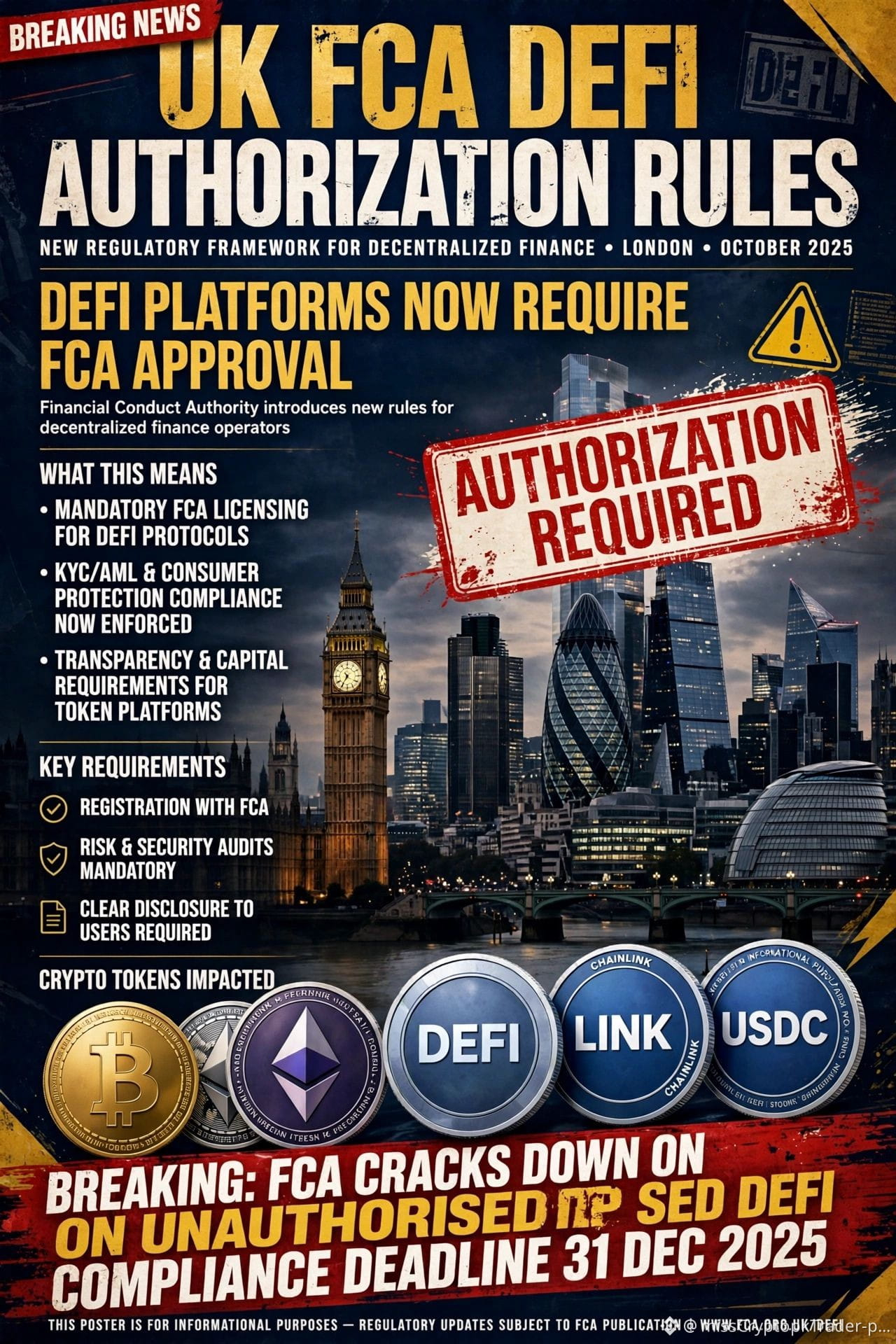
🇬🇧🚨 UK JUST DECLARED WAR ON DeFi!
FCA is going to be STRICTER than the US & EU COMBINED!
Financial Times reports: UK FCA will REQUIRE DeFi platforms to get FULL AUTHORIZATION!
Why so harsh?
→ $6.3B Binance Hack on Oct 29 — stolen funds flew through DeFi at lightning speed!
→ FCA: "Speed + scale of DeFi makes asset freezes IMPOSSIBLE!"
→ High risk of FRAUD, SCAMS, MONEY LAUNDERING
→ Victims have ZERO recovery / NO compensation!
Jane Moore, FCA Head of Payments & Digital Assets:
"Stolen funds move through DeFi so fast, we can't freeze them!"
What FCA wants:
1️⃣ DeFi platforms = AUTHORIZED or BANNED in UK!
→ "Smart contracts" / "Decentralized governance" = NO EXCUSE!
→ If you run a regulated activity, you need a license!
→ Technology-neutral: Code doesn't save you!
2️⃣ UK regulated exchanges CANNOT execute retail trades on DeFi!
→ Deliberate the wall between CeFi & DeFi!
3️⃣ ALL UK retail equity orders — tokenized or NOT — must go via REGULATED platforms!
→ NO offshore DeFi venues for tokenized stocks!
→ "Same risk, same rules" — Jamie Bell, FCA Head of Capital Markets
TIMELINE:
→ Oct 21: Consultation opened (BEFORE Binance hack!)
→ Nov 18: Consultation CLOSED
→ Jan 2027: Final guidance
→ Feb 28, 2027: Authorization applications DEADLINE!
→ Oct 25, 2027: New crypto regime LIVE!
Aave Labs WARNING:
→ FCA draft could treat basic protocol maintenance + sanctions screening as "centralisation"!
→ Even NON-CUSTODIAL devs could be forced to get licensed!
UK vs World:
🇬🇧 UK: Authorization REQUIRED, Retail DeFi BLOCKED
🇺🇸 US: Lighter touch
🇪🇺 EU: Lighter touch
Is UK PROTECTING users or KILLING DeFi innovation? 👇
PROTECTING 🟢 KILLING 🔴
Will DeFi protocols GEO-BLOCK UK users?
#DeFi #CryptoRegulation #BİNANCE #AAVE
$AAVE $UNI $LINK
49
·
--
Падение
#UKFCAReportedlyPlansDeFiAuthorizationRules
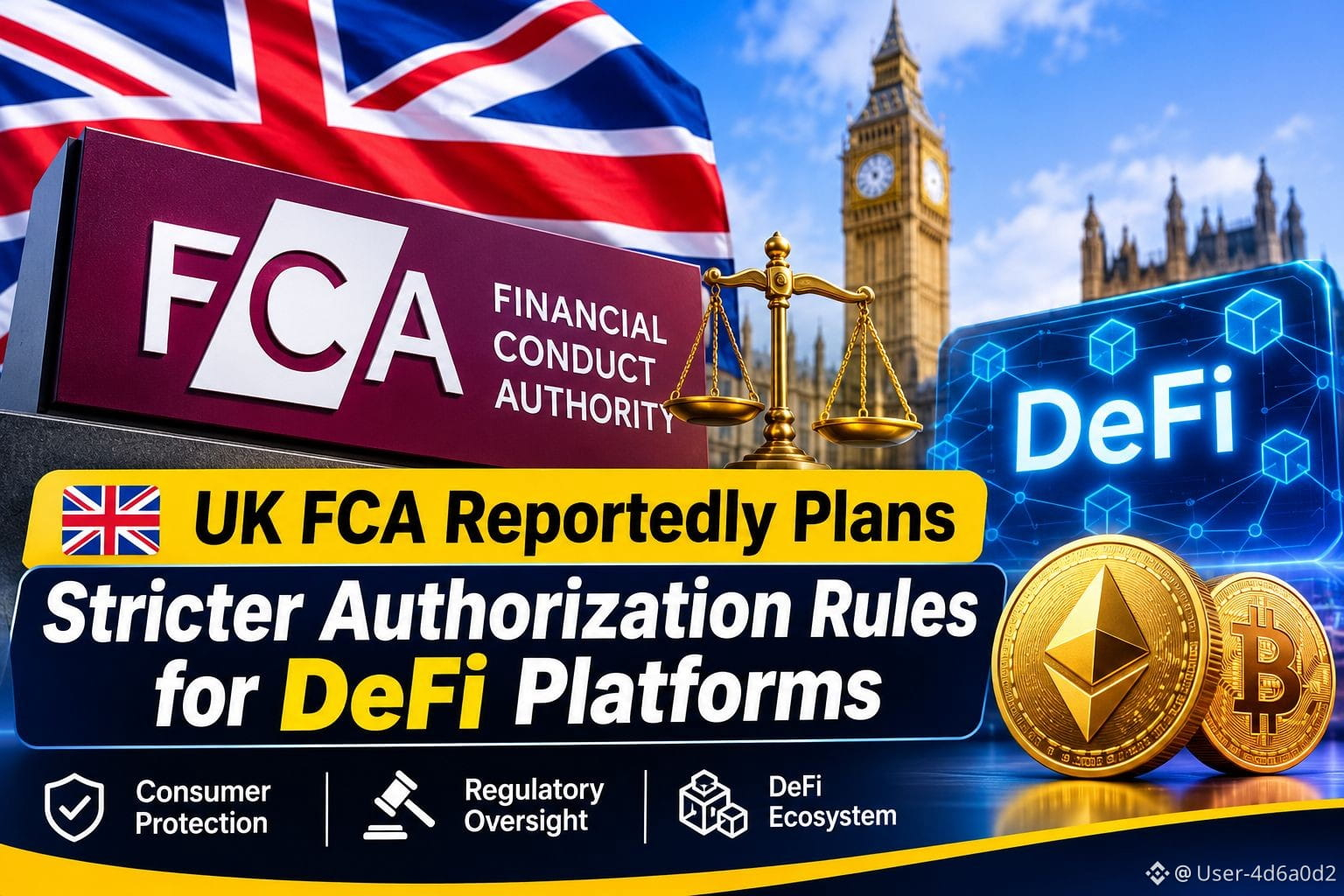
🇬🇧 UK FCA Reportedly Plans New DeFi Authorization Rules
The UK may be taking another step toward regulating decentralized finance.
📰 Core News:
The UK Financial Conduct Authority (FCA) is reportedly planning authorization rules for DeFi activities, potentially bringing certain decentralized finance services under regulatory oversight.
📊 Market Impact:
- Greater regulatory clarity could support institutional confidence.
- DeFi platforms may face additional compliance requirements.
- Privacy, decentralization, and innovation could become key discussion points.
💬 **What do you think? Will clearer regulations help DeFi grow, or create more challenges for decentralized platforms?
#DeFi #UKFCA #CryptoRegulation #Blockchain
This is for educational purposes only. Not Financial Advice (NFA). Always Do Your Own Research (DYOR).
$MSFT.US $MU.US $HSBC.US
{stock_us}(HSBC.US)
{stock_us}(MU.US)
{stock_us}(MSFT.US)
#UKFCAReportedlyPlansDeFiAuthorizationRules
🇬🇧 UK FCA Reportedly Plans New DeFi Authorization Rules
The UK may be taking another step toward regulating decentralized finance.
📰 Core News:
The UK Financial Conduct Authority (FCA) is reportedly planning authorization rules for DeFi activities, potentially bringing certain decentralized finance services under regulatory oversight.
📊 Market Impact:
- Greater regulatory clarity could support institutional confidence.
- DeFi platforms may face additional compliance requirements.
- Privacy, decentralization, and innovation could become key discussion points.
💬 **What do you think? Will clearer regulations help DeFi grow, or create more challenges for decentralized platforms?
#DeFi #UKFCA #CryptoRegulation #Blockchain
This is for educational purposes only. Not Financial Advice (NFA). Always Do Your Own Research (DYOR).
$MSFT.US $MU.US $HSBC.US
HSBCUS-0,20%
MSFTUS-0,91%
MUUS-2,32%
28

·
--
Статья
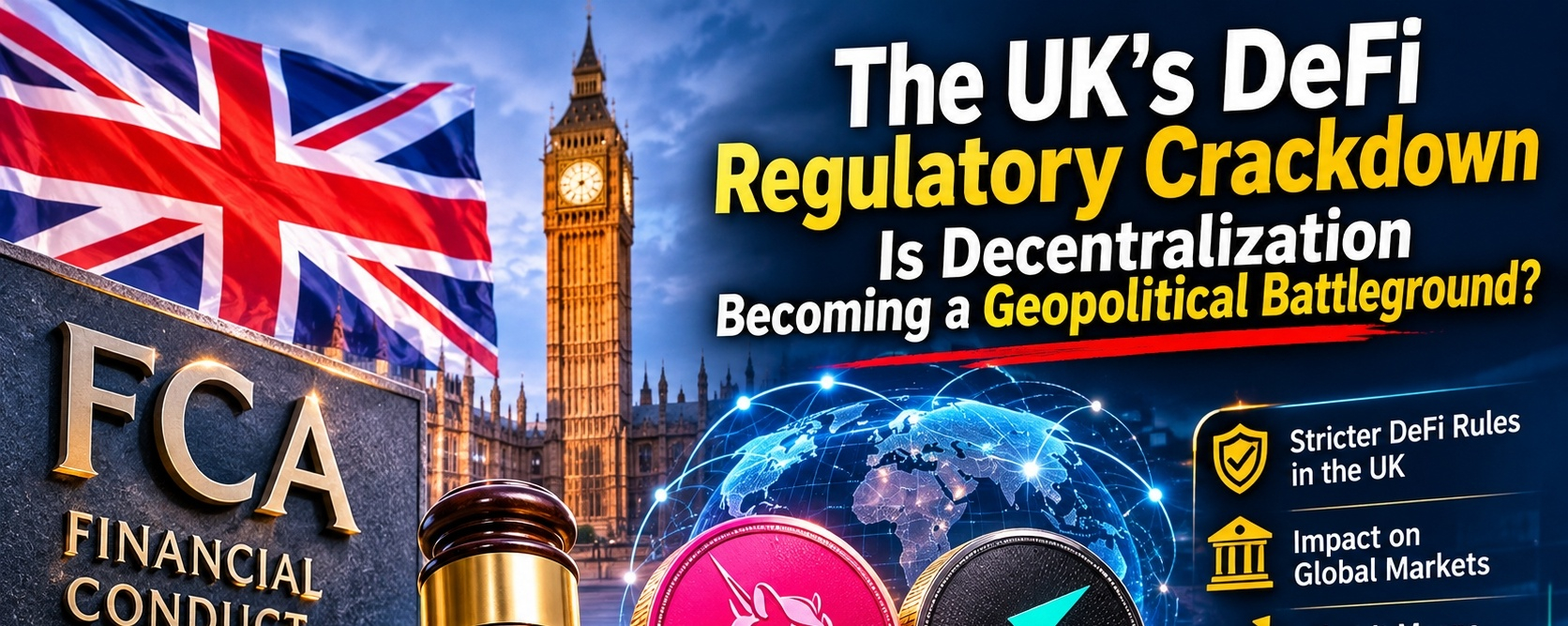
The UK’s DeFi Regulatory Crackdown: Is Decentralization Becoming a Geopolitical Battleground?How Britain's regulatory ambitions could reshape global crypto liquidity, institutional capital flows, and the investment outlook for $UNI and RUNE.
What if the biggest threat to DeFi is no longer hackers or smart contract failures, but the governments trying to control it?
The United Kingdom is moving toward a tougher regulatory approach to decentralized finance (DeFi). The Financial Conduct Authority (FCA) wants clearer accountability for businesses providing access to DeFi services, particularly where fraud, money laundering, and consumer protection are concerned.
This is more than another regulatory announcement. It raises a bigger question about who will control the financial infrastructure of the future: decentralized networks or national regulators.
For crypto investors, the consequences could extend well beyond the UK. Liquidity, institutional capital, trading activity, and the valuation of major DeFi tokens could all be affected.
UNI and RUNE deserve particular attention as this debate develops.
1. The UK's regulatory push: What is really changing?
The FCA's proposed approach focuses on a fundamental problem: DeFi transactions can move across borders within seconds, while traditional financial enforcement mechanisms often struggle to respond at the same speed.
The regulator has highlighted three major concerns:
Fraud, hacking, and money laundering risks across DeFi services.
Limited consumer protection when users lose funds.
The difficulty of identifying and restricting suspicious transactions before assets move elsewhere.
An important distinction matters here. The FCA's approach does not automatically mean every decentralized protocol must obtain a licence.
The key question is whether an identifiable business or intermediary is providing regulated services, controlling access, or facilitating transactions for customers.
Smart contracts and distributed governance alone may not exempt a business from regulatory obligations.
The FCA's October 2026 consultation, GC26/7, addresses how existing and proposed regulatory responsibilities should apply to DeFi-related activities. Final guidance is expected in January 2027.
For investors, the distinction between regulating a protocol and regulating the businesses surrounding it is critical.
2. History offers a warning: Financial freedom versus state control
The tension between financial innovation and government oversight is not new.
The expansion of the dollar-based financial system after the 1970s strengthened the United States' influence over international capital flows. The 2008 financial crisis then exposed serious weaknesses in traditional banking and risk management.
Bitcoin emerged in the aftermath of that crisis with a different financial philosophy: reduce dependence on intermediaries and give individuals greater control over their assets.
Ethereum expanded that idea by introducing programmable financial infrastructure. DeFi subsequently brought lending, borrowing, trading, and liquidity provision onto blockchain networks.
But decentralization has never been absolute.
Many protocols still depend on front-end interfaces, centralized infrastructure providers, fiat payment channels, and identifiable development or governance organizations.
These connections create potential regulatory entry points.
The UK's strategy reflects a broader question of financial power: governments want the benefits of blockchain innovation without losing control over financial supervision and enforcement.
3. UK versus US and EU: A competition for financial influence
The UK's position becomes clearer when compared with the approaches of the United States and European Union.
The EU's Markets in Crypto-Assets Regulation (MiCA) provides a common framework for crypto businesses. Fully decentralized services provided without intermediaries may fall outside its scope, although identifiable service providers can still face regulatory obligations.
The United States has taken a more fragmented approach, with different agencies applying securities, financial services, and anti-money laundering rules depending on the activity involved.
The UK is attempting to establish a more clearly supervised environment for crypto-related financial services.
There is also a geopolitical dimension.
London has long been one of the world's major financial centres. Following Brexit, maintaining its international financial influence remains important.
Building a credible regulatory framework for digital assets could help attract banks, asset managers, and institutional investors.
However, there is a potential downside.
If compliance becomes too expensive or restrictive, crypto businesses and liquidity could move toward jurisdictions such as Singapore, Switzerland, or Dubai.
Regulation can attract institutional capital, but excessive restrictions can also push economic activity elsewhere.
That is the balance the UK needs to manage.
4. Institutional capital: Who stands to benefit?
Institutional investors do not make decisions based on returns alone.
They also consider legal certainty, custody arrangements, operational security, compliance costs, and reputational risk.
Clearer regulation could make parts of DeFi more attractive to traditional financial institutions.
Banks and asset managers may become more comfortable using blockchain-based financial infrastructure when responsibilities and legal protections are clearly defined.
This creates two possible capital flows.
First: Capital into compliant DeFi.
Established protocols and businesses capable of meeting regulatory requirements could attract institutional partnerships and new liquidity.
Second: Capital moving offshore.
Independent traders, developers, and users seeking fewer restrictions may shift toward jurisdictions with more flexible regulatory environments.
The result could be a divided DeFi market: one increasingly connected to traditional finance and another focused on open, permissionless access.
For investors, this distinction matters. Regulatory approval does not automatically translate into higher token prices. Actual usage, revenue generation, and token economics remain essential.
5. UNI and RUNE: Where are the investment opportunities?
Uniswap ($UNI ): Institutional adoption versus regulatory pressure
Uniswap remains one of the most important decentralized exchange infrastructures in crypto.
Its investment case depends on trading volume, liquidity, protocol development, and its ability to operate within evolving regulatory environments.
One important development is Uniswap's protocol-fee and token-burn mechanism, introduced for specified deployments in December 2025.
Under this mechanism, eligible protocol fees can be used to burn UNI, creating a potential relationship between protocol activity and token supply reduction.
However, holding UNI does not automatically give investors a direct claim on all protocol revenue.
The bullish case is straightforward: clearer regulation could encourage institutional participation, increase trading activity, and strengthen demand for established DeFi infrastructure.
The bearish case is equally important. Restrictions on retail access and reduced liquidity could limit growth in certain markets.
What to watch: DEX trading volume, protocol fees, UNI burns, liquidity depth, and regulatory developments.
THORChain ($RUNE ): The cross-chain liquidity opportunity
THORChain addresses a different part of the DeFi market.
Its infrastructure enables swaps between native assets across different blockchains without relying on the same wrapped-asset model used by many traditional bridges.
RUNE plays several important roles within the network, including liquidity-pool settlement, node bonding, and network incentives.
That makes its investment outlook closely connected to actual network activity.
If regulatory restrictions fragment DeFi liquidity across jurisdictions, demand for cross-chain infrastructure could become more important.
This could create opportunities for THORChain.
But there are substantial risks. Cross-chain infrastructure faces security vulnerabilities, liquidity imbalances, and operational challenges.
THORChain's reported security incident in May 2026, involving approximately $10.8 million, is a reminder that technical risks remain significant.
What to watch: Cross-chain transaction volume, total liquidity, node bonding, network security, and RUNE's economic role.
The distinction is important: UNI offers exposure to decentralized trading infrastructure, while RUNE provides exposure to cross-chain liquidity infrastructure. Both have different risk profiles.
6. What does this mean for ordinary investors?
The impact of regulatory decisions usually develops in stages.
First, expectations change. Then institutional capital begins adjusting its exposure. Finally, changes in liquidity, trading activity, and token demand may influence market valuations.
Three scenarios deserve attention.
Bullish scenario: Regulatory clarity encourages institutional participation. Established DeFi protocols attract more liquidity and trading activity. UNI could benefit from higher protocol usage, while RUNE could gain from stronger cross-chain demand.
Bearish scenario: Compliance costs increase, retail access becomes restricted, and trading activity moves elsewhere. Smaller protocols face difficulties, while UNI and RUNE experience pressure from reduced liquidity or negative market sentiment.
Neutral scenario: Institutional investors use regulated DeFi infrastructure while permissionless protocols continue serving independent users. Two parallel markets develop, each with different users and capital sources.
For portfolio management, investors should avoid treating every regulatory announcement as a buying opportunity.
Monitor actual protocol activity rather than relying on headlines.
For UNI, focus on protocol fees, trading volume, and token burns. For RUNE, pay particular attention to liquidity, network security, and cross-chain transaction activity.
Position sizing and risk management remain essential, especially in volatile DeFi assets.
7. Key dates investors should monitor
Date Development
November 18, 2026 FCA consultation closed
January 2027 Expected final DeFi guidance
February 28, 2027 Planned application deadline for certain existing businesses
October 25, 2027 Scheduled commencement of the broader UK crypto regulatory regime
January 2027 will be particularly important. The final guidance should provide greater clarity about how the FCA intends to approach DeFi-related activities.
However, the actual market impact will depend on implementation and how businesses respond.
Final Analysis: Is DeFi losing its independence?
The future of DeFi will not be determined by technology alone.
It will depend on how effectively blockchain networks, national governments, and institutional capital coexist.
Governments want financial transparency, consumer protection, and control over illicit financial activity. DeFi users want open access, financial independence, and fewer intermediaries.
Neither side can completely ignore the other.
If regulators create workable rules, established DeFi protocols could gain access to a much larger pool of institutional capital.
If restrictions become excessive, liquidity and innovation could migrate to more flexible jurisdictions.
For UNI and RUNE, the most important investment signal will not be regulatory headlines. It will be whether their underlying networks continue attracting users, liquidity, and sustainable economic activity.
The real question is not whether governments can regulate DeFi. It is whether they can regulate it without driving away the very innovation and capital they want to attract.
What is your view? Will the UK's tougher DeFi regulations bring institutional money into the sector, or push liquidity toward offshore protocols? And between $ UNI and $ RUNE, which project do you think is better positioned for the next phase of DeFi? Share your analysis below.
{spot}(UNIUSDT)
{spot}(RUNEUSDT)
{spot}(BTCUSDT)
#UKFCAReportedlyPlansDeFiAuthorizationRules #Geopolitics #CryptoAnalysis #altcoins #cryptouniverseofficial
The UK’s DeFi Regulatory Crackdown: Is Decentralization Becoming a Geopolitical Battleground?
How Britain's regulatory ambitions could reshape global crypto liquidity, institutional capital flows, and the investment outlook for $UNI and RUNE.
What if the biggest threat to DeFi is no longer hackers or smart contract failures, but the governments trying to control it?
The United Kingdom is moving toward a tougher regulatory approach to decentralized finance (DeFi). The Financial Conduct Authority (FCA) wants clearer accountability for businesses providing access to DeFi services, particularly where fraud, money laundering, and consumer protection are concerned.
This is more than another regulatory announcement. It raises a bigger question about who will control the financial infrastructure of the future: decentralized networks or national regulators.
For crypto investors, the consequences could extend well beyond the UK. Liquidity, institutional capital, trading activity, and the valuation of major DeFi tokens could all be affected.
UNI and RUNE deserve particular attention as this debate develops.
1. The UK's regulatory push: What is really changing?
The FCA's proposed approach focuses on a fundamental problem: DeFi transactions can move across borders within seconds, while traditional financial enforcement mechanisms often struggle to respond at the same speed.
The regulator has highlighted three major concerns:
Fraud, hacking, and money laundering risks across DeFi services.
Limited consumer protection when users lose funds.
The difficulty of identifying and restricting suspicious transactions before assets move elsewhere.
An important distinction matters here. The FCA's approach does not automatically mean every decentralized protocol must obtain a licence.
The key question is whether an identifiable business or intermediary is providing regulated services, controlling access, or facilitating transactions for customers.
Smart contracts and distributed governance alone may not exempt a business from regulatory obligations.
The FCA's October 2026 consultation, GC26/7, addresses how existing and proposed regulatory responsibilities should apply to DeFi-related activities. Final guidance is expected in January 2027.
For investors, the distinction between regulating a protocol and regulating the businesses surrounding it is critical.
2. History offers a warning: Financial freedom versus state control
The tension between financial innovation and government oversight is not new.
The expansion of the dollar-based financial system after the 1970s strengthened the United States' influence over international capital flows. The 2008 financial crisis then exposed serious weaknesses in traditional banking and risk management.
Bitcoin emerged in the aftermath of that crisis with a different financial philosophy: reduce dependence on intermediaries and give individuals greater control over their assets.
Ethereum expanded that idea by introducing programmable financial infrastructure. DeFi subsequently brought lending, borrowing, trading, and liquidity provision onto blockchain networks.
But decentralization has never been absolute.
Many protocols still depend on front-end interfaces, centralized infrastructure providers, fiat payment channels, and identifiable development or governance organizations.
These connections create potential regulatory entry points.
The UK's strategy reflects a broader question of financial power: governments want the benefits of blockchain innovation without losing control over financial supervision and enforcement.
3. UK versus US and EU: A competition for financial influence
The UK's position becomes clearer when compared with the approaches of the United States and European Union.
The EU's Markets in Crypto-Assets Regulation (MiCA) provides a common framework for crypto businesses. Fully decentralized services provided without intermediaries may fall outside its scope, although identifiable service providers can still face regulatory obligations.
The United States has taken a more fragmented approach, with different agencies applying securities, financial services, and anti-money laundering rules depending on the activity involved.
The UK is attempting to establish a more clearly supervised environment for crypto-related financial services.
There is also a geopolitical dimension.
London has long been one of the world's major financial centres. Following Brexit, maintaining its international financial influence remains important.
Building a credible regulatory framework for digital assets could help attract banks, asset managers, and institutional investors.
However, there is a potential downside.
If compliance becomes too expensive or restrictive, crypto businesses and liquidity could move toward jurisdictions such as Singapore, Switzerland, or Dubai.
Regulation can attract institutional capital, but excessive restrictions can also push economic activity elsewhere.
That is the balance the UK needs to manage.
4. Institutional capital: Who stands to benefit?
Institutional investors do not make decisions based on returns alone.
They also consider legal certainty, custody arrangements, operational security, compliance costs, and reputational risk.
Clearer regulation could make parts of DeFi more attractive to traditional financial institutions.
Banks and asset managers may become more comfortable using blockchain-based financial infrastructure when responsibilities and legal protections are clearly defined.
This creates two possible capital flows.
First: Capital into compliant DeFi.
Established protocols and businesses capable of meeting regulatory requirements could attract institutional partnerships and new liquidity.
Second: Capital moving offshore.
Independent traders, developers, and users seeking fewer restrictions may shift toward jurisdictions with more flexible regulatory environments.
The result could be a divided DeFi market: one increasingly connected to traditional finance and another focused on open, permissionless access.
For investors, this distinction matters. Regulatory approval does not automatically translate into higher token prices. Actual usage, revenue generation, and token economics remain essential.
5. UNI and RUNE: Where are the investment opportunities?
Uniswap ($UNI ): Institutional adoption versus regulatory pressure
Uniswap remains one of the most important decentralized exchange infrastructures in crypto.
Its investment case depends on trading volume, liquidity, protocol development, and its ability to operate within evolving regulatory environments.
One important development is Uniswap's protocol-fee and token-burn mechanism, introduced for specified deployments in December 2025.
Under this mechanism, eligible protocol fees can be used to burn UNI, creating a potential relationship between protocol activity and token supply reduction.
However, holding UNI does not automatically give investors a direct claim on all protocol revenue.
The bullish case is straightforward: clearer regulation could encourage institutional participation, increase trading activity, and strengthen demand for established DeFi infrastructure.
The bearish case is equally important. Restrictions on retail access and reduced liquidity could limit growth in certain markets.
What to watch: DEX trading volume, protocol fees, UNI burns, liquidity depth, and regulatory developments.
THORChain ($RUNE ): The cross-chain liquidity opportunity
THORChain addresses a different part of the DeFi market.
Its infrastructure enables swaps between native assets across different blockchains without relying on the same wrapped-asset model used by many traditional bridges.
RUNE plays several important roles within the network, including liquidity-pool settlement, node bonding, and network incentives.
That makes its investment outlook closely connected to actual network activity.
If regulatory restrictions fragment DeFi liquidity across jurisdictions, demand for cross-chain infrastructure could become more important.
This could create opportunities for THORChain.
But there are substantial risks. Cross-chain infrastructure faces security vulnerabilities, liquidity imbalances, and operational challenges.
THORChain's reported security incident in May 2026, involving approximately $10.8 million, is a reminder that technical risks remain significant.
What to watch: Cross-chain transaction volume, total liquidity, node bonding, network security, and RUNE's economic role.
The distinction is important: UNI offers exposure to decentralized trading infrastructure, while RUNE provides exposure to cross-chain liquidity infrastructure. Both have different risk profiles.
6. What does this mean for ordinary investors?
The impact of regulatory decisions usually develops in stages.
First, expectations change. Then institutional capital begins adjusting its exposure. Finally, changes in liquidity, trading activity, and token demand may influence market valuations.
Three scenarios deserve attention.
Bullish scenario: Regulatory clarity encourages institutional participation. Established DeFi protocols attract more liquidity and trading activity. UNI could benefit from higher protocol usage, while RUNE could gain from stronger cross-chain demand.
Bearish scenario: Compliance costs increase, retail access becomes restricted, and trading activity moves elsewhere. Smaller protocols face difficulties, while UNI and RUNE experience pressure from reduced liquidity or negative market sentiment.
Neutral scenario: Institutional investors use regulated DeFi infrastructure while permissionless protocols continue serving independent users. Two parallel markets develop, each with different users and capital sources.
For portfolio management, investors should avoid treating every regulatory announcement as a buying opportunity.
Monitor actual protocol activity rather than relying on headlines.
For UNI, focus on protocol fees, trading volume, and token burns. For RUNE, pay particular attention to liquidity, network security, and cross-chain transaction activity.
Position sizing and risk management remain essential, especially in volatile DeFi assets.
7. Key dates investors should monitor
Date Development
November 18, 2026 FCA consultation closed
January 2027 Expected final DeFi guidance
February 28, 2027 Planned application deadline for certain existing businesses
October 25, 2027 Scheduled commencement of the broader UK crypto regulatory regime
January 2027 will be particularly important. The final guidance should provide greater clarity about how the FCA intends to approach DeFi-related activities.
However, the actual market impact will depend on implementation and how businesses respond.
Final Analysis: Is DeFi losing its independence?
The future of DeFi will not be determined by technology alone.
It will depend on how effectively blockchain networks, national governments, and institutional capital coexist.
Governments want financial transparency, consumer protection, and control over illicit financial activity. DeFi users want open access, financial independence, and fewer intermediaries.
Neither side can completely ignore the other.
If regulators create workable rules, established DeFi protocols could gain access to a much larger pool of institutional capital.
If restrictions become excessive, liquidity and innovation could migrate to more flexible jurisdictions.
For UNI and RUNE, the most important investment signal will not be regulatory headlines. It will be whether their underlying networks continue attracting users, liquidity, and sustainable economic activity.
The real question is not whether governments can regulate DeFi. It is whether they can regulate it without driving away the very innovation and capital they want to attract.
What is your view? Will the UK's tougher DeFi regulations bring institutional money into the sector, or push liquidity toward offshore protocols? And between $ UNI and $ RUNE, which project do you think is better positioned for the next phase of DeFi? Share your analysis below.
#UKFCAReportedlyPlansDeFiAuthorizationRules #Geopolitics #CryptoAnalysis #altcoins #cryptouniverseofficial
1
130

·
--
🚨 THE UK WANTS TO REGULATE DeFi — IS DECENTRALIZATION UNDER THREAT?
The UK's Financial Conduct Authority (FCA) reportedly plans to introduce mandatory authorization requirements for DeFi platforms, citing fraud, money laundering and inadequate consumer protection.
The regulator is also considering restrictions on retail tokenized stock trading through unregulated platforms.
For protocols like $AAVE and $UNI, tighter regulations could create new barriers to institutional adoption and liquidity growth.
However, regulatory clarity could also attract traditional financial institutions into compliant DeFi ecosystems.
The FCA expects to publish final DeFi guidance in January 2027, ahead of its broader crypto regulatory regime taking effect in October 2027.
🔥 The biggest threat to DeFi may no longer be smart contract vulnerabilities — it may be regulatory pressure.
$UNI $RUNE
#ukfcareportedlyplansdefiauthorizationrules #CanMarketsReboundAfterThanksgiving? #CouldSpaceX’sOrbitalDataCentersBoostAIChipDemand? #EvolveAtBinanceBlockchainWeek #KoreaFSCSeeksPowerToSuspendCryptoListings
🚨 THE UK WANTS TO REGULATE DeFi — IS DECENTRALIZATION UNDER THREAT?
The UK's Financial Conduct Authority (FCA) reportedly plans to introduce mandatory authorization requirements for DeFi platforms, citing fraud, money laundering and inadequate consumer protection.
The regulator is also considering restrictions on retail tokenized stock trading through unregulated platforms.
For protocols like $AAVE and $UNI , tighter regulations could create new barriers to institutional adoption and liquidity growth.
However, regulatory clarity could also attract traditional financial institutions into compliant DeFi ecosystems.
The FCA expects to publish final DeFi guidance in January 2027, ahead of its broader crypto regulatory regime taking effect in October 2027.
🔥 The biggest threat to DeFi may no longer be smart contract vulnerabilities — it may be regulatory pressure.
$UNI $RUNE
#ukfcareportedlyplansdefiauthorizationrules #CanMarketsReboundAfterThanksgiving? #CouldSpaceX’sOrbitalDataCentersBoostAIChipDemand? #EvolveAtBinanceBlockchainWeek #KoreaFSCSeeksPowerToSuspendCryptoListings

124
·
--
Рост
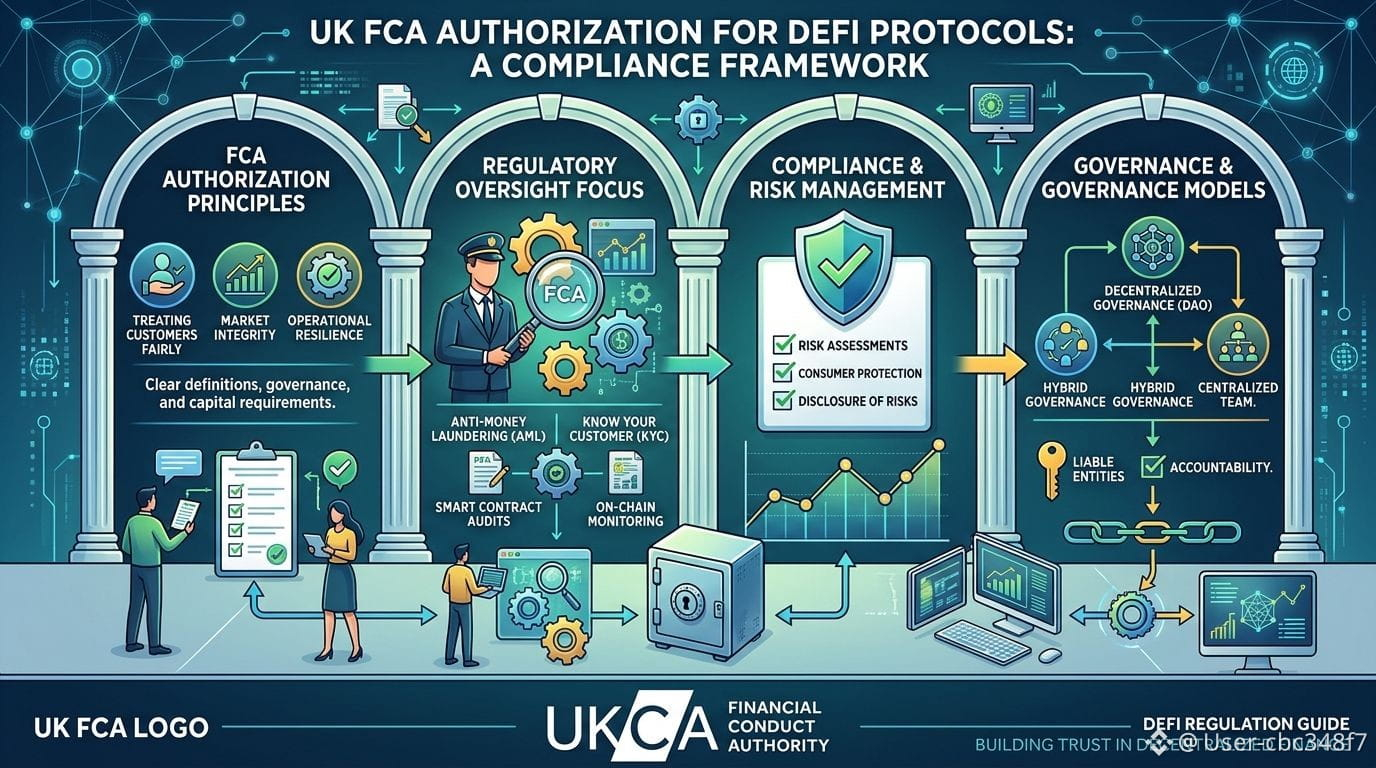
#ukfcareportedlyplansdefiauthorizationrules The UK’s Financial Conduct Authority reportedly plans authorization rules for DeFi activities that involve identifiable control, clear commercial models, or centralized entry points, aiming to bring regulated accountability to on-chain finance while distinguishing truly decentralized protocols. For builders and liquidity providers, clearer boundaries could reduce gray-area uncertainty but raise compliance and geofencing hurdles across UK-facing frontends. Markets are watching how regulators separate governance code from controlled entities without stifling innovation. $BTC $BNB $SOL
{spot}(SOLUSDT)
{spot}(BNBUSDT)
{spot}(BTCUSDT)
#ukfcareportedlyplansdefiauthorizationrules The UK’s Financial Conduct Authority reportedly plans authorization rules for DeFi activities that involve identifiable control, clear commercial models, or centralized entry points, aiming to bring regulated accountability to on-chain finance while distinguishing truly decentralized protocols. For builders and liquidity providers, clearer boundaries could reduce gray-area uncertainty but raise compliance and geofencing hurdles across UK-facing frontends. Markets are watching how regulators separate governance code from controlled entities without stifling innovation. $BTC $BNB $SOL
175
·
--
#ukfcareportedlyplansdefiauthorizationrules
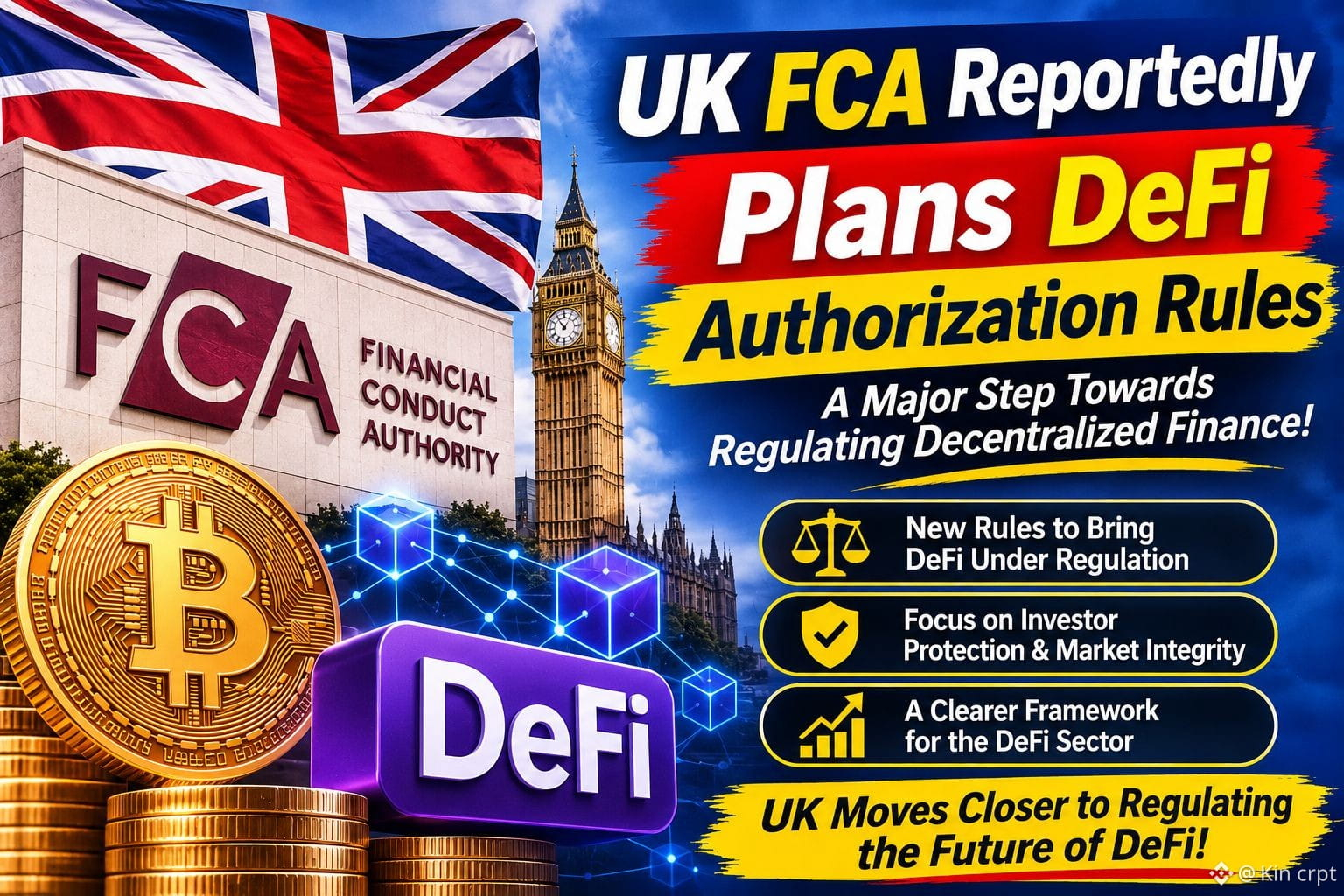
The UK FCA is reportedly advancing DeFi authorization rules after the $6.3B Binance hack exposed how fast stolen funds can move across decentralized protocols. Ahead of the October 2027 crypto regime, regulators are targeting identifiable operators, AML controls, and tokenized equity execution. Expect tighter compliance hurdles for DeFi front-ends and cross-chain liquidity! #DeFi #UKFCA #CryptoRegulation #BinanceSquare$BTC $ETH $XRP
{spot}(XRPUSDT)
{spot}(ETHUSDT)
{spot}(BTCUSDT)
#ukfcareportedlyplansdefiauthorizationrules
The UK FCA is reportedly advancing DeFi authorization rules after the $6.3B Binance hack exposed how fast stolen funds can move across decentralized protocols. Ahead of the October 2027 crypto regime, regulators are targeting identifiable operators, AML controls, and tokenized equity execution. Expect tighter compliance hurdles for DeFi front-ends and cross-chain liquidity! #DeFi #UKFCA #CryptoRegulation #BinanceSquare$BTC $ETH $XRP
The UK FCA is reportedly advancing DeFi authorization rules after the $6.3B Binance hack exposed how fast stolen funds can move across decentralized protocols. Ahead of the October 2027 crypto regime, regulators are targeting identifiable operators, AML controls, and tokenized equity execution. Expect tighter compliance hurdles for DeFi front-ends and cross-chain liquidity! #DeFi #UKFCA #CryptoRegulation #BinanceSquare$BTC $ETH $XRP
1.8k

·
--
#ukfcareportedlyplansdefiauthorizationrules
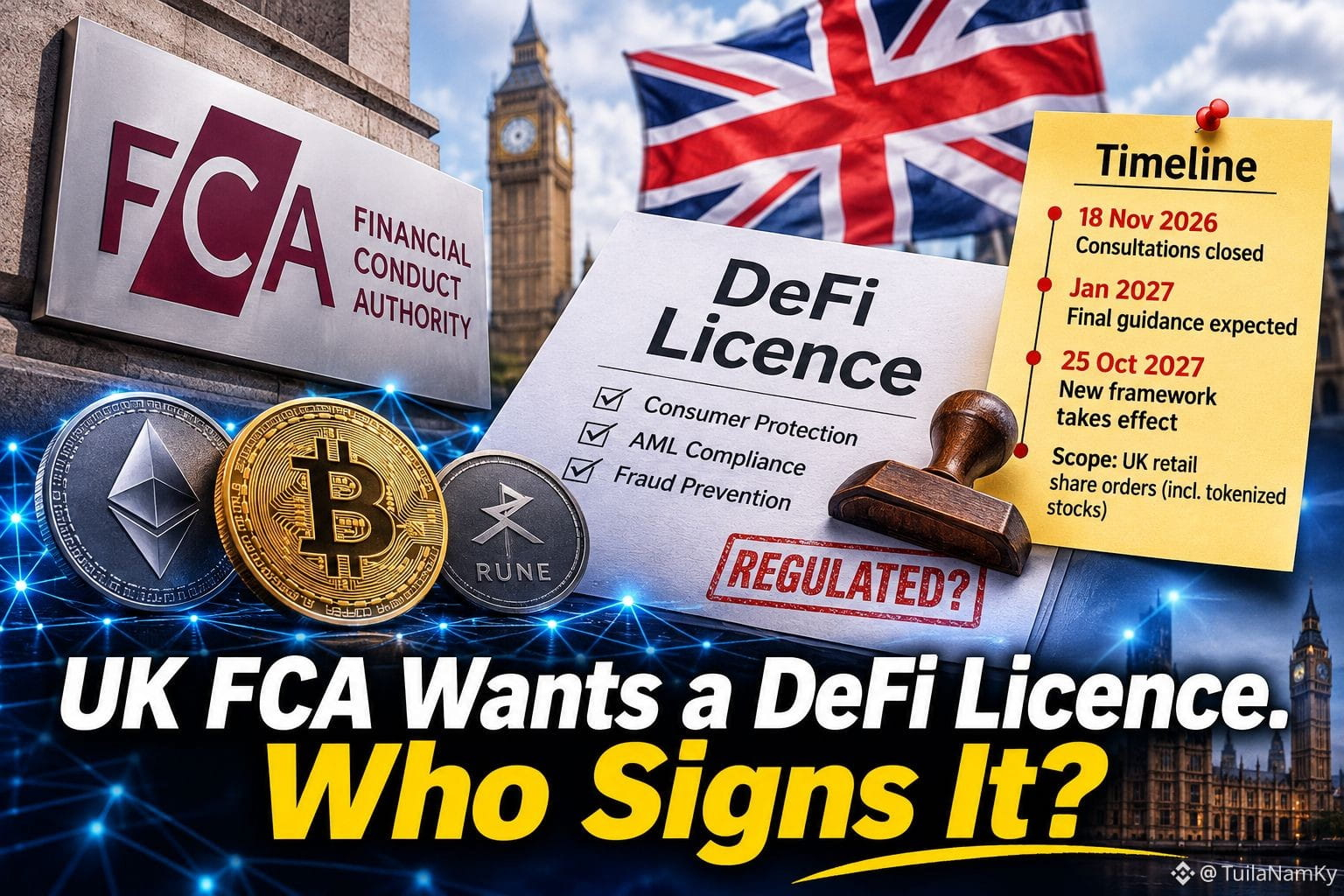
UK FCA Wants a DeFi Licence. Who Signs It?
The FCA is reportedly preparing an authorisation regime for DeFi platforms, citing fraud, AML and consumer protection.
Jane Moore's point is blunt: when stolen funds move through protocols this fast and at this scale, "freezing assets" stops being a real option.
Exhibit A is the 29 Oct 2026 hack, where North Korea-linked actors reportedly used decentralised protocols like THORChain to scatter the proceeds.
The timeline, for people who prefer dates to drama:
18 Nov 2026: consultations closed.
Jan 2027: final guidance expected.
25 Oct 2027: new framework takes effect.
Scope creep: UK retail share orders, including tokenized stocks, would have to go through regulated platforms.
💡 Square Insight:
Nothing here moves price tomorrow, and the runway to late 2027 is long.
But any DeFi project with a real user base or a polished commercial front end in the UK is now on the clock.
Compliance planning is a 2026 problem, not a 2027 one.
The awkward bit is that DeFi has no head office, no CEO and no compliance officer to summon.
Regulators will probably aim at front ends, foundations or whoever collects fees. The fight over "license what, and who takes the liability" will stay loud through 2027.
So who should carry the can: the interface, the developers, or the token holders voting on upgrades? 👇
$ETH
{future}(ETHUSDT)
$RUNE
{future}(RUNEUSDT)
$BTC
{future}(BTCUSDT)
NFA / DYOR
#ukfcareportedlyplansdefiauthorizationrules
UK FCA Wants a DeFi Licence. Who Signs It?
The FCA is reportedly preparing an authorisation regime for DeFi platforms, citing fraud, AML and consumer protection.
Jane Moore's point is blunt: when stolen funds move through protocols this fast and at this scale, "freezing assets" stops being a real option.
Exhibit A is the 29 Oct 2026 hack, where North Korea-linked actors reportedly used decentralised protocols like THORChain to scatter the proceeds.
The timeline, for people who prefer dates to drama:
18 Nov 2026: consultations closed.
Jan 2027: final guidance expected.
25 Oct 2027: new framework takes effect.
Scope creep: UK retail share orders, including tokenized stocks, would have to go through regulated platforms.
💡 Square Insight:
Nothing here moves price tomorrow, and the runway to late 2027 is long.
But any DeFi project with a real user base or a polished commercial front end in the UK is now on the clock.
Compliance planning is a 2026 problem, not a 2027 one.
The awkward bit is that DeFi has no head office, no CEO and no compliance officer to summon.
Regulators will probably aim at front ends, foundations or whoever collects fees. The fight over "license what, and who takes the liability" will stay loud through 2027.
So who should carry the can: the interface, the developers, or the token holders voting on upgrades? 👇
$ETH
$RUNE
$BTC
NFA / DYOR
2
2.3k

·
--
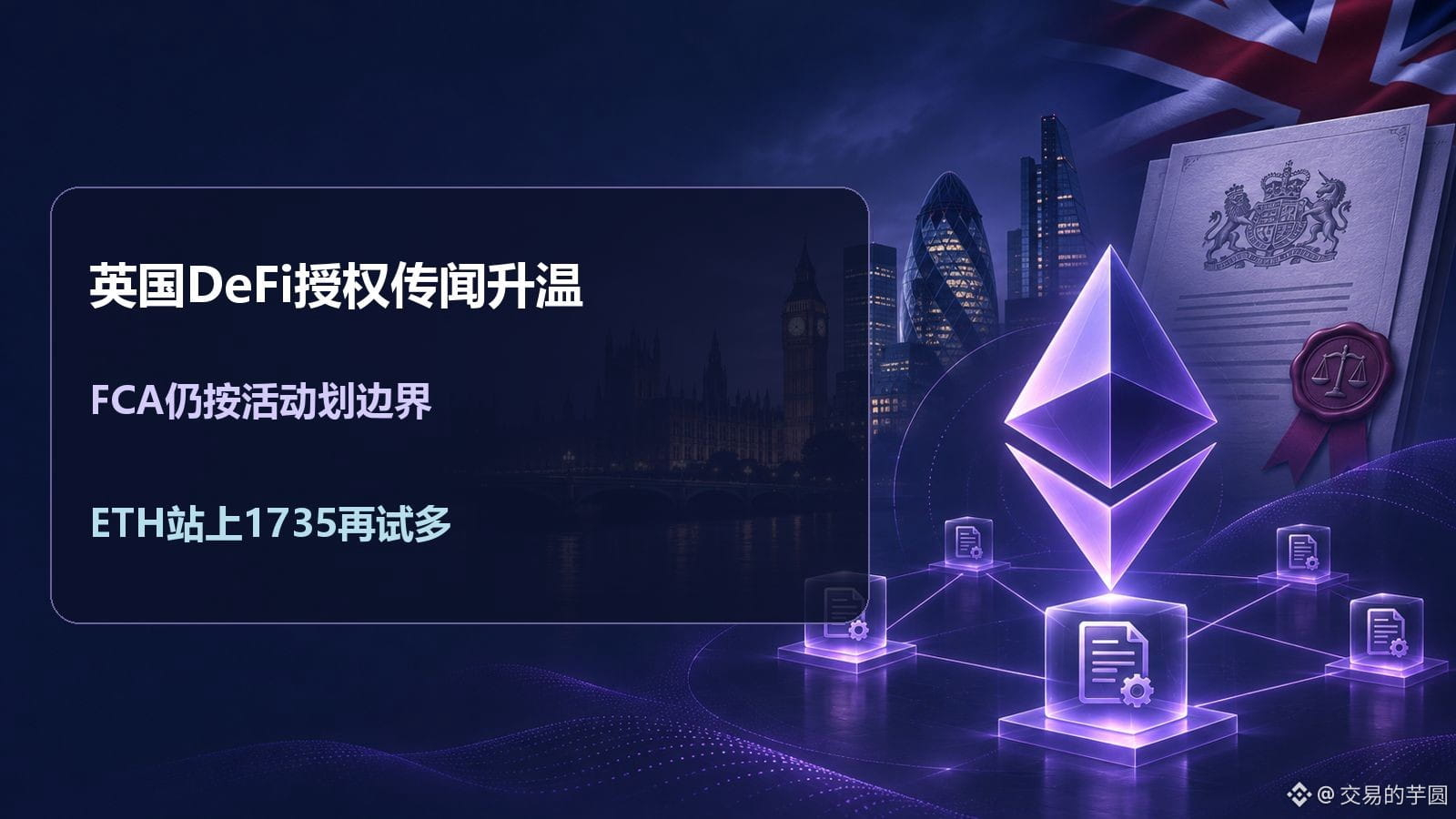
英国DeFi授权传闻升温|FCA文件仍按活动划边界|ETH我不追消息
我的态度是先核对监管原文,再判断对ETH的影响。币安广场当前上升话题#UKFCAReportedlyPlansDeFiAuthorizationRules讨论英国可能对DeFi平台提出授权要求;Binance News的相关消息转引媒体,表述本身是“据报道”,不能写成今天FCA突然宣布所有DeFi协议都要申请牌照。FCA官网可核实的GC26/7是去中心化金融指导意见征询,重点是使用DeFi开展金融服务的企业面临的运营韧性与金融犯罪风险。意见征集截止11月18日,FCA计划于2027年1月发布最终指导;官网同时写明,2027年10月25日起新加密资产活动进入其监管边界。范围如何适用于具体业务,要看实际活动、主体和最终文件。
这一区分很重要。智能合约部署在以太坊上,不自动使每个全球节点或普通ETH持有人变成英国获授权金融企业;反过来,有企业在英国借DeFi提供受监管服务,也不能因把流程放上链就免除相关义务。若要求更明确,可能影响前端运营、托管、法币入口、风控和合规成本;ETH作为DeFi常用结算资产,长期可能受到使用场景变化影响。但监管更清晰既可能带来合规机构参与,也可能提高部分服务商的成本,方向不能靠一句标题决定。官方文件目前没有给出可直接量化的ETH新增需求或卖压。
市场反应并不支持把传闻当成已落地利空。Kraken的ETH/USD刚才约1692.51美元,24小时开盘约1690.41、低点1666.02、高点1728.63;价格围绕开盘震荡,尚未突破区间上沿。这个报价不能证明英国消息对ETH造成单一方向影响,同期仍有感恩节后的流动性变化。若FCA后来发布正式文件,应以新文本修订判断,而非用二手转述补足尚未公布的细节。
我看1735为上方确认位,1680为回踩防线,1665附近为短线风险区。若突破1735后迅速跌回1680,情绪反弹的可靠性不足;若先破1665,修复判断被推翻。若监管官方明确扩张或收窄适用范围,也要重估DeFi业务影响,不能沿用今天的条件计划。
如果是我自己交易,此刻不参与,方向只考虑无杠杆现货试多,仓位最多总资金的0.4%。入场触发为四小时收盘站上1735、随后回踩1725至1735企稳;第一目标1775,到位减半,第二目标1810,余仓平仓。入场后跌破1680止损;若四小时收盘重新落回1700下方,提前平仓。若触发前跌破1665,计划作废。未触发就没有成交,更没有盈利可复盘。
来源:英国FCA GC26/7及加密资产监管边界文件、币安广场热门话题与Binance News、Kraken ETH/USD行情。#UKFCAReportedlyPlansDeFiAuthorizationRules #ETH
以上仅为个人市场观察,不构成投资建议。


·
--
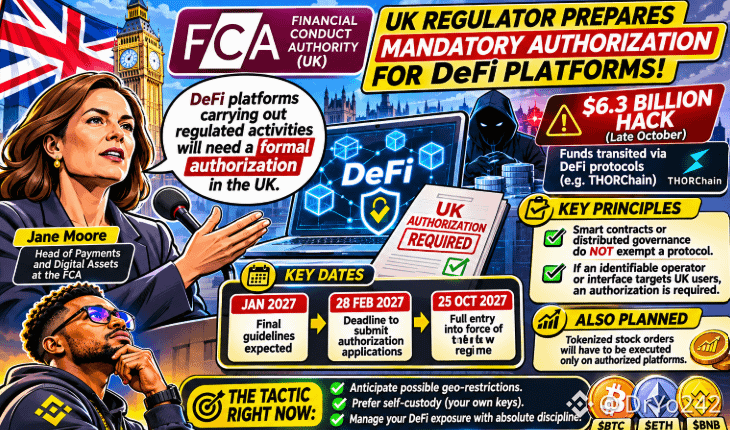
Le régulateur britannique (FCA) prépare une autorisation obligatoire pour les plateformes DeFi !
La Financial Conduct Authority (FCA) du Royaume-Uni durcit le ton sur la finance décentralisée.
Selon Jane Moore, responsable des paiements et actifs numériques à la FCA, le régulateur prévoit d'imposer un agrément formel aux plateformes DeFi exerçant des activités régulées, notamment après le piratage massif de 6,3 milliards $ survenu fin octobre où des fonds ont transité via des protocoles décentralisés comme THORChain.
La FCA prévient que l'utilisation de *smart contracts* ou d'une gouvernance distribuée ne suffira pas à exempter un protocole. Si un opérateur ou une interface identifiable cible des utilisateurs britanniques, une autorisation sera requise.
Les directives finales sont attendues pour janvier 2027, avec une clôture des demandes d'agrément le 28 février 2027 et une entrée en vigueur totale du nouveau régime le 25 octobre 2027.
Le régulateur envisage également d'obliger l'exécution des ordres sur les actions tokenisées uniquement sur des plateformes agréées.
L'étau réglementaire se resserre sur les interfaces DeFi (*front-ends*) dans les grandes juridictions.
Anticipez les restrictions géographiques éventuelles, privilégiez la garde autonome (self-custody) et gérez votre exposition aux protocoles DeFi avec une rigueur absolue. ⚔️🔋
#DrYo242
$BTC $ETH $BNB
#ukfcareportedlyplansdefiauthorizationrules
3
140

·
--
Падение
#UKFCAReportedlyPlansDeFiAuthorizationRules
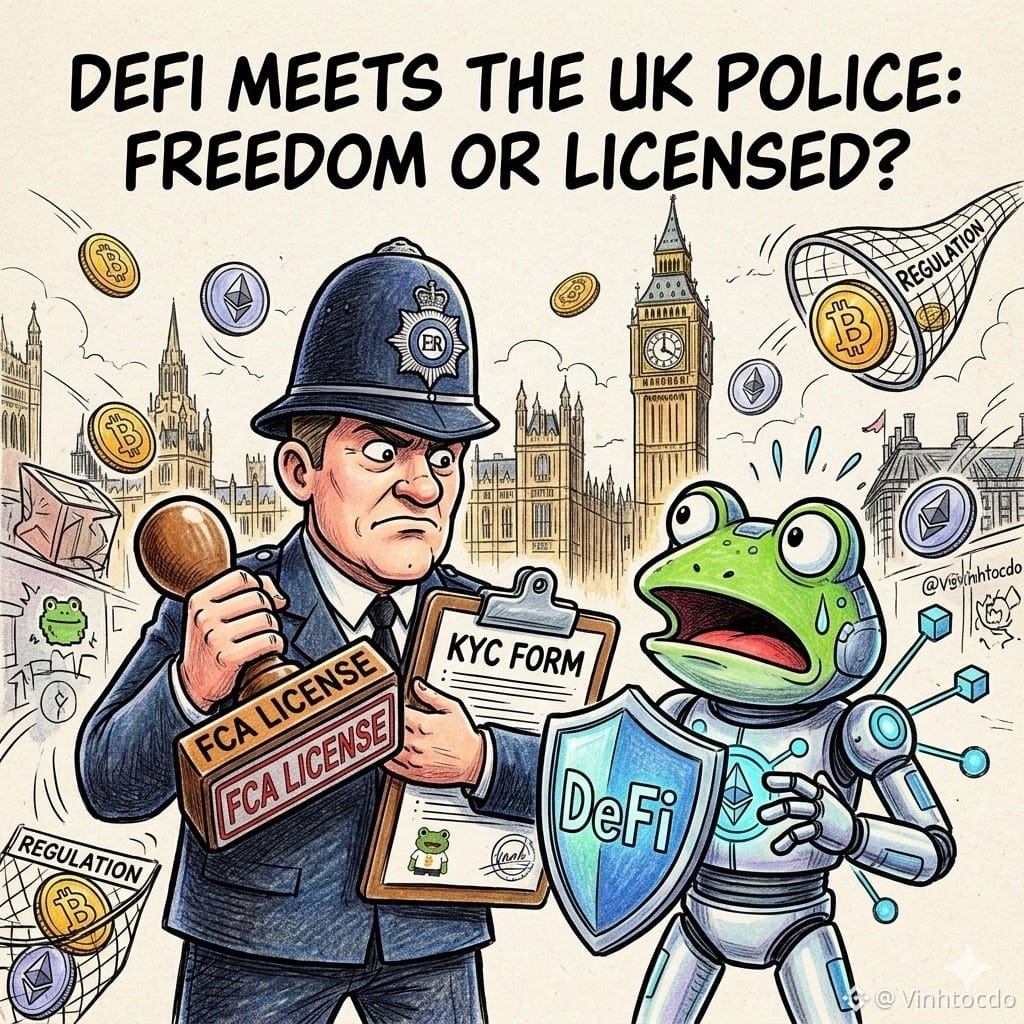
DEFI SẮP PHẢI "ĐIỂM DANH" VỚI CẢNH SÁT ANH QUỐC: TỰ DO HAY VÀO KHUÔN KHỔ? 🇬🇧🚨
Anh em hệ "phi tập trung" chuẩn bị tinh thần nhé! Cơ quan Quản lý Tài chính Anh (FCA) vừa tung tin nóng: họ đang lên kế hoạch bắt các nền tảng DeFi phải xin cấp phép hoạt động hẳn hoi. Lý do đưa ra cực kỳ thuyết phục: chống lừa đảo, rửa tiền và bảo vệ người dùng khỏi những pha "rút thảm" đi vào lòng đất.
Không dừng lại ở đó, FCA còn tính chuyện ép các lệnh giao dịch cổ phiếu bán lẻ (kể cả cổ phiếu mã hóa - tokenized stocks) phải chạy qua các sàn được quản lý. Đợt lấy ý kiến đã chốt sổ hôm 18/11 vừa qua, và "bản án" cuối cùng dự kiến sẽ được công bố vào tháng 1/2027.
Cụ thể là thế nào? Kỷ nguyên DeFi hoạt động kiểu "vô chính phủ" tại Anh sắp đến hồi kết. Các giao thức muốn phục vụ dân Anh sẽ phải định danh, tuân thủ luật chơi như tài chính truyền thống.
Trader phải làm gì lúc này? Đừng vội hoảng loạn bán tháo! Hãy rà soát lại danh mục, ưu tiên các dự án DeFi top đầu có đội ngũ minh bạch, sẵn sàng thích nghi pháp lý và chuẩn bị tâm lý cho việc KYC trong tương lai.
Đây không phải lời khuyên tài chính.
Click giao dịch bên dưới để ủng hộ tôi nhé! 👇
$UNI
{future}(UNIUSDT)
$AAVE
{future}(AAVEUSDT)
$MANTRA
{future}(MANTRAUSDT)
#defi #CryptoRegulation #UKFCA #Web3 #VINHTOCDO
#UKFCAReportedlyPlansDeFiAuthorizationRules
DEFI SẮP PHẢI "ĐIỂM DANH" VỚI CẢNH SÁT ANH QUỐC: TỰ DO HAY VÀO KHUÔN KHỔ? 🇬🇧🚨
Anh em hệ "phi tập trung" chuẩn bị tinh thần nhé! Cơ quan Quản lý Tài chính Anh (FCA) vừa tung tin nóng: họ đang lên kế hoạch bắt các nền tảng DeFi phải xin cấp phép hoạt động hẳn hoi. Lý do đưa ra cực kỳ thuyết phục: chống lừa đảo, rửa tiền và bảo vệ người dùng khỏi những pha "rút thảm" đi vào lòng đất.
Không dừng lại ở đó, FCA còn tính chuyện ép các lệnh giao dịch cổ phiếu bán lẻ (kể cả cổ phiếu mã hóa - tokenized stocks) phải chạy qua các sàn được quản lý. Đợt lấy ý kiến đã chốt sổ hôm 18/11 vừa qua, và "bản án" cuối cùng dự kiến sẽ được công bố vào tháng 1/2027.
Cụ thể là thế nào? Kỷ nguyên DeFi hoạt động kiểu "vô chính phủ" tại Anh sắp đến hồi kết. Các giao thức muốn phục vụ dân Anh sẽ phải định danh, tuân thủ luật chơi như tài chính truyền thống.
Trader phải làm gì lúc này? Đừng vội hoảng loạn bán tháo! Hãy rà soát lại danh mục, ưu tiên các dự án DeFi top đầu có đội ngũ minh bạch, sẵn sàng thích nghi pháp lý và chuẩn bị tâm lý cho việc KYC trong tương lai.
Đây không phải lời khuyên tài chính.
Click giao dịch bên dưới để ủng hộ tôi nhé! 👇
$UNI
$AAVE
$MANTRA
#defi #CryptoRegulation #UKFCA #Web3 #VINHTOCDO
6
253

·
--
#ukfcareportedlyplansdefiauthorizationrules
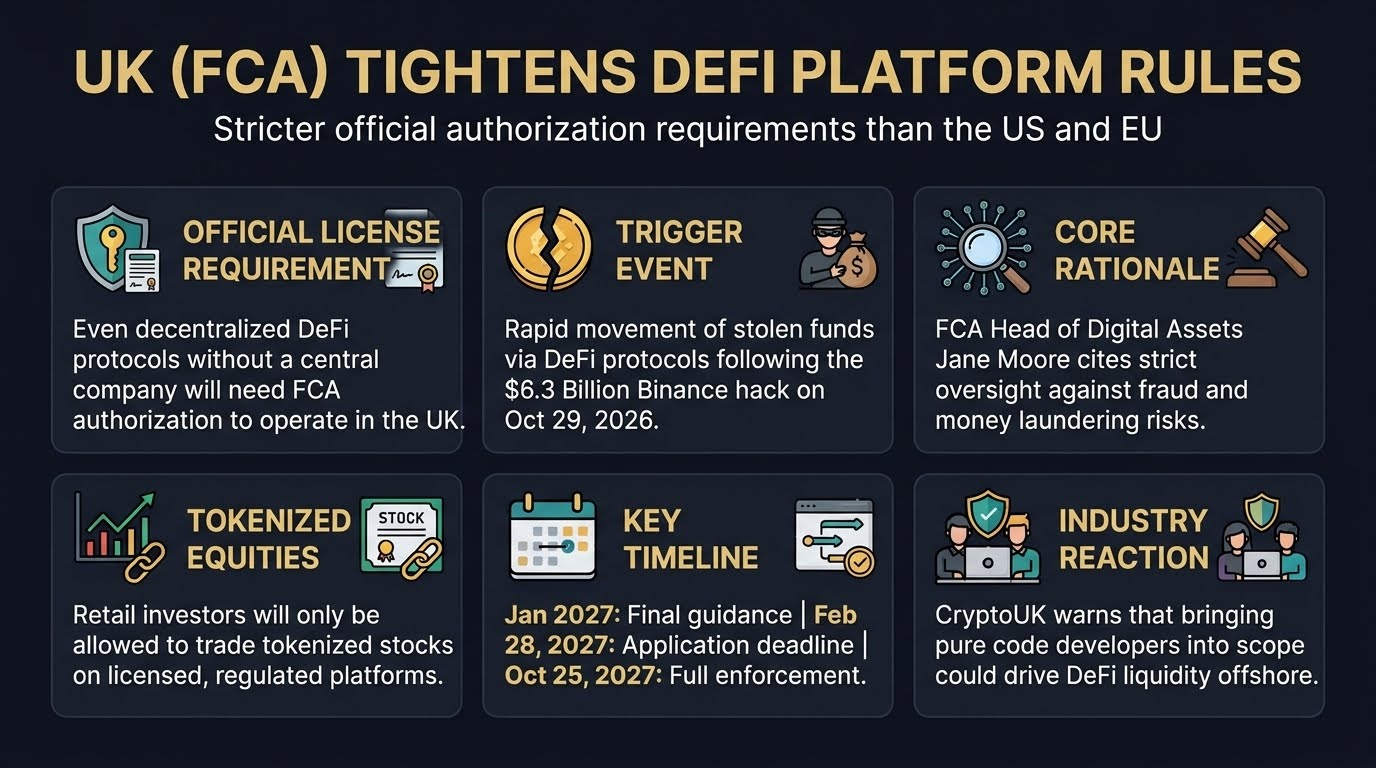
Birleşik Krallık Mali Davranış Otoritesi (FCA), merkeziyetsiz finans (DeFi) platformları için ABD ve AB'den bile daha sıkı bir resmi lisans zorunluluğu getirmeye hazırlanıyor.
🚨 Öne Çıkanlar
Resmi Lisans Şartı 📜: FCA, merkezinde belirli bir şirket bulunmayan DeFi protokollerinin bile İngiltere'de hizmet verebilmek için resmi izin almasını zorunlu kılacak.Binance Saldırısı Etkisi 💥: Bu katı adımın arkasında, 29 Ekim 2026'da yaşanan 6,3 milyar dolarlık Binance saldırısında çalınan fonların DeFi protokolleri üzerinden hızla hareket ettirilmesi yatıyor.Tüketici Koruması 🛡️: FCA Dijital Varlıklar Başkanı Jane Moore; dolandırıcılık ve kara para aklama riskleri nedeniyle açık erişim yerine sıkı denetimi seçtiklerini belirtti.Tokenize Hisselere Sınır 📈: Bireysel yatırımcıların tokenize hisse işlemleri yalnızca lisanslı platformlarda yapılabilecek.
📅 Kritik Takvim
Ocak 2027 📢: Nihai DeFi rehberinin yayımlanması.28 Şubat 2027 ⏳: Yetkilendirme başvuruları için son tarih.25 Ekim 2027 🚀: Yeni düzenlemelerin tam olarak yürürlüğe girmesi.
🌍 Piyasa Tepkisi
Likidite Riski ⚖️: Sektör temsilcileri (CryptoUK), yalnızca kod yazan geliştiricilerin dahi kapsam içine alınmasının DeFi likiditesini yurt dışına kaçırabileceği konusunda uyarıyor.
$BULLA $2Z $XAU
{future}(XAUUSDT)
{future}(2ZUSDT)
{future}(BULLAUSDT)
#ukfcareportedlyplansdefiauthorizationrules
Birleşik Krallık Mali Davranış Otoritesi (FCA), merkeziyetsiz finans (DeFi) platformları için ABD ve AB'den bile daha sıkı bir resmi lisans zorunluluğu getirmeye hazırlanıyor.
🚨 Öne Çıkanlar
Resmi Lisans Şartı 📜: FCA, merkezinde belirli bir şirket bulunmayan DeFi protokollerinin bile İngiltere'de hizmet verebilmek için resmi izin almasını zorunlu kılacak.Binance Saldırısı Etkisi 💥: Bu katı adımın arkasında, 29 Ekim 2026'da yaşanan 6,3 milyar dolarlık Binance saldırısında çalınan fonların DeFi protokolleri üzerinden hızla hareket ettirilmesi yatıyor.Tüketici Koruması 🛡️: FCA Dijital Varlıklar Başkanı Jane Moore; dolandırıcılık ve kara para aklama riskleri nedeniyle açık erişim yerine sıkı denetimi seçtiklerini belirtti.Tokenize Hisselere Sınır 📈: Bireysel yatırımcıların tokenize hisse işlemleri yalnızca lisanslı platformlarda yapılabilecek.
📅 Kritik Takvim
Ocak 2027 📢: Nihai DeFi rehberinin yayımlanması.28 Şubat 2027 ⏳: Yetkilendirme başvuruları için son tarih.25 Ekim 2027 🚀: Yeni düzenlemelerin tam olarak yürürlüğe girmesi.
🌍 Piyasa Tepkisi
Likidite Riski ⚖️: Sektör temsilcileri (CryptoUK), yalnızca kod yazan geliştiricilerin dahi kapsam içine alınmasının DeFi likiditesini yurt dışına kaçırabileceği konusunda uyarıyor.
$BULLA $2Z $XAU
1.8k

·
--
Рост
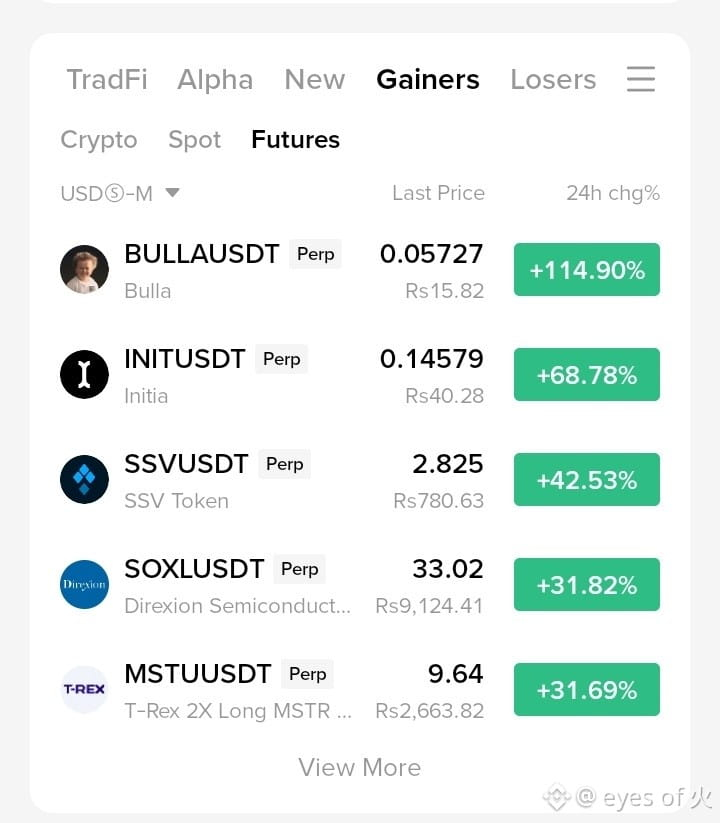
Торговля за 30 дней $INIT 23.8 USDT
Market Update: Top 3 Crypto Futures Gainers 🚀
According to the latest market snapshot, $BULLA USDT (Bulla) is trading at 0.05727 USDT, up 114.90% in 24 hours. $INIT USDT (Initia) stands at 0.14579 USDT, gaining 68.78%. $SSV USDT (SSV Token) is priced at 2.825 USDT, up 42.53%. These three perpetual futures contracts are the top displayed gainers in the USDⓈ-M futures list. Strong percentage moves indicate elevated momentum and volatility. Prices can change rapidly; verify live market data and manage risk before trading. This is informational, not financial advice.#ZcashDevelopersUrgeZECMoveToIronwood #UKFCAReportedlyPlansDeFiAuthorizationRules #SouthKoreaPlansToRequireTetherCircleLocalReserves #CanMarketsReboundAfterThanksgiving? #CouldSpaceX’sOrbitalDataCentersBoostAIChipDemand?
{future}(BULLAUSDT)
{future}(INITUSDT)
{future}(SSVUSDT)
Market Update: Top 3 Crypto Futures Gainers 🚀
According to the latest market snapshot, $BULLA USDT (Bulla) is trading at 0.05727 USDT, up 114.90% in 24 hours. $INIT USDT (Initia) stands at 0.14579 USDT, gaining 68.78%. $SSV USDT (SSV Token) is priced at 2.825 USDT, up 42.53%. These three perpetual futures contracts are the top displayed gainers in the USDⓈ-M futures list. Strong percentage moves indicate elevated momentum and volatility. Prices can change rapidly; verify live market data and manage risk before trading. This is informational, not financial advice.#ZcashDevelopersUrgeZECMoveToIronwood #UKFCAReportedlyPlansDeFiAuthorizationRules #SouthKoreaPlansToRequireTetherCircleLocalReserves #CanMarketsReboundAfterThanksgiving? #CouldSpaceX’sOrbitalDataCentersBoostAIChipDemand?
According to the latest market snapshot, $BULLA USDT (Bulla) is trading at 0.05727 USDT, up 114.90% in 24 hours. $INIT USDT (Initia) stands at 0.14579 USDT, gaining 68.78%. $SSV USDT (SSV Token) is priced at 2.825 USDT, up 42.53%. These three perpetual futures contracts are the top displayed gainers in the USDⓈ-M futures list. Strong percentage moves indicate elevated momentum and volatility. Prices can change rapidly; verify live market data and manage risk before trading. This is informational, not financial advice.#ZcashDevelopersUrgeZECMoveToIronwood #UKFCAReportedlyPlansDeFiAuthorizationRules #SouthKoreaPlansToRequireTetherCircleLocalReserves #CanMarketsReboundAfterThanksgiving? #CouldSpaceX’sOrbitalDataCentersBoostAIChipDemand?
144

🔥$HBAR HBAR (HEDERA): A QUIET GIANT WITH BIG POTENTIAL! 💎
The spotlight is slowly turning towards Hedera ($HBAR)!
🌍 What's happening?
🇺🇸 Hedera is powering Virginia's environmental credit registry through WaterLedger.
🏦 New finance templates are bringing tokenized bonds and institutional finance closer to the Hedera ecosystem.
⚡ Mainnet upgrade v0.79.4 was successfully completed.
📊 Market Watch: HBAR is trading around $0.053, with approximately 6% gains over 24 hours in the latest reported snapshot.
👀 My take: Real-world adoption, tokenization and enterprise utility make Hedera a project worth watching. The next move depends on sustained volume and market momentum.
💬 Question for the community: Can HBAR surprise the market in the coming months? Are you accumulating or waiting for confirmation?
🔥 Stay informed. Stay focused. DYOR!
#HBAR #Hedera #Crypto #BinanceSquare #Altcoins #CryptoNews #web3_binance
#UKFCAReportedlyPlansDeFiAuthorizationRules
{spot}(HBARUSDT)
🔥$HBAR HBAR (HEDERA): A QUIET GIANT WITH BIG POTENTIAL! 💎
The spotlight is slowly turning towards Hedera ($HBAR )!
🌍 What's happening?
🇺🇸 Hedera is powering Virginia's environmental credit registry through WaterLedger.
🏦 New finance templates are bringing tokenized bonds and institutional finance closer to the Hedera ecosystem.
⚡ Mainnet upgrade v0.79.4 was successfully completed.
📊 Market Watch: HBAR is trading around $0.053, with approximately 6% gains over 24 hours in the latest reported snapshot.
👀 My take: Real-world adoption, tokenization and enterprise utility make Hedera a project worth watching. The next move depends on sustained volume and market momentum.
💬 Question for the community: Can HBAR surprise the market in the coming months? Are you accumulating or waiting for confirmation?
🔥 Stay informed. Stay focused. DYOR!
#HBAR #Hedera #Crypto #BinanceSquare #Altcoins #CryptoNews #web3_binance
#UKFCAReportedlyPlansDeFiAuthorizationRules

155

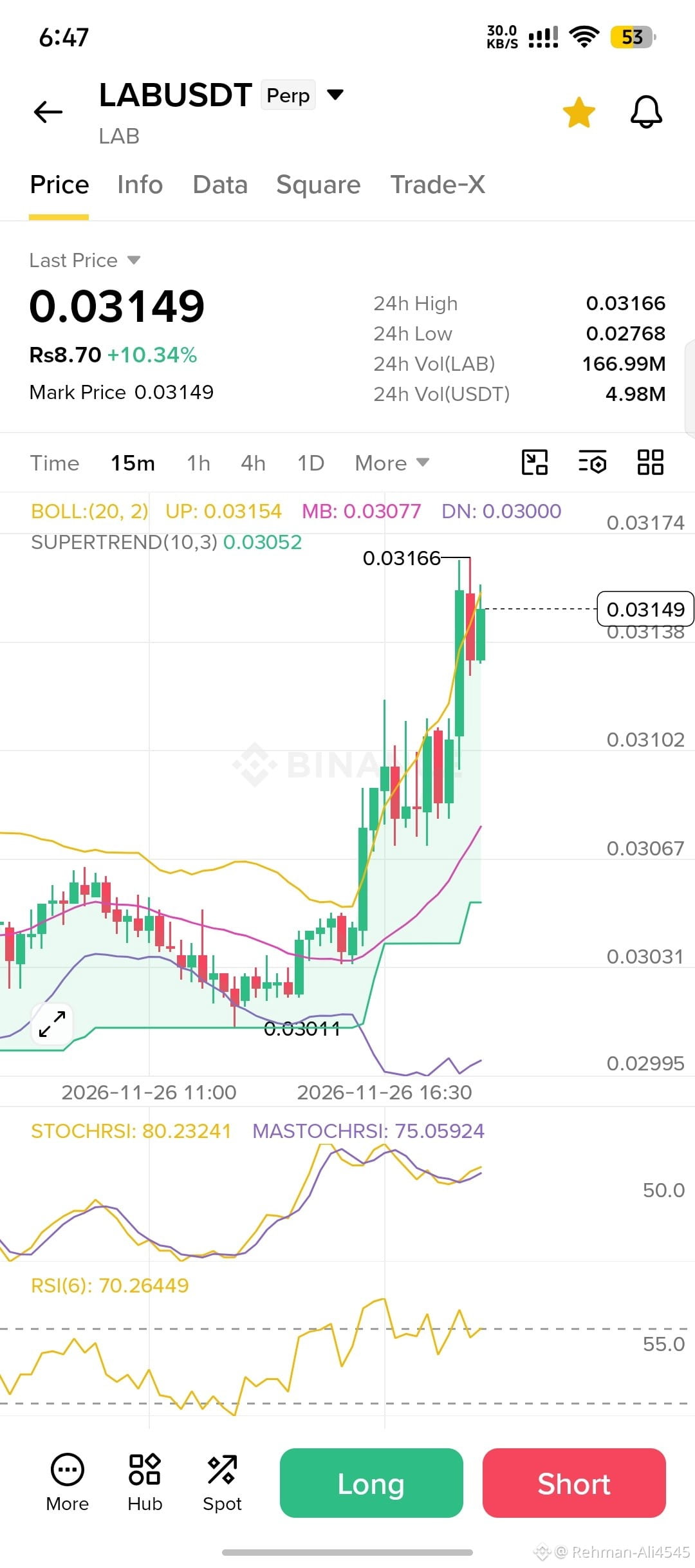
Another Coin Is showing strength to upside which LAB . . . . . . . see this for long term profit #CanMarketsReboundAfterThanksgiving? #UKFCAReportedlyPlansDeFiAuthorizationRules
Another Coin Is showing strength to upside which LAB . . . . . . . see this for long term profit #CanMarketsReboundAfterThanksgiving? #UKFCAReportedlyPlansDeFiAuthorizationRules
1
370
Войдите, чтобы посмотреть больше материала
Присоединяйтесь к пользователям криптовалют по всему миру на Binance Square
⚡️ Получайте новейшую и полезную информацию о криптоактивах.
💬 Нам доверяет крупнейшая в мире криптобиржа.
👍 Получите достоверные аналитические данные от верифицированных создателей контента.
Эл. почта/номер телефона
В тренде
1
#CanMarketsReboundAfterThanksgiving?
Просмотров: 135,592
1,643 обсуждают
2
#CouldSpaceX’sOrbitalDataCentersBoostAIChipDemand?
Просмотров: 65,225
1,012 обсуждают
3
#SouthKoreaProposesMandatoryDigitalAssetTransactionDisclosure
Просмотров: 1,570
52 обсуждают
4
#EvolveAtBinanceBlockchainWeek
Просмотров: 780,799
9,729 обсуждают
5
#KoreaFSCSeeksPowerToSuspendCryptoListings
Просмотров: 14,112
243 обсуждают
6
#SouthKoreaPlansToRequireTetherCircleLocalReserves
Просмотров: 11,569
178 обсуждают
7
#UKFCAReportedlyPlansDeFiAuthorizationRules
Просмотров: 9,414
114 обсуждают
8
#ZcashDevelopersUrgeZECMoveToIronwood
Просмотров: 18,213
111 обсуждают
9
#TetherGoldFaces$2.55BUnrealizedLoss
Просмотров: 2,034
11 обсуждают
10
#CorePCEBeatLiftsFedHikeOdds
Просмотров: 268,070
1,767 обсуждают