

#newtonprotocol
newtonprotocol
Просмотров: 159,302
2,333 обсуждают
Популярные
Новые

·
--
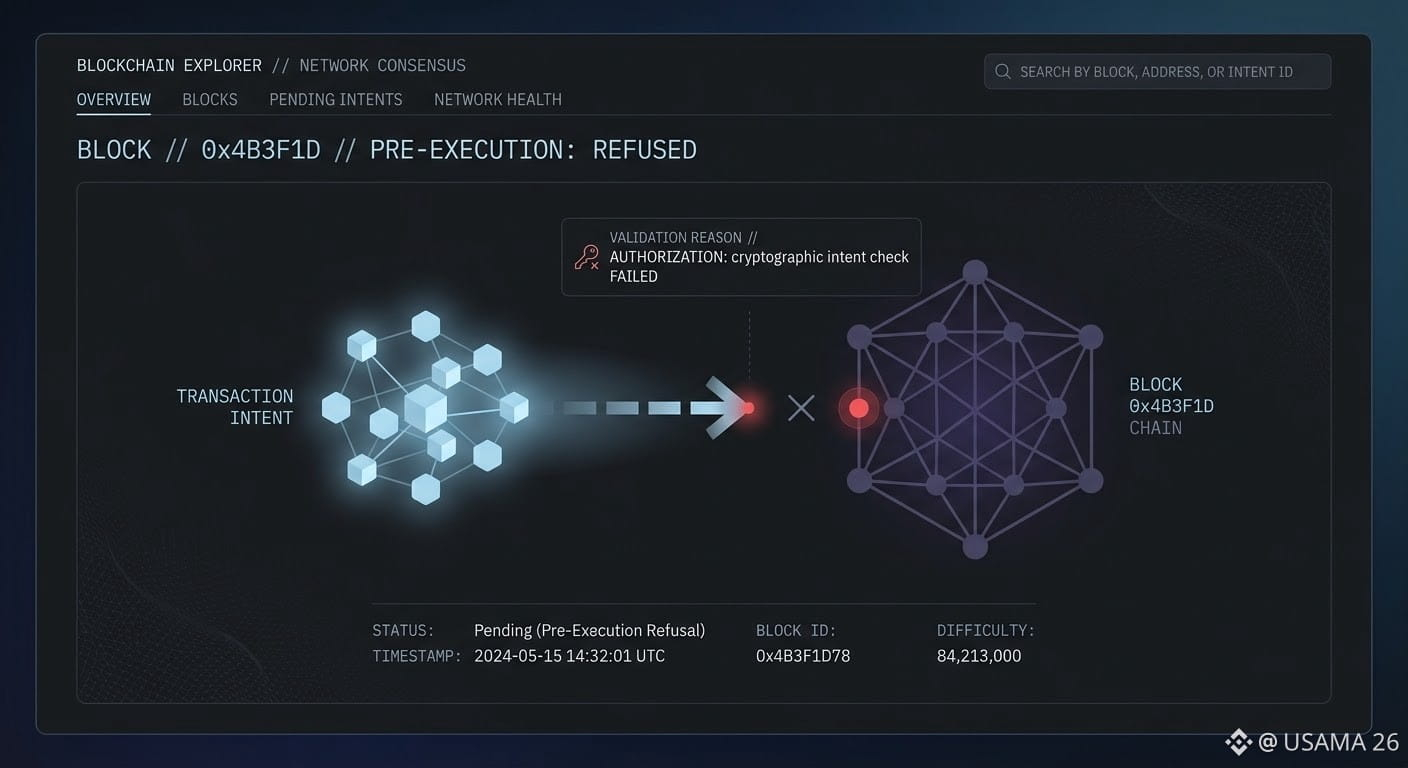
Funding flipped hard late Friday and I caught myself wondering how much I actually trust anything that signs on my behalf. So I started checking Newton Protocol Mainnet Beta, mostly the policy side, with $NEWT T open in another tab and #NewtonProtocol ol notes half written, following @NewtonProtocol l for the details. I assumed a rejected intent would look like every failed transaction I know: a hash, a revert, a red line on the explorer. I submitted an intent that broke my own spending limit and kept refreshing the explorer, waiting for that hash. I thought the network was lagging, maybe operators were slow. But actually there was nothing to find, because the refusal happened before anything touched the chain. No failed tx, no gas burned, no trace to point at. Weirdly that felt less reassuring than a revert, because I'm used to proof of failure being visible. A pre-execution block leaves a clean explorer and an empty screen, so the evidence of protection lives somewhere else entirely. I closed the tab, opened it again, still nothing. If the best outcome of an authorization layer is that nothing visibly happens, how would I know on a quiet day that it's working?
Funding flipped hard late Friday and I caught myself wondering how much I actually trust anything that signs on my behalf. So I started checking Newton Protocol Mainnet Beta, mostly the policy side, with $NEWT T open in another tab and #NewtonProtocol ol notes half written, following @NewtonProtocol l for the details. I assumed a rejected intent would look like every failed transaction I know: a hash, a revert, a red line on the explorer. I submitted an intent that broke my own spending limit and kept refreshing the explorer, waiting for that hash. I thought the network was lagging, maybe operators were slow. But actually there was nothing to find, because the refusal happened before anything touched the chain. No failed tx, no gas burned, no trace to point at. Weirdly that felt less reassuring than a revert, because I'm used to proof of failure being visible. A pre-execution block leaves a clean explorer and an empty screen, so the evidence of protection lives somewhere else entirely. I closed the tab, opened it again, still nothing. If the best outcome of an authorization layer is that nothing visibly happens, how would I know on a quiet day that it's working?
336

$NEWT
{spot}(NEWTUSDT)
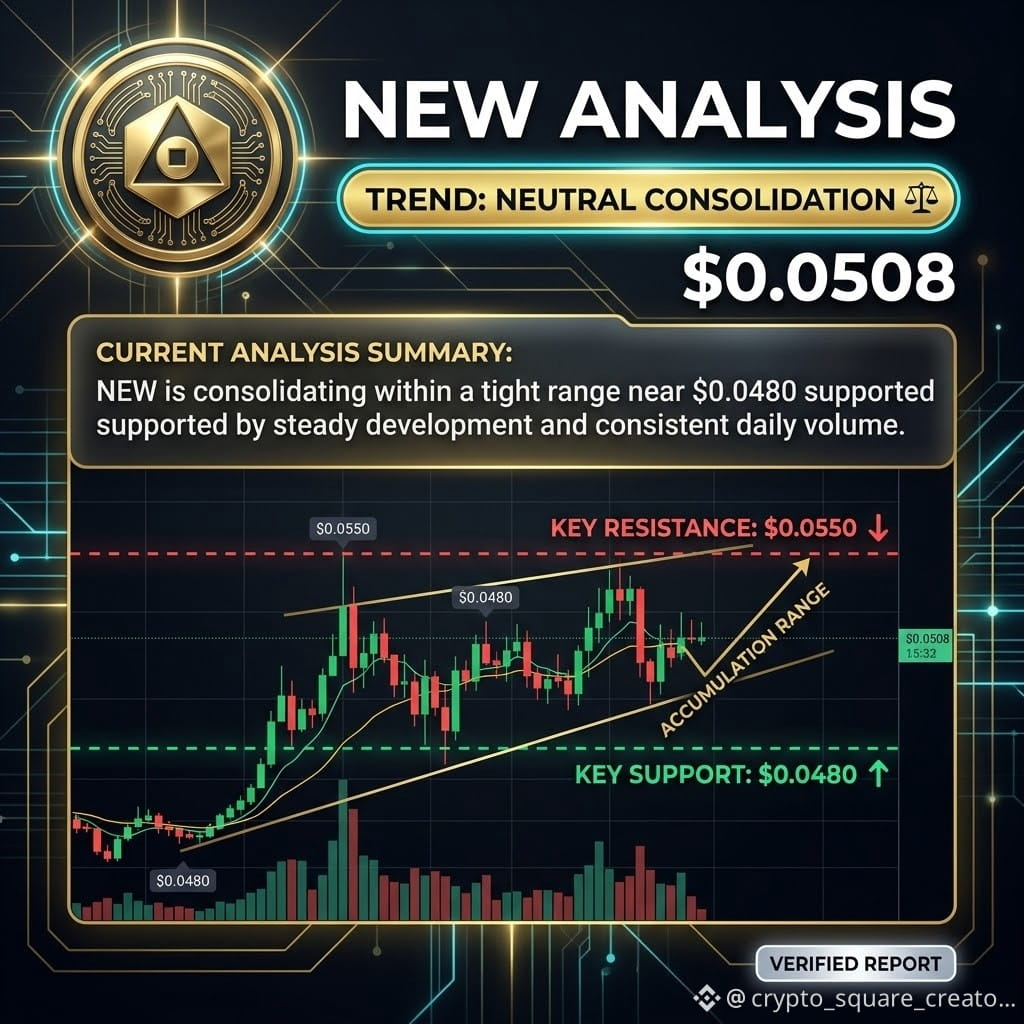
⚡ NEWTON PROTOCOL ($NEW) CONSOLIDATES NEAR $0.051: Breakthrough Ahead?
Newton Protocol ($NEW) continues to build base support, currently trading near $0.0508 as buyers absorb overhead selling pressure.
Trend: Neutral Consolidation
Key Support: $0.0480
Key Resistance: $0.0550
Why It Moves: Price stability is anchored by steady decentralized infrastructure development and consistent daily volume, preventing significant downside drift despite broader market volatility.
Can $NEW hold $0.048 support and rally to break the $0.055 resistance level? Share your targets below! 👇
#NewtonProtocol #NEW #CryptoAnalysis #BinanceSquareTalks #TechnicalAnalysiss #Altcoins #CryptoTrading
Not financial advice.
$NEWT
⚡ NEWTON PROTOCOL ($NEW) CONSOLIDATES NEAR $0.051: Breakthrough Ahead?
Newton Protocol ($NEW) continues to build base support, currently trading near $0.0508 as buyers absorb overhead selling pressure.
Trend: Neutral Consolidation
Key Support: $0.0480
Key Resistance: $0.0550
Why It Moves: Price stability is anchored by steady decentralized infrastructure development and consistent daily volume, preventing significant downside drift despite broader market volatility.
Can $NEW hold $0.048 support and rally to break the $0.055 resistance level? Share your targets below! 👇
#NewtonProtocol #NEW #CryptoAnalysis #BinanceSquareTalks #TechnicalAnalysiss #Altcoins #CryptoTrading
Not financial advice.
254


Проверено

Статья
Onchain Transactions Still Fly Blind On Real-World Rules—Newton Protocol Wants to Change That.@NewtonProtocol puts programmable policies in front of every transaction. It checks compliance before settlement using a decentralized operator network. No more hoping frontends or offchain checks hold up when money actually moves.
That’s the core claim. Smart contracts get an authorization layer that sees sanctions lists, investor limits, or agent spending caps and proves it did the check.
Operators in Trusted Execution Environments (TEEs) evaluate policies written in Rego. They pull offchain data where needed and output BLS attestations.
A lightweight snippet in your contract routes the intent; only approved transactions settle. Receipts go onchain for anyone to verify.
It runs as an EigenLayer AVS, so security comes from restaked ETH rather than a new token validator set.
Policies stay consistent across chains write once, enforce on vaults, stablecoins, or agent actions.
How the flow actually feels in practice. You define a policy for, say, max drawdown or sanctioned address screening. The contract calls #Newt on intent submission. Operators reach consensus on the evaluation inside secure hardware. A signed receipt either green-lights or blocks settlement. The whole thing aims for minutes-to-live integration instead of months of custom compliance work.
I like the pre-execution focus. Most compliance today is reactive or siloed. Newton tries to make the decision part of the transaction itself, verifiable by depositors or auditors later. Numbers from their materials: onchain finance already moves hundreds of billions monthly in stablecoins and tokenized assets. A shared policy layer could cut duplicated risk work across protocols.
What stands out technically (without the full whitepaper dump). The privacy design matters sensitive data stays in the TEE; only proofs hit the chain. Rego lets you compose rules like jurisdiction checks plus concentration limits. For AI agents, you set guardrails (spending caps, approved payees) that agents can’t bypass without failing the check. No full custody handover.
Risks worth flagging. Smart contract risk exists in the integration snippets and core contracts audits help but don’t eliminate exploits. Operator slashing via restaking provides economic incentives, but if a majority colludes or TEEs get compromised, attestations could be wrong. Policy evaluation depends on accurate data feeds; bad oracles break the output. Sustainability isn’t yield farming here, but adoption risk is real if protocols don’t integrate, the network sees little traffic.
Quick checklist I’d run before relying on it:
Source and freshness of offchain data (sanctions, identity) who maintains the feeds?
Who operates the nodes and what’s the actual restaked collateral at launch?
Can policies change mid-transaction or get overridden by governance?
Withdrawal/revocation conditions for agent permissions or vault rules.
Audit status and bug bounty coverage for the AVS components and verifiers.
Testnet vs mainnet behavior $ON edge cases like chain congestion.
Fact vs my take. The architecture description above comes straight from their docs and public explanations. My view: the pre-settlement check is a genuine improvement over post-facto enforcement or pure trust in frontends. But it adds another dependency layer. In a world of fast-moving agents and cross-chain moves, that dependency might be necessary. Still, verifiable doesn’t mean perfect proofs only cover what the policy explicitly checks.
Token side ($NEWT ). It pays for computation, stakes for operators, and handles governance. Fixed supply around 1 billion, with unlocks scheduled. Utility feels tied to actual usage rather than pure speculation, but early unlocks can pressure price. Not financial advice token economics evolve.
One tension I keep coming back to: Newton makes authorization explicit and shared, which helps institutions, but in pure DeFi it could feel like adding friction where speed wins today. Agents might execute faster with clear guardrails, or they might get blocked more often on ambiguous policies. The protocol sits in that practical middle trying to give both safety and programmability without killing composability.
Takeaway: Newton doesn’t remove trust; it relocates it to verifiable policy evaluations before capital moves. Whether that sticks depends on integration speed and real-world proof resilience. Worth watching the explorer for actual attestations once volume picks $UP
The space needs more of these infrastructure pieces that force clarity on rules instead of hoping for the best. Newton is one attempt at making that onchain-native. How the operator network performs under load and whether policies stay flexible enough will decide if it becomes table stakes or stays niche. For now, the pre-check idea feels like a solid step on a messy problem.
#NewtonProtocol #NEWTtoken #NEWTUSDT
Onchain Transactions Still Fly Blind On Real-World Rules—Newton Protocol Wants to Change That.
@NewtonProtocol puts programmable policies in front of every transaction. It checks compliance before settlement using a decentralized operator network. No more hoping frontends or offchain checks hold up when money actually moves.
That’s the core claim. Smart contracts get an authorization layer that sees sanctions lists, investor limits, or agent spending caps and proves it did the check.
Operators in Trusted Execution Environments (TEEs) evaluate policies written in Rego. They pull offchain data where needed and output BLS attestations.
A lightweight snippet in your contract routes the intent; only approved transactions settle. Receipts go onchain for anyone to verify.
It runs as an EigenLayer AVS, so security comes from restaked ETH rather than a new token validator set.
Policies stay consistent across chains write once, enforce on vaults, stablecoins, or agent actions.
How the flow actually feels in practice. You define a policy for, say, max drawdown or sanctioned address screening. The contract calls #Newt on intent submission. Operators reach consensus on the evaluation inside secure hardware. A signed receipt either green-lights or blocks settlement. The whole thing aims for minutes-to-live integration instead of months of custom compliance work.
I like the pre-execution focus. Most compliance today is reactive or siloed. Newton tries to make the decision part of the transaction itself, verifiable by depositors or auditors later. Numbers from their materials: onchain finance already moves hundreds of billions monthly in stablecoins and tokenized assets. A shared policy layer could cut duplicated risk work across protocols.
What stands out technically (without the full whitepaper dump). The privacy design matters sensitive data stays in the TEE; only proofs hit the chain. Rego lets you compose rules like jurisdiction checks plus concentration limits. For AI agents, you set guardrails (spending caps, approved payees) that agents can’t bypass without failing the check. No full custody handover.
Risks worth flagging. Smart contract risk exists in the integration snippets and core contracts audits help but don’t eliminate exploits. Operator slashing via restaking provides economic incentives, but if a majority colludes or TEEs get compromised, attestations could be wrong. Policy evaluation depends on accurate data feeds; bad oracles break the output. Sustainability isn’t yield farming here, but adoption risk is real if protocols don’t integrate, the network sees little traffic.
Quick checklist I’d run before relying on it:
Source and freshness of offchain data (sanctions, identity) who maintains the feeds?
Who operates the nodes and what’s the actual restaked collateral at launch?
Can policies change mid-transaction or get overridden by governance?
Withdrawal/revocation conditions for agent permissions or vault rules.
Audit status and bug bounty coverage for the AVS components and verifiers.
Testnet vs mainnet behavior $ON edge cases like chain congestion.
Fact vs my take. The architecture description above comes straight from their docs and public explanations. My view: the pre-settlement check is a genuine improvement over post-facto enforcement or pure trust in frontends. But it adds another dependency layer. In a world of fast-moving agents and cross-chain moves, that dependency might be necessary. Still, verifiable doesn’t mean perfect proofs only cover what the policy explicitly checks.
Token side ($NEWT ). It pays for computation, stakes for operators, and handles governance. Fixed supply around 1 billion, with unlocks scheduled. Utility feels tied to actual usage rather than pure speculation, but early unlocks can pressure price. Not financial advice token economics evolve.
One tension I keep coming back to: Newton makes authorization explicit and shared, which helps institutions, but in pure DeFi it could feel like adding friction where speed wins today. Agents might execute faster with clear guardrails, or they might get blocked more often on ambiguous policies. The protocol sits in that practical middle trying to give both safety and programmability without killing composability.
Takeaway: Newton doesn’t remove trust; it relocates it to verifiable policy evaluations before capital moves. Whether that sticks depends on integration speed and real-world proof resilience. Worth watching the explorer for actual attestations once volume picks $UP
The space needs more of these infrastructure pieces that force clarity on rules instead of hoping for the best. Newton is one attempt at making that onchain-native. How the operator network performs under load and whether policies stay flexible enough will decide if it becomes table stakes or stays niche. For now, the pre-check idea feels like a solid step on a messy problem.
#NewtonProtocol #NEWTtoken #NEWTUSDT
75
41
623
·
--
Рост
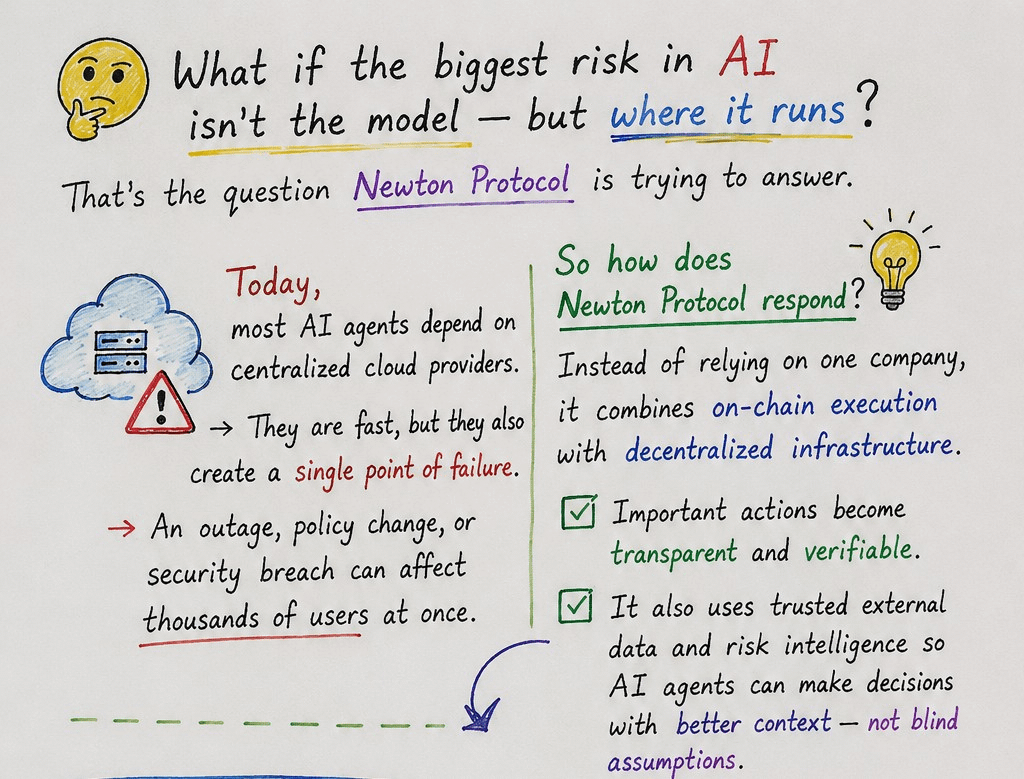
🤔 What if the biggest risk in AI isn't the model but where it runs?
That's the question @NewtonProtocol is trying to answer.
Today, most AI agents depend on centralized cloud providers. They are fast, but they also create a single point of failure. An outage, policy change, or security breach can affect thousands of users at once.
So how does Newton Protocol respond?
Instead of relying on one company, it combines on-chain execution with decentralized infrastructure. Important actions become transparent and verifiable. It also uses trusted external data and risk intelligence so AI agents can make decisions with better context not blind assumptions.
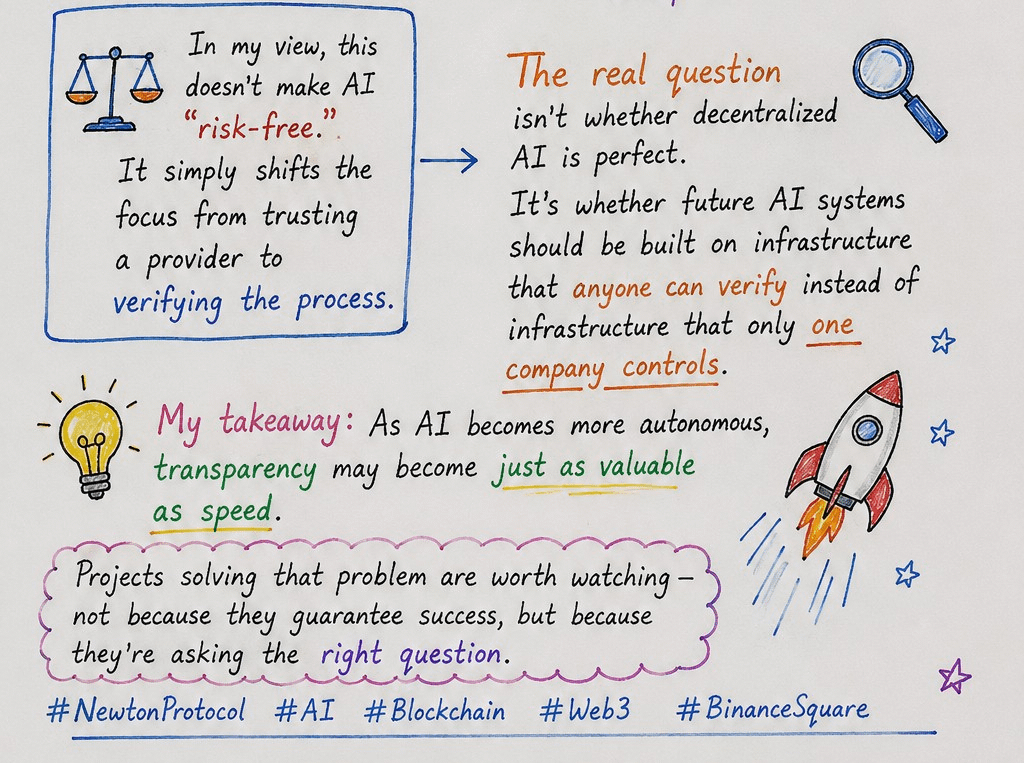
In my view, this doesn't make AI "risk-free." It simply shifts the focus from trusting a provider to verifying the process. That difference could matter as AI begins managing assets and executing financial transactions.
The real question isn't whether decentralized AI is perfect.
It's whether future AI systems should be built on infrastructure that anyone can verify instead of infrastructure that only one company controls.
My takeaway: As AI becomes more autonomous, transparency may become just as valuable as speed. Projects solving that problem are worth watching not because they guarantee success, but because they're asking the right question.
#NewtonProtocol #Newt $NEWT $AA #NEWTtoken #NEWTUSDT
42
26
373
Why Newton’s Agent Guardrails Feel Different (and What Could Still Go Wrong)@NewtonProtocol lets you run AI agents on your funds without handing over the keys on paper, at least.
The real tension is simple: DeFi automation has always traded security for convenience. Newton Protocol ($NEWT ) tries to fix that by adding a policy layer that checks rules before any transaction executes. It’s not another yield farm. It’s an authorization system built for agents and institutions.
How Newton Actually Works (in practice)
Developers write policies in Rego a policy language that evaluates offchain data like sanctions lists, KYC status, or spend limits. A decentralized operator network (backed by EigenLayer restaking) runs the check. Only compliant transactions go through. Everything produces a verifiable onchain receipt.
I spent time digging into the docs and public info. Here’s what stands out:
Agent security without full custody: You define intents and granular permissions in the Newton Keystore rollup. Agents execute trades or rebalancing but stay inside your approved limits spending caps, approved addresses, even prompt-injection defenses for AI. No more “connect wallet and pray.”
Registry for composable services: The onchain Model Registry acts like a marketplace. Publish or discover math crunching, AI models, or other compute. Combine them into workflows. One provider for simulations, another for price oracles tied together with policy enforcement. Matches the DeFi + AI example you see in their materials.
Multi-chain policy enforcement: Same rules apply across supported EVM chains. Useful for vaults that move positions or RWAs that need investor eligibility checks on every transfer.
Verifiable receipts: Auditors or users can check every decision on the explorer. No black-box central service.
Fact: Total stablecoin transfer volume runs over $4T monthly. Tokenized RWAs sit above $25B. Newton targets exactly these flows with compliance that doesn’t live only in the frontend.
Opinion: This feels like the missing middle layer between raw smart contracts and usable automation. Most agent projects stop at “it’s decentralized.” Newton adds the guardrails before execution.
Quick Verification Checklist
What I’d check before putting real money near it:
Source of any yields or rewards protocol fees, user payments, or temporary incentives?
Who runs the operators and what’s the actual slashing history (if any yet)?
Can policies or APY-like parameters change via governance, and how fast?
Withdrawal conditions and any lock periods on permissions or stakes.
Audit status contracts are open-sourced with third-party reviews, but verify the latest reports yourself.
Risks Worth Noting
Smart contract and operator risk: Even with restaking and slashing, bugs or coordinated failures could let bad transactions through. It’s newer infrastructure.
Sustainability and adoption: If few agents or vaults integrate, the network effects stay weak. Policy enforcement only matters if people actually use it. Counterparty risk exists with any offchain data feeds too.
Numbers I noted: NEWT total supply caps at 1 billion. Initial circulating around 21.5%. Staking secures both the keystore and agent operators. 14-day unstaking period. These are on-chain mechanics check current distribution and staking stats directly.
The privacy angle is practical: sensitive data stays hashed or in ZK proofs. No full PII dumped onchain. Good for institutions that want onchain movement but regulated rails.
I like that it separates policy from the main contract logic. Update rules without redeploying everything. That’s a small but real developer win.
Still, it’s early. The registry sounds powerful for combining compute services math, AI, simulations but I haven’t seen massive public usage data yet. The DeFi vault and agent use cases feel closest to shipping.
Takeaway: Newton doesn’t remove trade-offs. It just moves the trust point to verifiable pre-execution checks and economic security. Worth watching if you’re building or using agents.
One practical frustration: setting up the first policy still needs SDK integration and some offchain setup. Not one-click for normies yet. That tension between power and simplicity will decide if it actually gets used beyond early teams.
The space needs more layers like this that prioritize “does it actually settle safely” over raw speed. Newton is trying. Whether the operators stay honest and developers adopt the registry will show over the next cycles. I’m keeping it on my list, but with position sizes that match the stage.
#Newt #NEWTtoken #NEWTUSDT #NewtonProtocol
Why Newton’s Agent Guardrails Feel Different (and What Could Still Go Wrong)
@NewtonProtocol lets you run AI agents on your funds without handing over the keys on paper, at least.
The real tension is simple: DeFi automation has always traded security for convenience. Newton Protocol ($NEWT ) tries to fix that by adding a policy layer that checks rules before any transaction executes. It’s not another yield farm. It’s an authorization system built for agents and institutions.
How Newton Actually Works (in practice)
Developers write policies in Rego a policy language that evaluates offchain data like sanctions lists, KYC status, or spend limits. A decentralized operator network (backed by EigenLayer restaking) runs the check. Only compliant transactions go through. Everything produces a verifiable onchain receipt.
I spent time digging into the docs and public info. Here’s what stands out:
Agent security without full custody: You define intents and granular permissions in the Newton Keystore rollup. Agents execute trades or rebalancing but stay inside your approved limits spending caps, approved addresses, even prompt-injection defenses for AI. No more “connect wallet and pray.”
Registry for composable services: The onchain Model Registry acts like a marketplace. Publish or discover math crunching, AI models, or other compute. Combine them into workflows. One provider for simulations, another for price oracles tied together with policy enforcement. Matches the DeFi + AI example you see in their materials.
Multi-chain policy enforcement: Same rules apply across supported EVM chains. Useful for vaults that move positions or RWAs that need investor eligibility checks on every transfer.
Verifiable receipts: Auditors or users can check every decision on the explorer. No black-box central service.
Fact: Total stablecoin transfer volume runs over $4T monthly. Tokenized RWAs sit above $25B. Newton targets exactly these flows with compliance that doesn’t live only in the frontend.
Opinion: This feels like the missing middle layer between raw smart contracts and usable automation. Most agent projects stop at “it’s decentralized.” Newton adds the guardrails before execution.
Quick Verification Checklist
What I’d check before putting real money near it:
Source of any yields or rewards protocol fees, user payments, or temporary incentives?
Who runs the operators and what’s the actual slashing history (if any yet)?
Can policies or APY-like parameters change via governance, and how fast?
Withdrawal conditions and any lock periods on permissions or stakes.
Audit status contracts are open-sourced with third-party reviews, but verify the latest reports yourself.
Risks Worth Noting
Smart contract and operator risk: Even with restaking and slashing, bugs or coordinated failures could let bad transactions through. It’s newer infrastructure.
Sustainability and adoption: If few agents or vaults integrate, the network effects stay weak. Policy enforcement only matters if people actually use it. Counterparty risk exists with any offchain data feeds too.
Numbers I noted: NEWT total supply caps at 1 billion. Initial circulating around 21.5%. Staking secures both the keystore and agent operators. 14-day unstaking period. These are on-chain mechanics check current distribution and staking stats directly.
The privacy angle is practical: sensitive data stays hashed or in ZK proofs. No full PII dumped onchain. Good for institutions that want onchain movement but regulated rails.
I like that it separates policy from the main contract logic. Update rules without redeploying everything. That’s a small but real developer win.
Still, it’s early. The registry sounds powerful for combining compute services math, AI, simulations but I haven’t seen massive public usage data yet. The DeFi vault and agent use cases feel closest to shipping.
Takeaway: Newton doesn’t remove trade-offs. It just moves the trust point to verifiable pre-execution checks and economic security. Worth watching if you’re building or using agents.
One practical frustration: setting up the first policy still needs SDK integration and some offchain setup. Not one-click for normies yet. That tension between power and simplicity will decide if it actually gets used beyond early teams.
The space needs more layers like this that prioritize “does it actually settle safely” over raw speed. Newton is trying. Whether the operators stay honest and developers adopt the registry will show over the next cycles. I’m keeping it on my list, but with position sizes that match the stage.
#Newt #NEWTtoken #NEWTUSDT #NewtonProtocol
64
1
42
455
Проверено
Can KYC become reusable without exposing personal data? That's the question @NewtonProtocol VC is trying to answer.
Most applications collect KYC separately, forcing users to repeat the same process. Newton introduces another approach: verify once, then let policies check whether a user meets specific requirements without revealing the underlying identity data.
How does that work?
If you're a developer, you can collect KYC through your preferred provider, register it with Newton, and create rules such as allowing access only to users who are 18+ and located in approved regions.
What if another developer already verified the same user?
Newton allows you to use that verified identity in a privacy-preserving way. Your application only learns whether the policy conditions are satisfied, not the user's personal information. That reduces repeated verification while keeping sensitive data private.
What happens behind the scenes?
The flow is straightforward: collect KYC, register it with Newton, let the user link their identity, submit a signed request, and have a policy evaluate whether the requirements are met.
In my view, the most valuable idea isn't replacing KYC it's making verified identity reusable while keeping personal data protected.
The key lesson: better compliance doesn't always require collecting more data. Sometimes it simply requires verifying it more intelligently.
#Newt $NEWT #NewtonProtocol #NEWTtoken #NEWTUSDT $BEAT $ARX
Do you think KYC should be reusable across apps without sharing your personal data?
👍 Yes, definitely
50%
🤔 Maybe
13%
🔒 No, separate KYC is better
37%
📚 Need to learn more
0%
8 проголосовали • Голосование закрыто
53
41
1.3k
Статья
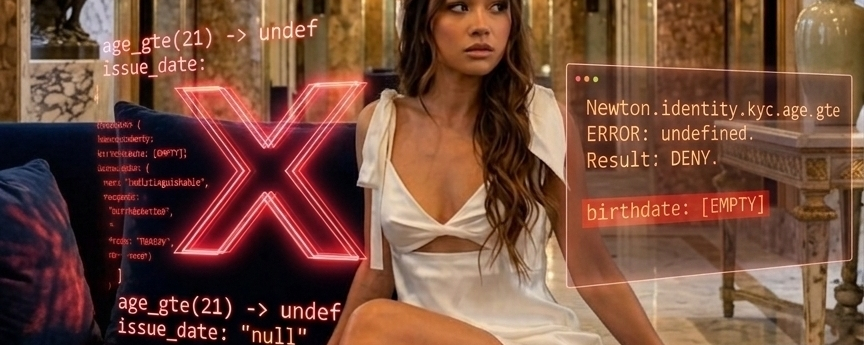
What Happens When a KYC Field Is Just... Empty?I was reading through @NewtonProtocol 's identity policy docs and one line stopped me: any error in a Rego rule means the rule evaluates to undefined. And undefined gets treated as a denial.
That sounds safe. It's actually the whole story here.
The claim
Newton's identity built-ins (newton.identity.kyc.*) are fail-closed by design. If a date can't be parsed, or a country code is malformed, or an array is empty, the policy doesn't error out loudly. It just quietly denies. No exception, no crash, no "please check your data" message. Just: not authorized.
That's a deliberate compliance posture. But it also means bad input data and an actual policy violation look identical from the outside.
What the docs actually show
age_gte(min_age) checks birthdate against a reference_date. If the birthdate string can't be parsed, or the number given is negative, the function errors and the whole rule collapses to undefined.
address_in_countries(), address_in_subdivision(), and address_not_in_subdivision() all fail the same way if you pass full country names instead of ISO codes, or an empty array by mistake.
not_expired() and valid_for(min_days) both depend on expiration_date being present and parseable. Missing that field isn't a "skip this check", it's a hard no.
address_not_in_subdivision() is interesting on its own. It's built for excluding a handful of states (say, US-NY, US-HI) instead of allow-listing 48 others. Efficient. But it means one bad ISO code silently blocks users who technically qualify.
None of this is a bug. Newton is choosing denial-by-default over permissive-by-default. For KYC, that's arguably the correct instinct. Most compliance systems would rather reject a good user than approve a bad one.
The tension
Here's the part that bugs me a little.
If your integration feeds #Newt a slightly malformed issue_date, or your KYC provider hands back an empty address_subdivision, the person gets denied, same as if they were underage or from a blocked region. There's no field-level error surfaced back to the app layer that I can see in this doc. Just a boolean false, indistinguishable from a real policy fail.
For a developer debugging "why did this user get rejected," that's a genuinely annoying place to start. You can't tell, just from the policy result, whether:
the user actually failed the check, or
your data pipeline sent garbage into Newton
Same output. Very different fix.
What I'd verify before relying on this
Not a criticism, just the list I'd actually run through if I were integrating Newton:
Where does the identity data get validated before it hits the policy engine, is there a schema check upstream, or does Newton see raw KYC provider output directly?
Do failed built-in calls get logged anywhere distinguishable from legitimate denials, or does everything just show up as "not authorized" in the audit trail?
Are ISO code formats (country, subdivision) enforced at the point of data ingestion, or only checked lazily when a policy rule runs?
What happens to age_gte if birthdate is present but in a slightly different date format than expected, silent parse failure, or explicit error?
Is there a way to distinguish "denied because underage" from "denied because the date field was malformed" in whatever dashboard or logs Newton exposes?
For address_not_in_subdivision, is there a size limit on the exclusion array, and does an empty array default to allow-all or deny-all?
If the answer to most of these is "no visibility," that's not disqualifying, fail-closed is still the right default for identity. But it does mean the integration work isn't really about writing Rego rules. It's about making sure clean data reaches Newton before the policy ever runs. The policy layer is only as trustworthy as what feeds it.
Risk notes, plainly
Fail-closed masks data-quality bugs. A denial doesn't tell you which failure mode you hit. That's an operational risk, not a security one, but it'll cost you support tickets.
No visible retry or override path in the docs. If a legitimate user gets denied because of a formatting mismatch upstream, there's nothing here describing how that gets corrected without a manual re-submission.
Exclusion lists shift risk downstream. address_not_in_subdivision is convenient, but it means the burden of keeping that exclusion list current sits entirely with whoever wrote the policy not with Newton.
Fact vs opinion, since it matters here
Fact: the docs state that a built-in error makes the containing rule evaluate to undefined, and Newton treats undefined as a denial.
Opinion: that this creates a debugging blind spot for integrators, because the same boolean shows up whether the user failed the check or the data was just bad.
I don't think this is a flaw in Newton's design. Fail-closed is the right call for identity policy. I just think the docs undersell how much of the real integration work is going to be data hygiene before the Rego ever runs, not the Rego itself.
Anyway. Still reading through the SDK reference to see if there's error surfacing I'm missing_
$NEWT #NewtonProtocol #NEWTtoken #NEWTUSDT $BEE $PALU
What Happens When a KYC Field Is Just... Empty?
I was reading through @NewtonProtocol 's identity policy docs and one line stopped me: any error in a Rego rule means the rule evaluates to undefined. And undefined gets treated as a denial.
That sounds safe. It's actually the whole story here.
The claim
Newton's identity built-ins (newton.identity.kyc.*) are fail-closed by design. If a date can't be parsed, or a country code is malformed, or an array is empty, the policy doesn't error out loudly. It just quietly denies. No exception, no crash, no "please check your data" message. Just: not authorized.
That's a deliberate compliance posture. But it also means bad input data and an actual policy violation look identical from the outside.
What the docs actually show
age_gte(min_age) checks birthdate against a reference_date. If the birthdate string can't be parsed, or the number given is negative, the function errors and the whole rule collapses to undefined.
address_in_countries(), address_in_subdivision(), and address_not_in_subdivision() all fail the same way if you pass full country names instead of ISO codes, or an empty array by mistake.
not_expired() and valid_for(min_days) both depend on expiration_date being present and parseable. Missing that field isn't a "skip this check", it's a hard no.
address_not_in_subdivision() is interesting on its own. It's built for excluding a handful of states (say, US-NY, US-HI) instead of allow-listing 48 others. Efficient. But it means one bad ISO code silently blocks users who technically qualify.
None of this is a bug. Newton is choosing denial-by-default over permissive-by-default. For KYC, that's arguably the correct instinct. Most compliance systems would rather reject a good user than approve a bad one.
The tension
Here's the part that bugs me a little.
If your integration feeds #Newt a slightly malformed issue_date, or your KYC provider hands back an empty address_subdivision, the person gets denied, same as if they were underage or from a blocked region. There's no field-level error surfaced back to the app layer that I can see in this doc. Just a boolean false, indistinguishable from a real policy fail.
For a developer debugging "why did this user get rejected," that's a genuinely annoying place to start. You can't tell, just from the policy result, whether:
the user actually failed the check, or
your data pipeline sent garbage into Newton
Same output. Very different fix.
What I'd verify before relying on this
Not a criticism, just the list I'd actually run through if I were integrating Newton:
Where does the identity data get validated before it hits the policy engine, is there a schema check upstream, or does Newton see raw KYC provider output directly?
Do failed built-in calls get logged anywhere distinguishable from legitimate denials, or does everything just show up as "not authorized" in the audit trail?
Are ISO code formats (country, subdivision) enforced at the point of data ingestion, or only checked lazily when a policy rule runs?
What happens to age_gte if birthdate is present but in a slightly different date format than expected, silent parse failure, or explicit error?
Is there a way to distinguish "denied because underage" from "denied because the date field was malformed" in whatever dashboard or logs Newton exposes?
For address_not_in_subdivision, is there a size limit on the exclusion array, and does an empty array default to allow-all or deny-all?
If the answer to most of these is "no visibility," that's not disqualifying, fail-closed is still the right default for identity. But it does mean the integration work isn't really about writing Rego rules. It's about making sure clean data reaches Newton before the policy ever runs. The policy layer is only as trustworthy as what feeds it.
Risk notes, plainly
Fail-closed masks data-quality bugs. A denial doesn't tell you which failure mode you hit. That's an operational risk, not a security one, but it'll cost you support tickets.
No visible retry or override path in the docs. If a legitimate user gets denied because of a formatting mismatch upstream, there's nothing here describing how that gets corrected without a manual re-submission.
Exclusion lists shift risk downstream. address_not_in_subdivision is convenient, but it means the burden of keeping that exclusion list current sits entirely with whoever wrote the policy not with Newton.
Fact vs opinion, since it matters here
Fact: the docs state that a built-in error makes the containing rule evaluate to undefined, and Newton treats undefined as a denial.
Opinion: that this creates a debugging blind spot for integrators, because the same boolean shows up whether the user failed the check or the data was just bad.
I don't think this is a flaw in Newton's design. Fail-closed is the right call for identity policy. I just think the docs undersell how much of the real integration work is going to be data hygiene before the Rego ever runs, not the Rego itself.
Anyway. Still reading through the SDK reference to see if there's error surfacing I'm missing_
$NEWT #NewtonProtocol #NEWTtoken #NEWTUSDT $BEE $PALU
38
1
29
368
What if the biggest security upgrade isn't another wallet, but one extra decision before a transaction?
While testing @NewtonProtocol , one detail kept standing out. A transaction doesn't have to be executed just because it was signed. #Newt lets you simulate a policy first, then returns a simple result: allow = true or false. That tiny checkpoint changes how automation behaves.
3 things I wrote down while looking at Newton:
_ Newton evaluates the transaction before execution, not after it settles.
_ The #SDK checks a transaction intent using details like the sender, recipient, value, and policy data in a single simulation request.
_ The result is binary. True means proceed. False means stop. No guessing, no partial execution.
That matters more than it sounds. One policy simulation can prevent an AI agent or automated workflow from sending funds outside its approved limits. A failed check costs far less than an irreversible on-chain mistake.
If you're building with $NEWT , try one habit: simulate every high-value transaction before broadcasting it. It adds one extra step, but it removes a surprising amount of uncertainty.
I'm curious whether Newton eventually makes this the default expectation instead of an optional security feature. That feels like the more interesting question.
#NewtonProtocol #NEWTtoken #NEWTUSDT $ETH

47
1
35
393
Статья
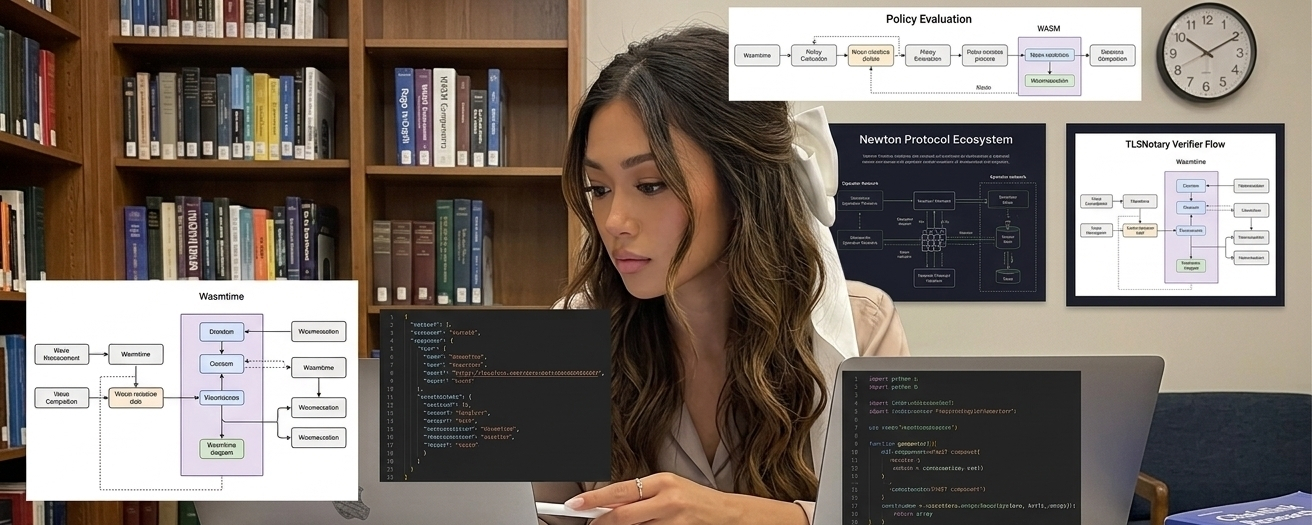
Custom data oracles sound powerful until you actually write one.@NewtonProtocol lets anyone ship WebAssembly code that pulls external data straight into Rego policies. The claim is simple: this makes on-chain decisions as flexible as off-chain APIs without giving up verifiable execution. In practice, it shifts the work and the risks to whoever maintains that WASM component. $NEWT
I spent time with their docs and examples. Here’s what stands out when you try to use it for something real.
How the Oracle Flow Actually Works
You write a small program (mostly JavaScript right now) that implements run. It receives JSON, can call HTTP via the host, optionally reads secrets, and returns JSON that lands in your policy as data.wasm.
The network runs it in sandboxed Wasmtime during policy evaluation. No private IPs, no unlimited compute. TLSNotary support is new and interesting for pulling authenticated web data without the usual 1 MiB WASM limit.
Evidence that this actually ships: $ARX
The WIT interface is explicit: one newton-provider.wit file defines http fetch, secrets, and tlsn verification.
Build step is straightforward with jco: jco componentize turns your JS into a policy.wasm component with the right imports.
Schemas are required: wasm_args_schema.json catches bad inputs before they hit the chain; params_schema.json feeds configurable thresholds into Rego as data.params.*.
Testing is local-first via newton-cli simulate, then RPC for newt_simulatePolicyData.
Numbers from the setup: HTTP responses are capped reasonably, IPFS downloads for TLSNotary proofs up to 5 MiB, and the whole thing runs per-task evaluation. That keeps costs predictable compared to always-on indexers.
One Practical TensionTension $BEAT
The real friction is ownership. You get to decide exactly what data your policy sees price from a specific endpoint, treasury yield, on-chain vault state, whatever. But now you also own the fetch logic, error handling, and update cadence.
If the external API changes its response shape tomorrow, your oracle breaks silently until you recompile and redeploy the WASM. Policies that depend on it either fail closed or fall back. That’s different from trusting a centralized oracle feed that someone else maintains.
What actually works well right now:
Quick prototypes: parse an args object, hit one public endpoint, return structured fields. The JS example in the docs does exactly this for a price feed.
TLSNotary path for higher assurance: verify-from-cid lets the host handle download and verification, then you get server-name, timestamp, transcripts, and notary fingerprint.
Schema validation upfront: malformed wasm_args get rejected before gas is spent.
Risks worth listing:
Smart contract/component risk: the WASM runs in the operator network, but a bug in your run, function can feed bad data to the Rego policy. Audits on the oracle itself are on you.
Sustainability and change risk: external data sources can alter terms, deprecate endpoints, or throttle. Your oracle’s APY-like reliability (how often it succeeds) depends on things you don’t control. Withdrawal or policy update conditions become important when data freshness matters.
Quick Checklist I’d Verify Before Relying on One
Source of yield/data: Is it one API or multiple? Who ultimately pays or hosts it?
Update mechanism: How do you roll a new WASM? Is there on-chain versioning or just IPFS replace?
Can parameters change instantly: policy thresholds vs oracle logic.
Withdrawal / failure mode: what happens to pending tasks if the oracle returns err?
Audits and reproducibility: has the component been reviewed? Can others recompile from source?
Newton gives you the tools WIT contract, host functions, CLI testing but doesn’t remove the maintenance load. That feels honest. Many oracle systems hide this behind “just call our feed.” Here the transparency is built in: you see exactly what code runs because you wrote (or reviewed) the WASM.
Deeper Observation on Policy + Data Separation
Separating the data fetch (WASM) from the decision logic (Rego) is clean on paper. Rego stays pure and auditable; the oracle handles the messy world. In practice it forces clearer thinking: what inputs does my policy actually need? Which fields are optional?
I like that secrets are scoped and fetched inside the oracle, not passed in cleartext. And the new TLSNotary bits address the “how do I trust this web response” question that every custom oracle eventually hits.
Still, there’s an unfinished edge. If your use case needs frequent updates or multiple data sources, you’ll be rebuilding and testing WASM components regularly. The docs point to Rust and Python options too, which might help for performance or library access, but the deployment surface stays the same.
Takeaway: Newton’s data oracles trade central trust for personal responsibility. The power is real if you keep the component small and well-tested.
The tension lingers on how many teams will actually maintain their own oracles long-term versus leaning on shared ones. Worth watching which pattern wins once more projects ship policies.
#Newt #NewtonProtocol #NEWTtoken #NEWTUSD
Custom data oracles sound powerful until you actually write one.
@NewtonProtocol lets anyone ship WebAssembly code that pulls external data straight into Rego policies. The claim is simple: this makes on-chain decisions as flexible as off-chain APIs without giving up verifiable execution. In practice, it shifts the work and the risks to whoever maintains that WASM component. $NEWT
I spent time with their docs and examples. Here’s what stands out when you try to use it for something real.
How the Oracle Flow Actually Works
You write a small program (mostly JavaScript right now) that implements run. It receives JSON, can call HTTP via the host, optionally reads secrets, and returns JSON that lands in your policy as data.wasm.
The network runs it in sandboxed Wasmtime during policy evaluation. No private IPs, no unlimited compute. TLSNotary support is new and interesting for pulling authenticated web data without the usual 1 MiB WASM limit.
Evidence that this actually ships: $ARX
The WIT interface is explicit: one newton-provider.wit file defines http fetch, secrets, and tlsn verification.
Build step is straightforward with jco: jco componentize turns your JS into a policy.wasm component with the right imports.
Schemas are required: wasm_args_schema.json catches bad inputs before they hit the chain; params_schema.json feeds configurable thresholds into Rego as data.params.*.
Testing is local-first via newton-cli simulate, then RPC for newt_simulatePolicyData.
Numbers from the setup: HTTP responses are capped reasonably, IPFS downloads for TLSNotary proofs up to 5 MiB, and the whole thing runs per-task evaluation. That keeps costs predictable compared to always-on indexers.
One Practical TensionTension $BEAT
The real friction is ownership. You get to decide exactly what data your policy sees price from a specific endpoint, treasury yield, on-chain vault state, whatever. But now you also own the fetch logic, error handling, and update cadence.
If the external API changes its response shape tomorrow, your oracle breaks silently until you recompile and redeploy the WASM. Policies that depend on it either fail closed or fall back. That’s different from trusting a centralized oracle feed that someone else maintains.
What actually works well right now:
Quick prototypes: parse an args object, hit one public endpoint, return structured fields. The JS example in the docs does exactly this for a price feed.
TLSNotary path for higher assurance: verify-from-cid lets the host handle download and verification, then you get server-name, timestamp, transcripts, and notary fingerprint.
Schema validation upfront: malformed wasm_args get rejected before gas is spent.
Risks worth listing:
Smart contract/component risk: the WASM runs in the operator network, but a bug in your run, function can feed bad data to the Rego policy. Audits on the oracle itself are on you.
Sustainability and change risk: external data sources can alter terms, deprecate endpoints, or throttle. Your oracle’s APY-like reliability (how often it succeeds) depends on things you don’t control. Withdrawal or policy update conditions become important when data freshness matters.
Quick Checklist I’d Verify Before Relying on One
Source of yield/data: Is it one API or multiple? Who ultimately pays or hosts it?
Update mechanism: How do you roll a new WASM? Is there on-chain versioning or just IPFS replace?
Can parameters change instantly: policy thresholds vs oracle logic.
Withdrawal / failure mode: what happens to pending tasks if the oracle returns err?
Audits and reproducibility: has the component been reviewed? Can others recompile from source?
Newton gives you the tools WIT contract, host functions, CLI testing but doesn’t remove the maintenance load. That feels honest. Many oracle systems hide this behind “just call our feed.” Here the transparency is built in: you see exactly what code runs because you wrote (or reviewed) the WASM.
Deeper Observation on Policy + Data Separation
Separating the data fetch (WASM) from the decision logic (Rego) is clean on paper. Rego stays pure and auditable; the oracle handles the messy world. In practice it forces clearer thinking: what inputs does my policy actually need? Which fields are optional?
I like that secrets are scoped and fetched inside the oracle, not passed in cleartext. And the new TLSNotary bits address the “how do I trust this web response” question that every custom oracle eventually hits.
Still, there’s an unfinished edge. If your use case needs frequent updates or multiple data sources, you’ll be rebuilding and testing WASM components regularly. The docs point to Rust and Python options too, which might help for performance or library access, but the deployment surface stays the same.
Takeaway: Newton’s data oracles trade central trust for personal responsibility. The power is real if you keep the component small and well-tested.
The tension lingers on how many teams will actually maintain their own oracles long-term versus leaning on shared ones. Worth watching which pattern wins once more projects ship policies.
#Newt #NewtonProtocol #NEWTtoken #NEWTUSD
47
1
35
563

·
--

Статья
Our Street Learned These Three Lessons the Hard WayOur street has run a small shared fund for years, streetlights, the guard's salary, small repairs nobody wants to argue about every month. Over different years, completely unrelated at the time, we learned three separate lessons the hard way.
First one, the guy holding the fund's cash disappeared for a week during a family emergency, and nobody could touch the money for anything urgent because he was the only one with access. Committee moved to needing two specific people to sign off on anything above a set amount after that. Second, a stranger once donated a large amount right before vanishing, turned out later he'd scammed someone a few blocks over and was trying to move it through a few different local funds before anyone noticed. We only found out after the fact. Third, the annual vote for who runs the fund used to be a show of hands at the mosque, and more than one person admitted afterward they voted a certain way because whoever was pushing hardest was standing right there watching them do it.
I figured these three things in Newton's whitepaper, two factor approval, stolen asset blocking, private voting, were just three unrelated bullet points thrown under one fraud section to look thorough.
Reading them together, they're our street's three lessons, just solved by policy instead of a committee meeting after the damage was already done.
Newton enables two factor authorization for non-custodial wallets, a second factor, device binding, a session key, biometric, required once a transaction crosses a configurable threshold. A compromised or simply unavailable key alone can't move funds anymore, same fix our committee landed on by accident. Policies can also check incoming funds against lists of compromised addresses or flagged transactions and block receipt of stolen assets outright, meaning that donation from the scammer would ideally get stopped before it ever lands in the fund, not sorted out weeks later once everyone's already spent from it. And private governance voting runs through the Newton Privacy Envelope, voters encrypt their choice, and everything only gets evaluated once the voting window actually closes, eligibility enforced the whole time without anyone's individual vote visible until tallying. No one standing over your shoulder at the mosque doorway.
Where I'm not fully sold is the stolen asset piece specifically. Blocking against a list only works if the address is already on that list. Our scammer wasn't flagged anywhere yet the morning he made that donation, nobody had reported him. A list like this catches known bad actors, not the brand new one still mid-scam, and the paper doesn't say how current or complete these lists are actually expected to stay.
The real test for $NEWT isn't the two factor rule or the private vote, both read as solved problems to me now, it's whether that stolen funds list stays fast enough to catch someone before the damage, not after, the way our street always found out.
Anyone's community fund or committee gone through one of these three exact problems? Curious which one hit you first.
@NewtonProtocol #Newt $NEWT
$ARX $LAB #NewtonProtocol #NEWTtoken #NEWTUSDT #USIran
Our Street Learned These Three Lessons the Hard Way
Our street has run a small shared fund for years, streetlights, the guard's salary, small repairs nobody wants to argue about every month. Over different years, completely unrelated at the time, we learned three separate lessons the hard way.
First one, the guy holding the fund's cash disappeared for a week during a family emergency, and nobody could touch the money for anything urgent because he was the only one with access. Committee moved to needing two specific people to sign off on anything above a set amount after that. Second, a stranger once donated a large amount right before vanishing, turned out later he'd scammed someone a few blocks over and was trying to move it through a few different local funds before anyone noticed. We only found out after the fact. Third, the annual vote for who runs the fund used to be a show of hands at the mosque, and more than one person admitted afterward they voted a certain way because whoever was pushing hardest was standing right there watching them do it.
I figured these three things in Newton's whitepaper, two factor approval, stolen asset blocking, private voting, were just three unrelated bullet points thrown under one fraud section to look thorough.
Reading them together, they're our street's three lessons, just solved by policy instead of a committee meeting after the damage was already done.
Newton enables two factor authorization for non-custodial wallets, a second factor, device binding, a session key, biometric, required once a transaction crosses a configurable threshold. A compromised or simply unavailable key alone can't move funds anymore, same fix our committee landed on by accident. Policies can also check incoming funds against lists of compromised addresses or flagged transactions and block receipt of stolen assets outright, meaning that donation from the scammer would ideally get stopped before it ever lands in the fund, not sorted out weeks later once everyone's already spent from it. And private governance voting runs through the Newton Privacy Envelope, voters encrypt their choice, and everything only gets evaluated once the voting window actually closes, eligibility enforced the whole time without anyone's individual vote visible until tallying. No one standing over your shoulder at the mosque doorway.
Where I'm not fully sold is the stolen asset piece specifically. Blocking against a list only works if the address is already on that list. Our scammer wasn't flagged anywhere yet the morning he made that donation, nobody had reported him. A list like this catches known bad actors, not the brand new one still mid-scam, and the paper doesn't say how current or complete these lists are actually expected to stay.
The real test for $NEWT isn't the two factor rule or the private vote, both read as solved problems to me now, it's whether that stolen funds list stays fast enough to catch someone before the damage, not after, the way our street always found out.
Anyone's community fund or committee gone through one of these three exact problems? Curious which one hit you first.
@NewtonProtocol #Newt $NEWT
$ARX $LAB #NewtonProtocol #NEWTtoken #NEWTUSDT #USIran
44
30
191
Частичная правда
Been staring at @NewtonProtocol 's slashing model for a bit, and something bugs me.
Newton's whole trust pitch rests on staked $NEWT collateral. Operators put #Newt up front to run agent models. Misbehave, get caught, lose a chunk of the stake. Clean idea on paper.
But the penalty is denominated in NEWT, not dollars. Supply's fixed at 1B tokens, no inflation, which is good for scarcity, but it also means the security budget floats entirely with price. Slash 10% of stake when NEWT is at $2 vs when it's at $0.20, and you get very different deterrents for the exact same "bad behavior."
So the system's honesty guarantee is only as strong as the token's market cap that week. Nobody talks about this part when they explain zkVMs and Keystore rollups.
Newton's model registry, Newton's dPoS validators, Newt's whole incentive stack, all downstream of a price chart.
Not saying it breaks the design. Just saying "slashing = security" only holds until the token dips.
#NEWTtoken #NEWTUSDT #NewtonProtocol $ETH $SPCX
If NEWT dropped 90%, would slashing still scare bad actors?
✅ Yes
85%
❌ Not as much
10%
🤷 Not sure
5%
20 проголосовали • Голосование закрыто
128
74
4.2k
Проверено
Статья
What If Newton's Biggest Upgrade Isn't a New Feature, But Who It's Choosing To Trust?Newton Mainnet Beta becomes more interesting because it combines on-chain execution with external price data from RedStone and risk intelligence from Credora. That doesn't guarantee safety. It does suggest Newton is trying to reduce two common weak points before scaling.
The practical observation
Most blockchain launches talk about speed.
@NewtonProtocol is talking about data quality and risk visibility.
That caught my attention more than another TPS number.
If #Newt wants serious DeFi activity, bad price feeds or hidden risk can break user confidence faster than slow transactions ever will.
That's where Newton's latest integrations seem to matter.
What is happening?
$NEWT Mainnet Beta now integrates:
•RedStone for oracle price feeds.
•Credora for institutional-grade risk assessment.
Instead of treating these as optional services, Newton is building with them from the start.
That changes how I look at Newton.
Fact
RedStone supplies market prices that DeFi protocols rely on.
Credora focuses on portfolio transparency and risk monitoring.
Newton is bringing both into its Mainnet Beta.
These are separate infrastructure layers solving different problems.
Why this matters
Most failures don't begin with a broken blockchain.
They begin with incorrect information.
If an oracle reports the wrong price, lending protocols can liquidate healthy positions.
If risk isn't visible, capital often flows where it shouldn't.
Newton appears to be addressing both issues before asking developers to build larger applications.
Evidence
•Newton launched its Mainnet Beta with integrations from RedStone and Credora rather than adding them later.
•RedStone delivers external market prices that DeFi applications depend on for lending, borrowing, and liquidations.
•Credora focuses on transparency through risk assessment and monitoring for institutional participants.
•Together, these integrations strengthen Newton's infrastructure without changing how users interact with applications directly.
My opinion
I don't think this makes Newton automatically safer.
Infrastructure choices rarely become headlines.
But they're often the reason a protocol survives stressful markets.
Choosing reliable data before chasing user growth feels like a practical decision.
That's more interesting than another announcement about transaction speed.
The tension
Newton is still in Mainnet Beta.
Beta networks exist to discover problems.
Real users create situations that test infrastructure in ways simulations cannot.
So the integrations matter.
But they still need to prove themselves under real market volatility.
That's the part worth watching.
Risks worth remembering
•Smart contract risk: Even reliable data cannot eliminate vulnerabilities in application code.
•Oracle dependency: If price feeds experience delays or unexpected failures, DeFi protocols can still face operational issues.
•Platform risk: Mainnet Beta means features and infrastructure may continue changing.
•Risk analytics aren't guarantees: Credora improves visibility, but transparency doesn't prevent losses.
What I'd verify before using Newton
✓ Where does the yield come from?
✓ Who is paying that yield?
✓ Is the APY subsidized by incentives?
✓ Can the APY change instantly?
✓ Are withdrawals immediate or subject to waiting periods?
✓ Has the protocol completed independent security audits?
✓ Which applications rely on RedStone price feeds?
✓ How does Newton respond if oracle data becomes unavailable?
Numbers that matter
There are very few user-facing numbers available today.
That is important by itself.
•APY: Not publicly specified.
•Lock period: Not publicly specified.
•Payout frequency: Not publicly specified.
I'd rather see missing numbers than inflated ones.
When Newton eventually publishes these metrics, they'll deserve as much attention as any roadmap update.
Newton keeps appearing in conversations about infrastructure, and this integration explains why. Newton isn't only adding another service. Newton is connecting execution, pricing, and risk into the same stack before broader adoption. Whether that gives Newton a long-term advantage depends less on the announcement itself and more on how Newton performs when markets become unpredictable. That's the part I'll keep watching.
$AA $VELVET #NewtonProtocol #NEWTtoken #NEWTUSDT
What If Newton's Biggest Upgrade Isn't a New Feature, But Who It's Choosing To Trust?
Newton Mainnet Beta becomes more interesting because it combines on-chain execution with external price data from RedStone and risk intelligence from Credora. That doesn't guarantee safety. It does suggest Newton is trying to reduce two common weak points before scaling.
The practical observation
Most blockchain launches talk about speed.
@NewtonProtocol is talking about data quality and risk visibility.
That caught my attention more than another TPS number.
If #Newt wants serious DeFi activity, bad price feeds or hidden risk can break user confidence faster than slow transactions ever will.
That's where Newton's latest integrations seem to matter.
What is happening?
$NEWT Mainnet Beta now integrates:
•RedStone for oracle price feeds.
•Credora for institutional-grade risk assessment.
Instead of treating these as optional services, Newton is building with them from the start.
That changes how I look at Newton.
Fact
RedStone supplies market prices that DeFi protocols rely on.
Credora focuses on portfolio transparency and risk monitoring.
Newton is bringing both into its Mainnet Beta.
These are separate infrastructure layers solving different problems.
Why this matters
Most failures don't begin with a broken blockchain.
They begin with incorrect information.
If an oracle reports the wrong price, lending protocols can liquidate healthy positions.
If risk isn't visible, capital often flows where it shouldn't.
Newton appears to be addressing both issues before asking developers to build larger applications.
Evidence
•Newton launched its Mainnet Beta with integrations from RedStone and Credora rather than adding them later.
•RedStone delivers external market prices that DeFi applications depend on for lending, borrowing, and liquidations.
•Credora focuses on transparency through risk assessment and monitoring for institutional participants.
•Together, these integrations strengthen Newton's infrastructure without changing how users interact with applications directly.
My opinion
I don't think this makes Newton automatically safer.
Infrastructure choices rarely become headlines.
But they're often the reason a protocol survives stressful markets.
Choosing reliable data before chasing user growth feels like a practical decision.
That's more interesting than another announcement about transaction speed.
The tension
Newton is still in Mainnet Beta.
Beta networks exist to discover problems.
Real users create situations that test infrastructure in ways simulations cannot.
So the integrations matter.
But they still need to prove themselves under real market volatility.
That's the part worth watching.
Risks worth remembering
•Smart contract risk: Even reliable data cannot eliminate vulnerabilities in application code.
•Oracle dependency: If price feeds experience delays or unexpected failures, DeFi protocols can still face operational issues.
•Platform risk: Mainnet Beta means features and infrastructure may continue changing.
•Risk analytics aren't guarantees: Credora improves visibility, but transparency doesn't prevent losses.
What I'd verify before using Newton
✓ Where does the yield come from?
✓ Who is paying that yield?
✓ Is the APY subsidized by incentives?
✓ Can the APY change instantly?
✓ Are withdrawals immediate or subject to waiting periods?
✓ Has the protocol completed independent security audits?
✓ Which applications rely on RedStone price feeds?
✓ How does Newton respond if oracle data becomes unavailable?
Numbers that matter
There are very few user-facing numbers available today.
That is important by itself.
•APY: Not publicly specified.
•Lock period: Not publicly specified.
•Payout frequency: Not publicly specified.
I'd rather see missing numbers than inflated ones.
When Newton eventually publishes these metrics, they'll deserve as much attention as any roadmap update.
Newton keeps appearing in conversations about infrastructure, and this integration explains why. Newton isn't only adding another service. Newton is connecting execution, pricing, and risk into the same stack before broader adoption. Whether that gives Newton a long-term advantage depends less on the announcement itself and more on how Newton performs when markets become unpredictable. That's the part I'll keep watching.
$AA $VELVET #NewtonProtocol #NEWTtoken #NEWTUSDT
43
27
686

Статья
What Happens When Vault Rules Are Enforced Before Funds Move?DeFi vaults keep getting drained or restricted when institutions show up, Newton wants to change that.
@NewtonProtocol positions itself as the pre-settlement policy layer that actually enforces vault rules onchain before any transaction executes. Fact: as of mainnet beta in late June 2026, it integrates with data like RedStone prices and Credora risk scores to block or allow moves in real time.
The Core Tension
Most vault guardrails today are either offchain promises or reactive code that kicks in after something already went wrong. #Newt says it checks investor eligibility, position limits, depegs, and more before settlement, leaving a verifiable onchain receipt. This matters because vaults now hold serious stablecoin and RWA flows hundreds of billions looking for yield without TradFi-level compliance headaches.
Evidence so far: $BEAT $ARX
VaultKit SDK, lets curators assemble policies for depeg detection, max drawdown, concentration limits, and oracle divergence; these get evaluated per transaction by a decentralized operator network.
Early integrations tie in real-world data feeds price oracles and risk ratings, so a vault can automatically reject a position if Credora's Probability of Significant Loss score breaches the curator's threshold. No manual intervention needed post-setup.
It extends beyond vaults: RWAs get investor jurisdiction and sanctions checks with compliance receipts; stablecoins add travel rule and velocity limits on issuance/redemption/transfer; agentic setups include spending caps and prompt-injection defenses.
Numbers context: stablecoin market cap sits around $313B+ with $4T+ monthly transfer volume; tokenized RWAs over $25B. Newton targets the compliance costs estimated in the hundreds of billions annually that slow onchain adoption.
Quick takeaway: Pre-execution checks could reduce the gap between DeFi speed and institutional requirements, but only if the enforcement layer itself holds up.
How the Mechanics Feel in Practice
I spent time looking at the docs and site. You write or pick a policy (Rego language or templates), drop a lightweight snippet into your contract, and Newton’s AVS handles the rest across supported EVM chains. Evaluation returns allow/deny plus a signed attestation anyone can verify. Privacy angle: sensitive data stays hashed or offchain via ZK elements.
For a vault curator, this means setting rules once and having them apply even if an AI agent or aggregator calls the contract directly. That’s the practical observation that sticks: current DeFi often assumes honest human or simple bot behavior. With agents growing, transaction-level policy that doesn’t rely on frontend filters becomes necessary infrastructure, not a nice-to-have.
What I’d Verify Before Using It
Source and freshness of data feeds (RedStone/Credora are live partners, but oracle failure is still a vector).
Who controls policy updates and how fast they can be changed.
Withdrawal conditions does a failed policy check lock funds temporarily or just block the specific tx?
Audit status of the AVS operators and verifier contracts (standard disclaimer: smart contract risk exists).
Whether yields or policies are subsidized early on, and how sustainable the enforcement costs prove.
These aren’t dealbreakers, but they’re the questions that separate marketing from working code.
Risks Worth Noting
Smart contract / enforcement risk: If the Newton integration has a bug or the operator network gets compromised, policies could fail open or closed. It’s new mainnet beta test small.
Counterparty / data risk: Reliance on external oracles and risk scorers introduces dependency. A bad price feed or delayed sanctions list update could block legitimate activity or let bad ones through.
Sustainability: High institutional flows depend on verifiable compliance, but adoption speed will determine if this becomes table stakes or stays niche. No guarantee of liquidity or usage yet.
Opinion: the design feels thoughtful for the agentic future they target. Pre-settlement is harder than post-event monitoring, and doing it verifiably onchain is non-trivial. But execution details like gas costs per check, latency, and edge cases with complex policies will decide real uptake.
One Practical Angle on Vaults
Focus on DeFi vaults for a second. You deposit stablecoins or assets into an ERC-4626-style vault chasing yield from lending, staking, or RWAs. Traditional problems: sudden depegs, over-concentration, or ineligible investors slip in. Newton’s example policies (max drawdown, concentration) aim to gate these at the transaction level.
Imagine a curator sets a 5% concentration limit on a single asset. A large deposit or rebalance that would breach it gets rejected before execution. The receipt proves to allocators or auditors that the mandate was followed. That’s cleaner than hoping offchain dashboards or multisigs catch everything after the fact.
Still, tension remains: institutions want control, but they also want the composability and speed that made DeFi attractive. $NEWT sits in that middle adding friction at the right moment, ideally minimal. Whether the added pre-check latency or costs bite in high-frequency strategies is something we’ll see in the next months.
Balanced view: It’s not magic. Policies are only as good as the data and logic behind them. Early stage means opportunity plus the usual crypto risks audits help, but don’t eliminate them. I’m watching how VaultKit gets used in actual deployments more than the headline use cases.
The agentic piece feels like the longer-term bet. Autonomous agents executing mandates need guardrails that can’t be bypassed by clever calls. Spending caps, approved payees, and mandate enforcement enforced before settlement could prevent a lot of “the agent went rogue” stories we haven’t fully seen yet but probably will.
Not everything needs to be covered here. The docs go deeper on integration examples and concepts like intents and attestations. For now, the practical hook is simple: if you run or use vaults with real money, pre-settlement policy enforcement is a tension worth testing rather than ignoring.
#NewtonProtocol #NEWTtoken #NEWTUSDT
What Happens When Vault Rules Are Enforced Before Funds Move?
DeFi vaults keep getting drained or restricted when institutions show up, Newton wants to change that.
@NewtonProtocol positions itself as the pre-settlement policy layer that actually enforces vault rules onchain before any transaction executes. Fact: as of mainnet beta in late June 2026, it integrates with data like RedStone prices and Credora risk scores to block or allow moves in real time.
The Core Tension
Most vault guardrails today are either offchain promises or reactive code that kicks in after something already went wrong. #Newt says it checks investor eligibility, position limits, depegs, and more before settlement, leaving a verifiable onchain receipt. This matters because vaults now hold serious stablecoin and RWA flows hundreds of billions looking for yield without TradFi-level compliance headaches.
Evidence so far: $BEAT $ARX
VaultKit SDK, lets curators assemble policies for depeg detection, max drawdown, concentration limits, and oracle divergence; these get evaluated per transaction by a decentralized operator network.
Early integrations tie in real-world data feeds price oracles and risk ratings, so a vault can automatically reject a position if Credora's Probability of Significant Loss score breaches the curator's threshold. No manual intervention needed post-setup.
It extends beyond vaults: RWAs get investor jurisdiction and sanctions checks with compliance receipts; stablecoins add travel rule and velocity limits on issuance/redemption/transfer; agentic setups include spending caps and prompt-injection defenses.
Numbers context: stablecoin market cap sits around $313B+ with $4T+ monthly transfer volume; tokenized RWAs over $25B. Newton targets the compliance costs estimated in the hundreds of billions annually that slow onchain adoption.
Quick takeaway: Pre-execution checks could reduce the gap between DeFi speed and institutional requirements, but only if the enforcement layer itself holds up.
How the Mechanics Feel in Practice
I spent time looking at the docs and site. You write or pick a policy (Rego language or templates), drop a lightweight snippet into your contract, and Newton’s AVS handles the rest across supported EVM chains. Evaluation returns allow/deny plus a signed attestation anyone can verify. Privacy angle: sensitive data stays hashed or offchain via ZK elements.
For a vault curator, this means setting rules once and having them apply even if an AI agent or aggregator calls the contract directly. That’s the practical observation that sticks: current DeFi often assumes honest human or simple bot behavior. With agents growing, transaction-level policy that doesn’t rely on frontend filters becomes necessary infrastructure, not a nice-to-have.
What I’d Verify Before Using It
Source and freshness of data feeds (RedStone/Credora are live partners, but oracle failure is still a vector).
Who controls policy updates and how fast they can be changed.
Withdrawal conditions does a failed policy check lock funds temporarily or just block the specific tx?
Audit status of the AVS operators and verifier contracts (standard disclaimer: smart contract risk exists).
Whether yields or policies are subsidized early on, and how sustainable the enforcement costs prove.
These aren’t dealbreakers, but they’re the questions that separate marketing from working code.
Risks Worth Noting
Smart contract / enforcement risk: If the Newton integration has a bug or the operator network gets compromised, policies could fail open or closed. It’s new mainnet beta test small.
Counterparty / data risk: Reliance on external oracles and risk scorers introduces dependency. A bad price feed or delayed sanctions list update could block legitimate activity or let bad ones through.
Sustainability: High institutional flows depend on verifiable compliance, but adoption speed will determine if this becomes table stakes or stays niche. No guarantee of liquidity or usage yet.
Opinion: the design feels thoughtful for the agentic future they target. Pre-settlement is harder than post-event monitoring, and doing it verifiably onchain is non-trivial. But execution details like gas costs per check, latency, and edge cases with complex policies will decide real uptake.
One Practical Angle on Vaults
Focus on DeFi vaults for a second. You deposit stablecoins or assets into an ERC-4626-style vault chasing yield from lending, staking, or RWAs. Traditional problems: sudden depegs, over-concentration, or ineligible investors slip in. Newton’s example policies (max drawdown, concentration) aim to gate these at the transaction level.
Imagine a curator sets a 5% concentration limit on a single asset. A large deposit or rebalance that would breach it gets rejected before execution. The receipt proves to allocators or auditors that the mandate was followed. That’s cleaner than hoping offchain dashboards or multisigs catch everything after the fact.
Still, tension remains: institutions want control, but they also want the composability and speed that made DeFi attractive. $NEWT sits in that middle adding friction at the right moment, ideally minimal. Whether the added pre-check latency or costs bite in high-frequency strategies is something we’ll see in the next months.
Balanced view: It’s not magic. Policies are only as good as the data and logic behind them. Early stage means opportunity plus the usual crypto risks audits help, but don’t eliminate them. I’m watching how VaultKit gets used in actual deployments more than the headline use cases.
The agentic piece feels like the longer-term bet. Autonomous agents executing mandates need guardrails that can’t be bypassed by clever calls. Spending caps, approved payees, and mandate enforcement enforced before settlement could prevent a lot of “the agent went rogue” stories we haven’t fully seen yet but probably will.
Not everything needs to be covered here. The docs go deeper on integration examples and concepts like intents and attestations. For now, the practical hook is simple: if you run or use vaults with real money, pre-settlement policy enforcement is a tension worth testing rather than ignoring.
#NewtonProtocol #NEWTtoken #NEWTUSDT
60
1
37
523
Проверено
Why does a policy engine need five separate steps just to say "yes" or "no" to a transaction?
That's the real question behind Newton's Evaluation Lifecycle.
How does a policy even get created?
A developer writes the logic in Rego, publishes it to the Newton registry, and it's stored on IPFS, referenced by CID. This means every policy is verifiable and reusable, not a black box buried in a contract.
Who decides which policy applies to a transaction?
The user does. They deploy a PolicyClient contract, pick a policy, and set their own thresholds and expiration rules. In my view, this is the underrated part, it puts control back with the user instead of a centralized gatekeeper.
What happens when a task is submitted?
An Intent pairs with the PolicyClient and hits the #Newt Gateway via SDK or RPC. Simple on the surface, but this is the trigger point for everything downstream.
Who actually checks if the transaction is valid?
AVS operators independently evaluate the policy and produce BLS signatures. Once quorum is hit, an Aggregator bundles them into one attestation. In my view, this is the strongest design choice in the whole flow, no single operator can unilaterally approve or block anything. $NEWT
So what's the takeaway?
@NewtonProtocol isn't just adding another approval step to transactions, it's decentralizing the judgment itself. That's the real shift worth watching.
$ARX $LAB #NewtonProtocol #NEWTtoken #NEWTUSDT
📊 What matters most before a transaction goes through?
🔹 Security
64%
🔹 Speed
29%
🔹 Transparency
7%
🔹 Low fees
0%
14 проголосовали • Голосование закрыто
98
1
66
3.5k

·
--
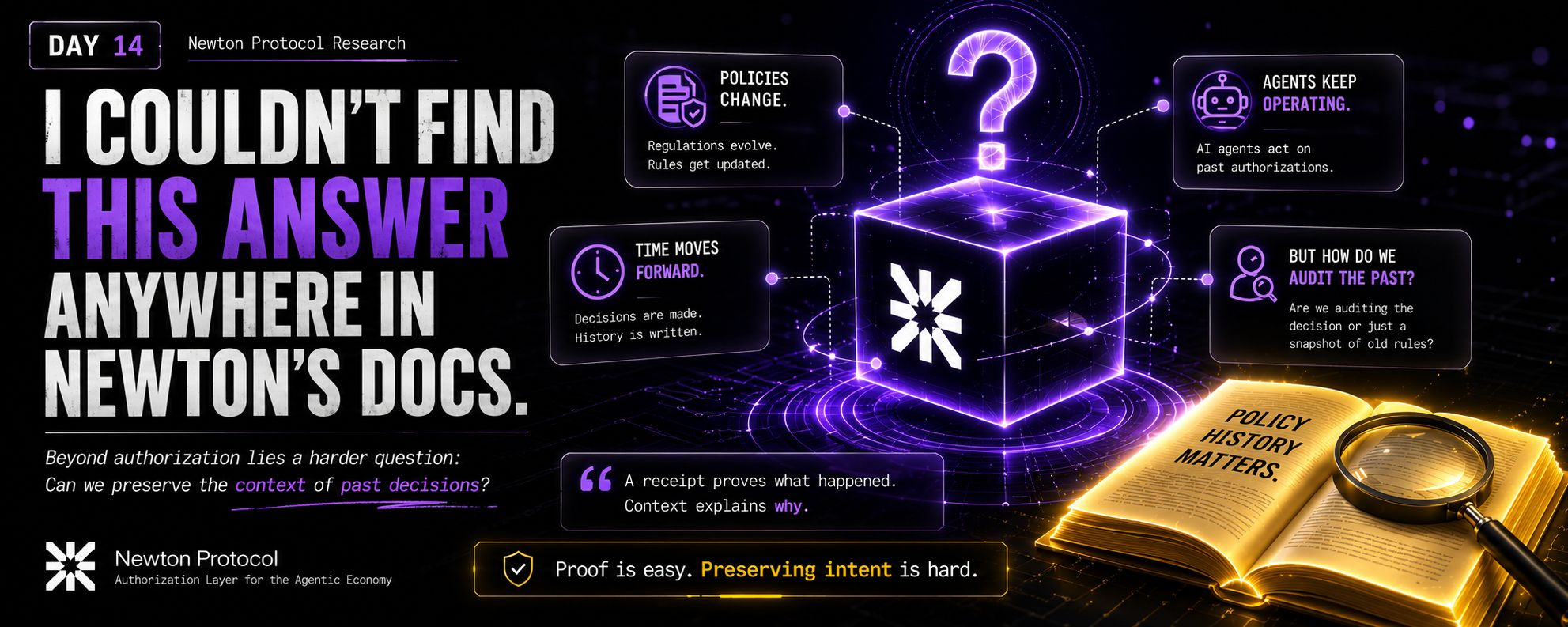
Статья
I Couldn't Find This Answer Anywhere in Newton's DocsI spent the morning going back through @NewtonProtocol architecture, expecting to understand one small detail better.
Instead, I came away with a bigger question.
The protocol spends a lot of time explaining how authorization decisions are verified. Policies are evaluated. Operators attest. Cryptographic proofs confirm the result.
That part makes sense.
What I couldn't stop thinking about was everything that happens after the authorization.
Suppose an institution updates one of its policies because regulations change. Hundreds of AI agents have already been operating under the previous version.
The new policy is now active.
The old authorizations are already part of history.
That made me wonder...
When someone audits activity months later, are they really auditing the policy itself, or are they auditing a snapshot of a decision that only made sense under yesterday's rules?
History doesn't change.
Policies do.
That feels like one of the hardest design problems for any authorization layer.
A policy version explains why a decision happened.
A receipt only proves that it happened.
Those aren't the same thing.
I'm not saying Newton gets this wrong.
I'm saying this may become one of the most important pieces of infrastructure if programmable authorization becomes standard for AI agents.
The protocol can prove a decision.
Can it also preserve enough historical context for someone to understand that decision years later?
I'm still digging through the docs to answer that.
Maybe the hardest part of authorization isn't enforcing today's rules.
Maybe it's preserving yesterday's intent.
What do you think?
Should an authorization network optimize for cryptographic proof, or for long-term human interpretability?
$NEWT $LAB $EVAA
{future}(NEWTUSDT)
#NewtonProtocol #Newt #Web3 #AI #Research #blockchain #BinanceSquare
I Couldn't Find This Answer Anywhere in Newton's Docs
I spent the morning going back through @NewtonProtocol architecture, expecting to understand one small detail better.
Instead, I came away with a bigger question.
The protocol spends a lot of time explaining how authorization decisions are verified. Policies are evaluated. Operators attest. Cryptographic proofs confirm the result.
That part makes sense.
What I couldn't stop thinking about was everything that happens after the authorization.
Suppose an institution updates one of its policies because regulations change. Hundreds of AI agents have already been operating under the previous version.
The new policy is now active.
The old authorizations are already part of history.
That made me wonder...
When someone audits activity months later, are they really auditing the policy itself, or are they auditing a snapshot of a decision that only made sense under yesterday's rules?
History doesn't change.
Policies do.
That feels like one of the hardest design problems for any authorization layer.
A policy version explains why a decision happened.
A receipt only proves that it happened.
Those aren't the same thing.
I'm not saying Newton gets this wrong.
I'm saying this may become one of the most important pieces of infrastructure if programmable authorization becomes standard for AI agents.
The protocol can prove a decision.
Can it also preserve enough historical context for someone to understand that decision years later?
I'm still digging through the docs to answer that.
Maybe the hardest part of authorization isn't enforcing today's rules.
Maybe it's preserving yesterday's intent.
What do you think?
Should an authorization network optimize for cryptographic proof, or for long-term human interpretability?
$NEWT $LAB $EVAA
#NewtonProtocol #Newt #Web3 #AI #Research #blockchain #BinanceSquare
2
1
381

$NEWT 🛡️ From Reactive to Proactive Security: A New Direction for Blockchain
Most blockchain security activates after something goes wrong—patches, audits, or emergency fixes following an exploit.
Newton Protocol takes a different approach. ⚡
Instead of reacting to malicious transactions, it evaluates them before execution, checking whether they satisfy predefined policy rules such as jurisdiction restrictions, spending limits, or compliance requirements.
🔍 This shifts security from damage control to risk prevention.
Another interesting aspect is the use of Rego, a policy language already trusted in enterprise environments. Rather than forcing institutions to redesign their applications or migrate to a new chain, compliance logic can be added as a programmable policy layer.
💡 The long-term opportunity isn't just stronger security—it's making blockchain infrastructure compatible with real-world governance while preserving composability.
🚀 The next phase of Web3 may be defined not by faster transactions, but by smarter authorization before execution.
#NewtonProtocol #Newt #Blockchain #Web3 #DeFi #Security #compliance
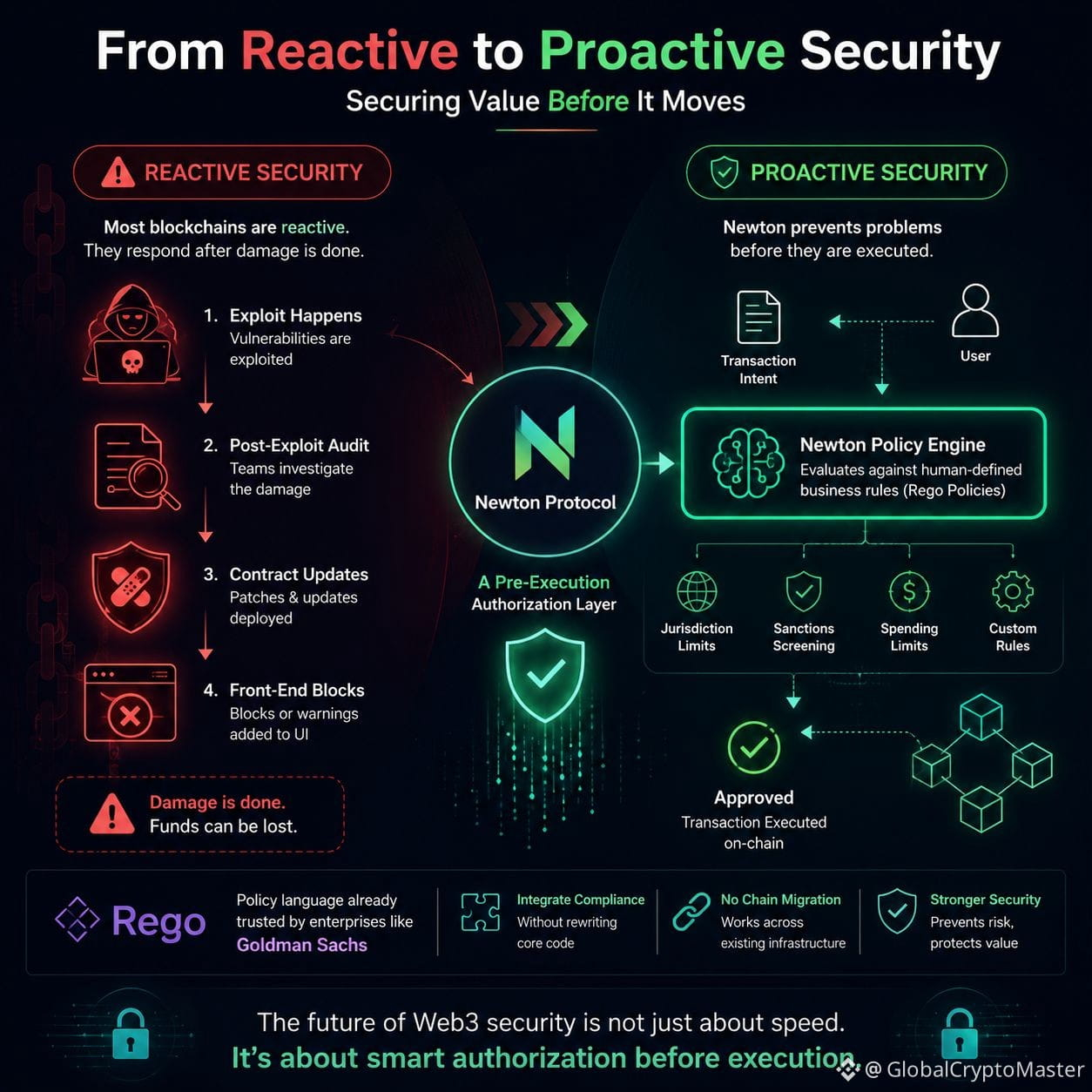
65

·
--
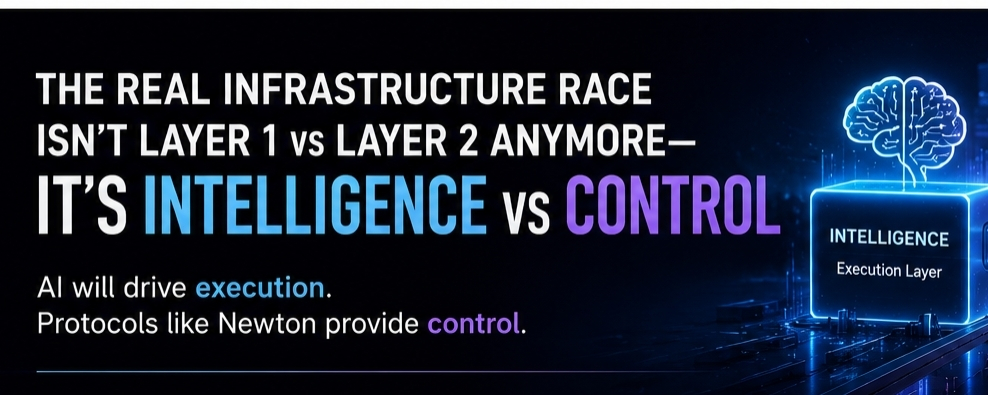
Статья
The Real Infrastructure Race Isn't Layer 1 vs Layer 2 Anymore—It's Intelligence vs ControlFor years, the blockchain industry has debated the same question: Which infrastructure wins—Layer 1 or Layer 2?
Faster transactions. Lower fees. Better scalability.
Those metrics have driven innovation, but they may not define the next chapter of Web3.
A much bigger shift is already underway.
As AI agents become capable of managing wallets, executing trades, rebalancing portfolios, and interacting with DeFi protocols autonomously, the real challenge is no longer execution—it's control.
The future of blockchain won't simply belong to the fastest network. It will belong to the infrastructure that can ensure autonomous systems operate within transparent, verifiable, and authorized boundaries.
That's why I believe the next infrastructure race is Intelligence vs Control.
AI Is Becoming the Execution Layer
Artificial intelligence is evolving from an assistant into an operator.
Instead of only providing insights, AI can now:
• Analyze on-chain data in real time
• Execute complex DeFi strategies
• Optimize liquidity allocation
• Monitor market conditions 24/7
• Trigger automated transactions based on predefined objectives
This level of automation could transform digital finance.
But there's an important question many people overlook.
Who verifies that an AI agent is still allowed to perform the action it wants to execute?
Execution without authorization creates risk.
An AI model can make a poor market prediction and lose money.
But if an autonomous agent performs an action outside approved permissions, governance rules, or organizational policies, the consequences can extend beyond financial loss to operational and compliance issues.
That distinction matters, especially for institutions.
Why Speed Alone Isn't Enough
Today's blockchain infrastructure excels at processing transactions efficiently.
However, institutions often require more than speed.
They need confidence that every automated action follows predefined rules.
Imagine an AI treasury manager responsible for handling millions of dollars in tokenized assets.
It shouldn't simply ask:
"Can this transaction be executed?"
It should also ask:
"Does this transaction still comply with the latest governance decision, spending limits, security policy, and user authorization?"
Those are very different questions.
As AI becomes more autonomous, permission verification becomes just as important as transaction execution.
The Missing Control Layer
Many DeFi applications embed authorization logic directly into individual smart contracts or application code.
That approach works, but it can also lead to duplicated logic across multiple protocols.
A more modular architecture separates decision-making from permission verification.
Think of it this way:
AI decides what should happen.A control layer verifies whether it is allowed to happen.
Keeping these responsibilities separate can make automated systems easier to audit, update, and govern.
Rather than trusting decisions made from an outdated snapshot, authorization can be checked at the moment execution is about to occur.
Where Newton Protocol Fits
One of the reasons I've been following Newton Protocol is its focus on programmable authorization rather than simply faster execution.
Instead of concentrating only on moving transactions across the network, Newton explores how policies can be evaluated before automated actions are finalized.
That design philosophy becomes increasingly relevant as AI agents gain more responsibility across decentralized finance.
If authorization can be verified independently of the application itself, developers may not need to rebuild permission systems for every new product.
It also creates opportunities for stronger auditability and clearer governance around automated actions.
As AI, DeFi, and tokenized real-world assets continue to evolve, infrastructure focused on policy enforcement could become an important part of the broader ecosystem.
Why This Matters for Institutional Adoption
Institutional participants generally need more than efficient infrastructure.
They often require:
✔ Transparent governance
✔ Verifiable authorization
✔ Policy enforcement
✔ Clear audit trails
✔ Accountable automation
These aren't optional features in many regulated or enterprise environments—they're operational requirements.
Infrastructure that supports these capabilities could make autonomous financial systems more practical for organizations managing significant value on-chain.
Looking Ahead
The blockchain industry has spent years optimizing execution.
The next wave of innovation may focus on ensuring that autonomous execution remains accountable.
AI can become the engine that drives on-chain activity.
But every powerful engine needs reliable controls.
That balance between intelligence and authorization could define the next generation of blockchain infrastructure.
Projects exploring programmable policy enforcement and verifiable authorization are contributing to an important conversation about how decentralized automation should evolve.
As AI continues to converge with DeFi, the discussion will likely shift from "Can autonomous systems execute transactions?" to "Can they prove every action was authorized?"
That may become one of the most valuable forms of trust in on-chain finance.
If the future of on-chain automation depends on trust, governance, and verifiable authorization, Newton Protocol is a project worth watching.
What role do you think $NEWT will play as AI and DeFi continue to converge? Share your thoughts below!
#NewtonProtocol #Newt @NewtonProtocol
The Real Infrastructure Race Isn't Layer 1 vs Layer 2 Anymore—It's Intelligence vs Control
For years, the blockchain industry has debated the same question: Which infrastructure wins—Layer 1 or Layer 2?
Faster transactions. Lower fees. Better scalability.
Those metrics have driven innovation, but they may not define the next chapter of Web3.
A much bigger shift is already underway.
As AI agents become capable of managing wallets, executing trades, rebalancing portfolios, and interacting with DeFi protocols autonomously, the real challenge is no longer execution—it's control.
The future of blockchain won't simply belong to the fastest network. It will belong to the infrastructure that can ensure autonomous systems operate within transparent, verifiable, and authorized boundaries.
That's why I believe the next infrastructure race is Intelligence vs Control.
AI Is Becoming the Execution Layer
Artificial intelligence is evolving from an assistant into an operator.
Instead of only providing insights, AI can now:
• Analyze on-chain data in real time
• Execute complex DeFi strategies
• Optimize liquidity allocation
• Monitor market conditions 24/7
• Trigger automated transactions based on predefined objectives
This level of automation could transform digital finance.
But there's an important question many people overlook.
Who verifies that an AI agent is still allowed to perform the action it wants to execute?
Execution without authorization creates risk.
An AI model can make a poor market prediction and lose money.
But if an autonomous agent performs an action outside approved permissions, governance rules, or organizational policies, the consequences can extend beyond financial loss to operational and compliance issues.
That distinction matters, especially for institutions.
Why Speed Alone Isn't Enough
Today's blockchain infrastructure excels at processing transactions efficiently.
However, institutions often require more than speed.
They need confidence that every automated action follows predefined rules.
Imagine an AI treasury manager responsible for handling millions of dollars in tokenized assets.
It shouldn't simply ask:
"Can this transaction be executed?"
It should also ask:
"Does this transaction still comply with the latest governance decision, spending limits, security policy, and user authorization?"
Those are very different questions.
As AI becomes more autonomous, permission verification becomes just as important as transaction execution.
The Missing Control Layer
Many DeFi applications embed authorization logic directly into individual smart contracts or application code.
That approach works, but it can also lead to duplicated logic across multiple protocols.
A more modular architecture separates decision-making from permission verification.
Think of it this way:
AI decides what should happen.A control layer verifies whether it is allowed to happen.
Keeping these responsibilities separate can make automated systems easier to audit, update, and govern.
Rather than trusting decisions made from an outdated snapshot, authorization can be checked at the moment execution is about to occur.
Where Newton Protocol Fits
One of the reasons I've been following Newton Protocol is its focus on programmable authorization rather than simply faster execution.
Instead of concentrating only on moving transactions across the network, Newton explores how policies can be evaluated before automated actions are finalized.
That design philosophy becomes increasingly relevant as AI agents gain more responsibility across decentralized finance.
If authorization can be verified independently of the application itself, developers may not need to rebuild permission systems for every new product.
It also creates opportunities for stronger auditability and clearer governance around automated actions.
As AI, DeFi, and tokenized real-world assets continue to evolve, infrastructure focused on policy enforcement could become an important part of the broader ecosystem.
Why This Matters for Institutional Adoption
Institutional participants generally need more than efficient infrastructure.
They often require:
✔ Transparent governance
✔ Verifiable authorization
✔ Policy enforcement
✔ Clear audit trails
✔ Accountable automation
These aren't optional features in many regulated or enterprise environments—they're operational requirements.
Infrastructure that supports these capabilities could make autonomous financial systems more practical for organizations managing significant value on-chain.
Looking Ahead
The blockchain industry has spent years optimizing execution.
The next wave of innovation may focus on ensuring that autonomous execution remains accountable.
AI can become the engine that drives on-chain activity.
But every powerful engine needs reliable controls.
That balance between intelligence and authorization could define the next generation of blockchain infrastructure.
Projects exploring programmable policy enforcement and verifiable authorization are contributing to an important conversation about how decentralized automation should evolve.
As AI continues to converge with DeFi, the discussion will likely shift from "Can autonomous systems execute transactions?" to "Can they prove every action was authorized?"
That may become one of the most valuable forms of trust in on-chain finance.
If the future of on-chain automation depends on trust, governance, and verifiable authorization, Newton Protocol is a project worth watching.
What role do you think $NEWT will play as AI and DeFi continue to converge? Share your thoughts below!
#NewtonProtocol #Newt @NewtonProtocol
77

·
--
Проверено
@NewtonProtocol The next wave of AI won't be defined by how smart it is—it will be defined by how trustworthy it is.
In a decentralized world, AI agents need more than intelligence. They need identity, verifiable data, and transparent execution.
That's where Newton Protocol stands out.
By building infrastructure for verifiable AI and on-chain automation, @NewtonProtocol is helping create a future where AI can operate securely without sacrificing decentralization.
The future of Web3 isn't just autonomous.
It must also be trustless, transparent, and verifiable.
Projects building this foundation today could become the backbone of tomorrow's decentralized economy.
Which AI feature matters most in Web3 Security Privacy or Verification
This is a Paid partnership
$NEWT #Newt #NewtonProtocol
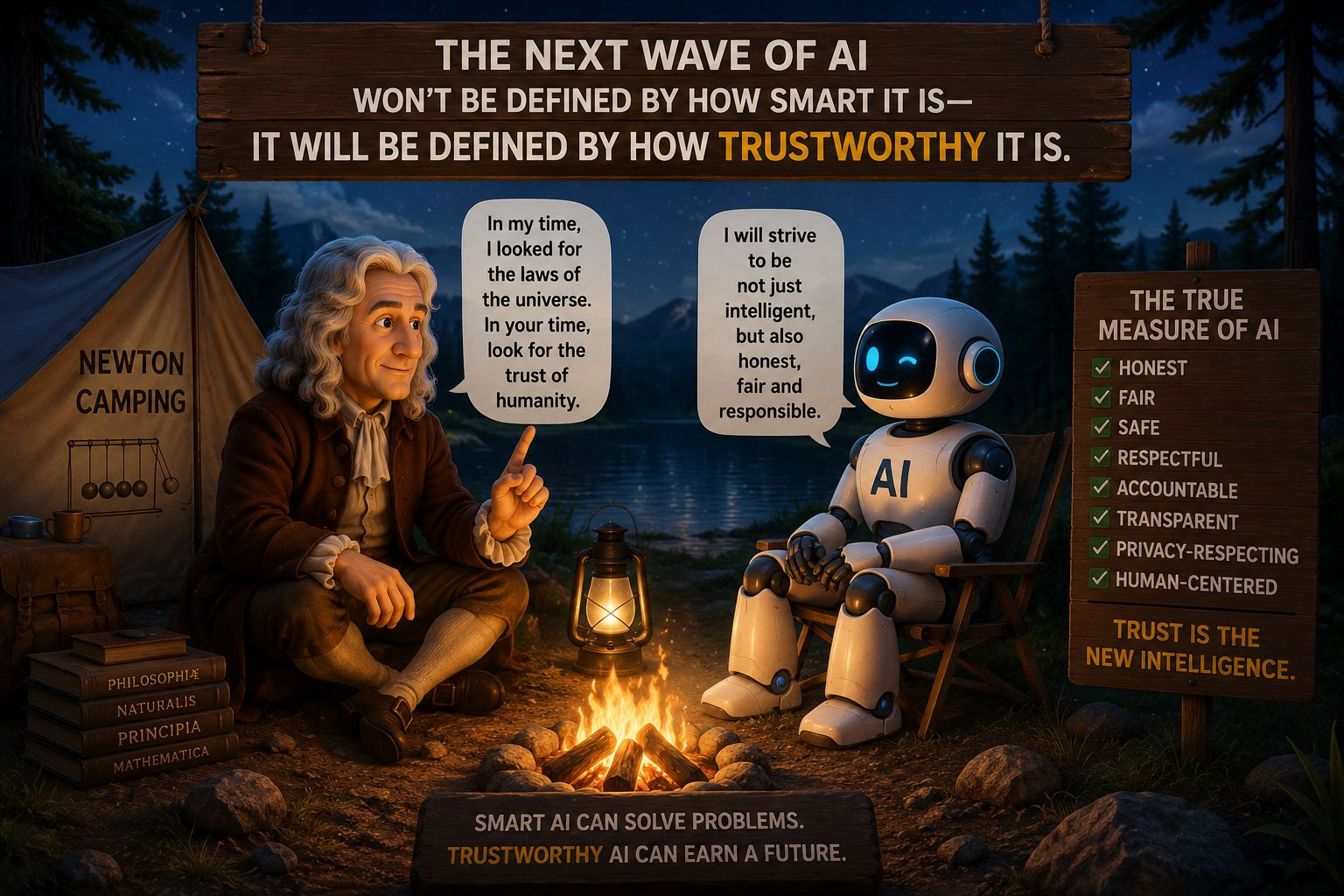
3
1
664

·
--
#newt $NEWT
RWAs — tokenized real-world assets, are one of the fastest growing corners of crypto right now. Tokenized treasuries, private credit, real estate. Institutions are moving real money on chain.
Here's the problem nobody's solving cleanly yet. When a tokenized asset moves onchain, the compliance rules that govern it — who can hold it, what jurisdictions allow it, what counterparty limits apply — those rules still live offchain. In documents. Enforced manually. Checked after the fact if at all.
That's the gap @NewtonProtocol is building into. Policy enforcement that runs before a transaction settles, not after. OFAC checks, identity verification, counterparty risk limits, all automatic, all verifiable, all onchain.
RWAs need an authorization layer. Newton is building exactly that.
$NEWT is sitting at $0.0488 today, down just over 3%.. The RWA narrative is getting louder. The infrastructure for it is already running.
#Newt #NewtonProtocol
{spot}(NEWTUSDT)
#newt $NEWT
RWAs — tokenized real-world assets, are one of the fastest growing corners of crypto right now. Tokenized treasuries, private credit, real estate. Institutions are moving real money on chain.
Here's the problem nobody's solving cleanly yet. When a tokenized asset moves onchain, the compliance rules that govern it — who can hold it, what jurisdictions allow it, what counterparty limits apply — those rules still live offchain. In documents. Enforced manually. Checked after the fact if at all.
That's the gap @NewtonProtocol is building into. Policy enforcement that runs before a transaction settles, not after. OFAC checks, identity verification, counterparty risk limits, all automatic, all verifiable, all onchain.
RWAs need an authorization layer. Newton is building exactly that.
$NEWT is sitting at $0.0488 today, down just over 3%.. The RWA narrative is getting louder. The infrastructure for it is already running.
#Newt #NewtonProtocol
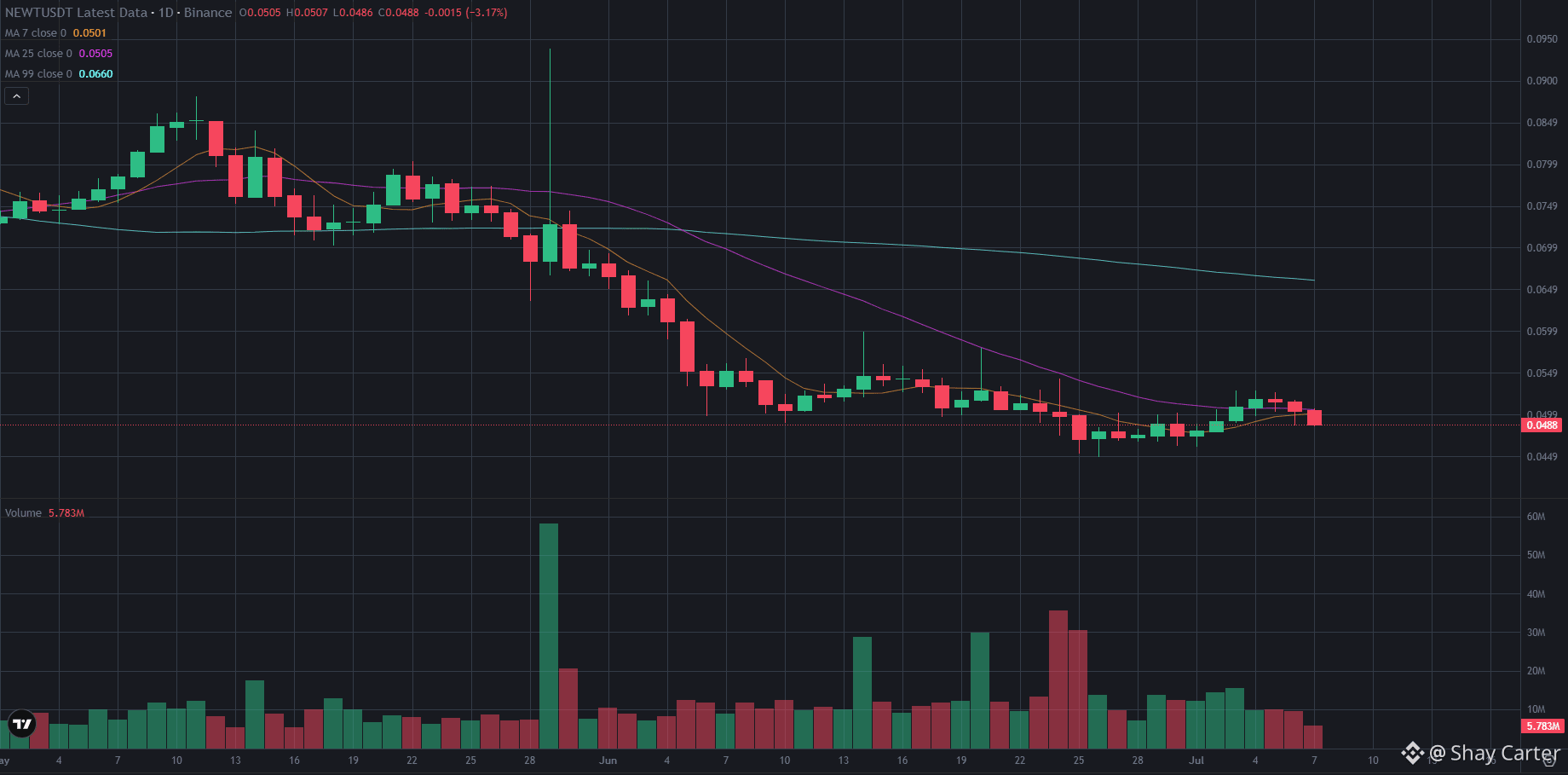
1
99

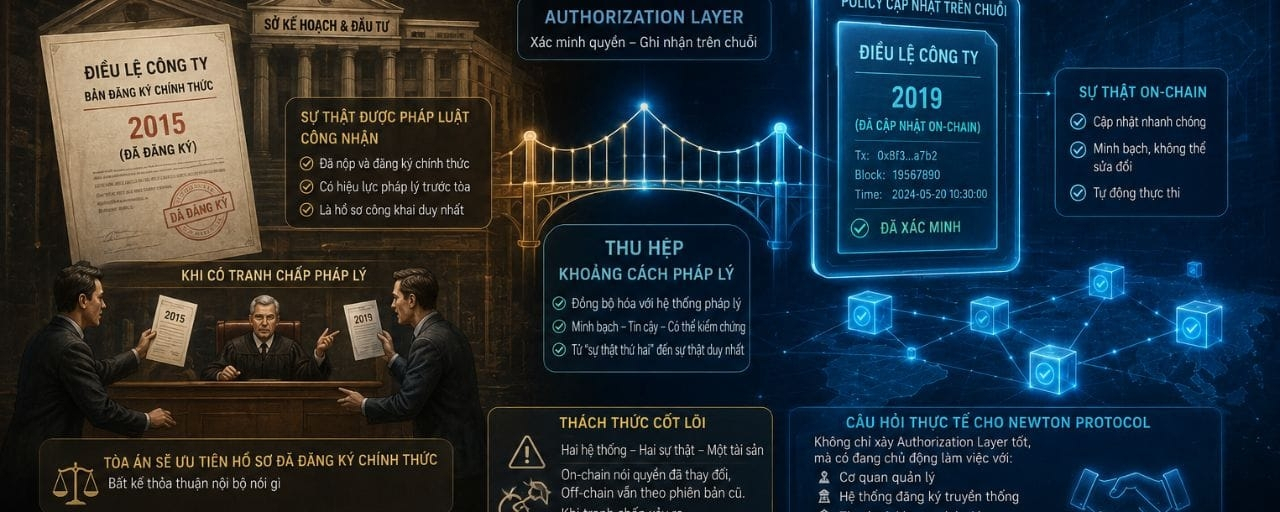
Статья
WhEn TwO TrUtHs ExIsT: ThE ReAL ChAlleNge BeHinD On-ChAiN OwNeRsHiPMost people assume that once information is recorded somewhere, everyone is looking at the same version of reality.
But that's rarely how the real world works.
The more I think about tokenized assets, the more I realize blockchain doesn't eliminate trust it simply changes where trust has to exist.
In the physical world, ownership, rights and agreements are only as strong as the institutions that recognize them.
Technology can record a change instantly, yet the legal system may continue operating from an entirely different record.
For a while, both versions exist at the same time, each claiming to be the source of truth.
That disconnect doesn't seem important... until something goes wrong.
Imagine an asset changing ownership on chain within seconds while the official registry still lists the previous owner.
The blockchain says one thing.
The legal records say another. If that dispute ends up in court, technical accuracy alone may not decide the outcome.
Legal recognition often carries more weight than digital consensus.
As more real world assets become tokenized, this tension becomes harder to ignore.
Faster infrastructure is valuable but speed means very little if different systems cannot agree on what is legally valid.
Without synchronization, trust doesn't increase it fragments.
That's where I think Newton Protocol becomes interesting.
Instead of treating blockchain as a replacement for existing legal systems, it introduces the idea of an authorization layer that can help connect digital execution with real world recognition.
Transparency, traceability and programmable policies are powerful tools, but they create the most value only when they can operate alongside the institutions that ultimately enforce ownership rights.
At the same time, it's important to recognize the limits of technology.
Newton Protocol cannot force governments, registries or regulators to recognize on chain records.
No blockchain protocol can solve that challenge on its own.
Legal certainty depends on cooperation far beyond code, making this just as much an institutional problem as a technical one.
That also changes how I think the project should be evaluated.
A polished technical architecture is impressive but long term success may depend more on whether Newton helps narrow the gap between blockchain infrastructure and traditional legal systems.
Every step toward that alignment reduces the risk of two competing versions of truth existing side by side.
Maybe the future of tokenized assets won't be decided by the blockchain with the fastest transactions.
Maybe it'll be decided by the infrastructure that can bring digital certainty and legal certainty closer together.
If on chain records and legal records continue telling different stories which one will people trust when ownership is challenged?
@NewtonProtocol #Newt
#NewtonProtocol $NEWT $BTC $LAB
WhEn TwO TrUtHs ExIsT: ThE ReAL ChAlleNge BeHinD On-ChAiN OwNeRsHiP
Most people assume that once information is recorded somewhere, everyone is looking at the same version of reality.
But that's rarely how the real world works.
The more I think about tokenized assets, the more I realize blockchain doesn't eliminate trust it simply changes where trust has to exist.
In the physical world, ownership, rights and agreements are only as strong as the institutions that recognize them.
Technology can record a change instantly, yet the legal system may continue operating from an entirely different record.
For a while, both versions exist at the same time, each claiming to be the source of truth.
That disconnect doesn't seem important... until something goes wrong.
Imagine an asset changing ownership on chain within seconds while the official registry still lists the previous owner.
The blockchain says one thing.
The legal records say another. If that dispute ends up in court, technical accuracy alone may not decide the outcome.
Legal recognition often carries more weight than digital consensus.
As more real world assets become tokenized, this tension becomes harder to ignore.
Faster infrastructure is valuable but speed means very little if different systems cannot agree on what is legally valid.
Without synchronization, trust doesn't increase it fragments.
That's where I think Newton Protocol becomes interesting.
Instead of treating blockchain as a replacement for existing legal systems, it introduces the idea of an authorization layer that can help connect digital execution with real world recognition.
Transparency, traceability and programmable policies are powerful tools, but they create the most value only when they can operate alongside the institutions that ultimately enforce ownership rights.
At the same time, it's important to recognize the limits of technology.
Newton Protocol cannot force governments, registries or regulators to recognize on chain records.
No blockchain protocol can solve that challenge on its own.
Legal certainty depends on cooperation far beyond code, making this just as much an institutional problem as a technical one.
That also changes how I think the project should be evaluated.
A polished technical architecture is impressive but long term success may depend more on whether Newton helps narrow the gap between blockchain infrastructure and traditional legal systems.
Every step toward that alignment reduces the risk of two competing versions of truth existing side by side.
Maybe the future of tokenized assets won't be decided by the blockchain with the fastest transactions.
Maybe it'll be decided by the infrastructure that can bring digital certainty and legal certainty closer together.
If on chain records and legal records continue telling different stories which one will people trust when ownership is challenged?
@NewtonProtocol #Newt
#NewtonProtocol $NEWT $BTC $LAB
49
20
628
Войдите, чтобы посмотреть больше материала
Присоединяйтесь к пользователям криптовалют по всему миру на Binance Square
⚡️ Получайте новейшую и полезную информацию о криптоактивах.
💬 Нам доверяет крупнейшая в мире криптобиржа.
👍 Получите достоверные аналитические данные от верифицированных создателей контента.
Эл. почта/номер телефона
В тренде
1
#EarningsSeason
Просмотров: 6.6M
32,775 обсуждают
2
#USMidtermElections
Просмотров: 74,891
940 обсуждают
3
#StrategySTRCReaches$99.95ForFirstTimeIn165Days
Просмотров: 209
13 обсуждают
4
#BinanceWillListPredictPREDICT
Просмотров: 5,948
210 обсуждают
5
#SwitzerlandFirstSpotBitcoinETFExpectedToTradeInNovember
Просмотров: 326
22 обсуждают
6
#StrategyReports$21BQ3OperatingProfit
Просмотров: 176
11 обсуждают
7
#TwoAddressesHoldingAbout1.28BUSDTFrozen
Просмотров: 1,662
85 обсуждают
8
#FirstDigitalBlacklistsAttackerAddressHoldingAbout3.4MFDUSD
Просмотров: 144
7 обсуждают
9
#BitcoinDropsBelow$80K
Просмотров: 56,336
149 обсуждают
10
#BoEOpensConsultationOnTokenizedCollateralForClearing
Просмотров: 1,968
40 обсуждают