

#kyc
kyc
Просмотров: 1M
1,309 обсуждают
Популярные
Новые

·
--
Kraken联席CEO认错:问“钱哪来”可以,问“币拿去干嘛”越界了
Kraken联席CEO Arjun Sethi在北京时间10月24日上午发帖承认:给门罗币(XMR)客户发的那批追问邮件,是Kraken自己发的,而且发错了。
按他本人的说法,经过是这样:
1. 谁收到:用自己的钱买了XMR、并把币提走的客户。
2. 问了什么:雇主是谁、资金来源,以及打算拿这些币做什么。
3. 为什么:没有任何规则要求这么问,是有人看到“年轻客户、钱不少”,就把它当成了风险信号。
改了什么:这些要求已经撤回,客户被告知无需提供任何材料;“币拿去做什么”这个问题直接取消。他的意思很明确:钱从哪来是合理问题,币离开平台之后怎么用,不是。XMR继续上架。
我的看法:认错够快,值得记一笔。但最扎心的不是邮件本身,而是“没有规则要求”这几个字。合规流程里,个人直觉一样能变成对客户的盘问。
给自己留个底:被问资金来源,正常配合、留好记录;被问提币后的用途,可以先问清楚依据的是哪条规定。
$XMR #合规 #KYC

111

·
--
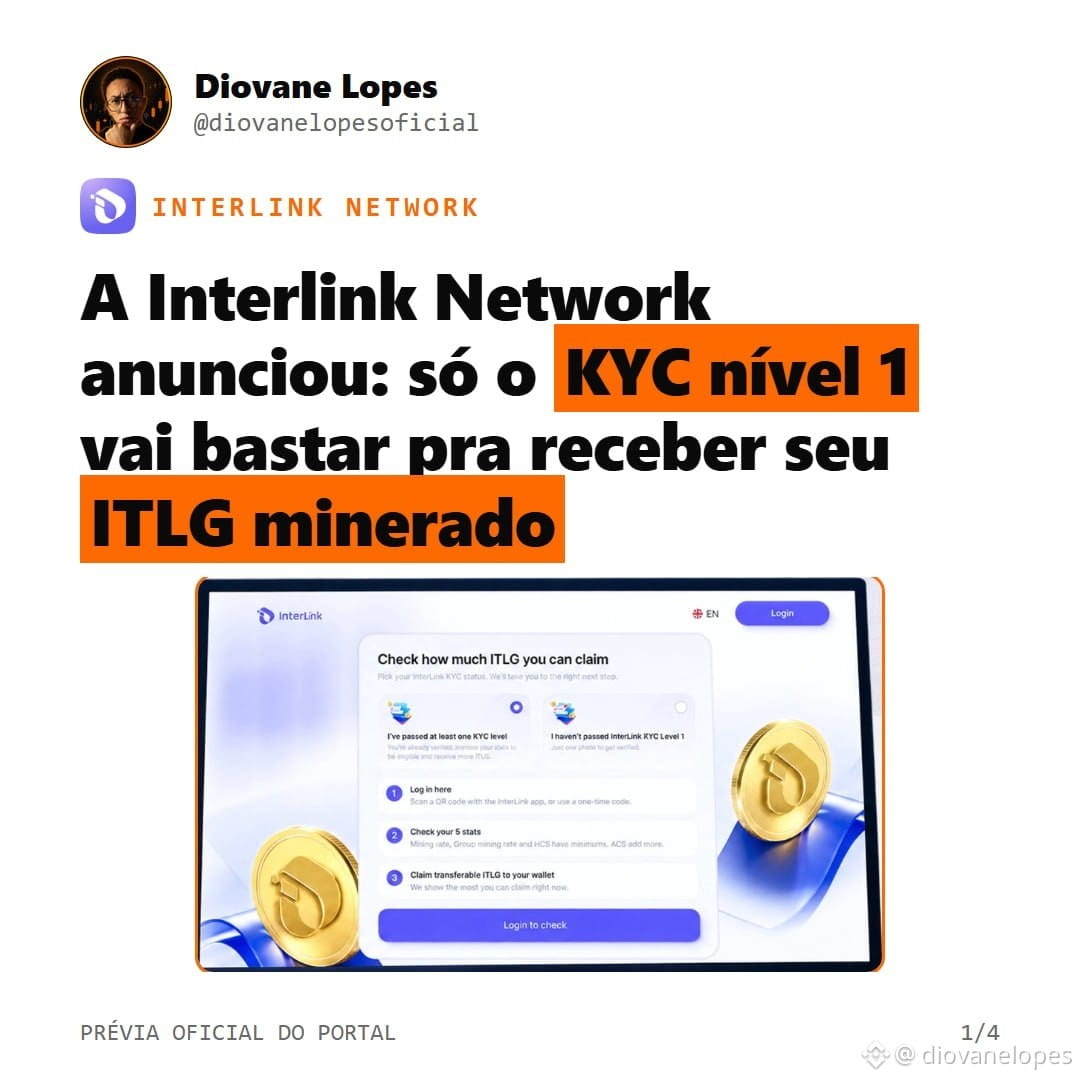
Interlink Network: pra receber o ITLG minerado, você não vai precisar dos 3 níveis de KYC. Só o nível 1 vai bastar, segundo a própria Interlink.
O que já foi confirmado:
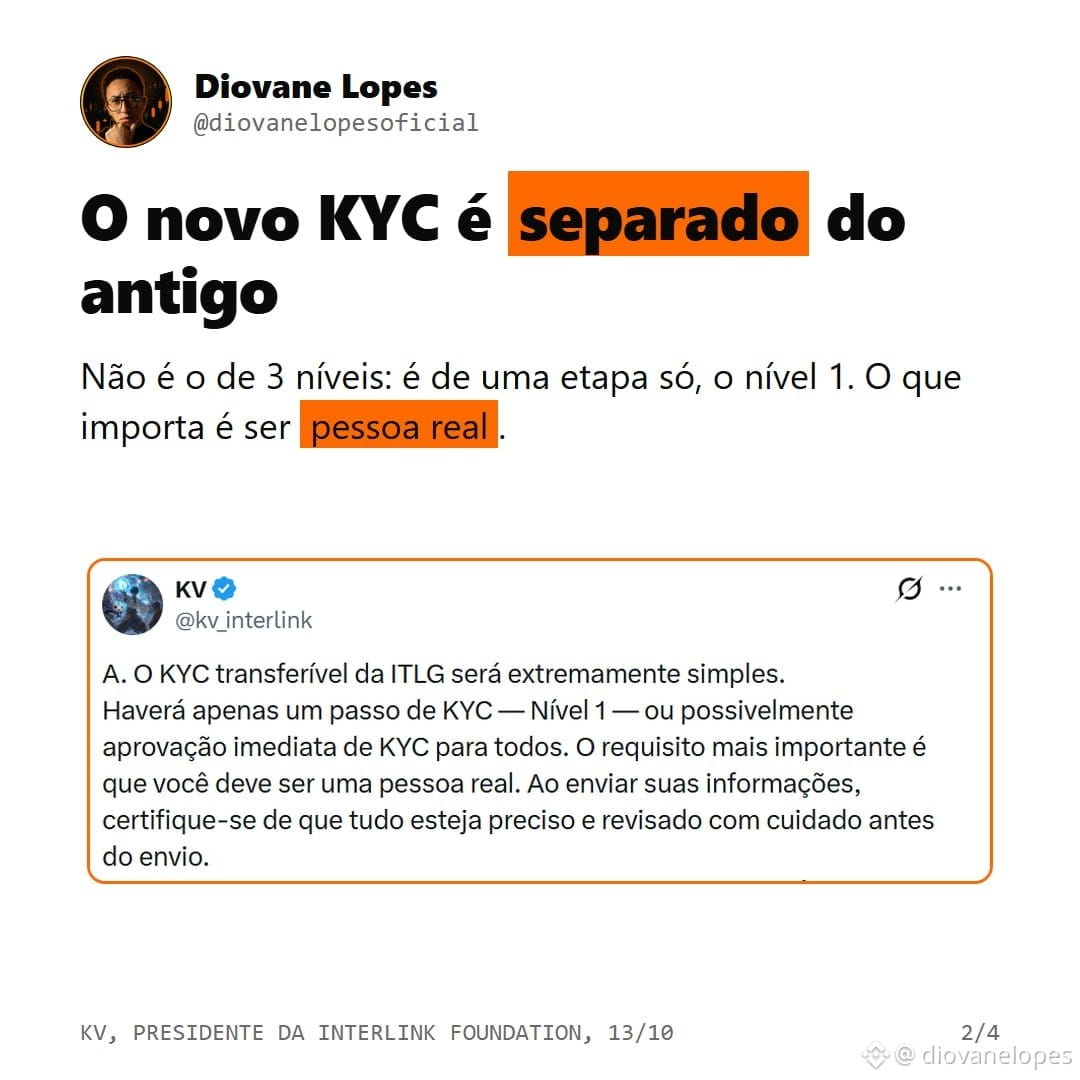
O novo KYC é separado do antigo. É uma etapa só (nível 1), ou talvez aprovação imediata. O requisito principal é ser uma pessoa real. Isso veio do KV, presidente da Interlink Foundation, em 13/10.
Quem já concluiu o nível 1 não refaz. A própria Interlink avisou isso em 19/10, e a prévia oficial do portal mostra que quem não tem o nível 1 só precisa de uma foto.
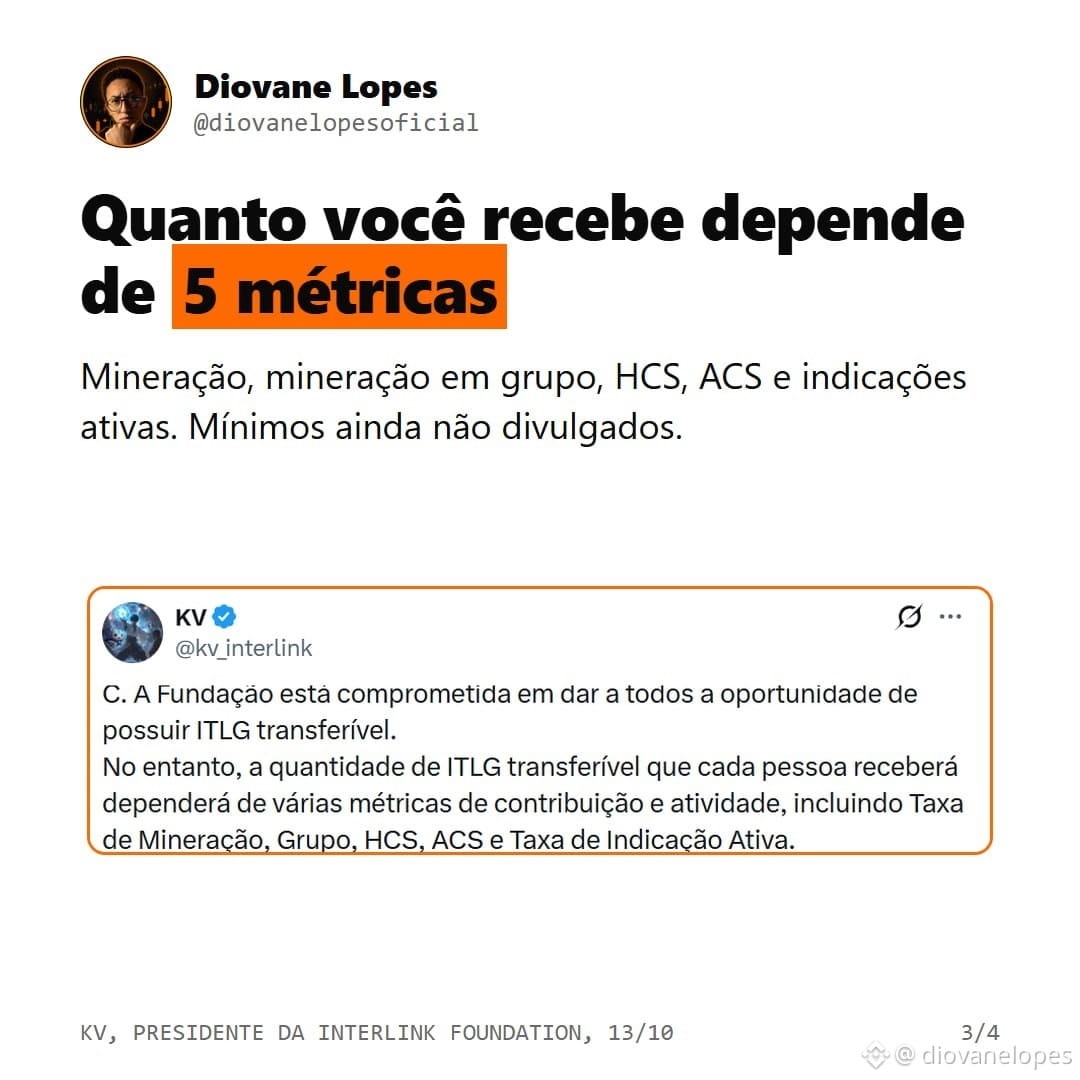
Quanto cada pessoa recebe depende de 5 métricas: taxa de mineração, mineração em grupo, HCS, ACS e indicações ativas. Três delas têm mínimo, e os valores ainda não foram divulgados.
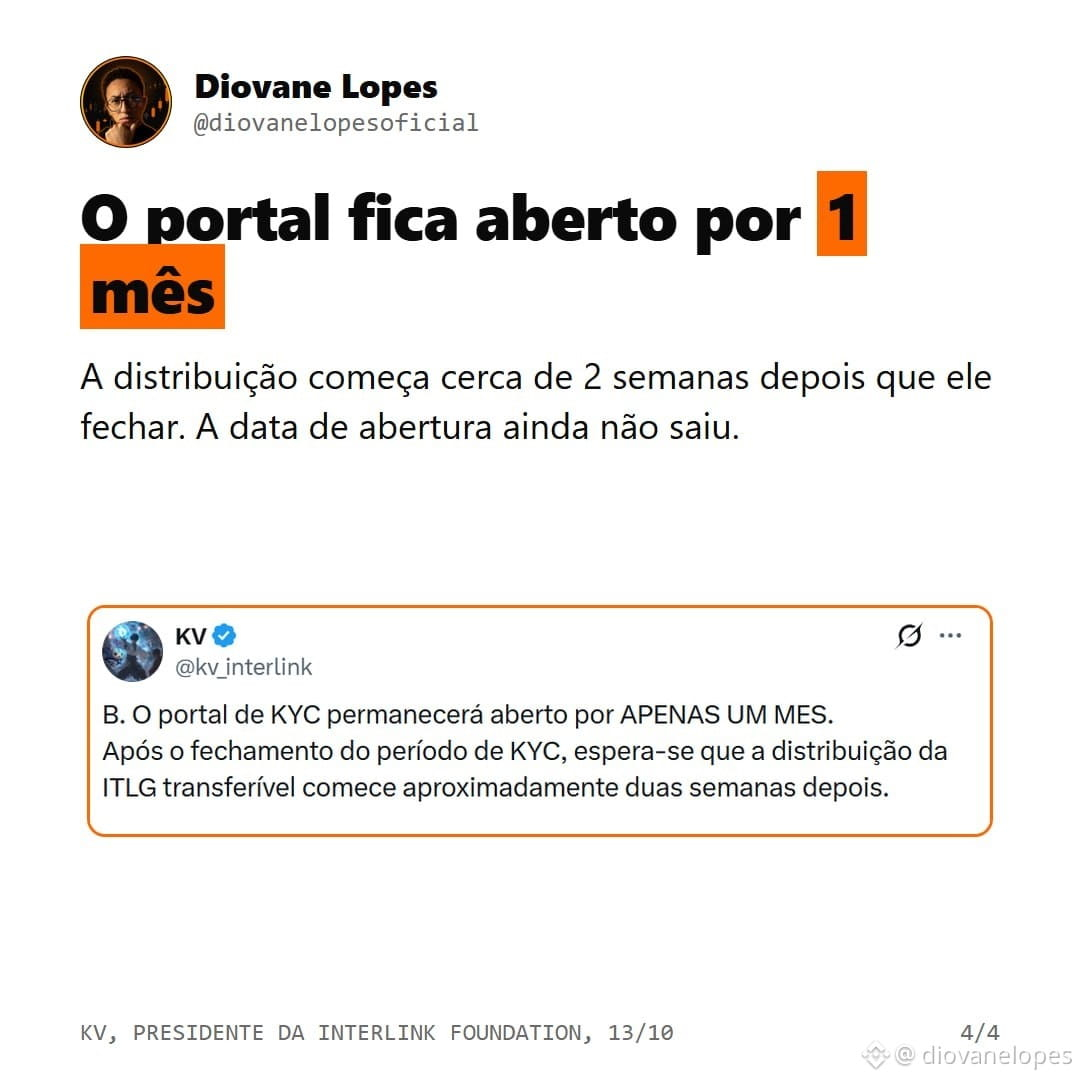
O portal fica aberto por apenas 1 mês. A distribuição começa cerca de 2 semanas depois que ele fechar. Ainda não existe data de abertura, nem quantidade confirmada.
Minha leitura: é uma boa notícia pra quem travou na burocracia dos 3 níveis, porque o requisito principal deixou de ser papelada e virou provar que você é uma pessoa real. Mas eu não contaria com nenhum valor ainda. Com 1 mês de portal, mínimos desconhecidos e sem data, quem sai na frente é quem deixa tudo pronto antes. Por isso o meu passo de hoje é simples: atualizar o app pela Play Store ou App Store, que o próprio Vyx, embaixador oficial, pediu em 22/10.
O vídeo completo sai hoje às 19h03 no YouTube. Pesquisa "Diovane Lopes" lá pra assistir.
Você já concluiu o nível 1 do KYC na Interlink Network? Conta nos comentários.
#InterlinkNetwork #ITLG #kyc
131

·
--
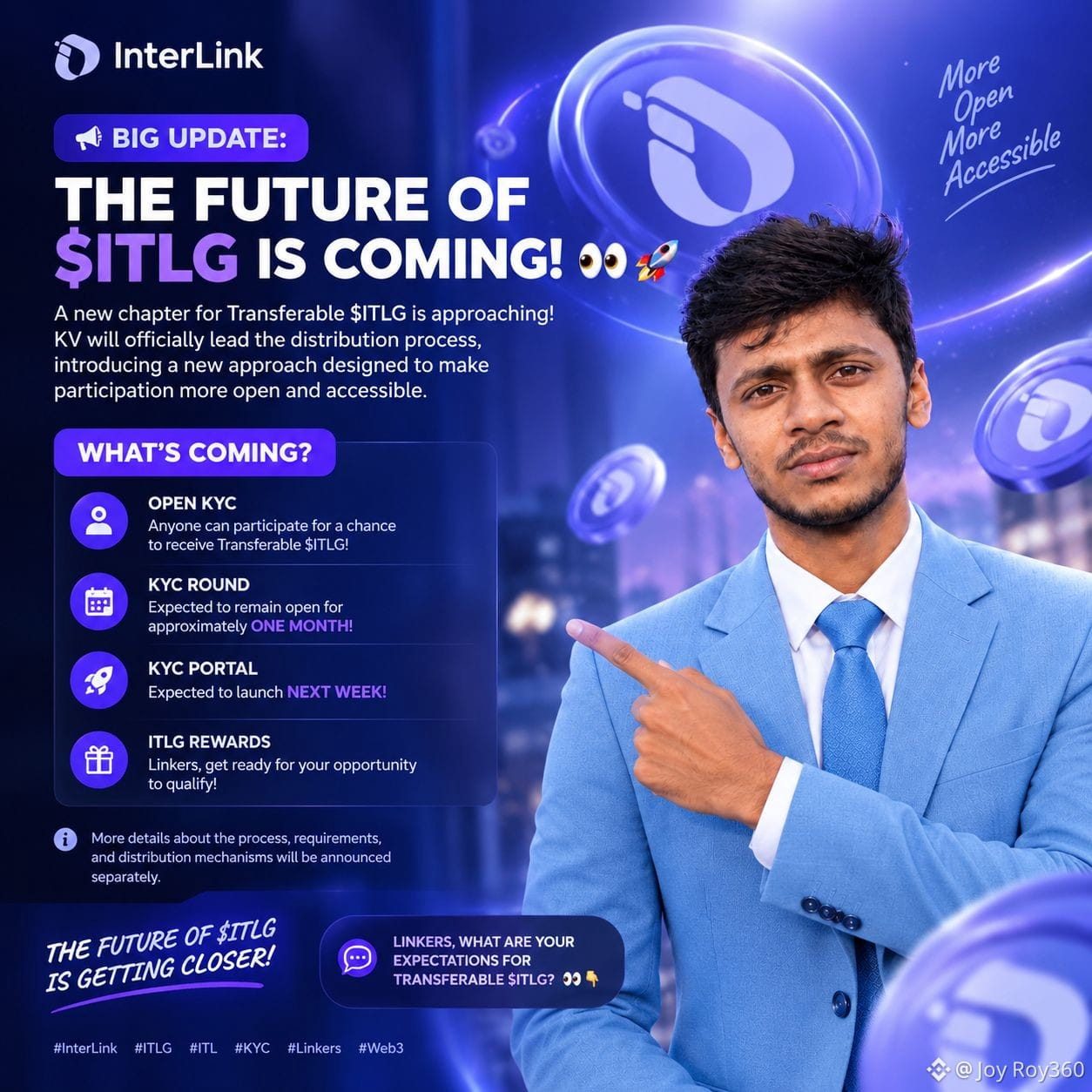
🚨 BIG UPDATE: THE FUTURE OF $ITLG IS COMING! 👀🔥
A new chapter for Transferable $ITLG is approaching! 💜🚀
@inter_link is preparing for a major milestone, with KV officially leading the distribution process!
🌟 WHAT'S COMING?
🔐 OPEN KYC — Anyone can participate for a chance to receive Transferable $ITLG!
📅 KYC ROUND — Expected to remain open for approximately ONE MONTH!
🚀 KYC PORTAL — Expected to launch NEXT WEEK!
🎁 ITLG REWARDS — Linkers, get ready for your opportunity to qualify!
📢 More details about eligibility, requirements, and distribution will be announced soon.
💎 THE FUTURE OF $ITLG IS GETTING CLOSER!
💬 LINKERS, WHAT ARE YOUR EXPECTATIONS FOR TRANSFERABLE $ITLG? 👀👇
#InterLink #ITLG #ITL #KYC #Linkers #USPPIRises6.3%YearOverYear Web3
99
·
--
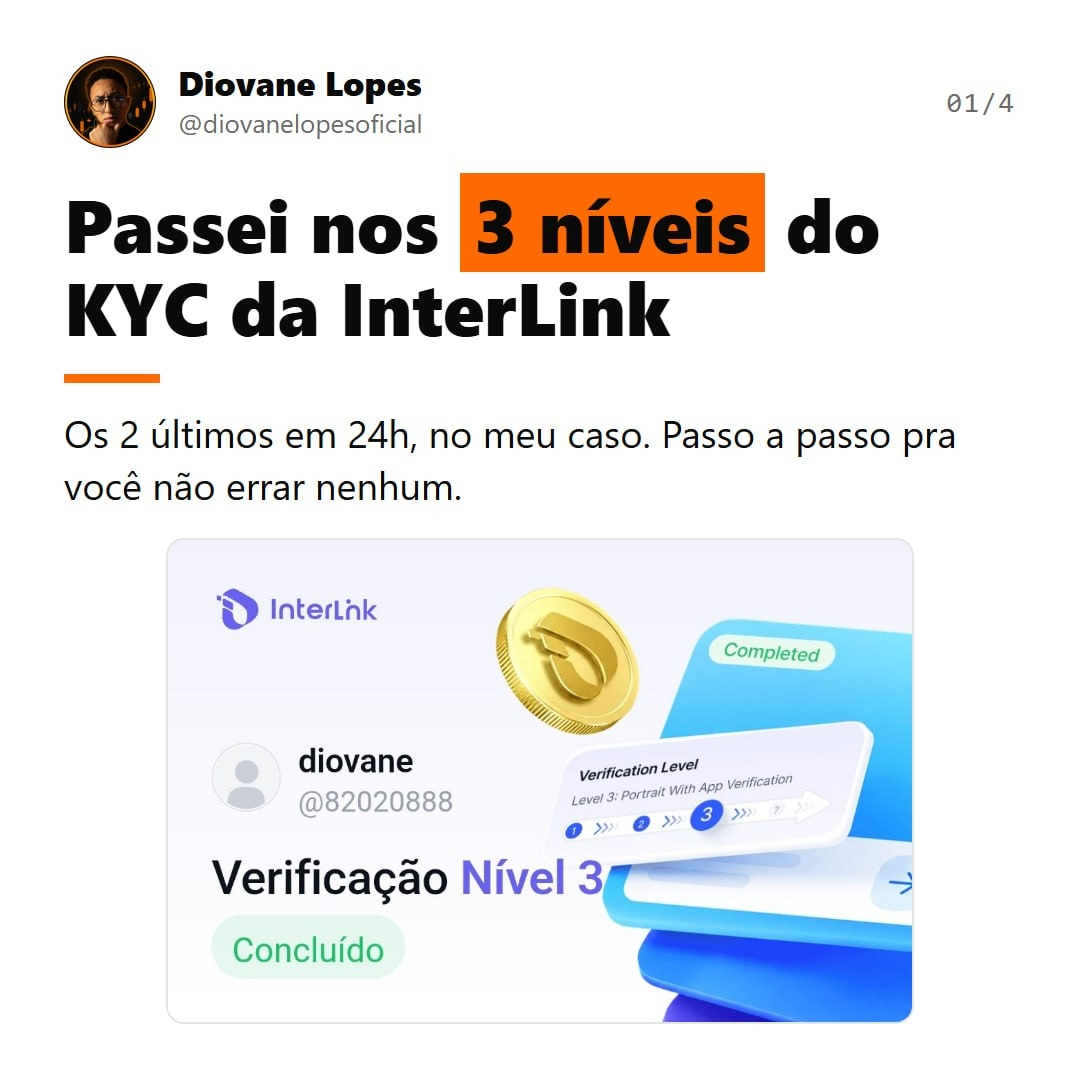
InterLink KYC: passei nos 3 níveis, e nos 2 últimos a aprovação veio em 24h depois que enviei. Mas eu também perdi o prazo do nível 2 e ele expirou. Foi aí que entendi o que faz diferença.
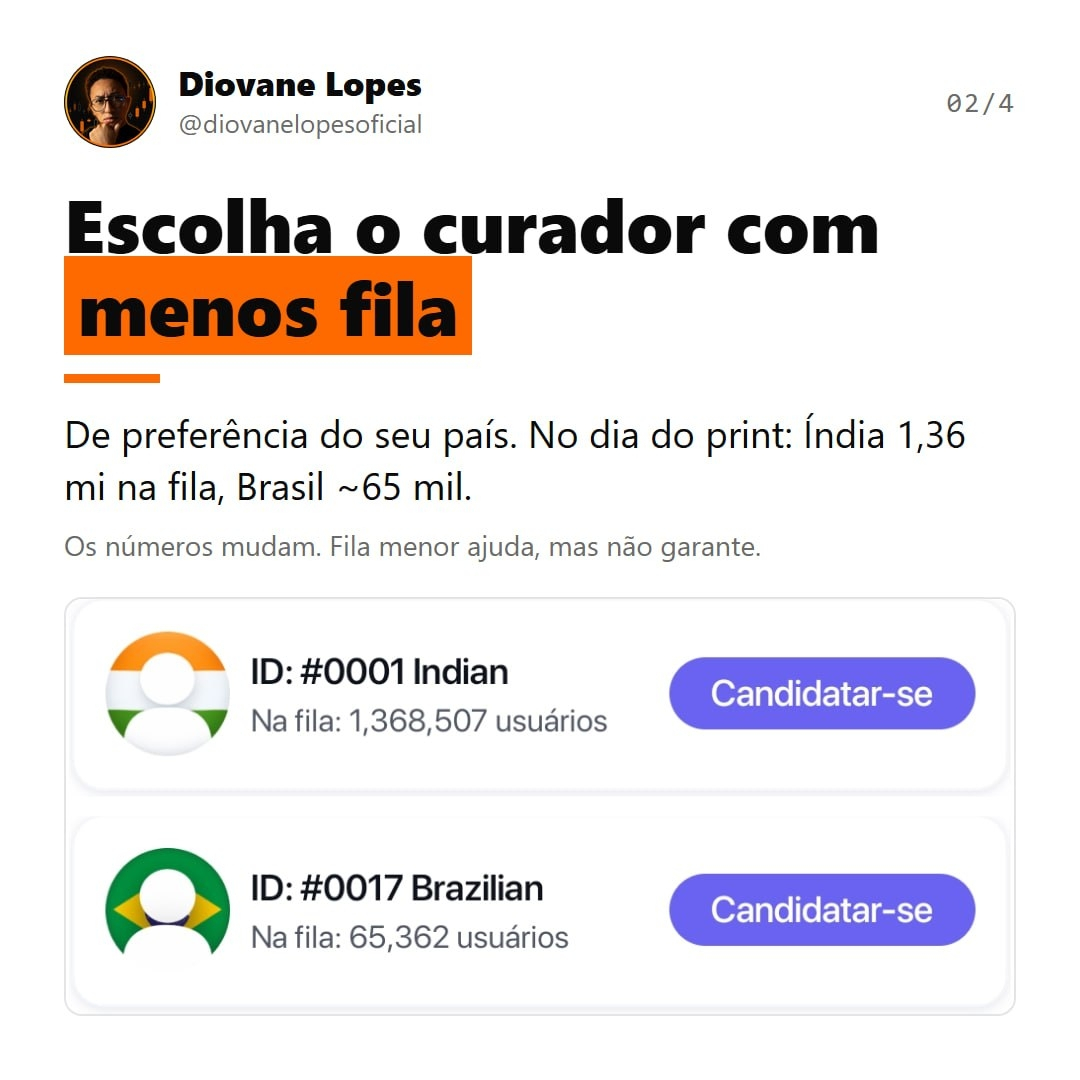
1) Escolha o curador com menos gente na fila e do seu país. No dia do meu print: Índia com 1,36 milhão, Brasil com cerca de 65 mil. Os números mudam, e fila menor ajuda, mas não garante aprovação.
2) São 3 níveis. Nível 1: documento. Nível 2: foto com o documento e um papel com "InterLink + data". Nível 3: foto segurando o app.
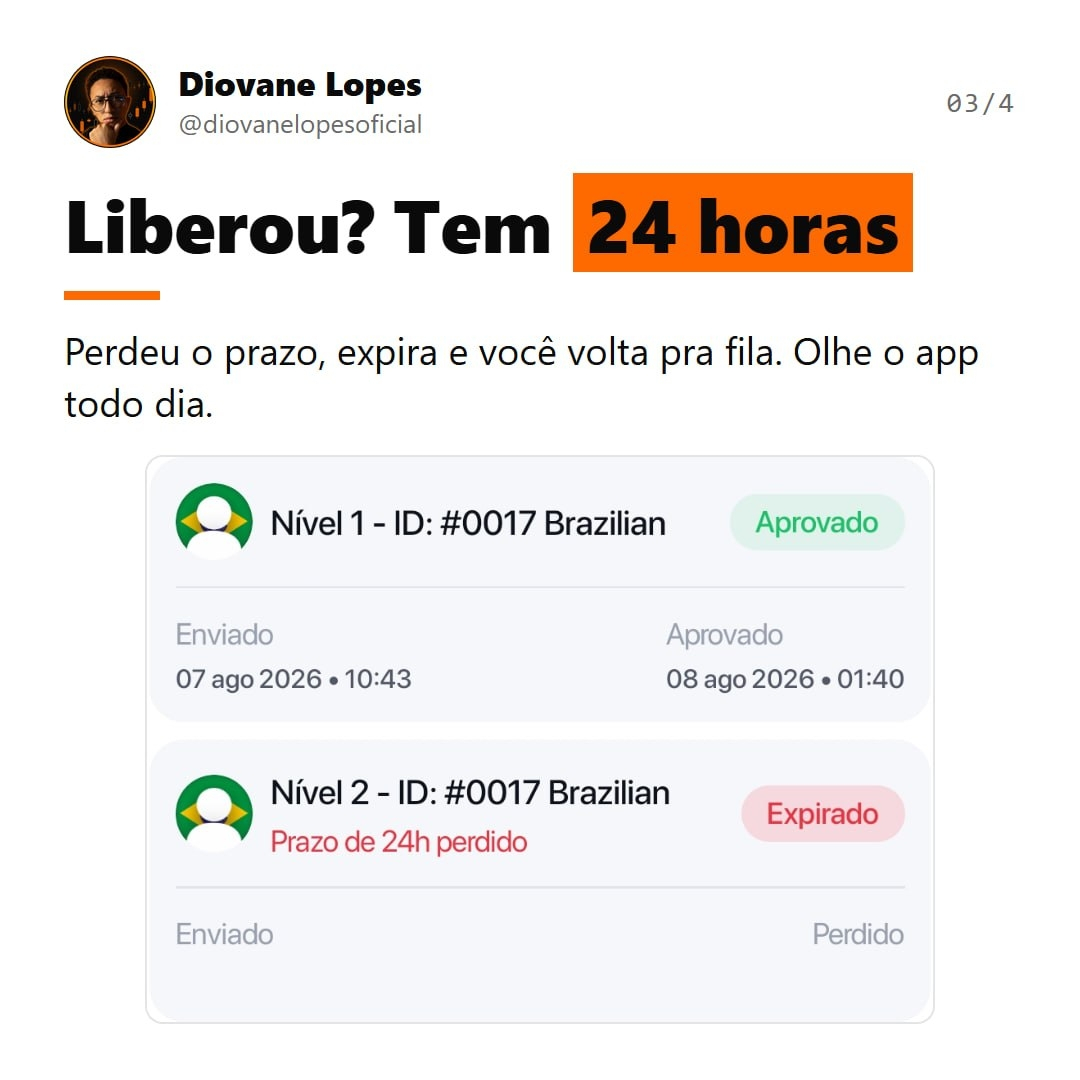
3) Quando libera o nível seguinte, você tem 24h pra enviar. Passou disso, expira. Olhe o app todo dia.
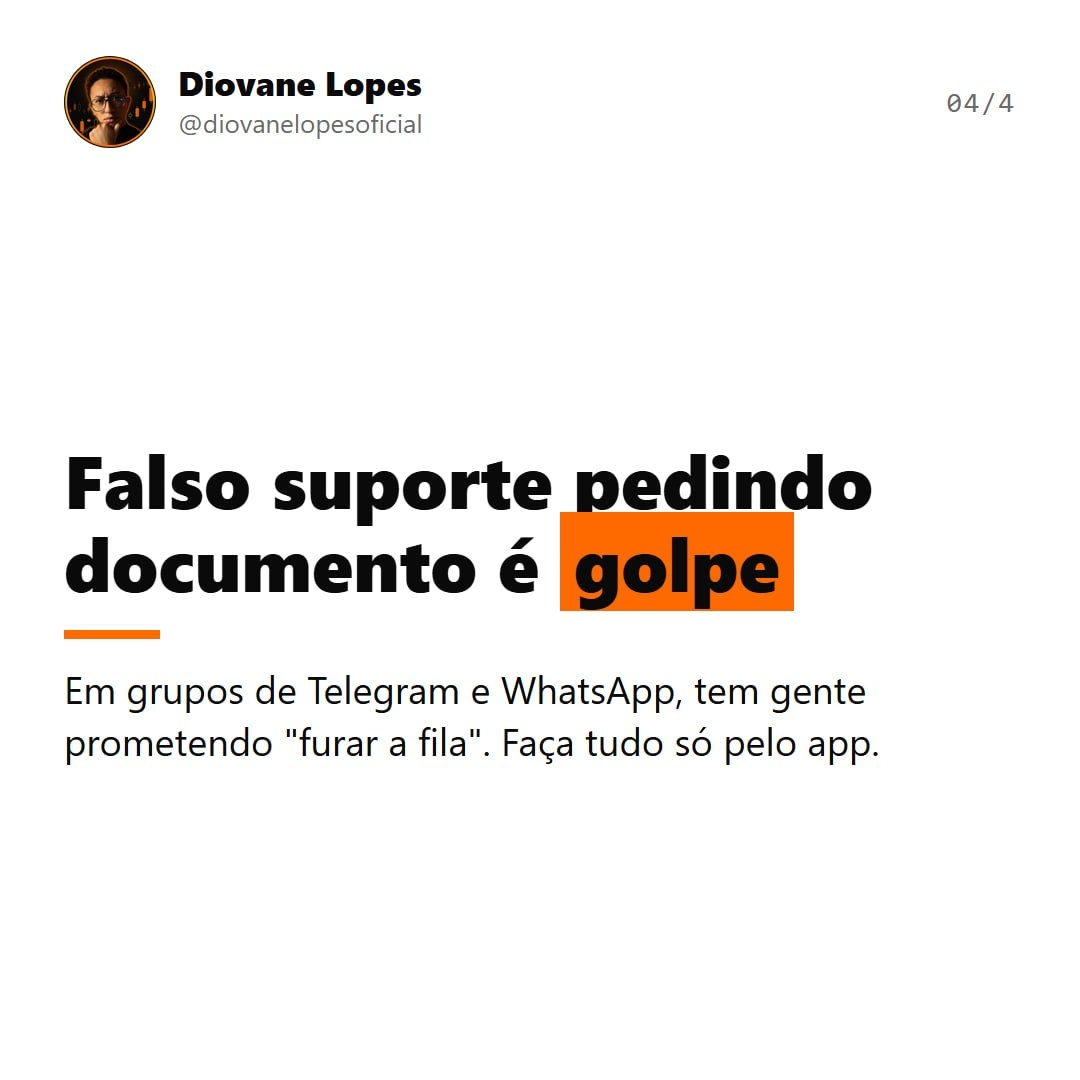
4) O KYC não é fila por ordem de chegada. Ninguém consegue "furar a fila". Se um suposto suporte pedir seu documento no Telegram ou no WhatsApp, é golpe. Faça tudo só pelo app.
Minha opinião: o KYC é o ponto que separa quem só minera de quem consegue destravar o que já minerou. O KV (presidente da ITL Foundation) postou em 06/10/2026 que quem tem nível 1 e boa taxa de mineração tem prioridade na distribuição do ITLG. Prioridade não é garantia, mas esperar parado é o pior caminho.
O passo a passo completo, com a tela do meu celular, está no YouTube: pesquise "Diovane Lopes". Já está no ar pros membros do canal e sai pra todo mundo hoje às 19h03.
#InterLink #kyc #ITLG
1
390




·
--
The operational velocity of decentralized networks accelerates when interactive milestones align with user verification frameworks. Achieving a tier-1 status layer of 525 KYC Points alongside multi-tier lottery assets proves that active node participation scales faster than passive holding strategies.
In the evolving Real-World Asset (#RWA) ecosystem, utilizing built-in application reward engines to secure an early-stage footprint in the first 5,000 community verification slots provides a definitive advantage. As backend protocols test infrastructure stability, leveraging on-chain token parameters to lock in priority verification parameters remains a core strategy for long-term network alignment.
#RWA #MirexNetwork #kyc #EcosystemUtility
39

Статья
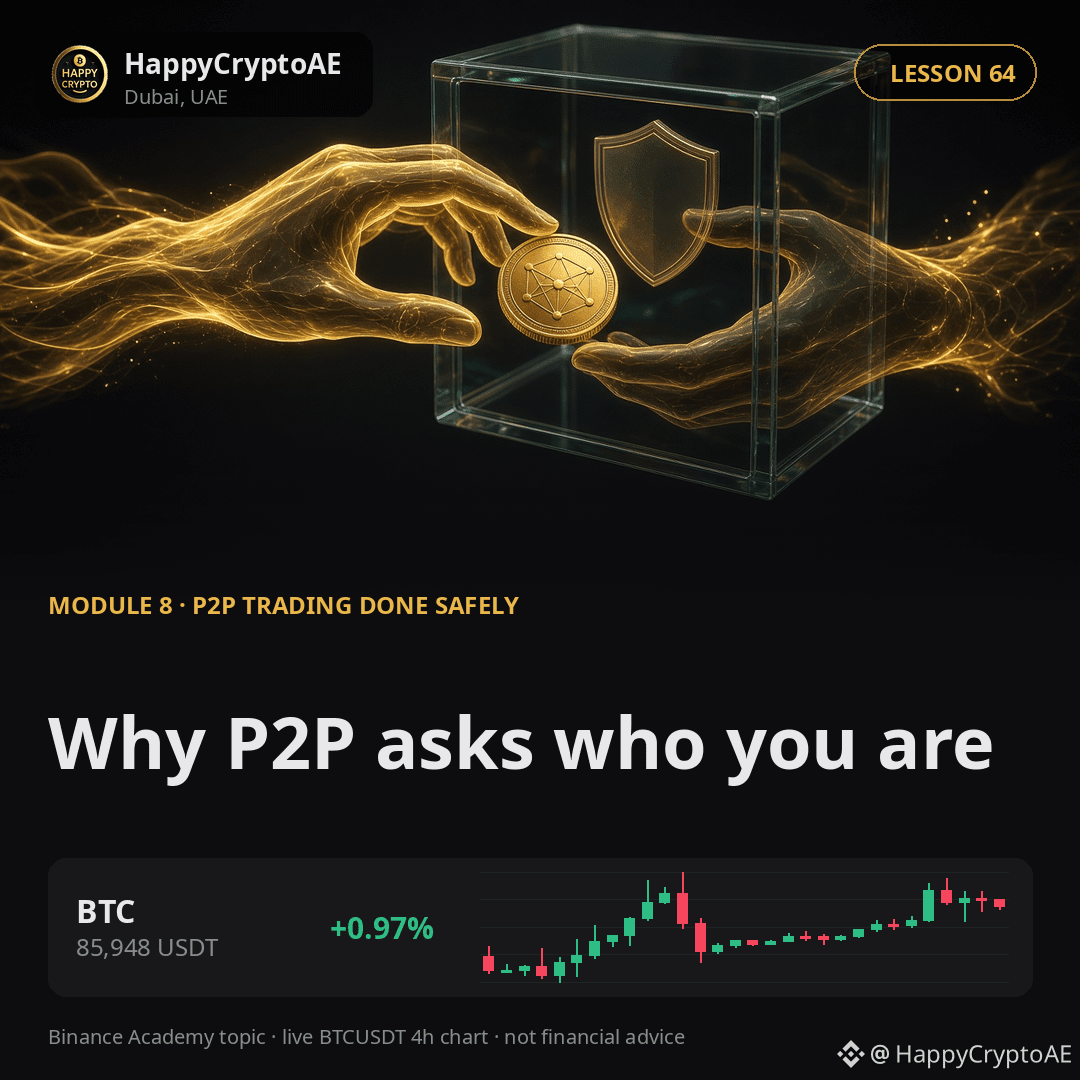
Why P2P asks who you areKYC - know your customer - is the identity check a platform runs before you can trade: a document, a selfie, sometimes more. Many people see it as friction. On a P2P market it is closer to a seatbelt.
On P2P you pay a real person and receive from a real person. Verified identities are what make that workable: they give the other side a name to match against the bank transfer, they give the platform a way to resolve disputes, and they make fraud much easier to trace. When a counterparty refuses the verification an ad asks for, that is information. Honest buyers finish it once and move on.
💬 Does a verification step make you trust a P2P ad more, or less?
Binance Academy covers this in more depth: https://www.binance.com/en/academy/glossary/know-your-customer
Next lesson: AML: the rules behind the questions you get asked
Trading crypto from Dubai since 2019.
$USDT $BTC
#KYC #P2P #CryptoSafety
Why P2P asks who you are
KYC - know your customer - is the identity check a platform runs before you can trade: a document, a selfie, sometimes more. Many people see it as friction. On a P2P market it is closer to a seatbelt.
On P2P you pay a real person and receive from a real person. Verified identities are what make that workable: they give the other side a name to match against the bank transfer, they give the platform a way to resolve disputes, and they make fraud much easier to trace. When a counterparty refuses the verification an ad asks for, that is information. Honest buyers finish it once and move on.
💬 Does a verification step make you trust a P2P ad more, or less?
Binance Academy covers this in more depth: https://www.binance.com/en/academy/glossary/know-your-customer
Next lesson: AML: the rules behind the questions you get asked
Trading crypto from Dubai since 2019.
$USDT $BTC
#KYC #P2P #CryptoSafety
140
KYC, actually explained:
KYC(know your customer)-the identity check literally every exchange makes you do. Annoying? Sure. Skippable? No.
Exchanges are legally required to confirm you're an actual human, not someone laundering money somewhere in the background.
Usually it's nothing crazy-ID, selfie, and in most cases a liveness check to complement the requirements. Takes minutes, approval's often instant.
Skip it though, and you're stuck with tiny withdrawal limits. Just knock it out early.
Learned this one the hard way myself, lol.
$ETH $BTC $BNB
#Cryptollegiate
#CryptoForBeginners
#KYC
{spot}(ETHUSDT)
{spot}(BTCUSDT)
{spot}(BNBUSDT)
KYC, actually explained:
KYC(know your customer)-the identity check literally every exchange makes you do. Annoying? Sure. Skippable? No.
Exchanges are legally required to confirm you're an actual human, not someone laundering money somewhere in the background.
Usually it's nothing crazy-ID, selfie, and in most cases a liveness check to complement the requirements. Takes minutes, approval's often instant.
Skip it though, and you're stuck with tiny withdrawal limits. Just knock it out early.
Learned this one the hard way myself, lol.
$ETH $BTC $BNB
#Cryptollegiate
#CryptoForBeginners
#KYC
129
·
--
Проверено
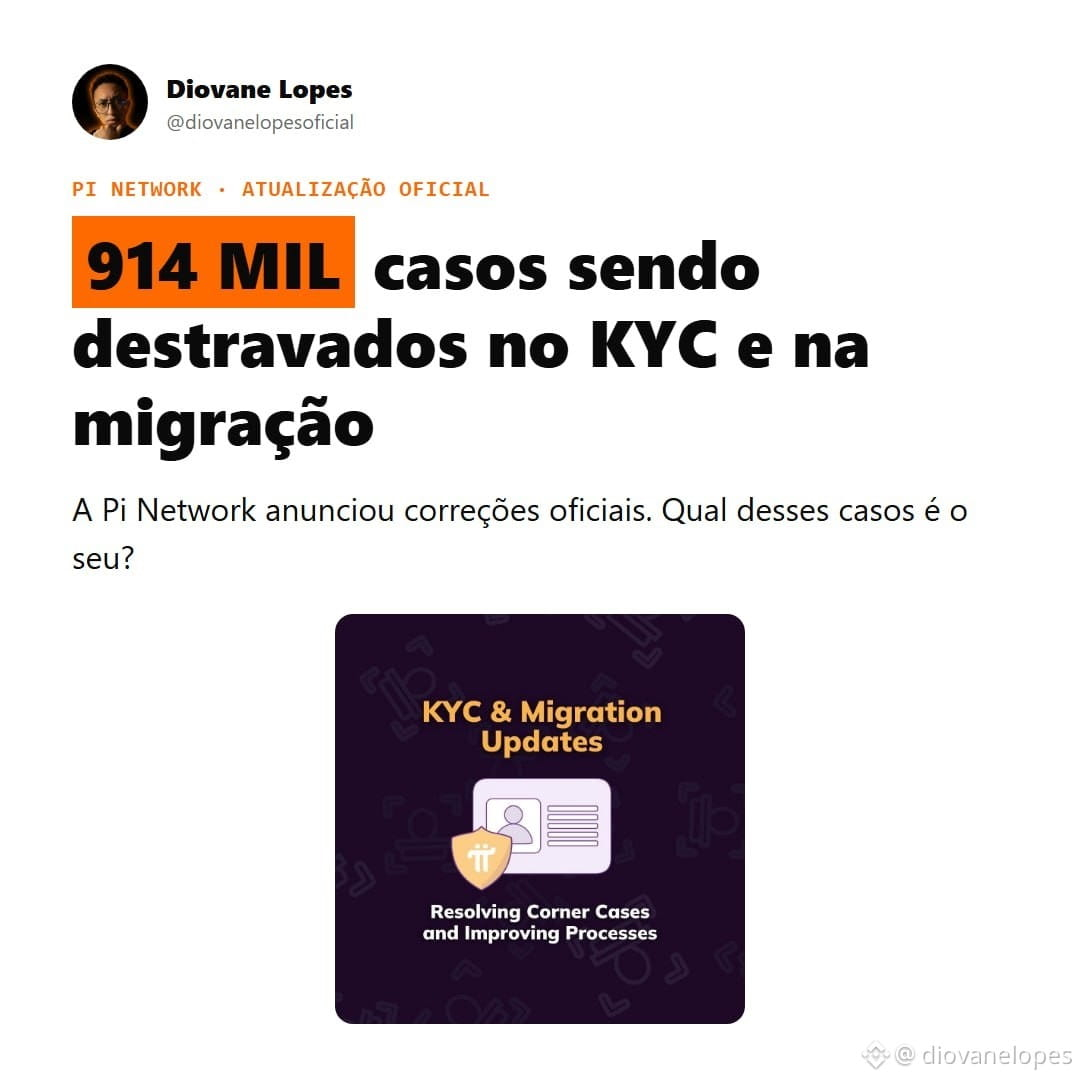
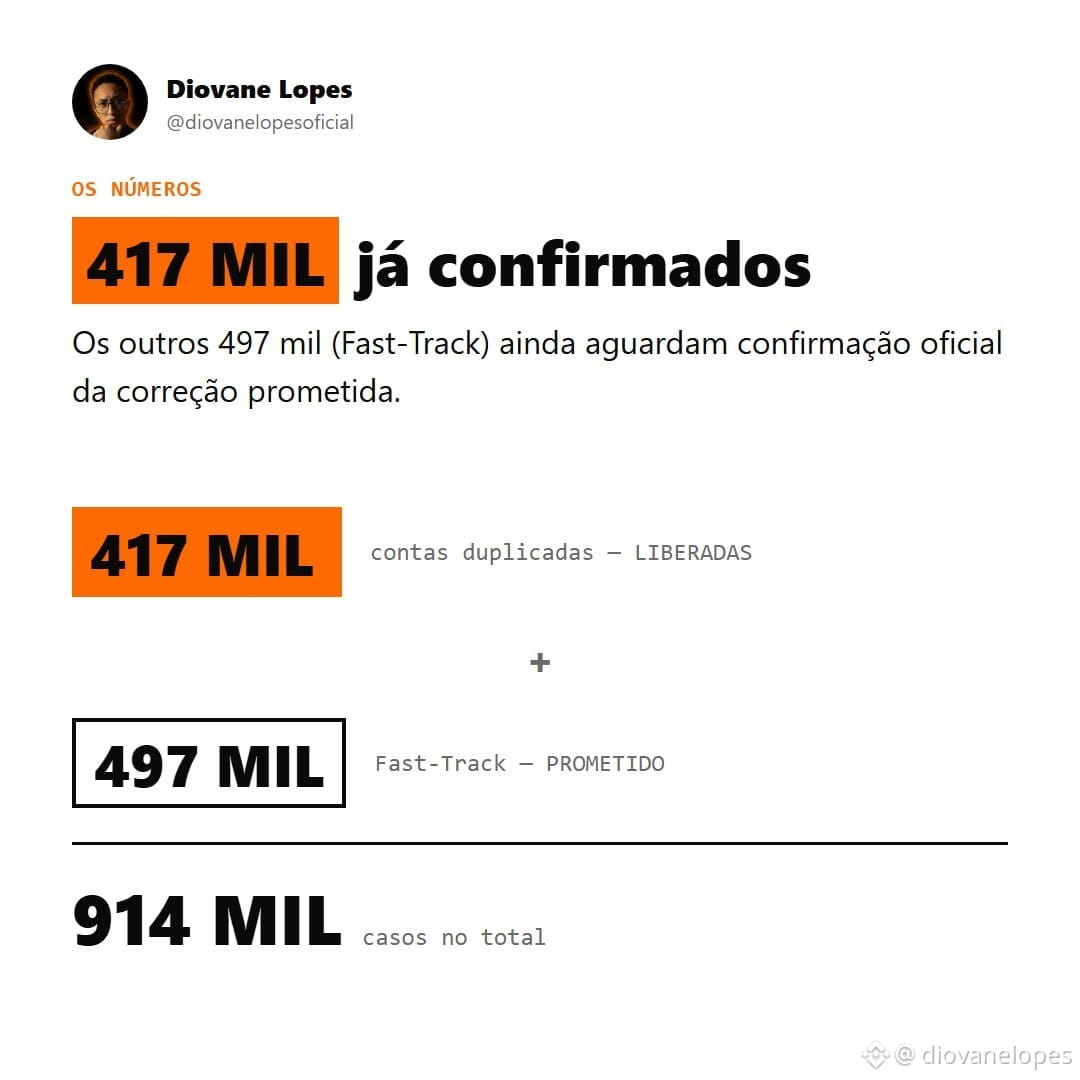
A Pi Network admitiu oficialmente, com número: 914 mil contas ficaram travadas no KYC e na migração pra Mainnet — e parte já está sendo destravada.
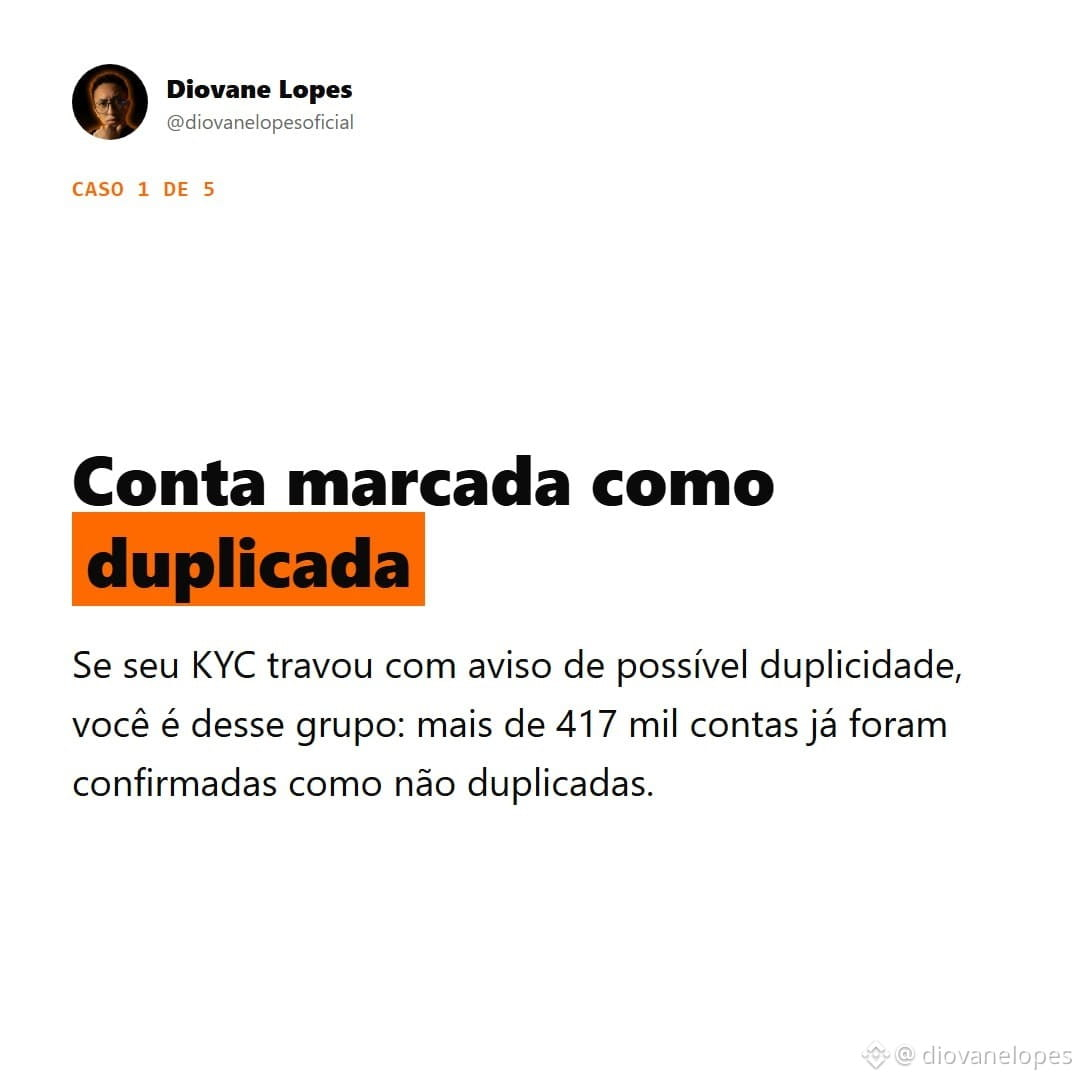
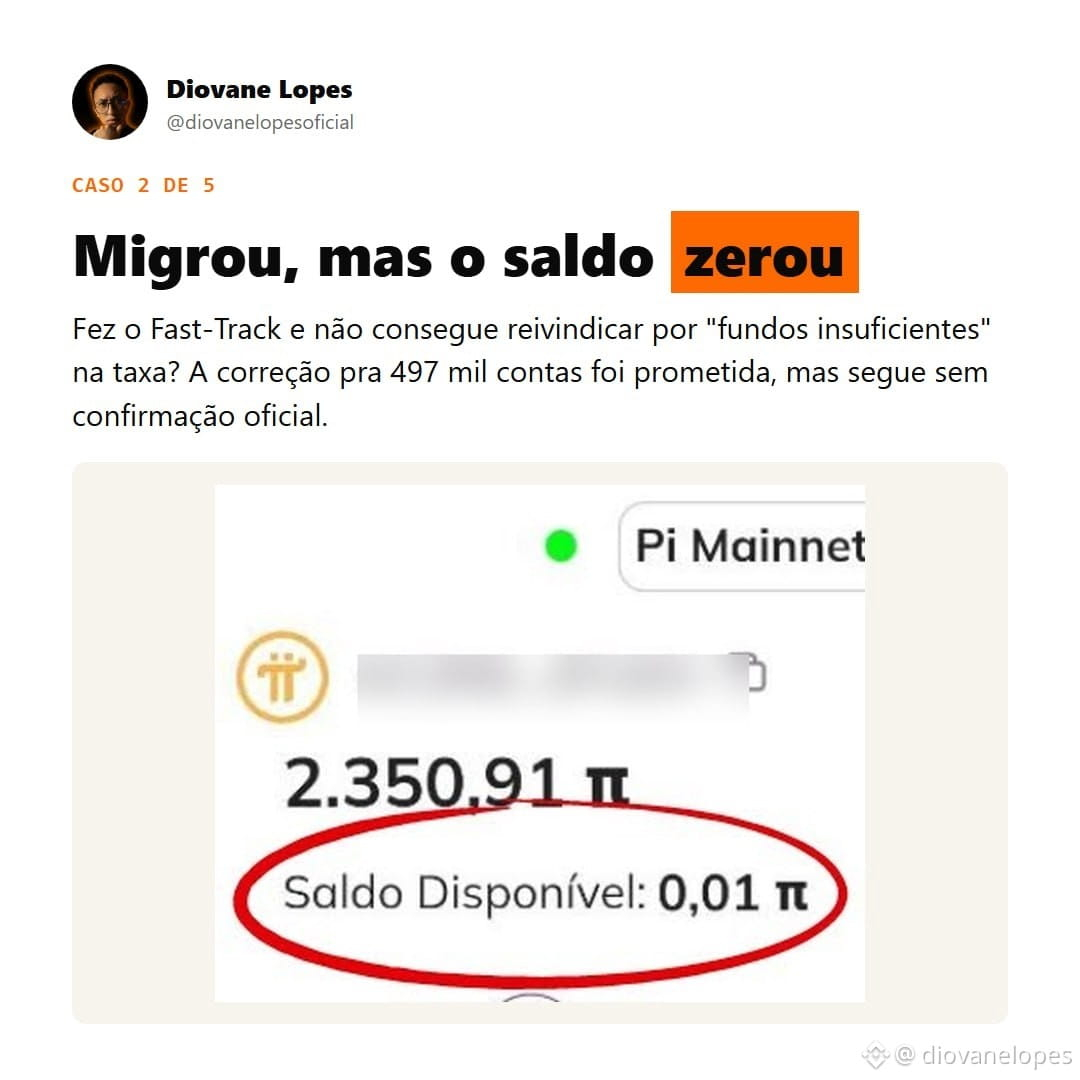
417 mil contas foram liberadas da suspeita de duplicidade. As outras 497 mil, do Fast-Track, ficaram sem conseguir reivindicar o saldo migrado por falta de Pi pra pagar a taxa da rede (o “gas”). A correção pra esse grupo foi prometida “dentro de uma semana”, a partir de 17/09 — mas até hoje, 28/09, não encontrei confirmação oficial de que ela já saiu.
No total são 5 casos descritos no comunicado (duplicidade, Fast-Track, KYC pela Yoti, celular antigo e a nova captura da palma da mão), cada um com uma ação própria dentro do app.
Minha opinião: gosto do padrão de execução aqui — a Pi está corrigindo problema por problema, em vez de prometer uma solução mágica única. É sinal real de avanço, mesmo lento pra quem espera há anos. Mas separar “feito” de “prometido” importa: tratar os 914 mil como resolvido seria enganoso, já que mais da metade depende de uma correção ainda sem confirmação. E notícia grande como essa é a isca perfeita pra golpista pedir sua frase secreta — ninguém precisa dela pra te ajudar com taxa ou KYC.
Abri o comunicado oficial na tela e passei pelos 5 casos com calma — já tá liberado pros membros do canal, pra todo mundo às 19h03. Pesquisa “Diovane Lopes” no YouTube e assiste completo.
#PiNetwork #kyc #pi
2
1.1k

SEC Commissioner Hester Peirce mentioned that KYC frameworks should collect far less personal data. She proposed utilizing zero-knowledge proofs to verify regulatory compliance while keeping private information—like your full name, income, and home address—completely hidden.
If regulatory frameworks start officially integrating ZK-proof compliance, watch for renewed bullish momentum across privacy-focused protocols and zero-knowledge infrastructure. On the other hand, if traditional KYC demands remain unchanged, watch for ongoing friction between privacy advocates and regulatory bodies.
#CryptoNews
#ZeroKnowledge
#SEC
#kyc
66
·
--
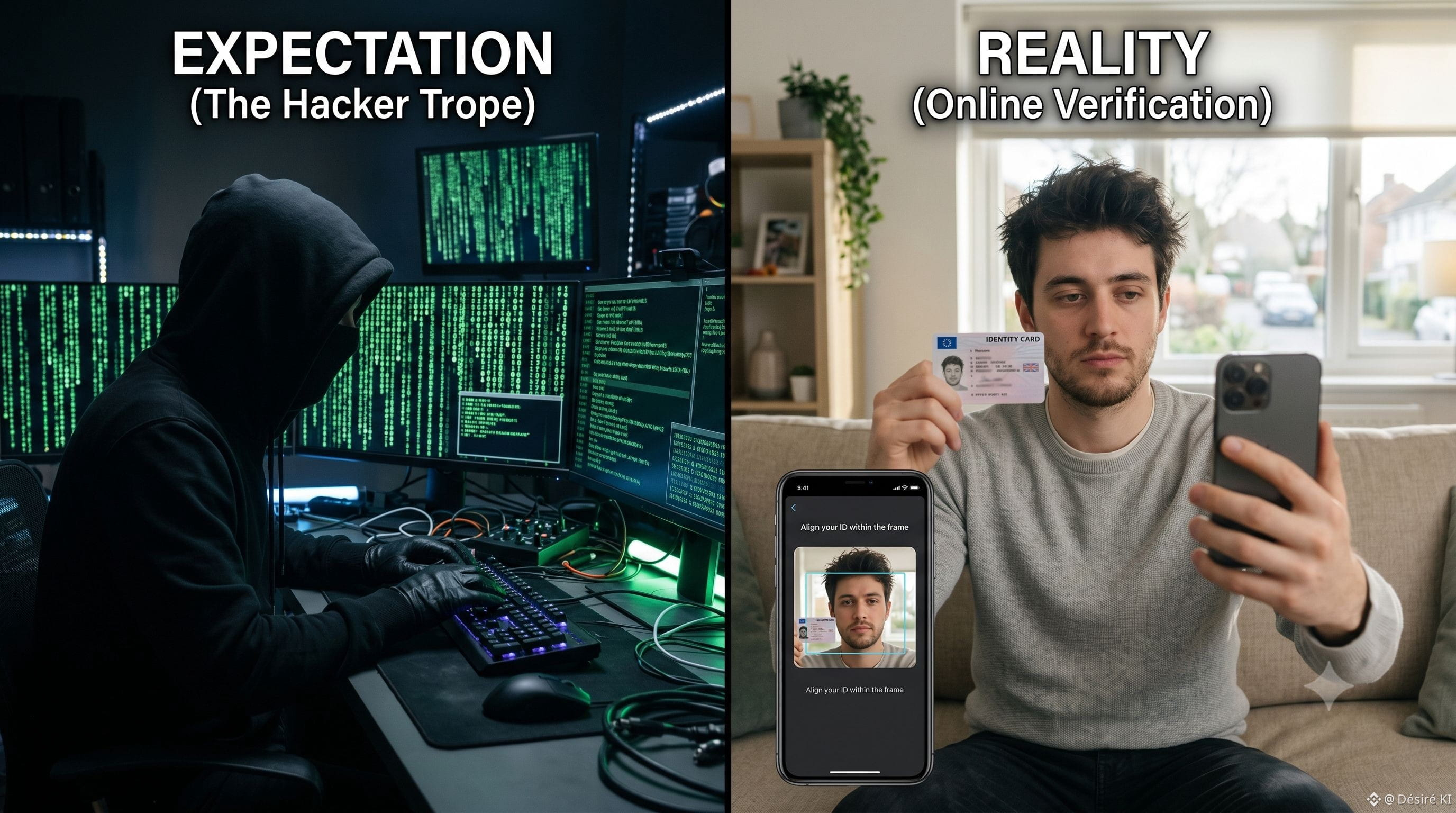
L'illusion de l'anonymat en crypto... on en parle ?
Avant de commencer mon défi de 30 jours, je croyais que le $BTC, c'était le truc ultra-secret des hackers dans les films, intraçable et mystérieux.
La réalité ? Pour ouvrir mon compte et faire mon premier dépôt, j'ai dû fournir ma carte d'identité, faire un selfie vidéo en tournant la tête, et prouver mon adresse (le fameux KYC). C'est limite plus strict que pour ouvrir un compte bancaire normal !
J'ai fait un petit visuel pour résumer cette désillusion amusante. Est-ce que ça vous a surpris aussi lors de votre inscription, ou c'est moi qui avais regardé trop de films de science-fiction ? 👇
#kyc #sécurité #EducationCrypto #Bitcoi $BTC
{spot}(BTCUSDT)
L'illusion de l'anonymat en crypto... on en parle ?
Avant de commencer mon défi de 30 jours, je croyais que le $BTC , c'était le truc ultra-secret des hackers dans les films, intraçable et mystérieux.
La réalité ? Pour ouvrir mon compte et faire mon premier dépôt, j'ai dû fournir ma carte d'identité, faire un selfie vidéo en tournant la tête, et prouver mon adresse (le fameux KYC). C'est limite plus strict que pour ouvrir un compte bancaire normal !
J'ai fait un petit visuel pour résumer cette désillusion amusante. Est-ce que ça vous a surpris aussi lors de votre inscription, ou c'est moi qui avais regardé trop de films de science-fiction ? 👇
#kyc #sécurité #EducationCrypto #Bitcoi $BTC
2
599

Статья
🔐 KYC на Polymarket: що змінилося у червні 2026📊 Станом на червень 2026 року Polymarket НЕ запровадив обов’язковий KYC для всіх користувачів основної платформи. Представники компанії публічно спростували повідомлення про повну обов’язкову верифікацію для всіх трейдерів.
🌍 Для більшості міжнародних користувачів торгівля через криптогаманець залишається доступною без стандартної перевірки документів.
⚠️ Але є важливі нюанси:
✅ KYC може бути для акаунтів із підвищеним ризиком.
✅ Додаткові перевірки можуть активуватися при великих обсягах торгів або підозрілій активності.
✅ При купівлі USDC через сторонні сервіси (наприклад MoonPay) верифікація особи є обов’язковою, але її проводить платіжний провайдер, а не Polymarket.
🚫 У травні-червні 2026 Polymarket також посилив боротьбу з VPN та обходом географічних обмежень. Користувачі з обмежених юрисдикцій можуть отримати запит на додаткову перевірку особи або блокування акаунта.
💡 Головний висновок для трейдерів:
🟢 «Обов’язковий KYC для всіх» — це міф.
🟡 KYC проходять не всі трейдери — перевірку можуть запросити лише в окремих випадках.
🔴 Використання VPN, торгівля з санкційних або заборонених юрисдикцій, великі обороти та нестандартна активність значно підвищують ймовірність перевірки.
🚀 Polymarket залишається однією з небагатьох великих prediction market платформ, де більшість міжнародних користувачів все ще можуть торгувати без класичного KYC, але тренд на посилення комплаєнсу у 2026 році вже очевидний. 📈🔐🌍
#kyc #KYCVerification #MoonPay #TrendingTopic #BTC
{spot}(ADAUSDT)
{spot}(BTCUSDT)
{spot}(SOLUSDT)
🔐 KYC на Polymarket: що змінилося у червні 2026
📊 Станом на червень 2026 року Polymarket НЕ запровадив обов’язковий KYC для всіх користувачів основної платформи. Представники компанії публічно спростували повідомлення про повну обов’язкову верифікацію для всіх трейдерів.
🌍 Для більшості міжнародних користувачів торгівля через криптогаманець залишається доступною без стандартної перевірки документів.
⚠️ Але є важливі нюанси:
✅ KYC може бути для акаунтів із підвищеним ризиком.
✅ Додаткові перевірки можуть активуватися при великих обсягах торгів або підозрілій активності.
✅ При купівлі USDC через сторонні сервіси (наприклад MoonPay) верифікація особи є обов’язковою, але її проводить платіжний провайдер, а не Polymarket.
🚫 У травні-червні 2026 Polymarket також посилив боротьбу з VPN та обходом географічних обмежень. Користувачі з обмежених юрисдикцій можуть отримати запит на додаткову перевірку особи або блокування акаунта.
💡 Головний висновок для трейдерів:
🟢 «Обов’язковий KYC для всіх» — це міф.
🟡 KYC проходять не всі трейдери — перевірку можуть запросити лише в окремих випадках.
🔴 Використання VPN, торгівля з санкційних або заборонених юрисдикцій, великі обороти та нестандартна активність значно підвищують ймовірність перевірки.
🚀 Polymarket залишається однією з небагатьох великих prediction market платформ, де більшість міжнародних користувачів все ще можуть торгувати без класичного KYC, але тренд на посилення комплаєнсу у 2026 році вже очевидний. 📈🔐🌍
#kyc #KYCVerification #MoonPay #TrendingTopic #BTC
2
265

·
--
Статья
Revolut’s KYC Leak: How a Fake Gov. Request Exposed Bitcoin UsersRevolut’s KYC Leak: How a Fake Gov. Request Exposed Bitcoin Users
Have you ever wondered what happens when a bank’s security system is tricked by a phishing email that looks like a government request? A recent incident at Revolut, a popular fintech app, shows that even the most trusted platforms can be vulnerable to clever social engineering, and that the fallout can touch high‑net‑worth crypto users in ways we didn’t anticipate.
The Concept: Social Engineering Meets KYC Compliance
When a company receives a request from a government agency to provide customer data, it is standard practice to comply after verifying the request’s authenticity. Unfortunately, scammers can spoof official email domains, creating a “fake gov. request” that looks legitimate. In Revolut’s case, the attackers sent an email that appeared to come from a government authority, prompting the bank’s compliance team to release sensitive KYC and Bitcoin transaction data. The result? A breach that exposed personal information and transaction histories of many users, including those with significant crypto holdings. #SocialEngineering #KYC
Real‑World Example: High‑Net‑Worth Users in the Crosshairs
Onchain investigator ZachXBT, known for tracking suspicious crypto activity, speculated that the breach may have targeted high‑net‑worth individuals. These users often hold large balances of $BTC and other tokens, making them attractive targets for theft or blackmail. By exposing their KYC details and transaction patterns, attackers could map wallet addresses to real identities, potentially facilitating future scams or targeted phishing. The incident underscores how a single weak link—an unverified email—can cascade into a broader security failure, especially for those with substantial crypto assets.
Takeaway: Strengthen Your Own Security Practices
If you’re using Revolut or any crypto‑friendly platform, here are three steps you can take right now:
1. Verify any government or regulatory request by contacting the agency directly using a phone number or email you know is legitimate.
2. Enable two‑factor authentication (2FA) on all accounts, and consider using a hardware wallet for large crypto holdings.
3. Regularly review your account activity and KYC information for any unauthorized changes.
By staying vigilant and double‑checking every request, you can protect yourself from similar social‑engineering attacks. #CryptoSecurity
What steps have you taken to verify the authenticity of requests to your financial institutions? Let me know in the comments!
Revolut’s KYC Leak: How a Fake Gov. Request Exposed Bitcoin Users
Revolut’s KYC Leak: How a Fake Gov. Request Exposed Bitcoin Users
Have you ever wondered what happens when a bank’s security system is tricked by a phishing email that looks like a government request? A recent incident at Revolut, a popular fintech app, shows that even the most trusted platforms can be vulnerable to clever social engineering, and that the fallout can touch high‑net‑worth crypto users in ways we didn’t anticipate.
The Concept: Social Engineering Meets KYC Compliance
When a company receives a request from a government agency to provide customer data, it is standard practice to comply after verifying the request’s authenticity. Unfortunately, scammers can spoof official email domains, creating a “fake gov. request” that looks legitimate. In Revolut’s case, the attackers sent an email that appeared to come from a government authority, prompting the bank’s compliance team to release sensitive KYC and Bitcoin transaction data. The result? A breach that exposed personal information and transaction histories of many users, including those with significant crypto holdings. #SocialEngineering #KYC
Real‑World Example: High‑Net‑Worth Users in the Crosshairs
Onchain investigator ZachXBT, known for tracking suspicious crypto activity, speculated that the breach may have targeted high‑net‑worth individuals. These users often hold large balances of $BTC and other tokens, making them attractive targets for theft or blackmail. By exposing their KYC details and transaction patterns, attackers could map wallet addresses to real identities, potentially facilitating future scams or targeted phishing. The incident underscores how a single weak link—an unverified email—can cascade into a broader security failure, especially for those with substantial crypto assets.
Takeaway: Strengthen Your Own Security Practices
If you’re using Revolut or any crypto‑friendly platform, here are three steps you can take right now:
1. Verify any government or regulatory request by contacting the agency directly using a phone number or email you know is legitimate.
2. Enable two‑factor authentication (2FA) on all accounts, and consider using a hardware wallet for large crypto holdings.
3. Regularly review your account activity and KYC information for any unauthorized changes.
By staying vigilant and double‑checking every request, you can protect yourself from similar social‑engineering attacks. #CryptoSecurity
What steps have you taken to verify the authenticity of requests to your financial institutions? Let me know in the comments!
51

·
--
KYC and compliance: the foundation, not the obstacle.
Know Your Customer (KYC) and Anti-Money Laundering (AML) rules exist so the financial system can function with accountability. In crypto, they:
• Prevent illicit actors from moving funds freely
• Enable exchanges to protect user assets and cooperate with law enforcement
• Create the bridge between digital assets and traditional finance
What users experience:
1. Identity verification (documents, selfie, address proof)
2. Source-of-funds checks for large deposits/withdrawals
3. Ongoing monitoring for unusual patterns
What it protects:
• Your account from unauthorized access
• The platform from being used for crime
• The ecosystem’s ability to operate legally worldwide
Common misconceptions:
• “KYC defeats privacy” — privacy ≠ anonymity. You control what you share publicly; the exchange knows who you are.
• “It’s only for big players” — rules apply proportionally, but everyone benefits from a cleaner environment.
• “Once verified, never again” — periodic re-verification and enhanced due diligence are standard.
Binance applies a risk-based approach: higher activity = deeper checks. That is standard global practice.
If you value a platform that can keep operating, offer fiat on/off-ramps and safeguard your funds, compliance is the price of admission.
Educational content only. Not legal or financial advice.
#KYC #Compliance #CryptoSafety #BinanceAngels
104

·
--
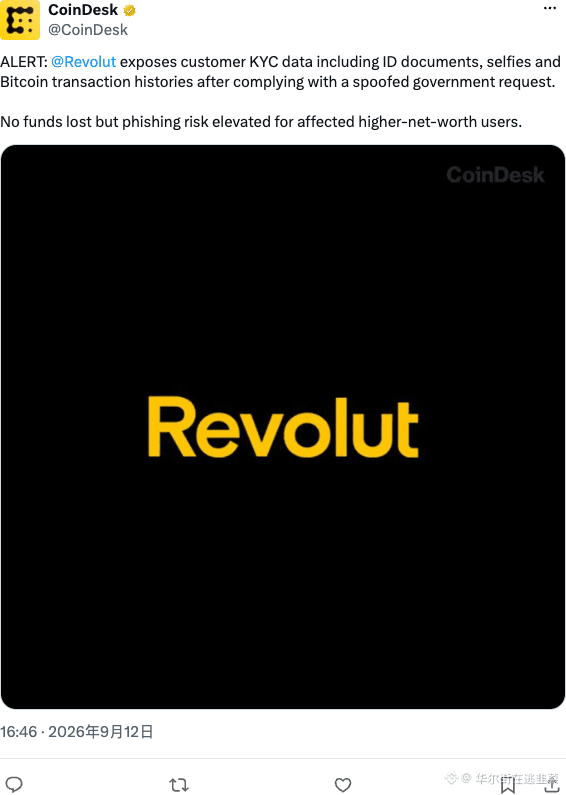
Revolut把客户KYC资料全交了——身份证、自拍、连比特币交易记录都打包送出去,就因为收到一份伪造的政府调令。钱没丢,但高净值用户现在就是钓鱼团体的活靶子。
中心化平台手握你全套隐私,却连个假公文都验不出来。币圈那句老话又应验了:not your keys, not your coins。你的身份数据存哪,风险就在哪。
$BTC #KYC #Revolut
Revolut把客户KYC资料全交了——身份证、自拍、连比特币交易记录都打包送出去,就因为收到一份伪造的政府调令。钱没丢,但高净值用户现在就是钓鱼团体的活靶子。
中心化平台手握你全套隐私,却连个假公文都验不出来。币圈那句老话又应验了:not your keys, not your coins。你的身份数据存哪,风险就在哪。
$BTC #KYC #Revolut
中心化平台手握你全套隐私,却连个假公文都验不出来。币圈那句老话又应验了:not your keys, not your coins。你的身份数据存哪,风险就在哪。
$BTC #KYC #Revolut
36

⚡️ JUST IN !!!
POLYMARKET BẮT BUỘC KYC ĐỂ ĐỐI PHÓ RỦI RO PHÁP LÝ VÀ CẤM VẬN 🔥
Polymarket — sàn prediction market lớn nhất thế giới — yêu cầu trader hoàn tất xác minh danh tính (KYC) nhằm giải quyết rủi ro về quy định và cấm vận 🛠
Một số user vẫn truy cập thị trường bị hạn chế thông qua trading bot tự động, bao gồm cả vùng xám tại Nga 📊
Các developer sử dụng Telegram và công cụ khác để điều hướng dòng giao dịch, tạo thêm thách thức cho việc tuân thủ 🎯
DeFi và prediction market đang dần phải chấp nhận KYC — xu hướng tất yếu khi quy mô đủ lớn để thu hút sự chú ý của cơ quan quản lý. Phi tập trung hoàn toàn ngày càng khó duy trì.
#Polymarket #KYC
$BTC $ETH $BEAT
455


·
--
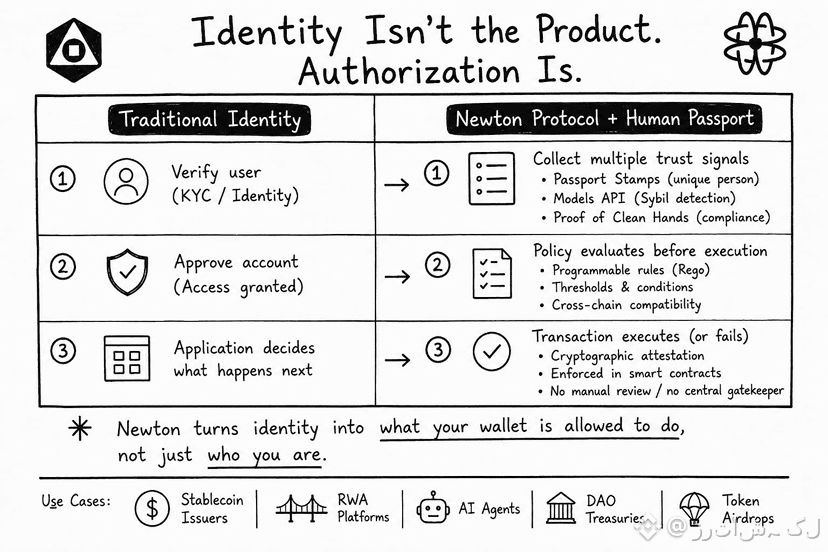
$NEWT has been fairly quiet on price lately, but one update made me rethink what Newton Protocol is actually building. It wasn't the Human Passport integration itself. It was where the verification happens.
Most identity solutions ask:
"Who is this user?"
@NewtonProtocol asks something slightly different.
"Should this transaction be allowed to happen?"
That distinction felt more important than I expected.
Instead of embedding identity checks inside every dApp, Newton moves the decision into its policy layer before a transaction executes.
With the new Human Passport Data Oracle, developers can combine multiple verification signals instead of relying on just one.
• Passport Stamps proving unique personhood
• ML-based Models API detecting Sybil-like wallet behavior
• Proof of Clean Hands for zero-knowledge compliance attestations
What's interesting isn't that these signals exist.
It's that they become programmable transaction rules.
Imagine a DAO treasury.
Instead of manually reviewing every payment, a policy could require:
✓ Passport Score ≥20
✓ Models Score ≥50
✓ Clean Hands attestation
before funds ever leave the treasury.
The same logic could protect stablecoin issuers, AI agents, RWA platforms and token airdrops without rewriting application contracts every time requirements change.
That's where I think this integration becomes more than another identity partnership.
Identity normally answers who you are.
Newton turns identity into what your wallet is allowed to do.
That feels like a shift from verification to programmable authorization.
If more protocols begin treating reputation, compliance and behavioral signals as reusable policy inputs rather than isolated KYC checks, on-chain security could become much more modular than today's application-by-application approach.
Curious whether this policy-first model becomes the standard for AI agents and institutional DeFi or whether most protocols will continue building verification directly into their own applications.
#kyc #AI #Newt #AIAgents
93
47
468

🚨 Crypto Regulation Alert: Stablecoins under the scanner! 🚨
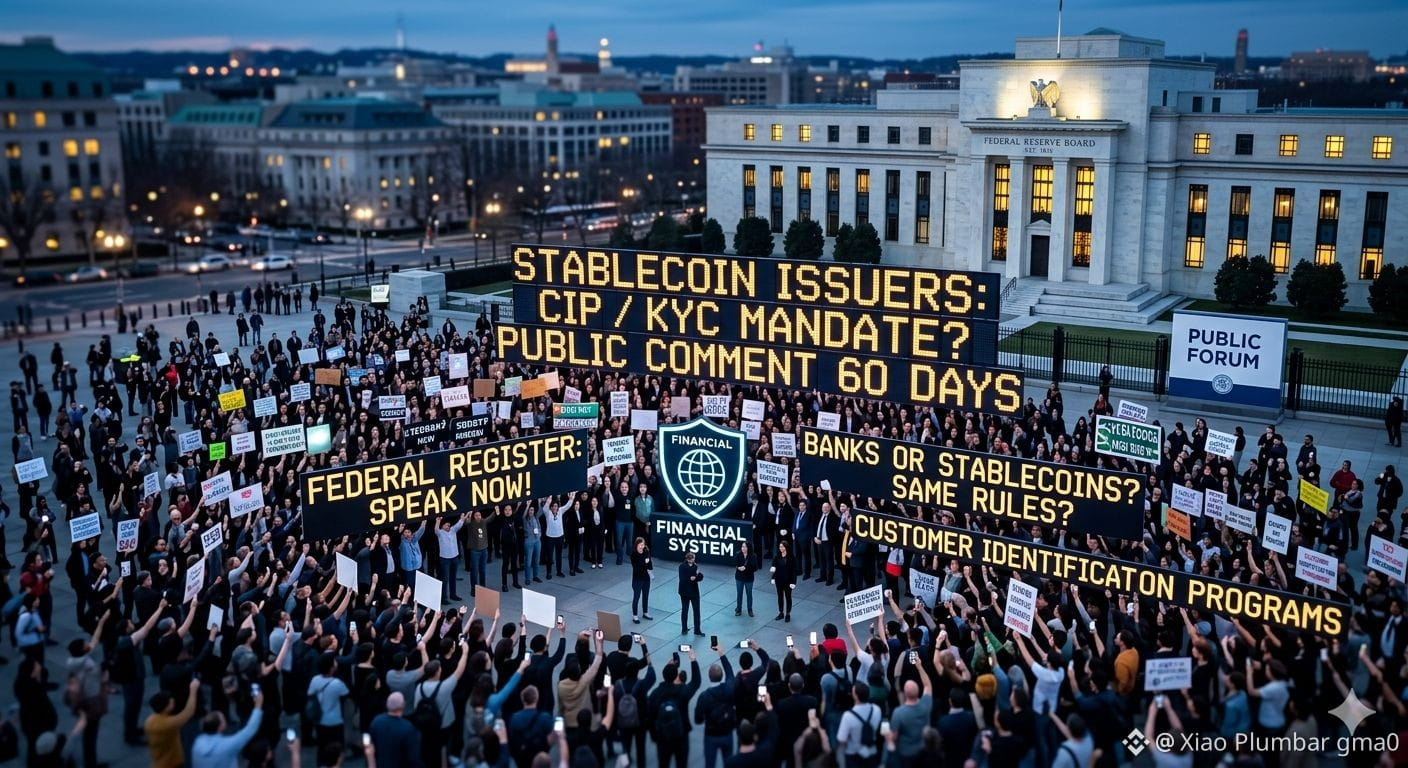
Federal Reserve Board aur 4 doosri agencies ne mil kar ek nayi proposal pesh ki hai jo stablecoin issuers ke liye rules sakht karne ja rahi hai.
Ab certain payment stablecoin issuers ko bhi banks aur credit unions ki tarah proper Customer Identification Programs (CIP) maintain karne honge. Iska matlab ab stablecoins mein bhi KYC/AML standard bilkul banks jaise solid hone wale hain.
Federal Register mein publish hone ke baad, public ke paas feedback dene ke liye 60 days ka comment period hoga.
Aapko kya lagta hai, kya is move se stablecoins ka trust badhega ya crypto ki decentralization par asar padega? Thoughts? 👇
#CryptoRegulation #Stablecoins #FederalReserve #Web3 #KYC
114
Войдите, чтобы посмотреть больше материала
Присоединяйтесь к пользователям криптовалют по всему миру на Binance Square
⚡️ Получайте новейшую и полезную информацию о криптоактивах.
💬 Нам доверяет крупнейшая в мире криптобиржа.
👍 Получите достоверные аналитические данные от верифицированных создателей контента.
Эл. почта/номер телефона
В тренде
1
#EarningsSeason
Просмотров: 6.6M
33,006 обсуждают
2
#USMidtermElections
Просмотров: 81,660
1,074 обсуждают
3
#StrategySTRCReaches$99.95ForFirstTimeIn165Days
Просмотров: 539
29 обсуждают
4
#BinanceWillListPredictPREDICT
Просмотров: 10,371
323 обсуждают
5
#SwitzerlandFirstSpotBitcoinETFExpectedToTradeInNovember
Просмотров: 700
45 обсуждают
6
#StrategyReports$21BQ3OperatingProfit
Просмотров: 547
29 обсуждают
7
#TwoAddressesHoldingAbout1.28BUSDTFrozen
Просмотров: 3,331
146 обсуждают
8
#FirstDigitalBlacklistsAttackerAddressHoldingAbout3.4MFDUSD
Просмотров: 224
13 обсуждают
9
#BitcoinDropsBelow$80K
Просмотров: 59,781
154 обсуждают
10
#BoEOpensConsultationOnTokenizedCollateralForClearing
Просмотров: 2,108
45 обсуждают