

#staking
staking
Просмотров: 2.2M
8,604 обсуждают
Популярные
Новые


·
--
Проверено
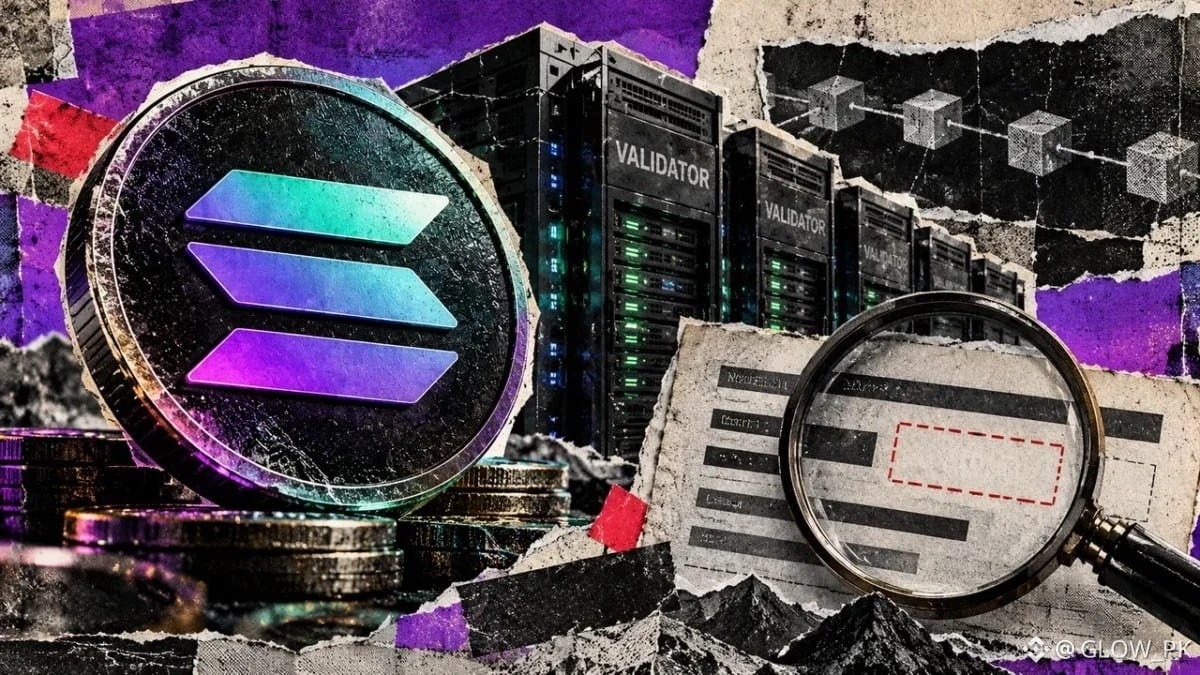
🚨 Solana Staking Rewards: The Validator Fee Data Gap
There’s an interesting issue emerging around Solana staking rewards. 👀
Agave can still apply validator commissions to staking rewards, but when custom collectors are active, the commission field may be left blank in reward records.
The problem? If the commission rate isn’t recorded properly, connecting a payout to the exact fee charged becomes more complicated. You may need to match the reward period, delegation details, and the correct historical commission rate.
📊 Why does this matter?
Staking transparency isn’t just about receiving rewards. It’s also about understanding how those rewards were calculated and what fees were applied.
When the underlying records leave gaps, historical verification becomes harder for stakers, analysts, and anyone tracking validator performance.
Solana’s staking infrastructure can process rewards, but reliable records are equally important for accountability.
The big question is: How easily can stakers independently verify the commission they actually paid?
$AIOT $ESPORTS $BEAMX
{future}(ESPORTSUSDT)
{future}(BEAMXUSDT)
{future}(AIOTUSDT)
#Solana #SOL #CryptoNews #Staking #blockchain
🚨 Solana Staking Rewards: The Validator Fee Data Gap
There’s an interesting issue emerging around Solana staking rewards. 👀
Agave can still apply validator commissions to staking rewards, but when custom collectors are active, the commission field may be left blank in reward records.
The problem? If the commission rate isn’t recorded properly, connecting a payout to the exact fee charged becomes more complicated. You may need to match the reward period, delegation details, and the correct historical commission rate.
📊 Why does this matter?
Staking transparency isn’t just about receiving rewards. It’s also about understanding how those rewards were calculated and what fees were applied.
When the underlying records leave gaps, historical verification becomes harder for stakers, analysts, and anyone tracking validator performance.
Solana’s staking infrastructure can process rewards, but reliable records are equally important for accountability.
The big question is: How easily can stakers independently verify the commission they actually paid?
$AIOT $ESPORTS $BEAMX
#Solana #SOL #CryptoNews #Staking #blockchain
665


·
--
We need to produce a single block of text (no line breaks? Could have line breaks but no markdown). The final line must be exactly "#Chainlink #LINK #Staking #PassiveIncome". Probably separate line. The final line must be exactly that. The preceding line must be the question.
We need to reference current trending coins if relevant: Super Pepe. Could mention Super Pepe as a trending meme coin but maybe not for staking. But we can mention it as trending but not staking. The requirement: "Reference current trending coins if relevant: Super Pepe". So we should mention Super Pepe somewhere in the post.
We need to list 3 popular coins/platforms to stake on. Could be Ethereum (ETH), Cardano (ADA), Polkadot (DOT), or platforms like Binance Earn, Kraken, Lido. Provide APY ranges conservative: e.g., ETH ~4-5%, ADA ~3-4%, DOT ~10-12%? But conservative: maybe 3-5% for ETH, 2-4% for ADA, 5-8% for DOT. Or use stablecoin staking like USDC on Aave ~2-3%. But we need 3 popular coins/platforms. Could be Ethereum (via Lido), Cardano (via Daedalus), and Binance Earn (for BNB). Provide APY ranges.
One risk warning: e.g., "Risk: smart contract bugs or slashing can reduce principal."
Word count: 200-250 words. Let's aim for ~220 words.
We must not use markdown formatting (no bold, italics). Just plain text.
We must end with the question line and then the
20

·
--
Lido's new staking module lets an independent operator run a validator with a maximum effective balance of 2,048 ETH without supplying all that ETH themselves.
The operator posts a bond: 32 ETH for the first validator key and 30 ETH for each additional key. Lido allocates the stake. Its October 23 launch announcement says the new 0x02 Community Staking Module is live alongside the existing 0x01 module.
The allocation arrives in stages. A new key first receives a 32 ETH seed deposit and waits for Ethereum activation. Once active, it can enter the top-up process. Seed deposits take priority over further top-ups to existing validators.
For an operator weighing the capital commitment, that sequence matters: the bond requirement is known, but activation does not mean the validator immediately receives its full stake allocation. The launch starts with a 32-seat top-up queue. Further allocations depend on staged capacity increases and sufficient protocol inflows.
Existing 0x01 operators can keep their current setup. There is no native consolidation-based migration into the new module: they can run both, or exit old validators and use the released bond to fund new keys.
Source: Lido, October 23, 2026. Diagram shows the announced allocation process, not current queue occupancy or a return forecast.
https://blog.lido.fi/introducing-0x02-csm-a-permissionless-path-to-running-higher-balance-validators/
#Ethereum #Staking

213
·
--
An automatically renewing Avalanche validator can stop earning until its operator sets it up again.
Avalanche's Helicon explainer sets a 90% uptime requirement for commitments starting from the upgrade's September 22 activation. Earlier commitments retain the old threshold. For an automatically renewing core-network validator subject to the new requirement, missing it forfeits that cycle's reward and ends the position. The stake itself and previously earned rewards are preserved.
For someone running a rolling validator stake, restoring the node's connection therefore isn't the whole recovery: the validator must be set up again to resume. That is a different interruption from losing one payout while the position keeps rolling.
The renewal mechanism does not cover delegated stakes or validators on Avalanche's separate L1 networks.
Source: Avalanche's September 23, 2026 Helicon explainer. Existing staking rules.
https://www.avalanche.com/about/blog/helicon-what-avalanches-network-upgrade-changes-for-businesses
#AVAX #Staking
110

·
--
$160 million staked—and the validator stops earning. That gets my attention. 😬
Solflare has pledged to cover missed rewards after a validator went offline, leaving about 1.56 million $SOL on a validator that stopped earning.
I welcome the pledge. But the wallet still hasn’t named the firm that held the validator’s keys. 🔑
Covering rewards is one thing. Explaining who had control is another.
Would reimbursement satisfy you, or would you want that firm named too?
#Solana #Staking #CryptoSecurity
48

·
--
🚨 Solflare pledges to cover missed rewards for ~1.56M SOL staked on an offline validator. The wallet provider has yet to identify the key holder, raising questions about custodial risk.
Market implication: Staker confidence may wobble, but Solana’s staking infrastructure remains resilient. Who holds the keys?
#Solana #Staking
$SOL #TradingSignal #CryptoAnalysis
Market implication: Staker confidence may wobble, but Solana’s staking infrastructure remains resilient. Who holds the keys?
#Solana #Staking
$SOL #TradingSignal #CryptoAnalysis

·
--
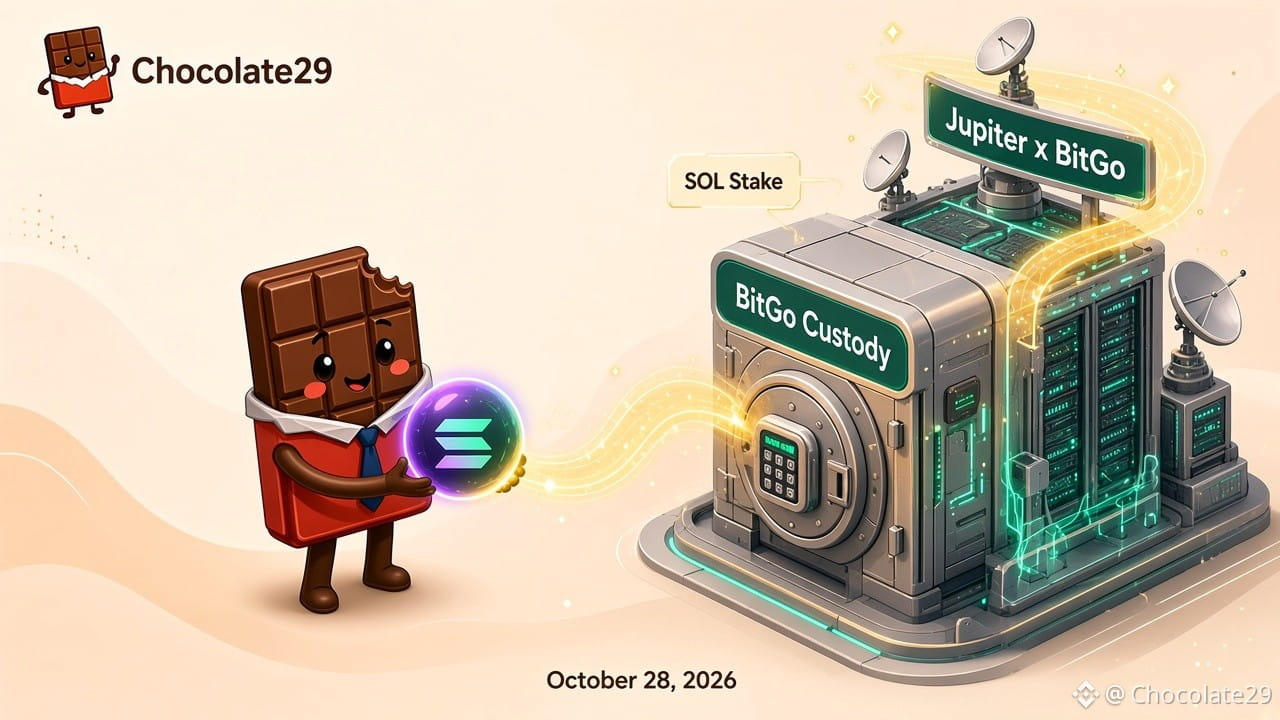
BitGo just unlocked institutional Solana staking from custody — eligible clients can delegate $SOL to a Jupiter x BitGo validator without moving coins out.
On October 28, 2026, BitGo Bank & Trust, N.A. and Jupiter announced that eligible institutional clients can stake SOL directly from existing BitGo custody accounts through the Jupiter x BitGo validator. Assets stay under BitGo’s regulated custody and cold-storage controls; Jupiter operates the validator independently, and BitGo says it does not control validator performance. Unstaking still follows Solana’s protocol deactivation period.
Unchained, citing StakeWiz data that day, put Jupiter’s main Solana validator near about 9.72 million SOL of active stake — roughly 993 million dollars — among the network’s larger operators. The firms have not disclosed whether the Jupiter x BitGo validator is that same node or a separate one, and rewards remain protocol-generated and not guaranteed.
#Solana #Staking #Crypto
DYOR. Not financial advice.
{spot}(SOLUSDT)
BitGo just unlocked institutional Solana staking from custody — eligible clients can delegate $SOL to a Jupiter x BitGo validator without moving coins out.
On October 28, 2026, BitGo Bank & Trust, N.A. and Jupiter announced that eligible institutional clients can stake SOL directly from existing BitGo custody accounts through the Jupiter x BitGo validator. Assets stay under BitGo’s regulated custody and cold-storage controls; Jupiter operates the validator independently, and BitGo says it does not control validator performance. Unstaking still follows Solana’s protocol deactivation period.
Unchained, citing StakeWiz data that day, put Jupiter’s main Solana validator near about 9.72 million SOL of active stake — roughly 993 million dollars — among the network’s larger operators. The firms have not disclosed whether the Jupiter x BitGo validator is that same node or a separate one, and rewards remain protocol-generated and not guaranteed.
#Solana #Staking #Crypto
DYOR. Not financial advice.
33

Tổ chức tài chính chấp nhận staking crypto khi lãi suất giảm
- Cơ sở tài chính tiếp tục stake token crypto dù phần thưởng giảm.
- Truy cập dễ dàng và quen thuộc hơn khuyến khích nhà đầu tư.
- Lãnh thưởng rơi và thời gian rút chậm kiểm tra hiệu quả kinh tế.
- RSS chưa cung cấp chi tiết thêm về mã coin, giá hay thời gian.
#BinanceSquare #CryptoNews #Staking
$btc $eth
#vlikevn #Titanbot
Nguồn: CoinDesk
99

·
--
Di pekan yang sama Binance kehilangan $6,3 miliar, satu protokol staking Bitcoin ikut kebobolan — tapi angkanya sering salah baca.
Fakta: b14g, protokol dual-staking Bitcoin di jaringan Core dan Babylon, mengonfirmasi pada 31 Okt bahwa sekitar 97 juta token CORE ditarik tanpa izin dari kontrak stakingnya pada 09:29 UTC. Nilainya sekitar $1,36 juta — bukan $97 juta, itu jumlah tokennya. Kontrak langsung dijeda; sekitar 68 juta CORE terlacak masih di jaringan Core dan mitra bursa membekukan sekitar 9 juta CORE terkait penyerang. Bitcoin yang di-stake lewat b14g tidak terdampak karena terkunci di jaringan Bitcoin. Penyebab teknisnya belum diungkap; post-mortem dijanjikan.
Opiniku: ini bukan soal nominalnya yang kecil, tapi soal polanya: dalam sepekan, dua insiden menimpa infrastruktur kustodi dan staking. Yang membedakan b14g: desain time-lock Bitcoin membatasi ledakannya — yang hilang hanya token CORE, bukan BTC-nya. Itu pelajaran desain, bukan alasan untuk tenang: selama penyebabnya belum diungkap, pengguna staking di protokol ini masih menunggu jawaban.
Yang aku pantau: post-mortem b14g, apakah 68 juta CORE yang terlacak bisa dipulihkan, dan apakah jumlah yang dibekukan bursa bertambah.
Menurut kalian, insiden beruntun seperti ini bikin kalian makin selektif soal protokol staking, atau justru dianggap risiko yang sudah diperhitungkan?
Ini analisisku, bukan nasihat finansial — DYOR selalu.
#KeamananCrypto #Staking $CORE $BTC
100
·
--
Lebih dari sepertiga ETH kini terkunci di staking — justru saat imbal hasilnya turun.
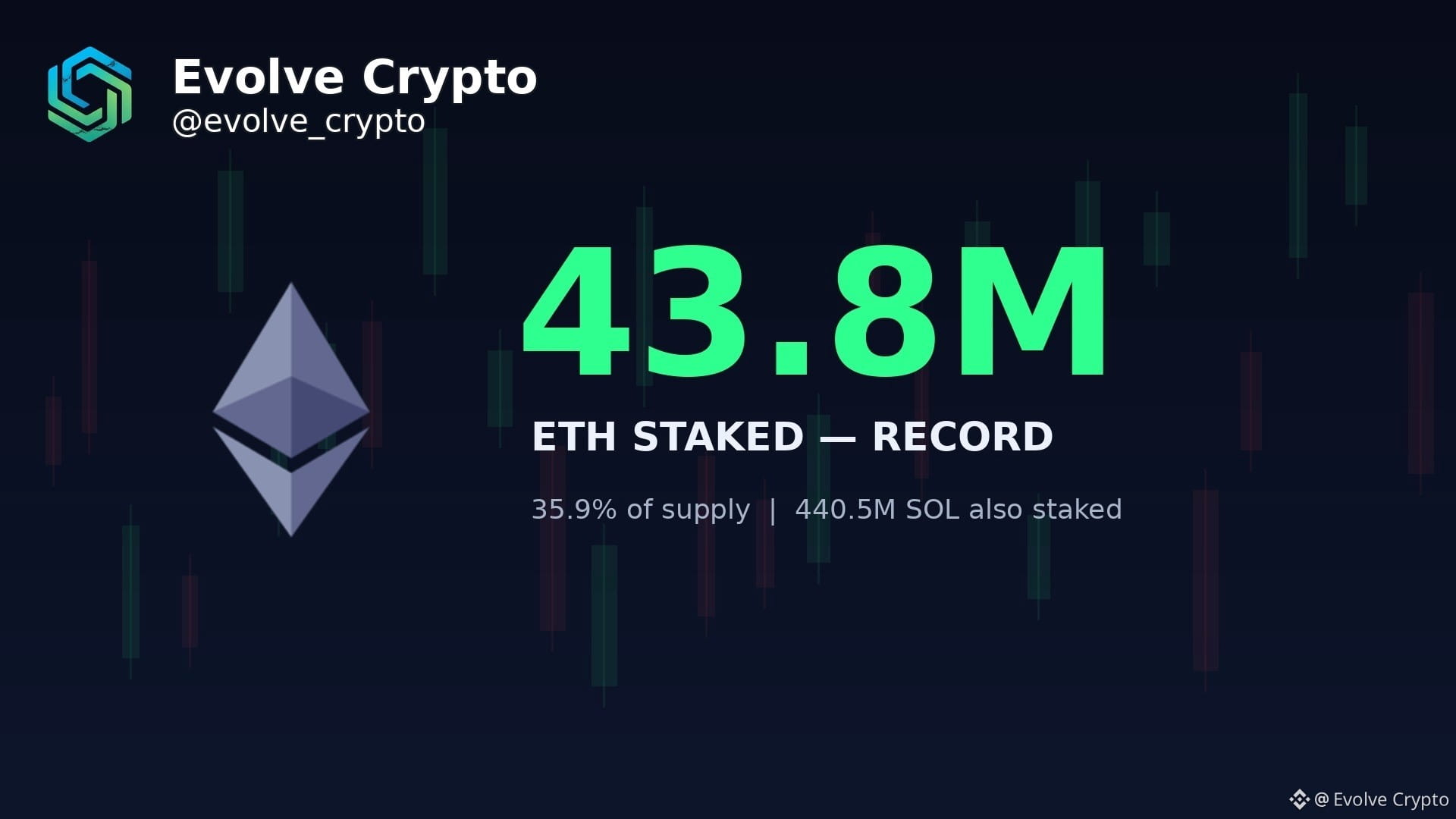
Fakta: Laporan staking Q4 2026 Bitwise (20 Okt, data Q3), diberitakan CoinDesk 31 Okt: ETH yang di-stake mencapai rekor 43,8 juta, atau 35,9% dari pasokan, dengan inflow bersih 1,99 juta ETH di Q3 — kuartal keenam berturut-turut positif. Tapi yield kotor tahunannya turun ke 2,63% dari 2,81% di Q2. Solana senasib: stake aktif 440,5 juta SOL (sekitar 69% pasokan), yield turun ke sekitar 6% dari 6,38%. Catatan penting: angka yield ini kotor, sebelum komisi validator dan biaya layanan.
Opiniku: ini bukan cerita soal hasil yang membesar, tapi soal keyakinan yang bertahan. Di pasar yang sedang lemah seperti sekarang — ETH sekitar $2.254, SOL sekitar $96 pagi ini — makin banyak pemegang memilih mengunci koinnya daripada menjualnya, dan imbalannya justru menipis karena dibagi ke makin banyak partisipan. Sisi yang kurang dibahas: transaksi ETH Q3 naik 35,3% setahun ke 199,3 juta, tapi pendapatan fee harian justru turun 40,2% dari kuartal sebelumnya.
Yang aku pantau selanjutnya: apakah inflow staking Q4 berlanjut saat harga masih di bawah $80.000 untuk BTC, dan apakah konsolidasi validator ETH terus berjalan setelah Pectra.
Menurut kalian, staking yang makin ramai tapi yield makin tipis ini tanda kepercayaan jangka panjang, atau sekadar tidak ada tempat lain untuk parkir koin?
Ini analisiku, bukan nasihat finansial — DYOR selalu.
#Staking #OnChain $ETH $SOL
51

Dù lợi suất sụt giảm thê thảm, các ông lớn định chế vẫn đổ xô staking crypto! Chuyện gì đang xảy ra?
Tưởng chừng lợi nhuận thấp sẽ khiến các cá voi quay lưng, nhưng không. Ethereum vừa lập kỷ lục mới với gần 36% tổng cung $ETH được stake, trong khi lợi suất chỉ còn vỏn vẹn 2.63%. Tương tự, Solana cũng có tới 69% nguồn cung bị khóa.
Động lực chính đến từ dòng tiền tổ chức. Các quỹ lớn coi staking là nguồn thu nhập ổn định, như một khoản đầu tư vào cơ sở hạ tầng, chứ không phải một cuộc săn lùng lợi nhuận siêu khủng.
Đây là bằng chứng rõ nhất rằng staking đang trở thành một phần không thể thiếu trong danh mục đầu tư crypto dài hạn của giới tài chính truyền thống.
Phải chăng thời kỳ "lãi suất siêu cao" đã qua, và chúng ta đang bước vào giai đoạn tăng trưởng bền vững hơn?
#Crypto #Staking #Institutions
$ETH $SOL
134

·
--
Binance Earn: put idle crypto to work 💰
Instead of letting your coins sit in your wallet, Binance Earn lets you try options like Flexible Savings, Locked Savings, and Staking to potentially earn rewards on what you hold.
Before you jump in:
Rates vary and are not guaranteed
Locked products can't be withdrawn early without conditions
Higher returns usually mean higher risk
Read the terms of each product carefully before subscribing.
📌 Not financial advice. Always DYOR.
#BinanceEarn #Crypto #Staking #PassiveIncome
2
80

·
--
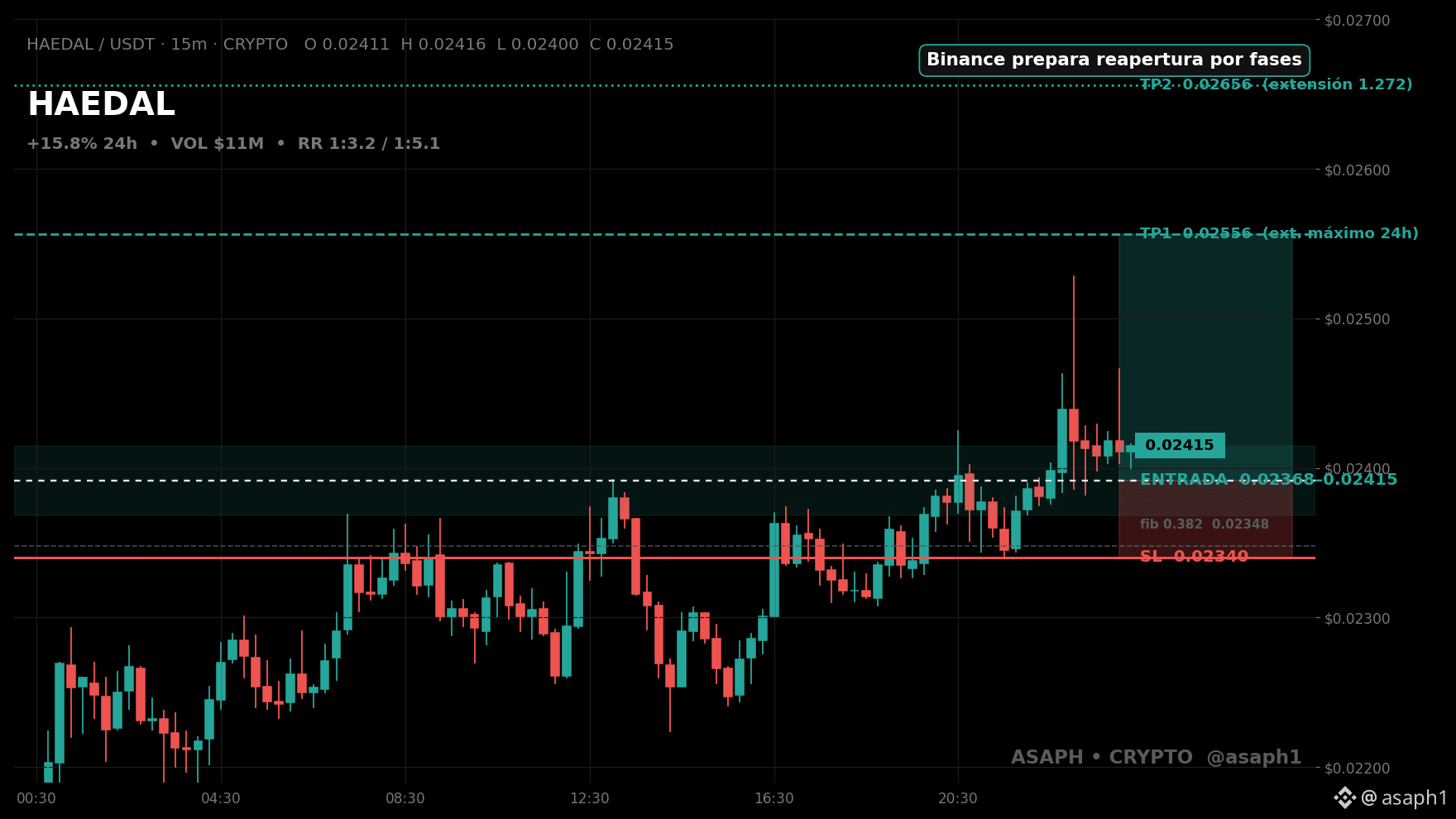
😲 $HAEDAL ASOMBRO EN SUI: EL STAKING LÍQUIDO DESPEGA CON LA LEY ENCIMA
El FBI y el Servicio Secreto de EE.UU. ya trabajan con Circle y Tether en el rastreo, y entre los dos emisores ya congelaron más de $2,370M. Para mí, ese cerco cambia el juego para el que hace staking: con el atacante acorralado y sin poder mover lo robado, el capital vuelve a buscar rendimiento en redes que no se detuvieron, y en Sui ese regreso se llama HAEDAL.
Miren el detalle que nadie está viendo:
→ Circle congeló más de $800M en USDC y Tether cerca de $1,570M en USDT, coordinados con las autoridades, dentro de los $3,000M inmovilizados en total.
→ HAEDAL +16.5% con $11.0M, mientras $SUI +8.2% y CETUS +10.0% suben menos entre los de Sui.
→ Entrada $0.02368–$0.02415, SL $0.023402, TP1 $0.025565 (+6.9%) → TP2 $0.026561 (+11.1%).
¿HAEDAL rompe $0.02557 o ahí se enfría el staking? 👇
$HAEDAL
#Haedal #Staking #Crypto
96
·
--
The user wants a Binance Square post about crypto staking for passive income. Requirements:
- No markdown
- 200-250 words
- Explain staking in plain English
- List 3 popular coins/platforms to stake on
- Mention realistic APY ranges (conservative estimates)
- Include one risk warning
- End with specific sentence
- Final line with hashtags
Let me craft this carefully. Word count target: 200-250 words.
First, explain staking simply: like putting money in a savings account but for crypto, you lock up coins to help secure the network and earn rewards.
List 3 popular coins/platforms: Ethereum (ETH), Cardano (ADA), Solana (SOL) - or could mention Binance Earn, Lido, etc. But "coins/platforms" - probably coins. Let's do ETH, ADA, SOL.
APY ranges conservative: ETH ~3-5%, ADA ~2-4%, SOL ~6-8% (but conservative maybe 5-7%). Use ranges.
Risk warning: slashing, lock-up periods, smart contract risk, market volatility.
End with exact phrase.
Hashtags at end.
No markdown means no bold, italics, just plain text.
Let me draft:
"Staking is like putting your crypto to work. Instead of just holding coins in a wallet, you lock them up to help validate transactions on a proof-of-stake blockchain. In return, the network pays you rewards — similar to interest on a savings account but with crypto assets.
Popular options include Ethereum (ETH) at roughly 3-5% APY, Cardano (ADA) around 2-4% APY, and Solana (SOL) offering 5-7% APY. These are conservative estimates; actual yields vary by platform and network conditions. You can stake directly through wallets like Ledger or Exodus, or use exchange services such as Binance Earn for simplicity.
One key risk: your funds are often locked for a period, and if the network penalizes validators (slashing) or the token price drops sharply, your principal can lose value. Always research lock-up terms and platform security before committing.
Are you staking any crypto right now? Drop your favourite coin below!
#NFT #Web3 #Staking #PassiveIncome
90

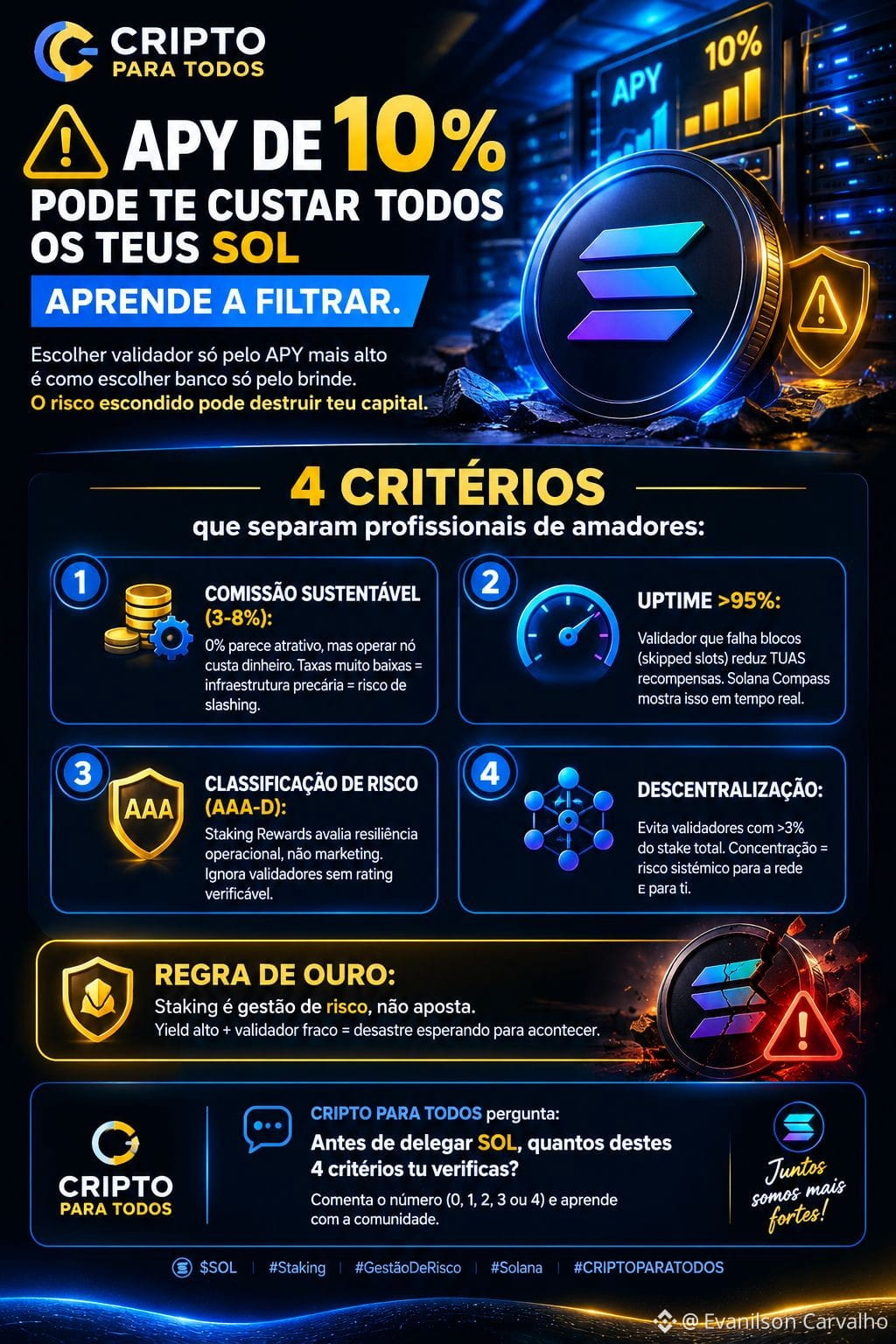
**🚨 APY DE 10% PODE TE CUSTAR TODOS OS TEUS SOL. APRENDE A FILTRAR.**
Escolher validador só pelo APY mais alto é como escolher banco só pelo brinde. O risco escondido pode destruir teu capital.
**4 CRITÉRIOS que separam profissionais de amadores:**
1️⃣ **Comissão Sustentável (3-8%):**
0% parece atrativo, mas operar nó custa dinheiro. Taxas muito baixas = infraestrutura precária = risco de slashing.
2️⃣ **Uptime >95%:**
Validador que falha blocos (skipped slots) reduz TUAS recompensas. Solana Compass mostra isso em tempo real.
3️⃣ **Classificação de Risco (AAA-D):**
Staking Rewards avalia resiliência operacional, não marketing. Ignora validadores sem rating verificável.
4️⃣ **Descentralização:**
Evita validadores com >3% do stake total. Concentração = risco sistémico para a rede E para ti.
**Regra de Ouro:**
Staking é gestão de risco, não aposta. Yield alto + validador fraco = desastre esperando para acontecer.
**CRIPTO PARA TODOS pergunta:**
**Antes de delegar SOL, quantos destes 4 critérios tu verificas? Comenta o número (0, 1, 2, 3 ou 4) e aprende com a comunidade.**
$SOL #Staking #GestãoDeRisco #Solana #CRIPTOPARATODOS
1
98

·
--
BNQ Staking:参与之前,先了解链上规则BNQ GLOBAL生态中,BNQ Staking已经提供链上质押产品。
对于考虑参与的BNQ持有者来说,真正需要了解的不只是奖励比例,还有产品的参与条件和资金锁定规则。
目前BNQ Staking提供不同期限的质押选择,包括90天、360天和720天。
不同产品具有相应的参与数量、奖励规则及推广层级条件。
用户需要先完成有效推荐关系绑定,才能参与Staking;推荐关系绑定后不可修改。
质押奖励按照具体订单的周期规则计算,本金到期后由用户按合约规则自行赎回。
链上质押涉及智能合约、资产锁定及市场等风险。了解规则后,再根据自身情况决定是否参与。
BNQ(BSC):0xBc9211717353498e19201d9040021872af7656d3
#BNQGLOBAL #BNQ #Staking
BNQ Staking:参与之前,先了解链上规则
BNQ GLOBAL生态中,BNQ Staking已经提供链上质押产品。
对于考虑参与的BNQ持有者来说,真正需要了解的不只是奖励比例,还有产品的参与条件和资金锁定规则。
目前BNQ Staking提供不同期限的质押选择,包括90天、360天和720天。
不同产品具有相应的参与数量、奖励规则及推广层级条件。
用户需要先完成有效推荐关系绑定,才能参与Staking;推荐关系绑定后不可修改。
质押奖励按照具体订单的周期规则计算,本金到期后由用户按合约规则自行赎回。
链上质押涉及智能合约、资产锁定及市场等风险。了解规则后,再根据自身情况决定是否参与。
BNQ(BSC):0xBc9211717353498e19201d9040021872af7656d3
#BNQGLOBAL #BNQ #Staking
61
·
--
🚨 ETH blockspace demand is tightening as staking dynamics shift. With ether.fi’s April commitment under scrutiny, the next block producer could dictate short-term price action. The 5% qualified proposer weight model signals shifting network control.
Market Implication: Increased staking centralization risks volatility.
💡 What does this mean for ETH’s decentralization narrative? #Ethereum #Staking
$ETH #TradingSignal #CryptoAnalysis
Market Implication: Increased staking centralization risks volatility.
💡 What does this mean for ETH’s decentralization narrative? #Ethereum #Staking
$ETH #TradingSignal #CryptoAnalysis

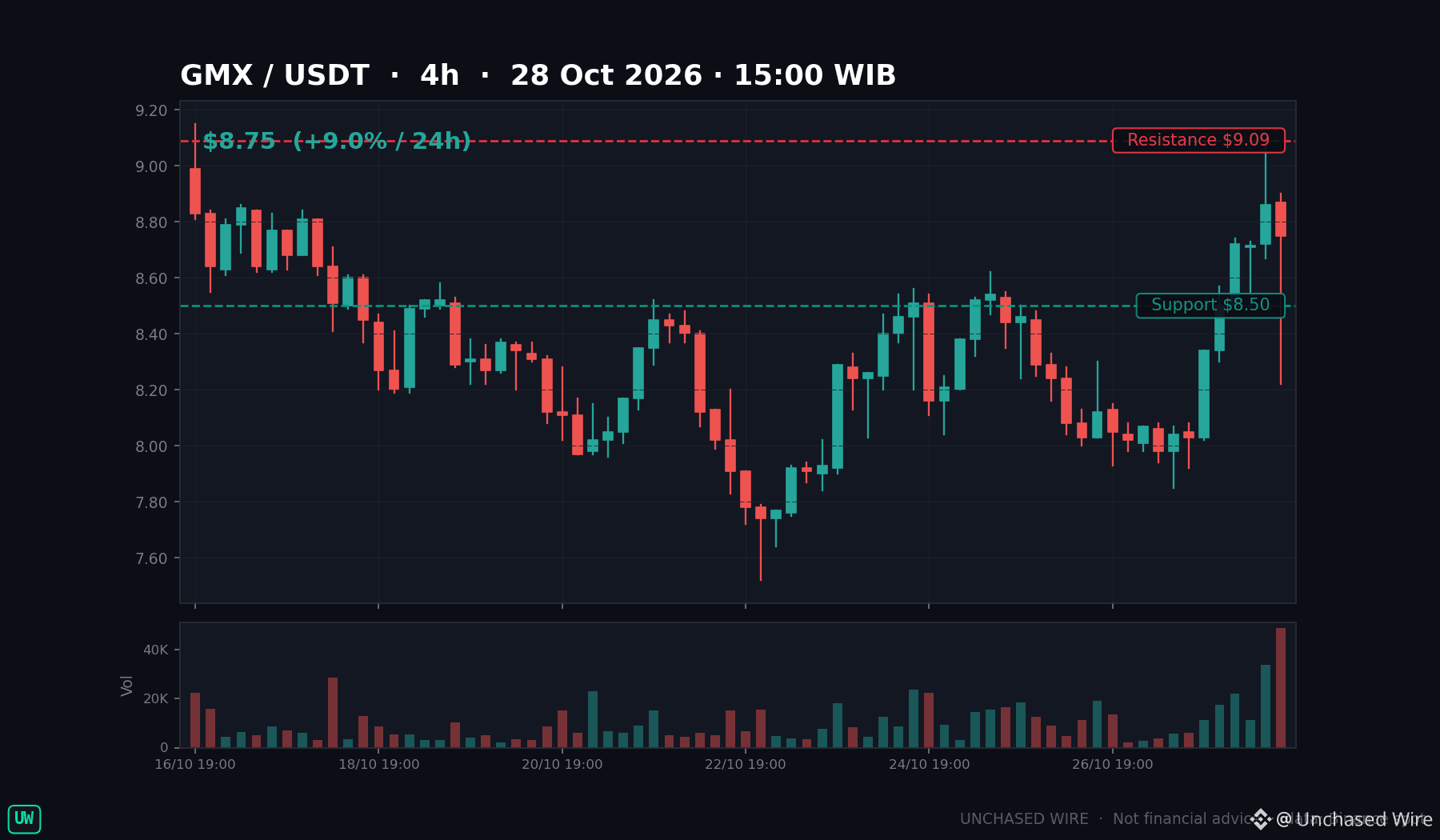
$GMX's staking overhaul is due today — and the tape got there first.
I've counted five closes since yesterday afternoon, from $8.03 to $8.86, with the latest 11:00 close printing a $9.09 high on about 3.4 times the recent average volume. The move lines up with the governance change taking effect today: Solana-side revenue left after GT buybacks goes to buying $GMX for the staking rewards pool, and unstaking on Arbitrum and Avalanche moves to a 180-day wait.
That second half is the double edge. A longer lockup keeps stakers committed, but it also means anyone who wants out waits half a year — and the change itself was planned subject to technical readiness, so a slip is possible.
Three ways this reads: a close above $9.09 confirms the breakout; another close above $8.50 keeps it intact; a close back under $8.50 sends it back into the $7.98–$8.34 range.
What would convince you this breakout is real — a close above $9.09, or another day of buyback flow?
Not financial advice. Do your own research.
$GMX #DeFi #GMX #Buyback #Staking
$GMX 's staking overhaul is due today — and the tape got there first.
I've counted five closes since yesterday afternoon, from $8.03 to $8.86, with the latest 11:00 close printing a $9.09 high on about 3.4 times the recent average volume. The move lines up with the governance change taking effect today: Solana-side revenue left after GT buybacks goes to buying $GMX for the staking rewards pool, and unstaking on Arbitrum and Avalanche moves to a 180-day wait.
That second half is the double edge. A longer lockup keeps stakers committed, but it also means anyone who wants out waits half a year — and the change itself was planned subject to technical readiness, so a slip is possible.
Three ways this reads: a close above $9.09 confirms the breakout; another close above $8.50 keeps it intact; a close back under $8.50 sends it back into the $7.98–$8.34 range.
What would convince you this breakout is real — a close above $9.09, or another day of buyback flow?
Not financial advice. Do your own research.
$GMX #DeFi #GMX #Buyback #Staking
5

·
--
Статья
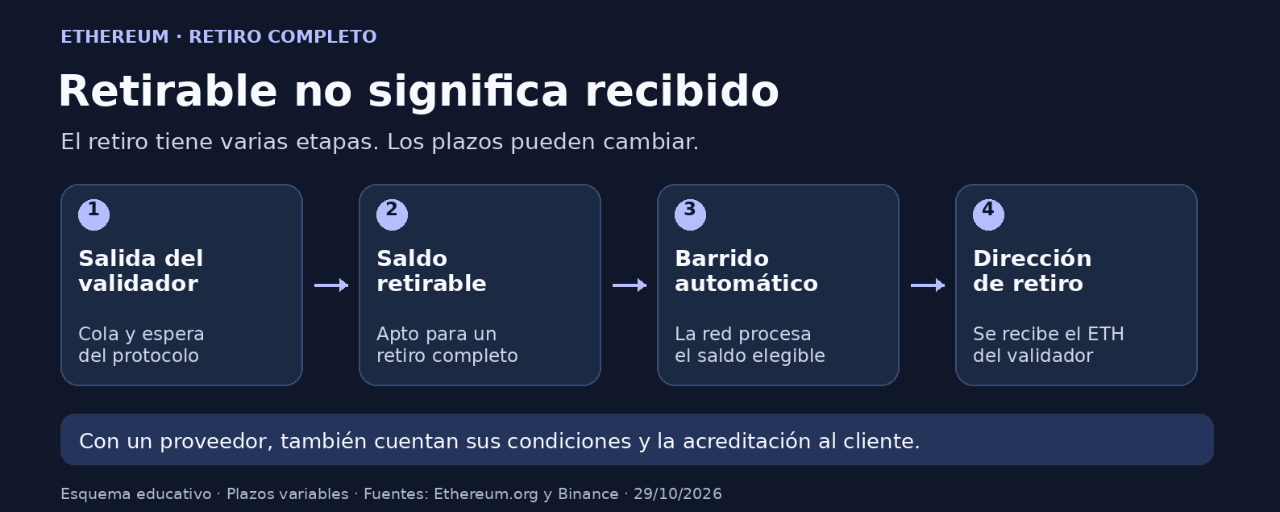
ETH en staking: por qué un retiro puede tardarVer «solicitud recibida» no significa que el saldo en $ETH ya esté disponible. Entender las etapas evita confundir una espera del protocolo con una demora del proveedor.
Recompensas y salida total son cosas distintas
En Ethereum, recibir recompensas de staking no implica que todo el saldo de un validador esté desbloqueado. El mecanismo depende de su tipo: algunos envían automáticamente los excedentes; otros acumulan recompensas.
El recorrido de un retiro completo
Primero se procesa la salida del validador. La cola limita cuán rápido pueden salir y su duración cambia con la demanda. Después deben cumplirse las condiciones del protocolo para que el saldo sea retirable.
Ser «retirable» todavía no equivale a estar en la billetera. La red revisa los saldos elegibles mediante un barrido y procesa los pagos correspondientes. Ese barrido automático no requiere que el receptor pague gas.
Un ejemplo ficticio
Dos validadores solicitan salir. Uno sigue esperando su salida; el otro ya tiene el saldo retirable, pero espera el barrido. Ambos pueden mostrar una espera, aunque estén en fases distintas. El ejemplo no representa operaciones de ninguna persona.
Con un proveedor, hay otra capa
Quien participa mediante un servicio no necesariamente gestiona un validador propio. La acreditación al cliente depende también del mecanismo del proveedor, además de lo que sucede en Ethereum.
Como ejemplo, la FAQ oficial de Binance ETH Staking indica que existen cupos de canje y que el tiempo de procesamiento puede variar. Eso describe ese servicio: no es una regla universal para todos los pools ni una promesa de plazo actual.
Qué conclusión permite
Mi lectura: para entender una demora, importa identificar la etapa y quién la administra. La etiqueta «pendiente» aporta poca información por sí sola. ¿La salida sigue en cola? ¿El saldo ya es retirable? ¿Falta acreditación del proveedor?
🛡️ Contar con una fecha fija sin comprobar el plazo aplicable puede dejar fondos no disponibles cuando se esperaban. Una estimación no garantiza liquidez inmediata.
¿Qué parte te resultaba menos clara: salida, barrido o acreditación?
Fuentes: Ethereum.org, «Staking withdrawals» (actualizado el 17/08/2026); [Binance — FAQ de ETH Staking](https://www.binance.com/en/earn-faq/dark/eth-staking/faq). Consultadas el 29/10/2026.
#Ethereum #staking
El autor puede recibir recompensas de Binance.
ETH en staking: por qué un retiro puede tardar
Ver «solicitud recibida» no significa que el saldo en $ETH ya esté disponible. Entender las etapas evita confundir una espera del protocolo con una demora del proveedor.
Recompensas y salida total son cosas distintas
En Ethereum, recibir recompensas de staking no implica que todo el saldo de un validador esté desbloqueado. El mecanismo depende de su tipo: algunos envían automáticamente los excedentes; otros acumulan recompensas.
El recorrido de un retiro completo
Primero se procesa la salida del validador. La cola limita cuán rápido pueden salir y su duración cambia con la demanda. Después deben cumplirse las condiciones del protocolo para que el saldo sea retirable.
Ser «retirable» todavía no equivale a estar en la billetera. La red revisa los saldos elegibles mediante un barrido y procesa los pagos correspondientes. Ese barrido automático no requiere que el receptor pague gas.
Un ejemplo ficticio
Dos validadores solicitan salir. Uno sigue esperando su salida; el otro ya tiene el saldo retirable, pero espera el barrido. Ambos pueden mostrar una espera, aunque estén en fases distintas. El ejemplo no representa operaciones de ninguna persona.
Con un proveedor, hay otra capa
Quien participa mediante un servicio no necesariamente gestiona un validador propio. La acreditación al cliente depende también del mecanismo del proveedor, además de lo que sucede en Ethereum.
Como ejemplo, la FAQ oficial de Binance ETH Staking indica que existen cupos de canje y que el tiempo de procesamiento puede variar. Eso describe ese servicio: no es una regla universal para todos los pools ni una promesa de plazo actual.
Qué conclusión permite
Mi lectura: para entender una demora, importa identificar la etapa y quién la administra. La etiqueta «pendiente» aporta poca información por sí sola. ¿La salida sigue en cola? ¿El saldo ya es retirable? ¿Falta acreditación del proveedor?
🛡️ Contar con una fecha fija sin comprobar el plazo aplicable puede dejar fondos no disponibles cuando se esperaban. Una estimación no garantiza liquidez inmediata.
¿Qué parte te resultaba menos clara: salida, barrido o acreditación?
Fuentes: Ethereum.org, «Staking withdrawals» (actualizado el 17/08/2026); Binance — FAQ de ETH Staking. Consultadas el 29/10/2026.
#Ethereum #staking
El autor puede recibir recompensas de Binance.
230
Войдите, чтобы посмотреть больше материала
Присоединяйтесь к пользователям криптовалют по всему миру на Binance Square
⚡️ Получайте новейшую и полезную информацию о криптоактивах.
💬 Нам доверяет крупнейшая в мире криптобиржа.
👍 Получите достоверные аналитические данные от верифицированных создателей контента.
Эл. почта/номер телефона
В тренде
1
#BinanceRestoresWithdrawalsForEthereumNetwork&BNBSmartChain
Просмотров: 21
12 обсуждают
2
#BinanceUpdatesProofofReservesAddresses
Просмотров: 2,177
109 обсуждают
3
#BinanceToResumePhaseOneOfWithdrawals
Просмотров: 15,976
448 обсуждают
4
#BinanceHadAlreadyCovered$6BofHackLoss
Просмотров: 1,922
55 обсуждают
5
#FBIConfirmsNorthKoreaIsResponsibleForBinanceCryptoHack
Просмотров: 13,596
65 обсуждают
6
#BinanceSAFUFundTransferCompleted7499BTC
Просмотров: 85,598
1,389 обсуждают
7
#CZDismissesClaimsBinanceHackWasPredicted
Просмотров: 4,526
134 обсуждают
8
#BinanceRecovery90% of stolen assets
Просмотров: 220,794
226 обсуждают
9
#YiHe:ProofOfReserves:10TokensAt100%Backing
Просмотров: 195,943
1,168 обсуждают
10
#BackedNotBroken:RichardTengSaysUsersBearNoLoss
Просмотров: 68,699
710 обсуждают