

#winklevossfilesspotzcashetfapplication
winklevossfilesspotzcashetfapplication
Hot
Latest

·
--
Verified
#winklevossfilesspotzcashetfapplication
🚨 The Winklevoss twins just filed for a spot $ZEC ETF.
The proposed Winklevoss Zcash ETF would hold $ZEC directly and seek to trade on Nasdaq under the ticker WINK.
And here's the part getting attention:
Winklevoss Capital has indicated non-binding interest in buying up to $100 MILLION of WINK shares.
Gemini would custody the $ZEC held by the fund, while the ETF would charge a proposed 0.25% annual fee.
Institutional access to ZEC is expanding fast.
#zec #zcash #WINK #etf
#winklevossfilesspotzcashetfapplication
🚨 The Winklevoss twins just filed for a spot $ZEC ETF.
The proposed Winklevoss Zcash ETF would hold $ZEC directly and seek to trade on Nasdaq under the ticker WINK.
And here's the part getting attention:
Winklevoss Capital has indicated non-binding interest in buying up to $100 MILLION of WINK shares.
Gemini would custody the $ZEC held by the fund, while the ETF would charge a proposed 0.25% annual fee.
Institutional access to ZEC is expanding fast.
#zec #zcash #WINK #etf
🚨 The Winklevoss twins just filed for a spot $ZEC ETF.
The proposed Winklevoss Zcash ETF would hold $ZEC directly and seek to trade on Nasdaq under the ticker WINK.
And here's the part getting attention:
Winklevoss Capital has indicated non-binding interest in buying up to $100 MILLION of WINK shares.
Gemini would custody the $ZEC held by the fund, while the ETF would charge a proposed 0.25% annual fee.
Institutional access to ZEC is expanding fast.
#zec #zcash #WINK #etf

1
7.1k

·
--
Winklevoss Files Spot Zcash ETF Application 👀
Cameron and Tyler Winklevoss have filed an S-1 with the SEC for a spot Zcash (ZEC) ETF. The proposed fund, to trade on Nasdaq under the ticker WINK, would hold $ZEC directly with a low 0.25% annual fee 10x cheaper than Grayscale’s existing ZCSH.
Gemini will act as custodian, while Winklevoss Capital has signaled non-binding interest in buying up to $100 million of shares. Cypherpunk Technologies will serve as Zcash Ecosystem Partner.
This marks the third U.S. spot ZEC ETF filing and highlights growing institutional interest in the privacy coin. Approval remains pending.
#WinklevossFilesSpotZcashETFApplication #NFA #DYOR
Winklevoss Files Spot Zcash ETF Application 👀
Cameron and Tyler Winklevoss have filed an S-1 with the SEC for a spot Zcash (ZEC) ETF. The proposed fund, to trade on Nasdaq under the ticker WINK, would hold $ZEC directly with a low 0.25% annual fee 10x cheaper than Grayscale’s existing ZCSH.
Gemini will act as custodian, while Winklevoss Capital has signaled non-binding interest in buying up to $100 million of shares. Cypherpunk Technologies will serve as Zcash Ecosystem Partner.
This marks the third U.S. spot ZEC ETF filing and highlights growing institutional interest in the privacy coin. Approval remains pending.
#WinklevossFilesSpotZcashETFApplication #NFA #DYOR
Cameron and Tyler Winklevoss have filed an S-1 with the SEC for a spot Zcash (ZEC) ETF. The proposed fund, to trade on Nasdaq under the ticker WINK, would hold $ZEC directly with a low 0.25% annual fee 10x cheaper than Grayscale’s existing ZCSH.
Gemini will act as custodian, while Winklevoss Capital has signaled non-binding interest in buying up to $100 million of shares. Cypherpunk Technologies will serve as Zcash Ecosystem Partner.
This marks the third U.S. spot ZEC ETF filing and highlights growing institutional interest in the privacy coin. Approval remains pending.
#WinklevossFilesSpotZcashETFApplication #NFA #DYOR
1
350

·
--
Bullish
Verified
#winklevossfilesspotzcashetfapplication
🔥 Winklevoss has filed an ETF application for $ZEC
but whether the SEC will approve this ETF or not,
only time will tell. However,
Zcash's price can be guessed. $NMR
{spot}(NMRUSDT)
{spot}(ZECUSDT)
#winklevossfilesspotzcashetfapplication
🔥 Winklevoss has filed an ETF application for $ZEC
but whether the SEC will approve this ETF or not,
only time will tell. However,
Zcash's price can be guessed. $NMR
🔥 Winklevoss has filed an ETF application for $ZEC
but whether the SEC will approve this ETF or not,
only time will tell. However,
Zcash's price can be guessed. $NMR
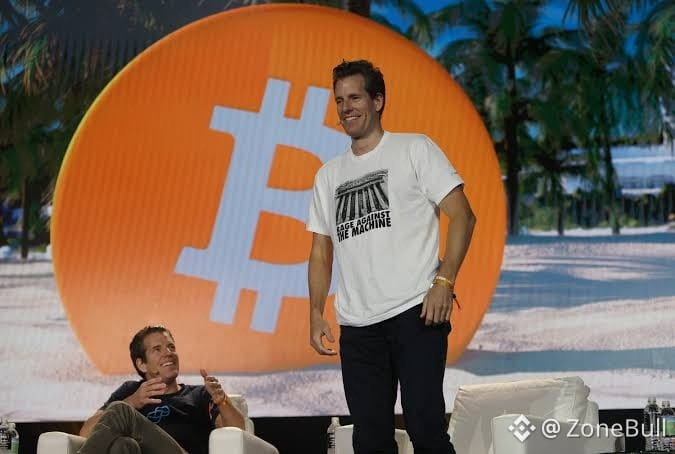
加密之王CRYPTO KINGAMi:
Wow huge! Winklevoss filing spot $ZEC ETF is massive for privacy coins 🔥 If SEC approves, Zcash could fly. $NMR already pumping +48% on this narrative. Bullish!
1
1
410
#WinklevossFilesSpotZcashETFApplication
The Winklevoss twins have officially filed an S-1 registration statement with the SEC for the Winklevoss Zcash ETF (Ticker: $WINK) on Nasdaq!
Here is why this is a game-changer:
Direct Spot Access: Holds physical $ZEC directly with Gemini Trust Company as custodian—no futures or leverage.
Fee Disruption: Proposed 0.25% sponsor fee undercuts legacy competitors like Grayscale's ZCSH (2.5%).
$100M Seed: Winklevoss Capital Fund indicated interest in buying up to $100M in shares.
Wall Street is expanding past BTC and ETH straight into zero-knowledge privacy infrastructure.
$ZEC #WinklevossFilesSpotZcashETFApplication # #CryptoETFs
#BinanceSquare
{spot}(ZECUSDT)
#WinklevossFilesSpotZcashETFApplication
The Winklevoss twins have officially filed an S-1 registration statement with the SEC for the Winklevoss Zcash ETF (Ticker: $WINK) on Nasdaq!
Here is why this is a game-changer:
Direct Spot Access: Holds physical $ZEC directly with Gemini Trust Company as custodian—no futures or leverage.
Fee Disruption: Proposed 0.25% sponsor fee undercuts legacy competitors like Grayscale's ZCSH (2.5%).
$100M Seed: Winklevoss Capital Fund indicated interest in buying up to $100M in shares.
Wall Street is expanding past BTC and ETH straight into zero-knowledge privacy infrastructure.
$ZEC #WinklevossFilesSpotZcashETFApplication # #CryptoETFs
#BinanceSquare
The Winklevoss twins have officially filed an S-1 registration statement with the SEC for the Winklevoss Zcash ETF (Ticker: $WINK) on Nasdaq!
Here is why this is a game-changer:
Direct Spot Access: Holds physical $ZEC directly with Gemini Trust Company as custodian—no futures or leverage.
Fee Disruption: Proposed 0.25% sponsor fee undercuts legacy competitors like Grayscale's ZCSH (2.5%).
$100M Seed: Winklevoss Capital Fund indicated interest in buying up to $100M in shares.
Wall Street is expanding past BTC and ETH straight into zero-knowledge privacy infrastructure.
$ZEC #WinklevossFilesSpotZcashETFApplication # #CryptoETFs
#BinanceSquare
153

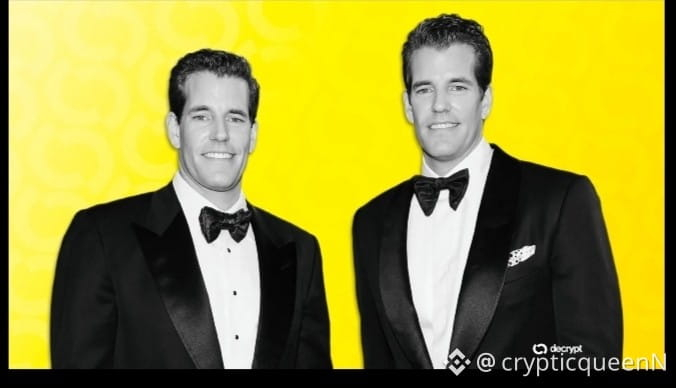
Winklevoss Files Spot Zcash ETF Application With U.S. SEC
Winklevoss has filed an application with the U.S. Securities and Exchange Commission for a spot Zcash ETF. The proposed fund would trade on Nasdaq under the ticker WINK, marking another step toward broader institutional access to Zcash.
If approved, the ETF could allow investors to gain exposure to ZEC through a traditional exchange-traded product, similar to the route taken by spot Bitcoin and Ethereum ETF applications. The filing highlights increasing interest in bringing privacy-focused crypto assets into regulated investment markets.
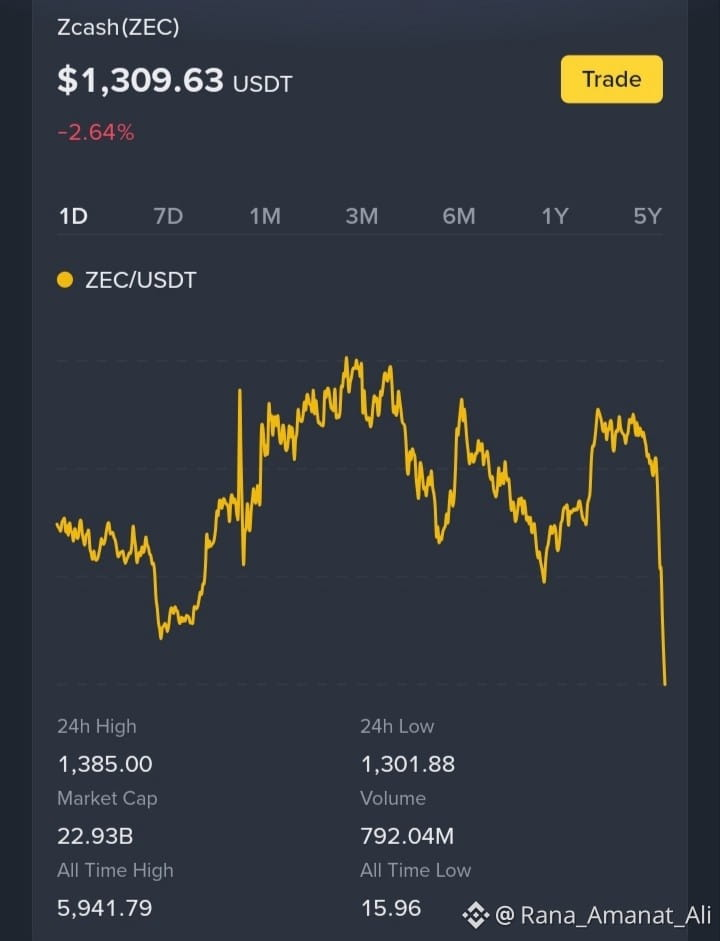
On Binance Spot, ZEC is currently trading at 1,308.09 USDT, down about 2.8% from its 24-hour open. Its 24-hour high is 1,385.00 USDT and low is 1,301.88 USDT.
$ZEC
{spot}(ZECUSDT)
#BinanceLaunchesBinanceIntelligence #StrategyMarketCapSurpassesRumble #WinklevossFilesSpotZcashETFApplication #AptosLabsProposesMonoMoveUpgrade
Winklevoss Files Spot Zcash ETF Application With U.S. SEC
Winklevoss has filed an application with the U.S. Securities and Exchange Commission for a spot Zcash ETF. The proposed fund would trade on Nasdaq under the ticker WINK, marking another step toward broader institutional access to Zcash.
If approved, the ETF could allow investors to gain exposure to ZEC through a traditional exchange-traded product, similar to the route taken by spot Bitcoin and Ethereum ETF applications. The filing highlights increasing interest in bringing privacy-focused crypto assets into regulated investment markets.
On Binance Spot, ZEC is currently trading at 1,308.09 USDT, down about 2.8% from its 24-hour open. Its 24-hour high is 1,385.00 USDT and low is 1,301.88 USDT.
$ZEC
#BinanceLaunchesBinanceIntelligence #StrategyMarketCapSurpassesRumble #WinklevossFilesSpotZcashETFApplication #AptosLabsProposesMonoMoveUpgrade
Winklevoss has filed an application with the U.S. Securities and Exchange Commission for a spot Zcash ETF. The proposed fund would trade on Nasdaq under the ticker WINK, marking another step toward broader institutional access to Zcash.
If approved, the ETF could allow investors to gain exposure to ZEC through a traditional exchange-traded product, similar to the route taken by spot Bitcoin and Ethereum ETF applications. The filing highlights increasing interest in bringing privacy-focused crypto assets into regulated investment markets.
On Binance Spot, ZEC is currently trading at 1,308.09 USDT, down about 2.8% from its 24-hour open. Its 24-hour high is 1,385.00 USDT and low is 1,301.88 USDT.
$ZEC
#BinanceLaunchesBinanceIntelligence #StrategyMarketCapSurpassesRumble #WinklevossFilesSpotZcashETFApplication #AptosLabsProposesMonoMoveUpgrade
1
234

Verified
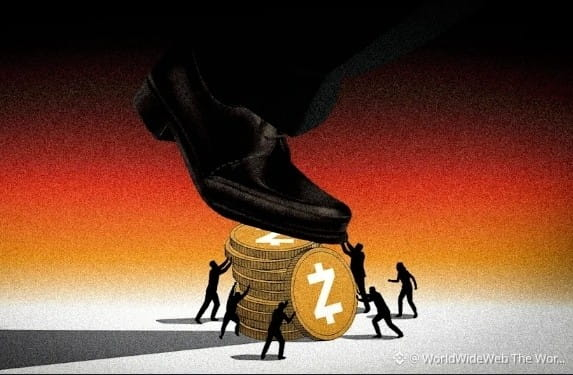
#winklevossfilesspotzcashetfapplication Winklevoss Asset Services filed a preliminary registration statement (Form S-1) with the SEC to launch the Winklevoss Zcash ETF, an exchange-traded fund designed to provide direct spot exposure to the ZEC token. Planned to trade on the Nasdaq market under the ticker WINK, the fund will use a cash creation and redemption model, entrusting the secure cold storage custody of its crypto assets to its subsidiary, Gemini Trust Company. What has shaken the financial market is its aggressive cost structure, setting an annual sponsorship fee of just 0.25%, one-tenth of the fee charged by its direct competitor, Grayscale’s ETF (ZCSH).
The foray by twins Cameron and Tyler Winklevoss marks their strategic return to the ETF arena nearly a decade after their first attempt to launch a Bitcoin ETF. To support the initial liquidity and technological development of the ecosystem for this privacy-focused cryptocurrency, the investment arm Winklevoss Capital Fund expressed nonbinding interest in acquiring up to $100 million in shares of the new trust. The proposal also includes a formal partnership with Cypherpunk Technologies as a strategic partner to coordinate governance processes, votes, and technical updates to the Zcash network.
The following charts and financial reports capture institutional market activity and the evolution of the ZEC token:
If you are assessing the impact of this new institutional investment vehicle, let me know if you would like to:
• Analyze the immediate impact of fee competition on the ZEC token price.
• Evaluate the history of capital outflows from Grayscale’s fund (ZCSH).
• Learn about the regulatory restrictions facing the privacy coin sector under the SEC.$ZEC
{future}(ZECUSDT)
#winklevossfilesspotzcashetfapplication Winklevoss Asset Services filed a preliminary registration statement (Form S-1) with the SEC to launch the Winklevoss Zcash ETF, an exchange-traded fund designed to provide direct spot exposure to the ZEC token. Planned to trade on the Nasdaq market under the ticker WINK, the fund will use a cash creation and redemption model, entrusting the secure cold storage custody of its crypto assets to its subsidiary, Gemini Trust Company. What has shaken the financial market is its aggressive cost structure, setting an annual sponsorship fee of just 0.25%, one-tenth of the fee charged by its direct competitor, Grayscale’s ETF (ZCSH).
The foray by twins Cameron and Tyler Winklevoss marks their strategic return to the ETF arena nearly a decade after their first attempt to launch a Bitcoin ETF. To support the initial liquidity and technological development of the ecosystem for this privacy-focused cryptocurrency, the investment arm Winklevoss Capital Fund expressed nonbinding interest in acquiring up to $100 million in shares of the new trust. The proposal also includes a formal partnership with Cypherpunk Technologies as a strategic partner to coordinate governance processes, votes, and technical updates to the Zcash network.
The following charts and financial reports capture institutional market activity and the evolution of the ZEC token:
If you are assessing the impact of this new institutional investment vehicle, let me know if you would like to:
• Analyze the immediate impact of fee competition on the ZEC token price.
• Evaluate the history of capital outflows from Grayscale’s fund (ZCSH).
• Learn about the regulatory restrictions facing the privacy coin sector under the SEC.$ZEC
The foray by twins Cameron and Tyler Winklevoss marks their strategic return to the ETF arena nearly a decade after their first attempt to launch a Bitcoin ETF. To support the initial liquidity and technological development of the ecosystem for this privacy-focused cryptocurrency, the investment arm Winklevoss Capital Fund expressed nonbinding interest in acquiring up to $100 million in shares of the new trust. The proposal also includes a formal partnership with Cypherpunk Technologies as a strategic partner to coordinate governance processes, votes, and technical updates to the Zcash network.
The following charts and financial reports capture institutional market activity and the evolution of the ZEC token:
If you are assessing the impact of this new institutional investment vehicle, let me know if you would like to:
• Analyze the immediate impact of fee competition on the ZEC token price.
• Evaluate the history of capital outflows from Grayscale’s fund (ZCSH).
• Learn about the regulatory restrictions facing the privacy coin sector under the SEC.$ZEC
1.4k

·
--
Another ZEC Spot ETF Filing|An S-1 Is Not Approval|I’m Waiting for Price Confirmation
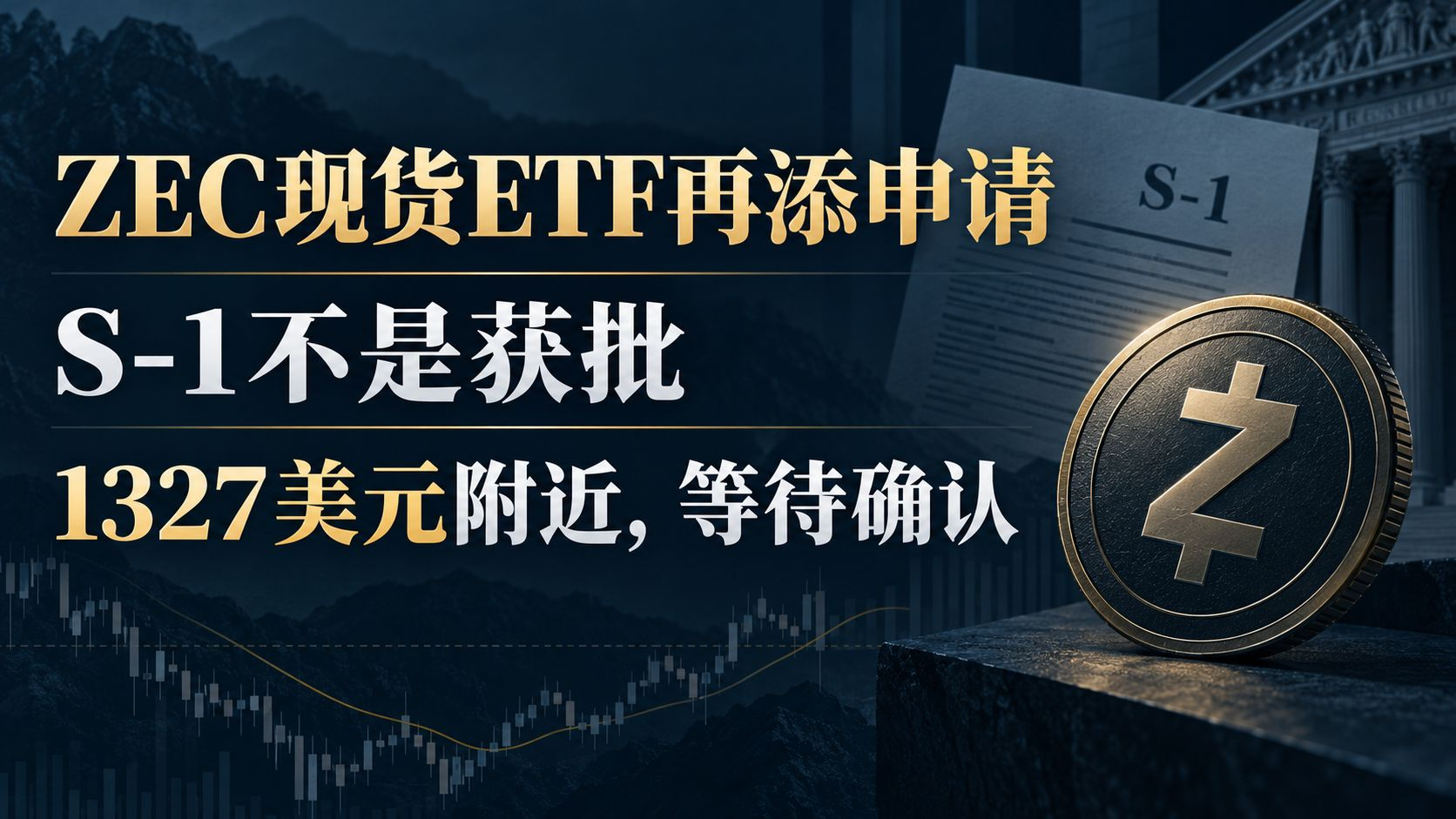
My stance is cautious: this new filing adds to ZEC’s institutional narrative, but I won’t treat a submitted document as proof that funds have already flowed in, much less chase the hype. The U.S. SEC website shows that the Winklevoss Zcash ETF filed an S-1 registration statement on October 6. It is proposed to trade on Nasdaq under the ticker WINK and aims to hold ZEC. The filing lists a proposed annual fee of 0.25%, with Gemini Trust as the proposed custodian. These are details in the filing; they do not mean the SEC has approved the product or that it has begun trading. Other ZEC-related products already exist, so what this filing adds is a potential issuer and distribution channel—not “the first-ever ETF for ZEC.”
Why is it worth watching? If the registration and listing process moves forward, traditional brokerage accounts may gain another way to access ZEC, and the creation and redemption mechanism could channel demand for shares into spot buying and selling. But that chain depends on several conditions: the filing becoming effective, exchange arrangements being finalized, the product actually launching, and sustained net inflows. None of these can be inferred from an S-1 alone. Privacy coins also face compliance, custody, and liquidity discounts, while fees and brand exposure cannot guarantee net inflows. For me, what matters more right now is monitoring flows into existing products and whether ZEC spot can hold support—not increasing my position based on an ETF headline.
When I checked Binance ZECUSDT, spot was around $1,327, down about 0.95% over 24 hours, with a range of $1,300–$1,385. This suggests the filing news has at least not pushed the price sustainably out of its previous range; short-term attention should not be mistaken for a trend reversal. $1,300 is the near-term support level to watch, while $1,385 is the 24-hour high and the level to beat. A convincing hold above $1,385 on strong volume, followed by a successful retest, would indicate that buying interest has staying power. Conversely, a break below $1,300 that cannot be recovered on a rebound would invalidate my tentative view that the news could provide near-term support. Prices change; these two figures are reference points at the time of publication, not guaranteed execution prices.
If I were trading this myself, I wouldn’t chase the rally now. I would only consider a small spot long if the conditions are met, and would avoid high leverage. Only after a convincing hold above $1,385 and a confirmed retest would I plan to put at most 3% of my total capital into a test position. I’d initially target around $1,420 and take half off if the price gets there; I’d look toward around $1,450 for the remainder and raise my protective stop. If the price falls back below $1,360 after entry, I’d exit at my predetermined stop. If it breaks below $1,300, I’d cancel the plan outright and close any existing position in full. If the ETF process stalls, fund-flow data weakens, or the price spikes on the news only to retreat, I’d close the position proactively even if the target hasn’t been reached. If no conditions are triggered, I’ll stay out and wait. The filing itself is no substitute for discipline.
Sources: SEC Winklevoss Zcash ETF S-1 dated October 6; Binance ZECUSDT 24-hour market data. #WinklevossFilesSpotZcashETFApplication #ZEC
This is solely my personal market observation and does not constitute investment advice.
Another ZEC Spot ETF Filing|An S-1 Is Not Approval|I’m Waiting for Price Confirmation
My stance is cautious: this new filing adds to ZEC’s institutional narrative, but I won’t treat a submitted document as proof that funds have already flowed in, much less chase the hype. The U.S. SEC website shows that the Winklevoss Zcash ETF filed an S-1 registration statement on October 6. It is proposed to trade on Nasdaq under the ticker WINK and aims to hold ZEC. The filing lists a proposed annual fee of 0.25%, with Gemini Trust as the proposed custodian. These are details in the filing; they do not mean the SEC has approved the product or that it has begun trading. Other ZEC-related products already exist, so what this filing adds is a potential issuer and distribution channel—not “the first-ever ETF for ZEC.”
Why is it worth watching? If the registration and listing process moves forward, traditional brokerage accounts may gain another way to access ZEC, and the creation and redemption mechanism could channel demand for shares into spot buying and selling. But that chain depends on several conditions: the filing becoming effective, exchange arrangements being finalized, the product actually launching, and sustained net inflows. None of these can be inferred from an S-1 alone. Privacy coins also face compliance, custody, and liquidity discounts, while fees and brand exposure cannot guarantee net inflows. For me, what matters more right now is monitoring flows into existing products and whether ZEC spot can hold support—not increasing my position based on an ETF headline.
When I checked Binance ZECUSDT, spot was around $1,327, down about 0.95% over 24 hours, with a range of $1,300–$1,385. This suggests the filing news has at least not pushed the price sustainably out of its previous range; short-term attention should not be mistaken for a trend reversal. $1,300 is the near-term support level to watch, while $1,385 is the 24-hour high and the level to beat. A convincing hold above $1,385 on strong volume, followed by a successful retest, would indicate that buying interest has staying power. Conversely, a break below $1,300 that cannot be recovered on a rebound would invalidate my tentative view that the news could provide near-term support. Prices change; these two figures are reference points at the time of publication, not guaranteed execution prices.
If I were trading this myself, I wouldn’t chase the rally now. I would only consider a small spot long if the conditions are met, and would avoid high leverage. Only after a convincing hold above $1,385 and a confirmed retest would I plan to put at most 3% of my total capital into a test position. I’d initially target around $1,420 and take half off if the price gets there; I’d look toward around $1,450 for the remainder and raise my protective stop. If the price falls back below $1,360 after entry, I’d exit at my predetermined stop. If it breaks below $1,300, I’d cancel the plan outright and close any existing position in full. If the ETF process stalls, fund-flow data weakens, or the price spikes on the news only to retreat, I’d close the position proactively even if the target hasn’t been reached. If no conditions are triggered, I’ll stay out and wait. The filing itself is no substitute for discipline.
Sources: SEC Winklevoss Zcash ETF S-1 dated October 6; Binance ZECUSDT 24-hour market data. #WinklevossFilesSpotZcashETFApplication #ZEC
This is solely my personal market observation and does not constitute investment advice.
My stance is cautious: this new filing adds to ZEC’s institutional narrative, but I won’t treat a submitted document as proof that funds have already flowed in, much less chase the hype. The U.S. SEC website shows that the Winklevoss Zcash ETF filed an S-1 registration statement on October 6. It is proposed to trade on Nasdaq under the ticker WINK and aims to hold ZEC. The filing lists a proposed annual fee of 0.25%, with Gemini Trust as the proposed custodian. These are details in the filing; they do not mean the SEC has approved the product or that it has begun trading. Other ZEC-related products already exist, so what this filing adds is a potential issuer and distribution channel—not “the first-ever ETF for ZEC.”
Why is it worth watching? If the registration and listing process moves forward, traditional brokerage accounts may gain another way to access ZEC, and the creation and redemption mechanism could channel demand for shares into spot buying and selling. But that chain depends on several conditions: the filing becoming effective, exchange arrangements being finalized, the product actually launching, and sustained net inflows. None of these can be inferred from an S-1 alone. Privacy coins also face compliance, custody, and liquidity discounts, while fees and brand exposure cannot guarantee net inflows. For me, what matters more right now is monitoring flows into existing products and whether ZEC spot can hold support—not increasing my position based on an ETF headline.
When I checked Binance ZECUSDT, spot was around $1,327, down about 0.95% over 24 hours, with a range of $1,300–$1,385. This suggests the filing news has at least not pushed the price sustainably out of its previous range; short-term attention should not be mistaken for a trend reversal. $1,300 is the near-term support level to watch, while $1,385 is the 24-hour high and the level to beat. A convincing hold above $1,385 on strong volume, followed by a successful retest, would indicate that buying interest has staying power. Conversely, a break below $1,300 that cannot be recovered on a rebound would invalidate my tentative view that the news could provide near-term support. Prices change; these two figures are reference points at the time of publication, not guaranteed execution prices.
If I were trading this myself, I wouldn’t chase the rally now. I would only consider a small spot long if the conditions are met, and would avoid high leverage. Only after a convincing hold above $1,385 and a confirmed retest would I plan to put at most 3% of my total capital into a test position. I’d initially target around $1,420 and take half off if the price gets there; I’d look toward around $1,450 for the remainder and raise my protective stop. If the price falls back below $1,360 after entry, I’d exit at my predetermined stop. If it breaks below $1,300, I’d cancel the plan outright and close any existing position in full. If the ETF process stalls, fund-flow data weakens, or the price spikes on the news only to retreat, I’d close the position proactively even if the target hasn’t been reached. If no conditions are triggered, I’ll stay out and wait. The filing itself is no substitute for discipline.
Sources: SEC Winklevoss Zcash ETF S-1 dated October 6; Binance ZECUSDT 24-hour market data. #WinklevossFilesSpotZcashETFApplication #ZEC
This is solely my personal market observation and does not constitute investment advice.
49

·
--
Bullish
Verified
#winklevossfilesspotzcashetfapplication
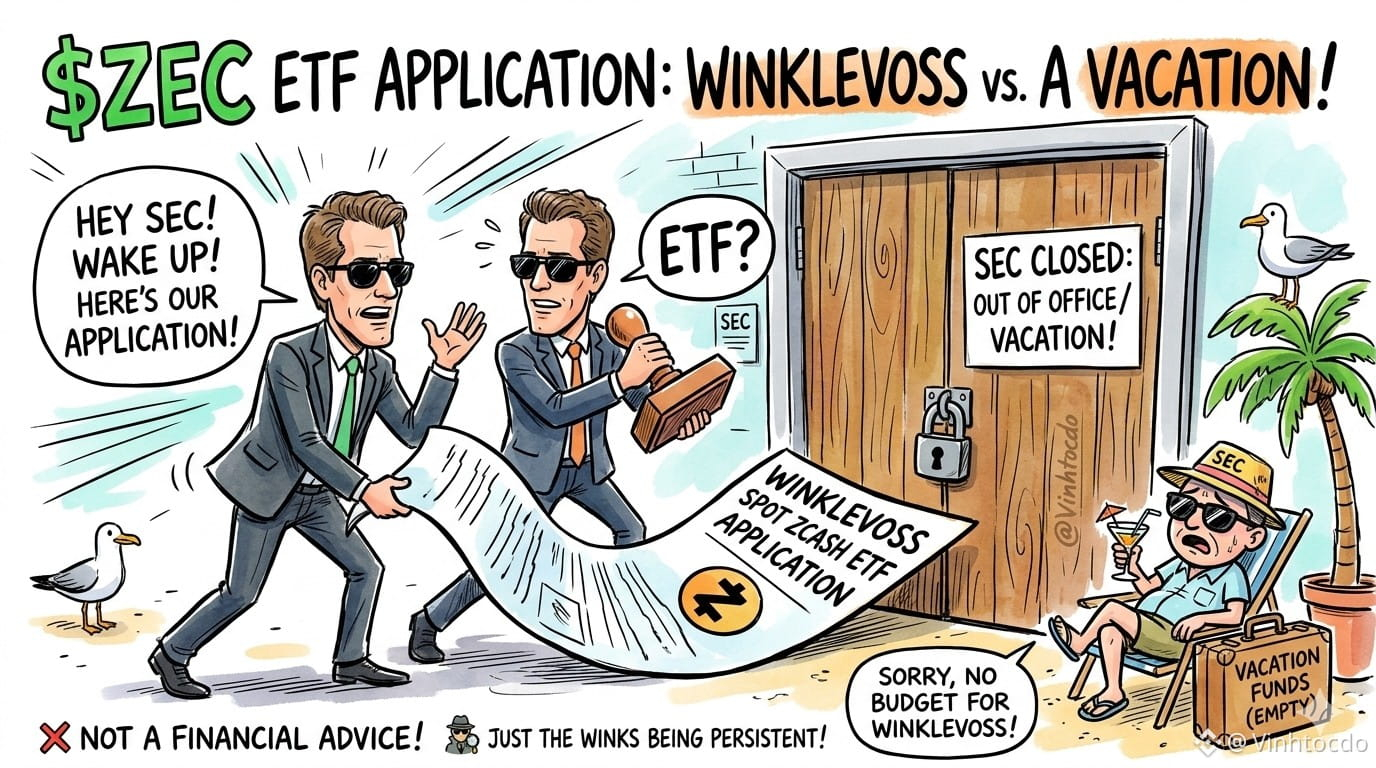
🕶️ FILING AGAIN? THIS IS SO RIDICULOUS IT MAKES YOU CRY! 🕶️
Have you heard the news, folks? The Winklevoss billionaire twins have officially sent a letter to the SEC to file an application to launch a Spot Zcash ETF, with the incredibly cool ticker WINK.
🕵️♂️ Wait a minute, something seems off?
That’s right, folks—it’s another ETF for top-notch privacy coin ZEC (Zcash)! But the catch is, lately there have been rumors that the SEC has temporarily stopped working because it’s run out of funding, and the bosses are busy packing their bags for a vacation. So why are the Winklevoss twins rushing to file now? They could just take it easy, go enjoy Phu Quoc or Bali, and file when they get back—it’s not like they’d be late. Who’s even around to approve it if they file now!
What should traders do?
Just stay calm and sit tight, folks. Let’s wait and see if the SEC comes back from vacation in a good mood and approves this WINK ticker. Don’t FOMO in at the top just yet!
Note: This is not financial advice.
👇 Sign up for Binance and get rewards:
🔗 Link: [https://www.binance.com/register?ref=VINHTOCDO](https://www.binance.com/register?ref=VINHTOCDO)
Referral code: VINHTOCDO
Click the trades below to support me:
$ZEC
{future}(ZECUSDT)
$BTC
{future}(BTCUSDT)
$BNB
{future}(BNBUSDT)
#ZcashETF #CryptoNews #SECUpdate #AltcoinTrading #VINHTOCDO #SEC
#winklevossfilesspotzcashetfapplication
🕶️ FILING AGAIN? THIS IS SO RIDICULOUS IT MAKES YOU CRY! 🕶️
Have you heard the news, folks? The Winklevoss billionaire twins have officially sent a letter to the SEC to file an application to launch a Spot Zcash ETF, with the incredibly cool ticker WINK.
🕵️♂️ Wait a minute, something seems off?
That’s right, folks—it’s another ETF for top-notch privacy coin ZEC (Zcash)! But the catch is, lately there have been rumors that the SEC has temporarily stopped working because it’s run out of funding, and the bosses are busy packing their bags for a vacation. So why are the Winklevoss twins rushing to file now? They could just take it easy, go enjoy Phu Quoc or Bali, and file when they get back—it’s not like they’d be late. Who’s even around to approve it if they file now!
What should traders do?
Just stay calm and sit tight, folks. Let’s wait and see if the SEC comes back from vacation in a good mood and approves this WINK ticker. Don’t FOMO in at the top just yet!
Note: This is not financial advice.
👇 Sign up for Binance and get rewards:
🔗 Link: https://www.binance.com/register?ref=VINHTOCDO
Referral code: VINHTOCDO
Click the trades below to support me:
$ZEC
$BTC
$BNB
#ZcashETF #CryptoNews #SECUpdate #AltcoinTrading #VINHTOCDO #SEC
🕶️ FILING AGAIN? THIS IS SO RIDICULOUS IT MAKES YOU CRY! 🕶️
Have you heard the news, folks? The Winklevoss billionaire twins have officially sent a letter to the SEC to file an application to launch a Spot Zcash ETF, with the incredibly cool ticker WINK.
🕵️♂️ Wait a minute, something seems off?
That’s right, folks—it’s another ETF for top-notch privacy coin ZEC (Zcash)! But the catch is, lately there have been rumors that the SEC has temporarily stopped working because it’s run out of funding, and the bosses are busy packing their bags for a vacation. So why are the Winklevoss twins rushing to file now? They could just take it easy, go enjoy Phu Quoc or Bali, and file when they get back—it’s not like they’d be late. Who’s even around to approve it if they file now!
What should traders do?
Just stay calm and sit tight, folks. Let’s wait and see if the SEC comes back from vacation in a good mood and approves this WINK ticker. Don’t FOMO in at the top just yet!
Note: This is not financial advice.
👇 Sign up for Binance and get rewards:
🔗 Link: https://www.binance.com/register?ref=VINHTOCDO
Referral code: VINHTOCDO
Click the trades below to support me:
$ZEC
$BTC
$BNB
#ZcashETF #CryptoNews #SECUpdate #AltcoinTrading #VINHTOCDO #SEC
1
224

·
--
1
61

PHA is trading around $0.072–$0.077, consolidating after a strong September rally. Daily structure remains constructive, with price above key moving averages, while RSI around 61.6 shows bullish momentum without being deeply overbought.
Key levels:
🟢 Support: $0.072 → $0.070
🔥 Resistance: $0.081–$0.082
🚀 Breakout target: $0.094–$0.098
⚠️ Below $0.070: possible pullback toward $0.065
Bias: 🟢 Neutral-Bullish — a sustained break above $0.082 could open the way toward $0.095+, while losing $0.070 would weaken the setup.
#PHA #BinanceLaunchesBinanceIntelligence #WinklevossFilesSpotZcashETFApplication #IglooShutsDownAbstractBlockchain #levelsabovemagical
$PHA
{future}(PHAUSDT)
PHA is trading around $0.072–$0.077, consolidating after a strong September rally. Daily structure remains constructive, with price above key moving averages, while RSI around 61.6 shows bullish momentum without being deeply overbought.
Key levels:
🟢 Support: $0.072 → $0.070
🔥 Resistance: $0.081–$0.082
🚀 Breakout target: $0.094–$0.098
⚠️ Below $0.070: possible pullback toward $0.065
Bias: 🟢 Neutral-Bullish — a sustained break above $0.082 could open the way toward $0.095+, while losing $0.070 would weaken the setup.
#PHA #BinanceLaunchesBinanceIntelligence #WinklevossFilesSpotZcashETFApplication #IglooShutsDownAbstractBlockchain #levelsabovemagical
$PHA
Key levels:
🟢 Support: $0.072 → $0.070
🔥 Resistance: $0.081–$0.082
🚀 Breakout target: $0.094–$0.098
⚠️ Below $0.070: possible pullback toward $0.065
Bias: 🟢 Neutral-Bullish — a sustained break above $0.082 could open the way toward $0.095+, while losing $0.070 would weaken the setup.
#PHA #BinanceLaunchesBinanceIntelligence #WinklevossFilesSpotZcashETFApplication #IglooShutsDownAbstractBlockchain #levelsabovemagical
$PHA
1
56
NMR/USDT is showing strong bullish momentum, trading around $15.7–$16.5 after a sharp 24h rally of roughly 31%.
Resistance: $18.10 — breakout could open the way toward $20+
Support: $13.30, then $11.80–$12.00
Momentum: Bullish, but RSI around 61.7 suggests the move is getting extended.
Bias: 🟢 Bullish above $13.30
Risk: High volatility; chasing after a large pump can lead to a sharp pullback.
Key level: A sustained break above $18.10 would strengthen the bullish setup, while losing $13.30 could trigger a deeper correction.
#NMR #BinanceLaunchesBinanceIntelligence #WinklevossFilesSpotZcashETFApplication #StrategyMarketCapSurpassesRumble #levelsabovemagical
$NMR
{future}(NMRUSDT)
NMR/USDT is showing strong bullish momentum, trading around $15.7–$16.5 after a sharp 24h rally of roughly 31%.
Resistance: $18.10 — breakout could open the way toward $20+
Support: $13.30, then $11.80–$12.00
Momentum: Bullish, but RSI around 61.7 suggests the move is getting extended.
Bias: 🟢 Bullish above $13.30
Risk: High volatility; chasing after a large pump can lead to a sharp pullback.
Key level: A sustained break above $18.10 would strengthen the bullish setup, while losing $13.30 could trigger a deeper correction.
#NMR #BinanceLaunchesBinanceIntelligence #WinklevossFilesSpotZcashETFApplication #StrategyMarketCapSurpassesRumble #levelsabovemagical
$NMR
Resistance: $18.10 — breakout could open the way toward $20+
Support: $13.30, then $11.80–$12.00
Momentum: Bullish, but RSI around 61.7 suggests the move is getting extended.
Bias: 🟢 Bullish above $13.30
Risk: High volatility; chasing after a large pump can lead to a sharp pullback.
Key level: A sustained break above $18.10 would strengthen the bullish setup, while losing $13.30 could trigger a deeper correction.
#NMR #BinanceLaunchesBinanceIntelligence #WinklevossFilesSpotZcashETFApplication #StrategyMarketCapSurpassesRumble #levelsabovemagical
$NMR
1
189

·
--
Bullish
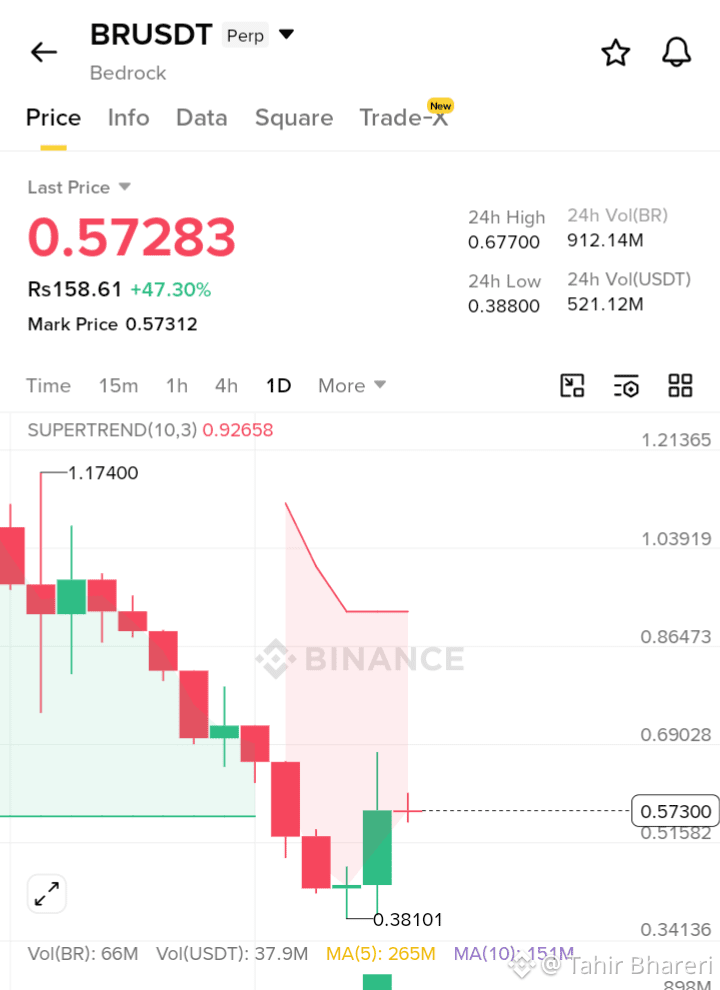
$BR is going Pump
keep eyes
safe Trade
Take Profit
i give you idia not a 100% profact
...
....
...
..
#BinanceLaunchesBinanceIntelligence BTCFallsBelow$84K#WinklevossFilesSpotZcashETFApplication SouthKoreaAITradeLiftsWorldcoinTo$7.41BStrategyEstimates$4.1BIncomeTaxBenefit#IglooShutsDownAbstractBlockchain #StrategyMarketCapSurpassesRumble StriveBuys2000BTCFor$169MADAGains10%Above$0.27
{future}(BRUSDT)
$BR is going Pump
keep eyes
safe Trade
Take Profit
i give you idia not a 100% profact
...
....
...
..
#BinanceLaunchesBinanceIntelligence BTCFallsBelow$84K#WinklevossFilesSpotZcashETFApplication SouthKoreaAITradeLiftsWorldcoinTo$7.41BStrategyEstimates$4.1BIncomeTaxBenefit#IglooShutsDownAbstractBlockchain #StrategyMarketCapSurpassesRumble StriveBuys2000BTCFor$169MADAGains10%Above$0.27
keep eyes
safe Trade
Take Profit
i give you idia not a 100% profact
...
....
...
..
#BinanceLaunchesBinanceIntelligence BTCFallsBelow$84K#WinklevossFilesSpotZcashETFApplication SouthKoreaAITradeLiftsWorldcoinTo$7.41BStrategyEstimates$4.1BIncomeTaxBenefit#IglooShutsDownAbstractBlockchain #StrategyMarketCapSurpassesRumble StriveBuys2000BTCFor$169MADAGains10%Above$0.27
59

Imagine your future self sends you one message:
Your research was right. Your timing was terrible.
You’re holding $ONDO , $LINK and $HBAR .
Do you cut your positions, or stay patient and accept that being early can look a lot like being wrong?
#WinklevossFilesSpotZcashETFApplication
Imagine your future self sends you one message:
Your research was right. Your timing was terrible.
You’re holding $ONDO , $LINK and $HBAR .
Do you cut your positions, or stay patient and accept that being early can look a lot like being wrong?
#WinklevossFilesSpotZcashETFApplication
Your research was right. Your timing was terrible.
You’re holding $ONDO , $LINK and $HBAR .
Do you cut your positions, or stay patient and accept that being early can look a lot like being wrong?
#WinklevossFilesSpotZcashETFApplication
35

$XRP
#WinklevossFilesSpotZcashETFApplication #BinanceLaunchesBinanceIntelligence #EvernorthXRPTreasuryCompletesSPACMerger 🚨 XRP LATEST MARKET UPDATE
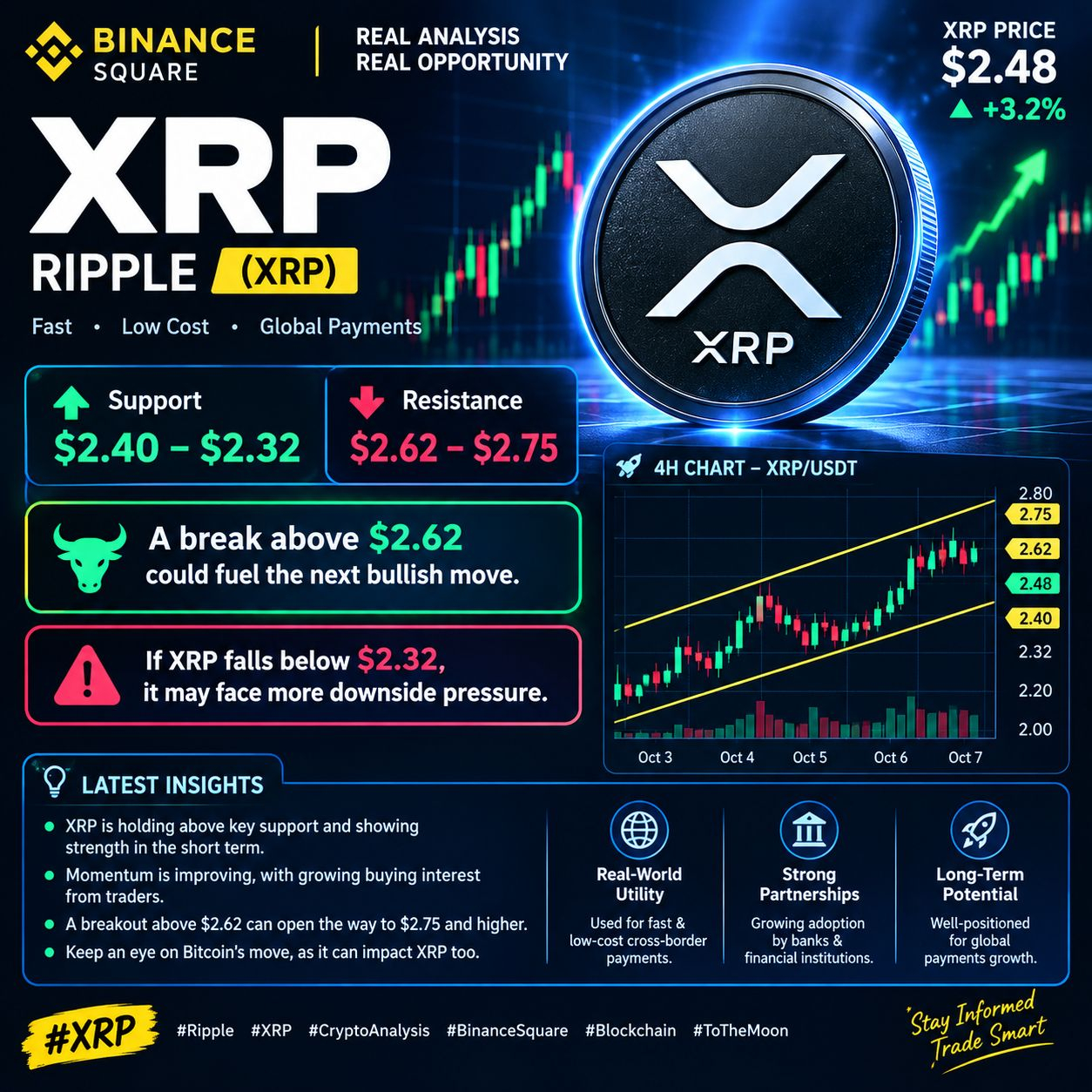
XRP is consolidating around the $1.50 zone while bulls continue defending key support.
🟢 Support: $1.48 – $1.46
🔴 Resistance: $1.52 – $1.55
🚀 Break above $1.55–$1.57 = stronger bullish momentum
⚠️ Break below $1.46 = downside risk toward $1.41
The overall daily structure remains bullish, but confirmation is needed before expecting a bigger move.
#XRP #Ripple #Crypto #BinanceSquare #XRPAnalysis
{spot}(XRPUSDT)
$XRP
#WinklevossFilesSpotZcashETFApplication #BinanceLaunchesBinanceIntelligence #EvernorthXRPTreasuryCompletesSPACMerger 🚨 XRP LATEST MARKET UPDATE
XRP is consolidating around the $1.50 zone while bulls continue defending key support.
🟢 Support: $1.48 – $1.46
🔴 Resistance: $1.52 – $1.55
🚀 Break above $1.55–$1.57 = stronger bullish momentum
⚠️ Break below $1.46 = downside risk toward $1.41
The overall daily structure remains bullish, but confirmation is needed before expecting a bigger move.
#XRP #Ripple #Crypto #BinanceSquare #XRPAnalysis
#WinklevossFilesSpotZcashETFApplication #BinanceLaunchesBinanceIntelligence #EvernorthXRPTreasuryCompletesSPACMerger 🚨 XRP LATEST MARKET UPDATE
XRP is consolidating around the $1.50 zone while bulls continue defending key support.
🟢 Support: $1.48 – $1.46
🔴 Resistance: $1.52 – $1.55
🚀 Break above $1.55–$1.57 = stronger bullish momentum
⚠️ Break below $1.46 = downside risk toward $1.41
The overall daily structure remains bullish, but confirmation is needed before expecting a bigger move.
#XRP #Ripple #Crypto #BinanceSquare #XRPAnalysis
16

·
--
#$BTC — Short Analysis
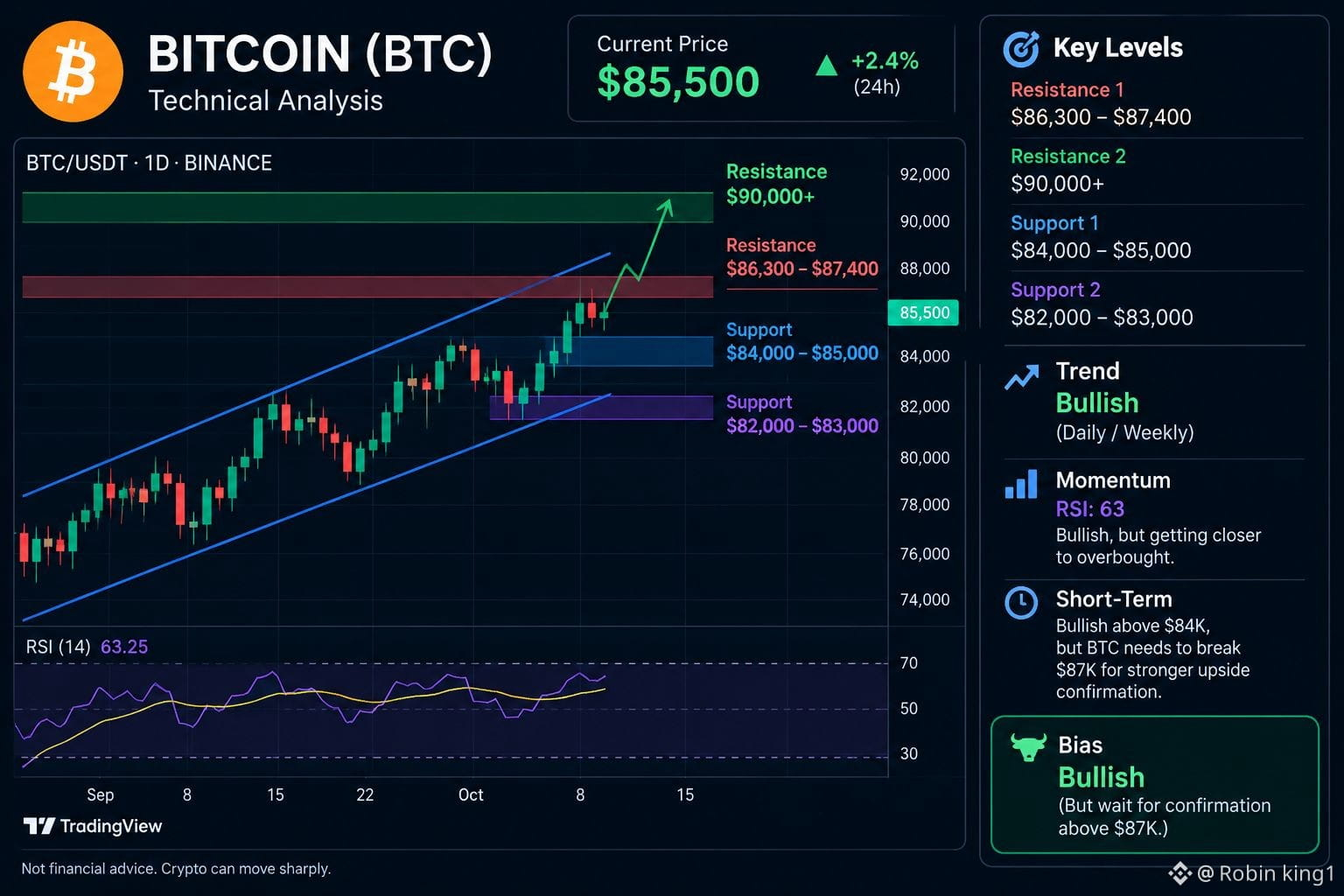
Current price: around $85.5K. �
CoinLore +1
Trend: 🟢 Bullish on the daily/weekly charts.
Resistance: $86.3K–$87.4K. A strong breakout above this zone could target $90K+. �
COINOTAG +1
Support: $84K–$85K; below that, $82K–$83K becomes important. �
COINOTAG +1
Momentum: RSI around 63, bullish but getting closer to overbought. �
CoinLore
Short-term: Bullish above $84K, but BTC needs to break $87K for stronger upside confirmation.
Bias: 🟢 Bullish — but wait for confirmation above $87K.
#BinanceLaunchesBinanceIntelligence #WinklevossFilesSpotZcashETFApplication #IglooShutsDownAbstractBlockchain #StrategyMarketCapSurpassesRumble
{spot}(BTCUSDT)
#$BTC — Short Analysis
Current price: around $85.5K. �
CoinLore +1
Trend: 🟢 Bullish on the daily/weekly charts.
Resistance: $86.3K–$87.4K. A strong breakout above this zone could target $90K+. �
COINOTAG +1
Support: $84K–$85K; below that, $82K–$83K becomes important. �
COINOTAG +1
Momentum: RSI around 63, bullish but getting closer to overbought. �
CoinLore
Short-term: Bullish above $84K, but BTC needs to break $87K for stronger upside confirmation.
Bias: 🟢 Bullish — but wait for confirmation above $87K.
#BinanceLaunchesBinanceIntelligence #WinklevossFilesSpotZcashETFApplication #IglooShutsDownAbstractBlockchain #StrategyMarketCapSurpassesRumble
Current price: around $85.5K. �
CoinLore +1
Trend: 🟢 Bullish on the daily/weekly charts.
Resistance: $86.3K–$87.4K. A strong breakout above this zone could target $90K+. �
COINOTAG +1
Support: $84K–$85K; below that, $82K–$83K becomes important. �
COINOTAG +1
Momentum: RSI around 63, bullish but getting closer to overbought. �
CoinLore
Short-term: Bullish above $84K, but BTC needs to break $87K for stronger upside confirmation.
Bias: 🟢 Bullish — but wait for confirmation above $87K.
#BinanceLaunchesBinanceIntelligence #WinklevossFilesSpotZcashETFApplication #IglooShutsDownAbstractBlockchain #StrategyMarketCapSurpassesRumble
1
1

·
--
Bearish
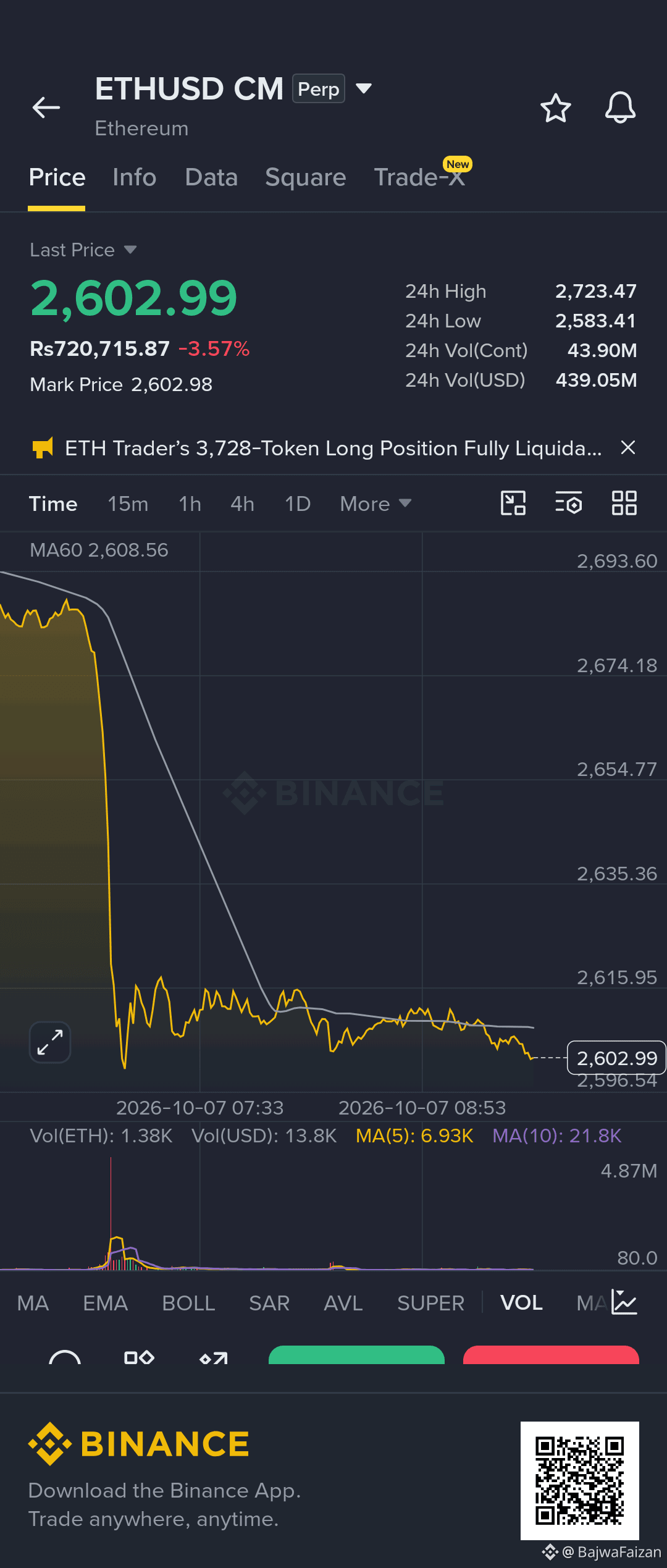
[https://www.binance.com/download?utm_medium=screenshot](https://www.binance.com/download?utm_medium=screenshot) 😂#Ethereum #StrategyMarketCapSurpassesRumble #WinklevossFilesSpotZcashETFApplication $NVDAB $MSFTB $AMZNB #btc
https://www.binance.com/download?utm_medium=screenshot 😂#Ethereum #StrategyMarketCapSurpassesRumble #WinklevossFilesSpotZcashETFApplication $NVDAB $MSFTB $AMZNB #btc
16
·
--
#BITCOIN Latest Trading Analysis$BITCOIN is currently facing selling pressure after failing to break above the $87,000 resistance level. Sellers pushed the price lower, and traders are now closely watching key support and resistance levels for the next potential market move.
## Key Market Levels
- Current BTC Price: Approximately $85,500
- Resistance: $86,800 – $87,000
- Support: $85,000 – $84,600
## Bullish Scenario 🚀
If $BITCOIN breaks above $87,000 and holds that level, bullish momentum could strengthen, potentially opening the door for further upside.
## Bearish Scenario 📉
If BTC falls below the $85,000 support level, selling pressure could increase, with the next potential downside target near $84,600.
## My Market View 👀
$BITCOIN is approaching a critical decision zone. Traders should monitor the $85,000 support and $87,000 resistance levels closely. A confirmed breakout or breakdown could provide a clearer signal for the next move.
Final Takeaway: Wait for confirmation before entering a trade, and always manage risk carefully
This article is for informational purposes only and is not financial advice. Always do your own research (DYOR) before making trading decisions
#BinanceLaunchesBinanceIntelligence #BTCFallsBelow$84K #WinklevossFilesSpotZcashETFApplication #SouthKoreaAITradeLiftsWorldcoinTo$7.41B #StrategyEstimates$4.1BIncomeTaxBenefit
#BITCOIN Latest Trading Analysis
$BITCOIN is currently facing selling pressure after failing to break above the $87,000 resistance level. Sellers pushed the price lower, and traders are now closely watching key support and resistance levels for the next potential market move.
## Key Market Levels
- Current BTC Price: Approximately $85,500
- Resistance: $86,800 – $87,000
- Support: $85,000 – $84,600
## Bullish Scenario 🚀
If $BITCOIN breaks above $87,000 and holds that level, bullish momentum could strengthen, potentially opening the door for further upside.
## Bearish Scenario 📉
If BTC falls below the $85,000 support level, selling pressure could increase, with the next potential downside target near $84,600.
## My Market View 👀
$BITCOIN is approaching a critical decision zone. Traders should monitor the $85,000 support and $87,000 resistance levels closely. A confirmed breakout or breakdown could provide a clearer signal for the next move.
Final Takeaway: Wait for confirmation before entering a trade, and always manage risk carefully
This article is for informational purposes only and is not financial advice. Always do your own research (DYOR) before making trading decisions
#BinanceLaunchesBinanceIntelligence #BTCFallsBelow$84K #WinklevossFilesSpotZcashETFApplication #SouthKoreaAITradeLiftsWorldcoinTo$7.41B #StrategyEstimates$4.1BIncomeTaxBenefit
## Key Market Levels
- Current BTC Price: Approximately $85,500
- Resistance: $86,800 – $87,000
- Support: $85,000 – $84,600
## Bullish Scenario 🚀
If $BITCOIN breaks above $87,000 and holds that level, bullish momentum could strengthen, potentially opening the door for further upside.
## Bearish Scenario 📉
If BTC falls below the $85,000 support level, selling pressure could increase, with the next potential downside target near $84,600.
## My Market View 👀
$BITCOIN is approaching a critical decision zone. Traders should monitor the $85,000 support and $87,000 resistance levels closely. A confirmed breakout or breakdown could provide a clearer signal for the next move.
Final Takeaway: Wait for confirmation before entering a trade, and always manage risk carefully
This article is for informational purposes only and is not financial advice. Always do your own research (DYOR) before making trading decisions
#BinanceLaunchesBinanceIntelligence #BTCFallsBelow$84K #WinklevossFilesSpotZcashETFApplication #SouthKoreaAITradeLiftsWorldcoinTo$7.41B #StrategyEstimates$4.1BIncomeTaxBenefit
16

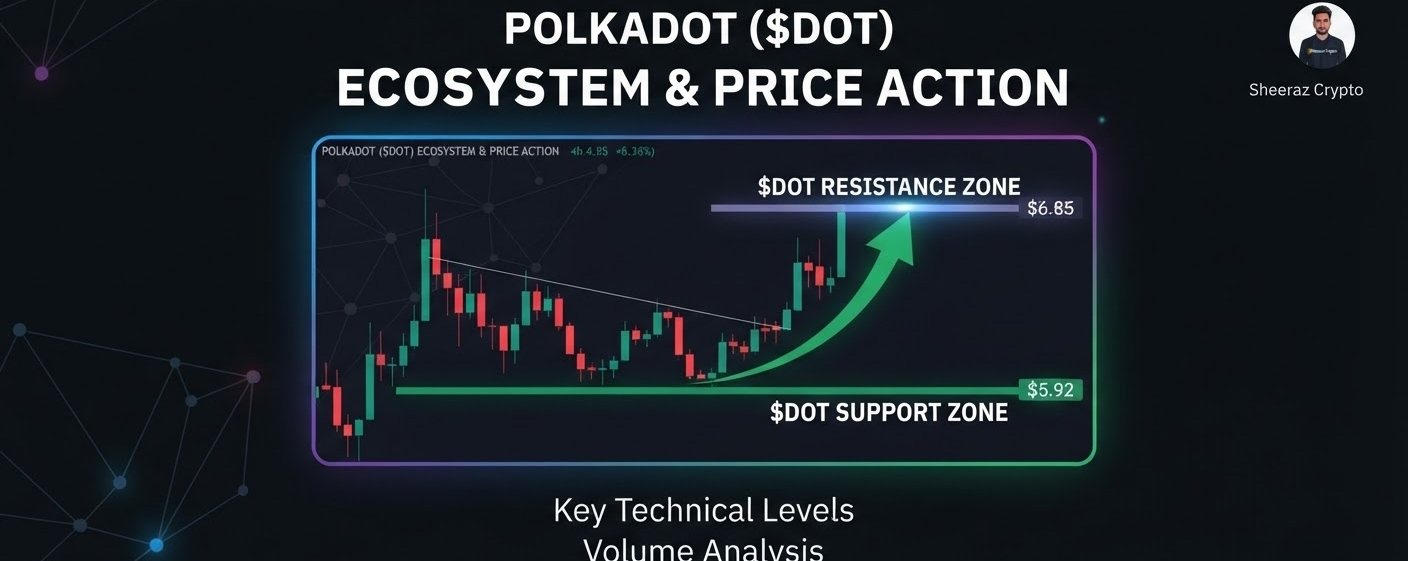
Article
Polkadot ($DOT) Ecosystem & Price ActionPolkadot ($DOT) Technical Outlook: Assessing Consolidation and Recovery Potential
{spot}(DOTUSDT)
Polkadot ($DOT) continues to attract attention from swing traders as parachain activity and network developments evolve. Market sentiment remains cautiously optimistic as participants look for signs of a structural trend reversal.
Looking at the price structure, $DOT is consolidating within a tight range. Patience is vital as traders wait for a clean breakout accompanied by rising volume before committing capital.
💡 Quick Strategy for Traders:
Range Trading: Play the boundaries of local support and resistance until a breakout occurs.
Risk Control: Avoid high leverage during tight consolidation phases.
Are you holding $DOT for the long term or trading the swings? Let’s discuss!
$DOT #BinanceLaunchesBinanceIntelligence #BTCFallsBelow$84K #WinklevossFilesSpotZcashETFApplication #SouthKoreaAITradeLiftsWorldcoinTo$7.41B #StrategyEstimates$4.1BIncomeTaxBenefit
Polkadot ($DOT) Ecosystem & Price Action
Polkadot ($DOT ) Technical Outlook: Assessing Consolidation and Recovery Potential
Polkadot ($DOT ) continues to attract attention from swing traders as parachain activity and network developments evolve. Market sentiment remains cautiously optimistic as participants look for signs of a structural trend reversal.
Looking at the price structure, $DOT is consolidating within a tight range. Patience is vital as traders wait for a clean breakout accompanied by rising volume before committing capital.
💡 Quick Strategy for Traders:
Range Trading: Play the boundaries of local support and resistance until a breakout occurs.
Risk Control: Avoid high leverage during tight consolidation phases.
Are you holding $DOT for the long term or trading the swings? Let’s discuss!
$DOT #BinanceLaunchesBinanceIntelligence #BTCFallsBelow$84K #WinklevossFilesSpotZcashETFApplication #SouthKoreaAITradeLiftsWorldcoinTo$7.41B #StrategyEstimates$4.1BIncomeTaxBenefit
Polkadot ($DOT ) continues to attract attention from swing traders as parachain activity and network developments evolve. Market sentiment remains cautiously optimistic as participants look for signs of a structural trend reversal.
Looking at the price structure, $DOT is consolidating within a tight range. Patience is vital as traders wait for a clean breakout accompanied by rising volume before committing capital.
💡 Quick Strategy for Traders:
Range Trading: Play the boundaries of local support and resistance until a breakout occurs.
Risk Control: Avoid high leverage during tight consolidation phases.
Are you holding $DOT for the long term or trading the swings? Let’s discuss!
$DOT #BinanceLaunchesBinanceIntelligence #BTCFallsBelow$84K #WinklevossFilesSpotZcashETFApplication #SouthKoreaAITradeLiftsWorldcoinTo$7.41B #StrategyEstimates$4.1BIncomeTaxBenefit
1
13
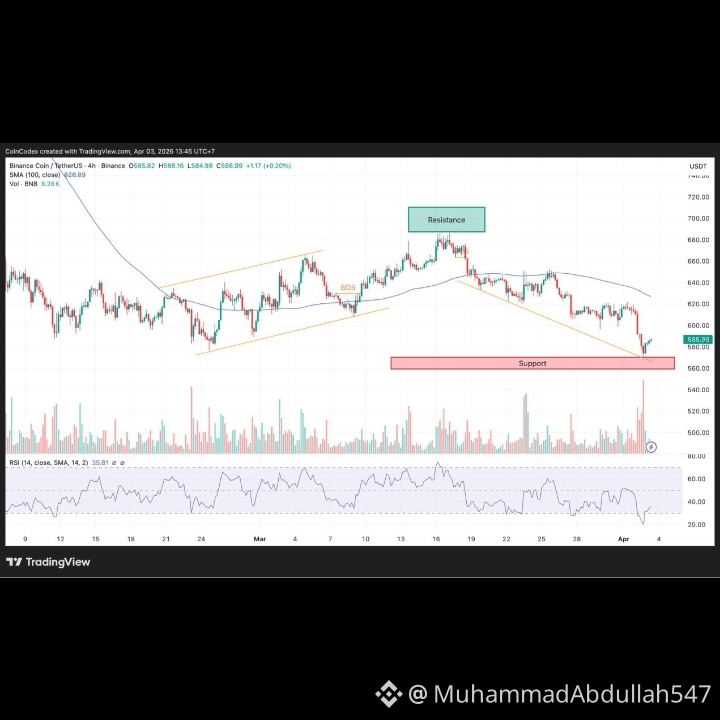
$BNB
#BinanceLaunchesBinanceIntelligence #WinklevossFilesSpotZcashETFApplication #EvernorthXRPTreasuryCompletesSPACMerger
{spot}(BNBUSDT)
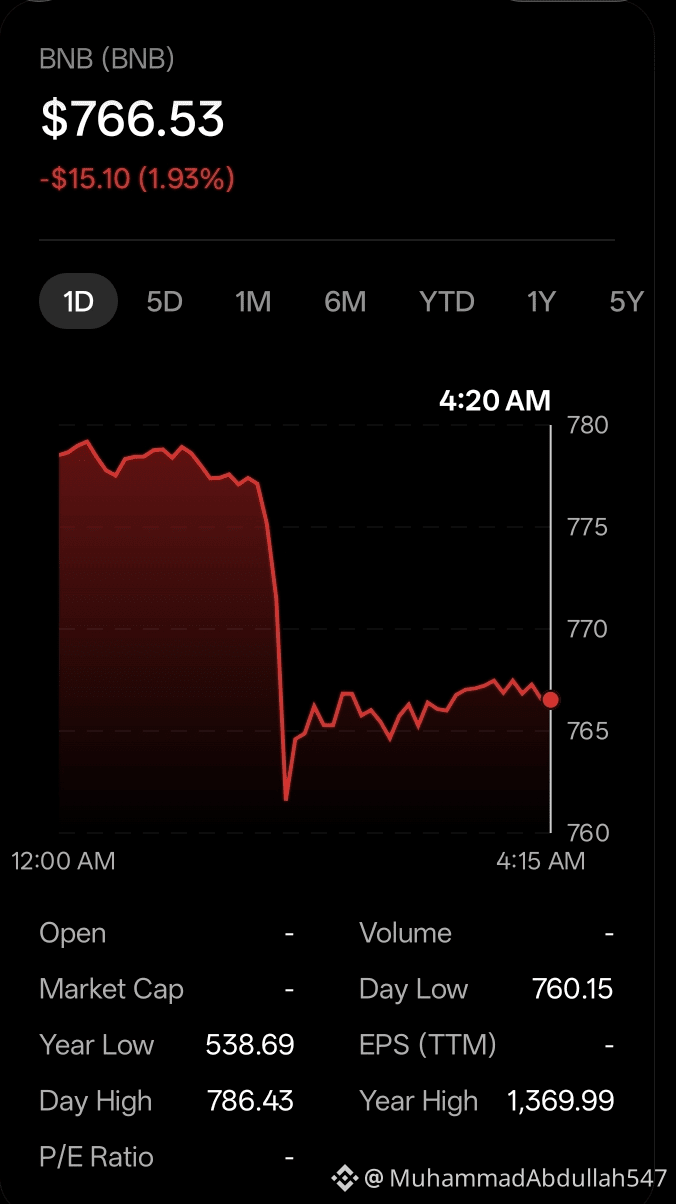
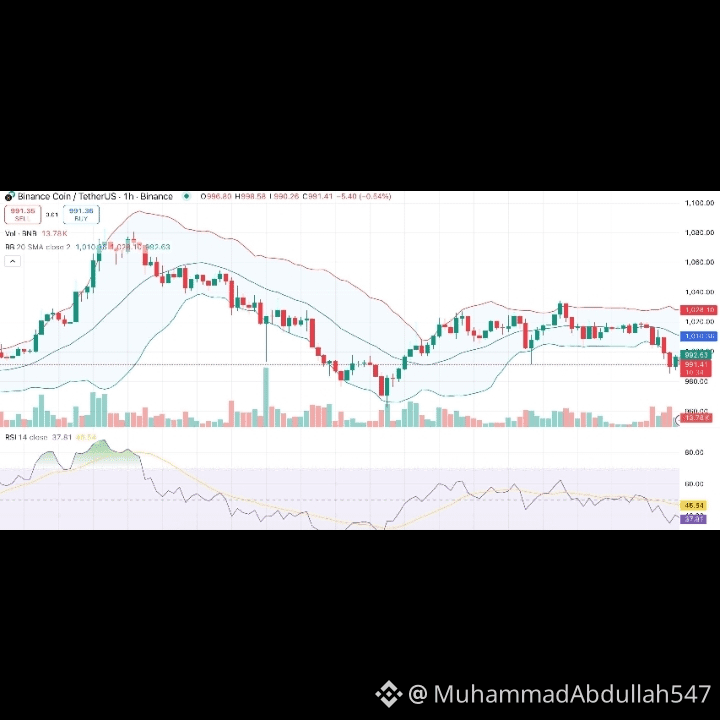
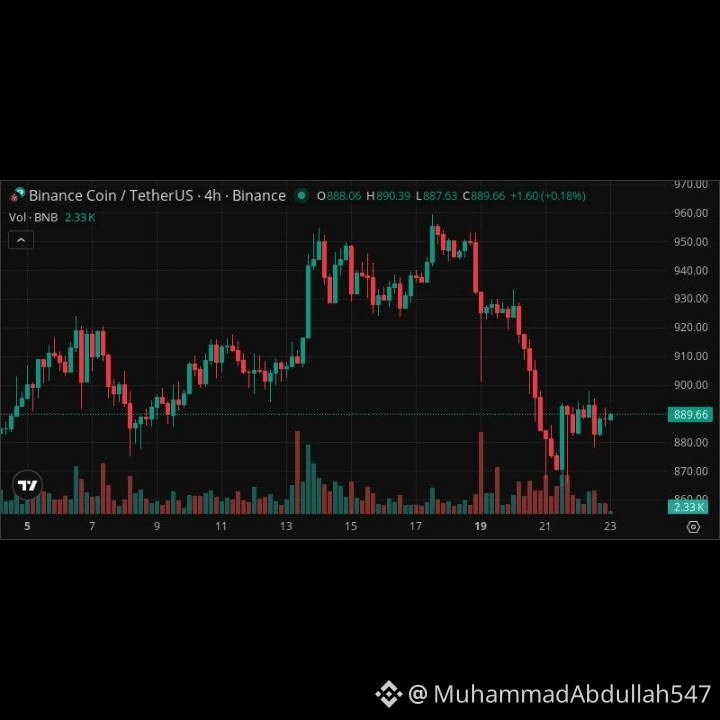
BNB Latest Analysis — 7 Oct 2026
BNB is currently around $766, down roughly 2% today. The short-term move is bearish after rejection near the important $800 level, but the daily structure is still relatively strong. �
Binance +2
🟢 Support: $760–$750
🔴 Resistance: $800
🚀 Above $800 → bullish breakout could strengthen
⚠️ Below $750 → deeper pullback becomes more likely
🚨 BNB MARKET UPDATE
BNB is trading around the $760–$770 zone after facing strong rejection near the $800 resistance.
📉 Short-term: Bearish pressure
🟢 Support: $750–$760
🔴 Resistance: $800
🚀 A clean breakout above $800 could bring strong bullish momentum.
Trade carefully and manage your risk.
#BNB #Binance #Crypto #BNBAnalysis #CryptoMarket
$BNB
#BinanceLaunchesBinanceIntelligence #WinklevossFilesSpotZcashETFApplication #EvernorthXRPTreasuryCompletesSPACMerger
BNB Latest Analysis — 7 Oct 2026
BNB is currently around $766, down roughly 2% today. The short-term move is bearish after rejection near the important $800 level, but the daily structure is still relatively strong. �
Binance +2
🟢 Support: $760–$750
🔴 Resistance: $800
🚀 Above $800 → bullish breakout could strengthen
⚠️ Below $750 → deeper pullback becomes more likely
🚨 BNB MARKET UPDATE
BNB is trading around the $760–$770 zone after facing strong rejection near the $800 resistance.
📉 Short-term: Bearish pressure
🟢 Support: $750–$760
🔴 Resistance: $800
🚀 A clean breakout above $800 could bring strong bullish momentum.
Trade carefully and manage your risk.
#BNB #Binance #Crypto #BNBAnalysis #CryptoMarket
#BinanceLaunchesBinanceIntelligence #WinklevossFilesSpotZcashETFApplication #EvernorthXRPTreasuryCompletesSPACMerger
BNB Latest Analysis — 7 Oct 2026
BNB is currently around $766, down roughly 2% today. The short-term move is bearish after rejection near the important $800 level, but the daily structure is still relatively strong. �
Binance +2
🟢 Support: $760–$750
🔴 Resistance: $800
🚀 Above $800 → bullish breakout could strengthen
⚠️ Below $750 → deeper pullback becomes more likely
🚨 BNB MARKET UPDATE
BNB is trading around the $760–$770 zone after facing strong rejection near the $800 resistance.
📉 Short-term: Bearish pressure
🟢 Support: $750–$760
🔴 Resistance: $800
🚀 A clean breakout above $800 could bring strong bullish momentum.
Trade carefully and manage your risk.
#BNB #Binance #Crypto #BNBAnalysis #CryptoMarket
11
Article
Bitcoin ($BTC) Mid-Week Market PulseBitcoin ($BTC) Mid-Week Update: Navigating Volatility and Key Support Levels
{spot}(BTCUSDT)
Bitcoin ($BTC ) is holding steady as market participants monitor order books and liquidity shifts across global exchanges. With volatility cycles shifting quickly, traders are keeping a close eye on higher timeframe structures to gauge the next major move.
On the charts, price action is hovering near critical demand zones. A sustained defense of these levels by the bulls is essential to prevent deeper pullbacks and set the stage for a push toward overhead resistance.
💡 Quick Strategy for Traders:
Support Monitoring: Keep strict stop-losses below immediate local lows.
Volume Triggers: Wait for strong volume confirmation before entering trend-continuation trades.
Where do you think $BTC is heading next? Drop your analysis in the comments below!
$BTC #BinanceLaunchesBinanceIntelligence #BTCFallsBelow$84K #WinklevossFilesSpotZcashETFApplication #SouthKoreaAITradeLiftsWorldcoinTo$7.41B #StrategyEstimates$4.1BIncomeTaxBenefit
Bitcoin ($BTC) Mid-Week Market Pulse
Bitcoin ($BTC ) Mid-Week Update: Navigating Volatility and Key Support Levels
Bitcoin ($BTC ) is holding steady as market participants monitor order books and liquidity shifts across global exchanges. With volatility cycles shifting quickly, traders are keeping a close eye on higher timeframe structures to gauge the next major move.
On the charts, price action is hovering near critical demand zones. A sustained defense of these levels by the bulls is essential to prevent deeper pullbacks and set the stage for a push toward overhead resistance.
💡 Quick Strategy for Traders:
Support Monitoring: Keep strict stop-losses below immediate local lows.
Volume Triggers: Wait for strong volume confirmation before entering trend-continuation trades.
Where do you think $BTC is heading next? Drop your analysis in the comments below!
$BTC #BinanceLaunchesBinanceIntelligence #BTCFallsBelow$84K #WinklevossFilesSpotZcashETFApplication #SouthKoreaAITradeLiftsWorldcoinTo$7.41B #StrategyEstimates$4.1BIncomeTaxBenefit
Bitcoin ($BTC ) is holding steady as market participants monitor order books and liquidity shifts across global exchanges. With volatility cycles shifting quickly, traders are keeping a close eye on higher timeframe structures to gauge the next major move.
On the charts, price action is hovering near critical demand zones. A sustained defense of these levels by the bulls is essential to prevent deeper pullbacks and set the stage for a push toward overhead resistance.
💡 Quick Strategy for Traders:
Support Monitoring: Keep strict stop-losses below immediate local lows.
Volume Triggers: Wait for strong volume confirmation before entering trend-continuation trades.
Where do you think $BTC is heading next? Drop your analysis in the comments below!
$BTC #BinanceLaunchesBinanceIntelligence #BTCFallsBelow$84K #WinklevossFilesSpotZcashETFApplication #SouthKoreaAITradeLiftsWorldcoinTo$7.41B #StrategyEstimates$4.1BIncomeTaxBenefit
1
36
Log in to explore more content
Join global crypto users on Binance Square
⚡️ Get latest and useful information about crypto.
💬 Trusted by the world’s largest crypto exchange.
👍 Discover real insights from verified creators.
Email / Phone number
Trending Topics
1
#BinanceLaunchesBinanceIntelligence
631,857 views
3,877 Discussing
2
#BTCFallsBelow$84K
5,757 views
39 Discussing
3
#WinklevossFilesSpotZcashETFApplication
5,912 views
124 Discussing
4
#SouthKoreaAITradeLiftsWorldcoinTo$7.41B
744 views
19 Discussing
5
#StrategyEstimates$4.1BIncomeTaxBenefit
699 views
16 Discussing
6
#IglooShutsDownAbstractBlockchain
1,493 views
60 Discussing
7
#StrategyMarketCapSurpassesRumble
34,930 views
739 Discussing
8
#StriveBuys2000BTCFor$169M
17,462 views
156 Discussing
9
#EvernorthXRPTreasuryCompletesSPACMerger
235,339 views
1,932 Discussing
10
#ADAGains10%Above$0.27
81,168 views
270 Discussing