
#uspostquantumcryptographydeadline2031
uspostquantumcryptographydeadline2031
Просмотров: 263,961
1,327 обсуждают
Популярные
Новые

·
--
#USPostQuantumCryptographyDeadline2031
President Donald Trump signed Executive Order 14409, "Securing the Nation Against Advanced Cryptographic Attacks," to urgently accelerate the U.S. transition to post-quantum cryptography (PQC).
This mandate addresses the national security threat of "harvest now, decrypt later" attacks, where adversaries stockpile encrypted data to decrypt it once future quantum computers become capable of breaking current encryption (like RSA and ECC).
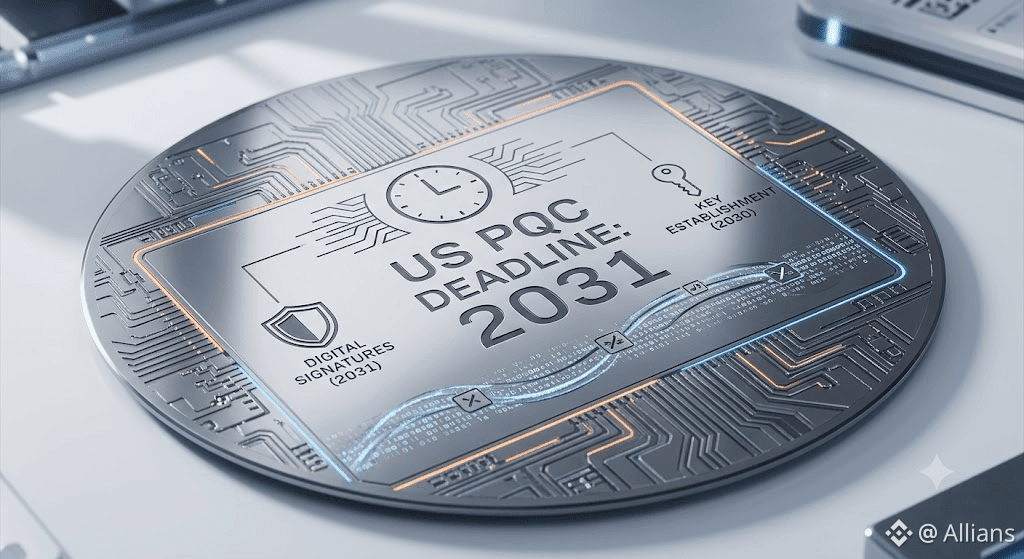
The order sets binding, accelerated deadlines for federal agencies to migrate "high-value assets" and "high-impact systems" to NIST-approved PQC standards: December 31, 2030: Deadline for PQC adoption in key establishment. December 31, 2031: Deadline for PQC adoption in digital signatures.
Agencies must designate migration leads within 30 days and provide detailed transition plans. The mandate also impacts federal contractors, who must comply with these new NIST standards by the end of 2030. This initiative marks a significant shift, turning quantum-resistant security into a concrete federal compliance requirement.
#SpaceXToJoinBloombergGlobalLargeCapIndex
#NakamotoShiftsToBitcoinFocusedBusiness
1
1
41

·
--
#USPostQuantumCryptographyDeadline2031
What the Hell is that?
US Post-Quantum Cryptography Deadline 2031 is a federal mandate requiring all US government systems to migrate to quantum-resistant encryption standards by 2031.
Why it exists — Quantum computers will eventually break today's RSA/ECC encryption, threatening all secure digital communications.
Who set it — NIST finalized the first Post-Quantum Cryptography (PQC) standards in 2024 (FIPS 203, 204, 205).
The deadline — NSA and CISA require federal agencies and critical infrastructure to complete migration by 2031.
What changes — Current public-key cryptography gets replaced by lattice-based and hash-based algorithms (e.g., CRYSTALS-Kyber, CRYSTALS-Dilithium).
Why it matters to everyone — Banks, tech firms, and defense contractors doing business with the US government must also comply, making it a global cybersecurity shift.
$BTC #USPostQuantumCryptographyDeadline2031 $ETH $BNB #Binance
58

·
--
#uspostquantumcryptographydeadline2031
🇺🇸🔐 The United States is accelerating its transition to post-quantum cryptography, with major government systems expected to adopt quantum-resistant security standards by 2031. As quantum computing technology advances, concerns are growing that current encryption methods could eventually become vulnerable. This shift highlights the importance of preparing digital infrastructure for a new era of cybersecurity. The move is drawing attention across the technology and crypto sectors, where security remains a top priority. Investors and industry leaders are closely monitoring developments in quantum computing and its potential impact on blockchain networks, data protection, and the future of secure digital transactions.$US
#Crypto #Blockchain #CyberSecurity #quantumcomputing #BinanceSquare
3
3
1.1k

·
--
#USPostQuantumCryptographyDeadline2031 Tenggat waktu Post-Quantum Cryptography (PQC) AS tahun 2031 mengacu pada batas waktu krusial yang ditetapkan oleh pemerintah federal untuk menghentikan penggunaan algoritma kriptografi tradisional yang rentan terhadap komputer kuantum. Berdasarkan panduan dari NIST (National Institute of Standards and Technology) dan NSA (National Security Agency), tahun 2031 menandai penegakan penuh standar kuantum aman di berbagai sektor pemerintahan.
#USPostQuantumCryptographyDeadline2031 Tenggat waktu Post-Quantum Cryptography (PQC) AS tahun 2031 mengacu pada batas waktu krusial yang ditetapkan oleh pemerintah federal untuk menghentikan penggunaan algoritma kriptografi tradisional yang rentan terhadap komputer kuantum. Berdasarkan panduan dari NIST (National Institute of Standards and Technology) dan NSA (National Security Agency), tahun 2031 menandai penegakan penuh standar kuantum aman di berbagai sektor pemerintahan.
96

#USPostQuantumCryptographyDeadline2031 #USPostQuantumCryptographyDeadline2031 🔐⚛️
The U.S. government has formally accelerated its transition to post-quantum cryptography (PQC), setting 2031 as a key deadline for federal systems to adopt quantum-resistant digital signatures. The order was signed on June 22, 2026 by President Donald Trump.
Key Deadlines
📅 By December 31, 2030
High-value federal systems must support quantum-resistant key establishment and encryption methods.
📅 By December 31, 2031
Federal agencies must migrate critical digital-signature infrastructure to NIST-approved post-quantum standards.
Why it matters
⚠️ Quantum computers could eventually break widely used public-key cryptography such as RSA and ECC, which secure websites, banking systems, government networks, and many blockchain applications. The transition aims to protect against future "harvest now, decrypt later" attacks.
🏛️ The directive puts pressure not only on federal agencies but also on contractors, cybersecurity vendors, and critical infrastructure operators to prepare for quantum-resistant security.
₿ For crypto markets, the announcement increases attention on quantum-resistant upgrades across blockchain networks. While today's quantum computers cannot break major cryptocurrencies, the industry is increasingly planning for long-term quantum risks.
Market Impact
📈 The executive orders are viewed as supportive for companies involved in quantum computing, cybersecurity, cryptographic infrastructure, and quantum networking technologies. They also underscore the U.S. government's goal of building a scientifically relevant quantum computer by 2028.
Bottom line: The 2031 PQC deadline transforms post-quantum security from a research project into a national priority, accelerating adoption of quantum-resistant cryptography across both government and industry.
41

·
--
#USPostQuantumCryptographyDeadline2031
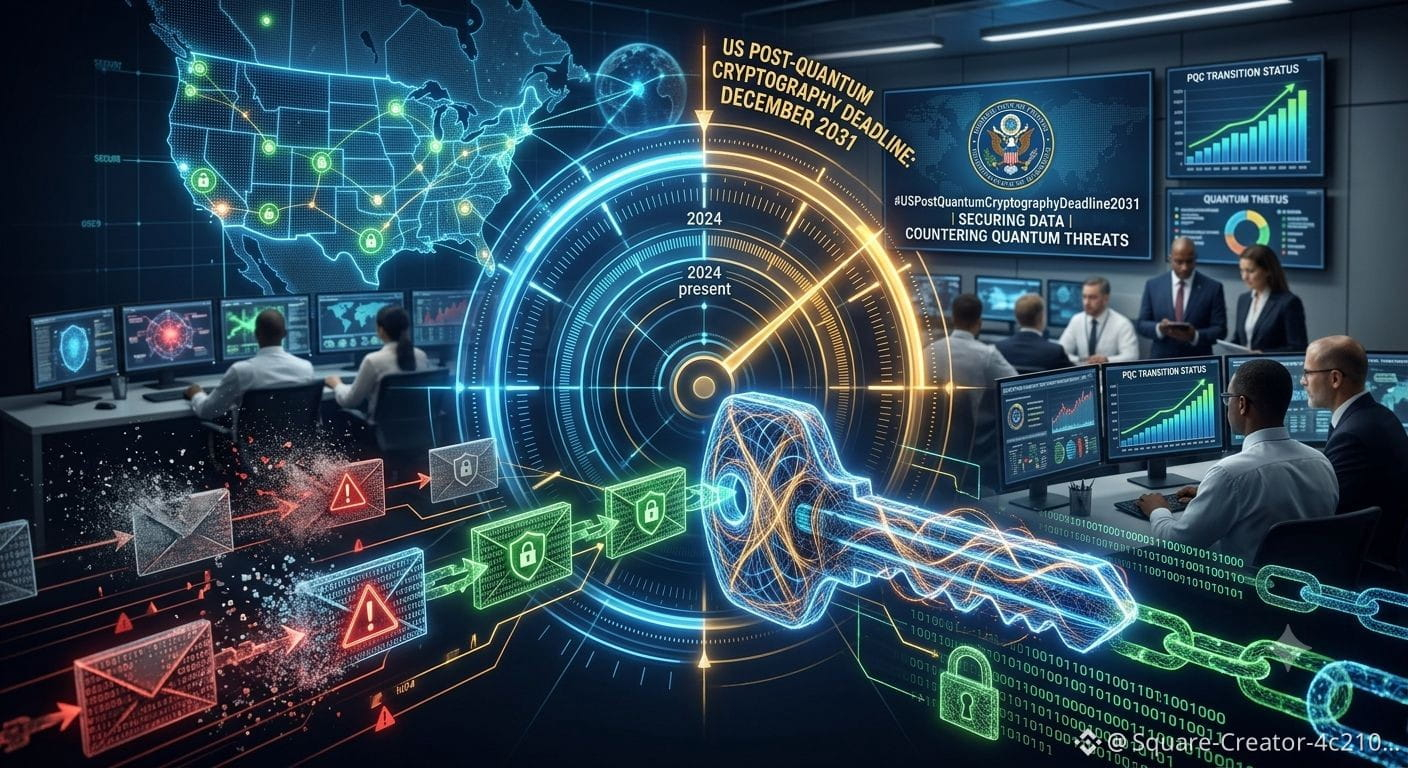
2031 نقطة تحول حاسمة في الأمن السيبراني العالمي؛ حيث أصدرت الإدارة الأمريكية أمراً تنفيذياً يُلزم الوكالات الفيدرالية والأنظمة الحساسة بالانتقال الكامل إلى التشفير المقاوم للحوسبة الكمومية بحلول نهاية عام 2031. يهدف هذا القرار لحماية البيانات من التهديدات الكمومية المستقبلية، ومواجهة استراتيجية الاختراق الحالية وفك التشفير لاحقاً. يدفع هذا الموعد النهائي قطاعات التكنولوجيا والبلوكشين لتسريع ترقياتها الأمنية لحماية أصولها$MUB
$TSLAB
$BTC
{spot}(BTCUSDT)
{spot}(TSLABUSDT)
{spot}(MUBUSDT)
#USPostQuantumCryptographyDeadline2031
2031 نقطة تحول حاسمة في الأمن السيبراني العالمي؛ حيث أصدرت الإدارة الأمريكية أمراً تنفيذياً يُلزم الوكالات الفيدرالية والأنظمة الحساسة بالانتقال الكامل إلى التشفير المقاوم للحوسبة الكمومية بحلول نهاية عام 2031. يهدف هذا القرار لحماية البيانات من التهديدات الكمومية المستقبلية، ومواجهة استراتيجية الاختراق الحالية وفك التشفير لاحقاً. يدفع هذا الموعد النهائي قطاعات التكنولوجيا والبلوكشين لتسريع ترقياتها الأمنية لحماية أصولها$MUB
$TSLAB
$BTC
1
92

#USPostQuantumCryptographyDeadline2031
The clock is ticking for data security: The US government has set a firm 2031 deadline for migrating to Post-Quantum Cryptography (PQC). As quantum computing advances, traditional encryption methods (like RSA) will soon become vulnerable to decryption. To get ahead of this threat, National Security Memorandum 10 (NSM-10) and the Quantum Computing Cybersecurity Preparedness Act require all federal agencies—and their supply chains—to fully transition to quantum-resistant algorithms by 2031.
Why This Matters Right Now
"Harvest Now, Decrypt Later": Cyberadversaries are actively stealing encrypted data today, intending to decrypt it once powerful quantum computers become available.
Long Integration Timelines: Replacing foundational cryptography across legacy systems, cloud environments, and infrastructure takes years of planning, testing, and execution.
Commercial Ripple Effect: While the mandate directly targets federal systems, commercial sectors (finance, healthcare, critical infrastructure) must follow suit to remain compliant and secure.
The Next Steps for Organizations
Inventory: Discover and catalog all cryptographic assets and dependencies.
Assess: Identify vulnerabilities and prioritize high-value data.
Migrate: Begin testing NIST-approved PQC algorithms (like ML-KEM and ML-DSA) within your architecture.
The 2031 deadline might seem distant, but cryptographic transitions are notoriously complex. Zero hour is approaching—is your organization quantum-ready?
#QuantumComputing #Cybersecurity #PostQuantumCryptography #PQC #DataProtection #USPostQuantumCryptographyDeadline2031
$BTC
{future}(BTCUSDT)
#USPostQuantumCryptographyDeadline2031
The clock is ticking for data security: The US government has set a firm 2031 deadline for migrating to Post-Quantum Cryptography (PQC). As quantum computing advances, traditional encryption methods (like RSA) will soon become vulnerable to decryption. To get ahead of this threat, National Security Memorandum 10 (NSM-10) and the Quantum Computing Cybersecurity Preparedness Act require all federal agencies—and their supply chains—to fully transition to quantum-resistant algorithms by 2031.
Why This Matters Right Now
"Harvest Now, Decrypt Later": Cyberadversaries are actively stealing encrypted data today, intending to decrypt it once powerful quantum computers become available.
Long Integration Timelines: Replacing foundational cryptography across legacy systems, cloud environments, and infrastructure takes years of planning, testing, and execution.
Commercial Ripple Effect: While the mandate directly targets federal systems, commercial sectors (finance, healthcare, critical infrastructure) must follow suit to remain compliant and secure.
The Next Steps for Organizations
Inventory: Discover and catalog all cryptographic assets and dependencies.
Assess: Identify vulnerabilities and prioritize high-value data.
Migrate: Begin testing NIST-approved PQC algorithms (like ML-KEM and ML-DSA) within your architecture.
The 2031 deadline might seem distant, but cryptographic transitions are notoriously complex. Zero hour is approaching—is your organization quantum-ready?
#QuantumComputing #Cybersecurity #PostQuantumCryptography #PQC #DataProtection #USPostQuantumCryptographyDeadline2031
$BTC

38

·
--
🔐🚀 Is Crypto Ready for the Quantum Era?
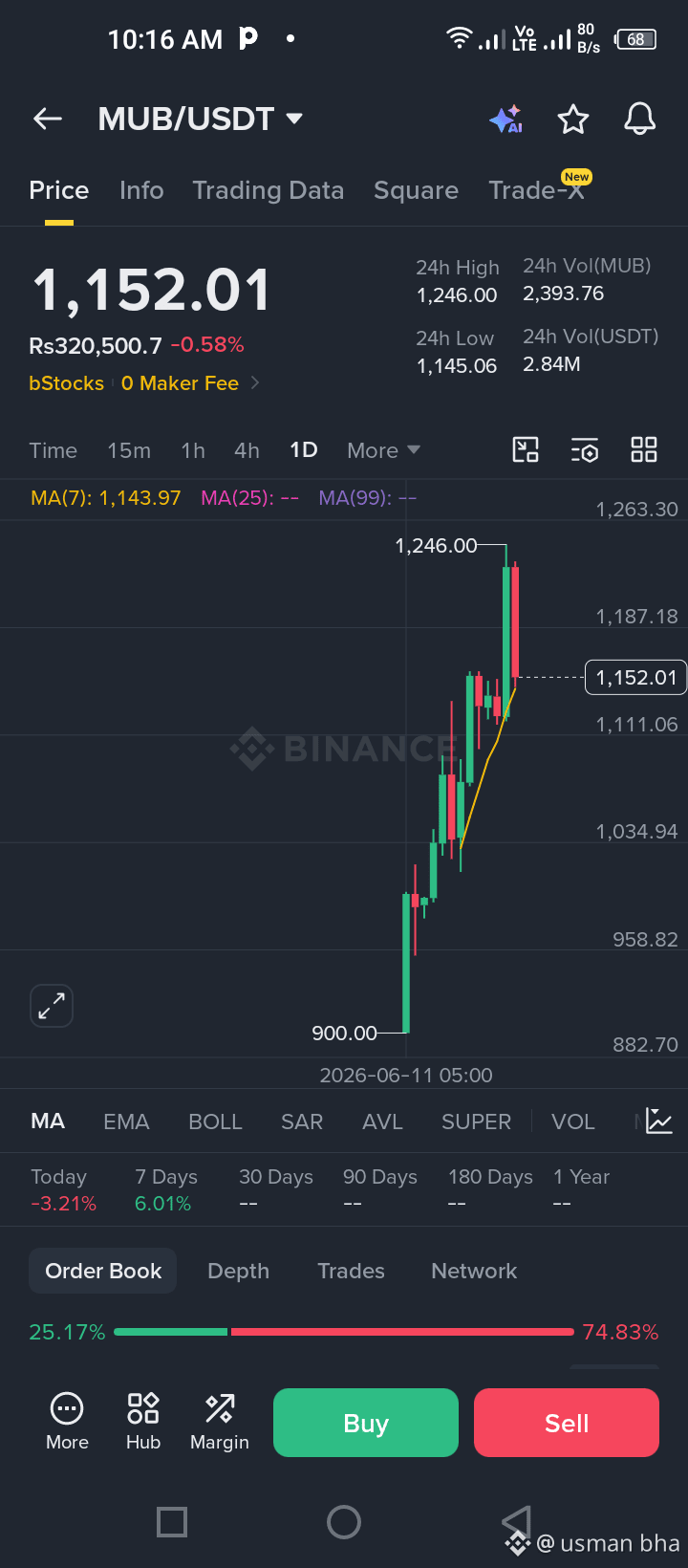
$MUB The United States has set a 2031 target for transitioning to post-quantum cryptography, marking one of the most significant cybersecurity upgrades of our time. 🌐
As quantum computing continues to evolve, the encryption methods that protect today's digital systems could eventually face new challenges. That's why the crypto industry is keeping a close eye on quantum-resistant security solutions. 👀
💥 Why This Matters for Crypto
🔐 Stronger, next-generation encryption could reshape digital security
⚡ Blockchain networks may need quantum-resistant upgrades in the future
🏦 Financial institutions are already strengthening their cybersecurity strategies
🌍 Future crypto infrastructure could be built with post-quantum protection from day one
📈 Quantum technology is becoming an increasingly important long-term investment theme
🚀 What Investors Should Watch
✅ Adoption of post-quantum cryptography
✅ Blockchain projects developing quantum-resistant solutions
✅ Government cybersecurity initiatives and regulations
✅ Institutional investment in quantum computing technologies
✅ Crypto projects focused on future-proof security
The quantum era may still be years away, but the race to secure tomorrow's digital economy is already underway. 🔥
Trade here #MUB #ETH #USPostQuantumCryptographyDeadline2031
70

·
--
#uspostquantumcryptographydeadline2031 🇺🇸 U.S. Sets 2031 Post-Quantum Cryptography Deadline
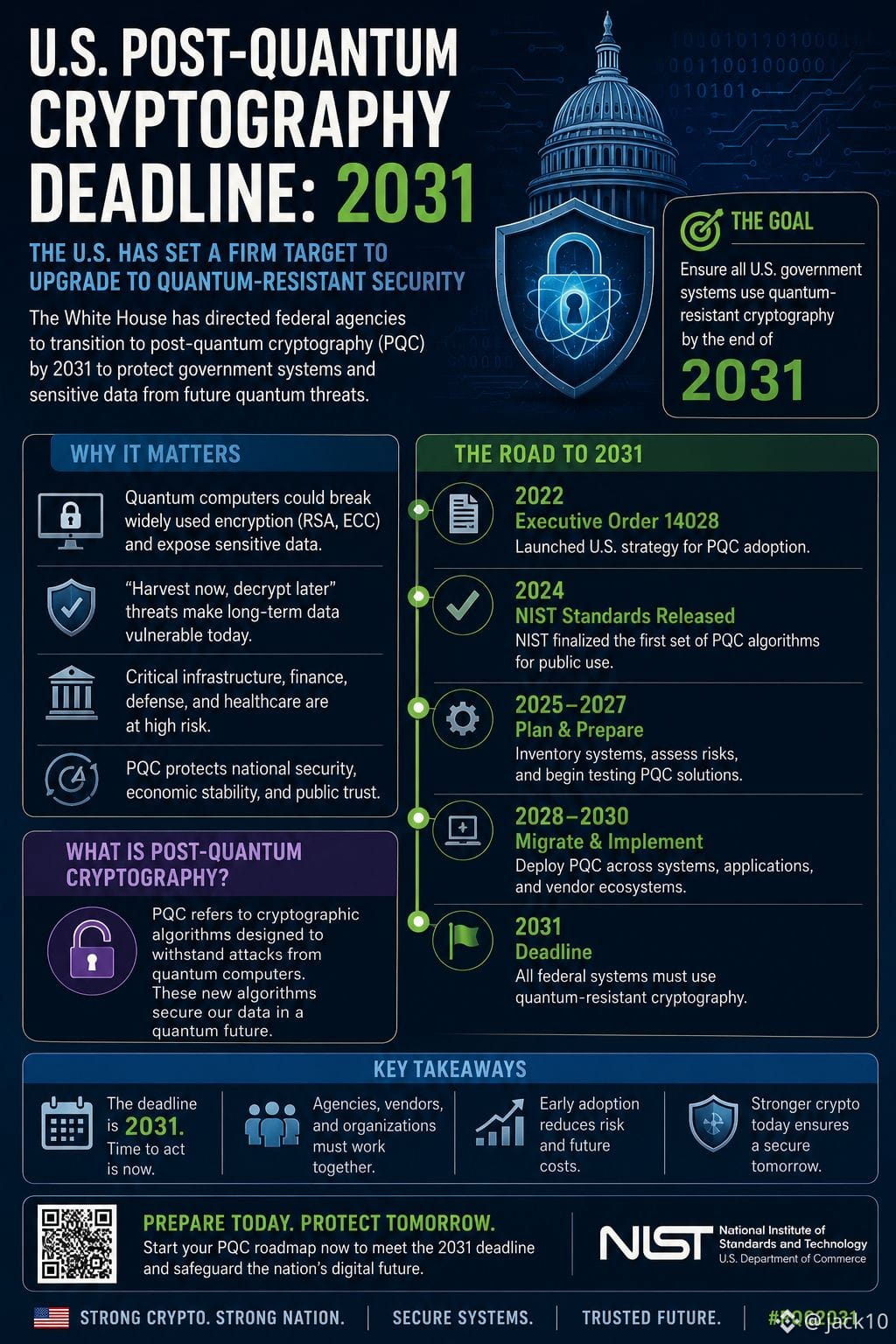
President Donald Trump signed an executive order directing key U.S. government systems to transition to post-quantum cryptography (PQC) by 2030 or 2031. The goal is to protect federal networks from future quantum computers that could break widely used encryption methods. (Reuters)
Key Highlights
🔐 Federal agencies must accelerate migration to quantum-resistant encryption
📅 Key systems targeted for completion by 2030–2031
⚛️ A separate order aims to build a powerful U.S. quantum computer by 2028
🛡️ The policy addresses “harvest now, decrypt later” risks
⚠️ The deadline applies primarily to government systems; private companies will set their own migration schedules. (Reuters)
Why It Matters
PQC uses newer algorithms designed to resist attacks from future quantum machines. The announcement raises pressure on government contractors, cloud providers, banks, and critical-infrastructure operators to identify cryptography that relies on vulnerable public-key systems and begin upgrading it. (Reuters)
Social Media Post
🚨 U.S. Sets 2031 Post-Quantum Cryptography Deadline
The U.S. is accelerating its shift to quantum-resistant cybersecurity, with key federal systems targeted to move to post-quantum cryptography by 2030–2031.
🔐 Quantum-safe encryption push
📅 2031 federal deadline
⚛️ Powerful quantum computer targeted by 2028
🛡️ “Harvest now, decrypt later” risk addressed
🏦 Government and contractors face migration pressure
The quantum race is no longer just about computing power—it is becoming a major cybersecurity and infrastructure challenge.
#QuantumComputing #Cybersecurity #PQC #PostQuantum #Encryption #Technology #USGovernment #AI #Markets
2
5
3.8k

·
--
Рост
#USPostQuantumCryptographyDeadline2031
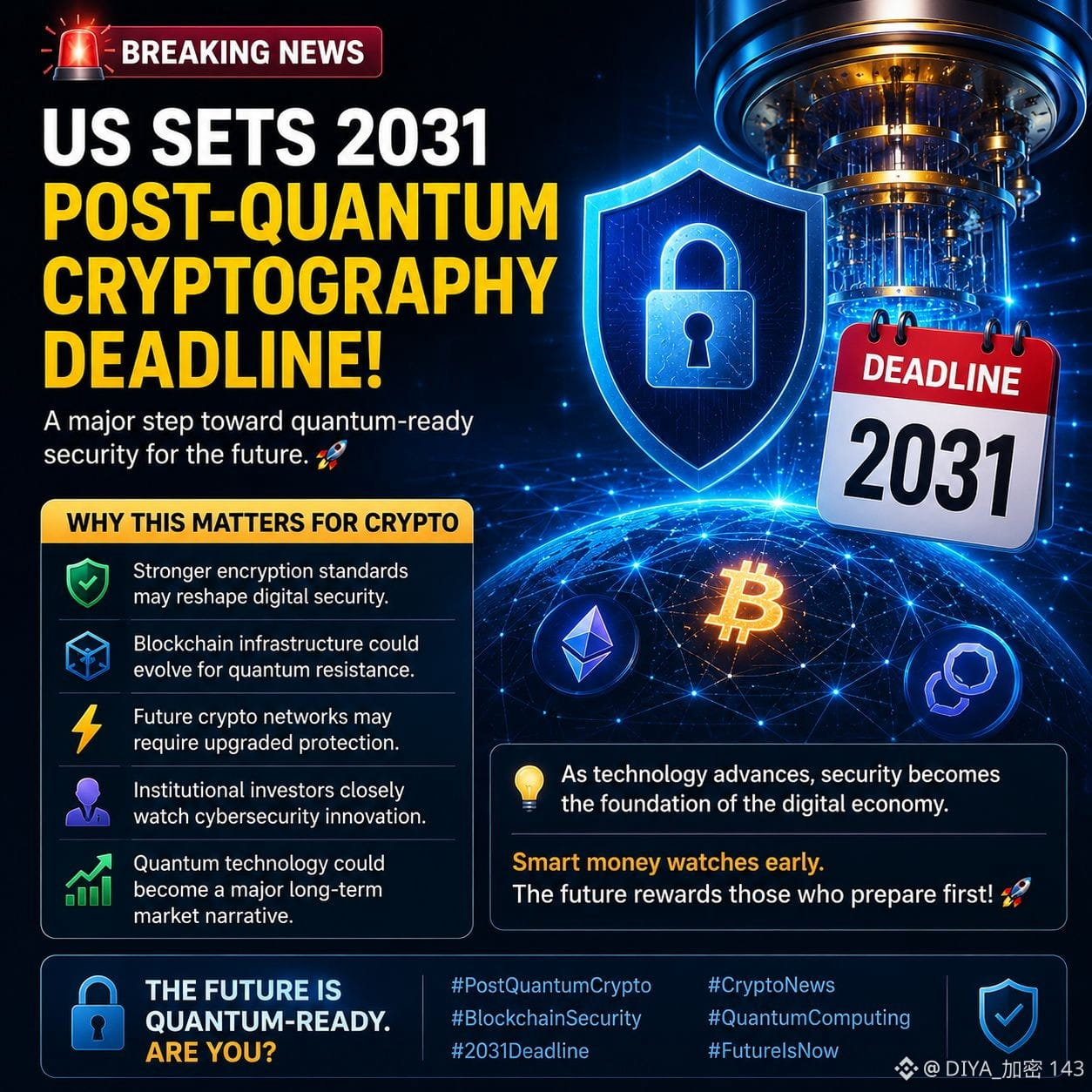
🚨 Quantum computing is getting closer, and cybersecurity is evolving with it.
The US is pushing toward a 2031 transition to post-quantum cryptography, a move that could influence the future of blockchain security and digital assets. 🔐⚡
As encryption standards advance, crypto networks may need stronger protection to stay ahead of future threats.
The future belongs to those who prepare early. 🚀
#CryptoNews #Ethereum $ETH $BTC $BITCOIN #Crypto_Jobs🎯
7
227

·
--

Статья
The Quantum Supercycle Begins#USPostQuantumCryptographyDeadline2031
The White House just put an expiration date on legacy encryption, triggering a structural narrative shift that will dictate crypto's next trillion-dollar capital rotation.
Executive Order 14409 mandates that federal high-impact systems fully migrate digital signatures to Post-Quantum Cryptography (PQC) by 2031. Designed to counter "harvest now, decrypt later" state-sponsored espionage, this strict policy gate forces global financial infrastructure into an aggressive cryptographic overhaul.
What does it mean for the crypto world?
The ECDSA Vulnerability: Legacy elliptic curve signatures underpinning $BTC and $ETH are fundamentally exposed. Institutional custodians will actively derisk networks lacking clear NIST-standardized upgrade paths.Legacy Overhang: Institutional quant models pricing in a near-term Q-Day will treat the roughly 7 million Bitcoin sitting in exposed legacy addresses as a psychological drag until core developers lock in a quantum-safe soft fork.Infrastructure Alpha: Smart money is aggressively accumulating lattice-based cryptographic protocols. It's treating quantum resistance as an immediate institutional compliance moat rather than distant tech debt.The Custody Drain: Blockchains failing to signal a structural PQC upgrade may suffer severe liquidity drains as forward-looking funds refuse to hold vulnerable assets past upcoming 2027 federal acquisition gates.
Key Takeaway:
We may want to fade immediate L1 panic-selling, but aggressively accumulate ecosystem tokens actively shipping PQC upgrades. The quantum-proofing race is our next structural macro supercycle. Apparently, we'll have to audit our portfolio for quantum resistance and aggressively position into L1s actively integrating NIST PQC standards before institutional custody mandates force the rotation.
#MacroCrypto #QDAY #Bitcoin
The Quantum Supercycle Begins
#USPostQuantumCryptographyDeadline2031
The White House just put an expiration date on legacy encryption, triggering a structural narrative shift that will dictate crypto's next trillion-dollar capital rotation.
Executive Order 14409 mandates that federal high-impact systems fully migrate digital signatures to Post-Quantum Cryptography (PQC) by 2031. Designed to counter "harvest now, decrypt later" state-sponsored espionage, this strict policy gate forces global financial infrastructure into an aggressive cryptographic overhaul.
What does it mean for the crypto world?
The ECDSA Vulnerability: Legacy elliptic curve signatures underpinning $BTC and $ETH are fundamentally exposed. Institutional custodians will actively derisk networks lacking clear NIST-standardized upgrade paths.Legacy Overhang: Institutional quant models pricing in a near-term Q-Day will treat the roughly 7 million Bitcoin sitting in exposed legacy addresses as a psychological drag until core developers lock in a quantum-safe soft fork.Infrastructure Alpha: Smart money is aggressively accumulating lattice-based cryptographic protocols. It's treating quantum resistance as an immediate institutional compliance moat rather than distant tech debt.The Custody Drain: Blockchains failing to signal a structural PQC upgrade may suffer severe liquidity drains as forward-looking funds refuse to hold vulnerable assets past upcoming 2027 federal acquisition gates.
Key Takeaway:
We may want to fade immediate L1 panic-selling, but aggressively accumulate ecosystem tokens actively shipping PQC upgrades. The quantum-proofing race is our next structural macro supercycle. Apparently, we'll have to audit our portfolio for quantum resistance and aggressively position into L1s actively integrating NIST PQC standards before institutional custody mandates force the rotation.
#MacroCrypto #QDAY #Bitcoin
128

#USPostQuantumCryptographyDeadline2031 🚨 Headline:
Quantum Computers are coming for your Bitcoin... and the US Government just set a deadline. 🕒💥
Imagine a computer so powerful it can crack RSA encryption in seconds. Your passwords, your crypto wallets, global banking systems—compromised.
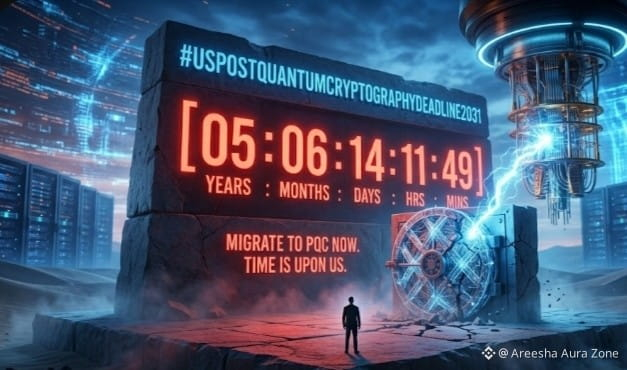
This isn't sci-fi anymore. It’s a ticking clock. ⏳
The US government just dropped a massive mandate: The Post-Quantum Cryptography (PQC) Transition Deadline is set for 2031.
By 2031, every major agency, financial institution, and tech giant must migrate to quantum-resistant algorithms. If they don't? Game over.
Why should YOU care?
💢Crypto Security: Blockchain is safe for now, but the race to implement quantum-proof cryptography (like lattice-based cryptography) is officially ON.
💢 Tech Shift: The next 5 years will see the biggest cybersecurity overhaul in human history.
💢Career/Investment Opportunity: Cybersecurity firms and blockchain protocols pioneering PQC are the ones to watch.
The countdown has officially started. Are we moving fast enough, or are we playing with digital fire? 🔥
Let me know in the comments: Do you think Web3 is ready for the Quantum Era? 🧠👇
#USPostQuantumCryptographyDeadline2031 #QuantumComputing #2031Forecast
$SPCXB $BTC $TSLAB
{spot}(SPCXBUSDT)
{spot}(BTCUSDT)
{spot}(TSLABUSDT)
#USPostQuantumCryptographyDeadline2031 🚨 Headline:
Quantum Computers are coming for your Bitcoin... and the US Government just set a deadline. 🕒💥
Imagine a computer so powerful it can crack RSA encryption in seconds. Your passwords, your crypto wallets, global banking systems—compromised.
This isn't sci-fi anymore. It’s a ticking clock. ⏳
The US government just dropped a massive mandate: The Post-Quantum Cryptography (PQC) Transition Deadline is set for 2031.
By 2031, every major agency, financial institution, and tech giant must migrate to quantum-resistant algorithms. If they don't? Game over.
Why should YOU care?
💢Crypto Security: Blockchain is safe for now, but the race to implement quantum-proof cryptography (like lattice-based cryptography) is officially ON.
💢 Tech Shift: The next 5 years will see the biggest cybersecurity overhaul in human history.
💢Career/Investment Opportunity: Cybersecurity firms and blockchain protocols pioneering PQC are the ones to watch.
The countdown has officially started. Are we moving fast enough, or are we playing with digital fire? 🔥
Let me know in the comments: Do you think Web3 is ready for the Quantum Era? 🧠👇
#USPostQuantumCryptographyDeadline2031 #QuantumComputing #2031Forecast
$SPCXB $BTC $TSLAB
202

🔐💻 US Sets Strict 2031 Post-Quantum Cyber Deadline! 🚀
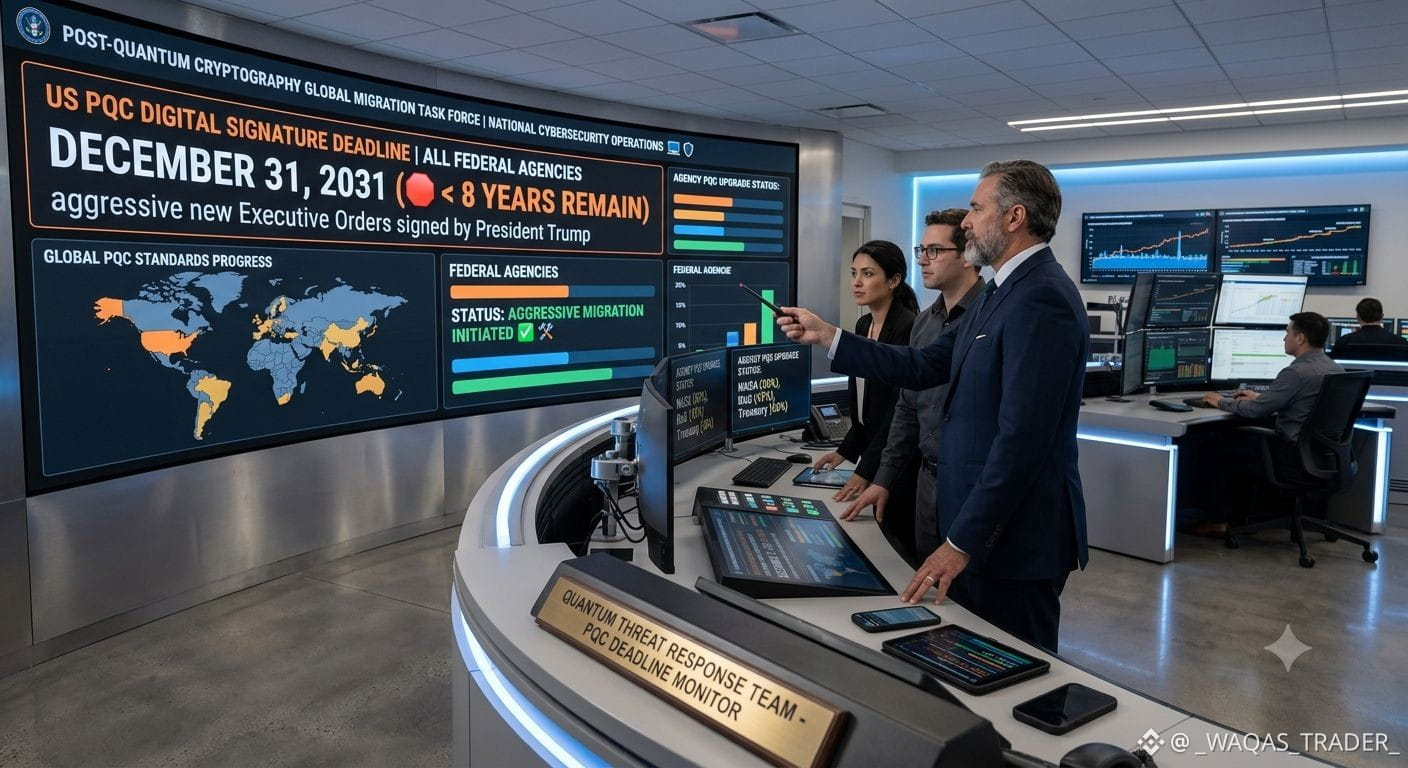
🛑President Trump has signed aggressive new executive orders forcing a national cybersecurity upgrade! All federal agencies and high-value assets must completely migrate to Post-Quantum Cryptography (PQC) for digital signatures by December 31, 2031. With quantum computing advancing rapidly, the race is officially on to protect critical infrastructure, data, and global blockchain networks from next-gen decryption threats! 🏛️🛠️
$BTC
{future}(BTCUSDT)
#USPostQuantumCryptographyDeadline2031
🔐💻 US Sets Strict 2031 Post-Quantum Cyber Deadline! 🚀
🛑President Trump has signed aggressive new executive orders forcing a national cybersecurity upgrade! All federal agencies and high-value assets must completely migrate to Post-Quantum Cryptography (PQC) for digital signatures by December 31, 2031. With quantum computing advancing rapidly, the race is officially on to protect critical infrastructure, data, and global blockchain networks from next-gen decryption threats! 🏛️🛠️
$BTC
#USPostQuantumCryptographyDeadline2031
31

·
--
US Post Quantum Cryptography Deadline 2031
So the government just gave us 5 years to panic... and we're still here arguing about dog coins.
Guys, the US literally set a deadline to ditch all our current encryption before quantum computers break the internet, and my biggest worry today is still whether my stop loss will get hunted. I can't lie, if a quantum computer can crack Bitcoin wallets in seconds by 2031, are we even early or are we just exit liquidity for the machines?
Be honest,.. does this make you want to bury your keys in a lead box in the backyard, or do you just not care because "2031 is basically a lifetime away" in crypto years?
Team "buy more because quantum proof chains will moon" or team "we're all rekt anyway so who cares"? Drop your copium below.#USPostQuantumCryptographyDeadline2031
42

·
--
后量子密码学热搜第一,但大多数人不知道这对$BTC意味着什么
后量子密码学登顶热搜,但大多数人不知道这对$BTC意味着什么
#USPostQuantumCryptographyDeadline2031 连续两天热搜第一。
简单说:美国要求2031年前所有联邦系统迁移到抗量子密码。这对加密行业是一个远期但确定性的基本面事件。
$BTC的SHA-256挖矿算法和椭圆曲线签名,理论上在量子计算机足够强大时可以被破解。但这是远期风险(5-10年),不是当下风险。
真正重要的是:这个时间表的出现,会倒逼公链项目提前布局抗量子升级。谁能率先完成迁移,谁就能在下一个周期获得叙事优势。
恐惧与贪婪指数22,市场还在冻结状态。但这个话题值得我们提前关注。
用CoinRadar系统看,暂时没有哪个币因为这个热点直接受益。但长期来看,抗量子概念可能会成为新的叙事赛道。
你知道哪些项目已经在布局抗量子密码了吗?
不构成投资建议。市场有风险,交易需谨慎。
#Quantum #BTC #CoinRadar
后量子密码学热搜第一,但大多数人不知道这对$BTC 意味着什么
后量子密码学登顶热搜,但大多数人不知道这对$BTC 意味着什么
#USPostQuantumCryptographyDeadline2031 连续两天热搜第一。
简单说:美国要求2031年前所有联邦系统迁移到抗量子密码。这对加密行业是一个远期但确定性的基本面事件。
$BTC 的SHA-256挖矿算法和椭圆曲线签名,理论上在量子计算机足够强大时可以被破解。但这是远期风险(5-10年),不是当下风险。
真正重要的是:这个时间表的出现,会倒逼公链项目提前布局抗量子升级。谁能率先完成迁移,谁就能在下一个周期获得叙事优势。
恐惧与贪婪指数22,市场还在冻结状态。但这个话题值得我们提前关注。
用CoinRadar系统看,暂时没有哪个币因为这个热点直接受益。但长期来看,抗量子概念可能会成为新的叙事赛道。
你知道哪些项目已经在布局抗量子密码了吗?
不构成投资建议。市场有风险,交易需谨慎。
#Quantum #BTC #CoinRadar
1
1
214

·
--
Рост
🚨 BIG NEWS ALERT! 🚨....#USPostQuantumCryptographyDeadline2031
The United States government just dropped a MAJOR deadline that could reshape cybersecurity as we know it! 🏛️⚡
🗓️ Mark your calendars$RESOLV :
All federal agencies must fully transition to Post-Quantum Cryptography (PQC) by December 31, 2031 – and this isn't a suggestion, it's the LAW now! 📜🔒
✅ This directive was formally sealed via executive orders signed on June 22, 2026 – making it official! 🖊️🇺🇸$RE
{future}(REUSDT)
🎯 Why does this matter?
Because "Q-Day" – the day quantum computers can break traditional encryption – is no longer sci-fi… it's a ticking time bomb! 💣💻
This move is all about protecting national security infrastructure from future quantum decryption threats. 🛡️🔐$LAYER
{future}(LAYERUSDT)
👀 The clock is ticking… 7.5 years to overhaul the entire federal crypto-system!
Will they make it? Or will Q-Day come knocking first? 🤔⏳
🚨 BIG NEWS ALERT! 🚨....#USPostQuantumCryptographyDeadline2031
The United States government just dropped a MAJOR deadline that could reshape cybersecurity as we know it! 🏛️⚡
🗓️ Mark your calendars$RESOLV :
All federal agencies must fully transition to Post-Quantum Cryptography (PQC) by December 31, 2031 – and this isn't a suggestion, it's the LAW now! 📜🔒
✅ This directive was formally sealed via executive orders signed on June 22, 2026 – making it official! 🖊️🇺🇸$RE
🎯 Why does this matter?
Because "Q-Day" – the day quantum computers can break traditional encryption – is no longer sci-fi… it's a ticking time bomb! 💣💻
This move is all about protecting national security infrastructure from future quantum decryption threats. 🛡️🔐$LAYER
👀 The clock is ticking… 7.5 years to overhaul the entire federal crypto-system!
Will they make it? Or will Q-Day come knocking first? 🤔⏳

1
271

·
--
Trump just signed an executive order that every crypto holder should read. 🔐
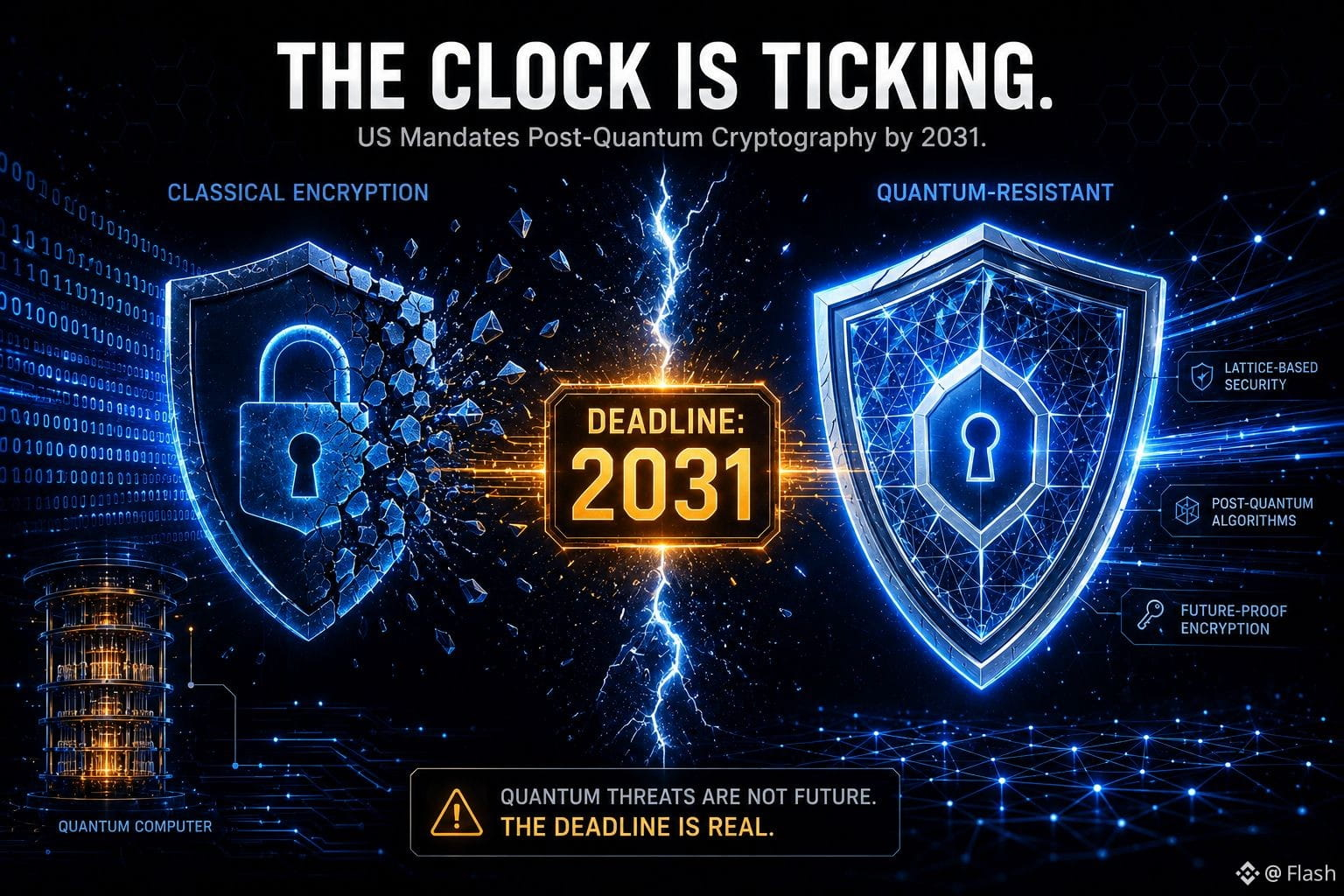
Yesterday, EO 14409 "Securing the Nation Against Advanced Cryptographic Attacks" moved the US federal post-quantum cryptography deadline from 2035 to December 2031. Four years earlier than planned.
Here's why it matters for crypto:
Most blockchains including Bitcoin run on elliptic curve cryptography (ECC). A sufficiently powerful quantum computer running Shor's Algorithm can break ECC. That means wallets, signatures, and transactions could all be at risk.
Experts put the odds of quantum computers breaking current encryption at 10% by 2030 and 50% by 2032. The US government is clearly not waiting to find out.
Bitcoin developers are already responding with BIP 360 and BIP 361 proposals for quantum-resistant addresses and eventually freezing dormant vulnerable wallets.
The timeline is real:
📅 Dec 2027 — NIST pilot migrations complete
📅 Dec 2030 — Key establishment systems upgraded
📅 Dec 2031 — Digital signatures fully migrated
The quantum threat isn't science fiction anymore. It's government policy.
Is your crypto stack quantum-ready? 👇
♻️ Repost so your network doesn't miss this
Not financial advice. DYOR. 🔍
$BTC $ETH $BNB
#USPostQuantumCryptographyDeadline2031 #Crypto #Bitcoin #Web3 #CyberSecurity
3
132

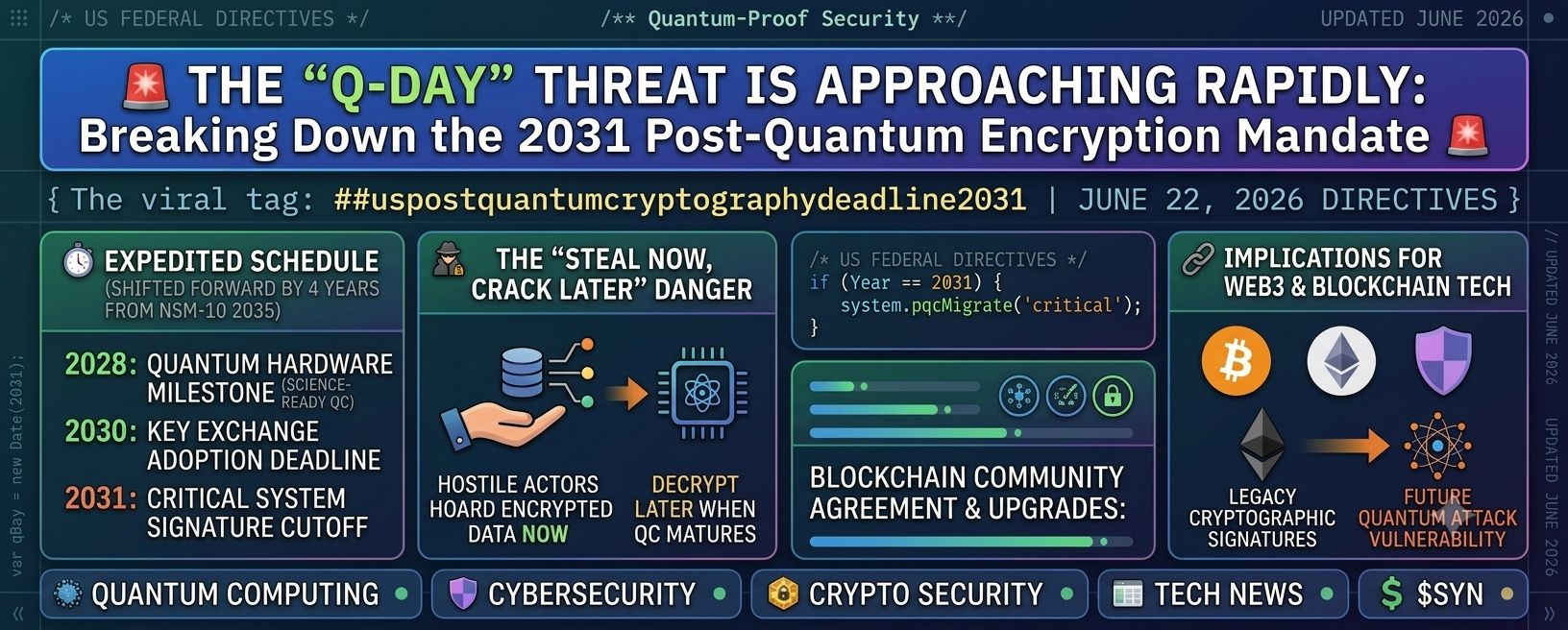
Статья
THE "Q-DAY" THREAT IS APPROACHING RAPIDLY: Breaking Down the 2031 Post-Quantum Encryption MandateThe tag #uspostquantumcryptographydeadline2031 is viral for a major reason: the window to secure systems against quantum attacks has been severely shortened.
On June 22, 2026, new executive directives were issued to speed up the United States federal government's shift toward Post-Quantum Cryptography (PQC). Below is a factual overview of the revised schedule and its implications for digital security and crypto assets.
⏱️ The Expedited Schedule
2031 Signature Cutoff: Government agencies are obligated to migrate the digital signatures of critical systems to novel, quantum-proof protocols by the close of 2031.
2030 Key Exchange: Federal frameworks must adopt PQC methods for secure key establishment no later than the end of 2030.
Shifted Forward by 4 Years: These mandates drastically push up the prior 2035 objective, which was initially outlined in the 2022 National Security Memorandum-10 (NSM-10).
Hardware Milestone: Alongside these encryption updates, a parallel directive aims to produce a fully functional, science-ready quantum computer by the year 2028.
🕵️ The "Steal Now, Crack Later" Danger
The main driver behind this rushed schedule is an identified national security vulnerability dubbed "harvest now, decrypt later." Hostile actors are currently hoarding encrypted data with the goal of decrypting it later when quantum technology becomes capable of shattering standard encryption models.
⛓️ Implications for Web3 & Blockchain Tech
The "Q-Day" Threat: Although the recent orders require updates specifically for federal infrastructure rather than decentralized protocols, they establish a clear official expectation for "Q-Day"—the exact moment quantum machines will likely bypass current encryption.
Network Weaknesses: Distributed ledgers such as Bitcoin and Ethereum depend heavily on legacy cryptographic signatures. These face severe upcoming dangers from next-generation quantum computing hardware.
Moving Forward: Defensive solutions are already available, as NIST recently completed post-quantum frameworks like ML-DSA for digital signing. The true hurdle now is for blockchain communities to reach agreement and implement network upgrades before quantum technology overtakes them.
The sprint towards a quantum-proof digital world has fully begun.
#quantumcomputing #CyberSecurity #CryptoSecurity #technews
$ALGO
{spot}(ALGOUSDT)
$IOTA
{future}(IOTAUSDT)
$ZEC
THE "Q-DAY" THREAT IS APPROACHING RAPIDLY: Breaking Down the 2031 Post-Quantum Encryption Mandate
The tag #uspostquantumcryptographydeadline2031 is viral for a major reason: the window to secure systems against quantum attacks has been severely shortened.
On June 22, 2026, new executive directives were issued to speed up the United States federal government's shift toward Post-Quantum Cryptography (PQC). Below is a factual overview of the revised schedule and its implications for digital security and crypto assets.
⏱️ The Expedited Schedule
2031 Signature Cutoff: Government agencies are obligated to migrate the digital signatures of critical systems to novel, quantum-proof protocols by the close of 2031.
2030 Key Exchange: Federal frameworks must adopt PQC methods for secure key establishment no later than the end of 2030.
Shifted Forward by 4 Years: These mandates drastically push up the prior 2035 objective, which was initially outlined in the 2022 National Security Memorandum-10 (NSM-10).
Hardware Milestone: Alongside these encryption updates, a parallel directive aims to produce a fully functional, science-ready quantum computer by the year 2028.
🕵️ The "Steal Now, Crack Later" Danger
The main driver behind this rushed schedule is an identified national security vulnerability dubbed "harvest now, decrypt later." Hostile actors are currently hoarding encrypted data with the goal of decrypting it later when quantum technology becomes capable of shattering standard encryption models.
⛓️ Implications for Web3 & Blockchain Tech
The "Q-Day" Threat: Although the recent orders require updates specifically for federal infrastructure rather than decentralized protocols, they establish a clear official expectation for "Q-Day"—the exact moment quantum machines will likely bypass current encryption.
Network Weaknesses: Distributed ledgers such as Bitcoin and Ethereum depend heavily on legacy cryptographic signatures. These face severe upcoming dangers from next-generation quantum computing hardware.
Moving Forward: Defensive solutions are already available, as NIST recently completed post-quantum frameworks like ML-DSA for digital signing. The true hurdle now is for blockchain communities to reach agreement and implement network upgrades before quantum technology overtakes them.
The sprint towards a quantum-proof digital world has fully begun.
#quantumcomputing #CyberSecurity #CryptoSecurity #technews
$ALGO
$IOTA
$ZEC
4
9
7.5k

#uspostquantumcryptographydeadline2031
🚨 US Post-Quantum Cryptography Deadline 2031 🔥
The US government is forcing a massive upgrade: Federal agencies and contractors must migrate to quantum-resistant cryptography by 2030–2031.
Key establishment: Dec 31, 2030 Digital signatures (high-impact systems): Dec 31, 2031
Why? Quantum computers will eventually break RSA & ECC. Hackers are already harvesting encrypted data today to decrypt tomorrow (“Store Now, Decrypt Later”).
This affects everything: banking, national security, critical infrastructure, cloud services, and your crypto wallets/transactions.
PQC standards (NIST ML-KEM, ML-DSA etc.) are here. The race to implement is on.
Companies and devs not preparing now will get left behind.
Is your infrastructure quantum-safe yet? 👀
#PostQuantum #PQC2031 #QuantumComputing
101

·
--

Статья
Важно🚨 США устанавливает срок 2031 года для пост-квантовой криптографии — изменит ли это будущее безопасности блокчейна? 🔐⚡🌐
Крупный технологический сдвиг привлекает внимание после того, как правительство США движется к сроку 2031 года для перехода на пост-квантовую криптографию, побуждая организации готовиться к следующему поколению кибербезопасности 👀💎
Это развитие создает новые обсуждения в мире технологий, поскольку достижения в квантовых вычислениях могут в конечном итоге бросить вызов текущим системам шифрования, используемым в финансах, банковском деле и блокчейн-сетях 📊🚀
💥 Почему это может быть важно для крипторынков?
✅ Более надежные стандарты шифрования могут изменить цифровую безопасность 🔐
✅ Инфраструктура блокчейна может эволюционировать для квантового сопротивления 🌐
✅ Будущие криптосети могут требовать обновленных защитных слоев ⚡
✅ Институциональные инвесторы внимательно следят за инновациями в области кибербезопасности 💰
✅ Квантовые технологии могут стать важной долгосрочной рыночной нарративой 📈
С учетом быстрого развития технологий безопасность становится одним из самых важных оснований цифровой экономики 👀
Для криптоинвесторов развитие в области квантовых вычислений и стандартов шифрования следующего поколения могут сыграть большую роль в формировании будущего принятия блокчейна 🌍🔥
Умные деньги следят за технологическими трендами заранее… потому что будущее часто вознаграждает тех, кто готовится первым 🚀$BTC $SPCXB $NVDAB
{spot}(SPCXBUSDT)
{spot}(NVDABUSDT)
{future}(BTCUSDT)
Важно
🚨 США устанавливает срок 2031 года для пост-квантовой криптографии — изменит ли это будущее безопасности блокчейна? 🔐⚡🌐
Крупный технологический сдвиг привлекает внимание после того, как правительство США движется к сроку 2031 года для перехода на пост-квантовую криптографию, побуждая организации готовиться к следующему поколению кибербезопасности 👀💎
Это развитие создает новые обсуждения в мире технологий, поскольку достижения в квантовых вычислениях могут в конечном итоге бросить вызов текущим системам шифрования, используемым в финансах, банковском деле и блокчейн-сетях 📊🚀
💥 Почему это может быть важно для крипторынков?
✅ Более надежные стандарты шифрования могут изменить цифровую безопасность 🔐
✅ Инфраструктура блокчейна может эволюционировать для квантового сопротивления 🌐
✅ Будущие криптосети могут требовать обновленных защитных слоев ⚡
✅ Институциональные инвесторы внимательно следят за инновациями в области кибербезопасности 💰
✅ Квантовые технологии могут стать важной долгосрочной рыночной нарративой 📈
С учетом быстрого развития технологий безопасность становится одним из самых важных оснований цифровой экономики 👀
Для криптоинвесторов развитие в области квантовых вычислений и стандартов шифрования следующего поколения могут сыграть большую роль в формировании будущего принятия блокчейна 🌍🔥
Умные деньги следят за технологическими трендами заранее… потому что будущее часто вознаграждает тех, кто готовится первым 🚀$BTC $SPCXB $NVDAB
2
440
Войдите, чтобы посмотреть больше материала
Присоединяйтесь к пользователям криптовалют по всему миру на Binance Square
⚡️ Получайте новейшую и полезную информацию о криптоактивах.
💬 Нам доверяет крупнейшая в мире криптобиржа.
👍 Получите достоверные аналитические данные от верифицированных создателей контента.
Эл. почта/номер телефона
В тренде
1
#WhatWillDriveCryptoandStocks’NextRebound?
Просмотров: 18,809
355 обсуждают
2
#Anthropic’s6xIPODemandSignalsPotentialRecordRaise
Просмотров: 5,802
152 обсуждают
3
#HuangExitNvidiaStrategyInFocus
Просмотров: 159,584
1,478 обсуждают
4
#AnthropicRejectsIPODelayValuationinQuestion
Просмотров: 778,941
5,652 обсуждают
5
#HedgeFundsCMEBitcoinNetShortsFall89%
Просмотров: 11,972
193 обсуждают
6
#BitMineReports$6.3BNetLossForFiscal2026
Просмотров: 22,597
178 обсуждают
7
#TradFiForBeginners
Просмотров: 559,150
3,906 обсуждают
8
#SoFiExpandsSoFiUSDStablecoinToPolygon
Просмотров: 7,657
114 обсуждают
9
#TetherGoldXAUTCompletesKPMGAudit
Просмотров: 10,749
121 обсуждают
10
#ChipStocksExtendLossesAfterNvidiaCEOChange
Просмотров: 59,276
560 обсуждают