

LearnBits
2.7k Публикации

LearnBits
Отправить жалобу
Заблокировать пользователя
BP-630E14DD5474
Открытая сделка
Трейдер с частыми сделками
7.9 г
119 подписок(и/а)
4.5K+ подписчиков(а)
6.8K+ понравилось
Посты
Портфель
Все
Цитирования
Видео
Активно
·
--
🚨 Visa, Mastercard & Stripe Just Put Their Weight Behind a New Stablecoin.
Open USD is officially live — and this isn’t another random stablecoin launch.
The project is backed by Coinbase, Mastercard, Shopify, Stripe and Visa, with more than 200 companies now part of the broader Open Standard network.
OUSD is launching across Ethereum, Solana, Base and Tempo, with businesses able to mint and redeem it 1:1 for dollars without minting or burning fees.
That fee model is a big part of the pitch.
Businesses can use OUSD for payments, global payouts, trading, FX, wallets and settlement — while partners can earn rewards based on their activity supporting the network.
And Coinbase access starts October 1.
The bigger story is the companies behind it.
Visa and Mastercard already move enormous amounts of money globally. Stripe powers internet payments. Coinbase brings the crypto infrastructure.
Now they’re putting those pieces around a shared dollar-based blockchain asset.
That could make stablecoins much less about crypto trading and much more about moving money globally.
The competition with established stablecoins is officially getting serious.
Are stablecoins about to become the new payment rails?
🚨 Visa, Mastercard & Stripe Just Put Their Weight Behind a New Stablecoin.
Open USD is officially live — and this isn’t another random stablecoin launch.
The project is backed by Coinbase, Mastercard, Shopify, Stripe and Visa, with more than 200 companies now part of the broader Open Standard network.
OUSD is launching across Ethereum, Solana, Base and Tempo, with businesses able to mint and redeem it 1:1 for dollars without minting or burning fees.
That fee model is a big part of the pitch.
Businesses can use OUSD for payments, global payouts, trading, FX, wallets and settlement — while partners can earn rewards based on their activity supporting the network.
And Coinbase access starts October 1.
The bigger story is the companies behind it.
Visa and Mastercard already move enormous amounts of money globally. Stripe powers internet payments. Coinbase brings the crypto infrastructure.
Now they’re putting those pieces around a shared dollar-based blockchain asset.
That could make stablecoins much less about crypto trading and much more about moving money globally.
The competition with established stablecoins is officially getting serious.
Are stablecoins about to become the new payment rails?
Open USD is officially live — and this isn’t another random stablecoin launch.
The project is backed by Coinbase, Mastercard, Shopify, Stripe and Visa, with more than 200 companies now part of the broader Open Standard network.
OUSD is launching across Ethereum, Solana, Base and Tempo, with businesses able to mint and redeem it 1:1 for dollars without minting or burning fees.
That fee model is a big part of the pitch.
Businesses can use OUSD for payments, global payouts, trading, FX, wallets and settlement — while partners can earn rewards based on their activity supporting the network.
And Coinbase access starts October 1.
The bigger story is the companies behind it.
Visa and Mastercard already move enormous amounts of money globally. Stripe powers internet payments. Coinbase brings the crypto infrastructure.
Now they’re putting those pieces around a shared dollar-based blockchain asset.
That could make stablecoins much less about crypto trading and much more about moving money globally.
The competition with established stablecoins is officially getting serious.
Are stablecoins about to become the new payment rails?
1
303
·
--
🚨 Dogecoin Is Trying to Become More Than a Meme And This Could Change the Game.
Dogecoin just opened a public testnet designed to bring Ethereum-style decentralized finance directly into its ecosystem.
The project, called DogeOS, is testing trading, lending, stablecoins and other applications that can use Dogecoin as an asset. ⚡
That’s a major shift in the narrative.
Dogecoin has historically been known mainly as a payment-focused cryptocurrency and meme-driven asset. Now developers are testing infrastructure that could turn its ecosystem into something much more programmable.
The testnet uses an Ethereum-compatible environment, meaning developers can potentially bring familiar smart-contract tools and applications into the Dogecoin ecosystem.
But there’s a huge caveat.
This is still a testnet. It doesn’t mean Dogecoin suddenly has a mature DeFi economy or that these applications are ready for billions in real user funds.
Still, the direction is interesting.
If Dogecoin can attract developers, liquidity and real usage, its role in crypto could expand far beyond simply sending DOGE around.
The meme coin may be trying to build an actual financial ecosystem underneath the meme.
{future}(DOGEUSDT)
{future}(ETHUSDT)
🚨 Dogecoin Is Trying to Become More Than a Meme And This Could Change the Game.
Dogecoin just opened a public testnet designed to bring Ethereum-style decentralized finance directly into its ecosystem.
The project, called DogeOS, is testing trading, lending, stablecoins and other applications that can use Dogecoin as an asset. ⚡
That’s a major shift in the narrative.
Dogecoin has historically been known mainly as a payment-focused cryptocurrency and meme-driven asset. Now developers are testing infrastructure that could turn its ecosystem into something much more programmable.
The testnet uses an Ethereum-compatible environment, meaning developers can potentially bring familiar smart-contract tools and applications into the Dogecoin ecosystem.
But there’s a huge caveat.
This is still a testnet. It doesn’t mean Dogecoin suddenly has a mature DeFi economy or that these applications are ready for billions in real user funds.
Still, the direction is interesting.
If Dogecoin can attract developers, liquidity and real usage, its role in crypto could expand far beyond simply sending DOGE around.
The meme coin may be trying to build an actual financial ecosystem underneath the meme.
Dogecoin just opened a public testnet designed to bring Ethereum-style decentralized finance directly into its ecosystem.
The project, called DogeOS, is testing trading, lending, stablecoins and other applications that can use Dogecoin as an asset. ⚡
That’s a major shift in the narrative.
Dogecoin has historically been known mainly as a payment-focused cryptocurrency and meme-driven asset. Now developers are testing infrastructure that could turn its ecosystem into something much more programmable.
The testnet uses an Ethereum-compatible environment, meaning developers can potentially bring familiar smart-contract tools and applications into the Dogecoin ecosystem.
But there’s a huge caveat.
This is still a testnet. It doesn’t mean Dogecoin suddenly has a mature DeFi economy or that these applications are ready for billions in real user funds.
Still, the direction is interesting.
If Dogecoin can attract developers, liquidity and real usage, its role in crypto could expand far beyond simply sending DOGE around.
The meme coin may be trying to build an actual financial ecosystem underneath the meme.
1
302
·
--
Google Unveils Gemini 4 as New AI Flagship.
Alphabet’s Google has announced Gemini 4, a new flagship artificial-intelligence model designed for complex workloads. The company says the model is larger than its previous top-tier Pro models and has demonstrated stronger performance on selected coding and cybersecurity benchmarks.
Google is initially making the model available to a limited group of cybersecurity partners and experts rather than releasing it broadly. 🔐 The company is also participating in a U.S. government program that gives authorities access to certain AI models before wider release.
The announcement comes after months of work on Gemini’s next generation, with Google previously delaying Gemini 3.5 Pro. Gemini 4 now becomes the company’s latest top-tier AI model as Google expands its push across advanced AI, coding and cybersecurity applications.
Google Unveils Gemini 4 as New AI Flagship.
Alphabet’s Google has announced Gemini 4, a new flagship artificial-intelligence model designed for complex workloads. The company says the model is larger than its previous top-tier Pro models and has demonstrated stronger performance on selected coding and cybersecurity benchmarks.
Google is initially making the model available to a limited group of cybersecurity partners and experts rather than releasing it broadly. 🔐 The company is also participating in a U.S. government program that gives authorities access to certain AI models before wider release.
The announcement comes after months of work on Gemini’s next generation, with Google previously delaying Gemini 3.5 Pro. Gemini 4 now becomes the company’s latest top-tier AI model as Google expands its push across advanced AI, coding and cybersecurity applications.
Alphabet’s Google has announced Gemini 4, a new flagship artificial-intelligence model designed for complex workloads. The company says the model is larger than its previous top-tier Pro models and has demonstrated stronger performance on selected coding and cybersecurity benchmarks.
Google is initially making the model available to a limited group of cybersecurity partners and experts rather than releasing it broadly. 🔐 The company is also participating in a U.S. government program that gives authorities access to certain AI models before wider release.
The announcement comes after months of work on Gemini’s next generation, with Google previously delaying Gemini 3.5 Pro. Gemini 4 now becomes the company’s latest top-tier AI model as Google expands its push across advanced AI, coding and cybersecurity applications.

Best Wishes!
От LearnBits
1
4
545
·
--
Oracle Lands $7 Billion Tencent AI Deal in Cloud.
Oracle has secured a major AI infrastructure agreement with Tencent, which has leased roughly 100,000 advanced AI chips from Oracle for five years in a deal valued at about $7 billion, according to the Financial Times. The arrangement includes an upfront payment of 30% and covers Oracle data centers across Southeast Asia.
The deal gives Tencent additional access to high-performance computing capacity as it expands its artificial-intelligence development, including work on large language models. The agreement also reflects the growing demand from Chinese technology companies for overseas AI computing infrastructure amid tighter access to advanced chips.
Oracle has become a major infrastructure partner for AI companies, with its cloud business supporting large-scale computing deployments. The Tencent agreement adds another multibillion-dollar customer commitment to that expanding AI infrastructure business.
Oracle Lands $7 Billion Tencent AI Deal in Cloud.
Oracle has secured a major AI infrastructure agreement with Tencent, which has leased roughly 100,000 advanced AI chips from Oracle for five years in a deal valued at about $7 billion, according to the Financial Times. The arrangement includes an upfront payment of 30% and covers Oracle data centers across Southeast Asia.
The deal gives Tencent additional access to high-performance computing capacity as it expands its artificial-intelligence development, including work on large language models. The agreement also reflects the growing demand from Chinese technology companies for overseas AI computing infrastructure amid tighter access to advanced chips.
Oracle has become a major infrastructure partner for AI companies, with its cloud business supporting large-scale computing deployments. The Tencent agreement adds another multibillion-dollar customer commitment to that expanding AI infrastructure business.
Oracle has secured a major AI infrastructure agreement with Tencent, which has leased roughly 100,000 advanced AI chips from Oracle for five years in a deal valued at about $7 billion, according to the Financial Times. The arrangement includes an upfront payment of 30% and covers Oracle data centers across Southeast Asia.
The deal gives Tencent additional access to high-performance computing capacity as it expands its artificial-intelligence development, including work on large language models. The agreement also reflects the growing demand from Chinese technology companies for overseas AI computing infrastructure amid tighter access to advanced chips.
Oracle has become a major infrastructure partner for AI companies, with its cloud business supporting large-scale computing deployments. The Tencent agreement adds another multibillion-dollar customer commitment to that expanding AI infrastructure business.
1
325
·
--
🚨 Base Just Upgraded the Rules for Onchain Trading And Tokenized Assets Are the Target.
Base has officially activated its Cobalt upgrade on mainnet, adding new transaction controls and expanding what tokenized assets can do.
One of the biggest additions is “Validity Transactions.”
Instead of sending a transaction and hoping market conditions are right, users can create transactions with specific onchain conditions. The network can wait until those conditions are satisfied before including the transaction or let it expire.
That could enable things like conditional swaps, automated withdrawals and more sophisticated trading strategies without relying on a separate keeper system.
But Cobalt goes beyond trading.
Base is also expanding its B20 token standard with new controls designed for tokenized assets, including issuer-authorized transfers and tools for corporate actions.
And that matters because Base is already positioning itself around tokenized stocks and other real-world assets.
The bigger picture?
Blockchain infrastructure is moving from simply “transfer tokens” toward “program financial markets.”
If that trend continues, onchain markets could become much more automated, conditional and always-on.
Base just pushed another piece of that infrastructure live.
Is programmable finance becoming the next big blockchain battleground?
🚨 Base Just Upgraded the Rules for Onchain Trading And Tokenized Assets Are the Target.
Base has officially activated its Cobalt upgrade on mainnet, adding new transaction controls and expanding what tokenized assets can do.
One of the biggest additions is “Validity Transactions.”
Instead of sending a transaction and hoping market conditions are right, users can create transactions with specific onchain conditions. The network can wait until those conditions are satisfied before including the transaction or let it expire.
That could enable things like conditional swaps, automated withdrawals and more sophisticated trading strategies without relying on a separate keeper system.
But Cobalt goes beyond trading.
Base is also expanding its B20 token standard with new controls designed for tokenized assets, including issuer-authorized transfers and tools for corporate actions.
And that matters because Base is already positioning itself around tokenized stocks and other real-world assets.
The bigger picture?
Blockchain infrastructure is moving from simply “transfer tokens” toward “program financial markets.”
If that trend continues, onchain markets could become much more automated, conditional and always-on.
Base just pushed another piece of that infrastructure live.
Is programmable finance becoming the next big blockchain battleground?
Base has officially activated its Cobalt upgrade on mainnet, adding new transaction controls and expanding what tokenized assets can do.
One of the biggest additions is “Validity Transactions.”
Instead of sending a transaction and hoping market conditions are right, users can create transactions with specific onchain conditions. The network can wait until those conditions are satisfied before including the transaction or let it expire.
That could enable things like conditional swaps, automated withdrawals and more sophisticated trading strategies without relying on a separate keeper system.
But Cobalt goes beyond trading.
Base is also expanding its B20 token standard with new controls designed for tokenized assets, including issuer-authorized transfers and tools for corporate actions.
And that matters because Base is already positioning itself around tokenized stocks and other real-world assets.
The bigger picture?
Blockchain infrastructure is moving from simply “transfer tokens” toward “program financial markets.”
If that trend continues, onchain markets could become much more automated, conditional and always-on.
Base just pushed another piece of that infrastructure live.
Is programmable finance becoming the next big blockchain battleground?
1
252
·
--
Проверено
Micron Just Dropped a Monster Quarter 🚀
Micron crushed fiscal Q4 expectations with $54.23B in revenue and $33.42 adjusted EPS, beating analyst estimates of about $51.1B and $31.6, respectively. AI-driven demand for memory and data-center chips is fueling the surge.
But the real headline is guidance: Micron expects $61.5B in Q1 revenue and $38.15 adjusted EPS, both well above Wall Street forecasts. Its long-term customer commitments also jumped to $32B.
Micron now expects memory supply-demand conditions to stay much tighter through fiscal 2027 and 2028. AI infrastructure demand is translating into a massive memory boom.
#MicronBeatsEarningsLiftsGuidance
$MU
{future}(MUUSDT)
Micron Just Dropped a Monster Quarter 🚀
Micron crushed fiscal Q4 expectations with $54.23B in revenue and $33.42 adjusted EPS, beating analyst estimates of about $51.1B and $31.6, respectively. AI-driven demand for memory and data-center chips is fueling the surge.
But the real headline is guidance: Micron expects $61.5B in Q1 revenue and $38.15 adjusted EPS, both well above Wall Street forecasts. Its long-term customer commitments also jumped to $32B.
Micron now expects memory supply-demand conditions to stay much tighter through fiscal 2027 and 2028. AI infrastructure demand is translating into a massive memory boom.
#MicronBeatsEarningsLiftsGuidance
$MU
Micron crushed fiscal Q4 expectations with $54.23B in revenue and $33.42 adjusted EPS, beating analyst estimates of about $51.1B and $31.6, respectively. AI-driven demand for memory and data-center chips is fueling the surge.
But the real headline is guidance: Micron expects $61.5B in Q1 revenue and $38.15 adjusted EPS, both well above Wall Street forecasts. Its long-term customer commitments also jumped to $32B.
Micron now expects memory supply-demand conditions to stay much tighter through fiscal 2027 and 2028. AI infrastructure demand is translating into a massive memory boom.
#MicronBeatsEarningsLiftsGuidance
$MU
Best Wishes!
От LearnBits
4
603
·
--
MetaMask Pulls Lido Validators After Security Incident 🚨
MetaMask is proactively exiting affected Ethereum validators from Lido after disclosing a security incident involving part of its infrastructure. The company says it’s working with external security advisers and has found no immediate threat to MetaMask wallets.
Lido says the affected validators are expected to exit by October 7. The ETH will then return gradually through the exit, withdrawal and re-entry process, which could take up to 45 days because of Ethereum’s validator queue. ⚠️
MetaMask hasn’t disclosed what was compromised. The precautionary move is focused on its non-custodial staking operations, while Lido says stETH holders don’t need to take action.
{future}(LDOUSDT)
{future}(ETHUSDT)
#MetaMaskExitsLidoValidatorsAfterSecurityIncident
MetaMask Pulls Lido Validators After Security Incident 🚨
MetaMask is proactively exiting affected Ethereum validators from Lido after disclosing a security incident involving part of its infrastructure. The company says it’s working with external security advisers and has found no immediate threat to MetaMask wallets.
Lido says the affected validators are expected to exit by October 7. The ETH will then return gradually through the exit, withdrawal and re-entry process, which could take up to 45 days because of Ethereum’s validator queue. ⚠️
MetaMask hasn’t disclosed what was compromised. The precautionary move is focused on its non-custodial staking operations, while Lido says stETH holders don’t need to take action.
#MetaMaskExitsLidoValidatorsAfterSecurityIncident
MetaMask is proactively exiting affected Ethereum validators from Lido after disclosing a security incident involving part of its infrastructure. The company says it’s working with external security advisers and has found no immediate threat to MetaMask wallets.
Lido says the affected validators are expected to exit by October 7. The ETH will then return gradually through the exit, withdrawal and re-entry process, which could take up to 45 days because of Ethereum’s validator queue. ⚠️
MetaMask hasn’t disclosed what was compromised. The precautionary move is focused on its non-custodial staking operations, while Lido says stETH holders don’t need to take action.
#MetaMaskExitsLidoValidatorsAfterSecurityIncident
1
322
·
--
🚨 Cardano Just Crashed Into Big Oil — And This Is Bigger Than Another Token Narrative.
Cardano is now being tested by Petrobras, Brazil’s state-controlled energy giant, in two research projects focused on tracking renewable fuel and environmental claims.
One project targets sustainable aviation fuel.
The idea is simple but important: use blockchain to create a verifiable record showing where an environmental benefit came from, who received it, and when it was claimed.
That could help prevent the same emissions reduction from being counted twice.
The second project focuses on Petrobras’ renewable diesel, creating a digital trail across production, transportation and usage.
And this is where things get interesting. 👀
This isn’t about putting another token on a blockchain.
It’s about using blockchain as infrastructure for a massive real-world industry where traceability and verification actually matter.
There’s still a major caveat: both initiatives are in the research stage, with no disclosed timeline for broad deployment or details on how much fuel could eventually be covered.
But enterprise adoption often starts exactly this way — small pilots testing whether blockchain can solve a problem traditional databases struggle with.
If projects like this move from R&D into production, the narrative around blockchain utility could shift from speculation to infrastructure.
Is real-world adoption becoming Cardano’s biggest story?
{future}(ADAUSDT)
🚨 Cardano Just Crashed Into Big Oil — And This Is Bigger Than Another Token Narrative.
Cardano is now being tested by Petrobras, Brazil’s state-controlled energy giant, in two research projects focused on tracking renewable fuel and environmental claims.
One project targets sustainable aviation fuel.
The idea is simple but important: use blockchain to create a verifiable record showing where an environmental benefit came from, who received it, and when it was claimed.
That could help prevent the same emissions reduction from being counted twice.
The second project focuses on Petrobras’ renewable diesel, creating a digital trail across production, transportation and usage.
And this is where things get interesting. 👀
This isn’t about putting another token on a blockchain.
It’s about using blockchain as infrastructure for a massive real-world industry where traceability and verification actually matter.
There’s still a major caveat: both initiatives are in the research stage, with no disclosed timeline for broad deployment or details on how much fuel could eventually be covered.
But enterprise adoption often starts exactly this way — small pilots testing whether blockchain can solve a problem traditional databases struggle with.
If projects like this move from R&D into production, the narrative around blockchain utility could shift from speculation to infrastructure.
Is real-world adoption becoming Cardano’s biggest story?
Cardano is now being tested by Petrobras, Brazil’s state-controlled energy giant, in two research projects focused on tracking renewable fuel and environmental claims.
One project targets sustainable aviation fuel.
The idea is simple but important: use blockchain to create a verifiable record showing where an environmental benefit came from, who received it, and when it was claimed.
That could help prevent the same emissions reduction from being counted twice.
The second project focuses on Petrobras’ renewable diesel, creating a digital trail across production, transportation and usage.
And this is where things get interesting. 👀
This isn’t about putting another token on a blockchain.
It’s about using blockchain as infrastructure for a massive real-world industry where traceability and verification actually matter.
There’s still a major caveat: both initiatives are in the research stage, with no disclosed timeline for broad deployment or details on how much fuel could eventually be covered.
But enterprise adoption often starts exactly this way — small pilots testing whether blockchain can solve a problem traditional databases struggle with.
If projects like this move from R&D into production, the narrative around blockchain utility could shift from speculation to infrastructure.
Is real-world adoption becoming Cardano’s biggest story?
1
345
·
--
Losers page is a straight up crime scene. 龙虾 down 45%, LYN down 30%. BR down 12%. This is exactly why I don't FOMO green candles. Who bounces first? 🧐
Losers page is a straight up crime scene. 龙虾 down 45%, LYN down 30%. BR down 12%. This is exactly why I don't FOMO green candles. Who bounces first? 🧐
龙虾
LYN
BR
Neither
36 мин. осталось
Best Wishes!
От LearnBits
1
6
1.5k
·
--
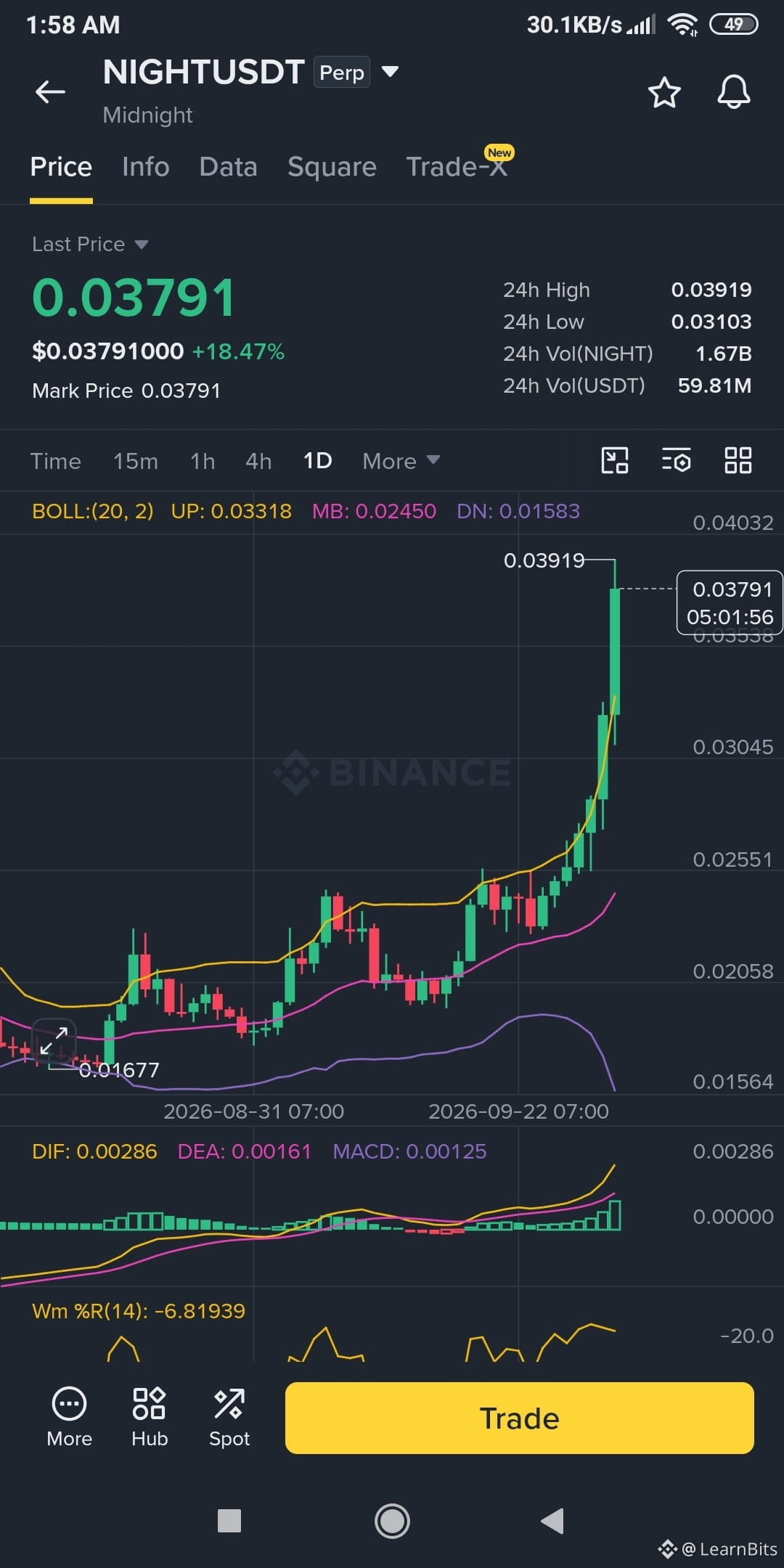
$NIGHT Momentum is loud but Let it come back to 0.033 first.
$NIGHT Momentum is loud but Let it come back to 0.033 first.
1
359
·
--
$ZEC slid off 1699 and now it's sitting right on the mid band. MACD fading. If 1412 holds, maybe a bounce—lose it and we go hunting lower.
{future}(ZECUSDT)
$ZEC slid off 1699 and now it's sitting right on the mid band. MACD fading. If 1412 holds, maybe a bounce—lose it and we go hunting lower.
Best Wishes!
От LearnBits
1
4
558
·
--
Robinhood Unveils AI Trading Agents and Weekend Markets 🤖
Robinhood has introduced Robinhood Agents, an embedded AI system designed to analyze markets, build strategies and execute trades on behalf of users. The company also announced Agent Apps that connect these AI tools with institutional-grade data and specialized third-party services.
The new lineup extends beyond AI. Robinhood plans to offer 24/7 weekend trading for selected U.S. equities, pending regulatory approval, alongside perpetual futures for eligible U.S. customers and earnings contracts tied to company metrics.
The products were unveiled at Robinhood’s HOOD Summit 2026 as the brokerage expands its platform beyond traditional stock and options trading. The company says the weekend equity service is planned for early next year, while the broader rollout adds automated trading, derivatives and event-based products to its existing platform.
Robinhood Unveils AI Trading Agents and Weekend Markets 🤖
Robinhood has introduced Robinhood Agents, an embedded AI system designed to analyze markets, build strategies and execute trades on behalf of users. The company also announced Agent Apps that connect these AI tools with institutional-grade data and specialized third-party services.
The new lineup extends beyond AI. Robinhood plans to offer 24/7 weekend trading for selected U.S. equities, pending regulatory approval, alongside perpetual futures for eligible U.S. customers and earnings contracts tied to company metrics.
The products were unveiled at Robinhood’s HOOD Summit 2026 as the brokerage expands its platform beyond traditional stock and options trading. The company says the weekend equity service is planned for early next year, while the broader rollout adds automated trading, derivatives and event-based products to its existing platform.
Robinhood has introduced Robinhood Agents, an embedded AI system designed to analyze markets, build strategies and execute trades on behalf of users. The company also announced Agent Apps that connect these AI tools with institutional-grade data and specialized third-party services.
The new lineup extends beyond AI. Robinhood plans to offer 24/7 weekend trading for selected U.S. equities, pending regulatory approval, alongside perpetual futures for eligible U.S. customers and earnings contracts tied to company metrics.
The products were unveiled at Robinhood’s HOOD Summit 2026 as the brokerage expands its platform beyond traditional stock and options trading. The company says the weekend equity service is planned for early next year, while the broader rollout adds automated trading, derivatives and event-based products to its existing platform.
1
341
·
--
HPE Lands $1.2B AI Infrastructure Order from Vultr 🤖
Hewlett Packard Enterprise has secured a $1.2 billion order from cloud infrastructure provider Vultr for AMD-powered AI server racks. The systems will be deployed across Vultr’s U.S. data centers, marking HPE’s first order for AMD’s new Helios AI rack platform.
The deal was announced alongside an upgraded long-term outlook for HPE’s networking business. The company now expects networking revenue to grow at a high-teens annual rate through fiscal 2029, supported by rising demand for AI infrastructure.
The Vultr agreement adds a major customer deployment to HPE’s AI infrastructure business as data centers require higher-performance computing and networking. The AMD Helios systems combine AI compute with HPE networking technology, creating an integrated rack-scale platform designed for large AI workloads.
HPE Lands $1.2B AI Infrastructure Order from Vultr 🤖
Hewlett Packard Enterprise has secured a $1.2 billion order from cloud infrastructure provider Vultr for AMD-powered AI server racks. The systems will be deployed across Vultr’s U.S. data centers, marking HPE’s first order for AMD’s new Helios AI rack platform.
The deal was announced alongside an upgraded long-term outlook for HPE’s networking business. The company now expects networking revenue to grow at a high-teens annual rate through fiscal 2029, supported by rising demand for AI infrastructure.
The Vultr agreement adds a major customer deployment to HPE’s AI infrastructure business as data centers require higher-performance computing and networking. The AMD Helios systems combine AI compute with HPE networking technology, creating an integrated rack-scale platform designed for large AI workloads.
Hewlett Packard Enterprise has secured a $1.2 billion order from cloud infrastructure provider Vultr for AMD-powered AI server racks. The systems will be deployed across Vultr’s U.S. data centers, marking HPE’s first order for AMD’s new Helios AI rack platform.
The deal was announced alongside an upgraded long-term outlook for HPE’s networking business. The company now expects networking revenue to grow at a high-teens annual rate through fiscal 2029, supported by rising demand for AI infrastructure.
The Vultr agreement adds a major customer deployment to HPE’s AI infrastructure business as data centers require higher-performance computing and networking. The AMD Helios systems combine AI compute with HPE networking technology, creating an integrated rack-scale platform designed for large AI workloads.
Best Wishes!
От LearnBits
1
5
486
·
--
KOSPI Suffers Its Worst Quarter Since 2020 📉
South Korea’s KOSPI fell 19.3% in the third quarter, marking its biggest quarterly decline since Q1 2020. The index closed Wednesday at 6,838.04 after giving up an early gain of more than 1%.
The selloff was driven in part by weakness in major memory-chip stocks such as Samsung Electronics and SK Hynix, while rising bond yields and foreign selling added pressure. Foreign investors were net sellers during the latest session. 👀
It’s a sharp reversal after six straight quarters of gains. Yet despite the brutal quarter, the KOSPI is still up 62.3% for the year, showing just how strong the earlier rally was.#KospiPostsWorstQuarterSince2020
KOSPI Suffers Its Worst Quarter Since 2020 📉
South Korea’s KOSPI fell 19.3% in the third quarter, marking its biggest quarterly decline since Q1 2020. The index closed Wednesday at 6,838.04 after giving up an early gain of more than 1%.
The selloff was driven in part by weakness in major memory-chip stocks such as Samsung Electronics and SK Hynix, while rising bond yields and foreign selling added pressure. Foreign investors were net sellers during the latest session. 👀
It’s a sharp reversal after six straight quarters of gains. Yet despite the brutal quarter, the KOSPI is still up 62.3% for the year, showing just how strong the earlier rally was.#KospiPostsWorstQuarterSince2020
South Korea’s KOSPI fell 19.3% in the third quarter, marking its biggest quarterly decline since Q1 2020. The index closed Wednesday at 6,838.04 after giving up an early gain of more than 1%.
The selloff was driven in part by weakness in major memory-chip stocks such as Samsung Electronics and SK Hynix, while rising bond yields and foreign selling added pressure. Foreign investors were net sellers during the latest session. 👀
It’s a sharp reversal after six straight quarters of gains. Yet despite the brutal quarter, the KOSPI is still up 62.3% for the year, showing just how strong the earlier rally was.#KospiPostsWorstQuarterSince2020
2
443
·
--
$ARK went parabolic. Price way above band. Next? 🔥
{future}(ARKUSDT)
$ARK went parabolic. Price way above band. Next? 🔥
Sends $0.42
33%
Rejects to $0.30
0%
Ranges $0.35-$0.38
67%
12 проголосовали • Голосование закрыто
Best Wishes!
От LearnBits
1
2
562
·
--
🚨 Quant Just Landed Inside a U.S. Banking Infrastructure Play.
Quant is suddenly one of the biggest stories in crypto — but the catalyst has almost nothing to do with a new DeFi app.
The Clearing House selected Quant to power its On-Chain Money Initiative, a planned network designed to let financial institutions clear and settle tokenized bank deposits.
And this isn't some isolated crypto experiment.
The network is being designed to connect blockchain-based deposits with existing U.S. payment infrastructure, including RTP and CHIPS.
That means banks could potentially move programmable, tokenized deposits while staying connected to the payment rails they already use.
The project is expected to become available to participating institutions in the first half of 2027, so this isn't live banking infrastructure yet.
But the market is already paying attention.
Quant's token has seen a massive surge, with 24-hour gains and trading volume accelerating sharply as traders digest the institutional partnership.
There is one important detail, though: the partnership confirms Quant's technology role, but it does not establish that the QNT token itself will be required for every transaction on the network.
That's the part the market still needs to figure out.
The bigger story is that tokenized deposits are moving from blockchain demos toward actual banking infrastructure.
And Quant just got a seat at the table. 👀
Is tokenized bank money becoming crypto's next major growth story?
🚨 Quant Just Landed Inside a U.S. Banking Infrastructure Play.
Quant is suddenly one of the biggest stories in crypto — but the catalyst has almost nothing to do with a new DeFi app.
The Clearing House selected Quant to power its On-Chain Money Initiative, a planned network designed to let financial institutions clear and settle tokenized bank deposits.
And this isn't some isolated crypto experiment.
The network is being designed to connect blockchain-based deposits with existing U.S. payment infrastructure, including RTP and CHIPS.
That means banks could potentially move programmable, tokenized deposits while staying connected to the payment rails they already use.
The project is expected to become available to participating institutions in the first half of 2027, so this isn't live banking infrastructure yet.
But the market is already paying attention.
Quant's token has seen a massive surge, with 24-hour gains and trading volume accelerating sharply as traders digest the institutional partnership.
There is one important detail, though: the partnership confirms Quant's technology role, but it does not establish that the QNT token itself will be required for every transaction on the network.
That's the part the market still needs to figure out.
The bigger story is that tokenized deposits are moving from blockchain demos toward actual banking infrastructure.
And Quant just got a seat at the table. 👀
Is tokenized bank money becoming crypto's next major growth story?
Quant is suddenly one of the biggest stories in crypto — but the catalyst has almost nothing to do with a new DeFi app.
The Clearing House selected Quant to power its On-Chain Money Initiative, a planned network designed to let financial institutions clear and settle tokenized bank deposits.
And this isn't some isolated crypto experiment.
The network is being designed to connect blockchain-based deposits with existing U.S. payment infrastructure, including RTP and CHIPS.
That means banks could potentially move programmable, tokenized deposits while staying connected to the payment rails they already use.
The project is expected to become available to participating institutions in the first half of 2027, so this isn't live banking infrastructure yet.
But the market is already paying attention.
Quant's token has seen a massive surge, with 24-hour gains and trading volume accelerating sharply as traders digest the institutional partnership.
There is one important detail, though: the partnership confirms Quant's technology role, but it does not establish that the QNT token itself will be required for every transaction on the network.
That's the part the market still needs to figure out.
The bigger story is that tokenized deposits are moving from blockchain demos toward actual banking infrastructure.
And Quant just got a seat at the table. 👀
Is tokenized bank money becoming crypto's next major growth story?
2
485
·
--
UK Opens the Door to Crypto Authorization 🇬🇧
The UK’s Financial Conduct Authority has opened its authorization gateway for crypto firms, allowing businesses to apply under the country’s new regulatory framework. The application window runs from September 30, 2026 through February 28, 2027.
The framework covers activities including crypto trading platforms, custody, dealing and arranging transactions, qualifying stablecoins and staking. Existing AML registrations won’t automatically convert into FCA authorization, meaning firms need to apply or vary existing permissions.
The full regime is scheduled to take effect on October 25, 2027. For crypto businesses operating in Britain, the transition from registration to full financial regulation is officially underway.
#UKFCAOpensCryptoFirmAuthorization
UK Opens the Door to Crypto Authorization 🇬🇧
The UK’s Financial Conduct Authority has opened its authorization gateway for crypto firms, allowing businesses to apply under the country’s new regulatory framework. The application window runs from September 30, 2026 through February 28, 2027.
The framework covers activities including crypto trading platforms, custody, dealing and arranging transactions, qualifying stablecoins and staking. Existing AML registrations won’t automatically convert into FCA authorization, meaning firms need to apply or vary existing permissions.
The full regime is scheduled to take effect on October 25, 2027. For crypto businesses operating in Britain, the transition from registration to full financial regulation is officially underway.
#UKFCAOpensCryptoFirmAuthorization
The UK’s Financial Conduct Authority has opened its authorization gateway for crypto firms, allowing businesses to apply under the country’s new regulatory framework. The application window runs from September 30, 2026 through February 28, 2027.
The framework covers activities including crypto trading platforms, custody, dealing and arranging transactions, qualifying stablecoins and staking. Existing AML registrations won’t automatically convert into FCA authorization, meaning firms need to apply or vary existing permissions.
The full regime is scheduled to take effect on October 25, 2027. For crypto businesses operating in Britain, the transition from registration to full financial regulation is officially underway.
#UKFCAOpensCryptoFirmAuthorization
1
299
·
--
TRON Rings Cboe Bell for Staked TRX ETF 🔔
TRON DAO is set to ring the closing bell at Cboe in Chicago to celebrate the debut of the Canary Staked TRX ETF. The fund began trading on Cboe on September 9 under TRXS, giving investors spot exposure to TRX plus potential staking rewards.
The ETF marks another step for TRX into traditional markets. Canary’s fund uses TRON’s delegated proof-of-stake system, with net staking rewards reflected in the fund’s NAV. 🚀
TRON says its network now supports more than $94 billion in circulating USDT and has processed about $6.1 trillion in USDT transfers year-to-date. The ETF launch puts that stablecoin infrastructure story in front of traditional investors.
TRON Rings Cboe Bell for Staked TRX ETF 🔔
TRON DAO is set to ring the closing bell at Cboe in Chicago to celebrate the debut of the Canary Staked TRX ETF. The fund began trading on Cboe on September 9 under TRXS, giving investors spot exposure to TRX plus potential staking rewards.
The ETF marks another step for TRX into traditional markets. Canary’s fund uses TRON’s delegated proof-of-stake system, with net staking rewards reflected in the fund’s NAV. 🚀
TRON says its network now supports more than $94 billion in circulating USDT and has processed about $6.1 trillion in USDT transfers year-to-date. The ETF launch puts that stablecoin infrastructure story in front of traditional investors.
TRON DAO is set to ring the closing bell at Cboe in Chicago to celebrate the debut of the Canary Staked TRX ETF. The fund began trading on Cboe on September 9 under TRXS, giving investors spot exposure to TRX plus potential staking rewards.
The ETF marks another step for TRX into traditional markets. Canary’s fund uses TRON’s delegated proof-of-stake system, with net staking rewards reflected in the fund’s NAV. 🚀
TRON says its network now supports more than $94 billion in circulating USDT and has processed about $6.1 trillion in USDT transfers year-to-date. The ETF launch puts that stablecoin infrastructure story in front of traditional investors.
Best Wishes!
От LearnBits
4
461
·
--
$AGPU Axe Compute Adds $266M in New AI Contracts 🤖
Axe Compute has signed more than $266 million in new AI infrastructure contracts since reporting its second-quarter results on August 17. The company also received more than $184 million in customer prepayments tied to new and existing agreements, providing capital ahead of infrastructure delivery.
The latest contracts push Axe Compute’s total signed contract value over the past seven months above $3.45 billion. The agreements include dedicated AI infrastructure featuring Grace Blackwell 300-class systems, CPU nodes, high-speed storage and network connectivity. ⚙️
The company is using the incoming customer payments to support deployment as it expands its GPU-as-a-Service operations. The contracts include terms of up to 60 months, covering customers building AI cloud platforms as well as those running inference, fine-tuning and other production workloads. 💰
{future}(AGPUUSDT)
$AGPU Axe Compute Adds $266M in New AI Contracts 🤖
Axe Compute has signed more than $266 million in new AI infrastructure contracts since reporting its second-quarter results on August 17. The company also received more than $184 million in customer prepayments tied to new and existing agreements, providing capital ahead of infrastructure delivery.
The latest contracts push Axe Compute’s total signed contract value over the past seven months above $3.45 billion. The agreements include dedicated AI infrastructure featuring Grace Blackwell 300-class systems, CPU nodes, high-speed storage and network connectivity. ⚙️
The company is using the incoming customer payments to support deployment as it expands its GPU-as-a-Service operations. The contracts include terms of up to 60 months, covering customers building AI cloud platforms as well as those running inference, fine-tuning and other production workloads. 💰
Axe Compute has signed more than $266 million in new AI infrastructure contracts since reporting its second-quarter results on August 17. The company also received more than $184 million in customer prepayments tied to new and existing agreements, providing capital ahead of infrastructure delivery.
The latest contracts push Axe Compute’s total signed contract value over the past seven months above $3.45 billion. The agreements include dedicated AI infrastructure featuring Grace Blackwell 300-class systems, CPU nodes, high-speed storage and network connectivity. ⚙️
The company is using the incoming customer payments to support deployment as it expands its GPU-as-a-Service operations. The contracts include terms of up to 60 months, covering customers building AI cloud platforms as well as those running inference, fine-tuning and other production workloads. 💰
1
383
·
--
Проверено
Bitwise Launches First Spot NEAR ETF 🚀
Bitwise has officially launched its NEAR ETF on NYSE Arca, giving U.S. investors direct spot exposure to NEAR through a traditional brokerage account. The fund trades under NRR and carries a 0.75% management fee.
There’s an extra twist: Bitwise plans to stake the fund’s NEAR in-house, with staking rewards accruing to shareholders through the ETF’s NAV. The firm says NEAR’s current annualized staking rate is around 5%, though rewards aren't guaranteed.
This marks Bitwise’s expansion into another major altcoin ETF category, while positioning NEAR around the growing intersection of AI agents and blockchain infrastructure.
#BitwiseLaunchesFirstSpotNEARETF
{future}(NEARUSDT)
Bitwise Launches First Spot NEAR ETF 🚀
Bitwise has officially launched its NEAR ETF on NYSE Arca, giving U.S. investors direct spot exposure to NEAR through a traditional brokerage account. The fund trades under NRR and carries a 0.75% management fee.
There’s an extra twist: Bitwise plans to stake the fund’s NEAR in-house, with staking rewards accruing to shareholders through the ETF’s NAV. The firm says NEAR’s current annualized staking rate is around 5%, though rewards aren't guaranteed.
This marks Bitwise’s expansion into another major altcoin ETF category, while positioning NEAR around the growing intersection of AI agents and blockchain infrastructure.
#BitwiseLaunchesFirstSpotNEARETF
Bitwise has officially launched its NEAR ETF on NYSE Arca, giving U.S. investors direct spot exposure to NEAR through a traditional brokerage account. The fund trades under NRR and carries a 0.75% management fee.
There’s an extra twist: Bitwise plans to stake the fund’s NEAR in-house, with staking rewards accruing to shareholders through the ETF’s NAV. The firm says NEAR’s current annualized staking rate is around 5%, though rewards aren't guaranteed.
This marks Bitwise’s expansion into another major altcoin ETF category, while positioning NEAR around the growing intersection of AI agents and blockchain infrastructure.
#BitwiseLaunchesFirstSpotNEARETF
554
Войдите, чтобы посмотреть больше материала
Присоединяйтесь к пользователям криптовалют по всему миру на Binance Square
⚡️ Получайте новейшую и полезную информацию о криптоактивах.
💬 Нам доверяет крупнейшая в мире криптобиржа.
👍 Получите достоверные аналитические данные от верифицированных создателей контента.
Эл. почта/номер телефона
В тренде
BinanceKZ
Просмотров: 31,838
75 обсуждают
Как я потерял 180 000 тенге на «менеджере Binance» из WhatsApp — и почему всё равно остался в крипте
phpdead
·Лайков: 6
·Просмотров: 2.4k
EtherGains70.9%InQ3
Просмотров: 84,626
851 обсуждают
TreasuryLetsStatesFileStablecoinCertificationsEarly
Просмотров: 4,293
47 обсуждают