

#fedratedecisions
fedratedecisions
Просмотров: 2.6M
1,416 обсуждают
Популярные
Новые

·
--
Проверено
🚨 تصريحات من الفيدرالي غيّرت توقعات الأسواق بشأن رفع الفائدة في أكتوبر!
بعد تصريحات جون ويليامز، رئيس بنك الاحتياطي الفيدرالي في نيويورك، تراجعت احتمالات رفع الفائدة في أكتوبر من نحو 70% إلى 50%، بعدما أكد أنه لا توجد حاجة للاستعجال في اتخاذ خطوة جديدة.
هذا لا يعني أن رفع الفائدة أصبح مستبعدًا، فالتضخم ما زال مرتفعًا، وويليامز يرى أن رفعًا آخر قد يكون ضروريًا قبل نهاية العام، لكن ربما في ديسمبر بدل أكتوبر.
👀 الأهم الآن هو بيانات اليوم الأربعاء:
- بيانات ADP للوظائف
- Core PCE السنوي والشهري والناتج المحلي الإجمالي
بالنسبة لي، بيانات التضخم، خصوصا PCE، ستكون مهمة جدًا في تشكيل توقعات قرار الفيدرالي القادم. أي مفاجأة قد تعيد تحريك توقعات الفائدة، وبالتالي تؤثر على الدولار والسندات والأسهم والكريبتو.
#USJobOpeningsFallToFiveMonthLow
#FedRateDecisions
#FedRateWatch
🚨 تصريحات من الفيدرالي غيّرت توقعات الأسواق بشأن رفع الفائدة في أكتوبر!
بعد تصريحات جون ويليامز، رئيس بنك الاحتياطي الفيدرالي في نيويورك، تراجعت احتمالات رفع الفائدة في أكتوبر من نحو 70% إلى 50%، بعدما أكد أنه لا توجد حاجة للاستعجال في اتخاذ خطوة جديدة.
هذا لا يعني أن رفع الفائدة أصبح مستبعدًا، فالتضخم ما زال مرتفعًا، وويليامز يرى أن رفعًا آخر قد يكون ضروريًا قبل نهاية العام، لكن ربما في ديسمبر بدل أكتوبر.
👀 الأهم الآن هو بيانات اليوم الأربعاء:
- بيانات ADP للوظائف
- Core PCE السنوي والشهري والناتج المحلي الإجمالي
بالنسبة لي، بيانات التضخم، خصوصا PCE، ستكون مهمة جدًا في تشكيل توقعات قرار الفيدرالي القادم. أي مفاجأة قد تعيد تحريك توقعات الفائدة، وبالتالي تؤثر على الدولار والسندات والأسهم والكريبتو.
#USJobOpeningsFallToFiveMonthLow
#FedRateDecisions
#FedRateWatch
بعد تصريحات جون ويليامز، رئيس بنك الاحتياطي الفيدرالي في نيويورك، تراجعت احتمالات رفع الفائدة في أكتوبر من نحو 70% إلى 50%، بعدما أكد أنه لا توجد حاجة للاستعجال في اتخاذ خطوة جديدة.
هذا لا يعني أن رفع الفائدة أصبح مستبعدًا، فالتضخم ما زال مرتفعًا، وويليامز يرى أن رفعًا آخر قد يكون ضروريًا قبل نهاية العام، لكن ربما في ديسمبر بدل أكتوبر.
👀 الأهم الآن هو بيانات اليوم الأربعاء:
- بيانات ADP للوظائف
- Core PCE السنوي والشهري والناتج المحلي الإجمالي
بالنسبة لي، بيانات التضخم، خصوصا PCE، ستكون مهمة جدًا في تشكيل توقعات قرار الفيدرالي القادم. أي مفاجأة قد تعيد تحريك توقعات الفائدة، وبالتالي تؤثر على الدولار والسندات والأسهم والكريبتو.
#USJobOpeningsFallToFiveMonthLow
#FedRateDecisions
#FedRateWatch
7
5.6k

·
--
The Fed outlook is getting more interesting.
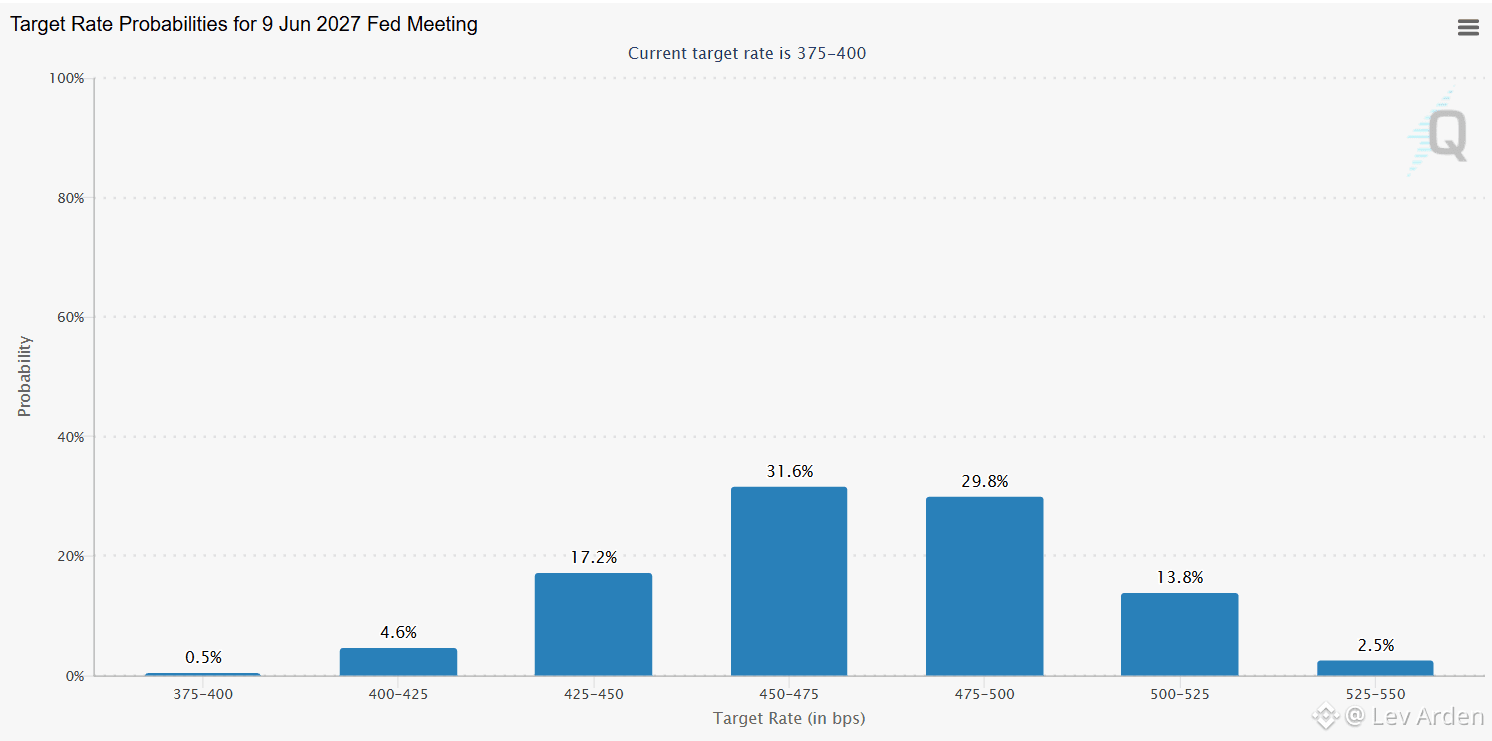
Markets are pricing a 78% chance of 3 more rate hikes by June 2027.
That helps explain the rise in bond yields.
If yields keep climbing, liquidity could stay tighter for longer.
Definitely worth watching for $BTC and the broader crypto market. 👀
#FedRateDecisions
The Fed outlook is getting more interesting.
Markets are pricing a 78% chance of 3 more rate hikes by June 2027.
That helps explain the rise in bond yields.
If yields keep climbing, liquidity could stay tighter for longer.
Definitely worth watching for $BTC and the broader crypto market. 👀
#FedRateDecisions
Markets are pricing a 78% chance of 3 more rate hikes by June 2027.
That helps explain the rise in bond yields.
If yields keep climbing, liquidity could stay tighter for longer.
Definitely worth watching for $BTC and the broader crypto market. 👀
#FedRateDecisions
206 Atlas:
78% pricing for hikes by 2027 is a long-term tail risk, not an immediate catalyst. Current crypto liquidity dynamics are more sensitive to spot flows than distant Fed probabilit...
2
1
2.3k

*The Unthinkable is About to Happen to Gold After What the Fed Just Did* ✍️
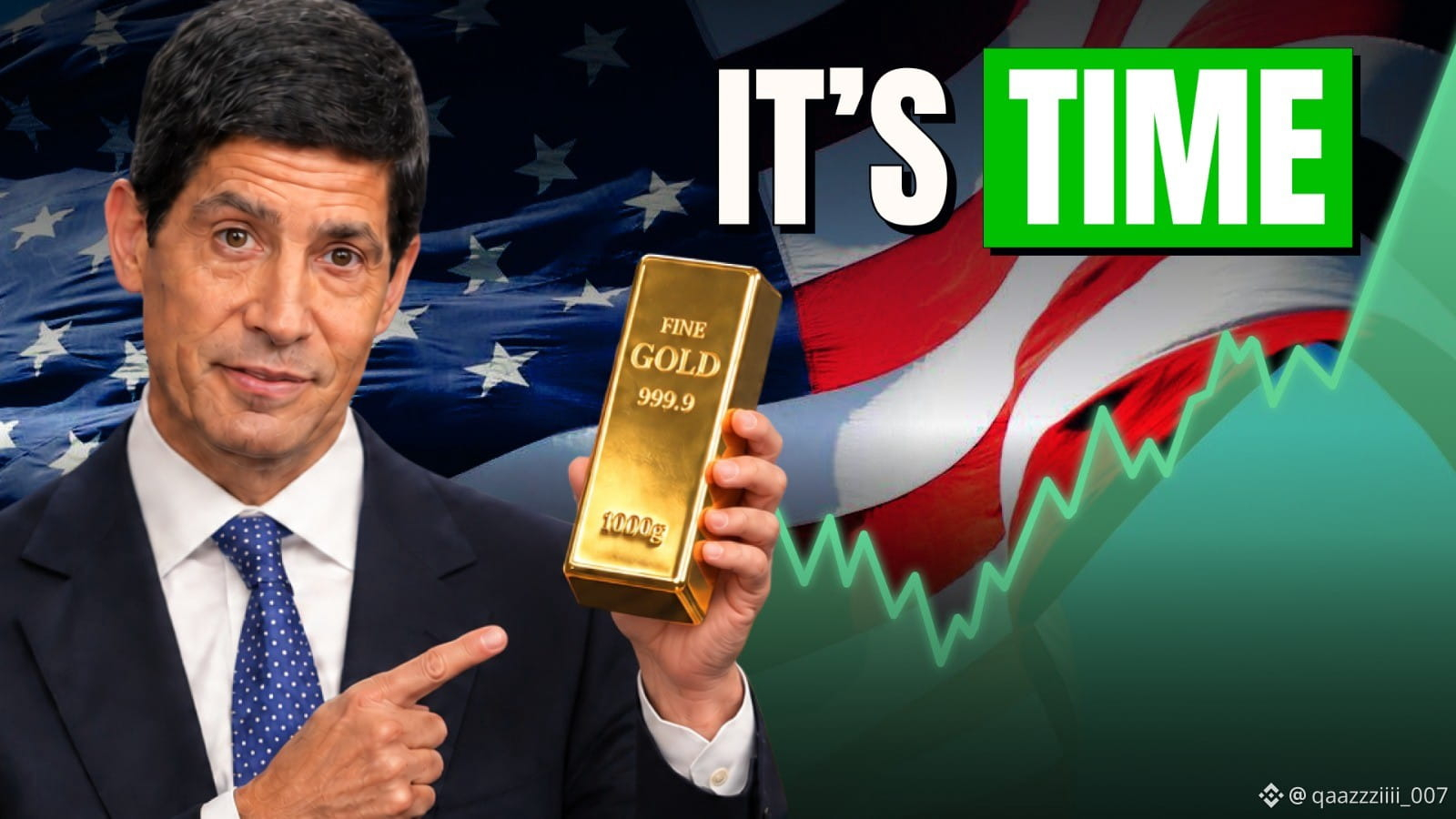
🏦 The *Federal Reserve's* September 16 rate hike triggered an immediate 1% drop in *Gold prices* to around $4,240 💫 but the more critical test is whether this level holds 📊
📹 In this analysis, *FXStreet's Dhwani Mehta* breaks down the Fed's hawkish dot plot, the *key technical levels for Gold*, and the *two scenarios traders must prepare* for 🔥
$XAU $OILK.ETF $SOL
#FedRateDecisions
*The Unthinkable is About to Happen to Gold After What the Fed Just Did* ✍️
🏦 The *Federal Reserve's* September 16 rate hike triggered an immediate 1% drop in *Gold prices* to around $4,240 💫 but the more critical test is whether this level holds 📊
📹 In this analysis, *FXStreet's Dhwani Mehta* breaks down the Fed's hawkish dot plot, the *key technical levels for Gold*, and the *two scenarios traders must prepare* for 🔥
$XAU $OILK.ETF $SOL
#FedRateDecisions
🏦 The *Federal Reserve's* September 16 rate hike triggered an immediate 1% drop in *Gold prices* to around $4,240 💫 but the more critical test is whether this level holds 📊
📹 In this analysis, *FXStreet's Dhwani Mehta* breaks down the Fed's hawkish dot plot, the *key technical levels for Gold*, and the *two scenarios traders must prepare* for 🔥
$XAU $OILK.ETF $SOL
#FedRateDecisions
XAU+0,32%
OILKETF+1,74%
297

·
--
Рост
Sácate una buena taza de café ☕, ponte cómodo y revisemos lo más "calientito" y reciente del panorama financiero!
Las tensiones entre la política monetaria de la Reserva Federal (FED), el mercado de criptomonedas, los ETFs y la visión del presidente Donald Trump están dando muchísimo de qué hablar.
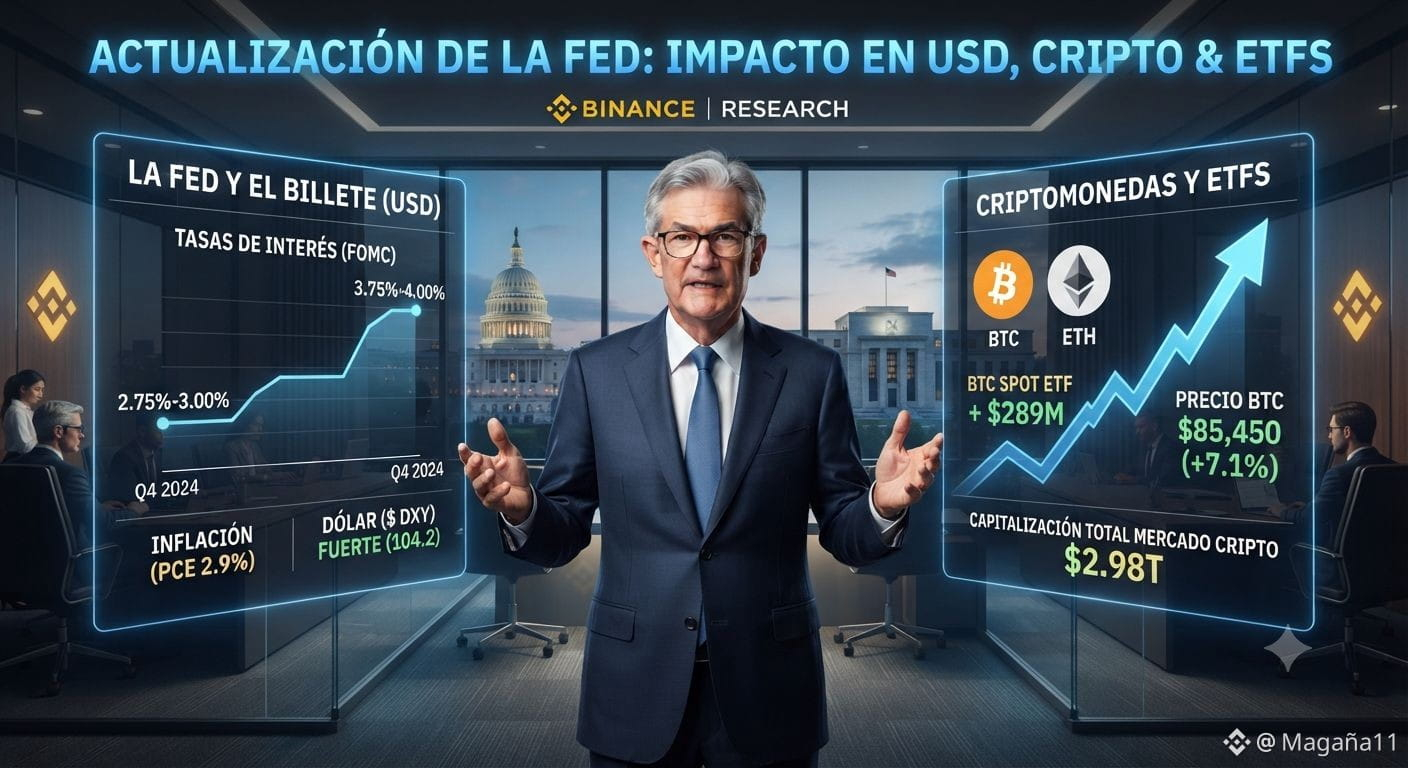
🏛️ 1. La FED da la sorpresa: ¿Qué pasó con las tasas y el billete ($)?
Subida de tipos: La FED rompió su pausa de más de tres años y subió la tasa de interés de referencia 25 puntos básicos, colocándola en el rango de 3.75% a 4.00%.
El motivo: La inflación sigue terca y el banco central busca frenarla a toda costa, priorizando la estabilidad por encima del crecimiento desbocado. Los analistas califican el tono de la FED como marcadamente hawkish (duro con la inflación).
El Dólar ($): Como era de esperarse, el índice del dólar estadounidense reaccionó al alza frente a sus principales pares globales tras el endurecimiento de la política.
#BinanceLaunchPool🔥 #BinanceSquareTalks #FedRateDecisions
sigue el hilo y infórmate sobre el punto número 2 $NVDAB $BTC me sigues puedes ayudar compartiendo estás publicaciones está información es reciente actualizada
Sácate una buena taza de café ☕, ponte cómodo y revisemos lo más "calientito" y reciente del panorama financiero!
Las tensiones entre la política monetaria de la Reserva Federal (FED), el mercado de criptomonedas, los ETFs y la visión del presidente Donald Trump están dando muchísimo de qué hablar.
🏛️ 1. La FED da la sorpresa: ¿Qué pasó con las tasas y el billete ($)?
Subida de tipos: La FED rompió su pausa de más de tres años y subió la tasa de interés de referencia 25 puntos básicos, colocándola en el rango de 3.75% a 4.00%.
El motivo: La inflación sigue terca y el banco central busca frenarla a toda costa, priorizando la estabilidad por encima del crecimiento desbocado. Los analistas califican el tono de la FED como marcadamente hawkish (duro con la inflación).
El Dólar ($): Como era de esperarse, el índice del dólar estadounidense reaccionó al alza frente a sus principales pares globales tras el endurecimiento de la política.
#BinanceLaunchPool🔥 #BinanceSquareTalks #FedRateDecisions
sigue el hilo y infórmate sobre el punto número 2 $NVDAB $BTC me sigues puedes ayudar compartiendo estás publicaciones está información es reciente actualizada
Las tensiones entre la política monetaria de la Reserva Federal (FED), el mercado de criptomonedas, los ETFs y la visión del presidente Donald Trump están dando muchísimo de qué hablar.
🏛️ 1. La FED da la sorpresa: ¿Qué pasó con las tasas y el billete ($)?
Subida de tipos: La FED rompió su pausa de más de tres años y subió la tasa de interés de referencia 25 puntos básicos, colocándola en el rango de 3.75% a 4.00%.
El motivo: La inflación sigue terca y el banco central busca frenarla a toda costa, priorizando la estabilidad por encima del crecimiento desbocado. Los analistas califican el tono de la FED como marcadamente hawkish (duro con la inflación).
El Dólar ($): Como era de esperarse, el índice del dólar estadounidense reaccionó al alza frente a sus principales pares globales tras el endurecimiento de la política.
#BinanceLaunchPool🔥 #BinanceSquareTalks #FedRateDecisions
sigue el hilo y infórmate sobre el punto número 2 $NVDAB $BTC me sigues puedes ayudar compartiendo estás publicaciones está información es reciente actualizada
58

A Fed rate hike generally puts downward pressure on riskier assets, including crypto, because borrowing becomes more expensive and investors may prefer interest-bearing assets.
📉 Bitcoin/altcoins: Can face selling pressure and higher volatility.
💵 US dollar: Higher rates can support the dollar, which can weigh on crypto prices. The dollar strengthened immediately after this hike.
Reuters
📈 Stocks: Higher rates can pressure growth and risk-sensitive stocks, although markets can rebound if investors had already priced in the hike. U.S. stocks actually rebounded the following day.
Reuters
⚡ Volatility: The Fed's indication that another hike may come later in 2026 means markets may remain sensitive to inflation and economic data. $BTC $USDT
{future}(BTCUSDT)
#FedRateCut #FedInterestRate #FedRateDecisions #BTC☀
A Fed rate hike generally puts downward pressure on riskier assets, including crypto, because borrowing becomes more expensive and investors may prefer interest-bearing assets.
📉 Bitcoin/altcoins: Can face selling pressure and higher volatility.
💵 US dollar: Higher rates can support the dollar, which can weigh on crypto prices. The dollar strengthened immediately after this hike.
Reuters
📈 Stocks: Higher rates can pressure growth and risk-sensitive stocks, although markets can rebound if investors had already priced in the hike. U.S. stocks actually rebounded the following day.
Reuters
⚡ Volatility: The Fed's indication that another hike may come later in 2026 means markets may remain sensitive to inflation and economic data. $BTC $USDT
#FedRateCut #FedInterestRate #FedRateDecisions #BTC☀
📉 Bitcoin/altcoins: Can face selling pressure and higher volatility.
💵 US dollar: Higher rates can support the dollar, which can weigh on crypto prices. The dollar strengthened immediately after this hike.
Reuters
📈 Stocks: Higher rates can pressure growth and risk-sensitive stocks, although markets can rebound if investors had already priced in the hike. U.S. stocks actually rebounded the following day.
Reuters
⚡ Volatility: The Fed's indication that another hike may come later in 2026 means markets may remain sensitive to inflation and economic data. $BTC $USDT
#FedRateCut #FedInterestRate #FedRateDecisions #BTC☀
73

#FedRateDecisions 🇺🇸💵
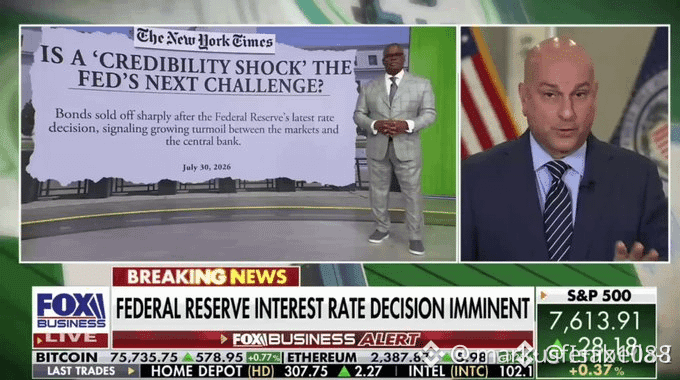
La Reserva Federal sube las tasas 25 puntos básicos
Desafiando las amenazas de Trump. ¡TRUMP VOLVIÓ A PERDER!
Trump pasó meses gritando pidiendo recortes, amenazando con cortar el comercio con países enteros si no bajaban las tasas, y insistiendo en que Estados Unidos debería tener las “tasas más bajas del mundo”.
Sin embargo, su propio hombre las subió de todos modos porque la inflación sigue descontrolada gracias a las estúpidas guerras y los aranceles de Trump.$PLAY $FLNC $ONDO
{future}(ONDOUSDT)
#FedRateDecisions 🇺🇸💵
La Reserva Federal sube las tasas 25 puntos básicos
Desafiando las amenazas de Trump. ¡TRUMP VOLVIÓ A PERDER!
Trump pasó meses gritando pidiendo recortes, amenazando con cortar el comercio con países enteros si no bajaban las tasas, y insistiendo en que Estados Unidos debería tener las “tasas más bajas del mundo”.
Sin embargo, su propio hombre las subió de todos modos porque la inflación sigue descontrolada gracias a las estúpidas guerras y los aranceles de Trump.$PLAY $FLNC $ONDO
La Reserva Federal sube las tasas 25 puntos básicos
Desafiando las amenazas de Trump. ¡TRUMP VOLVIÓ A PERDER!
Trump pasó meses gritando pidiendo recortes, amenazando con cortar el comercio con países enteros si no bajaban las tasas, y insistiendo en que Estados Unidos debería tener las “tasas más bajas del mundo”.
Sin embargo, su propio hombre las subió de todos modos porque la inflación sigue descontrolada gracias a las estúpidas guerras y los aranceles de Trump.$PLAY $FLNC $ONDO
264

·
--
Рост
Fed Raises Rates by 25 Basis Points
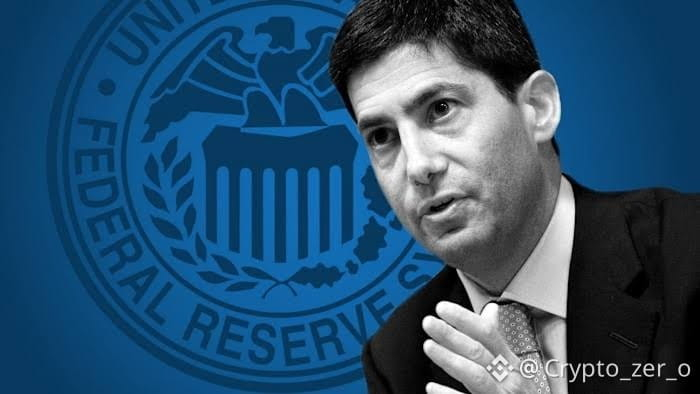
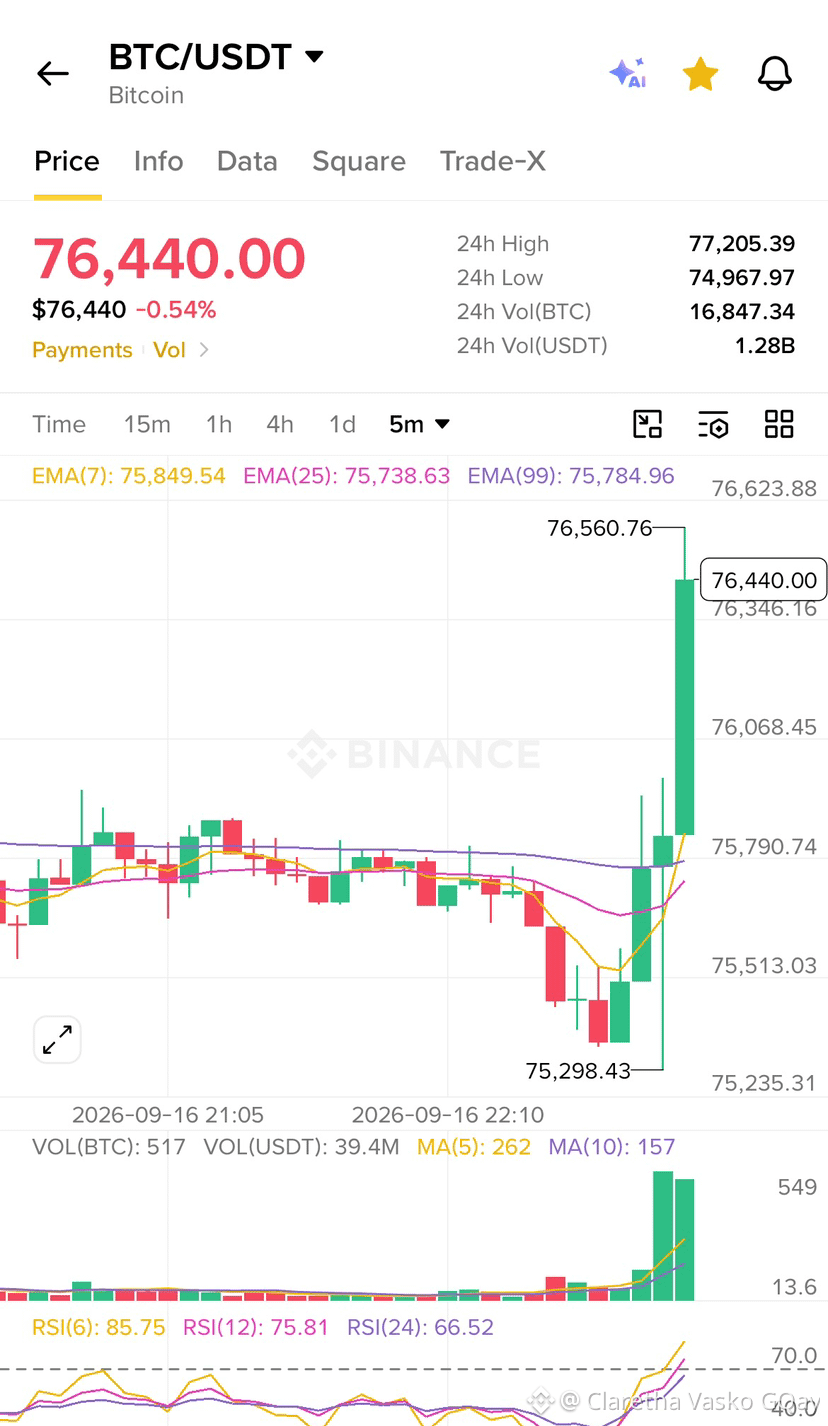
The Federal Reserve increased interest rates by 25 basis points to a range of 3.75%–4.00%, its first rate hike since 2023. Markets had largely anticipated the move, with pricing implying about a 90% probability beforehand.
Chair Kevin Warsh said future policy decisions would remain dependent on incoming economic data. Market participants are divided on whether the increase is a one-time adjustment or the beginning of a broader tightening cycle. Bitcoin traded near $76,000 after the announcement.
#FedRateDecisions #CLARITYAct
{spot}(BTCUSDT)
{spot}(ETHUSDT)
{spot}(BNBUSDT)
Fed Raises Rates by 25 Basis Points
The Federal Reserve increased interest rates by 25 basis points to a range of 3.75%–4.00%, its first rate hike since 2023. Markets had largely anticipated the move, with pricing implying about a 90% probability beforehand.
Chair Kevin Warsh said future policy decisions would remain dependent on incoming economic data. Market participants are divided on whether the increase is a one-time adjustment or the beginning of a broader tightening cycle. Bitcoin traded near $76,000 after the announcement.
#FedRateDecisions #CLARITYAct
The Federal Reserve increased interest rates by 25 basis points to a range of 3.75%–4.00%, its first rate hike since 2023. Markets had largely anticipated the move, with pricing implying about a 90% probability beforehand.
Chair Kevin Warsh said future policy decisions would remain dependent on incoming economic data. Market participants are divided on whether the increase is a one-time adjustment or the beginning of a broader tightening cycle. Bitcoin traded near $76,000 after the announcement.
#FedRateDecisions #CLARITYAct
127

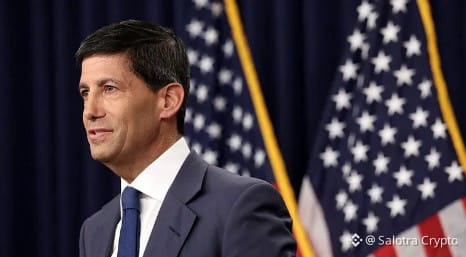
🚨 BREAKING: FED RATE DECISION TODAY — CRYPTO BRACES FOR VOLATILITY! 🇺🇸⚡
⏰ Rate Decision: 2:00 PM ET — 11:00 PM PKT 🇵🇰
🎙️ Chair Warsh Press Conference: 2:30 PM ET — 11:30 PM PKT
📈📉 Markets are watching closely as the Fed reveals its latest interest-rate decision, followed by Chair Warsh’s comments on the future policy path.
🔥 The countdown is on — will crypto pump or dump after the Fed? 👀
Follow for daily updates 🚨
$SYN $AKE $LSK
#FedRateWatch #FedRateDecisions
🚨 BREAKING: FED RATE DECISION TODAY — CRYPTO BRACES FOR VOLATILITY! 🇺🇸⚡
⏰ Rate Decision: 2:00 PM ET — 11:00 PM PKT 🇵🇰
🎙️ Chair Warsh Press Conference: 2:30 PM ET — 11:30 PM PKT
📈📉 Markets are watching closely as the Fed reveals its latest interest-rate decision, followed by Chair Warsh’s comments on the future policy path.
🔥 The countdown is on — will crypto pump or dump after the Fed? 👀
Follow for daily updates 🚨
$SYN $AKE $LSK
#FedRateWatch #FedRateDecisions
⏰ Rate Decision: 2:00 PM ET — 11:00 PM PKT 🇵🇰
🎙️ Chair Warsh Press Conference: 2:30 PM ET — 11:30 PM PKT
📈📉 Markets are watching closely as the Fed reveals its latest interest-rate decision, followed by Chair Warsh’s comments on the future policy path.
🔥 The countdown is on — will crypto pump or dump after the Fed? 👀
Follow for daily updates 🚨
$SYN $AKE $LSK
#FedRateWatch #FedRateDecisions
198


·
--
Рост
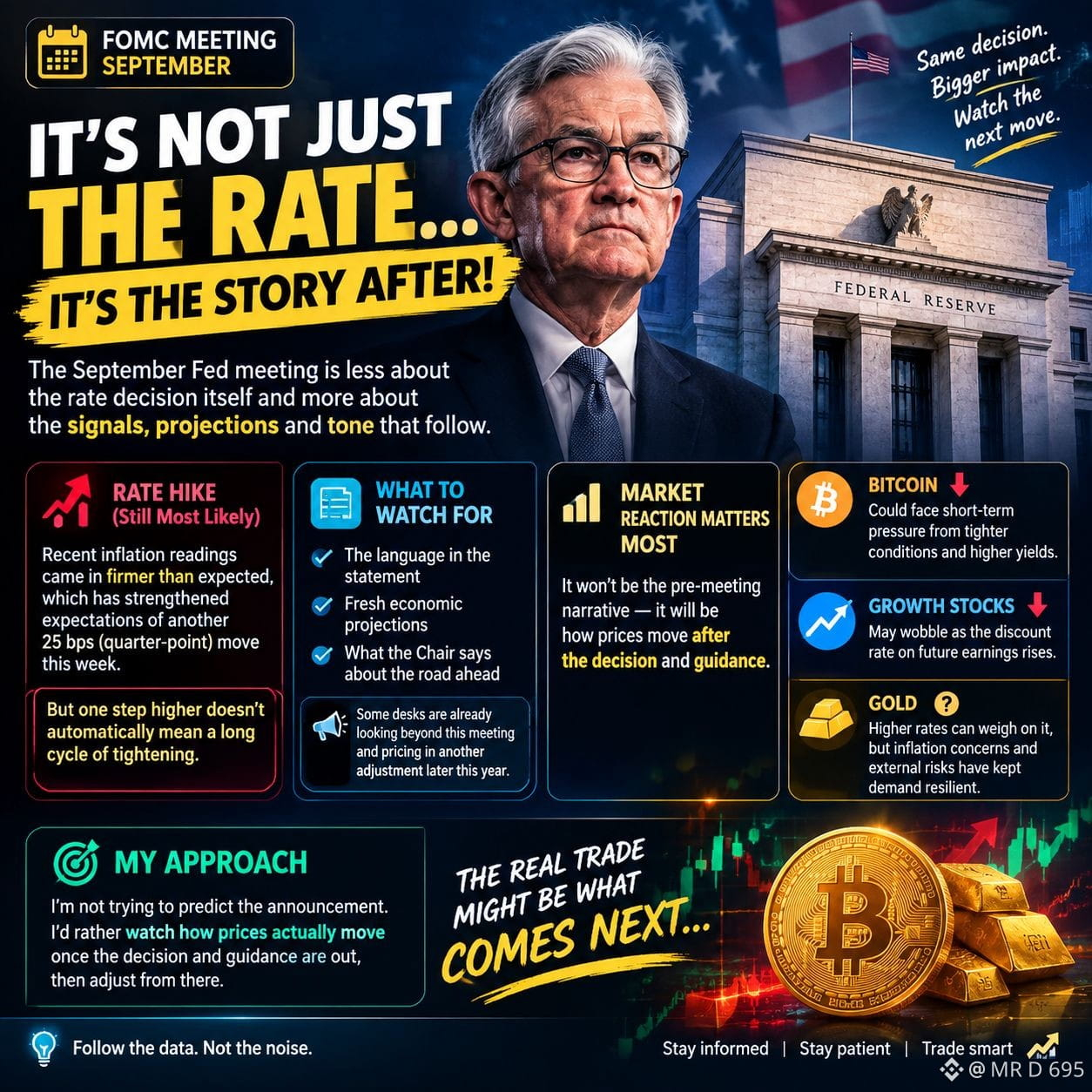
The September Fed meeting is less about the rate decision itself and more about the story that follows.
Recent inflation readings came in firmer than expected, enough to swing consensus firmly toward another quarter-point move this week. That outcome still looks like the most probable path. One step higher, however, does not automatically reopen a prolonged tightening campaign. Policymakers continue to walk a narrow line between lingering price pressure and the risk of slowing growth too much.
The real clues will sit in the language of the statement, the fresh set of economic projections, and whatever the chair chooses to stress about the road ahead. A few desks have already begun looking past this meeting and floating the possibility of another adjustment later in the year.
Market reaction will matter more than any pre-meeting narrative. Bitcoin could feel short-term pressure from tighter conditions and higher yields. Growth stocks may also wobble as the discount rate on future earnings rises. Gold remains the more complicated case—higher rates can weigh on it, yet inflation concerns and external risks have repeatedly kept demand resilient.
I’m not trying to anticipate the announcement. I’d rather watch how prices actually move once the decision and guidance are out, then adjust from there. The near-term step is largely expected. The more interesting trade may be whatever the Fed signals comes next.
$BTC
{spot}(BTCUSDT)
$LSK
{spot}(LSKUSDT)
$ZEC
{spot}(ZECUSDT)
#FedRateWatch #FedRateDecisions
The September Fed meeting is less about the rate decision itself and more about the story that follows.
Recent inflation readings came in firmer than expected, enough to swing consensus firmly toward another quarter-point move this week. That outcome still looks like the most probable path. One step higher, however, does not automatically reopen a prolonged tightening campaign. Policymakers continue to walk a narrow line between lingering price pressure and the risk of slowing growth too much.
The real clues will sit in the language of the statement, the fresh set of economic projections, and whatever the chair chooses to stress about the road ahead. A few desks have already begun looking past this meeting and floating the possibility of another adjustment later in the year.
Market reaction will matter more than any pre-meeting narrative. Bitcoin could feel short-term pressure from tighter conditions and higher yields. Growth stocks may also wobble as the discount rate on future earnings rises. Gold remains the more complicated case—higher rates can weigh on it, yet inflation concerns and external risks have repeatedly kept demand resilient.
I’m not trying to anticipate the announcement. I’d rather watch how prices actually move once the decision and guidance are out, then adjust from there. The near-term step is largely expected. The more interesting trade may be whatever the Fed signals comes next.
$BTC
$LSK
$ZEC
#FedRateWatch #FedRateDecisions
Recent inflation readings came in firmer than expected, enough to swing consensus firmly toward another quarter-point move this week. That outcome still looks like the most probable path. One step higher, however, does not automatically reopen a prolonged tightening campaign. Policymakers continue to walk a narrow line between lingering price pressure and the risk of slowing growth too much.
The real clues will sit in the language of the statement, the fresh set of economic projections, and whatever the chair chooses to stress about the road ahead. A few desks have already begun looking past this meeting and floating the possibility of another adjustment later in the year.
Market reaction will matter more than any pre-meeting narrative. Bitcoin could feel short-term pressure from tighter conditions and higher yields. Growth stocks may also wobble as the discount rate on future earnings rises. Gold remains the more complicated case—higher rates can weigh on it, yet inflation concerns and external risks have repeatedly kept demand resilient.
I’m not trying to anticipate the announcement. I’d rather watch how prices actually move once the decision and guidance are out, then adjust from there. The near-term step is largely expected. The more interesting trade may be whatever the Fed signals comes next.
$BTC
$LSK
$ZEC
#FedRateWatch #FedRateDecisions
403

·
--
Проверено
#fedratewatch
August Core CPI rose 0.3% MoM (above the 0.2% estimate), pushing market odds for a 25bps Federal Reserve interest rate hike to near 90%. High energy costs and service inflation keep persistent pressure on the market.
1️⃣ Do you anticipate a rate hike this week?
Yes, a 25bps hike is almost fully priced in by traders. With core inflation picking up, the Fed is likely to intervene to keep long-term inflation expectations anchored.
2️⃣ Is it a one-off or a longer hiking cycle?
This appears to be a one-off adjustment / tactical pause-breaker rather than the start of an aggressive, long-term hiking cycle. Unless energy prices explode further, economic growth constraints will likely prevent a prolonged tightening streak.
⚡ Impact on Crypto:
Short-Term: Expect localized volatility in BTC & ETH as liquidity tightens and DXY gains short-term strength.
Medium-Term: Once interest rate trajectory clarity stabilizes, markets traditionally absorb the decision and resume macro-driven trends.
What’s your strategy—accumulating during dips or holding cash? Drop your thoughts below! 👇
#FedRateDecisions #CryptoMarketMoves $BTC
{future}(BTCUSDT)
#fedratewatch
August Core CPI rose 0.3% MoM (above the 0.2% estimate), pushing market odds for a 25bps Federal Reserve interest rate hike to near 90%. High energy costs and service inflation keep persistent pressure on the market.
1️⃣ Do you anticipate a rate hike this week?
Yes, a 25bps hike is almost fully priced in by traders. With core inflation picking up, the Fed is likely to intervene to keep long-term inflation expectations anchored.
2️⃣ Is it a one-off or a longer hiking cycle?
This appears to be a one-off adjustment / tactical pause-breaker rather than the start of an aggressive, long-term hiking cycle. Unless energy prices explode further, economic growth constraints will likely prevent a prolonged tightening streak.
⚡ Impact on Crypto:
Short-Term: Expect localized volatility in BTC & ETH as liquidity tightens and DXY gains short-term strength.
Medium-Term: Once interest rate trajectory clarity stabilizes, markets traditionally absorb the decision and resume macro-driven trends.
What’s your strategy—accumulating during dips or holding cash? Drop your thoughts below! 👇
#FedRateDecisions #CryptoMarketMoves $BTC
August Core CPI rose 0.3% MoM (above the 0.2% estimate), pushing market odds for a 25bps Federal Reserve interest rate hike to near 90%. High energy costs and service inflation keep persistent pressure on the market.
1️⃣ Do you anticipate a rate hike this week?
Yes, a 25bps hike is almost fully priced in by traders. With core inflation picking up, the Fed is likely to intervene to keep long-term inflation expectations anchored.
2️⃣ Is it a one-off or a longer hiking cycle?
This appears to be a one-off adjustment / tactical pause-breaker rather than the start of an aggressive, long-term hiking cycle. Unless energy prices explode further, economic growth constraints will likely prevent a prolonged tightening streak.
⚡ Impact on Crypto:
Short-Term: Expect localized volatility in BTC & ETH as liquidity tightens and DXY gains short-term strength.
Medium-Term: Once interest rate trajectory clarity stabilizes, markets traditionally absorb the decision and resume macro-driven trends.
What’s your strategy—accumulating during dips or holding cash? Drop your thoughts below! 👇
#FedRateDecisions #CryptoMarketMoves $BTC

1
26
·
--
#bitcoin #Ethereum #FedRateDecisions #FedMeeting
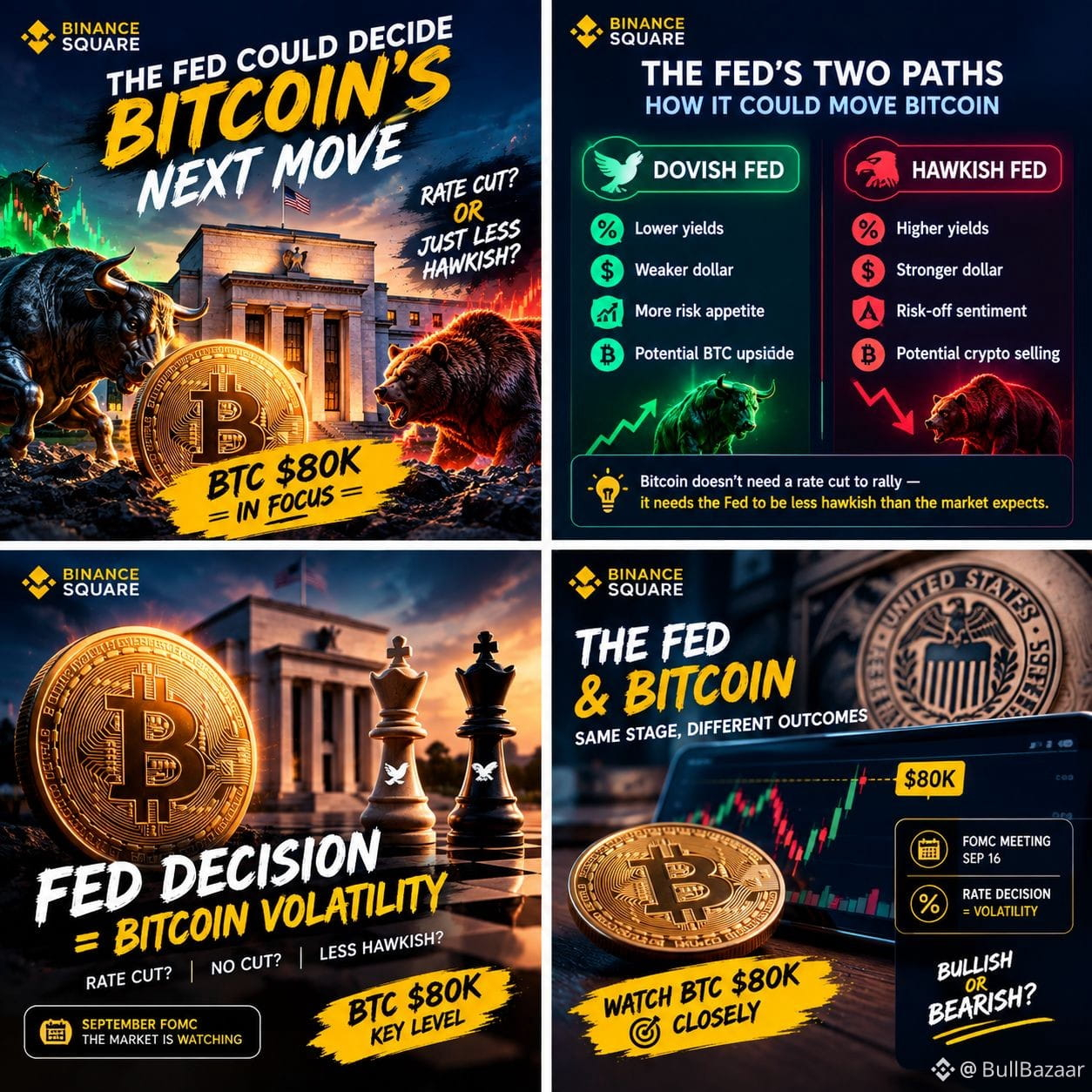
🏦 THE FED COULD DECIDE BITCOIN'S NEXT MOVE
Bitcoin is trading around the high-$70K area while markets prepare for the Federal Reserve's September policy decision.
BTC remains below the key $80K psychological level, making the Fed decision especially important for risk assets.
Here's the battle:
🐂 Dovish Fed
→ Lower yields
→ Weaker dollar
→ More risk appetite
→ Potential BTC upside
🐻 Hawkish Fed
→ Higher yields
→ Stronger dollar
→ Risk-off sentiment
→ Potential crypto selling
The interesting part?
Bitcoin doesn't need a rate cut to rally — it needs the Fed to be less hawkish than the market expects.
That's where the volatility could come from.
🎯 Watch BTC $80K closely.
#Bitcoin #BTC #FederalReserve #Fed #CryptoTrading #BinanceSquare
#bitcoin #Ethereum #FedRateDecisions #FedMeeting
🏦 THE FED COULD DECIDE BITCOIN'S NEXT MOVE
Bitcoin is trading around the high-$70K area while markets prepare for the Federal Reserve's September policy decision.
BTC remains below the key $80K psychological level, making the Fed decision especially important for risk assets.
Here's the battle:
🐂 Dovish Fed
→ Lower yields
→ Weaker dollar
→ More risk appetite
→ Potential BTC upside
🐻 Hawkish Fed
→ Higher yields
→ Stronger dollar
→ Risk-off sentiment
→ Potential crypto selling
The interesting part?
Bitcoin doesn't need a rate cut to rally — it needs the Fed to be less hawkish than the market expects.
That's where the volatility could come from.
🎯 Watch BTC $80K closely.
#Bitcoin #BTC #FederalReserve #Fed #CryptoTrading #BinanceSquare
🏦 THE FED COULD DECIDE BITCOIN'S NEXT MOVE
Bitcoin is trading around the high-$70K area while markets prepare for the Federal Reserve's September policy decision.
BTC remains below the key $80K psychological level, making the Fed decision especially important for risk assets.
Here's the battle:
🐂 Dovish Fed
→ Lower yields
→ Weaker dollar
→ More risk appetite
→ Potential BTC upside
🐻 Hawkish Fed
→ Higher yields
→ Stronger dollar
→ Risk-off sentiment
→ Potential crypto selling
The interesting part?
Bitcoin doesn't need a rate cut to rally — it needs the Fed to be less hawkish than the market expects.
That's where the volatility could come from.
🎯 Watch BTC $80K closely.
#Bitcoin #BTC #FederalReserve #Fed #CryptoTrading #BinanceSquare
47

·
--
Статья
Will the Fed Really Raise Rates This Week? Bitcoin and U.S. Stocks Could Be at a Turning PointOh no—is the Federal Reserve really going to raise interest rates this week?
And if it does, are Bitcoin and U.S. stocks about to fall hard?
At first glance, the situation looks pretty scary.
Inflation has remained stubborn, the latest CPI report has strengthened the case for tighter monetary policy, and the market has already moved heavily toward expecting another rate increase.
But here's the interesting part.
I don't think the biggest risk for Bitcoin or the stock market is actually the rate hike itself.
The real risk could be what the Federal Reserve says after the hike.
Because at this point, the market may already be prepared for 25 basis points.
What investors are not prepared for is the possibility that the Fed tells them:
"This isn't the last one."
And that's where things could get very interesting.
The CPI Changed Everything
Let's start with the inflation data.
In August, core CPI increased 0.3% month over month.
That number may not sound dramatic by itself, but for a Federal Reserve that is still trying to convince the market that inflation is moving sustainably toward its 2% target, it was not exactly the kind of number policymakers wanted to see.
The immediate reaction was predictable.
Expectations for another rate hike increased sharply.
Some major Wall Street institutions also moved their forecasts toward a 25-basis-point increase.
And once the market begins pricing a particular outcome with very high probability, the Fed finds itself in a difficult position.
If it raises rates, nobody should be shocked.
But if it suddenly refuses to move, the market could start asking questions about whether the Federal Reserve is actually serious about fighting inflation.
And that brings us to the most important word in this entire discussion:
Credibility.
The Fed Has Put Its Credibility on the Line
Remember what Federal Reserve officials have been saying.
The message has been consistent:
Inflation has improved, but the fight isn't over.
The Fed cannot declare victory too early.
If inflation remains elevated, monetary policy needs to stay restrictive.
That sounds reasonable.
But once central bankers repeatedly communicate this message, markets begin to price it in.
Investors start believing that if inflation surprises to the upside, the Fed will respond.
That's how central-bank credibility works.
The problem comes when reality changes.
If inflation suddenly becomes hotter than expected and the Fed does nothing, investors may begin questioning whether the Fed's previous warnings were genuine.
Was the central bank really willing to keep rates higher for longer?
Or was it simply trying to manage expectations?
This is why the decision could become much bigger than a simple 25-basis-point move.
The Fed isn't only setting interest rates.
It's also trying to convince the financial markets that its future promises are credible.
Why Treasury Yields Matter So Much
Now let's talk about something that doesn't always get enough attention from retail investors:
The U.S. Treasury market.
Especially the long end of the curve.
A 30-year Treasury yield isn't determined simply by what the Fed does at its next meeting.
It reflects expectations for inflation, economic growth, future interest rates, government borrowing, and the compensation investors demand for holding long-duration debt.
So when long-term yields rise, it can be a warning sign for risk assets.
Why?
Because higher yields make bonds more attractive relative to stocks.
They also increase the discount rate applied to future corporate earnings.
And that can hit high-valuation growth stocks particularly hard.
The same logic can extend to Bitcoin.
Bitcoin doesn't generate traditional cash flows like a company does, but it often trades as a liquidity-sensitive risk asset.
When financial conditions become easier, speculative assets can benefit.
When liquidity becomes tighter and real yields rise, those same assets can come under pressure.
So if the Fed raises rates and simultaneously pushes long-term yields higher through a more hawkish outlook, Bitcoin could feel the pressure.
But again, there's a big difference between a hike that everybody expects and a surprise in the Fed's future guidance.
The Market Has Already Priced in the Hike
Here's where things become interesting.
If traders already believe there is a very high probability of a 25-basis-point hike, then that information is already reflected in market prices.
This is one of the most important principles in financial markets:
Markets don't react simply to what happens.
They react to what happens relative to expectations.
If everybody expects a rate hike and the Fed delivers one, the reaction could actually be fairly limited.
The real volatility could come from the message surrounding the decision.
Imagine the Fed raises rates by 25 basis points and then says:
"Inflation is still a concern, but we are approaching the end of this tightening cycle."
That could be interpreted as relatively dovish.
Stocks might stabilize.
Bitcoin could recover.
Treasury yields could stop rising.
And investors could start looking beyond the current tightening cycle.
Now imagine the opposite.
The Fed raises rates by 25 basis points and the new projections suggest that several more increases could be necessary.
Suddenly, the market has a completely different problem.
Investors would have to reprice the entire interest-rate path.
And that's where valuations could get hit.
The Dot Plot May Be More Important Than the Rate Decision
This is why I think investors should pay extremely close attention to the Fed's dot plot.
The question isn't simply:
Will the Fed raise rates this week?
The more important question is:
How many more hikes does the Fed expect after this one?
There is a huge difference between these two scenarios.
Scenario One: One More Hike and Then a Pause
In this scenario, the Fed raises rates by 25 basis points but signals that it is getting close to the end.
Maybe there is one additional hike later, or perhaps none at all if inflation continues to cool.
That would give markets some breathing room.
Long-term yields might stabilize.
Stock valuations could recover.
Bitcoin could benefit from renewed risk appetite.
In this situation, the rate hike itself could actually become a "buy the news" event.
Scenario Two: The Tightening Cycle Continues
Now imagine the dot plot shows that policymakers expect several more increases.
That's a completely different story.
Investors would suddenly realize that monetary policy may remain restrictive for much longer than previously expected.
Treasury yields could move higher.
Growth stocks could suffer.
Liquidity conditions could tighten further.
And Bitcoin could face another wave of selling pressure.
That's why one small change in the dot plot can have a much bigger effect than the 25-basis-point hike itself.
Could the Fed Actually Be Bullish for Stocks?
Here's the part that many investors may be missing.
A rate hike isn't necessarily bearish if the market already expects it.
Suppose everyone expects a hike.
The Fed delivers it.
But then policymakers signal that the end of the tightening cycle is approaching.
Investors could interpret that as confirmation that the worst is behind them.
And when uncertainty falls, money can flow back into risk assets.
That's why simply saying:
"The Fed is raising rates, therefore stocks will crash"
is too simplistic.
The real question is:
What did the market expect, and what did the Fed actually deliver?
If the Fed is less hawkish than expected, markets can rally even when rates go higher.
The headline sounds bearish.
The details can be bullish.
But What About Bitcoin?
Bitcoin is particularly interesting here.
The cryptocurrency market is extremely sensitive to changes in liquidity and investor risk appetite.
When investors become more confident that monetary policy is becoming less restrictive, speculative assets can benefit.
When the opposite happens—when yields rise and liquidity becomes tighter—Bitcoin can struggle.
So if the Fed's meeting produces a more hawkish message than expected, Bitcoin could potentially experience a sharp move lower.
But if the Fed gives investors confidence that the tightening cycle is approaching its final stage, Bitcoin could react very differently.
This is why I wouldn't look at the rate decision in isolation.
I'd watch:
The Fed's interest-rate decisionThe updated dot plotPowell's press conferenceTreasury yieldsThe U.S. dollarMarket expectations for future rate cutsBitcoin's reaction to the initial announcement
Sometimes the most important signal isn't what happens immediately after the Fed speaks.
It's what happens several hours later, once traders have had time to digest the message.
The Biggest Risk Is a Policy Path Nobody Expected
Here's what really worries me.
If the market is prepared for one rate hike but suddenly gets a message suggesting that the Fed may need to keep tightening aggressively, the repricing could be violent.
That's because financial markets don't just price today's interest rate.
They price the entire expected path of monetary policy.
If investors suddenly move from:
"Maybe we're near the end"
to:
"There could be several more hikes"
then Treasury yields can jump.
And when yields jump, valuations can compress.
That's when the pressure spreads from bonds to stocks, from stocks to crypto, and potentially across the entire risk-asset complex.
So the danger isn't necessarily the first 25 basis points.
It's the possibility that those 25 basis points become the beginning of another tightening phase.
The Fed Is Walking a Very Fine Line
The Federal Reserve has a difficult balancing act.
On one side, it needs to make sure inflation doesn't become entrenched.
On the other, it doesn't want to tighten monetary policy so aggressively that it causes unnecessary damage to the economy and financial markets.
And then there's the Treasury market.
If long-term yields continue climbing, financial conditions can tighten even without the Fed aggressively raising its policy rate.
That means policymakers have to pay attention not only to CPI and employment but also to how markets are responding to their communication.
The Fed needs to be tough enough to maintain credibility.
But not so hawkish that it creates an unnecessary financial shock.
That's a very difficult line to walk.
So, Will the Fed Raise Rates This Week?
If the market is already pricing a very high probability of a 25-basis-point hike, I don't think the hike itself should be the thing that scares investors the most.
The bigger question is what comes next.
If the dot plot suggests that this could be one of the final moves, the market may actually take the decision surprisingly well.
Stocks could stabilize.
Bitcoin could find buyers.
And Treasury yields could finally cool down.
But if the Fed signals that inflation remains serious enough to justify multiple additional hikes, then the story changes completely.
That would mean the tightening cycle isn't finished.
Long-term yields could continue moving higher.
Equity valuations could remain under pressure.
And Bitcoin could face another round of volatility.
So, in my opinion, don't just watch the headline:
"Fed raises rates."
Watch the sentence that comes after it.
Watch the dot plot.
Watch the Treasury market.
Watch Powell's tone.
Because the market already knows what the Fed might do today.
What investors really want to know is:
What will the Fed do tomorrow?
And that answer could determine whether Bitcoin and U.S. stocks experience a relief rally—or another painful sell-off.
At the end of the day, this isn't just a story about 25 basis points.
It's a story about inflation.
It's a story about credibility.
It's a story about Treasury yields.
And most importantly, it's a story about whether the Federal Reserve is approaching the end of its tightening cycle—or preparing to keep going.
What do you think? Will the Fed raise rates this week, and if it does, will Bitcoin and U.S. stocks rally after the initial volatility—or are we heading toward another major correction?
#FedRateDecisions #UKSeeksViewsOnTokenizingGold #Bilverse #CryptoNews
{future}(NVDAUSDT)
{future}(SPCXUSDT)
{future}(GOOGLUSDT)
Will the Fed Really Raise Rates This Week? Bitcoin and U.S. Stocks Could Be at a Turning Point
Oh no—is the Federal Reserve really going to raise interest rates this week?
And if it does, are Bitcoin and U.S. stocks about to fall hard?
At first glance, the situation looks pretty scary.
Inflation has remained stubborn, the latest CPI report has strengthened the case for tighter monetary policy, and the market has already moved heavily toward expecting another rate increase.
But here's the interesting part.
I don't think the biggest risk for Bitcoin or the stock market is actually the rate hike itself.
The real risk could be what the Federal Reserve says after the hike.
Because at this point, the market may already be prepared for 25 basis points.
What investors are not prepared for is the possibility that the Fed tells them:
"This isn't the last one."
And that's where things could get very interesting.
The CPI Changed Everything
Let's start with the inflation data.
In August, core CPI increased 0.3% month over month.
That number may not sound dramatic by itself, but for a Federal Reserve that is still trying to convince the market that inflation is moving sustainably toward its 2% target, it was not exactly the kind of number policymakers wanted to see.
The immediate reaction was predictable.
Expectations for another rate hike increased sharply.
Some major Wall Street institutions also moved their forecasts toward a 25-basis-point increase.
And once the market begins pricing a particular outcome with very high probability, the Fed finds itself in a difficult position.
If it raises rates, nobody should be shocked.
But if it suddenly refuses to move, the market could start asking questions about whether the Federal Reserve is actually serious about fighting inflation.
And that brings us to the most important word in this entire discussion:
Credibility.
The Fed Has Put Its Credibility on the Line
Remember what Federal Reserve officials have been saying.
The message has been consistent:
Inflation has improved, but the fight isn't over.
The Fed cannot declare victory too early.
If inflation remains elevated, monetary policy needs to stay restrictive.
That sounds reasonable.
But once central bankers repeatedly communicate this message, markets begin to price it in.
Investors start believing that if inflation surprises to the upside, the Fed will respond.
That's how central-bank credibility works.
The problem comes when reality changes.
If inflation suddenly becomes hotter than expected and the Fed does nothing, investors may begin questioning whether the Fed's previous warnings were genuine.
Was the central bank really willing to keep rates higher for longer?
Or was it simply trying to manage expectations?
This is why the decision could become much bigger than a simple 25-basis-point move.
The Fed isn't only setting interest rates.
It's also trying to convince the financial markets that its future promises are credible.
Why Treasury Yields Matter So Much
Now let's talk about something that doesn't always get enough attention from retail investors:
The U.S. Treasury market.
Especially the long end of the curve.
A 30-year Treasury yield isn't determined simply by what the Fed does at its next meeting.
It reflects expectations for inflation, economic growth, future interest rates, government borrowing, and the compensation investors demand for holding long-duration debt.
So when long-term yields rise, it can be a warning sign for risk assets.
Why?
Because higher yields make bonds more attractive relative to stocks.
They also increase the discount rate applied to future corporate earnings.
And that can hit high-valuation growth stocks particularly hard.
The same logic can extend to Bitcoin.
Bitcoin doesn't generate traditional cash flows like a company does, but it often trades as a liquidity-sensitive risk asset.
When financial conditions become easier, speculative assets can benefit.
When liquidity becomes tighter and real yields rise, those same assets can come under pressure.
So if the Fed raises rates and simultaneously pushes long-term yields higher through a more hawkish outlook, Bitcoin could feel the pressure.
But again, there's a big difference between a hike that everybody expects and a surprise in the Fed's future guidance.
The Market Has Already Priced in the Hike
Here's where things become interesting.
If traders already believe there is a very high probability of a 25-basis-point hike, then that information is already reflected in market prices.
This is one of the most important principles in financial markets:
Markets don't react simply to what happens.
They react to what happens relative to expectations.
If everybody expects a rate hike and the Fed delivers one, the reaction could actually be fairly limited.
The real volatility could come from the message surrounding the decision.
Imagine the Fed raises rates by 25 basis points and then says:
"Inflation is still a concern, but we are approaching the end of this tightening cycle."
That could be interpreted as relatively dovish.
Stocks might stabilize.
Bitcoin could recover.
Treasury yields could stop rising.
And investors could start looking beyond the current tightening cycle.
Now imagine the opposite.
The Fed raises rates by 25 basis points and the new projections suggest that several more increases could be necessary.
Suddenly, the market has a completely different problem.
Investors would have to reprice the entire interest-rate path.
And that's where valuations could get hit.
The Dot Plot May Be More Important Than the Rate Decision
This is why I think investors should pay extremely close attention to the Fed's dot plot.
The question isn't simply:
Will the Fed raise rates this week?
The more important question is:
How many more hikes does the Fed expect after this one?
There is a huge difference between these two scenarios.
Scenario One: One More Hike and Then a Pause
In this scenario, the Fed raises rates by 25 basis points but signals that it is getting close to the end.
Maybe there is one additional hike later, or perhaps none at all if inflation continues to cool.
That would give markets some breathing room.
Long-term yields might stabilize.
Stock valuations could recover.
Bitcoin could benefit from renewed risk appetite.
In this situation, the rate hike itself could actually become a "buy the news" event.
Scenario Two: The Tightening Cycle Continues
Now imagine the dot plot shows that policymakers expect several more increases.
That's a completely different story.
Investors would suddenly realize that monetary policy may remain restrictive for much longer than previously expected.
Treasury yields could move higher.
Growth stocks could suffer.
Liquidity conditions could tighten further.
And Bitcoin could face another wave of selling pressure.
That's why one small change in the dot plot can have a much bigger effect than the 25-basis-point hike itself.
Could the Fed Actually Be Bullish for Stocks?
Here's the part that many investors may be missing.
A rate hike isn't necessarily bearish if the market already expects it.
Suppose everyone expects a hike.
The Fed delivers it.
But then policymakers signal that the end of the tightening cycle is approaching.
Investors could interpret that as confirmation that the worst is behind them.
And when uncertainty falls, money can flow back into risk assets.
That's why simply saying:
"The Fed is raising rates, therefore stocks will crash"
is too simplistic.
The real question is:
What did the market expect, and what did the Fed actually deliver?
If the Fed is less hawkish than expected, markets can rally even when rates go higher.
The headline sounds bearish.
The details can be bullish.
But What About Bitcoin?
Bitcoin is particularly interesting here.
The cryptocurrency market is extremely sensitive to changes in liquidity and investor risk appetite.
When investors become more confident that monetary policy is becoming less restrictive, speculative assets can benefit.
When the opposite happens—when yields rise and liquidity becomes tighter—Bitcoin can struggle.
So if the Fed's meeting produces a more hawkish message than expected, Bitcoin could potentially experience a sharp move lower.
But if the Fed gives investors confidence that the tightening cycle is approaching its final stage, Bitcoin could react very differently.
This is why I wouldn't look at the rate decision in isolation.
I'd watch:
The Fed's interest-rate decisionThe updated dot plotPowell's press conferenceTreasury yieldsThe U.S. dollarMarket expectations for future rate cutsBitcoin's reaction to the initial announcement
Sometimes the most important signal isn't what happens immediately after the Fed speaks.
It's what happens several hours later, once traders have had time to digest the message.
The Biggest Risk Is a Policy Path Nobody Expected
Here's what really worries me.
If the market is prepared for one rate hike but suddenly gets a message suggesting that the Fed may need to keep tightening aggressively, the repricing could be violent.
That's because financial markets don't just price today's interest rate.
They price the entire expected path of monetary policy.
If investors suddenly move from:
"Maybe we're near the end"
to:
"There could be several more hikes"
then Treasury yields can jump.
And when yields jump, valuations can compress.
That's when the pressure spreads from bonds to stocks, from stocks to crypto, and potentially across the entire risk-asset complex.
So the danger isn't necessarily the first 25 basis points.
It's the possibility that those 25 basis points become the beginning of another tightening phase.
The Fed Is Walking a Very Fine Line
The Federal Reserve has a difficult balancing act.
On one side, it needs to make sure inflation doesn't become entrenched.
On the other, it doesn't want to tighten monetary policy so aggressively that it causes unnecessary damage to the economy and financial markets.
And then there's the Treasury market.
If long-term yields continue climbing, financial conditions can tighten even without the Fed aggressively raising its policy rate.
That means policymakers have to pay attention not only to CPI and employment but also to how markets are responding to their communication.
The Fed needs to be tough enough to maintain credibility.
But not so hawkish that it creates an unnecessary financial shock.
That's a very difficult line to walk.
So, Will the Fed Raise Rates This Week?
If the market is already pricing a very high probability of a 25-basis-point hike, I don't think the hike itself should be the thing that scares investors the most.
The bigger question is what comes next.
If the dot plot suggests that this could be one of the final moves, the market may actually take the decision surprisingly well.
Stocks could stabilize.
Bitcoin could find buyers.
And Treasury yields could finally cool down.
But if the Fed signals that inflation remains serious enough to justify multiple additional hikes, then the story changes completely.
That would mean the tightening cycle isn't finished.
Long-term yields could continue moving higher.
Equity valuations could remain under pressure.
And Bitcoin could face another round of volatility.
So, in my opinion, don't just watch the headline:
"Fed raises rates."
Watch the sentence that comes after it.
Watch the dot plot.
Watch the Treasury market.
Watch Powell's tone.
Because the market already knows what the Fed might do today.
What investors really want to know is:
What will the Fed do tomorrow?
And that answer could determine whether Bitcoin and U.S. stocks experience a relief rally—or another painful sell-off.
At the end of the day, this isn't just a story about 25 basis points.
It's a story about inflation.
It's a story about credibility.
It's a story about Treasury yields.
And most importantly, it's a story about whether the Federal Reserve is approaching the end of its tightening cycle—or preparing to keep going.
What do you think? Will the Fed raise rates this week, and if it does, will Bitcoin and U.S. stocks rally after the initial volatility—or are we heading toward another major correction?
#FedRateDecisions #UKSeeksViewsOnTokenizingGold #Bilverse #CryptoNews
And if it does, are Bitcoin and U.S. stocks about to fall hard?
At first glance, the situation looks pretty scary.
Inflation has remained stubborn, the latest CPI report has strengthened the case for tighter monetary policy, and the market has already moved heavily toward expecting another rate increase.
But here's the interesting part.
I don't think the biggest risk for Bitcoin or the stock market is actually the rate hike itself.
The real risk could be what the Federal Reserve says after the hike.
Because at this point, the market may already be prepared for 25 basis points.
What investors are not prepared for is the possibility that the Fed tells them:
"This isn't the last one."
And that's where things could get very interesting.
The CPI Changed Everything
Let's start with the inflation data.
In August, core CPI increased 0.3% month over month.
That number may not sound dramatic by itself, but for a Federal Reserve that is still trying to convince the market that inflation is moving sustainably toward its 2% target, it was not exactly the kind of number policymakers wanted to see.
The immediate reaction was predictable.
Expectations for another rate hike increased sharply.
Some major Wall Street institutions also moved their forecasts toward a 25-basis-point increase.
And once the market begins pricing a particular outcome with very high probability, the Fed finds itself in a difficult position.
If it raises rates, nobody should be shocked.
But if it suddenly refuses to move, the market could start asking questions about whether the Federal Reserve is actually serious about fighting inflation.
And that brings us to the most important word in this entire discussion:
Credibility.
The Fed Has Put Its Credibility on the Line
Remember what Federal Reserve officials have been saying.
The message has been consistent:
Inflation has improved, but the fight isn't over.
The Fed cannot declare victory too early.
If inflation remains elevated, monetary policy needs to stay restrictive.
That sounds reasonable.
But once central bankers repeatedly communicate this message, markets begin to price it in.
Investors start believing that if inflation surprises to the upside, the Fed will respond.
That's how central-bank credibility works.
The problem comes when reality changes.
If inflation suddenly becomes hotter than expected and the Fed does nothing, investors may begin questioning whether the Fed's previous warnings were genuine.
Was the central bank really willing to keep rates higher for longer?
Or was it simply trying to manage expectations?
This is why the decision could become much bigger than a simple 25-basis-point move.
The Fed isn't only setting interest rates.
It's also trying to convince the financial markets that its future promises are credible.
Why Treasury Yields Matter So Much
Now let's talk about something that doesn't always get enough attention from retail investors:
The U.S. Treasury market.
Especially the long end of the curve.
A 30-year Treasury yield isn't determined simply by what the Fed does at its next meeting.
It reflects expectations for inflation, economic growth, future interest rates, government borrowing, and the compensation investors demand for holding long-duration debt.
So when long-term yields rise, it can be a warning sign for risk assets.
Why?
Because higher yields make bonds more attractive relative to stocks.
They also increase the discount rate applied to future corporate earnings.
And that can hit high-valuation growth stocks particularly hard.
The same logic can extend to Bitcoin.
Bitcoin doesn't generate traditional cash flows like a company does, but it often trades as a liquidity-sensitive risk asset.
When financial conditions become easier, speculative assets can benefit.
When liquidity becomes tighter and real yields rise, those same assets can come under pressure.
So if the Fed raises rates and simultaneously pushes long-term yields higher through a more hawkish outlook, Bitcoin could feel the pressure.
But again, there's a big difference between a hike that everybody expects and a surprise in the Fed's future guidance.
The Market Has Already Priced in the Hike
Here's where things become interesting.
If traders already believe there is a very high probability of a 25-basis-point hike, then that information is already reflected in market prices.
This is one of the most important principles in financial markets:
Markets don't react simply to what happens.
They react to what happens relative to expectations.
If everybody expects a rate hike and the Fed delivers one, the reaction could actually be fairly limited.
The real volatility could come from the message surrounding the decision.
Imagine the Fed raises rates by 25 basis points and then says:
"Inflation is still a concern, but we are approaching the end of this tightening cycle."
That could be interpreted as relatively dovish.
Stocks might stabilize.
Bitcoin could recover.
Treasury yields could stop rising.
And investors could start looking beyond the current tightening cycle.
Now imagine the opposite.
The Fed raises rates by 25 basis points and the new projections suggest that several more increases could be necessary.
Suddenly, the market has a completely different problem.
Investors would have to reprice the entire interest-rate path.
And that's where valuations could get hit.
The Dot Plot May Be More Important Than the Rate Decision
This is why I think investors should pay extremely close attention to the Fed's dot plot.
The question isn't simply:
Will the Fed raise rates this week?
The more important question is:
How many more hikes does the Fed expect after this one?
There is a huge difference between these two scenarios.
Scenario One: One More Hike and Then a Pause
In this scenario, the Fed raises rates by 25 basis points but signals that it is getting close to the end.
Maybe there is one additional hike later, or perhaps none at all if inflation continues to cool.
That would give markets some breathing room.
Long-term yields might stabilize.
Stock valuations could recover.
Bitcoin could benefit from renewed risk appetite.
In this situation, the rate hike itself could actually become a "buy the news" event.
Scenario Two: The Tightening Cycle Continues
Now imagine the dot plot shows that policymakers expect several more increases.
That's a completely different story.
Investors would suddenly realize that monetary policy may remain restrictive for much longer than previously expected.
Treasury yields could move higher.
Growth stocks could suffer.
Liquidity conditions could tighten further.
And Bitcoin could face another wave of selling pressure.
That's why one small change in the dot plot can have a much bigger effect than the 25-basis-point hike itself.
Could the Fed Actually Be Bullish for Stocks?
Here's the part that many investors may be missing.
A rate hike isn't necessarily bearish if the market already expects it.
Suppose everyone expects a hike.
The Fed delivers it.
But then policymakers signal that the end of the tightening cycle is approaching.
Investors could interpret that as confirmation that the worst is behind them.
And when uncertainty falls, money can flow back into risk assets.
That's why simply saying:
"The Fed is raising rates, therefore stocks will crash"
is too simplistic.
The real question is:
What did the market expect, and what did the Fed actually deliver?
If the Fed is less hawkish than expected, markets can rally even when rates go higher.
The headline sounds bearish.
The details can be bullish.
But What About Bitcoin?
Bitcoin is particularly interesting here.
The cryptocurrency market is extremely sensitive to changes in liquidity and investor risk appetite.
When investors become more confident that monetary policy is becoming less restrictive, speculative assets can benefit.
When the opposite happens—when yields rise and liquidity becomes tighter—Bitcoin can struggle.
So if the Fed's meeting produces a more hawkish message than expected, Bitcoin could potentially experience a sharp move lower.
But if the Fed gives investors confidence that the tightening cycle is approaching its final stage, Bitcoin could react very differently.
This is why I wouldn't look at the rate decision in isolation.
I'd watch:
The Fed's interest-rate decisionThe updated dot plotPowell's press conferenceTreasury yieldsThe U.S. dollarMarket expectations for future rate cutsBitcoin's reaction to the initial announcement
Sometimes the most important signal isn't what happens immediately after the Fed speaks.
It's what happens several hours later, once traders have had time to digest the message.
The Biggest Risk Is a Policy Path Nobody Expected
Here's what really worries me.
If the market is prepared for one rate hike but suddenly gets a message suggesting that the Fed may need to keep tightening aggressively, the repricing could be violent.
That's because financial markets don't just price today's interest rate.
They price the entire expected path of monetary policy.
If investors suddenly move from:
"Maybe we're near the end"
to:
"There could be several more hikes"
then Treasury yields can jump.
And when yields jump, valuations can compress.
That's when the pressure spreads from bonds to stocks, from stocks to crypto, and potentially across the entire risk-asset complex.
So the danger isn't necessarily the first 25 basis points.
It's the possibility that those 25 basis points become the beginning of another tightening phase.
The Fed Is Walking a Very Fine Line
The Federal Reserve has a difficult balancing act.
On one side, it needs to make sure inflation doesn't become entrenched.
On the other, it doesn't want to tighten monetary policy so aggressively that it causes unnecessary damage to the economy and financial markets.
And then there's the Treasury market.
If long-term yields continue climbing, financial conditions can tighten even without the Fed aggressively raising its policy rate.
That means policymakers have to pay attention not only to CPI and employment but also to how markets are responding to their communication.
The Fed needs to be tough enough to maintain credibility.
But not so hawkish that it creates an unnecessary financial shock.
That's a very difficult line to walk.
So, Will the Fed Raise Rates This Week?
If the market is already pricing a very high probability of a 25-basis-point hike, I don't think the hike itself should be the thing that scares investors the most.
The bigger question is what comes next.
If the dot plot suggests that this could be one of the final moves, the market may actually take the decision surprisingly well.
Stocks could stabilize.
Bitcoin could find buyers.
And Treasury yields could finally cool down.
But if the Fed signals that inflation remains serious enough to justify multiple additional hikes, then the story changes completely.
That would mean the tightening cycle isn't finished.
Long-term yields could continue moving higher.
Equity valuations could remain under pressure.
And Bitcoin could face another round of volatility.
So, in my opinion, don't just watch the headline:
"Fed raises rates."
Watch the sentence that comes after it.
Watch the dot plot.
Watch the Treasury market.
Watch Powell's tone.
Because the market already knows what the Fed might do today.
What investors really want to know is:
What will the Fed do tomorrow?
And that answer could determine whether Bitcoin and U.S. stocks experience a relief rally—or another painful sell-off.
At the end of the day, this isn't just a story about 25 basis points.
It's a story about inflation.
It's a story about credibility.
It's a story about Treasury yields.
And most importantly, it's a story about whether the Federal Reserve is approaching the end of its tightening cycle—or preparing to keep going.
What do you think? Will the Fed raise rates this week, and if it does, will Bitcoin and U.S. stocks rally after the initial volatility—or are we heading toward another major correction?
#FedRateDecisions #UKSeeksViewsOnTokenizingGold #Bilverse #CryptoNews
2
284

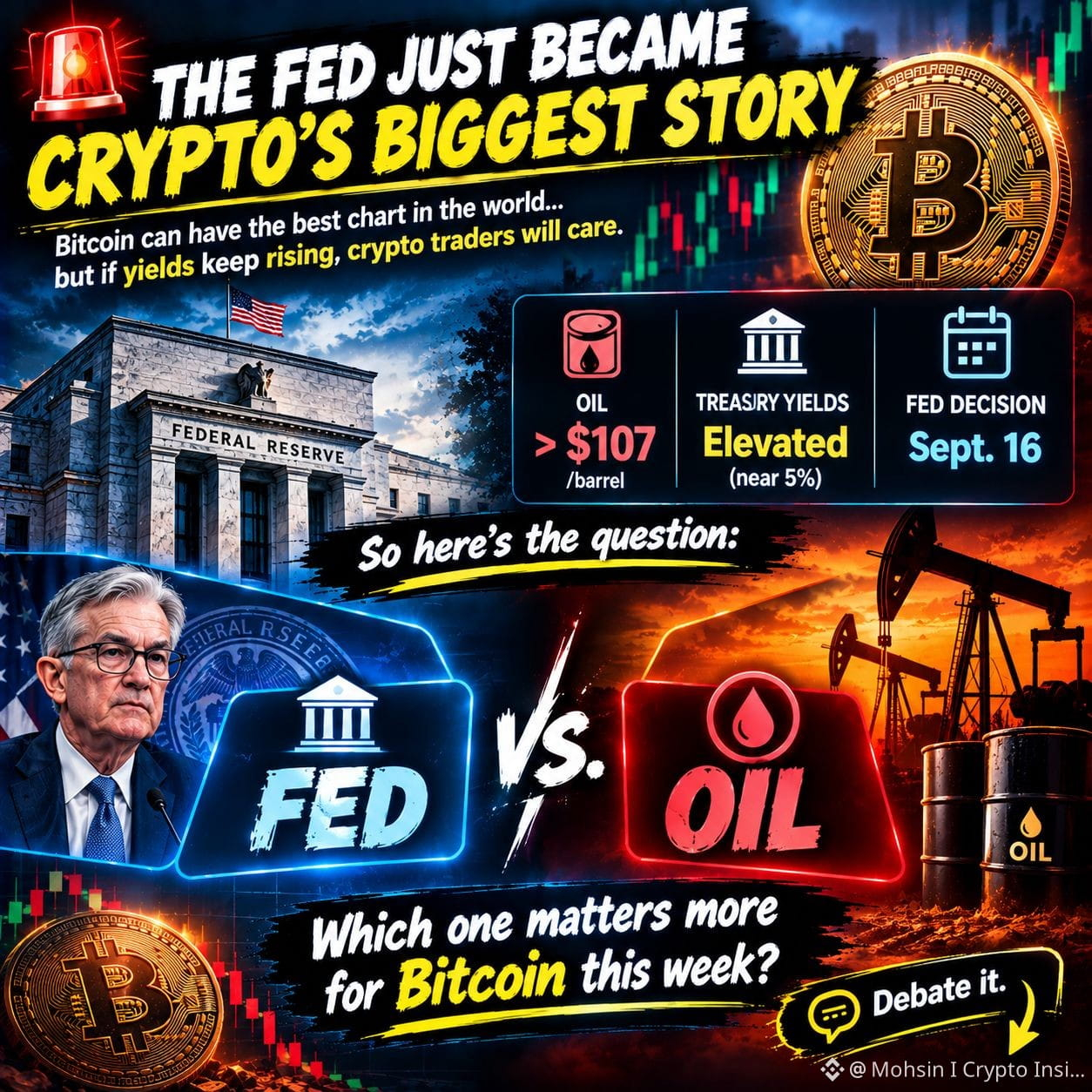
🚨 THE FED JUST BECAME CRYPTO'S BIGGEST STORY
$BTC can have the best chart in the world...
But if yields keep rising, crypto traders will care.
Oil has moved back above $107, Treasury yields remain elevated, and markets are preparing for the Sept. 16 Fed decision.
So here's the question:
🏦 FED
vs.
🛢️ OIL
Which one matters more for $BTC this week?
👇 Debate it.
#Bitcoin❗ #BTC☀ #FedRateDecisions #Macro
🚨 THE FED JUST BECAME CRYPTO'S BIGGEST STORY
$BTC can have the best chart in the world...
But if yields keep rising, crypto traders will care.
Oil has moved back above $107, Treasury yields remain elevated, and markets are preparing for the Sept. 16 Fed decision.
So here's the question:
🏦 FED
vs.
🛢️ OIL
Which one matters more for $BTC this week?
👇 Debate it.
#Bitcoin❗ #BTC☀ #FedRateDecisions #Macro
$BTC can have the best chart in the world...
But if yields keep rising, crypto traders will care.
Oil has moved back above $107, Treasury yields remain elevated, and markets are preparing for the Sept. 16 Fed decision.
So here's the question:
🏦 FED
vs.
🛢️ OIL
Which one matters more for $BTC this week?
👇 Debate it.
#Bitcoin❗ #BTC☀ #FedRateDecisions #Macro
51

·
--
Anticipations des marchés sur la baisse des taux de la Fed
Les traders sur les marchés de contrats à terme (Futures) intègrent actuellement deux scénarios principaux pour la décision de la Fed :
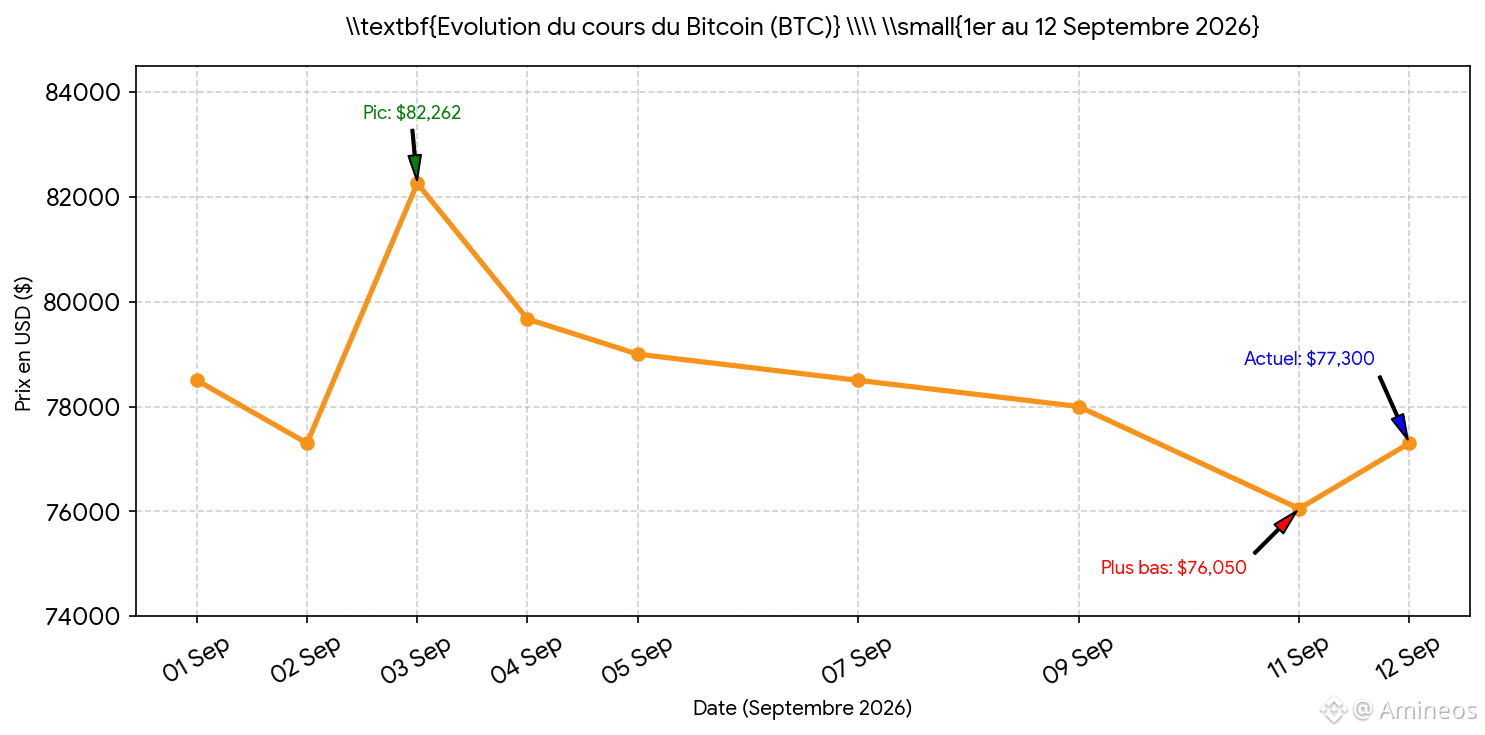
Scénario majoritaire (65 % de probabilité) – Baisse de 25 points de base (0,25 %) : Une baisse mesurée. Le marché l'a déjà en partie anticipée. Le Bitcoin réagirait calmement et conserverait sa dynamique de consolidation autour des **77 000 – 79 000 **.
Scénario optimiste (35 % de probabilité) – Baisse de 50 points de base (0,50 %) : Une baisse agressive pour stimuler l'économie. Ce signal injecterait une forte liquidité mondiale, propulsant immédiatement le Bitcoin au-delà de sa résistance majeure des 82 000 $ pour viser la zone des 88 000 $.
{spot}(BTCUSDT)
#BTC☀ #FedRateDecisions
Anticipations des marchés sur la baisse des taux de la Fed
Les traders sur les marchés de contrats à terme (Futures) intègrent actuellement deux scénarios principaux pour la décision de la Fed :
Scénario majoritaire (65 % de probabilité) – Baisse de 25 points de base (0,25 %) : Une baisse mesurée. Le marché l'a déjà en partie anticipée. Le Bitcoin réagirait calmement et conserverait sa dynamique de consolidation autour des **77 000 – 79 000 **.
Scénario optimiste (35 % de probabilité) – Baisse de 50 points de base (0,50 %) : Une baisse agressive pour stimuler l'économie. Ce signal injecterait une forte liquidité mondiale, propulsant immédiatement le Bitcoin au-delà de sa résistance majeure des 82 000 $ pour viser la zone des 88 000 $.
#BTC☀ #FedRateDecisions
Les traders sur les marchés de contrats à terme (Futures) intègrent actuellement deux scénarios principaux pour la décision de la Fed :
Scénario majoritaire (65 % de probabilité) – Baisse de 25 points de base (0,25 %) : Une baisse mesurée. Le marché l'a déjà en partie anticipée. Le Bitcoin réagirait calmement et conserverait sa dynamique de consolidation autour des **77 000 – 79 000 **.
Scénario optimiste (35 % de probabilité) – Baisse de 50 points de base (0,50 %) : Une baisse agressive pour stimuler l'économie. Ce signal injecterait une forte liquidité mondiale, propulsant immédiatement le Bitcoin au-delà de sa résistance majeure des 82 000 $ pour viser la zone des 88 000 $.
#BTC☀ #FedRateDecisions
1
1
30

·
--
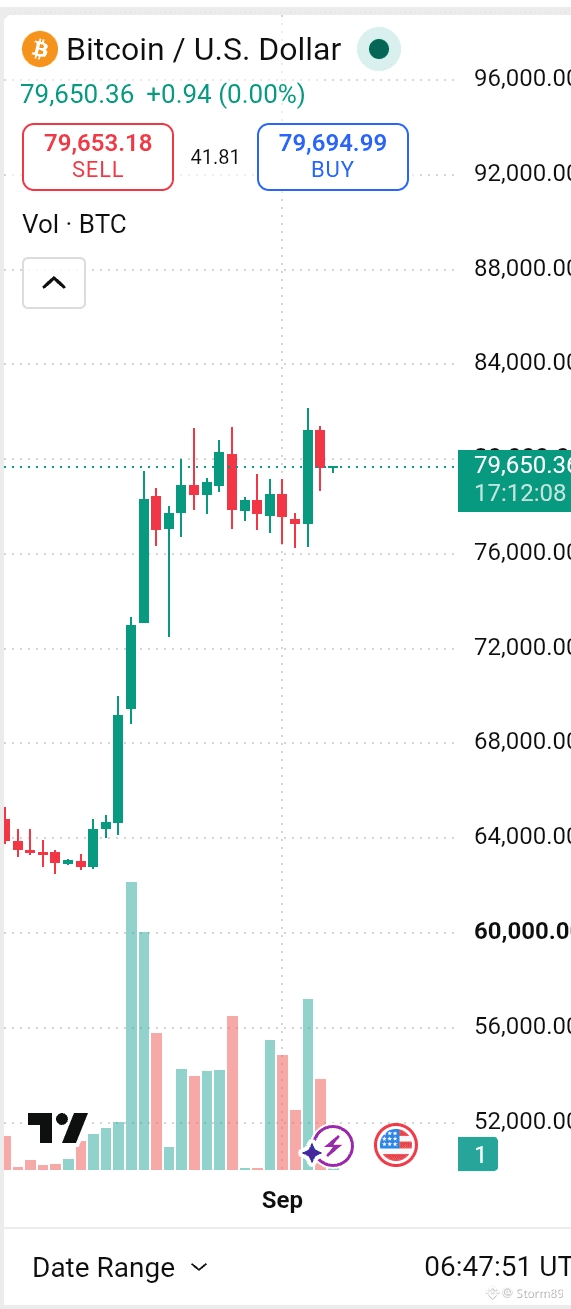
🌅 صباح البيتكوين كان ماسك 82 ألف، وفجأة انهار إلى 79 ألف خلال ساعات. شو صار؟
📖 الحدث الأول أرقام الوظائف فاجأت الجميع!
توقع المحللين إضافة 56 ألف وظيفة فقط في أغسطس. لكن الأرقام اللي نزلت كانت 162 ألف وظيفة! تخيلوا، المفاجأة كانت 3 أضعاف التوقعات! السوق ما استوعب الخبر، والنتيجة؟ انهيار!
✅الحدث الثاني ترامب يتدخل ويقلب الطاولة!
بدل ما يفرح السوق بالأرقام القوية، ترامب طلع وقال: "الأرقام ممتازة، اخفضوا الفائدة حالا" وكمل: إذا ما خفضتوها، رح أوقف التجارة مع الدول اللي عندها فائض تجاري مع أمريكا
✅الحدث الثالث الفيدرالي يصدم الجميع
في الجهة المقابلة، رئيس الفيدرالي كيفن وارش في خطابه بجاكسون هول ألمح لرفع الفائدة في سبتمبر يعني الصقور لسا موجودين
والنتيجة؟ صراع ثلاثي الأبعاد خربط السوق
⚠️ بالرغم من الانهيار، صناديق Bitcoin ETF سجلت أكبر تدفق منذ يناير بـ 730.9 مليون في يوم واحد بلاك روك وحدها سحبت 454 مليون يعني المؤسسات عم تشتري بينما السوق عم ينزل!
💰 أكثر من 2.6 مليار من مراكز البيع انمسحت
Binance سجلت خروج 331 مليون USDT خلال 24 ساعة
عقود BTC المستقبلية عند 570 مليون أعلى مستوى منذ مايو
💬ترامب عم يحاول يخفض الفائدة. والفيدرالي مهدد يرفعها هل نشهد انهيار لـ75 ألف ولا ارتداد لـ82 ألف؟ شاركونا👇
$BTC
#FedRateDecisions
#ETFs
🌅 صباح البيتكوين كان ماسك 82 ألف، وفجأة انهار إلى 79 ألف خلال ساعات. شو صار؟
📖 الحدث الأول أرقام الوظائف فاجأت الجميع!
توقع المحللين إضافة 56 ألف وظيفة فقط في أغسطس. لكن الأرقام اللي نزلت كانت 162 ألف وظيفة! تخيلوا، المفاجأة كانت 3 أضعاف التوقعات! السوق ما استوعب الخبر، والنتيجة؟ انهيار!
✅الحدث الثاني ترامب يتدخل ويقلب الطاولة!
بدل ما يفرح السوق بالأرقام القوية، ترامب طلع وقال: "الأرقام ممتازة، اخفضوا الفائدة حالا" وكمل: إذا ما خفضتوها، رح أوقف التجارة مع الدول اللي عندها فائض تجاري مع أمريكا
✅الحدث الثالث الفيدرالي يصدم الجميع
في الجهة المقابلة، رئيس الفيدرالي كيفن وارش في خطابه بجاكسون هول ألمح لرفع الفائدة في سبتمبر يعني الصقور لسا موجودين
والنتيجة؟ صراع ثلاثي الأبعاد خربط السوق
⚠️ بالرغم من الانهيار، صناديق Bitcoin ETF سجلت أكبر تدفق منذ يناير بـ 730.9 مليون في يوم واحد بلاك روك وحدها سحبت 454 مليون يعني المؤسسات عم تشتري بينما السوق عم ينزل!
💰 أكثر من 2.6 مليار من مراكز البيع انمسحت
Binance سجلت خروج 331 مليون USDT خلال 24 ساعة
عقود BTC المستقبلية عند 570 مليون أعلى مستوى منذ مايو
💬ترامب عم يحاول يخفض الفائدة. والفيدرالي مهدد يرفعها هل نشهد انهيار لـ75 ألف ولا ارتداد لـ82 ألف؟ شاركونا👇
$BTC
#FedRateDecisions
#ETFs
📖 الحدث الأول أرقام الوظائف فاجأت الجميع!
توقع المحللين إضافة 56 ألف وظيفة فقط في أغسطس. لكن الأرقام اللي نزلت كانت 162 ألف وظيفة! تخيلوا، المفاجأة كانت 3 أضعاف التوقعات! السوق ما استوعب الخبر، والنتيجة؟ انهيار!
✅الحدث الثاني ترامب يتدخل ويقلب الطاولة!
بدل ما يفرح السوق بالأرقام القوية، ترامب طلع وقال: "الأرقام ممتازة، اخفضوا الفائدة حالا" وكمل: إذا ما خفضتوها، رح أوقف التجارة مع الدول اللي عندها فائض تجاري مع أمريكا
✅الحدث الثالث الفيدرالي يصدم الجميع
في الجهة المقابلة، رئيس الفيدرالي كيفن وارش في خطابه بجاكسون هول ألمح لرفع الفائدة في سبتمبر يعني الصقور لسا موجودين
والنتيجة؟ صراع ثلاثي الأبعاد خربط السوق
⚠️ بالرغم من الانهيار، صناديق Bitcoin ETF سجلت أكبر تدفق منذ يناير بـ 730.9 مليون في يوم واحد بلاك روك وحدها سحبت 454 مليون يعني المؤسسات عم تشتري بينما السوق عم ينزل!
💰 أكثر من 2.6 مليار من مراكز البيع انمسحت
Binance سجلت خروج 331 مليون USDT خلال 24 ساعة
عقود BTC المستقبلية عند 570 مليون أعلى مستوى منذ مايو
💬ترامب عم يحاول يخفض الفائدة. والفيدرالي مهدد يرفعها هل نشهد انهيار لـ75 ألف ولا ارتداد لـ82 ألف؟ شاركونا👇
$BTC
#FedRateDecisions
#ETFs
2
175
·
--
Статья
احتمالات رفع الفائدة من الفيدرالي تتراجع إلى 38% بينما ينتظر والر بيانات مؤشر أسعار المستهلكينتراجعت احتمالات رفع الفائدة في سبتمبر إلى 38% على منصة Polymarket بعد أن قال محافظ الاحتياطي الفيدرالي كريستوفر والر إن تراجع التضخم في أغسطس قد يقنعه بدعم إبقاء الفائدة دون تغيير.
أبرز النقاط
- سعّرت Polymarket احتمال رفع الفائدة في سبتمبر عند 38% عقب تصريحات والر.
- قال والر إن تقرير تضخم أغسطس "الساخن" قد يدفعه لدعم سياسة أكثر تشددًا.
- من المقرر صدور بيانات مؤشري أسعار المنتجين والمستهلكين لأغسطس في 10 و11 سبتمبر على التوالي.
- ستُعلن لجنة السوق المفتوحة الفيدرالية قرارها بشأن الفائدة في 16 سبتمبر.
والر يجعل من مؤشر أغسطس اختبارًا حاسمًا
قال الفيدرالي في تصريحات والر المنشورة في 3 سبتمبر إن قراره في اجتماع لجنة السوق المفتوحة لشهر سبتمبر سيعتمد بشكل كبير على تقرير التضخم القادم. ومع اقتراب التوظيف مما وصفه والر بمستواه المستدام الأقصى، أوضح أن التضخم واصل التحرك ببطء نحو هدف البنك المركزي البالغ 2%. وسيصدر تقرير وظائف جديد وقراءة تضخم حديثة قبل اجتماع المسؤولين يومي 15-16 سبتمبر.
ولا يتوقع والر أن يختلف تقرير التوظيف كثيرًا عن بيانات سوق العمل الأخيرة؛ بدلًا من ذلك، ستحمل أرقام تضخم أغسطس وزنًا أكبر في تحديد ما إذا كان سيدعم إبقاء سعر الفائدة على الأموال الفيدرالية ضمن نطاقه الحالي 3.50%-3.75%.
وقال والر: "إذا استمر التقدم نحو هدفنا البالغ 2%، فأنا مستعد لدعم إبقاء سعر الفائدة عند مستواه الحالي". لكن قراءة أكثر سخونة قد تغيّر موقفه؛ إذ أوضح أنه سينظر في رفع الفائدة إذا تسارع التضخم، جزئيًا لأنه يرى أن السياسة الحالية تُقيّد الطلب بشكل طفيف فقط، مضيفًا: "إذا ظهرت أدلة على أن التقدم نحو تضخم 2% قد تراجع خلال أغسطس، فإن تعديلًا طفيفًا في موقفنا سيساعد على ضمان استئنافه".
ووصف والر موقفه بأنه مشروط لا التزامًا بتصويت محدد. وخلال اجتماع يوليو، دعم والر قرار اللجنة بإبقاء الفائدة دون تغيير لأن الاقتصاد ظل متينًا وأظهرت البيانات الأخيرة بوادر مبكرة لتراجع التضخم؛ إذ أبقت اللجنة على النطاق المستهدف عند 3.50%-3.75% بتصويت 9 مقابل 3، بينما فضّل ثلاثة مسؤولين رفعًا بمقدار ربع نقطة.
بيانات التضخم تصل قبل أيام من القرار
سيصدر مكتب إحصاءات العمل الأمريكي مؤشر أسعار المنتجين لشهر أغسطس في 10 سبتمبر، يليه مؤشر أسعار المستهلكين في 11 سبتمبر، أي أقل من أسبوع قبل إعلان الفيدرالي قراره في 16 سبتمبر. وكان مؤشر نفقات الاستهلاك الشخصي لشهر يوليو، مقياس التضخم المفضل لدى الفيدرالي، قد ارتفع 3.7% على أساس سنوي، أعلى بكثير من هدف البنك المركزي البالغ 2%، بينما أضافت تكاليف الطاقة المرتفعة المرتبطة بالنزاع الأمريكي-الإيراني مزيدًا من عدم اليقين للأرقام القادمة.
وكانت توقعات رفع الفائدة قد ارتفعت سابقًا بعد أن استخدم رئيس الفيدرالي كيفن وارش خطابه في جاكسون هول للتحذير من أن التضخم لم يعد إلى مستواه المستهدف؛ إذ وضعت أداة FedWatch التابعة لـCME احتمال رفع بمقدار ربع نقطة في سبتمبر فوق 66% قبل أن يحدد والر الشروط التي قد يدعم بموجبها التوقف. وتحرك تسعير CME لاحقًا نحو 50% عقب تصريحاته، وفق رويترز.
مسؤولون آخرون في الفيدرالي منفتحون على رفع الفائدة
يختلف دعم والر المشروط لإبقاء الفائدة في نبرته عن تصريحات المحافظ مايكل بار في وقت سابق من الأسبوع، رغم أن كلا المسؤولين حدّدا التضخم كالاختبار الرئيسي لسبتمبر. وقال بار في 1 سبتمبر إن التضخم ظل مرتفعًا جدًا لأكثر من خمس سنوات؛ إذ تراجع نمو الأسعار من فوق 7% في 2022 إلى أكثر بقليل من 2% في 2024، لكن التقدم تعثر خلال 2025 مع إضافة التعريفات الجمركية والنزاع في الشرق الأوسط والإنفاق المرتبط ببنية الذكاء الاصطناعي التحتية ضغطًا إضافيًا.
وأظهر تصويت يوليو انقسامًا داخل اللجنة بالفعل؛ إذ عارضت بيث هاماك ونيل كاشكاري ولوري لوجان قرار الإبقاء على الفائدة، مفضلين رفعًا بمقدار 25 نقطة أساس، ما يترك نتيجة سبتمبر حساسة حتى لمفاجأة طفيفة في بيانات التضخم.
الطاقة كمصدر خطر
يبقى قطاع الطاقة أحد مصادر المخاطر؛ إذ تجاوز خام برنت 90 دولارًا بعد تجدد المواجهات قرب مضيق هرمز، ما أثار مخاوف بشأن شحنات النفط. وقد تقلّص تقارير عن نظر الرئيس دونالد ترامب في إعلان انتهاء الحرب الأمريكية-الإيرانية بعض المخاوف من ارتفاع جديد في أسعار الطاقة، لكن لا البيت الأبيض ولا الفيدرالي تعاملا مع انخفاض أسعار الطاقة كأمر مؤكد.
تراجع احتمالات رفع الفائدة يدعم أسواق العملات الرقمية الأمريكية
أظهر عقد سبتمبر على Polymarket تراجع احتمال رفع الفائدة إلى 38% بعدما اقترب من 50% في وقت سابق من الأسبوع، بينما ارتفع احتمال عدم التغيير إلى نحو 62-63%. وبما أن أسعار أسواق التنبؤ تتحرك مع تداول المستخدمين، فقد تستمر هذه النسب في التغير قبل صدور بيانات التضخم. في المقابل، وضع عقد منفصل على Polymarket احتمال رفع واحد للفائدة على الأقل خلال 2026 عند نحو 64%، ما يعني أن المتداولين واصلوا تسعير احتمال رفع لاحق هذا العام حتى مع تراجع احتمال التحرك في سبتمبر.
بالنسبة للمستثمرين الأمريكيين في العملات الرقمية، يمكن لقرار الفائدة أن يؤثر على الطلب عبر عوائد سندات الخزانة والدولار والمنتجات الاستثمارية المنظمة؛ إذ ترفع العوائد الأعلى جاذبية الدين الحكومي وأدوات سوق المال، ما قد يقلل الطلب على الأصول المتقلبة التي لا تُدرّ فائدة.
@Binance_Square_Official
#FedRateDecisions
احتمالات رفع الفائدة من الفيدرالي تتراجع إلى 38% بينما ينتظر والر بيانات مؤشر أسعار المستهلكين
تراجعت احتمالات رفع الفائدة في سبتمبر إلى 38% على منصة Polymarket بعد أن قال محافظ الاحتياطي الفيدرالي كريستوفر والر إن تراجع التضخم في أغسطس قد يقنعه بدعم إبقاء الفائدة دون تغيير.
أبرز النقاط
- سعّرت Polymarket احتمال رفع الفائدة في سبتمبر عند 38% عقب تصريحات والر.
- قال والر إن تقرير تضخم أغسطس "الساخن" قد يدفعه لدعم سياسة أكثر تشددًا.
- من المقرر صدور بيانات مؤشري أسعار المنتجين والمستهلكين لأغسطس في 10 و11 سبتمبر على التوالي.
- ستُعلن لجنة السوق المفتوحة الفيدرالية قرارها بشأن الفائدة في 16 سبتمبر.
والر يجعل من مؤشر أغسطس اختبارًا حاسمًا
قال الفيدرالي في تصريحات والر المنشورة في 3 سبتمبر إن قراره في اجتماع لجنة السوق المفتوحة لشهر سبتمبر سيعتمد بشكل كبير على تقرير التضخم القادم. ومع اقتراب التوظيف مما وصفه والر بمستواه المستدام الأقصى، أوضح أن التضخم واصل التحرك ببطء نحو هدف البنك المركزي البالغ 2%. وسيصدر تقرير وظائف جديد وقراءة تضخم حديثة قبل اجتماع المسؤولين يومي 15-16 سبتمبر.
ولا يتوقع والر أن يختلف تقرير التوظيف كثيرًا عن بيانات سوق العمل الأخيرة؛ بدلًا من ذلك، ستحمل أرقام تضخم أغسطس وزنًا أكبر في تحديد ما إذا كان سيدعم إبقاء سعر الفائدة على الأموال الفيدرالية ضمن نطاقه الحالي 3.50%-3.75%.
وقال والر: "إذا استمر التقدم نحو هدفنا البالغ 2%، فأنا مستعد لدعم إبقاء سعر الفائدة عند مستواه الحالي". لكن قراءة أكثر سخونة قد تغيّر موقفه؛ إذ أوضح أنه سينظر في رفع الفائدة إذا تسارع التضخم، جزئيًا لأنه يرى أن السياسة الحالية تُقيّد الطلب بشكل طفيف فقط، مضيفًا: "إذا ظهرت أدلة على أن التقدم نحو تضخم 2% قد تراجع خلال أغسطس، فإن تعديلًا طفيفًا في موقفنا سيساعد على ضمان استئنافه".
ووصف والر موقفه بأنه مشروط لا التزامًا بتصويت محدد. وخلال اجتماع يوليو، دعم والر قرار اللجنة بإبقاء الفائدة دون تغيير لأن الاقتصاد ظل متينًا وأظهرت البيانات الأخيرة بوادر مبكرة لتراجع التضخم؛ إذ أبقت اللجنة على النطاق المستهدف عند 3.50%-3.75% بتصويت 9 مقابل 3، بينما فضّل ثلاثة مسؤولين رفعًا بمقدار ربع نقطة.
بيانات التضخم تصل قبل أيام من القرار
سيصدر مكتب إحصاءات العمل الأمريكي مؤشر أسعار المنتجين لشهر أغسطس في 10 سبتمبر، يليه مؤشر أسعار المستهلكين في 11 سبتمبر، أي أقل من أسبوع قبل إعلان الفيدرالي قراره في 16 سبتمبر. وكان مؤشر نفقات الاستهلاك الشخصي لشهر يوليو، مقياس التضخم المفضل لدى الفيدرالي، قد ارتفع 3.7% على أساس سنوي، أعلى بكثير من هدف البنك المركزي البالغ 2%، بينما أضافت تكاليف الطاقة المرتفعة المرتبطة بالنزاع الأمريكي-الإيراني مزيدًا من عدم اليقين للأرقام القادمة.
وكانت توقعات رفع الفائدة قد ارتفعت سابقًا بعد أن استخدم رئيس الفيدرالي كيفن وارش خطابه في جاكسون هول للتحذير من أن التضخم لم يعد إلى مستواه المستهدف؛ إذ وضعت أداة FedWatch التابعة لـCME احتمال رفع بمقدار ربع نقطة في سبتمبر فوق 66% قبل أن يحدد والر الشروط التي قد يدعم بموجبها التوقف. وتحرك تسعير CME لاحقًا نحو 50% عقب تصريحاته، وفق رويترز.
مسؤولون آخرون في الفيدرالي منفتحون على رفع الفائدة
يختلف دعم والر المشروط لإبقاء الفائدة في نبرته عن تصريحات المحافظ مايكل بار في وقت سابق من الأسبوع، رغم أن كلا المسؤولين حدّدا التضخم كالاختبار الرئيسي لسبتمبر. وقال بار في 1 سبتمبر إن التضخم ظل مرتفعًا جدًا لأكثر من خمس سنوات؛ إذ تراجع نمو الأسعار من فوق 7% في 2022 إلى أكثر بقليل من 2% في 2024، لكن التقدم تعثر خلال 2025 مع إضافة التعريفات الجمركية والنزاع في الشرق الأوسط والإنفاق المرتبط ببنية الذكاء الاصطناعي التحتية ضغطًا إضافيًا.
وأظهر تصويت يوليو انقسامًا داخل اللجنة بالفعل؛ إذ عارضت بيث هاماك ونيل كاشكاري ولوري لوجان قرار الإبقاء على الفائدة، مفضلين رفعًا بمقدار 25 نقطة أساس، ما يترك نتيجة سبتمبر حساسة حتى لمفاجأة طفيفة في بيانات التضخم.
الطاقة كمصدر خطر
يبقى قطاع الطاقة أحد مصادر المخاطر؛ إذ تجاوز خام برنت 90 دولارًا بعد تجدد المواجهات قرب مضيق هرمز، ما أثار مخاوف بشأن شحنات النفط. وقد تقلّص تقارير عن نظر الرئيس دونالد ترامب في إعلان انتهاء الحرب الأمريكية-الإيرانية بعض المخاوف من ارتفاع جديد في أسعار الطاقة، لكن لا البيت الأبيض ولا الفيدرالي تعاملا مع انخفاض أسعار الطاقة كأمر مؤكد.
تراجع احتمالات رفع الفائدة يدعم أسواق العملات الرقمية الأمريكية
أظهر عقد سبتمبر على Polymarket تراجع احتمال رفع الفائدة إلى 38% بعدما اقترب من 50% في وقت سابق من الأسبوع، بينما ارتفع احتمال عدم التغيير إلى نحو 62-63%. وبما أن أسعار أسواق التنبؤ تتحرك مع تداول المستخدمين، فقد تستمر هذه النسب في التغير قبل صدور بيانات التضخم. في المقابل، وضع عقد منفصل على Polymarket احتمال رفع واحد للفائدة على الأقل خلال 2026 عند نحو 64%، ما يعني أن المتداولين واصلوا تسعير احتمال رفع لاحق هذا العام حتى مع تراجع احتمال التحرك في سبتمبر.
بالنسبة للمستثمرين الأمريكيين في العملات الرقمية، يمكن لقرار الفائدة أن يؤثر على الطلب عبر عوائد سندات الخزانة والدولار والمنتجات الاستثمارية المنظمة؛ إذ ترفع العوائد الأعلى جاذبية الدين الحكومي وأدوات سوق المال، ما قد يقلل الطلب على الأصول المتقلبة التي لا تُدرّ فائدة.
@Binance Square Official
#FedRateDecisions
أبرز النقاط
- سعّرت Polymarket احتمال رفع الفائدة في سبتمبر عند 38% عقب تصريحات والر.
- قال والر إن تقرير تضخم أغسطس "الساخن" قد يدفعه لدعم سياسة أكثر تشددًا.
- من المقرر صدور بيانات مؤشري أسعار المنتجين والمستهلكين لأغسطس في 10 و11 سبتمبر على التوالي.
- ستُعلن لجنة السوق المفتوحة الفيدرالية قرارها بشأن الفائدة في 16 سبتمبر.
والر يجعل من مؤشر أغسطس اختبارًا حاسمًا
قال الفيدرالي في تصريحات والر المنشورة في 3 سبتمبر إن قراره في اجتماع لجنة السوق المفتوحة لشهر سبتمبر سيعتمد بشكل كبير على تقرير التضخم القادم. ومع اقتراب التوظيف مما وصفه والر بمستواه المستدام الأقصى، أوضح أن التضخم واصل التحرك ببطء نحو هدف البنك المركزي البالغ 2%. وسيصدر تقرير وظائف جديد وقراءة تضخم حديثة قبل اجتماع المسؤولين يومي 15-16 سبتمبر.
ولا يتوقع والر أن يختلف تقرير التوظيف كثيرًا عن بيانات سوق العمل الأخيرة؛ بدلًا من ذلك، ستحمل أرقام تضخم أغسطس وزنًا أكبر في تحديد ما إذا كان سيدعم إبقاء سعر الفائدة على الأموال الفيدرالية ضمن نطاقه الحالي 3.50%-3.75%.
وقال والر: "إذا استمر التقدم نحو هدفنا البالغ 2%، فأنا مستعد لدعم إبقاء سعر الفائدة عند مستواه الحالي". لكن قراءة أكثر سخونة قد تغيّر موقفه؛ إذ أوضح أنه سينظر في رفع الفائدة إذا تسارع التضخم، جزئيًا لأنه يرى أن السياسة الحالية تُقيّد الطلب بشكل طفيف فقط، مضيفًا: "إذا ظهرت أدلة على أن التقدم نحو تضخم 2% قد تراجع خلال أغسطس، فإن تعديلًا طفيفًا في موقفنا سيساعد على ضمان استئنافه".
ووصف والر موقفه بأنه مشروط لا التزامًا بتصويت محدد. وخلال اجتماع يوليو، دعم والر قرار اللجنة بإبقاء الفائدة دون تغيير لأن الاقتصاد ظل متينًا وأظهرت البيانات الأخيرة بوادر مبكرة لتراجع التضخم؛ إذ أبقت اللجنة على النطاق المستهدف عند 3.50%-3.75% بتصويت 9 مقابل 3، بينما فضّل ثلاثة مسؤولين رفعًا بمقدار ربع نقطة.
بيانات التضخم تصل قبل أيام من القرار
سيصدر مكتب إحصاءات العمل الأمريكي مؤشر أسعار المنتجين لشهر أغسطس في 10 سبتمبر، يليه مؤشر أسعار المستهلكين في 11 سبتمبر، أي أقل من أسبوع قبل إعلان الفيدرالي قراره في 16 سبتمبر. وكان مؤشر نفقات الاستهلاك الشخصي لشهر يوليو، مقياس التضخم المفضل لدى الفيدرالي، قد ارتفع 3.7% على أساس سنوي، أعلى بكثير من هدف البنك المركزي البالغ 2%، بينما أضافت تكاليف الطاقة المرتفعة المرتبطة بالنزاع الأمريكي-الإيراني مزيدًا من عدم اليقين للأرقام القادمة.
وكانت توقعات رفع الفائدة قد ارتفعت سابقًا بعد أن استخدم رئيس الفيدرالي كيفن وارش خطابه في جاكسون هول للتحذير من أن التضخم لم يعد إلى مستواه المستهدف؛ إذ وضعت أداة FedWatch التابعة لـCME احتمال رفع بمقدار ربع نقطة في سبتمبر فوق 66% قبل أن يحدد والر الشروط التي قد يدعم بموجبها التوقف. وتحرك تسعير CME لاحقًا نحو 50% عقب تصريحاته، وفق رويترز.
مسؤولون آخرون في الفيدرالي منفتحون على رفع الفائدة
يختلف دعم والر المشروط لإبقاء الفائدة في نبرته عن تصريحات المحافظ مايكل بار في وقت سابق من الأسبوع، رغم أن كلا المسؤولين حدّدا التضخم كالاختبار الرئيسي لسبتمبر. وقال بار في 1 سبتمبر إن التضخم ظل مرتفعًا جدًا لأكثر من خمس سنوات؛ إذ تراجع نمو الأسعار من فوق 7% في 2022 إلى أكثر بقليل من 2% في 2024، لكن التقدم تعثر خلال 2025 مع إضافة التعريفات الجمركية والنزاع في الشرق الأوسط والإنفاق المرتبط ببنية الذكاء الاصطناعي التحتية ضغطًا إضافيًا.
وأظهر تصويت يوليو انقسامًا داخل اللجنة بالفعل؛ إذ عارضت بيث هاماك ونيل كاشكاري ولوري لوجان قرار الإبقاء على الفائدة، مفضلين رفعًا بمقدار 25 نقطة أساس، ما يترك نتيجة سبتمبر حساسة حتى لمفاجأة طفيفة في بيانات التضخم.
الطاقة كمصدر خطر
يبقى قطاع الطاقة أحد مصادر المخاطر؛ إذ تجاوز خام برنت 90 دولارًا بعد تجدد المواجهات قرب مضيق هرمز، ما أثار مخاوف بشأن شحنات النفط. وقد تقلّص تقارير عن نظر الرئيس دونالد ترامب في إعلان انتهاء الحرب الأمريكية-الإيرانية بعض المخاوف من ارتفاع جديد في أسعار الطاقة، لكن لا البيت الأبيض ولا الفيدرالي تعاملا مع انخفاض أسعار الطاقة كأمر مؤكد.
تراجع احتمالات رفع الفائدة يدعم أسواق العملات الرقمية الأمريكية
أظهر عقد سبتمبر على Polymarket تراجع احتمال رفع الفائدة إلى 38% بعدما اقترب من 50% في وقت سابق من الأسبوع، بينما ارتفع احتمال عدم التغيير إلى نحو 62-63%. وبما أن أسعار أسواق التنبؤ تتحرك مع تداول المستخدمين، فقد تستمر هذه النسب في التغير قبل صدور بيانات التضخم. في المقابل، وضع عقد منفصل على Polymarket احتمال رفع واحد للفائدة على الأقل خلال 2026 عند نحو 64%، ما يعني أن المتداولين واصلوا تسعير احتمال رفع لاحق هذا العام حتى مع تراجع احتمال التحرك في سبتمبر.
بالنسبة للمستثمرين الأمريكيين في العملات الرقمية، يمكن لقرار الفائدة أن يؤثر على الطلب عبر عوائد سندات الخزانة والدولار والمنتجات الاستثمارية المنظمة؛ إذ ترفع العوائد الأعلى جاذبية الدين الحكومي وأدوات سوق المال، ما قد يقلل الطلب على الأصول المتقلبة التي لا تُدرّ فائدة.
@Binance Square Official
#FedRateDecisions
33
$BTC
{future}(BTCUSDT)
🚨 JUST IN: Markets are now pricing higher odds of a September Fed rate hike than no change. 📈⚠️ A hawkish surprise could hit risk assets hard. 💥#FedRateDecisions
$BTC
🚨 JUST IN: Markets are now pricing higher odds of a September Fed rate hike than no change. 📈⚠️ A hawkish surprise could hit risk assets hard. 💥#FedRateDecisions
🚨 JUST IN: Markets are now pricing higher odds of a September Fed rate hike than no change. 📈⚠️ A hawkish surprise could hit risk assets hard. 💥#FedRateDecisions
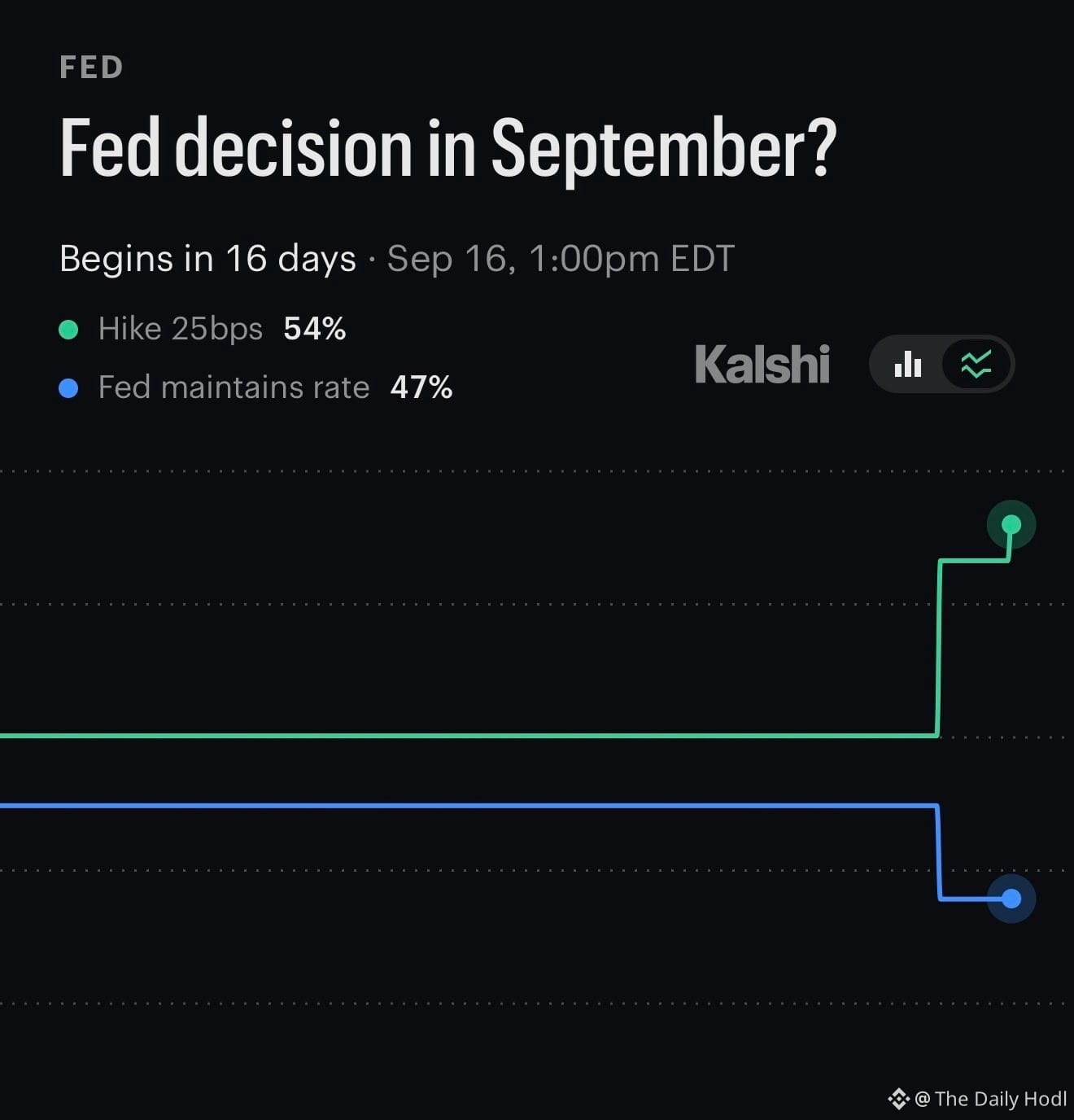
16

·
--
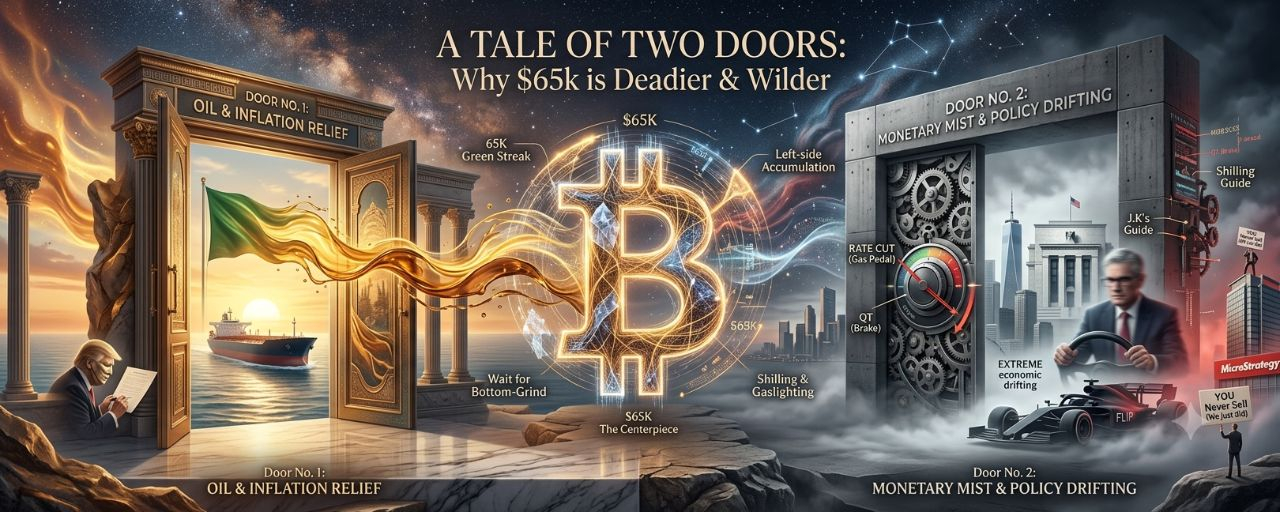
Статья
A Tale of Two Doors: Why This $65k Pump is Deadier and Wilder Than You Think$BTC
{future}(BTCUSDT)
Alright anons, BTC is comfortably holding at $65k after a 6-day green streak. I bet your feeds on Binance Square and Crypto Twitter are already flooded with "Bull market is back!" and "Time to go all-in!" posts.
But as a crypto OG who has survived two full bull-bear cycles, J.K is here to throw some cold water on your FOMO. Yes, the whales are pumping the price. But this week, the macro heavyweights are quietly opening two massive doors. One is injecting liquidity, while the other is slamming on the brakes. The price action ahead is about to get way weirder than you think.
If you want to protect your bags and avoid becoming someone else's exit liquidity, take three minutes to read through this breakdown.
Door No. 1: Trump Just Ripped the Oil Valve Wide Open
The biggest catalyst pushing us from $63k to $65k wasn’t some technical breakout—it was a massive geopolitical gift dropped by the Orange Man himself on Truth Social over the weekend.
Trump announced that the US-Iran peace deal is officially done. The Strait of Hormuz is fully unblocked, and the official signing is locked in for June 19th. Oil tankers worldwide are spinning up their engines.
Why should crypto degens care about oil? Sticky inflation has been the ultimate crypto killer lately, and skyrocketing energy prices were the main culprit. With the world's most critical oil chokepoint reopening, energy supply shocks are easing, and inflation expectations are instantly cooling down.The Market Verdict: BTC’s 6-day green streak is a textbook case of the market front-running this "peace dividend." Door No. 1 is officially open, and it's a massive green flag.
Door No. 2: The New Fed Chair is a Certified Mad Max Racer
Don't celebrate just yet. The real mind-bender happens on June 18th, when the new Fed Chair, Kevin Warsh, drops his debut FOMO-inducing interest rate decision.
This guy just took the wheel in late May, and he is a total wildcard. During his Senate hearings, he went full alpha, stating: "The Fed has completely lost its way. The dot plot is overly transparent and ruins market mechanics. We need to go back to a style of 'deliberate ambiguity.'"
Translation: No more forward guidance. The Fed is dropping the open-hand strategy and switching to pure psychological warfare. The ultimate policy compass Wall Street relied on for twenty years? Yeah, he might just trash it.
Even wilder is his proposed monetary stunt: simultaneous rate cuts and quantitative tightening (QT).
Picture this: he’s riding the brake with his left foot (QT, sucking cash out of the system) while slamming the gas pedal with his right (cutting rates to inject cash). Is this elite economic drifting, or is he going to flip the entire car and send the markets crashing off the track? Right now, smart money has absolutely no idea.
Shilling, Selling, and the Ultimate Crypto Gaslighting
With macro uncertainty hitting a fever pitch, the market has entered peak "trash-talk season."
Standard Chartered is out here desperately pumping their books, screaming that "winter is over" and $63k was the cycle bottom. Meanwhile, the ultimate Bitcoin gigachad—MicroStrategy—was just caught quietly offloading 32 BTC last week.
When called out by the community, Michael Saylor’s defense was the ultimate piece of corporate gaslighting:
"Listen frens, when I said 'never sell,' I meant YOU should never sell. I never said MY company wouldn’t."
When the most fanatical, diamond-handed institutional bull in history is quietly hedging his downside, what makes you think you can blindly long your way to a $100k breakout next week?
J.K’s Hardcore Survival Guide
Two doors are opening at the exact same time. One brings a breath of fresh air; the other is shrouded in thick smoke.
Crypto winter might be thawing, but the "bottom-grinding chop" ahead is going to be way more brutal and exhausting than retail investors are prepared for. We aren't getting a straight-shot god candle to new all-time highs. Instead, expect a violent tug-of-war designed to shake out weak hands.
In a market this unpredictable, J.K lives by two unshakeable rules:
Kill the daily chart anxiety: Stop tracking every 1% move like your life depends on it. Focus on the macro trend, lock in your long-term spot positions, and walk away.Stick to a strict left-side accumulation strategy: You buy when the market is trembling in fear and confusion, not when the group chats are screaming "we're back" at local tops.
For this round, I’m betting on time. No blind euphoria, no panic selling—just strategic, patient positioning.
Drop your predictions in the comments below: Is the new Fed Chair's "brake-and-gas" driving style going to rocket BTC straight to $70k, or are we spinning out back to the lows?
$BTC
$SPCX
{future}(SPCXUSDT)
#BTC70K✈️ #FOMCForecast #BitcoinTrading #FedRateDecisions
A Tale of Two Doors: Why This $65k Pump is Deadier and Wilder Than You Think
$BTC
Alright anons, BTC is comfortably holding at $65k after a 6-day green streak. I bet your feeds on Binance Square and Crypto Twitter are already flooded with "Bull market is back!" and "Time to go all-in!" posts.
But as a crypto OG who has survived two full bull-bear cycles, J.K is here to throw some cold water on your FOMO. Yes, the whales are pumping the price. But this week, the macro heavyweights are quietly opening two massive doors. One is injecting liquidity, while the other is slamming on the brakes. The price action ahead is about to get way weirder than you think.
If you want to protect your bags and avoid becoming someone else's exit liquidity, take three minutes to read through this breakdown.
Door No. 1: Trump Just Ripped the Oil Valve Wide Open
The biggest catalyst pushing us from $63k to $65k wasn’t some technical breakout—it was a massive geopolitical gift dropped by the Orange Man himself on Truth Social over the weekend.
Trump announced that the US-Iran peace deal is officially done. The Strait of Hormuz is fully unblocked, and the official signing is locked in for June 19th. Oil tankers worldwide are spinning up their engines.
Why should crypto degens care about oil? Sticky inflation has been the ultimate crypto killer lately, and skyrocketing energy prices were the main culprit. With the world's most critical oil chokepoint reopening, energy supply shocks are easing, and inflation expectations are instantly cooling down.The Market Verdict: BTC’s 6-day green streak is a textbook case of the market front-running this "peace dividend." Door No. 1 is officially open, and it's a massive green flag.
Door No. 2: The New Fed Chair is a Certified Mad Max Racer
Don't celebrate just yet. The real mind-bender happens on June 18th, when the new Fed Chair, Kevin Warsh, drops his debut FOMO-inducing interest rate decision.
This guy just took the wheel in late May, and he is a total wildcard. During his Senate hearings, he went full alpha, stating: "The Fed has completely lost its way. The dot plot is overly transparent and ruins market mechanics. We need to go back to a style of 'deliberate ambiguity.'"
Translation: No more forward guidance. The Fed is dropping the open-hand strategy and switching to pure psychological warfare. The ultimate policy compass Wall Street relied on for twenty years? Yeah, he might just trash it.
Even wilder is his proposed monetary stunt: simultaneous rate cuts and quantitative tightening (QT).
Picture this: he’s riding the brake with his left foot (QT, sucking cash out of the system) while slamming the gas pedal with his right (cutting rates to inject cash). Is this elite economic drifting, or is he going to flip the entire car and send the markets crashing off the track? Right now, smart money has absolutely no idea.
Shilling, Selling, and the Ultimate Crypto Gaslighting
With macro uncertainty hitting a fever pitch, the market has entered peak "trash-talk season."
Standard Chartered is out here desperately pumping their books, screaming that "winter is over" and $63k was the cycle bottom. Meanwhile, the ultimate Bitcoin gigachad—MicroStrategy—was just caught quietly offloading 32 BTC last week.
When called out by the community, Michael Saylor’s defense was the ultimate piece of corporate gaslighting:
"Listen frens, when I said 'never sell,' I meant YOU should never sell. I never said MY company wouldn’t."
When the most fanatical, diamond-handed institutional bull in history is quietly hedging his downside, what makes you think you can blindly long your way to a $100k breakout next week?
J.K’s Hardcore Survival Guide
Two doors are opening at the exact same time. One brings a breath of fresh air; the other is shrouded in thick smoke.
Crypto winter might be thawing, but the "bottom-grinding chop" ahead is going to be way more brutal and exhausting than retail investors are prepared for. We aren't getting a straight-shot god candle to new all-time highs. Instead, expect a violent tug-of-war designed to shake out weak hands.
In a market this unpredictable, J.K lives by two unshakeable rules:
Kill the daily chart anxiety: Stop tracking every 1% move like your life depends on it. Focus on the macro trend, lock in your long-term spot positions, and walk away.Stick to a strict left-side accumulation strategy: You buy when the market is trembling in fear and confusion, not when the group chats are screaming "we're back" at local tops.
For this round, I’m betting on time. No blind euphoria, no panic selling—just strategic, patient positioning.
Drop your predictions in the comments below: Is the new Fed Chair's "brake-and-gas" driving style going to rocket BTC straight to $70k, or are we spinning out back to the lows?
$BTC
$SPCX
#BTC70K✈️ #FOMCForecast #BitcoinTrading #FedRateDecisions
Alright anons, BTC is comfortably holding at $65k after a 6-day green streak. I bet your feeds on Binance Square and Crypto Twitter are already flooded with "Bull market is back!" and "Time to go all-in!" posts.
But as a crypto OG who has survived two full bull-bear cycles, J.K is here to throw some cold water on your FOMO. Yes, the whales are pumping the price. But this week, the macro heavyweights are quietly opening two massive doors. One is injecting liquidity, while the other is slamming on the brakes. The price action ahead is about to get way weirder than you think.
If you want to protect your bags and avoid becoming someone else's exit liquidity, take three minutes to read through this breakdown.
Door No. 1: Trump Just Ripped the Oil Valve Wide Open
The biggest catalyst pushing us from $63k to $65k wasn’t some technical breakout—it was a massive geopolitical gift dropped by the Orange Man himself on Truth Social over the weekend.
Trump announced that the US-Iran peace deal is officially done. The Strait of Hormuz is fully unblocked, and the official signing is locked in for June 19th. Oil tankers worldwide are spinning up their engines.
Why should crypto degens care about oil? Sticky inflation has been the ultimate crypto killer lately, and skyrocketing energy prices were the main culprit. With the world's most critical oil chokepoint reopening, energy supply shocks are easing, and inflation expectations are instantly cooling down.The Market Verdict: BTC’s 6-day green streak is a textbook case of the market front-running this "peace dividend." Door No. 1 is officially open, and it's a massive green flag.
Door No. 2: The New Fed Chair is a Certified Mad Max Racer
Don't celebrate just yet. The real mind-bender happens on June 18th, when the new Fed Chair, Kevin Warsh, drops his debut FOMO-inducing interest rate decision.
This guy just took the wheel in late May, and he is a total wildcard. During his Senate hearings, he went full alpha, stating: "The Fed has completely lost its way. The dot plot is overly transparent and ruins market mechanics. We need to go back to a style of 'deliberate ambiguity.'"
Translation: No more forward guidance. The Fed is dropping the open-hand strategy and switching to pure psychological warfare. The ultimate policy compass Wall Street relied on for twenty years? Yeah, he might just trash it.
Even wilder is his proposed monetary stunt: simultaneous rate cuts and quantitative tightening (QT).
Picture this: he’s riding the brake with his left foot (QT, sucking cash out of the system) while slamming the gas pedal with his right (cutting rates to inject cash). Is this elite economic drifting, or is he going to flip the entire car and send the markets crashing off the track? Right now, smart money has absolutely no idea.
Shilling, Selling, and the Ultimate Crypto Gaslighting
With macro uncertainty hitting a fever pitch, the market has entered peak "trash-talk season."
Standard Chartered is out here desperately pumping their books, screaming that "winter is over" and $63k was the cycle bottom. Meanwhile, the ultimate Bitcoin gigachad—MicroStrategy—was just caught quietly offloading 32 BTC last week.
When called out by the community, Michael Saylor’s defense was the ultimate piece of corporate gaslighting:
"Listen frens, when I said 'never sell,' I meant YOU should never sell. I never said MY company wouldn’t."
When the most fanatical, diamond-handed institutional bull in history is quietly hedging his downside, what makes you think you can blindly long your way to a $100k breakout next week?
J.K’s Hardcore Survival Guide
Two doors are opening at the exact same time. One brings a breath of fresh air; the other is shrouded in thick smoke.
Crypto winter might be thawing, but the "bottom-grinding chop" ahead is going to be way more brutal and exhausting than retail investors are prepared for. We aren't getting a straight-shot god candle to new all-time highs. Instead, expect a violent tug-of-war designed to shake out weak hands.
In a market this unpredictable, J.K lives by two unshakeable rules:
Kill the daily chart anxiety: Stop tracking every 1% move like your life depends on it. Focus on the macro trend, lock in your long-term spot positions, and walk away.Stick to a strict left-side accumulation strategy: You buy when the market is trembling in fear and confusion, not when the group chats are screaming "we're back" at local tops.
For this round, I’m betting on time. No blind euphoria, no panic selling—just strategic, patient positioning.
Drop your predictions in the comments below: Is the new Fed Chair's "brake-and-gas" driving style going to rocket BTC straight to $70k, or are we spinning out back to the lows?
$BTC
$SPCX
#BTC70K✈️ #FOMCForecast #BitcoinTrading #FedRateDecisions
1
278

·
--
⚡Fed Rate Decision Probabilities Updated 📊🚀
CME FedWatch data shows 33% probability of Federal Reserve maintaining interest rates unchanged in September, while 67% probability of 25 basis point rate hike as inflation concerns persist amid geopolitical tensions affecting global markets$AKE $UAI $BEAT
{future}(BEATUSDT)
{future}(UAIUSDT)
{future}(AKEUSDT)
#FedRateDecisions
⚡Fed Rate Decision Probabilities Updated 📊🚀
CME FedWatch data shows 33% probability of Federal Reserve maintaining interest rates unchanged in September, while 67% probability of 25 basis point rate hike as inflation concerns persist amid geopolitical tensions affecting global markets$AKE $UAI $BEAT
#FedRateDecisions
CME FedWatch data shows 33% probability of Federal Reserve maintaining interest rates unchanged in September, while 67% probability of 25 basis point rate hike as inflation concerns persist amid geopolitical tensions affecting global markets$AKE $UAI $BEAT
#FedRateDecisions
1
352

·
--
Рост
$BTC
{spot}(BTCUSDT)
🚨🚨 With expectations of rate hikes receding, why on earth are long-term yields rising? 🚨
US stocks have taken a fair bit of a beating this week
S&P 500 & Nasdaq are down
US 30-year treasury yield hovering near 5.25%
Crude oil sitting in the $90s
Walmart down by roughly 9%
₿ Meanwhile, Bitcoin has reclaimed the $70,000 mark
What’s fascinating is that this isn't a simple case of "risk-off" sentiment
The VIX sits in the 16s, and the Fear & Greed Index is at 52 (Neutral). Appetite for high-yield bonds remains remarkably sturdy, and capital is actively flowing into crypto
According to FedWatch, a pause in September is the favored outcome at 65.4%. Yet, despite that, long-term yields keep climbing
Underneath the bonnet, this is being driven by US national debt hitting the $40 trillion mark, massive private sector demand for capital (including AI investments), and inflationary pressure from elevated oil prices
What’s shifting in the market right now is that we may no longer be in an environment focused purely on the "Fed’s policy rate." Instead, long-term yields themselves are becoming the primary anchor for equity valuations 📢
#FedRateDecisions #USGovernment #Market_Update
$ETH
{spot}(ETHUSDT)
$XRP
{spot}(XRPUSDT)
$BTC
🚨🚨 With expectations of rate hikes receding, why on earth are long-term yields rising? 🚨
US stocks have taken a fair bit of a beating this week
S&P 500 & Nasdaq are down
US 30-year treasury yield hovering near 5.25%
Crude oil sitting in the $90s
Walmart down by roughly 9%
₿ Meanwhile, Bitcoin has reclaimed the $70,000 mark
What’s fascinating is that this isn't a simple case of "risk-off" sentiment
The VIX sits in the 16s, and the Fear & Greed Index is at 52 (Neutral). Appetite for high-yield bonds remains remarkably sturdy, and capital is actively flowing into crypto
According to FedWatch, a pause in September is the favored outcome at 65.4%. Yet, despite that, long-term yields keep climbing
Underneath the bonnet, this is being driven by US national debt hitting the $40 trillion mark, massive private sector demand for capital (including AI investments), and inflationary pressure from elevated oil prices
What’s shifting in the market right now is that we may no longer be in an environment focused purely on the "Fed’s policy rate." Instead, long-term yields themselves are becoming the primary anchor for equity valuations 📢
#FedRateDecisions #USGovernment #Market_Update
$ETH
$XRP
🚨🚨 With expectations of rate hikes receding, why on earth are long-term yields rising? 🚨
US stocks have taken a fair bit of a beating this week
S&P 500 & Nasdaq are down
US 30-year treasury yield hovering near 5.25%
Crude oil sitting in the $90s
Walmart down by roughly 9%
₿ Meanwhile, Bitcoin has reclaimed the $70,000 mark
What’s fascinating is that this isn't a simple case of "risk-off" sentiment
The VIX sits in the 16s, and the Fear & Greed Index is at 52 (Neutral). Appetite for high-yield bonds remains remarkably sturdy, and capital is actively flowing into crypto
According to FedWatch, a pause in September is the favored outcome at 65.4%. Yet, despite that, long-term yields keep climbing
Underneath the bonnet, this is being driven by US national debt hitting the $40 trillion mark, massive private sector demand for capital (including AI investments), and inflationary pressure from elevated oil prices
What’s shifting in the market right now is that we may no longer be in an environment focused purely on the "Fed’s policy rate." Instead, long-term yields themselves are becoming the primary anchor for equity valuations 📢
#FedRateDecisions #USGovernment #Market_Update
$ETH
$XRP
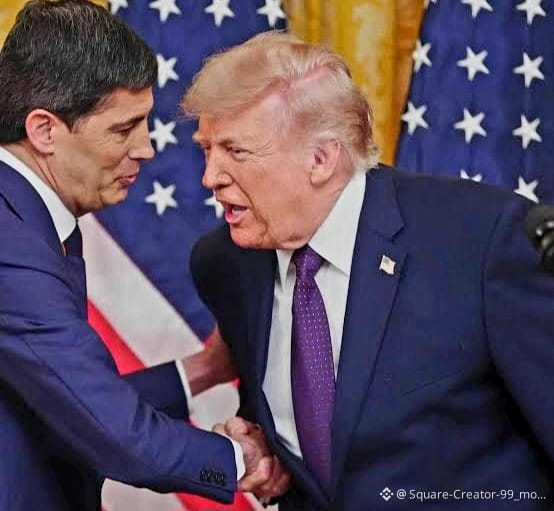
1
483
Войдите, чтобы посмотреть больше материала
Присоединяйтесь к пользователям криптовалют по всему миру на Binance Square
⚡️ Получайте новейшую и полезную информацию о криптоактивах.
💬 Нам доверяет крупнейшая в мире криптобиржа.
👍 Получите достоверные аналитические данные от верифицированных создателей контента.
Эл. почта/номер телефона
В тренде
1
#BinanceKZ
Просмотров: 17,567
69 обсуждают
2
#BitcoinClears$85200
Просмотров: 2,060
93 обсуждают
3
#AltcoinSeasonIndexHoldsAbove60For5Days
Просмотров: 15,106
606 обсуждают
4
#USADPAdds90000JobsInSeptember
Просмотров: 4,740
310 обсуждают
5
#USCorePCEEasesTo3%InAugust
Просмотров: 4,366
269 обсуждают
6
#KospiPostsWorstQuarterSince2020
Просмотров: 4,240
300 обсуждают
7
#SECToClarifyOnChainFundraisingRules
Просмотров: 11,570
474 обсуждают
8
#UKFCAOpensCryptoFirmAuthorization
Просмотров: 15,008
448 обсуждают
9
#JapanMOFStudyGroupOnTokenizedGovtBonds
Просмотров: 12,965
358 обсуждают
10
#QNTRises287%
Просмотров: 59,974
774 обсуждают