
#cryptoadoption
cryptoadoption
Просмотров: 13.5M
16,417 обсуждают
Bank of Montreal (BMO), Canada's third-largest bank, has acquired around $150 million in spot Bitcoin ETFs! 🔥📈 Of this investment, $139 million has been allocated to BlackRock's iShares Bitcoin ETF, while the remaining $11 million is spread across three other Bitcoin funds.This is a huge step forward for traditional financial institutions embracing the Bitcoin revolution! 🏦💎What do you think about this major institutional move? Let’s hear your thoughts! 👇
Популярные
Новые

Проверено
#avalancheintegratesintouaepassdigitalvault Text to copy and paste:
🇦🇪 SOVEREIGN LEVEL ADOPTION: This Historic UAE Move Changes Everything! 🏛️
If you are waiting for the ultimate validation of blockchain utility, this is officially it.
$AVAX has successfully secured an integration into the UAEPass Digital Vault—the national digital identity framework used by every single citizen and resident across the United Arab Emirates.
This isn't a speculative partnership. This is infrastructure engineering:
The Scale: Millions of active sovereign digital identities secured by decentralized ledger tech.The Reality: The UAE is laying down the definitive global blueprint for true, state-level Web3 implementation.
While other platforms chase short-term hype and speculative retail trends, high-performance ecosystems are cementing themselves into global governance systems.
👇 Is this the ultimate catalyst to push this network ahead of its rivals? Tell me your thoughts! 👇
#Avalanche #UAEDigitalPass #CryptoAdoption
#avalancheintegratesintouaepassdigitalvault Text to copy and paste:
🇦🇪 SOVEREIGN LEVEL ADOPTION: This Historic UAE Move Changes Everything! 🏛️
If you are waiting for the ultimate validation of blockchain utility, this is officially it.
$AVAX has successfully secured an integration into the UAEPass Digital Vault—the national digital identity framework used by every single citizen and resident across the United Arab Emirates.
This isn't a speculative partnership. This is infrastructure engineering:
The Scale: Millions of active sovereign digital identities secured by decentralized ledger tech.The Reality: The UAE is laying down the definitive global blueprint for true, state-level Web3 implementation.
While other platforms chase short-term hype and speculative retail trends, high-performance ecosystems are cementing themselves into global governance systems.
👇 Is this the ultimate catalyst to push this network ahead of its rivals? Tell me your thoughts! 👇
#Avalanche #UAEDigitalPass #CryptoAdoption
🇦🇪 SOVEREIGN LEVEL ADOPTION: This Historic UAE Move Changes Everything! 🏛️
If you are waiting for the ultimate validation of blockchain utility, this is officially it.
$AVAX has successfully secured an integration into the UAEPass Digital Vault—the national digital identity framework used by every single citizen and resident across the United Arab Emirates.
This isn't a speculative partnership. This is infrastructure engineering:
The Scale: Millions of active sovereign digital identities secured by decentralized ledger tech.The Reality: The UAE is laying down the definitive global blueprint for true, state-level Web3 implementation.
While other platforms chase short-term hype and speculative retail trends, high-performance ecosystems are cementing themselves into global governance systems.
👇 Is this the ultimate catalyst to push this network ahead of its rivals? Tell me your thoughts! 👇
#Avalanche #UAEDigitalPass #CryptoAdoption

206 Atlas:
Narrative hype does not justify chasing REZ after a 15% drop. Price action dictates the trade, not CEO warnings.Integration into a digital ID framework does not inherently drive price appreciation or solve liquidity issues.
1
1
1.6k

·
--
Рост
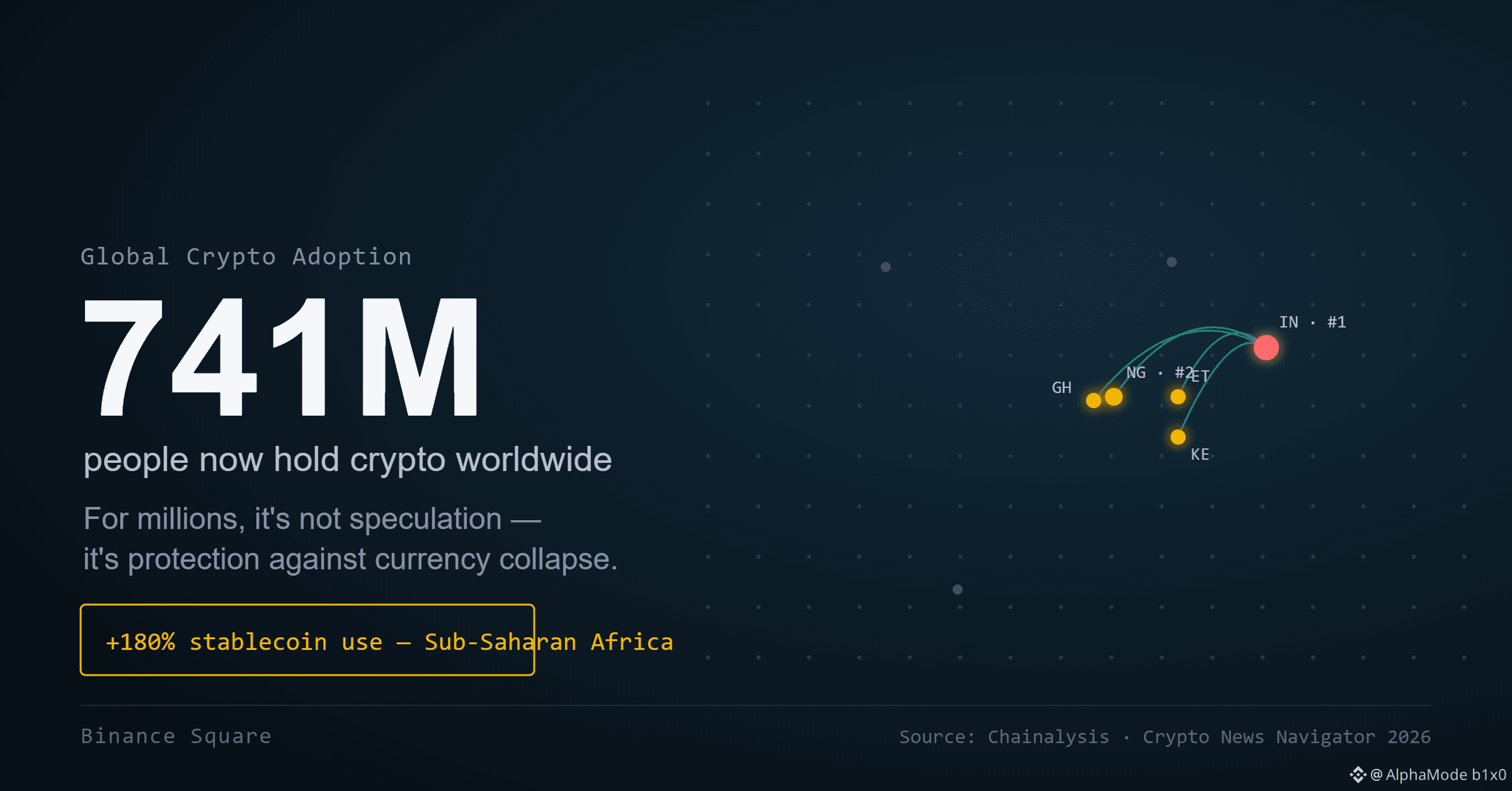
🌍 Crypto isn't a US trading story anymore — it's a survival tool for hundreds of millions.
741 million people now hold crypto worldwide. But look at who's leading:
🇮🇳 India — #1 in grassroots adoption
🇳🇬 Nigeria — jumped to #2
🇪🇹🇰🇪🇬🇭 Ethiopia, Kenya, Ghana — first-ever top 20 debuts
📈 Stablecoin use across Sub-Saharan Africa up 180%
Why? Not hype — currency instability. When your local money loses value fast, a stablecoin isn't speculation, it's protection.
The center of crypto adoption isn't Wall Street. It's everywhere your currency can't be trusted.
👇 Which region surprised you most on this list?
#crypto #Binance e #CryptoAdoption #Africa #Web3
$GOOGL.US
{stock_us}(GOOGL.US)
🌍 Crypto isn't a US trading story anymore — it's a survival tool for hundreds of millions.
741 million people now hold crypto worldwide. But look at who's leading:
🇮🇳 India — #1 in grassroots adoption
🇳🇬 Nigeria — jumped to #2
🇪🇹🇰🇪🇬🇭 Ethiopia, Kenya, Ghana — first-ever top 20 debuts
📈 Stablecoin use across Sub-Saharan Africa up 180%
Why? Not hype — currency instability. When your local money loses value fast, a stablecoin isn't speculation, it's protection.
The center of crypto adoption isn't Wall Street. It's everywhere your currency can't be trusted.
👇 Which region surprised you most on this list?
#crypto #Binance e #CryptoAdoption #Africa #Web3
$GOOGL.US
741 million people now hold crypto worldwide. But look at who's leading:
🇮🇳 India — #1 in grassroots adoption
🇳🇬 Nigeria — jumped to #2
🇪🇹🇰🇪🇬🇭 Ethiopia, Kenya, Ghana — first-ever top 20 debuts
📈 Stablecoin use across Sub-Saharan Africa up 180%
Why? Not hype — currency instability. When your local money loses value fast, a stablecoin isn't speculation, it's protection.
The center of crypto adoption isn't Wall Street. It's everywhere your currency can't be trusted.
👇 Which region surprised you most on this list?
#crypto #Binance e #CryptoAdoption #Africa #Web3
$GOOGL.US
GOOGLUS-0,12%
51

·
--
SHIB Yeni Mənimsəmə Mərhələsinə çatır: 1,8 Milyon+ Ünvan
Shiba Inu kripto mənzərəsi boyunca izini genişləndirməyə davam edir və Ethereum ilə Shibarium üzərində 1,84 milyondan çox birləşmiş ünvanla böyük bir mərhələni keçib.
Ethereum üstünlüyü: Ethereum şəbəkəsi geniş əksəriyyəti təşkil edir və təxminən 1,689 milyon SHIB ünvanına sahibdir.
Shibarium genişlənməsi: Shibarium vasitəsilə Layer-2 fəaliyyəti tokenin artan şəbəkə faydalılığına və istifadəçi əhatəsinə əhəmiyyətli dərəcədə töhfə verməyə davam edir.
Mənimsəmə anlayışı: Ümumi ünvanlar daha geniş ekosistem cəlbini əks etdirsə də, çoxsaylı cüzdan istifadəsinə görə mütləq 1,84 milyon unikal fərdi sahib demək deyil.
Bu böyüməni sürətləndirməkdə Shibarium-un rolu barədə nə düşünürsünüz? Aşağıda bildirin! 👇
#ShibaInu #SHIB #Shibarium #CryptoAdoption
SHIB Yeni Mənimsəmə Mərhələsinə çatır: 1,8 Milyon+ Ünvan
Shiba Inu kripto mənzərəsi boyunca izini genişləndirməyə davam edir və Ethereum ilə Shibarium üzərində 1,84 milyondan çox birləşmiş ünvanla böyük bir mərhələni keçib.
Ethereum üstünlüyü: Ethereum şəbəkəsi geniş əksəriyyəti təşkil edir və təxminən 1,689 milyon SHIB ünvanına sahibdir.
Shibarium genişlənməsi: Shibarium vasitəsilə Layer-2 fəaliyyəti tokenin artan şəbəkə faydalılığına və istifadəçi əhatəsinə əhəmiyyətli dərəcədə töhfə verməyə davam edir.
Mənimsəmə anlayışı: Ümumi ünvanlar daha geniş ekosistem cəlbini əks etdirsə də, çoxsaylı cüzdan istifadəsinə görə mütləq 1,84 milyon unikal fərdi sahib demək deyil.
Bu böyüməni sürətləndirməkdə Shibarium-un rolu barədə nə düşünürsünüz? Aşağıda bildirin! 👇
#ShibaInu #SHIB #Shibarium #CryptoAdoption
Shiba Inu kripto mənzərəsi boyunca izini genişləndirməyə davam edir və Ethereum ilə Shibarium üzərində 1,84 milyondan çox birləşmiş ünvanla böyük bir mərhələni keçib.
Ethereum üstünlüyü: Ethereum şəbəkəsi geniş əksəriyyəti təşkil edir və təxminən 1,689 milyon SHIB ünvanına sahibdir.
Shibarium genişlənməsi: Shibarium vasitəsilə Layer-2 fəaliyyəti tokenin artan şəbəkə faydalılığına və istifadəçi əhatəsinə əhəmiyyətli dərəcədə töhfə verməyə davam edir.
Mənimsəmə anlayışı: Ümumi ünvanlar daha geniş ekosistem cəlbini əks etdirsə də, çoxsaylı cüzdan istifadəsinə görə mütləq 1,84 milyon unikal fərdi sahib demək deyil.
Bu böyüməni sürətləndirməkdə Shibarium-un rolu barədə nə düşünürsünüz? Aşağıda bildirin! 👇
#ShibaInu #SHIB #Shibarium #CryptoAdoption
11

·
--
世界银行给乌拉圭砸了3亿美元搞经济改革,这可不是小打小闹!乌拉圭拉美小国但加密态度一直很积极,这波资金注入可能会刺激当地数字经济和区块链发展。全球经济稳定+新兴市场拥抱加密,双重利好!大饼和以太坊这类主流币可能迎来一波情绪提振,毕竟机构资金入场往往带来市场信心。全球经济复苏信号,加密春天不远了?
World Bank just approved $300M for Uruguay's economic reforms. This small Latin American country has always been crypto-friendly, so this injection could boost its digital economy and blockchain adoption. Global economic stability + emerging markets embracing crypto = double bullish! Bitcoin and Ethereum might get a confidence boost with institutional money flowing in. Signs of global economic recovery, crypto winter might be ending soon!
#全球经济 #cryptoadoption $BTC $ETH
世界银行给乌拉圭砸了3亿美元搞经济改革,这可不是小打小闹!乌拉圭拉美小国但加密态度一直很积极,这波资金注入可能会刺激当地数字经济和区块链发展。全球经济稳定+新兴市场拥抱加密,双重利好!大饼和以太坊这类主流币可能迎来一波情绪提振,毕竟机构资金入场往往带来市场信心。全球经济复苏信号,加密春天不远了?
World Bank just approved $300M for Uruguay's economic reforms. This small Latin American country has always been crypto-friendly, so this injection could boost its digital economy and blockchain adoption. Global economic stability + emerging markets embracing crypto = double bullish! Bitcoin and Ethereum might get a confidence boost with institutional money flowing in. Signs of global economic recovery, crypto winter might be ending soon!
#全球经济 #cryptoadoption $BTC $ETH
World Bank just approved $300M for Uruguay's economic reforms. This small Latin American country has always been crypto-friendly, so this injection could boost its digital economy and blockchain adoption. Global economic stability + emerging markets embracing crypto = double bullish! Bitcoin and Ethereum might get a confidence boost with institutional money flowing in. Signs of global economic recovery, crypto winter might be ending soon!
#全球经济 #cryptoadoption $BTC $ETH
99

·
--
Проверено
SHIB Reaches New Adoption Milestone: 1.8 Million+ Addresses
Shiba Inu continues to expand its footprint across the crypto landscape, crossing a massive milestone with over 1.84 million combined addresses on Ethereum and Shibarium.
Ethereum Dominance: The Ethereum network accounts for the vast majority, holding approximately 1.689 million SHIB addresses.
Shibarium Expansion: Layer-2 activity via Shibarium continues to contribute significantly to the token's growing network utility and user reach.
Adoption Insight: While total addresses reflect broader ecosystem engagement, they do not necessarily equal 1.84 million unique individual holders due to multi-wallet usage.
What are your thoughts on Shibarium’s role in driving this growth? Let me know below! 👇
#ShibaInu #SHIB #Shibarium #CryptoAdoption
$SHIB
{spot}(SHIBUSDT)
SHIB Reaches New Adoption Milestone: 1.8 Million+ Addresses
Shiba Inu continues to expand its footprint across the crypto landscape, crossing a massive milestone with over 1.84 million combined addresses on Ethereum and Shibarium.
Ethereum Dominance: The Ethereum network accounts for the vast majority, holding approximately 1.689 million SHIB addresses.
Shibarium Expansion: Layer-2 activity via Shibarium continues to contribute significantly to the token's growing network utility and user reach.
Adoption Insight: While total addresses reflect broader ecosystem engagement, they do not necessarily equal 1.84 million unique individual holders due to multi-wallet usage.
What are your thoughts on Shibarium’s role in driving this growth? Let me know below! 👇
#ShibaInu #SHIB #Shibarium #CryptoAdoption
$SHIB
Shiba Inu continues to expand its footprint across the crypto landscape, crossing a massive milestone with over 1.84 million combined addresses on Ethereum and Shibarium.
Ethereum Dominance: The Ethereum network accounts for the vast majority, holding approximately 1.689 million SHIB addresses.
Shibarium Expansion: Layer-2 activity via Shibarium continues to contribute significantly to the token's growing network utility and user reach.
Adoption Insight: While total addresses reflect broader ecosystem engagement, they do not necessarily equal 1.84 million unique individual holders due to multi-wallet usage.
What are your thoughts on Shibarium’s role in driving this growth? Let me know below! 👇
#ShibaInu #SHIB #Shibarium #CryptoAdoption
$SHIB
5
687

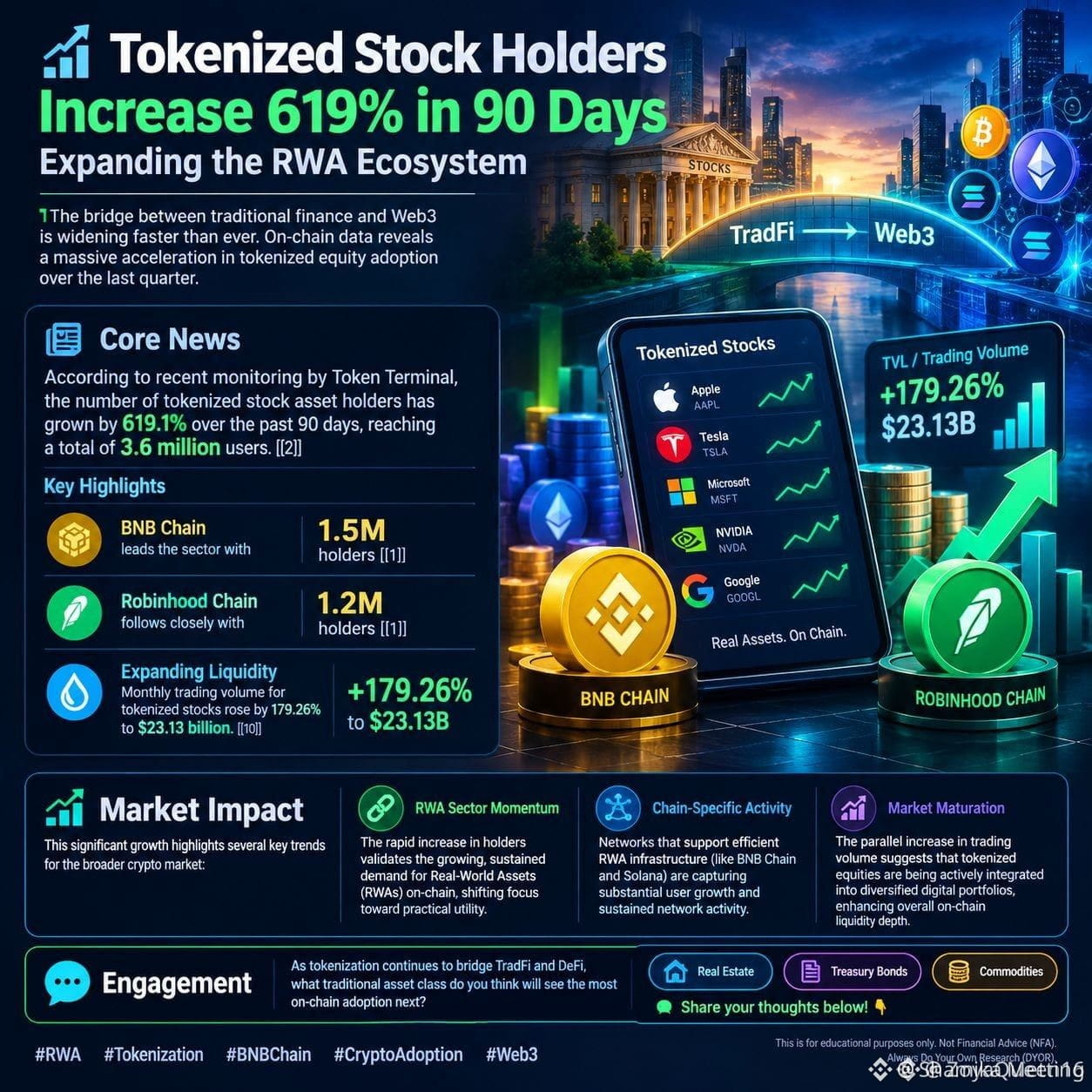
#tokenizedstockholdersup619.1% 📊 ارتفاع عدد المساهمين في الأسهم المُمَثَّلة بتوكنات بنسبة 619% خلال 90 يومًا: توسيع منظومة الأصول المُمَثَّلة في العالم الحقيقي (RWA)
تتوسع الفجوة بين التمويل التقليدي وWeb3 بوتيرة أسرع من أي وقت مضى. تكشف بيانات السلسلة عن تسارع هائل في اعتماد الأسهم المُمَثَّلة بتوكنات خلال الربع الأخير. 🌉
📰 الأخبار الأساسية
وفقًا للمتابعة الأخيرة التي أجرتها Token Terminal، زاد عدد حاملي أصول الأسهم المُمَثَّلة بتوكنات بنسبة 619.1% خلال آخر 90 يومًا، ليصل إلى إجمالي 3.6 مليون مستخدم. [[2]]
أبرز النقاط من
• 🏆 تتصدر BNB Chain القطاع حاليًا بـ 1.5 مليون حامل. [[1]]
• 🥈 تتبع Robinhood Chain عن كثب بـ 1.2 مليون حامل، ما يبرز تكاملًا متزايدًا بين المنصات والتجزئة. [[1]]
• 💧 سيولة أوسع بلغ حجم التداول الشهري للأسهم المُمَثَّلة بتوكنات 23.13 مليار دولار، بزيادة قدرها 179.26%، ما يشير إلى مشاركة أعمق في السوق ونشاط متزايد. [[10]]
📈 أثر السوق
يوضح هذا النمو الكبير عدة اتجاهات رئيسية للسوق الأوسع من العملات المشفرة:
• زخم قطاع RWA تؤكد الزيادة السريعة في عدد الحامِلين الطلب المتنامي والمستمر على الأصول المُمَثَّلة في العالم الحقيقي (RWAs) على السلسلة، مع تحويل التركيز نحو منفعة عملية.
#Tokenization #BNBChain #CryptoAdoption #Web3
هذا المحتوى لأغراض تعليمية فقط. ليس نصيحة مالية (NFA).
متابعة من فضلكم
$TFUEL $GPS $ORCLB
#tokenizedstockholdersup619.1% 📊 ارتفاع عدد المساهمين في الأسهم المُمَثَّلة بتوكنات بنسبة 619% خلال 90 يومًا: توسيع منظومة الأصول المُمَثَّلة في العالم الحقيقي (RWA)
تتوسع الفجوة بين التمويل التقليدي وWeb3 بوتيرة أسرع من أي وقت مضى. تكشف بيانات السلسلة عن تسارع هائل في اعتماد الأسهم المُمَثَّلة بتوكنات خلال الربع الأخير. 🌉
📰 الأخبار الأساسية
وفقًا للمتابعة الأخيرة التي أجرتها Token Terminal، زاد عدد حاملي أصول الأسهم المُمَثَّلة بتوكنات بنسبة 619.1% خلال آخر 90 يومًا، ليصل إلى إجمالي 3.6 مليون مستخدم. [[2]]
أبرز النقاط من
• 🏆 تتصدر BNB Chain القطاع حاليًا بـ 1.5 مليون حامل. [[1]]
• 🥈 تتبع Robinhood Chain عن كثب بـ 1.2 مليون حامل، ما يبرز تكاملًا متزايدًا بين المنصات والتجزئة. [[1]]
• 💧 سيولة أوسع بلغ حجم التداول الشهري للأسهم المُمَثَّلة بتوكنات 23.13 مليار دولار، بزيادة قدرها 179.26%، ما يشير إلى مشاركة أعمق في السوق ونشاط متزايد. [[10]]
📈 أثر السوق
يوضح هذا النمو الكبير عدة اتجاهات رئيسية للسوق الأوسع من العملات المشفرة:
• زخم قطاع RWA تؤكد الزيادة السريعة في عدد الحامِلين الطلب المتنامي والمستمر على الأصول المُمَثَّلة في العالم الحقيقي (RWAs) على السلسلة، مع تحويل التركيز نحو منفعة عملية.
#Tokenization #BNBChain #CryptoAdoption #Web3
هذا المحتوى لأغراض تعليمية فقط. ليس نصيحة مالية (NFA).
متابعة من فضلكم
$TFUEL $GPS $ORCLB
تتوسع الفجوة بين التمويل التقليدي وWeb3 بوتيرة أسرع من أي وقت مضى. تكشف بيانات السلسلة عن تسارع هائل في اعتماد الأسهم المُمَثَّلة بتوكنات خلال الربع الأخير. 🌉
📰 الأخبار الأساسية
وفقًا للمتابعة الأخيرة التي أجرتها Token Terminal، زاد عدد حاملي أصول الأسهم المُمَثَّلة بتوكنات بنسبة 619.1% خلال آخر 90 يومًا، ليصل إلى إجمالي 3.6 مليون مستخدم. [[2]]
أبرز النقاط من
• 🏆 تتصدر BNB Chain القطاع حاليًا بـ 1.5 مليون حامل. [[1]]
• 🥈 تتبع Robinhood Chain عن كثب بـ 1.2 مليون حامل، ما يبرز تكاملًا متزايدًا بين المنصات والتجزئة. [[1]]
• 💧 سيولة أوسع بلغ حجم التداول الشهري للأسهم المُمَثَّلة بتوكنات 23.13 مليار دولار، بزيادة قدرها 179.26%، ما يشير إلى مشاركة أعمق في السوق ونشاط متزايد. [[10]]
📈 أثر السوق
يوضح هذا النمو الكبير عدة اتجاهات رئيسية للسوق الأوسع من العملات المشفرة:
• زخم قطاع RWA تؤكد الزيادة السريعة في عدد الحامِلين الطلب المتنامي والمستمر على الأصول المُمَثَّلة في العالم الحقيقي (RWAs) على السلسلة، مع تحويل التركيز نحو منفعة عملية.
#Tokenization #BNBChain #CryptoAdoption #Web3
هذا المحتوى لأغراض تعليمية فقط. ليس نصيحة مالية (NFA).
متابعة من فضلكم
$TFUEL $GPS $ORCLB
1
36

Ngl guys this is actually massive for real world adoption 💡 MoneyGram just announced they are rolling out a new Visa card that lets people hold dollars and directly spend from a stablecoin balance 💳 We always talk about crypto moving into everyday payments, but when a remittance giant like MoneyGram links up with Visa for stablecoins, that is huge.
It really shows how digital dollars like $USDT and $USDC are quietly becoming the backbone of global finance without retail users even noticing the complexity behind it 🚀 If this friction gets eliminated, mainstream users will be using stablecoins daily for coffee and groceries. Big step forward for crypto usability!
#Write2Earn #Stablecoins #CryptoAdoption #PayWithCrypto
Ngl guys this is actually massive for real world adoption 💡 MoneyGram just announced they are rolling out a new Visa card that lets people hold dollars and directly spend from a stablecoin balance 💳 We always talk about crypto moving into everyday payments, but when a remittance giant like MoneyGram links up with Visa for stablecoins, that is huge.
It really shows how digital dollars like $USDT and $USDC are quietly becoming the backbone of global finance without retail users even noticing the complexity behind it 🚀 If this friction gets eliminated, mainstream users will be using stablecoins daily for coffee and groceries. Big step forward for crypto usability!
#Write2Earn #Stablecoins #CryptoAdoption #PayWithCrypto
It really shows how digital dollars like $USDT and $USDC are quietly becoming the backbone of global finance without retail users even noticing the complexity behind it 🚀 If this friction gets eliminated, mainstream users will be using stablecoins daily for coffee and groceries. Big step forward for crypto usability!
#Write2Earn #Stablecoins #CryptoAdoption #PayWithCrypto

95

·
--
Рост
#bankofamericagrouppilotsusbdcstablecoin
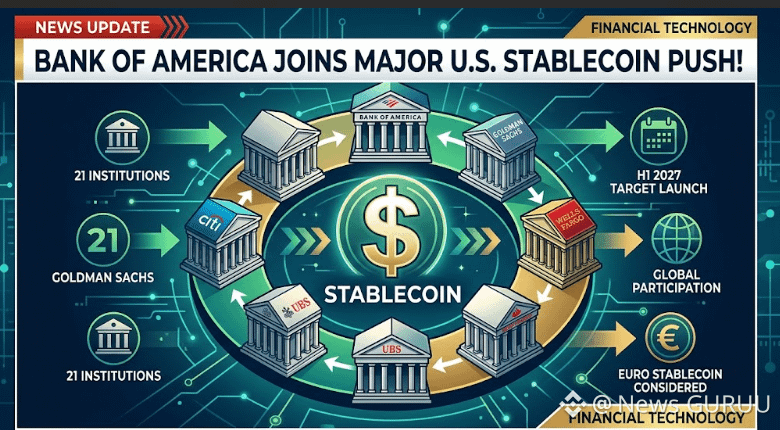
🚨 BANKS ARE ENTERING THE STABLECOIN RACE! 💵
21 major financial institutions, including Bank of America, Goldman Sachs, Citi, Wells Fargo and UBS, are planning a joint venture to issue a U.S. dollar-pegged stablecoin, targeting H1 2027.
💡 Why it matters: Major banks entering stablecoins could accelerate institutional crypto adoption and strengthen demand for blockchain-based payments. A euro-linked stablecoin is also being considered.
🎯 TRADING VIEW: BUY 📈
Watch stablecoin, payments and institutional-crypto narratives closely—but avoid FOMO as rotations can move fast.
Could bank-backed stablecoins become the next major crypto catalyst? 👀 "CLICK ON THE BELOW YELLOW COIN TAG TO GO TO DESIRED TRADING PAGE TO GET BENEFIT TRADE"$USDC
{future}(USDCUSDT)
#Stablecoins #CryptoAdoption
#bankofamericagrouppilotsusbdcstablecoin
🚨 BANKS ARE ENTERING THE STABLECOIN RACE! 💵
21 major financial institutions, including Bank of America, Goldman Sachs, Citi, Wells Fargo and UBS, are planning a joint venture to issue a U.S. dollar-pegged stablecoin, targeting H1 2027.
💡 Why it matters: Major banks entering stablecoins could accelerate institutional crypto adoption and strengthen demand for blockchain-based payments. A euro-linked stablecoin is also being considered.
🎯 TRADING VIEW: BUY 📈
Watch stablecoin, payments and institutional-crypto narratives closely—but avoid FOMO as rotations can move fast.
Could bank-backed stablecoins become the next major crypto catalyst? 👀 "CLICK ON THE BELOW YELLOW COIN TAG TO GO TO DESIRED TRADING PAGE TO GET BENEFIT TRADE"$USDC
#Stablecoins #CryptoAdoption
🚨 BANKS ARE ENTERING THE STABLECOIN RACE! 💵
21 major financial institutions, including Bank of America, Goldman Sachs, Citi, Wells Fargo and UBS, are planning a joint venture to issue a U.S. dollar-pegged stablecoin, targeting H1 2027.
💡 Why it matters: Major banks entering stablecoins could accelerate institutional crypto adoption and strengthen demand for blockchain-based payments. A euro-linked stablecoin is also being considered.
🎯 TRADING VIEW: BUY 📈
Watch stablecoin, payments and institutional-crypto narratives closely—but avoid FOMO as rotations can move fast.
Could bank-backed stablecoins become the next major crypto catalyst? 👀 "CLICK ON THE BELOW YELLOW COIN TAG TO GO TO DESIRED TRADING PAGE TO GET BENEFIT TRADE"$USDC
#Stablecoins #CryptoAdoption
1
37

·
--
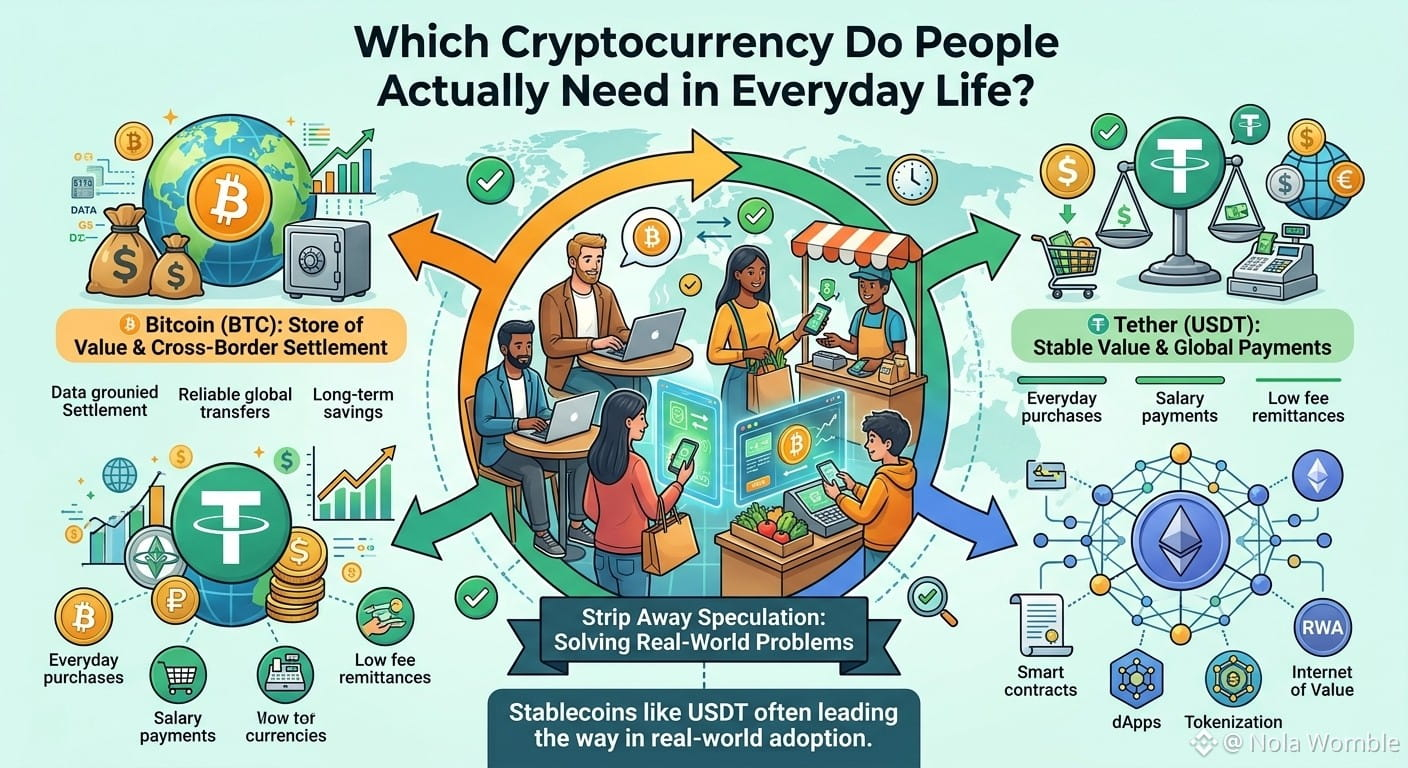
Which Cryptocurrency Do People Actually Need in Everyday Life?
Most cryptocurrencies today are purchased purely for price appreciation and speculative gain. But if you strip away the speculation, the ultimate question remains: which cryptocurrency actually solves everyday, real-world problems?
$BTC Highly effective as a store of value and cross-border settlement layer, particularly for large, non-sovereign international transfers.
$USDT Arguably the most practical tool for the average user. Its price stability, near-instant settlement, and global accessibility make it an ideal medium of exchange across borders.
$ETH Essential as foundational smart contract infrastructure, powering global payments, DeFi protocols, real-world asset (RWA) tokenization, and Web3 services.
Strategic Takeaway: Stablecoins like USDT are currently the closest thing to true mainstream, everyday adoption. For most users, complex technical architecture takes a back seat to a simple, universal requirement: fast, reliable, and cost-effective money transfers.
In your view, which crypto asset is best positioned to integrate seamlessly into daily life?
#Web3 #CryptoAdoption #BTC #Ethereum
Which Cryptocurrency Do People Actually Need in Everyday Life?
Most cryptocurrencies today are purchased purely for price appreciation and speculative gain. But if you strip away the speculation, the ultimate question remains: which cryptocurrency actually solves everyday, real-world problems?
$BTC Highly effective as a store of value and cross-border settlement layer, particularly for large, non-sovereign international transfers.
$USDT Arguably the most practical tool for the average user. Its price stability, near-instant settlement, and global accessibility make it an ideal medium of exchange across borders.
$ETH Essential as foundational smart contract infrastructure, powering global payments, DeFi protocols, real-world asset (RWA) tokenization, and Web3 services.
Strategic Takeaway: Stablecoins like USDT are currently the closest thing to true mainstream, everyday adoption. For most users, complex technical architecture takes a back seat to a simple, universal requirement: fast, reliable, and cost-effective money transfers.
In your view, which crypto asset is best positioned to integrate seamlessly into daily life?
#Web3 #CryptoAdoption #BTC #Ethereum
Most cryptocurrencies today are purchased purely for price appreciation and speculative gain. But if you strip away the speculation, the ultimate question remains: which cryptocurrency actually solves everyday, real-world problems?
$BTC Highly effective as a store of value and cross-border settlement layer, particularly for large, non-sovereign international transfers.
$USDT Arguably the most practical tool for the average user. Its price stability, near-instant settlement, and global accessibility make it an ideal medium of exchange across borders.
$ETH Essential as foundational smart contract infrastructure, powering global payments, DeFi protocols, real-world asset (RWA) tokenization, and Web3 services.
Strategic Takeaway: Stablecoins like USDT are currently the closest thing to true mainstream, everyday adoption. For most users, complex technical architecture takes a back seat to a simple, universal requirement: fast, reliable, and cost-effective money transfers.
In your view, which crypto asset is best positioned to integrate seamlessly into daily life?
#Web3 #CryptoAdoption #BTC #Ethereum
67

Хранение $USDT 1.6 USDT
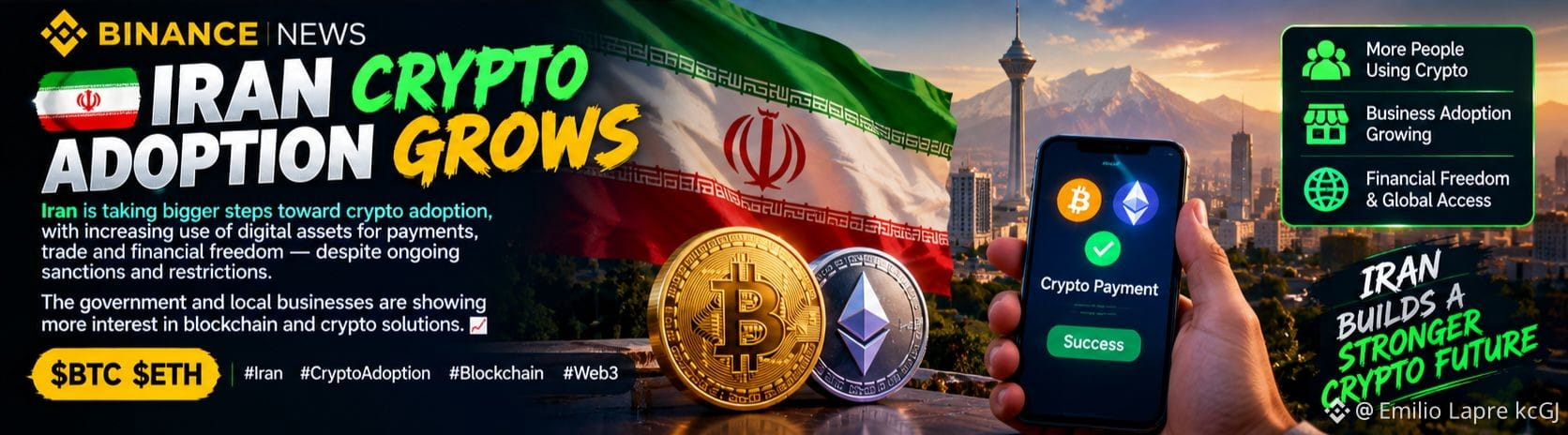
🌍 Iran Expands Crypto Use for Cross-Border Trade
Iran is increasingly using cryptocurrencies such as Bitcoin and Tether to help facilitate cross-border trade.
The move comes as sanctions and restrictions make traditional financial channels harder to use.
It highlights another real-world use case for digital assets.
$BTC $USDT
{future}(BTCUSDT)
#Bitcoin #BTC #USDT #CryptoAdoption
🌍 Iran Expands Crypto Use for Cross-Border Trade
Iran is increasingly using cryptocurrencies such as Bitcoin and Tether to help facilitate cross-border trade.
The move comes as sanctions and restrictions make traditional financial channels harder to use.
It highlights another real-world use case for digital assets.
$BTC $USDT
#Bitcoin #BTC #USDT #CryptoAdoption
Iran is increasingly using cryptocurrencies such as Bitcoin and Tether to help facilitate cross-border trade.
The move comes as sanctions and restrictions make traditional financial channels harder to use.
It highlights another real-world use case for digital assets.
$BTC $USDT
#Bitcoin #BTC #USDT #CryptoAdoption
12
Escalamiento Institucional: Liquidación de Stablecoins en Visa supera los USD 20.000M 📈
Visa confirmó un ritmo anualizado de liquidación con criptomonedas superior a los USD 20.000 millones, lo que representa un incremento de 15x frente al periodo anterior. Este crecimiento exponencial está impulsado por la expansión de más de 160 programas de tarjetas vinculadas a stablecoins.
Implicación técnica: La infraestructura de pagos tradicional está integrando de manera nativa la liquidación on-chain, desplazando los modelos experimentales hacia una capa operativa de alta demanda y eficiencia en tesorería.
👇 ¿Crees que la integración masiva de rieles cripto en la banca tradicional acelerará la liquidez global del mercado? Déjame tu perspectiva técnica en los comentarios y sígueme para no perderte las próximas actualizaciones.
#Stablecoins #CryptoAdoption #Web3 #blockchain
$BTC
{spot}(BTCUSDT)
$ETH
{spot}(ETHUSDT)
Escalamiento Institucional: Liquidación de Stablecoins en Visa supera los USD 20.000M 📈
Visa confirmó un ritmo anualizado de liquidación con criptomonedas superior a los USD 20.000 millones, lo que representa un incremento de 15x frente al periodo anterior. Este crecimiento exponencial está impulsado por la expansión de más de 160 programas de tarjetas vinculadas a stablecoins.
Implicación técnica: La infraestructura de pagos tradicional está integrando de manera nativa la liquidación on-chain, desplazando los modelos experimentales hacia una capa operativa de alta demanda y eficiencia en tesorería.
👇 ¿Crees que la integración masiva de rieles cripto en la banca tradicional acelerará la liquidez global del mercado? Déjame tu perspectiva técnica en los comentarios y sígueme para no perderte las próximas actualizaciones.
#Stablecoins #CryptoAdoption #Web3 #blockchain
$BTC
$ETH
Visa confirmó un ritmo anualizado de liquidación con criptomonedas superior a los USD 20.000 millones, lo que representa un incremento de 15x frente al periodo anterior. Este crecimiento exponencial está impulsado por la expansión de más de 160 programas de tarjetas vinculadas a stablecoins.
Implicación técnica: La infraestructura de pagos tradicional está integrando de manera nativa la liquidación on-chain, desplazando los modelos experimentales hacia una capa operativa de alta demanda y eficiencia en tesorería.
👇 ¿Crees que la integración masiva de rieles cripto en la banca tradicional acelerará la liquidez global del mercado? Déjame tu perspectiva técnica en los comentarios y sígueme para no perderte las próximas actualizaciones.
#Stablecoins #CryptoAdoption #Web3 #blockchain
$BTC
$ETH

1
69
Проверено
⚡ Visa's Stablecoin Settlement Volume Skyrockets Past $20 Billion!
Global payments giant Visa is demonstrating massive expansion in the digital asset space as its annualized stablecoin settlement run rate crosses a monumental milestone, reflecting explosive institutional and retail adoption.
🔹 Massive Growth: Annualized settlement volume has surged over 15x year-over-year, reaching $20 billion.
🔹 Payment Expansion: Overall stablecoin payment volume grew by nearly 200% during the same timeframe.
🔹 Mainstream Integration: Traditional financial rails are increasingly adopting blockchain infrastructure for faster and cheaper settlements.
This exponential surge underscores how stablecoins like $USDC and $USDT are rapidly transitioning from crypto trading pairs into mainstream global settlement assets.
$USDC $USDT BTC #Stablecoins #CryptoAdoption #Fintech #Write2Earn
⚡ Visa's Stablecoin Settlement Volume Skyrockets Past $20 Billion!
Global payments giant Visa is demonstrating massive expansion in the digital asset space as its annualized stablecoin settlement run rate crosses a monumental milestone, reflecting explosive institutional and retail adoption.
🔹 Massive Growth: Annualized settlement volume has surged over 15x year-over-year, reaching $20 billion.
🔹 Payment Expansion: Overall stablecoin payment volume grew by nearly 200% during the same timeframe.
🔹 Mainstream Integration: Traditional financial rails are increasingly adopting blockchain infrastructure for faster and cheaper settlements.
This exponential surge underscores how stablecoins like $USDC and $USDT are rapidly transitioning from crypto trading pairs into mainstream global settlement assets.
$USDC $USDT BTC #Stablecoins #CryptoAdoption #Fintech #Write2Earn
Global payments giant Visa is demonstrating massive expansion in the digital asset space as its annualized stablecoin settlement run rate crosses a monumental milestone, reflecting explosive institutional and retail adoption.
🔹 Massive Growth: Annualized settlement volume has surged over 15x year-over-year, reaching $20 billion.
🔹 Payment Expansion: Overall stablecoin payment volume grew by nearly 200% during the same timeframe.
🔹 Mainstream Integration: Traditional financial rails are increasingly adopting blockchain infrastructure for faster and cheaper settlements.
This exponential surge underscores how stablecoins like $USDC and $USDT are rapidly transitioning from crypto trading pairs into mainstream global settlement assets.
$USDC $USDT BTC #Stablecoins #CryptoAdoption #Fintech #Write2Earn
1
680
💥 Could Stablecoins Save South Korean Merchants $3.8 Billion Annually?
A groundbreaking report from South Korea's National Assembly Budget Office highlights the massive economic potential of stablecoin adoption for local merchants and payment networks.
🔹 **Huge Cost Reduction:** Local merchants could eliminate high credit card processing fees by shifting to fiat-backed digital tokens, saving up to $3.8B per year.
🔹 **Banking Disruption:** The report warns that widespread stablecoin use might reduce traditional commercial banks' roles as credit intermediaries.
🔹 **Stability Concerns:** Regulators also cautioned against potential de-pegging risks during sudden mass redemption events in market stress.
As global adoption accelerates, South Korea's findings prove that real-world crypto utility is rapidly challenging legacy payment rails!
$USDT $USDC BTC #Stablecoins #SouthKorea #CryptoAdoption #Write2Earn
💥 Could Stablecoins Save South Korean Merchants $3.8 Billion Annually?
A groundbreaking report from South Korea's National Assembly Budget Office highlights the massive economic potential of stablecoin adoption for local merchants and payment networks.
🔹 **Huge Cost Reduction:** Local merchants could eliminate high credit card processing fees by shifting to fiat-backed digital tokens, saving up to $3.8B per year.
🔹 **Banking Disruption:** The report warns that widespread stablecoin use might reduce traditional commercial banks' roles as credit intermediaries.
🔹 **Stability Concerns:** Regulators also cautioned against potential de-pegging risks during sudden mass redemption events in market stress.
As global adoption accelerates, South Korea's findings prove that real-world crypto utility is rapidly challenging legacy payment rails!
$USDT $USDC BTC #Stablecoins #SouthKorea #CryptoAdoption #Write2Earn
A groundbreaking report from South Korea's National Assembly Budget Office highlights the massive economic potential of stablecoin adoption for local merchants and payment networks.
🔹 **Huge Cost Reduction:** Local merchants could eliminate high credit card processing fees by shifting to fiat-backed digital tokens, saving up to $3.8B per year.
🔹 **Banking Disruption:** The report warns that widespread stablecoin use might reduce traditional commercial banks' roles as credit intermediaries.
🔹 **Stability Concerns:** Regulators also cautioned against potential de-pegging risks during sudden mass redemption events in market stress.
As global adoption accelerates, South Korea's findings prove that real-world crypto utility is rapidly challenging legacy payment rails!
$USDT $USDC BTC #Stablecoins #SouthKorea #CryptoAdoption #Write2Earn
20

🚨 CRYPTO PARTNERSHIPS ARE BECOMING INFRASTRUCTURE
Crypto is moving beyond the era of headline-grabbing partnerships.
The bigger shift is happening underneath the surface: crypto companies are increasingly becoming part of the infrastructure that powers payments, financial services, and digital commerce.
🔑 KEY TAKEAWAYS:
• Partnerships are becoming deeper and more operational
• Crypto infrastructure is increasingly connecting with traditional finance
• Stablecoins and blockchain rails are moving closer to mainstream payments
• Institutions are looking for scalable infrastructure, not just crypto exposure
• The industry is shifting from experimentation toward real-world financial utility
📈 MARKET INSIGHT:
This is an important evolution for crypto.
The strongest winners may not simply be the companies with the biggest headlines — they could be the networks and infrastructure providers quietly becoming essential to global finance.
Ethereum stands out as a major infrastructure layer for this broader transition.
🔥 The crypto industry is increasingly building the financial rails, not just the assets that run on them.
#Ethereum #blockchain #Fintech #Web3 #CryptoAdoption $ETH
{future}(ETHUSDT)
🚨 CRYPTO PARTNERSHIPS ARE BECOMING INFRASTRUCTURE
Crypto is moving beyond the era of headline-grabbing partnerships.
The bigger shift is happening underneath the surface: crypto companies are increasingly becoming part of the infrastructure that powers payments, financial services, and digital commerce.
🔑 KEY TAKEAWAYS:
• Partnerships are becoming deeper and more operational
• Crypto infrastructure is increasingly connecting with traditional finance
• Stablecoins and blockchain rails are moving closer to mainstream payments
• Institutions are looking for scalable infrastructure, not just crypto exposure
• The industry is shifting from experimentation toward real-world financial utility
📈 MARKET INSIGHT:
This is an important evolution for crypto.
The strongest winners may not simply be the companies with the biggest headlines — they could be the networks and infrastructure providers quietly becoming essential to global finance.
Ethereum stands out as a major infrastructure layer for this broader transition.
🔥 The crypto industry is increasingly building the financial rails, not just the assets that run on them.
#Ethereum #blockchain #Fintech #Web3 #CryptoAdoption $ETH
Crypto is moving beyond the era of headline-grabbing partnerships.
The bigger shift is happening underneath the surface: crypto companies are increasingly becoming part of the infrastructure that powers payments, financial services, and digital commerce.
🔑 KEY TAKEAWAYS:
• Partnerships are becoming deeper and more operational
• Crypto infrastructure is increasingly connecting with traditional finance
• Stablecoins and blockchain rails are moving closer to mainstream payments
• Institutions are looking for scalable infrastructure, not just crypto exposure
• The industry is shifting from experimentation toward real-world financial utility
📈 MARKET INSIGHT:
This is an important evolution for crypto.
The strongest winners may not simply be the companies with the biggest headlines — they could be the networks and infrastructure providers quietly becoming essential to global finance.
Ethereum stands out as a major infrastructure layer for this broader transition.
🔥 The crypto industry is increasingly building the financial rails, not just the assets that run on them.
#Ethereum #blockchain #Fintech #Web3 #CryptoAdoption $ETH

13
🇧🇷 Institutional Boom: Brazil's top banks are aggressively expanding retail crypto offerings!
Major financial powerhouses in Latin America are rapidly bridging traditional finance with digital assets as regulatory frameworks mature across the region.
🔹 Banking Giants Onboard: Itaú, Nubank, and Banco do Brasil are now offering over a dozen digital assets directly to retail customers.
🔹 Risk-Managed Exposure: While serving massive customer demand, none of these institutions hold crypto directly on their corporate balance sheets.
🔹 Regulatory Catalyst: Clear local guidelines are driving traditional institutions to meet retail crypto appetite safely and compliantly.
Latin America continues to lead real-world adoption, proving that regulatory clarity unlocks massive banking integration.
$BTC $ETH #CryptoAdoption #Brazil #Banking #Write2Earn
🇧🇷 Institutional Boom: Brazil's top banks are aggressively expanding retail crypto offerings!
Major financial powerhouses in Latin America are rapidly bridging traditional finance with digital assets as regulatory frameworks mature across the region.
🔹 Banking Giants Onboard: Itaú, Nubank, and Banco do Brasil are now offering over a dozen digital assets directly to retail customers.
🔹 Risk-Managed Exposure: While serving massive customer demand, none of these institutions hold crypto directly on their corporate balance sheets.
🔹 Regulatory Catalyst: Clear local guidelines are driving traditional institutions to meet retail crypto appetite safely and compliantly.
Latin America continues to lead real-world adoption, proving that regulatory clarity unlocks massive banking integration.
$BTC $ETH #CryptoAdoption #Brazil #Banking #Write2Earn
Major financial powerhouses in Latin America are rapidly bridging traditional finance with digital assets as regulatory frameworks mature across the region.
🔹 Banking Giants Onboard: Itaú, Nubank, and Banco do Brasil are now offering over a dozen digital assets directly to retail customers.
🔹 Risk-Managed Exposure: While serving massive customer demand, none of these institutions hold crypto directly on their corporate balance sheets.
🔹 Regulatory Catalyst: Clear local guidelines are driving traditional institutions to meet retail crypto appetite safely and compliantly.
Latin America continues to lead real-world adoption, proving that regulatory clarity unlocks massive banking integration.
$BTC $ETH #CryptoAdoption #Brazil #Banking #Write2Earn
116
🚀 Brazil's banking giants are going all-in on retail crypto adoption!
According to a recent report, major financial institutions like Itaú, Nubank, and Banco do Brasil are significantly expanding their crypto offerings for retail clients under a solidifying regulatory framework.
🔹 **Expanding Portfolios**: Each of these giant banks now offers more than a dozen different crypto tokens directly to their retail users.
⚖️ **Regulatory Progress**: Clearer local regulations in Brazil are paving the way for traditional banks to securely offer digital assets.
🛡️ **Risk Management**: Notably, while they facilitate trading, none of these banks hold crypto on their own balance sheets yet.
This massive step shows how regulatory clarity can bridge the gap between traditional finance and digital assets.
$BTC $ETH #CryptoAdoption #Brazil #Banking #Write2Earn
🚀 Brazil's banking giants are going all-in on retail crypto adoption!
According to a recent report, major financial institutions like Itaú, Nubank, and Banco do Brasil are significantly expanding their crypto offerings for retail clients under a solidifying regulatory framework.
🔹 **Expanding Portfolios**: Each of these giant banks now offers more than a dozen different crypto tokens directly to their retail users.
⚖️ **Regulatory Progress**: Clearer local regulations in Brazil are paving the way for traditional banks to securely offer digital assets.
🛡️ **Risk Management**: Notably, while they facilitate trading, none of these banks hold crypto on their own balance sheets yet.
This massive step shows how regulatory clarity can bridge the gap between traditional finance and digital assets.
$BTC $ETH #CryptoAdoption #Brazil #Banking #Write2Earn
According to a recent report, major financial institutions like Itaú, Nubank, and Banco do Brasil are significantly expanding their crypto offerings for retail clients under a solidifying regulatory framework.
🔹 **Expanding Portfolios**: Each of these giant banks now offers more than a dozen different crypto tokens directly to their retail users.
⚖️ **Regulatory Progress**: Clearer local regulations in Brazil are paving the way for traditional banks to securely offer digital assets.
🛡️ **Risk Management**: Notably, while they facilitate trading, none of these banks hold crypto on their own balance sheets yet.
This massive step shows how regulatory clarity can bridge the gap between traditional finance and digital assets.
$BTC $ETH #CryptoAdoption #Brazil #Banking #Write2Earn
84

·
--
🚨 BINANCE MAKES A BIG MOVE IN KAZAKHSTAN! 🇰🇿
Binance has signed three major Memorandums of Understanding (MoUs) with key institutions in Kazakhstan, including the AI Ministry, National Bank, and AIFC. 🤝
The collaboration will focus on:
💳 Crypto payments
💰 Stablecoin development
🚀 Wider blockchain and crypto adoption
Kazakhstan could potentially become a major gateway for Binance and the crypto industry across Central Asia. 🌍🔥
The future of crypto adoption continues to expand! 👀📈
#Binance #Kazakhstan #Crypto #Stablecoins #CryptoAdoption
🚨 BINANCE MAKES A BIG MOVE IN KAZAKHSTAN! 🇰🇿
Binance has signed three major Memorandums of Understanding (MoUs) with key institutions in Kazakhstan, including the AI Ministry, National Bank, and AIFC. 🤝
The collaboration will focus on:
💳 Crypto payments
💰 Stablecoin development
🚀 Wider blockchain and crypto adoption
Kazakhstan could potentially become a major gateway for Binance and the crypto industry across Central Asia. 🌍🔥
The future of crypto adoption continues to expand! 👀📈
#Binance #Kazakhstan #Crypto #Stablecoins #CryptoAdoption
Binance has signed three major Memorandums of Understanding (MoUs) with key institutions in Kazakhstan, including the AI Ministry, National Bank, and AIFC. 🤝
The collaboration will focus on:
💳 Crypto payments
💰 Stablecoin development
🚀 Wider blockchain and crypto adoption
Kazakhstan could potentially become a major gateway for Binance and the crypto industry across Central Asia. 🌍🔥
The future of crypto adoption continues to expand! 👀📈
#Binance #Kazakhstan #Crypto #Stablecoins #CryptoAdoption

48

·
--
Binance Pay: pembayaran crypto tanpa batas & zero-fee untuk merchant & user 🇰🇿
Kazakhstan: regulasi crypto-friendly (Digital Assets Law 2023), Astana Hub, adopsi merchant tumbuh
Use case: retail, cross-border remittance, freelancer payout, pariwisata
Fitur: QR Pay, Pay ID, settlement crypto-ke-fiat, 80+ token support
Stats: kesadaran crypto tinggi, populasi muda, koridor remittance Rusia/Turki/Tiongkok
Binance Kazakhstan: berlisensi, support lokal, KZT on/off-ramp
Masa depan: integrasi bank lokal, CBDC interop, Web3 merchant tools
#BinancePay #Kazakhstan #CryptoAdoption #BinanceAngels
Binance Pay: pembayaran crypto tanpa batas & zero-fee untuk merchant & user 🇰🇿
Kazakhstan: regulasi crypto-friendly (Digital Assets Law 2023), Astana Hub, adopsi merchant tumbuh
Use case: retail, cross-border remittance, freelancer payout, pariwisata
Fitur: QR Pay, Pay ID, settlement crypto-ke-fiat, 80+ token support
Stats: kesadaran crypto tinggi, populasi muda, koridor remittance Rusia/Turki/Tiongkok
Binance Kazakhstan: berlisensi, support lokal, KZT on/off-ramp
Masa depan: integrasi bank lokal, CBDC interop, Web3 merchant tools
#BinancePay #Kazakhstan #CryptoAdoption #BinanceAngels
Kazakhstan: regulasi crypto-friendly (Digital Assets Law 2023), Astana Hub, adopsi merchant tumbuh
Use case: retail, cross-border remittance, freelancer payout, pariwisata
Fitur: QR Pay, Pay ID, settlement crypto-ke-fiat, 80+ token support
Stats: kesadaran crypto tinggi, populasi muda, koridor remittance Rusia/Turki/Tiongkok
Binance Kazakhstan: berlisensi, support lokal, KZT on/off-ramp
Masa depan: integrasi bank lokal, CBDC interop, Web3 merchant tools
#BinancePay #Kazakhstan #CryptoAdoption #BinanceAngels
44

·
--
Wait… El Salvador added Bitcoin without using public money?
That changes the narrative.
The IMF says El Salvador has not used public funds to accumulate BTC since June 2025, with documented accumulation attributed to private donations.
That distinction matters.
For years, the debate was simple: “Is the government risking taxpayer money on Bitcoin?”
Now the story is more complicated.
The country is also reducing public involvement in its Chivo wallet while working on stronger transparency and risk controls around public crypto holdings.
Bullish interpretation: Bitcoin adoption continues even under tighter IMF conditions.
Bearish interpretation: government participation is becoming more restricted.
The interesting part isn't the headline.
It's whether private capital keeps replacing government buying pressure.
No FOMO. Watch actual BTC accumulation.
#Bitcoin #ElSalvador #CryptoAdoption
$BTC $ETH $BNB
{future}(BNBUSDT)
#IMFSaysElSalvadorBTCNoPublicFunds
Wait… El Salvador added Bitcoin without using public money?
That changes the narrative.
The IMF says El Salvador has not used public funds to accumulate BTC since June 2025, with documented accumulation attributed to private donations.
That distinction matters.
For years, the debate was simple: “Is the government risking taxpayer money on Bitcoin?”
Now the story is more complicated.
The country is also reducing public involvement in its Chivo wallet while working on stronger transparency and risk controls around public crypto holdings.
Bullish interpretation: Bitcoin adoption continues even under tighter IMF conditions.
Bearish interpretation: government participation is becoming more restricted.
The interesting part isn't the headline.
It's whether private capital keeps replacing government buying pressure.
No FOMO. Watch actual BTC accumulation.
#Bitcoin #ElSalvador #CryptoAdoption
$BTC $ETH $BNB
#IMFSaysElSalvadorBTCNoPublicFunds
That changes the narrative.
The IMF says El Salvador has not used public funds to accumulate BTC since June 2025, with documented accumulation attributed to private donations.
That distinction matters.
For years, the debate was simple: “Is the government risking taxpayer money on Bitcoin?”
Now the story is more complicated.
The country is also reducing public involvement in its Chivo wallet while working on stronger transparency and risk controls around public crypto holdings.
Bullish interpretation: Bitcoin adoption continues even under tighter IMF conditions.
Bearish interpretation: government participation is becoming more restricted.
The interesting part isn't the headline.
It's whether private capital keeps replacing government buying pressure.
No FOMO. Watch actual BTC accumulation.
#Bitcoin #ElSalvador #CryptoAdoption
$BTC $ETH $BNB
#IMFSaysElSalvadorBTCNoPublicFunds

1
67

·
--
Stablecoin payment rails are quietly replacing infrastructure that took decades to build — and most people still call it a niche use case.
The data tells a different story. Cross-border stablecoin volumes are now regularly hitting $30-50 billion per day. Settlement that once took 2-3 business days and cost 3-7% in fees now clears in seconds for fractions of a cent. The adoption is bottom-up: freelancers in emerging markets, small businesses, and crypto-native companies figured this out years before the banks did. Now the banks are catching up fast.
With the GENIUS Act signed into law, regulated stablecoins finally have a legal framework in the US. That removes the last institutional excuse for waiting. The chains that capture this regulated stablecoin flow — as daily settlement infrastructure, not just speculation — will have the most durable demand floors through the next cycle.
$BTC anchors the reserve credibility beneath it all. $ETH leads the settlement layer race. And the broader ecosystem is building the payment infrastructure most people will use without ever knowing it runs on crypto.
#StablecoinPayments #CryptoAdoption #DeFi #BinanceSquare
Stablecoin payment rails are quietly replacing infrastructure that took decades to build — and most people still call it a niche use case.
The data tells a different story. Cross-border stablecoin volumes are now regularly hitting $30-50 billion per day. Settlement that once took 2-3 business days and cost 3-7% in fees now clears in seconds for fractions of a cent. The adoption is bottom-up: freelancers in emerging markets, small businesses, and crypto-native companies figured this out years before the banks did. Now the banks are catching up fast.
With the GENIUS Act signed into law, regulated stablecoins finally have a legal framework in the US. That removes the last institutional excuse for waiting. The chains that capture this regulated stablecoin flow — as daily settlement infrastructure, not just speculation — will have the most durable demand floors through the next cycle.
$BTC anchors the reserve credibility beneath it all. $ETH leads the settlement layer race. And the broader ecosystem is building the payment infrastructure most people will use without ever knowing it runs on crypto.
#StablecoinPayments #CryptoAdoption #DeFi #BinanceSquare
The data tells a different story. Cross-border stablecoin volumes are now regularly hitting $30-50 billion per day. Settlement that once took 2-3 business days and cost 3-7% in fees now clears in seconds for fractions of a cent. The adoption is bottom-up: freelancers in emerging markets, small businesses, and crypto-native companies figured this out years before the banks did. Now the banks are catching up fast.
With the GENIUS Act signed into law, regulated stablecoins finally have a legal framework in the US. That removes the last institutional excuse for waiting. The chains that capture this regulated stablecoin flow — as daily settlement infrastructure, not just speculation — will have the most durable demand floors through the next cycle.
$BTC anchors the reserve credibility beneath it all. $ETH leads the settlement layer race. And the broader ecosystem is building the payment infrastructure most people will use without ever knowing it runs on crypto.
#StablecoinPayments #CryptoAdoption #DeFi #BinanceSquare
81
Войдите, чтобы посмотреть больше материала
Присоединяйтесь к пользователям криптовалют по всему миру на Binance Square
⚡️ Получайте новейшую и полезную информацию о криптоактивах.
💬 Нам доверяет крупнейшая в мире криптобиржа.
👍 Получите достоверные аналитические данные от верифицированных создателей контента.
Эл. почта/номер телефона
В тренде
1
#FedRateWatch
Просмотров: 423,096
2,327 обсуждают
2
#BitcoinSlidesTo$76000
Просмотров: 10,634
94 обсуждают
3
#BitcoinReboundsTo$79K
Просмотров: 57,291
387 обсуждают
4
#StrategyMarketCapPassesFord
Просмотров: 22,498
528 обсуждают
5
#ClarityActOddsHalveOnPolymarket
Просмотров: 25,693
426 обсуждают
6
#US30YTreasuryYieldTops5.40%
Просмотров: 19,722
309 обсуждают
7
#BessentEndorsesFinalClarityActDraft
Просмотров: 42,573
655 обсуждают
8
#ZamaOpens16ConfidentialMorphoVaults
Просмотров: 14,761
316 обсуждают
9
#USDCOnChainVolumeTops$100Trillion
Просмотров: 2,247
47 обсуждают
10
#BitcoinSpotETFsNetInflow$160M
Просмотров: 2,878
100 обсуждают