
#btcmining
btcmining
Просмотров: 64,187
265 обсуждают
Популярные
Новые

·
--
BITCOIN MINING DIFFICULTY DROPS 9.13% — WHAT DOES IT MEAN?
Bitcoin mining difficulty has reportedly fallen by 9.13%, marking a significant adjustment.
Mining difficulty determines how challenging it is for miners to discover new blocks.
A decline can reflect changes in mining activity and network hashrate.
However, lower mining difficulty does not automatically mean Bitcoin's price will rise.
Do you think this adjustment could influence BTC's long-term outlook?
$BTC
#Bitcoin #BTCMining #Blockchain #CryptoNews #BinanceSquare
141

·
--
Public companies have let go of 108,247 BTC this year, and miners are doing most of the selling.
• 14 public companies sold or moved out 108,247 BTC (about $8.08 billion) in 2026, per Lookonchain
• MARA (40,581 BTC) and Riot (20,264 BTC) make up roughly 56% of it
• MARA used $750 million of recent sale proceeds to repay bitcoin-backed loans
Why it matters: Miners are selling bitcoin to fund AI data centers and repay debt, shifting who supplies BTC.
Source: Lookonchain via crypto.news
Not financial advice.
💬 Are bitcoin miners turning into AI infrastructure companies first?
$BTC #Bitcoin #BTCMining #AI
17

·
--
One of the biggest $BTC miners just made 17x more renting servers to AI than mining bitcoin.
Core Scientific's Q3 numbers tell the story:
- $215.4M from high-density colocation (AI/HPC data center space)
- Only $12.3M from self-mining bitcoin
- 485 MW already billing, with a run-rate they put above $700M a year
Meanwhile, American Bitcoin (majority-owned by Hut 8) went the other way: it mined ~891 BTC in Q3 and grew its stack from ~8,002 to ~8,427 BTC without selling shares through its ATM.
My take: the miner sector is splitting in two.
One camp is turning into AI landlords. Power contracts and grid access are now worth more as data center capacity than as hashrate.
The other camp is doubling down as bitcoin treasuries, stacking coins instead of selling them.
Why it matters for $BTC holders: if more big miners pivot to AI, less hashrate competition and fewer forced miner sales could ease sell pressure. But it also concentrates mining among fewer players.
With BTC stuck near $75,900 this weekend, which miner model do you trust more: AI landlord or BTC stacker?
#BinanceSquare #Bitcoin #BTCMining #AI #CryptoNews
Not financial advice.
19

·
--
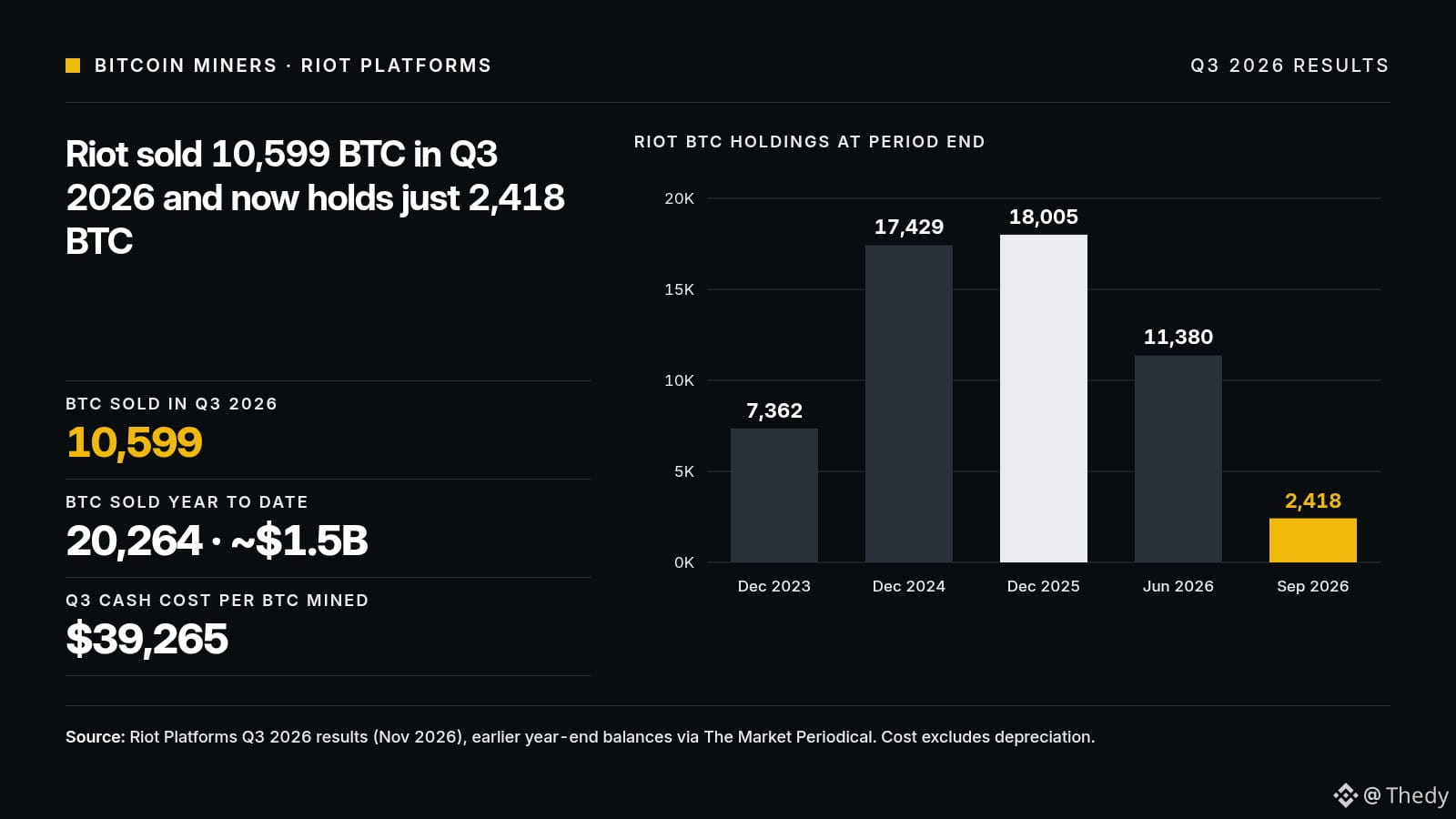
Riot Platforms, le 2e mineur bitcoin coté, a vendu 10 599 BTC au 3e trimestre 2026. Sa trésorerie est passée de 11 380 BTC fin juin à 2 418 BTC au 30 septembre, selon ses résultats publiés cette semaine.
On entend souvent que les mineurs cotés sont des « HODLers » structurels du $BTC. Les chiffres de Riot racontent autre chose.
Depuis janvier, Riot a vendu 20 264 BTC pour environ 1,5 Md$, surtout pour financer ses data centers. Fin 2025, la société détenait encore 18 005 BTC. Il en reste moins de 14 %. Et la direction a dit sur l'appel résultats qu'elle compte continuer à vendre « substantially all » du bitcoin qu'elle mine.
Ce n'est pas une vente de panique. Le coût cash de production au T3 tombe à 39 265 $ par BTC (hors amortissements), avec 1 637 BTC minés, soit 17,8 par jour. Avec un $BTC autour de 80 300 $ sur Binance ce 5/11 vers 09:45 UTC, la marge par coin reste large. Riot ne vend pas parce qu'il souffre, il vend parce qu'il pivote vers l'IA : la presse spécialisée (The Market Periodical, DefiEdge) évoque un bail de 15 ans de 910 MW à Corsicana estimé à environ 28 Md$.
Ma lecture : le stock est presque vidé, donc la pression vendeuse future de Riot se résume à sa production, environ 18 BTC par jour. C'est faible face aux flux ETF. Le vrai sujet, c'est la tendance : si d'autres mineurs suivent le même pivot IA, l'offre « mineurs » devient un flux continu vendu au marché, plus jamais stocké.
Ce qui invaliderait cette lecture : des résultats T3 d'autres mineurs montrant des trésoreries stables ou en hausse.
Selon vous, le pivot des mineurs vers l'IA est un frein durable pour le $BTC ou un non-sujet face aux ETF ?
#Bitcoin #BTCMining #Riot
Riot Platforms, le 2e mineur bitcoin coté, a vendu 10 599 BTC au 3e trimestre 2026. Sa trésorerie est passée de 11 380 BTC fin juin à 2 418 BTC au 30 septembre, selon ses résultats publiés cette semaine.
On entend souvent que les mineurs cotés sont des « HODLers » structurels du $BTC . Les chiffres de Riot racontent autre chose.
Depuis janvier, Riot a vendu 20 264 BTC pour environ 1,5 Md$, surtout pour financer ses data centers. Fin 2025, la société détenait encore 18 005 BTC. Il en reste moins de 14 %. Et la direction a dit sur l'appel résultats qu'elle compte continuer à vendre « substantially all » du bitcoin qu'elle mine.
Ce n'est pas une vente de panique. Le coût cash de production au T3 tombe à 39 265 $ par BTC (hors amortissements), avec 1 637 BTC minés, soit 17,8 par jour. Avec un $BTC autour de 80 300 $ sur Binance ce 5/11 vers 09:45 UTC, la marge par coin reste large. Riot ne vend pas parce qu'il souffre, il vend parce qu'il pivote vers l'IA : la presse spécialisée (The Market Periodical, DefiEdge) évoque un bail de 15 ans de 910 MW à Corsicana estimé à environ 28 Md$.
Ma lecture : le stock est presque vidé, donc la pression vendeuse future de Riot se résume à sa production, environ 18 BTC par jour. C'est faible face aux flux ETF. Le vrai sujet, c'est la tendance : si d'autres mineurs suivent le même pivot IA, l'offre « mineurs » devient un flux continu vendu au marché, plus jamais stocké.
Ce qui invaliderait cette lecture : des résultats T3 d'autres mineurs montrant des trésoreries stables ou en hausse.
Selon vous, le pivot des mineurs vers l'IA est un frein durable pour le $BTC ou un non-sujet face aux ETF ?
#Bitcoin #BTCMining #Riot
BTC+0,04%
RIOTUS+2,22%
98

·
--
Miners sold a record 48,900 $BTC in the first half, and hash rate is still near an all-time high.
Listed miners: 48,900 BTC sold, a record for a first half.
Hash rate: about 1,038 EH/s, near its historical high (Odaily).
VanEck's Matthew Sigel says miners need a $100,000 average price to break even.
BTC trades around $77,000.
My take: squeezed miners are forced sellers, so they add steady supply while price sits well below that breakeven. Watch whether the selling slows or hash rate starts to fall.
Do miners cap the next $BTC rally, or does this selling get absorbed?
Not financial advice.
#Bitcoin #BTCMining #CryptoNews
32

Bitcoin miners had a tougher week on revenue. Hashrate Index’s Nov. 2 roundup puts the 7-day average network hashrate at 1,062 EH/s (down 2.7%) and USD hashprice—estimated revenue per unit of mining power—down 8.7% to $32.86 per PH/s/day. Difficulty rose 5.5% to 148.36T at the Oct. 29 retarget.
At roughly $33 per PH/s/day, the report says many miners may be at or below breakeven, depending on their hardware and power costs. That is an operating-margin warning, not proof of miner capitulation or a reliable signal for future BTC supply. Mempool confirms the 148.36T retarget; CoinWarz’s 7-day hashrate estimate also fell, though providers’ hashrate estimates differ.
Source: Hashrate Index, Nov. 2 roundup — https://hashrateindex.com/blog/hashrate-index-roundup-november-2-2026/
Network checks: Mempool — https://mempool.space/api/v1/mining/hashrate/1m | CoinWarz — https://www.coinwarz.com/bitcoin-difficulty
Conclusion: $BTC | Official Binance BTC/USDT Spot chart: https://www.binance.com/en/trade/BTC_USDT
Check the chart for yourself, do your own research, and trade responsibly.
#Bitcoin #BTCMining #Hashrate #MiningEconomics
89
Bitcoin mining’s next bottleneck may be software, not just hardware.
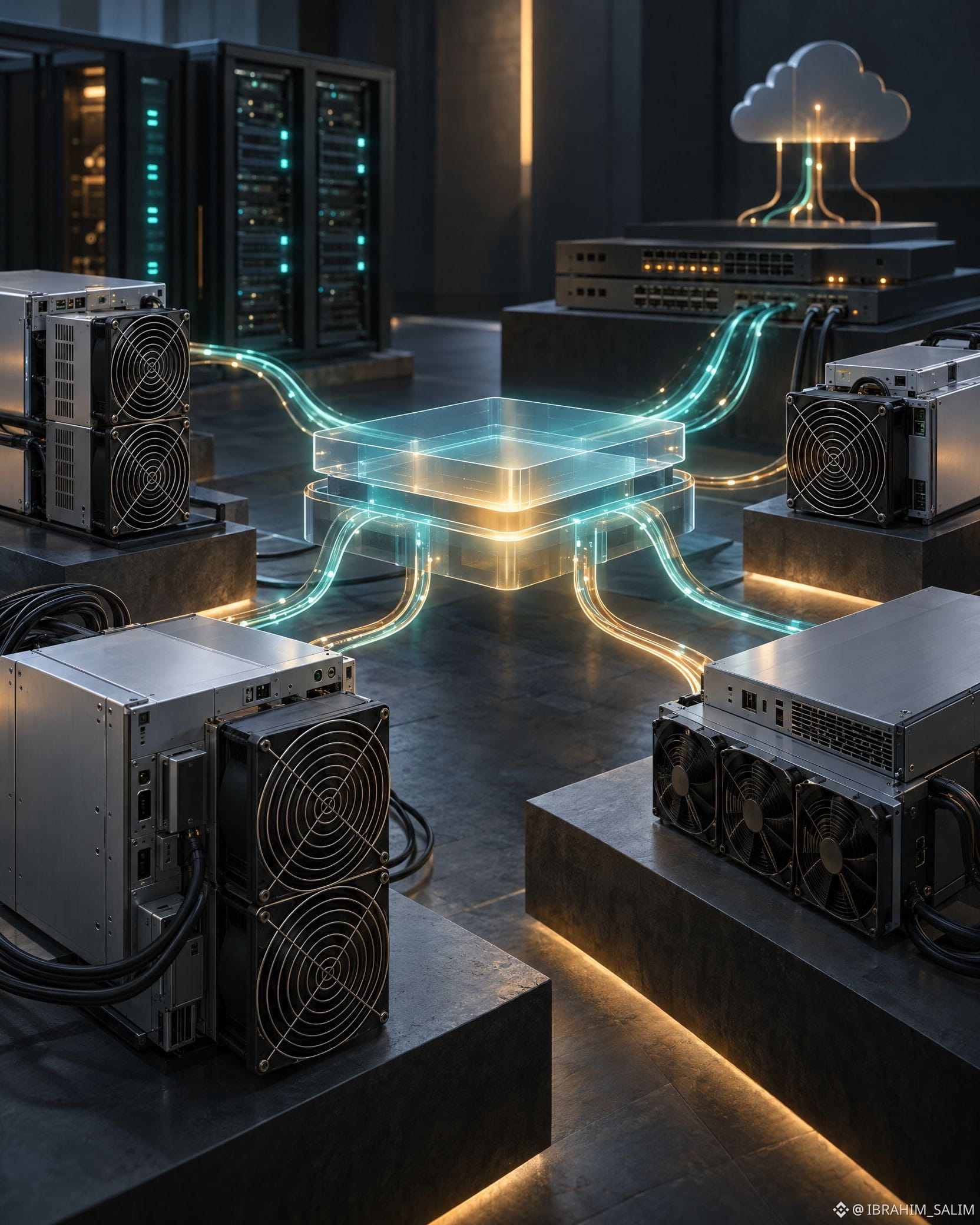
Tether says 15 mining operators, ASIC makers and pools—including Bitdeer, BITMAIN, Canaan, F2Pool and Foundry—have committed to build and maintain integrations for its open-source Mining Development Kit (MDK). The shared interface is designed to let applications work across otherwise separate equipment and pool systems. Tether says its own QVAC mining agent is already operating on MDK.
Important distinction: these are commitments to build “Workers,” translation layers for each participant’s systems—not 15 completed integrations. Tether is targeting a stable MDK 1.0 release by year-end.
Could a common software layer make mining automation easier across vendors? The answer will depend on how many integrations actually ship.
Sources:
Tether announcement (Oct. 24, 11:16 UTC): https://tether.io/news/tethers-mdk-gains-broad-industry-backing-to-accelerate-the-next-generation-of-bitcoin-mining-automation/
Original MDK launch (Apr. 27): https://tether.io/news/tether-launches-mdk-an-open-infrastructure-layer-for-bitcoin-mining/
CoinNess report (Oct. 24, 11:35 UTC): https://coinness.com/en/news/1172837
Conclusion
$BTC mining may benefit from a common interface, but this is a commitment-led rollout—not proof of broad deployment yet.
Official Binance BTC/USDT chart:
https://www.binance.com/en/trade/BTC_USDT?type=spot
Check the chart for yourself, do your own research, and trade responsibly.
#Bitcoin #BTCMining #CryptoInfrastructure #AI
53

·
--
⚡ $BTC Hashrate Just Hit New ATH 🔥💻
Miners never been more confident 🧠👀
Hashrate at record high 📈
Miner selling at 3-year low 📉
Difficulty increasing ⛏️
What does this tell us 🤔
Miners are not selling $BTC 💎
They are holding for higher price 🎯
When miners hold
Supply shock comes 🌊
And price explodes 💥🚀
Weak hands sell
Strong network holds 🛡️
Are you with miners or sellers 🤔
{spot}(BTCUSDT)
#Bitcoin #BTCMining #Hashrate #crypto
⚡ $BTC Hashrate Just Hit New ATH 🔥💻
Miners never been more confident 🧠👀
Hashrate at record high 📈
Miner selling at 3-year low 📉
Difficulty increasing ⛏️
What does this tell us 🤔
Miners are not selling $BTC 💎
They are holding for higher price 🎯
When miners hold
Supply shock comes 🌊
And price explodes 💥🚀
Weak hands sell
Strong network holds 🛡️
Are you with miners or sellers 🤔
#Bitcoin #BTCMining #Hashrate #crypto

1
138

🚨 Bitcoin Mining Shock: Difficulty Just Dropped 10% — Big Signal or Hidden Warning?
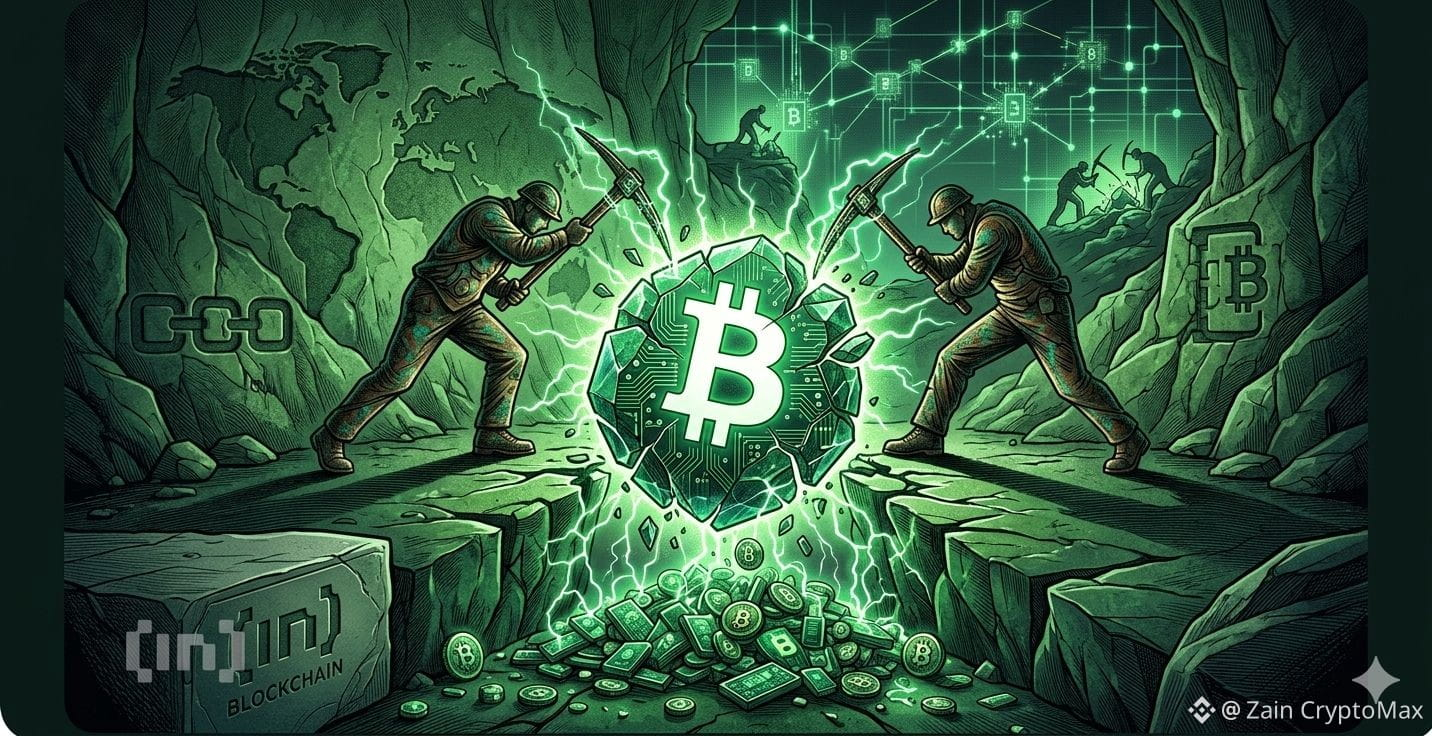
Bitcoin just saw one of its largest mining difficulty drops of 2026 (~10%), signaling a major shift in network pressure. As weaker miners go offline and hashrate cools down, the system just got easier for the survivors — but the reason behind it is what has traders watching closely.
📉 Lower BTC prices + shrinking miner profits = rigs shutting down
⚡ Mining becomes easier for active miners
💡 Short-term relief, but it also hints at stress in the mining ecosystem
Is this a bullish reset for accumulation… or a sign that miners are losing confidence? 👀
#BTC☀
#BTCMining
#CryptoCrash
#MiningDifficulty
#CryptoNews
2
106

·
--
Quick market update — no fluff, just what I actually see.
Heard that roughly 20% of Bitcoin miners are now struggling, with public miners dumping over 32,000 $BTC in Q1 just to cover their operating costs. This is more than they sold all of last year.
This is a massive amount of selling pressure ppl aren't always talking about. It means that even if demand is there, there's a constant stream of supply hitting the market from these guys needing to stay afloat.
It's likely why $BTC is having a hard time pushing past certain levels, despite all the positive news we sometimes get. We saw $BTC hit a high of $63907.07 today, but it's currently chilling around $63741.15.
This forced selling dynamic makes me pretty cautious on significant upside for $BTC in the short term. Just something to keep in mind when looking at the charts rn.
We need to see that miner selling pressure ease up before $BTC can really get some sustained momentum. Until then, expect choppy price action.
#Bitcoin #CryptoMarket #BTCMining #MarketOutlook #Trading
71

#cangoq1bitcoinminingrevenue 🚀 Cango công bố doanh thu khai thác Bitcoin quý 1 tăng trưởng mạnh, cho thấy hoạt động mining vẫn mang lại dòng tiền đáng kể dù thị trường biến động.
Hiệu suất khai thác và chiến lược mở rộng hạ tầng sẽ là yếu tố quan trọng ảnh hưởng đến kết quả các quý tiếp theo.
Bạn đánh giá thế nào về triển vọng của các công ty Bitcoin mining trong năm nay?
#Cango #Bitcoin #BTCMining #cangoq1bitcoinminingrevenue
Hiệu suất khai thác và chiến lược mở rộng hạ tầng sẽ là yếu tố quan trọng ảnh hưởng đến kết quả các quý tiếp theo.
Bạn đánh giá thế nào về triển vọng của các công ty Bitcoin mining trong năm nay?
#Cango #Bitcoin #BTCMining #cangoq1bitcoinminingrevenue

197

·
--
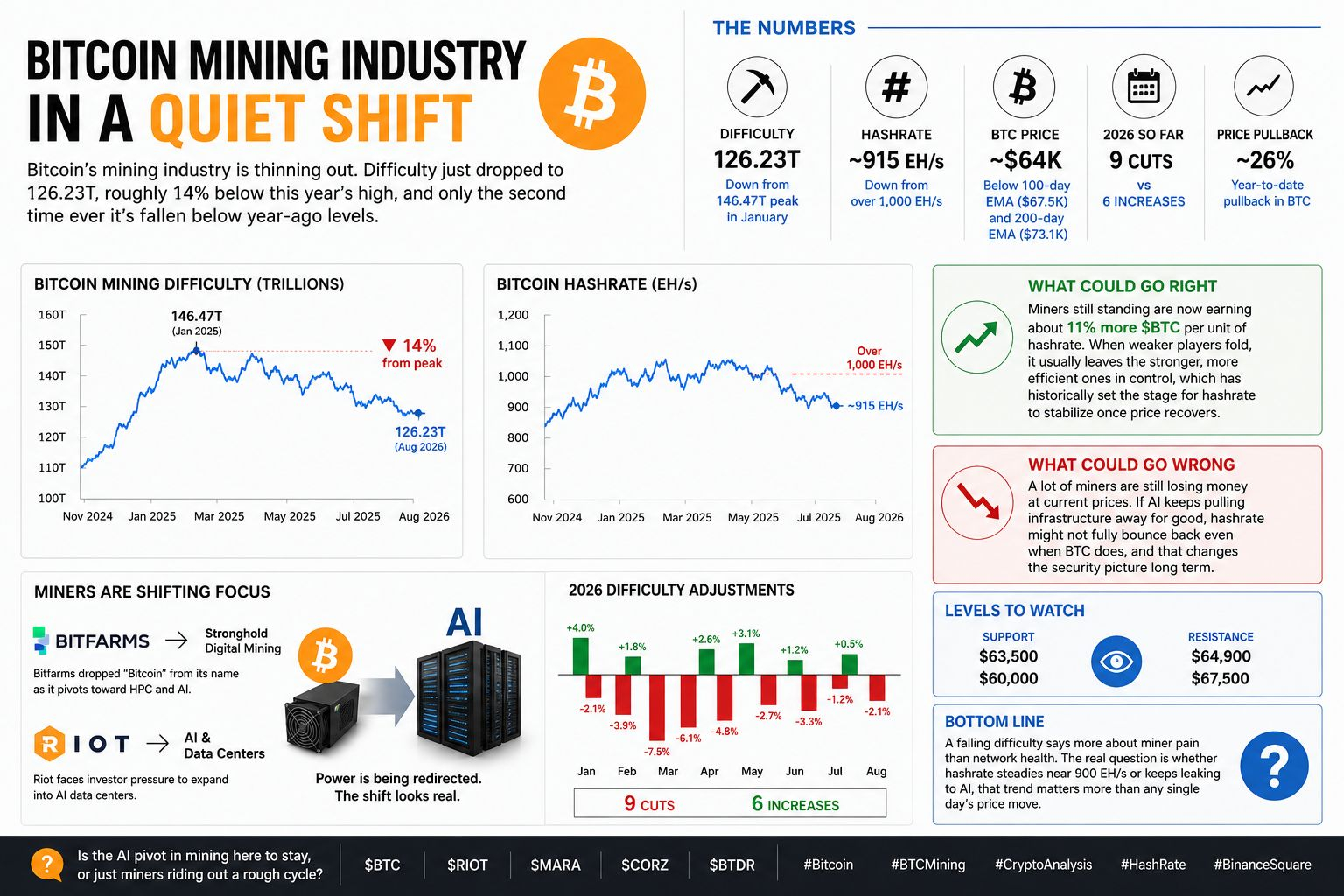
Bitcoin's mining industry is quietly thinning out. Difficulty just dropped to 126.23T, roughly 14% below this year's high, and only the second time ever it's fallen below year-ago levels.
MARKET INSIGHT:
This isn't just noise in the numbers. It's capital walking away from unprofitable mining. $BTC's ~26% pullback this year has squeezed margins hard, and miners aren't just cutting rigs, they're redirecting power to AI instead. Bitfarms literally dropped "Bitcoin" from its name. Riot is under investor pressure to lean into AI data centers. This looks less like a rough patch and more like a real shift in the industry.
KEY DATA
Difficulty: 126.23T, down from January's 146.47T peak
Network hashrate: ~915 EH/s, down from over 1,000 EH/s peak
BTC price: ~$64K, still under its 100-day ($67.5K) and 200-day ($73.1K) EMAs
2026 so far: 9 difficulty cuts vs 6 increases
BULLISH SCENARIO:
Miners still standing are now earning about 11% more $BTC per unit of hashrate. When weaker players fold, it usually leaves the stronger, more efficient ones in control, which has historically set the stage for hashrate to stabilize once price recovers.
BEARISH SCENARIO:
A lot of miners are still losing money at current prices. If AI keeps pulling infrastructure away for good, hashrate might not fully bounce back even when BTC does, and that changes the security picture long term.
KEY LEVELS:
Support: $63,500, then $60,000
Resistance: $64,900, then $67,500
TRADER TAKEAWAY:
A falling difficulty says more about miner pain than network health. The real question is whether hashrate steadies near 900 EH/s or keeps leaking to AI, that trend matters more than any single day's price move.
Is the AI pivot in mining here to stay, or just miners riding out a rough cycle?
{spot}(BTCUSDT)
$BTC $RIOT.US
#bitcoin #btcmining #CryptoAnalysis #hashrate
#bitcoinminingdifficultyfalls14%fromyearhigh
Bitcoin's mining industry is quietly thinning out. Difficulty just dropped to 126.23T, roughly 14% below this year's high, and only the second time ever it's fallen below year-ago levels.
MARKET INSIGHT:
This isn't just noise in the numbers. It's capital walking away from unprofitable mining. $BTC 's ~26% pullback this year has squeezed margins hard, and miners aren't just cutting rigs, they're redirecting power to AI instead. Bitfarms literally dropped "Bitcoin" from its name. Riot is under investor pressure to lean into AI data centers. This looks less like a rough patch and more like a real shift in the industry.
KEY DATA
Difficulty: 126.23T, down from January's 146.47T peak
Network hashrate: ~915 EH/s, down from over 1,000 EH/s peak
BTC price: ~$64K, still under its 100-day ($67.5K) and 200-day ($73.1K) EMAs
2026 so far: 9 difficulty cuts vs 6 increases
BULLISH SCENARIO:
Miners still standing are now earning about 11% more $BTC per unit of hashrate. When weaker players fold, it usually leaves the stronger, more efficient ones in control, which has historically set the stage for hashrate to stabilize once price recovers.
BEARISH SCENARIO:
A lot of miners are still losing money at current prices. If AI keeps pulling infrastructure away for good, hashrate might not fully bounce back even when BTC does, and that changes the security picture long term.
KEY LEVELS:
Support: $63,500, then $60,000
Resistance: $64,900, then $67,500
TRADER TAKEAWAY:
A falling difficulty says more about miner pain than network health. The real question is whether hashrate steadies near 900 EH/s or keeps leaking to AI, that trend matters more than any single day's price move.
Is the AI pivot in mining here to stay, or just miners riding out a rough cycle?
$BTC $RIOT.US
#bitcoin #btcmining #CryptoAnalysis #hashrate
#bitcoinminingdifficultyfalls14%fromyearhigh
BTC+0,04%
RIOTUS+2,22%
10
174
·
--
Статья
ضرائب الكربون الأوروبية تدفع تعدين البيتكوين نحو روسيا، بحسب دراسة- دراسة تُظهر أن سياسات الكربون الصارمة في الاتحاد الأوروبي قد تدفع عمال تعدين البيتكوين لنقل عملياتهم إلى روسيا
- الشركات تعظّم أرباحها عبر إيقاف تشغيل أجهزة التعدين في الاتحاد الأوروبي وتشغيل نظيراتها في روسيا خلال فترات ارتفاع التكاليف
- لكن حظر التعدين الروسي الجديد لعام 2025 قد يحد من إمكانية هذا النقل التشغيلي
## الدراسة تشير إلى أن ارتفاع تسعير الكربون الأوروبي يسبب هجرة نشاط التعدين إلى روسيا
القيود الصارمة التي يفرضها الاتحاد الأوروبي على انبعاثات الكربون قد تكون أحد العوامل وراء هجرة صناعة تعدين العملات الرقمية — على الأقل من الناحية التشغيلية — نحو دول لا تفرض ضرائب على انبعاثات الكربون.
قامت دراسة بعنوان "هل يزيح تسعير الكربون انبعاثات تعدين العملات الرقمية؟ أدلة كمية على تسرب الكربون من شبكات الكهرباء في الاتحاد الأوروبي وروسيا وبقية العالم"، نشرها ثلاثة باحثين فيتناميين هم فام نغوك توان، وليه ترانج ترونغ هيو، ونغوين فو ترونغ نغوين، بفحص ما إذا كان تسعير الكربون في الاتحاد الأوروبي سببًا محتملًا وراء انتقال عمليات تعدين البيتكوين إلى روسيا.
ولتحقيق ذلك، فحصت الدراسة انبعاثات قطاع الطاقة اليومية في الاتحاد الأوروبي وبقية العالم وروسيا خلال الفترة من 2019 إلى 2025، وربطتها بأسعار إغلاق البيتكوين اليومية.
## النتائج
وجدت الدراسة علاقة إحصائية بين تسعير الكربون في أوروبا وانبعاثات الكربون في روسيا، وخلصت إلى أن عمليات تعدين البيتكوين "تهاجر" إلى روسيا في أوقات انخفاض الطلب (off-peak)، عندما ترتفع أسعار كل من البيتكوين وحصص انبعاثات الكربون الأوروبية معًا.
ولم تظهر نفس هذه العلاقة الإحصائية عند فحص العلاقة ذاتها بين الاتحاد الأوروبي وبقية دول العالم، ما يجعل هذه النتيجة أكثر دلالة وأهمية.
وخلافًا للاتحاد الأوروبي، لا تمتلك روسيا هيكل تسعير للكربون، ما يعني أن عمليات التعدين هناك يمكن أن تكون أكثر ربحية.
## هجرة تشغيلية وليست فعلية
مع ذلك، وبما أن الدراسة لم تلاحظ نقلًا فعليًا لمعدات التعدين إلى روسيا، فإنها تشدد على أن هذه الظاهرة قد يكون أصلها تشغيليًا: أي أن الشركات التي تمتلك أجهزة في كلا البلدين تقوم بإيقاف تشغيل معداتها في الاتحاد الأوروبي وتشغيلها في روسيا لتعظيم هوامش أرباحها.
## قيود ومحاذير الدراسة
تعترف الدراسة أيضًا بعدة قيود، من بينها الأثر السلبي لحظر الصين لتعدين البيتكوين في مايو 2021 على العلاقة التي تم رصدها، إضافة إلى تجاهلها لعوامل أخرى ذات صلة قد تؤثر على النتائج.
كذلك، بدءًا من عام 2025، طبّقت الحكومة الروسية حظرًا على تعدين العملات الرقمية في مناطق معينة، مع توسيع هذا الحظر ليشمل موسكو وقد تمت الموافقة عليه هذا العام، وهو ما قد يُعقّد عملية نقل هذه الأنشطة تشغيليًا إلى روسيا، ويقلص من الخيارات المتاحة أمام شركات التعدين.
@Binance_Square_Official
#btcmining
ضرائب الكربون الأوروبية تدفع تعدين البيتكوين نحو روسيا، بحسب دراسة
- دراسة تُظهر أن سياسات الكربون الصارمة في الاتحاد الأوروبي قد تدفع عمال تعدين البيتكوين لنقل عملياتهم إلى روسيا
- الشركات تعظّم أرباحها عبر إيقاف تشغيل أجهزة التعدين في الاتحاد الأوروبي وتشغيل نظيراتها في روسيا خلال فترات ارتفاع التكاليف
- لكن حظر التعدين الروسي الجديد لعام 2025 قد يحد من إمكانية هذا النقل التشغيلي
## الدراسة تشير إلى أن ارتفاع تسعير الكربون الأوروبي يسبب هجرة نشاط التعدين إلى روسيا
القيود الصارمة التي يفرضها الاتحاد الأوروبي على انبعاثات الكربون قد تكون أحد العوامل وراء هجرة صناعة تعدين العملات الرقمية — على الأقل من الناحية التشغيلية — نحو دول لا تفرض ضرائب على انبعاثات الكربون.
قامت دراسة بعنوان "هل يزيح تسعير الكربون انبعاثات تعدين العملات الرقمية؟ أدلة كمية على تسرب الكربون من شبكات الكهرباء في الاتحاد الأوروبي وروسيا وبقية العالم"، نشرها ثلاثة باحثين فيتناميين هم فام نغوك توان، وليه ترانج ترونغ هيو، ونغوين فو ترونغ نغوين، بفحص ما إذا كان تسعير الكربون في الاتحاد الأوروبي سببًا محتملًا وراء انتقال عمليات تعدين البيتكوين إلى روسيا.
ولتحقيق ذلك، فحصت الدراسة انبعاثات قطاع الطاقة اليومية في الاتحاد الأوروبي وبقية العالم وروسيا خلال الفترة من 2019 إلى 2025، وربطتها بأسعار إغلاق البيتكوين اليومية.
## النتائج
وجدت الدراسة علاقة إحصائية بين تسعير الكربون في أوروبا وانبعاثات الكربون في روسيا، وخلصت إلى أن عمليات تعدين البيتكوين "تهاجر" إلى روسيا في أوقات انخفاض الطلب (off-peak)، عندما ترتفع أسعار كل من البيتكوين وحصص انبعاثات الكربون الأوروبية معًا.
ولم تظهر نفس هذه العلاقة الإحصائية عند فحص العلاقة ذاتها بين الاتحاد الأوروبي وبقية دول العالم، ما يجعل هذه النتيجة أكثر دلالة وأهمية.
وخلافًا للاتحاد الأوروبي، لا تمتلك روسيا هيكل تسعير للكربون، ما يعني أن عمليات التعدين هناك يمكن أن تكون أكثر ربحية.
## هجرة تشغيلية وليست فعلية
مع ذلك، وبما أن الدراسة لم تلاحظ نقلًا فعليًا لمعدات التعدين إلى روسيا، فإنها تشدد على أن هذه الظاهرة قد يكون أصلها تشغيليًا: أي أن الشركات التي تمتلك أجهزة في كلا البلدين تقوم بإيقاف تشغيل معداتها في الاتحاد الأوروبي وتشغيلها في روسيا لتعظيم هوامش أرباحها.
## قيود ومحاذير الدراسة
تعترف الدراسة أيضًا بعدة قيود، من بينها الأثر السلبي لحظر الصين لتعدين البيتكوين في مايو 2021 على العلاقة التي تم رصدها، إضافة إلى تجاهلها لعوامل أخرى ذات صلة قد تؤثر على النتائج.
كذلك، بدءًا من عام 2025، طبّقت الحكومة الروسية حظرًا على تعدين العملات الرقمية في مناطق معينة، مع توسيع هذا الحظر ليشمل موسكو وقد تمت الموافقة عليه هذا العام، وهو ما قد يُعقّد عملية نقل هذه الأنشطة تشغيليًا إلى روسيا، ويقلص من الخيارات المتاحة أمام شركات التعدين.
@Binance Square Official
#btcmining
57
·
--
Miners are selling bitcoin while some treasury companies keep buyingTwo verified prints from Nov. 10 point in opposite directions: 14 public companies sold or moved out 108,247 BTC in 2026, while Capital B added 12 BTC to reach 3,550 BTC.
$BTC
KEY TAKEAWAYS
- Per Lookonchain, 14 public companies sold or moved out 108,247 BTC (about $8.08 billion) in 2026, led by MARA (40,581 BTC) and Riot (20,264 BTC).
- MARA used $750 million of recent sale proceeds to repay bitcoin-backed loans as it funds AI and data-center expansion.
- Capital B bought 12 BTC for €0.84 million on Nov. 10, funded by share issuance, bringing its holdings to 3,550 BTC.
ANALYSIS
(Our interpretation, not confirmed fact.)
- Our reading: corporate bitcoin flows are splitting by business model. Miners hold BTC as an operating asset and are turning it into cash for debt repayment and AI build-outs.
- Treasury-style companies such as Capital B do the reverse, raising equity to add BTC, but the size gap is large: 12 BTC bought versus 40,581 BTC sold by MARA alone this year.
- Headline corporate demand for bitcoin can hide this split, so it helps to separate miners from treasury buyers when reading corporate flow data.
WHAT TO WATCH
- Whether more miners disclose BTC sales tied to AI or data-center spending in Q3 reports.
- Whether treasury companies keep funding BTC purchases through share issuance.
VERIFIED FACTS
- Capital B, listed on Euronext Growth Paris, said on Nov. 10 it acquired 12 BTC for €0.84 million, bringing group holdings to 3,550 BTC.
- The purchase was funded by capital increases of €0.87 million at €5.90 per share under its ATM-type contract with TOBAM.
- According to Lookonchain, 14 public companies sold or moved out a combined 108,247 BTC worth about $8.08 billion in 2026 as of Nov. 10; some figures are estimated outflows rather than confirmed spot sales.
- Bitcoin miners lead the list: MARA sold 40,581 BTC (about $3.03 billion) and Riot Platforms 20,264 BTC (about $1.51 billion), roughly 56% of the total.
LIMITS
- Lookonchain's tally includes estimated outflows, not only confirmed spot sales.
- Two data points do not establish a trend; sales and purchases are not causally linked.
- Interpretation only, not a price forecast or investment recommendation.
- This analysis is informational, based only on already-verified reports, and is not financial advice. Digital assets are volatile.
SOURCES
- https://x.com/TheBlockCo/status/2120057419783139602
- https://crypto.news/public-companies-have-sold-8-08-billion-in-bitcoin-in-2026-lookonchain/
💬 Should corporate bitcoin data split miners from treasury buyers? Drop your take.
#Bitcoin #BTCMining #BitcoinTreasury
Miners are selling bitcoin while some treasury companies keep buying
Two verified prints from Nov. 10 point in opposite directions: 14 public companies sold or moved out 108,247 BTC in 2026, while Capital B added 12 BTC to reach 3,550 BTC.
$BTC
KEY TAKEAWAYS
- Per Lookonchain, 14 public companies sold or moved out 108,247 BTC (about $8.08 billion) in 2026, led by MARA (40,581 BTC) and Riot (20,264 BTC).
- MARA used $750 million of recent sale proceeds to repay bitcoin-backed loans as it funds AI and data-center expansion.
- Capital B bought 12 BTC for €0.84 million on Nov. 10, funded by share issuance, bringing its holdings to 3,550 BTC.
ANALYSIS
(Our interpretation, not confirmed fact.)
- Our reading: corporate bitcoin flows are splitting by business model. Miners hold BTC as an operating asset and are turning it into cash for debt repayment and AI build-outs.
- Treasury-style companies such as Capital B do the reverse, raising equity to add BTC, but the size gap is large: 12 BTC bought versus 40,581 BTC sold by MARA alone this year.
- Headline corporate demand for bitcoin can hide this split, so it helps to separate miners from treasury buyers when reading corporate flow data.
WHAT TO WATCH
- Whether more miners disclose BTC sales tied to AI or data-center spending in Q3 reports.
- Whether treasury companies keep funding BTC purchases through share issuance.
VERIFIED FACTS
- Capital B, listed on Euronext Growth Paris, said on Nov. 10 it acquired 12 BTC for €0.84 million, bringing group holdings to 3,550 BTC.
- The purchase was funded by capital increases of €0.87 million at €5.90 per share under its ATM-type contract with TOBAM.
- According to Lookonchain, 14 public companies sold or moved out a combined 108,247 BTC worth about $8.08 billion in 2026 as of Nov. 10; some figures are estimated outflows rather than confirmed spot sales.
- Bitcoin miners lead the list: MARA sold 40,581 BTC (about $3.03 billion) and Riot Platforms 20,264 BTC (about $1.51 billion), roughly 56% of the total.
LIMITS
- Lookonchain's tally includes estimated outflows, not only confirmed spot sales.
- Two data points do not establish a trend; sales and purchases are not causally linked.
- Interpretation only, not a price forecast or investment recommendation.
- This analysis is informational, based only on already-verified reports, and is not financial advice. Digital assets are volatile.
SOURCES
- https://x.com/TheBlockCo/status/2120057419783139602
- https://crypto.news/public-companies-have-sold-8-08-billion-in-bitcoin-in-2026-lookonchain/
💬 Should corporate bitcoin data split miners from treasury buyers? Drop your take.
#Bitcoin #BTCMining #BitcoinTreasury
40


Binance Live
·
--
Exciting news! Mark your calendars for an insightful session on Bitcoin mining this Thursday, March 21st at 12 UTC.
We're hosting "Halving Horizons Episode 2: Bitcoin Mining and Halving".
Explore the depths of Bitcoin mining with our specialist host from the Binance Mining Pool Team. Not only this, we'll be joined by illustrious guests from the world's top mining companies such as Bitmain, Phoenix Group PLC, Bitdeer, MicroBT and Gomining.
Get ready for an inside look into the mechanics of Bitcoin mining and the significance of Bitcoin Halving.
See you there!
Set your reminder 👉 Halving Horizons Episode 2: Bitcoin Mining and Halving

1
71

·
--
Падение
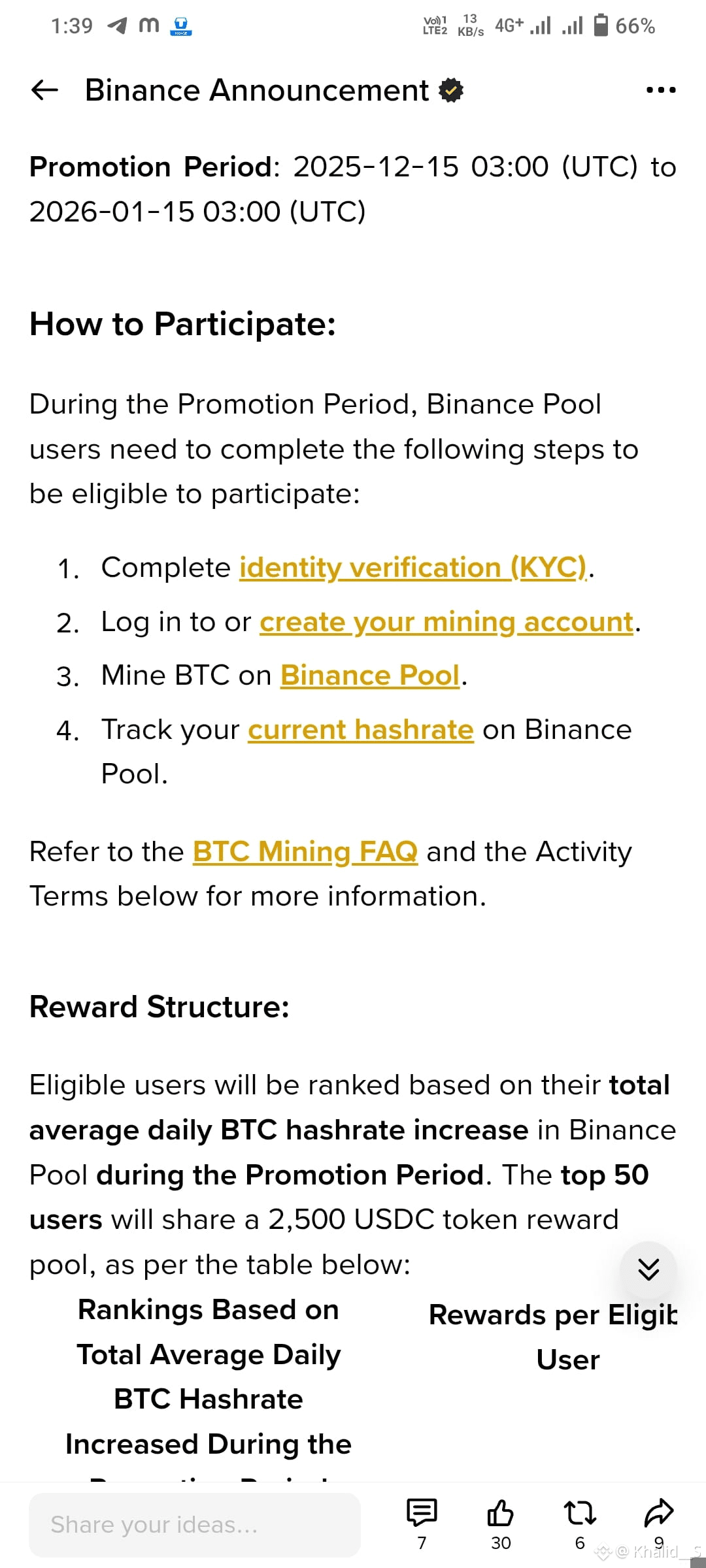
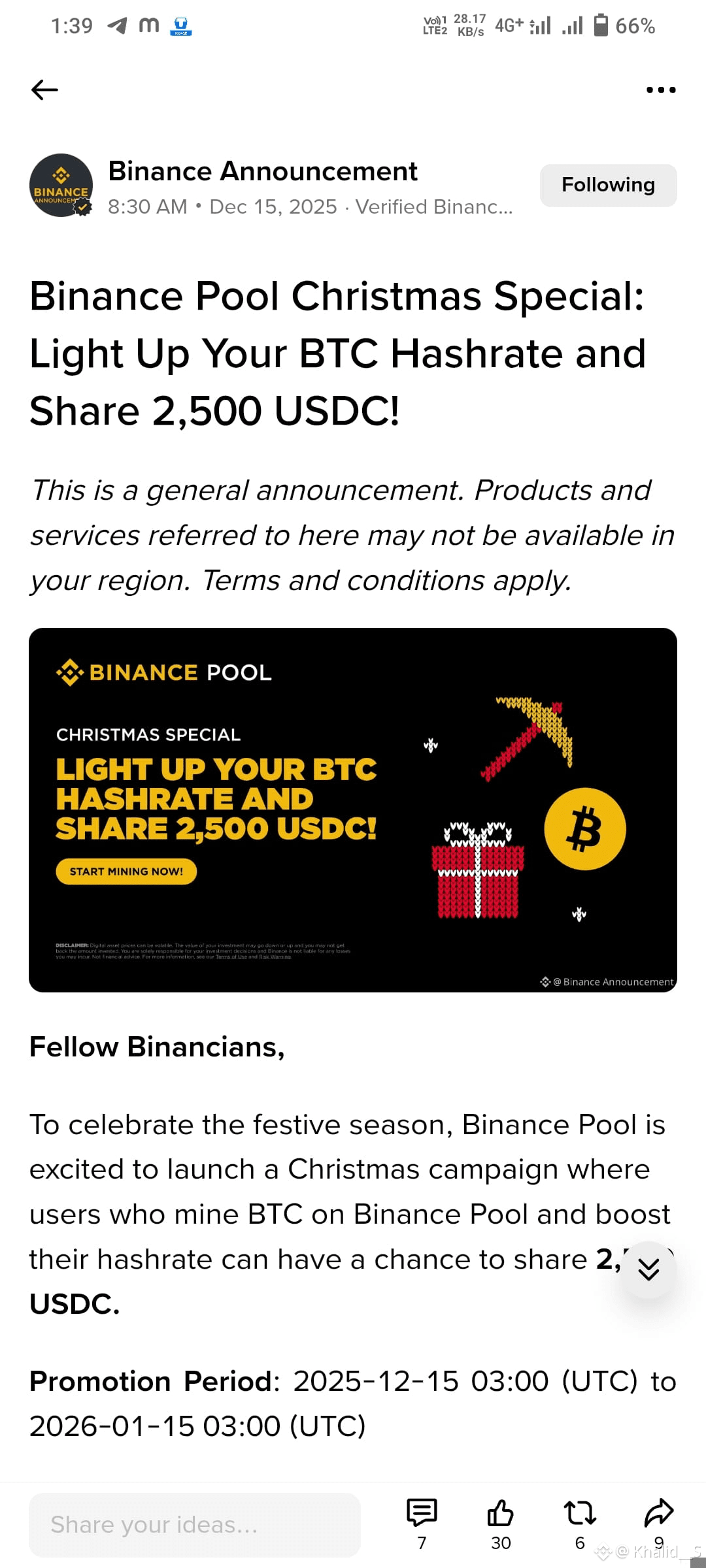
🎄 Binance Pool Christmas Special is LIVE! 🎄
Just saw this update from Binance and it honestly looks exciting. If you’re already mining BTC on Binance Pool or planning to increase your hashrate, this is a good chance to get something extra.
The campaign runs from 15 Dec to 15 Jan, and Binance is sharing 2,500 USDC with the top 50 users based on average daily BTC hashrate increase. No shortcuts — just real mining, real effort.
I’ve completed my setup and now tracking my hashrate daily. Let’s see how far consistency can take us 🚀
Wishing luck to everyone participating, and congrats in advance to the winners.
#BinancePool #BTCMining #ChristmasSpecial
$USDC
$BTC
3
414

·
--
#btcmining
$BTC
{spot}(BTCUSDT)
BTC MINING IN 2025 💰⛏️
It's like trying to catch a speeding train with a fishing rod—challenging, but not impossible. Here's why:
1. Rising Difficulty: Bitcoin's network is designed to adjust the difficulty of mining to ensure that new blocks are added every 10 minutes. As more powerful mining rigs join the fray, the difficulty level climbs. Imagine trying to solve a complex puzzle where the pieces keep changing shape the faster you solve it. In 2025, only the most cutting-edge hardware can keep pace.
2. Energy-Eating Giants: Picture this: you're running a high-powered machine 24/7 just to try and solve cryptographic puzzles. The electricity costs can be staggering, especially in regions with high energy prices. It's like running your air conditioning on full blast during a heatwave—except the AC is the size of a small fridge.
3. The Price Roller Coaster: Bitcoin’s price is notoriously volatile. One minute it’s soaring to new heights, and the next, it’s crashing down. As a miner, you’re caught in the whirlwind. If Bitcoin’s price drops significantly, your potential rewards may not even cover the electricity bill, let alone turn a profit. Mining is a high-stakes game, and the price of Bitcoin is the unpredictable dealer.
4. The Halving Hammer: Every four years, Bitcoin’s reward for miners gets sliced in half. The next halving event isn’t until 2028, but it looms large in the future. With fewer coins being minted, miners must either push their rigs to the limit or hope the price of Bitcoin rises enough to make up for the loss in rewards. It's a tense waiting game.
In short, mining Bitcoin in 2025 isn’t exactly a gold rush anymore. But if you have access to cheap energy, the right hardware, and a bit of luck on your side.
thanks for reading 🙏
#btcmining
$BTC
BTC MINING IN 2025 💰⛏️
It's like trying to catch a speeding train with a fishing rod—challenging, but not impossible. Here's why:
1. Rising Difficulty: Bitcoin's network is designed to adjust the difficulty of mining to ensure that new blocks are added every 10 minutes. As more powerful mining rigs join the fray, the difficulty level climbs. Imagine trying to solve a complex puzzle where the pieces keep changing shape the faster you solve it. In 2025, only the most cutting-edge hardware can keep pace.
2. Energy-Eating Giants: Picture this: you're running a high-powered machine 24/7 just to try and solve cryptographic puzzles. The electricity costs can be staggering, especially in regions with high energy prices. It's like running your air conditioning on full blast during a heatwave—except the AC is the size of a small fridge.
3. The Price Roller Coaster: Bitcoin’s price is notoriously volatile. One minute it’s soaring to new heights, and the next, it’s crashing down. As a miner, you’re caught in the whirlwind. If Bitcoin’s price drops significantly, your potential rewards may not even cover the electricity bill, let alone turn a profit. Mining is a high-stakes game, and the price of Bitcoin is the unpredictable dealer.
4. The Halving Hammer: Every four years, Bitcoin’s reward for miners gets sliced in half. The next halving event isn’t until 2028, but it looms large in the future. With fewer coins being minted, miners must either push their rigs to the limit or hope the price of Bitcoin rises enough to make up for the loss in rewards. It's a tense waiting game.
In short, mining Bitcoin in 2025 isn’t exactly a gold rush anymore. But if you have access to cheap energy, the right hardware, and a bit of luck on your side.
thanks for reading 🙏
1
1.6k

·
--
Статья
How to Start Bitcoin MiningBitcoin mining is one of the most important parts of the Bitcoin network. Miners use specialized computers to help secure the network and confirm transactions. In return they can earn Bitcoin through block rewards and transaction fees.
Starting Bitcoin mining is very different from simply buying Bitcoin. Mining requires hardware, electricity, internet access and technical setup. It also involves ongoing costs. Before spending money on equipment it is important to understand how mining works and whether it can be profitable for you.
What Is Bitcoin Mining?
Bitcoin mining is the process of creating valid Bitcoin blocks through proof of work. Miners use powerful computers to repeatedly calculate hashes. The goal is to find a valid result that meets the network difficulty.
When a miner successfully creates a valid block the block can be added to the Bitcoin blockchain. The miner can receive the block reward which includes the block subsidy and transaction fees from transactions included in the block.
Bitcoin adjusts its mining difficulty every 2016 blocks. This helps keep the average time between blocks close to the network target.
What Do You Need to Start?
The first thing you need is suitable mining hardware.
Modern Bitcoin mining is normally done with ASIC miners. ASIC stands for Application Specific Integrated Circuit. These machines are designed specifically for Bitcoin mining.
A normal laptop or desktop computer is not suitable for competitive Bitcoin mining today. Mining requires a large amount of computing power and electricity.
You will also need a stable internet connection. Mining equipment needs to stay connected to the network so it can receive new work and submit completed results.
Electricity is another major cost. A mining machine can use a significant amount of power while running continuously. Your electricity price can have a major effect on your overall mining costs.
Choose the Right Mining Hardware
When comparing mining machines look at three main things.
The first is hash rate. Hash rate measures how much mining work the machine can perform.
The second is power consumption. A machine that produces a high hash rate but uses a large amount of electricity may not be profitable.
The third is efficiency. Mining efficiency shows how much electricity is required for a certain amount of mining work.
You should also consider the purchase price of the machine. A cheaper miner is not always the better choice if it uses much more electricity.
Set Up a Bitcoin Wallet
You need a Bitcoin wallet to receive Bitcoin from mining activities.
A wallet allows you to control your Bitcoin through private keys. You should choose a wallet that has a strong security reputation and understand how backups and private keys work before receiving funds.
Never share your private keys or recovery phrase with another person.
Join a Mining Pool
Mining Bitcoin on your own is called solo mining.
Solo mining can be difficult because you may wait a long time before successfully finding a block. Mining pools allow many miners to combine their computing power.
When the pool earns rewards the income is normally distributed between participating miners according to the pool's rules and contribution.
For someone starting out this can provide a more predictable way to receive mining income than relying entirely on solo mining.
Bitcoin developer documentation includes separate guides for both solo mining and pool mining.
Install Mining Software
Your ASIC miner needs mining software or a compatible mining interface to connect to the mining pool.
The exact setup depends on the hardware and mining pool you choose.
You will normally need to enter your pool information and configure your Bitcoin payout address.
Always download software and firmware from trusted sources. Fake mining software can create security risks.
Calculate Your Mining Costs
This is one of the most important steps before starting.
Do not calculate your potential income based only on the Bitcoin price.
You should consider the following costs:
Hardware
Electricity
Internet
Cooling
Maintenance
Mining pool fees
Space
Possible hardware replacement
Electricity is especially important because mining machines can operate continuously. Bitcoin mining uses proof of work and the hardware performs a large number of calculations to compete for block rewards.
Understand Mining Profitability
Mining profitability changes over time.
Bitcoin price can change. Network difficulty can change. Mining competition can increase. Electricity prices can also change.
This means a machine that is profitable today may not remain profitable in the future.
Before purchasing hardware use a reliable mining profitability calculator. Enter the machine's hash rate and power consumption. Then enter your electricity cost and other expenses.
The result can give you an estimate of potential revenue and operating costs.
Treat these calculations as estimates rather than guaranteed income.
Think About Heat and Noise
Mining machines produce a lot of heat and can also be very loud.
A small room may not be suitable for running mining hardware continuously.
You need proper ventilation and cooling. Poor airflow can reduce hardware performance and may shorten the life of the equipment.
If you plan to operate several machines you may need a dedicated mining space with suitable electrical infrastructure and cooling.
Consider Your Local Rules
Bitcoin mining regulations can vary between countries and regions.
Electricity pricing can also be very different depending on where you live.
Before starting a mining operation check your local rules. You should also understand whether mining income has tax requirements in your country.
For a home mining setup it is important to make sure your electrical system can safely handle the equipment.
Is Bitcoin Mining Worth It?
Bitcoin mining can be profitable for some operators but it is not guaranteed.
Large mining operations often have access to specialized infrastructure and competitive electricity prices. Individual miners may face higher equipment and electricity costs.
This is why your location can be just as important as the mining hardware you choose.
The Bitcoin network is highly competitive. Miners around the world are constantly competing with their computing power.
Common Mistakes Beginners Should Avoid
One common mistake is buying a mining machine without checking electricity costs.
Another mistake is choosing hardware based only on its advertised hash rate.
Some beginners also underestimate heat and noise.
Buying used hardware without checking its condition can create additional problems.
You should also be careful with mining websites that promise guaranteed returns. Real Bitcoin mining involves costs and competition. Nobody can guarantee a fixed mining profit.
Final Thoughts
Starting Bitcoin mining requires more than buying a mining machine.
You need to understand the hardware. You need to calculate electricity costs. You need a secure Bitcoin wallet and reliable mining software. You also need to understand mining pools and the risks involved.
The most important step is research.
Calculate your expected costs before buying equipment. Compare different machines and electricity prices. Learn how mining works and understand that profitability can change over time.
Bitcoin mining can be an interesting way to learn about blockchain technology and participate in the Bitcoin network. However it should be approached as a technical and financial activity rather than a guaranteed way to make money.
#NFA #DYOR* #BTC $BTC #btcmining #Mining
Disclaimer: This article is for educational and informational purposes only. It is not financial or investment advice. Mining profitability can change based on Bitcoin price, network difficulty, electricity costs and hardware performance.
How to Start Bitcoin Mining
Bitcoin mining is one of the most important parts of the Bitcoin network. Miners use specialized computers to help secure the network and confirm transactions. In return they can earn Bitcoin through block rewards and transaction fees.
Starting Bitcoin mining is very different from simply buying Bitcoin. Mining requires hardware, electricity, internet access and technical setup. It also involves ongoing costs. Before spending money on equipment it is important to understand how mining works and whether it can be profitable for you.
What Is Bitcoin Mining?
Bitcoin mining is the process of creating valid Bitcoin blocks through proof of work. Miners use powerful computers to repeatedly calculate hashes. The goal is to find a valid result that meets the network difficulty.
When a miner successfully creates a valid block the block can be added to the Bitcoin blockchain. The miner can receive the block reward which includes the block subsidy and transaction fees from transactions included in the block.
Bitcoin adjusts its mining difficulty every 2016 blocks. This helps keep the average time between blocks close to the network target.
What Do You Need to Start?
The first thing you need is suitable mining hardware.
Modern Bitcoin mining is normally done with ASIC miners. ASIC stands for Application Specific Integrated Circuit. These machines are designed specifically for Bitcoin mining.
A normal laptop or desktop computer is not suitable for competitive Bitcoin mining today. Mining requires a large amount of computing power and electricity.
You will also need a stable internet connection. Mining equipment needs to stay connected to the network so it can receive new work and submit completed results.
Electricity is another major cost. A mining machine can use a significant amount of power while running continuously. Your electricity price can have a major effect on your overall mining costs.
Choose the Right Mining Hardware
When comparing mining machines look at three main things.
The first is hash rate. Hash rate measures how much mining work the machine can perform.
The second is power consumption. A machine that produces a high hash rate but uses a large amount of electricity may not be profitable.
The third is efficiency. Mining efficiency shows how much electricity is required for a certain amount of mining work.
You should also consider the purchase price of the machine. A cheaper miner is not always the better choice if it uses much more electricity.
Set Up a Bitcoin Wallet
You need a Bitcoin wallet to receive Bitcoin from mining activities.
A wallet allows you to control your Bitcoin through private keys. You should choose a wallet that has a strong security reputation and understand how backups and private keys work before receiving funds.
Never share your private keys or recovery phrase with another person.
Join a Mining Pool
Mining Bitcoin on your own is called solo mining.
Solo mining can be difficult because you may wait a long time before successfully finding a block. Mining pools allow many miners to combine their computing power.
When the pool earns rewards the income is normally distributed between participating miners according to the pool's rules and contribution.
For someone starting out this can provide a more predictable way to receive mining income than relying entirely on solo mining.
Bitcoin developer documentation includes separate guides for both solo mining and pool mining.
Install Mining Software
Your ASIC miner needs mining software or a compatible mining interface to connect to the mining pool.
The exact setup depends on the hardware and mining pool you choose.
You will normally need to enter your pool information and configure your Bitcoin payout address.
Always download software and firmware from trusted sources. Fake mining software can create security risks.
Calculate Your Mining Costs
This is one of the most important steps before starting.
Do not calculate your potential income based only on the Bitcoin price.
You should consider the following costs:
Hardware
Electricity
Internet
Cooling
Maintenance
Mining pool fees
Space
Possible hardware replacement
Electricity is especially important because mining machines can operate continuously. Bitcoin mining uses proof of work and the hardware performs a large number of calculations to compete for block rewards.
Understand Mining Profitability
Mining profitability changes over time.
Bitcoin price can change. Network difficulty can change. Mining competition can increase. Electricity prices can also change.
This means a machine that is profitable today may not remain profitable in the future.
Before purchasing hardware use a reliable mining profitability calculator. Enter the machine's hash rate and power consumption. Then enter your electricity cost and other expenses.
The result can give you an estimate of potential revenue and operating costs.
Treat these calculations as estimates rather than guaranteed income.
Think About Heat and Noise
Mining machines produce a lot of heat and can also be very loud.
A small room may not be suitable for running mining hardware continuously.
You need proper ventilation and cooling. Poor airflow can reduce hardware performance and may shorten the life of the equipment.
If you plan to operate several machines you may need a dedicated mining space with suitable electrical infrastructure and cooling.
Consider Your Local Rules
Bitcoin mining regulations can vary between countries and regions.
Electricity pricing can also be very different depending on where you live.
Before starting a mining operation check your local rules. You should also understand whether mining income has tax requirements in your country.
For a home mining setup it is important to make sure your electrical system can safely handle the equipment.
Is Bitcoin Mining Worth It?
Bitcoin mining can be profitable for some operators but it is not guaranteed.
Large mining operations often have access to specialized infrastructure and competitive electricity prices. Individual miners may face higher equipment and electricity costs.
This is why your location can be just as important as the mining hardware you choose.
The Bitcoin network is highly competitive. Miners around the world are constantly competing with their computing power.
Common Mistakes Beginners Should Avoid
One common mistake is buying a mining machine without checking electricity costs.
Another mistake is choosing hardware based only on its advertised hash rate.
Some beginners also underestimate heat and noise.
Buying used hardware without checking its condition can create additional problems.
You should also be careful with mining websites that promise guaranteed returns. Real Bitcoin mining involves costs and competition. Nobody can guarantee a fixed mining profit.
Final Thoughts
Starting Bitcoin mining requires more than buying a mining machine.
You need to understand the hardware. You need to calculate electricity costs. You need a secure Bitcoin wallet and reliable mining software. You also need to understand mining pools and the risks involved.
The most important step is research.
Calculate your expected costs before buying equipment. Compare different machines and electricity prices. Learn how mining works and understand that profitability can change over time.
Bitcoin mining can be an interesting way to learn about blockchain technology and participate in the Bitcoin network. However it should be approached as a technical and financial activity rather than a guaranteed way to make money.
#NFA #DYOR* #BTC $BTC #btcmining #Mining
Disclaimer: This article is for educational and informational purposes only. It is not financial or investment advice. Mining profitability can change based on Bitcoin price, network difficulty, electricity costs and hardware performance.
weela:
Yes
20
10
806

·
--
🦈 TINDER CO-FOUNDER JUST DOUBLED DOWN ON $ABTC AFTER THE EARNINGS DIP 💥
Entry: $6.19 ⚡
📥 Insiders rarely buy in silence — and this isn't a small check. Justin Mateen stacked 306,981 shares across two sessions, averaging roughly $6.30 per share, right after a quarterly print that spooked weaker conviction. 💰 That's a direct vote of confidence from someone sitting inside the boardroom, not a spectator on the sidelines.
⚡ What makes this compelling is the strategy underneath. ABTC isn't just mining Bitcoin; it's accumulating it at the treasury level, now holding over 8,000 BTC while Q2 production hit an all-time high of 932 coins. 📊 Smart money is betting on the balance sheet, not the income statement.
💡 The $57M net loss is the obvious counterweight — but insiders buying into pessimism often marks the turn before the market catches up. 💬 Is this a signal that the market is underpricing a pure-play BTC treasury vehicle? 👇
⚠️ Not financial advice. Always manage your risk. 🛡️
🏷️ #ABTC #Bitcoin #InsiderBuying #BTCMining #Crypto
🦈 💎
21
Войдите, чтобы посмотреть больше материала
Присоединяйтесь к пользователям криптовалют по всему миру на Binance Square
⚡️ Получайте новейшую и полезную информацию о криптоактивах.
💬 Нам доверяет крупнейшая в мире криптобиржа.
👍 Получите достоверные аналитические данные от верифицированных создателей контента.
Эл. почта/номер телефона
В тренде
1
#NvidiaBeatsEstimatesWith$130BQ4Outlook
Просмотров: 557
18 обсуждают
2
#AnthropicIPOPriceCouldExceed$80
Просмотров: 827
27 обсуждают
3
#CanNvidia’sDataCenterGrowthContinue?
Просмотров: 1,466
51 обсуждают
4
#NvidiaBoardNotConsideringHuang’sReturnasCEO
Просмотров: 146,329
1,085 обсуждают
5
#KOSPIFalls2.59%ToLowestCloseSinceFebruary
Просмотров: 38,898
391 обсуждают
6
#AnthropicClearedToListOnNasdaqAsANT
Просмотров: 33,326
320 обсуждают
7
#WhatInvestmentSignalsDo13FFilingsReveal?
Просмотров: 79,409
723 обсуждают
8
#TetherCapitalMakesStrategicInvestmentInStables
Просмотров: 18,787
154 обсуждают
9
#EvernorthRecords$505MImpairmentOnPreListingXRP
Просмотров: 2,222
23 обсуждают
10
#GoldmanSachsReports$1.22BInEtherETFHoldings
Просмотров: 1,644
20 обсуждают