

#babylon
babylon
Просмотров: 706,509
2,625 обсуждают
Популярные
Новые

·
--
Падение
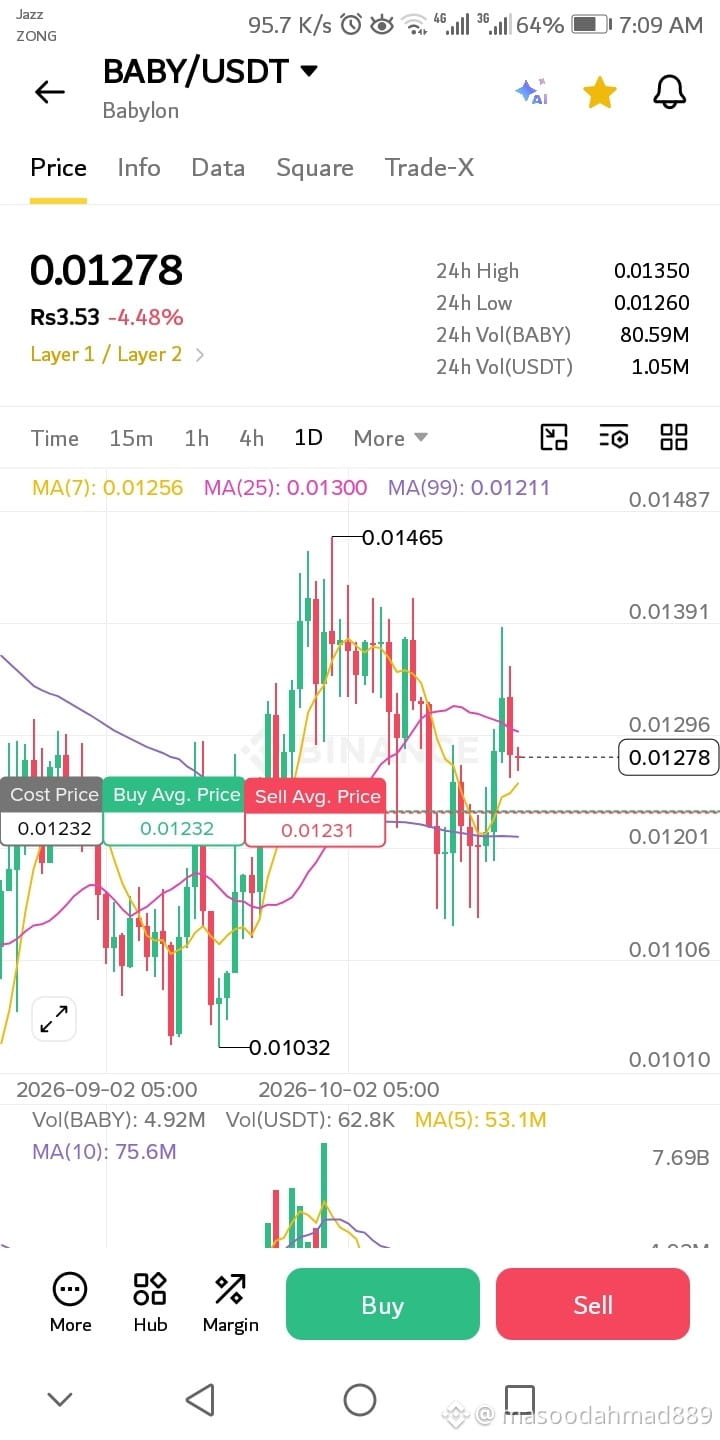
#Babylon Bearish below 0.01300.
Confirmation: Enter short only if price rejects resistance or breaks below 0.01260. Avoid chasing the move.
BABY/USDT — Trading Setup
Chart bias
Current price (screenshot) 0.01278
Immediate resistance 0.01300–0.01310
Immediate support 0.01260
Major support 0.01210–0.01200
#Babylon
#Babylon Bearish below 0.01300.
Confirmation: Enter short only if price rejects resistance or breaks below 0.01260. Avoid chasing the move.
BABY/USDT — Trading Setup
Chart bias
Current price (screenshot) 0.01278
Immediate resistance 0.01300–0.01310
Immediate support 0.01260
Major support 0.01210–0.01200
#Babylon
Confirmation: Enter short only if price rejects resistance or breaks below 0.01260. Avoid chasing the move.
BABY/USDT — Trading Setup
Chart bias
Current price (screenshot) 0.01278
Immediate resistance 0.01300–0.01310
Immediate support 0.01260
Major support 0.01210–0.01200
#Babylon
171

·
--
Рост
The future of Bitcoin DeFi is finally here! Babylon Trustless Bitcoin Vaults (TBV) are revolutionizing how we unlock idle Bitcoin security, creating a much safer and more productive BTCFi ecosystem. I am very excited to see the continued growth of $BABY and the incredible vision being executed by @BabylonLabs_io. This is a massive, necessary step forward for decentralized finance and Bitcoin utility! #baby $BTC #babylon
The future of Bitcoin DeFi is finally here! Babylon Trustless Bitcoin Vaults (TBV) are revolutionizing how we unlock idle Bitcoin security, creating a much safer and more productive BTCFi ecosystem. I am very excited to see the continued growth of $BABY and the incredible vision being executed by @BabylonLabs_io. This is a massive, necessary step forward for decentralized finance and Bitcoin utility! #baby $BTC #babylon
274




·
--
Рост
#Babylon عند 0.01413$ مرتفعًا 7.29% يطرح سؤالًا أحب أن أراه في سوق الكريبتو: ماذا لو لم يكن المطلوب إنشاء رأس مال جديد، بل استخدام رأس المال الموجود أصلًا؟ المشروع يحاول الاستفادة من BTC عبر Staking لتأمين شبكات أخرى. الفكرة فيها شيء ذكي من الناحية المعمارية؛ البيتكوين يبقى هو الأصل، لكن أمانه الاقتصادي يمكن أن يدخل في منظومات أخرى. ومع توسع إيداعات BTC، يبدأ الاختبار الحقيقي للفكرة.
#baby @babylonlabs_io #marouan47 #EarningsSeason
$BABY
{spot}(BABYUSDT)
#Babylon عند 0.01413$ مرتفعًا 7.29% يطرح سؤالًا أحب أن أراه في سوق الكريبتو: ماذا لو لم يكن المطلوب إنشاء رأس مال جديد، بل استخدام رأس المال الموجود أصلًا؟ المشروع يحاول الاستفادة من BTC عبر Staking لتأمين شبكات أخرى. الفكرة فيها شيء ذكي من الناحية المعمارية؛ البيتكوين يبقى هو الأصل، لكن أمانه الاقتصادي يمكن أن يدخل في منظومات أخرى. ومع توسع إيداعات BTC، يبدأ الاختبار الحقيقي للفكرة.
#baby @BabylonLabs_io #marouan47 #EarningsSeason
$BABY
#baby @BabylonLabs_io #marouan47 #EarningsSeason
$BABY

1
2
819

$BABY
{spot}(BABYUSDT)
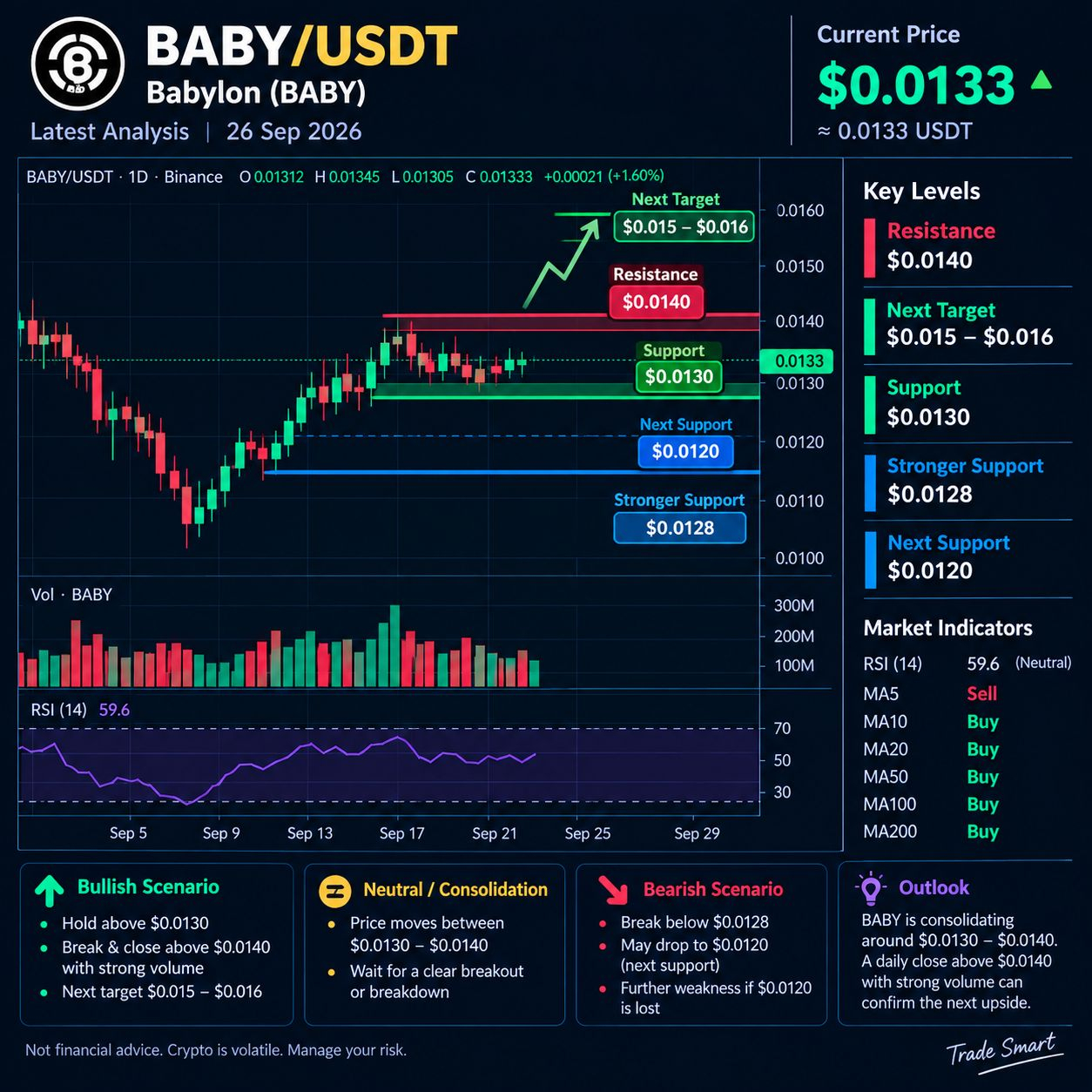
BABY (Babylon) — Today’s Analysis | 26 Sep 2026
BABY/USDT is around $0.0133 today. Current technical readings are constructive: RSI is about 59.6, while the 10/20/50/100/200-period moving averages are showing buy signals; the 5-period MA is showing a short-term sell signal. �
Investing.com Nigeria +1
🔑 Key levels
🟢 Support: $0.0130
🟢 Stronger support: $0.0128
🔻 Next support: $0.0120
🔴 Resistance: $0.0140
🚀 Above $0.0140: watch the $0.015–$0.016 area
⚠️ Below $0.0128: downside momentum could increase toward $0.0120.
The recent data also shows elevated BABY trading activity, and Binance is currently running a BABY/USDT and BABY/USDC trading competition through September 29, 2026. �
CoinMarketCap +1
Post-ready view: BABY is currently consolidating around $0.0130–$0.0140. A daily candle close above $0.0140 with strong volume would be a clearer bullish confirmation; losing $0.0128 would weaken the setup.
#baby
#Babylon
#CryptoAnalysis
$BABY
BABY (Babylon) — Today’s Analysis | 26 Sep 2026
BABY/USDT is around $0.0133 today. Current technical readings are constructive: RSI is about 59.6, while the 10/20/50/100/200-period moving averages are showing buy signals; the 5-period MA is showing a short-term sell signal. �
Investing.com Nigeria +1
🔑 Key levels
🟢 Support: $0.0130
🟢 Stronger support: $0.0128
🔻 Next support: $0.0120
🔴 Resistance: $0.0140
🚀 Above $0.0140: watch the $0.015–$0.016 area
⚠️ Below $0.0128: downside momentum could increase toward $0.0120.
The recent data also shows elevated BABY trading activity, and Binance is currently running a BABY/USDT and BABY/USDC trading competition through September 29, 2026. �
CoinMarketCap +1
Post-ready view: BABY is currently consolidating around $0.0130–$0.0140. A daily candle close above $0.0140 with strong volume would be a clearer bullish confirmation; losing $0.0128 would weaken the setup.
#baby
#Babylon
#CryptoAnalysis
BABY (Babylon) — Today’s Analysis | 26 Sep 2026
BABY/USDT is around $0.0133 today. Current technical readings are constructive: RSI is about 59.6, while the 10/20/50/100/200-period moving averages are showing buy signals; the 5-period MA is showing a short-term sell signal. �
Investing.com Nigeria +1
🔑 Key levels
🟢 Support: $0.0130
🟢 Stronger support: $0.0128
🔻 Next support: $0.0120
🔴 Resistance: $0.0140
🚀 Above $0.0140: watch the $0.015–$0.016 area
⚠️ Below $0.0128: downside momentum could increase toward $0.0120.
The recent data also shows elevated BABY trading activity, and Binance is currently running a BABY/USDT and BABY/USDC trading competition through September 29, 2026. �
CoinMarketCap +1
Post-ready view: BABY is currently consolidating around $0.0130–$0.0140. A daily candle close above $0.0140 with strong volume would be a clearer bullish confirmation; losing $0.0128 would weaken the setup.
#baby
#Babylon
#CryptoAnalysis
214

·
--
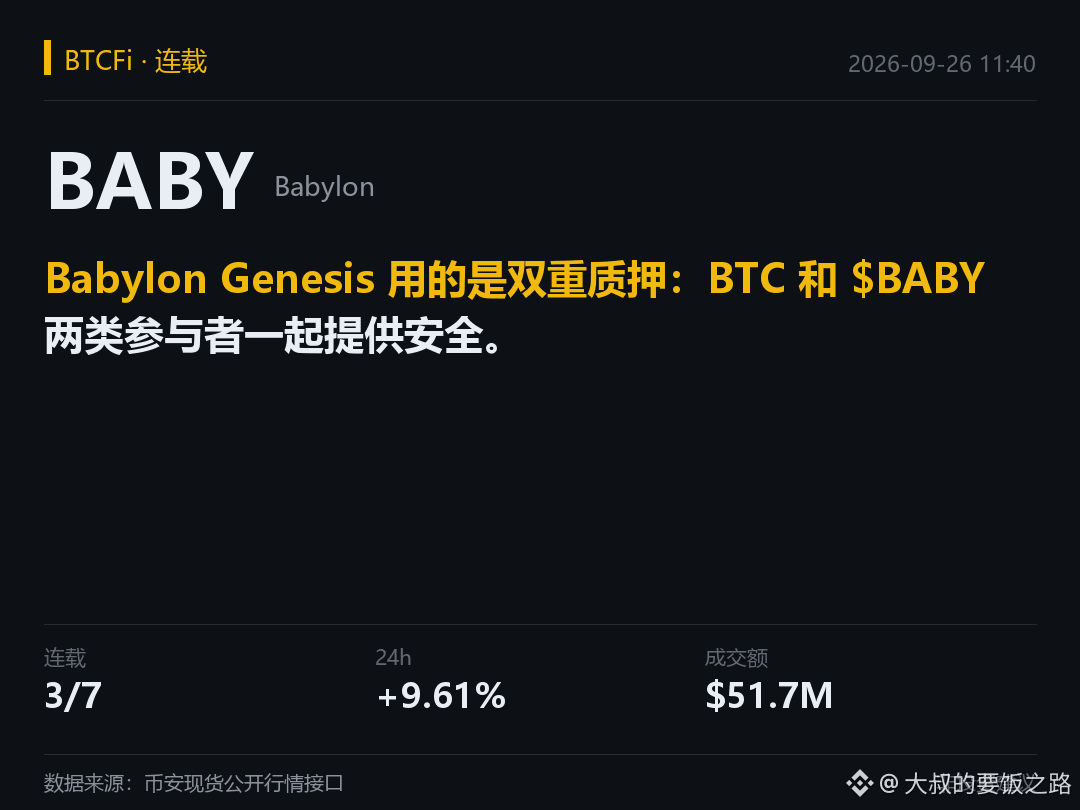
Babylon Genesis 用的是双重质押:BTC 和 $BABY 两类参与者一起提供安全。
但奖励资产只有 BABY。比特币参与了安全服务,不等于奖励来自比特币的经营收入。这两件事经常被写混。
#Babylon
非投资建议
{future}(BABYUSDT)
Babylon Genesis 用的是双重质押:BTC 和 $BABY 两类参与者一起提供安全。
但奖励资产只有 BABY。比特币参与了安全服务,不等于奖励来自比特币的经营收入。这两件事经常被写混。
#Babylon
非投资建议
但奖励资产只有 BABY。比特币参与了安全服务,不等于奖励来自比特币的经营收入。这两件事经常被写混。
#Babylon
非投资建议
142

·
--
🔥 $BABY : الصعود مستمر 🚀
الدخول: 0.01275–0.01285$
أهداف
1️⃣ 0.01310$
2️⃣ 0.01340$
3️⃣ 0.01375$
وقف خسارة: 0.01240$
قم ببحثك الخاص هنا $BABY
{future}(BABYUSDT)
لماذا BABY؟
دعم 0.0122$ قوي — 3 اختبارات ناجحة
RSI عند 52 — تشبع شرائي خفيف — ارتفاع وشيك
MA50 عند 0.01159 — اتجاه صاعد!
اتابع كذلك $XRP
{future}(XRPUSDT)
دوما احترم حدود الصفقة وادر مخاطرك بعناية 🙏
#xrp #Babylon #altcoins
🔥 $BABY : الصعود مستمر 🚀
الدخول: 0.01275–0.01285$
أهداف
1️⃣ 0.01310$
2️⃣ 0.01340$
3️⃣ 0.01375$
وقف خسارة: 0.01240$
قم ببحثك الخاص هنا $BABY
لماذا BABY؟
دعم 0.0122$ قوي — 3 اختبارات ناجحة
RSI عند 52 — تشبع شرائي خفيف — ارتفاع وشيك
MA50 عند 0.01159 — اتجاه صاعد!
اتابع كذلك $XRP
دوما احترم حدود الصفقة وادر مخاطرك بعناية 🙏
#xrp #Babylon #altcoins
الدخول: 0.01275–0.01285$
أهداف
1️⃣ 0.01310$
2️⃣ 0.01340$
3️⃣ 0.01375$
وقف خسارة: 0.01240$
قم ببحثك الخاص هنا $BABY
لماذا BABY؟
دعم 0.0122$ قوي — 3 اختبارات ناجحة
RSI عند 52 — تشبع شرائي خفيف — ارتفاع وشيك
MA50 عند 0.01159 — اتجاه صاعد!
اتابع كذلك $XRP
دوما احترم حدود الصفقة وادر مخاطرك بعناية 🙏
#xrp #Babylon #altcoins
1
29

·
--
Проверено
Every few minutes I open the gainers, losers and Alpha tab.
Crypto is an emotional roller coaster 😂
One minute people are celebrating huge profits.
The next minute someone gets liquidated.
I've been there too.......
So I know how fast everything can change.
Anyway, enough about the market. I just only want to talk about @babylonlabs_io . I was looking into @babylonlabs_io Aave V4 setup and one thing I kept checking was where the liquidity actually sits. At first I thought more BTC vaults would mean more separate lending opportunities, but the flow showed something else. The collateral comes from #Babylon ’s side while the borrowing liquidity is connected to Aave’s shared Hub. So more vaults do not automatically mean more independent liquidity. I also checked the liquidation side and the current testnet numbers show a 78% collateral factor. If a position health factor falls below 1.0 it can enter liquidation, with liquidators getting up to a 10% bonus. The part I find interesting is not just the BTC locked number.I want to see how people actually use this collateral, how much borrowing demand appears, and how the system handles stress when conditions change.
$BTW
#USIranDealOrNoDeal #USJapanJointYenInterventionFirstSince2011 #OilCrashes9%
$BABY
{future}(BABYUSDT)
@babylonlabs_io #baby
$VIC
{future}(VICUSDT)
What will decide the success of Bitcoin lending?
Every few minutes I open the gainers, losers and Alpha tab.
Crypto is an emotional roller coaster 😂
One minute people are celebrating huge profits.
The next minute someone gets liquidated.
I've been there too.......
So I know how fast everything can change.
Anyway, enough about the market. I just only want to talk about @BabylonLabs_io . I was looking into @BabylonLabs_io Aave V4 setup and one thing I kept checking was where the liquidity actually sits. At first I thought more BTC vaults would mean more separate lending opportunities, but the flow showed something else. The collateral comes from #Babylon ’s side while the borrowing liquidity is connected to Aave’s shared Hub. So more vaults do not automatically mean more independent liquidity. I also checked the liquidation side and the current testnet numbers show a 78% collateral factor. If a position health factor falls below 1.0 it can enter liquidation, with liquidators getting up to a 10% bonus. The part I find interesting is not just the BTC locked number.I want to see how people actually use this collateral, how much borrowing demand appears, and how the system handles stress when conditions change.
$BTW
#USIranDealOrNoDeal #USJapanJointYenInterventionFirstSince2011 #OilCrashes9%
$BABY
@BabylonLabs_io #baby
$VIC
What will decide the success of Bitcoin lending?
Crypto is an emotional roller coaster 😂
One minute people are celebrating huge profits.
The next minute someone gets liquidated.
I've been there too.......
So I know how fast everything can change.
Anyway, enough about the market. I just only want to talk about @BabylonLabs_io . I was looking into @BabylonLabs_io Aave V4 setup and one thing I kept checking was where the liquidity actually sits. At first I thought more BTC vaults would mean more separate lending opportunities, but the flow showed something else. The collateral comes from #Babylon ’s side while the borrowing liquidity is connected to Aave’s shared Hub. So more vaults do not automatically mean more independent liquidity. I also checked the liquidation side and the current testnet numbers show a 78% collateral factor. If a position health factor falls below 1.0 it can enter liquidation, with liquidators getting up to a 10% bonus. The part I find interesting is not just the BTC locked number.I want to see how people actually use this collateral, how much borrowing demand appears, and how the system handles stress when conditions change.
$BTW
#USIranDealOrNoDeal #USJapanJointYenInterventionFirstSince2011 #OilCrashes9%
$BABY
@BabylonLabs_io #baby
$VIC
What will decide the success of Bitcoin lending?
BTC locked
50%
Real borrowing demand
13%
Liquidation safety
0%
Time will tell
37%
8 проголосовали • Голосование закрыто
45
37
2.9k

#baby $BABY
This is the missing piece. Bitcoin’s capital + Babylon’s protocol = a new era.
Babylon is bringing something Bitcoin never had: *yield without wrapping*.
For 15 years Bitcoin just sat there. Secure, but silent. Babylon changes that.
By using Bitcoin as a staking asset, Babylon secures PoS chains, L2s, and DA layers — while BTC holders finally earn rewards.
No bridges. No wrapping. Just pure Bitcoin security, extended to the whole crypto ecosystem.
This is the missing piece. Bitcoin’s capital + Babylon’s protocol = a new era.
The chain that started it all… is now securing everything else.
#Babylon #BTCFi
#baby $BABY
This is the missing piece. Bitcoin’s capital + Babylon’s protocol = a new era.
Babylon is bringing something Bitcoin never had: *yield without wrapping*.
For 15 years Bitcoin just sat there. Secure, but silent. Babylon changes that.
By using Bitcoin as a staking asset, Babylon secures PoS chains, L2s, and DA layers — while BTC holders finally earn rewards.
No bridges. No wrapping. Just pure Bitcoin security, extended to the whole crypto ecosystem.
This is the missing piece. Bitcoin’s capital + Babylon’s protocol = a new era.
The chain that started it all… is now securing everything else.
#Babylon #BTCFi
This is the missing piece. Bitcoin’s capital + Babylon’s protocol = a new era.
Babylon is bringing something Bitcoin never had: *yield without wrapping*.
For 15 years Bitcoin just sat there. Secure, but silent. Babylon changes that.
By using Bitcoin as a staking asset, Babylon secures PoS chains, L2s, and DA layers — while BTC holders finally earn rewards.
No bridges. No wrapping. Just pure Bitcoin security, extended to the whole crypto ecosystem.
This is the missing piece. Bitcoin’s capital + Babylon’s protocol = a new era.
The chain that started it all… is now securing everything else.
#Babylon #BTCFi
95

Pédagogie & Découverte
La nouvelle campagne Babylon est l'occasion parfaite de découvrir comment le staking Bitcoin sécurise les chaînes PoS. Un modèle économique innovant qui associe protection des fonds et accumulation de récompenses. Rejoignez l'aventure sans tarder ! 💡#Babylon $BABY
Pédagogie & Découverte
La nouvelle campagne Babylon est l'occasion parfaite de découvrir comment le staking Bitcoin sécurise les chaînes PoS. Un modèle économique innovant qui associe protection des fonds et accumulation de récompenses. Rejoignez l'aventure sans tarder ! 💡#Babylon $BABY
La nouvelle campagne Babylon est l'occasion parfaite de découvrir comment le staking Bitcoin sécurise les chaînes PoS. Un modèle économique innovant qui associe protection des fonds et accumulation de récompenses. Rejoignez l'aventure sans tarder ! 💡#Babylon $BABY
24

·
--
Рост
#baby $BABY @babylonlabs_io Everyone is talking about the price of Bitcoin.. Hardly anyone talks about what Bitcoin can actually do.
👀 For a time I thought Bitcoin was only good for two things:
✅ You hold onto it.
✅ You wait for the price to go up.
Then something hit me.
🍋 The thing that is supposed to be the digital asset in the world just sits there doing nothing most of the time.
That never really made sense to me.
Every time the market goes up people put billions of dollars into these DeFi things that're really risky just to get a higher return.. Bitcoin, which is the thing that people trust the most usually just sits on the side because if you want to use it you have to wrap it or bridge it or trust someone else to hold it for you.
That just seems wrong.
💥 So I started looking into a way of doing things.
What if Bitcoin could stay right where it is and still be useful?
That is the idea that got my attention.
The goal is not to get rid of the way Bitcoin keeps peoples money safe. The goal is to build on top of it.
The question is not "How can Bitcoin be like all the DeFi tokens?"
It is "How can DeFi work with Bitcoin?"
That changes everything.
🌕 If Bitcoin can be used for lending or staking or securing networks without people having to give up control of their money then the biggest opportunity might not be creating a new asset.
It might be making the most of the one we already have.
We are still in the days and people should be careful before they put their money into anything.
I think the next big thing for Bitcoin will not just be about the price.
It will be, about what Bitcoin can do.
🍋What do you think will happen first for Bitcoin: will the price go up or will people find ways to use it?
#bitcoin #blockchain #cryptoeducation #Babylon
$BABY $BTC
#baby $BABY @BabylonLabs_io Everyone is talking about the price of Bitcoin.. Hardly anyone talks about what Bitcoin can actually do.
👀 For a time I thought Bitcoin was only good for two things:
✅ You hold onto it.
✅ You wait for the price to go up.
Then something hit me.
🍋 The thing that is supposed to be the digital asset in the world just sits there doing nothing most of the time.
That never really made sense to me.
Every time the market goes up people put billions of dollars into these DeFi things that're really risky just to get a higher return.. Bitcoin, which is the thing that people trust the most usually just sits on the side because if you want to use it you have to wrap it or bridge it or trust someone else to hold it for you.
That just seems wrong.
💥 So I started looking into a way of doing things.
What if Bitcoin could stay right where it is and still be useful?
That is the idea that got my attention.
The goal is not to get rid of the way Bitcoin keeps peoples money safe. The goal is to build on top of it.
The question is not "How can Bitcoin be like all the DeFi tokens?"
It is "How can DeFi work with Bitcoin?"
That changes everything.
🌕 If Bitcoin can be used for lending or staking or securing networks without people having to give up control of their money then the biggest opportunity might not be creating a new asset.
It might be making the most of the one we already have.
We are still in the days and people should be careful before they put their money into anything.
I think the next big thing for Bitcoin will not just be about the price.
It will be, about what Bitcoin can do.
🍋What do you think will happen first for Bitcoin: will the price go up or will people find ways to use it?
#bitcoin #blockchain #cryptoeducation #Babylon
$BABY $BTC
👀 For a time I thought Bitcoin was only good for two things:
✅ You hold onto it.
✅ You wait for the price to go up.
Then something hit me.
🍋 The thing that is supposed to be the digital asset in the world just sits there doing nothing most of the time.
That never really made sense to me.
Every time the market goes up people put billions of dollars into these DeFi things that're really risky just to get a higher return.. Bitcoin, which is the thing that people trust the most usually just sits on the side because if you want to use it you have to wrap it or bridge it or trust someone else to hold it for you.
That just seems wrong.
💥 So I started looking into a way of doing things.
What if Bitcoin could stay right where it is and still be useful?
That is the idea that got my attention.
The goal is not to get rid of the way Bitcoin keeps peoples money safe. The goal is to build on top of it.
The question is not "How can Bitcoin be like all the DeFi tokens?"
It is "How can DeFi work with Bitcoin?"
That changes everything.
🌕 If Bitcoin can be used for lending or staking or securing networks without people having to give up control of their money then the biggest opportunity might not be creating a new asset.
It might be making the most of the one we already have.
We are still in the days and people should be careful before they put their money into anything.
I think the next big thing for Bitcoin will not just be about the price.
It will be, about what Bitcoin can do.
🍋What do you think will happen first for Bitcoin: will the price go up or will people find ways to use it?
#bitcoin #blockchain #cryptoeducation #Babylon
$BABY $BTC
121

·
--
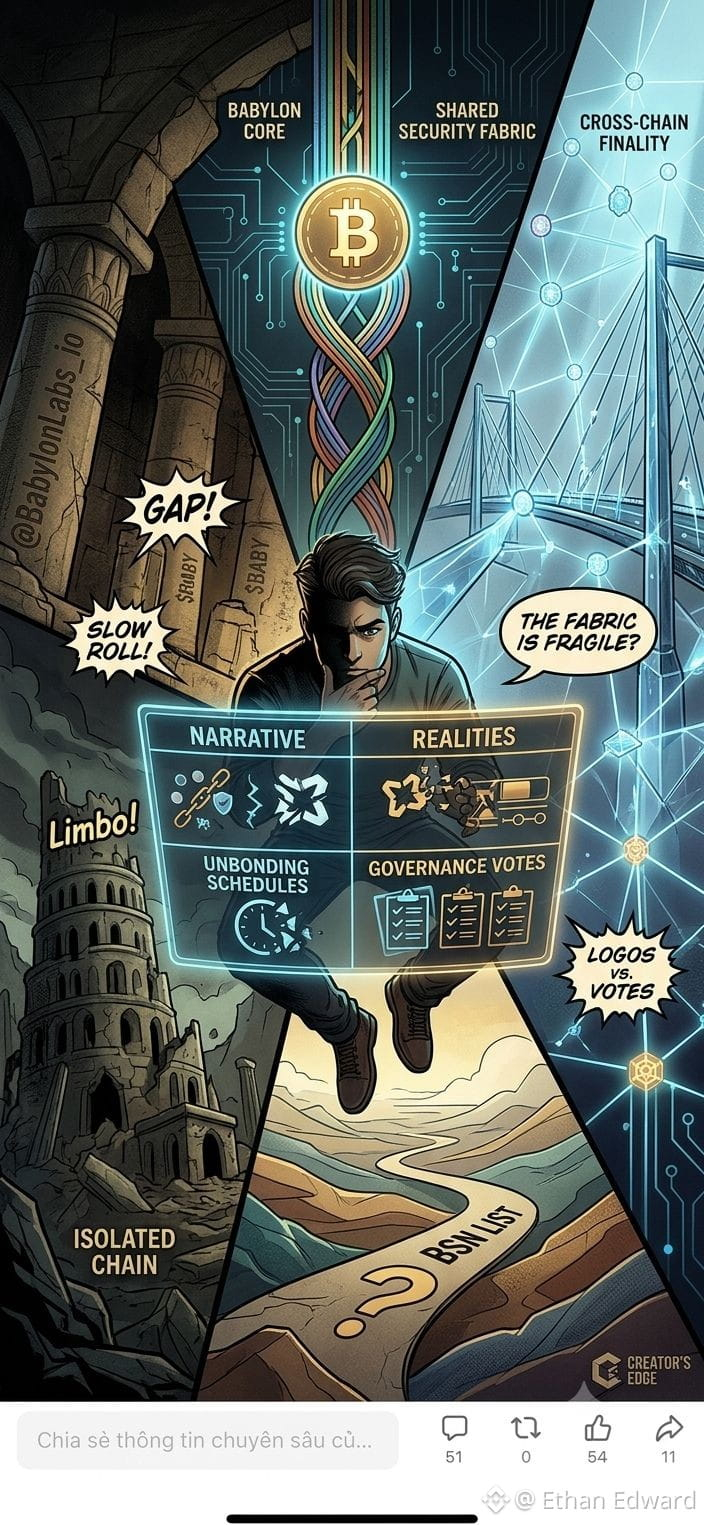
The biggest misunderstanding about @babylonlabs_io isn't the technology—it's the timeline expectations.
A lot of holders treat $BABY staking like a liquid farm: deposit BTC today, collect yield tomorrow, unstake whenever hype fades. But native security strictly follows Bitcoin block rules.
When you stake BTC natively, unbonding isn't an instant 'click-and-withdraw' transaction. It requires cryptographic timelock settlements that take time.
So "instant native yield" in market narratives is actually "structured, lock-in commitment" in reality.
This isn't a flaw—it's the exact reason Babylon's security model works. True BTCfi layer security cannot be built on instant, hot-money exit doors.
Are traders ready for structured staking schedules, or are they still expecting memecoin-level liquidity?
Let's discuss below! 👇
#Babylon $BABY #BTCFi #creatorpad @babylonlabs_io
#baby
{spot}(BABYUSDT)
The biggest misunderstanding about @BabylonLabs_io isn't the technology—it's the timeline expectations.
A lot of holders treat $BABY staking like a liquid farm: deposit BTC today, collect yield tomorrow, unstake whenever hype fades. But native security strictly follows Bitcoin block rules.
When you stake BTC natively, unbonding isn't an instant 'click-and-withdraw' transaction. It requires cryptographic timelock settlements that take time.
So "instant native yield" in market narratives is actually "structured, lock-in commitment" in reality.
This isn't a flaw—it's the exact reason Babylon's security model works. True BTCfi layer security cannot be built on instant, hot-money exit doors.
Are traders ready for structured staking schedules, or are they still expecting memecoin-level liquidity?
Let's discuss below! 👇
#Babylon $BABY #BTCFi #creatorpad @BabylonLabs_io
#baby
A lot of holders treat $BABY staking like a liquid farm: deposit BTC today, collect yield tomorrow, unstake whenever hype fades. But native security strictly follows Bitcoin block rules.
When you stake BTC natively, unbonding isn't an instant 'click-and-withdraw' transaction. It requires cryptographic timelock settlements that take time.
So "instant native yield" in market narratives is actually "structured, lock-in commitment" in reality.
This isn't a flaw—it's the exact reason Babylon's security model works. True BTCfi layer security cannot be built on instant, hot-money exit doors.
Are traders ready for structured staking schedules, or are they still expecting memecoin-level liquidity?
Let's discuss below! 👇
#Babylon $BABY #BTCFi #creatorpad @BabylonLabs_io
#baby
93
#baby $BABY Staking Bitcoin & Révolution Babylon
Le staking Bitcoin via @BabylonLabs_io transforme l'écosystème PoS en apportant la sécurité native du BTC. Félicitations aux 20 meilleurs créateurs du jour sur CreatorPad pour leur soutien constant ! 🚀🧡
@Cassie Fillip meLj @A L I Web3 @Alif07 @Bia 拉比娅 @Ansa Khan⁸⁸ @A L I M A @ZeroBlock @Dark Bro B @Neeeno @Seema BNB @Irha 民宿 @T E S L A M U S K @Waseem Ahmad mir @ADITYAA-56 @Muqeeem @Crypto Expert BNB @MeeR⁰⁰⁷ @Mir Zad Bibi @CHU CHU 53 @Saif-Amanat-002 @ZainAli655
#Babylon #BTCStaking #BinanceSquare #Web3
#baby $BABY Staking Bitcoin & Révolution Babylon
Le staking Bitcoin via @BabylonLabs_io transforme l'écosystème PoS en apportant la sécurité native du BTC. Félicitations aux 20 meilleurs créateurs du jour sur CreatorPad pour leur soutien constant ! 🚀🧡
@Cassie Fillip meLj @A L I Web3 @BLANK _ @Bia 拉比娅 @Ansa Khan⁸⁸ @A L I M A @ZeroBlock @Dark Bro B @Neeeno @Seema BNB @Irha 民宿 @T E S L A M U S K @Waseem Ahmad mir @ADITYAA-56 @Muqeeem @Crypto Expert BNB @MeeR⁰⁰⁷ @Mir Zad Bibi @CHU CHU 53 @Sniper-007 @ZainAli655
#Babylon #BTCStaking #BinanceSquare #Web3
Le staking Bitcoin via @BabylonLabs_io transforme l'écosystème PoS en apportant la sécurité native du BTC. Félicitations aux 20 meilleurs créateurs du jour sur CreatorPad pour leur soutien constant ! 🚀🧡
@Cassie Fillip meLj @A L I Web3 @BLANK _ @Bia 拉比娅 @Ansa Khan⁸⁸ @A L I M A @ZeroBlock @Dark Bro B @Neeeno @Seema BNB @Irha 民宿 @T E S L A M U S K @Waseem Ahmad mir @ADITYAA-56 @Muqeeem @Crypto Expert BNB @MeeR⁰⁰⁷ @Mir Zad Bibi @CHU CHU 53 @Sniper-007 @ZainAli655
#Babylon #BTCStaking #BinanceSquare #Web3
209

·
--
Рост
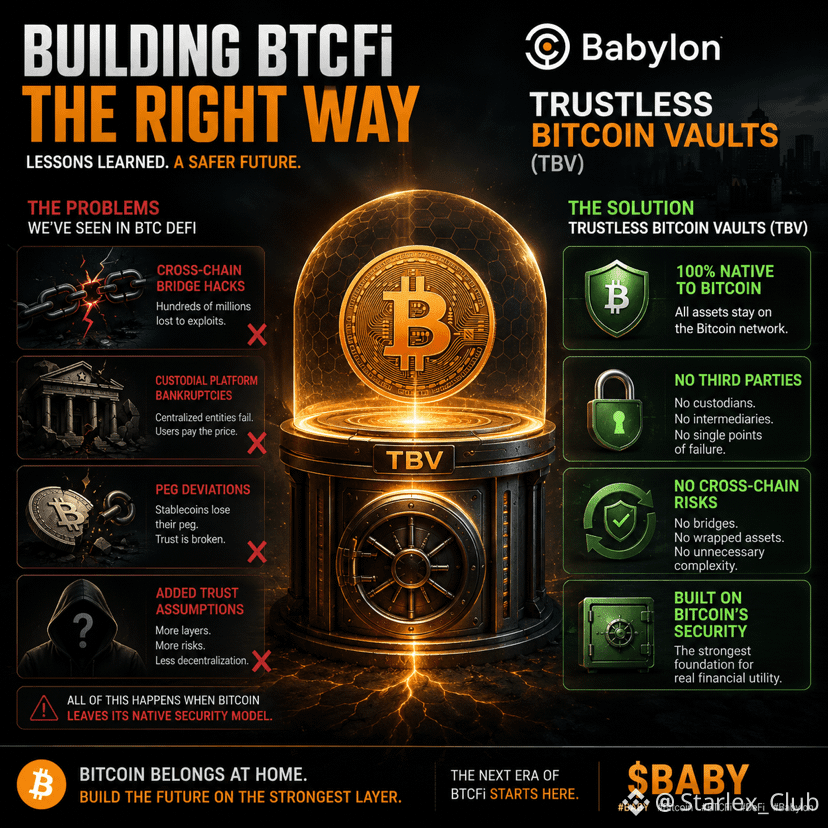
Over the past few years, the BTC DeFi ecosystem has faced its share of painful lessons:
❌ Exploits involving cross-chain bridges
❌ The collapse and bankruptcy of custodial platforms
❌ Pegged assets losing their stability
❌ Additional trust assumptions and hidden counterparty risks
At the core, many of these problems emerged because Bitcoin was pushed beyond its native security model—introducing intermediaries, external chains, and new layers of trust.
That’s where Trustless Bitcoin Vaults (TBV) by @BabylonLabs_io aim to change the game.
With TBV, Bitcoin can remain secured within its native network—without relying on third-party custodians or risky cross-chain transfers. By keeping BTC closer to its original security foundation, TBV addresses custodial and cross-chain risks at their source.
Bitcoin shouldn’t have to leave its secure home to unlock new financial utility. 🟠
The next chapter of BTC DeFi may not be about moving Bitcoin elsewhere—but about building more securely around Bitcoin itself.
$BABY #baby #bitcoin $BTC #BTCFi #defi #Babylon
Over the past few years, the BTC DeFi ecosystem has faced its share of painful lessons:
❌ Exploits involving cross-chain bridges
❌ The collapse and bankruptcy of custodial platforms
❌ Pegged assets losing their stability
❌ Additional trust assumptions and hidden counterparty risks
At the core, many of these problems emerged because Bitcoin was pushed beyond its native security model—introducing intermediaries, external chains, and new layers of trust.
That’s where Trustless Bitcoin Vaults (TBV) by @BabylonLabs_io aim to change the game.
With TBV, Bitcoin can remain secured within its native network—without relying on third-party custodians or risky cross-chain transfers. By keeping BTC closer to its original security foundation, TBV addresses custodial and cross-chain risks at their source.
Bitcoin shouldn’t have to leave its secure home to unlock new financial utility. 🟠
The next chapter of BTC DeFi may not be about moving Bitcoin elsewhere—but about building more securely around Bitcoin itself.
$BABY #baby #bitcoin $BTC #BTCFi #defi #Babylon
❌ Exploits involving cross-chain bridges
❌ The collapse and bankruptcy of custodial platforms
❌ Pegged assets losing their stability
❌ Additional trust assumptions and hidden counterparty risks
At the core, many of these problems emerged because Bitcoin was pushed beyond its native security model—introducing intermediaries, external chains, and new layers of trust.
That’s where Trustless Bitcoin Vaults (TBV) by @BabylonLabs_io aim to change the game.
With TBV, Bitcoin can remain secured within its native network—without relying on third-party custodians or risky cross-chain transfers. By keeping BTC closer to its original security foundation, TBV addresses custodial and cross-chain risks at their source.
Bitcoin shouldn’t have to leave its secure home to unlock new financial utility. 🟠
The next chapter of BTC DeFi may not be about moving Bitcoin elsewhere—but about building more securely around Bitcoin itself.
$BABY #baby #bitcoin $BTC #BTCFi #defi #Babylon
23
1
1
23

·
--
#baby $BABY
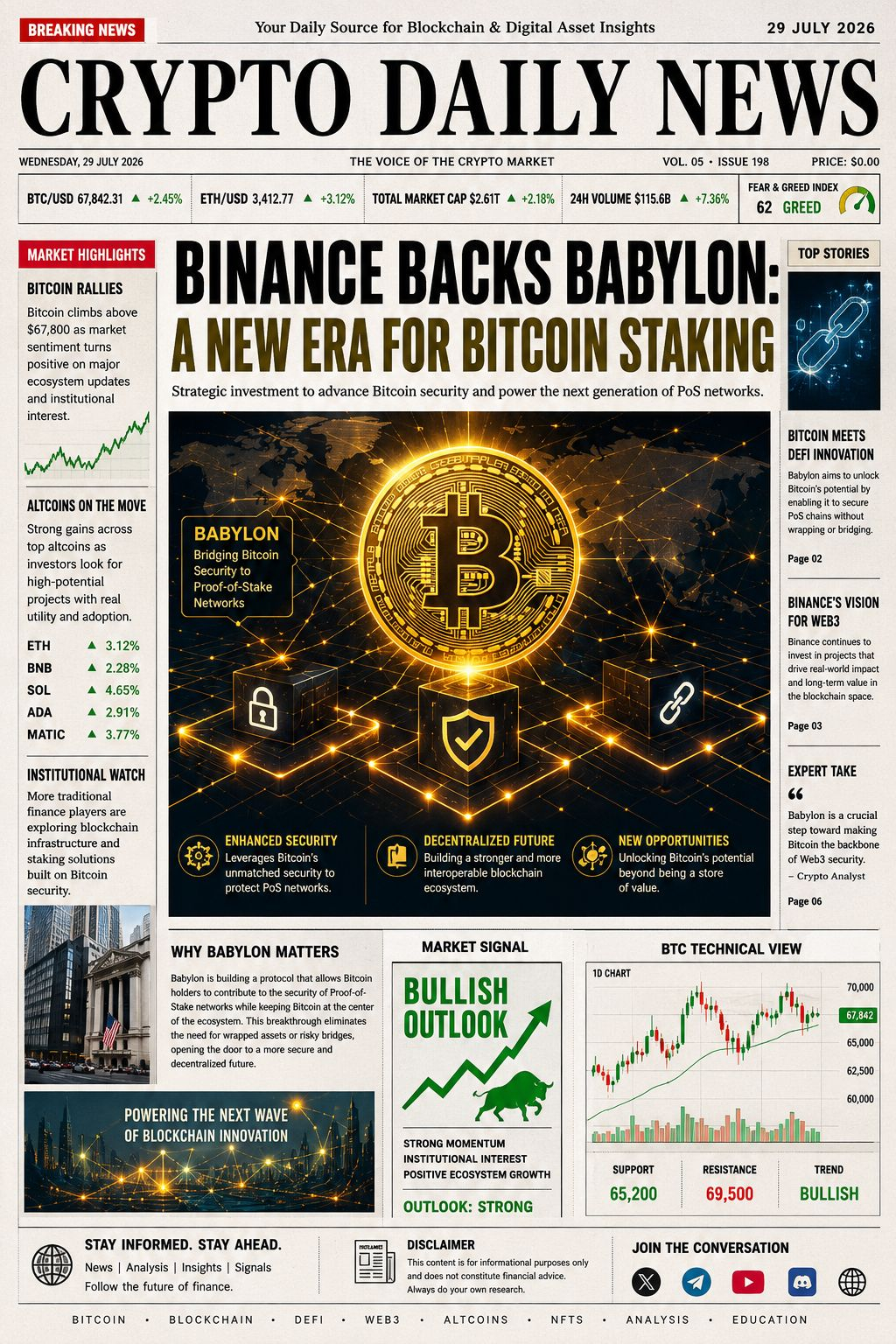
Binance’s Backing of Babylon Signals a New Chapter for Bitcoin Utility
For years, Bitcoin has been viewed primarily as a store of value. But the blockchain industry is now exploring ways to unlock more practical use cases without compromising Bitcoin’s security. One project attracting significant attention is Babylon, and Binance’s support has added even more confidence to its long-term vision.
Babylon is developing a protocol that allows Bitcoin holders to contribute to the security of Proof-of-Stake (PoS) networks while keeping Bitcoin at the center of the ecosystem. Instead of relying on wrapped assets or complex bridge solutions, the project focuses on making Bitcoin more useful in a secure and decentralized way.
Binance’s investment reflects growing interest in technologies that expand Bitcoin’s role beyond simple transfers and long-term holding. As blockchain adoption increases, projects that strengthen security and improve interoperability are becoming increasingly important across the crypto industry.
What makes Babylon stand out is its ambition to combine Bitcoin’s trusted security with the flexibility of modern blockchain networks. If successful, this approach could open new opportunities for both developers and Bitcoin holders while supporting a stronger decentralized ecosystem.
Although the future of any blockchain project depends on execution, community support, and market conditions, Babylon has already established itself as one of the most closely watched innovations in the Bitcoin ecosystem.
As always, investors should conduct their own research before making financial decisions. Technology may create exciting opportunities, but every investment carries risk. Staying informed and understanding the fundamentals remains the smartest strategy for long-term success.
#Binance #Babylon
#baby $BABY
Binance’s Backing of Babylon Signals a New Chapter for Bitcoin Utility
For years, Bitcoin has been viewed primarily as a store of value. But the blockchain industry is now exploring ways to unlock more practical use cases without compromising Bitcoin’s security. One project attracting significant attention is Babylon, and Binance’s support has added even more confidence to its long-term vision.
Babylon is developing a protocol that allows Bitcoin holders to contribute to the security of Proof-of-Stake (PoS) networks while keeping Bitcoin at the center of the ecosystem. Instead of relying on wrapped assets or complex bridge solutions, the project focuses on making Bitcoin more useful in a secure and decentralized way.
Binance’s investment reflects growing interest in technologies that expand Bitcoin’s role beyond simple transfers and long-term holding. As blockchain adoption increases, projects that strengthen security and improve interoperability are becoming increasingly important across the crypto industry.
What makes Babylon stand out is its ambition to combine Bitcoin’s trusted security with the flexibility of modern blockchain networks. If successful, this approach could open new opportunities for both developers and Bitcoin holders while supporting a stronger decentralized ecosystem.
Although the future of any blockchain project depends on execution, community support, and market conditions, Babylon has already established itself as one of the most closely watched innovations in the Bitcoin ecosystem.
As always, investors should conduct their own research before making financial decisions. Technology may create exciting opportunities, but every investment carries risk. Staying informed and understanding the fundamentals remains the smartest strategy for long-term success.
#Binance #Babylon
Binance’s Backing of Babylon Signals a New Chapter for Bitcoin Utility
For years, Bitcoin has been viewed primarily as a store of value. But the blockchain industry is now exploring ways to unlock more practical use cases without compromising Bitcoin’s security. One project attracting significant attention is Babylon, and Binance’s support has added even more confidence to its long-term vision.
Babylon is developing a protocol that allows Bitcoin holders to contribute to the security of Proof-of-Stake (PoS) networks while keeping Bitcoin at the center of the ecosystem. Instead of relying on wrapped assets or complex bridge solutions, the project focuses on making Bitcoin more useful in a secure and decentralized way.
Binance’s investment reflects growing interest in technologies that expand Bitcoin’s role beyond simple transfers and long-term holding. As blockchain adoption increases, projects that strengthen security and improve interoperability are becoming increasingly important across the crypto industry.
What makes Babylon stand out is its ambition to combine Bitcoin’s trusted security with the flexibility of modern blockchain networks. If successful, this approach could open new opportunities for both developers and Bitcoin holders while supporting a stronger decentralized ecosystem.
Although the future of any blockchain project depends on execution, community support, and market conditions, Babylon has already established itself as one of the most closely watched innovations in the Bitcoin ecosystem.
As always, investors should conduct their own research before making financial decisions. Technology may create exciting opportunities, but every investment carries risk. Staying informed and understanding the fundamentals remains the smartest strategy for long-term success.
#Binance #Babylon
4
12
194

#Babylon Trustless Bitcoin Vaults (TBV) offer an innovative solution for Bitcoin holders by enhancing both security and self-custody. @babylonlabs_io is turning this vision into reality with technology designed to protect BTC without relying on centralized control. As the ecosystem grows, $BABY is becoming an important part of its future. #baby
#Babylon Trustless Bitcoin Vaults (TBV) offer an innovative solution for Bitcoin holders by enhancing both security and self-custody. @BabylonLabs_io is turning this vision into reality with technology designed to protect BTC without relying on centralized control. As the ecosystem grows, $BABY is becoming an important part of its future. #baby
89

·
--
Проверено
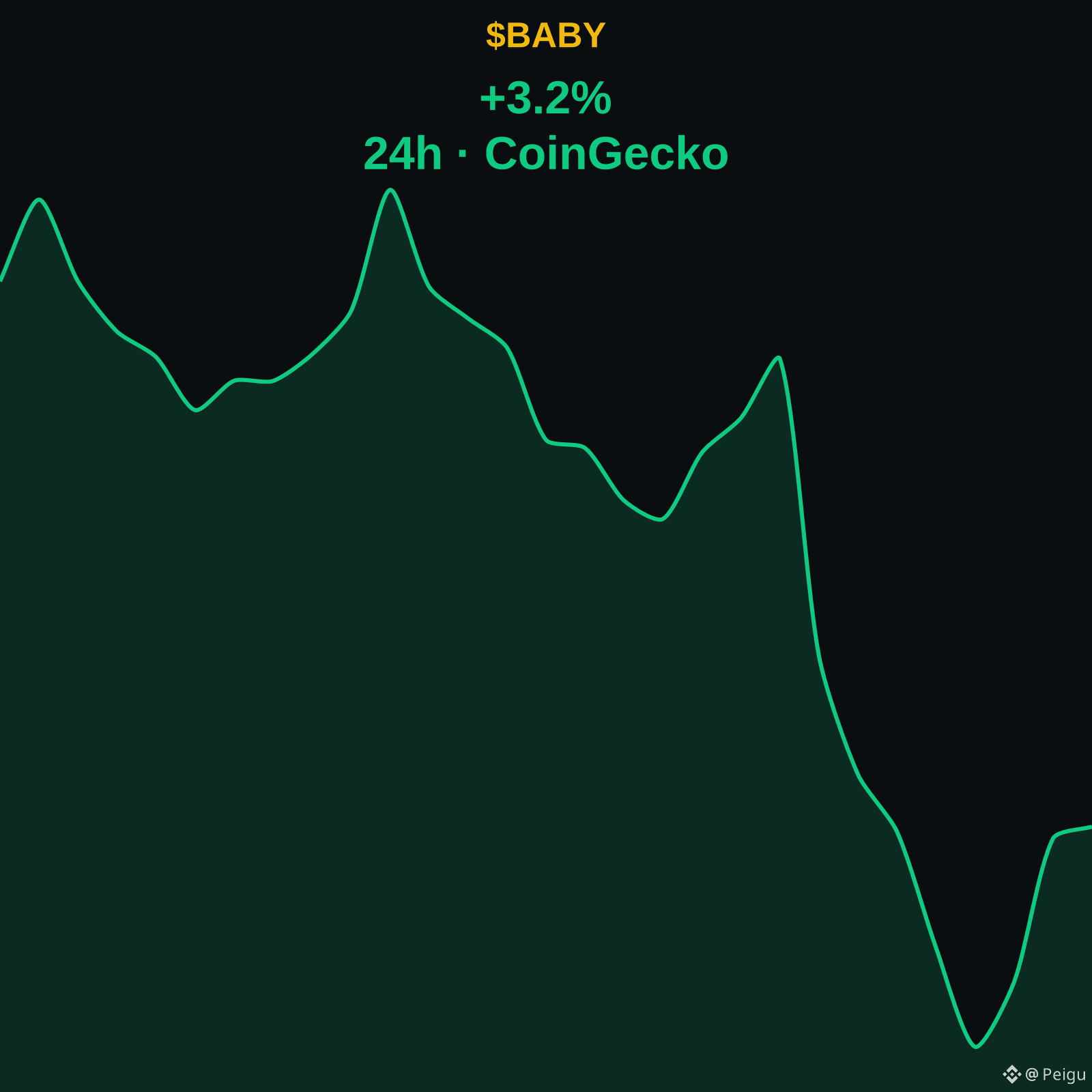
$BABY had a quiet 2.5% green day near $0.012 and yeah my feed is all over that candle.
I've been looking at Trustless Bitcoin Vaults from @BabylonLabs_io.
TBV is the part that changes how this works. You put BTC in the vault and keep the keys yourself. No custodian in the middle. $BABY sits under that design for me.
#baby #Babylon #TBV
$BABY had a quiet 2.5% green day near $0.012 and yeah my feed is all over that candle.
I've been looking at Trustless Bitcoin Vaults from @BabylonLabs_io.
TBV is the part that changes how this works. You put BTC in the vault and keep the keys yourself. No custodian in the middle. $BABY sits under that design for me.
#baby #Babylon #TBV
I've been looking at Trustless Bitcoin Vaults from @BabylonLabs_io.
TBV is the part that changes how this works. You put BTC in the vault and keep the keys yourself. No custodian in the middle. $BABY sits under that design for me.
#baby #Babylon #TBV
5
1
98

·
--
Bitcoin’s future may be about more than simply holding BTC.
What I find interesting about @BabylonLabs_io is its vision of turning Bitcoin from a passive asset into a more useful part of the decentralized economy.
Trustless Bitcoin staking could unlock new opportunities for BTC holders while extending Bitcoin’s security to a broader ecosystem. But in my view, long-term success will depend on more than technology alone.
Security, sustainable rewards, real utility, and user trust will ultimately determine whether this vision can achieve meaningful adoption.
If @babylonlabs_io can balance these elements effectively, Bitcoin’s role in decentralized finance and Web3 could enter a new chapter.
My question is: Will Bitcoin remain primarily “Digital Gold,” or can protocols like @babylonlabs_io help turn BTC into a foundational security layer for the decentralized economy?
$BABY #Babylon
Bitcoin’s future may be about more than simply holding BTC.
What I find interesting about @BabylonLabs_io is its vision of turning Bitcoin from a passive asset into a more useful part of the decentralized economy.
Trustless Bitcoin staking could unlock new opportunities for BTC holders while extending Bitcoin’s security to a broader ecosystem. But in my view, long-term success will depend on more than technology alone.
Security, sustainable rewards, real utility, and user trust will ultimately determine whether this vision can achieve meaningful adoption.
If @BabylonLabs_io can balance these elements effectively, Bitcoin’s role in decentralized finance and Web3 could enter a new chapter.
My question is: Will Bitcoin remain primarily “Digital Gold,” or can protocols like @BabylonLabs_io help turn BTC into a foundational security layer for the decentralized economy?
$BABY #Babylon
What I find interesting about @BabylonLabs_io is its vision of turning Bitcoin from a passive asset into a more useful part of the decentralized economy.
Trustless Bitcoin staking could unlock new opportunities for BTC holders while extending Bitcoin’s security to a broader ecosystem. But in my view, long-term success will depend on more than technology alone.
Security, sustainable rewards, real utility, and user trust will ultimately determine whether this vision can achieve meaningful adoption.
If @BabylonLabs_io can balance these elements effectively, Bitcoin’s role in decentralized finance and Web3 could enter a new chapter.
My question is: Will Bitcoin remain primarily “Digital Gold,” or can protocols like @BabylonLabs_io help turn BTC into a foundational security layer for the decentralized economy?
$BABY #Babylon
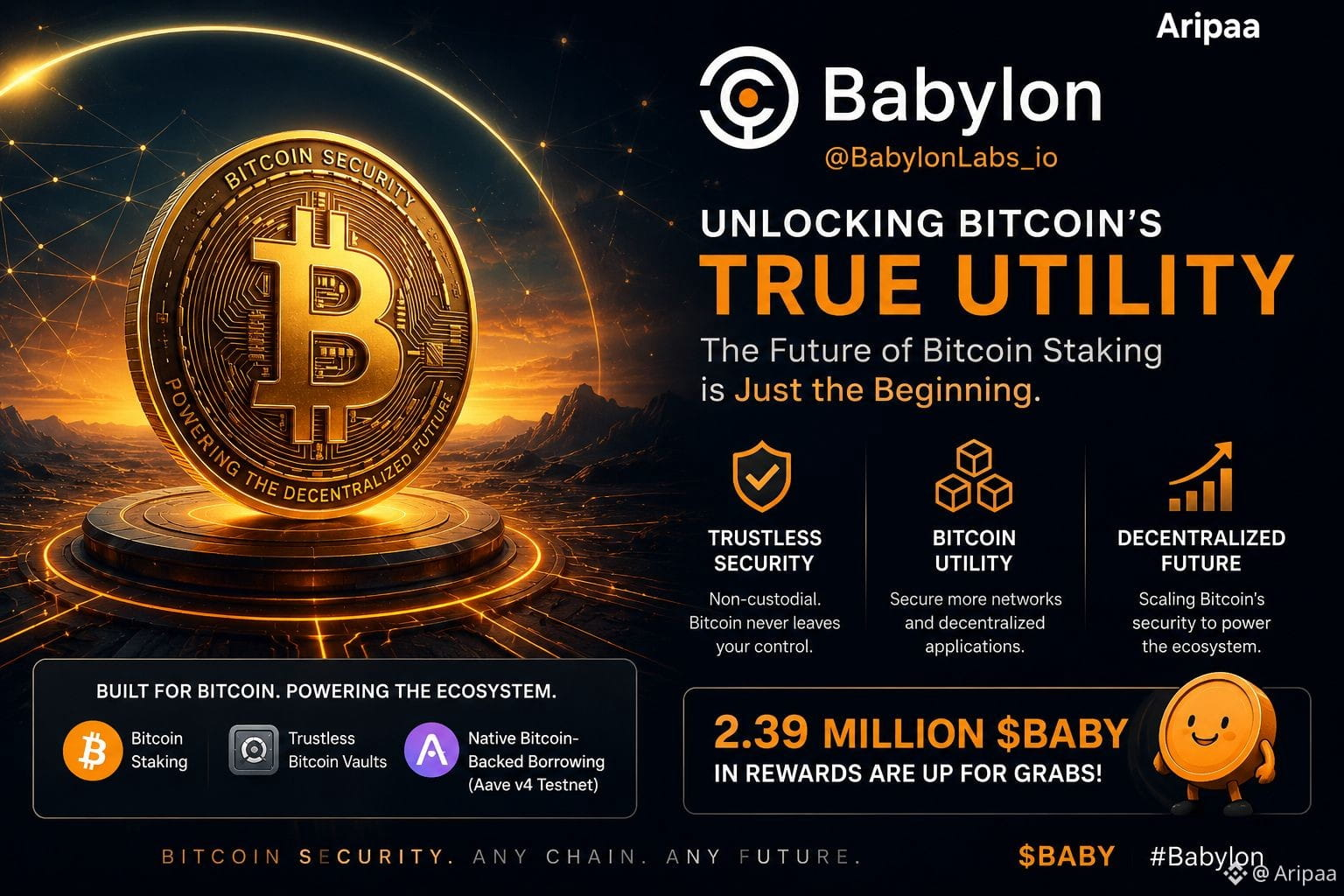
2
71
#Babylon Bitcoin deserves security without sacrificing self-custody. Babylon Trustless Bitcoin Vaults (TBV) introduce a trust-minimized way to secure BTC while expanding its utility in the decentralized ecosystem. I'm excited to see how this innovation strengthens Bitcoin's future. Thanks @babylonlabs_io for pushing BTC innovation forward! $BABY #baby
#Babylon Bitcoin deserves security without sacrificing self-custody. Babylon Trustless Bitcoin Vaults (TBV) introduce a trust-minimized way to secure BTC while expanding its utility in the decentralized ecosystem. I'm excited to see how this innovation strengthens Bitcoin's future. Thanks @BabylonLabs_io for pushing BTC innovation forward! $BABY #baby
98

·
--
Рост
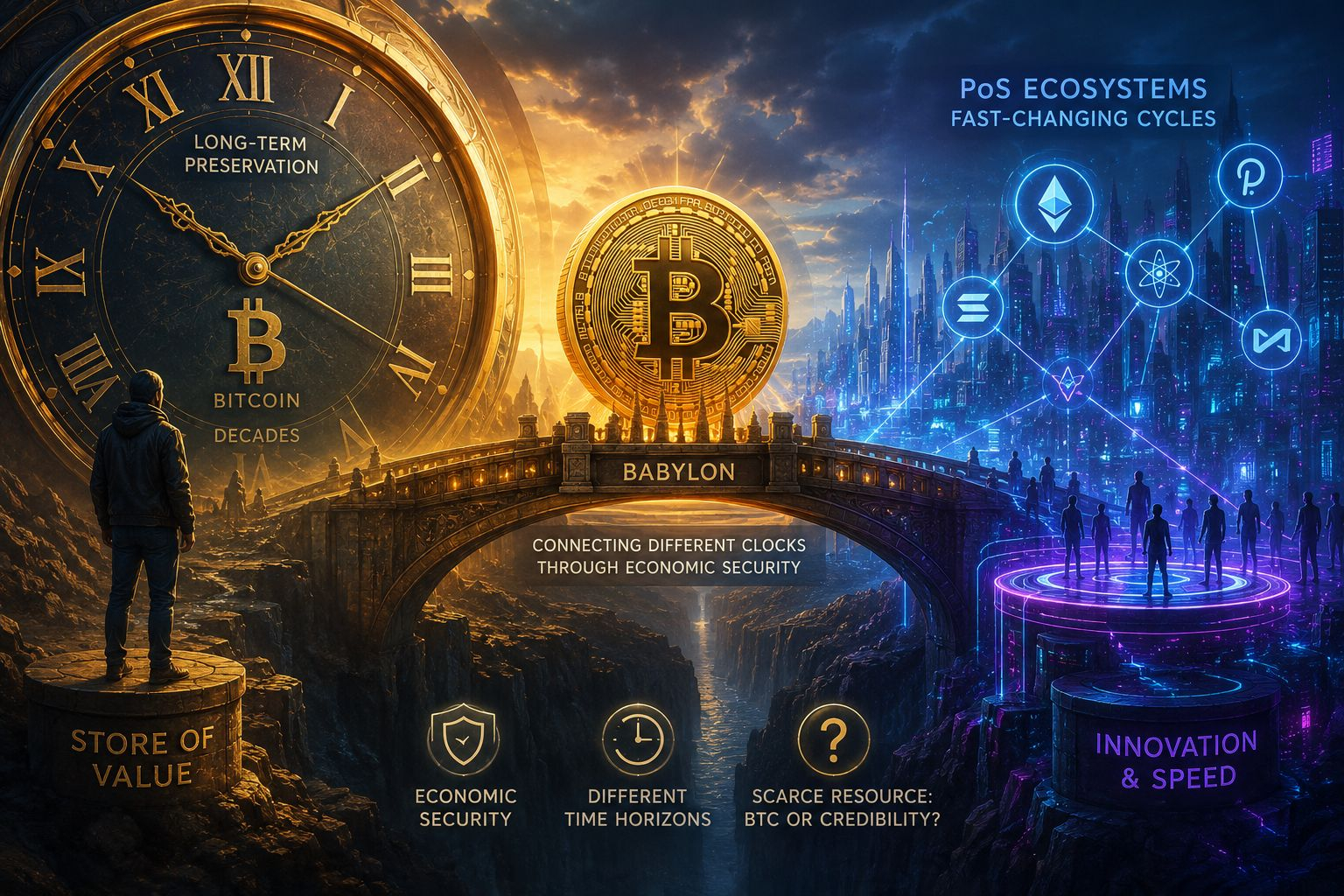
I keep wondering whether the biggest shift Babylon introduces has less to do with staking and more to do with time.
Bitcoin has always been valued for preserving wealth across decades, while most PoS ecosystems evolve on much shorter cycles. Babylon quietly connects those different clocks. That sounds elegant, but it also creates a new coordination challenge. When long-term Bitcoin holders become part of the security model for rapidly changing networks, expectations may not always align.
One angle I rarely see discussed is governance through absence. BTC stakers don't necessarily want to influence the chains they secure, yet their economic weight could still shape ecosystem behavior. Security and governance may become increasingly separated, and that raises interesting questions about accountability when things go wrong.
The technology is impressive, but infrastructure often changes incentives before it changes user behavior. Markets tend to notice the yield first and the structural consequences much later.
If Bitcoin becomes an external source of trust for multiple ecosystems, what eventually becomes the scarcest resource: BTC itself, or credible security? #Babylon
@babylonlabs_io $BABY #BaBY
{spot}(BABYUSDT)
I keep wondering whether the biggest shift Babylon introduces has less to do with staking and more to do with time.
Bitcoin has always been valued for preserving wealth across decades, while most PoS ecosystems evolve on much shorter cycles. Babylon quietly connects those different clocks. That sounds elegant, but it also creates a new coordination challenge. When long-term Bitcoin holders become part of the security model for rapidly changing networks, expectations may not always align.
One angle I rarely see discussed is governance through absence. BTC stakers don't necessarily want to influence the chains they secure, yet their economic weight could still shape ecosystem behavior. Security and governance may become increasingly separated, and that raises interesting questions about accountability when things go wrong.
The technology is impressive, but infrastructure often changes incentives before it changes user behavior. Markets tend to notice the yield first and the structural consequences much later.
If Bitcoin becomes an external source of trust for multiple ecosystems, what eventually becomes the scarcest resource: BTC itself, or credible security? #Babylon
@BabylonLabs_io $BABY #BaBY
Bitcoin has always been valued for preserving wealth across decades, while most PoS ecosystems evolve on much shorter cycles. Babylon quietly connects those different clocks. That sounds elegant, but it also creates a new coordination challenge. When long-term Bitcoin holders become part of the security model for rapidly changing networks, expectations may not always align.
One angle I rarely see discussed is governance through absence. BTC stakers don't necessarily want to influence the chains they secure, yet their economic weight could still shape ecosystem behavior. Security and governance may become increasingly separated, and that raises interesting questions about accountability when things go wrong.
The technology is impressive, but infrastructure often changes incentives before it changes user behavior. Markets tend to notice the yield first and the structural consequences much later.
If Bitcoin becomes an external source of trust for multiple ecosystems, what eventually becomes the scarcest resource: BTC itself, or credible security? #Babylon
@BabylonLabs_io $BABY #BaBY
46
43
228
Войдите, чтобы посмотреть больше материала
Присоединяйтесь к пользователям криптовалют по всему миру на Binance Square
⚡️ Получайте новейшую и полезную информацию о криптоактивах.
💬 Нам доверяет крупнейшая в мире криптобиржа.
👍 Получите достоверные аналитические данные от верифицированных создателей контента.
Эл. почта/номер телефона
В тренде
1
#BinancekzWin
Просмотров: 32,414
93 обсуждают
2
#BinancePick
Просмотров: 2.7M
143,489 обсуждают
3
#EarningsSeason
Просмотров: 5M
24,628 обсуждают
4
#SouthKoreaReportedlyWeighsFourthCryptoTaxDelay
Просмотров: 1,176
94 обсуждают
5
#FranklinTempletonFilesForTwoDividendToBitcoinETFs
Просмотров: 6,154
220 обсуждают
6
#StrategyMSTRSurpassesNasdaqInMarketCap
Просмотров: 5,573
187 обсуждают
7
#CanadaProposesStablecoinRedemptionWithin3BusinessDays
Просмотров: 181
15 обсуждают
8
#ElectrumWalletBugLetRogueServersStealFunds
Просмотров: 11,820
309 обсуждают
9
#ArgentineCourtDismissesLIBRACaseAgainstMilei
Просмотров: 21,891
376 обсуждают
10
#SKHynixReportedlyPlansSpecialDividendFromKioxiaStakeSale
Просмотров: 3,417
48 обсуждают