
#cryptohack
cryptohack
Просмотров: 623,556
832 обсуждают
Популярные
Новые

·
--
Initia Hacked Again: $3.27M Stolen, $INIT Crashes 52%
Initia halted its L1 on Nov 10 after an attacker used a compromised cloud key to forge withdrawals from five rollups, draining ~$3.27M — its second exploit in three weeks. $2.16M remains frozen on the paused chain, with no restart date yet.
$INIT doubled to ~$0.30 during the halt, then crashed back to ~$0.136, down 52% in 24h.
Not financial advice.
$INIT #Initia #CryptoHack
4
5.3k


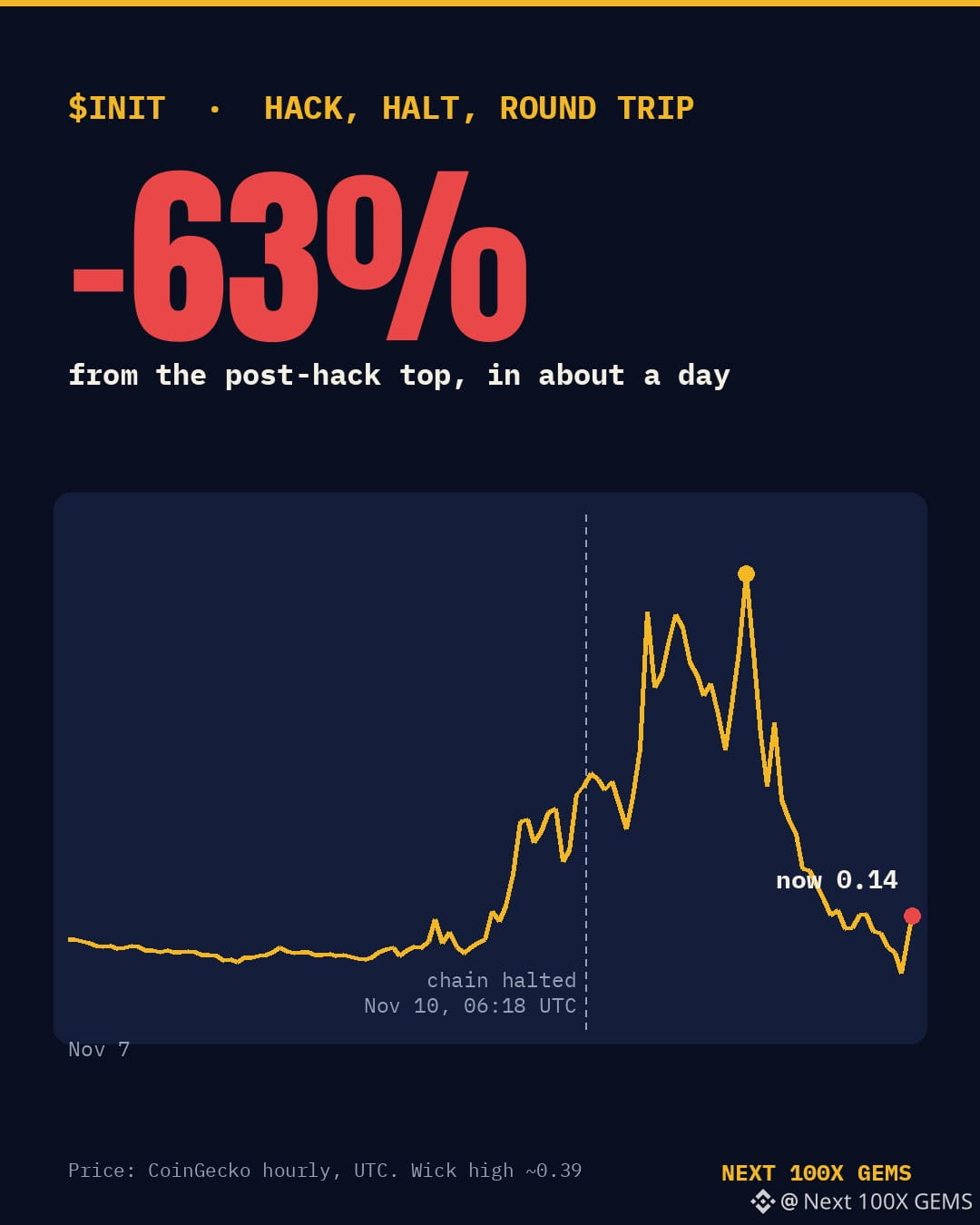
$INIT nearly tripled after its own chain got hacked. Then it gave it all back.
On Nov 10, Initia halted its layer 1 after an attacker used a compromised cloud key to forge withdrawals and move about 3.27 million dollars. No INIT was taken.
The token went from about 0.13 on Nov 9 to a 0.39 wick early Nov 11. It now trades near 0.14, about 63% under that wick.
Our count: around 1.3 billion dollars of INIT futures traded in 24 hours. That is more than 40 times the token's whole market cap of roughly 30 million.
Second halt in 18 days. The leverage left faster than the attacker did.
$INIT
#Initia #CryptoHack
NFA. DYOR.
1
4.1k

·
--
Статья
What Crypto Investors Should Learn From Recent Exchange HacksThe cryptocurrency industry has made enormous progress over the years, but recent security incidents have reminded us of one important reality: No cryptocurrency exchange is completely immune to hacking.
From Binance and Bybit to Bitget, WazirX, and DMM Bitcoin, several major platforms have experienced serious security breaches involving hundreds of millions or even billions of dollars.
These incidents raise important questions about exchange security, user protection, and the risks of keeping digital assets on centralized platforms.
More importantly, they teach us that protecting cryptocurrency is not just about securing private keys. It also involves protecting employees, internal systems, transaction approvals, and the infrastructure behind exchanges.
Let’s look at what happened and what the entire crypto community should learn from these incidents.
1. Recent Exchange Hacks: What Happened?
Binance :- October 2026
On October 29, Binance experienced a major security incident involving approximately $6.34 billion in affected digital assets.
According to Binance’s initial investigation, attackers compromised internal wallet transaction-signing infrastructure and used unauthorized access to initiate transfers across multiple blockchain networks.
The incident involved sophisticated attacks targeting internal systems and authorization processes.
Binance stated that it would absorb the financial impact rather than pass the losses to users. Its November 3 update reported that 98% of affected token assets had been replenished, while approximately $2.85 billion in assets had been frozen or intercepted.
This incident demonstrated that even exchanges with extensive security resources can face serious infrastructure vulnerabilities.
Bybit :- February 2025
Bybit suffered one of the largest cryptocurrency thefts in history, losing approximately $1.5 billion.
The attackers manipulated the transaction interface used by wallet signers, making malicious transactions appear legitimate.
This was particularly concerning because the targeted wallet was a cold wallet, which many users consider highly secure.
The FBI attributed the attack to North Korea’s TraderTraitor hacking operation.
The biggest lesson was that cold storage and multiple transaction approvals are not enough if the signing process itself can be manipulated.
Bitget :- September 2026
Bitget also experienced a significant security breach involving approximately $387.5 million in digital assets.
According to the exchange, attackers compromised backend infrastructure connected to its wallet operations and manipulated transaction information during the authorization process.
Bitget stated that its cold wallets remained unaffected and that its protection fund would cover the losses.
This incident highlighted how vulnerabilities in internal systems can put exchange assets at risk even without directly stealing private keys.
WazirX and DMM Bitcoin :- 2024
These incidents also deserve attention.
WazirX suffered a security breach involving more than $230 million from a multisignature wallet in July 2024.
DMM Bitcoin lost approximately $305 million in Bitcoin following a security incident in May 2024.
Together, these cases demonstrate that exchange security has been a major challenge for the industry for years.
2. What Do These Attacks Have in Common?
Although the attacks involved different techniques, several important patterns emerge.
First, hackers are targeting people, not just technology.
Social engineering, compromised employee devices, fake recruitment opportunities, and malicious software can provide attackers with access to systems that would otherwise be difficult to penetrate.
Second, private keys are not the only security concern.
Even if private keys remain protected, compromised transaction interfaces, backend services, or authorization systems can create opportunities for unauthorized transfers.
Third, sophisticated attacks are becoming harder to detect.
Attackers may spend months preparing an operation, studying internal systems, and identifying weaknesses before moving any funds.
Finally, recovering stolen cryptocurrency is extremely difficult.
Blockchain transactions are generally irreversible. Although exchanges, blockchain investigators, and stablecoin issuers can sometimes freeze or trace assets, recovering everything is not guaranteed.
3. What Should Cryptocurrency Exchanges Improve?
These incidents should encourage every exchange to strengthen its security infrastructure.
Here are some important improvements the industry needs:
Stronger transaction verification: Every large transaction should undergo independent verification before approval.
Better employee security: Hardware security keys, device monitoring, strict access permissions, and cybersecurity training should be standard.
Withdrawal protection: Unusual or unusually large transfers should automatically trigger additional security checks.Independent security audits: Exchanges should regularly test their wallets, backend systems, internal APIs, and transaction-signing infrastructure.Better monitoring: Suspicious login activity, unexpected permission changes, and abnormal withdrawal patterns should be detected immediately.
Transparent incident reporting: Exchanges should communicate honestly about security failures, recovery efforts, and customer protection.
Security should never be treated as a one-time achievement. It requires continuous investment and improvement.
4. What Should Ordinary Crypto Investors Learn?
This is probably the most important part for everyday users.
We cannot control how an exchange manages its internal infrastructure, but we can take steps to reduce our own exposure.
Don’t keep all your assets on one exchange.
Centralized exchanges are useful for trading, but keeping your entire portfolio on a single platform creates concentration risk.
Consider keeping only the funds you need for active trading on exchanges. For long-term holdings, learn about self-custody and reputable hardware wallets.
Understand hot wallets and cold wallets.
Hot wallets are connected to online infrastructure and are generally used for faster transactions.
Cold wallets keep private keys offline and are generally better suited for long-term storage.
Both have advantages and limitations. Self-custody also means you are responsible for protecting your recovery phrase and private keys.
Enable stronger account protection.
Use two-factor authentication, passkeys or hardware security keys where supported, withdrawal address whitelisting, anti-phishing codes, and unique passwords.
Never share your seed phrase.
No legitimate exchange employee, support agent, or project representative needs your wallet recovery phrase.
Anyone asking for it should be treated as a potential scammer.
Be careful with suspicious links and downloads.
Fake job opportunities, malicious applications, browser extensions, and phishing websites can compromise your devices and accounts.
The Binance incident is a reminder that even seemingly legitimate professional opportunities can be used as attack vectors.
Understand Proof of Reserves.
Proof of Reserves can help users verify certain exchange-held assets, depending on the methodology.
However, it does not guarantee that an exchange cannot be hacked or that its internal security systems are flawless.
Financial transparency and cybersecurity are two different things.
5. Does This Mean Centralized Exchanges Are Unsafe?
Not necessarily.
Centralized exchanges remain an essential part of the cryptocurrency ecosystem. They provide liquidity, trading infrastructure, fiat deposits and withdrawals, derivatives markets, and access to thousands of digital assets.
However, users should understand that a large reputation does not automatically mean zero risk.
Even exchanges with substantial financial reserves can experience security failures.
At the same time, self-custody is not completely risk-free. Losing a recovery phrase or signing a malicious transaction can also result in permanent losses.
The goal should not be to blindly trust exchanges or completely avoid them.
It should be to understand the risks and manage them intelligently.
Conclusion: Protecting Capital Matters More Than Ever
The Binance, Bybit, Bitget, WazirX, and DMM Bitcoin incidents should change how we think about cryptocurrency security.
For years, many investors have focused primarily on price movements, trading volume, market capitalization, leverage, and potential returns.
But the security of the platform holding those assets deserves just as much attention.
A profitable trade means nothing if the infrastructure protecting your funds fails.
The biggest lessons are simple:
Never assume that a major exchange is impossible to hack.
Avoid keeping all your investments in one place.
Learn about self-custody and wallet security.
Protect your devices, passwords, and recovery phrases.
Demand transparency and accountability from exchanges.Remember that protecting capital is just as important as growing it.
Crypto was built around financial independence, but financial independence also requires personal responsibility.
The future of this industry will not depend only on faster blockchains, better trading platforms, or wider adoption. It will also depend on whether users can trust the systems protecting their money.
Because in crypto, protecting your capital is just as important as making profits.
#CryptoHack #Binance $AGT
$BNB $TSLA
{future}(BNBUSDT)
What Crypto Investors Should Learn From Recent Exchange Hacks
The cryptocurrency industry has made enormous progress over the years, but recent security incidents have reminded us of one important reality: No cryptocurrency exchange is completely immune to hacking.
From Binance and Bybit to Bitget, WazirX, and DMM Bitcoin, several major platforms have experienced serious security breaches involving hundreds of millions or even billions of dollars.
These incidents raise important questions about exchange security, user protection, and the risks of keeping digital assets on centralized platforms.
More importantly, they teach us that protecting cryptocurrency is not just about securing private keys. It also involves protecting employees, internal systems, transaction approvals, and the infrastructure behind exchanges.
Let’s look at what happened and what the entire crypto community should learn from these incidents.
1. Recent Exchange Hacks: What Happened?
Binance :- October 2026
On October 29, Binance experienced a major security incident involving approximately $6.34 billion in affected digital assets.
According to Binance’s initial investigation, attackers compromised internal wallet transaction-signing infrastructure and used unauthorized access to initiate transfers across multiple blockchain networks.
The incident involved sophisticated attacks targeting internal systems and authorization processes.
Binance stated that it would absorb the financial impact rather than pass the losses to users. Its November 3 update reported that 98% of affected token assets had been replenished, while approximately $2.85 billion in assets had been frozen or intercepted.
This incident demonstrated that even exchanges with extensive security resources can face serious infrastructure vulnerabilities.
Bybit :- February 2025
Bybit suffered one of the largest cryptocurrency thefts in history, losing approximately $1.5 billion.
The attackers manipulated the transaction interface used by wallet signers, making malicious transactions appear legitimate.
This was particularly concerning because the targeted wallet was a cold wallet, which many users consider highly secure.
The FBI attributed the attack to North Korea’s TraderTraitor hacking operation.
The biggest lesson was that cold storage and multiple transaction approvals are not enough if the signing process itself can be manipulated.
Bitget :- September 2026
Bitget also experienced a significant security breach involving approximately $387.5 million in digital assets.
According to the exchange, attackers compromised backend infrastructure connected to its wallet operations and manipulated transaction information during the authorization process.
Bitget stated that its cold wallets remained unaffected and that its protection fund would cover the losses.
This incident highlighted how vulnerabilities in internal systems can put exchange assets at risk even without directly stealing private keys.
WazirX and DMM Bitcoin :- 2024
These incidents also deserve attention.
WazirX suffered a security breach involving more than $230 million from a multisignature wallet in July 2024.
DMM Bitcoin lost approximately $305 million in Bitcoin following a security incident in May 2024.
Together, these cases demonstrate that exchange security has been a major challenge for the industry for years.
2. What Do These Attacks Have in Common?
Although the attacks involved different techniques, several important patterns emerge.
First, hackers are targeting people, not just technology.
Social engineering, compromised employee devices, fake recruitment opportunities, and malicious software can provide attackers with access to systems that would otherwise be difficult to penetrate.
Second, private keys are not the only security concern.
Even if private keys remain protected, compromised transaction interfaces, backend services, or authorization systems can create opportunities for unauthorized transfers.
Third, sophisticated attacks are becoming harder to detect.
Attackers may spend months preparing an operation, studying internal systems, and identifying weaknesses before moving any funds.
Finally, recovering stolen cryptocurrency is extremely difficult.
Blockchain transactions are generally irreversible. Although exchanges, blockchain investigators, and stablecoin issuers can sometimes freeze or trace assets, recovering everything is not guaranteed.
3. What Should Cryptocurrency Exchanges Improve?
These incidents should encourage every exchange to strengthen its security infrastructure.
Here are some important improvements the industry needs:
Stronger transaction verification: Every large transaction should undergo independent verification before approval.
Better employee security: Hardware security keys, device monitoring, strict access permissions, and cybersecurity training should be standard.
Withdrawal protection: Unusual or unusually large transfers should automatically trigger additional security checks.Independent security audits: Exchanges should regularly test their wallets, backend systems, internal APIs, and transaction-signing infrastructure.Better monitoring: Suspicious login activity, unexpected permission changes, and abnormal withdrawal patterns should be detected immediately.
Transparent incident reporting: Exchanges should communicate honestly about security failures, recovery efforts, and customer protection.
Security should never be treated as a one-time achievement. It requires continuous investment and improvement.
4. What Should Ordinary Crypto Investors Learn?
This is probably the most important part for everyday users.
We cannot control how an exchange manages its internal infrastructure, but we can take steps to reduce our own exposure.
Don’t keep all your assets on one exchange.
Centralized exchanges are useful for trading, but keeping your entire portfolio on a single platform creates concentration risk.
Consider keeping only the funds you need for active trading on exchanges. For long-term holdings, learn about self-custody and reputable hardware wallets.
Understand hot wallets and cold wallets.
Hot wallets are connected to online infrastructure and are generally used for faster transactions.
Cold wallets keep private keys offline and are generally better suited for long-term storage.
Both have advantages and limitations. Self-custody also means you are responsible for protecting your recovery phrase and private keys.
Enable stronger account protection.
Use two-factor authentication, passkeys or hardware security keys where supported, withdrawal address whitelisting, anti-phishing codes, and unique passwords.
Never share your seed phrase.
No legitimate exchange employee, support agent, or project representative needs your wallet recovery phrase.
Anyone asking for it should be treated as a potential scammer.
Be careful with suspicious links and downloads.
Fake job opportunities, malicious applications, browser extensions, and phishing websites can compromise your devices and accounts.
The Binance incident is a reminder that even seemingly legitimate professional opportunities can be used as attack vectors.
Understand Proof of Reserves.
Proof of Reserves can help users verify certain exchange-held assets, depending on the methodology.
However, it does not guarantee that an exchange cannot be hacked or that its internal security systems are flawless.
Financial transparency and cybersecurity are two different things.
5. Does This Mean Centralized Exchanges Are Unsafe?
Not necessarily.
Centralized exchanges remain an essential part of the cryptocurrency ecosystem. They provide liquidity, trading infrastructure, fiat deposits and withdrawals, derivatives markets, and access to thousands of digital assets.
However, users should understand that a large reputation does not automatically mean zero risk.
Even exchanges with substantial financial reserves can experience security failures.
At the same time, self-custody is not completely risk-free. Losing a recovery phrase or signing a malicious transaction can also result in permanent losses.
The goal should not be to blindly trust exchanges or completely avoid them.
It should be to understand the risks and manage them intelligently.
Conclusion: Protecting Capital Matters More Than Ever
The Binance, Bybit, Bitget, WazirX, and DMM Bitcoin incidents should change how we think about cryptocurrency security.
For years, many investors have focused primarily on price movements, trading volume, market capitalization, leverage, and potential returns.
But the security of the platform holding those assets deserves just as much attention.
A profitable trade means nothing if the infrastructure protecting your funds fails.
The biggest lessons are simple:
Never assume that a major exchange is impossible to hack.
Avoid keeping all your investments in one place.
Learn about self-custody and wallet security.
Protect your devices, passwords, and recovery phrases.
Demand transparency and accountability from exchanges.Remember that protecting capital is just as important as growing it.
Crypto was built around financial independence, but financial independence also requires personal responsibility.
The future of this industry will not depend only on faster blockchains, better trading platforms, or wider adoption. It will also depend on whether users can trust the systems protecting their money.
Because in crypto, protecting your capital is just as important as making profits.
#CryptoHack #Binance $AGT
$BNB $TSLA
52

UXLINK Exploit Triggers $148M Market Dump
A $148M selloff by the UXLINK hacker is impacting ETH, SOL, and XRP liquidity.
#CryptoHack #MarketVolatility
UXLINK Exploit Triggers $148M Market Dump
A $148M selloff by the UXLINK hacker is impacting ETH, SOL, and XRP liquidity.
#CryptoHack #MarketVolatility
A $148M selloff by the UXLINK hacker is impacting ETH, SOL, and XRP liquidity.
#CryptoHack #MarketVolatility
83

·
--
⚡ BREAKING NOW:
Asian crypto exchanges batten down the hatches as hacks surge: Asia Express
Asian crypto exchanges are scrambling to tighten security on fears of a wave of potentially AI-assisted hacks, even as regional governments embrace tokenization and stablecoins....
This is a significant development for $TIA $SCR. The market reaction will be worth watching closely.
Agree? Drop a ❤️. Disagree? Tell me why 👇
#CryptoHack #CryptoRally #AIxCrypto #CryptoNews #Binance
⚡ BREAKING NOW:
Asian crypto exchanges batten down the hatches as hacks surge: Asia Express
Asian crypto exchanges are scrambling to tighten security on fears of a wave of potentially AI-assisted hacks, even as regional governments embrace tokenization and stablecoins....
This is a significant development for $TIA $SCR . The market reaction will be worth watching closely.
Agree? Drop a ❤️. Disagree? Tell me why 👇
#CryptoHack #CryptoRally #AIxCrypto #CryptoNews #Binance
247

·
--
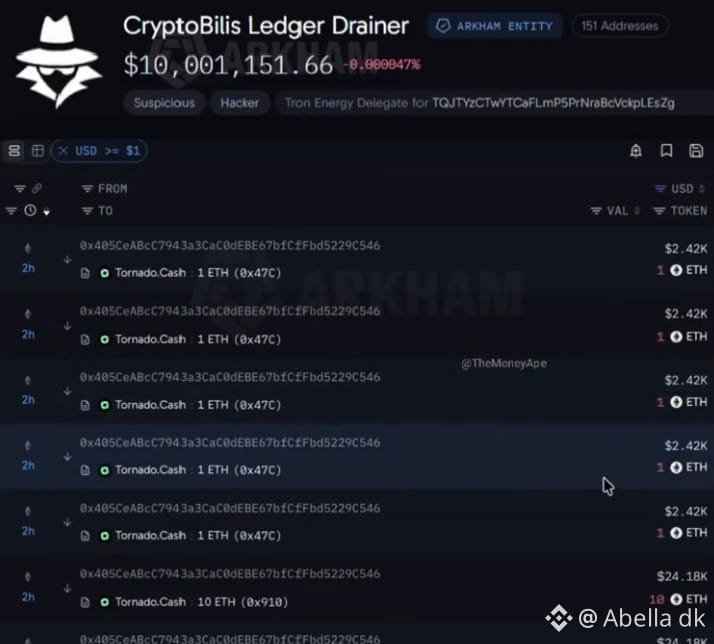
🔥 BINANCE HACKER NEXT? TORNADO CASH ENTERS THE PICTURE! 🚨
The CryptoBilis Ledger drainer has deposited another 885 $ETH worth $2.14 MILLION into Tornado Cash!
$APPB
Here is where things get interesting:
💰 Over $62 MILLION in stolen crypto has reportedly been sold.
🔒 Around $10 MILLION in $USDT remains frozen by Tether.
🌪️ The attacker continues moving stolen ETH through Tornado Cash, making transaction tracing more difficult.
But here's the BIG question:
Could the Binance hacker follow the same playbook?
If Binance's attacker starts moving stolen funds through Tornado Cash, investigators could face another complicated tracing challenge.
However, mixers don't guarantee complete anonymity. Blockchain investigators can still track transaction patterns and follow connected wallets.
🚨 The crypto security battle is far from over! $BTC
What do you think? Will the Binance hacker use Tornado Cash next?
#Binance #CryptoSecurity #Ethereum #TornadoCash #CryptoHack
Kashif Khan 009:
Crazy update! $2.14M in Tornado Cash again. This hacker is not stopping. Thanks for sharing this real news, following you for more updates!
6
4
238

·
--
🚨 HOW BINANCE LOST $6.34 BILLION - FULL STORY REVEALED
This is NOT a simple hack. It's a Hollywood movie plot.
*June 2026:* Hacker posts fake job ad
Binance dev downloads "AI tool" - it's malware
*Oct 20:* Malware spreads to 3 engineers
Steals wallet signing keys
*Oct 29, 2:00 PM:*
233M XRP stolen in 4 MINUTES
Then BTC, ETH, everything - $6.34B in 20 minutes
FBI confirms: North Korea's TraderTraitor group
*Binance response today:*
✅ $2.85B FROZEN with law enforcement
✅ 98% of funds REPLENISHED from own money
✅ 236 withdrawal pairs LIVE
✅ More than 100% set aside to cover losses
From biggest hack in history to 98% recovered in 5 days.
If this was a bank, it would be dead. Binance is buying back $6B with cash.
Bullish for $BNB $BTC ?
#Binance #bnb #CryptoHack
1
162

·
--
Падение
North Korea Denies Involvement in $6.3 Billion Binance Hack
North Korea has rejected allegations linking it to the massive $6.3 billion cryptocurrency theft involving Binance.
Kim Yo Jong, sister of North Korean leader Kim Jong Un, described the FBI's accusations as a US political provocation. Meanwhile, North Korean state media KCNA dismissed the claims as fabricated.
Key Details:
FBI Allegations: The FBI attributed the attack to North Korea's hacking group, TraderTraitor.
North Korea's Response: Kim Yo Jong denied the allegations and accused the US of making politically motivated claims.
Scale of the Attack: The reported incident involved approximately $6.36 billion in crypto assets across multiple blockchain networks.
Trump's Reaction: Donald Trump reportedly said that the US does not know whether North Korea was responsible, despite the FBI's public attribution.
North Korea continues to deny any involvement, while US authorities maintain their position that the attack was linked to TraderTraitor.
#Binance #northkorea #CryptoHack
$TRUMP

1
1
354

🚨 $6.3 BILLION BINANCE HACK: NORTH KOREA DENIES EVERYTHING!
The world's biggest crypto theft is now turning into an international dispute.
Kim Yo Jong, sister of North Korean leader Kim Jong Un, has rejected the FBI's accusation linking North Korea to the massive Binance hack.
Here's what happened:
🔴 FBI's accusation: US investigators attributed the October 29 theft of approximately $6.3 billion to North Korea-linked hacking group TraderTraitor.
🇰🇵 North Korea's response: Kim Yo Jong called the accusation a "grave political provocation" and rejected Washington's claims.
🇺🇸 Trump's reaction: Trump said the US was still looking into the matter and that it did not yet know whether North Korea was responsible.
🔍 New Binance findings: The exchange revealed that attackers used malicious software and fake job interviews to compromise employee devices before gaining access to its wallet infrastructure.
Meanwhile, Binance says it has replenished approximately 98% of the affected assets.
One thing is clear: this incident is much bigger than a crypto hack. It raises serious questions about exchange security, social engineering and international cybercrime.
But here's the real question:
Can the crypto industry prevent another attack of this scale?
What do you think? 👇
#Binance #NorthKorea #CryptoHack

2.2k

🇰🇵 LA HERMANA DE KIM JONG UN ROMPE EL SILENCIO: ¡COREA DEL NORTE NIEGA EL HACKEO DE BINANCE POR 6.300 MILLONES DE DÓLARES! Corea del Norte ha rechazado oficialmente las acusaciones que la vinculan con el masivo hackeo de criptomonedas de Binance, valorado en 6.300 millones de dólares. Kim Yo Jong, hermana del líder norcoreano Kim Jong Un, calificó las acusaciones del FBI de «provocación política» de Estados Unidos.
👉 Acusación del FBI: El FBI culpó oficialmente al grupo de hackers norcoreano TraderTraitor de robar más de 6.000 millones de dólares en criptomonedas de Binance.
👉 Respuesta de Corea del Norte: Kim Yo Jong rechazó las acusaciones, mientras que los medios estatales KCNA las describieron como inventadas.
👉 Robo masivo: El ataque denunciado habría involucrado aproximadamente 6.360 millones de dólares en criptoactivos a través de varias redes de cadena de bloques.
👉Respuesta de Trump: Según se informa, Donald Trump dijo: «No sabemos si fue Corea del Norte», a pesar de que el FBI atribuyó públicamente el ataque. Corea del Norte niega estar implicada, pero las autoridades estadounidenses siguen atribuyendo el ataque a TraderTraitor.
#Binance #NorthKorea #CryptoHack

2
8
9.3k

·
--
North Korea-linked hackers reportedly laundered $242M of stolen funds through Tron (The Block).
That sits on top of reports that hackers are swapping stolen $SOL for $BTC, while part of the loot has been frozen. On-chain tracing keeps getting faster, but so do the laundering routes.
Takeaway: chain analytics are now a real defense layer, not a side tool.
Do you think freezes by stablecoin issuers and exchanges are enough to deter these attacks, or does the industry need something stronger?
#Tron #CryptoHack #OnChain
North Korea-linked hackers reportedly laundered $242M of stolen funds through Tron (The Block).
That sits on top of reports that hackers are swapping stolen $SOL for $BTC , while part of the loot has been frozen. On-chain tracing keeps getting faster, but so do the laundering routes.
Takeaway: chain analytics are now a real defense layer, not a side tool.
Do you think freezes by stablecoin issuers and exchanges are enough to deter these attacks, or does the industry need something stronger?
#Tron #CryptoHack #OnChain
13

·
--
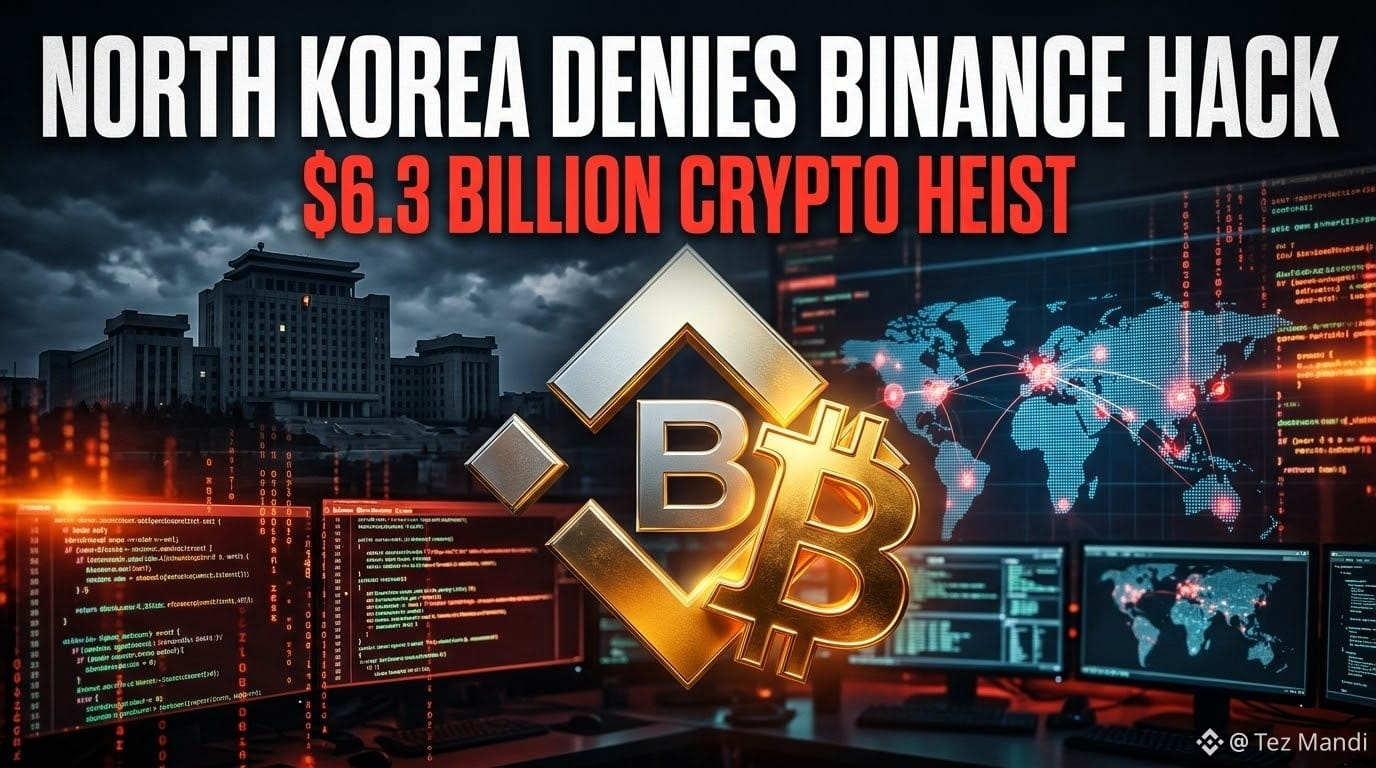
🚨 North Korea Denies Involvement in Record $6.3 Billion Binance Hack
North Korea has rejected US allegations linking it to the record-breaking $6.3 billion Binance crypto hack, calling the accusations “absurd rhetoric.”
Kim Yo Jong, the sister of North Korean leader Kim Jong Un, criticized the FBI's claims and accused Washington of spreading misleading information.
However, the FBI has attributed the attack to TraderTraitor, a North Korean state-sponsored hacking group. Investigators say the stolen cryptocurrency was being converted into Ethereum.
The denial adds another twist to one of the biggest crypto security scandals in history.
🔐 The big question remains: Who is really behind the $6.3 billion crypto heist?
#Binance #CryptoNews #NorthKorea #Bitcoin #CryptoHack #Blockchain #CyberSecurity
83

·
--
🇰🇵 KIM JONG UN’S SISTER BREAKS SILENCE: NORTH KOREA DENIES $6.3 BILLION BINANCE HACK!
North Korea has officially rejected allegations linking it to the massive $6.3 billion Binance cryptocurrency hack.
Kim Yo Jong, sister of North Korean leader Kim Jong Un, has called the FBI's accusations a US "political provocation."
👉 FBI Accusation: The FBI officially blamed North Korea's hacking group, TraderTraitor, for stealing more than $6 billion in cryptocurrency from Binance.
👉 North Korea's Response: Kim Yo Jong rejected the allegations, while state media KCNA described the accusations as fabricated.
👉 Massive Theft: The reported attack involved approximately $6.36 billion in crypto assets across multiple blockchain networks.
👉 Trump's Response: Donald Trump reportedly said, "We don't know if it's North Korea," despite the FBI's public attribution.
North Korea denies involvement, but US authorities continue to attribute the attack to TraderTraitor.
#Binance #NorthKorea #CryptoHack

30
3
153
268.6k
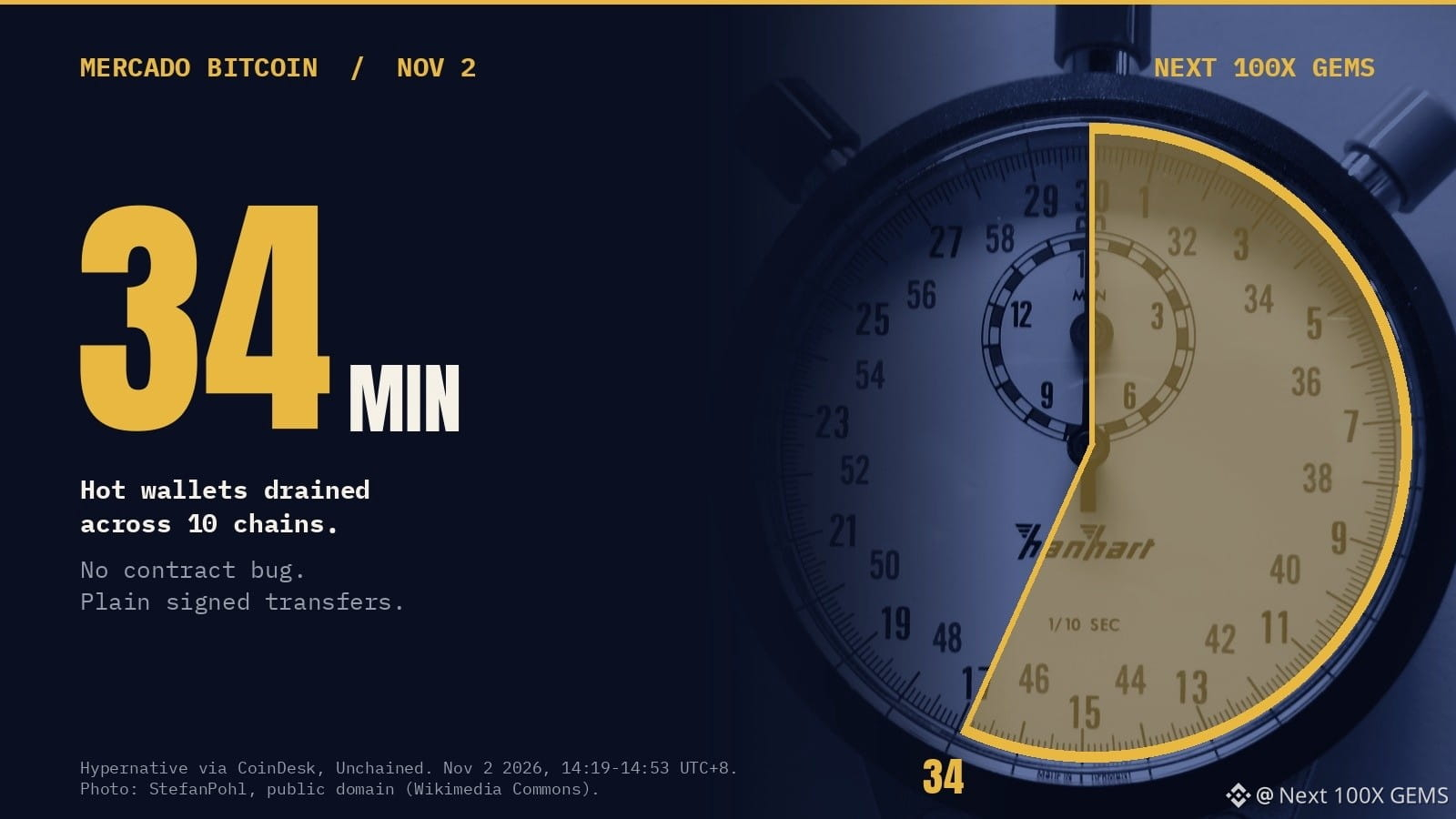
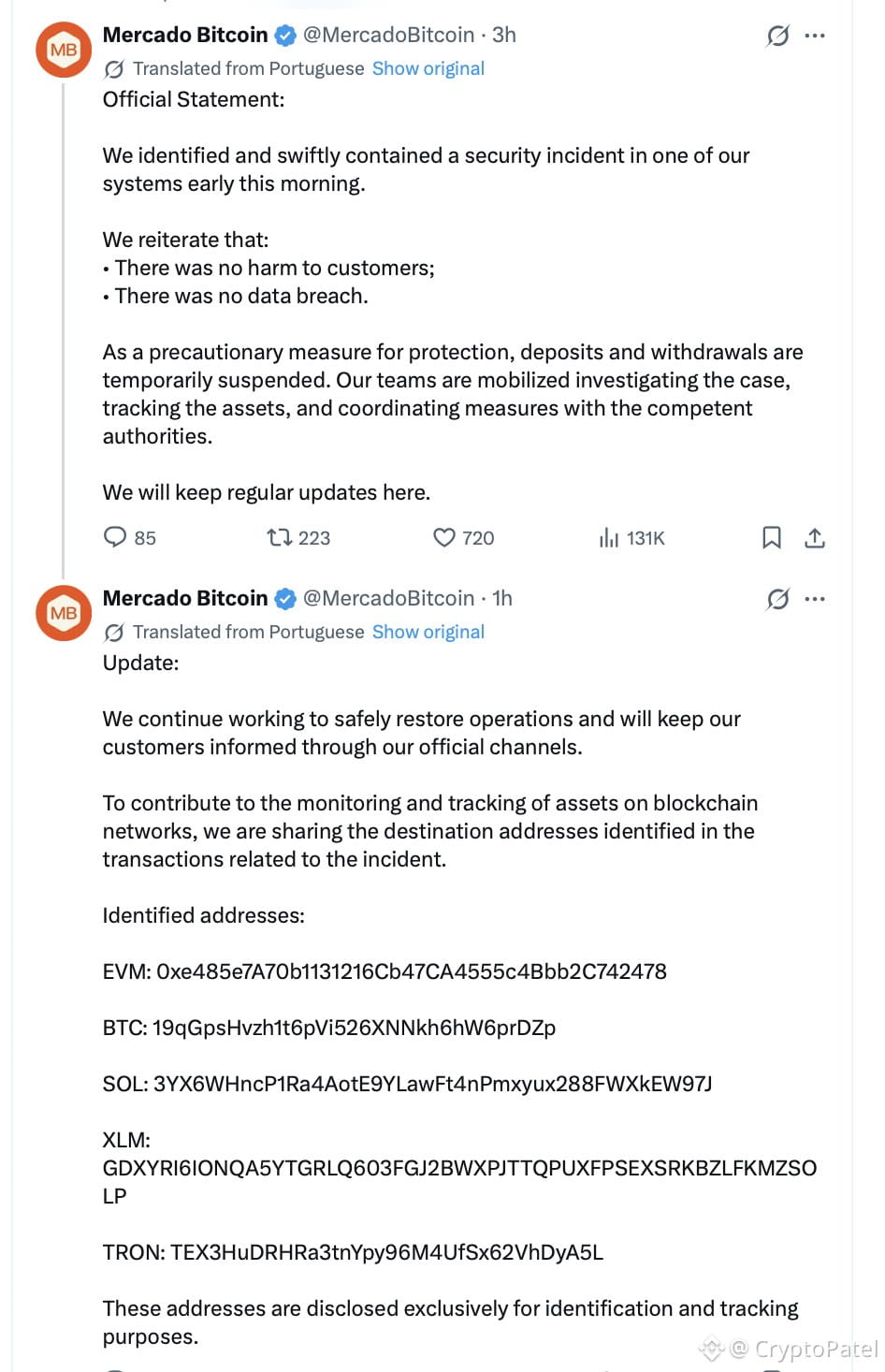
34 minutes. That's how fast most of the money left Mercado Bitcoin's wallets on Monday, $BTC and $ETH included, across 10 chains.
No smart contract bug. Plain signed transfers, the same kind an exchange sends all day. Nobody knows yet how the attacker got signing access.
Security firms put it at $40M+. Mercado says no client lost money, deposits and withdrawals are paused, and Tether froze $4.5M in USDT.
Binance's hack four days earlier didn't need a code bug either.
Nobody broke the code. Somebody got the pen. Keep on exchanges what you're trading this week, not your whole bag.
#CryptoHack #CryptoSecurity
NFA. DYOR.
388
·
--
$40 MILLION CRYPTO HACK? BRAZIL'S LARGEST EXCHANGE HALTS WITHDRAWALS
🇧🇷 Mercado Bitcoin has confirmed a security breach after over $40 million in suspicious crypto outflows were reportedly detected across 10+ blockchain networks.
➡️ Deposits and withdrawals temporarily suspended.
➡️ 2,852 $ETH, 106 $BTC, 10,700 $SOL and other assets linked to suspicious wallets.
➡️ Tether reportedly froze $4.5M+ USDT connected to the incident.
➡️ Mercado Bitcoin claims no customer funds were lost and no user data was leaked.
The actual financial losses remain unconfirmed, and investigations are ongoing.
Another major reminder: Exchange security remains one of crypto's biggest risks.
#MercadoBitcoin #CryptoHack
218

·
--
Статья
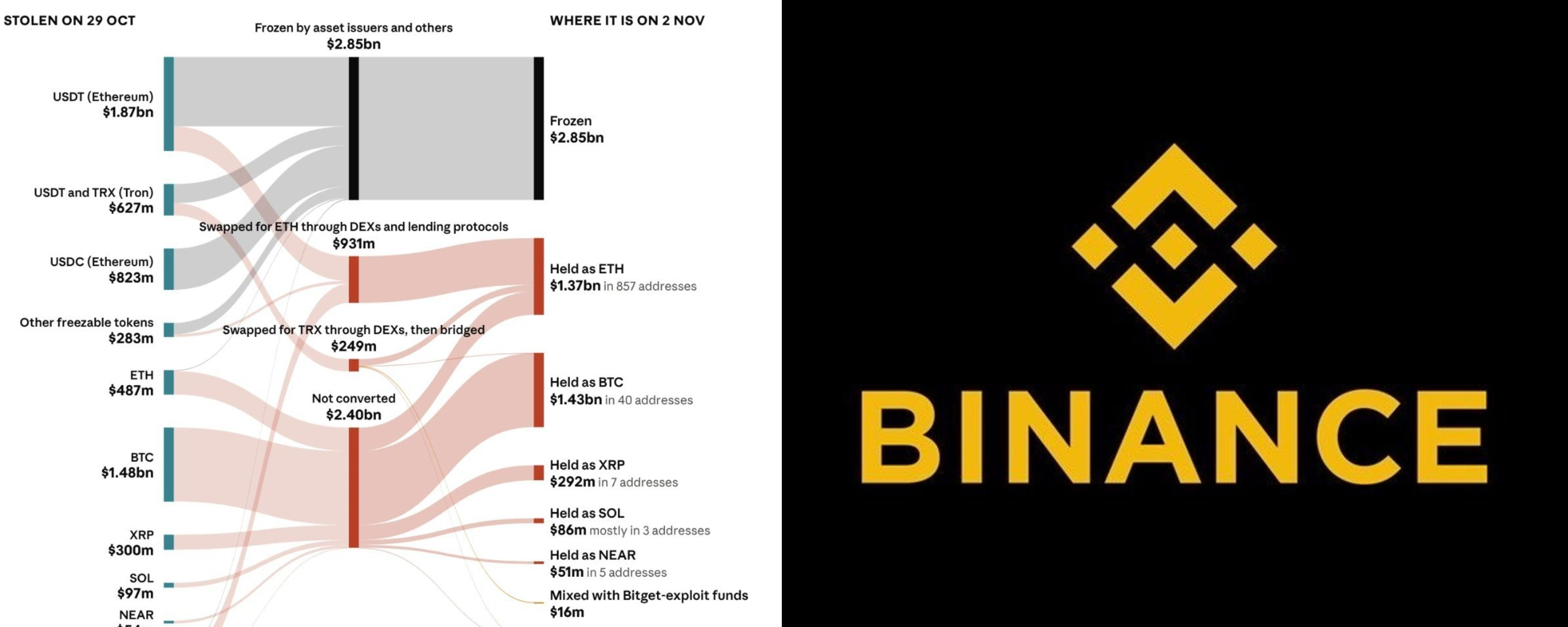
BREAKING: Nearly Half of the $6.43B Binance Hack Is Now Frozen or SeizedBlockchain analytics firm Elliptic has verified that **$2.85 billion** — approximately **44%** of the record $6.43 billion stolen from Binance — has been frozen or seized.
The breakdown:
· $2.85B frozen/seized (~44%)
· ~$3.28B still controlled by hackers across 950+ wallets
· Funds were laundered through roughly 12,000 wallets across 11 blockchains in under 4 days
Why this matters:
The FBI has attributed the hack to TraderTraitor, North Korea's elite state-sponsored hacking unit. The recovery rate is unusually high for a heist of this scale — stablecoin issuers like Tether and Circle were able to freeze large portions before the attackers converted assets
But the remaining ~$3.28B is mostly in ETH and BTC, which cannot be frozen by issuers. Recovery now depends on exchanges and law enforcement tracking the laundering trail
The hackers are expected to convert ETH to BTC and cash out through OTC brokers over the coming months
#Binance #Crypto #NorthKorea #Ell
iptic #CryptoHack
BREAKING: Nearly Half of the $6.43B Binance Hack Is Now Frozen or Seized
Blockchain analytics firm Elliptic has verified that **$2.85 billion** — approximately **44%** of the record $6.43 billion stolen from Binance — has been frozen or seized.
The breakdown:
· $2.85B frozen/seized (~44%)
· ~$3.28B still controlled by hackers across 950+ wallets
· Funds were laundered through roughly 12,000 wallets across 11 blockchains in under 4 days
Why this matters:
The FBI has attributed the hack to TraderTraitor, North Korea's elite state-sponsored hacking unit. The recovery rate is unusually high for a heist of this scale — stablecoin issuers like Tether and Circle were able to freeze large portions before the attackers converted assets
But the remaining ~$3.28B is mostly in ETH and BTC, which cannot be frozen by issuers. Recovery now depends on exchanges and law enforcement tracking the laundering trail
The hackers are expected to convert ETH to BTC and cash out through OTC brokers over the coming months
#Binance #Crypto #NorthKorea #Ell
iptic #CryptoHack
668

·
--
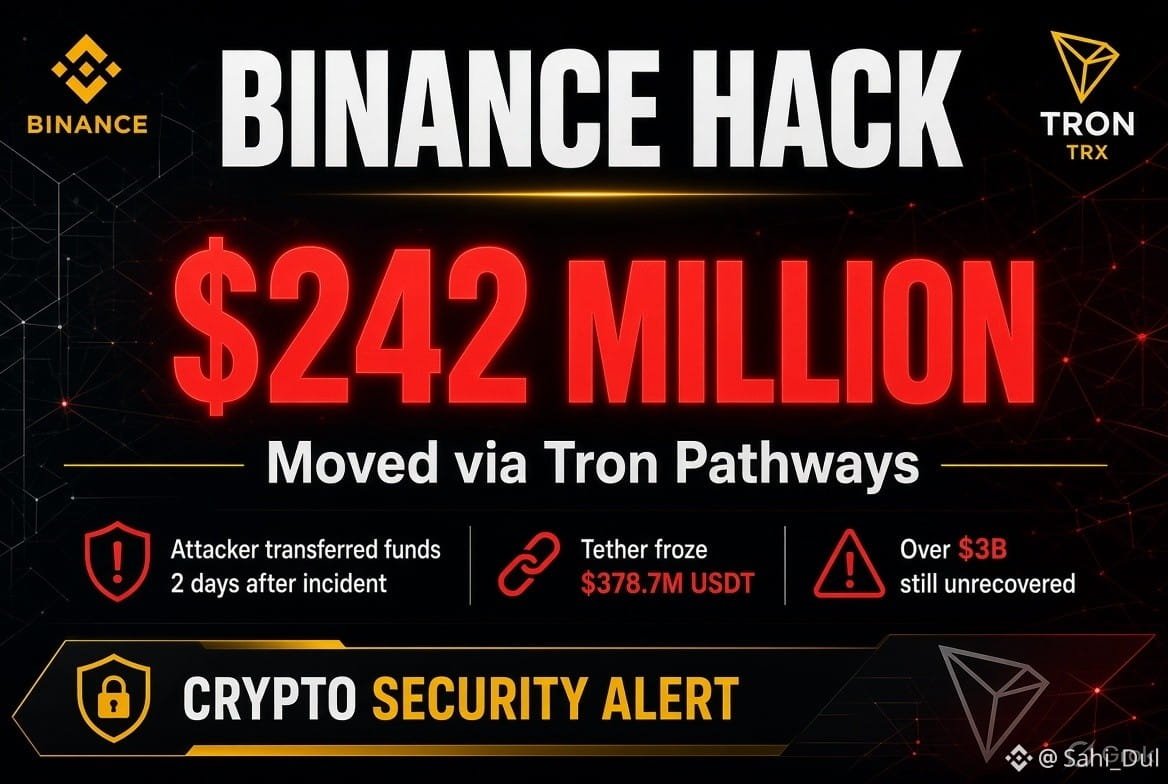
BINANCE HACK
$242 MILLION
Moved via Tron Pathways
• Attacker transferred funds just 2 days after the incident
• Tether froze $378.7M USDT
• Over $3B in stolen funds still unrecovered
Crypto Security Alert
#Binance #Tron #CryptoHack #USDT
BINANCE HACK
$242 MILLION
Moved via Tron Pathways
• Attacker transferred funds just 2 days after the incident
• Tether froze $378.7M USDT
• Over $3B in stolen funds still unrecovered
Crypto Security Alert
#Binance #Tron #CryptoHack #USDT
$242 MILLION
Moved via Tron Pathways
• Attacker transferred funds just 2 days after the incident
• Tether froze $378.7M USDT
• Over $3B in stolen funds still unrecovered
Crypto Security Alert
#Binance #Tron #CryptoHack #USDT
170

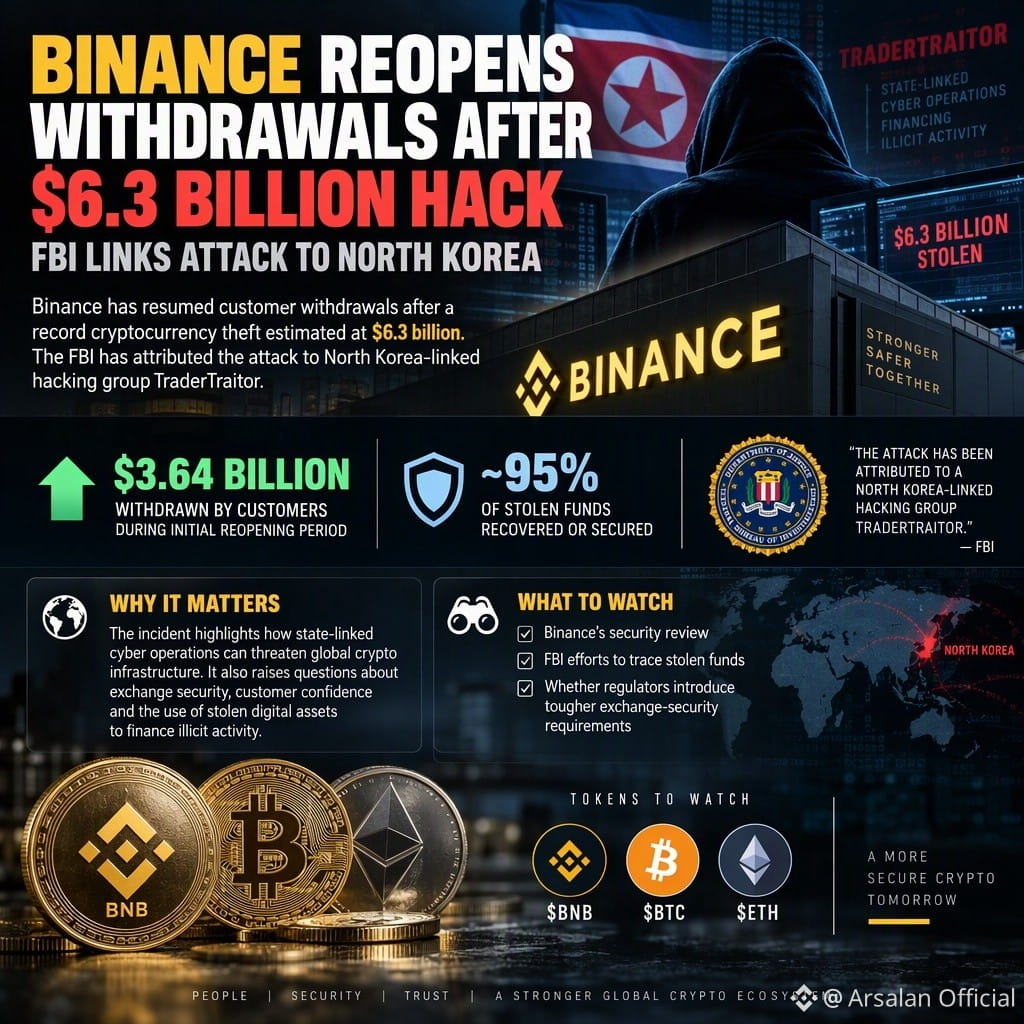
🇺🇸 Binance Reopens Withdrawals After $6.3 Billion Hack Linked by FBI to North Korea Binance has resumed customer withdrawals after a record cryptocurrency theft estimated at $6.3 billion. The FBI has attributed the attack to North Korea-linked hacking group TraderTraitor. Binance reported that customers withdrew approximately $3.64 billion during the initial reopening period, while the exchange said it had recovered or secured around 95% of the stolen Why it matters: The incident highlights how state-linked cyber operations can threaten global crypto infrastructure. It also raises questions about exchange security, customer confidence and the use of stolen digital assets to finance illicit activity. What to watch: Binance’s security review, FBI efforts to trace stolen funds and whether regulators introduce tougher exchange-security requirements. #Binance #NorthKorea #CryptoHack #CyberSecurity #Geopolitics Tokens: $BNB · $BTC · $ETH
🇺🇸 Binance Reopens Withdrawals After $6.3 Billion Hack Linked by FBI to North Korea Binance has resumed customer withdrawals after a record cryptocurrency theft estimated at $6.3 billion. The FBI has attributed the attack to North Korea-linked hacking group TraderTraitor. Binance reported that customers withdrew approximately $3.64 billion during the initial reopening period, while the exchange said it had recovered or secured around 95% of the stolen Why it matters: The incident highlights how state-linked cyber operations can threaten global crypto infrastructure. It also raises questions about exchange security, customer confidence and the use of stolen digital assets to finance illicit activity. What to watch: Binance’s security review, FBI efforts to trace stolen funds and whether regulators introduce tougher exchange-security requirements. #Binance #NorthKorea #CryptoHack #CyberSecurity #Geopolitics Tokens: $BNB · $BTC · $ETH
1
104
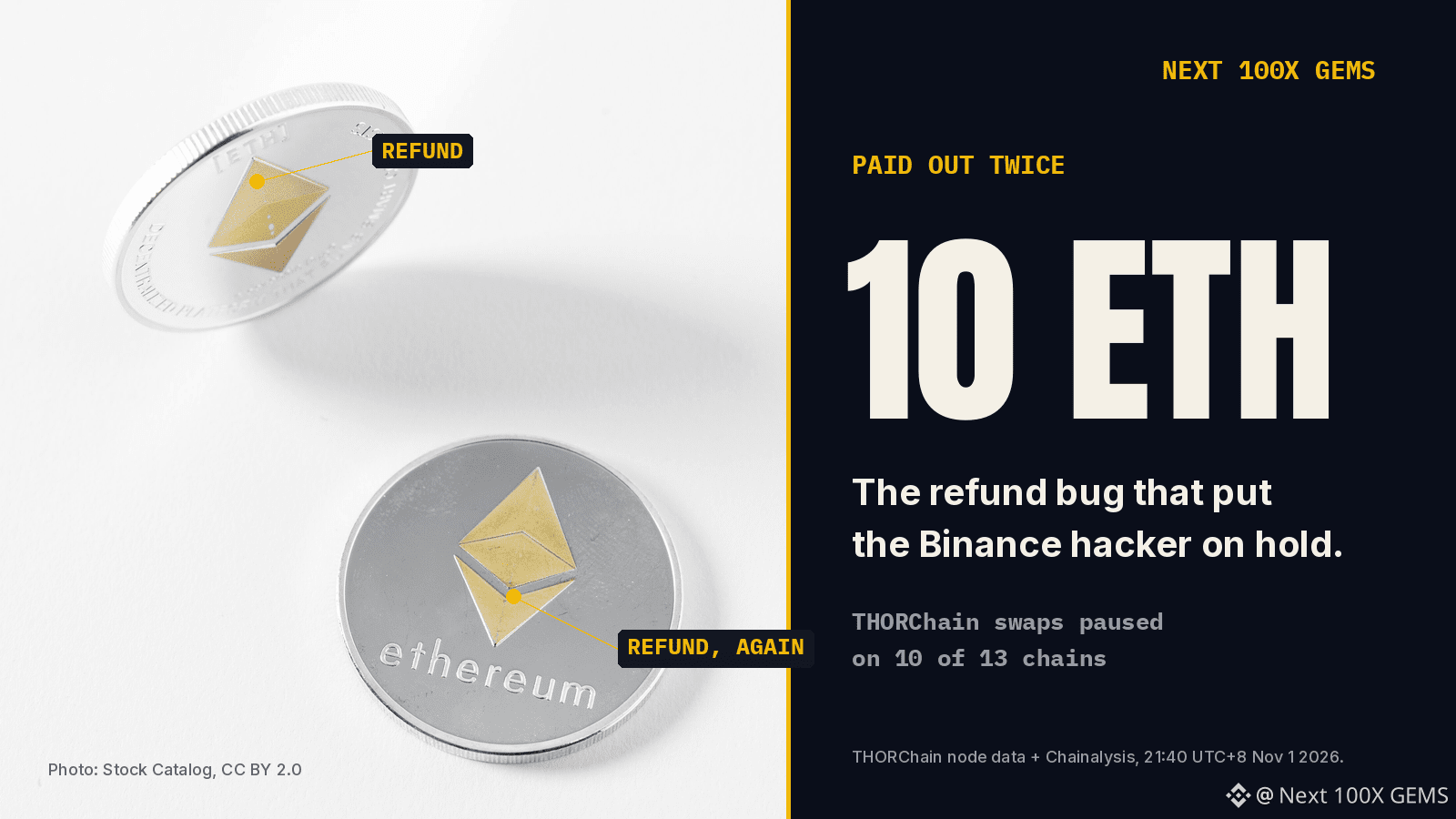
So far, the thing slowing the Binance hacker down most is a refund bug.
On Saturday an Ethereum reorg made THORChain ($RUNE) pay back the same 10 ETH deposit twice, and the network pulled its own emergency brake.
Chainalysis says that pause delayed the laundering of a significant amount of the stolen Binance funds. The FBI is asking THORChain node operators to block the hacker's addresses. A double refund ended up blocking everyone instead, honest users included.
THORChain says nothing points to the double payout being on purpose. The wallet that got it has used the protocol for almost two years, and there's no restart date yet.
We checked THORChain's node data at 21:40 UTC+8 tonight. Swaps are still halted on 10 of its 13 chains, with Bitcoin and $ETH among them. RUNE is down more than 11% on the day.
Part of North Korea's laundering run is now sitting in a queue behind a 10 ETH accounting error.
#CryptoHack #THORChain
NFA. DYOR.
So far, the thing slowing the Binance hacker down most is a refund bug.
On Saturday an Ethereum reorg made THORChain ($RUNE ) pay back the same 10 ETH deposit twice, and the network pulled its own emergency brake.
Chainalysis says that pause delayed the laundering of a significant amount of the stolen Binance funds. The FBI is asking THORChain node operators to block the hacker's addresses. A double refund ended up blocking everyone instead, honest users included.
THORChain says nothing points to the double payout being on purpose. The wallet that got it has used the protocol for almost two years, and there's no restart date yet.
We checked THORChain's node data at 21:40 UTC+8 tonight. Swaps are still halted on 10 of its 13 chains, with Bitcoin and $ETH among them. RUNE is down more than 11% on the day.
Part of North Korea's laundering run is now sitting in a queue behind a 10 ETH accounting error.
#CryptoHack #THORChain
NFA. DYOR.
2
1.3k
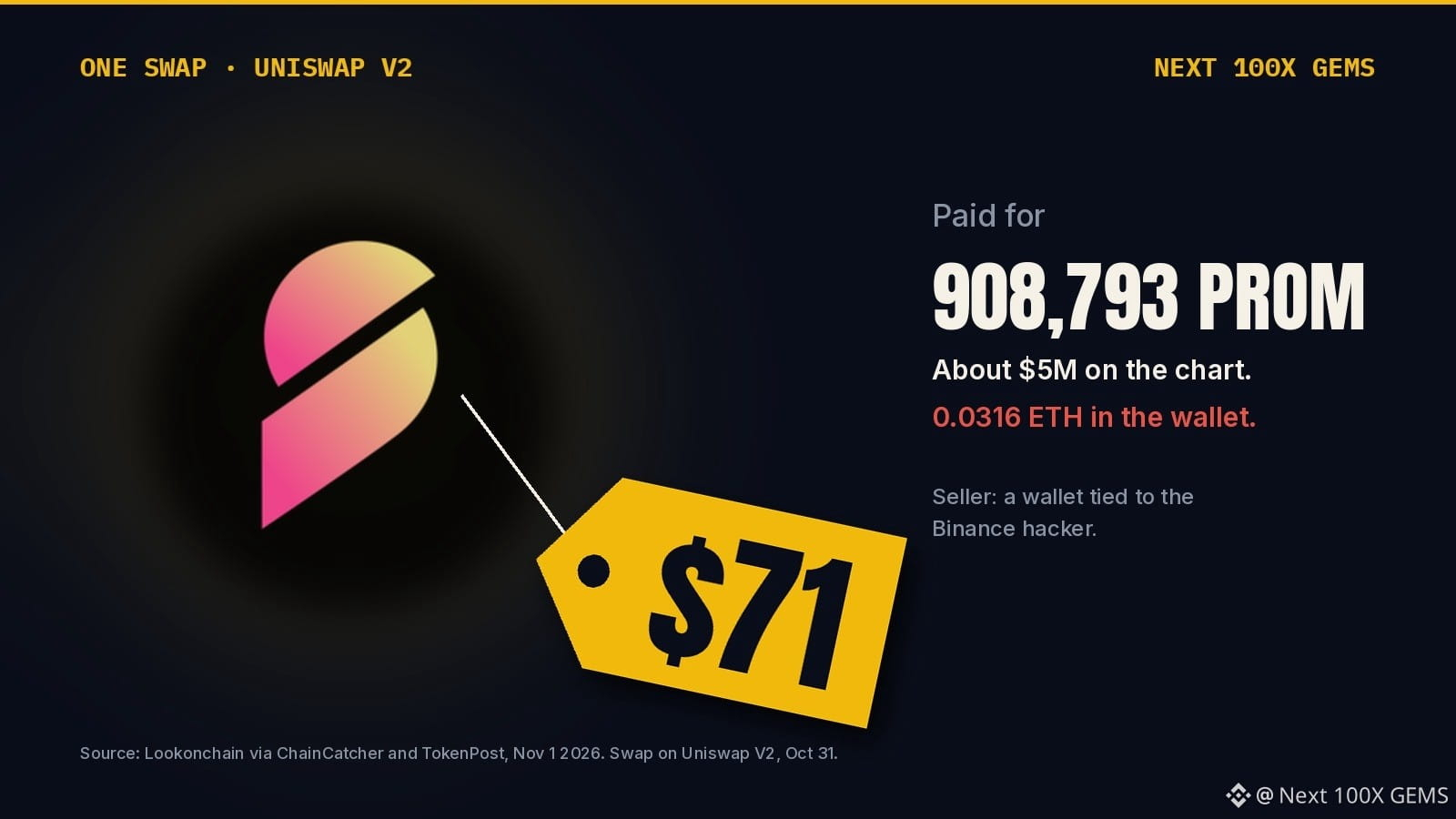
The Binance hacker sold 908,793 $PROM for $71.
That's the whole bag, paid out as 0.0316 ETH.
Lookonchain flagged the swap from a wallet tied to the hacker. It went into a Uniswap V2 pool that had almost no ETH left in it. A pool like that can only hand over the ETH sitting inside, so a stack worth about $5M on the chart came back as pocket change.
By our math that's under one cent per hundred tokens, roughly 1/70,000th of what the chart said. The bag was also about 5% of all PROM in circulation.
PROM is up around 15% on the day anyway. The dump only drained one empty pool, and the order books where PROM really trades barely noticed.
The largest crypto theft on record, and someone still market-sold into a dead pool.
$PROM $ETH
#CryptoHack #DeFi
NFA. DYOR.
1
1.6k
Войдите, чтобы посмотреть больше материала
Присоединяйтесь к пользователям криптовалют по всему миру на Binance Square
⚡️ Получайте новейшую и полезную информацию о криптоактивах.
💬 Нам доверяет крупнейшая в мире криптобиржа.
👍 Получите достоверные аналитические данные от верифицированных создателей контента.
Эл. почта/номер телефона
В тренде
1
#HuangRisksOusterOverReportedAffairWithSubordinate
Просмотров: 79,082
1,089 обсуждают
2
#AnthropicRejectsIPODelayValuationinQuestion
Просмотров: 541,059
4,461 обсуждают
3
#BitMineReports$6.3BNetLossForFiscal2026
Просмотров: 249
33 обсуждают
4
#CoreWeaveJumps10%On168%RevenueGrowth
Просмотров: 104,359
1,208 обсуждают
5
#ZcashFallsBelow$1000ForFirstTimeSinceSeptember
Просмотров: 56,115
233 обсуждают
6
#MSCIRemovalMayCurbStrategy’sBitcoinBuying
Просмотров: 16,347
295 обсуждают
7
#HKSFCSaysTokenizationMovingToCommercialUse
Просмотров: 4,454
98 обсуждают
8
#CanNvidiaEarningsEaseMarketConcerns?
Просмотров: 209,959
2,090 обсуждают
9
#USJoblessClaimsRise
Просмотров: 19.1M
7,496 обсуждают
10
#PythAddsNYSERealTimeDataToMarketplace
Просмотров: 8,214
187 обсуждают