

CRYPTO_NOVAA
16 Publicações

CRYPTO_NOVAA
Denunciar
Bloquear Utilizador
106 A seguir
51 Seguidores
0 Gostaram
Publicações
·
--
A adoção institucional da tecnologia blockchain enfrenta um desafio fundamental: equilibrar transparência com confidencialidade. As instituições financeiras tradicionais não podem alocar capital em livros-razão públicos totalmente transparentes, nos quais todo saldo, negociação e movimento estratégico fica visível para os concorrentes. Ao mesmo tempo, redes de privacidade puras não possuem a auditabilidade exigida para atender a rígidos marcos de conformidade regulatória.
É aqui que a @Dusk redefine o paradigma da finança regulada on-chain.
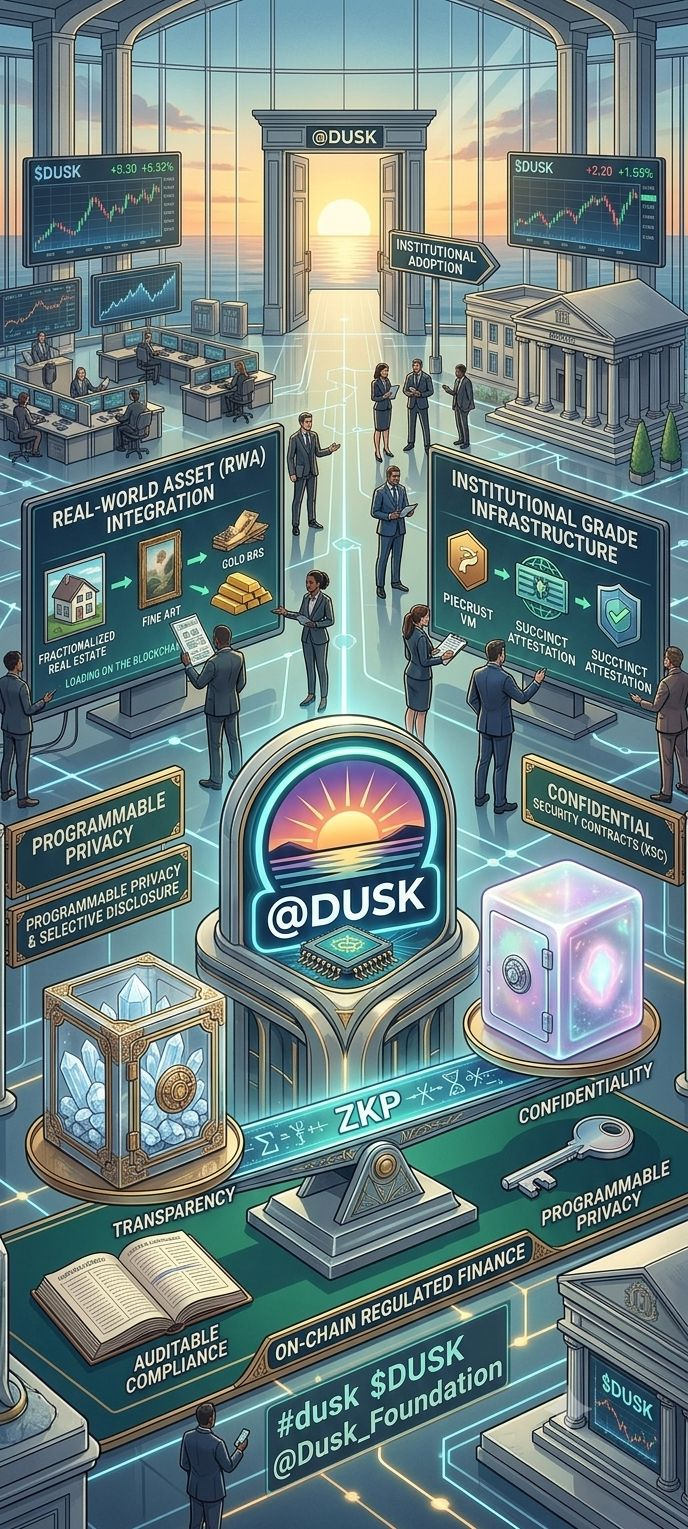
Como um protocolo Layer-1 dedicado, a @Dusk integra Provas de Conhecimento Zero (ZKPs) nativas diretamente em sua arquitetura, trazendo ativos do mundo real (RWAs), títulos tokenizados e instrumentos financeiros confidenciais on-chain com precisão institucional.
Principais Destaques do Ecossistema da @Dusk:
Privacidade Programável & Divulgação Seletiva: Impulsionada por criptografia de conhecimento zero, a @Dusk permite total confidencialidade das transações, preservando a conformidade regulatória. Os participantes do mercado podem verificar elegibilidade e executar a liquidação sem vazar dados operacionais sensíveis.
Infraestrutura de Nível Institucional: Utilizando a Piecrust VM e o consenso de Attestation Succinct, a @Dusk oferece execução com baixo custo, liquidação determinística e alta capacidade de processamento projetadas para aplicações financeiras modernas.
Integração de Ativos do Mundo Real: Ao suportar padrões como Confidential Security Contracts (XSC), a @Dusk permite que instituições emitam e gerenciem títulos digitais compatíveis diretamente on-chain.
O token $DUSK impulsiona esta economia com foco em privacidade—alimentando a segurança da rede por meio de staking, executando contratos inteligentes confidenciais e possibilitando governança descentralizada. À medida que as finanças institucionais avançam em direção à infraestrutura pública, a @Dusk fornece a ponte necessária entre conformidade e privacidade.
Saiba mais sobre o projeto em
#dusk
$DUSK
@Dusk_Foundation
@BinanceBurmese @BinanceTurkish
A adoção institucional da tecnologia blockchain enfrenta um desafio fundamental: equilibrar transparência com confidencialidade. As instituições financeiras tradicionais não podem alocar capital em livros-razão públicos totalmente transparentes, nos quais todo saldo, negociação e movimento estratégico fica visível para os concorrentes. Ao mesmo tempo, redes de privacidade puras não possuem a auditabilidade exigida para atender a rígidos marcos de conformidade regulatória.
É aqui que a @Dusk redefine o paradigma da finança regulada on-chain.
Como um protocolo Layer-1 dedicado, a @Dusk integra Provas de Conhecimento Zero (ZKPs) nativas diretamente em sua arquitetura, trazendo ativos do mundo real (RWAs), títulos tokenizados e instrumentos financeiros confidenciais on-chain com precisão institucional.
Principais Destaques do Ecossistema da @Dusk:
Privacidade Programável & Divulgação Seletiva: Impulsionada por criptografia de conhecimento zero, a @Dusk permite total confidencialidade das transações, preservando a conformidade regulatória. Os participantes do mercado podem verificar elegibilidade e executar a liquidação sem vazar dados operacionais sensíveis.
Infraestrutura de Nível Institucional: Utilizando a Piecrust VM e o consenso de Attestation Succinct, a @Dusk oferece execução com baixo custo, liquidação determinística e alta capacidade de processamento projetadas para aplicações financeiras modernas.
Integração de Ativos do Mundo Real: Ao suportar padrões como Confidential Security Contracts (XSC), a @Dusk permite que instituições emitam e gerenciem títulos digitais compatíveis diretamente on-chain.
O token $DUSK impulsiona esta economia com foco em privacidade—alimentando a segurança da rede por meio de staking, executando contratos inteligentes confidenciais e possibilitando governança descentralizada. À medida que as finanças institucionais avançam em direção à infraestrutura pública, a @Dusk fornece a ponte necessária entre conformidade e privacidade.
Saiba mais sobre o projeto em
#dusk
$DUSK
@Dusk
@Binance Burmese @Binance Global Türkçe
É aqui que a @Dusk redefine o paradigma da finança regulada on-chain.
Como um protocolo Layer-1 dedicado, a @Dusk integra Provas de Conhecimento Zero (ZKPs) nativas diretamente em sua arquitetura, trazendo ativos do mundo real (RWAs), títulos tokenizados e instrumentos financeiros confidenciais on-chain com precisão institucional.
Principais Destaques do Ecossistema da @Dusk:
Privacidade Programável & Divulgação Seletiva: Impulsionada por criptografia de conhecimento zero, a @Dusk permite total confidencialidade das transações, preservando a conformidade regulatória. Os participantes do mercado podem verificar elegibilidade e executar a liquidação sem vazar dados operacionais sensíveis.
Infraestrutura de Nível Institucional: Utilizando a Piecrust VM e o consenso de Attestation Succinct, a @Dusk oferece execução com baixo custo, liquidação determinística e alta capacidade de processamento projetadas para aplicações financeiras modernas.
Integração de Ativos do Mundo Real: Ao suportar padrões como Confidential Security Contracts (XSC), a @Dusk permite que instituições emitam e gerenciem títulos digitais compatíveis diretamente on-chain.
O token $DUSK impulsiona esta economia com foco em privacidade—alimentando a segurança da rede por meio de staking, executando contratos inteligentes confidenciais e possibilitando governança descentralizada. À medida que as finanças institucionais avançam em direção à infraestrutura pública, a @Dusk fornece a ponte necessária entre conformidade e privacidade.
Saiba mais sobre o projeto em
#dusk
$DUSK
@Dusk
@Binance Burmese @Binance Global Türkçe
75
·
--
$TMX Tokenomics: O Ângulo de Governança do Ano 1 por trás do Cliff de 12 meses
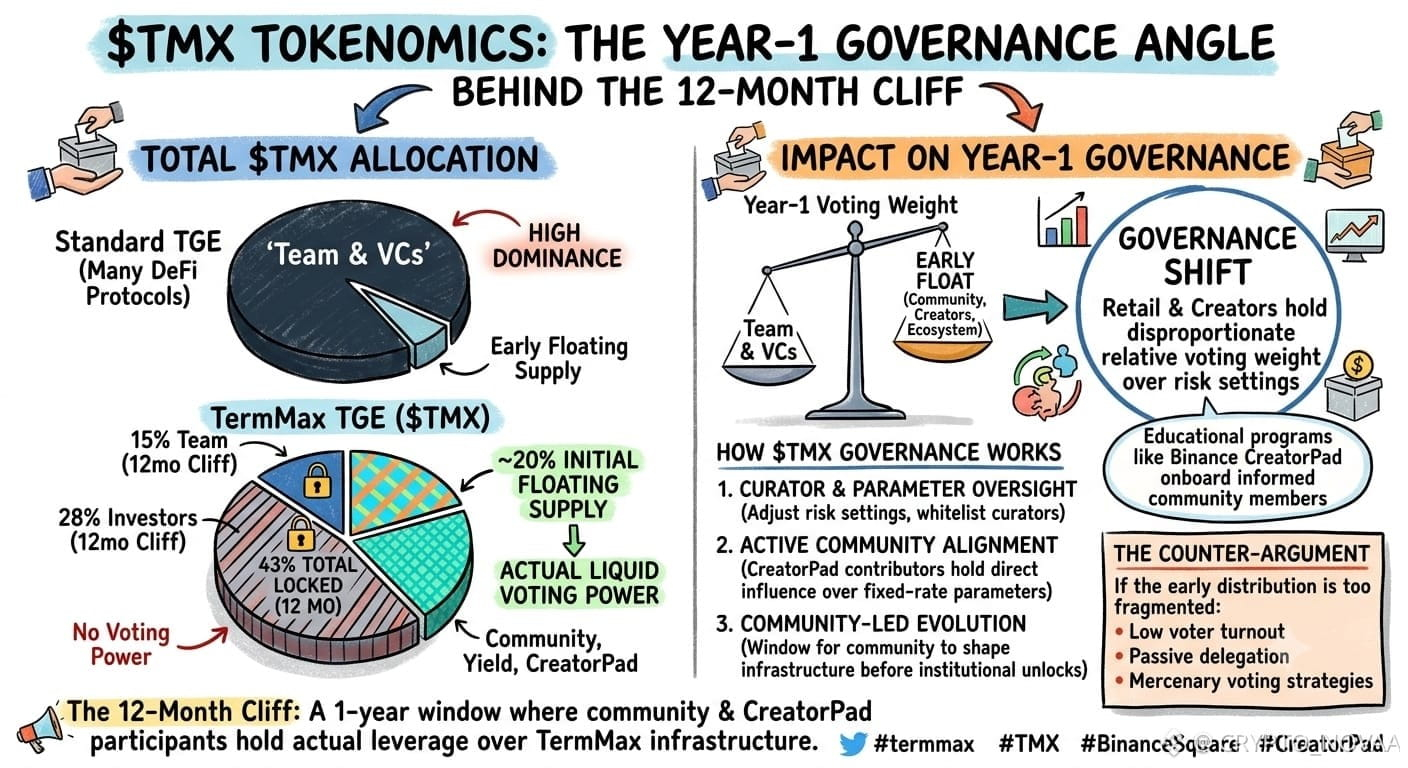
Ao analisar eventos de geração de tokens, as discussões geralmente se concentram na pressão de venda inicial versus cronogramas de desbloqueio de longo prazo. Para a @TermMax ($TMX), a configuração está bem documentada: uma ~20% de oferta inicial em circulação no TGE, combinada com um cliff rígido de 12 meses para a Equipe (15%) e para os Investidores (28%).
No entanto, existe uma dinâmica pouco analisada nessa estrutura: a Distribuição da Governança Inicial do Protocolo.
Em muitos protocolos DeFi, a governança inicial é fortemente dominada por tokens da equipe e de capital de risco. Mas, como 43% da oferta total de $TMX permanece completamente bloqueada em smart contracts durante o primeiro ano inteiro, o poder de voto em circulação durante o Ano 1 se concentra quase inteiramente na oferta inicial desbloqueada.
Essa flutuação inicial é composta por alocações da comunidade, participantes de yield e criadores recompensados por programas como a campanha 300.000 $TMX do Binance CreatorPad na Binance Square.
O que isso significa para a execução inicial da TermMax:
Mudança Temporária de Governança: Durante o cliff interno de 12 meses, participantes de varejo ativos, Criadores e eleitores do ecossistema detêm um peso de voto desproporcional em relação à exposição ao risco do protocolo.
Alinhamento Liderado pela Comunidade: Programas educacionais como Binance CreatorPad não apenas distribuem tokens — eles incorporam membros informados da comunidade que exercem influência direta sobre parâmetros do mercado com taxa fixa antes que os desbloqueios institucionais entrem em efeito.
O Contra-Argumento
Se a distribuição inicial de tokens estiver excessivamente fragmentada ou for mantida por traders de curto prazo, a participação na governança pode sofrer com baixa taxa de comparecimento dos eleitores, deixando ajustes de parâmetros vulneráveis a delegação passiva ou a estratégias de voto mercenário.
Conclusão
O cliff de 12 meses não apenas protege o mercado contra vendas de insiders; ele cria uma janela de 1 ano em que participantes da comunidade e contribuidores do CreatorPad detêm, de fato, poder de governança sobre a evolução da infraestrutura de taxa fixa da TermMax.
#termmax #TMX #BinanceSquare #CreatorPad
@termmax
$TMX Tokenomics: O Ângulo de Governança do Ano 1 por trás do Cliff de 12 meses
Ao analisar eventos de geração de tokens, as discussões geralmente se concentram na pressão de venda inicial versus cronogramas de desbloqueio de longo prazo. Para a @TermMax ($TMX), a configuração está bem documentada: uma ~20% de oferta inicial em circulação no TGE, combinada com um cliff rígido de 12 meses para a Equipe (15%) e para os Investidores (28%).
No entanto, existe uma dinâmica pouco analisada nessa estrutura: a Distribuição da Governança Inicial do Protocolo.
Em muitos protocolos DeFi, a governança inicial é fortemente dominada por tokens da equipe e de capital de risco. Mas, como 43% da oferta total de $TMX permanece completamente bloqueada em smart contracts durante o primeiro ano inteiro, o poder de voto em circulação durante o Ano 1 se concentra quase inteiramente na oferta inicial desbloqueada.
Essa flutuação inicial é composta por alocações da comunidade, participantes de yield e criadores recompensados por programas como a campanha 300.000 $TMX do Binance CreatorPad na Binance Square.
O que isso significa para a execução inicial da TermMax:
Mudança Temporária de Governança: Durante o cliff interno de 12 meses, participantes de varejo ativos, Criadores e eleitores do ecossistema detêm um peso de voto desproporcional em relação à exposição ao risco do protocolo.
Alinhamento Liderado pela Comunidade: Programas educacionais como Binance CreatorPad não apenas distribuem tokens — eles incorporam membros informados da comunidade que exercem influência direta sobre parâmetros do mercado com taxa fixa antes que os desbloqueios institucionais entrem em efeito.
O Contra-Argumento
Se a distribuição inicial de tokens estiver excessivamente fragmentada ou for mantida por traders de curto prazo, a participação na governança pode sofrer com baixa taxa de comparecimento dos eleitores, deixando ajustes de parâmetros vulneráveis a delegação passiva ou a estratégias de voto mercenário.
Conclusão
O cliff de 12 meses não apenas protege o mercado contra vendas de insiders; ele cria uma janela de 1 ano em que participantes da comunidade e contribuidores do CreatorPad detêm, de fato, poder de governança sobre a evolução da infraestrutura de taxa fixa da TermMax.
#termmax #TMX #BinanceSquare #CreatorPad
@TermMax
Ao analisar eventos de geração de tokens, as discussões geralmente se concentram na pressão de venda inicial versus cronogramas de desbloqueio de longo prazo. Para a @TermMax ($TMX), a configuração está bem documentada: uma ~20% de oferta inicial em circulação no TGE, combinada com um cliff rígido de 12 meses para a Equipe (15%) e para os Investidores (28%).
No entanto, existe uma dinâmica pouco analisada nessa estrutura: a Distribuição da Governança Inicial do Protocolo.
Em muitos protocolos DeFi, a governança inicial é fortemente dominada por tokens da equipe e de capital de risco. Mas, como 43% da oferta total de $TMX permanece completamente bloqueada em smart contracts durante o primeiro ano inteiro, o poder de voto em circulação durante o Ano 1 se concentra quase inteiramente na oferta inicial desbloqueada.
Essa flutuação inicial é composta por alocações da comunidade, participantes de yield e criadores recompensados por programas como a campanha 300.000 $TMX do Binance CreatorPad na Binance Square.
O que isso significa para a execução inicial da TermMax:
Mudança Temporária de Governança: Durante o cliff interno de 12 meses, participantes de varejo ativos, Criadores e eleitores do ecossistema detêm um peso de voto desproporcional em relação à exposição ao risco do protocolo.
Alinhamento Liderado pela Comunidade: Programas educacionais como Binance CreatorPad não apenas distribuem tokens — eles incorporam membros informados da comunidade que exercem influência direta sobre parâmetros do mercado com taxa fixa antes que os desbloqueios institucionais entrem em efeito.
O Contra-Argumento
Se a distribuição inicial de tokens estiver excessivamente fragmentada ou for mantida por traders de curto prazo, a participação na governança pode sofrer com baixa taxa de comparecimento dos eleitores, deixando ajustes de parâmetros vulneráveis a delegação passiva ou a estratégias de voto mercenário.
Conclusão
O cliff de 12 meses não apenas protege o mercado contra vendas de insiders; ele cria uma janela de 1 ano em que participantes da comunidade e contribuidores do CreatorPad detêm, de fato, poder de governança sobre a evolução da infraestrutura de taxa fixa da TermMax.
#termmax #TMX #BinanceSquare #CreatorPad
@TermMax
63
·
--
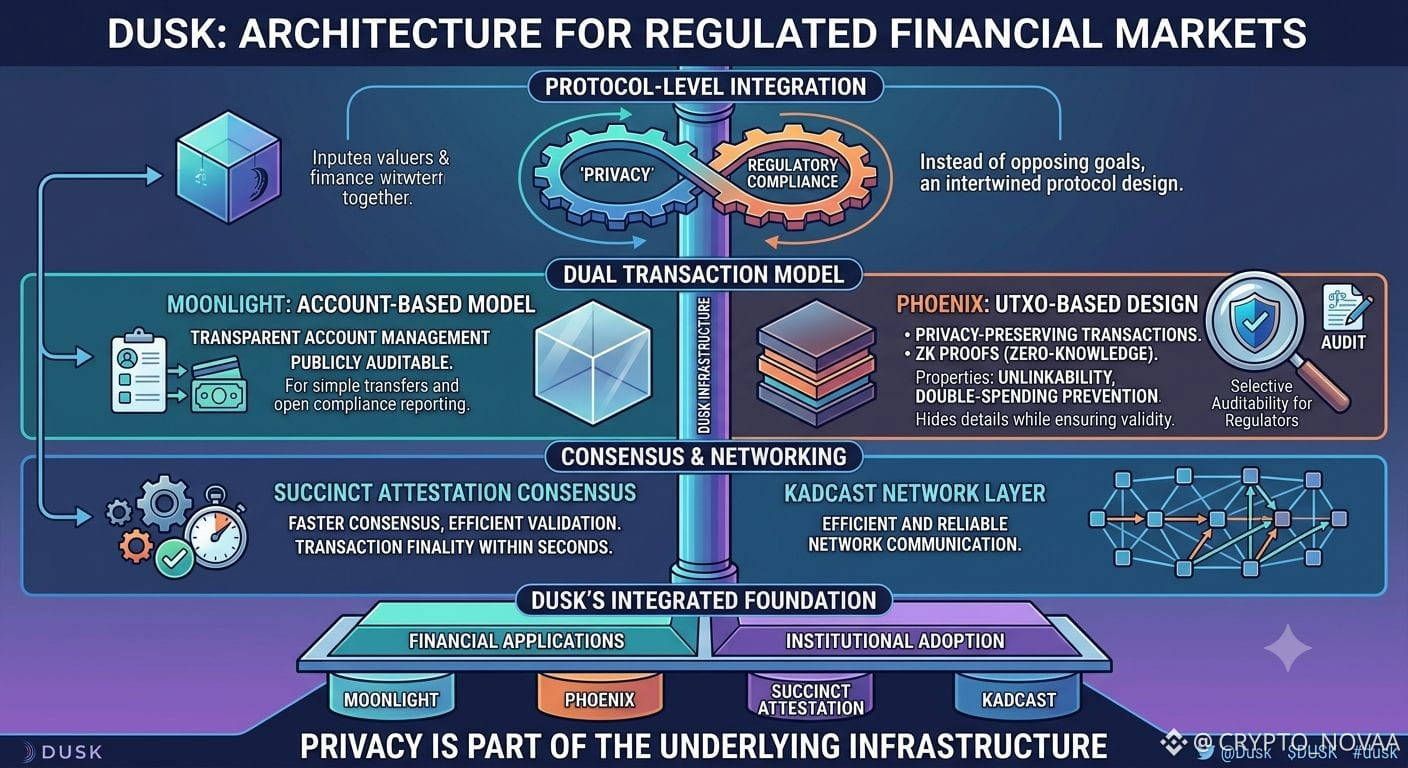
O Dusk está adotando uma abordagem diferente para a infraestrutura de blockchain: em vez de tratar a privacidade e a conformidade regulatória como objetivos opostos, sua arquitetura foi projetada considerando ambos.
Ao ler o whitepaper do Dusk, o que mais me chamou a atenção é o quão profundamente essa ideia está incorporada ao protocolo. O Dusk mira mercados financeiros regulados, nos quais dados sensíveis de transações precisam de confidencialidade, mas as instituições ainda precisam de conformidade e auditabilidade.
Seu concenso de atestação conciso foi criado para fornecer a finalização das transações em segundos, enquanto o Kadcast cuida da comunicação de rede eficiente e confiável.
Depois, há os modelos de transações Moonlight e Phoenix. O Moonlight oferece um modelo transparente baseado em contas, enquanto o Phoenix utiliza uma estrutura baseada em UTXO com provas ZK para transações com privacidade.
O whitepaper explica que o Phoenix pode fornecer propriedades como desvinculabilidade e prevenção de gastos duplos sem expor publicamente os detalhes subjacentes das transações.
Essa combinação é o que torna o Dusk interessante para mim: a privacidade não está sendo adicionada como uma reflexão posterior. Ela faz parte da infraestrutura subjacente construída para aplicações financeiras.
#dusk $DUSK @Dusk_Foundation
O Dusk está adotando uma abordagem diferente para a infraestrutura de blockchain: em vez de tratar a privacidade e a conformidade regulatória como objetivos opostos, sua arquitetura foi projetada considerando ambos.
Ao ler o whitepaper do Dusk, o que mais me chamou a atenção é o quão profundamente essa ideia está incorporada ao protocolo. O Dusk mira mercados financeiros regulados, nos quais dados sensíveis de transações precisam de confidencialidade, mas as instituições ainda precisam de conformidade e auditabilidade.
Seu concenso de atestação conciso foi criado para fornecer a finalização das transações em segundos, enquanto o Kadcast cuida da comunicação de rede eficiente e confiável.
Depois, há os modelos de transações Moonlight e Phoenix. O Moonlight oferece um modelo transparente baseado em contas, enquanto o Phoenix utiliza uma estrutura baseada em UTXO com provas ZK para transações com privacidade.
O whitepaper explica que o Phoenix pode fornecer propriedades como desvinculabilidade e prevenção de gastos duplos sem expor publicamente os detalhes subjacentes das transações.
Essa combinação é o que torna o Dusk interessante para mim: a privacidade não está sendo adicionada como uma reflexão posterior. Ela faz parte da infraestrutura subjacente construída para aplicações financeiras.
#dusk $DUSK @Dusk
Ao ler o whitepaper do Dusk, o que mais me chamou a atenção é o quão profundamente essa ideia está incorporada ao protocolo. O Dusk mira mercados financeiros regulados, nos quais dados sensíveis de transações precisam de confidencialidade, mas as instituições ainda precisam de conformidade e auditabilidade.
Seu concenso de atestação conciso foi criado para fornecer a finalização das transações em segundos, enquanto o Kadcast cuida da comunicação de rede eficiente e confiável.
Depois, há os modelos de transações Moonlight e Phoenix. O Moonlight oferece um modelo transparente baseado em contas, enquanto o Phoenix utiliza uma estrutura baseada em UTXO com provas ZK para transações com privacidade.
O whitepaper explica que o Phoenix pode fornecer propriedades como desvinculabilidade e prevenção de gastos duplos sem expor publicamente os detalhes subjacentes das transações.
Essa combinação é o que torna o Dusk interessante para mim: a privacidade não está sendo adicionada como uma reflexão posterior. Ela faz parte da infraestrutura subjacente construída para aplicações financeiras.
#dusk $DUSK @Dusk
73
·
--
Passei hoje mais tempo na documentação própria da Dusk e acho que encontrei a história de RWA mais interessante escondida por baixo do título.
O artigo de tokenização do SME de 15 de agosto é incomumente explícito sobre o que a tokenização não substitui.
O notário continua.
O local regulamentado continua.
O operador responsável continua.
A descoberta de preço continua.
Isso importa.
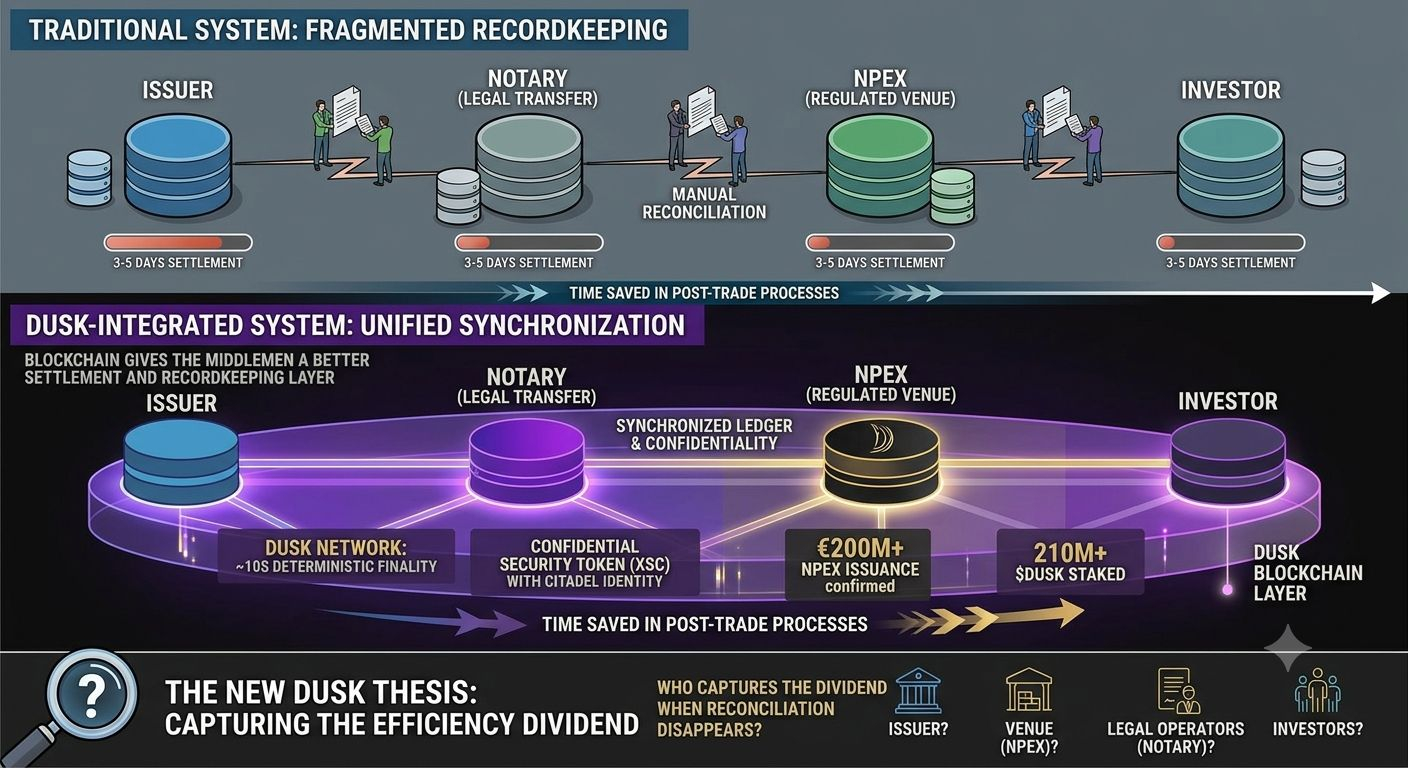
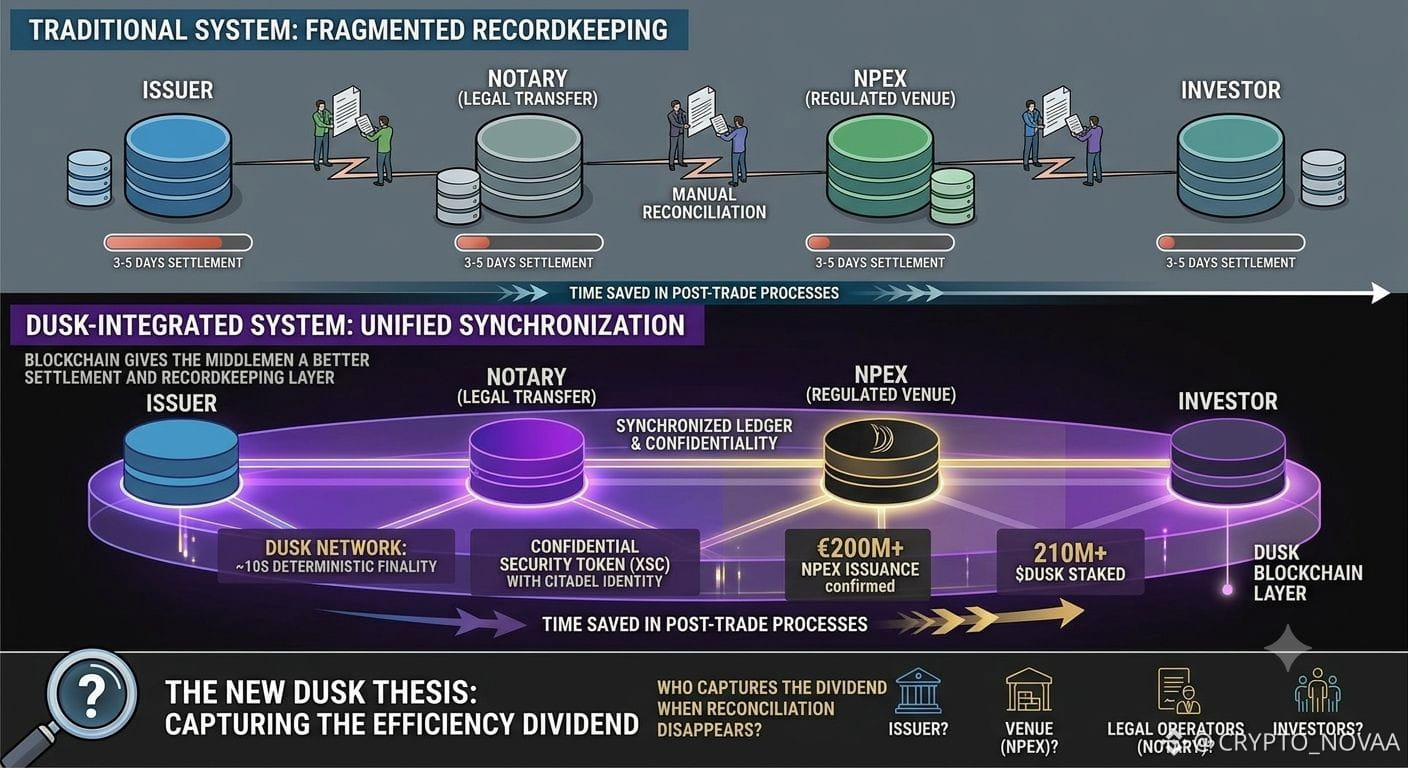
Porque a Dusk pode até ter números técnicos impressionantes — 210M+ $DUSK em stake, ~10s de finalidade determinística, €200M+ em emissão NPEX confirmada — enquanto o fluxo real de propriedade legal ainda acontece por meio da infraestrutura holandesa já estabelecida.
Então talvez a história não seja:
“Blockchain remove os intermediários.”
Talvez seja:
“Blockchain dá aos intermediários uma camada melhor de liquidação e registro.”
E, honestamente, isso pode ser um caso de uso institucional muito mais realista.
Se a NPEX permanecer como o local regulamentado e o notário continuar responsável pela transferência legal, a proposta de valor da Dusk deixa de ser sobre substituir o sistema existente e passa a ser sobre tornar o sistema por baixo dele mais rápido, mais sincronizado e mais fácil de conciliar.
Isso muda a pergunta que estou fazendo sobre a Dusk.
Não “A tokenização consegue eliminar intermediários?”
Mas:
Quem captura o dividendo de eficiência quando os intermediários não precisam mais conciliar tanto?
O emissor?
O local?
Os operadores legais?
Ou, eventualmente, os investidores?
Isso parece ser a tese da Dusk mais interessante para investigar.
#dusk $DUSK @Dusk_Foundation
Passei hoje mais tempo na documentação própria da Dusk e acho que encontrei a história de RWA mais interessante escondida por baixo do título.
O artigo de tokenização do SME de 15 de agosto é incomumente explícito sobre o que a tokenização não substitui.
O notário continua.
O local regulamentado continua.
O operador responsável continua.
A descoberta de preço continua.
Isso importa.
Porque a Dusk pode até ter números técnicos impressionantes — 210M+ $DUSK em stake, ~10s de finalidade determinística, €200M+ em emissão NPEX confirmada — enquanto o fluxo real de propriedade legal ainda acontece por meio da infraestrutura holandesa já estabelecida.
Então talvez a história não seja:
“Blockchain remove os intermediários.”
Talvez seja:
“Blockchain dá aos intermediários uma camada melhor de liquidação e registro.”
E, honestamente, isso pode ser um caso de uso institucional muito mais realista.
Se a NPEX permanecer como o local regulamentado e o notário continuar responsável pela transferência legal, a proposta de valor da Dusk deixa de ser sobre substituir o sistema existente e passa a ser sobre tornar o sistema por baixo dele mais rápido, mais sincronizado e mais fácil de conciliar.
Isso muda a pergunta que estou fazendo sobre a Dusk.
Não “A tokenização consegue eliminar intermediários?”
Mas:
Quem captura o dividendo de eficiência quando os intermediários não precisam mais conciliar tanto?
O emissor?
O local?
Os operadores legais?
Ou, eventualmente, os investidores?
Isso parece ser a tese da Dusk mais interessante para investigar.
#dusk $DUSK @Dusk
O artigo de tokenização do SME de 15 de agosto é incomumente explícito sobre o que a tokenização não substitui.
O notário continua.
O local regulamentado continua.
O operador responsável continua.
A descoberta de preço continua.
Isso importa.
Porque a Dusk pode até ter números técnicos impressionantes — 210M+ $DUSK em stake, ~10s de finalidade determinística, €200M+ em emissão NPEX confirmada — enquanto o fluxo real de propriedade legal ainda acontece por meio da infraestrutura holandesa já estabelecida.
Então talvez a história não seja:
“Blockchain remove os intermediários.”
Talvez seja:
“Blockchain dá aos intermediários uma camada melhor de liquidação e registro.”
E, honestamente, isso pode ser um caso de uso institucional muito mais realista.
Se a NPEX permanecer como o local regulamentado e o notário continuar responsável pela transferência legal, a proposta de valor da Dusk deixa de ser sobre substituir o sistema existente e passa a ser sobre tornar o sistema por baixo dele mais rápido, mais sincronizado e mais fácil de conciliar.
Isso muda a pergunta que estou fazendo sobre a Dusk.
Não “A tokenização consegue eliminar intermediários?”
Mas:
Quem captura o dividendo de eficiência quando os intermediários não precisam mais conciliar tanto?
O emissor?
O local?
Os operadores legais?
Ou, eventualmente, os investidores?
Isso parece ser a tese da Dusk mais interessante para investigar.
#dusk $DUSK @Dusk
41
·
--
Passei mais tempo hoje na documentação própria da Dusk e acho que encontrei a história de RWA mais interessante escondida por baixo da manchete.
O trecho sobre tokenização de 15 de agosto (SME) é incomumente explícito sobre o que a tokenização não substitui.
O notário permanece.
O local regulado permanece.
O operador responsável permanece.
A formação de preço permanece.
Isso importa.
Porque a Dusk pode até ter números técnicos impressionantes — 210M+ $DUSK staked, ~10s de finalidade determinística, €200M+ em emissão NPEX confirmada —, mas o fluxo real de propriedade legal ainda passa pela infraestrutura holandesa estabelecida.
Então talvez a história não seja:
“Blockchain remove os intermediários.”
Talvez seja:
“Blockchain dá aos intermediários uma camada melhor de liquidação e de registro.”
E, honestamente, isso pode ser um caso de uso institucional muito mais realista.
Se a NPEX continuar sendo o local regulado e o notário continuar responsável pela transferência legal, a proposta de valor da Dusk deixa de se tratar de substituir o sistema existente e passa a tratar de tornar o sistema por baixo dele mais rápido, mais sincronizado e mais fácil de conciliar.
Isso muda a pergunta que eu estou fazendo sobre a Dusk.
Não “A tokenização consegue eliminar intermediários?”
Mas:
Quem captura o dividendo de eficiência quando os intermediários não precisam mais conciliar tanto?
O emissor?
O local?
Os operadores legais?
Ou, eventualmente, os investidores?
Isso parece a tese da Dusk mais interessante para investigar.
@Dusk_Foundation #Dusk.
Passei mais tempo hoje na documentação própria da Dusk e acho que encontrei a história de RWA mais interessante escondida por baixo da manchete.
O trecho sobre tokenização de 15 de agosto (SME) é incomumente explícito sobre o que a tokenização não substitui.
O notário permanece.
O local regulado permanece.
O operador responsável permanece.
A formação de preço permanece.
Isso importa.
Porque a Dusk pode até ter números técnicos impressionantes — 210M+ $DUSK staked, ~10s de finalidade determinística, €200M+ em emissão NPEX confirmada —, mas o fluxo real de propriedade legal ainda passa pela infraestrutura holandesa estabelecida.
Então talvez a história não seja:
“Blockchain remove os intermediários.”
Talvez seja:
“Blockchain dá aos intermediários uma camada melhor de liquidação e de registro.”
E, honestamente, isso pode ser um caso de uso institucional muito mais realista.
Se a NPEX continuar sendo o local regulado e o notário continuar responsável pela transferência legal, a proposta de valor da Dusk deixa de se tratar de substituir o sistema existente e passa a tratar de tornar o sistema por baixo dele mais rápido, mais sincronizado e mais fácil de conciliar.
Isso muda a pergunta que eu estou fazendo sobre a Dusk.
Não “A tokenização consegue eliminar intermediários?”
Mas:
Quem captura o dividendo de eficiência quando os intermediários não precisam mais conciliar tanto?
O emissor?
O local?
Os operadores legais?
Ou, eventualmente, os investidores?
Isso parece a tese da Dusk mais interessante para investigar.
@Dusk #Dusk.
O trecho sobre tokenização de 15 de agosto (SME) é incomumente explícito sobre o que a tokenização não substitui.
O notário permanece.
O local regulado permanece.
O operador responsável permanece.
A formação de preço permanece.
Isso importa.
Porque a Dusk pode até ter números técnicos impressionantes — 210M+ $DUSK staked, ~10s de finalidade determinística, €200M+ em emissão NPEX confirmada —, mas o fluxo real de propriedade legal ainda passa pela infraestrutura holandesa estabelecida.
Então talvez a história não seja:
“Blockchain remove os intermediários.”
Talvez seja:
“Blockchain dá aos intermediários uma camada melhor de liquidação e de registro.”
E, honestamente, isso pode ser um caso de uso institucional muito mais realista.
Se a NPEX continuar sendo o local regulado e o notário continuar responsável pela transferência legal, a proposta de valor da Dusk deixa de se tratar de substituir o sistema existente e passa a tratar de tornar o sistema por baixo dele mais rápido, mais sincronizado e mais fácil de conciliar.
Isso muda a pergunta que eu estou fazendo sobre a Dusk.
Não “A tokenização consegue eliminar intermediários?”
Mas:
Quem captura o dividendo de eficiência quando os intermediários não precisam mais conciliar tanto?
O emissor?
O local?
Os operadores legais?
Ou, eventualmente, os investidores?
Isso parece a tese da Dusk mais interessante para investigar.
@Dusk #Dusk.
66
·
--
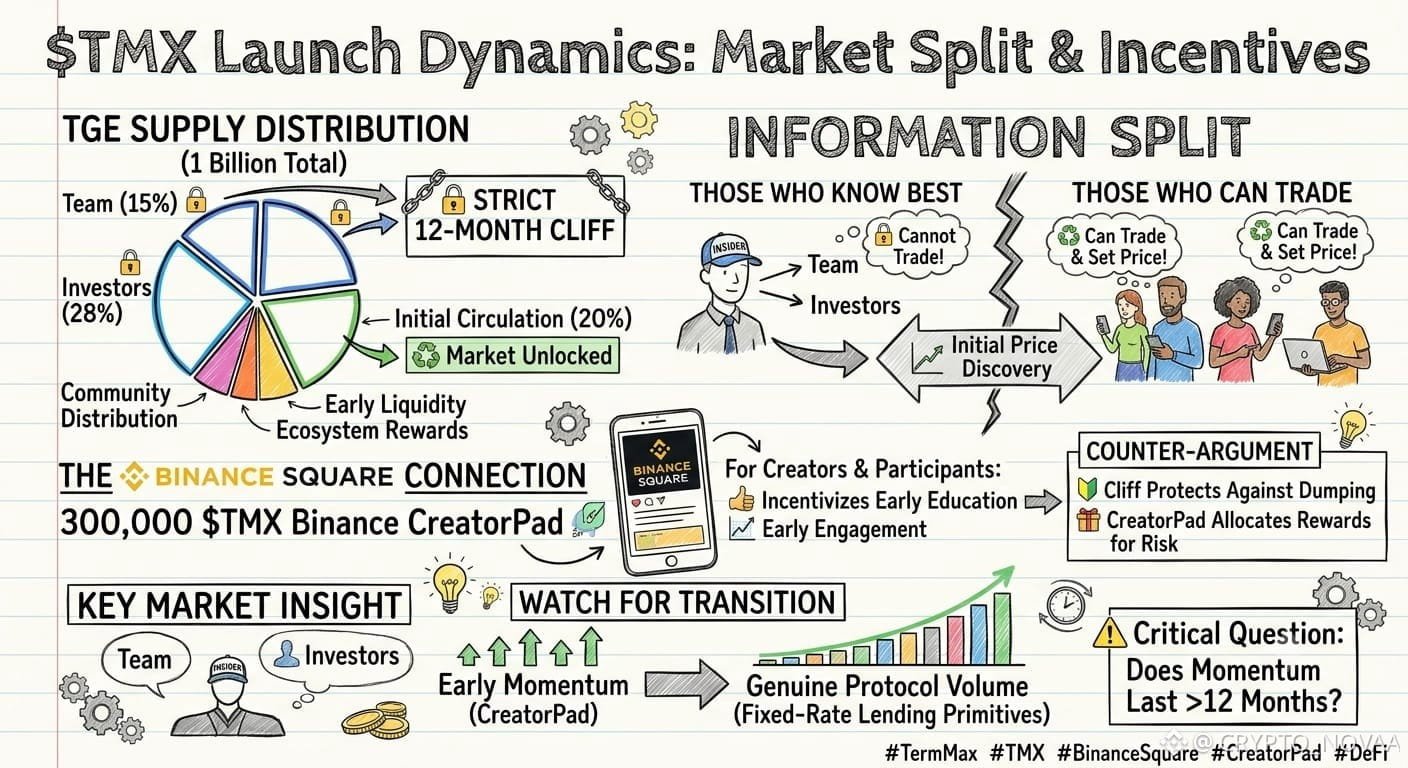
Ao analisar a estrutura do lançamento do $TMX na TermMax, há uma dinâmica de mercado clara se desenrolando em torno do seu TGE: 20% da oferta de 1 bilhão entra em circulação imediatamente, enquanto a Equipe (15%) e os Investidores (28%) ficam bloqueados sob um rigoroso cliff de 12 meses.
Isso cria uma divisão interessante de informações entre aqueles que conhecem melhor as operações internas e aqueles que, de fato, conseguem negociar. O float inicial principalmente serve para liquidez no início, recompensas do ecossistema e distribuição para a comunidade — destacadas por iniciativas como a campanha de 300.000 $TMX no Binance CreatorPad na Binance Square.
Para criadores e participantes iniciais, o CreatorPad incentiva educação e engajamento no início. No entanto, do ponto de vista do mercado, a descoberta inicial de preço reflete o sentimento do grupo inicialmente desbloqueado em vez de uma demanda de longo prazo comprovada para primitivas de empréstimo com taxa fixa.
Contra-argumento: cliffs obrigatórios protegem contra dump precoce, enquanto as alocações do CreatorPad compensam os early adopters por assumirem o risco inicial do protocolo.
Vale a pena observar se o impulso inicial do CreatorPad se transforma em um volume real de protocolo de taxa fixa antes de o cliff de 12 meses expirar.
#TermMax #TMX #BinanceSquare #CreatorPad #DeFi
#termmax @termmax
Ao analisar a estrutura do lançamento do $TMX na TermMax, há uma dinâmica de mercado clara se desenrolando em torno do seu TGE: 20% da oferta de 1 bilhão entra em circulação imediatamente, enquanto a Equipe (15%) e os Investidores (28%) ficam bloqueados sob um rigoroso cliff de 12 meses.
Isso cria uma divisão interessante de informações entre aqueles que conhecem melhor as operações internas e aqueles que, de fato, conseguem negociar. O float inicial principalmente serve para liquidez no início, recompensas do ecossistema e distribuição para a comunidade — destacadas por iniciativas como a campanha de 300.000 $TMX no Binance CreatorPad na Binance Square.
Para criadores e participantes iniciais, o CreatorPad incentiva educação e engajamento no início. No entanto, do ponto de vista do mercado, a descoberta inicial de preço reflete o sentimento do grupo inicialmente desbloqueado em vez de uma demanda de longo prazo comprovada para primitivas de empréstimo com taxa fixa.
Contra-argumento: cliffs obrigatórios protegem contra dump precoce, enquanto as alocações do CreatorPad compensam os early adopters por assumirem o risco inicial do protocolo.
Vale a pena observar se o impulso inicial do CreatorPad se transforma em um volume real de protocolo de taxa fixa antes de o cliff de 12 meses expirar.
#TermMax #TMX #BinanceSquare #CreatorPad #DeFi
#termmax @TermMax
Isso cria uma divisão interessante de informações entre aqueles que conhecem melhor as operações internas e aqueles que, de fato, conseguem negociar. O float inicial principalmente serve para liquidez no início, recompensas do ecossistema e distribuição para a comunidade — destacadas por iniciativas como a campanha de 300.000 $TMX no Binance CreatorPad na Binance Square.
Para criadores e participantes iniciais, o CreatorPad incentiva educação e engajamento no início. No entanto, do ponto de vista do mercado, a descoberta inicial de preço reflete o sentimento do grupo inicialmente desbloqueado em vez de uma demanda de longo prazo comprovada para primitivas de empréstimo com taxa fixa.
Contra-argumento: cliffs obrigatórios protegem contra dump precoce, enquanto as alocações do CreatorPad compensam os early adopters por assumirem o risco inicial do protocolo.
Vale a pena observar se o impulso inicial do CreatorPad se transforma em um volume real de protocolo de taxa fixa antes de o cliff de 12 meses expirar.
#TermMax #TMX #BinanceSquare #CreatorPad #DeFi
#termmax @TermMax
69
·
--
#dusk
Algo pequeno na arquitetura de Dusk me fez pausar.
A pilha de produtos atualmente conta uma história mais matizada do que o usual “Dusk está construindo uma cadeia de privacidade compatível com EVM”.
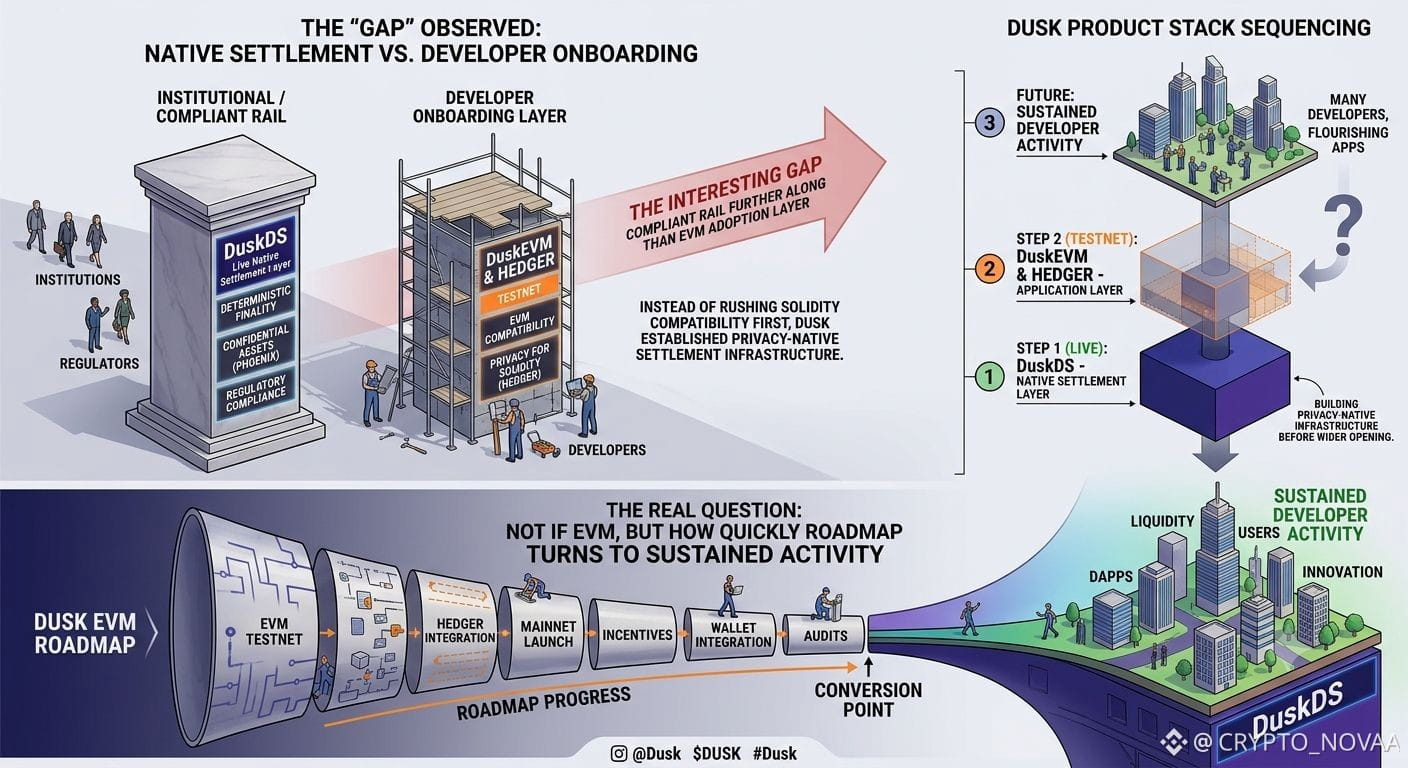
O DuskDS já está em funcionamento como a camada nativa de liquidação, enquanto o DuskEVM e o Hedger ainda estão marcados como testnet.
Essa ordem realmente faz sentido.
Em vez de correr para compatibilidade com Solidity primeiro, parece que a Dusk está estabelecendo a infraestrutura nativa de liquidação com privacidade antes de abrir mais a porta para desenvolvedores de EVM.
Mas isso também cria uma lacuna interessante: o trilho institucional/compliant está mais adiantado do que a camada de onboarding de desenvolvedores com a qual a maioria das pessoas associa a adoção de EVM.
Então, a pergunta real para mim não é se a Dusk tem um roadmap de EVM.
É a rapidez com que esse roadmap se transforma em atividade sustentada de desenvolvedores.
$DUSK @Dusk_Foundation
#dusk
Algo pequeno na arquitetura de Dusk me fez pausar.
A pilha de produtos atualmente conta uma história mais matizada do que o usual “Dusk está construindo uma cadeia de privacidade compatível com EVM”.
O DuskDS já está em funcionamento como a camada nativa de liquidação, enquanto o DuskEVM e o Hedger ainda estão marcados como testnet.
Essa ordem realmente faz sentido.
Em vez de correr para compatibilidade com Solidity primeiro, parece que a Dusk está estabelecendo a infraestrutura nativa de liquidação com privacidade antes de abrir mais a porta para desenvolvedores de EVM.
Mas isso também cria uma lacuna interessante: o trilho institucional/compliant está mais adiantado do que a camada de onboarding de desenvolvedores com a qual a maioria das pessoas associa a adoção de EVM.
Então, a pergunta real para mim não é se a Dusk tem um roadmap de EVM.
É a rapidez com que esse roadmap se transforma em atividade sustentada de desenvolvedores.
$DUSK @Dusk
Algo pequeno na arquitetura de Dusk me fez pausar.
A pilha de produtos atualmente conta uma história mais matizada do que o usual “Dusk está construindo uma cadeia de privacidade compatível com EVM”.
O DuskDS já está em funcionamento como a camada nativa de liquidação, enquanto o DuskEVM e o Hedger ainda estão marcados como testnet.
Essa ordem realmente faz sentido.
Em vez de correr para compatibilidade com Solidity primeiro, parece que a Dusk está estabelecendo a infraestrutura nativa de liquidação com privacidade antes de abrir mais a porta para desenvolvedores de EVM.
Mas isso também cria uma lacuna interessante: o trilho institucional/compliant está mais adiantado do que a camada de onboarding de desenvolvedores com a qual a maioria das pessoas associa a adoção de EVM.
Então, a pergunta real para mim não é se a Dusk tem um roadmap de EVM.
É a rapidez com que esse roadmap se transforma em atividade sustentada de desenvolvedores.
$DUSK @Dusk
61
·
--
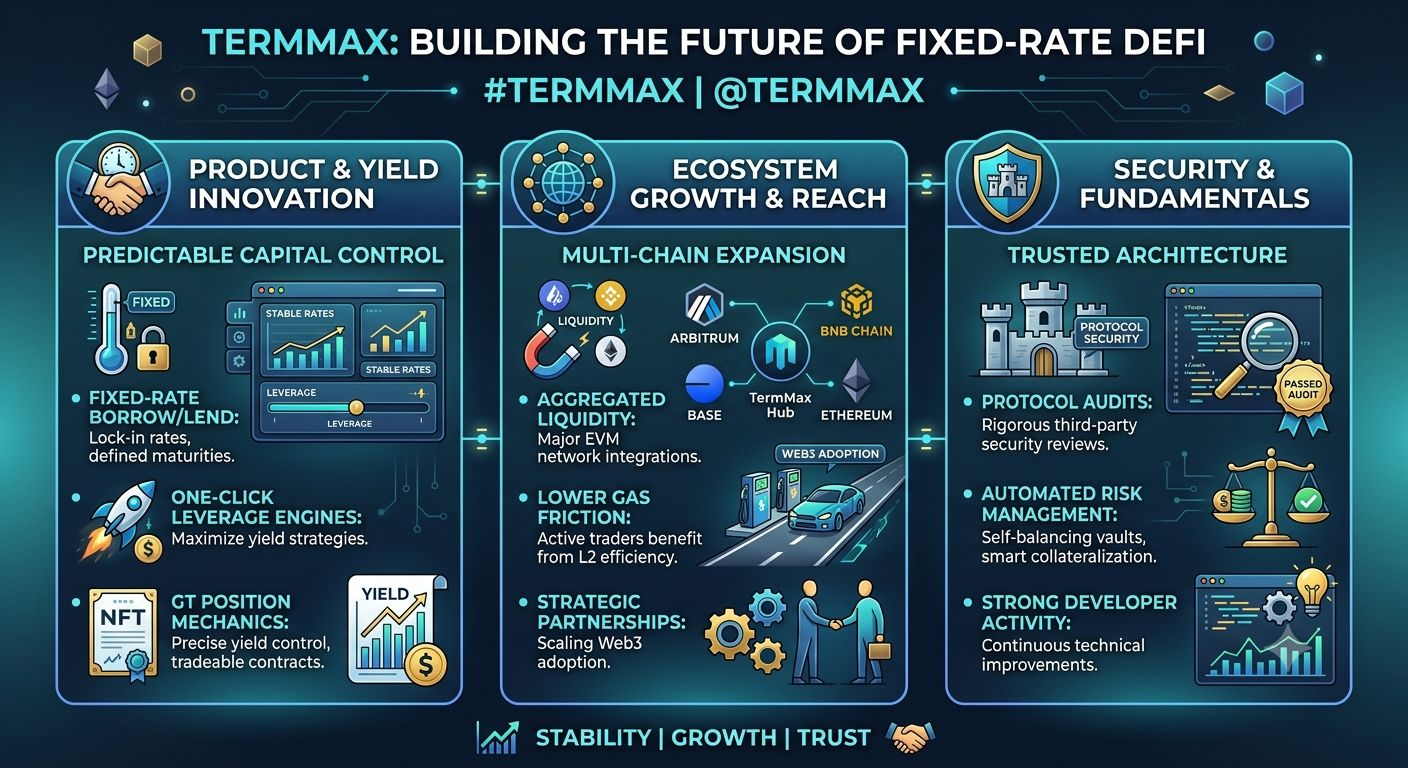
• Produto & Segurança: Atualizações contínuas nos motores de empréstimos com taxa fixa, contratos inteligentes de vault e na arquitetura de liquidação reforçam a estabilidade do projeto. Práticas rigorosas de segurança e previsibilidade de rendimento oferecem aos traders uma base DeFi confiável.
• Ecossistema & Liquidez: Lançamento multi-chain em redes EVM amplia o acesso dos usuários e reduz barreiras de gás. Parcerias estratégicas com agregadores de rendimento e DEXs ajudam a ampliar a utilidade real, impulsionando um crescimento sustentável da Web3.
• Fundamentos do Token: À medida que a adoção cresce entre as cadeias, a integração do token nativo na governança do protocolo e nos mecanismos de taxas cria alinhamento de longo prazo para a comunidade.
#termmax @termmax
• Produto & Segurança: Atualizações contínuas nos motores de empréstimos com taxa fixa, contratos inteligentes de vault e na arquitetura de liquidação reforçam a estabilidade do projeto. Práticas rigorosas de segurança e previsibilidade de rendimento oferecem aos traders uma base DeFi confiável.
• Ecossistema & Liquidez: Lançamento multi-chain em redes EVM amplia o acesso dos usuários e reduz barreiras de gás. Parcerias estratégicas com agregadores de rendimento e DEXs ajudam a ampliar a utilidade real, impulsionando um crescimento sustentável da Web3.
• Fundamentos do Token: À medida que a adoção cresce entre as cadeias, a integração do token nativo na governança do protocolo e nos mecanismos de taxas cria alinhamento de longo prazo para a comunidade.
#termmax @TermMax
• Ecossistema & Liquidez: Lançamento multi-chain em redes EVM amplia o acesso dos usuários e reduz barreiras de gás. Parcerias estratégicas com agregadores de rendimento e DEXs ajudam a ampliar a utilidade real, impulsionando um crescimento sustentável da Web3.
• Fundamentos do Token: À medida que a adoção cresce entre as cadeias, a integração do token nativo na governança do protocolo e nos mecanismos de taxas cria alinhamento de longo prazo para a comunidade.
#termmax @TermMax
73
·
--
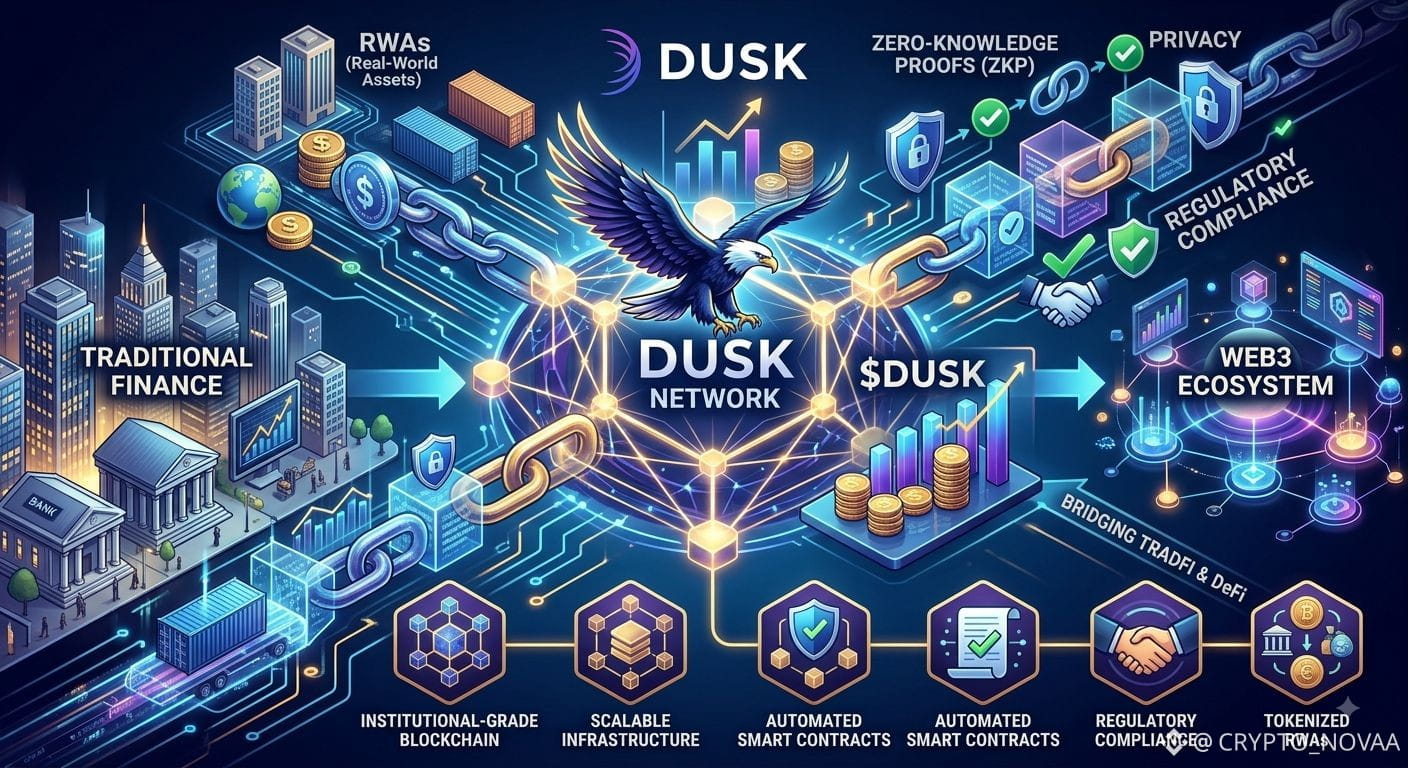
O futuro das finanças descentralizadas exige tanto privacidade robusta quanto total conformidade regulatória, e @Dusk está liderando a iniciativa com sua revolucionária infraestrutura de blockchain Layer-1. Desenvolvida especificamente para aplicações financeiras de nível institucional, $DUSK integra tecnologia avançada de Provas de Conhecimento Zero (ZKP) para permitir que usuários e instituições transacionem com segurança, mantendo rigorosa confidencialidade dos dados sem abrir mão da conformidade.
Ao fazer a ponte entre as finanças tradicionais (TradFi) e os protocolos do ecossistema descentralizado, a Dusk permite que ativos do mundo real (RWAs) sejam tokenizados com segurança on-chain. Isso traz enorme liquidez e confiança para o espaço Web3, garantindo que dados financeiros sensíveis permaneçam completamente privados contra olhares não autorizados.
Se você está buscando contratos inteligentes automatizados com privacidade preservada ou uma infraestrutura institucional escalável, a inovação por trás deste projeto está estabelecendo um novo padrão para as modernas finanças digitais. Animado para ver o ecossistema se expandir e impulsionar a próxima onda de adoção de Web3 em conformidade! #dusk
#dusk $DUSK @Dusk_Foundation
O futuro das finanças descentralizadas exige tanto privacidade robusta quanto total conformidade regulatória, e @Dusk está liderando a iniciativa com sua revolucionária infraestrutura de blockchain Layer-1. Desenvolvida especificamente para aplicações financeiras de nível institucional, $DUSK integra tecnologia avançada de Provas de Conhecimento Zero (ZKP) para permitir que usuários e instituições transacionem com segurança, mantendo rigorosa confidencialidade dos dados sem abrir mão da conformidade.
Ao fazer a ponte entre as finanças tradicionais (TradFi) e os protocolos do ecossistema descentralizado, a Dusk permite que ativos do mundo real (RWAs) sejam tokenizados com segurança on-chain. Isso traz enorme liquidez e confiança para o espaço Web3, garantindo que dados financeiros sensíveis permaneçam completamente privados contra olhares não autorizados.
Se você está buscando contratos inteligentes automatizados com privacidade preservada ou uma infraestrutura institucional escalável, a inovação por trás deste projeto está estabelecendo um novo padrão para as modernas finanças digitais. Animado para ver o ecossistema se expandir e impulsionar a próxima onda de adoção de Web3 em conformidade! #dusk
#dusk $DUSK @Dusk
Ao fazer a ponte entre as finanças tradicionais (TradFi) e os protocolos do ecossistema descentralizado, a Dusk permite que ativos do mundo real (RWAs) sejam tokenizados com segurança on-chain. Isso traz enorme liquidez e confiança para o espaço Web3, garantindo que dados financeiros sensíveis permaneçam completamente privados contra olhares não autorizados.
Se você está buscando contratos inteligentes automatizados com privacidade preservada ou uma infraestrutura institucional escalável, a inovação por trás deste projeto está estabelecendo um novo padrão para as modernas finanças digitais. Animado para ver o ecossistema se expandir e impulsionar a próxima onda de adoção de Web3 em conformidade! #dusk
#dusk $DUSK @Dusk
70
·
--
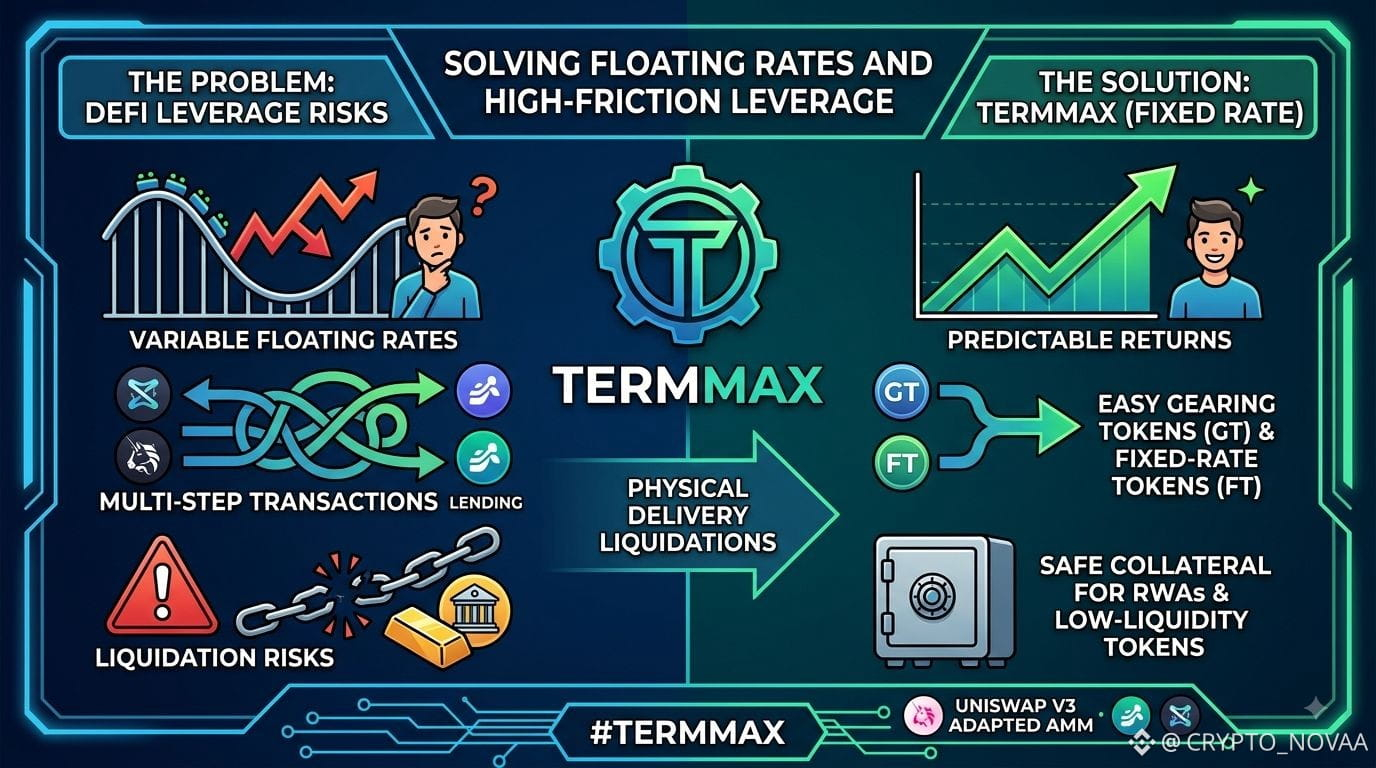
Se você está cansado dos riscos de taxa flutuante e da alavancagem DeFi com alto atrito, @termmax traz uma solução muito necessária para o setor.
O Problema: O tradicional yield looping exige transações complexas em múltiplas etapas por vários protocolos, expondo os usuários à imprevisibilidade da taxa de juros flutuante e a curvas de preços rígidas de AMM. Os credores também enfrentam riscos de liquidação quando os ativos dados como garantia não possuem liquidez suficiente.
A Solução TermMax: Alimentado por um modelo de AMM Uniswap V3 adaptado, o TermMax fornece termos fixos de empréstimo e de concessão de crédito por meio de ordens de faixa personalizáveis. Os usuários desfrutam de retornos previsíveis com negociações simples de Token de Gearing (GT) e Token de Taxa Fixa (FT). Além disso, liquidações com entrega física liberam a garantia com mais segurança para RWAs e reduzem a liquidez dos tokens. #TermMax
#termmax @termmax
Se você está cansado dos riscos de taxa flutuante e da alavancagem DeFi com alto atrito, @TermMax traz uma solução muito necessária para o setor.
O Problema: O tradicional yield looping exige transações complexas em múltiplas etapas por vários protocolos, expondo os usuários à imprevisibilidade da taxa de juros flutuante e a curvas de preços rígidas de AMM. Os credores também enfrentam riscos de liquidação quando os ativos dados como garantia não possuem liquidez suficiente.
A Solução TermMax: Alimentado por um modelo de AMM Uniswap V3 adaptado, o TermMax fornece termos fixos de empréstimo e de concessão de crédito por meio de ordens de faixa personalizáveis. Os usuários desfrutam de retornos previsíveis com negociações simples de Token de Gearing (GT) e Token de Taxa Fixa (FT). Além disso, liquidações com entrega física liberam a garantia com mais segurança para RWAs e reduzem a liquidez dos tokens. #TermMax
#termmax @TermMax
O Problema: O tradicional yield looping exige transações complexas em múltiplas etapas por vários protocolos, expondo os usuários à imprevisibilidade da taxa de juros flutuante e a curvas de preços rígidas de AMM. Os credores também enfrentam riscos de liquidação quando os ativos dados como garantia não possuem liquidez suficiente.
A Solução TermMax: Alimentado por um modelo de AMM Uniswap V3 adaptado, o TermMax fornece termos fixos de empréstimo e de concessão de crédito por meio de ordens de faixa personalizáveis. Os usuários desfrutam de retornos previsíveis com negociações simples de Token de Gearing (GT) e Token de Taxa Fixa (FT). Além disso, liquidações com entrega física liberam a garantia com mais segurança para RWAs e reduzem a liquidez dos tokens. #TermMax
#termmax @TermMax
53
·
--
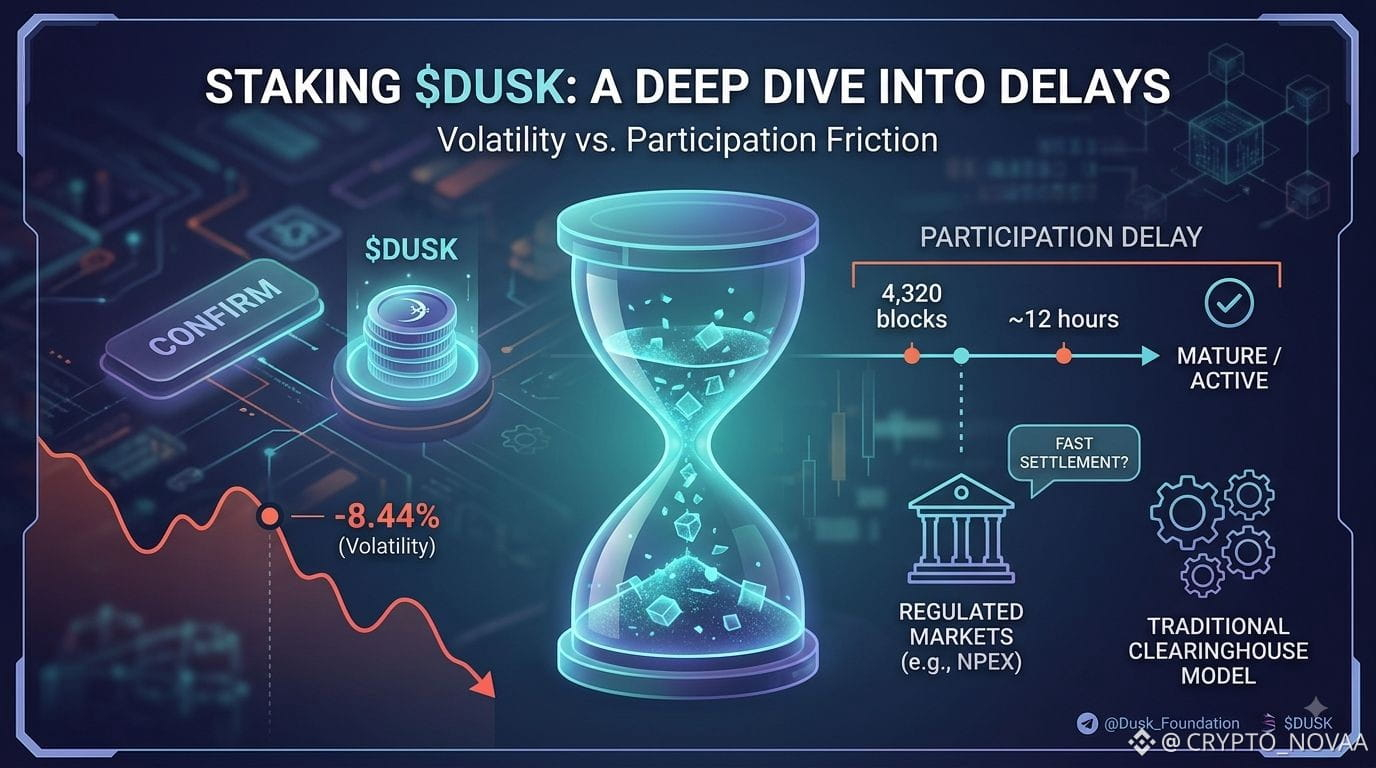
Apostei uma quantidade pequena de $DUSK durante uma tarefa recente #dusk para ver o que acontece depois de clicar em confirmar. Queda de ~8,44% na semana passada — volatilidade cripto padrão, não pânico. O que realmente se destacou foi o atraso na participação.
Uma nova aposta leva 4.320 blocos (~12 horas) para amadurecer antes de se tornar ativa. O mesmo vale para pools de Hyperstaking. Reabastecer uma aposta existente? Apenas 90% ativam imediatamente; 10% permanecem inativos até o destravamento completo.
É um contraste estranho para uma rede que parece perfeita para liquidação rápida em mercados regulados como a NPEX. Liquidação rápida não significa participação instantânea — parece mais um esquema de lotes de uma câmara de compensação tradicional. A documentação explica isso claramente, mas não está no “hype” do momento. A fricção do varejo ou uma barreira institucional? Ainda estou esperando minha aposta entrar em funcionamento enquanto escrevo isto.
@Dusk_Foundation $DUSK
Apostei uma quantidade pequena de $DUSK durante uma tarefa recente #dusk para ver o que acontece depois de clicar em confirmar. Queda de ~8,44% na semana passada — volatilidade cripto padrão, não pânico. O que realmente se destacou foi o atraso na participação.
Uma nova aposta leva 4.320 blocos (~12 horas) para amadurecer antes de se tornar ativa. O mesmo vale para pools de Hyperstaking. Reabastecer uma aposta existente? Apenas 90% ativam imediatamente; 10% permanecem inativos até o destravamento completo.
É um contraste estranho para uma rede que parece perfeita para liquidação rápida em mercados regulados como a NPEX. Liquidação rápida não significa participação instantânea — parece mais um esquema de lotes de uma câmara de compensação tradicional. A documentação explica isso claramente, mas não está no “hype” do momento. A fricção do varejo ou uma barreira institucional? Ainda estou esperando minha aposta entrar em funcionamento enquanto escrevo isto.
@Dusk $DUSK
Uma nova aposta leva 4.320 blocos (~12 horas) para amadurecer antes de se tornar ativa. O mesmo vale para pools de Hyperstaking. Reabastecer uma aposta existente? Apenas 90% ativam imediatamente; 10% permanecem inativos até o destravamento completo.
É um contraste estranho para uma rede que parece perfeita para liquidação rápida em mercados regulados como a NPEX. Liquidação rápida não significa participação instantânea — parece mais um esquema de lotes de uma câmara de compensação tradicional. A documentação explica isso claramente, mas não está no “hype” do momento. A fricção do varejo ou uma barreira institucional? Ainda estou esperando minha aposta entrar em funcionamento enquanto escrevo isto.
@Dusk $DUSK
65
Inicia sessão para explorar mais conteúdos
Junta-te a utilizadores de criptomoedas de todo o mundo na Binance Square
⚡️ Obtém informações úteis e recentes sobre criptomoedas.
💬 Com a confiança da maior exchange de criptomoedas do mundo.
👍 Descobre perspetivas reais de criadores verificados.
E-mail/Número de telefone
Tópicos em Tendência
BinanceLaunchesBinanceIntelligence
206,343 visualizações
1,856 a discutir
Por que o Binance Intelligence e a estabilidade do BTC estão dominando outubro
hk_Spot
·0 gostos
·543 visualizações
StriveBuys2000BTCFor$169M
9,161 visualizações
89 a discutir
EvernorthXRPTreasuryCompletesSPACMerger
112,216 visualizações
1,109 a discutir