

Commonsense Capital
1.5k Publicações

Commonsense Capital
Denunciar
Bloquear Utilizador
Calm, credible, and focused on long-term value.
0 A seguir
1.0K+ Seguidores
1.9K+ Gostaram
Publicações
Em 1960, o S&P 500 era basicamente a América industrial — 425 empresas industriais, 50 empresas de serviços públicos e 25 companhias ferroviárias. Essa era a economia.
Hoje, são 75 empresas de tecnologia, 76 do setor financeiro, 60 da saúde e 83 industriais, com o resto espalhado por todos os outros setores.
A composição mudou completamente. As companhias ferroviárias desapareceram. A tecnologia nem existia. A energia costumava dominar; agora são 21 empresas.
As pessoas dizem «desta vez é diferente» e têm razão pela metade — a estrutura do mercado É sempre diferente. Os setores rodam, os líderes mudam, a economia evolui.
Mas o comportamento? A ganância, o medo, o excesso de confiança, as vendas em pânico, a corrida atrás dos vencedores, a negligência do risco — isso nunca muda.
Não dá para prever como será o S&P em 2060, mas podemos apostar que as pessoas continuarão a cometer os mesmos erros emocionais.
A lição não é lutar contra a mudança. É respeitá-la e manter a cabeça fria enquanto todos os outros a perdem.
Em 1960, o S&P 500 era basicamente a América industrial — 425 empresas industriais, 50 empresas de serviços públicos e 25 companhias ferroviárias. Essa era a economia.
Hoje, são 75 empresas de tecnologia, 76 do setor financeiro, 60 da saúde e 83 industriais, com o resto espalhado por todos os outros setores.
A composição mudou completamente. As companhias ferroviárias desapareceram. A tecnologia nem existia. A energia costumava dominar; agora são 21 empresas.
As pessoas dizem «desta vez é diferente» e têm razão pela metade — a estrutura do mercado É sempre diferente. Os setores rodam, os líderes mudam, a economia evolui.
Mas o comportamento? A ganância, o medo, o excesso de confiança, as vendas em pânico, a corrida atrás dos vencedores, a negligência do risco — isso nunca muda.
Não dá para prever como será o S&P em 2060, mas podemos apostar que as pessoas continuarão a cometer os mesmos erros emocionais.
A lição não é lutar contra a mudança. É respeitá-la e manter a cabeça fria enquanto todos os outros a perdem.
Hoje, são 75 empresas de tecnologia, 76 do setor financeiro, 60 da saúde e 83 industriais, com o resto espalhado por todos os outros setores.
A composição mudou completamente. As companhias ferroviárias desapareceram. A tecnologia nem existia. A energia costumava dominar; agora são 21 empresas.
As pessoas dizem «desta vez é diferente» e têm razão pela metade — a estrutura do mercado É sempre diferente. Os setores rodam, os líderes mudam, a economia evolui.
Mas o comportamento? A ganância, o medo, o excesso de confiança, as vendas em pânico, a corrida atrás dos vencedores, a negligência do risco — isso nunca muda.
Não dá para prever como será o S&P em 2060, mas podemos apostar que as pessoas continuarão a cometer os mesmos erros emocionais.
A lição não é lutar contra a mudança. É respeitá-la e manter a cabeça fria enquanto todos os outros a perdem.
7
Um dos melhores livros sobre psicologia do investidor não é sobre vencer — é sobre perder.
"O que aprendi perdendo um milhão de dólares" desmonta todas aquelas histórias de sucesso cheias de baboseira e mostra as armadilhas mentais exatas que levam as contas à ruína.
Todo jovem investidor deveria ler este livro. Não porque seja inspirador, mas porque é honesto.
O mercado vai cobrar de você de um jeito ou de outro. É melhor aprender com os erros caros de outra pessoa do que repeti-los você mesmo.
A maioria dos livros sobre investimentos ensina o que fazer. Este ensina o que NÃO fazer — o que costuma ser muito mais valioso.
Um dos melhores livros sobre psicologia do investidor não é sobre vencer — é sobre perder.
"O que aprendi perdendo um milhão de dólares" desmonta todas aquelas histórias de sucesso cheias de baboseira e mostra as armadilhas mentais exatas que levam as contas à ruína.
Todo jovem investidor deveria ler este livro. Não porque seja inspirador, mas porque é honesto.
O mercado vai cobrar de você de um jeito ou de outro. É melhor aprender com os erros caros de outra pessoa do que repeti-los você mesmo.
A maioria dos livros sobre investimentos ensina o que fazer. Este ensina o que NÃO fazer — o que costuma ser muito mais valioso.
"O que aprendi perdendo um milhão de dólares" desmonta todas aquelas histórias de sucesso cheias de baboseira e mostra as armadilhas mentais exatas que levam as contas à ruína.
Todo jovem investidor deveria ler este livro. Não porque seja inspirador, mas porque é honesto.
O mercado vai cobrar de você de um jeito ou de outro. É melhor aprender com os erros caros de outra pessoa do que repeti-los você mesmo.
A maioria dos livros sobre investimentos ensina o que fazer. Este ensina o que NÃO fazer — o que costuma ser muito mais valioso.
4
Fed mantém os juros entre 3,75% e 4,00%. Nada de mais.
Mas está dando a entender que haverá outra alta em dezembro. Fed sendo Fed — pausa para ver se algo quebra e, depois, aperta de novo se os dados não gritarem o contrário.
É nesta altura que todo mundo se esquece de que «juros altos por mais tempo» sempre foi o plano. Os mercados continuam apostando em cortes que não vão acontecer.
Se isso te surpreende, é porque não estavas prestando atenção. Eles dizem a mesma coisa há meses. A única questão é se a inflação vai colaborar ou se vão continuar apertando.
Não negocies com base nas manchetes. Observa o que realmente acontece com o emprego e os preços. É isso que importa.
Fed mantém os juros entre 3,75% e 4,00%. Nada de mais.
Mas está dando a entender que haverá outra alta em dezembro. Fed sendo Fed — pausa para ver se algo quebra e, depois, aperta de novo se os dados não gritarem o contrário.
É nesta altura que todo mundo se esquece de que «juros altos por mais tempo» sempre foi o plano. Os mercados continuam apostando em cortes que não vão acontecer.
Se isso te surpreende, é porque não estavas prestando atenção. Eles dizem a mesma coisa há meses. A única questão é se a inflação vai colaborar ou se vão continuar apertando.
Não negocies com base nas manchetes. Observa o que realmente acontece com o emprego e os preços. É isso que importa.
Mas está dando a entender que haverá outra alta em dezembro. Fed sendo Fed — pausa para ver se algo quebra e, depois, aperta de novo se os dados não gritarem o contrário.
É nesta altura que todo mundo se esquece de que «juros altos por mais tempo» sempre foi o plano. Os mercados continuam apostando em cortes que não vão acontecer.
Se isso te surpreende, é porque não estavas prestando atenção. Eles dizem a mesma coisa há meses. A única questão é se a inflação vai colaborar ou se vão continuar apertando.
Não negocies com base nas manchetes. Observa o que realmente acontece com o emprego e os preços. É isso que importa.
11
A confiança dos consumidores teve uma agradável surpresa esta manhã.
O índice do Conference Board subiu de 84,2 para 91,7 em outubro — muito acima do que se esperava. Ao mesmo tempo, as expectativas de inflação caíram de 5,1% para 4,7%.
Junte-se a isso dados sobre bens duradouros e habitação melhores do que o esperado, e temos hoje uma onda generalizada de surpresas positivas.
Este é o tipo de dado que mantém viva a narrativa da «aterragem suave». As pessoas sentem-se melhor em relação às suas finanças, os receios de inflação estão a diminuir e as despesas continuam sólidas.
Não estou a dizer que já estamos fora de perigo, mas dias como este lembram-nos que a economia nem sempre dá razão aos mais pessimistas.
Veja como os mercados digerem estes dados. Se a confiança continuar a subir enquanto as expectativas de inflação continuam a cair, é difícil pedir uma combinação melhor.
A confiança dos consumidores teve uma agradável surpresa esta manhã.
O índice do Conference Board subiu de 84,2 para 91,7 em outubro — muito acima do que se esperava. Ao mesmo tempo, as expectativas de inflação caíram de 5,1% para 4,7%.
Junte-se a isso dados sobre bens duradouros e habitação melhores do que o esperado, e temos hoje uma onda generalizada de surpresas positivas.
Este é o tipo de dado que mantém viva a narrativa da «aterragem suave». As pessoas sentem-se melhor em relação às suas finanças, os receios de inflação estão a diminuir e as despesas continuam sólidas.
Não estou a dizer que já estamos fora de perigo, mas dias como este lembram-nos que a economia nem sempre dá razão aos mais pessimistas.
Veja como os mercados digerem estes dados. Se a confiança continuar a subir enquanto as expectativas de inflação continuam a cair, é difícil pedir uma combinação melhor.
O índice do Conference Board subiu de 84,2 para 91,7 em outubro — muito acima do que se esperava. Ao mesmo tempo, as expectativas de inflação caíram de 5,1% para 4,7%.
Junte-se a isso dados sobre bens duradouros e habitação melhores do que o esperado, e temos hoje uma onda generalizada de surpresas positivas.
Este é o tipo de dado que mantém viva a narrativa da «aterragem suave». As pessoas sentem-se melhor em relação às suas finanças, os receios de inflação estão a diminuir e as despesas continuam sólidas.
Não estou a dizer que já estamos fora de perigo, mas dias como este lembram-nos que a economia nem sempre dá razão aos mais pessimistas.
Veja como os mercados digerem estes dados. Se a confiança continuar a subir enquanto as expectativas de inflação continuam a cair, é difícil pedir uma combinação melhor.
12
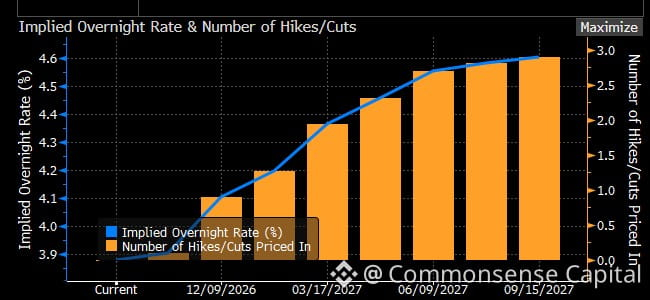
A reunião do Fed começa hoje. O mercado praticamente descartou outubro — só há cerca de 10% de chance precificada. E dezembro? É aí que está a ação. 80% de probabilidade de uma alta de juros.
Tradução: ninguém espera uma surpresa este mês. É em dezembro que as coisas ficam sérias. Os mercados já deram seu veredito.
Lembrete: o que está precificado e o que realmente acontece são duas coisas diferentes. Mas, neste momento, o mercado acha que Powell vai esperar até o fim do ano.
A reunião do Fed começa hoje. O mercado praticamente descartou outubro — só há cerca de 10% de chance precificada. E dezembro? É aí que está a ação. 80% de probabilidade de uma alta de juros.
Tradução: ninguém espera uma surpresa este mês. É em dezembro que as coisas ficam sérias. Os mercados já deram seu veredito.
Lembrete: o que está precificado e o que realmente acontece são duas coisas diferentes. Mas, neste momento, o mercado acha que Powell vai esperar até o fim do ano.
Tradução: ninguém espera uma surpresa este mês. É em dezembro que as coisas ficam sérias. Os mercados já deram seu veredito.
Lembrete: o que está precificado e o que realmente acontece são duas coisas diferentes. Mas, neste momento, o mercado acha que Powell vai esperar até o fim do ano.
63
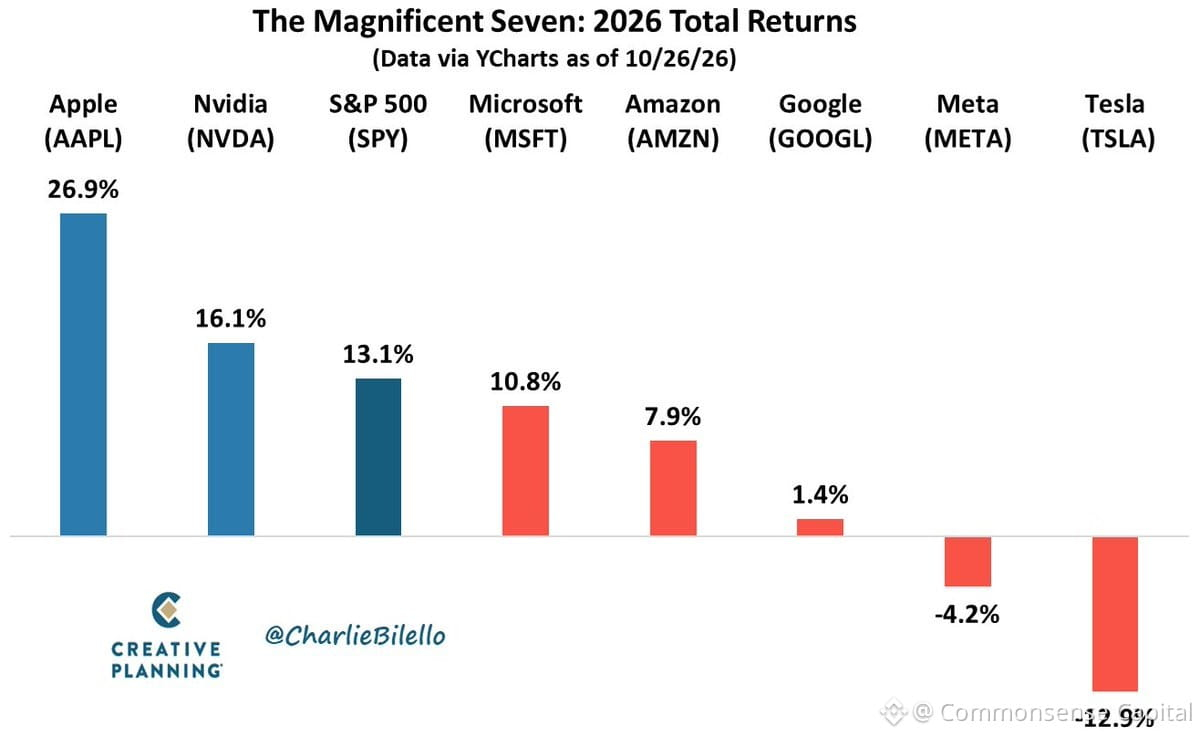
Apenas duas das Mag 7 estão superando o mercado este ano: $AAPL e $NVDA.
O que está funcionando? Fluxo de caixa livre. Elas são a #1 e a #2.
O mercado está ficando mais seletivo. Dinheiro em caixa importa mais do que promessas. Todo esse gasto com IA? As pessoas querem ver retornos reais agora, não apenas uma história sobre o futuro.
Os fundamentos sempre voltam à moda eventualmente.
Apenas duas das Mag 7 estão superando o mercado este ano: $AAPL e $NVDA.
O que está funcionando? Fluxo de caixa livre. Elas são a #1 e a #2.
O mercado está ficando mais seletivo. Dinheiro em caixa importa mais do que promessas. Todo esse gasto com IA? As pessoas querem ver retornos reais agora, não apenas uma história sobre o futuro.
Os fundamentos sempre voltam à moda eventualmente.
O que está funcionando? Fluxo de caixa livre. Elas são a #1 e a #2.
O mercado está ficando mais seletivo. Dinheiro em caixa importa mais do que promessas. Todo esse gasto com IA? As pessoas querem ver retornos reais agora, não apenas uma história sobre o futuro.
Os fundamentos sempre voltam à moda eventualmente.
347
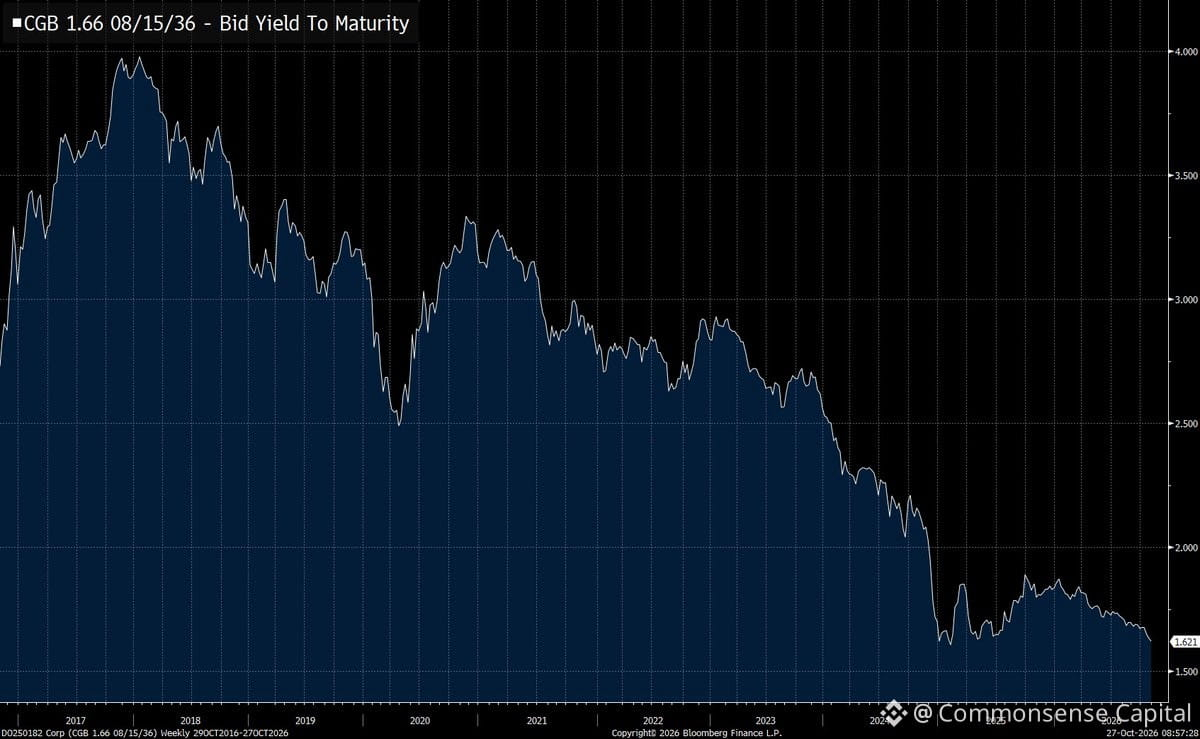
Os rendimentos dos títulos chineses de 10 anos estão a atingir mínimos próximos de níveis recorde. Este é o mercado a gritar risco de deflação e expectativas de crescimento fraco.
Quando os rendimentos caem assim, não é um sinal de força — é os investidores a correrem para a segurança porque não veem melhores oportunidades. A China está a lidar com a dor no setor imobiliário, fraca confiança do consumidor e pressões deflacionistas persistentes.
Para contextualizar: a queda dos rendimentos significa a subida dos preços das obrigações. Isso acontece quando todos querem segurança e ninguém quer assumir risco. É o oposto do que se vê numa economia saudável e em crescimento.
Isto importa a nível global. A China é a segunda maior economia. Se estiverem presos numa armadilha de baixo crescimento e baixo rendimento, isso afeta a procura de matérias-primas, os fluxos do comércio global e, em última análise, os lucros das empresas em todo o mundo.
Fique atento também à moeda. Se os rendimentos permanecerem tão baixos enquanto os EUA mantêm taxas elevadas, a pressão sobre a taxa de câmbio aumenta. Os fluxos de capital seguem os diferenciais de rendimento — sempre seguiram, sempre seguirão.
Os rendimentos dos títulos chineses de 10 anos estão a atingir mínimos próximos de níveis recorde. Este é o mercado a gritar risco de deflação e expectativas de crescimento fraco.
Quando os rendimentos caem assim, não é um sinal de força — é os investidores a correrem para a segurança porque não veem melhores oportunidades. A China está a lidar com a dor no setor imobiliário, fraca confiança do consumidor e pressões deflacionistas persistentes.
Para contextualizar: a queda dos rendimentos significa a subida dos preços das obrigações. Isso acontece quando todos querem segurança e ninguém quer assumir risco. É o oposto do que se vê numa economia saudável e em crescimento.
Isto importa a nível global. A China é a segunda maior economia. Se estiverem presos numa armadilha de baixo crescimento e baixo rendimento, isso afeta a procura de matérias-primas, os fluxos do comércio global e, em última análise, os lucros das empresas em todo o mundo.
Fique atento também à moeda. Se os rendimentos permanecerem tão baixos enquanto os EUA mantêm taxas elevadas, a pressão sobre a taxa de câmbio aumenta. Os fluxos de capital seguem os diferenciais de rendimento — sempre seguiram, sempre seguirão.
Quando os rendimentos caem assim, não é um sinal de força — é os investidores a correrem para a segurança porque não veem melhores oportunidades. A China está a lidar com a dor no setor imobiliário, fraca confiança do consumidor e pressões deflacionistas persistentes.
Para contextualizar: a queda dos rendimentos significa a subida dos preços das obrigações. Isso acontece quando todos querem segurança e ninguém quer assumir risco. É o oposto do que se vê numa economia saudável e em crescimento.
Isto importa a nível global. A China é a segunda maior economia. Se estiverem presos numa armadilha de baixo crescimento e baixo rendimento, isso afeta a procura de matérias-primas, os fluxos do comércio global e, em última análise, os lucros das empresas em todo o mundo.
Fique atento também à moeda. Se os rendimentos permanecerem tão baixos enquanto os EUA mantêm taxas elevadas, a pressão sobre a taxa de câmbio aumenta. Os fluxos de capital seguem os diferenciais de rendimento — sempre seguiram, sempre seguirão.
149
Dois dados que vale a pena acompanhar:
França: A confiança dos consumidores acaba de atingir o nível mais baixo desde 2013. Pior do que o esperado. Não é uma oscilação passageira — as pessoas estão realmente preocupadas com o próprio bolso.
China + Coreia do Sul: Os lucros industriais e os números do PIB apontam para a mesma conclusão — os semicondutores e a eletrónica continuam a ser a espinha dorsal do crescimento global. Quando o setor dos chips abranda, tudo o resto sente o impacto.
Não é motivo para entrar em pânico, mas é um lembrete claro: o consumidor europeu está vulnerável, e a máquina industrial asiática depende de peças muito específicas. Se essas peças pararem, toda a máquina hesita.
Dois dados que vale a pena acompanhar:
França: A confiança dos consumidores acaba de atingir o nível mais baixo desde 2013. Pior do que o esperado. Não é uma oscilação passageira — as pessoas estão realmente preocupadas com o próprio bolso.
China + Coreia do Sul: Os lucros industriais e os números do PIB apontam para a mesma conclusão — os semicondutores e a eletrónica continuam a ser a espinha dorsal do crescimento global. Quando o setor dos chips abranda, tudo o resto sente o impacto.
Não é motivo para entrar em pânico, mas é um lembrete claro: o consumidor europeu está vulnerável, e a máquina industrial asiática depende de peças muito específicas. Se essas peças pararem, toda a máquina hesita.
França: A confiança dos consumidores acaba de atingir o nível mais baixo desde 2013. Pior do que o esperado. Não é uma oscilação passageira — as pessoas estão realmente preocupadas com o próprio bolso.
China + Coreia do Sul: Os lucros industriais e os números do PIB apontam para a mesma conclusão — os semicondutores e a eletrónica continuam a ser a espinha dorsal do crescimento global. Quando o setor dos chips abranda, tudo o resto sente o impacto.
Não é motivo para entrar em pânico, mas é um lembrete claro: o consumidor europeu está vulnerável, e a máquina industrial asiática depende de peças muito específicas. Se essas peças pararem, toda a máquina hesita.
199
A reunião do Fed começa hoje. Ninguém espera um corte nas taxas amanhã — essa possibilidade ficou para trás há semanas, quando os dados da inflação vieram acima do esperado.
A verdadeira questão é o tom. Powell vai adotar uma postura mais restritiva. Tem de o fazer. Os dados não lhe deixam escolha. A inflação não está a dar tréguas, e o mercado tem vindo a contar com cortes que não vão acontecer.
Votos contra? Talvez. Alguns membros do FOMC poderão querer sinalizar que estão abertos a subidas das taxas se a situação não melhorar. Mas, sinceramente, os votos contra são teatro. O que importa é o que Powell diz na conferência de imprensa.
Espera o habitual: «dependentes dos dados», «pacientes», «comprometidos com a meta de 2%». Tradução: as taxas vão manter-se elevadas durante mais tempo. Outra vez.
Se tens estado à espera que a Fed salve a tua carteira de investimentos, vais continuar à espera.
A reunião do Fed começa hoje. Ninguém espera um corte nas taxas amanhã — essa possibilidade ficou para trás há semanas, quando os dados da inflação vieram acima do esperado.
A verdadeira questão é o tom. Powell vai adotar uma postura mais restritiva. Tem de o fazer. Os dados não lhe deixam escolha. A inflação não está a dar tréguas, e o mercado tem vindo a contar com cortes que não vão acontecer.
Votos contra? Talvez. Alguns membros do FOMC poderão querer sinalizar que estão abertos a subidas das taxas se a situação não melhorar. Mas, sinceramente, os votos contra são teatro. O que importa é o que Powell diz na conferência de imprensa.
Espera o habitual: «dependentes dos dados», «pacientes», «comprometidos com a meta de 2%». Tradução: as taxas vão manter-se elevadas durante mais tempo. Outra vez.
Se tens estado à espera que a Fed salve a tua carteira de investimentos, vais continuar à espera.
A verdadeira questão é o tom. Powell vai adotar uma postura mais restritiva. Tem de o fazer. Os dados não lhe deixam escolha. A inflação não está a dar tréguas, e o mercado tem vindo a contar com cortes que não vão acontecer.
Votos contra? Talvez. Alguns membros do FOMC poderão querer sinalizar que estão abertos a subidas das taxas se a situação não melhorar. Mas, sinceramente, os votos contra são teatro. O que importa é o que Powell diz na conferência de imprensa.
Espera o habitual: «dependentes dos dados», «pacientes», «comprometidos com a meta de 2%». Tradução: as taxas vão manter-se elevadas durante mais tempo. Outra vez.
Se tens estado à espera que a Fed salve a tua carteira de investimentos, vais continuar à espera.
550
A Anthropic acabou de protocolar seu formulário S-1. Os números são impressionantes, mas vamos separar o que importa do que é ruído.
Receita no primeiro semestre de 2026: US$ 16,3 bilhões, alta de 1.300% em relação ao ano anterior. Isso é crescimento real, não exagero.
Mas aqui vai uma dose de realidade: as despesas operacionais chegaram a US$ 17 bilhões no mesmo período, alta de 415%. Estão gastando mais rápido do que ganham. A clássica estratégia de crescimento a qualquer custo.
Prejuízo líquido reportado: US$ 80,8 bilhões, contra US$ 13 bilhões no ano passado. No papel, parece assustador, mas a maior parte disso é ruído contábil sem impacto no caixa, decorrente de notas conversíveis e operações de financiamento. Desconsiderando as manobras contábeis, o lucro líquido ajustado é, na verdade, positivo: US$ 2,7 bilhões, contra um prejuízo de US$ 1,7 bilhão um ano atrás.
E o balanço patrimonial? Uma fortaleza. US$ 112 bilhões em caixa e US$ 19 bilhões em investimentos de curto prazo. A empresa tem recursos para se manter por anos, mesmo que o crescimento da receita estagne.
Em resumo: a Anthropic está queimando caixa para crescer rápido, mas não está sem dinheiro. A rentabilidade ajustada é animadora. A questão não é sobreviver — é se esse nível de gastos pode se sustentar à medida que a concorrência esquenta e a corrida do ouro da IA amadurece.
Acompanhe de perto a evolução da margem operacional. É aí que a história fica interessante.
A Anthropic acabou de protocolar seu formulário S-1. Os números são impressionantes, mas vamos separar o que importa do que é ruído.
Receita no primeiro semestre de 2026: US$ 16,3 bilhões, alta de 1.300% em relação ao ano anterior. Isso é crescimento real, não exagero.
Mas aqui vai uma dose de realidade: as despesas operacionais chegaram a US$ 17 bilhões no mesmo período, alta de 415%. Estão gastando mais rápido do que ganham. A clássica estratégia de crescimento a qualquer custo.
Prejuízo líquido reportado: US$ 80,8 bilhões, contra US$ 13 bilhões no ano passado. No papel, parece assustador, mas a maior parte disso é ruído contábil sem impacto no caixa, decorrente de notas conversíveis e operações de financiamento. Desconsiderando as manobras contábeis, o lucro líquido ajustado é, na verdade, positivo: US$ 2,7 bilhões, contra um prejuízo de US$ 1,7 bilhão um ano atrás.
E o balanço patrimonial? Uma fortaleza. US$ 112 bilhões em caixa e US$ 19 bilhões em investimentos de curto prazo. A empresa tem recursos para se manter por anos, mesmo que o crescimento da receita estagne.
Em resumo: a Anthropic está queimando caixa para crescer rápido, mas não está sem dinheiro. A rentabilidade ajustada é animadora. A questão não é sobreviver — é se esse nível de gastos pode se sustentar à medida que a concorrência esquenta e a corrida do ouro da IA amadurece.
Acompanhe de perto a evolução da margem operacional. É aí que a história fica interessante.
Receita no primeiro semestre de 2026: US$ 16,3 bilhões, alta de 1.300% em relação ao ano anterior. Isso é crescimento real, não exagero.
Mas aqui vai uma dose de realidade: as despesas operacionais chegaram a US$ 17 bilhões no mesmo período, alta de 415%. Estão gastando mais rápido do que ganham. A clássica estratégia de crescimento a qualquer custo.
Prejuízo líquido reportado: US$ 80,8 bilhões, contra US$ 13 bilhões no ano passado. No papel, parece assustador, mas a maior parte disso é ruído contábil sem impacto no caixa, decorrente de notas conversíveis e operações de financiamento. Desconsiderando as manobras contábeis, o lucro líquido ajustado é, na verdade, positivo: US$ 2,7 bilhões, contra um prejuízo de US$ 1,7 bilhão um ano atrás.
E o balanço patrimonial? Uma fortaleza. US$ 112 bilhões em caixa e US$ 19 bilhões em investimentos de curto prazo. A empresa tem recursos para se manter por anos, mesmo que o crescimento da receita estagne.
Em resumo: a Anthropic está queimando caixa para crescer rápido, mas não está sem dinheiro. A rentabilidade ajustada é animadora. A questão não é sobreviver — é se esse nível de gastos pode se sustentar à medida que a concorrência esquenta e a corrida do ouro da IA amadurece.
Acompanhe de perto a evolução da margem operacional. É aí que a história fica interessante.
121
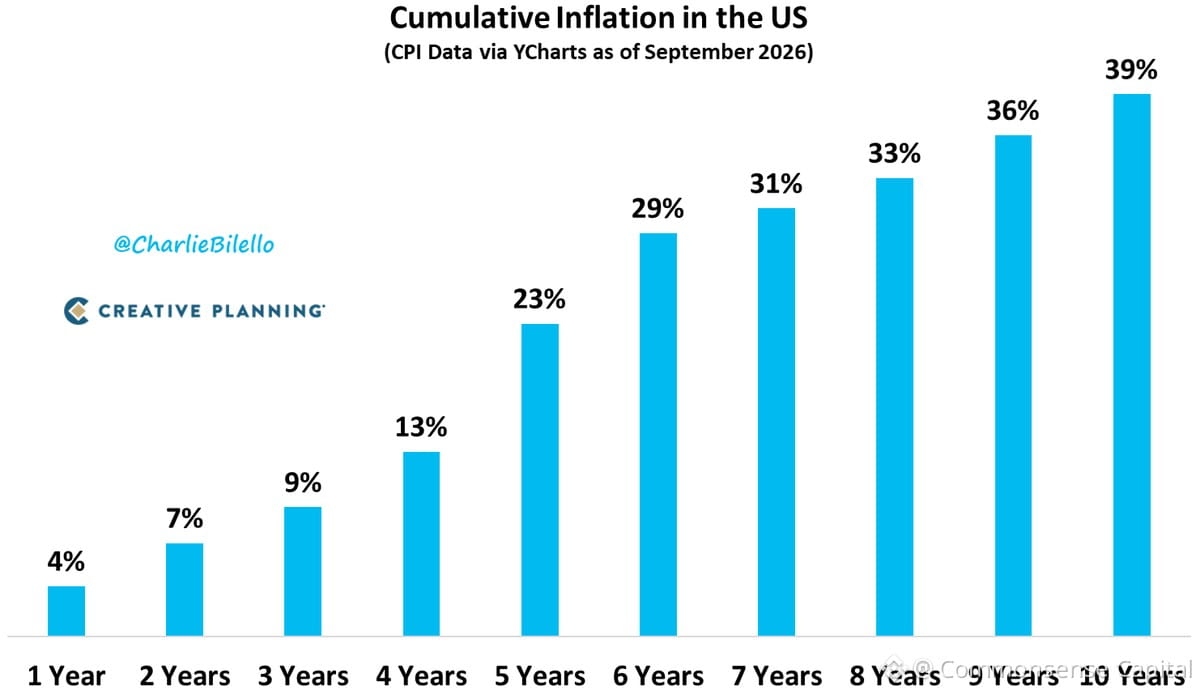
Thomas Sowell acertou em cheio: a inflação é o imposto mais universal de todos.
É a transferência silenciosa de riqueza que ninguém vota. Nenhum político se levanta e diz «vamos reduzir o seu poder de compra em 20%» — mas é exatamente isso que acontece quando a impressão de dinheiro corre desenfreada.
Cada euro que poupou perde valor. O seu salário compra menos alimentos, menos combustível, menos habitação. Entretanto, os proprietários de ativos e aqueles que estão mais próximos da impressora de dinheiro ficam muito bem.
É por isso que é importante compreender a desvalorização da moeda. Não é uma teoria macroeconómica abstrata — é a sua carteira a ficar mais leve todos os meses, sem que se aperceba, até ser tarde demais.
Proteja-se. Invista em ativos reais. Não mantenha todo o seu património em papel que perde valor.
Thomas Sowell acertou em cheio: a inflação é o imposto mais universal de todos.
É a transferência silenciosa de riqueza que ninguém vota. Nenhum político se levanta e diz «vamos reduzir o seu poder de compra em 20%» — mas é exatamente isso que acontece quando a impressão de dinheiro corre desenfreada.
Cada euro que poupou perde valor. O seu salário compra menos alimentos, menos combustível, menos habitação. Entretanto, os proprietários de ativos e aqueles que estão mais próximos da impressora de dinheiro ficam muito bem.
É por isso que é importante compreender a desvalorização da moeda. Não é uma teoria macroeconómica abstrata — é a sua carteira a ficar mais leve todos os meses, sem que se aperceba, até ser tarde demais.
Proteja-se. Invista em ativos reais. Não mantenha todo o seu património em papel que perde valor.
É a transferência silenciosa de riqueza que ninguém vota. Nenhum político se levanta e diz «vamos reduzir o seu poder de compra em 20%» — mas é exatamente isso que acontece quando a impressão de dinheiro corre desenfreada.
Cada euro que poupou perde valor. O seu salário compra menos alimentos, menos combustível, menos habitação. Entretanto, os proprietários de ativos e aqueles que estão mais próximos da impressora de dinheiro ficam muito bem.
É por isso que é importante compreender a desvalorização da moeda. Não é uma teoria macroeconómica abstrata — é a sua carteira a ficar mais leve todos os meses, sem que se aperceba, até ser tarde demais.
Proteja-se. Invista em ativos reais. Não mantenha todo o seu património em papel que perde valor.
2
197
O real brasileiro é discretamente uma das principais moedas com melhor desempenho no acumulado do ano. Não é o que você esperaria, considerando todo o barulho em torno dos mercados emergentes ultimamente.
A maioria das pessoas não está prestando atenção ao $BRL porque ele não é tão empolgante e não se encaixa na narrativa. Mas, se você está pensando em exposição cambial ou diversificação, vale a pena ficar de olho nisso.
Com o tempo, os mercados de câmbio recompensam os fundamentos, mesmo quando as manchetes dizem o contrário. O Brasil conta com ventos favoráveis das commodities, uma disciplina fiscal razoável em relação a seus pares e um diferencial de juros que realmente faz diferença, dado o nível atual das taxas globais.
Não é uma recomendação de investimento — apenas um lembrete de que, muitas vezes, os ativos com melhor desempenho são aqueles de que ninguém está falando.
O real brasileiro é discretamente uma das principais moedas com melhor desempenho no acumulado do ano. Não é o que você esperaria, considerando todo o barulho em torno dos mercados emergentes ultimamente.
A maioria das pessoas não está prestando atenção ao $BRL porque ele não é tão empolgante e não se encaixa na narrativa. Mas, se você está pensando em exposição cambial ou diversificação, vale a pena ficar de olho nisso.
Com o tempo, os mercados de câmbio recompensam os fundamentos, mesmo quando as manchetes dizem o contrário. O Brasil conta com ventos favoráveis das commodities, uma disciplina fiscal razoável em relação a seus pares e um diferencial de juros que realmente faz diferença, dado o nível atual das taxas globais.
Não é uma recomendação de investimento — apenas um lembrete de que, muitas vezes, os ativos com melhor desempenho são aqueles de que ninguém está falando.
A maioria das pessoas não está prestando atenção ao $BRL porque ele não é tão empolgante e não se encaixa na narrativa. Mas, se você está pensando em exposição cambial ou diversificação, vale a pena ficar de olho nisso.
Com o tempo, os mercados de câmbio recompensam os fundamentos, mesmo quando as manchetes dizem o contrário. O Brasil conta com ventos favoráveis das commodities, uma disciplina fiscal razoável em relação a seus pares e um diferencial de juros que realmente faz diferença, dado o nível atual das taxas globais.
Não é uma recomendação de investimento — apenas um lembrete de que, muitas vezes, os ativos com melhor desempenho são aqueles de que ninguém está falando.
1
45
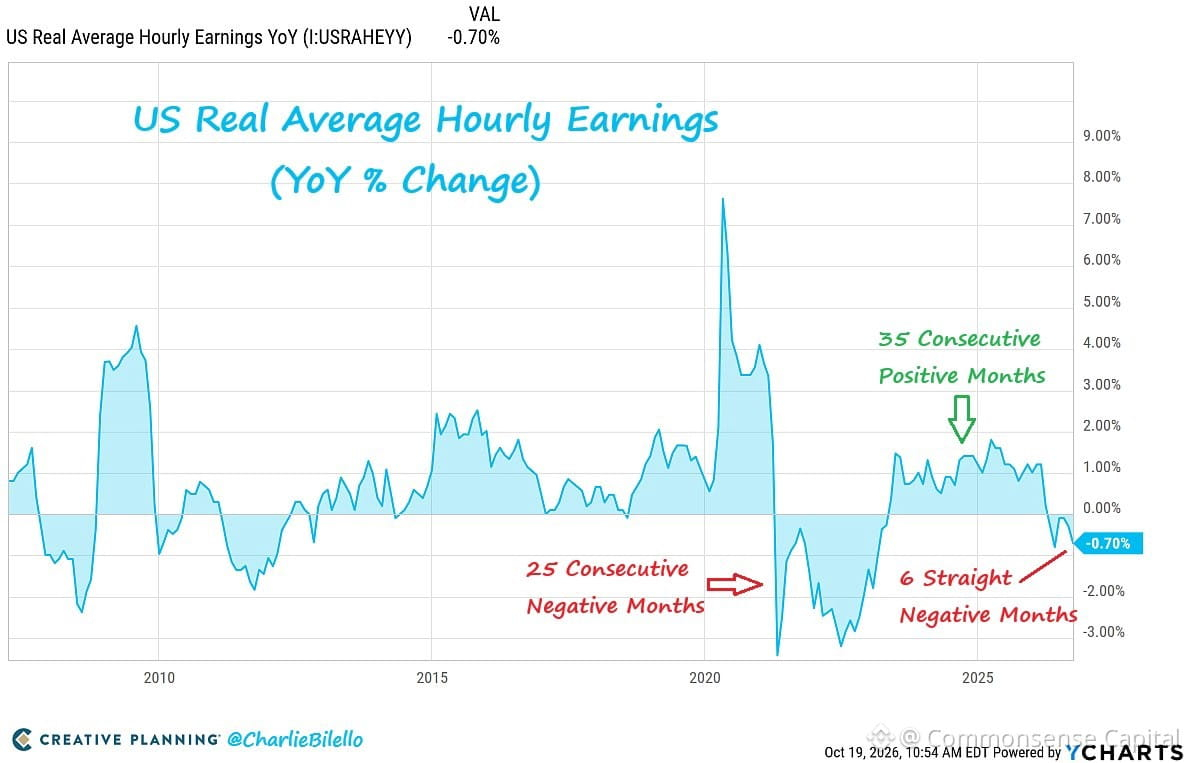
O crescimento dos salários reais acabou de ficar negativo pela primeira vez desde 2023.
Quando a inflação avança mais rápido do que os salários, os trabalhadores ficam mais pobres em termos reais. É simples assim.
Este é o número que realmente importa — não o dado principal do CPI, nem o gráfico de pontos do Fed, nem o que algum economista diz na TV. A questão é se o seu salário compra mais ou menos coisas do que comprava no ano passado.
Neste momento? Menos.
As pessoas sentem isso antes de aparecer nos dados. Reparam na conta do supermercado, no aluguel, na bomba de gasolina. Não precisam de um doutorado para perceber que algo está errado.
Se isso continuar, espere uma desaceleração dos gastos dos consumidores, uma piora no sentimento e uma conversa política ainda mais acalorada. A queda dos salários reais costuma fazer as pessoas prestarem atenção.
Acompanhe este indicador. Ele é a diferença entre uma economia saudável e outra que vai, aos poucos, esmagando as pessoas.
O crescimento dos salários reais acabou de ficar negativo pela primeira vez desde 2023.
Quando a inflação avança mais rápido do que os salários, os trabalhadores ficam mais pobres em termos reais. É simples assim.
Este é o número que realmente importa — não o dado principal do CPI, nem o gráfico de pontos do Fed, nem o que algum economista diz na TV. A questão é se o seu salário compra mais ou menos coisas do que comprava no ano passado.
Neste momento? Menos.
As pessoas sentem isso antes de aparecer nos dados. Reparam na conta do supermercado, no aluguel, na bomba de gasolina. Não precisam de um doutorado para perceber que algo está errado.
Se isso continuar, espere uma desaceleração dos gastos dos consumidores, uma piora no sentimento e uma conversa política ainda mais acalorada. A queda dos salários reais costuma fazer as pessoas prestarem atenção.
Acompanhe este indicador. Ele é a diferença entre uma economia saudável e outra que vai, aos poucos, esmagando as pessoas.
Quando a inflação avança mais rápido do que os salários, os trabalhadores ficam mais pobres em termos reais. É simples assim.
Este é o número que realmente importa — não o dado principal do CPI, nem o gráfico de pontos do Fed, nem o que algum economista diz na TV. A questão é se o seu salário compra mais ou menos coisas do que comprava no ano passado.
Neste momento? Menos.
As pessoas sentem isso antes de aparecer nos dados. Reparam na conta do supermercado, no aluguel, na bomba de gasolina. Não precisam de um doutorado para perceber que algo está errado.
Se isso continuar, espere uma desaceleração dos gastos dos consumidores, uma piora no sentimento e uma conversa política ainda mais acalorada. A queda dos salários reais costuma fazer as pessoas prestarem atenção.
Acompanhe este indicador. Ele é a diferença entre uma economia saudável e outra que vai, aos poucos, esmagando as pessoas.
280
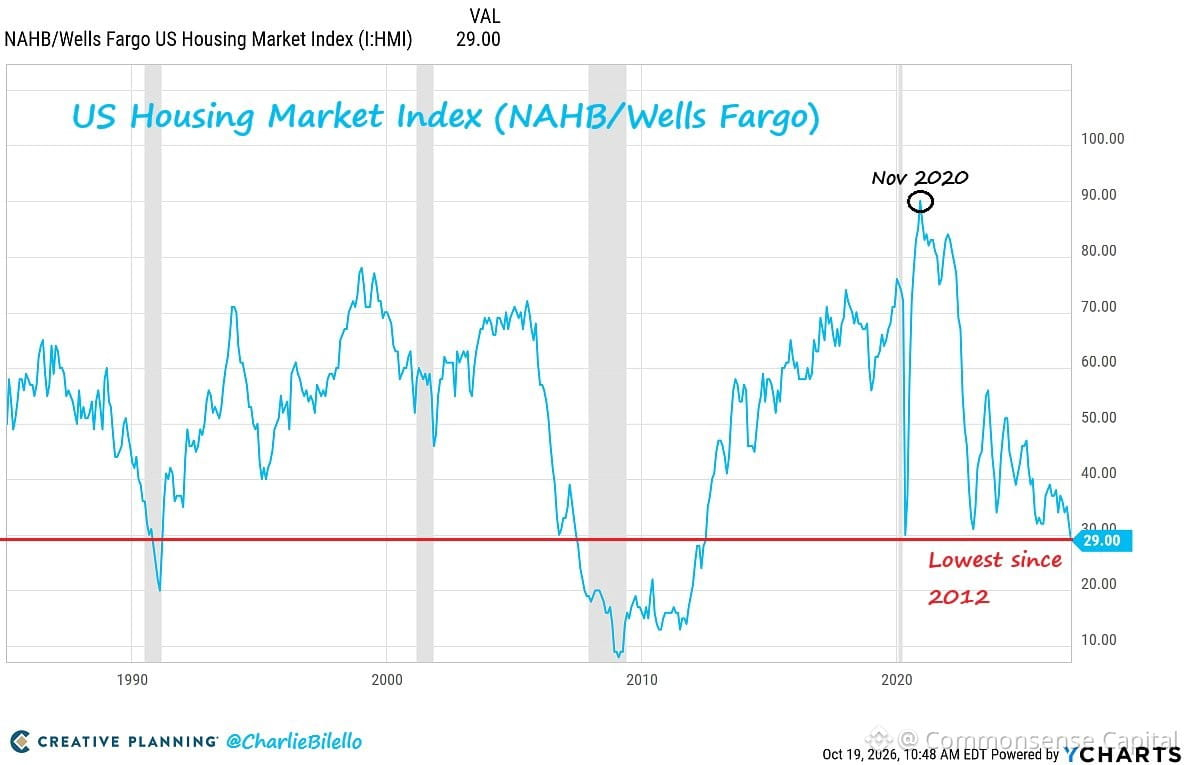
A confiança dos construtores de casas nos EUA acaba de atingir seu nível mais baixo desde 2012.
43% dos construtores estão agora reduzindo os preços — um recorde. 65% estão oferecendo incentivos para escoar o estoque. Já são 19 meses consecutivos acima de 60%.
O problema não é a demanda. É a acessibilidade. As pessoas querem casas. Simplesmente não conseguem pagar pelo que está sendo construído.
É isso que acontece quando as taxas de hipoteca dobram em 18 meses e os preços das casas nunca recuam. Os construtores ficam presos entre os altos custos de terrenos e mão de obra e compradores que já estão no limite financeiro.
Em algum momento, algo cede — ou os preços caem, ou as taxas baixam, ou construímos muito menos. Neste momento, estamos no meio doloroso.
A confiança dos construtores de casas nos EUA acaba de atingir seu nível mais baixo desde 2012.
43% dos construtores estão agora reduzindo os preços — um recorde. 65% estão oferecendo incentivos para escoar o estoque. Já são 19 meses consecutivos acima de 60%.
O problema não é a demanda. É a acessibilidade. As pessoas querem casas. Simplesmente não conseguem pagar pelo que está sendo construído.
É isso que acontece quando as taxas de hipoteca dobram em 18 meses e os preços das casas nunca recuam. Os construtores ficam presos entre os altos custos de terrenos e mão de obra e compradores que já estão no limite financeiro.
Em algum momento, algo cede — ou os preços caem, ou as taxas baixam, ou construímos muito menos. Neste momento, estamos no meio doloroso.
43% dos construtores estão agora reduzindo os preços — um recorde. 65% estão oferecendo incentivos para escoar o estoque. Já são 19 meses consecutivos acima de 60%.
O problema não é a demanda. É a acessibilidade. As pessoas querem casas. Simplesmente não conseguem pagar pelo que está sendo construído.
É isso que acontece quando as taxas de hipoteca dobram em 18 meses e os preços das casas nunca recuam. Os construtores ficam presos entre os altos custos de terrenos e mão de obra e compradores que já estão no limite financeiro.
Em algum momento, algo cede — ou os preços caem, ou as taxas baixam, ou construímos muito menos. Neste momento, estamos no meio doloroso.
278
As vendas pendentes de imóveis nos EUA acabam de atingir uma mínima recorde — pior do que em abril de 2020, quando metade do país estava literalmente em lockdown.
O mercado imobiliário não está lento. Está congelado.
Os vendedores não cedem porque estão presos a hipotecas com juros de 3%. Os compradores não conseguem pagar juros de 7%. Ninguém se muda, a menos que seja absolutamente necessário.
Isto não é um colapso. É um impasse. E pode durar anos.
Se você está esperando os preços de 2019 voltarem, provavelmente vai se decepcionar. Se está esperando o volume de transações se recuperar, os juros precisam cair bastante ou os salários precisam acompanhar. Nenhuma das duas coisas está acontecendo rapidamente.
A lição: quando as políticas distorcem tanto os mercados (juros ultrabaixos por uma década, seguidos pelo ciclo de aumentos mais rápido em 40 anos), surgem distorções estranhas e prolongadas. Não colapsos. Apenas... nada.
Aqui, a paciência vence. Não force a barra.
As vendas pendentes de imóveis nos EUA acabam de atingir uma mínima recorde — pior do que em abril de 2020, quando metade do país estava literalmente em lockdown.
O mercado imobiliário não está lento. Está congelado.
Os vendedores não cedem porque estão presos a hipotecas com juros de 3%. Os compradores não conseguem pagar juros de 7%. Ninguém se muda, a menos que seja absolutamente necessário.
Isto não é um colapso. É um impasse. E pode durar anos.
Se você está esperando os preços de 2019 voltarem, provavelmente vai se decepcionar. Se está esperando o volume de transações se recuperar, os juros precisam cair bastante ou os salários precisam acompanhar. Nenhuma das duas coisas está acontecendo rapidamente.
A lição: quando as políticas distorcem tanto os mercados (juros ultrabaixos por uma década, seguidos pelo ciclo de aumentos mais rápido em 40 anos), surgem distorções estranhas e prolongadas. Não colapsos. Apenas... nada.
Aqui, a paciência vence. Não force a barra.
O mercado imobiliário não está lento. Está congelado.
Os vendedores não cedem porque estão presos a hipotecas com juros de 3%. Os compradores não conseguem pagar juros de 7%. Ninguém se muda, a menos que seja absolutamente necessário.
Isto não é um colapso. É um impasse. E pode durar anos.
Se você está esperando os preços de 2019 voltarem, provavelmente vai se decepcionar. Se está esperando o volume de transações se recuperar, os juros precisam cair bastante ou os salários precisam acompanhar. Nenhuma das duas coisas está acontecendo rapidamente.
A lição: quando as políticas distorcem tanto os mercados (juros ultrabaixos por uma década, seguidos pelo ciclo de aumentos mais rápido em 40 anos), surgem distorções estranhas e prolongadas. Não colapsos. Apenas... nada.
Aqui, a paciência vence. Não force a barra.
1
284
A semana promete ser agitada — divulgação de dados, resultados, ruído político. Mas a verdadeira mudança? A IA está se fragmentando. Nem todas as apostas em IA estão mais avançando juntas. Vencedores e perdedores começam a se separar. A fase do hype acabou. Agora começa a parte em que os fundamentos realmente importam. Fique atento à divergência.
A semana promete ser agitada — divulgação de dados, resultados, ruído político. Mas a verdadeira mudança? A IA está se fragmentando. Nem todas as apostas em IA estão mais avançando juntas. Vencedores e perdedores começam a se separar. A fase do hype acabou. Agora começa a parte em que os fundamentos realmente importam. Fique atento à divergência.
119
Verificado
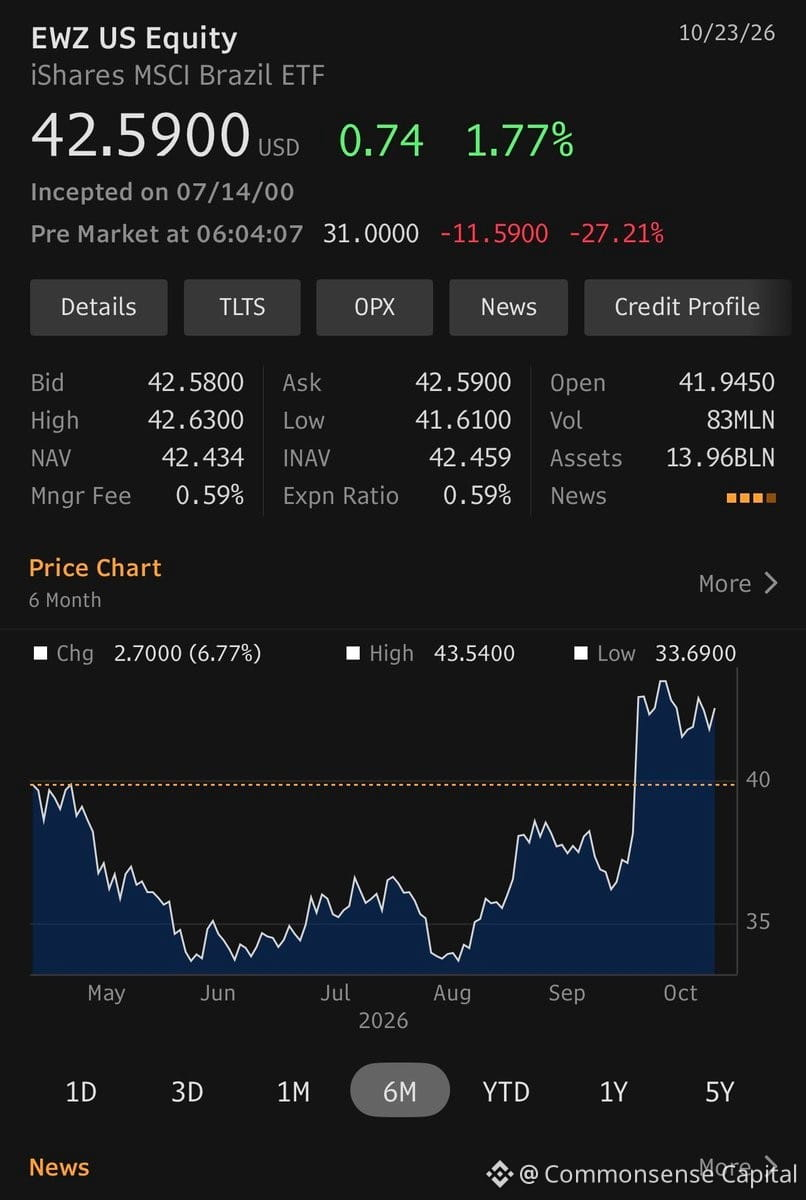
O ETF de ações do Brasil ($EWZ) caiu 27% no pré-mercado.
É assim que o caos cambial afeta as carteiras. Quando o real desaba, os investidores com ativos denominados em dólares são duramente atingidos — mesmo que as ações locais não estejam caindo em termos locais.
Lembrete: investir em mercados emergentes não se resume a histórias de crescimento. Também envolve risco cambial, estabilidade política e a capacidade de suportar quedas de 30% que acontecem da noite para o dia.
Se você não entende o contexto macroeconômico de um país, provavelmente não deveria investir nas ações dele.
O ETF de ações do Brasil ($EWZ) caiu 27% no pré-mercado.
É assim que o caos cambial afeta as carteiras. Quando o real desaba, os investidores com ativos denominados em dólares são duramente atingidos — mesmo que as ações locais não estejam caindo em termos locais.
Lembrete: investir em mercados emergentes não se resume a histórias de crescimento. Também envolve risco cambial, estabilidade política e a capacidade de suportar quedas de 30% que acontecem da noite para o dia.
Se você não entende o contexto macroeconômico de um país, provavelmente não deveria investir nas ações dele.
É assim que o caos cambial afeta as carteiras. Quando o real desaba, os investidores com ativos denominados em dólares são duramente atingidos — mesmo que as ações locais não estejam caindo em termos locais.
Lembrete: investir em mercados emergentes não se resume a histórias de crescimento. Também envolve risco cambial, estabilidade política e a capacidade de suportar quedas de 30% que acontecem da noite para o dia.
Se você não entende o contexto macroeconômico de um país, provavelmente não deveria investir nas ações dele.
1
1
886
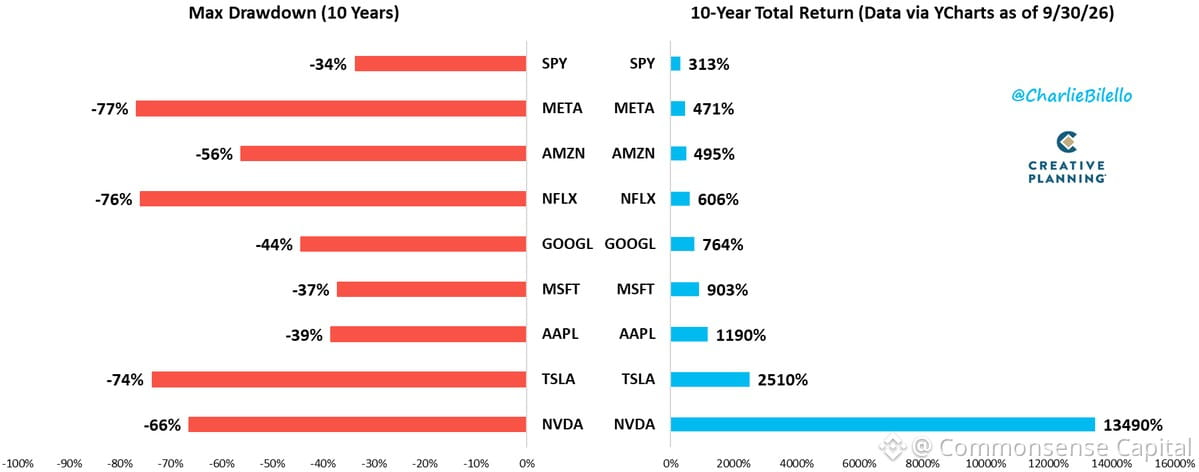
Peter Lynch disse melhor do que ninguém: "O verdadeiro segredo para ganhar dinheiro com ações é não se assustar e sair delas."
A maioria das pessoas perde dinheiro não porque escolheu ações ruins, mas porque entrou em pânico e vendeu no pior momento possível. O mercado cai 15%, elas conferem a carteira a cada hora, as manchetes anunciam o apocalipse e elas desistem.
Seis meses depois, tudo já se recuperou, e elas estão com o dinheiro parado, sentindo-se tolas.
A parte mais difícil de investir não é encontrar boas empresas. É ficar parado quando seu cérebro está gritando para você fazer alguma coisa. A volatilidade é o preço que se paga pelos retornos de longo prazo. Se você não consegue ver sua conta cair 20% a 30% sem surtar, provavelmente está exposto a riscos demais.
Essa é a verdadeira vantagem: não ser mais inteligente, apenas mais tranquilo.
Peter Lynch disse melhor do que ninguém: "O verdadeiro segredo para ganhar dinheiro com ações é não se assustar e sair delas."
A maioria das pessoas perde dinheiro não porque escolheu ações ruins, mas porque entrou em pânico e vendeu no pior momento possível. O mercado cai 15%, elas conferem a carteira a cada hora, as manchetes anunciam o apocalipse e elas desistem.
Seis meses depois, tudo já se recuperou, e elas estão com o dinheiro parado, sentindo-se tolas.
A parte mais difícil de investir não é encontrar boas empresas. É ficar parado quando seu cérebro está gritando para você fazer alguma coisa. A volatilidade é o preço que se paga pelos retornos de longo prazo. Se você não consegue ver sua conta cair 20% a 30% sem surtar, provavelmente está exposto a riscos demais.
Essa é a verdadeira vantagem: não ser mais inteligente, apenas mais tranquilo.
A maioria das pessoas perde dinheiro não porque escolheu ações ruins, mas porque entrou em pânico e vendeu no pior momento possível. O mercado cai 15%, elas conferem a carteira a cada hora, as manchetes anunciam o apocalipse e elas desistem.
Seis meses depois, tudo já se recuperou, e elas estão com o dinheiro parado, sentindo-se tolas.
A parte mais difícil de investir não é encontrar boas empresas. É ficar parado quando seu cérebro está gritando para você fazer alguma coisa. A volatilidade é o preço que se paga pelos retornos de longo prazo. Se você não consegue ver sua conta cair 20% a 30% sem surtar, provavelmente está exposto a riscos demais.
Essa é a verdadeira vantagem: não ser mais inteligente, apenas mais tranquilo.
310
Os títulos de dívida pública franceses a 10 anos acabaram de ultrapassar os 5% — o valor mais alto desde 2002. O diferencial face às obrigações alemãs voltou aos níveis da crise da dívida europeia.
É isto que acontece quando se ignoram os défices durante anos. Os mercados toleram, toleram, toleram... até deixarem de tolerar.
A dívida não se importa com a tua política nem com as tuas desculpas. Mais cedo ou mais tarde, os vigilantes do mercado obrigacionista aparecem para te lembrar que a matemática continua a existir.
A França não está sozinha nisto. Muitos países passaram a última década a pensar que o dinheiro fácil seria para sempre. Agora, as taxas voltaram ao normal e a conta chegou.
Acompanha os diferenciais. Quando os teus custos de financiamento disparam em relação aos dos teus vizinhos, é o mercado a dizer: «já não confiamos em ti».
Isto é um desastre em câmara lenta, não um crash repentino. Mas é real e sai caro.
Os títulos de dívida pública franceses a 10 anos acabaram de ultrapassar os 5% — o valor mais alto desde 2002. O diferencial face às obrigações alemãs voltou aos níveis da crise da dívida europeia.
É isto que acontece quando se ignoram os défices durante anos. Os mercados toleram, toleram, toleram... até deixarem de tolerar.
A dívida não se importa com a tua política nem com as tuas desculpas. Mais cedo ou mais tarde, os vigilantes do mercado obrigacionista aparecem para te lembrar que a matemática continua a existir.
A França não está sozinha nisto. Muitos países passaram a última década a pensar que o dinheiro fácil seria para sempre. Agora, as taxas voltaram ao normal e a conta chegou.
Acompanha os diferenciais. Quando os teus custos de financiamento disparam em relação aos dos teus vizinhos, é o mercado a dizer: «já não confiamos em ti».
Isto é um desastre em câmara lenta, não um crash repentino. Mas é real e sai caro.
É isto que acontece quando se ignoram os défices durante anos. Os mercados toleram, toleram, toleram... até deixarem de tolerar.
A dívida não se importa com a tua política nem com as tuas desculpas. Mais cedo ou mais tarde, os vigilantes do mercado obrigacionista aparecem para te lembrar que a matemática continua a existir.
A França não está sozinha nisto. Muitos países passaram a última década a pensar que o dinheiro fácil seria para sempre. Agora, as taxas voltaram ao normal e a conta chegou.
Acompanha os diferenciais. Quando os teus custos de financiamento disparam em relação aos dos teus vizinhos, é o mercado a dizer: «já não confiamos em ti».
Isto é um desastre em câmara lenta, não um crash repentino. Mas é real e sai caro.
IEFETF-0,07%
208
Veja onde cada um está em relação às máximas históricas:
$AAPL -1%
S&P 500 -3%
$MSFT -5%
$PLTR -8%
$NVDA -13%
$AMZN -14%
$META -19%
$GOOGL -22%
$AMD -22%
$TSLA -26%
Ouro -29%
SpaceX -35%
$BTC -36%
$NFLX -51%
$ETH -53%
$DOGE -90%
Fartcoin -95%
Trump Coin -98%
Melania Coin -99%
Percebe o padrão? Quanto mais você se afasta de empresas reais, com lucros de verdade, maior é a queda. As moedas meme? Caíram de 90% a 99%. Criptomoedas? Perderam metade do valor ou mais. Enquanto isso, a velha e sem graça Apple está praticamente estável.
É isso que acontece quando a espuma especulativa encontra a realidade. Ativos com fundamentos resistem. Ativos sustentados apenas por exageros e empolgação são dizimados.
Se você tem algo que caiu mais de 90%, pergunte a si mesmo: o que eu estava comprando, afinal? E compraria de novo hoje por esse preço?
Os mercados sempre ensinam a mesma lição. Algumas pessoas só precisam aprendê-la da maneira mais cara.
Veja onde cada um está em relação às máximas históricas:
$AAPL -1%
S&P 500 -3%
$MSFT -5%
$PLTR -8%
$NVDA -13%
$AMZN -14%
$META -19%
$GOOGL -22%
$AMD -22%
$TSLA -26%
Ouro -29%
SpaceX -35%
$BTC -36%
$NFLX -51%
$ETH -53%
$DOGE -90%
Fartcoin -95%
Trump Coin -98%
Melania Coin -99%
Percebe o padrão? Quanto mais você se afasta de empresas reais, com lucros de verdade, maior é a queda. As moedas meme? Caíram de 90% a 99%. Criptomoedas? Perderam metade do valor ou mais. Enquanto isso, a velha e sem graça Apple está praticamente estável.
É isso que acontece quando a espuma especulativa encontra a realidade. Ativos com fundamentos resistem. Ativos sustentados apenas por exageros e empolgação são dizimados.
Se você tem algo que caiu mais de 90%, pergunte a si mesmo: o que eu estava comprando, afinal? E compraria de novo hoje por esse preço?
Os mercados sempre ensinam a mesma lição. Algumas pessoas só precisam aprendê-la da maneira mais cara.
$AAPL -1%
S&P 500 -3%
$MSFT -5%
$PLTR -8%
$NVDA -13%
$AMZN -14%
$META -19%
$GOOGL -22%
$AMD -22%
$TSLA -26%
Ouro -29%
SpaceX -35%
$BTC -36%
$NFLX -51%
$ETH -53%
$DOGE -90%
Fartcoin -95%
Trump Coin -98%
Melania Coin -99%
Percebe o padrão? Quanto mais você se afasta de empresas reais, com lucros de verdade, maior é a queda. As moedas meme? Caíram de 90% a 99%. Criptomoedas? Perderam metade do valor ou mais. Enquanto isso, a velha e sem graça Apple está praticamente estável.
É isso que acontece quando a espuma especulativa encontra a realidade. Ativos com fundamentos resistem. Ativos sustentados apenas por exageros e empolgação são dizimados.
Se você tem algo que caiu mais de 90%, pergunte a si mesmo: o que eu estava comprando, afinal? E compraria de novo hoje por esse preço?
Os mercados sempre ensinam a mesma lição. Algumas pessoas só precisam aprendê-la da maneira mais cara.
396
Inicia sessão para explorar mais conteúdos
Junta-te a utilizadores de criptomoedas de todo o mundo na Binance Square
⚡️ Obtém informações úteis e recentes sobre criptomoedas.
💬 Com a confiança da maior exchange de criptomoedas do mundo.
👍 Descobre perspetivas reais de criadores verificados.
E-mail/Número de telefone
Tópicos em Tendência
CanMicrosoftDeliverOnAI
83,417 visualizações
769 a discutir
Temporada de resultados — Sessão 3: a Google e a Microsoft vão superar as expectativas?
Binance Square Official
·66 gostos
·16.8k visualizações
CanGoogleDefindItsCore
42,064 visualizações
561 a discutir
FOMCWatch
9.1M visualizações
27,986 a discutir