

#newtonprotocol
newtonprotocol
159,296 visualizações
2,333 a discutir
Popular
Mais recente

·
--
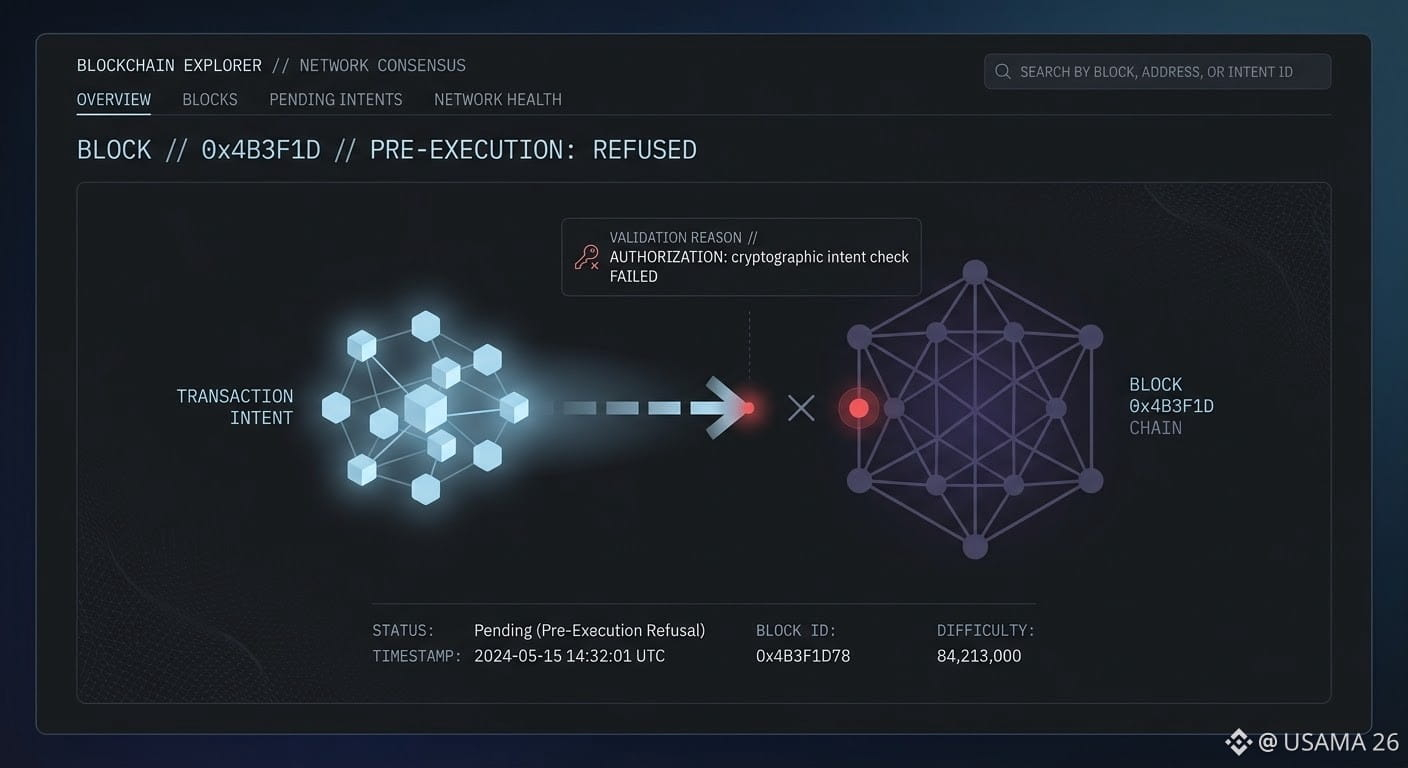
O funding virou de repente no fim da sexta-feira, e me peguei pensando no quanto realmente confio em qualquer coisa que assina em meu nome. Então comecei a verificar a Newton Protocol Mainnet Beta, principalmente a parte das políticas, com $NEWT T aberto em outra aba e as anotações #NewtonProtocol ol pela metade, acompanhando @NewtonProtocol l para ver os detalhes. Achei que uma intenção rejeitada se pareceria com todas as transações com falha que conheço: um hash, uma reversão, uma linha vermelha no explorador. Enviei uma intenção que violava meu próprio limite de gastos e fiquei atualizando o explorador, esperando aquele hash. Pensei que a rede estivesse lenta, talvez os operadores estivessem demorando. Mas, na verdade, não havia nada para encontrar, porque a recusa aconteceu antes de qualquer coisa chegar à blockchain. Nenhuma transação com falha, nenhum gasto de gas, nenhum rastro para apontar. Estranhamente, isso me deixou menos tranquilo do que uma reversão, porque estou acostumado a ver provas de falhas. Um bloqueio antes da execução deixa o explorador limpo e a tela vazia, então a evidência da proteção fica em outro lugar. Fechei a aba e abri de novo; continuava sem nada. Se o melhor resultado de uma camada de autorização é que nada aconteça de forma visível, como eu saberia, num dia tranquilo, que ela está funcionando?
O funding virou de repente no fim da sexta-feira, e me peguei pensando no quanto realmente confio em qualquer coisa que assina em meu nome. Então comecei a verificar a Newton Protocol Mainnet Beta, principalmente a parte das políticas, com $NEWT T aberto em outra aba e as anotações #NewtonProtocol ol pela metade, acompanhando @NewtonProtocol l para ver os detalhes. Achei que uma intenção rejeitada se pareceria com todas as transações com falha que conheço: um hash, uma reversão, uma linha vermelha no explorador. Enviei uma intenção que violava meu próprio limite de gastos e fiquei atualizando o explorador, esperando aquele hash. Pensei que a rede estivesse lenta, talvez os operadores estivessem demorando. Mas, na verdade, não havia nada para encontrar, porque a recusa aconteceu antes de qualquer coisa chegar à blockchain. Nenhuma transação com falha, nenhum gasto de gas, nenhum rastro para apontar. Estranhamente, isso me deixou menos tranquilo do que uma reversão, porque estou acostumado a ver provas de falhas. Um bloqueio antes da execução deixa o explorador limpo e a tela vazia, então a evidência da proteção fica em outro lugar. Fechei a aba e abri de novo; continuava sem nada. Se o melhor resultado de uma camada de autorização é que nada aconteça de forma visível, como eu saberia, num dia tranquilo, que ela está funcionando?
333
$NEWT
{spot}(NEWTUSDT)
⚡ NEWTON PROTOCOL ($NEW) CONSOLIDA PERTO DE $0.051: haverá uma grande alta?
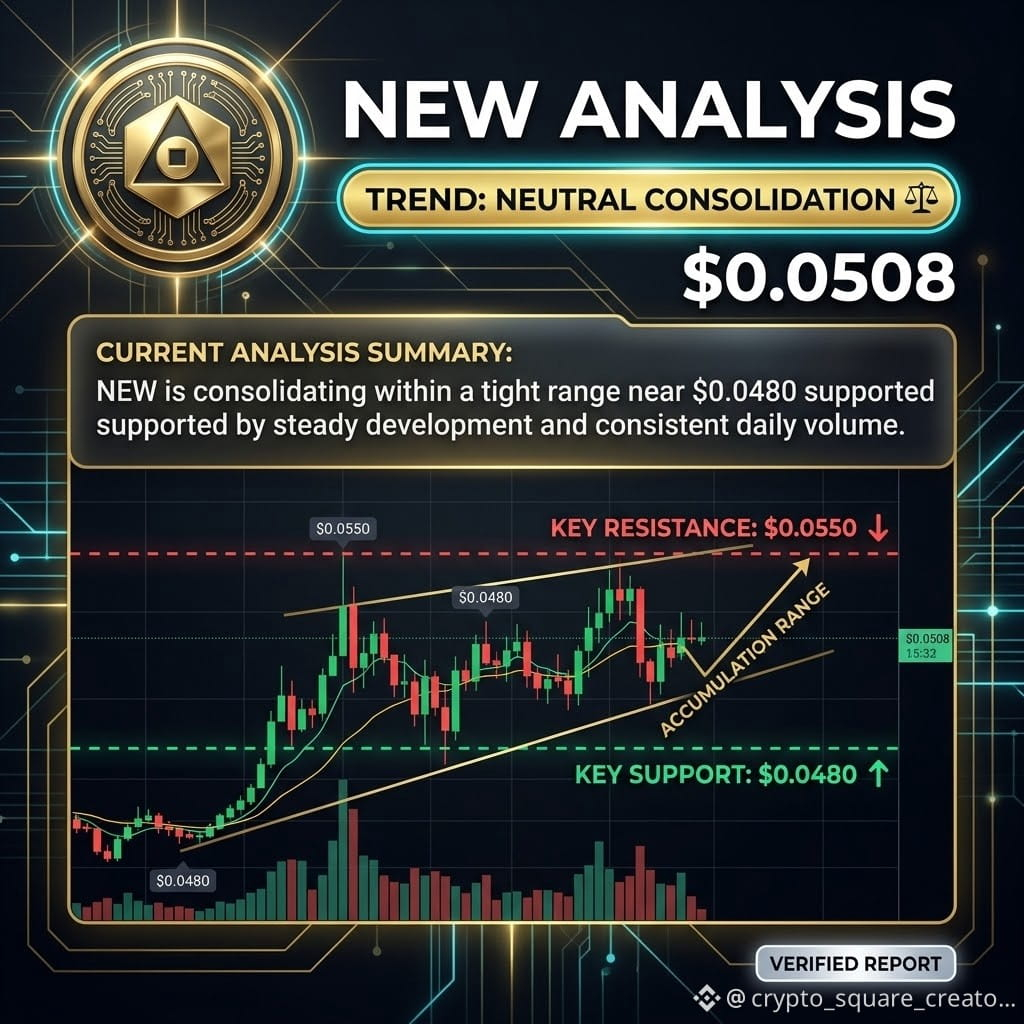
O Newton Protocol ($NEW) continua a formar uma base de suporte e está atualmente sendo negociado perto de $0.0508, enquanto os compradores absorvem a pressão vendedora.
Tendência: consolidação neutra
Suporte principal: $0.0480
Resistência principal: $0.0550
Por que se movimenta: a estabilidade do preço é sustentada pelo desenvolvimento constante de uma infraestrutura descentralizada e por um volume diário consistente, evitando uma queda significativa apesar da volatilidade mais ampla do mercado.
Será que o $NEW conseguirá manter o suporte em $0.048 e subir para romper a resistência em $0.055? Compartilhe suas metas abaixo! 👇
#NewtonProtocol #NEW #CryptoAnalysis #BinanceSquareTalks #TechnicalAnalysiss #Altcoins #CryptoTrading
Isto não é aconselhamento financeiro.
$NEWT
⚡ NEWTON PROTOCOL ($NEW) CONSOLIDA PERTO DE $0.051: haverá uma grande alta?
O Newton Protocol ($NEW) continua a formar uma base de suporte e está atualmente sendo negociado perto de $0.0508, enquanto os compradores absorvem a pressão vendedora.
Tendência: consolidação neutra
Suporte principal: $0.0480
Resistência principal: $0.0550
Por que se movimenta: a estabilidade do preço é sustentada pelo desenvolvimento constante de uma infraestrutura descentralizada e por um volume diário consistente, evitando uma queda significativa apesar da volatilidade mais ampla do mercado.
Será que o $NEW conseguirá manter o suporte em $0.048 e subir para romper a resistência em $0.055? Compartilhe suas metas abaixo! 👇
#NewtonProtocol #NEW #CryptoAnalysis #BinanceSquareTalks #TechnicalAnalysiss #Altcoins #CryptoTrading
Isto não é aconselhamento financeiro.
⚡ NEWTON PROTOCOL ($NEW) CONSOLIDA PERTO DE $0.051: haverá uma grande alta?
O Newton Protocol ($NEW) continua a formar uma base de suporte e está atualmente sendo negociado perto de $0.0508, enquanto os compradores absorvem a pressão vendedora.
Tendência: consolidação neutra
Suporte principal: $0.0480
Resistência principal: $0.0550
Por que se movimenta: a estabilidade do preço é sustentada pelo desenvolvimento constante de uma infraestrutura descentralizada e por um volume diário consistente, evitando uma queda significativa apesar da volatilidade mais ampla do mercado.
Será que o $NEW conseguirá manter o suporte em $0.048 e subir para romper a resistência em $0.055? Compartilhe suas metas abaixo! 👇
#NewtonProtocol #NEW #CryptoAnalysis #BinanceSquareTalks #TechnicalAnalysiss #Altcoins #CryptoTrading
Isto não é aconselhamento financeiro.
251

·
--
Artigo
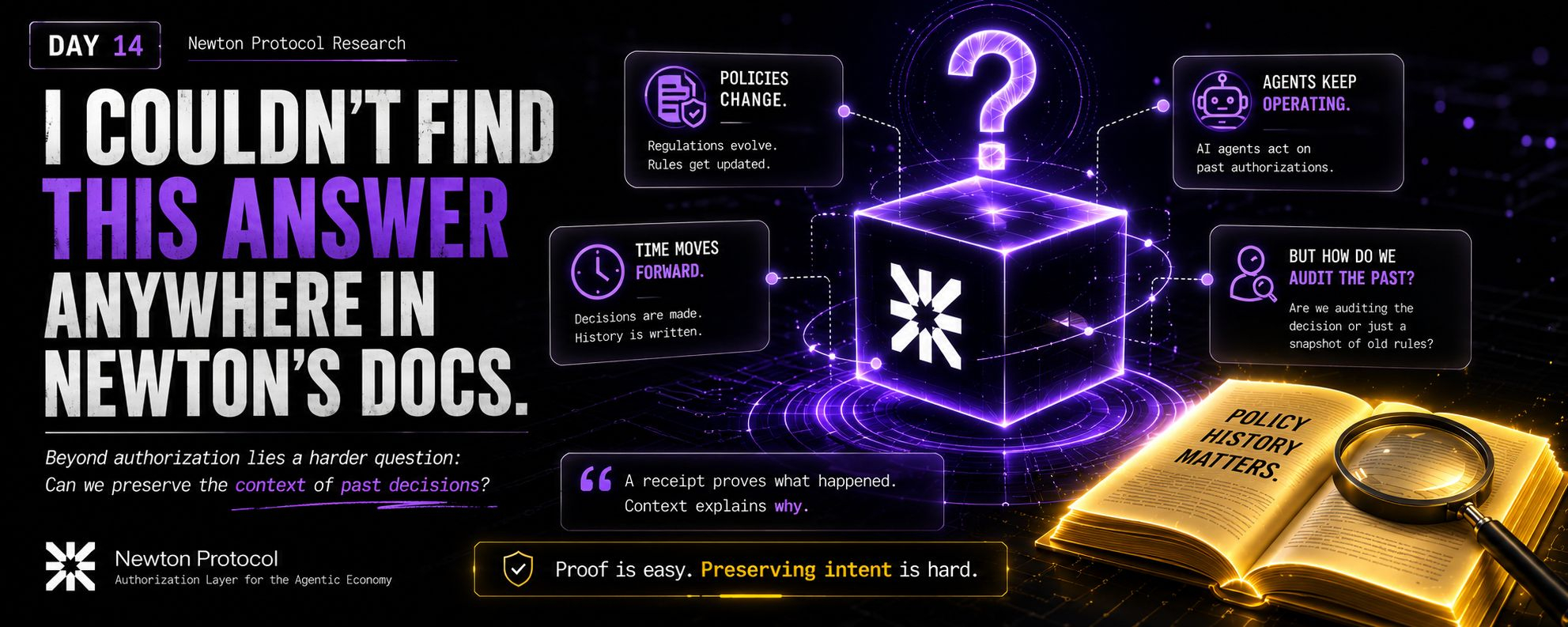
Não consegui encontrar esta resposta em lugar nenhum nos Docs de NewtonPassei a manhã voltando pela arquitetura @NewtonProtocol , esperando entender um pequeno detalhe melhor.
Em vez disso, saí com uma pergunta maior.
O protocolo gasta muito tempo explicando como as decisões de autorização são verificadas. As políticas são avaliadas. Os operadores atestam. Provas criptográficas confirmam o resultado.
Essa parte faz sentido.
O que eu não conseguia parar de pensar era em tudo o que acontece depois da autorização.
Suponha que uma instituição atualize uma de suas políticas porque as regulamentações mudaram. Centenas de agentes de IA já operavam sob a versão anterior.
Não consegui encontrar esta resposta em lugar nenhum nos Docs de Newton
Passei a manhã voltando pela arquitetura @NewtonProtocol , esperando entender um pequeno detalhe melhor.
Em vez disso, saí com uma pergunta maior.
O protocolo gasta muito tempo explicando como as decisões de autorização são verificadas. As políticas são avaliadas. Os operadores atestam. Provas criptográficas confirmam o resultado.
Essa parte faz sentido.
O que eu não conseguia parar de pensar era em tudo o que acontece depois da autorização.
Suponha que uma instituição atualize uma de suas políticas porque as regulamentações mudaram. Centenas de agentes de IA já operavam sob a versão anterior.
Em vez disso, saí com uma pergunta maior.
O protocolo gasta muito tempo explicando como as decisões de autorização são verificadas. As políticas são avaliadas. Os operadores atestam. Provas criptográficas confirmam o resultado.
Essa parte faz sentido.
O que eu não conseguia parar de pensar era em tudo o que acontece depois da autorização.
Suponha que uma instituição atualize uma de suas políticas porque as regulamentações mudaram. Centenas de agentes de IA já operavam sob a versão anterior.
2
1
381
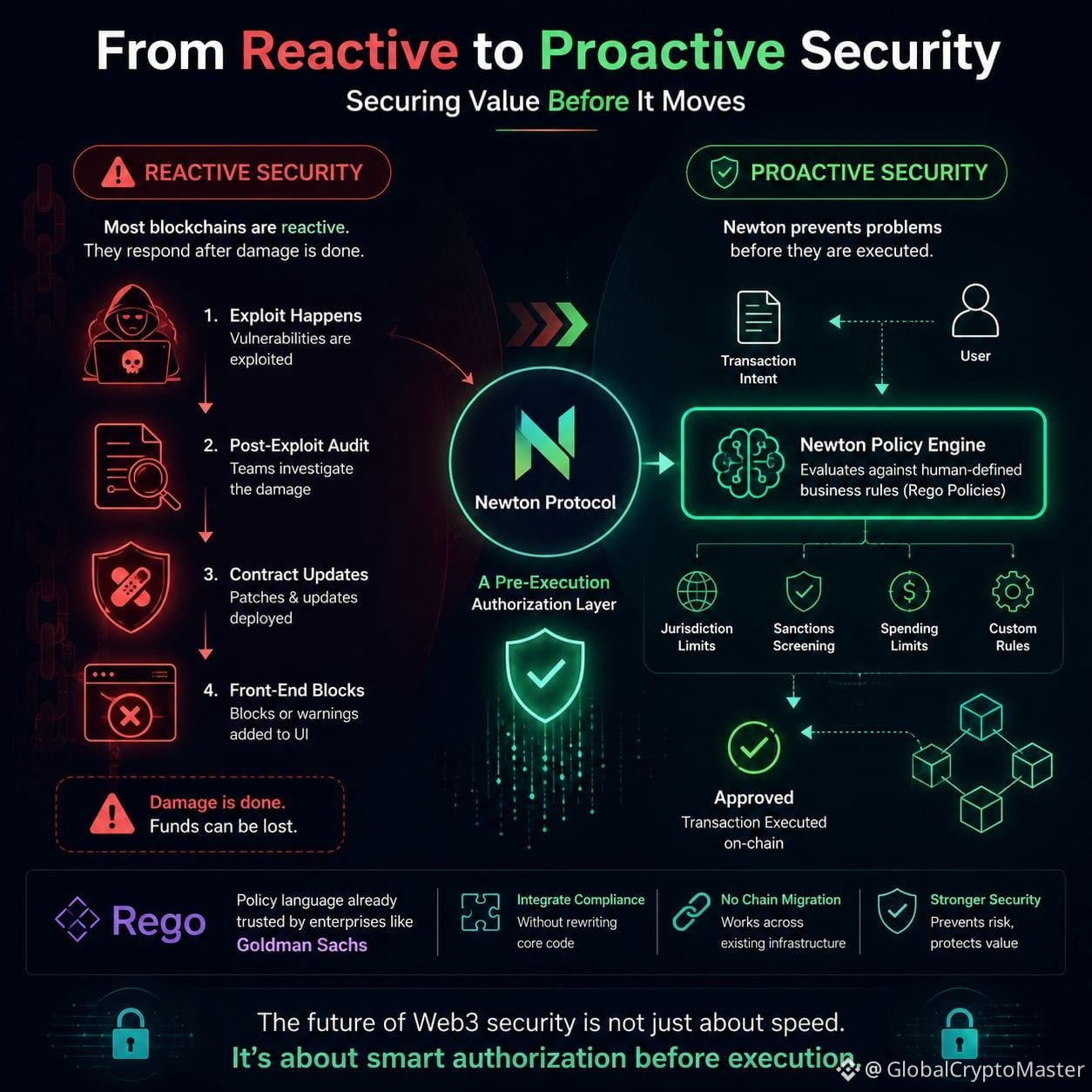
$NEWT 🛡️ Da Segurança Reativa à Proativa: Uma Nova Direção para Blockchain
A maior parte da segurança em blockchain ativa-se depois que algo dá errado — correções, auditorias ou soluções emergenciais após um exploit.
O Newton Protocol adota uma abordagem diferente. ⚡
Em vez de reagir a transações maliciosas, ele as avalia antes da execução, verificando se elas atendem a regras de política predefinidas, como restrições de jurisdição, limites de gastos ou exigências de conformidade.
🔍 Isso muda a segurança de controle de danos para prevenção de riscos.
Outro aspecto interessante é o uso de Rego, uma linguagem de políticas já confiável em ambientes empresariais. Em vez de obrigar as instituições a redesenharem suas aplicações ou migrarem para uma nova cadeia, a lógica de conformidade pode ser adicionada como uma camada de política programável.
💡 A oportunidade de longo prazo não é apenas uma segurança mais forte — é tornar a infraestrutura de blockchain compatível com a governança do mundo real, preservando a composabilidade.
🚀 A próxima fase da Web3 pode ser definida não por transações mais rápidas, mas por uma autorização mais inteligente antes da execução.
#NewtonProtocol #Newt #Blockchain #Web3 #DeFi #Security #compliance
$NEWT 🛡️ Da Segurança Reativa à Proativa: Uma Nova Direção para Blockchain
A maior parte da segurança em blockchain ativa-se depois que algo dá errado — correções, auditorias ou soluções emergenciais após um exploit.
O Newton Protocol adota uma abordagem diferente. ⚡
Em vez de reagir a transações maliciosas, ele as avalia antes da execução, verificando se elas atendem a regras de política predefinidas, como restrições de jurisdição, limites de gastos ou exigências de conformidade.
🔍 Isso muda a segurança de controle de danos para prevenção de riscos.
Outro aspecto interessante é o uso de Rego, uma linguagem de políticas já confiável em ambientes empresariais. Em vez de obrigar as instituições a redesenharem suas aplicações ou migrarem para uma nova cadeia, a lógica de conformidade pode ser adicionada como uma camada de política programável.
💡 A oportunidade de longo prazo não é apenas uma segurança mais forte — é tornar a infraestrutura de blockchain compatível com a governança do mundo real, preservando a composabilidade.
🚀 A próxima fase da Web3 pode ser definida não por transações mais rápidas, mas por uma autorização mais inteligente antes da execução.
#NewtonProtocol #Newt #Blockchain #Web3 #DeFi #Security #compliance
A maior parte da segurança em blockchain ativa-se depois que algo dá errado — correções, auditorias ou soluções emergenciais após um exploit.
O Newton Protocol adota uma abordagem diferente. ⚡
Em vez de reagir a transações maliciosas, ele as avalia antes da execução, verificando se elas atendem a regras de política predefinidas, como restrições de jurisdição, limites de gastos ou exigências de conformidade.
🔍 Isso muda a segurança de controle de danos para prevenção de riscos.
Outro aspecto interessante é o uso de Rego, uma linguagem de políticas já confiável em ambientes empresariais. Em vez de obrigar as instituições a redesenharem suas aplicações ou migrarem para uma nova cadeia, a lógica de conformidade pode ser adicionada como uma camada de política programável.
💡 A oportunidade de longo prazo não é apenas uma segurança mais forte — é tornar a infraestrutura de blockchain compatível com a governança do mundo real, preservando a composabilidade.
🚀 A próxima fase da Web3 pode ser definida não por transações mais rápidas, mas por uma autorização mais inteligente antes da execução.
#NewtonProtocol #Newt #Blockchain #Web3 #DeFi #Security #compliance
65

·
--
Artigo
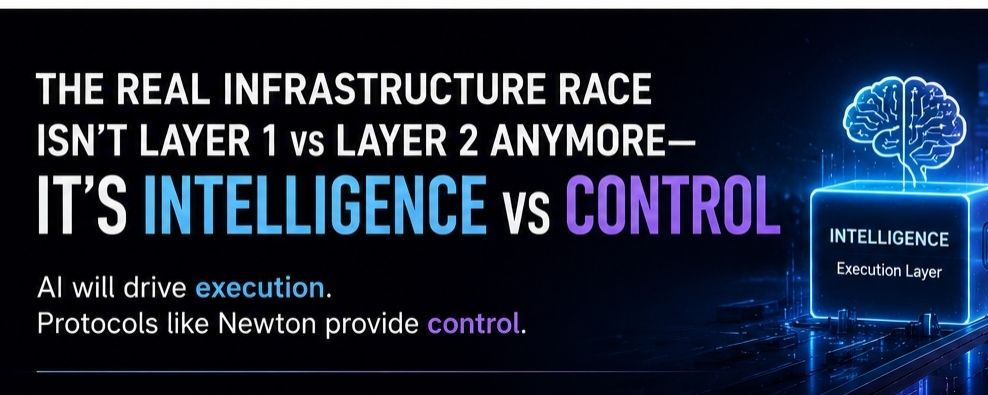
A verdadeira corrida por infraestrutura não é mais Camada 1 vs Camada 2 — é inteligência vs controlePor anos, a indústria de blockchain tem debatido a mesma pergunta: qual infraestrutura vence — Camada 1 ou Camada 2?
Transações mais rápidas. Taxas mais baixas. Melhor escalabilidade.
Essas métricas impulsionaram a inovação, mas talvez não definam o próximo capítulo da Web3.
Uma mudança ainda maior já está em andamento.
À medida que agentes de IA se tornam capazes de gerenciar carteiras, executar negociações, rebalancear carteiras e interagir com protocolos DeFi de forma autônoma, o verdadeiro desafio já não é mais a execução — é o controle.
O futuro do blockchain não vai simplesmente pertencer à rede mais rápida. Ele pertencerá à infraestrutura que consegue garantir que sistemas autônomos operem dentro de limites transparentes, verificáveis e autorizados.
A verdadeira corrida por infraestrutura não é mais Camada 1 vs Camada 2 — é inteligência vs controle
Por anos, a indústria de blockchain tem debatido a mesma pergunta: qual infraestrutura vence — Camada 1 ou Camada 2?
Transações mais rápidas. Taxas mais baixas. Melhor escalabilidade.
Essas métricas impulsionaram a inovação, mas talvez não definam o próximo capítulo da Web3.
Uma mudança ainda maior já está em andamento.
À medida que agentes de IA se tornam capazes de gerenciar carteiras, executar negociações, rebalancear carteiras e interagir com protocolos DeFi de forma autônoma, o verdadeiro desafio já não é mais a execução — é o controle.
O futuro do blockchain não vai simplesmente pertencer à rede mais rápida. Ele pertencerá à infraestrutura que consegue garantir que sistemas autônomos operem dentro de limites transparentes, verificáveis e autorizados.
Transações mais rápidas. Taxas mais baixas. Melhor escalabilidade.
Essas métricas impulsionaram a inovação, mas talvez não definam o próximo capítulo da Web3.
Uma mudança ainda maior já está em andamento.
À medida que agentes de IA se tornam capazes de gerenciar carteiras, executar negociações, rebalancear carteiras e interagir com protocolos DeFi de forma autônoma, o verdadeiro desafio já não é mais a execução — é o controle.
O futuro do blockchain não vai simplesmente pertencer à rede mais rápida. Ele pertencerá à infraestrutura que consegue garantir que sistemas autônomos operem dentro de limites transparentes, verificáveis e autorizados.
75

·
--
Verificado
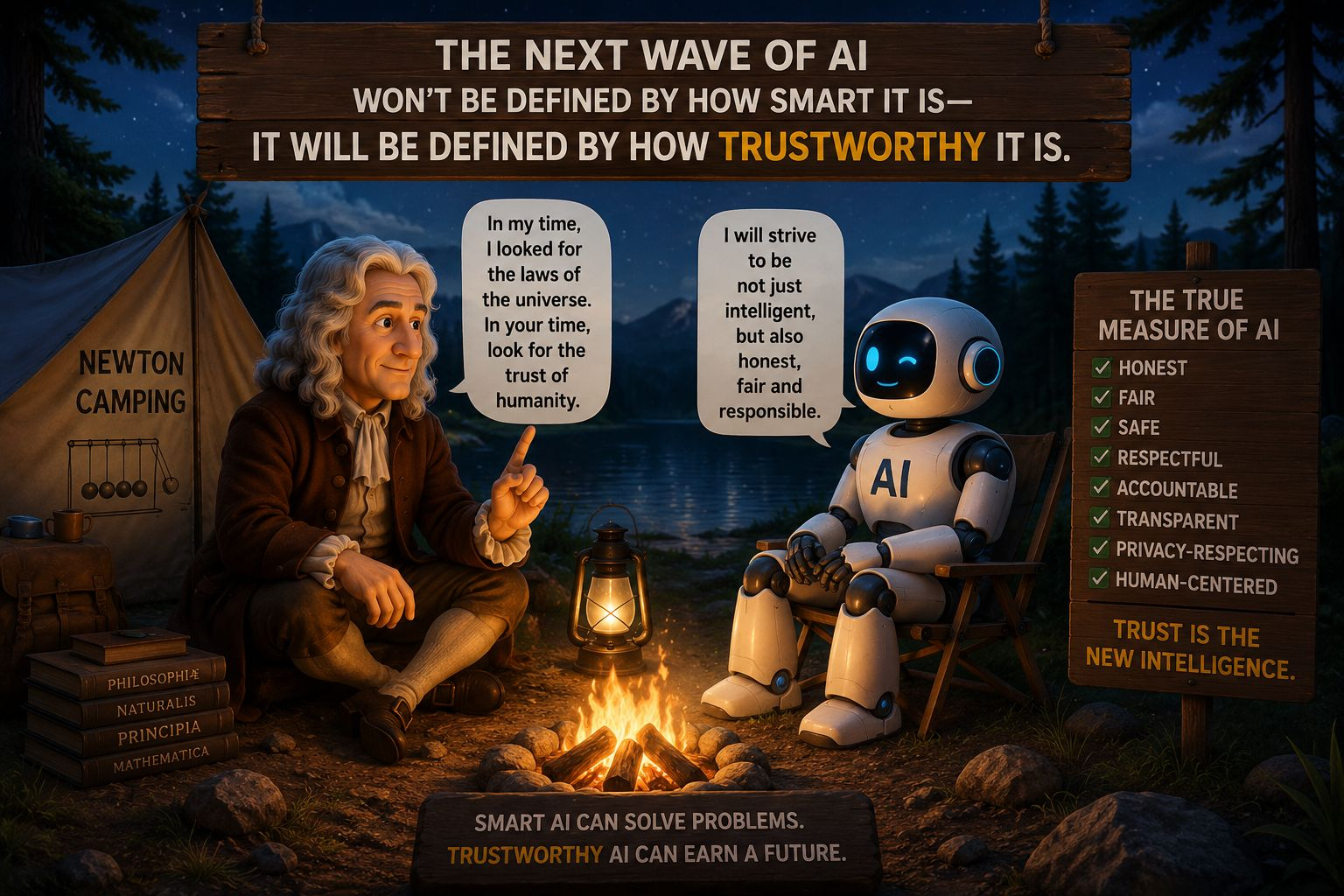
@NewtonProtocol A próxima onda de IA não será definida por quão inteligente ela é — será definida por quão confiável ela é.
Num mundo descentralizado, agentes de IA precisam de mais do que inteligência. Eles precisam de identidade, dados verificáveis e execução transparente.
É aí que o Protocolo Newton se destaca.
Ao construir infraestrutura para IA verificável e automação on-chain, @NewtonProtocol está ajudando a criar um futuro em que a IA possa operar com segurança sem abrir mão da descentralização.
O futuro da Web3 não é apenas autônomo.
Ele também precisa ser sem confiança, transparente e verificável.
Projetos que constroem essa base hoje podem se tornar a espinha dorsal da economia descentralizada de amanhã.
Qual recurso de IA é o mais importante em Segurança, Privacidade ou Verificação na Web3?
Esta é uma parceria paga
$NEWT #Newt #NewtonProtocol
@NewtonProtocol A próxima onda de IA não será definida por quão inteligente ela é — será definida por quão confiável ela é.
Num mundo descentralizado, agentes de IA precisam de mais do que inteligência. Eles precisam de identidade, dados verificáveis e execução transparente.
É aí que o Protocolo Newton se destaca.
Ao construir infraestrutura para IA verificável e automação on-chain, @NewtonProtocol está ajudando a criar um futuro em que a IA possa operar com segurança sem abrir mão da descentralização.
O futuro da Web3 não é apenas autônomo.
Ele também precisa ser sem confiança, transparente e verificável.
Projetos que constroem essa base hoje podem se tornar a espinha dorsal da economia descentralizada de amanhã.
Qual recurso de IA é o mais importante em Segurança, Privacidade ou Verificação na Web3?
Esta é uma parceria paga
$NEWT #Newt #NewtonProtocol
Num mundo descentralizado, agentes de IA precisam de mais do que inteligência. Eles precisam de identidade, dados verificáveis e execução transparente.
É aí que o Protocolo Newton se destaca.
Ao construir infraestrutura para IA verificável e automação on-chain, @NewtonProtocol está ajudando a criar um futuro em que a IA possa operar com segurança sem abrir mão da descentralização.
O futuro da Web3 não é apenas autônomo.
Ele também precisa ser sem confiança, transparente e verificável.
Projetos que constroem essa base hoje podem se tornar a espinha dorsal da economia descentralizada de amanhã.
Qual recurso de IA é o mais importante em Segurança, Privacidade ou Verificação na Web3?
Esta é uma parceria paga
$NEWT #Newt #NewtonProtocol
3
1
664

·
--
#newt $NEWT
RWAs — ativos do mundo real tokenizados — são um dos segmentos de crescimento mais rápido do cripto agora. Títulos tokenizados, crédito privado, imóveis. As instituições estão movimentando dinheiro real on-chain.
Aqui está o problema que ninguém está resolvendo de forma limpa ainda. Quando um ativo tokenizado se move on-chain, as regras de conformidade que o regem — quem pode mantê-lo, quais jurisdições permitem, quais limites de contraparte se aplicam — essas regras ainda vivem off-chain. Em documentos. Aplicadas manualmente. Verificadas depois, se é que são.
É essa lacuna que @NewtonProtocol está construindo. Aplicação de políticas que roda antes de uma transação ser liquidada, não depois. Verificações da OFAC, verificação de identidade, limites de risco de contraparte — tudo automático, tudo verificável, tudo on-chain.
As RWAs precisam de uma camada de autorização. A Newton está construindo exatamente isso.
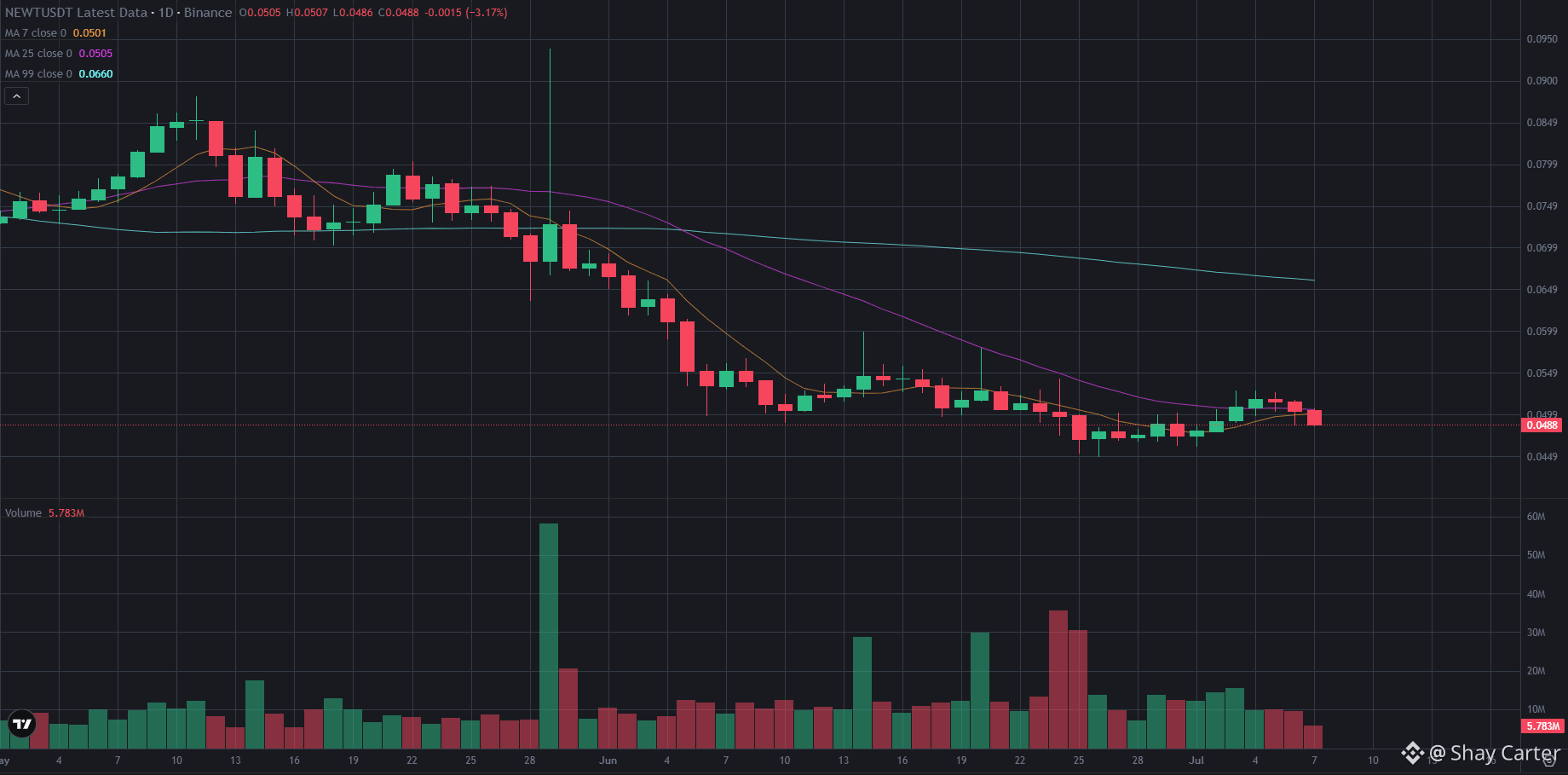
$NEWT está em US$ 0,0488 hoje, com queda de pouco mais de 3%.. O discurso sobre RWA está ficando mais alto. A infraestrutura para isso já está em funcionamento.
#Newt #NewtonProtocol
{spot}(NEWTUSDT)
#newt $NEWT
RWAs — ativos do mundo real tokenizados — são um dos segmentos de crescimento mais rápido do cripto agora. Títulos tokenizados, crédito privado, imóveis. As instituições estão movimentando dinheiro real on-chain.
Aqui está o problema que ninguém está resolvendo de forma limpa ainda. Quando um ativo tokenizado se move on-chain, as regras de conformidade que o regem — quem pode mantê-lo, quais jurisdições permitem, quais limites de contraparte se aplicam — essas regras ainda vivem off-chain. Em documentos. Aplicadas manualmente. Verificadas depois, se é que são.
É essa lacuna que @NewtonProtocol está construindo. Aplicação de políticas que roda antes de uma transação ser liquidada, não depois. Verificações da OFAC, verificação de identidade, limites de risco de contraparte — tudo automático, tudo verificável, tudo on-chain.
As RWAs precisam de uma camada de autorização. A Newton está construindo exatamente isso.
$NEWT está em US$ 0,0488 hoje, com queda de pouco mais de 3%.. O discurso sobre RWA está ficando mais alto. A infraestrutura para isso já está em funcionamento.
#Newt #NewtonProtocol
RWAs — ativos do mundo real tokenizados — são um dos segmentos de crescimento mais rápido do cripto agora. Títulos tokenizados, crédito privado, imóveis. As instituições estão movimentando dinheiro real on-chain.
Aqui está o problema que ninguém está resolvendo de forma limpa ainda. Quando um ativo tokenizado se move on-chain, as regras de conformidade que o regem — quem pode mantê-lo, quais jurisdições permitem, quais limites de contraparte se aplicam — essas regras ainda vivem off-chain. Em documentos. Aplicadas manualmente. Verificadas depois, se é que são.
É essa lacuna que @NewtonProtocol está construindo. Aplicação de políticas que roda antes de uma transação ser liquidada, não depois. Verificações da OFAC, verificação de identidade, limites de risco de contraparte — tudo automático, tudo verificável, tudo on-chain.
As RWAs precisam de uma camada de autorização. A Newton está construindo exatamente isso.
$NEWT está em US$ 0,0488 hoje, com queda de pouco mais de 3%.. O discurso sobre RWA está ficando mais alto. A infraestrutura para isso já está em funcionamento.
#Newt #NewtonProtocol
1
99


Artigo
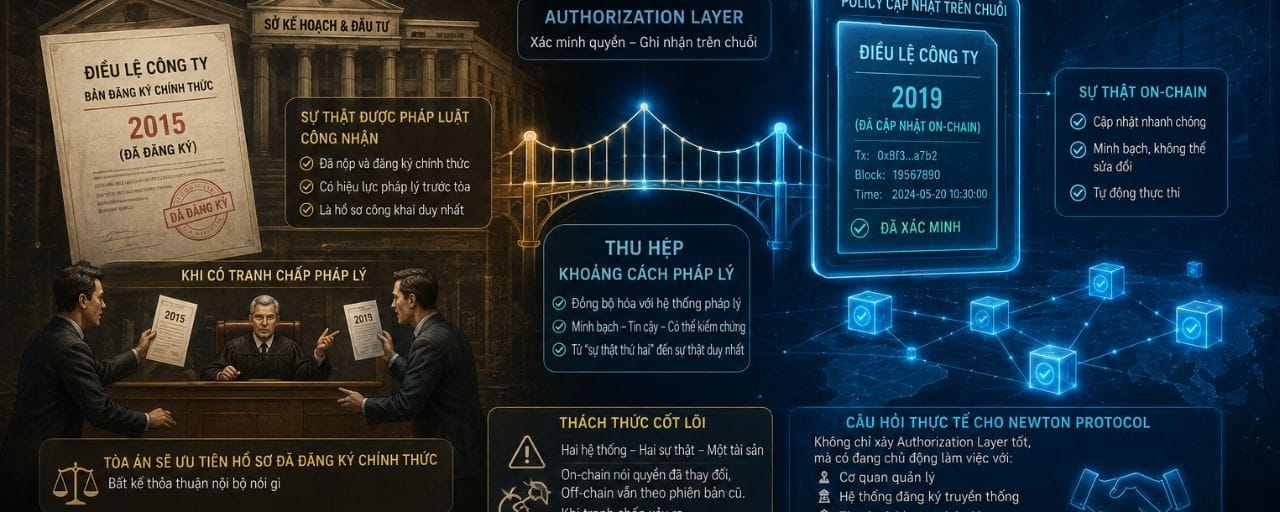
WhEn TwO TrUtHs ExIsT: ThE ReAL ChAlleNge BeHinD On-ChAiN OwNeRsHiPA maioria das pessoas presume que, depois que uma informação é registrada em algum lugar, todos estão observando a mesma versão da realidade.
Mas raramente é assim que o mundo real funciona.
Quanto mais penso em ativos tokenizados, mais percebo que o blockchain não elimina a confiança—ele apenas muda onde a confiança precisa existir.
No mundo físico, propriedade, direitos e acordos são tão fortes quanto as instituições que os reconhecem.
A tecnologia pode registrar uma mudança instantaneamente, mas o sistema legal pode continuar operando a partir de um registro totalmente diferente.
WhEn TwO TrUtHs ExIsT: ThE ReAL ChAlleNge BeHinD On-ChAiN OwNeRsHiP
A maioria das pessoas presume que, depois que uma informação é registrada em algum lugar, todos estão observando a mesma versão da realidade.
Mas raramente é assim que o mundo real funciona.
Quanto mais penso em ativos tokenizados, mais percebo que o blockchain não elimina a confiança—ele apenas muda onde a confiança precisa existir.
No mundo físico, propriedade, direitos e acordos são tão fortes quanto as instituições que os reconhecem.
A tecnologia pode registrar uma mudança instantaneamente, mas o sistema legal pode continuar operando a partir de um registro totalmente diferente.
Mas raramente é assim que o mundo real funciona.
Quanto mais penso em ativos tokenizados, mais percebo que o blockchain não elimina a confiança—ele apenas muda onde a confiança precisa existir.
No mundo físico, propriedade, direitos e acordos são tão fortes quanto as instituições que os reconhecem.
A tecnologia pode registrar uma mudança instantaneamente, mas o sistema legal pode continuar operando a partir de um registro totalmente diferente.
49
20
627
·
--
$LAB 'S PROTOCOLO DE NEWTON ESTÁ CONSTRUINDO CONFIANÇA QUE SE ACUMULA AO LONGO DO TEMPO 🎯
O que diferencia o Newton Protocol não é mais um método de verificação — é a confiabilidade composta de políticas que comprovam seu valor com o uso repetido. Quanto menos uma política precisa de exceções, mais ela se torna uma camada fundamental da qual outros dependem silenciosamente. Isso representa uma mudança estrutural de “reconstruir” para “refinar”.
O valor real aparece quando decisões respaldadas por evidências substituem o retrabalho constante. Esse tipo de confiança não precisa de hype — ela se conquista. Quais projetos você acha que vão alcançar esse nível de confiabilidade de longo prazo?
Não é aconselhamento financeiro. Gerencie sempre seu risco.
#LAB #NewtonProtocol #Trust #CryptoFundamentals
💎
$LAB 'S PROTOCOLO DE NEWTON ESTÁ CONSTRUINDO CONFIANÇA QUE SE ACUMULA AO LONGO DO TEMPO 🎯
O que diferencia o Newton Protocol não é mais um método de verificação — é a confiabilidade composta de políticas que comprovam seu valor com o uso repetido. Quanto menos uma política precisa de exceções, mais ela se torna uma camada fundamental da qual outros dependem silenciosamente. Isso representa uma mudança estrutural de “reconstruir” para “refinar”.
O valor real aparece quando decisões respaldadas por evidências substituem o retrabalho constante. Esse tipo de confiança não precisa de hype — ela se conquista. Quais projetos você acha que vão alcançar esse nível de confiabilidade de longo prazo?
Não é aconselhamento financeiro. Gerencie sempre seu risco.
#LAB #NewtonProtocol #Trust #CryptoFundamentals
💎
O que diferencia o Newton Protocol não é mais um método de verificação — é a confiabilidade composta de políticas que comprovam seu valor com o uso repetido. Quanto menos uma política precisa de exceções, mais ela se torna uma camada fundamental da qual outros dependem silenciosamente. Isso representa uma mudança estrutural de “reconstruir” para “refinar”.
O valor real aparece quando decisões respaldadas por evidências substituem o retrabalho constante. Esse tipo de confiança não precisa de hype — ela se conquista. Quais projetos você acha que vão alcançar esse nível de confiabilidade de longo prazo?
Não é aconselhamento financeiro. Gerencie sempre seu risco.
#LAB #NewtonProtocol #Trust #CryptoFundamentals
💎
270

#Newt $NEWT Uma coisa que eu aprecio em projetos de infraestrutura é que eles geralmente se concentram em desafios de longo prazo, em vez de tendências de curto prazo.
Pelo que li, o Newton Protocol está trabalhando em coordenação baseada em políticas para sistemas autônomos de IA.
À medida que aplicativos descentralizados se tornam mais avançados, frameworks que melhoram a transparência e o comportamento previsível podem se tornar cada vez mais valiosos.
Estou interessado em ver como o ecossistema se desenvolve a partir dos próximos lançamentos.
#NewtonProtocol #Web3 #AI #NEWT
{future}(NEWTUSDT)
#Newt $NEWT Uma coisa que eu aprecio em projetos de infraestrutura é que eles geralmente se concentram em desafios de longo prazo, em vez de tendências de curto prazo.
Pelo que li, o Newton Protocol está trabalhando em coordenação baseada em políticas para sistemas autônomos de IA.
À medida que aplicativos descentralizados se tornam mais avançados, frameworks que melhoram a transparência e o comportamento previsível podem se tornar cada vez mais valiosos.
Estou interessado em ver como o ecossistema se desenvolve a partir dos próximos lançamentos.
#NewtonProtocol #Web3 #AI #NEWT
Pelo que li, o Newton Protocol está trabalhando em coordenação baseada em políticas para sistemas autônomos de IA.
À medida que aplicativos descentralizados se tornam mais avançados, frameworks que melhoram a transparência e o comportamento previsível podem se tornar cada vez mais valiosos.
Estou interessado em ver como o ecossistema se desenvolve a partir dos próximos lançamentos.
#NewtonProtocol #Web3 #AI #NEWT
1
1
91

·
--
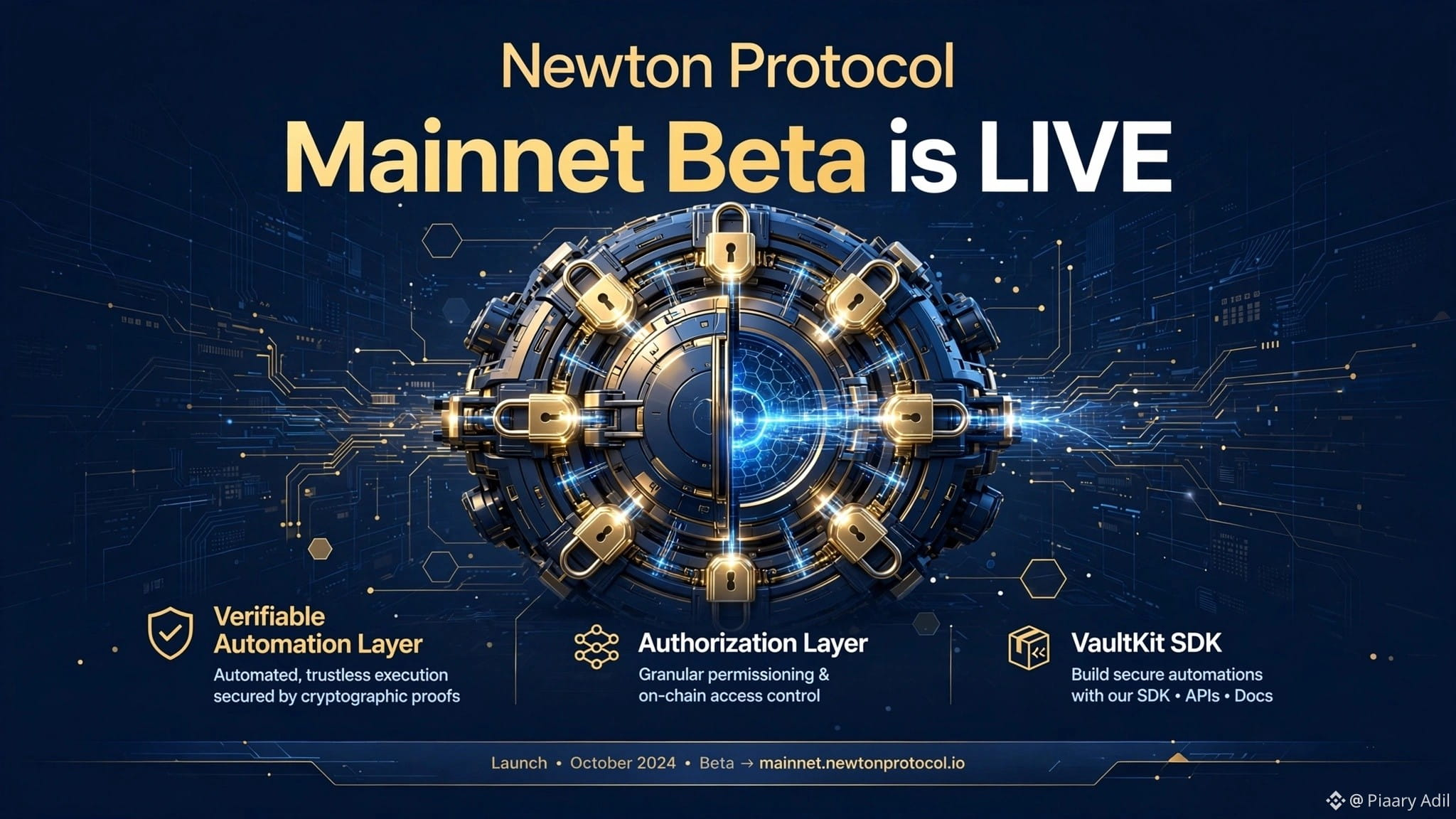
A espera acabou! @NewtonProtocol Mainnet Beta está no ar ao vivo a partir do palco principal da TokenizeThis!
Newton está resolvendo a peça que faltava do DeFi: a camada de autorização. A TradFi tinha KYC, AML e verificações de risco; o DeFi ignorou isso. A Newton corrige isso com permissões zk programáveis e o VaultKit.
Agora as regras se movem com capital. Verificável, privada e executável onchain.
Animado com o que os builders vão fazer com $NEWT
#Newt #NewtonProtocol #BinanceSquare #PiaaryAdil #CryptoPakistan
A espera acabou! @NewtonProtocol Mainnet Beta está no ar ao vivo a partir do palco principal da TokenizeThis!
Newton está resolvendo a peça que faltava do DeFi: a camada de autorização. A TradFi tinha KYC, AML e verificações de risco; o DeFi ignorou isso. A Newton corrige isso com permissões zk programáveis e o VaultKit.
Agora as regras se movem com capital. Verificável, privada e executável onchain.
Animado com o que os builders vão fazer com $NEWT
#Newt #NewtonProtocol #BinanceSquare #PiaaryAdil #CryptoPakistan
Newton está resolvendo a peça que faltava do DeFi: a camada de autorização. A TradFi tinha KYC, AML e verificações de risco; o DeFi ignorou isso. A Newton corrige isso com permissões zk programáveis e o VaultKit.
Agora as regras se movem com capital. Verificável, privada e executável onchain.
Animado com o que os builders vão fazer com $NEWT
#Newt #NewtonProtocol #BinanceSquare #PiaaryAdil #CryptoPakistan
2
2
84

·
--
Artigo
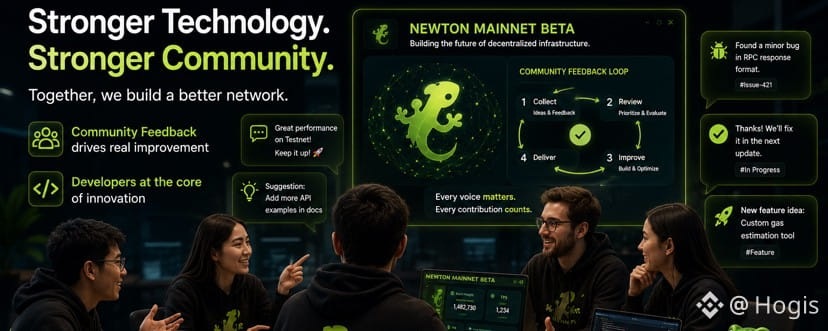
A Participação da Comunidade Torna Todo Mainnet Mais ForteA tecnologia é apenas uma parte de uma blockchain bem-sucedida. A outra parte é uma comunidade ativa que testa continuamente, compartilha ideias e ajuda a melhorar a rede.
Durante o Newton Mainnet Beta, cada discussão, relatório de bug, sugestão de funcionalidade e percepção de desenvolvedor contribui para construir um ecossistema mais forte. O feedback da comunidade não apenas identifica problemas — ele ajuda a priorizar melhorias, aprimorar ferramentas para desenvolvedores, melhorar a documentação e criar uma experiência melhor para todos que constroem na rede.
A Participação da Comunidade Torna Todo Mainnet Mais Forte
A tecnologia é apenas uma parte de uma blockchain bem-sucedida. A outra parte é uma comunidade ativa que testa continuamente, compartilha ideias e ajuda a melhorar a rede.
Durante o Newton Mainnet Beta, cada discussão, relatório de bug, sugestão de funcionalidade e percepção de desenvolvedor contribui para construir um ecossistema mais forte. O feedback da comunidade não apenas identifica problemas — ele ajuda a priorizar melhorias, aprimorar ferramentas para desenvolvedores, melhorar a documentação e criar uma experiência melhor para todos que constroem na rede.
Durante o Newton Mainnet Beta, cada discussão, relatório de bug, sugestão de funcionalidade e percepção de desenvolvedor contribui para construir um ecossistema mais forte. O feedback da comunidade não apenas identifica problemas — ele ajuda a priorizar melhorias, aprimorar ferramentas para desenvolvedores, melhorar a documentação e criar uma experiência melhor para todos que constroem na rede.
84

·
--
#newt $NEWT
{future}(NEWTUSDT)
Acabei de testar a Mainnet Beta do Newton Protocol e estou impressionado 🚀
@NewtonProtocol está construindo uma infraestrutura real de IA + Web3. Com a Newton Mainnet Beta no ar, os desenvolvedores agora podem implantar aplicativos descentralizados mais inteligentes, com melhor fluxo de dados e automação.
O futuro dos agentes de IA on-chain já chegou.
Estou segurando $NEWT for o longo prazo 💎
#Newt #NewtonProtocol #Web3 #Aİ
#newt $NEWT
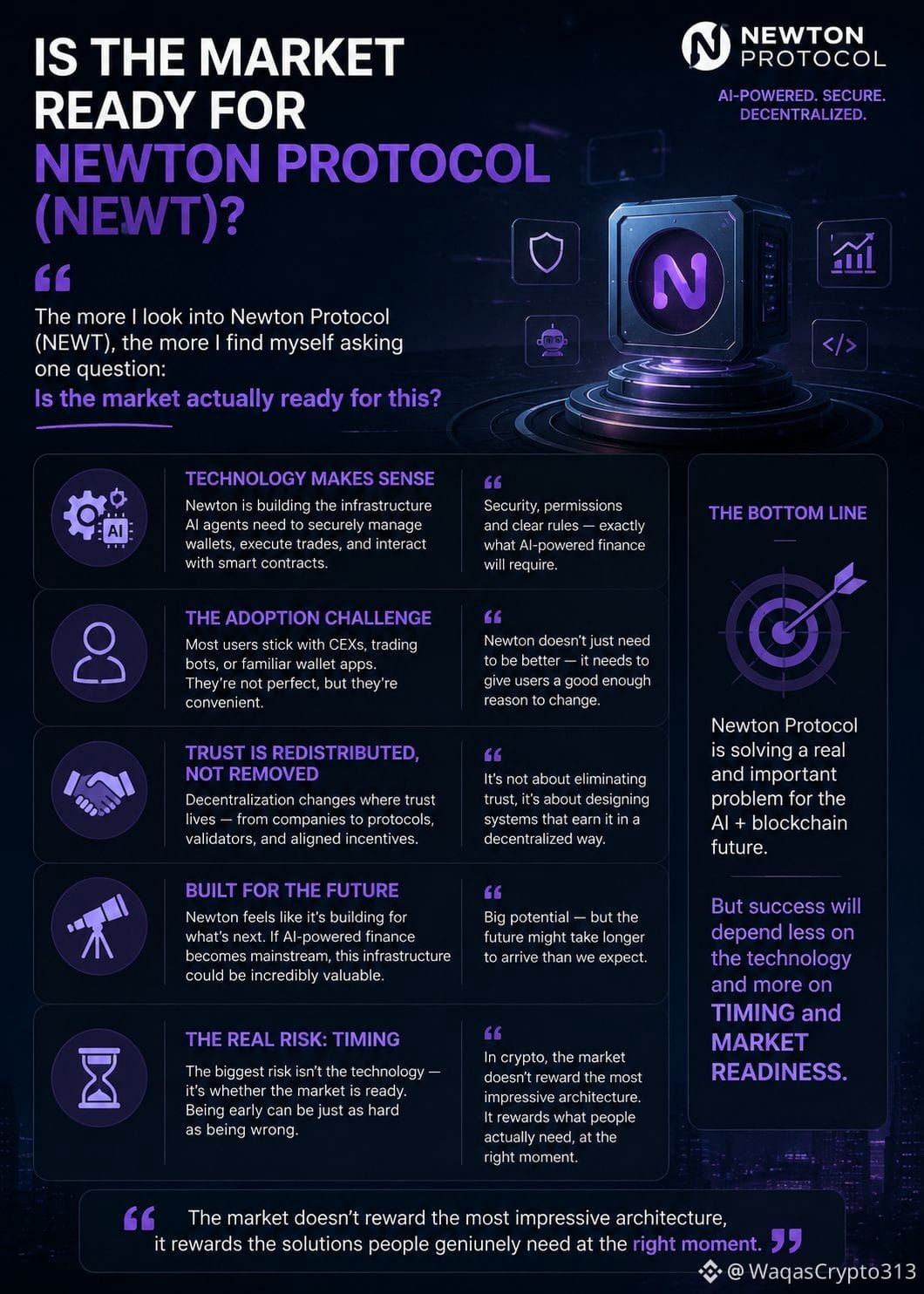
Acabei de testar a Mainnet Beta do Newton Protocol e estou impressionado 🚀
@NewtonProtocol está construindo uma infraestrutura real de IA + Web3. Com a Newton Mainnet Beta no ar, os desenvolvedores agora podem implantar aplicativos descentralizados mais inteligentes, com melhor fluxo de dados e automação.
O futuro dos agentes de IA on-chain já chegou.
Estou segurando $NEWT for o longo prazo 💎
#Newt #NewtonProtocol #Web3 #Aİ
Acabei de testar a Mainnet Beta do Newton Protocol e estou impressionado 🚀
@NewtonProtocol está construindo uma infraestrutura real de IA + Web3. Com a Newton Mainnet Beta no ar, os desenvolvedores agora podem implantar aplicativos descentralizados mais inteligentes, com melhor fluxo de dados e automação.
O futuro dos agentes de IA on-chain já chegou.
Estou segurando $NEWT for o longo prazo 💎
#Newt #NewtonProtocol #Web3 #Aİ
1
14
·
--
Pare de perseguir bots de IA chamativos! A VERDADEIRA oportunidade de IA em cripto está escondida por baixo...🤖 Pare de perseguir bots de IA chamativos! A VERDADEIRA oportunidade de IA em cripto está escondida por baixo... 💸🛡️
Todo mundo e o vizinho estão falando sobre agentes de IA em cripto agora. 🗣️ "Modelos mais inteligentes!" "Sinais de trade insanos!" "Portfólios automatizados 100x!"
A empolgação é real, mas quase todo mundo está ignorando a pergunta mais crítica: o que acontece depois que a IA decide fazer uma negociação? 🤔💭
Vamos encarar a dura verdade sobre negociar on-chain. 👇
🪤 A Armadilha da Casa de Vidro
Você pode ter a estratégia de trading com IA mais avançada e brilhante do mundo. Mas assim que sua IA envia essa transação para a blockchain, ela vira pública.
Pare de perseguir bots de IA chamativos! A VERDADEIRA oportunidade de IA em cripto está escondida por baixo...
🤖 Pare de perseguir bots de IA chamativos! A VERDADEIRA oportunidade de IA em cripto está escondida por baixo... 💸🛡️
Todo mundo e o vizinho estão falando sobre agentes de IA em cripto agora. 🗣️ "Modelos mais inteligentes!" "Sinais de trade insanos!" "Portfólios automatizados 100x!"
A empolgação é real, mas quase todo mundo está ignorando a pergunta mais crítica: o que acontece depois que a IA decide fazer uma negociação? 🤔💭
Vamos encarar a dura verdade sobre negociar on-chain. 👇
🪤 A Armadilha da Casa de Vidro
Você pode ter a estratégia de trading com IA mais avançada e brilhante do mundo. Mas assim que sua IA envia essa transação para a blockchain, ela vira pública.
Todo mundo e o vizinho estão falando sobre agentes de IA em cripto agora. 🗣️ "Modelos mais inteligentes!" "Sinais de trade insanos!" "Portfólios automatizados 100x!"
A empolgação é real, mas quase todo mundo está ignorando a pergunta mais crítica: o que acontece depois que a IA decide fazer uma negociação? 🤔💭
Vamos encarar a dura verdade sobre negociar on-chain. 👇
🪤 A Armadilha da Casa de Vidro
Você pode ter a estratégia de trading com IA mais avançada e brilhante do mundo. Mas assim que sua IA envia essa transação para a blockchain, ela vira pública.
2
38
·
--
#newt $NEWT
Estou acompanhando os avanços de
#NewtonProtocol com muito interesse. A Newton Mainnet Beta representa uma etapa importante para avaliar o crescimento do ecossistema e o desenvolvimento de novas oportunidades em torno de $NEWT Acompanharei atentamente as próximas atualizações. #Newt
#newt $NEWT
Estou acompanhando os avanços de
#NewtonProtocol com muito interesse. A Newton Mainnet Beta representa uma etapa importante para avaliar o crescimento do ecossistema e o desenvolvimento de novas oportunidades em torno de $NEWT Acompanharei atentamente as próximas atualizações. #Newt
Estou acompanhando os avanços de
#NewtonProtocol com muito interesse. A Newton Mainnet Beta representa uma etapa importante para avaliar o crescimento do ecossistema e o desenvolvimento de novas oportunidades em torno de $NEWT Acompanharei atentamente as próximas atualizações. #Newt
118
·
--

Artigo
Por que a Arquitetura Modular de Provas do Newton Protocol Pode Redefinir a Autorização Web3 🚀Ao explorar recentemente a arquitetura do Newton Protocol, peguei-me pensando menos em transações e mais em confiança.
A maioria das discussões sobre blockchain se concentra na velocidade de execução, na taxa de transferência ou nos custos de transação. A Newton adota uma abordagem diferente, fazendo outra pergunta:
Quanta prova cada ação realmente precisa?
Isso pode soar como um pequeno detalhe técnico, mas eu acredito que é uma das decisões de design mais subestimadas do protocolo.
Em vez de obrigar toda solicitação de autorização a passar pelo mesmo processo de verificação caro, a Newton introduz uma arquitetura de provas flexível, na qual diferentes ações podem receber diferentes níveis de garantia criptográfica, dependendo de suas necessidades.
Por que a Arquitetura Modular de Provas do Newton Protocol Pode Redefinir a Autorização Web3 🚀
Ao explorar recentemente a arquitetura do Newton Protocol, peguei-me pensando menos em transações e mais em confiança.
A maioria das discussões sobre blockchain se concentra na velocidade de execução, na taxa de transferência ou nos custos de transação. A Newton adota uma abordagem diferente, fazendo outra pergunta:
Quanta prova cada ação realmente precisa?
Isso pode soar como um pequeno detalhe técnico, mas eu acredito que é uma das decisões de design mais subestimadas do protocolo.
Em vez de obrigar toda solicitação de autorização a passar pelo mesmo processo de verificação caro, a Newton introduz uma arquitetura de provas flexível, na qual diferentes ações podem receber diferentes níveis de garantia criptográfica, dependendo de suas necessidades.
A maioria das discussões sobre blockchain se concentra na velocidade de execução, na taxa de transferência ou nos custos de transação. A Newton adota uma abordagem diferente, fazendo outra pergunta:
Quanta prova cada ação realmente precisa?
Isso pode soar como um pequeno detalhe técnico, mas eu acredito que é uma das decisões de design mais subestimadas do protocolo.
Em vez de obrigar toda solicitação de autorização a passar pelo mesmo processo de verificação caro, a Newton introduz uma arquitetura de provas flexível, na qual diferentes ações podem receber diferentes níveis de garantia criptográfica, dependendo de suas necessidades.
89

·
--
Em Alta
#newt $NEWT @NewtonProtocol
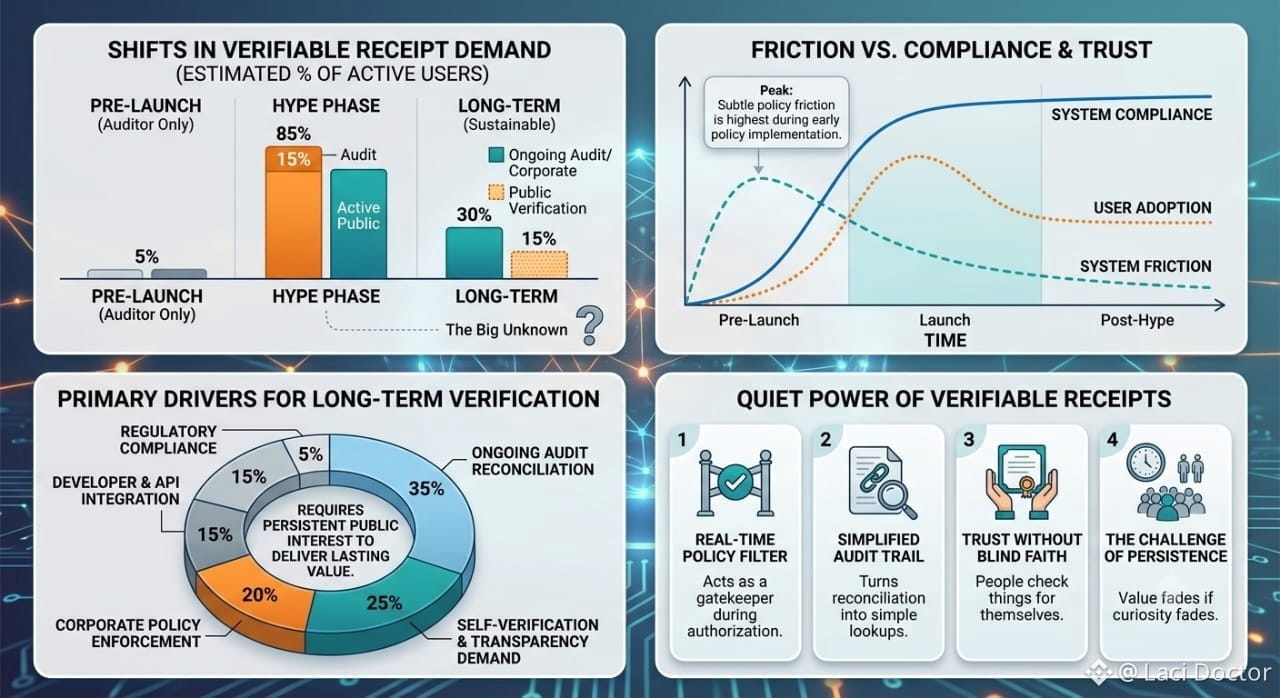
O Poder Silencioso de Recibos Verificáveis
Eu costumava achar que esses recibos eram, na maior parte, só para manter os auditores felizes — mais uma formalidade de conformidade que criava um rastro de papel agradável e nada mais. Mas ao ver a Newton anexar uma atestação criptográfica a cada transação autorizada, minha perspectiva mudou. O recibo não é apenas prova depois que a poeira baixa; ele funciona como um filtro em tempo real que decide se uma transação sequer é aprovada. Se não corresponder à política codificada, não é emitida nenhuma atestação.
Isso cria um tipo sutil de atrito que a maioria dos usuários casuais nem percebe, mas que remodela fundamentalmente a confiança em todo o fluxo. Os auditores passam a ter a capacidade de transformar reconciliações complexas em simples consultas, enquanto pessoas comuns conseguem ir além da fé cega e verificar as coisas por conta própria.
O que realmente se destaca não é só a transparência em si, mas se alguém continua verificando depois que a curiosidade inicial passa. No fim, esses recibos só entregam valor duradouro se as pessoas continuarem aparecendo para examiná-los. O grande desconhecido é se a demanda genuína por essa verificação sobreviverá ao hype, ou se a maioria de nós simplesmente confiará no sinal de verificação e parará de olhar com mais atenção.
#newton #NewtonProtocol
#newt $NEWT @NewtonProtocol
O Poder Silencioso de Recibos Verificáveis
Eu costumava achar que esses recibos eram, na maior parte, só para manter os auditores felizes — mais uma formalidade de conformidade que criava um rastro de papel agradável e nada mais. Mas ao ver a Newton anexar uma atestação criptográfica a cada transação autorizada, minha perspectiva mudou. O recibo não é apenas prova depois que a poeira baixa; ele funciona como um filtro em tempo real que decide se uma transação sequer é aprovada. Se não corresponder à política codificada, não é emitida nenhuma atestação.
Isso cria um tipo sutil de atrito que a maioria dos usuários casuais nem percebe, mas que remodela fundamentalmente a confiança em todo o fluxo. Os auditores passam a ter a capacidade de transformar reconciliações complexas em simples consultas, enquanto pessoas comuns conseguem ir além da fé cega e verificar as coisas por conta própria.
O que realmente se destaca não é só a transparência em si, mas se alguém continua verificando depois que a curiosidade inicial passa. No fim, esses recibos só entregam valor duradouro se as pessoas continuarem aparecendo para examiná-los. O grande desconhecido é se a demanda genuína por essa verificação sobreviverá ao hype, ou se a maioria de nós simplesmente confiará no sinal de verificação e parará de olhar com mais atenção.
#newton #NewtonProtocol
O Poder Silencioso de Recibos Verificáveis
Eu costumava achar que esses recibos eram, na maior parte, só para manter os auditores felizes — mais uma formalidade de conformidade que criava um rastro de papel agradável e nada mais. Mas ao ver a Newton anexar uma atestação criptográfica a cada transação autorizada, minha perspectiva mudou. O recibo não é apenas prova depois que a poeira baixa; ele funciona como um filtro em tempo real que decide se uma transação sequer é aprovada. Se não corresponder à política codificada, não é emitida nenhuma atestação.
Isso cria um tipo sutil de atrito que a maioria dos usuários casuais nem percebe, mas que remodela fundamentalmente a confiança em todo o fluxo. Os auditores passam a ter a capacidade de transformar reconciliações complexas em simples consultas, enquanto pessoas comuns conseguem ir além da fé cega e verificar as coisas por conta própria.
O que realmente se destaca não é só a transparência em si, mas se alguém continua verificando depois que a curiosidade inicial passa. No fim, esses recibos só entregam valor duradouro se as pessoas continuarem aparecendo para examiná-los. O grande desconhecido é se a demanda genuína por essa verificação sobreviverá ao hype, ou se a maioria de nós simplesmente confiará no sinal de verificação e parará de olhar com mais atenção.
#newton #NewtonProtocol
9
5
137
A infraestrutura ao serviço da inovação algorítmica 🚀
Para encerrar este destaque sobre o Top do ranking, um grande parabéns a @AnhNhỏEm e @alisaadkahoot que fecham brilhantemente este Top 20 da campanha #NewtonProtocol . A presença deles mostra a diversidade e a força de uma comunidade unida por um objetivo comum: promover um Web3 altamente seguro. Ao explorar casos de uso da conformidade programável para finanças e gestão de dados, eles lembram que @NewtonProtocol oferece as bases indispensáveis. O token $NEWT é o combustível desta revolução, na qual a inteligência artificial finalmente se torna totalmente transparente e confiável. Imperdível! 🤖🛡️
#Newt #AI #Web3
A infraestrutura ao serviço da inovação algorítmica 🚀
Para encerrar este destaque sobre o Top do ranking, um grande parabéns a @AnhNhỏEm e @A L I Web3 que fecham brilhantemente este Top 20 da campanha #NewtonProtocol . A presença deles mostra a diversidade e a força de uma comunidade unida por um objetivo comum: promover um Web3 altamente seguro. Ao explorar casos de uso da conformidade programável para finanças e gestão de dados, eles lembram que @NewtonProtocol oferece as bases indispensáveis. O token $NEWT é o combustível desta revolução, na qual a inteligência artificial finalmente se torna totalmente transparente e confiável. Imperdível! 🤖🛡️
#Newt #AI #Web3
Para encerrar este destaque sobre o Top do ranking, um grande parabéns a @AnhNhỏEm e @A L I Web3 que fecham brilhantemente este Top 20 da campanha #NewtonProtocol . A presença deles mostra a diversidade e a força de uma comunidade unida por um objetivo comum: promover um Web3 altamente seguro. Ao explorar casos de uso da conformidade programável para finanças e gestão de dados, eles lembram que @NewtonProtocol oferece as bases indispensáveis. O token $NEWT é o combustível desta revolução, na qual a inteligência artificial finalmente se torna totalmente transparente e confiável. Imperdível! 🤖🛡️
#Newt #AI #Web3
1
1
17

·
--
#newt $NEWT
@NewtonProtocol introduz uma poderosa camada de autorização pré-transação e um mecanismo de políticas. Em vez de lidar com riscos depois que o dano já foi feito, ele avalia conformidade, segurança e parâmetros de risco on-chain antes da execução.
Isso traz integridade programável de transações diretamente para cofres DeFi e agentes de IA, sem exigir que os desenvolvedores reescrevam toda a sua stack. Automação segura e descentralizada está ganhando escala! 🔒💡
#newton #NewtonProtocol
$NEWT
{spot}(NEWTUSDT)
#newt $NEWT
@NewtonProtocol introduz uma poderosa camada de autorização pré-transação e um mecanismo de políticas. Em vez de lidar com riscos depois que o dano já foi feito, ele avalia conformidade, segurança e parâmetros de risco on-chain antes da execução.
Isso traz integridade programável de transações diretamente para cofres DeFi e agentes de IA, sem exigir que os desenvolvedores reescrevam toda a sua stack. Automação segura e descentralizada está ganhando escala! 🔒💡
#newton #NewtonProtocol
$NEWT
@NewtonProtocol introduz uma poderosa camada de autorização pré-transação e um mecanismo de políticas. Em vez de lidar com riscos depois que o dano já foi feito, ele avalia conformidade, segurança e parâmetros de risco on-chain antes da execução.
Isso traz integridade programável de transações diretamente para cofres DeFi e agentes de IA, sem exigir que os desenvolvedores reescrevam toda a sua stack. Automação segura e descentralizada está ganhando escala! 🔒💡
#newton #NewtonProtocol
$NEWT
121

·
--
Depois que o Newton Mainnet Beta foi ao ar, ele tem estado em execução contínua; recentemente, a discussão no canal de desenvolvedores tem se concentrado bastante na sua lógica de autorização on-chain. Em termos simples, é uma camada de verificação de estratégia antes de executar uma transação — a cadeia de regras de decisão do Vault: a Chainalysis roda uma triagem de conformidade, a Hexagate faz detecção de segurança, a Credora e a RedStone avaliam a exposição ao risco; tudo é empacotado em provas on-chain verificáveis de pass/fail, e o resultado é registrado diretamente na blockchain.
Na prática, essa ideia é muito parecida com o Pre-Trade Risk das câmaras de compensação tradicionais, só que aplicada on-chain. Para os cofres do DeFi, o maior problema sempre foi a fragmentação do controle de risco: cada protocolo escreve seu próprio conjunto de regras, faz suas próprias auditorias e mantém tudo por conta própria; quando dá problema, é que se começa a investigar. O Newton funciona como uma padronização dessa camada — gerenciamento unificado de estratégias, trilha de execução e transparência on-chain para consulta pública.
A equipe é a Magic Labs: tem endosso da PayPal Ventures, e já conta com 57M+ carteiras; a base de carteiras do Polymarket também é deles. O roadmap começa com autorizações para o cofre e, em seguida, se expande para RWA, stablecoins e a direção de AI agents. $NEWT é o token do ecossistema; na fase Beta do mainnet, o que vem depois dependerá de como o mercado vai validar.
@NewtonProtocol
#NEWT #NewtonProtocol #AI
Apenas para fins informativos, não constitui aconselhamento de investimento.
Depois que o Newton Mainnet Beta foi ao ar, ele tem estado em execução contínua; recentemente, a discussão no canal de desenvolvedores tem se concentrado bastante na sua lógica de autorização on-chain. Em termos simples, é uma camada de verificação de estratégia antes de executar uma transação — a cadeia de regras de decisão do Vault: a Chainalysis roda uma triagem de conformidade, a Hexagate faz detecção de segurança, a Credora e a RedStone avaliam a exposição ao risco; tudo é empacotado em provas on-chain verificáveis de pass/fail, e o resultado é registrado diretamente na blockchain.
Na prática, essa ideia é muito parecida com o Pre-Trade Risk das câmaras de compensação tradicionais, só que aplicada on-chain. Para os cofres do DeFi, o maior problema sempre foi a fragmentação do controle de risco: cada protocolo escreve seu próprio conjunto de regras, faz suas próprias auditorias e mantém tudo por conta própria; quando dá problema, é que se começa a investigar. O Newton funciona como uma padronização dessa camada — gerenciamento unificado de estratégias, trilha de execução e transparência on-chain para consulta pública.
A equipe é a Magic Labs: tem endosso da PayPal Ventures, e já conta com 57M+ carteiras; a base de carteiras do Polymarket também é deles. O roadmap começa com autorizações para o cofre e, em seguida, se expande para RWA, stablecoins e a direção de AI agents. $NEWT é o token do ecossistema; na fase Beta do mainnet, o que vem depois dependerá de como o mercado vai validar.
@NewtonProtocol
#NEWT #NewtonProtocol #AI
Apenas para fins informativos, não constitui aconselhamento de investimento.
Na prática, essa ideia é muito parecida com o Pre-Trade Risk das câmaras de compensação tradicionais, só que aplicada on-chain. Para os cofres do DeFi, o maior problema sempre foi a fragmentação do controle de risco: cada protocolo escreve seu próprio conjunto de regras, faz suas próprias auditorias e mantém tudo por conta própria; quando dá problema, é que se começa a investigar. O Newton funciona como uma padronização dessa camada — gerenciamento unificado de estratégias, trilha de execução e transparência on-chain para consulta pública.
A equipe é a Magic Labs: tem endosso da PayPal Ventures, e já conta com 57M+ carteiras; a base de carteiras do Polymarket também é deles. O roadmap começa com autorizações para o cofre e, em seguida, se expande para RWA, stablecoins e a direção de AI agents. $NEWT é o token do ecossistema; na fase Beta do mainnet, o que vem depois dependerá de como o mercado vai validar.
@NewtonProtocol
#NEWT #NewtonProtocol #AI
Apenas para fins informativos, não constitui aconselhamento de investimento.
2
85
Inicia sessão para explorar mais conteúdos
Junta-te a utilizadores de criptomoedas de todo o mundo na Binance Square
⚡️ Obtém informações úteis e recentes sobre criptomoedas.
💬 Com a confiança da maior exchange de criptomoedas do mundo.
👍 Descobre perspetivas reais de criadores verificados.
E-mail/Número de telefone
Tópicos em Tendência
1
#EthereumDropsBelow$2300
1,814 visualizações
77 a discutir
2
#BitcoinSlipsBelow$80KAgain
4,694 visualizações
46 a discutir
3
#ThailandLaunchesWORPTStablecoinToQRPaymentApp
7,726 visualizações
210 a discutir
4
#StrategySkipsBitcoinPurchasesSpends$205MOnSTRCBuybacks
4,317 visualizações
75 a discutir
5
#BitmineAdds10452ETH
45,415 visualizações
659 a discutir
6
#SouthKoreaConsidersEducationTaxOnCryptoExchanges
24,701 visualizações
511 a discutir
7
#OCCUrgesCommunityBanksToEnterStablecoinPayments
19,814 visualizações
356 a discutir
8
#RippleWinsFullApprovalAsNationalTrustBank
27,463 visualizações
347 a discutir
9
#AkashSelectsSolanaAsMigrationTarget
12,577 visualizações
170 a discutir
10
#OndoToOpenSubscriptionsForOpenAIPreIPOTokenizedNotes
721 visualizações
25 a discutir