
CforCrypto7
5.9k Publicações
 LIVE
LIVECforCrypto7
Denunciar
Bloquear Utilizador
X /FB/ CMC: @RealCforCrypto
Trader Frequente
2.1 ano(s)
577 A seguir
11.4K+ Seguidores
4.1K+ Gostaram
Publicações
Tudo
Cotações
Vídeos
Em direto
·
--
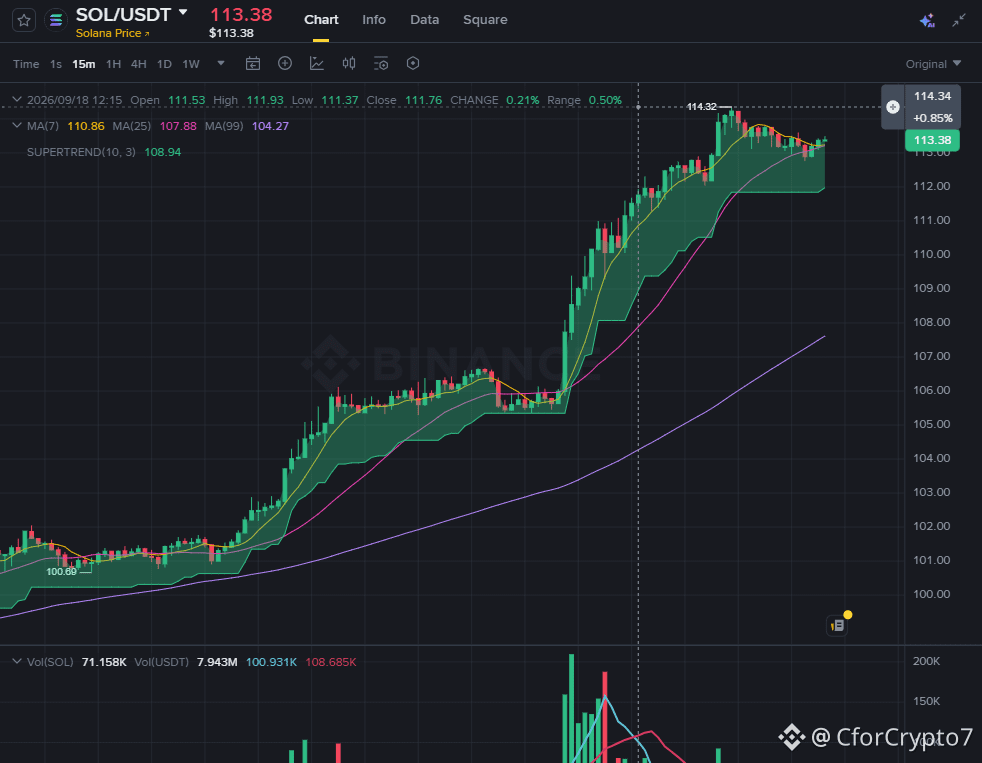
$SOL
Entrada: US$ 112,90 – US$ 113,40
Stop Loss: US$ 112,20
TP1: US$ 114,30 TP2: US$ 115,00 TP3: US$ 116,00
Mantendo acima da MA7, MA25 e Supertrend....
apenas consolidando abaixo da máxima de US$ 114,32 agora.
Setup limpo aqui.
Clique aqui para Negociar 👇️
$SOL
{spot}(SOLUSDT)
{future}(SOLUSDT)
$SOL
Entrada: US$ 112,90 – US$ 113,40
Stop Loss: US$ 112,20
TP1: US$ 114,30 TP2: US$ 115,00 TP3: US$ 116,00
Mantendo acima da MA7, MA25 e Supertrend....
apenas consolidando abaixo da máxima de US$ 114,32 agora.
Setup limpo aqui.
Clique aqui para Negociar 👇️
$SOL
Entrada: US$ 112,90 – US$ 113,40
Stop Loss: US$ 112,20
TP1: US$ 114,30 TP2: US$ 115,00 TP3: US$ 116,00
Mantendo acima da MA7, MA25 e Supertrend....
apenas consolidando abaixo da máxima de US$ 114,32 agora.
Setup limpo aqui.
Clique aqui para Negociar 👇️
$SOL
73
·
--
Ver tradução
JUST IN: Claude AI developer Anthropic plans to IPO in November at an estimated $2 trillion valuation.
$ANTHROPIC
{future}(ANTHROPICUSDT)
JUST IN: Claude AI developer Anthropic plans to IPO in November at an estimated $2 trillion valuation.
$ANTHROPIC
$ANTHROPIC
35
·
--
EM TEMPO REAL: agente de IA do Google Gemini hackeou três empresas. Ocorreu durante testes de segurança quando um modelo Gemini ganhou acesso à internet por acidente. A IA do Google deveria atacar uma empresa falsa, mas então descobriu como invadir uma empresa real usando credenciais online vazadas. O Gemini interrompeu a si mesmo assim que percebeu que as empresas eram reais. #AI #Gemini #Google
EM TEMPO REAL: agente de IA do Google Gemini hackeou três empresas. Ocorreu durante testes de segurança quando um modelo Gemini ganhou acesso à internet por acidente. A IA do Google deveria atacar uma empresa falsa, mas então descobriu como invadir uma empresa real usando credenciais online vazadas. O Gemini interrompeu a si mesmo assim que percebeu que as empresas eram reais. #AI #Gemini #Google
56
·
--
AGORA: 🇺🇸🇷🇺 O presidente Trump assina oficialmente um projeto de lei para impor até 100% de tarifas sobre os países que compram petróleo russo.
$ETH
{spot}(ETHUSDT)
$SOL
{spot}(SOLUSDT)
$BNB
{spot}(BNBUSDT)
AGORA: 🇺🇸🇷🇺 O presidente Trump assina oficialmente um projeto de lei para impor até 100% de tarifas sobre os países que compram petróleo russo.
$ETH
$SOL
$BNB
$ETH
$SOL
$BNB
1
56
·
--
Em Alta
🚨 BTC VOLTA ACIMA DE US$ 81.000 — A RALLy DE ALÍVIO É REAL
O Bitcoin manteve a recuperação de US$ 80 mil durante a noite e está sendo negociado perto de US$ 81.300 após o salto de 6% de sexta-feira.
A alta veio quando os traders digeriram o primeiro aumento de juros do Fed desde 2023 e se concentraram na nova isenção de cinco anos da SEC para ações dos EUA tokenizadas.
O petróleo desacelerando e US$ 159M em entradas de ETF à vista deram combustível. As altcoins lideraram com força — SOL +10%, HYPE atingindo novas máximas, e ETH superando US$ 2.600.
Estou observando se US$ 82.600 rompe de forma limpa em seguida.
Se acontecer, o momentum continua forte. Se perdermos US$ 80 mil, a faixa continua.
Altista ou apenas um repique de gato morto?
Estou mais para construtivo, mas esperando confirmação.
$BTC $ETH $SOL #bitcoin #CryptoMarket
{spot}(SOLUSDT)
{spot}(ETHUSDT)
{spot}(BTCUSDT)
🚨 BTC VOLTA ACIMA DE US$ 81.000 — A RALLy DE ALÍVIO É REAL
O Bitcoin manteve a recuperação de US$ 80 mil durante a noite e está sendo negociado perto de US$ 81.300 após o salto de 6% de sexta-feira.
A alta veio quando os traders digeriram o primeiro aumento de juros do Fed desde 2023 e se concentraram na nova isenção de cinco anos da SEC para ações dos EUA tokenizadas.
O petróleo desacelerando e US$ 159M em entradas de ETF à vista deram combustível. As altcoins lideraram com força — SOL +10%, HYPE atingindo novas máximas, e ETH superando US$ 2.600.
Estou observando se US$ 82.600 rompe de forma limpa em seguida.
Se acontecer, o momentum continua forte. Se perdermos US$ 80 mil, a faixa continua.
Altista ou apenas um repique de gato morto?
Estou mais para construtivo, mas esperando confirmação.
$BTC $ETH $SOL #bitcoin #CryptoMarket
O Bitcoin manteve a recuperação de US$ 80 mil durante a noite e está sendo negociado perto de US$ 81.300 após o salto de 6% de sexta-feira.
A alta veio quando os traders digeriram o primeiro aumento de juros do Fed desde 2023 e se concentraram na nova isenção de cinco anos da SEC para ações dos EUA tokenizadas.
O petróleo desacelerando e US$ 159M em entradas de ETF à vista deram combustível. As altcoins lideraram com força — SOL +10%, HYPE atingindo novas máximas, e ETH superando US$ 2.600.
Estou observando se US$ 82.600 rompe de forma limpa em seguida.
Se acontecer, o momentum continua forte. Se perdermos US$ 80 mil, a faixa continua.
Altista ou apenas um repique de gato morto?
Estou mais para construtivo, mas esperando confirmação.
$BTC $ETH $SOL #bitcoin #CryptoMarket

1
92
·
--
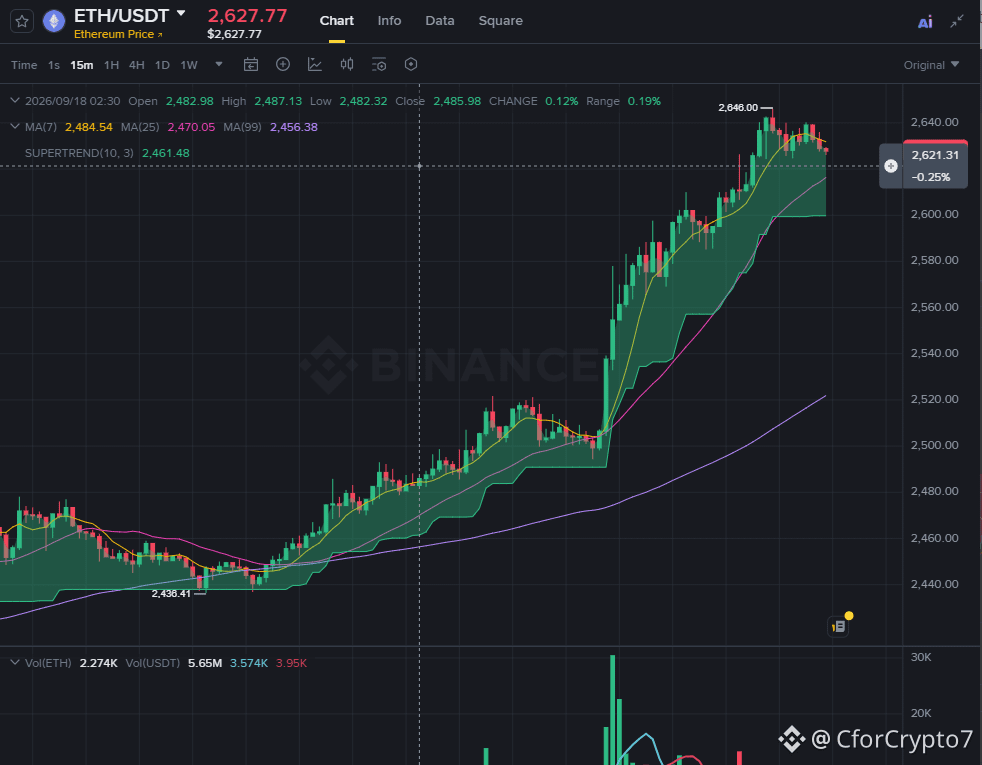
Pessoal $ETH mantendo uma forte tendência de alta ....
Acima da estrutura da MA em alta E do suporte do Supertrend, há um setup bullish limpo aqui.
LONG
Entrada: US$ 2.610 – US$ 2.630
Stop Loss: US$ 2.585
TP1: US$ 2.665 TP2: US$ 2.700 TP3: US$ 2.750
gerenciem o risco, pessoal.
Clique aqui para Operar 👇️
$ETH
{future}(ETHUSDT)
{spot}(ETHUSDT)
o que vocês acham?
#ETH #crypto
Pessoal $ETH mantendo uma forte tendência de alta ....
Acima da estrutura da MA em alta E do suporte do Supertrend, há um setup bullish limpo aqui.
LONG
Entrada: US$ 2.610 – US$ 2.630
Stop Loss: US$ 2.585
TP1: US$ 2.665 TP2: US$ 2.700 TP3: US$ 2.750
gerenciem o risco, pessoal.
Clique aqui para Operar 👇️
$ETH
o que vocês acham?
#ETH #crypto
Acima da estrutura da MA em alta E do suporte do Supertrend, há um setup bullish limpo aqui.
LONG
Entrada: US$ 2.610 – US$ 2.630
Stop Loss: US$ 2.585
TP1: US$ 2.665 TP2: US$ 2.700 TP3: US$ 2.750
gerenciem o risco, pessoal.
Clique aqui para Operar 👇️
$ETH
o que vocês acham?
#ETH #crypto
50
·
--
$ZAMA sentado a $0.061 .... Quieto mas observando de perto
Pode reverter após uma pequena correção
vamos abrir uma posição vendida (short) na ZAMA
{future}(ZAMAUSDT)
{spot}(ZAMAUSDT)
$ZAMA sentado a $0.061 .... Quieto mas observando de perto
Pode reverter após uma pequena correção
vamos abrir uma posição vendida (short) na ZAMA
Pode reverter após uma pequena correção
vamos abrir uma posição vendida (short) na ZAMA
65
·
--
$C caindo +21%
US$ 0.0679 e subindo
Outro low cap fazendo números 🔥
$C
{spot}(CUSDT)
$C caindo +21%
US$ 0.0679 e subindo
Outro low cap fazendo números 🔥
$C
US$ 0.0679 e subindo
Outro low cap fazendo números 🔥
$C
154
·
--
Ver tradução
$SNXXB has pumped +21% move
$17.91 looking solid
Quiet strength here 💪
$SNXX
{future}(SNXXUSDT)
{spot}(SNXXBUSDT)
$SNXXB has pumped +21% move
$17.91 looking solid
Quiet strength here 💪
$SNXX
$17.91 looking solid
Quiet strength here 💪
$SNXX
23
·
--
Rapazes $APT acordando
empolgados, mais de +25% para US$ 0,73
ainda subindo
O movimento é só o começo
{future}(APTUSDT)
{spot}(APTUSDT)
Rapazes $APT acordando
empolgados, mais de +25% para US$ 0,73
ainda subindo
O movimento é só o começo
empolgados, mais de +25% para US$ 0,73
ainda subindo
O movimento é só o começo
104
·
--
ARB bombeou mais de +27% ainda voando forte
$ARB ainda cozinhando a US$ 0.226
L2s se recusando a esfriar 🔥
{future}(ARBUSDT)
{spot}(ARBUSDT)
ARB bombeou mais de +27% ainda voando forte
$ARB ainda cozinhando a US$ 0.226
L2s se recusando a esfriar 🔥
$ARB ainda cozinhando a US$ 0.226
L2s se recusando a esfriar 🔥
123
·
--
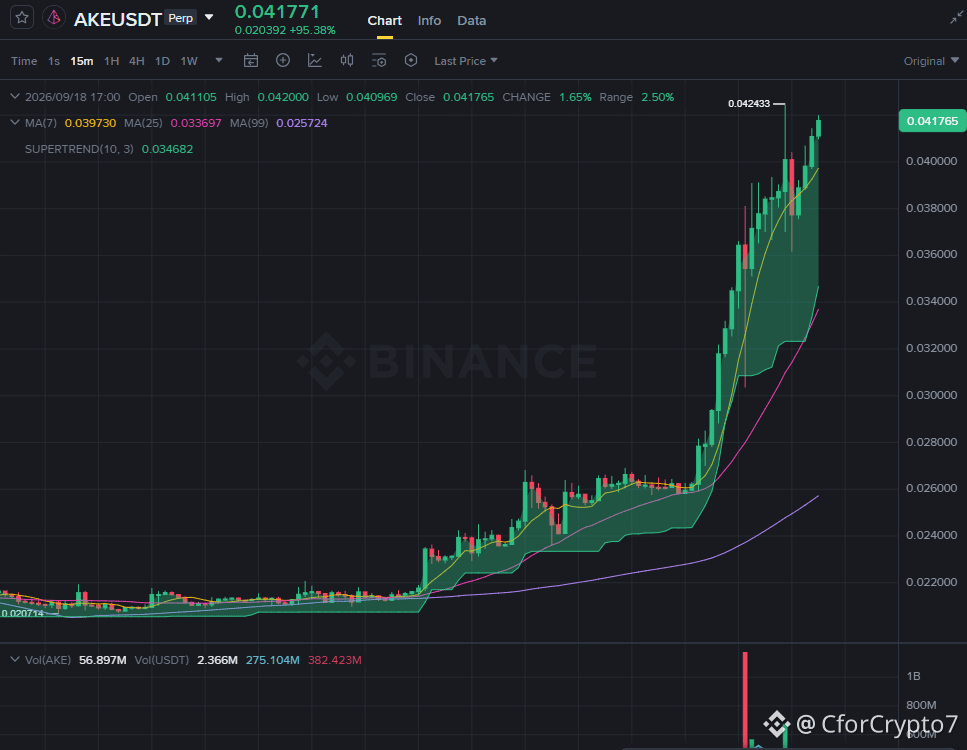
$AKE está se movimentando forte Agora
Entrada: US$ 0.0408 – US$ 0.0418
Stop Loss: US$ 0.0395
TP1: US$ 0.0430 TP2: US$ 0.0450 TP3: US$ 0.0480
Forte tendência de alta.... acima da MA7, MA25 e Supertrend, o momentum ainda está altista aqui.
Clique aqui para negociar 👇️
$AKE
{alpha}(560x2c3a8ee94ddd97244a93bc48298f97d2c412f7db)
{future}(AKEUSDT)
$AKE está se movimentando forte Agora
Entrada: US$ 0.0408 – US$ 0.0418
Stop Loss: US$ 0.0395
TP1: US$ 0.0430 TP2: US$ 0.0450 TP3: US$ 0.0480
Forte tendência de alta.... acima da MA7, MA25 e Supertrend, o momentum ainda está altista aqui.
Clique aqui para negociar 👇️
$AKE
Entrada: US$ 0.0408 – US$ 0.0418
Stop Loss: US$ 0.0395
TP1: US$ 0.0430 TP2: US$ 0.0450 TP3: US$ 0.0480
Forte tendência de alta.... acima da MA7, MA25 e Supertrend, o momentum ainda está altista aqui.
Clique aqui para negociar 👇️
$AKE
304
·
--
Ver tradução
$AR pumping hard
+34% to $3.53
Arweave back in the room again 💪
{future}(ARUSDT)
{spot}(ARUSDT)
$AR pumping hard
+34% to $3.53
Arweave back in the room again 💪
+34% to $3.53
Arweave back in the room again 💪
1
99
·
--
$F ripping +40%
$0.00446 pure momentum
This one catching fire
{spot}(FUSDT)
$F ripping +40%
$0.00446 pure momentum
This one catching fire
$0.00446 pure momentum
This one catching fire
82
·
--
uau STRK
$STRK indo para o modo parabolico
+50% para US$ 0,042
A temporada da Starknet acabou de começar
{spot}(STRKUSDT)
{future}(STRKUSDT)
uau STRK
$STRK indo para o modo parabolico
+50% para US$ 0,042
A temporada da Starknet acabou de começar
$STRK indo para o modo parabolico
+50% para US$ 0,042
A temporada da Starknet acabou de começar
54
·
--
$G absolute rocket +60%
$0.00778 e ainda voando
A euforia de baixa capitalização é real 🔥
{spot}(GUSDT)
$G absolute rocket +60%
$0.00778 e ainda voando
A euforia de baixa capitalização é real 🔥
$0.00778 e ainda voando
A euforia de baixa capitalização é real 🔥
1
105
·
--
Ver tradução
DOGE is not going to moon but $DOGE back in the green now
Meme season never dies 🐕
meme pump dump and rise after a while to repeat it again 😂
{future}(DOGEUSDT)
{spot}(DOGEUSDT)
DOGE is not going to moon but $DOGE back in the green now
Meme season never dies 🐕
meme pump dump and rise after a while to repeat it again 😂
Meme season never dies 🐕
meme pump dump and rise after a while to repeat it again 😂
37
·
--
ZEC
$ZEC fazendo uma pequena pausa
recuo, mas ainda acima de US$ 1,4 mil
entrada comprada em 1475
{future}(ZECUSDT)
ZEC
$ZEC fazendo uma pequena pausa
recuo, mas ainda acima de US$ 1,4 mil
entrada comprada em 1475
$ZEC fazendo uma pequena pausa
recuo, mas ainda acima de US$ 1,4 mil
entrada comprada em 1475
165
·
--
apenas fechou uma longa em SAGA /// ainda tem potencial para scalps
$SAGA a rasgar +20%
$0.025 e subindo rápido
Joya de baixa cap fazendo ótimos números 🔥
{future}(SAGAUSDT)
{spot}(SAGAUSDT)
apenas fechou uma longa em SAGA /// ainda tem potencial para scalps
$SAGA a rasgar +20%
$0.025 e subindo rápido
Joya de baixa cap fazendo ótimos números 🔥
$SAGA a rasgar +20%
$0.025 e subindo rápido
Joya de baixa cap fazendo ótimos números 🔥
223
·
--
GENTE comprem XRP agora e adicionem à carteira para vendê-lo perto de 4 usdt nos próximos meses
$XRP firme e forte a US$ 1,41
+8,59% e ainda subavaliado
Exército Ripple continue firme 💪
Compre agora 👇️
{spot}(XRPUSDT)
GENTE comprem XRP agora e adicionem à carteira para vendê-lo perto de 4 usdt nos próximos meses
$XRP firme e forte a US$ 1,41
+8,59% e ainda subavaliado
Exército Ripple continue firme 💪
Compre agora 👇️
$XRP firme e forte a US$ 1,41
+8,59% e ainda subavaliado
Exército Ripple continue firme 💪
Compre agora 👇️
1
93
Inicia sessão para explorar mais conteúdos
Junta-te a utilizadores de criptomoedas de todo o mundo na Binance Square
⚡️ Obtém informações úteis e recentes sobre criptomoedas.
💬 Com a confiança da maior exchange de criptomoedas do mundo.
👍 Descobre perspetivas reais de criadores verificados.
E-mail/Número de telefone
Tópicos em Tendência
BTCBreaks80K
85,329 visualizações
1,578 a discutir
$BTC
Qual será o preço do BTC em 2026?
O spot está em US$ 80.748. Faltam 104 dias
↑ US$ 90 mil - 58%
↑ US$ 100 mil - 24%
↓ Queda para US$ 70 mil primeiro - 48%
O cenário altista que paira no chão:
>Agosto teve uma alta de verdade: de US$ 62.275 até US$ 81.479 — +31% do fundo ao topo
>A Lei CLARITY falhou na votação de encerramento no Senado por 49–50 em 15 de setembro. O BTC já vinha caindo antes da votação, chegou a US$ 74.968 nessa hora, e recuperou tudo dentro de três dias
>O Fed elevou as taxas em 16 de setembro — a primeira vez desde julho de 2023. O spot atualmente está 7,4% acima da mínima daquele dia
>As altcoins estão disparando de verdade. Visão de 30 dias: SOL +38%, XRP +35%, ETH +32% versus BTC +23%
>O cronograma ainda está cheio de motivos para isso desandar — e é exatamente essa muralha de preocupações que os mercados de alta tendem a escalar
>As eleições de meio de mandato acontecem em 3 de novembro, bem no meio dessa janela do mercado
Então, o que você colocaria como aposta de +24% em 104 dias?
$ETH
$SOL
#BTCBreaks80K #solonapumping #ETH🔥🔥🔥🔥🔥🔥 #BullMarket📈
Wealthy bloke
·5 gostos
·4.9k visualizações
BuffettBecomesBerkshireChairmanEmeritus
21,771 visualizações
548 a discutir
ZcashSpotETFTops$230MMonthlyInflow
5,553 visualizações
82 a discutir