

#cryptocustody
cryptocustody
22,676 views
169 Discussing
ရေပန်းစားသော
နောက်ဆုံး

If you're still treating bank custody as a threat instead of a signal, stop now.
Retail traders keep getting wrecked by waiting for "pure" decentralization while missing the actual capital that moves prices. The pain is real: you hold through the chop then watch institutions pile in through the front door you ignored.
Deutsche Bank is launching a digital asset custody service for institutional and corporate clients in Europe, with first onboardings expected this year pending approval. They will store and transfer $BTC, $ETH, and $USDC while managing the wallets and private keys themselves. That is the part most people will hate.
One camp says this kills the whole point of crypto because a bank holding the keys can freeze or seize just like they do with cash. Fair. The other camp sees the obvious: institutions will not self-custody at scale. They need a name they already trust. This is how real size actually enters. Betting against that flow has already left plenty of people buying higher later.
Where do you think this goes from here?
#Bitcoin #CryptoCustody #Institutions
If you're still treating bank custody as a threat instead of a signal, stop now.
Retail traders keep getting wrecked by waiting for "pure" decentralization while missing the actual capital that moves prices. The pain is real: you hold through the chop then watch institutions pile in through the front door you ignored.
Deutsche Bank is launching a digital asset custody service for institutional and corporate clients in Europe, with first onboardings expected this year pending approval. They will store and transfer $BTC , $ETH , and $USDC while managing the wallets and private keys themselves. That is the part most people will hate.
One camp says this kills the whole point of crypto because a bank holding the keys can freeze or seize just like they do with cash. Fair. The other camp sees the obvious: institutions will not self-custody at scale. They need a name they already trust. This is how real size actually enters. Betting against that flow has already left plenty of people buying higher later.
Where do you think this goes from here?
#Bitcoin #CryptoCustody #Institutions
Retail traders keep getting wrecked by waiting for "pure" decentralization while missing the actual capital that moves prices. The pain is real: you hold through the chop then watch institutions pile in through the front door you ignored.
Deutsche Bank is launching a digital asset custody service for institutional and corporate clients in Europe, with first onboardings expected this year pending approval. They will store and transfer $BTC , $ETH , and $USDC while managing the wallets and private keys themselves. That is the part most people will hate.
One camp says this kills the whole point of crypto because a bank holding the keys can freeze or seize just like they do with cash. Fair. The other camp sees the obvious: institutions will not self-custody at scale. They need a name they already trust. This is how real size actually enters. Betting against that flow has already left plenty of people buying higher later.
Where do you think this goes from here?
#Bitcoin #CryptoCustody #Institutions
50
Institutional adoption sounds like a massive win until you realize banks holding your private keys defeats the entire point of crypto.
Most retail traders celebrate every time a legacy bank enters the space, only to get trapped later when regulatory freezes or counterparty risks hit centralized custodians. We spent years trying to escape third-party control, yet the market keeps cheering for traditional finance to hold the master key.
Deutsche Bank is rolling out a digital asset custody service for European institutions to store and transfer selected assets like $BTC and $ETH alongside stablecoins like EURC. The catch is straightforward: the bank manages the wallets and holds the private keys entirely, subject to regional regulatory approvals.
When a traditional banking giant controls the keys, those assets are exposed to the same jurisdictional freezes and systemic balance sheet risks that crypto was built to circumvent. Institutional liquidity is great, but giving custody back to legacy intermediaries brings old-school financial vulnerability right back to the table.
Do you think institutional custody helps the space or just rebuilds the legacy banking trap?
#Bitcoin #CryptoCustody #InstitutionalCrypto
Institutional adoption sounds like a massive win until you realize banks holding your private keys defeats the entire point of crypto.
Most retail traders celebrate every time a legacy bank enters the space, only to get trapped later when regulatory freezes or counterparty risks hit centralized custodians. We spent years trying to escape third-party control, yet the market keeps cheering for traditional finance to hold the master key.
Deutsche Bank is rolling out a digital asset custody service for European institutions to store and transfer selected assets like $BTC and $ETH alongside stablecoins like EURC. The catch is straightforward: the bank manages the wallets and holds the private keys entirely, subject to regional regulatory approvals.
When a traditional banking giant controls the keys, those assets are exposed to the same jurisdictional freezes and systemic balance sheet risks that crypto was built to circumvent. Institutional liquidity is great, but giving custody back to legacy intermediaries brings old-school financial vulnerability right back to the table.
Do you think institutional custody helps the space or just rebuilds the legacy banking trap?
#Bitcoin #CryptoCustody #InstitutionalCrypto
Most retail traders celebrate every time a legacy bank enters the space, only to get trapped later when regulatory freezes or counterparty risks hit centralized custodians. We spent years trying to escape third-party control, yet the market keeps cheering for traditional finance to hold the master key.
Deutsche Bank is rolling out a digital asset custody service for European institutions to store and transfer selected assets like $BTC and $ETH alongside stablecoins like EURC. The catch is straightforward: the bank manages the wallets and holds the private keys entirely, subject to regional regulatory approvals.
When a traditional banking giant controls the keys, those assets are exposed to the same jurisdictional freezes and systemic balance sheet risks that crypto was built to circumvent. Institutional liquidity is great, but giving custody back to legacy intermediaries brings old-school financial vulnerability right back to the table.
Do you think institutional custody helps the space or just rebuilds the legacy banking trap?
#Bitcoin #CryptoCustody #InstitutionalCrypto
74
Deutsche Bank just announced crypto custody for institutions, and here's the twist: not a single coin has to be bought because of it.
This is exactly the kind of headline that makes people FOMO in at the local top. Then the pump bleeds out and they're stuck holding bags waiting for "institutional money" that never arrives on their schedule.
Here's what custody actually means: the bank holds keys for clients who already own the assets. It's safekeeping, not demand. No bank treasury is suddenly allocating to Bitcoin because of this press release. And read the fine print , the launch is "subject to the regulatory process," which is finance-speak for approvals, delays, and revised timelines. The initial scope only covers $BTC, $ETH and selected stablecoins, so when they say "selected," expect names like $USDT to clear the vetting while everything else stays locked out for now.
The pattern I keep seeing play out: headline drops, price pumps on the news, then bleeds over the following weeks because real flows arrive in quarters, not hours. If you bought the announcement, you're often just exit liquidity for people who read past the headline. Trade the actual flows when the service goes live, not the press release promising it.
How do you handle institutional news like this , fade the pump, or wait for the real flows?
#CryptoCustody #InstitutionalAdoption #Bitcoin
Deutsche Bank just announced crypto custody for institutions, and here's the twist: not a single coin has to be bought because of it.
This is exactly the kind of headline that makes people FOMO in at the local top. Then the pump bleeds out and they're stuck holding bags waiting for "institutional money" that never arrives on their schedule.
Here's what custody actually means: the bank holds keys for clients who already own the assets. It's safekeeping, not demand. No bank treasury is suddenly allocating to Bitcoin because of this press release. And read the fine print , the launch is "subject to the regulatory process," which is finance-speak for approvals, delays, and revised timelines. The initial scope only covers $BTC , $ETH and selected stablecoins, so when they say "selected," expect names like $USDT to clear the vetting while everything else stays locked out for now.
The pattern I keep seeing play out: headline drops, price pumps on the news, then bleeds over the following weeks because real flows arrive in quarters, not hours. If you bought the announcement, you're often just exit liquidity for people who read past the headline. Trade the actual flows when the service goes live, not the press release promising it.
How do you handle institutional news like this , fade the pump, or wait for the real flows?
#CryptoCustody #InstitutionalAdoption #Bitcoin
This is exactly the kind of headline that makes people FOMO in at the local top. Then the pump bleeds out and they're stuck holding bags waiting for "institutional money" that never arrives on their schedule.
Here's what custody actually means: the bank holds keys for clients who already own the assets. It's safekeeping, not demand. No bank treasury is suddenly allocating to Bitcoin because of this press release. And read the fine print , the launch is "subject to the regulatory process," which is finance-speak for approvals, delays, and revised timelines. The initial scope only covers $BTC , $ETH and selected stablecoins, so when they say "selected," expect names like $USDT to clear the vetting while everything else stays locked out for now.
The pattern I keep seeing play out: headline drops, price pumps on the news, then bleeds over the following weeks because real flows arrive in quarters, not hours. If you bought the announcement, you're often just exit liquidity for people who read past the headline. Trade the actual flows when the service goes live, not the press release promising it.
How do you handle institutional news like this , fade the pump, or wait for the real flows?
#CryptoCustody #InstitutionalAdoption #Bitcoin
60

·
--
Why is nobody talking about Deutsche Bank quietly building the one institutional rail crypto has actually been missing?
Retail keeps getting wrecked on every bank adoption rumor because those stories never connected to how institutions actually move money. You buy high on the headline and watch it fade when the operational reality never shows up.
Deutsche Bank intends to launch regulated digital-asset custody for institutional and corporate clients across Europe this year, subject to the regulatory process. The starting lineup is $BTC, $ETH and selected stablecoins.
What the coverage is skipping is the balance-sheet connectivity. Deutsche Bank already operates inside the cash management, securities services, collateral and settlement systems that large players use daily. Adding crypto custody here wires digital assets directly into that existing machinery rather than creating another isolated offering.
This is the real-world case study of institutional integration done properly. Not a marketing exercise. The friction for serious capital finally drops.
Where do you think this takes $BTC and $ETH once the pipe is live?
#Bitcoin #Ethereum #CryptoCustody
Why is nobody talking about Deutsche Bank quietly building the one institutional rail crypto has actually been missing?
Retail keeps getting wrecked on every bank adoption rumor because those stories never connected to how institutions actually move money. You buy high on the headline and watch it fade when the operational reality never shows up.
Deutsche Bank intends to launch regulated digital-asset custody for institutional and corporate clients across Europe this year, subject to the regulatory process. The starting lineup is $BTC , $ETH and selected stablecoins.
What the coverage is skipping is the balance-sheet connectivity. Deutsche Bank already operates inside the cash management, securities services, collateral and settlement systems that large players use daily. Adding crypto custody here wires digital assets directly into that existing machinery rather than creating another isolated offering.
This is the real-world case study of institutional integration done properly. Not a marketing exercise. The friction for serious capital finally drops.
Where do you think this takes $BTC and $ETH once the pipe is live?
#Bitcoin #Ethereum #CryptoCustody
Retail keeps getting wrecked on every bank adoption rumor because those stories never connected to how institutions actually move money. You buy high on the headline and watch it fade when the operational reality never shows up.
Deutsche Bank intends to launch regulated digital-asset custody for institutional and corporate clients across Europe this year, subject to the regulatory process. The starting lineup is $BTC , $ETH and selected stablecoins.
What the coverage is skipping is the balance-sheet connectivity. Deutsche Bank already operates inside the cash management, securities services, collateral and settlement systems that large players use daily. Adding crypto custody here wires digital assets directly into that existing machinery rather than creating another isolated offering.
This is the real-world case study of institutional integration done properly. Not a marketing exercise. The friction for serious capital finally drops.
Where do you think this takes $BTC and $ETH once the pipe is live?
#Bitcoin #Ethereum #CryptoCustody

73
·
--
Most retail investors still believe institutional capital enters crypto through speculative hype, but the biggest money moves only when old infrastructure quietly plugs into the network.
Too many traders get burned chasing green candles during bear rallies, completely missing the structural shifts that actually dictate multi-year cycles. We keep waiting for liquidity to magically appear while ignoring where traditional finance is actually building pipes.
Deutsche Bank is preparing to roll out regulated digital asset custody for its institutional and corporate client base in Europe this year. The initial rollout focuses on foundational assets like $BTC and $ETH alongside selected stablecoins. Having watched several cycles play out, the quiet infrastructure buildout always precedes the real liquidity waves.
The real breakthrough here is direct balance-sheet connectivity rather than another speculative retail portal. Deutsche Bank already powers the core machinery for enterprise cash management, collateral, and securities settlement across global markets. Integrating digital asset custody into that existing plumbing removes the compliance friction that kept conservative treasuries on the sidelines for years.
Do you think traditional bank custody will accelerate true adoption, or does it compromise why we built this space in the first place?
#CryptoCustody #InstitutionalAdoption #Bitcoin
Most retail investors still believe institutional capital enters crypto through speculative hype, but the biggest money moves only when old infrastructure quietly plugs into the network.
Too many traders get burned chasing green candles during bear rallies, completely missing the structural shifts that actually dictate multi-year cycles. We keep waiting for liquidity to magically appear while ignoring where traditional finance is actually building pipes.
Deutsche Bank is preparing to roll out regulated digital asset custody for its institutional and corporate client base in Europe this year. The initial rollout focuses on foundational assets like $BTC and $ETH alongside selected stablecoins. Having watched several cycles play out, the quiet infrastructure buildout always precedes the real liquidity waves.
The real breakthrough here is direct balance-sheet connectivity rather than another speculative retail portal. Deutsche Bank already powers the core machinery for enterprise cash management, collateral, and securities settlement across global markets. Integrating digital asset custody into that existing plumbing removes the compliance friction that kept conservative treasuries on the sidelines for years.
Do you think traditional bank custody will accelerate true adoption, or does it compromise why we built this space in the first place?
#CryptoCustody #InstitutionalAdoption #Bitcoin
Too many traders get burned chasing green candles during bear rallies, completely missing the structural shifts that actually dictate multi-year cycles. We keep waiting for liquidity to magically appear while ignoring where traditional finance is actually building pipes.
Deutsche Bank is preparing to roll out regulated digital asset custody for its institutional and corporate client base in Europe this year. The initial rollout focuses on foundational assets like $BTC and $ETH alongside selected stablecoins. Having watched several cycles play out, the quiet infrastructure buildout always precedes the real liquidity waves.
The real breakthrough here is direct balance-sheet connectivity rather than another speculative retail portal. Deutsche Bank already powers the core machinery for enterprise cash management, collateral, and securities settlement across global markets. Integrating digital asset custody into that existing plumbing removes the compliance friction that kept conservative treasuries on the sidelines for years.
Do you think traditional bank custody will accelerate true adoption, or does it compromise why we built this space in the first place?
#CryptoCustody #InstitutionalAdoption #Bitcoin

68

·
--

Article
Deutsche Bank to Offer Bitcoin, Ether Custody to European InstitutionsDeutsche Bank’s new digital asset custody service means institutional investors can finally store $BTC and $ETH safely in Europe.
---
Hook:
Did you know that until now, most European institutions had to rely on foreign custodians to hold their crypto assets? Deutsche Bank’s upcoming launch changes that.
The Concept
Custody is the secure storage of digital assets, similar to how a bank holds your cash in a vault. For crypto, it means protecting private keys, ensuring compliance, and providing insurance. Deutsche Bank is planning to roll out a European custody solution this year, initially covering Bitcoin ($BTC), Ethereum ($ETH), and a handful of stablecoins. This move signals that traditional finance is catching up with the crypto world, offering a trusted bridge for institutional players who need regulatory compliance and robust security.
Real‑World Example
Imagine a European pension fund that wants to allocate a portion of its portfolio to $BTC. Previously, the fund would have to send its assets to a custodian outside the EU, navigating cross‑border regulations and potential data privacy issues. With Deutsche Bank’s custody, the pension fund can keep its holdings within the EU, benefit from local regulatory oversight, and still enjoy the liquidity and growth potential of $BTC and $ETH. The bank’s infrastructure will handle key management, transaction signing, and audit trails, giving investors peace of mind.
Takeaway
If you’re an institutional investor or a crypto‑savvy portfolio manager, keep an eye on Deutsche Bank’s rollout. It could become the go-to solution for secure, compliant crypto holdings in Europe. Consider how this might simplify your asset management and reduce regulatory friction.
Engagement Question
What other digital assets would you want a European custodian to support next? #CryptoCustody #DeutscheBank #InstitutionalCrypto #BTC #ETH
Deutsche Bank to Offer Bitcoin, Ether Custody to European Institutions
Deutsche Bank’s new digital asset custody service means institutional investors can finally store $BTC and $ETH safely in Europe.
---
Hook:
Did you know that until now, most European institutions had to rely on foreign custodians to hold their crypto assets? Deutsche Bank’s upcoming launch changes that.
The Concept
Custody is the secure storage of digital assets, similar to how a bank holds your cash in a vault. For crypto, it means protecting private keys, ensuring compliance, and providing insurance. Deutsche Bank is planning to roll out a European custody solution this year, initially covering Bitcoin ($BTC ), Ethereum ($ETH ), and a handful of stablecoins. This move signals that traditional finance is catching up with the crypto world, offering a trusted bridge for institutional players who need regulatory compliance and robust security.
Real‑World Example
Imagine a European pension fund that wants to allocate a portion of its portfolio to $BTC . Previously, the fund would have to send its assets to a custodian outside the EU, navigating cross‑border regulations and potential data privacy issues. With Deutsche Bank’s custody, the pension fund can keep its holdings within the EU, benefit from local regulatory oversight, and still enjoy the liquidity and growth potential of $BTC and $ETH . The bank’s infrastructure will handle key management, transaction signing, and audit trails, giving investors peace of mind.
Takeaway
If you’re an institutional investor or a crypto‑savvy portfolio manager, keep an eye on Deutsche Bank’s rollout. It could become the go-to solution for secure, compliant crypto holdings in Europe. Consider how this might simplify your asset management and reduce regulatory friction.
Engagement Question
What other digital assets would you want a European custodian to support next? #CryptoCustody #DeutscheBank #InstitutionalCrypto #BTC #ETH
---
Hook:
Did you know that until now, most European institutions had to rely on foreign custodians to hold their crypto assets? Deutsche Bank’s upcoming launch changes that.
The Concept
Custody is the secure storage of digital assets, similar to how a bank holds your cash in a vault. For crypto, it means protecting private keys, ensuring compliance, and providing insurance. Deutsche Bank is planning to roll out a European custody solution this year, initially covering Bitcoin ($BTC ), Ethereum ($ETH ), and a handful of stablecoins. This move signals that traditional finance is catching up with the crypto world, offering a trusted bridge for institutional players who need regulatory compliance and robust security.
Real‑World Example
Imagine a European pension fund that wants to allocate a portion of its portfolio to $BTC . Previously, the fund would have to send its assets to a custodian outside the EU, navigating cross‑border regulations and potential data privacy issues. With Deutsche Bank’s custody, the pension fund can keep its holdings within the EU, benefit from local regulatory oversight, and still enjoy the liquidity and growth potential of $BTC and $ETH . The bank’s infrastructure will handle key management, transaction signing, and audit trails, giving investors peace of mind.
Takeaway
If you’re an institutional investor or a crypto‑savvy portfolio manager, keep an eye on Deutsche Bank’s rollout. It could become the go-to solution for secure, compliant crypto holdings in Europe. Consider how this might simplify your asset management and reduce regulatory friction.
Engagement Question
What other digital assets would you want a European custodian to support next? #CryptoCustody #DeutscheBank #InstitutionalCrypto #BTC #ETH
39

🚀 $SQ UNVEILS FEDERAL BANK CHARTER PLAY, WHALES ARE LISTENING! 🦈
Block’s push for a national trust bank isn’t just paperwork – it’s a strategic strike to lock institutional liquidity under a federally‑backed umbrella. The OCC’s recent green light for peers like Coinbase and Circle shows regulators are finally opening the floodgates for crypto‑grade custody. 🦈
If the charter lands, $SQ could roll out seamless custody for BTC and stablecoins, pulling in the same whale‑scale deposits that currently fuel off‑chain vaults. Expect a surge in on‑chain inflows and a fresh liquidity wave as smart money re‑positions. 📊⚡
💬 Are you ready to ride the custody wave with $SQ ?
⚠️ Not financial advice. Always manage your risk. 🛡️
🏷️ #SQ #BankCharter #CryptoCustody #WhalePlay
🔥 💎
🚀 $SQ UNVEILS FEDERAL BANK CHARTER PLAY, WHALES ARE LISTENING! 🦈
Block’s push for a national trust bank isn’t just paperwork – it’s a strategic strike to lock institutional liquidity under a federally‑backed umbrella. The OCC’s recent green light for peers like Coinbase and Circle shows regulators are finally opening the floodgates for crypto‑grade custody. 🦈
If the charter lands, $SQ could roll out seamless custody for BTC and stablecoins, pulling in the same whale‑scale deposits that currently fuel off‑chain vaults. Expect a surge in on‑chain inflows and a fresh liquidity wave as smart money re‑positions. 📊⚡
💬 Are you ready to ride the custody wave with $SQ ?
⚠️ Not financial advice. Always manage your risk. 🛡️
🏷️ #SQ #BankCharter #CryptoCustody #WhalePlay
🔥 💎
Block’s push for a national trust bank isn’t just paperwork – it’s a strategic strike to lock institutional liquidity under a federally‑backed umbrella. The OCC’s recent green light for peers like Coinbase and Circle shows regulators are finally opening the floodgates for crypto‑grade custody. 🦈
If the charter lands, $SQ could roll out seamless custody for BTC and stablecoins, pulling in the same whale‑scale deposits that currently fuel off‑chain vaults. Expect a surge in on‑chain inflows and a fresh liquidity wave as smart money re‑positions. 📊⚡
💬 Are you ready to ride the custody wave with $SQ ?
⚠️ Not financial advice. Always manage your risk. 🛡️
🏷️ #SQ #BankCharter #CryptoCustody #WhalePlay
🔥 💎
17

·
--
Orionx 关停:托管平台最难对账的,可能不是链上余额2026-09-07
Cointelegraph 报道,Tether 支持的智利加密交易平台 Orionx 将永久关闭。一项法证审计发现,超过 700 万美元客户资产转移到了平台不管理的钱包;平台称目前首要任务是尽可能返还客户资产,提现暂时暂停。
据 Cointelegraph 报道,审计把平台系统记录与链上可验证数据进行比对,发现账面记录的 BTC、ETH、XRP 和 POL 余额超过托管地址实际持有量。报道还称,刑事投诉指控部分资产在 2018 至 2021 年间离开托管范围并流向其他平台账户,但相关前高管否认指控,资产短缺原因仍未明确。
这对行业的影响不止是一次平台关停:用户需要的不是一个静态余额,而是能持续核对账本、地址和权限的控制面。异常出现时谁能暂停转出,暂停后谁负责恢复,也应成为托管服务的日常问题,而不是事故后的追问。
目前可以确认审计发现了账面与托管地址之间的差异;差异形成的完整原因和最终责任,仍需后续司法与公司披露确认。
来源:Cointelegraph 报道
#AI #Web3 #MPC #CryptoSecurity #CryptoCustody
Orionx 关停:托管平台最难对账的,可能不是链上余额
2026-09-07
Cointelegraph 报道,Tether 支持的智利加密交易平台 Orionx 将永久关闭。一项法证审计发现,超过 700 万美元客户资产转移到了平台不管理的钱包;平台称目前首要任务是尽可能返还客户资产,提现暂时暂停。
据 Cointelegraph 报道,审计把平台系统记录与链上可验证数据进行比对,发现账面记录的 BTC、ETH、XRP 和 POL 余额超过托管地址实际持有量。报道还称,刑事投诉指控部分资产在 2018 至 2021 年间离开托管范围并流向其他平台账户,但相关前高管否认指控,资产短缺原因仍未明确。
这对行业的影响不止是一次平台关停:用户需要的不是一个静态余额,而是能持续核对账本、地址和权限的控制面。异常出现时谁能暂停转出,暂停后谁负责恢复,也应成为托管服务的日常问题,而不是事故后的追问。
目前可以确认审计发现了账面与托管地址之间的差异;差异形成的完整原因和最终责任,仍需后续司法与公司披露确认。
来源:Cointelegraph 报道
#AI #Web3 #MPC #CryptoSecurity #CryptoCustody
Cointelegraph 报道,Tether 支持的智利加密交易平台 Orionx 将永久关闭。一项法证审计发现,超过 700 万美元客户资产转移到了平台不管理的钱包;平台称目前首要任务是尽可能返还客户资产,提现暂时暂停。
据 Cointelegraph 报道,审计把平台系统记录与链上可验证数据进行比对,发现账面记录的 BTC、ETH、XRP 和 POL 余额超过托管地址实际持有量。报道还称,刑事投诉指控部分资产在 2018 至 2021 年间离开托管范围并流向其他平台账户,但相关前高管否认指控,资产短缺原因仍未明确。
这对行业的影响不止是一次平台关停:用户需要的不是一个静态余额,而是能持续核对账本、地址和权限的控制面。异常出现时谁能暂停转出,暂停后谁负责恢复,也应成为托管服务的日常问题,而不是事故后的追问。
目前可以确认审计发现了账面与托管地址之间的差异;差异形成的完整原因和最终责任,仍需后续司法与公司披露确认。
来源:Cointelegraph 报道
#AI #Web3 #MPC #CryptoSecurity #CryptoCustody
84
·
--
EURR 开始试点,托管规则进入审查:市场下一步看什么2026-09-06
据 The Defiant RSS 报道,Revolut 开始向三个国家的部分客户推出 EURR,Bridge 作为受监管发行方参与;Bridge 报告的流通规模为 374 欧元,Circle 的 EURC 为 3.945 亿欧元。[1]
同一报道还称,SEC 的加密资产托管规则重写已进入白宫审查,计划覆盖投资顾问和投资公司,并明确数字资产托管;此前另一份 2023 年提案已撤回。[1]
这两条消息对行业的共同影响,是把注意力从“资产是否上链”拉回到运营控制:支付权限如何设置,异常如何暂停,托管记录如何保留,系统中断后如何恢复。EURR 的实际扩张和规则最终文本仍待后续确认,不宜把试点或审查写成全面落地。
来源:The Defiant RSS(报道摘要)。
#Stablecoins #CryptoCustody #DigitalAssets #Web3
EURR 开始试点,托管规则进入审查:市场下一步看什么
2026-09-06
据 The Defiant RSS 报道,Revolut 开始向三个国家的部分客户推出 EURR,Bridge 作为受监管发行方参与;Bridge 报告的流通规模为 374 欧元,Circle 的 EURC 为 3.945 亿欧元。[1]
同一报道还称,SEC 的加密资产托管规则重写已进入白宫审查,计划覆盖投资顾问和投资公司,并明确数字资产托管;此前另一份 2023 年提案已撤回。[1]
这两条消息对行业的共同影响,是把注意力从“资产是否上链”拉回到运营控制:支付权限如何设置,异常如何暂停,托管记录如何保留,系统中断后如何恢复。EURR 的实际扩张和规则最终文本仍待后续确认,不宜把试点或审查写成全面落地。
来源:The Defiant RSS(报道摘要)。
#Stablecoins #CryptoCustody #DigitalAssets #Web3
据 The Defiant RSS 报道,Revolut 开始向三个国家的部分客户推出 EURR,Bridge 作为受监管发行方参与;Bridge 报告的流通规模为 374 欧元,Circle 的 EURC 为 3.945 亿欧元。[1]
同一报道还称,SEC 的加密资产托管规则重写已进入白宫审查,计划覆盖投资顾问和投资公司,并明确数字资产托管;此前另一份 2023 年提案已撤回。[1]
这两条消息对行业的共同影响,是把注意力从“资产是否上链”拉回到运营控制:支付权限如何设置,异常如何暂停,托管记录如何保留,系统中断后如何恢复。EURR 的实际扩张和规则最终文本仍待后续确认,不宜把试点或审查写成全面落地。
来源:The Defiant RSS(报道摘要)。
#Stablecoins #CryptoCustody #DigitalAssets #Web3
88
·
--
SEC 加密资产托管规则进入审查:现在能确认什么,不能确认什么美国 SEC 的“Amendments to the Custody Rules”项目已进入拟议规则阶段。监管议程显示,该项目拟围绕投资顾问客户资产与投资公司基金资产的托管规则进行现代化,并将加密资产纳入需要处理的范围。[1]
这不是一套已经生效的新要求。公开材料目前没有给出拟议规则正文,也没有说明哪些主体将被认定为可托管加密资产、具体控制标准为何,或哪些现行条款会被修改。议程仅将 NPRM 目标列为 2026 年 10 月,且没有法定截止日。[1]
理解背景很重要:SEC 已于 2025 年正式撤回 2023 年《Safeguarding Advisory Client Assets》提案,并表示如果未来继续推进相关监管,将提出新的规则。[2] 2023 年方案曾拟将顾问托管规则从资金和证券扩展至所有客户资产(包括加密资产),并提出隔离、破产保护和记录保存等安排;那并不等于当前项目的最终内容。[3]
对机构和产品团队而言,当前最可操作的准备不是预判最终文本,而是把可审计的问题先回答清楚:谁能发起资产操作?谁能批准?密钥或签名权限如何分离?资产账户如何隔离?在授权、撤销和异常场景中留下哪些记录?
监管文本尚未公开,市场不应把“审查中”当作“要求已确定”。但托管责任如何被证明,已经值得提前设计。
来源:
[1] SEC Unified Agenda,RIN 3235-AN46
[2] SEC,Safeguarding Advisory Client Assets withdrawal,2025-06
[3] SEC Press Release 2023-30
#CryptoCustody #DigitalAssets #SEC #Web3 #MPC
SEC 加密资产托管规则进入审查:现在能确认什么,不能确认什么
美国 SEC 的“Amendments to the Custody Rules”项目已进入拟议规则阶段。监管议程显示,该项目拟围绕投资顾问客户资产与投资公司基金资产的托管规则进行现代化,并将加密资产纳入需要处理的范围。[1]
这不是一套已经生效的新要求。公开材料目前没有给出拟议规则正文,也没有说明哪些主体将被认定为可托管加密资产、具体控制标准为何,或哪些现行条款会被修改。议程仅将 NPRM 目标列为 2026 年 10 月,且没有法定截止日。[1]
理解背景很重要:SEC 已于 2025 年正式撤回 2023 年《Safeguarding Advisory Client Assets》提案,并表示如果未来继续推进相关监管,将提出新的规则。[2] 2023 年方案曾拟将顾问托管规则从资金和证券扩展至所有客户资产(包括加密资产),并提出隔离、破产保护和记录保存等安排;那并不等于当前项目的最终内容。[3]
对机构和产品团队而言,当前最可操作的准备不是预判最终文本,而是把可审计的问题先回答清楚:谁能发起资产操作?谁能批准?密钥或签名权限如何分离?资产账户如何隔离?在授权、撤销和异常场景中留下哪些记录?
监管文本尚未公开,市场不应把“审查中”当作“要求已确定”。但托管责任如何被证明,已经值得提前设计。
来源:
[1] SEC Unified Agenda,RIN 3235-AN46
[2] SEC,Safeguarding Advisory Client Assets withdrawal,2025-06
[3] SEC Press Release 2023-30
#CryptoCustody #DigitalAssets #SEC #Web3 #MPC
这不是一套已经生效的新要求。公开材料目前没有给出拟议规则正文,也没有说明哪些主体将被认定为可托管加密资产、具体控制标准为何,或哪些现行条款会被修改。议程仅将 NPRM 目标列为 2026 年 10 月,且没有法定截止日。[1]
理解背景很重要:SEC 已于 2025 年正式撤回 2023 年《Safeguarding Advisory Client Assets》提案,并表示如果未来继续推进相关监管,将提出新的规则。[2] 2023 年方案曾拟将顾问托管规则从资金和证券扩展至所有客户资产(包括加密资产),并提出隔离、破产保护和记录保存等安排;那并不等于当前项目的最终内容。[3]
对机构和产品团队而言,当前最可操作的准备不是预判最终文本,而是把可审计的问题先回答清楚:谁能发起资产操作?谁能批准?密钥或签名权限如何分离?资产账户如何隔离?在授权、撤销和异常场景中留下哪些记录?
监管文本尚未公开,市场不应把“审查中”当作“要求已确定”。但托管责任如何被证明,已经值得提前设计。
来源:
[1] SEC Unified Agenda,RIN 3235-AN46
[2] SEC,Safeguarding Advisory Client Assets withdrawal,2025-06
[3] SEC Press Release 2023-30
#CryptoCustody #DigitalAssets #SEC #Web3 #MPC
101

·
--
Private keys caused 40% of crypto hacks
Smart contracts get the blame for crypto hacks, but 40% of $16 billion in losses stem from compromised private keys. The real vulnerability is human: lost seeds, phishing attacks, and insecure storage.
New solutions are emerging. Multi-signature wallets require multiple approvals before transactions execute. Social recovery systems let users regain access through trusted contacts. MPC (multi-party computation) splits keys across devices, eliminating single points of failure. Companies like ZenGo and Uniswap's wallet now ship these features by default.
Institutional adopters are leading the charge. Matrixdock, Brevant, and NodeNetwork secured custody upgrades after the $2B summer losses. BitGo reported a 60% drop in key-related incidents post-2026. The shift isn't just technical—it's cultural. Users finally understand that "not your keys, not your crypto" has a flip side: "not your hardware, not your security."
Mobile-first recovery options are gaining ground. Gmail-style "forgot password" flows for crypto wallets are no longer science fiction. The question isn't whether decentralized identity will scale—it's how quickly legacy systems can catch up.
Will private key management become the next UX battleground for mass adoption? Drop your take below. 👇
#PrivateKeySecurity #CryptoCustody #WalletInnovations
Private keys caused 40% of crypto hacks
Smart contracts get the blame for crypto hacks, but 40% of $16 billion in losses stem from compromised private keys. The real vulnerability is human: lost seeds, phishing attacks, and insecure storage.
New solutions are emerging. Multi-signature wallets require multiple approvals before transactions execute. Social recovery systems let users regain access through trusted contacts. MPC (multi-party computation) splits keys across devices, eliminating single points of failure. Companies like ZenGo and Uniswap's wallet now ship these features by default.
Institutional adopters are leading the charge. Matrixdock, Brevant, and NodeNetwork secured custody upgrades after the $2B summer losses. BitGo reported a 60% drop in key-related incidents post-2026. The shift isn't just technical—it's cultural. Users finally understand that "not your keys, not your crypto" has a flip side: "not your hardware, not your security."
Mobile-first recovery options are gaining ground. Gmail-style "forgot password" flows for crypto wallets are no longer science fiction. The question isn't whether decentralized identity will scale—it's how quickly legacy systems can catch up.
Will private key management become the next UX battleground for mass adoption? Drop your take below. 👇
#PrivateKeySecurity #CryptoCustody #WalletInnovations
Smart contracts get the blame for crypto hacks, but 40% of $16 billion in losses stem from compromised private keys. The real vulnerability is human: lost seeds, phishing attacks, and insecure storage.
New solutions are emerging. Multi-signature wallets require multiple approvals before transactions execute. Social recovery systems let users regain access through trusted contacts. MPC (multi-party computation) splits keys across devices, eliminating single points of failure. Companies like ZenGo and Uniswap's wallet now ship these features by default.
Institutional adopters are leading the charge. Matrixdock, Brevant, and NodeNetwork secured custody upgrades after the $2B summer losses. BitGo reported a 60% drop in key-related incidents post-2026. The shift isn't just technical—it's cultural. Users finally understand that "not your keys, not your crypto" has a flip side: "not your hardware, not your security."
Mobile-first recovery options are gaining ground. Gmail-style "forgot password" flows for crypto wallets are no longer science fiction. The question isn't whether decentralized identity will scale—it's how quickly legacy systems can catch up.
Will private key management become the next UX battleground for mass adoption? Drop your take below. 👇
#PrivateKeySecurity #CryptoCustody #WalletInnovations
25
·
--
I just spent 10 minutes scrolling through crypto Twitter and realized I forgot to do my own taxes. Meanwhile, ESMA's like the crypto mom, telling custody providers to stop neglecting their "household chores" - aka proper risk management.
The EU securities regulator's got its eye on key management, incident response, and third-party tech reliance, essentially saying "you better keep your own crypto house in order." #CryptoCustody #RegulatorGottaRegulate
Guess you can say this is the EU's way of telling custody providers to "not your keys, not your wallet" isn't just a cool phrase, it's a hard requirement now.
So, custody providers: are you ready to upgrade your crypto security game?
I just spent 10 minutes scrolling through crypto Twitter and realized I forgot to do my own taxes. Meanwhile, ESMA's like the crypto mom, telling custody providers to stop neglecting their "household chores" - aka proper risk management.
The EU securities regulator's got its eye on key management, incident response, and third-party tech reliance, essentially saying "you better keep your own crypto house in order." #CryptoCustody #RegulatorGottaRegulate
Guess you can say this is the EU's way of telling custody providers to "not your keys, not your wallet" isn't just a cool phrase, it's a hard requirement now.
So, custody providers: are you ready to upgrade your crypto security game?
The EU securities regulator's got its eye on key management, incident response, and third-party tech reliance, essentially saying "you better keep your own crypto house in order." #CryptoCustody #RegulatorGottaRegulate
Guess you can say this is the EU's way of telling custody providers to "not your keys, not your wallet" isn't just a cool phrase, it's a hard requirement now.
So, custody providers: are you ready to upgrade your crypto security game?
23

·
--

Article
Securing Institutional Wealth: The New Era of Custody 🏦
The institutional adoption of $BTC
{spot}(BTCUSDT)
demands a radical shift in how digital assets are secured and stored. Gone are the days when simple hardware wallets sufficed for corporate balance sheets. Today, financial giants require highly sophisticated enterprise infrastructure, blending multi-party computation (MPC) with deep cold storage to safeguard multi-billion-dollar positions. 🔒
This structural upgrade is happening concurrently with major global regulatory updates. Frameworks like Europe’s MiCA and clearer guidelines across Asia are transforming the landscape from an unregulated frontier into a compliant, predictable market. These legal guardrails provide institutional compliance departments with the exact clarity they need to deploy capital into the network built by @Bitcoinworld .
As regular banks open up custody desks and offer direct access to digital assets, the boundary between legacy finance and decentralized networks is dissolving completely. Secure, regulated storage ensures that sovereign wealth can safely settle on the world's most resilient ledger. 🛡️ $U
{spot}(UUSDT)
#ChinaSupremeCourtVirtualCurrencyRules #cryptocustody #MiCA #FinanceRegulation #InstitutionalAdoption
Securing Institutional Wealth: The New Era of Custody
🏦
The institutional adoption of $BTC
demands a radical shift in how digital assets are secured and stored. Gone are the days when simple hardware wallets sufficed for corporate balance sheets. Today, financial giants require highly sophisticated enterprise infrastructure, blending multi-party computation (MPC) with deep cold storage to safeguard multi-billion-dollar positions. 🔒
This structural upgrade is happening concurrently with major global regulatory updates. Frameworks like Europe’s MiCA and clearer guidelines across Asia are transforming the landscape from an unregulated frontier into a compliant, predictable market. These legal guardrails provide institutional compliance departments with the exact clarity they need to deploy capital into the network built by @Bitcoinworld .
As regular banks open up custody desks and offer direct access to digital assets, the boundary between legacy finance and decentralized networks is dissolving completely. Secure, regulated storage ensures that sovereign wealth can safely settle on the world's most resilient ledger. 🛡️ $U
#ChinaSupremeCourtVirtualCurrencyRules #cryptocustody #MiCA #FinanceRegulation #InstitutionalAdoption
The institutional adoption of $BTC
demands a radical shift in how digital assets are secured and stored. Gone are the days when simple hardware wallets sufficed for corporate balance sheets. Today, financial giants require highly sophisticated enterprise infrastructure, blending multi-party computation (MPC) with deep cold storage to safeguard multi-billion-dollar positions. 🔒
This structural upgrade is happening concurrently with major global regulatory updates. Frameworks like Europe’s MiCA and clearer guidelines across Asia are transforming the landscape from an unregulated frontier into a compliant, predictable market. These legal guardrails provide institutional compliance departments with the exact clarity they need to deploy capital into the network built by @Bitcoinworld .
As regular banks open up custody desks and offer direct access to digital assets, the boundary between legacy finance and decentralized networks is dissolving completely. Secure, regulated storage ensures that sovereign wealth can safely settle on the world's most resilient ledger. 🛡️ $U
#ChinaSupremeCourtVirtualCurrencyRules #cryptocustody #MiCA #FinanceRegulation #InstitutionalAdoption
47
·
--
Crypto Custody Just Got a Whole Lot SmarterIn a move that could revolutionize the way we think about cryptocurrency security, South Korea's National Police Agency has partnered with Upbit's parent company, Dunamu, to custody seized digital assets. But what exactly does this mean, and how will it impact the crypto landscape?
THE CONCEPT (Cryptocurrency Custody Explained)
#CryptoCustody #DigitalAssetSecurity
In simple terms, cryptocurrency custody refers to the secure storage and management of digital assets. Think of it like a high-tech safe where valuable assets are locked away from would-be thieves. For institutions and individuals alike, having a reliable custodian can provide peace of mind and confidence in their investments.
THE REAL-WORLD EXAMPLE
As we mentioned earlier, Dunamu has been contracted by the National Police Agency to custody seized digital assets for the next year. This partnership will allow the agency to have a trusted third-party expert handle the secure storage and management of these assets, minimizing the risk of loss or theft. In return, Dunamu gets to demonstrate its expertise in cryptocurrency management and provide a valuable service to the government.
THE TAKEAWAY (Get Involved)
So how can you benefit from this development? By understanding the importance of reliable cryptocurrency custody, you can take steps to safeguard your own digital assets. Whether it's choosing a reputable exchange or exploring alternative custodian solutions, the key is to stay informed and proactive when it comes to securing your crypto.
ENGAGEMENT QUESTION
What do you think is the most significant implication of this partnership for the broader crypto ecosystem? Will it usher in a new era of trust and security, or is there more work to be done? Share your thoughts with us in the comments below!
Crypto Custody Just Got a Whole Lot Smarter
In a move that could revolutionize the way we think about cryptocurrency security, South Korea's National Police Agency has partnered with Upbit's parent company, Dunamu, to custody seized digital assets. But what exactly does this mean, and how will it impact the crypto landscape?
THE CONCEPT (Cryptocurrency Custody Explained)
#CryptoCustody #DigitalAssetSecurity
In simple terms, cryptocurrency custody refers to the secure storage and management of digital assets. Think of it like a high-tech safe where valuable assets are locked away from would-be thieves. For institutions and individuals alike, having a reliable custodian can provide peace of mind and confidence in their investments.
THE REAL-WORLD EXAMPLE
As we mentioned earlier, Dunamu has been contracted by the National Police Agency to custody seized digital assets for the next year. This partnership will allow the agency to have a trusted third-party expert handle the secure storage and management of these assets, minimizing the risk of loss or theft. In return, Dunamu gets to demonstrate its expertise in cryptocurrency management and provide a valuable service to the government.
THE TAKEAWAY (Get Involved)
So how can you benefit from this development? By understanding the importance of reliable cryptocurrency custody, you can take steps to safeguard your own digital assets. Whether it's choosing a reputable exchange or exploring alternative custodian solutions, the key is to stay informed and proactive when it comes to securing your crypto.
ENGAGEMENT QUESTION
What do you think is the most significant implication of this partnership for the broader crypto ecosystem? Will it usher in a new era of trust and security, or is there more work to be done? Share your thoughts with us in the comments below!
THE CONCEPT (Cryptocurrency Custody Explained)
#CryptoCustody #DigitalAssetSecurity
In simple terms, cryptocurrency custody refers to the secure storage and management of digital assets. Think of it like a high-tech safe where valuable assets are locked away from would-be thieves. For institutions and individuals alike, having a reliable custodian can provide peace of mind and confidence in their investments.
THE REAL-WORLD EXAMPLE
As we mentioned earlier, Dunamu has been contracted by the National Police Agency to custody seized digital assets for the next year. This partnership will allow the agency to have a trusted third-party expert handle the secure storage and management of these assets, minimizing the risk of loss or theft. In return, Dunamu gets to demonstrate its expertise in cryptocurrency management and provide a valuable service to the government.
THE TAKEAWAY (Get Involved)
So how can you benefit from this development? By understanding the importance of reliable cryptocurrency custody, you can take steps to safeguard your own digital assets. Whether it's choosing a reputable exchange or exploring alternative custodian solutions, the key is to stay informed and proactive when it comes to securing your crypto.
ENGAGEMENT QUESTION
What do you think is the most significant implication of this partnership for the broader crypto ecosystem? Will it usher in a new era of trust and security, or is there more work to be done? Share your thoughts with us in the comments below!
16

🚀 منصة Guveno تُحدث ثورة في حفظ العملات المشفرة لتطبيقاتك!
أُضيف Guveno الآن إلى PyPI، مقدمًا حلولًا سريعة وآمنة لحفظ العملات المشفرة متعددة السلاسل. يتيح للمطورين إنشاء وإدارة المحافظ وتلقي إشعارات فورية لعملات مثل Bitcoin، Ethereum، XRP، و Polkadot، مما يجعله مثاليًا للبورصات وشركات التكنولوجيا المالية.
━━━━━━━━━━━━━━
📊 التأثير: 📈 مرتفع
🏷️ OTHER
#CryptoCustody #PyPI #MultiChain #Fintech #BlockchainDev
🔗 المصدر: https://pypi.org/project/guveno/
🚀 منصة Guveno تُحدث ثورة في حفظ العملات المشفرة لتطبيقاتك!
أُضيف Guveno الآن إلى PyPI، مقدمًا حلولًا سريعة وآمنة لحفظ العملات المشفرة متعددة السلاسل. يتيح للمطورين إنشاء وإدارة المحافظ وتلقي إشعارات فورية لعملات مثل Bitcoin، Ethereum، XRP، و Polkadot، مما يجعله مثاليًا للبورصات وشركات التكنولوجيا المالية.
━━━━━━━━━━━━━━
📊 التأثير: 📈 مرتفع
🏷️ OTHER
#CryptoCustody #PyPI #MultiChain #Fintech #BlockchainDev
🔗 المصدر: https://pypi.org/project/guveno/
أُضيف Guveno الآن إلى PyPI، مقدمًا حلولًا سريعة وآمنة لحفظ العملات المشفرة متعددة السلاسل. يتيح للمطورين إنشاء وإدارة المحافظ وتلقي إشعارات فورية لعملات مثل Bitcoin، Ethereum، XRP، و Polkadot، مما يجعله مثاليًا للبورصات وشركات التكنولوجيا المالية.
━━━━━━━━━━━━━━
📊 التأثير: 📈 مرتفع
🏷️ OTHER
#CryptoCustody #PyPI #MultiChain #Fintech #BlockchainDev
🔗 المصدر: https://pypi.org/project/guveno/
20

·
--
တက်ရိပ်ရှိသည်
စိစစ်အတည်ပြုထားသည်
#citiplansbitcoincustodyforinstitutionsthisyear
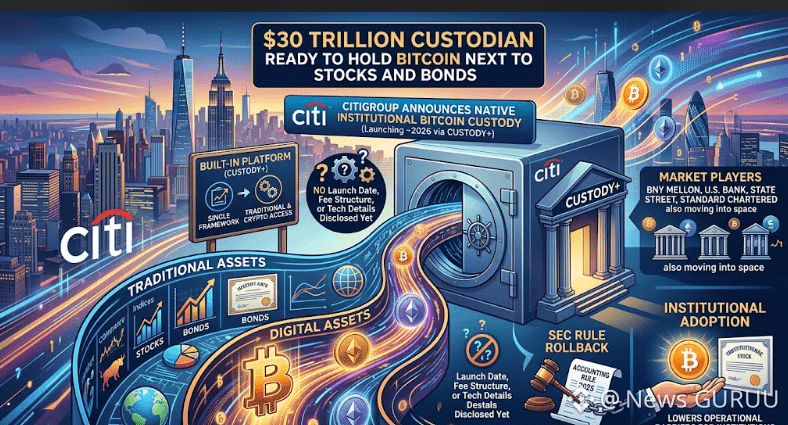
🚨 CITI PLANS NATIVE BITCOIN CUSTODY! ₿
Citigroup plans to launch institutional Bitcoin custody later in 2026 through its new Custody+ platform, allowing clients to hold traditional and crypto assets within one framework.
🏦 With major custodians already expanding into digital assets, easier bank-based custody could lower a key barrier to institutional Bitcoin adoption.
🎯 TRADING VIEW: BUY 📈
This is a long-term bullish signal for BTC adoption as institutional infrastructure continues to expand.
❓ Could Citi’s Bitcoin custody push accelerate institutional BTC demand? "CLICK ON THE BELOW YELLOW COIN TAG TO GO TO DESIRED TRADING PAGE TO GET BENEFIT TRADE"$BTC $VELVET $HEMI
{spot}(HEMIUSDT)
{future}(VELVETUSDT)
{spot}(BTCUSDT)
#cryptocustody #US30YearYieldHitsHighestSince2002
#citiplansbitcoincustodyforinstitutionsthisyear
🚨 CITI PLANS NATIVE BITCOIN CUSTODY! ₿
Citigroup plans to launch institutional Bitcoin custody later in 2026 through its new Custody+ platform, allowing clients to hold traditional and crypto assets within one framework.
🏦 With major custodians already expanding into digital assets, easier bank-based custody could lower a key barrier to institutional Bitcoin adoption.
🎯 TRADING VIEW: BUY 📈
This is a long-term bullish signal for BTC adoption as institutional infrastructure continues to expand.
❓ Could Citi’s Bitcoin custody push accelerate institutional BTC demand? "CLICK ON THE BELOW YELLOW COIN TAG TO GO TO DESIRED TRADING PAGE TO GET BENEFIT TRADE"$BTC $VELVET $HEMI
#cryptocustody #US30YearYieldHitsHighestSince2002
🚨 CITI PLANS NATIVE BITCOIN CUSTODY! ₿
Citigroup plans to launch institutional Bitcoin custody later in 2026 through its new Custody+ platform, allowing clients to hold traditional and crypto assets within one framework.
🏦 With major custodians already expanding into digital assets, easier bank-based custody could lower a key barrier to institutional Bitcoin adoption.
🎯 TRADING VIEW: BUY 📈
This is a long-term bullish signal for BTC adoption as institutional infrastructure continues to expand.
❓ Could Citi’s Bitcoin custody push accelerate institutional BTC demand? "CLICK ON THE BELOW YELLOW COIN TAG TO GO TO DESIRED TRADING PAGE TO GET BENEFIT TRADE"$BTC $VELVET $HEMI
#cryptocustody #US30YearYieldHitsHighestSince2002
1
783

·
--
#SECSendsCryptoCustodyRuleToWhiteHouse 🚨 Regulatory Watch: The SEC’s crypto custody rule has reportedly moved to the White House for review. Clearer custody standards could be an important step for institutional adoption and stronger investor confidence. 💰📈
#SEC #Crypto #CryptoCustody #Bitcoin #BTC #DigitalAssets #BİNANCESQUARE
#SECSendsCryptoCustodyRuleToWhiteHouse 🚨 Regulatory Watch: The SEC’s crypto custody rule has reportedly moved to the White House for review. Clearer custody standards could be an important step for institutional adoption and stronger investor confidence. 💰📈
#SEC #Crypto #CryptoCustody #Bitcoin #BTC #DigitalAssets #BİNANCESQUARE
#SEC #Crypto #CryptoCustody #Bitcoin #BTC #DigitalAssets #BİNANCESQUARE
1
271
·
--
Why Getting a MiCA License Is Just the Start of the Real Battle
Many assumed that landing a MiCA license would be the finish line for crypto custodians in Europe. It turns out that is only where the pressure actually begins.
Regulators across the region are shifting focus from approving firms to scrutinizing how they actually operate day to day. Winning authorization proves a company can meet the paperwork bar. Keeping it now means proving ongoing controls, clean asset segregation, transparent reserves, and airtight security around client funds.
For custodians, this changes the game. Compliance is no longer a one-time hurdle but a continuous obligation, with supervisors watching liquidity, governance, and operational resilience long after the license is granted. Firms that treated authorization as the goal may find themselves unprepared for sustained oversight.
The upside is meaningful. Tougher standards can build the institutional trust that has kept large capital on the sidelines. If custodians can prove they safeguard assets under real regulatory pressure, Europe could become one of the most credible homes for digital-asset infrastructure.
The message is clear: surviving the license process is easy compared to surviving the supervision that follows.
Do you think stricter custodian oversight will pull more institutional money into crypto? 👇
#MiCA #CryptoCustody #CryptoRegulation
Why Getting a MiCA License Is Just the Start of the Real Battle
Many assumed that landing a MiCA license would be the finish line for crypto custodians in Europe. It turns out that is only where the pressure actually begins.
Regulators across the region are shifting focus from approving firms to scrutinizing how they actually operate day to day. Winning authorization proves a company can meet the paperwork bar. Keeping it now means proving ongoing controls, clean asset segregation, transparent reserves, and airtight security around client funds.
For custodians, this changes the game. Compliance is no longer a one-time hurdle but a continuous obligation, with supervisors watching liquidity, governance, and operational resilience long after the license is granted. Firms that treated authorization as the goal may find themselves unprepared for sustained oversight.
The upside is meaningful. Tougher standards can build the institutional trust that has kept large capital on the sidelines. If custodians can prove they safeguard assets under real regulatory pressure, Europe could become one of the most credible homes for digital-asset infrastructure.
The message is clear: surviving the license process is easy compared to surviving the supervision that follows.
Do you think stricter custodian oversight will pull more institutional money into crypto? 👇
#MiCA #CryptoCustody #CryptoRegulation
Many assumed that landing a MiCA license would be the finish line for crypto custodians in Europe. It turns out that is only where the pressure actually begins.
Regulators across the region are shifting focus from approving firms to scrutinizing how they actually operate day to day. Winning authorization proves a company can meet the paperwork bar. Keeping it now means proving ongoing controls, clean asset segregation, transparent reserves, and airtight security around client funds.
For custodians, this changes the game. Compliance is no longer a one-time hurdle but a continuous obligation, with supervisors watching liquidity, governance, and operational resilience long after the license is granted. Firms that treated authorization as the goal may find themselves unprepared for sustained oversight.
The upside is meaningful. Tougher standards can build the institutional trust that has kept large capital on the sidelines. If custodians can prove they safeguard assets under real regulatory pressure, Europe could become one of the most credible homes for digital-asset infrastructure.
The message is clear: surviving the license process is easy compared to surviving the supervision that follows.
Do you think stricter custodian oversight will pull more institutional money into crypto? 👇
#MiCA #CryptoCustody #CryptoRegulation
65

·
--
Article
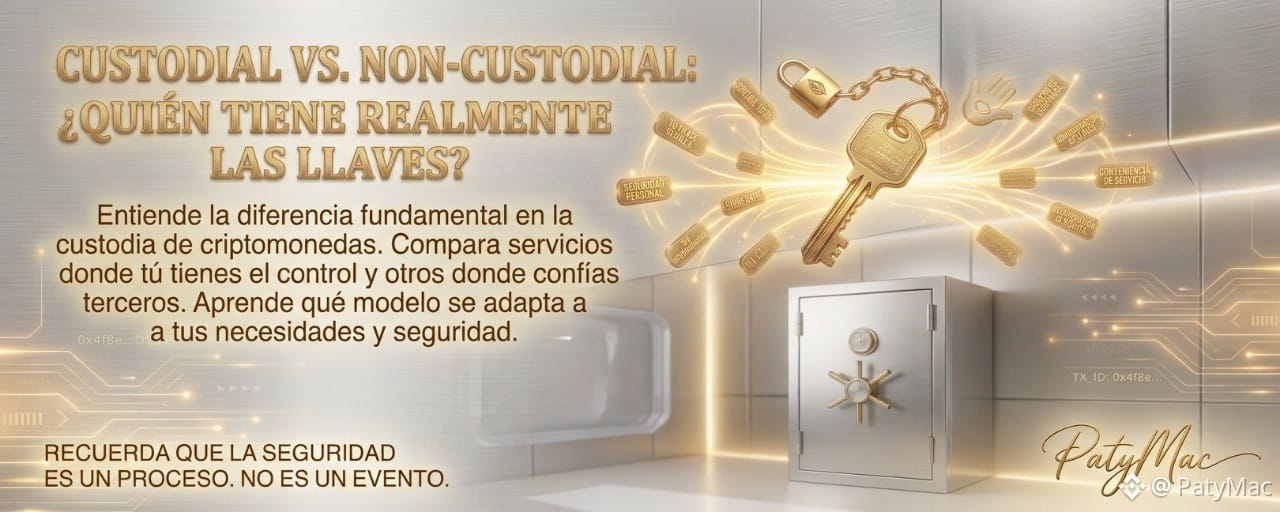
CUSTODIAL VS. NON-CUSTODIAL: ¿QUIÉN TIENE REALMENTE LAS LLAVES?Llegamos a uno de los conceptos más importantes de nuestra serie.
Ya sabemos:
🔐 qué es una clave privada;
🧩 qué es una seed phrase;
📍 qué es una dirección pública;
🔥 qué es una hot wallet;
❄️ y qué es una cold wallet.
Ahora podemos hacer la pregunta que conecta todo:
¿QUIÉN CONTROLA LAS CLAVES?
La respuesta nos lleva a dos conceptos:
CUSTODIAL
y
NON-CUSTODIAL.
🏦 ¿QUÉ SIGNIFICA CUSTODIAL?
Custodial significa que un tercero participa en la custodia y control de las claves o activos en nombre del usuario.
Un ejemplo típico es un exchange custodial.
Vos tienes una cuenta.
Inicias sesión.
Ves:
0,05 BTC
o
2.000 USDT
Pero eso no significa necesariamente que vos tengas en tus manos las claves privadas correspondientes a esos activos.
La plataforma administra la infraestructura de custodia.
🔐 ¿Y QUÉ SIGNIFICA NON-CUSTODIAL?
En una wallet non-custodial, el usuario controla las credenciales necesarias para autorizar las operaciones.
En términos simples:
La responsabilidad de las claves está principalmente en tus manos.
No dependes de que un exchange conserve las claves por vos.
Esto puede darte mayor control.
Pero también implica:
mayor responsabilidad.
⚖️ CONTROL VS. RESPONSABILIDAD
Este es uno de los puntos más importantes de todo el concepto.
Muchas personas escuchan:
“Not your keys, not your coins”.
Y lo interpretan como:
“Non-custodial = seguro”.
No necesariamente.
La autocustodia puede reducir determinados riesgos de contraparte.
Pero puede aumentar otros riesgos:
pérdida de seed phrase;robo de credenciales;malware;phishing;errores al firmar;pérdida del dispositivo;procedimientos incorrectos de recuperación.
Por eso:
Más control no significa automáticamente menos riesgo.
Significa que cambia la naturaleza del riesgo.
🏦 ¿QUÉ RIESGO EXISTE EN LA CUSTODIA?
Supongamos que tienes fondos en una plataforma.
Tu exposición puede incluir riesgos relacionados con:
seguridad informática;
fallos operativos;
fraude interno;
problemas de liquidez;
restricciones de retiro;
insolvencia;
jurisdicción;
condiciones contractuales;
regulación aplicable.
No significa que todos estos eventos ocurran.
Significa que forman parte del análisis que deberías hacer cuando delegas la custodia.
🔐 ¿Y QUÉ RIESGO EXISTE EN LA AUTOCUSTODIA?
Ahora cambiemos el escenario.
Tenés una hardware wallet.
Nadie más tiene tus claves.
Perfecto.
Pero entonces:
¿Dónde está tu seed phrase?
¿Quién podría encontrarla?
¿Qué ocurre si la pierdes?
¿Sabes recuperar la wallet?
¿Sabes distinguir una transacción legítima de una maliciosa?
¿Sabes qué estás firmando?
Ahora vos eres una parte crítica del sistema de seguridad.
🔥 DOS MODELOS, DOS TIPOS DE RIESGO
Podemos resumirlo así:
🏦 CUSTODIAL
Delegas parte del control.
A cambio, obtienes comodidad y determinadas herramientas de gestión.
Pero introduces riesgo de contraparte.
🔐 NON-CUSTODIAL
Mantienes el control de las credenciales.
Pero asumes directamente una mayor responsabilidad por seguridad, respaldo y recuperación.
No es simplemente:
bueno vs. malo.
Es:
¿Qué riesgo estás dispuesto a administrar?
🤔 ¿ENTONCES UN EXCHANGE ES UNA WALLET?
Aquí tenemos que hacer una precisión.
Un exchange puede ofrecer servicios de custodia y permitirte administrar saldos de criptoactivos.
Pero un exchange y una wallet non-custodial no son necesariamente lo mismo.
En una wallet non-custodial, la aplicación normalmente funciona como una interfaz para que interactúes con redes blockchain utilizando claves bajo tu control.
En un exchange custodial, la plataforma administra la custodia y la infraestructura asociada a los activos que mantiene para sus usuarios.
👀 ¿POR QUÉ VES UN SALDO SI NO TIENES LA CLAVE?
Porque el saldo que aparece en la plataforma es un registro dentro del sistema del proveedor.
Eso no significa que sea falso.
Significa que la relación tecnológica con el activo es diferente.
Cuando retiras los fondos hacia una dirección que controlas mediante autocustodia, se produce una transferencia on-chain.
Mientras los fondos permanecen bajo custodia del proveedor, la estructura de propiedad, custodia y derechos depende de la relación jurídica y operativa con ese proveedor.
⚖️ AQUÍ ENTRA EL DERECHO
Y esta parte es especialmente importante.
Decir:
“No tengo la clave privada”.
no necesariamente responde por sí solo a la pregunta:
“¿Tengo o no tengo derechos sobre esos activos?”
La respuesta jurídica depende de factores como:
contrato;jurisdicción;estructura de custodia;legislación aplicable;segregación de activos;naturaleza del producto;relación entre cliente y proveedor.
Por eso no debemos convertir:
custodia técnica
en
propiedad jurídica
como si fueran exactamente la misma cosa.
Son conceptos relacionados, pero distintos.
💥 ¿Y SI EL EXCHANGE QUIEBRA?
Aquí vuelve el tema que tratamos anteriormente.
No existe una regla universal según la cual:
“exchange quebró = automáticamente perdiste tus criptomonedas”.
Tampoco existe una regla universal según la cual:
“el exchange quebró = automáticamente recuperarás todo”.
La respuesta depende de la jurisdicción, los contratos, la estructura de custodia, la naturaleza de los activos y el procedimiento de insolvencia aplicable.
Por eso, antes de confiar grandes cantidades a una plataforma, una pregunta inteligente no es solamente:
“¿Cuánto rendimiento ofrece?”
También:
“¿Qué relación jurídica tengo con los activos que mantengo allí?”
🇵🇾 ¿Y EN PARAGUAY?
Este tema tiene especial interés porque el marco paraguayo reconoce a los proveedores de servicios de activos virtuales dentro del régimen de prevención de lavado de activos.
Pero eso no significa que todos los criptoactivos tengan garantía estatal.
El Banco Central del Paraguay ha señalado que las criptomonedas no tienen curso legal ni cuentan con garantía del Estado.
Por eso:
regulación y garantía no son sinónimos.
Que una actividad esté sometida a determinadas obligaciones regulatorias o de prevención financiera no significa que el Estado garantice el valor de una criptomoneda ni que cubra automáticamente una pérdida.
🧠 UNA FORMA SIMPLE DE RECORDARLO
Pensá en estas dos frases:
CUSTODIAL:
“Confío parte del control a un tercero”.
NON-CUSTODIAL:
“Yo controlo las credenciales”.
Pero ninguna de las dos frases termina ahí.
Después viene:
¿Cómo gestiono ese riesgo?
📊 ¿QUÉ DEBERÍAS PREGUNTAR ANTES DE ELEGIR?
Si vas a utilizar un servicio custodial:
¿Quién es la entidad jurídica?
¿Dónde está constituida?
¿Qué contrato acepto?
¿Qué jurisdicción aplica?
¿Cómo funcionan los retiros?
¿Cómo se custodian los activos?
¿Están segregados?
¿Qué ocurre ante insolvencia?
Y si vas a utilizar autocustodia:
¿Dónde está mi seed phrase?
¿Tengo un procedimiento de recuperación?
¿Sé qué estoy firmando?
¿Cómo protejo mis dispositivos?
¿Qué ocurriría si fallezco?
🔐 LA GRAN PARADOJA DE LA AUTOCUSTODIA
El mundo cripto prometió una idea poderosa:
No necesitas confiar en una institución para mover valor.
Pero cuando haces autocustodia aparece otra realidad:
Ahora necesitas confiar en tu propia capacidad para proteger las claves.
Eso no es necesariamente bueno ni malo.
Es un cambio de modelo.
Pasas de:
“Confío en una institución”.
a:
“Confío en mis procedimientos, mis dispositivos y mi custodia de las claves”.
💡 LA IDEA CENTRAL
La pregunta más importante no es:
“¿Exchange o wallet?”
La pregunta es:
¿QUIÉN CONTROLA LAS CLAVES Y QUÉ RIESGO ESTOY ASUMIENDO?
Porque la diferencia entre custodial y non-custodial no es solamente técnica.
También es económica.
También es operativa.
Y, dependiendo de la situación, puede tener consecuencias jurídicas.
❓ PREGUNTAS INTERESANTES
¿Custodial significa que no soy dueño de mis criptomonedas?
No necesariamente. La custodia técnica y la titularidad o los derechos jurídicos no son conceptos idénticos. Hay que analizar la relación contractual y la legislación aplicable.
¿Non-custodial significa que nadie puede robarme?
No. El usuario sigue expuesto a phishing, malware, pérdida de credenciales, errores y otros riesgos.
¿Qué pasa si pierdo mi seed phrase?
Dependiendo de la configuración, puedes perder la capacidad de recuperar el acceso a las claves y, por tanto, a los activos.
¿Un exchange es más seguro que una wallet personal?
No existe una respuesta universal. Son modelos de riesgo diferentes.
¿Puedo pasar de custodial a non-custodial?
Sí, normalmente puedes retirar activos desde un servicio custodial hacia una dirección que controles, siempre que el activo, la red y las condiciones del servicio lo permitan.
¿Por qué algunas personas mantienen fondos en exchanges?
Por razones como comodidad, liquidez, trading, acceso a determinados servicios y facilidad operativa. La decisión implica evaluar los riesgos correspondientes.
📌 GLOSARIO CRIPTO #6
CUSTODIAL = un tercero participa en la custodia/control de las claves o activos.
NON-CUSTODIAL = el usuario mantiene el control de las credenciales necesarias para gestionar sus activos.
Y ahora que ya entendemos quién controla las llaves, el próximo concepto encaja perfectamente:
⛓️ ¿QUÉ ES REALMENTE UNA BLOCKCHAIN?
Porque si tus criptomonedas no están “dentro” de la wallet…
¿Dónde están entonces?
$BTC
{future}(BTCUSDT)
$ETH
{future}(ETHUSDT)
$BNB
{future}(BNBUSDT)
#GlosarioCripto #CryptoCustody #SelfCustody #CryptoSecurity #CryptoEducation
CUSTODIAL VS. NON-CUSTODIAL: ¿QUIÉN TIENE REALMENTE LAS LLAVES?
Llegamos a uno de los conceptos más importantes de nuestra serie.
Ya sabemos:
🔐 qué es una clave privada;
🧩 qué es una seed phrase;
📍 qué es una dirección pública;
🔥 qué es una hot wallet;
❄️ y qué es una cold wallet.
Ahora podemos hacer la pregunta que conecta todo:
¿QUIÉN CONTROLA LAS CLAVES?
La respuesta nos lleva a dos conceptos:
CUSTODIAL
y
NON-CUSTODIAL.
🏦 ¿QUÉ SIGNIFICA CUSTODIAL?
Custodial significa que un tercero participa en la custodia y control de las claves o activos en nombre del usuario.
Un ejemplo típico es un exchange custodial.
Vos tienes una cuenta.
Inicias sesión.
Ves:
0,05 BTC
o
2.000 USDT
Pero eso no significa necesariamente que vos tengas en tus manos las claves privadas correspondientes a esos activos.
La plataforma administra la infraestructura de custodia.
🔐 ¿Y QUÉ SIGNIFICA NON-CUSTODIAL?
En una wallet non-custodial, el usuario controla las credenciales necesarias para autorizar las operaciones.
En términos simples:
La responsabilidad de las claves está principalmente en tus manos.
No dependes de que un exchange conserve las claves por vos.
Esto puede darte mayor control.
Pero también implica:
mayor responsabilidad.
⚖️ CONTROL VS. RESPONSABILIDAD
Este es uno de los puntos más importantes de todo el concepto.
Muchas personas escuchan:
“Not your keys, not your coins”.
Y lo interpretan como:
“Non-custodial = seguro”.
No necesariamente.
La autocustodia puede reducir determinados riesgos de contraparte.
Pero puede aumentar otros riesgos:
pérdida de seed phrase;robo de credenciales;malware;phishing;errores al firmar;pérdida del dispositivo;procedimientos incorrectos de recuperación.
Por eso:
Más control no significa automáticamente menos riesgo.
Significa que cambia la naturaleza del riesgo.
🏦 ¿QUÉ RIESGO EXISTE EN LA CUSTODIA?
Supongamos que tienes fondos en una plataforma.
Tu exposición puede incluir riesgos relacionados con:
seguridad informática;
fallos operativos;
fraude interno;
problemas de liquidez;
restricciones de retiro;
insolvencia;
jurisdicción;
condiciones contractuales;
regulación aplicable.
No significa que todos estos eventos ocurran.
Significa que forman parte del análisis que deberías hacer cuando delegas la custodia.
🔐 ¿Y QUÉ RIESGO EXISTE EN LA AUTOCUSTODIA?
Ahora cambiemos el escenario.
Tenés una hardware wallet.
Nadie más tiene tus claves.
Perfecto.
Pero entonces:
¿Dónde está tu seed phrase?
¿Quién podría encontrarla?
¿Qué ocurre si la pierdes?
¿Sabes recuperar la wallet?
¿Sabes distinguir una transacción legítima de una maliciosa?
¿Sabes qué estás firmando?
Ahora vos eres una parte crítica del sistema de seguridad.
🔥 DOS MODELOS, DOS TIPOS DE RIESGO
Podemos resumirlo así:
🏦 CUSTODIAL
Delegas parte del control.
A cambio, obtienes comodidad y determinadas herramientas de gestión.
Pero introduces riesgo de contraparte.
🔐 NON-CUSTODIAL
Mantienes el control de las credenciales.
Pero asumes directamente una mayor responsabilidad por seguridad, respaldo y recuperación.
No es simplemente:
bueno vs. malo.
Es:
¿Qué riesgo estás dispuesto a administrar?
🤔 ¿ENTONCES UN EXCHANGE ES UNA WALLET?
Aquí tenemos que hacer una precisión.
Un exchange puede ofrecer servicios de custodia y permitirte administrar saldos de criptoactivos.
Pero un exchange y una wallet non-custodial no son necesariamente lo mismo.
En una wallet non-custodial, la aplicación normalmente funciona como una interfaz para que interactúes con redes blockchain utilizando claves bajo tu control.
En un exchange custodial, la plataforma administra la custodia y la infraestructura asociada a los activos que mantiene para sus usuarios.
👀 ¿POR QUÉ VES UN SALDO SI NO TIENES LA CLAVE?
Porque el saldo que aparece en la plataforma es un registro dentro del sistema del proveedor.
Eso no significa que sea falso.
Significa que la relación tecnológica con el activo es diferente.
Cuando retiras los fondos hacia una dirección que controlas mediante autocustodia, se produce una transferencia on-chain.
Mientras los fondos permanecen bajo custodia del proveedor, la estructura de propiedad, custodia y derechos depende de la relación jurídica y operativa con ese proveedor.
⚖️ AQUÍ ENTRA EL DERECHO
Y esta parte es especialmente importante.
Decir:
“No tengo la clave privada”.
no necesariamente responde por sí solo a la pregunta:
“¿Tengo o no tengo derechos sobre esos activos?”
La respuesta jurídica depende de factores como:
contrato;jurisdicción;estructura de custodia;legislación aplicable;segregación de activos;naturaleza del producto;relación entre cliente y proveedor.
Por eso no debemos convertir:
custodia técnica
en
propiedad jurídica
como si fueran exactamente la misma cosa.
Son conceptos relacionados, pero distintos.
💥 ¿Y SI EL EXCHANGE QUIEBRA?
Aquí vuelve el tema que tratamos anteriormente.
No existe una regla universal según la cual:
“exchange quebró = automáticamente perdiste tus criptomonedas”.
Tampoco existe una regla universal según la cual:
“el exchange quebró = automáticamente recuperarás todo”.
La respuesta depende de la jurisdicción, los contratos, la estructura de custodia, la naturaleza de los activos y el procedimiento de insolvencia aplicable.
Por eso, antes de confiar grandes cantidades a una plataforma, una pregunta inteligente no es solamente:
“¿Cuánto rendimiento ofrece?”
También:
“¿Qué relación jurídica tengo con los activos que mantengo allí?”
🇵🇾 ¿Y EN PARAGUAY?
Este tema tiene especial interés porque el marco paraguayo reconoce a los proveedores de servicios de activos virtuales dentro del régimen de prevención de lavado de activos.
Pero eso no significa que todos los criptoactivos tengan garantía estatal.
El Banco Central del Paraguay ha señalado que las criptomonedas no tienen curso legal ni cuentan con garantía del Estado.
Por eso:
regulación y garantía no son sinónimos.
Que una actividad esté sometida a determinadas obligaciones regulatorias o de prevención financiera no significa que el Estado garantice el valor de una criptomoneda ni que cubra automáticamente una pérdida.
🧠 UNA FORMA SIMPLE DE RECORDARLO
Pensá en estas dos frases:
CUSTODIAL:
“Confío parte del control a un tercero”.
NON-CUSTODIAL:
“Yo controlo las credenciales”.
Pero ninguna de las dos frases termina ahí.
Después viene:
¿Cómo gestiono ese riesgo?
📊 ¿QUÉ DEBERÍAS PREGUNTAR ANTES DE ELEGIR?
Si vas a utilizar un servicio custodial:
¿Quién es la entidad jurídica?
¿Dónde está constituida?
¿Qué contrato acepto?
¿Qué jurisdicción aplica?
¿Cómo funcionan los retiros?
¿Cómo se custodian los activos?
¿Están segregados?
¿Qué ocurre ante insolvencia?
Y si vas a utilizar autocustodia:
¿Dónde está mi seed phrase?
¿Tengo un procedimiento de recuperación?
¿Sé qué estoy firmando?
¿Cómo protejo mis dispositivos?
¿Qué ocurriría si fallezco?
🔐 LA GRAN PARADOJA DE LA AUTOCUSTODIA
El mundo cripto prometió una idea poderosa:
No necesitas confiar en una institución para mover valor.
Pero cuando haces autocustodia aparece otra realidad:
Ahora necesitas confiar en tu propia capacidad para proteger las claves.
Eso no es necesariamente bueno ni malo.
Es un cambio de modelo.
Pasas de:
“Confío en una institución”.
a:
“Confío en mis procedimientos, mis dispositivos y mi custodia de las claves”.
💡 LA IDEA CENTRAL
La pregunta más importante no es:
“¿Exchange o wallet?”
La pregunta es:
¿QUIÉN CONTROLA LAS CLAVES Y QUÉ RIESGO ESTOY ASUMIENDO?
Porque la diferencia entre custodial y non-custodial no es solamente técnica.
También es económica.
También es operativa.
Y, dependiendo de la situación, puede tener consecuencias jurídicas.
❓ PREGUNTAS INTERESANTES
¿Custodial significa que no soy dueño de mis criptomonedas?
No necesariamente. La custodia técnica y la titularidad o los derechos jurídicos no son conceptos idénticos. Hay que analizar la relación contractual y la legislación aplicable.
¿Non-custodial significa que nadie puede robarme?
No. El usuario sigue expuesto a phishing, malware, pérdida de credenciales, errores y otros riesgos.
¿Qué pasa si pierdo mi seed phrase?
Dependiendo de la configuración, puedes perder la capacidad de recuperar el acceso a las claves y, por tanto, a los activos.
¿Un exchange es más seguro que una wallet personal?
No existe una respuesta universal. Son modelos de riesgo diferentes.
¿Puedo pasar de custodial a non-custodial?
Sí, normalmente puedes retirar activos desde un servicio custodial hacia una dirección que controles, siempre que el activo, la red y las condiciones del servicio lo permitan.
¿Por qué algunas personas mantienen fondos en exchanges?
Por razones como comodidad, liquidez, trading, acceso a determinados servicios y facilidad operativa. La decisión implica evaluar los riesgos correspondientes.
📌 GLOSARIO CRIPTO #6
CUSTODIAL = un tercero participa en la custodia/control de las claves o activos.
NON-CUSTODIAL = el usuario mantiene el control de las credenciales necesarias para gestionar sus activos.
Y ahora que ya entendemos quién controla las llaves, el próximo concepto encaja perfectamente:
⛓️ ¿QUÉ ES REALMENTE UNA BLOCKCHAIN?
Porque si tus criptomonedas no están “dentro” de la wallet…
¿Dónde están entonces?
$BTC
$ETH
$BNB
#GlosarioCripto #CryptoCustody #SelfCustody #CryptoSecurity #CryptoEducation
Ya sabemos:
🔐 qué es una clave privada;
🧩 qué es una seed phrase;
📍 qué es una dirección pública;
🔥 qué es una hot wallet;
❄️ y qué es una cold wallet.
Ahora podemos hacer la pregunta que conecta todo:
¿QUIÉN CONTROLA LAS CLAVES?
La respuesta nos lleva a dos conceptos:
CUSTODIAL
y
NON-CUSTODIAL.
🏦 ¿QUÉ SIGNIFICA CUSTODIAL?
Custodial significa que un tercero participa en la custodia y control de las claves o activos en nombre del usuario.
Un ejemplo típico es un exchange custodial.
Vos tienes una cuenta.
Inicias sesión.
Ves:
0,05 BTC
o
2.000 USDT
Pero eso no significa necesariamente que vos tengas en tus manos las claves privadas correspondientes a esos activos.
La plataforma administra la infraestructura de custodia.
🔐 ¿Y QUÉ SIGNIFICA NON-CUSTODIAL?
En una wallet non-custodial, el usuario controla las credenciales necesarias para autorizar las operaciones.
En términos simples:
La responsabilidad de las claves está principalmente en tus manos.
No dependes de que un exchange conserve las claves por vos.
Esto puede darte mayor control.
Pero también implica:
mayor responsabilidad.
⚖️ CONTROL VS. RESPONSABILIDAD
Este es uno de los puntos más importantes de todo el concepto.
Muchas personas escuchan:
“Not your keys, not your coins”.
Y lo interpretan como:
“Non-custodial = seguro”.
No necesariamente.
La autocustodia puede reducir determinados riesgos de contraparte.
Pero puede aumentar otros riesgos:
pérdida de seed phrase;robo de credenciales;malware;phishing;errores al firmar;pérdida del dispositivo;procedimientos incorrectos de recuperación.
Por eso:
Más control no significa automáticamente menos riesgo.
Significa que cambia la naturaleza del riesgo.
🏦 ¿QUÉ RIESGO EXISTE EN LA CUSTODIA?
Supongamos que tienes fondos en una plataforma.
Tu exposición puede incluir riesgos relacionados con:
seguridad informática;
fallos operativos;
fraude interno;
problemas de liquidez;
restricciones de retiro;
insolvencia;
jurisdicción;
condiciones contractuales;
regulación aplicable.
No significa que todos estos eventos ocurran.
Significa que forman parte del análisis que deberías hacer cuando delegas la custodia.
🔐 ¿Y QUÉ RIESGO EXISTE EN LA AUTOCUSTODIA?
Ahora cambiemos el escenario.
Tenés una hardware wallet.
Nadie más tiene tus claves.
Perfecto.
Pero entonces:
¿Dónde está tu seed phrase?
¿Quién podría encontrarla?
¿Qué ocurre si la pierdes?
¿Sabes recuperar la wallet?
¿Sabes distinguir una transacción legítima de una maliciosa?
¿Sabes qué estás firmando?
Ahora vos eres una parte crítica del sistema de seguridad.
🔥 DOS MODELOS, DOS TIPOS DE RIESGO
Podemos resumirlo así:
🏦 CUSTODIAL
Delegas parte del control.
A cambio, obtienes comodidad y determinadas herramientas de gestión.
Pero introduces riesgo de contraparte.
🔐 NON-CUSTODIAL
Mantienes el control de las credenciales.
Pero asumes directamente una mayor responsabilidad por seguridad, respaldo y recuperación.
No es simplemente:
bueno vs. malo.
Es:
¿Qué riesgo estás dispuesto a administrar?
🤔 ¿ENTONCES UN EXCHANGE ES UNA WALLET?
Aquí tenemos que hacer una precisión.
Un exchange puede ofrecer servicios de custodia y permitirte administrar saldos de criptoactivos.
Pero un exchange y una wallet non-custodial no son necesariamente lo mismo.
En una wallet non-custodial, la aplicación normalmente funciona como una interfaz para que interactúes con redes blockchain utilizando claves bajo tu control.
En un exchange custodial, la plataforma administra la custodia y la infraestructura asociada a los activos que mantiene para sus usuarios.
👀 ¿POR QUÉ VES UN SALDO SI NO TIENES LA CLAVE?
Porque el saldo que aparece en la plataforma es un registro dentro del sistema del proveedor.
Eso no significa que sea falso.
Significa que la relación tecnológica con el activo es diferente.
Cuando retiras los fondos hacia una dirección que controlas mediante autocustodia, se produce una transferencia on-chain.
Mientras los fondos permanecen bajo custodia del proveedor, la estructura de propiedad, custodia y derechos depende de la relación jurídica y operativa con ese proveedor.
⚖️ AQUÍ ENTRA EL DERECHO
Y esta parte es especialmente importante.
Decir:
“No tengo la clave privada”.
no necesariamente responde por sí solo a la pregunta:
“¿Tengo o no tengo derechos sobre esos activos?”
La respuesta jurídica depende de factores como:
contrato;jurisdicción;estructura de custodia;legislación aplicable;segregación de activos;naturaleza del producto;relación entre cliente y proveedor.
Por eso no debemos convertir:
custodia técnica
en
propiedad jurídica
como si fueran exactamente la misma cosa.
Son conceptos relacionados, pero distintos.
💥 ¿Y SI EL EXCHANGE QUIEBRA?
Aquí vuelve el tema que tratamos anteriormente.
No existe una regla universal según la cual:
“exchange quebró = automáticamente perdiste tus criptomonedas”.
Tampoco existe una regla universal según la cual:
“el exchange quebró = automáticamente recuperarás todo”.
La respuesta depende de la jurisdicción, los contratos, la estructura de custodia, la naturaleza de los activos y el procedimiento de insolvencia aplicable.
Por eso, antes de confiar grandes cantidades a una plataforma, una pregunta inteligente no es solamente:
“¿Cuánto rendimiento ofrece?”
También:
“¿Qué relación jurídica tengo con los activos que mantengo allí?”
🇵🇾 ¿Y EN PARAGUAY?
Este tema tiene especial interés porque el marco paraguayo reconoce a los proveedores de servicios de activos virtuales dentro del régimen de prevención de lavado de activos.
Pero eso no significa que todos los criptoactivos tengan garantía estatal.
El Banco Central del Paraguay ha señalado que las criptomonedas no tienen curso legal ni cuentan con garantía del Estado.
Por eso:
regulación y garantía no son sinónimos.
Que una actividad esté sometida a determinadas obligaciones regulatorias o de prevención financiera no significa que el Estado garantice el valor de una criptomoneda ni que cubra automáticamente una pérdida.
🧠 UNA FORMA SIMPLE DE RECORDARLO
Pensá en estas dos frases:
CUSTODIAL:
“Confío parte del control a un tercero”.
NON-CUSTODIAL:
“Yo controlo las credenciales”.
Pero ninguna de las dos frases termina ahí.
Después viene:
¿Cómo gestiono ese riesgo?
📊 ¿QUÉ DEBERÍAS PREGUNTAR ANTES DE ELEGIR?
Si vas a utilizar un servicio custodial:
¿Quién es la entidad jurídica?
¿Dónde está constituida?
¿Qué contrato acepto?
¿Qué jurisdicción aplica?
¿Cómo funcionan los retiros?
¿Cómo se custodian los activos?
¿Están segregados?
¿Qué ocurre ante insolvencia?
Y si vas a utilizar autocustodia:
¿Dónde está mi seed phrase?
¿Tengo un procedimiento de recuperación?
¿Sé qué estoy firmando?
¿Cómo protejo mis dispositivos?
¿Qué ocurriría si fallezco?
🔐 LA GRAN PARADOJA DE LA AUTOCUSTODIA
El mundo cripto prometió una idea poderosa:
No necesitas confiar en una institución para mover valor.
Pero cuando haces autocustodia aparece otra realidad:
Ahora necesitas confiar en tu propia capacidad para proteger las claves.
Eso no es necesariamente bueno ni malo.
Es un cambio de modelo.
Pasas de:
“Confío en una institución”.
a:
“Confío en mis procedimientos, mis dispositivos y mi custodia de las claves”.
💡 LA IDEA CENTRAL
La pregunta más importante no es:
“¿Exchange o wallet?”
La pregunta es:
¿QUIÉN CONTROLA LAS CLAVES Y QUÉ RIESGO ESTOY ASUMIENDO?
Porque la diferencia entre custodial y non-custodial no es solamente técnica.
También es económica.
También es operativa.
Y, dependiendo de la situación, puede tener consecuencias jurídicas.
❓ PREGUNTAS INTERESANTES
¿Custodial significa que no soy dueño de mis criptomonedas?
No necesariamente. La custodia técnica y la titularidad o los derechos jurídicos no son conceptos idénticos. Hay que analizar la relación contractual y la legislación aplicable.
¿Non-custodial significa que nadie puede robarme?
No. El usuario sigue expuesto a phishing, malware, pérdida de credenciales, errores y otros riesgos.
¿Qué pasa si pierdo mi seed phrase?
Dependiendo de la configuración, puedes perder la capacidad de recuperar el acceso a las claves y, por tanto, a los activos.
¿Un exchange es más seguro que una wallet personal?
No existe una respuesta universal. Son modelos de riesgo diferentes.
¿Puedo pasar de custodial a non-custodial?
Sí, normalmente puedes retirar activos desde un servicio custodial hacia una dirección que controles, siempre que el activo, la red y las condiciones del servicio lo permitan.
¿Por qué algunas personas mantienen fondos en exchanges?
Por razones como comodidad, liquidez, trading, acceso a determinados servicios y facilidad operativa. La decisión implica evaluar los riesgos correspondientes.
📌 GLOSARIO CRIPTO #6
CUSTODIAL = un tercero participa en la custodia/control de las claves o activos.
NON-CUSTODIAL = el usuario mantiene el control de las credenciales necesarias para gestionar sus activos.
Y ahora que ya entendemos quién controla las llaves, el próximo concepto encaja perfectamente:
⛓️ ¿QUÉ ES REALMENTE UNA BLOCKCHAIN?
Porque si tus criptomonedas no están “dentro” de la wallet…
¿Dónde están entonces?
$BTC
$ETH
$BNB
#GlosarioCripto #CryptoCustody #SelfCustody #CryptoSecurity #CryptoEducation
1
362
Log in to explore more content
Join global crypto users on Binance Square
⚡️ Get latest and useful information about crypto.
💬 Trusted by the world’s largest crypto exchange.
👍 Discover real insights from verified creators.
အီးမေးလ် / ဖုန်းနံပါတ်
ရေပန်းစားနေသော ခေါင်းစဉ်များ
1
#EtherGains70.9%InQ3
11,971 views
269 Discussing
2
#TreasuryLetsStatesFileStablecoinCertificationsEarly
0 views
0 Discussing
3
#US10YearYieldNears5.3%
51,493 views
483 Discussing
4
#DollarIndexHitsHighestSinceMay2025
2,257 views
152 Discussing
5
#USWeeklyJoblessClaimsFallTo197000
6,495 views
191 Discussing
6
#BitcoinETFsTake$6.34BillionInQ3
3,317 views
45 Discussing
7
#KoreaProposesTokenizingStocksAndBonds
35,152 views
555 Discussing
8
#MetaMaskExitsLidoValidatorsAfterSecurityIncident
115,849 views
1,297 Discussing
9
#MicronBeatsEarningsLiftsGuidance
63,646 views
951 Discussing
10
#CFTCSubmitsTwoEventContractRulesToWhiteHouse
44,149 views
739 Discussing