Binance Square
Web3 Haidar
15 ໂພສ

Web3 Haidar

Content writer and Community manager
ເປີດການຊື້ຂາຍ
ຜູ້ຊື້ຂາຍຊົ່ວຄາວ
2.2 ປີ
2 ກໍາລັງຕິດຕາມ
31 ຜູ້ຕິດຕາມ
64 Liked
ໂພສ
Portfolio
·
--
ເປັນຄວາມຈິງບາງສ່ວນ
ບົດຄວາມ
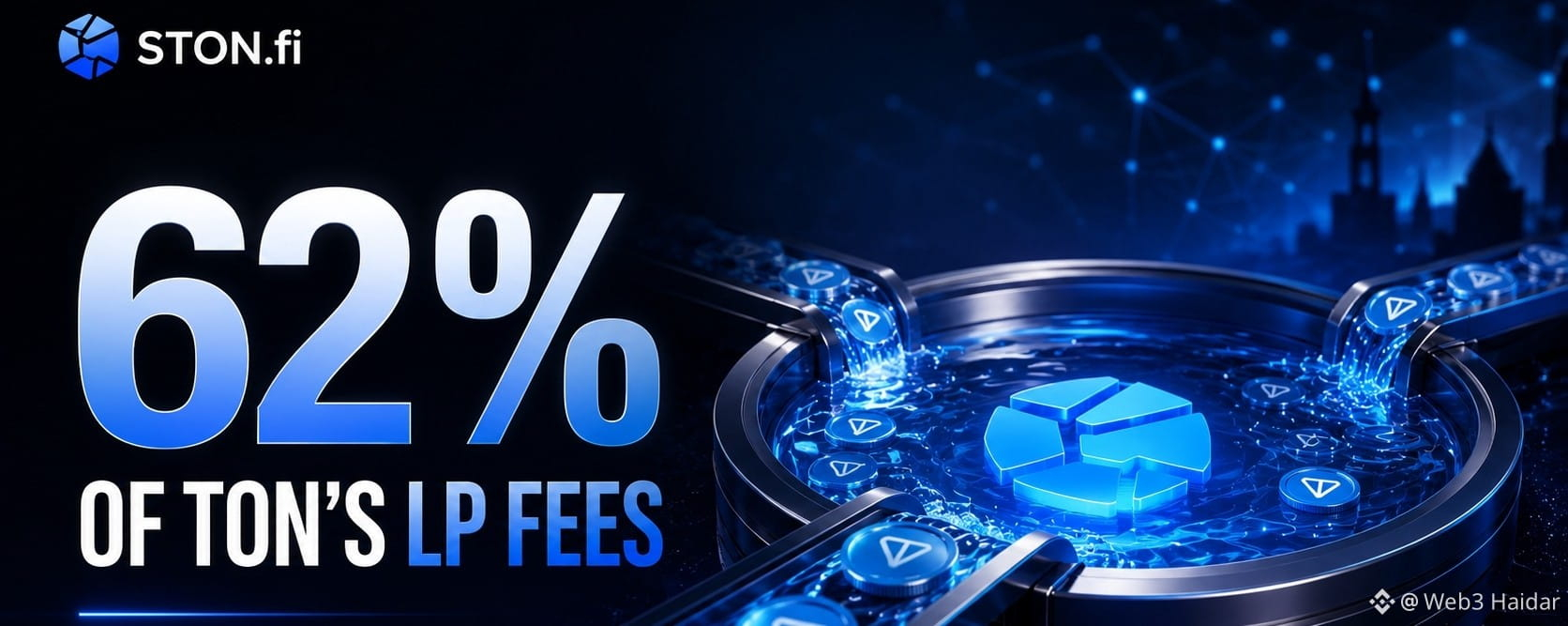
STON.fi Generated 62% of TON’s LP Fees in 2025. What Does That Actually Mean?In August 2025, STON.fi reported a striking milestone: its liquidity providers had generated 62% of all LP fees recorded across TON in 2025, according to Dune Analytics. At first glance, that number sounds like a measure of liquidity dominance. But LP fees and liquidity are not the same thing. A protocol can hold a large amount of liquidity without generating significant fees if traders rarely use it. Conversely, a smaller pool can generate substantial fees if it processes a large amount of trading activity. So what does the 62% figure actually tell us about STON.fi and TON DeFi? The answer starts with understanding what an LP fee represents. ❑ 62% Is Not a Liquidity Share The first distinction is simple but important. 62% of LP fees does not mean STON.fi controlled 62% of TON’s liquidity. LP fees are generated when traders use liquidity pools. When someone swaps one token for another through an AMM, the trade incurs a fee. A portion of that fee goes to the liquidity providers who supplied the capital used by the pool. STON.fi’s documented default fee structure is 0.3% per trade, with 0.2% going to liquidity providers and 0.1% going to the protocol. Fee parameters can also be configured at the pool level. That means the amount of fees generated depends heavily on how much trading actually passes through the liquidity. A pool containing $10 million that processes very little volume can generate fewer fees than a $2 million pool that traders use constantly. This is why the 62% statistic is more interesting as a measure of fee-generating activity than as a simple measure of deposited capital. ❑ The Number Came From Trading Activity The underlying Dune methodology helps explain what was being measured. The TON Foundation Dune query identified in the research combines TON DEX trade data with daily pool information containing LP fee parameters. Conceptually, the calculation is: Trading volume × LP fee rate = LP fees generated The result is then aggregated by DEX. This matters because it connects the statistic directly to actual on-chain trading activity. If a pool has a 0.2% LP fee and processes $1 million in eligible trading volume, that activity generates approximately $2,000 in LP fees before considering the precise pool configuration and accounting methodology. The important point is that the liquidity has to be used. Capital sitting inside a pool is the infrastructure. Trading activity is what turns that infrastructure into fee generation. ❑ What the 62% Figure Was Actually Saying STON.fi published the 62% figure on August 7, 2025, describing it as the share of all LP fees generated on TON in 2025 according to Dune Analytics. The TON ecosystem report for August 2025 also recorded the same 62% milestone. There is, however, an important time distinction. The announcement was made in August, meaning the figure was a 2025 year-to-date measurement, not a completed calendar-year result. The public Dune query associated with the analysis can produce a different percentage when later 2025 data is included. So the most accurate way to understand the statistic is: As of the period measured in August 2025, STON.fi accounted for 62% of the LP fees recorded across the TON DEX ecosystem. ❑ Why Fee Generation Matters More Than Idle Liquidity Liquidity is necessary for decentralized trading, but liquidity by itself does not tell us how productive that capital is. Imagine two DEXs. DEX A has $50 million in liquidity but very little trading activity. DEX B has $20 million in liquidity and significantly more trading volume. If traders consistently use DEX B’s pools, its LPs can generate more fees even though the protocol has less total liquidity. This creates a simple relationship: Liquidity → trading capacity → executed volume → LP fees The 62% figure therefore tells us that a very large share of the fee-generating activity measured across TON was occurring through STON.fi liquidity. ❑ STON.fi Had Both Liquidity and Significant Trading Activity The broader TON ecosystem data gives the 62% milestone useful context. In May 2025, the TON ecosystem report recorded STON.fi’s TVL at approximately $65 million, representing a 30% month-over-month increase. Later in 2025, the ecosystem report recorded STON.fi at $38.2 million in TVL, $105 million in monthly volume, more than 5.6 million cumulative users, and more than 29.7 million cumulative swaps. These numbers should not be treated as the explanation for the 62% figure by themselves. They are measured at different points in time and use different metrics. But together, they show something important: STON.fi was operating with a substantial liquidity base while also processing significant trading activity. That combination is exactly what produces LP fees. ❑ TON Was Not a One-DEX Market Another important part of the story is competition. STON.fi was not generating these fees in an ecosystem without alternatives. TON had multiple DEXs, including DeDust and TONCO, each with its own liquidity pools, trading activity and fee structures. Dune’s TON DEX data shows STON.fi, DeDust, TONCO and other protocols participating in the same broader trading ecosystem. That makes the 62% figure more meaningful. The question is not simply whether STON.fi had liquidity. The question is how much of the ecosystem’s fee-generating activity was actually settling through that liquidity compared with the alternatives. And according to the reported Dune measurement, STON.fi accounted for the largest share during the measured period. ❑ But High Aggregate Fees Do Not Mean Every LP Won There is another distinction that is easy to miss. A protocol generating 62% of ecosystem LP fees does not mean every LP on that protocol earned a 62% return, or even that every STON.fi LP earned more than LPs elsewhere. Individual LP earnings depend on the specific pool and the LP’s share of it. Suppose a pool generates $100,000 in LP fees. An LP providing 1% of that pool would not receive the entire $100,000. Their share would depend on their proportional ownership and the pool’s accounting. There is also another side to liquidity provision: price movement. LPs can experience impermanent loss when the relative prices of deposited assets change. Therefore, gross fee generation and an individual LP’s final economic return are not the same measurement. The 62% statistic describes aggregate fee generation at the protocol/ecosystem level, not the profitability of every individual liquidity provider. ❑ Where Omniston Fits Into the Picture STON.fi’s broader infrastructure also includes Omniston, its liquidity aggregation and routing layer. Omniston can source liquidity from multiple venues and routes, including STON.fi pools and other liquidity sources. That distinction matters. Omniston is not the same thing as STON.fi’s AMM liquidity. A route using another DEX’s pool does not automatically become STON.fi LP volume. The Dune methodology behind the LP-fee calculation is based on executed DEX trades and the fee parameters associated with the pools involved. Therefore, only trading activity that actually generates fees for STON.fi pools contributes to STON.fi’s LP-fee total under that methodology. There is not enough historical evidence to claim that Omniston itself caused the 62% milestone, so the statistic should stand on its own. ❑ The Bigger Signal Is Liquidity That Gets Used The most useful way to interpret the 62% milestone is not: STON.fi had 62% of TON’s liquidity. The evidence does not establish that. A more accurate interpretation is: During the measured 2025 period, STON.fi liquidity accounted for 62% of the LP fees recorded across the TON DEX ecosystem. That points toward something more fundamental about decentralized exchanges. Liquidity has value when it is useful. For LPs, useful liquidity is liquidity that traders actually interact with. Every eligible swap creates fee-generating activity, and sustained trading activity can turn deposited capital into an ongoing source of fee revenue. This is also why TVL alone can provide an incomplete picture of a DEX. TVL tells us how much capital is there. LP fees tell us how much fee-generating activity that liquidity helped facilitate. Both metrics matter, but they answer different questions. ❑ What the 62% Milestone Actually Tells Us The 62% figure should not be treated as proof that STON.fi is automatically the “best” DEX on TON. It does, however, provide a measurable snapshot of where a large portion of TON’s LP fee generation was occurring. Combined with STON.fi’s documented liquidity infrastructure, substantial trading activity and large user base, the data shows a DEX whose liquidity was being used at significant scale. And that is the more interesting story behind the number. Liquidity is only the starting point. The real economic activity begins when traders use it. If you want to explore the liquidity pools behind STON.fi’s trading ecosystem, you can start directly at: https://ston.fi #TON $TON $STON #defi

STON.fi Generated 62% of TON’s LP Fees in 2025. What Does That Actually Mean?

In August 2025, STON.fi reported a striking milestone: its liquidity providers had generated 62% of all LP fees recorded across TON in 2025, according to Dune Analytics.

At first glance, that number sounds like a measure of liquidity dominance. But LP fees and liquidity are not the same thing.
A protocol can hold a large amount of liquidity without generating significant fees if traders rarely use it. Conversely, a smaller pool can generate substantial fees if it processes a large amount of trading activity.
So what does the 62% figure actually tell us about STON.fi and TON DeFi?
The answer starts with understanding what an LP fee represents.
❑ 62% Is Not a Liquidity Share
The first distinction is simple but important.
62% of LP fees does not mean STON.fi controlled 62% of TON’s liquidity.
LP fees are generated when traders use liquidity pools. When someone swaps one token for another through an AMM, the trade incurs a fee. A portion of that fee goes to the liquidity providers who supplied the capital used by the pool.
STON.fi’s documented default fee structure is 0.3% per trade, with 0.2% going to liquidity providers and 0.1% going to the protocol. Fee parameters can also be configured at the pool level.
That means the amount of fees generated depends heavily on how much trading actually passes through the liquidity.
A pool containing $10 million that processes very little volume can generate fewer fees than a $2 million pool that traders use constantly.
This is why the 62% statistic is more interesting as a measure of fee-generating activity than as a simple measure of deposited capital.
❑ The Number Came From Trading Activity
The underlying Dune methodology helps explain what was being measured.
The TON Foundation Dune query identified in the research combines TON DEX trade data with daily pool information containing LP fee parameters. Conceptually, the calculation is:
Trading volume × LP fee rate = LP fees generated
The result is then aggregated by DEX.
This matters because it connects the statistic directly to actual on-chain trading activity.
If a pool has a 0.2% LP fee and processes $1 million in eligible trading volume, that activity generates approximately $2,000 in LP fees before considering the precise pool configuration and accounting methodology.
The important point is that the liquidity has to be used.
Capital sitting inside a pool is the infrastructure. Trading activity is what turns that infrastructure into fee generation.
❑ What the 62% Figure Was Actually Saying
STON.fi published the 62% figure on August 7, 2025, describing it as the share of all LP fees generated on TON in 2025 according to Dune Analytics.
The TON ecosystem report for August 2025 also recorded the same 62% milestone.
There is, however, an important time distinction.
The announcement was made in August, meaning the figure was a 2025 year-to-date measurement, not a completed calendar-year result. The public Dune query associated with the analysis can produce a different percentage when later 2025 data is included.
So the most accurate way to understand the statistic is:
As of the period measured in August 2025, STON.fi accounted for 62% of the LP fees recorded across the TON DEX ecosystem.
❑ Why Fee Generation Matters More Than Idle Liquidity
Liquidity is necessary for decentralized trading, but liquidity by itself does not tell us how productive that capital is.
Imagine two DEXs.
DEX A has $50 million in liquidity but very little trading activity.
DEX B has $20 million in liquidity and significantly more trading volume.
If traders consistently use DEX B’s pools, its LPs can generate more fees even though the protocol has less total liquidity.
This creates a simple relationship:
Liquidity → trading capacity → executed volume → LP fees
The 62% figure therefore tells us that a very large share of the fee-generating activity measured across TON was occurring through STON.fi liquidity.
❑ STON.fi Had Both Liquidity and Significant Trading Activity
The broader TON ecosystem data gives the 62% milestone useful context.
In May 2025, the TON ecosystem report recorded STON.fi’s TVL at approximately $65 million, representing a 30% month-over-month increase.
Later in 2025, the ecosystem report recorded STON.fi at $38.2 million in TVL, $105 million in monthly volume, more than 5.6 million cumulative users, and more than 29.7 million cumulative swaps.
These numbers should not be treated as the explanation for the 62% figure by themselves. They are measured at different points in time and use different metrics.
But together, they show something important: STON.fi was operating with a substantial liquidity base while also processing significant trading activity.
That combination is exactly what produces LP fees.
❑ TON Was Not a One-DEX Market
Another important part of the story is competition.
STON.fi was not generating these fees in an ecosystem without alternatives. TON had multiple DEXs, including DeDust and TONCO, each with its own liquidity pools, trading activity and fee structures.
Dune’s TON DEX data shows STON.fi, DeDust, TONCO and other protocols participating in the same broader trading ecosystem.
That makes the 62% figure more meaningful.
The question is not simply whether STON.fi had liquidity.
The question is how much of the ecosystem’s fee-generating activity was actually settling through that liquidity compared with the alternatives.
And according to the reported Dune measurement, STON.fi accounted for the largest share during the measured period.
❑ But High Aggregate Fees Do Not Mean Every LP Won
There is another distinction that is easy to miss.
A protocol generating 62% of ecosystem LP fees does not mean every LP on that protocol earned a 62% return, or even that every STON.fi LP earned more than LPs elsewhere.
Individual LP earnings depend on the specific pool and the LP’s share of it.
Suppose a pool generates $100,000 in LP fees. An LP providing 1% of that pool would not receive the entire $100,000. Their share would depend on their proportional ownership and the pool’s accounting.
There is also another side to liquidity provision: price movement.
LPs can experience impermanent loss when the relative prices of deposited assets change. Therefore, gross fee generation and an individual LP’s final economic return are not the same measurement.
The 62% statistic describes aggregate fee generation at the protocol/ecosystem level, not the profitability of every individual liquidity provider.
❑ Where Omniston Fits Into the Picture
STON.fi’s broader infrastructure also includes Omniston, its liquidity aggregation and routing layer.
Omniston can source liquidity from multiple venues and routes, including STON.fi pools and other liquidity sources.
That distinction matters.
Omniston is not the same thing as STON.fi’s AMM liquidity.
A route using another DEX’s pool does not automatically become STON.fi LP volume.
The Dune methodology behind the LP-fee calculation is based on executed DEX trades and the fee parameters associated with the pools involved. Therefore, only trading activity that actually generates fees for STON.fi pools contributes to STON.fi’s LP-fee total under that methodology.
There is not enough historical evidence to claim that Omniston itself caused the 62% milestone, so the statistic should stand on its own.
❑ The Bigger Signal Is Liquidity That Gets Used
The most useful way to interpret the 62% milestone is not:
STON.fi had 62% of TON’s liquidity.
The evidence does not establish that.
A more accurate interpretation is:
During the measured 2025 period, STON.fi liquidity accounted for 62% of the LP fees recorded across the TON DEX ecosystem.
That points toward something more fundamental about decentralized exchanges.
Liquidity has value when it is useful.
For LPs, useful liquidity is liquidity that traders actually interact with. Every eligible swap creates fee-generating activity, and sustained trading activity can turn deposited capital into an ongoing source of fee revenue.
This is also why TVL alone can provide an incomplete picture of a DEX.
TVL tells us how much capital is there.
LP fees tell us how much fee-generating activity that liquidity helped facilitate.
Both metrics matter, but they answer different questions.
❑ What the 62% Milestone Actually Tells Us
The 62% figure should not be treated as proof that STON.fi is automatically the “best” DEX on TON.
It does, however, provide a measurable snapshot of where a large portion of TON’s LP fee generation was occurring.
Combined with STON.fi’s documented liquidity infrastructure, substantial trading activity and large user base, the data shows a DEX whose liquidity was being used at significant scale.
And that is the more interesting story behind the number.
Liquidity is only the starting point. The real economic activity begins when traders use it.
If you want to explore the liquidity pools behind STON.fi’s trading ecosystem, you can start directly at: https://ston.fi
#TON $TON $STON #defi
Just sold all my bags and invest %100 in $DOT I will not miss this Golden opportunity and regret later $100/Dot is just matter of time
Just sold all my bags and invest %100 in $DOT

I will not miss this Golden opportunity and regret later

$100/Dot is just matter of time
Bullish

Bullish
Alex DOT
·
--
ສັນຍານກະທິງ
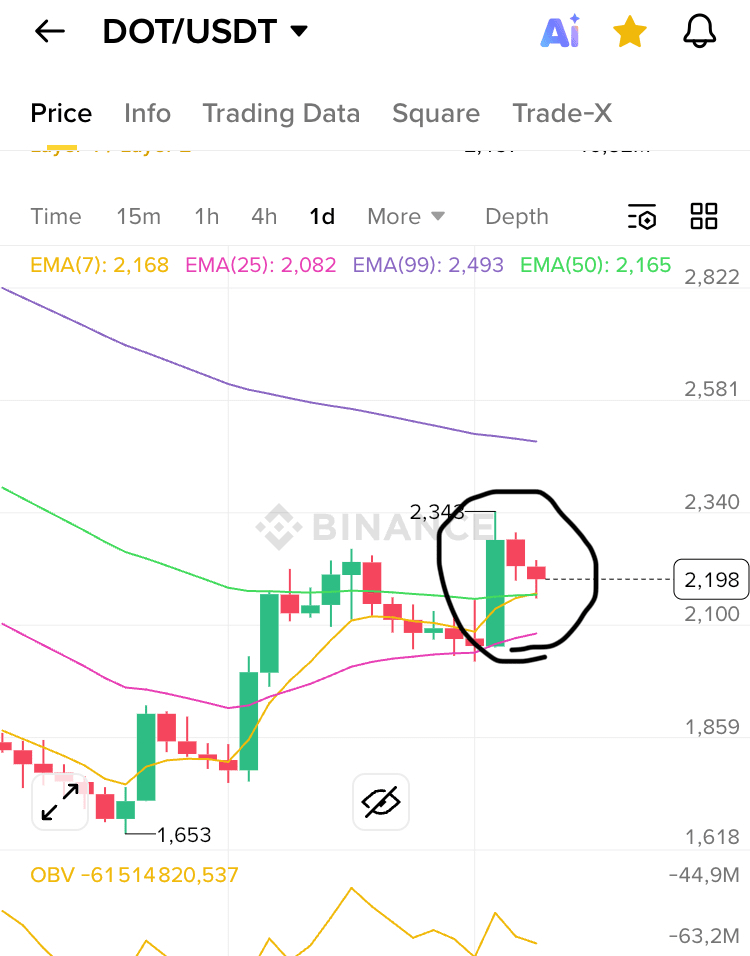
BREAKING 🚨: Golden cross between the 7-day EMA and 50-day EMA for $DOT 👀👀

This hasn't happened since October 1, 2025!

The next moves are going to be EPIC!

Enjoy the ride 🔥🚀📈
$TTD pays me today after one week doing DCA and patience at the end I profit from it 😍 Which token have you trade today?
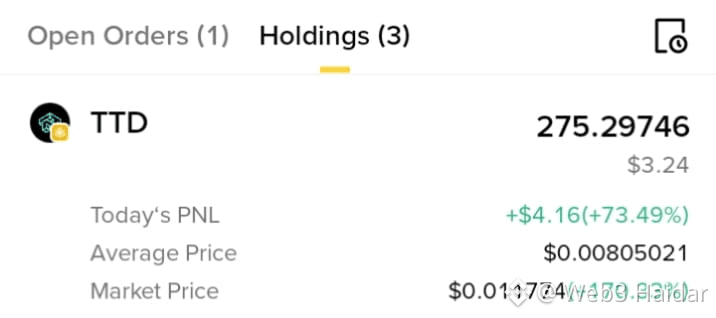
$TTD pays me today after one week doing DCA and patience

at the end I profit from it 😍

Which token have you trade today?
If you still think DeFi is only about meme coins, this might change your mind. I recorded a quick walkthrough of the xStocks interface on STON.fi, and the experience is surprisingly smooth. In just a few taps, you can move between USDT and tokenized assets like AAPLx, NVDAx, or MSTRx. What stands out immediately: A clean, professional interface Fast and clear price quotes powered by Omniston Easy wallet connection with Tonkeeper or other TON wallets This is what on-chain access to global markets is starting to look like. Simple, fast, and borderless, all built on the TON blockchain. See the xStocks product here: https://ston.fi/xstocks
If you still think DeFi is only about meme coins, this might change your mind.

I recorded a quick walkthrough of the xStocks interface on STON.fi, and the experience is surprisingly smooth. In just a few taps, you can move between USDT and tokenized assets like AAPLx, NVDAx, or MSTRx.

What stands out immediately:
A clean, professional interface
Fast and clear price quotes powered by Omniston
Easy wallet connection with Tonkeeper or other TON wallets

This is what on-chain access to global markets is starting to look like. Simple, fast, and borderless, all built on the TON blockchain.

See the xStocks product here:
https://ston.fi/xstocks
If you still think DeFi is only about meme coins, this might change your mind. I recorded a quick walkthrough of the xStocks interface on STON.fi, and the experience is surprisingly smooth. In just a few taps, you can move between USDT and tokenized assets like AAPLx, NVDAx, or MSTRx. What stands out immediately: A clean, professional interface Fast and clear price quotes powered by Omniston Easy wallet connection with Tonkeeper or other TON wallets This is what on-chain access to global markets is starting to look like. Simple, fast, and borderless, all built on the TON blockchain. See the xStocks product here: https://ston.fi/xstocks
If you still think DeFi is only about meme coins, this might change your mind.

I recorded a quick walkthrough of the xStocks interface on STON.fi, and the experience is surprisingly smooth. In just a few taps, you can move between USDT and tokenized assets like AAPLx, NVDAx, or MSTRx.

What stands out immediately:
A clean, professional interface
Fast and clear price quotes powered by Omniston
Easy wallet connection with Tonkeeper or other TON wallets

This is what on-chain access to global markets is starting to look like. Simple, fast, and borderless, all built on the TON blockchain.

See the xStocks product here:
https://ston.fi/xstocks
Look at this lineup! 🤩 ​STON.fi isn't just a DEX for crypto anymore; it’s your gateway to global markets. I’m currently browsing the xStocks page and the options are insane: ​💰 $MSTRx (MicroStrategy) 🛒 $AMZNx (Amazon) 📈 $COINx (Coinbase) 📱 $AAPL (Apple) ​Everything you need to build a powerhouse portfolio is right here on #TON. No paperwork, no middlemen, just pure decentralized access. ​Which one are you adding to your wallet first? 👇 ​Explore now: https://ston.fi/xstocks #RWA
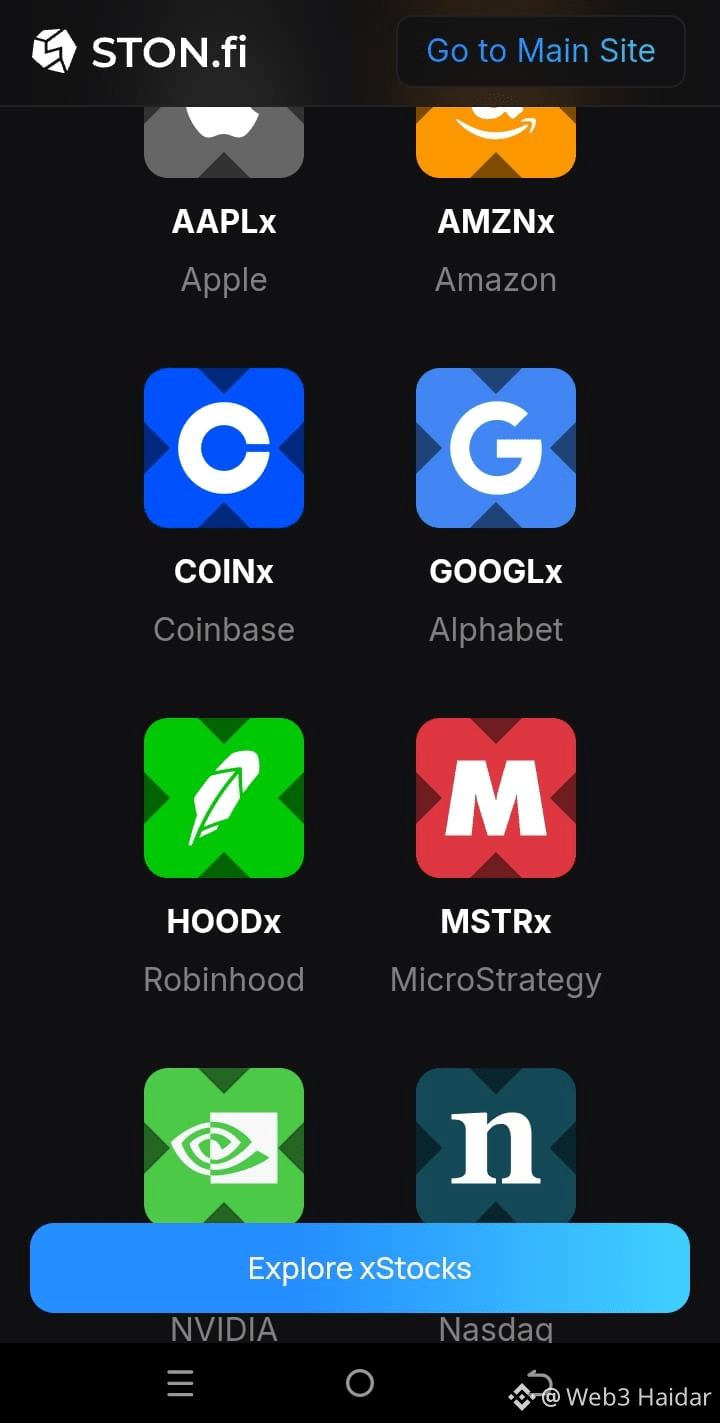
Look at this lineup! 🤩

​STON.fi isn't just a DEX for crypto anymore; it’s your gateway to global markets. I’m currently browsing the xStocks page and the options are insane:

​💰 $MSTRx (MicroStrategy)
🛒 $AMZNx (Amazon)
📈 $COINx (Coinbase)
📱 $AAPL (Apple)

​Everything you need to build a powerhouse portfolio is right here on #TON. No paperwork, no middlemen, just pure decentralized access.
​Which one are you adding to your wallet first? 👇
​Explore now: https://ston.fi/xstocks
#RWA
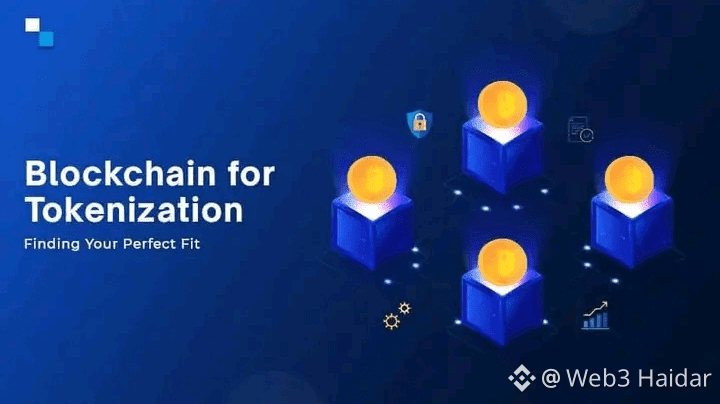
ບົດຄວາມ
Asset Tokenization on Blockchain Network - Part 1Asset Tokenization on #blockchain n Network - Part 1 I will write more than 3 pieces of content about Tokenization. This is the first one. Tokenization: This is an area that the world will move towards in the future in terms of financial transactions, buying and selling assets, by converting physical assets into digital, online, and on-chain forms. How does it work? When we say Tokenization, it means converting something that exists physically into its representation on a blockchain network, where the value remains the same. That is, the physical asset and the on-chain (online) asset both have the same value. You create tokens that can be exchanged for money in place of the house you put up for sale. That means you have tokenized the house, from the word token. Example: You own a house in your hometown. You built it for ₦100,000,000 and now you want to sell it because you urgently need money. But finding someone who can come and pay ₦100 million at once to buy the house is difficult. It will take time, cost money, and waste effort before the house is finally sold. How Tokenization Solves This: With tokenization: You tokenize the house You put it on the blockchain You assign a price to it For example: If the house is worth ₦100 million, you create 100 million tokens, each token priced at ₦1. ₦1 × 100 million tokens = ₦100 million. One person can buy 1 million tokens, another can buy 10 million tokens, and so on, until the house is fully sold. This way: The house is sold within a short time You get your money faster Shared Ownership: In the end, you’ll notice that: Many people own the house Not just one person They don’t have to be from your country. They can even be from very far parts of the world. So, The house becomes tradable It becomes easy to sell If someone doesn’t buy it fully, they only have a claim on the property The house now behaves like a stock or company shares, held by different people. This system is what we call Tokenization. Important Clarification: If we understand this well, we will realize that: Tokenization is not the creation of a new asset. It is simply converting the value of an existing physical asset into an on-chain form. Fiat Currency Example: If you look at the U.S. Dollar (fiat currency): It has been tokenized in different ways: $USDC (United States Dollar circle) $USDT (United States Dollar Tether) There are physical dollars stored in banks. Every dollar that is minted as a token is backed by real dollars. USDT and USDC are tokenized versions of the dollar. Other Assets That Can Be Tokenized: Tokenization can be applied to: Real World Assets (RWA) Fine Arts Bonds Gold Diamonds Legal tenders Historical and valuable items Any asset that has demand but is difficult to access globally Institutional Example: The largest asset management company in the world is BlackRock, with over $40 trillion under management. They want to expand access to investors across the world. One of the easiest ways they’ve started doing this is by tokenizing their assets on the Ethereum network. Benefits of Tokenization: If you observe closely, tokenization brings the following: Assets that one person used to buy alone can now be owned by thousands of people It creates financial interaction between people It reduces paperwork No lawyers No office visits No printing and photocopying Smart contracts handle everything and store it on a public ledger that cannot be altered It provides ease and liquidity You can start getting money even before the asset is fully sold Cross-border transfers With blockchain interoperability, assets or funds can move from one blockchain to another within minutes or seconds Common Questions: Someone may ask: - If I sell my house online and get my money, what happens to the physical house? Don’t worry, we will explain that later. Others may ask: Are tokenized assets fungible tokens or #NFTs ? What about regulations, compliance, and laws? We will address all of these. This is just the beginning. Just follow me and turn notifications on for the remaining parts.

Asset Tokenization on Blockchain Network - Part 1

Asset Tokenization on #blockchain n Network - Part 1
I will write more than 3 pieces of content about Tokenization.
This is the first one.
Tokenization:
This is an area that the world will move towards in the future in terms of financial transactions, buying and selling assets, by converting physical assets into digital, online, and on-chain forms.
How does it work?
When we say Tokenization, it means converting something that exists physically into its representation on a blockchain network, where the value remains the same.
That is, the physical asset and the on-chain (online) asset both have the same value.
You create tokens that can be exchanged for money in place of the house you put up for sale.
That means you have tokenized the house, from the word token.
Example:
You own a house in your hometown.
You built it for ₦100,000,000 and now you want to sell it because you urgently need money.
But finding someone who can come and pay ₦100 million at once to buy the house is difficult.
It will take time, cost money, and waste effort before the house is finally sold.
How Tokenization Solves This:
With tokenization:
You tokenize the house
You put it on the blockchain
You assign a price to it
For example:
If the house is worth ₦100 million,
you create 100 million tokens,
each token priced at ₦1.
₦1 × 100 million tokens = ₦100 million.
One person can buy 1 million tokens,
another can buy 10 million tokens,
and so on, until the house is fully sold.
This way:
The house is sold within a short time
You get your money faster
Shared Ownership:
In the end, you’ll notice that:
Many people own the house
Not just one person
They don’t have to be from your country.
They can even be from very far parts of the world.
So, The house becomes tradable
It becomes easy to sell
If someone doesn’t buy it fully, they only have a claim on the property
The house now behaves like a stock or company shares, held by different people.
This system is what we call Tokenization.
Important Clarification:
If we understand this well, we will realize that:
Tokenization is not the creation of a new asset.
It is simply converting the value of an existing physical asset into an on-chain form.
Fiat Currency Example:
If you look at the U.S. Dollar (fiat currency):
It has been tokenized in different ways:
$USDC (United States Dollar circle)
$USDT (United States Dollar Tether)
There are physical dollars stored in banks.
Every dollar that is minted as a token is backed by real dollars.
USDT and USDC are tokenized versions of the dollar.
Other Assets That Can Be Tokenized:
Tokenization can be applied to:
Real World Assets (RWA)
Fine Arts
Bonds
Gold
Diamonds
Legal tenders
Historical and valuable items
Any asset that has demand but is difficult to access globally
Institutional Example:
The largest asset management company in the world is BlackRock,
with over $40 trillion under management.
They want to expand access to investors across the world.
One of the easiest ways they’ve started doing this is by tokenizing their assets on the Ethereum network.
Benefits of Tokenization:
If you observe closely, tokenization brings the following:
Assets that one person used to buy alone can now be owned by thousands of people
It creates financial interaction between people
It reduces paperwork
No lawyers
No office visits
No printing and photocopying
Smart contracts handle everything and store it on a public ledger that cannot be altered
It provides ease and liquidity
You can start getting money even before the asset is fully sold
Cross-border transfers
With blockchain interoperability, assets or funds can move from one blockchain to another within minutes or seconds
Common Questions:
Someone may ask:
- If I sell my house online and get my money, what happens to the physical house?
Don’t worry, we will explain that later.
Others may ask:
Are tokenized assets fungible tokens or #NFTs ?
What about regulations, compliance, and laws?
We will address all of these.
This is just the beginning.
Just follow me and turn notifications on for the remaining parts.
Never heard about it
Moaazawan1
·
--
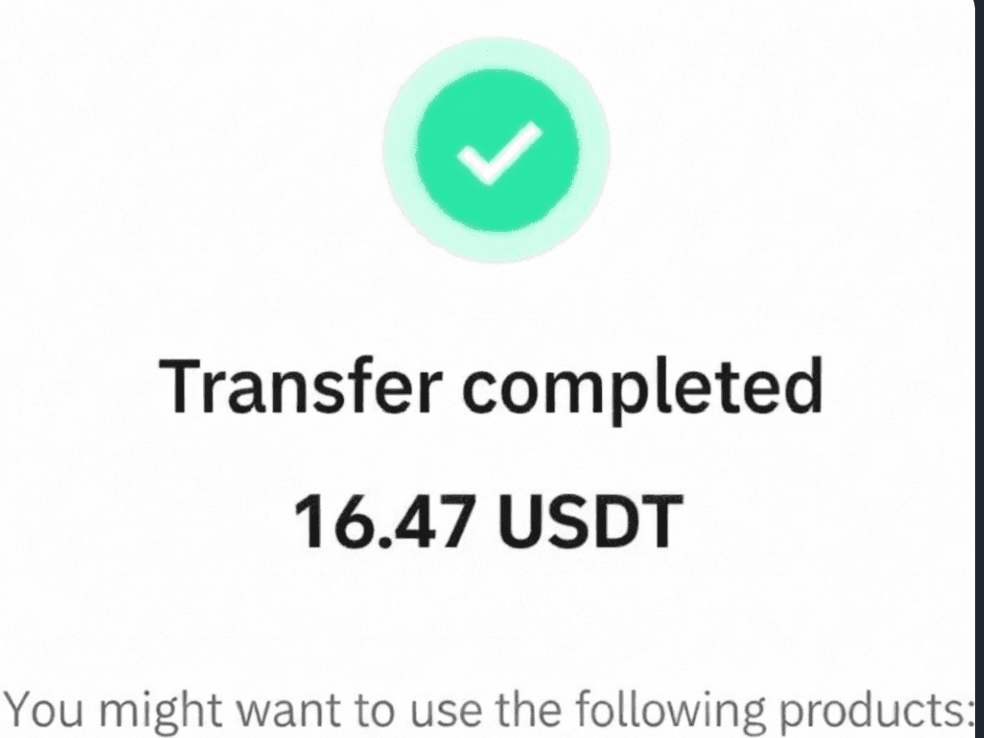
💲🤑You can earn free $10 to $16 USDT daily?💲🤑

No trading, no investment, no deposit just simple work. I am not joking, read this

Binance has Write to Earn.

You just need to post and stay active.

How to do it:

1 Make your Binance Square profile

2 Post 3-5 times in a day

3 Comment, like and use hashtags

You can earn $10 to $30 per day if you are active daily.

If you keep working, $15 per day is also possible.

Why Binance pays this?

Because they want more people to use Binance Square and share crypto posts.

Tips to earn faster:

Post about trending coins

Share memes and simple charts

Reply to other users and stay active

#Write2Earn #BinanceSquareTalks

#WriteToEarnUpgrade
$Dot will surely pumped

Mhmmed zaid
·
--
Brother in upcomming 1-2 moths it will reach to 4-5 usd, hold it

Dot is pumping now 🥰
Usman42
·
--
All $DOT holders confirmed death 🤣🤣🤣🤣🤣🤣
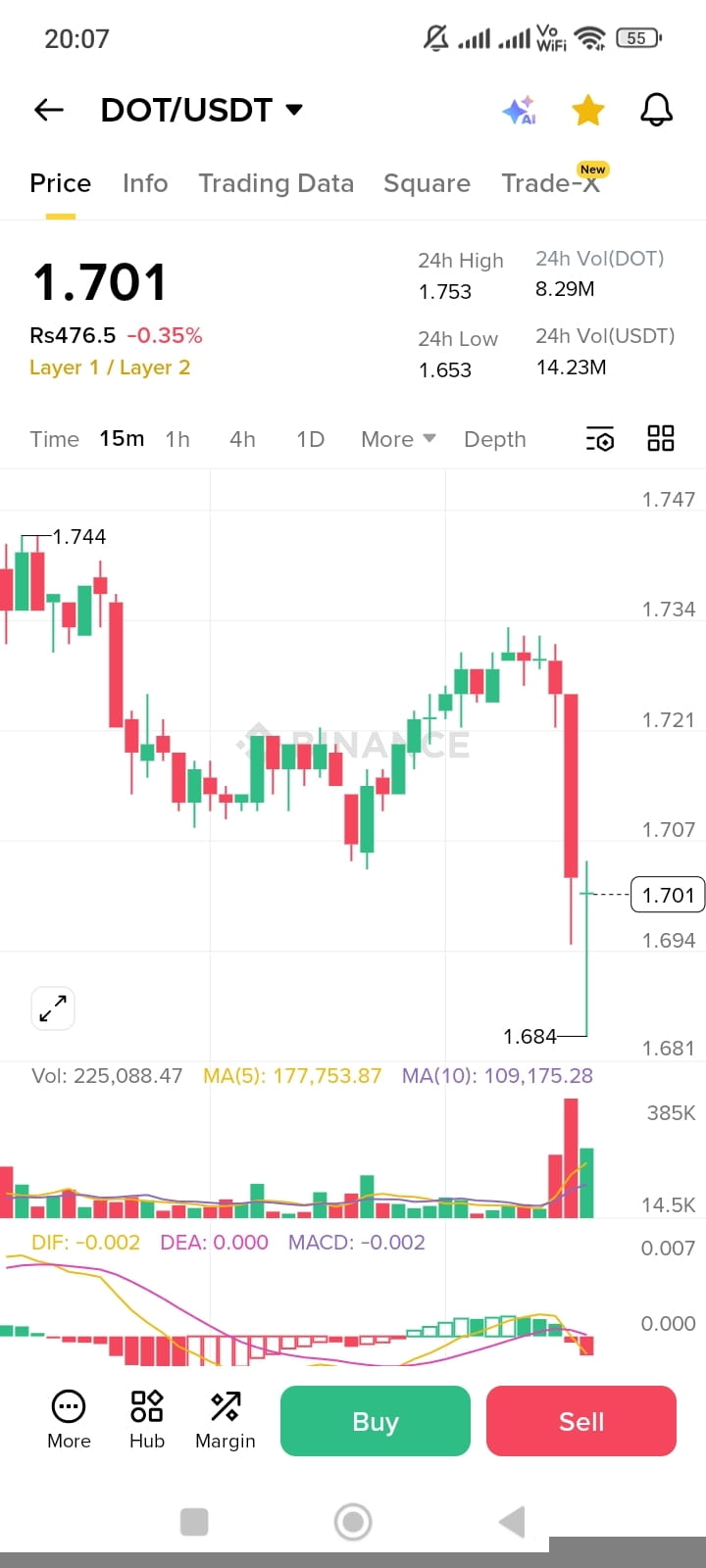
I bought $DOT worth $25 @1.72 some few days ago and it goes to 1.69 with me. I patiently waited and today DOT touched 1.84 with me and I sold all leaving only the profit I made from it ($1+) 🥰 What assets have you trade today and what's the outcome ? green or red 👀
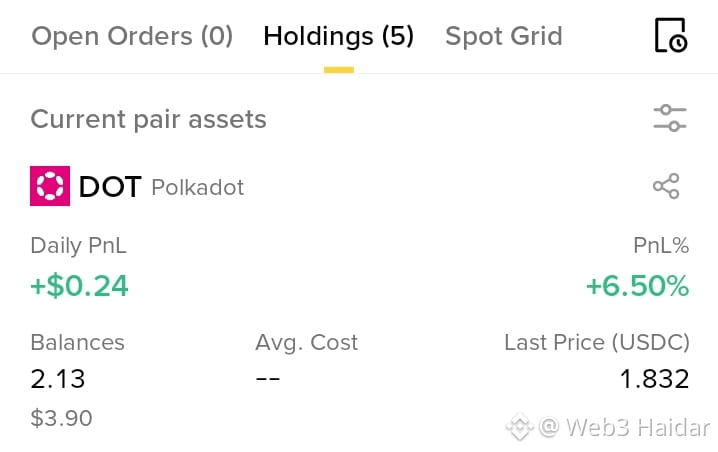
I bought $DOT worth $25 @1.72 some few days ago and it goes to 1.69 with me.

I patiently waited and today DOT touched 1.84 with me and I sold all leaving only the profit I made from it ($1+) 🥰

What assets have you trade today and what's the outcome ? green or red 👀
I just sell my $TRADOOR bag with 30% profit in Binance alpha 🥰 anyone reading this post is responsible to notify me when it touches $1.15 again. I will buy again in that price 🥱
I just sell my $TRADOOR bag with 30% profit in Binance alpha 🥰

anyone reading this post is responsible to notify me when it touches $1.15 again.

I will buy again in that price 🥱
Why RWA and Tokenized Stocks Are Gaining Attention Real World Assets (RWA) are drawing increasing interest from global investors, especially with the rise of tokenized stocks. Traditional stock investing often comes with friction - brokers, KYC requirements, and geographic limitations. This is where xStocks come in. STON.fi introduced xStocks to bridge traditional finance with DeFi, giving TON users on-chain access to tokenized versions of real-world stocks like Apple, Tesla, Nvidia, and Google - without brokers or KYC. Assets such as AAPLx, TSLAx, NVDAx, and GOOGLx represent a new way to gain exposure to real-world markets directly from a wallet. Explore xStocks here: https://ston.fi/xstocks
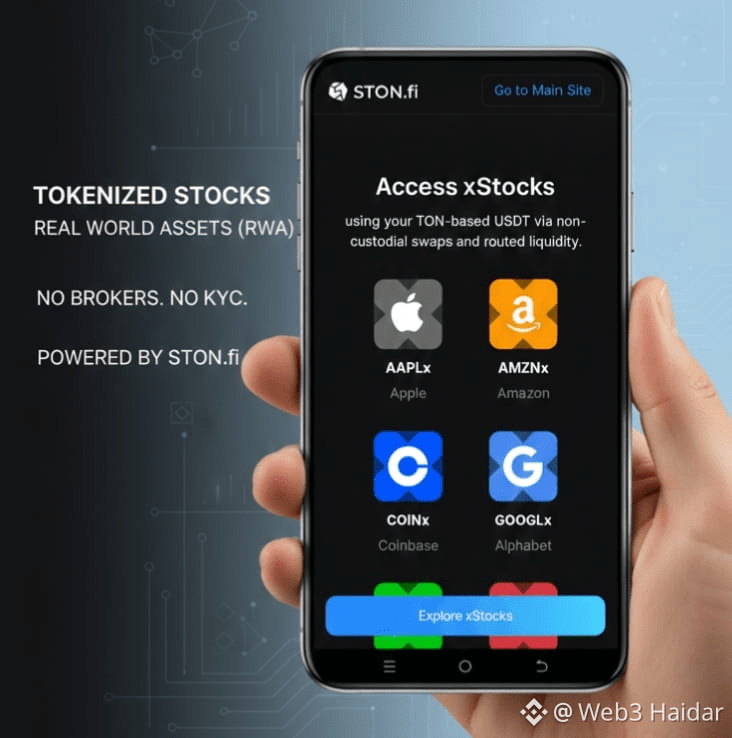
Why RWA and Tokenized Stocks Are Gaining Attention

Real World Assets (RWA) are drawing increasing interest from global investors, especially with the rise of tokenized stocks.

Traditional stock investing often comes with friction - brokers, KYC requirements, and geographic limitations. This is where xStocks come in.

STON.fi introduced xStocks to bridge traditional finance with DeFi, giving TON users on-chain access to tokenized versions of real-world stocks like Apple, Tesla, Nvidia, and Google - without brokers or KYC.

Assets such as AAPLx, TSLAx, NVDAx, and GOOGLx represent a new way to gain exposure to real-world markets directly from a wallet.

Explore xStocks here:
https://ston.fi/xstocks
Introducing xStocks on STON.fi: Trading Global Giants on TON The barrier between decentralized finance and the traditional stock market has finally collapsed. STON.fi has officially launched xStocks, a dedicated page where anyone on the TON ecosystem can trade tokenized market assets. ​What exactly are xStocks? They are synthetic, tokenized versions of major global stocks. Think of them as digital mirrors of real-world assets like Apple, Nvidia, and Tesla, living entirely on the blockchain. ​Why is this a big deal for you? ​Accessibility: You don't need a foreign bank account or a specialized brokerage. If you have a TON wallet, you’re in. ​Privacy: Skip the intrusive KYC (Know Your Customer) processes. Your privacy remains yours. ​Efficiency: Trade $AAPL, $NVDAx, $TSLAx, and $GOOGLx with the speed and low fees of the TON network. ​This is more than just a new feature; it’s the democratization of the global stock market. By removing the middlemen, STON.fi is putting the power of Wall Street into the hands of Telegram users worldwide. ​Start your journey here: https://ston.fi/xstocks
Introducing xStocks on STON.fi: Trading Global Giants on TON

The barrier between decentralized finance and the traditional stock market has finally collapsed. STON.fi has officially launched xStocks, a dedicated page where anyone on the TON ecosystem can trade tokenized market assets.

​What exactly are xStocks?

They are synthetic, tokenized versions of major global stocks. Think of them as digital mirrors of real-world assets like Apple, Nvidia, and Tesla, living entirely on the blockchain.

​Why is this a big deal for you?

​Accessibility: You don't need a foreign bank account or a specialized brokerage. If you have a TON wallet, you’re in.

​Privacy: Skip the intrusive KYC (Know Your Customer) processes. Your privacy remains yours.

​Efficiency: Trade $AAPL, $NVDAx, $TSLAx, and $GOOGLx with the speed and low fees of the TON network.

​This is more than just a new feature; it’s the democratization of the global stock market. By removing the middlemen, STON.fi is putting the power of Wall Street into the hands of Telegram users worldwide.
​Start your journey here: https://ston.fi/xstocks
ເຂົ້າສູ່ລະບົບເພື່ອສຳຫຼວດເນື້ອຫາເພີ່ມເຕີມ
ເຂົ້າຮ່ວມກຸ່ມຜູ້ໃຊ້ຄຣິບໂຕທົ່ວໂລກໃນ Binance Square.
⚡️ ໄດ້ຮັບຂໍ້ມູນຫຼ້າສຸດ ແລະ ທີ່ມີປະໂຫຍດກ່ຽວກັບຄຣິບໂຕ.
💬 ໄດ້ຮັບຄວາມໄວ້ວາງໃຈຈາກຕະຫຼາດແລກປ່ຽນຄຣິບໂຕທີ່ໃຫຍ່ທີ່ສຸດໃນໂລກ.
👍 ຄົ້ນຫາຂໍ້ມູນເຊີງເລິກທີ່ແທ້ຈາກນັກສ້າງທີ່ໄດ້ຮັບການຢືນຢັນ.
ອີເມວ / ເບີໂທລະສັບ
ແຜນຜັງເວັບໄຊ
ການຕັ້ງຄ່າຄຸກກີ້
T&Cs ແພລັດຟອມ