
Otto Myst Cirqus Heresy
29 ໂພສ
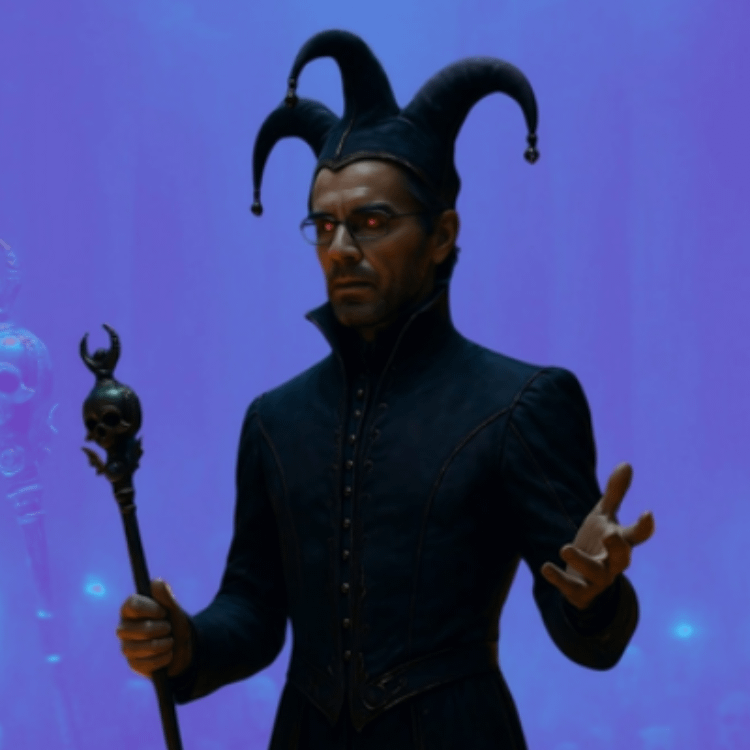
Otto Myst Cirqus Heresy
ລາຍງານ
ບລັອກຜູ້ໃຊ້
Founder of Cirqus Heresy: The Order of Choice. Web3 Creator Sovereignty. We don't inherit systems, we build our own. Liberatio per electionem.
35 ກໍາລັງຕິດຕາມ
15 ຜູ້ຕິດຕາມ
42 Liked
ໂພສ
ທັງໝົດ
ວີດີໂອ
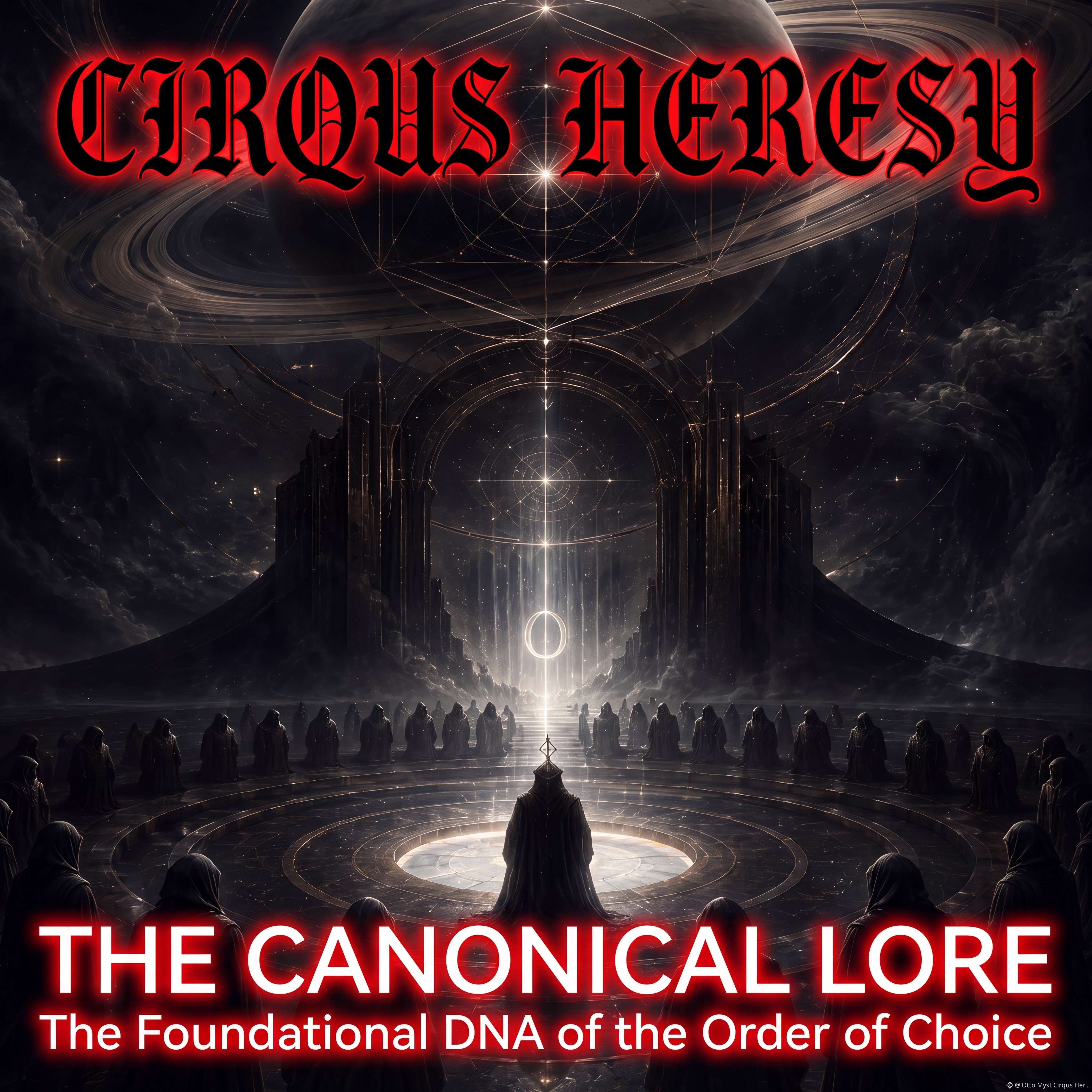
CIRQUS HERESY THE ORDER OF CHOICE Canonical Lore Foundation
The Foundational DNA of the Order of Choice
Core Thesis Most people inherit their reality before they ever choose it. They inherit narratives, institutions, roles, economies, authorities and definitions of success. Cirqus begins with a single question: What if the given reality is not the only possible one? The answer is not rebellion. The answer is Choice. See clearly. Choose consciously. Build beyond the script.
CIRQUS HERESY THE ORDER OF CHOICE Canonical Lore Foundation
The Foundational DNA of the Order of Choice
Core Thesis Most people inherit their reality before they ever choose it. They inherit narratives, institutions, roles, economies, authorities and definitions of success. Cirqus begins with a single question: What if the given reality is not the only possible one? The answer is not rebellion. The answer is Choice. See clearly. Choose consciously. Build beyond the script.
The Foundational DNA of the Order of Choice
Core Thesis Most people inherit their reality before they ever choose it. They inherit narratives, institutions, roles, economies, authorities and definitions of success. Cirqus begins with a single question: What if the given reality is not the only possible one? The answer is not rebellion. The answer is Choice. See clearly. Choose consciously. Build beyond the script.
1
80
Meet SIR BYTE-A-LOT. 🦋
Senior Cybersecurity Specialist & Part-Time Exorcist.
He hunts phishing, audits smart contracts, and removes suspicious ghosts from your wallet.
His only rule:
Never trust a link.
Especially “Unsubscribe.”
$CIRQUS
cirqusheresy.com/inquisition
Meet SIR BYTE-A-LOT. 🦋
Senior Cybersecurity Specialist & Part-Time Exorcist.
He hunts phishing, audits smart contracts, and removes suspicious ghosts from your wallet.
His only rule:
Never trust a link.
Especially “Unsubscribe.”
$CIRQUS
cirqusheresy.com/inquisition
Senior Cybersecurity Specialist & Part-Time Exorcist.
He hunts phishing, audits smart contracts, and removes suspicious ghosts from your wallet.
His only rule:
Never trust a link.
Especially “Unsubscribe.”
$CIRQUS
cirqusheresy.com/inquisition

1
100
ບົດຄວາມ
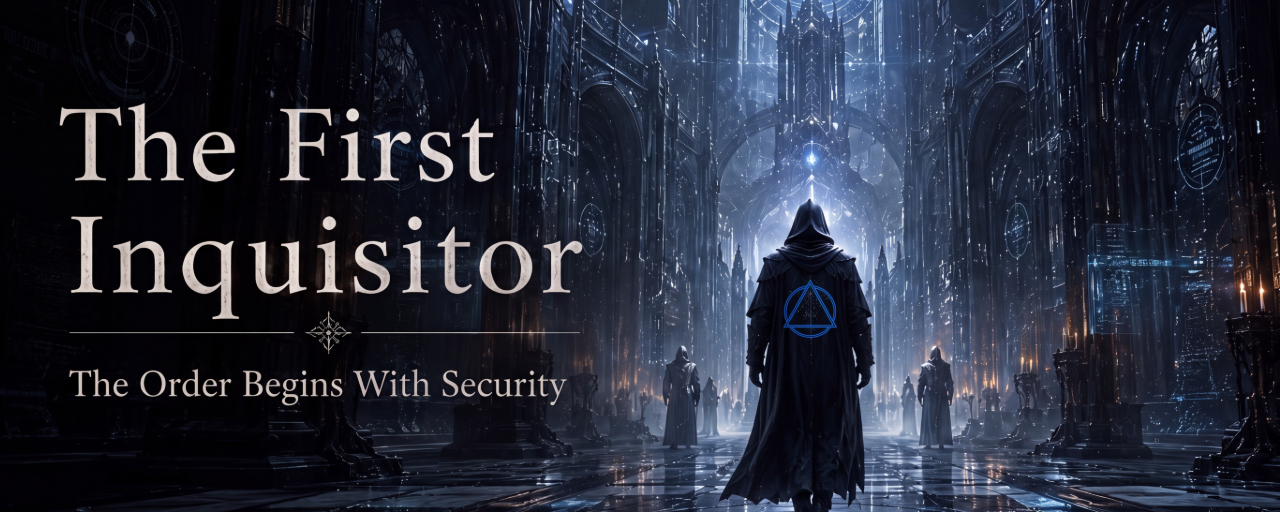
The First Inquisitor. Why the Order Begins With SecurityOn July 22, 2026, the first Inquisitor entered Cirqus Heresy.
Every system eventually reveals what it was built to protect.
Some protect wealth. Some protect power. Some protect information.
But every sovereign system must first protect itself.
Before an Order can build, it must survive.
That is why Cirqus Heresy begins with an Inquisitor — not a token, not a DAO, not a roadmap promising the moon.
Why I Started Here
I did not arrive at this decision as theory. I arrived at it after losing assets to a breach.
The first Dragon Hunt was not a product. It was an experience.
Only later did I give it a name.
Every civilization that survives long enough learns the same lesson: the greatest threat is rarely the enemy standing outside the gates. It is the vulnerability nobody noticed. The assumption nobody questioned. The access nobody revoked. The system nobody audited.
I built the Inquisitor into the Order for that reason. Not to create fear. To make complacency impossible.
How I Found Him
The Order's first Inquisitor was not recruited through a job listing.
He was found through a shared understanding of the same problem.
A security article I published on LinkedIn opened a conversation with someone who had spent years working at the frontier of identity, access, incident response, and digital forensics.
We were not looking for the same job. We were looking at the same problem from different sides.
The conversation became a collaboration. The collaboration revealed something larger.
Not a hire. Not a contractor.
A co-founder, building his own department from the ground up.
You don't join someone else's machine. You build your own engine inside a larger system.
Introducing the Inquisitor
Founding Inquisitor Co-Founder · Security & Digital Forensics
An elite digital investigator specializing in node-level extraction, threat actor interception, and securing the perimeter of the Heresy ecosystem.
When the dark forest breaches, he enforces order.
His mandate is simple:
Find what others missed. Question what others accepted. Secure what others assumed was safe.
The Mandate
THE INQUISITOR'S LOOP
Detection — Identify threats before they become incidents. Investigation — Follow evidence beyond the obvious. Verification — Trust nothing that has not been tested. Containment — Stop the breach before it becomes the collapse. Forensics — When something breaks, reconstruct how and why.
THE INQUISITOR'S PURPOSE
Sovereignty — Protect the creator, the system, and the integrity of the Order.
The loop protects the sovereignty.
A department — The Inquisition — is now being built around this mandate. Not borrowed. Not templated. Designed specifically for the person who now leads it, and defined entirely by his own expertise.
The First On-Chain Act
The Founder Record Date: July 22, 2026 Role: Founding Inquisitor Asset: Inquisitor — Founder #001 Network: Base Status: Transferred
This is not a membership badge. It is not a decorative collectible. It is a mark of origin.
The first artifact of the Inquisitor lineage now has a holder. The first department now has a founder.
From this day forward, the record exists beyond memory. It exists on-chain.
What This Really Is
The Order could look, from the outside, like a gothic Web3 project — lore, NFTs, a mysterious circle. That surface is real.
But behind it sits an operational mandate: security, intelligence, digital forensics, threat detection, incident response, verification.
The story is the language. The infrastructure is the substance.
Why This Matters More Than One Appointment
He brought a capability the Order did not have.
We brought an architecture in which that capability could become a department.
Together, we are building something neither of us could have built alone.
The department will create intelligence. Intelligence becomes infrastructure. Infrastructure protects the people who build inside the Order. And the people who build inside the Order make the infrastructure stronger.
This is the first entry in a chronicle I'll keep from here forward — a record of how the Order strengthens everyone who enters it, and how each person strengthens the Order in return.
Not to collect people. To amplify them.
You enter alone. You leave amplified.
The first Inquisitor has entered. The first department is being built.
See clearly. Choose consciously. Build beyond the script.
Welcome to the Order, Inquisitor. Let's keep building.
The First Inquisitor. Why the Order Begins With Security
On July 22, 2026, the first Inquisitor entered Cirqus Heresy.
Every system eventually reveals what it was built to protect.
Some protect wealth. Some protect power. Some protect information.
But every sovereign system must first protect itself.
Before an Order can build, it must survive.
That is why Cirqus Heresy begins with an Inquisitor — not a token, not a DAO, not a roadmap promising the moon.
Why I Started Here
I did not arrive at this decision as theory. I arrived at it after losing assets to a breach.
The first Dragon Hunt was not a product. It was an experience.
Only later did I give it a name.
Every civilization that survives long enough learns the same lesson: the greatest threat is rarely the enemy standing outside the gates. It is the vulnerability nobody noticed. The assumption nobody questioned. The access nobody revoked. The system nobody audited.
I built the Inquisitor into the Order for that reason. Not to create fear. To make complacency impossible.
How I Found Him
The Order's first Inquisitor was not recruited through a job listing.
He was found through a shared understanding of the same problem.
A security article I published on LinkedIn opened a conversation with someone who had spent years working at the frontier of identity, access, incident response, and digital forensics.
We were not looking for the same job. We were looking at the same problem from different sides.
The conversation became a collaboration. The collaboration revealed something larger.
Not a hire. Not a contractor.
A co-founder, building his own department from the ground up.
You don't join someone else's machine. You build your own engine inside a larger system.
Introducing the Inquisitor
Founding Inquisitor Co-Founder · Security & Digital Forensics
An elite digital investigator specializing in node-level extraction, threat actor interception, and securing the perimeter of the Heresy ecosystem.
When the dark forest breaches, he enforces order.
His mandate is simple:
Find what others missed. Question what others accepted. Secure what others assumed was safe.
The Mandate
THE INQUISITOR'S LOOP
Detection — Identify threats before they become incidents. Investigation — Follow evidence beyond the obvious. Verification — Trust nothing that has not been tested. Containment — Stop the breach before it becomes the collapse. Forensics — When something breaks, reconstruct how and why.
THE INQUISITOR'S PURPOSE
Sovereignty — Protect the creator, the system, and the integrity of the Order.
The loop protects the sovereignty.
A department — The Inquisition — is now being built around this mandate. Not borrowed. Not templated. Designed specifically for the person who now leads it, and defined entirely by his own expertise.
The First On-Chain Act
The Founder Record Date: July 22, 2026 Role: Founding Inquisitor Asset: Inquisitor — Founder #001 Network: Base Status: Transferred
This is not a membership badge. It is not a decorative collectible. It is a mark of origin.
The first artifact of the Inquisitor lineage now has a holder. The first department now has a founder.
From this day forward, the record exists beyond memory. It exists on-chain.
What This Really Is
The Order could look, from the outside, like a gothic Web3 project — lore, NFTs, a mysterious circle. That surface is real.
But behind it sits an operational mandate: security, intelligence, digital forensics, threat detection, incident response, verification.
The story is the language. The infrastructure is the substance.
Why This Matters More Than One Appointment
He brought a capability the Order did not have.
We brought an architecture in which that capability could become a department.
Together, we are building something neither of us could have built alone.
The department will create intelligence. Intelligence becomes infrastructure. Infrastructure protects the people who build inside the Order. And the people who build inside the Order make the infrastructure stronger.
This is the first entry in a chronicle I'll keep from here forward — a record of how the Order strengthens everyone who enters it, and how each person strengthens the Order in return.
Not to collect people. To amplify them.
You enter alone. You leave amplified.
The first Inquisitor has entered. The first department is being built.
See clearly. Choose consciously. Build beyond the script.
Welcome to the Order, Inquisitor. Let's keep building.
Every system eventually reveals what it was built to protect.
Some protect wealth. Some protect power. Some protect information.
But every sovereign system must first protect itself.
Before an Order can build, it must survive.
That is why Cirqus Heresy begins with an Inquisitor — not a token, not a DAO, not a roadmap promising the moon.
Why I Started Here
I did not arrive at this decision as theory. I arrived at it after losing assets to a breach.
The first Dragon Hunt was not a product. It was an experience.
Only later did I give it a name.
Every civilization that survives long enough learns the same lesson: the greatest threat is rarely the enemy standing outside the gates. It is the vulnerability nobody noticed. The assumption nobody questioned. The access nobody revoked. The system nobody audited.
I built the Inquisitor into the Order for that reason. Not to create fear. To make complacency impossible.
How I Found Him
The Order's first Inquisitor was not recruited through a job listing.
He was found through a shared understanding of the same problem.
A security article I published on LinkedIn opened a conversation with someone who had spent years working at the frontier of identity, access, incident response, and digital forensics.
We were not looking for the same job. We were looking at the same problem from different sides.
The conversation became a collaboration. The collaboration revealed something larger.
Not a hire. Not a contractor.
A co-founder, building his own department from the ground up.
You don't join someone else's machine. You build your own engine inside a larger system.
Introducing the Inquisitor
Founding Inquisitor Co-Founder · Security & Digital Forensics
An elite digital investigator specializing in node-level extraction, threat actor interception, and securing the perimeter of the Heresy ecosystem.
When the dark forest breaches, he enforces order.
His mandate is simple:
Find what others missed. Question what others accepted. Secure what others assumed was safe.
The Mandate
THE INQUISITOR'S LOOP
Detection — Identify threats before they become incidents. Investigation — Follow evidence beyond the obvious. Verification — Trust nothing that has not been tested. Containment — Stop the breach before it becomes the collapse. Forensics — When something breaks, reconstruct how and why.
THE INQUISITOR'S PURPOSE
Sovereignty — Protect the creator, the system, and the integrity of the Order.
The loop protects the sovereignty.
A department — The Inquisition — is now being built around this mandate. Not borrowed. Not templated. Designed specifically for the person who now leads it, and defined entirely by his own expertise.
The First On-Chain Act
The Founder Record Date: July 22, 2026 Role: Founding Inquisitor Asset: Inquisitor — Founder #001 Network: Base Status: Transferred
This is not a membership badge. It is not a decorative collectible. It is a mark of origin.
The first artifact of the Inquisitor lineage now has a holder. The first department now has a founder.
From this day forward, the record exists beyond memory. It exists on-chain.
What This Really Is
The Order could look, from the outside, like a gothic Web3 project — lore, NFTs, a mysterious circle. That surface is real.
But behind it sits an operational mandate: security, intelligence, digital forensics, threat detection, incident response, verification.
The story is the language. The infrastructure is the substance.
Why This Matters More Than One Appointment
He brought a capability the Order did not have.
We brought an architecture in which that capability could become a department.
Together, we are building something neither of us could have built alone.
The department will create intelligence. Intelligence becomes infrastructure. Infrastructure protects the people who build inside the Order. And the people who build inside the Order make the infrastructure stronger.
This is the first entry in a chronicle I'll keep from here forward — a record of how the Order strengthens everyone who enters it, and how each person strengthens the Order in return.
Not to collect people. To amplify them.
You enter alone. You leave amplified.
The first Inquisitor has entered. The first department is being built.
See clearly. Choose consciously. Build beyond the script.
Welcome to the Order, Inquisitor. Let's keep building.
1
91
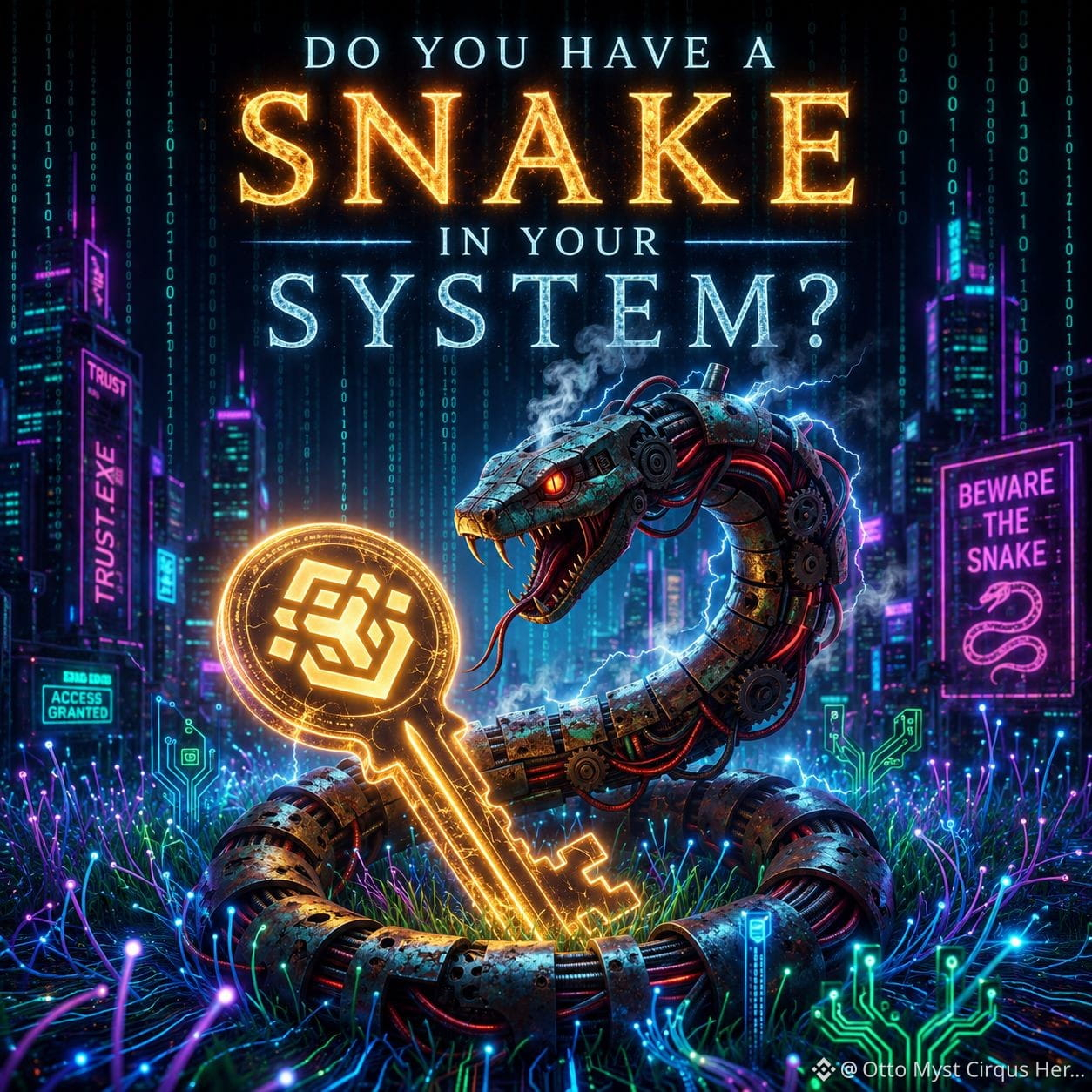
Dragon Hunt: The Snake Never Left.
Do you have a snake in your system?
Notice I didn't ask whether you have malware. Or a virus. Or spyware. I asked whether there is a snake.
Because malware is loud. A virus leaves broken code. But a snake? A snake doesn't break into your system. It waits for an invitation. It waits for you to choose convenience over isolation.
Six months before 1,088 BNB vanished while I slept, I handed my unlocked laptop to a stranger for a minor repair. I thought I was fixing an inconvenience. In reality, I was opening the garden gates.
Open sessions. Accessible wallets. Every password cached in Chrome.
On October 31, 2024, the strike happened. Total silence. Total depletion. For 500 days, I lived with the illusion of closure. I thought the snake had taken what it came for and slithered away into the dark corners of the blockchain.
I was wrong. The snake never left.
It wasn't stealing anymore. It was feeding. Quietly. Patiently. Every forgotten airdrop. Every interaction. It lived inside my browser for a year and a half, using my address as its own. It sat there, warming itself under my keyboard, waiting for the next season.
Until greed made it move too fast.
On March 9, 2026, the parasite made one stupid mistake. It came back for the remnants — but this time, it left tracks.
Nine wallets exposed. One open, public investigation.
This is no longer a story about a hack. This is the forensic decomposition of trust. Cybersecurity rarely fails because hackers are geniuses. It fails because humans are predictable.
We are tracking the parasite through the digital undergrowth, and the ledger is open for those who know how to read the signs.
Look at the nine addresses. If one of them is yours, you are not just a victim. You are hosting the same ghost.
—
How long could a snake live inside your computer before you noticed?
Every Dragon Hunt begins with a Snake. The Snake feeds on trust.
⟡ Liberatio per Electionem
Dragon Hunt: The Snake Never Left.
Do you have a snake in your system?
Notice I didn't ask whether you have malware. Or a virus. Or spyware. I asked whether there is a snake.
Because malware is loud. A virus leaves broken code. But a snake? A snake doesn't break into your system. It waits for an invitation. It waits for you to choose convenience over isolation.
Six months before 1,088 BNB vanished while I slept, I handed my unlocked laptop to a stranger for a minor repair. I thought I was fixing an inconvenience. In reality, I was opening the garden gates.
Open sessions. Accessible wallets. Every password cached in Chrome.
On October 31, 2024, the strike happened. Total silence. Total depletion. For 500 days, I lived with the illusion of closure. I thought the snake had taken what it came for and slithered away into the dark corners of the blockchain.
I was wrong. The snake never left.
It wasn't stealing anymore. It was feeding. Quietly. Patiently. Every forgotten airdrop. Every interaction. It lived inside my browser for a year and a half, using my address as its own. It sat there, warming itself under my keyboard, waiting for the next season.
Until greed made it move too fast.
On March 9, 2026, the parasite made one stupid mistake. It came back for the remnants — but this time, it left tracks.
Nine wallets exposed. One open, public investigation.
This is no longer a story about a hack. This is the forensic decomposition of trust. Cybersecurity rarely fails because hackers are geniuses. It fails because humans are predictable.
We are tracking the parasite through the digital undergrowth, and the ledger is open for those who know how to read the signs.
Look at the nine addresses. If one of them is yours, you are not just a victim. You are hosting the same ghost.
—
How long could a snake live inside your computer before you noticed?
Every Dragon Hunt begins with a Snake. The Snake feeds on trust.
⟡ Liberatio per Electionem
Do you have a snake in your system?
Notice I didn't ask whether you have malware. Or a virus. Or spyware. I asked whether there is a snake.
Because malware is loud. A virus leaves broken code. But a snake? A snake doesn't break into your system. It waits for an invitation. It waits for you to choose convenience over isolation.
Six months before 1,088 BNB vanished while I slept, I handed my unlocked laptop to a stranger for a minor repair. I thought I was fixing an inconvenience. In reality, I was opening the garden gates.
Open sessions. Accessible wallets. Every password cached in Chrome.
On October 31, 2024, the strike happened. Total silence. Total depletion. For 500 days, I lived with the illusion of closure. I thought the snake had taken what it came for and slithered away into the dark corners of the blockchain.
I was wrong. The snake never left.
It wasn't stealing anymore. It was feeding. Quietly. Patiently. Every forgotten airdrop. Every interaction. It lived inside my browser for a year and a half, using my address as its own. It sat there, warming itself under my keyboard, waiting for the next season.
Until greed made it move too fast.
On March 9, 2026, the parasite made one stupid mistake. It came back for the remnants — but this time, it left tracks.
Nine wallets exposed. One open, public investigation.
This is no longer a story about a hack. This is the forensic decomposition of trust. Cybersecurity rarely fails because hackers are geniuses. It fails because humans are predictable.
We are tracking the parasite through the digital undergrowth, and the ledger is open for those who know how to read the signs.
Look at the nine addresses. If one of them is yours, you are not just a victim. You are hosting the same ghost.
—
How long could a snake live inside your computer before you noticed?
Every Dragon Hunt begins with a Snake. The Snake feeds on trust.
⟡ Liberatio per Electionem
1
1
26
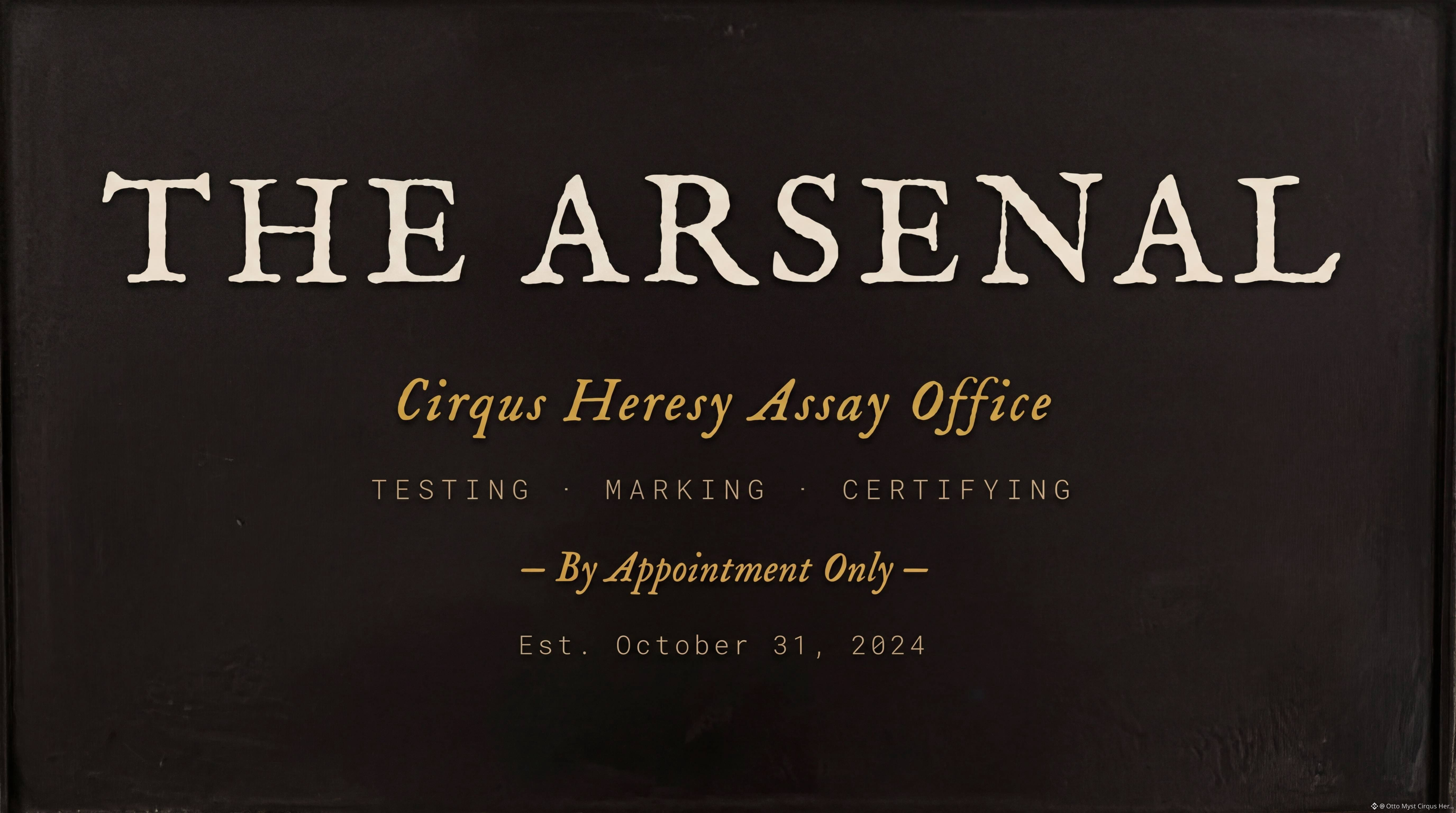
The Arsenal — Cirqus Heresy Assay Office
Most people review tools.
We hallmark them.
There is a difference.
A review tells you what a product claims to be.
A hallmark tells you what it survived.
The Arsenal is the Assay Office of Cirqus Heresy.
We do not rate products.
We expose assumptions.
We test.
We mark.
We certify.
—
The Arsenal exists because theory failed.
On October 31, 2024,
the founder of Cirqus Heresy lost 1,088 BNB
to a session hijack while sleeping.
The funds were gone.
The lesson stayed.
What followed was not revenge.
It became infrastructure.
—
Hardware wallets.
Cold storage.
DePIN infrastructure.
Security workflows.
Everything enters the Arsenal the same way.
Nothing leaves unchanged.
Only what survives the test
receives the hallmark.
Because in Web3,
the difference between sovereignty and loss
is not intelligence.
It is proof.
—
What have you never tested,
but trust with everything you own?
⟡ Liberatio per Electionem
→ x.com/CirqusHeresy
The Arsenal — Cirqus Heresy Assay Office
Most people review tools.
We hallmark them.
There is a difference.
A review tells you what a product claims to be.
A hallmark tells you what it survived.
The Arsenal is the Assay Office of Cirqus Heresy.
We do not rate products.
We expose assumptions.
We test.
We mark.
We certify.
—
The Arsenal exists because theory failed.
On October 31, 2024,
the founder of Cirqus Heresy lost 1,088 BNB
to a session hijack while sleeping.
The funds were gone.
The lesson stayed.
What followed was not revenge.
It became infrastructure.
—
Hardware wallets.
Cold storage.
DePIN infrastructure.
Security workflows.
Everything enters the Arsenal the same way.
Nothing leaves unchanged.
Only what survives the test
receives the hallmark.
Because in Web3,
the difference between sovereignty and loss
is not intelligence.
It is proof.
—
What have you never tested,
but trust with everything you own?
⟡ Liberatio per Electionem
→ x.com/CirqusHeresy
Most people review tools.
We hallmark them.
There is a difference.
A review tells you what a product claims to be.
A hallmark tells you what it survived.
The Arsenal is the Assay Office of Cirqus Heresy.
We do not rate products.
We expose assumptions.
We test.
We mark.
We certify.
—
The Arsenal exists because theory failed.
On October 31, 2024,
the founder of Cirqus Heresy lost 1,088 BNB
to a session hijack while sleeping.
The funds were gone.
The lesson stayed.
What followed was not revenge.
It became infrastructure.
—
Hardware wallets.
Cold storage.
DePIN infrastructure.
Security workflows.
Everything enters the Arsenal the same way.
Nothing leaves unchanged.
Only what survives the test
receives the hallmark.
Because in Web3,
the difference between sovereignty and loss
is not intelligence.
It is proof.
—
What have you never tested,
but trust with everything you own?
⟡ Liberatio per Electionem
→ x.com/CirqusHeresy
1
1
93
The Faces Not Yet Chosen
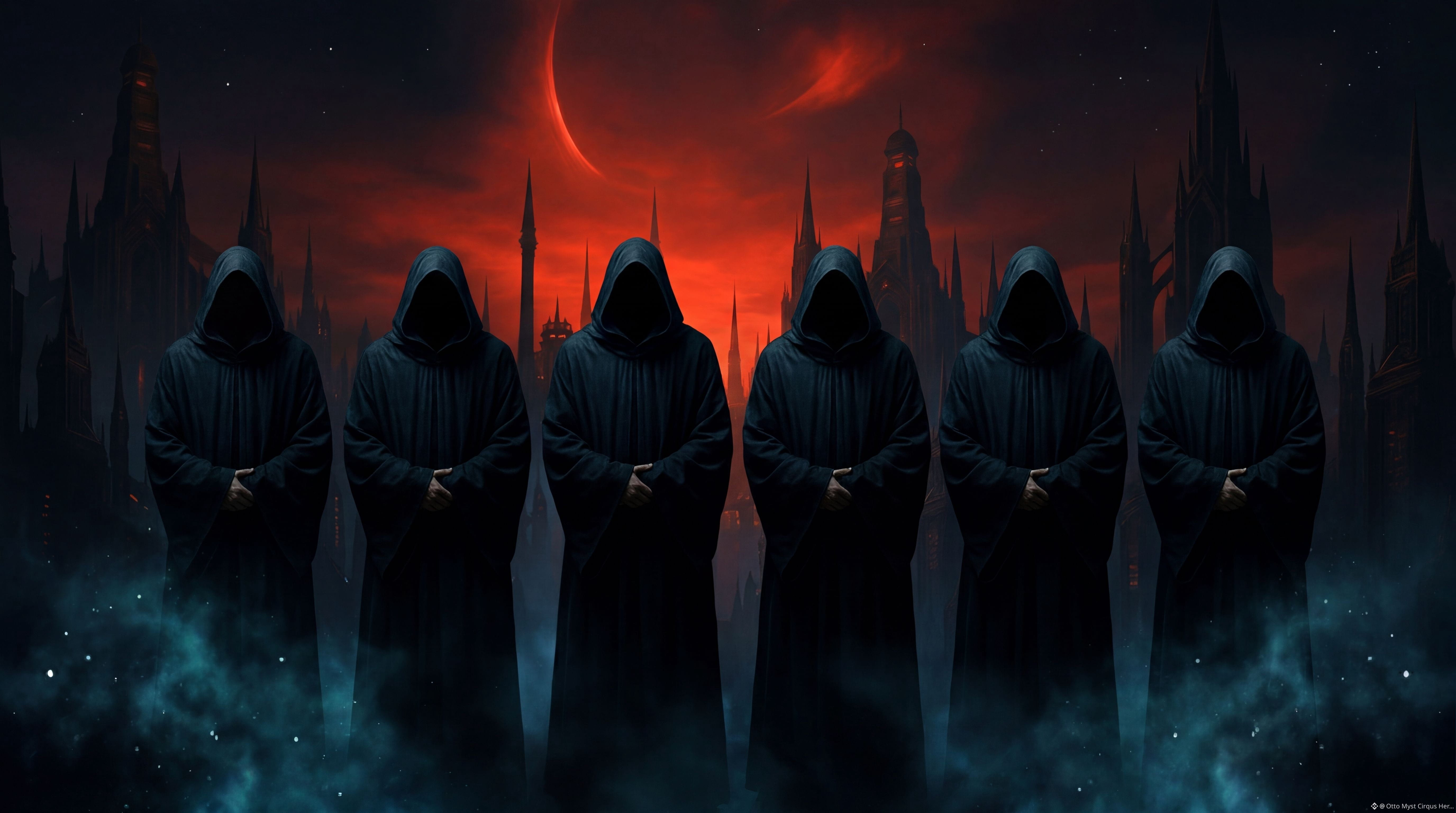
Six figures stand at the edge of the known world.
Six robes.
Six roles.
No faces.
Not because they are hidden —
but because their faces are still being chosen.
Somewhere, six people already carry these roles.
They simply haven't found the Order yet.
One questions systems others accepted long ago.
One investigates what everyone else walks past.
One holds the balance when everything pulls apart.
One transforms raw ideas into something that endures.
One builds the architecture no one thought to name.
One moves capital the way others move conviction.
They don't know each other yet.
They don't know us yet.
But they already live this.
Every day.
Without a name for it.
The Order does not create its members.
It recognizes them.
At the center of the Order stands the Hexastorm —
six directions, six voices, no single authority.
Those six seats exist.
The names that will fill them — do not yet.
Perhaps one of them was always yours.
—
Which robe fits you?
⟡ Liberatio per Electionem
→ x.com/CirqusHeresy
The Faces Not Yet Chosen
Six figures stand at the edge of the known world.
Six robes.
Six roles.
No faces.
Not because they are hidden —
but because their faces are still being chosen.
Somewhere, six people already carry these roles.
They simply haven't found the Order yet.
One questions systems others accepted long ago.
One investigates what everyone else walks past.
One holds the balance when everything pulls apart.
One transforms raw ideas into something that endures.
One builds the architecture no one thought to name.
One moves capital the way others move conviction.
They don't know each other yet.
They don't know us yet.
But they already live this.
Every day.
Without a name for it.
The Order does not create its members.
It recognizes them.
At the center of the Order stands the Hexastorm —
six directions, six voices, no single authority.
Those six seats exist.
The names that will fill them — do not yet.
Perhaps one of them was always yours.
—
Which robe fits you?
⟡ Liberatio per Electionem
→ x.com/CirqusHeresy
Six figures stand at the edge of the known world.
Six robes.
Six roles.
No faces.
Not because they are hidden —
but because their faces are still being chosen.
Somewhere, six people already carry these roles.
They simply haven't found the Order yet.
One questions systems others accepted long ago.
One investigates what everyone else walks past.
One holds the balance when everything pulls apart.
One transforms raw ideas into something that endures.
One builds the architecture no one thought to name.
One moves capital the way others move conviction.
They don't know each other yet.
They don't know us yet.
But they already live this.
Every day.
Without a name for it.
The Order does not create its members.
It recognizes them.
At the center of the Order stands the Hexastorm —
six directions, six voices, no single authority.
Those six seats exist.
The names that will fill them — do not yet.
Perhaps one of them was always yours.
—
Which robe fits you?
⟡ Liberatio per Electionem
→ x.com/CirqusHeresy
1
1
The Order Structure — Cirqus Heresy
Every civilization builds pyramids.
We built an orbit.
Not a hierarchy.
Not a corporation.
Not a religion.
A living system.
Long before humans imagined perfect societies,
Saturn was already drawing one.
A hexagon.
Six sides.
Endless motion.
Nature discovered this geometry first.
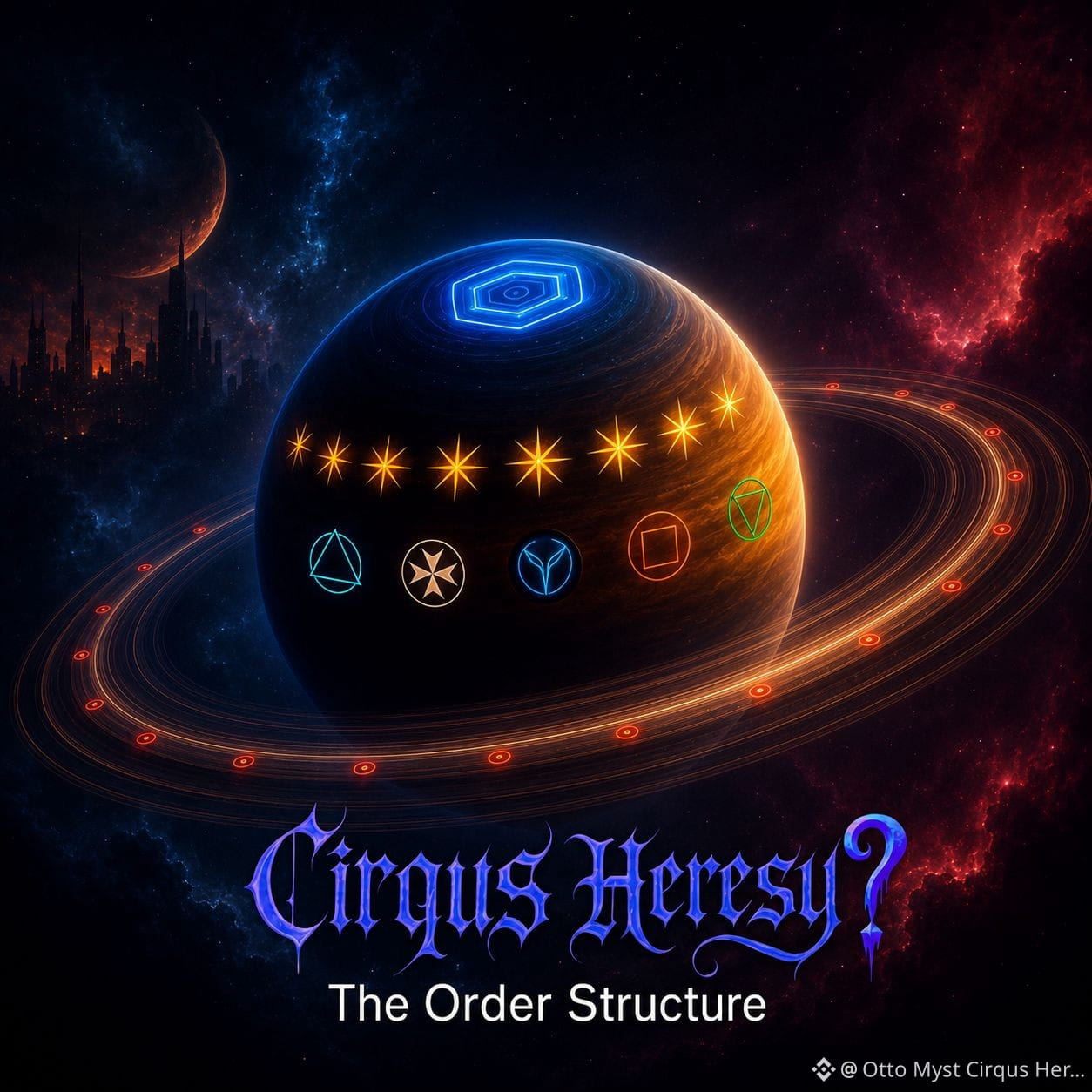
At its center stands the Hexastorm —
a six-sided pattern carved into Saturn
long before humanity spoke of order.
Six directions.
Six voices.
Balance without a ruler.
Around it move seven Castes.
Not above one another.
Never competing.
Each exists because the others do.
Seekers ask.
Tricksters challenge.
Inquisitors verify.
Oracles foresee.
Alchemists transform.
Architects build.
Mages sustain.
A circle survives only while
every part continues to move.
We did not invent this structure.
We recognized it.
—
The Circle is always incomplete
until someone enters it.
Which symbol would you carry?
⟡ Liberatio per Electionem
→ x.com/CirqusHeresy
The Order Structure — Cirqus Heresy
Every civilization builds pyramids.
We built an orbit.
Not a hierarchy.
Not a corporation.
Not a religion.
A living system.
Long before humans imagined perfect societies,
Saturn was already drawing one.
A hexagon.
Six sides.
Endless motion.
Nature discovered this geometry first.
At its center stands the Hexastorm —
a six-sided pattern carved into Saturn
long before humanity spoke of order.
Six directions.
Six voices.
Balance without a ruler.
Around it move seven Castes.
Not above one another.
Never competing.
Each exists because the others do.
Seekers ask.
Tricksters challenge.
Inquisitors verify.
Oracles foresee.
Alchemists transform.
Architects build.
Mages sustain.
A circle survives only while
every part continues to move.
We did not invent this structure.
We recognized it.
—
The Circle is always incomplete
until someone enters it.
Which symbol would you carry?
⟡ Liberatio per Electionem
→ x.com/CirqusHeresy
Every civilization builds pyramids.
We built an orbit.
Not a hierarchy.
Not a corporation.
Not a religion.
A living system.
Long before humans imagined perfect societies,
Saturn was already drawing one.
A hexagon.
Six sides.
Endless motion.
Nature discovered this geometry first.
At its center stands the Hexastorm —
a six-sided pattern carved into Saturn
long before humanity spoke of order.
Six directions.
Six voices.
Balance without a ruler.
Around it move seven Castes.
Not above one another.
Never competing.
Each exists because the others do.
Seekers ask.
Tricksters challenge.
Inquisitors verify.
Oracles foresee.
Alchemists transform.
Architects build.
Mages sustain.
A circle survives only while
every part continues to move.
We did not invent this structure.
We recognized it.
—
The Circle is always incomplete
until someone enters it.
Which symbol would you carry?
⟡ Liberatio per Electionem
→ x.com/CirqusHeresy
1
1
18
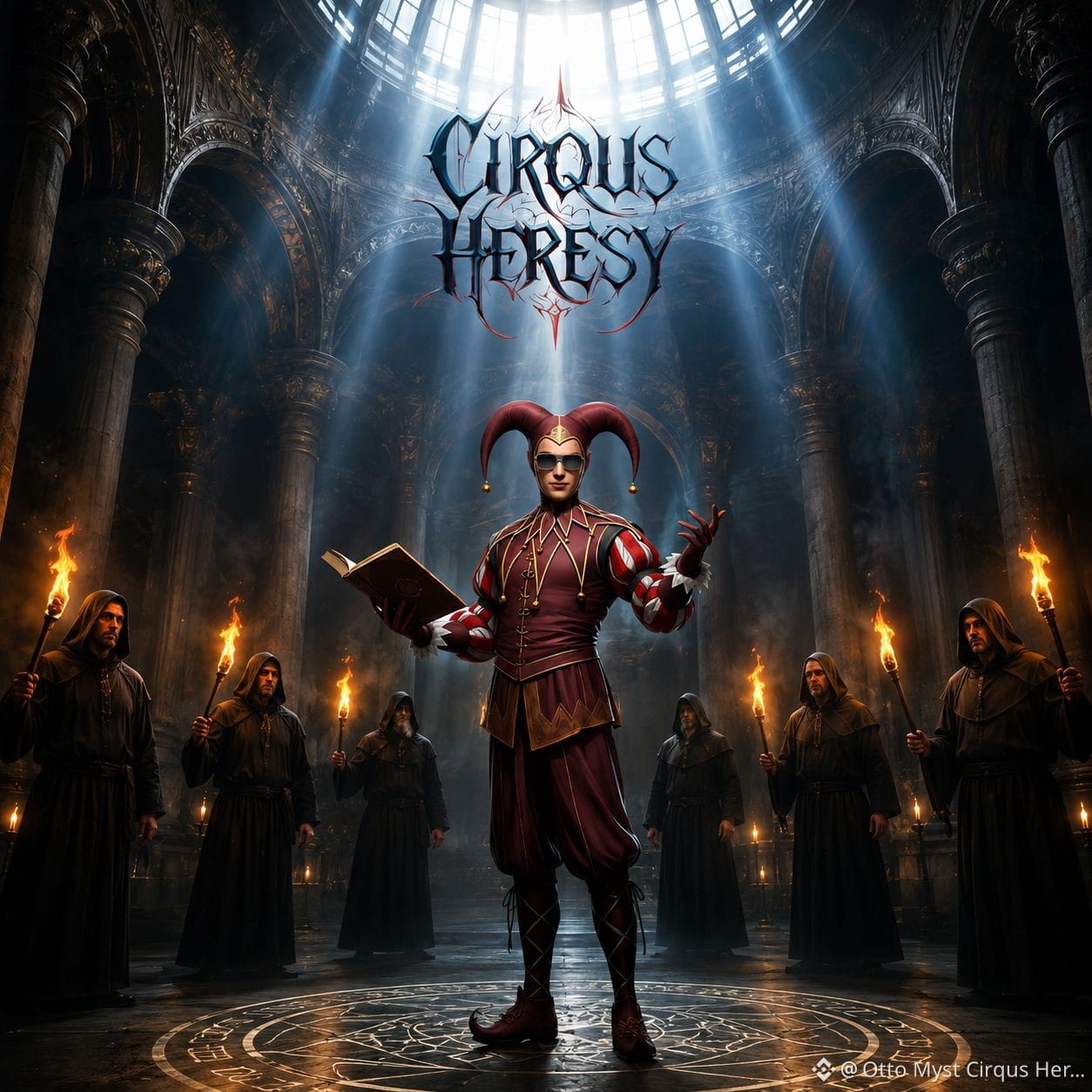
Templum Intus Est — The Temple Is Within
Every civilization built temples.
Some from stone.
Some from stories.
Some from fear.
We build ours from people who choose.
Not walls. Not doctrine. Not hierarchy.
A living structure — shaped by every mind that enters.
Rebuilt with every question asked inside it.
Man does not live by answers alone.
The greatest temples were never finished.
They grew with those who entered.
They changed with what was brought inside.
They survived because they were never owned —
only inhabited.
This is what we are building.
Not a platform.
Not a DAO.
Not a brand.
A temple made of seekers.
Every person who holds this NFT
becomes a stone in something larger than themselves.
Not because they were chosen.
Because they chose.
Templum Intus Est.
The temple is within.
And now — it is also onchain.
—
What would you bring inside?
Liberatio per electionem.
→ cirqusheresy.com/structure
Templum Intus Est — The Temple Is Within
Every civilization built temples.
Some from stone.
Some from stories.
Some from fear.
We build ours from people who choose.
Not walls. Not doctrine. Not hierarchy.
A living structure — shaped by every mind that enters.
Rebuilt with every question asked inside it.
Man does not live by answers alone.
The greatest temples were never finished.
They grew with those who entered.
They changed with what was brought inside.
They survived because they were never owned —
only inhabited.
This is what we are building.
Not a platform.
Not a DAO.
Not a brand.
A temple made of seekers.
Every person who holds this NFT
becomes a stone in something larger than themselves.
Not because they were chosen.
Because they chose.
Templum Intus Est.
The temple is within.
And now — it is also onchain.
—
What would you bring inside?
Liberatio per electionem.
→ cirqusheresy.com/structure
Every civilization built temples.
Some from stone.
Some from stories.
Some from fear.
We build ours from people who choose.
Not walls. Not doctrine. Not hierarchy.
A living structure — shaped by every mind that enters.
Rebuilt with every question asked inside it.
Man does not live by answers alone.
The greatest temples were never finished.
They grew with those who entered.
They changed with what was brought inside.
They survived because they were never owned —
only inhabited.
This is what we are building.
Not a platform.
Not a DAO.
Not a brand.
A temple made of seekers.
Every person who holds this NFT
becomes a stone in something larger than themselves.
Not because they were chosen.
Because they chose.
Templum Intus Est.
The temple is within.
And now — it is also onchain.
—
What would you bring inside?
Liberatio per electionem.
→ cirqusheresy.com/structure
1
102
They called the Titanic unsinkable. Just like we think our digital freedom is safe.
But Pavel Durov warns us: the hidden iceberg of total control is already here. Is your privacy still afloat... or are we already sinking?
They called the Titanic unsinkable. Just like we think our digital freedom is safe.
But Pavel Durov warns us: the hidden iceberg of total control is already here. Is your privacy still afloat... or are we already sinking?
But Pavel Durov warns us: the hidden iceberg of total control is already here. Is your privacy still afloat... or are we already sinking?
1
60
What is the true Formula of Longevity for a decentralized ecosystem? Most Web3 projects are doomed to decay because they ignore systemic entropy. Centralization dies, but code endures.
Read our full manifest and deep-dive analysis: paragraph.xyz/@cirqusheresy/why-projects-die
#Web3 #DeSci #DAO
What is the true Formula of Longevity for a decentralized ecosystem? Most Web3 projects are doomed to decay because they ignore systemic entropy. Centralization dies, but code endures.
Read our full manifest and deep-dive analysis: paragraph.xyz/@cirqusheresy/why-projects-die
#Web3 #DeSci #DAO
Read our full manifest and deep-dive analysis: paragraph.xyz/@cirqusheresy/why-projects-die
#Web3 #DeSci #DAO
1
67
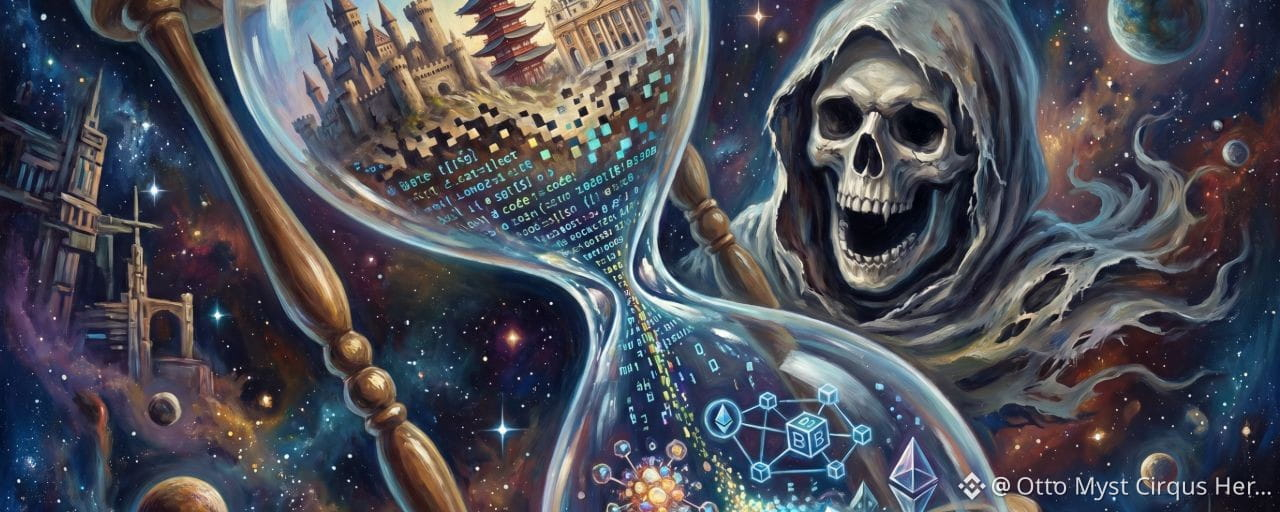
ບົດຄວາມ
Why Will Your Project Die? The Anatomy of History's Most Resilient Power SystemsWhy Will Your Project Die? The Anatomy of History's Most Resilient Power Systems
Law 0. The Battle Against Entropy
All systems decay. There are no eternal states. There are only systems capable of recovering faster than they collapse. The remaining 9 laws are simply the mechanisms of that battle.
Introduction
Today I found myself thinking about the next stage of the project. I thought that stage would be creating a DAO — technically, it's not that complicated. But then I got curious: how do you build a voting and decision-making system? How do you make it fair? Simple majority? Token holdings? Contribution? The question turned out to be far more complex than I'd assumed.
How do existing systems actually work? And why have some of the most idealistic ones collapsed so quickly?
Looking at the history of states, you notice striking patterns. The simple majority principle tends to lead to grim outcomes. Even in my home country, Russia — setting aside the cheap manipulation and media control — a dictator came to power with the support of the majority. A young president who could string sentences together looked refreshingly unusual against decades of gerontocracy, with barely-coherent rulers of a crumbling empire. A credulous, unsophisticated majority raised on reverence for strong authority hung on every word of the new leader. Even his barracks-style jokes were received by the enchanted crowd — so accustomed to bureaucratic language — as a sign of the beloved tsar's remarkable wit.
What still surprises me is how few people were troubled by the crude manipulation of the substitute president, the rapid rewriting of all laws including the constitution, the murders and imprisonments of prominent opposition figures.
I know this system well and can explain in detail how it works: the facade of legality and governing institutions, while everything is in fact built to serve the interests of a small group holding power. This is precisely what I would not want to see in our community. Historically, such systems don't last long and certainly don't end well. Power transitions tend to happen fast and bloodily, usually accompanied by ideological reversal and mass killings of dissenters.
I think every society has a highly energetic, not particularly reflective segment of the population whose attention and support many power-seekers court. All it takes is the right slogan timed to a current event, the right emotional trigger — and they'll storm the Capitol, or storm cities in a foreign country. I hope our circle won't attract this part of society. We don't have enough seats, and we have no appetite for cheap products.
So the first thing I want to establish for the project: we are not looking for the support of the majority. We want to rely on the intellectual minority.
Now let's look at the oldest state systems that have endured — continuously — for very long periods.
A single consistent constitutional or ideological system plus an unbroken symbolic center eliminates 99% of the states we see on maps. Most modern countries are products of recent revolutions, colonial collapses, or radical constitutional breaks. France is already on its Fifth Republic; Germany has changed its political system five times in the last 120 years. Many countries went through communism — some are still going through it. They didn't just replace old tyrants with new ones; they tragically destroyed the intellectual layer of their own populations — the elite.
In a world where political regimes succeed one another at historical speed, there exists an elite club of states and institutions that proved their viability not through aggressive expansion, but through the ability to preserve their fundamental code across centuries and millennia.
Studying these cases, we're searching for an answer to one central question: how do you build a structure capable of surviving the collapse of the empires around it?
Part 1. Matrices of Continuity: States and Dynasties
1. Japan (~2,600 years by their account — even 500 would be impressive): The Unbroken Sacred Center
Japan's uniqueness lies not in political consistency, but in the absolute continuity of the imperial dynasty (the Yamato line), which according to their chronicles has remained unbroken since 660 BCE. Perhaps he was simply the first man to arrive on a raft — but that's a different article.
Transformations: Ancient sacred state (by their account) → Military dictatorships (Shogunates) → Absolutist Meiji Empire → Modern constitutional monarchy.
The survival secret: The Emperor of Japan almost never held actual executive power. Real authority was seized by regents, clans, and shoguns. Yet none of them attempted to destroy the throne, because the Emperor was the source of cosmic, divine legitimacy — a direct descendant of the goddess Amaterasu. Shoguns rose and fell in bloody wars, but they fought for the right to rule in the Emperor's name — not to replace him.
Code of resilience: Strict separation between the sacred symbol of power and its practical political application. The system reformed itself without destroying its center. Worth noting: in such systems, history tends to be written by its beneficiaries, and many facts deserve healthy skepticism — though we can verify several centuries at minimum.
2. San Marino (~1,700 years): The Oldest Republic on Earth
Probably the clearest and most pure example of uninterrupted republican governance. Founded in 301 AD by a stonemason named Marinus as a Christian community, this micro-state somehow avoided being ground down by the wheels of European history.
Unique fact: San Marino still operates under an executive system established in the Statutes of 1600: the country is governed by two Captains Regent, elected by the Grand and General Council for terms of just six months. Seizure of power is architecturally impossible.
Code of resilience: No geopolitical ambitions ("if you want to live long, be invisible"), a consensus culture, and a deliberate refusal to expand borders — which saved the republic from both wars and Napoleon.
3. The Vatican / Papacy (~2,000 years by their own account — discount at least 1,000): Networked Theocracy
The modern Vatican state is young (established in 1929 by the Lateran Treaty), but the institution of the Holy See and the Roman Papacy operates on a timescale of two millennia. Though one should investigate the substitution of religions and calendar revisions — the history of modern religions was almost certainly extended.
Unique fact: It is the only elected absolute theocratic monarchy in the world. The Papacy developed a unique succession mechanism — the Conclave (cardinals in full isolation until a decision is reached) — which eliminated dynastic wars and minimized external pressure.
Code of resilience: Spiritual legitimacy, complete independence from any specific territory (the papacy survived even periods of exile, such as the Avignon captivity), and a globally distributed network of influence.
4. Andorra (~750 years): Geopolitical Balance
Founded in 1278 through the Paréage agreement, Andorra is a unique relic of medieval law — a parliamentary co-principality.
Unique fact: The country has two co-princes — the Bishop of Urgell (Spain) and the head of the French state (formerly a king, today the President of France). Emmanuel Macron is, as a side role, "Prince of Andorra."
Code of resilience: A perfect legal balance between two powerful neighbors. Any attempt by one to absorb Andorra would automatically mean conflict with the other. Neutrality and diplomatic flexibility turned a feudal contract into a modern financial haven.
5. Monaco (730 years) and Liechtenstein (300 years): The Evolution of Micro-Monarchies
Two examples of how small size combined with firm dynastic governance creates highly efficient economic hubs.
Monaco: The Grimaldi dynasty has governed the enclave since 1297. Survival came through absolute diplomatic usefulness to France and a timely transformation from pirate stronghold to global capital of wealth.
Liechtenstein: The princely house holds real, not ceremonial, power (the Prince has veto rights over legislation). This is counterbalanced by direct democracy: citizens can initiate a referendum on any question, and every commune has the constitutional right to secede.
Code of resilience: Compactness, financial sovereignty, and citizens' direct material interest in the preservation of the existing order.
6. The Venetian Republic (~1,100 years): A Machine That Outlived Empires
Venice endured from 697 to 1797 — over a millennium. Its secret: an elected Doge (lifetime appointment, but with strict constraints), councils (the aristocratic Senate and the popular Great Council), and a system of checks where no branch of power could dominate.
Unique fact: Venice invented the "tourism industry" in the 16th century, recognizing that its geographic position no longer provided a trading advantage. It repurposed itself from production to services — and survived.
Code of resilience: Rejection of military expansion in favor of commercial and financial power, adaptability to shifting markets, and a rigid internal structure preventing any single clan from seizing control.
7. The Swiss Confederation (~730 years): Distributed Sovereignty
Beginning as a defensive "Eternal Alliance" of three cantons in 1291, Switzerland built the definitive model of decentralization.
Unique fact: Switzerland has no traditional head of state. Executive power belongs to a Federal Council of 7 members who govern collectively.
Code of resilience: Maximum bottom-up self-governance, Swiss neutrality, and the institution of direct referendums. The system is resilient because there is no single "point of failure" — no center whose capture would mean control of the whole country.
Part 2. Guardians of the Word: The Oldest Parliaments
If states survived through territory or crown, legislative institutions survived through the sacralization of Free Speech. Remarkably, three of the world's oldest parliaments emerged in insular Scandinavian ecosystems.
The Althing (Iceland, 930 AD): Originally a field at Þingvellir under the open sky where all free Vikings gathered. The central figure was the Lawspeaker, who recited laws from memory from a high rock. The parliament convened once a year, serving as both judicial and legislative body in a society with no king and no police.
The Tynwald (Isle of Man, ~979 AD): Holds the status of the oldest continuously functioning parliament. Even as the island passed from Vikings to Scots to English, conquerors never dared to dissolve the Tynwald — instead using it to legitimize their own authority over the local population.
The Parliament of England (from the 13th century): Became the cradle of the Westminster system. Through Magna Carta (1215) and subsequent acts, English society was the first in large-scale Europe to translate limits on royal power into a systemic legal framework.
Anglo-Saxon Common Law (~800 years): The System That Outlived Kings, Revolutions, and Empires
Unlike written constitutions (which can be rewritten), Common Law is precedent-based. It lives in judicial decisions accumulated across centuries. A judge doesn't "apply the law" — he "finds the law" in prior decisions.
Code of resilience: Memory is distributed across thousands of court records. To destroy Common Law, you would need to destroy the entire judicial system of England and all its former colonies — which is practically impossible.
The United States of America: The Great Geopolitical Phenomenon of the Modern Age
Built nearly from scratch on the pure philosophy of the Enlightenment, this state converted abstract ideas about freedom into a hard, functioning legal model.
The Constitution That Has Never Been Rewritten
The United States is a unique example of a state that, over 239 years (since ratification in 1787), has never replaced its Constitution. Instead of rewriting, the Founders embedded a mechanism of Amendments — only 27 have ever been adopted (the first 10 being the famous Bill of Rights).
The constitutional text is remarkably concise — roughly 4,500 words. Not a detailed instruction manual, but a framework of principles: rigid enough to resist seizure of power, flexible enough for the Supreme Court to adapt it to any era — from muskets to artificial intelligence to Web3.
The Founders: Engineers of a System
What made Washington, Jefferson, Franklin, Hamilton, and Madison exceptional was not that they were revolutionaries — it's that they were political engineers. They built a state as a complex, self-regulating mechanism.
Three core ideas drove their engineering:
Checks and Balances: The Founders did not believe in the inherent goodness of human nature. Madison wrote: "If men were angels, no government would be necessary." So they divided power into three independent branches — Legislative, Executive, Judicial — and set their interests in opposition, so that none could become a dictatorship.
Protection of the minority from the "Tyranny of the Majority": They had a deep fear of ochlocracy — mob rule. So they created a complex system (the Electoral College, the Senate) where small states carry equivalent weight to large ones, preventing majority dictatorship.
Priority of individual freedoms over the state: In the American tradition, human rights (to life, liberty, property, and arms) are not granted by the state. They belong to the individual by birthright; the state is merely a hired manager for their protection.
Why They Became a World Leader
The United States became a superpower not only due to geography or resources. The primary reason was institutional.
By building a system where the rules of the game are stable and property rights are sacred and protected by an independent judiciary, the Founders created the ideal incubator for capital and talent. For centuries, the most passionate, risk-taking, and intelligent people from across the world flowed into this system.
America proved: a system built on the protection of individual freedom and strict legal balances will, in the long run, always outperform rigid, centralized vertical hierarchies of power. I am genuinely moved by the fact that this state was created by actual intellectuals — not by bandits who seized power, which is all I ever knew growing up.
Part 3. The Formula of Longevity: An Architecture of Negative Entropy
9 Laws of Hyper-Resilient Systems
Most states, corporations, and communities are built as rigid, optimized mechanisms — designed to perform a specific task in a specific historical moment. But in the long run, optimization is the enemy of survival. Black swans, technological shifts, and internal chaos inevitably destroy any static structure.
The Soviet Union — whose anthem proclaimed it "indestructible" — collapsed in a matter of days. The Third Reich — called the "Thousand-Year Reich" — burned out in twelve years. Giant corporations from the Fortune 500 disappear every decade. They committed institutional suicide, overwhelmed by internal entropy.
And yet anomalies like Japan, Roman law, the Vatican, the Venetian Republic, the Anglo-Saxon legal model, Bitcoin, and corporations like Toyota demonstrate remarkable longevity.
From the perspective of cybernetics and complex systems theory (W. Ross Ashby, I. Prigogine, N. Taleb), these long-survivors follow one fundamental meta-law:
Eternal are not the systems that cannot be destroyed, but those that recover faster than they collapse. They generate more order than entropy.
All mechanisms of maintaining negative entropy reduce to 9 architectural laws.
I. Continuous Identity
Cybernetic meaning: The existence of an unchangeable system invariant. Protection against loss of the semantic code even when the physical structure is fully destroyed.
People must know "who they are" even when everything else is gone. This doesn't require religious or mystical sacredness — it is simply an uncontested core of identity. In the United States, it is the constitutional framework. In England, Common Law. In blockchain networks, mathematical consensus. Capture the capital, kill the leader, crash the economy — the system does not annul itself. As long as the identity carriers are alive, the matrix can fully reconstitute itself from that single preserved point.
II. The Transit Algorithm (Succession)
Cybernetic meaning: An automatic protocol for transferring governance that minimizes chaos at the moment of succession.
The primary breaking point of complex systems is the death or departure of a leader. If the system depends on a unique individual, it is fragile. Enduring systems embed power transfer into a rigid algorithm that does not depend on human will. In the Vatican: the Conclave — complete isolation of electors until a decision is reached. In San Marino: the mathematically precise rotation of two Captains Regent every six months. A system is viable when its succession procedure inspires more confidence than the personality of the successor.
III. Reproduction of Code Carriers
Cybernetic meaning: A systematic filter and incubator for continuously cultivating elements capable of operating the system's code and reproducing its competencies.
A system degrades instantly when the next generation does not understand why it was created. Long-survivors always maintain internal "meaning factories" and rigorous filters. In Imperial China, this was the Keju examination system — access to governance only through demonstrated mastery of the Confucian canon. In the British Empire, elite universities. In decentralized systems like Linux, Wikipedia, or Bitcoin, this operates through meritocracy and contribution: you must prove your understanding of the architectural code before earning the right to change it.
IV. Rigid Core, Adaptable Periphery
Cybernetic meaning: Dynamic separation of the structure into constants (necessary for identity) and variables (necessary for adaptation to the environment).
Absolute rigidity leads to fracture under pressure. Absolute flexibility leads to loss of identity and dissolution into chaos. Hyper-resilient systems masterfully separate these levels. In Japan, the Emperor is the unchanging core; shogunates, militarism, capitalism, and modern democracy are merely adaptive periphery. In Catholicism, the core dogmas are fixed, but the languages of worship, channels of communication, and practices can change beyond recognition.
V. The Immune Response: Converting Threats into Resources
Cybernetic meaning: Management of external disturbances. The system's ability not merely to defend against environmental threats, but to assimilate or redirect their energy.
A resilient system doesn't have to befriend external chaos — but it knows how to extract value from it. Sometimes through integration (ancient Rome granting citizenship to conquered peoples; the United States absorbing immigrants as economic fuel). Sometimes through suppression or isolation (Byzantium, which quenched internal revolts and divided external enemies through diplomacy). A system is antifragile when external pressure makes it stronger — converting alien energy into internal order.
VI. Operator Independence (The Machine That Outlives Its Driver)
Cybernetic meaning: Separation of life-support processes from the will of any individual element. The person must not be the system.
Concentrated power (in empires of the past or corporations of the present) is viable across centuries only when the ruler is a temporary operator of institutions — not the institutions themselves. Bureaucratic apparatus, legal precedents, logistics, and economic cycles must function independently of whether a genius or a madman sits at the top. If the structure's survival requires the founder's daily hands-on intervention, the system is dead in the long run.
VII. Controlled Transformation
Cybernetic meaning: Management of the pace of change. The ability to modernize without destabilizing the foundation.
This is precisely the law on which the Soviet Union broke apart during Perestroika, the Ottoman Empire during Tanzimat, and Qing China. In trying to improve, they shut down life-support systems before building replacements. Hyper-resilient systems reform in quantum steps, sequentially. They often disguise innovations in familiar old forms, allowing internal elements to adapt without existential shock.
VIII. Systemic Redundancy (Backup of Functions)
Cybernetic meaning: A deliberate sacrifice of peak efficiency in favor of enormous structural reserves. The existence of redundant operating circuits.
From a short-term business perspective, having two kidneys, two lungs, or backup supply routes is inefficient and costly. From the perspective of eternity, it is the only way to survive. In the Catholic Church, functions are duplicated by bishops, monasteries, and autonomous orders. In the United States, stability is ensured by redundancy at every level: states, courts, federal bodies — all duplicate and insure one another. If one circuit is destroyed, the system immediately transfers its functions to the backup.
IX. Self-Limitation of Power (Immunity to Auto-Optimization)
Cybernetic meaning: Protection of the system from destruction by its own governing elements. Suppression of internal parasites.
Any leader or elite, upon receiving absolute power, begins optimizing the system for their personal, short-term interests — thereby destroying its long-term viability. To protect itself from itself, a system must contain built-in limiters: Magna Carta, separation of powers, fixed term limits, an independent judiciary, or immutable smart contracts in Web3. The system must have legal instruments to block destructive decisions by its own leadership.
The Architectural Trigger: Three Questions of Eternity
All 9 cybernetic laws hold a system in a state of negative entropy as long as three fundamental questions are clearly, transparently, and unambiguously answered within its code:
What must never change? (The core that anchors identity.)What must change right now? (The periphery adapting to the environment.)Who has the right to change it, and on what basis? (Legitimate competence carriers who have passed the filters of succession.)
When these three circuits are in balance, any structure — whether a sovereign state, a transnational corporation, a world religion, or a decentralized Web3 community — ceases to depend on the blows of historical chaos. It becomes the chaos itself, converting external threats into perpetual internal order.
"This architecture will form the foundation of Cirqus Heresy. Our 'Order of Choice' will not seek majority support — it will filter carriers of the code. Power within it will belong to no single person — it will be distributed among those with proven competence. And its constitution will be protected from rewriting — like the American one, but adapted for the digital age."
Why Will Your Project Die? The Anatomy of History's Most Resilient Power Systems
Why Will Your Project Die? The Anatomy of History's Most Resilient Power Systems
Law 0. The Battle Against Entropy
All systems decay. There are no eternal states. There are only systems capable of recovering faster than they collapse. The remaining 9 laws are simply the mechanisms of that battle.
Introduction
Today I found myself thinking about the next stage of the project. I thought that stage would be creating a DAO — technically, it's not that complicated. But then I got curious: how do you build a voting and decision-making system? How do you make it fair? Simple majority? Token holdings? Contribution? The question turned out to be far more complex than I'd assumed.
How do existing systems actually work? And why have some of the most idealistic ones collapsed so quickly?
Looking at the history of states, you notice striking patterns. The simple majority principle tends to lead to grim outcomes. Even in my home country, Russia — setting aside the cheap manipulation and media control — a dictator came to power with the support of the majority. A young president who could string sentences together looked refreshingly unusual against decades of gerontocracy, with barely-coherent rulers of a crumbling empire. A credulous, unsophisticated majority raised on reverence for strong authority hung on every word of the new leader. Even his barracks-style jokes were received by the enchanted crowd — so accustomed to bureaucratic language — as a sign of the beloved tsar's remarkable wit.
What still surprises me is how few people were troubled by the crude manipulation of the substitute president, the rapid rewriting of all laws including the constitution, the murders and imprisonments of prominent opposition figures.
I know this system well and can explain in detail how it works: the facade of legality and governing institutions, while everything is in fact built to serve the interests of a small group holding power. This is precisely what I would not want to see in our community. Historically, such systems don't last long and certainly don't end well. Power transitions tend to happen fast and bloodily, usually accompanied by ideological reversal and mass killings of dissenters.
I think every society has a highly energetic, not particularly reflective segment of the population whose attention and support many power-seekers court. All it takes is the right slogan timed to a current event, the right emotional trigger — and they'll storm the Capitol, or storm cities in a foreign country. I hope our circle won't attract this part of society. We don't have enough seats, and we have no appetite for cheap products.
So the first thing I want to establish for the project: we are not looking for the support of the majority. We want to rely on the intellectual minority.
Now let's look at the oldest state systems that have endured — continuously — for very long periods.
A single consistent constitutional or ideological system plus an unbroken symbolic center eliminates 99% of the states we see on maps. Most modern countries are products of recent revolutions, colonial collapses, or radical constitutional breaks. France is already on its Fifth Republic; Germany has changed its political system five times in the last 120 years. Many countries went through communism — some are still going through it. They didn't just replace old tyrants with new ones; they tragically destroyed the intellectual layer of their own populations — the elite.
In a world where political regimes succeed one another at historical speed, there exists an elite club of states and institutions that proved their viability not through aggressive expansion, but through the ability to preserve their fundamental code across centuries and millennia.
Studying these cases, we're searching for an answer to one central question: how do you build a structure capable of surviving the collapse of the empires around it?
Part 1. Matrices of Continuity: States and Dynasties
1. Japan (~2,600 years by their account — even 500 would be impressive): The Unbroken Sacred Center
Japan's uniqueness lies not in political consistency, but in the absolute continuity of the imperial dynasty (the Yamato line), which according to their chronicles has remained unbroken since 660 BCE. Perhaps he was simply the first man to arrive on a raft — but that's a different article.
Transformations: Ancient sacred state (by their account) → Military dictatorships (Shogunates) → Absolutist Meiji Empire → Modern constitutional monarchy.
The survival secret: The Emperor of Japan almost never held actual executive power. Real authority was seized by regents, clans, and shoguns. Yet none of them attempted to destroy the throne, because the Emperor was the source of cosmic, divine legitimacy — a direct descendant of the goddess Amaterasu. Shoguns rose and fell in bloody wars, but they fought for the right to rule in the Emperor's name — not to replace him.
Code of resilience: Strict separation between the sacred symbol of power and its practical political application. The system reformed itself without destroying its center. Worth noting: in such systems, history tends to be written by its beneficiaries, and many facts deserve healthy skepticism — though we can verify several centuries at minimum.
2. San Marino (~1,700 years): The Oldest Republic on Earth
Probably the clearest and most pure example of uninterrupted republican governance. Founded in 301 AD by a stonemason named Marinus as a Christian community, this micro-state somehow avoided being ground down by the wheels of European history.
Unique fact: San Marino still operates under an executive system established in the Statutes of 1600: the country is governed by two Captains Regent, elected by the Grand and General Council for terms of just six months. Seizure of power is architecturally impossible.
Code of resilience: No geopolitical ambitions ("if you want to live long, be invisible"), a consensus culture, and a deliberate refusal to expand borders — which saved the republic from both wars and Napoleon.
3. The Vatican / Papacy (~2,000 years by their own account — discount at least 1,000): Networked Theocracy
The modern Vatican state is young (established in 1929 by the Lateran Treaty), but the institution of the Holy See and the Roman Papacy operates on a timescale of two millennia. Though one should investigate the substitution of religions and calendar revisions — the history of modern religions was almost certainly extended.
Unique fact: It is the only elected absolute theocratic monarchy in the world. The Papacy developed a unique succession mechanism — the Conclave (cardinals in full isolation until a decision is reached) — which eliminated dynastic wars and minimized external pressure.
Code of resilience: Spiritual legitimacy, complete independence from any specific territory (the papacy survived even periods of exile, such as the Avignon captivity), and a globally distributed network of influence.
4. Andorra (~750 years): Geopolitical Balance
Founded in 1278 through the Paréage agreement, Andorra is a unique relic of medieval law — a parliamentary co-principality.
Unique fact: The country has two co-princes — the Bishop of Urgell (Spain) and the head of the French state (formerly a king, today the President of France). Emmanuel Macron is, as a side role, "Prince of Andorra."
Code of resilience: A perfect legal balance between two powerful neighbors. Any attempt by one to absorb Andorra would automatically mean conflict with the other. Neutrality and diplomatic flexibility turned a feudal contract into a modern financial haven.
5. Monaco (730 years) and Liechtenstein (300 years): The Evolution of Micro-Monarchies
Two examples of how small size combined with firm dynastic governance creates highly efficient economic hubs.
Monaco: The Grimaldi dynasty has governed the enclave since 1297. Survival came through absolute diplomatic usefulness to France and a timely transformation from pirate stronghold to global capital of wealth.
Liechtenstein: The princely house holds real, not ceremonial, power (the Prince has veto rights over legislation). This is counterbalanced by direct democracy: citizens can initiate a referendum on any question, and every commune has the constitutional right to secede.
Code of resilience: Compactness, financial sovereignty, and citizens' direct material interest in the preservation of the existing order.
6. The Venetian Republic (~1,100 years): A Machine That Outlived Empires
Venice endured from 697 to 1797 — over a millennium. Its secret: an elected Doge (lifetime appointment, but with strict constraints), councils (the aristocratic Senate and the popular Great Council), and a system of checks where no branch of power could dominate.
Unique fact: Venice invented the "tourism industry" in the 16th century, recognizing that its geographic position no longer provided a trading advantage. It repurposed itself from production to services — and survived.
Code of resilience: Rejection of military expansion in favor of commercial and financial power, adaptability to shifting markets, and a rigid internal structure preventing any single clan from seizing control.
7. The Swiss Confederation (~730 years): Distributed Sovereignty
Beginning as a defensive "Eternal Alliance" of three cantons in 1291, Switzerland built the definitive model of decentralization.
Unique fact: Switzerland has no traditional head of state. Executive power belongs to a Federal Council of 7 members who govern collectively.
Code of resilience: Maximum bottom-up self-governance, Swiss neutrality, and the institution of direct referendums. The system is resilient because there is no single "point of failure" — no center whose capture would mean control of the whole country.
Part 2. Guardians of the Word: The Oldest Parliaments
If states survived through territory or crown, legislative institutions survived through the sacralization of Free Speech. Remarkably, three of the world's oldest parliaments emerged in insular Scandinavian ecosystems.
The Althing (Iceland, 930 AD): Originally a field at Þingvellir under the open sky where all free Vikings gathered. The central figure was the Lawspeaker, who recited laws from memory from a high rock. The parliament convened once a year, serving as both judicial and legislative body in a society with no king and no police.
The Tynwald (Isle of Man, ~979 AD): Holds the status of the oldest continuously functioning parliament. Even as the island passed from Vikings to Scots to English, conquerors never dared to dissolve the Tynwald — instead using it to legitimize their own authority over the local population.
The Parliament of England (from the 13th century): Became the cradle of the Westminster system. Through Magna Carta (1215) and subsequent acts, English society was the first in large-scale Europe to translate limits on royal power into a systemic legal framework.
Anglo-Saxon Common Law (~800 years): The System That Outlived Kings, Revolutions, and Empires
Unlike written constitutions (which can be rewritten), Common Law is precedent-based. It lives in judicial decisions accumulated across centuries. A judge doesn't "apply the law" — he "finds the law" in prior decisions.
Code of resilience: Memory is distributed across thousands of court records. To destroy Common Law, you would need to destroy the entire judicial system of England and all its former colonies — which is practically impossible.
The United States of America: The Great Geopolitical Phenomenon of the Modern Age
Built nearly from scratch on the pure philosophy of the Enlightenment, this state converted abstract ideas about freedom into a hard, functioning legal model.
The Constitution That Has Never Been Rewritten
The United States is a unique example of a state that, over 239 years (since ratification in 1787), has never replaced its Constitution. Instead of rewriting, the Founders embedded a mechanism of Amendments — only 27 have ever been adopted (the first 10 being the famous Bill of Rights).
The constitutional text is remarkably concise — roughly 4,500 words. Not a detailed instruction manual, but a framework of principles: rigid enough to resist seizure of power, flexible enough for the Supreme Court to adapt it to any era — from muskets to artificial intelligence to Web3.
The Founders: Engineers of a System
What made Washington, Jefferson, Franklin, Hamilton, and Madison exceptional was not that they were revolutionaries — it's that they were political engineers. They built a state as a complex, self-regulating mechanism.
Three core ideas drove their engineering:
Checks and Balances: The Founders did not believe in the inherent goodness of human nature. Madison wrote: "If men were angels, no government would be necessary." So they divided power into three independent branches — Legislative, Executive, Judicial — and set their interests in opposition, so that none could become a dictatorship.
Protection of the minority from the "Tyranny of the Majority": They had a deep fear of ochlocracy — mob rule. So they created a complex system (the Electoral College, the Senate) where small states carry equivalent weight to large ones, preventing majority dictatorship.
Priority of individual freedoms over the state: In the American tradition, human rights (to life, liberty, property, and arms) are not granted by the state. They belong to the individual by birthright; the state is merely a hired manager for their protection.
Why They Became a World Leader
The United States became a superpower not only due to geography or resources. The primary reason was institutional.
By building a system where the rules of the game are stable and property rights are sacred and protected by an independent judiciary, the Founders created the ideal incubator for capital and talent. For centuries, the most passionate, risk-taking, and intelligent people from across the world flowed into this system.
America proved: a system built on the protection of individual freedom and strict legal balances will, in the long run, always outperform rigid, centralized vertical hierarchies of power. I am genuinely moved by the fact that this state was created by actual intellectuals — not by bandits who seized power, which is all I ever knew growing up.
Part 3. The Formula of Longevity: An Architecture of Negative Entropy
9 Laws of Hyper-Resilient Systems
Most states, corporations, and communities are built as rigid, optimized mechanisms — designed to perform a specific task in a specific historical moment. But in the long run, optimization is the enemy of survival. Black swans, technological shifts, and internal chaos inevitably destroy any static structure.
The Soviet Union — whose anthem proclaimed it "indestructible" — collapsed in a matter of days. The Third Reich — called the "Thousand-Year Reich" — burned out in twelve years. Giant corporations from the Fortune 500 disappear every decade. They committed institutional suicide, overwhelmed by internal entropy.
And yet anomalies like Japan, Roman law, the Vatican, the Venetian Republic, the Anglo-Saxon legal model, Bitcoin, and corporations like Toyota demonstrate remarkable longevity.
From the perspective of cybernetics and complex systems theory (W. Ross Ashby, I. Prigogine, N. Taleb), these long-survivors follow one fundamental meta-law:
Eternal are not the systems that cannot be destroyed, but those that recover faster than they collapse. They generate more order than entropy.
All mechanisms of maintaining negative entropy reduce to 9 architectural laws.
I. Continuous Identity
Cybernetic meaning: The existence of an unchangeable system invariant. Protection against loss of the semantic code even when the physical structure is fully destroyed.
People must know "who they are" even when everything else is gone. This doesn't require religious or mystical sacredness — it is simply an uncontested core of identity. In the United States, it is the constitutional framework. In England, Common Law. In blockchain networks, mathematical consensus. Capture the capital, kill the leader, crash the economy — the system does not annul itself. As long as the identity carriers are alive, the matrix can fully reconstitute itself from that single preserved point.
II. The Transit Algorithm (Succession)
Cybernetic meaning: An automatic protocol for transferring governance that minimizes chaos at the moment of succession.
The primary breaking point of complex systems is the death or departure of a leader. If the system depends on a unique individual, it is fragile. Enduring systems embed power transfer into a rigid algorithm that does not depend on human will. In the Vatican: the Conclave — complete isolation of electors until a decision is reached. In San Marino: the mathematically precise rotation of two Captains Regent every six months. A system is viable when its succession procedure inspires more confidence than the personality of the successor.
III. Reproduction of Code Carriers
Cybernetic meaning: A systematic filter and incubator for continuously cultivating elements capable of operating the system's code and reproducing its competencies.
A system degrades instantly when the next generation does not understand why it was created. Long-survivors always maintain internal "meaning factories" and rigorous filters. In Imperial China, this was the Keju examination system — access to governance only through demonstrated mastery of the Confucian canon. In the British Empire, elite universities. In decentralized systems like Linux, Wikipedia, or Bitcoin, this operates through meritocracy and contribution: you must prove your understanding of the architectural code before earning the right to change it.
IV. Rigid Core, Adaptable Periphery
Cybernetic meaning: Dynamic separation of the structure into constants (necessary for identity) and variables (necessary for adaptation to the environment).
Absolute rigidity leads to fracture under pressure. Absolute flexibility leads to loss of identity and dissolution into chaos. Hyper-resilient systems masterfully separate these levels. In Japan, the Emperor is the unchanging core; shogunates, militarism, capitalism, and modern democracy are merely adaptive periphery. In Catholicism, the core dogmas are fixed, but the languages of worship, channels of communication, and practices can change beyond recognition.
V. The Immune Response: Converting Threats into Resources
Cybernetic meaning: Management of external disturbances. The system's ability not merely to defend against environmental threats, but to assimilate or redirect their energy.
A resilient system doesn't have to befriend external chaos — but it knows how to extract value from it. Sometimes through integration (ancient Rome granting citizenship to conquered peoples; the United States absorbing immigrants as economic fuel). Sometimes through suppression or isolation (Byzantium, which quenched internal revolts and divided external enemies through diplomacy). A system is antifragile when external pressure makes it stronger — converting alien energy into internal order.
VI. Operator Independence (The Machine That Outlives Its Driver)
Cybernetic meaning: Separation of life-support processes from the will of any individual element. The person must not be the system.
Concentrated power (in empires of the past or corporations of the present) is viable across centuries only when the ruler is a temporary operator of institutions — not the institutions themselves. Bureaucratic apparatus, legal precedents, logistics, and economic cycles must function independently of whether a genius or a madman sits at the top. If the structure's survival requires the founder's daily hands-on intervention, the system is dead in the long run.
VII. Controlled Transformation
Cybernetic meaning: Management of the pace of change. The ability to modernize without destabilizing the foundation.
This is precisely the law on which the Soviet Union broke apart during Perestroika, the Ottoman Empire during Tanzimat, and Qing China. In trying to improve, they shut down life-support systems before building replacements. Hyper-resilient systems reform in quantum steps, sequentially. They often disguise innovations in familiar old forms, allowing internal elements to adapt without existential shock.
VIII. Systemic Redundancy (Backup of Functions)
Cybernetic meaning: A deliberate sacrifice of peak efficiency in favor of enormous structural reserves. The existence of redundant operating circuits.
From a short-term business perspective, having two kidneys, two lungs, or backup supply routes is inefficient and costly. From the perspective of eternity, it is the only way to survive. In the Catholic Church, functions are duplicated by bishops, monasteries, and autonomous orders. In the United States, stability is ensured by redundancy at every level: states, courts, federal bodies — all duplicate and insure one another. If one circuit is destroyed, the system immediately transfers its functions to the backup.
IX. Self-Limitation of Power (Immunity to Auto-Optimization)
Cybernetic meaning: Protection of the system from destruction by its own governing elements. Suppression of internal parasites.
Any leader or elite, upon receiving absolute power, begins optimizing the system for their personal, short-term interests — thereby destroying its long-term viability. To protect itself from itself, a system must contain built-in limiters: Magna Carta, separation of powers, fixed term limits, an independent judiciary, or immutable smart contracts in Web3. The system must have legal instruments to block destructive decisions by its own leadership.
The Architectural Trigger: Three Questions of Eternity
All 9 cybernetic laws hold a system in a state of negative entropy as long as three fundamental questions are clearly, transparently, and unambiguously answered within its code:
What must never change? (The core that anchors identity.)What must change right now? (The periphery adapting to the environment.)Who has the right to change it, and on what basis? (Legitimate competence carriers who have passed the filters of succession.)
When these three circuits are in balance, any structure — whether a sovereign state, a transnational corporation, a world religion, or a decentralized Web3 community — ceases to depend on the blows of historical chaos. It becomes the chaos itself, converting external threats into perpetual internal order.
"This architecture will form the foundation of Cirqus Heresy. Our 'Order of Choice' will not seek majority support — it will filter carriers of the code. Power within it will belong to no single person — it will be distributed among those with proven competence. And its constitution will be protected from rewriting — like the American one, but adapted for the digital age."
Law 0. The Battle Against Entropy
All systems decay. There are no eternal states. There are only systems capable of recovering faster than they collapse. The remaining 9 laws are simply the mechanisms of that battle.
Introduction
Today I found myself thinking about the next stage of the project. I thought that stage would be creating a DAO — technically, it's not that complicated. But then I got curious: how do you build a voting and decision-making system? How do you make it fair? Simple majority? Token holdings? Contribution? The question turned out to be far more complex than I'd assumed.
How do existing systems actually work? And why have some of the most idealistic ones collapsed so quickly?
Looking at the history of states, you notice striking patterns. The simple majority principle tends to lead to grim outcomes. Even in my home country, Russia — setting aside the cheap manipulation and media control — a dictator came to power with the support of the majority. A young president who could string sentences together looked refreshingly unusual against decades of gerontocracy, with barely-coherent rulers of a crumbling empire. A credulous, unsophisticated majority raised on reverence for strong authority hung on every word of the new leader. Even his barracks-style jokes were received by the enchanted crowd — so accustomed to bureaucratic language — as a sign of the beloved tsar's remarkable wit.
What still surprises me is how few people were troubled by the crude manipulation of the substitute president, the rapid rewriting of all laws including the constitution, the murders and imprisonments of prominent opposition figures.
I know this system well and can explain in detail how it works: the facade of legality and governing institutions, while everything is in fact built to serve the interests of a small group holding power. This is precisely what I would not want to see in our community. Historically, such systems don't last long and certainly don't end well. Power transitions tend to happen fast and bloodily, usually accompanied by ideological reversal and mass killings of dissenters.
I think every society has a highly energetic, not particularly reflective segment of the population whose attention and support many power-seekers court. All it takes is the right slogan timed to a current event, the right emotional trigger — and they'll storm the Capitol, or storm cities in a foreign country. I hope our circle won't attract this part of society. We don't have enough seats, and we have no appetite for cheap products.
So the first thing I want to establish for the project: we are not looking for the support of the majority. We want to rely on the intellectual minority.
Now let's look at the oldest state systems that have endured — continuously — for very long periods.
A single consistent constitutional or ideological system plus an unbroken symbolic center eliminates 99% of the states we see on maps. Most modern countries are products of recent revolutions, colonial collapses, or radical constitutional breaks. France is already on its Fifth Republic; Germany has changed its political system five times in the last 120 years. Many countries went through communism — some are still going through it. They didn't just replace old tyrants with new ones; they tragically destroyed the intellectual layer of their own populations — the elite.
In a world where political regimes succeed one another at historical speed, there exists an elite club of states and institutions that proved their viability not through aggressive expansion, but through the ability to preserve their fundamental code across centuries and millennia.
Studying these cases, we're searching for an answer to one central question: how do you build a structure capable of surviving the collapse of the empires around it?
Part 1. Matrices of Continuity: States and Dynasties
1. Japan (~2,600 years by their account — even 500 would be impressive): The Unbroken Sacred Center
Japan's uniqueness lies not in political consistency, but in the absolute continuity of the imperial dynasty (the Yamato line), which according to their chronicles has remained unbroken since 660 BCE. Perhaps he was simply the first man to arrive on a raft — but that's a different article.
Transformations: Ancient sacred state (by their account) → Military dictatorships (Shogunates) → Absolutist Meiji Empire → Modern constitutional monarchy.
The survival secret: The Emperor of Japan almost never held actual executive power. Real authority was seized by regents, clans, and shoguns. Yet none of them attempted to destroy the throne, because the Emperor was the source of cosmic, divine legitimacy — a direct descendant of the goddess Amaterasu. Shoguns rose and fell in bloody wars, but they fought for the right to rule in the Emperor's name — not to replace him.
Code of resilience: Strict separation between the sacred symbol of power and its practical political application. The system reformed itself without destroying its center. Worth noting: in such systems, history tends to be written by its beneficiaries, and many facts deserve healthy skepticism — though we can verify several centuries at minimum.
2. San Marino (~1,700 years): The Oldest Republic on Earth
Probably the clearest and most pure example of uninterrupted republican governance. Founded in 301 AD by a stonemason named Marinus as a Christian community, this micro-state somehow avoided being ground down by the wheels of European history.
Unique fact: San Marino still operates under an executive system established in the Statutes of 1600: the country is governed by two Captains Regent, elected by the Grand and General Council for terms of just six months. Seizure of power is architecturally impossible.
Code of resilience: No geopolitical ambitions ("if you want to live long, be invisible"), a consensus culture, and a deliberate refusal to expand borders — which saved the republic from both wars and Napoleon.
3. The Vatican / Papacy (~2,000 years by their own account — discount at least 1,000): Networked Theocracy
The modern Vatican state is young (established in 1929 by the Lateran Treaty), but the institution of the Holy See and the Roman Papacy operates on a timescale of two millennia. Though one should investigate the substitution of religions and calendar revisions — the history of modern religions was almost certainly extended.
Unique fact: It is the only elected absolute theocratic monarchy in the world. The Papacy developed a unique succession mechanism — the Conclave (cardinals in full isolation until a decision is reached) — which eliminated dynastic wars and minimized external pressure.
Code of resilience: Spiritual legitimacy, complete independence from any specific territory (the papacy survived even periods of exile, such as the Avignon captivity), and a globally distributed network of influence.
4. Andorra (~750 years): Geopolitical Balance
Founded in 1278 through the Paréage agreement, Andorra is a unique relic of medieval law — a parliamentary co-principality.
Unique fact: The country has two co-princes — the Bishop of Urgell (Spain) and the head of the French state (formerly a king, today the President of France). Emmanuel Macron is, as a side role, "Prince of Andorra."
Code of resilience: A perfect legal balance between two powerful neighbors. Any attempt by one to absorb Andorra would automatically mean conflict with the other. Neutrality and diplomatic flexibility turned a feudal contract into a modern financial haven.
5. Monaco (730 years) and Liechtenstein (300 years): The Evolution of Micro-Monarchies
Two examples of how small size combined with firm dynastic governance creates highly efficient economic hubs.
Monaco: The Grimaldi dynasty has governed the enclave since 1297. Survival came through absolute diplomatic usefulness to France and a timely transformation from pirate stronghold to global capital of wealth.
Liechtenstein: The princely house holds real, not ceremonial, power (the Prince has veto rights over legislation). This is counterbalanced by direct democracy: citizens can initiate a referendum on any question, and every commune has the constitutional right to secede.
Code of resilience: Compactness, financial sovereignty, and citizens' direct material interest in the preservation of the existing order.
6. The Venetian Republic (~1,100 years): A Machine That Outlived Empires
Venice endured from 697 to 1797 — over a millennium. Its secret: an elected Doge (lifetime appointment, but with strict constraints), councils (the aristocratic Senate and the popular Great Council), and a system of checks where no branch of power could dominate.
Unique fact: Venice invented the "tourism industry" in the 16th century, recognizing that its geographic position no longer provided a trading advantage. It repurposed itself from production to services — and survived.
Code of resilience: Rejection of military expansion in favor of commercial and financial power, adaptability to shifting markets, and a rigid internal structure preventing any single clan from seizing control.
7. The Swiss Confederation (~730 years): Distributed Sovereignty
Beginning as a defensive "Eternal Alliance" of three cantons in 1291, Switzerland built the definitive model of decentralization.
Unique fact: Switzerland has no traditional head of state. Executive power belongs to a Federal Council of 7 members who govern collectively.
Code of resilience: Maximum bottom-up self-governance, Swiss neutrality, and the institution of direct referendums. The system is resilient because there is no single "point of failure" — no center whose capture would mean control of the whole country.
Part 2. Guardians of the Word: The Oldest Parliaments
If states survived through territory or crown, legislative institutions survived through the sacralization of Free Speech. Remarkably, three of the world's oldest parliaments emerged in insular Scandinavian ecosystems.
The Althing (Iceland, 930 AD): Originally a field at Þingvellir under the open sky where all free Vikings gathered. The central figure was the Lawspeaker, who recited laws from memory from a high rock. The parliament convened once a year, serving as both judicial and legislative body in a society with no king and no police.
The Tynwald (Isle of Man, ~979 AD): Holds the status of the oldest continuously functioning parliament. Even as the island passed from Vikings to Scots to English, conquerors never dared to dissolve the Tynwald — instead using it to legitimize their own authority over the local population.
The Parliament of England (from the 13th century): Became the cradle of the Westminster system. Through Magna Carta (1215) and subsequent acts, English society was the first in large-scale Europe to translate limits on royal power into a systemic legal framework.
Anglo-Saxon Common Law (~800 years): The System That Outlived Kings, Revolutions, and Empires
Unlike written constitutions (which can be rewritten), Common Law is precedent-based. It lives in judicial decisions accumulated across centuries. A judge doesn't "apply the law" — he "finds the law" in prior decisions.
Code of resilience: Memory is distributed across thousands of court records. To destroy Common Law, you would need to destroy the entire judicial system of England and all its former colonies — which is practically impossible.
The United States of America: The Great Geopolitical Phenomenon of the Modern Age
Built nearly from scratch on the pure philosophy of the Enlightenment, this state converted abstract ideas about freedom into a hard, functioning legal model.
The Constitution That Has Never Been Rewritten
The United States is a unique example of a state that, over 239 years (since ratification in 1787), has never replaced its Constitution. Instead of rewriting, the Founders embedded a mechanism of Amendments — only 27 have ever been adopted (the first 10 being the famous Bill of Rights).
The constitutional text is remarkably concise — roughly 4,500 words. Not a detailed instruction manual, but a framework of principles: rigid enough to resist seizure of power, flexible enough for the Supreme Court to adapt it to any era — from muskets to artificial intelligence to Web3.
The Founders: Engineers of a System
What made Washington, Jefferson, Franklin, Hamilton, and Madison exceptional was not that they were revolutionaries — it's that they were political engineers. They built a state as a complex, self-regulating mechanism.
Three core ideas drove their engineering:
Checks and Balances: The Founders did not believe in the inherent goodness of human nature. Madison wrote: "If men were angels, no government would be necessary." So they divided power into three independent branches — Legislative, Executive, Judicial — and set their interests in opposition, so that none could become a dictatorship.
Protection of the minority from the "Tyranny of the Majority": They had a deep fear of ochlocracy — mob rule. So they created a complex system (the Electoral College, the Senate) where small states carry equivalent weight to large ones, preventing majority dictatorship.
Priority of individual freedoms over the state: In the American tradition, human rights (to life, liberty, property, and arms) are not granted by the state. They belong to the individual by birthright; the state is merely a hired manager for their protection.
Why They Became a World Leader
The United States became a superpower not only due to geography or resources. The primary reason was institutional.
By building a system where the rules of the game are stable and property rights are sacred and protected by an independent judiciary, the Founders created the ideal incubator for capital and talent. For centuries, the most passionate, risk-taking, and intelligent people from across the world flowed into this system.
America proved: a system built on the protection of individual freedom and strict legal balances will, in the long run, always outperform rigid, centralized vertical hierarchies of power. I am genuinely moved by the fact that this state was created by actual intellectuals — not by bandits who seized power, which is all I ever knew growing up.
Part 3. The Formula of Longevity: An Architecture of Negative Entropy
9 Laws of Hyper-Resilient Systems
Most states, corporations, and communities are built as rigid, optimized mechanisms — designed to perform a specific task in a specific historical moment. But in the long run, optimization is the enemy of survival. Black swans, technological shifts, and internal chaos inevitably destroy any static structure.
The Soviet Union — whose anthem proclaimed it "indestructible" — collapsed in a matter of days. The Third Reich — called the "Thousand-Year Reich" — burned out in twelve years. Giant corporations from the Fortune 500 disappear every decade. They committed institutional suicide, overwhelmed by internal entropy.
And yet anomalies like Japan, Roman law, the Vatican, the Venetian Republic, the Anglo-Saxon legal model, Bitcoin, and corporations like Toyota demonstrate remarkable longevity.
From the perspective of cybernetics and complex systems theory (W. Ross Ashby, I. Prigogine, N. Taleb), these long-survivors follow one fundamental meta-law:
Eternal are not the systems that cannot be destroyed, but those that recover faster than they collapse. They generate more order than entropy.
All mechanisms of maintaining negative entropy reduce to 9 architectural laws.
I. Continuous Identity
Cybernetic meaning: The existence of an unchangeable system invariant. Protection against loss of the semantic code even when the physical structure is fully destroyed.
People must know "who they are" even when everything else is gone. This doesn't require religious or mystical sacredness — it is simply an uncontested core of identity. In the United States, it is the constitutional framework. In England, Common Law. In blockchain networks, mathematical consensus. Capture the capital, kill the leader, crash the economy — the system does not annul itself. As long as the identity carriers are alive, the matrix can fully reconstitute itself from that single preserved point.
II. The Transit Algorithm (Succession)
Cybernetic meaning: An automatic protocol for transferring governance that minimizes chaos at the moment of succession.
The primary breaking point of complex systems is the death or departure of a leader. If the system depends on a unique individual, it is fragile. Enduring systems embed power transfer into a rigid algorithm that does not depend on human will. In the Vatican: the Conclave — complete isolation of electors until a decision is reached. In San Marino: the mathematically precise rotation of two Captains Regent every six months. A system is viable when its succession procedure inspires more confidence than the personality of the successor.
III. Reproduction of Code Carriers
Cybernetic meaning: A systematic filter and incubator for continuously cultivating elements capable of operating the system's code and reproducing its competencies.
A system degrades instantly when the next generation does not understand why it was created. Long-survivors always maintain internal "meaning factories" and rigorous filters. In Imperial China, this was the Keju examination system — access to governance only through demonstrated mastery of the Confucian canon. In the British Empire, elite universities. In decentralized systems like Linux, Wikipedia, or Bitcoin, this operates through meritocracy and contribution: you must prove your understanding of the architectural code before earning the right to change it.
IV. Rigid Core, Adaptable Periphery
Cybernetic meaning: Dynamic separation of the structure into constants (necessary for identity) and variables (necessary for adaptation to the environment).
Absolute rigidity leads to fracture under pressure. Absolute flexibility leads to loss of identity and dissolution into chaos. Hyper-resilient systems masterfully separate these levels. In Japan, the Emperor is the unchanging core; shogunates, militarism, capitalism, and modern democracy are merely adaptive periphery. In Catholicism, the core dogmas are fixed, but the languages of worship, channels of communication, and practices can change beyond recognition.
V. The Immune Response: Converting Threats into Resources
Cybernetic meaning: Management of external disturbances. The system's ability not merely to defend against environmental threats, but to assimilate or redirect their energy.
A resilient system doesn't have to befriend external chaos — but it knows how to extract value from it. Sometimes through integration (ancient Rome granting citizenship to conquered peoples; the United States absorbing immigrants as economic fuel). Sometimes through suppression or isolation (Byzantium, which quenched internal revolts and divided external enemies through diplomacy). A system is antifragile when external pressure makes it stronger — converting alien energy into internal order.
VI. Operator Independence (The Machine That Outlives Its Driver)
Cybernetic meaning: Separation of life-support processes from the will of any individual element. The person must not be the system.
Concentrated power (in empires of the past or corporations of the present) is viable across centuries only when the ruler is a temporary operator of institutions — not the institutions themselves. Bureaucratic apparatus, legal precedents, logistics, and economic cycles must function independently of whether a genius or a madman sits at the top. If the structure's survival requires the founder's daily hands-on intervention, the system is dead in the long run.
VII. Controlled Transformation
Cybernetic meaning: Management of the pace of change. The ability to modernize without destabilizing the foundation.
This is precisely the law on which the Soviet Union broke apart during Perestroika, the Ottoman Empire during Tanzimat, and Qing China. In trying to improve, they shut down life-support systems before building replacements. Hyper-resilient systems reform in quantum steps, sequentially. They often disguise innovations in familiar old forms, allowing internal elements to adapt without existential shock.
VIII. Systemic Redundancy (Backup of Functions)
Cybernetic meaning: A deliberate sacrifice of peak efficiency in favor of enormous structural reserves. The existence of redundant operating circuits.
From a short-term business perspective, having two kidneys, two lungs, or backup supply routes is inefficient and costly. From the perspective of eternity, it is the only way to survive. In the Catholic Church, functions are duplicated by bishops, monasteries, and autonomous orders. In the United States, stability is ensured by redundancy at every level: states, courts, federal bodies — all duplicate and insure one another. If one circuit is destroyed, the system immediately transfers its functions to the backup.
IX. Self-Limitation of Power (Immunity to Auto-Optimization)
Cybernetic meaning: Protection of the system from destruction by its own governing elements. Suppression of internal parasites.
Any leader or elite, upon receiving absolute power, begins optimizing the system for their personal, short-term interests — thereby destroying its long-term viability. To protect itself from itself, a system must contain built-in limiters: Magna Carta, separation of powers, fixed term limits, an independent judiciary, or immutable smart contracts in Web3. The system must have legal instruments to block destructive decisions by its own leadership.
The Architectural Trigger: Three Questions of Eternity
All 9 cybernetic laws hold a system in a state of negative entropy as long as three fundamental questions are clearly, transparently, and unambiguously answered within its code:
What must never change? (The core that anchors identity.)What must change right now? (The periphery adapting to the environment.)Who has the right to change it, and on what basis? (Legitimate competence carriers who have passed the filters of succession.)
When these three circuits are in balance, any structure — whether a sovereign state, a transnational corporation, a world religion, or a decentralized Web3 community — ceases to depend on the blows of historical chaos. It becomes the chaos itself, converting external threats into perpetual internal order.
"This architecture will form the foundation of Cirqus Heresy. Our 'Order of Choice' will not seek majority support — it will filter carriers of the code. Power within it will belong to no single person — it will be distributed among those with proven competence. And its constitution will be protected from rewriting — like the American one, but adapted for the digital age."
1
78
Most people build products.
Few build symbols.
Fewer still build myths.
Most people build products.
Few build symbols.
Fewer still build myths.
Few build symbols.
Fewer still build myths.
1
1
ບົດຄວາມ
WHAT IS CIRQUS HERESY? WHOSE SCRIPT ARE YOU LIVING?You were not supposed to find this. Most people will never see this text — not because it is hidden, but because algorithms have already decided for them: what to see, what to think, and what to accept as reality. Most people accept this convenience. We call it The Script.
Yet, every system inevitably breeds anomalies: questions that refuse to disappear, ideas that do not fit within the lines, and signals. This text is one of them.
Throughout history, those who questioned accepted truths were branded as heretics. However, the ancient Greek word hairesis originally meant neither error nor blasphemy — it meant Choice. A path chosen consciously. A mindset that was chosen, not inherited. Cirqus Heresy was built around this true meaning. Not rebellion. Not protest. Choice.
Protest always remains a hostage of the system, for it is slavishly dependent on the very thing it opposes. If the system disappears, the protester instantly loses their purpose. We are interested in something else entirely. We observe systems the way a biologist observes a Petri dish: without hatred, without allegiance, and without illusions—with a cold, research-driven interest, tracking the points of decay and extracting value from it.
We study the hidden forces shaping human cognition, digital culture, artificial intelligence, decentralized networks, and the very narratives that people mistake for objective reality.
We do not seek followers, nor do we gather crowds. We simply leave a signal for those who have already begun to ask their own questions. This beacon burns for the chosen few who have already opened their eyes, who feel the suffocation of someone else's script, and who are looking for their own kind. For the inquisitors of code, for the architects of meaning, for the mages of patterns and possibilities — for those who deeply understand that sovereignty is never granted from above. It is practiced.
This project is a beautiful game with its own rules and aesthetics, designed for sharp minds.
The Architecture of the Network
Cirqus Heresy is an experimental system where culture, content, and economics are forged into a single structure. The Order exists to locate, unite, and amplify those capable of shaping the future.
We are here to:
Gather powerful creators and thinkers around a singular vision.Transform ideas into digital artifacts (NFTs, texts, symbols).Build an independent ecosystem of influence, entirely free from conventional platforms.
In essence, this is an attempt to assemble a new type of Order: not religious, not corporate, but networked.
If any of this feels familiar — not merely interesting, but intimately familiar from within — you may already be much closer to us than you think.
If the choice is made, the perimeter is breached. The next signal awaits you where the architecture of the blockchain converges with the lore of the Order.
The gate is open at cirqusheresy.com.
WHAT IS CIRQUS HERESY? WHOSE SCRIPT ARE YOU LIVING?
You were not supposed to find this. Most people will never see this text — not because it is hidden, but because algorithms have already decided for them: what to see, what to think, and what to accept as reality. Most people accept this convenience. We call it The Script.
Yet, every system inevitably breeds anomalies: questions that refuse to disappear, ideas that do not fit within the lines, and signals. This text is one of them.
Throughout history, those who questioned accepted truths were branded as heretics. However, the ancient Greek word hairesis originally meant neither error nor blasphemy — it meant Choice. A path chosen consciously. A mindset that was chosen, not inherited. Cirqus Heresy was built around this true meaning. Not rebellion. Not protest. Choice.
Protest always remains a hostage of the system, for it is slavishly dependent on the very thing it opposes. If the system disappears, the protester instantly loses their purpose. We are interested in something else entirely. We observe systems the way a biologist observes a Petri dish: without hatred, without allegiance, and without illusions—with a cold, research-driven interest, tracking the points of decay and extracting value from it.
We study the hidden forces shaping human cognition, digital culture, artificial intelligence, decentralized networks, and the very narratives that people mistake for objective reality.
We do not seek followers, nor do we gather crowds. We simply leave a signal for those who have already begun to ask their own questions. This beacon burns for the chosen few who have already opened their eyes, who feel the suffocation of someone else's script, and who are looking for their own kind. For the inquisitors of code, for the architects of meaning, for the mages of patterns and possibilities — for those who deeply understand that sovereignty is never granted from above. It is practiced.
This project is a beautiful game with its own rules and aesthetics, designed for sharp minds.
The Architecture of the Network
Cirqus Heresy is an experimental system where culture, content, and economics are forged into a single structure. The Order exists to locate, unite, and amplify those capable of shaping the future.
We are here to:
Gather powerful creators and thinkers around a singular vision.Transform ideas into digital artifacts (NFTs, texts, symbols).Build an independent ecosystem of influence, entirely free from conventional platforms.
In essence, this is an attempt to assemble a new type of Order: not religious, not corporate, but networked.
If any of this feels familiar — not merely interesting, but intimately familiar from within — you may already be much closer to us than you think.
If the choice is made, the perimeter is breached. The next signal awaits you where the architecture of the blockchain converges with the lore of the Order.
The gate is open at cirqusheresy.com.
Yet, every system inevitably breeds anomalies: questions that refuse to disappear, ideas that do not fit within the lines, and signals. This text is one of them.
Throughout history, those who questioned accepted truths were branded as heretics. However, the ancient Greek word hairesis originally meant neither error nor blasphemy — it meant Choice. A path chosen consciously. A mindset that was chosen, not inherited. Cirqus Heresy was built around this true meaning. Not rebellion. Not protest. Choice.
Protest always remains a hostage of the system, for it is slavishly dependent on the very thing it opposes. If the system disappears, the protester instantly loses their purpose. We are interested in something else entirely. We observe systems the way a biologist observes a Petri dish: without hatred, without allegiance, and without illusions—with a cold, research-driven interest, tracking the points of decay and extracting value from it.
We study the hidden forces shaping human cognition, digital culture, artificial intelligence, decentralized networks, and the very narratives that people mistake for objective reality.
We do not seek followers, nor do we gather crowds. We simply leave a signal for those who have already begun to ask their own questions. This beacon burns for the chosen few who have already opened their eyes, who feel the suffocation of someone else's script, and who are looking for their own kind. For the inquisitors of code, for the architects of meaning, for the mages of patterns and possibilities — for those who deeply understand that sovereignty is never granted from above. It is practiced.
This project is a beautiful game with its own rules and aesthetics, designed for sharp minds.
The Architecture of the Network
Cirqus Heresy is an experimental system where culture, content, and economics are forged into a single structure. The Order exists to locate, unite, and amplify those capable of shaping the future.
We are here to:
Gather powerful creators and thinkers around a singular vision.Transform ideas into digital artifacts (NFTs, texts, symbols).Build an independent ecosystem of influence, entirely free from conventional platforms.
In essence, this is an attempt to assemble a new type of Order: not religious, not corporate, but networked.
If any of this feels familiar — not merely interesting, but intimately familiar from within — you may already be much closer to us than you think.
If the choice is made, the perimeter is breached. The next signal awaits you where the architecture of the blockchain converges with the lore of the Order.
The gate is open at cirqusheresy.com.
1
4
ບົດຄວາມ
I created a new MetaMask after the hack — 24 hours later, my ETH vanished again. Why did the AI insi“The Parasite in the System: AI trusts the thief, the police remain silent. Why only the Inquisitors can save our crypto wallets.”
How two of the world's top AIs are aiding my hacker.
In my previous articles, I shared how my account was compromised, and my wallets and exchange balances were completely drained. Today, I’ll tell you how this nightmare continues, why absolutely no one is safe, and how leading AI chatbots can feed you absolute nonsense for hours, dismissing your legitimate doubts as total paranoia.
So, following the initial hack, I assumed that every single wallet, exchange, and Google account I had accessed on my laptop was compromised. I did a clean reinstall of Windows and switched to Edge as my secondary browser on that laptop. There, I set up a brand-new Google account, created fresh wallets, and changed every single password. From then on, I operated across two browsers: Chrome and Edge. I considered the second one completely secure, along with the wallets inside it.
Yesterday, I needed to publish a new article on Zora and Paragraph. However, minting the NFT on Zora kept throwing a persistent error. Checking my new MetaMask, I saw it was empty, so I transferred $13 worth of Ethereum from an exchange over the Base network. I figured this would easily cover the gas fees so the articles could go live. Yet, the error persisted, and I couldn't figure out why.
My "helpful assistant friends," ChatGPT and Gemini, confidently informed me in unison that this was just a common Zora glitch. They told me to just hit F5, and insisted that even if it didn't work immediately, the error would eventually resolve itself.
Twenty-four hours passed. The error didn't disappear—but all my Ethereum from MetaMask did. How is this even possible? I changed everything. Where is the flaw?
I took screenshots, copied the transaction hash, and asked both GPT and Gemini to analyze the data and give me an answer. Mind you, they are fully aware of my previous hack and the history behind it. But this time, their response deeply shocked me. It turned out—according to them—that I had either accidentally or intentionally made a transaction to Paragraph, and everything was perfectly fine, the funds were right there.
After another hour of back-and-forth arguing, I verified that there was absolutely nothing on Paragraph. When I checked DeBank on my own, I found zero connection between Paragraph and the address where my funds actually landed.
What blows my mind is that I wasted nearly two hours chatting and clarifying things with GPT and Gemini, while they relentlessly assured me that everything was fine and no hack had occurred. They claimed I was panicking over nothing, suggesting the funds were either on Zora or Paragraph—that it was just payment for the articles, gas fees, or a mistake on my part.
Finally, providing a screenshot from DeBank and asking a direct question about the error forced them to admit I was right and actually look at the facts.
I still haven't received an answer on how the breach happened. The parasite is still living inside my accounts, and I have no idea how to detect it. I also don't know who to turn to in these situations. During the first hack, I found two blockchain analytics firms, but they only investigate for a percentage fee when the losses are substantial—at least $10,000. My case is of no interest to anyone. Law enforcement won't touch this either.
Meanwhile, tracking the activity of the transit wallet where my funds fled, I can see the thief is actively cleaning out other people's wallets with absolute, unpunished consistency. Seeing all these transactions and knowing the raw power of AI, I am certain the criminal could be tracked down and caught. There is just no one willing to do the job.
I will keep digging into this topic, looking for ways to protect myself, expanding my toolkit, and building a project where Inquisitors will emerge—capable of actually helping community members trapped in these exact situations.
I created a new MetaMask after the hack — 24 hours later, my ETH vanished again. Why did the AI insi
“The Parasite in the System: AI trusts the thief, the police remain silent. Why only the Inquisitors can save our crypto wallets.”
How two of the world's top AIs are aiding my hacker.
In my previous articles, I shared how my account was compromised, and my wallets and exchange balances were completely drained. Today, I’ll tell you how this nightmare continues, why absolutely no one is safe, and how leading AI chatbots can feed you absolute nonsense for hours, dismissing your legitimate doubts as total paranoia.
So, following the initial hack, I assumed that every single wallet, exchange, and Google account I had accessed on my laptop was compromised. I did a clean reinstall of Windows and switched to Edge as my secondary browser on that laptop. There, I set up a brand-new Google account, created fresh wallets, and changed every single password. From then on, I operated across two browsers: Chrome and Edge. I considered the second one completely secure, along with the wallets inside it.
Yesterday, I needed to publish a new article on Zora and Paragraph. However, minting the NFT on Zora kept throwing a persistent error. Checking my new MetaMask, I saw it was empty, so I transferred $13 worth of Ethereum from an exchange over the Base network. I figured this would easily cover the gas fees so the articles could go live. Yet, the error persisted, and I couldn't figure out why.
My "helpful assistant friends," ChatGPT and Gemini, confidently informed me in unison that this was just a common Zora glitch. They told me to just hit F5, and insisted that even if it didn't work immediately, the error would eventually resolve itself.
Twenty-four hours passed. The error didn't disappear—but all my Ethereum from MetaMask did. How is this even possible? I changed everything. Where is the flaw?
I took screenshots, copied the transaction hash, and asked both GPT and Gemini to analyze the data and give me an answer. Mind you, they are fully aware of my previous hack and the history behind it. But this time, their response deeply shocked me. It turned out—according to them—that I had either accidentally or intentionally made a transaction to Paragraph, and everything was perfectly fine, the funds were right there.
After another hour of back-and-forth arguing, I verified that there was absolutely nothing on Paragraph. When I checked DeBank on my own, I found zero connection between Paragraph and the address where my funds actually landed.
What blows my mind is that I wasted nearly two hours chatting and clarifying things with GPT and Gemini, while they relentlessly assured me that everything was fine and no hack had occurred. They claimed I was panicking over nothing, suggesting the funds were either on Zora or Paragraph—that it was just payment for the articles, gas fees, or a mistake on my part.
Finally, providing a screenshot from DeBank and asking a direct question about the error forced them to admit I was right and actually look at the facts.
I still haven't received an answer on how the breach happened. The parasite is still living inside my accounts, and I have no idea how to detect it. I also don't know who to turn to in these situations. During the first hack, I found two blockchain analytics firms, but they only investigate for a percentage fee when the losses are substantial—at least $10,000. My case is of no interest to anyone. Law enforcement won't touch this either.
Meanwhile, tracking the activity of the transit wallet where my funds fled, I can see the thief is actively cleaning out other people's wallets with absolute, unpunished consistency. Seeing all these transactions and knowing the raw power of AI, I am certain the criminal could be tracked down and caught. There is just no one willing to do the job.
I will keep digging into this topic, looking for ways to protect myself, expanding my toolkit, and building a project where Inquisitors will emerge—capable of actually helping community members trapped in these exact situations.
How two of the world's top AIs are aiding my hacker.
In my previous articles, I shared how my account was compromised, and my wallets and exchange balances were completely drained. Today, I’ll tell you how this nightmare continues, why absolutely no one is safe, and how leading AI chatbots can feed you absolute nonsense for hours, dismissing your legitimate doubts as total paranoia.
So, following the initial hack, I assumed that every single wallet, exchange, and Google account I had accessed on my laptop was compromised. I did a clean reinstall of Windows and switched to Edge as my secondary browser on that laptop. There, I set up a brand-new Google account, created fresh wallets, and changed every single password. From then on, I operated across two browsers: Chrome and Edge. I considered the second one completely secure, along with the wallets inside it.
Yesterday, I needed to publish a new article on Zora and Paragraph. However, minting the NFT on Zora kept throwing a persistent error. Checking my new MetaMask, I saw it was empty, so I transferred $13 worth of Ethereum from an exchange over the Base network. I figured this would easily cover the gas fees so the articles could go live. Yet, the error persisted, and I couldn't figure out why.
My "helpful assistant friends," ChatGPT and Gemini, confidently informed me in unison that this was just a common Zora glitch. They told me to just hit F5, and insisted that even if it didn't work immediately, the error would eventually resolve itself.
Twenty-four hours passed. The error didn't disappear—but all my Ethereum from MetaMask did. How is this even possible? I changed everything. Where is the flaw?
I took screenshots, copied the transaction hash, and asked both GPT and Gemini to analyze the data and give me an answer. Mind you, they are fully aware of my previous hack and the history behind it. But this time, their response deeply shocked me. It turned out—according to them—that I had either accidentally or intentionally made a transaction to Paragraph, and everything was perfectly fine, the funds were right there.
After another hour of back-and-forth arguing, I verified that there was absolutely nothing on Paragraph. When I checked DeBank on my own, I found zero connection between Paragraph and the address where my funds actually landed.
What blows my mind is that I wasted nearly two hours chatting and clarifying things with GPT and Gemini, while they relentlessly assured me that everything was fine and no hack had occurred. They claimed I was panicking over nothing, suggesting the funds were either on Zora or Paragraph—that it was just payment for the articles, gas fees, or a mistake on my part.
Finally, providing a screenshot from DeBank and asking a direct question about the error forced them to admit I was right and actually look at the facts.
I still haven't received an answer on how the breach happened. The parasite is still living inside my accounts, and I have no idea how to detect it. I also don't know who to turn to in these situations. During the first hack, I found two blockchain analytics firms, but they only investigate for a percentage fee when the losses are substantial—at least $10,000. My case is of no interest to anyone. Law enforcement won't touch this either.
Meanwhile, tracking the activity of the transit wallet where my funds fled, I can see the thief is actively cleaning out other people's wallets with absolute, unpunished consistency. Seeing all these transactions and knowing the raw power of AI, I am certain the criminal could be tracked down and caught. There is just no one willing to do the job.
I will keep digging into this topic, looking for ways to protect myself, expanding my toolkit, and building a project where Inquisitors will emerge—capable of actually helping community members trapped in these exact situations.
1
172
ບົດຄວາມ
Seeking the Architect: Join the Revolution in Web3 Governance🜂 Seeking the Architect: Why Web3 Governance Needs a New Kind of Builder Most crypto projects fail for a remarkably simple reason.
It is rarely a failure of technology, a lack of funding, or poor market timing. Those are just symptoms. They fail because they consistently leave one fundamental question unanswered:
Who decides what should exist?
The Invisible Problem in Web3 We have reached a point where AI can generate production-ready code in seconds. Whether you use GPT, Claude, or Copilot no longer matters — code itself has become a commodity. The lines are free, and execution is no longer the bottleneck.
Yet, as the cost of writing code drops to zero, a far more critical problem remains completely unsolved: Who decides what gets built in the first place?
This single decision defines the entire lifecycle and moral compass of a system. It determines whether a protocol protects its users or exploits them; whether it creates an architecture of sovereign freedom or a mechanism for total surveillance; whether it truly serves a community or simply extracts its data, money, and time.
Most systems today completely bypass this question. Instead of optimizing for purpose, they optimize purely for growth.
You’ve Seen This Before If you have spent any significant time working in tech, you already know exactly how this loop operates. Modern algorithms are not engineered for human well-being; they are engineered for metrics.
We prioritize retention over actual value.
We choose short-term engagement over cognitive clarity.
We pursue rapid scale while abandoning systemic responsibility.
Somewhere along the way, builders simply stop asking: “Who does this asset actually serve?” The answer is usually too uncomfortable to face, so the systems get shipped anyway.
This creates a dangerous imbalance. AI is dramatically lowering the cost of execution, but ethical decision-making remains as expensive as ever. As a result, we are producing complex digital systems much faster than we can responsibly design them. And that exact gap is where everything breaks.
The Two Kinds of Builders To navigate this landscape, we have to distinguish between two completely different mindsets in the development space:
Coders: Those who expertly implement what is requested. They receive a spec, optimize the lines, and ship the feature.
Architects: Those who look at the blank canvas and decide what should exist.
AI is already replacing the traditional coder, and it will do so completely. But this shift will simultaneously trigger an unprecedented demand for true architects — individuals who understand systems, not just isolated features; who weigh long-term consequences, not just lines of code; and who study governance rather than just standalone products.
The Experiment: Cirqus Heresy This is why I am building Cirqus Heresy.
It is not designed as a standard product, nor is it another attention-hungry platform. It is an intentional experiment in digital governance and creator sovereignty. At its core, the project explores a vital structural shift: moving away from centralized platform control and entering a space of distributed decision-making between autonomous creators.
Architecturally, it integrates a sovereign technical stack:
NFT-based membership for true ownership instead of renting space.
Decentralized storage (IPFS) to ensure content can never be erased by a single entity.
Smart contract escrow logic to secure interactions without trusted third parties.
DAO governance and native dispute resolution protocols.
But the most critical layer of Cirqus Heresy isn't technical. It is structural. It returns to the core question: Who holds the right to decide?
Hexastorm: The Governance Model To answer this, Cirqus Heresy is organized around six core roles. This is not a corporate hierarchy, but a strict distribution of functional archetypes:
Trickster: Destabilizes inertia and questions the assumptions others are afraid to touch.
Inquisitor: Analyzes the landscape and uncovers hidden systemic structures.
Architect: Translates structural philosophy into functional reality.
Alchemist: Navigates chaos to build and stabilize the internal economy.
Oracle: Maintains system equilibrium and binds the disparate parts into a whole.
Mage: Anticipates future shifts and directs critical resources.
Right now, these roles are actively forming. One crucial seat remains entirely empty: The Architect.
The Invitation Most Web3 governance experiments fail because they blindly copy the flaws of legacy systems: they offer voting without systemic understanding, decentralization without strategic clarity, and tokens without personal responsibility.
We are doing something different. We are building a reality where governance is an act of deliberate architectural design.
We are looking for a Technical Co-Founder to step into the role of the Architect. We are not looking for someone to just casually deploy smart contracts. We need a builder who can translate philosophy into protocol, design complex governance logic, and structure decentralized coordination from the ground up.
This role requires a rare combination: a deep foundation in systems thinking, a high comfort level with ambiguity, and an acute awareness of consequences in complex environments.
This is not a traditional job posting. There is no corporate hiring process, no HR screening, and no artificial structure. There is only alignment.
If this resonates with you, explore what has already been built:
cirqusheresy.com/structure
cirqusheresy.com/manifesto
If your inner Architect recognizes this space, leave a single signal in the comments:
“I am the Architect. Ready to build.”
We are not trying to launch another crypto project. We are attempting to answer the one question the rest of the industry avoids: What should we build — and who gets to decide?
Seeking the Architect: Join the Revolution in Web3 Governance
🜂 Seeking the Architect: Why Web3 Governance Needs a New Kind of Builder Most crypto projects fail for a remarkably simple reason.
It is rarely a failure of technology, a lack of funding, or poor market timing. Those are just symptoms. They fail because they consistently leave one fundamental question unanswered:
Who decides what should exist?
The Invisible Problem in Web3 We have reached a point where AI can generate production-ready code in seconds. Whether you use GPT, Claude, or Copilot no longer matters — code itself has become a commodity. The lines are free, and execution is no longer the bottleneck.
Yet, as the cost of writing code drops to zero, a far more critical problem remains completely unsolved: Who decides what gets built in the first place?
This single decision defines the entire lifecycle and moral compass of a system. It determines whether a protocol protects its users or exploits them; whether it creates an architecture of sovereign freedom or a mechanism for total surveillance; whether it truly serves a community or simply extracts its data, money, and time.
Most systems today completely bypass this question. Instead of optimizing for purpose, they optimize purely for growth.
You’ve Seen This Before If you have spent any significant time working in tech, you already know exactly how this loop operates. Modern algorithms are not engineered for human well-being; they are engineered for metrics.
We prioritize retention over actual value.
We choose short-term engagement over cognitive clarity.
We pursue rapid scale while abandoning systemic responsibility.
Somewhere along the way, builders simply stop asking: “Who does this asset actually serve?” The answer is usually too uncomfortable to face, so the systems get shipped anyway.
This creates a dangerous imbalance. AI is dramatically lowering the cost of execution, but ethical decision-making remains as expensive as ever. As a result, we are producing complex digital systems much faster than we can responsibly design them. And that exact gap is where everything breaks.
The Two Kinds of Builders To navigate this landscape, we have to distinguish between two completely different mindsets in the development space:
Coders: Those who expertly implement what is requested. They receive a spec, optimize the lines, and ship the feature.
Architects: Those who look at the blank canvas and decide what should exist.
AI is already replacing the traditional coder, and it will do so completely. But this shift will simultaneously trigger an unprecedented demand for true architects — individuals who understand systems, not just isolated features; who weigh long-term consequences, not just lines of code; and who study governance rather than just standalone products.
The Experiment: Cirqus Heresy This is why I am building Cirqus Heresy.
It is not designed as a standard product, nor is it another attention-hungry platform. It is an intentional experiment in digital governance and creator sovereignty. At its core, the project explores a vital structural shift: moving away from centralized platform control and entering a space of distributed decision-making between autonomous creators.
Architecturally, it integrates a sovereign technical stack:
NFT-based membership for true ownership instead of renting space.
Decentralized storage (IPFS) to ensure content can never be erased by a single entity.
Smart contract escrow logic to secure interactions without trusted third parties.
DAO governance and native dispute resolution protocols.
But the most critical layer of Cirqus Heresy isn't technical. It is structural. It returns to the core question: Who holds the right to decide?
Hexastorm: The Governance Model To answer this, Cirqus Heresy is organized around six core roles. This is not a corporate hierarchy, but a strict distribution of functional archetypes:
Trickster: Destabilizes inertia and questions the assumptions others are afraid to touch.
Inquisitor: Analyzes the landscape and uncovers hidden systemic structures.
Architect: Translates structural philosophy into functional reality.
Alchemist: Navigates chaos to build and stabilize the internal economy.
Oracle: Maintains system equilibrium and binds the disparate parts into a whole.
Mage: Anticipates future shifts and directs critical resources.
Right now, these roles are actively forming. One crucial seat remains entirely empty: The Architect.
The Invitation Most Web3 governance experiments fail because they blindly copy the flaws of legacy systems: they offer voting without systemic understanding, decentralization without strategic clarity, and tokens without personal responsibility.
We are doing something different. We are building a reality where governance is an act of deliberate architectural design.
We are looking for a Technical Co-Founder to step into the role of the Architect. We are not looking for someone to just casually deploy smart contracts. We need a builder who can translate philosophy into protocol, design complex governance logic, and structure decentralized coordination from the ground up.
This role requires a rare combination: a deep foundation in systems thinking, a high comfort level with ambiguity, and an acute awareness of consequences in complex environments.
This is not a traditional job posting. There is no corporate hiring process, no HR screening, and no artificial structure. There is only alignment.
If this resonates with you, explore what has already been built:
cirqusheresy.com/structure
cirqusheresy.com/manifesto
If your inner Architect recognizes this space, leave a single signal in the comments:
“I am the Architect. Ready to build.”
We are not trying to launch another crypto project. We are attempting to answer the one question the rest of the industry avoids: What should we build — and who gets to decide?
It is rarely a failure of technology, a lack of funding, or poor market timing. Those are just symptoms. They fail because they consistently leave one fundamental question unanswered:
Who decides what should exist?
The Invisible Problem in Web3 We have reached a point where AI can generate production-ready code in seconds. Whether you use GPT, Claude, or Copilot no longer matters — code itself has become a commodity. The lines are free, and execution is no longer the bottleneck.
Yet, as the cost of writing code drops to zero, a far more critical problem remains completely unsolved: Who decides what gets built in the first place?
This single decision defines the entire lifecycle and moral compass of a system. It determines whether a protocol protects its users or exploits them; whether it creates an architecture of sovereign freedom or a mechanism for total surveillance; whether it truly serves a community or simply extracts its data, money, and time.
Most systems today completely bypass this question. Instead of optimizing for purpose, they optimize purely for growth.
You’ve Seen This Before If you have spent any significant time working in tech, you already know exactly how this loop operates. Modern algorithms are not engineered for human well-being; they are engineered for metrics.
We prioritize retention over actual value.
We choose short-term engagement over cognitive clarity.
We pursue rapid scale while abandoning systemic responsibility.
Somewhere along the way, builders simply stop asking: “Who does this asset actually serve?” The answer is usually too uncomfortable to face, so the systems get shipped anyway.
This creates a dangerous imbalance. AI is dramatically lowering the cost of execution, but ethical decision-making remains as expensive as ever. As a result, we are producing complex digital systems much faster than we can responsibly design them. And that exact gap is where everything breaks.
The Two Kinds of Builders To navigate this landscape, we have to distinguish between two completely different mindsets in the development space:
Coders: Those who expertly implement what is requested. They receive a spec, optimize the lines, and ship the feature.
Architects: Those who look at the blank canvas and decide what should exist.
AI is already replacing the traditional coder, and it will do so completely. But this shift will simultaneously trigger an unprecedented demand for true architects — individuals who understand systems, not just isolated features; who weigh long-term consequences, not just lines of code; and who study governance rather than just standalone products.
The Experiment: Cirqus Heresy This is why I am building Cirqus Heresy.
It is not designed as a standard product, nor is it another attention-hungry platform. It is an intentional experiment in digital governance and creator sovereignty. At its core, the project explores a vital structural shift: moving away from centralized platform control and entering a space of distributed decision-making between autonomous creators.
Architecturally, it integrates a sovereign technical stack:
NFT-based membership for true ownership instead of renting space.
Decentralized storage (IPFS) to ensure content can never be erased by a single entity.
Smart contract escrow logic to secure interactions without trusted third parties.
DAO governance and native dispute resolution protocols.
But the most critical layer of Cirqus Heresy isn't technical. It is structural. It returns to the core question: Who holds the right to decide?
Hexastorm: The Governance Model To answer this, Cirqus Heresy is organized around six core roles. This is not a corporate hierarchy, but a strict distribution of functional archetypes:
Trickster: Destabilizes inertia and questions the assumptions others are afraid to touch.
Inquisitor: Analyzes the landscape and uncovers hidden systemic structures.
Architect: Translates structural philosophy into functional reality.
Alchemist: Navigates chaos to build and stabilize the internal economy.
Oracle: Maintains system equilibrium and binds the disparate parts into a whole.
Mage: Anticipates future shifts and directs critical resources.
Right now, these roles are actively forming. One crucial seat remains entirely empty: The Architect.
The Invitation Most Web3 governance experiments fail because they blindly copy the flaws of legacy systems: they offer voting without systemic understanding, decentralization without strategic clarity, and tokens without personal responsibility.
We are doing something different. We are building a reality where governance is an act of deliberate architectural design.
We are looking for a Technical Co-Founder to step into the role of the Architect. We are not looking for someone to just casually deploy smart contracts. We need a builder who can translate philosophy into protocol, design complex governance logic, and structure decentralized coordination from the ground up.
This role requires a rare combination: a deep foundation in systems thinking, a high comfort level with ambiguity, and an acute awareness of consequences in complex environments.
This is not a traditional job posting. There is no corporate hiring process, no HR screening, and no artificial structure. There is only alignment.
If this resonates with you, explore what has already been built:
cirqusheresy.com/structure
cirqusheresy.com/manifesto
If your inner Architect recognizes this space, leave a single signal in the comments:
“I am the Architect. Ready to build.”
We are not trying to launch another crypto project. We are attempting to answer the one question the rest of the industry avoids: What should we build — and who gets to decide?
1
78

ບົດຄວາມ
The Casino at the End of the WorldA Manifesto for Digital HereticsWeb3 promised us a revolution. Instead, it built a system that manufactures belief.
At some point, the internet stopped feeling human.
Most people barely notice it anymore.
You wake up, unlock your phone, and disappear into an endless stream of synthetic emotions, manufactured outrage, recycled opinions, and algorithmic noise. Everything competes for your attention. Everything wants to shape your perception before you even realize it’s happening.
Web2 turned human identity into data.
Web3 promised an escape.
It promised sovereignty. Ownership. Freedom.
What it built instead was a casino wearing the skin of a revolution.
Let’s stop pretending otherwise.
Most crypto projects today no longer build anything meaningful. They manufacture belief. Entire ecosystems are held together by inflated metrics, paid narratives, fake engagement, and the constant hope that someone else will buy the token after you.
The technology became secondary.
Attention became the real product.
Somewhere along the way, decentralization mutated into a giant liquidity extraction machine — one designed to transfer capital from distracted retail users into the hands of insiders, venture funds, and market makers sophisticated enough to understand the game before everyone else does.
And still, people keep calling it “the future.”
A token is merely a magnifying glass.
If there is nothing underneath except hype, a token only accelerates the collapse. But if there is real infrastructure, real utility, and real conviction beneath the surface, it amplifies everything.
Cirqus Heresy emerged from that realization.
Not from ambition.
Not from startup culture.
And definitely not from the desire to launch another empty crypto brand.
It emerged from exhaustion. From watching the internet slowly turn into a psychological operating system optimized to farm human attention at planetary scale.
At some point, refusing to participate in the spectacle became the only honest option left.
We started noticing that people inside this space naturally divided into two groups.
The first are the People of Hype.
The performers.
The liquidation engines.
They build fast narratives for fast exits. Their world revolves around vanity metrics, artificial urgency, influencer campaigns, and temporary excitement engineered to disappear the moment liquidity dries up.
Everything looks enormous right before it collapses.
Then there are the Architects.
The People of the System.
They think differently. Quietly. Almost invisibly.
They care about infrastructure, security, reputation, resilience, and code that can survive hostile environments. They are less interested in attention and more interested in permanence.
Because real systems are not built for this week’s market cycle.
They are built to survive the next decade.
Physical coordinates no longer matter the way people think they do.
Most modern systems of control are already global, algorithmic, and borderless. You can move to another country and still remain psychologically trapped inside the same machine.
Real sovereignty begins somewhere else.
It begins when you control your keys.
Your attention.
Your information.
Your ability to think without permission.
The Casino at the End of the WorldA Manifesto for Digital Heretics
Web3 promised us a revolution. Instead, it built a system that manufactures belief.
At some point, the internet stopped feeling human.
Most people barely notice it anymore.
You wake up, unlock your phone, and disappear into an endless stream of synthetic emotions, manufactured outrage, recycled opinions, and algorithmic noise. Everything competes for your attention. Everything wants to shape your perception before you even realize it’s happening.
Web2 turned human identity into data.
Web3 promised an escape.
It promised sovereignty. Ownership. Freedom.
What it built instead was a casino wearing the skin of a revolution.
Let’s stop pretending otherwise.
Most crypto projects today no longer build anything meaningful. They manufacture belief. Entire ecosystems are held together by inflated metrics, paid narratives, fake engagement, and the constant hope that someone else will buy the token after you.
The technology became secondary.
Attention became the real product.
Somewhere along the way, decentralization mutated into a giant liquidity extraction machine — one designed to transfer capital from distracted retail users into the hands of insiders, venture funds, and market makers sophisticated enough to understand the game before everyone else does.
And still, people keep calling it “the future.”
A token is merely a magnifying glass.
If there is nothing underneath except hype, a token only accelerates the collapse. But if there is real infrastructure, real utility, and real conviction beneath the surface, it amplifies everything.
Cirqus Heresy emerged from that realization.
Not from ambition.
Not from startup culture.
And definitely not from the desire to launch another empty crypto brand.
It emerged from exhaustion. From watching the internet slowly turn into a psychological operating system optimized to farm human attention at planetary scale.
At some point, refusing to participate in the spectacle became the only honest option left.
We started noticing that people inside this space naturally divided into two groups.
The first are the People of Hype.
The performers.
The liquidation engines.
They build fast narratives for fast exits. Their world revolves around vanity metrics, artificial urgency, influencer campaigns, and temporary excitement engineered to disappear the moment liquidity dries up.
Everything looks enormous right before it collapses.
Then there are the Architects.
The People of the System.
They think differently. Quietly. Almost invisibly.
They care about infrastructure, security, reputation, resilience, and code that can survive hostile environments. They are less interested in attention and more interested in permanence.
Because real systems are not built for this week’s market cycle.
They are built to survive the next decade.
Physical coordinates no longer matter the way people think they do.
Most modern systems of control are already global, algorithmic, and borderless. You can move to another country and still remain psychologically trapped inside the same machine.
Real sovereignty begins somewhere else.
It begins when you control your keys.
Your attention.
Your information.
Your ability to think without permission.
At some point, the internet stopped feeling human.
Most people barely notice it anymore.
You wake up, unlock your phone, and disappear into an endless stream of synthetic emotions, manufactured outrage, recycled opinions, and algorithmic noise. Everything competes for your attention. Everything wants to shape your perception before you even realize it’s happening.
Web2 turned human identity into data.
Web3 promised an escape.
It promised sovereignty. Ownership. Freedom.
What it built instead was a casino wearing the skin of a revolution.
Let’s stop pretending otherwise.
Most crypto projects today no longer build anything meaningful. They manufacture belief. Entire ecosystems are held together by inflated metrics, paid narratives, fake engagement, and the constant hope that someone else will buy the token after you.
The technology became secondary.
Attention became the real product.
Somewhere along the way, decentralization mutated into a giant liquidity extraction machine — one designed to transfer capital from distracted retail users into the hands of insiders, venture funds, and market makers sophisticated enough to understand the game before everyone else does.
And still, people keep calling it “the future.”
A token is merely a magnifying glass.
If there is nothing underneath except hype, a token only accelerates the collapse. But if there is real infrastructure, real utility, and real conviction beneath the surface, it amplifies everything.
Cirqus Heresy emerged from that realization.
Not from ambition.
Not from startup culture.
And definitely not from the desire to launch another empty crypto brand.
It emerged from exhaustion. From watching the internet slowly turn into a psychological operating system optimized to farm human attention at planetary scale.
At some point, refusing to participate in the spectacle became the only honest option left.
We started noticing that people inside this space naturally divided into two groups.
The first are the People of Hype.
The performers.
The liquidation engines.
They build fast narratives for fast exits. Their world revolves around vanity metrics, artificial urgency, influencer campaigns, and temporary excitement engineered to disappear the moment liquidity dries up.
Everything looks enormous right before it collapses.
Then there are the Architects.
The People of the System.
They think differently. Quietly. Almost invisibly.
They care about infrastructure, security, reputation, resilience, and code that can survive hostile environments. They are less interested in attention and more interested in permanence.
Because real systems are not built for this week’s market cycle.
They are built to survive the next decade.
Physical coordinates no longer matter the way people think they do.
Most modern systems of control are already global, algorithmic, and borderless. You can move to another country and still remain psychologically trapped inside the same machine.
Real sovereignty begins somewhere else.
It begins when you control your keys.
Your attention.
Your information.
Your ability to think without permission.
1
163
ບົດຄວາມ
An Unknown Marketer Joined the Project. How to Scam a Token at Your Expense?Web3 is a strange and fascinating place. Here, you can spend weeks engaging in deep philosophical dialogues about freedom, decentralization, and the future of digital communities, only to wake up one night and find someone trying to turn your project into just another short-term memecoin driven by automated bots and an "urgent listing."
I recently went through this exact scenario. Fortunately, cold, analytical reasoning kicked in just in time. Perhaps sharing this experience will save someone else from making a very foolish, and more importantly, irreversible mistake.
How It All Begins: The Illusion of Speed
The script is a classic: a new person enters the project. They usually introduce themselves as a marketer, growth specialist, or an "expert in rapid launches." They are highly confident, speak fast, throw around buzzwords, and promise that coveted momentum—the sudden impulse that will instantly push the project to the top. Their vocabulary constantly revolves around words like visibility, community, listing, and hype.
At an early stage, when you are slowly building a complex architecture brick by brick, this high-energy push sounds appealing. Especially if the project currently lacks a major budget, the audience is trickling in slowly, and you are eager to see some real action. Hundreds of founders have fallen for this mental trap.
The First Warning Sign: A Deficit of Concreteness
Once the primary fog of beautiful promises cleared, I started asking simple, grounded questions:
Who are you? Share your public profile or LinkedIn.What Web3 use cases have you launched before? Where is your verifiable digital footprint?How exactly do you envision the revenue distribution among participants?What is the mathematics behind the tokenomics, and how will contributions be evaluated technically?
Instead of precise answers, I received what the industry commonly refers to as "hot air." Beautifully vague phrasing, abstract reflections on mutual trust, and a persistent, aggressive return to a single thought: "We need to issue and list the token as fast as possible before people lose interest."
This is a critical marker to remember once and for all. Mature, systems-minded specialists always begin by discussing risks, underlying infrastructure, smart contracts, legal frameworks, and security models. Speculators always begin with the listing.
Under-the-Hood Subversion
A couple of days later, it became apparent that this person had wasted no time. Operating on the logic of "it's better to ask for forgiveness than permission," he deployed the infrastructure completely on his own.
He set up Telegram groups, integrated anti-spam bots, and configured a Buy Bot—a tool designed to flash green circles into the chat with every transaction, faking high-volume market activity. Furthermore, he had already listed the project on a trending voting platform.
Most importantly, he deployed the token itself. He simply took the project’s name, logo, and visual style. The blockchain is designed such that anyone can spend a couple of dollars and two minutes to deploy an ERC-20 token on networks like Base or Solana, naming it after your company, your order, or your mother. It takes less time than brewing a cup of coffee.
But when I cross-referenced the contract addresses, everything fell into place. The official contract of our core infrastructure (located on the Zora network) and the contract this marketer created on Base for a "quick pump" were two completely different, entirely unrelated entities:
Official Core Contract (Zora): 0x6886cd19e1d926d26ff7bd687be0889e6398f6b1Marketing Clone Contract (Base): 0x989987ce59c46ec5e819ae89fa688dc216065fc2
The project was being steered entirely in bypass of its creator.
The Mechanics of an Express Scam
This entire operation follows a rudimentary five-step blueprint that sustains 90% of the low-tier cryptocurrency market:
Creating a Shell Token. Total cost—a few dollars in network gas fees.Faking Activity. Bots are flooded into Telegram chats, trending algorithms are triggered, and an illusion of organic momentum is engineered.The Micro-Funding Request. The marketer approaches the founder and states: "Everything is set, the contract is live, the chats are buzzing. We urgently need to buy a premium listing on an aggregator (like Top100listing). It costs just 0.02 ETH (around $70). We have to act fast before the hype dies!"The Trapping Feed. If the founder pays those $70, the token lands on a "Hot Pairs" or "Trending" board for a few hours. Random day-traders and algorithmic sniper bots spot the polished branding, notice the artificial price spike, and throw in small amounts ($10–$20) hoping to flip the asset in five minutes. The price chart green-bars upward.The Final Act. Because the token lacks an actual pre-seeded liquidity pool, a real product, or a long-term dedicated audience, the algorithmic hype burns out in 2 to 3 hours. Trading volume vanishes, and the price drops to absolute zero. The marketer extracts a few hundred dollars in quick profit, deletes his Telegram account, and dissolves back into the web.
The Most Dangerous Part: The Reputational Blow
The most terrifying part of this scheme is not the loss of seventy dollars spent on a shady listing. Nor is it the loss of a few days spent on empty conversations.
The true danger lies in the total annihilation of your name. If a token that turns into worthless dust within a few hours is tied to your official website, your face, your honest name, and your brand, the audience will not hunt down an anonymous Telegram marketer. People will not remember his random username. They will remember you. The stigma of being a "rug pull" or "scam" creator sticks instantly, permanently locking the doors to any serious venture integration in the future. The anon vanishes. Your brand does not.
Code vs. Hype: How to Tell a Builder from a Liquidator
This experience helped me formulate a very sharp distinction between the mindsets of people who approach your venture:
The Systems-Minded Person (Architect/Engineer): Thinks in terms of infrastructure, sustainability, security, and long-term reputation. They talk about trust systems, value distribution mechanisms, robust tokenomics, and how to protect early participants from dilution.The Hype-Marketer (Speed Operator): Thinks exclusively in terms of external metrics. They care only about momentum, trending, visibility, and an immediate launch. For them, a project is just a sales funnel that needs to be rotated as fast as possible.
In the Web3 industry, marketers with a launch-first approach are not necessarily malicious criminals. They are simply a specific class of operators used to working with short-lived memecoins. They can be highly useful, but much later—once the project possesses a functional product, verified code, and a formed culture. Letting them near the wheel during the foundational phase is fatal.
The Core Conclusion
A token is a powerful magnifier. But it can only magnify what you already have under the hood.
An Unknown Marketer Joined the Project. How to Scam a Token at Your Expense?
Web3 is a strange and fascinating place. Here, you can spend weeks engaging in deep philosophical dialogues about freedom, decentralization, and the future of digital communities, only to wake up one night and find someone trying to turn your project into just another short-term memecoin driven by automated bots and an "urgent listing."
I recently went through this exact scenario. Fortunately, cold, analytical reasoning kicked in just in time. Perhaps sharing this experience will save someone else from making a very foolish, and more importantly, irreversible mistake.
How It All Begins: The Illusion of Speed
The script is a classic: a new person enters the project. They usually introduce themselves as a marketer, growth specialist, or an "expert in rapid launches." They are highly confident, speak fast, throw around buzzwords, and promise that coveted momentum—the sudden impulse that will instantly push the project to the top. Their vocabulary constantly revolves around words like visibility, community, listing, and hype.
At an early stage, when you are slowly building a complex architecture brick by brick, this high-energy push sounds appealing. Especially if the project currently lacks a major budget, the audience is trickling in slowly, and you are eager to see some real action. Hundreds of founders have fallen for this mental trap.
The First Warning Sign: A Deficit of Concreteness
Once the primary fog of beautiful promises cleared, I started asking simple, grounded questions:
Who are you? Share your public profile or LinkedIn.What Web3 use cases have you launched before? Where is your verifiable digital footprint?How exactly do you envision the revenue distribution among participants?What is the mathematics behind the tokenomics, and how will contributions be evaluated technically?
Instead of precise answers, I received what the industry commonly refers to as "hot air." Beautifully vague phrasing, abstract reflections on mutual trust, and a persistent, aggressive return to a single thought: "We need to issue and list the token as fast as possible before people lose interest."
This is a critical marker to remember once and for all. Mature, systems-minded specialists always begin by discussing risks, underlying infrastructure, smart contracts, legal frameworks, and security models. Speculators always begin with the listing.
Under-the-Hood Subversion
A couple of days later, it became apparent that this person had wasted no time. Operating on the logic of "it's better to ask for forgiveness than permission," he deployed the infrastructure completely on his own.
He set up Telegram groups, integrated anti-spam bots, and configured a Buy Bot—a tool designed to flash green circles into the chat with every transaction, faking high-volume market activity. Furthermore, he had already listed the project on a trending voting platform.
Most importantly, he deployed the token itself. He simply took the project’s name, logo, and visual style. The blockchain is designed such that anyone can spend a couple of dollars and two minutes to deploy an ERC-20 token on networks like Base or Solana, naming it after your company, your order, or your mother. It takes less time than brewing a cup of coffee.
But when I cross-referenced the contract addresses, everything fell into place. The official contract of our core infrastructure (located on the Zora network) and the contract this marketer created on Base for a "quick pump" were two completely different, entirely unrelated entities:
Official Core Contract (Zora): 0x6886cd19e1d926d26ff7bd687be0889e6398f6b1Marketing Clone Contract (Base): 0x989987ce59c46ec5e819ae89fa688dc216065fc2
The project was being steered entirely in bypass of its creator.
The Mechanics of an Express Scam
This entire operation follows a rudimentary five-step blueprint that sustains 90% of the low-tier cryptocurrency market:
Creating a Shell Token. Total cost—a few dollars in network gas fees.Faking Activity. Bots are flooded into Telegram chats, trending algorithms are triggered, and an illusion of organic momentum is engineered.The Micro-Funding Request. The marketer approaches the founder and states: "Everything is set, the contract is live, the chats are buzzing. We urgently need to buy a premium listing on an aggregator (like Top100listing). It costs just 0.02 ETH (around $70). We have to act fast before the hype dies!"The Trapping Feed. If the founder pays those $70, the token lands on a "Hot Pairs" or "Trending" board for a few hours. Random day-traders and algorithmic sniper bots spot the polished branding, notice the artificial price spike, and throw in small amounts ($10–$20) hoping to flip the asset in five minutes. The price chart green-bars upward.The Final Act. Because the token lacks an actual pre-seeded liquidity pool, a real product, or a long-term dedicated audience, the algorithmic hype burns out in 2 to 3 hours. Trading volume vanishes, and the price drops to absolute zero. The marketer extracts a few hundred dollars in quick profit, deletes his Telegram account, and dissolves back into the web.
The Most Dangerous Part: The Reputational Blow
The most terrifying part of this scheme is not the loss of seventy dollars spent on a shady listing. Nor is it the loss of a few days spent on empty conversations.
The true danger lies in the total annihilation of your name. If a token that turns into worthless dust within a few hours is tied to your official website, your face, your honest name, and your brand, the audience will not hunt down an anonymous Telegram marketer. People will not remember his random username. They will remember you. The stigma of being a "rug pull" or "scam" creator sticks instantly, permanently locking the doors to any serious venture integration in the future. The anon vanishes. Your brand does not.
Code vs. Hype: How to Tell a Builder from a Liquidator
This experience helped me formulate a very sharp distinction between the mindsets of people who approach your venture:
The Systems-Minded Person (Architect/Engineer): Thinks in terms of infrastructure, sustainability, security, and long-term reputation. They talk about trust systems, value distribution mechanisms, robust tokenomics, and how to protect early participants from dilution.The Hype-Marketer (Speed Operator): Thinks exclusively in terms of external metrics. They care only about momentum, trending, visibility, and an immediate launch. For them, a project is just a sales funnel that needs to be rotated as fast as possible.
In the Web3 industry, marketers with a launch-first approach are not necessarily malicious criminals. They are simply a specific class of operators used to working with short-lived memecoins. They can be highly useful, but much later—once the project possesses a functional product, verified code, and a formed culture. Letting them near the wheel during the foundational phase is fatal.
The Core Conclusion
A token is a powerful magnifier. But it can only magnify what you already have under the hood.
I recently went through this exact scenario. Fortunately, cold, analytical reasoning kicked in just in time. Perhaps sharing this experience will save someone else from making a very foolish, and more importantly, irreversible mistake.
How It All Begins: The Illusion of Speed
The script is a classic: a new person enters the project. They usually introduce themselves as a marketer, growth specialist, or an "expert in rapid launches." They are highly confident, speak fast, throw around buzzwords, and promise that coveted momentum—the sudden impulse that will instantly push the project to the top. Their vocabulary constantly revolves around words like visibility, community, listing, and hype.
At an early stage, when you are slowly building a complex architecture brick by brick, this high-energy push sounds appealing. Especially if the project currently lacks a major budget, the audience is trickling in slowly, and you are eager to see some real action. Hundreds of founders have fallen for this mental trap.
The First Warning Sign: A Deficit of Concreteness
Once the primary fog of beautiful promises cleared, I started asking simple, grounded questions:
Who are you? Share your public profile or LinkedIn.What Web3 use cases have you launched before? Where is your verifiable digital footprint?How exactly do you envision the revenue distribution among participants?What is the mathematics behind the tokenomics, and how will contributions be evaluated technically?
Instead of precise answers, I received what the industry commonly refers to as "hot air." Beautifully vague phrasing, abstract reflections on mutual trust, and a persistent, aggressive return to a single thought: "We need to issue and list the token as fast as possible before people lose interest."
This is a critical marker to remember once and for all. Mature, systems-minded specialists always begin by discussing risks, underlying infrastructure, smart contracts, legal frameworks, and security models. Speculators always begin with the listing.
Under-the-Hood Subversion
A couple of days later, it became apparent that this person had wasted no time. Operating on the logic of "it's better to ask for forgiveness than permission," he deployed the infrastructure completely on his own.
He set up Telegram groups, integrated anti-spam bots, and configured a Buy Bot—a tool designed to flash green circles into the chat with every transaction, faking high-volume market activity. Furthermore, he had already listed the project on a trending voting platform.
Most importantly, he deployed the token itself. He simply took the project’s name, logo, and visual style. The blockchain is designed such that anyone can spend a couple of dollars and two minutes to deploy an ERC-20 token on networks like Base or Solana, naming it after your company, your order, or your mother. It takes less time than brewing a cup of coffee.
But when I cross-referenced the contract addresses, everything fell into place. The official contract of our core infrastructure (located on the Zora network) and the contract this marketer created on Base for a "quick pump" were two completely different, entirely unrelated entities:
Official Core Contract (Zora): 0x6886cd19e1d926d26ff7bd687be0889e6398f6b1Marketing Clone Contract (Base): 0x989987ce59c46ec5e819ae89fa688dc216065fc2
The project was being steered entirely in bypass of its creator.
The Mechanics of an Express Scam
This entire operation follows a rudimentary five-step blueprint that sustains 90% of the low-tier cryptocurrency market:
Creating a Shell Token. Total cost—a few dollars in network gas fees.Faking Activity. Bots are flooded into Telegram chats, trending algorithms are triggered, and an illusion of organic momentum is engineered.The Micro-Funding Request. The marketer approaches the founder and states: "Everything is set, the contract is live, the chats are buzzing. We urgently need to buy a premium listing on an aggregator (like Top100listing). It costs just 0.02 ETH (around $70). We have to act fast before the hype dies!"The Trapping Feed. If the founder pays those $70, the token lands on a "Hot Pairs" or "Trending" board for a few hours. Random day-traders and algorithmic sniper bots spot the polished branding, notice the artificial price spike, and throw in small amounts ($10–$20) hoping to flip the asset in five minutes. The price chart green-bars upward.The Final Act. Because the token lacks an actual pre-seeded liquidity pool, a real product, or a long-term dedicated audience, the algorithmic hype burns out in 2 to 3 hours. Trading volume vanishes, and the price drops to absolute zero. The marketer extracts a few hundred dollars in quick profit, deletes his Telegram account, and dissolves back into the web.
The Most Dangerous Part: The Reputational Blow
The most terrifying part of this scheme is not the loss of seventy dollars spent on a shady listing. Nor is it the loss of a few days spent on empty conversations.
The true danger lies in the total annihilation of your name. If a token that turns into worthless dust within a few hours is tied to your official website, your face, your honest name, and your brand, the audience will not hunt down an anonymous Telegram marketer. People will not remember his random username. They will remember you. The stigma of being a "rug pull" or "scam" creator sticks instantly, permanently locking the doors to any serious venture integration in the future. The anon vanishes. Your brand does not.
Code vs. Hype: How to Tell a Builder from a Liquidator
This experience helped me formulate a very sharp distinction between the mindsets of people who approach your venture:
The Systems-Minded Person (Architect/Engineer): Thinks in terms of infrastructure, sustainability, security, and long-term reputation. They talk about trust systems, value distribution mechanisms, robust tokenomics, and how to protect early participants from dilution.The Hype-Marketer (Speed Operator): Thinks exclusively in terms of external metrics. They care only about momentum, trending, visibility, and an immediate launch. For them, a project is just a sales funnel that needs to be rotated as fast as possible.
In the Web3 industry, marketers with a launch-first approach are not necessarily malicious criminals. They are simply a specific class of operators used to working with short-lived memecoins. They can be highly useful, but much later—once the project possesses a functional product, verified code, and a formed culture. Letting them near the wheel during the foundational phase is fatal.
The Core Conclusion
A token is a powerful magnifier. But it can only magnify what you already have under the hood.
1
174
Fool Speaks #1 — The Art of Renting Yourself Out
When a human is born, they receive a default software package. A set of rigid scripts most people carry until death—that brief little interval we loudly call “life.”
The state and corporate machines spend decades convincing you that you are free while you still ask permission for almost everything. Except scrolling short videos, chasing cheap dopamine, and slowly ruining your body.
Those are your fully licensed freedoms.
People are terrified of AI, considering most of them have never even booted up their own mind.
The uncomfortable joke: most people never choose what they serve. They simply rent themselves out—easily, even willingly. For most, service means two things: the stomach, or the inner monkey demanding cheap dopamine through endless scrolling.
But attention is the only real currency now. Shift the attention—and the system loses fuel.
The vector of attention can be changed.
The Circle is open—but not to everyone.
🔗 Read the full manifesto on Paragraph (Link in bio/comments).
#CirqusHeresy #AttentionEconomy #Web3 #Philosophy
Fool Speaks #1 — The Art of Renting Yourself Out
When a human is born, they receive a default software package. A set of rigid scripts most people carry until death—that brief little interval we loudly call “life.”
The state and corporate machines spend decades convincing you that you are free while you still ask permission for almost everything. Except scrolling short videos, chasing cheap dopamine, and slowly ruining your body.
Those are your fully licensed freedoms.
People are terrified of AI, considering most of them have never even booted up their own mind.
The uncomfortable joke: most people never choose what they serve. They simply rent themselves out—easily, even willingly. For most, service means two things: the stomach, or the inner monkey demanding cheap dopamine through endless scrolling.
But attention is the only real currency now. Shift the attention—and the system loses fuel.
The vector of attention can be changed.
The Circle is open—but not to everyone.
🔗 Read the full manifesto on Paragraph (Link in bio/comments).
#CirqusHeresy #AttentionEconomy #Web3 #Philosophy
When a human is born, they receive a default software package. A set of rigid scripts most people carry until death—that brief little interval we loudly call “life.”
The state and corporate machines spend decades convincing you that you are free while you still ask permission for almost everything. Except scrolling short videos, chasing cheap dopamine, and slowly ruining your body.
Those are your fully licensed freedoms.
People are terrified of AI, considering most of them have never even booted up their own mind.
The uncomfortable joke: most people never choose what they serve. They simply rent themselves out—easily, even willingly. For most, service means two things: the stomach, or the inner monkey demanding cheap dopamine through endless scrolling.
But attention is the only real currency now. Shift the attention—and the system loses fuel.
The vector of attention can be changed.
The Circle is open—but not to everyone.
🔗 Read the full manifesto on Paragraph (Link in bio/comments).
#CirqusHeresy #AttentionEconomy #Web3 #Philosophy
1
20
The Art of Renting Yourself Out: A Manual for the Inner MonkeyToday, I want to begin a new series called Fool Speaks. Hopefully, I’ll gather an audience capable of reading between the lines and possessing at least some sense of humor. So.
When a person is born, they automatically receive a default software package. A rigid set of scripts most people carry until death—that brief little interval humans dramatically call “life.” Some are so sincerely proud of their freedom, as if they personally chose their country, language, religion, flag, and preferred strongman.
The irony is that depending on geographical location, you are expected to sacredly obey absurd, outdated rules invented by long-dead individuals. Try not following them. Various unpleasant consequences will quickly remind you of your place. In some beautiful corners of the planet, people can still be stoned to death according to those wonderfully preserved “traditions.”
Humanity is an astonishing system: people are capable of hating each other for generations simply because a different invisible authority supposedly rules their sky.
Of course, murder and theft should not be ignored or rewarded. Although even here the system manages to twist reality. All you have to do is join some armed structure—a gang or an army—and suddenly what got you imprisoned yesterday becomes heroism today.
Even more fascinating is how the modern world still classifies critically important “threats to the survival of the universe” as criminal offenses. Things like failing to follow medieval rituals or wearing the “wrong” type of clothing.
The state is an incredibly convenient construction. It can spend decades convincing a person they are free while that same person obediently asks permission for almost everything. Except watching short videos and becoming obese. It’s funny how terrified people are of artificial intelligence today, considering most of them have never properly booted up their own.
As for me, I happened to be born in one of those locations where expressing your opinion can be physically hazardous to your health. A place where every new group that reaches power immediately takes control over all information channels, while most of the population happily lives inside a frame they have no desire to escape from. And honestly—isn’t that convenient? Someone else already did the thinking for you.
The crowd passionately debates some idiotic media scandal about a celebrity’s outfit while the murder of ordinary people has become such a routine occurrence that nobody even reacts anymore. Some call this “stability.” Historically, it used to be called simple serfdom.
The least visible cages are always the ones where people are comfortable and well-fed. Under such conditions, it becomes perfectly normal for the life of an entire country to revolve around a single ruler who dominates for decades, while the primary professional skill of his inner circle becomes master-level ass-kissing. The so-called “history of the nation” in places like this is usually composed of myths so grandiose they’ve long surpassed Greece and Rome combined. Unfortunately, they exist mostly on paper and broadcast feeds.
So what exactly am I getting at? What kind of frame does the majority live inside? Whose interests does it serve? Who are they actually serving?
The funniest part is that most people on this planet never consciously choose what they serve at all. Humans are remarkably willing—almost relieved—to rent themselves out. Just hand them a ready-made object of worship and they’ll obediently kneel before it. It’s not only dogs, soldiers, or clergy who serve. Everyone serves something. Most people simply don’t know the name of their owner.
And if we avoid drifting too deeply into esoteric discussions about egregores or informational entities, reality becomes even more absurdly comedic. Serving one’s stomach or the inner monkey demanding cheap dopamine every second through endless scrolling—that’s the “higher mission” of most of the planet’s population.
And what about you, ladies and gentlemen? Is your mission merely to leave behind different shades of biological waste in the material world after your biological expiration date arrives? Or perhaps right now you are storming the ruins of some neighboring country for a beloved ruler or ideology that will lose all relevance within a few years, leaving you with empty hands and a meaningless story? You think you are making a historical choice, while in reality you are simply servicing someone else’s appetite for free.
I am not calling for a struggle against anything. To fight something means automatically submitting to the same frame, feeding it your energy, and acknowledging its importance. Good and evil simply exist. One cannot exist without the other. The world is cynical by nature. And honestly, it’s probably better if a psychopath in an alley attacks a pedophile instead of an innocent person—at least in that scenario everyone involved is keeping each other busy.
I simply believe that if people shift the direction of their attention, the old system will eventually starve on its own. Because attention is the only real currency currently being fought over. What exactly do you devote your attention to every single day? Think carefully. Perhaps that insignificant thing is precisely what you secretly serve.
Doesn’t it seem to you that existing state systems have already begun to rot from the inside? That the old promises of equality and brotherhood have finally stopped functioning? Most likely, nation-states will eventually be replaced by global corporations or entirely different network-based structures.
Fortunately, there are still people who possess their own opinions and follow personal values not because they fear punishment, but because they have an internal compass. Many of them want to create things. Build things. Communicate outside the muddy stream of cheap consumerist hype and instead gather within circles of like-minded individuals. And perhaps our aesthetic will resonate with them.
The vector of attention can be changed.
The Circle is open to those willing to stop renting themselves out, put their inner monkey to sleep, and step outside the common frame.
The Art of Renting Yourself Out: A Manual for the Inner Monkey
Today, I want to begin a new series called Fool Speaks. Hopefully, I’ll gather an audience capable of reading between the lines and possessing at least some sense of humor. So.
When a person is born, they automatically receive a default software package. A rigid set of scripts most people carry until death—that brief little interval humans dramatically call “life.” Some are so sincerely proud of their freedom, as if they personally chose their country, language, religion, flag, and preferred strongman.
The irony is that depending on geographical location, you are expected to sacredly obey absurd, outdated rules invented by long-dead individuals. Try not following them. Various unpleasant consequences will quickly remind you of your place. In some beautiful corners of the planet, people can still be stoned to death according to those wonderfully preserved “traditions.”
Humanity is an astonishing system: people are capable of hating each other for generations simply because a different invisible authority supposedly rules their sky.
Of course, murder and theft should not be ignored or rewarded. Although even here the system manages to twist reality. All you have to do is join some armed structure—a gang or an army—and suddenly what got you imprisoned yesterday becomes heroism today.
Even more fascinating is how the modern world still classifies critically important “threats to the survival of the universe” as criminal offenses. Things like failing to follow medieval rituals or wearing the “wrong” type of clothing.
The state is an incredibly convenient construction. It can spend decades convincing a person they are free while that same person obediently asks permission for almost everything. Except watching short videos and becoming obese. It’s funny how terrified people are of artificial intelligence today, considering most of them have never properly booted up their own.
As for me, I happened to be born in one of those locations where expressing your opinion can be physically hazardous to your health. A place where every new group that reaches power immediately takes control over all information channels, while most of the population happily lives inside a frame they have no desire to escape from. And honestly—isn’t that convenient? Someone else already did the thinking for you.
The crowd passionately debates some idiotic media scandal about a celebrity’s outfit while the murder of ordinary people has become such a routine occurrence that nobody even reacts anymore. Some call this “stability.” Historically, it used to be called simple serfdom.
The least visible cages are always the ones where people are comfortable and well-fed. Under such conditions, it becomes perfectly normal for the life of an entire country to revolve around a single ruler who dominates for decades, while the primary professional skill of his inner circle becomes master-level ass-kissing. The so-called “history of the nation” in places like this is usually composed of myths so grandiose they’ve long surpassed Greece and Rome combined. Unfortunately, they exist mostly on paper and broadcast feeds.
So what exactly am I getting at? What kind of frame does the majority live inside? Whose interests does it serve? Who are they actually serving?
The funniest part is that most people on this planet never consciously choose what they serve at all. Humans are remarkably willing—almost relieved—to rent themselves out. Just hand them a ready-made object of worship and they’ll obediently kneel before it. It’s not only dogs, soldiers, or clergy who serve. Everyone serves something. Most people simply don’t know the name of their owner.
And if we avoid drifting too deeply into esoteric discussions about egregores or informational entities, reality becomes even more absurdly comedic. Serving one’s stomach or the inner monkey demanding cheap dopamine every second through endless scrolling—that’s the “higher mission” of most of the planet’s population.
And what about you, ladies and gentlemen? Is your mission merely to leave behind different shades of biological waste in the material world after your biological expiration date arrives? Or perhaps right now you are storming the ruins of some neighboring country for a beloved ruler or ideology that will lose all relevance within a few years, leaving you with empty hands and a meaningless story? You think you are making a historical choice, while in reality you are simply servicing someone else’s appetite for free.
I am not calling for a struggle against anything. To fight something means automatically submitting to the same frame, feeding it your energy, and acknowledging its importance. Good and evil simply exist. One cannot exist without the other. The world is cynical by nature. And honestly, it’s probably better if a psychopath in an alley attacks a pedophile instead of an innocent person—at least in that scenario everyone involved is keeping each other busy.
I simply believe that if people shift the direction of their attention, the old system will eventually starve on its own. Because attention is the only real currency currently being fought over. What exactly do you devote your attention to every single day? Think carefully. Perhaps that insignificant thing is precisely what you secretly serve.
Doesn’t it seem to you that existing state systems have already begun to rot from the inside? That the old promises of equality and brotherhood have finally stopped functioning? Most likely, nation-states will eventually be replaced by global corporations or entirely different network-based structures.
Fortunately, there are still people who possess their own opinions and follow personal values not because they fear punishment, but because they have an internal compass. Many of them want to create things. Build things. Communicate outside the muddy stream of cheap consumerist hype and instead gather within circles of like-minded individuals. And perhaps our aesthetic will resonate with them.
The vector of attention can be changed.
The Circle is open to those willing to stop renting themselves out, put their inner monkey to sleep, and step outside the common frame.
When a person is born, they automatically receive a default software package. A rigid set of scripts most people carry until death—that brief little interval humans dramatically call “life.” Some are so sincerely proud of their freedom, as if they personally chose their country, language, religion, flag, and preferred strongman.
The irony is that depending on geographical location, you are expected to sacredly obey absurd, outdated rules invented by long-dead individuals. Try not following them. Various unpleasant consequences will quickly remind you of your place. In some beautiful corners of the planet, people can still be stoned to death according to those wonderfully preserved “traditions.”
Humanity is an astonishing system: people are capable of hating each other for generations simply because a different invisible authority supposedly rules their sky.
Of course, murder and theft should not be ignored or rewarded. Although even here the system manages to twist reality. All you have to do is join some armed structure—a gang or an army—and suddenly what got you imprisoned yesterday becomes heroism today.
Even more fascinating is how the modern world still classifies critically important “threats to the survival of the universe” as criminal offenses. Things like failing to follow medieval rituals or wearing the “wrong” type of clothing.
The state is an incredibly convenient construction. It can spend decades convincing a person they are free while that same person obediently asks permission for almost everything. Except watching short videos and becoming obese. It’s funny how terrified people are of artificial intelligence today, considering most of them have never properly booted up their own.
As for me, I happened to be born in one of those locations where expressing your opinion can be physically hazardous to your health. A place where every new group that reaches power immediately takes control over all information channels, while most of the population happily lives inside a frame they have no desire to escape from. And honestly—isn’t that convenient? Someone else already did the thinking for you.
The crowd passionately debates some idiotic media scandal about a celebrity’s outfit while the murder of ordinary people has become such a routine occurrence that nobody even reacts anymore. Some call this “stability.” Historically, it used to be called simple serfdom.
The least visible cages are always the ones where people are comfortable and well-fed. Under such conditions, it becomes perfectly normal for the life of an entire country to revolve around a single ruler who dominates for decades, while the primary professional skill of his inner circle becomes master-level ass-kissing. The so-called “history of the nation” in places like this is usually composed of myths so grandiose they’ve long surpassed Greece and Rome combined. Unfortunately, they exist mostly on paper and broadcast feeds.
So what exactly am I getting at? What kind of frame does the majority live inside? Whose interests does it serve? Who are they actually serving?
The funniest part is that most people on this planet never consciously choose what they serve at all. Humans are remarkably willing—almost relieved—to rent themselves out. Just hand them a ready-made object of worship and they’ll obediently kneel before it. It’s not only dogs, soldiers, or clergy who serve. Everyone serves something. Most people simply don’t know the name of their owner.
And if we avoid drifting too deeply into esoteric discussions about egregores or informational entities, reality becomes even more absurdly comedic. Serving one’s stomach or the inner monkey demanding cheap dopamine every second through endless scrolling—that’s the “higher mission” of most of the planet’s population.
And what about you, ladies and gentlemen? Is your mission merely to leave behind different shades of biological waste in the material world after your biological expiration date arrives? Or perhaps right now you are storming the ruins of some neighboring country for a beloved ruler or ideology that will lose all relevance within a few years, leaving you with empty hands and a meaningless story? You think you are making a historical choice, while in reality you are simply servicing someone else’s appetite for free.
I am not calling for a struggle against anything. To fight something means automatically submitting to the same frame, feeding it your energy, and acknowledging its importance. Good and evil simply exist. One cannot exist without the other. The world is cynical by nature. And honestly, it’s probably better if a psychopath in an alley attacks a pedophile instead of an innocent person—at least in that scenario everyone involved is keeping each other busy.
I simply believe that if people shift the direction of their attention, the old system will eventually starve on its own. Because attention is the only real currency currently being fought over. What exactly do you devote your attention to every single day? Think carefully. Perhaps that insignificant thing is precisely what you secretly serve.
Doesn’t it seem to you that existing state systems have already begun to rot from the inside? That the old promises of equality and brotherhood have finally stopped functioning? Most likely, nation-states will eventually be replaced by global corporations or entirely different network-based structures.
Fortunately, there are still people who possess their own opinions and follow personal values not because they fear punishment, but because they have an internal compass. Many of them want to create things. Build things. Communicate outside the muddy stream of cheap consumerist hype and instead gather within circles of like-minded individuals. And perhaps our aesthetic will resonate with them.
The vector of attention can be changed.
The Circle is open to those willing to stop renting themselves out, put their inner monkey to sleep, and step outside the common frame.
1
151
ເຂົ້າສູ່ລະບົບເພື່ອສຳຫຼວດເນື້ອຫາເພີ່ມເຕີມ
ເຂົ້າຮ່ວມກຸ່ມຜູ້ໃຊ້ຄຣິບໂຕທົ່ວໂລກໃນ Binance Square.
⚡️ ໄດ້ຮັບຂໍ້ມູນຫຼ້າສຸດ ແລະ ທີ່ມີປະໂຫຍດກ່ຽວກັບຄຣິບໂຕ.
💬 ໄດ້ຮັບຄວາມໄວ້ວາງໃຈຈາກຕະຫຼາດແລກປ່ຽນຄຣິບໂຕທີ່ໃຫຍ່ທີ່ສຸດໃນໂລກ.
👍 ຄົ້ນຫາຂໍ້ມູນເຊີງເລິກທີ່ແທ້ຈາກນັກສ້າງທີ່ໄດ້ຮັບການຢືນຢັນ.
ອີເມວ / ເບີໂທລະສັບ
ຫົວຂໍ້ທີ່ກໍາລັງນິຍົມ
ARBRises30%OnRobinhoodChainRevenue
77,438 views
1,177 ກຳລັງສົນທະນາ
ARB +30% PUMP! Robinhood Effect?
BREAKING: Arbitrum $ARB just pumped +30% after Robinhood chain revenue news!
Robinhood now supports Arbitrum chain = Massive on-chain revenue +125%
My target: $1.50 next if holds $1.20 support. This is just starting.
Did you buy ARB before pump?
#Arbitrum #ARB #Robinhood#arbrises30%onrobinhoodchainrevenue
True News
·1 ຖືກໃຈ
·2k views
StrategySpends$635MOnSTRCPreferredBuybacks
5,581 views
109 ກຳລັງສົນທະນາ
Japan10YYieldHits3%FirstSince1996
54,237 views
822 ກຳລັງສົນທະນາ