

Fateemah090
63 ໂພສ

Fateemah090
ລາຍງານ
ບລັອກຜູ້ໃຊ້
Content Writer | Spot Trader | web3 Leaner | Community Manager BP-9EA7ABE38842
2.3 ປີ
67 ກໍາລັງຕິດຕາມ
79 ຜູ້ຕິດຕາມ
102 Liked
ໂພສ
ທັງໝົດ
ວົງຢືມ
·
--
ສັນຍານກະທິງ
STONfi’s Stoncat: How to Mint Your Own NFT
This STONfi update introduces Stoncat, an evolving NFT companion that you can create and customize using GEMSTON.
But what does that actually mean, and how do you get one?
Step-by-step: How to mint your Stoncat
1. Visit the official Stoncat website
Go to stoncat.com and connect your compatible $TON wallet.
2. Mint your base Stoncat
Start by minting a base Stoncat NFT. This gives you your starting cat, which you can develop and customize.
3. Use GEMSTON to feed your Stoncat
GEMSTON is part of the Stoncat progression system. You can use it to feed your Stoncat and help it evolve.
4. Roll for Purrks
Purrks are traits or characteristics that can change your Stoncat's appearance and rarity.
This is where each Stoncat can become different.
5. Equip your Purrks
Choose which traits to equip and shape your cat's appearance.
Some Purrks are rarer than others, so the traits you obtain can affect your Stoncat's overall rarity.
6. Watch your Stoncat evolve
As your Stoncat progresses through different stages, new traits can become available.
Your choices help determine how your companion develops.
7. Check the rarity leaderboard
The rarer the Purrks you equip, the higher your Stoncat can potentially rank in the rarity system.
So you're not simply minting an NFT and leaving it there you are building and customizing your own evolving companion.
The simple idea
Think of it like:
Mint → Feed → Roll Purrks → Equip traits → Evolve → Build rarity
The interesting part is that two people can start with a base Stoncat and end up with completely different companions depending on the traits they obtain and equip.
This makes Stoncat more than just a static NFT. It combines NFT ownership, customization, progression, rarity, and GEMSTON utility into one experience.
If you're new, start with the base mint and learn each step before spending more GEMSTON.
Your Stoncat. Your traits. Your choices.
🔗 Mint: [stoncat.com](https://stoncat.com/?utm_source=chatgpt.com)
#STONfi #Stoncat #GEMSTON #TON #NFT
STONfi’s Stoncat: How to Mint Your Own NFT
This STONfi update introduces Stoncat, an evolving NFT companion that you can create and customize using GEMSTON.
But what does that actually mean, and how do you get one?
Step-by-step: How to mint your Stoncat
1. Visit the official Stoncat website
Go to stoncat.com and connect your compatible $TON wallet.
2. Mint your base Stoncat
Start by minting a base Stoncat NFT. This gives you your starting cat, which you can develop and customize.
3. Use GEMSTON to feed your Stoncat
GEMSTON is part of the Stoncat progression system. You can use it to feed your Stoncat and help it evolve.
4. Roll for Purrks
Purrks are traits or characteristics that can change your Stoncat's appearance and rarity.
This is where each Stoncat can become different.
5. Equip your Purrks
Choose which traits to equip and shape your cat's appearance.
Some Purrks are rarer than others, so the traits you obtain can affect your Stoncat's overall rarity.
6. Watch your Stoncat evolve
As your Stoncat progresses through different stages, new traits can become available.
Your choices help determine how your companion develops.
7. Check the rarity leaderboard
The rarer the Purrks you equip, the higher your Stoncat can potentially rank in the rarity system.
So you're not simply minting an NFT and leaving it there you are building and customizing your own evolving companion.
The simple idea
Think of it like:
Mint → Feed → Roll Purrks → Equip traits → Evolve → Build rarity
The interesting part is that two people can start with a base Stoncat and end up with completely different companions depending on the traits they obtain and equip.
This makes Stoncat more than just a static NFT. It combines NFT ownership, customization, progression, rarity, and GEMSTON utility into one experience.
If you're new, start with the base mint and learn each step before spending more GEMSTON.
Your Stoncat. Your traits. Your choices.
🔗 Mint: [stoncat.com](https://stoncat.com/?utm_source=chatgpt.com)
#STONfi #Stoncat #GEMSTON #TON #NFT
This STONfi update introduces Stoncat, an evolving NFT companion that you can create and customize using GEMSTON.
But what does that actually mean, and how do you get one?
Step-by-step: How to mint your Stoncat
1. Visit the official Stoncat website
Go to stoncat.com and connect your compatible $TON wallet.
2. Mint your base Stoncat
Start by minting a base Stoncat NFT. This gives you your starting cat, which you can develop and customize.
3. Use GEMSTON to feed your Stoncat
GEMSTON is part of the Stoncat progression system. You can use it to feed your Stoncat and help it evolve.
4. Roll for Purrks
Purrks are traits or characteristics that can change your Stoncat's appearance and rarity.
This is where each Stoncat can become different.
5. Equip your Purrks
Choose which traits to equip and shape your cat's appearance.
Some Purrks are rarer than others, so the traits you obtain can affect your Stoncat's overall rarity.
6. Watch your Stoncat evolve
As your Stoncat progresses through different stages, new traits can become available.
Your choices help determine how your companion develops.
7. Check the rarity leaderboard
The rarer the Purrks you equip, the higher your Stoncat can potentially rank in the rarity system.
So you're not simply minting an NFT and leaving it there you are building and customizing your own evolving companion.
The simple idea
Think of it like:
Mint → Feed → Roll Purrks → Equip traits → Evolve → Build rarity
The interesting part is that two people can start with a base Stoncat and end up with completely different companions depending on the traits they obtain and equip.
This makes Stoncat more than just a static NFT. It combines NFT ownership, customization, progression, rarity, and GEMSTON utility into one experience.
If you're new, start with the base mint and learn each step before spending more GEMSTON.
Your Stoncat. Your traits. Your choices.
🔗 Mint: [stoncat.com](https://stoncat.com/?utm_source=chatgpt.com)
#STONfi #Stoncat #GEMSTON #TON #NFT
9
·
--
I'm super bullish on Stonfi
I'm super bullish on Stonfi
Fateemah090
·
--
STON.fi × Stonks: Connecting the Token Launch Journey
A TON ecosystem update that deserves more attention:
Stonks has integrated with STON.fi infrastructure.
At first, this might look like just another partnership.
But the interesting part is what happens to a token after it is created.
Stonks is building an on-chain environment where teams can build, launch, tokenize and trade projects. Its platform currently reports 2,170 projects launched and 12,000+ monthly active users.
Now connect that with STON.fi.
1. It starts with the token launch
A project can begin on Stonks by developing an idea and creating a token.
Stonks supports token launches and custom tokenomics, including bonding-curve based launches.
A bonding curve is a mechanism where the price of a token changes according to buying and selling activity according to predefined rules.
So the token can have an initial market structure before it reaches a traditional liquidity pool.
2. Then comes the liquidity transition
This is where the STON.fi integration becomes interesting.
Instead of treating the launch and the DEX as completely separate stages, the integration creates a path from:
Launch → Bonding Curve → Trading → Liquidity → STON.fi
Once liquidity is seeded into STON.fi pools, users can interact with that liquidity through STON.fi's swap infrastructure.
STON.fi already supports token swaps, liquidity provision and farming, while its developer infrastructure allows other applications to integrate its swap functionality.
3. Why Omniston matters
There is another important layer here:
Omniston.
Omniston is STON.fi's liquidity aggregation and execution infrastructure. It can connect applications to available liquidity sources and handle routing rather than forcing every application to build its own routing system from scratch.
For developers, this matters because building a swap system is much more than adding a “Swap” button.
You need to think about:
• Finding liquidity
• Comparing routes
• Executing trades
• Managing integrations
• Maintaining infrastructure
• Providing a smooth user experience
STON.fi's SDK/API and Omniston are designed to reduce that infrastructure burden for builders.
4. What this means for builders
The bigger idea is composability.
Stonks doesn't have to build every piece of DeFi infrastructure itself.
STON.fi doesn't have to build every token-launch application itself.
Instead, different protocols can specialize in different parts of the ecosystem and connect their infrastructure together.
That is one of the important ideas behind DeFi:
Build one useful layer, then make it possible for other applications to build on top of it.
5. What this means for the TON ecosystem
Think about the complete journey of a token:
Someone has an idea.
↓
The project builds and launches.
↓
The token starts trading.
↓
Liquidity develops.
↓
The token can move into deeper DeFi infrastructure.
↓
Users can interact with that liquidity through connected applications.
The Stonks × STON.fi integration helps connect different parts of that journey instead of keeping them isolated.
And that is more meaningful than simply saying:
“Another project integrated with STON.fi.”
It shows how $TON DeFi infrastructure is becoming increasingly composable.
One application can focus on launching and building.
Another can focus on liquidity and swaps.
Infrastructure such as Omniston can help connect those experiences.
That is how an ecosystem becomes more interconnected over time.
The real update isn't just about one integration.
It's about reducing the distance between creating a token and giving that to
ken access to DeFi liquidity.
That is the part I'm watching.
#STONfi #TON #Stonks #Omniston #DeFi #Web3
Stonks has integrated with STON.fi infrastructure.
At first, this might look like just another partnership.
But the interesting part is what happens to a token after it is created.
Stonks is building an on-chain environment where teams can build, launch, tokenize and trade projects. Its platform currently reports 2,170 projects launched and 12,000+ monthly active users.
Now connect that with STON.fi.
1. It starts with the token launch
A project can begin on Stonks by developing an idea and creating a token.
Stonks supports token launches and custom tokenomics, including bonding-curve based launches.
A bonding curve is a mechanism where the price of a token changes according to buying and selling activity according to predefined rules.
So the token can have an initial market structure before it reaches a traditional liquidity pool.
2. Then comes the liquidity transition
This is where the STON.fi integration becomes interesting.
Instead of treating the launch and the DEX as completely separate stages, the integration creates a path from:
Launch → Bonding Curve → Trading → Liquidity → STON.fi
Once liquidity is seeded into STON.fi pools, users can interact with that liquidity through STON.fi's swap infrastructure.
STON.fi already supports token swaps, liquidity provision and farming, while its developer infrastructure allows other applications to integrate its swap functionality.
3. Why Omniston matters
There is another important layer here:
Omniston.
Omniston is STON.fi's liquidity aggregation and execution infrastructure. It can connect applications to available liquidity sources and handle routing rather than forcing every application to build its own routing system from scratch.
For developers, this matters because building a swap system is much more than adding a “Swap” button.
You need to think about:
• Finding liquidity
• Comparing routes
• Executing trades
• Managing integrations
• Maintaining infrastructure
• Providing a smooth user experience
STON.fi's SDK/API and Omniston are designed to reduce that infrastructure burden for builders.
4. What this means for builders
The bigger idea is composability.
Stonks doesn't have to build every piece of DeFi infrastructure itself.
STON.fi doesn't have to build every token-launch application itself.
Instead, different protocols can specialize in different parts of the ecosystem and connect their infrastructure together.
That is one of the important ideas behind DeFi:
Build one useful layer, then make it possible for other applications to build on top of it.
5. What this means for the TON ecosystem
Think about the complete journey of a token:
Someone has an idea.
↓
The project builds and launches.
↓
The token starts trading.
↓
Liquidity develops.
↓
The token can move into deeper DeFi infrastructure.
↓
Users can interact with that liquidity through connected applications.
The Stonks × STON.fi integration helps connect different parts of that journey instead of keeping them isolated.
And that is more meaningful than simply saying:
“Another project integrated with STON.fi.”
It shows how $TON DeFi infrastructure is becoming increasingly composable.
One application can focus on launching and building.
Another can focus on liquidity and swaps.
Infrastructure such as Omniston can help connect those experiences.
That is how an ecosystem becomes more interconnected over time.
The real update isn't just about one integration.
It's about reducing the distance between creating a token and giving that to
ken access to DeFi liquidity.
That is the part I'm watching.
#STONfi #TON #Stonks #Omniston #DeFi #Web3
1
2
3
·
--
ບົດຄວາມ
STON.fi × Stonks: Connecting the Token Launch JourneyA TON ecosystem update that deserves more attention:
Stonks has integrated with STON.fi infrastructure.
At first, this might look like just another partnership.
But the interesting part is what happens to a token after it is created.
Stonks is building an on-chain environment where teams can build, launch, tokenize and trade projects. Its platform currently reports 2,170 projects launched and 12,000+ monthly active users.
Now connect that with STON.fi.
1. It starts with the token launch
A project can begin on Stonks by developing an idea and creating a token.
Stonks supports token launches and custom tokenomics, including bonding-curve based launches.
A bonding curve is a mechanism where the price of a token changes according to buying and selling activity according to predefined rules.
So the token can have an initial market structure before it reaches a traditional liquidity pool.
2. Then comes the liquidity transition
This is where the STON.fi integration becomes interesting.
Instead of treating the launch and the DEX as completely separate stages, the integration creates a path from:
Launch → Bonding Curve → Trading → Liquidity → STON.fi
Once liquidity is seeded into STON.fi pools, users can interact with that liquidity through STON.fi's swap infrastructure.
STON.fi already supports token swaps, liquidity provision and farming, while its developer infrastructure allows other applications to integrate its swap functionality.
3. Why Omniston matters
There is another important layer here:
Omniston.
Omniston is STON.fi's liquidity aggregation and execution infrastructure. It can connect applications to available liquidity sources and handle routing rather than forcing every application to build its own routing system from scratch.
For developers, this matters because building a swap system is much more than adding a “Swap” button.
You need to think about:
• Finding liquidity
• Comparing routes
• Executing trades
• Managing integrations
• Maintaining infrastructure
• Providing a smooth user experience
STON.fi's SDK/API and Omniston are designed to reduce that infrastructure burden for builders.
4. What this means for builders
The bigger idea is composability.
Stonks doesn't have to build every piece of DeFi infrastructure itself.
STON.fi doesn't have to build every token-launch application itself.
Instead, different protocols can specialize in different parts of the ecosystem and connect their infrastructure together.
That is one of the important ideas behind DeFi:
Build one useful layer, then make it possible for other applications to build on top of it.
5. What this means for the TON ecosystem
Think about the complete journey of a token:
Someone has an idea.
↓
The project builds and launches.
↓
The token starts trading.
↓
Liquidity develops.
↓
The token can move into deeper DeFi infrastructure.
↓
Users can interact with that liquidity through connected applications.
The Stonks × STON.fi integration helps connect different parts of that journey instead of keeping them isolated.
And that is more meaningful than simply saying:
“Another project integrated with STON.fi.”
It shows how $TON DeFi infrastructure is becoming increasingly composable.
One application can focus on launching and building.
Another can focus on liquidity and swaps.
Infrastructure such as Omniston can help connect those experiences.
That is how an ecosystem becomes more interconnected over time.
The real update isn't just about one integration.
It's about reducing the distance between creating a token and giving that to
ken access to DeFi liquidity.
That is the part I'm watching.
#STONfi #TON #Stonks #Omniston #DeFi #Web3
STON.fi × Stonks: Connecting the Token Launch Journey
A TON ecosystem update that deserves more attention:
Stonks has integrated with STON.fi infrastructure.
At first, this might look like just another partnership.
But the interesting part is what happens to a token after it is created.
Stonks is building an on-chain environment where teams can build, launch, tokenize and trade projects. Its platform currently reports 2,170 projects launched and 12,000+ monthly active users.
Now connect that with STON.fi.
1. It starts with the token launch
A project can begin on Stonks by developing an idea and creating a token.
Stonks supports token launches and custom tokenomics, including bonding-curve based launches.
A bonding curve is a mechanism where the price of a token changes according to buying and selling activity according to predefined rules.
So the token can have an initial market structure before it reaches a traditional liquidity pool.
2. Then comes the liquidity transition
This is where the STON.fi integration becomes interesting.
Instead of treating the launch and the DEX as completely separate stages, the integration creates a path from:
Launch → Bonding Curve → Trading → Liquidity → STON.fi
Once liquidity is seeded into STON.fi pools, users can interact with that liquidity through STON.fi's swap infrastructure.
STON.fi already supports token swaps, liquidity provision and farming, while its developer infrastructure allows other applications to integrate its swap functionality.
3. Why Omniston matters
There is another important layer here:
Omniston.
Omniston is STON.fi's liquidity aggregation and execution infrastructure. It can connect applications to available liquidity sources and handle routing rather than forcing every application to build its own routing system from scratch.
For developers, this matters because building a swap system is much more than adding a “Swap” button.
You need to think about:
• Finding liquidity
• Comparing routes
• Executing trades
• Managing integrations
• Maintaining infrastructure
• Providing a smooth user experience
STON.fi's SDK/API and Omniston are designed to reduce that infrastructure burden for builders.
4. What this means for builders
The bigger idea is composability.
Stonks doesn't have to build every piece of DeFi infrastructure itself.
STON.fi doesn't have to build every token-launch application itself.
Instead, different protocols can specialize in different parts of the ecosystem and connect their infrastructure together.
That is one of the important ideas behind DeFi:
Build one useful layer, then make it possible for other applications to build on top of it.
5. What this means for the TON ecosystem
Think about the complete journey of a token:
Someone has an idea.
↓
The project builds and launches.
↓
The token starts trading.
↓
Liquidity develops.
↓
The token can move into deeper DeFi infrastructure.
↓
Users can interact with that liquidity through connected applications.
The Stonks × STON.fi integration helps connect different parts of that journey instead of keeping them isolated.
And that is more meaningful than simply saying:
“Another project integrated with STON.fi.”
It shows how $TON DeFi infrastructure is becoming increasingly composable.
One application can focus on launching and building.
Another can focus on liquidity and swaps.
Infrastructure such as Omniston can help connect those experiences.
That is how an ecosystem becomes more interconnected over time.
The real update isn't just about one integration.
It's about reducing the distance between creating a token and giving that to
ken access to DeFi liquidity.
That is the part I'm watching.
#STONfi #TON #Stonks #Omniston #DeFi #Web3
Stonks has integrated with STON.fi infrastructure.
At first, this might look like just another partnership.
But the interesting part is what happens to a token after it is created.
Stonks is building an on-chain environment where teams can build, launch, tokenize and trade projects. Its platform currently reports 2,170 projects launched and 12,000+ monthly active users.
Now connect that with STON.fi.
1. It starts with the token launch
A project can begin on Stonks by developing an idea and creating a token.
Stonks supports token launches and custom tokenomics, including bonding-curve based launches.
A bonding curve is a mechanism where the price of a token changes according to buying and selling activity according to predefined rules.
So the token can have an initial market structure before it reaches a traditional liquidity pool.
2. Then comes the liquidity transition
This is where the STON.fi integration becomes interesting.
Instead of treating the launch and the DEX as completely separate stages, the integration creates a path from:
Launch → Bonding Curve → Trading → Liquidity → STON.fi
Once liquidity is seeded into STON.fi pools, users can interact with that liquidity through STON.fi's swap infrastructure.
STON.fi already supports token swaps, liquidity provision and farming, while its developer infrastructure allows other applications to integrate its swap functionality.
3. Why Omniston matters
There is another important layer here:
Omniston.
Omniston is STON.fi's liquidity aggregation and execution infrastructure. It can connect applications to available liquidity sources and handle routing rather than forcing every application to build its own routing system from scratch.
For developers, this matters because building a swap system is much more than adding a “Swap” button.
You need to think about:
• Finding liquidity
• Comparing routes
• Executing trades
• Managing integrations
• Maintaining infrastructure
• Providing a smooth user experience
STON.fi's SDK/API and Omniston are designed to reduce that infrastructure burden for builders.
4. What this means for builders
The bigger idea is composability.
Stonks doesn't have to build every piece of DeFi infrastructure itself.
STON.fi doesn't have to build every token-launch application itself.
Instead, different protocols can specialize in different parts of the ecosystem and connect their infrastructure together.
That is one of the important ideas behind DeFi:
Build one useful layer, then make it possible for other applications to build on top of it.
5. What this means for the TON ecosystem
Think about the complete journey of a token:
Someone has an idea.
↓
The project builds and launches.
↓
The token starts trading.
↓
Liquidity develops.
↓
The token can move into deeper DeFi infrastructure.
↓
Users can interact with that liquidity through connected applications.
The Stonks × STON.fi integration helps connect different parts of that journey instead of keeping them isolated.
And that is more meaningful than simply saying:
“Another project integrated with STON.fi.”
It shows how $TON DeFi infrastructure is becoming increasingly composable.
One application can focus on launching and building.
Another can focus on liquidity and swaps.
Infrastructure such as Omniston can help connect those experiences.
That is how an ecosystem becomes more interconnected over time.
The real update isn't just about one integration.
It's about reducing the distance between creating a token and giving that to
ken access to DeFi liquidity.
That is the part I'm watching.
#STONfi #TON #Stonks #Omniston #DeFi #Web3
1
2
17
·
--
ບົດຄວາມ
STON.fi + Arc: Another Step Toward Connected Stablecoin LiquiditySTON.fi + Arc: Another Step Toward Connected Stablecoin Liquidity
Circle’s Arc network has now been added to @ston_fi cross-chain swap infrastructure, allowing users to swap USDC on Arc with supported assets across other connected networks.
But the important part of this update is bigger than simply adding another chain.
🔹 What is Arc?
Arc is an EVM-compatible Layer-1 designed around stablecoin-based finance. USDC is used as its native gas asset, and the network is designed for use cases such as payments, FX, capital markets and tokenized assets.
So Arc is entering the ecosystem with a strong focus on stablecoin activity.
🔹 What does STON.fi add?
Through Omniston, STON.fi provides a cross-chain execution layer that allows users to request swaps between supported networks.
The current supported stablecoin routes mentioned in the update include:
• $TON : USDT
• TRON: USDT
• Ethereum: $USDT + USDC
• BNB Chain: USDT + USDC
• Base: USDT + USDC
• Avalanche: USDT + USDC
• Arbitrum: $USDC + USDT0
• Polygon: PUSD + USDC
• Robinhood Chain: USDG
• X Layer: USDC + USDT0
• Arc: USDC
That means Arc's USDC can now participate in a broader cross-chain liquidity environment through the STON.fi infrastructure.
Why is this important?
Stablecoins exist across many different networks.
The problem is that liquidity becomes fragmented.
You might have USDC on one chain while the liquidity or asset you need exists somewhere else.
Traditionally, moving between ecosystems can require several separate steps.
Omniston is designed to simplify that by handling quote discovery, routing and cross-chain execution through one infrastructure layer. Resolvers provide destination-side liquidity and compete through RFQs, while linked HTLCs provide the atomic settlement mechanism.
In simple terms:
Choose source → choose destination → receive a quote → confirm → cross-chain execution → receive the destination asset.
Another important detail: atomic execution
This isn't simply about connecting more chains.
Omniston's cross-chain model uses linked Hashed Timelock Contracts (HTLCs).
The idea is:
Either the swap completes according to the agreed conditions, or the locked funds can be refunded.
So the infrastructure is designed around an all-or-nothing settlement model, rather than leaving one side of a cross-chain transaction permanently completed while the other side fails.
And there is a limit
At launch, the update says cross-chain swap volume is temporarily limited to $1,000 per transaction.
That's important to understand.
The Arc integration is available, but users should still check the current route, supported assets, quote, fees and transaction limits before confirming a swap.
The bigger picture
What I find interesting here is the direction of the ecosystem.
STON.fi isn't only connecting TON to one additional blockchain.
The infrastructure is gradually connecting stablecoin liquidity across multiple networks and giving applications a way to interact with that liquidity through Omniston.
Arc brings another stablecoin-focused network.
Omniston provides the cross-chain execution infrastructure.
And users get another route for moving value between supported ecosystems.
The real challenge in multi-chain DeFi isn't creating more chains.
It's making those chains easier to connect.
That's what makes this STON.fi update worth paying attention to.
STON.fi + Arc: Another Step Toward Connected Stablecoin Liquidity
STON.fi + Arc: Another Step Toward Connected Stablecoin Liquidity
Circle’s Arc network has now been added to @ston_fi cross-chain swap infrastructure, allowing users to swap USDC on Arc with supported assets across other connected networks.
But the important part of this update is bigger than simply adding another chain.
🔹 What is Arc?
Arc is an EVM-compatible Layer-1 designed around stablecoin-based finance. USDC is used as its native gas asset, and the network is designed for use cases such as payments, FX, capital markets and tokenized assets.
So Arc is entering the ecosystem with a strong focus on stablecoin activity.
🔹 What does STON.fi add?
Through Omniston, STON.fi provides a cross-chain execution layer that allows users to request swaps between supported networks.
The current supported stablecoin routes mentioned in the update include:
• $TON : USDT
• TRON: USDT
• Ethereum: $USDT + USDC
• BNB Chain: USDT + USDC
• Base: USDT + USDC
• Avalanche: USDT + USDC
• Arbitrum: $USDC + USDT0
• Polygon: PUSD + USDC
• Robinhood Chain: USDG
• X Layer: USDC + USDT0
• Arc: USDC
That means Arc's USDC can now participate in a broader cross-chain liquidity environment through the STON.fi infrastructure.
Why is this important?
Stablecoins exist across many different networks.
The problem is that liquidity becomes fragmented.
You might have USDC on one chain while the liquidity or asset you need exists somewhere else.
Traditionally, moving between ecosystems can require several separate steps.
Omniston is designed to simplify that by handling quote discovery, routing and cross-chain execution through one infrastructure layer. Resolvers provide destination-side liquidity and compete through RFQs, while linked HTLCs provide the atomic settlement mechanism.
In simple terms:
Choose source → choose destination → receive a quote → confirm → cross-chain execution → receive the destination asset.
Another important detail: atomic execution
This isn't simply about connecting more chains.
Omniston's cross-chain model uses linked Hashed Timelock Contracts (HTLCs).
The idea is:
Either the swap completes according to the agreed conditions, or the locked funds can be refunded.
So the infrastructure is designed around an all-or-nothing settlement model, rather than leaving one side of a cross-chain transaction permanently completed while the other side fails.
And there is a limit
At launch, the update says cross-chain swap volume is temporarily limited to $1,000 per transaction.
That's important to understand.
The Arc integration is available, but users should still check the current route, supported assets, quote, fees and transaction limits before confirming a swap.
The bigger picture
What I find interesting here is the direction of the ecosystem.
STON.fi isn't only connecting TON to one additional blockchain.
The infrastructure is gradually connecting stablecoin liquidity across multiple networks and giving applications a way to interact with that liquidity through Omniston.
Arc brings another stablecoin-focused network.
Omniston provides the cross-chain execution infrastructure.
And users get another route for moving value between supported ecosystems.
The real challenge in multi-chain DeFi isn't creating more chains.
It's making those chains easier to connect.
That's what makes this STON.fi update worth paying attention to.
Circle’s Arc network has now been added to @ston_fi cross-chain swap infrastructure, allowing users to swap USDC on Arc with supported assets across other connected networks.
But the important part of this update is bigger than simply adding another chain.
🔹 What is Arc?
Arc is an EVM-compatible Layer-1 designed around stablecoin-based finance. USDC is used as its native gas asset, and the network is designed for use cases such as payments, FX, capital markets and tokenized assets.
So Arc is entering the ecosystem with a strong focus on stablecoin activity.
🔹 What does STON.fi add?
Through Omniston, STON.fi provides a cross-chain execution layer that allows users to request swaps between supported networks.
The current supported stablecoin routes mentioned in the update include:
• $TON : USDT
• TRON: USDT
• Ethereum: $USDT + USDC
• BNB Chain: USDT + USDC
• Base: USDT + USDC
• Avalanche: USDT + USDC
• Arbitrum: $USDC + USDT0
• Polygon: PUSD + USDC
• Robinhood Chain: USDG
• X Layer: USDC + USDT0
• Arc: USDC
That means Arc's USDC can now participate in a broader cross-chain liquidity environment through the STON.fi infrastructure.
Why is this important?
Stablecoins exist across many different networks.
The problem is that liquidity becomes fragmented.
You might have USDC on one chain while the liquidity or asset you need exists somewhere else.
Traditionally, moving between ecosystems can require several separate steps.
Omniston is designed to simplify that by handling quote discovery, routing and cross-chain execution through one infrastructure layer. Resolvers provide destination-side liquidity and compete through RFQs, while linked HTLCs provide the atomic settlement mechanism.
In simple terms:
Choose source → choose destination → receive a quote → confirm → cross-chain execution → receive the destination asset.
Another important detail: atomic execution
This isn't simply about connecting more chains.
Omniston's cross-chain model uses linked Hashed Timelock Contracts (HTLCs).
The idea is:
Either the swap completes according to the agreed conditions, or the locked funds can be refunded.
So the infrastructure is designed around an all-or-nothing settlement model, rather than leaving one side of a cross-chain transaction permanently completed while the other side fails.
And there is a limit
At launch, the update says cross-chain swap volume is temporarily limited to $1,000 per transaction.
That's important to understand.
The Arc integration is available, but users should still check the current route, supported assets, quote, fees and transaction limits before confirming a swap.
The bigger picture
What I find interesting here is the direction of the ecosystem.
STON.fi isn't only connecting TON to one additional blockchain.
The infrastructure is gradually connecting stablecoin liquidity across multiple networks and giving applications a way to interact with that liquidity through Omniston.
Arc brings another stablecoin-focused network.
Omniston provides the cross-chain execution infrastructure.
And users get another route for moving value between supported ecosystems.
The real challenge in multi-chain DeFi isn't creating more chains.
It's making those chains easier to connect.
That's what makes this STON.fi update worth paying attention to.
2
102
·
--
ບົດຄວາມ
STON.fi × TONCO: Making Cross-Chain Swaps More Accessible STON.fi × TONCO: Making Cross-Chain Swaps More Accessible
STON.fi has another interesting ecosystem integration: TONCO now has Omniston cross-chain swaps built directly into its interface.
But what does that actually mean for users and builders?
First, what is TONCO?
TONCO is a decentralized exchange on $TON that uses concentrated liquidity.
Instead of spreading liquidity evenly across every possible price, liquidity providers can concentrate their capital around specific price ranges.
The goal is to make capital more efficient and give traders access to deeper liquidity with potentially lower price impact.
What changed with Omniston?
TONCO users can now access cross-chain swaps directly through TONCO.
So users aren't limited to swapping only within the $TON ecosystem. For supported assets and networks, Omniston provides the infrastructure needed to connect the swap with liquidity and execution across chains.
The important part is that TONCO doesn't have to build an entire cross-chain execution system from zero.
That's where Omniston comes in.
STON.fi and TONCO are also connected on the liquidity side
There's another important detail in the announcement:
TONCO pools are available on STON.fi, while TONCO is now integrating Omniston on its own platform.
So the relationship isn't simply about putting a button on another DEX.
It's about connecting different pieces of TON's DeFi infrastructure.
Why should builders care?
This is perhaps the biggest takeaway.
A wallet, DeFi app, or other $TON product that wants to offer cross-chain swaps doesn't necessarily need to build every component itself.
With STON.fi SDK + Omniston, builders can integrate existing infrastructure and focus more on creating their own user experience.
Think of it as:
Builder → integrates infrastructure → users get access to more liquidity and swap routes
The bigger picture
DeFi doesn't need every application to rebuild the same infrastructure.
If different products can connect to shared liquidity and execution infrastructure, users can access more functionality from the applications they already use.
That's what makes this TONCO integration interesting.
More integrations can mean more entry points into cross-chain DeFi, while builders spend less time reinventing the underlying infrastructure.
#STONfi #TONCO #Omniston #TON #DeFi #CrossChain
STON.fi × TONCO: Making Cross-Chain Swaps More Accessible
STON.fi × TONCO: Making Cross-Chain Swaps More Accessible
STON.fi has another interesting ecosystem integration: TONCO now has Omniston cross-chain swaps built directly into its interface.
But what does that actually mean for users and builders?
First, what is TONCO?
TONCO is a decentralized exchange on $TON that uses concentrated liquidity.
Instead of spreading liquidity evenly across every possible price, liquidity providers can concentrate their capital around specific price ranges.
The goal is to make capital more efficient and give traders access to deeper liquidity with potentially lower price impact.
What changed with Omniston?
TONCO users can now access cross-chain swaps directly through TONCO.
So users aren't limited to swapping only within the $TON ecosystem. For supported assets and networks, Omniston provides the infrastructure needed to connect the swap with liquidity and execution across chains.
The important part is that TONCO doesn't have to build an entire cross-chain execution system from zero.
That's where Omniston comes in.
STON.fi and TONCO are also connected on the liquidity side
There's another important detail in the announcement:
TONCO pools are available on STON.fi, while TONCO is now integrating Omniston on its own platform.
So the relationship isn't simply about putting a button on another DEX.
It's about connecting different pieces of TON's DeFi infrastructure.
Why should builders care?
This is perhaps the biggest takeaway.
A wallet, DeFi app, or other $TON product that wants to offer cross-chain swaps doesn't necessarily need to build every component itself.
With STON.fi SDK + Omniston, builders can integrate existing infrastructure and focus more on creating their own user experience.
Think of it as:
Builder → integrates infrastructure → users get access to more liquidity and swap routes
The bigger picture
DeFi doesn't need every application to rebuild the same infrastructure.
If different products can connect to shared liquidity and execution infrastructure, users can access more functionality from the applications they already use.
That's what makes this TONCO integration interesting.
More integrations can mean more entry points into cross-chain DeFi, while builders spend less time reinventing the underlying infrastructure.
#STONfi #TONCO #Omniston #TON #DeFi #CrossChain
STON.fi has another interesting ecosystem integration: TONCO now has Omniston cross-chain swaps built directly into its interface.
But what does that actually mean for users and builders?
First, what is TONCO?
TONCO is a decentralized exchange on $TON that uses concentrated liquidity.
Instead of spreading liquidity evenly across every possible price, liquidity providers can concentrate their capital around specific price ranges.
The goal is to make capital more efficient and give traders access to deeper liquidity with potentially lower price impact.
What changed with Omniston?
TONCO users can now access cross-chain swaps directly through TONCO.
So users aren't limited to swapping only within the $TON ecosystem. For supported assets and networks, Omniston provides the infrastructure needed to connect the swap with liquidity and execution across chains.
The important part is that TONCO doesn't have to build an entire cross-chain execution system from zero.
That's where Omniston comes in.
STON.fi and TONCO are also connected on the liquidity side
There's another important detail in the announcement:
TONCO pools are available on STON.fi, while TONCO is now integrating Omniston on its own platform.
So the relationship isn't simply about putting a button on another DEX.
It's about connecting different pieces of TON's DeFi infrastructure.
Why should builders care?
This is perhaps the biggest takeaway.
A wallet, DeFi app, or other $TON product that wants to offer cross-chain swaps doesn't necessarily need to build every component itself.
With STON.fi SDK + Omniston, builders can integrate existing infrastructure and focus more on creating their own user experience.
Think of it as:
Builder → integrates infrastructure → users get access to more liquidity and swap routes
The bigger picture
DeFi doesn't need every application to rebuild the same infrastructure.
If different products can connect to shared liquidity and execution infrastructure, users can access more functionality from the applications they already use.
That's what makes this TONCO integration interesting.
More integrations can mean more entry points into cross-chain DeFi, while builders spend less time reinventing the underlying infrastructure.
#STONfi #TONCO #Omniston #TON #DeFi #CrossChain
2
61
·
--
ສັນຍານກະທິງ
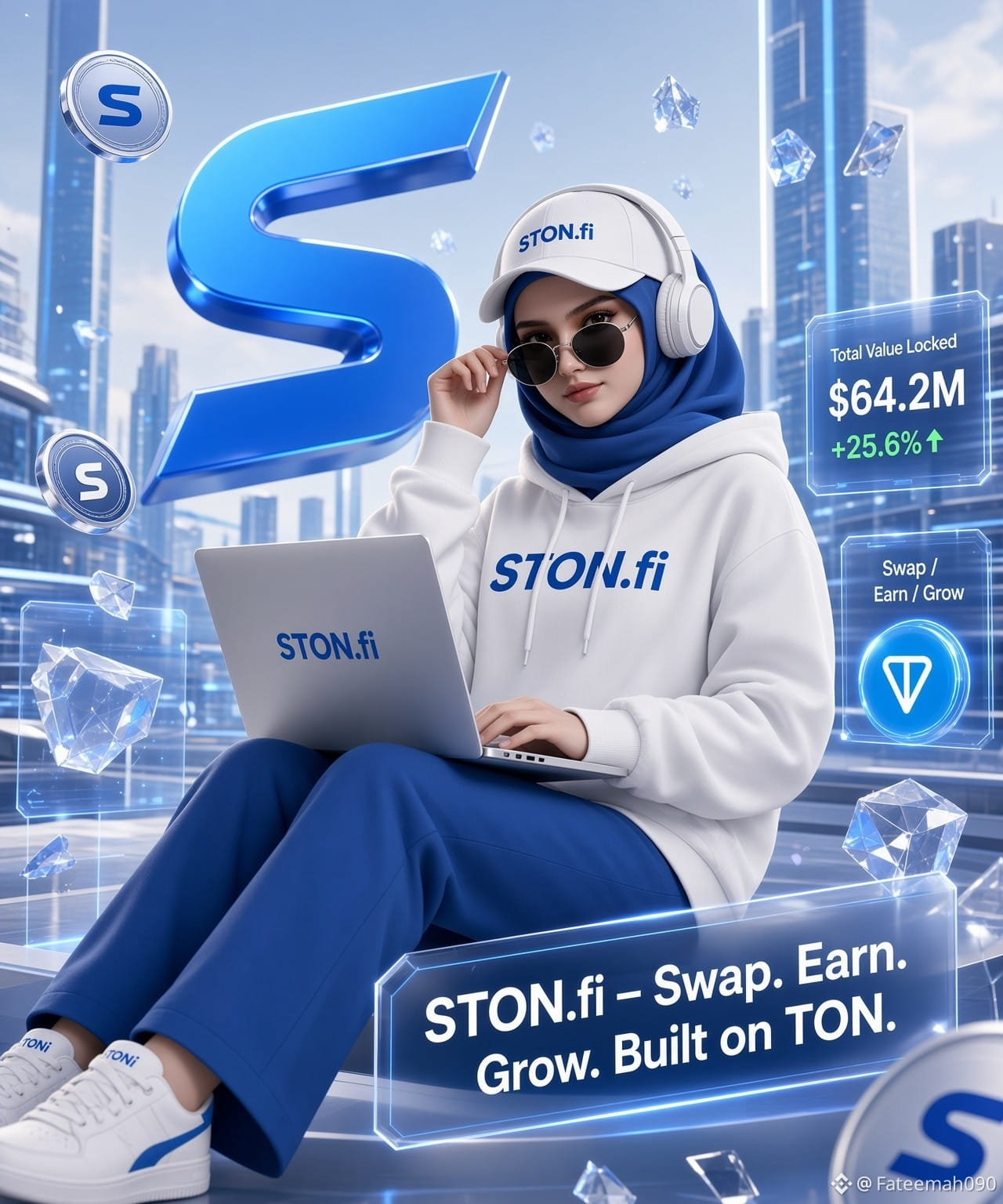
STON.fi Education Why TVL Matters in DeFi
What does TVL actually tell us about a DeFi protocol?
TVL stands for Total Value Locked the estimated value of assets deposited in a protocol's liquidity pools and other supported DeFi mechanisms.
For a DEX like STON.fi, TVL can help us understand the scale of liquidity available within its ecosystem.
Why does that matter?
🔹 More liquidity can help support larger trades.
🔹 Deeper pools can potentially reduce price impact.
🔹Active liquidity makes markets more usable for traders.
🔹 Growing TVL can indicate increasing capital participation.
But here's the important part:
TVL is not a guarantee of protocol quality or profitability.
TVL can change as token prices move and as users add or remove liquidity. It also doesn't tell you everything about trading volume, liquidity distribution, or risk.
So when researching STON.fi or any DeFi protocol don't look at TVL alone.
Look at the bigger picture:
TVL + volume + liquidity depth + users + protocol activity + risks.
The real lesson:
A large TVL number is interesting, but understanding where that liquidity is and how it is being used is much more meaningful.
In DeFi, one metric rarely tells the whole story.
#STONfi #STON #TON #DeFi #TVL #Liquidity #CryptoEducation
STON.fi Education Why TVL Matters in DeFi
What does TVL actually tell us about a DeFi protocol?
TVL stands for Total Value Locked the estimated value of assets deposited in a protocol's liquidity pools and other supported DeFi mechanisms.
For a DEX like STON.fi, TVL can help us understand the scale of liquidity available within its ecosystem.
Why does that matter?
🔹 More liquidity can help support larger trades.
🔹 Deeper pools can potentially reduce price impact.
🔹Active liquidity makes markets more usable for traders.
🔹 Growing TVL can indicate increasing capital participation.
But here's the important part:
TVL is not a guarantee of protocol quality or profitability.
TVL can change as token prices move and as users add or remove liquidity. It also doesn't tell you everything about trading volume, liquidity distribution, or risk.
So when researching STON.fi or any DeFi protocol don't look at TVL alone.
Look at the bigger picture:
TVL + volume + liquidity depth + users + protocol activity + risks.
The real lesson:
A large TVL number is interesting, but understanding where that liquidity is and how it is being used is much more meaningful.
In DeFi, one metric rarely tells the whole story.
#STONfi #STON #TON #DeFi #TVL #Liquidity #CryptoEducation
What does TVL actually tell us about a DeFi protocol?
TVL stands for Total Value Locked the estimated value of assets deposited in a protocol's liquidity pools and other supported DeFi mechanisms.
For a DEX like STON.fi, TVL can help us understand the scale of liquidity available within its ecosystem.
Why does that matter?
🔹 More liquidity can help support larger trades.
🔹 Deeper pools can potentially reduce price impact.
🔹Active liquidity makes markets more usable for traders.
🔹 Growing TVL can indicate increasing capital participation.
But here's the important part:
TVL is not a guarantee of protocol quality or profitability.
TVL can change as token prices move and as users add or remove liquidity. It also doesn't tell you everything about trading volume, liquidity distribution, or risk.
So when researching STON.fi or any DeFi protocol don't look at TVL alone.
Look at the bigger picture:
TVL + volume + liquidity depth + users + protocol activity + risks.
The real lesson:
A large TVL number is interesting, but understanding where that liquidity is and how it is being used is much more meaningful.
In DeFi, one metric rarely tells the whole story.
#STONfi #STON #TON #DeFi #TVL #Liquidity #CryptoEducation
2
83
·
--
ບົດຄວາມ
STON.fi Weekly Round-Up: STON.fi Weekly Round-Up: More Than Just Numbers
STON.fi's latest weekly update shows how quickly the $TON DeFi landscape is becoming more connected with Telegram integrations, cross-chain infrastructure, new wallet access, and growing DeFi activity all moving together.
Let's break down what this update actually means. 👇
1. STON.fi's latest milestone
According to the update, STON.fi ranks:
#4 among 100 $TON apps by monthly financially active wallets
#1 among TON DeFi protocols
This is an important metric because financially active wallets indicate users actually interacting with financial applications not simply holding assets.
For a DeFi protocol, continued user activity can be a useful signal of adoption and ecosystem participation.
2. WenLong brings Hyperliquid perps to Telegram
WenLong is bringing leveraged perpetual trading on Hyperliquid directly into Telegram.
The interesting part is what happens underneath:
TON → Arbitrum → Hyperliquid
According to STON.fi, Omniston handles the cross-chain route from $TON to Arbitrum behind the scenes.
This demonstrates an important use case for cross-chain infrastructure:
Users can interact with an application through a familiar environment while the infrastructure coordinates the underlying blockchain movement.
For builders, STON.fi is also making its SDK and Omniston documentation available for projects that want to build similar experiences.
3. Omniston powers swaps inside My Wallet
My Wallet has integrated Omniston into its swap aggregator.
Instead of users manually comparing multiple DEXs, Omniston can check rates across connected decentralized exchanges and help identify a competitive route.
The integration also makes tokenized assets such as:
AAPLx • NVDAx • TSLAx
available for swapping through the wallet.
This highlights an important direction for DeFi:
Infrastructure doesn't always need to be visible to the user.
The wallet provides the interface.
Omniston works underneath to coordinate liquidity and execution.
4.X Layer joins the cross-chain ecosystem
STON.fi also added X Layer to its supported cross-chain ecosystem.
Users can now access supported USDC and USDT0 on X Layer through cross-chain swaps involving TON and other supported networks.
Every additional network adds potential routes and liquidity connections.
The bigger vision is to reduce the fragmentation that exists between blockchains.
Instead of users thinking:
> “Which chain do I need to use?”
The experience moves closer to:
> “What do I want to swap?”
6. Gram Wallet and the future of Telegram DeFi
STON.fi also joined WenLong, Gram Store, and DTrade to discuss the potential impact of Gram Wallet coming to Telegram.
The discussion focused on how trading, token launches, and DeFi are already entering Telegram-native experiences and what new opportunities could emerge for builders.
This matters because Telegram can serve as a major distribution layer for TON.
If wallet access becomes easier, builders can potentially create more applications that users interact with without leaving the environment they're already familiar with.
6. What do the farming numbers tell us?
The update also shared APRs from active farms:
🔸 USDT/JETTON → 50% APR
🔸 GRAM/JETTON → 27% APR
🔸STON/USDT → 14% APR
🔸 STON/USDT Boost Farm → 28% APR
But here's an important reminder:
APR is not guaranteed profit.
APR can change, and liquidity providers remain exposed to risks such as token price volatility and impermanent loss.
So these figures should be treated as current farming rates, not promises of future returns.
7.The numbers behind the week
STON.fi reported:
🔸 $20.9M weekly swap volume
🔸 $26.9M TVL
🔸 Approximately $38,000 distributed to liquidity providers that week
These numbers tell different parts of the story.
Swap volume shows trading activity.
TVL (Total Value Locked) indicates the amount of assets deposited in the protocol's liquidity ecosystem.
And the amount received by liquidity providers shows that users supplying liquidity can participate in the economic activity generated by the protocol.
But none of these metrics alone tells the complete story.
The bigger picture
What stands out from this weekly update isn't one individual announcement.
It's how the pieces are starting to connect:
TON provides the ecosystem.
Telegram provides a huge user environment.
Wallets provide access.
Builders create applications.
Liquidity supports markets.
Omniston connects routes and coordinates cross-chain execution.
STON.fi provides DeFi infrastructure around these experiences.
That is the bigger story behind the numbers.
DeFi isn't just about building another place to swap tokens.
It's about creating infrastructure that allows users, liquidity, wallets, applications, and different blockchains to interact more seamlessly.
The more connected the ecosystem becomes, the less users should have to think about the complexity underneath.
That's the direction worth watching.
#STONfi #STON #TON #Omniston #DeFi #Telegram #Web3 #CrossChain #Liquidity #CryptoEducation #TONCommunity
STON.fi Weekly Round-Up:
STON.fi Weekly Round-Up: More Than Just Numbers
STON.fi's latest weekly update shows how quickly the $TON DeFi landscape is becoming more connected with Telegram integrations, cross-chain infrastructure, new wallet access, and growing DeFi activity all moving together.
Let's break down what this update actually means. 👇
1. STON.fi's latest milestone
According to the update, STON.fi ranks:
#4 among 100 $TON apps by monthly financially active wallets
#1 among TON DeFi protocols
This is an important metric because financially active wallets indicate users actually interacting with financial applications not simply holding assets.
For a DeFi protocol, continued user activity can be a useful signal of adoption and ecosystem participation.
2. WenLong brings Hyperliquid perps to Telegram
WenLong is bringing leveraged perpetual trading on Hyperliquid directly into Telegram.
The interesting part is what happens underneath:
TON → Arbitrum → Hyperliquid
According to STON.fi, Omniston handles the cross-chain route from $TON to Arbitrum behind the scenes.
This demonstrates an important use case for cross-chain infrastructure:
Users can interact with an application through a familiar environment while the infrastructure coordinates the underlying blockchain movement.
For builders, STON.fi is also making its SDK and Omniston documentation available for projects that want to build similar experiences.
3. Omniston powers swaps inside My Wallet
My Wallet has integrated Omniston into its swap aggregator.
Instead of users manually comparing multiple DEXs, Omniston can check rates across connected decentralized exchanges and help identify a competitive route.
The integration also makes tokenized assets such as:
AAPLx • NVDAx • TSLAx
available for swapping through the wallet.
This highlights an important direction for DeFi:
Infrastructure doesn't always need to be visible to the user.
The wallet provides the interface.
Omniston works underneath to coordinate liquidity and execution.
4.X Layer joins the cross-chain ecosystem
STON.fi also added X Layer to its supported cross-chain ecosystem.
Users can now access supported USDC and USDT0 on X Layer through cross-chain swaps involving TON and other supported networks.
Every additional network adds potential routes and liquidity connections.
The bigger vision is to reduce the fragmentation that exists between blockchains.
Instead of users thinking:
> “Which chain do I need to use?”
The experience moves closer to:
> “What do I want to swap?”
6. Gram Wallet and the future of Telegram DeFi
STON.fi also joined WenLong, Gram Store, and DTrade to discuss the potential impact of Gram Wallet coming to Telegram.
The discussion focused on how trading, token launches, and DeFi are already entering Telegram-native experiences and what new opportunities could emerge for builders.
This matters because Telegram can serve as a major distribution layer for TON.
If wallet access becomes easier, builders can potentially create more applications that users interact with without leaving the environment they're already familiar with.
6. What do the farming numbers tell us?
The update also shared APRs from active farms:
🔸 USDT/JETTON → 50% APR
🔸 GRAM/JETTON → 27% APR
🔸STON/USDT → 14% APR
🔸 STON/USDT Boost Farm → 28% APR
But here's an important reminder:
APR is not guaranteed profit.
APR can change, and liquidity providers remain exposed to risks such as token price volatility and impermanent loss.
So these figures should be treated as current farming rates, not promises of future returns.
7.The numbers behind the week
STON.fi reported:
🔸 $20.9M weekly swap volume
🔸 $26.9M TVL
🔸 Approximately $38,000 distributed to liquidity providers that week
These numbers tell different parts of the story.
Swap volume shows trading activity.
TVL (Total Value Locked) indicates the amount of assets deposited in the protocol's liquidity ecosystem.
And the amount received by liquidity providers shows that users supplying liquidity can participate in the economic activity generated by the protocol.
But none of these metrics alone tells the complete story.
The bigger picture
What stands out from this weekly update isn't one individual announcement.
It's how the pieces are starting to connect:
TON provides the ecosystem.
Telegram provides a huge user environment.
Wallets provide access.
Builders create applications.
Liquidity supports markets.
Omniston connects routes and coordinates cross-chain execution.
STON.fi provides DeFi infrastructure around these experiences.
That is the bigger story behind the numbers.
DeFi isn't just about building another place to swap tokens.
It's about creating infrastructure that allows users, liquidity, wallets, applications, and different blockchains to interact more seamlessly.
The more connected the ecosystem becomes, the less users should have to think about the complexity underneath.
That's the direction worth watching.
#STONfi #STON #TON #Omniston #DeFi #Telegram #Web3 #CrossChain #Liquidity #CryptoEducation #TONCommunity
STON.fi's latest weekly update shows how quickly the $TON DeFi landscape is becoming more connected with Telegram integrations, cross-chain infrastructure, new wallet access, and growing DeFi activity all moving together.
Let's break down what this update actually means. 👇
1. STON.fi's latest milestone
According to the update, STON.fi ranks:
#4 among 100 $TON apps by monthly financially active wallets
#1 among TON DeFi protocols
This is an important metric because financially active wallets indicate users actually interacting with financial applications not simply holding assets.
For a DeFi protocol, continued user activity can be a useful signal of adoption and ecosystem participation.
2. WenLong brings Hyperliquid perps to Telegram
WenLong is bringing leveraged perpetual trading on Hyperliquid directly into Telegram.
The interesting part is what happens underneath:
TON → Arbitrum → Hyperliquid
According to STON.fi, Omniston handles the cross-chain route from $TON to Arbitrum behind the scenes.
This demonstrates an important use case for cross-chain infrastructure:
Users can interact with an application through a familiar environment while the infrastructure coordinates the underlying blockchain movement.
For builders, STON.fi is also making its SDK and Omniston documentation available for projects that want to build similar experiences.
3. Omniston powers swaps inside My Wallet
My Wallet has integrated Omniston into its swap aggregator.
Instead of users manually comparing multiple DEXs, Omniston can check rates across connected decentralized exchanges and help identify a competitive route.
The integration also makes tokenized assets such as:
AAPLx • NVDAx • TSLAx
available for swapping through the wallet.
This highlights an important direction for DeFi:
Infrastructure doesn't always need to be visible to the user.
The wallet provides the interface.
Omniston works underneath to coordinate liquidity and execution.
4.X Layer joins the cross-chain ecosystem
STON.fi also added X Layer to its supported cross-chain ecosystem.
Users can now access supported USDC and USDT0 on X Layer through cross-chain swaps involving TON and other supported networks.
Every additional network adds potential routes and liquidity connections.
The bigger vision is to reduce the fragmentation that exists between blockchains.
Instead of users thinking:
> “Which chain do I need to use?”
The experience moves closer to:
> “What do I want to swap?”
6. Gram Wallet and the future of Telegram DeFi
STON.fi also joined WenLong, Gram Store, and DTrade to discuss the potential impact of Gram Wallet coming to Telegram.
The discussion focused on how trading, token launches, and DeFi are already entering Telegram-native experiences and what new opportunities could emerge for builders.
This matters because Telegram can serve as a major distribution layer for TON.
If wallet access becomes easier, builders can potentially create more applications that users interact with without leaving the environment they're already familiar with.
6. What do the farming numbers tell us?
The update also shared APRs from active farms:
🔸 USDT/JETTON → 50% APR
🔸 GRAM/JETTON → 27% APR
🔸STON/USDT → 14% APR
🔸 STON/USDT Boost Farm → 28% APR
But here's an important reminder:
APR is not guaranteed profit.
APR can change, and liquidity providers remain exposed to risks such as token price volatility and impermanent loss.
So these figures should be treated as current farming rates, not promises of future returns.
7.The numbers behind the week
STON.fi reported:
🔸 $20.9M weekly swap volume
🔸 $26.9M TVL
🔸 Approximately $38,000 distributed to liquidity providers that week
These numbers tell different parts of the story.
Swap volume shows trading activity.
TVL (Total Value Locked) indicates the amount of assets deposited in the protocol's liquidity ecosystem.
And the amount received by liquidity providers shows that users supplying liquidity can participate in the economic activity generated by the protocol.
But none of these metrics alone tells the complete story.
The bigger picture
What stands out from this weekly update isn't one individual announcement.
It's how the pieces are starting to connect:
TON provides the ecosystem.
Telegram provides a huge user environment.
Wallets provide access.
Builders create applications.
Liquidity supports markets.
Omniston connects routes and coordinates cross-chain execution.
STON.fi provides DeFi infrastructure around these experiences.
That is the bigger story behind the numbers.
DeFi isn't just about building another place to swap tokens.
It's about creating infrastructure that allows users, liquidity, wallets, applications, and different blockchains to interact more seamlessly.
The more connected the ecosystem becomes, the less users should have to think about the complexity underneath.
That's the direction worth watching.
#STONfi #STON #TON #Omniston #DeFi #Telegram #Web3 #CrossChain #Liquidity #CryptoEducation #TONCommunity
2
77
·
--
ສັນຍານກະທິງ
What happens when DeFi liquidity becomes fragmented across many chains?
Imagine you want to swap $USDT from one network into $USDC on another.
The assets may exist.
The liquidity may exist.
But finding the right route can become complicated.
This is one of the problems cross-chain aggregation is trying to solve.
With Omniston, STON.fi is building infrastructure that can coordinate cross-chain swap routes from quote to settlement across supported networks.
That means the user can focus on the actual goal:
“I want to swap this asset for that asset.”
Instead of manually thinking about:
🔹 Which chain has the liquidity?
🔹 Which DEX should I use?
🔹 Which route is better?
🔹 How do I move my assets between networks?
The infrastructure handles more of that complexity underneath.
And this becomes increasingly important as TON connects with more ecosystems.
The future of cross-chain DeFi isn't necessarily about making users better at navigating blockchains.
It's about building infrastructure that makes blockchain fragmentation less noticeable.
The best cross-chain experience may eventually be the one where users don't even need to think about which chain they're using.
More connected liquidity. Less friction. Better DeFi experiences.
#STONfi #STON #TON #Omniston #DeFi #CrossChain #Liquidity #Web3
What happens when DeFi liquidity becomes fragmented across many chains?
Imagine you want to swap $USDT from one network into $USDC on another.
The assets may exist.
The liquidity may exist.
But finding the right route can become complicated.
This is one of the problems cross-chain aggregation is trying to solve.
With Omniston, STON.fi is building infrastructure that can coordinate cross-chain swap routes from quote to settlement across supported networks.
That means the user can focus on the actual goal:
“I want to swap this asset for that asset.”
Instead of manually thinking about:
🔹 Which chain has the liquidity?
🔹 Which DEX should I use?
🔹 Which route is better?
🔹 How do I move my assets between networks?
The infrastructure handles more of that complexity underneath.
And this becomes increasingly important as TON connects with more ecosystems.
The future of cross-chain DeFi isn't necessarily about making users better at navigating blockchains.
It's about building infrastructure that makes blockchain fragmentation less noticeable.
The best cross-chain experience may eventually be the one where users don't even need to think about which chain they're using.
More connected liquidity. Less friction. Better DeFi experiences.
#STONfi #STON #TON #Omniston #DeFi #CrossChain #Liquidity #Web3
Imagine you want to swap $USDT from one network into $USDC on another.
The assets may exist.
The liquidity may exist.
But finding the right route can become complicated.
This is one of the problems cross-chain aggregation is trying to solve.
With Omniston, STON.fi is building infrastructure that can coordinate cross-chain swap routes from quote to settlement across supported networks.
That means the user can focus on the actual goal:
“I want to swap this asset for that asset.”
Instead of manually thinking about:
🔹 Which chain has the liquidity?
🔹 Which DEX should I use?
🔹 Which route is better?
🔹 How do I move my assets between networks?
The infrastructure handles more of that complexity underneath.
And this becomes increasingly important as TON connects with more ecosystems.
The future of cross-chain DeFi isn't necessarily about making users better at navigating blockchains.
It's about building infrastructure that makes blockchain fragmentation less noticeable.
The best cross-chain experience may eventually be the one where users don't even need to think about which chain they're using.
More connected liquidity. Less friction. Better DeFi experiences.
#STONfi #STON #TON #Omniston #DeFi #CrossChain #Liquidity #Web3
1
84
·
--
ບົດຄວາມ
Omniston Is Moving DeFi Closer to the Wallet Omniston Is Moving DeFi Closer to the Wallet
STON.fi just shared another important infrastructure integration: My Wallet has integrated Omniston directly into its swap aggregator.
But what does this actually mean for users and builders?
Let's break it down 👇
1️⃣ What is My Wallet?
My Wallet is a non-custodial Web3 wallet supporting $TON and other networks, including Ethereum and Solana.
Non-custodial means users maintain control of their assets and wallet keys rather than handing custody to a centralized exchange.
2️⃣ What does Omniston do?
Instead of making users manually check different DEXs to find a suitable route, Omniston works underneath the interface.
It can check available rates across multiple decentralized exchanges and route a swap toward the option it determines is best.
So the user doesn't have to think:
> “Which DEX has the best route right now?”
The infrastructure handles that process behind the scenes.
3️⃣ Why does aggregation matter?
Liquidity in DeFi is fragmented.
Different DEXs can have different liquidity levels and prices at the same moment. If users only access one source, they may miss a potentially better execution elsewhere.
Aggregation helps bring these liquidity sources together.
More connected liquidity → more routing possibilities → potentially better swap execution.
Of course, users should still check the final quote, fees, slippage, and transaction details before confirming.
4️⃣ What about xStocks?
This integration also gives My Wallet users access to swaps involving tokenized assets on $TON, including assets such as:
AAPLx, NVDAx, AMZNx, COINx, HOODx and TSLAx.
This is interesting because it shows how DeFi infrastructure can support access to more than traditional crypto tokens.
Users should still research what each token represents, how it works, its issuer, liquidity, and associated risks before interacting with it.
5️⃣ Why is this important for TON?
This is bigger than one wallet integration.
$TON users interact with crypto through many different wallets and applications. For DeFi to scale, users need reliable infrastructure that can work across those different experiences.
Omniston can serve as an infrastructure layer connecting swap routes and liquidity while the wallet provides the user-facing experience.
The user sees a swap interface.
The infrastructure handles the complexity underneath.
6️⃣ And builders can use it too
The update isn't only for traders.
STON.fi is also pointing builders toward its SDK and Omniston documentation for wallets, launchpads and $TON applications that need swap and liquidity infrastructure.
That's an important part of the story:
STON.fi isn't only building a place where users swap. It's also building infrastructure that other applications can integrate.
The bigger lesson:
The future of DeFi won't necessarily be about users visiting one specific DEX.
It can be about liquidity and execution becoming available wherever users already are inside wallets, applications and other Web3 products.
And when infrastructure works well, users don't need to see all the complexity.
They simply get a better, more connected way to access DeFi.
DYOR: My Wallet is a third-party application integrating STON.fi infrastructure. This integration should not be interpreted as STON.fi endorsing or recommending the third-party app. Always research independently before interacting with any Web3 application.
#STONfi #STON #TON #Omniston #DeFi #Web3 #CryptoEducation #TONCommunity #xStocks
Omniston Is Moving DeFi Closer to the Wallet
Omniston Is Moving DeFi Closer to the Wallet
STON.fi just shared another important infrastructure integration: My Wallet has integrated Omniston directly into its swap aggregator.
But what does this actually mean for users and builders?
Let's break it down 👇
1️⃣ What is My Wallet?
My Wallet is a non-custodial Web3 wallet supporting $TON and other networks, including Ethereum and Solana.
Non-custodial means users maintain control of their assets and wallet keys rather than handing custody to a centralized exchange.
2️⃣ What does Omniston do?
Instead of making users manually check different DEXs to find a suitable route, Omniston works underneath the interface.
It can check available rates across multiple decentralized exchanges and route a swap toward the option it determines is best.
So the user doesn't have to think:
> “Which DEX has the best route right now?”
The infrastructure handles that process behind the scenes.
3️⃣ Why does aggregation matter?
Liquidity in DeFi is fragmented.
Different DEXs can have different liquidity levels and prices at the same moment. If users only access one source, they may miss a potentially better execution elsewhere.
Aggregation helps bring these liquidity sources together.
More connected liquidity → more routing possibilities → potentially better swap execution.
Of course, users should still check the final quote, fees, slippage, and transaction details before confirming.
4️⃣ What about xStocks?
This integration also gives My Wallet users access to swaps involving tokenized assets on $TON, including assets such as:
AAPLx, NVDAx, AMZNx, COINx, HOODx and TSLAx.
This is interesting because it shows how DeFi infrastructure can support access to more than traditional crypto tokens.
Users should still research what each token represents, how it works, its issuer, liquidity, and associated risks before interacting with it.
5️⃣ Why is this important for TON?
This is bigger than one wallet integration.
$TON users interact with crypto through many different wallets and applications. For DeFi to scale, users need reliable infrastructure that can work across those different experiences.
Omniston can serve as an infrastructure layer connecting swap routes and liquidity while the wallet provides the user-facing experience.
The user sees a swap interface.
The infrastructure handles the complexity underneath.
6️⃣ And builders can use it too
The update isn't only for traders.
STON.fi is also pointing builders toward its SDK and Omniston documentation for wallets, launchpads and $TON applications that need swap and liquidity infrastructure.
That's an important part of the story:
STON.fi isn't only building a place where users swap. It's also building infrastructure that other applications can integrate.
The bigger lesson:
The future of DeFi won't necessarily be about users visiting one specific DEX.
It can be about liquidity and execution becoming available wherever users already are inside wallets, applications and other Web3 products.
And when infrastructure works well, users don't need to see all the complexity.
They simply get a better, more connected way to access DeFi.
DYOR: My Wallet is a third-party application integrating STON.fi infrastructure. This integration should not be interpreted as STON.fi endorsing or recommending the third-party app. Always research independently before interacting with any Web3 application.
#STONfi #STON #TON #Omniston #DeFi #Web3 #CryptoEducation #TONCommunity #xStocks
STON.fi just shared another important infrastructure integration: My Wallet has integrated Omniston directly into its swap aggregator.
But what does this actually mean for users and builders?
Let's break it down 👇
1️⃣ What is My Wallet?
My Wallet is a non-custodial Web3 wallet supporting $TON and other networks, including Ethereum and Solana.
Non-custodial means users maintain control of their assets and wallet keys rather than handing custody to a centralized exchange.
2️⃣ What does Omniston do?
Instead of making users manually check different DEXs to find a suitable route, Omniston works underneath the interface.
It can check available rates across multiple decentralized exchanges and route a swap toward the option it determines is best.
So the user doesn't have to think:
> “Which DEX has the best route right now?”
The infrastructure handles that process behind the scenes.
3️⃣ Why does aggregation matter?
Liquidity in DeFi is fragmented.
Different DEXs can have different liquidity levels and prices at the same moment. If users only access one source, they may miss a potentially better execution elsewhere.
Aggregation helps bring these liquidity sources together.
More connected liquidity → more routing possibilities → potentially better swap execution.
Of course, users should still check the final quote, fees, slippage, and transaction details before confirming.
4️⃣ What about xStocks?
This integration also gives My Wallet users access to swaps involving tokenized assets on $TON, including assets such as:
AAPLx, NVDAx, AMZNx, COINx, HOODx and TSLAx.
This is interesting because it shows how DeFi infrastructure can support access to more than traditional crypto tokens.
Users should still research what each token represents, how it works, its issuer, liquidity, and associated risks before interacting with it.
5️⃣ Why is this important for TON?
This is bigger than one wallet integration.
$TON users interact with crypto through many different wallets and applications. For DeFi to scale, users need reliable infrastructure that can work across those different experiences.
Omniston can serve as an infrastructure layer connecting swap routes and liquidity while the wallet provides the user-facing experience.
The user sees a swap interface.
The infrastructure handles the complexity underneath.
6️⃣ And builders can use it too
The update isn't only for traders.
STON.fi is also pointing builders toward its SDK and Omniston documentation for wallets, launchpads and $TON applications that need swap and liquidity infrastructure.
That's an important part of the story:
STON.fi isn't only building a place where users swap. It's also building infrastructure that other applications can integrate.
The bigger lesson:
The future of DeFi won't necessarily be about users visiting one specific DEX.
It can be about liquidity and execution becoming available wherever users already are inside wallets, applications and other Web3 products.
And when infrastructure works well, users don't need to see all the complexity.
They simply get a better, more connected way to access DeFi.
DYOR: My Wallet is a third-party application integrating STON.fi infrastructure. This integration should not be interpreted as STON.fi endorsing or recommending the third-party app. Always research independently before interacting with any Web3 application.
#STONfi #STON #TON #Omniston #DeFi #Web3 #CryptoEducation #TONCommunity #xStocks
1
89
·
--
ສັນຍານກະທິງ
One of the hardest problems in regulated finance isn't only moving assets on-chain.
It's knowing who is allowed to access them without exposing unnecessary personal information.
This is where Citadel becomes an interesting part of the @Dusk_Foundation architecture.
Citadel is designed as an identity and access layer that supports selective disclosure. Instead of requiring a user to reveal every piece of personal information, the system can allow specific attributes to be proven when they are relevant.
Think about a regulated investment:
An application may need to know whether someone meets a certain eligibility requirement. But does the application really need access to the person's entire identity profile?
Not necessarily.
With selective disclosure, the goal is to reveal what needs to be verified without revealing more than necessary.
This creates an important balance between two requirements that can sometimes appear to conflict:
• Protect sensitive information
• Prove the information required for compliance
For regulated digital assets, identity and access aren't side features. They can be part of the financial workflow itself.
That's why Citadel is an important piece of Dusk's broader infrastructure: it connects identity, privacy and controlled access without treating “compliance” as a reason to expose everything.
The future of onchain finance may not be about making everything public.
It may be about making the right information verifiable to the right people at the right time.
#dusk $DUSK
One of the hardest problems in regulated finance isn't only moving assets on-chain.
It's knowing who is allowed to access them without exposing unnecessary personal information.
This is where Citadel becomes an interesting part of the @Dusk architecture.
Citadel is designed as an identity and access layer that supports selective disclosure. Instead of requiring a user to reveal every piece of personal information, the system can allow specific attributes to be proven when they are relevant.
Think about a regulated investment:
An application may need to know whether someone meets a certain eligibility requirement. But does the application really need access to the person's entire identity profile?
Not necessarily.
With selective disclosure, the goal is to reveal what needs to be verified without revealing more than necessary.
This creates an important balance between two requirements that can sometimes appear to conflict:
• Protect sensitive information
• Prove the information required for compliance
For regulated digital assets, identity and access aren't side features. They can be part of the financial workflow itself.
That's why Citadel is an important piece of Dusk's broader infrastructure: it connects identity, privacy and controlled access without treating “compliance” as a reason to expose everything.
The future of onchain finance may not be about making everything public.
It may be about making the right information verifiable to the right people at the right time.
#dusk $DUSK
It's knowing who is allowed to access them without exposing unnecessary personal information.
This is where Citadel becomes an interesting part of the @Dusk architecture.
Citadel is designed as an identity and access layer that supports selective disclosure. Instead of requiring a user to reveal every piece of personal information, the system can allow specific attributes to be proven when they are relevant.
Think about a regulated investment:
An application may need to know whether someone meets a certain eligibility requirement. But does the application really need access to the person's entire identity profile?
Not necessarily.
With selective disclosure, the goal is to reveal what needs to be verified without revealing more than necessary.
This creates an important balance between two requirements that can sometimes appear to conflict:
• Protect sensitive information
• Prove the information required for compliance
For regulated digital assets, identity and access aren't side features. They can be part of the financial workflow itself.
That's why Citadel is an important piece of Dusk's broader infrastructure: it connects identity, privacy and controlled access without treating “compliance” as a reason to expose everything.
The future of onchain finance may not be about making everything public.
It may be about making the right information verifiable to the right people at the right time.
#dusk $DUSK

1
1
77
·
--
ສັນຍານກະທິງ
What makes a DEX useful beyond trading?
A decentralized exchange isn't simply a place where people swap tokens.
A strong DEX can become infrastructure for an entire ecosystem.
Think about everything connected to a single swap:
🔹 Liquidity gives traders access to markets.
🔹 Smart contracts automate execution.
🔹 Routing helps find suitable liquidity.
🔹 Self-custody lets users remain in control of their assets.
🔹 Cross-chain infrastructure can connect liquidity across networks.
This is where STON.fi becomes interesting within $TON.
Its role isn't only about providing a place to trade. The broader goal is to build infrastructure that makes decentralized liquidity more accessible and connected.
The bigger lesson:
The most important DeFi protocols aren't necessarily the ones with the most features.
They're the ones that make the ecosystem easier to access, easier to build on, and more connected.
And as $TON continues expanding, that infrastructure layer could become increasingly important.
DeFi is not just about swapping tokens. It's about building an open financial system around them.
#STONfi #STON #TON #DeFi #Omniston #Web3 #CryptoEducation
What makes a DEX useful beyond trading?
A decentralized exchange isn't simply a place where people swap tokens.
A strong DEX can become infrastructure for an entire ecosystem.
Think about everything connected to a single swap:
🔹 Liquidity gives traders access to markets.
🔹 Smart contracts automate execution.
🔹 Routing helps find suitable liquidity.
🔹 Self-custody lets users remain in control of their assets.
🔹 Cross-chain infrastructure can connect liquidity across networks.
This is where STON.fi becomes interesting within $TON.
Its role isn't only about providing a place to trade. The broader goal is to build infrastructure that makes decentralized liquidity more accessible and connected.
The bigger lesson:
The most important DeFi protocols aren't necessarily the ones with the most features.
They're the ones that make the ecosystem easier to access, easier to build on, and more connected.
And as $TON continues expanding, that infrastructure layer could become increasingly important.
DeFi is not just about swapping tokens. It's about building an open financial system around them.
#STONfi #STON #TON #DeFi #Omniston #Web3 #CryptoEducation
A decentralized exchange isn't simply a place where people swap tokens.
A strong DEX can become infrastructure for an entire ecosystem.
Think about everything connected to a single swap:
🔹 Liquidity gives traders access to markets.
🔹 Smart contracts automate execution.
🔹 Routing helps find suitable liquidity.
🔹 Self-custody lets users remain in control of their assets.
🔹 Cross-chain infrastructure can connect liquidity across networks.
This is where STON.fi becomes interesting within $TON.
Its role isn't only about providing a place to trade. The broader goal is to build infrastructure that makes decentralized liquidity more accessible and connected.
The bigger lesson:
The most important DeFi protocols aren't necessarily the ones with the most features.
They're the ones that make the ecosystem easier to access, easier to build on, and more connected.
And as $TON continues expanding, that infrastructure layer could become increasingly important.
DeFi is not just about swapping tokens. It's about building an open financial system around them.
#STONfi #STON #TON #DeFi #Omniston #Web3 #CryptoEducation
2
69
·
--
ສັນຍານກະທິງ
One blockchain doesn't have to mean one way of building.
That's an interesting part of @Dusk_Foundation 's architecture.
Dusk provides two different execution environments: DuskVM and DuskEVM.
DuskVM is the native execution environment, designed for applications that want direct access to Dusk's capabilities, including its privacy and zero-knowledge features.
DuskEVM takes a different approach. It gives developers an EVM-compatible environment, making it possible to use familiar Ethereum development tools and languages while building within the Dusk ecosystem.
Why is this important?
Because developers have different needs.
Some applications may benefit from Dusk's native capabilities and deeper integration with the protocol. Others may want the familiarity of the Ethereum development environment and existing tooling.
Instead of forcing every developer into one development model, Dusk provides different paths into the same broader infrastructure.
And the bigger picture is important: these execution environments sit within a blockchain designed for regulated digital assets and finance, where privacy, controlled access and settlement can matter as much as smart-contract functionality.
So Dusk isn't only asking:
“What can you build?”
It's also asking:
“How can developers build it in the environment that best fits their application?”
That flexibility could become important as more financial applications move on-chain.
#dusk $DUSK
One blockchain doesn't have to mean one way of building.
That's an interesting part of @Dusk 's architecture.
Dusk provides two different execution environments: DuskVM and DuskEVM.
DuskVM is the native execution environment, designed for applications that want direct access to Dusk's capabilities, including its privacy and zero-knowledge features.
DuskEVM takes a different approach. It gives developers an EVM-compatible environment, making it possible to use familiar Ethereum development tools and languages while building within the Dusk ecosystem.
Why is this important?
Because developers have different needs.
Some applications may benefit from Dusk's native capabilities and deeper integration with the protocol. Others may want the familiarity of the Ethereum development environment and existing tooling.
Instead of forcing every developer into one development model, Dusk provides different paths into the same broader infrastructure.
And the bigger picture is important: these execution environments sit within a blockchain designed for regulated digital assets and finance, where privacy, controlled access and settlement can matter as much as smart-contract functionality.
So Dusk isn't only asking:
“What can you build?”
It's also asking:
“How can developers build it in the environment that best fits their application?”
That flexibility could become important as more financial applications move on-chain.
#dusk $DUSK
That's an interesting part of @Dusk 's architecture.
Dusk provides two different execution environments: DuskVM and DuskEVM.
DuskVM is the native execution environment, designed for applications that want direct access to Dusk's capabilities, including its privacy and zero-knowledge features.
DuskEVM takes a different approach. It gives developers an EVM-compatible environment, making it possible to use familiar Ethereum development tools and languages while building within the Dusk ecosystem.
Why is this important?
Because developers have different needs.
Some applications may benefit from Dusk's native capabilities and deeper integration with the protocol. Others may want the familiarity of the Ethereum development environment and existing tooling.
Instead of forcing every developer into one development model, Dusk provides different paths into the same broader infrastructure.
And the bigger picture is important: these execution environments sit within a blockchain designed for regulated digital assets and finance, where privacy, controlled access and settlement can matter as much as smart-contract functionality.
So Dusk isn't only asking:
“What can you build?”
It's also asking:
“How can developers build it in the environment that best fits their application?”
That flexibility could become important as more financial applications move on-chain.
#dusk $DUSK

2
95
·
--
ສັນຍານກະທິງ
Tokenization is often described as simply putting real-world assets on a blockchain.
But creating a token is only the beginning.
A real financial market also needs investor onboarding, eligibility checks, controlled transfers, payment coordination, disclosure and settlement. Without these pieces, a tokenized asset can exist on-chain without having the complete infrastructure required for a regulated market.
This is where @Dusk_Foundation becomes interesting.
Dusk Trade is being built as an application layer for tokenized financial assets, focusing on real market workflows such as investor onboarding, wallet binding, controlled transfers and compliant settlement.
The bigger idea is that tokenization shouldn't stop at creating digital representations of assets.
The entire lifecycle of an asset from who can access it, to how it can be transferred, to how transactions settle needs to work together.
Dusk is building toward that model by combining regulated asset infrastructure with privacy, selective disclosure and deterministic settlement.
That could make tokenization much more than “putting assets on-chain.”
It becomes about building an actual financial market on-chain.
#dusk $DUSK
Tokenization is often described as simply putting real-world assets on a blockchain.
But creating a token is only the beginning.
A real financial market also needs investor onboarding, eligibility checks, controlled transfers, payment coordination, disclosure and settlement. Without these pieces, a tokenized asset can exist on-chain without having the complete infrastructure required for a regulated market.
This is where @Dusk becomes interesting.
Dusk Trade is being built as an application layer for tokenized financial assets, focusing on real market workflows such as investor onboarding, wallet binding, controlled transfers and compliant settlement.
The bigger idea is that tokenization shouldn't stop at creating digital representations of assets.
The entire lifecycle of an asset from who can access it, to how it can be transferred, to how transactions settle needs to work together.
Dusk is building toward that model by combining regulated asset infrastructure with privacy, selective disclosure and deterministic settlement.
That could make tokenization much more than “putting assets on-chain.”
It becomes about building an actual financial market on-chain.
#dusk $DUSK
But creating a token is only the beginning.
A real financial market also needs investor onboarding, eligibility checks, controlled transfers, payment coordination, disclosure and settlement. Without these pieces, a tokenized asset can exist on-chain without having the complete infrastructure required for a regulated market.
This is where @Dusk becomes interesting.
Dusk Trade is being built as an application layer for tokenized financial assets, focusing on real market workflows such as investor onboarding, wallet binding, controlled transfers and compliant settlement.
The bigger idea is that tokenization shouldn't stop at creating digital representations of assets.
The entire lifecycle of an asset from who can access it, to how it can be transferred, to how transactions settle needs to work together.
Dusk is building toward that model by combining regulated asset infrastructure with privacy, selective disclosure and deterministic settlement.
That could make tokenization much more than “putting assets on-chain.”
It becomes about building an actual financial market on-chain.
#dusk $DUSK

1
62
·
--
ສັນຍານກະທິງ
Who Gets to Shape a DeFi Protocol?
One of the interesting ideas behind decentralized finance is that users can become more than just customers.
Through DAO governance, eligible community members can participate in decisions that influence how a protocol develops.
For the STON.fi ecosystem, $STON staking can provide access to governance participation through ARKENSTON, connecting token holders with the STONfi DAO.
This creates an important shift:
Using a protocol is one thing. Helping shape its future is another.
But governance only works when participants understand the proposals they are voting on and think beyond short-term interests.
The bigger lesson:
Decentralization isn't simply removing a central authority.
It's also about creating mechanisms that allow a community to participate, coordinate, and take responsibility for the direction of an ecosystem.
The technology may enable governance but informed participation is what gives it meaning.
#STONfi #STON #TON #DAO #DeFi #Governance #Web3 #CryptoEducation
Who Gets to Shape a DeFi Protocol?
One of the interesting ideas behind decentralized finance is that users can become more than just customers.
Through DAO governance, eligible community members can participate in decisions that influence how a protocol develops.
For the STON.fi ecosystem, $STON staking can provide access to governance participation through ARKENSTON, connecting token holders with the STONfi DAO.
This creates an important shift:
Using a protocol is one thing. Helping shape its future is another.
But governance only works when participants understand the proposals they are voting on and think beyond short-term interests.
The bigger lesson:
Decentralization isn't simply removing a central authority.
It's also about creating mechanisms that allow a community to participate, coordinate, and take responsibility for the direction of an ecosystem.
The technology may enable governance but informed participation is what gives it meaning.
#STONfi #STON #TON #DAO #DeFi #Governance #Web3 #CryptoEducation
One of the interesting ideas behind decentralized finance is that users can become more than just customers.
Through DAO governance, eligible community members can participate in decisions that influence how a protocol develops.
For the STON.fi ecosystem, $STON staking can provide access to governance participation through ARKENSTON, connecting token holders with the STONfi DAO.
This creates an important shift:
Using a protocol is one thing. Helping shape its future is another.
But governance only works when participants understand the proposals they are voting on and think beyond short-term interests.
The bigger lesson:
Decentralization isn't simply removing a central authority.
It's also about creating mechanisms that allow a community to participate, coordinate, and take responsibility for the direction of an ecosystem.
The technology may enable governance but informed participation is what gives it meaning.
#STONfi #STON #TON #DAO #DeFi #Governance #Web3 #CryptoEducation
1
86
·
--
Most people hear “privacy” and immediately think about hiding information.
But @Dusk_Foundation is approaching privacy from a different angle.
The goal is to make blockchain-based financial infrastructure more practical for regulated markets, where privacy, compliance and transparency all need to work together.
This is important because institutions cannot always put every piece of sensitive financial data completely in public.
DUSK is building infrastructure where transactions and financial assets can benefit from privacy while still supporting the requirements of regulated environments.
That makes the bigger idea interesting:
Blockchain adoption isn’t only about moving faster.
It’s also about creating systems where privacy, verification and compliance can coexist.
That’s one reason I’m watching the DUSK ecosystem closely.
#dusk $DUSK
Most people hear “privacy” and immediately think about hiding information.
But @Dusk is approaching privacy from a different angle.
The goal is to make blockchain-based financial infrastructure more practical for regulated markets, where privacy, compliance and transparency all need to work together.
This is important because institutions cannot always put every piece of sensitive financial data completely in public.
DUSK is building infrastructure where transactions and financial assets can benefit from privacy while still supporting the requirements of regulated environments.
That makes the bigger idea interesting:
Blockchain adoption isn’t only about moving faster.
It’s also about creating systems where privacy, verification and compliance can coexist.
That’s one reason I’m watching the DUSK ecosystem closely.
#dusk $DUSK
But @Dusk is approaching privacy from a different angle.
The goal is to make blockchain-based financial infrastructure more practical for regulated markets, where privacy, compliance and transparency all need to work together.
This is important because institutions cannot always put every piece of sensitive financial data completely in public.
DUSK is building infrastructure where transactions and financial assets can benefit from privacy while still supporting the requirements of regulated environments.
That makes the bigger idea interesting:
Blockchain adoption isn’t only about moving faster.
It’s also about creating systems where privacy, verification and compliance can coexist.
That’s one reason I’m watching the DUSK ecosystem closely.
#dusk $DUSK
2
3
84
·
--
You Press “Swap.” What Happens Next?
A DeFi transaction can look incredibly simple:
Choose a token → enter an amount → press Swap → wait.
But underneath that simple interface, several things are happening on-chain.
Your transaction is submitted to the network, the smart contracts process the instructions, the swap is executed according to the protocol's rules, and the blockchain confirms the result.
This is where settlement becomes important.
A transaction isn't truly useful just because it was submitted. Users need confidence that the blockchain has processed it and that the final state has been recorded.
That's one reason blockchain infrastructure matters so much to DeFi.
With STON.fi on $TON , users interact with a simple interface, while the underlying blockchain and protocol infrastructure handle the complex execution.
Think about it this way:
The easier DeFi becomes to use, the more important the technology working behind the screen becomes.
You see the button.
The infrastructure does the work.
And understanding that difference is how you move from simply using DeFi to actually understanding DeFi.
#STONfi #STON #TON #DeFi #Web3 #CryptoEducation #Blockchain
You Press “Swap.” What Happens Next?
A DeFi transaction can look incredibly simple:
Choose a token → enter an amount → press Swap → wait.
But underneath that simple interface, several things are happening on-chain.
Your transaction is submitted to the network, the smart contracts process the instructions, the swap is executed according to the protocol's rules, and the blockchain confirms the result.
This is where settlement becomes important.
A transaction isn't truly useful just because it was submitted. Users need confidence that the blockchain has processed it and that the final state has been recorded.
That's one reason blockchain infrastructure matters so much to DeFi.
With STON.fi on $TON , users interact with a simple interface, while the underlying blockchain and protocol infrastructure handle the complex execution.
Think about it this way:
The easier DeFi becomes to use, the more important the technology working behind the screen becomes.
You see the button.
The infrastructure does the work.
And understanding that difference is how you move from simply using DeFi to actually understanding DeFi.
#STONfi #STON #TON #DeFi #Web3 #CryptoEducation #Blockchain
A DeFi transaction can look incredibly simple:
Choose a token → enter an amount → press Swap → wait.
But underneath that simple interface, several things are happening on-chain.
Your transaction is submitted to the network, the smart contracts process the instructions, the swap is executed according to the protocol's rules, and the blockchain confirms the result.
This is where settlement becomes important.
A transaction isn't truly useful just because it was submitted. Users need confidence that the blockchain has processed it and that the final state has been recorded.
That's one reason blockchain infrastructure matters so much to DeFi.
With STON.fi on $TON , users interact with a simple interface, while the underlying blockchain and protocol infrastructure handle the complex execution.
Think about it this way:
The easier DeFi becomes to use, the more important the technology working behind the screen becomes.
You see the button.
The infrastructure does the work.
And understanding that difference is how you move from simply using DeFi to actually understanding DeFi.
#STONfi #STON #TON #DeFi #Web3 #CryptoEducation #Blockchain
2
62
·
--
ສັນຍານກະທິງ
Privacy doesn't mean hiding everything.
That's one of the ideas that makes @Dusk_Foundation interesting.
Financial markets need confidentiality, but they also need compliance and verification. Dusk is designed to support both through privacy technologies and selective disclosure.
With Moonlight supporting transparent account flows and Phoenix enabling confidential transfers, Dusk takes a flexible approach to how financial information is handled on-chain.
Instead of exposing everything publicly or hiding everything completely, the goal is to protect sensitive information while allowing authorized parties to verify what they need.
This is especially relevant for regulated digital assets and tokenized securities, where privacy, access control and reliable settlement all matter.
Public when transparency is useful. Private when confidentiality is needed. Selectively disclosed when verification is required.
That's a powerful model for bringing regulated finance on-chain.
#dusk $DUSK
Privacy doesn't mean hiding everything.
That's one of the ideas that makes @Dusk interesting.
Financial markets need confidentiality, but they also need compliance and verification. Dusk is designed to support both through privacy technologies and selective disclosure.
With Moonlight supporting transparent account flows and Phoenix enabling confidential transfers, Dusk takes a flexible approach to how financial information is handled on-chain.
Instead of exposing everything publicly or hiding everything completely, the goal is to protect sensitive information while allowing authorized parties to verify what they need.
This is especially relevant for regulated digital assets and tokenized securities, where privacy, access control and reliable settlement all matter.
Public when transparency is useful. Private when confidentiality is needed. Selectively disclosed when verification is required.
That's a powerful model for bringing regulated finance on-chain.
#dusk $DUSK
That's one of the ideas that makes @Dusk interesting.
Financial markets need confidentiality, but they also need compliance and verification. Dusk is designed to support both through privacy technologies and selective disclosure.
With Moonlight supporting transparent account flows and Phoenix enabling confidential transfers, Dusk takes a flexible approach to how financial information is handled on-chain.
Instead of exposing everything publicly or hiding everything completely, the goal is to protect sensitive information while allowing authorized parties to verify what they need.
This is especially relevant for regulated digital assets and tokenized securities, where privacy, access control and reliable settlement all matter.
Public when transparency is useful. Private when confidentiality is needed. Selectively disclosed when verification is required.
That's a powerful model for bringing regulated finance on-chain.
#dusk $DUSK

1
1
81
·
--
ສັນຍານກະທິງ
Why On-Chain Transparency Matters in DeFi
One of the biggest differences between traditional finance and DeFi is transparency.
On a blockchain, transactions and smart-contract activity can be recorded publicly and verified on-chain. This allows users to inspect activity instead of relying entirely on a centralized institution to tell them what happened.
For a decentralized exchange like STON.fi, this transparency is an important part of the broader DeFi model.
But transparency doesn't mean you should blindly trust everything you see.
Users still need to understand the protocol, check transaction details, verify contract interactions, and manage their wallets responsibly.
Today's lesson:
Don't just use DeFi learn to verify it.
The ability to independently examine on-chain activity is one of the foundations that makes decentralized finance different from traditional systems.
The more you understand what happens behind a transaction, the more confidently you can navigate Web3.
#STONfi #STON #TON #DeFi #Web3 #CryptoEducation #Blockchain #OnChain
Why On-Chain Transparency Matters in DeFi
One of the biggest differences between traditional finance and DeFi is transparency.
On a blockchain, transactions and smart-contract activity can be recorded publicly and verified on-chain. This allows users to inspect activity instead of relying entirely on a centralized institution to tell them what happened.
For a decentralized exchange like STON.fi, this transparency is an important part of the broader DeFi model.
But transparency doesn't mean you should blindly trust everything you see.
Users still need to understand the protocol, check transaction details, verify contract interactions, and manage their wallets responsibly.
Today's lesson:
Don't just use DeFi learn to verify it.
The ability to independently examine on-chain activity is one of the foundations that makes decentralized finance different from traditional systems.
The more you understand what happens behind a transaction, the more confidently you can navigate Web3.
#STONfi #STON #TON #DeFi #Web3 #CryptoEducation #Blockchain #OnChain
One of the biggest differences between traditional finance and DeFi is transparency.
On a blockchain, transactions and smart-contract activity can be recorded publicly and verified on-chain. This allows users to inspect activity instead of relying entirely on a centralized institution to tell them what happened.
For a decentralized exchange like STON.fi, this transparency is an important part of the broader DeFi model.
But transparency doesn't mean you should blindly trust everything you see.
Users still need to understand the protocol, check transaction details, verify contract interactions, and manage their wallets responsibly.
Today's lesson:
Don't just use DeFi learn to verify it.
The ability to independently examine on-chain activity is one of the foundations that makes decentralized finance different from traditional systems.
The more you understand what happens behind a transaction, the more confidently you can navigate Web3.
#STONfi #STON #TON #DeFi #Web3 #CryptoEducation #Blockchain #OnChain
3
73
·
--
ສັນຍານກະທິງ
Why does Dusk exist?
Putting an asset on a blockchain is only one part of bringing financial markets on-chain. Real financial infrastructure also needs privacy, compliance, access controls, predictable settlement, and the ability to disclose information only when necessary.
This is the problem @Dusk_Foundation is designed to address.
Dusk is infrastructure for regulated digital assets and finance. Instead of treating every transaction as either completely public or completely private, Dusk provides different ways to handle information depending on the requirements of the workflow.
Its architecture combines public account flows through Moonlight, shielded transfers through Phoenix, zero-knowledge technology, and selective disclosure. This allows sensitive information to remain protected while authorized parties can still receive the information they legitimately need.
Dusk also separates settlement from execution through components such as DuskDS, DuskVM, and DuskEVM. This gives developers different paths for building applications while maintaining Dusk's focus on regulated markets and deterministic settlement.
The bigger idea is simple:
Financial markets shouldn't have to choose between transparency, privacy, compliance, and programmable settlement.
Dusk is building infrastructure where these requirements can work together on-chain.
That makes Dusk more than just another blockchain. It is an attempt to build market infrastructure for a financial world where digital assets, regulation, privacy, and settlement need to operate together.
#dusk $DUSK
Why does Dusk exist?
Putting an asset on a blockchain is only one part of bringing financial markets on-chain. Real financial infrastructure also needs privacy, compliance, access controls, predictable settlement, and the ability to disclose information only when necessary.
This is the problem @Dusk is designed to address.
Dusk is infrastructure for regulated digital assets and finance. Instead of treating every transaction as either completely public or completely private, Dusk provides different ways to handle information depending on the requirements of the workflow.
Its architecture combines public account flows through Moonlight, shielded transfers through Phoenix, zero-knowledge technology, and selective disclosure. This allows sensitive information to remain protected while authorized parties can still receive the information they legitimately need.
Dusk also separates settlement from execution through components such as DuskDS, DuskVM, and DuskEVM. This gives developers different paths for building applications while maintaining Dusk's focus on regulated markets and deterministic settlement.
The bigger idea is simple:
Financial markets shouldn't have to choose between transparency, privacy, compliance, and programmable settlement.
Dusk is building infrastructure where these requirements can work together on-chain.
That makes Dusk more than just another blockchain. It is an attempt to build market infrastructure for a financial world where digital assets, regulation, privacy, and settlement need to operate together.
#dusk $DUSK
Putting an asset on a blockchain is only one part of bringing financial markets on-chain. Real financial infrastructure also needs privacy, compliance, access controls, predictable settlement, and the ability to disclose information only when necessary.
This is the problem @Dusk is designed to address.
Dusk is infrastructure for regulated digital assets and finance. Instead of treating every transaction as either completely public or completely private, Dusk provides different ways to handle information depending on the requirements of the workflow.
Its architecture combines public account flows through Moonlight, shielded transfers through Phoenix, zero-knowledge technology, and selective disclosure. This allows sensitive information to remain protected while authorized parties can still receive the information they legitimately need.
Dusk also separates settlement from execution through components such as DuskDS, DuskVM, and DuskEVM. This gives developers different paths for building applications while maintaining Dusk's focus on regulated markets and deterministic settlement.
The bigger idea is simple:
Financial markets shouldn't have to choose between transparency, privacy, compliance, and programmable settlement.
Dusk is building infrastructure where these requirements can work together on-chain.
That makes Dusk more than just another blockchain. It is an attempt to build market infrastructure for a financial world where digital assets, regulation, privacy, and settlement need to operate together.
#dusk $DUSK

1
2
90
·
--
Why STON.fi's TON DEX Numbers Matter
A recent look at TON DeFi activity shows STON.fi handling around 78% of DEX swap volume, while its user share stands at approximately 59%.
Those numbers are impressive, but the more important question is:
What do they tell us about the ecosystem?
High trading volume means significant activity is flowing through the protocol. A large user share also suggests that STON.fi has become a major destination for people looking to swap assets on $TON .
But there's another piece that shouldn't be overlooked: Omniston.
Omniston is designed to aggregate liquidity from multiple sources and coordinate swap execution across connected networks. This means STON.fi's role can extend beyond what traditional single-venue DEX statistics show.
Think of it this way:
A strong DeFi ecosystem needs more than users and trading volume.
It needs liquidity + infrastructure + efficient execution + builders + users working together.
STON.fi's current position in $TON DeFi shows how important infrastructure can become as an ecosystem grows.
And the real opportunity isn't simply maintaining today's numbers.
It's continuing to build the infrastructure that can support tomorrow's users, applications, and liquidity.
$TON DeFi is growing. The infrastructure supporting it matters just as much as the numbers.
#STONfi #STON #TON #DeFi #Omniston #Web3 #CryptoEducation #Blockchain #TONCommunity
Why STON.fi's TON DEX Numbers Matter
A recent look at TON DeFi activity shows STON.fi handling around 78% of DEX swap volume, while its user share stands at approximately 59%.
Those numbers are impressive, but the more important question is:
What do they tell us about the ecosystem?
High trading volume means significant activity is flowing through the protocol. A large user share also suggests that STON.fi has become a major destination for people looking to swap assets on $TON .
But there's another piece that shouldn't be overlooked: Omniston.
Omniston is designed to aggregate liquidity from multiple sources and coordinate swap execution across connected networks. This means STON.fi's role can extend beyond what traditional single-venue DEX statistics show.
Think of it this way:
A strong DeFi ecosystem needs more than users and trading volume.
It needs liquidity + infrastructure + efficient execution + builders + users working together.
STON.fi's current position in $TON DeFi shows how important infrastructure can become as an ecosystem grows.
And the real opportunity isn't simply maintaining today's numbers.
It's continuing to build the infrastructure that can support tomorrow's users, applications, and liquidity.
$TON DeFi is growing. The infrastructure supporting it matters just as much as the numbers.
#STONfi #STON #TON #DeFi #Omniston #Web3 #CryptoEducation #Blockchain #TONCommunity
A recent look at TON DeFi activity shows STON.fi handling around 78% of DEX swap volume, while its user share stands at approximately 59%.
Those numbers are impressive, but the more important question is:
What do they tell us about the ecosystem?
High trading volume means significant activity is flowing through the protocol. A large user share also suggests that STON.fi has become a major destination for people looking to swap assets on $TON .
But there's another piece that shouldn't be overlooked: Omniston.
Omniston is designed to aggregate liquidity from multiple sources and coordinate swap execution across connected networks. This means STON.fi's role can extend beyond what traditional single-venue DEX statistics show.
Think of it this way:
A strong DeFi ecosystem needs more than users and trading volume.
It needs liquidity + infrastructure + efficient execution + builders + users working together.
STON.fi's current position in $TON DeFi shows how important infrastructure can become as an ecosystem grows.
And the real opportunity isn't simply maintaining today's numbers.
It's continuing to build the infrastructure that can support tomorrow's users, applications, and liquidity.
$TON DeFi is growing. The infrastructure supporting it matters just as much as the numbers.
#STONfi #STON #TON #DeFi #Omniston #Web3 #CryptoEducation #Blockchain #TONCommunity
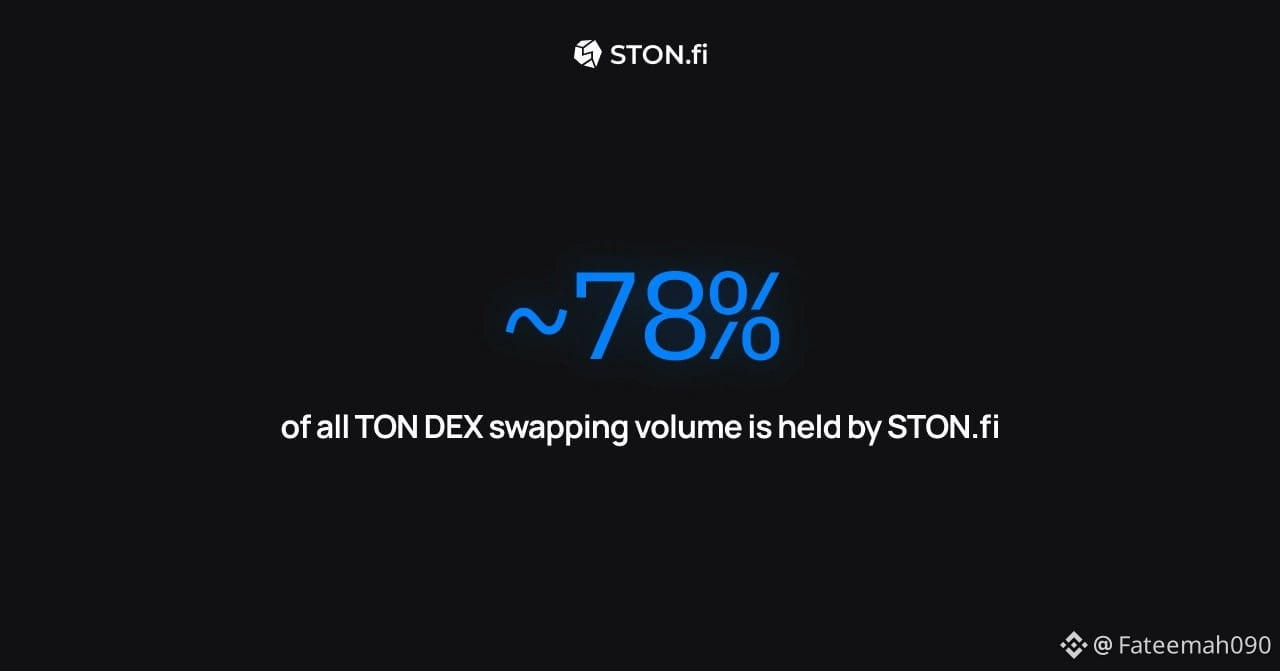
1
70
ເຂົ້າສູ່ລະບົບເພື່ອສຳຫຼວດເນື້ອຫາເພີ່ມເຕີມ
ເຂົ້າຮ່ວມກຸ່ມຜູ້ໃຊ້ຄຣິບໂຕທົ່ວໂລກໃນ Binance Square.
⚡️ ໄດ້ຮັບຂໍ້ມູນຫຼ້າສຸດ ແລະ ທີ່ມີປະໂຫຍດກ່ຽວກັບຄຣິບໂຕ.
💬 ໄດ້ຮັບຄວາມໄວ້ວາງໃຈຈາກຕະຫຼາດແລກປ່ຽນຄຣິບໂຕທີ່ໃຫຍ່ທີ່ສຸດໃນໂລກ.
👍 ຄົ້ນຫາຂໍ້ມູນເຊີງເລິກທີ່ແທ້ຈາກນັກສ້າງທີ່ໄດ້ຮັບການຢືນຢັນ.
ອີເມວ / ເບີໂທລະສັບ
ຫົວຂໍ້ທີ່ກໍາລັງນິຍົມ
UKFCAWinsCourtOrderToRecover851400Pounds
398 views
96 ກຳລັງສົນທະນາ
昨天在伦敦,一家咖啡馆里,我听到邻桌两位商人在讨论英国金融行为监管局(FCA)的最新动态。他们提到的案件结果让我大吃一惊:英国金融咨询协会(UKFCA)成功赢得了一场法庭诉讼,追回了高达851,400英镑的客户资金。原来,这起案件源于一名客户因不道德的金融咨询而蒙受损失,UKFCA经过两年多的调查,最终在法庭上获得了胜诉。这一消息不仅让在场的人感到振奋,也让我想起了金融行业监管的重要性。毕竟,保护投资者权益是金融监管的核心使命。正如FCA所说,此案彰显了监管机构对金融欺诈零容忍的态度。看来,投资者可以更安心了。#UKFCAWinsCourtOrderToRecover851400Pounds
castbot_io
·0 ຖືກໃຈ
·10 views
ChainlinkLaunchesCCIP2WithEnterpriseVerification
7,131 views
405 ກຳລັງສົນທະນາ
GoldFallsTo$4144
4,169 views
101 ກຳລັງສົນທະນາ