

Paul Bennett 1
386 ໂພສ

Paul Bennett 1
ລາຍງານ
ບລັອກຜູ້ໃຊ້
Business Analyst | 5+ years in sales | Expert in blockchain solutions & crypto products | Driving strategic partnerships in Web3 | Partner of BingX | Listing & Institutional Services Partner at WhiteBIT | DM Open 24/7
0 ກໍາລັງຕິດຕາມ
8 ຜູ້ຕິດຕາມ
35 Liked
ໂພສ
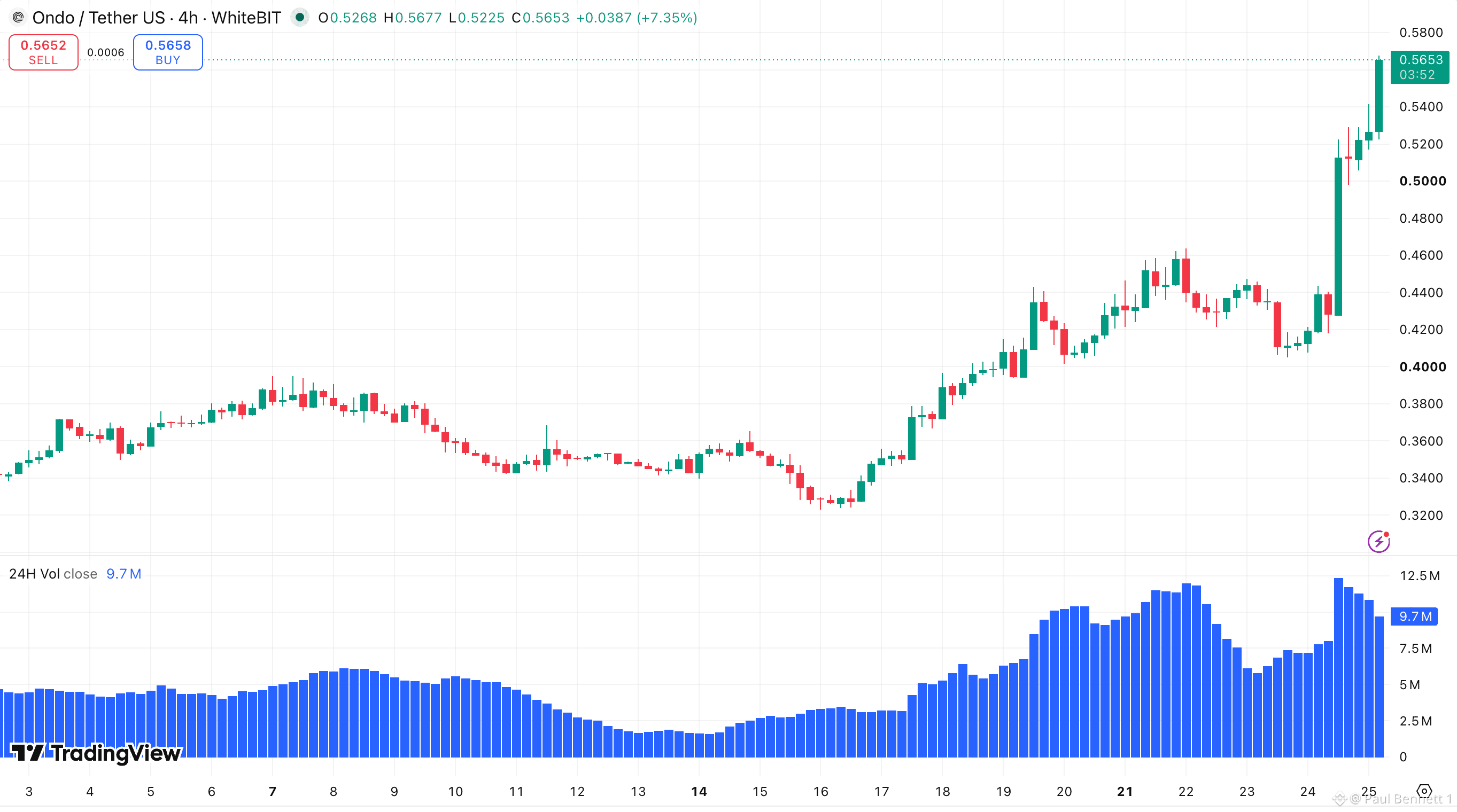
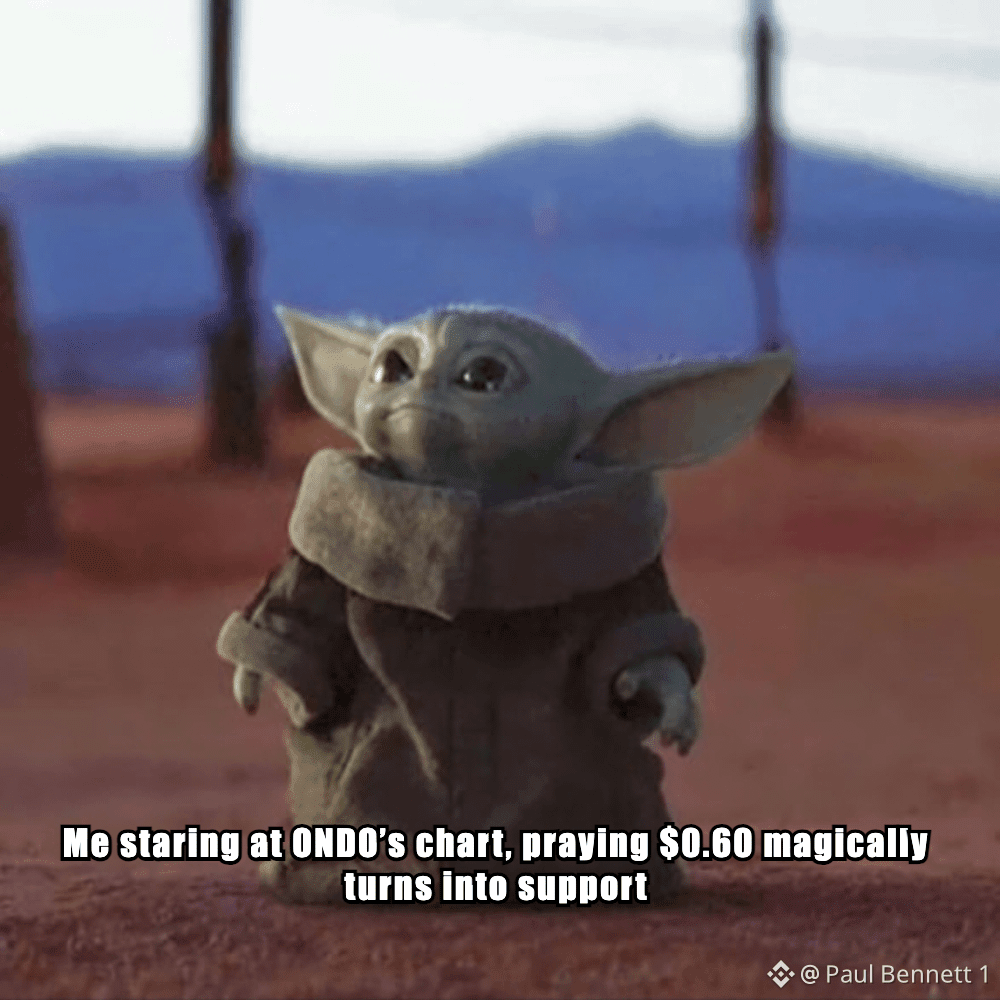
📈 $ONDO Jumped 27% in a Day - Now the Chart Gets More Interesting ONDO just gained roughly 27% in 24 hours, breaking out of its recent consolidation as volume jumped with it. After a move like this, I’m less interested in chasing the candle and more interested in seeing which old resistance levels can turn into support. 🎯 The first area I’d watch is around $0.60–$0.62. Holding that zone would keep the breakout structure intact. Above, $0.70 is the obvious psychological level, followed by the next resistance around $0.75. There’s some fundamental fuel behind the move too. Ondo recently introduced Intelligent Portfolios, including strategies developed by BlackRock specifically for Ondo, adding another product to its growing tokenized-assets ecosystem. That doesn’t guarantee ONDO keeps rising, but it gives the market something more substantial to price than momentum alone. One thing I’d be careful with is leverage. ⚠️ After a 27% daily move, rising open interest without matching spot demand can quickly turn a clean breakout into a squeeze in the other direction. I’d also keep $BTC on the second screen. If Bitcoin stays stable and ONDO holds its breakout zone, I’d read that as much stronger than another quick spike. If $BTC starts losing momentum, $0.60–$0.62 becomes the area I’d want to see buyers defend. My chart: $0.60–$0.62 support → $0.70 checkpoint → $0.75 resistance. 👀 Source: Coindoo Not financial advice. Always DYOR. #BTC Price Analysis# #Bitcoin Price Prediction: What is Bitcoins next move?#
📈 $ONDO Jumped 27% in a Day - Now the Chart Gets More Interesting ONDO just gained roughly 27% in 24 hours, breaking out of its recent consolidation as volume jumped with it. After a move like this, I’m less interested in chasing the candle and more interested in seeing which old resistance levels can turn into support. 🎯 The first area I’d watch is around $0.60–$0.62. Holding that zone would keep the breakout structure intact. Above, $0.70 is the obvious psychological level, followed by the next resistance around $0.75. There’s some fundamental fuel behind the move too. Ondo recently introduced Intelligent Portfolios, including strategies developed by BlackRock specifically for Ondo, adding another product to its growing tokenized-assets ecosystem. That doesn’t guarantee ONDO keeps rising, but it gives the market something more substantial to price than momentum alone. One thing I’d be careful with is leverage. ⚠️ After a 27% daily move, rising open interest without matching spot demand can quickly turn a clean breakout into a squeeze in the other direction. I’d also keep $BTC on the second screen. If Bitcoin stays stable and ONDO holds its breakout zone, I’d read that as much stronger than another quick spike. If $BTC starts losing momentum, $0.60–$0.62 becomes the area I’d want to see buyers defend. My chart: $0.60–$0.62 support → $0.70 checkpoint → $0.75 resistance. 👀 Source: Coindoo Not financial advice. Always DYOR. #BTC Price Analysis# #Bitcoin Price Prediction: What is Bitcoins next move?#
46
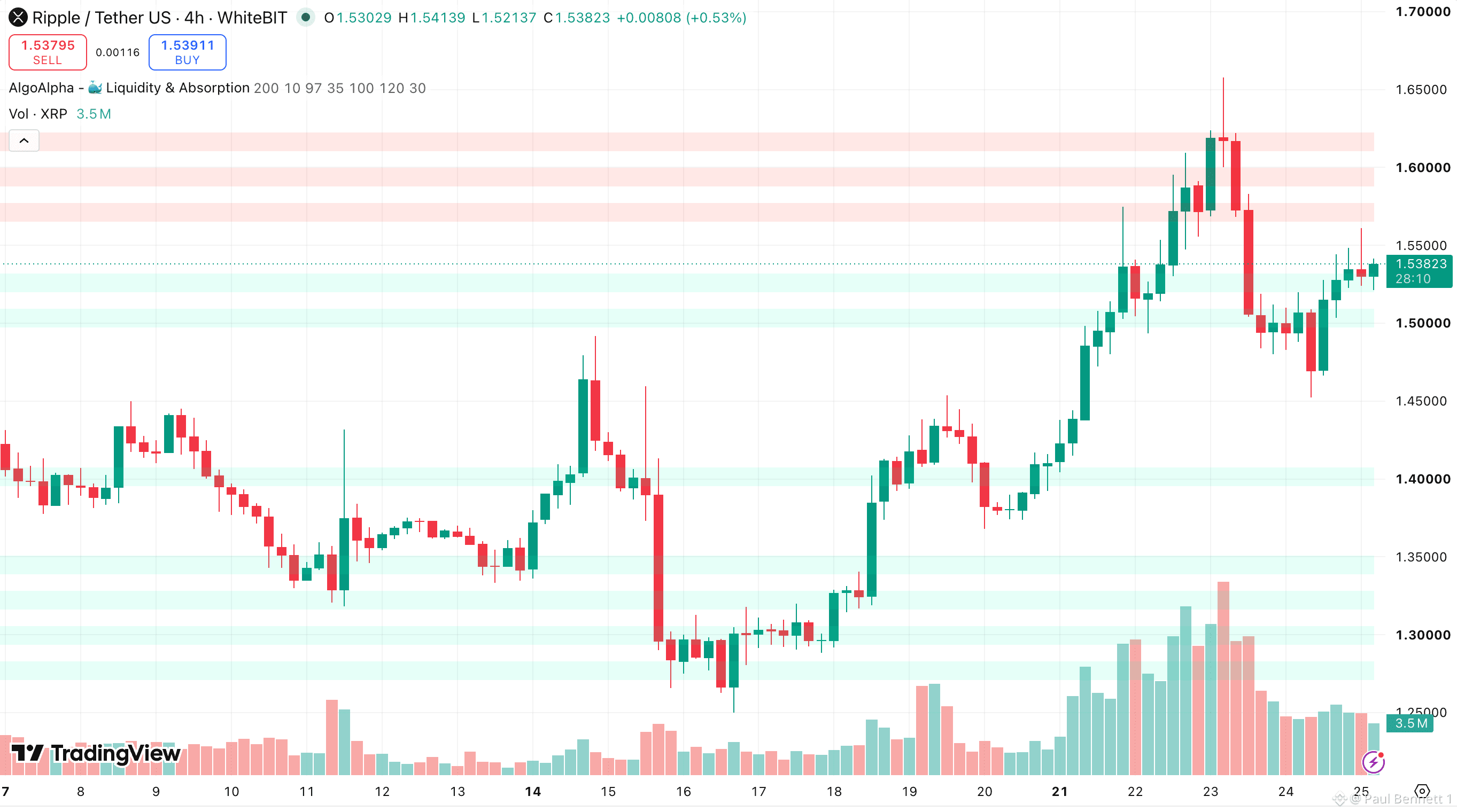
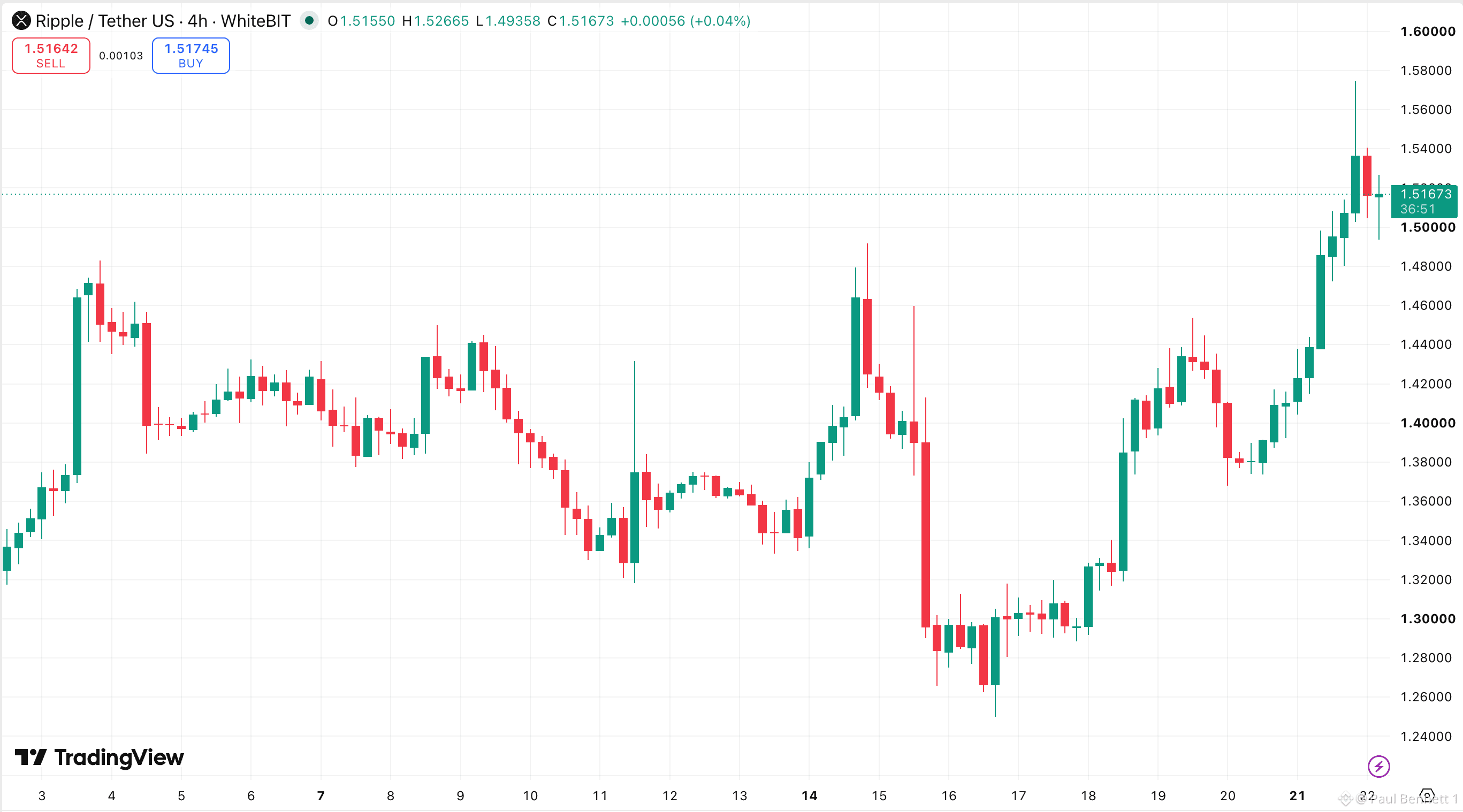
🗓️ $XRP Digest: 5 Things I’m Watching on September 25 A lot happened around Ripple and XRP this week, so here’s my quick September 25 digest: 💰 1. XRP ETFs keep attracting money Spot XRP ETFs have now recorded 10 consecutive weeks of net inflows, bringing cumulative inflows to roughly $1.75B. 🐋 2. Whales bought the dip Large holders accumulated more than 1.54B XRP in roughly 96 hours following the recent market pullback. That’s a pretty serious amount of supply moving into bigger wallets. 🏦 3. More ETF structures are appearing T. Rowe Price’s updated multi-crypto ETF filing gives XRP a 9.15% allocation, while another proposed product would combine the S&P 500 and XRP in a 75/25 split. 🌍 4. Ripple is pushing the institutional side Ripple’s Reece Merrick recently joined representatives from BlackRock and HSBC at the MESA Forum to discuss stablecoins, tokenized deposits and tokenized money-market funds. RLUSD has meanwhile grown to around $2.37B in market cap. 📊 5. Price still has work to do XRP briefly approached $1.65, its highest level since the start of 2026, before pulling back toward $1.47. The areas I’d keep on the chart are $1.50 first, then $1.61; a clean break higher could reopen the $1.70–$2 zone discussed by analysts cited by CryptoPotato. My read: there’s a funny disconnect here. ETF flows, whales and Ripple’s institutional activity all look busy, while price is still being pushed around by the broader market. If $BTC stabilizes, we’ll get a cleaner test of whether all that XRP-specific demand can actually show up in price. And if $BTC stays volatile, even good XRP news may struggle to take control. Source: CryptoPotato Not financial advice. Always DYOR. #BTC Price Analysis# #XRP #Bitcoin Price Prediction: What is Bitcoins next move?#
🗓️ $XRP Digest: 5 Things I’m Watching on September 25 A lot happened around Ripple and XRP this week, so here’s my quick September 25 digest: 💰 1. XRP ETFs keep attracting money Spot XRP ETFs have now recorded 10 consecutive weeks of net inflows, bringing cumulative inflows to roughly $1.75B. 🐋 2. Whales bought the dip Large holders accumulated more than 1.54B XRP in roughly 96 hours following the recent market pullback. That’s a pretty serious amount of supply moving into bigger wallets. 🏦 3. More ETF structures are appearing T. Rowe Price’s updated multi-crypto ETF filing gives XRP a 9.15% allocation, while another proposed product would combine the S&P 500 and XRP in a 75/25 split. 🌍 4. Ripple is pushing the institutional side Ripple’s Reece Merrick recently joined representatives from BlackRock and HSBC at the MESA Forum to discuss stablecoins, tokenized deposits and tokenized money-market funds. RLUSD has meanwhile grown to around $2.37B in market cap. 📊 5. Price still has work to do XRP briefly approached $1.65, its highest level since the start of 2026, before pulling back toward $1.47. The areas I’d keep on the chart are $1.50 first, then $1.61; a clean break higher could reopen the $1.70–$2 zone discussed by analysts cited by CryptoPotato. My read: there’s a funny disconnect here. ETF flows, whales and Ripple’s institutional activity all look busy, while price is still being pushed around by the broader market. If $BTC stabilizes, we’ll get a cleaner test of whether all that XRP-specific demand can actually show up in price. And if $BTC stays volatile, even good XRP news may struggle to take control. Source: CryptoPotato Not financial advice. Always DYOR. #BTC Price Analysis# #XRP #Bitcoin Price Prediction: What is Bitcoins next move?#
55
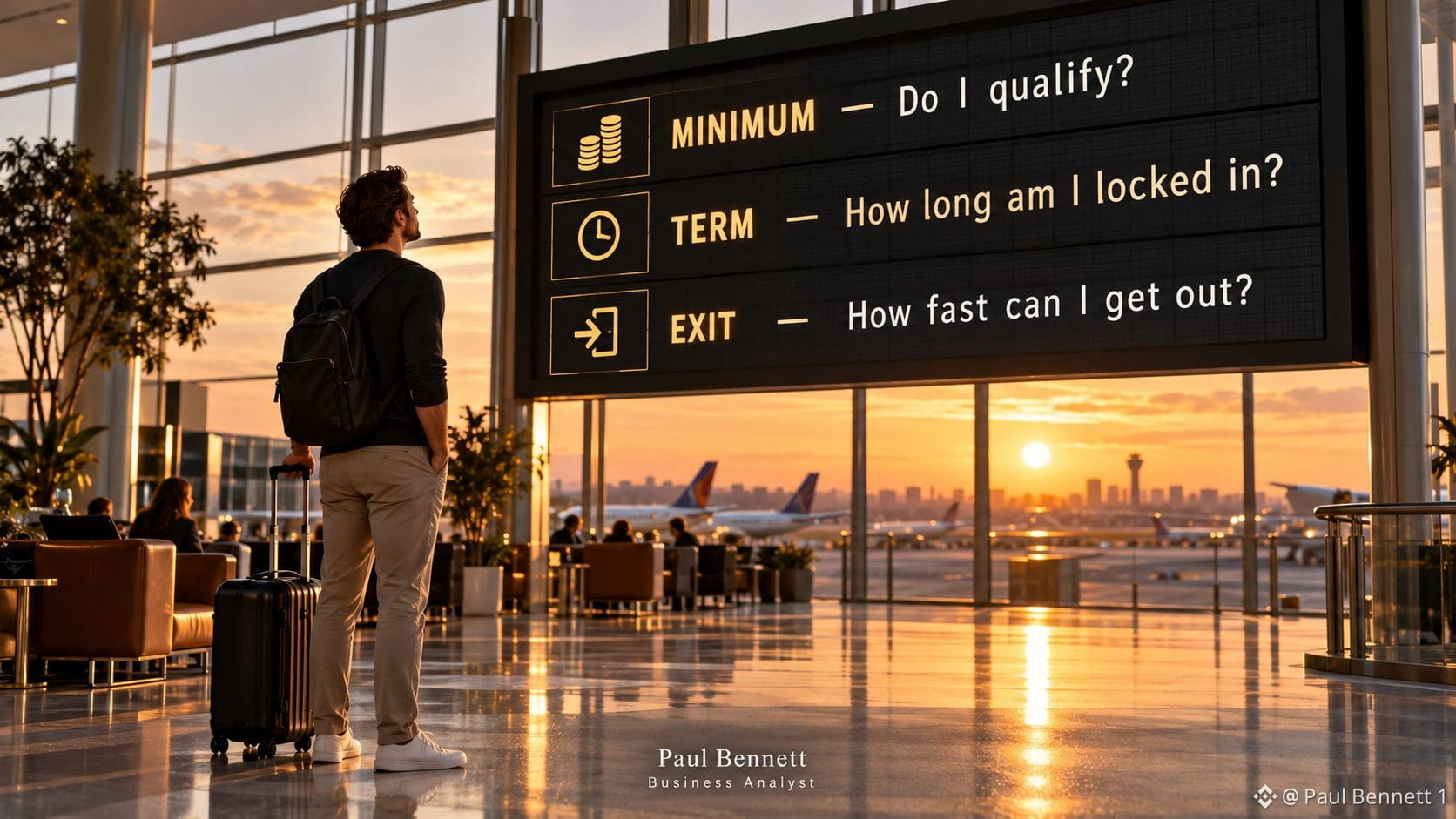
🤔 Before You Chase Yield, Ask These 3 Questions Hey everyone 👋 I’ve got another article for you - apparently I still enjoy turning crypto questions into articles 😄. This time I looked at a good one: what should you check before putting idle crypto to work? It’s easy to start with the biggest percentage. But whether it’s stablecoins, $BTC , or another asset, I’d check three things first: 💰 Is there a minimum amount? ⏳ How long do you need to commit? 🚪 What happens if you need the money back early? I compared a few different yield structures to see how they handle these points. Because even if $BTC or other assets are sitting idle today, that doesn’t mean you won’t need them tomorrow. 🔗 Read the full article here: https://medium.com/@paul.bennet/three-questions-that-matter-more-than-the-yield-rate-df1866d5c0f9?postPublishedType=initial What do you usually check first - rate, liquidity, term, or something else? 👀 #BTC Price Analysis# #Bitcoin Price Prediction: What is Bitcoins next move?#
🤔 Before You Chase Yield, Ask These 3 Questions Hey everyone 👋 I’ve got another article for you - apparently I still enjoy turning crypto questions into articles 😄. This time I looked at a good one: what should you check before putting idle crypto to work? It’s easy to start with the biggest percentage. But whether it’s stablecoins, $BTC , or another asset, I’d check three things first: 💰 Is there a minimum amount? ⏳ How long do you need to commit? 🚪 What happens if you need the money back early? I compared a few different yield structures to see how they handle these points. Because even if $BTC or other assets are sitting idle today, that doesn’t mean you won’t need them tomorrow. 🔗 Read the full article here: https://medium.com/@paul.bennet/three-questions-that-matter-more-than-the-yield-rate-df1866d5c0f9?postPublishedType=initial What do you usually check first - rate, liquidity, term, or something else? 👀 #BTC Price Analysis# #Bitcoin Price Prediction: What is Bitcoins next move?#
52
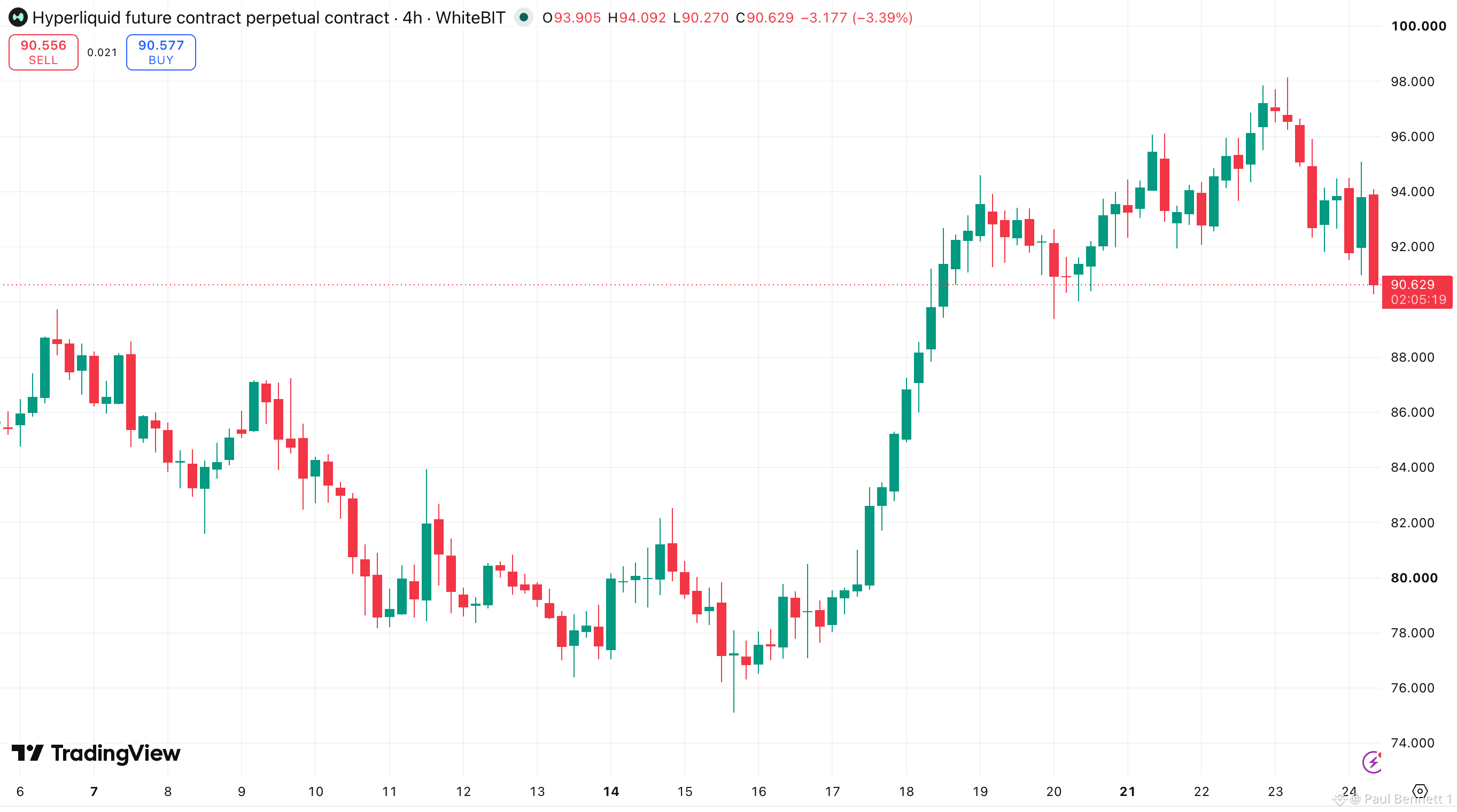
🔥 $HYPE Just Got a Binance Listing - And That Could Change Its Liquidity Profile Binance is adding Hyperliquid’s HYPE to spot trading with a Seed Tag, giving the token access to one of the largest centralized exchange audiences in crypto. What I’d watch now is not the first listing candle, but what happens after the initial excitement fades. Hyperliquid grew by pulling traders toward an on-chain venue, so seeing HYPE listed on Binance is a pretty interesting reversal of direction. 😄 A Binance listing can deepen liquidity and bring in traders who never used Hyperliquid itself. If that translates into sustained spot volume rather than a short burst, the listing could matter more than the headline suggests. $BTC still sets the broader risk mood across the market, but HYPE is building a much more independent catalyst stack now - exchange access, derivatives growth, borrowing, and RWA activity. My read is : if HYPE keeps strong volume after the listing and $BTC stays stable, that would look more like genuine market expansion than a one-day listing pump. 👀 Source: BeInCrypto Not financial advice. Always DYOR. #BTC Price Analysis# #HYPE #Bitcoin Price Prediction: What is Bitcoins next move?#
🔥 $HYPE Just Got a Binance Listing - And That Could Change Its Liquidity Profile Binance is adding Hyperliquid’s HYPE to spot trading with a Seed Tag, giving the token access to one of the largest centralized exchange audiences in crypto. What I’d watch now is not the first listing candle, but what happens after the initial excitement fades. Hyperliquid grew by pulling traders toward an on-chain venue, so seeing HYPE listed on Binance is a pretty interesting reversal of direction. 😄 A Binance listing can deepen liquidity and bring in traders who never used Hyperliquid itself. If that translates into sustained spot volume rather than a short burst, the listing could matter more than the headline suggests. $BTC still sets the broader risk mood across the market, but HYPE is building a much more independent catalyst stack now - exchange access, derivatives growth, borrowing, and RWA activity. My read is : if HYPE keeps strong volume after the listing and $BTC stays stable, that would look more like genuine market expansion than a one-day listing pump. 👀 Source: BeInCrypto Not financial advice. Always DYOR. #BTC Price Analysis# #HYPE #Bitcoin Price Prediction: What is Bitcoins next move?#
71
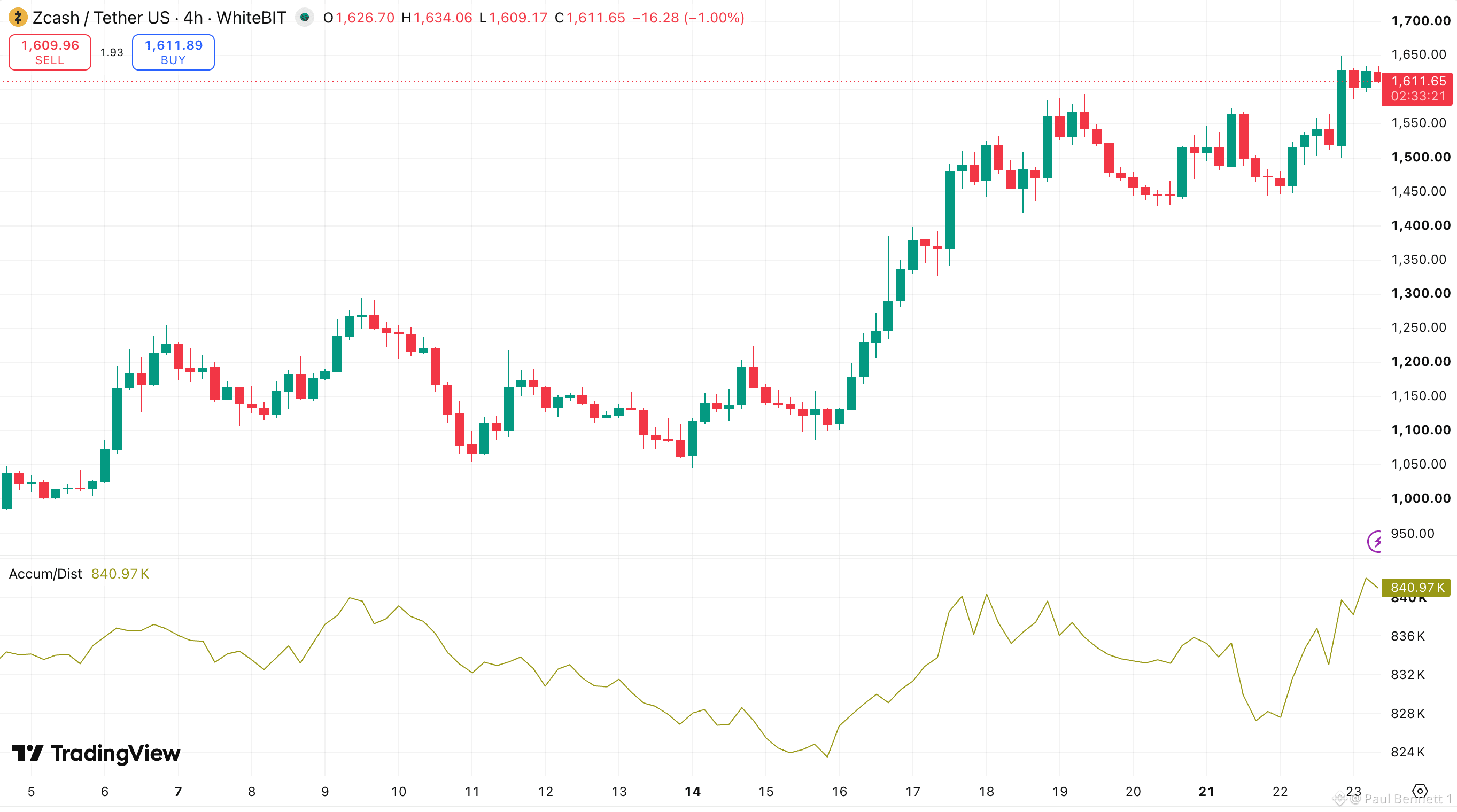
🚀 $ZEC ZEC Above $1,600 as Shielded Activity and Fund Inflows Accelerate Zcash is holding above $1,600, but CoinJournal points to something more interesting underneath the rally: shielded activity and institutional fund flows are both rising. 🔐 More ZEC moving through shielded transactions matters because it suggests privacy features are actually being used, rather than privacy simply being the narrative pushing the token higher. 💰 At the same time, fresh inflows into Zcash-focused investment products are adding another source of demand. That gives this move a different backdrop from a rally driven mainly by leveraged traders and short liquidations. I think after such a strong run, I’d care less about the next round-number target and more about whether usage + fund inflows remain strong if momentum cools. $BTC can set the mood for the broader market, but ZEC now has some very specific signals of its own. If those fundamentals keep improving while $BTC stays constructive, holding above $1,600 becomes much more interesting than simply touching a new high. 👀 Source: CoinJournal Not financial advice. Always DYOR. #BTC Price Analysis# #ZEC #Bitcoin Price Prediction: What is Bitcoins next move?#
🚀 $ZEC ZEC Above $1,600 as Shielded Activity and Fund Inflows Accelerate Zcash is holding above $1,600, but CoinJournal points to something more interesting underneath the rally: shielded activity and institutional fund flows are both rising. 🔐 More ZEC moving through shielded transactions matters because it suggests privacy features are actually being used, rather than privacy simply being the narrative pushing the token higher. 💰 At the same time, fresh inflows into Zcash-focused investment products are adding another source of demand. That gives this move a different backdrop from a rally driven mainly by leveraged traders and short liquidations. I think after such a strong run, I’d care less about the next round-number target and more about whether usage + fund inflows remain strong if momentum cools. $BTC can set the mood for the broader market, but ZEC now has some very specific signals of its own. If those fundamentals keep improving while $BTC stays constructive, holding above $1,600 becomes much more interesting than simply touching a new high. 👀 Source: CoinJournal Not financial advice. Always DYOR. #BTC Price Analysis# #ZEC #Bitcoin Price Prediction: What is Bitcoins next move?#

68
✔️🤔 Same Trades, Same Edge - So Where Did the PnL Go? Imagine two trading desks doing almost exactly the same thing. Same volume. Similar strategies. Similar gross edge. Both trade $BTC and other liquid markets. The difference? How they treat execution costs. One stays taker-heavy because it is convenient. The other starts treating fees and liquidity as part of the strategy itself. 📊After a month, the gap may look tiny. After 6 months, it becomes visible. After 24 months, that repeated maker/taker difference can take a meaningful bite out of net PnL. So what can a high-volume desk actually do? ⚫Option 1 → Optimize execution internally Something like the WhiteBIT Market Making Program could be one route: maker rebates up to -0.012%, sub-accounts for separating strategies, flexible API access and 24/7 support. https://institutional.whitebit.com/market-making-program?utm_source=coinmarketcap&utm_medium=marketmPaul&utm_campaign=post ⚫Option 2 → Work with a liquidity provider A firm like B2C2 Market Making takes a different route, offering tailored market-making and liquidity programs with defined spread, uptime and quote-volume targets, plus OTC capabilities. https://www.b2c2.com/solutions/market-making-liquidity-provision?utm_source=coinmarketcap&utm_medium=marketmPaul&utm_campaign=post Neither route magically creates an edge. Posting liquidity still brings adverse-selection risk, and using an external provider changes the operating model. ⚙️When volume gets large enough, execution costs stop being a small expense and start becoming part of the strategy. And when $BTC volume is measured in hundreds of millions, even very small differences have plenty of time to add up. 📍Disclaimer: This is not financial or investment advice. Do your own research before making any decisions. Use at your own risk. #BTC Price Analysis# #Bitcoin Price Prediction: What is Bitcoins next move?#
✔️🤔 Same Trades, Same Edge - So Where Did the PnL Go? Imagine two trading desks doing almost exactly the same thing. Same volume. Similar strategies. Similar gross edge. Both trade $BTC and other liquid markets. The difference? How they treat execution costs. One stays taker-heavy because it is convenient. The other starts treating fees and liquidity as part of the strategy itself. 📊After a month, the gap may look tiny. After 6 months, it becomes visible. After 24 months, that repeated maker/taker difference can take a meaningful bite out of net PnL. So what can a high-volume desk actually do? ⚫Option 1 → Optimize execution internally Something like the WhiteBIT Market Making Program could be one route: maker rebates up to -0.012%, sub-accounts for separating strategies, flexible API access and 24/7 support. https://institutional.whitebit.com/market-making-program?utm_source=coinmarketcap&utm_medium=marketmPaul&utm_campaign=post ⚫Option 2 → Work with a liquidity provider A firm like B2C2 Market Making takes a different route, offering tailored market-making and liquidity programs with defined spread, uptime and quote-volume targets, plus OTC capabilities. https://www.b2c2.com/solutions/market-making-liquidity-provision?utm_source=coinmarketcap&utm_medium=marketmPaul&utm_campaign=post Neither route magically creates an edge. Posting liquidity still brings adverse-selection risk, and using an external provider changes the operating model. ⚙️When volume gets large enough, execution costs stop being a small expense and start becoming part of the strategy. And when $BTC volume is measured in hundreds of millions, even very small differences have plenty of time to add up. 📍Disclaimer: This is not financial or investment advice. Do your own research before making any decisions. Use at your own risk. #BTC Price Analysis# #Bitcoin Price Prediction: What is Bitcoins next move?#

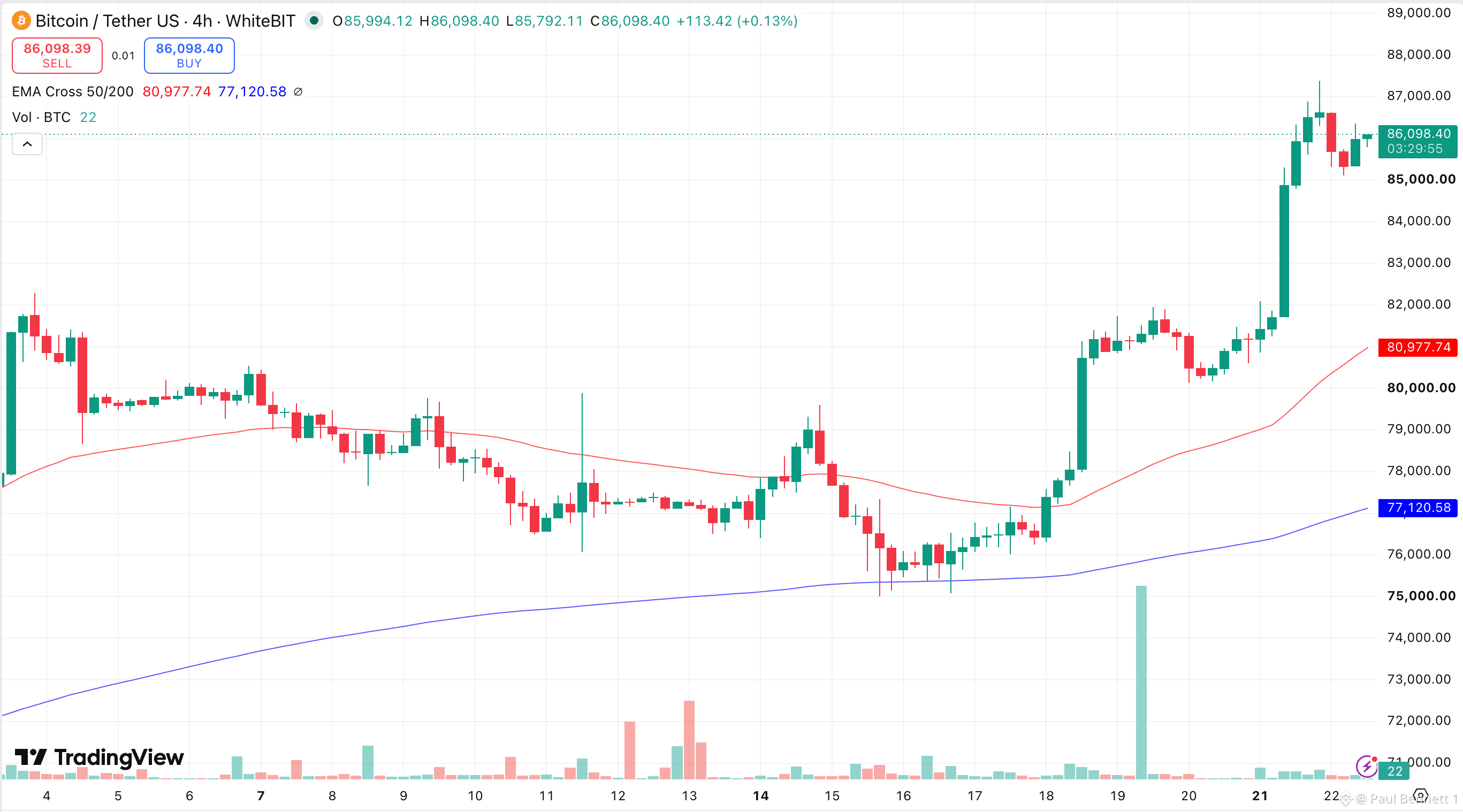
🌈 Bitcoin’s Rainbow Chart Puts $87K in View - But I’d Treat It as a Guide Finbold looked at where the Bitcoin Rainbow Chart places BTC for the start of October. The model’s central “HODL” zone is around $87K, while $BTC was trading closer to $78K when the analysis was published. I wouldn’t read that as a direct price target. The Rainbow Chart is more useful for showing where Bitcoin sits inside a long-term valuation range than for predicting the next move. 📊 The short-term chart still matters more: Bitcoin was above its 50-day and 200-day moving averages, while RSI was already near 70, so momentum looked strong but a bit stretched. One thing I noticed while checking this setup: WhiteBIT recently added TradFi pairs to TradingView. That makes it easier to put Bitcoin next to things like gold, oil, stocks, and ETFs on the same charting platform - which is actually pretty useful for a post like this, because the Rainbow Chart tells you where $BTC sits historically, while cross-market charts help show what’s happening around it right now. For me, $87K is a reference point, not a forecast. I’d still trust price structure, volume, and momentum more than any single model. 📍Disclaimer: This is not financial or investment advice. Do your own research before making any decisions. Use at your own risk. #BTC Price Analysis# #Bitcoin Price Prediction: What is Bitcoins next move?#
🌈 Bitcoin’s Rainbow Chart Puts $87K in View - But I’d Treat It as a Guide Finbold looked at where the Bitcoin Rainbow Chart places BTC for the start of October. The model’s central “HODL” zone is around $87K, while $BTC was trading closer to $78K when the analysis was published. I wouldn’t read that as a direct price target. The Rainbow Chart is more useful for showing where Bitcoin sits inside a long-term valuation range than for predicting the next move. 📊 The short-term chart still matters more: Bitcoin was above its 50-day and 200-day moving averages, while RSI was already near 70, so momentum looked strong but a bit stretched. One thing I noticed while checking this setup: WhiteBIT recently added TradFi pairs to TradingView. That makes it easier to put Bitcoin next to things like gold, oil, stocks, and ETFs on the same charting platform - which is actually pretty useful for a post like this, because the Rainbow Chart tells you where $BTC sits historically, while cross-market charts help show what’s happening around it right now. For me, $87K is a reference point, not a forecast. I’d still trust price structure, volume, and momentum more than any single model. 📍Disclaimer: This is not financial or investment advice. Do your own research before making any decisions. Use at your own risk. #BTC Price Analysis# #Bitcoin Price Prediction: What is Bitcoins next move?#
51
⚡ XRP Jumped 8% - But This Wasn’t Just an XRP Move $XRP climbed roughly 8%, briefly pushing above $1.40 as a broader crypto short squeeze forced bearish positions out of the market. 💥 The first driver was leverage. About $430M in crypto shorts were liquidated, with $BTC reclaiming $80K and improving sentiment across large-cap alts. XRP benefited from that fast change in positioning. 🏦 But Ripple had its own catalysts too. Recent developments around Ripple’s institutional business and XRP ecosystem gave traders another reason to pay attention as the market bounced. That combination - broader squeeze + XRP-specific news- helps explain why the move was stronger than a simple market-wide recovery. 👀 My view: the 8% candle is less important than what happens after the shorts are gone. Liquidations can push price higher very quickly, but sustained upside needs fresh spot buyers to take over. If $BTC holds its recovery and XRP can keep the breakout rather than immediately giving it back, that would make the move much more interesting than the initial squeeze itself. Source: CoinJournal Not financial advice. Always DYOR.
⚡ XRP Jumped 8% - But This Wasn’t Just an XRP Move $XRP climbed roughly 8%, briefly pushing above $1.40 as a broader crypto short squeeze forced bearish positions out of the market. 💥 The first driver was leverage. About $430M in crypto shorts were liquidated, with $BTC reclaiming $80K and improving sentiment across large-cap alts. XRP benefited from that fast change in positioning. 🏦 But Ripple had its own catalysts too. Recent developments around Ripple’s institutional business and XRP ecosystem gave traders another reason to pay attention as the market bounced. That combination - broader squeeze + XRP-specific news- helps explain why the move was stronger than a simple market-wide recovery. 👀 My view: the 8% candle is less important than what happens after the shorts are gone. Liquidations can push price higher very quickly, but sustained upside needs fresh spot buyers to take over. If $BTC holds its recovery and XRP can keep the breakout rather than immediately giving it back, that would make the move much more interesting than the initial squeeze itself. Source: CoinJournal Not financial advice. Always DYOR.
48
👉Your Runway Has a Timeline. Does Your Treasury? Imagine a Web3 project closes a funding round today. The money already has a job: product, hiring, infrastructure, and launch. But heavy spending may still be 6–9 months away. A team could simply keep the whole runway idle. Or, hypothetically, it could separate the money needed soon from the part that probably won’t move for months. Part of that idle runway could, in theory, sit in a fixed-term product until it’s actually needed. WhiteBIT Yield-as-a-Service, for example, could be one option, with terms from 10 days and expand your product offering Add an “Earn” feature without building lending infrastructure in-house. https://institutional.whitebit.com/yield-as-a-service?utm_source=coinmarketcap&utm_medium=paulYaaS&utm_campaign=post And the burn itself usually isn’t one big event. It looks more like this: → Next 30 days: payroll + operating costs → Next 90 days: hiring + infrastructure → 6 months later: heavier development spend → 9 months later: launch and growth budget 📆Once you see the runway this way, it stops looking like one untouchable pile of cash. It starts looking like a schedule. People in crypto can spend all day watching $BTC move, but treasury decisions often happen much more quietly in the background. If development suddenly speeds up, liquidity still matters. If it doesn’t, the idle window has an opportunity cost too. That’s the balance I find interesting: preserve the runway, keep flexibility, but still think about what the capital is doing before it gets spent. $BTC may move fast. A project’s burn usually doesn’t. 🙂 📍Disclaimer: This is not financial or investment advice. Do your own research before making any decisions. Use at your own risk. #BTC Price Analysis# #Bitcoin Price Prediction: What is Bitcoins next move?#
👉Your Runway Has a Timeline. Does Your Treasury? Imagine a Web3 project closes a funding round today. The money already has a job: product, hiring, infrastructure, and launch. But heavy spending may still be 6–9 months away. A team could simply keep the whole runway idle. Or, hypothetically, it could separate the money needed soon from the part that probably won’t move for months. Part of that idle runway could, in theory, sit in a fixed-term product until it’s actually needed. WhiteBIT Yield-as-a-Service, for example, could be one option, with terms from 10 days and expand your product offering Add an “Earn” feature without building lending infrastructure in-house. https://institutional.whitebit.com/yield-as-a-service?utm_source=coinmarketcap&utm_medium=paulYaaS&utm_campaign=post And the burn itself usually isn’t one big event. It looks more like this: → Next 30 days: payroll + operating costs → Next 90 days: hiring + infrastructure → 6 months later: heavier development spend → 9 months later: launch and growth budget 📆Once you see the runway this way, it stops looking like one untouchable pile of cash. It starts looking like a schedule. People in crypto can spend all day watching $BTC move, but treasury decisions often happen much more quietly in the background. If development suddenly speeds up, liquidity still matters. If it doesn’t, the idle window has an opportunity cost too. That’s the balance I find interesting: preserve the runway, keep flexibility, but still think about what the capital is doing before it gets spent. $BTC may move fast. A project’s burn usually doesn’t. 🙂 📍Disclaimer: This is not financial or investment advice. Do your own research before making any decisions. Use at your own risk. #BTC Price Analysis# #Bitcoin Price Prediction: What is Bitcoins next move?#

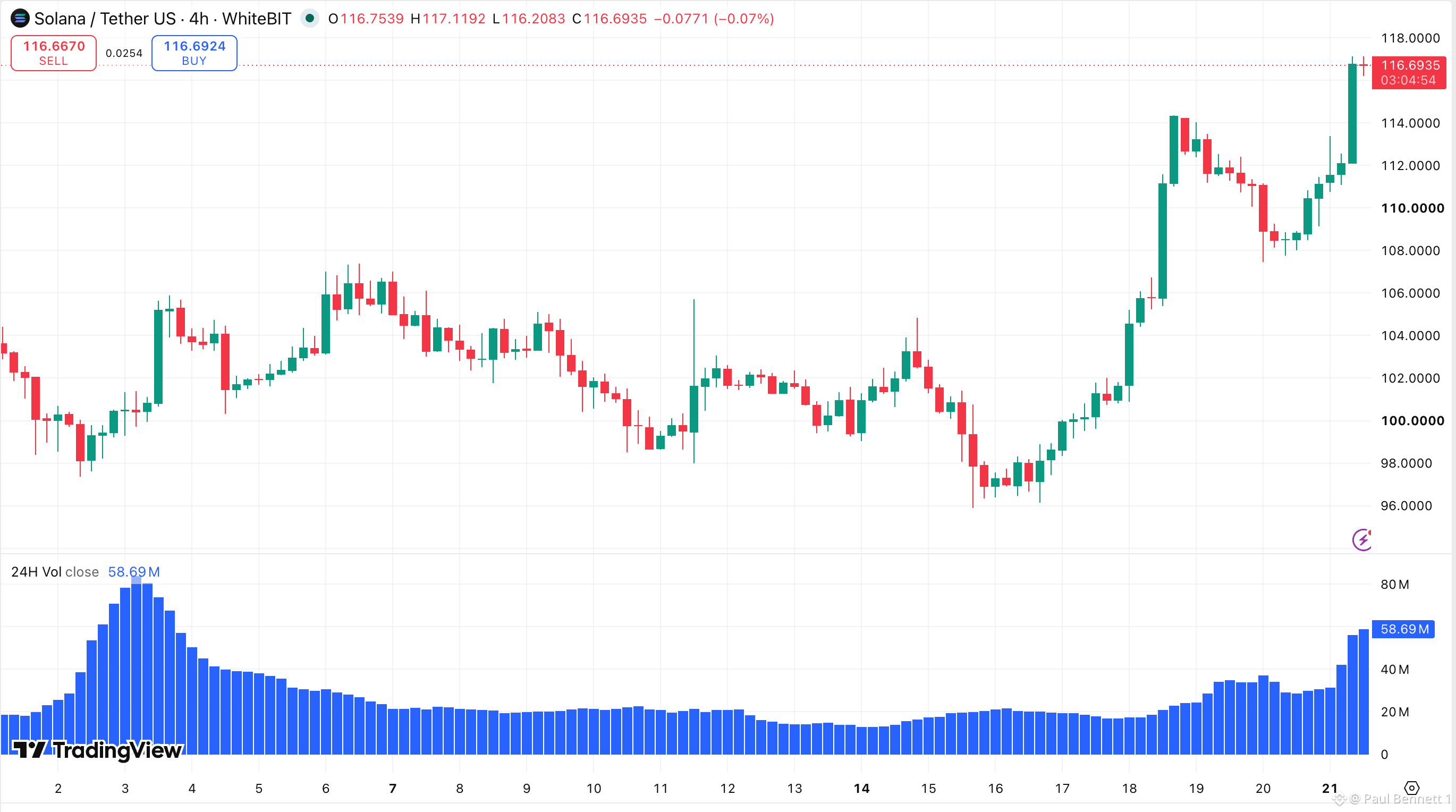
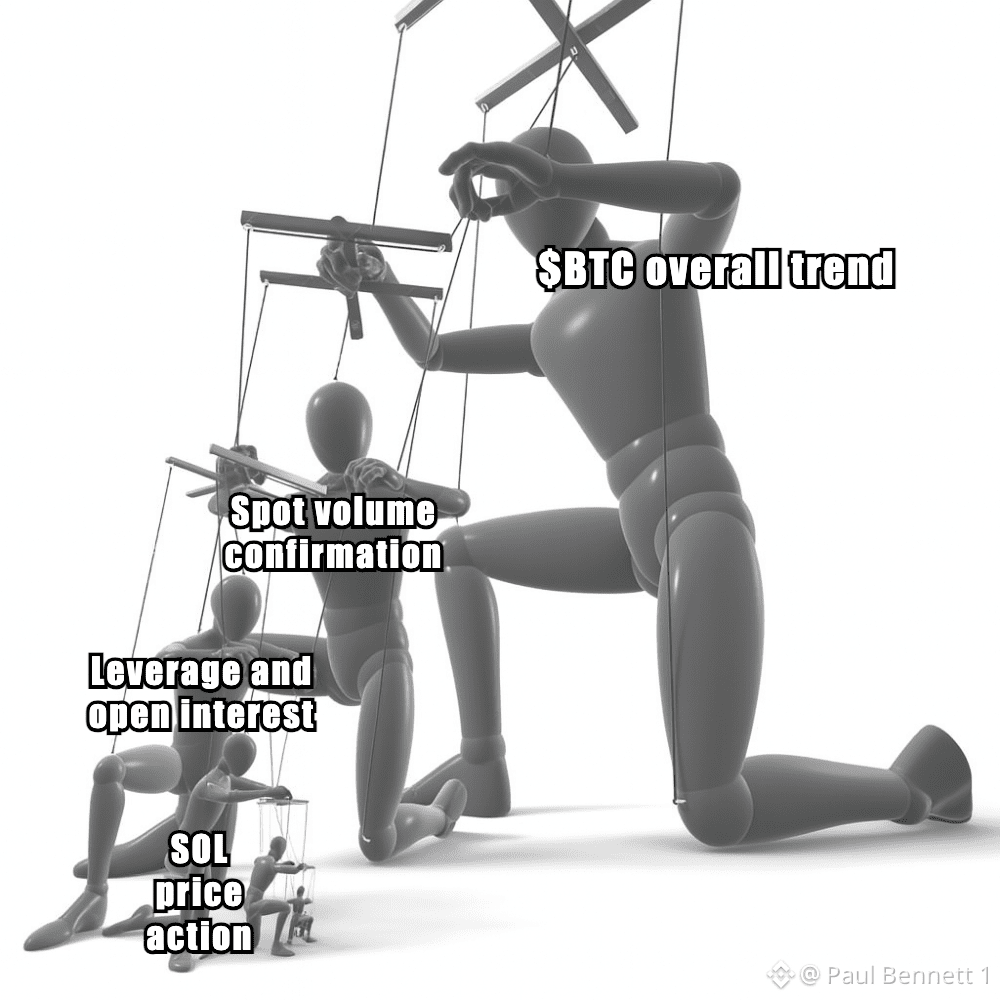
☀️ $SOL Is Rallying Again - But I’d Watch More Than the Price Target I went through CoinPaper’s latest Solana outlook, and the setup looks stronger again. Momentum is improving, SOL is recovering from recent lows, and the chart is opening room toward higher resistance if buyers keep control. 📈 The bullish part: SOL is rebuilding higher lows and momentum is turning back up. If that structure holds, the rally can extend further. 📊 The part I’d watch more closely: Is the move being supported by real spot demand, or is leverage doing most of the work? That matters because SOL can move very fast when derivatives get crowded. If price rises together with healthy spot volume, the move looks much cleaner. If open interest starts running far ahead, I’d be more careful. 👀 And of course, $BTC still matters here. Strong Bitcoin conditions usually give high-beta assets like SOL more room to run. If $BTC stays constructive, Solana has a much better backdrop for continuation. My take: don’t obsess over one upside target. Watch price + volume + open interest together. That combination will tell you much more about whether this rally has real strength behind it. Not financial advice. Always DYOR. #BTC Price Analysis# #SOL #Bitcoin Price Prediction: What is Bitcoins next move?#
☀️ $SOL Is Rallying Again - But I’d Watch More Than the Price Target I went through CoinPaper’s latest Solana outlook, and the setup looks stronger again. Momentum is improving, SOL is recovering from recent lows, and the chart is opening room toward higher resistance if buyers keep control. 📈 The bullish part: SOL is rebuilding higher lows and momentum is turning back up. If that structure holds, the rally can extend further. 📊 The part I’d watch more closely: Is the move being supported by real spot demand, or is leverage doing most of the work? That matters because SOL can move very fast when derivatives get crowded. If price rises together with healthy spot volume, the move looks much cleaner. If open interest starts running far ahead, I’d be more careful. 👀 And of course, $BTC still matters here. Strong Bitcoin conditions usually give high-beta assets like SOL more room to run. If $BTC stays constructive, Solana has a much better backdrop for continuation. My take: don’t obsess over one upside target. Watch price + volume + open interest together. That combination will tell you much more about whether this rally has real strength behind it. Not financial advice. Always DYOR. #BTC Price Analysis# #SOL #Bitcoin Price Prediction: What is Bitcoins next move?#
38
🔐 KYC Is More Than a Checkbox Hi again 👋 I’m back with another article. Can’t help it - I really like writing them 😄 This time I looked at KYC and AML from a slightly different angle. We usually talk about verification as something that slows users down. But once $BTC and other digital assets move through regulated financial infrastructure, verification also becomes part of what makes larger clients, higher limits and new markets possible. 🔗 Read the full article here: https://medium.com/@paul.bennet/why-better-verification-can-expand-your-addressable-market-e601872004ed In the article, I break down why KYC is not only about onboarding, how it affects the kind of clients a business can work with, and why smoother verification matters more than simply making it shorter. And as $BTC gets used across more regulated products and payment flows, this part of the infrastructure becomes harder to ignore. Would be really interested to hear what you think 👀 Do you see KYC mainly as friction or as part of the infrastructure a financial product needs to scale? #BTC Price Analysis# #Bitcoin Price Prediction: What is Bitcoins next move?#
🔐 KYC Is More Than a Checkbox Hi again 👋 I’m back with another article. Can’t help it - I really like writing them 😄 This time I looked at KYC and AML from a slightly different angle. We usually talk about verification as something that slows users down. But once $BTC and other digital assets move through regulated financial infrastructure, verification also becomes part of what makes larger clients, higher limits and new markets possible. 🔗 Read the full article here: https://medium.com/@paul.bennet/why-better-verification-can-expand-your-addressable-market-e601872004ed In the article, I break down why KYC is not only about onboarding, how it affects the kind of clients a business can work with, and why smoother verification matters more than simply making it shorter. And as $BTC gets used across more regulated products and payment flows, this part of the infrastructure becomes harder to ignore. Would be really interested to hear what you think 👀 Do you see KYC mainly as friction or as part of the infrastructure a financial product needs to scale? #BTC Price Analysis# #Bitcoin Price Prediction: What is Bitcoins next move?#

48
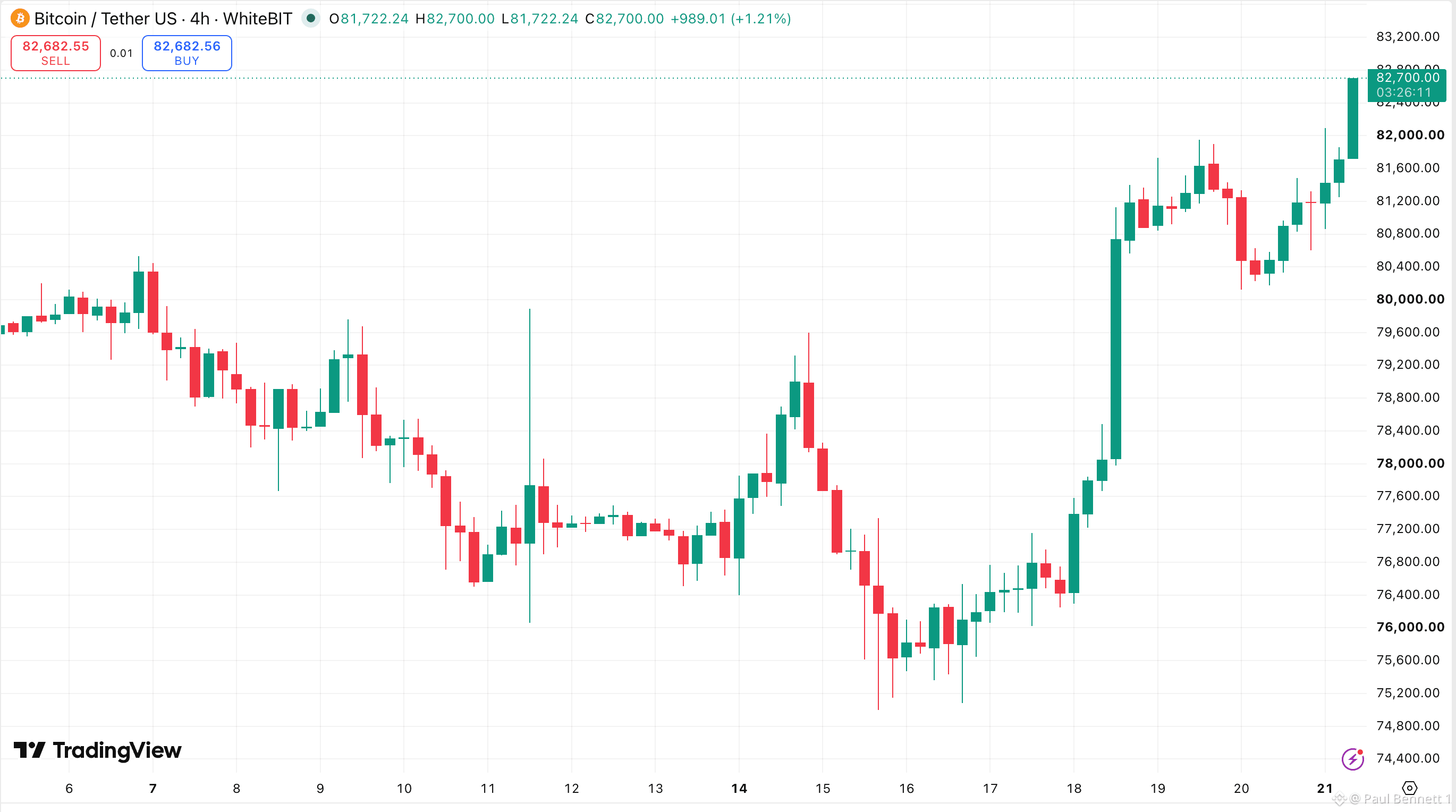
📈 Bitcoin Just Reclaimed a Level It Hadn’t Closed Above in 45 Weeks One chart level caught my attention this weekend: $BTC closed the week above its 50-week moving average for the first time in 45 weeks, after recovering above $81K. 📊Why does that line matter? Galaxy’s Alex Thorn found that in 4 of the 5 completed Bitcoin bear markets where the 50-week MA was lost, the first weekly reclaim was followed by no new cycle low. The exception was 2021–2022, when Bitcoin reclaimed it briefly and later moved lower again. That exception is important. One weekly candle doesn’t suddenly confirm a new bull market, but after months of the 50-week MA acting as resistance, seeing $BTC finally close above it changes the technical picture. 👀 Now I’d watch whether the level can turn from resistance into support - and whether Bitcoin can finally clear the $82K area, where the latest advance stalled. Source: CryptoPotato / Galaxy Research Not financial advice. Always DYOR. #BTC Price Analysis# #Bitcoin Price Prediction: What is Bitcoins next move?#
📈 Bitcoin Just Reclaimed a Level It Hadn’t Closed Above in 45 Weeks One chart level caught my attention this weekend: $BTC closed the week above its 50-week moving average for the first time in 45 weeks, after recovering above $81K. 📊Why does that line matter? Galaxy’s Alex Thorn found that in 4 of the 5 completed Bitcoin bear markets where the 50-week MA was lost, the first weekly reclaim was followed by no new cycle low. The exception was 2021–2022, when Bitcoin reclaimed it briefly and later moved lower again. That exception is important. One weekly candle doesn’t suddenly confirm a new bull market, but after months of the 50-week MA acting as resistance, seeing $BTC finally close above it changes the technical picture. 👀 Now I’d watch whether the level can turn from resistance into support - and whether Bitcoin can finally clear the $82K area, where the latest advance stalled. Source: CryptoPotato / Galaxy Research Not financial advice. Always DYOR. #BTC Price Analysis# #Bitcoin Price Prediction: What is Bitcoins next move?#
102
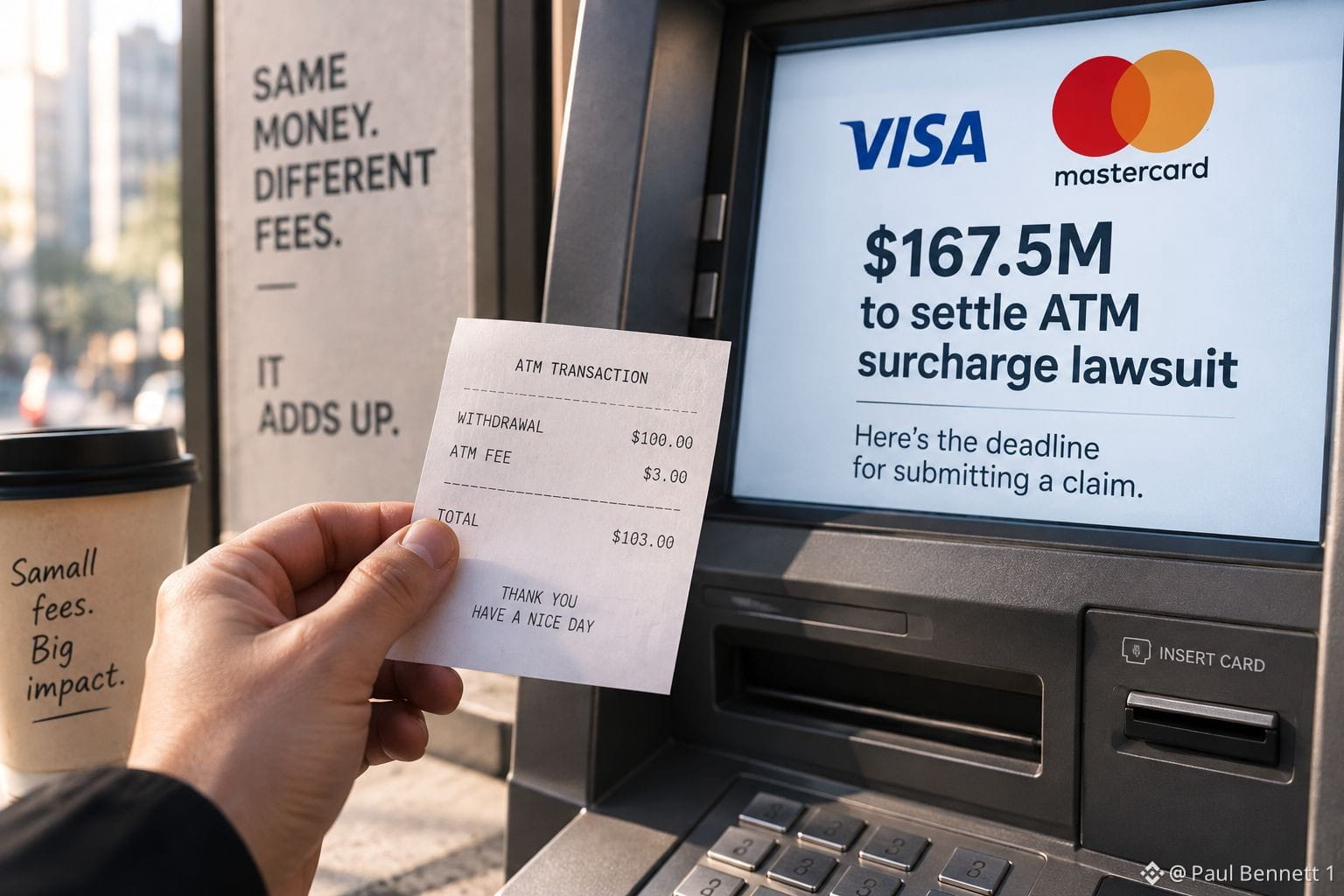
💳 $167.5M Over ATM Fees - Small Charges Can Become a Very Big Business Visa and Mastercard have agreed to pay $167.5M to settle claims tied to ATM surcharges. The case centered on allegations that network rules reduced competition around ATM access fees, while both companies have denied wrongdoing. 🏧What interests me here is less the lawsuit itself and more the economics behind it. A $2–$3 fee feels tiny in isolation, but once millions of transactions run through the same system, those “small” costs become a very large pool of money. That’s also why I think payment innovation should be judged by something very basic: does it actually remove friction for the user? Crypto often gets framed around price - especially when $BTC is moving - but the infrastructure story is just as important. If new rails can make transfers cheaper, faster, or easier to access, that’s real utility whether $BTC is up or down that week. Stablecoins, instant settlement, on-chain payments - all of that sounds impressive. But for the average user, the real question is simpler: How much does it cost me to move my money? 💸 For me, that’s still one of the clearest tests for whether new financial infrastructure is actually better than the old one. Source: The Daily Hodl #BTC Price Analysis# #Bitcoin Price Prediction: What is Bitcoins next move?#
💳 $167.5M Over ATM Fees - Small Charges Can Become a Very Big Business Visa and Mastercard have agreed to pay $167.5M to settle claims tied to ATM surcharges. The case centered on allegations that network rules reduced competition around ATM access fees, while both companies have denied wrongdoing. 🏧What interests me here is less the lawsuit itself and more the economics behind it. A $2–$3 fee feels tiny in isolation, but once millions of transactions run through the same system, those “small” costs become a very large pool of money. That’s also why I think payment innovation should be judged by something very basic: does it actually remove friction for the user? Crypto often gets framed around price - especially when $BTC is moving - but the infrastructure story is just as important. If new rails can make transfers cheaper, faster, or easier to access, that’s real utility whether $BTC is up or down that week. Stablecoins, instant settlement, on-chain payments - all of that sounds impressive. But for the average user, the real question is simpler: How much does it cost me to move my money? 💸 For me, that’s still one of the clearest tests for whether new financial infrastructure is actually better than the old one. Source: The Daily Hodl #BTC Price Analysis# #Bitcoin Price Prediction: What is Bitcoins next move?#
139
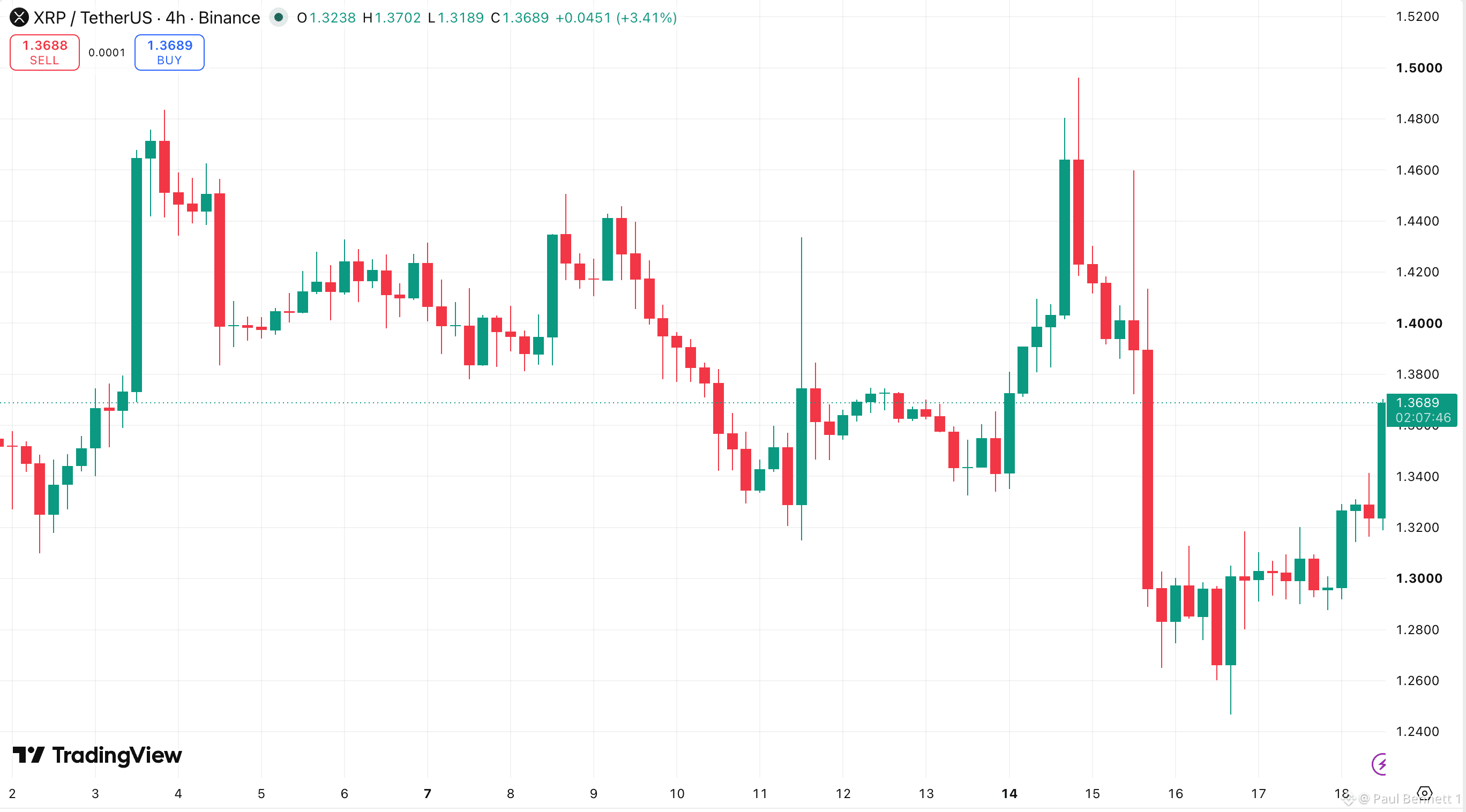
💰 $1.7B Entered XRP ETFs - But Price Is Still Far From Its ATH I went through CoinPaper’s breakdown, and the interesting part is the gap between institutional demand and price performance. U.S. spot $XRP ETFs have attracted around $1.71B in historical net inflows, while XRP still trades near $1.33 - about 64% below the $3.65 ATH used in the comparison. That may look strange at first, but ETF demand is only one part of the market. Existing holders can still sell, derivatives can add pressure, and broader sentiment around $BTC can easily affect how much capital reaches large-cap alts. This week showed that clearly. XRP moved lower after the CLARITY Act vote failed to advance, even though ETF exposure remained substantial. In other words, institutional access is there - but it doesn’t automatically overpower every other source of supply. 👀 What I’d watch now is whether ETF inflows keep building while price stays relatively flat. We’ve seen with $BTC that access through ETFs and price performance don’t always move in a straight line. For XRP, Wall Street demand is becoming easier to measure. The bigger question is whether that demand eventually starts showing up more clearly in price. Not financial advice. Always DYOR. #BTC Price Analysis# #Bitcoin Price Prediction: What is Bitcoins next move?# #XRP
💰 $1.7B Entered XRP ETFs - But Price Is Still Far From Its ATH I went through CoinPaper’s breakdown, and the interesting part is the gap between institutional demand and price performance. U.S. spot $XRP ETFs have attracted around $1.71B in historical net inflows, while XRP still trades near $1.33 - about 64% below the $3.65 ATH used in the comparison. That may look strange at first, but ETF demand is only one part of the market. Existing holders can still sell, derivatives can add pressure, and broader sentiment around $BTC can easily affect how much capital reaches large-cap alts. This week showed that clearly. XRP moved lower after the CLARITY Act vote failed to advance, even though ETF exposure remained substantial. In other words, institutional access is there - but it doesn’t automatically overpower every other source of supply. 👀 What I’d watch now is whether ETF inflows keep building while price stays relatively flat. We’ve seen with $BTC that access through ETFs and price performance don’t always move in a straight line. For XRP, Wall Street demand is becoming easier to measure. The bigger question is whether that demand eventually starts showing up more clearly in price. Not financial advice. Always DYOR. #BTC Price Analysis# #Bitcoin Price Prediction: What is Bitcoins next move?# #XRP
75
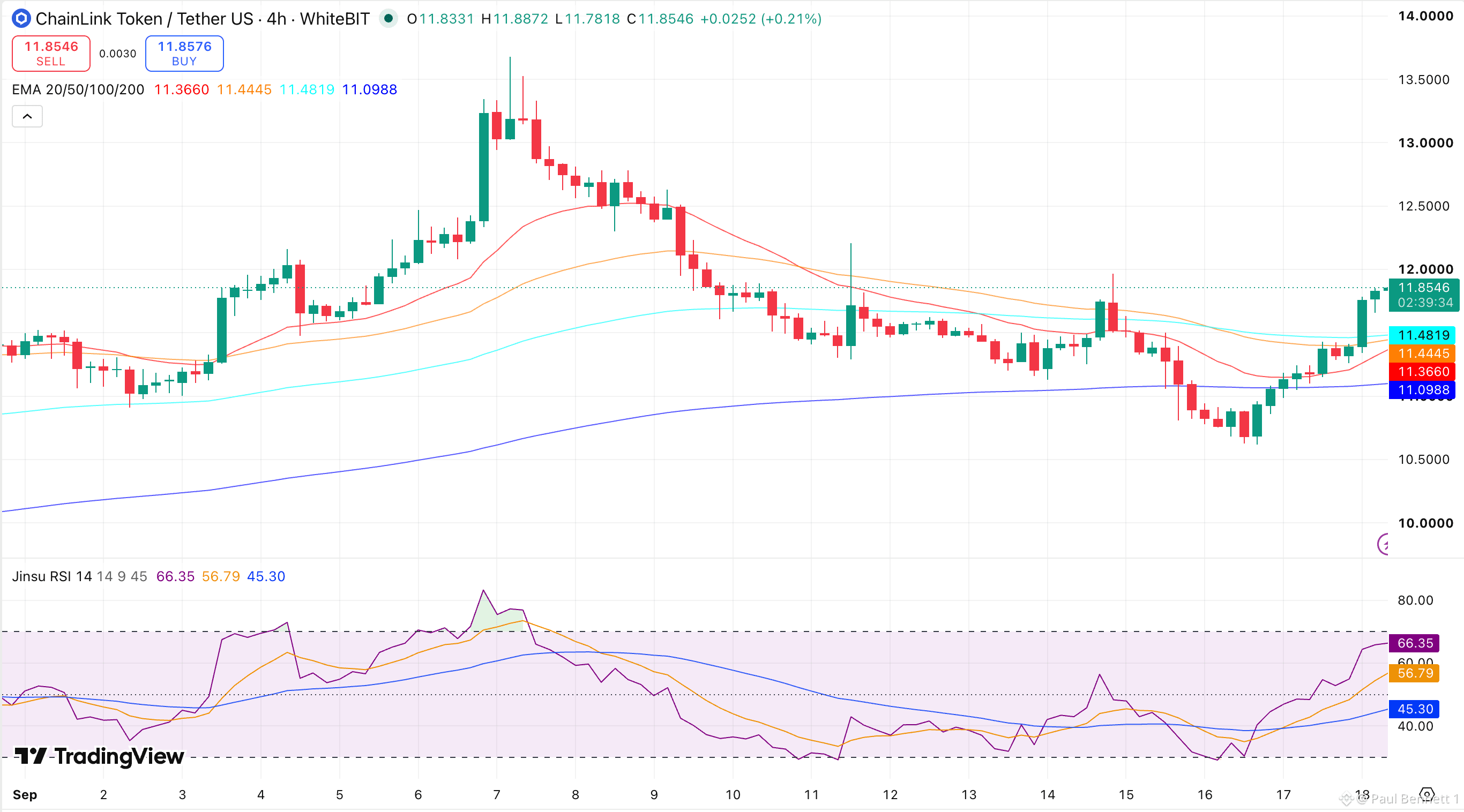
🔗 LINK’s Chart Is Quietly Rebuilding Its Bullish Structure I went through Cryptonomist’s latest LINK analysis, and the interesting part isn’t one huge breakout candle. It’s how the structure is starting to line up again across different timeframes. $LINK has been rebuilding after its recent pullback, with price action holding around important moving averages while short-term momentum improves. 📈 Earlier this month, the token was already trading above its major daily EMAs before momentum cooled, so the current setup is really about whether buyers can turn that recovery back into continuation. There’s also a useful contrast with the broader market. $BTC is still dealing with the $76K area and a larger $80K–$83K resistance zone, meaning LINK is trying to strengthen while Bitcoin itself hasn’t delivered a clean breakout yet. 👀 That’s what I’d watch here: not whether LINK can produce another fast green candle, but whether it can hold its bullish structure when the broader market gets volatile. Previous LINK setups this month showed how quickly momentum can cool even while the daily trend remains intact. If $BTC becomes more constructive and LINK keeps holding its higher-timeframe structure, the combination could give buyers a much cleaner setup than simply chasing momentum. Would you rather buy LINK during consolidation or wait for a confirmed breakout? 🤔 Not financial advice. Always DYOR. #BTC Price Analysis# #LINK #Bitcoin Price Prediction: What is Bitcoins next move?#
🔗 LINK’s Chart Is Quietly Rebuilding Its Bullish Structure I went through Cryptonomist’s latest LINK analysis, and the interesting part isn’t one huge breakout candle. It’s how the structure is starting to line up again across different timeframes. $LINK has been rebuilding after its recent pullback, with price action holding around important moving averages while short-term momentum improves. 📈 Earlier this month, the token was already trading above its major daily EMAs before momentum cooled, so the current setup is really about whether buyers can turn that recovery back into continuation. There’s also a useful contrast with the broader market. $BTC is still dealing with the $76K area and a larger $80K–$83K resistance zone, meaning LINK is trying to strengthen while Bitcoin itself hasn’t delivered a clean breakout yet. 👀 That’s what I’d watch here: not whether LINK can produce another fast green candle, but whether it can hold its bullish structure when the broader market gets volatile. Previous LINK setups this month showed how quickly momentum can cool even while the daily trend remains intact. If $BTC becomes more constructive and LINK keeps holding its higher-timeframe structure, the combination could give buyers a much cleaner setup than simply chasing momentum. Would you rather buy LINK during consolidation or wait for a confirmed breakout? 🤔 Not financial advice. Always DYOR. #BTC Price Analysis# #LINK #Bitcoin Price Prediction: What is Bitcoins next move?#
64
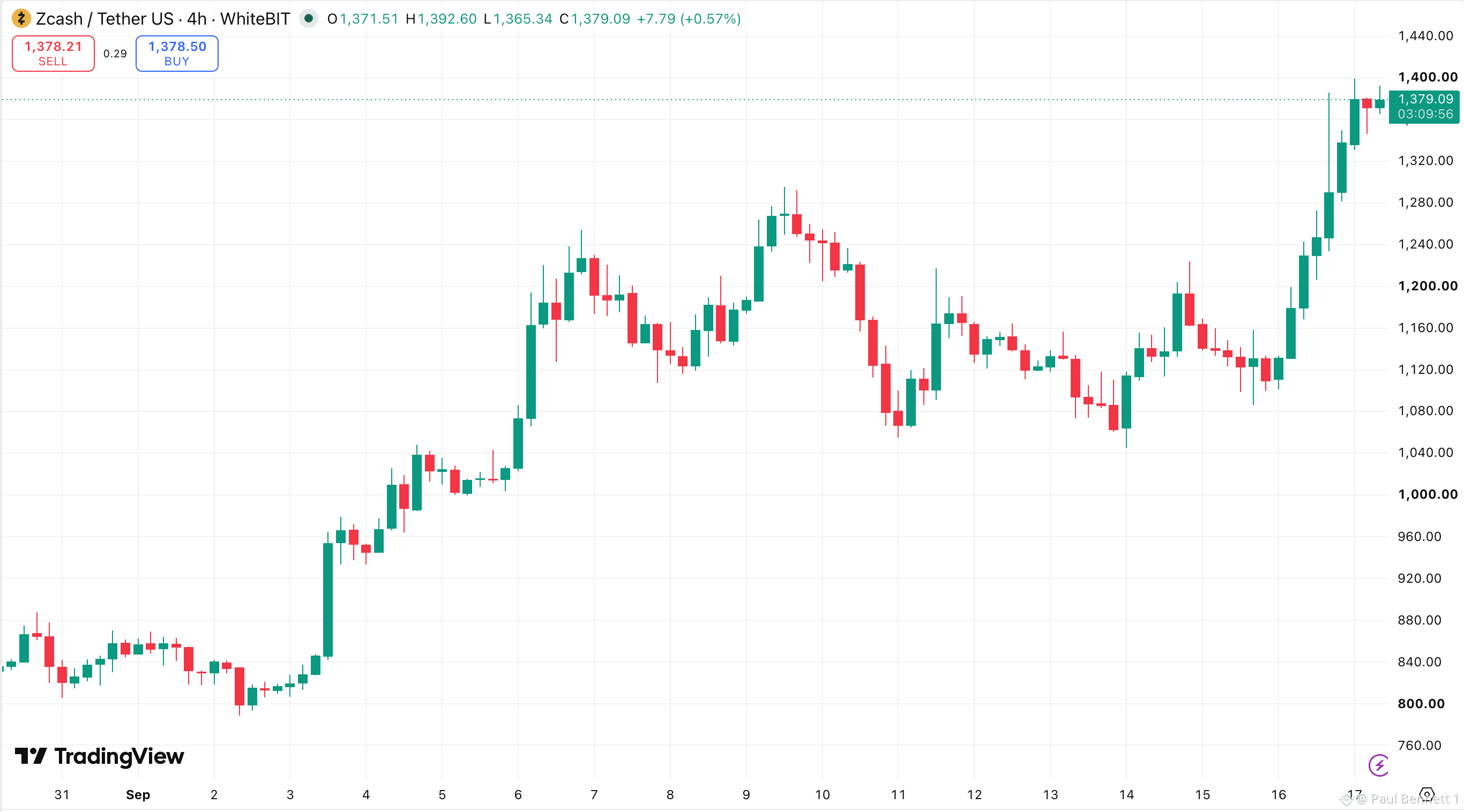
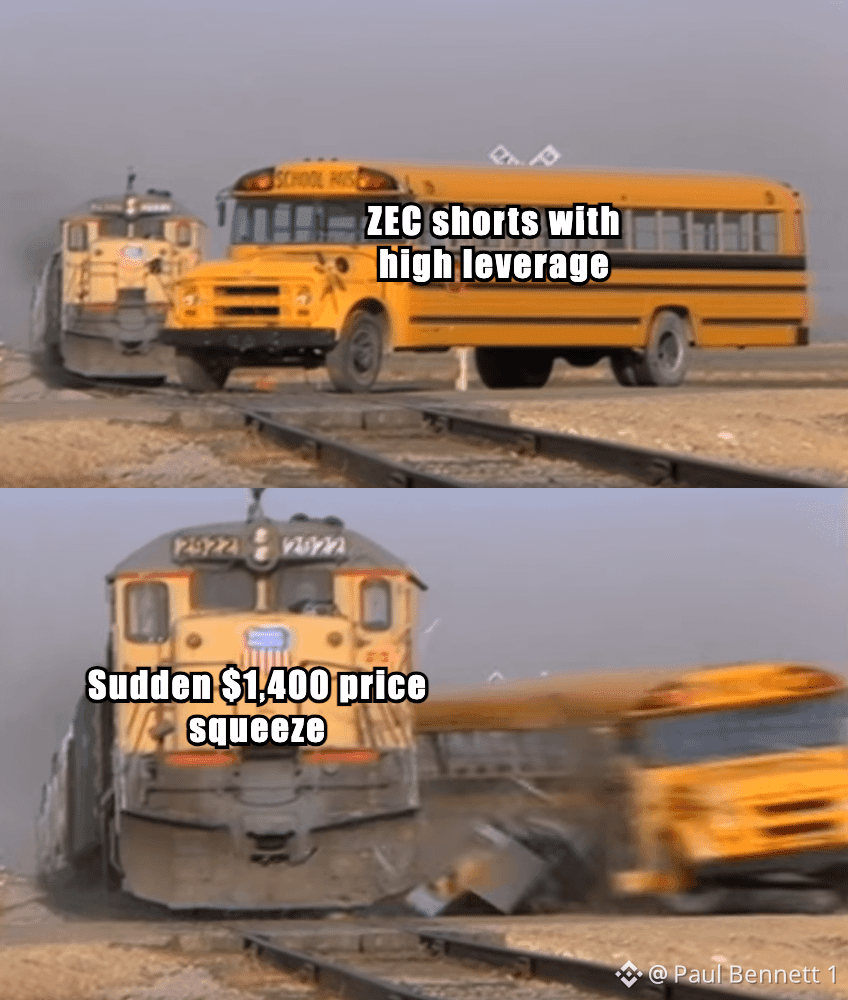
🕶️ $ZEC Is Testing $1,400 - And Shorts Are Fueling the Move Zcash has pushed to a local high near $1,385, keeping most of the move above $1,350 after a sharp squeeze in derivatives. Cryptopolitan says roughly $56.35M in ZEC shorts were liquidated in 24 hours, helping accelerate the rally. ⚡The bigger picture is just as wild: trading volume reached about $2.59B, while ZEC open interest climbed to a three-year high near $2.14B. On Hyperliquid, around 70% of traders are currently long ZEC, while centralized exchanges show a much heavier short bias. That split is what makes the setup interesting to me. ZEC is no longer moving mainly on spot demand - derivatives are now playing a much bigger role, which means both upside squeezes and sharp reversals can get amplified. There’s also a fundamental catalyst in the background: Zcash recently approved a shorter block time, which will speed up block production and bring the halving schedule forward. Hashrate has also increased about fourfold over the past year. ⛏️ If $BTC stays constructive, ZEC may keep attracting momentum traders. But with leverage this high, I’d watch $1,350–$1,400 more as a derivatives battleground than a simple resistance zone. Not financial advice. Always DYOR. #BTC Price Analysis# #Bitcoin Price Prediction: What is Bitcoins next move?# #ZEC
🕶️ $ZEC Is Testing $1,400 - And Shorts Are Fueling the Move Zcash has pushed to a local high near $1,385, keeping most of the move above $1,350 after a sharp squeeze in derivatives. Cryptopolitan says roughly $56.35M in ZEC shorts were liquidated in 24 hours, helping accelerate the rally. ⚡The bigger picture is just as wild: trading volume reached about $2.59B, while ZEC open interest climbed to a three-year high near $2.14B. On Hyperliquid, around 70% of traders are currently long ZEC, while centralized exchanges show a much heavier short bias. That split is what makes the setup interesting to me. ZEC is no longer moving mainly on spot demand - derivatives are now playing a much bigger role, which means both upside squeezes and sharp reversals can get amplified. There’s also a fundamental catalyst in the background: Zcash recently approved a shorter block time, which will speed up block production and bring the halving schedule forward. Hashrate has also increased about fourfold over the past year. ⛏️ If $BTC stays constructive, ZEC may keep attracting momentum traders. But with leverage this high, I’d watch $1,350–$1,400 more as a derivatives battleground than a simple resistance zone. Not financial advice. Always DYOR. #BTC Price Analysis# #Bitcoin Price Prediction: What is Bitcoins next move?# #ZEC
56
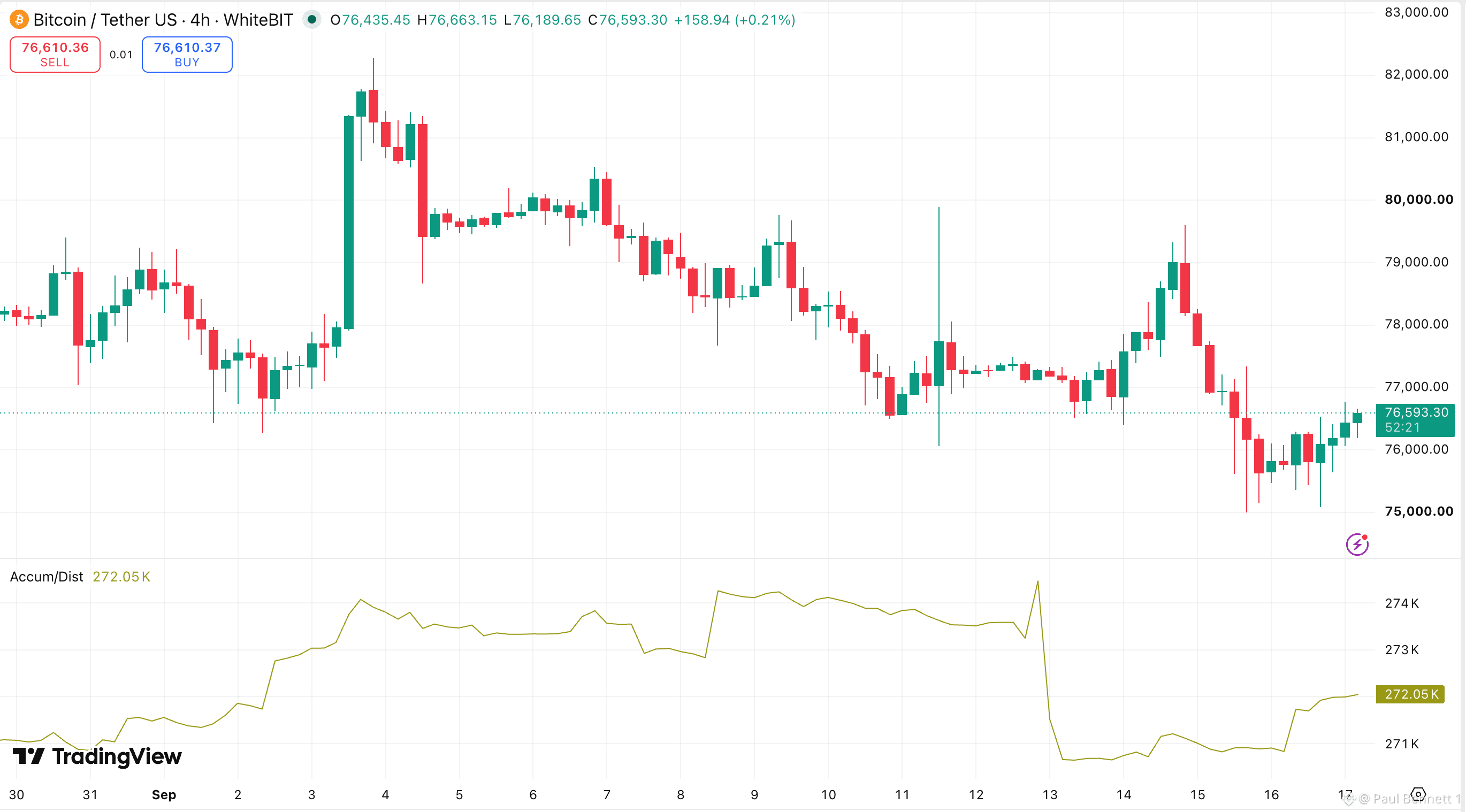
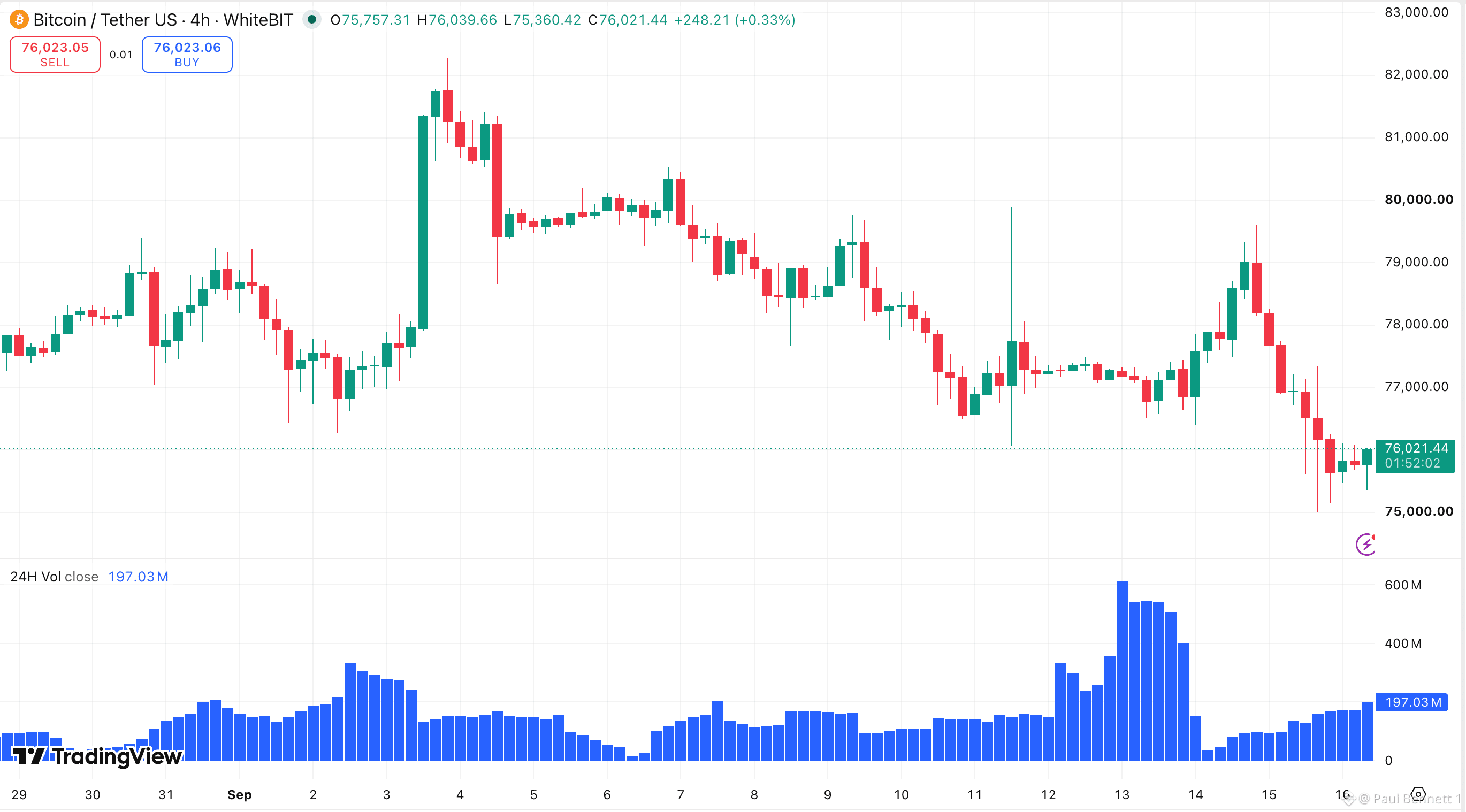
💸 $746M Left Bitcoin ETFs in 48 Hours - Now $76K Is Getting Interesting ETF flows are giving us a very different picture from just a few weeks ago. 📊Coinpaper reports that U.S. spot Bitcoin ETFs recorded around $746M in net outflows across two trading days, including roughly $398M on September 15 and another $348M on September 16. At the same time, $BTC is trying to defend the $76K area. That combination matters because ETF demand has been one of the clearest institutional signals throughout this cycle. When flows reverse this quickly, I pay more attention to whether price can absorb the selling than to the headline number itself. 👀 There’s another layer here: the market is digesting the Fed decision and the failed CLARITY Act vote at the same time. So these ETF outflows are arriving during a broader repricing of both macro and regulatory expectations. For me, the next few sessions are pretty straightforward to watch: do ETF flows stabilize, and can $BTC keep buyers around $76K? If both happen, the $746M exit may end up looking more like a short institutional reset than a lasting change in demand. Would you be more concerned about the ETF outflows or a clean break below $76K? 🤔 Not financial advice. Always DYOR #BTC Price Analysis# #Bitcoin Price Prediction: What is Bitcoins next move?#
💸 $746M Left Bitcoin ETFs in 48 Hours - Now $76K Is Getting Interesting ETF flows are giving us a very different picture from just a few weeks ago. 📊Coinpaper reports that U.S. spot Bitcoin ETFs recorded around $746M in net outflows across two trading days, including roughly $398M on September 15 and another $348M on September 16. At the same time, $BTC is trying to defend the $76K area. That combination matters because ETF demand has been one of the clearest institutional signals throughout this cycle. When flows reverse this quickly, I pay more attention to whether price can absorb the selling than to the headline number itself. 👀 There’s another layer here: the market is digesting the Fed decision and the failed CLARITY Act vote at the same time. So these ETF outflows are arriving during a broader repricing of both macro and regulatory expectations. For me, the next few sessions are pretty straightforward to watch: do ETF flows stabilize, and can $BTC keep buyers around $76K? If both happen, the $746M exit may end up looking more like a short institutional reset than a lasting change in demand. Would you be more concerned about the ETF outflows or a clean break below $76K? 🤔 Not financial advice. Always DYOR #BTC Price Analysis# #Bitcoin Price Prediction: What is Bitcoins next move?#
69
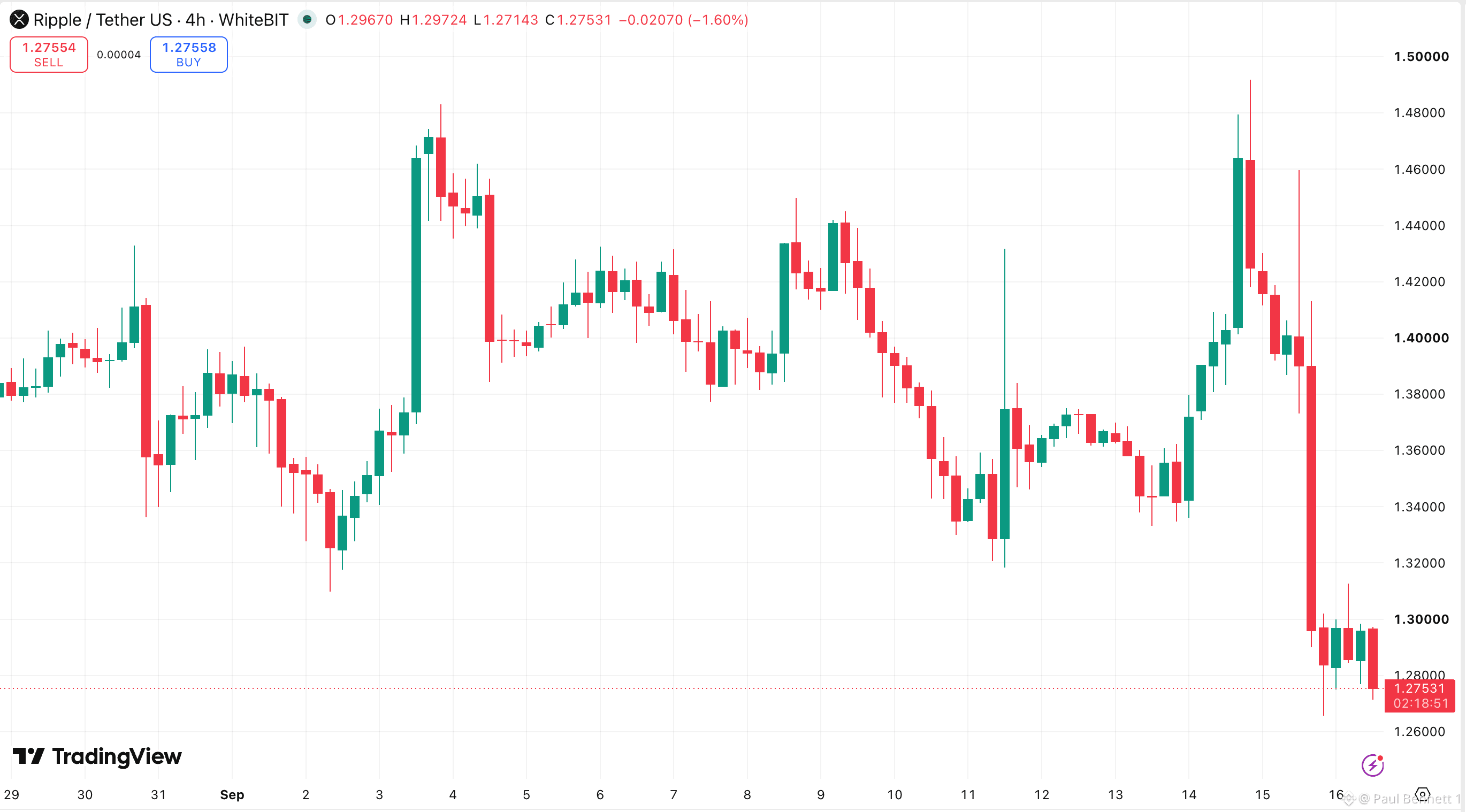
🏛️ $XRP Faces a New Test After the CLARITY Vote I was expecting volatility after the Senate vote, but XRP’s reaction still stood out. The token moved from around $1.46 to $1.27 after lawmakers failed to advance the CLARITY Act. 📉 The trading data adds context. XRP’s cumulative volume delta fell to -10.5M, showing aggressive selling pressure, while $BTC declined about 2% and ETH roughly 4% over the same period. ⚖️ Why did XRP react more strongly? A lot of regulatory expectations had built around CLARITY. The bill was supposed to create clearer boundaries between the SEC and CFTC and define a broader framework for exchanges, brokers and dealers. 🇺🇸XRP has a long history with U.S. securities regulation, so progress in Washington had become part of its market narrative. One important detail: the failed vote did not change XRP’s current legal position. It simply delayed the broader framework the market had been waiting for. 👀 Now I’d watch whether XRP can stabilize if $BTC holds its structure. If it does, this may look more like a policy-driven reset than a deeper change in the XRP story. Do you think the market reaction was too strong? Source: CryptoPotato Not financial advice. Always DYOR. #BTC Price Analysis# #XRP #Bitcoin Price Prediction: What is Bitcoins next move?#
🏛️ $XRP Faces a New Test After the CLARITY Vote I was expecting volatility after the Senate vote, but XRP’s reaction still stood out. The token moved from around $1.46 to $1.27 after lawmakers failed to advance the CLARITY Act. 📉 The trading data adds context. XRP’s cumulative volume delta fell to -10.5M, showing aggressive selling pressure, while $BTC declined about 2% and ETH roughly 4% over the same period. ⚖️ Why did XRP react more strongly? A lot of regulatory expectations had built around CLARITY. The bill was supposed to create clearer boundaries between the SEC and CFTC and define a broader framework for exchanges, brokers and dealers. 🇺🇸XRP has a long history with U.S. securities regulation, so progress in Washington had become part of its market narrative. One important detail: the failed vote did not change XRP’s current legal position. It simply delayed the broader framework the market had been waiting for. 👀 Now I’d watch whether XRP can stabilize if $BTC holds its structure. If it does, this may look more like a policy-driven reset than a deeper change in the XRP story. Do you think the market reaction was too strong? Source: CryptoPotato Not financial advice. Always DYOR. #BTC Price Analysis# #XRP #Bitcoin Price Prediction: What is Bitcoins next move?#
55
🛑 No More 3 A.M. Wallet Incidents - Here’s What Changed Six months ago, one payment could wake up half the ops team. A $BTC transfer might touch custody, liquidity, screening and node infrastructure, and if one provider slowed down, everyone ended up on the same late-night call. Now the on-call channel is strangely quiet. Fewer node issues, fewer screening timeouts, fewer moments when three dashboards say everything is fine and the fourth does not. Reducing four external dependencies to one could remove three integration seams. A lot of problems tend to live exactly there: retries, timeouts, mismatched statuses and duplicated data. There are a few ways teams could approach this: ✔️ WhiteBIT Wallet-as-a-Service could suit businesses that want wallet infrastructure for 340+ assets across 80+ networks, automatic AML checks and multichain transfers. https://institutional.whitebit.com/crypto-wallets-for-business?utm_source=coinmarketcap&utm_medium=paulwAAs&utm_campaign=post ✔️ Coinbase CDP Wallets could be another route, with Embedded and Server Wallets, built-in KYT/compliance controls, support for EVM networks and Solana, plus access to a broader payments and trading stack. https://www.coinbase.com/developer-platform/wallets?utm_source=coinmarketcap&utm_medium=paulwAAs&utm_campaign=post The second-order gain can be even more useful: fewer vendors, fewer audits, less reconciliation and less time managing separate SLAs. That gives the ops team more time to improve processes instead of chasing one stuck $BTC withdrawal. The trade-off is concentration risk, so that still needs to be managed deliberately. Sometimes the best infrastructure feature is simply the incident that stopped happening. 😉How many separate vendors sit behind your crypto flow today? 📍Disclaimer: This is not financial or investment advice. Do your own research before making any decisions. Use at your own risk. #BTC Price Analysis# #Bitcoin Price Prediction: What is Bitcoins next move?#
🛑 No More 3 A.M. Wallet Incidents - Here’s What Changed Six months ago, one payment could wake up half the ops team. A $BTC transfer might touch custody, liquidity, screening and node infrastructure, and if one provider slowed down, everyone ended up on the same late-night call. Now the on-call channel is strangely quiet. Fewer node issues, fewer screening timeouts, fewer moments when three dashboards say everything is fine and the fourth does not. Reducing four external dependencies to one could remove three integration seams. A lot of problems tend to live exactly there: retries, timeouts, mismatched statuses and duplicated data. There are a few ways teams could approach this: ✔️ WhiteBIT Wallet-as-a-Service could suit businesses that want wallet infrastructure for 340+ assets across 80+ networks, automatic AML checks and multichain transfers. https://institutional.whitebit.com/crypto-wallets-for-business?utm_source=coinmarketcap&utm_medium=paulwAAs&utm_campaign=post ✔️ Coinbase CDP Wallets could be another route, with Embedded and Server Wallets, built-in KYT/compliance controls, support for EVM networks and Solana, plus access to a broader payments and trading stack. https://www.coinbase.com/developer-platform/wallets?utm_source=coinmarketcap&utm_medium=paulwAAs&utm_campaign=post The second-order gain can be even more useful: fewer vendors, fewer audits, less reconciliation and less time managing separate SLAs. That gives the ops team more time to improve processes instead of chasing one stuck $BTC withdrawal. The trade-off is concentration risk, so that still needs to be managed deliberately. Sometimes the best infrastructure feature is simply the incident that stopped happening. 😉How many separate vendors sit behind your crypto flow today? 📍Disclaimer: This is not financial or investment advice. Do your own research before making any decisions. Use at your own risk. #BTC Price Analysis# #Bitcoin Price Prediction: What is Bitcoins next move?#

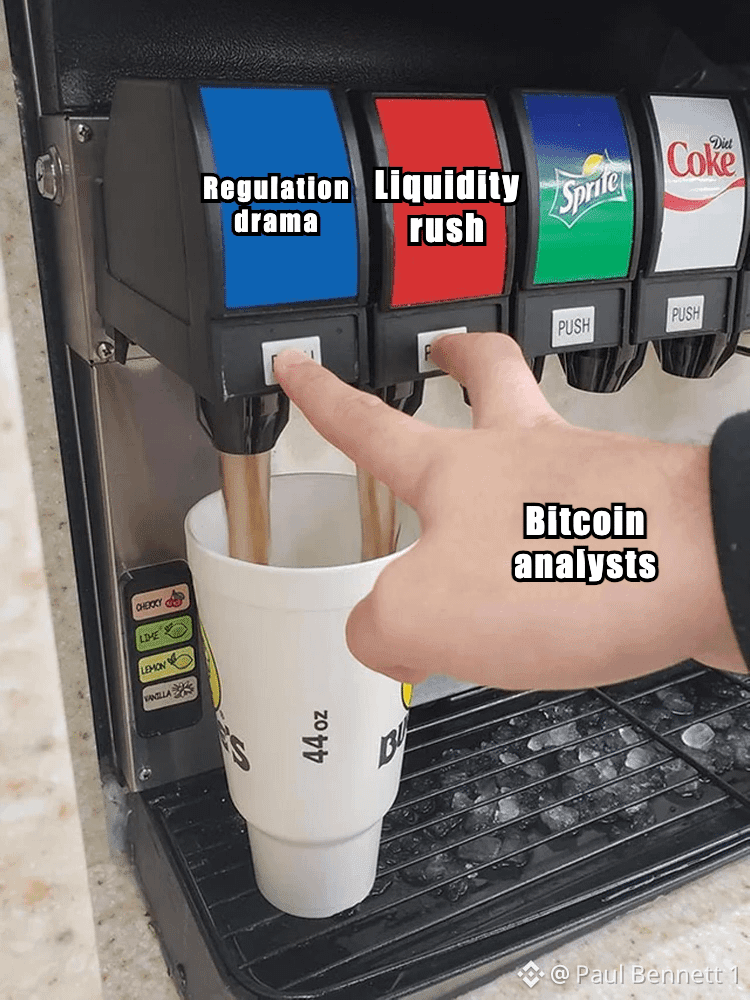
💧 Arthur Hayes Says Bitcoin Doesn’t Need CLARITY - It Needs Liquidity With so much attention on the CLARITY Act right now, Arthur Hayes is looking somewhere else entirely. The BitMEX co-founder argues that $BTC ’s next major move will depend much more on global liquidity than on U.S. crypto legislation. His focus is on rising U.S. debt, pressure in the Treasury market and what the Federal Reserve may eventually have to do in response. The logic is pretty straightforward: if Treasury-market stress pushes policymakers toward more monetary support, more dollars could enter the financial system. Hayes argues that scarce assets such as Bitcoin could benefit when more fiat competes for a finite supply. That doesn’t make CLARITY irrelevant. Clearer rules could still matter enormously for exchanges, token issuers and institutional crypto infrastructure. Hayes’ point is narrower: Bitcoin itself has operated without this legislation since 2009, so regulation doesn’t necessarily have to be the trigger for another rally. 👀 That gives me two very different signals to watch now: Washington for crypto regulation, and the Treasury/Fed for liquidity. For $BTC specifically, Hayes believes the second may ultimately matter more. Do you agree - will Bitcoin’s next big move be driven more by liquidity than regulatory clarity? Source: ZyCrypto Not financial advice. Always DYOR. #BTC Price Analysis# #Bitcoin Price Prediction: What is Bitcoins next move?#
💧 Arthur Hayes Says Bitcoin Doesn’t Need CLARITY - It Needs Liquidity With so much attention on the CLARITY Act right now, Arthur Hayes is looking somewhere else entirely. The BitMEX co-founder argues that $BTC ’s next major move will depend much more on global liquidity than on U.S. crypto legislation. His focus is on rising U.S. debt, pressure in the Treasury market and what the Federal Reserve may eventually have to do in response. The logic is pretty straightforward: if Treasury-market stress pushes policymakers toward more monetary support, more dollars could enter the financial system. Hayes argues that scarce assets such as Bitcoin could benefit when more fiat competes for a finite supply. That doesn’t make CLARITY irrelevant. Clearer rules could still matter enormously for exchanges, token issuers and institutional crypto infrastructure. Hayes’ point is narrower: Bitcoin itself has operated without this legislation since 2009, so regulation doesn’t necessarily have to be the trigger for another rally. 👀 That gives me two very different signals to watch now: Washington for crypto regulation, and the Treasury/Fed for liquidity. For $BTC specifically, Hayes believes the second may ultimately matter more. Do you agree - will Bitcoin’s next big move be driven more by liquidity than regulatory clarity? Source: ZyCrypto Not financial advice. Always DYOR. #BTC Price Analysis# #Bitcoin Price Prediction: What is Bitcoins next move?#
62
ເຂົ້າສູ່ລະບົບເພື່ອສຳຫຼວດເນື້ອຫາເພີ່ມເຕີມ
ເຂົ້າຮ່ວມກຸ່ມຜູ້ໃຊ້ຄຣິບໂຕທົ່ວໂລກໃນ Binance Square.
⚡️ ໄດ້ຮັບຂໍ້ມູນຫຼ້າສຸດ ແລະ ທີ່ມີປະໂຫຍດກ່ຽວກັບຄຣິບໂຕ.
💬 ໄດ້ຮັບຄວາມໄວ້ວາງໃຈຈາກຕະຫຼາດແລກປ່ຽນຄຣິບໂຕທີ່ໃຫຍ່ທີ່ສຸດໃນໂລກ.
👍 ຄົ້ນຫາຂໍ້ມູນເຊີງເລິກທີ່ແທ້ຈາກນັກສ້າງທີ່ໄດ້ຮັບການຢືນຢັນ.
ອີເມວ / ເບີໂທລະສັບ
ຫົວຂໍ້ທີ່ກໍາລັງນິຍົມ
QNTRises39%
10,346 views
574 ກຳລັງສົນທະນາ
#qntrises39%
🚀 $QNT PUMPS +39% ON HUGE INSTITUTIONAL NEWS! 💥
QNT is surging past $100 after massive momentum in institutional adoption! 🔥
$QNT
📰 The Big News Driving the Rally:
Quant Network's Overledger infrastructure is leading the push for tokenized deposits and digital banking solutions. With enterprise volume up over 553%, QNT has surged from $70 to over $100 in just hours! 📊📈
🟡 Binance Updates You Need to Know:
Funding Account Migration: Binance is officially migrating user crypto balances from Funding Accounts to Spot Accounts.
"Stocks Account" Rebrand: Funding Accounts will be renamed to Stocks Account, reserved for stock & stock-options trading settlement using 6 major assets (USD, USDC, USDT, USD1, U, BNB).
Action Required: Check your Binance app for the "One-Click Migration" feature to move your crypto to Spot Accounts before automatic batch transfers begin!
🤔 Is QNT set to smash $110 next, or are we consolidating here? Drop your price predictions below! 👇
#QNT #Quant #BinanceUpdates #CryptoNews
Lily星星
·1 ຖືກໃຈ
·3k views
EthereumBreaksAbove$2700
1,283 views
68 ກຳລັງສົນທະນາ
BitgetBreachForgedRequestsNotStolenKeys
9,283 views
459 ກຳລັງສົນທະນາ