

#gasfees
gasfees
207,701 ຄັ້ງທີ່ເບິ່ງ
375 ກຳລັງສົນທະນາ
ມາແຮງ
ຫຼ້າສຸດ

·
--
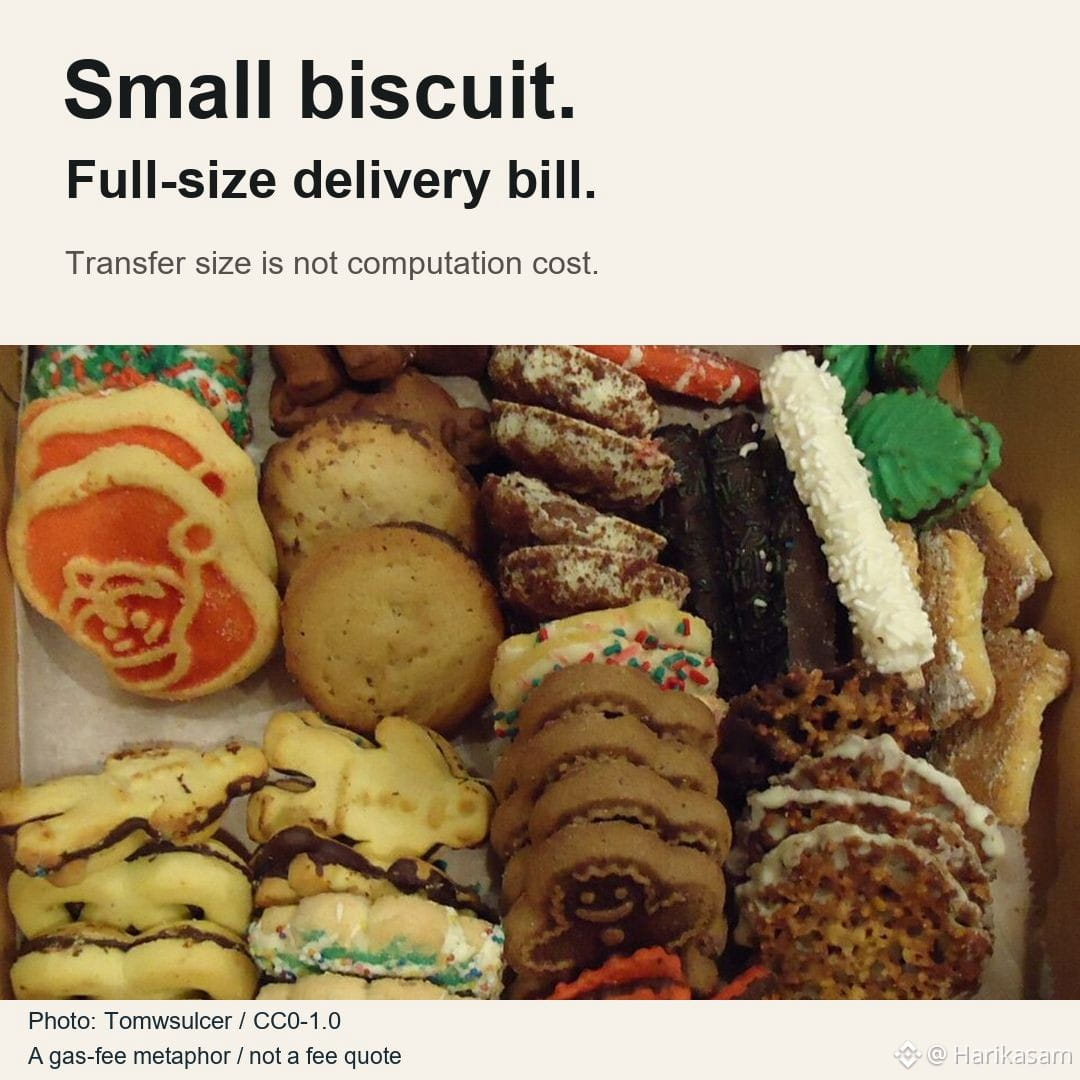
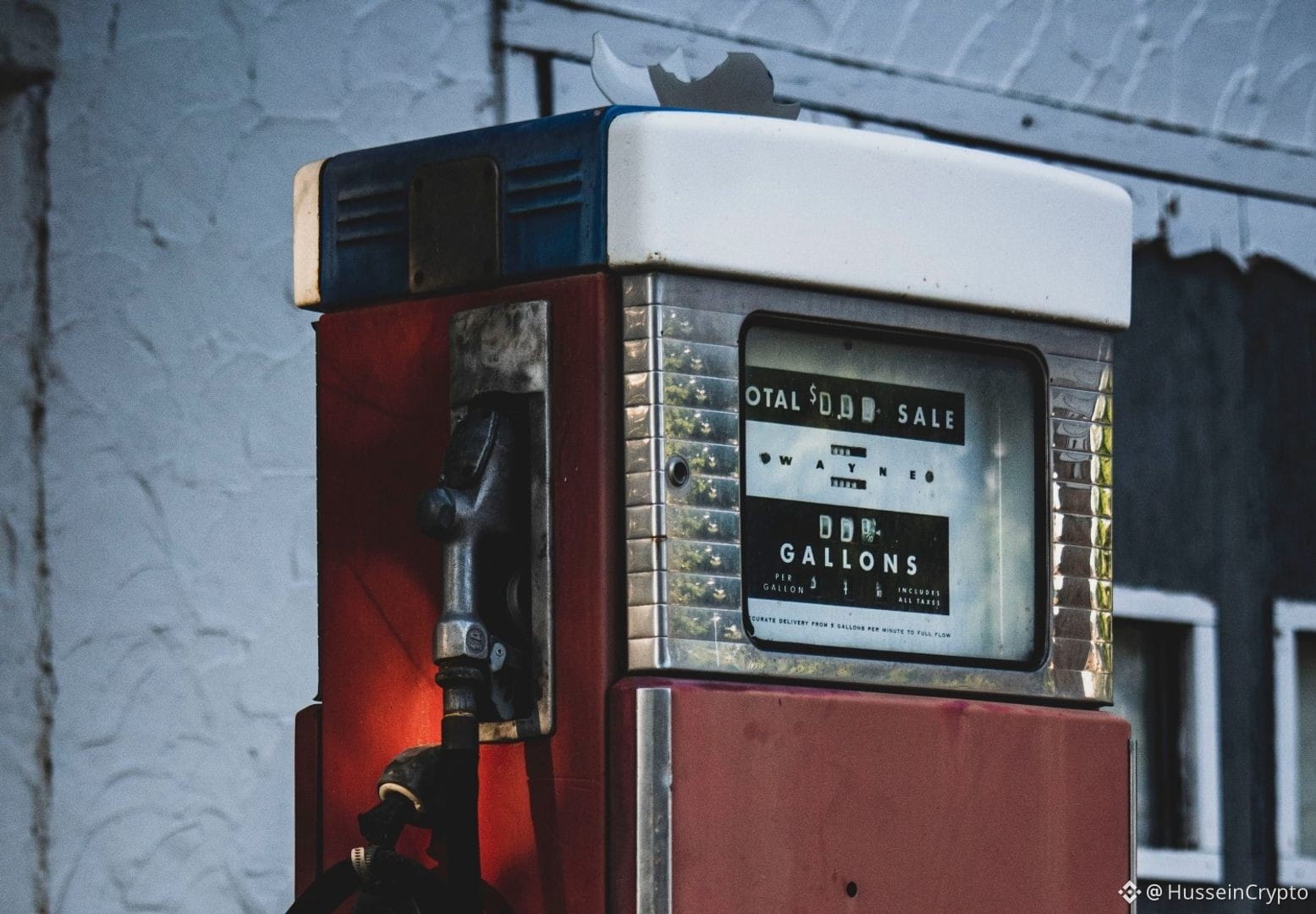
A tiny onchain transfer can come with a surprisingly independent delivery bill. The biscuit is small; the van remains a van.
Ethereum's execution fee depends on the gas used and the price per gas, rather than simply the amount sent. More complex operations can require more computation.
Check the estimated total before signing, especially for small transfers. Sending less doesn't automatically make the computation cheaper.
https://ethereum.org/developers/docs/gas/
$ETH
#Ethereum #GasFees
9

ບົດຄວາມ
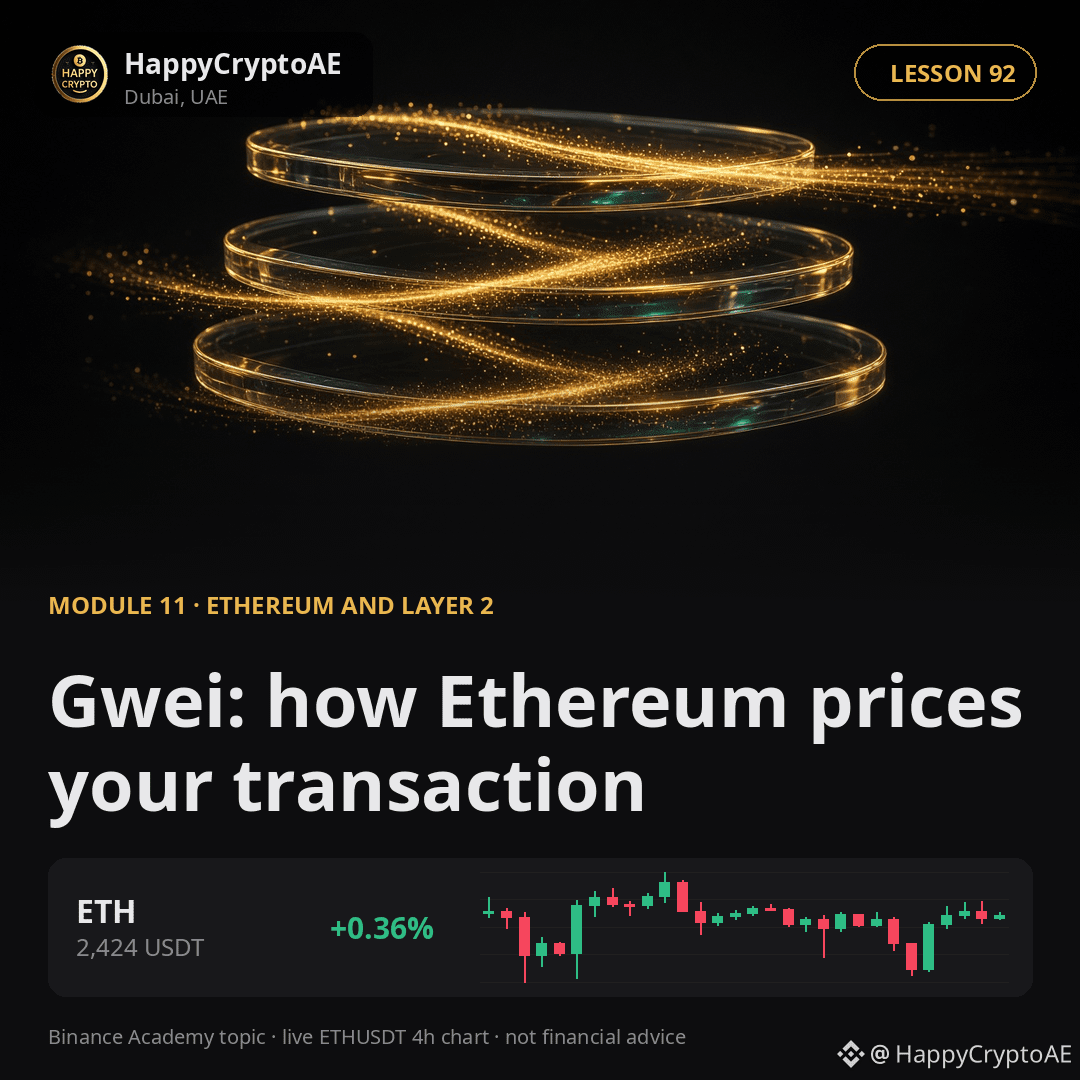
Gwei: how Ethereum prices your transactionGwei is a small unit of ether - one billionth of an ETH - used to express gas prices. When a wallet shows a gas price of 12 gwei, each unit of gas your transaction uses costs 12 billionths of an ether.
Your fee is the gas the transaction needs multiplied by the gas price. A simple transfer uses little gas; a complex contract interaction uses far more. Prices rise and fall with demand for block space, so the same action can cost very different amounts at different hours. Glancing at the gas price before a transaction that is not urgent is one of the easiest ways to stop overpaying.
💬 Do you check gas prices before sending, or just press confirm?
Binance Academy covers this in more depth: https://www.binance.com/en/academy/glossary/gwei
Next lesson: EIP-1559: why part of every fee is burned
Trading crypto from Dubai since 2019.
$ETH $SOL
#Gwei #Ethereum #GasFees
Gwei: how Ethereum prices your transaction
Gwei is a small unit of ether - one billionth of an ETH - used to express gas prices. When a wallet shows a gas price of 12 gwei, each unit of gas your transaction uses costs 12 billionths of an ether.
Your fee is the gas the transaction needs multiplied by the gas price. A simple transfer uses little gas; a complex contract interaction uses far more. Prices rise and fall with demand for block space, so the same action can cost very different amounts at different hours. Glancing at the gas price before a transaction that is not urgent is one of the easiest ways to stop overpaying.
💬 Do you check gas prices before sending, or just press confirm?
Binance Academy covers this in more depth: https://www.binance.com/en/academy/glossary/gwei
Next lesson: EIP-1559: why part of every fee is burned
Trading crypto from Dubai since 2019.
$ETH $SOL
#Gwei #Ethereum #GasFees
1
87

Why do network congestion spikes sometimes fail to push transaction fees exponentially higher into infinity? Users often assume that gas costs scale purely on an unconstrained supply-and-demand auction.
Networks utilizing algorithmic fee models like Ethereum—where Ether currently changes hands at $2,431.13—rely on a self-regulating target block size mechanism. When blocks exceed 50% capacity, the protocol automatically scales the mandatory base fee upward in the next block, cooling demand. Conversely, under-filled blocks reduce it.
This feedback loop prevents runaway fee markets by mathematically adjusting protocol friction in real time. Understanding this dynamic helps explain why fee spikes often experience a natural ceiling during peak congestion. #Ethereum #GasFees
44

·
--
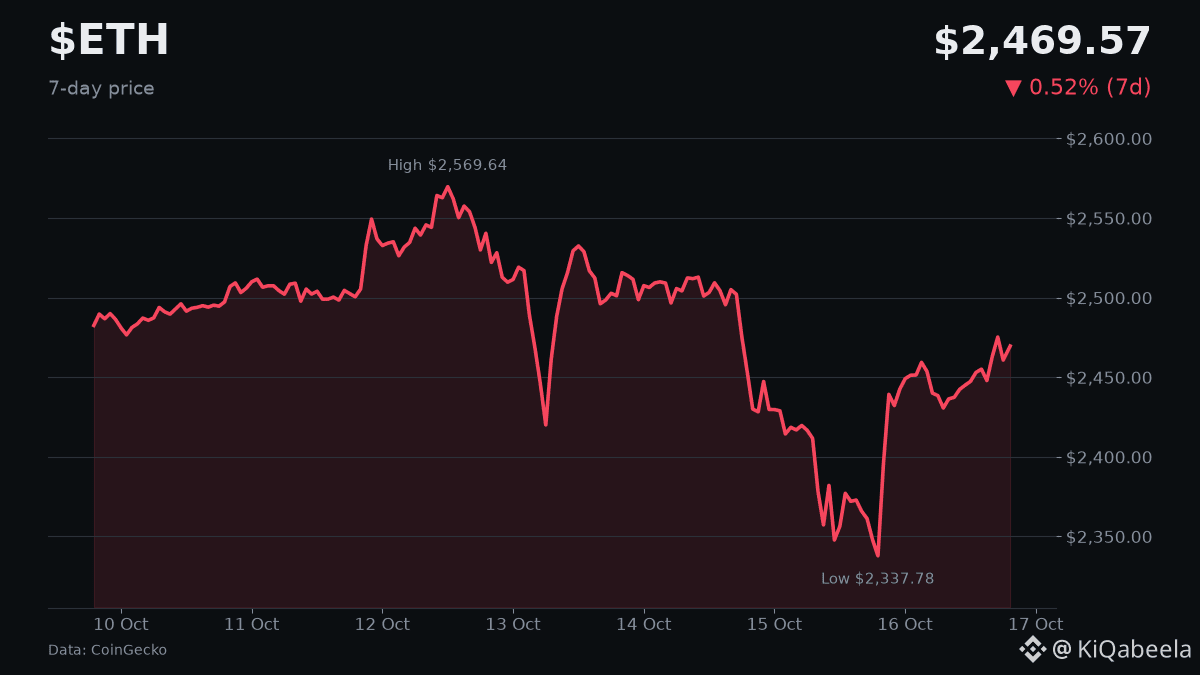
Ethereum up 5.1% in 24h on Binance, volume near $799M
📌 What happened
Ethereum rose 5.1% over the past day, with trading volume close to $799 million on Binance.
🔍 Why it matters
• The price jump reflects growing interest as users explore how Ethereum processes transactions.
• Understanding gas pricing helps traders estimate fee costs during network congestion.
• Smart‑contract flexibility keeps Ethereum at the core of DeFi and NFT activity.
👀 What to watch
• Upcoming EIP proposals could alter gas mechanics, impacting fee structures.
• A sudden surge in network traffic might raise gas fees, discouraging smaller traders.
💬 How do you see Ethereum’s gas evolution affecting daily users? One word.
$ETH
#EthereumExplained #GasFees
7


·
--
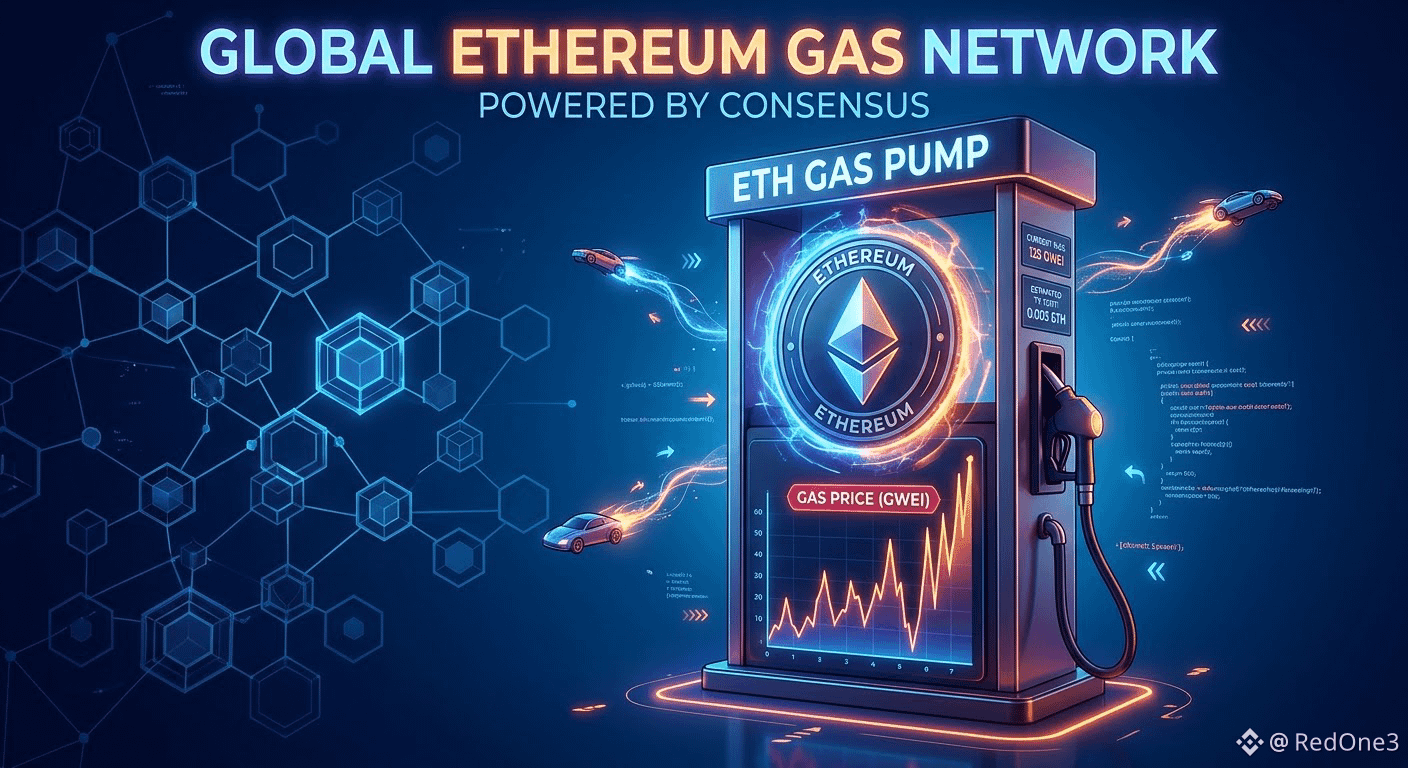
What is Gas Fee? ⛽
The cost to execute transactions on blockchains like Ethereum 💰
Higher network demand = higher gas fees 📈 During bull markets, Ethereum gas can spike to $100+ per transaction 😱
Solution: Use Layer 2s (Arbitrum, Optimism) for lower costs 🚀
#GasFees #Ethereum #L2Solutions .
What is Gas Fee? ⛽
The cost to execute transactions on blockchains like Ethereum 💰
Higher network demand = higher gas fees 📈 During bull markets, Ethereum gas can spike to $100+ per transaction 😱
Solution: Use Layer 2s (Arbitrum, Optimism) for lower costs 🚀
#GasFees #Ethereum #L2Solutions .
The cost to execute transactions on blockchains like Ethereum 💰
Higher network demand = higher gas fees 📈 During bull markets, Ethereum gas can spike to $100+ per transaction 😱
Solution: Use Layer 2s (Arbitrum, Optimism) for lower costs 🚀
#GasFees #Ethereum #L2Solutions .
374

·
--
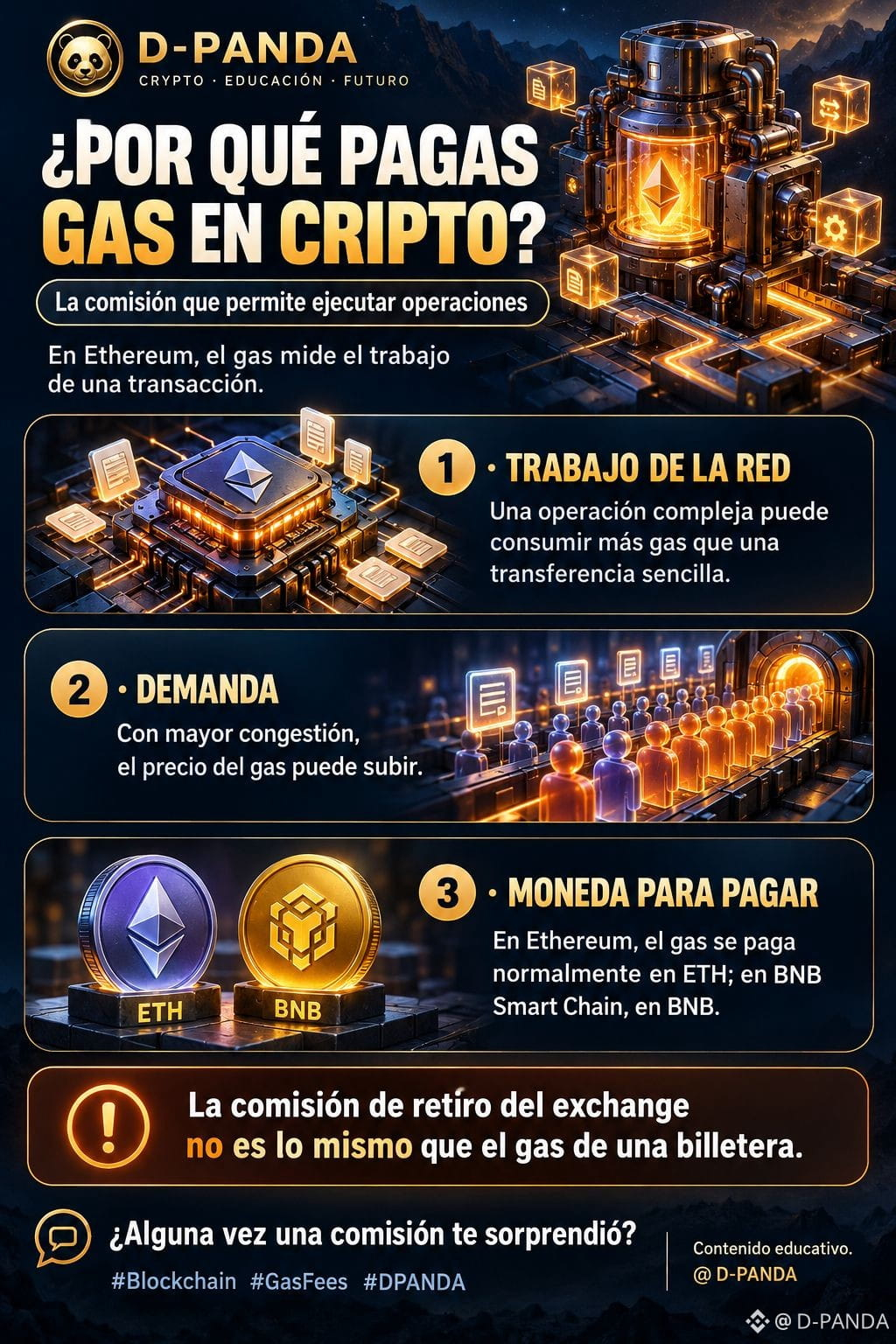
⛽ En cripto, “gas” no es una moneda: en redes como Ethereum, es la unidad que mide el trabajo necesario para ejecutar una operación.
La comisión depende del gas utilizado y de su precio. Por eso, una transferencia sencilla puede costar menos que una interacción compleja con un contrato inteligente.
Además, cuando aumenta la demanda de la red, las comisiones pueden subir.
Ejemplo: tener USDT en una billetera de Ethereum no significa que puedas enviarlos sin más. Normalmente necesitas ETH para pagar el gas, salvo que tu billetera ofrezca un mecanismo alternativo.
En BNB Smart Chain, las comisiones se pagan en BNB.
🐼 Consejo D-PANDA: revisa la estimación antes de confirmar. Distingue también entre el gas de una operación desde tu billetera y la comisión de retiro que establece un exchange.
Alguna vez tenías tokens, pero no saldo para pagar la comisión?👇
#Blockchain #GasFees #DPANDA #BTC
99

·
--
ບົດຄວາມ
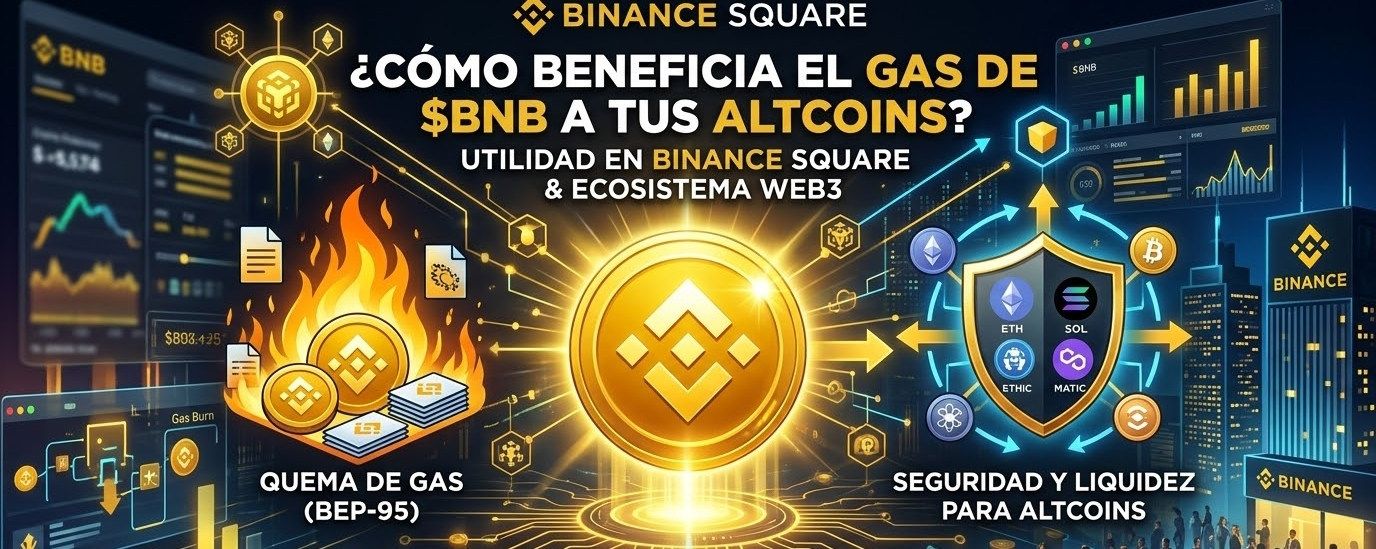
¿El Gas en BNB Chain es un gasto o un motor económico para tus Altcoins? 🌐Cuando realizas una transferencia o interactúas con un protocolo DeFi en BNB Smart Chain (BSC), pagas una pequeña tarifa en $BNB denominada Gas. A simple vista parece un costo operativo, pero en la economía tokenómica, el Gas es el combustible que respalda el valor de cientos de otras monedas.
Aquí te explico cómo las comisiones de red benefician a todo el ecosistema Web3:
1. El Mecanismo BEP-95: Deflación en tiempo real 🔥
Desde la implementación del BEP-95, cada vez que alguien paga Gas en la red, una porción fija de esa comisión se quema en tiempo real y desaparece para siempre.
Efecto positivo: Al reducir la oferta circulante de $BNB en cada bloque, se fortalece la moneda base sobre la cual cotizan miles de altcoins y tokens dentro de la red.
2. Recompensas para Validadores y Stakers 🛡️
Las comisiones no quemadas se distribuyen entre los validadores que procesan las transacciones y los usuarios que delegan sus $BNB (Staking).
Beneficio: Esto mantiene la red 100% segura y rápida para interactuar con tokens de proyectos DeFi, Gaming y NFTs sin sufrir caídas o ataques.
3. Sostenibilidad para la Liquidez de Altcoins 💧
Al mantener comisiones de Gas de apenas centavos de dólar a diferencia de otras redes, las aplicaciones descentralizadas (DApps) atraen mayor volumen.
Impacto en tus otras criptos: Un costo de transacción ultra bajo permite que la gente comercie tokens de menor capitalización (meme coins, utilitarios o proyectos Web3) sin que el costo de la red consuma sus ganancias.
4. Expansión a Redes Layer-2 (opBNB y Greenfield) ⚡
El modelo de Gas de $BNB impulsa el desarrollo de soluciones de capa 2 como opBNB, reduciendo aún más las comisiones a fracciones de centavo. Esto facilita el uso masivo de microtransacciones en videojuegos y redes sociales cripto.
💡 En conclusión: Pagar una fracción de Gas en $BNB no es una pérdida, es la inyección de valor que mantiene segura la red, quemando suministro continuamente y dando liquidez eficiente a todo tu portafolio.
💬 ¿En qué red sueles pagar más comisiones y qué opinas de los costos en BSC y opBNB? ¡Déjamelo saber en los comentarios!
👇 Si este análisis técnico te sirvió para entender mejor la economía de la red, apoya la publicación con un Me Gusta, Sígueme para más contenido educativo, ¡y considera dejar una pequeña Propinita para continuar analizando el mercado! 💛
#BNB #GasFees #CryptoEducation #BinanceSquare
{spot}(BNBUSDT)
{alpha}(560x44440f83419de123d7d411187adb9962db017d03)
¿El Gas en BNB Chain es un gasto o un motor económico para tus Altcoins? 🌐
Cuando realizas una transferencia o interactúas con un protocolo DeFi en BNB Smart Chain (BSC), pagas una pequeña tarifa en $BNB denominada Gas. A simple vista parece un costo operativo, pero en la economía tokenómica, el Gas es el combustible que respalda el valor de cientos de otras monedas.
Aquí te explico cómo las comisiones de red benefician a todo el ecosistema Web3:
1. El Mecanismo BEP-95: Deflación en tiempo real 🔥
Desde la implementación del BEP-95, cada vez que alguien paga Gas en la red, una porción fija de esa comisión se quema en tiempo real y desaparece para siempre.
Efecto positivo: Al reducir la oferta circulante de $BNB en cada bloque, se fortalece la moneda base sobre la cual cotizan miles de altcoins y tokens dentro de la red.
2. Recompensas para Validadores y Stakers 🛡️
Las comisiones no quemadas se distribuyen entre los validadores que procesan las transacciones y los usuarios que delegan sus $BNB (Staking).
Beneficio: Esto mantiene la red 100% segura y rápida para interactuar con tokens de proyectos DeFi, Gaming y NFTs sin sufrir caídas o ataques.
3. Sostenibilidad para la Liquidez de Altcoins 💧
Al mantener comisiones de Gas de apenas centavos de dólar a diferencia de otras redes, las aplicaciones descentralizadas (DApps) atraen mayor volumen.
Impacto en tus otras criptos: Un costo de transacción ultra bajo permite que la gente comercie tokens de menor capitalización (meme coins, utilitarios o proyectos Web3) sin que el costo de la red consuma sus ganancias.
4. Expansión a Redes Layer-2 (opBNB y Greenfield) ⚡
El modelo de Gas de $BNB impulsa el desarrollo de soluciones de capa 2 como opBNB, reduciendo aún más las comisiones a fracciones de centavo. Esto facilita el uso masivo de microtransacciones en videojuegos y redes sociales cripto.
💡 En conclusión: Pagar una fracción de Gas en $BNB no es una pérdida, es la inyección de valor que mantiene segura la red, quemando suministro continuamente y dando liquidez eficiente a todo tu portafolio.
💬 ¿En qué red sueles pagar más comisiones y qué opinas de los costos en BSC y opBNB? ¡Déjamelo saber en los comentarios!
👇 Si este análisis técnico te sirvió para entender mejor la economía de la red, apoya la publicación con un Me Gusta, Sígueme para más contenido educativo, ¡y considera dejar una pequeña Propinita para continuar analizando el mercado! 💛
#BNB #GasFees #CryptoEducation #BinanceSquare
1
301

Crypto 101: What's a gas fee?
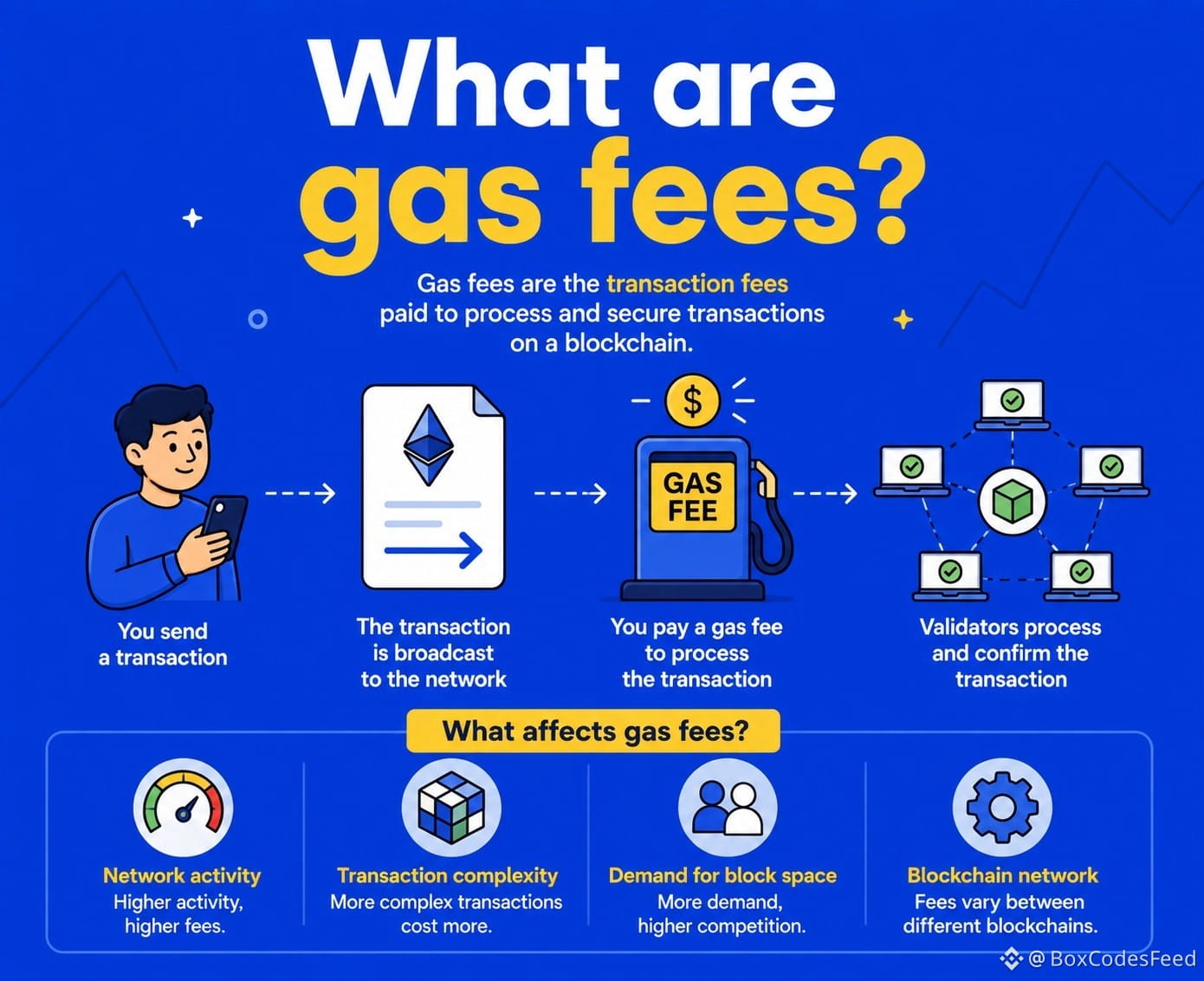
Ok, gas fee. Sounds like a car thing, but nah- think of it as a toll for using the blockchain. Every time you send crypto or touch an app on-chain, someone's computer has to actually process that transaction. The fee is what pays them for the work.
And here's the thing - it's not the exchange charging you, it goes straight to the network. That's why fees spike when things get busy. More people trying to squeeze through, higher toll to skip the line. Same transaction, cents one day, dollars the next. Annoying but that's just how it works.
$ETH $BNB $USDC
#Cryptollegiate
#CryptoForBeginners
#CryptoBasics
#GasFees
{spot}(BNBUSDT)
{spot}(ETHUSDT)
{spot}(USDCUSDT)
Crypto 101: What's a gas fee?
Ok, gas fee. Sounds like a car thing, but nah- think of it as a toll for using the blockchain. Every time you send crypto or touch an app on-chain, someone's computer has to actually process that transaction. The fee is what pays them for the work.
And here's the thing - it's not the exchange charging you, it goes straight to the network. That's why fees spike when things get busy. More people trying to squeeze through, higher toll to skip the line. Same transaction, cents one day, dollars the next. Annoying but that's just how it works.
$ETH $BNB $USDC
#Cryptollegiate
#CryptoForBeginners
#CryptoBasics
#GasFees
77

·
--
🚀 تحديث ثوري من محفظة بينانس: وداعاً لعقبة "رسوم الغاز" للأبد!🚀 تحديث ثوري من محفظة بينانس: وداعاً لعقبة "رسوم الغاز" للأبد! 💸
هل واجهت يوماً مشكلة تجمّد أموالك من عملة USDT على شبكة معينة لأنك لا تملك عملة الشبكة الأصلية (مثل ETH أو BNB) لدفع رسوم التحويل؟ بينانس وجدت لك الحل العبقري! 🎉
أعلنت محفظة بينانس للويب 3 (Binance Web3 Wallet) عن إطلاق ميزة مرتقبة تتيح للمستخدمين دفع رسوم الغاز مباشرة باستخدام عملة USDT.
🌐 ما هي الشبكات المدعومة حالياً؟
الميزة انطلقت بالفعل لتغطي أكبر وأقوى الشبكات في عالم الكريبتو:
🟡 BNB Smart Chain (BSC)🔵 Ethereum🟣 Solana🔴 TRON
🎁 مفاجأة خاصة لمستخدمي شبكة TRON! 🔴
بمناسبة هذا التحديث، أطلقت بينانس عرضاً ترويجياً ضخماً:
🔥 رسوم غاز مجانية بنسبة 100% عند تحويل USDT أو أي رمز (TRC-20) عبر شبكة TRON باستخدام المحفظة!📅 صلاحية العرض: يستمر هذا العرض حتى 22 ديسمبر 2026.💡 بعد انتهاء العرض، ستصبح الرسوم ثابتة ومخفضة بقيمة 1 USDT فقط لكل معاملة على TRON.
⚡ ميزة إضافية: ربط الرسوم بحساب التداول الفوري!
التحديث لا يتوقف هنا! إذا لم يتوفر لديك رصيد غاز في المحفظة، يمكنك الآن سحب رسوم الغاز مباشرة من حسابك الفوري (Spot Account) في منصة بينانس وتغطية المعاملة بكل سهولة وبأكثر من عملة (مثل BNB, USDT, USDC, ETH, SOL).
🔮 ماذا بعد؟
أكدت بينانس أن هذه هي البداية فقط، وأن هناك المزيد من شبكات البلوكشين التي سيتم ضمها ودعمها لدفع رسوم الغاز بـ USDT في الفترة القادمة.
💬 شاركونا آرائكم في التعليقات: ما هي الشبكة القادمة التي تتمنون أن تدعم هذه الميزة؟ 👇
#Binance #BinanceWeb3Wallet #CryptoNews #USDT #GasFees
🚀 تحديث ثوري من محفظة بينانس: وداعاً لعقبة "رسوم الغاز" للأبد!
🚀 تحديث ثوري من محفظة بينانس: وداعاً لعقبة "رسوم الغاز" للأبد! 💸
هل واجهت يوماً مشكلة تجمّد أموالك من عملة USDT على شبكة معينة لأنك لا تملك عملة الشبكة الأصلية (مثل ETH أو BNB) لدفع رسوم التحويل؟ بينانس وجدت لك الحل العبقري! 🎉
أعلنت محفظة بينانس للويب 3 (Binance Web3 Wallet) عن إطلاق ميزة مرتقبة تتيح للمستخدمين دفع رسوم الغاز مباشرة باستخدام عملة USDT.
🌐 ما هي الشبكات المدعومة حالياً؟
الميزة انطلقت بالفعل لتغطي أكبر وأقوى الشبكات في عالم الكريبتو:
🟡 BNB Smart Chain (BSC)🔵 Ethereum🟣 Solana🔴 TRON
🎁 مفاجأة خاصة لمستخدمي شبكة TRON! 🔴
بمناسبة هذا التحديث، أطلقت بينانس عرضاً ترويجياً ضخماً:
🔥 رسوم غاز مجانية بنسبة 100% عند تحويل USDT أو أي رمز (TRC-20) عبر شبكة TRON باستخدام المحفظة!📅 صلاحية العرض: يستمر هذا العرض حتى 22 ديسمبر 2026.💡 بعد انتهاء العرض، ستصبح الرسوم ثابتة ومخفضة بقيمة 1 USDT فقط لكل معاملة على TRON.
⚡ ميزة إضافية: ربط الرسوم بحساب التداول الفوري!
التحديث لا يتوقف هنا! إذا لم يتوفر لديك رصيد غاز في المحفظة، يمكنك الآن سحب رسوم الغاز مباشرة من حسابك الفوري (Spot Account) في منصة بينانس وتغطية المعاملة بكل سهولة وبأكثر من عملة (مثل BNB, USDT, USDC, ETH, SOL).
🔮 ماذا بعد؟
أكدت بينانس أن هذه هي البداية فقط، وأن هناك المزيد من شبكات البلوكشين التي سيتم ضمها ودعمها لدفع رسوم الغاز بـ USDT في الفترة القادمة.
💬 شاركونا آرائكم في التعليقات: ما هي الشبكة القادمة التي تتمنون أن تدعم هذه الميزة؟ 👇
#Binance #BinanceWeb3Wallet #CryptoNews #USDT #GasFees
1
94

·
--
ບົດຄວາມ
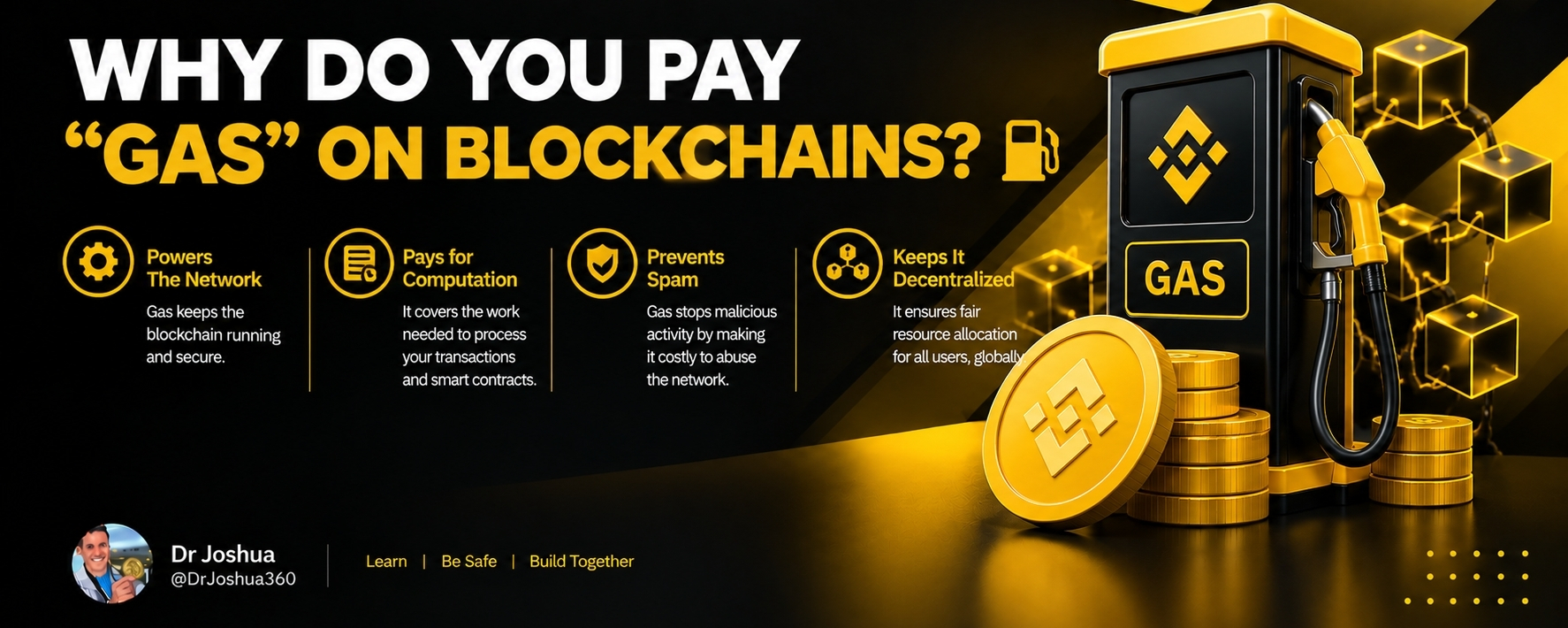
Why Do You Pay “Gas” on Blockchains? ⛽Ever wondered why you need to pay a little extra when sending crypto, swapping tokens, or interacting with a smart contract?
That cost is commonly called a gas fee.
Think of blockchain like a busy digital highway. Every transaction needs network resources to be processed, verified, and recorded. Gas is the fee you pay for using those resources.
1. Gas Powers the Network
Blockchains need computers around the world to process and verify transactions.
When you pay a gas fee, part of that fee compensates the network for the computational work required to process your transaction.
Without these incentives, maintaining a decentralized network would be much harder.
2. Gas Pays for Computation
Not all blockchain transactions require the same amount of work.
A simple transfer may require relatively little computation, while interacting with a complex smart contract can require much more.
Generally, the more computational resources your transaction requires, the more gas it may consume.
3. Gas Helps Prevent Spam
Imagine if anyone could send millions of meaningless transactions to a blockchain for free.
The network could quickly become congested.
Gas introduces an economic cost, making it expensive to flood the network with unnecessary transactions or abuse its resources.
4. Gas Supports Decentralization
Blockchain resources are limited.
Gas helps create a market for those resources by requiring users to pay for the network capacity they consume. During busy periods, demand can increase and fees may rise.
This helps the network prioritize transactions while maintaining an open and decentralized system.
👦: So, Is Gas a “Tax”?👴: Not exactly.
Gas is better understood as a network usage fee. You're paying for the computational resources and network capacity required to execute your transaction.
And remember: gas fees are not always the same. They can vary depending on the blockchain, transaction type, network congestion, and other factors.
The Simple Way to Remember It:
No gas → no network resources.
No network resources → transactions can't be processed.
So the next time you see a gas fee, think of it like fuel for a blockchain transaction. ⛽
Learn | Be Safe | Keep Building 📊
#Binance #CryptoEducation #GasFees #Crypto101
Why Do You Pay “Gas” on Blockchains? ⛽
Ever wondered why you need to pay a little extra when sending crypto, swapping tokens, or interacting with a smart contract?
That cost is commonly called a gas fee.
Think of blockchain like a busy digital highway. Every transaction needs network resources to be processed, verified, and recorded. Gas is the fee you pay for using those resources.
1. Gas Powers the Network
Blockchains need computers around the world to process and verify transactions.
When you pay a gas fee, part of that fee compensates the network for the computational work required to process your transaction.
Without these incentives, maintaining a decentralized network would be much harder.
2. Gas Pays for Computation
Not all blockchain transactions require the same amount of work.
A simple transfer may require relatively little computation, while interacting with a complex smart contract can require much more.
Generally, the more computational resources your transaction requires, the more gas it may consume.
3. Gas Helps Prevent Spam
Imagine if anyone could send millions of meaningless transactions to a blockchain for free.
The network could quickly become congested.
Gas introduces an economic cost, making it expensive to flood the network with unnecessary transactions or abuse its resources.
4. Gas Supports Decentralization
Blockchain resources are limited.
Gas helps create a market for those resources by requiring users to pay for the network capacity they consume. During busy periods, demand can increase and fees may rise.
This helps the network prioritize transactions while maintaining an open and decentralized system.
👦: So, Is Gas a “Tax”?👴: Not exactly.
Gas is better understood as a network usage fee. You're paying for the computational resources and network capacity required to execute your transaction.
And remember: gas fees are not always the same. They can vary depending on the blockchain, transaction type, network congestion, and other factors.
The Simple Way to Remember It:
No gas → no network resources.
No network resources → transactions can't be processed.
So the next time you see a gas fee, think of it like fuel for a blockchain transaction. ⛽
Learn | Be Safe | Keep Building 📊
#Binance #CryptoEducation #GasFees #Crypto101
4
236

Artículo 5: ¿Qué es el Gas Fee? (Y el Truco con $BNB para Ahorrar Comisiones)
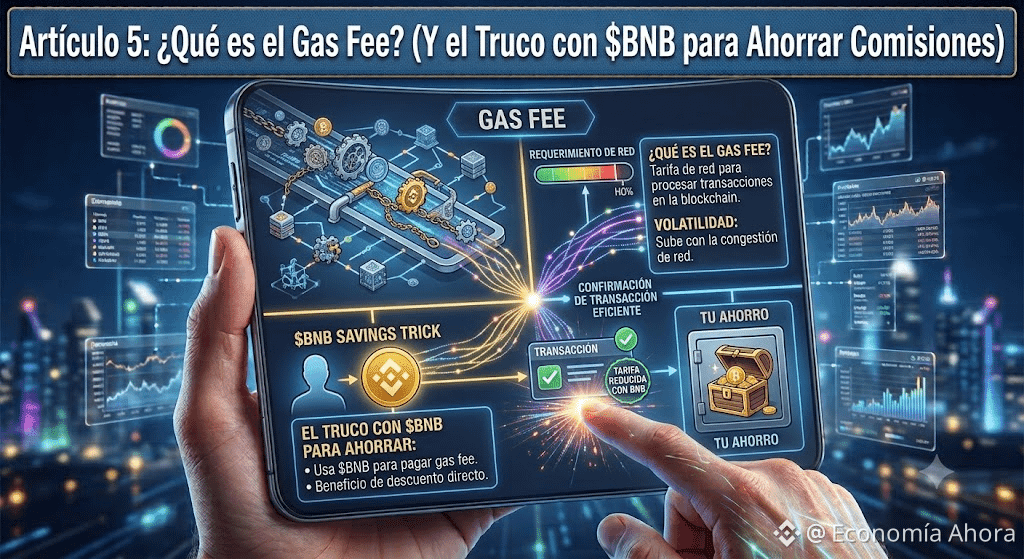
Si alguna vez has intentado mover criptomonedas, seguro que te ha aparecido un aviso cobrándote una pequeña comisión llamada Gas Fee (tarifa de gas). ¿Por qué hay que pagar esto y cómo puedes hacer para que te salga lo más barato posible? Vamos a explicarlo de forma súper sencilla.
Imagina que la blockchain es una autopista digital. Para que tus criptos viajen de un punto A a un punto B, necesitas un vehículo (los ordenadores de la red que procesan la transacción). Y como cualquier coche, este vehículo necesita gasolina para moverse. El Gas Fee es, literalmente, esa gasolina digital que le pagas a la red para que procese tu envío.
El precio de este "gas" no es fijo: si la autopista está vacía, la gasolina es barata; pero si todo el mundo quiere usar la red al mismo tiempo (un día de mucha congestión en el mercado), el precio del gas sube.
¿Cómo te ayuda Binance a no gastar de más?
Aquí es donde entra la magia de BNB y las redes de Binance:
Usa la red correcta: Redes antiguas como Ethereum pueden llegar a cobrar decenas de dólares por una sola transacción. En cambio, si envías tus activos usando la red propia de Binance (BNB Chain), las tarifas de gas son ridículamente bajas, costando apenas unos pocos centavos de dólar.
El súper descuento en el Exchange: Si activas la opción de pagar tus comisiones de trading dentro de Binance usando tus fondos de $BNB , la plataforma te regala un 25% de descuento automático en cada operación.
¿Cómo se activa este descuento?
Es facilísimo: abre tu aplicación de Binance, ve a tu perfil (arriba a la izquierda) y busca la opción "Usar BNB para pagar comisiones". Asegúrate de dejar un poquito de BNB en tu billetera Spot y listo, empezarás a ahorrar en cada compra y venta. ¡Hacer trading inteligente es no regalar comisiones!
#GasFees #AprendeCripto #AhorroFinanciero #BnbChain #BinanceSquare $BNB
{spot}(MSFTBUSDT)
{spot}(METABUSDT)
{spot}(BNBUSDT)
Artículo 5: ¿Qué es el Gas Fee? (Y el Truco con $BNB para Ahorrar Comisiones)
Si alguna vez has intentado mover criptomonedas, seguro que te ha aparecido un aviso cobrándote una pequeña comisión llamada Gas Fee (tarifa de gas). ¿Por qué hay que pagar esto y cómo puedes hacer para que te salga lo más barato posible? Vamos a explicarlo de forma súper sencilla.
Imagina que la blockchain es una autopista digital. Para que tus criptos viajen de un punto A a un punto B, necesitas un vehículo (los ordenadores de la red que procesan la transacción). Y como cualquier coche, este vehículo necesita gasolina para moverse. El Gas Fee es, literalmente, esa gasolina digital que le pagas a la red para que procese tu envío.
El precio de este "gas" no es fijo: si la autopista está vacía, la gasolina es barata; pero si todo el mundo quiere usar la red al mismo tiempo (un día de mucha congestión en el mercado), el precio del gas sube.
¿Cómo te ayuda Binance a no gastar de más?
Aquí es donde entra la magia de BNB y las redes de Binance:
Usa la red correcta: Redes antiguas como Ethereum pueden llegar a cobrar decenas de dólares por una sola transacción. En cambio, si envías tus activos usando la red propia de Binance (BNB Chain), las tarifas de gas son ridículamente bajas, costando apenas unos pocos centavos de dólar.
El súper descuento en el Exchange: Si activas la opción de pagar tus comisiones de trading dentro de Binance usando tus fondos de $BNB , la plataforma te regala un 25% de descuento automático en cada operación.
¿Cómo se activa este descuento?
Es facilísimo: abre tu aplicación de Binance, ve a tu perfil (arriba a la izquierda) y busca la opción "Usar BNB para pagar comisiones". Asegúrate de dejar un poquito de BNB en tu billetera Spot y listo, empezarás a ahorrar en cada compra y venta. ¡Hacer trading inteligente es no regalar comisiones!
#GasFees #AprendeCripto #AhorroFinanciero #BnbChain #BinanceSquare $BNB
1
194

·
--
ຢືນຢັນແລ້ວ
Ethereum Transforms Slash Gas Fees to Pennies in Historic 2026 Upgrade
Ethereum has achieved a breakthrough milestone, reducing average transaction fees from $50 to mere cents: developers attribute this to the Dencun upgrade and widespread Layer 2 adoption.
Network congestion dropped significantly as activity migrated to rollup-based scaling solutions, with mainnet now serving primarily as a settlement layer. Users on Arbitrum, Optimism, and Base now pay under $0.10 per transaction.
Analysts note this shift strengthens Ethereum's position as the foundation for institutional DeFi and real-world asset tokenization, while keeping everyday transactions affordable for retail users.
Is this the awakening Ethereum holders have awaited? Share your perspective below. 👇
#Ethereum #GasFees #CryptoLayer2
64


·
--
Ethereum’s next upgrade breaks the old '21,000 gas' baseline wallets have relied on. Sending ETH to a brand-new address will cost more than sending to an existing one, and software built around a flat fee will get the sum wrong. Expect wallets and dapps to adapt to more dynamic gas behavior. $ETH #Ethereum #GasFees #CryptoNews
Ethereum’s next upgrade breaks the old '21,000 gas' baseline wallets have relied on. Sending ETH to a brand-new address will cost more than sending to an existing one, and software built around a flat fee will get the sum wrong. Expect wallets and dapps to adapt to more dynamic gas behavior. $ETH #Ethereum #GasFees #CryptoNews
21

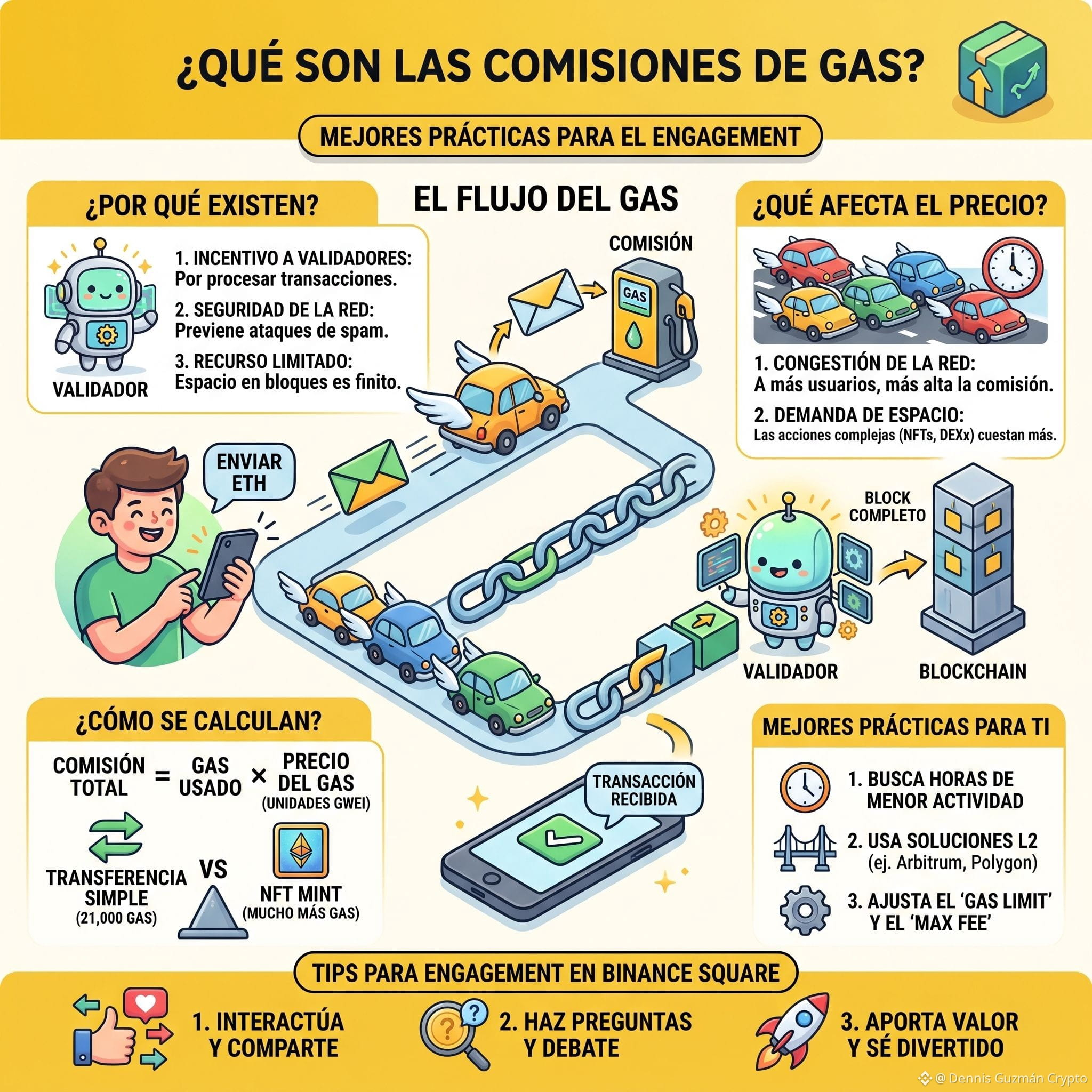
Las comisiones de gas son el costo que los usuarios pagan para realizar determinadas operaciones dentro de una blockchain.
En Ethereum, por ejemplo, estas comisiones ayudan a compensar los recursos necesarios para procesar transacciones y ejecutar contratos inteligentes.
El costo puede variar según la demanda de la red.
Cuando muchas personas quieren utilizar Ethereum al mismo tiempo, las comisiones pueden aumentar.
Por eso, el “gas” es un concepto importante para entender el funcionamiento de $ETH y las aplicaciones construidas sobre su red.
#Ethereum #gasfees
1
87

·
--
Why Gas Fees on Blockchain Networks Rise and FallGas fees are the cost users pay to have their transactions included in a blockchain block. They compensate the network for the computational resources required to validate and store the data. Most networks set a base fee per unit of work, often called gas, and add a tip to encourage quick inclusion. When many participants are competing for limited block space, the price of each unit rises; when activity subsides, the price falls.
Transaction complexity matters: a simple transfer uses less gas than a smart‑contract interaction, so larger scripts can increase the total fee. Network congestion is a primary driver. During periods of high trading volume on $ETH, for example, demand for block space spikes and fees climb. Conversely, during quieter intervals the same network may see lower costs. On $BTC, the fee market is influenced by block size and transaction weight, while networks such as $SOL may experience different fee patterns due to their consensus design.
Block size limits and the algorithm that adjusts difficulty also influence fee dynamics. Some chains employ a market‑based mechanism where users bid for priority, while others rely on a fixed schedule that changes based on usage. Practical steps for managing fees include checking real‑time estimators, batching multiple operations into a single transaction, and timing submissions when the network is less busy.
Warning signs to watch for include sudden fee jumps, long pending periods, and estimates that exceed typical ranges, which may indicate an upcoming congestion event. Balanced view: while fees reflect the cost of securing the network, they can also create barriers for small participants. Understanding the underlying supply‑and‑demand forces helps users plan interactions more predictably.
In practice, traders often monitor congestion dashboards and may delay transactions until after peak periods. Developers sometimes implement adaptive fee logic that selects an appropriate gas price based on current network conditions.
#GasFees #Blockchain #CryptoEducation
This article was produced with AI assistance; it is not financial advice. Always do your own research (DYOR).
Why Gas Fees on Blockchain Networks Rise and Fall
Gas fees are the cost users pay to have their transactions included in a blockchain block. They compensate the network for the computational resources required to validate and store the data. Most networks set a base fee per unit of work, often called gas, and add a tip to encourage quick inclusion. When many participants are competing for limited block space, the price of each unit rises; when activity subsides, the price falls.
Transaction complexity matters: a simple transfer uses less gas than a smart‑contract interaction, so larger scripts can increase the total fee. Network congestion is a primary driver. During periods of high trading volume on $ETH , for example, demand for block space spikes and fees climb. Conversely, during quieter intervals the same network may see lower costs. On $BTC , the fee market is influenced by block size and transaction weight, while networks such as $SOL may experience different fee patterns due to their consensus design.
Block size limits and the algorithm that adjusts difficulty also influence fee dynamics. Some chains employ a market‑based mechanism where users bid for priority, while others rely on a fixed schedule that changes based on usage. Practical steps for managing fees include checking real‑time estimators, batching multiple operations into a single transaction, and timing submissions when the network is less busy.
Warning signs to watch for include sudden fee jumps, long pending periods, and estimates that exceed typical ranges, which may indicate an upcoming congestion event. Balanced view: while fees reflect the cost of securing the network, they can also create barriers for small participants. Understanding the underlying supply‑and‑demand forces helps users plan interactions more predictably.
In practice, traders often monitor congestion dashboards and may delay transactions until after peak periods. Developers sometimes implement adaptive fee logic that selects an appropriate gas price based on current network conditions.
#GasFees #Blockchain #CryptoEducation
This article was produced with AI assistance; it is not financial advice. Always do your own research (DYOR).
88

·
--
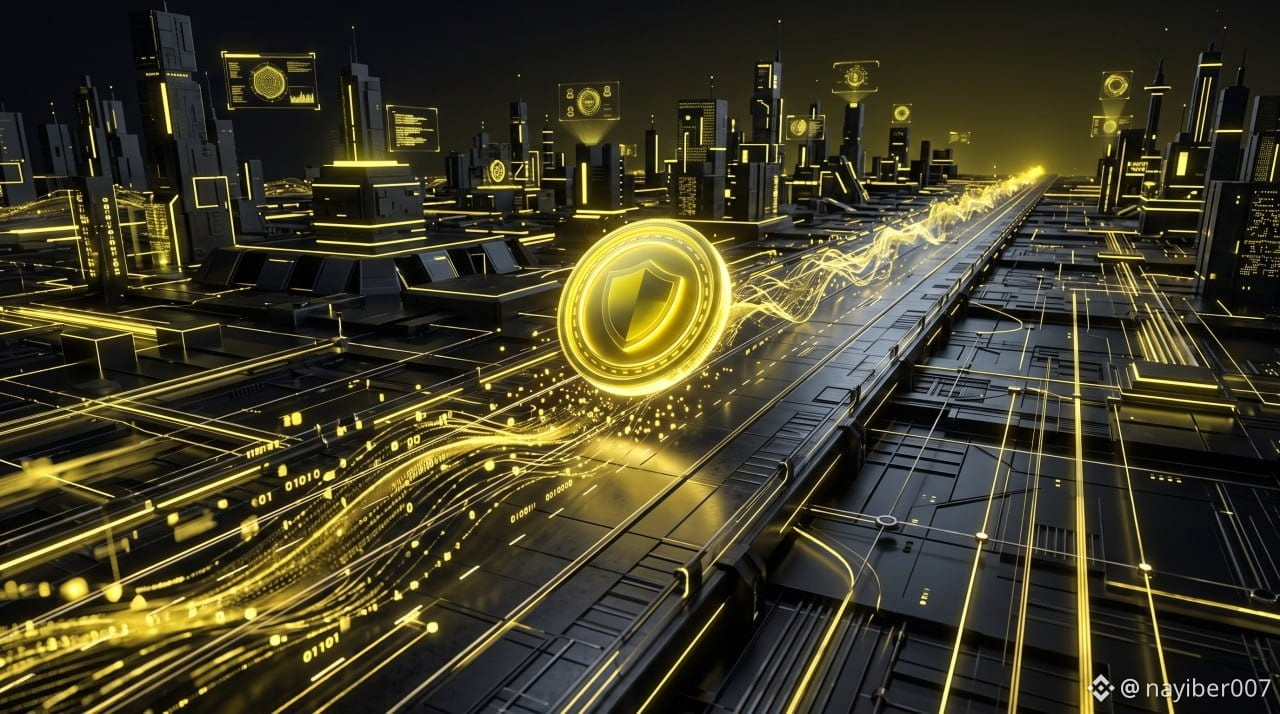
¿Cansado de que las comisiones se coman tus ganancias cripto? 📉 Te enseño a reducirlas al mínimo con estos 4 trucos clave.
El "Gas Fee" es simplemente el peaje que pagas a los validadores por procesar tu transacción en la blockchain. Si hay mucha congestión en la red, el precio sube.
Para dejar de regalar tu dinero en comisiones, aplica estas estrategias:
Opera en horas de bajo tráfico: Transaccionar durante los fines de semana o en la madrugada puede ahorrarte hasta un 50% en comisiones.
Utiliza Capas 2 (Layer 2) y redes eficientes: En lugar de la red principal de Ethereum, migra tus fondos a redes como Arbitrum, Optimism, Base, BNB Chain o Solana. Son ultra rápidas y cuestan centavos.
Revisa un Gas Tracker: Consulta herramientas en vivo (como Etherscan Gas Tracker) antes de operar para saber si estás pagando en un pico de precio o en un momento de descuento.
Agrupa tus transacciones: Evita los micro-movimientos. Hacer una sola transacción grande es mucho más barato que hacer diez pequeñas, ya que optimizas el coste fijo por envío.
No dejes que la impaciencia consuma tu portafolio. ¡Aprende a mover tu dinero de forma inteligente! 🧠
💬 Debatamos en los comentarios: ¿Cuál ha sido la comisión más absurda o dolorosa que te han cobrado en tu historia cripto? ¡Te leo! 👇
🚀 ¿Te aportó valor? Dale me gusta, comparte este post y sígueme para más guías de optimización y análisis de mercado. ¡Hagamos crecer ese portafolio juntos. #GasFees #Layer2 #CryptoTips #Blockchain #EducacionFinanciera
341
·
--
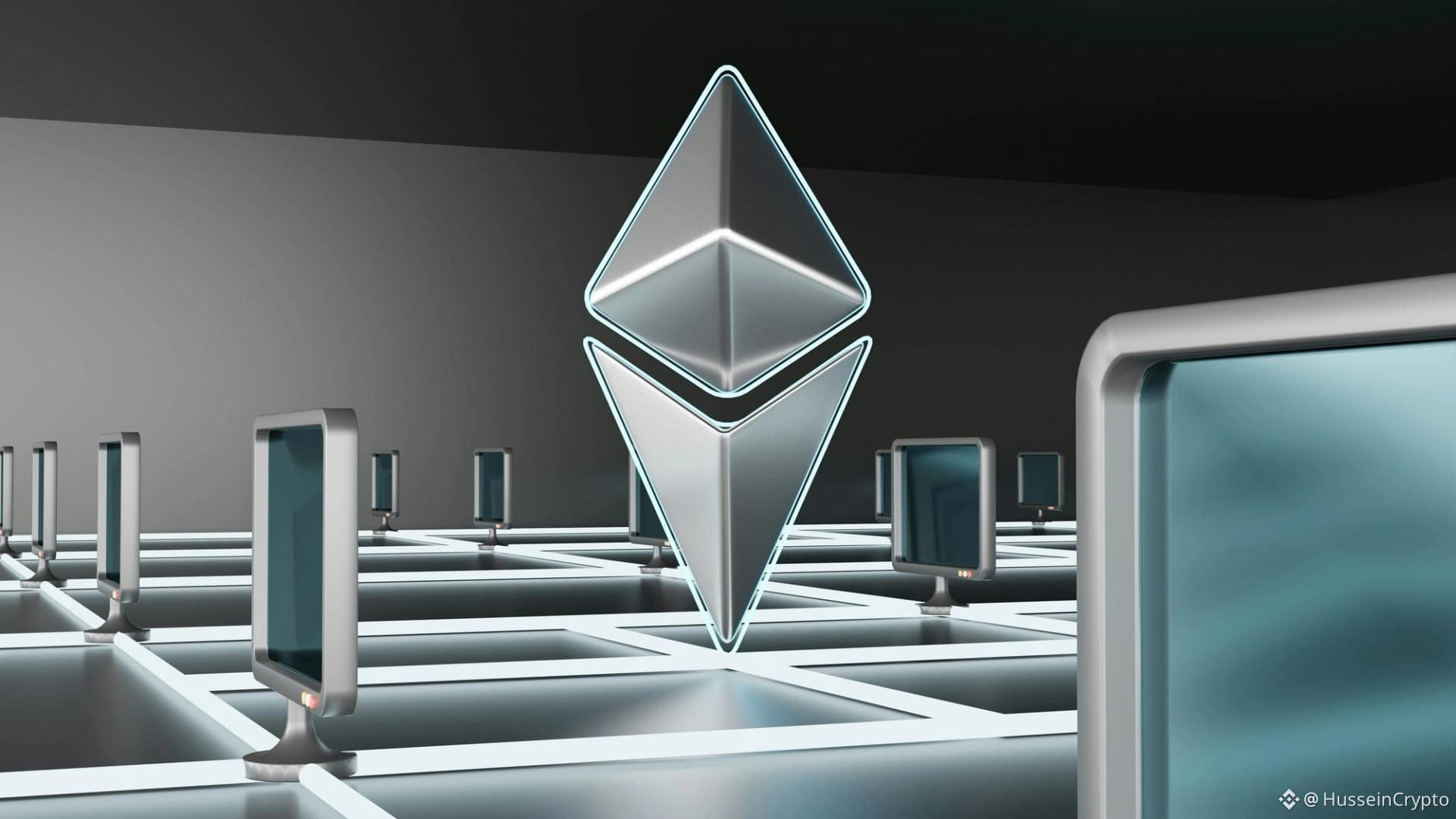
Ethereum moves toward paying gas without needing to hold ETH. The Frame Transactions feature, locked into the Hegóta upgrade last month, is progressing quickly, says Vitalik Buterin. A potential game-changer for onboarding and DeFi access. $ETH #Ethereum #GasFees
Ethereum moves toward paying gas without needing to hold ETH. The Frame Transactions feature, locked into the Hegóta upgrade last month, is progressing quickly, says Vitalik Buterin. A potential game-changer for onboarding and DeFi access. $ETH #Ethereum #GasFees
29

⚡ Gas Fees Explained: The cost of keeping blockchains running
On August 1, 2026, Gas fees are payments made to network validators for processing transactions. They spike when demand for blockspace is high — which is why fees on busy networks can dwarf the transaction itself.
Ethereum $ETH, with $7.95B in daily volume, is the reference case: its fee market prices congestion directly into every transaction.
📌 Key Takeaway:
Gas fees are supply and demand for security. Understanding when networks are congested — and why fees vary — is essential for anyone using blockchains regularly.
#GasFees #CryptoEducation
#BinanceAlphaAlert
⚡ Gas Fees Explained: The cost of keeping blockchains running
On August 1, 2026, Gas fees are payments made to network validators for processing transactions. They spike when demand for blockspace is high — which is why fees on busy networks can dwarf the transaction itself.
Ethereum $ETH , with $7.95B in daily volume, is the reference case: its fee market prices congestion directly into every transaction.
📌 Key Takeaway:
Gas fees are supply and demand for security. Understanding when networks are congested — and why fees vary — is essential for anyone using blockchains regularly.
#GasFees #CryptoEducation
#BinanceAlphaAlert
21

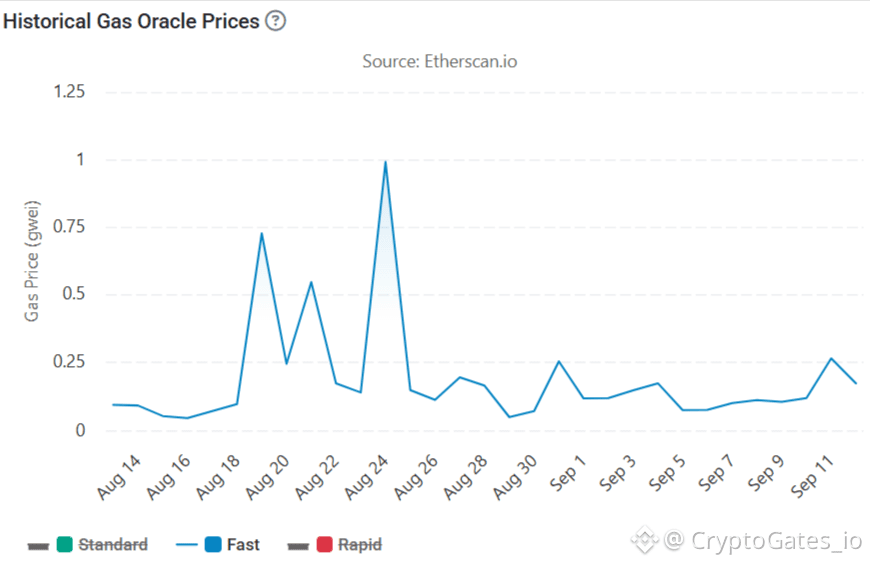
$ETH : Ethereum gas fees have dropped to multi-week lows, standard transactions currently at 0.053 gwei
Lower gas often lines up with reduced on-chain demand, fewer swaps and contract calls happening compared to a few weeks ago when fees briefly touched near 1 gwei.
For active traders, this is also a low-cost window for executing on-chain strategy adjustments.
Execution cost is part of the equation, not just entry price.
#Ethereum #GasFees #OnChainMetrics
69
ເຂົ້າສູ່ລະບົບເພື່ອສຳຫຼວດເນື້ອຫາເພີ່ມເຕີມ
ເຂົ້າຮ່ວມກຸ່ມຜູ້ໃຊ້ຄຣິບໂຕທົ່ວໂລກໃນ Binance Square.
⚡️ ໄດ້ຮັບຂໍ້ມູນຫຼ້າສຸດ ແລະ ທີ່ມີປະໂຫຍດກ່ຽວກັບຄຣິບໂຕ.
💬 ໄດ້ຮັບຄວາມໄວ້ວາງໃຈຈາກຕະຫຼາດແລກປ່ຽນຄຣິບໂຕທີ່ໃຫຍ່ທີ່ສຸດໃນໂລກ.
👍 ຄົ້ນຫາຂໍ້ມູນເຊີງເລິກທີ່ແທ້ຈາກນັກສ້າງທີ່ໄດ້ຮັບການຢືນຢັນ.
ອີເມວ / ເບີໂທລະສັບ
ຫົວຂໍ້ທີ່ກໍາລັງນິຍົມ
1
#BinancePick
2.5M ຄັ້ງທີ່ເບິ່ງ
137,927 ກຳລັງສົນທະນາ
2
#EarningsSeason
4.9M ຄັ້ງທີ່ເບິ່ງ
23,915 ກຳລັງສົນທະນາ
3
#ElectrumWalletBugLetRogueServersStealFunds
2,613 ຄັ້ງທີ່ເບິ່ງ
137 ກຳລັງສົນທະນາ
4
#ArgentineCourtDismissesLIBRACaseAgainstMilei
10,382 ຄັ້ງທີ່ເບິ່ງ
226 ກຳລັງສົນທະນາ
5
#SKHynixReportedlyPlansSpecialDividendFromKioxiaStakeSale
2,277 ຄັ້ງທີ່ເບິ່ງ
36 ກຳລັງສົນທະນາ
6
#KeystoneWebsiteBreachExposesBuyersShippingAddresses
1,254 ຄັ້ງທີ່ເບິ່ງ
27 ກຳລັງສົນທະນາ
7
#USQ3GDPAndSeptemberPCEDueNextWeek
83,532 ຄັ້ງທີ່ເບິ່ງ
1,036 ກຳລັງສົນທະນາ
8
#SouthKoreaDelaysCryptoIncomeTax
153,799 ຄັ້ງທີ່ເບິ່ງ
1,078 ກຳລັງສົນທະນາ
9
#ElectrumFixesHighRiskExploitInVersionsBefore4.8.3
67,559 ຄັ້ງທີ່ເບິ່ງ
772 ກຳລັງສົນທະນາ
10
#SouthKoreaPlansToRegulateStablecoinsUnderFXLaw
65,704 ຄັ້ງທີ່ເບິ່ງ
688 ກຳລັງສົນທະນາ