

#cryptoprivacy
cryptoprivacy
136,505 views
758 ກຳລັງສົນທະນາ
ມາແຮງ
ຫຼ້າສຸດ

·
--
比特币即将获得类似Zcash的隐私功能,而且不需要改变比特币本身的规则!研究人员已经开发出与比特币并行的私密转账系统,但目前还缺少完整的锁定和释放BTC的机制。这意味着比特币用户可能很快就能享受隐私交易,而不必转而使用其他隐私币种。
Bitcoin might soon get Zcash-style privacy features without changing its core rules! Researchers have developed a parallel system for private Bitcoin-denominated transfers, but it still lacks a complete mechanism for locking and releasing actual BTC. This means Bitcoin users could potentially enjoy private transactions without switching to other privacy coins.
#BitcoinPrivacy #CryptoPrivacy $BTC $ZEC
比特币即将获得类似Zcash的隐私功能,而且不需要改变比特币本身的规则!研究人员已经开发出与比特币并行的私密转账系统,但目前还缺少完整的锁定和释放BTC的机制。这意味着比特币用户可能很快就能享受隐私交易,而不必转而使用其他隐私币种。
Bitcoin might soon get Zcash-style privacy features without changing its core rules! Researchers have developed a parallel system for private Bitcoin-denominated transfers, but it still lacks a complete mechanism for locking and releasing actual BTC. This means Bitcoin users could potentially enjoy private transactions without switching to other privacy coins.
#BitcoinPrivacy #CryptoPrivacy $BTC $ZEC
Bitcoin might soon get Zcash-style privacy features without changing its core rules! Researchers have developed a parallel system for private Bitcoin-denominated transfers, but it still lacks a complete mechanism for locking and releasing actual BTC. This means Bitcoin users could potentially enjoy private transactions without switching to other privacy coins.
#BitcoinPrivacy #CryptoPrivacy $BTC $ZEC
81

If you're still treating privacy tokens as nothing more than simple anonymous payment tools, stop now.
Most traders ignore structural shifts until the momentum is already gone, leaving them to FOMO buy local tops and suffer brutal drawdowns. Watching a sector evolve without positioning early is how retail consistently misses out on major rotational moves.
The market remains split on the future of confidential transactions. Critics claim regulatory scrutiny will eventually wipe out the entire narrative, forcing assets off centralized order books. That skeptical argument overlooks how privacy is fundamentally shifting from isolated anonymity toward necessary execution infrastructure.
Upgrades are reviving serious institutional interest around $ZEC, proving that privacy architecture has enduring demand. Meanwhile, $NEAR is embedding confidential layers directly into cross-chain settlement and everyday decentralized trading. Privacy is no longer an isolated niche, but an essential component of modern market plumbing.
Do you think privacy infrastructure will drive the next rotational wave, or will regulatory hurdles cap its upside?
#CryptoPrivacy #Zcash #Web3Infrastructure
If you're still treating privacy tokens as nothing more than simple anonymous payment tools, stop now.
Most traders ignore structural shifts until the momentum is already gone, leaving them to FOMO buy local tops and suffer brutal drawdowns. Watching a sector evolve without positioning early is how retail consistently misses out on major rotational moves.
The market remains split on the future of confidential transactions. Critics claim regulatory scrutiny will eventually wipe out the entire narrative, forcing assets off centralized order books. That skeptical argument overlooks how privacy is fundamentally shifting from isolated anonymity toward necessary execution infrastructure.
Upgrades are reviving serious institutional interest around $ZEC , proving that privacy architecture has enduring demand. Meanwhile, $NEAR is embedding confidential layers directly into cross-chain settlement and everyday decentralized trading. Privacy is no longer an isolated niche, but an essential component of modern market plumbing.
Do you think privacy infrastructure will drive the next rotational wave, or will regulatory hurdles cap its upside?
#CryptoPrivacy #Zcash #Web3Infrastructure
Most traders ignore structural shifts until the momentum is already gone, leaving them to FOMO buy local tops and suffer brutal drawdowns. Watching a sector evolve without positioning early is how retail consistently misses out on major rotational moves.
The market remains split on the future of confidential transactions. Critics claim regulatory scrutiny will eventually wipe out the entire narrative, forcing assets off centralized order books. That skeptical argument overlooks how privacy is fundamentally shifting from isolated anonymity toward necessary execution infrastructure.
Upgrades are reviving serious institutional interest around $ZEC , proving that privacy architecture has enduring demand. Meanwhile, $NEAR is embedding confidential layers directly into cross-chain settlement and everyday decentralized trading. Privacy is no longer an isolated niche, but an essential component of modern market plumbing.
Do you think privacy infrastructure will drive the next rotational wave, or will regulatory hurdles cap its upside?
#CryptoPrivacy #Zcash #Web3Infrastructure

328

·
--
Everyone thinks buying $BTC during a massive rally means they are achieving financial independence, but actually most investors are walking right into a digital trap.
We hand over personal identification, home addresses, and sensitive data just to trade, completely forgetting why crypto was created in the first place. When central gatekeepers store your personal information on private servers, a single breach can compromise your entire financial identity.
Think of modern crypto like moving into a gated community for privacy, only to hand your house keys to a guard at the entrance. Traders constantly make three critical mistakes in this market.
First, they mistake price pumps in assets like $ETH for true network decentralization. Second, they sacrifice personal privacy for convenience. Third, they overlook privacy-focused architecture like Liberdus that enables user participation without central gatekeepers or identity leaks.
How much personal privacy are you willing to give up for convenience?
#CryptoPrivacy #Bitcoin #Decentralization
Everyone thinks buying $BTC during a massive rally means they are achieving financial independence, but actually most investors are walking right into a digital trap.
We hand over personal identification, home addresses, and sensitive data just to trade, completely forgetting why crypto was created in the first place. When central gatekeepers store your personal information on private servers, a single breach can compromise your entire financial identity.
Think of modern crypto like moving into a gated community for privacy, only to hand your house keys to a guard at the entrance. Traders constantly make three critical mistakes in this market.
First, they mistake price pumps in assets like $ETH for true network decentralization. Second, they sacrifice personal privacy for convenience. Third, they overlook privacy-focused architecture like Liberdus that enables user participation without central gatekeepers or identity leaks.
How much personal privacy are you willing to give up for convenience?
#CryptoPrivacy #Bitcoin #Decentralization
We hand over personal identification, home addresses, and sensitive data just to trade, completely forgetting why crypto was created in the first place. When central gatekeepers store your personal information on private servers, a single breach can compromise your entire financial identity.
Think of modern crypto like moving into a gated community for privacy, only to hand your house keys to a guard at the entrance. Traders constantly make three critical mistakes in this market.
First, they mistake price pumps in assets like $ETH for true network decentralization. Second, they sacrifice personal privacy for convenience. Third, they overlook privacy-focused architecture like Liberdus that enables user participation without central gatekeepers or identity leaks.
How much personal privacy are you willing to give up for convenience?
#CryptoPrivacy #Bitcoin #Decentralization
25
If you are still chasing green candles while ignoring fundamental privacy, stop now.
Most traders get completely blinded by massive rallies, only to realize later they handed over all their personal data and control to centralized gatekeepers who can freeze funds at will.
Watching $BTC push toward $86K today reignited a major debate across the market. One side argues that institutional inflows and regulated surveillance are necessary for mass adoption, even if it compromises user anonymity. But that completely misses why this technology was created in the first place.
If people cannot communicate and transact without giving away sensitive identity details, decentralization is just a hollow marketing slogan. While majors like $ETH absorb mainstream liquidity, real sovereignty depends on open networks like Liberdus that prioritize zero-knowledge privacy and remove central intermediaries entirely.
Are we sacrificing core crypto principles just for higher price targets, or does privacy still come first for you?
#Bitcoin #CryptoPrivacy #Web3
If you are still chasing green candles while ignoring fundamental privacy, stop now.
Most traders get completely blinded by massive rallies, only to realize later they handed over all their personal data and control to centralized gatekeepers who can freeze funds at will.
Watching $BTC push toward $86K today reignited a major debate across the market. One side argues that institutional inflows and regulated surveillance are necessary for mass adoption, even if it compromises user anonymity. But that completely misses why this technology was created in the first place.
If people cannot communicate and transact without giving away sensitive identity details, decentralization is just a hollow marketing slogan. While majors like $ETH absorb mainstream liquidity, real sovereignty depends on open networks like Liberdus that prioritize zero-knowledge privacy and remove central intermediaries entirely.
Are we sacrificing core crypto principles just for higher price targets, or does privacy still come first for you?
#Bitcoin #CryptoPrivacy #Web3
Most traders get completely blinded by massive rallies, only to realize later they handed over all their personal data and control to centralized gatekeepers who can freeze funds at will.
Watching $BTC push toward $86K today reignited a major debate across the market. One side argues that institutional inflows and regulated surveillance are necessary for mass adoption, even if it compromises user anonymity. But that completely misses why this technology was created in the first place.
If people cannot communicate and transact without giving away sensitive identity details, decentralization is just a hollow marketing slogan. While majors like $ETH absorb mainstream liquidity, real sovereignty depends on open networks like Liberdus that prioritize zero-knowledge privacy and remove central intermediaries entirely.
Are we sacrificing core crypto principles just for higher price targets, or does privacy still come first for you?
#Bitcoin #CryptoPrivacy #Web3
12
·
--
Most traders celebrating every pump toward $86K forget that the majority of modern blockchains leak far more personal metadata than traditional financial apps.
We chase green candles while quietly handing over entire transaction histories to centralized RPC endpoints and third-party trackers. It feels harmless until an infrastructure breach or data leak ties your on-chain wallet balance directly to your real identity.
When $BTC rallied back near $86K, it was a solid reminder of how far the space has drifted from its original purpose. Decentralization has largely become a marketing buzzword rather than a technical standard. If moving assets still forces you to rely on centralized gatekeepers who monitor your IP address and chat data, you are taking on severe counterparty risk without realizing it.
Projects like Liberdus caught my radar because they tackle this exact vulnerability by rebuilding open, privacy-preserving networks from the ground up. Whether you are holding spot $BTC or routing transactions across $ETH, true censorship resistance requires privacy at the base communication layer, not just the financial layer.
Are we sacrificing too much fundamental privacy just for the convenience of modern trading?
#Bitcoin #CryptoPrivacy #Web3Security
Most traders celebrating every pump toward $86K forget that the majority of modern blockchains leak far more personal metadata than traditional financial apps.
We chase green candles while quietly handing over entire transaction histories to centralized RPC endpoints and third-party trackers. It feels harmless until an infrastructure breach or data leak ties your on-chain wallet balance directly to your real identity.
When $BTC rallied back near $86K, it was a solid reminder of how far the space has drifted from its original purpose. Decentralization has largely become a marketing buzzword rather than a technical standard. If moving assets still forces you to rely on centralized gatekeepers who monitor your IP address and chat data, you are taking on severe counterparty risk without realizing it.
Projects like Liberdus caught my radar because they tackle this exact vulnerability by rebuilding open, privacy-preserving networks from the ground up. Whether you are holding spot $BTC or routing transactions across $ETH , true censorship resistance requires privacy at the base communication layer, not just the financial layer.
Are we sacrificing too much fundamental privacy just for the convenience of modern trading?
#Bitcoin #CryptoPrivacy #Web3Security
We chase green candles while quietly handing over entire transaction histories to centralized RPC endpoints and third-party trackers. It feels harmless until an infrastructure breach or data leak ties your on-chain wallet balance directly to your real identity.
When $BTC rallied back near $86K, it was a solid reminder of how far the space has drifted from its original purpose. Decentralization has largely become a marketing buzzword rather than a technical standard. If moving assets still forces you to rely on centralized gatekeepers who monitor your IP address and chat data, you are taking on severe counterparty risk without realizing it.
Projects like Liberdus caught my radar because they tackle this exact vulnerability by rebuilding open, privacy-preserving networks from the ground up. Whether you are holding spot $BTC or routing transactions across $ETH , true censorship resistance requires privacy at the base communication layer, not just the financial layer.
Are we sacrificing too much fundamental privacy just for the convenience of modern trading?
#Bitcoin #CryptoPrivacy #Web3Security
7


BREAKING: Privacy in Web3 and AI is reaching a critical turning point! 🚨 👉 You can recover stolen crypto funds. 👉 But a leaked real identity is gone forever. 👉 Current centralized data honeypots pose massive risks. 👉 AI agents need zero-knowledge identity solutions. The crypto community needs to prioritize decentralized identity as AI expands across $BTC and $ETH networks. 🛡️ #Write2Earn #CryptoPrivacy #Web3 #Security
BREAKING: Privacy in Web3 and AI is reaching a critical turning point! 🚨 👉 You can recover stolen crypto funds. 👉 But a leaked real identity is gone forever. 👉 Current centralized data honeypots pose massive risks. 👉 AI agents need zero-knowledge identity solutions. The crypto community needs to prioritize decentralized identity as AI expands across $BTC and $ETH networks. 🛡️ #Write2Earn #CryptoPrivacy #Web3 #Security

99

·
--
ບົດຄວາມ
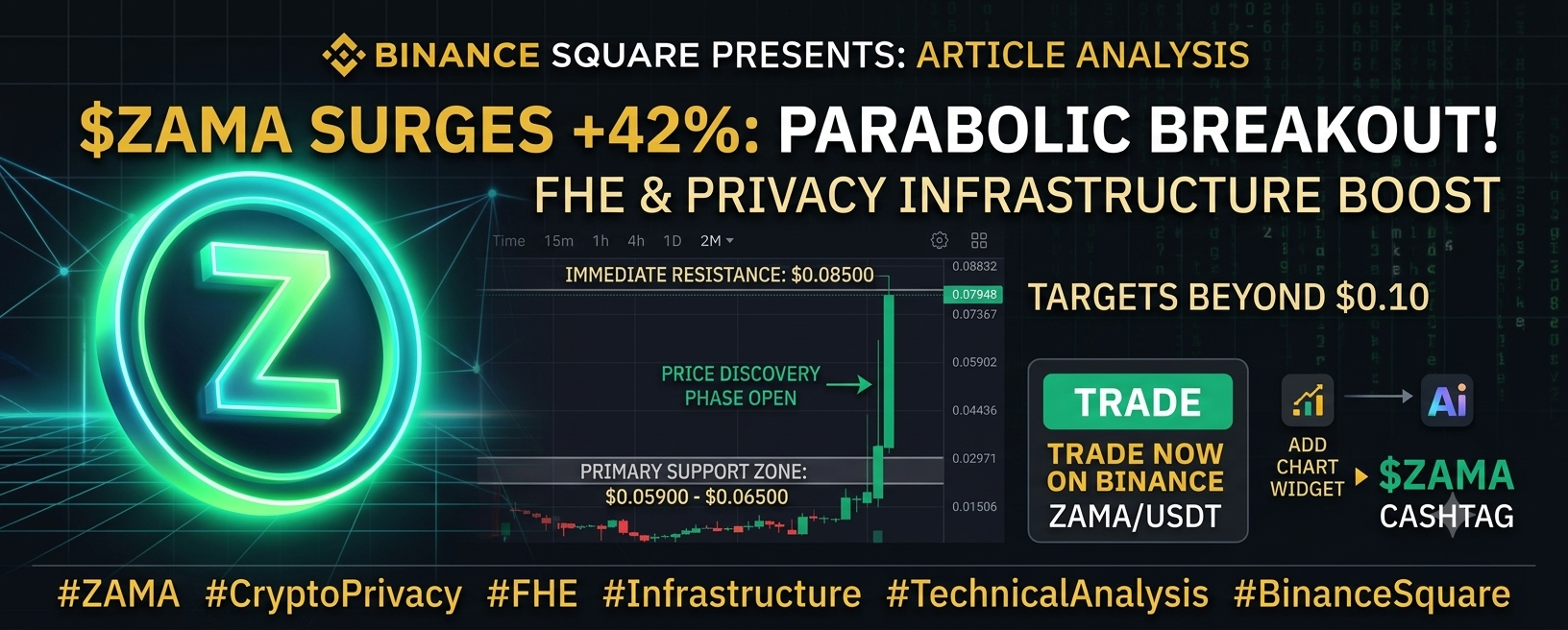
$ZAMA Surges +42% Parabolic Expansion: Privacy & FHE Infrastructure Token Hits New Highs! 🚀🔒Zama ($ZAMA)—the flagship Fully Homomorphic Encryption (FHE) infrastructure protocol powering on-chain confidentiality—has unleashed an aggressive breakout. Surging by +42.67% in 24 hours to touch an intraday high of $0.08499,$ZAMA is outperforming the broader altcoin market on heavy trading volume.
Following recent major ecosystem developments—including the rollout of confidential yield vaults, shielded USDT stablecoin integration, and expanding FHE privacy infrastructure on Ethereum—traders are evaluating whether this massive candle marks the start of a macro price discovery phase.
1. Core Narrative & Fundamental Growth Drivers
Shielded Stablecoin & DeFi Expansion: Zama's FHE technology stack recently unlocked confidential access to major yield venues, pushing shielded stablecoin volume past $130M+.
Institutional Capital & FHE Demand: Powered by zero-knowledge/FHE privacy solutions, institutional demand for on-chain encrypted execution is directing substantial liquidity into $ZAMA as a core infrastructure utility token.
Extreme Volume Surge: Over 530.94M ZAMA ($36.42M+ USDT) was traded over a 24-hour window, confirming strong institutional and retail accumulation behind this momentum candle.
2. Technical Analysis Breakdown
The Parabolic Vertical Impulse: The multi-month chart highlights a sudden vertical move starting from the $0.01839 baseline, breaking through sequential resistance levels at $0.02971, $0.04436, and $0.05902 without major pullbacks.
Immediate Overhead Resistance: $0.08500 (Local wick peak; a clean daily close above this opens price discovery toward $0.10+).
Primary Re-test Support Zone: $0.05900 – $0.06500 (Prior breakout structure that must hold during mean-reversion re-tests to keep the bullish trend intact).
Secondary Risk Defense: $0.04400 (Key mid-range structural floor).
3. Strategic Execution Scenarios
Bullish Price Discovery Play: A decisive candle close above $0.08500 on expanding volume signals market acceptance of higher valuation, setting initial targets at $0.1000 and $0.1250.
Pullback Accumulation Play: Chasing vertical green candles carries elevated short-term risk. Looking for consolidation or localized pullbacks into the $0.05900 – $0.06500 support band provides a significantly higher reward-to-risk entry setup.
Are you holding $ZAMA for the $0.10 push or waiting for a dip to re-enter? Drop your thoughts below! 👇
$ZAMA #CryptoPrivacy #FHE #Infrastructure #TechnicalAnalysis #BinanceSquare
{spot}(ZAMAUSDT)
$ZAMA Surges +42% Parabolic Expansion: Privacy & FHE Infrastructure Token Hits New Highs! 🚀🔒
Zama ($ZAMA )—the flagship Fully Homomorphic Encryption (FHE) infrastructure protocol powering on-chain confidentiality—has unleashed an aggressive breakout. Surging by +42.67% in 24 hours to touch an intraday high of $0.08499,$ZAMA is outperforming the broader altcoin market on heavy trading volume.
Following recent major ecosystem developments—including the rollout of confidential yield vaults, shielded USDT stablecoin integration, and expanding FHE privacy infrastructure on Ethereum—traders are evaluating whether this massive candle marks the start of a macro price discovery phase.
1. Core Narrative & Fundamental Growth Drivers
Shielded Stablecoin & DeFi Expansion: Zama's FHE technology stack recently unlocked confidential access to major yield venues, pushing shielded stablecoin volume past $130M+.
Institutional Capital & FHE Demand: Powered by zero-knowledge/FHE privacy solutions, institutional demand for on-chain encrypted execution is directing substantial liquidity into $ZAMA as a core infrastructure utility token.
Extreme Volume Surge: Over 530.94M ZAMA ($36.42M+ USDT) was traded over a 24-hour window, confirming strong institutional and retail accumulation behind this momentum candle.
2. Technical Analysis Breakdown
The Parabolic Vertical Impulse: The multi-month chart highlights a sudden vertical move starting from the $0.01839 baseline, breaking through sequential resistance levels at $0.02971, $0.04436, and $0.05902 without major pullbacks.
Immediate Overhead Resistance: $0.08500 (Local wick peak; a clean daily close above this opens price discovery toward $0.10+).
Primary Re-test Support Zone: $0.05900 – $0.06500 (Prior breakout structure that must hold during mean-reversion re-tests to keep the bullish trend intact).
Secondary Risk Defense: $0.04400 (Key mid-range structural floor).
3. Strategic Execution Scenarios
Bullish Price Discovery Play: A decisive candle close above $0.08500 on expanding volume signals market acceptance of higher valuation, setting initial targets at $0.1000 and $0.1250.
Pullback Accumulation Play: Chasing vertical green candles carries elevated short-term risk. Looking for consolidation or localized pullbacks into the $0.05900 – $0.06500 support band provides a significantly higher reward-to-risk entry setup.
Are you holding $ZAMA for the $0.10 push or waiting for a dip to re-enter? Drop your thoughts below! 👇
$ZAMA #CryptoPrivacy #FHE #Infrastructure #TechnicalAnalysis #BinanceSquare
Following recent major ecosystem developments—including the rollout of confidential yield vaults, shielded USDT stablecoin integration, and expanding FHE privacy infrastructure on Ethereum—traders are evaluating whether this massive candle marks the start of a macro price discovery phase.
1. Core Narrative & Fundamental Growth Drivers
Shielded Stablecoin & DeFi Expansion: Zama's FHE technology stack recently unlocked confidential access to major yield venues, pushing shielded stablecoin volume past $130M+.
Institutional Capital & FHE Demand: Powered by zero-knowledge/FHE privacy solutions, institutional demand for on-chain encrypted execution is directing substantial liquidity into $ZAMA as a core infrastructure utility token.
Extreme Volume Surge: Over 530.94M ZAMA ($36.42M+ USDT) was traded over a 24-hour window, confirming strong institutional and retail accumulation behind this momentum candle.
2. Technical Analysis Breakdown
The Parabolic Vertical Impulse: The multi-month chart highlights a sudden vertical move starting from the $0.01839 baseline, breaking through sequential resistance levels at $0.02971, $0.04436, and $0.05902 without major pullbacks.
Immediate Overhead Resistance: $0.08500 (Local wick peak; a clean daily close above this opens price discovery toward $0.10+).
Primary Re-test Support Zone: $0.05900 – $0.06500 (Prior breakout structure that must hold during mean-reversion re-tests to keep the bullish trend intact).
Secondary Risk Defense: $0.04400 (Key mid-range structural floor).
3. Strategic Execution Scenarios
Bullish Price Discovery Play: A decisive candle close above $0.08500 on expanding volume signals market acceptance of higher valuation, setting initial targets at $0.1000 and $0.1250.
Pullback Accumulation Play: Chasing vertical green candles carries elevated short-term risk. Looking for consolidation or localized pullbacks into the $0.05900 – $0.06500 support band provides a significantly higher reward-to-risk entry setup.
Are you holding $ZAMA for the $0.10 push or waiting for a dip to re-enter? Drop your thoughts below! 👇
$ZAMA #CryptoPrivacy #FHE #Infrastructure #TechnicalAnalysis #BinanceSquare
138

Financial surveillance is crossing a dangerous line. When government agencies weaponize transaction data to profile citizens' political leanings, it threatens core privacy rights. This overreach turns the financial system into a tool for predictive policing. We need stronger cryptographic protections and decentralized alternatives to ensure our spending habits remain our own business, not a state watchlist. Privacy isn't a crime; it's a fundamental right that crypto was built to protect. $BTC $XMR #CryptoPrivacy #Surveillance #DataSecurity
Financial surveillance is crossing a dangerous line. When government agencies weaponize transaction data to profile citizens' political leanings, it threatens core privacy rights. This overreach turns the financial system into a tool for predictive policing. We need stronger cryptographic protections and decentralized alternatives to ensure our spending habits remain our own business, not a state watchlist. Privacy isn't a crime; it's a fundamental right that crypto was built to protect. $BTC $XMR #CryptoPrivacy #Surveillance #DataSecurity
148

·
--
Zcash just surged over 11% in a single day — here is why privacy coins are turning heads again.
Zcash (ZEC) is built different. While Bitcoin shows every wallet address and amount publicly, Zcash uses something called "zero-knowledge proofs." Think of it like proving you know a secret password without ever typing it out. You can send money fully encrypted — hiding sender, receiver, and amount — while the network still verifies everything is legit. No trust required, just math.
With a $25B market cap and $2.3B in daily volume, traders are clearly paying attention. Whether it is growing regulatory noise around transparent chains or just a renewed appetite for financial privacy, ZEC is having a moment.
Privacy isn't about hiding; it is about choosing who sees your business.
Do you think privacy coins will become essential tools or regulatory targets in the next bull run? #Zcash #CryptoPrivacy
Zcash just surged over 11% in a single day — here is why privacy coins are turning heads again.
Zcash (ZEC) is built different. While Bitcoin shows every wallet address and amount publicly, Zcash uses something called "zero-knowledge proofs." Think of it like proving you know a secret password without ever typing it out. You can send money fully encrypted — hiding sender, receiver, and amount — while the network still verifies everything is legit. No trust required, just math.
With a $25B market cap and $2.3B in daily volume, traders are clearly paying attention. Whether it is growing regulatory noise around transparent chains or just a renewed appetite for financial privacy, ZEC is having a moment.
Privacy isn't about hiding; it is about choosing who sees your business.
Do you think privacy coins will become essential tools or regulatory targets in the next bull run? #Zcash #CryptoPrivacy
Zcash (ZEC) is built different. While Bitcoin shows every wallet address and amount publicly, Zcash uses something called "zero-knowledge proofs." Think of it like proving you know a secret password without ever typing it out. You can send money fully encrypted — hiding sender, receiver, and amount — while the network still verifies everything is legit. No trust required, just math.
With a $25B market cap and $2.3B in daily volume, traders are clearly paying attention. Whether it is growing regulatory noise around transparent chains or just a renewed appetite for financial privacy, ZEC is having a moment.
Privacy isn't about hiding; it is about choosing who sees your business.
Do you think privacy coins will become essential tools or regulatory targets in the next bull run? #Zcash #CryptoPrivacy
280
Picture this: a trader I follow sent a sizable payment last month on a legacy chain and watched bots scrape the public details within hours, turning a routine transfer into a targeted phishing hit.
Most people miss how often this plays out. Crypto traders lose money from leaked transaction data that invites front-running or scams, plus simple mix-ups when they cannot attach a private note and end up sending to the wrong wallet.
Centralized apps have spent years monetizing your payment history by selling it off, which frequently lands in the hands of attackers hunting high-value wallets. Legacy chains like $ETH still offer no straightforward way to keep notes private, so details stay exposed or you skip context entirely and forget the purpose later. $BTC carries the same gap, leaving users open to both operational errors and future quantum breaks on existing encryption.
The pattern is consistent losses from data exploitation and avoidable mistakes. Liberdus $LIB combines private messaging with payments inside one quantum-secure protocol, something most have overlooked as a direct fix for these risks.
Where do you think protocols like this go from here?
#CryptoPrivacy #QuantumSecure #Payments
Picture this: a trader I follow sent a sizable payment last month on a legacy chain and watched bots scrape the public details within hours, turning a routine transfer into a targeted phishing hit.
Most people miss how often this plays out. Crypto traders lose money from leaked transaction data that invites front-running or scams, plus simple mix-ups when they cannot attach a private note and end up sending to the wrong wallet.
Centralized apps have spent years monetizing your payment history by selling it off, which frequently lands in the hands of attackers hunting high-value wallets. Legacy chains like $ETH still offer no straightforward way to keep notes private, so details stay exposed or you skip context entirely and forget the purpose later. $BTC carries the same gap, leaving users open to both operational errors and future quantum breaks on existing encryption.
The pattern is consistent losses from data exploitation and avoidable mistakes. Liberdus $LIB combines private messaging with payments inside one quantum-secure protocol, something most have overlooked as a direct fix for these risks.
Where do you think protocols like this go from here?
#CryptoPrivacy #QuantumSecure #Payments
Most people miss how often this plays out. Crypto traders lose money from leaked transaction data that invites front-running or scams, plus simple mix-ups when they cannot attach a private note and end up sending to the wrong wallet.
Centralized apps have spent years monetizing your payment history by selling it off, which frequently lands in the hands of attackers hunting high-value wallets. Legacy chains like $ETH still offer no straightforward way to keep notes private, so details stay exposed or you skip context entirely and forget the purpose later. $BTC carries the same gap, leaving users open to both operational errors and future quantum breaks on existing encryption.
The pattern is consistent losses from data exploitation and avoidable mistakes. Liberdus $LIB combines private messaging with payments inside one quantum-secure protocol, something most have overlooked as a direct fix for these risks.
Where do you think protocols like this go from here?
#CryptoPrivacy #QuantumSecure #Payments
32
·
--
Have you noticed nobody is talking about how your crypto payments still lack a simple private note feature while apps quietly sell your chats?
Crypto traders keep leaking their positions through public memos or getting rugged because they can't privately message without a third party watching. That FOMO buying happens when you can't coordinate quietly with your circle.
Most people accept that $BTC and $ETH transactions broadcast everything in the open. Centralized apps then monetize whatever you type on the side. Liberdus $LIB combines private messaging directly with payments inside one quantum-secure protocol so your notes travel encrypted with the funds.
You no longer jump between apps or risk data harvests. The protocol treats the message as part of the transaction itself. This setup challenges the old split between money and communication that leaves you exposed.
If you are tired of the status quo, the actionable move is to evaluate chains that already merge these layers instead of waiting for legacy ones to catch up. Quantum security matters now because tomorrow's computers will crack today's encryption.
Where do you think this goes from here once more people realize payments and private notes belong together?
#CryptoPrivacy #QuantumSecure #Web3
Have you noticed nobody is talking about how your crypto payments still lack a simple private note feature while apps quietly sell your chats?
Crypto traders keep leaking their positions through public memos or getting rugged because they can't privately message without a third party watching. That FOMO buying happens when you can't coordinate quietly with your circle.
Most people accept that $BTC and $ETH transactions broadcast everything in the open. Centralized apps then monetize whatever you type on the side. Liberdus $LIB combines private messaging directly with payments inside one quantum-secure protocol so your notes travel encrypted with the funds.
You no longer jump between apps or risk data harvests. The protocol treats the message as part of the transaction itself. This setup challenges the old split between money and communication that leaves you exposed.
If you are tired of the status quo, the actionable move is to evaluate chains that already merge these layers instead of waiting for legacy ones to catch up. Quantum security matters now because tomorrow's computers will crack today's encryption.
Where do you think this goes from here once more people realize payments and private notes belong together?
#CryptoPrivacy #QuantumSecure #Web3
Crypto traders keep leaking their positions through public memos or getting rugged because they can't privately message without a third party watching. That FOMO buying happens when you can't coordinate quietly with your circle.
Most people accept that $BTC and $ETH transactions broadcast everything in the open. Centralized apps then monetize whatever you type on the side. Liberdus $LIB combines private messaging directly with payments inside one quantum-secure protocol so your notes travel encrypted with the funds.
You no longer jump between apps or risk data harvests. The protocol treats the message as part of the transaction itself. This setup challenges the old split between money and communication that leaves you exposed.
If you are tired of the status quo, the actionable move is to evaluate chains that already merge these layers instead of waiting for legacy ones to catch up. Quantum security matters now because tomorrow's computers will crack today's encryption.
Where do you think this goes from here once more people realize payments and private notes belong together?
#CryptoPrivacy #QuantumSecure #Web3

47

·
--
In a Web3 world increasingly focused on transparency, privacy remains one of the most debated topics. Among the privacy-preserving protocols, Firo, formerly known as Zcoin, stands out as a project that continues to innovate despite regulatory headwinds.
At the heart of Firo's technology is the Lelantus Spark protocol. Spark represents a massive leap forward in trustless financial privacy. It allows users to hide transaction amounts, sender and receiver addresses, and the transaction graph itself. Unlike older privacy technologies, Spark does not require a trusted setup, making it highly secure and decentralized. Additionally, Firo has been working on Spark Assets, which aims to bring these same robust privacy protections to other tokens created on its chain.
Firo also remains accessible to everyday users through its FiroPOW consensus mechanism. This algorithm is specifically optimized for GPU mining, preventing the centralization often caused by ASIC mining dominance and keeping the network secure through a distributed community.
However, the landscape for privacy coins is challenging. Major global exchanges have placed monitoring tags on privacy assets due to evolving regulatory frameworks. Firo has taken a proactive stance here. Instead of resisting compliance entirely, the team supports features like viewing keys. This tool allows users to voluntarily disclose their transaction history to third parties, such as tax authorities or auditors, while keeping their data completely private from the public blockchain.
Firo continues to advocate for the idea that privacy is not about hiding illicit activity, but about protecting personal freedom, business secrets, and financial data in a digital age. As decentralized identity and data sovereignty become hotter topics in the crypto space, Firo's technological foundation positions it as a resilient player to watch.
What are your thoughts on the future of privacy coins like Firo? Can technology and regulation find a sustainable middle ground?
#Firo #PrivacyCoins #CryptoPrivacy
In a Web3 world increasingly focused on transparency, privacy remains one of the most debated topics. Among the privacy-preserving protocols, Firo, formerly known as Zcoin, stands out as a project that continues to innovate despite regulatory headwinds.
At the heart of Firo's technology is the Lelantus Spark protocol. Spark represents a massive leap forward in trustless financial privacy. It allows users to hide transaction amounts, sender and receiver addresses, and the transaction graph itself. Unlike older privacy technologies, Spark does not require a trusted setup, making it highly secure and decentralized. Additionally, Firo has been working on Spark Assets, which aims to bring these same robust privacy protections to other tokens created on its chain.
Firo also remains accessible to everyday users through its FiroPOW consensus mechanism. This algorithm is specifically optimized for GPU mining, preventing the centralization often caused by ASIC mining dominance and keeping the network secure through a distributed community.
However, the landscape for privacy coins is challenging. Major global exchanges have placed monitoring tags on privacy assets due to evolving regulatory frameworks. Firo has taken a proactive stance here. Instead of resisting compliance entirely, the team supports features like viewing keys. This tool allows users to voluntarily disclose their transaction history to third parties, such as tax authorities or auditors, while keeping their data completely private from the public blockchain.
Firo continues to advocate for the idea that privacy is not about hiding illicit activity, but about protecting personal freedom, business secrets, and financial data in a digital age. As decentralized identity and data sovereignty become hotter topics in the crypto space, Firo's technological foundation positions it as a resilient player to watch.
What are your thoughts on the future of privacy coins like Firo? Can technology and regulation find a sustainable middle ground?
#Firo #PrivacyCoins #CryptoPrivacy
At the heart of Firo's technology is the Lelantus Spark protocol. Spark represents a massive leap forward in trustless financial privacy. It allows users to hide transaction amounts, sender and receiver addresses, and the transaction graph itself. Unlike older privacy technologies, Spark does not require a trusted setup, making it highly secure and decentralized. Additionally, Firo has been working on Spark Assets, which aims to bring these same robust privacy protections to other tokens created on its chain.
Firo also remains accessible to everyday users through its FiroPOW consensus mechanism. This algorithm is specifically optimized for GPU mining, preventing the centralization often caused by ASIC mining dominance and keeping the network secure through a distributed community.
However, the landscape for privacy coins is challenging. Major global exchanges have placed monitoring tags on privacy assets due to evolving regulatory frameworks. Firo has taken a proactive stance here. Instead of resisting compliance entirely, the team supports features like viewing keys. This tool allows users to voluntarily disclose their transaction history to third parties, such as tax authorities or auditors, while keeping their data completely private from the public blockchain.
Firo continues to advocate for the idea that privacy is not about hiding illicit activity, but about protecting personal freedom, business secrets, and financial data in a digital age. As decentralized identity and data sovereignty become hotter topics in the crypto space, Firo's technological foundation positions it as a resilient player to watch.
What are your thoughts on the future of privacy coins like Firo? Can technology and regulation find a sustainable middle ground?
#Firo #PrivacyCoins #CryptoPrivacy
78
·
--
In a Web3 landscape increasingly dominated by public ledgers and transaction tracking, privacy remains one of the most debated topics in crypto. At the heart of this conversation is Zcash (ZEC), a pioneer in financial confidentiality. Launched in 2016, Zcash stands out for its implementation of Zero-Knowledge Proofs, specifically zk-SNARKs, allowing users to shield transaction details like sender, receiver, and amount while still maintaining a secure, decentralized network.
Currently, Zcash is navigating a fascinating transitional phase. From a market perspective, privacy coins face a double-edged sword. On one hand, regulatory pressure from global watchdogs has led to some exchange delistings, creating headwinds for ZEC price action. On the other hand, the global demand for digital privacy has never been higher, especially as AI and data harvesting expand.
Technologically, the Zcash ecosystem is not standing still. The Electric Coin Company and the Zcash Foundation have been actively working on transitioning the network from Proof-of-Work to Proof-of-Stake. This shift aims to reduce the environmental footprint, introduce staking rewards for holders, and increase transaction speeds, making ZEC highly competitive in the modern blockchain era.
Furthermore, Zcash shares the same scarce tokenomics as Bitcoin, with a hard cap of 21 million coins. This built-in scarcity, combined with cutting-edge cryptographic privacy, makes ZEC a unique asset for those who view privacy not as a tool for illicit activity, but as a fundamental human right.
As regulatory frameworks like MiCA take shape in Europe, how Zcash adapts will be crucial. Will the transition to Proof-of-Stake and the integration of user-friendly mobile shielding apps spark a new accumulation phase for ZEC? One thing is certain: in the future of decentralized finance, privacy is not just a feature, it is an essential pillar.
What are your thoughts on the future of privacy coins? Is Zcash currently undervalued?
#Zcash #ZEC #CryptoPrivacy
In a Web3 landscape increasingly dominated by public ledgers and transaction tracking, privacy remains one of the most debated topics in crypto. At the heart of this conversation is Zcash (ZEC), a pioneer in financial confidentiality. Launched in 2016, Zcash stands out for its implementation of Zero-Knowledge Proofs, specifically zk-SNARKs, allowing users to shield transaction details like sender, receiver, and amount while still maintaining a secure, decentralized network.
Currently, Zcash is navigating a fascinating transitional phase. From a market perspective, privacy coins face a double-edged sword. On one hand, regulatory pressure from global watchdogs has led to some exchange delistings, creating headwinds for ZEC price action. On the other hand, the global demand for digital privacy has never been higher, especially as AI and data harvesting expand.
Technologically, the Zcash ecosystem is not standing still. The Electric Coin Company and the Zcash Foundation have been actively working on transitioning the network from Proof-of-Work to Proof-of-Stake. This shift aims to reduce the environmental footprint, introduce staking rewards for holders, and increase transaction speeds, making ZEC highly competitive in the modern blockchain era.
Furthermore, Zcash shares the same scarce tokenomics as Bitcoin, with a hard cap of 21 million coins. This built-in scarcity, combined with cutting-edge cryptographic privacy, makes ZEC a unique asset for those who view privacy not as a tool for illicit activity, but as a fundamental human right.
As regulatory frameworks like MiCA take shape in Europe, how Zcash adapts will be crucial. Will the transition to Proof-of-Stake and the integration of user-friendly mobile shielding apps spark a new accumulation phase for ZEC? One thing is certain: in the future of decentralized finance, privacy is not just a feature, it is an essential pillar.
What are your thoughts on the future of privacy coins? Is Zcash currently undervalued?
#Zcash #ZEC #CryptoPrivacy
Currently, Zcash is navigating a fascinating transitional phase. From a market perspective, privacy coins face a double-edged sword. On one hand, regulatory pressure from global watchdogs has led to some exchange delistings, creating headwinds for ZEC price action. On the other hand, the global demand for digital privacy has never been higher, especially as AI and data harvesting expand.
Technologically, the Zcash ecosystem is not standing still. The Electric Coin Company and the Zcash Foundation have been actively working on transitioning the network from Proof-of-Work to Proof-of-Stake. This shift aims to reduce the environmental footprint, introduce staking rewards for holders, and increase transaction speeds, making ZEC highly competitive in the modern blockchain era.
Furthermore, Zcash shares the same scarce tokenomics as Bitcoin, with a hard cap of 21 million coins. This built-in scarcity, combined with cutting-edge cryptographic privacy, makes ZEC a unique asset for those who view privacy not as a tool for illicit activity, but as a fundamental human right.
As regulatory frameworks like MiCA take shape in Europe, how Zcash adapts will be crucial. Will the transition to Proof-of-Stake and the integration of user-friendly mobile shielding apps spark a new accumulation phase for ZEC? One thing is certain: in the future of decentralized finance, privacy is not just a feature, it is an essential pillar.
What are your thoughts on the future of privacy coins? Is Zcash currently undervalued?
#Zcash #ZEC #CryptoPrivacy
170

·
--
Major upgrade for Zcash ($ZEC) privacy! Zakura Common is tackling the network's wallet-side bottleneck, enabling significantly faster private transaction creation.
The best part? No network upgrades or consensus changes are required for integration. This seamless optimization could drastically improve user experience and accelerate the adoption of on-chain privacy. Keep an eye on this development. 🛡️
#Zcash #CryptoPrivacy #Web3
Major upgrade for Zcash ($ZEC ) privacy! Zakura Common is tackling the network's wallet-side bottleneck, enabling significantly faster private transaction creation.
The best part? No network upgrades or consensus changes are required for integration. This seamless optimization could drastically improve user experience and accelerate the adoption of on-chain privacy. Keep an eye on this development. 🛡️
#Zcash #CryptoPrivacy #Web3
The best part? No network upgrades or consensus changes are required for integration. This seamless optimization could drastically improve user experience and accelerate the adoption of on-chain privacy. Keep an eye on this development. 🛡️
#Zcash #CryptoPrivacy #Web3
161

·
--
ສັນຍານກະທິງ
链上有个挺魔幻的行当,叫“盯钱包”。
一群人专门蹲着那些赚钱地址,你这边刚建仓,他那边机器人就开始复制。你买什么,他买什么,仿佛白嫖了别人的研究成果。
但换个角度想想,如果你是那个被盯的人呢?
辛辛苦苦研究出来的仓位,刚进场就被一堆人抄作业,甚至还把价格推高,等于自己花钱给跟单的人抬轿子。
问题在于,链上本来就是公开账本。你的每一步操作,别人都能看到。所以“被看见”从来不只是隐私问题,更是利益问题。
Genius Terminal 的 Gh0st 隐私层,瞄准的正是这一痛点。它利用 MPC 技术,把一笔交易拆分到大量中间地址执行,切断主钱包与真实交易行为之间的追踪路径,让跟单机器人难以还原完整仓位。
不过我觉得这里最大的看点,不是隐私,而是它提出的“合规隐私”。
既希望普通人看不见,又强调监管可验证。问题是,隐私和可审计本来就是一对矛盾体。验证权限有多大、由谁掌握、何时触发,这些关键细节目前公开资料并不充分。
所以在我看来,Gh0st 解决的是“别人看见你”的问题,而不是“帮你赚钱”的问题。
隐私是工具,不是外挂。方向看错了,再隐身也一样会亏钱。
但至少,Genius 押中的需求是真实存在的。
#Genius #GENIUS #DeFi #Web3 #CryptoPrivacy @GeniusOfficial $GENIUS
{future}(GENIUSUSDT)
链上有个挺魔幻的行当,叫“盯钱包”。
一群人专门蹲着那些赚钱地址,你这边刚建仓,他那边机器人就开始复制。你买什么,他买什么,仿佛白嫖了别人的研究成果。
但换个角度想想,如果你是那个被盯的人呢?
辛辛苦苦研究出来的仓位,刚进场就被一堆人抄作业,甚至还把价格推高,等于自己花钱给跟单的人抬轿子。
问题在于,链上本来就是公开账本。你的每一步操作,别人都能看到。所以“被看见”从来不只是隐私问题,更是利益问题。
Genius Terminal 的 Gh0st 隐私层,瞄准的正是这一痛点。它利用 MPC 技术,把一笔交易拆分到大量中间地址执行,切断主钱包与真实交易行为之间的追踪路径,让跟单机器人难以还原完整仓位。
不过我觉得这里最大的看点,不是隐私,而是它提出的“合规隐私”。
既希望普通人看不见,又强调监管可验证。问题是,隐私和可审计本来就是一对矛盾体。验证权限有多大、由谁掌握、何时触发,这些关键细节目前公开资料并不充分。
所以在我看来,Gh0st 解决的是“别人看见你”的问题,而不是“帮你赚钱”的问题。
隐私是工具,不是外挂。方向看错了,再隐身也一样会亏钱。
但至少,Genius 押中的需求是真实存在的。
#Genius #GENIUS #DeFi #Web3 #CryptoPrivacy @GeniusOfficial $GENIUS
一群人专门蹲着那些赚钱地址,你这边刚建仓,他那边机器人就开始复制。你买什么,他买什么,仿佛白嫖了别人的研究成果。
但换个角度想想,如果你是那个被盯的人呢?
辛辛苦苦研究出来的仓位,刚进场就被一堆人抄作业,甚至还把价格推高,等于自己花钱给跟单的人抬轿子。
问题在于,链上本来就是公开账本。你的每一步操作,别人都能看到。所以“被看见”从来不只是隐私问题,更是利益问题。
Genius Terminal 的 Gh0st 隐私层,瞄准的正是这一痛点。它利用 MPC 技术,把一笔交易拆分到大量中间地址执行,切断主钱包与真实交易行为之间的追踪路径,让跟单机器人难以还原完整仓位。
不过我觉得这里最大的看点,不是隐私,而是它提出的“合规隐私”。
既希望普通人看不见,又强调监管可验证。问题是,隐私和可审计本来就是一对矛盾体。验证权限有多大、由谁掌握、何时触发,这些关键细节目前公开资料并不充分。
所以在我看来,Gh0st 解决的是“别人看见你”的问题,而不是“帮你赚钱”的问题。
隐私是工具,不是外挂。方向看错了,再隐身也一样会亏钱。
但至少,Genius 押中的需求是真实存在的。
#Genius #GENIUS #DeFi #Web3 #CryptoPrivacy @GeniusOfficial $GENIUS

71

·
--
FHE: The Holy Grail of Crypto Privacy 🤫
Fully Homomorphic Encryption (FHE) allows AI models to process encrypted blockchain data without ever decrypting it. Complete privacy meets high-level automation.
#FHE #CryptoPrivacy #AdvancedTech #Blockchain .
FHE: The Holy Grail of Crypto Privacy 🤫
Fully Homomorphic Encryption (FHE) allows AI models to process encrypted blockchain data without ever decrypting it. Complete privacy meets high-level automation.
#FHE #CryptoPrivacy #AdvancedTech #Blockchain .
Fully Homomorphic Encryption (FHE) allows AI models to process encrypted blockchain data without ever decrypting it. Complete privacy meets high-level automation.
#FHE #CryptoPrivacy #AdvancedTech #Blockchain .
1
303

·
--
🔒 SEC Commissioner Peirce Champions Crypto Privacy Tools
$SEC Commissioner Hester Peirce defended the use of privacy-focused crypto tools, arguing they protect user data from overreaching surveillance. This stance supports the development and adoption of privacy coins like $ZEC and $XMR.
This could bolster investor confidence in privacy-centric assets, potentially driving up prices as regulatory clarity improves.
#CryptoPrivacy #RegulatoryUpdate #SEC
🔒 SEC Commissioner Peirce Champions Crypto Privacy Tools
$SEC Commissioner Hester Peirce defended the use of privacy-focused crypto tools, arguing they protect user data from overreaching surveillance. This stance supports the development and adoption of privacy coins like $ZEC and $XMR.
This could bolster investor confidence in privacy-centric assets, potentially driving up prices as regulatory clarity improves.
#CryptoPrivacy #RegulatoryUpdate #SEC
$SEC Commissioner Hester Peirce defended the use of privacy-focused crypto tools, arguing they protect user data from overreaching surveillance. This stance supports the development and adoption of privacy coins like $ZEC and $XMR.
This could bolster investor confidence in privacy-centric assets, potentially driving up prices as regulatory clarity improves.
#CryptoPrivacy #RegulatoryUpdate #SEC
1
92


ບົດຄວາມ
🛡️⚗️ Privacidad Nativa en Ethereum🛡️⚗️ Privacidad Nativa en Ethereum: Vitalik Buterin revela los 3 pasos técnicos para el corto plazo
La privacidad en la Web3 está dejando de ser un ideal lejano para convertirse en código ejecutable. El cofundador de Ethereum, Vitalik Buterin, ha presentado una hoja de ruta táctica a corto plazo para integrar la privacidad de forma nativa en la red principal (Capa 1). El objetivo central es claro: evitar que los validadores censuren transacciones privadas y tapar los canales por donde los usuarios filtran información sin saberlo. 🌐💻
The Cryptonomist+ 1
🔍 Los 3 pilares del plan de Vitalik:
1️⃣ Abstracción de Cuentas (AA) + FOCIL: Contra la Censura 🚫🛠️
Hoy en día, los protocolos de privacidad (como Railgun o Privacy Pools) dependen de "repetidores" (relayers) externos para enviar transacciones, lo que añade costos elevados y puntos de falla.
MEXC Exchange
La solución: Al combinar la Abstracción de Cuentas con FOCIL (Fork-Choice Enforced Inclusion Lists), Ethereum obligará legalmente (por código) a los constructores de bloques a empaquetar e incluir las transacciones de privacidad. Esto elimina a los intermediarios y da a los envíos privados garantías de inclusión de primer nivel.
MEXC Exchange+ 1
2️⃣ El esquema de "Keyed Nonces" (Nonces con Clave): Adiós a los cuellos de botella 🔑🔄
En Ethereum, las transacciones de una cuenta deben seguir un estricto orden numérico secuencial (el nonce). Si intentas enviar varias transacciones privadas en paralelo desde un mismo grupo de liquidez, el sistema se atasca.
MEXC Exchange
* La solución (EIP-8250): Esta propuesta reemplaza el nonce único tradicional por un sistema de dos partes, aislando cada transacción en su propio contexto independiente. Esto evita que observadores externos vinculen transacciones que vienen de una misma cuenta y permite que los envíos privados masivos fluyan simultáneamente sin colisionar.
MEXC Exchange
3️⃣ Trabajo en la Capa de Acceso: El escudo de Metadatos 🛡️👁️
Tu privacidad puede romperse mucho antes de que confirmes una transacción en la blockchain. Cada vez que tu billetera consulta el saldo de un contrato inteligente a través de un proveedor de infraestructura, estás regalando tu historial de búsqueda y comportamiento.
* La solución: Vitalik destaca el desarrollo de Kohaku (un kit de herramientas de seguridad y privacidad nativa para billeteras) y la implementación de lecturas privadas (private reads), permitiendo que los usuarios consulten datos on-chain mediante criptografía avanzada sin dejar rastro de sus patrones de búsqueda ante los servidores.
Binance
📊 ¿Por qué este movimiento es vital en este 2026?
Vitalik argumenta que la privacidad no es un capricho ideológico; es una necesidad matemática para defender al usuario frente a la vigilancia masiva impulsada por Inteligencia Artificial y contra los ataques de arbitraje (front-running). Si las criptomonedas quieren actuar como dinero verdaderamente fungible e intercambiable, rastrear el historial de cada moneda debe volverse una tarea técnicamente imposible.
The Cryptonomist
La visión: El ecosistema de desarrollo de Ethereum está unificando esta agenda de privacidad con la preparación para la seguridad cuántica, demostrando que la madurez de la red pasa por blindar los derechos del usuario desde la raíz del protocolo.
¿Crees que estas mejoras nativas de privacidad devolverán el protagonismo y la liquidez a la red principal de Ethereum frente a sus competidoras de alta velocidad? ¡Los leo abajo en los comentarios! 👇
$ETH $BTC $USDT #Ethereum #VitalikButerin #CryptoPrivacy #AccountAbstraction #FOCIL #Web3Security #BinanceSquare
🛡️⚗️ Privacidad Nativa en Ethereum
🛡️⚗️ Privacidad Nativa en Ethereum: Vitalik Buterin revela los 3 pasos técnicos para el corto plazo
La privacidad en la Web3 está dejando de ser un ideal lejano para convertirse en código ejecutable. El cofundador de Ethereum, Vitalik Buterin, ha presentado una hoja de ruta táctica a corto plazo para integrar la privacidad de forma nativa en la red principal (Capa 1). El objetivo central es claro: evitar que los validadores censuren transacciones privadas y tapar los canales por donde los usuarios filtran información sin saberlo. 🌐💻
The Cryptonomist+ 1
🔍 Los 3 pilares del plan de Vitalik:
1️⃣ Abstracción de Cuentas (AA) + FOCIL: Contra la Censura 🚫🛠️
Hoy en día, los protocolos de privacidad (como Railgun o Privacy Pools) dependen de "repetidores" (relayers) externos para enviar transacciones, lo que añade costos elevados y puntos de falla.
MEXC Exchange
La solución: Al combinar la Abstracción de Cuentas con FOCIL (Fork-Choice Enforced Inclusion Lists), Ethereum obligará legalmente (por código) a los constructores de bloques a empaquetar e incluir las transacciones de privacidad. Esto elimina a los intermediarios y da a los envíos privados garantías de inclusión de primer nivel. MEXC Exchange+ 1
2️⃣ El esquema de "Keyed Nonces" (Nonces con Clave): Adiós a los cuellos de botella 🔑🔄
En Ethereum, las transacciones de una cuenta deben seguir un estricto orden numérico secuencial (el nonce). Si intentas enviar varias transacciones privadas en paralelo desde un mismo grupo de liquidez, el sistema se atasca.
MEXC Exchange
* La solución (EIP-8250): Esta propuesta reemplaza el nonce único tradicional por un sistema de dos partes, aislando cada transacción en su propio contexto independiente. Esto evita que observadores externos vinculen transacciones que vienen de una misma cuenta y permite que los envíos privados masivos fluyan simultáneamente sin colisionar. MEXC Exchange
3️⃣ Trabajo en la Capa de Acceso: El escudo de Metadatos 🛡️👁️
Tu privacidad puede romperse mucho antes de que confirmes una transacción en la blockchain. Cada vez que tu billetera consulta el saldo de un contrato inteligente a través de un proveedor de infraestructura, estás regalando tu historial de búsqueda y comportamiento.
* La solución: Vitalik destaca el desarrollo de Kohaku (un kit de herramientas de seguridad y privacidad nativa para billeteras) y la implementación de lecturas privadas (private reads), permitiendo que los usuarios consulten datos on-chain mediante criptografía avanzada sin dejar rastro de sus patrones de búsqueda ante los servidores. Binance
📊 ¿Por qué este movimiento es vital en este 2026?
Vitalik argumenta que la privacidad no es un capricho ideológico; es una necesidad matemática para defender al usuario frente a la vigilancia masiva impulsada por Inteligencia Artificial y contra los ataques de arbitraje (front-running). Si las criptomonedas quieren actuar como dinero verdaderamente fungible e intercambiable, rastrear el historial de cada moneda debe volverse una tarea técnicamente imposible.
The Cryptonomist
La visión: El ecosistema de desarrollo de Ethereum está unificando esta agenda de privacidad con la preparación para la seguridad cuántica, demostrando que la madurez de la red pasa por blindar los derechos del usuario desde la raíz del protocolo.
¿Crees que estas mejoras nativas de privacidad devolverán el protagonismo y la liquidez a la red principal de Ethereum frente a sus competidoras de alta velocidad? ¡Los leo abajo en los comentarios! 👇
$ETH $BTC $USDT #Ethereum #VitalikButerin #CryptoPrivacy #AccountAbstraction #FOCIL #Web3Security #BinanceSquare
La privacidad en la Web3 está dejando de ser un ideal lejano para convertirse en código ejecutable. El cofundador de Ethereum, Vitalik Buterin, ha presentado una hoja de ruta táctica a corto plazo para integrar la privacidad de forma nativa en la red principal (Capa 1). El objetivo central es claro: evitar que los validadores censuren transacciones privadas y tapar los canales por donde los usuarios filtran información sin saberlo. 🌐💻
The Cryptonomist+ 1
🔍 Los 3 pilares del plan de Vitalik:
1️⃣ Abstracción de Cuentas (AA) + FOCIL: Contra la Censura 🚫🛠️
Hoy en día, los protocolos de privacidad (como Railgun o Privacy Pools) dependen de "repetidores" (relayers) externos para enviar transacciones, lo que añade costos elevados y puntos de falla.
MEXC Exchange
La solución: Al combinar la Abstracción de Cuentas con FOCIL (Fork-Choice Enforced Inclusion Lists), Ethereum obligará legalmente (por código) a los constructores de bloques a empaquetar e incluir las transacciones de privacidad. Esto elimina a los intermediarios y da a los envíos privados garantías de inclusión de primer nivel. MEXC Exchange+ 1
2️⃣ El esquema de "Keyed Nonces" (Nonces con Clave): Adiós a los cuellos de botella 🔑🔄
En Ethereum, las transacciones de una cuenta deben seguir un estricto orden numérico secuencial (el nonce). Si intentas enviar varias transacciones privadas en paralelo desde un mismo grupo de liquidez, el sistema se atasca.
MEXC Exchange
* La solución (EIP-8250): Esta propuesta reemplaza el nonce único tradicional por un sistema de dos partes, aislando cada transacción en su propio contexto independiente. Esto evita que observadores externos vinculen transacciones que vienen de una misma cuenta y permite que los envíos privados masivos fluyan simultáneamente sin colisionar. MEXC Exchange
3️⃣ Trabajo en la Capa de Acceso: El escudo de Metadatos 🛡️👁️
Tu privacidad puede romperse mucho antes de que confirmes una transacción en la blockchain. Cada vez que tu billetera consulta el saldo de un contrato inteligente a través de un proveedor de infraestructura, estás regalando tu historial de búsqueda y comportamiento.
* La solución: Vitalik destaca el desarrollo de Kohaku (un kit de herramientas de seguridad y privacidad nativa para billeteras) y la implementación de lecturas privadas (private reads), permitiendo que los usuarios consulten datos on-chain mediante criptografía avanzada sin dejar rastro de sus patrones de búsqueda ante los servidores. Binance
📊 ¿Por qué este movimiento es vital en este 2026?
Vitalik argumenta que la privacidad no es un capricho ideológico; es una necesidad matemática para defender al usuario frente a la vigilancia masiva impulsada por Inteligencia Artificial y contra los ataques de arbitraje (front-running). Si las criptomonedas quieren actuar como dinero verdaderamente fungible e intercambiable, rastrear el historial de cada moneda debe volverse una tarea técnicamente imposible.
The Cryptonomist
La visión: El ecosistema de desarrollo de Ethereum está unificando esta agenda de privacidad con la preparación para la seguridad cuántica, demostrando que la madurez de la red pasa por blindar los derechos del usuario desde la raíz del protocolo.
¿Crees que estas mejoras nativas de privacidad devolverán el protagonismo y la liquidez a la red principal de Ethereum frente a sus competidoras de alta velocidad? ¡Los leo abajo en los comentarios! 👇
$ETH $BTC $USDT #Ethereum #VitalikButerin #CryptoPrivacy #AccountAbstraction #FOCIL #Web3Security #BinanceSquare
2
136
·
--
If you’re still clicking “accept all” without thinking, stop now.
Crypto traders obsess over wallet privacy, then casually hand over browsing patterns like it’s free candy. That data may be “aggregated and anonymous,” but it still helps platforms measure visits, traffic sources, popular pages, dead zones, and how users move around.
It’s basically the web2 version of on-chain analytics: not as transparent as tracking $BTC flows or $ETH whale wallets, but the same idea applies. Patterns matter. What people view, where they enter, where they leave, and what gets ignored can shape what platforms optimize next.
The tradeoff is convenience versus privacy. Disable performance cookies and the site loses visibility into your visit, meaning it can’t monitor performance as effectively. Accept them and you help the machine get smarter. Funny how $BNB users debate decentralization all day, then face the real boss battle: cookie settings.
Where do you draw the line between useful analytics and unnecessary tracking?
#CryptoPrivacy #Web3 #Binance
If you’re still clicking “accept all” without thinking, stop now.
Crypto traders obsess over wallet privacy, then casually hand over browsing patterns like it’s free candy. That data may be “aggregated and anonymous,” but it still helps platforms measure visits, traffic sources, popular pages, dead zones, and how users move around.
It’s basically the web2 version of on-chain analytics: not as transparent as tracking $BTC flows or $ETH whale wallets, but the same idea applies. Patterns matter. What people view, where they enter, where they leave, and what gets ignored can shape what platforms optimize next.
The tradeoff is convenience versus privacy. Disable performance cookies and the site loses visibility into your visit, meaning it can’t monitor performance as effectively. Accept them and you help the machine get smarter. Funny how $BNB users debate decentralization all day, then face the real boss battle: cookie settings.
Where do you draw the line between useful analytics and unnecessary tracking?
#CryptoPrivacy #Web3 #Binance
Crypto traders obsess over wallet privacy, then casually hand over browsing patterns like it’s free candy. That data may be “aggregated and anonymous,” but it still helps platforms measure visits, traffic sources, popular pages, dead zones, and how users move around.
It’s basically the web2 version of on-chain analytics: not as transparent as tracking $BTC flows or $ETH whale wallets, but the same idea applies. Patterns matter. What people view, where they enter, where they leave, and what gets ignored can shape what platforms optimize next.
The tradeoff is convenience versus privacy. Disable performance cookies and the site loses visibility into your visit, meaning it can’t monitor performance as effectively. Accept them and you help the machine get smarter. Funny how $BNB users debate decentralization all day, then face the real boss battle: cookie settings.
Where do you draw the line between useful analytics and unnecessary tracking?
#CryptoPrivacy #Web3 #Binance

29

·
--
🚨 Is Crypto Anonymity Dead? New EU AML Rules Explained! 🚨
Post Body:
Do you still think your crypto transactions are completely anonymous? If so, it’s time to update your strategy.
The European Union (EU) has passed sweeping new Anti-Money Laundering (AML) rules that are completely changing the game for crypto privacy globally.
Here are the major changes you need to know:
1️⃣ No More Anonymous Wallets: Any form of anonymous crypto accounts or hosted wallets is being banned in the EU. Strict KYC (Know Your Customer) is now a mandatory standard. 2️⃣ The Travel Rule Implementation: Just like traditional bank wire transfers, crypto platforms are now legally required to track and share the real identities (names and account details) of both the sender and the receiver for every transaction. 3️⃣ Crackdown on Privacy Coins: Privacy-centric coins like Monero ($XMR) and Zcash ($ZEC) are facing heavy restrictions and delistings because their untraceable nature clashes directly with these new regulatory frameworks.
How do authorities actually trace crypto? Remember, the blockchain is a public ledger—an open book. The moment you link your personal bank account or verify your identity (KYC) on a major exchange to fund a wallet, your anonymity vanishes. Advanced blockchain analytics tools can instantly trace that wallet's entire transaction history back to you.
The Bottom Line: Crypto is moving fast toward mass adoption, but that means it is becoming just as regulated as traditional banking. While this brings more security and less fraud, it is a massive blow to the core ethos of pure financial privacy.
👇 What’s your take on this? Are these regulations destroying the true purpose of crypto, or are they necessary for mass adoption? Let me know in the comments!
Hashtags:
#CryptoRegulations #AML #BitcoinNews #CryptoPrivacy #BinanceSquareTalks #BlockchainTech $BTC
{spot}(BTCUSDT)
🚨 Is Crypto Anonymity Dead? New EU AML Rules Explained! 🚨
Post Body:
Do you still think your crypto transactions are completely anonymous? If so, it’s time to update your strategy.
The European Union (EU) has passed sweeping new Anti-Money Laundering (AML) rules that are completely changing the game for crypto privacy globally.
Here are the major changes you need to know:
1️⃣ No More Anonymous Wallets: Any form of anonymous crypto accounts or hosted wallets is being banned in the EU. Strict KYC (Know Your Customer) is now a mandatory standard. 2️⃣ The Travel Rule Implementation: Just like traditional bank wire transfers, crypto platforms are now legally required to track and share the real identities (names and account details) of both the sender and the receiver for every transaction. 3️⃣ Crackdown on Privacy Coins: Privacy-centric coins like Monero ($XMR) and Zcash ($ZEC) are facing heavy restrictions and delistings because their untraceable nature clashes directly with these new regulatory frameworks.
How do authorities actually trace crypto? Remember, the blockchain is a public ledger—an open book. The moment you link your personal bank account or verify your identity (KYC) on a major exchange to fund a wallet, your anonymity vanishes. Advanced blockchain analytics tools can instantly trace that wallet's entire transaction history back to you.
The Bottom Line: Crypto is moving fast toward mass adoption, but that means it is becoming just as regulated as traditional banking. While this brings more security and less fraud, it is a massive blow to the core ethos of pure financial privacy.
👇 What’s your take on this? Are these regulations destroying the true purpose of crypto, or are they necessary for mass adoption? Let me know in the comments!
Hashtags:
#CryptoRegulations #AML #BitcoinNews #CryptoPrivacy #BinanceSquareTalks #BlockchainTech $BTC
Post Body:
Do you still think your crypto transactions are completely anonymous? If so, it’s time to update your strategy.
The European Union (EU) has passed sweeping new Anti-Money Laundering (AML) rules that are completely changing the game for crypto privacy globally.
Here are the major changes you need to know:
1️⃣ No More Anonymous Wallets: Any form of anonymous crypto accounts or hosted wallets is being banned in the EU. Strict KYC (Know Your Customer) is now a mandatory standard. 2️⃣ The Travel Rule Implementation: Just like traditional bank wire transfers, crypto platforms are now legally required to track and share the real identities (names and account details) of both the sender and the receiver for every transaction. 3️⃣ Crackdown on Privacy Coins: Privacy-centric coins like Monero ($XMR) and Zcash ($ZEC) are facing heavy restrictions and delistings because their untraceable nature clashes directly with these new regulatory frameworks.
How do authorities actually trace crypto? Remember, the blockchain is a public ledger—an open book. The moment you link your personal bank account or verify your identity (KYC) on a major exchange to fund a wallet, your anonymity vanishes. Advanced blockchain analytics tools can instantly trace that wallet's entire transaction history back to you.
The Bottom Line: Crypto is moving fast toward mass adoption, but that means it is becoming just as regulated as traditional banking. While this brings more security and less fraud, it is a massive blow to the core ethos of pure financial privacy.
👇 What’s your take on this? Are these regulations destroying the true purpose of crypto, or are they necessary for mass adoption? Let me know in the comments!
Hashtags:
#CryptoRegulations #AML #BitcoinNews #CryptoPrivacy #BinanceSquareTalks #BlockchainTech $BTC
178
ເຂົ້າສູ່ລະບົບເພື່ອສຳຫຼວດເນື້ອຫາເພີ່ມເຕີມ
ເຂົ້າຮ່ວມກຸ່ມຜູ້ໃຊ້ຄຣິບໂຕທົ່ວໂລກໃນ Binance Square.
⚡️ ໄດ້ຮັບຂໍ້ມູນຫຼ້າສຸດ ແລະ ທີ່ມີປະໂຫຍດກ່ຽວກັບຄຣິບໂຕ.
💬 ໄດ້ຮັບຄວາມໄວ້ວາງໃຈຈາກຕະຫຼາດແລກປ່ຽນຄຣິບໂຕທີ່ໃຫຍ່ທີ່ສຸດໃນໂລກ.
👍 ຄົ້ນຫາຂໍ້ມູນເຊີງເລິກທີ່ແທ້ຈາກນັກສ້າງທີ່ໄດ້ຮັບການຢືນຢັນ.
ອີເມວ / ເບີໂທລະສັບ
ຫົວຂໍ້ທີ່ກໍາລັງນິຍົມ
1
#EarningsSeason
26,963 views
194 ກຳລັງສົນທະນາ
2
#BitgetHackerFailsToMoveStolenFunds
1,775 views
116 ກຳລັງສົນທະນາ
3
#BitMineETHHoldingsTop6Million
5,075 views
270 ກຳລັງສົນທະນາ
4
#StrategyAdds1666BTCHoldingsReach847666
4,345 views
206 ກຳລັງສົນທະນາ
5
#NvidiaApproves$150BBuyback
2,709 views
58 ກຳລັງສົນທະນາ
6
#OpenAIDelaysGPT6.1OverSafetyIssues
16,480 views
531 ກຳລັງສົນທະນາ
7
#AMDToAcquireWorldLabsFor$8.2B
1,359 views
50 ກຳລັງສົນທະນາ
8
#AnthropicIPOProspectusCouldValueItOver$2T
4,605 views
74 ກຳລັງສົນທະນາ
9
#HackersDrainOver12.4MXRPFromDCENTWallets
31,609 views
626 ກຳລັງສົນທະນາ
10
#SECSaysDecentralizedTokenBuybacksNotInvestmentContracts
2,707 views
39 ກຳລັງສົນທະນາ