

#cryptofees
cryptofees
38,996 ຄັ້ງທີ່ເບິ່ງ
190 ກຳລັງສົນທະນາ
ມາແຮງ
ຫຼ້າສຸດ

·
--
The gap between advertised and actual fiat-to-crypto costs is wider than most new traders expect. I tracked my first-month deposit costs across three platforms and found the real expense sits in conversion spreads, not in the headline trading fee. For US residents choosing the best app to buy crypto, Coinbase standard embeds a noticeable spread on small $BTC and $ETH purchases, while Kraken Pro keeps its spot-plus-fee model more transparent. Robinhood hides the cost inside execution price, making direct comparison harder without checking fill prices against a reference feed.
Outside the US, international exchanges often support P2P fiat channels with tighter markups because they skip the banking intermediary. The best app to buy crypto for low-cost fiat on-ramps depends on deposit method, geography, and order size. ACH is cheapest but slow. Card purchases are instant but carry a surcharge everywhere. P2P channels work well where banking access is limited. Comparing total landed cost rather than the headline fee is the only honest way to evaluate. Not financial advice, just what my own deposit receipts showed.
#BestAppToBuyCrypto #FiatOnRamp #CryptoFees #Bitcoin #CryptoTrading
The gap between advertised and actual fiat-to-crypto costs is wider than most new traders expect. I tracked my first-month deposit costs across three platforms and found the real expense sits in conversion spreads, not in the headline trading fee. For US residents choosing the best app to buy crypto, Coinbase standard embeds a noticeable spread on small $BTC and $ETH purchases, while Kraken Pro keeps its spot-plus-fee model more transparent. Robinhood hides the cost inside execution price, making direct comparison harder without checking fill prices against a reference feed.
Outside the US, international exchanges often support P2P fiat channels with tighter markups because they skip the banking intermediary. The best app to buy crypto for low-cost fiat on-ramps depends on deposit method, geography, and order size. ACH is cheapest but slow. Card purchases are instant but carry a surcharge everywhere. P2P channels work well where banking access is limited. Comparing total landed cost rather than the headline fee is the only honest way to evaluate. Not financial advice, just what my own deposit receipts showed.
#BestAppToBuyCrypto #FiatOnRamp #CryptoFees #Bitcoin #CryptoTrading
Outside the US, international exchanges often support P2P fiat channels with tighter markups because they skip the banking intermediary. The best app to buy crypto for low-cost fiat on-ramps depends on deposit method, geography, and order size. ACH is cheapest but slow. Card purchases are instant but carry a surcharge everywhere. P2P channels work well where banking access is limited. Comparing total landed cost rather than the headline fee is the only honest way to evaluate. Not financial advice, just what my own deposit receipts showed.
#BestAppToBuyCrypto #FiatOnRamp #CryptoFees #Bitcoin #CryptoTrading
89
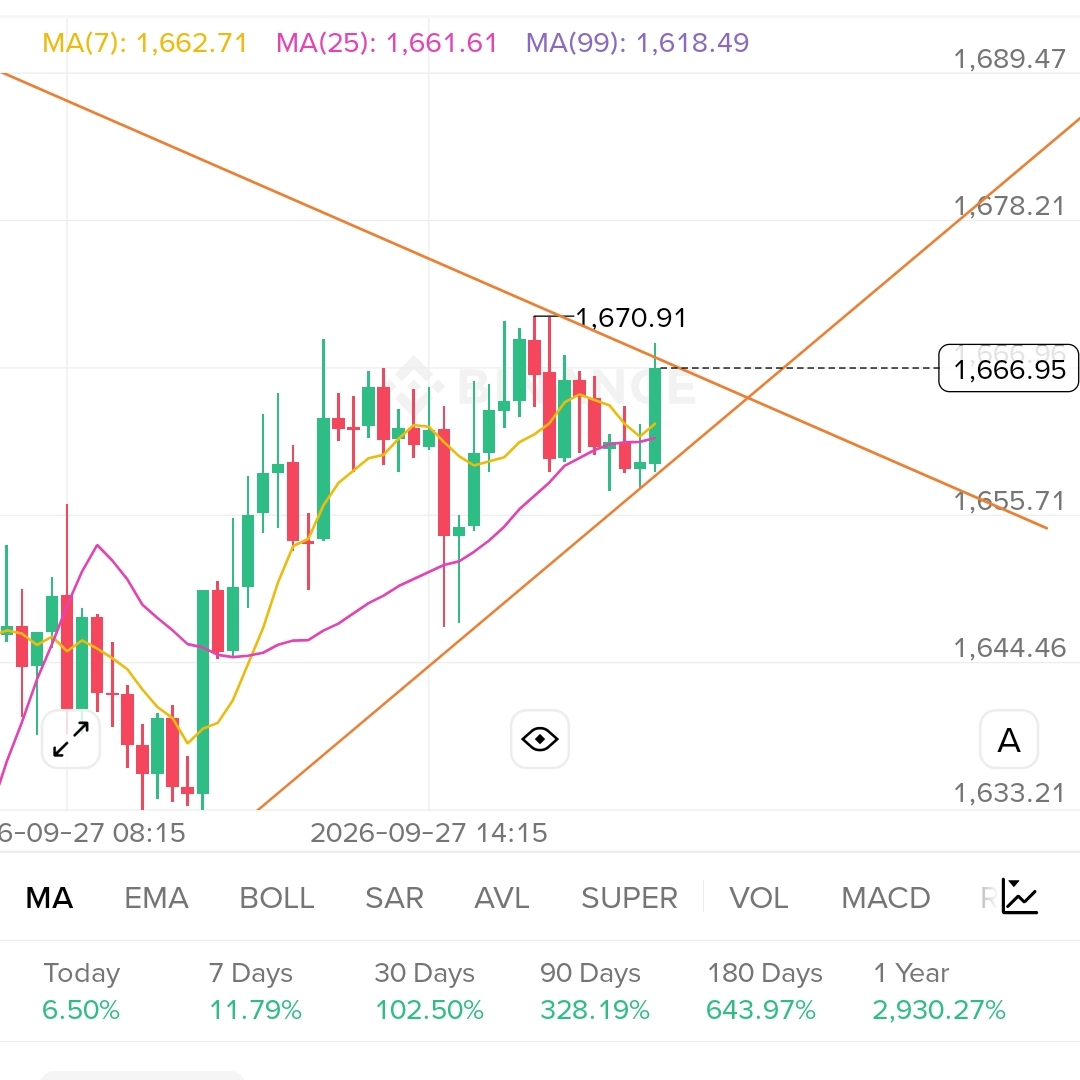
Look, I learned the hard way. That $600 I lost on ADA and DOGE futures wasn't just bad calls, it was the system itself. Exchange fee structures – maker/taker, funding rates, and even liquidation protocols – are designed to profit from your active trading. Every flip, every hour you hold a leveraged position, fees are extracting value. During sideways markets, funding rates silently drain you. They thrive on volume and duration, ensuring a constant stream of income from your capital, whether you're up or down. It's a brilliant business model... for them. When you trade, whose pockets are you really filling?
#CryptoFees #TradingTruth #ExchangeFees #FuturesFails #ProtectRetail
Look, I learned the hard way. That $600 I lost on ADA and DOGE futures wasn't just bad calls, it was the system itself. Exchange fee structures – maker/taker, funding rates, and even liquidation protocols – are designed to profit from your active trading. Every flip, every hour you hold a leveraged position, fees are extracting value. During sideways markets, funding rates silently drain you. They thrive on volume and duration, ensuring a constant stream of income from your capital, whether you're up or down. It's a brilliant business model... for them. When you trade, whose pockets are you really filling?
#CryptoFees #TradingTruth #ExchangeFees #FuturesFails #ProtectRetail
#CryptoFees #TradingTruth #ExchangeFees #FuturesFails #ProtectRetail
149
Alright folks, forgot to live here. Let's talk about the silent killer I ignored chasing those insane leverages: trading fees. It’s like having a tiny, constant leak in your wallet. You don't notice the drip, but over time, your cash is gone.
Imagine you're trading SOL with 50x leverage. You open and close a $1,000 position. Even with a tiny 0.04% fee *each way*, that's 40 cents to open, 40 cents to close – 80 cents for one round trip. Sounds small, right? But if you're like I was, making 10 frantic trades a day hoping to recover losses? That’s $8 daily. Over a month? Boom, $240 vanished. That $240 could be your whole trading capital getting eaten before you even make a profit. Every single flip costs you. Be intentional. Don't let these tiny fees quietly bleed you dry.
#CryptoFees #TradingTips #RiskManagement #LeverageLessons
Alright folks, forgot to live here. Let's talk about the silent killer I ignored chasing those insane leverages: trading fees. It’s like having a tiny, constant leak in your wallet. You don't notice the drip, but over time, your cash is gone.
Imagine you're trading SOL with 50x leverage. You open and close a $1,000 position. Even with a tiny 0.04% fee *each way*, that's 40 cents to open, 40 cents to close – 80 cents for one round trip. Sounds small, right? But if you're like I was, making 10 frantic trades a day hoping to recover losses? That’s $8 daily. Over a month? Boom, $240 vanished. That $240 could be your whole trading capital getting eaten before you even make a profit. Every single flip costs you. Be intentional. Don't let these tiny fees quietly bleed you dry.
#CryptoFees #TradingTips #RiskManagement #LeverageLessons
Imagine you're trading SOL with 50x leverage. You open and close a $1,000 position. Even with a tiny 0.04% fee *each way*, that's 40 cents to open, 40 cents to close – 80 cents for one round trip. Sounds small, right? But if you're like I was, making 10 frantic trades a day hoping to recover losses? That’s $8 daily. Over a month? Boom, $240 vanished. That $240 could be your whole trading capital getting eaten before you even make a profit. Every single flip costs you. Be intentional. Don't let these tiny fees quietly bleed you dry.
#CryptoFees #TradingTips #RiskManagement #LeverageLessons
124
Alright guys, I've got $5,400 worth of pain from ADA, DOGE, SOL futures, and it wasn't just my dumb calls. There's a silent killer nobody talks about: trading fees. Imagine a tiny leak under your sink. You ignore it, but those little drips fill a bucket over time. Every single trade – entry, exit, especially with leverage – costs you. That 0.05% fee seems like nothing. But if you're trading with $500, making 10 round-trip trades a day, 5 days a week, at just 0.08% total fee per trade, you're paying $20 a week. That's $80 in a month! 16% of your $500 capital just bled to fees, *before* any profit or loss. I learned this the hard way, thinking tiny fees don't matter. They do. Hard. Your takeaway: factor fees into *every* trade. They can quietly drain you dry.
#CryptoFees #TradingTips #LeverageLoss #BinanceSquare #SilentKiller
Alright guys, I've got $5,400 worth of pain from ADA, DOGE, SOL futures, and it wasn't just my dumb calls. There's a silent killer nobody talks about: trading fees. Imagine a tiny leak under your sink. You ignore it, but those little drips fill a bucket over time. Every single trade – entry, exit, especially with leverage – costs you. That 0.05% fee seems like nothing. But if you're trading with $500, making 10 round-trip trades a day, 5 days a week, at just 0.08% total fee per trade, you're paying $20 a week. That's $80 in a month! 16% of your $500 capital just bled to fees, *before* any profit or loss. I learned this the hard way, thinking tiny fees don't matter. They do. Hard. Your takeaway: factor fees into *every* trade. They can quietly drain you dry.
#CryptoFees #TradingTips #LeverageLoss #BinanceSquare #SilentKiller
#CryptoFees #TradingTips #LeverageLoss #BinanceSquare #SilentKiller
142
Man, back when I was blindly chasing 100x on ADA, DOGE, SOL, I completely ignored trading fees. Think of them as a tiny, invisible leak in your trading wallet. You barely notice it day-to-day, but over time, your funds just… vanish. Say you make a $100 trade. A 0.1% fee sounds tiny, right? That’s 10 cents. But you buy and sell, so it's 20 cents for one round trip. Do that just 100 times a month, and you've paid $20 in fees! That $20 isn’t from your profits; it’s directly from your capital. It silently shrinks your starting pot and makes it so much harder to recover. Don’t make my mistake. Always factor in fees. They really stack up.
#CryptoFees #TradingTips #BewareTheFees #FuturesTrading #LearnTheHardWay
Man, back when I was blindly chasing 100x on ADA, DOGE, SOL, I completely ignored trading fees. Think of them as a tiny, invisible leak in your trading wallet. You barely notice it day-to-day, but over time, your funds just… vanish. Say you make a $100 trade. A 0.1% fee sounds tiny, right? That’s 10 cents. But you buy and sell, so it's 20 cents for one round trip. Do that just 100 times a month, and you've paid $20 in fees! That $20 isn’t from your profits; it’s directly from your capital. It silently shrinks your starting pot and makes it so much harder to recover. Don’t make my mistake. Always factor in fees. They really stack up.
#CryptoFees #TradingTips #BewareTheFees #FuturesTrading #LearnTheHardWay
#CryptoFees #TradingTips #BewareTheFees #FuturesTrading #LearnTheHardWay
124
Man, when I was burning cash chasing 100x on SOL, I was so focused on big swings, I ignored the silent killer: trading fees. We all talk liquidation, but these small cuts add up fast.
Imagine a tiny leak in your wallet. Each trade, you pay a small percentage – say 0.1%. On a $100 trade, that's 10 cents. Insignificant? Make 50 trades a week, that's $5 gone. Do that for a year, and you've lost $260 without even knowing it. Real money, especially for smaller portfolios.
These tiny cuts eat into your potential gains or make losses worse. Always factor fees into your strategy. They're always taking their slice.
#CryptoFees #TradingTips #RiskManagement #BinanceSquare
Man, when I was burning cash chasing 100x on SOL, I was so focused on big swings, I ignored the silent killer: trading fees. We all talk liquidation, but these small cuts add up fast.
Imagine a tiny leak in your wallet. Each trade, you pay a small percentage – say 0.1%. On a $100 trade, that's 10 cents. Insignificant? Make 50 trades a week, that's $5 gone. Do that for a year, and you've lost $260 without even knowing it. Real money, especially for smaller portfolios.
These tiny cuts eat into your potential gains or make losses worse. Always factor fees into your strategy. They're always taking their slice.
#CryptoFees #TradingTips #RiskManagement #BinanceSquare
Imagine a tiny leak in your wallet. Each trade, you pay a small percentage – say 0.1%. On a $100 trade, that's 10 cents. Insignificant? Make 50 trades a week, that's $5 gone. Do that for a year, and you've lost $260 without even knowing it. Real money, especially for smaller portfolios.
These tiny cuts eat into your potential gains or make losses worse. Always factor fees into your strategy. They're always taking their slice.
#CryptoFees #TradingTips #RiskManagement #BinanceSquare
80
You know I lost my shirt on futures. A big part wasn't just bad calls, it was the hidden killer: fees. Every single trade, every funding payment, especially with high leverage on perpetuals, adds up. Exchanges profit massively from your constant activity. They earn on every open, every close, every hourly funding rate. It’s a structural setup, designed to slowly drain active traders’ capital, even when you're just trying to break even. Are you truly trading for profit, or just generating revenue for the platform?
#CryptoFees #TradingTips #FuturesTrading #BinanceSquare #RetailTrader
You know I lost my shirt on futures. A big part wasn't just bad calls, it was the hidden killer: fees. Every single trade, every funding payment, especially with high leverage on perpetuals, adds up. Exchanges profit massively from your constant activity. They earn on every open, every close, every hourly funding rate. It’s a structural setup, designed to slowly drain active traders’ capital, even when you're just trying to break even. Are you truly trading for profit, or just generating revenue for the platform?
#CryptoFees #TradingTips #FuturesTrading #BinanceSquare #RetailTrader
#CryptoFees #TradingTips #FuturesTrading #BinanceSquare #RetailTrader
56
Alright, folks, let's talk about something I learned the hard way after too many painful trades: exchange fees. It's easy to dismiss them as tiny percentages, but believe me, they're a finely tuned extraction machine. Every single maker/taker fee, every hourly funding rate on perpetuals – they're not just a cost of doing business. When you're actively trading, especially with leverage, these small cuts become a constant, silent drain on your capital. The structure incentivizes high volume and frequent activity, ensuring the platform gets its share regardless of your P&L. It’s set up to make you trade more, not necessarily profit more. So ask yourself: how much of your capital is really being siphoned away by these fees, even before your trade has a chance to breathe?
#CryptoFees...
Alright, folks, let's talk about something I learned the hard way after too many painful trades: exchange fees. It's easy to dismiss them as tiny percentages, but believe me, they're a finely tuned extraction machine. Every single maker/taker fee, every hourly funding rate on perpetuals – they're not just a cost of doing business. When you're actively trading, especially with leverage, these small cuts become a constant, silent drain on your capital. The structure incentivizes high volume and frequent activity, ensuring the platform gets its share regardless of your P&L. It’s set up to make you trade more, not necessarily profit more. So ask yourself: how much of your capital is really being siphoned away by these fees, even before your trade has a chance to breathe?
#CryptoFees...
#CryptoFees...

28

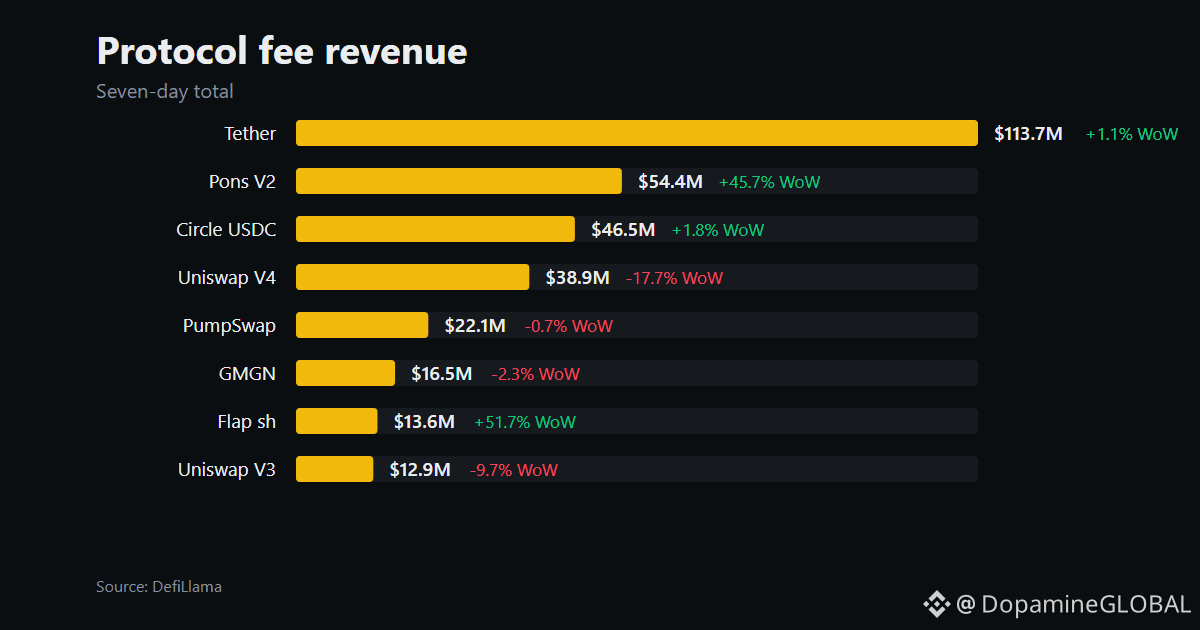
Stablecoin rails are doing more fee work than the biggest DEXs this week. Tether produced $113.75M in seven-day fees, while Circle USDC added $46.51M. Uniswap V4 came in at $38.91M, down 18% week over week.
That gap matters, but don’t read the leaderboard as a trading-volume ranking. It mixes issuer activity with DEX execution fees, so $USDT and $USDC can lead even when the market isn’t seeing a broad surge in speculative trading. The fee chart shows who monetised activity, not where traders’ risk appetite went.
Pons V2 is the outlier in the other direction: $54.36M, up 46%. That’s meaningful growth, but fees alone can’t tell us whether it came from organic usage, incentives, or a change in routing. The full sector reached $606.11M, up 8.89%, with stablecoin-related protocols taking a large share of the visible cash flow.
Fee leadership is real demand for blockspace or settlement, but it isn’t a clean proxy for bullish positioning.
Not financial advice. Do your own research.
#Stablecoins #DeFi #CryptoFees
Stablecoin rails are doing more fee work than the biggest DEXs this week. Tether produced $113.75M in seven-day fees, while Circle USDC added $46.51M. Uniswap V4 came in at $38.91M, down 18% week over week.
That gap matters, but don’t read the leaderboard as a trading-volume ranking. It mixes issuer activity with DEX execution fees, so $USDT and $USDC can lead even when the market isn’t seeing a broad surge in speculative trading. The fee chart shows who monetised activity, not where traders’ risk appetite went.
Pons V2 is the outlier in the other direction: $54.36M, up 46%. That’s meaningful growth, but fees alone can’t tell us whether it came from organic usage, incentives, or a change in routing. The full sector reached $606.11M, up 8.89%, with stablecoin-related protocols taking a large share of the visible cash flow.
Fee leadership is real demand for blockspace or settlement, but it isn’t a clean proxy for bullish positioning.
Not financial advice. Do your own research.
#Stablecoins #DeFi #CryptoFees
That gap matters, but don’t read the leaderboard as a trading-volume ranking. It mixes issuer activity with DEX execution fees, so $USDT and $USDC can lead even when the market isn’t seeing a broad surge in speculative trading. The fee chart shows who monetised activity, not where traders’ risk appetite went.
Pons V2 is the outlier in the other direction: $54.36M, up 46%. That’s meaningful growth, but fees alone can’t tell us whether it came from organic usage, incentives, or a change in routing. The full sector reached $606.11M, up 8.89%, with stablecoin-related protocols taking a large share of the visible cash flow.
Fee leadership is real demand for blockspace or settlement, but it isn’t a clean proxy for bullish positioning.
Not financial advice. Do your own research.
#Stablecoins #DeFi #CryptoFees
33
Remember those frantic nights, glued to the charts, chasing green candles? Every single 'execute' on a futures trade, especially with leverage, means the exchange takes a piece. Taker fees are a constant drain. And let's not forget funding fees – those tiny charges every eight hours that chip away at your capital, even if your position is slightly in profit. It's structurally designed to extract maximum value from active traders like us. They profit massively from the sheer *volume* of transactions and the duration of leveraged positions. It's their business model. Given how much you're paying in micro-transactions and funding fees, are you trading for profit, or just fueling the exchange's bottom line?
#CryptoFees #LeverageTrading #TradingTruth #RetailProtection
Remember those frantic nights, glued to the charts, chasing green candles? Every single 'execute' on a futures trade, especially with leverage, means the exchange takes a piece. Taker fees are a constant drain. And let's not forget funding fees – those tiny charges every eight hours that chip away at your capital, even if your position is slightly in profit. It's structurally designed to extract maximum value from active traders like us. They profit massively from the sheer *volume* of transactions and the duration of leveraged positions. It's their business model. Given how much you're paying in micro-transactions and funding fees, are you trading for profit, or just fueling the exchange's bottom line?
#CryptoFees #LeverageTrading #TradingTruth #RetailProtection
#CryptoFees #LeverageTrading #TradingTruth #RetailProtection
34
Remember that $600 I blew? A big chunk wasn't just bad trades; it was the exchange getting its cut. Every single open, every close, every funding rate payment, especially on those insane 100x DOGE futures I was playing. They make money whether you win or lose, simply by you *trading*. Taker fees hit hard when you’re desperate to exit, and those daily funding rates add up fast. This system isn't built for your long-term gains, it’s designed for constant transaction volume. They profit from your impatience, your activity, and every tiny fraction of a percent you pay them. It's their business model.
Given how much we trade, are we just paying for a service, or fueling a machine that thrives on our constant churn?
#CryptoFees #FuturesTrading #KnowYourFees #RetailProtection #TradingWisdom
Remember that $600 I blew? A big chunk wasn't just bad trades; it was the exchange getting its cut. Every single open, every close, every funding rate payment, especially on those insane 100x DOGE futures I was playing. They make money whether you win or lose, simply by you *trading*. Taker fees hit hard when you’re desperate to exit, and those daily funding rates add up fast. This system isn't built for your long-term gains, it’s designed for constant transaction volume. They profit from your impatience, your activity, and every tiny fraction of a percent you pay them. It's their business model.
Given how much we trade, are we just paying for a service, or fueling a machine that thrives on our constant churn?
#CryptoFees #FuturesTrading #KnowYourFees #RetailProtection #TradingWisdom
Given how much we trade, are we just paying for a service, or fueling a machine that thrives on our constant churn?
#CryptoFees #FuturesTrading #KnowYourFees #RetailProtection #TradingWisdom
67


·
--
ບົດຄວາມ
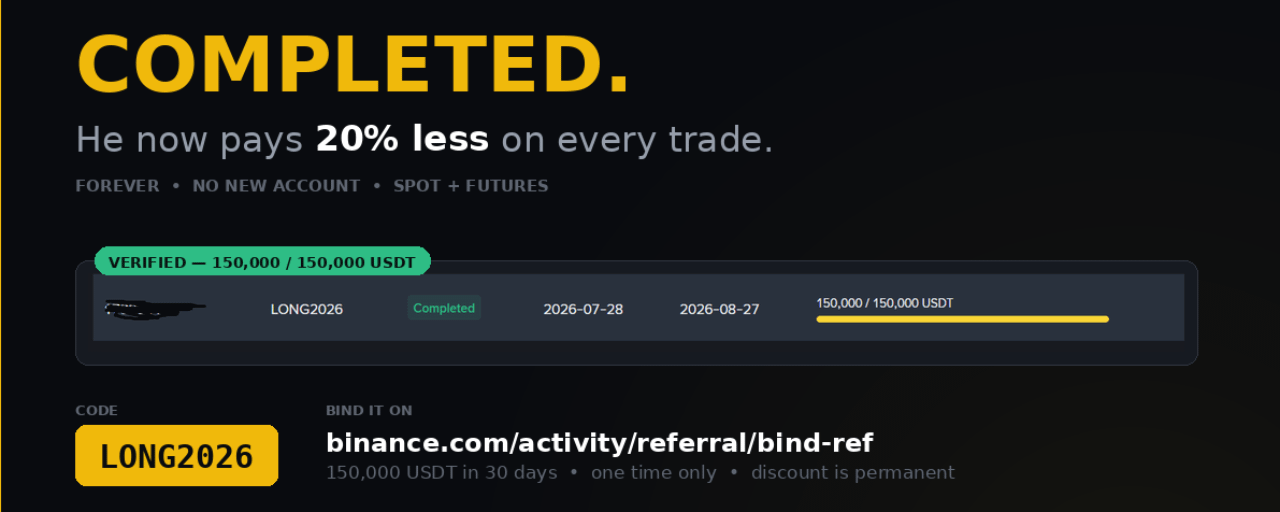
He Pays 20% Less Commission Than You. Same Exchange. Same Trades.Someone in this community just cut their Binance fees by 20%. Permanently. Why are you still paying full price?
TL;DR: Existing Binance users can now bind a referral code to an account they already own — something that was impossible until recently. One of my followers did it this week. Every trade from here on costs them 20% less in commission. One condition: $150,000 in volume within 30 days, and all of it counts — spot and futures combined.
Look at what this week did to your fee bill
BTC is up over 20% in seven days. Volumes are up across the board. Everyone is trading more — spot, futures, everything.
More trading means one thing nobody looks at: more commission.
Do the math on yourself. 500,000 USDT of futures volume in a month at 0.05% taker is 250 USDT gone. Two million in volume is 1,000 USDT gone. In a market moving like this one, those aren't unusual numbers.
Now take 20% off every one of those trades. Forever. Same strategy, same platform, same risk — just less leaking out the bottom.
"I already have a Binance account, it's too late for me"
That used to be true. It isn't anymore.
Binance opened a referral binding page for existing users:
🔗 [https://www.binance.com/activity/referral/bind-ref](https://www.binance.com/activity/referral/bind-ref)
Write Code : LONG2026
You bind a code to the account you already have. No new account. No moving funds. No re-doing KYC.
Conditions:
✅ No referral code has ever been bound to your account
✅ Your trading volume in the last 90 days is below the threshold
⚠️ $150,000 in trading volume within 30 days of binding — spot and futures both count
That $150,000 is smaller than it sounds
Read the condition properly, because most people misread it.
It is not futures-only. Every trade counts — spot, futures, all of it, added together. And it's one time, 30 days. Not monthly. Not recurring.
Here's what that actually looks like:
📊 Buy 5,000 USDT of BTC and sell it → that's 10,000 USDT of volume. Not 5,000.
📊 Do that fifteen times in a month → you're done.
📊 Any futures position you open adds on top of that.
📊 Rotating between coins in a week like this one racks it up fast without you noticing.
Open your Binance volume history right now and look at your last 30 days. A lot of people find they're already past $150,000 and had no idea. If you're one of them, this condition costs you literally nothing — you'd hit it doing exactly what you already do.
And if $150,000 in a month is genuinely far from your reach, then be honest with yourself: you weren't paying enough in fees for a 20% discount to matter much anyway. The condition isn't a wall. It's a filter that sorts out the people who benefit most.
How to do it
1️⃣ Open [https://www.binance.com/activity/referral/bind-ref](https://www.binance.com/activity/referral/bind-ref)
2️⃣ Check whether your account is eligible
3️⃣ Enter code LONG2026
4️⃣ Confirm the binding
5️⃣ Reach $150,000 in combined volume within 30 days
Done. 20% off commission, for the life of the account.
Not on Binance yet? You don't need the binding page at all — register with LONG2026 and the discount applies from your first trade, with no volume requirement at all.
FAQ
Does this cost me anything?
No. The discount comes out of the referral commission, not out of your pocket.
Spot or futures?
Both — for the discount, and for the $150,000 requirement.
Is the $150,000 every month?
No. Once, within 30 days of binding. The discount that follows is permanent.
Does spot really count toward the volume?
Yes. All trading volume is combined. This is the part most people get wrong.
What if I already have a code bound?
Then you're not eligible. This is only for accounts that never bound one.
Should I wait?
Every trade between now and whenever "later" arrives is a trade you overpaid on. In a week where BTC moved 20%, later is expensive.
💬 Bound it successfully? Drop a ✅ below so people can see it actually works.
❓ Not sure if you qualify? Ask in the comments and I'll answer.
#Binance #BinanceReferral #CryptoFees
He Pays 20% Less Commission Than You. Same Exchange. Same Trades.
Someone in this community just cut their Binance fees by 20%. Permanently. Why are you still paying full price?
TL;DR: Existing Binance users can now bind a referral code to an account they already own — something that was impossible until recently. One of my followers did it this week. Every trade from here on costs them 20% less in commission. One condition: $150,000 in volume within 30 days, and all of it counts — spot and futures combined.
Look at what this week did to your fee bill
BTC is up over 20% in seven days. Volumes are up across the board. Everyone is trading more — spot, futures, everything.
More trading means one thing nobody looks at: more commission.
Do the math on yourself. 500,000 USDT of futures volume in a month at 0.05% taker is 250 USDT gone. Two million in volume is 1,000 USDT gone. In a market moving like this one, those aren't unusual numbers.
Now take 20% off every one of those trades. Forever. Same strategy, same platform, same risk — just less leaking out the bottom.
"I already have a Binance account, it's too late for me"
That used to be true. It isn't anymore.
Binance opened a referral binding page for existing users:
🔗 https://www.binance.com/activity/referral/bind-ref
Write Code : LONG2026
You bind a code to the account you already have. No new account. No moving funds. No re-doing KYC.
Conditions:
✅ No referral code has ever been bound to your account
✅ Your trading volume in the last 90 days is below the threshold
⚠️ $150,000 in trading volume within 30 days of binding — spot and futures both count
That $150,000 is smaller than it sounds
Read the condition properly, because most people misread it.
It is not futures-only. Every trade counts — spot, futures, all of it, added together. And it's one time, 30 days. Not monthly. Not recurring.
Here's what that actually looks like:
📊 Buy 5,000 USDT of BTC and sell it → that's 10,000 USDT of volume. Not 5,000.
📊 Do that fifteen times in a month → you're done.
📊 Any futures position you open adds on top of that.
📊 Rotating between coins in a week like this one racks it up fast without you noticing.
Open your Binance volume history right now and look at your last 30 days. A lot of people find they're already past $150,000 and had no idea. If you're one of them, this condition costs you literally nothing — you'd hit it doing exactly what you already do.
And if $150,000 in a month is genuinely far from your reach, then be honest with yourself: you weren't paying enough in fees for a 20% discount to matter much anyway. The condition isn't a wall. It's a filter that sorts out the people who benefit most.
How to do it
1️⃣ Open https://www.binance.com/activity/referral/bind-ref
2️⃣ Check whether your account is eligible
3️⃣ Enter code LONG2026
4️⃣ Confirm the binding
5️⃣ Reach $150,000 in combined volume within 30 days
Done. 20% off commission, for the life of the account.
Not on Binance yet? You don't need the binding page at all — register with LONG2026 and the discount applies from your first trade, with no volume requirement at all.
FAQ
Does this cost me anything?
No. The discount comes out of the referral commission, not out of your pocket.
Spot or futures?
Both — for the discount, and for the $150,000 requirement.
Is the $150,000 every month?
No. Once, within 30 days of binding. The discount that follows is permanent.
Does spot really count toward the volume?
Yes. All trading volume is combined. This is the part most people get wrong.
What if I already have a code bound?
Then you're not eligible. This is only for accounts that never bound one.
Should I wait?
Every trade between now and whenever "later" arrives is a trade you overpaid on. In a week where BTC moved 20%, later is expensive.
💬 Bound it successfully? Drop a ✅ below so people can see it actually works.
❓ Not sure if you qualify? Ask in the comments and I'll answer.
#Binance #BinanceReferral #CryptoFees
TL;DR: Existing Binance users can now bind a referral code to an account they already own — something that was impossible until recently. One of my followers did it this week. Every trade from here on costs them 20% less in commission. One condition: $150,000 in volume within 30 days, and all of it counts — spot and futures combined.
Look at what this week did to your fee bill
BTC is up over 20% in seven days. Volumes are up across the board. Everyone is trading more — spot, futures, everything.
More trading means one thing nobody looks at: more commission.
Do the math on yourself. 500,000 USDT of futures volume in a month at 0.05% taker is 250 USDT gone. Two million in volume is 1,000 USDT gone. In a market moving like this one, those aren't unusual numbers.
Now take 20% off every one of those trades. Forever. Same strategy, same platform, same risk — just less leaking out the bottom.
"I already have a Binance account, it's too late for me"
That used to be true. It isn't anymore.
Binance opened a referral binding page for existing users:
🔗 https://www.binance.com/activity/referral/bind-ref
Write Code : LONG2026
You bind a code to the account you already have. No new account. No moving funds. No re-doing KYC.
Conditions:
✅ No referral code has ever been bound to your account
✅ Your trading volume in the last 90 days is below the threshold
⚠️ $150,000 in trading volume within 30 days of binding — spot and futures both count
That $150,000 is smaller than it sounds
Read the condition properly, because most people misread it.
It is not futures-only. Every trade counts — spot, futures, all of it, added together. And it's one time, 30 days. Not monthly. Not recurring.
Here's what that actually looks like:
📊 Buy 5,000 USDT of BTC and sell it → that's 10,000 USDT of volume. Not 5,000.
📊 Do that fifteen times in a month → you're done.
📊 Any futures position you open adds on top of that.
📊 Rotating between coins in a week like this one racks it up fast without you noticing.
Open your Binance volume history right now and look at your last 30 days. A lot of people find they're already past $150,000 and had no idea. If you're one of them, this condition costs you literally nothing — you'd hit it doing exactly what you already do.
And if $150,000 in a month is genuinely far from your reach, then be honest with yourself: you weren't paying enough in fees for a 20% discount to matter much anyway. The condition isn't a wall. It's a filter that sorts out the people who benefit most.
How to do it
1️⃣ Open https://www.binance.com/activity/referral/bind-ref
2️⃣ Check whether your account is eligible
3️⃣ Enter code LONG2026
4️⃣ Confirm the binding
5️⃣ Reach $150,000 in combined volume within 30 days
Done. 20% off commission, for the life of the account.
Not on Binance yet? You don't need the binding page at all — register with LONG2026 and the discount applies from your first trade, with no volume requirement at all.
FAQ
Does this cost me anything?
No. The discount comes out of the referral commission, not out of your pocket.
Spot or futures?
Both — for the discount, and for the $150,000 requirement.
Is the $150,000 every month?
No. Once, within 30 days of binding. The discount that follows is permanent.
Does spot really count toward the volume?
Yes. All trading volume is combined. This is the part most people get wrong.
What if I already have a code bound?
Then you're not eligible. This is only for accounts that never bound one.
Should I wait?
Every trade between now and whenever "later" arrives is a trade you overpaid on. In a week where BTC moved 20%, later is expensive.
💬 Bound it successfully? Drop a ✅ below so people can see it actually works.
❓ Not sure if you qualify? Ask in the comments and I'll answer.
#Binance #BinanceReferral #CryptoFees
5
1
20
1.7k
Yo, it's 'forgot to live' here. That $600 I blew? Yeah, the biggest chunk went in a flash, but a silent killer was the endless stream of fees. Think about it: every trade, maker/taker fees. Holding futures? Funding rates, sometimes multiple times a day. And if you get liquidated, there are even more fees taken out for the 'insurance fund'. These exchanges aren't just providing a service; their models are built to extract maximum value from active traders, especially us degens on leverage. Every single move you make, win or lose, they're taking a cut. It’s their bread and butter. Have you ever truly calculated how much of your trading capital just vanishes into these fee structures?
#CryptoFees #FuturesTrading #RetailTrader #BinanceSquare #LearnTheHardWay
Yo, it's 'forgot to live' here. That $600 I blew? Yeah, the biggest chunk went in a flash, but a silent killer was the endless stream of fees. Think about it: every trade, maker/taker fees. Holding futures? Funding rates, sometimes multiple times a day. And if you get liquidated, there are even more fees taken out for the 'insurance fund'. These exchanges aren't just providing a service; their models are built to extract maximum value from active traders, especially us degens on leverage. Every single move you make, win or lose, they're taking a cut. It’s their bread and butter. Have you ever truly calculated how much of your trading capital just vanishes into these fee structures?
#CryptoFees #FuturesTrading #RetailTrader #BinanceSquare #LearnTheHardWay
#CryptoFees #FuturesTrading #RetailTrader #BinanceSquare #LearnTheHardWay
31
Remember that $600 I lost on ADA and DOGE futures? Part of that wasn't just bad calls; it was the slow bleed of fees, designed to eat you alive when you're trading constantly. Every single leveraged trade, especially with high multipliers like 100x, means every tiny taker fee or funding rate payment is magnified. You're giving away a piece of your capital even when you're just *trying* to stay in the game. These structures aren't accidental; they funnel value directly from active traders, especially the ones chasing quick gains or trying to dig out of a hole. It's a constant drain that adds up massively, making it nearly impossible to consistently profit if you're not aware. Do you ever stop to calculate how much you're actually paying just to *trade* on these platforms?
#CryptoFees #RetailTrader #FuturesTrading #KnowYourExchange
Remember that $600 I lost on ADA and DOGE futures? Part of that wasn't just bad calls; it was the slow bleed of fees, designed to eat you alive when you're trading constantly. Every single leveraged trade, especially with high multipliers like 100x, means every tiny taker fee or funding rate payment is magnified. You're giving away a piece of your capital even when you're just *trying* to stay in the game. These structures aren't accidental; they funnel value directly from active traders, especially the ones chasing quick gains or trying to dig out of a hole. It's a constant drain that adds up massively, making it nearly impossible to consistently profit if you're not aware. Do you ever stop to calculate how much you're actually paying just to *trade* on these platforms?
#CryptoFees #RetailTrader #FuturesTrading #KnowYourExchange
#CryptoFees #RetailTrader #FuturesTrading #KnowYourExchange
85

Last month I pulled up my account after a quiet stretch of trading, half-expecting my VIP level to have already slipped.
A lot of crypto traders don't factor in how VIP perks can vanish if volume isn't there. Those extra fees start adding up the moment the market gets choppy, turning what should be a small loss into something bigger.
My status depended partly on monthly volume, and that was the piece I wasn't producing. I opened the dashboard knowing a downgrade was likely. Most people treat these levels as set-it-and-forget-it, but the requirements roll continuously. Even a few weeks of low activity in $BTC pairs can push you down, and suddenly every $ETH trade costs more.
The real risk shows up later. Higher fees compound across dozens of trades, especially if you're rotating into $USDT during uncertainty. It's easy to miss until you calculate the yearly hit. Consistency in volume isn't just about ranking. It's about protecting your edge when conditions turn.
What's your experience with keeping VIP status intact through slow months?
#TradingVolume #CryptoFees #MarketRisks
Last month I pulled up my account after a quiet stretch of trading, half-expecting my VIP level to have already slipped.
A lot of crypto traders don't factor in how VIP perks can vanish if volume isn't there. Those extra fees start adding up the moment the market gets choppy, turning what should be a small loss into something bigger.
My status depended partly on monthly volume, and that was the piece I wasn't producing. I opened the dashboard knowing a downgrade was likely. Most people treat these levels as set-it-and-forget-it, but the requirements roll continuously. Even a few weeks of low activity in $BTC pairs can push you down, and suddenly every $ETH trade costs more.
The real risk shows up later. Higher fees compound across dozens of trades, especially if you're rotating into $USDT during uncertainty. It's easy to miss until you calculate the yearly hit. Consistency in volume isn't just about ranking. It's about protecting your edge when conditions turn.
What's your experience with keeping VIP status intact through slow months?
#TradingVolume #CryptoFees #MarketRisks
A lot of crypto traders don't factor in how VIP perks can vanish if volume isn't there. Those extra fees start adding up the moment the market gets choppy, turning what should be a small loss into something bigger.
My status depended partly on monthly volume, and that was the piece I wasn't producing. I opened the dashboard knowing a downgrade was likely. Most people treat these levels as set-it-and-forget-it, but the requirements roll continuously. Even a few weeks of low activity in $BTC pairs can push you down, and suddenly every $ETH trade costs more.
The real risk shows up later. Higher fees compound across dozens of trades, especially if you're rotating into $USDT during uncertainty. It's easy to miss until you calculate the yearly hit. Consistency in volume isn't just about ranking. It's about protecting your edge when conditions turn.
What's your experience with keeping VIP status intact through slow months?
#TradingVolume #CryptoFees #MarketRisks
42
Guys, when I blew up my $600 chasing DOGE dreams, I was so focused on chasing PnL, I totally forgot about the tiny things. I’m talking about trading fees. They’re like sand slipping through your fingers – each grain seems tiny, but enough of it and your whole pile disappears without you even noticing.
Say you’re doing 10 leveraged trades a day, trying to scalp small profits. Even if each trade costs just $0.50 in fees, that's $5 a day. Over a month, that's $150! Imagine doing that for a year. That’s $1800 in fees alone. Suddenly, your small gains are eaten away, or your losses are amplified, all silently. It happened to me.
Always know your fee structure. It's not just the big losses that hurt; it's the constant drip of fees silently draining your capital.
#CryptoFees #TradingTips #FuturesTrading #RiskManagement
Guys, when I blew up my $600 chasing DOGE dreams, I was so focused on chasing PnL, I totally forgot about the tiny things. I’m talking about trading fees. They’re like sand slipping through your fingers – each grain seems tiny, but enough of it and your whole pile disappears without you even noticing.
Say you’re doing 10 leveraged trades a day, trying to scalp small profits. Even if each trade costs just $0.50 in fees, that's $5 a day. Over a month, that's $150! Imagine doing that for a year. That’s $1800 in fees alone. Suddenly, your small gains are eaten away, or your losses are amplified, all silently. It happened to me.
Always know your fee structure. It's not just the big losses that hurt; it's the constant drip of fees silently draining your capital.
#CryptoFees #TradingTips #FuturesTrading #RiskManagement
Say you’re doing 10 leveraged trades a day, trying to scalp small profits. Even if each trade costs just $0.50 in fees, that's $5 a day. Over a month, that's $150! Imagine doing that for a year. That’s $1800 in fees alone. Suddenly, your small gains are eaten away, or your losses are amplified, all silently. It happened to me.
Always know your fee structure. It's not just the big losses that hurt; it's the constant drip of fees silently draining your capital.
#CryptoFees #TradingTips #FuturesTrading #RiskManagement
71
When I blew up my account, it wasn't just bad luck or dumb decisions on ADA and DOGE at 100x. A huge chunk of that $600 went straight into exchange pockets via fees. Every single leveraged trade you make, every time you open or close a position, pays the house. Maker/taker fees, funding rates – they all add up, magnified by leverage. Exchanges aren't just providing a service; they're fundamentally structured to profit from high-volume, active trading, regardless of your PnL. Your constant activity, especially on futures, is their guaranteed income stream. Are you really trading for yourself, or are you just a revenue generator for the platform?
#CryptoFees #LeverageTrap #ExchangeGames #TradeSmart
When I blew up my account, it wasn't just bad luck or dumb decisions on ADA and DOGE at 100x. A huge chunk of that $600 went straight into exchange pockets via fees. Every single leveraged trade you make, every time you open or close a position, pays the house. Maker/taker fees, funding rates – they all add up, magnified by leverage. Exchanges aren't just providing a service; they're fundamentally structured to profit from high-volume, active trading, regardless of your PnL. Your constant activity, especially on futures, is their guaranteed income stream. Are you really trading for yourself, or are you just a revenue generator for the platform?
#CryptoFees #LeverageTrap #ExchangeGames #TradeSmart
#CryptoFees #LeverageTrap #ExchangeGames #TradeSmart
78
You think you're battling the market? Nah, you're just bleeding fees. When I was deep in those ADA, DOGE, SOL 100x futures, every single flip, win or lose, was a guaranteed cut for the exchange. It ain't just the maker/taker fees – that's obvious. But look at futures funding rates. They're literally structured to skim capital off the longer or shorter side, constantly, simply for holding a position. It's passive income for the platform, taken directly from your potential gains or speeding up your losses. They thrive on your activity, not your success. Are we active traders, or are we just fueling their balance sheets with our constant transaction taxes?
#CryptoFees #FuturesTrading #RetailTrap #BinanceSquare
You think you're battling the market? Nah, you're just bleeding fees. When I was deep in those ADA, DOGE, SOL 100x futures, every single flip, win or lose, was a guaranteed cut for the exchange. It ain't just the maker/taker fees – that's obvious. But look at futures funding rates. They're literally structured to skim capital off the longer or shorter side, constantly, simply for holding a position. It's passive income for the platform, taken directly from your potential gains or speeding up your losses. They thrive on your activity, not your success. Are we active traders, or are we just fueling their balance sheets with our constant transaction taxes?
#CryptoFees #FuturesTrading #RetailTrap #BinanceSquare
#CryptoFees #FuturesTrading #RetailTrap #BinanceSquare
51
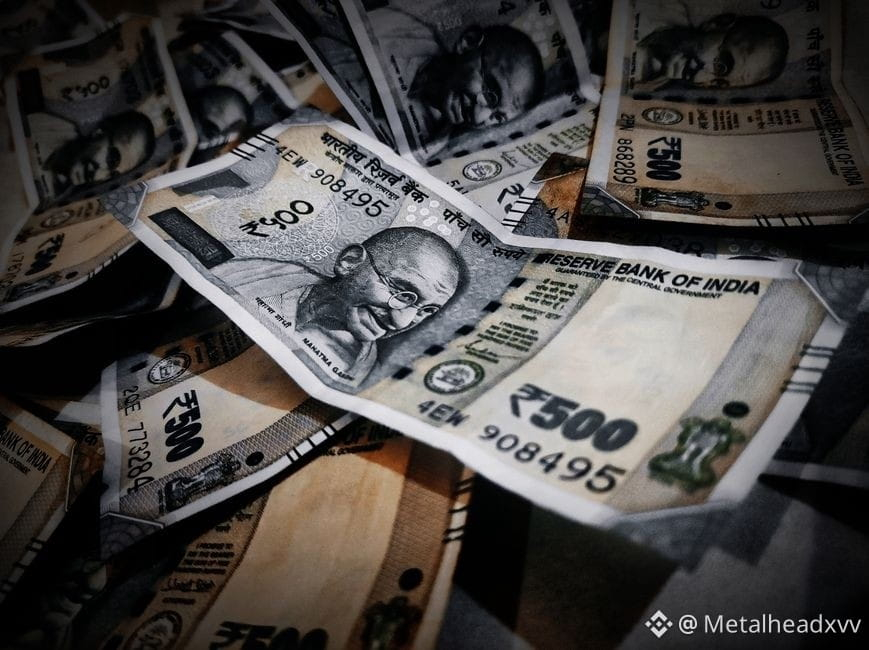
Remember all those 12x-100x SOL and DOGE futures trades I talked about? The ones that ate my portfolio alive? A big chunk of that $5,400 wasn't just my bad calls. It was the constant drip-drip of fees. Every open, every close, every funding rate payment on leveraged positions. Exchanges profit whether you win or lose, but they *really* win when you trade often with leverage. Maker/taker fees might seem tiny, but when you're in and out multiple times a day on volatile assets, those fractions of a percent add up fast. It's a structural design: more trades = more fees, more leverage = higher funding rates. It's brilliant for them, brutal for us. Are you truly trading for profit, or just generating revenue for the exchange?
#CryptoFees #TradingWisdom #ProtectRetail #FuturesTrading #MarketStructure
Remember all those 12x-100x SOL and DOGE futures trades I talked about? The ones that ate my portfolio alive? A big chunk of that $5,400 wasn't just my bad calls. It was the constant drip-drip of fees. Every open, every close, every funding rate payment on leveraged positions. Exchanges profit whether you win or lose, but they *really* win when you trade often with leverage. Maker/taker fees might seem tiny, but when you're in and out multiple times a day on volatile assets, those fractions of a percent add up fast. It's a structural design: more trades = more fees, more leverage = higher funding rates. It's brilliant for them, brutal for us. Are you truly trading for profit, or just generating revenue for the exchange?
#CryptoFees #TradingWisdom #ProtectRetail #FuturesTrading #MarketStructure
#CryptoFees #TradingWisdom #ProtectRetail #FuturesTrading #MarketStructure
63

📊 بيانات DeFiLlama تكشف عن تحديات توليد الرسوم في سلاسل الكتل
أظهرت بيانات حديثة من منصة DeFiLlama أن نسبة كبيرة من سلاسل الكتل، تحديدًا 71% منها، لم تسجل أي رسوم معاملات خلال فترة 24 ساعة. يشير هذا التوزيع غير المتكافئ لتوليد الرسوم إلى هيمنة عدد محدود من الشبكات على النشاط الاقتصادي في قطاع البلوكتشين، مما يبرز التحديات التي تواجه المشاريع الأقل استخدامًا.
━━━━━━━━━━━━━━
📊 التأثير: 📈 مرتفع
🏷️ DEFI
#Blockchain #DeFi #CryptoFees #MarketAnalysis #Decentralization
📰 المصدر: cryptobriefing.com
📊 بيانات DeFiLlama تكشف عن تحديات توليد الرسوم في سلاسل الكتل
أظهرت بيانات حديثة من منصة DeFiLlama أن نسبة كبيرة من سلاسل الكتل، تحديدًا 71% منها، لم تسجل أي رسوم معاملات خلال فترة 24 ساعة. يشير هذا التوزيع غير المتكافئ لتوليد الرسوم إلى هيمنة عدد محدود من الشبكات على النشاط الاقتصادي في قطاع البلوكتشين، مما يبرز التحديات التي تواجه المشاريع الأقل استخدامًا.
━━━━━━━━━━━━━━
📊 التأثير: 📈 مرتفع
🏷️ DEFI
#Blockchain #DeFi #CryptoFees #MarketAnalysis #Decentralization
📰 المصدر: cryptobriefing.com
أظهرت بيانات حديثة من منصة DeFiLlama أن نسبة كبيرة من سلاسل الكتل، تحديدًا 71% منها، لم تسجل أي رسوم معاملات خلال فترة 24 ساعة. يشير هذا التوزيع غير المتكافئ لتوليد الرسوم إلى هيمنة عدد محدود من الشبكات على النشاط الاقتصادي في قطاع البلوكتشين، مما يبرز التحديات التي تواجه المشاريع الأقل استخدامًا.
━━━━━━━━━━━━━━
📊 التأثير: 📈 مرتفع
🏷️ DEFI
#Blockchain #DeFi #CryptoFees #MarketAnalysis #Decentralization
📰 المصدر: cryptobriefing.com
29
ເຂົ້າສູ່ລະບົບເພື່ອສຳຫຼວດເນື້ອຫາເພີ່ມເຕີມ
ເຂົ້າຮ່ວມກຸ່ມຜູ້ໃຊ້ຄຣິບໂຕທົ່ວໂລກໃນ Binance Square.
⚡️ ໄດ້ຮັບຂໍ້ມູນຫຼ້າສຸດ ແລະ ທີ່ມີປະໂຫຍດກ່ຽວກັບຄຣິບໂຕ.
💬 ໄດ້ຮັບຄວາມໄວ້ວາງໃຈຈາກຕະຫຼາດແລກປ່ຽນຄຣິບໂຕທີ່ໃຫຍ່ທີ່ສຸດໃນໂລກ.
👍 ຄົ້ນຫາຂໍ້ມູນເຊີງເລິກທີ່ແທ້ຈາກນັກສ້າງທີ່ໄດ້ຮັບການຢືນຢັນ.
ອີເມວ / ເບີໂທລະສັບ
ຫົວຂໍ້ທີ່ກໍາລັງນິຍົມ
1
#CanMicrosoftDeliverOnAI
18,524 ຄັ້ງທີ່ເບິ່ງ
376 ກຳລັງສົນທະນາ
2
#CanGoogleDefindItsCore
10,516 ຄັ້ງທີ່ເບິ່ງ
291 ກຳລັງສົນທະນາ
3
#FOMCWatch
9M ຄັ້ງທີ່ເບິ່ງ
27,516 ກຳລັງສົນທະນາ
4
#EthereumDropsBelow$2300
7,885 ຄັ້ງທີ່ເບິ່ງ
129 ກຳລັງສົນທະນາ
5
#BitcoinSlipsBelow$80KAgain
22,491 ຄັ້ງທີ່ເບິ່ງ
95 ກຳລັງສົນທະນາ
6
#ThailandLaunchesWORPTStablecoinToQRPaymentApp
41,980 ຄັ້ງທີ່ເບິ່ງ
652 ກຳລັງສົນທະນາ
7
#StrategySkipsBitcoinPurchasesSpends$205MOnSTRCBuybacks
9,122 ຄັ້ງທີ່ເບິ່ງ
89 ກຳລັງສົນທະນາ
8
#BitmineAdds10452ETH
82,151 ຄັ້ງທີ່ເບິ່ງ
1,032 ກຳລັງສົນທະນາ
9
#SouthKoreaConsidersEducationTaxOnCryptoExchanges
43,543 ຄັ້ງທີ່ເບິ່ງ
757 ກຳລັງສົນທະນາ
10
#OCCUrgesCommunityBanksToEnterStablecoinPayments
33,732 ຄັ້ງທີ່ເບິ່ງ
533 ກຳລັງສົນທະນາ