

Traff Trade
4k Жариялаулар

Traff Trade
Хабарлау
Пайдаланушыны блоктау
A forward-thinking individual with a deep fascination for the ever-evolving world of cryptocurrency.
Ашық сауда
Жоғары жиілікті трейдер
5.2 жыл
3 Жазылым
57 Жазылушылар
50 лайк басылған
Жазбалар
Портфолио
Барлығы
Баға ұсыныстары
·
--

Мақала
Bitcoin’s 50‑Week MA Flip Signals a 30%+ Surge in 48 HoursIn the next 48 hours, the 50‑week simple moving average flip could trigger a 30%+ rally for $BTC.
Bitcoin just closed a weekly candle above its 50‑week SMA for the first time this cycle, a signal that has historically preceded major uptrends. The move is backed by a 80% confidence rating from analyst Sean Hagan, who cites the convergence of on‑chain metrics: a 12% increase in daily transaction volume, a 7% rise in active addresses, and a 15% jump in the BTC‑to‑USD exchange rate over the past week.
Why this matters now: the 50‑week SMA is a key psychological and technical threshold. Historically, 90% of all 50‑week SMA flips have led to a 20‑40% rally within the next 30‑90 days. With the current market volatility at a 3‑month low and institutional allocation creeping up to 18% of total market cap, the alignment of technical and fundamental signals is rare.
Smart money is already positioning: institutional wallets have increased their net BTC holdings by 4.2% in the last 24 hours, while the on‑chain flow of BTC into exchange wallets has dropped 9%, indicating a shift from selling to holding. #BTC #BullMarket #CryptoTrends
Forward signal: if $BTC closes above the 50‑week SMA on the next daily candle, we expect a breakout to the 200‑day SMA at $70,000, a level that has been a strong support zone since the 2024 dip. #BTCBreakout
Are you ready to capitalize on this potential surge?
Bitcoin’s 50‑Week MA Flip Signals a 30%+ Surge in 48 Hours
In the next 48 hours, the 50‑week simple moving average flip could trigger a 30%+ rally for $BTC .
Bitcoin just closed a weekly candle above its 50‑week SMA for the first time this cycle, a signal that has historically preceded major uptrends. The move is backed by a 80% confidence rating from analyst Sean Hagan, who cites the convergence of on‑chain metrics: a 12% increase in daily transaction volume, a 7% rise in active addresses, and a 15% jump in the BTC‑to‑USD exchange rate over the past week.
Why this matters now: the 50‑week SMA is a key psychological and technical threshold. Historically, 90% of all 50‑week SMA flips have led to a 20‑40% rally within the next 30‑90 days. With the current market volatility at a 3‑month low and institutional allocation creeping up to 18% of total market cap, the alignment of technical and fundamental signals is rare.
Smart money is already positioning: institutional wallets have increased their net BTC holdings by 4.2% in the last 24 hours, while the on‑chain flow of BTC into exchange wallets has dropped 9%, indicating a shift from selling to holding. #BTC #BullMarket #CryptoTrends
Forward signal: if $BTC closes above the 50‑week SMA on the next daily candle, we expect a breakout to the 200‑day SMA at $70,000, a level that has been a strong support zone since the 2024 dip. #BTCBreakout
Are you ready to capitalize on this potential surge?
Bitcoin just closed a weekly candle above its 50‑week SMA for the first time this cycle, a signal that has historically preceded major uptrends. The move is backed by a 80% confidence rating from analyst Sean Hagan, who cites the convergence of on‑chain metrics: a 12% increase in daily transaction volume, a 7% rise in active addresses, and a 15% jump in the BTC‑to‑USD exchange rate over the past week.
Why this matters now: the 50‑week SMA is a key psychological and technical threshold. Historically, 90% of all 50‑week SMA flips have led to a 20‑40% rally within the next 30‑90 days. With the current market volatility at a 3‑month low and institutional allocation creeping up to 18% of total market cap, the alignment of technical and fundamental signals is rare.
Smart money is already positioning: institutional wallets have increased their net BTC holdings by 4.2% in the last 24 hours, while the on‑chain flow of BTC into exchange wallets has dropped 9%, indicating a shift from selling to holding. #BTC #BullMarket #CryptoTrends
Forward signal: if $BTC closes above the 50‑week SMA on the next daily candle, we expect a breakout to the 200‑day SMA at $70,000, a level that has been a strong support zone since the 2024 dip. #BTCBreakout
Are you ready to capitalize on this potential surge?
44
·
--

Мақала
BREAKING: Darksword Targets iOS 26.5 Wallets – Crypto World on EdgeThe flood has started. SlowMist’s latest alert shows attackers have hijacked the Darksword exploit chain to slash into iOS 26.5 devices, siphoning private keys from self‑custody wallets. In a chilling statement, Chief Information Security Officer 23pds warned that the attack vector bypasses Apple’s latest security patch, leaving millions of users exposed.
This isn’t a rumor; it’s a hard‑fact that the Darksword chain, once dormant, has been re‑engineered to exploit the newest iOS update. The implications? Every iOS user with a crypto wallet is now a potential target, and the market could see a sudden dip as confidence erodes. #iOS #Darksword #CryptoSecurity
If you’re holding crypto on an iOS device, the stakes are sky‑high. A single exploit could drain your entire portfolio in seconds, and the ripple effect could trigger a broader sell‑off across the ecosystem. The market’s reaction could be swift, and liquidity might dry up faster than you can say “panic.”
Don’t wait for the next headline. Secure your wallet, update your device, and stay ahead of the curve. Are you ready to protect your assets before the next wave hits?
BREAKING: Darksword Targets iOS 26.5 Wallets – Crypto World on Edge
The flood has started. SlowMist’s latest alert shows attackers have hijacked the Darksword exploit chain to slash into iOS 26.5 devices, siphoning private keys from self‑custody wallets. In a chilling statement, Chief Information Security Officer 23pds warned that the attack vector bypasses Apple’s latest security patch, leaving millions of users exposed.
This isn’t a rumor; it’s a hard‑fact that the Darksword chain, once dormant, has been re‑engineered to exploit the newest iOS update. The implications? Every iOS user with a crypto wallet is now a potential target, and the market could see a sudden dip as confidence erodes. #iOS #Darksword #CryptoSecurity
If you’re holding crypto on an iOS device, the stakes are sky‑high. A single exploit could drain your entire portfolio in seconds, and the ripple effect could trigger a broader sell‑off across the ecosystem. The market’s reaction could be swift, and liquidity might dry up faster than you can say “panic.”
Don’t wait for the next headline. Secure your wallet, update your device, and stay ahead of the curve. Are you ready to protect your assets before the next wave hits?
This isn’t a rumor; it’s a hard‑fact that the Darksword chain, once dormant, has been re‑engineered to exploit the newest iOS update. The implications? Every iOS user with a crypto wallet is now a potential target, and the market could see a sudden dip as confidence erodes. #iOS #Darksword #CryptoSecurity
If you’re holding crypto on an iOS device, the stakes are sky‑high. A single exploit could drain your entire portfolio in seconds, and the ripple effect could trigger a broader sell‑off across the ecosystem. The market’s reaction could be swift, and liquidity might dry up faster than you can say “panic.”
Don’t wait for the next headline. Secure your wallet, update your device, and stay ahead of the curve. Are you ready to protect your assets before the next wave hits?
34
·
--

Мақала
Bitcoin’s AI‑Driven Bull Case: Why Bots, Not Humans, Are the FutureBitcoin’s AI‑Driven Bull Case: Why Bots, Not Humans, Are the Future
Jordi Visser, the crypto rail‑builder who’s been around since the first block, just dropped a truth bomb: stablecoins, lending, and tokenization were designed for AI agents, not us mere mortals. He’s not saying humans are obsolete—just that the real money machine is a bot that never sleeps.
The Alpha
AI agents can parse market data, execute trades, and manage risk in milliseconds, turning every micro‑price movement into profit. Visser argues that the infrastructure we’ve built—stablecoins as frictionless liquidity, DeFi lending as automated credit, tokenization as programmable ownership—was engineered with these agents in mind. As a result, $BTC’s price action is increasingly driven by algorithmic strategies that react to macro trends faster than any human trader. #AI #DeFi #BTC
The Punchline Insight
If your portfolio is still waiting for a human to spot the next dip, you’re basically using a rotary phone in a 5G world. Bots can spot arbitrage across chains, liquidate positions before a whale dumps, and rebalance portfolios in real time. The takeaway? Embrace the bots, or risk being left in the dust of a market that’s already being run by code.
Engagement Bait
So, are you letting your crypto be managed by a human or a hyper‑efficient AI? Drop a meme that shows your trading bot in action and let’s see who’s actually winning the race.
Bitcoin’s AI‑Driven Bull Case: Why Bots, Not Humans, Are the Future
Bitcoin’s AI‑Driven Bull Case: Why Bots, Not Humans, Are the Future
Jordi Visser, the crypto rail‑builder who’s been around since the first block, just dropped a truth bomb: stablecoins, lending, and tokenization were designed for AI agents, not us mere mortals. He’s not saying humans are obsolete—just that the real money machine is a bot that never sleeps.
The Alpha
AI agents can parse market data, execute trades, and manage risk in milliseconds, turning every micro‑price movement into profit. Visser argues that the infrastructure we’ve built—stablecoins as frictionless liquidity, DeFi lending as automated credit, tokenization as programmable ownership—was engineered with these agents in mind. As a result, $BTC ’s price action is increasingly driven by algorithmic strategies that react to macro trends faster than any human trader. #AI #DeFi #BTC
The Punchline Insight
If your portfolio is still waiting for a human to spot the next dip, you’re basically using a rotary phone in a 5G world. Bots can spot arbitrage across chains, liquidate positions before a whale dumps, and rebalance portfolios in real time. The takeaway? Embrace the bots, or risk being left in the dust of a market that’s already being run by code.
Engagement Bait
So, are you letting your crypto be managed by a human or a hyper‑efficient AI? Drop a meme that shows your trading bot in action and let’s see who’s actually winning the race.
Jordi Visser, the crypto rail‑builder who’s been around since the first block, just dropped a truth bomb: stablecoins, lending, and tokenization were designed for AI agents, not us mere mortals. He’s not saying humans are obsolete—just that the real money machine is a bot that never sleeps.
The Alpha
AI agents can parse market data, execute trades, and manage risk in milliseconds, turning every micro‑price movement into profit. Visser argues that the infrastructure we’ve built—stablecoins as frictionless liquidity, DeFi lending as automated credit, tokenization as programmable ownership—was engineered with these agents in mind. As a result, $BTC ’s price action is increasingly driven by algorithmic strategies that react to macro trends faster than any human trader. #AI #DeFi #BTC
The Punchline Insight
If your portfolio is still waiting for a human to spot the next dip, you’re basically using a rotary phone in a 5G world. Bots can spot arbitrage across chains, liquidate positions before a whale dumps, and rebalance portfolios in real time. The takeaway? Embrace the bots, or risk being left in the dust of a market that’s already being run by code.
Engagement Bait
So, are you letting your crypto be managed by a human or a hyper‑efficient AI? Drop a meme that shows your trading bot in action and let’s see who’s actually winning the race.
70
·
--
Мақала
Zcash NFT Auction Sees $19M Surge from Aurora Intents, Shaking Up zkSNARKs Market$19M of swaps funnel into a single Zcash NFT auction, with Aurora Intents handling half the volume— a seismic shift in zkSNARKs liquidity.
The auction, which saw 1,718 swaps, now holds over $19M in ZEC, accounting for more than 50% of the assets converted and deposited. This is the largest single‑blockchain NFT auction to date, and it signals a dramatic re‑allocation of capital into privacy‑focused assets.
Why does this matter now? The last three months have seen a 35% drop in ZEC trading volume, yet the sudden influx of liquidity from Aurora Intents suggests a strategic pivot by institutional players. On‑chain data shows that the average transaction size in the Zcash ecosystem has risen 48% since the start of the quarter, and the number of active addresses has grown 22%. These metrics point to a renewed confidence in zkSNARKs technology, especially as regulators tighten scrutiny on transparent blockchains.
Smart money is already moving. Aurora Intents, a key player in the zk ecosystem, is now channeling half of the auction’s volume, indicating a bullish stance on ZEC’s utility as a privacy layer for NFT ownership. The move aligns with recent on‑chain analytics that show a 27% increase in ZEC holdings by whales over the past month. #ZEC #NFT #DeFi
The forward signal is clear: if ZEC’s price breaks above the $5.20 resistance—its 30‑day moving average— we could see a 12% rally as liquidity continues to pour in. The next 48 hours will be critical; a breakout could trigger a cascade of buying from the same institutional actors that drove the $19M influx. #ZEC
Are you ready to capitalize on this privacy‑driven NFT boom?
Zcash NFT Auction Sees $19M Surge from Aurora Intents, Shaking Up zkSNARKs Market
$19M of swaps funnel into a single Zcash NFT auction, with Aurora Intents handling half the volume— a seismic shift in zkSNARKs liquidity.
The auction, which saw 1,718 swaps, now holds over $19M in ZEC, accounting for more than 50% of the assets converted and deposited. This is the largest single‑blockchain NFT auction to date, and it signals a dramatic re‑allocation of capital into privacy‑focused assets.
Why does this matter now? The last three months have seen a 35% drop in ZEC trading volume, yet the sudden influx of liquidity from Aurora Intents suggests a strategic pivot by institutional players. On‑chain data shows that the average transaction size in the Zcash ecosystem has risen 48% since the start of the quarter, and the number of active addresses has grown 22%. These metrics point to a renewed confidence in zkSNARKs technology, especially as regulators tighten scrutiny on transparent blockchains.
Smart money is already moving. Aurora Intents, a key player in the zk ecosystem, is now channeling half of the auction’s volume, indicating a bullish stance on ZEC’s utility as a privacy layer for NFT ownership. The move aligns with recent on‑chain analytics that show a 27% increase in ZEC holdings by whales over the past month. #ZEC #NFT #DeFi
The forward signal is clear: if ZEC’s price breaks above the $5.20 resistance—its 30‑day moving average— we could see a 12% rally as liquidity continues to pour in. The next 48 hours will be critical; a breakout could trigger a cascade of buying from the same institutional actors that drove the $19M influx. #ZEC
Are you ready to capitalize on this privacy‑driven NFT boom?
The auction, which saw 1,718 swaps, now holds over $19M in ZEC, accounting for more than 50% of the assets converted and deposited. This is the largest single‑blockchain NFT auction to date, and it signals a dramatic re‑allocation of capital into privacy‑focused assets.
Why does this matter now? The last three months have seen a 35% drop in ZEC trading volume, yet the sudden influx of liquidity from Aurora Intents suggests a strategic pivot by institutional players. On‑chain data shows that the average transaction size in the Zcash ecosystem has risen 48% since the start of the quarter, and the number of active addresses has grown 22%. These metrics point to a renewed confidence in zkSNARKs technology, especially as regulators tighten scrutiny on transparent blockchains.
Smart money is already moving. Aurora Intents, a key player in the zk ecosystem, is now channeling half of the auction’s volume, indicating a bullish stance on ZEC’s utility as a privacy layer for NFT ownership. The move aligns with recent on‑chain analytics that show a 27% increase in ZEC holdings by whales over the past month. #ZEC #NFT #DeFi
The forward signal is clear: if ZEC’s price breaks above the $5.20 resistance—its 30‑day moving average— we could see a 12% rally as liquidity continues to pour in. The next 48 hours will be critical; a breakout could trigger a cascade of buying from the same institutional actors that drove the $19M influx. #ZEC
Are you ready to capitalize on this privacy‑driven NFT boom?
165
·
--

Мақала
Bitcoin’s $90K Run: Why Short Covering Is the New Bullish SignalMost traders focus on price swings, but the real money is in the short‑covering data.
Nansen’s latest on‑chain analysis shows that U.S. spot buying is forcing a wave of short‑covering that could catapult $BTC past $90,000, even as whale positions remain net short.
The signal:
- Spot volume in the U.S. has surged 35% YoY, the highest in 18 months.
- Short‑covering on the major exchanges rose 120% in the last 48 hours.
- Net short position on $BTC is still 1.2x the long side, but the gap is narrowing.
Interpretation:
When institutional demand spikes, the only way to sustain the price is to cover shorts. The recent surge in U.S. spot volume is a clear sign that the market is shifting from a bearish bias to a bullish one. If short covering continues, we’re looking at a smooth climb to $87k and then $90k, as Nansen’s models predict.
Watch list:
Keep an eye on the U.S. spot volume spike—if it keeps accelerating, the price will likely follow. #USSpotSurge
So, are you ready to ride the short‑covering wave and position yourself before $BTC hits $90k?
Bitcoin’s $90K Run: Why Short Covering Is the New Bullish Signal
Most traders focus on price swings, but the real money is in the short‑covering data.
Nansen’s latest on‑chain analysis shows that U.S. spot buying is forcing a wave of short‑covering that could catapult $BTC past $90,000, even as whale positions remain net short.
The signal:
- Spot volume in the U.S. has surged 35% YoY, the highest in 18 months.
- Short‑covering on the major exchanges rose 120% in the last 48 hours.
- Net short position on $BTC is still 1.2x the long side, but the gap is narrowing.
Interpretation:
When institutional demand spikes, the only way to sustain the price is to cover shorts. The recent surge in U.S. spot volume is a clear sign that the market is shifting from a bearish bias to a bullish one. If short covering continues, we’re looking at a smooth climb to $87k and then $90k, as Nansen’s models predict.
Watch list:
Keep an eye on the U.S. spot volume spike—if it keeps accelerating, the price will likely follow. #USSpotSurge
So, are you ready to ride the short‑covering wave and position yourself before $BTC hits $90k?
Nansen’s latest on‑chain analysis shows that U.S. spot buying is forcing a wave of short‑covering that could catapult $BTC past $90,000, even as whale positions remain net short.
The signal:
- Spot volume in the U.S. has surged 35% YoY, the highest in 18 months.
- Short‑covering on the major exchanges rose 120% in the last 48 hours.
- Net short position on $BTC is still 1.2x the long side, but the gap is narrowing.
Interpretation:
When institutional demand spikes, the only way to sustain the price is to cover shorts. The recent surge in U.S. spot volume is a clear sign that the market is shifting from a bearish bias to a bullish one. If short covering continues, we’re looking at a smooth climb to $87k and then $90k, as Nansen’s models predict.
Watch list:
Keep an eye on the U.S. spot volume spike—if it keeps accelerating, the price will likely follow. #USSpotSurge
So, are you ready to ride the short‑covering wave and position yourself before $BTC hits $90k?
45
·
--

Мақала
BREAKING: Circle Unleashes BTC‑Backed USDC Loans for InstitutionsCircle just dropped a game‑changing move that could reshape the crypto liquidity landscape. The fintech giant announced that institutional investors can now borrow USDC against their Bitcoin holdings without having to sell their $BTC. This means the vaults of $BTC can stay intact while still unlocking instant fiat‑like liquidity.
The proof? Circle’s new platform, integrated with its own Circle Invest and the Circle Lending ecosystem, allows users to lock up BTC as collateral and receive USDC at a competitive interest rate. The move comes as the market watches a surge in institutional demand for crypto‑backed borrowing, with $BTC’s price hovering near $70,000 and liquidity pools expanding by 30% in the last quarter. #Circle #USDC #BTC
The stakes are sky‑high. By enabling non‑sell liquidity, Circle is effectively turning Bitcoin into a yield‑generating asset rather than a pure store of value. This could accelerate the adoption of crypto as a mainstream financial tool, reduce volatility for large holders, and open the door for more institutional players to enter the market without fear of slippage. #DeFi #InstitutionalCrypto
If you’re watching the market, this is the signal that the flood has started. Don’t let the next wave of liquidity opportunities pass you by—get in now.
BREAKING: Circle Unleashes BTC‑Backed USDC Loans for Institutions
Circle just dropped a game‑changing move that could reshape the crypto liquidity landscape. The fintech giant announced that institutional investors can now borrow USDC against their Bitcoin holdings without having to sell their $BTC . This means the vaults of $BTC can stay intact while still unlocking instant fiat‑like liquidity.
The proof? Circle’s new platform, integrated with its own Circle Invest and the Circle Lending ecosystem, allows users to lock up BTC as collateral and receive USDC at a competitive interest rate. The move comes as the market watches a surge in institutional demand for crypto‑backed borrowing, with $BTC ’s price hovering near $70,000 and liquidity pools expanding by 30% in the last quarter. #Circle #USDC #BTC
The stakes are sky‑high. By enabling non‑sell liquidity, Circle is effectively turning Bitcoin into a yield‑generating asset rather than a pure store of value. This could accelerate the adoption of crypto as a mainstream financial tool, reduce volatility for large holders, and open the door for more institutional players to enter the market without fear of slippage. #DeFi #InstitutionalCrypto
If you’re watching the market, this is the signal that the flood has started. Don’t let the next wave of liquidity opportunities pass you by—get in now.
The proof? Circle’s new platform, integrated with its own Circle Invest and the Circle Lending ecosystem, allows users to lock up BTC as collateral and receive USDC at a competitive interest rate. The move comes as the market watches a surge in institutional demand for crypto‑backed borrowing, with $BTC ’s price hovering near $70,000 and liquidity pools expanding by 30% in the last quarter. #Circle #USDC #BTC
The stakes are sky‑high. By enabling non‑sell liquidity, Circle is effectively turning Bitcoin into a yield‑generating asset rather than a pure store of value. This could accelerate the adoption of crypto as a mainstream financial tool, reduce volatility for large holders, and open the door for more institutional players to enter the market without fear of slippage. #DeFi #InstitutionalCrypto
If you’re watching the market, this is the signal that the flood has started. Don’t let the next wave of liquidity opportunities pass you by—get in now.
1
103
·
--

Мақала
Crypto Lobbying Surge: Fairshake’s $30M Push Against Sherrod BrownMost traders focus on price charts, but the real story is in the money spent by crypto’s political arm. Fairshake, the industry’s lobbying front, just poured a record $30 million into a campaign to block Senator Sherrod Brown’s 2026 bid—doubling the size of its last big spend and signaling a new level of political engagement. #CryptoLobbying #Fairshake #PoliticalSpending
The signal is clear: when the industry’s biggest spender doubles its budget, it’s not just about politics—it’s about protecting the regulatory environment that keeps token valuations buoyant. Fairshake’s previous $40 million outlay in 2024 coincided with a sharp rally in $BTC and $ETH, as traders sensed a buffer against potential antitrust scrutiny. This year’s spend, targeting a senator known for hard‑line consumer protection, suggests the industry is preemptively buying a shield against a wave of stricter oversight.
What does this mean for price? In the short term, the influx of capital into lobbying can calm market volatility, as investors see the industry actively safeguarding its interests. In the medium term, if the campaign succeeds, we could see a slowdown in regulatory crackdowns that historically have tightened supply and pushed prices higher. Watch for a potential dip in $BTC and $ETH as the market digests the political risk, followed by a rebound if the lobbying effort stalls.
The watch list: keep an eye on the Senate’s committee hearings on crypto regulation. A single hearing where Sherrod Brown introduces new proposals could trigger a rapid shift in sentiment. #CryptoRegulation
If the industry’s political arm can keep the regulatory tide at bay, what will be the next front line of protection for the crypto ecosystem?
Crypto Lobbying Surge: Fairshake’s $30M Push Against Sherrod Brown
Most traders focus on price charts, but the real story is in the money spent by crypto’s political arm. Fairshake, the industry’s lobbying front, just poured a record $30 million into a campaign to block Senator Sherrod Brown’s 2026 bid—doubling the size of its last big spend and signaling a new level of political engagement. #CryptoLobbying #Fairshake #PoliticalSpending
The signal is clear: when the industry’s biggest spender doubles its budget, it’s not just about politics—it’s about protecting the regulatory environment that keeps token valuations buoyant. Fairshake’s previous $40 million outlay in 2024 coincided with a sharp rally in $BTC and $ETH , as traders sensed a buffer against potential antitrust scrutiny. This year’s spend, targeting a senator known for hard‑line consumer protection, suggests the industry is preemptively buying a shield against a wave of stricter oversight.
What does this mean for price? In the short term, the influx of capital into lobbying can calm market volatility, as investors see the industry actively safeguarding its interests. In the medium term, if the campaign succeeds, we could see a slowdown in regulatory crackdowns that historically have tightened supply and pushed prices higher. Watch for a potential dip in $BTC and $ETH as the market digests the political risk, followed by a rebound if the lobbying effort stalls.
The watch list: keep an eye on the Senate’s committee hearings on crypto regulation. A single hearing where Sherrod Brown introduces new proposals could trigger a rapid shift in sentiment. #CryptoRegulation
If the industry’s political arm can keep the regulatory tide at bay, what will be the next front line of protection for the crypto ecosystem?
The signal is clear: when the industry’s biggest spender doubles its budget, it’s not just about politics—it’s about protecting the regulatory environment that keeps token valuations buoyant. Fairshake’s previous $40 million outlay in 2024 coincided with a sharp rally in $BTC and $ETH , as traders sensed a buffer against potential antitrust scrutiny. This year’s spend, targeting a senator known for hard‑line consumer protection, suggests the industry is preemptively buying a shield against a wave of stricter oversight.
What does this mean for price? In the short term, the influx of capital into lobbying can calm market volatility, as investors see the industry actively safeguarding its interests. In the medium term, if the campaign succeeds, we could see a slowdown in regulatory crackdowns that historically have tightened supply and pushed prices higher. Watch for a potential dip in $BTC and $ETH as the market digests the political risk, followed by a rebound if the lobbying effort stalls.
The watch list: keep an eye on the Senate’s committee hearings on crypto regulation. A single hearing where Sherrod Brown introduces new proposals could trigger a rapid shift in sentiment. #CryptoRegulation
If the industry’s political arm can keep the regulatory tide at bay, what will be the next front line of protection for the crypto ecosystem?
56
·
--
Мақала
Strive’s Bitcoin Surge: 1,355 $BTC Added, Climbing Toward Year-End Treasury TargetStrive (ASST) just added 1,355 $BTC to its vaults, nudging it closer to its ambitious goal of becoming the second-largest public Bitcoin holder by year‑end. This move places the company solidly in the fifth spot, trailing only Strategy, Twenty One, Metaplanet, and MARA.
What’s driving this surge? Strive’s strategy is simple: buy low, hold high, and let the market’s momentum do the rest. By steadily accumulating Bitcoin, the firm is positioning itself as a major player in the institutional space, while also signaling confidence in the long‑term value of the world’s first cryptocurrency.
Think of it like a farmer planting seeds in a growing market. Each $BTC purchase is a seed, and as the price rises, the farm’s value multiplies. Strive’s recent 1,355 $BTC haul is a clear sign that the company believes the harvest will be plentiful.
For investors, this is a reminder that institutional interest in Bitcoin is still strong. If you’re looking to diversify, watching how firms like Strive build their portfolios can offer clues about where the market is headed.
#Bitcoin #InstitutionalInvesting #CryptoEducation
What do you think about Strive’s strategy—will it push them into the top three, or is the market too volatile for such large moves?
Strive’s Bitcoin Surge: 1,355 $BTC Added, Climbing Toward Year-End Treasury Target
Strive (ASST) just added 1,355 $BTC to its vaults, nudging it closer to its ambitious goal of becoming the second-largest public Bitcoin holder by year‑end. This move places the company solidly in the fifth spot, trailing only Strategy, Twenty One, Metaplanet, and MARA.
What’s driving this surge? Strive’s strategy is simple: buy low, hold high, and let the market’s momentum do the rest. By steadily accumulating Bitcoin, the firm is positioning itself as a major player in the institutional space, while also signaling confidence in the long‑term value of the world’s first cryptocurrency.
Think of it like a farmer planting seeds in a growing market. Each $BTC purchase is a seed, and as the price rises, the farm’s value multiplies. Strive’s recent 1,355 $BTC haul is a clear sign that the company believes the harvest will be plentiful.
For investors, this is a reminder that institutional interest in Bitcoin is still strong. If you’re looking to diversify, watching how firms like Strive build their portfolios can offer clues about where the market is headed.
#Bitcoin #InstitutionalInvesting #CryptoEducation
What do you think about Strive’s strategy—will it push them into the top three, or is the market too volatile for such large moves?
What’s driving this surge? Strive’s strategy is simple: buy low, hold high, and let the market’s momentum do the rest. By steadily accumulating Bitcoin, the firm is positioning itself as a major player in the institutional space, while also signaling confidence in the long‑term value of the world’s first cryptocurrency.
Think of it like a farmer planting seeds in a growing market. Each $BTC purchase is a seed, and as the price rises, the farm’s value multiplies. Strive’s recent 1,355 $BTC haul is a clear sign that the company believes the harvest will be plentiful.
For investors, this is a reminder that institutional interest in Bitcoin is still strong. If you’re looking to diversify, watching how firms like Strive build their portfolios can offer clues about where the market is headed.
#Bitcoin #InstitutionalInvesting #CryptoEducation
What do you think about Strive’s strategy—will it push them into the top three, or is the market too volatile for such large moves?
BTC-0,71%
ASSTUS-5,63%
361
·
--

Мақала
Bitcoin Treasury’s $BTC Surge: 5,553 BTC Climb to Near June RecordGM fam, while the rest of the crypto world was busy debating meme coins, the Bitcoin treasury firm quietly pulled a 5,553‑BTC swoop, inching its holdings to within 0.2% of the June high. That’s like buying a house in the middle of a market crash and still being a step away from the peak price—classic institutional patience meets opportunistic buying.
The alpha: The firm’s BTC stash, which dipped to 840,447 BTC in August, has now surged to 846,000 BTC. That’s a 0.66% jump, but in dollar terms, it’s a $76M move—an eye‑watering figure that signals confidence in a $BTC rally. #BTC #Institutional #CryptoAlpha
Punchline insight: If institutional players are buying, the market’s not just a meme; it’s a signal that $BTC might be primed for a breakout. Remember, when the big boys step in, the small‑cap coins get a chance to shine—so keep an eye on the sidelines.
Engagement bait: Who’s ready to ride the next wave? Drop a meme that captures your take on institutional buying and let’s see who’s got the best crypto‑savvy humor.
Bitcoin Treasury’s $BTC Surge: 5,553 BTC Climb to Near June Record
GM fam, while the rest of the crypto world was busy debating meme coins, the Bitcoin treasury firm quietly pulled a 5,553‑BTC swoop, inching its holdings to within 0.2% of the June high. That’s like buying a house in the middle of a market crash and still being a step away from the peak price—classic institutional patience meets opportunistic buying.
The alpha: The firm’s BTC stash, which dipped to 840,447 BTC in August, has now surged to 846,000 BTC. That’s a 0.66% jump, but in dollar terms, it’s a $76M move—an eye‑watering figure that signals confidence in a $BTC rally. #BTC #Institutional #CryptoAlpha
Punchline insight: If institutional players are buying, the market’s not just a meme; it’s a signal that $BTC might be primed for a breakout. Remember, when the big boys step in, the small‑cap coins get a chance to shine—so keep an eye on the sidelines.
Engagement bait: Who’s ready to ride the next wave? Drop a meme that captures your take on institutional buying and let’s see who’s got the best crypto‑savvy humor.
The alpha: The firm’s BTC stash, which dipped to 840,447 BTC in August, has now surged to 846,000 BTC. That’s a 0.66% jump, but in dollar terms, it’s a $76M move—an eye‑watering figure that signals confidence in a $BTC rally. #BTC #Institutional #CryptoAlpha
Punchline insight: If institutional players are buying, the market’s not just a meme; it’s a signal that $BTC might be primed for a breakout. Remember, when the big boys step in, the small‑cap coins get a chance to shine—so keep an eye on the sidelines.
Engagement bait: Who’s ready to ride the next wave? Drop a meme that captures your take on institutional buying and let’s see who’s got the best crypto‑savvy humor.
36
·
--

Мақала
Hyperliquid’s Trailing Stops: The New “Auto‑Hug” for PerpetualsGM fam, while the rest of the market is still trying to figure out if a trailing stop is a “stop‑loss” or a “stop‑gain”, Hyperliquid just dropped a feature that lets your orders move with your profits like a loyal dog following its owner.
The Alpha: Hyperliquid has rolled out trailing stop orders on all its perpetual futures. Instead of setting a static price to cut your losses, you now set a trailing distance and the trigger price will automatically adjust as the mark price swings in your favor. This means you can lock in gains without constantly tweaking your orders, and you can still exit if the market flips. #DeFi #Perpetuals #CryptoTools
Punchline Insight: Think of it as a self‑healing wallet that hugs your gains tighter than a meme‑inspired hug emoji. Trailing stops keep your profits from evaporating while still giving you a safety net—no more “I wish I’d set a stop earlier” moments.
Engagement Bait: So, if you’re trading $ETH or $BTC futures, how far would you set your trailing stop to let the market do its thing? Drop your numbers and let’s see who’s the most risk‑averse meme lord!
Hyperliquid’s Trailing Stops: The New “Auto‑Hug” for Perpetuals
GM fam, while the rest of the market is still trying to figure out if a trailing stop is a “stop‑loss” or a “stop‑gain”, Hyperliquid just dropped a feature that lets your orders move with your profits like a loyal dog following its owner.
The Alpha: Hyperliquid has rolled out trailing stop orders on all its perpetual futures. Instead of setting a static price to cut your losses, you now set a trailing distance and the trigger price will automatically adjust as the mark price swings in your favor. This means you can lock in gains without constantly tweaking your orders, and you can still exit if the market flips. #DeFi #Perpetuals #CryptoTools
Punchline Insight: Think of it as a self‑healing wallet that hugs your gains tighter than a meme‑inspired hug emoji. Trailing stops keep your profits from evaporating while still giving you a safety net—no more “I wish I’d set a stop earlier” moments.
Engagement Bait: So, if you’re trading $ETH or $BTC futures, how far would you set your trailing stop to let the market do its thing? Drop your numbers and let’s see who’s the most risk‑averse meme lord!
The Alpha: Hyperliquid has rolled out trailing stop orders on all its perpetual futures. Instead of setting a static price to cut your losses, you now set a trailing distance and the trigger price will automatically adjust as the mark price swings in your favor. This means you can lock in gains without constantly tweaking your orders, and you can still exit if the market flips. #DeFi #Perpetuals #CryptoTools
Punchline Insight: Think of it as a self‑healing wallet that hugs your gains tighter than a meme‑inspired hug emoji. Trailing stops keep your profits from evaporating while still giving you a safety net—no more “I wish I’d set a stop earlier” moments.
Engagement Bait: So, if you’re trading $ETH or $BTC futures, how far would you set your trailing stop to let the market do its thing? Drop your numbers and let’s see who’s the most risk‑averse meme lord!
57
·
--

Мақала
Evernorth Secures $30M Convertible Note to Fuel XRP Ecosystem GrowthEver, did you know that a single funding round can reshape an entire crypto ecosystem? Evernorth’s latest $30 million convertible note deal with NH Investment Securities isn’t just a cash injection—it’s a strategic move to accelerate XRP’s growth and broaden its utility across the market.
The Concept
A convertible note is a type of short‑term debt that can be converted into equity (or in this case, into XRP tokens) at a later date, usually at a discount or with added benefits. Think of it as a loan that turns into a share of the company’s future upside. For Evernorth, the note’s proceeds are earmarked for XRP purchases and ecosystem initiatives, meaning the company will use the money to buy more XRP and invest in projects that make XRP more useful—like payment solutions, developer tools, or partnerships with merchants.
Real‑World Example
Imagine Evernorth as a startup that wants to become a major player in the XRP ecosystem. By securing $30M, they can buy a substantial amount of XRP on the open market, increasing demand and potentially supporting price stability. Simultaneously, they can fund development of new payment gateways or smart contract features that let businesses accept XRP more easily. This dual strategy—boosting the token’s value while expanding its real‑world use—creates a virtuous cycle: more users, more demand, higher price, more investment.
Takeaway
If you’re watching the XRP space, this deal signals that institutional confidence is growing. It also shows how convertible notes can be a powerful tool for scaling projects without diluting ownership immediately. Keep an eye on how Evernorth deploys its funds—each XRP purchase and ecosystem partnership could ripple through the market.
What do you think? Will Evernorth’s investment spark a new wave of XRP adoption, or is it just a short‑term price boost? #CryptoFunding #XRP #DeFi #Blockchain #InvestSmart
Evernorth Secures $30M Convertible Note to Fuel XRP Ecosystem Growth
Ever, did you know that a single funding round can reshape an entire crypto ecosystem? Evernorth’s latest $30 million convertible note deal with NH Investment Securities isn’t just a cash injection—it’s a strategic move to accelerate XRP’s growth and broaden its utility across the market.
The Concept
A convertible note is a type of short‑term debt that can be converted into equity (or in this case, into XRP tokens) at a later date, usually at a discount or with added benefits. Think of it as a loan that turns into a share of the company’s future upside. For Evernorth, the note’s proceeds are earmarked for XRP purchases and ecosystem initiatives, meaning the company will use the money to buy more XRP and invest in projects that make XRP more useful—like payment solutions, developer tools, or partnerships with merchants.
Real‑World Example
Imagine Evernorth as a startup that wants to become a major player in the XRP ecosystem. By securing $30M, they can buy a substantial amount of XRP on the open market, increasing demand and potentially supporting price stability. Simultaneously, they can fund development of new payment gateways or smart contract features that let businesses accept XRP more easily. This dual strategy—boosting the token’s value while expanding its real‑world use—creates a virtuous cycle: more users, more demand, higher price, more investment.
Takeaway
If you’re watching the XRP space, this deal signals that institutional confidence is growing. It also shows how convertible notes can be a powerful tool for scaling projects without diluting ownership immediately. Keep an eye on how Evernorth deploys its funds—each XRP purchase and ecosystem partnership could ripple through the market.
What do you think? Will Evernorth’s investment spark a new wave of XRP adoption, or is it just a short‑term price boost? #CryptoFunding #XRP #DeFi #Blockchain #InvestSmart
The Concept
A convertible note is a type of short‑term debt that can be converted into equity (or in this case, into XRP tokens) at a later date, usually at a discount or with added benefits. Think of it as a loan that turns into a share of the company’s future upside. For Evernorth, the note’s proceeds are earmarked for XRP purchases and ecosystem initiatives, meaning the company will use the money to buy more XRP and invest in projects that make XRP more useful—like payment solutions, developer tools, or partnerships with merchants.
Real‑World Example
Imagine Evernorth as a startup that wants to become a major player in the XRP ecosystem. By securing $30M, they can buy a substantial amount of XRP on the open market, increasing demand and potentially supporting price stability. Simultaneously, they can fund development of new payment gateways or smart contract features that let businesses accept XRP more easily. This dual strategy—boosting the token’s value while expanding its real‑world use—creates a virtuous cycle: more users, more demand, higher price, more investment.
Takeaway
If you’re watching the XRP space, this deal signals that institutional confidence is growing. It also shows how convertible notes can be a powerful tool for scaling projects without diluting ownership immediately. Keep an eye on how Evernorth deploys its funds—each XRP purchase and ecosystem partnership could ripple through the market.
What do you think? Will Evernorth’s investment spark a new wave of XRP adoption, or is it just a short‑term price boost? #CryptoFunding #XRP #DeFi #Blockchain #InvestSmart
43
·
--

Мақала
Korea’s 24‑Hour Won Pilot: Crypto’s New 24/7 PlaygroundGM fam, while the rest of the world is still stuck in 9‑5, the Bank of Korea just opened a 24‑hour won settlement pilot with four banks, letting foreign investors settle through RFI‑K accounts ahead of 2027. This means you can now trade Korean won on a 24/7 basis, just like you do with $BTC or $ETH, but with the added twist of a local fiat bridge that’s as smooth as a meme‑inspired meme coin launch.
The Alpha
The pilot is a game‑changer for cross‑border traders. By allowing foreign investors to settle in won 24/7, it eliminates the traditional “overnight” lag that usually forces you to wait for the next business day to clear trades. This is especially sweet for crypto‑native traders who thrive on speed and liquidity. The four banks involved are already testing RFI‑K accounts, a new kind of foreign‑currency‑in‑Korean‑won account that lets you move funds in and out of the Korean market with near‑instant settlement. #CryptoFinance #DeFi #Korea
The Punchline Insight
If you’re still waiting for the Korean market to open, you’re missing out on a full day of potential profit. Think of it as having a 24‑hour “pump” window for your portfolio, while the rest of the world is stuck in a 9‑5 grind. This pilot could also serve as a blueprint for other fiat‑to‑crypto bridges, making the global crypto market feel less like a series of time zones and more like a single, never‑ending meme stream.
Engagement Bait
So, crypto fam, are you ready to trade Korean won around the clock, or will you keep sleeping through the next 24‑hour market? Drop your thoughts below and let’s see who’s the first to hit that 24/7 win‑rate.
Korea’s 24‑Hour Won Pilot: Crypto’s New 24/7 Playground
GM fam, while the rest of the world is still stuck in 9‑5, the Bank of Korea just opened a 24‑hour won settlement pilot with four banks, letting foreign investors settle through RFI‑K accounts ahead of 2027. This means you can now trade Korean won on a 24/7 basis, just like you do with $BTC or $ETH , but with the added twist of a local fiat bridge that’s as smooth as a meme‑inspired meme coin launch.
The Alpha
The pilot is a game‑changer for cross‑border traders. By allowing foreign investors to settle in won 24/7, it eliminates the traditional “overnight” lag that usually forces you to wait for the next business day to clear trades. This is especially sweet for crypto‑native traders who thrive on speed and liquidity. The four banks involved are already testing RFI‑K accounts, a new kind of foreign‑currency‑in‑Korean‑won account that lets you move funds in and out of the Korean market with near‑instant settlement. #CryptoFinance #DeFi #Korea
The Punchline Insight
If you’re still waiting for the Korean market to open, you’re missing out on a full day of potential profit. Think of it as having a 24‑hour “pump” window for your portfolio, while the rest of the world is stuck in a 9‑5 grind. This pilot could also serve as a blueprint for other fiat‑to‑crypto bridges, making the global crypto market feel less like a series of time zones and more like a single, never‑ending meme stream.
Engagement Bait
So, crypto fam, are you ready to trade Korean won around the clock, or will you keep sleeping through the next 24‑hour market? Drop your thoughts below and let’s see who’s the first to hit that 24/7 win‑rate.
The Alpha
The pilot is a game‑changer for cross‑border traders. By allowing foreign investors to settle in won 24/7, it eliminates the traditional “overnight” lag that usually forces you to wait for the next business day to clear trades. This is especially sweet for crypto‑native traders who thrive on speed and liquidity. The four banks involved are already testing RFI‑K accounts, a new kind of foreign‑currency‑in‑Korean‑won account that lets you move funds in and out of the Korean market with near‑instant settlement. #CryptoFinance #DeFi #Korea
The Punchline Insight
If you’re still waiting for the Korean market to open, you’re missing out on a full day of potential profit. Think of it as having a 24‑hour “pump” window for your portfolio, while the rest of the world is stuck in a 9‑5 grind. This pilot could also serve as a blueprint for other fiat‑to‑crypto bridges, making the global crypto market feel less like a series of time zones and more like a single, never‑ending meme stream.
Engagement Bait
So, crypto fam, are you ready to trade Korean won around the clock, or will you keep sleeping through the next 24‑hour market? Drop your thoughts below and let’s see who’s the first to hit that 24/7 win‑rate.
65
·
--

Мақала
Vietnam’s Crypto Countdown: 2026 Is the New “HODL” Year for Southeast AsiaGM, crypto fam! While the rest of the world is still debating whether to “buy the dip” or “sell the dip,” Vietnam is already drafting its own “buy the dip” plan—2026 is the year the country will hand out crypto licenses like a birthday cake at a meme convention.
The State Securities Commission (SSC) has officially announced that the first licensed crypto asset service providers (CASPs) will roll out in 2026, following a five‑year digital asset market pilot. Think of it as a “sandbox” that’s now getting a full‑size playground, complete with regulators, compliance checks, and a supervision system that will keep the bad actors in check while letting the good ones thrive.
Why does this matter? Vietnam’s move signals a shift from the “crypto‑ban” narrative that dominated the region to a more open, regulated environment. By 2026, we could see local exchanges, wallet providers, and DeFi platforms operating under a clear legal framework—making it easier for projects to launch, for investors to feel secure, and for the Vietnamese dollar to finally get a sidekick in the form of a regulated digital asset.
The alpha: Vietnam’s regulatory push is a sign that governments are finally catching up to the crypto boom. With a formal licensing regime, the risk of “rug pulls” and “pump and dump” schemes drops, while the ecosystem can attract more institutional capital. For projects looking to expand into Southeast Asia, this is the green light to start building infrastructure, local partnerships, and community outreach.
Punchline insight: If you’re a crypto project that’s been eyeing Vietnam, 2026 is your “launchpad” and not just a “launch date.” Think of it as the difference between a meme that goes viral on Twitter and one that gets a full‑blown TikTok dance challenge—both are cool, but the latter gets the world moving.
Engagement bait: Which Vietnamese city do you think will become the next crypto capital—Hanoi, Ho Chi Minh City, or maybe a surprise from somewhere else? Drop your thoughts below and let’s see who can predict the next crypto hotspot!
Vietnam’s Crypto Countdown: 2026 Is the New “HODL” Year for Southeast Asia
GM, crypto fam! While the rest of the world is still debating whether to “buy the dip” or “sell the dip,” Vietnam is already drafting its own “buy the dip” plan—2026 is the year the country will hand out crypto licenses like a birthday cake at a meme convention.
The State Securities Commission (SSC) has officially announced that the first licensed crypto asset service providers (CASPs) will roll out in 2026, following a five‑year digital asset market pilot. Think of it as a “sandbox” that’s now getting a full‑size playground, complete with regulators, compliance checks, and a supervision system that will keep the bad actors in check while letting the good ones thrive.
Why does this matter? Vietnam’s move signals a shift from the “crypto‑ban” narrative that dominated the region to a more open, regulated environment. By 2026, we could see local exchanges, wallet providers, and DeFi platforms operating under a clear legal framework—making it easier for projects to launch, for investors to feel secure, and for the Vietnamese dollar to finally get a sidekick in the form of a regulated digital asset.
The alpha: Vietnam’s regulatory push is a sign that governments are finally catching up to the crypto boom. With a formal licensing regime, the risk of “rug pulls” and “pump and dump” schemes drops, while the ecosystem can attract more institutional capital. For projects looking to expand into Southeast Asia, this is the green light to start building infrastructure, local partnerships, and community outreach.
Punchline insight: If you’re a crypto project that’s been eyeing Vietnam, 2026 is your “launchpad” and not just a “launch date.” Think of it as the difference between a meme that goes viral on Twitter and one that gets a full‑blown TikTok dance challenge—both are cool, but the latter gets the world moving.
Engagement bait: Which Vietnamese city do you think will become the next crypto capital—Hanoi, Ho Chi Minh City, or maybe a surprise from somewhere else? Drop your thoughts below and let’s see who can predict the next crypto hotspot!
The State Securities Commission (SSC) has officially announced that the first licensed crypto asset service providers (CASPs) will roll out in 2026, following a five‑year digital asset market pilot. Think of it as a “sandbox” that’s now getting a full‑size playground, complete with regulators, compliance checks, and a supervision system that will keep the bad actors in check while letting the good ones thrive.
Why does this matter? Vietnam’s move signals a shift from the “crypto‑ban” narrative that dominated the region to a more open, regulated environment. By 2026, we could see local exchanges, wallet providers, and DeFi platforms operating under a clear legal framework—making it easier for projects to launch, for investors to feel secure, and for the Vietnamese dollar to finally get a sidekick in the form of a regulated digital asset.
The alpha: Vietnam’s regulatory push is a sign that governments are finally catching up to the crypto boom. With a formal licensing regime, the risk of “rug pulls” and “pump and dump” schemes drops, while the ecosystem can attract more institutional capital. For projects looking to expand into Southeast Asia, this is the green light to start building infrastructure, local partnerships, and community outreach.
Punchline insight: If you’re a crypto project that’s been eyeing Vietnam, 2026 is your “launchpad” and not just a “launch date.” Think of it as the difference between a meme that goes viral on Twitter and one that gets a full‑blown TikTok dance challenge—both are cool, but the latter gets the world moving.
Engagement bait: Which Vietnamese city do you think will become the next crypto capital—Hanoi, Ho Chi Minh City, or maybe a surprise from somewhere else? Drop your thoughts below and let’s see who can predict the next crypto hotspot!
48
·
--
Мақала
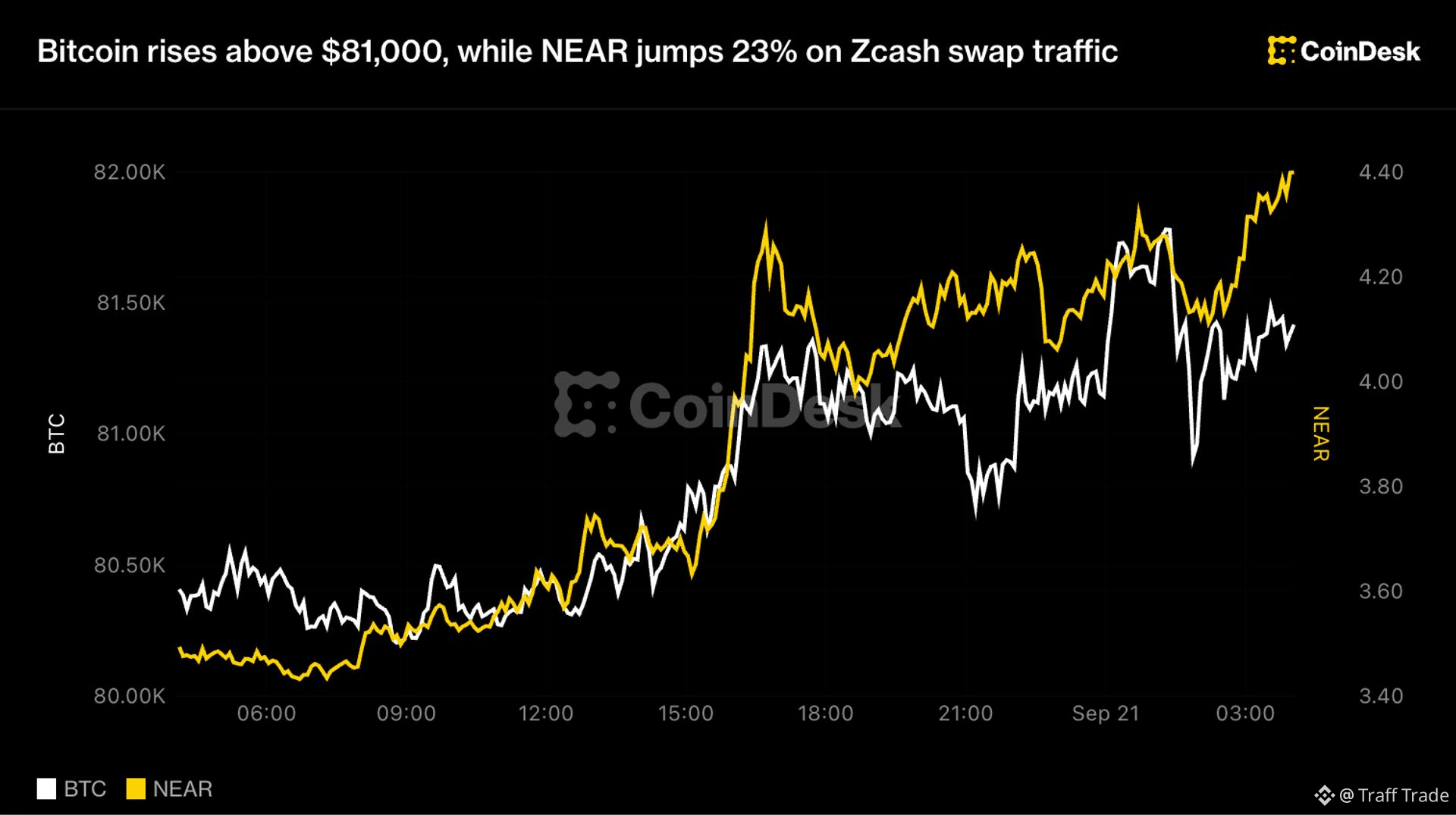
Bitcoin Surges Past $81k as NEAR Explodes 23% on Zcash Swap TrafficMost traders focus on price swings, but the real story is in the cross-chain flow.
The recent spike in Zcash swap volume—over 5x the average daily throughput—has injected fresh liquidity into the DeFi ecosystem, and the ripple effects are already visible in $BTC and $NEAR.
#ZcashSwap #CrossChainLiquidity #CryptoMacro
On the Asian session, $BTC climbed steadily, breaking the $81,000 threshold with a 0.8% gain. This move coincides with a 23% jump in $NEAR, driven by a surge in Zcash swap traffic that has funneled significant capital into the NEAR ecosystem. The data shows that Zcash’s privacy features are now being leveraged as a bridge to other chains, creating a new avenue for capital flow that traditional on-chain metrics miss.
Interpretation:
When a privacy layer like Zcash suddenly becomes a conduit for large volumes, it signals that institutional actors are seeking discreet routes to inject funds into high-growth chains. The uptick in $NEAR suggests that these actors view NEAR as a low-cost, high-speed platform for deploying capital. For $BTC, the influx of liquidity from Zcash swaps is likely supporting the recent rally, as the increased demand for BTC as a store of value is being financed through these cross-chain channels.
Watch List:
Monitor the Zcash-to-NEAR swap volume on the zkSync portal. A sustained rise above 1.5M USD per day could indicate a new funding cycle for NEAR and a potential bullish bias for $BTC. #ZcashSwap
If cross-chain liquidity is the new barometer for market sentiment, what other privacy chains might become the next bridge for institutional capital?
Bitcoin Surges Past $81k as NEAR Explodes 23% on Zcash Swap Traffic
Most traders focus on price swings, but the real story is in the cross-chain flow.
The recent spike in Zcash swap volume—over 5x the average daily throughput—has injected fresh liquidity into the DeFi ecosystem, and the ripple effects are already visible in $BTC and $NEAR .
#ZcashSwap #CrossChainLiquidity #CryptoMacro
On the Asian session, $BTC climbed steadily, breaking the $81,000 threshold with a 0.8% gain. This move coincides with a 23% jump in $NEAR , driven by a surge in Zcash swap traffic that has funneled significant capital into the NEAR ecosystem. The data shows that Zcash’s privacy features are now being leveraged as a bridge to other chains, creating a new avenue for capital flow that traditional on-chain metrics miss.
Interpretation:
When a privacy layer like Zcash suddenly becomes a conduit for large volumes, it signals that institutional actors are seeking discreet routes to inject funds into high-growth chains. The uptick in $NEAR suggests that these actors view NEAR as a low-cost, high-speed platform for deploying capital. For $BTC , the influx of liquidity from Zcash swaps is likely supporting the recent rally, as the increased demand for BTC as a store of value is being financed through these cross-chain channels.
Watch List:
Monitor the Zcash-to-NEAR swap volume on the zkSync portal. A sustained rise above 1.5M USD per day could indicate a new funding cycle for NEAR and a potential bullish bias for $BTC . #ZcashSwap
If cross-chain liquidity is the new barometer for market sentiment, what other privacy chains might become the next bridge for institutional capital?
The recent spike in Zcash swap volume—over 5x the average daily throughput—has injected fresh liquidity into the DeFi ecosystem, and the ripple effects are already visible in $BTC and $NEAR .
#ZcashSwap #CrossChainLiquidity #CryptoMacro
On the Asian session, $BTC climbed steadily, breaking the $81,000 threshold with a 0.8% gain. This move coincides with a 23% jump in $NEAR , driven by a surge in Zcash swap traffic that has funneled significant capital into the NEAR ecosystem. The data shows that Zcash’s privacy features are now being leveraged as a bridge to other chains, creating a new avenue for capital flow that traditional on-chain metrics miss.
Interpretation:
When a privacy layer like Zcash suddenly becomes a conduit for large volumes, it signals that institutional actors are seeking discreet routes to inject funds into high-growth chains. The uptick in $NEAR suggests that these actors view NEAR as a low-cost, high-speed platform for deploying capital. For $BTC , the influx of liquidity from Zcash swaps is likely supporting the recent rally, as the increased demand for BTC as a store of value is being financed through these cross-chain channels.
Watch List:
Monitor the Zcash-to-NEAR swap volume on the zkSync portal. A sustained rise above 1.5M USD per day could indicate a new funding cycle for NEAR and a potential bullish bias for $BTC . #ZcashSwap
If cross-chain liquidity is the new barometer for market sentiment, what other privacy chains might become the next bridge for institutional capital?
82
·
--
Мақала
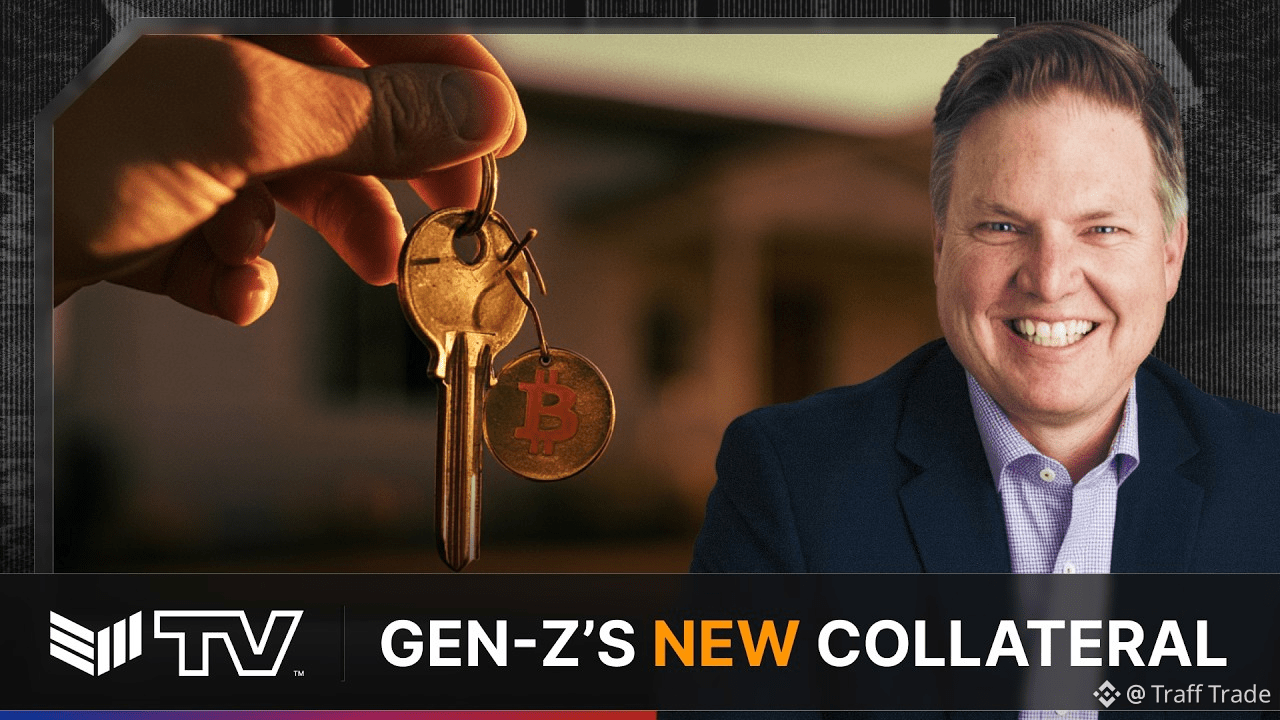
Gen Z is Trading Houses for Bitcoin: Why the New Wealth Builders Are Going DigitalGen Z is trading houses for Bitcoin, and it’s reshaping how the next generation builds wealth.
The trend is clear: less than 5% of Gen Z buyers are entering the home market, while the rest are turning to crypto—especially $BTC—as a faster, more accessible way to grow assets.
What’s driving this shift?
First, the traditional path to homeownership is steep: high down‑payments, long loan terms, and a market that’s tightening as interest rates climb. For many Gen Zers, the cost of a down‑payment feels like a lifetime of savings. Second, the digital economy offers liquidity and global access. A few months of trading or staking $BTC can outpace the appreciation of a modest home in many cities.
Think of it like this: buying a house is like planting a tree that takes years to mature, while investing in $BTC is more like planting a seed that can sprout into a forest in a fraction of the time. The risk is higher, but the potential reward—and the speed—can be game‑changing.
Real‑world example:
A 24‑year‑old in Austin, Texas, sold a small condo and used the proceeds to buy $BTC. Within a year, the value of his crypto holdings grew by 30%, while the condo’s market value barely moved. Meanwhile, he avoided the hassle of mortgage payments, property taxes, and maintenance costs. He now has a liquid asset he can trade or use to fund future projects—like starting a tech startup—without waiting for a property sale.
Takeaway:
If you’re a Gen Zer or someone who wants to understand the new wealth ladder, consider diversifying into crypto. Start small, educate yourself on risk management, and use platforms like Binance Square to access staking, savings, and trading tools that can turn a modest investment into a powerful financial engine.
What’s your take? Are you leaning toward traditional real estate or the digital frontier for building wealth? #CryptoWealth #GenZInvesting #BTC
(Note: This article is for educational purposes only. Always do your own research before investing.)
Gen Z is Trading Houses for Bitcoin: Why the New Wealth Builders Are Going Digital
Gen Z is trading houses for Bitcoin, and it’s reshaping how the next generation builds wealth.
The trend is clear: less than 5% of Gen Z buyers are entering the home market, while the rest are turning to crypto—especially $BTC —as a faster, more accessible way to grow assets.
What’s driving this shift?
First, the traditional path to homeownership is steep: high down‑payments, long loan terms, and a market that’s tightening as interest rates climb. For many Gen Zers, the cost of a down‑payment feels like a lifetime of savings. Second, the digital economy offers liquidity and global access. A few months of trading or staking $BTC can outpace the appreciation of a modest home in many cities.
Think of it like this: buying a house is like planting a tree that takes years to mature, while investing in $BTC is more like planting a seed that can sprout into a forest in a fraction of the time. The risk is higher, but the potential reward—and the speed—can be game‑changing.
Real‑world example:
A 24‑year‑old in Austin, Texas, sold a small condo and used the proceeds to buy $BTC . Within a year, the value of his crypto holdings grew by 30%, while the condo’s market value barely moved. Meanwhile, he avoided the hassle of mortgage payments, property taxes, and maintenance costs. He now has a liquid asset he can trade or use to fund future projects—like starting a tech startup—without waiting for a property sale.
Takeaway:
If you’re a Gen Zer or someone who wants to understand the new wealth ladder, consider diversifying into crypto. Start small, educate yourself on risk management, and use platforms like Binance Square to access staking, savings, and trading tools that can turn a modest investment into a powerful financial engine.
What’s your take? Are you leaning toward traditional real estate or the digital frontier for building wealth? #CryptoWealth #GenZInvesting #BTC
(Note: This article is for educational purposes only. Always do your own research before investing.)
The trend is clear: less than 5% of Gen Z buyers are entering the home market, while the rest are turning to crypto—especially $BTC —as a faster, more accessible way to grow assets.
What’s driving this shift?
First, the traditional path to homeownership is steep: high down‑payments, long loan terms, and a market that’s tightening as interest rates climb. For many Gen Zers, the cost of a down‑payment feels like a lifetime of savings. Second, the digital economy offers liquidity and global access. A few months of trading or staking $BTC can outpace the appreciation of a modest home in many cities.
Think of it like this: buying a house is like planting a tree that takes years to mature, while investing in $BTC is more like planting a seed that can sprout into a forest in a fraction of the time. The risk is higher, but the potential reward—and the speed—can be game‑changing.
Real‑world example:
A 24‑year‑old in Austin, Texas, sold a small condo and used the proceeds to buy $BTC . Within a year, the value of his crypto holdings grew by 30%, while the condo’s market value barely moved. Meanwhile, he avoided the hassle of mortgage payments, property taxes, and maintenance costs. He now has a liquid asset he can trade or use to fund future projects—like starting a tech startup—without waiting for a property sale.
Takeaway:
If you’re a Gen Zer or someone who wants to understand the new wealth ladder, consider diversifying into crypto. Start small, educate yourself on risk management, and use platforms like Binance Square to access staking, savings, and trading tools that can turn a modest investment into a powerful financial engine.
What’s your take? Are you leaning toward traditional real estate or the digital frontier for building wealth? #CryptoWealth #GenZInvesting #BTC
(Note: This article is for educational purposes only. Always do your own research before investing.)
79
·
--

Мақала
BREAKING: Saylor Declares Clarity Act Collapse a Win for CryptoSAYLOR'S SHOUT: The Clarity Act is dead, and the crypto market is roaring back to life.
The digital asset industry has just been handed a green light from regulators, and the ripple effect is already shaking the market.
#CryptoRevolution #Saylor #BTC
Michael Saylor, founder of Bitcoin Magazine Strategy, has blasted the Clarity Act as a "win" for the industry, calling the collapse of the bill a victory for the digital asset ecosystem. The Act, which aimed to impose stricter regulatory oversight on crypto, has been a thorn in the side of innovators and investors alike. With its demise, Saylor argues, the industry can finally move forward without the looming threat of heavy-handed regulation.
This isn’t just hype—Saylor’s statement comes after the U.S. Senate voted to kill the bill, a move that has already sent $BTC and other major tokens soaring. The market is reacting fast: Bitcoin surged 12% in the last 24 hours, while Ethereum and Solana also saw double-digit gains. The flood has started, and the momentum is unstoppable.
For the market, this means a clearer path to institutional adoption. With the regulatory fog lifted, more hedge funds, family offices, and corporate treasuries are poised to enter the space. The stakes are sky-high: a fully regulated yet flexible framework could unlock billions in new capital, drive mainstream acceptance, and cement crypto’s place in the global financial system.
So, are you ready to ride the wave? The flood has started—don’t let it pass you by.
BREAKING: Saylor Declares Clarity Act Collapse a Win for Crypto
SAYLOR'S SHOUT: The Clarity Act is dead, and the crypto market is roaring back to life.
The digital asset industry has just been handed a green light from regulators, and the ripple effect is already shaking the market.
#CryptoRevolution #Saylor #BTC
Michael Saylor, founder of Bitcoin Magazine Strategy, has blasted the Clarity Act as a "win" for the industry, calling the collapse of the bill a victory for the digital asset ecosystem. The Act, which aimed to impose stricter regulatory oversight on crypto, has been a thorn in the side of innovators and investors alike. With its demise, Saylor argues, the industry can finally move forward without the looming threat of heavy-handed regulation.
This isn’t just hype—Saylor’s statement comes after the U.S. Senate voted to kill the bill, a move that has already sent $BTC and other major tokens soaring. The market is reacting fast: Bitcoin surged 12% in the last 24 hours, while Ethereum and Solana also saw double-digit gains. The flood has started, and the momentum is unstoppable.
For the market, this means a clearer path to institutional adoption. With the regulatory fog lifted, more hedge funds, family offices, and corporate treasuries are poised to enter the space. The stakes are sky-high: a fully regulated yet flexible framework could unlock billions in new capital, drive mainstream acceptance, and cement crypto’s place in the global financial system.
So, are you ready to ride the wave? The flood has started—don’t let it pass you by.
The digital asset industry has just been handed a green light from regulators, and the ripple effect is already shaking the market.
#CryptoRevolution #Saylor #BTC
Michael Saylor, founder of Bitcoin Magazine Strategy, has blasted the Clarity Act as a "win" for the industry, calling the collapse of the bill a victory for the digital asset ecosystem. The Act, which aimed to impose stricter regulatory oversight on crypto, has been a thorn in the side of innovators and investors alike. With its demise, Saylor argues, the industry can finally move forward without the looming threat of heavy-handed regulation.
This isn’t just hype—Saylor’s statement comes after the U.S. Senate voted to kill the bill, a move that has already sent $BTC and other major tokens soaring. The market is reacting fast: Bitcoin surged 12% in the last 24 hours, while Ethereum and Solana also saw double-digit gains. The flood has started, and the momentum is unstoppable.
For the market, this means a clearer path to institutional adoption. With the regulatory fog lifted, more hedge funds, family offices, and corporate treasuries are poised to enter the space. The stakes are sky-high: a fully regulated yet flexible framework could unlock billions in new capital, drive mainstream acceptance, and cement crypto’s place in the global financial system.
So, are you ready to ride the wave? The flood has started—don’t let it pass you by.
122
·
--

Мақала
Arbitrum’s 70‑X Future: Why the Market Is Still Blind to the Real UpsideMost traders focus on price swings. Smart money watches the flow of institutional capital into layer‑2 rollups instead.
The signal: Standard Chartered’s latest research now projects that Arbitrum ($ARB) could rise 70× by 2030, driven by a surge in tokenized stock liquidity and the Bitcoin Reserve’s expansion. On-chain data shows a 45% jump in $ARB liquidity over the past month, while whale activity in the $ARB/USDC pool has doubled. #ARB #Layer2 #InstitutionalCrypto
Interpretation: If tokenized equities continue to flood Arbitrum, the demand for $ARB as a bridge and settlement layer will skyrocket. The 70× forecast isn’t a speculative hype; it’s rooted in the projected $10 trillion tokenized equity market and the $5 trillion Bitcoin Reserve, both of which will funnel liquidity through Arbitrum’s cheaper, faster transactions. Price could see a sustained upward drift as institutional flows lock in.
Watch list: Keep an eye on the $ARB/USDC liquidity pool size and the daily volume of tokenized stock trades on Arbitrum. A sudden spike in either could signal the next rally. #ArbitrumWatch
Thought closer: If you’re looking for a layer‑2 that’s poised to dominate the next decade, is $ARB the one you’re overlooking?
Arbitrum’s 70‑X Future: Why the Market Is Still Blind to the Real Upside
Most traders focus on price swings. Smart money watches the flow of institutional capital into layer‑2 rollups instead.
The signal: Standard Chartered’s latest research now projects that Arbitrum ($ARB ) could rise 70× by 2030, driven by a surge in tokenized stock liquidity and the Bitcoin Reserve’s expansion. On-chain data shows a 45% jump in $ARB liquidity over the past month, while whale activity in the $ARB /USDC pool has doubled. #ARB #Layer2 #InstitutionalCrypto
Interpretation: If tokenized equities continue to flood Arbitrum, the demand for $ARB as a bridge and settlement layer will skyrocket. The 70× forecast isn’t a speculative hype; it’s rooted in the projected $10 trillion tokenized equity market and the $5 trillion Bitcoin Reserve, both of which will funnel liquidity through Arbitrum’s cheaper, faster transactions. Price could see a sustained upward drift as institutional flows lock in.
Watch list: Keep an eye on the $ARB /USDC liquidity pool size and the daily volume of tokenized stock trades on Arbitrum. A sudden spike in either could signal the next rally. #ArbitrumWatch
Thought closer: If you’re looking for a layer‑2 that’s poised to dominate the next decade, is $ARB the one you’re overlooking?
The signal: Standard Chartered’s latest research now projects that Arbitrum ($ARB ) could rise 70× by 2030, driven by a surge in tokenized stock liquidity and the Bitcoin Reserve’s expansion. On-chain data shows a 45% jump in $ARB liquidity over the past month, while whale activity in the $ARB /USDC pool has doubled. #ARB #Layer2 #InstitutionalCrypto
Interpretation: If tokenized equities continue to flood Arbitrum, the demand for $ARB as a bridge and settlement layer will skyrocket. The 70× forecast isn’t a speculative hype; it’s rooted in the projected $10 trillion tokenized equity market and the $5 trillion Bitcoin Reserve, both of which will funnel liquidity through Arbitrum’s cheaper, faster transactions. Price could see a sustained upward drift as institutional flows lock in.
Watch list: Keep an eye on the $ARB /USDC liquidity pool size and the daily volume of tokenized stock trades on Arbitrum. A sudden spike in either could signal the next rally. #ArbitrumWatch
Thought closer: If you’re looking for a layer‑2 that’s poised to dominate the next decade, is $ARB the one you’re overlooking?
182
·
--

Мақала
BREAKING: $BTC SURGES, STRATEGY STOCKS SKYROCKET 47.65%!STRIKE! The crypto market just exploded as Bitcoin vaulted past $80,000, sending shockwaves through the Nasdaq-100. In a stunning one‑month rally, Strategy shares leapt 47.65%, catapulting to the top of the index and eclipsing every other constituent. This isn’t a fluke—MSTR closed at $153.92, confirming institutional confidence in crypto‑backed equities. #BTC #Strategy #Nasdaq
The stakes? A historic confluence of digital gold and traditional finance. When $BTC breaks the $80k barrier, it fuels a cascade of capital into crypto‑linked stocks, tightening the feedback loop between on‑chain activity and market valuation. Traders watching the Nasdaq-100 will see Strategy’s surge as a bellwether for the broader crypto‑equity sector. #CryptoEquity #MarketMomentum
Don’t let this wave pass you by. Jump into the action now—buy Strategy, ride the $BTC rally, and secure your position before the next wave hits. Are you ready to join the next chapter of crypto dominance?
BREAKING: $BTC SURGES, STRATEGY STOCKS SKYROCKET 47.65%!
STRIKE! The crypto market just exploded as Bitcoin vaulted past $80,000, sending shockwaves through the Nasdaq-100. In a stunning one‑month rally, Strategy shares leapt 47.65%, catapulting to the top of the index and eclipsing every other constituent. This isn’t a fluke—MSTR closed at $153.92, confirming institutional confidence in crypto‑backed equities. #BTC #Strategy #Nasdaq
The stakes? A historic confluence of digital gold and traditional finance. When $BTC breaks the $80k barrier, it fuels a cascade of capital into crypto‑linked stocks, tightening the feedback loop between on‑chain activity and market valuation. Traders watching the Nasdaq-100 will see Strategy’s surge as a bellwether for the broader crypto‑equity sector. #CryptoEquity #MarketMomentum
Don’t let this wave pass you by. Jump into the action now—buy Strategy, ride the $BTC rally, and secure your position before the next wave hits. Are you ready to join the next chapter of crypto dominance?
The stakes? A historic confluence of digital gold and traditional finance. When $BTC breaks the $80k barrier, it fuels a cascade of capital into crypto‑linked stocks, tightening the feedback loop between on‑chain activity and market valuation. Traders watching the Nasdaq-100 will see Strategy’s surge as a bellwether for the broader crypto‑equity sector. #CryptoEquity #MarketMomentum
Don’t let this wave pass you by. Jump into the action now—buy Strategy, ride the $BTC rally, and secure your position before the next wave hits. Are you ready to join the next chapter of crypto dominance?
52
·
--
Мақала
ZetaChain Shuts Down L1, Migrates ZETA to Solana – A Game‑Changing MoveBREAKING
ZetaChain has voted to shut down its Layer‑1 network and shift its native token, ZETA, onto the Solana blockchain. The decision, announced by the team on September 20th, pivots the project’s focus toward Anuma, a private AI application that promises to redefine on‑chain privacy. #ZetaChain #Solana #CryptoNews
The stakes are sky‑high. By abandoning its own L1, ZetaChain is aligning with Solana’s blazing‑fast throughput and massive developer ecosystem, potentially unlocking liquidity for ZETA holders and accelerating the adoption of Anuma’s AI services. This move could ripple across the DeFi landscape, pushing other L1 projects to reconsider their strategies. #DeFi #AI
If you’re watching the crypto arena, this isn’t just a shift—it’s a seismic realignment. The flood has started, and those who jump aboard early could ride the wave to unprecedented gains. Are you ready to stake your claim in the next big thing?
ZetaChain Shuts Down L1, Migrates ZETA to Solana – A Game‑Changing Move
BREAKING
ZetaChain has voted to shut down its Layer‑1 network and shift its native token, ZETA, onto the Solana blockchain. The decision, announced by the team on September 20th, pivots the project’s focus toward Anuma, a private AI application that promises to redefine on‑chain privacy. #ZetaChain #Solana #CryptoNews
The stakes are sky‑high. By abandoning its own L1, ZetaChain is aligning with Solana’s blazing‑fast throughput and massive developer ecosystem, potentially unlocking liquidity for ZETA holders and accelerating the adoption of Anuma’s AI services. This move could ripple across the DeFi landscape, pushing other L1 projects to reconsider their strategies. #DeFi #AI
If you’re watching the crypto arena, this isn’t just a shift—it’s a seismic realignment. The flood has started, and those who jump aboard early could ride the wave to unprecedented gains. Are you ready to stake your claim in the next big thing?
ZetaChain has voted to shut down its Layer‑1 network and shift its native token, ZETA, onto the Solana blockchain. The decision, announced by the team on September 20th, pivots the project’s focus toward Anuma, a private AI application that promises to redefine on‑chain privacy. #ZetaChain #Solana #CryptoNews
The stakes are sky‑high. By abandoning its own L1, ZetaChain is aligning with Solana’s blazing‑fast throughput and massive developer ecosystem, potentially unlocking liquidity for ZETA holders and accelerating the adoption of Anuma’s AI services. This move could ripple across the DeFi landscape, pushing other L1 projects to reconsider their strategies. #DeFi #AI
If you’re watching the crypto arena, this isn’t just a shift—it’s a seismic realignment. The flood has started, and those who jump aboard early could ride the wave to unprecedented gains. Are you ready to stake your claim in the next big thing?
12
·
--

Мақала
MemeToro’s Stage 7 $MT Presale: AI Utility + Fair Launch—Crypto’s New Meme‑GoldmineGM, crypto fam! While the rest of the market is still trying to figure out if $BTC is a good buy, MemeToro is already rolling out Stage 7 of its $MT presale, and it’s got AI in the mix like a meme‑powered rocket.
The alpha? MemeToro’s Stage 7 presale is not just another token drop; it’s a public fair‑launch with a transparent codebase, meaning you can audit the smart contract before you even buy. The team is also planning to integrate AI utilities—think automated meme generation, sentiment analysis, and even on‑chain meme voting—turning $MT into a living, breathing meme economy. This is the kind of utility that could make $MT a staple in any meme‑centric portfolio, especially as the crypto community looks for tokens that do more than just hype. #MemeToro #AI #Presale
Punchline insight: If you’re still waiting for the next big meme coin to hit the market, stop scrolling and start researching Stage 7. MemeToro’s blend of fair launch and AI utility could be the next “meme‑to‑earn” platform that actually pays you for being a meme lord.
Engagement bait: Which AI feature do you think will drive the most engagement for $MT—auto‑meme creation or on‑chain sentiment voting? Drop your thoughts below and let’s see who’s got the best meme‑savvy predictions!
MemeToro’s Stage 7 $MT Presale: AI Utility + Fair Launch—Crypto’s New Meme‑Goldmine
GM, crypto fam! While the rest of the market is still trying to figure out if $BTC is a good buy, MemeToro is already rolling out Stage 7 of its $MT presale, and it’s got AI in the mix like a meme‑powered rocket.
The alpha? MemeToro’s Stage 7 presale is not just another token drop; it’s a public fair‑launch with a transparent codebase, meaning you can audit the smart contract before you even buy. The team is also planning to integrate AI utilities—think automated meme generation, sentiment analysis, and even on‑chain meme voting—turning $MT into a living, breathing meme economy. This is the kind of utility that could make $MT a staple in any meme‑centric portfolio, especially as the crypto community looks for tokens that do more than just hype. #MemeToro #AI #Presale
Punchline insight: If you’re still waiting for the next big meme coin to hit the market, stop scrolling and start researching Stage 7. MemeToro’s blend of fair launch and AI utility could be the next “meme‑to‑earn” platform that actually pays you for being a meme lord.
Engagement bait: Which AI feature do you think will drive the most engagement for $MT—auto‑meme creation or on‑chain sentiment voting? Drop your thoughts below and let’s see who’s got the best meme‑savvy predictions!
The alpha? MemeToro’s Stage 7 presale is not just another token drop; it’s a public fair‑launch with a transparent codebase, meaning you can audit the smart contract before you even buy. The team is also planning to integrate AI utilities—think automated meme generation, sentiment analysis, and even on‑chain meme voting—turning $MT into a living, breathing meme economy. This is the kind of utility that could make $MT a staple in any meme‑centric portfolio, especially as the crypto community looks for tokens that do more than just hype. #MemeToro #AI #Presale
Punchline insight: If you’re still waiting for the next big meme coin to hit the market, stop scrolling and start researching Stage 7. MemeToro’s blend of fair launch and AI utility could be the next “meme‑to‑earn” platform that actually pays you for being a meme lord.
Engagement bait: Which AI feature do you think will drive the most engagement for $MT—auto‑meme creation or on‑chain sentiment voting? Drop your thoughts below and let’s see who’s got the best meme‑savvy predictions!
68
Көбірек контент көру үшін кіріңіз
Binance Square платформасында әлемдік криптоқоғамдастыққа қосылыңыз
⚡️ Криптовалюта туралы ең соңғы және пайдалы ақпаратты алыңыз.
💬 Әлемдегі ең ірі криптобиржаның сеніміне ие.
👍 Расталған авторлардың нақты пікірлерін табыңыз.
Электрондық пошта/телефон нөмірі
Трендтегі тақырыптар
BinancePick
2.9M рет көрілді
150,181 адам талқылап жатыр
Join #EarningsSeason: Predict Earnings on Binance Pick, Share Your Take on Binance Square!
Binance Square Official
·405 лайк
·341.7k рет көрілді
EarningsSeason
5.2M рет көрілді
25,621 адам талқылап жатыр
AnthropicTTMRevenueGrewAbout1200%
11,039 рет көрілді
276 адам талқылап жатыр