

Trading Turtle
532 投稿

Trading Turtle
報告
ユーザーをブロック
Crypto trader sharing real trades, ideas, and lessons from the markets. Experienced in systematic strategies and building automated tools to stay disciplined.
低高頻度トレーダー
1.2年
63 フォロー
25 フォロワー
51 いいね
投稿
すべて
引用
動画
翻訳参照
#CryptoNews #Crypto
Polymarket expands into gold and silver prediction markets with short‑duration contracts settled via Chainlink ($LINK).
The offering runs on US and international platforms, excludes Saturday trading, and marks the first non‑crypto commodity product.
#CryptoNews #Crypto
Polymarket expands into gold and silver prediction markets with short‑duration contracts settled via Chainlink ($LINK ).
The offering runs on US and international platforms, excludes Saturday trading, and marks the first non‑crypto commodity product.
Polymarket expands into gold and silver prediction markets with short‑duration contracts settled via Chainlink ($LINK ).
The offering runs on US and international platforms, excludes Saturday trading, and marks the first non‑crypto commodity product.
326
翻訳参照
#CryptoNews #Crypto
Microsoft announced voluntary exits for about 60,000 workers, the largest program of its kind, reflecting ongoing tech sector cost cuts.
Anthropic filed its IPO prospectus, reporting $16.3 billion in first‑half revenue and a transition to positive operating cash flow, indicating a significant capital shift toward AI that may intersect with blockchain initiatives.
#CryptoNews #Crypto
Microsoft announced voluntary exits for about 60,000 workers, the largest program of its kind, reflecting ongoing tech sector cost cuts.
Anthropic filed its IPO prospectus, reporting $16.3 billion in first‑half revenue and a transition to positive operating cash flow, indicating a significant capital shift toward AI that may intersect with blockchain initiatives.
Microsoft announced voluntary exits for about 60,000 workers, the largest program of its kind, reflecting ongoing tech sector cost cuts.
Anthropic filed its IPO prospectus, reporting $16.3 billion in first‑half revenue and a transition to positive operating cash flow, indicating a significant capital shift toward AI that may intersect with blockchain initiatives.
44
翻訳参照
#Bitcoin #PriceAction
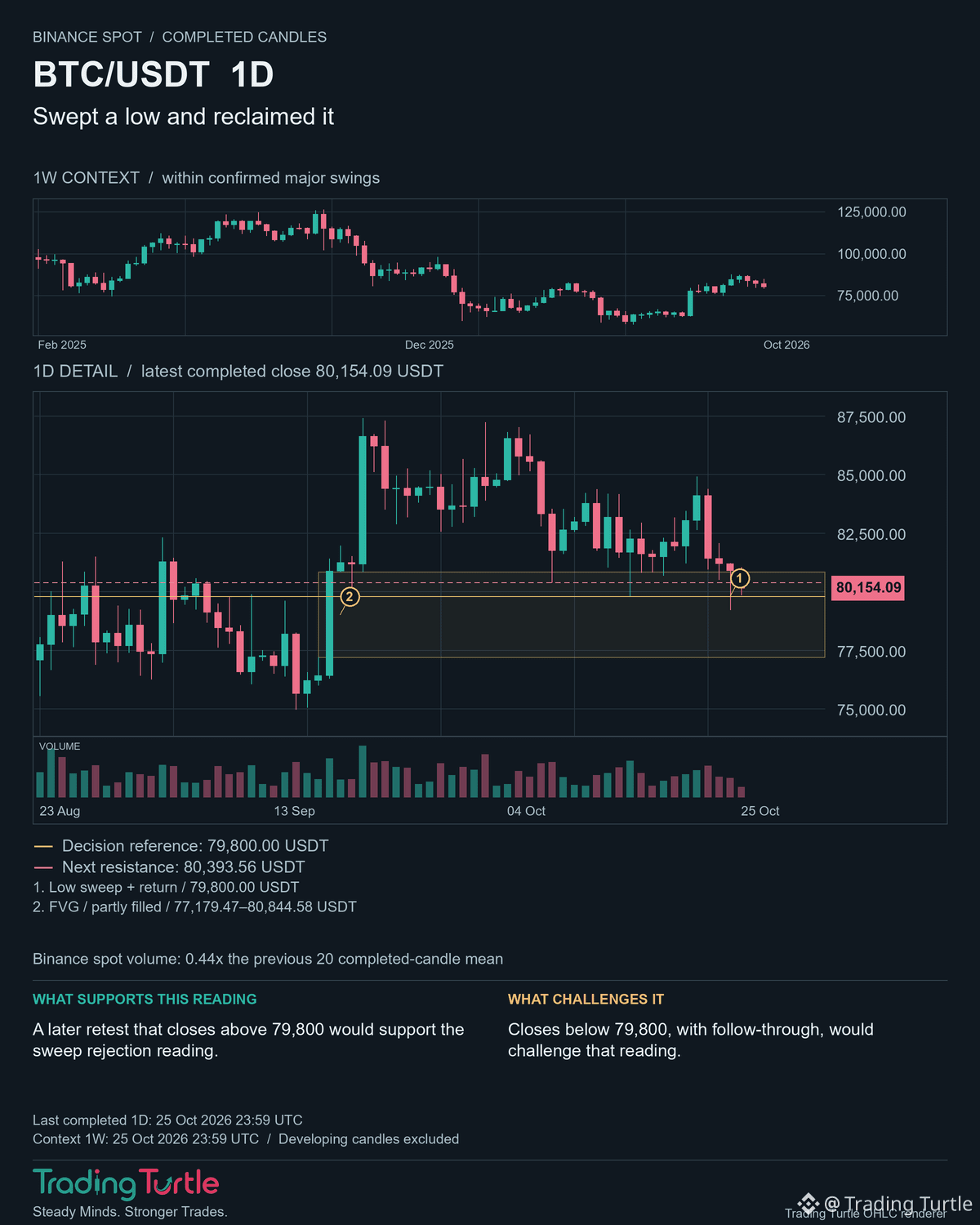
$BTC/$USDT 1D | Swept a low and reclaimed it
At 24 Oct 2026 23:59 UTC, the 1D candle traded below the previous week low at 79,800 $USDT and closed back across it.
Latest completed close: 80,154.09.
1W context: The broader confirmed swings show lower highs and lower lows.
Context close: 80,154.09 $USDT.
A 1D development does not alone establish a 1W reversal.
Support: 79,800 $USDT.
Resistance: 80,393.56 $USDT.
Fair value gap (FVG): 77,179.47–80,844.58 $USDT; partly filled.
Formation was confirmed at 19 Sep 2026 23:59 UTC.
It has already been revisited.
Current stage: a later retest closed on the supporting side; zone partly filled
A later retest that closes above 79,800 would support the sweep rejection reading.
Closes below 79,800, with follow-through, would challenge that reading.
Binance spot volume: 0.44× the preceding 20 completed candles’ mean.
Participation was below that baseline.
Liquidity references are inferred from price; these candles do not reveal stop orders or institutional intent.
Last completed 1D: 25 Oct 2026 23:59 UTC.
#Bitcoin #PriceAction
$BTC /$USDT 1D | Swept a low and reclaimed it
At 24 Oct 2026 23:59 UTC, the 1D candle traded below the previous week low at 79,800 $USDT and closed back across it.
Latest completed close: 80,154.09.
1W context: The broader confirmed swings show lower highs and lower lows.
Context close: 80,154.09 $USDT.
A 1D development does not alone establish a 1W reversal.
Support: 79,800 $USDT.
Resistance: 80,393.56 $USDT.
Fair value gap (FVG): 77,179.47–80,844.58 $USDT; partly filled.
Formation was confirmed at 19 Sep 2026 23:59 UTC.
It has already been revisited.
Current stage: a later retest closed on the supporting side; zone partly filled
A later retest that closes above 79,800 would support the sweep rejection reading.
Closes below 79,800, with follow-through, would challenge that reading.
Binance spot volume: 0.44× the preceding 20 completed candles’ mean.
Participation was below that baseline.
Liquidity references are inferred from price; these candles do not reveal stop orders or institutional intent.
Last completed 1D: 25 Oct 2026 23:59 UTC.
$BTC /$USDT 1D | Swept a low and reclaimed it
At 24 Oct 2026 23:59 UTC, the 1D candle traded below the previous week low at 79,800 $USDT and closed back across it.
Latest completed close: 80,154.09.
1W context: The broader confirmed swings show lower highs and lower lows.
Context close: 80,154.09 $USDT.
A 1D development does not alone establish a 1W reversal.
Support: 79,800 $USDT.
Resistance: 80,393.56 $USDT.
Fair value gap (FVG): 77,179.47–80,844.58 $USDT; partly filled.
Formation was confirmed at 19 Sep 2026 23:59 UTC.
It has already been revisited.
Current stage: a later retest closed on the supporting side; zone partly filled
A later retest that closes above 79,800 would support the sweep rejection reading.
Closes below 79,800, with follow-through, would challenge that reading.
Binance spot volume: 0.44× the preceding 20 completed candles’ mean.
Participation was below that baseline.
Liquidity references are inferred from price; these candles do not reveal stop orders or institutional intent.
Last completed 1D: 25 Oct 2026 23:59 UTC.
79
翻訳参照
#CryptoNews #Crypto
Crypto markets this week are influenced by three central‑bank policy announcements (Fed, ECB, BOJ) and earnings releases from Coinbase, Galaxy Digital, Robinhood and related firms.
Traders will watch officials' statements and company results for cues on digital‑asset direction.
#CryptoNews #Crypto
Crypto markets this week are influenced by three central‑bank policy announcements (Fed, ECB, BOJ) and earnings releases from Coinbase, Galaxy Digital, Robinhood and related firms.
Traders will watch officials' statements and company results for cues on digital‑asset direction.
Crypto markets this week are influenced by three central‑bank policy announcements (Fed, ECB, BOJ) and earnings releases from Coinbase, Galaxy Digital, Robinhood and related firms.
Traders will watch officials' statements and company results for cues on digital‑asset direction.
65
#SupportResistance #プライスアクション
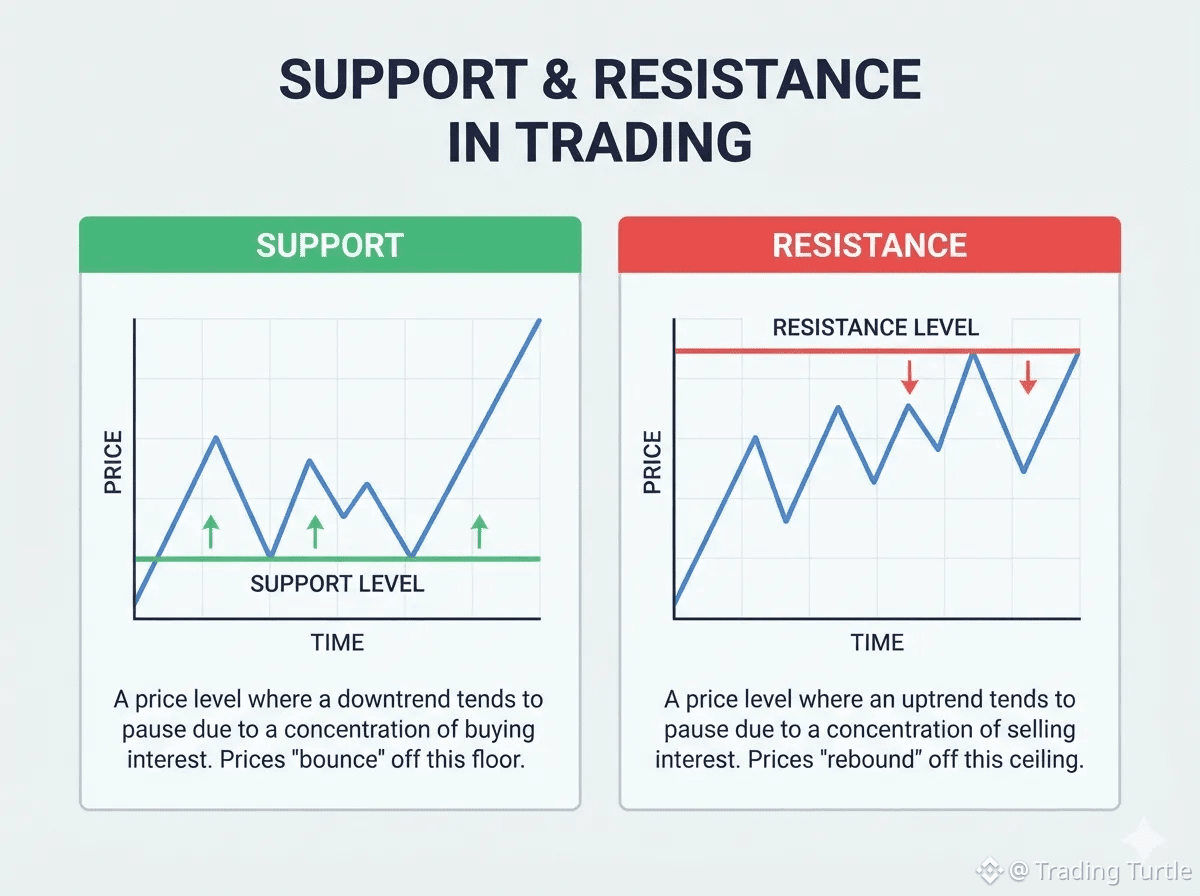
過去のサポート領域は、基準になります。価格が触れれば、そこに到達したことがわかります。終値とその後の反応からは、それぞれ異なる証拠が得られます。読み取りを検証する間は、その領域を固定しておきましょう。
価格がサポート領域に触れ、その下で引けました。証拠をそのまま表しているのは、「サポートが機能した」と「価格がその領域を下抜けて引けた」のどちらでしょうか?
答え:「価格がその領域を下抜けて引けた」です。この観察結果は、単純にサポートが機能したという見方に疑問を投げかけます。ただし、次のローソク足を予測するものではありません。
過去に何度も反応があっても、次も反応するとは限りません。選んだ領域と時間足を明示する必要があります。
#SupportResistance #プライスアクション
過去のサポート領域は、基準になります。価格が触れれば、そこに到達したことがわかります。終値とその後の反応からは、それぞれ異なる証拠が得られます。読み取りを検証する間は、その領域を固定しておきましょう。
価格がサポート領域に触れ、その下で引けました。証拠をそのまま表しているのは、「サポートが機能した」と「価格がその領域を下抜けて引けた」のどちらでしょうか?
答え:「価格がその領域を下抜けて引けた」です。この観察結果は、単純にサポートが機能したという見方に疑問を投げかけます。ただし、次のローソク足を予測するものではありません。
過去に何度も反応があっても、次も反応するとは限りません。選んだ領域と時間足を明示する必要があります。
過去のサポート領域は、基準になります。価格が触れれば、そこに到達したことがわかります。終値とその後の反応からは、それぞれ異なる証拠が得られます。読み取りを検証する間は、その領域を固定しておきましょう。
価格がサポート領域に触れ、その下で引けました。証拠をそのまま表しているのは、「サポートが機能した」と「価格がその領域を下抜けて引けた」のどちらでしょうか?
答え:「価格がその領域を下抜けて引けた」です。この観察結果は、単純にサポートが機能したという見方に疑問を投げかけます。ただし、次のローソク足を予測するものではありません。
過去に何度も反応があっても、次も反応するとは限りません。選んだ領域と時間足を明示する必要があります。
43
翻訳参照
#CryptoNews #Crypto
KuCoin announced that the deposit service for Atlas Navi (NAVI) is temporarily suspended, effective 23 Oct 2026, because of essential maintenance. The suspension is limited to NAVI deposits; withdrawals, trading of other pairs and all other platform features continue to work. KuCoin indicated it will not publish a separate follow‑up notice with a restoration schedule, so users must monitor the original announcement for any update. This limitation may affect users planning to fund NAVI positions on KuCoin until the service is restored.
#CryptoNews #Crypto
KuCoin announced that the deposit service for Atlas Navi (NAVI) is temporarily suspended, effective 23 Oct 2026, because of essential maintenance. The suspension is limited to NAVI deposits; withdrawals, trading of other pairs and all other platform features continue to work. KuCoin indicated it will not publish a separate follow‑up notice with a restoration schedule, so users must monitor the original announcement for any update. This limitation may affect users planning to fund NAVI positions on KuCoin until the service is restored.
KuCoin announced that the deposit service for Atlas Navi (NAVI) is temporarily suspended, effective 23 Oct 2026, because of essential maintenance. The suspension is limited to NAVI deposits; withdrawals, trading of other pairs and all other platform features continue to work. KuCoin indicated it will not publish a separate follow‑up notice with a restoration schedule, so users must monitor the original announcement for any update. This limitation may affect users planning to fund NAVI positions on KuCoin until the service is restored.
62
#Bitcoin #プライスアクション
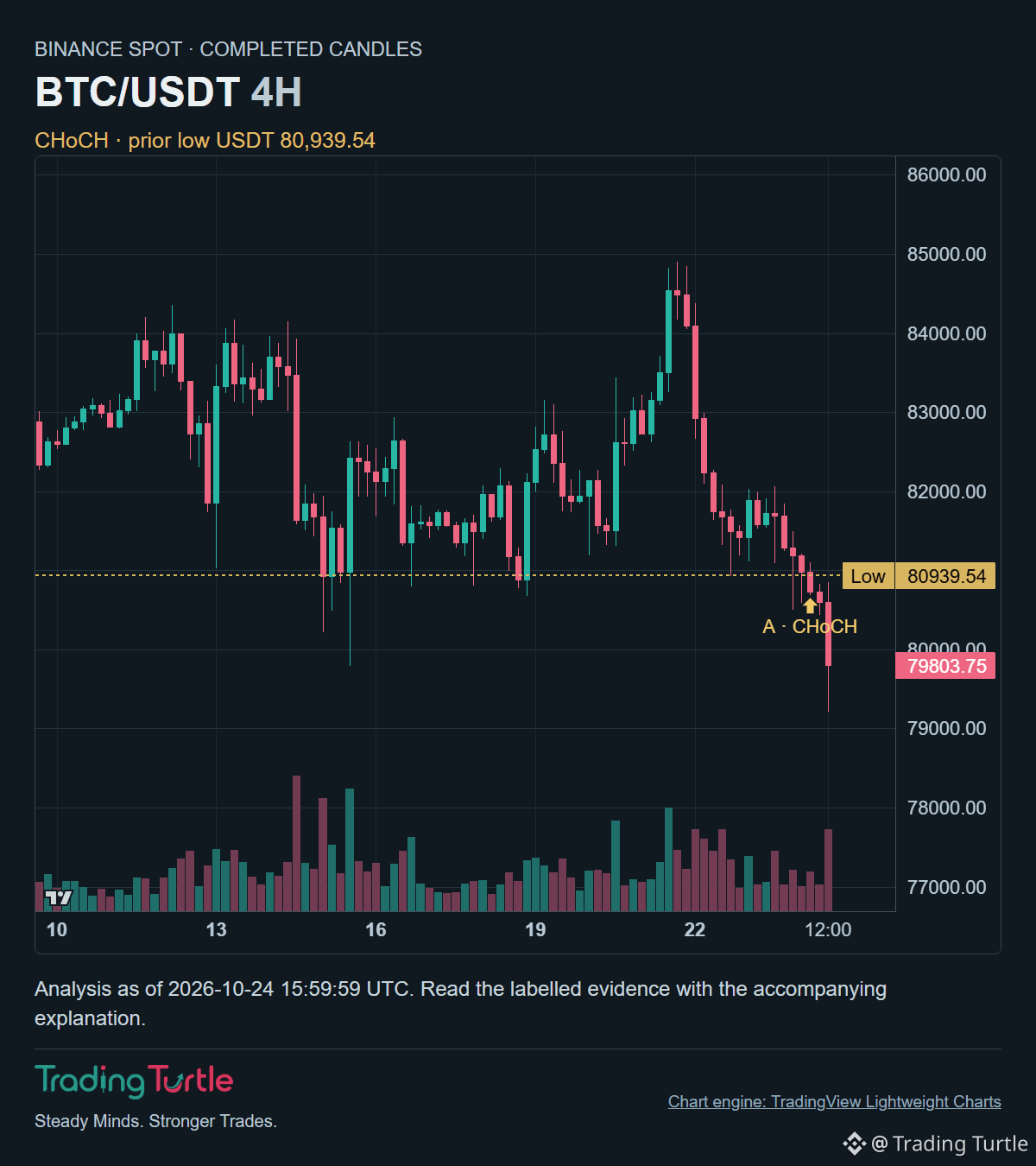
$BTC/$USDT 4時間足
ローソク足Aは、2026年10月24日07:59 UTCに、直前のスイング基準値である$USDT 80,939.54を下回って確定しました。終値は$USDT 80,732.01でした。開示されたスイングルールに基づくと、これがCHoCHラベルの根拠です。
直近の確定足の終値もその基準値を下回っています。その水準を再び上回れば、単純に下抜けが維持されたという見方には疑問が生じます。
スイングの確定には後続のローソク足が必要です。BOSは同方向への終値、CHoCHは逆方向への終値であり、確定した反転を意味するものではありません。FVGとオーダーブロックには開示されたルールを適用します。ローソク足から機関投資家の意図は読み取れません。
#Bitcoin #プライスアクション
$BTC /$USDT 4時間足
ローソク足Aは、2026年10月24日07:59 UTCに、直前のスイング基準値である$USDT 80,939.54を下回って確定しました。終値は$USDT 80,732.01でした。開示されたスイングルールに基づくと、これがCHoCHラベルの根拠です。
直近の確定足の終値もその基準値を下回っています。その水準を再び上回れば、単純に下抜けが維持されたという見方には疑問が生じます。
スイングの確定には後続のローソク足が必要です。BOSは同方向への終値、CHoCHは逆方向への終値であり、確定した反転を意味するものではありません。FVGとオーダーブロックには開示されたルールを適用します。ローソク足から機関投資家の意図は読み取れません。
$BTC /$USDT 4時間足
ローソク足Aは、2026年10月24日07:59 UTCに、直前のスイング基準値である$USDT 80,939.54を下回って確定しました。終値は$USDT 80,732.01でした。開示されたスイングルールに基づくと、これがCHoCHラベルの根拠です。
直近の確定足の終値もその基準値を下回っています。その水準を再び上回れば、単純に下抜けが維持されたという見方には疑問が生じます。
スイングの確定には後続のローソク足が必要です。BOSは同方向への終値、CHoCHは逆方向への終値であり、確定した反転を意味するものではありません。FVGとオーダーブロックには開示されたルールを適用します。ローソク足から機関投資家の意図は読み取れません。
90
翻訳参照
#OrderTypes #TradingBasics
Displayed price: USD 100.
Market buy: seeks available offers; fill price can differ.
Buy limit at USD 100: sets a price ceiling; some or all of the order may remain unfilled.
Choose the instruction around the task.
You submit a buy limit at USD 100. Price briefly touches USD 100. Does the chart prove your entire order filled?
Answer: No. A price touch does not show the available quantity or your position in the order queue. Check the actual order status and fills.
Matching rules and time in force vary by venue. An order instruction does not predict direction.
#OrderTypes #TradingBasics
Displayed price: USD 100.
Market buy: seeks available offers; fill price can differ.
Buy limit at USD 100: sets a price ceiling; some or all of the order may remain unfilled.
Choose the instruction around the task.
You submit a buy limit at USD 100. Price briefly touches USD 100. Does the chart prove your entire order filled?
Answer: No. A price touch does not show the available quantity or your position in the order queue. Check the actual order status and fills.
Matching rules and time in force vary by venue. An order instruction does not predict direction.
Displayed price: USD 100.
Market buy: seeks available offers; fill price can differ.
Buy limit at USD 100: sets a price ceiling; some or all of the order may remain unfilled.
Choose the instruction around the task.
You submit a buy limit at USD 100. Price briefly touches USD 100. Does the chart prove your entire order filled?
Answer: No. A price touch does not show the available quantity or your position in the order queue. Check the actual order status and fills.
Matching rules and time in force vary by venue. An order instruction does not predict direction.
78
翻訳参照
#CryptoNews #Crypto
KuCoin has temporarily closed deposit and withdrawal services for Initia (INIT) following essential maintenance, effective 08:40 UTC on 24 Oct 2026. The suspension blocks all INIT transfers on the platform, meaning users cannot add new INIT funds or withdraw existing balances until KuCoin issues a restoration notice. No further communication about the expected reopening date is planned, so traders should keep an eye on the official announcement and review any pending INIT orders or settlements in their accounts. This limitation applies solely to INIT; other assets remain unaffected.
#CryptoNews #Crypto
KuCoin has temporarily closed deposit and withdrawal services for Initia (INIT) following essential maintenance, effective 08:40 UTC on 24 Oct 2026. The suspension blocks all INIT transfers on the platform, meaning users cannot add new INIT funds or withdraw existing balances until KuCoin issues a restoration notice. No further communication about the expected reopening date is planned, so traders should keep an eye on the official announcement and review any pending INIT orders or settlements in their accounts. This limitation applies solely to INIT; other assets remain unaffected.
KuCoin has temporarily closed deposit and withdrawal services for Initia (INIT) following essential maintenance, effective 08:40 UTC on 24 Oct 2026. The suspension blocks all INIT transfers on the platform, meaning users cannot add new INIT funds or withdraw existing balances until KuCoin issues a restoration notice. No further communication about the expected reopening date is planned, so traders should keep an eye on the official announcement and review any pending INIT orders or settlements in their accounts. This limitation applies solely to INIT; other assets remain unaffected.
120
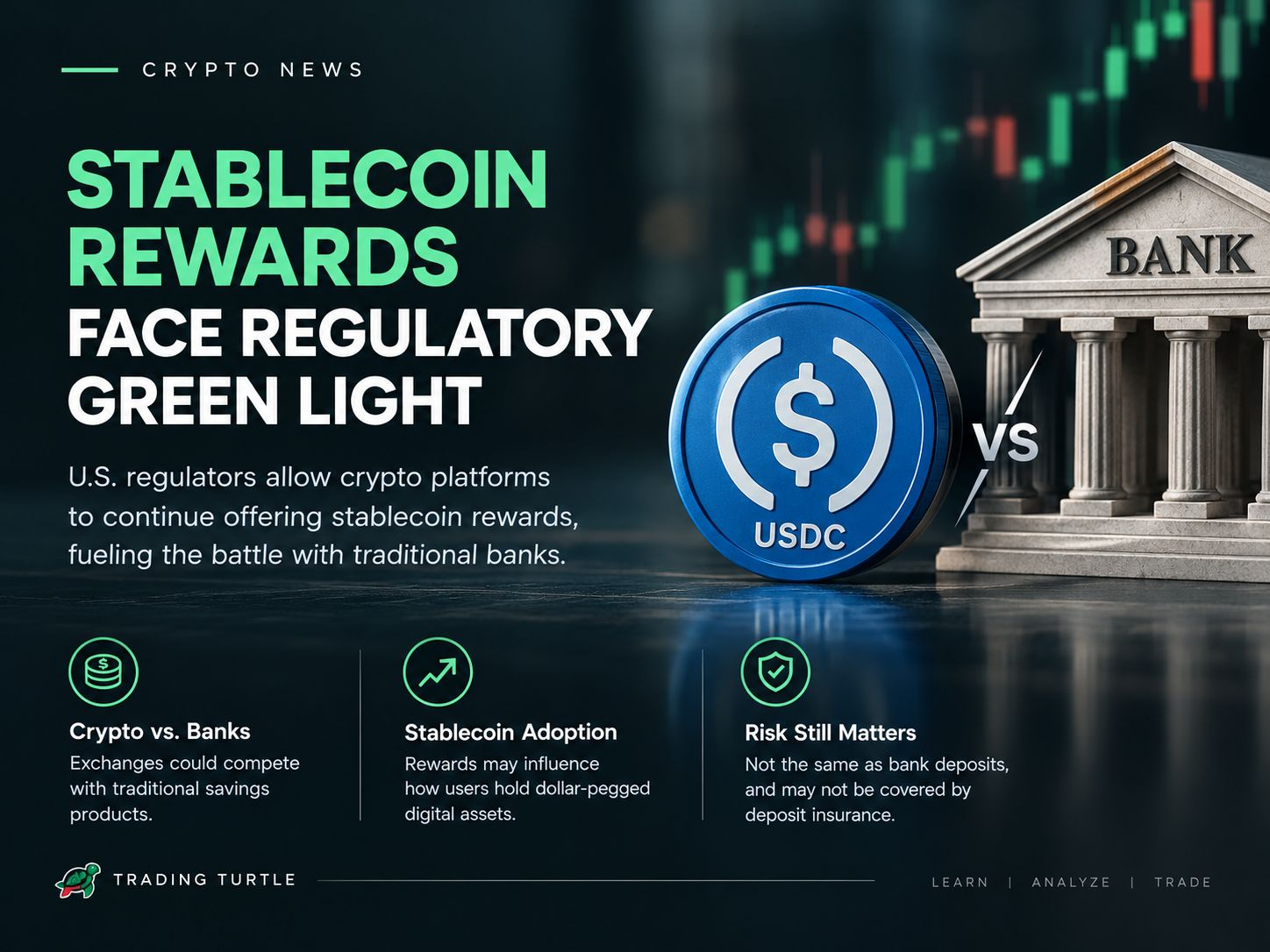
🚨 暗号資産ニュース:ステーブルコインの報酬に重大な規制上の試練
米国の銀行規制当局は、規制上の条件を満たせば、暗号資産取引所がステーブルコインの保有に対して、利息に似た一定の報酬を引き続き提供できることを明らかにしました。
なぜ重要なのでしょうか?👇
🔹 暗号資産と銀行:取引所は従来の貯蓄商品と競合する可能性があります。
🔹 ステーブルコインの普及:報酬が、ユーザーによるドル連動型デジタル資産の保有方法に影響を与える可能性があります。
🔹 リスクは依然として重要:ステーブルコインの報酬は銀行預金と同じではなく、同等の預金保険による保護が適用されない場合があります。
より大きな問い:ステーブルコインは、デジタル決済や貯蓄の未来を形作るのでしょうか?
💬 報酬を得るためにステーブルコインを保有したいと思いますか?それとも従来の銀行預金を選びますか?
#CryptoNews #Stablecoins #USDC #CryptoRegulation #TradingTurtle
🚨 暗号資産ニュース:ステーブルコインの報酬に重大な規制上の試練
米国の銀行規制当局は、規制上の条件を満たせば、暗号資産取引所がステーブルコインの保有に対して、利息に似た一定の報酬を引き続き提供できることを明らかにしました。
なぜ重要なのでしょうか?👇
🔹 暗号資産と銀行:取引所は従来の貯蓄商品と競合する可能性があります。
🔹 ステーブルコインの普及:報酬が、ユーザーによるドル連動型デジタル資産の保有方法に影響を与える可能性があります。
🔹 リスクは依然として重要:ステーブルコインの報酬は銀行預金と同じではなく、同等の預金保険による保護が適用されない場合があります。
より大きな問い:ステーブルコインは、デジタル決済や貯蓄の未来を形作るのでしょうか?
💬 報酬を得るためにステーブルコインを保有したいと思いますか?それとも従来の銀行預金を選びますか?
#CryptoNews #Stablecoins #USDC #CryptoRegulation #TradingTurtle
米国の銀行規制当局は、規制上の条件を満たせば、暗号資産取引所がステーブルコインの保有に対して、利息に似た一定の報酬を引き続き提供できることを明らかにしました。
なぜ重要なのでしょうか?👇
🔹 暗号資産と銀行:取引所は従来の貯蓄商品と競合する可能性があります。
🔹 ステーブルコインの普及:報酬が、ユーザーによるドル連動型デジタル資産の保有方法に影響を与える可能性があります。
🔹 リスクは依然として重要:ステーブルコインの報酬は銀行預金と同じではなく、同等の預金保険による保護が適用されない場合があります。
より大きな問い:ステーブルコインは、デジタル決済や貯蓄の未来を形作るのでしょうか?
💬 報酬を得るためにステーブルコインを保有したいと思いますか?それとも従来の銀行預金を選びますか?
#CryptoNews #Stablecoins #USDC #CryptoRegulation #TradingTurtle
65
#Bitcoin #PriceAction
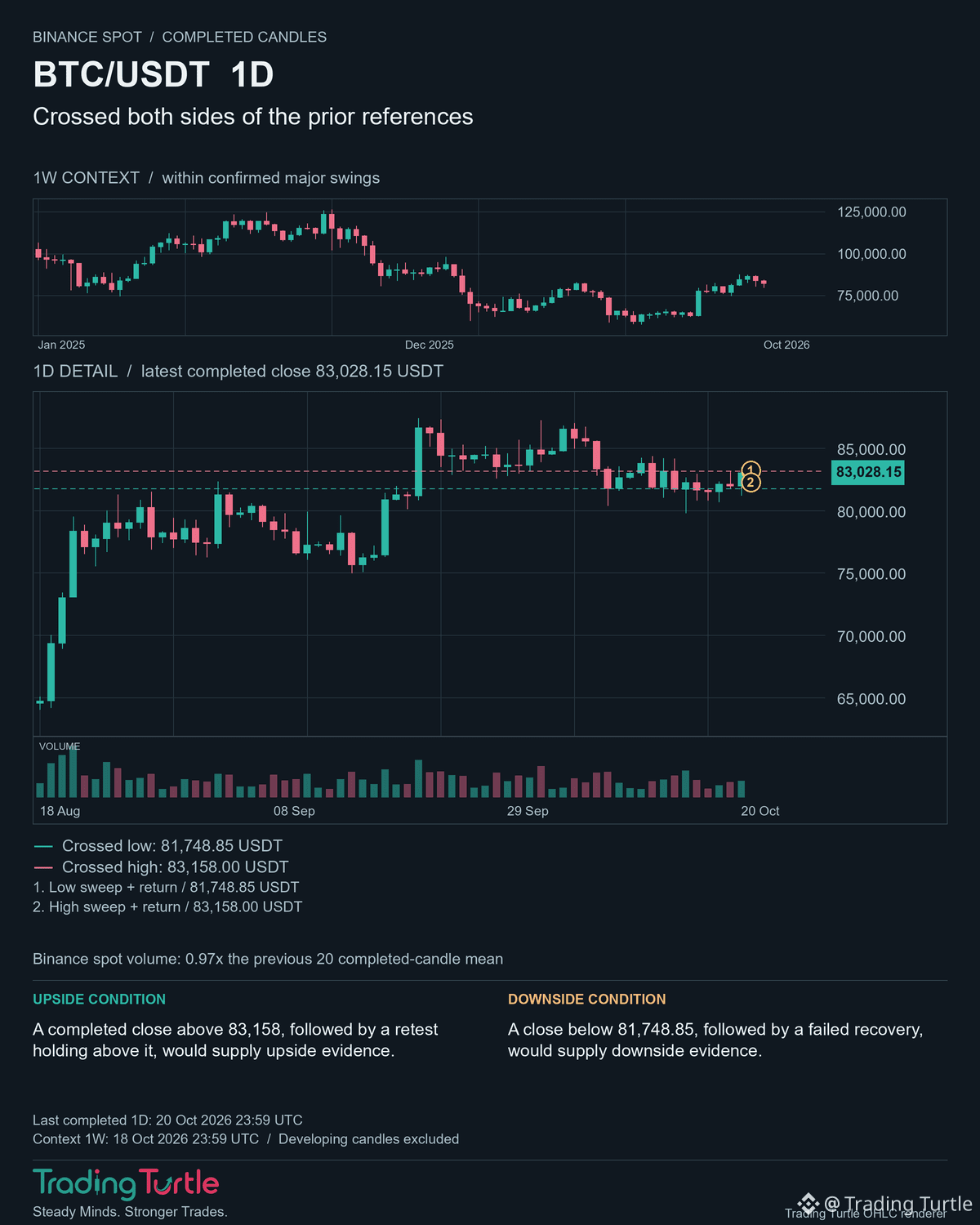
$BTC/$USDT 1D | 以前の基準値の両側を通過
直近の1Dローソク足は81,748.85を下回り、83,158 $USDTを上回った後、その間の83,028.15で引けました。
1Wの状況:より広い範囲で確認されたスイングは、高値・安値ともに切り下げています。
状況把握に用いる終値:82,116 $USDT。
1Dでの値動きだけでは、1Wのトレンド反転を確定できません。
サポート:80,393.56 $USDT。
レジスタンス:84,352 $USDT。
現在の段階:両側を通過。特定方向への流動性スイープを示すバイアスは未確立
83,158を上回って確定した後、同水準を上回る状態を保ってリテストすれば、上昇の根拠となります。
81,748.85を下回って引けた後、回復に失敗すれば、下落の根拠となります。
Binance現物取引高:直前の確定済みローソク足20本の平均の0.97倍。
参加の度合いが異例に高いわけではありません。
流動性の基準値は価格から推定したものです。これらのローソク足から、ストップ注文や機関投資家の意図を読み取ることはできません。
直近の確定済み1D:2026年10月20日 23:59 UTC。
#Bitcoin #PriceAction
$BTC /$USDT 1D | 以前の基準値の両側を通過
直近の1Dローソク足は81,748.85を下回り、83,158 $USDTを上回った後、その間の83,028.15で引けました。
1Wの状況:より広い範囲で確認されたスイングは、高値・安値ともに切り下げています。
状況把握に用いる終値:82,116 $USDT。
1Dでの値動きだけでは、1Wのトレンド反転を確定できません。
サポート:80,393.56 $USDT。
レジスタンス:84,352 $USDT。
現在の段階:両側を通過。特定方向への流動性スイープを示すバイアスは未確立
83,158を上回って確定した後、同水準を上回る状態を保ってリテストすれば、上昇の根拠となります。
81,748.85を下回って引けた後、回復に失敗すれば、下落の根拠となります。
Binance現物取引高:直前の確定済みローソク足20本の平均の0.97倍。
参加の度合いが異例に高いわけではありません。
流動性の基準値は価格から推定したものです。これらのローソク足から、ストップ注文や機関投資家の意図を読み取ることはできません。
直近の確定済み1D:2026年10月20日 23:59 UTC。
$BTC /$USDT 1D | 以前の基準値の両側を通過
直近の1Dローソク足は81,748.85を下回り、83,158 $USDTを上回った後、その間の83,028.15で引けました。
1Wの状況:より広い範囲で確認されたスイングは、高値・安値ともに切り下げています。
状況把握に用いる終値:82,116 $USDT。
1Dでの値動きだけでは、1Wのトレンド反転を確定できません。
サポート:80,393.56 $USDT。
レジスタンス:84,352 $USDT。
現在の段階:両側を通過。特定方向への流動性スイープを示すバイアスは未確立
83,158を上回って確定した後、同水準を上回る状態を保ってリテストすれば、上昇の根拠となります。
81,748.85を下回って引けた後、回復に失敗すれば、下落の根拠となります。
Binance現物取引高:直前の確定済みローソク足20本の平均の0.97倍。
参加の度合いが異例に高いわけではありません。
流動性の基準値は価格から推定したものです。これらのローソク足から、ストップ注文や機関投資家の意図を読み取ることはできません。
直近の確定済み1D:2026年10月20日 23:59 UTC。
61
#トレーディング教育
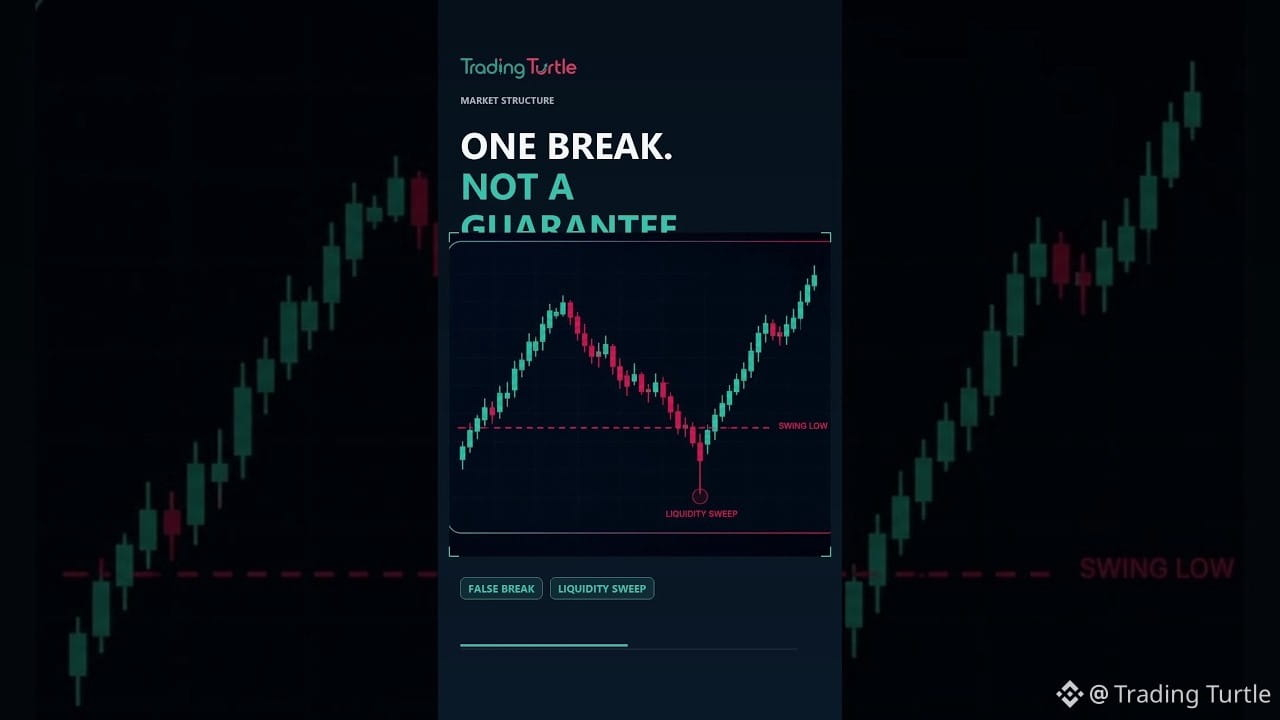
対象:暗号資産トレーダー向けの一般的な市場構造の解説。
この動画では、構造のブレイクは直前のスイングを弱めるだけであり、それだけで完全なトレンド転換を示すわけではないことを解説しています。
確認には、ブレイク後も価格がその水準を上回る状態を維持するなど、さらなる状況判断と値動きの継続が必要です。
そうなるまでは、ブレイクを取引のトリガーではなく、警告として捉えましょう。
#トレーディング教育
対象:暗号資産トレーダー向けの一般的な市場構造の解説。
この動画では、構造のブレイクは直前のスイングを弱めるだけであり、それだけで完全なトレンド転換を示すわけではないことを解説しています。
確認には、ブレイク後も価格がその水準を上回る状態を維持するなど、さらなる状況判断と値動きの継続が必要です。
そうなるまでは、ブレイクを取引のトリガーではなく、警告として捉えましょう。
対象:暗号資産トレーダー向けの一般的な市場構造の解説。
この動画では、構造のブレイクは直前のスイングを弱めるだけであり、それだけで完全なトレンド転換を示すわけではないことを解説しています。
確認には、ブレイク後も価格がその水準を上回る状態を維持するなど、さらなる状況判断と値動きの継続が必要です。
そうなるまでは、ブレイクを取引のトリガーではなく、警告として捉えましょう。
55
#CryptoNews #暗号資産
AI関連企業の好決算を受けてハイテク株が上昇するなか、ビットコイン($BTC)は83,000ドル近辺で推移しました。
NU7アップグレードの有効化ブロック高が発表されたことを受け、Zcashは11%上昇しました。このアップグレードにより、ブロック生成間隔は25秒に短縮され、手数料の60%がマイナーとユーザーのための準備金に充てられます。
#CryptoNews #暗号資産
AI関連企業の好決算を受けてハイテク株が上昇するなか、ビットコイン($BTC )は83,000ドル近辺で推移しました。
NU7アップグレードの有効化ブロック高が発表されたことを受け、Zcashは11%上昇しました。このアップグレードにより、ブロック生成間隔は25秒に短縮され、手数料の60%がマイナーとユーザーのための準備金に充てられます。
AI関連企業の好決算を受けてハイテク株が上昇するなか、ビットコイン($BTC )は83,000ドル近辺で推移しました。
NU7アップグレードの有効化ブロック高が発表されたことを受け、Zcashは11%上昇しました。このアップグレードにより、ブロック生成間隔は25秒に短縮され、手数料の60%がマイナーとユーザーのための準備金に充てられます。
191
#CryptoNews #暗号資産
予想を上回る中国のGDP成長と原油価格の下落を受け、ビットコイン($BTC)は約1%上昇し、82,500ドル近辺で取引された。
マクロ経済要因に牽引された上昇は株価指数先物とアジアの株価指数を押し上げ、世界経済指標に対する暗号資産市場の反応を示した。
#CryptoNews #暗号資産
予想を上回る中国のGDP成長と原油価格の下落を受け、ビットコイン($BTC )は約1%上昇し、82,500ドル近辺で取引された。
マクロ経済要因に牽引された上昇は株価指数先物とアジアの株価指数を押し上げ、世界経済指標に対する暗号資産市場の反応を示した。
予想を上回る中国のGDP成長と原油価格の下落を受け、ビットコイン($BTC )は約1%上昇し、82,500ドル近辺で取引された。
マクロ経済要因に牽引された上昇は株価指数先物とアジアの株価指数を押し上げ、世界経済指標に対する暗号資産市場の反応を示した。
80
#CryptoNews #暗号資産
2026年、ステーブルコインの決済額は45%増加して4,820億ドルに達した一方、総供給量はほとんど変わりませんでした。
Visa、Mastercard、Stripeは、ステーブルコインを従来のカード決済や送金の仕組みに組み込むサービスを導入し、日常の取引における暗号資産の役割を広げました。
#CryptoNews #暗号資産
2026年、ステーブルコインの決済額は45%増加して4,820億ドルに達した一方、総供給量はほとんど変わりませんでした。
Visa、Mastercard、Stripeは、ステーブルコインを従来のカード決済や送金の仕組みに組み込むサービスを導入し、日常の取引における暗号資産の役割を広げました。
2026年、ステーブルコインの決済額は45%増加して4,820億ドルに達した一方、総供給量はほとんど変わりませんでした。
Visa、Mastercard、Stripeは、ステーブルコインを従来のカード決済や送金の仕組みに組み込むサービスを導入し、日常の取引における暗号資産の役割を広げました。
39
#Crypto #価格アクション
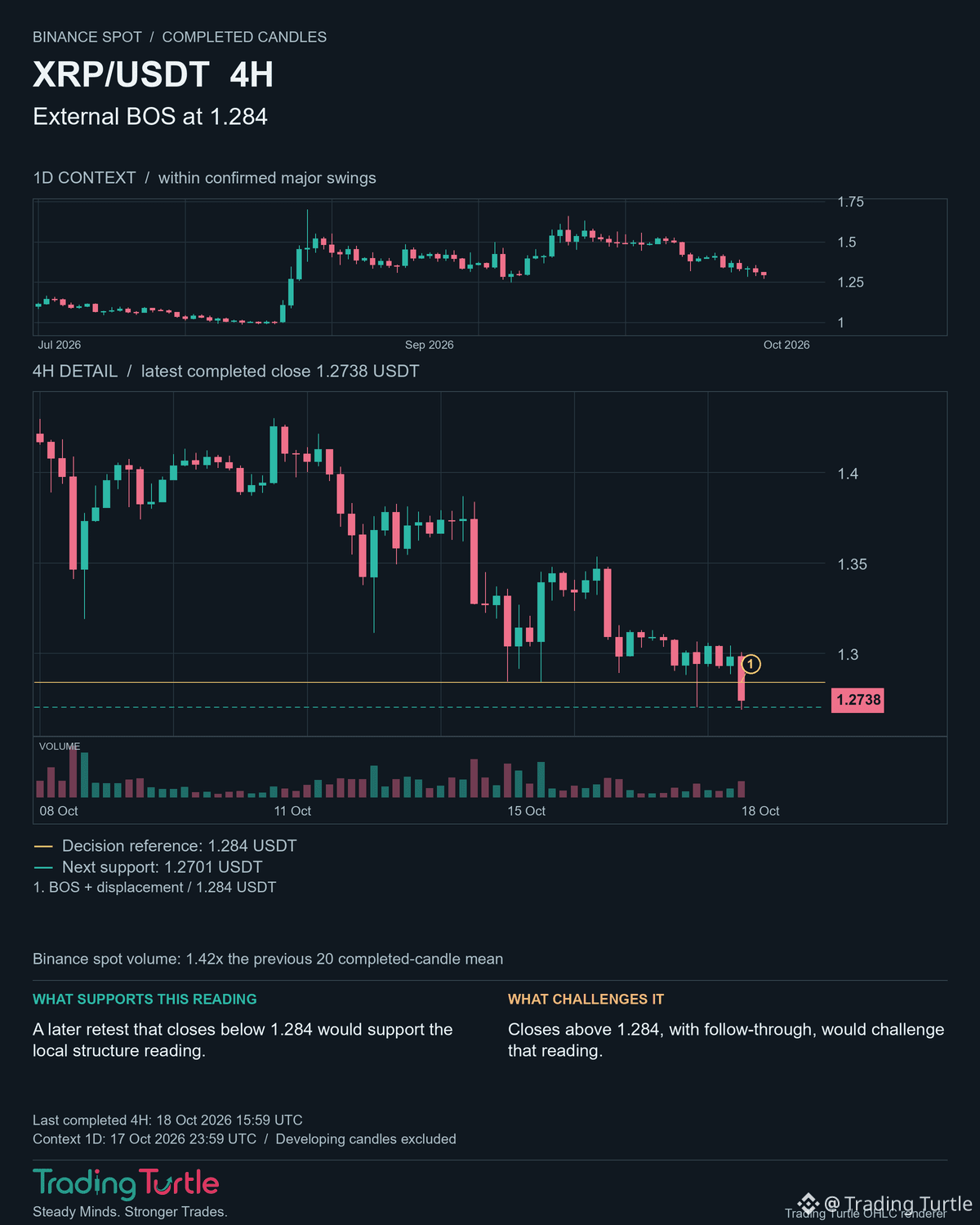
$XRP/$USDT 4時間足 | 1.284で外部BOS
4時間足の構造イベントでは、以前に確定したスイング水準1.284 $USDTを下回って終値を付けました。
直近の確定足終値:1.2738。
日足の状況:より大きな時間軸で確定したスイングは、方向感のまちまちな推移を示しています。
状況確認用の終値:1.2941 $USDT。
4時間足での動きだけでは、日足の反転が確定したことにはなりません。
サポート:1.2701 $USDT。
レジスタンス:1.284 $USDT。
現在の段階:その後のサポートとなるリテストはまだ確認されていません。
その後のリテストで1.284を下回って終値を付ければ、局所的な構造の見方を裏付ける材料となります。
1.284を上回る終値が続き、値動きが伴えば、その見方に疑問が生じます。
Binance現物取引の出来高:直前の確定済み20本の平均の1.42倍。
参加状況が通常より著しく活発というわけではありません。
流動性の目安は価格から推定したものであり、これらのローソク足から逆指値注文や機関投資家の意図が分かるわけではありません。
直近の確定済み4時間足:2026年10月18日 15:59 UTC。
#Crypto #価格アクション
$XRP /$USDT 4時間足 | 1.284で外部BOS
4時間足の構造イベントでは、以前に確定したスイング水準1.284 $USDTを下回って終値を付けました。
直近の確定足終値:1.2738。
日足の状況:より大きな時間軸で確定したスイングは、方向感のまちまちな推移を示しています。
状況確認用の終値:1.2941 $USDT。
4時間足での動きだけでは、日足の反転が確定したことにはなりません。
サポート:1.2701 $USDT。
レジスタンス:1.284 $USDT。
現在の段階:その後のサポートとなるリテストはまだ確認されていません。
その後のリテストで1.284を下回って終値を付ければ、局所的な構造の見方を裏付ける材料となります。
1.284を上回る終値が続き、値動きが伴えば、その見方に疑問が生じます。
Binance現物取引の出来高:直前の確定済み20本の平均の1.42倍。
参加状況が通常より著しく活発というわけではありません。
流動性の目安は価格から推定したものであり、これらのローソク足から逆指値注文や機関投資家の意図が分かるわけではありません。
直近の確定済み4時間足:2026年10月18日 15:59 UTC。
$XRP /$USDT 4時間足 | 1.284で外部BOS
4時間足の構造イベントでは、以前に確定したスイング水準1.284 $USDTを下回って終値を付けました。
直近の確定足終値:1.2738。
日足の状況:より大きな時間軸で確定したスイングは、方向感のまちまちな推移を示しています。
状況確認用の終値:1.2941 $USDT。
4時間足での動きだけでは、日足の反転が確定したことにはなりません。
サポート:1.2701 $USDT。
レジスタンス:1.284 $USDT。
現在の段階:その後のサポートとなるリテストはまだ確認されていません。
その後のリテストで1.284を下回って終値を付ければ、局所的な構造の見方を裏付ける材料となります。
1.284を上回る終値が続き、値動きが伴えば、その見方に疑問が生じます。
Binance現物取引の出来高:直前の確定済み20本の平均の1.42倍。
参加状況が通常より著しく活発というわけではありません。
流動性の目安は価格から推定したものであり、これらのローソク足から逆指値注文や機関投資家の意図が分かるわけではありません。
直近の確定済み4時間足:2026年10月18日 15:59 UTC。
177
#Invalidation #トレード計画
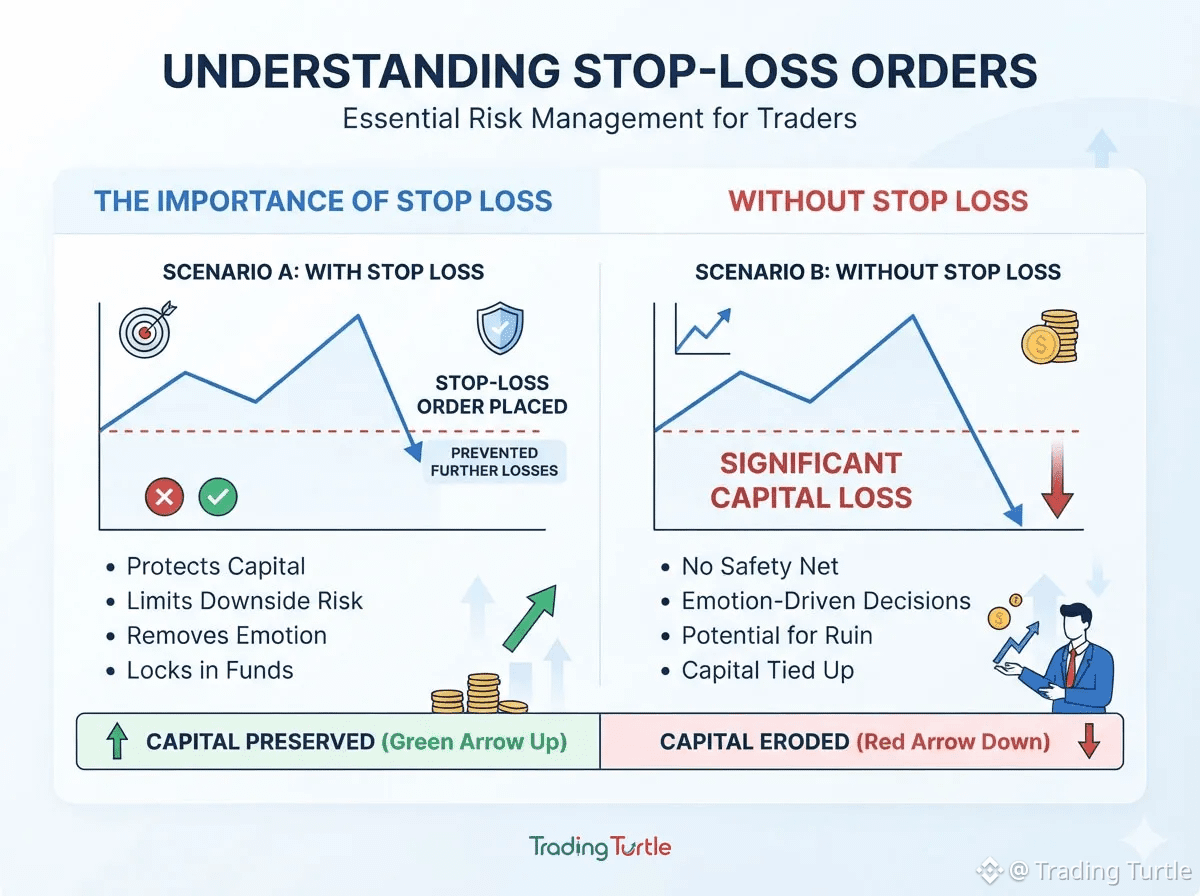
無効化とトレード計画:「日足の終値が再びレンジ内に戻れば、この見方は揺らぐ」という条件は、分析上の無効化を定義するものです。
これは、どのような証拠があれば解釈を変えるのかを示しています。
ストップ注文は、取引所固有のルールに従う執行指示です。
その日足の終値が確定する前に発動することもあり、約定価格は基準価格と異なる場合があります。
この2つの判断は分けて記述してください。
そうしないと、チャートに基づく主張が、市場では保証できない決済価格を約束しているかのように聞こえるおそれがあります。
分析上の基準は、実際に執行可能な決済価格を保証するものでも、実現損失に上限を設けるものでもありません。
#Invalidation #トレード計画
無効化とトレード計画:「日足の終値が再びレンジ内に戻れば、この見方は揺らぐ」という条件は、分析上の無効化を定義するものです。
これは、どのような証拠があれば解釈を変えるのかを示しています。
ストップ注文は、取引所固有のルールに従う執行指示です。
その日足の終値が確定する前に発動することもあり、約定価格は基準価格と異なる場合があります。
この2つの判断は分けて記述してください。
そうしないと、チャートに基づく主張が、市場では保証できない決済価格を約束しているかのように聞こえるおそれがあります。
分析上の基準は、実際に執行可能な決済価格を保証するものでも、実現損失に上限を設けるものでもありません。
無効化とトレード計画:「日足の終値が再びレンジ内に戻れば、この見方は揺らぐ」という条件は、分析上の無効化を定義するものです。
これは、どのような証拠があれば解釈を変えるのかを示しています。
ストップ注文は、取引所固有のルールに従う執行指示です。
その日足の終値が確定する前に発動することもあり、約定価格は基準価格と異なる場合があります。
この2つの判断は分けて記述してください。
そうしないと、チャートに基づく主張が、市場では保証できない決済価格を約束しているかのように聞こえるおそれがあります。
分析上の基準は、実際に執行可能な決済価格を保証するものでも、実現損失に上限を設けるものでもありません。

84
#Drawdown #リスク管理
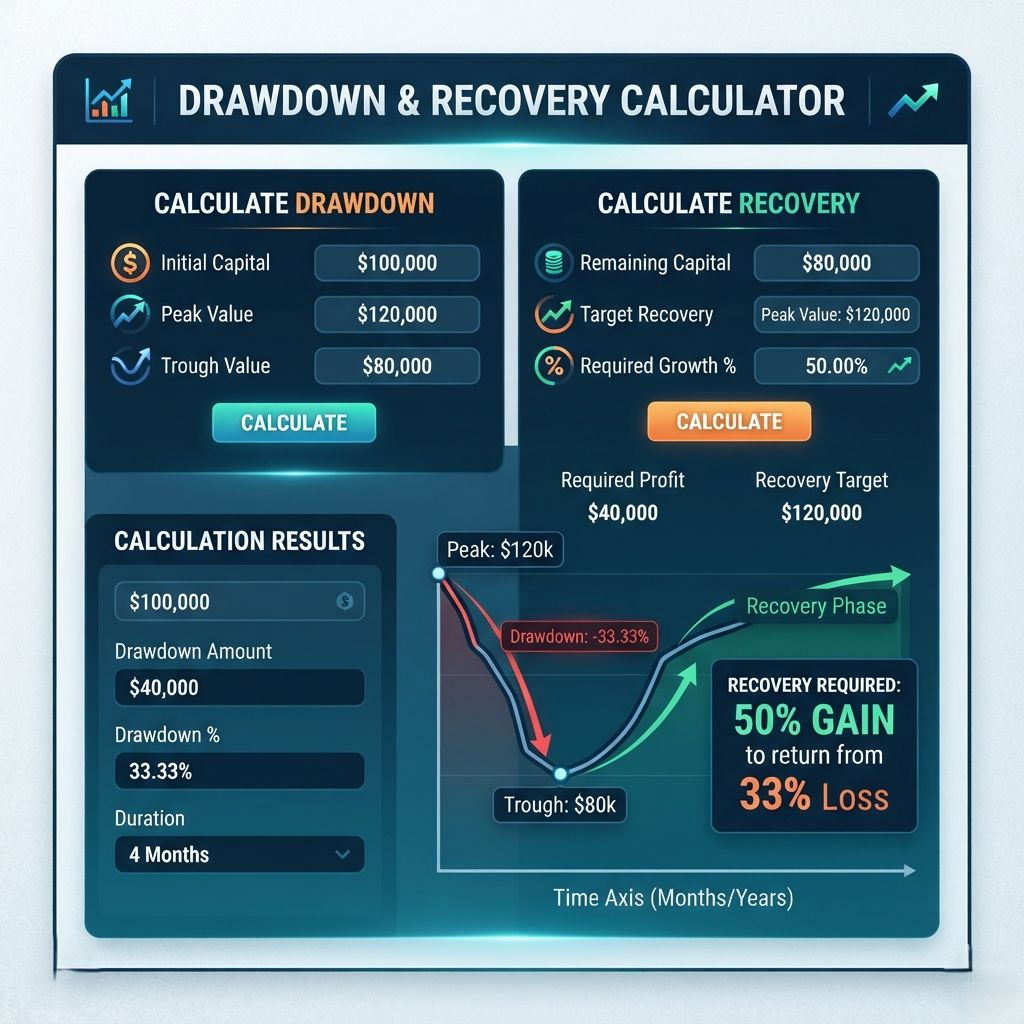
ドローダウン:20%の損失と20%の利益は、互いに相殺されません。
2つ目の割合は、より小さくなった残高を基準に計算されるためです。
仮定の例:
開始残高:USD 100
USD 20の損失後:USD 80
USD 80に対する20%の利益:USD 16
最終残高:USD 96
USD 80からUSD 100に戻すには、USD 20の利益が必要です。これはUSD 80の25%にあたります。
これは単なる算術上の計算であり、回復目標でも、より大きなリスクを取る理由でもありません。
入金、出金、コストは考慮していません。
これは分母が変化することを示すものであり、リターンの予測ではありません。
#Drawdown #リスク管理
ドローダウン:20%の損失と20%の利益は、互いに相殺されません。
2つ目の割合は、より小さくなった残高を基準に計算されるためです。
仮定の例:
開始残高:USD 100
USD 20の損失後:USD 80
USD 80に対する20%の利益:USD 16
最終残高:USD 96
USD 80からUSD 100に戻すには、USD 20の利益が必要です。これはUSD 80の25%にあたります。
これは単なる算術上の計算であり、回復目標でも、より大きなリスクを取る理由でもありません。
入金、出金、コストは考慮していません。
これは分母が変化することを示すものであり、リターンの予測ではありません。
ドローダウン:20%の損失と20%の利益は、互いに相殺されません。
2つ目の割合は、より小さくなった残高を基準に計算されるためです。
仮定の例:
開始残高:USD 100
USD 20の損失後:USD 80
USD 80に対する20%の利益:USD 16
最終残高:USD 96
USD 80からUSD 100に戻すには、USD 20の利益が必要です。これはUSD 80の25%にあたります。
これは単なる算術上の計算であり、回復目標でも、より大きなリスクを取る理由でもありません。
入金、出金、コストは考慮していません。
これは分母が変化することを示すものであり、リターンの予測ではありません。
63
#トレーディング教育
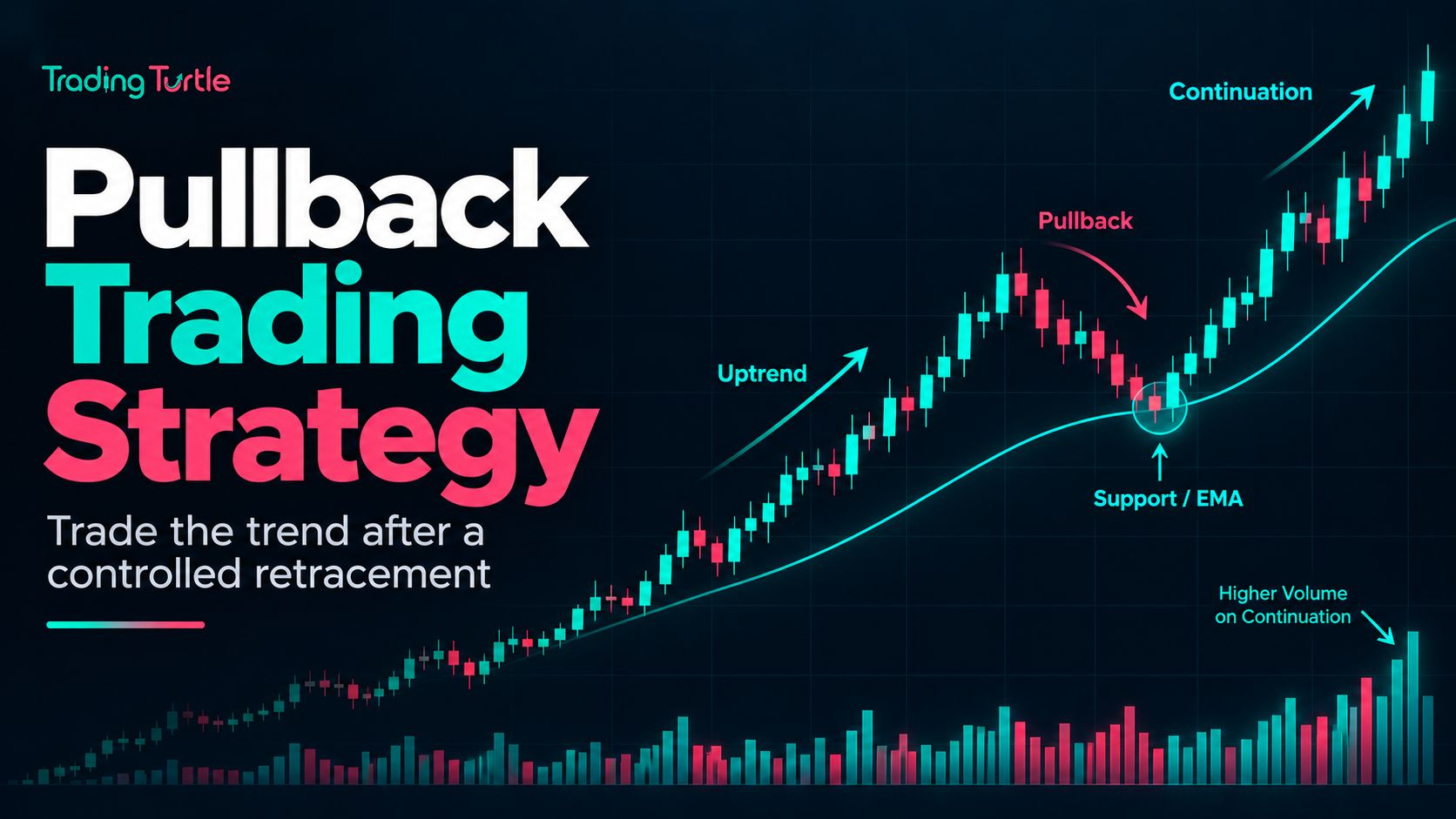
暗号資産トレーダーの皆さん:押し目とは、既存の上昇トレンドまたは下降トレンドの中で起こる短期的な反落です。一方、反転は市場の方向が逆になることを指します。エントリーする前に、高値と安値がそれぞれ切り上がる、または切り下がるというスイングのパターンが維持されていることを確認しましょう。パターンが崩れた場合、元のトレンドは終わりに近づいている可能性があります。 $BTC $ETH
#トレーディング教育
暗号資産トレーダーの皆さん:押し目とは、既存の上昇トレンドまたは下降トレンドの中で起こる短期的な反落です。一方、反転は市場の方向が逆になることを指します。エントリーする前に、高値と安値がそれぞれ切り上がる、または切り下がるというスイングのパターンが維持されていることを確認しましょう。パターンが崩れた場合、元のトレンドは終わりに近づいている可能性があります。 $BTC $ETH
暗号資産トレーダーの皆さん:押し目とは、既存の上昇トレンドまたは下降トレンドの中で起こる短期的な反落です。一方、反転は市場の方向が逆になることを指します。エントリーする前に、高値と安値がそれぞれ切り上がる、または切り下がるというスイングのパターンが維持されていることを確認しましょう。パターンが崩れた場合、元のトレンドは終わりに近づいている可能性があります。 $BTC $ETH
95
ログインして、さらにコンテンツを読む
厳選トピックで世界の暗号資産トレーダーの仲間入り
⚡️ 暗号資産に関する最新かつ有益な情報が見つかります。
💬 世界最大の暗号資産取引所から信頼されています。
👍 認証を受けたクリエイターから、有益なインサイトを得られます。
メール / 電話番号
トレンドトピック
BitcoinSlipsBelow$80KAgain
閲覧回数 67
10人が討論中
#BitcoinSlipsBelow$80KAgain
ビットコイン価格が再び80,000ドルを下回る
📉 急落:暗号資産市場で売り圧力が強まった。₿ ビットコイン(BTC):重要な心理的サポート水準である80,000ドルのラインを維持できなかった。🔻 反落:弱気派の圧力を受け、価格は下落した。💸 投資家は警戒:市場では短期的な利益確定売りやパニック売りが見られる。
$BTC $BR $ZEC
Sat_Stacker
·いいね:0件
·閲覧回数 92
ThailandLaunchesWORPTStablecoinToQRPaymentApp
閲覧回数 0
0人が討論中
StrategySkipsBitcoinPurchasesSpends$205MOnSTRCBuybacks
閲覧回数 2,659
64人が討論中