
HumairaBTC
228 投稿
HumairaBTC
報告
ユーザーをブロック
57 フォロー
680 フォロワー
149 いいね
投稿
·
--
翻訳参照
#dusk $DUSK @Dusk_Foundation I started wondering about something we rarely question in crypto:
When is a transaction actually finished?
Imagine buying a property.
The agent tells you:
“Your payment went through.”
But then adds:
“There's a small chance the ownership record changes tomorrow.”
You probably wouldn't call that settled.
Yet in many blockchains, “confirmed” and “final” aren't necessarily the same thing.
That distinction caught my attention when I looked deeper into DUSK.
DUSK's consensus is designed around deterministic finality.
Once a block is ratified, the transaction reaches finality rather than sitting in a state where users have to keep waiting for additional confirmations to gain confidence. DUSK describes this as avoiding user-facing reorganizations under normal operation.
That sounds like a technical detail.
For financial markets, I don't think it is.
Imagine settling a bond trade, transferring ownership of a security, or updating a financial record.
The important question isn't only:
“How quickly did the transaction appear?”
It's:
“At what exact point can everyone treat this result as settled?”
That's why deterministic finality makes more sense to me in DUSK's context.
It's less about making a transaction look fast...
and more about giving the market a clear point of no return.
Because in finance, uncertainty after settlement isn't just inconvenient.
It can create reconciliation, operational and counterparty problems.
So the question I’m left with is:
If a financial market can't clearly tell you when a transaction is final, was it really settled in the first place?
#dusk $DUSK @Dusk_Foundation
#dusk $DUSK @Dusk I started wondering about something we rarely question in crypto:
When is a transaction actually finished?
Imagine buying a property.
The agent tells you:
“Your payment went through.”
But then adds:
“There's a small chance the ownership record changes tomorrow.”
You probably wouldn't call that settled.
Yet in many blockchains, “confirmed” and “final” aren't necessarily the same thing.
That distinction caught my attention when I looked deeper into DUSK.
DUSK's consensus is designed around deterministic finality.
Once a block is ratified, the transaction reaches finality rather than sitting in a state where users have to keep waiting for additional confirmations to gain confidence. DUSK describes this as avoiding user-facing reorganizations under normal operation.
That sounds like a technical detail.
For financial markets, I don't think it is.
Imagine settling a bond trade, transferring ownership of a security, or updating a financial record.
The important question isn't only:
“How quickly did the transaction appear?”
It's:
“At what exact point can everyone treat this result as settled?”
That's why deterministic finality makes more sense to me in DUSK's context.
It's less about making a transaction look fast...
and more about giving the market a clear point of no return.
Because in finance, uncertainty after settlement isn't just inconvenient.
It can create reconciliation, operational and counterparty problems.
So the question I’m left with is:
If a financial market can't clearly tell you when a transaction is final, was it really settled in the first place?
#dusk $DUSK @Dusk
When is a transaction actually finished?
Imagine buying a property.
The agent tells you:
“Your payment went through.”
But then adds:
“There's a small chance the ownership record changes tomorrow.”
You probably wouldn't call that settled.
Yet in many blockchains, “confirmed” and “final” aren't necessarily the same thing.
That distinction caught my attention when I looked deeper into DUSK.
DUSK's consensus is designed around deterministic finality.
Once a block is ratified, the transaction reaches finality rather than sitting in a state where users have to keep waiting for additional confirmations to gain confidence. DUSK describes this as avoiding user-facing reorganizations under normal operation.
That sounds like a technical detail.
For financial markets, I don't think it is.
Imagine settling a bond trade, transferring ownership of a security, or updating a financial record.
The important question isn't only:
“How quickly did the transaction appear?”
It's:
“At what exact point can everyone treat this result as settled?”
That's why deterministic finality makes more sense to me in DUSK's context.
It's less about making a transaction look fast...
and more about giving the market a clear point of no return.
Because in finance, uncertainty after settlement isn't just inconvenient.
It can create reconciliation, operational and counterparty problems.
So the question I’m left with is:
If a financial market can't clearly tell you when a transaction is final, was it really settled in the first place?
#dusk $DUSK @Dusk

102
·
--
翻訳参照
#dusk $DUSK @Dusk_Foundation I started looking at what happens after a transaction is executed.
And I found a problem I hadn't really considered.
A blockchain can know something happened.
But how does the rest of the financial system know?
Imagine a stock exchange where a trade happens inside the building, but nobody sends the clearing house a message.
The trade exists.
But the systems around it are still waiting.
That’s what made DUSK’s RUES event system interesting to me.
DUSK nodes can expose events for things like accepted blocks, included or executed transactions, and contract-specific events. External applications can subscribe to these events through WebSockets instead of constantly asking the chain:
“Did something happen yet?”
And there’s an important detail here.
DUSK also supports historical event data through archive nodes and GraphQL queries, including finalized events.
So this isn't just about pushing notifications.
It creates a bridge between what happened on-chain and the systems that need to react to it.
That matters much more for financial infrastructure than it might sound.
Because a tokenized market isn't useful if the blockchain is the only system that knows what happened.
Custodians, exchanges, dashboards, compliance systems and other infrastructure may all need to react to the same event.
That made me look at RUES differently.
It's not the transaction.
It's the signal that lets everything around the transaction keep moving.
And now I'm wondering:
Can on-chain finance really scale into existing financial infrastructure if the systems outside the chain can't reliably react to what happens inside it?
#dusk $DUSK @Dusk_Foundation
#dusk $DUSK @Dusk I started looking at what happens after a transaction is executed.
And I found a problem I hadn't really considered.
A blockchain can know something happened.
But how does the rest of the financial system know?
Imagine a stock exchange where a trade happens inside the building, but nobody sends the clearing house a message.
The trade exists.
But the systems around it are still waiting.
That’s what made DUSK’s RUES event system interesting to me.
DUSK nodes can expose events for things like accepted blocks, included or executed transactions, and contract-specific events. External applications can subscribe to these events through WebSockets instead of constantly asking the chain:
“Did something happen yet?”
And there’s an important detail here.
DUSK also supports historical event data through archive nodes and GraphQL queries, including finalized events.
So this isn't just about pushing notifications.
It creates a bridge between what happened on-chain and the systems that need to react to it.
That matters much more for financial infrastructure than it might sound.
Because a tokenized market isn't useful if the blockchain is the only system that knows what happened.
Custodians, exchanges, dashboards, compliance systems and other infrastructure may all need to react to the same event.
That made me look at RUES differently.
It's not the transaction.
It's the signal that lets everything around the transaction keep moving.
And now I'm wondering:
Can on-chain finance really scale into existing financial infrastructure if the systems outside the chain can't reliably react to what happens inside it?
#dusk $DUSK @Dusk
And I found a problem I hadn't really considered.
A blockchain can know something happened.
But how does the rest of the financial system know?
Imagine a stock exchange where a trade happens inside the building, but nobody sends the clearing house a message.
The trade exists.
But the systems around it are still waiting.
That’s what made DUSK’s RUES event system interesting to me.
DUSK nodes can expose events for things like accepted blocks, included or executed transactions, and contract-specific events. External applications can subscribe to these events through WebSockets instead of constantly asking the chain:
“Did something happen yet?”
And there’s an important detail here.
DUSK also supports historical event data through archive nodes and GraphQL queries, including finalized events.
So this isn't just about pushing notifications.
It creates a bridge between what happened on-chain and the systems that need to react to it.
That matters much more for financial infrastructure than it might sound.
Because a tokenized market isn't useful if the blockchain is the only system that knows what happened.
Custodians, exchanges, dashboards, compliance systems and other infrastructure may all need to react to the same event.
That made me look at RUES differently.
It's not the transaction.
It's the signal that lets everything around the transaction keep moving.
And now I'm wondering:
Can on-chain finance really scale into existing financial infrastructure if the systems outside the chain can't reliably react to what happens inside it?
#dusk $DUSK @Dusk

2
1
89
·
--
#dusk $DUSK @Dusk_Foundation DUSKの中に、最初は矛盾して見える設計上の選択を見つけました。
DUSKに独自の実行環境があるなら、なぜそもそもEVMベースのルートを作るのでしょう?
特化した空港のことを考えてください。
完全に新しい航空機をゼロから作ることもできます。
しかし、あなたの空港を使うために何千人もの既存のパイロットにそのまま利用してもらいたいなら、見慣れた滑走路を用意するほうが導入がずっと簡単になります。
それが、私にとってDuskEVMが面白く感じた理由です。
DUSKには、L1への直接アクセスが必要なコントラクト向けにDuskVMがすでにあります。
それでもDuskEVMは、裏側ではDuskDSを使って決済とデータ可用性を提供しつつ、開発者にはおなじみのEthereum環境――Solidity、Vyper、標準的なEVMツールやウォレット――を提供します。
そしてHedgerに気づきました。
それはZedgerの進化版ですが、DuskEVMの上に構築されています。要するに、DUSKの規制された資産(regulated-asset)への強いフォーカスを、EVMファーストの環境へ持ち込むものです。
これは、DUSKの戦略について何かを物語っています。
「Ethereumを捨てて、私たちのスタックを学べ」と言っているようには見えません。
より近いのは、
「おなじみの開発者の入口はそのままに、規制された金融のために設計されたインフラにつなげる。」
そしてそれが重要なのは、技術的な優位性があっても、開発者がそれを使う前に自分の知っているツールを捨てなければならないなら、その価値はあまり意味を持たないからです。
つまり、面白い問いはこうではありません。
「DUSKはEVMをサポートしているのか?」
むしろ、
「金融インフラは特化したままでいられるのか? それでいて、開発者エコシステムに最初からやり直しを強いることなくできるのか?」
私はHedgerで、それを見届けたいと思っています。
#dusk $DUSK @Dusk_Foundation
#dusk $DUSK @Dusk DUSKの中に、最初は矛盾して見える設計上の選択を見つけました。
DUSKに独自の実行環境があるなら、なぜそもそもEVMベースのルートを作るのでしょう?
特化した空港のことを考えてください。
完全に新しい航空機をゼロから作ることもできます。
しかし、あなたの空港を使うために何千人もの既存のパイロットにそのまま利用してもらいたいなら、見慣れた滑走路を用意するほうが導入がずっと簡単になります。
それが、私にとってDuskEVMが面白く感じた理由です。
DUSKには、L1への直接アクセスが必要なコントラクト向けにDuskVMがすでにあります。
それでもDuskEVMは、裏側ではDuskDSを使って決済とデータ可用性を提供しつつ、開発者にはおなじみのEthereum環境――Solidity、Vyper、標準的なEVMツールやウォレット――を提供します。
そしてHedgerに気づきました。
それはZedgerの進化版ですが、DuskEVMの上に構築されています。要するに、DUSKの規制された資産(regulated-asset)への強いフォーカスを、EVMファーストの環境へ持ち込むものです。
これは、DUSKの戦略について何かを物語っています。
「Ethereumを捨てて、私たちのスタックを学べ」と言っているようには見えません。
より近いのは、
「おなじみの開発者の入口はそのままに、規制された金融のために設計されたインフラにつなげる。」
そしてそれが重要なのは、技術的な優位性があっても、開発者がそれを使う前に自分の知っているツールを捨てなければならないなら、その価値はあまり意味を持たないからです。
つまり、面白い問いはこうではありません。
「DUSKはEVMをサポートしているのか?」
むしろ、
「金融インフラは特化したままでいられるのか? それでいて、開発者エコシステムに最初からやり直しを強いることなくできるのか?」
私はHedgerで、それを見届けたいと思っています。
#dusk $DUSK @Dusk
DUSKに独自の実行環境があるなら、なぜそもそもEVMベースのルートを作るのでしょう?
特化した空港のことを考えてください。
完全に新しい航空機をゼロから作ることもできます。
しかし、あなたの空港を使うために何千人もの既存のパイロットにそのまま利用してもらいたいなら、見慣れた滑走路を用意するほうが導入がずっと簡単になります。
それが、私にとってDuskEVMが面白く感じた理由です。
DUSKには、L1への直接アクセスが必要なコントラクト向けにDuskVMがすでにあります。
それでもDuskEVMは、裏側ではDuskDSを使って決済とデータ可用性を提供しつつ、開発者にはおなじみのEthereum環境――Solidity、Vyper、標準的なEVMツールやウォレット――を提供します。
そしてHedgerに気づきました。
それはZedgerの進化版ですが、DuskEVMの上に構築されています。要するに、DUSKの規制された資産(regulated-asset)への強いフォーカスを、EVMファーストの環境へ持ち込むものです。
これは、DUSKの戦略について何かを物語っています。
「Ethereumを捨てて、私たちのスタックを学べ」と言っているようには見えません。
より近いのは、
「おなじみの開発者の入口はそのままに、規制された金融のために設計されたインフラにつなげる。」
そしてそれが重要なのは、技術的な優位性があっても、開発者がそれを使う前に自分の知っているツールを捨てなければならないなら、その価値はあまり意味を持たないからです。
つまり、面白い問いはこうではありません。
「DUSKはEVMをサポートしているのか?」
むしろ、
「金融インフラは特化したままでいられるのか? それでいて、開発者エコシステムに最初からやり直しを強いることなくできるのか?」
私はHedgerで、それを見届けたいと思っています。
#dusk $DUSK @Dusk

82
·
--
#dusk $DUSK @Dusk_Foundation 最初はあまり納得がいかなかったことに気づきました。
もしDUSKが開発者に金融アプリケーションを作ってほしいのなら、EVMがすでに存在するのに、なぜ自社の実行環境をわざわざ作るのでしょうか?
巨大な汎用工場の隣に、専門のワークショップを開くところを想像してください。
工場なら、ほとんど何でも作れます。
でもあなたのワークショップは、ひとつの特定の作業のために設計されています。
その違いが、私が見つけたDuskVMとDuskEVMの違いでした。
DuskEVMは、開発者におなじみのEthereum環境を提供します。Solidity、Vyper、標準的なEVMの開発ツールやウォレットなどです。
しかしDuskVMは別の道を取ります。
DuskVMは、Rust/WASMのスマートコントラクトをDusk L1上で直接実行し、コントラクトがDuskのネイティブなトランザクションモデル、アセット、プライバシー、ゼロ知識機能に直接アクセスできるようにします。
それで、アーキテクチャの意図が私の中で腑に落ちました。
DUSKは、すべてのアプリケーションをひとつの実行モデルに押し込もうとはしていません。
互換性のために、なじみのある環境を維持しつつ...
一方で、L1へのより深いアクセスが必要なアプリケーションには、ネイティブな環境を保っています。
そして、それが重要なのは、規制のある金融アプリケーションは、常に通常のDeFiコントラクトとは限らないからです。
基盤となる決済とプライバシーのプリミティブそのものが必要な場合もあります。
だから、興味深い問いは次のようなものではないかもしれません。
「なぜDUSKには2つのVMがあるのか?」
むしろ:
「互換性と専門性を、それぞれ別の工学的な課題として扱うとどうなるのか?」
このトレードオフが、DUSKが実際に何を作ろうとしているのかをよく物語っているように感じます。
#dusk $DUSK @Dusk_Foundation
#dusk $DUSK @Dusk 最初はあまり納得がいかなかったことに気づきました。
もしDUSKが開発者に金融アプリケーションを作ってほしいのなら、EVMがすでに存在するのに、なぜ自社の実行環境をわざわざ作るのでしょうか?
巨大な汎用工場の隣に、専門のワークショップを開くところを想像してください。
工場なら、ほとんど何でも作れます。
でもあなたのワークショップは、ひとつの特定の作業のために設計されています。
その違いが、私が見つけたDuskVMとDuskEVMの違いでした。
DuskEVMは、開発者におなじみのEthereum環境を提供します。Solidity、Vyper、標準的なEVMの開発ツールやウォレットなどです。
しかしDuskVMは別の道を取ります。
DuskVMは、Rust/WASMのスマートコントラクトをDusk L1上で直接実行し、コントラクトがDuskのネイティブなトランザクションモデル、アセット、プライバシー、ゼロ知識機能に直接アクセスできるようにします。
それで、アーキテクチャの意図が私の中で腑に落ちました。
DUSKは、すべてのアプリケーションをひとつの実行モデルに押し込もうとはしていません。
互換性のために、なじみのある環境を維持しつつ...
一方で、L1へのより深いアクセスが必要なアプリケーションには、ネイティブな環境を保っています。
そして、それが重要なのは、規制のある金融アプリケーションは、常に通常のDeFiコントラクトとは限らないからです。
基盤となる決済とプライバシーのプリミティブそのものが必要な場合もあります。
だから、興味深い問いは次のようなものではないかもしれません。
「なぜDUSKには2つのVMがあるのか?」
むしろ:
「互換性と専門性を、それぞれ別の工学的な課題として扱うとどうなるのか?」
このトレードオフが、DUSKが実際に何を作ろうとしているのかをよく物語っているように感じます。
#dusk $DUSK @Dusk
もしDUSKが開発者に金融アプリケーションを作ってほしいのなら、EVMがすでに存在するのに、なぜ自社の実行環境をわざわざ作るのでしょうか?
巨大な汎用工場の隣に、専門のワークショップを開くところを想像してください。
工場なら、ほとんど何でも作れます。
でもあなたのワークショップは、ひとつの特定の作業のために設計されています。
その違いが、私が見つけたDuskVMとDuskEVMの違いでした。
DuskEVMは、開発者におなじみのEthereum環境を提供します。Solidity、Vyper、標準的なEVMの開発ツールやウォレットなどです。
しかしDuskVMは別の道を取ります。
DuskVMは、Rust/WASMのスマートコントラクトをDusk L1上で直接実行し、コントラクトがDuskのネイティブなトランザクションモデル、アセット、プライバシー、ゼロ知識機能に直接アクセスできるようにします。
それで、アーキテクチャの意図が私の中で腑に落ちました。
DUSKは、すべてのアプリケーションをひとつの実行モデルに押し込もうとはしていません。
互換性のために、なじみのある環境を維持しつつ...
一方で、L1へのより深いアクセスが必要なアプリケーションには、ネイティブな環境を保っています。
そして、それが重要なのは、規制のある金融アプリケーションは、常に通常のDeFiコントラクトとは限らないからです。
基盤となる決済とプライバシーのプリミティブそのものが必要な場合もあります。
だから、興味深い問いは次のようなものではないかもしれません。
「なぜDUSKには2つのVMがあるのか?」
むしろ:
「互換性と専門性を、それぞれ別の工学的な課題として扱うとどうなるのか?」
このトレードオフが、DUSKが実際に何を作ろうとしているのかをよく物語っているように感じます。
#dusk $DUSK @Dusk

7
1
121
·
--
翻訳参照
#dusk $DUSK @Dusk_Foundation I came across a detail in DUSK’s consensus design that made me rethink what “decentralized” actually means.
Imagine a court where the same 20 people judge every case.
Even if they’re honest, you’d probably start asking:
Why them?
Now imagine the jury is selected randomly for each case.
Different people inspect the evidence, another group confirms the decision, and once the verdict is ratified, the case is closed.
That’s the mental model that helped me understand DUSK’s Succinct Attestation.
Instead of having one fixed group responsible for every block, DUSK uses randomly selected provisioners in committees.
One committee can propose and another can validate and ratify the result.
The interesting part is what happens after ratification:
the block reaches deterministic finality.
So I started looking at this less as “another Proof-of-Stake design” and more as a coordination problem.
If the same validators permanently controlled every decision, decentralization could gradually become a question of who has the seat.
Random committee selection changes that dynamic.
And I think there’s a reason DUSK cares about this architecture.
Financial infrastructure doesn't just need blocks to be produced.
It needs a process where market participants can know when a decision is actually final.
That’s the part I find interesting about SA:
DUSK didn't only ask who should validate the next block. It designed a process for deciding who gets to judge it — and when that judgment becomes final.
#dusk $DUSK @Dusk_Foundation
#dusk $DUSK @Dusk I came across a detail in DUSK’s consensus design that made me rethink what “decentralized” actually means.
Imagine a court where the same 20 people judge every case.
Even if they’re honest, you’d probably start asking:
Why them?
Now imagine the jury is selected randomly for each case.
Different people inspect the evidence, another group confirms the decision, and once the verdict is ratified, the case is closed.
That’s the mental model that helped me understand DUSK’s Succinct Attestation.
Instead of having one fixed group responsible for every block, DUSK uses randomly selected provisioners in committees.
One committee can propose and another can validate and ratify the result.
The interesting part is what happens after ratification:
the block reaches deterministic finality.
So I started looking at this less as “another Proof-of-Stake design” and more as a coordination problem.
If the same validators permanently controlled every decision, decentralization could gradually become a question of who has the seat.
Random committee selection changes that dynamic.
And I think there’s a reason DUSK cares about this architecture.
Financial infrastructure doesn't just need blocks to be produced.
It needs a process where market participants can know when a decision is actually final.
That’s the part I find interesting about SA:
DUSK didn't only ask who should validate the next block. It designed a process for deciding who gets to judge it — and when that judgment becomes final.
#dusk $DUSK @Dusk
Imagine a court where the same 20 people judge every case.
Even if they’re honest, you’d probably start asking:
Why them?
Now imagine the jury is selected randomly for each case.
Different people inspect the evidence, another group confirms the decision, and once the verdict is ratified, the case is closed.
That’s the mental model that helped me understand DUSK’s Succinct Attestation.
Instead of having one fixed group responsible for every block, DUSK uses randomly selected provisioners in committees.
One committee can propose and another can validate and ratify the result.
The interesting part is what happens after ratification:
the block reaches deterministic finality.
So I started looking at this less as “another Proof-of-Stake design” and more as a coordination problem.
If the same validators permanently controlled every decision, decentralization could gradually become a question of who has the seat.
Random committee selection changes that dynamic.
And I think there’s a reason DUSK cares about this architecture.
Financial infrastructure doesn't just need blocks to be produced.
It needs a process where market participants can know when a decision is actually final.
That’s the part I find interesting about SA:
DUSK didn't only ask who should validate the next block. It designed a process for deciding who gets to judge it — and when that judgment becomes final.
#dusk $DUSK @Dusk

1
102
·
--
翻訳参照
#dusk $DUSK @Dusk_Foundation I found a problem with “instant settlement” that I hadn’t really thought about.
What if the asset arrives before the money?
Imagine buying a house.
The seller gives you the keys first.
You promise to pay tomorrow.
Technically, the ownership transfer happened quickly.
But the transaction is still exposed to a very old problem:
One side has delivered. The other side hasn't.
That same gap exists in financial markets when the asset leg and payment leg are handled separately.
So I looked at what DUSK is building around this.
Its market infrastructure is designed to coordinate the asset leg and payment leg, with deterministic settlement underneath. Dusk Trade describes this as coordinating the two sides of a regulated trade rather than treating the asset transfer as an isolated event.
That sounds like a small architectural decision.
I don't think it is.
Because the real problem with settlement isn't simply:
“How fast can the token move?”
It's:
“How do both sides of the transaction know the deal has actually completed?”
DUSK's answer is to bring the two legs into the same settlement workflow.
That is a very different idea from simply putting securities on-chain.
You're not just digitizing the asset.
You're trying to coordinate the exchange itself.
And that left me with a question:
If the asset and payment still settle independently, can we really call it atomic settlement?
@Dusk_Foundation $DUSK #Dusk.
#dusk $DUSK @Dusk I found a problem with “instant settlement” that I hadn’t really thought about.
What if the asset arrives before the money?
Imagine buying a house.
The seller gives you the keys first.
You promise to pay tomorrow.
Technically, the ownership transfer happened quickly.
But the transaction is still exposed to a very old problem:
One side has delivered. The other side hasn't.
That same gap exists in financial markets when the asset leg and payment leg are handled separately.
So I looked at what DUSK is building around this.
Its market infrastructure is designed to coordinate the asset leg and payment leg, with deterministic settlement underneath. Dusk Trade describes this as coordinating the two sides of a regulated trade rather than treating the asset transfer as an isolated event.
That sounds like a small architectural decision.
I don't think it is.
Because the real problem with settlement isn't simply:
“How fast can the token move?”
It's:
“How do both sides of the transaction know the deal has actually completed?”
DUSK's answer is to bring the two legs into the same settlement workflow.
That is a very different idea from simply putting securities on-chain.
You're not just digitizing the asset.
You're trying to coordinate the exchange itself.
And that left me with a question:
If the asset and payment still settle independently, can we really call it atomic settlement?
@Dusk $DUSK #Dusk.
What if the asset arrives before the money?
Imagine buying a house.
The seller gives you the keys first.
You promise to pay tomorrow.
Technically, the ownership transfer happened quickly.
But the transaction is still exposed to a very old problem:
One side has delivered. The other side hasn't.
That same gap exists in financial markets when the asset leg and payment leg are handled separately.
So I looked at what DUSK is building around this.
Its market infrastructure is designed to coordinate the asset leg and payment leg, with deterministic settlement underneath. Dusk Trade describes this as coordinating the two sides of a regulated trade rather than treating the asset transfer as an isolated event.
That sounds like a small architectural decision.
I don't think it is.
Because the real problem with settlement isn't simply:
“How fast can the token move?”
It's:
“How do both sides of the transaction know the deal has actually completed?”
DUSK's answer is to bring the two legs into the same settlement workflow.
That is a very different idea from simply putting securities on-chain.
You're not just digitizing the asset.
You're trying to coordinate the exchange itself.
And that left me with a question:
If the asset and payment still settle independently, can we really call it atomic settlement?
@Dusk $DUSK #Dusk.

94
·
--
翻訳参照
#dusk $DUSK @Dusk_Foundation I kept seeing “tokenized assets” described as if the hard part ends when the token changes hands.
That made me stop.
Imagine buying a company’s shares.
The purchase is complete.
But what happens when the company declares a dividend?
Calls a shareholder vote?
Changes the terms of the security?
Sends an investor update?
The ownership record still has to do something.
That’s where I found another interesting part of DUSK’s architecture: asset servicing.
DUSK’s market-infrastructure design treats regulated assets as more than transferable tokens.
The workflow also needs to handle things like corporate actions, investor updates, reporting and audit trails alongside issuance, transfers and settlement.
That changes how I look at tokenization.
A token that can move from Wallet A to Wallet B is only one moment in an asset’s life.
The harder question is:
What happens to the asset after the trade?
If dividends, voting, ownership changes and reporting still depend on disconnected systems, then the blockchain may have digitized the transfer without really digitizing the asset’s lifecycle.
This is why DUSK’s approach caught my attention.
It isn't only asking:
“Can we put securities on-chain?”
It seems to be asking:
“Can the asset continue to function on-chain after it gets there?”
And honestly, I think that’s the more difficult problem.
#dusk $DUSK @Dusk_Foundation
#dusk $DUSK @Dusk I kept seeing “tokenized assets” described as if the hard part ends when the token changes hands.
That made me stop.
Imagine buying a company’s shares.
The purchase is complete.
But what happens when the company declares a dividend?
Calls a shareholder vote?
Changes the terms of the security?
Sends an investor update?
The ownership record still has to do something.
That’s where I found another interesting part of DUSK’s architecture: asset servicing.
DUSK’s market-infrastructure design treats regulated assets as more than transferable tokens.
The workflow also needs to handle things like corporate actions, investor updates, reporting and audit trails alongside issuance, transfers and settlement.
That changes how I look at tokenization.
A token that can move from Wallet A to Wallet B is only one moment in an asset’s life.
The harder question is:
What happens to the asset after the trade?
If dividends, voting, ownership changes and reporting still depend on disconnected systems, then the blockchain may have digitized the transfer without really digitizing the asset’s lifecycle.
This is why DUSK’s approach caught my attention.
It isn't only asking:
“Can we put securities on-chain?”
It seems to be asking:
“Can the asset continue to function on-chain after it gets there?”
And honestly, I think that’s the more difficult problem.
#dusk $DUSK @Dusk
That made me stop.
Imagine buying a company’s shares.
The purchase is complete.
But what happens when the company declares a dividend?
Calls a shareholder vote?
Changes the terms of the security?
Sends an investor update?
The ownership record still has to do something.
That’s where I found another interesting part of DUSK’s architecture: asset servicing.
DUSK’s market-infrastructure design treats regulated assets as more than transferable tokens.
The workflow also needs to handle things like corporate actions, investor updates, reporting and audit trails alongside issuance, transfers and settlement.
That changes how I look at tokenization.
A token that can move from Wallet A to Wallet B is only one moment in an asset’s life.
The harder question is:
What happens to the asset after the trade?
If dividends, voting, ownership changes and reporting still depend on disconnected systems, then the blockchain may have digitized the transfer without really digitizing the asset’s lifecycle.
This is why DUSK’s approach caught my attention.
It isn't only asking:
“Can we put securities on-chain?”
It seems to be asking:
“Can the asset continue to function on-chain after it gets there?”
And honestly, I think that’s the more difficult problem.
#dusk $DUSK @Dusk

3
2
102
·
--
#dusk $DUSK @Dusk_Foundation トークン化は金融市場へのアクセスを容易にするはずです。
でも、こう思いました。
その資産が、所有を認められる人をめぐるルールよりも簡単にアクセスできるようになったら、どうなるのでしょう?
たとえばプライベートオークションを想像してください。
オークションは完全にデジタルです。
入札は即時です。
しかし、それでも招待リスト(ゲストリスト)があります。
オークションが見えるからといって、売りに出されているものを買う権利があるとは限りません。
この区別は、規制された資産では特に重要になります。
DUSKがこれをどう扱うのか調べたところ、アクセス制御とウォレットの紐付けが、その市場インフラの設計の中に組み込まれていることが分かりました。
考え方はシンプルです。
まず、参加者が適格であることを確認します。
次に、その確認済みの参加者を、資産とやり取りするウォレットに紐付けます。
その後で、移転(トランスファー)がルールに照らしてチェックできるようになります。
つまりブロックチェーンが記録しているのは、単に
「ウォレットAが資産をウォレットBへ送った」
だけではありません。
より興味深いのは、
「ウォレットBは本当に受け取ることを許可されていたのか?」
という点です。
これによって、私にとっての「オンチェーンのコンプライアンス(適合性)」の意味が変わります。
単にどこかにKYC結果を保存して終わり、ではないのです。
同一の資産ワークフローの中で、
アイデンティティ → 適格性 → ウォレット → 移転
をつなぎ合わせることなのです。
そして、トークン化が従来はプライベートだった市場をより多くの投資家に開こうとしている今、これは特に面白くなっています。
なぜなら、資産へのアクセスを容易にするだけでは不十分で、インフラがそれでもなお答えられる必要があるからです。
誰がドアを通ることを許されているのか? #dusk $DUSK @Dusk_Foundation
#dusk $DUSK @Dusk トークン化は金融市場へのアクセスを容易にするはずです。
でも、こう思いました。
その資産が、所有を認められる人をめぐるルールよりも簡単にアクセスできるようになったら、どうなるのでしょう?
たとえばプライベートオークションを想像してください。
オークションは完全にデジタルです。
入札は即時です。
しかし、それでも招待リスト(ゲストリスト)があります。
オークションが見えるからといって、売りに出されているものを買う権利があるとは限りません。
この区別は、規制された資産では特に重要になります。
DUSKがこれをどう扱うのか調べたところ、アクセス制御とウォレットの紐付けが、その市場インフラの設計の中に組み込まれていることが分かりました。
考え方はシンプルです。
まず、参加者が適格であることを確認します。
次に、その確認済みの参加者を、資産とやり取りするウォレットに紐付けます。
その後で、移転(トランスファー)がルールに照らしてチェックできるようになります。
つまりブロックチェーンが記録しているのは、単に
「ウォレットAが資産をウォレットBへ送った」
だけではありません。
より興味深いのは、
「ウォレットBは本当に受け取ることを許可されていたのか?」
という点です。
これによって、私にとっての「オンチェーンのコンプライアンス(適合性)」の意味が変わります。
単にどこかにKYC結果を保存して終わり、ではないのです。
同一の資産ワークフローの中で、
アイデンティティ → 適格性 → ウォレット → 移転
をつなぎ合わせることなのです。
そして、トークン化が従来はプライベートだった市場をより多くの投資家に開こうとしている今、これは特に面白くなっています。
なぜなら、資産へのアクセスを容易にするだけでは不十分で、インフラがそれでもなお答えられる必要があるからです。
誰がドアを通ることを許されているのか? #dusk $DUSK @Dusk
でも、こう思いました。
その資産が、所有を認められる人をめぐるルールよりも簡単にアクセスできるようになったら、どうなるのでしょう?
たとえばプライベートオークションを想像してください。
オークションは完全にデジタルです。
入札は即時です。
しかし、それでも招待リスト(ゲストリスト)があります。
オークションが見えるからといって、売りに出されているものを買う権利があるとは限りません。
この区別は、規制された資産では特に重要になります。
DUSKがこれをどう扱うのか調べたところ、アクセス制御とウォレットの紐付けが、その市場インフラの設計の中に組み込まれていることが分かりました。
考え方はシンプルです。
まず、参加者が適格であることを確認します。
次に、その確認済みの参加者を、資産とやり取りするウォレットに紐付けます。
その後で、移転(トランスファー)がルールに照らしてチェックできるようになります。
つまりブロックチェーンが記録しているのは、単に
「ウォレットAが資産をウォレットBへ送った」
だけではありません。
より興味深いのは、
「ウォレットBは本当に受け取ることを許可されていたのか?」
という点です。
これによって、私にとっての「オンチェーンのコンプライアンス(適合性)」の意味が変わります。
単にどこかにKYC結果を保存して終わり、ではないのです。
同一の資産ワークフローの中で、
アイデンティティ → 適格性 → ウォレット → 移転
をつなぎ合わせることなのです。
そして、トークン化が従来はプライベートだった市場をより多くの投資家に開こうとしている今、これは特に面白くなっています。
なぜなら、資産へのアクセスを容易にするだけでは不十分で、インフラがそれでもなお答えられる必要があるからです。
誰がドアを通ることを許されているのか? #dusk $DUSK @Dusk

3
3
96
·
--
#dusk $DUSK @Dusk_Foundation 私は、何かの対象資格があると証明するために、なぜ通常は自分の身分のすべてを差し出さなければならないのか疑問に思い始めました。
たとえば、クラブが「18歳以上か」を確認するとします。
それなのに用心棒が、1つの事実を確かめるだけのために、あなたのパスポート全体をコピーすることに意味はあるでしょうか。
それは、デジタルKYCを深掘りしていく中で私が見つけた問題そのものです。
その機関には知る必要があります。
「この人は要件を満たしているのか?
しかし従来の本人確認は、しばしばそれ以上の情報を引き渡すことになります。
氏名、住所、生年月日、書類の詳細。
そこで私は、DUSKがCitadelでこの問題にどう取り組んでいるのか調べました。
Citadelはゼロ知識証明を使い、ユーザーが元になっている情報自体を公開せずに、有効な資格を保有していることを証明できます。 そのプロトコルは、オンチェーンでライセンスを発行し、次にユーザーがサービスを要求する際に、有効なライセンスを保有していることを証明できるようにします。
これによってKYCとプライバシーの関係が変わります。
「こちらが私の身分です。全部確認してください。」
ではなく。
「私は要件を満たしているという暗号学的な証明です。」
そして、DUSKがCitadelを必要とした理由が、これで説明できると思います。
規制対象の金融をオンチェーンに持ち込むのが目的なら、コンプライアンスは消えてなくなるわけにはいきません。
しかし、あらゆる金融取引のたびに、誰かの個人データの別のコピーが必要であるべきでもありません。
興味深いのは、KYCが存在してよいかどうかではありません。
問題は。
適格性を証明するために、実際どれくらいの情報をあなたが開示する必要があるのか、ということです。
@Dusk_Foundation $DUSK
#dusk
#dusk $DUSK @Dusk 私は、何かの対象資格があると証明するために、なぜ通常は自分の身分のすべてを差し出さなければならないのか疑問に思い始めました。
たとえば、クラブが「18歳以上か」を確認するとします。
それなのに用心棒が、1つの事実を確かめるだけのために、あなたのパスポート全体をコピーすることに意味はあるでしょうか。
それは、デジタルKYCを深掘りしていく中で私が見つけた問題そのものです。
その機関には知る必要があります。
「この人は要件を満たしているのか?
しかし従来の本人確認は、しばしばそれ以上の情報を引き渡すことになります。
氏名、住所、生年月日、書類の詳細。
そこで私は、DUSKがCitadelでこの問題にどう取り組んでいるのか調べました。
Citadelはゼロ知識証明を使い、ユーザーが元になっている情報自体を公開せずに、有効な資格を保有していることを証明できます。 そのプロトコルは、オンチェーンでライセンスを発行し、次にユーザーがサービスを要求する際に、有効なライセンスを保有していることを証明できるようにします。
これによってKYCとプライバシーの関係が変わります。
「こちらが私の身分です。全部確認してください。」
ではなく。
「私は要件を満たしているという暗号学的な証明です。」
そして、DUSKがCitadelを必要とした理由が、これで説明できると思います。
規制対象の金融をオンチェーンに持ち込むのが目的なら、コンプライアンスは消えてなくなるわけにはいきません。
しかし、あらゆる金融取引のたびに、誰かの個人データの別のコピーが必要であるべきでもありません。
興味深いのは、KYCが存在してよいかどうかではありません。
問題は。
適格性を証明するために、実際どれくらいの情報をあなたが開示する必要があるのか、ということです。
@Dusk $DUSK
#dusk
たとえば、クラブが「18歳以上か」を確認するとします。
それなのに用心棒が、1つの事実を確かめるだけのために、あなたのパスポート全体をコピーすることに意味はあるでしょうか。
それは、デジタルKYCを深掘りしていく中で私が見つけた問題そのものです。
その機関には知る必要があります。
「この人は要件を満たしているのか?
しかし従来の本人確認は、しばしばそれ以上の情報を引き渡すことになります。
氏名、住所、生年月日、書類の詳細。
そこで私は、DUSKがCitadelでこの問題にどう取り組んでいるのか調べました。
Citadelはゼロ知識証明を使い、ユーザーが元になっている情報自体を公開せずに、有効な資格を保有していることを証明できます。 そのプロトコルは、オンチェーンでライセンスを発行し、次にユーザーがサービスを要求する際に、有効なライセンスを保有していることを証明できるようにします。
これによってKYCとプライバシーの関係が変わります。
「こちらが私の身分です。全部確認してください。」
ではなく。
「私は要件を満たしているという暗号学的な証明です。」
そして、DUSKがCitadelを必要とした理由が、これで説明できると思います。
規制対象の金融をオンチェーンに持ち込むのが目的なら、コンプライアンスは消えてなくなるわけにはいきません。
しかし、あらゆる金融取引のたびに、誰かの個人データの別のコピーが必要であるべきでもありません。
興味深いのは、KYCが存在してよいかどうかではありません。
問題は。
適格性を証明するために、実際どれくらいの情報をあなたが開示する必要があるのか、ということです。
@Dusk $DUSK
#dusk

14
4
91
·
--
翻訳参照
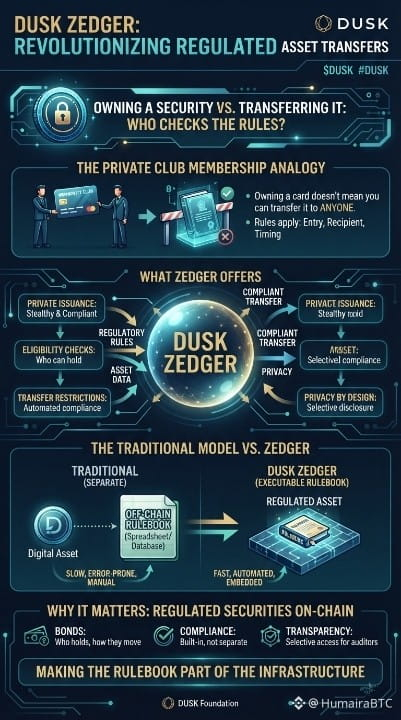
#dusk $DUSK @Dusk_Foundation I was looking at how a normal security gets transferred, and one thing bothered me.
The asset can move.
But who checks whether it was actually allowed to move?
Think about a private club.
Owning a membership card doesn't automatically mean you can hand it to anyone. There are rules about who can enter, who can receive it, and when a transfer is allowed.
That made me look deeper into DUSK’s Zedger.
Zedger isn’t just about creating a digital asset.
It is designed for private and compliant issuance and management of regulated assets, where things like eligibility, transfer restrictions and privacy can become part of the workflow.
That matters because regulated securities aren't ordinary tokens.
A bond, for example, may have rules around who can hold it, how it can move, and what information different participants are allowed to see.
DUSK seems to be asking a more interesting question:
What if the asset’s rulebook didn't sit in a separate spreadsheet or database, but became part of the infrastructure managing the asset itself?
That’s why Zedger caught my attention.
The interesting part isn't putting a security on-chain.
It's making the rules around that security executable alongside it.
@Dusk_Foundation $DUSK #dusk
#dusk $DUSK @Dusk I was looking at how a normal security gets transferred, and one thing bothered me.
The asset can move.
But who checks whether it was actually allowed to move?
Think about a private club.
Owning a membership card doesn't automatically mean you can hand it to anyone. There are rules about who can enter, who can receive it, and when a transfer is allowed.
That made me look deeper into DUSK’s Zedger.
Zedger isn’t just about creating a digital asset.
It is designed for private and compliant issuance and management of regulated assets, where things like eligibility, transfer restrictions and privacy can become part of the workflow.
That matters because regulated securities aren't ordinary tokens.
A bond, for example, may have rules around who can hold it, how it can move, and what information different participants are allowed to see.
DUSK seems to be asking a more interesting question:
What if the asset’s rulebook didn't sit in a separate spreadsheet or database, but became part of the infrastructure managing the asset itself?
That’s why Zedger caught my attention.
The interesting part isn't putting a security on-chain.
It's making the rules around that security executable alongside it.
@Dusk $DUSK #dusk
The asset can move.
But who checks whether it was actually allowed to move?
Think about a private club.
Owning a membership card doesn't automatically mean you can hand it to anyone. There are rules about who can enter, who can receive it, and when a transfer is allowed.
That made me look deeper into DUSK’s Zedger.
Zedger isn’t just about creating a digital asset.
It is designed for private and compliant issuance and management of regulated assets, where things like eligibility, transfer restrictions and privacy can become part of the workflow.
That matters because regulated securities aren't ordinary tokens.
A bond, for example, may have rules around who can hold it, how it can move, and what information different participants are allowed to see.
DUSK seems to be asking a more interesting question:
What if the asset’s rulebook didn't sit in a separate spreadsheet or database, but became part of the infrastructure managing the asset itself?
That’s why Zedger caught my attention.
The interesting part isn't putting a security on-chain.
It's making the rules around that security executable alongside it.
@Dusk $DUSK #dusk
3
2
83
·
--
#dusk $DUSK DUSKを掘り下げているうちに、あることが気になり始めました。
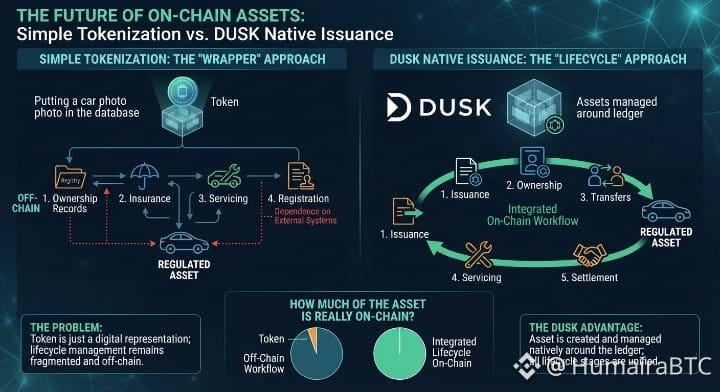
「このボンドはオンチェーンだ」と誰かが言うとき、いったい何がオンチェーンなのでしょう?
車の写真をデジタル・データベースに登録すると想像してください。
写真はデジタルです。
しかし、実際の所有権の記録、保険、整備、登録といったものは、まだ別々のオフィスに残ったままです。
それが、私がシンプルなトークン化で見つけたおおよその問題です。
トークンは金融資産を表せる一方で、本来の資産ライフサイクルは別のシステムに依存したままです。
DUSKは、ネイティブ・イシュアンスという別のルートを取ります。
ブロックチェーンのトークンを単なるラッパーとして扱うのではなく、台帳そのものの周りで資産を作成・管理できます。つまり、発行、所有、移転、サービシング、決済が同じワークフローの一部として設計されます。
その違いは小さく聞こえるかもしれません。
でも、問いの内容が次のように変わります。
「金融資産をオンチェーンに載せられるか?」
から、
「その資産は、実際にそのライフサイクル全体をオンチェーン上で生きられるのか?」
DUSKがネイティブ・イシュアンスを採用した理由は、まさにそこにあると思います。
目的は、もう1つ別のトークンではありません。
規制された資産が依存する、別個の記録や引き継ぎ(ハンドオフ)の数を減らすことです。
そして、私はこう考えます。
もし基盤となる金融のワークフローがまだオフチェーンにあるなら、その資産のうち、私たちは本当にどれだけをオンチェーンに載せたのですか?
@Dusk_Foundation $DUSK #duks
#dusk $DUSK DUSKを掘り下げているうちに、あることが気になり始めました。
「このボンドはオンチェーンだ」と誰かが言うとき、いったい何がオンチェーンなのでしょう?
車の写真をデジタル・データベースに登録すると想像してください。
写真はデジタルです。
しかし、実際の所有権の記録、保険、整備、登録といったものは、まだ別々のオフィスに残ったままです。
それが、私がシンプルなトークン化で見つけたおおよその問題です。
トークンは金融資産を表せる一方で、本来の資産ライフサイクルは別のシステムに依存したままです。
DUSKは、ネイティブ・イシュアンスという別のルートを取ります。
ブロックチェーンのトークンを単なるラッパーとして扱うのではなく、台帳そのものの周りで資産を作成・管理できます。つまり、発行、所有、移転、サービシング、決済が同じワークフローの一部として設計されます。
その違いは小さく聞こえるかもしれません。
でも、問いの内容が次のように変わります。
「金融資産をオンチェーンに載せられるか?」
から、
「その資産は、実際にそのライフサイクル全体をオンチェーン上で生きられるのか?」
DUSKがネイティブ・イシュアンスを採用した理由は、まさにそこにあると思います。
目的は、もう1つ別のトークンではありません。
規制された資産が依存する、別個の記録や引き継ぎ(ハンドオフ)の数を減らすことです。
そして、私はこう考えます。
もし基盤となる金融のワークフローがまだオフチェーンにあるなら、その資産のうち、私たちは本当にどれだけをオンチェーンに載せたのですか?
@Dusk $DUSK #duks
「このボンドはオンチェーンだ」と誰かが言うとき、いったい何がオンチェーンなのでしょう?
車の写真をデジタル・データベースに登録すると想像してください。
写真はデジタルです。
しかし、実際の所有権の記録、保険、整備、登録といったものは、まだ別々のオフィスに残ったままです。
それが、私がシンプルなトークン化で見つけたおおよその問題です。
トークンは金融資産を表せる一方で、本来の資産ライフサイクルは別のシステムに依存したままです。
DUSKは、ネイティブ・イシュアンスという別のルートを取ります。
ブロックチェーンのトークンを単なるラッパーとして扱うのではなく、台帳そのものの周りで資産を作成・管理できます。つまり、発行、所有、移転、サービシング、決済が同じワークフローの一部として設計されます。
その違いは小さく聞こえるかもしれません。
でも、問いの内容が次のように変わります。
「金融資産をオンチェーンに載せられるか?」
から、
「その資産は、実際にそのライフサイクル全体をオンチェーン上で生きられるのか?」
DUSKがネイティブ・イシュアンスを採用した理由は、まさにそこにあると思います。
目的は、もう1つ別のトークンではありません。
規制された資産が依存する、別個の記録や引き継ぎ(ハンドオフ)の数を減らすことです。
そして、私はこう考えます。
もし基盤となる金融のワークフローがまだオフチェーンにあるなら、その資産のうち、私たちは本当にどれだけをオンチェーンに載せたのですか?
@Dusk $DUSK #duks
9
3
130
·
--
翻訳参照
#dusk $DUSK I noticed something strange while looking through DUSK activity.
Why would a privacy-focused chain deliberately keep a public transaction system?
Think of a bank with two doors.
One door opens into a public lobby.
Everyone can see who entered and what happened.
The other leads into a private room.
Only the people involved know the details.
That’s surprisingly close to how DUSK works.
Moonlight is the public door: accounts, balances, sender, receiver and amounts can be visible.
Phoenix is the private door: funds move as shielded notes, with zero-knowledge proofs hiding sensitive transaction details.
And this isn’t just theoretical.
Looking at DUSK’s on-chain activity, both transaction models are actually being used — public Moonlight transactions alongside shielded Phoenix activity.
So why build both?
Because financial infrastructure doesn’t need “everything private.”
Some flows need transparency.
Others need confidentiality.
DUSK’s interesting bet is that privacy should be a tool you can use, not a rule forced on every transaction.
That feels much closer to how real financial markets actually work.
#dusk $DUSK @Dusk_Foundation
#dusk $DUSK I noticed something strange while looking through DUSK activity.
Why would a privacy-focused chain deliberately keep a public transaction system?
Think of a bank with two doors.
One door opens into a public lobby.
Everyone can see who entered and what happened.
The other leads into a private room.
Only the people involved know the details.
That’s surprisingly close to how DUSK works.
Moonlight is the public door: accounts, balances, sender, receiver and amounts can be visible.
Phoenix is the private door: funds move as shielded notes, with zero-knowledge proofs hiding sensitive transaction details.
And this isn’t just theoretical.
Looking at DUSK’s on-chain activity, both transaction models are actually being used — public Moonlight transactions alongside shielded Phoenix activity.
So why build both?
Because financial infrastructure doesn’t need “everything private.”
Some flows need transparency.
Others need confidentiality.
DUSK’s interesting bet is that privacy should be a tool you can use, not a rule forced on every transaction.
That feels much closer to how real financial markets actually work.
#dusk $DUSK @Dusk
Why would a privacy-focused chain deliberately keep a public transaction system?
Think of a bank with two doors.
One door opens into a public lobby.
Everyone can see who entered and what happened.
The other leads into a private room.
Only the people involved know the details.
That’s surprisingly close to how DUSK works.
Moonlight is the public door: accounts, balances, sender, receiver and amounts can be visible.
Phoenix is the private door: funds move as shielded notes, with zero-knowledge proofs hiding sensitive transaction details.
And this isn’t just theoretical.
Looking at DUSK’s on-chain activity, both transaction models are actually being used — public Moonlight transactions alongside shielded Phoenix activity.
So why build both?
Because financial infrastructure doesn’t need “everything private.”
Some flows need transparency.
Others need confidentiality.
DUSK’s interesting bet is that privacy should be a tool you can use, not a rule forced on every transaction.
That feels much closer to how real financial markets actually work.
#dusk $DUSK @Dusk

7
4
93
·
--
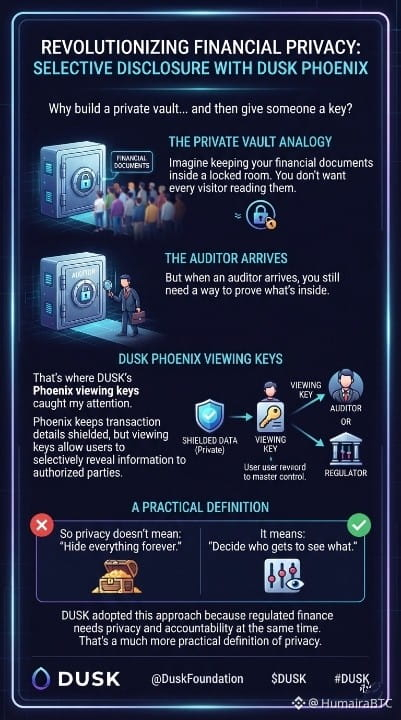
#dusk $DUSK なぜプライベートの金庫を作っておきながら、誰かに鍵を渡すのでしょう?
金銭関連の書類を施錠された部屋の中に保管することを想像してみてください。
すべての来訪者に読ませたくはありません。
でも監査人が訪れたら、中身が何かを証明する方法が必要です。
そこで、DUSKのPhoenix閲覧キーに注目しました。
Phoenixは取引の詳細を保護しますが、閲覧キーによって、ユーザーは認可された相手に対して情報を選択的に開示できます。
つまりプライバシーとは、
「すべてを永遠に隠すこと」ではありません。
「誰に何を見せるかを決めること」です。
これは金融市場にとって重要です。投資家は、取引をすべての人にオンチェーンで公開したくないかもしれません。一方で、監査人や認可された当事者には、特定の証拠が必要な場合があります。
DUSKがこのアプローチを採用したのは、規制のある金融では、プライバシーと説明責任を同時に満たす必要があるからです。
これこそが、より実用的なプライバシーの定義です。
@DuskFoundation $DUSK
#DUSK $DUSK #dusk @Dusk_Foundation
#dusk $DUSK なぜプライベートの金庫を作っておきながら、誰かに鍵を渡すのでしょう?
金銭関連の書類を施錠された部屋の中に保管することを想像してみてください。
すべての来訪者に読ませたくはありません。
でも監査人が訪れたら、中身が何かを証明する方法が必要です。
そこで、DUSKのPhoenix閲覧キーに注目しました。
Phoenixは取引の詳細を保護しますが、閲覧キーによって、ユーザーは認可された相手に対して情報を選択的に開示できます。
つまりプライバシーとは、
「すべてを永遠に隠すこと」ではありません。
「誰に何を見せるかを決めること」です。
これは金融市場にとって重要です。投資家は、取引をすべての人にオンチェーンで公開したくないかもしれません。一方で、監査人や認可された当事者には、特定の証拠が必要な場合があります。
DUSKがこのアプローチを採用したのは、規制のある金融では、プライバシーと説明責任を同時に満たす必要があるからです。
これこそが、より実用的なプライバシーの定義です。
@DuskFoundation $DUSK
#DUSK $DUSK #dusk @Dusk
金銭関連の書類を施錠された部屋の中に保管することを想像してみてください。
すべての来訪者に読ませたくはありません。
でも監査人が訪れたら、中身が何かを証明する方法が必要です。
そこで、DUSKのPhoenix閲覧キーに注目しました。
Phoenixは取引の詳細を保護しますが、閲覧キーによって、ユーザーは認可された相手に対して情報を選択的に開示できます。
つまりプライバシーとは、
「すべてを永遠に隠すこと」ではありません。
「誰に何を見せるかを決めること」です。
これは金融市場にとって重要です。投資家は、取引をすべての人にオンチェーンで公開したくないかもしれません。一方で、監査人や認可された当事者には、特定の証拠が必要な場合があります。
DUSKがこのアプローチを採用したのは、規制のある金融では、プライバシーと説明責任を同時に満たす必要があるからです。
これこそが、より実用的なプライバシーの定義です。
@DuskFoundation $DUSK
#DUSK $DUSK #dusk @Dusk
12
5
315
·
--
ブリッシュ
翻訳参照
#baby $BABY Have you ever noticed that most arguments aren't about what happened they're about when it happened?
I realized that while listening to two friends tell the same story from a trip we took together.
Neither of them was making things up. They just remembered the order of events differently and somehow that changed the whole story.
It made me think about blockchains.
As more networks start interacting, they also need a shared way to agree on history. Otherwise each one can end up believing its own version of what happened first.
That's one of the things I found interesting about Babylon.
Instead of asking every chain to trust another chain's timeline Babylon lets them anchor important checkpoints to Bitcoin. It gives independent networks a common point of reference when finality really matters.
At first, I wondered why Babylon chose that approach instead of simply making everything faster.
Then it clicked. When you're protecting value certainty is often more important than speed.
There is a trade off, of course. Waiting for Bitcoin backed finality can take longer than relying only on local confirmation. But if the goal is preventing conflicting histories that extra time starts to feel less like a delay and more like a safeguard.
Maybe the future of Bitcoin isn't just being the most trusted place to store value.
Maybe it's becoming the place other networks look to when they need certainty.
$BABY #Babylon #BTCFi
$BABY #baby @babylonlabs_io
#baby $BABY Have you ever noticed that most arguments aren't about what happened they're about when it happened?
I realized that while listening to two friends tell the same story from a trip we took together.
Neither of them was making things up. They just remembered the order of events differently and somehow that changed the whole story.
It made me think about blockchains.
As more networks start interacting, they also need a shared way to agree on history. Otherwise each one can end up believing its own version of what happened first.
That's one of the things I found interesting about Babylon.
Instead of asking every chain to trust another chain's timeline Babylon lets them anchor important checkpoints to Bitcoin. It gives independent networks a common point of reference when finality really matters.
At first, I wondered why Babylon chose that approach instead of simply making everything faster.
Then it clicked. When you're protecting value certainty is often more important than speed.
There is a trade off, of course. Waiting for Bitcoin backed finality can take longer than relying only on local confirmation. But if the goal is preventing conflicting histories that extra time starts to feel less like a delay and more like a safeguard.
Maybe the future of Bitcoin isn't just being the most trusted place to store value.
Maybe it's becoming the place other networks look to when they need certainty.
$BABY #Babylon #BTCFi
$BABY #baby @BabylonLabs_io
I realized that while listening to two friends tell the same story from a trip we took together.
Neither of them was making things up. They just remembered the order of events differently and somehow that changed the whole story.
It made me think about blockchains.
As more networks start interacting, they also need a shared way to agree on history. Otherwise each one can end up believing its own version of what happened first.
That's one of the things I found interesting about Babylon.
Instead of asking every chain to trust another chain's timeline Babylon lets them anchor important checkpoints to Bitcoin. It gives independent networks a common point of reference when finality really matters.
At first, I wondered why Babylon chose that approach instead of simply making everything faster.
Then it clicked. When you're protecting value certainty is often more important than speed.
There is a trade off, of course. Waiting for Bitcoin backed finality can take longer than relying only on local confirmation. But if the goal is preventing conflicting histories that extra time starts to feel less like a delay and more like a safeguard.
Maybe the future of Bitcoin isn't just being the most trusted place to store value.
Maybe it's becoming the place other networks look to when they need certainty.
$BABY #Babylon #BTCFi
$BABY #baby @BabylonLabs_io

6
2
150
·
--
#baby $BABY 最強のチームほど、全員に何でもかんでも任せるわけじゃない――そう気づいたことはありますか?
地元のクリケットの試合を見ているときに、そのことを実感しました。
キャプテンは最速のボウラーではありませんでした。ウィケットキーパーもバッターとして先頭に立つ役ではありません。
それぞれが異なる役割を担っていて、なぜかそれがチームをより強くしていました。
その考えが、バビロンについて読んでいるときにまたよみがえりました。
私が興味深いと思ったのは、ビットコインの保有者は必ずしも技術的な作業を全部自分でやる必要がないという点です。バビロンはファイナリティ・プロバイダを導入しており、ブロックの確定とネットワークのセキュリティ確保を助けます。一方でBTC保有者はステーキングを通じてセキュリティに貢献できます。
最初は、なぜバビロンがすべてのステーカーに何もかも任せないのか不思議に思いました。
でも納得できました。多くのビットコイン保有者は、複雑なインフラを運用せずにネットワークを支えたいだけなのです。それぞれの責任を分けることで、バビロンは参加をより現実的にしつつ、重要なタスクは専任のオペレーターに委ねたままにしています。
もちろんトレードオフもあります。これらのオペレーターはより大きな責任を負います。だからこそ、プロトコルには強力なインセンティブと説明責任が必要で、システムを安全に保つのです。
考えれば考えるほど、全員に同じ仕事を求めない設計の良さがわかってきます。より強いネットワークは、各参加者に「自分がうまくできる役割」を与えることで生まれることもあるのです。
$BABY #Babylon #BTCFi
$BABY #baby @babylonlabs_io
#baby $BABY 最強のチームほど、全員に何でもかんでも任せるわけじゃない――そう気づいたことはありますか?
地元のクリケットの試合を見ているときに、そのことを実感しました。
キャプテンは最速のボウラーではありませんでした。ウィケットキーパーもバッターとして先頭に立つ役ではありません。
それぞれが異なる役割を担っていて、なぜかそれがチームをより強くしていました。
その考えが、バビロンについて読んでいるときにまたよみがえりました。
私が興味深いと思ったのは、ビットコインの保有者は必ずしも技術的な作業を全部自分でやる必要がないという点です。バビロンはファイナリティ・プロバイダを導入しており、ブロックの確定とネットワークのセキュリティ確保を助けます。一方でBTC保有者はステーキングを通じてセキュリティに貢献できます。
最初は、なぜバビロンがすべてのステーカーに何もかも任せないのか不思議に思いました。
でも納得できました。多くのビットコイン保有者は、複雑なインフラを運用せずにネットワークを支えたいだけなのです。それぞれの責任を分けることで、バビロンは参加をより現実的にしつつ、重要なタスクは専任のオペレーターに委ねたままにしています。
もちろんトレードオフもあります。これらのオペレーターはより大きな責任を負います。だからこそ、プロトコルには強力なインセンティブと説明責任が必要で、システムを安全に保つのです。
考えれば考えるほど、全員に同じ仕事を求めない設計の良さがわかってきます。より強いネットワークは、各参加者に「自分がうまくできる役割」を与えることで生まれることもあるのです。
$BABY #Babylon #BTCFi
$BABY #baby @BabylonLabs_io
地元のクリケットの試合を見ているときに、そのことを実感しました。
キャプテンは最速のボウラーではありませんでした。ウィケットキーパーもバッターとして先頭に立つ役ではありません。
それぞれが異なる役割を担っていて、なぜかそれがチームをより強くしていました。
その考えが、バビロンについて読んでいるときにまたよみがえりました。
私が興味深いと思ったのは、ビットコインの保有者は必ずしも技術的な作業を全部自分でやる必要がないという点です。バビロンはファイナリティ・プロバイダを導入しており、ブロックの確定とネットワークのセキュリティ確保を助けます。一方でBTC保有者はステーキングを通じてセキュリティに貢献できます。
最初は、なぜバビロンがすべてのステーカーに何もかも任せないのか不思議に思いました。
でも納得できました。多くのビットコイン保有者は、複雑なインフラを運用せずにネットワークを支えたいだけなのです。それぞれの責任を分けることで、バビロンは参加をより現実的にしつつ、重要なタスクは専任のオペレーターに委ねたままにしています。
もちろんトレードオフもあります。これらのオペレーターはより大きな責任を負います。だからこそ、プロトコルには強力なインセンティブと説明責任が必要で、システムを安全に保つのです。
考えれば考えるほど、全員に同じ仕事を求めない設計の良さがわかってきます。より強いネットワークは、各参加者に「自分がうまくできる役割」を与えることで生まれることもあるのです。
$BABY #Babylon #BTCFi
$BABY #baby @BabylonLabs_io

10
4
144
·
--
#baby $BABY 最も価値のあるビットコインの提供物が、お金ではなく“時間”だとしたら?
この問いは、バビロンについて読んでいる最中に私の意表を突きました。
私はずっと、ビットコインを価値を保存する場所だと考えてきました。タイムスタンプのような単純なものが、その最大の強みの一つになるなんて想像していませんでした。
こう考えてみてください。誰かが今日、ノートに出来事を書き込んだとしても、あとから誰でも「実際にはいつ書かれたのか」をめぐって言い争うことができます。ですが、その同じ出来事がビットコインに恒久的に記録されるなら、履歴を変えるのは信じられないほど難しくなります。
私がバビロンのタイムスタンプ方式において面白いと感じたのはまさにそこです。ほかのネットワークに互いを盲目的に信じさせるのではなく、ビットコインの時間軸に対して重要なチェックポイントを“アンカー”として固定できるようにしています。そうすれば、誰か一社を頼らずとも、みんながいつ何が起きたのかを検証できます。
学べば学ぶほど、ビットコインの未来は単に富を守ることだけではないかもしれないと気づきました。他のブロックチェーン・ネットワークが正直であり続けるための“時計”になる可能性もあるのです。
これは、ビットコインが担うとは思っていなかった役割です。
$BABY #Babylon #BTCFi
$BABY #baby @babylonlabs_io
#baby $BABY 最も価値のあるビットコインの提供物が、お金ではなく“時間”だとしたら?
この問いは、バビロンについて読んでいる最中に私の意表を突きました。
私はずっと、ビットコインを価値を保存する場所だと考えてきました。タイムスタンプのような単純なものが、その最大の強みの一つになるなんて想像していませんでした。
こう考えてみてください。誰かが今日、ノートに出来事を書き込んだとしても、あとから誰でも「実際にはいつ書かれたのか」をめぐって言い争うことができます。ですが、その同じ出来事がビットコインに恒久的に記録されるなら、履歴を変えるのは信じられないほど難しくなります。
私がバビロンのタイムスタンプ方式において面白いと感じたのはまさにそこです。ほかのネットワークに互いを盲目的に信じさせるのではなく、ビットコインの時間軸に対して重要なチェックポイントを“アンカー”として固定できるようにしています。そうすれば、誰か一社を頼らずとも、みんながいつ何が起きたのかを検証できます。
学べば学ぶほど、ビットコインの未来は単に富を守ることだけではないかもしれないと気づきました。他のブロックチェーン・ネットワークが正直であり続けるための“時計”になる可能性もあるのです。
これは、ビットコインが担うとは思っていなかった役割です。
$BABY #Babylon #BTCFi
$BABY #baby @BabylonLabs_io
この問いは、バビロンについて読んでいる最中に私の意表を突きました。
私はずっと、ビットコインを価値を保存する場所だと考えてきました。タイムスタンプのような単純なものが、その最大の強みの一つになるなんて想像していませんでした。
こう考えてみてください。誰かが今日、ノートに出来事を書き込んだとしても、あとから誰でも「実際にはいつ書かれたのか」をめぐって言い争うことができます。ですが、その同じ出来事がビットコインに恒久的に記録されるなら、履歴を変えるのは信じられないほど難しくなります。
私がバビロンのタイムスタンプ方式において面白いと感じたのはまさにそこです。ほかのネットワークに互いを盲目的に信じさせるのではなく、ビットコインの時間軸に対して重要なチェックポイントを“アンカー”として固定できるようにしています。そうすれば、誰か一社を頼らずとも、みんながいつ何が起きたのかを検証できます。
学べば学ぶほど、ビットコインの未来は単に富を守ることだけではないかもしれないと気づきました。他のブロックチェーン・ネットワークが正直であり続けるための“時計”になる可能性もあるのです。
これは、ビットコインが担うとは思っていなかった役割です。
$BABY #Babylon #BTCFi
$BABY #baby @BabylonLabs_io

21
4
131
·
--
#baby $BABY 私はブロックチェーン構築で一番難しいのはテクノロジーだと思っていました。けれど、今はそうとも言い切れないかもしれません。
友人との会話が、それまでの見方を変えてくれました。私たちは新しいプロジェクトについて話していて、彼はシンプルな質問をしてきたのです。「そもそも、誰が公平に参加するチャンスを得られるのだろう?」
私はその場ですぐに答えられませんでした。
考えれば考えるほど、分配とは単にトークンを配ることだけではないと気づきました。早い段階で誰が加わるのか、誰がネットワークを安全に保つ助けをするのか、そして時間とともにどれだけエコシステムとともに成長できるのか——それらを形作るのです。
だからこそ、Babylonに惹かれました。もしその分配メカニズムが、少数のグループだけを優遇するのではなく、参加しやすくすることを目的として設計されているのなら、単なるトークンの発行以上のことをしていることになります。望むコミュニティのあり方、そのトーンを示しているのです。
結局のところ、優れたテクノロジーは重要です。でも時には、人々がどのように招かれるか——その仕組みのほうも同じくらい大切なのです。
$BABY #Babylon #BTCFi
$BABY #baby @babylonlabs_io
#baby $BABY 私はブロックチェーン構築で一番難しいのはテクノロジーだと思っていました。けれど、今はそうとも言い切れないかもしれません。
友人との会話が、それまでの見方を変えてくれました。私たちは新しいプロジェクトについて話していて、彼はシンプルな質問をしてきたのです。「そもそも、誰が公平に参加するチャンスを得られるのだろう?」
私はその場ですぐに答えられませんでした。
考えれば考えるほど、分配とは単にトークンを配ることだけではないと気づきました。早い段階で誰が加わるのか、誰がネットワークを安全に保つ助けをするのか、そして時間とともにどれだけエコシステムとともに成長できるのか——それらを形作るのです。
だからこそ、Babylonに惹かれました。もしその分配メカニズムが、少数のグループだけを優遇するのではなく、参加しやすくすることを目的として設計されているのなら、単なるトークンの発行以上のことをしていることになります。望むコミュニティのあり方、そのトーンを示しているのです。
結局のところ、優れたテクノロジーは重要です。でも時には、人々がどのように招かれるか——その仕組みのほうも同じくらい大切なのです。
$BABY #Babylon #BTCFi
$BABY #baby @BabylonLabs_io
友人との会話が、それまでの見方を変えてくれました。私たちは新しいプロジェクトについて話していて、彼はシンプルな質問をしてきたのです。「そもそも、誰が公平に参加するチャンスを得られるのだろう?」
私はその場ですぐに答えられませんでした。
考えれば考えるほど、分配とは単にトークンを配ることだけではないと気づきました。早い段階で誰が加わるのか、誰がネットワークを安全に保つ助けをするのか、そして時間とともにどれだけエコシステムとともに成長できるのか——それらを形作るのです。
だからこそ、Babylonに惹かれました。もしその分配メカニズムが、少数のグループだけを優遇するのではなく、参加しやすくすることを目的として設計されているのなら、単なるトークンの発行以上のことをしていることになります。望むコミュニティのあり方、そのトーンを示しているのです。
結局のところ、優れたテクノロジーは重要です。でも時には、人々がどのように招かれるか——その仕組みのほうも同じくらい大切なのです。
$BABY #Babylon #BTCFi
$BABY #baby @BabylonLabs_io

8
2
83
·
--
#baby $BABY 人間味のある、内省的な雰囲気を持つ、より本物の分析になりました。プロモーション文書というより、実際の人が書いたような感じです:
もしビットコインが、安全性と有用性の間で選ばなくてはいけないとしたらどうなるでしょう?
そんなことを考えながら、昔の友人に近況を聞いていました。彼は何年もBTCを保有していますが、DeFiの話題が出るたびに、いつも同じ答えでした。「ちょっと得をするために、ビットコインを動かしたくないんだ。」彼を責めることはできません。ほとんどの選択肢は、確実性を機会と引き換えにするように感じられました。
Babylonを調べるほど、会話が変わってきているのかもしれないと思うようになりました。ネイティブのBTCをビットコインから引き離すのではなく、ネイティブのまま、それをDeFiのための高速な担保として活用する、という発想です。これはまったく別の方向性に思えます。
このアプローチが時間の経過とともに機能するなら、長期のビットコイン保有者にとって最大級の心理的なハードルの一つを取り除けるかもしれません。たぶん、BTCFiの未来は「新しいものを信じて」と説得することではなく、「すでに信頼しているものを、そのまま使えるようにする」ことにあるのです。
$BABY #Babylon #BTCFi
$BABY #baby @babylonlabs_io
#baby $BABY 人間味のある、内省的な雰囲気を持つ、より本物の分析になりました。プロモーション文書というより、実際の人が書いたような感じです:
もしビットコインが、安全性と有用性の間で選ばなくてはいけないとしたらどうなるでしょう?
そんなことを考えながら、昔の友人に近況を聞いていました。彼は何年もBTCを保有していますが、DeFiの話題が出るたびに、いつも同じ答えでした。「ちょっと得をするために、ビットコインを動かしたくないんだ。」彼を責めることはできません。ほとんどの選択肢は、確実性を機会と引き換えにするように感じられました。
Babylonを調べるほど、会話が変わってきているのかもしれないと思うようになりました。ネイティブのBTCをビットコインから引き離すのではなく、ネイティブのまま、それをDeFiのための高速な担保として活用する、という発想です。これはまったく別の方向性に思えます。
このアプローチが時間の経過とともに機能するなら、長期のビットコイン保有者にとって最大級の心理的なハードルの一つを取り除けるかもしれません。たぶん、BTCFiの未来は「新しいものを信じて」と説得することではなく、「すでに信頼しているものを、そのまま使えるようにする」ことにあるのです。
$BABY #Babylon #BTCFi
$BABY #baby @BabylonLabs_io
もしビットコインが、安全性と有用性の間で選ばなくてはいけないとしたらどうなるでしょう?
そんなことを考えながら、昔の友人に近況を聞いていました。彼は何年もBTCを保有していますが、DeFiの話題が出るたびに、いつも同じ答えでした。「ちょっと得をするために、ビットコインを動かしたくないんだ。」彼を責めることはできません。ほとんどの選択肢は、確実性を機会と引き換えにするように感じられました。
Babylonを調べるほど、会話が変わってきているのかもしれないと思うようになりました。ネイティブのBTCをビットコインから引き離すのではなく、ネイティブのまま、それをDeFiのための高速な担保として活用する、という発想です。これはまったく別の方向性に思えます。
このアプローチが時間の経過とともに機能するなら、長期のビットコイン保有者にとって最大級の心理的なハードルの一つを取り除けるかもしれません。たぶん、BTCFiの未来は「新しいものを信じて」と説得することではなく、「すでに信頼しているものを、そのまま使えるようにする」ことにあるのです。
$BABY #Babylon #BTCFi
$BABY #baby @BabylonLabs_io

11
5
167
·
--
#baby $BABY 沈むようなあの感覚、よく分かります。
信頼していた橋が突然ダウンして、資金が消えていくのを見るのは残酷です。
予告もなく、こちらを見返すのはゼロ残高。
だからこそ、怪しいブリッジや中央集権的なマルチシグ委員会に頼ることがどれほど危険かを痛感します。
まさにこの苛立ちこそが、$babyのホルダーたちが空っぽの約束に見切りをつけ、確実な堅牢なセキュリティを求める理由です。
ここでEOTSがすべてを変えます。
委員会が悪事を働いた者を本当に罰してくれることを、ただ祈るのではなく、プロトコルが純粋な数学で処理します。
バリデータがダブルサインしてネットワークをだまそうとした場合、その秘密鍵は即時の罰としてオンチェーン上に直接漏えいします。
本当の分散化とは、人が正しいことをするのを信じることではありません。
不正が数学的に不可能な仕組みを作ることです。
数学が常に勝つ。
正直、セキュリティが完全に自己執行になるなら、従来型のブリッジが過去のものになるまで、どれくらいかかるのか考えさせられますか?$BABY #baby @babylonlabs_io
#baby $BABY 沈むようなあの感覚、よく分かります。
信頼していた橋が突然ダウンして、資金が消えていくのを見るのは残酷です。
予告もなく、こちらを見返すのはゼロ残高。
だからこそ、怪しいブリッジや中央集権的なマルチシグ委員会に頼ることがどれほど危険かを痛感します。
まさにこの苛立ちこそが、$babyのホルダーたちが空っぽの約束に見切りをつけ、確実な堅牢なセキュリティを求める理由です。
ここでEOTSがすべてを変えます。
委員会が悪事を働いた者を本当に罰してくれることを、ただ祈るのではなく、プロトコルが純粋な数学で処理します。
バリデータがダブルサインしてネットワークをだまそうとした場合、その秘密鍵は即時の罰としてオンチェーン上に直接漏えいします。
本当の分散化とは、人が正しいことをするのを信じることではありません。
不正が数学的に不可能な仕組みを作ることです。
数学が常に勝つ。
正直、セキュリティが完全に自己執行になるなら、従来型のブリッジが過去のものになるまで、どれくらいかかるのか考えさせられますか?$BABY #baby @BabylonLabs_io
信頼していた橋が突然ダウンして、資金が消えていくのを見るのは残酷です。
予告もなく、こちらを見返すのはゼロ残高。
だからこそ、怪しいブリッジや中央集権的なマルチシグ委員会に頼ることがどれほど危険かを痛感します。
まさにこの苛立ちこそが、$babyのホルダーたちが空っぽの約束に見切りをつけ、確実な堅牢なセキュリティを求める理由です。
ここでEOTSがすべてを変えます。
委員会が悪事を働いた者を本当に罰してくれることを、ただ祈るのではなく、プロトコルが純粋な数学で処理します。
バリデータがダブルサインしてネットワークをだまそうとした場合、その秘密鍵は即時の罰としてオンチェーン上に直接漏えいします。
本当の分散化とは、人が正しいことをするのを信じることではありません。
不正が数学的に不可能な仕組みを作ることです。
数学が常に勝つ。
正直、セキュリティが完全に自己執行になるなら、従来型のブリッジが過去のものになるまで、どれくらいかかるのか考えさせられますか?$BABY #baby @BabylonLabs_io

2
2
130
·
--
#newt $NEWT 今日は何かが私に起きました。
ハッキングや悪い取引があると、みんながセキュリティの話をし始めます。でもその頃には、すでに取引は起きています。
なぜそれを「普通」として受け入れてしまうのか不思議に思いました。
もしかすると、改善の大きなポイントは反応を速くすることではなく、危険な取引をそもそも実行される前に止めることなのかもしれません。
その理由の一つが、私が@NewtonProtocol をより注意深く追っていることです。ニュートン・プロトコルは、AIモデルをホストし、実行し、検証するための分散型インフラネットワークを構築しています。興味深いのは、実行前にリスクを評価する方向へ進んでいることです。さらに、推論と検証を分離することで、AIは素早く応答でき、後からプローフ(証明)を確認できるようにしています。
もしこの考えが実際にうまく機能するなら、オンチェーン金融が「信頼」を扱う方法を変えうるでしょう。チャンスは非常に大きいです。同時に、良いインフラにはやはり実際の普及が必要で、それは決して保証されません。
だからこそ、私はそれを「注目すべきもの」として見ています。即効性のある結果を期待しているからではなく、方向性そのものが以前と違って感じられるからです。
AIがより多くのオンチェーン上の判断を行うようになるなら、優先すべきは、起きた後にミスを直すことですか?それとも、起きる前に防ぐことですか? $NEWT #Newt @NewtonProtocol
#newt $NEWT 今日は何かが私に起きました。
ハッキングや悪い取引があると、みんながセキュリティの話をし始めます。でもその頃には、すでに取引は起きています。
なぜそれを「普通」として受け入れてしまうのか不思議に思いました。
もしかすると、改善の大きなポイントは反応を速くすることではなく、危険な取引をそもそも実行される前に止めることなのかもしれません。
その理由の一つが、私が@NewtonProtocol をより注意深く追っていることです。ニュートン・プロトコルは、AIモデルをホストし、実行し、検証するための分散型インフラネットワークを構築しています。興味深いのは、実行前にリスクを評価する方向へ進んでいることです。さらに、推論と検証を分離することで、AIは素早く応答でき、後からプローフ(証明)を確認できるようにしています。
もしこの考えが実際にうまく機能するなら、オンチェーン金融が「信頼」を扱う方法を変えうるでしょう。チャンスは非常に大きいです。同時に、良いインフラにはやはり実際の普及が必要で、それは決して保証されません。
だからこそ、私はそれを「注目すべきもの」として見ています。即効性のある結果を期待しているからではなく、方向性そのものが以前と違って感じられるからです。
AIがより多くのオンチェーン上の判断を行うようになるなら、優先すべきは、起きた後にミスを直すことですか?それとも、起きる前に防ぐことですか? $NEWT #Newt @NewtonProtocol
ハッキングや悪い取引があると、みんながセキュリティの話をし始めます。でもその頃には、すでに取引は起きています。
なぜそれを「普通」として受け入れてしまうのか不思議に思いました。
もしかすると、改善の大きなポイントは反応を速くすることではなく、危険な取引をそもそも実行される前に止めることなのかもしれません。
その理由の一つが、私が@NewtonProtocol をより注意深く追っていることです。ニュートン・プロトコルは、AIモデルをホストし、実行し、検証するための分散型インフラネットワークを構築しています。興味深いのは、実行前にリスクを評価する方向へ進んでいることです。さらに、推論と検証を分離することで、AIは素早く応答でき、後からプローフ(証明)を確認できるようにしています。
もしこの考えが実際にうまく機能するなら、オンチェーン金融が「信頼」を扱う方法を変えうるでしょう。チャンスは非常に大きいです。同時に、良いインフラにはやはり実際の普及が必要で、それは決して保証されません。
だからこそ、私はそれを「注目すべきもの」として見ています。即効性のある結果を期待しているからではなく、方向性そのものが以前と違って感じられるからです。
AIがより多くのオンチェーン上の判断を行うようになるなら、優先すべきは、起きた後にミスを直すことですか?それとも、起きる前に防ぐことですか? $NEWT #Newt @NewtonProtocol

2
2
91
ログインして、さらにコンテンツを読む
厳選トピックで世界の暗号資産トレーダーの仲間入り
⚡️ 暗号資産に関する最新かつ有益な情報が見つかります。
💬 世界最大の暗号資産取引所から信頼されています。
👍 認証を受けたクリエイターから、有益なインサイトを得られます。
メール / 電話番号
トレンドトピック
ClarityActFacesProceduralVoteSept15
閲覧回数 51,149
747人が討論中
9月15日(火)午後2時15分(ET)。メモしておいて。🗓️
上院が、米国法においてどのコインが証券か、または商品かを最終的に定義する法案「CLARITY Act」について、そもそも討論するべきかどうかを決める投票を行います。
60票が必要です。共和党は53票。複数の民主党員が越境(造反)して賛成に回る必要があり、その結果は確実ではありません。
この投票に否決されると、2026年は法案が事実上死文化し、2029年頃まで(この後の中間選挙がカレンダーを食い尽くすため)成立の見込みはないでしょう。
この投票に可決されると、実際の討論に向けた扉が開きますが、それでも実際の法律になるにはまだ長い道のりがあります。
今年最大級の仮想通貨規制の節目が、数日後に訪れます。
#ClarityActFacesProceduralVoteSept15
NewbieToNode
·いいね:5件
·閲覧回数 5.5k
US2YearYieldRisesTo4.61%
閲覧回数 36,712
691人が討論中
US10YearTreasuryYieldNears5%
閲覧回数 22,518
408人が討論中