

TamaraSolovei
34 投稿

TamaraSolovei
報告
ユーザーをブロック
7 フォロー
2 フォロワー
5 いいね
投稿
#dusk $DUSK @Dusk_Foundation
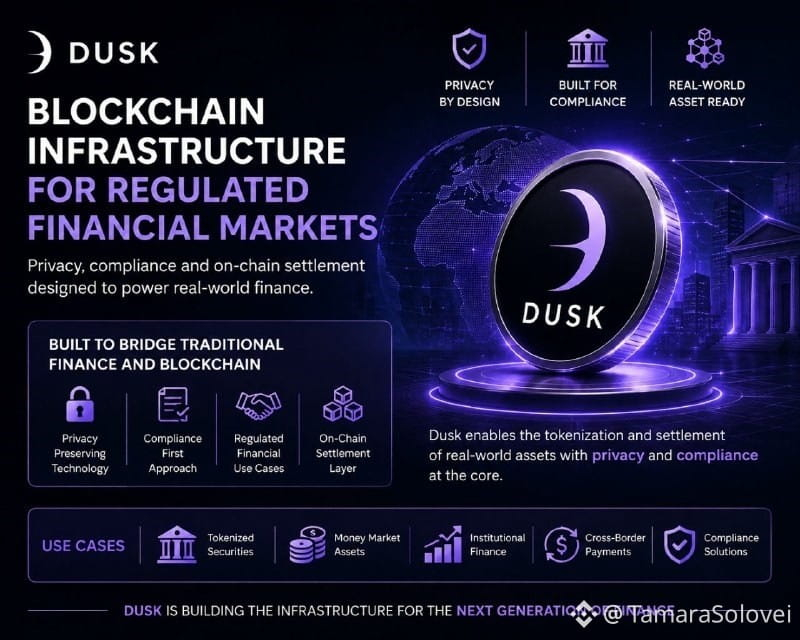
機関投資家のファイナンスにおいて最も重要なことの一つは、取引が完了したときに一体何が起きるのかを正確に把握することです。
だからこそ、Duskの決済アプローチに注目しました。
従来の金融市場では、決済には複数のシステムや仲介者が関わることがあります。オンチェーンのインフラは、プロセスをより直接的かつプログラマブルにできる可能性を提供します。
@Dusk_Foundation は決定論的な決済を軸に構築しており、規制対象の資産に必要なプライバシー機能やコンプライアンス機能も組み合わせています。
これは、トークン化された証券がブロックチェーン上に存在しているだけでは役に立たないからです。
さらにインフラは、次の問いにも答える必要があります:
🔹 誰が保有することを許可されているのか?
🔹 移転できるのか?
🔹 どの情報を検証しなければならないのか?
🔹 取引はいつ最終確定するのか?
Duskは、これらのルールをネットワークそのものの一部にしようとしています。
私にとってより面白いのは、このRWA(現実資産)の論点です。単に資産をトークン化するだけでなく、金融取引のライフサイクル全体をプログラム可能かつ検証可能にすることです。
#dusk $DUSK @Dusk
機関投資家のファイナンスにおいて最も重要なことの一つは、取引が完了したときに一体何が起きるのかを正確に把握することです。
だからこそ、Duskの決済アプローチに注目しました。
従来の金融市場では、決済には複数のシステムや仲介者が関わることがあります。オンチェーンのインフラは、プロセスをより直接的かつプログラマブルにできる可能性を提供します。
@Dusk は決定論的な決済を軸に構築しており、規制対象の資産に必要なプライバシー機能やコンプライアンス機能も組み合わせています。
これは、トークン化された証券がブロックチェーン上に存在しているだけでは役に立たないからです。
さらにインフラは、次の問いにも答える必要があります:
🔹 誰が保有することを許可されているのか?
🔹 移転できるのか?
🔹 どの情報を検証しなければならないのか?
🔹 取引はいつ最終確定するのか?
Duskは、これらのルールをネットワークそのものの一部にしようとしています。
私にとってより面白いのは、このRWA(現実資産)の論点です。単に資産をトークン化するだけでなく、金融取引のライフサイクル全体をプログラム可能かつ検証可能にすることです。
機関投資家のファイナンスにおいて最も重要なことの一つは、取引が完了したときに一体何が起きるのかを正確に把握することです。
だからこそ、Duskの決済アプローチに注目しました。
従来の金融市場では、決済には複数のシステムや仲介者が関わることがあります。オンチェーンのインフラは、プロセスをより直接的かつプログラマブルにできる可能性を提供します。
@Dusk は決定論的な決済を軸に構築しており、規制対象の資産に必要なプライバシー機能やコンプライアンス機能も組み合わせています。
これは、トークン化された証券がブロックチェーン上に存在しているだけでは役に立たないからです。
さらにインフラは、次の問いにも答える必要があります:
🔹 誰が保有することを許可されているのか?
🔹 移転できるのか?
🔹 どの情報を検証しなければならないのか?
🔹 取引はいつ最終確定するのか?
Duskは、これらのルールをネットワークそのものの一部にしようとしています。
私にとってより面白いのは、このRWA(現実資産)の論点です。単に資産をトークン化するだけでなく、金融取引のライフサイクル全体をプログラム可能かつ検証可能にすることです。
103
翻訳参照
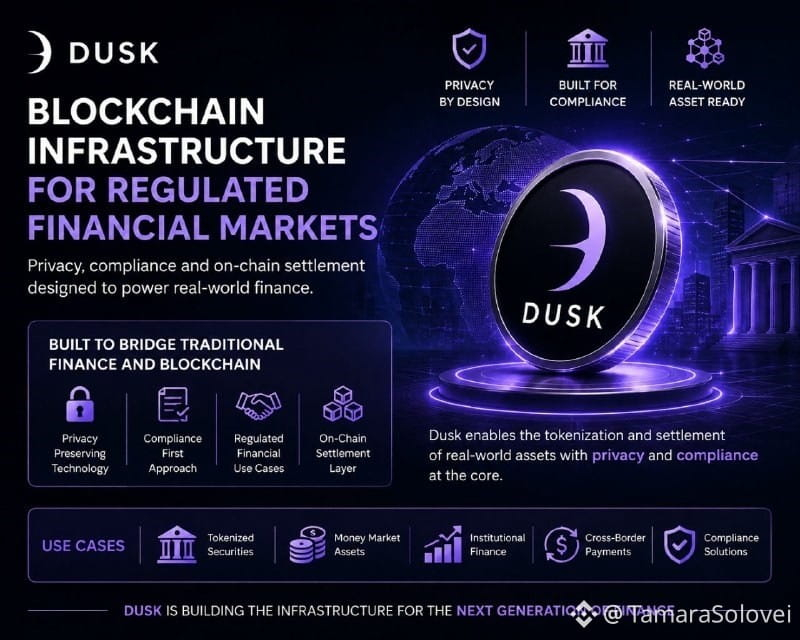
#dusk $DUSK @Dusk_Foundation After following Dusk for a while, the part that stands out to me is how specifically the network is built around financial markets.
Dusk isn't trying to solve every possible blockchain use case.
Its infrastructure is focused on a much narrower — but potentially very important — problem: making regulated financial assets work on-chain.
That means dealing with the things that make traditional finance complicated in the first place:
🔹 Investor eligibility
🔹 Asset transfers
🔹 Privacy and selective disclosure
🔹 Compliance requirements
🔹 Deterministic settlement
🔹 Different execution environments for developers
And I think that's the right way to approach the RWA market.
Tokenizing an asset is only the starting point. The real challenge is building infrastructure where that asset can actually be issued, transferred, traded and settled while the rules surrounding it remain enforceable.
That's the thesis behind Dusk that I find most compelling.
Not “blockchain for everything.”
Blockchain infrastructure specifically designed for financial markets.
Whether Dusk can turn this architecture into significant real-world adoption remains the big question.
But as the RWA sector continues to develop, I think projects solving the infrastructure problem deserve attention.
For now, $DUSK stays on my watchlist.
#dusk $DUSK @Dusk After following Dusk for a while, the part that stands out to me is how specifically the network is built around financial markets.
Dusk isn't trying to solve every possible blockchain use case.
Its infrastructure is focused on a much narrower — but potentially very important — problem: making regulated financial assets work on-chain.
That means dealing with the things that make traditional finance complicated in the first place:
🔹 Investor eligibility
🔹 Asset transfers
🔹 Privacy and selective disclosure
🔹 Compliance requirements
🔹 Deterministic settlement
🔹 Different execution environments for developers
And I think that's the right way to approach the RWA market.
Tokenizing an asset is only the starting point. The real challenge is building infrastructure where that asset can actually be issued, transferred, traded and settled while the rules surrounding it remain enforceable.
That's the thesis behind Dusk that I find most compelling.
Not “blockchain for everything.”
Blockchain infrastructure specifically designed for financial markets.
Whether Dusk can turn this architecture into significant real-world adoption remains the big question.
But as the RWA sector continues to develop, I think projects solving the infrastructure problem deserve attention.
For now, $DUSK stays on my watchlist.
Dusk isn't trying to solve every possible blockchain use case.
Its infrastructure is focused on a much narrower — but potentially very important — problem: making regulated financial assets work on-chain.
That means dealing with the things that make traditional finance complicated in the first place:
🔹 Investor eligibility
🔹 Asset transfers
🔹 Privacy and selective disclosure
🔹 Compliance requirements
🔹 Deterministic settlement
🔹 Different execution environments for developers
And I think that's the right way to approach the RWA market.
Tokenizing an asset is only the starting point. The real challenge is building infrastructure where that asset can actually be issued, transferred, traded and settled while the rules surrounding it remain enforceable.
That's the thesis behind Dusk that I find most compelling.
Not “blockchain for everything.”
Blockchain infrastructure specifically designed for financial markets.
Whether Dusk can turn this architecture into significant real-world adoption remains the big question.
But as the RWA sector continues to develop, I think projects solving the infrastructure problem deserve attention.
For now, $DUSK stays on my watchlist.
83
翻訳参照
#dusk $DUSK @Dusk_Foundation
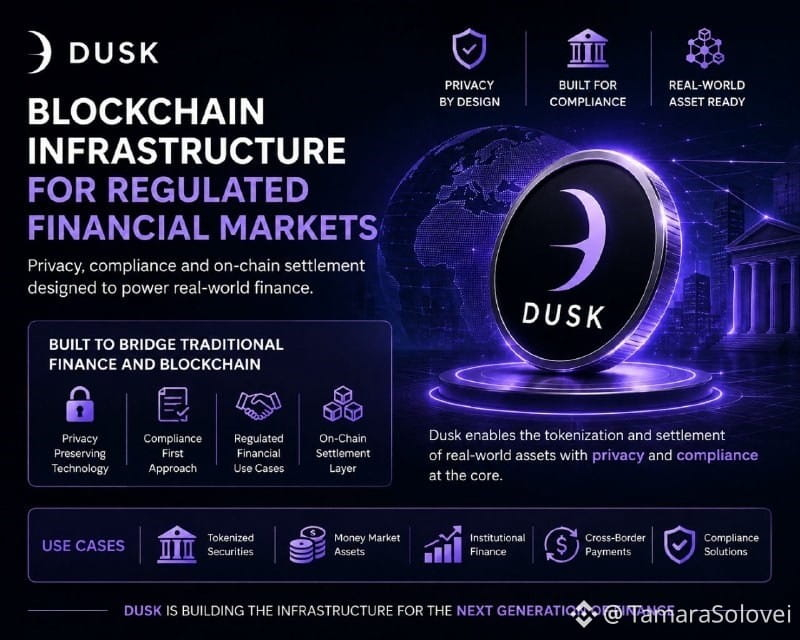
The most interesting part of Dusk might be what happens between the moment an asset is issued and the moment it reaches an investor.
Regulated finance has a lot of conditions that need to be enforced before an asset can actually move: investor eligibility, transfer restrictions, compliance checks and settlement.
@Dusk_Foundation is building these requirements into the blockchain infrastructure itself.
That means the network isn't treating compliance as a separate layer that has to be bolted onto every application. Instead, regulated asset workflows can be built around native access controls, privacy-preserving transactions and deterministic settlement.
I think this approach makes sense for institutional markets.
A public blockchain can provide transparency, but financial institutions also need controlled access and predictable execution.
Dusk is trying to combine both:
Transparent infrastructure where it helps.
Privacy where it's necessary.
Verification where regulation requires it.
If tokenized securities eventually become a major market, these details could matter far more than simply having another blockchain capable of issuing tokens.
The real test is whether financial institutions can actually operate on the network.
That's what I'll be watching with $DUSK .
#dusk $DUSK @Dusk
The most interesting part of Dusk might be what happens between the moment an asset is issued and the moment it reaches an investor.
Regulated finance has a lot of conditions that need to be enforced before an asset can actually move: investor eligibility, transfer restrictions, compliance checks and settlement.
@Dusk is building these requirements into the blockchain infrastructure itself.
That means the network isn't treating compliance as a separate layer that has to be bolted onto every application. Instead, regulated asset workflows can be built around native access controls, privacy-preserving transactions and deterministic settlement.
I think this approach makes sense for institutional markets.
A public blockchain can provide transparency, but financial institutions also need controlled access and predictable execution.
Dusk is trying to combine both:
Transparent infrastructure where it helps.
Privacy where it's necessary.
Verification where regulation requires it.
If tokenized securities eventually become a major market, these details could matter far more than simply having another blockchain capable of issuing tokens.
The real test is whether financial institutions can actually operate on the network.
That's what I'll be watching with $DUSK .
The most interesting part of Dusk might be what happens between the moment an asset is issued and the moment it reaches an investor.
Regulated finance has a lot of conditions that need to be enforced before an asset can actually move: investor eligibility, transfer restrictions, compliance checks and settlement.
@Dusk is building these requirements into the blockchain infrastructure itself.
That means the network isn't treating compliance as a separate layer that has to be bolted onto every application. Instead, regulated asset workflows can be built around native access controls, privacy-preserving transactions and deterministic settlement.
I think this approach makes sense for institutional markets.
A public blockchain can provide transparency, but financial institutions also need controlled access and predictable execution.
Dusk is trying to combine both:
Transparent infrastructure where it helps.
Privacy where it's necessary.
Verification where regulation requires it.
If tokenized securities eventually become a major market, these details could matter far more than simply having another blockchain capable of issuing tokens.
The real test is whether financial institutions can actually operate on the network.
That's what I'll be watching with $DUSK .
80
翻訳参照
#dusk $DUSK @Dusk_Foundation
Most people hear “RWA” and immediately think about tokenizing government bonds or putting real estate onchain.
But I think the more interesting opportunity is much broader.
Private markets.
A huge amount of economic activity happens outside public markets.
Private companies need financing.
Investors need access to opportunities.
Ownership needs to be recorded.
Transfers need to be controlled.
Payments and settlement need to happen.
And every participant needs to know who is actually allowed to do what.
Today, a lot of this infrastructure is fragmented across issuers, banks, custodians, administrators, brokers and other intermediaries.
Tokenization doesn't automatically solve that.
Putting an asset on a blockchain doesn't magically create liquidity, demand or legal certainty.
The interesting part is what happens when the entire lifecycle of an asset can be represented digitally.
Issuance.
Investor eligibility.
Ownership.
Transfers.
Dividends.
Voting.
Settlement.
That's where @Dusk_Foundation _Foundation is taking an interesting approach.
Dusk isn't simply saying “let's put more assets onchain.”
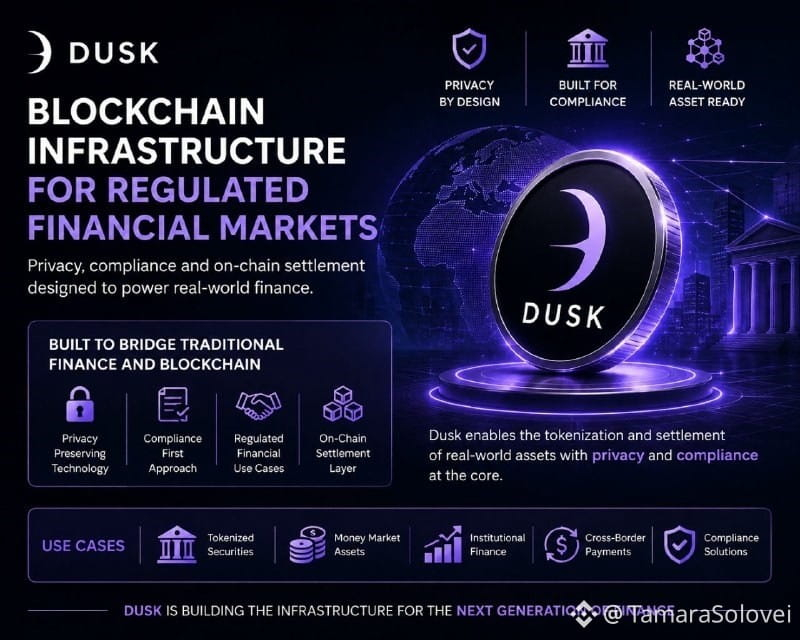
It's trying to build infrastructure where regulated assets can exist onchain while still dealing with the requirements that financial markets can't ignore.
Privacy.
Selective disclosure.
Access controls.
Compliance.
Deterministic settlement.
And that's particularly important for private markets.
A public blockchain gives you transparency by default.
Financial markets often need the opposite: controlled visibility.
An investor may need to prove they're eligible without exposing every piece of personal information.
A company may need to keep sensitive positions private.
A regulated venue may need to know exactly who can hold or transfer an asset.
That doesn't mean blockchain has to choose between transparency and privacy.
It means the infrastructure needs to be designed for both.
This is why I'm paying attention to Dusk.
The interesting question isn't whether we can tokenize another asset.
#dusk $DUSK @Dusk
Most people hear “RWA” and immediately think about tokenizing government bonds or putting real estate onchain.
But I think the more interesting opportunity is much broader.
Private markets.
A huge amount of economic activity happens outside public markets.
Private companies need financing.
Investors need access to opportunities.
Ownership needs to be recorded.
Transfers need to be controlled.
Payments and settlement need to happen.
And every participant needs to know who is actually allowed to do what.
Today, a lot of this infrastructure is fragmented across issuers, banks, custodians, administrators, brokers and other intermediaries.
Tokenization doesn't automatically solve that.
Putting an asset on a blockchain doesn't magically create liquidity, demand or legal certainty.
The interesting part is what happens when the entire lifecycle of an asset can be represented digitally.
Issuance.
Investor eligibility.
Ownership.
Transfers.
Dividends.
Voting.
Settlement.
That's where @Dusk _Foundation is taking an interesting approach.
Dusk isn't simply saying “let's put more assets onchain.”
It's trying to build infrastructure where regulated assets can exist onchain while still dealing with the requirements that financial markets can't ignore.
Privacy.
Selective disclosure.
Access controls.
Compliance.
Deterministic settlement.
And that's particularly important for private markets.
A public blockchain gives you transparency by default.
Financial markets often need the opposite: controlled visibility.
An investor may need to prove they're eligible without exposing every piece of personal information.
A company may need to keep sensitive positions private.
A regulated venue may need to know exactly who can hold or transfer an asset.
That doesn't mean blockchain has to choose between transparency and privacy.
It means the infrastructure needs to be designed for both.
This is why I'm paying attention to Dusk.
The interesting question isn't whether we can tokenize another asset.
Most people hear “RWA” and immediately think about tokenizing government bonds or putting real estate onchain.
But I think the more interesting opportunity is much broader.
Private markets.
A huge amount of economic activity happens outside public markets.
Private companies need financing.
Investors need access to opportunities.
Ownership needs to be recorded.
Transfers need to be controlled.
Payments and settlement need to happen.
And every participant needs to know who is actually allowed to do what.
Today, a lot of this infrastructure is fragmented across issuers, banks, custodians, administrators, brokers and other intermediaries.
Tokenization doesn't automatically solve that.
Putting an asset on a blockchain doesn't magically create liquidity, demand or legal certainty.
The interesting part is what happens when the entire lifecycle of an asset can be represented digitally.
Issuance.
Investor eligibility.
Ownership.
Transfers.
Dividends.
Voting.
Settlement.
That's where @Dusk _Foundation is taking an interesting approach.
Dusk isn't simply saying “let's put more assets onchain.”
It's trying to build infrastructure where regulated assets can exist onchain while still dealing with the requirements that financial markets can't ignore.
Privacy.
Selective disclosure.
Access controls.
Compliance.
Deterministic settlement.
And that's particularly important for private markets.
A public blockchain gives you transparency by default.
Financial markets often need the opposite: controlled visibility.
An investor may need to prove they're eligible without exposing every piece of personal information.
A company may need to keep sensitive positions private.
A regulated venue may need to know exactly who can hold or transfer an asset.
That doesn't mean blockchain has to choose between transparency and privacy.
It means the infrastructure needs to be designed for both.
This is why I'm paying attention to Dusk.
The interesting question isn't whether we can tokenize another asset.
71
翻訳参照
#dusk $DUSK @Dusk_Foundation
Most people hear “RWA” and immediately think about tokenizing government bonds or putting real estate onchain.
But I think the more interesting opportunity is much broader.
Private markets.
A huge amount of economic activity happens outside public markets.
Private companies need financing.
Investors need access to opportunities.
Ownership needs to be recorded.
Transfers need to be controlled.
Payments and settlement need to happen.
And every participant needs to know who is actually allowed to do what.
Today, a lot of this infrastructure is fragmented across issuers, banks, custodians, administrators, brokers and other intermediaries.
Tokenization doesn't automatically solve that.
Putting an asset on a blockchain doesn't magically create liquidity, demand or legal certainty.
The interesting part is what happens when the entire lifecycle of an asset can be represented digitally.
Issuance.
Investor eligibility.
Ownership.
Transfers.
Dividends.
Voting.
Settlement.
That's where @Dusk_Foundation _Foundation is taking an interesting approach.
Dusk isn't simply saying “let's put more assets onchain.”
It's trying to build infrastructure where regulated assets can exist onchain while still dealing with the requirements that financial markets can't ignore.
Privacy.
Selective disclosure.
Access controls.
Compliance.
Deterministic settlement.
And that's particularly important for private markets.
A public blockchain gives you transparency by default.
Financial markets often need the opposite: controlled visibility.
An investor may need to prove they're eligible without exposing every piece of personal information.
A company may need to keep sensitive positions private.
A regulated venue may need to know exactly who can hold or transfer an asset.
That doesn't mean blockchain has to choose between transparency and privacy.
It means the infrastructure needs to be designed for both.
This is why I'm paying attention to Dusk.
The interesting question isn't whether we can tokenize another asset.
#dusk $DUSK @Dusk
Most people hear “RWA” and immediately think about tokenizing government bonds or putting real estate onchain.
But I think the more interesting opportunity is much broader.
Private markets.
A huge amount of economic activity happens outside public markets.
Private companies need financing.
Investors need access to opportunities.
Ownership needs to be recorded.
Transfers need to be controlled.
Payments and settlement need to happen.
And every participant needs to know who is actually allowed to do what.
Today, a lot of this infrastructure is fragmented across issuers, banks, custodians, administrators, brokers and other intermediaries.
Tokenization doesn't automatically solve that.
Putting an asset on a blockchain doesn't magically create liquidity, demand or legal certainty.
The interesting part is what happens when the entire lifecycle of an asset can be represented digitally.
Issuance.
Investor eligibility.
Ownership.
Transfers.
Dividends.
Voting.
Settlement.
That's where @Dusk _Foundation is taking an interesting approach.
Dusk isn't simply saying “let's put more assets onchain.”
It's trying to build infrastructure where regulated assets can exist onchain while still dealing with the requirements that financial markets can't ignore.
Privacy.
Selective disclosure.
Access controls.
Compliance.
Deterministic settlement.
And that's particularly important for private markets.
A public blockchain gives you transparency by default.
Financial markets often need the opposite: controlled visibility.
An investor may need to prove they're eligible without exposing every piece of personal information.
A company may need to keep sensitive positions private.
A regulated venue may need to know exactly who can hold or transfer an asset.
That doesn't mean blockchain has to choose between transparency and privacy.
It means the infrastructure needs to be designed for both.
This is why I'm paying attention to Dusk.
The interesting question isn't whether we can tokenize another asset.
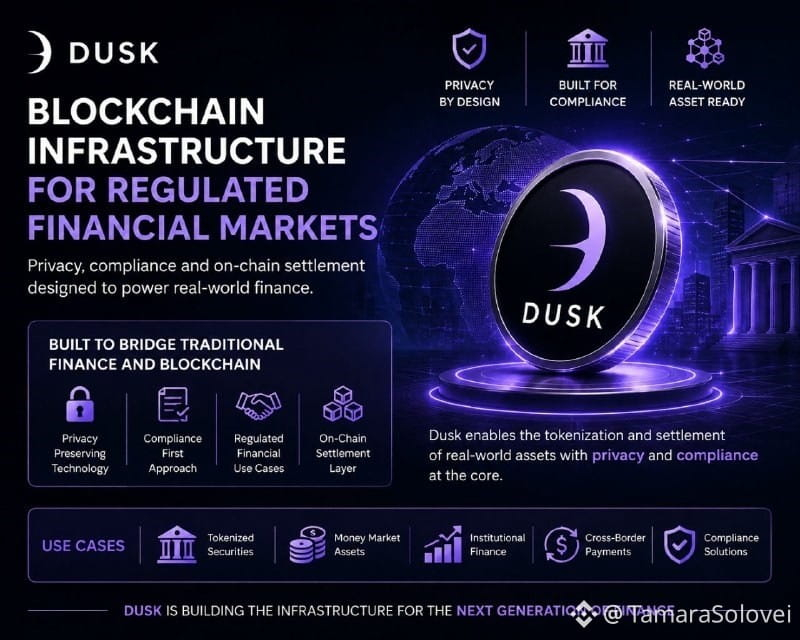
Most people hear “RWA” and immediately think about tokenizing government bonds or putting real estate onchain.
But I think the more interesting opportunity is much broader.
Private markets.
A huge amount of economic activity happens outside public markets.
Private companies need financing.
Investors need access to opportunities.
Ownership needs to be recorded.
Transfers need to be controlled.
Payments and settlement need to happen.
And every participant needs to know who is actually allowed to do what.
Today, a lot of this infrastructure is fragmented across issuers, banks, custodians, administrators, brokers and other intermediaries.
Tokenization doesn't automatically solve that.
Putting an asset on a blockchain doesn't magically create liquidity, demand or legal certainty.
The interesting part is what happens when the entire lifecycle of an asset can be represented digitally.
Issuance.
Investor eligibility.
Ownership.
Transfers.
Dividends.
Voting.
Settlement.
That's where @Dusk _Foundation is taking an interesting approach.
Dusk isn't simply saying “let's put more assets onchain.”
It's trying to build infrastructure where regulated assets can exist onchain while still dealing with the requirements that financial markets can't ignore.
Privacy.
Selective disclosure.
Access controls.
Compliance.
Deterministic settlement.
And that's particularly important for private markets.
A public blockchain gives you transparency by default.
Financial markets often need the opposite: controlled visibility.
An investor may need to prove they're eligible without exposing every piece of personal information.
A company may need to keep sensitive positions private.
A regulated venue may need to know exactly who can hold or transfer an asset.
That doesn't mean blockchain has to choose between transparency and privacy.
It means the infrastructure needs to be designed for both.
This is why I'm paying attention to Dusk.
The interesting question isn't whether we can tokenize another asset.
64
翻訳参照
#dusk $DUSK @Dusk_Foundation
One thing I find interesting about Dusk is that it isn't trying to force every financial application into the same execution model.
The network provides DuskVM for native Rust/WASM applications and DuskEVM for developers who want an Ethereum-compatible environment.
That creates an interesting balance.
Developers can use familiar EVM tooling and smart-contract languages, while applications that need deeper access to Dusk's native capabilities can build directly on DuskVM.
Underneath both environments is DuskDS, providing the settlement and data-availability layer.
This architecture makes sense for a network focused on financial applications. Different products can have different technical requirements without necessarily needing completely separate chains.
And the native $DUSK token ties the ecosystem together through transaction fees and network staking.
For me, the interesting question isn't whether Dusk can attract developers — it's whether this architecture can turn into real financial activity on-chain.
If it does, $DUSK becomes more than just a token attached to an RWA narrative. It becomes part of the infrastructure powering the applications built on Dusk.
#dusk $DUSK @Dusk
One thing I find interesting about Dusk is that it isn't trying to force every financial application into the same execution model.
The network provides DuskVM for native Rust/WASM applications and DuskEVM for developers who want an Ethereum-compatible environment.
That creates an interesting balance.
Developers can use familiar EVM tooling and smart-contract languages, while applications that need deeper access to Dusk's native capabilities can build directly on DuskVM.
Underneath both environments is DuskDS, providing the settlement and data-availability layer.
This architecture makes sense for a network focused on financial applications. Different products can have different technical requirements without necessarily needing completely separate chains.
And the native $DUSK token ties the ecosystem together through transaction fees and network staking.
For me, the interesting question isn't whether Dusk can attract developers — it's whether this architecture can turn into real financial activity on-chain.
If it does, $DUSK becomes more than just a token attached to an RWA narrative. It becomes part of the infrastructure powering the applications built on Dusk.
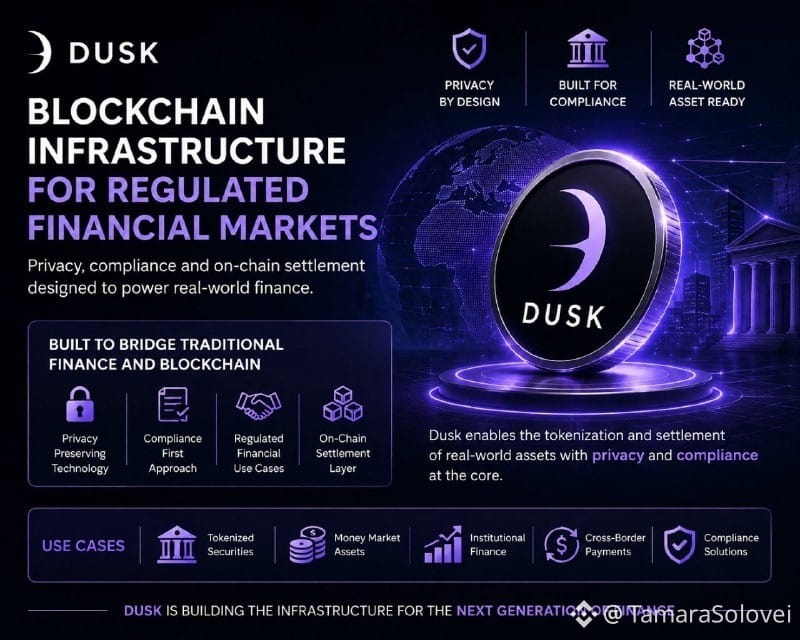
One thing I find interesting about Dusk is that it isn't trying to force every financial application into the same execution model.
The network provides DuskVM for native Rust/WASM applications and DuskEVM for developers who want an Ethereum-compatible environment.
That creates an interesting balance.
Developers can use familiar EVM tooling and smart-contract languages, while applications that need deeper access to Dusk's native capabilities can build directly on DuskVM.
Underneath both environments is DuskDS, providing the settlement and data-availability layer.
This architecture makes sense for a network focused on financial applications. Different products can have different technical requirements without necessarily needing completely separate chains.
And the native $DUSK token ties the ecosystem together through transaction fees and network staking.
For me, the interesting question isn't whether Dusk can attract developers — it's whether this architecture can turn into real financial activity on-chain.
If it does, $DUSK becomes more than just a token attached to an RWA narrative. It becomes part of the infrastructure powering the applications built on Dusk.
79
翻訳参照
#dusk $DUSK @Dusk_Foundation
Dusk is taking an interesting approach to one of the biggest problems in on-chain finance: making different parts of the market work together.
A tokenized security needs more than a blockchain address. It needs rules around who can hold it, how it can move, what information can be disclosed and how settlement is finalized.
Dusk is building these requirements into its network rather than treating them as separate infrastructure.
What stands out to me is the combination of:
🔹 Permissioned access where required
🔹 Privacy-preserving transactions
🔹 Selective disclosure
🔹 Deterministic settlement
🔹 EVM compatibility for developers
That combination could make Dusk useful for financial applications where completely public transactions aren't practical, but completely private systems aren't acceptable either.
The interesting part of the Dusk thesis isn't putting finance on a blockchain. It's making blockchain infrastructure fit the way regulated finance actually works.
If RWAs continue moving toward institutional adoption, that's a niche worth watching.
#dusk $DUSK @Dusk
Dusk is taking an interesting approach to one of the biggest problems in on-chain finance: making different parts of the market work together.
A tokenized security needs more than a blockchain address. It needs rules around who can hold it, how it can move, what information can be disclosed and how settlement is finalized.
Dusk is building these requirements into its network rather than treating them as separate infrastructure.
What stands out to me is the combination of:
🔹 Permissioned access where required
🔹 Privacy-preserving transactions
🔹 Selective disclosure
🔹 Deterministic settlement
🔹 EVM compatibility for developers
That combination could make Dusk useful for financial applications where completely public transactions aren't practical, but completely private systems aren't acceptable either.
The interesting part of the Dusk thesis isn't putting finance on a blockchain. It's making blockchain infrastructure fit the way regulated finance actually works.
If RWAs continue moving toward institutional adoption, that's a niche worth watching.
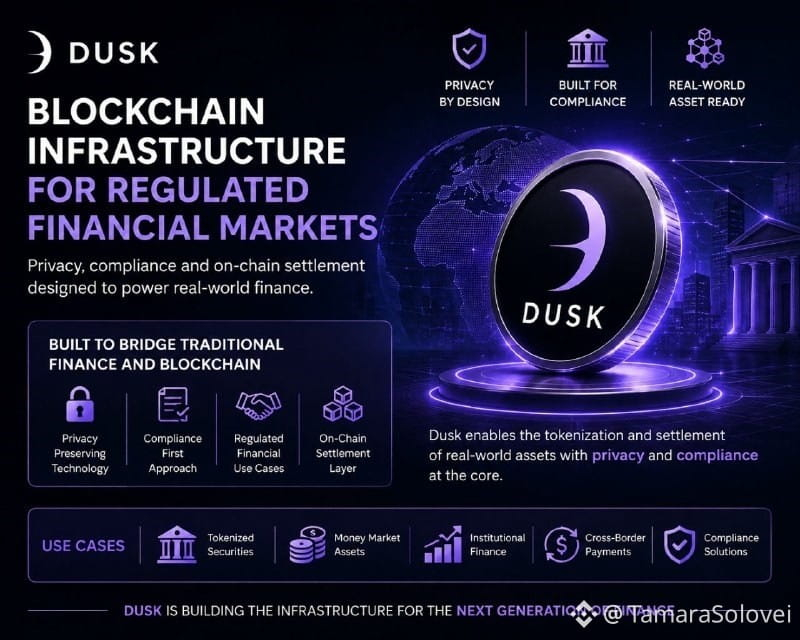
Dusk is taking an interesting approach to one of the biggest problems in on-chain finance: making different parts of the market work together.
A tokenized security needs more than a blockchain address. It needs rules around who can hold it, how it can move, what information can be disclosed and how settlement is finalized.
Dusk is building these requirements into its network rather than treating them as separate infrastructure.
What stands out to me is the combination of:
🔹 Permissioned access where required
🔹 Privacy-preserving transactions
🔹 Selective disclosure
🔹 Deterministic settlement
🔹 EVM compatibility for developers
That combination could make Dusk useful for financial applications where completely public transactions aren't practical, but completely private systems aren't acceptable either.
The interesting part of the Dusk thesis isn't putting finance on a blockchain. It's making blockchain infrastructure fit the way regulated finance actually works.
If RWAs continue moving toward institutional adoption, that's a niche worth watching.
62
翻訳参照
#dusk $DUSK @Dusk_Foundation
Why does regulated finance need its own blockchain infrastructure instead of simply using a public chain?
That question is becoming increasingly important as tokenized securities and real-world assets move on-chain.
@Dusk_Foundation is built around the idea that financial markets have different requirements from ordinary crypto applications. Issuers, investors, custodians and regulators all need to interact with the same infrastructure while sensitive financial information remains protected.
One of the most interesting concepts is selective disclosure.
Instead of choosing between complete transparency or complete privacy, Dusk is designed to let authorized parties verify the information they need without exposing every transaction or portfolio detail publicly. Combined with deterministic settlement and access controls, this creates infrastructure tailored for regulated digital assets.
I think that distinction is what makes Dusk worth watching. The future of RWAs may depend less on creating tokens and more on creating networks capable of handling the real-world rules behind them.
#dusk $DUSK @Dusk
Why does regulated finance need its own blockchain infrastructure instead of simply using a public chain?
That question is becoming increasingly important as tokenized securities and real-world assets move on-chain.
@Dusk is built around the idea that financial markets have different requirements from ordinary crypto applications. Issuers, investors, custodians and regulators all need to interact with the same infrastructure while sensitive financial information remains protected.
One of the most interesting concepts is selective disclosure.
Instead of choosing between complete transparency or complete privacy, Dusk is designed to let authorized parties verify the information they need without exposing every transaction or portfolio detail publicly. Combined with deterministic settlement and access controls, this creates infrastructure tailored for regulated digital assets.
I think that distinction is what makes Dusk worth watching. The future of RWAs may depend less on creating tokens and more on creating networks capable of handling the real-world rules behind them.
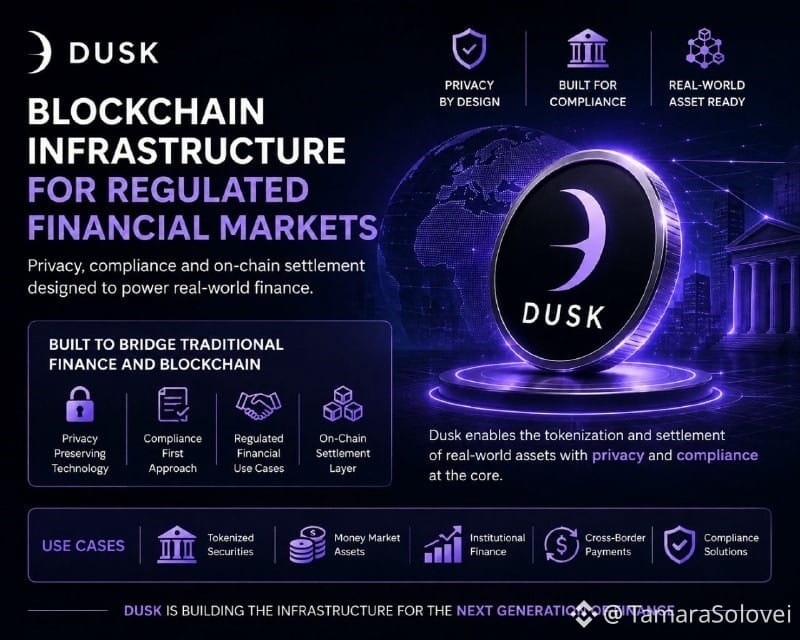
Why does regulated finance need its own blockchain infrastructure instead of simply using a public chain?
That question is becoming increasingly important as tokenized securities and real-world assets move on-chain.
@Dusk is built around the idea that financial markets have different requirements from ordinary crypto applications. Issuers, investors, custodians and regulators all need to interact with the same infrastructure while sensitive financial information remains protected.
One of the most interesting concepts is selective disclosure.
Instead of choosing between complete transparency or complete privacy, Dusk is designed to let authorized parties verify the information they need without exposing every transaction or portfolio detail publicly. Combined with deterministic settlement and access controls, this creates infrastructure tailored for regulated digital assets.
I think that distinction is what makes Dusk worth watching. The future of RWAs may depend less on creating tokens and more on creating networks capable of handling the real-world rules behind them.
78
翻訳参照
#dusk $DUSK @Dusk_Foundation
A financial asset doesn't end its journey when the trade is completed.
That’s why I think the infrastructure behind tokenized assets is more important than the token itself.
In traditional markets, an asset can go through issuance, trading, settlement, dividends, reporting, transfers and other corporate actions. Each stage can involve different systems and intermediaries.
@Dusk_Foundation is approaching this as a complete on-chain workflow.
Its infrastructure is designed to handle things like eligibility checks, transfer restrictions, privacy, settlement, reporting and corporate actions as part of the asset lifecycle.
There is also an interesting distinction between public transparency and private financial information.
Dusk supports transparent transactions through Moonlight, while Phoenix enables shielded transfers using zero-knowledge proofs. Information can also be selectively disclosed when an authorized party needs it.
This is important because regulated finance doesn't necessarily need everything to be public.
It needs the right information to be visible to the right participants at the right time.
And that's a very different design philosophy from simply putting an existing financial asset on a public blockchain.
If tokenized securities become a major part of the next phase of Web3, I think infrastructure like this will be just as important as the assets themselves.
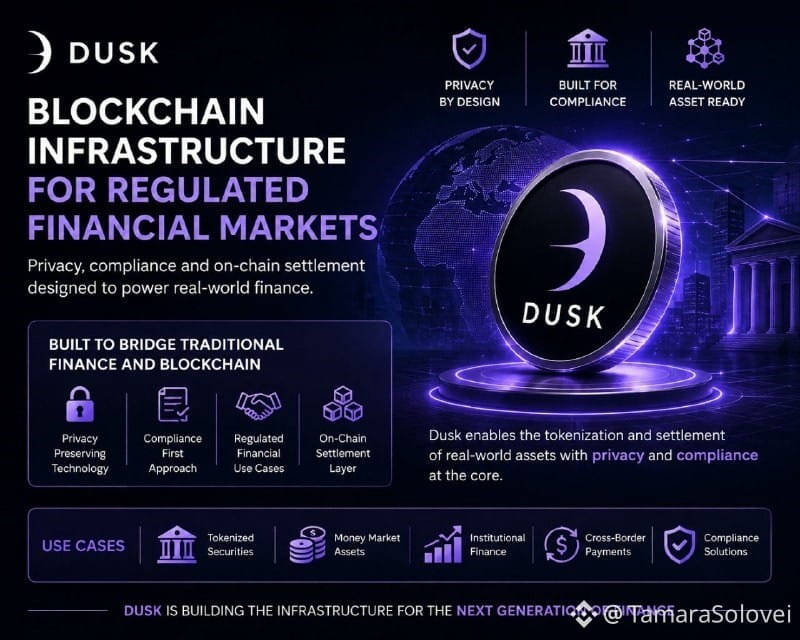
Dusk isn't only trying to put finance on-chain. It's trying to make the entire financial workflow work there.
#dusk $DUSK @Dusk
A financial asset doesn't end its journey when the trade is completed.
That’s why I think the infrastructure behind tokenized assets is more important than the token itself.
In traditional markets, an asset can go through issuance, trading, settlement, dividends, reporting, transfers and other corporate actions. Each stage can involve different systems and intermediaries.
@Dusk is approaching this as a complete on-chain workflow.
Its infrastructure is designed to handle things like eligibility checks, transfer restrictions, privacy, settlement, reporting and corporate actions as part of the asset lifecycle.
There is also an interesting distinction between public transparency and private financial information.
Dusk supports transparent transactions through Moonlight, while Phoenix enables shielded transfers using zero-knowledge proofs. Information can also be selectively disclosed when an authorized party needs it.
This is important because regulated finance doesn't necessarily need everything to be public.
It needs the right information to be visible to the right participants at the right time.
And that's a very different design philosophy from simply putting an existing financial asset on a public blockchain.
If tokenized securities become a major part of the next phase of Web3, I think infrastructure like this will be just as important as the assets themselves.
Dusk isn't only trying to put finance on-chain. It's trying to make the entire financial workflow work there.
A financial asset doesn't end its journey when the trade is completed.
That’s why I think the infrastructure behind tokenized assets is more important than the token itself.
In traditional markets, an asset can go through issuance, trading, settlement, dividends, reporting, transfers and other corporate actions. Each stage can involve different systems and intermediaries.
@Dusk is approaching this as a complete on-chain workflow.
Its infrastructure is designed to handle things like eligibility checks, transfer restrictions, privacy, settlement, reporting and corporate actions as part of the asset lifecycle.
There is also an interesting distinction between public transparency and private financial information.
Dusk supports transparent transactions through Moonlight, while Phoenix enables shielded transfers using zero-knowledge proofs. Information can also be selectively disclosed when an authorized party needs it.
This is important because regulated finance doesn't necessarily need everything to be public.
It needs the right information to be visible to the right participants at the right time.
And that's a very different design philosophy from simply putting an existing financial asset on a public blockchain.
If tokenized securities become a major part of the next phase of Web3, I think infrastructure like this will be just as important as the assets themselves.
Dusk isn't only trying to put finance on-chain. It's trying to make the entire financial workflow work there.
60
翻訳参照
#bstockscis @BinanceCIS
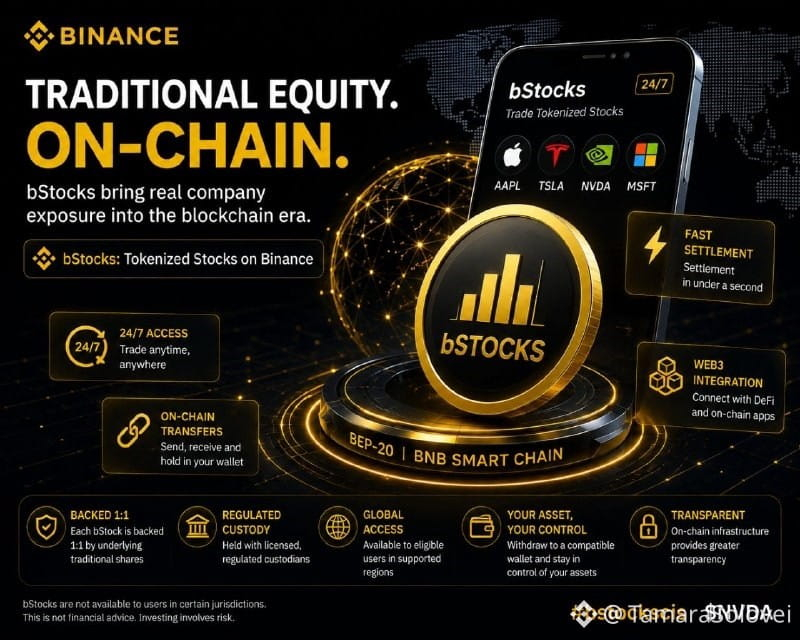
What makes tokenized stocks interesting isn't just the ability to buy them on-chain. It's what happens after you own them.
bStocks bring traditional equity exposure into a blockchain environment, opening the door to features that don't exist in the same way with conventional brokerage accounts.
With bStocks operating as BEP-20 tokens on BNB Smart Chain, the asset can become part of a broader on-chain ecosystem rather than remaining locked inside a traditional financial platform.
That creates some interesting possibilities:
🔹
On-chain transfers
🔹
24/7 access
🔹
Blockchain-based settlement
🔹
Potential integration with Web3 infrastructure
🔹
The ability to hold tokenized equity in a compatible wallet
But the most important part for me is the bridge between two financial worlds.
Traditional stocks provide exposure to established companies and real businesses. Blockchain infrastructure adds programmability, portability and continuous settlement.
Put those two things together, and tokenized equities start looking less like a simple crypto product and more like a new financial primitive.
The RWA market is still developing, but this is exactly the kind of infrastructure I think is worth watching.
Which traditional asset would you most like to see become fully integrated with on-chain finance?
#bstockscis @BinanceCIS
What makes tokenized stocks interesting isn't just the ability to buy them on-chain. It's what happens after you own them.
bStocks bring traditional equity exposure into a blockchain environment, opening the door to features that don't exist in the same way with conventional brokerage accounts.
With bStocks operating as BEP-20 tokens on BNB Smart Chain, the asset can become part of a broader on-chain ecosystem rather than remaining locked inside a traditional financial platform.
That creates some interesting possibilities:
🔹
On-chain transfers
🔹
24/7 access
🔹
Blockchain-based settlement
🔹
Potential integration with Web3 infrastructure
🔹
The ability to hold tokenized equity in a compatible wallet
But the most important part for me is the bridge between two financial worlds.
Traditional stocks provide exposure to established companies and real businesses. Blockchain infrastructure adds programmability, portability and continuous settlement.
Put those two things together, and tokenized equities start looking less like a simple crypto product and more like a new financial primitive.
The RWA market is still developing, but this is exactly the kind of infrastructure I think is worth watching.
Which traditional asset would you most like to see become fully integrated with on-chain finance?
What makes tokenized stocks interesting isn't just the ability to buy them on-chain. It's what happens after you own them.
bStocks bring traditional equity exposure into a blockchain environment, opening the door to features that don't exist in the same way with conventional brokerage accounts.
With bStocks operating as BEP-20 tokens on BNB Smart Chain, the asset can become part of a broader on-chain ecosystem rather than remaining locked inside a traditional financial platform.
That creates some interesting possibilities:
🔹
On-chain transfers
🔹
24/7 access
🔹
Blockchain-based settlement
🔹
Potential integration with Web3 infrastructure
🔹
The ability to hold tokenized equity in a compatible wallet
But the most important part for me is the bridge between two financial worlds.
Traditional stocks provide exposure to established companies and real businesses. Blockchain infrastructure adds programmability, portability and continuous settlement.
Put those two things together, and tokenized equities start looking less like a simple crypto product and more like a new financial primitive.
The RWA market is still developing, but this is exactly the kind of infrastructure I think is worth watching.
Which traditional asset would you most like to see become fully integrated with on-chain finance?
147
翻訳参照
#termmax @termmax
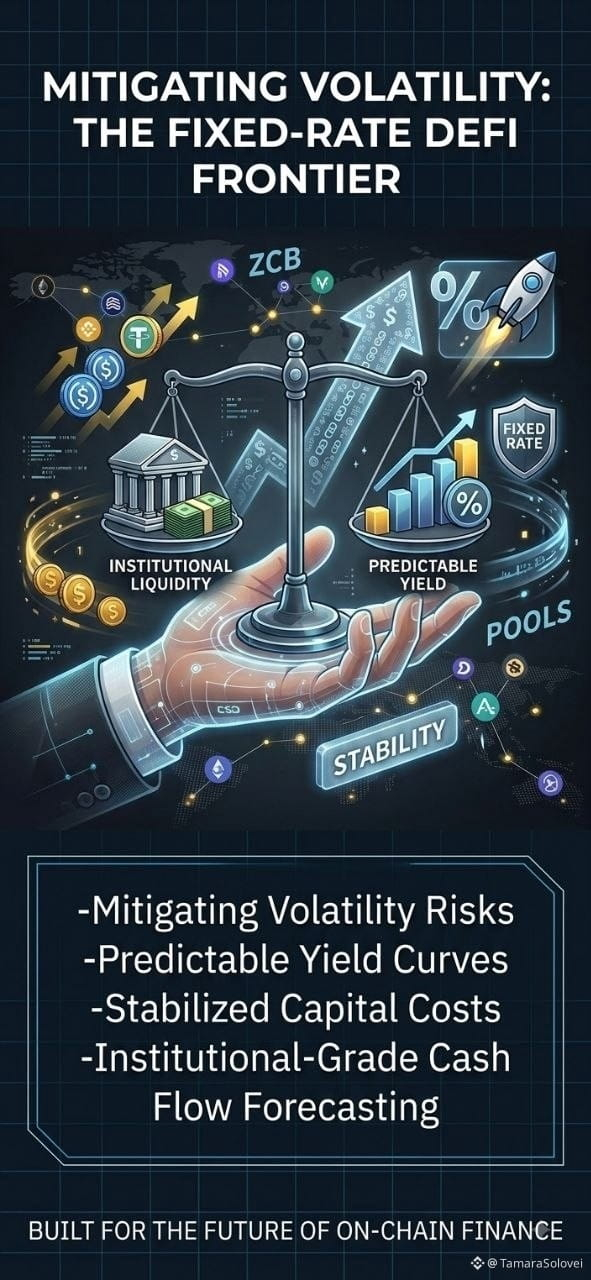
The maturity of the DeFi ecosystem is directly correlated with the introduction of primitive financial instruments capable of mitigating volatility risks. A significant gap in current credit markets is the lack of robust fixed-rate lending solutions. This is where @termmax introduces a crucial innovation.
By utilizing Zero-Coupon Bonds and Liquidity Pools, TermMax provides predictable yield curves for lenders and guaranteed capital costs for borrowers. This model dramatically reduces slippage and the uncertainty associated with variable interest rates. From my perspective, this approach is essential for attracting large-scale institutional liquidity, which requires accurate cash flow forecasting. Moving beyond variable-rate dependence is a critical step toward the long-term stabilization of capital markets on the blockchain.
#termmax @TermMax
The maturity of the DeFi ecosystem is directly correlated with the introduction of primitive financial instruments capable of mitigating volatility risks. A significant gap in current credit markets is the lack of robust fixed-rate lending solutions. This is where @TermMax introduces a crucial innovation.
By utilizing Zero-Coupon Bonds and Liquidity Pools, TermMax provides predictable yield curves for lenders and guaranteed capital costs for borrowers. This model dramatically reduces slippage and the uncertainty associated with variable interest rates. From my perspective, this approach is essential for attracting large-scale institutional liquidity, which requires accurate cash flow forecasting. Moving beyond variable-rate dependence is a critical step toward the long-term stabilization of capital markets on the blockchain.
The maturity of the DeFi ecosystem is directly correlated with the introduction of primitive financial instruments capable of mitigating volatility risks. A significant gap in current credit markets is the lack of robust fixed-rate lending solutions. This is where @TermMax introduces a crucial innovation.
By utilizing Zero-Coupon Bonds and Liquidity Pools, TermMax provides predictable yield curves for lenders and guaranteed capital costs for borrowers. This model dramatically reduces slippage and the uncertainty associated with variable interest rates. From my perspective, this approach is essential for attracting large-scale institutional liquidity, which requires accurate cash flow forecasting. Moving beyond variable-rate dependence is a critical step toward the long-term stabilization of capital markets on the blockchain.
47
翻訳参照
#dusk $DUSK @Dusk_Foundation
Tokenizing an asset is only the first step. The real challenge is building the market around it.
This is why I’m interested in what @Dusk_Foundation is building.
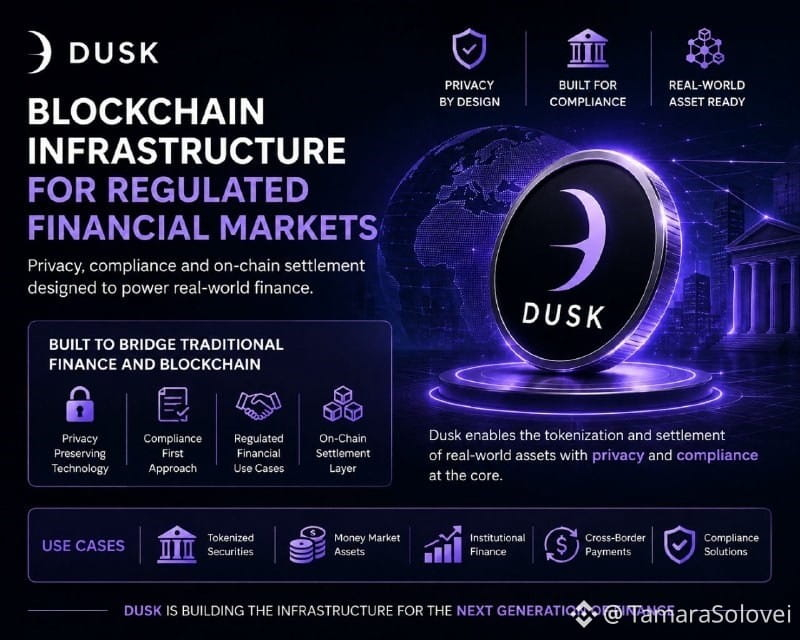
Dusk Trade is designed as an application layer for tokenized financial assets, covering more than simply buying and selling. The workflow can include investor onboarding, eligibility checks, wallet connection, payment coordination and settlement.
Underneath it, Dusk provides the infrastructure for regulated workflows: access controls, privacy, selective disclosure and deterministic settlement.
That approach makes sense to me because real financial markets aren't just token contracts. They involve issuers, investors, venues, custodians, compliance and settlement — all of which need to work together.
If RWAs are going to scale, the infrastructure has to support the entire market workflow, not just put another asset on-chain.
That's the direction I'm watching with Dusk.
#dusk $DUSK @Dusk
Tokenizing an asset is only the first step. The real challenge is building the market around it.
This is why I’m interested in what @Dusk is building.
Dusk Trade is designed as an application layer for tokenized financial assets, covering more than simply buying and selling. The workflow can include investor onboarding, eligibility checks, wallet connection, payment coordination and settlement.
Underneath it, Dusk provides the infrastructure for regulated workflows: access controls, privacy, selective disclosure and deterministic settlement.
That approach makes sense to me because real financial markets aren't just token contracts. They involve issuers, investors, venues, custodians, compliance and settlement — all of which need to work together.
If RWAs are going to scale, the infrastructure has to support the entire market workflow, not just put another asset on-chain.
That's the direction I'm watching with Dusk.
Tokenizing an asset is only the first step. The real challenge is building the market around it.
This is why I’m interested in what @Dusk is building.
Dusk Trade is designed as an application layer for tokenized financial assets, covering more than simply buying and selling. The workflow can include investor onboarding, eligibility checks, wallet connection, payment coordination and settlement.
Underneath it, Dusk provides the infrastructure for regulated workflows: access controls, privacy, selective disclosure and deterministic settlement.
That approach makes sense to me because real financial markets aren't just token contracts. They involve issuers, investors, venues, custodians, compliance and settlement — all of which need to work together.
If RWAs are going to scale, the infrastructure has to support the entire market workflow, not just put another asset on-chain.
That's the direction I'm watching with Dusk.
61
#bstockscis @BinanceCIS
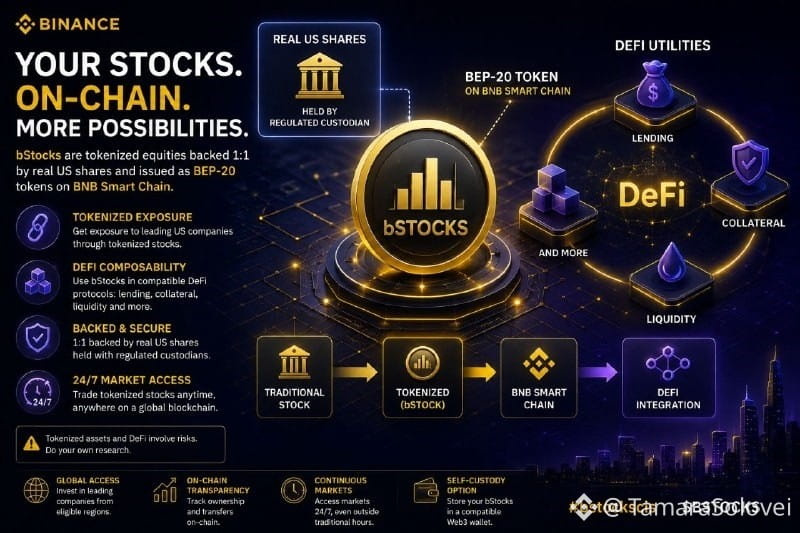
もしあなたの株式ポートフォリオが、オンチェーンの金融戦略の一部になり得るとしたら?
ここからトークン化された株式が一気に面白くなってきます。
株式は単に従来の株式をデジタル化したものではありません。BNBスマートチェーン上のBEP-20トークンとして存在するため、他のデジタル資産を支えるのと同じブロックチェーン基盤と相互作用できる可能性があります。
それによって、まったく異なる設計の可能性が生まれます。
ある企業へのエクスポージャーを持ち、そのトークンを、従来のブローカー口座の中に資産を隔離したままにするのではなく、対応するDeFiアプリケーションの中で活用できると想像してみてください。
ここで重要なのは「合成可能性(composability)」という点です。
従来の株式は一般的にブローカレッジ・インフラの中に閉じています。トークン化された資産は、他の金融アプリケーションのための構成要素になり得ます——貸し出し、担保、流動性、そしてその他のオンチェーン戦略などは、特定のプロトコルや適格要件次第です。
Binanceの現在のbStocksの仕組みは、規制されたカストディアンが保有する対応する米国株による1:1の裏付けを軸に構築されています。一方で、トークン自体はBNBスマートチェーン上で動作します。
これにより、興味深い組み合わせが生まれます。
従来の資産 → トークン化された表現 → ブロックチェーン基盤 → DeFiユーティリティの可能性。
だからこそ私は、RWA(実世界資産)の物語は「24時間365日マーケットを提供する」以上に大きいと考えています。
本当のイノベーションは、これまで孤立していた金融資産を、まったく新しい金融スタックと合成可能な状態にすることかもしれません。
もちろん、DeFi連携には追加のスマートコントラクト、流動性、市場リスクも伴うため、「オンチェーン」だからといって必ずしも「より良い」とは限りません。
ただ、その可能性そのものがとても魅力的です。
あなたなら、トークン化された株を担保として使いますか?それともDeFiの中で使いますか?それとも純粋に投資として保有するでしょうか?
#bstockscis @BinanceCIS
もしあなたの株式ポートフォリオが、オンチェーンの金融戦略の一部になり得るとしたら?
ここからトークン化された株式が一気に面白くなってきます。
株式は単に従来の株式をデジタル化したものではありません。BNBスマートチェーン上のBEP-20トークンとして存在するため、他のデジタル資産を支えるのと同じブロックチェーン基盤と相互作用できる可能性があります。
それによって、まったく異なる設計の可能性が生まれます。
ある企業へのエクスポージャーを持ち、そのトークンを、従来のブローカー口座の中に資産を隔離したままにするのではなく、対応するDeFiアプリケーションの中で活用できると想像してみてください。
ここで重要なのは「合成可能性(composability)」という点です。
従来の株式は一般的にブローカレッジ・インフラの中に閉じています。トークン化された資産は、他の金融アプリケーションのための構成要素になり得ます——貸し出し、担保、流動性、そしてその他のオンチェーン戦略などは、特定のプロトコルや適格要件次第です。
Binanceの現在のbStocksの仕組みは、規制されたカストディアンが保有する対応する米国株による1:1の裏付けを軸に構築されています。一方で、トークン自体はBNBスマートチェーン上で動作します。
これにより、興味深い組み合わせが生まれます。
従来の資産 → トークン化された表現 → ブロックチェーン基盤 → DeFiユーティリティの可能性。
だからこそ私は、RWA(実世界資産)の物語は「24時間365日マーケットを提供する」以上に大きいと考えています。
本当のイノベーションは、これまで孤立していた金融資産を、まったく新しい金融スタックと合成可能な状態にすることかもしれません。
もちろん、DeFi連携には追加のスマートコントラクト、流動性、市場リスクも伴うため、「オンチェーン」だからといって必ずしも「より良い」とは限りません。
ただ、その可能性そのものがとても魅力的です。
あなたなら、トークン化された株を担保として使いますか?それともDeFiの中で使いますか?それとも純粋に投資として保有するでしょうか?
もしあなたの株式ポートフォリオが、オンチェーンの金融戦略の一部になり得るとしたら?
ここからトークン化された株式が一気に面白くなってきます。
株式は単に従来の株式をデジタル化したものではありません。BNBスマートチェーン上のBEP-20トークンとして存在するため、他のデジタル資産を支えるのと同じブロックチェーン基盤と相互作用できる可能性があります。
それによって、まったく異なる設計の可能性が生まれます。
ある企業へのエクスポージャーを持ち、そのトークンを、従来のブローカー口座の中に資産を隔離したままにするのではなく、対応するDeFiアプリケーションの中で活用できると想像してみてください。
ここで重要なのは「合成可能性(composability)」という点です。
従来の株式は一般的にブローカレッジ・インフラの中に閉じています。トークン化された資産は、他の金融アプリケーションのための構成要素になり得ます——貸し出し、担保、流動性、そしてその他のオンチェーン戦略などは、特定のプロトコルや適格要件次第です。
Binanceの現在のbStocksの仕組みは、規制されたカストディアンが保有する対応する米国株による1:1の裏付けを軸に構築されています。一方で、トークン自体はBNBスマートチェーン上で動作します。
これにより、興味深い組み合わせが生まれます。
従来の資産 → トークン化された表現 → ブロックチェーン基盤 → DeFiユーティリティの可能性。
だからこそ私は、RWA(実世界資産)の物語は「24時間365日マーケットを提供する」以上に大きいと考えています。
本当のイノベーションは、これまで孤立していた金融資産を、まったく新しい金融スタックと合成可能な状態にすることかもしれません。
もちろん、DeFi連携には追加のスマートコントラクト、流動性、市場リスクも伴うため、「オンチェーン」だからといって必ずしも「より良い」とは限りません。
ただ、その可能性そのものがとても魅力的です。
あなたなら、トークン化された株を担保として使いますか?それともDeFiの中で使いますか?それとも純粋に投資として保有するでしょうか?
69
#dusk $DUSK @Dusk_Foundation
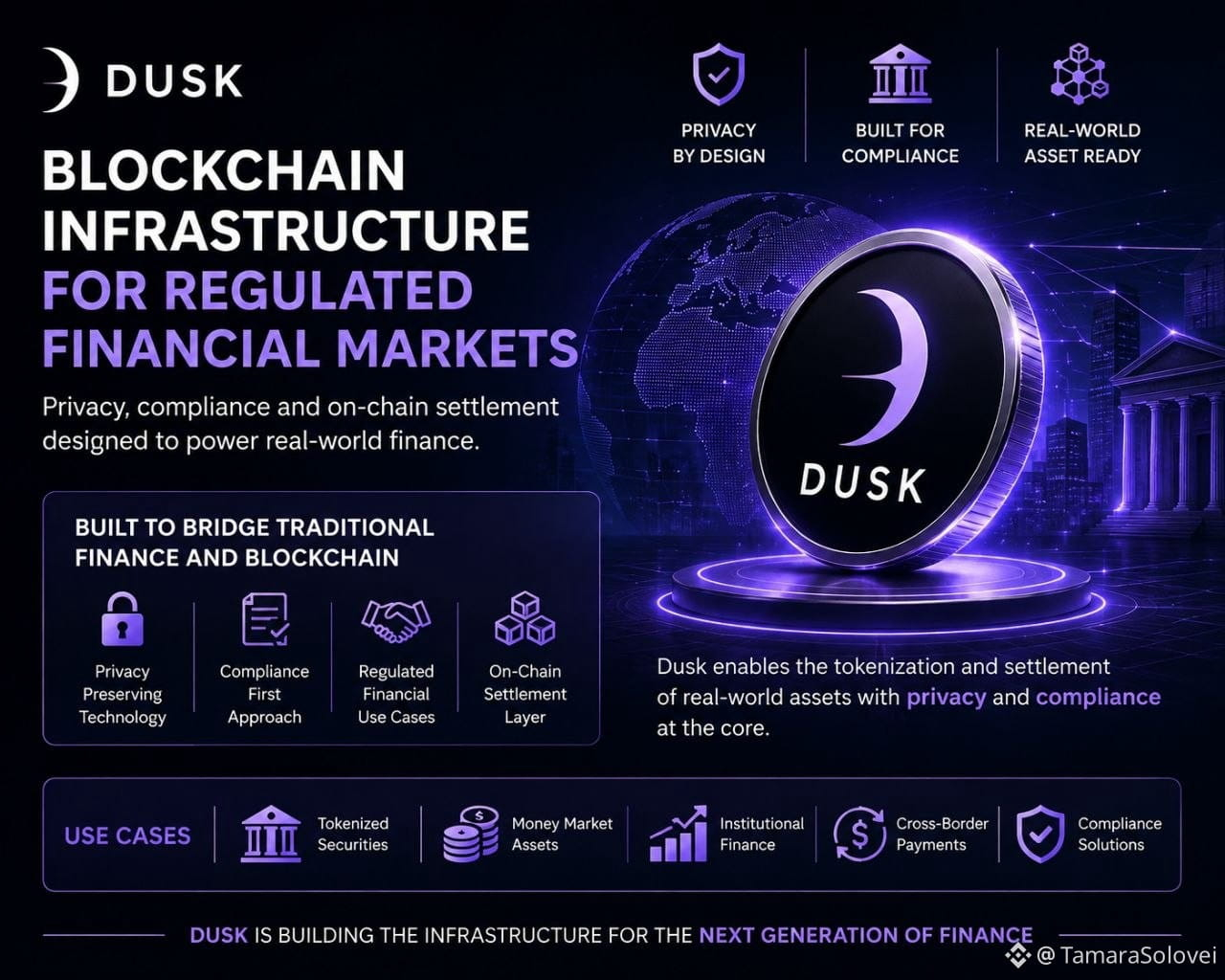
RWAsには単なるトークン化以上が必要です。本当の金融市場のためのインフラ構築が求められます。
それが、@Dusk_Foundation が私にとって興味深い理由です。
Duskは、規制対象の資産を前提に設計されており、プライバシー、コンプライアンス、そしてオンチェーン決済を組み合わせています。
すべての取引を完全に公開するのではなく、そのアーキテクチャは選択的開示を支えることで、関係する情報をすべての人に見せることなく検証可能にしています。
これは、とりわけ、投資家のプライバシーと規制要件が共存しなければならない証券、債券、その他の規制対象資産において有用になり得ます。
もう一つ注目すべき点は、DuskのEVM互換性です。これにより、イーサリアムのツールに慣れた開発者がネットワーク上でアプリケーションを作りやすくなります。
もしRWAsがWeb3の主要な構成要素になるのであれば、それらを支えるインフラは、単純なトークン送金以上を扱える必要があります。
Duskが作ろうとしているのは、まさにそのニッチです。
#dusk $DUSK @Dusk
RWAsには単なるトークン化以上が必要です。本当の金融市場のためのインフラ構築が求められます。
それが、@Dusk が私にとって興味深い理由です。
Duskは、規制対象の資産を前提に設計されており、プライバシー、コンプライアンス、そしてオンチェーン決済を組み合わせています。
すべての取引を完全に公開するのではなく、そのアーキテクチャは選択的開示を支えることで、関係する情報をすべての人に見せることなく検証可能にしています。
これは、とりわけ、投資家のプライバシーと規制要件が共存しなければならない証券、債券、その他の規制対象資産において有用になり得ます。
もう一つ注目すべき点は、DuskのEVM互換性です。これにより、イーサリアムのツールに慣れた開発者がネットワーク上でアプリケーションを作りやすくなります。
もしRWAsがWeb3の主要な構成要素になるのであれば、それらを支えるインフラは、単純なトークン送金以上を扱える必要があります。
Duskが作ろうとしているのは、まさにそのニッチです。
RWAsには単なるトークン化以上が必要です。本当の金融市場のためのインフラ構築が求められます。
それが、@Dusk が私にとって興味深い理由です。
Duskは、規制対象の資産を前提に設計されており、プライバシー、コンプライアンス、そしてオンチェーン決済を組み合わせています。
すべての取引を完全に公開するのではなく、そのアーキテクチャは選択的開示を支えることで、関係する情報をすべての人に見せることなく検証可能にしています。
これは、とりわけ、投資家のプライバシーと規制要件が共存しなければならない証券、債券、その他の規制対象資産において有用になり得ます。
もう一つ注目すべき点は、DuskのEVM互換性です。これにより、イーサリアムのツールに慣れた開発者がネットワーク上でアプリケーションを作りやすくなります。
もしRWAsがWeb3の主要な構成要素になるのであれば、それらを支えるインフラは、単純なトークン送金以上を扱える必要があります。
Duskが作ろうとしているのは、まさにそのニッチです。
1
79
翻訳参照
#bstockscis @BinanceCIS
What happens when a stock stops being locked inside a brokerage account?
That’s one of the more interesting ideas behind bStocks.
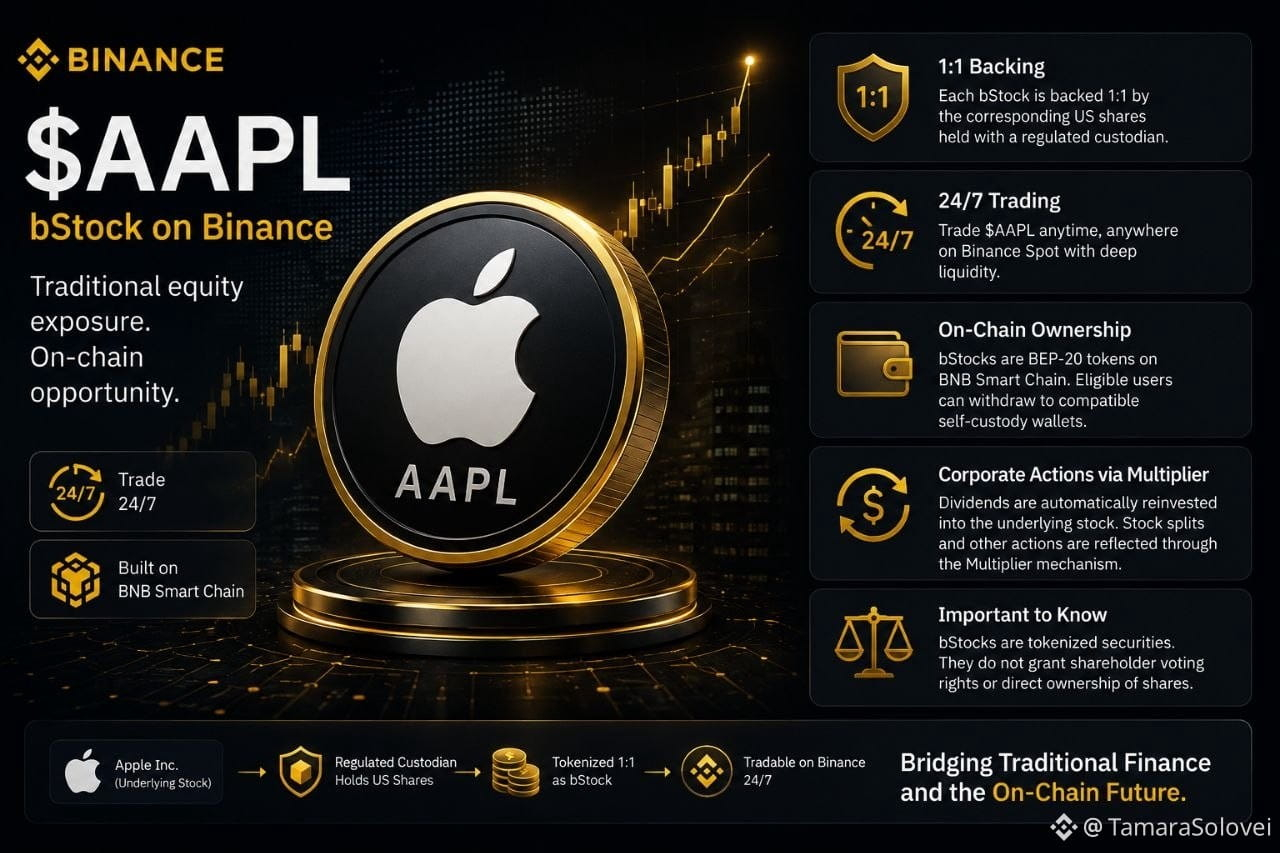
A tokenized stock such as $AAPL isn't simply a ticker displayed on an exchange. bStocks are backed 1:1 by corresponding US shares held with a regulated custodian, while the token itself exists as a BEP-20 asset on BNB Smart Chain.
The interesting part is what this enables.
Instead of keeping your exposure exclusively inside a traditional brokerage environment, eligible users can withdraw the tokenized asset to a compatible Web3 wallet.
That opens the door to something traditional shares can't easily provide:
🔗 Blockchain-native transfers
🌐 On-chain composability
🔐 Self-custody through a compatible wallet
🕐 24/7 trading infrastructure
And this is where tokenization becomes more than just changing the format of an asset.
The underlying economic exposure remains connected to the traditional security, while the representation of that exposure can interact with blockchain infrastructure.
That's the part of tokenized equities I find most interesting: bringing real-world financial assets into an environment where ownership and blockchain applications can finally start to interact.
Would you keep a tokenized stock on Binance or move it to your own compatible wallet?
#bstockscis @BinanceCIS
What happens when a stock stops being locked inside a brokerage account?
That’s one of the more interesting ideas behind bStocks.
A tokenized stock such as $AAPL isn't simply a ticker displayed on an exchange. bStocks are backed 1:1 by corresponding US shares held with a regulated custodian, while the token itself exists as a BEP-20 asset on BNB Smart Chain.
The interesting part is what this enables.
Instead of keeping your exposure exclusively inside a traditional brokerage environment, eligible users can withdraw the tokenized asset to a compatible Web3 wallet.
That opens the door to something traditional shares can't easily provide:
🔗 Blockchain-native transfers
🌐 On-chain composability
🔐 Self-custody through a compatible wallet
🕐 24/7 trading infrastructure
And this is where tokenization becomes more than just changing the format of an asset.
The underlying economic exposure remains connected to the traditional security, while the representation of that exposure can interact with blockchain infrastructure.
That's the part of tokenized equities I find most interesting: bringing real-world financial assets into an environment where ownership and blockchain applications can finally start to interact.
Would you keep a tokenized stock on Binance or move it to your own compatible wallet?
What happens when a stock stops being locked inside a brokerage account?
That’s one of the more interesting ideas behind bStocks.
A tokenized stock such as $AAPL isn't simply a ticker displayed on an exchange. bStocks are backed 1:1 by corresponding US shares held with a regulated custodian, while the token itself exists as a BEP-20 asset on BNB Smart Chain.
The interesting part is what this enables.
Instead of keeping your exposure exclusively inside a traditional brokerage environment, eligible users can withdraw the tokenized asset to a compatible Web3 wallet.
That opens the door to something traditional shares can't easily provide:
🔗 Blockchain-native transfers
🌐 On-chain composability
🔐 Self-custody through a compatible wallet
🕐 24/7 trading infrastructure
And this is where tokenization becomes more than just changing the format of an asset.
The underlying economic exposure remains connected to the traditional security, while the representation of that exposure can interact with blockchain infrastructure.
That's the part of tokenized equities I find most interesting: bringing real-world financial assets into an environment where ownership and blockchain applications can finally start to interact.
Would you keep a tokenized stock on Binance or move it to your own compatible wallet?
1
2
116
翻訳参照
#dusk $DUSK @Dusk_Foundation
One thing that makes Dusk interesting is that it doesn't force every application to use blockchain infrastructure in exactly the same way.
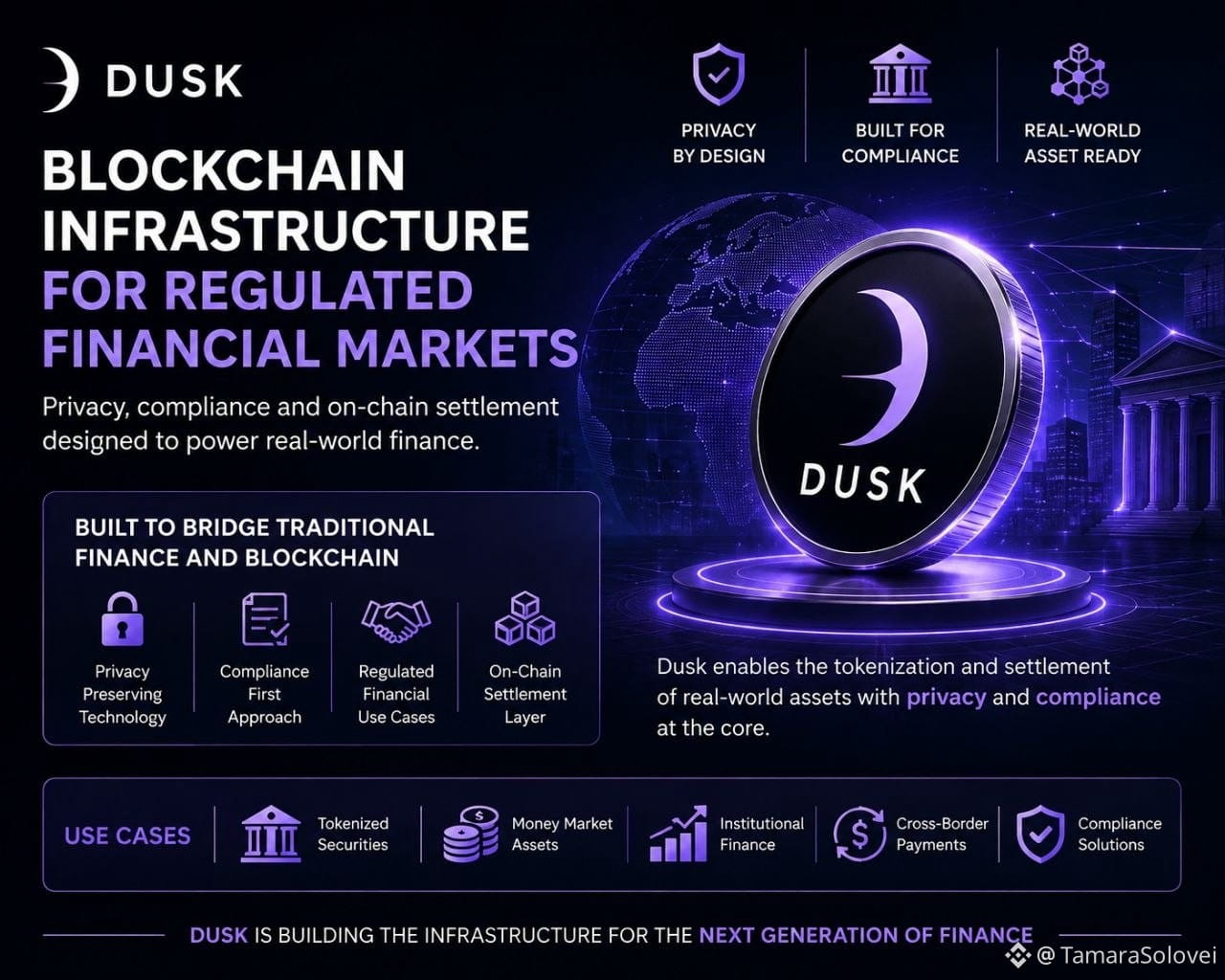
Dusk separates settlement from execution through its modular architecture.
At the foundation is DuskDS, responsible for consensus, finality and data availability. On top of that, developers can use DuskVM for native Rust/WASM smart contracts or DuskEVM when they want an EVM-compatible environment and familiar Solidity tooling.
Why is that important for regulated finance?
Different financial applications have different requirements. A native asset workflow may need direct access to Dusk's privacy and transaction models, while another application may benefit from existing Ethereum tooling and developer infrastructure.
Dusk is essentially trying to provide both paths without giving up its underlying settlement layer.
And this is where the architecture becomes more interesting than the usual “RWA blockchain” narrative.
The network is designed around requirements such as:
🔹 eligibility and access controls
🔹 selective disclosure of sensitive information
🔹 confidential transactions
🔹 deterministic settlement
🔹 regulated asset issuance and servicing
Its documentation specifically describes use cases ranging from tokenized equity and debt to institutional DeFi and delivery-versus-payment settlement.
For me, the key question isn't whether institutions will eventually use blockchain. It's whether the underlying infrastructure is flexible enough to meet the requirements of real financial markets.
That's the part of the Dusk thesis I'm watching.
#dusk $DUSK @Dusk
One thing that makes Dusk interesting is that it doesn't force every application to use blockchain infrastructure in exactly the same way.
Dusk separates settlement from execution through its modular architecture.
At the foundation is DuskDS, responsible for consensus, finality and data availability. On top of that, developers can use DuskVM for native Rust/WASM smart contracts or DuskEVM when they want an EVM-compatible environment and familiar Solidity tooling.
Why is that important for regulated finance?
Different financial applications have different requirements. A native asset workflow may need direct access to Dusk's privacy and transaction models, while another application may benefit from existing Ethereum tooling and developer infrastructure.
Dusk is essentially trying to provide both paths without giving up its underlying settlement layer.
And this is where the architecture becomes more interesting than the usual “RWA blockchain” narrative.
The network is designed around requirements such as:
🔹 eligibility and access controls
🔹 selective disclosure of sensitive information
🔹 confidential transactions
🔹 deterministic settlement
🔹 regulated asset issuance and servicing
Its documentation specifically describes use cases ranging from tokenized equity and debt to institutional DeFi and delivery-versus-payment settlement.
For me, the key question isn't whether institutions will eventually use blockchain. It's whether the underlying infrastructure is flexible enough to meet the requirements of real financial markets.
That's the part of the Dusk thesis I'm watching.
One thing that makes Dusk interesting is that it doesn't force every application to use blockchain infrastructure in exactly the same way.
Dusk separates settlement from execution through its modular architecture.
At the foundation is DuskDS, responsible for consensus, finality and data availability. On top of that, developers can use DuskVM for native Rust/WASM smart contracts or DuskEVM when they want an EVM-compatible environment and familiar Solidity tooling.
Why is that important for regulated finance?
Different financial applications have different requirements. A native asset workflow may need direct access to Dusk's privacy and transaction models, while another application may benefit from existing Ethereum tooling and developer infrastructure.
Dusk is essentially trying to provide both paths without giving up its underlying settlement layer.
And this is where the architecture becomes more interesting than the usual “RWA blockchain” narrative.
The network is designed around requirements such as:
🔹 eligibility and access controls
🔹 selective disclosure of sensitive information
🔹 confidential transactions
🔹 deterministic settlement
🔹 regulated asset issuance and servicing
Its documentation specifically describes use cases ranging from tokenized equity and debt to institutional DeFi and delivery-versus-payment settlement.
For me, the key question isn't whether institutions will eventually use blockchain. It's whether the underlying infrastructure is flexible enough to meet the requirements of real financial markets.
That's the part of the Dusk thesis I'm watching.
2
1
57
#bstockscis @BinanceCIS
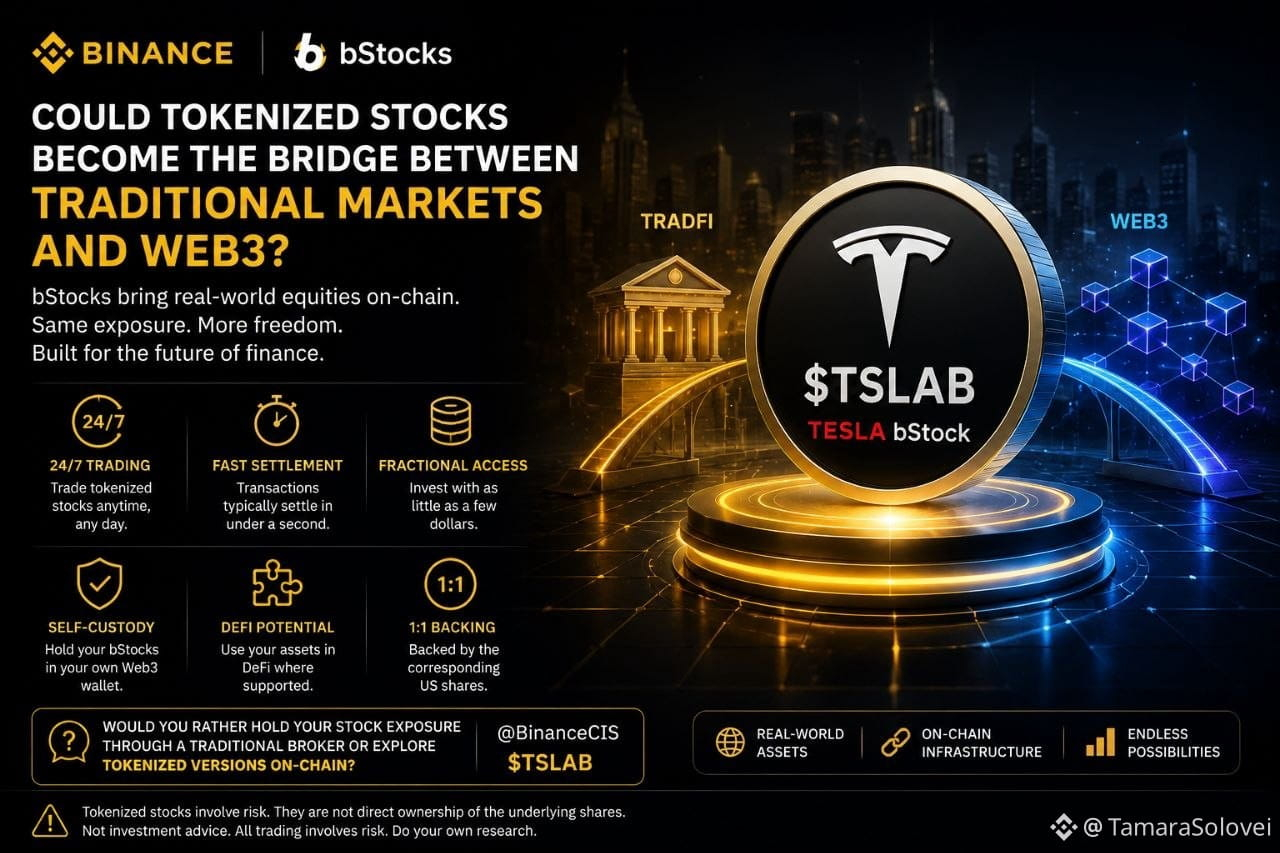
Binance上のすべての株式商品が同じ仕組みで動くわけではありません――そして、この違いは重要です。
現在、Binanceは株式へのエクスポージャーを得る方法を複数提供していますが、従来の株式取引とbStocksは同じ商品ではありません。
Binance Stock Tradingでは、対象となる利用者は購入した株式の受益所有者(ベネフィシャル・オーナー)になります。株式は証券会社パートナーが保管し、利用者は配当や適用される企業行動(コーポレートアクション)を受け取る権利がある場合があります。
一方、bStocksは別のアプローチです。
それらは、規制を受けたカストディアンが保有する米国株式に1:1で裏付けられたトークン化された有価証券です。bStock自体はBNB Smart Chain上のBEP-20トークンであるため、対象となる利用者はBinance Spotで24/7で取引でき、対応するウォレットへ出金することも可能です。
つまり、選択肢は「どの銘柄を買いたいか」だけの話ではありません。
それはまた、「どのようにエクスポージャーを保有し、どのようにやり取りしたいか」といった点にも関わります。
🏦 従来の株式取引 → 受益所有 + 証券会社による保管
🔗 bStocks → トークン化された有価証券 + ブロックチェーン基盤
🕐 bStocks → 24/7のSpot取引
🔐 bStocks → 対応するWeb3のセルフカストディ
どちらの構造も、どちらか一方が「より良い」と自動的に決まるわけではありません。それぞれ異なる目的を持ち、異なる権利、仕組み、そしてリスクが伴います。
個人的には、この違いを理解することは、単にプラットフォーム上で最も人気のあるティッカーを選ぶことよりもはるかに重要だと思います。
株式の直接的な受益所有を望みますか、それともトークン化された版の柔軟性を望みますか?
$TSLA
#bstockscis @BinanceCIS
Binance上のすべての株式商品が同じ仕組みで動くわけではありません――そして、この違いは重要です。
現在、Binanceは株式へのエクスポージャーを得る方法を複数提供していますが、従来の株式取引とbStocksは同じ商品ではありません。
Binance Stock Tradingでは、対象となる利用者は購入した株式の受益所有者(ベネフィシャル・オーナー)になります。株式は証券会社パートナーが保管し、利用者は配当や適用される企業行動(コーポレートアクション)を受け取る権利がある場合があります。
一方、bStocksは別のアプローチです。
それらは、規制を受けたカストディアンが保有する米国株式に1:1で裏付けられたトークン化された有価証券です。bStock自体はBNB Smart Chain上のBEP-20トークンであるため、対象となる利用者はBinance Spotで24/7で取引でき、対応するウォレットへ出金することも可能です。
つまり、選択肢は「どの銘柄を買いたいか」だけの話ではありません。
それはまた、「どのようにエクスポージャーを保有し、どのようにやり取りしたいか」といった点にも関わります。
🏦 従来の株式取引 → 受益所有 + 証券会社による保管
🔗 bStocks → トークン化された有価証券 + ブロックチェーン基盤
🕐 bStocks → 24/7のSpot取引
🔐 bStocks → 対応するWeb3のセルフカストディ
どちらの構造も、どちらか一方が「より良い」と自動的に決まるわけではありません。それぞれ異なる目的を持ち、異なる権利、仕組み、そしてリスクが伴います。
個人的には、この違いを理解することは、単にプラットフォーム上で最も人気のあるティッカーを選ぶことよりもはるかに重要だと思います。
株式の直接的な受益所有を望みますか、それともトークン化された版の柔軟性を望みますか?
$TSLA
Binance上のすべての株式商品が同じ仕組みで動くわけではありません――そして、この違いは重要です。
現在、Binanceは株式へのエクスポージャーを得る方法を複数提供していますが、従来の株式取引とbStocksは同じ商品ではありません。
Binance Stock Tradingでは、対象となる利用者は購入した株式の受益所有者(ベネフィシャル・オーナー)になります。株式は証券会社パートナーが保管し、利用者は配当や適用される企業行動(コーポレートアクション)を受け取る権利がある場合があります。
一方、bStocksは別のアプローチです。
それらは、規制を受けたカストディアンが保有する米国株式に1:1で裏付けられたトークン化された有価証券です。bStock自体はBNB Smart Chain上のBEP-20トークンであるため、対象となる利用者はBinance Spotで24/7で取引でき、対応するウォレットへ出金することも可能です。
つまり、選択肢は「どの銘柄を買いたいか」だけの話ではありません。
それはまた、「どのようにエクスポージャーを保有し、どのようにやり取りしたいか」といった点にも関わります。
🏦 従来の株式取引 → 受益所有 + 証券会社による保管
🔗 bStocks → トークン化された有価証券 + ブロックチェーン基盤
🕐 bStocks → 24/7のSpot取引
🔐 bStocks → 対応するWeb3のセルフカストディ
どちらの構造も、どちらか一方が「より良い」と自動的に決まるわけではありません。それぞれ異なる目的を持ち、異なる権利、仕組み、そしてリスクが伴います。
個人的には、この違いを理解することは、単にプラットフォーム上で最も人気のあるティッカーを選ぶことよりもはるかに重要だと思います。
株式の直接的な受益所有を望みますか、それともトークン化された版の柔軟性を望みますか?
$TSLA
92
翻訳参照
#dusk $DUSK @Dusk_Foundation
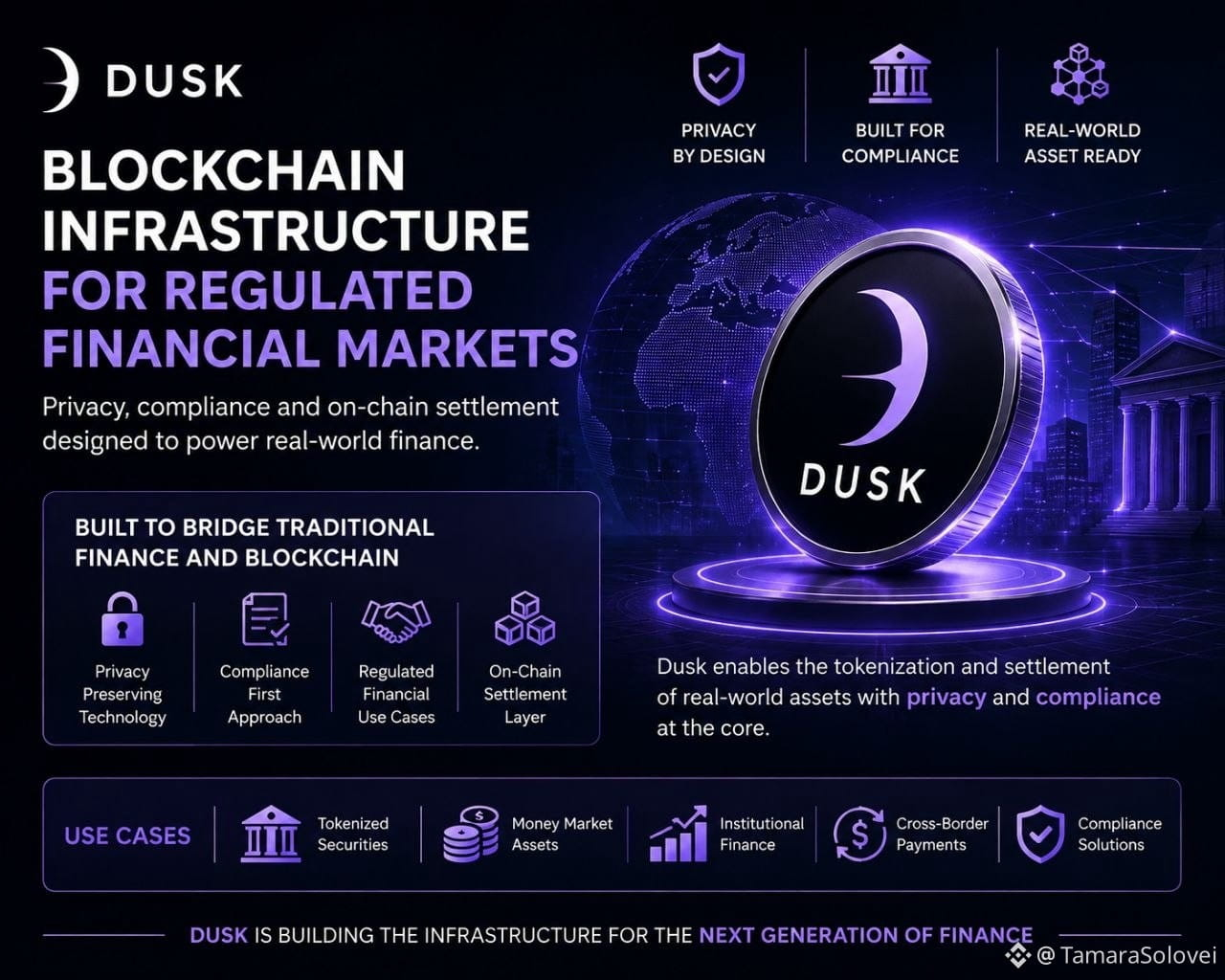
The interesting part of @Dusk_Foundation is that the RWA narrative here goes beyond simply putting a token on a blockchain.
Traditional financial markets involve issuance, investor eligibility, transfers, reporting, compliance and settlement — usually across multiple systems.
Dusk is building these workflows directly into its L1. The network supports regulated asset flows, access controls, selective disclosure and deterministic settlement, while still allowing sensitive information to remain confidential.
That distinction matters. Tokenization only becomes truly useful when the infrastructure around the asset can handle the rules of real financial markets.
This is why I’m watching $DUSK . If blockchain-based capital markets are going to move beyond experiments, infrastructure like this could become increasingly important.
#dusk $DUSK @Dusk
The interesting part of @Dusk is that the RWA narrative here goes beyond simply putting a token on a blockchain.
Traditional financial markets involve issuance, investor eligibility, transfers, reporting, compliance and settlement — usually across multiple systems.
Dusk is building these workflows directly into its L1. The network supports regulated asset flows, access controls, selective disclosure and deterministic settlement, while still allowing sensitive information to remain confidential.
That distinction matters. Tokenization only becomes truly useful when the infrastructure around the asset can handle the rules of real financial markets.
This is why I’m watching $DUSK . If blockchain-based capital markets are going to move beyond experiments, infrastructure like this could become increasingly important.
The interesting part of @Dusk is that the RWA narrative here goes beyond simply putting a token on a blockchain.
Traditional financial markets involve issuance, investor eligibility, transfers, reporting, compliance and settlement — usually across multiple systems.
Dusk is building these workflows directly into its L1. The network supports regulated asset flows, access controls, selective disclosure and deterministic settlement, while still allowing sensitive information to remain confidential.
That distinction matters. Tokenization only becomes truly useful when the infrastructure around the asset can handle the rules of real financial markets.
This is why I’m watching $DUSK . If blockchain-based capital markets are going to move beyond experiments, infrastructure like this could become increasingly important.
66
翻訳参照
#dusk $DUSK
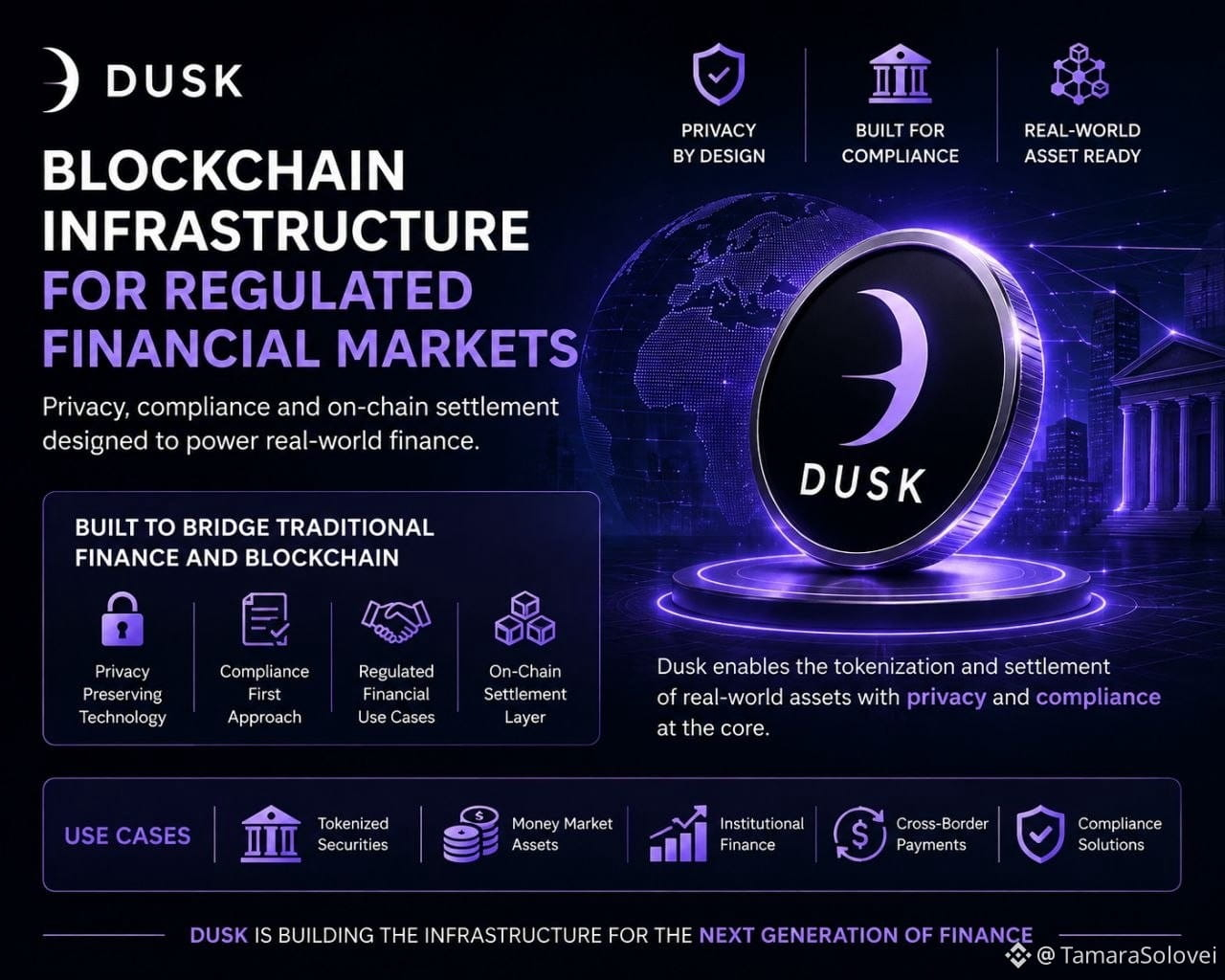
Dusk is building a blockchain infrastructure designed for regulated financial markets, where privacy, compliance and on-chain settlement need to work together. What makes $DUSK interesting is its focus on bringing real-world financial assets on-chain without ignoring the requirements of traditional markets. @Dusk_Foundation
I think this is one of the areas where blockchain can move beyond speculation and become actual financial infrastructure. The combination of regulated assets, privacy and transparent settlement is worth watching closely.
#dusk $DUSK
Dusk is building a blockchain infrastructure designed for regulated financial markets, where privacy, compliance and on-chain settlement need to work together. What makes $DUSK interesting is its focus on bringing real-world financial assets on-chain without ignoring the requirements of traditional markets. @Dusk
I think this is one of the areas where blockchain can move beyond speculation and become actual financial infrastructure. The combination of regulated assets, privacy and transparent settlement is worth watching closely.
Dusk is building a blockchain infrastructure designed for regulated financial markets, where privacy, compliance and on-chain settlement need to work together. What makes $DUSK interesting is its focus on bringing real-world financial assets on-chain without ignoring the requirements of traditional markets. @Dusk
I think this is one of the areas where blockchain can move beyond speculation and become actual financial infrastructure. The combination of regulated assets, privacy and transparent settlement is worth watching closely.
64
翻訳参照
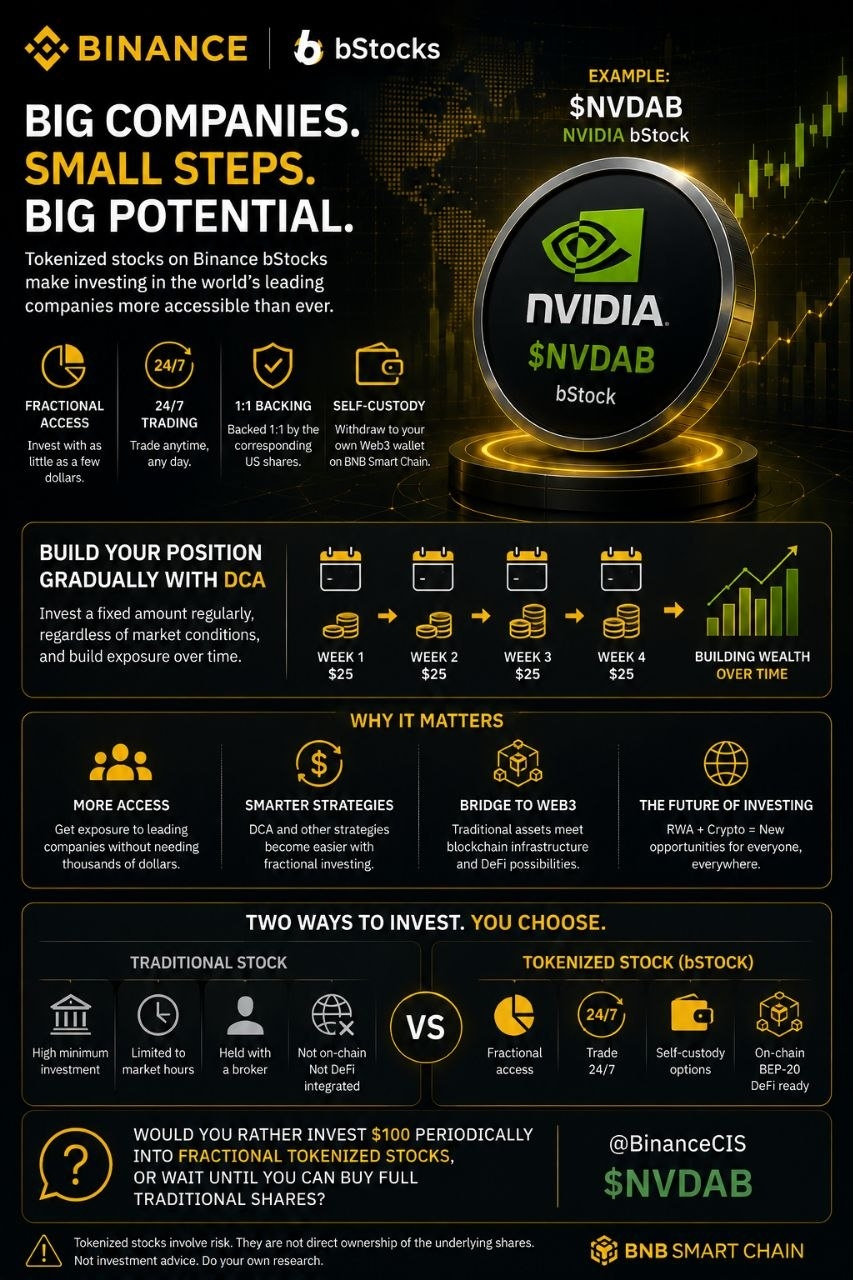
You don't need thousands of dollars to build exposure to the world's biggest companies.
That is one of the things I find most interesting about Binance bStocks.
Take $NVDAB as an example. Tokenized stocks make it possible to get exposure to a major company without having to purchase an entire traditional share.
And fractional access changes the strategy completely.
Instead of waiting until you have enough capital for a full share, you can allocate smaller amounts and build your position gradually.
This makes strategies like DCA much more practical.
You can invest a fixed amount regularly, regardless of whether the market is up or down, and gradually build exposure instead of trying to find the “perfect” entry.
The bigger picture is even more interesting.
Crypto already made fractional ownership and 24/7 markets familiar to millions of users. Tokenized equities bring some of that flexibility into traditional assets.
So the question is no longer simply:
“Can stocks be put on a blockchain?”
The more interesting question is:
“What new investment strategies become possible when they are?”
For me, that's where the real RWA story starts getting interesting.
Would you rather invest $100 periodically into fractional tokenized stocks, or wait until you can buy full traditional shares?
@BinanceCIS $NVDAB #bstockscis
You don't need thousands of dollars to build exposure to the world's biggest companies.
That is one of the things I find most interesting about Binance bStocks.
Take $NVDAB as an example. Tokenized stocks make it possible to get exposure to a major company without having to purchase an entire traditional share.
And fractional access changes the strategy completely.
Instead of waiting until you have enough capital for a full share, you can allocate smaller amounts and build your position gradually.
This makes strategies like DCA much more practical.
You can invest a fixed amount regularly, regardless of whether the market is up or down, and gradually build exposure instead of trying to find the “perfect” entry.
The bigger picture is even more interesting.
Crypto already made fractional ownership and 24/7 markets familiar to millions of users. Tokenized equities bring some of that flexibility into traditional assets.
So the question is no longer simply:
“Can stocks be put on a blockchain?”
The more interesting question is:
“What new investment strategies become possible when they are?”
For me, that's where the real RWA story starts getting interesting.
Would you rather invest $100 periodically into fractional tokenized stocks, or wait until you can buy full traditional shares?
@BinanceCIS $NVDAB #bstockscis
That is one of the things I find most interesting about Binance bStocks.
Take $NVDAB as an example. Tokenized stocks make it possible to get exposure to a major company without having to purchase an entire traditional share.
And fractional access changes the strategy completely.
Instead of waiting until you have enough capital for a full share, you can allocate smaller amounts and build your position gradually.
This makes strategies like DCA much more practical.
You can invest a fixed amount regularly, regardless of whether the market is up or down, and gradually build exposure instead of trying to find the “perfect” entry.
The bigger picture is even more interesting.
Crypto already made fractional ownership and 24/7 markets familiar to millions of users. Tokenized equities bring some of that flexibility into traditional assets.
So the question is no longer simply:
“Can stocks be put on a blockchain?”
The more interesting question is:
“What new investment strategies become possible when they are?”
For me, that's where the real RWA story starts getting interesting.
Would you rather invest $100 periodically into fractional tokenized stocks, or wait until you can buy full traditional shares?
@BinanceCIS $NVDAB #bstockscis
76
ログインして、さらにコンテンツを読む
厳選トピックで世界の暗号資産トレーダーの仲間入り
⚡️ 暗号資産に関する最新かつ有益な情報が見つかります。
💬 世界最大の暗号資産取引所から信頼されています。
👍 認証を受けたクリエイターから、有益なインサイトを得られます。
メール / 電話番号
トレンドトピック
CircleMints500MUSDCOnSolana
閲覧回数 29,154
819人が討論中
$SOL — <a>Circle</a>はソラナでUSDCを5億ドル分、最新のバッチを発行したばかりです。🚨
CircleはUSDCをソラナ上に2回に分けてそれぞれ2.5億ドルずつ、合計5億ドル発行し、ネットワークにもう一段大きな流動性の注入を加えました。報告によれば、トークンは当初すべて、取引に直接投入されるのではなく、Circleが管理するトレジャリー内に留まっていたものの、発行(ミント)手順はチェーン上で確認されています。
これは孤立した動きではありません。
ソラナのステーブルコイン供給総量は過去最高の新たな水準に到達し、173億ドルとなりました。一方、報道によればCircleは8月の1か月だけで、ソラナ上に約110億ドル相当のUSDCを発行したとのことです。
では、これは$SOL にとってなぜ重要なのでしょうか?
ステーブルコインの流動性が増えることは、DEXやDeFi、決済、そしてオンチェーン活動のための燃料が増えることを意味し得ます。
資金はソラナから出ていきません。
その上で、より多くのドルが継続的に鋳造されています。👀
続報をお願いします
$CRCL
#circlemints500musdconsolana #PolymarketBankFailureBetsDrawFDICConcern #BlackRockBuildsTokenizedPortfoliosForOndo #BitwiseFilesToListNEARETFOnNYSEArca #SECCommissionerPeirceToLeaveOct2
Shamika Metting
·いいね:6件
·閲覧回数 4.8k
PolymarketBankFailureBetsDrawFDICConcern
閲覧回数 43,301
984人が討論中
BlackRockBuildsTokenizedPortfoliosForOndo
閲覧回数 35,737
660人が討論中