
Crypto Insider_bnb
62 投稿

Crypto Insider_bnb
Crypto Insider BNB | Web3 & DeFi insights Breaking down crypto trends, projects & onchain developments
取引を発注

XPLホルダー
超高頻度トレーダー
3.3年
59 フォロー
40 フォロワー
53 いいね
投稿
ポートフォリオ
すべて
引用
翻訳参照
#termmax @TermMax I have been following the DeFi space for years. I think one thing people do not pay enough attention to in DeFi is how much work actually happens after you put your money in.
Finding a market is one thing. Deciding where the money should go, managing the positions adjusting the prices and monitoring how things are going is a different job.
That is why the curator model in TermMax caught my attention.
TermMax allows Curators to manage vaults and decide how to use the money across markets. They can lend money or place orders to buy and sell configure the prices monitor how things are going and give the profits to the people who own shares in the vault.
For someone who does not want to manage every market position by themselves there is another side to this.
Depositors can give money to vaults that are managed by curators and get shares in the vault that show how much of it they own. Of making every decision about the market they are basically trusting the Curator to make the right choices and decide how to use the money.
I like this because it keeps the money and the strategy separate.
The person who puts in the money does that.
The curator decides where and how the money is used.
Course this does not make everything safe. People who put in money are still at risk if the vault does not do well or if the market changes. Curators also have to follow the rules of the system and make sure they are protected.
As DeFi gets more complicated not everyone will want to manage every position by themselves.
Maybe the next step for DeFi is not just to have financial products.
Maybe it is to have ways for people to specialize in different things, like money, strategy and getting things done.
Would you rather manage your DeFi positions yourself. Let an experienced Curator do it for you?
Finding a market is one thing. Deciding where the money should go, managing the positions adjusting the prices and monitoring how things are going is a different job.
That is why the curator model in TermMax caught my attention.
TermMax allows Curators to manage vaults and decide how to use the money across markets. They can lend money or place orders to buy and sell configure the prices monitor how things are going and give the profits to the people who own shares in the vault.
For someone who does not want to manage every market position by themselves there is another side to this.
Depositors can give money to vaults that are managed by curators and get shares in the vault that show how much of it they own. Of making every decision about the market they are basically trusting the Curator to make the right choices and decide how to use the money.
I like this because it keeps the money and the strategy separate.
The person who puts in the money does that.
The curator decides where and how the money is used.
Course this does not make everything safe. People who put in money are still at risk if the vault does not do well or if the market changes. Curators also have to follow the rules of the system and make sure they are protected.
As DeFi gets more complicated not everyone will want to manage every position by themselves.
Maybe the next step for DeFi is not just to have financial products.
Maybe it is to have ways for people to specialize in different things, like money, strategy and getting things done.
Would you rather manage your DeFi positions yourself. Let an experienced Curator do it for you?

翻訳参照
#termmax @TermMax
I used to think the hardest part of DeFi was finding yield.
Now I think it’s knowing what that yield will actually look like tomorrow
Floating rates can make borrowing costs and lending returns move when you least expect it. That makes planning capital on-chain surprisingly difficult. You might have a strategy that looks good today, only to see the numbers change as market conditions shift.
That’s what caught my attention about @TermMax
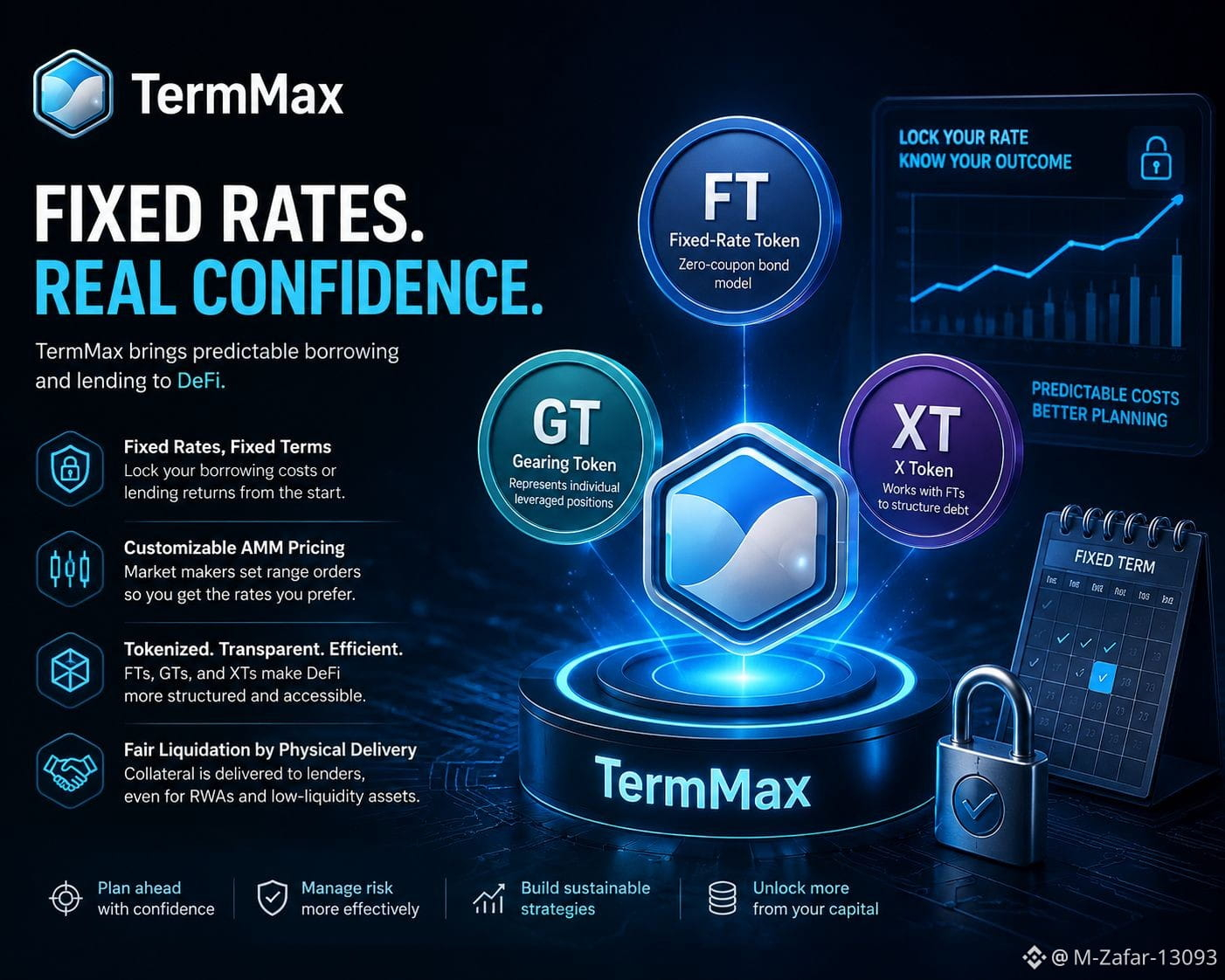
Instead of building everything around constantly changing rates, TermMax creates fixed-rate borrowing and lending markets with defined maturity dates. Lenders can buy Fixed-Rate Tokens (FTs) at a discount and redeem them for the full value at maturity, while borrowers get a known borrowing cost for the agreed term. The model is similar to a zero-coupon bond, but implemented on-chain.
The interesting part is that TermMax doesn’t stop at fixed rates. Gearing Tokens (GTs) represent individual collateralized loan positions, while X Tokens (XTs) work alongside FTs to make the tokenized debt structure work. This turns what can normally become a complicated series of DeFi transactions into a more structured system.
And there’s another detail worth watching: borrowers can potentially buy FTs from the market before maturity to settle their debt, which means the actual repayment cost can benefit from favorable market pricing.
DeFi has spent years optimizing for flexibility. Maybe the next step is making that flexibility more predictable.
Would you rather have a floating rate with more uncertainty, or a fixed rate you can actually plan around?
I used to think the hardest part of DeFi was finding yield.
Now I think it’s knowing what that yield will actually look like tomorrow
Floating rates can make borrowing costs and lending returns move when you least expect it. That makes planning capital on-chain surprisingly difficult. You might have a strategy that looks good today, only to see the numbers change as market conditions shift.
That’s what caught my attention about @TermMax
Instead of building everything around constantly changing rates, TermMax creates fixed-rate borrowing and lending markets with defined maturity dates. Lenders can buy Fixed-Rate Tokens (FTs) at a discount and redeem them for the full value at maturity, while borrowers get a known borrowing cost for the agreed term. The model is similar to a zero-coupon bond, but implemented on-chain.
The interesting part is that TermMax doesn’t stop at fixed rates. Gearing Tokens (GTs) represent individual collateralized loan positions, while X Tokens (XTs) work alongside FTs to make the tokenized debt structure work. This turns what can normally become a complicated series of DeFi transactions into a more structured system.
And there’s another detail worth watching: borrowers can potentially buy FTs from the market before maturity to settle their debt, which means the actual repayment cost can benefit from favorable market pricing.
DeFi has spent years optimizing for flexibility. Maybe the next step is making that flexibility more predictable.
Would you rather have a floating rate with more uncertainty, or a fixed rate you can actually plan around?
多くのブロックチェーンのセキュリティツールは、取引の後で何が起きたのかを説明します。
しかし、重要な判断が取引の実行前に行われていたらどうでしょうか?
それが@NewtonProtocol の発想です。
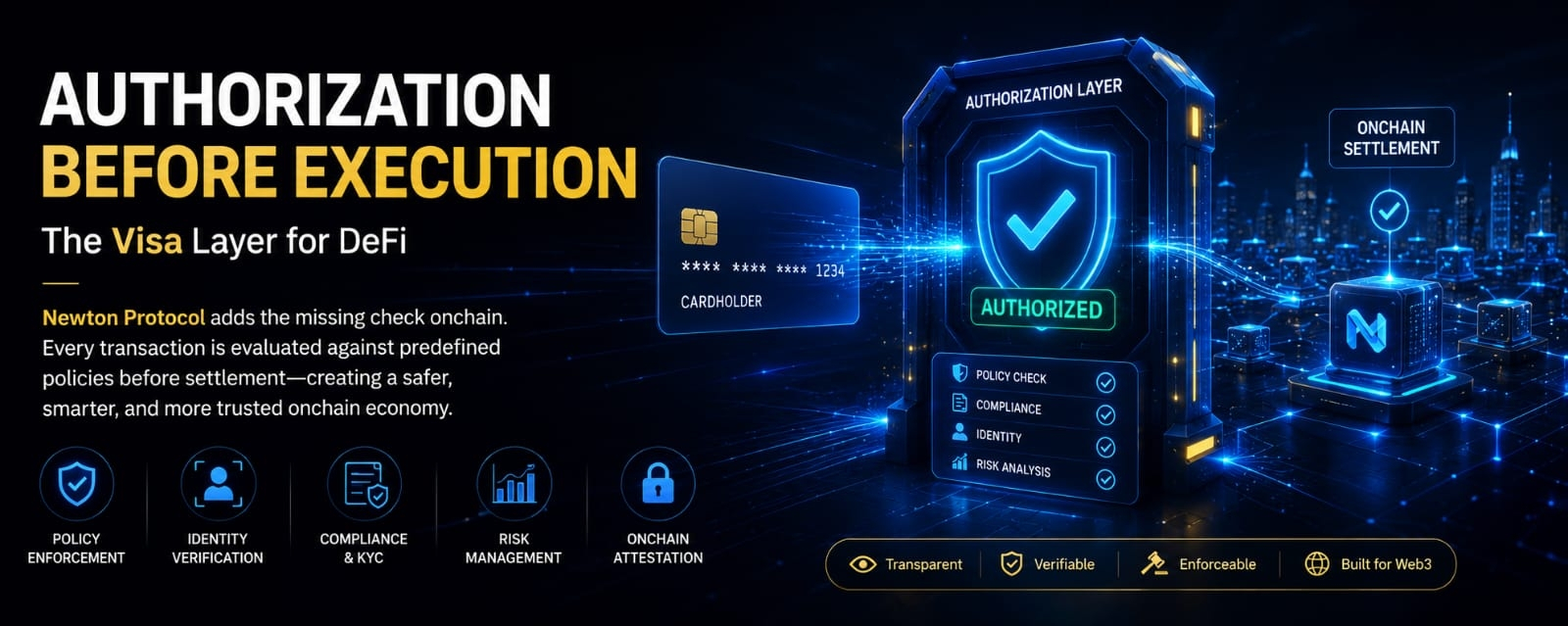
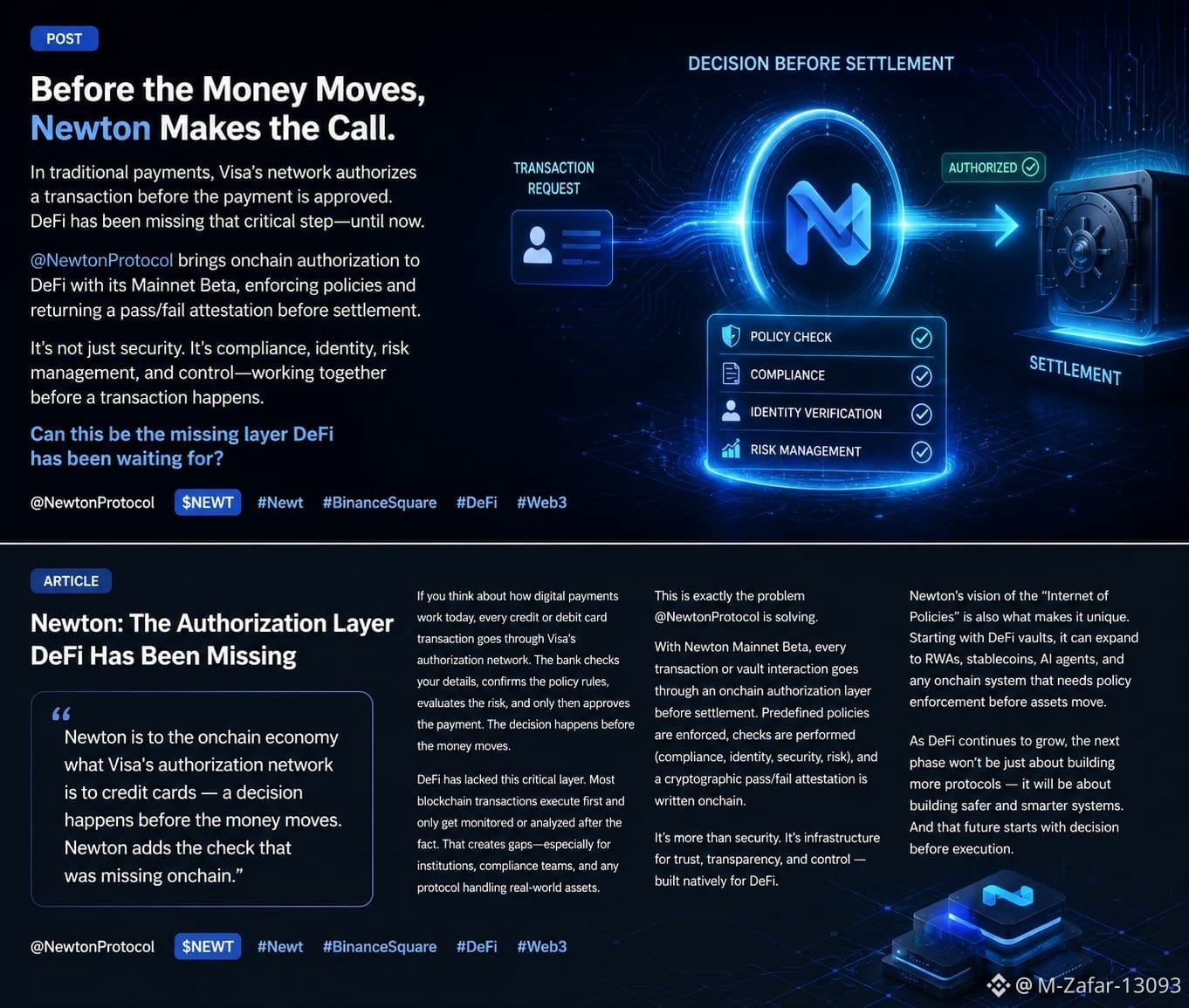
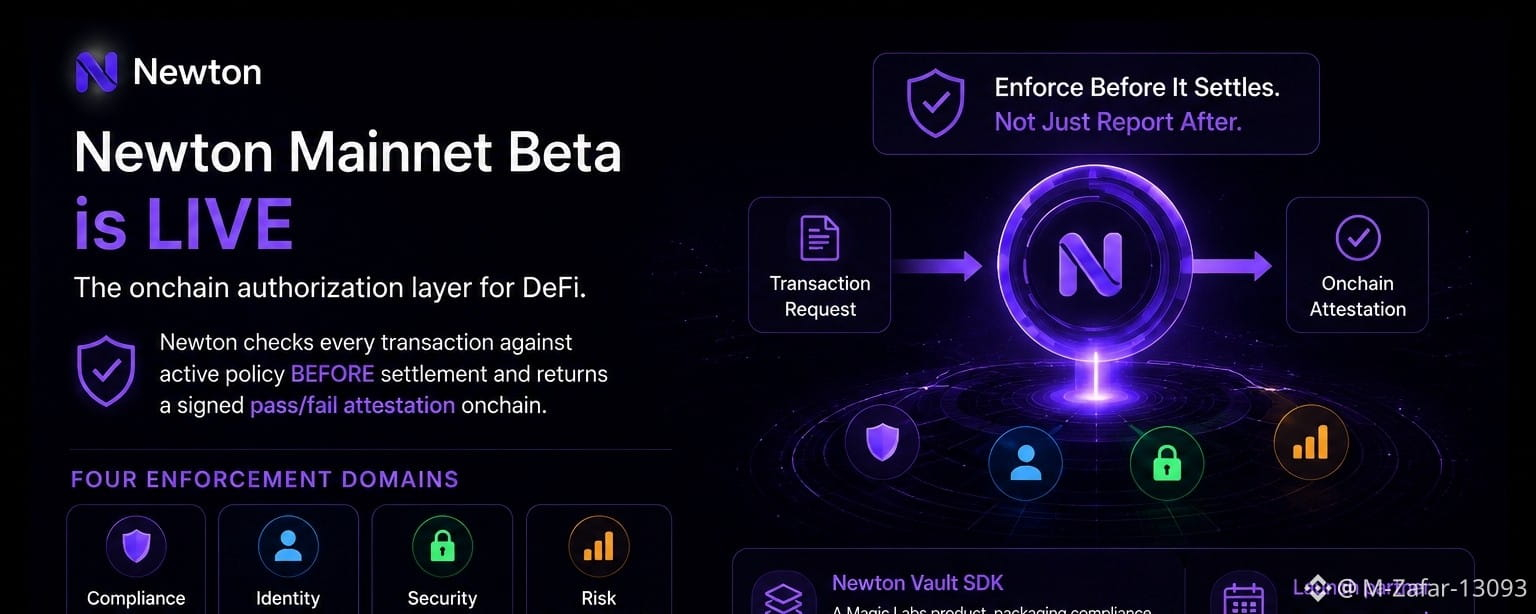
Visaが資金がカードから出る前に支払いを認可するように、NewtonはDeFiに認可レイヤーを導入します。決済の前に、事前に定義されたポリシーに対して各取引を照合でき、その結果はオンチェーンに記録されます。
これは、コンプライアンス、セキュリティ、本人確認、リスク管理がスピードと同じくらい重要になる、機関投資家向けのバンク・ボールト、RWA、ステーブルコイン、その他の高価値アプリケーションに大きな違いをもたらす可能性があります。
資金が移動した後に問題へ対応するのではなく、Newtonはそもそも問題を防ぐことに注力します。
DeFiが成熟するにつれて、認可は実行と同じくらい不可欠になるかもしれません。
あなたはどう思いますか——取引前の認可は、DeFiが待ち望んでいた「欠けているレイヤー」なのでしょうか?
#newt $NEWT
しかし、重要な判断が取引の実行前に行われていたらどうでしょうか?
それが@NewtonProtocol の発想です。
Visaが資金がカードから出る前に支払いを認可するように、NewtonはDeFiに認可レイヤーを導入します。決済の前に、事前に定義されたポリシーに対して各取引を照合でき、その結果はオンチェーンに記録されます。
これは、コンプライアンス、セキュリティ、本人確認、リスク管理がスピードと同じくらい重要になる、機関投資家向けのバンク・ボールト、RWA、ステーブルコイン、その他の高価値アプリケーションに大きな違いをもたらす可能性があります。
資金が移動した後に問題へ対応するのではなく、Newtonはそもそも問題を防ぐことに注力します。
DeFiが成熟するにつれて、認可は実行と同じくらい不可欠になるかもしれません。
あなたはどう思いますか——取引前の認可は、DeFiが待ち望んでいた「欠けているレイヤー」なのでしょうか?
#newt $NEWT
NEWTを探索した後に私が特に気になったこと
今日は、約20分ほどNEWTを探索してみて、ある点が私の目に留まりました。
多くの暗号資産プロジェクトは話題性(ハイプ)でユーザーを惹きつけますが、長期的にユーザーの関心を保ち続けることこそが本当の課題です。だから私は、価格の議論の先を見て、長期的な価値に注目するようにしています。
私の見たところでは、NEWTは短期的な熱狂だけに頼るのではなく、実用的なユースケースを備えたエコシステムを構築することに、より重きを置いているように感じます。
これはあくまで私個人の見解ですが、持続可能な成長は、継続的な開発、活発なコミュニティ、そして人々が実際に使いたいと思えるプロダクトによってもたらされるものであって、単なる一時的な市場の勢いだけではないと考えています。
新しい暗号資産プロジェクトを支援する前に、最初に何を評価しますか? 技術、コミュニティ、トークンノミクス、それとも別の何かでしょうか。ぜひ、さまざまな視点を聞かせてください。
#newt $NEWT @NewtonProtocol
$NEWT
今日は、約20分ほどNEWTを探索してみて、ある点が私の目に留まりました。
多くの暗号資産プロジェクトは話題性(ハイプ)でユーザーを惹きつけますが、長期的にユーザーの関心を保ち続けることこそが本当の課題です。だから私は、価格の議論の先を見て、長期的な価値に注目するようにしています。
私の見たところでは、NEWTは短期的な熱狂だけに頼るのではなく、実用的なユースケースを備えたエコシステムを構築することに、より重きを置いているように感じます。
これはあくまで私個人の見解ですが、持続可能な成長は、継続的な開発、活発なコミュニティ、そして人々が実際に使いたいと思えるプロダクトによってもたらされるものであって、単なる一時的な市場の勢いだけではないと考えています。
新しい暗号資産プロジェクトを支援する前に、最初に何を評価しますか? 技術、コミュニティ、トークンノミクス、それとも別の何かでしょうか。ぜひ、さまざまな視点を聞かせてください。
#newt $NEWT @NewtonProtocol
$NEWT

アッサラームアライクム、Binance Turns 9 イベントが開催中です。KYCを完了したすべてのユーザーは、無料でリワードボックスを受け取ることができ、さらに無料で最大5 USDTの報酬も獲得できます。
また、各ランドマークを完了するためのランドマークも用意されており、魅力的な賞品を獲得できます。
#BinanceTurns9 @Binance Angels @CZ
今すぐ参加
Binance Turns 9
また、各ランドマークを完了するためのランドマークも用意されており、魅力的な賞品を獲得できます。
#BinanceTurns9 @Binance Angels @CZ
今すぐ参加
Binance Turns 9

バイナンス
引用されたコンテンツは削除されました
YGG Play Launchpadは、ゲームを発見する場所にとどまらない。新規ゲームトークンに参加するための直接的な道だ!ゲームスキルを実際の報酬に変える。@Yield Guild Games $YGG
#yggplay $YGG
#yggplay $YGG
Morphoのモジュラーアプローチは、DeFi貸付を静かに革命化しています$
Morpho Blueを使用して孤立したカスタマイズ可能な市場を作成することにより、従来のプールのすべてに適したリスクモデルを置き換えます。これにより、より高い効率、より良い金利、そしてローカライズされたリスクが生まれ、耐久性がありスケーラブルなオンチェーンクレジットへの大きな一歩となります。未来はモジュラーです。@Morpho Labs 🦋 によって構築されているインフラに注目し、$MORPHO の可能性を見てください
#Morpho #morpho
Morpho Blueを使用して孤立したカスタマイズ可能な市場を作成することにより、従来のプールのすべてに適したリスクモデルを置き換えます。これにより、より高い効率、より良い金利、そしてローカライズされたリスクが生まれ、耐久性がありスケーラブルなオンチェーンクレジットへの大きな一歩となります。未来はモジュラーです。@Morpho Labs 🦋 によって構築されているインフラに注目し、$MORPHO の可能性を見てください
#Morpho #morpho
素晴らしい機能 😃💯

Nain33
·
--
Binance Futuresは、暗号デリバティブ取引のための主要なプラットフォームであり、比類のない取引体験を提供します。深い流動性と超低料金を備え、BTC/USDCのような人気のあるペアを簡単に取引できます。このプラットフォームは、リアルタイムの注文書更新、アラート、およびトレーディングボットやコピー取引のような戦略的取引ツールを提供します。USDCやUSDTのようなステーブルコインで取引を決済でき、ポジションを最大20倍までレバレッジできます。さらに、Binance Futuresは最近、短い休止の後に業務を再開したため、自信を持って取引を再開できます。経験豊富なトレーダーでも、初心者でも、Binance Futuresがあなたをサポートします #BinanceLiveFutures
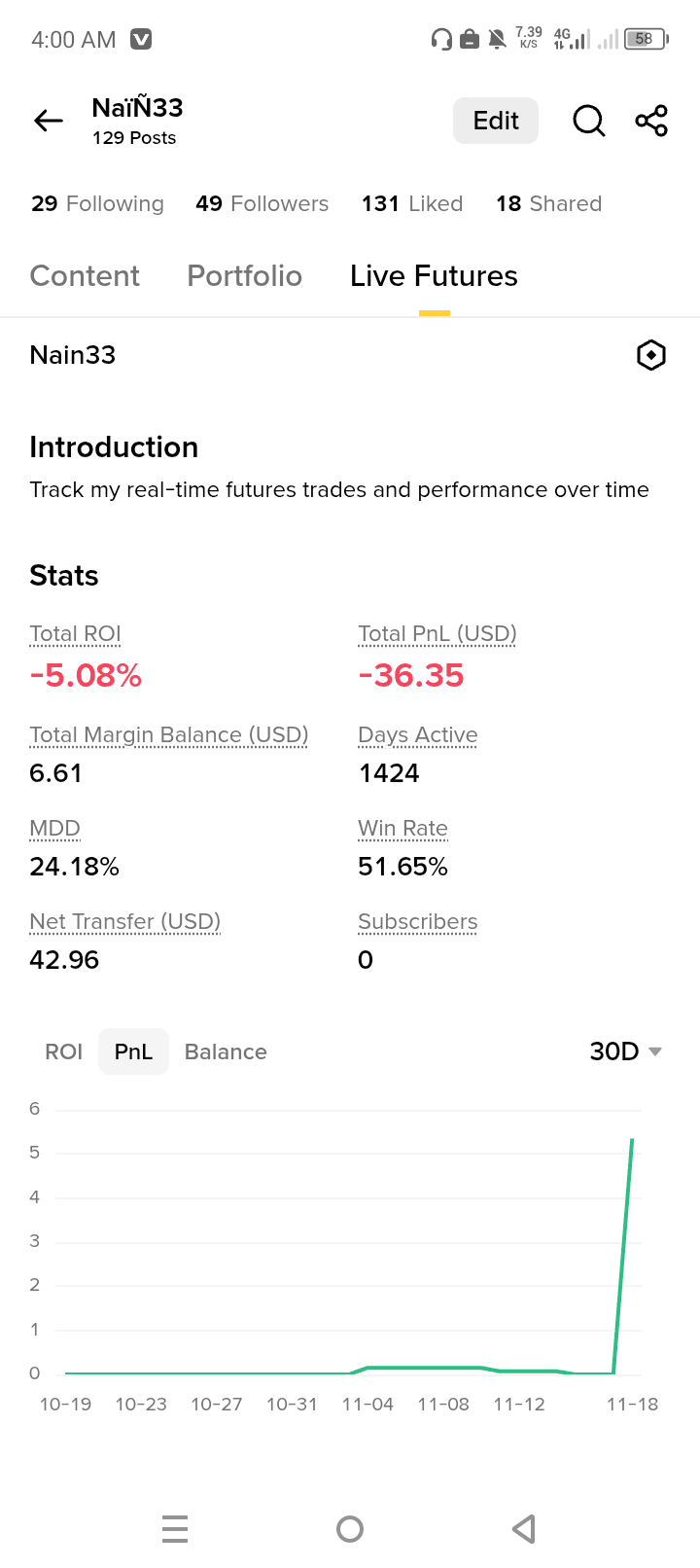
UIはとても簡単で、初心者でもパンにバターを塗るような感覚でできる

Karachi00
·
--
バイナンス先物は、リアルタイムのオーダーブックの更新とアラートを提供し、深い流動性と低い手数料でライブ取引を行う世界最大の暗号デリバティブ取引所です。BTC/USDTなどの人気ペアを取引できます。このプラットフォームは、USDⓈ-マージンの永久契約をサポートしており、USDCやUSDTなどの安定したコインで取引を決済できます。さらに、バイナンス先物は最近、短期間の休止の後に業務を再開したため、自信を持って取引を再開できます #BinanceLiveFutures
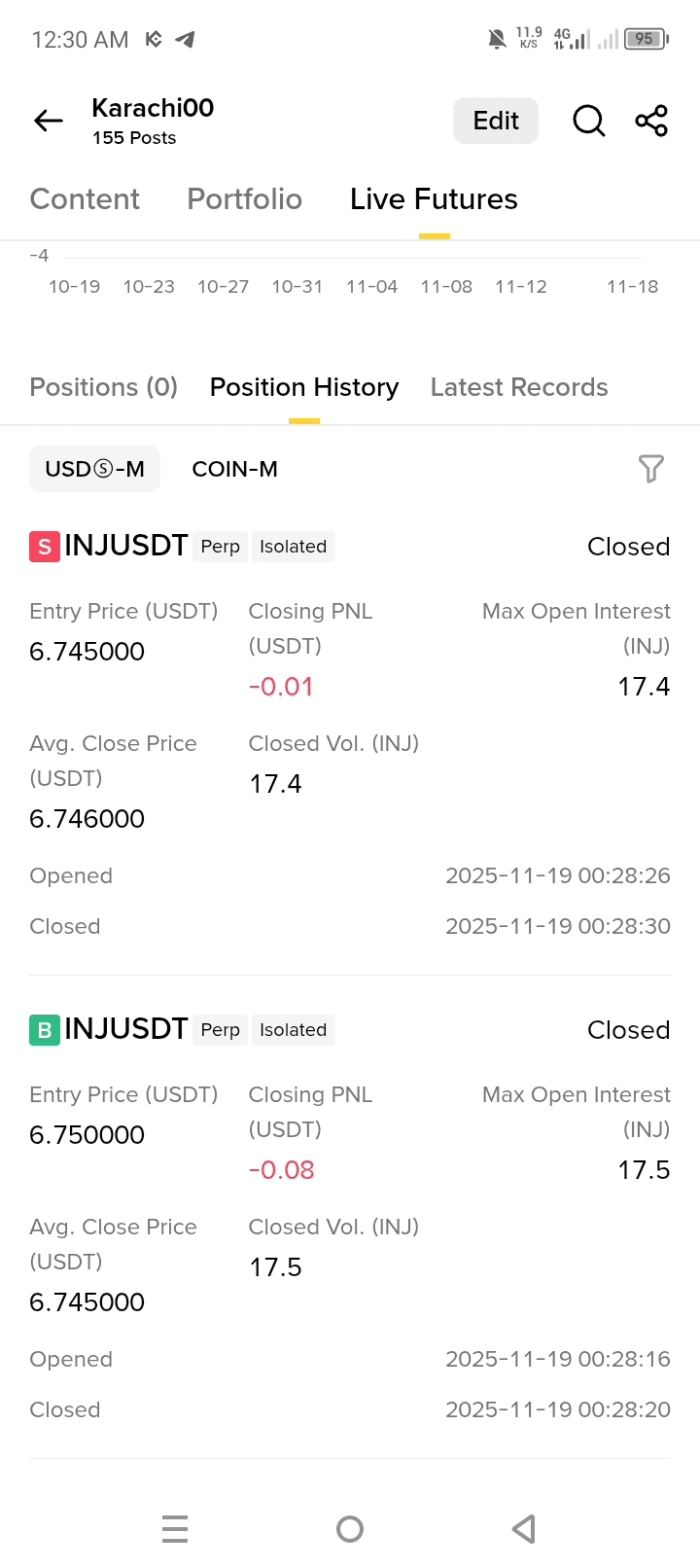
AIの未来について @HoloworldAI スケーラブルで効率的かつセキュアなプラットフォームとして、Holoは世界中のAI開発者およびユーザーを強化しています。 #HoloworldAI $HOLO
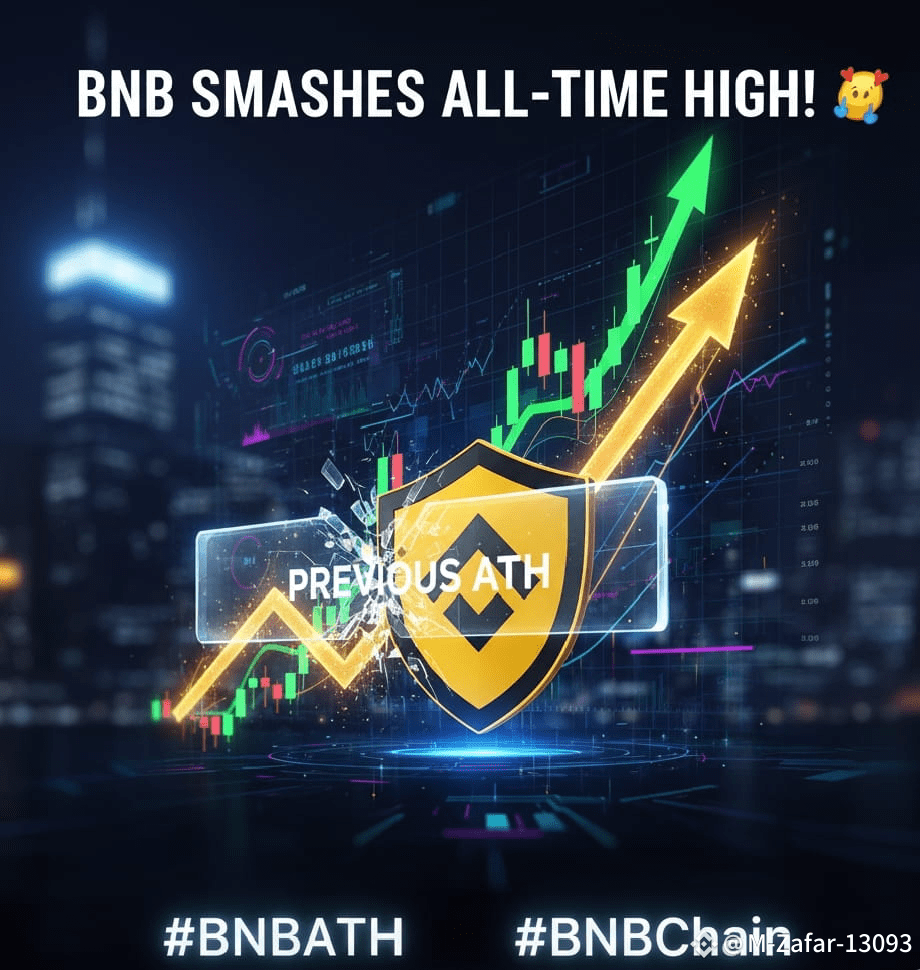
ブルズ、拍手を! 🥳 BNBは以前の記録を打ち破り、 BRAND NEW ALL-TIME HIGHを達成しました!
このマイルストーンは、BNBチェーンエコシステムの継続的な成長の大きな勝利と証拠です。急増するオンチェーンユーティリティ、DeFiとGameFi全体での採用の増加、効果的なトークンバーンメカニズムの組み合わせが、この歴史的な上昇を支えています。これは単なる hype ではなく、ユーティリティに基づくモメンタムです!
私たちはただATHを破っただけではなく、新しい天井を確立しました。市場が前進する中、次はどこに行くのでしょうか?$1,000が新しいフロアでしょうか?
次の大きな目標を共有し、この大きな成果を祝おう!
#BNBATH $BNB
#BullMarket
このマイルストーンは、BNBチェーンエコシステムの継続的な成長の大きな勝利と証拠です。急増するオンチェーンユーティリティ、DeFiとGameFi全体での採用の増加、効果的なトークンバーンメカニズムの組み合わせが、この歴史的な上昇を支えています。これは単なる hype ではなく、ユーティリティに基づくモメンタムです!
私たちはただATHを破っただけではなく、新しい天井を確立しました。市場が前進する中、次はどこに行くのでしょうか?$1,000が新しいフロアでしょうか?
次の大きな目標を共有し、この大きな成果を祝おう!
#BNBATH $BNB
#BullMarket
Bitcoinの力を解き放つ @OpenLedger 信頼不要なBitcoinFiプロトコルとして、OpenLedgerはユーザーが資産を簡単に借り入れ、貸し出し、ブリッジできるようにします。7500万ドル以上のTVLと革新的なDLCブリッジ技術を備え、OpenLedgerはBitcoin DeFiを革新しています。OpenLedgerの可能性についてどう思いますか?ぜひ下に共有してください! #OpenLedger $OPEN
@Somnia Official のブロックチェーンの未来を体験する準備ができています。この高スループットでEVM互換性を持つレイヤー1ネットワークは、100万件以上のTPS、サブ秒の確定時間、そして超低手数料を備えて、ゲーム、ソーシャルメディア、メタバースアプリケーションを革新しています。エコシステムに参加して、新たな可能性を開拓しましょう! #Somnia $SOMI
DeFiの未来を@PythNetwork で開きましょう。主要なオラクルソリューションとして、Pythは超低レイテンシと高精度の価格を提供しています。トップのマーケットメイカーおよびトレーディングファームによって支援されており、Pythは140億ドル以上の取引量を確保しています。お気に入りのPythの機能は何ですか?以下のコメント欄で共有してください!#PythRoadmap $PYTH
ログインして、さらにコンテンツを読む