
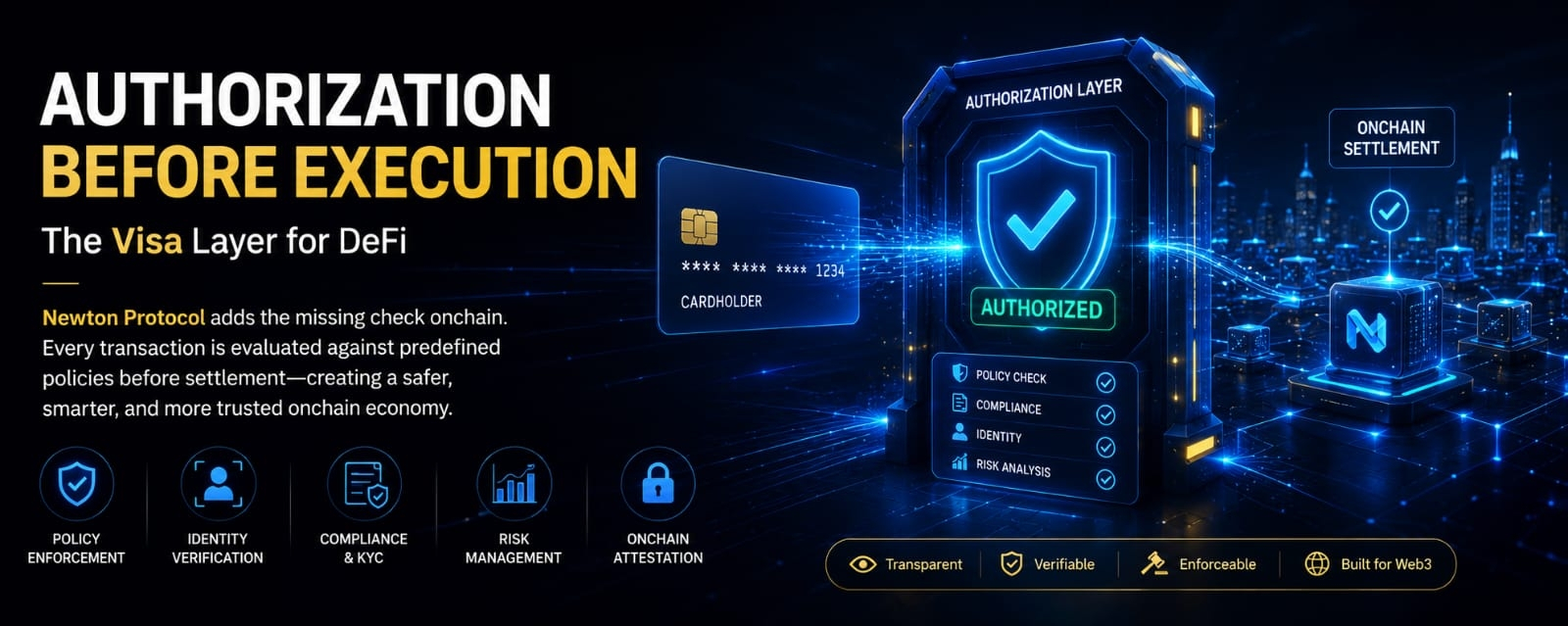

Blockchain has transformed how value moves across the internet, but one important component has been missing from most onchain transactions: authorization before settlement.
Traditional payment networks like Visa don't simply move money. They first evaluate whether a payment should be approved based on multiple security and risk checks. Only after passing those checks does the transaction continue.
This is the same philosophy behind Newton Protocol.
Rather than monitoring transactions after execution, Newton introduces an onchain authorization layer that evaluates predefined policies before a transaction settles. Once the decision is made, a signed pass or fail attestation is recorded onchain, creating transparent and verifiable enforcement.
This approach has significant implications for institutional DeFi. Large vaults and financial protocols often rely on fragmented offchain processes for compliance, identity verification, and risk management. Newton brings these policies directly into the transaction flow, making them enforceable onchain instead of relying solely on manual oversight.
With Newton Mainnet Beta now live, the protocol is laying the foundation for a smarter and safer onchain economy. Whether it's DeFi vaults today or RWAs, stablecoins, and AI agents tomorrow, authorization before execution could become a core building block for blockchain finance.
If execution powers blockchain, then authorization may be the layer that enables institutions to trust it at scale