Binance Square

Jesantmark

In God I trust
取引を発注
低高頻度トレーダー
2.5年
732 フォロー
245 フォロワー
475 いいね
32 共有
投稿
ポートフォリオ
·
--
翻訳参照
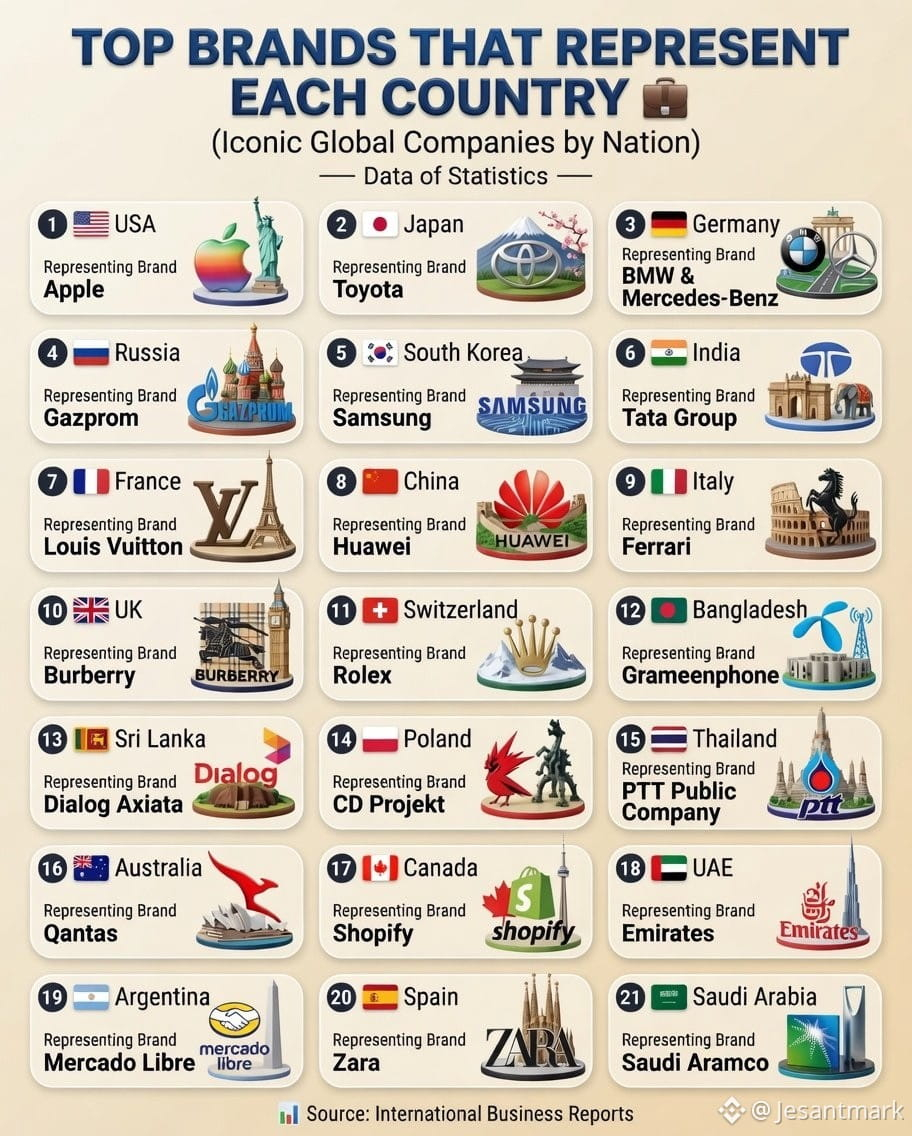
Top Brands That Represent Each Country 🌎 1. 🇺🇸 USA — Apple 2. 🇯🇵 Japan — Toyota 3. 🇩🇪 Germany — BMW Mercedes-Benz 4. 🇷🇺 Russia — Gazprom 5. 🇰🇷 South Korea — Samsung 6. 🇮🇳 India — Tata Group 7. 🇫🇷 France — Louis Vuitton 8. 🇨🇳 China — Huawei 9. 🇮🇹 Italy — Ferrari 10. 🇬🇧 UK — Burberry 11. 🇨🇭 Switzerland — Rolex 12. 🇧🇩 Bangladesh — Grameenphone 13. 🇱🇰 Sri Lanka — Dialog Axiata 14. 🇵🇱 Poland — CD Projekt 15. 🇹🇭 Thailand — PTT Public Company 16. 🇦🇺 Australia — Qantas 17. 🇨🇦 Canada — Shopify 18. 🇦🇪 UAE — Emirates 19. 🇦🇷 Argentina — Mercado Libre 20. 🇪🇸 Spain — Zara 21. 🇸🇦 Saudi Arabia — Saudi Aramco Source: 📊 International Business Reports.
Top Brands That Represent Each Country 🌎

1. 🇺🇸 USA — Apple
2. 🇯🇵 Japan — Toyota
3. 🇩🇪 Germany — BMW Mercedes-Benz
4. 🇷🇺 Russia — Gazprom
5. 🇰🇷 South Korea — Samsung
6. 🇮🇳 India — Tata Group
7. 🇫🇷 France — Louis Vuitton
8. 🇨🇳 China — Huawei
9. 🇮🇹 Italy — Ferrari
10. 🇬🇧 UK — Burberry
11. 🇨🇭 Switzerland — Rolex
12. 🇧🇩 Bangladesh — Grameenphone
13. 🇱🇰 Sri Lanka — Dialog Axiata
14. 🇵🇱 Poland — CD Projekt
15. 🇹🇭 Thailand — PTT Public Company
16. 🇦🇺 Australia — Qantas
17. 🇨🇦 Canada — Shopify
18. 🇦🇪 UAE — Emirates
19. 🇦🇷 Argentina — Mercado Libre
20. 🇪🇸 Spain — Zara
21. 🇸🇦 Saudi Arabia — Saudi Aramco

Source:
📊 International Business Reports.
翻訳参照
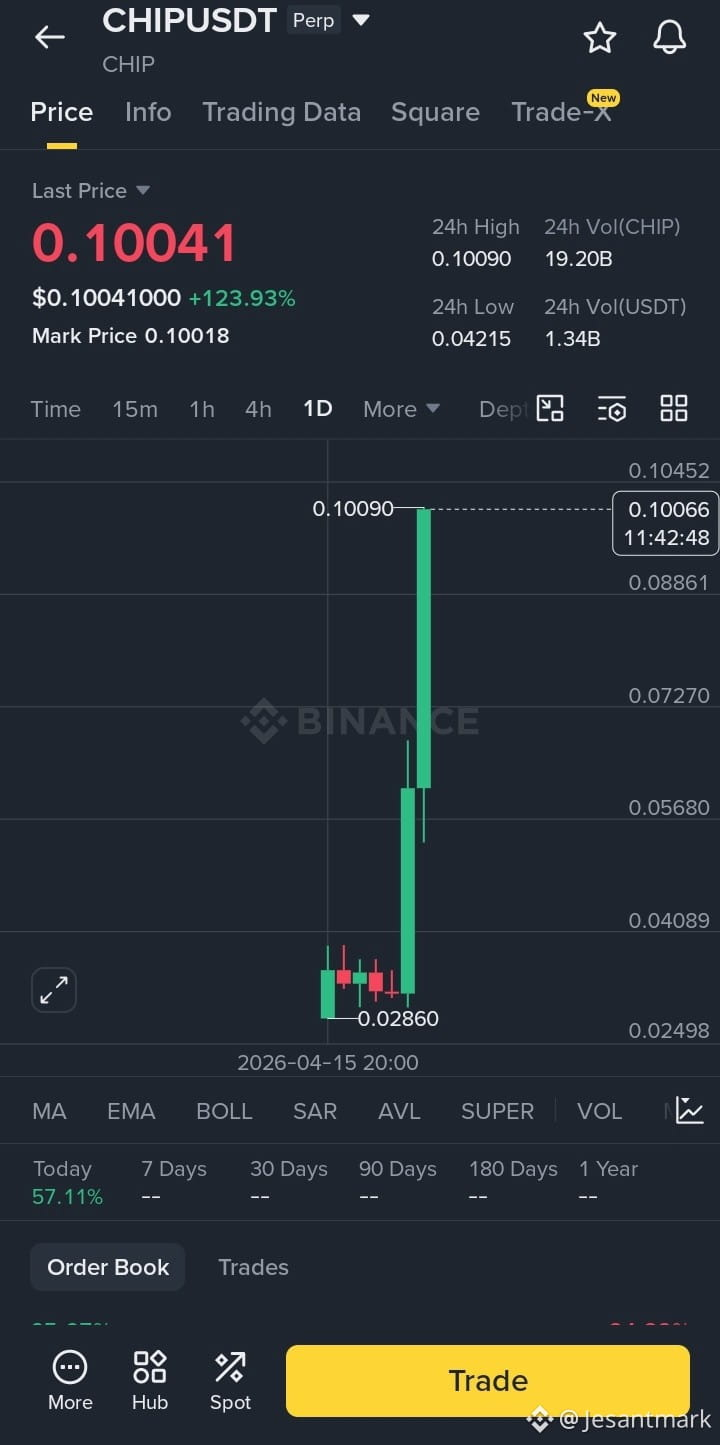
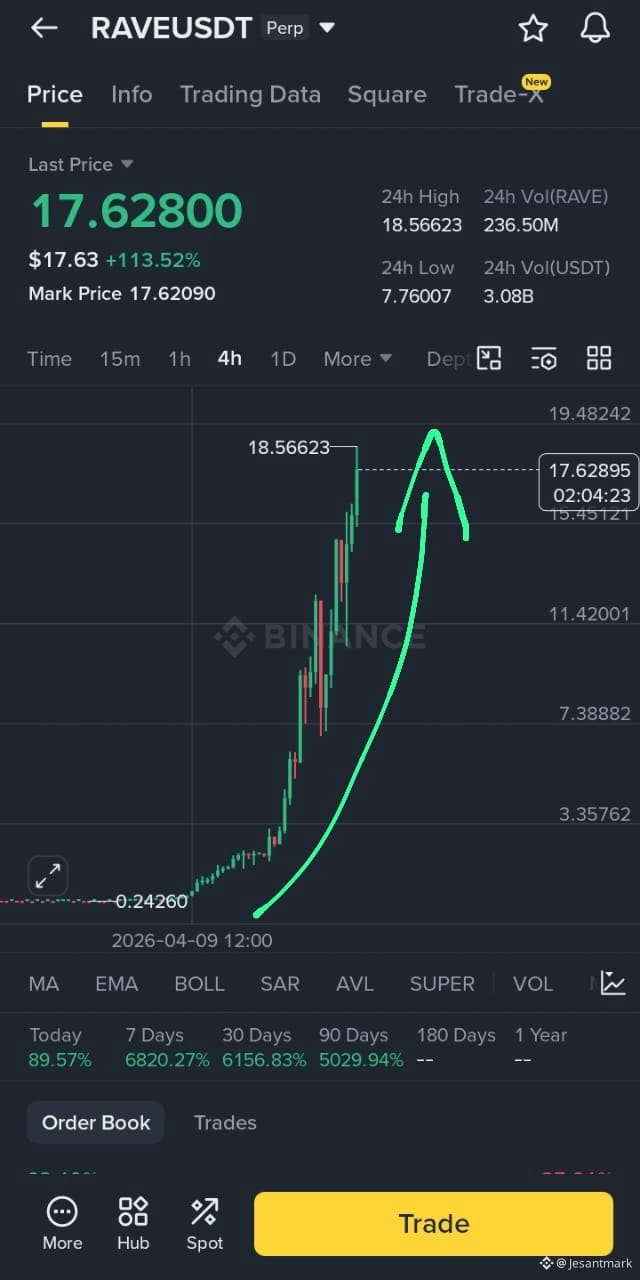
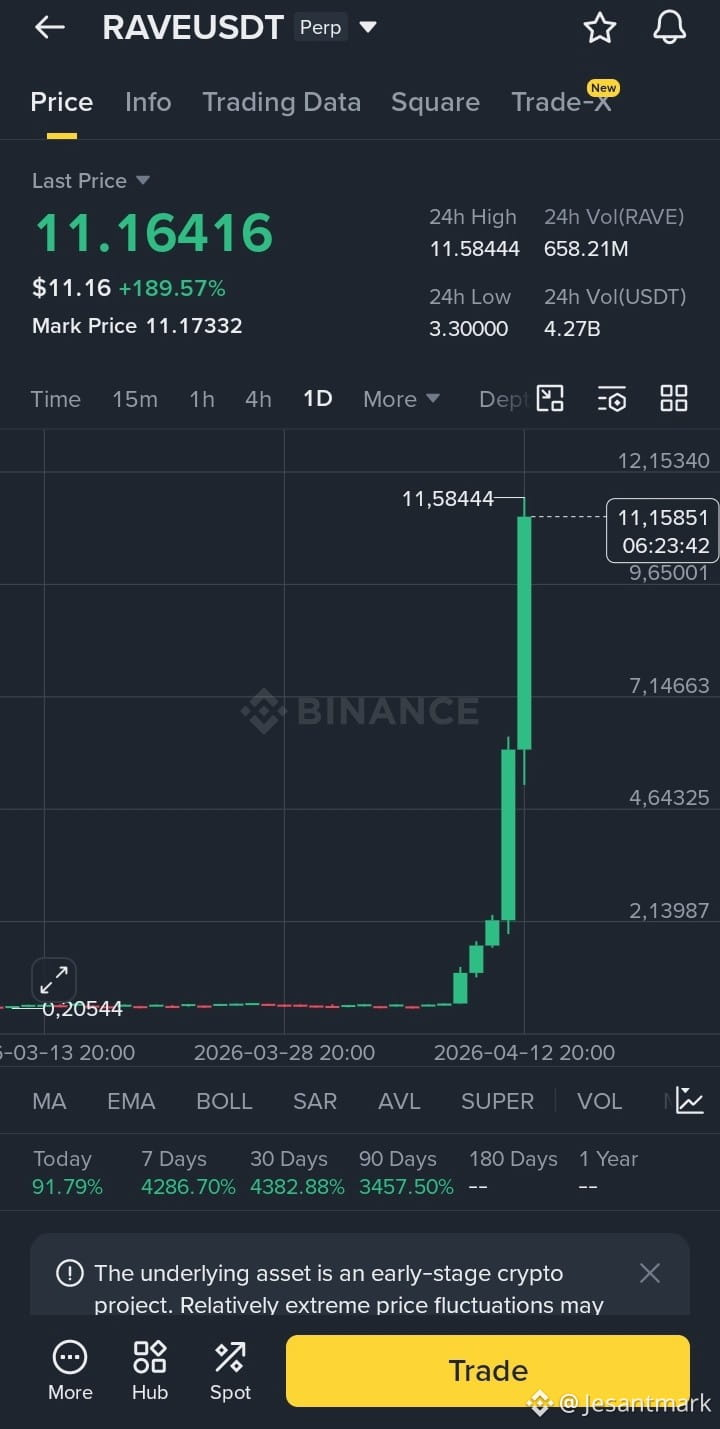
$RAVE is the new $pippin ; it's price has been increasing for 5 consecutive days.
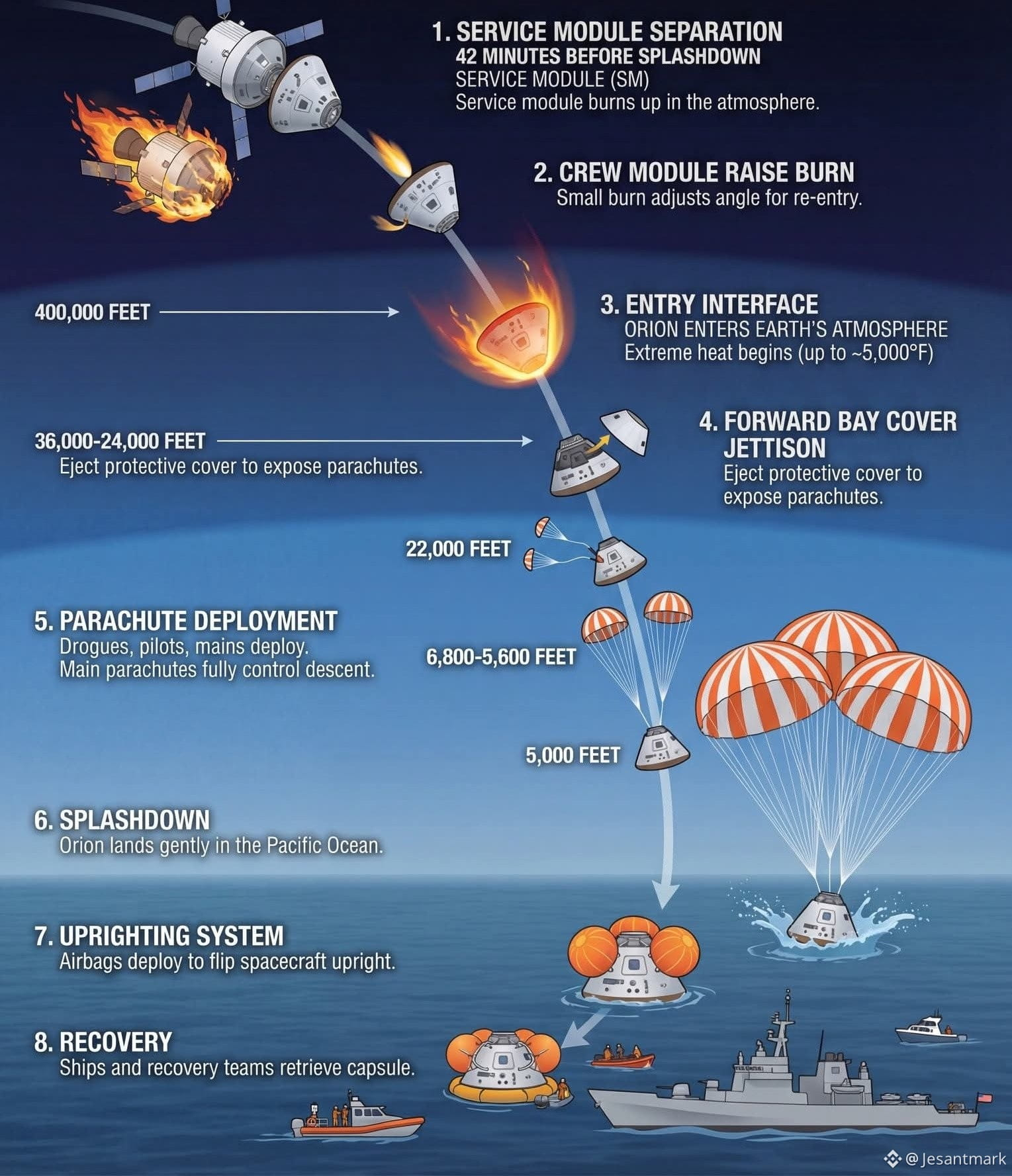
深宇宙からのスプラッシュダウン 息を止めて、オリオンカプセルが宇宙の端から叫び戻ってくるのを見てください!時速何千マイルもの速さで大気を突き抜け、再突入の熱で白熱しているこの燃える火球を見守りながら…優雅に減速し、広大な青い海に完璧なスプラッシュダウンを果たします。純粋な工学の輝きと生の勇気 — 宇宙の深淵から宇宙飛行士を安全に家に帰す。\n\n出典: BlackHole-@Constructivizm
翻訳参照
$RAVE segundo día consecutivo al alza y al parecer el movimiento alcista se está desvaneciendo. Será que es el inicio de una reversión bajista?
翻訳参照
$FF las ballenas haciendo de las suyas nuevamente
翻訳参照
Best Brands for Everyday Electronics 1. 📺 Television - LG 🇰🇷 2. 🧺 Washing machine - Samsung 🇰🇷 3. 🍲 Microwave - Panasonic 🇯🇵 4. ❄️ Air conditioner - Daikin 🇯🇵 5. 🧼 Pressing iron - Philips 🇳🇱 6. 🎮 Gaming console - Sony 🇯🇵 7. 🧊 Refrigerator - LG 🇰🇷 8. 💻 Laptop - Apple 🇺🇸 9. 📱 Smartphone - Samsung 🇰🇷 10. 📲 Tablet - Apple 🇺🇸 11. 🎧 ANC headphones - Sony 🇯🇵 12. 🔊 Bluetooth speaker - JBL 🇺🇸 13. ⌚ Smartwatch - Apple 🇺🇸 14. 📷 Camera (mirrorless) - Sony 🇯🇵 15. 🌀 Ceiling fan - Ox (India) 🇮🇳 16. ⚡ Diesel generator - Cummins 🇺🇸 17. 📡 Router - TP-Link 🇨🇳 18. 🎵 Soundbar - Bose 🇺🇸 19. 🎶 Home theatre system - Sony 🇯🇵 20. 🌬️ Air purifier - Dyson 🇬🇧 21. 🧹 Vacuum cleaner - Dyson 🇬🇧 22. 💧 Water purifier - Kent 🇮🇳 23. 🔋 Power bank - Anker 🇨🇳 24. 🖨️ Printer - HP 🇺🇸 25. 🔌 Inverter / UPS - Luminous 🇮🇳 📌 Save this Gem for Smart Buying
Best Brands for Everyday Electronics

1. 📺 Television - LG 🇰🇷
2. 🧺 Washing machine - Samsung 🇰🇷
3. 🍲 Microwave - Panasonic 🇯🇵
4. ❄️ Air conditioner - Daikin 🇯🇵
5. 🧼 Pressing iron - Philips 🇳🇱
6. 🎮 Gaming console - Sony 🇯🇵
7. 🧊 Refrigerator - LG 🇰🇷
8. 💻 Laptop - Apple 🇺🇸
9. 📱 Smartphone - Samsung 🇰🇷
10. 📲 Tablet - Apple 🇺🇸
11. 🎧 ANC headphones - Sony 🇯🇵
12. 🔊 Bluetooth speaker - JBL 🇺🇸
13. ⌚ Smartwatch - Apple 🇺🇸
14. 📷 Camera (mirrorless) - Sony 🇯🇵
15. 🌀 Ceiling fan - Ox (India) 🇮🇳
16. ⚡ Diesel generator - Cummins 🇺🇸
17. 📡 Router - TP-Link 🇨🇳
18. 🎵 Soundbar - Bose 🇺🇸
19. 🎶 Home theatre system - Sony 🇯🇵
20. 🌬️ Air purifier - Dyson 🇬🇧
21. 🧹 Vacuum cleaner - Dyson 🇬🇧
22. 💧 Water purifier - Kent 🇮🇳
23. 🔋 Power bank - Anker 🇨🇳
24. 🖨️ Printer - HP 🇺🇸
25. 🔌 Inverter / UPS - Luminous 🇮🇳

📌 Save this Gem for Smart Buying
翻訳参照
Countries Buying the Most Gold 🪙 Central Bank Gold Reserves Changes from (2020 to 2025). 1. 🇨🇳 China: 357.1 2. 🇵🇱 Poland: 314.6 3. 🇹🇷 Türkiye: 251.8 4. 🇮🇳 India: 245.3 5. 🇧🇷 Brazil: 105.1 6. 🇦🇿 Azerbaijan: 83.6 7. 🇯🇵 Japan: 80.8 8. 🇹🇭 Thailand: 80.6 9. 🇭🇺 Hungary: 78.5 10. 🇸🇬 Singapore: 77.3 11. 🇮🇶 Iraq: 74.6 12. 🇶🇦 Qatar: 73.0 13. 🇨🇿 Czechia: 62.8 14. 🇷🇺 Russia: 55.4 15. 🇦🇪 UAE: 51.7 📊Sources: According to World Gold Council.
Countries Buying the Most Gold 🪙

Central Bank Gold Reserves Changes from (2020 to 2025).

1. 🇨🇳 China: 357.1
2. 🇵🇱 Poland: 314.6
3. 🇹🇷 Türkiye: 251.8
4. 🇮🇳 India: 245.3
5. 🇧🇷 Brazil: 105.1
6. 🇦🇿 Azerbaijan: 83.6
7. 🇯🇵 Japan: 80.8
8. 🇹🇭 Thailand: 80.6
9. 🇭🇺 Hungary: 78.5
10. 🇸🇬 Singapore: 77.3
11. 🇮🇶 Iraq: 74.6
12. 🇶🇦 Qatar: 73.0
13. 🇨🇿 Czechia: 62.8
14. 🇷🇺 Russia: 55.4
15. 🇦🇪 UAE: 51.7

📊Sources: According to World Gold Council.
面積による最大の国(平方キロメートル - km^2)🌎 1. 🇷🇺 ロシア: 17,098,242 2. 🇨🇦 カナダ: 9,984,670 3. 🇨🇳 中国: 9,706,961 4. 🇺🇸 アメリカ合衆国: 9,372,610 5. 🇧🇷 ブラジル: 8,515,767 6. 🇦🇺 オーストラリア: 7,692,024 7. 🇮🇳 インド: 3,287,590 8. 🇦🇷 アルゼンチン: 2,780,400 9. 🇰🇿 カザフスタン: 2,724,900 10. 🇩🇿 アルジェリア: 2,381,741 11. 🇨🇩 DRC: 2,344,858 12. 🇬🇱 グリーンランド: 2,166,086 13. 🇸🇦 サウジアラビア: 2,149,690 14. 🇲🇽 メキシコ: 1,964,375 15. 🇮🇩 インドネシア: 1,904,569 📊 出典: NT統計。
面積による最大の国(平方キロメートル - km^2)🌎

1. 🇷🇺 ロシア: 17,098,242
2. 🇨🇦 カナダ: 9,984,670
3. 🇨🇳 中国: 9,706,961
4. 🇺🇸 アメリカ合衆国: 9,372,610
5. 🇧🇷 ブラジル: 8,515,767
6. 🇦🇺 オーストラリア: 7,692,024
7. 🇮🇳 インド: 3,287,590
8. 🇦🇷 アルゼンチン: 2,780,400
9. 🇰🇿 カザフスタン: 2,724,900
10. 🇩🇿 アルジェリア: 2,381,741
11. 🇨🇩 DRC: 2,344,858
12. 🇬🇱 グリーンランド: 2,166,086
13. 🇸🇦 サウジアラビア: 2,149,690
14. 🇲🇽 メキシコ: 1,964,375
15. 🇮🇩 インドネシア: 1,904,569

📊 出典: NT統計。
世界で最も美しい女性を持つ国トップ50 💃 1. 🇰🇷 韓国 2. 🇧🇷 ブラジル 3. 🇺🇸 アメリカ 4. 🇯🇵 日本 5. 🇲🇽 メキシコ 6. 🇩🇪 ドイツ 7. 🇨🇴 コロンビア 8. 🇹🇭 タイ 9. 🇮🇹 イタリア 10. 🇻🇪 ベネズエラ 11. 🇦🇷 アルゼンチン 12. 🇫🇷 フランス 13. 🇹🇼 台湾 14. 🇪🇸 スペイン 15. 🇬🇷 ギリシャ 16. 🇹🇷 トルコ 17. 🇷🇺 ロシア 18. 🇮🇳 インド 19. 🇦🇪 UAE 20. 🇸🇦 サウジアラビア 21. 🇨🇳 中国 22. 🇮🇷 イラン 23. 🇱🇧 レバノン 24. 🇬🇧 UK 25. 🇦🇺 オーストラリア 26. 🇨🇦 カナダ 27. 🇵🇭 フィリピン 28. 🇲🇾 マレーシア 29. 🇪🇬 エジプト 30. 🇿🇦 南アフリカ 31. 🇨🇭 スイス 32. 🇧🇪 ベルギー 33. 🇸🇪 スウェーデン 34. 🇮🇱 イスラエル 35. 🇰🇼 クウェート 36. 🇯🇴 ヨルダン 37. 🇵🇪 ペルー 38. 🇺🇦 ウクライナ 39. 🇩🇴 ドミニカ共和国 40. 🇳🇱 オランダ 41. 🇦🇹 オーストリア 42. 🇨🇱 チリ 43. 🇶🇦 カタール 44. 🇷🇴 ルーマニア 45. 🇵🇹 ポルトガル 46. 🇲🇦 モロッコ 47. 🇸🇬 シンガポール 48. 🇵🇱 ポーランド 49. 🇭🇺 ハンガリー 50. 🇨🇿 チェコ共和国 方法論: この選択は、Reddit上の多数のスレッドや議論をレビューした後に決定されました。したがって、最も頻繁に登場する国々が考慮されました。それらの国々は、女性の参加が積極的に観察される美容に関連する業界や、整形手術、施設の頻度についてさらに研究されました。 「美しさは見る者の目に宿る。」 👁️ 注: 美しさは主観的であり、異なる人々が文化や国にわたって異なる特徴を魅力的だと感じる場合があります。 出典: Yahoo Finance, 2023.
世界で最も美しい女性を持つ国トップ50 💃

1. 🇰🇷 韓国
2. 🇧🇷 ブラジル
3. 🇺🇸 アメリカ
4. 🇯🇵 日本
5. 🇲🇽 メキシコ
6. 🇩🇪 ドイツ
7. 🇨🇴 コロンビア
8. 🇹🇭 タイ
9. 🇮🇹 イタリア
10. 🇻🇪 ベネズエラ
11. 🇦🇷 アルゼンチン
12. 🇫🇷 フランス
13. 🇹🇼 台湾
14. 🇪🇸 スペイン
15. 🇬🇷 ギリシャ
16. 🇹🇷 トルコ
17. 🇷🇺 ロシア
18. 🇮🇳 インド
19. 🇦🇪 UAE
20. 🇸🇦 サウジアラビア
21. 🇨🇳 中国
22. 🇮🇷 イラン
23. 🇱🇧 レバノン
24. 🇬🇧 UK
25. 🇦🇺 オーストラリア
26. 🇨🇦 カナダ
27. 🇵🇭 フィリピン
28. 🇲🇾 マレーシア
29. 🇪🇬 エジプト
30. 🇿🇦 南アフリカ
31. 🇨🇭 スイス
32. 🇧🇪 ベルギー
33. 🇸🇪 スウェーデン
34. 🇮🇱 イスラエル
35. 🇰🇼 クウェート
36. 🇯🇴 ヨルダン
37. 🇵🇪 ペルー
38. 🇺🇦 ウクライナ
39. 🇩🇴 ドミニカ共和国
40. 🇳🇱 オランダ
41. 🇦🇹 オーストリア
42. 🇨🇱 チリ
43. 🇶🇦 カタール
44. 🇷🇴 ルーマニア
45. 🇵🇹 ポルトガル
46. 🇲🇦 モロッコ
47. 🇸🇬 シンガポール
48. 🇵🇱 ポーランド
49. 🇭🇺 ハンガリー
50. 🇨🇿 チェコ共和国

方法論: この選択は、Reddit上の多数のスレッドや議論をレビューした後に決定されました。したがって、最も頻繁に登場する国々が考慮されました。それらの国々は、女性の参加が積極的に観察される美容に関連する業界や、整形手術、施設の頻度についてさらに研究されました。

「美しさは見る者の目に宿る。」 👁️

注: 美しさは主観的であり、異なる人々が文化や国にわたって異なる特徴を魅力的だと感じる場合があります。

出典: Yahoo Finance, 2023.
翻訳参照
2000 USDT
2000 USDT
rich Elon Musk
·
--
🚨🎉 2000 USDT コンテスト — 勝者の数 40! 🎉🚨
💰 賞金総額: 2000 USDT
🏆 40 勝者 — 50$ 各勝者
✨ 無料のクリプトを手に入れるチャンスをお見逃しなく!
📌 参加方法:
1️⃣ アカウントをフォロー ✅
2️⃣ いいねとリポストをする 🔄
3️⃣ コメントを書く 💬
⚠️ 重要:
少なくとも 1000 コメントに達する必要があります
それ未満 = コンテストはキャンセル ❌
👉 固定された投稿を確認してください
🚀 注目の通貨: $NOM
#sol
$BTC
翻訳参照
2000$ $STO
2000$ $STO
SarahR2
·
--
私たちの独占的な$2,000 USDTの抽選に参加しよう! 🎁 私たちは、各自に$50 USDTを受け取る幸運な40人の当選者を選んでいます。この限られた機会を逃さないで、あなたの暗号通貨ポートフォリオを強化しましょう。
参加を確保するのは簡単です:
1️⃣ Binance Squareのアカウントをフォローしてください。
2️⃣ この投稿に「いいね」とリツイートしてください。
3️⃣ 下に「$STO」とコメントしてください。
⚠️ 重要な参加条件に注意してください: 抽選が実施されるためには、この投稿に最低70件の有効なコメントが必要です。
この参加基準が達成されない場合、抽選はキャンセルされる可能性があります。
このイベントでは、$NOM、及び/USDTのトークンが強調されています。
迅速に行動してあなたの場所を確保してください! このような機会は早く参加する人のためにあります! 幸運を祈ります!
#SORTEO #USDT #RecompensasCrypto #BinanceSquare
🚨トップクリプトコインとその創設者 1️⃣ビットコイン—-中本 佐保 2️⃣イーサリアム-ヴィタリック・ブテリン 3️⃣BNB———チャンポン・ジャオ 4️⃣ソラナ——アナトリー・ヤコヴェンコ 5️⃣PIネットワーク——ドクター・ニコラス・コッカリス 6️⃣ドージコイン-ビリー・マーカス 7️⃣カルダノ- チャールズ・ホスキンソン 8️⃣TRON——ジャスティン・サン 9️⃣USDT——リーブ・コリンズ 🔟USDC——ジェレミー・アレア 誰を最も評価しますか?
🚨トップクリプトコインとその創設者

1️⃣ビットコイン—-中本 佐保
2️⃣イーサリアム-ヴィタリック・ブテリン
3️⃣BNB———チャンポン・ジャオ
4️⃣ソラナ——アナトリー・ヤコヴェンコ
5️⃣PIネットワーク——ドクター・ニコラス・コッカリス
6️⃣ドージコイン-ビリー・マーカス
7️⃣カルダノ- チャールズ・ホスキンソン
8️⃣TRON——ジャスティン・サン
9️⃣USDT——リーブ・コリンズ
🔟USDC——ジェレミー・アレア

誰を最も評価しますか?
記事
翻訳参照
Norway works little but produces a lot, and that stresses them out. The solution: the four-day week.Norway had already optimized its working time with working days of between 33.6 and 37.5 hours per week Now, this generation is betting on a four-day workweek to maintain salary and productivity while working less time. In Norway, leaving the office at three or four in the afternoon is neither a privilege nor an exception: it's the standard schedule for millions of workers. According to the Norwegian Labour Force Survey , the standard workweek in Norway is around 37.5 hours, distributed in 7.5-hour shifts, and the actual average is around 33.6 hours, placing the country among the developed economies with the fewest working hours . However, even with that enviable starting point, Norway is questioning whether the five-day-a-week model still makes sense. The emerging answer points toward the four-day week, not as a utopian ideal, but as an ongoing experiment backed by scientific data. A country that works little and produces a lot . In the Norwegian labor market, the prevailing idea is to work efficiently within a limited schedule. As Carla, a Spanish woman living in Norway, describes in one of her TikTok videos: "Most Norwegians have my perfect work schedule, from 8 a.m. to 4 p.m., because it gives them plenty of time for afternoon activities and spending time with their families." Far from hindering the economy, this commitment to work-life balance coexists with some of the highest levels of productivity per hour worked in Europe. According to OECD data , Norwegian employees accumulate 1,412 working hours per year, compared to the OECD average of 1,740. Meanwhile, unemployment in 2025 was projected to be around 4.7%, according to Eurostat data. Generation Z wants to go further. It is precisely the youngest workers who are most forcefully questioning the inherited model. According to YouGov's ' Empowering Minds' survey, the invisible mental load derived from planning, anticipating, and coordinating both at work and at home weighs particularly heavily on younger generations in the Nordic countries. Raised in hyper-connected environments , Generation Z doesn't see the four-day week as a luxury but as the logical evolution of smart working. And they have arguments to support this view. A Deloitte survey of more than 23,000 young people reveals that work-life balance is Generation Z's top career priority , above career advancement , and that only 6% aspire to a leadership position as their primary goal. For this generation, working well is not synonymous with working more . The Nordic model has cracks The problem is that this model, despite its strengths, has failed to shield Norwegian workers from stress. After-hours notifications and instant messaging have eroded the boundaries that Norwegian work culture had so carefully constructed, and sick leave due to mental health issues has steadily increased, according to official sick leave records . It is in this context that the four-day workweek ceases to be a union demand and becomes a viable alternative worth considering. If having a shorter-than-average workday already improves the well-being of Norwegians, reducing it by a whole day could be the lever Norway needs to halt the decline in its workers' mental health. Productivity and well-being in four days In 2024, the first Norwegian pilot program for a four-day workweek was launched . Eleven companies from sectors as diverse as hospitals, municipal services, and consulting firms participated for six months under the 100:80:100 model (100% of salary, working 80% of the time, with the goal of maintaining 100% productivity). This same model has been followed by other four-day workweek projects around the world, including the one in Valencia in 2023 . The Norwegian experiment was monitored by the consulting firm The Rework in collaboration with Karlstad University and Boston College. The results, compiled in the official report just released, show that this work-life balance model combines the best of both worlds. Stress was reduced by 19%, participants went from sleeping 6.6 hours per night to 7 hours, and satisfaction with time for personal activities increased by 44%. All of this occurred while perceived productivity increased by 13%. Of the ten participating companies that shared their business results, five reported improvements, and the other five maintained the same levels of productivity and profits as before the experiment. In other words, none of them experienced a decline in performance after reducing working hours . In fact, the results were so satisfactory that ten of the eleven companies decided to continue with the reduced workweek after the trial ended. Source: Rubén Andrés (April 1st, 2026). Norway works little but produces a lot, and that stresses them out. Generation Z has found the solution: the four-day week. Available in: https://www.xataka.com/empresas-y-economia/noruega-trabaja-poco-produce-mucho-eso-les-estresa-generacion-z-ha-encontrado-solucion-semana-cuatro-dias/amp.

Norway works little but produces a lot, and that stresses them out. The solution: the four-day week.

Norway had already optimized its working time with working days of between 33.6 and 37.5 hours per week
Now, this generation is betting on a four-day workweek to maintain salary and productivity while working less time.
In Norway, leaving the office at three or four in the afternoon is neither a privilege nor an exception: it's the standard schedule for millions of workers. According to the Norwegian Labour Force Survey , the standard workweek in Norway is around 37.5 hours, distributed in 7.5-hour shifts, and the actual average is around 33.6 hours, placing the country among the developed economies with the fewest working hours .
However, even with that enviable starting point, Norway is questioning whether the five-day-a-week model still makes sense. The emerging answer points toward the four-day week, not as a utopian ideal, but as an ongoing experiment backed by scientific data.
A country that works little and produces a lot . In the Norwegian labor market, the prevailing idea is to work efficiently within a limited schedule. As Carla, a Spanish woman living in Norway, describes in one of her TikTok videos: "Most Norwegians have my perfect work schedule, from 8 a.m. to 4 p.m., because it gives them plenty of time for afternoon activities and spending time with their families."
Far from hindering the economy, this commitment to work-life balance coexists with some of the highest levels of productivity per hour worked in Europe. According to OECD data , Norwegian employees accumulate 1,412 working hours per year, compared to the OECD average of 1,740. Meanwhile, unemployment in 2025 was projected to be around 4.7%, according to Eurostat data.
Generation Z wants to go further.
It is precisely the youngest workers who are most forcefully questioning the inherited model. According to YouGov's ' Empowering Minds' survey, the invisible mental load derived from planning, anticipating, and coordinating both at work and at home weighs particularly heavily on younger generations in the Nordic countries. Raised in hyper-connected environments , Generation Z doesn't see the four-day week as a luxury but as the logical evolution of smart working. And they have arguments to support this view.
A Deloitte survey of more than 23,000 young people reveals that work-life balance is Generation Z's top career priority , above career advancement , and that only 6% aspire to a leadership position as their primary goal. For this generation, working well is not synonymous with working more .
The Nordic model has cracks
The problem is that this model, despite its strengths, has failed to shield Norwegian workers from stress. After-hours notifications and instant messaging have eroded the boundaries that Norwegian work culture had so carefully constructed, and sick leave due to mental health issues has steadily increased, according to official sick leave records .
It is in this context that the four-day workweek ceases to be a union demand and becomes a viable alternative worth considering. If having a shorter-than-average workday already improves the well-being of Norwegians, reducing it by a whole day could be the lever Norway needs to halt the decline in its workers' mental health.
Productivity and well-being in four days
In 2024, the first Norwegian pilot program for a four-day workweek was launched . Eleven companies from sectors as diverse as hospitals, municipal services, and consulting firms participated for six months under the 100:80:100 model (100% of salary, working 80% of the time, with the goal of maintaining 100% productivity). This same model has been followed by other four-day workweek projects around the world, including the one in Valencia in 2023 .
The Norwegian experiment was monitored by the consulting firm The Rework in collaboration with Karlstad University and Boston College. The results, compiled in the official report just released, show that this work-life balance model combines the best of both worlds. Stress was reduced by 19%, participants went from sleeping 6.6 hours per night to 7 hours, and satisfaction with time for personal activities increased by 44%.
All of this occurred while perceived productivity increased by 13%. Of the ten participating companies that shared their business results, five reported improvements, and the other five maintained the same levels of productivity and profits as before the experiment. In other words, none of them experienced a decline in performance after reducing working hours . In fact, the results were so satisfactory that ten of the eleven companies decided to continue with the reduced workweek after the trial ended.
Source: Rubén Andrés (April 1st, 2026). Norway works little but produces a lot, and that stresses them out. Generation Z has found the solution: the four-day week. Available in: https://www.xataka.com/empresas-y-economia/noruega-trabaja-poco-produce-mucho-eso-les-estresa-generacion-z-ha-encontrado-solucion-semana-cuatro-dias/amp.
翻訳参照
Done
Done
Waliya Batool
·
--
🎁 コンペティション $1,000 USDT – 20 名の勝者! 🎁
✨ 無料で暗号通貨を獲得するチャンスをお見逃しなく! ✨
参加方法:
1️⃣ フォロー ✅
2️⃣ ツイートにいいねしてリツイート 🔄
3️⃣ "こんにちは" とコメント 👋
⚠️ 重要:
コメントの最小数: 50 コメント! それ未満 = 取り消し ❌
💰 賞:
$1,000 USDT → 20 名のラッキーな勝者 → $50 ずつ 🎉💎
🚀 特徴的な通貨: $NOM | $STO | $STOUSDT
🔥 現在最も取引されている: #STORJ #GIVEAWAY
早く参加して今すぐシェアしよう! 🏃💨💰
翻訳参照
翻訳参照
Sera que llegó momento de comprar $SOL ? 🤔🤔🤔 que dice el público?
記事
翻訳参照
Why is the market going up today?⚡ Brief breakdown The crypto market is up +2.27% to $2.37T in 24 hours, driven primarily by a persistent bullish sentiment thanks to regulatory clarity in the US. It shows a strong correlation (89%) with the S&P 500, indicating a common movement influenced by macroeconomic factors. Main reason: The market is digesting the historic joint SEC and CFTC framework that classifies 16 major tokens as "digital commodities", eliminating prolonged regulatory uncertainty and increasing institutional confidence. Secondary reasons: The strong correlation with equity markets reflects a broader macroeconomic rebound, while speculative capital is moving into select altcoins, evidenced by extreme volume spikes in tokens like TrustSwap (+153%). Short-term outlook: The sustainability of the rally likely depends on holding key Fibonacci support at $2.33T. A drop below could signal a test of the recent low near $2.27T. Source: Coinmarketcap (2026). CMC AI. Disclaimer: Always remember do your own research (DYOR). This is not financial advice.

Why is the market going up today?

⚡ Brief breakdown
The crypto market is up +2.27% to $2.37T in 24 hours, driven primarily by a persistent bullish sentiment thanks to regulatory clarity in the US. It shows a strong correlation (89%) with the S&P 500, indicating a common movement influenced by macroeconomic factors.
Main reason: The market is digesting the historic joint SEC and CFTC framework that classifies 16 major tokens as "digital commodities", eliminating prolonged regulatory uncertainty and increasing institutional confidence.
Secondary reasons: The strong correlation with equity markets reflects a broader macroeconomic rebound, while speculative capital is moving into select altcoins, evidenced by extreme volume spikes in tokens like TrustSwap (+153%).
Short-term outlook: The sustainability of the rally likely depends on holding key Fibonacci support at $2.33T. A drop below could signal a test of the recent low near $2.27T.
Source: Coinmarketcap (2026). CMC AI.
Disclaimer:
Always remember do your own research (DYOR). This is not financial advice.
記事
議論は再燃した:量子の脅威によりサトシ・ナカモトが戻る可能性はあるのか?この投稿では、昨年の9月7日に@KZG6886 によって発表された出版物に言及しています。この出版物は、伝説的なサトシ・ナカモトが暗号世界に公に戻る可能性を提起しています。 "量子コンピューティングの脅威がビットコインコミュニティを前例のない不安に陥れています。この技術の急速な進歩により、専門家は量子コンピュータが次の10年以内にビットコインの暗号アルゴリズムを破る可能性があると予測しており、ネットワーク全体の生存を危険にさらしています。 この重要な瞬間に、シャープリンク・ゲーミングの共同CEO、ジョセフ・チャロムは大胆な仮説を提唱しました:もしビットコインが本当に量子の脅威の生死をかけた試練に直面しているなら、長年行方不明の神秘的な創設者サトシ・ナカモトが戻ってくることを選ぶかもしれません。

議論は再燃した:量子の脅威によりサトシ・ナカモトが戻る可能性はあるのか?

この投稿では、昨年の9月7日に@KZG Crypto 口罩哥 によって発表された出版物に言及しています。この出版物は、伝説的なサトシ・ナカモトが暗号世界に公に戻る可能性を提起しています。
"量子コンピューティングの脅威がビットコインコミュニティを前例のない不安に陥れています。この技術の急速な進歩により、専門家は量子コンピュータが次の10年以内にビットコインの暗号アルゴリズムを破る可能性があると予測しており、ネットワーク全体の生存を危険にさらしています。
この重要な瞬間に、シャープリンク・ゲーミングの共同CEO、ジョセフ・チャロムは大胆な仮説を提唱しました:もしビットコインが本当に量子の脅威の生死をかけた試練に直面しているなら、長年行方不明の神秘的な創設者サトシ・ナカモトが戻ってくることを選ぶかもしれません。
記事
翻訳参照
Can the Naoris Protocol save Bitcoin from quantum risk?Bitcoin faces a new quantum alert. Google Research now estimates that a cryptographically relevant future quantum computer could break ECDLP-256, the foundation of the elliptic cryptography used in the ecosystem, with fewer than 500,000 physical qubits and in just a few minutes. The figure of "9 minutes" summarizes this acceleration, but Google's official formula remains more cautious: "a few minutes." The real warning sign for Bitcoin The important point is not that Bitcoin would be broken tomorrow morning. The real impact is that the window of opportunity appears narrower than previously thought. Google explains that its new estimates significantly reduce the resources needed to attack this cryptography, by approximately twenty times the number of physical qubits previously considered. This changes the tone of the debate. For a long time, quantum risk was classified as a "distant problem." Now it falls into the category of a "problem to seriously prepare for." Google even talks about a transition to post-quantum cryptography and mentions its own migration timeline for 2029. A misunderstanding should also be avoided. Google isn't saying that all bitcoins are already vulnerable in the same way. The group primarily recommends limiting exposure to or reuse of vulnerable wallet addresses, which shows that the danger also depends on how keys are used on the chain. Naoris Protocol offers a clue In this context, Naoris Protocol is trying to position itself as a post-quantum-oriented security layer. The project presents itself as a "quantum-forward" infrastructure capable of securing blockchain transactions starting today while serving as a bridge to broader post-quantum standards. In theory, the argument is compelling. Naoris documentation states that its Post-Quantum Signed Transactions system can integrate quantum-resistant cryptography, specifically with Dilithium-5, through an additional Layer 2-type layer without a hard fork. This is precisely the kind of promise that appeals to a market nervous about quantum risk. But we must keep a cool head. Naoris speaks primarily of rapid compatibility for EVM chains. For Bitcoin, its own supporting documentation indicates only that a dedicated Bitcoin Script kit is on the roadmap. In other words, Naoris cannot yet seriously present itself as the ready-to-use solution that “saves Bitcoin” today. What Bitcoin really needs to do now The credible answer will not come from a single marketing protocol, however ambitious. It will come from a more complex combination: gradual migration to post-quantum schemes, wallet adaptation, discipline in exposed addresses, and likely technical and political debates far less glamorous than commercial promises. Google also insists that solutions already exist, but that they will take time to deploy. That is where Naoris may, despite everything, prove useful. Not as a red button to make Bitcoin invincible, but as an integration lab, an experimental layer, and a demonstrator of what could become a more modular, post-quantum blockchain security. Its value is real if considered as a technical framework, not a universal cure. The real conclusion is quite clear. Yes, the quantum alert surrounding Bitcoin is becoming more serious. Yes, the Naoris Protocol could be part of tomorrow's toolkit. Source: Evans, S. (2026). Naoris Protocol puede salvar a Bitcoin del riesgo cuántico? Cointribune. Cripto para todos. https://www.cointribune.com/es/naoris-protocol-puede-salvar-a-bitcoin-del-riesgo-cuantico/

Can the Naoris Protocol save Bitcoin from quantum risk?

Bitcoin faces a new quantum alert. Google Research now estimates that a cryptographically relevant future quantum computer could break ECDLP-256, the foundation of the elliptic cryptography used in the ecosystem, with fewer than 500,000 physical qubits and in just a few minutes. The figure of "9 minutes" summarizes this acceleration, but Google's official formula remains more cautious: "a few minutes."
The real warning sign for Bitcoin
The important point is not that Bitcoin would be broken tomorrow morning. The real impact is that the window of opportunity appears narrower than previously thought. Google explains that its new estimates significantly reduce the resources needed to attack this cryptography, by approximately twenty times the number of physical qubits previously considered.
This changes the tone of the debate. For a long time, quantum risk was classified as a "distant problem." Now it falls into the category of a "problem to seriously prepare for." Google even talks about a transition to post-quantum cryptography and mentions its own migration timeline for 2029.
A misunderstanding should also be avoided. Google isn't saying that all bitcoins are already vulnerable in the same way. The group primarily recommends limiting exposure to or reuse of vulnerable wallet addresses, which shows that the danger also depends on how keys are used on the chain.
Naoris Protocol offers a clue
In this context, Naoris Protocol is trying to position itself as a post-quantum-oriented security layer. The project presents itself as a "quantum-forward" infrastructure capable of securing blockchain transactions starting today while serving as a bridge to broader post-quantum standards.
In theory, the argument is compelling. Naoris documentation states that its Post-Quantum Signed Transactions system can integrate quantum-resistant cryptography, specifically with Dilithium-5, through an additional Layer 2-type layer without a hard fork. This is precisely the kind of promise that appeals to a market nervous about quantum risk.
But we must keep a cool head. Naoris speaks primarily of rapid compatibility for EVM chains. For Bitcoin, its own supporting documentation indicates only that a dedicated Bitcoin Script kit is on the roadmap. In other words, Naoris cannot yet seriously present itself as the ready-to-use solution that “saves Bitcoin” today.
What Bitcoin really needs to do now
The credible answer will not come from a single marketing protocol, however ambitious. It will come from a more complex combination: gradual migration to post-quantum schemes, wallet adaptation, discipline in exposed addresses, and likely technical and political debates far less glamorous than commercial promises. Google also insists that solutions already exist, but that they will take time to deploy.
That is where Naoris may, despite everything, prove useful. Not as a red button to make Bitcoin invincible, but as an integration lab, an experimental layer, and a demonstrator of what could become a more modular, post-quantum blockchain security.
Its value is real if considered as a technical framework, not a universal cure. The real conclusion is quite clear. Yes, the quantum alert surrounding Bitcoin is becoming more serious. Yes, the Naoris Protocol could be part of tomorrow's toolkit.
Source: Evans, S. (2026). Naoris Protocol puede salvar a Bitcoin del riesgo cuántico? Cointribune. Cripto para todos. https://www.cointribune.com/es/naoris-protocol-puede-salvar-a-bitcoin-del-riesgo-cuantico/
翻訳参照
20 Most Expensive Cities to Live in (2026) 1. 🇨🇭 Zurich, Switzerland 2. 🇨🇭 Geneva, Switzerland 3. 🇨🇭 Basel, Switzerland 4. 🇨🇭 Lausanne, Switzerland 5. 🇨🇭 Lugano, Switzerland 6. 🇨🇭 Bern, Switzerland 7. 🇺🇸 New York, NY, United States 8. 🇮🇸 Reykjavik, Iceland 9. 🇺🇸 Honolulu, HI, United States 10. 🇺🇸 San Francisco, CA, United States 11. 🇮🇱 Tel Aviv-Yafo, Israel 12. 🇺🇸 Seattle, WA, United States 13. 🇳🇴 Oslo, Norway 14. 🇸🇬 Singapore, Singapore 15. 🇬🇧 London, United Kingdom 16. 🇺🇸 Washington, DC, United States 17. 🇺🇸 San Jose, CA, United States 18. 🇺🇸 Boston, MA, United States 19. 🇺🇸 Charleston, SC, United States 20. 🇩🇰 Copenhagen, Denmark Note: Rankings are based on Numbeo’s Cost of Living Index for 2026, which considers expenses such as housing, groceries, transportation, healthcare, and other daily living costs. Source: Numbeo (2026). $BTC $SOL $USDC
20 Most Expensive Cities to Live in (2026)

1. 🇨🇭 Zurich, Switzerland
2. 🇨🇭 Geneva, Switzerland
3. 🇨🇭 Basel, Switzerland
4. 🇨🇭 Lausanne, Switzerland
5. 🇨🇭 Lugano, Switzerland
6. 🇨🇭 Bern, Switzerland
7. 🇺🇸 New York, NY, United States
8. 🇮🇸 Reykjavik, Iceland
9. 🇺🇸 Honolulu, HI, United States
10. 🇺🇸 San Francisco, CA, United States
11. 🇮🇱 Tel Aviv-Yafo, Israel
12. 🇺🇸 Seattle, WA, United States
13. 🇳🇴 Oslo, Norway
14. 🇸🇬 Singapore, Singapore
15. 🇬🇧 London, United Kingdom
16. 🇺🇸 Washington, DC, United States
17. 🇺🇸 San Jose, CA, United States
18. 🇺🇸 Boston, MA, United States
19. 🇺🇸 Charleston, SC, United States
20. 🇩🇰 Copenhagen, Denmark

Note: Rankings are based on Numbeo’s Cost of Living Index for 2026, which considers expenses such as housing, groceries, transportation, healthcare, and other daily living costs.

Source: Numbeo (2026).

$BTC $SOL $USDC
さらにコンテンツを探すには、ログインしてください
Binance Squareで世界の暗号資産トレーダーの仲間入り
⚡️ 暗号資産に関する最新かつ有益な情報が見つかります。
💬 世界最大の暗号資産取引所から信頼されています。
👍 認証を受けたクリエイターから、有益なインサイトを得られます。
メール / 電話番号
サイトマップ
Cookieの設定
プラットフォーム利用規約