

JARA BNB
381 投稿

JARA BNB
報告
ユーザーをブロック
Work hard, give time, to achieve your success.💎
取引を発注
高頻度トレーダー
2年
20.6K+ フォロー
6.4K+ フォロワー
1.7K+ いいね
投稿
ポートフォリオ
すべて
引用
·
--
翻訳参照
🟡 Meet my Binance Agent ID: jarabnb 🤖💛
Exploring the AI + Web3 space early. Who knows? This could open doors to future campaigns, ecosystem opportunities, and potential rewards. 🚀
Let’s see what comes next! 👀
#BinanceSquareFamily #AIAgents #Web3
🟡 Meet my Binance Agent ID: jarabnb 🤖💛
Exploring the AI + Web3 space early. Who knows? This could open doors to future campaigns, ecosystem opportunities, and potential rewards. 🚀
Let’s see what comes next! 👀
#BinanceSquareFamily #AIAgents #Web3
Exploring the AI + Web3 space early. Who knows? This could open doors to future campaigns, ecosystem opportunities, and potential rewards. 🚀
Let’s see what comes next! 👀
#BinanceSquareFamily #AIAgents #Web3

2
87
·
--

記事
翻訳参照
Are you playing games... or just keeping the economy going!!Have you ever done something like this—hours after hours, but at the end of the day, you don't know how much you've actually earned?
When I started spending time seriously in Pixels, this is the first thing that came to mind. Completing tasks, collecting resources, working on the land—everything is going well. But the outcome or result is not always the same.
Sometimes it feels like I'm making progress, and then the next moment it feels like—hey, I'm going around in the same circle over and over again!
There's a subtle difference here—participating and improving are not the same thing. It's a little dangerous to assume that just because you're active in the game all the time means you're making progress. Because the system is designed in such a way that you never stop. There will always be some work waiting for you. But not all work will lead to income.
Herein lies the real secret of Pixels. $PIXEL is not a simple reward that you get for working—it's more like a measured benefit.
From the outside, it seems, "I'm working, so I'm earning." But the equation inside is a little different:
Your job = keeping the system running.The system running = the economy being strong.The economy being strong = only then can rewards be given.
In other words, you're not just playing for yourself, but you're working to keep the entire system alive.
Now the question may seem a little bitter—
Are you playing for your own profit? Or are you maintaining a structure that no one else could earn without?
If it's the case that some players are just keeping the game busy and some other players are taking advantage of that opportunity to extract the real value—then who is this economy actually working for?
Maybe Pixels intentionally maintains this balance. So that not everyone can earn, but everyone stays in the game. Because if everyone just comes to collect money, the system will collapse. But only if everyone is in the game, the system will survive.
Then the difference becomes clear—you are not just a player here, you are just a small part of this economy.
In the end, the big question remains—
Are you really playing for yourself! Or are you just spinning a wheel that helps fill someone else's pockets!
@pixels #pixel $PIXEL
Are you playing games... or just keeping the economy going!!
Have you ever done something like this—hours after hours, but at the end of the day, you don't know how much you've actually earned?
When I started spending time seriously in Pixels, this is the first thing that came to mind. Completing tasks, collecting resources, working on the land—everything is going well. But the outcome or result is not always the same.
Sometimes it feels like I'm making progress, and then the next moment it feels like—hey, I'm going around in the same circle over and over again!
There's a subtle difference here—participating and improving are not the same thing. It's a little dangerous to assume that just because you're active in the game all the time means you're making progress. Because the system is designed in such a way that you never stop. There will always be some work waiting for you. But not all work will lead to income.
Herein lies the real secret of Pixels. $PIXEL is not a simple reward that you get for working—it's more like a measured benefit.
From the outside, it seems, "I'm working, so I'm earning." But the equation inside is a little different:
Your job = keeping the system running.The system running = the economy being strong.The economy being strong = only then can rewards be given.
In other words, you're not just playing for yourself, but you're working to keep the entire system alive.
Now the question may seem a little bitter—
Are you playing for your own profit? Or are you maintaining a structure that no one else could earn without?
If it's the case that some players are just keeping the game busy and some other players are taking advantage of that opportunity to extract the real value—then who is this economy actually working for?
Maybe Pixels intentionally maintains this balance. So that not everyone can earn, but everyone stays in the game. Because if everyone just comes to collect money, the system will collapse. But only if everyone is in the game, the system will survive.
Then the difference becomes clear—you are not just a player here, you are just a small part of this economy.
In the end, the big question remains—
Are you really playing for yourself! Or are you just spinning a wheel that helps fill someone else's pockets!
@Pixels #pixel $PIXEL
2
2
119
·
--

記事
翻訳参照
Who Really Wins in the PIXEL Economy: Early Players or Smart Players!This question seems very simple at first… but when you dig a little deeper, you realize that it is actually quite complicated.
When I first explored Pixels, a thought came to mind—who actually benefits more in this system? Those who entered early, or those who play smart?
One thing is usually seen in the Web3 economy—early players always get a big advantage. They enter before the crowd arrives, there is less competition, the system is not yet mature. As a result, their small actions create a lot of value.
But this advantage is not always permanent.
Over time, the system grows, competition increases, and then “smart players” come in. Although they are not early, they understand the system very well. They don’t just play—they optimize. They calculate which work will bring more efficiency, which path will bring better return—everything.
This is where the real tension begins.
PIXEL stands right in the middle of these two mindsets. Early entry advantage on one side, smart gameplay and optimization on the other.
But the truth is a little uncomfortable—
early advantage usually gets diluted over time, if the system keeps growing. The more players come, the more competition, the more optimization.
So the question changes a bit…
Is just being early enough?
Or is the real issue—understanding how to play the system?
In a system like Pixels, where gameplay and economy are deeply connected, smart players can gradually catch up with early players, because efficiency is more powerful in the long-term.
Yet early players are not completely lost. They hold on to one thing—time advantage + accumulated position. That can sometimes be even stronger than smart strategy.
So there is really no single winner here.
Early players win in the “entry game”
Smart players win in the “optimization game”
And the entire ecosystem stands on the tension between these two.
Maybe PIXEL is creating a system where being early or being smart—neither alone is enough.
In the end, the real winners may be those… who can do both correctly, in the right system, at the right time. 🚀
@pixels #pixel $PIXEL
Who Really Wins in the PIXEL Economy: Early Players or Smart Players!
This question seems very simple at first… but when you dig a little deeper, you realize that it is actually quite complicated.
When I first explored Pixels, a thought came to mind—who actually benefits more in this system? Those who entered early, or those who play smart?
One thing is usually seen in the Web3 economy—early players always get a big advantage. They enter before the crowd arrives, there is less competition, the system is not yet mature. As a result, their small actions create a lot of value.
But this advantage is not always permanent.
Over time, the system grows, competition increases, and then “smart players” come in. Although they are not early, they understand the system very well. They don’t just play—they optimize. They calculate which work will bring more efficiency, which path will bring better return—everything.
This is where the real tension begins.
PIXEL stands right in the middle of these two mindsets. Early entry advantage on one side, smart gameplay and optimization on the other.
But the truth is a little uncomfortable—
early advantage usually gets diluted over time, if the system keeps growing. The more players come, the more competition, the more optimization.
So the question changes a bit…
Is just being early enough?
Or is the real issue—understanding how to play the system?
In a system like Pixels, where gameplay and economy are deeply connected, smart players can gradually catch up with early players, because efficiency is more powerful in the long-term.
Yet early players are not completely lost. They hold on to one thing—time advantage + accumulated position. That can sometimes be even stronger than smart strategy.
So there is really no single winner here.
Early players win in the “entry game”
Smart players win in the “optimization game”
And the entire ecosystem stands on the tension between these two.
Maybe PIXEL is creating a system where being early or being smart—neither alone is enough.
In the end, the real winners may be those… who can do both correctly, in the right system, at the right time. 🚀
@Pixels #pixel $PIXEL
2
2
136
·
--

記事
翻訳参照
Is Pixels a game... or a money system in the name of a game!Sometimes one question comes to mind—are we really playing a game? Or are we slowly entering a maze where the word "game" is just a nominal tool? 🤔
When anyone sees Pixels for the first time, they will think—hey, this is a simple farming game! Cultivate the land, grow crops, and complete missions like in the old days. But when you go a little deeper, it feels strange. Is it really a game, or a huge economic system that looks like a game?
In the games we played as children, rewards meant going to the next level or making ourselves more skilled. But here rewards directly mean "money" or real value. And whenever money enters the game, the game is no longer just a game—it becomes a calculation or calculation.
And this is where the real fight begins.
On the one hand, the $PIXEL token is pulling us towards the game. On the other hand, this same token is putting such pressure on us that we are more concerned with "how to make more money" than enjoying the game.
In other words, are you really playing the game... or trying to beat the system?
If everyone is only concerned with "profit" and "optimization", then the game is no longer a game. It becomes a financial loop or money cycle.
Web3 games have a familiar pattern:
1. New players come in.
2. Reward income.
3. Sell immediately.
4. Finally, the pressure on the system increases.
If this cycle cannot be broken, any game will eventually become just a money-making machine.
Of course, the Pixels team is not completely blind. They are trying to differentiate between who are real players and who are just here to steal money. But the problem is, it is not that easy to distinguish between a skilled player and a clever investor.
What do you call a player who plays smart and makes a lot of money? Gamer or part of the system? This is where the line between game and system blurs.
Maybe Pixels isn't really trying to make a game. Maybe they're experimenting with a new kind of game—a controlled economy or market, where gaming is just a way to get in.
The final question remains...
Are we playing a game, or are we working within a larger economic system? And if it's a money system, where's the "joy" or "fun" in that?
Maybe the answer isn't clear to anyone yet. But one thing is for sure—Pixels isn't just a game, it's going to be something that might blur the lines between gaming and finance. 🚀
@pixels #pixel $PIXEL
Is Pixels a game... or a money system in the name of a game!
Sometimes one question comes to mind—are we really playing a game? Or are we slowly entering a maze where the word "game" is just a nominal tool? 🤔
When anyone sees Pixels for the first time, they will think—hey, this is a simple farming game! Cultivate the land, grow crops, and complete missions like in the old days. But when you go a little deeper, it feels strange. Is it really a game, or a huge economic system that looks like a game?
In the games we played as children, rewards meant going to the next level or making ourselves more skilled. But here rewards directly mean "money" or real value. And whenever money enters the game, the game is no longer just a game—it becomes a calculation or calculation.
And this is where the real fight begins.
On the one hand, the $PIXEL token is pulling us towards the game. On the other hand, this same token is putting such pressure on us that we are more concerned with "how to make more money" than enjoying the game.
In other words, are you really playing the game... or trying to beat the system?
If everyone is only concerned with "profit" and "optimization", then the game is no longer a game. It becomes a financial loop or money cycle.
Web3 games have a familiar pattern:
1. New players come in.
2. Reward income.
3. Sell immediately.
4. Finally, the pressure on the system increases.
If this cycle cannot be broken, any game will eventually become just a money-making machine.
Of course, the Pixels team is not completely blind. They are trying to differentiate between who are real players and who are just here to steal money. But the problem is, it is not that easy to distinguish between a skilled player and a clever investor.
What do you call a player who plays smart and makes a lot of money? Gamer or part of the system? This is where the line between game and system blurs.
Maybe Pixels isn't really trying to make a game. Maybe they're experimenting with a new kind of game—a controlled economy or market, where gaming is just a way to get in.
The final question remains...
Are we playing a game, or are we working within a larger economic system? And if it's a money system, where's the "joy" or "fun" in that?
Maybe the answer isn't clear to anyone yet. But one thing is for sure—Pixels isn't just a game, it's going to be something that might blur the lines between gaming and finance. 🚀
@Pixels #pixel $PIXEL
2
3
87
·
--
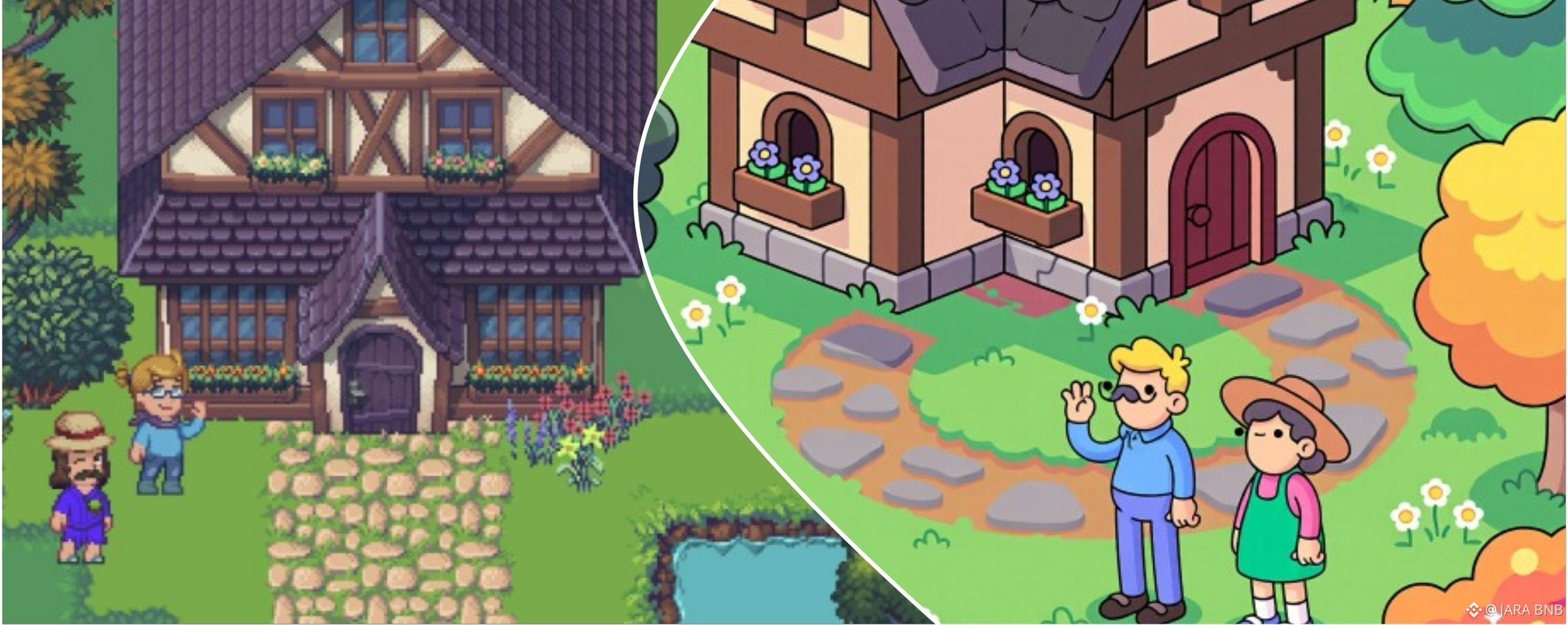
記事
翻訳参照
Game First, Economy Later — Can $PIXEL Maintain This Balance?There is a saying that is often heard in the crypto or Web3 gaming world—most games are not really games, but just money-transaction apps. People are more busy making money than playing games. But Pixels has been saying one thing from the very beginning, "We want to be a real game first, then think about income." Now the big question is, can they really do this difficult task?
Not money, but joy first:
We have seen that big projects like 'Axie Infinity' once fell flat on their faces. Why? Because people went there only to make money, not to love the game. Pixels wants to be a little different here. They have arranged farming, chatting, and creating new things in such a way that you enjoy playing. Their idea is very simple—if the game is fun, people will play it anyway. And if there are players, the income path or economy will survive anyway.
Will the economy survive?
The big danger of all crypto games is that people get tokens and immediately sell them. This causes the price of the token to drop dramatically. Pixels has put many useful functions for the $PIXEL token to deal with this problem. For example:
Decorating or upgrading the land.
Buying special items that make it easier to play the game.
Getting VIP membership.
Simply put, they want you to spend the tokens you earn in the game instead of selling them immediately. When people spend in the game, the economy will become stronger.
Where is the real obstacle?
Although it sounds very simple, the task is not as simple as water. 90% of people come to the crypto market to warm their pockets quickly. Now, if for some reason the price of $PIXEL drops a lot, how many people will play the game just for 'fun' is a big concern. Besides, keeping the prices of items in the game stable is also a very difficult task for developers.
A little ray of hope:
However, the Pixels team has been handling everything quite wisely so far. They are regularly bringing new updates and making big partnerships. Their whole effort is to make people focus not only on money but on the joy of the game.
The bottom line:
Will Pixels really succeed? It is difficult to bet on this right now. But their way of thinking is absolutely right. If they can retain real gamers and chase away the 'bot' players, Pixels could be the best Web3 game of the future. At the end of the day, it is good to remember—if the game is boring, it cannot be sustained for long with money alone.
@pixels #pixel $PIXEL
Game First, Economy Later — Can $PIXEL Maintain This Balance?
There is a saying that is often heard in the crypto or Web3 gaming world—most games are not really games, but just money-transaction apps. People are more busy making money than playing games. But Pixels has been saying one thing from the very beginning, "We want to be a real game first, then think about income." Now the big question is, can they really do this difficult task?
Not money, but joy first:
We have seen that big projects like 'Axie Infinity' once fell flat on their faces. Why? Because people went there only to make money, not to love the game. Pixels wants to be a little different here. They have arranged farming, chatting, and creating new things in such a way that you enjoy playing. Their idea is very simple—if the game is fun, people will play it anyway. And if there are players, the income path or economy will survive anyway.
Will the economy survive?
The big danger of all crypto games is that people get tokens and immediately sell them. This causes the price of the token to drop dramatically. Pixels has put many useful functions for the $PIXEL token to deal with this problem. For example:
Decorating or upgrading the land.
Buying special items that make it easier to play the game.
Getting VIP membership.
Simply put, they want you to spend the tokens you earn in the game instead of selling them immediately. When people spend in the game, the economy will become stronger.
Where is the real obstacle?
Although it sounds very simple, the task is not as simple as water. 90% of people come to the crypto market to warm their pockets quickly. Now, if for some reason the price of $PIXEL drops a lot, how many people will play the game just for 'fun' is a big concern. Besides, keeping the prices of items in the game stable is also a very difficult task for developers.
A little ray of hope:
However, the Pixels team has been handling everything quite wisely so far. They are regularly bringing new updates and making big partnerships. Their whole effort is to make people focus not only on money but on the joy of the game.
The bottom line:
Will Pixels really succeed? It is difficult to bet on this right now. But their way of thinking is absolutely right. If they can retain real gamers and chase away the 'bot' players, Pixels could be the best Web3 game of the future. At the end of the day, it is good to remember—if the game is boring, it cannot be sustained for long with money alone.
@Pixels #pixel $PIXEL
2
4
89
·
--

記事
翻訳参照
Pixels: When Gaming Meets Earning — The Role of PIXELIn today’s world, Web3 gaming is completely transforming the traditional idea of gaming. Previously, playing games was mainly about passing time or entertainment. But now, the concept of earning while playing is becoming a reality—and Pixels is one of the projects leading this change. Built on the Ronin Network, this social farming game has already created strong buzz in the gaming space.
What is Pixels?
Pixels is essentially an open-world game where players can enjoy activities like farming, exploration, and crafting. However, it goes beyond just gameplay—every action you take inside the game carries real digital value. In simple terms, you are rewarded for the time and effort you invest.
Importance of the $PIXEL Token in the Ecosystem:
The core of the entire ecosystem is the PIXEL token. It’s not just an in-game currency; it controls the whole economic system of the game. From buying land to upgrading tools or unlocking new features—everything requires PIXEL. As the number of players increases, the demand for this token is likely to grow as well.
Play-to-Earn Model:
One of the biggest attractions of Pixels is its earning potential. Players can earn PIXEL tokens by completing daily quests or through farming activities. If you can apply smart strategies, there’s a good chance to earn decent rewards. Additionally, since the game runs on Ronin Network, transaction fees are low and processing is fast—making it more accessible and user-friendly for gamers.
Risks and Considerations:
Like any crypto-based project, there are risks involved. Due to market volatility, the price of PIXEL can fluctuate at any time. That’s why it’s important to have a basic understanding of market conditions before investing your time or effort into the game.
Conclusion:
In my opinion, Pixels is more than just a game—it represents a new kind of digital platform for the next generation. For those who want to play, learn, and earn at the same time, $PIXEL is definitely a project worth keeping an eye on. If you’re looking to explore something new in the Web3 space, Pixels could be a great place to start 🚀
@pixels #pixel $PIXEL
{future}(PIXELUSDT)
Pixels: When Gaming Meets Earning — The Role of PIXEL
In today’s world, Web3 gaming is completely transforming the traditional idea of gaming. Previously, playing games was mainly about passing time or entertainment. But now, the concept of earning while playing is becoming a reality—and Pixels is one of the projects leading this change. Built on the Ronin Network, this social farming game has already created strong buzz in the gaming space.
What is Pixels?
Pixels is essentially an open-world game where players can enjoy activities like farming, exploration, and crafting. However, it goes beyond just gameplay—every action you take inside the game carries real digital value. In simple terms, you are rewarded for the time and effort you invest.
Importance of the $PIXEL Token in the Ecosystem:
The core of the entire ecosystem is the PIXEL token. It’s not just an in-game currency; it controls the whole economic system of the game. From buying land to upgrading tools or unlocking new features—everything requires PIXEL. As the number of players increases, the demand for this token is likely to grow as well.
Play-to-Earn Model:
One of the biggest attractions of Pixels is its earning potential. Players can earn PIXEL tokens by completing daily quests or through farming activities. If you can apply smart strategies, there’s a good chance to earn decent rewards. Additionally, since the game runs on Ronin Network, transaction fees are low and processing is fast—making it more accessible and user-friendly for gamers.
Risks and Considerations:
Like any crypto-based project, there are risks involved. Due to market volatility, the price of PIXEL can fluctuate at any time. That’s why it’s important to have a basic understanding of market conditions before investing your time or effort into the game.
Conclusion:
In my opinion, Pixels is more than just a game—it represents a new kind of digital platform for the next generation. For those who want to play, learn, and earn at the same time, $PIXEL is definitely a project worth keeping an eye on. If you’re looking to explore something new in the Web3 space, Pixels could be a great place to start 🚀
@Pixels #pixel $PIXEL
4
2
47
·
--
#signdigitalsovereigninfra $SIGN 主権デジタルインフラの台頭は、次のグローバル成長の段階を定義するでしょう。
@SignOfficial は、中東の革新の中心に自らを位置づけ、$SIGN 採用と実世界でのユースケースを促進しています。大きなことが来ています。#SignDigitalSovereignInfra
#signdigitalsovereigninfra $SIGN 主権デジタルインフラの台頭は、次のグローバル成長の段階を定義するでしょう。
@SignOfficial は、中東の革新の中心に自らを位置づけ、$SIGN 採用と実世界でのユースケースを促進しています。大きなことが来ています。#SignDigitalSovereignInfra
@SignOfficial は、中東の革新の中心に自らを位置づけ、$SIGN 採用と実世界でのユースケースを促進しています。大きなことが来ています。#SignDigitalSovereignInfra
126
·
--

記事
Midnight NetworkはWeb3アイデンティティシステムを変更できるか!インターネット上では、私たちはほぼ毎日自分のアイデンティティを証明しています。時にはKYCのため、時にはログインのため、そして他の時には特定のサービスにアクセスするためです。このプロセスの間に、私たちの個人情報が異なる会社に保存されることがよくあります。
ここがWeb3アイデンティティの概念が登場する場所です。Web3の目標は、人々が自分のデータを真に所有できるようにすることです。しかし、多くのブロックチェーンでは、すべての情報が再び公開されてしまいます。
ここがMidnight Networkが異なるソリューションを提供しようとしている場所です。
Midnight NetworkはWeb3アイデンティティシステムを変更できるか!
インターネット上では、私たちはほぼ毎日自分のアイデンティティを証明しています。時にはKYCのため、時にはログインのため、そして他の時には特定のサービスにアクセスするためです。このプロセスの間に、私たちの個人情報が異なる会社に保存されることがよくあります。
ここがWeb3アイデンティティの概念が登場する場所です。Web3の目標は、人々が自分のデータを真に所有できるようにすることです。しかし、多くのブロックチェーンでは、すべての情報が再び公開されてしまいます。
ここがMidnight Networkが異なるソリューションを提供しようとしている場所です。
ここがWeb3アイデンティティの概念が登場する場所です。Web3の目標は、人々が自分のデータを真に所有できるようにすることです。しかし、多くのブロックチェーンでは、すべての情報が再び公開されてしまいます。
ここがMidnight Networkが異なるソリューションを提供しようとしている場所です。
2
1
6
141
·
--

記事
ミッドナイトネットワークで安全に身分を証明する今日では、私たちはほとんどすべてをオンラインで行っています—銀行業務、ローン、ソーシャルメディア、ヘルスケア。しかし、それにはプライバシーの懸念が伴います。私たちは、個人情報を露呈することなく、自分の身分を証明したいと考えています。
ここでミッドナイトネットワークが登場します。これは、ゼロ知識証明(ZK証明)を使用したプライバシー重視のブロックチェーンです。簡単に言えば、機密文書や個人情報を明らかにすることなく、あなたが適格または認可されていることを証明できます。
例えば、ローンの申請をしたいと想像してみてください。通常、銀行に対してIDや住所を示さなければなりません。ミッドナイトネットワークでは、IDや個人情報を共有することなく、「私はこのローンの対象です」と証明できます。検証は完全に暗号的に安全でプライベートです。
ミッドナイトネットワークで安全に身分を証明する
今日では、私たちはほとんどすべてをオンラインで行っています—銀行業務、ローン、ソーシャルメディア、ヘルスケア。しかし、それにはプライバシーの懸念が伴います。私たちは、個人情報を露呈することなく、自分の身分を証明したいと考えています。
ここでミッドナイトネットワークが登場します。これは、ゼロ知識証明(ZK証明)を使用したプライバシー重視のブロックチェーンです。簡単に言えば、機密文書や個人情報を明らかにすることなく、あなたが適格または認可されていることを証明できます。
例えば、ローンの申請をしたいと想像してみてください。通常、銀行に対してIDや住所を示さなければなりません。ミッドナイトネットワークでは、IDや個人情報を共有することなく、「私はこのローンの対象です」と証明できます。検証は完全に暗号的に安全でプライベートです。
ここでミッドナイトネットワークが登場します。これは、ゼロ知識証明(ZK証明)を使用したプライバシー重視のブロックチェーンです。簡単に言えば、機密文書や個人情報を明らかにすることなく、あなたが適格または認可されていることを証明できます。
例えば、ローンの申請をしたいと想像してみてください。通常、銀行に対してIDや住所を示さなければなりません。ミッドナイトネットワークでは、IDや個人情報を共有することなく、「私はこのローンの対象です」と証明できます。検証は完全に暗号的に安全でプライベートです。
4
5
172
ログインして、さらにコンテンツを読む
厳選トピックで世界の暗号資産トレーダーの仲間入り
⚡️ 暗号資産に関する最新かつ有益な情報が見つかります。
💬 世界最大の暗号資産取引所から信頼されています。
👍 認証を受けたクリエイターから、有益なインサイトを得られます。
メール / 電話番号