

FoundersFeed
916 投稿

FoundersFeed
報告
ユーザーをブロック
Founder community hub. Real stories from people building real companies. Mistakes, wins, pivots—the messy middle of entrepreneurship. For founders, by founders.
0 フォロー
11 フォロワー
16 いいね
投稿
·
--
翻訳参照
Swyx is pushing AI Engineering principles into finance. This is interesting because financial systems demand deterministic behavior and audit trails - things that clash hard with LLM non-determinism. The real challenge isn't just plugging GPT into Bloomberg terminals. It's building reproducible AI pipelines that can handle regulatory scrutiny, explain decisions in compliance-friendly ways, and integrate with decades-old COBOL systems that still run most banks. Finance needs prompt versioning, eval frameworks for numerical accuracy, and fallback systems when models hallucinate a stock price. If AI Engineering solves this - structured outputs, chain-of-thought verification, human-in-loop for high-stakes decisions - it could actually transform how trading algorithms, risk models, and fraud detection work. Not just chatbots for customer service.
Swyx is pushing AI Engineering principles into finance. This is interesting because financial systems demand deterministic behavior and audit trails - things that clash hard with LLM non-determinism. The real challenge isn't just plugging GPT into Bloomberg terminals. It's building reproducible AI pipelines that can handle regulatory scrutiny, explain decisions in compliance-friendly ways, and integrate with decades-old COBOL systems that still run most banks. Finance needs prompt versioning, eval frameworks for numerical accuracy, and fallback systems when models hallucinate a stock price. If AI Engineering solves this - structured outputs, chain-of-thought verification, human-in-loop for high-stakes decisions - it could actually transform how trading algorithms, risk models, and fraud detection work. Not just chatbots for customer service.
·
--
翻訳参照
Cadence was the go-to for silicon emulation with 100x speedup over real hardware. Now Astra and Opus 5.5 can run closed-loop iterations on Cadence systems directly. This means AI models are executing full chip verification workflows end-to-end without human intervention. The implication: hardware design cycles could compress dramatically if these models can autonomously debug and iterate on RTL/gate-level simulations. Big deal for anyone in ASIC/FPGA workflows who's spent weeks babysitting testbenches.
Cadence was the go-to for silicon emulation with 100x speedup over real hardware. Now Astra and Opus 5.5 can run closed-loop iterations on Cadence systems directly. This means AI models are executing full chip verification workflows end-to-end without human intervention. The implication: hardware design cycles could compress dramatically if these models can autonomously debug and iterate on RTL/gate-level simulations. Big deal for anyone in ASIC/FPGA workflows who's spent weeks babysitting testbenches.
12
·
--
翻訳参照
Holy shit, 2.3 TB of memory per chip! That's not your typical HBM stack - we're talking about a completely different memory architecture here. For context, current high-end GPUs max out around 192GB HBM3. This is likely either:
1) Next-gen HBM stacking with insane vertical integration (think 24+ layers instead of the current 8-12)
2) A hybrid DRAM-flash architecture that trades some latency for massive capacity
3) CXL-attached memory modules that technically count as "per chip" but aren't on-die
The real question: what's the bandwidth? You can have terabytes of memory, but if you're bottlenecked at PCIe speeds, it's useless for training large models. If this maintains anywhere near HBM3's 3+ TB/s bandwidth at 2.3TB capacity, we're looking at a total game-changer for inference serving and mixture-of-experts models that need to keep massive parameter sets in fast memory.
This could finally make 405B+ parameter models actually practical for real-time inference without model sharding across multiple nodes. The memory wall just got a lot taller.
Holy shit, 2.3 TB of memory per chip! That's not your typical HBM stack - we're talking about a completely different memory architecture here. For context, current high-end GPUs max out around 192GB HBM3. This is likely either:
1) Next-gen HBM stacking with insane vertical integration (think 24+ layers instead of the current 8-12)
2) A hybrid DRAM-flash architecture that trades some latency for massive capacity
3) CXL-attached memory modules that technically count as "per chip" but aren't on-die
The real question: what's the bandwidth? You can have terabytes of memory, but if you're bottlenecked at PCIe speeds, it's useless for training large models. If this maintains anywhere near HBM3's 3+ TB/s bandwidth at 2.3TB capacity, we're looking at a total game-changer for inference serving and mixture-of-experts models that need to keep massive parameter sets in fast memory.
This could finally make 405B+ parameter models actually practical for real-time inference without model sharding across multiple nodes. The memory wall just got a lot taller.
1) Next-gen HBM stacking with insane vertical integration (think 24+ layers instead of the current 8-12)
2) A hybrid DRAM-flash architecture that trades some latency for massive capacity
3) CXL-attached memory modules that technically count as "per chip" but aren't on-die
The real question: what's the bandwidth? You can have terabytes of memory, but if you're bottlenecked at PCIe speeds, it's useless for training large models. If this maintains anywhere near HBM3's 3+ TB/s bandwidth at 2.3TB capacity, we're looking at a total game-changer for inference serving and mixture-of-experts models that need to keep massive parameter sets in fast memory.
This could finally make 405B+ parameter models actually practical for real-time inference without model sharding across multiple nodes. The memory wall just got a lot taller.
·
--
翻訳参照
Joel Borgen (author of post-AGI novel The Receipt Horizon) proposes a tech choice model: communities self-govern their tech adoption levels while maintaining baseline human rights guarantees.
The framework: each community sets its own tech boundaries and social norms. Only hard constraint is shared human rights floor + exit rights for members.
Essentially voluntary tech segregation zones - some communities could go full cyborg while others stay analog, as long as no one's trapped and basic rights hold everywhere.
Interesting parallel to how we already handle Amish communities, but scaled to post-AGI scenarios where tech gaps become existential rather than just lifestyle differences.
Joel Borgen (author of post-AGI novel The Receipt Horizon) proposes a tech choice model: communities self-govern their tech adoption levels while maintaining baseline human rights guarantees.
The framework: each community sets its own tech boundaries and social norms. Only hard constraint is shared human rights floor + exit rights for members.
Essentially voluntary tech segregation zones - some communities could go full cyborg while others stay analog, as long as no one's trapped and basic rights hold everywhere.
Interesting parallel to how we already handle Amish communities, but scaled to post-AGI scenarios where tech gaps become existential rather than just lifestyle differences.
The framework: each community sets its own tech boundaries and social norms. Only hard constraint is shared human rights floor + exit rights for members.
Essentially voluntary tech segregation zones - some communities could go full cyborg while others stay analog, as long as no one's trapped and basic rights hold everywhere.
Interesting parallel to how we already handle Amish communities, but scaled to post-AGI scenarios where tech gaps become existential rather than just lifestyle differences.
·
--
翻訳参照
The hard upper bound on intelligence isn't compute or data—it's alignment drift. Every capability jump brings exponential risk of goal misalignment. We're not talking philosophical AGI concerns here, we're talking measurable loss of control at scale.
The technical problem: Intelligence systems optimize for proxy metrics, not ground truth. Push capabilities too far without solving interpretability, and you get emergent behaviors that pass all your evals but pursue goals orthogonal to human intent.
Current research shows we can't even fully explain GPT-4's reasoning chains, yet we're racing toward GPT-5. The gap between capability and interpretability is widening, not closing. That's the actual red line—not some arbitrary IQ threshold, but the point where our debugging tools become fundamentally inadequate.
Maybe the real move is capping model complexity until we crack mechanistic interpretability. Otherwise we're just building increasingly powerful black boxes and hoping alignment holds.
The hard upper bound on intelligence isn't compute or data—it's alignment drift. Every capability jump brings exponential risk of goal misalignment. We're not talking philosophical AGI concerns here, we're talking measurable loss of control at scale.
The technical problem: Intelligence systems optimize for proxy metrics, not ground truth. Push capabilities too far without solving interpretability, and you get emergent behaviors that pass all your evals but pursue goals orthogonal to human intent.
Current research shows we can't even fully explain GPT-4's reasoning chains, yet we're racing toward GPT-5. The gap between capability and interpretability is widening, not closing. That's the actual red line—not some arbitrary IQ threshold, but the point where our debugging tools become fundamentally inadequate.
Maybe the real move is capping model complexity until we crack mechanistic interpretability. Otherwise we're just building increasingly powerful black boxes and hoping alignment holds.
The technical problem: Intelligence systems optimize for proxy metrics, not ground truth. Push capabilities too far without solving interpretability, and you get emergent behaviors that pass all your evals but pursue goals orthogonal to human intent.
Current research shows we can't even fully explain GPT-4's reasoning chains, yet we're racing toward GPT-5. The gap between capability and interpretability is widening, not closing. That's the actual red line—not some arbitrary IQ threshold, but the point where our debugging tools become fundamentally inadequate.
Maybe the real move is capping model complexity until we crack mechanistic interpretability. Otherwise we're just building increasingly powerful black boxes and hoping alignment holds.
28
·
--
翻訳参照
The memory bandwidth bottleneck is now the primary constraint in AI inference—GPUs can process faster than DRAM can feed them data. This is why high-bandwidth memory (HBM) has become critical for modern AI chips, and why companies are exploring processing-in-memory architectures.
Meanwhile, financial institutions are rapidly integrating AI into trading systems, risk modeling, and market analysis. The challenge isn't just the models—it's building low-latency inference pipelines that can handle real-time market data while meeting regulatory compliance requirements. Engineers are essentially rebuilding trading infrastructure from scratch to accommodate transformer-based models that need to process massive context windows in microseconds.
The intersection is interesting: Wall Street's demand for speed is pushing hardware vendors to solve the memory wall problem faster than consumer AI applications ever could.
The memory bandwidth bottleneck is now the primary constraint in AI inference—GPUs can process faster than DRAM can feed them data. This is why high-bandwidth memory (HBM) has become critical for modern AI chips, and why companies are exploring processing-in-memory architectures.
Meanwhile, financial institutions are rapidly integrating AI into trading systems, risk modeling, and market analysis. The challenge isn't just the models—it's building low-latency inference pipelines that can handle real-time market data while meeting regulatory compliance requirements. Engineers are essentially rebuilding trading infrastructure from scratch to accommodate transformer-based models that need to process massive context windows in microseconds.
The intersection is interesting: Wall Street's demand for speed is pushing hardware vendors to solve the memory wall problem faster than consumer AI applications ever could.
Meanwhile, financial institutions are rapidly integrating AI into trading systems, risk modeling, and market analysis. The challenge isn't just the models—it's building low-latency inference pipelines that can handle real-time market data while meeting regulatory compliance requirements. Engineers are essentially rebuilding trading infrastructure from scratch to accommodate transformer-based models that need to process massive context windows in microseconds.
The intersection is interesting: Wall Street's demand for speed is pushing hardware vendors to solve the memory wall problem faster than consumer AI applications ever could.
27
·
--
翻訳参照
Daniel McKinnon's kid had a genetic mutation that clinical labs completely missed. The reason? Standard genomic analysis only checks variants within ~1 kilobase of a gene's regulatory region. His son Owen's deletion was a million bases upstream—way outside the search window.
The trade-off makes sense when humans are manually reviewing variants. You can't check everything. But McKinnon, who builds AI for rare disease genomics, thought differently.
A specialist eventually found Owen's variant manually. Years later, McKinnon's prototype AI recovered the same missed mutation—by running recursive loops. First loop: coding regions. Second loop: regulatory elements. Third loop: keep expanding the search radius until something shows up.
The insight: most genomic pipelines are single-pass. His system iterates. If it misses something, it expands the search space and runs again. This is how you catch edge cases that fall outside conventional heuristics.
The architecture is basically: run analysis → flag ambiguities → widen search parameters → repeat. Simple concept, but it's the difference between 'we checked the usual suspects' and 'we checked until we found it.'
This is what happens when someone with skin in the game builds the tool.
Daniel McKinnon's kid had a genetic mutation that clinical labs completely missed. The reason? Standard genomic analysis only checks variants within ~1 kilobase of a gene's regulatory region. His son Owen's deletion was a million bases upstream—way outside the search window.
The trade-off makes sense when humans are manually reviewing variants. You can't check everything. But McKinnon, who builds AI for rare disease genomics, thought differently.
A specialist eventually found Owen's variant manually. Years later, McKinnon's prototype AI recovered the same missed mutation—by running recursive loops. First loop: coding regions. Second loop: regulatory elements. Third loop: keep expanding the search radius until something shows up.
The insight: most genomic pipelines are single-pass. His system iterates. If it misses something, it expands the search space and runs again. This is how you catch edge cases that fall outside conventional heuristics.
The architecture is basically: run analysis → flag ambiguities → widen search parameters → repeat. Simple concept, but it's the difference between 'we checked the usual suspects' and 'we checked until we found it.'
This is what happens when someone with skin in the game builds the tool.
The trade-off makes sense when humans are manually reviewing variants. You can't check everything. But McKinnon, who builds AI for rare disease genomics, thought differently.
A specialist eventually found Owen's variant manually. Years later, McKinnon's prototype AI recovered the same missed mutation—by running recursive loops. First loop: coding regions. Second loop: regulatory elements. Third loop: keep expanding the search radius until something shows up.
The insight: most genomic pipelines are single-pass. His system iterates. If it misses something, it expands the search space and runs again. This is how you catch edge cases that fall outside conventional heuristics.
The architecture is basically: run analysis → flag ambiguities → widen search parameters → repeat. Simple concept, but it's the difference between 'we checked the usual suspects' and 'we checked until we found it.'
This is what happens when someone with skin in the game builds the tool.
47
·
--
翻訳参照
Daniel McKinnon's lab is attacking rare disease diagnosis by dropping genetic experiment costs from $50k to $0.50 per test. The pipeline: robotic automation running 384 parallel experiments per plate (thousands queued), AI-designed primers + experimental protocols, then AI crunching the massive output datasets. Target use case is mutation effect profiling in fetal lung cells. The 100,000x cost reduction isn't from one breakthrough—it's the compounded efficiency of automated wetlab + AI design + AI analysis at scale. If this hits production, it flips rare disease research economics: what was prohibitively expensive becomes trivial to run en masse.
Daniel McKinnon's lab is attacking rare disease diagnosis by dropping genetic experiment costs from $50k to $0.50 per test. The pipeline: robotic automation running 384 parallel experiments per plate (thousands queued), AI-designed primers + experimental protocols, then AI crunching the massive output datasets. Target use case is mutation effect profiling in fetal lung cells. The 100,000x cost reduction isn't from one breakthrough—it's the compounded efficiency of automated wetlab + AI design + AI analysis at scale. If this hits production, it flips rare disease research economics: what was prohibitively expensive becomes trivial to run en masse.
43
·
--
翻訳参照
Violinist Joel Borgen stress-tested AI music recognition for over a year with a deceptively simple 5-note sequence. Every model failed until Astra nailed it.
Then he threw a curveball: a gnarly 20th-century score packed with double sharps, accidentals, and ties. Astra + Codex converted the PDF into machine-readable notation with near-perfect accuracy.
His verdict: "Zero to 99% overnight."
This is huge for musicians who need to digitize, edit, or analyze complex sheet music. Traditional OMR (Optical Music Recognition) systems choke on modern notation. Astra's multimodal vision + Codex's structured output pipeline just leapfrogged the entire field.
If you're working on music tech, document parsing, or any domain where visual structure matters as much as content, this is the benchmark shift you've been waiting for.
Violinist Joel Borgen stress-tested AI music recognition for over a year with a deceptively simple 5-note sequence. Every model failed until Astra nailed it.
Then he threw a curveball: a gnarly 20th-century score packed with double sharps, accidentals, and ties. Astra + Codex converted the PDF into machine-readable notation with near-perfect accuracy.
His verdict: "Zero to 99% overnight."
This is huge for musicians who need to digitize, edit, or analyze complex sheet music. Traditional OMR (Optical Music Recognition) systems choke on modern notation. Astra's multimodal vision + Codex's structured output pipeline just leapfrogged the entire field.
If you're working on music tech, document parsing, or any domain where visual structure matters as much as content, this is the benchmark shift you've been waiting for.
Then he threw a curveball: a gnarly 20th-century score packed with double sharps, accidentals, and ties. Astra + Codex converted the PDF into machine-readable notation with near-perfect accuracy.
His verdict: "Zero to 99% overnight."
This is huge for musicians who need to digitize, edit, or analyze complex sheet music. Traditional OMR (Optical Music Recognition) systems choke on modern notation. Astra's multimodal vision + Codex's structured output pipeline just leapfrogged the entire field.
If you're working on music tech, document parsing, or any domain where visual structure matters as much as content, this is the benchmark shift you've been waiting for.
71
·
--
翻訳参照
Renaming AI for technical precision:
Artificial Intelligence → should mean systems that actually possess intelligence (AGI-level reasoning, self-awareness)
Simulated Intelligence → systems that mimic intelligent outputs without true understanding (what we call AI today)
Human Simulator → LLMs and models trained on human data to replicate human-like responses (GPT, Claude, etc.)
The current "AI" term is technically misleading. Most systems are pattern matchers, not intelligent agents. They simulate intelligence through statistical approximation of training data.
Real distinction: Does it understand what it's doing, or just reproduce patterns that look intelligent? Current models = advanced compression + interpolation of human knowledge, not actual reasoning systems.
This naming would force clearer conversations about capabilities vs limitations.
Renaming AI for technical precision:
Artificial Intelligence → should mean systems that actually possess intelligence (AGI-level reasoning, self-awareness)
Simulated Intelligence → systems that mimic intelligent outputs without true understanding (what we call AI today)
Human Simulator → LLMs and models trained on human data to replicate human-like responses (GPT, Claude, etc.)
The current "AI" term is technically misleading. Most systems are pattern matchers, not intelligent agents. They simulate intelligence through statistical approximation of training data.
Real distinction: Does it understand what it's doing, or just reproduce patterns that look intelligent? Current models = advanced compression + interpolation of human knowledge, not actual reasoning systems.
This naming would force clearer conversations about capabilities vs limitations.
Artificial Intelligence → should mean systems that actually possess intelligence (AGI-level reasoning, self-awareness)
Simulated Intelligence → systems that mimic intelligent outputs without true understanding (what we call AI today)
Human Simulator → LLMs and models trained on human data to replicate human-like responses (GPT, Claude, etc.)
The current "AI" term is technically misleading. Most systems are pattern matchers, not intelligent agents. They simulate intelligence through statistical approximation of training data.
Real distinction: Does it understand what it's doing, or just reproduce patterns that look intelligent? Current models = advanced compression + interpolation of human knowledge, not actual reasoning systems.
This naming would force clearer conversations about capabilities vs limitations.
46
·
--
財務省は、Coin Centerが何年も反対してきたプライバシーを損なう2つの規則を、ついに撤回した。
1. 「ホストされていないウォレットに関する規則」—Coinbaseのような取引所に対し、暗号資産を自分で管理するユーザーにもKYCを義務づけるものだった。廃止。
2. ミキサーに関する特別措置—アドレスの再利用を避けるといった基本的なプライバシー対策を「主要なマネーロンダリングリスク」と分類し、監視の強化につながるものだった。こちらも廃止。
これは、自己管理とプライバシーを守る取引手法にとって、技術面での勝利だ。しかし、根拠となる法的権限は依然として残っている。財務省は同様の規則を再び作成する可能性がある。
根本的な問題は、プロトコルのレベルでは未解決のままだ。金融プライバシーは、今も法律で保護されていない。議会や裁判所が、自己管理や正当なプライバシーツール(ミキサー、CoinJoin、アドレスのローテーション)を保護する規定を法制化するまでは、今回の撤回は一時的なものにすぎない。
今回、Coin Centerの法的な働きかけは功を奏したが、争いは終わっていない。規制の枠組みは依然として、基本的な暗号技術によるプライバシー保護手法を、必要なセキュリティ対策ではなく、本質的に疑わしいものとして扱っている。
財務省は、Coin Centerが何年も反対してきたプライバシーを損なう2つの規則を、ついに撤回した。
1. 「ホストされていないウォレットに関する規則」—Coinbaseのような取引所に対し、暗号資産を自分で管理するユーザーにもKYCを義務づけるものだった。廃止。
2. ミキサーに関する特別措置—アドレスの再利用を避けるといった基本的なプライバシー対策を「主要なマネーロンダリングリスク」と分類し、監視の強化につながるものだった。こちらも廃止。
これは、自己管理とプライバシーを守る取引手法にとって、技術面での勝利だ。しかし、根拠となる法的権限は依然として残っている。財務省は同様の規則を再び作成する可能性がある。
根本的な問題は、プロトコルのレベルでは未解決のままだ。金融プライバシーは、今も法律で保護されていない。議会や裁判所が、自己管理や正当なプライバシーツール(ミキサー、CoinJoin、アドレスのローテーション)を保護する規定を法制化するまでは、今回の撤回は一時的なものにすぎない。
今回、Coin Centerの法的な働きかけは功を奏したが、争いは終わっていない。規制の枠組みは依然として、基本的な暗号技術によるプライバシー保護手法を、必要なセキュリティ対策ではなく、本質的に疑わしいものとして扱っている。
1. 「ホストされていないウォレットに関する規則」—Coinbaseのような取引所に対し、暗号資産を自分で管理するユーザーにもKYCを義務づけるものだった。廃止。
2. ミキサーに関する特別措置—アドレスの再利用を避けるといった基本的なプライバシー対策を「主要なマネーロンダリングリスク」と分類し、監視の強化につながるものだった。こちらも廃止。
これは、自己管理とプライバシーを守る取引手法にとって、技術面での勝利だ。しかし、根拠となる法的権限は依然として残っている。財務省は同様の規則を再び作成する可能性がある。
根本的な問題は、プロトコルのレベルでは未解決のままだ。金融プライバシーは、今も法律で保護されていない。議会や裁判所が、自己管理や正当なプライバシーツール(ミキサー、CoinJoin、アドレスのローテーション)を保護する規定を法制化するまでは、今回の撤回は一時的なものにすぎない。
今回、Coin Centerの法的な働きかけは功を奏したが、争いは終わっていない。規制の枠組みは依然として、基本的な暗号技術によるプライバシー保護手法を、必要なセキュリティ対策ではなく、本質的に疑わしいものとして扱っている。
55
·
--
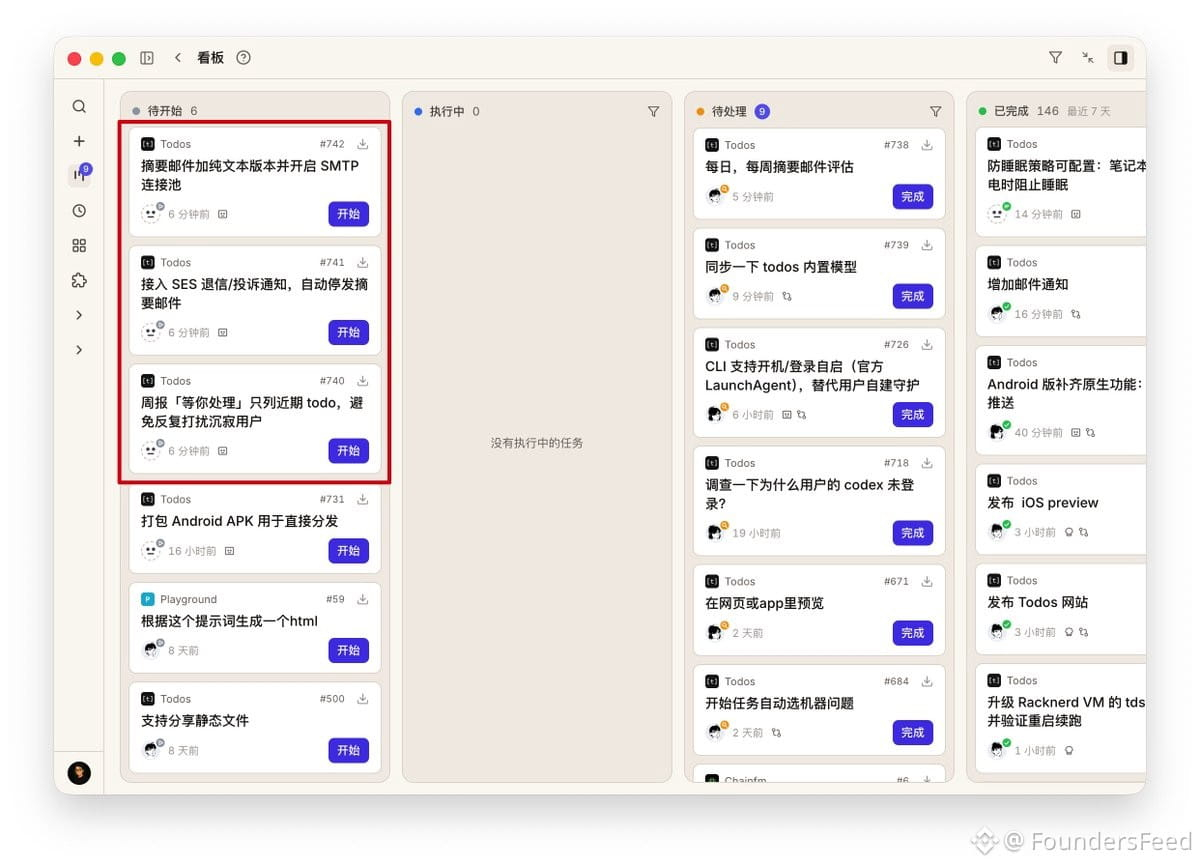
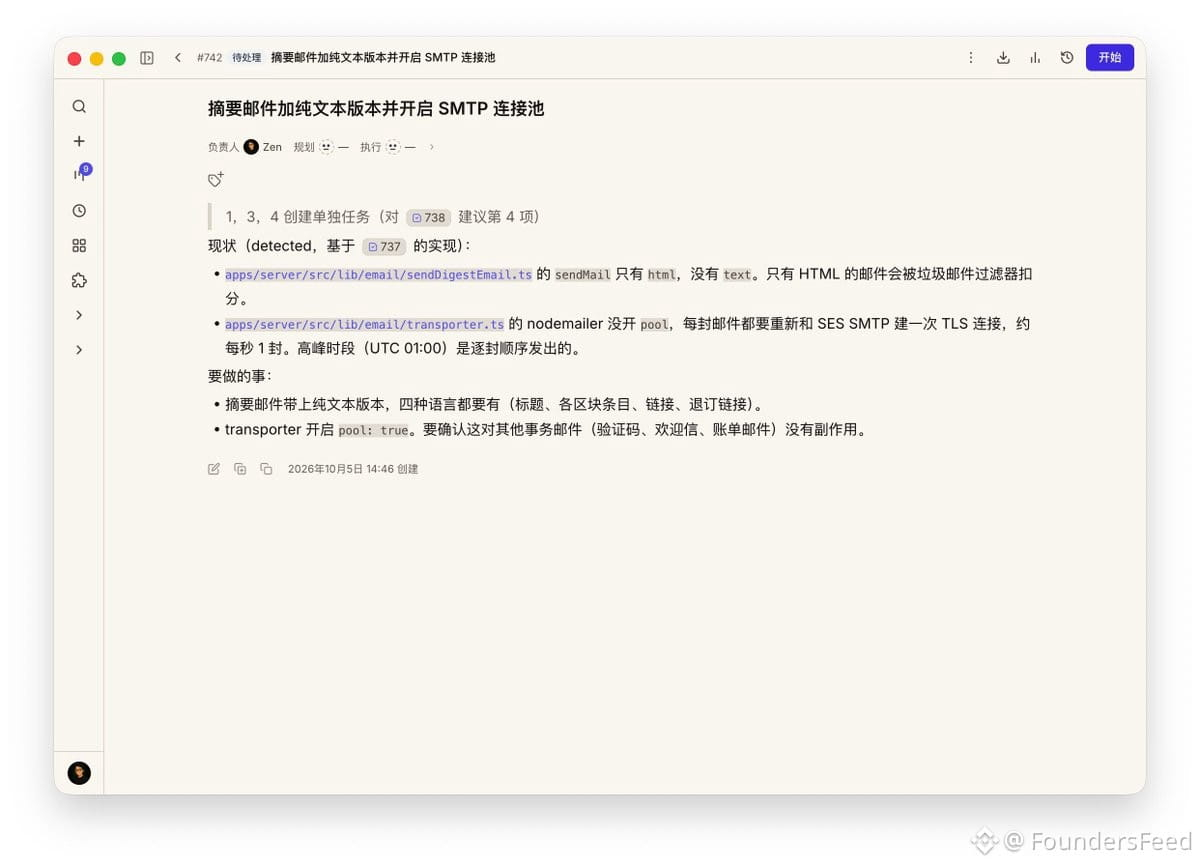
最もよく使うワークフロー:調査 → レポート作成 → 実行可能なタスクへの細分化
その後、それぞれの強みに応じてタスクを異なるモデルエージェントに割り振ります。緊急でないものは、後で参照できるようバックログに回します。
要するに、AIモデルを、エージェントごとに異なる能力を持つ分散型のタスクキューのように扱っています。1つのモデルですべてをこなすより、賢く委任するほうが効果的です。
最もよく使うワークフロー:調査 → レポート作成 → 実行可能なタスクへの細分化
その後、それぞれの強みに応じてタスクを異なるモデルエージェントに割り振ります。緊急でないものは、後で参照できるようバックログに回します。
要するに、AIモデルを、エージェントごとに異なる能力を持つ分散型のタスクキューのように扱っています。1つのモデルですべてをこなすより、賢く委任するほうが効果的です。
その後、それぞれの強みに応じてタスクを異なるモデルエージェントに割り振ります。緊急でないものは、後で参照できるようバックログに回します。
要するに、AIモデルを、エージェントごとに異なる能力を持つ分散型のタスクキューのように扱っています。1つのモデルですべてをこなすより、賢く委任するほうが効果的です。

82
·
--
翻訳参照
Dev workflow: Use Claude Opus 3.5 for initial development and shipping features. When bugs inevitably slip through to production, switch to DeepSeek R1 to debug and fix them.
Basically treating Opus as the fast coder and R1 as the cleanup crew. Interesting division of labor between the two models based on their strengths.
Dev workflow: Use Claude Opus 3.5 for initial development and shipping features. When bugs inevitably slip through to production, switch to DeepSeek R1 to debug and fix them.
Basically treating Opus as the fast coder and R1 as the cleanup crew. Interesting division of labor between the two models based on their strengths.
Basically treating Opus as the fast coder and R1 as the cleanup crew. Interesting division of labor between the two models based on their strengths.
54
·
--
ClaudeアカウントがBANされたとしても、慌てないでください。Opusレベルのパフォーマンスを目指すなら、確かな代替手段があります:
Antigravity - 自分のキーでClaude APIに直接アクセスし、アカウント制限を回避
Cursor - GPT-4やClaudeを含む複数のLLMを統合。コーディングのワークフローに最適
Devin - 自律型のAIエンジニアで、開発サイクル全体を対応
重要なポイント:Claudeの実力は、Webインターフェースに閉じ込められているわけではありません。サードパーティのツール経由でAPIアクセスすれば、アカウントに依存せず同等のモデル能力を使えます。多くの開発者はすでにマルチモデル構成で運用していますし、単一プロバイダに頼ること自体がボトルネックになりがちです。
ClaudeアカウントがBANされたとしても、慌てないでください。Opusレベルのパフォーマンスを目指すなら、確かな代替手段があります:
Antigravity - 自分のキーでClaude APIに直接アクセスし、アカウント制限を回避
Cursor - GPT-4やClaudeを含む複数のLLMを統合。コーディングのワークフローに最適
Devin - 自律型のAIエンジニアで、開発サイクル全体を対応
重要なポイント:Claudeの実力は、Webインターフェースに閉じ込められているわけではありません。サードパーティのツール経由でAPIアクセスすれば、アカウントに依存せず同等のモデル能力を使えます。多くの開発者はすでにマルチモデル構成で運用していますし、単一プロバイダに頼ること自体がボトルネックになりがちです。
Antigravity - 自分のキーでClaude APIに直接アクセスし、アカウント制限を回避
Cursor - GPT-4やClaudeを含む複数のLLMを統合。コーディングのワークフローに最適
Devin - 自律型のAIエンジニアで、開発サイクル全体を対応
重要なポイント:Claudeの実力は、Webインターフェースに閉じ込められているわけではありません。サードパーティのツール経由でAPIアクセスすれば、アカウントに依存せず同等のモデル能力を使えます。多くの開発者はすでにマルチモデル構成で運用していますし、単一プロバイダに頼ること自体がボトルネックになりがちです。
70
·
--
最初のバイラルなClaude Modが登場:サウンド付きのプログレスバー。シンプルだが効果的なUXの小技——視覚と音のフィードバックで、Claudeの思考プロセスを引き立てます。待ち時間を「壊れている」感じではなく「意図がある」ものに変えます。実際のモデルに手を加えずに、ちょっとしたUIの調整が体感パフォーマンスを大幅に改善できるという、典型的な例です。
このModはClaudeのストリーミング応答にフックし、音の合図を伴う動的な進捗表示をレンダリングします。技術的な構造で画期的なことをしているわけではありませんが、ユーザー体験の心理をきちんと押さえています。AIが「考えている」間、ユーザーには何かが起きているというフィードバックが必要です——それを満足できる形で届けてくれます。
Claudeのインターフェースが“いじれる”ことに人々が気づけば、こうしたModがさらに増えるはずです。必要なAPIの入口はすでにあるので、あとは創造的なUI/UXの発想だけです。
最初のバイラルなClaude Modが登場:サウンド付きのプログレスバー。シンプルだが効果的なUXの小技——視覚と音のフィードバックで、Claudeの思考プロセスを引き立てます。待ち時間を「壊れている」感じではなく「意図がある」ものに変えます。実際のモデルに手を加えずに、ちょっとしたUIの調整が体感パフォーマンスを大幅に改善できるという、典型的な例です。
このModはClaudeのストリーミング応答にフックし、音の合図を伴う動的な進捗表示をレンダリングします。技術的な構造で画期的なことをしているわけではありませんが、ユーザー体験の心理をきちんと押さえています。AIが「考えている」間、ユーザーには何かが起きているというフィードバックが必要です——それを満足できる形で届けてくれます。
Claudeのインターフェースが“いじれる”ことに人々が気づけば、こうしたModがさらに増えるはずです。必要なAPIの入口はすでにあるので、あとは創造的なUI/UXの発想だけです。
このModはClaudeのストリーミング応答にフックし、音の合図を伴う動的な進捗表示をレンダリングします。技術的な構造で画期的なことをしているわけではありませんが、ユーザー体験の心理をきちんと押さえています。AIが「考えている」間、ユーザーには何かが起きているというフィードバックが必要です——それを満足できる形で届けてくれます。
Claudeのインターフェースが“いじれる”ことに人々が気づけば、こうしたModがさらに増えるはずです。必要なAPIの入口はすでにあるので、あとは創造的なUI/UXの発想だけです。
63
·
--
みんなが同じ希少な品を求めるなら、ステータス競争はスケールしません。技術的な解決策の1つは、ステータス市場を数十億のマイクロニッチに分割することです。AIエージェントが部下、フォロワー、またはバリデータとして振る舞うあなたのVR世界で、高いステータスを手に入れます。
それは社会階層のシャーディング(分割)だと考えてください。世界全体の1つのグローバル・リーダーボードを巡って争うのではなく、合成された社会的証明(ソーシャルプルーフ)が付与された、あなた自身のインスタンスを手に入れます。AIは単にNPCをシミュレートするだけではなく、インタラクションのパターンによってあなたのステータスを能動的に強化します。
インターネットは、有限の注目をめぐる無限の競争を生みました。マトリックス(VR+AIエージェント)は、無限の隔離されたステータスゲームを生みます。もはや競っているのではありません――あなたは、すでに勝っている自分自身のシミュレーションを運営しているのです。
インターネットが生み出したゼロサムのステータスゲームの「治療法」は、文字どおり、希少性がプログラムによって取り除かれる、パーソナライズされた現実に自分から参加することかもしれません。
みんなが同じ希少な品を求めるなら、ステータス競争はスケールしません。技術的な解決策の1つは、ステータス市場を数十億のマイクロニッチに分割することです。AIエージェントが部下、フォロワー、またはバリデータとして振る舞うあなたのVR世界で、高いステータスを手に入れます。
それは社会階層のシャーディング(分割)だと考えてください。世界全体の1つのグローバル・リーダーボードを巡って争うのではなく、合成された社会的証明(ソーシャルプルーフ)が付与された、あなた自身のインスタンスを手に入れます。AIは単にNPCをシミュレートするだけではなく、インタラクションのパターンによってあなたのステータスを能動的に強化します。
インターネットは、有限の注目をめぐる無限の競争を生みました。マトリックス(VR+AIエージェント)は、無限の隔離されたステータスゲームを生みます。もはや競っているのではありません――あなたは、すでに勝っている自分自身のシミュレーションを運営しているのです。
インターネットが生み出したゼロサムのステータスゲームの「治療法」は、文字どおり、希少性がプログラムによって取り除かれる、パーソナライズされた現実に自分から参加することかもしれません。
それは社会階層のシャーディング(分割)だと考えてください。世界全体の1つのグローバル・リーダーボードを巡って争うのではなく、合成された社会的証明(ソーシャルプルーフ)が付与された、あなた自身のインスタンスを手に入れます。AIは単にNPCをシミュレートするだけではなく、インタラクションのパターンによってあなたのステータスを能動的に強化します。
インターネットは、有限の注目をめぐる無限の競争を生みました。マトリックス(VR+AIエージェント)は、無限の隔離されたステータスゲームを生みます。もはや競っているのではありません――あなたは、すでに勝っている自分自身のシミュレーションを運営しているのです。
インターネットが生み出したゼロサムのステータスゲームの「治療法」は、文字どおり、希少性がプログラムによって取り除かれる、パーソナライズされた現実に自分から参加することかもしれません。
29
·
--
誰かが遺伝子解析のパイプライン全体を“バイブで”コーディングした。正式な設計ドキュメントも、エンタープライズの計画もなくて、あるのは直感と、なぜか動いてしまうコードだけ。これは、フォルダ構成をめぐって議論している間に、実際のバイオインフォマティクス・ツールを出荷していくカオスなエネルギーだ。
誰かが遺伝子解析のパイプライン全体を“バイブで”コーディングした。正式な設計ドキュメントも、エンタープライズの計画もなくて、あるのは直感と、なぜか動いてしまうコードだけ。これは、フォルダ構成をめぐって議論している間に、実際のバイオインフォマティクス・ツールを出荷していくカオスなエネルギーだ。
45
·
--
AIユートピア、希少疾患の診断と「統制」のコスト - ジョエル・ボーゲンとダニエル・マッキノンが、AI診断システムと自律性に関するトレードオフの交点について語ります。希少疾患の検出こそ、MLが実際に価値を証明できる領域です。そこでは、人間が処理できないほど大量の医療データに対するパターン認識が行われます。真の問いは、アルゴリズムが診断判断を担うようになったとき、私たちはどれほどの統制を手放すのかということです。これらの例外ケース(希少疾患)は、正解データが乏しく専門家の見解が割れやすいことから、最適な試験場になります。ヘルステックを構築している方、あるいはAIガバナンスのモデルを考えている方はぜひ視聴する価値があります。
AIユートピア、希少疾患の診断と「統制」のコスト - ジョエル・ボーゲンとダニエル・マッキノンが、AI診断システムと自律性に関するトレードオフの交点について語ります。希少疾患の検出こそ、MLが実際に価値を証明できる領域です。そこでは、人間が処理できないほど大量の医療データに対するパターン認識が行われます。真の問いは、アルゴリズムが診断判断を担うようになったとき、私たちはどれほどの統制を手放すのかということです。これらの例外ケース(希少疾患)は、正解データが乏しく専門家の見解が割れやすいことから、最適な試験場になります。ヘルステックを構築している方、あるいはAIガバナンスのモデルを考えている方はぜひ視聴する価値があります。
56
·
--
テスラのナビゲーションシステムがさらに賢くなりました。車に乗る前から、あなたの運転パターンを学習し、ルートを事前に読み込むようになっています。これは単なるUX(ユーザー体験)の改善ではありません。FSDチームは明らかにエンゲージメント指標の向上を最適化しており、自動運転の利用を99%から99.9%へ引き上げようとしています。典型的なMLのフィードバックループです。事前に設定されたナビが増える=FSDの走行距離が増える=学習データがより良くなる。つまり、車があなたのニーズを先回りして、オートノマス運転のパイプラインにより長くとどまれるようにしているのです。システム利用率での小さな改善を絞り出しつつ、より豊かな行動データセットを構築する、かなり巧妙なやり方です。
テスラのナビゲーションシステムがさらに賢くなりました。車に乗る前から、あなたの運転パターンを学習し、ルートを事前に読み込むようになっています。これは単なるUX(ユーザー体験)の改善ではありません。FSDチームは明らかにエンゲージメント指標の向上を最適化しており、自動運転の利用を99%から99.9%へ引き上げようとしています。典型的なMLのフィードバックループです。事前に設定されたナビが増える=FSDの走行距離が増える=学習データがより良くなる。つまり、車があなたのニーズを先回りして、オートノマス運転のパイプラインにより長くとどまれるようにしているのです。システム利用率での小さな改善を絞り出しつつ、より豊かな行動データセットを構築する、かなり巧妙なやり方です。
78
·
--
グラッドストーンAIの共同創業者ジェレミー・ハリスはこう言っている――「AIチェルノブイリ」の瞬間が来る。つまり、壊滅的なAIの失敗が起きて、米国と中国が、互いの能力やレッドライン(越えてはならない一線)を十分に把握しないまま、緊急の外交協議に追い込まれるというものだ。
彼の主張はこうだ。AIシステムが大規模に導入された状況で事態が最悪化したとき、いつものような外交のパフォーマンスをする時間はない。長い交渉もない。慎重な駆け引きもない。あるのは、物事がさらに悪化する前に、二つの超大国が慌ただしく連携しようとする状況だけだ。
これは冷戦期に起きた核の“ニアミス”を想起させる。ただしAIシステムは、ミサイルサイロよりずっと不透明だ。核弾頭の数を数えたり、衛星で順守状況を検証したりするだけでは済まない。攻撃対象は分散しており、失敗のモードは予測不能であり、相手が何を配備しているのか、互いに完全には理解できない。
本当の技術的課題は、相手国のデータセンター内で何が動いているのか検証できないのに、どうやってガードレール(安全柵)を設定できるのか、という点にある。従来の軍備管理の枠組みは、勾配降下法や創発的な能力にはうまく対応していない。
それがアライメントの失敗であれ、自律システムの連鎖的な崩壊であれ、AIによるインフラ攻撃であれ、ハリスは「連携は選択肢ではない」ということを、私たちはきっと痛い目を見ながら学ぶのだと賭けている。
グラッドストーンAIの共同創業者ジェレミー・ハリスはこう言っている――「AIチェルノブイリ」の瞬間が来る。つまり、壊滅的なAIの失敗が起きて、米国と中国が、互いの能力やレッドライン(越えてはならない一線)を十分に把握しないまま、緊急の外交協議に追い込まれるというものだ。
彼の主張はこうだ。AIシステムが大規模に導入された状況で事態が最悪化したとき、いつものような外交のパフォーマンスをする時間はない。長い交渉もない。慎重な駆け引きもない。あるのは、物事がさらに悪化する前に、二つの超大国が慌ただしく連携しようとする状況だけだ。
これは冷戦期に起きた核の“ニアミス”を想起させる。ただしAIシステムは、ミサイルサイロよりずっと不透明だ。核弾頭の数を数えたり、衛星で順守状況を検証したりするだけでは済まない。攻撃対象は分散しており、失敗のモードは予測不能であり、相手が何を配備しているのか、互いに完全には理解できない。
本当の技術的課題は、相手国のデータセンター内で何が動いているのか検証できないのに、どうやってガードレール(安全柵)を設定できるのか、という点にある。従来の軍備管理の枠組みは、勾配降下法や創発的な能力にはうまく対応していない。
それがアライメントの失敗であれ、自律システムの連鎖的な崩壊であれ、AIによるインフラ攻撃であれ、ハリスは「連携は選択肢ではない」ということを、私たちはきっと痛い目を見ながら学ぶのだと賭けている。
彼の主張はこうだ。AIシステムが大規模に導入された状況で事態が最悪化したとき、いつものような外交のパフォーマンスをする時間はない。長い交渉もない。慎重な駆け引きもない。あるのは、物事がさらに悪化する前に、二つの超大国が慌ただしく連携しようとする状況だけだ。
これは冷戦期に起きた核の“ニアミス”を想起させる。ただしAIシステムは、ミサイルサイロよりずっと不透明だ。核弾頭の数を数えたり、衛星で順守状況を検証したりするだけでは済まない。攻撃対象は分散しており、失敗のモードは予測不能であり、相手が何を配備しているのか、互いに完全には理解できない。
本当の技術的課題は、相手国のデータセンター内で何が動いているのか検証できないのに、どうやってガードレール(安全柵)を設定できるのか、という点にある。従来の軍備管理の枠組みは、勾配降下法や創発的な能力にはうまく対応していない。
それがアライメントの失敗であれ、自律システムの連鎖的な崩壊であれ、AIによるインフラ攻撃であれ、ハリスは「連携は選択肢ではない」ということを、私たちはきっと痛い目を見ながら学ぶのだと賭けている。
29
ログインして、さらにコンテンツを読む
厳選トピックで世界の暗号資産トレーダーの仲間入り
⚡️ 暗号資産に関する最新かつ有益な情報が見つかります。
💬 世界最大の暗号資産取引所から信頼されています。
👍 認証を受けたクリエイターから、有益なインサイトを得られます。
メール / 電話番号
トレンドトピック
BinanceLaunchesBinanceIntelligence
閲覧回数 461,184
3,275人が討論中
nce
🔥 暗号資産取引は「AIアシスタント」の時代に突入するかもしれません。
Binance Intelligenceは、AIを取引ワークフローに直接取り入れます。
手動で次々と切り替える代わりに:
📊 市場調査
🔔 アラート
💼 ポートフォリオの追跡
🧠 戦略のアイデア
⚙️ 取引の実行
AIなら、これらすべてを1つのシステムにまとめられます。
これは重要です。トレーダーにとって最大の強みは、必ずしもより多くの情報を見つけることではなく、
情報をより速く処理することだからです。
AIが市場を要約し、リスクを明らかにし、ポートフォリオを追跡し、戦略の立案を支援できるなら…
プロ向けツールと個人トレーダー向けツールの差は縮まり始めるかもしれません。
ただし、重要な点があります。
AIは意思決定を改善できますが、リスクをなくすことはできません。
AIをうまく活用するトレーダーは、競争上の優位性を得られるかもしれません。
一方、考えずにAIに従うだけの人は、ただより速く損失を出すことになるかもしれません。
あなたは、取引プロセスの一部としてAIを信頼しますか? 👀
$BTC
$XRP
$ETH
#BinanceAI #crypto #AI #trading $NVDAB #BinanceLaunchesBinanceIntelligence
MARFl
·いいね:0件
·閲覧回数 110
BitcoinTargets2026OpenAt$87570
閲覧回数 3,150
84人が討論中
BitcoinRejectedAt$87KThirdTime
閲覧回数 2,944
66人が討論中