

x_Trader_
221 投稿

x_Trader_
報告
ユーザーをブロック
Content Creator | Crypto Trader | Gold Trader. I think that's enough.
61 フォロー
3.1K+ フォロワー
576 いいね
投稿
すべて
引用
ライブ
PINNED
·
--
今週は2026年の暗号資産にとって最も重要な週になるかもしれません。でも多くの人はまだ準備ができていないようです 👀
相次いで起きる3つの出来事 —
9月15日にCLARITY法案が上院の審議に上がりました。米国史上初めての暗号資産規制に関する本格的な投票です。進めるには、上院は60票のハードルをクリアする必要があります。
さらにFRBが政策金利を25ベーシスポイント引き上げました — 市場は、粘り強いインフレを背景に利上げの確率を85%と見込んでいました。金利の上昇は=暗号資産への圧力です。
そして日本銀行が本日9月17日に会合を開きます。日銀の政策変更は、世界の流動性に影響し、それが暗号資産にも波及します。
一方で $BTC は、8月に$60Kから回復して$78Kを上回った状態です 😅
3つの政治的・金融的・世界的な出来事。4日間。1つの市場。
今週何が起ころうと — それが2026年の残りの流れを決めます。
あなたはそれに備えていますか? 👇
$BTC
{future}(BTCUSDT)
今週は2026年の暗号資産にとって最も重要な週になるかもしれません。でも多くの人はまだ準備ができていないようです 👀
相次いで起きる3つの出来事 —
9月15日にCLARITY法案が上院の審議に上がりました。米国史上初めての暗号資産規制に関する本格的な投票です。進めるには、上院は60票のハードルをクリアする必要があります。
さらにFRBが政策金利を25ベーシスポイント引き上げました — 市場は、粘り強いインフレを背景に利上げの確率を85%と見込んでいました。金利の上昇は=暗号資産への圧力です。
そして日本銀行が本日9月17日に会合を開きます。日銀の政策変更は、世界の流動性に影響し、それが暗号資産にも波及します。
一方で $BTC は、8月に$60Kから回復して$78Kを上回った状態です 😅
3つの政治的・金融的・世界的な出来事。4日間。1つの市場。
今週何が起ころうと — それが2026年の残りの流れを決めます。
あなたはそれに備えていますか? 👇
$BTC
相次いで起きる3つの出来事 —
9月15日にCLARITY法案が上院の審議に上がりました。米国史上初めての暗号資産規制に関する本格的な投票です。進めるには、上院は60票のハードルをクリアする必要があります。
さらにFRBが政策金利を25ベーシスポイント引き上げました — 市場は、粘り強いインフレを背景に利上げの確率を85%と見込んでいました。金利の上昇は=暗号資産への圧力です。
そして日本銀行が本日9月17日に会合を開きます。日銀の政策変更は、世界の流動性に影響し、それが暗号資産にも波及します。
一方で $BTC は、8月に$60Kから回復して$78Kを上回った状態です 😅
3つの政治的・金融的・世界的な出来事。4日間。1つの市場。
今週何が起ころうと — それが2026年の残りの流れを決めます。
あなたはそれに備えていますか? 👇
$BTC

247
2
24
247
PINNED


·
--
本人確認中
#dusk $DUSK @Dusk_Foundation
今週はホワイトペーパーの「実装」セクションを2回読み直しました。1回目は、"ホスト関数" について書かれている部分を、VMがどう作られているかに関する単なる技術的な注釈だろうと考えて、軽く流してしまいました。2回目に、その前提は崩れました。
私は「VM上で動くスマートコントラクト」と「VM上で動く暗号処理」を同じ主張だと扱っていました。でも違います。両者の間にあるギャップこそが、実は面白い設計判断です。
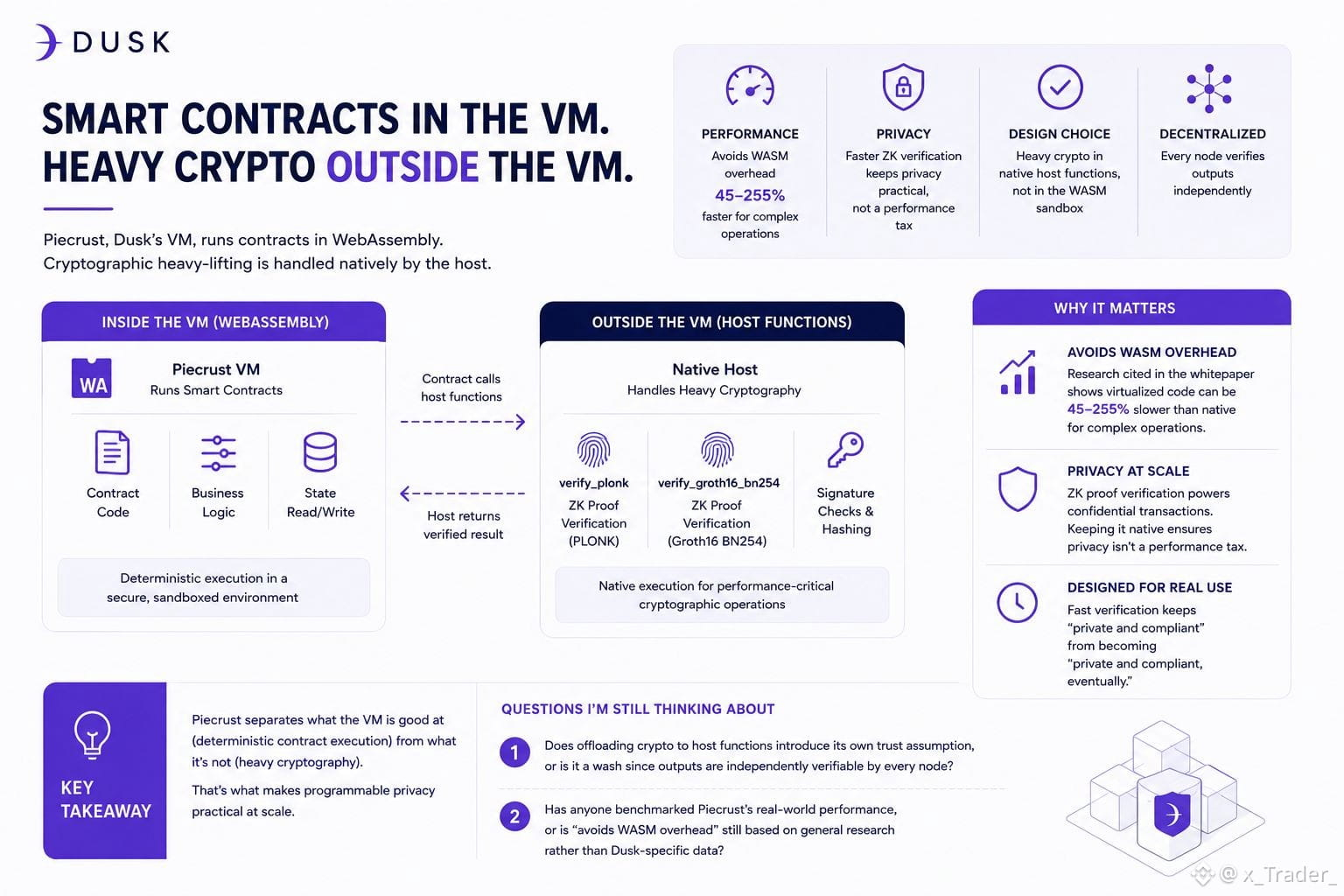
Piecrust(DuskのVM)は、契約をWebAssemblyで実行します。しかし、暗号の重い処理――ハッシュ、ZK証明の検証、署名チェック――を、そのWASMサンドボックスの中で実際に行うわけではありません。これらは、verify_plonk や verify_groth16_bn254 のような公開された関数を通じて、ネイティブ側のホストで処理されます。契約はそれらに呼びかけますが、高コストな計算の中身は仮想化された環境には触れません。
なぜこれが単なる些細な実装の詳細ではないのか。ホワイトペーパーが引用しているWASM実行の研究では、仮想化されたコードは複雑な処理においてネイティブコードより45〜255%遅くなり得ることが示されています。つまり、そのオーバーヘッドは、最適化でどうにかできる類ではなく、サンドボックス化されたメモリや命令の仕組みに組み込まれています。
したがって、基本的にあらゆることにZK証明の検証を用いる機密取引では、検証が通常のコントラクト呼び出しのようにVMの中で実行されてしまうと、すべての取引ごとにその“税金”を払うことになります。
これがプライバシー設計に結びつく理由です。「プログラマブル・プライバシー」は、暗号技術の選択であるだけでなく、性能上の制約でもあります。証明検証が遅いと、「private and compliant(機密であり、準拠している)」がいつの間にか「private and compliant, eventually.(機密であり、いずれ準拠する)」になってしまう。暗号をホスト関数へ切り出すのは、すべての取引の上にかかる“追加料金”としてではなく、それ自身の性質としてプライバシーを保つためです。
ここで実際に、Piecrustの現実の数値をベンチマークした人はいるのでしょうか?それとも「WASMのオーバーヘッドを回避する」という話は、Dusk固有のデータではなく、ホワイトペーパーが引用している一般的な研究にまだ依存しているだけなのでしょうか?
#dusk $DUSK @Dusk
今週はホワイトペーパーの「実装」セクションを2回読み直しました。1回目は、"ホスト関数" について書かれている部分を、VMがどう作られているかに関する単なる技術的な注釈だろうと考えて、軽く流してしまいました。2回目に、その前提は崩れました。
私は「VM上で動くスマートコントラクト」と「VM上で動く暗号処理」を同じ主張だと扱っていました。でも違います。両者の間にあるギャップこそが、実は面白い設計判断です。
Piecrust(DuskのVM)は、契約をWebAssemblyで実行します。しかし、暗号の重い処理――ハッシュ、ZK証明の検証、署名チェック――を、そのWASMサンドボックスの中で実際に行うわけではありません。これらは、verify_plonk や verify_groth16_bn254 のような公開された関数を通じて、ネイティブ側のホストで処理されます。契約はそれらに呼びかけますが、高コストな計算の中身は仮想化された環境には触れません。
なぜこれが単なる些細な実装の詳細ではないのか。ホワイトペーパーが引用しているWASM実行の研究では、仮想化されたコードは複雑な処理においてネイティブコードより45〜255%遅くなり得ることが示されています。つまり、そのオーバーヘッドは、最適化でどうにかできる類ではなく、サンドボックス化されたメモリや命令の仕組みに組み込まれています。
したがって、基本的にあらゆることにZK証明の検証を用いる機密取引では、検証が通常のコントラクト呼び出しのようにVMの中で実行されてしまうと、すべての取引ごとにその“税金”を払うことになります。
これがプライバシー設計に結びつく理由です。「プログラマブル・プライバシー」は、暗号技術の選択であるだけでなく、性能上の制約でもあります。証明検証が遅いと、「private and compliant(機密であり、準拠している)」がいつの間にか「private and compliant, eventually.(機密であり、いずれ準拠する)」になってしまう。暗号をホスト関数へ切り出すのは、すべての取引の上にかかる“追加料金”としてではなく、それ自身の性質としてプライバシーを保つためです。
ここで実際に、Piecrustの現実の数値をベンチマークした人はいるのでしょうか?それとも「WASMのオーバーヘッドを回避する」という話は、Dusk固有のデータではなく、ホワイトペーパーが引用している一般的な研究にまだ依存しているだけなのでしょうか?
今週はホワイトペーパーの「実装」セクションを2回読み直しました。1回目は、"ホスト関数" について書かれている部分を、VMがどう作られているかに関する単なる技術的な注釈だろうと考えて、軽く流してしまいました。2回目に、その前提は崩れました。
私は「VM上で動くスマートコントラクト」と「VM上で動く暗号処理」を同じ主張だと扱っていました。でも違います。両者の間にあるギャップこそが、実は面白い設計判断です。
Piecrust(DuskのVM)は、契約をWebAssemblyで実行します。しかし、暗号の重い処理――ハッシュ、ZK証明の検証、署名チェック――を、そのWASMサンドボックスの中で実際に行うわけではありません。これらは、verify_plonk や verify_groth16_bn254 のような公開された関数を通じて、ネイティブ側のホストで処理されます。契約はそれらに呼びかけますが、高コストな計算の中身は仮想化された環境には触れません。
なぜこれが単なる些細な実装の詳細ではないのか。ホワイトペーパーが引用しているWASM実行の研究では、仮想化されたコードは複雑な処理においてネイティブコードより45〜255%遅くなり得ることが示されています。つまり、そのオーバーヘッドは、最適化でどうにかできる類ではなく、サンドボックス化されたメモリや命令の仕組みに組み込まれています。
したがって、基本的にあらゆることにZK証明の検証を用いる機密取引では、検証が通常のコントラクト呼び出しのようにVMの中で実行されてしまうと、すべての取引ごとにその“税金”を払うことになります。
これがプライバシー設計に結びつく理由です。「プログラマブル・プライバシー」は、暗号技術の選択であるだけでなく、性能上の制約でもあります。証明検証が遅いと、「private and compliant(機密であり、準拠している)」がいつの間にか「private and compliant, eventually.(機密であり、いずれ準拠する)」になってしまう。暗号をホスト関数へ切り出すのは、すべての取引の上にかかる“追加料金”としてではなく、それ自身の性質としてプライバシーを保つためです。
ここで実際に、Piecrustの現実の数値をベンチマークした人はいるのでしょうか?それとも「WASMのオーバーヘッドを回避する」という話は、Dusk固有のデータではなく、ホワイトペーパーが引用している一般的な研究にまだ依存しているだけなのでしょうか?
5
5
533
·
--
本人確認中
#dusk
DuskEVMのロールアップ設計は、要するに技術的な詳細——シーケンサー、バッチャー、ベースレイヤーなど——の話だと思っていました。ところが実際に、その紛争(ディスピュート)モデルをArbitrumやOptimismのそれと比べたところ、前提が崩れました。
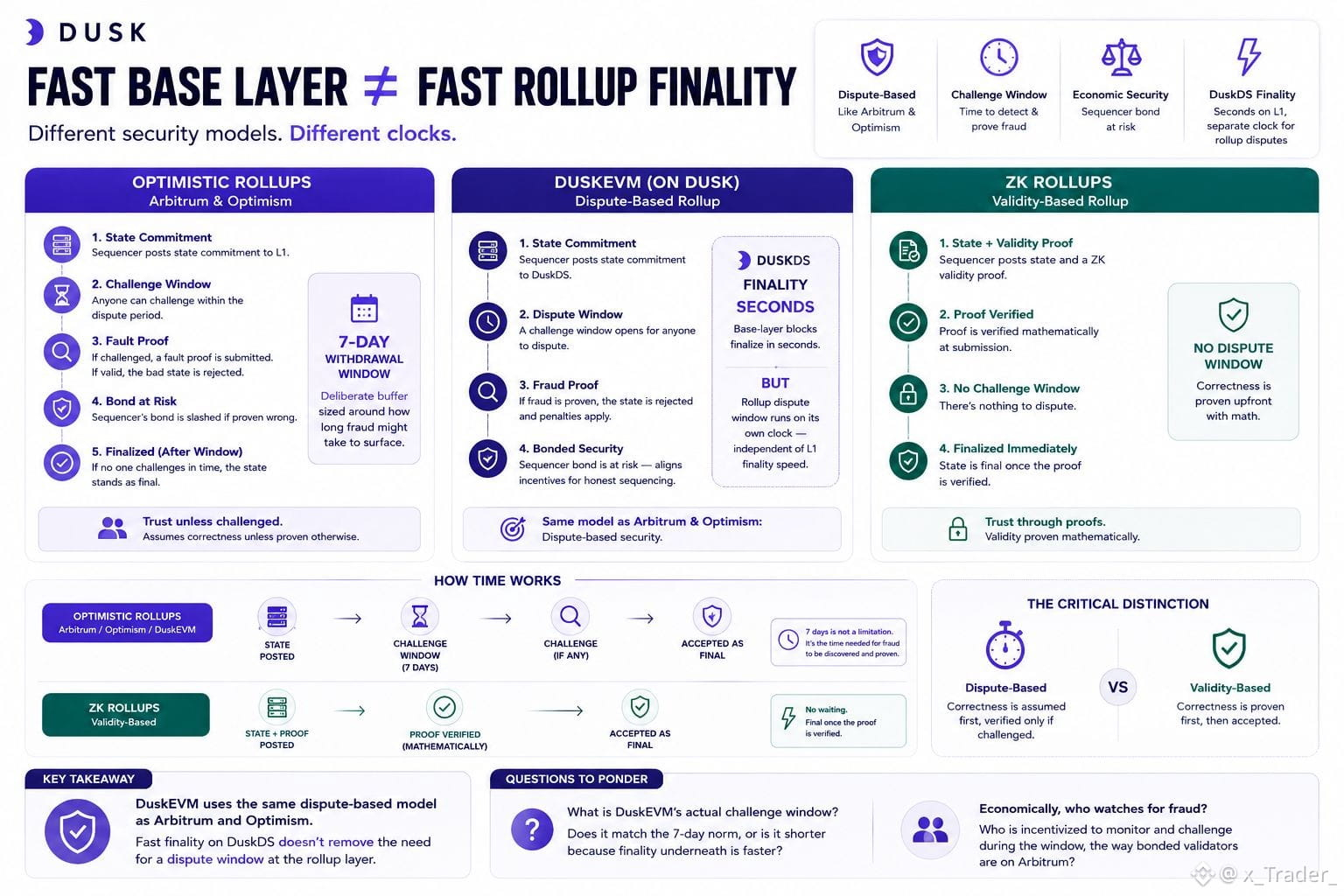
楽観型ロールアップは、デフォルトでは検証しません。検証はチャレンジ(異議申し立て)によって行われます。シーケンサーは状態コミットメントを投稿します。誰でもそれに対してフォールトプルーフ(障害証明)を提出できます。証明が成立すれば、誤った状態は却下され、シーケンサーの担保(ボンド)はスラッシュされます。誰も所定の時間内に異議を申し立てなければ、それは実際に正しかったかどうかに関係なく最終確定として残ります。
数値を横並びにして初めて、つながらなかった点が見えてきました。ArbitrumとOptimismはどちらも、7日間の出金(撤回)ウィンドウを設けています——これは制約ではなく、詐欺(フロード)が表面化するまでにかかり得る時間を見込んだ意図的なバッファです。zkロールアップはこれを完全に省略しています。妥当性証明は提出時に数学的にチェックされるため、争う余地が残らないのです。
DuskDSはベースレイヤーのブロックを数秒で確定します。私は、その速さがロールアップ層にも自動的に引き継がれるものだと考えていました。違います。紛争ウィンドウはそれ自体の時計で進み、下の層がどれだけ速く決着するかとは無関係です。
つまり本当の比較は「DuskEVMとEthereumのロールアップ」ではありません。「紛争(ディスピュート)ベースのセキュリティと、数学(マス)ベースのセキュリティ」です。そしてDuskEVMは、ArbitrumやOptimismと同じ側——その選択をしました。
$DUSK
@Dusk_Foundation
DuskEVMの実際のチャレンジウィンドウはどれくらいですか?7日という標準に一致しますか、それとも下層の最終確定が速い分、より短いのでしょうか?
#dusk
DuskEVMのロールアップ設計は、要するに技術的な詳細——シーケンサー、バッチャー、ベースレイヤーなど——の話だと思っていました。ところが実際に、その紛争(ディスピュート)モデルをArbitrumやOptimismのそれと比べたところ、前提が崩れました。
楽観型ロールアップは、デフォルトでは検証しません。検証はチャレンジ(異議申し立て)によって行われます。シーケンサーは状態コミットメントを投稿します。誰でもそれに対してフォールトプルーフ(障害証明)を提出できます。証明が成立すれば、誤った状態は却下され、シーケンサーの担保(ボンド)はスラッシュされます。誰も所定の時間内に異議を申し立てなければ、それは実際に正しかったかどうかに関係なく最終確定として残ります。
数値を横並びにして初めて、つながらなかった点が見えてきました。ArbitrumとOptimismはどちらも、7日間の出金(撤回)ウィンドウを設けています——これは制約ではなく、詐欺(フロード)が表面化するまでにかかり得る時間を見込んだ意図的なバッファです。zkロールアップはこれを完全に省略しています。妥当性証明は提出時に数学的にチェックされるため、争う余地が残らないのです。
DuskDSはベースレイヤーのブロックを数秒で確定します。私は、その速さがロールアップ層にも自動的に引き継がれるものだと考えていました。違います。紛争ウィンドウはそれ自体の時計で進み、下の層がどれだけ速く決着するかとは無関係です。
つまり本当の比較は「DuskEVMとEthereumのロールアップ」ではありません。「紛争(ディスピュート)ベースのセキュリティと、数学(マス)ベースのセキュリティ」です。そしてDuskEVMは、ArbitrumやOptimismと同じ側——その選択をしました。
$DUSK
@Dusk
DuskEVMの実際のチャレンジウィンドウはどれくらいですか?7日という標準に一致しますか、それとも下層の最終確定が速い分、より短いのでしょうか?
DuskEVMのロールアップ設計は、要するに技術的な詳細——シーケンサー、バッチャー、ベースレイヤーなど——の話だと思っていました。ところが実際に、その紛争(ディスピュート)モデルをArbitrumやOptimismのそれと比べたところ、前提が崩れました。
楽観型ロールアップは、デフォルトでは検証しません。検証はチャレンジ(異議申し立て)によって行われます。シーケンサーは状態コミットメントを投稿します。誰でもそれに対してフォールトプルーフ(障害証明)を提出できます。証明が成立すれば、誤った状態は却下され、シーケンサーの担保(ボンド)はスラッシュされます。誰も所定の時間内に異議を申し立てなければ、それは実際に正しかったかどうかに関係なく最終確定として残ります。
数値を横並びにして初めて、つながらなかった点が見えてきました。ArbitrumとOptimismはどちらも、7日間の出金(撤回)ウィンドウを設けています——これは制約ではなく、詐欺(フロード)が表面化するまでにかかり得る時間を見込んだ意図的なバッファです。zkロールアップはこれを完全に省略しています。妥当性証明は提出時に数学的にチェックされるため、争う余地が残らないのです。
DuskDSはベースレイヤーのブロックを数秒で確定します。私は、その速さがロールアップ層にも自動的に引き継がれるものだと考えていました。違います。紛争ウィンドウはそれ自体の時計で進み、下の層がどれだけ速く決着するかとは無関係です。
つまり本当の比較は「DuskEVMとEthereumのロールアップ」ではありません。「紛争(ディスピュート)ベースのセキュリティと、数学(マス)ベースのセキュリティ」です。そしてDuskEVMは、ArbitrumやOptimismと同じ側——その選択をしました。
$DUSK
@Dusk
DuskEVMの実際のチャレンジウィンドウはどれくらいですか?7日という標準に一致しますか、それとも下層の最終確定が速い分、より短いのでしょうか?
1
3
293
·
--
本人確認中
#dusk $DUSK
私は、Duskの仮想マシンであるPiecrustは、スマートコントラクトを実行するためにあるだけだと思っていました。 どのVMでも同じ仕事——コードを実行し、状態を保持して、それで終わり。 ところが実際には、その“半分”くらいしか担っていないようです。
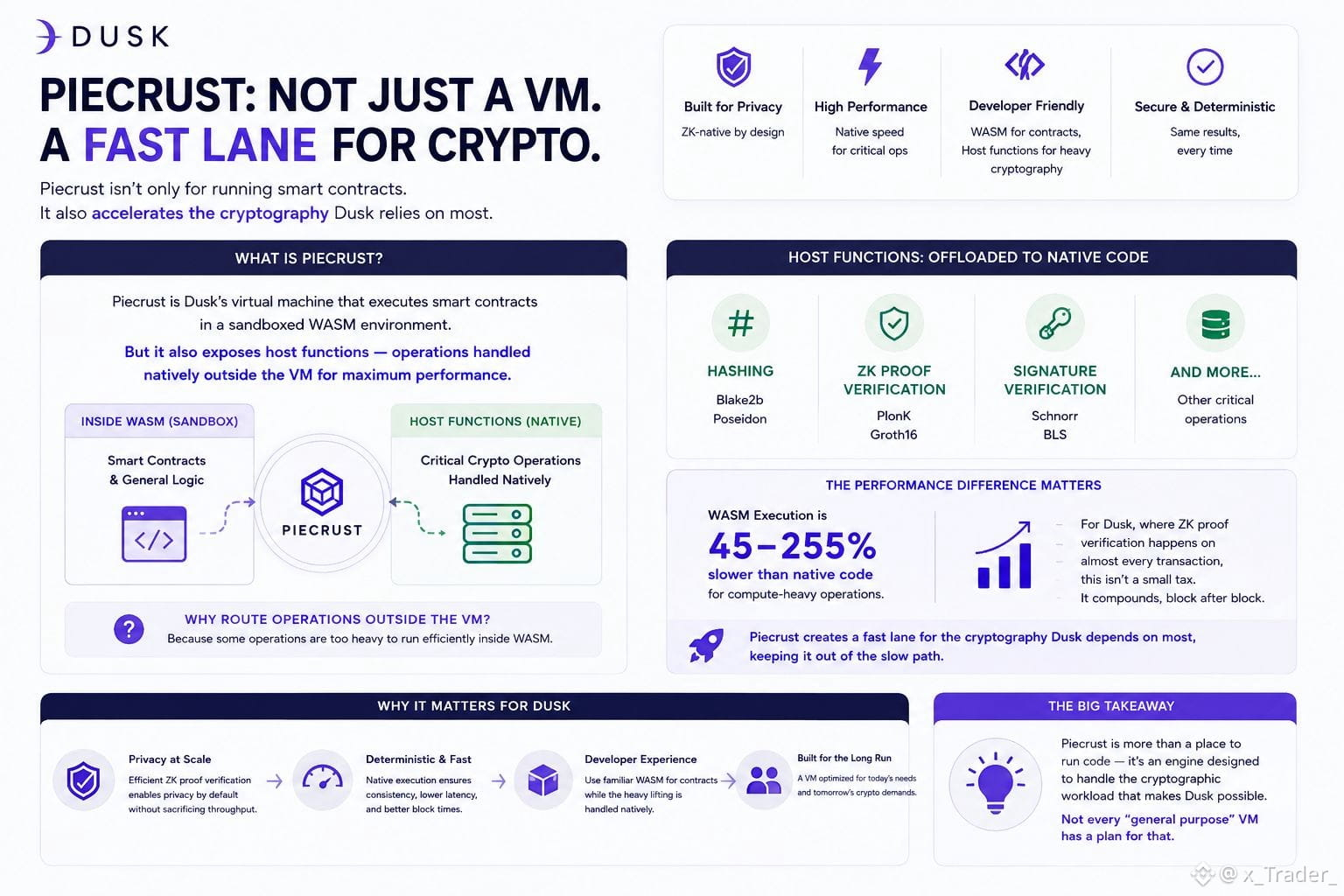
ドキュメントを掘ってみると、Piecrustは一連のホスト関数を公開しています。
VMがサンドボックス化されたWASM環境の中で実行せず、ネイティブコードへ委譲するための操作。
Blake2bとPoseidonによるハッシング。
PlonKおよびGroth16のゼロ知識証明の検証。
SchnorrおよびBLS署名の検証。
これらは通常のコントラクトのバイトコードとしては動きません。
なぜVMは、すべてを普通のやり方でただ実行するだけではなく、特定の操作を自分の外へ回すような手間をかけるのでしょう?
判明したのは、WASMの実行は、計算負荷の高い処理においてネイティブコードより45〜255%遅くなり得るということです。 そのオーバーヘッドは、仮想化されたメモリ管理や、サンドボックス環境が追加で要求する命令処理に起因します。
ZK証明の検証が“たまに”ではなく、ほぼすべてのトランザクションで発生するようなチェーンでは、その計算をWASM内で回すのは、単なる小さな課税では済まない。
それがブロックごとに積み重なっていきます。
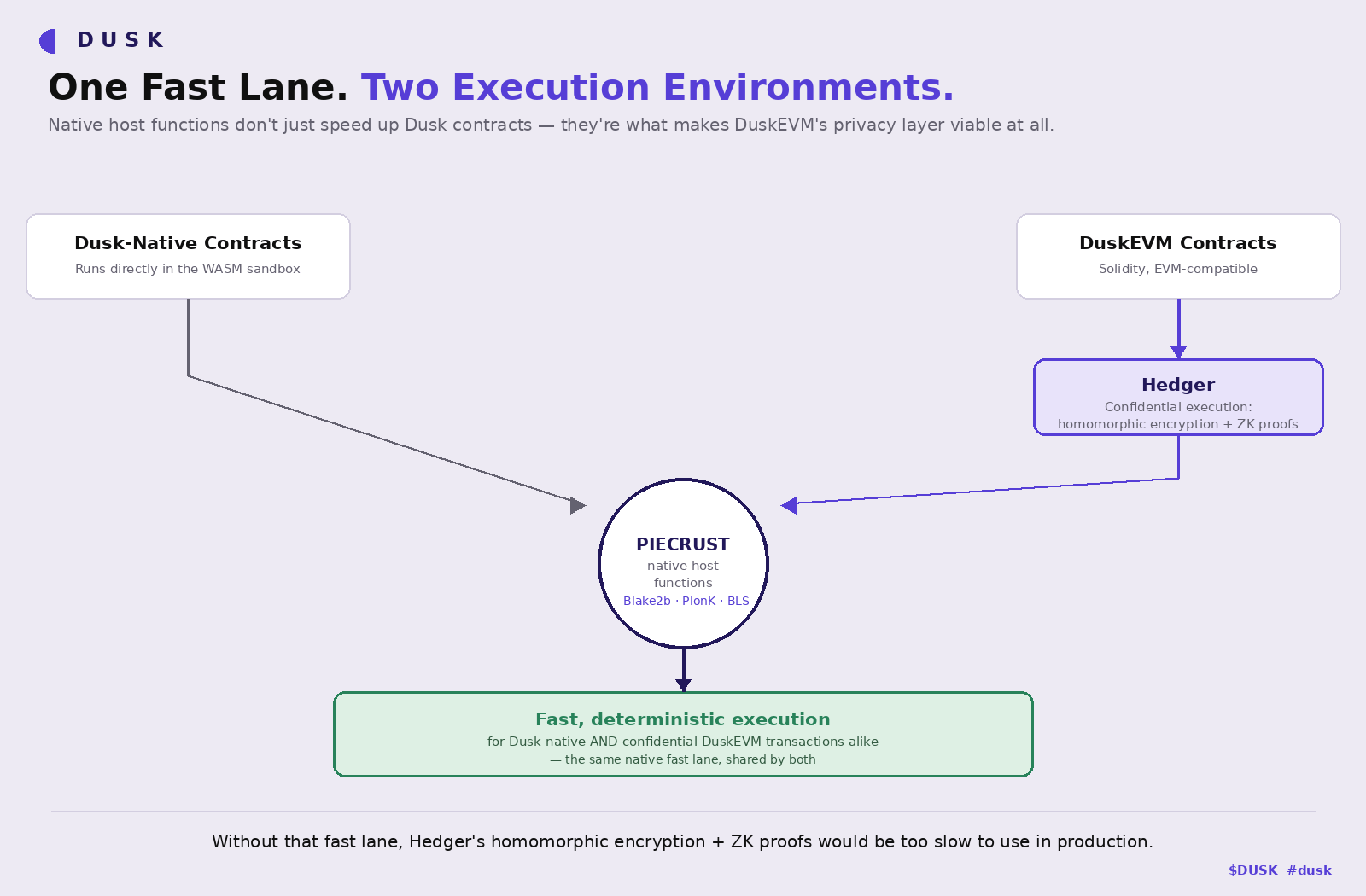
この同じ原理は、Solidity開発者をDuskへ連れてくる、EVM互換レイヤであるDuskEVMにもそのまま当てはまります。
機密実行モジュールのHedgerは、トランザクションを非公開に保つために同型暗号化とZK証明に依存しています。 しかし、そのどれも、下でネイティブのホスト関数がまず重い処理を引き受けてくれなければ、十分に速くはありません。
つまりPiecrustは、単に“どこでコントラクトを実行するか”ではないのです。最重要な暗号演算を行うための高速レーンでもあり、 @Dusk_Foundation 依存する処理を意図的に遅い経路から外してあります。そしてその同じ高速レーンこそが、DuskEVMのプライバシー層を、Duskネイティブのコントラクトに限らず成立させるのに不可欠なのです。
考えさせられます——他にも、いわば「証明検証の課税」を、誰も測ることすらしていないのに静かに食い続けている“汎用目的”のVMは、どれくらいあるのでしょう?
#dusk $DUSK
私は、Duskの仮想マシンであるPiecrustは、スマートコントラクトを実行するためにあるだけだと思っていました。 どのVMでも同じ仕事——コードを実行し、状態を保持して、それで終わり。 ところが実際には、その“半分”くらいしか担っていないようです。
ドキュメントを掘ってみると、Piecrustは一連のホスト関数を公開しています。
VMがサンドボックス化されたWASM環境の中で実行せず、ネイティブコードへ委譲するための操作。
Blake2bとPoseidonによるハッシング。
PlonKおよびGroth16のゼロ知識証明の検証。
SchnorrおよびBLS署名の検証。
これらは通常のコントラクトのバイトコードとしては動きません。
なぜVMは、すべてを普通のやり方でただ実行するだけではなく、特定の操作を自分の外へ回すような手間をかけるのでしょう?
判明したのは、WASMの実行は、計算負荷の高い処理においてネイティブコードより45〜255%遅くなり得るということです。 そのオーバーヘッドは、仮想化されたメモリ管理や、サンドボックス環境が追加で要求する命令処理に起因します。
ZK証明の検証が“たまに”ではなく、ほぼすべてのトランザクションで発生するようなチェーンでは、その計算をWASM内で回すのは、単なる小さな課税では済まない。
それがブロックごとに積み重なっていきます。
この同じ原理は、Solidity開発者をDuskへ連れてくる、EVM互換レイヤであるDuskEVMにもそのまま当てはまります。
機密実行モジュールのHedgerは、トランザクションを非公開に保つために同型暗号化とZK証明に依存しています。 しかし、そのどれも、下でネイティブのホスト関数がまず重い処理を引き受けてくれなければ、十分に速くはありません。
つまりPiecrustは、単に“どこでコントラクトを実行するか”ではないのです。最重要な暗号演算を行うための高速レーンでもあり、 @Dusk 依存する処理を意図的に遅い経路から外してあります。そしてその同じ高速レーンこそが、DuskEVMのプライバシー層を、Duskネイティブのコントラクトに限らず成立させるのに不可欠なのです。
考えさせられます——他にも、いわば「証明検証の課税」を、誰も測ることすらしていないのに静かに食い続けている“汎用目的”のVMは、どれくらいあるのでしょう?
私は、Duskの仮想マシンであるPiecrustは、スマートコントラクトを実行するためにあるだけだと思っていました。 どのVMでも同じ仕事——コードを実行し、状態を保持して、それで終わり。 ところが実際には、その“半分”くらいしか担っていないようです。
ドキュメントを掘ってみると、Piecrustは一連のホスト関数を公開しています。
VMがサンドボックス化されたWASM環境の中で実行せず、ネイティブコードへ委譲するための操作。
Blake2bとPoseidonによるハッシング。
PlonKおよびGroth16のゼロ知識証明の検証。
SchnorrおよびBLS署名の検証。
これらは通常のコントラクトのバイトコードとしては動きません。
なぜVMは、すべてを普通のやり方でただ実行するだけではなく、特定の操作を自分の外へ回すような手間をかけるのでしょう?
判明したのは、WASMの実行は、計算負荷の高い処理においてネイティブコードより45〜255%遅くなり得るということです。 そのオーバーヘッドは、仮想化されたメモリ管理や、サンドボックス環境が追加で要求する命令処理に起因します。
ZK証明の検証が“たまに”ではなく、ほぼすべてのトランザクションで発生するようなチェーンでは、その計算をWASM内で回すのは、単なる小さな課税では済まない。
それがブロックごとに積み重なっていきます。
この同じ原理は、Solidity開発者をDuskへ連れてくる、EVM互換レイヤであるDuskEVMにもそのまま当てはまります。
機密実行モジュールのHedgerは、トランザクションを非公開に保つために同型暗号化とZK証明に依存しています。 しかし、そのどれも、下でネイティブのホスト関数がまず重い処理を引き受けてくれなければ、十分に速くはありません。
つまりPiecrustは、単に“どこでコントラクトを実行するか”ではないのです。最重要な暗号演算を行うための高速レーンでもあり、 @Dusk 依存する処理を意図的に遅い経路から外してあります。そしてその同じ高速レーンこそが、DuskEVMのプライバシー層を、Duskネイティブのコントラクトに限らず成立させるのに不可欠なのです。
考えさせられます——他にも、いわば「証明検証の課税」を、誰も測ることすらしていないのに静かに食い続けている“汎用目的”のVMは、どれくらいあるのでしょう?
13
9
650
·
--
#dusk $DUSK @Dusk_Foundation
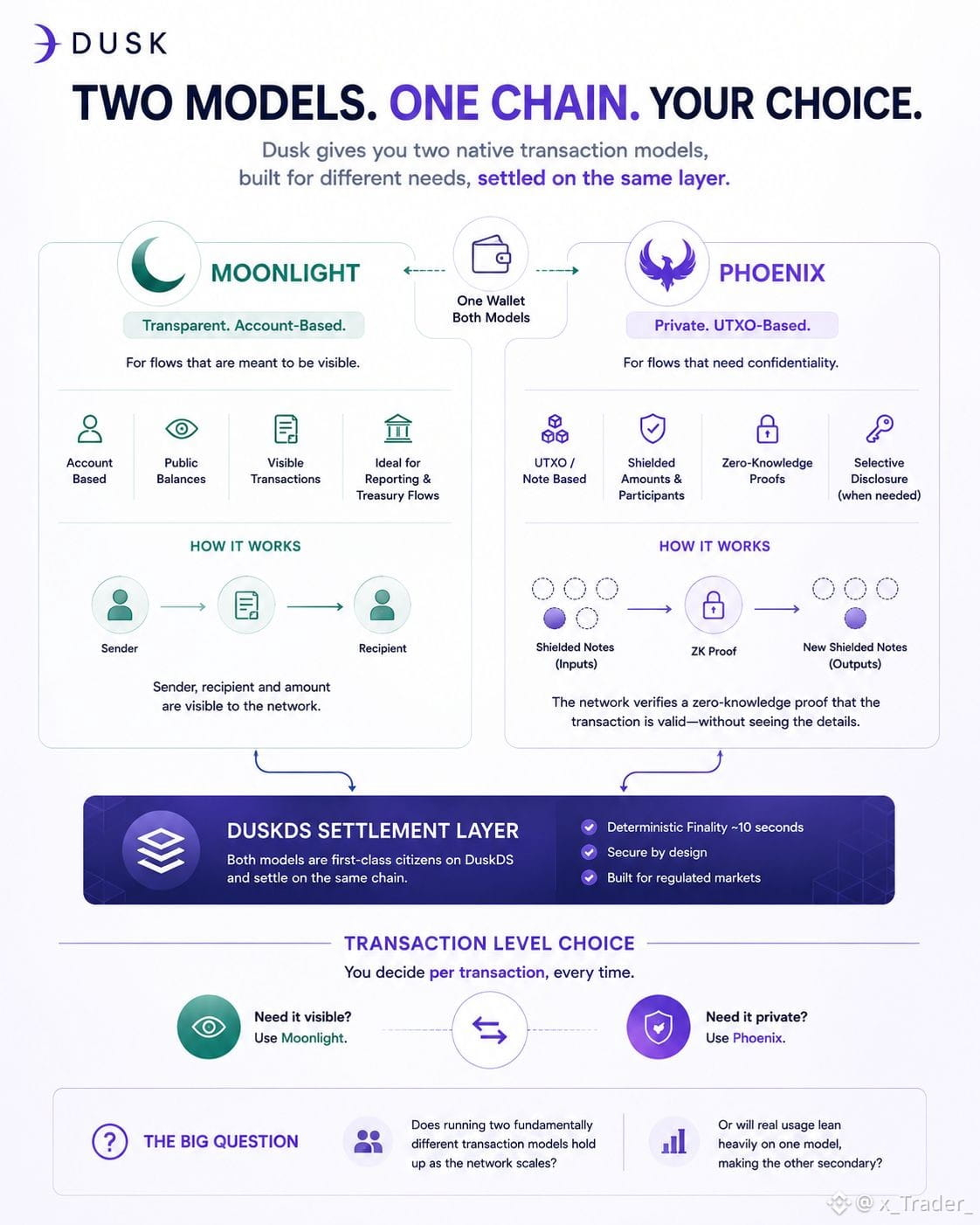
Duskには2つのトランザクションモデルがあって、私はそれらを1つのプライバシーシステムとして(名前が2つあるだけだと思って)ずっと扱っていました。
資料を改めて見直してみたところ、どうやら話はそう単純ではありませんでした。実際には、彼らは別々の課題を解いているのです。
MOONLIGHTは透明な方です。口座ベースで、表示される残高、送信者、受信者、そして金額が分かります。あるフローが観測可能であることが前提のときに有用です。
PHOENIXはまったく別の仕組みです。UTXOベースで、資金は見えている稼働残高としてではなく、シールドされたノートとして存在します。取引の詳細を明かす代わりに、ネットワークは「支出が有効である」ことを示すゼロ知識証明を検証します。さらに、その資金が存在すること、そして二重に使われていないことも含まれます。
私が特に面白いと思ったのはここです:
どちらも、もう一方のフォールバックではありません。
どちらもDuskDS上のネイティブなトランザクションモデルで、同じチェーンに決済されます。ウォレットのプロファイルは、MoonlightアカウントとPhoenixアカウントを並べて管理できます。
つまり、プライバシーは一度オンにする「設定」ではありません。
トランザクション単位の選択です。
送金を可視化したい? → Moonlight。
金額や参加者をシールドする必要がある? → Phoenix。
そして、後で権限のある当事者が証拠を必要とする場合は、Duskはビューイングキーによる選択的開示をサポートします。
これは、「1つのトランザクションモデルにプライバシーレイヤーを後付けする」設計とはかなり違う選択です。
ただし、私が本当に気になっている問いが残りました。
Duskがスケールしていく中で、根本的に異なる2つのトランザクションモデルを維持することは強みになるのか、それとも長期的なエンジニアリング上の頭痛の種になるのか?
そして実際の運用では、規制のある市場は本当に両方を必要としているのか。最終的にはどちらか一方がほとんどの仕事をすることになるのか?
#dusk $DUSK @Dusk
Duskには2つのトランザクションモデルがあって、私はそれらを1つのプライバシーシステムとして(名前が2つあるだけだと思って)ずっと扱っていました。
資料を改めて見直してみたところ、どうやら話はそう単純ではありませんでした。実際には、彼らは別々の課題を解いているのです。
MOONLIGHTは透明な方です。口座ベースで、表示される残高、送信者、受信者、そして金額が分かります。あるフローが観測可能であることが前提のときに有用です。
PHOENIXはまったく別の仕組みです。UTXOベースで、資金は見えている稼働残高としてではなく、シールドされたノートとして存在します。取引の詳細を明かす代わりに、ネットワークは「支出が有効である」ことを示すゼロ知識証明を検証します。さらに、その資金が存在すること、そして二重に使われていないことも含まれます。
私が特に面白いと思ったのはここです:
どちらも、もう一方のフォールバックではありません。
どちらもDuskDS上のネイティブなトランザクションモデルで、同じチェーンに決済されます。ウォレットのプロファイルは、MoonlightアカウントとPhoenixアカウントを並べて管理できます。
つまり、プライバシーは一度オンにする「設定」ではありません。
トランザクション単位の選択です。
送金を可視化したい? → Moonlight。
金額や参加者をシールドする必要がある? → Phoenix。
そして、後で権限のある当事者が証拠を必要とする場合は、Duskはビューイングキーによる選択的開示をサポートします。
これは、「1つのトランザクションモデルにプライバシーレイヤーを後付けする」設計とはかなり違う選択です。
ただし、私が本当に気になっている問いが残りました。
Duskがスケールしていく中で、根本的に異なる2つのトランザクションモデルを維持することは強みになるのか、それとも長期的なエンジニアリング上の頭痛の種になるのか?
そして実際の運用では、規制のある市場は本当に両方を必要としているのか。最終的にはどちらか一方がほとんどの仕事をすることになるのか?
Duskには2つのトランザクションモデルがあって、私はそれらを1つのプライバシーシステムとして(名前が2つあるだけだと思って)ずっと扱っていました。
資料を改めて見直してみたところ、どうやら話はそう単純ではありませんでした。実際には、彼らは別々の課題を解いているのです。
MOONLIGHTは透明な方です。口座ベースで、表示される残高、送信者、受信者、そして金額が分かります。あるフローが観測可能であることが前提のときに有用です。
PHOENIXはまったく別の仕組みです。UTXOベースで、資金は見えている稼働残高としてではなく、シールドされたノートとして存在します。取引の詳細を明かす代わりに、ネットワークは「支出が有効である」ことを示すゼロ知識証明を検証します。さらに、その資金が存在すること、そして二重に使われていないことも含まれます。
私が特に面白いと思ったのはここです:
どちらも、もう一方のフォールバックではありません。
どちらもDuskDS上のネイティブなトランザクションモデルで、同じチェーンに決済されます。ウォレットのプロファイルは、MoonlightアカウントとPhoenixアカウントを並べて管理できます。
つまり、プライバシーは一度オンにする「設定」ではありません。
トランザクション単位の選択です。
送金を可視化したい? → Moonlight。
金額や参加者をシールドする必要がある? → Phoenix。
そして、後で権限のある当事者が証拠を必要とする場合は、Duskはビューイングキーによる選択的開示をサポートします。
これは、「1つのトランザクションモデルにプライバシーレイヤーを後付けする」設計とはかなり違う選択です。
ただし、私が本当に気になっている問いが残りました。
Duskがスケールしていく中で、根本的に異なる2つのトランザクションモデルを維持することは強みになるのか、それとも長期的なエンジニアリング上の頭痛の種になるのか?
そして実際の運用では、規制のある市場は本当に両方を必要としているのか。最終的にはどちらか一方がほとんどの仕事をすることになるのか?
11
10
615
·
--
#dusk $DUSK @Dusk_Foundation
今週、ホワイトペーパーの「コンセンサス」セクションを2回連続で読みました。でも、最初の1回では何も新しいことはありませんでした。
2回目で、ずっと誤解していた点がようやく腑に落ちました。
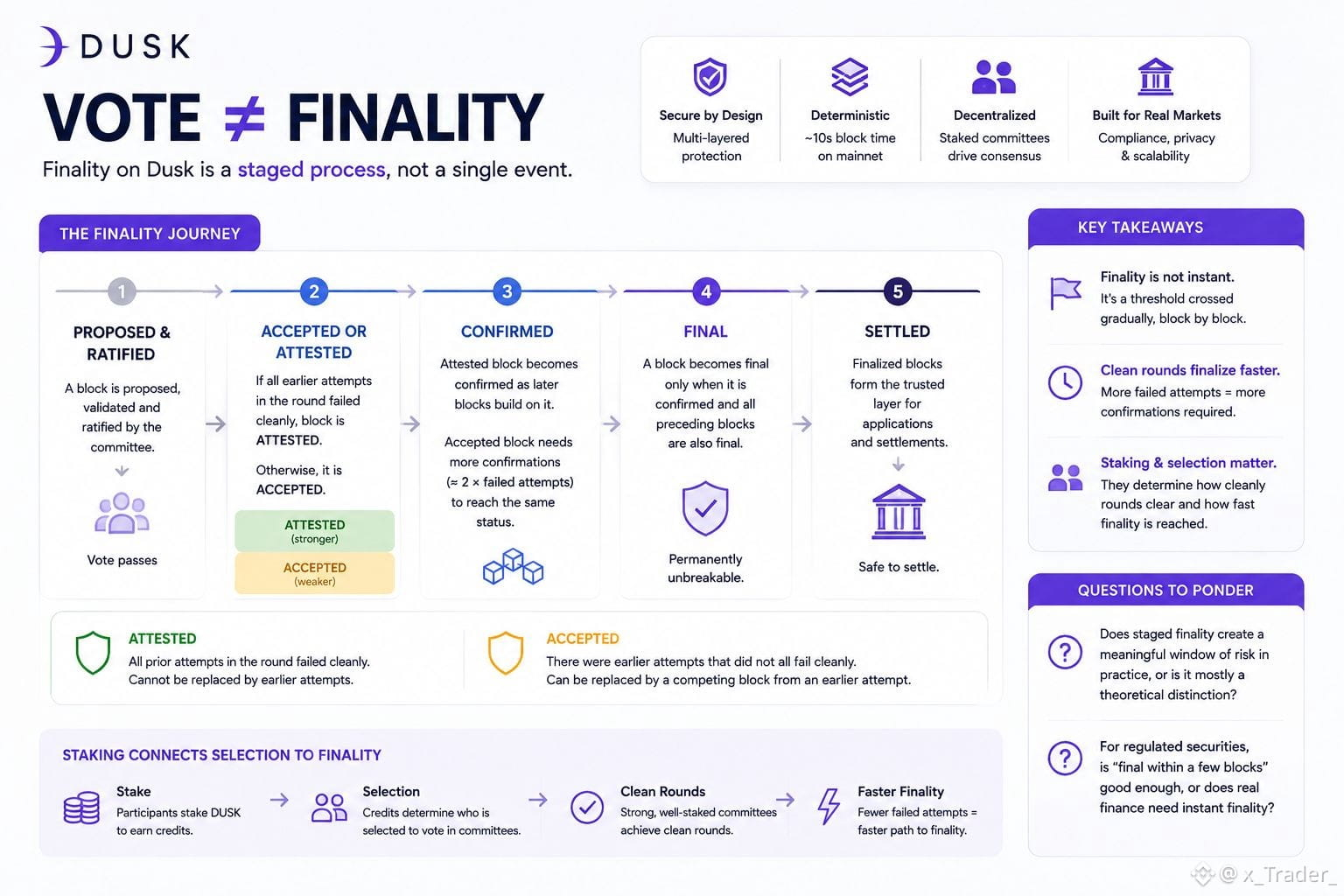
「あるブロックが投票で通った」と「あるブロックは最終確定だ(final)」。これらを、ほぼ同じ出来事だと考えていたんです。でも違います。両者の間にギャップがあり、そこに面白いセキュリティ上の考え方が詰まっています。
検証(validation)と承認(ratification)を通過したブロックが、ATTESTED(承認済み)と呼ばれるのは、そのラウンドにおけるそれ以前のあらゆる試みがすべてきちんと失敗して終わった場合だけです。そうでなければ、そのブロックは「accepted(受理)」にとどまり、より弱い状態です。
受理されたブロックは、理論上は、より前の試みから出てきた競合ブロックに差し替えられる可能性があります。一方、承認済みのブロックはそれができません。
そして最終確定(finality)は段階的に積み上がっていきます。
承認済みのブロックは、その後のブロックがそれに積み重なることで、確定(confirmed)していきます。受理されたブロックが同じ状態に到達するには、背後にある失敗した試みの回数と同程度、だいたいそれの2倍ぶんの追加確認が必要です。
ブロックが確定し、それより前のすべても同様に最終確定しているときに、はじめてそのブロックが本当に最終確定になります。
つまり「final(最終確定)」は、投票が通った瞬間に起きる単一の出来事ではありません。ブロックごとに、閾値を越えていくことで到達するものです。そして、その到達の速さは、ラウンドがどれだけクリーンだったかにも一部左右されます。
ここにステーキング(staking)が再び関わってきます。
誰が投票に選ばれるのか、そして準委員会(committee)でどれだけのクレジットがあり、定足数(quorum)に影響を与えられるのか――それによって、ラウンドがどれだけクリーンに通過するかが変わります。ごちゃごちゃしたラウンドは、単に「なんとなく」遅くするだけではありません。最終確定のタイムラインを、文字どおり数えて分かる形で後ろ倒しにします。
選定(selection)と最終確定(finality)は、ホワイトペーパーの中で並んでいる別個の仕組みではありません。1つが誰が投票するかを決め、もう1つが、その投票が壊れない状態になるタイミングを決めます。
その点が、私が特に面白いと感じたところです。
そして、率直に言って気になっている質問が2つあります。
この段階的な最終確定は、実際には意味のある期間のリスク(ウィンドウ)を生むのか、それとも主に理論上の区別にすぎないのか?
また、規制対象の証券では、「数ブロック以内でfinal(最終確定)」が本当に十分なのか、それとも現実の金融は、最終確定にもっと近い即時性を最終的に要求するのか?
#dusk $DUSK @Dusk
今週、ホワイトペーパーの「コンセンサス」セクションを2回連続で読みました。でも、最初の1回では何も新しいことはありませんでした。
2回目で、ずっと誤解していた点がようやく腑に落ちました。
「あるブロックが投票で通った」と「あるブロックは最終確定だ(final)」。これらを、ほぼ同じ出来事だと考えていたんです。でも違います。両者の間にギャップがあり、そこに面白いセキュリティ上の考え方が詰まっています。
検証(validation)と承認(ratification)を通過したブロックが、ATTESTED(承認済み)と呼ばれるのは、そのラウンドにおけるそれ以前のあらゆる試みがすべてきちんと失敗して終わった場合だけです。そうでなければ、そのブロックは「accepted(受理)」にとどまり、より弱い状態です。
受理されたブロックは、理論上は、より前の試みから出てきた競合ブロックに差し替えられる可能性があります。一方、承認済みのブロックはそれができません。
そして最終確定(finality)は段階的に積み上がっていきます。
承認済みのブロックは、その後のブロックがそれに積み重なることで、確定(confirmed)していきます。受理されたブロックが同じ状態に到達するには、背後にある失敗した試みの回数と同程度、だいたいそれの2倍ぶんの追加確認が必要です。
ブロックが確定し、それより前のすべても同様に最終確定しているときに、はじめてそのブロックが本当に最終確定になります。
つまり「final(最終確定)」は、投票が通った瞬間に起きる単一の出来事ではありません。ブロックごとに、閾値を越えていくことで到達するものです。そして、その到達の速さは、ラウンドがどれだけクリーンだったかにも一部左右されます。
ここにステーキング(staking)が再び関わってきます。
誰が投票に選ばれるのか、そして準委員会(committee)でどれだけのクレジットがあり、定足数(quorum)に影響を与えられるのか――それによって、ラウンドがどれだけクリーンに通過するかが変わります。ごちゃごちゃしたラウンドは、単に「なんとなく」遅くするだけではありません。最終確定のタイムラインを、文字どおり数えて分かる形で後ろ倒しにします。
選定(selection)と最終確定(finality)は、ホワイトペーパーの中で並んでいる別個の仕組みではありません。1つが誰が投票するかを決め、もう1つが、その投票が壊れない状態になるタイミングを決めます。
その点が、私が特に面白いと感じたところです。
そして、率直に言って気になっている質問が2つあります。
この段階的な最終確定は、実際には意味のある期間のリスク(ウィンドウ)を生むのか、それとも主に理論上の区別にすぎないのか?
また、規制対象の証券では、「数ブロック以内でfinal(最終確定)」が本当に十分なのか、それとも現実の金融は、最終確定にもっと近い即時性を最終的に要求するのか?
今週、ホワイトペーパーの「コンセンサス」セクションを2回連続で読みました。でも、最初の1回では何も新しいことはありませんでした。
2回目で、ずっと誤解していた点がようやく腑に落ちました。
「あるブロックが投票で通った」と「あるブロックは最終確定だ(final)」。これらを、ほぼ同じ出来事だと考えていたんです。でも違います。両者の間にギャップがあり、そこに面白いセキュリティ上の考え方が詰まっています。
検証(validation)と承認(ratification)を通過したブロックが、ATTESTED(承認済み)と呼ばれるのは、そのラウンドにおけるそれ以前のあらゆる試みがすべてきちんと失敗して終わった場合だけです。そうでなければ、そのブロックは「accepted(受理)」にとどまり、より弱い状態です。
受理されたブロックは、理論上は、より前の試みから出てきた競合ブロックに差し替えられる可能性があります。一方、承認済みのブロックはそれができません。
そして最終確定(finality)は段階的に積み上がっていきます。
承認済みのブロックは、その後のブロックがそれに積み重なることで、確定(confirmed)していきます。受理されたブロックが同じ状態に到達するには、背後にある失敗した試みの回数と同程度、だいたいそれの2倍ぶんの追加確認が必要です。
ブロックが確定し、それより前のすべても同様に最終確定しているときに、はじめてそのブロックが本当に最終確定になります。
つまり「final(最終確定)」は、投票が通った瞬間に起きる単一の出来事ではありません。ブロックごとに、閾値を越えていくことで到達するものです。そして、その到達の速さは、ラウンドがどれだけクリーンだったかにも一部左右されます。
ここにステーキング(staking)が再び関わってきます。
誰が投票に選ばれるのか、そして準委員会(committee)でどれだけのクレジットがあり、定足数(quorum)に影響を与えられるのか――それによって、ラウンドがどれだけクリーンに通過するかが変わります。ごちゃごちゃしたラウンドは、単に「なんとなく」遅くするだけではありません。最終確定のタイムラインを、文字どおり数えて分かる形で後ろ倒しにします。
選定(selection)と最終確定(finality)は、ホワイトペーパーの中で並んでいる別個の仕組みではありません。1つが誰が投票するかを決め、もう1つが、その投票が壊れない状態になるタイミングを決めます。
その点が、私が特に面白いと感じたところです。
そして、率直に言って気になっている質問が2つあります。
この段階的な最終確定は、実際には意味のある期間のリスク(ウィンドウ)を生むのか、それとも主に理論上の区別にすぎないのか?
また、規制対象の証券では、「数ブロック以内でfinal(最終確定)」が本当に十分なのか、それとも現実の金融は、最終確定にもっと近い即時性を最終的に要求するのか?
25
27
3.3k
·
--
本人確認中
#dusk
ランチをしながらDuskのドキュメントをスクロールしていた昨日、私を驚かせた「規制された金融」に関する詳細です。
ほとんどの規制対象のブロックチェーン基盤は、実は一般公開されていません。
許可制です。
機関が運営するプライベート台帳で、内側ではブロックチェーン“っぽい”技術を使っているだけ。ピッチデックでは分散型に見えますが、実際はそうではありません。
それには理由があります。規制当局は、特にパブリックなパーミッションレス・チェーンに対して慎重だからです。
誰が検証するか、何が見えるか、そして何か問題が起きたときに誰が責任を問われるのか——その主体を一社が握っていない点が、まさに懸念になります。
パブリックチェーンの目的そのものがそこにあって、だからこそ規制当局は神経質になるんです。
そこで私の目を引いたのが21Xです。
21Xは、欧州の規制のもとで完全にトークン化された有価証券市場についてDLT-TSSライセンスを最初に取得した企業です。このライセンスは2つのことを可能にします。取引と決済を後で突き合わせるのではなく、1ステップで統合できること。そして、プライベートなものを分散型に見せかけるのではなく、公的なパーミッションレス・チェーン上で運用できることです。
私がずっと引っかかっているのはまさにそこです。多くの規制対応プラットフォームは、クローズドのまま許可を取ります。21Xは“本物”の利用許可を得た。
ここでのDuskの役割は、取引参加者としての関係です。21Xは、サポートするチェーンの1つとしてDuskEVMを統合する計画です。片方では規制上の免除、もう片方ではDuskのインフラ。どちらも単独では全体像を持っていなかった。
トークン化自体が難しかったわけではありません。
誰も管理していないインフラ上で動かす許可を得ることが難しかった。
21Xは規制レイヤーでそれを突破しました。
Duskはプロトコルレイヤーでそれを突破しています(決定論的な決済、セレクティブ・ディスクロージャー)。
同じ壁の、別側面。
本当の問い:
パブリック・パーミッションレスのライセンスは本当に珍しいのか、それとも規制が後追いで追いついているだけなのか?
そして、21Xに続く規制当局が増えたら、「コンプライアンス」が暗号を再定義するのか、それとも暗号がただ見えない配管(インフラ)になっていくだけなのか?
$DUSK @Dusk_Foundation
{future}(DUSKUSDT)
21Xのライセンスを“変わっている”ものにしているのは何でしょう?🔍
#dusk
ランチをしながらDuskのドキュメントをスクロールしていた昨日、私を驚かせた「規制された金融」に関する詳細です。
ほとんどの規制対象のブロックチェーン基盤は、実は一般公開されていません。
許可制です。
機関が運営するプライベート台帳で、内側ではブロックチェーン“っぽい”技術を使っているだけ。ピッチデックでは分散型に見えますが、実際はそうではありません。
それには理由があります。規制当局は、特にパブリックなパーミッションレス・チェーンに対して慎重だからです。
誰が検証するか、何が見えるか、そして何か問題が起きたときに誰が責任を問われるのか——その主体を一社が握っていない点が、まさに懸念になります。
パブリックチェーンの目的そのものがそこにあって、だからこそ規制当局は神経質になるんです。
そこで私の目を引いたのが21Xです。
21Xは、欧州の規制のもとで完全にトークン化された有価証券市場についてDLT-TSSライセンスを最初に取得した企業です。このライセンスは2つのことを可能にします。取引と決済を後で突き合わせるのではなく、1ステップで統合できること。そして、プライベートなものを分散型に見せかけるのではなく、公的なパーミッションレス・チェーン上で運用できることです。
私がずっと引っかかっているのはまさにそこです。多くの規制対応プラットフォームは、クローズドのまま許可を取ります。21Xは“本物”の利用許可を得た。
ここでのDuskの役割は、取引参加者としての関係です。21Xは、サポートするチェーンの1つとしてDuskEVMを統合する計画です。片方では規制上の免除、もう片方ではDuskのインフラ。どちらも単独では全体像を持っていなかった。
トークン化自体が難しかったわけではありません。
誰も管理していないインフラ上で動かす許可を得ることが難しかった。
21Xは規制レイヤーでそれを突破しました。
Duskはプロトコルレイヤーでそれを突破しています(決定論的な決済、セレクティブ・ディスクロージャー)。
同じ壁の、別側面。
本当の問い:
パブリック・パーミッションレスのライセンスは本当に珍しいのか、それとも規制が後追いで追いついているだけなのか?
そして、21Xに続く規制当局が増えたら、「コンプライアンス」が暗号を再定義するのか、それとも暗号がただ見えない配管(インフラ)になっていくだけなのか?
$DUSK @Dusk
21Xのライセンスを“変わっている”ものにしているのは何でしょう?🔍
ランチをしながらDuskのドキュメントをスクロールしていた昨日、私を驚かせた「規制された金融」に関する詳細です。
ほとんどの規制対象のブロックチェーン基盤は、実は一般公開されていません。
許可制です。
機関が運営するプライベート台帳で、内側ではブロックチェーン“っぽい”技術を使っているだけ。ピッチデックでは分散型に見えますが、実際はそうではありません。
それには理由があります。規制当局は、特にパブリックなパーミッションレス・チェーンに対して慎重だからです。
誰が検証するか、何が見えるか、そして何か問題が起きたときに誰が責任を問われるのか——その主体を一社が握っていない点が、まさに懸念になります。
パブリックチェーンの目的そのものがそこにあって、だからこそ規制当局は神経質になるんです。
そこで私の目を引いたのが21Xです。
21Xは、欧州の規制のもとで完全にトークン化された有価証券市場についてDLT-TSSライセンスを最初に取得した企業です。このライセンスは2つのことを可能にします。取引と決済を後で突き合わせるのではなく、1ステップで統合できること。そして、プライベートなものを分散型に見せかけるのではなく、公的なパーミッションレス・チェーン上で運用できることです。
私がずっと引っかかっているのはまさにそこです。多くの規制対応プラットフォームは、クローズドのまま許可を取ります。21Xは“本物”の利用許可を得た。
ここでのDuskの役割は、取引参加者としての関係です。21Xは、サポートするチェーンの1つとしてDuskEVMを統合する計画です。片方では規制上の免除、もう片方ではDuskのインフラ。どちらも単独では全体像を持っていなかった。
トークン化自体が難しかったわけではありません。
誰も管理していないインフラ上で動かす許可を得ることが難しかった。
21Xは規制レイヤーでそれを突破しました。
Duskはプロトコルレイヤーでそれを突破しています(決定論的な決済、セレクティブ・ディスクロージャー)。
同じ壁の、別側面。
本当の問い:
パブリック・パーミッションレスのライセンスは本当に珍しいのか、それとも規制が後追いで追いついているだけなのか?
そして、21Xに続く規制当局が増えたら、「コンプライアンス」が暗号を再定義するのか、それとも暗号がただ見えない配管(インフラ)になっていくだけなのか?
$DUSK @Dusk
21Xのライセンスを“変わっている”ものにしているのは何でしょう?🔍
A private, permissioned chain
75%
Public, permissionless chain
0%
It's not actually licensed yet
25%
It only covers stablecoins
0%
4 投票 • 投票は終了しました
5
5
318
·
--
最近、#dusk に関するキャンペーン告知を見て、仮想通貨界でよく愛される言葉の一つである「コンポーザビリティ(composability)」について疑問を持ちました。
私たちは通常、コンポーザビリティについて「多ければ自動的に良い」といったふうに語りがちです。
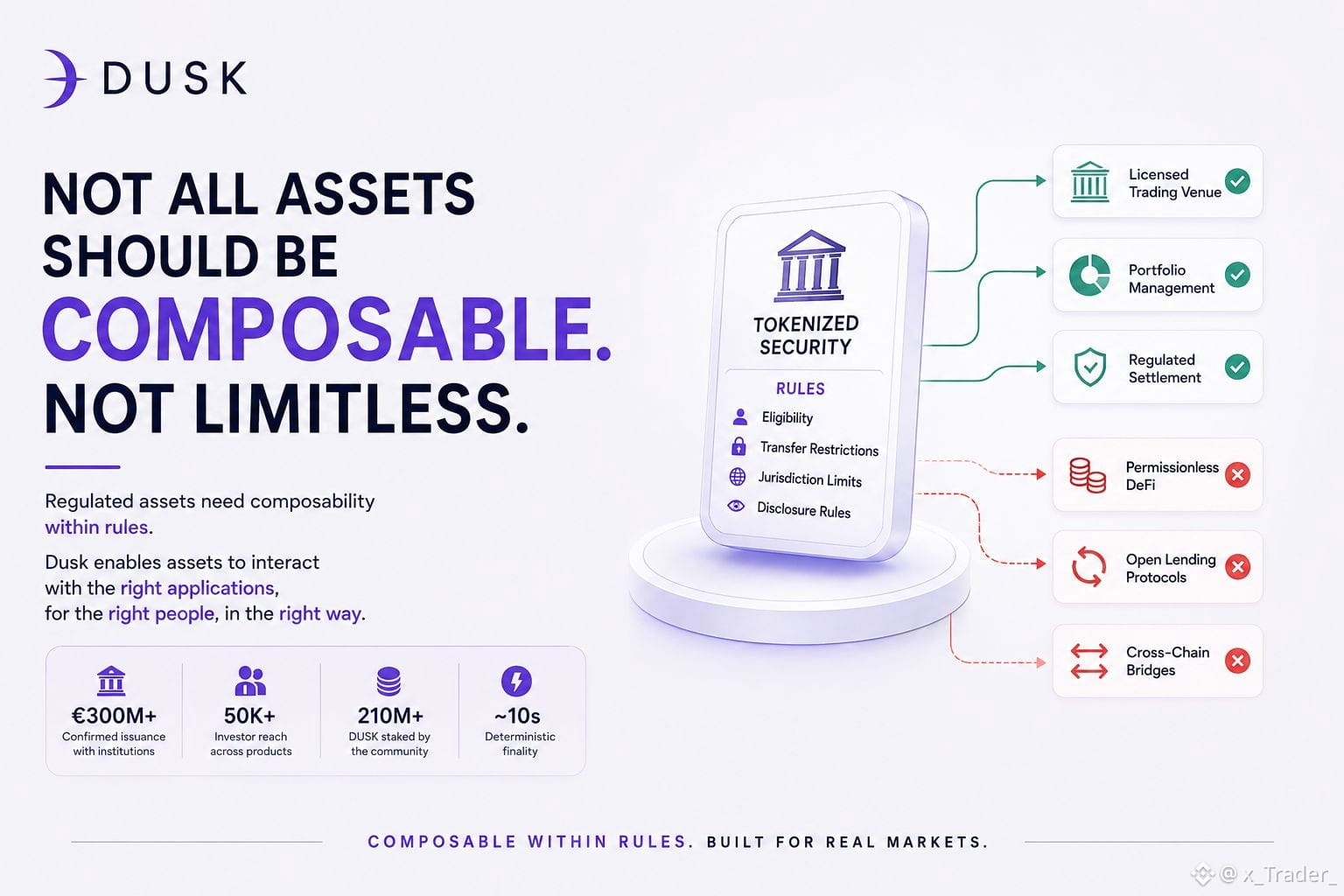
トークンはプロトコル間を移動でき、担保になり、DeFiと連携し、クロスチェーンでき、新しいアプリケーションに接続できるべきだ…と。
パーミッションレスな通常の資産なら、その通りです。
しかし、それを規制対象の債券でやるとしたらどうでしょう。
その債券には、投資家の適格性要件、譲渡制限、管轄(司法)ルール、開示義務が伴うかもしれません。
すると「すべてとコンポーザブルにする(make it composable with everything)」という言葉は、急に魅力が薄く聞こえてきます。
面白いのは、資産に付随するルールを削り落とすことなく、それをコンポーザブルにすることです。
そこでDuskはかなり技術的になります。
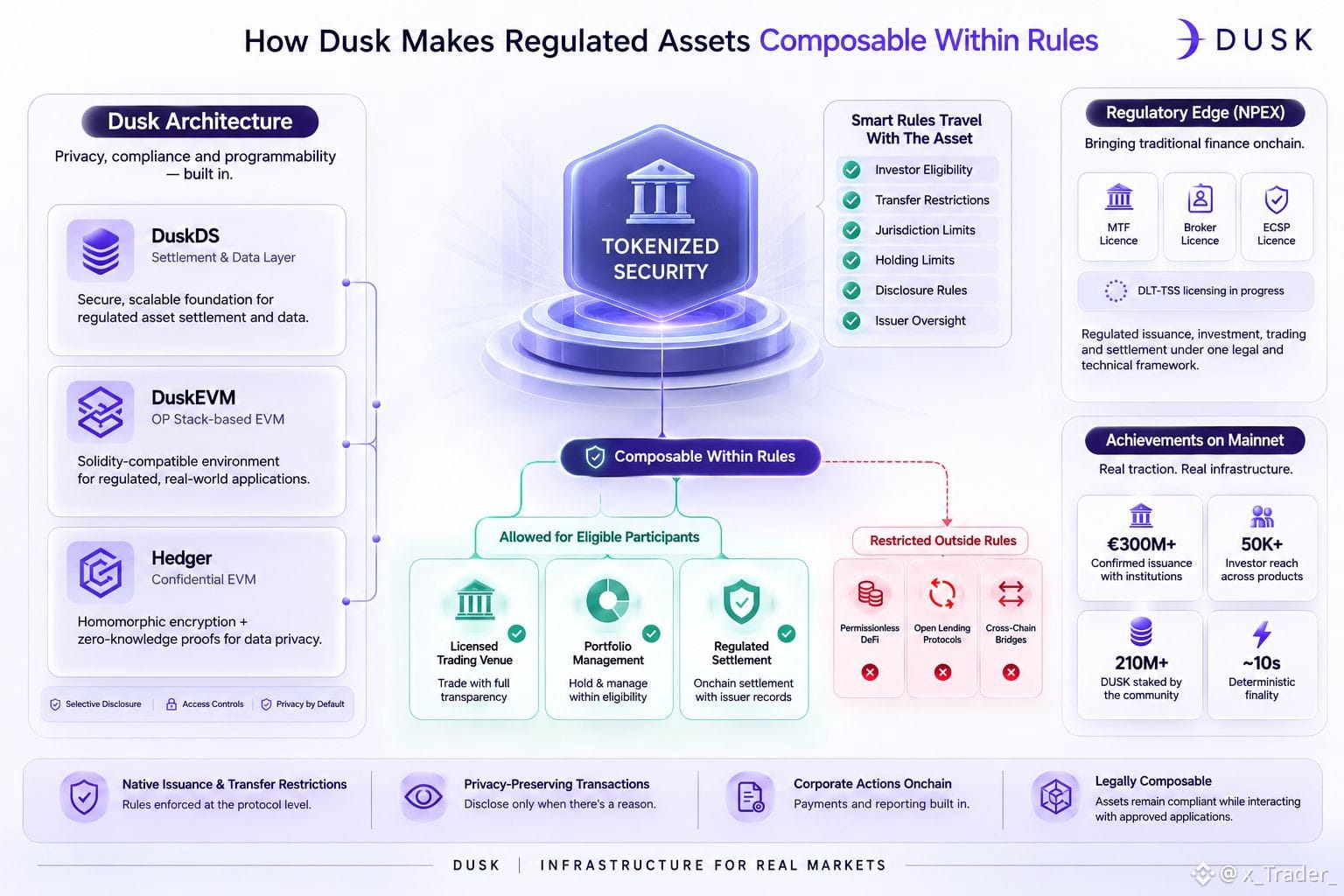
同社の現在のアーキテクチャでは、決済/データ層であるDuskDSと、OP StackベースのEVM環境であるDuskEVMを分離しています。
開発者は馴染みのあるSolidityのツールを使えますが、アプリケーションの決済はDuskの基盤となるネットワークに戻されます。
Hedgerは、ホモモルフィック暗号とゼロ知識証明によって、機密性のあるEVMワークフローを追加します。
そして規制面もあります。
NPEXとの関係を通じてDuskは、エコシステムがMTF、ブローカー、ECSPのライセンスにアクセスでき、さらにDLT-TSSのライセンス取得が進行中だと述べています。
狙いは、規制下の発行、投資、取引、決済を、共有された法的・技術的枠組みのもとに置くことです。
ですが、これは単にスライド上のアーキテクチャの話ではありません。
Duskは現在、機関との間で確認済みの発行が€300M+、投資家到達が50K+、ステークされているDUSKが210M+、そして約10秒の決定的ファイナリティを報告しています。
それで、私の問いはまるごと変わりました。
私はもう、次のように聞きたいわけではありません。
「RWAはコンポーザブルになり得るのか?」
それが可能であることは、私たちはすでに知っています。移動できるのです。
知りたいのは、こういうことです。
「規制対象の資産は、そのアイデンティティ、適格性、プライバシー、そして譲渡ルールを“持ち運びながら”なおコンポーザブルであり続けられるのか?」
もし答えが「イエス」なら、それは証券をブロックチェーンに載せるような話というより…
むしろ、その周りの金融インフラを作り直すことに近づいてきます。
$DUSK @Dusk_Foundation
最近、#dusk に関するキャンペーン告知を見て、仮想通貨界でよく愛される言葉の一つである「コンポーザビリティ(composability)」について疑問を持ちました。
私たちは通常、コンポーザビリティについて「多ければ自動的に良い」といったふうに語りがちです。
トークンはプロトコル間を移動でき、担保になり、DeFiと連携し、クロスチェーンでき、新しいアプリケーションに接続できるべきだ…と。
パーミッションレスな通常の資産なら、その通りです。
しかし、それを規制対象の債券でやるとしたらどうでしょう。
その債券には、投資家の適格性要件、譲渡制限、管轄(司法)ルール、開示義務が伴うかもしれません。
すると「すべてとコンポーザブルにする(make it composable with everything)」という言葉は、急に魅力が薄く聞こえてきます。
面白いのは、資産に付随するルールを削り落とすことなく、それをコンポーザブルにすることです。
そこでDuskはかなり技術的になります。
同社の現在のアーキテクチャでは、決済/データ層であるDuskDSと、OP StackベースのEVM環境であるDuskEVMを分離しています。
開発者は馴染みのあるSolidityのツールを使えますが、アプリケーションの決済はDuskの基盤となるネットワークに戻されます。
Hedgerは、ホモモルフィック暗号とゼロ知識証明によって、機密性のあるEVMワークフローを追加します。
そして規制面もあります。
NPEXとの関係を通じてDuskは、エコシステムがMTF、ブローカー、ECSPのライセンスにアクセスでき、さらにDLT-TSSのライセンス取得が進行中だと述べています。
狙いは、規制下の発行、投資、取引、決済を、共有された法的・技術的枠組みのもとに置くことです。
ですが、これは単にスライド上のアーキテクチャの話ではありません。
Duskは現在、機関との間で確認済みの発行が€300M+、投資家到達が50K+、ステークされているDUSKが210M+、そして約10秒の決定的ファイナリティを報告しています。
それで、私の問いはまるごと変わりました。
私はもう、次のように聞きたいわけではありません。
「RWAはコンポーザブルになり得るのか?」
それが可能であることは、私たちはすでに知っています。移動できるのです。
知りたいのは、こういうことです。
「規制対象の資産は、そのアイデンティティ、適格性、プライバシー、そして譲渡ルールを“持ち運びながら”なおコンポーザブルであり続けられるのか?」
もし答えが「イエス」なら、それは証券をブロックチェーンに載せるような話というより…
むしろ、その周りの金融インフラを作り直すことに近づいてきます。
$DUSK @Dusk
私たちは通常、コンポーザビリティについて「多ければ自動的に良い」といったふうに語りがちです。
トークンはプロトコル間を移動でき、担保になり、DeFiと連携し、クロスチェーンでき、新しいアプリケーションに接続できるべきだ…と。
パーミッションレスな通常の資産なら、その通りです。
しかし、それを規制対象の債券でやるとしたらどうでしょう。
その債券には、投資家の適格性要件、譲渡制限、管轄(司法)ルール、開示義務が伴うかもしれません。
すると「すべてとコンポーザブルにする(make it composable with everything)」という言葉は、急に魅力が薄く聞こえてきます。
面白いのは、資産に付随するルールを削り落とすことなく、それをコンポーザブルにすることです。
そこでDuskはかなり技術的になります。
同社の現在のアーキテクチャでは、決済/データ層であるDuskDSと、OP StackベースのEVM環境であるDuskEVMを分離しています。
開発者は馴染みのあるSolidityのツールを使えますが、アプリケーションの決済はDuskの基盤となるネットワークに戻されます。
Hedgerは、ホモモルフィック暗号とゼロ知識証明によって、機密性のあるEVMワークフローを追加します。
そして規制面もあります。
NPEXとの関係を通じてDuskは、エコシステムがMTF、ブローカー、ECSPのライセンスにアクセスでき、さらにDLT-TSSのライセンス取得が進行中だと述べています。
狙いは、規制下の発行、投資、取引、決済を、共有された法的・技術的枠組みのもとに置くことです。
ですが、これは単にスライド上のアーキテクチャの話ではありません。
Duskは現在、機関との間で確認済みの発行が€300M+、投資家到達が50K+、ステークされているDUSKが210M+、そして約10秒の決定的ファイナリティを報告しています。
それで、私の問いはまるごと変わりました。
私はもう、次のように聞きたいわけではありません。
「RWAはコンポーザブルになり得るのか?」
それが可能であることは、私たちはすでに知っています。移動できるのです。
知りたいのは、こういうことです。
「規制対象の資産は、そのアイデンティティ、適格性、プライバシー、そして譲渡ルールを“持ち運びながら”なおコンポーザブルであり続けられるのか?」
もし答えが「イエス」なら、それは証券をブロックチェーンに載せるような話というより…
むしろ、その周りの金融インフラを作り直すことに近づいてきます。
$DUSK @Dusk
20
16
466
·
--
#dusk $DUSK @Dusk_Foundation
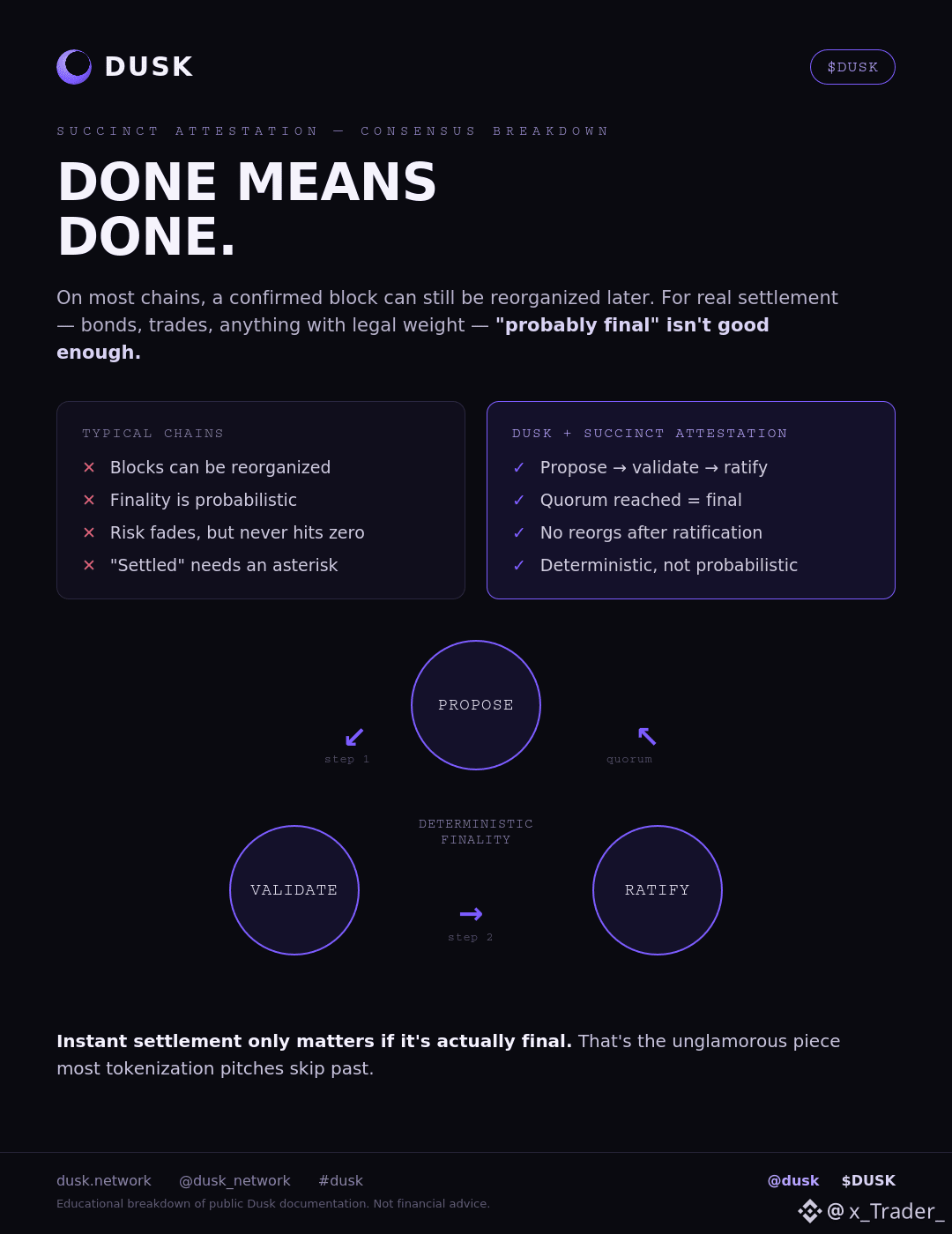
私は「ブロックチェーンのファイナリティ(最終確定)」がどこでも同じ意味だと思っていました。でも違います。
多くのチェーンでは、ブロックが追加されたことは物語の終わりではありません。後からより長いチェーンが現れれば、再編成(reorg)されたり置き換えられたりする可能性があります。カジュアルな送金なら、気づかないまま背後にあるリスクとして見過ごしてしまうかもしれません。しかし実際の金融決済、債券の支払い、取引など、法的な重みのあるものに対して「たぶん最終(probably final)」は許容できる答えではありません。
Duskのコンセンサスは3つのステップで動きます。1人のバリデータがブロックを提案します。委員会がそれが有効かを確認します。次に別の委員会が、その確認が実際に成立していたことを改めて確認します。3つがすべて完了すると、そのブロックは完了です。「たぶん完了」ではなく、「完了」。数ブロック後に起きるかもしれない再編成を待つ必要はありません。
誰もコンセンサスメカニズムについて見出しを書きません。でも規制のある取引所が、クライアントに「決済しました」と言って、それを文字通りの意味として成立させるための、地味だけれど重要な部分です。「決済しました(ただし今後3ブロックで起きる可能性が低い例外がある場合を除く)」ではなく。
インスタント決済が重要なのは、それが実際にファイナルである場合だけです。ほとんどのトークン化の売り込みがそこを飛ばしています。
投票:
Duskでブロックがクォーラムに達したら、何が起こるでしょうか 🧠
⏳ 後でまだ巻き戻る可能性がある
✅ 最終確定 — 再編成はない
📅 クリアまで2日待つ
⛽ ガス代(手数料)次第
#dusk $DUSK @Dusk
私は「ブロックチェーンのファイナリティ(最終確定)」がどこでも同じ意味だと思っていました。でも違います。
多くのチェーンでは、ブロックが追加されたことは物語の終わりではありません。後からより長いチェーンが現れれば、再編成(reorg)されたり置き換えられたりする可能性があります。カジュアルな送金なら、気づかないまま背後にあるリスクとして見過ごしてしまうかもしれません。しかし実際の金融決済、債券の支払い、取引など、法的な重みのあるものに対して「たぶん最終(probably final)」は許容できる答えではありません。
Duskのコンセンサスは3つのステップで動きます。1人のバリデータがブロックを提案します。委員会がそれが有効かを確認します。次に別の委員会が、その確認が実際に成立していたことを改めて確認します。3つがすべて完了すると、そのブロックは完了です。「たぶん完了」ではなく、「完了」。数ブロック後に起きるかもしれない再編成を待つ必要はありません。
誰もコンセンサスメカニズムについて見出しを書きません。でも規制のある取引所が、クライアントに「決済しました」と言って、それを文字通りの意味として成立させるための、地味だけれど重要な部分です。「決済しました(ただし今後3ブロックで起きる可能性が低い例外がある場合を除く)」ではなく。
インスタント決済が重要なのは、それが実際にファイナルである場合だけです。ほとんどのトークン化の売り込みがそこを飛ばしています。
投票:
Duskでブロックがクォーラムに達したら、何が起こるでしょうか 🧠
⏳ 後でまだ巻き戻る可能性がある
✅ 最終確定 — 再編成はない
📅 クリアまで2日待つ
⛽ ガス代(手数料)次第
私は「ブロックチェーンのファイナリティ(最終確定)」がどこでも同じ意味だと思っていました。でも違います。
多くのチェーンでは、ブロックが追加されたことは物語の終わりではありません。後からより長いチェーンが現れれば、再編成(reorg)されたり置き換えられたりする可能性があります。カジュアルな送金なら、気づかないまま背後にあるリスクとして見過ごしてしまうかもしれません。しかし実際の金融決済、債券の支払い、取引など、法的な重みのあるものに対して「たぶん最終(probably final)」は許容できる答えではありません。
Duskのコンセンサスは3つのステップで動きます。1人のバリデータがブロックを提案します。委員会がそれが有効かを確認します。次に別の委員会が、その確認が実際に成立していたことを改めて確認します。3つがすべて完了すると、そのブロックは完了です。「たぶん完了」ではなく、「完了」。数ブロック後に起きるかもしれない再編成を待つ必要はありません。
誰もコンセンサスメカニズムについて見出しを書きません。でも規制のある取引所が、クライアントに「決済しました」と言って、それを文字通りの意味として成立させるための、地味だけれど重要な部分です。「決済しました(ただし今後3ブロックで起きる可能性が低い例外がある場合を除く)」ではなく。
インスタント決済が重要なのは、それが実際にファイナルである場合だけです。ほとんどのトークン化の売り込みがそこを飛ばしています。
投票:
Duskでブロックがクォーラムに達したら、何が起こるでしょうか 🧠
⏳ 後でまだ巻き戻る可能性がある
✅ 最終確定 — 再編成はない
📅 クリアまで2日待つ
⛽ ガス代(手数料)次第
1
3
190
·
--
本人確認中
#dusk
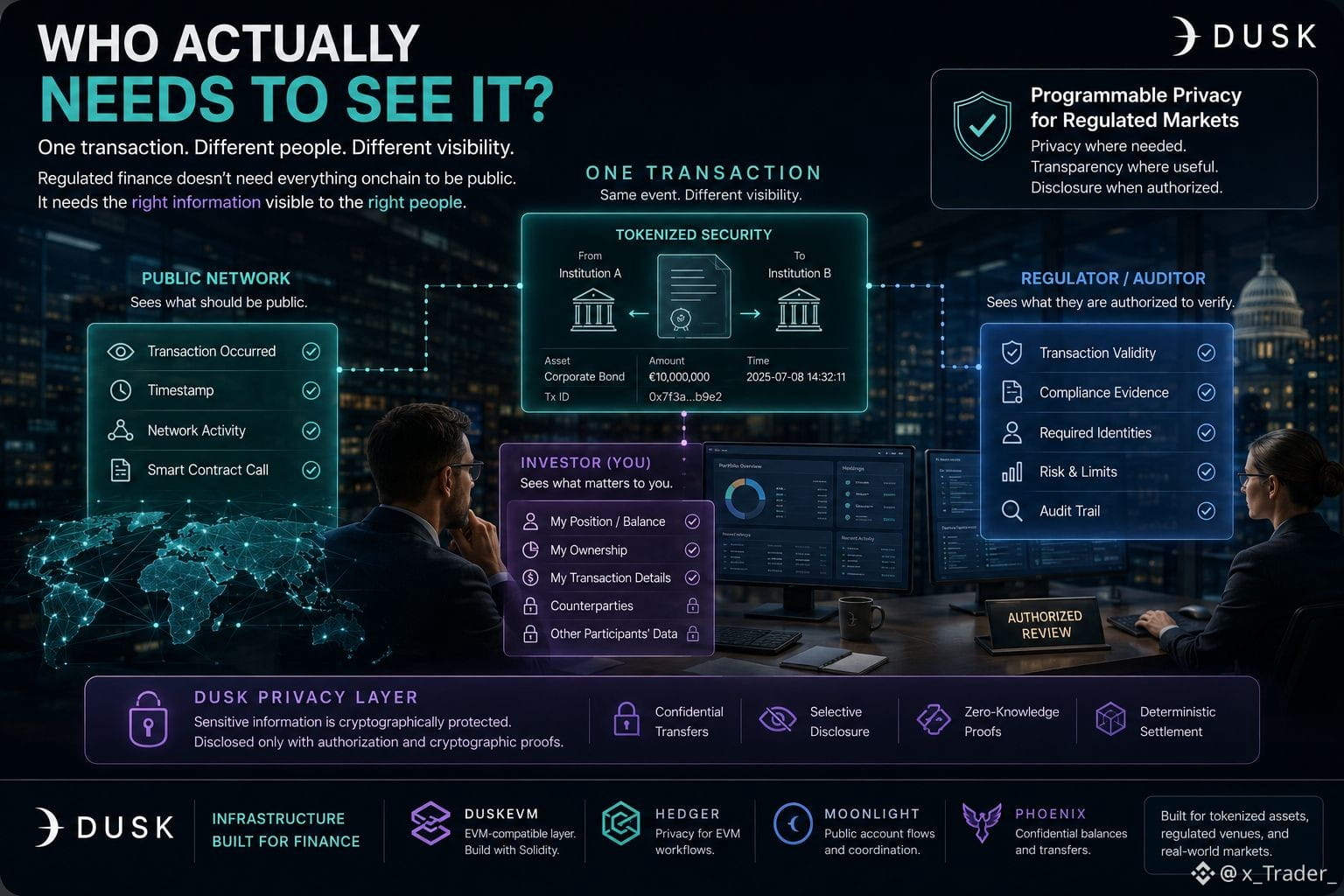
私は、規制のある金融におけるプライバシー問題が、人々によって誤解されることがあると思います。
それは単純にこういう話ではありません:
「取引をどうやって隠すのか?」
より難しい問いはこうです:
「実際に誰がそれを見る必要があるのか?」
投資家は、チェーンを監視しているすべてのウォレットに対して、必ずしも保有ポジション全体を公開されるべきではありません。
しかし規制当局は何かを検証する必要があるかもしれません。
監査人は証拠を必要とするかもしれません。
発行体は保有者や適格性を確認する必要があるかもしれません。
そして市場そのものも、観測され、決済される必要のあるものがあります。
私が本当に面白いと感じるのは、まさにその部分——@Dusk_Foundation ——です。
Duskはプライバシーをオン/オフのスイッチのように扱っていません。アーキテクチャによって、公的なフローと機密のフローを分離しつつ、正当な理由があるときには、認可された当事者に情報を開示できるようにしています。
それが、金融市場にとってはるかに理にかなっていると私には思えます。
なぜなら、債券やファンド、その他の証券をオンチェーンに載せること自体は難しいことではないからです。
難しいのは、同じ資産に対して、異なる人々がそれぞれ異なる可視性のレベルを必要とするときに、何が起こるのかを決めることです。
この問題は、多くの暗号関連の会話では十分に時間を割いて議論されていません。
Duskはその点を中心に構築しています。
そしてDuskEVMでは、そのアプローチがEVM互換の環境に持ち込まれ、Hedgerが機密EVMワークフローをサポートします。
「ブロックチェーン、でもプライベート」というよりも、はるかに面白い提案だと思います。
$DUSK @Dusk_Foundation
#dusk
私は、規制のある金融におけるプライバシー問題が、人々によって誤解されることがあると思います。
それは単純にこういう話ではありません:
「取引をどうやって隠すのか?」
より難しい問いはこうです:
「実際に誰がそれを見る必要があるのか?」
投資家は、チェーンを監視しているすべてのウォレットに対して、必ずしも保有ポジション全体を公開されるべきではありません。
しかし規制当局は何かを検証する必要があるかもしれません。
監査人は証拠を必要とするかもしれません。
発行体は保有者や適格性を確認する必要があるかもしれません。
そして市場そのものも、観測され、決済される必要のあるものがあります。
私が本当に面白いと感じるのは、まさにその部分——@Dusk ——です。
Duskはプライバシーをオン/オフのスイッチのように扱っていません。アーキテクチャによって、公的なフローと機密のフローを分離しつつ、正当な理由があるときには、認可された当事者に情報を開示できるようにしています。
それが、金融市場にとってはるかに理にかなっていると私には思えます。
なぜなら、債券やファンド、その他の証券をオンチェーンに載せること自体は難しいことではないからです。
難しいのは、同じ資産に対して、異なる人々がそれぞれ異なる可視性のレベルを必要とするときに、何が起こるのかを決めることです。
この問題は、多くの暗号関連の会話では十分に時間を割いて議論されていません。
Duskはその点を中心に構築しています。
そしてDuskEVMでは、そのアプローチがEVM互換の環境に持ち込まれ、Hedgerが機密EVMワークフローをサポートします。
「ブロックチェーン、でもプライベート」というよりも、はるかに面白い提案だと思います。
$DUSK @Dusk
私は、規制のある金融におけるプライバシー問題が、人々によって誤解されることがあると思います。
それは単純にこういう話ではありません:
「取引をどうやって隠すのか?」
より難しい問いはこうです:
「実際に誰がそれを見る必要があるのか?」
投資家は、チェーンを監視しているすべてのウォレットに対して、必ずしも保有ポジション全体を公開されるべきではありません。
しかし規制当局は何かを検証する必要があるかもしれません。
監査人は証拠を必要とするかもしれません。
発行体は保有者や適格性を確認する必要があるかもしれません。
そして市場そのものも、観測され、決済される必要のあるものがあります。
私が本当に面白いと感じるのは、まさにその部分——@Dusk ——です。
Duskはプライバシーをオン/オフのスイッチのように扱っていません。アーキテクチャによって、公的なフローと機密のフローを分離しつつ、正当な理由があるときには、認可された当事者に情報を開示できるようにしています。
それが、金融市場にとってはるかに理にかなっていると私には思えます。
なぜなら、債券やファンド、その他の証券をオンチェーンに載せること自体は難しいことではないからです。
難しいのは、同じ資産に対して、異なる人々がそれぞれ異なる可視性のレベルを必要とするときに、何が起こるのかを決めることです。
この問題は、多くの暗号関連の会話では十分に時間を割いて議論されていません。
Duskはその点を中心に構築しています。
そしてDuskEVMでは、そのアプローチがEVM互換の環境に持ち込まれ、Hedgerが機密EVMワークフローをサポートします。
「ブロックチェーン、でもプライベート」というよりも、はるかに面白い提案だと思います。
$DUSK @Dusk
32
15
893
·
--
ブリッシュ
本人確認中
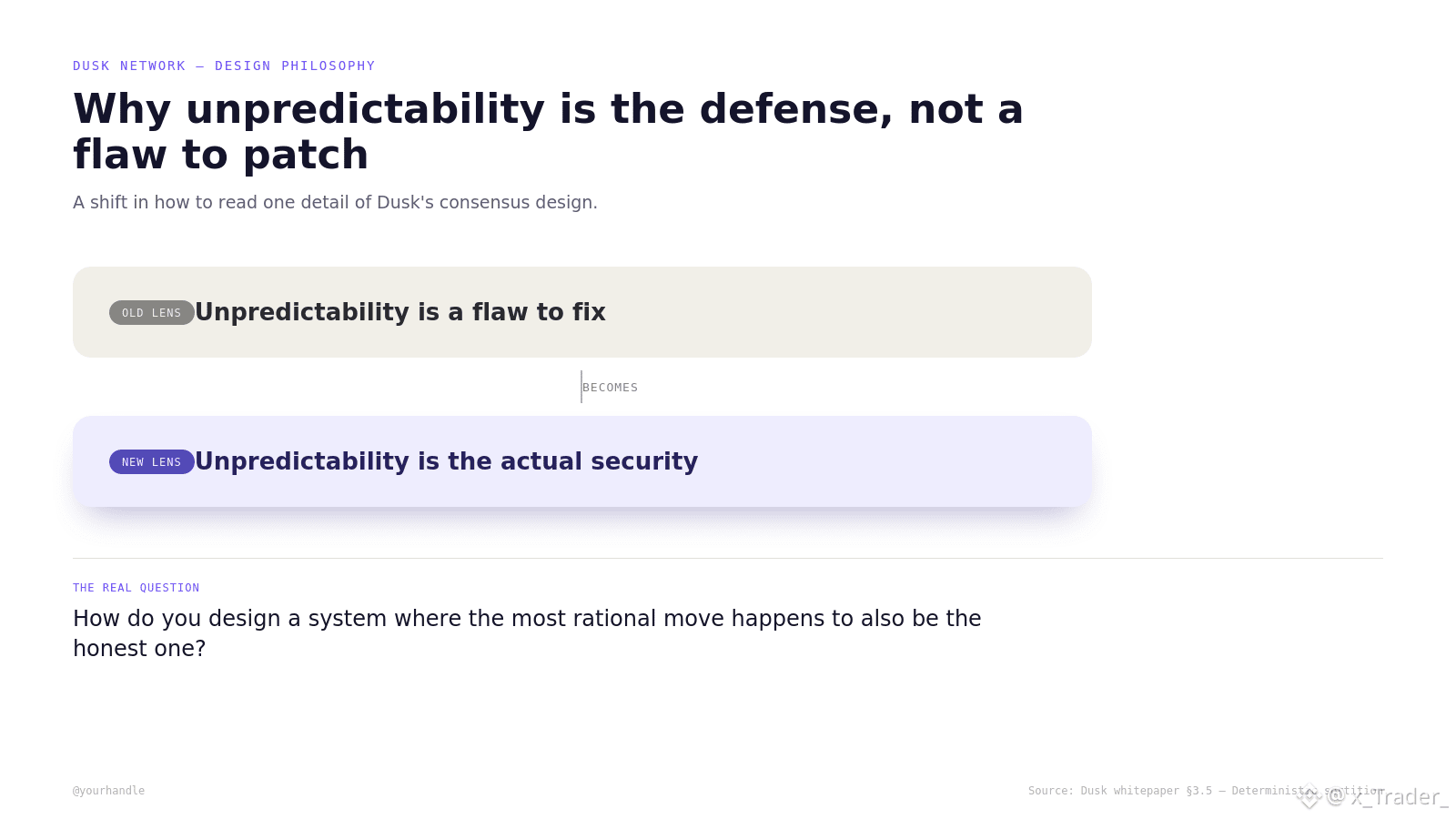
以前は、ブロックチェーンにおける予測不能性は「許容するバグ」であって、「実際に設計するような機能」だとは思っていませんでした。
Duskを学んで、その考えが変わりました。
想像してみてください。あなたはプロビジョナーです。あなたはステークしていて、参加資格があり、次のブロックを生成するよう選ばれる可能性があることは分かっています。ですが、あなたが選ばれるかどうかは分かりません。ほかの誰にも分かりません。他のバリデータにも分かりません。ましてやあなた自身にも、出来事が起きる10秒前には分かりません。
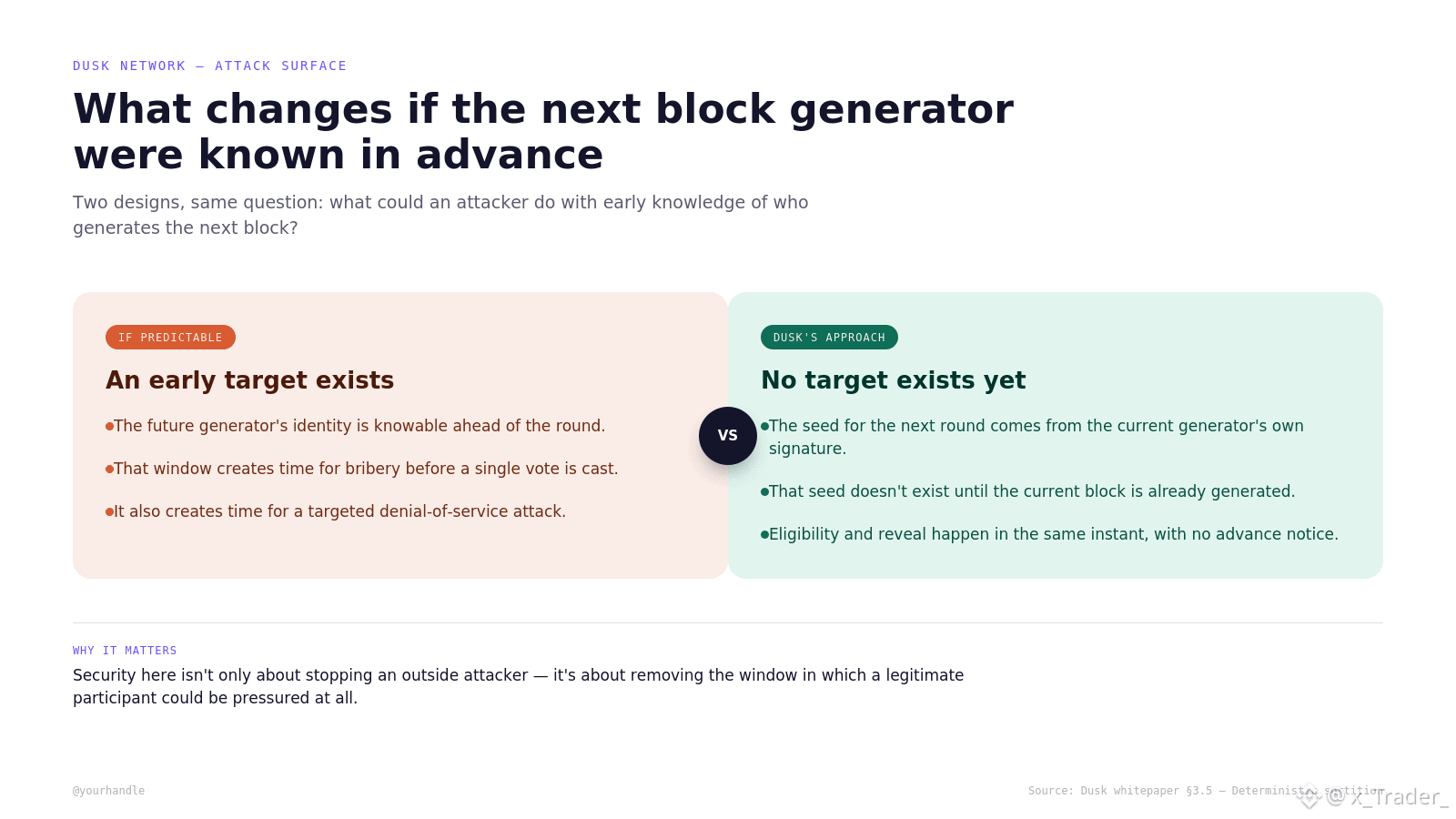
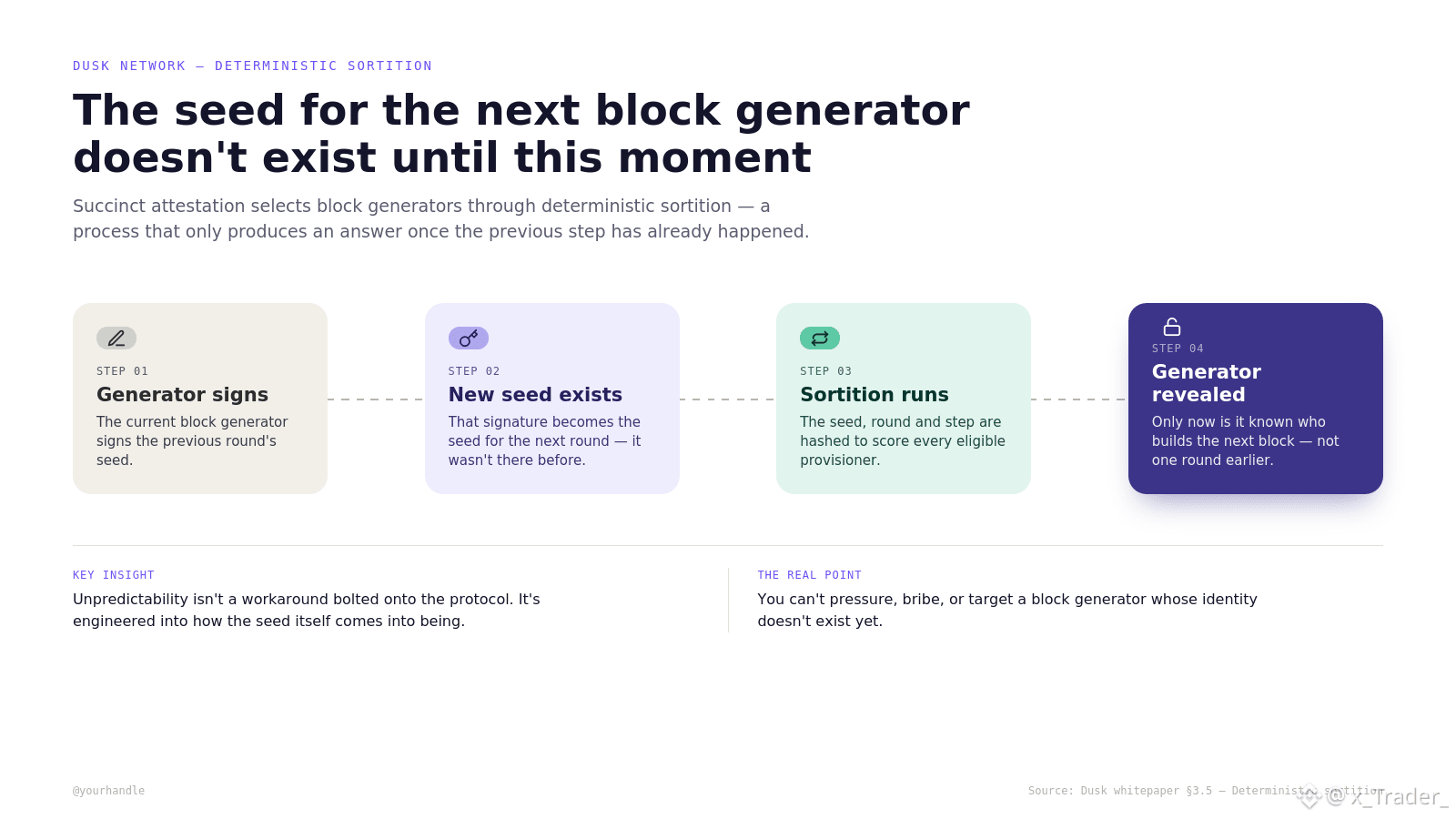
奇妙な点はここです。ブロックN+1で誰が選ばれるかを決めるシードは、ブロックNがまだ構築中の間は存在していないのです。文字通り、前のシードを生成したブロックジェネレータの署名から生成されます。「次は誰か」という答えはどこかに隠されているわけではありません。まだ計算されていないのです。
なぜそれが重要なのでしょうか? ここでの予測可能性は「便利」ではなく「負債」だからです。攻撃者が今日ブロック40を生成するのが誰かを特定できてしまえば、そのバリデータを狙うための時間が無限に手に入ります。買収する、DDoSする、圧力をかける――その瞬間が来る前に、すべて可能になってしまいます。
Duskの決定論的ソーティションは、その窓を完全に閉じます。あなたがジェネレータであると分かるのは、それがすでに事実になった瞬間だけです。
つまり、真の設計課題は「リーダーをどう選ぶか」ではありませんでした。「誰もそれを計画できない形で、どう選ぶか」です。
では、ブロック選択が少しでも早い段階で予測可能になった瞬間、何が起きるでしょう?
#dusk $DUSK @Dusk_Foundation
投票:
次のブロックジェネレータを予測できるようになったら、最初に何が壊れると思う?
🎯 賄賂が可能になる
🛑 DDoSが可能になる
⚖️ 両方、同じ脆弱性
🔒 何もない、なお安全
以前は、ブロックチェーンにおける予測不能性は「許容するバグ」であって、「実際に設計するような機能」だとは思っていませんでした。
Duskを学んで、その考えが変わりました。
想像してみてください。あなたはプロビジョナーです。あなたはステークしていて、参加資格があり、次のブロックを生成するよう選ばれる可能性があることは分かっています。ですが、あなたが選ばれるかどうかは分かりません。ほかの誰にも分かりません。他のバリデータにも分かりません。ましてやあなた自身にも、出来事が起きる10秒前には分かりません。
奇妙な点はここです。ブロックN+1で誰が選ばれるかを決めるシードは、ブロックNがまだ構築中の間は存在していないのです。文字通り、前のシードを生成したブロックジェネレータの署名から生成されます。「次は誰か」という答えはどこかに隠されているわけではありません。まだ計算されていないのです。
なぜそれが重要なのでしょうか? ここでの予測可能性は「便利」ではなく「負債」だからです。攻撃者が今日ブロック40を生成するのが誰かを特定できてしまえば、そのバリデータを狙うための時間が無限に手に入ります。買収する、DDoSする、圧力をかける――その瞬間が来る前に、すべて可能になってしまいます。
Duskの決定論的ソーティションは、その窓を完全に閉じます。あなたがジェネレータであると分かるのは、それがすでに事実になった瞬間だけです。
つまり、真の設計課題は「リーダーをどう選ぶか」ではありませんでした。「誰もそれを計画できない形で、どう選ぶか」です。
では、ブロック選択が少しでも早い段階で予測可能になった瞬間、何が起きるでしょう?
#dusk $DUSK @Dusk
投票:
次のブロックジェネレータを予測できるようになったら、最初に何が壊れると思う?
🎯 賄賂が可能になる
🛑 DDoSが可能になる
⚖️ 両方、同じ脆弱性
🔒 何もない、なお安全
Duskを学んで、その考えが変わりました。
想像してみてください。あなたはプロビジョナーです。あなたはステークしていて、参加資格があり、次のブロックを生成するよう選ばれる可能性があることは分かっています。ですが、あなたが選ばれるかどうかは分かりません。ほかの誰にも分かりません。他のバリデータにも分かりません。ましてやあなた自身にも、出来事が起きる10秒前には分かりません。
奇妙な点はここです。ブロックN+1で誰が選ばれるかを決めるシードは、ブロックNがまだ構築中の間は存在していないのです。文字通り、前のシードを生成したブロックジェネレータの署名から生成されます。「次は誰か」という答えはどこかに隠されているわけではありません。まだ計算されていないのです。
なぜそれが重要なのでしょうか? ここでの予測可能性は「便利」ではなく「負債」だからです。攻撃者が今日ブロック40を生成するのが誰かを特定できてしまえば、そのバリデータを狙うための時間が無限に手に入ります。買収する、DDoSする、圧力をかける――その瞬間が来る前に、すべて可能になってしまいます。
Duskの決定論的ソーティションは、その窓を完全に閉じます。あなたがジェネレータであると分かるのは、それがすでに事実になった瞬間だけです。
つまり、真の設計課題は「リーダーをどう選ぶか」ではありませんでした。「誰もそれを計画できない形で、どう選ぶか」です。
では、ブロック選択が少しでも早い段階で予測可能になった瞬間、何が起きるでしょう?
#dusk $DUSK @Dusk
投票:
次のブロックジェネレータを予測できるようになったら、最初に何が壊れると思う?
🎯 賄賂が可能になる
🛑 DDoSが可能になる
⚖️ 両方、同じ脆弱性
🔒 何もない、なお安全
21
15
536
·
--
本人確認中
返信の中で、私はどうしても拭いきれない質問をされたので、それに答えたいと思います。:
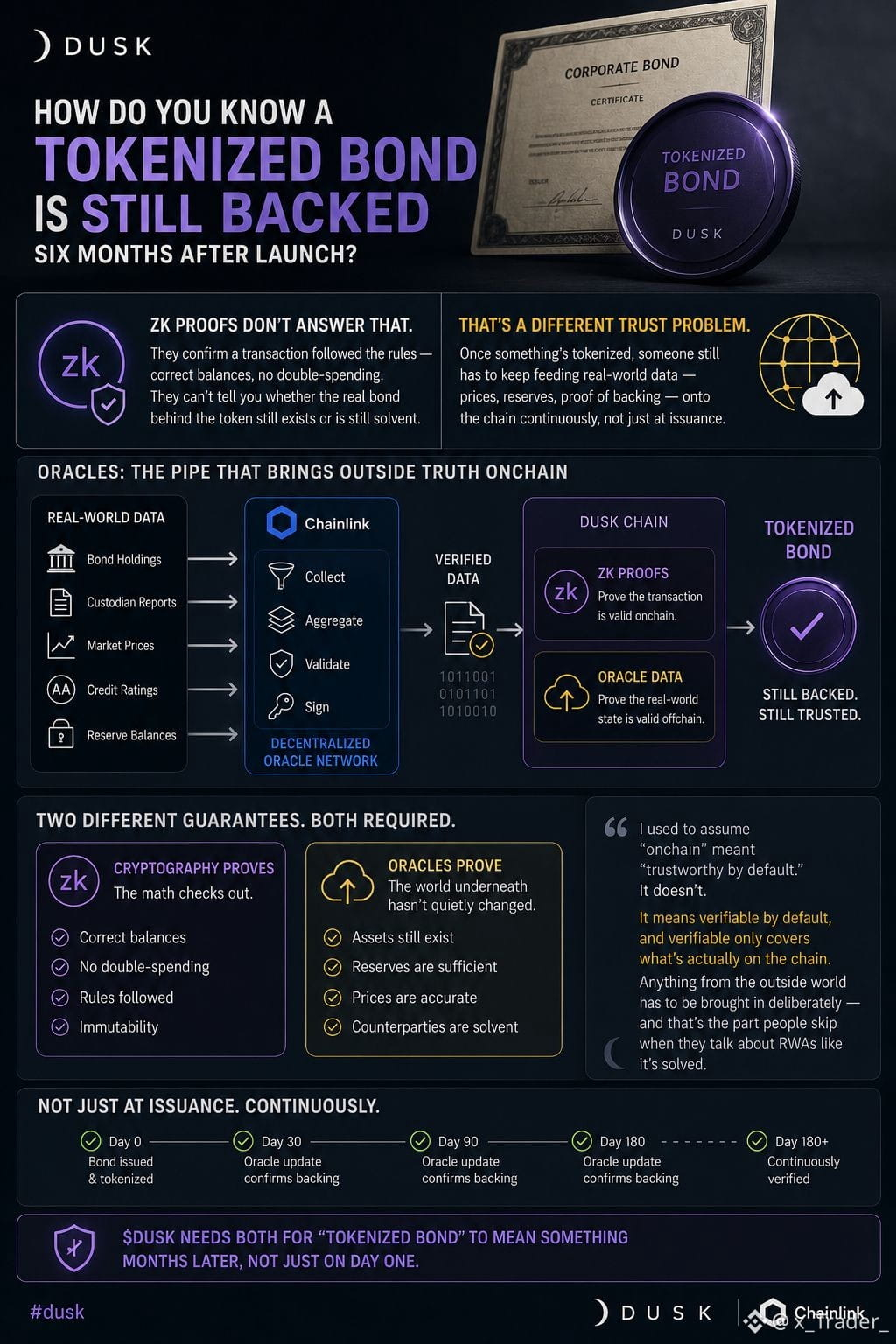
「Dusk上でトークン化された債券が、ローンチから6か月経った今も、実在する資産で本当に裏付けられていると、あなたはどうやって実際に知っているの?」
ZKプロファイツ(ゼロ知識証明)はそれには答えてくれません。
それらが確認するのは、ルールに従った取引が行われたということ——正しい残高であり、二重支払いがないことです。
しかし、そのトークンの裏にある「実在の債券」が今も存在しているのか、あるいは支払い能力がまだあるのか——それを証明することはできません。
それは別の信頼の問題であり、だからこそ @Dusk_Foundation は Chainlink と連携して機能します。
何かがトークン化されたら、誰かが継続して現実世界のデータ——価格、準備(リザーブ)、裏付けの根拠となる証明——を発行時だけでなく、常にチェーンへ流し続ける必要があります。
それが基本的にオラクルです。つまり、外部の真実を、そうでなければ自分自身の内部に書かれていることしか知らないシステムへ運び込む「パイプ」です。
私は昔、「オンチェーン」=「デフォルトで信頼できる」ものだと決めつけていました。
違います。
「デフォルトで検証可能」だという意味です。そして検証可能なのは、実際にチェーン上にあるものだけを対象とします。
外の世界からの情報は、意図的に持ち込まなければなりません——この点を、RWAがもう解決済みみたいに語る人たちはよく飛ばします。
暗号は、計算が正しいことを証明します。
オラクルは、その下で支えている現実世界が、こっそり変わっていないことを証明します。
$DUSK は、「トークン化された債券」が“意味のあるもの”として数か月後にも成立するために、両方が必要です。初日だけではありません。
#dusk $DUSK @Dusk_Foundation
さあ、あなたの番です:Chainlink のオラクルが実際に Dusk に渡しているのは何でしょう?
🔗 現実世界の価格/準備(リザーブ)データ
🔐 ゼロ知識証明そのもの
🏦 規制当局の承認
⚡ トランザクションの最終確定
返信の中で、私はどうしても拭いきれない質問をされたので、それに答えたいと思います。:
「Dusk上でトークン化された債券が、ローンチから6か月経った今も、実在する資産で本当に裏付けられていると、あなたはどうやって実際に知っているの?」
ZKプロファイツ(ゼロ知識証明)はそれには答えてくれません。
それらが確認するのは、ルールに従った取引が行われたということ——正しい残高であり、二重支払いがないことです。
しかし、そのトークンの裏にある「実在の債券」が今も存在しているのか、あるいは支払い能力がまだあるのか——それを証明することはできません。
それは別の信頼の問題であり、だからこそ @Dusk は Chainlink と連携して機能します。
何かがトークン化されたら、誰かが継続して現実世界のデータ——価格、準備(リザーブ)、裏付けの根拠となる証明——を発行時だけでなく、常にチェーンへ流し続ける必要があります。
それが基本的にオラクルです。つまり、外部の真実を、そうでなければ自分自身の内部に書かれていることしか知らないシステムへ運び込む「パイプ」です。
私は昔、「オンチェーン」=「デフォルトで信頼できる」ものだと決めつけていました。
違います。
「デフォルトで検証可能」だという意味です。そして検証可能なのは、実際にチェーン上にあるものだけを対象とします。
外の世界からの情報は、意図的に持ち込まなければなりません——この点を、RWAがもう解決済みみたいに語る人たちはよく飛ばします。
暗号は、計算が正しいことを証明します。
オラクルは、その下で支えている現実世界が、こっそり変わっていないことを証明します。
$DUSK は、「トークン化された債券」が“意味のあるもの”として数か月後にも成立するために、両方が必要です。初日だけではありません。
#dusk $DUSK @Dusk
さあ、あなたの番です:Chainlink のオラクルが実際に Dusk に渡しているのは何でしょう?
🔗 現実世界の価格/準備(リザーブ)データ
🔐 ゼロ知識証明そのもの
🏦 規制当局の承認
⚡ トランザクションの最終確定
「Dusk上でトークン化された債券が、ローンチから6か月経った今も、実在する資産で本当に裏付けられていると、あなたはどうやって実際に知っているの?」
ZKプロファイツ(ゼロ知識証明)はそれには答えてくれません。
それらが確認するのは、ルールに従った取引が行われたということ——正しい残高であり、二重支払いがないことです。
しかし、そのトークンの裏にある「実在の債券」が今も存在しているのか、あるいは支払い能力がまだあるのか——それを証明することはできません。
それは別の信頼の問題であり、だからこそ @Dusk は Chainlink と連携して機能します。
何かがトークン化されたら、誰かが継続して現実世界のデータ——価格、準備(リザーブ)、裏付けの根拠となる証明——を発行時だけでなく、常にチェーンへ流し続ける必要があります。
それが基本的にオラクルです。つまり、外部の真実を、そうでなければ自分自身の内部に書かれていることしか知らないシステムへ運び込む「パイプ」です。
私は昔、「オンチェーン」=「デフォルトで信頼できる」ものだと決めつけていました。
違います。
「デフォルトで検証可能」だという意味です。そして検証可能なのは、実際にチェーン上にあるものだけを対象とします。
外の世界からの情報は、意図的に持ち込まなければなりません——この点を、RWAがもう解決済みみたいに語る人たちはよく飛ばします。
暗号は、計算が正しいことを証明します。
オラクルは、その下で支えている現実世界が、こっそり変わっていないことを証明します。
$DUSK は、「トークン化された債券」が“意味のあるもの”として数か月後にも成立するために、両方が必要です。初日だけではありません。
#dusk $DUSK @Dusk
さあ、あなたの番です:Chainlink のオラクルが実際に Dusk に渡しているのは何でしょう?
🔗 現実世界の価格/準備(リザーブ)データ
🔐 ゼロ知識証明そのもの
🏦 規制当局の承認
⚡ トランザクションの最終確定
19
11
570
·
--
これが、タイミングが重要なのはそのためです――DuskEVMメインネットは、NPEXのような取引所が実際の資産をそこへルーティングできるようになる前に、稼働し安定している必要があります。パートナーシップとインフラの展開は、同じ時計の上で進んでいるのです。"
$DUSK
{future}(DUSKUSDT)
これが、タイミングが重要なのはそのためです――DuskEVMメインネットは、NPEXのような取引所が実際の資産をそこへルーティングできるようになる前に、稼働し安定している必要があります。パートナーシップとインフラの展開は、同じ時計の上で進んでいるのです。"
$DUSK
$DUSK
3
173
·
--
本人確認中
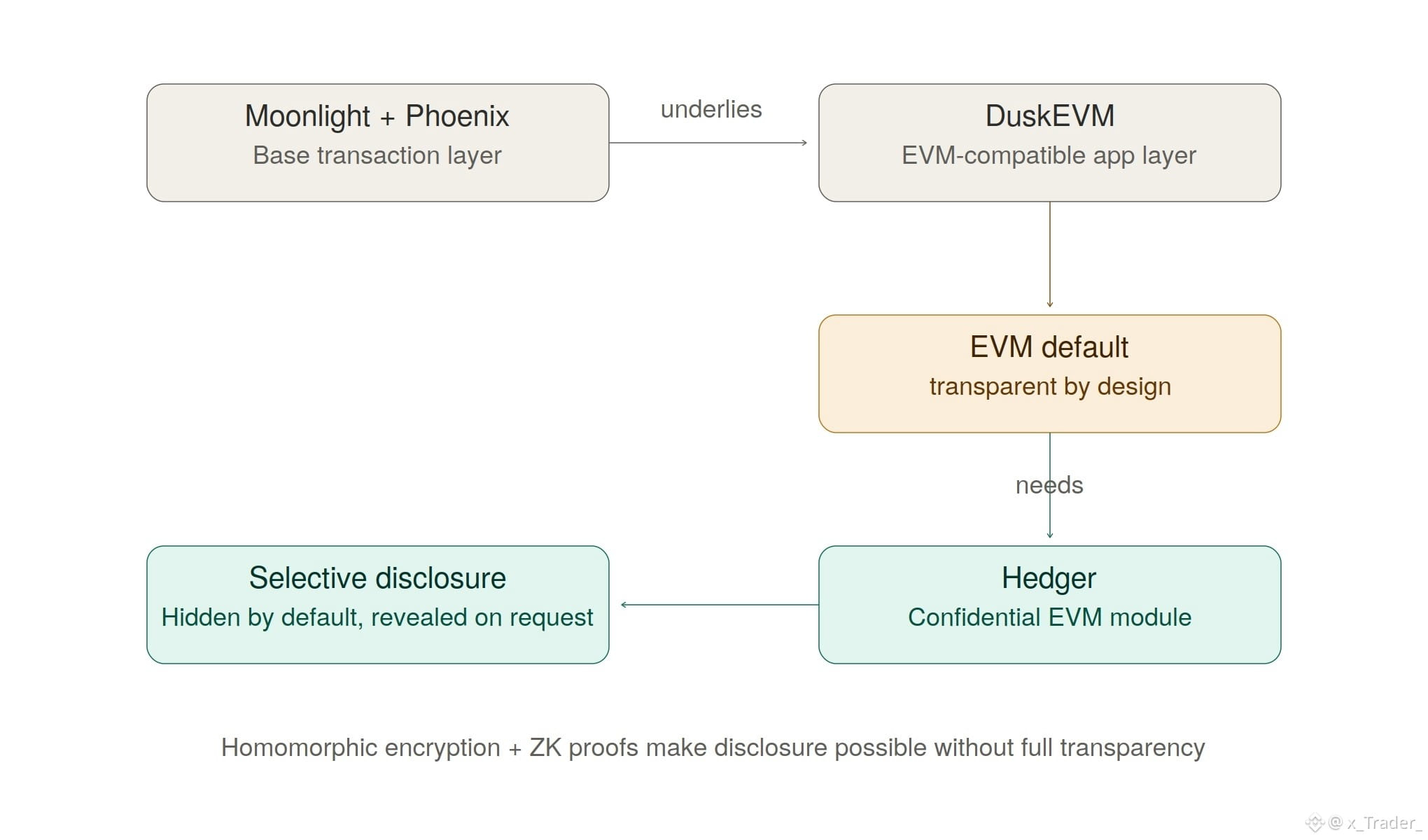
今日は、避けてたのと同じグループチャットに戻ったんだけど、誰かがこう押し返してきてさ。 「オッケー、MoonlightとPhoenixはいい感じだけど、それって基本層の話にすぎない。 じゃあ今の疑問なんだけど、実際の開発者がそこに何かを作ろうとしたらどうなるの?」 もっともな反論で、前回はうまい答えを持ててなかった。 でも実は、それこそDuskEVMが埋めるべきギャップなんだ。 DuskEVMは、ベースチェーンの上に載るEVM互換のアプリケーション層。つまりSolidityの開発者は、新しい言語やツールチェーンを丸ごと学ぶ必要がなくて、すでに下層でプライバシー/コンプライアンスの分割をネイティブに処理しているチェーンへの、なじみのある入口が手に入る。 で、気づいてなかったポイントがある。EVM環境は通常デフォルトで透明性が高い。これはツール側の作りとしてそうなっている。 だから、EVM互換の層に「レビュー可能なプライバシー」のチェーンを組み込むのは無料じゃない。どこかで、その継ぎ目を実際に解決する人が必要になる。 それがHedgerだ。Hedgerは、機密EVMワークフローのために特別に作られたDuskのプライバシーモジュールで、同型暗号とZK証明を使う。これにより、コントラクト実行は非公開のまま維持できる一方で、実際に確認する権限がある相手には開示できる。 つまり、スタック全体が「1つの機能」じゃなくて「層として整理されていく」感じが見えてきた。 Moonlight/Phoenixがトランザクション単位のプライバシー選択を担い、DuskEVMが普通の入り口を提供し、Hedgerがその経路が、うっかりEVMの「全部公開」というデフォルトをそのまま継承してしまわないようにするパーツになっている。 注意点も同じく前回のとおり。DuskEVMのメインネットはまだ稼働していなくて、これから。 Hedgerの「隠すだけじゃなくレビュー可能」という主張は、実際のコントラクトがそれを通して動き、誰かが稼働中のワークフローで開示レバーを引いてみせるまでの設計目標だ。 とはいえ、率直に聞きたい。みんなはどう思ってる? もしこの手のチェーンの上で何かを作るなら、いちばん気になる点は何? 🔧 ツールの成熟度 🔍 開示が実際にどう機能するか ⏱️ メインネットのスケジュール 🤝 開発者が本当に来るかどうか #dusk $DUSK @Dusk_Foundation
今日は、避けてたのと同じグループチャットに戻ったんだけど、誰かがこう押し返してきてさ。 「オッケー、MoonlightとPhoenixはいい感じだけど、それって基本層の話にすぎない。 じゃあ今の疑問なんだけど、実際の開発者がそこに何かを作ろうとしたらどうなるの?」 もっともな反論で、前回はうまい答えを持ててなかった。 でも実は、それこそDuskEVMが埋めるべきギャップなんだ。 DuskEVMは、ベースチェーンの上に載るEVM互換のアプリケーション層。つまりSolidityの開発者は、新しい言語やツールチェーンを丸ごと学ぶ必要がなくて、すでに下層でプライバシー/コンプライアンスの分割をネイティブに処理しているチェーンへの、なじみのある入口が手に入る。 で、気づいてなかったポイントがある。EVM環境は通常デフォルトで透明性が高い。これはツール側の作りとしてそうなっている。 だから、EVM互換の層に「レビュー可能なプライバシー」のチェーンを組み込むのは無料じゃない。どこかで、その継ぎ目を実際に解決する人が必要になる。 それがHedgerだ。Hedgerは、機密EVMワークフローのために特別に作られたDuskのプライバシーモジュールで、同型暗号とZK証明を使う。これにより、コントラクト実行は非公開のまま維持できる一方で、実際に確認する権限がある相手には開示できる。 つまり、スタック全体が「1つの機能」じゃなくて「層として整理されていく」感じが見えてきた。 Moonlight/Phoenixがトランザクション単位のプライバシー選択を担い、DuskEVMが普通の入り口を提供し、Hedgerがその経路が、うっかりEVMの「全部公開」というデフォルトをそのまま継承してしまわないようにするパーツになっている。 注意点も同じく前回のとおり。DuskEVMのメインネットはまだ稼働していなくて、これから。 Hedgerの「隠すだけじゃなくレビュー可能」という主張は、実際のコントラクトがそれを通して動き、誰かが稼働中のワークフローで開示レバーを引いてみせるまでの設計目標だ。 とはいえ、率直に聞きたい。みんなはどう思ってる? もしこの手のチェーンの上で何かを作るなら、いちばん気になる点は何? 🔧 ツールの成熟度 🔍 開示が実際にどう機能するか ⏱️ メインネットのスケジュール 🤝 開発者が本当に来るかどうか #dusk $DUSK @Dusk
4
8
161
·
--
🧧 レッドパケット アラート! 🧧
Binanceのレッドパケットを配ります — 無料の暗号資産、引っかけなし! 🎁
💰 お早めに受け取ってください(なくなり次第終了)
⏰ 限定時間のみ
🔥 先着順
👉 [ここにあなたのレッドパケットのリンク/コードを入力]
Binanceが初めて? 登録して数秒で受け取れます。幸運を! 🍀
#Binance #crypto #redpacket #FreeCryptoEarnings
🧧 レッドパケット アラート! 🧧
Binanceのレッドパケットを配ります — 無料の暗号資産、引っかけなし! 🎁
💰 お早めに受け取ってください(なくなり次第終了)
⏰ 限定時間のみ
🔥 先着順
👉 [ここにあなたのレッドパケットのリンク/コードを入力]
Binanceが初めて? 登録して数秒で受け取れます。幸運を! 🍀
#Binance #crypto #redpacket #FreeCryptoEarnings
Binanceのレッドパケットを配ります — 無料の暗号資産、引っかけなし! 🎁
💰 お早めに受け取ってください(なくなり次第終了)
⏰ 限定時間のみ
🔥 先着順
👉 [ここにあなたのレッドパケットのリンク/コードを入力]
Binanceが初めて? 登録して数秒で受け取れます。幸運を! 🍀
#Binance #crypto #redpacket #FreeCryptoEarnings

2k
18
124
2k
ログインして、さらにコンテンツを読む
厳選トピックで世界の暗号資産トレーダーの仲間入り
⚡️ 暗号資産に関する最新かつ有益な情報が見つかります。
💬 世界最大の暗号資産取引所から信頼されています。
👍 認証を受けたクリエイターから、有益なインサイトを得られます。
メール / 電話番号
トレンドトピック
G7PlansToReleaseUpTo100MBarrelsOilDiesel
閲覧回数 120
26人が討論中
$BTC/USDT: 中立 / レンジ相場(取引しないゾーン)
見通し:中立(強気シグナル2つ vs 弱気シグナル2つ)
状態:様子見。市場は4.2%の中立レンジに張り付いています。高確率のブレイクアウト設定を待ちます。
取引実行プラン
シナリオ1:強気のブレイクアウト(ロング)
トリガー:1時間足の終値が87,249.60を上回る
目標:
88,106.78
88,678.24
89,535.42
損切り:86,106.69
シナリオ2:弱気のブレイクダウン(ショート)
トリガー:1時間足の終値が83,690.41を下回る
目標:
82,833.23
82,261.77
81,404.59
損切り:84,833.32
テクニカルの内訳
強気の整合性(上位足):1Dおよび4Hのチャートはいずれも健全な強気の整合性を示しています(価格 > EMA 50 > EMA 200)。これにより、より大きなマクロ傾向は上向きであることが確認されています。
弱気の整合性(下位足):短期のモメンタムは売り手が優勢です。15mのADX(27.0)は、活発な売り圧力を示しています(DI− 21.6 対 DI+ 17.7)。また、1HのRSIは43.6で、45を下回る弱気圏にあります。
実行戦略の判断
1時間足の終値が87,249.60を上回った場合、通常のブレイクアウトルールに従い、ロングのトリガーを即時に取りに行くのが妥当です。これは、レンジのレジスタンスを確定的に上抜けることで、短期モメンタムを買い手が取り戻したことを裏付けます。
ただし、上位足のEMAの伸び(エクステンション)が懸念材料である場合、強気のトレーダーはブレイクアウトの終値で初期ポジションを取ることもできます。一方、慎重なトレーダーは、ブレイクアウト水準へのリテスト/押し目が入るのを待って、もしくは中間のEMAを確認してからエントリーすることが可能です。
$BTC
$ZEC
$QNT
#G7PlansToReleaseUpTo100MBarrelsOilDiesel #ICBASuesOCCOverCryptoBankCharters
김수현 6
·いいね:0件
·閲覧回数 133
ICBASuesOCCOverCryptoBankCharters
閲覧回数 116
21人が討論中
USStocksCloseHigherOnWeakJobsData
閲覧回数 56
11人が討論中