

Anh_ba_Cong - COLE
20.1k 投稿

Anh_ba_Cong - COLE
報告
ユーザーをブロック
I'm COLE (also known as Anh Ba Cong in Vietnam).
EA Expert with 4 years in Funds.
20K followers on YT and Binance.
Mastering automated trading together!

BNBホルダー
超高頻度トレーダー
8.7年
244 フォロー
18.2K+ フォロワー
29.1K+ いいね
投稿
すべて
引用
動画
ライブ
·
--
弱気相場
翻訳参照
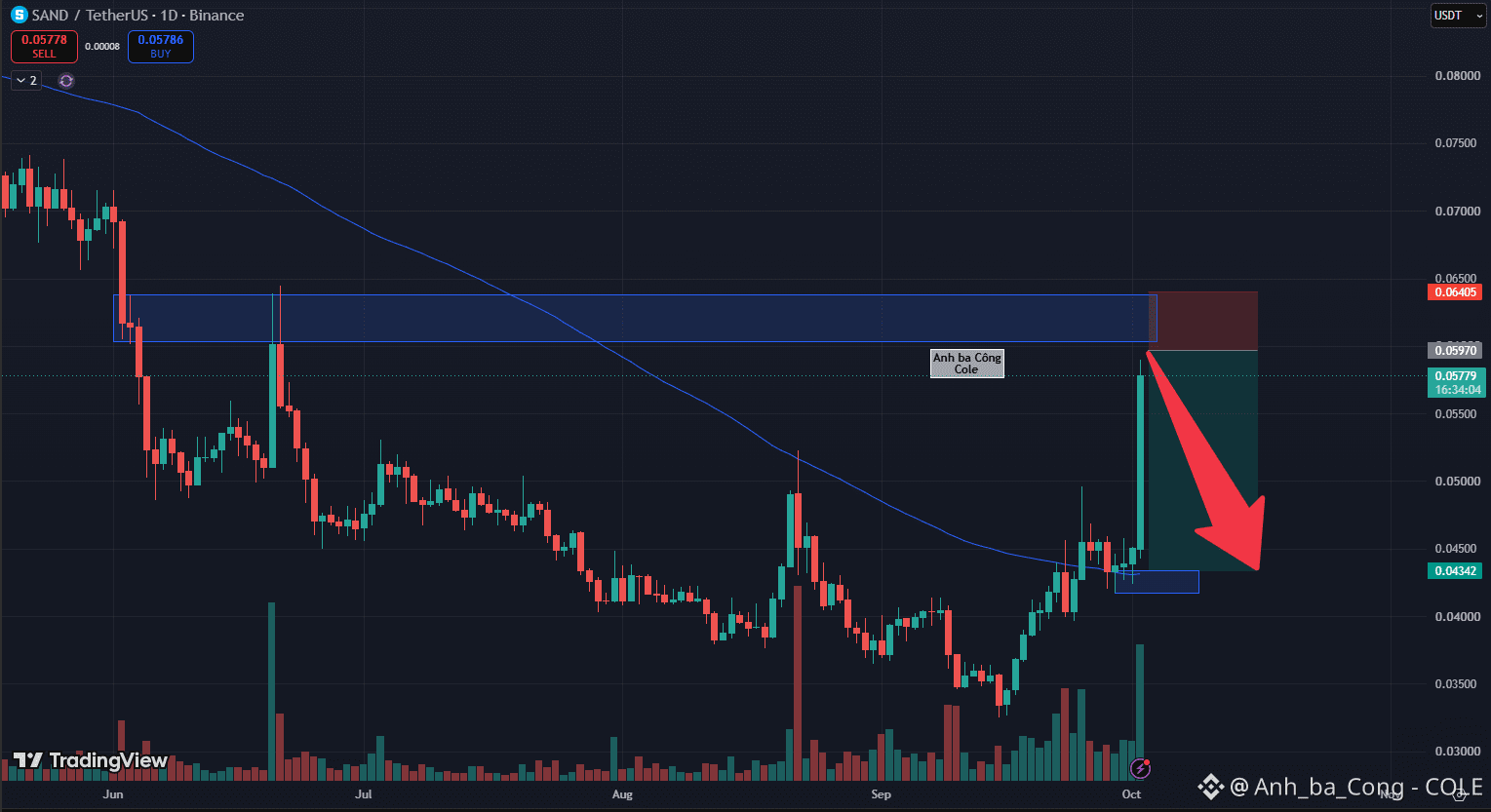
SAND: Collides with $0.060 Macro Resistance Ceiling – Strategic Mean-Reversion Short Targeting Dynamic MA100
The Sandbox (SAND) is presenting a high-probability mean-reversion short setup on the daily timeframe as an aggressive vertical surge stretches directly into heavy historical overhead resistance. Following consecutive impulsive markup sessions from the local floor, upward momentum is meeting severe distribution pressure, transforming this active pause into an optimal short execution opportunity.
Based on visual data from the daily chart, the active daily candle near the $0.0577 handle pushed into the lower boundary of the highlighted resistance block spanning $0.0597–$0.0640 before printing a visible upper rejection wick. This overhead zone marks an impenetrable ceiling that initiated a steep markdown in June, confirming that trapped residual supply remains substantial. Crucially, price action is severely overextended above the underlying dynamic MA100 baseline, leaving immediate market structure vulnerable to a sharp technical retracement. As aggressive buying volume dries up at elevated levels, profit-taking flows will swiftly assert control to trigger an orderly mean-reversion swing.
The optimal trading approach is to patiently await Short entry execution within the $0.0585–$0.0597 zone. A protective stop-loss parameter should be placed safely above the supply ceiling at $0.06405. The primary strategic take-profit objective targets the confluence support of the prior base and dynamic MA100 near $0.04342, capturing superior risk-to-reward metrics. $SAND $GTC $CT #Colecolen
{future}(CTUSDT)
{future}(GTCUSDT)
{future}(SANDUSDT)
SAND: Collides with $0.060 Macro Resistance Ceiling – Strategic Mean-Reversion Short Targeting Dynamic MA100
The Sandbox (SAND) is presenting a high-probability mean-reversion short setup on the daily timeframe as an aggressive vertical surge stretches directly into heavy historical overhead resistance. Following consecutive impulsive markup sessions from the local floor, upward momentum is meeting severe distribution pressure, transforming this active pause into an optimal short execution opportunity.
Based on visual data from the daily chart, the active daily candle near the $0.0577 handle pushed into the lower boundary of the highlighted resistance block spanning $0.0597–$0.0640 before printing a visible upper rejection wick. This overhead zone marks an impenetrable ceiling that initiated a steep markdown in June, confirming that trapped residual supply remains substantial. Crucially, price action is severely overextended above the underlying dynamic MA100 baseline, leaving immediate market structure vulnerable to a sharp technical retracement. As aggressive buying volume dries up at elevated levels, profit-taking flows will swiftly assert control to trigger an orderly mean-reversion swing.
The optimal trading approach is to patiently await Short entry execution within the $0.0585–$0.0597 zone. A protective stop-loss parameter should be placed safely above the supply ceiling at $0.06405. The primary strategic take-profit objective targets the confluence support of the prior base and dynamic MA100 near $0.04342, capturing superior risk-to-reward metrics. $SAND $GTC $CT #Colecolen
The Sandbox (SAND) is presenting a high-probability mean-reversion short setup on the daily timeframe as an aggressive vertical surge stretches directly into heavy historical overhead resistance. Following consecutive impulsive markup sessions from the local floor, upward momentum is meeting severe distribution pressure, transforming this active pause into an optimal short execution opportunity.
Based on visual data from the daily chart, the active daily candle near the $0.0577 handle pushed into the lower boundary of the highlighted resistance block spanning $0.0597–$0.0640 before printing a visible upper rejection wick. This overhead zone marks an impenetrable ceiling that initiated a steep markdown in June, confirming that trapped residual supply remains substantial. Crucially, price action is severely overextended above the underlying dynamic MA100 baseline, leaving immediate market structure vulnerable to a sharp technical retracement. As aggressive buying volume dries up at elevated levels, profit-taking flows will swiftly assert control to trigger an orderly mean-reversion swing.
The optimal trading approach is to patiently await Short entry execution within the $0.0585–$0.0597 zone. A protective stop-loss parameter should be placed safely above the supply ceiling at $0.06405. The primary strategic take-profit objective targets the confluence support of the prior base and dynamic MA100 near $0.04342, capturing superior risk-to-reward metrics. $SAND $GTC $CT #Colecolen
644
翻訳参照
SUSHI: FROM MULTI-CHAIN DEX TO A VALUE ACCRUAL STORY FOR HOLDERS
SUSHI is the native token of SushiSwap, one of the long-running DEX platforms in DeFi. Sushi is increasingly focused on a multi-chain model, currently operating across more than 40 networks and using RouteProcessor 6 to aggregate liquidity and improve swap execution across supported chains.
What makes SUSHI interesting for holders is that the token has utility directly connected to protocol activity. Users can stake SUSHI to receive xSUSHI, which gives holders a share of Sushi’s trading fees as well as governance participation. On Sushi V2, 0.05% of the standard 0.3% trading fee is allocated to the Sushi Bar, creating a direct link between trading activity and benefits for stakers.
This means the longer-term SUSHI story is not simply about token price. If trading volume and user activity grow, protocol fee generation could also increase, potentially making xSUSHI more valuable as a revenue-sharing position within the ecosystem.
Sushi’s future development is also increasingly centered around multi-chain and cross-chain functionality. SushiXSwap enables cross-chain swaps, while the broader ecosystem continues developing tools for traders and liquidity providers.
Another important point for holders is supply. Sushi completed the minting of its 250 million total supply, meaning the ecosystem moved away from the continuous token emissions that characterized its earlier liquidity-mining phase.
For SUSHI holders, the key metric to watch may therefore be whether Sushi can create a sustainable loop of more usage → more trading fees → greater value for xSUSHI.
If Sushi continues expanding its liquidity aggregation and cross-chain infrastructure, SUSHI could become increasingly connected to the actual economic activity generated by the protocol.
DYOR — This is not financial advice. $SUSHI #Colecolen
{future}(SUSHIUSDT)
SUSHI: FROM MULTI-CHAIN DEX TO A VALUE ACCRUAL STORY FOR HOLDERS
SUSHI is the native token of SushiSwap, one of the long-running DEX platforms in DeFi. Sushi is increasingly focused on a multi-chain model, currently operating across more than 40 networks and using RouteProcessor 6 to aggregate liquidity and improve swap execution across supported chains.
What makes SUSHI interesting for holders is that the token has utility directly connected to protocol activity. Users can stake SUSHI to receive xSUSHI, which gives holders a share of Sushi’s trading fees as well as governance participation. On Sushi V2, 0.05% of the standard 0.3% trading fee is allocated to the Sushi Bar, creating a direct link between trading activity and benefits for stakers.
This means the longer-term SUSHI story is not simply about token price. If trading volume and user activity grow, protocol fee generation could also increase, potentially making xSUSHI more valuable as a revenue-sharing position within the ecosystem.
Sushi’s future development is also increasingly centered around multi-chain and cross-chain functionality. SushiXSwap enables cross-chain swaps, while the broader ecosystem continues developing tools for traders and liquidity providers.
Another important point for holders is supply. Sushi completed the minting of its 250 million total supply, meaning the ecosystem moved away from the continuous token emissions that characterized its earlier liquidity-mining phase.
For SUSHI holders, the key metric to watch may therefore be whether Sushi can create a sustainable loop of more usage → more trading fees → greater value for xSUSHI.
If Sushi continues expanding its liquidity aggregation and cross-chain infrastructure, SUSHI could become increasingly connected to the actual economic activity generated by the protocol.
DYOR — This is not financial advice. $SUSHI #Colecolen
SUSHI is the native token of SushiSwap, one of the long-running DEX platforms in DeFi. Sushi is increasingly focused on a multi-chain model, currently operating across more than 40 networks and using RouteProcessor 6 to aggregate liquidity and improve swap execution across supported chains.
What makes SUSHI interesting for holders is that the token has utility directly connected to protocol activity. Users can stake SUSHI to receive xSUSHI, which gives holders a share of Sushi’s trading fees as well as governance participation. On Sushi V2, 0.05% of the standard 0.3% trading fee is allocated to the Sushi Bar, creating a direct link between trading activity and benefits for stakers.
This means the longer-term SUSHI story is not simply about token price. If trading volume and user activity grow, protocol fee generation could also increase, potentially making xSUSHI more valuable as a revenue-sharing position within the ecosystem.
Sushi’s future development is also increasingly centered around multi-chain and cross-chain functionality. SushiXSwap enables cross-chain swaps, while the broader ecosystem continues developing tools for traders and liquidity providers.
Another important point for holders is supply. Sushi completed the minting of its 250 million total supply, meaning the ecosystem moved away from the continuous token emissions that characterized its earlier liquidity-mining phase.
For SUSHI holders, the key metric to watch may therefore be whether Sushi can create a sustainable loop of more usage → more trading fees → greater value for xSUSHI.
If Sushi continues expanding its liquidity aggregation and cross-chain infrastructure, SUSHI could become increasingly connected to the actual economic activity generated by the protocol.
DYOR — This is not financial advice. $SUSHI #Colecolen

233
·
--
ブリッシュ
翻訳参照
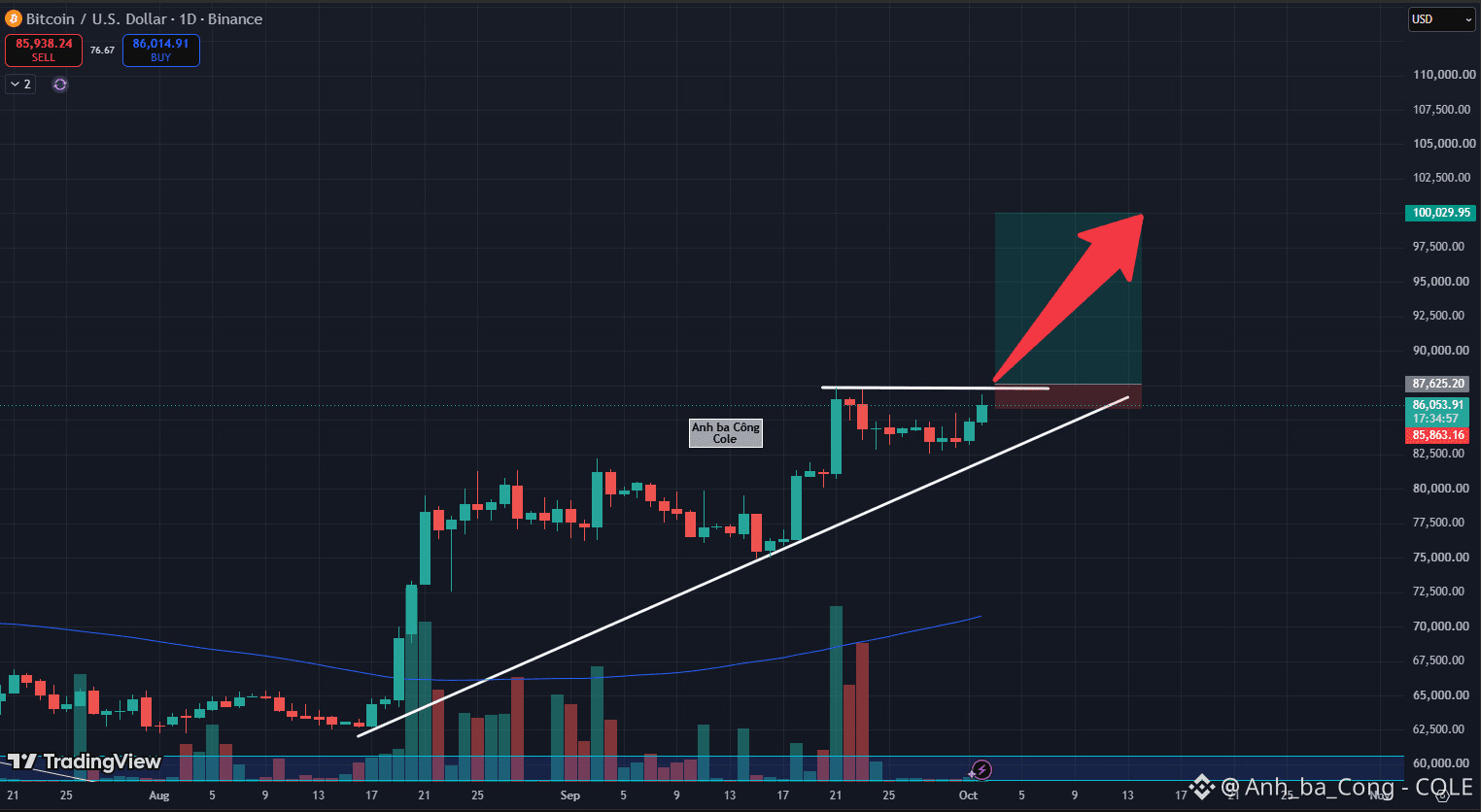
BTC: Solidifies Higher-Low Upward Structure – Strategic Breakout Long Targeting Historic $100,000 Milestone
Bitcoin (BTC) is demonstrating commanding bullish strength on the daily timeframe as its overarching upward market structure continues to print a resilient sequence of higher lows. Following a healthy consolidation base established above the $83,000–$85,000 zone, price action is pressing aggressively against a critical overhead ceiling, setting up a high-probability breakout Long execution.
Based on visual data from the daily chart , active price candles near the $86,053 handle are tracking closely along the rising white ascending diagonal baseline. Crucially, the entire structural progression remains positioned safely above the upward-sloping dynamic MA100 baseline, confirming that institutional capital continues to defend the primary trend. The active green daily candle is exerting clear upward pressure directly against the recent swing-high resistance at $87,625. Diminishing volume during prior corrective pullbacks verifies that localized profit-taking supply has been systematically absorbed. Once price action secures a decisive close above this horizontal resistance shelf, technical momentum is primed to trigger an expansive markup leg into uncharted territory.
The optimal trading approach is to patiently await a confirmed breakout above the recent swing high to initiate Long positions within the $87,650–$87,800 zone. A protective stop-loss parameter should be positioned safely beneath the local consolidation base at $85,863. The primary strategic take-profit objective targets the historic round-number milestone at $100,029, capturing superior risk-to-reward metrics.
Disclaimer: This is not financial advice, DYOR. $BTC $SYN $MEGA #Colecolen
{future}(MEGAUSDT)
{future}(SYNUSDT)
{future}(BTCUSDT)
BTC: Solidifies Higher-Low Upward Structure – Strategic Breakout Long Targeting Historic $100,000 Milestone
Bitcoin (BTC) is demonstrating commanding bullish strength on the daily timeframe as its overarching upward market structure continues to print a resilient sequence of higher lows. Following a healthy consolidation base established above the $83,000–$85,000 zone, price action is pressing aggressively against a critical overhead ceiling, setting up a high-probability breakout Long execution.
Based on visual data from the daily chart , active price candles near the $86,053 handle are tracking closely along the rising white ascending diagonal baseline. Crucially, the entire structural progression remains positioned safely above the upward-sloping dynamic MA100 baseline, confirming that institutional capital continues to defend the primary trend. The active green daily candle is exerting clear upward pressure directly against the recent swing-high resistance at $87,625. Diminishing volume during prior corrective pullbacks verifies that localized profit-taking supply has been systematically absorbed. Once price action secures a decisive close above this horizontal resistance shelf, technical momentum is primed to trigger an expansive markup leg into uncharted territory.
The optimal trading approach is to patiently await a confirmed breakout above the recent swing high to initiate Long positions within the $87,650–$87,800 zone. A protective stop-loss parameter should be positioned safely beneath the local consolidation base at $85,863. The primary strategic take-profit objective targets the historic round-number milestone at $100,029, capturing superior risk-to-reward metrics.
Disclaimer: This is not financial advice, DYOR. $BTC $SYN $MEGA #Colecolen
Bitcoin (BTC) is demonstrating commanding bullish strength on the daily timeframe as its overarching upward market structure continues to print a resilient sequence of higher lows. Following a healthy consolidation base established above the $83,000–$85,000 zone, price action is pressing aggressively against a critical overhead ceiling, setting up a high-probability breakout Long execution.
Based on visual data from the daily chart , active price candles near the $86,053 handle are tracking closely along the rising white ascending diagonal baseline. Crucially, the entire structural progression remains positioned safely above the upward-sloping dynamic MA100 baseline, confirming that institutional capital continues to defend the primary trend. The active green daily candle is exerting clear upward pressure directly against the recent swing-high resistance at $87,625. Diminishing volume during prior corrective pullbacks verifies that localized profit-taking supply has been systematically absorbed. Once price action secures a decisive close above this horizontal resistance shelf, technical momentum is primed to trigger an expansive markup leg into uncharted territory.
The optimal trading approach is to patiently await a confirmed breakout above the recent swing high to initiate Long positions within the $87,650–$87,800 zone. A protective stop-loss parameter should be positioned safely beneath the local consolidation base at $85,863. The primary strategic take-profit objective targets the historic round-number milestone at $100,029, capturing superior risk-to-reward metrics.
Disclaimer: This is not financial advice, DYOR. $BTC $SYN $MEGA #Colecolen
286
·
--
ブリッシュ
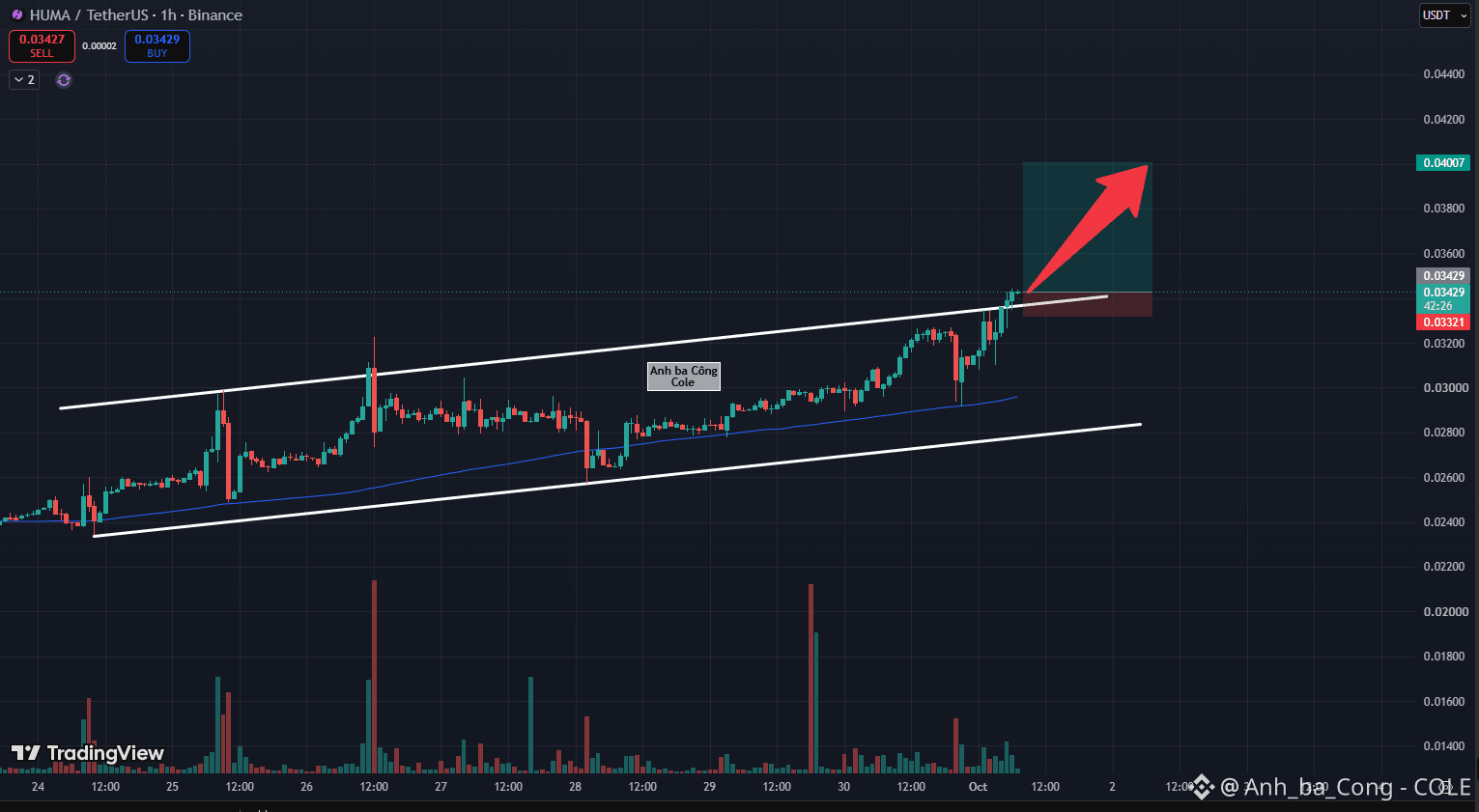
HUMA: 連続する足によって確定した決定的な上昇チャネルブレイクアウト - 戦略的な長期ロング目標:$0.040のマイルストーン
Huma(HUMA)は、1時間足の時間軸で、強力なトレンド拡大のロング・セットアップを公式に確定しています。価格アクションが、複数日にわたる上昇の平行チャネルの上側レジスタンス境界を決定的に突破したためです。この明快なブレイクアウトは、先行して蓄積されていた圧力を効果的に解放し、攻撃的な買い手が資産を高モメンタムのマークアップ局面へ押し上げるために完全な優位を確立したことを示しています。
1時間チャートの視覚データに基づくと、価格アクションは上側の白い斜めトレンドラインの完全な上方で、連続する1時間足の終値を確保しています。$0.03429の水準付近のアクティブな足は、この突破済みのバリア上で強固に安定を続けており、動的なレジスタンスが信頼できる構造的サポートへ反転したことを確認しています。重要なのは、上方向の全トラジェクトリーが、下方の上昇中のダイナミックMA100ベースラインよりも強く支えられている点です。売り手がチャネルへの再突入を強制できていないことは、局所的な供給が機関投資家のオーダーフローによって体系的に吸収されたことを示唆します。上側の境界が構造的なフロアへ移行することで、テクニカル・モメンタムは、上方の流動性へ向けた急速な継続波を押し進めるのに適した状態にあります。
最適な取引アプローチは、$0.0342~$0.0343ゾーンでトレンド追随のロングポジションを開始することです。損切り(ストップロス)の保護パラメータは、転換されたブレイクアウトのピボットである$0.03321を少し下にタイトに設定するべきです。主要な戦略的テイクプロフィット目標は、心理的なキリ番の上限である約$0.04007に置き、優れたリスク対リワード指標を確保します。
免責事項:これは金融アドバイスではありません。DYOR。 $HUMA $NOM $STX
{future}(STXUSDT)
{future}(NOMUSDT)
{future}(HUMAUSDT)
HUMA: 連続する足によって確定した決定的な上昇チャネルブレイクアウト - 戦略的な長期ロング目標:$0.040のマイルストーン
Huma(HUMA)は、1時間足の時間軸で、強力なトレンド拡大のロング・セットアップを公式に確定しています。価格アクションが、複数日にわたる上昇の平行チャネルの上側レジスタンス境界を決定的に突破したためです。この明快なブレイクアウトは、先行して蓄積されていた圧力を効果的に解放し、攻撃的な買い手が資産を高モメンタムのマークアップ局面へ押し上げるために完全な優位を確立したことを示しています。
1時間チャートの視覚データに基づくと、価格アクションは上側の白い斜めトレンドラインの完全な上方で、連続する1時間足の終値を確保しています。$0.03429の水準付近のアクティブな足は、この突破済みのバリア上で強固に安定を続けており、動的なレジスタンスが信頼できる構造的サポートへ反転したことを確認しています。重要なのは、上方向の全トラジェクトリーが、下方の上昇中のダイナミックMA100ベースラインよりも強く支えられている点です。売り手がチャネルへの再突入を強制できていないことは、局所的な供給が機関投資家のオーダーフローによって体系的に吸収されたことを示唆します。上側の境界が構造的なフロアへ移行することで、テクニカル・モメンタムは、上方の流動性へ向けた急速な継続波を押し進めるのに適した状態にあります。
最適な取引アプローチは、$0.0342~$0.0343ゾーンでトレンド追随のロングポジションを開始することです。損切り(ストップロス)の保護パラメータは、転換されたブレイクアウトのピボットである$0.03321を少し下にタイトに設定するべきです。主要な戦略的テイクプロフィット目標は、心理的なキリ番の上限である約$0.04007に置き、優れたリスク対リワード指標を確保します。
免責事項:これは金融アドバイスではありません。DYOR。 $HUMA $NOM $STX
Huma(HUMA)は、1時間足の時間軸で、強力なトレンド拡大のロング・セットアップを公式に確定しています。価格アクションが、複数日にわたる上昇の平行チャネルの上側レジスタンス境界を決定的に突破したためです。この明快なブレイクアウトは、先行して蓄積されていた圧力を効果的に解放し、攻撃的な買い手が資産を高モメンタムのマークアップ局面へ押し上げるために完全な優位を確立したことを示しています。
1時間チャートの視覚データに基づくと、価格アクションは上側の白い斜めトレンドラインの完全な上方で、連続する1時間足の終値を確保しています。$0.03429の水準付近のアクティブな足は、この突破済みのバリア上で強固に安定を続けており、動的なレジスタンスが信頼できる構造的サポートへ反転したことを確認しています。重要なのは、上方向の全トラジェクトリーが、下方の上昇中のダイナミックMA100ベースラインよりも強く支えられている点です。売り手がチャネルへの再突入を強制できていないことは、局所的な供給が機関投資家のオーダーフローによって体系的に吸収されたことを示唆します。上側の境界が構造的なフロアへ移行することで、テクニカル・モメンタムは、上方の流動性へ向けた急速な継続波を押し進めるのに適した状態にあります。
最適な取引アプローチは、$0.0342~$0.0343ゾーンでトレンド追随のロングポジションを開始することです。損切り(ストップロス)の保護パラメータは、転換されたブレイクアウトのピボットである$0.03321を少し下にタイトに設定するべきです。主要な戦略的テイクプロフィット目標は、心理的なキリ番の上限である約$0.04007に置き、優れたリスク対リワード指標を確保します。
免責事項:これは金融アドバイスではありません。DYOR。 $HUMA $NOM $STX
286
DOGEはイーサリアムのようなアプリケーション・エコシステムに近づいている
DogeOSはパブリック・テストネットを公開し、ドージコインの上に構築されたアプリケーション層にスマートコントラクトをもたらしました。これにより、取引、貸し出し、ステーブルコイン、ゲームなどが可能になり、層の手数料はDOGEで支払われます。一方で、ネイティブのドージコイン・ネットワークはそのまま変更されません。
私の見解:これは重要です。というのも、DOGEが主に取引用に使われる資産から、アプリケーション活動におけるより幅広い役割を持つ可能性があるからです。本当の利用者が現れれば、DOGEの需要は市場のセンチメントに頼るだけでなく、手数料やエコシステム利用から生まれるかもしれません。とはいえ最大のリスクは、ネイティブのドージコイン・ネットワークが現時点でDogeOSの取引を自分自身で検証できないことです。システムは依然としてバリデータ・グループに依存しています。さらに、ドージコインのマイナーに検証させる提案は実装されていません。したがって、これは採用の証拠というより技術テストだと見ています。
私は、実際のアプリケーション数、取引アクティビティ、そしてバリデータ・モデルがどう進化していくかを監視します。利用が伸びてもセキュリティが少数グループ依存のままであれば、慎重でいます。ドージコインがより幅広い検証に向かい、実際の利用者を獲得するなら、DOGEへのエクスポージャーを増やすことも検討します。
DogeOSはDOGEにより広いユーティリティを与えられるでしょうか?このロジックが筋が通っているなら、市場の内訳をもっと見るためにフォローしてください。
取引を行う前に、必ず自分で慎重に調べてください(DYOR)。 $DOGE #Colecolen $PEPE $SHIB
{spot}(SHIBUSDT)
{spot}(PEPEUSDT)
{future}(DOGEUSDT)
DOGEはイーサリアムのようなアプリケーション・エコシステムに近づいている
DogeOSはパブリック・テストネットを公開し、ドージコインの上に構築されたアプリケーション層にスマートコントラクトをもたらしました。これにより、取引、貸し出し、ステーブルコイン、ゲームなどが可能になり、層の手数料はDOGEで支払われます。一方で、ネイティブのドージコイン・ネットワークはそのまま変更されません。
私の見解:これは重要です。というのも、DOGEが主に取引用に使われる資産から、アプリケーション活動におけるより幅広い役割を持つ可能性があるからです。本当の利用者が現れれば、DOGEの需要は市場のセンチメントに頼るだけでなく、手数料やエコシステム利用から生まれるかもしれません。とはいえ最大のリスクは、ネイティブのドージコイン・ネットワークが現時点でDogeOSの取引を自分自身で検証できないことです。システムは依然としてバリデータ・グループに依存しています。さらに、ドージコインのマイナーに検証させる提案は実装されていません。したがって、これは採用の証拠というより技術テストだと見ています。
私は、実際のアプリケーション数、取引アクティビティ、そしてバリデータ・モデルがどう進化していくかを監視します。利用が伸びてもセキュリティが少数グループ依存のままであれば、慎重でいます。ドージコインがより幅広い検証に向かい、実際の利用者を獲得するなら、DOGEへのエクスポージャーを増やすことも検討します。
DogeOSはDOGEにより広いユーティリティを与えられるでしょうか?このロジックが筋が通っているなら、市場の内訳をもっと見るためにフォローしてください。
取引を行う前に、必ず自分で慎重に調べてください(DYOR)。 $DOGE #Colecolen $PEPE $SHIB
DogeOSはパブリック・テストネットを公開し、ドージコインの上に構築されたアプリケーション層にスマートコントラクトをもたらしました。これにより、取引、貸し出し、ステーブルコイン、ゲームなどが可能になり、層の手数料はDOGEで支払われます。一方で、ネイティブのドージコイン・ネットワークはそのまま変更されません。
私の見解:これは重要です。というのも、DOGEが主に取引用に使われる資産から、アプリケーション活動におけるより幅広い役割を持つ可能性があるからです。本当の利用者が現れれば、DOGEの需要は市場のセンチメントに頼るだけでなく、手数料やエコシステム利用から生まれるかもしれません。とはいえ最大のリスクは、ネイティブのドージコイン・ネットワークが現時点でDogeOSの取引を自分自身で検証できないことです。システムは依然としてバリデータ・グループに依存しています。さらに、ドージコインのマイナーに検証させる提案は実装されていません。したがって、これは採用の証拠というより技術テストだと見ています。
私は、実際のアプリケーション数、取引アクティビティ、そしてバリデータ・モデルがどう進化していくかを監視します。利用が伸びてもセキュリティが少数グループ依存のままであれば、慎重でいます。ドージコインがより幅広い検証に向かい、実際の利用者を獲得するなら、DOGEへのエクスポージャーを増やすことも検討します。
DogeOSはDOGEにより広いユーティリティを与えられるでしょうか?このロジックが筋が通っているなら、市場の内訳をもっと見るためにフォローしてください。
取引を行う前に、必ず自分で慎重に調べてください(DYOR)。 $DOGE #Colecolen $PEPE $SHIB

165
リップルとカルダノがブラジルの金融・エネルギー分野にブロックチェーンを持ち込む
リップルとカルダノは、金融とエネルギーに関するブロックチェーン・プロジェクトを通じてブラジルでの存在感を拡大しています。CSD BRは投資ファンド向けの並列台帳システムとしてXRPレジャーをテストしており、一方でカルダノ財団はペトロブラス(Petrobras)に関する、持続可能な航空燃料と再生可能ディーゼルの追跡に携わる2つのアプリケーションを発表しました。
私の見解:重要なのは、XRPやADAが言及されているというだけではなく、どのようなデータやワークフローがブロックチェーンに持ち込まれているのかという点です。金融では、XRPレジャーが記録管理と、BTGパクタル(BTG Pactual)ファンドの持分のオンチェーン・シミュレーションのためにテストされています。エネルギーでは、カルダノがデータ追跡と排出量レポーティングを狙っています。用途は異なりますが、どちらも、透明性・追跡可能性・共有データが実務上の価値を持ちうるインフラとしてブロックチェーンが検証されていることを示しています。
現時点では、これをXRPまたはADAの短期的な価格の触媒だとは私は見ていません。より重要なのは、これらのパイロットが実運用のプロダクトになるのか、取引量が伸びるのか、そしてより多くの機関が参加するのか、です。導入が広がれば、資金はトークンの投機だけではなく、実際のインフラ需要からも流入してくる可能性があります。
ブラジルはエンタープライズ向けブロックチェーンの重要なテスト市場になり得るのでしょうか?このロジックが筋が通っていると思うなら、より多くの市場分析のためにフォローしてください。
いかなる取引を行う前にも、必ずご自身で慎重に調査してください(DYOR)。 $ADA $XRP $LTC
{future}(LTCUSDT)
{future}(XRPUSDT)
{future}(ADAUSDT)
リップルとカルダノがブラジルの金融・エネルギー分野にブロックチェーンを持ち込む
リップルとカルダノは、金融とエネルギーに関するブロックチェーン・プロジェクトを通じてブラジルでの存在感を拡大しています。CSD BRは投資ファンド向けの並列台帳システムとしてXRPレジャーをテストしており、一方でカルダノ財団はペトロブラス(Petrobras)に関する、持続可能な航空燃料と再生可能ディーゼルの追跡に携わる2つのアプリケーションを発表しました。
私の見解:重要なのは、XRPやADAが言及されているというだけではなく、どのようなデータやワークフローがブロックチェーンに持ち込まれているのかという点です。金融では、XRPレジャーが記録管理と、BTGパクタル(BTG Pactual)ファンドの持分のオンチェーン・シミュレーションのためにテストされています。エネルギーでは、カルダノがデータ追跡と排出量レポーティングを狙っています。用途は異なりますが、どちらも、透明性・追跡可能性・共有データが実務上の価値を持ちうるインフラとしてブロックチェーンが検証されていることを示しています。
現時点では、これをXRPまたはADAの短期的な価格の触媒だとは私は見ていません。より重要なのは、これらのパイロットが実運用のプロダクトになるのか、取引量が伸びるのか、そしてより多くの機関が参加するのか、です。導入が広がれば、資金はトークンの投機だけではなく、実際のインフラ需要からも流入してくる可能性があります。
ブラジルはエンタープライズ向けブロックチェーンの重要なテスト市場になり得るのでしょうか?このロジックが筋が通っていると思うなら、より多くの市場分析のためにフォローしてください。
いかなる取引を行う前にも、必ずご自身で慎重に調査してください(DYOR)。 $ADA $XRP $LTC
リップルとカルダノは、金融とエネルギーに関するブロックチェーン・プロジェクトを通じてブラジルでの存在感を拡大しています。CSD BRは投資ファンド向けの並列台帳システムとしてXRPレジャーをテストしており、一方でカルダノ財団はペトロブラス(Petrobras)に関する、持続可能な航空燃料と再生可能ディーゼルの追跡に携わる2つのアプリケーションを発表しました。
私の見解:重要なのは、XRPやADAが言及されているというだけではなく、どのようなデータやワークフローがブロックチェーンに持ち込まれているのかという点です。金融では、XRPレジャーが記録管理と、BTGパクタル(BTG Pactual)ファンドの持分のオンチェーン・シミュレーションのためにテストされています。エネルギーでは、カルダノがデータ追跡と排出量レポーティングを狙っています。用途は異なりますが、どちらも、透明性・追跡可能性・共有データが実務上の価値を持ちうるインフラとしてブロックチェーンが検証されていることを示しています。
現時点では、これをXRPまたはADAの短期的な価格の触媒だとは私は見ていません。より重要なのは、これらのパイロットが実運用のプロダクトになるのか、取引量が伸びるのか、そしてより多くの機関が参加するのか、です。導入が広がれば、資金はトークンの投機だけではなく、実際のインフラ需要からも流入してくる可能性があります。
ブラジルはエンタープライズ向けブロックチェーンの重要なテスト市場になり得るのでしょうか?このロジックが筋が通っていると思うなら、より多くの市場分析のためにフォローしてください。
いかなる取引を行う前にも、必ずご自身で慎重に調査してください(DYOR)。 $ADA $XRP $LTC

2
473
セイラー:ビットコインを基盤にした「デジタル・クレジット」は互いを増幅し得る
マイケル・セイラーは、Striveや適切に規制された発行体は、必ずしも同じ資本をめぐって争う必要はないと主張している。彼らがビットコインを土台にするなら、企業レベルで競争しながら、まったく新しい市場を拡大できる。
私の見解:ポイントは彼の「3つの増幅(アンプリファイアー)」の枠組みだ。発行体がBTCを取得するために資本を調達すると、供給が制約された資産に対する需要が増え、複数のバランスシートにわたって資産基盤が強化される可能性がある。「デジタル・クレジット」におけるより信頼性の高い発行体は、流動性や認知度も深め、カテゴリへのアクセスを容易にし、またリスクが適切に管理されていれば資金調達コストの低下につながり得る。さらに「デジタル・エクイティ」層では、さまざまな市場環境でこのモデルを示す企業が増えることで、より多くのデータ、研究、バリュエーションの参照が生まれる。ただし、発行体が増えること自体が自動的にプレミアムを生むわけではない。資産の質、流動性、開示が依然として信頼を左右する。
今後は、BTCの蓄積、クレジット商品(債券等)の規模と流動性、そしてBTC保有に対してこれらの企業が株式市場でどう評価されているかを見ていく。新たな資本が単に発行体間を回しているだけでなく、本当に市場を拡大しているのなら、長期的な効果はさらに興味深いものになる。
どの要因が最も重要か:BTC需要、クレジットの流動性、それともエクイティ評価?このロジックが筋が通っていると思ったら、もっと市場の内訳を知るためにフォローしてほしい。
取引を行う前に(DYOR)必ずご自身で慎重に調査してください。$BTC $BTR $BCH #Colecolen
{future}(BCHUSDT)
{future}(BTRUSDT)
{future}(BTCUSDT)
セイラー:ビットコインを基盤にした「デジタル・クレジット」は互いを増幅し得る
マイケル・セイラーは、Striveや適切に規制された発行体は、必ずしも同じ資本をめぐって争う必要はないと主張している。彼らがビットコインを土台にするなら、企業レベルで競争しながら、まったく新しい市場を拡大できる。
私の見解:ポイントは彼の「3つの増幅(アンプリファイアー)」の枠組みだ。発行体がBTCを取得するために資本を調達すると、供給が制約された資産に対する需要が増え、複数のバランスシートにわたって資産基盤が強化される可能性がある。「デジタル・クレジット」におけるより信頼性の高い発行体は、流動性や認知度も深め、カテゴリへのアクセスを容易にし、またリスクが適切に管理されていれば資金調達コストの低下につながり得る。さらに「デジタル・エクイティ」層では、さまざまな市場環境でこのモデルを示す企業が増えることで、より多くのデータ、研究、バリュエーションの参照が生まれる。ただし、発行体が増えること自体が自動的にプレミアムを生むわけではない。資産の質、流動性、開示が依然として信頼を左右する。
今後は、BTCの蓄積、クレジット商品(債券等)の規模と流動性、そしてBTC保有に対してこれらの企業が株式市場でどう評価されているかを見ていく。新たな資本が単に発行体間を回しているだけでなく、本当に市場を拡大しているのなら、長期的な効果はさらに興味深いものになる。
どの要因が最も重要か:BTC需要、クレジットの流動性、それともエクイティ評価?このロジックが筋が通っていると思ったら、もっと市場の内訳を知るためにフォローしてほしい。
取引を行う前に(DYOR)必ずご自身で慎重に調査してください。$BTC $BTR $BCH #Colecolen
マイケル・セイラーは、Striveや適切に規制された発行体は、必ずしも同じ資本をめぐって争う必要はないと主張している。彼らがビットコインを土台にするなら、企業レベルで競争しながら、まったく新しい市場を拡大できる。
私の見解:ポイントは彼の「3つの増幅(アンプリファイアー)」の枠組みだ。発行体がBTCを取得するために資本を調達すると、供給が制約された資産に対する需要が増え、複数のバランスシートにわたって資産基盤が強化される可能性がある。「デジタル・クレジット」におけるより信頼性の高い発行体は、流動性や認知度も深め、カテゴリへのアクセスを容易にし、またリスクが適切に管理されていれば資金調達コストの低下につながり得る。さらに「デジタル・エクイティ」層では、さまざまな市場環境でこのモデルを示す企業が増えることで、より多くのデータ、研究、バリュエーションの参照が生まれる。ただし、発行体が増えること自体が自動的にプレミアムを生むわけではない。資産の質、流動性、開示が依然として信頼を左右する。
今後は、BTCの蓄積、クレジット商品(債券等)の規模と流動性、そしてBTC保有に対してこれらの企業が株式市場でどう評価されているかを見ていく。新たな資本が単に発行体間を回しているだけでなく、本当に市場を拡大しているのなら、長期的な効果はさらに興味深いものになる。
どの要因が最も重要か:BTC需要、クレジットの流動性、それともエクイティ評価?このロジックが筋が通っていると思ったら、もっと市場の内訳を知るためにフォローしてほしい。
取引を行う前に(DYOR)必ずご自身で慎重に調査してください。$BTC $BTR $BCH #Colecolen

1
461
·
--
ブリッシュ
翻訳参照
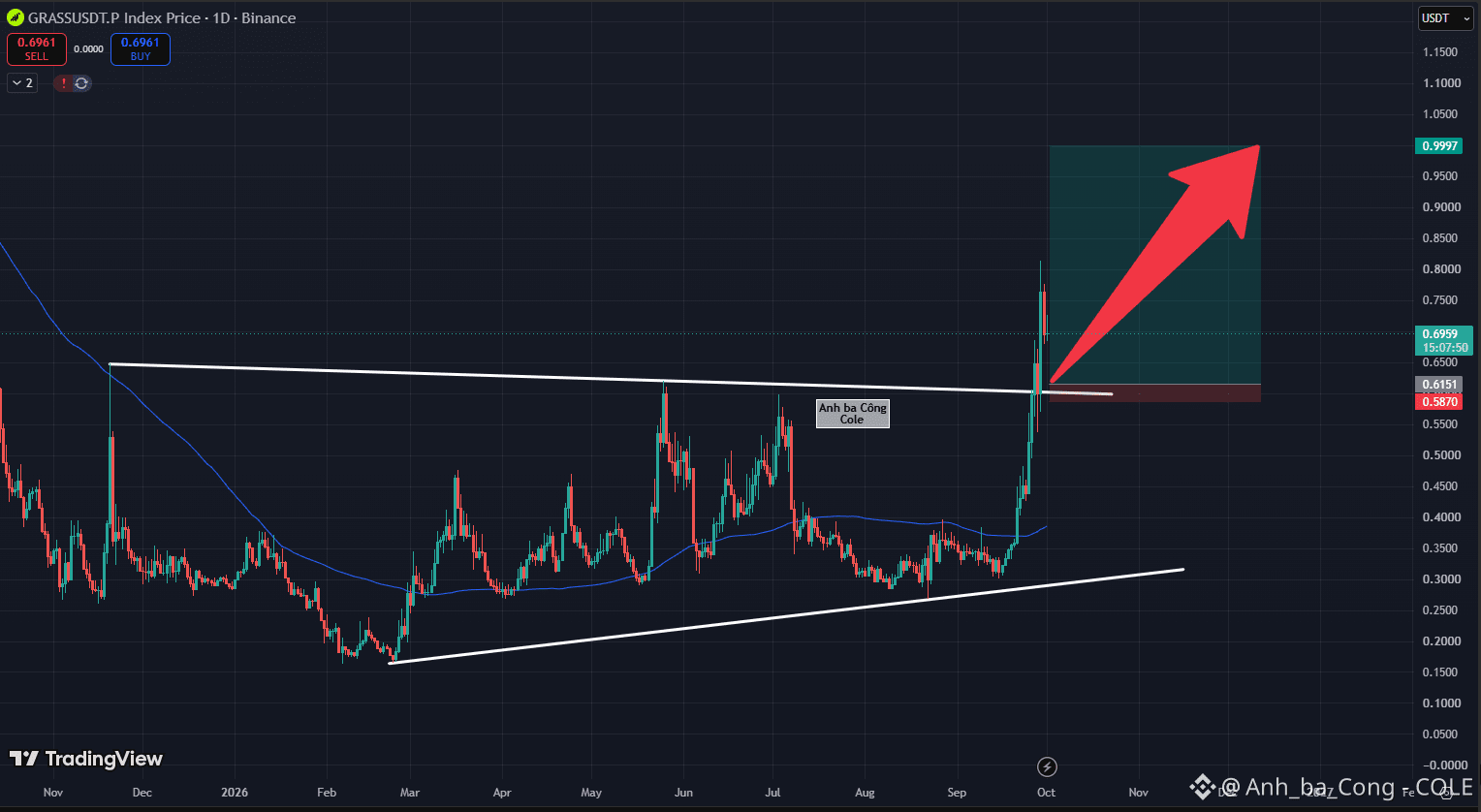
GRASS: Decisive Breakout Above Macro Triangle Ceiling – Strategic Retest Long Setup Targeting $1.00 Milestone
Grass (GRASS) is officially embarking on an expansive new markup cycle on the daily timeframe following an impulsive breakout above the upper resistance boundary of a year-long macro consolidation triangle. The vertical expansion leg that surged toward the $0.80 handle decisively released accumulated pressure, confirming that buyers have comprehensively reclaimed dominance over broader market structure.
Based on visual data from the daily chart , price action near the $0.6959 handle is entering an orderly technical retracement following the initial surge. This pause represents a healthy cooling phase designed to flush out weak-handed participants before trend continuation. The white descending diagonal barrier spanning $0.600–$0.615, which previously served as a stubborn ceiling throughout recent months, has officially transitioned into a major structural support shelf. Crucially, the underlying upward-sloping dynamic MA100 reinforces a strong bullish medium-term trend. As price action dips to retest the broken triangle ceiling, responsive dip-buying demand is primed to drive an aggressive continuation wave toward higher targets.
The optimal trading approach is to patiently await Long entry execution on the retest within the $0.610–$0.615 zone. A protective stop-loss parameter should be placed safely beneath the converted pivot at $0.5870. The primary strategic take-profit objective targets the psychological round-number ceiling near $0.9997, securing superior risk-to-reward metrics.
Disclaimer: This is not financial advice, DYOR. $GRASS $KAIA $RED
{future}(REDUSDT)
{future}(KAIAUSDT)
{future}(GRASSUSDT)
GRASS: Decisive Breakout Above Macro Triangle Ceiling – Strategic Retest Long Setup Targeting $1.00 Milestone
Grass (GRASS) is officially embarking on an expansive new markup cycle on the daily timeframe following an impulsive breakout above the upper resistance boundary of a year-long macro consolidation triangle. The vertical expansion leg that surged toward the $0.80 handle decisively released accumulated pressure, confirming that buyers have comprehensively reclaimed dominance over broader market structure.
Based on visual data from the daily chart , price action near the $0.6959 handle is entering an orderly technical retracement following the initial surge. This pause represents a healthy cooling phase designed to flush out weak-handed participants before trend continuation. The white descending diagonal barrier spanning $0.600–$0.615, which previously served as a stubborn ceiling throughout recent months, has officially transitioned into a major structural support shelf. Crucially, the underlying upward-sloping dynamic MA100 reinforces a strong bullish medium-term trend. As price action dips to retest the broken triangle ceiling, responsive dip-buying demand is primed to drive an aggressive continuation wave toward higher targets.
The optimal trading approach is to patiently await Long entry execution on the retest within the $0.610–$0.615 zone. A protective stop-loss parameter should be placed safely beneath the converted pivot at $0.5870. The primary strategic take-profit objective targets the psychological round-number ceiling near $0.9997, securing superior risk-to-reward metrics.
Disclaimer: This is not financial advice, DYOR. $GRASS $KAIA $RED
Grass (GRASS) is officially embarking on an expansive new markup cycle on the daily timeframe following an impulsive breakout above the upper resistance boundary of a year-long macro consolidation triangle. The vertical expansion leg that surged toward the $0.80 handle decisively released accumulated pressure, confirming that buyers have comprehensively reclaimed dominance over broader market structure.
Based on visual data from the daily chart , price action near the $0.6959 handle is entering an orderly technical retracement following the initial surge. This pause represents a healthy cooling phase designed to flush out weak-handed participants before trend continuation. The white descending diagonal barrier spanning $0.600–$0.615, which previously served as a stubborn ceiling throughout recent months, has officially transitioned into a major structural support shelf. Crucially, the underlying upward-sloping dynamic MA100 reinforces a strong bullish medium-term trend. As price action dips to retest the broken triangle ceiling, responsive dip-buying demand is primed to drive an aggressive continuation wave toward higher targets.
The optimal trading approach is to patiently await Long entry execution on the retest within the $0.610–$0.615 zone. A protective stop-loss parameter should be placed safely beneath the converted pivot at $0.5870. The primary strategic take-profit objective targets the psychological round-number ceiling near $0.9997, securing superior risk-to-reward metrics.
Disclaimer: This is not financial advice, DYOR. $GRASS $KAIA $RED
2
494
NEARが米国で初のスポットETPを獲得
BitwiseのNRRは9月29日に米国で取引を開始し、同国初のスポットNEAR ETPとなりました。この商品はNEARへの直接的なエクスポージャーを提供し、保有分を平均目標利回り約5%でステーキングする計画です。管理手数料は0.75%です。
私の見解:重要なのは、単にNEARに米国上場商品ができたことだけではありません。ETPは、これまで別々に満たしていた2つのニーズ、つまり価格へのエクスポージャーとステーキングの利回りを組み合わせています。もしこの商品が資金流入を呼び込めば、従来型の投資家は、自分でウォレットを管理したりステーキングを行ったりすることなくNEARへのエクスポージャーを得られます。これは潜在的な購入者層を広げ、NEARのための別の資本チャネルを生み出す可能性があります。
とはいえ、新しいETPが自動的にNEARへの大きな流入を意味すると決めつけるのは早計です。注目すべきは、0.75%の手数料、運用資産残高、取引の流動性、そして実際のステーキング実績というデータです。NRRのネットフローと出来高を確認してから、さらにNEARを積み増すべきか、様子見を続けるか判断します。
米国のスポットETPはNEARにとって意味のある資本を生み出せると思いますか?それとも、自身を証明するのにさらに時間がかかるでしょうか?このロジックに納得できたなら、マーケットの分析をもっと見るためにフォローしてください。
取引を行う前に、必ずご自身で慎重に調べてください(DYOR)。 $NEAR $PHA $PUMP
{future}(PUMPUSDT)
{future}(PHAUSDT)
{future}(NEARUSDT)
NEARが米国で初のスポットETPを獲得
BitwiseのNRRは9月29日に米国で取引を開始し、同国初のスポットNEAR ETPとなりました。この商品はNEARへの直接的なエクスポージャーを提供し、保有分を平均目標利回り約5%でステーキングする計画です。管理手数料は0.75%です。
私の見解:重要なのは、単にNEARに米国上場商品ができたことだけではありません。ETPは、これまで別々に満たしていた2つのニーズ、つまり価格へのエクスポージャーとステーキングの利回りを組み合わせています。もしこの商品が資金流入を呼び込めば、従来型の投資家は、自分でウォレットを管理したりステーキングを行ったりすることなくNEARへのエクスポージャーを得られます。これは潜在的な購入者層を広げ、NEARのための別の資本チャネルを生み出す可能性があります。
とはいえ、新しいETPが自動的にNEARへの大きな流入を意味すると決めつけるのは早計です。注目すべきは、0.75%の手数料、運用資産残高、取引の流動性、そして実際のステーキング実績というデータです。NRRのネットフローと出来高を確認してから、さらにNEARを積み増すべきか、様子見を続けるか判断します。
米国のスポットETPはNEARにとって意味のある資本を生み出せると思いますか?それとも、自身を証明するのにさらに時間がかかるでしょうか?このロジックに納得できたなら、マーケットの分析をもっと見るためにフォローしてください。
取引を行う前に、必ずご自身で慎重に調べてください(DYOR)。 $NEAR $PHA $PUMP
BitwiseのNRRは9月29日に米国で取引を開始し、同国初のスポットNEAR ETPとなりました。この商品はNEARへの直接的なエクスポージャーを提供し、保有分を平均目標利回り約5%でステーキングする計画です。管理手数料は0.75%です。
私の見解:重要なのは、単にNEARに米国上場商品ができたことだけではありません。ETPは、これまで別々に満たしていた2つのニーズ、つまり価格へのエクスポージャーとステーキングの利回りを組み合わせています。もしこの商品が資金流入を呼び込めば、従来型の投資家は、自分でウォレットを管理したりステーキングを行ったりすることなくNEARへのエクスポージャーを得られます。これは潜在的な購入者層を広げ、NEARのための別の資本チャネルを生み出す可能性があります。
とはいえ、新しいETPが自動的にNEARへの大きな流入を意味すると決めつけるのは早計です。注目すべきは、0.75%の手数料、運用資産残高、取引の流動性、そして実際のステーキング実績というデータです。NRRのネットフローと出来高を確認してから、さらにNEARを積み増すべきか、様子見を続けるか判断します。
米国のスポットETPはNEARにとって意味のある資本を生み出せると思いますか?それとも、自身を証明するのにさらに時間がかかるでしょうか?このロジックに納得できたなら、マーケットの分析をもっと見るためにフォローしてください。
取引を行う前に、必ずご自身で慎重に調べてください(DYOR)。 $NEAR $PHA $PUMP

1
476
BTCがゴールドを上回る:今四半期は+40%で、ついに10万ドルが近づいている?
ビットコインは今四半期において40%以上上昇している一方、金は長期金利と米ドルの強さを背景に約4%下落しています。BTCは月曜に約1%下落し、いったん米ドル82,500近辺まで下げたものの、その後米ドル84,000に向けて回復しました。
私の見解:重要なのは単にBTCがゴールドを上回っているということではなく、BTCが想定以上にマクロの圧力を吸収できている点です。金利が上昇し、米ドルが強くなると、キャッシュフローのない資産はバリュエーション面で圧力を受ける可能性があります。それでもBTCは米ドル80,000を上回って踏みとどまっており、流動性環境が引き締まる中でも需要が消えていないことを示唆しています。テクニカル面では、フィデリティのユルリアン・ティマー氏が、概ね米ドル82,800を上抜けできればダブルボトムの形成が確認され、米ドル10万ドルへの道が開ける可能性があると言っています。ただしそれはあくまでシナリオであり、価格の保証ではありません。
私は、10万ドルがよく話題に上がっているからといってBTCを追いかけるつもりはありません。BTCが米ドル80,000を維持できるか、オプションのポジショニング、そして米ドル90,000〜10万ドル付近での反応を注視しています。構造が強さを保つなら、私は段階的な積み増しを好みます。一方で主要なサポートが崩れるなら、より防御的になります。
あなたは、BTCが本当にマクロの圧力からデカップリング(連動の切り離し)していると思いますか?それとも、調整を先送りしているだけでしょうか?このロジックに納得できたなら、より多くの相場解説のためにフォローしてください。
取引を行う前に、必ずご自身で慎重に調査してください(DYOR)。 $BTC $XAU $XAUT #Colecolen
{future}(XAUTUSDT)
{future}(XAUUSDT)
{future}(BTCUSDT)
BTCがゴールドを上回る:今四半期は+40%で、ついに10万ドルが近づいている?
ビットコインは今四半期において40%以上上昇している一方、金は長期金利と米ドルの強さを背景に約4%下落しています。BTCは月曜に約1%下落し、いったん米ドル82,500近辺まで下げたものの、その後米ドル84,000に向けて回復しました。
私の見解:重要なのは単にBTCがゴールドを上回っているということではなく、BTCが想定以上にマクロの圧力を吸収できている点です。金利が上昇し、米ドルが強くなると、キャッシュフローのない資産はバリュエーション面で圧力を受ける可能性があります。それでもBTCは米ドル80,000を上回って踏みとどまっており、流動性環境が引き締まる中でも需要が消えていないことを示唆しています。テクニカル面では、フィデリティのユルリアン・ティマー氏が、概ね米ドル82,800を上抜けできればダブルボトムの形成が確認され、米ドル10万ドルへの道が開ける可能性があると言っています。ただしそれはあくまでシナリオであり、価格の保証ではありません。
私は、10万ドルがよく話題に上がっているからといってBTCを追いかけるつもりはありません。BTCが米ドル80,000を維持できるか、オプションのポジショニング、そして米ドル90,000〜10万ドル付近での反応を注視しています。構造が強さを保つなら、私は段階的な積み増しを好みます。一方で主要なサポートが崩れるなら、より防御的になります。
あなたは、BTCが本当にマクロの圧力からデカップリング(連動の切り離し)していると思いますか?それとも、調整を先送りしているだけでしょうか?このロジックに納得できたなら、より多くの相場解説のためにフォローしてください。
取引を行う前に、必ずご自身で慎重に調査してください(DYOR)。 $BTC $XAU $XAUT #Colecolen
ビットコインは今四半期において40%以上上昇している一方、金は長期金利と米ドルの強さを背景に約4%下落しています。BTCは月曜に約1%下落し、いったん米ドル82,500近辺まで下げたものの、その後米ドル84,000に向けて回復しました。
私の見解:重要なのは単にBTCがゴールドを上回っているということではなく、BTCが想定以上にマクロの圧力を吸収できている点です。金利が上昇し、米ドルが強くなると、キャッシュフローのない資産はバリュエーション面で圧力を受ける可能性があります。それでもBTCは米ドル80,000を上回って踏みとどまっており、流動性環境が引き締まる中でも需要が消えていないことを示唆しています。テクニカル面では、フィデリティのユルリアン・ティマー氏が、概ね米ドル82,800を上抜けできればダブルボトムの形成が確認され、米ドル10万ドルへの道が開ける可能性があると言っています。ただしそれはあくまでシナリオであり、価格の保証ではありません。
私は、10万ドルがよく話題に上がっているからといってBTCを追いかけるつもりはありません。BTCが米ドル80,000を維持できるか、オプションのポジショニング、そして米ドル90,000〜10万ドル付近での反応を注視しています。構造が強さを保つなら、私は段階的な積み増しを好みます。一方で主要なサポートが崩れるなら、より防御的になります。
あなたは、BTCが本当にマクロの圧力からデカップリング(連動の切り離し)していると思いますか?それとも、調整を先送りしているだけでしょうか?このロジックに納得できたなら、より多くの相場解説のためにフォローしてください。
取引を行う前に、必ずご自身で慎重に調査してください(DYOR)。 $BTC $XAU $XAUT #Colecolen

1
270
翻訳参照
Join my chat group get your luck
Join my chat group get your luck
Anh_ba_Cong - COLE
·
--
💬 私はついにBinance Squareでチャットグループを作りました!
みんなが気軽にチャットして、暗号資産のアイデアを共有したり、市場について話し合ったり、毎日お互いにつながれる場所を作りたかったんです。
🎁 そしてもう一つ、ちょっとした楽しみもあります:毎日、チャットのメンバー向けに小さな紅包を用意します。
大したものではありません——コミュニティへの小さなサプライズです。もしかしたら、今日はあなたのラッキーデーかも?🍀
ぜひ参加して、楽しみましょう。そして一緒に、気軽で仲の良い小さなコミュニティを作っていきましょう。
👇 CLICK HERE を入力してチャットに参加&幸運を見つけてください! 🎁
みんなが気軽にチャットして、暗号資産のアイデアを共有したり、市場について話し合ったり、毎日お互いにつながれる場所を作りたかったんです。
🎁 そしてもう一つ、ちょっとした楽しみもあります:毎日、チャットのメンバー向けに小さな紅包を用意します。
大したものではありません——コミュニティへの小さなサプライズです。もしかしたら、今日はあなたのラッキーデーかも?🍀
ぜひ参加して、楽しみましょう。そして一緒に、気軽で仲の良い小さなコミュニティを作っていきましょう。
👇 CLICK HERE を入力してチャットに参加&幸運を見つけてください! 🎁

61
·
--
弱気相場
翻訳参照
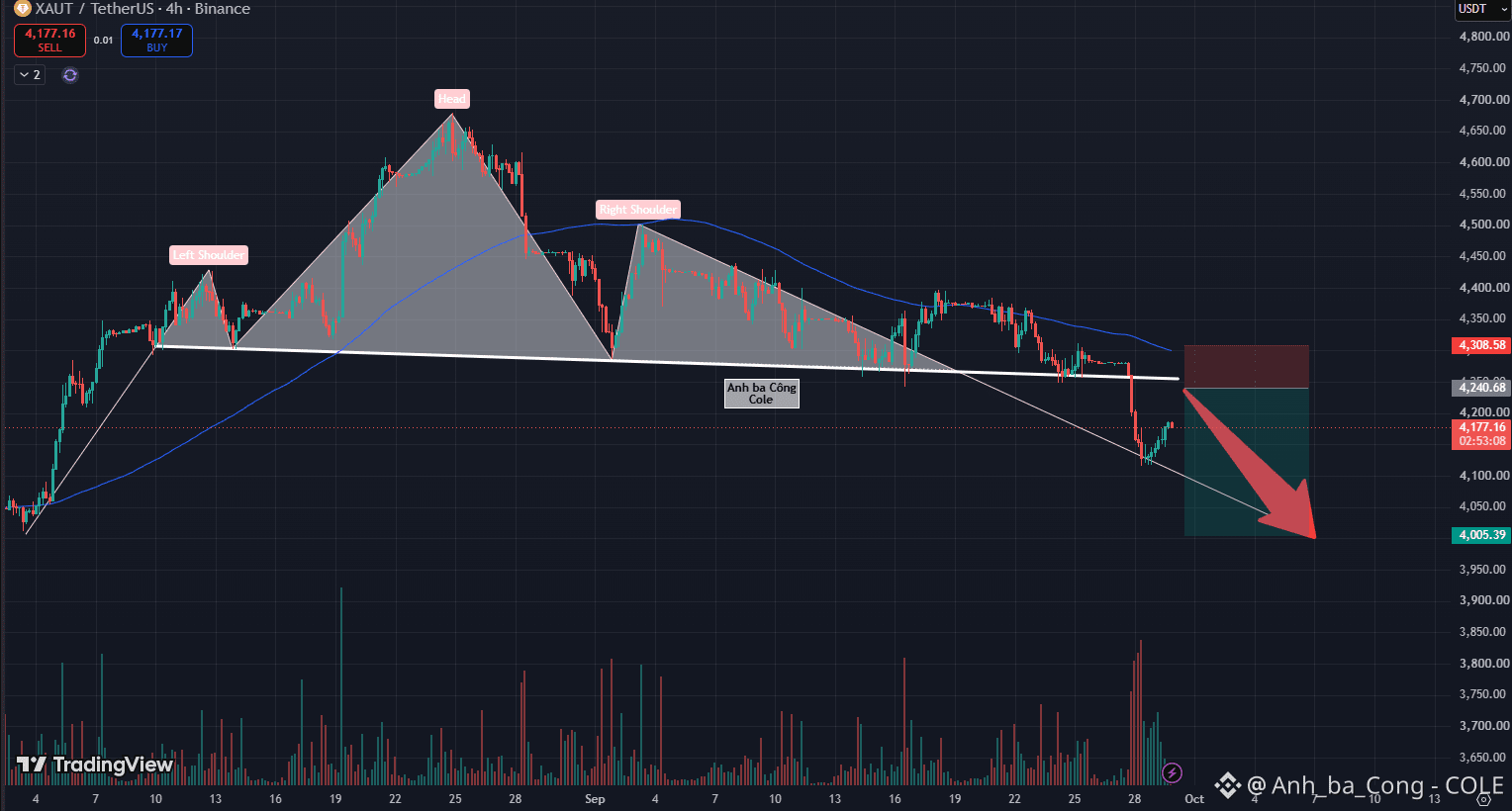
XAUT: Completes Head & Shoulders Structure Awaiting Neckline Retest – Strategic Breakdown Short Targeting $4,000 Milestone
Tether Gold (XAUT) is confirming a textbook bearish reversal on the 4-hour timeframe after completing an expansive Head and Shoulders structure. While the preceding downward impulse cleanly sliced through the structural baseline, price action has yet to execute a technical retest of this converted barrier to validate new overhead resistance.
Based on visual data from the 4-hour chart , price action is producing a technical relief bounce around $4,177 following a sharp descent toward the $4,100 low. This upward drift represents an orderly exhaustion pull to reload liquidity prior to the next distribution wave. The white horizontal neckline spanning $4,240–$4,250, which provided durable support for multiple weeks, has officially transitioned into a stubborn resistance ceiling. Furthermore, the downward-sloping dynamic MA100 overhead exerts continuous structural pressure against buyer initiatives. As price stretches to test the broken neckline, drying buyer momentum will allow aggressive sellers to seize command and accelerate a sharp downward continuation leg.
The optimal trading approach is to patiently await Short entry execution on the retest within the $4,240–$4,250 zone. A protective stop-loss parameter should be positioned safely above the resistance pivot at $4,308.58. The primary strategic take-profit objective targets the psychological round-number demand zone near $4,005.39, securing exceptional risk-to-reward metrics.
Disclaimer: This is not financial advice, DYOR. $XAUT $PAXG $XAU
{future}(XAUUSDT)
{future}(PAXGUSDT)
{future}(XAUTUSDT)
XAUT: Completes Head & Shoulders Structure Awaiting Neckline Retest – Strategic Breakdown Short Targeting $4,000 Milestone
Tether Gold (XAUT) is confirming a textbook bearish reversal on the 4-hour timeframe after completing an expansive Head and Shoulders structure. While the preceding downward impulse cleanly sliced through the structural baseline, price action has yet to execute a technical retest of this converted barrier to validate new overhead resistance.
Based on visual data from the 4-hour chart , price action is producing a technical relief bounce around $4,177 following a sharp descent toward the $4,100 low. This upward drift represents an orderly exhaustion pull to reload liquidity prior to the next distribution wave. The white horizontal neckline spanning $4,240–$4,250, which provided durable support for multiple weeks, has officially transitioned into a stubborn resistance ceiling. Furthermore, the downward-sloping dynamic MA100 overhead exerts continuous structural pressure against buyer initiatives. As price stretches to test the broken neckline, drying buyer momentum will allow aggressive sellers to seize command and accelerate a sharp downward continuation leg.
The optimal trading approach is to patiently await Short entry execution on the retest within the $4,240–$4,250 zone. A protective stop-loss parameter should be positioned safely above the resistance pivot at $4,308.58. The primary strategic take-profit objective targets the psychological round-number demand zone near $4,005.39, securing exceptional risk-to-reward metrics.
Disclaimer: This is not financial advice, DYOR. $XAUT $PAXG $XAU
Tether Gold (XAUT) is confirming a textbook bearish reversal on the 4-hour timeframe after completing an expansive Head and Shoulders structure. While the preceding downward impulse cleanly sliced through the structural baseline, price action has yet to execute a technical retest of this converted barrier to validate new overhead resistance.
Based on visual data from the 4-hour chart , price action is producing a technical relief bounce around $4,177 following a sharp descent toward the $4,100 low. This upward drift represents an orderly exhaustion pull to reload liquidity prior to the next distribution wave. The white horizontal neckline spanning $4,240–$4,250, which provided durable support for multiple weeks, has officially transitioned into a stubborn resistance ceiling. Furthermore, the downward-sloping dynamic MA100 overhead exerts continuous structural pressure against buyer initiatives. As price stretches to test the broken neckline, drying buyer momentum will allow aggressive sellers to seize command and accelerate a sharp downward continuation leg.
The optimal trading approach is to patiently await Short entry execution on the retest within the $4,240–$4,250 zone. A protective stop-loss parameter should be positioned safely above the resistance pivot at $4,308.58. The primary strategic take-profit objective targets the psychological round-number demand zone near $4,005.39, securing exceptional risk-to-reward metrics.
Disclaimer: This is not financial advice, DYOR. $XAUT $PAXG $XAU
370
私のチャットグループに参加して幸運をつかもう
私のチャットグループに参加して幸運をつかもう
Anh_ba_Cong - COLE
·
--
💬 私はついにBinance Squareでチャットグループを作りました!
みんなが気軽にチャットして、暗号資産のアイデアを共有したり、市場について話し合ったり、毎日お互いにつながれる場所を作りたかったんです。
🎁 そしてもう一つ、ちょっとした楽しみもあります:毎日、チャットのメンバー向けに小さな紅包を用意します。
大したものではありません——コミュニティへの小さなサプライズです。もしかしたら、今日はあなたのラッキーデーかも?🍀
ぜひ参加して、楽しみましょう。そして一緒に、気軽で仲の良い小さなコミュニティを作っていきましょう。
👇 CLICK HERE を入力してチャットに参加&幸運を見つけてください! 🎁
みんなが気軽にチャットして、暗号資産のアイデアを共有したり、市場について話し合ったり、毎日お互いにつながれる場所を作りたかったんです。
🎁 そしてもう一つ、ちょっとした楽しみもあります:毎日、チャットのメンバー向けに小さな紅包を用意します。
大したものではありません——コミュニティへの小さなサプライズです。もしかしたら、今日はあなたのラッキーデーかも?🍀
ぜひ参加して、楽しみましょう。そして一緒に、気軽で仲の良い小さなコミュニティを作っていきましょう。
👇 CLICK HERE を入力してチャットに参加&幸運を見つけてください! 🎁
1
136
·
--
ブリッシュ
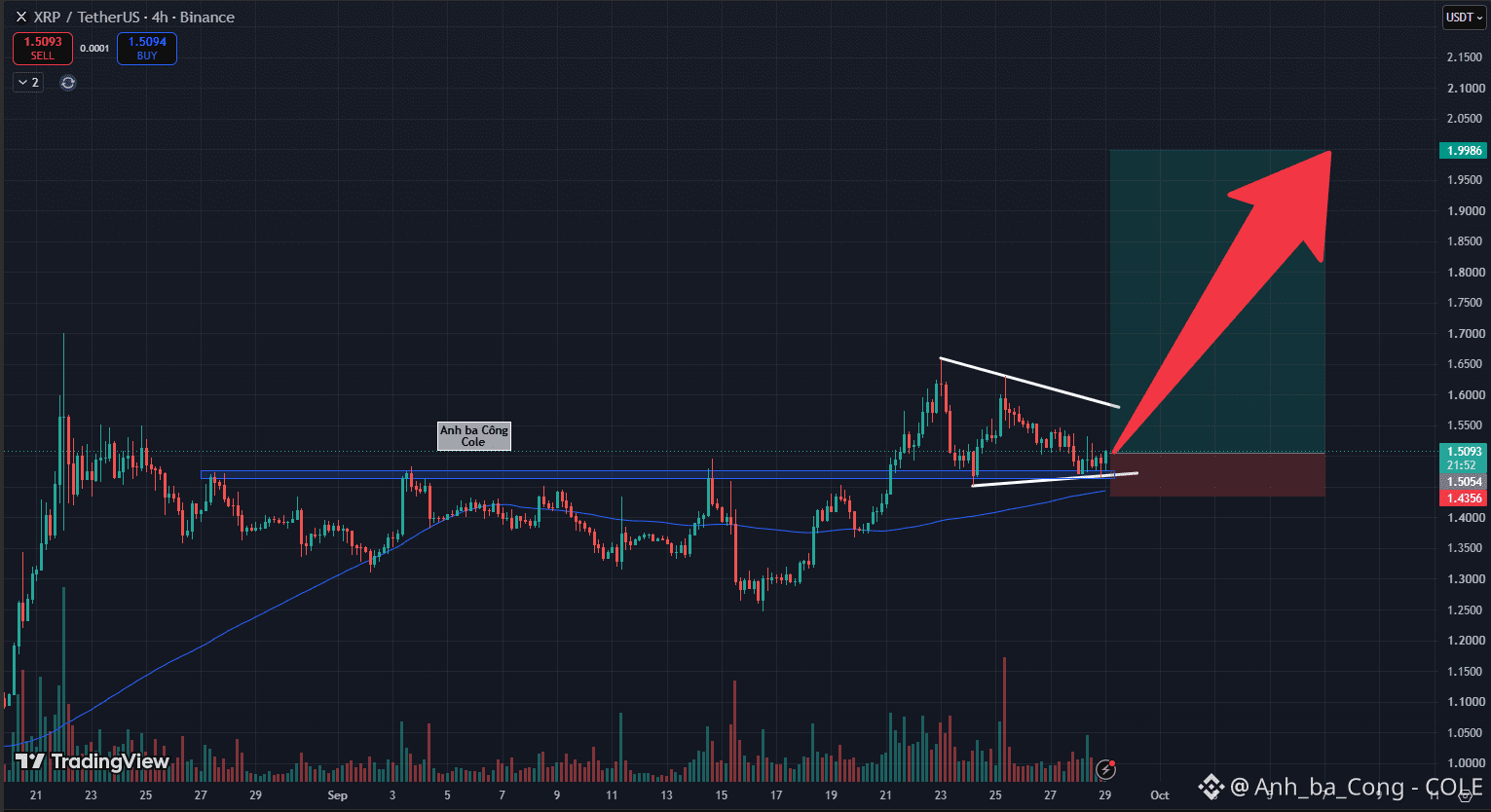
XRP:MA100を超えた水平ピボット上のくさび内でコイル形成 — トレンド継続ロング、$2.00の節目を狙う
XRPは、4時間足のタイムフレームで、建設的な価格圧縮が主要な構造的コンフルエンスのサポートへしっかりと収まる中、例外的なトレンド継続ロングのセットアップを提示しています。先行して行われた強烈な拡大局面が、$1.65ゾーン付近まで直前の高値を上抜けた後、現在のコンソリデーションは、次の値上げ局面に向けて耐久性のある高値側の下値を形成するための、秩序だったテクニカルな一時停止となっています。
4時間足チャートの画像image_490e1f.pngに基づく視覚データでは、$1.509の水準付近の値動きが、先細りのくさびの中で圧縮しながら、$1.48〜$1.50の水平ピボット・シェルフ上で反応的な下ヒゲによる吸収を形成しています。ここは以前、複数週にわたり決して突破できなかった天井として機能していましたが、今では確実なサポートへと反転しています。重要な点として、4時間足のローソク足は上向きのダイナミックMA100ベースラインの上にしっかりとアンカーされています。このコイル形成局面を通じて出来高が減少していることは、短期の利確による売り供給が機関投資家によって体系的に吸収されていることを裏付けています。構造的コンフルエンスが強固に維持されているため、テクニカルなモメンタムは上側のくさび境界を突き破り、衝動的な拡大の波を開始する態勢が整っています。
最適な取引戦略は、$1.505〜$1.510ゾーン内でトレンドフォローのロングポジションを構築することです。保護用のストップロスは、くさび下限である$1.4356の下に安全に設定してください。主要な戦略的テイクプロフィット目標は、心理的なラウンドナンバーの天井付近である$1.9986とし、優れたリスクリワード指標を確保します。
免責事項:これは金融アドバイスではありません。自己判断で調査してください。$XRP $HBAR $CRV
{future}(CRVUSDT)
{future}(HBARUSDT)
{future}(XRPUSDT)
XRP:MA100を超えた水平ピボット上のくさび内でコイル形成 — トレンド継続ロング、$2.00の節目を狙う
XRPは、4時間足のタイムフレームで、建設的な価格圧縮が主要な構造的コンフルエンスのサポートへしっかりと収まる中、例外的なトレンド継続ロングのセットアップを提示しています。先行して行われた強烈な拡大局面が、$1.65ゾーン付近まで直前の高値を上抜けた後、現在のコンソリデーションは、次の値上げ局面に向けて耐久性のある高値側の下値を形成するための、秩序だったテクニカルな一時停止となっています。
4時間足チャートの画像image_490e1f.pngに基づく視覚データでは、$1.509の水準付近の値動きが、先細りのくさびの中で圧縮しながら、$1.48〜$1.50の水平ピボット・シェルフ上で反応的な下ヒゲによる吸収を形成しています。ここは以前、複数週にわたり決して突破できなかった天井として機能していましたが、今では確実なサポートへと反転しています。重要な点として、4時間足のローソク足は上向きのダイナミックMA100ベースラインの上にしっかりとアンカーされています。このコイル形成局面を通じて出来高が減少していることは、短期の利確による売り供給が機関投資家によって体系的に吸収されていることを裏付けています。構造的コンフルエンスが強固に維持されているため、テクニカルなモメンタムは上側のくさび境界を突き破り、衝動的な拡大の波を開始する態勢が整っています。
最適な取引戦略は、$1.505〜$1.510ゾーン内でトレンドフォローのロングポジションを構築することです。保護用のストップロスは、くさび下限である$1.4356の下に安全に設定してください。主要な戦略的テイクプロフィット目標は、心理的なラウンドナンバーの天井付近である$1.9986とし、優れたリスクリワード指標を確保します。
免責事項:これは金融アドバイスではありません。自己判断で調査してください。$XRP $HBAR $CRV
XRPは、4時間足のタイムフレームで、建設的な価格圧縮が主要な構造的コンフルエンスのサポートへしっかりと収まる中、例外的なトレンド継続ロングのセットアップを提示しています。先行して行われた強烈な拡大局面が、$1.65ゾーン付近まで直前の高値を上抜けた後、現在のコンソリデーションは、次の値上げ局面に向けて耐久性のある高値側の下値を形成するための、秩序だったテクニカルな一時停止となっています。
4時間足チャートの画像image_490e1f.pngに基づく視覚データでは、$1.509の水準付近の値動きが、先細りのくさびの中で圧縮しながら、$1.48〜$1.50の水平ピボット・シェルフ上で反応的な下ヒゲによる吸収を形成しています。ここは以前、複数週にわたり決して突破できなかった天井として機能していましたが、今では確実なサポートへと反転しています。重要な点として、4時間足のローソク足は上向きのダイナミックMA100ベースラインの上にしっかりとアンカーされています。このコイル形成局面を通じて出来高が減少していることは、短期の利確による売り供給が機関投資家によって体系的に吸収されていることを裏付けています。構造的コンフルエンスが強固に維持されているため、テクニカルなモメンタムは上側のくさび境界を突き破り、衝動的な拡大の波を開始する態勢が整っています。
最適な取引戦略は、$1.505〜$1.510ゾーン内でトレンドフォローのロングポジションを構築することです。保護用のストップロスは、くさび下限である$1.4356の下に安全に設定してください。主要な戦略的テイクプロフィット目標は、心理的なラウンドナンバーの天井付近である$1.9986とし、優れたリスクリワード指標を確保します。
免責事項:これは金融アドバイスではありません。自己判断で調査してください。$XRP $HBAR $CRV
307
💬 私はついにBinance Squareでチャットグループを作りました!
みんなが気軽にチャットして、暗号資産のアイデアを共有したり、市場について話し合ったり、毎日お互いにつながれる場所を作りたかったんです。
🎁 そしてもう一つ、ちょっとした楽しみもあります:毎日、チャットのメンバー向けに小さな紅包を用意します。
大したものではありません——コミュニティへの小さなサプライズです。もしかしたら、今日はあなたのラッキーデーかも?🍀
ぜひ参加して、楽しみましょう。そして一緒に、気軽で仲の良い小さなコミュニティを作っていきましょう。
👇 [CLICK HERE](https://app.binance.com/uni-qr/KWNwp2Qc) を入力してチャットに参加&幸運を見つけてください! 🎁
💬 私はついにBinance Squareでチャットグループを作りました!
みんなが気軽にチャットして、暗号資産のアイデアを共有したり、市場について話し合ったり、毎日お互いにつながれる場所を作りたかったんです。
🎁 そしてもう一つ、ちょっとした楽しみもあります:毎日、チャットのメンバー向けに小さな紅包を用意します。
大したものではありません——コミュニティへの小さなサプライズです。もしかしたら、今日はあなたのラッキーデーかも?🍀
ぜひ参加して、楽しみましょう。そして一緒に、気軽で仲の良い小さなコミュニティを作っていきましょう。
👇 CLICK HERE を入力してチャットに参加&幸運を見つけてください! 🎁
みんなが気軽にチャットして、暗号資産のアイデアを共有したり、市場について話し合ったり、毎日お互いにつながれる場所を作りたかったんです。
🎁 そしてもう一つ、ちょっとした楽しみもあります:毎日、チャットのメンバー向けに小さな紅包を用意します。
大したものではありません——コミュニティへの小さなサプライズです。もしかしたら、今日はあなたのラッキーデーかも?🍀
ぜひ参加して、楽しみましょう。そして一緒に、気軽で仲の良い小さなコミュニティを作っていきましょう。
👇 CLICK HERE を入力してチャットに参加&幸運を見つけてください! 🎁

2
3
76
THETA:ブロックチェーンが分散型AIインフラに出会う場所
THETAは、動画、AI、分散型コンピューティングに注力するブロックチェーン・エコシステムであるTheta Networkのネイティブトークンです。今日特に注目すべき開発の一つがTheta EdgeCloudで、未使用のGPUリソースを、AI・動画・レンダリングの需要と結びつけます。Thetaによれば、同社のEdge Networkは現在10,000ノード以上、GPU計算能力として約80ペタFLOPSを有しています。
THETAの主なユーティリティは引き続きステーキングとガバナンスです。保有者はTHETAをGuardianまたはValidatorノードにステークして、ネットワークのセキュリティ強化に貢献できます。Guardianノードには最低1,000 THETAが必要で、Validatorには200,000 THETAが必要です。ステーカーは報酬としてTFUELを受け取れます。
より大きな焦点はEdgeCloudの方向性です。このプラットフォームは、AI推論、モデル学習、エージェント型AI、RAGなど、GPU集約型のさまざまなワークロードに対応するよう開発されています。GPUオーナーは未使用の計算リソースを提供し、開発者は需要に応じた分散GPU容量にアクセスできます。
AI計算需要が成長し続け、EdgeCloudが実質的な普及を達成すれば、Thetaは従来のメディアおよびブロックチェーンのルーツを超えて、AIと分散型コンピューティングのためのより広範なインフラ層へと拡大する可能性があります。
ただし、保有者は重要な区別を理解しておく必要があります。THETAはEdgeCloudの主要な決済トークンではありません。TFUELは、Edge Nodesへの支払いやスマートコントラクトなどの運用活動に使用されます。一方でTHETAは主にステーキングとガバナンスに重点が置かれています。THETAはまた、総発行量が10億トークンに固定されています。
長期保有者にとってのより大きな問いは、したがって単に次の価格変動ではありません。Thetaが分散型GPUリソースを、開発者が実際にスケールして利用するAIインフラへと転換できるかどうかが重要です。
それが実現すれば、Thetaエコシステム全体の広範なユーティリティと経済的重要性が、ますます興味深いものになるかもしれません。
DYOR — これは投資助言ではありません。$THETA #THETA $THETA
{future}(THETAUSDT)
THETA:ブロックチェーンが分散型AIインフラに出会う場所
THETAは、動画、AI、分散型コンピューティングに注力するブロックチェーン・エコシステムであるTheta Networkのネイティブトークンです。今日特に注目すべき開発の一つがTheta EdgeCloudで、未使用のGPUリソースを、AI・動画・レンダリングの需要と結びつけます。Thetaによれば、同社のEdge Networkは現在10,000ノード以上、GPU計算能力として約80ペタFLOPSを有しています。
THETAの主なユーティリティは引き続きステーキングとガバナンスです。保有者はTHETAをGuardianまたはValidatorノードにステークして、ネットワークのセキュリティ強化に貢献できます。Guardianノードには最低1,000 THETAが必要で、Validatorには200,000 THETAが必要です。ステーカーは報酬としてTFUELを受け取れます。
より大きな焦点はEdgeCloudの方向性です。このプラットフォームは、AI推論、モデル学習、エージェント型AI、RAGなど、GPU集約型のさまざまなワークロードに対応するよう開発されています。GPUオーナーは未使用の計算リソースを提供し、開発者は需要に応じた分散GPU容量にアクセスできます。
AI計算需要が成長し続け、EdgeCloudが実質的な普及を達成すれば、Thetaは従来のメディアおよびブロックチェーンのルーツを超えて、AIと分散型コンピューティングのためのより広範なインフラ層へと拡大する可能性があります。
ただし、保有者は重要な区別を理解しておく必要があります。THETAはEdgeCloudの主要な決済トークンではありません。TFUELは、Edge Nodesへの支払いやスマートコントラクトなどの運用活動に使用されます。一方でTHETAは主にステーキングとガバナンスに重点が置かれています。THETAはまた、総発行量が10億トークンに固定されています。
長期保有者にとってのより大きな問いは、したがって単に次の価格変動ではありません。Thetaが分散型GPUリソースを、開発者が実際にスケールして利用するAIインフラへと転換できるかどうかが重要です。
それが実現すれば、Thetaエコシステム全体の広範なユーティリティと経済的重要性が、ますます興味深いものになるかもしれません。
DYOR — これは投資助言ではありません。$THETA #THETA $THETA
THETAは、動画、AI、分散型コンピューティングに注力するブロックチェーン・エコシステムであるTheta Networkのネイティブトークンです。今日特に注目すべき開発の一つがTheta EdgeCloudで、未使用のGPUリソースを、AI・動画・レンダリングの需要と結びつけます。Thetaによれば、同社のEdge Networkは現在10,000ノード以上、GPU計算能力として約80ペタFLOPSを有しています。
THETAの主なユーティリティは引き続きステーキングとガバナンスです。保有者はTHETAをGuardianまたはValidatorノードにステークして、ネットワークのセキュリティ強化に貢献できます。Guardianノードには最低1,000 THETAが必要で、Validatorには200,000 THETAが必要です。ステーカーは報酬としてTFUELを受け取れます。
より大きな焦点はEdgeCloudの方向性です。このプラットフォームは、AI推論、モデル学習、エージェント型AI、RAGなど、GPU集約型のさまざまなワークロードに対応するよう開発されています。GPUオーナーは未使用の計算リソースを提供し、開発者は需要に応じた分散GPU容量にアクセスできます。
AI計算需要が成長し続け、EdgeCloudが実質的な普及を達成すれば、Thetaは従来のメディアおよびブロックチェーンのルーツを超えて、AIと分散型コンピューティングのためのより広範なインフラ層へと拡大する可能性があります。
ただし、保有者は重要な区別を理解しておく必要があります。THETAはEdgeCloudの主要な決済トークンではありません。TFUELは、Edge Nodesへの支払いやスマートコントラクトなどの運用活動に使用されます。一方でTHETAは主にステーキングとガバナンスに重点が置かれています。THETAはまた、総発行量が10億トークンに固定されています。
長期保有者にとってのより大きな問いは、したがって単に次の価格変動ではありません。Thetaが分散型GPUリソースを、開発者が実際にスケールして利用するAIインフラへと転換できるかどうかが重要です。
それが実現すれば、Thetaエコシステム全体の広範なユーティリティと経済的重要性が、ますます興味深いものになるかもしれません。
DYOR — これは投資助言ではありません。$THETA #THETA $THETA

206
CHAINLINK CCIP 2: 企業は独自の検証レイヤーを追加できる
チェーンリンクはCCIP 2をローンチし、クロスチェーン基盤をアップグレードしました。デフォルトの16の独立ノード運営者ネットワークに加えて、企業がカスタムのセキュリティチェックを追加できるオプションが用意されています。企業は自社でバリデータを実行することも、外部プロバイダーを利用することも可能です。
私の見解: CCIP 2が重要なのは、ブリッジのセキュリティを、現実のエンタープライズ要件により近づけるからです。今年4月に起きた約2億9200万米ドル規模のKelp DAO攻撃では、クロスチェーンシステムにおいて、単一の脆弱な検証ポイントが致命的になり得ることが示されました。新しいモデルでは、企業が自社の要件に基づいて検証レイヤーを追加でき、単一の検証設定への依存を減らせます。
しかし、見過ごせない重要な点があります。チェーンリンクの従来のリスク管理ネットワークは、別個の評価ノードとしては機能しなくなります。オプションのバリデータを追加しないユーザーは、2つではなく1つの検証ネットワークに依存することになります。つまり、このアップグレードは誰にとっても単に「より多くのセキュリティ」ではありません。追加の検証レイヤーを企業がどのように選定し運用するかによって、実際の価値が左右されます。
私は、新しいバリデータを展開する組織や、Aave、Mapleなどの他のアプリケーションがCCIP 2をどのように使うのかを注視します。LINKおよびチェーンリンク・エコシステムにとって、アップグレードが継続的な実用性を生むかどうかを示せるのは、そのデータです。
カスタマイズ可能な検証は、大きなセキュリティの前進だと思いますか?それとも、単なる別の複雑さでしょうか。このロジックに納得できるなら、今後の市場分析のためにフォローしてください。
取引を行う前に、必ずご自身で慎重に調査してください(DYOR)。$LINK $HBAR $0G #Colecolen
{future}(0GUSDT)
{future}(HBARUSDT)
{future}(LINKUSDT)
CHAINLINK CCIP 2: 企業は独自の検証レイヤーを追加できる
チェーンリンクはCCIP 2をローンチし、クロスチェーン基盤をアップグレードしました。デフォルトの16の独立ノード運営者ネットワークに加えて、企業がカスタムのセキュリティチェックを追加できるオプションが用意されています。企業は自社でバリデータを実行することも、外部プロバイダーを利用することも可能です。
私の見解: CCIP 2が重要なのは、ブリッジのセキュリティを、現実のエンタープライズ要件により近づけるからです。今年4月に起きた約2億9200万米ドル規模のKelp DAO攻撃では、クロスチェーンシステムにおいて、単一の脆弱な検証ポイントが致命的になり得ることが示されました。新しいモデルでは、企業が自社の要件に基づいて検証レイヤーを追加でき、単一の検証設定への依存を減らせます。
しかし、見過ごせない重要な点があります。チェーンリンクの従来のリスク管理ネットワークは、別個の評価ノードとしては機能しなくなります。オプションのバリデータを追加しないユーザーは、2つではなく1つの検証ネットワークに依存することになります。つまり、このアップグレードは誰にとっても単に「より多くのセキュリティ」ではありません。追加の検証レイヤーを企業がどのように選定し運用するかによって、実際の価値が左右されます。
私は、新しいバリデータを展開する組織や、Aave、Mapleなどの他のアプリケーションがCCIP 2をどのように使うのかを注視します。LINKおよびチェーンリンク・エコシステムにとって、アップグレードが継続的な実用性を生むかどうかを示せるのは、そのデータです。
カスタマイズ可能な検証は、大きなセキュリティの前進だと思いますか?それとも、単なる別の複雑さでしょうか。このロジックに納得できるなら、今後の市場分析のためにフォローしてください。
取引を行う前に、必ずご自身で慎重に調査してください(DYOR)。$LINK $HBAR $0G #Colecolen
チェーンリンクはCCIP 2をローンチし、クロスチェーン基盤をアップグレードしました。デフォルトの16の独立ノード運営者ネットワークに加えて、企業がカスタムのセキュリティチェックを追加できるオプションが用意されています。企業は自社でバリデータを実行することも、外部プロバイダーを利用することも可能です。
私の見解: CCIP 2が重要なのは、ブリッジのセキュリティを、現実のエンタープライズ要件により近づけるからです。今年4月に起きた約2億9200万米ドル規模のKelp DAO攻撃では、クロスチェーンシステムにおいて、単一の脆弱な検証ポイントが致命的になり得ることが示されました。新しいモデルでは、企業が自社の要件に基づいて検証レイヤーを追加でき、単一の検証設定への依存を減らせます。
しかし、見過ごせない重要な点があります。チェーンリンクの従来のリスク管理ネットワークは、別個の評価ノードとしては機能しなくなります。オプションのバリデータを追加しないユーザーは、2つではなく1つの検証ネットワークに依存することになります。つまり、このアップグレードは誰にとっても単に「より多くのセキュリティ」ではありません。追加の検証レイヤーを企業がどのように選定し運用するかによって、実際の価値が左右されます。
私は、新しいバリデータを展開する組織や、Aave、Mapleなどの他のアプリケーションがCCIP 2をどのように使うのかを注視します。LINKおよびチェーンリンク・エコシステムにとって、アップグレードが継続的な実用性を生むかどうかを示せるのは、そのデータです。
カスタマイズ可能な検証は、大きなセキュリティの前進だと思いますか?それとも、単なる別の複雑さでしょうか。このロジックに納得できるなら、今後の市場分析のためにフォローしてください。
取引を行う前に、必ずご自身で慎重に調査してください(DYOR)。$LINK $HBAR $0G #Colecolen

1
462
·
--
弱気相場
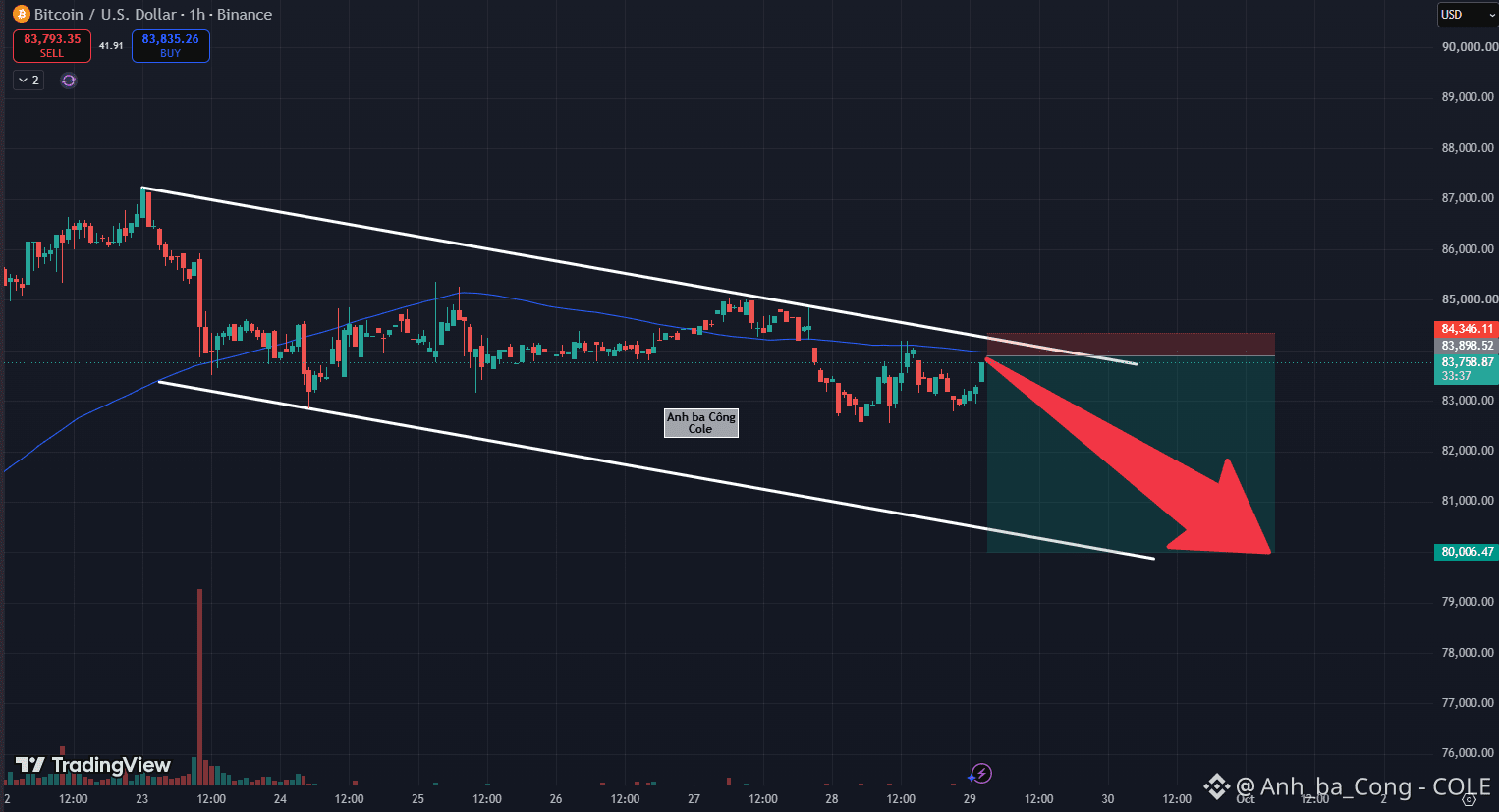
BTC:下降チャネルとMA100の上限でのコンフルエンス検証――戦略的なトレンドショートで「80,000ドル」到達を狙う短期ターゲット
ビットコイン(BTC)は、1時間足において、高確率の継続ショート・セットアップを提供しています。下落局面でのリバウンドが、ダブルのコンフルエンスによるレジスタンス障壁に正面から衝突しているためです。87,000ドルの高値からの衝動的な下落の後、マーケット構造は、連続する安値切り下げ・高値切り下げを伴う下降する平行チャネルの範囲内に厳密に収まっており、売り手の優位が継続していることを示しています。
1時間足チャートの視覚データに基づくと、83,758ドル近辺では、下降チャネル上限(上側境界)に沿った形で直ちに拒否(リジェクション)が起きています。重要なのは、この上側の斜めラインが、下向きにカーブするダイナミックMA100トレンドラインとちょうど一致しており、上昇モメンタムを上回る堅固なテクニカル・キャップ(上限)を形成している点です。今回の上方向へのリトレースの間も取引量が縮小していることは、買い手の確信が薄れていることを裏付け、積極的な機関投資家による蓄積が見られないことを示唆します。ダイナミックMA100が価格の拡張を抑え続ける中で、現在の売り優勢のオーダーフローは、次の下方向への反転を引き起こすのに適した位置にあります。
最適な取引アプローチは、83,750〜83,890ドルのゾーンでショートポジションを開始することです。損切り(ストップロス)注文は、チャネル上限の直上である84,346ドルにタイトに設定してください。主な戦略的テイクプロフィット目標は、チャネル下限のサポート付近である80,006ドルあたりに置き、魅力的なリスクリワード比を確保します。
免責事項:これらは金融アドバイスではありません。DYOR(自己調査を行ってください)。 $BTC $HBAR $CRV #Colecolen
{future}(CRVUSDT)
{future}(HBARUSDT)
{future}(BTCUSDT)
BTC:下降チャネルとMA100の上限でのコンフルエンス検証――戦略的なトレンドショートで「80,000ドル」到達を狙う短期ターゲット
ビットコイン(BTC)は、1時間足において、高確率の継続ショート・セットアップを提供しています。下落局面でのリバウンドが、ダブルのコンフルエンスによるレジスタンス障壁に正面から衝突しているためです。87,000ドルの高値からの衝動的な下落の後、マーケット構造は、連続する安値切り下げ・高値切り下げを伴う下降する平行チャネルの範囲内に厳密に収まっており、売り手の優位が継続していることを示しています。
1時間足チャートの視覚データに基づくと、83,758ドル近辺では、下降チャネル上限(上側境界)に沿った形で直ちに拒否(リジェクション)が起きています。重要なのは、この上側の斜めラインが、下向きにカーブするダイナミックMA100トレンドラインとちょうど一致しており、上昇モメンタムを上回る堅固なテクニカル・キャップ(上限)を形成している点です。今回の上方向へのリトレースの間も取引量が縮小していることは、買い手の確信が薄れていることを裏付け、積極的な機関投資家による蓄積が見られないことを示唆します。ダイナミックMA100が価格の拡張を抑え続ける中で、現在の売り優勢のオーダーフローは、次の下方向への反転を引き起こすのに適した位置にあります。
最適な取引アプローチは、83,750〜83,890ドルのゾーンでショートポジションを開始することです。損切り(ストップロス)注文は、チャネル上限の直上である84,346ドルにタイトに設定してください。主な戦略的テイクプロフィット目標は、チャネル下限のサポート付近である80,006ドルあたりに置き、魅力的なリスクリワード比を確保します。
免責事項:これらは金融アドバイスではありません。DYOR(自己調査を行ってください)。 $BTC $HBAR $CRV #Colecolen
ビットコイン(BTC)は、1時間足において、高確率の継続ショート・セットアップを提供しています。下落局面でのリバウンドが、ダブルのコンフルエンスによるレジスタンス障壁に正面から衝突しているためです。87,000ドルの高値からの衝動的な下落の後、マーケット構造は、連続する安値切り下げ・高値切り下げを伴う下降する平行チャネルの範囲内に厳密に収まっており、売り手の優位が継続していることを示しています。
1時間足チャートの視覚データに基づくと、83,758ドル近辺では、下降チャネル上限(上側境界)に沿った形で直ちに拒否(リジェクション)が起きています。重要なのは、この上側の斜めラインが、下向きにカーブするダイナミックMA100トレンドラインとちょうど一致しており、上昇モメンタムを上回る堅固なテクニカル・キャップ(上限)を形成している点です。今回の上方向へのリトレースの間も取引量が縮小していることは、買い手の確信が薄れていることを裏付け、積極的な機関投資家による蓄積が見られないことを示唆します。ダイナミックMA100が価格の拡張を抑え続ける中で、現在の売り優勢のオーダーフローは、次の下方向への反転を引き起こすのに適した位置にあります。
最適な取引アプローチは、83,750〜83,890ドルのゾーンでショートポジションを開始することです。損切り(ストップロス)注文は、チャネル上限の直上である84,346ドルにタイトに設定してください。主な戦略的テイクプロフィット目標は、チャネル下限のサポート付近である80,006ドルあたりに置き、魅力的なリスクリワード比を確保します。
免責事項:これらは金融アドバイスではありません。DYOR(自己調査を行ってください)。 $BTC $HBAR $CRV #Colecolen
1
299
安全:ガバナンストークンが実用性を獲得し始めるとき
SAFE は Safe エコシステムのネイティブトークンであり、スマートアカウント、マルチシグ、オンチェーン資産管理の背後で重要なインフラ層として機能しています。Safe で構築しているプロジェクトは200以上あり、Safe Docs ではそのインフラを通じて 1,000億ドル超の資産が保全されたと報告されています。
SAFE保有者にとって最も興味深い開発は、そのユーティリティ(実用性)の拡大です。これまで SAFE は主に SafeDAO のガバナンスに使われており、保有者は投票、提案の提出、投票権限の委任を行えました。Safenet Beta は新たな経済的役割を導入しました。すなわち、バリデータは SAFE をステークしてネットワークを保護し、保有者は SAFE をバリデータに委任してステーキング報酬を受け取れるようになります。
この仕組みは、Safenet が Safe 経由で処理されるトランザクションのための重要なセキュリティ層へと発展するなら、保有者にとってますます関連性が高まる可能性があります。その場合、SAFE のステーキングは、実際のネットワーク活動とより直接的に結びつくことになり得ます。
最近の Safenet Aegis の提案でも、バリデータのステーキング報酬を支援し、SAFE のユーティリティを拡大するために、SafeDAO トレジャリーから約 740万 SAFE を求めています。ただし、これは提案にとどまっており、確定した結果として扱うべきではありません。
Safe は Base、Arbitrum、OP、Polygon などの複数のエコシステムでも、トレジャリー管理、ガバナンス、その他の重要なオンチェーン運用に活用されています。SAFE の総発行量は 10億トークンで固定されています。
したがって、長期的な SAFE の物語は単にトークン価格の話ではありません。より大きな問いは、Safe が、成長するスマートアカウント・エコシステムのガバナンス、セキュリティ、経済の各レイヤーにおいて、SAFE をますます重要な存在にできるかどうかです。
DYOR — これは金融助言ではありません。$SAFE #SAFE $SAFE
{future}(SAFEUSDT)
安全:ガバナンストークンが実用性を獲得し始めるとき
SAFE は Safe エコシステムのネイティブトークンであり、スマートアカウント、マルチシグ、オンチェーン資産管理の背後で重要なインフラ層として機能しています。Safe で構築しているプロジェクトは200以上あり、Safe Docs ではそのインフラを通じて 1,000億ドル超の資産が保全されたと報告されています。
SAFE保有者にとって最も興味深い開発は、そのユーティリティ(実用性)の拡大です。これまで SAFE は主に SafeDAO のガバナンスに使われており、保有者は投票、提案の提出、投票権限の委任を行えました。Safenet Beta は新たな経済的役割を導入しました。すなわち、バリデータは SAFE をステークしてネットワークを保護し、保有者は SAFE をバリデータに委任してステーキング報酬を受け取れるようになります。
この仕組みは、Safenet が Safe 経由で処理されるトランザクションのための重要なセキュリティ層へと発展するなら、保有者にとってますます関連性が高まる可能性があります。その場合、SAFE のステーキングは、実際のネットワーク活動とより直接的に結びつくことになり得ます。
最近の Safenet Aegis の提案でも、バリデータのステーキング報酬を支援し、SAFE のユーティリティを拡大するために、SafeDAO トレジャリーから約 740万 SAFE を求めています。ただし、これは提案にとどまっており、確定した結果として扱うべきではありません。
Safe は Base、Arbitrum、OP、Polygon などの複数のエコシステムでも、トレジャリー管理、ガバナンス、その他の重要なオンチェーン運用に活用されています。SAFE の総発行量は 10億トークンで固定されています。
したがって、長期的な SAFE の物語は単にトークン価格の話ではありません。より大きな問いは、Safe が、成長するスマートアカウント・エコシステムのガバナンス、セキュリティ、経済の各レイヤーにおいて、SAFE をますます重要な存在にできるかどうかです。
DYOR — これは金融助言ではありません。$SAFE #SAFE $SAFE
SAFE は Safe エコシステムのネイティブトークンであり、スマートアカウント、マルチシグ、オンチェーン資産管理の背後で重要なインフラ層として機能しています。Safe で構築しているプロジェクトは200以上あり、Safe Docs ではそのインフラを通じて 1,000億ドル超の資産が保全されたと報告されています。
SAFE保有者にとって最も興味深い開発は、そのユーティリティ(実用性)の拡大です。これまで SAFE は主に SafeDAO のガバナンスに使われており、保有者は投票、提案の提出、投票権限の委任を行えました。Safenet Beta は新たな経済的役割を導入しました。すなわち、バリデータは SAFE をステークしてネットワークを保護し、保有者は SAFE をバリデータに委任してステーキング報酬を受け取れるようになります。
この仕組みは、Safenet が Safe 経由で処理されるトランザクションのための重要なセキュリティ層へと発展するなら、保有者にとってますます関連性が高まる可能性があります。その場合、SAFE のステーキングは、実際のネットワーク活動とより直接的に結びつくことになり得ます。
最近の Safenet Aegis の提案でも、バリデータのステーキング報酬を支援し、SAFE のユーティリティを拡大するために、SafeDAO トレジャリーから約 740万 SAFE を求めています。ただし、これは提案にとどまっており、確定した結果として扱うべきではありません。
Safe は Base、Arbitrum、OP、Polygon などの複数のエコシステムでも、トレジャリー管理、ガバナンス、その他の重要なオンチェーン運用に活用されています。SAFE の総発行量は 10億トークンで固定されています。
したがって、長期的な SAFE の物語は単にトークン価格の話ではありません。より大きな問いは、Safe が、成長するスマートアカウント・エコシステムのガバナンス、セキュリティ、経済の各レイヤーにおいて、SAFE をますます重要な存在にできるかどうかです。
DYOR — これは金融助言ではありません。$SAFE #SAFE $SAFE

317

ログインして、さらにコンテンツを読む
厳選トピックで世界の暗号資産トレーダーの仲間入り
⚡️ 暗号資産に関する最新かつ有益な情報が見つかります。
💬 世界最大の暗号資産取引所から信頼されています。
👍 認証を受けたクリエイターから、有益なインサイトを得られます。
メール / 電話番号