
AikidoXPN
148 Posts
AikidoXPN
Report
Block User
Crypto-enthusiastic | Blockchain-powered | Finance-futurist | Community-builder

Content Master Angel
Open Trade
Frequent Trader
6.5 Years
185 Following
189 Followers
92 Liked
1 Badges
Posts
Portfolio
All
Quotes
Videos
Live
PINNED
·
--
Article
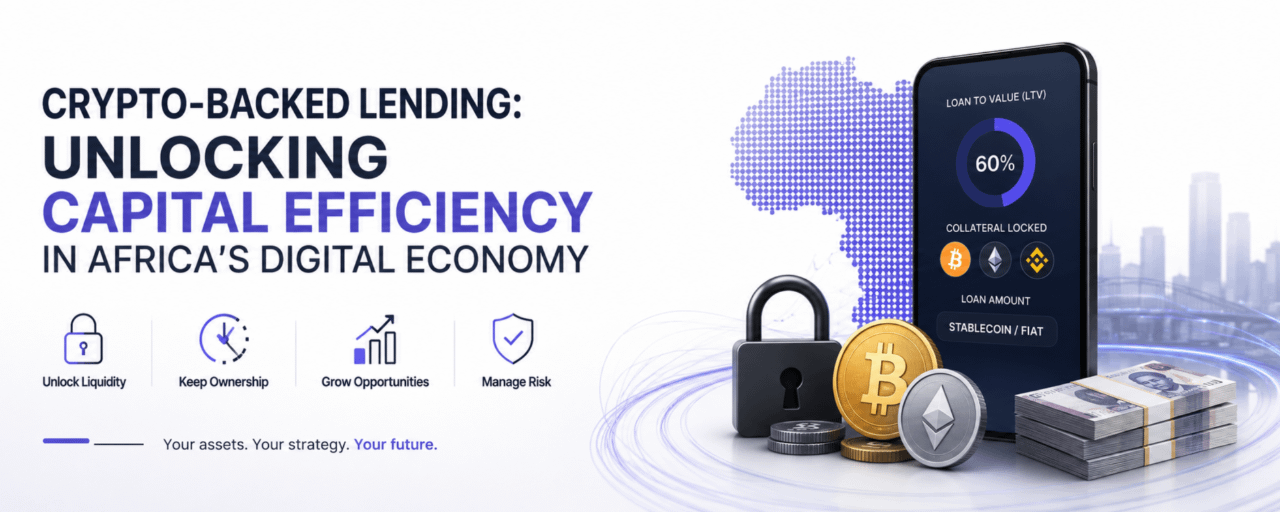
Liquidity Without Selling: The Case for Crypto-Backed LendingFor years, Africa's crypto story was largely defined by speculation. Many users turned to digital assets as a hedge against inflation, currency depreciation, and limited access to global financial markets.
Today, that narrative is changing.
As blockchain adoption matures, crypto is evolving beyond trading into practical financial infrastructure. One of the clearest examples is crypto-backed lending, which enables users to unlock liquidity without selling their digital assets.
Solving a Long-Standing Liquidity Challenge
Across many African markets, access to affordable credit remains a significant hurdle. Traditional lenders often require extensive credit histories, high interest rates, and physical collateral—requirements that exclude many entrepreneurs, freelancers, and digital-first investors.
For individuals whose wealth is increasingly held in crypto, selling assets has often been the only way to access cash. However, liquidation comes at a cost:
Giving up long-term market exposurePaying conversion and withdrawal feesPotential tax implications depending on local regulations
Crypto-backed lending offers a different path.
How Crypto-Backed Lending Works
Instead of selling their cryptocurrency, users can pledge eligible digital assets as collateral to borrow stablecoins or other supported assets.
On platforms such as Binance Loans, the borrowing amount is determined by the Loan-to-Value (LTV) ratio, which compares the value of the collateral against the loan amount.
Once the loan and any accrued interest are repaid, the collateral is released back to the user's account, allowing them to retain ownership of their long-term holdings throughout the borrowing period.
Why It Matters for African Users
Crypto-backed lending can provide greater capital flexibility across a wide range of real-world use cases.
Entrepreneurs can access working capital without liquidating investment portfolios. Traders can maintain market exposure while meeting short-term liquidity needs. Small business owners may fund inventory purchases, expansion, or operational expenses without exiting long-term positions.
For users managing digital assets strategically, this approach can improve overall capital efficiency while reducing the need for premature asset sales.
Understanding the Risks
Like any financial product, crypto-backed loans require careful risk management.
Because cryptocurrency prices can be highly volatile, a decline in collateral value increases the LTV ratio. If it exceeds platform thresholds, borrowers may receive margin notifications or face partial liquidation to maintain the loan's collateral requirements.
To reduce risk, borrowers should:
Maintain conservative LTV ratios.Monitor collateral values regularly.Add collateral or reduce outstanding loans during periods of market volatility.
Understanding these mechanics is essential before using any collateralized lending product.
Beyond Trading
Crypto-backed lending represents a broader shift in how digital assets are being used across Africa. Rather than serving solely as speculative investments, cryptocurrencies are increasingly becoming productive financial tools that help individuals access liquidity while maintaining ownership of their assets.
As blockchain infrastructure continues to develop and regulatory clarity improves across various African markets, collateralized lending may play an increasingly important role in expanding access to capital and strengthening financial inclusion.
The future of crypto in Africa isn't just about buying and selling digital assets—it's about unlocking new ways to put them to work.
#CryptoLending #BinanceSquare #Blockchain #DeFi #FinancialInclusion #Africa #Web3 #DigitalAssets
Liquidity Without Selling: The Case for Crypto-Backed Lending
For years, Africa's crypto story was largely defined by speculation. Many users turned to digital assets as a hedge against inflation, currency depreciation, and limited access to global financial markets.
Today, that narrative is changing.
As blockchain adoption matures, crypto is evolving beyond trading into practical financial infrastructure. One of the clearest examples is crypto-backed lending, which enables users to unlock liquidity without selling their digital assets.
Solving a Long-Standing Liquidity Challenge
Across many African markets, access to affordable credit remains a significant hurdle. Traditional lenders often require extensive credit histories, high interest rates, and physical collateral—requirements that exclude many entrepreneurs, freelancers, and digital-first investors.
For individuals whose wealth is increasingly held in crypto, selling assets has often been the only way to access cash. However, liquidation comes at a cost:
Giving up long-term market exposurePaying conversion and withdrawal feesPotential tax implications depending on local regulations
Crypto-backed lending offers a different path.
How Crypto-Backed Lending Works
Instead of selling their cryptocurrency, users can pledge eligible digital assets as collateral to borrow stablecoins or other supported assets.
On platforms such as Binance Loans, the borrowing amount is determined by the Loan-to-Value (LTV) ratio, which compares the value of the collateral against the loan amount.
Once the loan and any accrued interest are repaid, the collateral is released back to the user's account, allowing them to retain ownership of their long-term holdings throughout the borrowing period.
Why It Matters for African Users
Crypto-backed lending can provide greater capital flexibility across a wide range of real-world use cases.
Entrepreneurs can access working capital without liquidating investment portfolios. Traders can maintain market exposure while meeting short-term liquidity needs. Small business owners may fund inventory purchases, expansion, or operational expenses without exiting long-term positions.
For users managing digital assets strategically, this approach can improve overall capital efficiency while reducing the need for premature asset sales.
Understanding the Risks
Like any financial product, crypto-backed loans require careful risk management.
Because cryptocurrency prices can be highly volatile, a decline in collateral value increases the LTV ratio. If it exceeds platform thresholds, borrowers may receive margin notifications or face partial liquidation to maintain the loan's collateral requirements.
To reduce risk, borrowers should:
Maintain conservative LTV ratios.Monitor collateral values regularly.Add collateral or reduce outstanding loans during periods of market volatility.
Understanding these mechanics is essential before using any collateralized lending product.
Beyond Trading
Crypto-backed lending represents a broader shift in how digital assets are being used across Africa. Rather than serving solely as speculative investments, cryptocurrencies are increasingly becoming productive financial tools that help individuals access liquidity while maintaining ownership of their assets.
As blockchain infrastructure continues to develop and regulatory clarity improves across various African markets, collateralized lending may play an increasingly important role in expanding access to capital and strengthening financial inclusion.
The future of crypto in Africa isn't just about buying and selling digital assets—it's about unlocking new ways to put them to work.
#CryptoLending #BinanceSquare #Blockchain #DeFi #FinancialInclusion #Africa #Web3 #DigitalAssets
Today, that narrative is changing.
As blockchain adoption matures, crypto is evolving beyond trading into practical financial infrastructure. One of the clearest examples is crypto-backed lending, which enables users to unlock liquidity without selling their digital assets.
Solving a Long-Standing Liquidity Challenge
Across many African markets, access to affordable credit remains a significant hurdle. Traditional lenders often require extensive credit histories, high interest rates, and physical collateral—requirements that exclude many entrepreneurs, freelancers, and digital-first investors.
For individuals whose wealth is increasingly held in crypto, selling assets has often been the only way to access cash. However, liquidation comes at a cost:
Giving up long-term market exposurePaying conversion and withdrawal feesPotential tax implications depending on local regulations
Crypto-backed lending offers a different path.
How Crypto-Backed Lending Works
Instead of selling their cryptocurrency, users can pledge eligible digital assets as collateral to borrow stablecoins or other supported assets.
On platforms such as Binance Loans, the borrowing amount is determined by the Loan-to-Value (LTV) ratio, which compares the value of the collateral against the loan amount.
Once the loan and any accrued interest are repaid, the collateral is released back to the user's account, allowing them to retain ownership of their long-term holdings throughout the borrowing period.
Why It Matters for African Users
Crypto-backed lending can provide greater capital flexibility across a wide range of real-world use cases.
Entrepreneurs can access working capital without liquidating investment portfolios. Traders can maintain market exposure while meeting short-term liquidity needs. Small business owners may fund inventory purchases, expansion, or operational expenses without exiting long-term positions.
For users managing digital assets strategically, this approach can improve overall capital efficiency while reducing the need for premature asset sales.
Understanding the Risks
Like any financial product, crypto-backed loans require careful risk management.
Because cryptocurrency prices can be highly volatile, a decline in collateral value increases the LTV ratio. If it exceeds platform thresholds, borrowers may receive margin notifications or face partial liquidation to maintain the loan's collateral requirements.
To reduce risk, borrowers should:
Maintain conservative LTV ratios.Monitor collateral values regularly.Add collateral or reduce outstanding loans during periods of market volatility.
Understanding these mechanics is essential before using any collateralized lending product.
Beyond Trading
Crypto-backed lending represents a broader shift in how digital assets are being used across Africa. Rather than serving solely as speculative investments, cryptocurrencies are increasingly becoming productive financial tools that help individuals access liquidity while maintaining ownership of their assets.
As blockchain infrastructure continues to develop and regulatory clarity improves across various African markets, collateralized lending may play an increasingly important role in expanding access to capital and strengthening financial inclusion.
The future of crypto in Africa isn't just about buying and selling digital assets—it's about unlocking new ways to put them to work.
#CryptoLending #BinanceSquare #Blockchain #DeFi #FinancialInclusion #Africa #Web3 #DigitalAssets
1
57
PINNED
·
--
Article
What Is RWUSD? Binance's Real-World Asset Stablecoin ExplainedFor years, crypto investors have faced the same trade-off: chase high returns with higher volatility or sit on the sidelines waiting for calmer markets.
But a new trend is beginning to reshape that conversation.
Real-World Assets (RWAs) are bringing traditional finance and blockchain closer together, creating opportunities that combine the efficiency of crypto with the stability of established financial markets. As interest in RWAs continues to grow, Binance has introduced RWUSD, a product that gives eligible users access to returns linked to real-world financial instruments—without leaving the Binance ecosystem.
If you've come across RWUSD and wondered what it actually is, you're not alone. Despite the name, RWUSD isn't a stablecoin or a cryptocurrency. It's a Binance Earn product designed to simplify access to one of the fastest-growing sectors in digital finance.
What Is RWUSD?
RWUSD is a reward-bearing product available through Binance Earn. It enables eligible users to access returns that are benchmarked to real-world assets, such as high-quality institutional financial instruments.
Unlike cryptocurrencies whose prices can fluctuate significantly, RWUSD is designed for users seeking exposure to a different type of yield source within the Binance ecosystem.
It's important to understand what RWUSD is not.
RWUSD is not a stablecoin, not a token that can be traded on exchanges, not a security, and not a tokenized real-world asset. Instead, it represents your participation in a Binance Earn product that distributes rewards linked to carefully selected real-world asset strategies.
That distinction is what makes RWUSD unique.
Why Are Real-World Assets Becoming So Popular?
Real-World Assets have become one of crypto's fastest-growing narratives because they bridge two worlds that have traditionally operated separately.
On one side is blockchain technology, known for transparency, accessibility, and around-the-clock availability. On the other are traditional financial instruments, which have long been used to generate relatively stable income.
By connecting these two ecosystems, RWAs are helping expand the range of financial products available to crypto users.
Rather than relying exclusively on crypto-native yield opportunities, investors can now explore products linked to traditional financial markets—all through familiar digital platforms.
This growing trend has attracted attention from institutions, developers, and everyday users alike, making RWAs one of the most closely watched areas of blockchain innovation.
How Does RWUSD Work?
RWUSD is available through Binance Earn, allowing eligible users to subscribe directly from their Binance account.
Once subscribed, users receive rewards that are benchmarked to returns generated from underlying real-world asset strategies managed within the product's framework.
Because everything happens within the Binance ecosystem, there's no need to connect external wallets, move funds across multiple platforms, or manage complex decentralized finance protocols.
The experience is designed to be straightforward, particularly for users who want exposure to RWA-related opportunities without additional technical complexity.
As with any financial product, rewards are not guaranteed and may vary over time depending on market conditions and the underlying assets.
Why RWUSD Stands Out
As the digital asset industry matures, many investors are looking beyond short-term price movements and exploring products that offer broader portfolio diversification.
RWUSD reflects this shift by combining the convenience of Binance Earn with exposure to a rapidly expanding area of digital finance.
Some of its key advantages include:
Access through your existing Binance accountExposure to returns linked to real-world asset strategiesNo need for external wallets or DeFi protocolsIntegration within the Binance Earn ecosystemA simple way to explore one of blockchain's fastest-growing sectors
For users interested in understanding where crypto and traditional finance are converging, RWUSD offers an accessible starting point.
Who Might Find RWUSD Useful?
RWUSD may appeal to users who:
Want to learn more about Real-World Assets (RWAs)Prefer products linked to traditional financial marketsAre looking to diversify beyond purely crypto-native strategiesValue the convenience of managing everything within the Binance ecosystem
As always, users should review the product terms carefully and consider their own financial objectives before participating.
Why RWAs Matter for the Future of Crypto
The next phase of blockchain adoption isn't only about creating new digital assets. It's also about improving access to existing financial opportunities.
Real-World Assets are helping connect global capital markets with blockchain infrastructure, opening the door to products that are more accessible, transparent, and efficient.
RWUSD is part of that broader evolution.
Rather than replacing traditional finance, it demonstrates how blockchain can complement it—making institutional-grade financial opportunities more accessible through platforms that millions of users already trust.
Final Thoughts
The conversation around crypto is changing.
While digital currencies remain at the heart of the industry, Real-World Assets are introducing new possibilities for investors seeking diversification and long-term participation.
RWUSD gives eligible Binance users a straightforward way to explore this growing sector through Binance Earn, without leaving the platform they already use.
As the RWA market continues to expand, products like RWUSD highlight how blockchain is evolving beyond speculation and toward practical financial innovation.
Learn More
Discover RWUSD on Binance Earn:
[https://www.binance.com/en/earn/rwa-rwusd](https://www.binance.com/en/earn/rwa-rwusd)
Read the official Binance FAQ:
[https://www.binance.com/en/support/faq/detail/62626eed1296460eaa5c0f8e70085389](https://www.binance.com/en/support/faq/detail/62626eed1296460eaa5c0f8e70085389)
Explore Binance Earn:
[https://www.binance.com/en/earn](https://www.binance.com/en/earn)
Buy crypto on Binance:
[https://www.binance.com/en/buy](https://www.binance.com/en/buy)
#RWUSD #RealWorldAssets
{future}(BNBUSDT)
{future}(BTCUSDT)
What Is RWUSD? Binance's Real-World Asset Stablecoin Explained
For years, crypto investors have faced the same trade-off: chase high returns with higher volatility or sit on the sidelines waiting for calmer markets.
But a new trend is beginning to reshape that conversation.
Real-World Assets (RWAs) are bringing traditional finance and blockchain closer together, creating opportunities that combine the efficiency of crypto with the stability of established financial markets. As interest in RWAs continues to grow, Binance has introduced RWUSD, a product that gives eligible users access to returns linked to real-world financial instruments—without leaving the Binance ecosystem.
If you've come across RWUSD and wondered what it actually is, you're not alone. Despite the name, RWUSD isn't a stablecoin or a cryptocurrency. It's a Binance Earn product designed to simplify access to one of the fastest-growing sectors in digital finance.
What Is RWUSD?
RWUSD is a reward-bearing product available through Binance Earn. It enables eligible users to access returns that are benchmarked to real-world assets, such as high-quality institutional financial instruments.
Unlike cryptocurrencies whose prices can fluctuate significantly, RWUSD is designed for users seeking exposure to a different type of yield source within the Binance ecosystem.
It's important to understand what RWUSD is not.
RWUSD is not a stablecoin, not a token that can be traded on exchanges, not a security, and not a tokenized real-world asset. Instead, it represents your participation in a Binance Earn product that distributes rewards linked to carefully selected real-world asset strategies.
That distinction is what makes RWUSD unique.
Why Are Real-World Assets Becoming So Popular?
Real-World Assets have become one of crypto's fastest-growing narratives because they bridge two worlds that have traditionally operated separately.
On one side is blockchain technology, known for transparency, accessibility, and around-the-clock availability. On the other are traditional financial instruments, which have long been used to generate relatively stable income.
By connecting these two ecosystems, RWAs are helping expand the range of financial products available to crypto users.
Rather than relying exclusively on crypto-native yield opportunities, investors can now explore products linked to traditional financial markets—all through familiar digital platforms.
This growing trend has attracted attention from institutions, developers, and everyday users alike, making RWAs one of the most closely watched areas of blockchain innovation.
How Does RWUSD Work?
RWUSD is available through Binance Earn, allowing eligible users to subscribe directly from their Binance account.
Once subscribed, users receive rewards that are benchmarked to returns generated from underlying real-world asset strategies managed within the product's framework.
Because everything happens within the Binance ecosystem, there's no need to connect external wallets, move funds across multiple platforms, or manage complex decentralized finance protocols.
The experience is designed to be straightforward, particularly for users who want exposure to RWA-related opportunities without additional technical complexity.
As with any financial product, rewards are not guaranteed and may vary over time depending on market conditions and the underlying assets.
Why RWUSD Stands Out
As the digital asset industry matures, many investors are looking beyond short-term price movements and exploring products that offer broader portfolio diversification.
RWUSD reflects this shift by combining the convenience of Binance Earn with exposure to a rapidly expanding area of digital finance.
Some of its key advantages include:
Access through your existing Binance accountExposure to returns linked to real-world asset strategiesNo need for external wallets or DeFi protocolsIntegration within the Binance Earn ecosystemA simple way to explore one of blockchain's fastest-growing sectors
For users interested in understanding where crypto and traditional finance are converging, RWUSD offers an accessible starting point.
Who Might Find RWUSD Useful?
RWUSD may appeal to users who:
Want to learn more about Real-World Assets (RWAs)Prefer products linked to traditional financial marketsAre looking to diversify beyond purely crypto-native strategiesValue the convenience of managing everything within the Binance ecosystem
As always, users should review the product terms carefully and consider their own financial objectives before participating.
Why RWAs Matter for the Future of Crypto
The next phase of blockchain adoption isn't only about creating new digital assets. It's also about improving access to existing financial opportunities.
Real-World Assets are helping connect global capital markets with blockchain infrastructure, opening the door to products that are more accessible, transparent, and efficient.
RWUSD is part of that broader evolution.
Rather than replacing traditional finance, it demonstrates how blockchain can complement it—making institutional-grade financial opportunities more accessible through platforms that millions of users already trust.
Final Thoughts
The conversation around crypto is changing.
While digital currencies remain at the heart of the industry, Real-World Assets are introducing new possibilities for investors seeking diversification and long-term participation.
RWUSD gives eligible Binance users a straightforward way to explore this growing sector through Binance Earn, without leaving the platform they already use.
As the RWA market continues to expand, products like RWUSD highlight how blockchain is evolving beyond speculation and toward practical financial innovation.
Learn More
Discover RWUSD on Binance Earn:
https://www.binance.com/en/earn/rwa-rwusd
Read the official Binance FAQ:
https://www.binance.com/en/support/faq/detail/62626eed1296460eaa5c0f8e70085389
Explore Binance Earn:
https://www.binance.com/en/earn
Buy crypto on Binance:
https://www.binance.com/en/buy
#RWUSD #RealWorldAssets
But a new trend is beginning to reshape that conversation.
Real-World Assets (RWAs) are bringing traditional finance and blockchain closer together, creating opportunities that combine the efficiency of crypto with the stability of established financial markets. As interest in RWAs continues to grow, Binance has introduced RWUSD, a product that gives eligible users access to returns linked to real-world financial instruments—without leaving the Binance ecosystem.
If you've come across RWUSD and wondered what it actually is, you're not alone. Despite the name, RWUSD isn't a stablecoin or a cryptocurrency. It's a Binance Earn product designed to simplify access to one of the fastest-growing sectors in digital finance.
What Is RWUSD?
RWUSD is a reward-bearing product available through Binance Earn. It enables eligible users to access returns that are benchmarked to real-world assets, such as high-quality institutional financial instruments.
Unlike cryptocurrencies whose prices can fluctuate significantly, RWUSD is designed for users seeking exposure to a different type of yield source within the Binance ecosystem.
It's important to understand what RWUSD is not.
RWUSD is not a stablecoin, not a token that can be traded on exchanges, not a security, and not a tokenized real-world asset. Instead, it represents your participation in a Binance Earn product that distributes rewards linked to carefully selected real-world asset strategies.
That distinction is what makes RWUSD unique.
Why Are Real-World Assets Becoming So Popular?
Real-World Assets have become one of crypto's fastest-growing narratives because they bridge two worlds that have traditionally operated separately.
On one side is blockchain technology, known for transparency, accessibility, and around-the-clock availability. On the other are traditional financial instruments, which have long been used to generate relatively stable income.
By connecting these two ecosystems, RWAs are helping expand the range of financial products available to crypto users.
Rather than relying exclusively on crypto-native yield opportunities, investors can now explore products linked to traditional financial markets—all through familiar digital platforms.
This growing trend has attracted attention from institutions, developers, and everyday users alike, making RWAs one of the most closely watched areas of blockchain innovation.
How Does RWUSD Work?
RWUSD is available through Binance Earn, allowing eligible users to subscribe directly from their Binance account.
Once subscribed, users receive rewards that are benchmarked to returns generated from underlying real-world asset strategies managed within the product's framework.
Because everything happens within the Binance ecosystem, there's no need to connect external wallets, move funds across multiple platforms, or manage complex decentralized finance protocols.
The experience is designed to be straightforward, particularly for users who want exposure to RWA-related opportunities without additional technical complexity.
As with any financial product, rewards are not guaranteed and may vary over time depending on market conditions and the underlying assets.
Why RWUSD Stands Out
As the digital asset industry matures, many investors are looking beyond short-term price movements and exploring products that offer broader portfolio diversification.
RWUSD reflects this shift by combining the convenience of Binance Earn with exposure to a rapidly expanding area of digital finance.
Some of its key advantages include:
Access through your existing Binance accountExposure to returns linked to real-world asset strategiesNo need for external wallets or DeFi protocolsIntegration within the Binance Earn ecosystemA simple way to explore one of blockchain's fastest-growing sectors
For users interested in understanding where crypto and traditional finance are converging, RWUSD offers an accessible starting point.
Who Might Find RWUSD Useful?
RWUSD may appeal to users who:
Want to learn more about Real-World Assets (RWAs)Prefer products linked to traditional financial marketsAre looking to diversify beyond purely crypto-native strategiesValue the convenience of managing everything within the Binance ecosystem
As always, users should review the product terms carefully and consider their own financial objectives before participating.
Why RWAs Matter for the Future of Crypto
The next phase of blockchain adoption isn't only about creating new digital assets. It's also about improving access to existing financial opportunities.
Real-World Assets are helping connect global capital markets with blockchain infrastructure, opening the door to products that are more accessible, transparent, and efficient.
RWUSD is part of that broader evolution.
Rather than replacing traditional finance, it demonstrates how blockchain can complement it—making institutional-grade financial opportunities more accessible through platforms that millions of users already trust.
Final Thoughts
The conversation around crypto is changing.
While digital currencies remain at the heart of the industry, Real-World Assets are introducing new possibilities for investors seeking diversification and long-term participation.
RWUSD gives eligible Binance users a straightforward way to explore this growing sector through Binance Earn, without leaving the platform they already use.
As the RWA market continues to expand, products like RWUSD highlight how blockchain is evolving beyond speculation and toward practical financial innovation.
Learn More
Discover RWUSD on Binance Earn:
https://www.binance.com/en/earn/rwa-rwusd
Read the official Binance FAQ:
https://www.binance.com/en/support/faq/detail/62626eed1296460eaa5c0f8e70085389
Explore Binance Earn:
https://www.binance.com/en/earn
Buy crypto on Binance:
https://www.binance.com/en/buy
#RWUSD #RealWorldAssets
2
6
110
·
--
The Quiet Differentiator: How Binance Security Has Been Working in the Background All Year🛡️ The loudest crypto stories in 2026 have been shutdowns, hacks, and headlines. The quietest ones might matter more.
While AscendEX, BitMEX, and BitMart wound down operations this summer, and North Korean actors stole roughly $577M in the first four months of the year alone according to TRM Labs, something less dramatic — and arguably more important — was happening in the background: a security apparatus doing its job well enough that most users never noticed it working.
What actually happened this year
Start with the numbers that are verifiable. Binance closed 2025 having recovered $97.4 million in stolen user funds through joint operations with INTERPOL and AFRIPOL, while blocking over $6.6 billion in attempted fraud across the platform, according to the exchange's own year-end disclosure. That built on a clear upward trend: $55 million recovered in 2023, $73 million by mid-2024 — each year outpacing the last, not because theft attempts are rising uncontrollably, but because detection has gotten measurably sharper.
Then came August 2026, a genuinely busy month. On August 18, Binance's security team flagged a malicious governance proposal targeting an undisclosed DAO's treasury — roughly $1.2 million in tokens — with less than 48 hours before it could execute. The exchange alerted the project directly, coordinated with other exchanges to pause deposits of the affected token, and the community voted the proposal down before a single dollar moved. Binance's Chief Security Officer, Jimmy Su, put it plainly: "This case demonstrates what security by design looks like, extending beyond our own walls." No funds were named, no tokens disclosed — but the mechanism worked exactly as intended.
Two days later, on August 20, Binance launched Agent OS — its developer framework connecting AI agents (via ChatGPT, Claude Code, Cursor) directly to trading, wallet, and payment infrastructure. Rather than rushing a flashy feature and patching security after the fact, Binance built the guardrails in from day one: agents operate inside dedicated subaccounts, cannot withdraw to external wallets, and cannot move funds out of the main account without manual authorization. That's a meaningful design choice at a moment when five competing exchanges launched comparable systems within 30 days — each making very different custody trade-offs.
Why this matters right now
Zoom out, and Binance also sits inside the Beacon Network — a real-time, cross-exchange alert system alongside Coinbase, Kraken, OKX, and Crypto.com that auto-traces DPRK-linked addresses across all member platforms the moment they're flagged. Given that North Korean hackers accounted for 76% of all crypto hack value in early 2026, per TRM Labs, that kind of shared infrastructure isn't decorative — it's the difference between catching a laundering attempt in hours versus months.
The honest caveats
None of this makes Binance immune. Its own security history includes a 2019 hot-wallet breach and the 2022 BNB Bridge exploit, and Agent OS critics have rightly pointed out that subaccount isolation protects against fund drainage but not against prompt-injection or manipulated trading signals — a genuinely open question as agentic finance scales. Security-by-design is a strong posture, not a guarantee.
The bigger picture
What's emerging is a pattern, not a headline: recovery efforts scaling year over year, threats intercepted before execution rather than cleaned up after, and new products built with restrictions baked in rather than bolted on. That's a meaningfully different posture than "safety as PR."
Explore Binance's Proof of Reserves: [Here](https://www.binance.com/en/proof-of-reserves)
Explore BNB: [https://www.binance.com/en/buy-BNB](https://www.binance.com/en/buy-BNB)
$BNB is directly tied to Binance's platform economics and security spend. $BTC and $ETH remain the assets most exposed to the exchange-security landscape broadly, given their dominant share of custodied funds industry-wide.
{spot}(BNBUSDT)
Curious what you think: should exchanges publish more real-time detail on threats they stop — or does disclosure just hand attackers a blueprint? Drop your take below. 👇
Not financial advice. Informational and educational purposes only, based on verified public disclosures as of August 2026. Security figures and product features may change. Crypto involves risk, including loss of capital. Always DYOR.
#CryptoSafety #ProofOfReserves #AgenticAI #CryptoCompliance #Web3Infrastructure
The Quiet Differentiator: How Binance Security Has Been Working in the Background All Year
🛡️ The loudest crypto stories in 2026 have been shutdowns, hacks, and headlines. The quietest ones might matter more.
While AscendEX, BitMEX, and BitMart wound down operations this summer, and North Korean actors stole roughly $577M in the first four months of the year alone according to TRM Labs, something less dramatic — and arguably more important — was happening in the background: a security apparatus doing its job well enough that most users never noticed it working.
What actually happened this year
Start with the numbers that are verifiable. Binance closed 2025 having recovered $97.4 million in stolen user funds through joint operations with INTERPOL and AFRIPOL, while blocking over $6.6 billion in attempted fraud across the platform, according to the exchange's own year-end disclosure. That built on a clear upward trend: $55 million recovered in 2023, $73 million by mid-2024 — each year outpacing the last, not because theft attempts are rising uncontrollably, but because detection has gotten measurably sharper.
Then came August 2026, a genuinely busy month. On August 18, Binance's security team flagged a malicious governance proposal targeting an undisclosed DAO's treasury — roughly $1.2 million in tokens — with less than 48 hours before it could execute. The exchange alerted the project directly, coordinated with other exchanges to pause deposits of the affected token, and the community voted the proposal down before a single dollar moved. Binance's Chief Security Officer, Jimmy Su, put it plainly: "This case demonstrates what security by design looks like, extending beyond our own walls." No funds were named, no tokens disclosed — but the mechanism worked exactly as intended.
Two days later, on August 20, Binance launched Agent OS — its developer framework connecting AI agents (via ChatGPT, Claude Code, Cursor) directly to trading, wallet, and payment infrastructure. Rather than rushing a flashy feature and patching security after the fact, Binance built the guardrails in from day one: agents operate inside dedicated subaccounts, cannot withdraw to external wallets, and cannot move funds out of the main account without manual authorization. That's a meaningful design choice at a moment when five competing exchanges launched comparable systems within 30 days — each making very different custody trade-offs.
Why this matters right now
Zoom out, and Binance also sits inside the Beacon Network — a real-time, cross-exchange alert system alongside Coinbase, Kraken, OKX, and Crypto.com that auto-traces DPRK-linked addresses across all member platforms the moment they're flagged. Given that North Korean hackers accounted for 76% of all crypto hack value in early 2026, per TRM Labs, that kind of shared infrastructure isn't decorative — it's the difference between catching a laundering attempt in hours versus months.
The honest caveats
None of this makes Binance immune. Its own security history includes a 2019 hot-wallet breach and the 2022 BNB Bridge exploit, and Agent OS critics have rightly pointed out that subaccount isolation protects against fund drainage but not against prompt-injection or manipulated trading signals — a genuinely open question as agentic finance scales. Security-by-design is a strong posture, not a guarantee.
The bigger picture
What's emerging is a pattern, not a headline: recovery efforts scaling year over year, threats intercepted before execution rather than cleaned up after, and new products built with restrictions baked in rather than bolted on. That's a meaningfully different posture than "safety as PR."
Explore Binance's Proof of Reserves: Here
Explore BNB: https://www.binance.com/en/buy-BNB
$BNB is directly tied to Binance's platform economics and security spend. $BTC and $ETH remain the assets most exposed to the exchange-security landscape broadly, given their dominant share of custodied funds industry-wide.
Curious what you think: should exchanges publish more real-time detail on threats they stop — or does disclosure just hand attackers a blueprint? Drop your take below. 👇
Not financial advice. Informational and educational purposes only, based on verified public disclosures as of August 2026. Security figures and product features may change. Crypto involves risk, including loss of capital. Always DYOR.
#CryptoSafety #ProofOfReserves #AgenticAI #CryptoCompliance #Web3Infrastructure
While AscendEX, BitMEX, and BitMart wound down operations this summer, and North Korean actors stole roughly $577M in the first four months of the year alone according to TRM Labs, something less dramatic — and arguably more important — was happening in the background: a security apparatus doing its job well enough that most users never noticed it working.
What actually happened this year
Start with the numbers that are verifiable. Binance closed 2025 having recovered $97.4 million in stolen user funds through joint operations with INTERPOL and AFRIPOL, while blocking over $6.6 billion in attempted fraud across the platform, according to the exchange's own year-end disclosure. That built on a clear upward trend: $55 million recovered in 2023, $73 million by mid-2024 — each year outpacing the last, not because theft attempts are rising uncontrollably, but because detection has gotten measurably sharper.
Then came August 2026, a genuinely busy month. On August 18, Binance's security team flagged a malicious governance proposal targeting an undisclosed DAO's treasury — roughly $1.2 million in tokens — with less than 48 hours before it could execute. The exchange alerted the project directly, coordinated with other exchanges to pause deposits of the affected token, and the community voted the proposal down before a single dollar moved. Binance's Chief Security Officer, Jimmy Su, put it plainly: "This case demonstrates what security by design looks like, extending beyond our own walls." No funds were named, no tokens disclosed — but the mechanism worked exactly as intended.
Two days later, on August 20, Binance launched Agent OS — its developer framework connecting AI agents (via ChatGPT, Claude Code, Cursor) directly to trading, wallet, and payment infrastructure. Rather than rushing a flashy feature and patching security after the fact, Binance built the guardrails in from day one: agents operate inside dedicated subaccounts, cannot withdraw to external wallets, and cannot move funds out of the main account without manual authorization. That's a meaningful design choice at a moment when five competing exchanges launched comparable systems within 30 days — each making very different custody trade-offs.
Why this matters right now
Zoom out, and Binance also sits inside the Beacon Network — a real-time, cross-exchange alert system alongside Coinbase, Kraken, OKX, and Crypto.com that auto-traces DPRK-linked addresses across all member platforms the moment they're flagged. Given that North Korean hackers accounted for 76% of all crypto hack value in early 2026, per TRM Labs, that kind of shared infrastructure isn't decorative — it's the difference between catching a laundering attempt in hours versus months.
The honest caveats
None of this makes Binance immune. Its own security history includes a 2019 hot-wallet breach and the 2022 BNB Bridge exploit, and Agent OS critics have rightly pointed out that subaccount isolation protects against fund drainage but not against prompt-injection or manipulated trading signals — a genuinely open question as agentic finance scales. Security-by-design is a strong posture, not a guarantee.
The bigger picture
What's emerging is a pattern, not a headline: recovery efforts scaling year over year, threats intercepted before execution rather than cleaned up after, and new products built with restrictions baked in rather than bolted on. That's a meaningfully different posture than "safety as PR."
Explore Binance's Proof of Reserves: Here
Explore BNB: https://www.binance.com/en/buy-BNB
$BNB is directly tied to Binance's platform economics and security spend. $BTC and $ETH remain the assets most exposed to the exchange-security landscape broadly, given their dominant share of custodied funds industry-wide.
Curious what you think: should exchanges publish more real-time detail on threats they stop — or does disclosure just hand attackers a blueprint? Drop your take below. 👇
Not financial advice. Informational and educational purposes only, based on verified public disclosures as of August 2026. Security figures and product features may change. Crypto involves risk, including loss of capital. Always DYOR.
#CryptoSafety #ProofOfReserves #AgenticAI #CryptoCompliance #Web3Infrastructure
1
7
·
--

Article
Built to Last: What Third-Party Data Says About Trust, Transparency, and User Trends in CryptoThree exchanges went dark within a single month. The market barely flinched.
That reaction — or lack of one — is the real story. When AscendEX, BitMEX, and BitMart each announced closures within weeks of each other in July 2026, the reflexive question was "who's next?" But look at what the data actually shows, and a different narrative emerges: not panic, but a quiet, measurable migration of capital toward exchanges that can prove where user funds sit.
What actually happened
AscendEX ceased operations on July 1, 2026 — the exact day the EU's MiCA framework took full effect — after failing to secure authorization under the new rules. BitMEX, the exchange that pioneered the 100x perpetual swap 11 years ago, confirmed on July 23 it would wind down by September 23, with HDR Global Trading stating explicitly that reserves still exceeded customer liabilities. BitMart followed on July 26, citing "operating conditions" rather than insolvency. Reuters reported BitMEX's market share had collapsed to below 0.01% before the announcement, daily volume down to roughly $400,000 — a staggering fall from an exchange that once processed over $3 trillion cumulatively.
Here's the twist casual observers miss: analytics firm Alphractal counted just nine total exchange shutdowns across all of 2026 through late July — the lowest annual figure in at least eight years. This wasn't 2022-style contagion. It was survivorship economics: mid-tier platforms built on referral bonuses and aggressive marketing, rather than liquidity depth or verifiable solvency, quietly running out of runway as deposit growth slowed industry-wide.
What the numbers show
CoinGecko's Trust Score framework — weighing liquidity, proof-of-reserves disclosure, regulatory standing, and cybersecurity record — currently ranks Coinbase, Binance, and Kraken as the three highest-trust exchanges globally, out of 165 tracked venues holding a combined $279 billion in reserves. CoinDesk's Exchange Benchmark separately scored Binance at 90.1 in its most recent assessment, the top mark among AA-rated venues, ahead of Coinbase (89.8), Bitstamp (88.4), and Kraken (84.5).
Volume tells a parallel story. Binance held 39.2% of top-10 centralized exchange spot volume across 2025 and maintained roughly 37% through Q1 2026, according to CoinGecko — nearly four times its nearest competitor. Binance Research's own August 2026 data shows the broader crypto market recovering 8.0% in July to $2.29 trillion, with capital rotating measurably toward transparent, continuously auditable infrastructure: Binance's tokenized-equity product, bStocks, crossed $500 million in market cap within seven weeks of its June 11 launch, capturing roughly a quarter of the entire tokenized-stock market and 68% of the category's total growth.
Why this matters now
Trust and volume rankings don't always align — and that gap is the actual signal. Users who survived FTX, Celsius, and now the 2026 shutdown wave aren't just chasing low fees anymore. They're pricing in counterparty risk directly, rewarding exchanges that publish continuous, verifiable reserve data over those that simply advertise it.
The honest limits
Binance's Merkle-tree proof-of-reserves system is a genuine structural advantage — it predates most competitors' equivalent disclosures and gave users confidence exactly when smaller venues were freezing withdrawals. But transparency data is a snapshot, not a guarantee; it shows solvency at a moment in time, not continuously. And Binance's own regulatory history, including past enforcement settlements, remains a legitimate part of any honest risk assessment — trust scores are directional evidence, not immunity.
The bigger picture
What's unfolding isn't one exchange "winning." It's a market finally pricing transparency as infrastructure rather than marketing — precisely as regulators like the EU, through MiCA, push in the same direction. That convergence, not any single shutdown, is the story underneath the headlines.
Explore Binance's Proof of Reserves: https://www.binance.com/en/proof-of-reserves Explore $BNB: https://www.binance.com/en/buy-BNB
$BTC and $ETH dominate custodid exchange reserves industry-wide, making them the most exposed assets to trust dynamics. $BNB carries direct relevance as Binance's native token, tied closely to the platform's own transparency record.
{spot}(BTCUSDT)
{spot}(ETHUSDT)
Not financial advice. Informational and educational purposes only, based on third-party data available as of August 2026. Rankings and reserve figures shift over time and by methodology. Crypto involves significant risk, including loss of capital. Always DYOR before acting.
#ProofOfReserves #MarketTrust #CryptoRegulation #ProofOfReserves #writetoearn
Built to Last: What Third-Party Data Says About Trust, Transparency, and User Trends in Crypto
Three exchanges went dark within a single month. The market barely flinched.
That reaction — or lack of one — is the real story. When AscendEX, BitMEX, and BitMart each announced closures within weeks of each other in July 2026, the reflexive question was "who's next?" But look at what the data actually shows, and a different narrative emerges: not panic, but a quiet, measurable migration of capital toward exchanges that can prove where user funds sit.
What actually happened
AscendEX ceased operations on July 1, 2026 — the exact day the EU's MiCA framework took full effect — after failing to secure authorization under the new rules. BitMEX, the exchange that pioneered the 100x perpetual swap 11 years ago, confirmed on July 23 it would wind down by September 23, with HDR Global Trading stating explicitly that reserves still exceeded customer liabilities. BitMart followed on July 26, citing "operating conditions" rather than insolvency. Reuters reported BitMEX's market share had collapsed to below 0.01% before the announcement, daily volume down to roughly $400,000 — a staggering fall from an exchange that once processed over $3 trillion cumulatively.
Here's the twist casual observers miss: analytics firm Alphractal counted just nine total exchange shutdowns across all of 2026 through late July — the lowest annual figure in at least eight years. This wasn't 2022-style contagion. It was survivorship economics: mid-tier platforms built on referral bonuses and aggressive marketing, rather than liquidity depth or verifiable solvency, quietly running out of runway as deposit growth slowed industry-wide.
What the numbers show
CoinGecko's Trust Score framework — weighing liquidity, proof-of-reserves disclosure, regulatory standing, and cybersecurity record — currently ranks Coinbase, Binance, and Kraken as the three highest-trust exchanges globally, out of 165 tracked venues holding a combined $279 billion in reserves. CoinDesk's Exchange Benchmark separately scored Binance at 90.1 in its most recent assessment, the top mark among AA-rated venues, ahead of Coinbase (89.8), Bitstamp (88.4), and Kraken (84.5).
Volume tells a parallel story. Binance held 39.2% of top-10 centralized exchange spot volume across 2025 and maintained roughly 37% through Q1 2026, according to CoinGecko — nearly four times its nearest competitor. Binance Research's own August 2026 data shows the broader crypto market recovering 8.0% in July to $2.29 trillion, with capital rotating measurably toward transparent, continuously auditable infrastructure: Binance's tokenized-equity product, bStocks, crossed $500 million in market cap within seven weeks of its June 11 launch, capturing roughly a quarter of the entire tokenized-stock market and 68% of the category's total growth.
Why this matters now
Trust and volume rankings don't always align — and that gap is the actual signal. Users who survived FTX, Celsius, and now the 2026 shutdown wave aren't just chasing low fees anymore. They're pricing in counterparty risk directly, rewarding exchanges that publish continuous, verifiable reserve data over those that simply advertise it.
The honest limits
Binance's Merkle-tree proof-of-reserves system is a genuine structural advantage — it predates most competitors' equivalent disclosures and gave users confidence exactly when smaller venues were freezing withdrawals. But transparency data is a snapshot, not a guarantee; it shows solvency at a moment in time, not continuously. And Binance's own regulatory history, including past enforcement settlements, remains a legitimate part of any honest risk assessment — trust scores are directional evidence, not immunity.
The bigger picture
What's unfolding isn't one exchange "winning." It's a market finally pricing transparency as infrastructure rather than marketing — precisely as regulators like the EU, through MiCA, push in the same direction. That convergence, not any single shutdown, is the story underneath the headlines.
Explore Binance's Proof of Reserves: https://www.binance.com/en/proof-of-reserves Explore $BNB: https://www.binance.com/en/buy-BNB
$BTC and $ETH dominate custodid exchange reserves industry-wide, making them the most exposed assets to trust dynamics. $BNB carries direct relevance as Binance's native token, tied closely to the platform's own transparency record.
Not financial advice. Informational and educational purposes only, based on third-party data available as of August 2026. Rankings and reserve figures shift over time and by methodology. Crypto involves significant risk, including loss of capital. Always DYOR before acting.
#ProofOfReserves #MarketTrust #CryptoRegulation #ProofOfReserves #writetoearn
That reaction — or lack of one — is the real story. When AscendEX, BitMEX, and BitMart each announced closures within weeks of each other in July 2026, the reflexive question was "who's next?" But look at what the data actually shows, and a different narrative emerges: not panic, but a quiet, measurable migration of capital toward exchanges that can prove where user funds sit.
What actually happened
AscendEX ceased operations on July 1, 2026 — the exact day the EU's MiCA framework took full effect — after failing to secure authorization under the new rules. BitMEX, the exchange that pioneered the 100x perpetual swap 11 years ago, confirmed on July 23 it would wind down by September 23, with HDR Global Trading stating explicitly that reserves still exceeded customer liabilities. BitMart followed on July 26, citing "operating conditions" rather than insolvency. Reuters reported BitMEX's market share had collapsed to below 0.01% before the announcement, daily volume down to roughly $400,000 — a staggering fall from an exchange that once processed over $3 trillion cumulatively.
Here's the twist casual observers miss: analytics firm Alphractal counted just nine total exchange shutdowns across all of 2026 through late July — the lowest annual figure in at least eight years. This wasn't 2022-style contagion. It was survivorship economics: mid-tier platforms built on referral bonuses and aggressive marketing, rather than liquidity depth or verifiable solvency, quietly running out of runway as deposit growth slowed industry-wide.
What the numbers show
CoinGecko's Trust Score framework — weighing liquidity, proof-of-reserves disclosure, regulatory standing, and cybersecurity record — currently ranks Coinbase, Binance, and Kraken as the three highest-trust exchanges globally, out of 165 tracked venues holding a combined $279 billion in reserves. CoinDesk's Exchange Benchmark separately scored Binance at 90.1 in its most recent assessment, the top mark among AA-rated venues, ahead of Coinbase (89.8), Bitstamp (88.4), and Kraken (84.5).
Volume tells a parallel story. Binance held 39.2% of top-10 centralized exchange spot volume across 2025 and maintained roughly 37% through Q1 2026, according to CoinGecko — nearly four times its nearest competitor. Binance Research's own August 2026 data shows the broader crypto market recovering 8.0% in July to $2.29 trillion, with capital rotating measurably toward transparent, continuously auditable infrastructure: Binance's tokenized-equity product, bStocks, crossed $500 million in market cap within seven weeks of its June 11 launch, capturing roughly a quarter of the entire tokenized-stock market and 68% of the category's total growth.
Why this matters now
Trust and volume rankings don't always align — and that gap is the actual signal. Users who survived FTX, Celsius, and now the 2026 shutdown wave aren't just chasing low fees anymore. They're pricing in counterparty risk directly, rewarding exchanges that publish continuous, verifiable reserve data over those that simply advertise it.
The honest limits
Binance's Merkle-tree proof-of-reserves system is a genuine structural advantage — it predates most competitors' equivalent disclosures and gave users confidence exactly when smaller venues were freezing withdrawals. But transparency data is a snapshot, not a guarantee; it shows solvency at a moment in time, not continuously. And Binance's own regulatory history, including past enforcement settlements, remains a legitimate part of any honest risk assessment — trust scores are directional evidence, not immunity.
The bigger picture
What's unfolding isn't one exchange "winning." It's a market finally pricing transparency as infrastructure rather than marketing — precisely as regulators like the EU, through MiCA, push in the same direction. That convergence, not any single shutdown, is the story underneath the headlines.
Explore Binance's Proof of Reserves: https://www.binance.com/en/proof-of-reserves Explore $BNB: https://www.binance.com/en/buy-BNB
$BTC and $ETH dominate custodid exchange reserves industry-wide, making them the most exposed assets to trust dynamics. $BNB carries direct relevance as Binance's native token, tied closely to the platform's own transparency record.
Not financial advice. Informational and educational purposes only, based on third-party data available as of August 2026. Rankings and reserve figures shift over time and by methodology. Crypto involves significant risk, including loss of capital. Always DYOR before acting.
#ProofOfReserves #MarketTrust #CryptoRegulation #ProofOfReserves #writetoearn
1
2
53
·
--
Built to Last: What Third-Party Data Says About Trust, Transparency and User Trends in CryptoWhen an exchange disappears, users don't just lose a platform. They lose confidence in the idea that their capital was ever safe there.
That is why the question “Who's next?” keeps resurfacing whenever crypto markets cool and regulatory pressure rises.
But speculation is easy.
The numbers are harder to argue with.
Independent research from CoinMarketCap, CCData and CoinGecko points to an increasingly concentrated exchange market — and Binance continues to sit at the center of it.
The important question isn't simply who has the biggest name.
It's where trading activity, liquidity and disclosed reserves are actually concentrating.
The Market Is Getting Smaller — But More Concentrated
Crypto exchange activity has cooled significantly.
CCData's July 2026 Exchange Review reported that combined spot and derivatives volume across centralized exchanges fell 23.9% to $3.76 trillion, the lowest monthly level since November 2023. Spot volume dropped 31.2%, while derivatives declined 21.9%.
Yet Binance moved in the opposite direction on market share.
According to CCData, Binance's July spot market share increased to 26.9%, its highest level since January. Its derivatives share rose to 45.8%, marking the fifth consecutive monthly gain and the highest level since June 2024.
That distinction matters.
A market can shrink while the strongest venues become more concentrated.
Less activity does not necessarily mean less concentration.
CoinMarketCap Shows the Same Pattern
CoinMarketCap Research provides another independent lens.
Its June 2026 Exchange Monthly Report recorded $4.74 trillion in combined spot and derivatives volume across 11 tracked exchanges.
Binance accounted for 39.50% of that activity, up from 38.57% in May. The next-largest venue held 16.62%.
That means Binance wasn't simply leading a growing market.
It was increasing its share while the market was becoming more difficult.
And the reserve data is even more striking.
Follow the Reserves
CoinMarketCap's June Proof-of-Reserves analysis tracked $192.6 billion across eight exchanges.
Binance accounted for approximately $130.3 billion, or 67.7%, of that tracked reserve value.
The second-largest exchange accounted for about 14.4%.
Together, the top two represented more than 82% of tracked Proof-of-Reserves assets.
This does not prove that reserves alone determine where users trade.
But it does reveal something measurable:
capital and liquidity remain heavily concentrated among a small number of major venues.
And scale matters when markets become stressed.
Transparency Has Become a Market Feature
Proof of Reserves has evolved from a niche concept into an increasingly important part of exchange transparency.
Binance's own educational material explains that Proof of Reserves uses cryptographic methods such as Merkle trees to allow users to verify that their balances are included in reported holdings. Binance also notes an important limitation: PoR is a point-in-time snapshot and does not by itself verify every off-chain liability.
That distinction is critical.
Transparency is valuable. But transparency must also be understood correctly.
A reserve snapshot isn't a complete balance sheet.
Still, the direction of travel is clear: users increasingly have more tools to examine how exchanges report their assets.
And that changes the trust equation.
Trust Is Becoming Measurable
CoinGecko's 2026 Spot Centralized Exchanges Report found that the value of underlying assets across the top 12 CEXs increased from $152.1 billion to $225.4 billion between 2024 and February 2026.
CoinGecko also reported that Binance's reserves doubled over that period, from $46.7 billion to $93.4 billion.
Again, reserve growth is not the same thing as proving an exchange is “safe.”
But it is a measurable signal of scale and capital concentration.
And when reserve data, trading activity and liquidity are considered together, a broader picture begins to emerge.
The Liquidity Test
In June, CoinMarketCap found that Binance had the deepest tracked BTC order book, with approximately $22.08 million of median ±2% market depth.
That depth remained relatively stable even as liquidity contracted across the wider market.
For traders, that matters.
Trust isn't only about what an exchange says.
It's also about whether the market remains liquid when conditions become difficult.
Reserves show one side of the equation.
Liquidity shows another.
User activity shows a third.
Together, they provide a far more useful picture than headlines about which platform is supposedly “next.”
And Then There's $BNB
There is another signal investors naturally watch when analyzing Binance: $BNB .
CoinMarketCap's June reserve data showed BNB as the third-largest asset across the tracked exchange reserve universe, at roughly $24.8 billion, although much of that concentration was associated with Binance itself.
That makes $BNB an important part of the Binance ecosystem — but also a reminder that platform-token exposure introduces its own risks.
A professional assessment therefore needs both sides:
Strength creates scale.
Scale creates concentration.
Concentration creates its own risk.
Built to Last Is a Data Question
The crypto market does not need another prediction about who's next.
It needs better questions.
Where is liquidity?
Where are assets concentrated?
Which exchanges disclose reserves?
Where is market share holding up?
Where are users continuing to trade when volumes fall?
The independent data currently points toward a clear conclusion:
Binance remains one of the dominant centers of crypto liquidity, trading activity and disclosed exchange reserves.
That doesn't make Binance immune to risk.
It makes the data worth watching.
Because in the next phase of crypto, trust may be less about promises and more about what the numbers continue to show.
Explore Binance: [Official Binance platform](https://www.binance.com/en)
Explore $BNB: [Buy BNB on Binance](https://www.binance.com/en/how-to-buy/bnb)
Not financial advice. This article is for informational and educational purposes only. Crypto assets and exchange-related products involve significant risk, including potential loss of capital. Proof-of-Reserves data has limitations and should not be treated as a complete assessment of an exchange's financial condition. Always conduct your own research (DYOR), review the relevant disclosures and assess your risk tolerance before making financial decisions.
#Binance #CryptoMarket #ProofOfReserves #writetoearn
Built to Last: What Third-Party Data Says About Trust, Transparency and User Trends in Crypto
When an exchange disappears, users don't just lose a platform. They lose confidence in the idea that their capital was ever safe there.
That is why the question “Who's next?” keeps resurfacing whenever crypto markets cool and regulatory pressure rises.
But speculation is easy.
The numbers are harder to argue with.
Independent research from CoinMarketCap, CCData and CoinGecko points to an increasingly concentrated exchange market — and Binance continues to sit at the center of it.
The important question isn't simply who has the biggest name.
It's where trading activity, liquidity and disclosed reserves are actually concentrating.
The Market Is Getting Smaller — But More Concentrated
Crypto exchange activity has cooled significantly.
CCData's July 2026 Exchange Review reported that combined spot and derivatives volume across centralized exchanges fell 23.9% to $3.76 trillion, the lowest monthly level since November 2023. Spot volume dropped 31.2%, while derivatives declined 21.9%.
Yet Binance moved in the opposite direction on market share.
According to CCData, Binance's July spot market share increased to 26.9%, its highest level since January. Its derivatives share rose to 45.8%, marking the fifth consecutive monthly gain and the highest level since June 2024.
That distinction matters.
A market can shrink while the strongest venues become more concentrated.
Less activity does not necessarily mean less concentration.
CoinMarketCap Shows the Same Pattern
CoinMarketCap Research provides another independent lens.
Its June 2026 Exchange Monthly Report recorded $4.74 trillion in combined spot and derivatives volume across 11 tracked exchanges.
Binance accounted for 39.50% of that activity, up from 38.57% in May. The next-largest venue held 16.62%.
That means Binance wasn't simply leading a growing market.
It was increasing its share while the market was becoming more difficult.
And the reserve data is even more striking.
Follow the Reserves
CoinMarketCap's June Proof-of-Reserves analysis tracked $192.6 billion across eight exchanges.
Binance accounted for approximately $130.3 billion, or 67.7%, of that tracked reserve value.
The second-largest exchange accounted for about 14.4%.
Together, the top two represented more than 82% of tracked Proof-of-Reserves assets.
This does not prove that reserves alone determine where users trade.
But it does reveal something measurable:
capital and liquidity remain heavily concentrated among a small number of major venues.
And scale matters when markets become stressed.
Transparency Has Become a Market Feature
Proof of Reserves has evolved from a niche concept into an increasingly important part of exchange transparency.
Binance's own educational material explains that Proof of Reserves uses cryptographic methods such as Merkle trees to allow users to verify that their balances are included in reported holdings. Binance also notes an important limitation: PoR is a point-in-time snapshot and does not by itself verify every off-chain liability.
That distinction is critical.
Transparency is valuable. But transparency must also be understood correctly.
A reserve snapshot isn't a complete balance sheet.
Still, the direction of travel is clear: users increasingly have more tools to examine how exchanges report their assets.
And that changes the trust equation.
Trust Is Becoming Measurable
CoinGecko's 2026 Spot Centralized Exchanges Report found that the value of underlying assets across the top 12 CEXs increased from $152.1 billion to $225.4 billion between 2024 and February 2026.
CoinGecko also reported that Binance's reserves doubled over that period, from $46.7 billion to $93.4 billion.
Again, reserve growth is not the same thing as proving an exchange is “safe.”
But it is a measurable signal of scale and capital concentration.
And when reserve data, trading activity and liquidity are considered together, a broader picture begins to emerge.
The Liquidity Test
In June, CoinMarketCap found that Binance had the deepest tracked BTC order book, with approximately $22.08 million of median ±2% market depth.
That depth remained relatively stable even as liquidity contracted across the wider market.
For traders, that matters.
Trust isn't only about what an exchange says.
It's also about whether the market remains liquid when conditions become difficult.
Reserves show one side of the equation.
Liquidity shows another.
User activity shows a third.
Together, they provide a far more useful picture than headlines about which platform is supposedly “next.”
And Then There's $BNB
There is another signal investors naturally watch when analyzing Binance: $BNB .
CoinMarketCap's June reserve data showed BNB as the third-largest asset across the tracked exchange reserve universe, at roughly $24.8 billion, although much of that concentration was associated with Binance itself.
That makes $BNB an important part of the Binance ecosystem — but also a reminder that platform-token exposure introduces its own risks.
A professional assessment therefore needs both sides:
Strength creates scale.
Scale creates concentration.
Concentration creates its own risk.
Built to Last Is a Data Question
The crypto market does not need another prediction about who's next.
It needs better questions.
Where is liquidity?
Where are assets concentrated?
Which exchanges disclose reserves?
Where is market share holding up?
Where are users continuing to trade when volumes fall?
The independent data currently points toward a clear conclusion:
Binance remains one of the dominant centers of crypto liquidity, trading activity and disclosed exchange reserves.
That doesn't make Binance immune to risk.
It makes the data worth watching.
Because in the next phase of crypto, trust may be less about promises and more about what the numbers continue to show.
Explore Binance: Official Binance platform
Explore $BNB : Buy BNB on Binance
Not financial advice. This article is for informational and educational purposes only. Crypto assets and exchange-related products involve significant risk, including potential loss of capital. Proof-of-Reserves data has limitations and should not be treated as a complete assessment of an exchange's financial condition. Always conduct your own research (DYOR), review the relevant disclosures and assess your risk tolerance before making financial decisions.
#Binance #CryptoMarket #ProofOfReserves #writetoearn
That is why the question “Who's next?” keeps resurfacing whenever crypto markets cool and regulatory pressure rises.
But speculation is easy.
The numbers are harder to argue with.
Independent research from CoinMarketCap, CCData and CoinGecko points to an increasingly concentrated exchange market — and Binance continues to sit at the center of it.
The important question isn't simply who has the biggest name.
It's where trading activity, liquidity and disclosed reserves are actually concentrating.
The Market Is Getting Smaller — But More Concentrated
Crypto exchange activity has cooled significantly.
CCData's July 2026 Exchange Review reported that combined spot and derivatives volume across centralized exchanges fell 23.9% to $3.76 trillion, the lowest monthly level since November 2023. Spot volume dropped 31.2%, while derivatives declined 21.9%.
Yet Binance moved in the opposite direction on market share.
According to CCData, Binance's July spot market share increased to 26.9%, its highest level since January. Its derivatives share rose to 45.8%, marking the fifth consecutive monthly gain and the highest level since June 2024.
That distinction matters.
A market can shrink while the strongest venues become more concentrated.
Less activity does not necessarily mean less concentration.
CoinMarketCap Shows the Same Pattern
CoinMarketCap Research provides another independent lens.
Its June 2026 Exchange Monthly Report recorded $4.74 trillion in combined spot and derivatives volume across 11 tracked exchanges.
Binance accounted for 39.50% of that activity, up from 38.57% in May. The next-largest venue held 16.62%.
That means Binance wasn't simply leading a growing market.
It was increasing its share while the market was becoming more difficult.
And the reserve data is even more striking.
Follow the Reserves
CoinMarketCap's June Proof-of-Reserves analysis tracked $192.6 billion across eight exchanges.
Binance accounted for approximately $130.3 billion, or 67.7%, of that tracked reserve value.
The second-largest exchange accounted for about 14.4%.
Together, the top two represented more than 82% of tracked Proof-of-Reserves assets.
This does not prove that reserves alone determine where users trade.
But it does reveal something measurable:
capital and liquidity remain heavily concentrated among a small number of major venues.
And scale matters when markets become stressed.
Transparency Has Become a Market Feature
Proof of Reserves has evolved from a niche concept into an increasingly important part of exchange transparency.
Binance's own educational material explains that Proof of Reserves uses cryptographic methods such as Merkle trees to allow users to verify that their balances are included in reported holdings. Binance also notes an important limitation: PoR is a point-in-time snapshot and does not by itself verify every off-chain liability.
That distinction is critical.
Transparency is valuable. But transparency must also be understood correctly.
A reserve snapshot isn't a complete balance sheet.
Still, the direction of travel is clear: users increasingly have more tools to examine how exchanges report their assets.
And that changes the trust equation.
Trust Is Becoming Measurable
CoinGecko's 2026 Spot Centralized Exchanges Report found that the value of underlying assets across the top 12 CEXs increased from $152.1 billion to $225.4 billion between 2024 and February 2026.
CoinGecko also reported that Binance's reserves doubled over that period, from $46.7 billion to $93.4 billion.
Again, reserve growth is not the same thing as proving an exchange is “safe.”
But it is a measurable signal of scale and capital concentration.
And when reserve data, trading activity and liquidity are considered together, a broader picture begins to emerge.
The Liquidity Test
In June, CoinMarketCap found that Binance had the deepest tracked BTC order book, with approximately $22.08 million of median ±2% market depth.
That depth remained relatively stable even as liquidity contracted across the wider market.
For traders, that matters.
Trust isn't only about what an exchange says.
It's also about whether the market remains liquid when conditions become difficult.
Reserves show one side of the equation.
Liquidity shows another.
User activity shows a third.
Together, they provide a far more useful picture than headlines about which platform is supposedly “next.”
And Then There's $BNB
There is another signal investors naturally watch when analyzing Binance: $BNB .
CoinMarketCap's June reserve data showed BNB as the third-largest asset across the tracked exchange reserve universe, at roughly $24.8 billion, although much of that concentration was associated with Binance itself.
That makes $BNB an important part of the Binance ecosystem — but also a reminder that platform-token exposure introduces its own risks.
A professional assessment therefore needs both sides:
Strength creates scale.
Scale creates concentration.
Concentration creates its own risk.
Built to Last Is a Data Question
The crypto market does not need another prediction about who's next.
It needs better questions.
Where is liquidity?
Where are assets concentrated?
Which exchanges disclose reserves?
Where is market share holding up?
Where are users continuing to trade when volumes fall?
The independent data currently points toward a clear conclusion:
Binance remains one of the dominant centers of crypto liquidity, trading activity and disclosed exchange reserves.
That doesn't make Binance immune to risk.
It makes the data worth watching.
Because in the next phase of crypto, trust may be less about promises and more about what the numbers continue to show.
Explore Binance: Official Binance platform
Explore $BNB : Buy BNB on Binance
Not financial advice. This article is for informational and educational purposes only. Crypto assets and exchange-related products involve significant risk, including potential loss of capital. Proof-of-Reserves data has limitations and should not be treated as a complete assessment of an exchange's financial condition. Always conduct your own research (DYOR), review the relevant disclosures and assess your risk tolerance before making financial decisions.
#Binance #CryptoMarket #ProofOfReserves #writetoearn
3
·
--
Article
The Closing Verdict: How Nvidia's Earnings Moved Across the AI Supply Chain While Wall Street SleptMacro & Digital Assets Desk | August 31, 2026
Summary: Nvidia's August 26 report was the final exam of this AI earnings season — and it landed after the U.S. close, right as Asia's trading day was getting underway. While Wall Street slept, Binance's round-the-clock markets, including its tokenized U.S. equity products, turned that dead window into a live price-discovery event. Here's how the Nvidia signal propagated across four layers of the AI supply chain — from directly correlated chips to the broader index — while traditional exchanges sat dark.
The Final Exam
Nvidia has become the single most important print of any earnings season, and this quarter reinforced why. Revenue for the second quarter of fiscal 2027 came in at $96.2 billion, up 106% year over year, with Data Center revenue alone reaching $89.0 billion. CEO Jensen Huang told investors that "compute is revenue" now, framing the current cycle as a demand problem rather than a hype cycle — guidance for the third quarter called for roughly $108 billion in revenue, and management pointed to around 70% data-center revenue growth heading into fiscal 2028. The market's reaction was immediate: shares moved sharply higher in the aftermath, a signal that the AI infrastructure buildout still has room to run.
But the report itself is only half the story. It dropped at 1:20 p.m. Pacific — after the Nasdaq had closed for the day, and hours before Tokyo, Hong Kong, and Singapore opened for business. For a stock whose results ripple through chipmakers, memory suppliers, foundries, and hyperscalers alike, that timing usually means a full trading day of silence before the broader market can react. Usually.
Why the Silence Doesn't Hold on Binance
Binance doesn't close. Its spot and derivatives markets, along with its growing suite of tokenized U.S. equity products — bStocks, which mirror underlying shares like Nvidia (NVDAB) and Micron (MUB) on a 1:1 basis and trade 24/7 including weekends — kept pricing continuously through the exact window when American exchanges were shut. That's the structural edge: a print engineered to land in the gap between sessions still gets a real-time market verdict, just not on a traditional venue.
Binance Research has framed this dynamic well: U.S. equity ownership has globalized far faster than U.S. trading hours have expanded, leaving liquidity concentrated in a shrinking slice of the calendar even as demand for exposure runs continuously. Nvidia's after-hours report is close to a textbook case of that mismatch — and Binance's tokenized markets are one of the few places built to close the gap.
Tracing the Signal Across Four Layers
Layer 1 — Directly correlated chips (AMD, AVGO). The names most tightly bound to Nvidia's own product cycle. AMD is the closest pure-play competitor in AI accelerators; Broadcom supplies custom silicon and networking gear central to hyperscaler AI clusters. Strength in Nvidia's data-center guidance typically reads as a read-through for both.
Layer 2 — Core supply chain (TSM, MU). Nvidia doesn't manufacture its own chips or memory. TSMC fabricates the silicon; Micron and its peers supply the high-bandwidth memory that feeds it. Nvidia's own disclosures show a supply chain running near capacity, with a small number of large customers driving the bulk of demand — which puts outsized weight on how upstream suppliers like these are positioned heading into the next production cycle.
Layer 3 — Downstream demand (PLTR, META). The application and hyperscaler layer that buys the compute Nvidia sells. Meta is one of the hyperscalers whose data-center spending shows up directly in Nvidia's revenue base; Palantir represents the software layer monetizing the infrastructure once it's deployed. Guidance strength at the chip layer is, by definition, a demand signal for this layer too.
Layer 4 — The broader market (QQQ, SPY). With mega-cap tech now representing an outsized share of major indices, a single Nvidia print of this magnitude doesn't stay contained to one sector — it moves the tape.
On Binance, several of these names are directly accessible through tokenized equity products, with the broader catalog of U.S. stocks and ETFs expanding progressively alongside zero-commission access to thousands of listed names — meaning the transmission across all four layers can, in principle, be watched and traded on a single 24/7 venue while traditional markets are closed.
A Transmission Map No One Else Can Produce
That's the real edge here. Traditional research desks can model how an Nvidia beat should propagate through the supply chain. Binance's markets show how it actually does — in real time, across chips, memory, hyperscalers, and the index, all before the opening bell rings on the exchanges that everyone else is watching. The data center isn't the only place where the AI trade never sleeps.
Explore tokenized U.S. equities on Binance: https://www.binance.com/en/bstocks-landing
#bStock #NVDA #Aİ #Semiconductors #TokenizedStocks
This article is for informational purposes only and does not constitute financial, investment, or trading advice. Digital assets and tokenized securities are volatile and carry risk; do your own research before making any investment decision.
The Closing Verdict: How Nvidia's Earnings Moved Across the AI Supply Chain While Wall Street Slept
Macro & Digital Assets Desk | August 31, 2026
Summary: Nvidia's August 26 report was the final exam of this AI earnings season — and it landed after the U.S. close, right as Asia's trading day was getting underway. While Wall Street slept, Binance's round-the-clock markets, including its tokenized U.S. equity products, turned that dead window into a live price-discovery event. Here's how the Nvidia signal propagated across four layers of the AI supply chain — from directly correlated chips to the broader index — while traditional exchanges sat dark.
The Final Exam
Nvidia has become the single most important print of any earnings season, and this quarter reinforced why. Revenue for the second quarter of fiscal 2027 came in at $96.2 billion, up 106% year over year, with Data Center revenue alone reaching $89.0 billion. CEO Jensen Huang told investors that "compute is revenue" now, framing the current cycle as a demand problem rather than a hype cycle — guidance for the third quarter called for roughly $108 billion in revenue, and management pointed to around 70% data-center revenue growth heading into fiscal 2028. The market's reaction was immediate: shares moved sharply higher in the aftermath, a signal that the AI infrastructure buildout still has room to run.
But the report itself is only half the story. It dropped at 1:20 p.m. Pacific — after the Nasdaq had closed for the day, and hours before Tokyo, Hong Kong, and Singapore opened for business. For a stock whose results ripple through chipmakers, memory suppliers, foundries, and hyperscalers alike, that timing usually means a full trading day of silence before the broader market can react. Usually.
Why the Silence Doesn't Hold on Binance
Binance doesn't close. Its spot and derivatives markets, along with its growing suite of tokenized U.S. equity products — bStocks, which mirror underlying shares like Nvidia (NVDAB) and Micron (MUB) on a 1:1 basis and trade 24/7 including weekends — kept pricing continuously through the exact window when American exchanges were shut. That's the structural edge: a print engineered to land in the gap between sessions still gets a real-time market verdict, just not on a traditional venue.
Binance Research has framed this dynamic well: U.S. equity ownership has globalized far faster than U.S. trading hours have expanded, leaving liquidity concentrated in a shrinking slice of the calendar even as demand for exposure runs continuously. Nvidia's after-hours report is close to a textbook case of that mismatch — and Binance's tokenized markets are one of the few places built to close the gap.
Tracing the Signal Across Four Layers
Layer 1 — Directly correlated chips (AMD, AVGO). The names most tightly bound to Nvidia's own product cycle. AMD is the closest pure-play competitor in AI accelerators; Broadcom supplies custom silicon and networking gear central to hyperscaler AI clusters. Strength in Nvidia's data-center guidance typically reads as a read-through for both.
Layer 2 — Core supply chain (TSM, MU). Nvidia doesn't manufacture its own chips or memory. TSMC fabricates the silicon; Micron and its peers supply the high-bandwidth memory that feeds it. Nvidia's own disclosures show a supply chain running near capacity, with a small number of large customers driving the bulk of demand — which puts outsized weight on how upstream suppliers like these are positioned heading into the next production cycle.
Layer 3 — Downstream demand (PLTR, META). The application and hyperscaler layer that buys the compute Nvidia sells. Meta is one of the hyperscalers whose data-center spending shows up directly in Nvidia's revenue base; Palantir represents the software layer monetizing the infrastructure once it's deployed. Guidance strength at the chip layer is, by definition, a demand signal for this layer too.
Layer 4 — The broader market (QQQ, SPY). With mega-cap tech now representing an outsized share of major indices, a single Nvidia print of this magnitude doesn't stay contained to one sector — it moves the tape.
On Binance, several of these names are directly accessible through tokenized equity products, with the broader catalog of U.S. stocks and ETFs expanding progressively alongside zero-commission access to thousands of listed names — meaning the transmission across all four layers can, in principle, be watched and traded on a single 24/7 venue while traditional markets are closed.
A Transmission Map No One Else Can Produce
That's the real edge here. Traditional research desks can model how an Nvidia beat should propagate through the supply chain. Binance's markets show how it actually does — in real time, across chips, memory, hyperscalers, and the index, all before the opening bell rings on the exchanges that everyone else is watching. The data center isn't the only place where the AI trade never sleeps.
Explore tokenized U.S. equities on Binance: https://www.binance.com/en/bstocks-landing
#bStock #NVDA #Aİ #Semiconductors #TokenizedStocks
This article is for informational purposes only and does not constitute financial, investment, or trading advice. Digital assets and tokenized securities are volatile and carry risk; do your own research before making any investment decision.
Summary: Nvidia's August 26 report was the final exam of this AI earnings season — and it landed after the U.S. close, right as Asia's trading day was getting underway. While Wall Street slept, Binance's round-the-clock markets, including its tokenized U.S. equity products, turned that dead window into a live price-discovery event. Here's how the Nvidia signal propagated across four layers of the AI supply chain — from directly correlated chips to the broader index — while traditional exchanges sat dark.
The Final Exam
Nvidia has become the single most important print of any earnings season, and this quarter reinforced why. Revenue for the second quarter of fiscal 2027 came in at $96.2 billion, up 106% year over year, with Data Center revenue alone reaching $89.0 billion. CEO Jensen Huang told investors that "compute is revenue" now, framing the current cycle as a demand problem rather than a hype cycle — guidance for the third quarter called for roughly $108 billion in revenue, and management pointed to around 70% data-center revenue growth heading into fiscal 2028. The market's reaction was immediate: shares moved sharply higher in the aftermath, a signal that the AI infrastructure buildout still has room to run.
But the report itself is only half the story. It dropped at 1:20 p.m. Pacific — after the Nasdaq had closed for the day, and hours before Tokyo, Hong Kong, and Singapore opened for business. For a stock whose results ripple through chipmakers, memory suppliers, foundries, and hyperscalers alike, that timing usually means a full trading day of silence before the broader market can react. Usually.
Why the Silence Doesn't Hold on Binance
Binance doesn't close. Its spot and derivatives markets, along with its growing suite of tokenized U.S. equity products — bStocks, which mirror underlying shares like Nvidia (NVDAB) and Micron (MUB) on a 1:1 basis and trade 24/7 including weekends — kept pricing continuously through the exact window when American exchanges were shut. That's the structural edge: a print engineered to land in the gap between sessions still gets a real-time market verdict, just not on a traditional venue.
Binance Research has framed this dynamic well: U.S. equity ownership has globalized far faster than U.S. trading hours have expanded, leaving liquidity concentrated in a shrinking slice of the calendar even as demand for exposure runs continuously. Nvidia's after-hours report is close to a textbook case of that mismatch — and Binance's tokenized markets are one of the few places built to close the gap.
Tracing the Signal Across Four Layers
Layer 1 — Directly correlated chips (AMD, AVGO). The names most tightly bound to Nvidia's own product cycle. AMD is the closest pure-play competitor in AI accelerators; Broadcom supplies custom silicon and networking gear central to hyperscaler AI clusters. Strength in Nvidia's data-center guidance typically reads as a read-through for both.
Layer 2 — Core supply chain (TSM, MU). Nvidia doesn't manufacture its own chips or memory. TSMC fabricates the silicon; Micron and its peers supply the high-bandwidth memory that feeds it. Nvidia's own disclosures show a supply chain running near capacity, with a small number of large customers driving the bulk of demand — which puts outsized weight on how upstream suppliers like these are positioned heading into the next production cycle.
Layer 3 — Downstream demand (PLTR, META). The application and hyperscaler layer that buys the compute Nvidia sells. Meta is one of the hyperscalers whose data-center spending shows up directly in Nvidia's revenue base; Palantir represents the software layer monetizing the infrastructure once it's deployed. Guidance strength at the chip layer is, by definition, a demand signal for this layer too.
Layer 4 — The broader market (QQQ, SPY). With mega-cap tech now representing an outsized share of major indices, a single Nvidia print of this magnitude doesn't stay contained to one sector — it moves the tape.
On Binance, several of these names are directly accessible through tokenized equity products, with the broader catalog of U.S. stocks and ETFs expanding progressively alongside zero-commission access to thousands of listed names — meaning the transmission across all four layers can, in principle, be watched and traded on a single 24/7 venue while traditional markets are closed.
A Transmission Map No One Else Can Produce
That's the real edge here. Traditional research desks can model how an Nvidia beat should propagate through the supply chain. Binance's markets show how it actually does — in real time, across chips, memory, hyperscalers, and the index, all before the opening bell rings on the exchanges that everyone else is watching. The data center isn't the only place where the AI trade never sleeps.
Explore tokenized U.S. equities on Binance: https://www.binance.com/en/bstocks-landing
#bStock #NVDA #Aİ #Semiconductors #TokenizedStocks
This article is for informational purposes only and does not constitute financial, investment, or trading advice. Digital assets and tokenized securities are volatile and carry risk; do your own research before making any investment decision.
1
32
·
--

Article
From Chips to Carts: Binance Prices the Retail Read Before the Market OpensMacro & Digital Assets Desk | August 31, 2026
Summary: The narrative that has dominated 2026 — semiconductors, hyperscaler capex, and the AI trade — is ceding the floor to a quieter but arguably more consequential storyline: the American consumer. With the August jobs report landing Friday, September 4, and the retail giants' Q2 results now fully digested by the Street, inflation and rate-path expectations are being rewritten around the checkout line, not the data center. Crypto markets, led by Binance's always-on order books, are already pricing that rotation — a full trading day ahead of Wall Street's open bell. Same market. Different aisle.
The Rotation: AI Cedes the Mic to the Cart
For much of the year, equity narratives have tracked chip shipments and cloud capex guidance. But the macro baton is passing. Home Depot, Target, and Walmart each reported their fiscal Q2 results in the back half of August, and the results — alongside a softer July retail sales print — have shifted the market's attention toward the health of the U.S. household. Retail sales growth showed signs of moderating even as the annual pace stayed positive, a reminder that this is a consumer that is still spending, but more selectively. Analysts covering the sector have flagged that a Walmart beat isn't unambiguously good news: trade-down behavior toward value retailers can just as easily signal consumer stress as consumer strength.
With that earnings cycle now behind the tape, the market's attention turns to the data that will confirm or challenge the story: the August labor report due September 4, followed by CPI on September 11, ahead of the Federal Reserve's September 15–16 meeting. In other words, the "chips vs. carts" rotation isn't a one-week event — it's the macro throughline into the next FOMC decision.
Why Binance Gets There First
Traditional retail names trade on a five-day, six-and-a-half-hour clock. Crypto markets don't. That structural difference matters more than it usually gets credit for.
When a retail print, a jobs number, or a Fed comment lands after the NYSE has closed for the weekend, equity investors wait. Binance's spot and derivatives markets, running continuously across every time zone, begin absorbing that information within minutes — repricing risk appetite, dollar liquidity expectations, and rate-cut odds well before the opening bell rings on Wall Street. BTC and BNB order flow over a weekend or a holiday-shortened session has, time and again, offered an early tell on how risk assets are set to open once traditional markets catch up.
That's the core of the thesis: Binance isn't just a venue for trading digital assets — it's functioning as a real-time barometer for the same macro inputs (rate expectations, consumer resilience, dollar liquidity) that move Home Depot, Target, and Walmart shares. The venue changes. The underlying read on the U.S. consumer doesn't.
The Coins That Carry the Read
BNB (BNB Chain) — As Binance's native asset, BNB is the most direct proxy for exchange activity itself. It has been in recovery mode through much of 2026, trading in the high-$600s as of late August, with quarterly token burns continuing to tighten supply against a backdrop of rising exchange volumes. Elevated volume around macro catalysts — like the upcoming jobs report and CPI — tends to show up first in BNB's order book depth.$BTC (Bitcoin) — Still the primary liquidity gauge for how digital-asset markets are pricing shifts in rate expectations and dollar strength; the asset most sensitive to a "soft" vs. "sticky" inflation read.Stablecoin flows (USDT/USDC pairs) — On-exchange stablecoin turnover is one of the cleanest real-time proxies for risk-on/risk-off positioning ahead of a scheduled macro print, often shifting hours before equity futures do.
{spot}(BTCUSDT)
Same Market, Different Aisle
The signal being priced isn't really about crypto at all — it's about whether the U.S. consumer is trading down, tightening up, or holding firm into the fall. Retail earnings gave the market its first read. The September jobs and inflation prints will give it the next one. And in the hours between each release and the next equity open, Binance's 24/7 markets are where that read gets a live price tag first.
For traders who want a continuous pulse on how the market is digesting the shift from AI capex to consumer resilience, Binance's real-time BNB and BTC pairs remain one of the more direct — and fastest — windows into that rotation.
Buy or track BNB on Binance: https://www.binance.com/en/price/bnb
#RetailEarnings #Inflation #FederalReserve #Macro #ConsumerSpending
This article is for informational purposes only and does not constitute financial, investment, or trading advice. Digital assets are volatile; do your own research before making any investment decision.
From Chips to Carts: Binance Prices the Retail Read Before the Market Opens
Macro & Digital Assets Desk | August 31, 2026
Summary: The narrative that has dominated 2026 — semiconductors, hyperscaler capex, and the AI trade — is ceding the floor to a quieter but arguably more consequential storyline: the American consumer. With the August jobs report landing Friday, September 4, and the retail giants' Q2 results now fully digested by the Street, inflation and rate-path expectations are being rewritten around the checkout line, not the data center. Crypto markets, led by Binance's always-on order books, are already pricing that rotation — a full trading day ahead of Wall Street's open bell. Same market. Different aisle.
The Rotation: AI Cedes the Mic to the Cart
For much of the year, equity narratives have tracked chip shipments and cloud capex guidance. But the macro baton is passing. Home Depot, Target, and Walmart each reported their fiscal Q2 results in the back half of August, and the results — alongside a softer July retail sales print — have shifted the market's attention toward the health of the U.S. household. Retail sales growth showed signs of moderating even as the annual pace stayed positive, a reminder that this is a consumer that is still spending, but more selectively. Analysts covering the sector have flagged that a Walmart beat isn't unambiguously good news: trade-down behavior toward value retailers can just as easily signal consumer stress as consumer strength.
With that earnings cycle now behind the tape, the market's attention turns to the data that will confirm or challenge the story: the August labor report due September 4, followed by CPI on September 11, ahead of the Federal Reserve's September 15–16 meeting. In other words, the "chips vs. carts" rotation isn't a one-week event — it's the macro throughline into the next FOMC decision.
Why Binance Gets There First
Traditional retail names trade on a five-day, six-and-a-half-hour clock. Crypto markets don't. That structural difference matters more than it usually gets credit for.
When a retail print, a jobs number, or a Fed comment lands after the NYSE has closed for the weekend, equity investors wait. Binance's spot and derivatives markets, running continuously across every time zone, begin absorbing that information within minutes — repricing risk appetite, dollar liquidity expectations, and rate-cut odds well before the opening bell rings on Wall Street. BTC and BNB order flow over a weekend or a holiday-shortened session has, time and again, offered an early tell on how risk assets are set to open once traditional markets catch up.
That's the core of the thesis: Binance isn't just a venue for trading digital assets — it's functioning as a real-time barometer for the same macro inputs (rate expectations, consumer resilience, dollar liquidity) that move Home Depot, Target, and Walmart shares. The venue changes. The underlying read on the U.S. consumer doesn't.
The Coins That Carry the Read
BNB (BNB Chain) — As Binance's native asset, BNB is the most direct proxy for exchange activity itself. It has been in recovery mode through much of 2026, trading in the high-$600s as of late August, with quarterly token burns continuing to tighten supply against a backdrop of rising exchange volumes. Elevated volume around macro catalysts — like the upcoming jobs report and CPI — tends to show up first in BNB's order book depth.$BTC (Bitcoin) — Still the primary liquidity gauge for how digital-asset markets are pricing shifts in rate expectations and dollar strength; the asset most sensitive to a "soft" vs. "sticky" inflation read.Stablecoin flows (USDT/USDC pairs) — On-exchange stablecoin turnover is one of the cleanest real-time proxies for risk-on/risk-off positioning ahead of a scheduled macro print, often shifting hours before equity futures do.
Same Market, Different Aisle
The signal being priced isn't really about crypto at all — it's about whether the U.S. consumer is trading down, tightening up, or holding firm into the fall. Retail earnings gave the market its first read. The September jobs and inflation prints will give it the next one. And in the hours between each release and the next equity open, Binance's 24/7 markets are where that read gets a live price tag first.
For traders who want a continuous pulse on how the market is digesting the shift from AI capex to consumer resilience, Binance's real-time BNB and BTC pairs remain one of the more direct — and fastest — windows into that rotation.
Buy or track BNB on Binance: https://www.binance.com/en/price/bnb
#RetailEarnings #Inflation #FederalReserve #Macro #ConsumerSpending
This article is for informational purposes only and does not constitute financial, investment, or trading advice. Digital assets are volatile; do your own research before making any investment decision.
Summary: The narrative that has dominated 2026 — semiconductors, hyperscaler capex, and the AI trade — is ceding the floor to a quieter but arguably more consequential storyline: the American consumer. With the August jobs report landing Friday, September 4, and the retail giants' Q2 results now fully digested by the Street, inflation and rate-path expectations are being rewritten around the checkout line, not the data center. Crypto markets, led by Binance's always-on order books, are already pricing that rotation — a full trading day ahead of Wall Street's open bell. Same market. Different aisle.
The Rotation: AI Cedes the Mic to the Cart
For much of the year, equity narratives have tracked chip shipments and cloud capex guidance. But the macro baton is passing. Home Depot, Target, and Walmart each reported their fiscal Q2 results in the back half of August, and the results — alongside a softer July retail sales print — have shifted the market's attention toward the health of the U.S. household. Retail sales growth showed signs of moderating even as the annual pace stayed positive, a reminder that this is a consumer that is still spending, but more selectively. Analysts covering the sector have flagged that a Walmart beat isn't unambiguously good news: trade-down behavior toward value retailers can just as easily signal consumer stress as consumer strength.
With that earnings cycle now behind the tape, the market's attention turns to the data that will confirm or challenge the story: the August labor report due September 4, followed by CPI on September 11, ahead of the Federal Reserve's September 15–16 meeting. In other words, the "chips vs. carts" rotation isn't a one-week event — it's the macro throughline into the next FOMC decision.
Why Binance Gets There First
Traditional retail names trade on a five-day, six-and-a-half-hour clock. Crypto markets don't. That structural difference matters more than it usually gets credit for.
When a retail print, a jobs number, or a Fed comment lands after the NYSE has closed for the weekend, equity investors wait. Binance's spot and derivatives markets, running continuously across every time zone, begin absorbing that information within minutes — repricing risk appetite, dollar liquidity expectations, and rate-cut odds well before the opening bell rings on Wall Street. BTC and BNB order flow over a weekend or a holiday-shortened session has, time and again, offered an early tell on how risk assets are set to open once traditional markets catch up.
That's the core of the thesis: Binance isn't just a venue for trading digital assets — it's functioning as a real-time barometer for the same macro inputs (rate expectations, consumer resilience, dollar liquidity) that move Home Depot, Target, and Walmart shares. The venue changes. The underlying read on the U.S. consumer doesn't.
The Coins That Carry the Read
BNB (BNB Chain) — As Binance's native asset, BNB is the most direct proxy for exchange activity itself. It has been in recovery mode through much of 2026, trading in the high-$600s as of late August, with quarterly token burns continuing to tighten supply against a backdrop of rising exchange volumes. Elevated volume around macro catalysts — like the upcoming jobs report and CPI — tends to show up first in BNB's order book depth.$BTC (Bitcoin) — Still the primary liquidity gauge for how digital-asset markets are pricing shifts in rate expectations and dollar strength; the asset most sensitive to a "soft" vs. "sticky" inflation read.Stablecoin flows (USDT/USDC pairs) — On-exchange stablecoin turnover is one of the cleanest real-time proxies for risk-on/risk-off positioning ahead of a scheduled macro print, often shifting hours before equity futures do.
Same Market, Different Aisle
The signal being priced isn't really about crypto at all — it's about whether the U.S. consumer is trading down, tightening up, or holding firm into the fall. Retail earnings gave the market its first read. The September jobs and inflation prints will give it the next one. And in the hours between each release and the next equity open, Binance's 24/7 markets are where that read gets a live price tag first.
For traders who want a continuous pulse on how the market is digesting the shift from AI capex to consumer resilience, Binance's real-time BNB and BTC pairs remain one of the more direct — and fastest — windows into that rotation.
Buy or track BNB on Binance: https://www.binance.com/en/price/bnb
#RetailEarnings #Inflation #FederalReserve #Macro #ConsumerSpending
This article is for informational purposes only and does not constitute financial, investment, or trading advice. Digital assets are volatile; do your own research before making any investment decision.
1
55
·
--

Article
From Chips to Carts: Binance Prices the Retail Read Before the Market OpensThe next market signal may not come from a chipmaker. It may come from the checkout line.
For much of 2026, artificial intelligence and semiconductor spending have dominated the market conversation.
But eventually, the market has to answer a more basic question:
Is the consumer still spending?
That is why Walmart, Home Depot and Target matter.
Their earnings are not simply corporate scorecards. Together, they provide a real-time read on household demand, pricing pressure and the strength of the U.S. consumer — three variables that can feed directly into the inflation and interest-rate outlook.
And there is an important difference in how that information reaches traders.
Traditional equities wait for the opening bell. Crypto markets don't.
The Retail Signal Is Bigger Than Retail
The U.S. Census Bureau reported that July retail and food-service sales fell 0.6% month over month, although sales were still up 5.0% from July 2025.
Meanwhile, the Bureau of Economic Analysis reported that July personal consumption expenditures increased 0.2%, while real PCE was essentially flat. The PCE price index was up 3.7% year over year, with core PCE at 3.3%.
That combination creates a market puzzle:
Consumers are still spending — but the pace and composition of that spending matter.
If retailers show resilient demand while maintaining pricing power, inflation may prove stickier.
If demand weakens and retailers start sacrificing margins to attract customers, the inflation picture could look very different.
And that feeds directly into the Federal Reserve's rate equation.
The next FOMC meeting is scheduled for September 15–16, putting consumer and inflation data firmly in the market's line of sight.
Then Look at Binance Before the Bell
Here's where the market structure gets interesting.
Traditional U.S. stock exchanges operate on defined trading sessions.
Binance's TradFi perpetual contracts, by contrast, provide 24/7 exposure to selected traditional assets. Binance describes these products as perpetual contracts that track traditional financial assets while trading continuously.
That creates a different information window.
When a major retailer reports earnings before the NYSE opens, the reaction doesn't necessarily have to wait until the opening print.
The market can start repricing immediately.
Binance Research highlighted this dynamic with Home Depot.
Home Depot reported before the NYSE opened — and HDUSDT was already moving.
According to the Binance Research example, HDUSDT jumped more than 2% in a minute after the earnings release, traded as high as $351.64, and then moved sharply again before the traditional market opened.
The NYSE's first print was subsequently $331.35.
Same company. Same earnings. Different clock.
That is the significance of 24/7 TradFi pricing.
Walmart, Home Depot, Target: Three Windows Into the Consumer
The recent earnings reports offered three different perspectives.
Walmart (WMT) reported second-quarter FY2027 revenue growth of 5.1%, providing another data point on the resilience of large-scale consumer spending.
Home Depot (HD) reported second-quarter fiscal 2026 net earnings of $4.8 billion, compared with $4.6 billion a year earlier.
Target (TGT) reported a 5.3% increase in net sales, 3.8% comparable-sales growth and 3.6% traffic growth. Its results also included a significant tariff-refund benefit.
The point isn't that one retailer can predict the entire economy.
It can't.
The point is that retail earnings become pieces of a larger macro puzzle.
Walmart can provide clues about broad consumer demand.
Home Depot can offer insight into housing-related and discretionary spending.
Target can reveal how consumers are responding to prices, traffic and merchandise mix.
Put those signals beside retail-sales data, inflation and Treasury yields, and the market gets a much richer picture.
Same Market. Different Aisle.
This is where Binance's 24/7 market structure becomes particularly interesting.
A trader watching the traditional market might see yesterday's closing price and wait for the next opening print.
A trader watching Binance's TradFi market can observe how the perpetual market is responding while the traditional exchange is still closed.
That doesn't mean the overnight price is guaranteed to predict the official opening price.
It doesn't.
Binance itself warns that TradFi perpetuals carry significant risks, including price gaps around traditional market openings, funding costs and leverage-related liquidation risk.
But the information is still valuable.
It gives traders another piece of the puzzle:
What is the market willing to price before the market officially opens?
Why This Matters for Crypto
The connection doesn't stop with stocks.
If consumer demand influences inflation, inflation influences interest-rate expectations, and rates influence liquidity and risk appetite, then the retail read can eventually travel far beyond retail stocks.
That includes crypto.
$BTC and other digital assets often respond to the broader macro environment — particularly liquidity, yields and risk sentiment.
{spot}(BTCUSDT)
So the Walmart checkout line, the Home Depot renovation project and the Target shopping basket can eventually become part of the same conversation as BTC.
The market may be watching the consumer.
Crypto traders should be watching too.
The Bigger Picture
The real evolution isn't simply that Binance lets traders access traditional-market exposure around the clock.
It's that information itself is becoming increasingly continuous.
A company reports.
The market reacts.
Prices discover information.
And increasingly, that price discovery doesn't have to wait for the next morning's opening bell.
From chips to carts, the market is still reading the economy.
The difference is that Binance gives traders another clock to watch.
Same market.
Different aisle.
Different hour.
Explore Binance's TradFi markets and 24/7 traditional-asset exposure through Binance Futures.
Want to explore BNB? [Buy BNB on Binance](https://www.binance.com/en/buy-sell-crypto/bnb)
Not financial advice. TradFi perpetual contracts and crypto assets involve significant risk, including leverage, liquidation and price volatility. Always do your own research (DYOR) and understand the product before trading.
#TradFi #CryptoMarkets #writetoearn
From Chips to Carts: Binance Prices the Retail Read Before the Market Opens
The next market signal may not come from a chipmaker. It may come from the checkout line.
For much of 2026, artificial intelligence and semiconductor spending have dominated the market conversation.
But eventually, the market has to answer a more basic question:
Is the consumer still spending?
That is why Walmart, Home Depot and Target matter.
Their earnings are not simply corporate scorecards. Together, they provide a real-time read on household demand, pricing pressure and the strength of the U.S. consumer — three variables that can feed directly into the inflation and interest-rate outlook.
And there is an important difference in how that information reaches traders.
Traditional equities wait for the opening bell. Crypto markets don't.
The Retail Signal Is Bigger Than Retail
The U.S. Census Bureau reported that July retail and food-service sales fell 0.6% month over month, although sales were still up 5.0% from July 2025.
Meanwhile, the Bureau of Economic Analysis reported that July personal consumption expenditures increased 0.2%, while real PCE was essentially flat. The PCE price index was up 3.7% year over year, with core PCE at 3.3%.
That combination creates a market puzzle:
Consumers are still spending — but the pace and composition of that spending matter.
If retailers show resilient demand while maintaining pricing power, inflation may prove stickier.
If demand weakens and retailers start sacrificing margins to attract customers, the inflation picture could look very different.
And that feeds directly into the Federal Reserve's rate equation.
The next FOMC meeting is scheduled for September 15–16, putting consumer and inflation data firmly in the market's line of sight.
Then Look at Binance Before the Bell
Here's where the market structure gets interesting.
Traditional U.S. stock exchanges operate on defined trading sessions.
Binance's TradFi perpetual contracts, by contrast, provide 24/7 exposure to selected traditional assets. Binance describes these products as perpetual contracts that track traditional financial assets while trading continuously.
That creates a different information window.
When a major retailer reports earnings before the NYSE opens, the reaction doesn't necessarily have to wait until the opening print.
The market can start repricing immediately.
Binance Research highlighted this dynamic with Home Depot.
Home Depot reported before the NYSE opened — and HDUSDT was already moving.
According to the Binance Research example, HDUSDT jumped more than 2% in a minute after the earnings release, traded as high as $351.64, and then moved sharply again before the traditional market opened.
The NYSE's first print was subsequently $331.35.
Same company. Same earnings. Different clock.
That is the significance of 24/7 TradFi pricing.
Walmart, Home Depot, Target: Three Windows Into the Consumer
The recent earnings reports offered three different perspectives.
Walmart (WMT) reported second-quarter FY2027 revenue growth of 5.1%, providing another data point on the resilience of large-scale consumer spending.
Home Depot (HD) reported second-quarter fiscal 2026 net earnings of $4.8 billion, compared with $4.6 billion a year earlier.
Target (TGT) reported a 5.3% increase in net sales, 3.8% comparable-sales growth and 3.6% traffic growth. Its results also included a significant tariff-refund benefit.
The point isn't that one retailer can predict the entire economy.
It can't.
The point is that retail earnings become pieces of a larger macro puzzle.
Walmart can provide clues about broad consumer demand.
Home Depot can offer insight into housing-related and discretionary spending.
Target can reveal how consumers are responding to prices, traffic and merchandise mix.
Put those signals beside retail-sales data, inflation and Treasury yields, and the market gets a much richer picture.
Same Market. Different Aisle.
This is where Binance's 24/7 market structure becomes particularly interesting.
A trader watching the traditional market might see yesterday's closing price and wait for the next opening print.
A trader watching Binance's TradFi market can observe how the perpetual market is responding while the traditional exchange is still closed.
That doesn't mean the overnight price is guaranteed to predict the official opening price.
It doesn't.
Binance itself warns that TradFi perpetuals carry significant risks, including price gaps around traditional market openings, funding costs and leverage-related liquidation risk.
But the information is still valuable.
It gives traders another piece of the puzzle:
What is the market willing to price before the market officially opens?
Why This Matters for Crypto
The connection doesn't stop with stocks.
If consumer demand influences inflation, inflation influences interest-rate expectations, and rates influence liquidity and risk appetite, then the retail read can eventually travel far beyond retail stocks.
That includes crypto.
$BTC and other digital assets often respond to the broader macro environment — particularly liquidity, yields and risk sentiment.
So the Walmart checkout line, the Home Depot renovation project and the Target shopping basket can eventually become part of the same conversation as BTC.
The market may be watching the consumer.
Crypto traders should be watching too.
The Bigger Picture
The real evolution isn't simply that Binance lets traders access traditional-market exposure around the clock.
It's that information itself is becoming increasingly continuous.
A company reports.
The market reacts.
Prices discover information.
And increasingly, that price discovery doesn't have to wait for the next morning's opening bell.
From chips to carts, the market is still reading the economy.
The difference is that Binance gives traders another clock to watch.
Same market.
Different aisle.
Different hour.
Explore Binance's TradFi markets and 24/7 traditional-asset exposure through Binance Futures.
Want to explore BNB? Buy BNB on Binance
Not financial advice. TradFi perpetual contracts and crypto assets involve significant risk, including leverage, liquidation and price volatility. Always do your own research (DYOR) and understand the product before trading.
#TradFi #CryptoMarkets #writetoearn
For much of 2026, artificial intelligence and semiconductor spending have dominated the market conversation.
But eventually, the market has to answer a more basic question:
Is the consumer still spending?
That is why Walmart, Home Depot and Target matter.
Their earnings are not simply corporate scorecards. Together, they provide a real-time read on household demand, pricing pressure and the strength of the U.S. consumer — three variables that can feed directly into the inflation and interest-rate outlook.
And there is an important difference in how that information reaches traders.
Traditional equities wait for the opening bell. Crypto markets don't.
The Retail Signal Is Bigger Than Retail
The U.S. Census Bureau reported that July retail and food-service sales fell 0.6% month over month, although sales were still up 5.0% from July 2025.
Meanwhile, the Bureau of Economic Analysis reported that July personal consumption expenditures increased 0.2%, while real PCE was essentially flat. The PCE price index was up 3.7% year over year, with core PCE at 3.3%.
That combination creates a market puzzle:
Consumers are still spending — but the pace and composition of that spending matter.
If retailers show resilient demand while maintaining pricing power, inflation may prove stickier.
If demand weakens and retailers start sacrificing margins to attract customers, the inflation picture could look very different.
And that feeds directly into the Federal Reserve's rate equation.
The next FOMC meeting is scheduled for September 15–16, putting consumer and inflation data firmly in the market's line of sight.
Then Look at Binance Before the Bell
Here's where the market structure gets interesting.
Traditional U.S. stock exchanges operate on defined trading sessions.
Binance's TradFi perpetual contracts, by contrast, provide 24/7 exposure to selected traditional assets. Binance describes these products as perpetual contracts that track traditional financial assets while trading continuously.
That creates a different information window.
When a major retailer reports earnings before the NYSE opens, the reaction doesn't necessarily have to wait until the opening print.
The market can start repricing immediately.
Binance Research highlighted this dynamic with Home Depot.
Home Depot reported before the NYSE opened — and HDUSDT was already moving.
According to the Binance Research example, HDUSDT jumped more than 2% in a minute after the earnings release, traded as high as $351.64, and then moved sharply again before the traditional market opened.
The NYSE's first print was subsequently $331.35.
Same company. Same earnings. Different clock.
That is the significance of 24/7 TradFi pricing.
Walmart, Home Depot, Target: Three Windows Into the Consumer
The recent earnings reports offered three different perspectives.
Walmart (WMT) reported second-quarter FY2027 revenue growth of 5.1%, providing another data point on the resilience of large-scale consumer spending.
Home Depot (HD) reported second-quarter fiscal 2026 net earnings of $4.8 billion, compared with $4.6 billion a year earlier.
Target (TGT) reported a 5.3% increase in net sales, 3.8% comparable-sales growth and 3.6% traffic growth. Its results also included a significant tariff-refund benefit.
The point isn't that one retailer can predict the entire economy.
It can't.
The point is that retail earnings become pieces of a larger macro puzzle.
Walmart can provide clues about broad consumer demand.
Home Depot can offer insight into housing-related and discretionary spending.
Target can reveal how consumers are responding to prices, traffic and merchandise mix.
Put those signals beside retail-sales data, inflation and Treasury yields, and the market gets a much richer picture.
Same Market. Different Aisle.
This is where Binance's 24/7 market structure becomes particularly interesting.
A trader watching the traditional market might see yesterday's closing price and wait for the next opening print.
A trader watching Binance's TradFi market can observe how the perpetual market is responding while the traditional exchange is still closed.
That doesn't mean the overnight price is guaranteed to predict the official opening price.
It doesn't.
Binance itself warns that TradFi perpetuals carry significant risks, including price gaps around traditional market openings, funding costs and leverage-related liquidation risk.
But the information is still valuable.
It gives traders another piece of the puzzle:
What is the market willing to price before the market officially opens?
Why This Matters for Crypto
The connection doesn't stop with stocks.
If consumer demand influences inflation, inflation influences interest-rate expectations, and rates influence liquidity and risk appetite, then the retail read can eventually travel far beyond retail stocks.
That includes crypto.
$BTC and other digital assets often respond to the broader macro environment — particularly liquidity, yields and risk sentiment.
So the Walmart checkout line, the Home Depot renovation project and the Target shopping basket can eventually become part of the same conversation as BTC.
The market may be watching the consumer.
Crypto traders should be watching too.
The Bigger Picture
The real evolution isn't simply that Binance lets traders access traditional-market exposure around the clock.
It's that information itself is becoming increasingly continuous.
A company reports.
The market reacts.
Prices discover information.
And increasingly, that price discovery doesn't have to wait for the next morning's opening bell.
From chips to carts, the market is still reading the economy.
The difference is that Binance gives traders another clock to watch.
Same market.
Different aisle.
Different hour.
Explore Binance's TradFi markets and 24/7 traditional-asset exposure through Binance Futures.
Want to explore BNB? Buy BNB on Binance
Not financial advice. TradFi perpetual contracts and crypto assets involve significant risk, including leverage, liquidation and price volatility. Always do your own research (DYOR) and understand the product before trading.
#TradFi #CryptoMarkets #writetoearn
80
·
--
Our Agents, Your Finance: Why Binance Is Building the Financial Layer for the AI Agent EraWhat happens when AI stops giving you answers and starts taking action?
That question is becoming much more important in crypto.
For years, AI has been remarkably good at explaining markets, summarizing information and answering questions. But the next stage is different.
An AI agent doesn't just tell you what is happening.
It can act.
And once software can act inside financial markets, it needs something more than intelligence.
It needs access, permissions, limits and accountability.
That is where Binance Agent OS enters the picture.
AI Is Crossing the Action Line
Imagine telling an AI agent:
“Monitor BTC. If my predefined conditions are met, take the permitted action.”
Traditionally, the AI could analyze the market and tell you what it thinks.
You would then open an exchange, check the market, place the order and manage the result yourself.
Agentic AI changes that workflow.
With the right infrastructure and permissions, the agent can connect to financial tools and perform actions on your behalf.
Binance Agent OS is designed around exactly this transition — connecting AI applications to Binance's financial infrastructure through tools such as the Model Context Protocol (MCP), Binance APIs and other agent capabilities.
But Here's the Real Problem: Control
Giving an AI access to financial markets sounds powerful.
It also sounds dangerous.
If an agent can trade, what stops it from doing something you never intended?
This is where the phrase “Your Rules” becomes more than marketing.
Binance Agent OS is built around permissioned and isolated access. Agents can operate through dedicated sub-accounts with configurable permissions, while withdrawals from the agent sub-account are blocked by default. Users can also determine how much autonomy an agent receives, including whether individual orders require approval.
In other words:
The agent gets capabilities.
You set the boundaries.
That distinction could become one of the defining principles of agentic finance.
Why MCP Matters
The technology connecting these systems is just as important.
Model Context Protocol (MCP) provides a standardized way for AI applications to connect with external tools, data and services.
And MCP is no longer a niche experiment.
The protocol has become a major part of the emerging agent ecosystem, with support across platforms including ChatGPT, Claude, Cursor, Gemini and Microsoft Copilot. The MCP project reported more than 97 million monthly SDK downloads and 10,000 active servers by late 2025.
AWS has also described MCP as a standard component of agentic architectures and continues to support its development.
This matters because agents need a common language for interacting with the world.
MCP can provide the connection.
Binance provides the financial infrastructure.
From Chatbot to Financial Agent
This is the bigger shift.
A chatbot might say:
“BTC is approaching your target.”
An agent could potentially:
Monitor → Analyze → Check permissions → Request approval or act → Report the result
That is fundamentally different.
Binance says Agent OS can connect tools such as ChatGPT, Claude Code, Codex and Cursor to Binance through an MCP endpoint, allowing agents to access market information and, where authorized, execute financial actions.
The important word is authorized.
The future isn't necessarily about giving AI unlimited control.
It is about giving AI useful capabilities inside clearly defined boundaries.
“Our Agents. Your Rules.”
That may ultimately be the most important idea behind Binance Agent OS.
The agent can be intelligent.
The infrastructure can be powerful.
But the user defines the perimeter.
You decide what the agent can access, how it can operate and how much capital it can control.
And if something goes wrong, the ability to revoke access becomes just as important as the ability to grant it. Binance's Agent OS design includes tools for managing permissions and disconnecting agents, including an emergency-stop capability.
The Financial Layer for the Agent Era
The AI agent era is moving from experimentation toward real-world action.
Agents will need to interact with databases, applications, payments, marketplaces and eventually financial markets.
That creates a new infrastructure question:
{spot}(BTCUSDT)
If AI is going to act in finance, who gives it the rails to do so responsibly?
Binance is positioning Agent OS as an answer to that question.
Not simply another AI chatbot.
Not simply another trading bot.
But a financial capability layer designed for agents — where AI can connect to market infrastructure while users remain responsible for defining the rules.
And that could be the real story.
The future of AI in finance may not be AI replacing the trader.
It may be:
AI acts.
Binance provides the rails.
You set the rules.
Explore Binance Agent OS: [Binance Agent OS](https://www.binance.com/es/agent-os?utm_source=chatgpt.com)
Want to explore BNB? [Buy BNB on Binance](https://www.binance.com/en/buy-sell-crypto/bnb?utm_source=chatgpt.com)
Not financial advice. Crypto assets, e.g, $BTC are highly volatile and AI systems can make mistakes. Always do your own research (DYOR) and understand the risks before trading or investing.
#BinanceAgentOS #writeroearn
Our Agents, Your Finance: Why Binance Is Building the Financial Layer for the AI Agent Era
What happens when AI stops giving you answers and starts taking action?
That question is becoming much more important in crypto.
For years, AI has been remarkably good at explaining markets, summarizing information and answering questions. But the next stage is different.
An AI agent doesn't just tell you what is happening.
It can act.
And once software can act inside financial markets, it needs something more than intelligence.
It needs access, permissions, limits and accountability.
That is where Binance Agent OS enters the picture.
AI Is Crossing the Action Line
Imagine telling an AI agent:
“Monitor BTC. If my predefined conditions are met, take the permitted action.”
Traditionally, the AI could analyze the market and tell you what it thinks.
You would then open an exchange, check the market, place the order and manage the result yourself.
Agentic AI changes that workflow.
With the right infrastructure and permissions, the agent can connect to financial tools and perform actions on your behalf.
Binance Agent OS is designed around exactly this transition — connecting AI applications to Binance's financial infrastructure through tools such as the Model Context Protocol (MCP), Binance APIs and other agent capabilities.
But Here's the Real Problem: Control
Giving an AI access to financial markets sounds powerful.
It also sounds dangerous.
If an agent can trade, what stops it from doing something you never intended?
This is where the phrase “Your Rules” becomes more than marketing.
Binance Agent OS is built around permissioned and isolated access. Agents can operate through dedicated sub-accounts with configurable permissions, while withdrawals from the agent sub-account are blocked by default. Users can also determine how much autonomy an agent receives, including whether individual orders require approval.
In other words:
The agent gets capabilities.
You set the boundaries.
That distinction could become one of the defining principles of agentic finance.
Why MCP Matters
The technology connecting these systems is just as important.
Model Context Protocol (MCP) provides a standardized way for AI applications to connect with external tools, data and services.
And MCP is no longer a niche experiment.
The protocol has become a major part of the emerging agent ecosystem, with support across platforms including ChatGPT, Claude, Cursor, Gemini and Microsoft Copilot. The MCP project reported more than 97 million monthly SDK downloads and 10,000 active servers by late 2025.
AWS has also described MCP as a standard component of agentic architectures and continues to support its development.
This matters because agents need a common language for interacting with the world.
MCP can provide the connection.
Binance provides the financial infrastructure.
From Chatbot to Financial Agent
This is the bigger shift.
A chatbot might say:
“BTC is approaching your target.”
An agent could potentially:
Monitor → Analyze → Check permissions → Request approval or act → Report the result
That is fundamentally different.
Binance says Agent OS can connect tools such as ChatGPT, Claude Code, Codex and Cursor to Binance through an MCP endpoint, allowing agents to access market information and, where authorized, execute financial actions.
The important word is authorized.
The future isn't necessarily about giving AI unlimited control.
It is about giving AI useful capabilities inside clearly defined boundaries.
“Our Agents. Your Rules.”
That may ultimately be the most important idea behind Binance Agent OS.
The agent can be intelligent.
The infrastructure can be powerful.
But the user defines the perimeter.
You decide what the agent can access, how it can operate and how much capital it can control.
And if something goes wrong, the ability to revoke access becomes just as important as the ability to grant it. Binance's Agent OS design includes tools for managing permissions and disconnecting agents, including an emergency-stop capability.
The Financial Layer for the Agent Era
The AI agent era is moving from experimentation toward real-world action.
Agents will need to interact with databases, applications, payments, marketplaces and eventually financial markets.
That creates a new infrastructure question:
If AI is going to act in finance, who gives it the rails to do so responsibly?
Binance is positioning Agent OS as an answer to that question.
Not simply another AI chatbot.
Not simply another trading bot.
But a financial capability layer designed for agents — where AI can connect to market infrastructure while users remain responsible for defining the rules.
And that could be the real story.
The future of AI in finance may not be AI replacing the trader.
It may be:
AI acts.
Binance provides the rails.
You set the rules.
Explore Binance Agent OS: Binance Agent OS
Want to explore BNB? Buy BNB on Binance
Not financial advice. Crypto assets, e.g, $BTC are highly volatile and AI systems can make mistakes. Always do your own research (DYOR) and understand the risks before trading or investing.
#BinanceAgentOS #writeroearn
That question is becoming much more important in crypto.
For years, AI has been remarkably good at explaining markets, summarizing information and answering questions. But the next stage is different.
An AI agent doesn't just tell you what is happening.
It can act.
And once software can act inside financial markets, it needs something more than intelligence.
It needs access, permissions, limits and accountability.
That is where Binance Agent OS enters the picture.
AI Is Crossing the Action Line
Imagine telling an AI agent:
“Monitor BTC. If my predefined conditions are met, take the permitted action.”
Traditionally, the AI could analyze the market and tell you what it thinks.
You would then open an exchange, check the market, place the order and manage the result yourself.
Agentic AI changes that workflow.
With the right infrastructure and permissions, the agent can connect to financial tools and perform actions on your behalf.
Binance Agent OS is designed around exactly this transition — connecting AI applications to Binance's financial infrastructure through tools such as the Model Context Protocol (MCP), Binance APIs and other agent capabilities.
But Here's the Real Problem: Control
Giving an AI access to financial markets sounds powerful.
It also sounds dangerous.
If an agent can trade, what stops it from doing something you never intended?
This is where the phrase “Your Rules” becomes more than marketing.
Binance Agent OS is built around permissioned and isolated access. Agents can operate through dedicated sub-accounts with configurable permissions, while withdrawals from the agent sub-account are blocked by default. Users can also determine how much autonomy an agent receives, including whether individual orders require approval.
In other words:
The agent gets capabilities.
You set the boundaries.
That distinction could become one of the defining principles of agentic finance.
Why MCP Matters
The technology connecting these systems is just as important.
Model Context Protocol (MCP) provides a standardized way for AI applications to connect with external tools, data and services.
And MCP is no longer a niche experiment.
The protocol has become a major part of the emerging agent ecosystem, with support across platforms including ChatGPT, Claude, Cursor, Gemini and Microsoft Copilot. The MCP project reported more than 97 million monthly SDK downloads and 10,000 active servers by late 2025.
AWS has also described MCP as a standard component of agentic architectures and continues to support its development.
This matters because agents need a common language for interacting with the world.
MCP can provide the connection.
Binance provides the financial infrastructure.
From Chatbot to Financial Agent
This is the bigger shift.
A chatbot might say:
“BTC is approaching your target.”
An agent could potentially:
Monitor → Analyze → Check permissions → Request approval or act → Report the result
That is fundamentally different.
Binance says Agent OS can connect tools such as ChatGPT, Claude Code, Codex and Cursor to Binance through an MCP endpoint, allowing agents to access market information and, where authorized, execute financial actions.
The important word is authorized.
The future isn't necessarily about giving AI unlimited control.
It is about giving AI useful capabilities inside clearly defined boundaries.
“Our Agents. Your Rules.”
That may ultimately be the most important idea behind Binance Agent OS.
The agent can be intelligent.
The infrastructure can be powerful.
But the user defines the perimeter.
You decide what the agent can access, how it can operate and how much capital it can control.
And if something goes wrong, the ability to revoke access becomes just as important as the ability to grant it. Binance's Agent OS design includes tools for managing permissions and disconnecting agents, including an emergency-stop capability.
The Financial Layer for the Agent Era
The AI agent era is moving from experimentation toward real-world action.
Agents will need to interact with databases, applications, payments, marketplaces and eventually financial markets.
That creates a new infrastructure question:
If AI is going to act in finance, who gives it the rails to do so responsibly?
Binance is positioning Agent OS as an answer to that question.
Not simply another AI chatbot.
Not simply another trading bot.
But a financial capability layer designed for agents — where AI can connect to market infrastructure while users remain responsible for defining the rules.
And that could be the real story.
The future of AI in finance may not be AI replacing the trader.
It may be:
AI acts.
Binance provides the rails.
You set the rules.
Explore Binance Agent OS: Binance Agent OS
Want to explore BNB? Buy BNB on Binance
Not financial advice. Crypto assets, e.g, $BTC are highly volatile and AI systems can make mistakes. Always do your own research (DYOR) and understand the risks before trading or investing.
#BinanceAgentOS #writeroearn
1
68
·
--
From Answering to Acting: How Binance Agent OS Works in PracticeAI is moving from simply answering questions to actually taking action. In crypto, that shift could be significant — and Binance Agent OS is designed to provide the infrastructure that makes it possible.
Instead of an AI agent merely telling you that Bitcoin is moving, imagine an agent that can access market data, monitor positions, evaluate conditions and interact with trading infrastructure — all within permissions and limits defined by the user.
That is the idea behind Binance Agent OS.
What Is Binance Agent OS?
Binance Agent OS is a developer toolkit that connects AI agents to Binance through the Model Context Protocol (MCP), APIs and ready-made skills.
The system allows agents to access crypto and TradFi market data, track portfolios, interact with trading functions, automate payments and, where supported, interact with on-chain services.
The important part is that the agent does not need unrestricted access.
Binance describes the architecture around three principles: connect, build and control. Developers can connect an existing AI-agent stack, build workflows using Binance infrastructure and establish permissions, accounts and limits for individual agents.
From AI Conversation to Action
Consider a simple trading workflow.
A user could ask an AI agent to monitor BTC and identify a specific market condition. Through the Binance MCP server, the agent can access the relevant Binance tools and data.
The workflow can look like this:
User request → AI agent → Binance MCP → market data → analysis → permitted action
The MCP layer acts as the bridge between the AI agent and Binance infrastructure.
This is where the difference between a traditional chatbot and an AI agent becomes clearer.
A chatbot might answer: “BTC is trading at X.”
An agent connected to financial infrastructure could potentially retrieve the relevant data, evaluate a predefined condition and initiate an allowed action — subject to the permissions and controls established by the user.
Binance says Agent OS can allow agents to monitor markets, react to signals and act when specified conditions are met.
Why MCP Matters
Model Context Protocol (MCP) is an open standard designed to allow AI applications to connect with external data and services.
For Binance Agent OS, the Binance MCP server provides a structured connection between an AI agent and Binance tools.
The setup is designed around three steps:
1. Add the Binance MCP Server
2. Authenticate the server
3. Activate the agent
That makes MCP more than a technical buzzword. It becomes the connection layer that allows an AI agent to interact with financial infrastructure.
The Guardrails Are the Important Part
Giving an AI access to financial systems raises an obvious question: How much authority should the agent have?
This is where controls matter.
Binance Agent OS emphasizes configurable permissions, accounts and limits. An agent can therefore be designed around a defined operating perimeter rather than being given unlimited authority.
That distinction could become increasingly important as AI agents move deeper into financial workflows.
The goal isn't simply to make AI more autonomous.
It is to make autonomous financial actions more controlled and auditable.
The Bigger Picture
Binance Agent OS represents a broader shift from AI that provides information to AI that can interact with financial infrastructure.
Market data, trading, payments, portfolio tracking and on-chain functionality can become tools available to AI agents through established Binance infrastructure.
That is why agentic finance is worth watching.
The future may not be about asking an AI, “What should I do?”
It may increasingly be about giving an AI clearly defined rules, permissions and objectives — and allowing it to execute within those boundaries.
For developers, traders and crypto users, Binance Agent OS offers a practical look at what that future could look like.
Explore Binance Agent OS: [Binance Agent OS](https://www.binance.com/es/agent-os?utm_source=chatgpt.com)
Interested in BNB? Explore Binance's official Buy BNB option here: [Buy BNB on Binance](https://www.binance.com/en/buy-sell-crypto/bnb?utm_source=chatgpt.com)
Not financial advice. Crypto assets are volatile and AI-generated outputs can contain errors or outdated information. Always do your own research (DYOR) and understand the risks before trading or investing.
#BinanceAgentOS #AgenticFinance #MCP
From Answering to Acting: How Binance Agent OS Works in Practice
AI is moving from simply answering questions to actually taking action. In crypto, that shift could be significant — and Binance Agent OS is designed to provide the infrastructure that makes it possible.
Instead of an AI agent merely telling you that Bitcoin is moving, imagine an agent that can access market data, monitor positions, evaluate conditions and interact with trading infrastructure — all within permissions and limits defined by the user.
That is the idea behind Binance Agent OS.
What Is Binance Agent OS?
Binance Agent OS is a developer toolkit that connects AI agents to Binance through the Model Context Protocol (MCP), APIs and ready-made skills.
The system allows agents to access crypto and TradFi market data, track portfolios, interact with trading functions, automate payments and, where supported, interact with on-chain services.
The important part is that the agent does not need unrestricted access.
Binance describes the architecture around three principles: connect, build and control. Developers can connect an existing AI-agent stack, build workflows using Binance infrastructure and establish permissions, accounts and limits for individual agents.
From AI Conversation to Action
Consider a simple trading workflow.
A user could ask an AI agent to monitor BTC and identify a specific market condition. Through the Binance MCP server, the agent can access the relevant Binance tools and data.
The workflow can look like this:
User request → AI agent → Binance MCP → market data → analysis → permitted action
The MCP layer acts as the bridge between the AI agent and Binance infrastructure.
This is where the difference between a traditional chatbot and an AI agent becomes clearer.
A chatbot might answer: “BTC is trading at X.”
An agent connected to financial infrastructure could potentially retrieve the relevant data, evaluate a predefined condition and initiate an allowed action — subject to the permissions and controls established by the user.
Binance says Agent OS can allow agents to monitor markets, react to signals and act when specified conditions are met.
Why MCP Matters
Model Context Protocol (MCP) is an open standard designed to allow AI applications to connect with external data and services.
For Binance Agent OS, the Binance MCP server provides a structured connection between an AI agent and Binance tools.
The setup is designed around three steps:
1. Add the Binance MCP Server
2. Authenticate the server
3. Activate the agent
That makes MCP more than a technical buzzword. It becomes the connection layer that allows an AI agent to interact with financial infrastructure.
The Guardrails Are the Important Part
Giving an AI access to financial systems raises an obvious question: How much authority should the agent have?
This is where controls matter.
Binance Agent OS emphasizes configurable permissions, accounts and limits. An agent can therefore be designed around a defined operating perimeter rather than being given unlimited authority.
That distinction could become increasingly important as AI agents move deeper into financial workflows.
The goal isn't simply to make AI more autonomous.
It is to make autonomous financial actions more controlled and auditable.
The Bigger Picture
Binance Agent OS represents a broader shift from AI that provides information to AI that can interact with financial infrastructure.
Market data, trading, payments, portfolio tracking and on-chain functionality can become tools available to AI agents through established Binance infrastructure.
That is why agentic finance is worth watching.
The future may not be about asking an AI, “What should I do?”
It may increasingly be about giving an AI clearly defined rules, permissions and objectives — and allowing it to execute within those boundaries.
For developers, traders and crypto users, Binance Agent OS offers a practical look at what that future could look like.
Explore Binance Agent OS: Binance Agent OS
Interested in BNB? Explore Binance's official Buy BNB option here: Buy BNB on Binance
Not financial advice. Crypto assets are volatile and AI-generated outputs can contain errors or outdated information. Always do your own research (DYOR) and understand the risks before trading or investing.
#BinanceAgentOS #AgenticFinance #MCP
Instead of an AI agent merely telling you that Bitcoin is moving, imagine an agent that can access market data, monitor positions, evaluate conditions and interact with trading infrastructure — all within permissions and limits defined by the user.
That is the idea behind Binance Agent OS.
What Is Binance Agent OS?
Binance Agent OS is a developer toolkit that connects AI agents to Binance through the Model Context Protocol (MCP), APIs and ready-made skills.
The system allows agents to access crypto and TradFi market data, track portfolios, interact with trading functions, automate payments and, where supported, interact with on-chain services.
The important part is that the agent does not need unrestricted access.
Binance describes the architecture around three principles: connect, build and control. Developers can connect an existing AI-agent stack, build workflows using Binance infrastructure and establish permissions, accounts and limits for individual agents.
From AI Conversation to Action
Consider a simple trading workflow.
A user could ask an AI agent to monitor BTC and identify a specific market condition. Through the Binance MCP server, the agent can access the relevant Binance tools and data.
The workflow can look like this:
User request → AI agent → Binance MCP → market data → analysis → permitted action
The MCP layer acts as the bridge between the AI agent and Binance infrastructure.
This is where the difference between a traditional chatbot and an AI agent becomes clearer.
A chatbot might answer: “BTC is trading at X.”
An agent connected to financial infrastructure could potentially retrieve the relevant data, evaluate a predefined condition and initiate an allowed action — subject to the permissions and controls established by the user.
Binance says Agent OS can allow agents to monitor markets, react to signals and act when specified conditions are met.
Why MCP Matters
Model Context Protocol (MCP) is an open standard designed to allow AI applications to connect with external data and services.
For Binance Agent OS, the Binance MCP server provides a structured connection between an AI agent and Binance tools.
The setup is designed around three steps:
1. Add the Binance MCP Server
2. Authenticate the server
3. Activate the agent
That makes MCP more than a technical buzzword. It becomes the connection layer that allows an AI agent to interact with financial infrastructure.
The Guardrails Are the Important Part
Giving an AI access to financial systems raises an obvious question: How much authority should the agent have?
This is where controls matter.
Binance Agent OS emphasizes configurable permissions, accounts and limits. An agent can therefore be designed around a defined operating perimeter rather than being given unlimited authority.
That distinction could become increasingly important as AI agents move deeper into financial workflows.
The goal isn't simply to make AI more autonomous.
It is to make autonomous financial actions more controlled and auditable.
The Bigger Picture
Binance Agent OS represents a broader shift from AI that provides information to AI that can interact with financial infrastructure.
Market data, trading, payments, portfolio tracking and on-chain functionality can become tools available to AI agents through established Binance infrastructure.
That is why agentic finance is worth watching.
The future may not be about asking an AI, “What should I do?”
It may increasingly be about giving an AI clearly defined rules, permissions and objectives — and allowing it to execute within those boundaries.
For developers, traders and crypto users, Binance Agent OS offers a practical look at what that future could look like.
Explore Binance Agent OS: Binance Agent OS
Interested in BNB? Explore Binance's official Buy BNB option here: Buy BNB on Binance
Not financial advice. Crypto assets are volatile and AI-generated outputs can contain errors or outdated information. Always do your own research (DYOR) and understand the risks before trading or investing.
#BinanceAgentOS #AgenticFinance #MCP
83
·
--
🪄 YOUR BINANCE DREAM
If you had a magic wand and could add one brand new feature, product, or capability to the Binance blockchain ecosystem that doesn’t exist today, what would it be — and what problem would it solve for you?
👇 Drop your your wildest, sharpest, most technically-grounded idea below:
• 🔮 What is it? (name it like it’s already shipping)
• ⚡ Why does this ecosystem need it? (what gap does it close)
• 🙌 Who wins? (traders, devs, validators, everyday users — be specific)
Let’s see how far we can take the Binance dream. 🚀
🪄 YOUR BINANCE DREAM
If you had a magic wand and could add one brand new feature, product, or capability to the Binance blockchain ecosystem that doesn’t exist today, what would it be — and what problem would it solve for you?
👇 Drop your your wildest, sharpest, most technically-grounded idea below:
• 🔮 What is it? (name it like it’s already shipping)
• ⚡ Why does this ecosystem need it? (what gap does it close)
• 🙌 Who wins? (traders, devs, validators, everyday users — be specific)
Let’s see how far we can take the Binance dream. 🚀
If you had a magic wand and could add one brand new feature, product, or capability to the Binance blockchain ecosystem that doesn’t exist today, what would it be — and what problem would it solve for you?
👇 Drop your your wildest, sharpest, most technically-grounded idea below:
• 🔮 What is it? (name it like it’s already shipping)
• ⚡ Why does this ecosystem need it? (what gap does it close)
• 🙌 Who wins? (traders, devs, validators, everyday users — be specific)
Let’s see how far we can take the Binance dream. 🚀
35
·
--

Article
Binance Welcomes GameStop bStocks(GMEB) to Cross & Portfolio Margin: A New Era of Capital EfficiencyBinance Adds GameStop bStocks (GMEB) as Margin Collateral | What Traders Need to Know
Binance continues to push the boundaries of what a modern trading platform can look like.
Starting August 12, GameStop bStocks (GMEB) became eligible as collateral across Binance Cross Margin, Portfolio Margin, and Portfolio Margin Pro.
At first glance, this may look like another product update.
For sophisticated traders, however, it represents something much bigger:
Traditional market exposure is becoming increasingly integrated with crypto-native trading infrastructure.
And that is a development worth watching.
GMEB Meets Binance Margin
Binance has opened a new door for eligible traders by allowing GameStop bStocks (GMEB) to function as collateral within its margin ecosystem.
The three supported frameworks are:
Cross MarginPortfolio MarginPortfolio Margin Pro
The result is a more flexible approach to capital deployment.
Instead of viewing tokenized equities and crypto positions as completely separate components of a portfolio, eligible traders can now incorporate GMEB into their broader margin strategy.
That is where the real significance lies.
What Are Binance bStocks?
Binance bStocks bring traditional U.S. stock exposure into a blockchain-based format.
Each bStock is backed 1:1 by the corresponding U.S. share held with a regulated custodian, bringing characteristics of traditional securities into a digital-asset environment.
GMEB represents GameStop exposure in this tokenized format.
It is important to understand that a bStock is not the same legal instrument as directly owning the underlying company's shares. Instead, it provides exposure to the price performance and economic benefits associated with the underlying security through its tokenized structure.
This distinction matters.
But so does the bigger picture.
Why This Is a Big Deal for Traders
For years, traders have had to think in terms of separate financial worlds.
Stocks belonged to one platform.
Crypto belonged to another.
Different accounts. Different infrastructure. Different settlement systems.
Tokenization is beginning to change that architecture.
And with GMEB now eligible as margin collateral, Binance is taking another step toward an environment where different forms of market exposure can work together.
1. More Efficient Use of Capital
One of the biggest advantages is capital efficiency.
Eligible traders holding GMEB may be able to use that position as collateral rather than immediately selling it to free up capital for other margin activity.
For high-volume traders, that flexibility can be meaningful.
Your portfolio does not necessarily have to sit in separate silos.
2. A More Connected Portfolio
Portfolio Margin is designed for experienced traders managing multiple positions and can assess margin requirements across a portfolio rather than treating every position in isolation.
Adding a tokenized security to the collateral mix creates another layer of flexibility.
This opens the door to more sophisticated portfolio construction across crypto and tokenized traditional assets.
3. Traditional Finance Meets On-Chain Infrastructure
This may ultimately be the most interesting part.
GMEB is not simply another asset being added to a margin list.
It is another example of how real-world assets (RWAs) are moving deeper into digital-asset infrastructure.
The long-term opportunity is not merely tokenizing an asset.
It is making that asset useful across an increasingly connected financial ecosystem.
The Binance Angel Take: Think Bigger Than GameStop
The headline is GameStop.
The underlying story is financial infrastructure.
Today, it is GMEB.
Tomorrow, the universe of tokenized assets could become considerably broader.
As tokenized securities develop, the distinction between traditional market infrastructure and crypto infrastructure may continue to become less meaningful.
That is exactly the kind of evolution worth watching.
One platform. More assets. More flexibility. More ways to put capital to work.
Who Can Access It?
There are important eligibility requirements.
The GMEB collateral functionality is currently designed for VIP 3 and above users in permitted jurisdictions.
Regional restrictions also apply, meaning availability is not universal.
This is particularly important for users dealing with tokenized securities because regulatory requirements can vary significantly between jurisdictions.
Always check the current Binance eligibility requirements before trading.
One Important Detail: Collateral Does Not Mean Borrowing
There is also an important distinction traders should understand.
The current update makes GMEB eligible as collateral.
It does not mean traders can automatically borrow GMEB itself, short it through margin borrowing, or create unlimited leverage loops.
The focus is on expanding collateral utility and capital efficiency.
And Yes, Risk Still Matters
Being bullish on innovation does not mean ignoring risk.
Margin trading can magnify both gains and losses, and cross-margin structures can connect multiple positions through shared collateral.
That means sophisticated traders should still keep an eye on:
Margin levelsCollateral requirementsLeveragePosition sizingLiquidation thresholdsMarket volatility
The goal should not be to maximize leverage.
The goal is to maximize capital efficiency while keeping risk under control.
That is the difference between simply using leverage and actually understanding it.
The Bigger Binance Story
The addition of GMEB to Cross Margin, Portfolio Margin, and Portfolio Margin Pro is another signal that the digital-asset industry is moving beyond the idea that crypto exists in isolation.
Stocks are becoming tokenized.
Traditional assets are moving on-chain.
Blockchain infrastructure is becoming increasingly capable of supporting sophisticated financial products.
And Binance is continuing to build infrastructure around that convergence.
For traders watching the evolution of RWAs, tokenized securities, and institutional-grade crypto infrastructure, GMEB is a small but meaningful piece of a much larger story.
{spot}(BTCUSDT)
Final Take
GameStop bStocks becoming eligible collateral on Binance Margin is more than a new ticker appearing inside a margin framework.
It represents another step toward unified capital efficiency across traditional and digital markets.
For eligible VIP traders, GMEB can now play a more functional role within a broader margin portfolio.
And for the market as a whole, the development highlights something even more exciting:
Tokenization is moving from simply representing assets on-chain to making those assets increasingly useful within financial infrastructure.
That is the evolution to watch.
The future of trading may not be about choosing between TradFi and crypto.
It may be about having both work together.
DYOR. Stay informed. Trade responsibly.
Disclaimer: This article is for informational and educational purposes only and does not constitute financial, investment, trading, or legal advice. Margin trading involves significant risk and can amplify both gains and losses. Eligibility and product availability may vary by jurisdiction and account status. Always conduct your own research and understand the applicable terms and risks before trading.
#GMEB
#GameStop
#bStocks
#TokenizedStocks
#RWA
Binance Welcomes GameStop bStocks(GMEB) to Cross & Portfolio Margin: A New Era of Capital Efficiency
Binance Adds GameStop bStocks (GMEB) as Margin Collateral | What Traders Need to Know
Binance continues to push the boundaries of what a modern trading platform can look like.
Starting August 12, GameStop bStocks (GMEB) became eligible as collateral across Binance Cross Margin, Portfolio Margin, and Portfolio Margin Pro.
At first glance, this may look like another product update.
For sophisticated traders, however, it represents something much bigger:
Traditional market exposure is becoming increasingly integrated with crypto-native trading infrastructure.
And that is a development worth watching.
GMEB Meets Binance Margin
Binance has opened a new door for eligible traders by allowing GameStop bStocks (GMEB) to function as collateral within its margin ecosystem.
The three supported frameworks are:
Cross MarginPortfolio MarginPortfolio Margin Pro
The result is a more flexible approach to capital deployment.
Instead of viewing tokenized equities and crypto positions as completely separate components of a portfolio, eligible traders can now incorporate GMEB into their broader margin strategy.
That is where the real significance lies.
What Are Binance bStocks?
Binance bStocks bring traditional U.S. stock exposure into a blockchain-based format.
Each bStock is backed 1:1 by the corresponding U.S. share held with a regulated custodian, bringing characteristics of traditional securities into a digital-asset environment.
GMEB represents GameStop exposure in this tokenized format.
It is important to understand that a bStock is not the same legal instrument as directly owning the underlying company's shares. Instead, it provides exposure to the price performance and economic benefits associated with the underlying security through its tokenized structure.
This distinction matters.
But so does the bigger picture.
Why This Is a Big Deal for Traders
For years, traders have had to think in terms of separate financial worlds.
Stocks belonged to one platform.
Crypto belonged to another.
Different accounts. Different infrastructure. Different settlement systems.
Tokenization is beginning to change that architecture.
And with GMEB now eligible as margin collateral, Binance is taking another step toward an environment where different forms of market exposure can work together.
1. More Efficient Use of Capital
One of the biggest advantages is capital efficiency.
Eligible traders holding GMEB may be able to use that position as collateral rather than immediately selling it to free up capital for other margin activity.
For high-volume traders, that flexibility can be meaningful.
Your portfolio does not necessarily have to sit in separate silos.
2. A More Connected Portfolio
Portfolio Margin is designed for experienced traders managing multiple positions and can assess margin requirements across a portfolio rather than treating every position in isolation.
Adding a tokenized security to the collateral mix creates another layer of flexibility.
This opens the door to more sophisticated portfolio construction across crypto and tokenized traditional assets.
3. Traditional Finance Meets On-Chain Infrastructure
This may ultimately be the most interesting part.
GMEB is not simply another asset being added to a margin list.
It is another example of how real-world assets (RWAs) are moving deeper into digital-asset infrastructure.
The long-term opportunity is not merely tokenizing an asset.
It is making that asset useful across an increasingly connected financial ecosystem.
The Binance Angel Take: Think Bigger Than GameStop
The headline is GameStop.
The underlying story is financial infrastructure.
Today, it is GMEB.
Tomorrow, the universe of tokenized assets could become considerably broader.
As tokenized securities develop, the distinction between traditional market infrastructure and crypto infrastructure may continue to become less meaningful.
That is exactly the kind of evolution worth watching.
One platform. More assets. More flexibility. More ways to put capital to work.
Who Can Access It?
There are important eligibility requirements.
The GMEB collateral functionality is currently designed for VIP 3 and above users in permitted jurisdictions.
Regional restrictions also apply, meaning availability is not universal.
This is particularly important for users dealing with tokenized securities because regulatory requirements can vary significantly between jurisdictions.
Always check the current Binance eligibility requirements before trading.
One Important Detail: Collateral Does Not Mean Borrowing
There is also an important distinction traders should understand.
The current update makes GMEB eligible as collateral.
It does not mean traders can automatically borrow GMEB itself, short it through margin borrowing, or create unlimited leverage loops.
The focus is on expanding collateral utility and capital efficiency.
And Yes, Risk Still Matters
Being bullish on innovation does not mean ignoring risk.
Margin trading can magnify both gains and losses, and cross-margin structures can connect multiple positions through shared collateral.
That means sophisticated traders should still keep an eye on:
Margin levelsCollateral requirementsLeveragePosition sizingLiquidation thresholdsMarket volatility
The goal should not be to maximize leverage.
The goal is to maximize capital efficiency while keeping risk under control.
That is the difference between simply using leverage and actually understanding it.
The Bigger Binance Story
The addition of GMEB to Cross Margin, Portfolio Margin, and Portfolio Margin Pro is another signal that the digital-asset industry is moving beyond the idea that crypto exists in isolation.
Stocks are becoming tokenized.
Traditional assets are moving on-chain.
Blockchain infrastructure is becoming increasingly capable of supporting sophisticated financial products.
And Binance is continuing to build infrastructure around that convergence.
For traders watching the evolution of RWAs, tokenized securities, and institutional-grade crypto infrastructure, GMEB is a small but meaningful piece of a much larger story.
Final Take
GameStop bStocks becoming eligible collateral on Binance Margin is more than a new ticker appearing inside a margin framework.
It represents another step toward unified capital efficiency across traditional and digital markets.
For eligible VIP traders, GMEB can now play a more functional role within a broader margin portfolio.
And for the market as a whole, the development highlights something even more exciting:
Tokenization is moving from simply representing assets on-chain to making those assets increasingly useful within financial infrastructure.
That is the evolution to watch.
The future of trading may not be about choosing between TradFi and crypto.
It may be about having both work together.
DYOR. Stay informed. Trade responsibly.
Disclaimer: This article is for informational and educational purposes only and does not constitute financial, investment, trading, or legal advice. Margin trading involves significant risk and can amplify both gains and losses. Eligibility and product availability may vary by jurisdiction and account status. Always conduct your own research and understand the applicable terms and risks before trading.
#GMEB
#GameStop
#bStocks
#TokenizedStocks
#RWA
Binance continues to push the boundaries of what a modern trading platform can look like.
Starting August 12, GameStop bStocks (GMEB) became eligible as collateral across Binance Cross Margin, Portfolio Margin, and Portfolio Margin Pro.
At first glance, this may look like another product update.
For sophisticated traders, however, it represents something much bigger:
Traditional market exposure is becoming increasingly integrated with crypto-native trading infrastructure.
And that is a development worth watching.
GMEB Meets Binance Margin
Binance has opened a new door for eligible traders by allowing GameStop bStocks (GMEB) to function as collateral within its margin ecosystem.
The three supported frameworks are:
Cross MarginPortfolio MarginPortfolio Margin Pro
The result is a more flexible approach to capital deployment.
Instead of viewing tokenized equities and crypto positions as completely separate components of a portfolio, eligible traders can now incorporate GMEB into their broader margin strategy.
That is where the real significance lies.
What Are Binance bStocks?
Binance bStocks bring traditional U.S. stock exposure into a blockchain-based format.
Each bStock is backed 1:1 by the corresponding U.S. share held with a regulated custodian, bringing characteristics of traditional securities into a digital-asset environment.
GMEB represents GameStop exposure in this tokenized format.
It is important to understand that a bStock is not the same legal instrument as directly owning the underlying company's shares. Instead, it provides exposure to the price performance and economic benefits associated with the underlying security through its tokenized structure.
This distinction matters.
But so does the bigger picture.
Why This Is a Big Deal for Traders
For years, traders have had to think in terms of separate financial worlds.
Stocks belonged to one platform.
Crypto belonged to another.
Different accounts. Different infrastructure. Different settlement systems.
Tokenization is beginning to change that architecture.
And with GMEB now eligible as margin collateral, Binance is taking another step toward an environment where different forms of market exposure can work together.
1. More Efficient Use of Capital
One of the biggest advantages is capital efficiency.
Eligible traders holding GMEB may be able to use that position as collateral rather than immediately selling it to free up capital for other margin activity.
For high-volume traders, that flexibility can be meaningful.
Your portfolio does not necessarily have to sit in separate silos.
2. A More Connected Portfolio
Portfolio Margin is designed for experienced traders managing multiple positions and can assess margin requirements across a portfolio rather than treating every position in isolation.
Adding a tokenized security to the collateral mix creates another layer of flexibility.
This opens the door to more sophisticated portfolio construction across crypto and tokenized traditional assets.
3. Traditional Finance Meets On-Chain Infrastructure
This may ultimately be the most interesting part.
GMEB is not simply another asset being added to a margin list.
It is another example of how real-world assets (RWAs) are moving deeper into digital-asset infrastructure.
The long-term opportunity is not merely tokenizing an asset.
It is making that asset useful across an increasingly connected financial ecosystem.
The Binance Angel Take: Think Bigger Than GameStop
The headline is GameStop.
The underlying story is financial infrastructure.
Today, it is GMEB.
Tomorrow, the universe of tokenized assets could become considerably broader.
As tokenized securities develop, the distinction between traditional market infrastructure and crypto infrastructure may continue to become less meaningful.
That is exactly the kind of evolution worth watching.
One platform. More assets. More flexibility. More ways to put capital to work.
Who Can Access It?
There are important eligibility requirements.
The GMEB collateral functionality is currently designed for VIP 3 and above users in permitted jurisdictions.
Regional restrictions also apply, meaning availability is not universal.
This is particularly important for users dealing with tokenized securities because regulatory requirements can vary significantly between jurisdictions.
Always check the current Binance eligibility requirements before trading.
One Important Detail: Collateral Does Not Mean Borrowing
There is also an important distinction traders should understand.
The current update makes GMEB eligible as collateral.
It does not mean traders can automatically borrow GMEB itself, short it through margin borrowing, or create unlimited leverage loops.
The focus is on expanding collateral utility and capital efficiency.
And Yes, Risk Still Matters
Being bullish on innovation does not mean ignoring risk.
Margin trading can magnify both gains and losses, and cross-margin structures can connect multiple positions through shared collateral.
That means sophisticated traders should still keep an eye on:
Margin levelsCollateral requirementsLeveragePosition sizingLiquidation thresholdsMarket volatility
The goal should not be to maximize leverage.
The goal is to maximize capital efficiency while keeping risk under control.
That is the difference between simply using leverage and actually understanding it.
The Bigger Binance Story
The addition of GMEB to Cross Margin, Portfolio Margin, and Portfolio Margin Pro is another signal that the digital-asset industry is moving beyond the idea that crypto exists in isolation.
Stocks are becoming tokenized.
Traditional assets are moving on-chain.
Blockchain infrastructure is becoming increasingly capable of supporting sophisticated financial products.
And Binance is continuing to build infrastructure around that convergence.
For traders watching the evolution of RWAs, tokenized securities, and institutional-grade crypto infrastructure, GMEB is a small but meaningful piece of a much larger story.
Final Take
GameStop bStocks becoming eligible collateral on Binance Margin is more than a new ticker appearing inside a margin framework.
It represents another step toward unified capital efficiency across traditional and digital markets.
For eligible VIP traders, GMEB can now play a more functional role within a broader margin portfolio.
And for the market as a whole, the development highlights something even more exciting:
Tokenization is moving from simply representing assets on-chain to making those assets increasingly useful within financial infrastructure.
That is the evolution to watch.
The future of trading may not be about choosing between TradFi and crypto.
It may be about having both work together.
DYOR. Stay informed. Trade responsibly.
Disclaimer: This article is for informational and educational purposes only and does not constitute financial, investment, trading, or legal advice. Margin trading involves significant risk and can amplify both gains and losses. Eligibility and product availability may vary by jurisdiction and account status. Always conduct your own research and understand the applicable terms and risks before trading.
#GMEB
#GameStop
#bStocks
#TokenizedStocks
#RWA
117
·
--
🪄 YOUR BINANCE DREAM
If you had the perfect Binance dream, what would it solve? 👀
Imagine you could add ONE completely new feature to the Binance ecosystem — something that doesn’t exist today.
What would you want it to do?
Think beyond the usual. Think about the one problem you wish could just… disappear. ⚡️
Maybe your dream feature could help with:
• 💡 Making crypto simpler
• ⏱️ Saving you time
• 🔐 Making things safer
• 🌍 Making crypto more accessible
• 💰 Helping you manage your assets
• 🤝 Connecting you with the right opportunities
• 🤖 Automating something you currently do manually
• 🚀 Or solving a problem we haven’t even thought about yet
No idea is too ambitious.
If Binance could build your dream feature tomorrow, what would it be — and what problem would it solve for you?
Let’s see how far we can take the Binance dream. 🚀
👇 Drop your dream below.
POLL:
What matters most in your dream feature?
🪄 YOUR BINANCE DREAM
If you had the perfect Binance dream, what would it solve? 👀
Imagine you could add ONE completely new feature to the Binance ecosystem — something that doesn’t exist today.
What would you want it to do?
Think beyond the usual. Think about the one problem you wish could just… disappear. ⚡️
Maybe your dream feature could help with:
• 💡 Making crypto simpler
• ⏱️ Saving you time
• 🔐 Making things safer
• 🌍 Making crypto more accessible
• 💰 Helping you manage your assets
• 🤝 Connecting you with the right opportunities
• 🤖 Automating something you currently do manually
• 🚀 Or solving a problem we haven’t even thought about yet
No idea is too ambitious.
If Binance could build your dream feature tomorrow, what would it be — and what problem would it solve for you?
Let’s see how far we can take the Binance dream. 🚀
👇 Drop your dream below.
POLL:
What matters most in your dream feature?
If you had the perfect Binance dream, what would it solve? 👀
Imagine you could add ONE completely new feature to the Binance ecosystem — something that doesn’t exist today.
What would you want it to do?
Think beyond the usual. Think about the one problem you wish could just… disappear. ⚡️
Maybe your dream feature could help with:
• 💡 Making crypto simpler
• ⏱️ Saving you time
• 🔐 Making things safer
• 🌍 Making crypto more accessible
• 💰 Helping you manage your assets
• 🤝 Connecting you with the right opportunities
• 🤖 Automating something you currently do manually
• 🚀 Or solving a problem we haven’t even thought about yet
No idea is too ambitious.
If Binance could build your dream feature tomorrow, what would it be — and what problem would it solve for you?
Let’s see how far we can take the Binance dream. 🚀
👇 Drop your dream below.
POLL:
What matters most in your dream feature?
Save me time
0%
Make crypto easier
0%
Give me new opportunities
0%
Binance has it all
0%
0 votes • Voting closed
88
·
--
Understanding Market Structure, Liquidity, and Price BehaviourTechnicalTechnical Chart Analysis: Understanding Market Structure, Liquidity, and Price Behaviour
Technical analysis is often misunderstood as a method of predicting future prices. In reality, it is a framework for interpreting probability. Markets do not move randomly, nor do they reward certainty. They move through cycles driven by liquidity, positioning, and the collective behaviour of participants operating under varying levels of information and conviction.
The objective of chart analysis is not to forecast every move. It is to identify where risk is favourable, where market participants are likely to react, and where price is statistically more likely to encounter resistance or support. Once this principle is understood, charts become considerably less noisy and significantly more informative.
$BTC
Five Principles That Shape Professional Chart Analysis
1. Position Before Consensus Forms
Markets consistently reward positioning ahead of broad participation rather than reacting after momentum has become obvious.
By the time a breakout attracts widespread attention, a substantial portion of the move has often already occurred. Professional analysis focuses on identifying areas of accumulation or distribution before sentiment becomes one-sided.
Successful execution is less about speed than positioning.
2. Every Price Movement Has a Destination
Price is not attracted to arbitrary levels. It seeks liquidity.
Liquidity exists wherever market participants have concentrated orders—previous highs and lows, major support and resistance zones, unfilled imbalances, and psychologically significant price levels.
Understanding where liquidity resides provides context for understanding where price is likely to travel next. Markets frequently move from one pool of liquidity to another before establishing a new equilibrium.
3. Higher Timeframes Establish Context
One of the most common analytical errors is allowing lower timeframe volatility to dictate a market view.
Institutional analysis begins with the broader structure.
Weekly, daily and four-hour charts establish trend direction, structural integrity and major liquidity zones. Lower timeframes are then used only to refine execution.
Without higher timeframe context, lower timeframe analysis becomes little more than observing market noise.
4. Support and Resistance Are Areas of Interest
Support and resistance should never be interpreted as precise numerical levels.
Markets operate within zones where buying and selling interest overlap. These areas represent shifts in supply and demand rather than exact prices.
Treating them as fixed lines often leads to premature entries and unnecessary stop-losses. Viewing them as regions of institutional activity provides a far more accurate representation of market behaviour.
5. Patience Is a Structural Advantage
Financial markets rarely reward emotional urgency.
Buying extended rallies or selling into panic typically results in poor trade location. Superior risk-adjusted opportunities generally emerge when price retraces into established areas of value.
In practice, successful traders spend considerably more time waiting than trading.
Market Structure Defines Direction
Every market progresses through three recurring structural conditions.
Trending Markets
An advancing market is characterised by higher highs and higher lows, reflecting sustained demand and continued buyer control.
Conversely, a declining market forms lower highs and lower lows, signalling persistent supply and deteriorating market confidence.
Trend is not defined by opinion. It is defined by structure.
Consolidation
Markets spend a significant portion of their existence consolidating.
These periods represent temporary equilibrium between buyers and sellers as positions are accumulated or distributed before the next directional expansion.
Rather than viewing consolidation as inactivity, experienced analysts recognise it as preparation for future movement.
Reading Candlesticks Beyond Their Appearance
Candlesticks are valuable because they reveal the intensity of participation during a given period.
Marubozu Candles
A Marubozu candle, characterised by a long body with minimal or no shadows, reflects decisive control by either buyers or sellers.
The midpoint of such candles frequently acts as an area of equilibrium during future retracements, making it an important reference when evaluating potential continuation.
Distinguishing Genuine Breakouts from Liquidity Sweeps
Not every breakout represents a structural shift.
Markets routinely move beyond established support or resistance levels only to reverse shortly afterwards. These false breakouts—or liquidity sweeps—occur as resting stop-loss orders are triggered before price resumes its previous direction.
For this reason, experienced analysts often wait for confirmation through acceptance above resistance or below support rather than reacting to the initial move.
The Importance of the Retest
One of the strongest confirmations in technical analysis occurs when price revisits a previously broken level.
A successful retest demonstrates that prior resistance has become support—or vice versa—confirming that the market has accepted a new pricing structure.
Patience during this process often improves both trade quality and risk management.
Market Psychology Is Embedded in Every Chart
Every candlestick represents a decision.
Behind each movement lies optimism, fear, conviction, hesitation or forced liquidation.
Charts therefore reflect collective psychology as much as they reflect price.
Understanding who is likely trapped, who is taking profits, and where new participants are entering often provides greater analytical value than the candles themselves.
Round numbers deserve particular attention. These levels naturally attract liquidity because both retail and institutional participants tend to concentrate orders around psychologically significant prices.
Risk Management Is the Foundation of Consistency
No analytical framework is capable of producing certainty.
The purpose of technical analysis is to improve probability—not eliminate uncertainty.
Every position should therefore begin with clearly defined risk parameters before any consideration of potential reward.
Professional market participants determine their invalidation point before determining their profit target. Capital preservation remains the defining characteristic separating disciplined market operators from speculative participants.
Final Thoughts
Technical analysis should not be viewed as an exercise in prediction. It is a discipline centred on observation, structure and probability.
Markets leave evidence long before they reveal direction. Learning to recognise that evidence requires patience, consistency and an objective approach to price behaviour.
Those who study market structure rather than market headlines often develop a clearer understanding of why prices move—not simply where they have moved.
In financial markets, the objective is not to predict every outcome. It is to consistently identify situations where probability outweighs risk.
Disclaimer: This article is provided for educational purposes only and does not constitute financial or investment advice. Always conduct your own research (DYOR) before making any investment decisions.
{spot}(BTCUSDT)
##RiskManagement #writetoearn
Understanding Market Structure, Liquidity, and Price BehaviourTechnical
Technical Chart Analysis: Understanding Market Structure, Liquidity, and Price Behaviour
Technical analysis is often misunderstood as a method of predicting future prices. In reality, it is a framework for interpreting probability. Markets do not move randomly, nor do they reward certainty. They move through cycles driven by liquidity, positioning, and the collective behaviour of participants operating under varying levels of information and conviction.
The objective of chart analysis is not to forecast every move. It is to identify where risk is favourable, where market participants are likely to react, and where price is statistically more likely to encounter resistance or support. Once this principle is understood, charts become considerably less noisy and significantly more informative.
$BTC
Five Principles That Shape Professional Chart Analysis
1. Position Before Consensus Forms
Markets consistently reward positioning ahead of broad participation rather than reacting after momentum has become obvious.
By the time a breakout attracts widespread attention, a substantial portion of the move has often already occurred. Professional analysis focuses on identifying areas of accumulation or distribution before sentiment becomes one-sided.
Successful execution is less about speed than positioning.
2. Every Price Movement Has a Destination
Price is not attracted to arbitrary levels. It seeks liquidity.
Liquidity exists wherever market participants have concentrated orders—previous highs and lows, major support and resistance zones, unfilled imbalances, and psychologically significant price levels.
Understanding where liquidity resides provides context for understanding where price is likely to travel next. Markets frequently move from one pool of liquidity to another before establishing a new equilibrium.
3. Higher Timeframes Establish Context
One of the most common analytical errors is allowing lower timeframe volatility to dictate a market view.
Institutional analysis begins with the broader structure.
Weekly, daily and four-hour charts establish trend direction, structural integrity and major liquidity zones. Lower timeframes are then used only to refine execution.
Without higher timeframe context, lower timeframe analysis becomes little more than observing market noise.
4. Support and Resistance Are Areas of Interest
Support and resistance should never be interpreted as precise numerical levels.
Markets operate within zones where buying and selling interest overlap. These areas represent shifts in supply and demand rather than exact prices.
Treating them as fixed lines often leads to premature entries and unnecessary stop-losses. Viewing them as regions of institutional activity provides a far more accurate representation of market behaviour.
5. Patience Is a Structural Advantage
Financial markets rarely reward emotional urgency.
Buying extended rallies or selling into panic typically results in poor trade location. Superior risk-adjusted opportunities generally emerge when price retraces into established areas of value.
In practice, successful traders spend considerably more time waiting than trading.
Market Structure Defines Direction
Every market progresses through three recurring structural conditions.
Trending Markets
An advancing market is characterised by higher highs and higher lows, reflecting sustained demand and continued buyer control.
Conversely, a declining market forms lower highs and lower lows, signalling persistent supply and deteriorating market confidence.
Trend is not defined by opinion. It is defined by structure.
Consolidation
Markets spend a significant portion of their existence consolidating.
These periods represent temporary equilibrium between buyers and sellers as positions are accumulated or distributed before the next directional expansion.
Rather than viewing consolidation as inactivity, experienced analysts recognise it as preparation for future movement.
Reading Candlesticks Beyond Their Appearance
Candlesticks are valuable because they reveal the intensity of participation during a given period.
Marubozu Candles
A Marubozu candle, characterised by a long body with minimal or no shadows, reflects decisive control by either buyers or sellers.
The midpoint of such candles frequently acts as an area of equilibrium during future retracements, making it an important reference when evaluating potential continuation.
Distinguishing Genuine Breakouts from Liquidity Sweeps
Not every breakout represents a structural shift.
Markets routinely move beyond established support or resistance levels only to reverse shortly afterwards. These false breakouts—or liquidity sweeps—occur as resting stop-loss orders are triggered before price resumes its previous direction.
For this reason, experienced analysts often wait for confirmation through acceptance above resistance or below support rather than reacting to the initial move.
The Importance of the Retest
One of the strongest confirmations in technical analysis occurs when price revisits a previously broken level.
A successful retest demonstrates that prior resistance has become support—or vice versa—confirming that the market has accepted a new pricing structure.
Patience during this process often improves both trade quality and risk management.
Market Psychology Is Embedded in Every Chart
Every candlestick represents a decision.
Behind each movement lies optimism, fear, conviction, hesitation or forced liquidation.
Charts therefore reflect collective psychology as much as they reflect price.
Understanding who is likely trapped, who is taking profits, and where new participants are entering often provides greater analytical value than the candles themselves.
Round numbers deserve particular attention. These levels naturally attract liquidity because both retail and institutional participants tend to concentrate orders around psychologically significant prices.
Risk Management Is the Foundation of Consistency
No analytical framework is capable of producing certainty.
The purpose of technical analysis is to improve probability—not eliminate uncertainty.
Every position should therefore begin with clearly defined risk parameters before any consideration of potential reward.
Professional market participants determine their invalidation point before determining their profit target. Capital preservation remains the defining characteristic separating disciplined market operators from speculative participants.
Final Thoughts
Technical analysis should not be viewed as an exercise in prediction. It is a discipline centred on observation, structure and probability.
Markets leave evidence long before they reveal direction. Learning to recognise that evidence requires patience, consistency and an objective approach to price behaviour.
Those who study market structure rather than market headlines often develop a clearer understanding of why prices move—not simply where they have moved.
In financial markets, the objective is not to predict every outcome. It is to consistently identify situations where probability outweighs risk.
Disclaimer: This article is provided for educational purposes only and does not constitute financial or investment advice. Always conduct your own research (DYOR) before making any investment decisions.
##RiskManagement #writetoearn
Technical analysis is often misunderstood as a method of predicting future prices. In reality, it is a framework for interpreting probability. Markets do not move randomly, nor do they reward certainty. They move through cycles driven by liquidity, positioning, and the collective behaviour of participants operating under varying levels of information and conviction.
The objective of chart analysis is not to forecast every move. It is to identify where risk is favourable, where market participants are likely to react, and where price is statistically more likely to encounter resistance or support. Once this principle is understood, charts become considerably less noisy and significantly more informative.
$BTC
Five Principles That Shape Professional Chart Analysis
1. Position Before Consensus Forms
Markets consistently reward positioning ahead of broad participation rather than reacting after momentum has become obvious.
By the time a breakout attracts widespread attention, a substantial portion of the move has often already occurred. Professional analysis focuses on identifying areas of accumulation or distribution before sentiment becomes one-sided.
Successful execution is less about speed than positioning.
2. Every Price Movement Has a Destination
Price is not attracted to arbitrary levels. It seeks liquidity.
Liquidity exists wherever market participants have concentrated orders—previous highs and lows, major support and resistance zones, unfilled imbalances, and psychologically significant price levels.
Understanding where liquidity resides provides context for understanding where price is likely to travel next. Markets frequently move from one pool of liquidity to another before establishing a new equilibrium.
3. Higher Timeframes Establish Context
One of the most common analytical errors is allowing lower timeframe volatility to dictate a market view.
Institutional analysis begins with the broader structure.
Weekly, daily and four-hour charts establish trend direction, structural integrity and major liquidity zones. Lower timeframes are then used only to refine execution.
Without higher timeframe context, lower timeframe analysis becomes little more than observing market noise.
4. Support and Resistance Are Areas of Interest
Support and resistance should never be interpreted as precise numerical levels.
Markets operate within zones where buying and selling interest overlap. These areas represent shifts in supply and demand rather than exact prices.
Treating them as fixed lines often leads to premature entries and unnecessary stop-losses. Viewing them as regions of institutional activity provides a far more accurate representation of market behaviour.
5. Patience Is a Structural Advantage
Financial markets rarely reward emotional urgency.
Buying extended rallies or selling into panic typically results in poor trade location. Superior risk-adjusted opportunities generally emerge when price retraces into established areas of value.
In practice, successful traders spend considerably more time waiting than trading.
Market Structure Defines Direction
Every market progresses through three recurring structural conditions.
Trending Markets
An advancing market is characterised by higher highs and higher lows, reflecting sustained demand and continued buyer control.
Conversely, a declining market forms lower highs and lower lows, signalling persistent supply and deteriorating market confidence.
Trend is not defined by opinion. It is defined by structure.
Consolidation
Markets spend a significant portion of their existence consolidating.
These periods represent temporary equilibrium between buyers and sellers as positions are accumulated or distributed before the next directional expansion.
Rather than viewing consolidation as inactivity, experienced analysts recognise it as preparation for future movement.
Reading Candlesticks Beyond Their Appearance
Candlesticks are valuable because they reveal the intensity of participation during a given period.
Marubozu Candles
A Marubozu candle, characterised by a long body with minimal or no shadows, reflects decisive control by either buyers or sellers.
The midpoint of such candles frequently acts as an area of equilibrium during future retracements, making it an important reference when evaluating potential continuation.
Distinguishing Genuine Breakouts from Liquidity Sweeps
Not every breakout represents a structural shift.
Markets routinely move beyond established support or resistance levels only to reverse shortly afterwards. These false breakouts—or liquidity sweeps—occur as resting stop-loss orders are triggered before price resumes its previous direction.
For this reason, experienced analysts often wait for confirmation through acceptance above resistance or below support rather than reacting to the initial move.
The Importance of the Retest
One of the strongest confirmations in technical analysis occurs when price revisits a previously broken level.
A successful retest demonstrates that prior resistance has become support—or vice versa—confirming that the market has accepted a new pricing structure.
Patience during this process often improves both trade quality and risk management.
Market Psychology Is Embedded in Every Chart
Every candlestick represents a decision.
Behind each movement lies optimism, fear, conviction, hesitation or forced liquidation.
Charts therefore reflect collective psychology as much as they reflect price.
Understanding who is likely trapped, who is taking profits, and where new participants are entering often provides greater analytical value than the candles themselves.
Round numbers deserve particular attention. These levels naturally attract liquidity because both retail and institutional participants tend to concentrate orders around psychologically significant prices.
Risk Management Is the Foundation of Consistency
No analytical framework is capable of producing certainty.
The purpose of technical analysis is to improve probability—not eliminate uncertainty.
Every position should therefore begin with clearly defined risk parameters before any consideration of potential reward.
Professional market participants determine their invalidation point before determining their profit target. Capital preservation remains the defining characteristic separating disciplined market operators from speculative participants.
Final Thoughts
Technical analysis should not be viewed as an exercise in prediction. It is a discipline centred on observation, structure and probability.
Markets leave evidence long before they reveal direction. Learning to recognise that evidence requires patience, consistency and an objective approach to price behaviour.
Those who study market structure rather than market headlines often develop a clearer understanding of why prices move—not simply where they have moved.
In financial markets, the objective is not to predict every outcome. It is to consistently identify situations where probability outweighs risk.
Disclaimer: This article is provided for educational purposes only and does not constitute financial or investment advice. Always conduct your own research (DYOR) before making any investment decisions.
##RiskManagement #writetoearn
43
·
--
What the World's Next Billion Investors Look Like — and What They're BuyingThe center of gravity in global crypto adoption has moved, and the shift has been large enough that the old assumptions about who a crypto investor is no longer hold. For three consecutive years, Chainalysis has ranked India first in its Global Crypto Adoption Index, ahead of the United States, and the countries filling out the rest of the top ten are overwhelmingly lower-middle and upper-middle income economies — Pakistan, Vietnam, Nigeria, among others. This is not a marginal statistical curiosity. It reflects a population that has already built the habits, the infrastructure, and the financial logic that Western markets are still debating in policy papers.
What distinguishes this cohort from the retail wave that defined crypto's first decade is the reason they hold digital assets at all. In the United States, the story of 2025 was institutional: spot Bitcoin ETFs, clearer rules under the GENIUS Act, and asset managers building allocation frameworks. In Nigeria, Kenya, Pakistan, and Vietnam, the story is closer to household finance than portfolio theory. Sub-Saharan Africa grew crypto adoption 52% year-over-year, the fastest of any region tracked, and stablecoins accounted for 43% of that on-chain value. That is not a speculative cohort chasing a rally. It is a population using dollar-denominated digital tokens the way a previous generation used a savings account, except the account happens to live on a blockchain rather than inside a commercial bank.
Nigeria illustrates the mechanism most clearly, precisely because its currency has given residents little choice but to look elsewhere. The naira lost more than 60% of its value against the dollar between 2023 and early 2025, and inflation held above 20% through much of that period. Under those conditions, holding a stablecoin is not an ideological statement about decentralization; it is the same defensive instinct that drove dollarization in Latin America decades earlier, executed through a phone rather than a currency exchange counter. The IMF's own assessment of the country, released this year, attributed Nigeria's roughly $59 billion in crypto-asset inflows to exactly this logic: households and small firms using stablecoins to receive remittances and settle payments in minutes, at a fraction of the cost of the formal banking channels that reach only 64% of the population in the first place.
The remittance arithmetic deserves particular attention because it is the clearest evidence that this behavior is rational rather than speculative. Sending $200 to Sub-Saharan Africa through conventional channels costs close to 9% of the transaction's value, well above the global average. Stablecoin transfers, by contrast, typically run between half a percent and one percent. For a Kenyan diaspora that sent more than a trillion shillings home in 2025 alone, that spread is not a rounding error; it is the difference between a remittance system that taxes its users and one that does not. Kenya's position — fifth globally for transactional stablecoin use, built directly on the back of M-Pesa's 34 million mobile money users — makes a further point that is easy to miss. This population did not need to be taught mobile-first finance. It invented it, more than a decade ago, and stablecoins have simply plugged into rails that already existed.
Regulators in these markets have started to respond in kind rather than resist. Kenya's Virtual Asset Service Providers Bill, signed into law in October, hands stablecoin issuer licensing to the central bank and exchange supervision to the Capital Markets Authority, while requiring local physical presence and segregated client funds. Nigeria's Investment and Securities Act reclassified digital assets as securities and, in doing so, allowed banks back into a business the central bank had shut them out of in 2021. Neither move resembles the deregulatory posture often associated with crypto-friendly jurisdictions. Both look like conventional financial regulators extending existing frameworks to cover an asset class their citizens had already adopted at scale, whether the rulebook existed or not.
None of this means Bitcoin is absent from the picture — India, Pakistan, and Vietnam still show meaningful centralized exchange and retail trading activity alongside their stablecoin use, and speculative appetite has not disappeared from any of these markets. But the framing of a "next billion investors" narrative built primarily around Bitcoin exposure misreads what the data shows. The defining behavior of this cohort is closer to import-export financing, payroll settlement, and inflation hedging than to directional price bets, and Sub-Saharan Africa's growth rate outpacing every other region while stablecoins carry the largest share of that volume is the clearest signal of which use case is actually driving the numbers.
The more durable implication is about where financial infrastructure gets built next. Wall Street and the City are optimizing an existing system for institutional efficiency — better custody, better settlement, better compliance rails around assets that already have deep, liquid markets. Lagos, Nairobi, Karachi, and Ho Chi Minh City are doing something closer to building a financial system from a weaker starting point, and reaching for whatever tool clears the bar of cost, speed, and access. That the tool happens to be a blockchain-based dollar token is almost incidental. The more interesting fact is that the world's fastest-growing base of crypto users got there by solving a problem, not by following a trend — and that distinction is likely to matter far more than total user counts once this cohort starts allocating beyond stablecoins.
What the World's Next Billion Investors Look Like — and What They're Buying
The center of gravity in global crypto adoption has moved, and the shift has been large enough that the old assumptions about who a crypto investor is no longer hold. For three consecutive years, Chainalysis has ranked India first in its Global Crypto Adoption Index, ahead of the United States, and the countries filling out the rest of the top ten are overwhelmingly lower-middle and upper-middle income economies — Pakistan, Vietnam, Nigeria, among others. This is not a marginal statistical curiosity. It reflects a population that has already built the habits, the infrastructure, and the financial logic that Western markets are still debating in policy papers.
What distinguishes this cohort from the retail wave that defined crypto's first decade is the reason they hold digital assets at all. In the United States, the story of 2025 was institutional: spot Bitcoin ETFs, clearer rules under the GENIUS Act, and asset managers building allocation frameworks. In Nigeria, Kenya, Pakistan, and Vietnam, the story is closer to household finance than portfolio theory. Sub-Saharan Africa grew crypto adoption 52% year-over-year, the fastest of any region tracked, and stablecoins accounted for 43% of that on-chain value. That is not a speculative cohort chasing a rally. It is a population using dollar-denominated digital tokens the way a previous generation used a savings account, except the account happens to live on a blockchain rather than inside a commercial bank.
Nigeria illustrates the mechanism most clearly, precisely because its currency has given residents little choice but to look elsewhere. The naira lost more than 60% of its value against the dollar between 2023 and early 2025, and inflation held above 20% through much of that period. Under those conditions, holding a stablecoin is not an ideological statement about decentralization; it is the same defensive instinct that drove dollarization in Latin America decades earlier, executed through a phone rather than a currency exchange counter. The IMF's own assessment of the country, released this year, attributed Nigeria's roughly $59 billion in crypto-asset inflows to exactly this logic: households and small firms using stablecoins to receive remittances and settle payments in minutes, at a fraction of the cost of the formal banking channels that reach only 64% of the population in the first place.
The remittance arithmetic deserves particular attention because it is the clearest evidence that this behavior is rational rather than speculative. Sending $200 to Sub-Saharan Africa through conventional channels costs close to 9% of the transaction's value, well above the global average. Stablecoin transfers, by contrast, typically run between half a percent and one percent. For a Kenyan diaspora that sent more than a trillion shillings home in 2025 alone, that spread is not a rounding error; it is the difference between a remittance system that taxes its users and one that does not. Kenya's position — fifth globally for transactional stablecoin use, built directly on the back of M-Pesa's 34 million mobile money users — makes a further point that is easy to miss. This population did not need to be taught mobile-first finance. It invented it, more than a decade ago, and stablecoins have simply plugged into rails that already existed.
Regulators in these markets have started to respond in kind rather than resist. Kenya's Virtual Asset Service Providers Bill, signed into law in October, hands stablecoin issuer licensing to the central bank and exchange supervision to the Capital Markets Authority, while requiring local physical presence and segregated client funds. Nigeria's Investment and Securities Act reclassified digital assets as securities and, in doing so, allowed banks back into a business the central bank had shut them out of in 2021. Neither move resembles the deregulatory posture often associated with crypto-friendly jurisdictions. Both look like conventional financial regulators extending existing frameworks to cover an asset class their citizens had already adopted at scale, whether the rulebook existed or not.
None of this means Bitcoin is absent from the picture — India, Pakistan, and Vietnam still show meaningful centralized exchange and retail trading activity alongside their stablecoin use, and speculative appetite has not disappeared from any of these markets. But the framing of a "next billion investors" narrative built primarily around Bitcoin exposure misreads what the data shows. The defining behavior of this cohort is closer to import-export financing, payroll settlement, and inflation hedging than to directional price bets, and Sub-Saharan Africa's growth rate outpacing every other region while stablecoins carry the largest share of that volume is the clearest signal of which use case is actually driving the numbers.
The more durable implication is about where financial infrastructure gets built next. Wall Street and the City are optimizing an existing system for institutional efficiency — better custody, better settlement, better compliance rails around assets that already have deep, liquid markets. Lagos, Nairobi, Karachi, and Ho Chi Minh City are doing something closer to building a financial system from a weaker starting point, and reaching for whatever tool clears the bar of cost, speed, and access. That the tool happens to be a blockchain-based dollar token is almost incidental. The more interesting fact is that the world's fastest-growing base of crypto users got there by solving a problem, not by following a trend — and that distinction is likely to matter far more than total user counts once this cohort starts allocating beyond stablecoins.
What distinguishes this cohort from the retail wave that defined crypto's first decade is the reason they hold digital assets at all. In the United States, the story of 2025 was institutional: spot Bitcoin ETFs, clearer rules under the GENIUS Act, and asset managers building allocation frameworks. In Nigeria, Kenya, Pakistan, and Vietnam, the story is closer to household finance than portfolio theory. Sub-Saharan Africa grew crypto adoption 52% year-over-year, the fastest of any region tracked, and stablecoins accounted for 43% of that on-chain value. That is not a speculative cohort chasing a rally. It is a population using dollar-denominated digital tokens the way a previous generation used a savings account, except the account happens to live on a blockchain rather than inside a commercial bank.
Nigeria illustrates the mechanism most clearly, precisely because its currency has given residents little choice but to look elsewhere. The naira lost more than 60% of its value against the dollar between 2023 and early 2025, and inflation held above 20% through much of that period. Under those conditions, holding a stablecoin is not an ideological statement about decentralization; it is the same defensive instinct that drove dollarization in Latin America decades earlier, executed through a phone rather than a currency exchange counter. The IMF's own assessment of the country, released this year, attributed Nigeria's roughly $59 billion in crypto-asset inflows to exactly this logic: households and small firms using stablecoins to receive remittances and settle payments in minutes, at a fraction of the cost of the formal banking channels that reach only 64% of the population in the first place.
The remittance arithmetic deserves particular attention because it is the clearest evidence that this behavior is rational rather than speculative. Sending $200 to Sub-Saharan Africa through conventional channels costs close to 9% of the transaction's value, well above the global average. Stablecoin transfers, by contrast, typically run between half a percent and one percent. For a Kenyan diaspora that sent more than a trillion shillings home in 2025 alone, that spread is not a rounding error; it is the difference between a remittance system that taxes its users and one that does not. Kenya's position — fifth globally for transactional stablecoin use, built directly on the back of M-Pesa's 34 million mobile money users — makes a further point that is easy to miss. This population did not need to be taught mobile-first finance. It invented it, more than a decade ago, and stablecoins have simply plugged into rails that already existed.
Regulators in these markets have started to respond in kind rather than resist. Kenya's Virtual Asset Service Providers Bill, signed into law in October, hands stablecoin issuer licensing to the central bank and exchange supervision to the Capital Markets Authority, while requiring local physical presence and segregated client funds. Nigeria's Investment and Securities Act reclassified digital assets as securities and, in doing so, allowed banks back into a business the central bank had shut them out of in 2021. Neither move resembles the deregulatory posture often associated with crypto-friendly jurisdictions. Both look like conventional financial regulators extending existing frameworks to cover an asset class their citizens had already adopted at scale, whether the rulebook existed or not.
None of this means Bitcoin is absent from the picture — India, Pakistan, and Vietnam still show meaningful centralized exchange and retail trading activity alongside their stablecoin use, and speculative appetite has not disappeared from any of these markets. But the framing of a "next billion investors" narrative built primarily around Bitcoin exposure misreads what the data shows. The defining behavior of this cohort is closer to import-export financing, payroll settlement, and inflation hedging than to directional price bets, and Sub-Saharan Africa's growth rate outpacing every other region while stablecoins carry the largest share of that volume is the clearest signal of which use case is actually driving the numbers.
The more durable implication is about where financial infrastructure gets built next. Wall Street and the City are optimizing an existing system for institutional efficiency — better custody, better settlement, better compliance rails around assets that already have deep, liquid markets. Lagos, Nairobi, Karachi, and Ho Chi Minh City are doing something closer to building a financial system from a weaker starting point, and reaching for whatever tool clears the bar of cost, speed, and access. That the tool happens to be a blockchain-based dollar token is almost incidental. The more interesting fact is that the world's fastest-growing base of crypto users got there by solving a problem, not by following a trend — and that distinction is likely to matter far more than total user counts once this cohort starts allocating beyond stablecoins.
62
·
--
Article
What the World's Next Billion Investors Look Like — and What They're BuyingThe center of gravity in global crypto adoption has moved, and the shift has been large enough that the old assumptions about who a crypto investor is no longer hold. For three consecutive years, Chainalysis has ranked India first in its Global Crypto Adoption Index, ahead of the United States, and the countries filling out the rest of the top ten are overwhelmingly lower-middle and upper-middle income economies — Pakistan, Vietnam, Nigeria, among others. This is not a marginal statistical curiosity. It reflects a population that has already built the habits, the infrastructure, and the financial logic that Western markets are still debating in policy papers.
What distinguishes this cohort from the retail wave that defined crypto's first decade is the reason they hold digital assets at all. In the United States, the story of 2025 was institutional: spot Bitcoin $BTC ETFs, clearer rules under the GENIUS Act, and asset managers building allocation frameworks. In Nigeria, Kenya, Pakistan, and Vietnam, the story is closer to household finance than portfolio theory. Sub-Saharan Africa grew crypto adoption 52% year-over-year, the fastest of any region tracked, and stablecoins accounted for 43% of that on-chain value. That is not a speculative cohort chasing a rally. It is a population using dollar-denominated digital tokens the way a previous generation used a savings account, except the account happens to live on a blockchain rather than inside a commercial bank.
Nigeria illustrates the mechanism most clearly, precisely because its currency has given residents little choice but to look elsewhere. The naira lost more than 60% of its value against the dollar between 2023 and early 2025, and inflation held above 20% through much of that period. Under those conditions, holding a stablecoin is not an ideological statement about decentralization; it is the same defensive instinct that drove dollarization in Latin America decades earlier, executed through a phone rather than a currency exchange counter. The IMF's own assessment of the country, released this year, attributed Nigeria's roughly $59 billion in crypto-asset inflows to exactly this logic: households and small firms using stablecoins to receive remittances and settle payments in minutes, at a fraction of the cost of the formal banking channels that reach only 64% of the population in the first place.
The remittance arithmetic deserves particular attention because it is the clearest evidence that this behavior is rational rather than speculative. Sending $200 to Sub-Saharan Africa through conventional channels costs close to 9% of the transaction's value, well above the global average. Stablecoin transfers, by contrast, typically run between half a percent and one percent. For a Kenyan diaspora that sent more than a trillion shillings home in 2025 alone, that spread is not a rounding error; it is the difference between a remittance system that taxes its users and one that does not. Kenya's position — fifth globally for transactional stablecoin use, built directly on the back of M-Pesa's 34 million mobile money users — makes a further point that is easy to miss. This population did not need to be taught mobile-first finance. It invented it, more than a decade ago, and stablecoins have simply plugged into rails that already existed.
{spot}(BTCUSDT)
Regulators in these markets have started to respond in kind rather than resist. Kenya's Virtual Asset Service Providers Bill, signed into law in October, hands stablecoin issuer licensing to the central bank and exchange supervision to the Capital Markets Authority, while requiring local physical presence and segregated client funds. Nigeria's Investment and Securities Act reclassified digital assets as securities and, in doing so, allowed banks back into a business the central bank had shut them out of in 2021. Neither move resembles the deregulatory posture often associated with crypto-friendly jurisdictions. Both look like conventional financial regulators extending existing frameworks to cover an asset class their citizens had already adopted at scale, whether the rulebook existed or not.
None of this means Bitcoin is absent from the picture — India, Pakistan, and Vietnam still show meaningful centralized exchange and retail trading activity alongside their stablecoin use, and speculative appetite has not disappeared from any of these markets. But the framing of a "next billion investors" narrative built primarily around Bitcoin exposure misreads what the data shows. The defining behavior of this cohort is closer to import-export financing, payroll settlement, and inflation hedging than to directional price bets, and Sub-Saharan Africa's growth rate outpacing every other region while stablecoins carry the largest share of that volume is the clearest signal of which use case is actually driving the numbers.
The more durable implication is about where financial infrastructure gets built next. Wall Street and the City are optimizing an existing system for institutional efficiency — better custody, better settlement, better compliance rails around assets that already have deep, liquid markets. Lagos, Nairobi, Karachi, and Ho Chi Minh City are doing something closer to building a financial system from a weaker starting point, and reaching for whatever tool clears the bar of cost, speed, and access. That the tool happens to be a blockchain-based dollar token is almost incidental. The more interesting fact is that the world's fastest-growing base of crypto users got there by solving a problem, not by following a trend — and that distinction is likely to matter far more than total user counts once this cohort starts allocating beyond stablecoins.
The numbers behind the argument, at a glance:
India: #1 in Chainalysis's Global Crypto Adoption Index for three consecutive years, scoring first across all four sub-indices measuredSub-Saharan Africa: 52% year-over-year growth in crypto adoption — the fastest of any region globally — with stablecoins making up 43% of that on-chain volumeNigeria: ~$59 billion in crypto-asset inflows (July 2023–June 2024, per the IMF), driven largely by a naira that lost over 60% of its value against the dollar between 2023 and early 2025Remittance cost gap: sending $200 to Sub-Saharan Africa costs close to 9% via traditional channels, versus roughly 0.5–1% via stablecoinsKenya: 5th globally for transactional stablecoin use, built on M-Pesa's 34 million mobile money users, with diaspora remittances exceeding 1 trillion shillings in 2025Regulatory response: Kenya's VASP Bill (signed October 2025) and Nigeria's Investment and Securities Act both bring stablecoins under formal central-bank and securities oversight rather than leaving them unregulated
Discussion: If the fastest-growing crypto users on Earth are adopting stablecoins to solve currency instability and remittance costs rather than to speculate on price, does that change how the industry should be measuring "adoption" going forward — user counts and trading volume, or something closer to displaced remittance and banking fees?
#StablecoinAdoption #EmergingMarkets #CryptoRemittances #writetoearn
What the World's Next Billion Investors Look Like — and What They're Buying
The center of gravity in global crypto adoption has moved, and the shift has been large enough that the old assumptions about who a crypto investor is no longer hold. For three consecutive years, Chainalysis has ranked India first in its Global Crypto Adoption Index, ahead of the United States, and the countries filling out the rest of the top ten are overwhelmingly lower-middle and upper-middle income economies — Pakistan, Vietnam, Nigeria, among others. This is not a marginal statistical curiosity. It reflects a population that has already built the habits, the infrastructure, and the financial logic that Western markets are still debating in policy papers.
What distinguishes this cohort from the retail wave that defined crypto's first decade is the reason they hold digital assets at all. In the United States, the story of 2025 was institutional: spot Bitcoin $BTC ETFs, clearer rules under the GENIUS Act, and asset managers building allocation frameworks. In Nigeria, Kenya, Pakistan, and Vietnam, the story is closer to household finance than portfolio theory. Sub-Saharan Africa grew crypto adoption 52% year-over-year, the fastest of any region tracked, and stablecoins accounted for 43% of that on-chain value. That is not a speculative cohort chasing a rally. It is a population using dollar-denominated digital tokens the way a previous generation used a savings account, except the account happens to live on a blockchain rather than inside a commercial bank.
Nigeria illustrates the mechanism most clearly, precisely because its currency has given residents little choice but to look elsewhere. The naira lost more than 60% of its value against the dollar between 2023 and early 2025, and inflation held above 20% through much of that period. Under those conditions, holding a stablecoin is not an ideological statement about decentralization; it is the same defensive instinct that drove dollarization in Latin America decades earlier, executed through a phone rather than a currency exchange counter. The IMF's own assessment of the country, released this year, attributed Nigeria's roughly $59 billion in crypto-asset inflows to exactly this logic: households and small firms using stablecoins to receive remittances and settle payments in minutes, at a fraction of the cost of the formal banking channels that reach only 64% of the population in the first place.
The remittance arithmetic deserves particular attention because it is the clearest evidence that this behavior is rational rather than speculative. Sending $200 to Sub-Saharan Africa through conventional channels costs close to 9% of the transaction's value, well above the global average. Stablecoin transfers, by contrast, typically run between half a percent and one percent. For a Kenyan diaspora that sent more than a trillion shillings home in 2025 alone, that spread is not a rounding error; it is the difference between a remittance system that taxes its users and one that does not. Kenya's position — fifth globally for transactional stablecoin use, built directly on the back of M-Pesa's 34 million mobile money users — makes a further point that is easy to miss. This population did not need to be taught mobile-first finance. It invented it, more than a decade ago, and stablecoins have simply plugged into rails that already existed.
Regulators in these markets have started to respond in kind rather than resist. Kenya's Virtual Asset Service Providers Bill, signed into law in October, hands stablecoin issuer licensing to the central bank and exchange supervision to the Capital Markets Authority, while requiring local physical presence and segregated client funds. Nigeria's Investment and Securities Act reclassified digital assets as securities and, in doing so, allowed banks back into a business the central bank had shut them out of in 2021. Neither move resembles the deregulatory posture often associated with crypto-friendly jurisdictions. Both look like conventional financial regulators extending existing frameworks to cover an asset class their citizens had already adopted at scale, whether the rulebook existed or not.
None of this means Bitcoin is absent from the picture — India, Pakistan, and Vietnam still show meaningful centralized exchange and retail trading activity alongside their stablecoin use, and speculative appetite has not disappeared from any of these markets. But the framing of a "next billion investors" narrative built primarily around Bitcoin exposure misreads what the data shows. The defining behavior of this cohort is closer to import-export financing, payroll settlement, and inflation hedging than to directional price bets, and Sub-Saharan Africa's growth rate outpacing every other region while stablecoins carry the largest share of that volume is the clearest signal of which use case is actually driving the numbers.
The more durable implication is about where financial infrastructure gets built next. Wall Street and the City are optimizing an existing system for institutional efficiency — better custody, better settlement, better compliance rails around assets that already have deep, liquid markets. Lagos, Nairobi, Karachi, and Ho Chi Minh City are doing something closer to building a financial system from a weaker starting point, and reaching for whatever tool clears the bar of cost, speed, and access. That the tool happens to be a blockchain-based dollar token is almost incidental. The more interesting fact is that the world's fastest-growing base of crypto users got there by solving a problem, not by following a trend — and that distinction is likely to matter far more than total user counts once this cohort starts allocating beyond stablecoins.
The numbers behind the argument, at a glance:
India: #1 in Chainalysis's Global Crypto Adoption Index for three consecutive years, scoring first across all four sub-indices measuredSub-Saharan Africa: 52% year-over-year growth in crypto adoption — the fastest of any region globally — with stablecoins making up 43% of that on-chain volumeNigeria: ~$59 billion in crypto-asset inflows (July 2023–June 2024, per the IMF), driven largely by a naira that lost over 60% of its value against the dollar between 2023 and early 2025Remittance cost gap: sending $200 to Sub-Saharan Africa costs close to 9% via traditional channels, versus roughly 0.5–1% via stablecoinsKenya: 5th globally for transactional stablecoin use, built on M-Pesa's 34 million mobile money users, with diaspora remittances exceeding 1 trillion shillings in 2025Regulatory response: Kenya's VASP Bill (signed October 2025) and Nigeria's Investment and Securities Act both bring stablecoins under formal central-bank and securities oversight rather than leaving them unregulated
Discussion: If the fastest-growing crypto users on Earth are adopting stablecoins to solve currency instability and remittance costs rather than to speculate on price, does that change how the industry should be measuring "adoption" going forward — user counts and trading volume, or something closer to displaced remittance and banking fees?
#StablecoinAdoption #EmergingMarkets #CryptoRemittances #writetoearn
What distinguishes this cohort from the retail wave that defined crypto's first decade is the reason they hold digital assets at all. In the United States, the story of 2025 was institutional: spot Bitcoin $BTC ETFs, clearer rules under the GENIUS Act, and asset managers building allocation frameworks. In Nigeria, Kenya, Pakistan, and Vietnam, the story is closer to household finance than portfolio theory. Sub-Saharan Africa grew crypto adoption 52% year-over-year, the fastest of any region tracked, and stablecoins accounted for 43% of that on-chain value. That is not a speculative cohort chasing a rally. It is a population using dollar-denominated digital tokens the way a previous generation used a savings account, except the account happens to live on a blockchain rather than inside a commercial bank.
Nigeria illustrates the mechanism most clearly, precisely because its currency has given residents little choice but to look elsewhere. The naira lost more than 60% of its value against the dollar between 2023 and early 2025, and inflation held above 20% through much of that period. Under those conditions, holding a stablecoin is not an ideological statement about decentralization; it is the same defensive instinct that drove dollarization in Latin America decades earlier, executed through a phone rather than a currency exchange counter. The IMF's own assessment of the country, released this year, attributed Nigeria's roughly $59 billion in crypto-asset inflows to exactly this logic: households and small firms using stablecoins to receive remittances and settle payments in minutes, at a fraction of the cost of the formal banking channels that reach only 64% of the population in the first place.
The remittance arithmetic deserves particular attention because it is the clearest evidence that this behavior is rational rather than speculative. Sending $200 to Sub-Saharan Africa through conventional channels costs close to 9% of the transaction's value, well above the global average. Stablecoin transfers, by contrast, typically run between half a percent and one percent. For a Kenyan diaspora that sent more than a trillion shillings home in 2025 alone, that spread is not a rounding error; it is the difference between a remittance system that taxes its users and one that does not. Kenya's position — fifth globally for transactional stablecoin use, built directly on the back of M-Pesa's 34 million mobile money users — makes a further point that is easy to miss. This population did not need to be taught mobile-first finance. It invented it, more than a decade ago, and stablecoins have simply plugged into rails that already existed.
Regulators in these markets have started to respond in kind rather than resist. Kenya's Virtual Asset Service Providers Bill, signed into law in October, hands stablecoin issuer licensing to the central bank and exchange supervision to the Capital Markets Authority, while requiring local physical presence and segregated client funds. Nigeria's Investment and Securities Act reclassified digital assets as securities and, in doing so, allowed banks back into a business the central bank had shut them out of in 2021. Neither move resembles the deregulatory posture often associated with crypto-friendly jurisdictions. Both look like conventional financial regulators extending existing frameworks to cover an asset class their citizens had already adopted at scale, whether the rulebook existed or not.
None of this means Bitcoin is absent from the picture — India, Pakistan, and Vietnam still show meaningful centralized exchange and retail trading activity alongside their stablecoin use, and speculative appetite has not disappeared from any of these markets. But the framing of a "next billion investors" narrative built primarily around Bitcoin exposure misreads what the data shows. The defining behavior of this cohort is closer to import-export financing, payroll settlement, and inflation hedging than to directional price bets, and Sub-Saharan Africa's growth rate outpacing every other region while stablecoins carry the largest share of that volume is the clearest signal of which use case is actually driving the numbers.
The more durable implication is about where financial infrastructure gets built next. Wall Street and the City are optimizing an existing system for institutional efficiency — better custody, better settlement, better compliance rails around assets that already have deep, liquid markets. Lagos, Nairobi, Karachi, and Ho Chi Minh City are doing something closer to building a financial system from a weaker starting point, and reaching for whatever tool clears the bar of cost, speed, and access. That the tool happens to be a blockchain-based dollar token is almost incidental. The more interesting fact is that the world's fastest-growing base of crypto users got there by solving a problem, not by following a trend — and that distinction is likely to matter far more than total user counts once this cohort starts allocating beyond stablecoins.
The numbers behind the argument, at a glance:
India: #1 in Chainalysis's Global Crypto Adoption Index for three consecutive years, scoring first across all four sub-indices measuredSub-Saharan Africa: 52% year-over-year growth in crypto adoption — the fastest of any region globally — with stablecoins making up 43% of that on-chain volumeNigeria: ~$59 billion in crypto-asset inflows (July 2023–June 2024, per the IMF), driven largely by a naira that lost over 60% of its value against the dollar between 2023 and early 2025Remittance cost gap: sending $200 to Sub-Saharan Africa costs close to 9% via traditional channels, versus roughly 0.5–1% via stablecoinsKenya: 5th globally for transactional stablecoin use, built on M-Pesa's 34 million mobile money users, with diaspora remittances exceeding 1 trillion shillings in 2025Regulatory response: Kenya's VASP Bill (signed October 2025) and Nigeria's Investment and Securities Act both bring stablecoins under formal central-bank and securities oversight rather than leaving them unregulated
Discussion: If the fastest-growing crypto users on Earth are adopting stablecoins to solve currency instability and remittance costs rather than to speculate on price, does that change how the industry should be measuring "adoption" going forward — user counts and trading volume, or something closer to displaced remittance and banking fees?
#StablecoinAdoption #EmergingMarkets #CryptoRemittances #writetoearn
59
·
--
A Category Binance Created: The Rise of On-Chain TradFi TradingThe Convergence of Traditional Markets and Crypto Infrastructure
For decades, traditional finance and digital assets developed on separate paths.
Equity investors accessed global markets through brokerage firms, regulated exchanges, and fixed trading sessions. Crypto investors operated in a different environment—one defined by digital wallets, blockchain settlement, and markets that remain open around the clock.
The separation was practical, but it also created friction. Investors interested in both worlds often needed multiple accounts, different platforms, separate funding systems, and entirely different trading experiences.
The emergence of TradFi Perpetual Contracts represents a shift in that model. By bringing exposure to selected traditional financial assets into crypto-native infrastructure, platforms such as Binance are helping create a more integrated approach to modern market participation.
From Separate Markets to Unified Access
Historically, accessing traditional assets required investors to operate within the framework of legacy financial systems.
A trader interested in equities might use a brokerage account. A commodities investor might rely on specialised exchanges. A crypto participant would typically use a digital asset platform.
Each environment had its own rules, operating hours, settlement processes, and user experience.
The development of TradFi Perpetual Contracts changes that relationship by allowing eligible traders to access selected traditional market exposure through the same infrastructure they already use for digital assets.
Rather than viewing traditional finance and crypto as competing systems, this model reflects a growing convergence between the two.
What Are TradFi Perpetual Contracts?
TradFi Perpetual Contracts are derivative products designed to track the price movements of selected traditional financial assets, including indices, commodities, and other supported markets.
Unlike conventional futures contracts, perpetual contracts do not have an expiry date. This allows traders to maintain positions without needing to manage contract rollovers or settlement dates.
The structure is familiar to experienced crypto traders because it applies a crypto-native trading model to traditional market exposure.
However, as with all derivatives, understanding the mechanics, costs, and risks involved remains essential before entering a position.
Why On-Chain Infrastructure Matters
The significance of TradFi Perps extends beyond simply adding new assets to a trading platform.
The broader development reflects a change in how financial markets can be accessed.
Blockchain technology introduced several characteristics that challenged traditional assumptions about financial infrastructure: global accessibility, digital settlement, and continuous market participation.
While traditional markets remain essential components of the global economy, crypto infrastructure has demonstrated demand for faster, more flexible financial services.
Bringing traditional asset exposure into this environment represents an attempt to combine the strengths of both systems.
The Importance of 24/7 Market Access
Traditional exchanges operate according to established schedules. Markets open and close based on geographic location, exchange rules, and public holidays.
However, information does not follow those same schedules.
Economic data releases, geopolitical developments, corporate announcements, and global events can influence markets at any time.
For traders, the ability to manage exposure outside conventional market hours provides a different level of flexibility.
A market that operates continuously allows participants to respond to developments as they happen rather than waiting for the next trading session.
Why Being First Matters
Financial innovation is rarely defined only by size. It is often defined by who identifies a market need early and develops the infrastructure to support it.
The transition from physical trading floors to electronic exchanges, from desktop platforms to mobile investing, and from traditional settlement systems to blockchain-based infrastructure all followed a similar pattern.
Early platforms that recognised changing user behaviour helped shape expectations around accessibility, speed, and convenience.
The development of TradFi Perpetual Contracts reflects this broader movement: the gradual integration of traditional financial products into digital financial ecosystems.
Practical Implications for Traders
For investors who previously managed separate crypto and traditional finance accounts, integrated trading infrastructure may simplify portfolio management.
A trader can monitor digital assets alongside selected traditional market exposure without constantly moving between different platforms.
For example, a crypto investor who wants exposure to broader market movements may be able to access traditional financial instruments without opening an entirely separate brokerage relationship.
This does not remove the need for research or strategy, but it does reduce some of the operational barriers that previously separated different asset classes.
The Future of Integrated Finance
The long-term direction of financial markets appears increasingly focused on integration.
Tokenisation, blockchain settlement, and digital financial infrastructure are all contributing to a gradual transformation of how assets are represented and accessed.
The future may not be defined by traditional finance versus crypto. Instead, it may involve a financial system where different asset classes coexist within more connected and efficient infrastructure.
TradFi Perpetual Contracts represent one example of this broader evolution.
Understanding the Risks
Despite the technological innovation behind these products, risk management remains fundamental.
Perpetual contracts are derivative instruments and may involve leverage, which can increase both potential returns and potential losses.
Traders should carefully consider:
The mechanics of perpetual contracts.Market volatility.Position sizing.Leverage exposure.Personal risk tolerance.
Access to more markets does not automatically create better outcomes. Successful participation still depends on knowledge, preparation, and discipline.
{spot}(BTCUSDT)
Key Takeaways
Traditional finance and crypto markets are becoming increasingly interconnected.TradFi Perpetual Contracts provide eligible traders with access to selected traditional market exposure through crypto infrastructure.The shift represents a move toward more integrated financial systems.Continuous market access changes how traders respond to global events.Innovation creates new opportunities, but risk management remains essential.
Conclusion
The evolution of financial markets has always been driven by improvements in accessibility, efficiency, and technology.
The rise of on-chain TradFi trading represents another step in that progression. By combining traditional market exposure with crypto infrastructure, a new category of financial products is emerging—one designed around greater flexibility and a more connected trading experience.
The significance of this development may not simply be measured by the number of assets available today, but by how it influences the structure of markets tomorrow.
This article is for educational purposes only and is not financial advice. Always conduct your own research (DYOR) before making any investment or trading decisions.
#writetoearn #TradFi
A Category Binance Created: The Rise of On-Chain TradFi Trading
The Convergence of Traditional Markets and Crypto Infrastructure
For decades, traditional finance and digital assets developed on separate paths.
Equity investors accessed global markets through brokerage firms, regulated exchanges, and fixed trading sessions. Crypto investors operated in a different environment—one defined by digital wallets, blockchain settlement, and markets that remain open around the clock.
The separation was practical, but it also created friction. Investors interested in both worlds often needed multiple accounts, different platforms, separate funding systems, and entirely different trading experiences.
The emergence of TradFi Perpetual Contracts represents a shift in that model. By bringing exposure to selected traditional financial assets into crypto-native infrastructure, platforms such as Binance are helping create a more integrated approach to modern market participation.
From Separate Markets to Unified Access
Historically, accessing traditional assets required investors to operate within the framework of legacy financial systems.
A trader interested in equities might use a brokerage account. A commodities investor might rely on specialised exchanges. A crypto participant would typically use a digital asset platform.
Each environment had its own rules, operating hours, settlement processes, and user experience.
The development of TradFi Perpetual Contracts changes that relationship by allowing eligible traders to access selected traditional market exposure through the same infrastructure they already use for digital assets.
Rather than viewing traditional finance and crypto as competing systems, this model reflects a growing convergence between the two.
What Are TradFi Perpetual Contracts?
TradFi Perpetual Contracts are derivative products designed to track the price movements of selected traditional financial assets, including indices, commodities, and other supported markets.
Unlike conventional futures contracts, perpetual contracts do not have an expiry date. This allows traders to maintain positions without needing to manage contract rollovers or settlement dates.
The structure is familiar to experienced crypto traders because it applies a crypto-native trading model to traditional market exposure.
However, as with all derivatives, understanding the mechanics, costs, and risks involved remains essential before entering a position.
Why On-Chain Infrastructure Matters
The significance of TradFi Perps extends beyond simply adding new assets to a trading platform.
The broader development reflects a change in how financial markets can be accessed.
Blockchain technology introduced several characteristics that challenged traditional assumptions about financial infrastructure: global accessibility, digital settlement, and continuous market participation.
While traditional markets remain essential components of the global economy, crypto infrastructure has demonstrated demand for faster, more flexible financial services.
Bringing traditional asset exposure into this environment represents an attempt to combine the strengths of both systems.
The Importance of 24/7 Market Access
Traditional exchanges operate according to established schedules. Markets open and close based on geographic location, exchange rules, and public holidays.
However, information does not follow those same schedules.
Economic data releases, geopolitical developments, corporate announcements, and global events can influence markets at any time.
For traders, the ability to manage exposure outside conventional market hours provides a different level of flexibility.
A market that operates continuously allows participants to respond to developments as they happen rather than waiting for the next trading session.
Why Being First Matters
Financial innovation is rarely defined only by size. It is often defined by who identifies a market need early and develops the infrastructure to support it.
The transition from physical trading floors to electronic exchanges, from desktop platforms to mobile investing, and from traditional settlement systems to blockchain-based infrastructure all followed a similar pattern.
Early platforms that recognised changing user behaviour helped shape expectations around accessibility, speed, and convenience.
The development of TradFi Perpetual Contracts reflects this broader movement: the gradual integration of traditional financial products into digital financial ecosystems.
Practical Implications for Traders
For investors who previously managed separate crypto and traditional finance accounts, integrated trading infrastructure may simplify portfolio management.
A trader can monitor digital assets alongside selected traditional market exposure without constantly moving between different platforms.
For example, a crypto investor who wants exposure to broader market movements may be able to access traditional financial instruments without opening an entirely separate brokerage relationship.
This does not remove the need for research or strategy, but it does reduce some of the operational barriers that previously separated different asset classes.
The Future of Integrated Finance
The long-term direction of financial markets appears increasingly focused on integration.
Tokenisation, blockchain settlement, and digital financial infrastructure are all contributing to a gradual transformation of how assets are represented and accessed.
The future may not be defined by traditional finance versus crypto. Instead, it may involve a financial system where different asset classes coexist within more connected and efficient infrastructure.
TradFi Perpetual Contracts represent one example of this broader evolution.
Understanding the Risks
Despite the technological innovation behind these products, risk management remains fundamental.
Perpetual contracts are derivative instruments and may involve leverage, which can increase both potential returns and potential losses.
Traders should carefully consider:
The mechanics of perpetual contracts.Market volatility.Position sizing.Leverage exposure.Personal risk tolerance.
Access to more markets does not automatically create better outcomes. Successful participation still depends on knowledge, preparation, and discipline.
Key Takeaways
Traditional finance and crypto markets are becoming increasingly interconnected.TradFi Perpetual Contracts provide eligible traders with access to selected traditional market exposure through crypto infrastructure.The shift represents a move toward more integrated financial systems.Continuous market access changes how traders respond to global events.Innovation creates new opportunities, but risk management remains essential.
Conclusion
The evolution of financial markets has always been driven by improvements in accessibility, efficiency, and technology.
The rise of on-chain TradFi trading represents another step in that progression. By combining traditional market exposure with crypto infrastructure, a new category of financial products is emerging—one designed around greater flexibility and a more connected trading experience.
The significance of this development may not simply be measured by the number of assets available today, but by how it influences the structure of markets tomorrow.
This article is for educational purposes only and is not financial advice. Always conduct your own research (DYOR) before making any investment or trading decisions.
#writetoearn #TradFi
For decades, traditional finance and digital assets developed on separate paths.
Equity investors accessed global markets through brokerage firms, regulated exchanges, and fixed trading sessions. Crypto investors operated in a different environment—one defined by digital wallets, blockchain settlement, and markets that remain open around the clock.
The separation was practical, but it also created friction. Investors interested in both worlds often needed multiple accounts, different platforms, separate funding systems, and entirely different trading experiences.
The emergence of TradFi Perpetual Contracts represents a shift in that model. By bringing exposure to selected traditional financial assets into crypto-native infrastructure, platforms such as Binance are helping create a more integrated approach to modern market participation.
From Separate Markets to Unified Access
Historically, accessing traditional assets required investors to operate within the framework of legacy financial systems.
A trader interested in equities might use a brokerage account. A commodities investor might rely on specialised exchanges. A crypto participant would typically use a digital asset platform.
Each environment had its own rules, operating hours, settlement processes, and user experience.
The development of TradFi Perpetual Contracts changes that relationship by allowing eligible traders to access selected traditional market exposure through the same infrastructure they already use for digital assets.
Rather than viewing traditional finance and crypto as competing systems, this model reflects a growing convergence between the two.
What Are TradFi Perpetual Contracts?
TradFi Perpetual Contracts are derivative products designed to track the price movements of selected traditional financial assets, including indices, commodities, and other supported markets.
Unlike conventional futures contracts, perpetual contracts do not have an expiry date. This allows traders to maintain positions without needing to manage contract rollovers or settlement dates.
The structure is familiar to experienced crypto traders because it applies a crypto-native trading model to traditional market exposure.
However, as with all derivatives, understanding the mechanics, costs, and risks involved remains essential before entering a position.
Why On-Chain Infrastructure Matters
The significance of TradFi Perps extends beyond simply adding new assets to a trading platform.
The broader development reflects a change in how financial markets can be accessed.
Blockchain technology introduced several characteristics that challenged traditional assumptions about financial infrastructure: global accessibility, digital settlement, and continuous market participation.
While traditional markets remain essential components of the global economy, crypto infrastructure has demonstrated demand for faster, more flexible financial services.
Bringing traditional asset exposure into this environment represents an attempt to combine the strengths of both systems.
The Importance of 24/7 Market Access
Traditional exchanges operate according to established schedules. Markets open and close based on geographic location, exchange rules, and public holidays.
However, information does not follow those same schedules.
Economic data releases, geopolitical developments, corporate announcements, and global events can influence markets at any time.
For traders, the ability to manage exposure outside conventional market hours provides a different level of flexibility.
A market that operates continuously allows participants to respond to developments as they happen rather than waiting for the next trading session.
Why Being First Matters
Financial innovation is rarely defined only by size. It is often defined by who identifies a market need early and develops the infrastructure to support it.
The transition from physical trading floors to electronic exchanges, from desktop platforms to mobile investing, and from traditional settlement systems to blockchain-based infrastructure all followed a similar pattern.
Early platforms that recognised changing user behaviour helped shape expectations around accessibility, speed, and convenience.
The development of TradFi Perpetual Contracts reflects this broader movement: the gradual integration of traditional financial products into digital financial ecosystems.
Practical Implications for Traders
For investors who previously managed separate crypto and traditional finance accounts, integrated trading infrastructure may simplify portfolio management.
A trader can monitor digital assets alongside selected traditional market exposure without constantly moving between different platforms.
For example, a crypto investor who wants exposure to broader market movements may be able to access traditional financial instruments without opening an entirely separate brokerage relationship.
This does not remove the need for research or strategy, but it does reduce some of the operational barriers that previously separated different asset classes.
The Future of Integrated Finance
The long-term direction of financial markets appears increasingly focused on integration.
Tokenisation, blockchain settlement, and digital financial infrastructure are all contributing to a gradual transformation of how assets are represented and accessed.
The future may not be defined by traditional finance versus crypto. Instead, it may involve a financial system where different asset classes coexist within more connected and efficient infrastructure.
TradFi Perpetual Contracts represent one example of this broader evolution.
Understanding the Risks
Despite the technological innovation behind these products, risk management remains fundamental.
Perpetual contracts are derivative instruments and may involve leverage, which can increase both potential returns and potential losses.
Traders should carefully consider:
The mechanics of perpetual contracts.Market volatility.Position sizing.Leverage exposure.Personal risk tolerance.
Access to more markets does not automatically create better outcomes. Successful participation still depends on knowledge, preparation, and discipline.
Key Takeaways
Traditional finance and crypto markets are becoming increasingly interconnected.TradFi Perpetual Contracts provide eligible traders with access to selected traditional market exposure through crypto infrastructure.The shift represents a move toward more integrated financial systems.Continuous market access changes how traders respond to global events.Innovation creates new opportunities, but risk management remains essential.
Conclusion
The evolution of financial markets has always been driven by improvements in accessibility, efficiency, and technology.
The rise of on-chain TradFi trading represents another step in that progression. By combining traditional market exposure with crypto infrastructure, a new category of financial products is emerging—one designed around greater flexibility and a more connected trading experience.
The significance of this development may not simply be measured by the number of assets available today, but by how it influences the structure of markets tomorrow.
This article is for educational purposes only and is not financial advice. Always conduct your own research (DYOR) before making any investment or trading decisions.
#writetoearn #TradFi
1
68
·
--

Article
The Always-On TradFi Market: How Binance Perps Let You Trade Traditional Assets 24/7Every weekday, traditional financial markets follow a strict schedule. Stock exchanges open, trading begins, and then everything stops when the closing bell rings. Meanwhile, the crypto market continues operating every second of every day.
This difference has long created a challenge for traders who want exposure to both traditional finance (TradFi) and digital assets. Important news doesn't wait for market hours, and neither do opportunities.
That's where Binance TradFi Perpetual Contracts (TradFi Perps) come in. They provide eligible traders with continuous exposure to selected traditional financial assets through perpetual contracts, allowing them to manage positions from a single Binance account without being restricted by conventional exchange hours.
What Are Binance TradFi Perpetuals?
TradFi Perpetual Contracts are derivative products designed to track the price performance of selected traditional financial markets, including stock indices, commodities, and other supported assets.
Unlike traditional futures contracts, perpetual contracts do not expire. Instead of waiting for contract settlement or rolling into the next expiry date, traders can maintain positions while managing them according to their own trading strategy.
Rather than purchasing the underlying asset itself, traders speculate on price movements, making these products suitable for those seeking flexibility in both rising and falling markets.
Why 24/7 Trading Changes Everything
Traditional exchanges close every evening, pause on weekends, and observe public holidays.
However, markets are influenced by global events around the clock. Central bank announcements, geopolitical developments, earnings releases, and unexpected economic news can happen at any time.
With TradFi Perps, traders are able to react immediately instead of waiting for markets to reopen. Continuous access means decisions can be made when information becomes available, not hours later.
For traders already active in crypto, this creates a more seamless and responsive trading experience.
One Platform. One Wallet.
Managing multiple brokerage accounts can quickly become inefficient.
Binance enables users to access cryptocurrencies alongside eligible TradFi Perpetual products within the same ecosystem. This means traders can monitor portfolios, manage positions, and move between different markets without constantly switching platforms.
Having one trading interface also simplifies portfolio management, making diversification more convenient for active market participants.
Practical Example
Imagine a major economic announcement is released late on a Friday evening.
Traditional stock exchanges may already be closed, preventing immediate action through a conventional broker.
With TradFi Perpetuals, an eligible trader can analyse the news, adjust exposure, or open a new position without waiting until the next trading session.
This flexibility can be particularly valuable during periods of heightened market volatility when prices react rapidly to breaking events.
Opportunities in Both Bull and Bear Markets
One of the defining features of perpetual contracts is flexibility.
If market conditions appear bullish, traders may choose to open long positions.
If economic conditions suggest declining prices, short positions provide another way to express a market view.
Rather than depending solely on upward price appreciation, traders can adapt strategies to changing market conditions while applying disciplined risk management.
Understand the Risks
While TradFi Perpetual Contracts provide greater flexibility, they also involve important risks.
Leverage can magnify both gains and losses, making risk management essential.
Before entering any trade, consider:
Setting clear entry and exit levels.Using stop-loss orders.Avoiding excessive leverage.Monitoring market volatility.Never risking more capital than you can comfortably afford to lose.
Successful trading is often built on consistency and discipline rather than attempting to predict every market movement.
{spot}(BTCUSDT)
Key Takeaways
TradFi Perpetuals provide continuous exposure to selected traditional financial markets.Unlike traditional futures, perpetual contracts do not expire.Traders can access eligible TradFi products alongside cryptocurrencies from one Binance account.Continuous market access allows faster responses to major global events.Strong risk management remains essential when trading leveraged products.
Conclusion
Financial markets continue to evolve, and the boundaries between traditional finance and digital assets are becoming increasingly interconnected.
Binance TradFi Perpetual Contracts represent another step towards a more accessible and flexible trading experience, allowing eligible users to manage exposure to both crypto and traditional markets from one platform.
As with any financial product, understanding how perpetual contracts work and developing a disciplined trading plan should always come before opening a position.
This article is for educational purposes only and is not financial advice. Always conduct your own research (DYOR) before making any investment or trading decisions.
The Always-On TradFi Market: How Binance Perps Let You Trade Traditional Assets 24/7
Every weekday, traditional financial markets follow a strict schedule. Stock exchanges open, trading begins, and then everything stops when the closing bell rings. Meanwhile, the crypto market continues operating every second of every day.
This difference has long created a challenge for traders who want exposure to both traditional finance (TradFi) and digital assets. Important news doesn't wait for market hours, and neither do opportunities.
That's where Binance TradFi Perpetual Contracts (TradFi Perps) come in. They provide eligible traders with continuous exposure to selected traditional financial assets through perpetual contracts, allowing them to manage positions from a single Binance account without being restricted by conventional exchange hours.
What Are Binance TradFi Perpetuals?
TradFi Perpetual Contracts are derivative products designed to track the price performance of selected traditional financial markets, including stock indices, commodities, and other supported assets.
Unlike traditional futures contracts, perpetual contracts do not expire. Instead of waiting for contract settlement or rolling into the next expiry date, traders can maintain positions while managing them according to their own trading strategy.
Rather than purchasing the underlying asset itself, traders speculate on price movements, making these products suitable for those seeking flexibility in both rising and falling markets.
Why 24/7 Trading Changes Everything
Traditional exchanges close every evening, pause on weekends, and observe public holidays.
However, markets are influenced by global events around the clock. Central bank announcements, geopolitical developments, earnings releases, and unexpected economic news can happen at any time.
With TradFi Perps, traders are able to react immediately instead of waiting for markets to reopen. Continuous access means decisions can be made when information becomes available, not hours later.
For traders already active in crypto, this creates a more seamless and responsive trading experience.
One Platform. One Wallet.
Managing multiple brokerage accounts can quickly become inefficient.
Binance enables users to access cryptocurrencies alongside eligible TradFi Perpetual products within the same ecosystem. This means traders can monitor portfolios, manage positions, and move between different markets without constantly switching platforms.
Having one trading interface also simplifies portfolio management, making diversification more convenient for active market participants.
Practical Example
Imagine a major economic announcement is released late on a Friday evening.
Traditional stock exchanges may already be closed, preventing immediate action through a conventional broker.
With TradFi Perpetuals, an eligible trader can analyse the news, adjust exposure, or open a new position without waiting until the next trading session.
This flexibility can be particularly valuable during periods of heightened market volatility when prices react rapidly to breaking events.
Opportunities in Both Bull and Bear Markets
One of the defining features of perpetual contracts is flexibility.
If market conditions appear bullish, traders may choose to open long positions.
If economic conditions suggest declining prices, short positions provide another way to express a market view.
Rather than depending solely on upward price appreciation, traders can adapt strategies to changing market conditions while applying disciplined risk management.
Understand the Risks
While TradFi Perpetual Contracts provide greater flexibility, they also involve important risks.
Leverage can magnify both gains and losses, making risk management essential.
Before entering any trade, consider:
Setting clear entry and exit levels.Using stop-loss orders.Avoiding excessive leverage.Monitoring market volatility.Never risking more capital than you can comfortably afford to lose.
Successful trading is often built on consistency and discipline rather than attempting to predict every market movement.
Key Takeaways
TradFi Perpetuals provide continuous exposure to selected traditional financial markets.Unlike traditional futures, perpetual contracts do not expire.Traders can access eligible TradFi products alongside cryptocurrencies from one Binance account.Continuous market access allows faster responses to major global events.Strong risk management remains essential when trading leveraged products.
Conclusion
Financial markets continue to evolve, and the boundaries between traditional finance and digital assets are becoming increasingly interconnected.
Binance TradFi Perpetual Contracts represent another step towards a more accessible and flexible trading experience, allowing eligible users to manage exposure to both crypto and traditional markets from one platform.
As with any financial product, understanding how perpetual contracts work and developing a disciplined trading plan should always come before opening a position.
This article is for educational purposes only and is not financial advice. Always conduct your own research (DYOR) before making any investment or trading decisions.
This difference has long created a challenge for traders who want exposure to both traditional finance (TradFi) and digital assets. Important news doesn't wait for market hours, and neither do opportunities.
That's where Binance TradFi Perpetual Contracts (TradFi Perps) come in. They provide eligible traders with continuous exposure to selected traditional financial assets through perpetual contracts, allowing them to manage positions from a single Binance account without being restricted by conventional exchange hours.
What Are Binance TradFi Perpetuals?
TradFi Perpetual Contracts are derivative products designed to track the price performance of selected traditional financial markets, including stock indices, commodities, and other supported assets.
Unlike traditional futures contracts, perpetual contracts do not expire. Instead of waiting for contract settlement or rolling into the next expiry date, traders can maintain positions while managing them according to their own trading strategy.
Rather than purchasing the underlying asset itself, traders speculate on price movements, making these products suitable for those seeking flexibility in both rising and falling markets.
Why 24/7 Trading Changes Everything
Traditional exchanges close every evening, pause on weekends, and observe public holidays.
However, markets are influenced by global events around the clock. Central bank announcements, geopolitical developments, earnings releases, and unexpected economic news can happen at any time.
With TradFi Perps, traders are able to react immediately instead of waiting for markets to reopen. Continuous access means decisions can be made when information becomes available, not hours later.
For traders already active in crypto, this creates a more seamless and responsive trading experience.
One Platform. One Wallet.
Managing multiple brokerage accounts can quickly become inefficient.
Binance enables users to access cryptocurrencies alongside eligible TradFi Perpetual products within the same ecosystem. This means traders can monitor portfolios, manage positions, and move between different markets without constantly switching platforms.
Having one trading interface also simplifies portfolio management, making diversification more convenient for active market participants.
Practical Example
Imagine a major economic announcement is released late on a Friday evening.
Traditional stock exchanges may already be closed, preventing immediate action through a conventional broker.
With TradFi Perpetuals, an eligible trader can analyse the news, adjust exposure, or open a new position without waiting until the next trading session.
This flexibility can be particularly valuable during periods of heightened market volatility when prices react rapidly to breaking events.
Opportunities in Both Bull and Bear Markets
One of the defining features of perpetual contracts is flexibility.
If market conditions appear bullish, traders may choose to open long positions.
If economic conditions suggest declining prices, short positions provide another way to express a market view.
Rather than depending solely on upward price appreciation, traders can adapt strategies to changing market conditions while applying disciplined risk management.
Understand the Risks
While TradFi Perpetual Contracts provide greater flexibility, they also involve important risks.
Leverage can magnify both gains and losses, making risk management essential.
Before entering any trade, consider:
Setting clear entry and exit levels.Using stop-loss orders.Avoiding excessive leverage.Monitoring market volatility.Never risking more capital than you can comfortably afford to lose.
Successful trading is often built on consistency and discipline rather than attempting to predict every market movement.
Key Takeaways
TradFi Perpetuals provide continuous exposure to selected traditional financial markets.Unlike traditional futures, perpetual contracts do not expire.Traders can access eligible TradFi products alongside cryptocurrencies from one Binance account.Continuous market access allows faster responses to major global events.Strong risk management remains essential when trading leveraged products.
Conclusion
Financial markets continue to evolve, and the boundaries between traditional finance and digital assets are becoming increasingly interconnected.
Binance TradFi Perpetual Contracts represent another step towards a more accessible and flexible trading experience, allowing eligible users to manage exposure to both crypto and traditional markets from one platform.
As with any financial product, understanding how perpetual contracts work and developing a disciplined trading plan should always come before opening a position.
This article is for educational purposes only and is not financial advice. Always conduct your own research (DYOR) before making any investment or trading decisions.
86
·
--
Risk Management Will Make You Richer Than Chasing the "Perfect Coin"Everyone dreams of finding the next 100x cryptocurrency.
But here's a secret that experienced investors understand:
You don't need to find the perfect coin to succeed.
You need to protect your capital.
Here's why risk management matters more than chasing hype:
🎯 1. Preserve Your Capital
If you lose 50% of your portfolio, you need a 100% gain just to break even.
Protecting your money is the first step toward growing it.
📊 2. Diversification Reduces Risk
Putting all your funds into one project might deliver huge gains...
But it also exposes you to huge losses.
Diversifying across different assets can help reduce the impact if one investment performs poorly.
💰 3. Only Invest What You Can Afford to Lose
Crypto is an exciting market, but it's also volatile.
Never risk money you'll need for essential expenses or emergencies.
Investing should create opportunities—not financial stress.
🧠 4. Don't Let Emotions Control Your Decisions
Fear and greed have emptied more wallets than bad projects.
Successful investors follow a plan instead of reacting to every price movement.
📚 5. Focus on Consistency, Not Lottery Tickets
Building wealth is rarely about one lucky trade.
It's about making smart decisions over and over again.
Small, disciplined gains over time often outperform reckless attempts to chase the next moonshot.
The goal isn't to find the next 100x coin.The goal is to still be in the market when the next opportunity comes.
Your greatest investment isn't a token...
It's protecting the capital that allows you to keep investing.
{spot}(BTCUSDT)
📊 POLL
What's the biggest mistake new crypto investors make?
🔘 Investing too much in one coin
🔘 Buying because of FOMO
🔘 Ignoring risk management
🔘 Selling during market fear
💬 Let's discuss!
What's one risk management rule you never break when investing in crypto? Share your best tip below and help others become smarter investors.
#RiskManagement #writetoearn #DYOR #LongTermInvesting
Risk Management Will Make You Richer Than Chasing the "Perfect Coin"
Everyone dreams of finding the next 100x cryptocurrency.
But here's a secret that experienced investors understand:
You don't need to find the perfect coin to succeed.
You need to protect your capital.
Here's why risk management matters more than chasing hype:
🎯 1. Preserve Your Capital
If you lose 50% of your portfolio, you need a 100% gain just to break even.
Protecting your money is the first step toward growing it.
📊 2. Diversification Reduces Risk
Putting all your funds into one project might deliver huge gains...
But it also exposes you to huge losses.
Diversifying across different assets can help reduce the impact if one investment performs poorly.
💰 3. Only Invest What You Can Afford to Lose
Crypto is an exciting market, but it's also volatile.
Never risk money you'll need for essential expenses or emergencies.
Investing should create opportunities—not financial stress.
🧠 4. Don't Let Emotions Control Your Decisions
Fear and greed have emptied more wallets than bad projects.
Successful investors follow a plan instead of reacting to every price movement.
📚 5. Focus on Consistency, Not Lottery Tickets
Building wealth is rarely about one lucky trade.
It's about making smart decisions over and over again.
Small, disciplined gains over time often outperform reckless attempts to chase the next moonshot.
The goal isn't to find the next 100x coin.The goal is to still be in the market when the next opportunity comes.
Your greatest investment isn't a token...
It's protecting the capital that allows you to keep investing.
📊 POLL
What's the biggest mistake new crypto investors make?
🔘 Investing too much in one coin
🔘 Buying because of FOMO
🔘 Ignoring risk management
🔘 Selling during market fear
💬 Let's discuss!
What's one risk management rule you never break when investing in crypto? Share your best tip below and help others become smarter investors.
#RiskManagement #writetoearn #DYOR #LongTermInvesting
But here's a secret that experienced investors understand:
You don't need to find the perfect coin to succeed.
You need to protect your capital.
Here's why risk management matters more than chasing hype:
🎯 1. Preserve Your Capital
If you lose 50% of your portfolio, you need a 100% gain just to break even.
Protecting your money is the first step toward growing it.
📊 2. Diversification Reduces Risk
Putting all your funds into one project might deliver huge gains...
But it also exposes you to huge losses.
Diversifying across different assets can help reduce the impact if one investment performs poorly.
💰 3. Only Invest What You Can Afford to Lose
Crypto is an exciting market, but it's also volatile.
Never risk money you'll need for essential expenses or emergencies.
Investing should create opportunities—not financial stress.
🧠 4. Don't Let Emotions Control Your Decisions
Fear and greed have emptied more wallets than bad projects.
Successful investors follow a plan instead of reacting to every price movement.
📚 5. Focus on Consistency, Not Lottery Tickets
Building wealth is rarely about one lucky trade.
It's about making smart decisions over and over again.
Small, disciplined gains over time often outperform reckless attempts to chase the next moonshot.
The goal isn't to find the next 100x coin.The goal is to still be in the market when the next opportunity comes.
Your greatest investment isn't a token...
It's protecting the capital that allows you to keep investing.
📊 POLL
What's the biggest mistake new crypto investors make?
🔘 Investing too much in one coin
🔘 Buying because of FOMO
🔘 Ignoring risk management
🔘 Selling during market fear
💬 Let's discuss!
What's one risk management rule you never break when investing in crypto? Share your best tip below and help others become smarter investors.
#RiskManagement #writetoearn #DYOR #LongTermInvesting
66
·
--
Spot Trading vs. Futures Trading: What's the Difference?Many beginners hear about Futures trading and think it's simply a faster way to make money.
It's not.
Before you trade, it's important to understand the difference between Spot and Futures markets.
Here's a simple breakdown:
🟢 Spot Trading
When you buy crypto on the Spot market, you own the actual asset.
If you buy 1 BTC, that Bitcoin belongs to you until you decide to sell it or transfer it.
✔ Simpler for beginners
✔ No liquidation risk
✔ Ideal for long-term investing (HODLing)
🔴 Futures Trading
With Futures, you're trading a contract based on the asset's price rather than owning the asset itself.
Many Futures platforms also allow leverage, meaning you can open a larger position with less capital.
While leverage can increase potential profits...
⚠️ It can also magnify losses.
In some cases, your position can be liquidated if the market moves against you.
💡 Which One Is Better?
Neither is "better."
They simply serve different purposes.
✅ Spot Trading is generally suited to investors looking to build long-term positions and directly own their crypto.
✅ Futures Trading is often used by experienced traders for short-term strategies, speculation, or hedging—but it requires a solid understanding of leverage, margin, and risk management.
Don't trade a product just because it offers higher potential returns.First, make sure you fully understand how it works—and the risks involved.
The best traders aren't the ones taking the biggest risks.
They're the ones who understand them.
{spot}(BTCUSDT)
📊 POLL
Which type of trading do you currently use the most?
🔘 Spot Trading
🔘 Futures Trading
🔘 Both
🔘 Still learning before I trade
💬 Let's discuss!
If you could give one piece of advice to someone trying Futures for the first time, what would it be? Share your experience below and help the community learn.
#SpotTrading #FuturesTrading #RiskManagement
Spot Trading vs. Futures Trading: What's the Difference?
Many beginners hear about Futures trading and think it's simply a faster way to make money.
It's not.
Before you trade, it's important to understand the difference between Spot and Futures markets.
Here's a simple breakdown:
🟢 Spot Trading
When you buy crypto on the Spot market, you own the actual asset.
If you buy 1 BTC, that Bitcoin belongs to you until you decide to sell it or transfer it.
✔ Simpler for beginners
✔ No liquidation risk
✔ Ideal for long-term investing (HODLing)
🔴 Futures Trading
With Futures, you're trading a contract based on the asset's price rather than owning the asset itself.
Many Futures platforms also allow leverage, meaning you can open a larger position with less capital.
While leverage can increase potential profits...
⚠️ It can also magnify losses.
In some cases, your position can be liquidated if the market moves against you.
💡 Which One Is Better?
Neither is "better."
They simply serve different purposes.
✅ Spot Trading is generally suited to investors looking to build long-term positions and directly own their crypto.
✅ Futures Trading is often used by experienced traders for short-term strategies, speculation, or hedging—but it requires a solid understanding of leverage, margin, and risk management.
Don't trade a product just because it offers higher potential returns.First, make sure you fully understand how it works—and the risks involved.
The best traders aren't the ones taking the biggest risks.
They're the ones who understand them.
📊 POLL
Which type of trading do you currently use the most?
🔘 Spot Trading
🔘 Futures Trading
🔘 Both
🔘 Still learning before I trade
💬 Let's discuss!
If you could give one piece of advice to someone trying Futures for the first time, what would it be? Share your experience below and help the community learn.
#SpotTrading #FuturesTrading #RiskManagement
It's not.
Before you trade, it's important to understand the difference between Spot and Futures markets.
Here's a simple breakdown:
🟢 Spot Trading
When you buy crypto on the Spot market, you own the actual asset.
If you buy 1 BTC, that Bitcoin belongs to you until you decide to sell it or transfer it.
✔ Simpler for beginners
✔ No liquidation risk
✔ Ideal for long-term investing (HODLing)
🔴 Futures Trading
With Futures, you're trading a contract based on the asset's price rather than owning the asset itself.
Many Futures platforms also allow leverage, meaning you can open a larger position with less capital.
While leverage can increase potential profits...
⚠️ It can also magnify losses.
In some cases, your position can be liquidated if the market moves against you.
💡 Which One Is Better?
Neither is "better."
They simply serve different purposes.
✅ Spot Trading is generally suited to investors looking to build long-term positions and directly own their crypto.
✅ Futures Trading is often used by experienced traders for short-term strategies, speculation, or hedging—but it requires a solid understanding of leverage, margin, and risk management.
Don't trade a product just because it offers higher potential returns.First, make sure you fully understand how it works—and the risks involved.
The best traders aren't the ones taking the biggest risks.
They're the ones who understand them.
📊 POLL
Which type of trading do you currently use the most?
🔘 Spot Trading
🔘 Futures Trading
🔘 Both
🔘 Still learning before I trade
💬 Let's discuss!
If you could give one piece of advice to someone trying Futures for the first time, what would it be? Share your experience below and help the community learn.
#SpotTrading #FuturesTrading #RiskManagement
92
Log in to explore more content
Join global crypto users on Binance Square
⚡️ Get latest and useful information about crypto.
💬 Trusted by the world’s largest crypto exchange.
👍 Discover real insights from verified creators.
Email / Phone number
Trending Topics
BTCTops$80K
550 views
32 Discussing
🚨 BITCOIN PUMPED TO $80,000 FOR A REASON.
This is the FINAL bull trap before new lows.
I warned you before, and I'm warning you again.
The plan is simple:
$80K → $83K → $73K → $70K → $67K $62K → $52K
Don’t chase the final pump.
Don’t become exit liquidity.
$BTC
Crypto_lens_
·7 Likes
·5.1k views
USWeeklyInitialJoblessClaimsRiseTo206000
9,335 views
300 Discussing
SECNewCryptoRulesAimToBringFirmsBackToUS
2,647 views
137 Discussing