

pareeshayy
20 Posting

pareeshayy
Laporkan
Blokir Pengguna
I am pareeshay 🎀🎀 New in Binance square... Content creator...
6 Mengikuti
0 Pengikut
2 Disukai
Posting
·
--
·
--
1
279
·
--
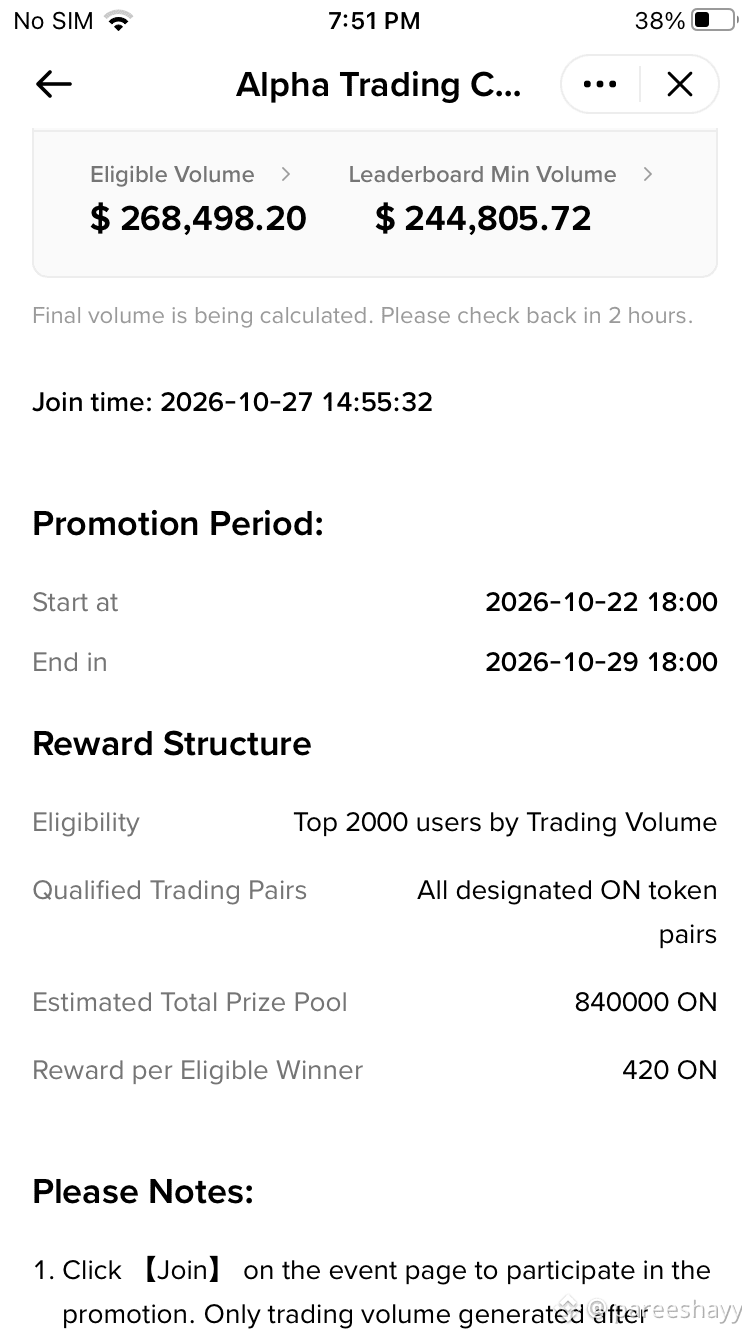
$ON when final leaderboard update my final rank 267k i am eligible anyone please tell me 😭
$ON when final leaderboard update my final rank 267k i am eligible anyone please tell me 😭
3
1
386
·
--
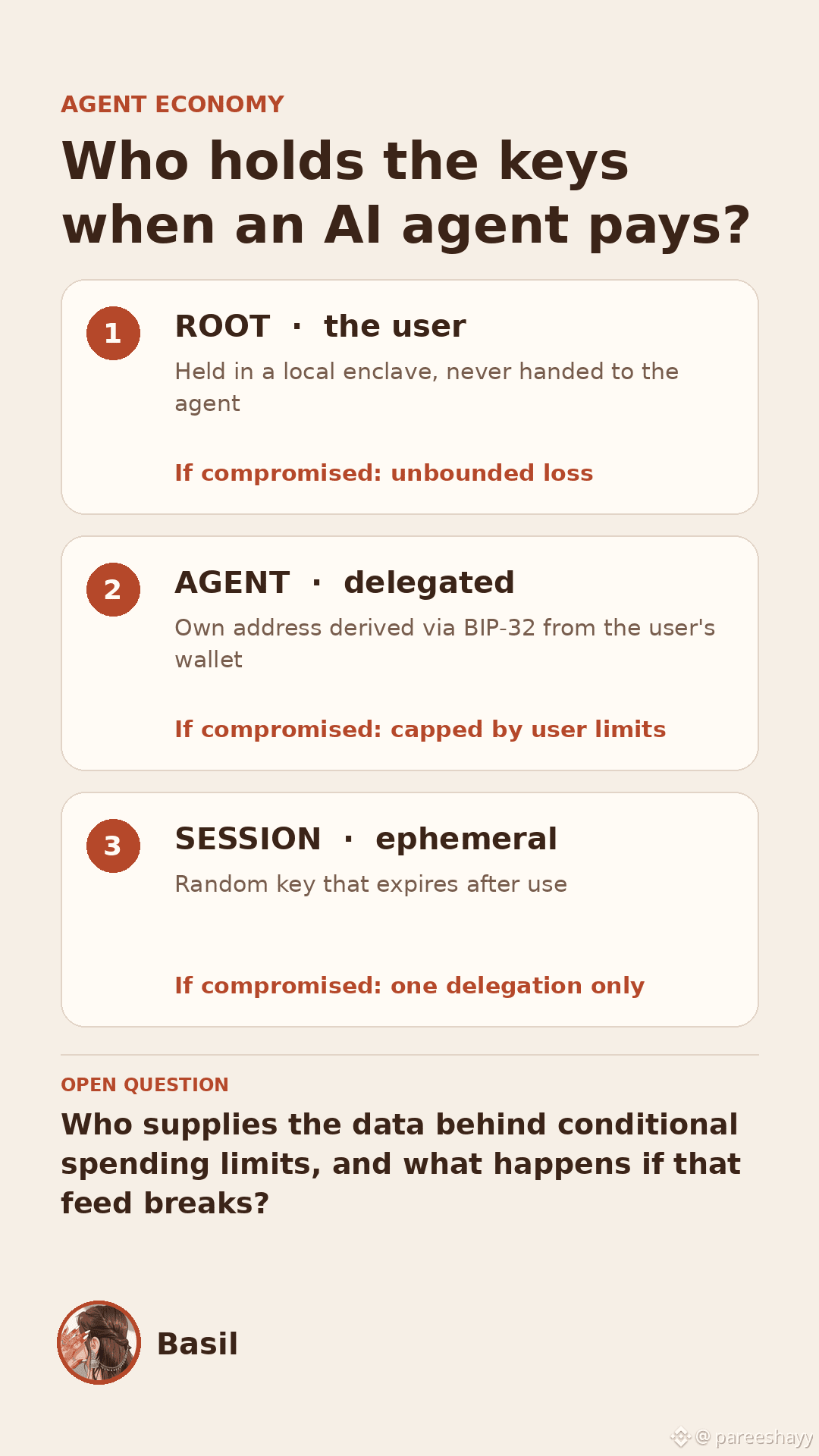
Hari ini saya membaca dokumentasi developer Kite dari awal sampai akhir, dan bagian yang membekas bukanlah kecepatan atau biaya. Melainkan bagaimana otoritas dibagi menjadi tiga lapisan. Pengguna memegang otoritas root, setiap agen mendapat alamatnya sendiri yang diturunkan dari dompet pengguna melalui BIP-32, dan setiap sesi berjalan dengan kunci acak yang kedaluwarsa setelah digunakan. Jika sebuah sesi disusupi, Anda kehilangan satu delegasi. Jika sebuah agen disusupi, dampaknya tetap berada dalam batas yang ditetapkan pengguna. Hanya kunci root yang memiliki potensi kerugian tanpa batas, itulah sebabnya dokumentasi menyimpannya di enclave lokal.
Desain pembayarannya mengikuti logika yang sama. Alih-alih menyelesaikan setiap permintaan di blockchain, dua pihak membuka kanal, bertukar ribuan pembaruan bertanda tangan secara off-chain, lalu menutupnya dengan transaksi kedua.
Dokumentasi menyebut latensi di bawah 100 md dengan biaya sekitar $1 per sejuta permintaan.
Di sinilah saya akan mengkritisi antusiasme saya sendiri. Dokumentasi juga menjelaskan aturan bersyarat, seperti memangkas batas agen saat volatilitas melonjak. Aturan seperti itu membutuhkan masukan data dari luar, dan saya tidak menemukan siapa yang menyediakannya atau apa yang terjadi jika umpan datanya keliru. Selain itu, angka testnet yang besar (ratusan juta transaksi) berasal dari lingkungan pengujian, jadi angka itu tidak banyak memberi tahu tentang permintaan berulang di mainnet, yang diluncurkan pada 30 April 2026.
Yang saya pantau selanjutnya: jumlah Agent Passport aktif di KiteScan, proporsi transaksi agen yang merupakan pembayaran layanan sungguhan dan bukan lalu lintas pengujian, serta apakah dokumentasi menyebutkan sumber data di balik batas pengeluaran bersyarat.
Ekonomi agen hanya berfungsi jika seseorang bisa menyerahkan dompetnya dan tetap tidur nyenyak. Hal itu lebih bergantung pada apa yang dilakukan aturan saat masukan datanya bermasalah daripada pada seberapa cepat agen melakukan pembayaran.
#KiteBBW $KITE @GoKiteAI #KiteBBW
Hari ini saya membaca dokumentasi developer Kite dari awal sampai akhir, dan bagian yang membekas bukanlah kecepatan atau biaya. Melainkan bagaimana otoritas dibagi menjadi tiga lapisan. Pengguna memegang otoritas root, setiap agen mendapat alamatnya sendiri yang diturunkan dari dompet pengguna melalui BIP-32, dan setiap sesi berjalan dengan kunci acak yang kedaluwarsa setelah digunakan. Jika sebuah sesi disusupi, Anda kehilangan satu delegasi. Jika sebuah agen disusupi, dampaknya tetap berada dalam batas yang ditetapkan pengguna. Hanya kunci root yang memiliki potensi kerugian tanpa batas, itulah sebabnya dokumentasi menyimpannya di enclave lokal.
Desain pembayarannya mengikuti logika yang sama. Alih-alih menyelesaikan setiap permintaan di blockchain, dua pihak membuka kanal, bertukar ribuan pembaruan bertanda tangan secara off-chain, lalu menutupnya dengan transaksi kedua.
Dokumentasi menyebut latensi di bawah 100 md dengan biaya sekitar $1 per sejuta permintaan.
Di sinilah saya akan mengkritisi antusiasme saya sendiri. Dokumentasi juga menjelaskan aturan bersyarat, seperti memangkas batas agen saat volatilitas melonjak. Aturan seperti itu membutuhkan masukan data dari luar, dan saya tidak menemukan siapa yang menyediakannya atau apa yang terjadi jika umpan datanya keliru. Selain itu, angka testnet yang besar (ratusan juta transaksi) berasal dari lingkungan pengujian, jadi angka itu tidak banyak memberi tahu tentang permintaan berulang di mainnet, yang diluncurkan pada 30 April 2026.
Yang saya pantau selanjutnya: jumlah Agent Passport aktif di KiteScan, proporsi transaksi agen yang merupakan pembayaran layanan sungguhan dan bukan lalu lintas pengujian, serta apakah dokumentasi menyebutkan sumber data di balik batas pengeluaran bersyarat.
Ekonomi agen hanya berfungsi jika seseorang bisa menyerahkan dompetnya dan tetap tidur nyenyak. Hal itu lebih bergantung pada apa yang dilakukan aturan saat masukan datanya bermasalah daripada pada seberapa cepat agen melakukan pembayaran.
#KiteBBW $KITE @KITE AI 中文 #KiteBBW
80
·
--
Lihat terjemahan
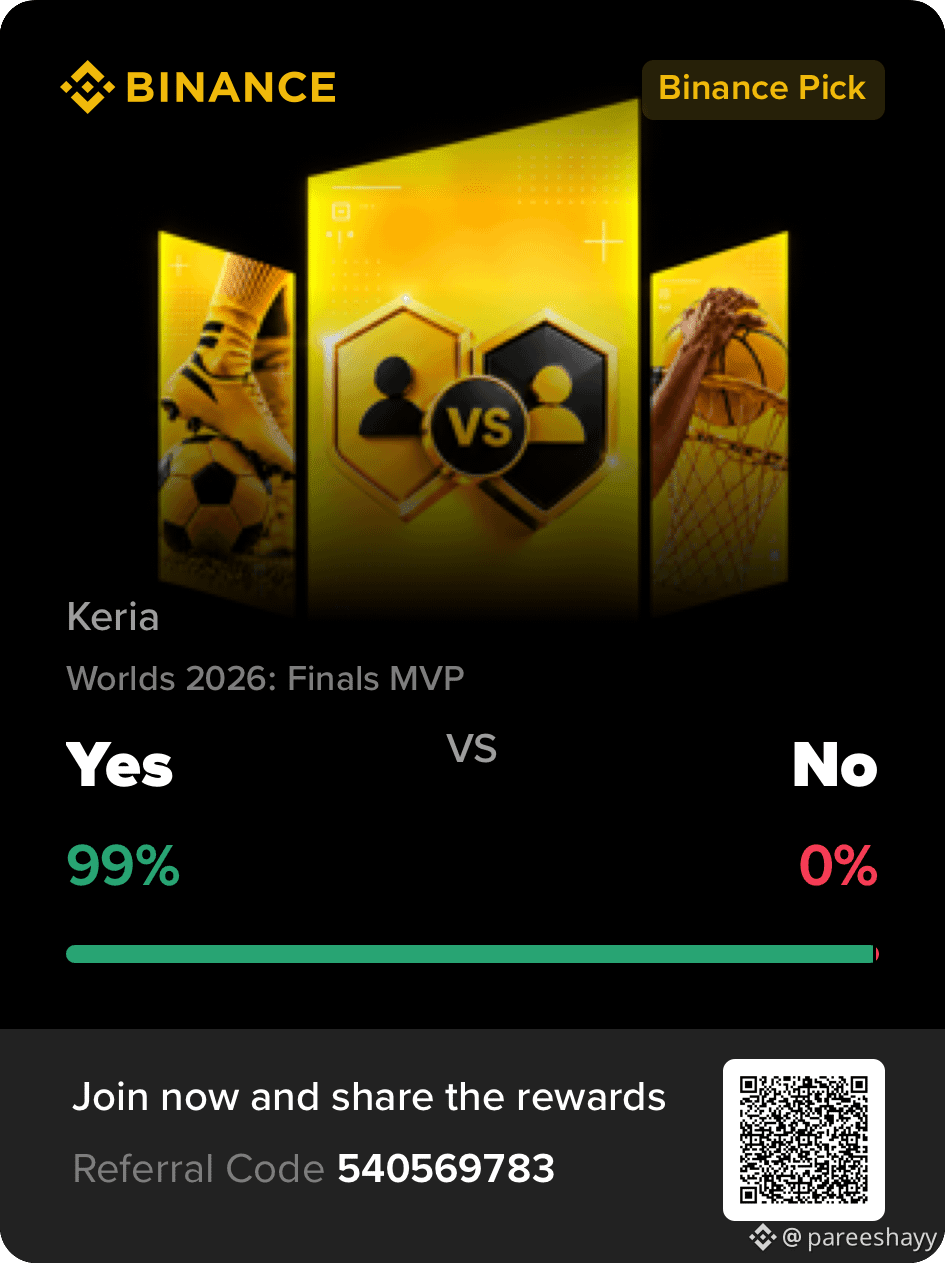
#BinancePick i am done my today task everyone can join this hottested camapign
#BinancePick i am done my today task everyone can join this hottested camapign
·
--
Lihat terjemahan
#BinancePick everyone join this campaign befire late
#BinancePick everyone join this campaign befire late
·
--
Lihat terjemahan
#BinancePick when week 1 reward will be distribution?
#BinancePick when week 1 reward will be distribution?
51
·
--
$ON kompetisi takut untuk berpartisipasi .. aku pergi lebih awal 😅
$ON kompetisi takut untuk berpartisipasi .. aku pergi lebih awal 😅
396
·
--
Lihat terjemahan
#BinancePick everyone please join this campaign
#BinancePick everyone please join this campaign
·
--
#BinancePick ada yang sudah menerima pembayaran minggu pertama? 🥲
#BinancePick ada yang sudah menerima pembayaran minggu pertama? 🥲
62
·
--
Lihat terjemahan
#BinancePick somethig new intresting camapign live lets try.. everyone join
#BinancePick somethig new intresting camapign live lets try.. everyone join
·
--
Lihat terjemahan
#dusk $DUSK @Dusk_Foundation Many people who look at Dusk's consensus layer ask one question first - how fast is it? I kept thinking that speed is the wrong place to start. The more interesting question is what the design is actually protecting against.
Succinct Attestation runs every block through three steps - Proposal, Validation, Ratification. A provisioner creates a candidate block. A randomly selected committee checks its validity. A second, separately selected committee confirms the validation outcome and finalizes it. Two independent committees, same block, same round.
What slowed me down reading this was the word "independently." Most PoS systems use one committee to propose and approve. Dusk uses two separate committees for validation and ratification, meaning a block needs agreement from two groups who were selected randomly and separately before it is ever considered final. A single compromised committee cannot push through an invalid block alone.
The randomness matters more than it first appears. Provisioners are selected through sortition - weighted by stake, but non-deterministic. Nobody knows in advance which specific nodes will form the next validation or ratification committee. That uncertainty is the security mechanism. An attacker cannot bribe or target a committee that does not yet exist.
The minimum stake to participate is 1,000 DUSK. That number is not arbitrary - it sets the economic floor for what it costs to become a provisioner and potentially influence committee selection. The higher the total staked, the more expensive it becomes to accumulate enough weight to matter.
What I find genuinely unresolved is the relationship between stake concentration and sortition outcomes over time. If a small number of large provisioners dominate the stake weight, the "random" selection starts producing predictable patterns. The cryptography holds, but the economic assumptions underneath it require watching.
#dusk $DUSK @Dusk Many people who look at Dusk's consensus layer ask one question first - how fast is it? I kept thinking that speed is the wrong place to start. The more interesting question is what the design is actually protecting against.
Succinct Attestation runs every block through three steps - Proposal, Validation, Ratification. A provisioner creates a candidate block. A randomly selected committee checks its validity. A second, separately selected committee confirms the validation outcome and finalizes it. Two independent committees, same block, same round.
What slowed me down reading this was the word "independently." Most PoS systems use one committee to propose and approve. Dusk uses two separate committees for validation and ratification, meaning a block needs agreement from two groups who were selected randomly and separately before it is ever considered final. A single compromised committee cannot push through an invalid block alone.
The randomness matters more than it first appears. Provisioners are selected through sortition - weighted by stake, but non-deterministic. Nobody knows in advance which specific nodes will form the next validation or ratification committee. That uncertainty is the security mechanism. An attacker cannot bribe or target a committee that does not yet exist.
The minimum stake to participate is 1,000 DUSK. That number is not arbitrary - it sets the economic floor for what it costs to become a provisioner and potentially influence committee selection. The higher the total staked, the more expensive it becomes to accumulate enough weight to matter.
What I find genuinely unresolved is the relationship between stake concentration and sortition outcomes over time. If a small number of large provisioners dominate the stake weight, the "random" selection starts producing predictable patterns. The cryptography holds, but the economic assumptions underneath it require watching.
80
·
--
Lihat terjemahan
#dusk $DUSK @Dusk_Foundation Many people who look at Dusk for the first time reduce Phoenix and Moonlight to a simple toggle - private mode and public mode. I kept thinking that framing misses what is actually interesting about how these two models sit inside the same protocol.
Phoenix is not just "private." It is a completely different transaction architecture. Funds do not live in balances - they live as encrypted notes. When you spend, you consume existing notes and create new ones, proving with zero-knowledge proofs that no double spend happened and that the amounts add up, without revealing who sent what to whom or how much moved. The receiver sees the note. Nobody else does, unless you share a viewing key.
Moonlight works the opposite way - account-based, fully transparent, sender and recipient and amount all visible on-chain. The kind of model most people already understand from Ethereum.
What caught my attention is that both models settle through the same Transfer Contract on DuskDS. They are not separate chains or separate ledgers. A Phoenix transaction and a Moonlight transaction can both exist inside the same block, finalized by the same consensus round, without either model needing to know about the other's internal logic.
The part worth sitting with is what this means for regulated assets. A securities transaction might need full transparency for the regulator and full privacy from the counterparty. Phoenix viewing keys make selective disclosure possible - you reveal exactly what you must, to exactly who requires it, nothing more. Moonlight handles flows where transparency is the requirement by default.
What I find harder to answer is whether regulators will accept viewing-key-based disclosure as equivalent to traditional audit trails. The cryptography works. Whether the legal frameworks catch up is a different question entirely.
#dusk $DUSK @Dusk Many people who look at Dusk for the first time reduce Phoenix and Moonlight to a simple toggle - private mode and public mode. I kept thinking that framing misses what is actually interesting about how these two models sit inside the same protocol.
Phoenix is not just "private." It is a completely different transaction architecture. Funds do not live in balances - they live as encrypted notes. When you spend, you consume existing notes and create new ones, proving with zero-knowledge proofs that no double spend happened and that the amounts add up, without revealing who sent what to whom or how much moved. The receiver sees the note. Nobody else does, unless you share a viewing key.
Moonlight works the opposite way - account-based, fully transparent, sender and recipient and amount all visible on-chain. The kind of model most people already understand from Ethereum.
What caught my attention is that both models settle through the same Transfer Contract on DuskDS. They are not separate chains or separate ledgers. A Phoenix transaction and a Moonlight transaction can both exist inside the same block, finalized by the same consensus round, without either model needing to know about the other's internal logic.
The part worth sitting with is what this means for regulated assets. A securities transaction might need full transparency for the regulator and full privacy from the counterparty. Phoenix viewing keys make selective disclosure possible - you reveal exactly what you must, to exactly who requires it, nothing more. Moonlight handles flows where transparency is the requirement by default.
What I find harder to answer is whether regulators will accept viewing-key-based disclosure as equivalent to traditional audit trails. The cryptography works. Whether the legal frameworks catch up is a different question entirely.
81
Masuk untuk menjelajahi konten lainnya
Bergabunglah dengan pengguna kripto global di Binance Square
⚡️ Dapatkan informasi terbaru dan berguna tentang kripto.
💬 Dipercayai oleh bursa kripto terbesar di dunia.
👍 Temukan wawasan nyata dari kreator terverifikasi.
Email/Nomor Ponsel
Topik Sedang Tren
UniswapA16zSeekDeFiExemptionFromIllinoisCryptoTax
17,701 penayangan
642 Berdiskusi
Perdebatan mengenai pajak kripto semakin memanas ketika Uniswap dan Andreessen Horowitz (a16z) mendorong pengecualian DeFi dari aturan pajak kripto yang diusulkan Illinois. Mereka khawatir protokol keuangan terdesentralisasi dan platform non-kustodian dapat menanggung beban pajak yang tidak adil, yang berpotensi memperlambat inovasi dan mempersulit pengembangan kripto. Platform DeFi memungkinkan pengguna memperdagangkan dan mengelola aset digital tanpa perantara tradisional, sehingga penerapan aturan pajak keuangan konvensional dapat menimbulkan tantangan serius. Ini bisa menjadi momen penting bagi industri kripto AS karena regulator harus menemukan keseimbangan antara perpajakan yang adil, perlindungan investor, dan inovasi. 🚀
Kekhawatiran utamanya adalah pajak yang diusulkan sebesar 0,2% dihitung berdasarkan nilai transaksi, bukan hanya keuntungan perdagangan. Uniswap, a16z, dan DeFi Education Fund ingin penarikan dari dompet dan transfer lintas rantai dikecualikan, sekaligus menentang kewajiban untuk menyimpan catatan kunci privat. Illinois telah sepakat menunda penerapan aturan hingga 1 Juli 2027, dengan syarat mendapat persetujuan pengadilan. Hasilnya dapat memengaruhi pendekatan negara bagian AS lainnya terhadap perpajakan DeFi. The Defiant +2
Bagaimana pendapat Anda 🤔? Haruskah transaksi DeFi bebas pajak demi melindungi desentralisasi, atau haruskah platform kripto mengikuti aturan pajak tradisional? 🤔
#UniswapA16zSeekDeFiExemptionFromIllinoisCryptoTax
Volatile
·Disukai 3 Kali
·151 penayangan
HKDollarStablecoinHKDAPToLaunchOnSolana
11,201 penayangan
379 Berdiskusi
$1.5BInLeveragedCryptoBetsLiquidated
29,978 penayangan
230 Berdiskusi