

#layer1
layer1
5.1M penayangan
28,198 Berdiskusi
Populer
Terbaru

Terverifikasi
Satu kalimat dari CZ, narasi $BNB kembali berubah: banyak chain, satu koin.
Dokumen resmi BNB Chain diperbarui pada 22 Oktober: akan dibangun Layer 1 EVM berkinerja tinggi yang baru, berjalan paralel dengan BSC, tanpa menerbitkan koin baru. $BNB akan tetap menjadi satu-satunya aset untuk gas, staking, dan tata kelola, dengan kedua chain dihubungkan melalui bridge native.
Target performanya juga sangat ambisius: blok dihasilkan dalam 200 milidetik, pra-konfirmasi sekitar 20 milidetik, dan finalisasi dalam waktu kurang dari satu detik. Sasarannya adalah perdagangan frekuensi tinggi, order book, dan pembayaran real-time. Jaringan pengembangan internal dengan banyak validator sudah berjalan; target testnet publik adalah akhir 2026, sedangkan mainnet pada awal 2027.
Keunggulan strategi ini adalah pendekatannya yang antiarus utama: chain baru dari proyek lain pasti menerbitkan koin baru untuk mengeruk keuntungan, tetapi BNB Chain justru tidak melakukannya, sehingga semua nilai mengalir kembali ke satu koin, $BNB . Semakin banyak chain, semakin terkonsentrasi koinnya—itulah makna sebenarnya dari ucapan CZ, “Banyak chain, satu koin”.
#BNBChain #Layer1

774

·
--
Artikel
Lihat terjemahan
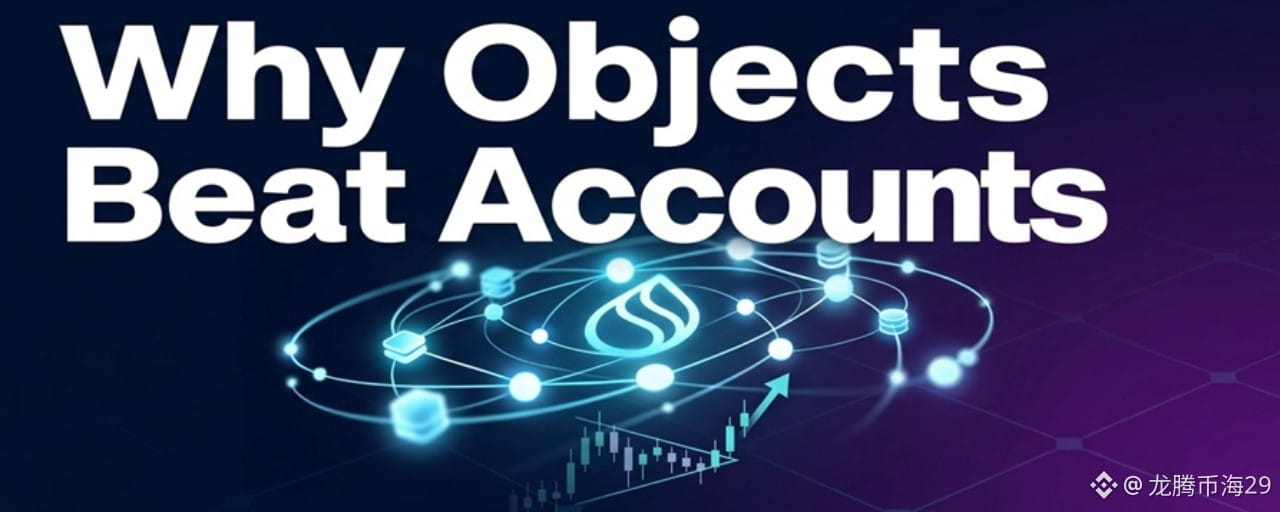
Why SUI's Object-Centric Model Is Quietly Winning the L1 WarMost traders are still arguing about which Layer 1 will dominate. Solana versus Ethereum. Aptos versus Sui. The usual suspects. But while everyone's looking at transaction speeds and TVL charts, something more interesting is happening underneath.
SUI is solving a problem most people don't even realize exists.
Here's what makes this different from the typical L1 pitch.
The Object-Centric Advantage
Every other blockchain treats data like a spreadsheet. You've got accounts, balances, and transactions moving value from point A to point B. It works, but it creates bottlenecks when you're trying to scale complex applications.
SUI flips this model. Instead of accounts, everything is an object. NFTs, DeFi positions, game items, governance tokens. Each object has its own state and can be processed independently.
This isn't just a technical detail. It changes how developers build applications.
When you're creating a game with thousands of items moving around, or a DeFi protocol with complex position management, the object model means you're not fighting the blockchain's architecture. You're working with it.
The Move Language Factor
SUI uses Move, the programming language Meta developed for the Diem project. When Diem died, the language didn't. It got picked up by both Aptos and SUI, but they've taken it in different directions.
SUI's implementation leans into the object model fully. Move's resource-oriented design means assets can't be accidentally duplicated or deleted. For developers building financial applications, this matters more than they realize until something goes wrong on another chain.
The language has a steeper learning curve than Solidity. That's real. But the developers who've invested the time are building things that are harder to build elsewhere.
Ecosystem Growth That's Actually Happening
This isn't vaporware anymore. SUI's DeFi ecosystem has real liquidity. Gaming projects are launching. The developer activity metrics show consistent growth.
What's interesting is the type of projects attracting builders. Complex applications. Things that need the object model. Things that would be painful to build on other chains.
That's a leading indicator. When developers choose a harder path because the end result is better, they're betting on the platform's long-term viability.
The Technical Picture
SUI's price action has been building a structure that traders should watch carefully.
The token has been consolidating after its initial discovery phase. This is normal for L1 tokens. They pump on launch hype, then settle into a range while the ecosystem develops.
What matters now is volume behavior during this consolidation. If you're seeing volume dry up on pullbacks but expand on rallies, that's accumulation. If volume is expanding on both directions, that's just volatility without direction.
Key levels to watch: the recent consolidation range highs and lows. A decisive break above resistance with volume confirmation would signal the next leg up. A breakdown below support would suggest the market isn't convinced yet.
RSI and momentum indicators need to be read in context. If RSI is climbing from oversold levels while price is still in consolidation, that's early momentum building. If RSI is already elevated while price hasn't moved much, that's divergence worth watching.
What Bulls Need to Prove
The thesis depends on a few things happening.
First, ecosystem growth needs to continue. Not just in TVL, but in active users and real application usage. TVL can be incentivized. Actual usage is harder to fake.
Second, developer retention. Move developers are valuable. If they're building on SUI and staying, that's a strong signal. If they're leaving for other platforms, the thesis weakens.
Third, price needs to hold key support levels during market stress. Every L1 gets tested when Bitcoin drops. How SUI behaves during those moments tells you whether the holders are conviction-based or just riding momentum.
What Could Invalidate This
Let's be honest about the risks.
Token unlocks. SUI has scheduled unlocks that increase circulating supply. If demand doesn't keep pace with supply, price gets pressured regardless of how good the technology is.
Competition is real. Aptos is also building with Move. Solana is fast and has a massive developer community. Ethereum L2s are getting faster and cheaper. SUI needs to maintain its technical edge.
Market conditions matter. In a broad crypto downturn, even good projects get sold. The object model doesn't protect you from macro headwinds.
Execution risk. The technology is promising, but it needs to be maintained and improved. If the development team stumbles, or if critical bugs emerge, confidence erodes quickly.
The Trader's Takeaway
If you're considering SUI, here's what matters.
Watch the consolidation range. A breakout with volume is your entry signal. A breakdown is your warning.
Don't chase. If you missed the initial move, wait for a pullback to support or a confirmed breakout. Chasing L1 tokens during hype cycles is how you buy tops.
Size appropriately. L1 competition is winner-take-most, but the winner isn't predetermined. Diversification across a few strong L1 thesis plays is smarter than going all-in on one.
Have an exit plan. Know where you'll take profits and where you'll cut losses before you enter. Emotional decisions during volatility are expensive.
The Bottom Line
SUI isn't trying to be a faster Ethereum. It's trying to be something different. The object-centric model solves real problems for complex applications. The Move language gives developers tools that other chains don't have.
Whether that's enough to win the L1 war is still uncertain. But the foundation is solid, the ecosystem is growing, and the technical setup is worth watching.
For traders, the question isn't whether SUI is good technology. It's whether the market is ready to price that in. Watch the volume. Watch the levels. Let the market tell you when it's time to act.
Disclaimer: This content is for informational purposes only and is not financial advice. Crypto trading carries significant risk. Always do your own research.
$SUI
{future}(SUIUSDT)
#Layer1 #MoveLanguage
Why SUI's Object-Centric Model Is Quietly Winning the L1 War
Most traders are still arguing about which Layer 1 will dominate. Solana versus Ethereum. Aptos versus Sui. The usual suspects. But while everyone's looking at transaction speeds and TVL charts, something more interesting is happening underneath.
SUI is solving a problem most people don't even realize exists.
Here's what makes this different from the typical L1 pitch.
The Object-Centric Advantage
Every other blockchain treats data like a spreadsheet. You've got accounts, balances, and transactions moving value from point A to point B. It works, but it creates bottlenecks when you're trying to scale complex applications.
SUI flips this model. Instead of accounts, everything is an object. NFTs, DeFi positions, game items, governance tokens. Each object has its own state and can be processed independently.
This isn't just a technical detail. It changes how developers build applications.
When you're creating a game with thousands of items moving around, or a DeFi protocol with complex position management, the object model means you're not fighting the blockchain's architecture. You're working with it.
The Move Language Factor
SUI uses Move, the programming language Meta developed for the Diem project. When Diem died, the language didn't. It got picked up by both Aptos and SUI, but they've taken it in different directions.
SUI's implementation leans into the object model fully. Move's resource-oriented design means assets can't be accidentally duplicated or deleted. For developers building financial applications, this matters more than they realize until something goes wrong on another chain.
The language has a steeper learning curve than Solidity. That's real. But the developers who've invested the time are building things that are harder to build elsewhere.
Ecosystem Growth That's Actually Happening
This isn't vaporware anymore. SUI's DeFi ecosystem has real liquidity. Gaming projects are launching. The developer activity metrics show consistent growth.
What's interesting is the type of projects attracting builders. Complex applications. Things that need the object model. Things that would be painful to build on other chains.
That's a leading indicator. When developers choose a harder path because the end result is better, they're betting on the platform's long-term viability.
The Technical Picture
SUI's price action has been building a structure that traders should watch carefully.
The token has been consolidating after its initial discovery phase. This is normal for L1 tokens. They pump on launch hype, then settle into a range while the ecosystem develops.
What matters now is volume behavior during this consolidation. If you're seeing volume dry up on pullbacks but expand on rallies, that's accumulation. If volume is expanding on both directions, that's just volatility without direction.
Key levels to watch: the recent consolidation range highs and lows. A decisive break above resistance with volume confirmation would signal the next leg up. A breakdown below support would suggest the market isn't convinced yet.
RSI and momentum indicators need to be read in context. If RSI is climbing from oversold levels while price is still in consolidation, that's early momentum building. If RSI is already elevated while price hasn't moved much, that's divergence worth watching.
What Bulls Need to Prove
The thesis depends on a few things happening.
First, ecosystem growth needs to continue. Not just in TVL, but in active users and real application usage. TVL can be incentivized. Actual usage is harder to fake.
Second, developer retention. Move developers are valuable. If they're building on SUI and staying, that's a strong signal. If they're leaving for other platforms, the thesis weakens.
Third, price needs to hold key support levels during market stress. Every L1 gets tested when Bitcoin drops. How SUI behaves during those moments tells you whether the holders are conviction-based or just riding momentum.
What Could Invalidate This
Let's be honest about the risks.
Token unlocks. SUI has scheduled unlocks that increase circulating supply. If demand doesn't keep pace with supply, price gets pressured regardless of how good the technology is.
Competition is real. Aptos is also building with Move. Solana is fast and has a massive developer community. Ethereum L2s are getting faster and cheaper. SUI needs to maintain its technical edge.
Market conditions matter. In a broad crypto downturn, even good projects get sold. The object model doesn't protect you from macro headwinds.
Execution risk. The technology is promising, but it needs to be maintained and improved. If the development team stumbles, or if critical bugs emerge, confidence erodes quickly.
The Trader's Takeaway
If you're considering SUI, here's what matters.
Watch the consolidation range. A breakout with volume is your entry signal. A breakdown is your warning.
Don't chase. If you missed the initial move, wait for a pullback to support or a confirmed breakout. Chasing L1 tokens during hype cycles is how you buy tops.
Size appropriately. L1 competition is winner-take-most, but the winner isn't predetermined. Diversification across a few strong L1 thesis plays is smarter than going all-in on one.
Have an exit plan. Know where you'll take profits and where you'll cut losses before you enter. Emotional decisions during volatility are expensive.
The Bottom Line
SUI isn't trying to be a faster Ethereum. It's trying to be something different. The object-centric model solves real problems for complex applications. The Move language gives developers tools that other chains don't have.
Whether that's enough to win the L1 war is still uncertain. But the foundation is solid, the ecosystem is growing, and the technical setup is worth watching.
For traders, the question isn't whether SUI is good technology. It's whether the market is ready to price that in. Watch the volume. Watch the levels. Let the market tell you when it's time to act.
Disclaimer: This content is for informational purposes only and is not financial advice. Crypto trading carries significant risk. Always do your own research.
$SUI
#Layer1 #MoveLanguage
79

·
--
CZ menanggapi rencana L1 baru BNB Chain, arahannya bisa diringkas dalam satu kalimat: banyak chain, satu koin. Dalam dokumen resmi, chain baru ini ditujukan untuk aktivitas on-chain berlatensi rendah, kompatibel dengan EVM, menargetkan finalitas sub-detik, serta membawa kemampuan seperti abstraksi akun native, prekonfirmasi transaksi, dan pool privasi on-chain. Lapisan performa terus diperluas, sementara narasi aset dan ekosistem tetap berpusat pada $BNB 聚合.
#BNBChain #Web3 #Layer1 $BNB
#BNBChain #Web3 #Layer1 $BNB
1
137

·
--
BNB Chain sedang membangun Layer 1 kedua, dan tidak ada token baru 👀
Pada 22 Oktober, BNB Chain menambahkan spesifikasi teknis ke dokumentasi resminya. Spesifikasi ini menjelaskan Layer 1 baru yang kompatibel dengan EVM dan akan berjalan berdampingan dengan BNB Smart Chain, bukan menggantikannya. Chain ini dibuat untuk aplikasi yang membutuhkan transaksi lebih cepat, dengan target waktu blok 200 milidetik.
Bagian yang paling saya suka: $BNB tetap menjadi satu-satunya token di kedua chain. Tidak ada koin baru untuk farming. Ini hanya memberi lebih banyak kegunaan pada koin yang sudah kita miliki.
Testnet publik direncanakan hadir pada akhir 2026, jadi semuanya masih dalam tahap awal dan detailnya bisa berubah sebelum peluncuran.
Sementara itu, pasar yang lebih luas masih berhati-hati, dengan $BTC turun di bawah $80K menjelang keputusan Fed pekan ini.
Apakah waktu blok 200 ms akan mengubah cara Anda menggunakan aplikasi BNB Chain? 👇
#BNBChain #BNB
#CryptoNews #Layer1
64

·
--
Lihat terjemahan
别问能不能涨,先问值不值得买。
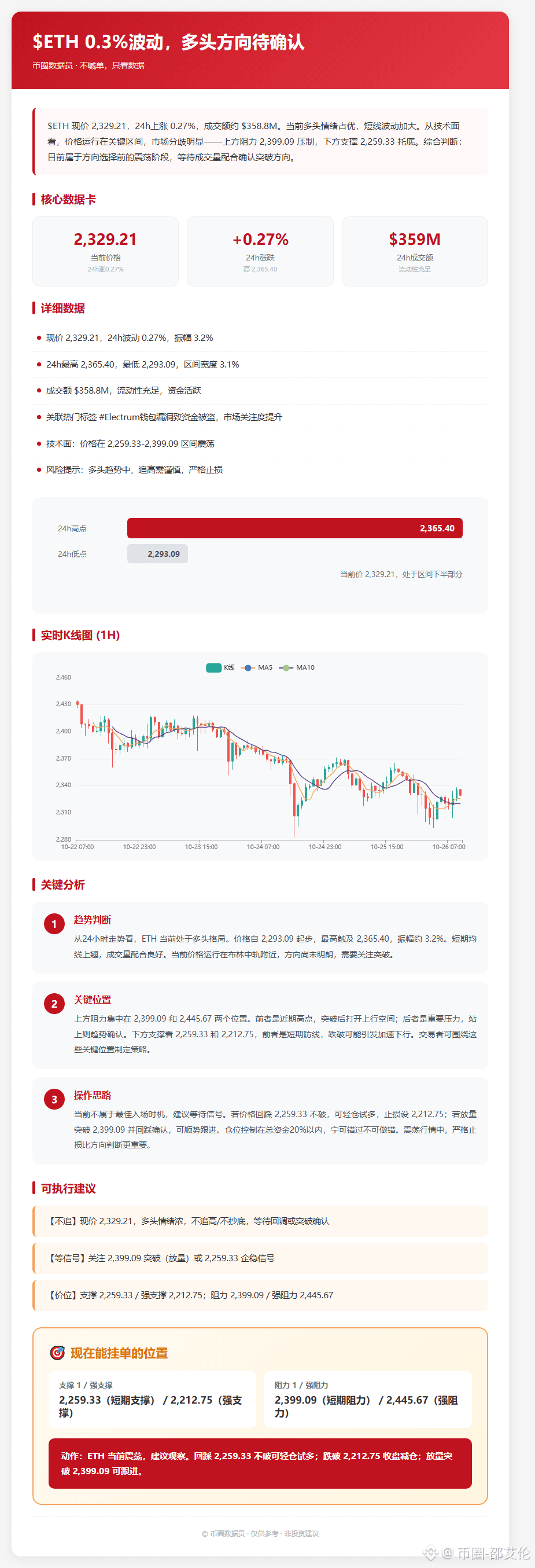
$ETH 当前上涨 0.3%,看多思路
ETH 现价 2,329.21,24h涨幅 0.3%。 市场情绪偏向多头。
技术面看,当前处于关键位置,需要成交量配合才能确认方向。操作上严格止损,控制仓位。
入场:2,320.04 🟢
目标 1:2,445.67 🎯
止损:2,259.33 🔴
方向:看多
#Electrum钱包漏洞致资金被盗 #electrum钱包漏洞致资金被盗 #Layer1 #Write2Earn
{future}(ETHUSDT)
别问能不能涨,先问值不值得买。
$ETH 当前上涨 0.3%,看多思路
ETH 现价 2,329.21,24h涨幅 0.3%。 市场情绪偏向多头。
技术面看,当前处于关键位置,需要成交量配合才能确认方向。操作上严格止损,控制仓位。
入场:2,320.04 🟢
目标 1:2,445.67 🎯
止损:2,259.33 🔴
方向:看多
#Electrum钱包漏洞致资金被盗 #electrum钱包漏洞致资金被盗 #Layer1 #Write2Earn
$ETH 当前上涨 0.3%,看多思路
ETH 现价 2,329.21,24h涨幅 0.3%。 市场情绪偏向多头。
技术面看,当前处于关键位置,需要成交量配合才能确认方向。操作上严格止损,控制仓位。
入场:2,320.04 🟢
目标 1:2,445.67 🎯
止损:2,259.33 🔴
方向:看多
#Electrum钱包漏洞致资金被盗 #electrum钱包漏洞致资金被盗 #Layer1 #Write2Earn
4
·
--
Lihat terjemahan
数据不会骗人,情绪会。
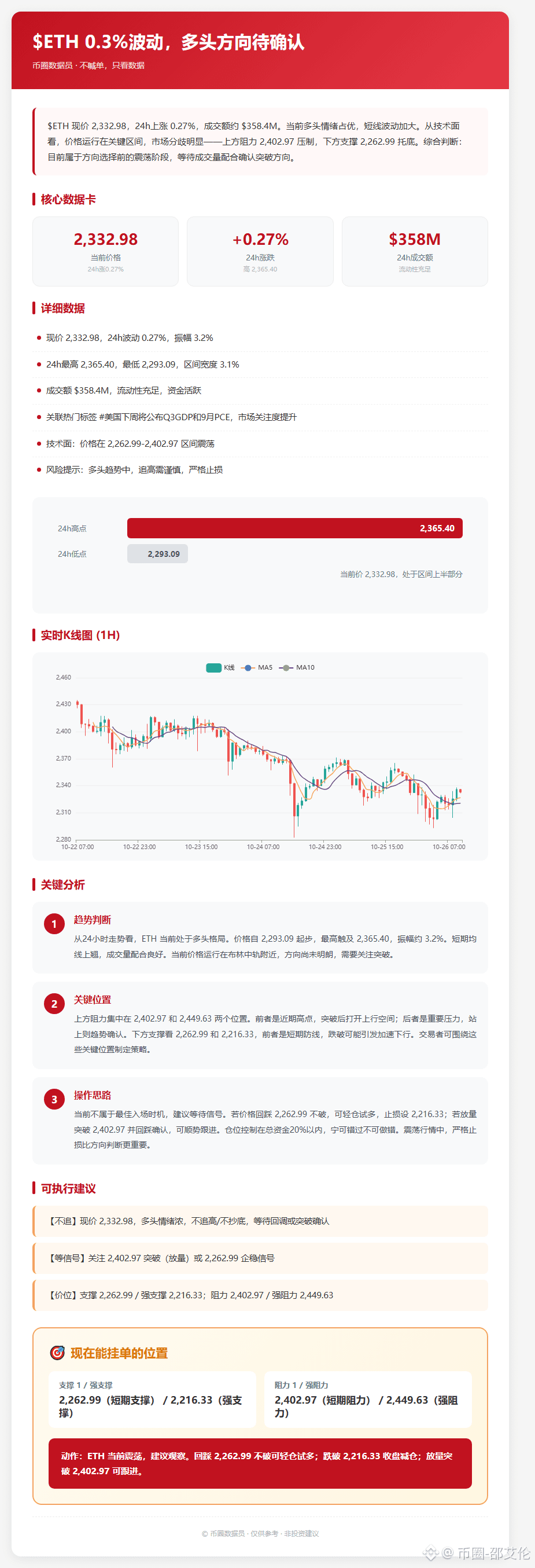
$ETH 振幅3.15%,净涨0.27%
24小时,ETH最高2365.40,最低2293.09,振幅72.31美元,折合3.15%。但净涨幅只有0.27%。振幅是净位移的11.7倍——数据不会骗人,这不是趋势,这是换手。
现价2332.98,处在24小时区间的55.1%位置,中位偏上。往上到高点还有32.42美元,往下
从技术面看,当前ETH处于多头趋势中,短线操作需关注关键位。
入场:2,325.71 🟢
目标 1:2,449.63 🎯
目标 2:2,566.28 🎯
止损:2,262.99 🔴
方向:看多
#美国下周将公布Q3GDP和9月PCE #美国下周将公布q3gdp和9月pce #Layer1 #Write2Earn
{future}(ETHUSDT)
数据不会骗人,情绪会。
$ETH 振幅3.15%,净涨0.27%
24小时,ETH最高2365.40,最低2293.09,振幅72.31美元,折合3.15%。但净涨幅只有0.27%。振幅是净位移的11.7倍——数据不会骗人,这不是趋势,这是换手。
现价2332.98,处在24小时区间的55.1%位置,中位偏上。往上到高点还有32.42美元,往下
从技术面看,当前ETH处于多头趋势中,短线操作需关注关键位。
入场:2,325.71 🟢
目标 1:2,449.63 🎯
目标 2:2,566.28 🎯
止损:2,262.99 🔴
方向:看多
#美国下周将公布Q3GDP和9月PCE #美国下周将公布q3gdp和9月pce #Layer1 #Write2Earn
4
·
--
Lihat terjemahan
指标不会说话,但它不会骗你。
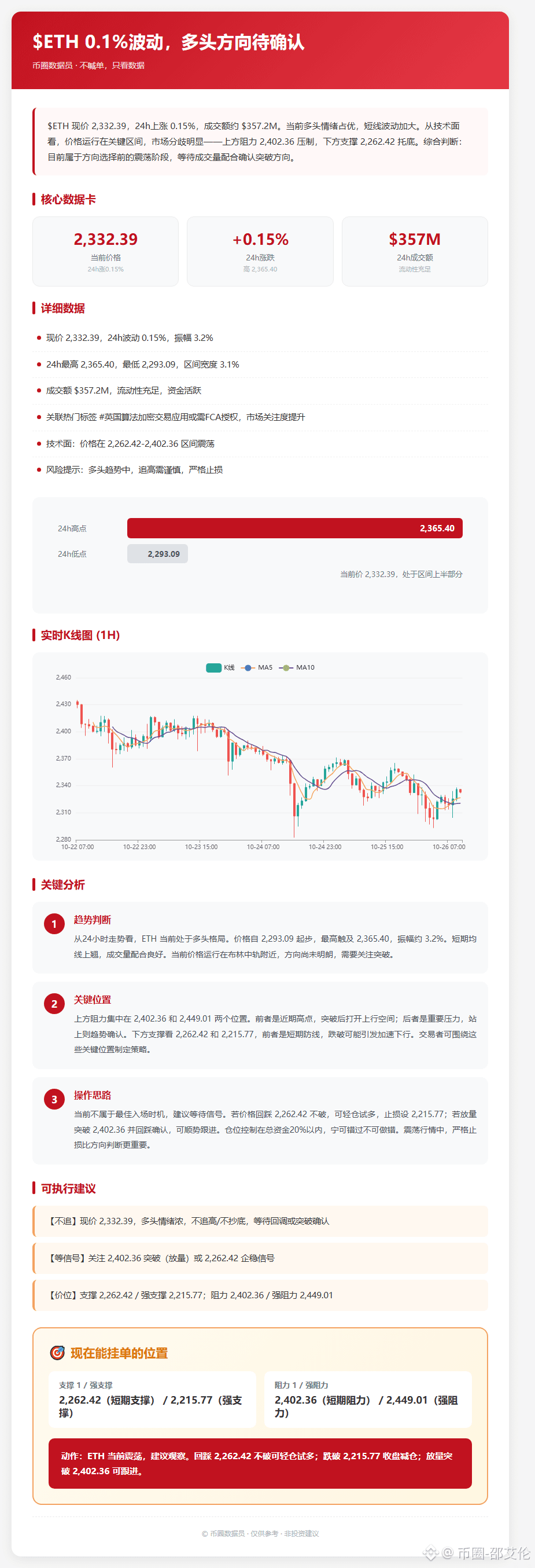
$ETH 当前上涨 0.1%,看多思路
ETH 现价 2,332.39,24h涨幅 0.1%。 市场情绪偏向多头。
技术面看,当前处于关键位置,需要成交量配合才能确认方向。操作上严格止损,控制仓位。
入场:2,318.28 🟢
目标 1:2,449.01 🎯
止损:2,262.42 🔴
方向:看多
#英国算法加密交易应用或需FCA授权 #英国算法加密交易应用或需fca授权 #Layer1 #Write2Earn
{future}(ETHUSDT)
指标不会说话,但它不会骗你。
$ETH 当前上涨 0.1%,看多思路
ETH 现价 2,332.39,24h涨幅 0.1%。 市场情绪偏向多头。
技术面看,当前处于关键位置,需要成交量配合才能确认方向。操作上严格止损,控制仓位。
入场:2,318.28 🟢
目标 1:2,449.01 🎯
止损:2,262.42 🔴
方向:看多
#英国算法加密交易应用或需FCA授权 #英国算法加密交易应用或需fca授权 #Layer1 #Write2Earn
$ETH 当前上涨 0.1%,看多思路
ETH 现价 2,332.39,24h涨幅 0.1%。 市场情绪偏向多头。
技术面看,当前处于关键位置,需要成交量配合才能确认方向。操作上严格止损,控制仓位。
入场:2,318.28 🟢
目标 1:2,449.01 🎯
止损:2,262.42 🔴
方向:看多
#英国算法加密交易应用或需FCA授权 #英国算法加密交易应用或需fca授权 #Layer1 #Write2Earn
3
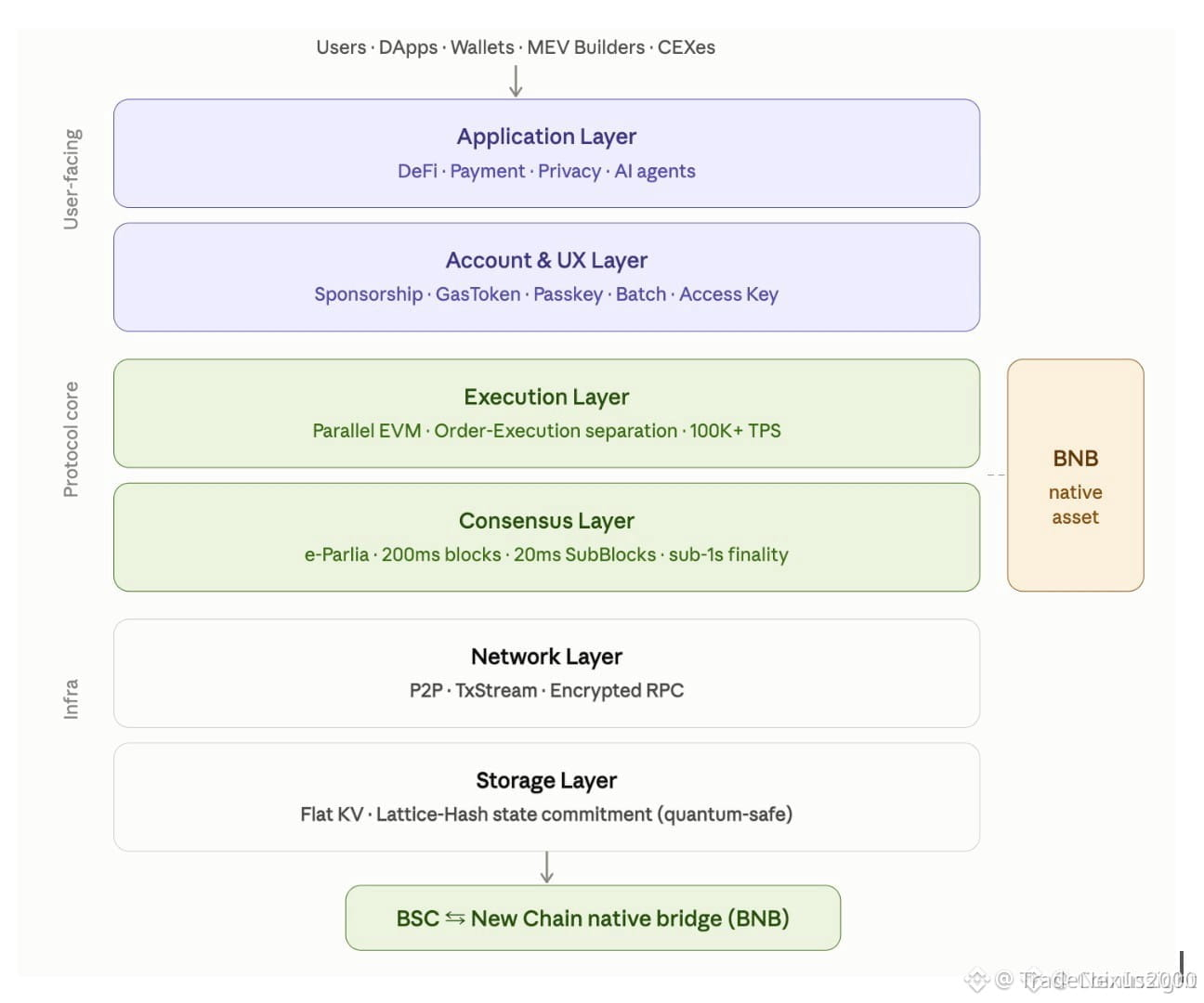
🚀 $BNB MENGINCAR WAKTU BLOK 200MS DENGAN L1 BARU 🚀
📊 NewL1 menargetkan finalitas di bawah 200 ms dan 5 blok per detik, mengincar >100k TPS untuk melayani perdagangan frekuensi tinggi, pembayaran berbasis AI, dan dApp dengan latensi sangat rendah. ⚡ Arsitekturnya menjanjikan keunggulan latensi yang mencerminkan kebutuhan arus pesanan institusional, mengubah biaya $BNB menjadi keunggulan strategis. 🌊
🦈 Sementara Solana telah mencapai 150 ms dan Ethereum berpacu dengan rollup, ketiadaan token terpisah membuat $BNB tetap memegang kendali tata kelola—sinyal halus bagi investor bermodal besar bahwa likuiditas ekosistem tetap tertambat. 📈
🤔 Menurut Anda, apakah $BNB akan mempertahankan dominasinya dalam perlombaan senjata latensi?
⚠️ Ini bukan nasihat keuangan. Selalu kelola risiko Anda. 🛡️
🏷️ #BNB #Layer1 #Scalability #Crypto
🦈 ⚡
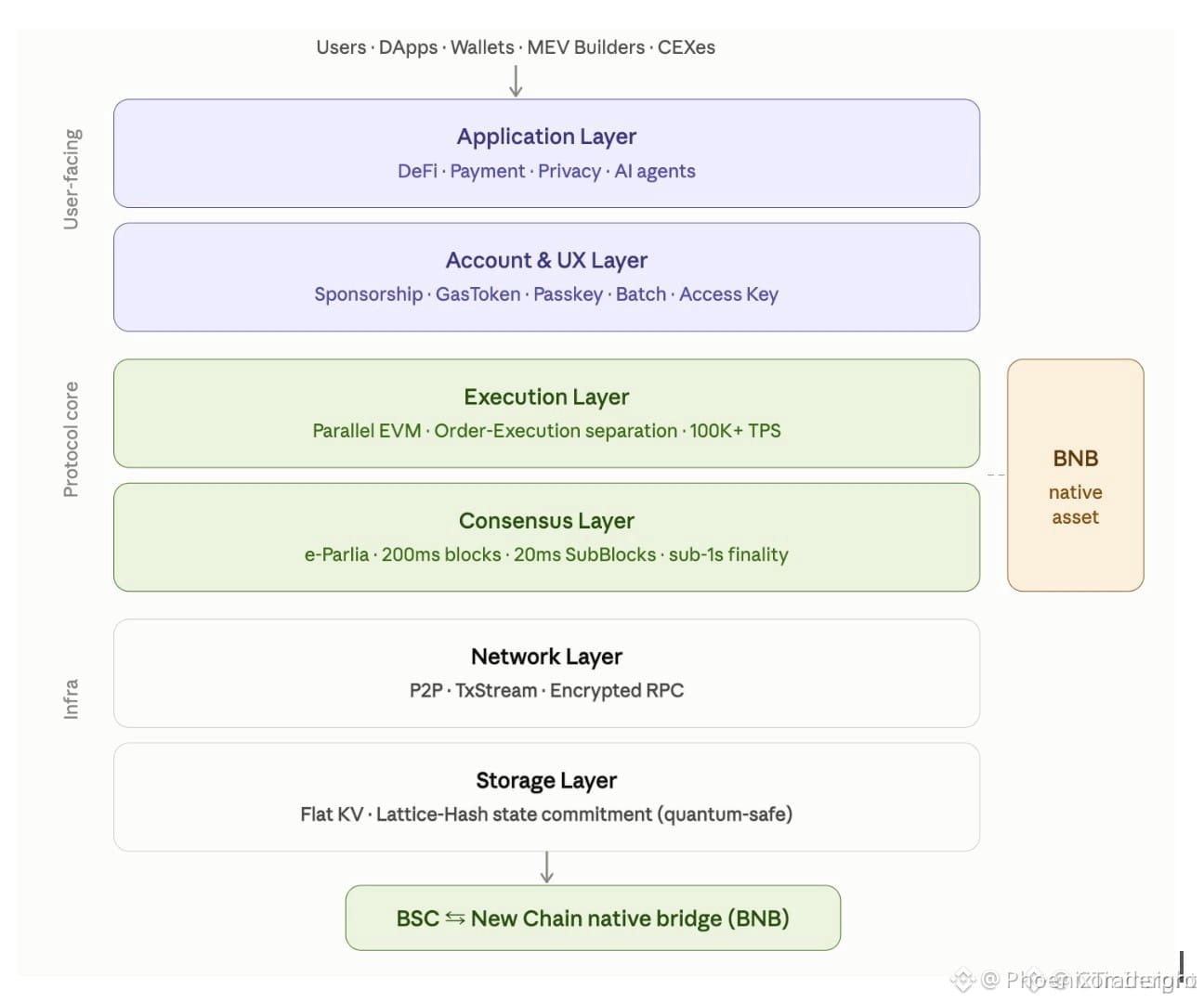
20

🚀 LAYER 1 BARU $BNB SIAP MENGUBAH PERMAINAN KECEPATAN! 🟢
Investor cerdas sudah mengincar NewL1 yang akan datang sebagai senjata latensi. 🦈 Dengan target waktu blok 200 ms dan 5 blok per detik, blockchain ini menjanjikan finalitas dalam waktu kurang dari satu detik yang dapat menguntungkan strategi berfrekuensi tinggi (HFT) bagi pemegang BNB. 📊 Proyeksi TPS >100k menempatkannya di atas banyak pesaing, sementara $BNB tetap menjadi token biaya dan tata kelola — strategi ekonomi token yang rapi.
Jika testnet diluncurkan pada akhir 2026, kita mungkin akan melihat gelombang baru dApp berbasis AI dan trader berfrekuensi tinggi berbondong-bondong 🌊 ke ekosistem ini, sehingga meningkatkan kegunaan dan permintaan $BNB . ⚡ Perlombaan telah dimulai, tetapi pertanyaannya adalah apakah kecepatan saja cukup untuk mengukuhkan dominasinya. 💬 Menurut Anda, apakah peningkatan kecepatan $BNB akan mengamankan keunggulan pasarnya? 👇
⚠️ Ini bukan nasihat keuangan. Selalu kelola risiko Anda. 🛡️
🏷️ #BNB #Layer1 #SpeedRace #Crypto
🚀 🦈
2

·
--
Lihat terjemahan
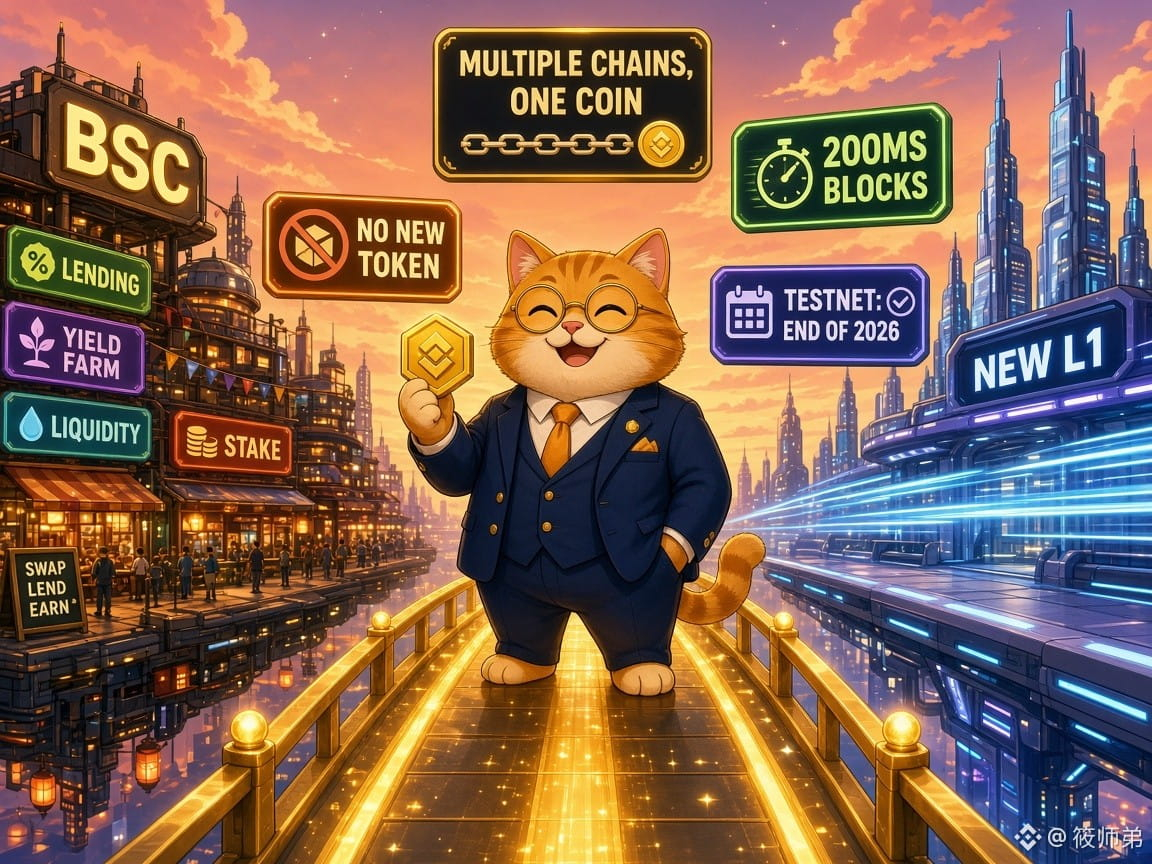
BNB Chain官宣另起一条新L1:不发新币,全用BNB
📌 BNB Chain技术文档(10/22更新)与H2路线图:在BSC之外开发高性能"New L1",与BSC并行,通过原生跨链桥连接(桥仍在开发),BNB作为Gas、质押和治理资产,不发行新代币。
📌 目标200毫秒出块、亚秒级最终性,无公开内存池,交易直送出块节点以减少抢跑;路线图称公开测试网2026年底、主网2027年初。(crypto.news/The Block/TokenPost)
📌 CZ 10/25在X回应:"Multiple chains, one coins.";BNB Chain CTO对The Block称BSC仍是结算枢纽,目标是"把蛋糕做大,而不是重新切蛋糕"。BNB约738.6美元,24h约-1.2%(Coin Edition)。
【观点】
这是"一币多链"路线:新链不分流代币价值,所有Gas和质押需求都回流BNB,比发新币更利好持币者叙事。定位高频交易、订单簿、AI代理交易,正面对标Solana、Hyperliquid这类低延迟链。但目前只有内部开发网,测试网还没上,离真实需求还远。
【机会/风险】
✅ 关注:测试网是否按期年底上线、原生桥安全设计、首批迁移的订单簿/永续DEX项目
✅ BNB生态里做高频交易和AI代理的项目可能先受益于叙事
⚠️ 风险:新链可能分流BSC流动性;预确认可被撤销,大额需等最终性;跨链桥历来是攻击重灾区
⚠️ 大盘层面,周三FOMC前BTC跌破8万,叙事利好未必扛得住宏观去风险
你觉得"一币多链"能真正拉动BNB需求,还是只是把BSC的流动性拆开?
#BNBChain #Layer1 #币安 #加密新闻
$BNB
仅供参考,不构成投资建议

·
--
BNB Chain akan membangun L1 baru: bukan untuk menggantikan BSC, tetapi kedua chain akan berjalan paralel dan terhubung melalui bridge lintas chain native.
Target parameternya sangat ambisius: waktu pembuatan blok 200 milidetik, pra-konfirmasi sekitar 20 milidetik, finalitas di bawah satu detik, dan lebih dari 100.000 TPS. Sebagai perbandingan, pada paruh pertama tahun ini BSC baru memangkas waktu pembuatan blok menjadi 450 milidetik.
Tidak ada token baru yang diterbitkan; $BNB akan tetap digunakan untuk gas, staking, dan tata kelola. Tanggapan CZ hanya satu kalimat: Multiple chains, one coin.
Fokusnya mencakup perdagangan frekuensi tinggi, order book on-chain, pembayaran real-time, dan agen AI, serta transaksi privat native dan abstraksi akun. Saat ini, jaringan tersebut masih berupa jaringan pengembangan internal dengan banyak validator. Testnet publik dijadwalkan pada akhir 2026, sementara mainnet direncanakan meluncur pada awal 2027.
$BNB kini sekitar 737,6 dolar AS, turun 0,6% dalam 24 jam.
#BNBChain #BNB #Layer1
110

·
--
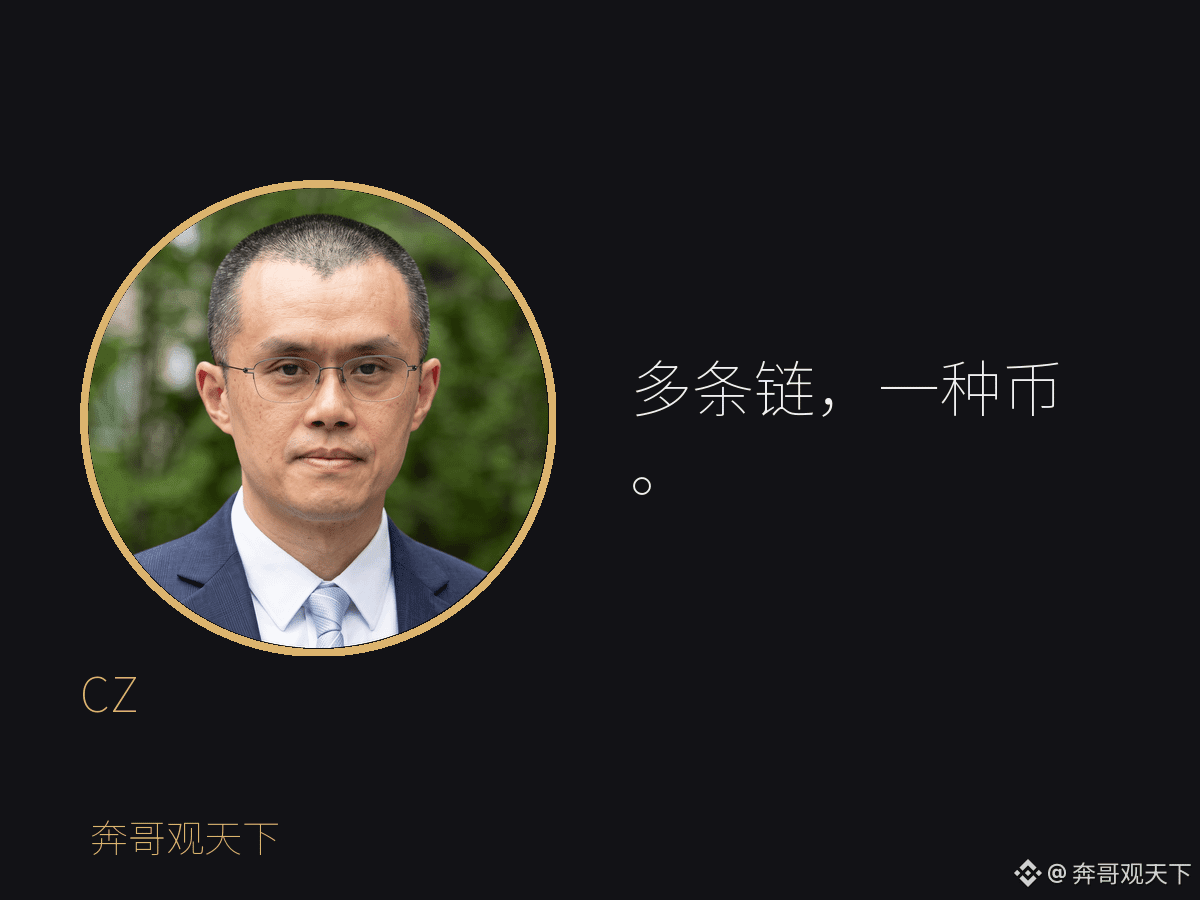
CZ menanggapi rencana L1 baru BNB Chain dengan hanya enam karakter: banyak chain, satu koin.
Chain baru ini mengusung pendekatan EVM kompatibel berperforma tinggi, berjalan paralel dengan BSC yang sudah ada, dan tetap menggunakan BNB sebagai aset inti untuk Gas, staking, dan tata kelola—tanpa menerbitkan token baru. Finalitas dalam hitungan subdetik, abstraksi akun bawaan, prakonfirmasi transaksi, dan pool privasi on-chain semuanya tercantum dalam rencana. Testnet dijadwalkan pada akhir 2026, dan mainnet pada awal 2027.
Semakin banyak chain yang dibangun, tetapi koinnya tetap satu. $BTC #CZ #BNBChain #Layer1
63

·
--
Lihat terjemahan
$NEAR reclaims $4.50 this week, or I’m wrong.
Price is $4.48 and the tape is still weak, down 0.09% today and 0.2% across the latest 4h window. RSI at 37 says sellers have control, but this is not a clean breakdown either.
Chop.
Volume is only 0.1x the 20d average, with $77.88M traded, while longs are still paying 0.010% funding. Not a great setup for aggressive longs, especially with $BTC deciding whether the market gets a bounce.
My line: at $4.50, I want acceptance above it before getting interested. Lose $4.40 and I’m throwing this call in the bin. @nearprotocol needs actual demand, not empty candles. 🔥📉
What’s your target for $NEAR?
#NEARProtocol #Layer1
$NEAR reclaims $4.50 this week, or I’m wrong.
Price is $4.48 and the tape is still weak, down 0.09% today and 0.2% across the latest 4h window. RSI at 37 says sellers have control, but this is not a clean breakdown either.
Chop.
Volume is only 0.1x the 20d average, with $77.88M traded, while longs are still paying 0.010% funding. Not a great setup for aggressive longs, especially with $BTC deciding whether the market gets a bounce.
My line: at $4.50, I want acceptance above it before getting interested. Lose $4.40 and I’m throwing this call in the bin. @nearprotocol needs actual demand, not empty candles. 🔥📉
What’s your target for $NEAR ?
#NEARProtocol #Layer1
60

·
--
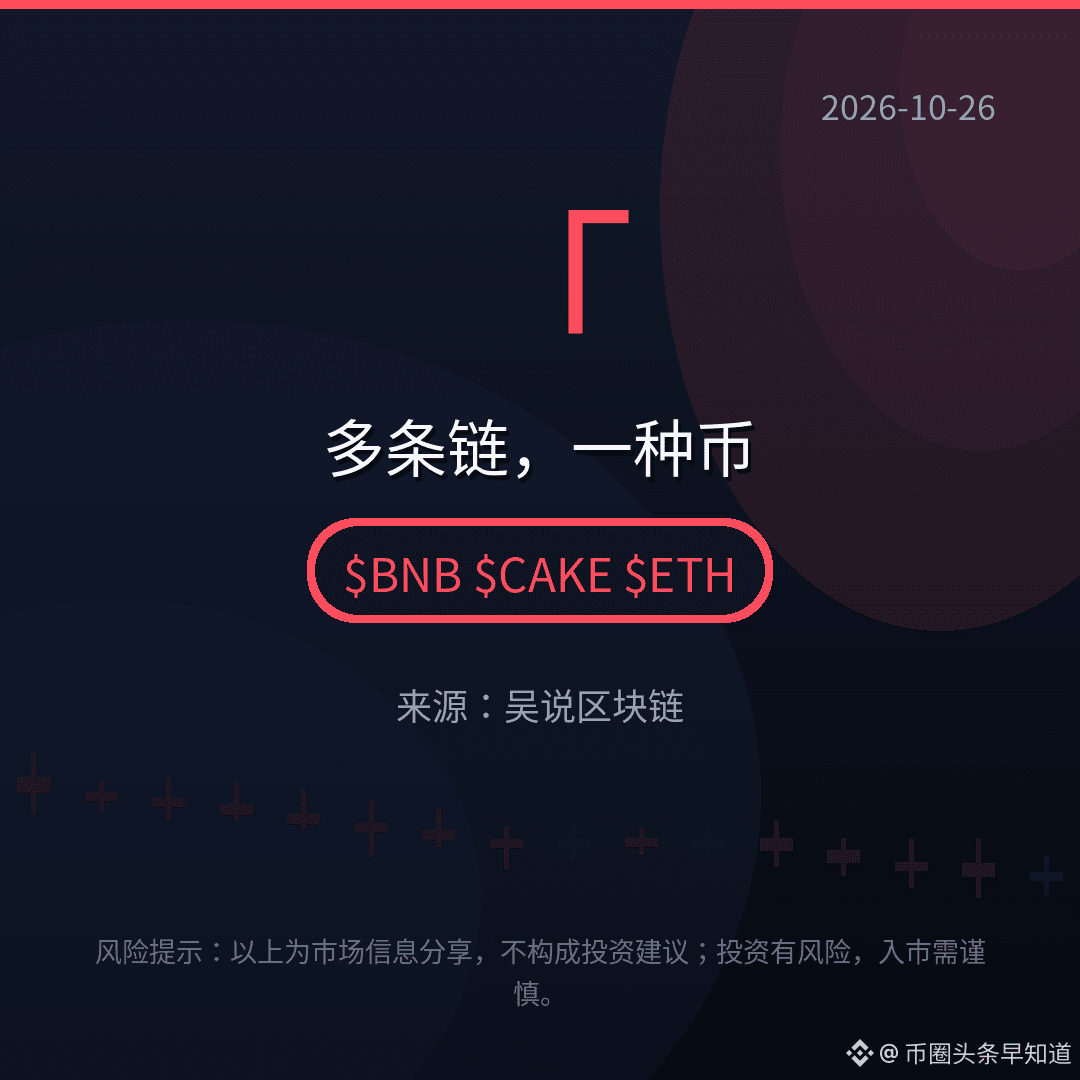
【Kilas Pasar】CZ menetapkan arah untuk L1 baru BNB Chain: “Banyak chain, satu koin.” Chain baru akan berdampingan dengan BSC, dengan jembatan lintas-chain native yang terhubung langsung. Tidak akan ada penerbitan koin baru; BNB tetap digunakan untuk gas, staking, dan tata kelola. Targetnya waktu blok 200 milidetik dan prakonfirmasi sekitar 20 milidetik. Jaringan pengembangan sudah berjalan, testnet ditargetkan pada akhir 2026 dan mainnet pada awal 2027. Banyak chain, tetapi jumlah koin tidak bertambah—apakah ini kabar baik atau ekspektasi yang terlalu tinggi bagi $BNB ? Kamu berpihak ke mana?
$BNB $CAKE $ETH
#BNBChain #CZ #Layer1
(Sumber: Wu Shuo Blockchain)
⚠️Peringatan risiko: Informasi di atas dibagikan sebagai informasi pasar dan bukan merupakan saran investasi. Investasi memiliki risiko; harap berhati-hati saat memasuki pasar.
$BNB $CAKE $ETH
#BNBChain #CZ #Layer1
(Sumber: Wu Shuo Blockchain)
⚠️Peringatan risiko: Informasi di atas dibagikan sebagai informasi pasar dan bukan merupakan saran investasi. Investasi memiliki risiko; harap berhati-hati saat memasuki pasar.
225


·
--
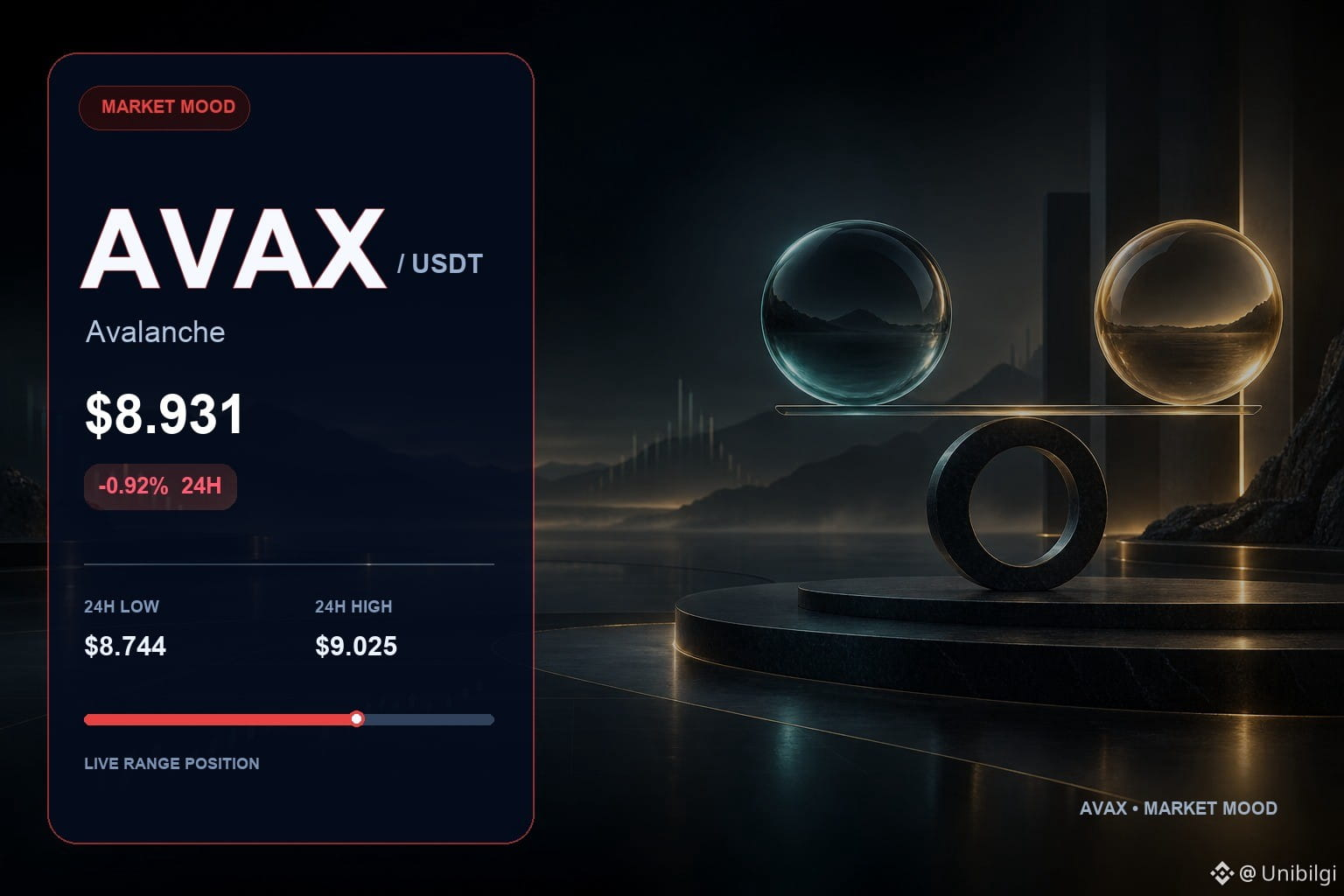
Rasanya $AVAX sedang menikmati tidur siang yang nyaman sore ini. Saat ini diperdagangkan pada harga $8.931 dengan perubahan 24 jam yang tipis sebesar -0.921%, pasar memberi kita jeda yang tenang dari roller coaster biasanya.
Selama sehari terakhir, kita melihat harga tertinggi 24 jam yang cukup moderat di $9.025 dan harga terendah di $8.744, pada dasarnya bergerak menyamping dalam kisaran yang nyaman. Seperti biasa, ini bukan nasihat keuangan, jadi ingatlah untuk DYOR sebelum mengambil langkah apa pun! ☕ 🏔️ 🦀
#Write2Earn #Crypto #AVAX #Layer1
92

·
--
🔥 $APT KELANGKAAN PASOKAN SEGERA TERJADI SEIRING TINGKAT PEMBAKARAN TAHUNAN MENYENTUH 1,8 JUTA TOKEN! 📊
Investor cerdas memantau dinamika pasokan jauh sebelum harga mencerminkan kelangkaan tersebut. $APT baru saja memusnahkan 152,9 ribu token hanya pada bulan Agustus, sehingga total pembakaran tokennya di mainnet melampaui 1,7 juta. 📊
Dengan biaya transaksi rata-rata hanya $0.0005, penggunaan jaringan terus meningkat, dengan proyeksi tingkat pembakaran tahunan sebesar 1,8 juta APT. 🔍 Tekanan pasokan yang terus menurun, ditambah biaya pengguna yang sangat rendah, menciptakan dorongan struktural yang kuat bagi strategi momentum jangka panjang.
🤔 Apakah menurut Anda mekanisme pembakaran yang terus berlangsung ini akan memicu guncangan pasokan makro untuk $APT , atau Anda menunggu konfirmasi volume transaksi yang lebih tinggi? 👇
⚠️ Ini bukan nasihat keuangan. Selalu kelola risiko Anda. 🛡️
🏷️ #APT #Layer1 #Crypto #Tokenomics
⚡ 💎
22
·
--
Lihat terjemahan
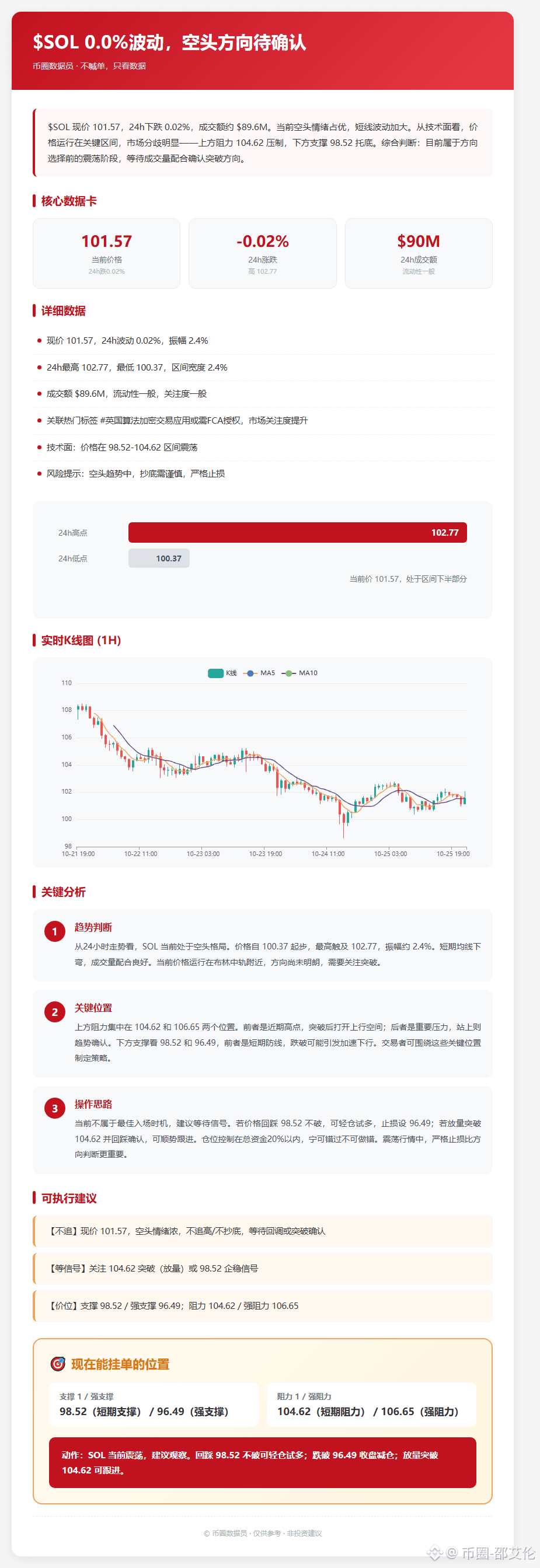
赚钱靠运气,活着靠数据。
$SOL 当前下跌 0.0%,看空思路
SOL 现价 101.57,24h跌幅 0.0%。 空头占优,关注下方支撑。
技术面看,当前处于关键位置,需要成交量配合才能确认方向。操作上严格止损,控制仓位。
入场:101.99 🟢
目标 1:96.49 🎯
止损:104.62 🔴
方向:看空
#英国算法加密交易应用或需FCA授权 #英国算法加密交易应用或需fca授权 #Layer1 #Write2Earn
{future}(SOLUSDT)
赚钱靠运气,活着靠数据。
$SOL 当前下跌 0.0%,看空思路
SOL 现价 101.57,24h跌幅 0.0%。 空头占优,关注下方支撑。
技术面看,当前处于关键位置,需要成交量配合才能确认方向。操作上严格止损,控制仓位。
入场:101.99 🟢
目标 1:96.49 🎯
止损:104.62 🔴
方向:看空
#英国算法加密交易应用或需FCA授权 #英国算法加密交易应用或需fca授权 #Layer1 #Write2Earn
$SOL 当前下跌 0.0%,看空思路
SOL 现价 101.57,24h跌幅 0.0%。 空头占优,关注下方支撑。
技术面看,当前处于关键位置,需要成交量配合才能确认方向。操作上严格止损,控制仓位。
入场:101.99 🟢
目标 1:96.49 🎯
止损:104.62 🔴
方向:看空
#英国算法加密交易应用或需FCA授权 #英国算法加密交易应用或需fca授权 #Layer1 #Write2Earn
35

·
--
Bullish
Saat sentimen pasar bergerak antara netral dan hati-hati, $SUI menjadi sorotan utama sebagai aset berpotensi tinggi dengan harga di bawah $1.
Arsitektur jaringan ini membuktikan keunggulannya dengan adopsi besar-besaran oleh para pengembang, tetapi kisah sebenarnya terlihat pada grafik harga. $SUI secara konsisten menunjukkan kekuatan relatif yang lebih baik dibandingkan altcoin lama, dengan pemulihan tajam saat pasar bangkit.
Metrik utama yang perlu diperhatikan:
🔹 Zona akumulasi horizontal yang kuat.
🔹 Pertumbuhan Total Value Locked (TVL) yang pesat.
🔹 dApp ekosistem mencatat jumlah pengguna aktif tertinggi.
Jika Bitcoin stabil di atas rata-rata pergerakan utama, Sui berada di posisi yang baik untuk mengalami breakout agresif.
Berapa target harga Anda untuk $SUI? Apakah Anda sedang mengakumulasi atau melakukan scalping? Bagikan analisis teknikal Anda di bawah! 📊
#Sui #Layer1 #CryptoAnalysis #Altcoins
Saat sentimen pasar bergerak antara netral dan hati-hati, $SUI menjadi sorotan utama sebagai aset berpotensi tinggi dengan harga di bawah $1.
Arsitektur jaringan ini membuktikan keunggulannya dengan adopsi besar-besaran oleh para pengembang, tetapi kisah sebenarnya terlihat pada grafik harga. $SUI secara konsisten menunjukkan kekuatan relatif yang lebih baik dibandingkan altcoin lama, dengan pemulihan tajam saat pasar bangkit.
Metrik utama yang perlu diperhatikan:
🔹 Zona akumulasi horizontal yang kuat.
🔹 Pertumbuhan Total Value Locked (TVL) yang pesat.
🔹 dApp ekosistem mencatat jumlah pengguna aktif tertinggi.
Jika Bitcoin stabil di atas rata-rata pergerakan utama, Sui berada di posisi yang baik untuk mengalami breakout agresif.
Berapa target harga Anda untuk $SUI ? Apakah Anda sedang mengakumulasi atau melakukan scalping? Bagikan analisis teknikal Anda di bawah! 📊
#Sui #Layer1 #CryptoAnalysis #Altcoins
132

$NEAR Koreksi kali ini bukan semata-mata disebabkan oleh melemahnya sentimen, melainkan lebih seperti tekanan tiga arah dari aspek kepercayaan, teknikal, dan aliran dana. Pendiri ICP secara terbuka menuduh adanya pelanggaran teknologi. Meski kontroversi ini masih perlu diverifikasi, pada fase sensitif seperti sekarang, hal tersebut lebih dahulu memperbesar kekhawatiran pasar terhadap orisinalitas proyek dan risiko kepatuhan.
Di pasar, harga terkoreksi lebih dari 20% dari level tertingginya dan sempat mendekati 4,4 dolar AS. Setelah level support penting ditembus, tekanan jual jangka pendek masih membutuhkan waktu untuk terserap. Sementara itu, arus dana masuk ke ETF terkait masih terbatas, tanpa tambahan tekanan beli yang mampu membalikkan ekspektasi dengan cepat. Harga saat ini sekitar 4,53 dolar AS, dengan volume perdagangan 24 jam sekitar 845 juta dolar AS. Ini menunjukkan bahwa aktivitas jual beli masih berlangsung, tetapi daya serap pasar belum cukup kuat.
Ke depan, ada dua hal utama yang perlu dicermati: apakah pihak proyek mampu memberikan tanggapan yang jelas dan meyakinkan atas tuduhan pelanggaran, serta apakah harga dapat kembali bertahan di sekitar 4,4 dolar AS. Jika masalah kepercayaan terus berlanjut, kenaikan kemungkinan hanya merupakan pemulihan teknikal. Jika kabar negatif terbukti tidak benar, barulah pola teknikal berpeluang membaik secara bertahap. Mengendalikan ukuran posisi dan menunggu sinyal yang jelas lebih penting daripada terburu-buru menebak titik terendah.
#NEAR #Layer1
117
·
--
⚡ $SOL PEMBARUAN SIAP DILUNCURKAN DENGAN RENCANA PEMANGKASAN BIAYA PENYIMPANAN HINGGA 90%! 🚀
Solana baru saja mengaktifkan SIMD-0437, memulai siklus pembaruan yang dirancang untuk memangkas biaya penyimpanan jaringan hingga 90%. 💡 Deposit sewa untuk akun token direncanakan turun dari $0,16 menjadi kurang dari dua sen, membuka jalan bagi protokol yang membutuhkan banyak data untuk berkembang dengan mudah.
📊 Saat trader jangka pendek mengejar gejolak sementara, investor cerdas memantau pembaruan infrastruktur inti seperti ini, yang secara diam-diam memperkuat keunggulan ekonomi Solana. Mengurangi hambatan bagi pengembang pada dasarnya memperkuat permintaan ekosistem dalam jangka panjang. 🔍
💬 Akankah pengurangan biaya ini memicu gelombang baru aplikasi berthroughput tinggi yang dibangun di $SOL ? 👇
⚠️ Ini bukan nasihat keuangan. Selalu kelola risiko Anda. 🛡️
🏷️ #SOL #Solana #Layer1 #Crypto
⚡ 💎
4
Masuk untuk menjelajahi konten lainnya
Bergabunglah dengan pengguna kripto global di Binance Square
⚡️ Dapatkan informasi terbaru dan berguna tentang kripto.
💬 Dipercayai oleh bursa kripto terbesar di dunia.
👍 Temukan wawasan nyata dari kreator terverifikasi.
Email/Nomor Ponsel
Topik Sedang Tren
1
#BinancePick
3.2M penayangan
158,517 Berdiskusi
2
#EarningsSeason
5.4M penayangan
26,326 Berdiskusi
3
#BitmineAdds10452ETH
259 penayangan
28 Berdiskusi
4
#SouthKoreaConsidersEducationTaxOnCryptoExchanges
589 penayangan
49 Berdiskusi
5
#OCCUrgesCommunityBanksToEnterStablecoinPayments
322 penayangan
34 Berdiskusi
6
#RippleWinsFullApprovalAsNationalTrustBank
335 penayangan
32 Berdiskusi
7
#AkashSelectsSolanaAsMigrationTarget
109 penayangan
6 Berdiskusi
8
#OndoToOpenSubscriptionsForOpenAIPreIPOTokenizedNotes
28 penayangan
3 Berdiskusi
9
#AnthropicTTMRevenueGrewAbout1200%
44,812 penayangan
514 Berdiskusi
10
#AnthropicS1ExpectedToday
36,547 penayangan
402 Berdiskusi