
WEB3KIID
28 Publications

WEB3KIID
Signaler
Bloquer l’utilisateur
Ouvert au trading
Trade régulièrement
2.8 an(s)
3 Suivis
23 Abonnés
45 J’aime
Publications
Portefeuille
·
--
Vérifié
Bitcoin est l’actif de garantie parfait. Il est très liquide, reconnu mondialement et adopté par les institutions. Pourtant, la plupart des BTC reste inactif : sous-utilisés et déconnectés de la finance onchain.
C’est principalement parce qu’utiliser le BTC comme garantie signifiait généralement renoncer au contrôle et s’appuyer sur des intermédiaires.
Historiquement, accéder à la DeFi revenait à choisir entre des dépositaires centralisés ou des tokens enveloppés (wrapped), qui introduisent tous deux des risques de contrepartie et de smart contracts en contradiction avec l’éthique fondamentale de Bitcoin.
Comment les Trustless Bitcoin Vaults (TBV) résolvent ce problème : plutôt que de mutualiser les fonds des utilisateurs, @babylonlabs_io introduit des coffres individuels et séparés, imposés directement par les primitives de script de Bitcoin
1. Propriété programmable : des smart contracts sur des chaînes de destination (comme les réseaux Aave ou Cosmos PoS) déterminent le statut de la garantie, mais le $BTC reste verrouillé sur la blockchain Bitcoin.
2. Prêteurs de réclamation (PreSet Claimers) : les liquidations et les remboursements sont exécutés via des preuves cryptographiques (SNARKs/Logique BitVM) sans arbitres tiers.
3. Non réhypothèque (Non Rehypothecated) : vos coffres ne sont pas mis en commun avec ceux d’autres utilisateurs, ce qui préserve 100% de la self-custody.
TBV ne cherche pas à faire en sorte que Bitcoin # se comporte comme une altcoin à haute vitesse. Il transforme l’inactif, le froid $BTC en une garantie sûre et productive, sans forcer les détenteurs à exploiter des ponts (bridges) risqués.
@babylonlabs_io #baby $BABY
{spot}(BABYUSDT)
Bitcoin est l’actif de garantie parfait. Il est très liquide, reconnu mondialement et adopté par les institutions. Pourtant, la plupart des BTC reste inactif : sous-utilisés et déconnectés de la finance onchain.
C’est principalement parce qu’utiliser le BTC comme garantie signifiait généralement renoncer au contrôle et s’appuyer sur des intermédiaires.
Historiquement, accéder à la DeFi revenait à choisir entre des dépositaires centralisés ou des tokens enveloppés (wrapped), qui introduisent tous deux des risques de contrepartie et de smart contracts en contradiction avec l’éthique fondamentale de Bitcoin.
Comment les Trustless Bitcoin Vaults (TBV) résolvent ce problème : plutôt que de mutualiser les fonds des utilisateurs, @BabylonLabs_io introduit des coffres individuels et séparés, imposés directement par les primitives de script de Bitcoin
1. Propriété programmable : des smart contracts sur des chaînes de destination (comme les réseaux Aave ou Cosmos PoS) déterminent le statut de la garantie, mais le $BTC reste verrouillé sur la blockchain Bitcoin.
2. Prêteurs de réclamation (PreSet Claimers) : les liquidations et les remboursements sont exécutés via des preuves cryptographiques (SNARKs/Logique BitVM) sans arbitres tiers.
3. Non réhypothèque (Non Rehypothecated) : vos coffres ne sont pas mis en commun avec ceux d’autres utilisateurs, ce qui préserve 100% de la self-custody.
TBV ne cherche pas à faire en sorte que Bitcoin # se comporte comme une altcoin à haute vitesse. Il transforme l’inactif, le froid $BTC en une garantie sûre et productive, sans forcer les détenteurs à exploiter des ponts (bridges) risqués.
@BabylonLabs_io #baby $BABY
C’est principalement parce qu’utiliser le BTC comme garantie signifiait généralement renoncer au contrôle et s’appuyer sur des intermédiaires.
Historiquement, accéder à la DeFi revenait à choisir entre des dépositaires centralisés ou des tokens enveloppés (wrapped), qui introduisent tous deux des risques de contrepartie et de smart contracts en contradiction avec l’éthique fondamentale de Bitcoin.
Comment les Trustless Bitcoin Vaults (TBV) résolvent ce problème : plutôt que de mutualiser les fonds des utilisateurs, @BabylonLabs_io introduit des coffres individuels et séparés, imposés directement par les primitives de script de Bitcoin
1. Propriété programmable : des smart contracts sur des chaînes de destination (comme les réseaux Aave ou Cosmos PoS) déterminent le statut de la garantie, mais le $BTC reste verrouillé sur la blockchain Bitcoin.
2. Prêteurs de réclamation (PreSet Claimers) : les liquidations et les remboursements sont exécutés via des preuves cryptographiques (SNARKs/Logique BitVM) sans arbitres tiers.
3. Non réhypothèque (Non Rehypothecated) : vos coffres ne sont pas mis en commun avec ceux d’autres utilisateurs, ce qui préserve 100% de la self-custody.
TBV ne cherche pas à faire en sorte que Bitcoin # se comporte comme une altcoin à haute vitesse. Il transforme l’inactif, le froid $BTC en une garantie sûre et productive, sans forcer les détenteurs à exploiter des ponts (bridges) risqués.
@BabylonLabs_io #baby $BABY
4
2
106
·
--
Pourquoi le staking natif de BTC est la solution ultime au problème de l’hypothèse de confiance
Relier Bitcoin aux chaînes EVM via des jetons enveloppés comme $WBTC ou $tBTC implique toujours un compromis douloureux : vous obtenez un rendement, mais vous perdez la garde et vous héritez des risques liés aux contrats intelligents.
C’est là que l’approche TBV de The Babylon renverse la situation.
Au lieu d’envelopper des jetons ou de dépendre d’un dépositaire de pont centralisé, les Trustless Bitcoin Vaults (TBV) conservent l’actif principal sur le réseau Bitcoin natif. En combinant des scripts Taproot et des verrous de type UTXO (timelocks) avec des Extractable One-Time Signatures (EOTS), votre BTC reste verrouillé sous vos propres clés sur la couche 1 tout en servant à appuyer une finalité POS externe ou un collatéral DeFi.
et Si un validateur double-signe ou se comporte mal, le slashing se fait via une cryptographie Bitcoin pure, et non via un pont externe basé sur un contrat intelligent.
@babylonlabs_io consiste essentiellement à construire un modèle natif de BTCFi qui ne vous demande pas d’ignorer les propriétés de sécurité fondamentales de Bitcoin. Et je pense que c’est la solution ultime au problème de l’hypothèse de confiance.
PS.. J’ai exécuté des transactions sur le testnet pour voir à quel point la frappe (minting) et les cycles de désengagement (unbonding) sont réellement fluides en conditions de congestion réseau.
{spot}(BTCUSDT)
{spot}(BABYUSDT)
@babylonlabs_io #baby $BABY #Bitcoin #DeFI
Pourquoi le staking natif de BTC est la solution ultime au problème de l’hypothèse de confiance
Relier Bitcoin aux chaînes EVM via des jetons enveloppés comme $WBTC ou $tBTC implique toujours un compromis douloureux : vous obtenez un rendement, mais vous perdez la garde et vous héritez des risques liés aux contrats intelligents.
C’est là que l’approche TBV de The Babylon renverse la situation.
Au lieu d’envelopper des jetons ou de dépendre d’un dépositaire de pont centralisé, les Trustless Bitcoin Vaults (TBV) conservent l’actif principal sur le réseau Bitcoin natif. En combinant des scripts Taproot et des verrous de type UTXO (timelocks) avec des Extractable One-Time Signatures (EOTS), votre BTC reste verrouillé sous vos propres clés sur la couche 1 tout en servant à appuyer une finalité POS externe ou un collatéral DeFi.
et Si un validateur double-signe ou se comporte mal, le slashing se fait via une cryptographie Bitcoin pure, et non via un pont externe basé sur un contrat intelligent.
@BabylonLabs_io consiste essentiellement à construire un modèle natif de BTCFi qui ne vous demande pas d’ignorer les propriétés de sécurité fondamentales de Bitcoin. Et je pense que c’est la solution ultime au problème de l’hypothèse de confiance.
PS.. J’ai exécuté des transactions sur le testnet pour voir à quel point la frappe (minting) et les cycles de désengagement (unbonding) sont réellement fluides en conditions de congestion réseau.
@BabylonLabs_io #baby $BABY #Bitcoin #DeFI
Relier Bitcoin aux chaînes EVM via des jetons enveloppés comme $WBTC ou $tBTC implique toujours un compromis douloureux : vous obtenez un rendement, mais vous perdez la garde et vous héritez des risques liés aux contrats intelligents.
C’est là que l’approche TBV de The Babylon renverse la situation.
Au lieu d’envelopper des jetons ou de dépendre d’un dépositaire de pont centralisé, les Trustless Bitcoin Vaults (TBV) conservent l’actif principal sur le réseau Bitcoin natif. En combinant des scripts Taproot et des verrous de type UTXO (timelocks) avec des Extractable One-Time Signatures (EOTS), votre BTC reste verrouillé sous vos propres clés sur la couche 1 tout en servant à appuyer une finalité POS externe ou un collatéral DeFi.
et Si un validateur double-signe ou se comporte mal, le slashing se fait via une cryptographie Bitcoin pure, et non via un pont externe basé sur un contrat intelligent.
@BabylonLabs_io consiste essentiellement à construire un modèle natif de BTCFi qui ne vous demande pas d’ignorer les propriétés de sécurité fondamentales de Bitcoin. Et je pense que c’est la solution ultime au problème de l’hypothèse de confiance.
PS.. J’ai exécuté des transactions sur le testnet pour voir à quel point la frappe (minting) et les cycles de désengagement (unbonding) sont réellement fluides en conditions de congestion réseau.
@BabylonLabs_io #baby $BABY #Bitcoin #DeFI
1
1
56
·
--
Soyons honnêtes : dans cinq ans, lorsque les gens regarderont en arrière cette période dans le crypto, ils ne se souviendront probablement pas de chaque titre ni de chaque cycle de marché.
Mais ils se souviendront sans doute des projets qui, discrètement, ont construit une infrastructure capable de changer la façon dont la technologie blockchain est utilisée. Et c’est une des raisons pour lesquelles Babylon a attiré mon attention.
Le concept de Trustless Bitcoin Vaults (TBV) met en lumière un changement important de perspective. Plutôt que de demander aux détenteurs de Bitcoin de s’éloigner des principes qui rendent Bitcoin digne de confiance, les TBV explorent comment le BTC natif peut devenir plus utile tout en préservant ces fondations essentielles.
C’est évidemment une direction ambitieuse, et comme toute nouvelle technologie, elle aura besoin de temps, de tests et de retours de la communauté pour faire ses preuves. Mais l’innovation significative commence généralement par des questions difficiles, pas en empruntant le chemin le plus facile.
Et voici mon conseil, que vous soyez un développeur, un chercheur ou un partisan de Bitcoin à long terme : je pense que Babylon et son bébé token — c’est-à-dire son jeton — font partie des écosystèmes qui méritent d’être surveillés à mesure que cette vision se développe.
Petite question : si l’ère suivante de Bitcoin est définie par l’utilité, quel rôle pensez-vous que $BABY et les TBV joueront pour la façonner ?
@babylonlabs_io #baby $BABY
{spot}(BABYUSDT)
Soyons honnêtes : dans cinq ans, lorsque les gens regarderont en arrière cette période dans le crypto, ils ne se souviendront probablement pas de chaque titre ni de chaque cycle de marché.
Mais ils se souviendront sans doute des projets qui, discrètement, ont construit une infrastructure capable de changer la façon dont la technologie blockchain est utilisée. Et c’est une des raisons pour lesquelles Babylon a attiré mon attention.
Le concept de Trustless Bitcoin Vaults (TBV) met en lumière un changement important de perspective. Plutôt que de demander aux détenteurs de Bitcoin de s’éloigner des principes qui rendent Bitcoin digne de confiance, les TBV explorent comment le BTC natif peut devenir plus utile tout en préservant ces fondations essentielles.
C’est évidemment une direction ambitieuse, et comme toute nouvelle technologie, elle aura besoin de temps, de tests et de retours de la communauté pour faire ses preuves. Mais l’innovation significative commence généralement par des questions difficiles, pas en empruntant le chemin le plus facile.
Et voici mon conseil, que vous soyez un développeur, un chercheur ou un partisan de Bitcoin à long terme : je pense que Babylon et son bébé token — c’est-à-dire son jeton — font partie des écosystèmes qui méritent d’être surveillés à mesure que cette vision se développe.
Petite question : si l’ère suivante de Bitcoin est définie par l’utilité, quel rôle pensez-vous que $BABY et les TBV joueront pour la façonner ?
@BabylonLabs_io #baby $BABY
Mais ils se souviendront sans doute des projets qui, discrètement, ont construit une infrastructure capable de changer la façon dont la technologie blockchain est utilisée. Et c’est une des raisons pour lesquelles Babylon a attiré mon attention.
Le concept de Trustless Bitcoin Vaults (TBV) met en lumière un changement important de perspective. Plutôt que de demander aux détenteurs de Bitcoin de s’éloigner des principes qui rendent Bitcoin digne de confiance, les TBV explorent comment le BTC natif peut devenir plus utile tout en préservant ces fondations essentielles.
C’est évidemment une direction ambitieuse, et comme toute nouvelle technologie, elle aura besoin de temps, de tests et de retours de la communauté pour faire ses preuves. Mais l’innovation significative commence généralement par des questions difficiles, pas en empruntant le chemin le plus facile.
Et voici mon conseil, que vous soyez un développeur, un chercheur ou un partisan de Bitcoin à long terme : je pense que Babylon et son bébé token — c’est-à-dire son jeton — font partie des écosystèmes qui méritent d’être surveillés à mesure que cette vision se développe.
Petite question : si l’ère suivante de Bitcoin est définie par l’utilité, quel rôle pensez-vous que $BABY et les TBV joueront pour la façonner ?
@BabylonLabs_io #baby $BABY
1
98
·
--
Vous êtes-vous déjà demandé pourquoi @babylonlabs_io suscite autant d’attention ?🤔
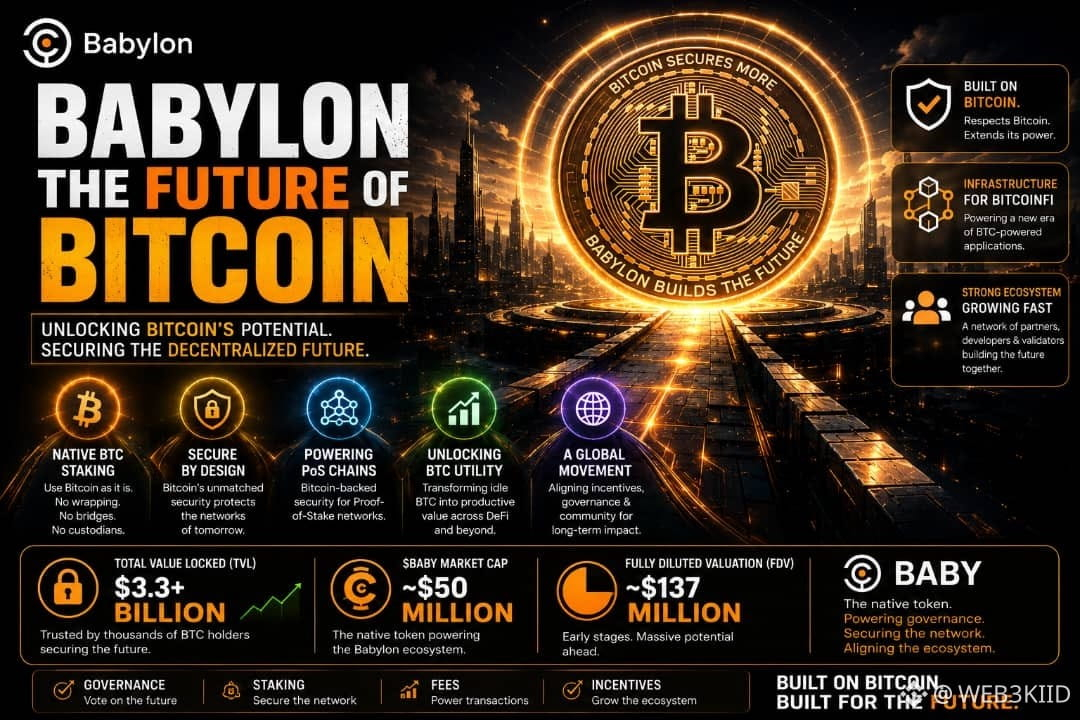
Babylon est l’un des principaux projets de l’écosystème BitcoinFi (BTCfi) en pleine croissance, car il vise à faire de Bitcoin un actif productif tout en préservant ses hypothèses de sécurité fondamentales. Au lieu de modifier Bitcoin lui-même, Babylon construit une infrastructure autour de lui permettant au BTC natif de sécuriser des réseaux Proof-of-Stake et, de plus en plus, d’alimenter des applications DeFi.
Un autre élément clé de l’écosystème est BABY. Le jeton natif de Babylon, $BABY , est bien plus qu’un simple token de gouvernance : il alimente le réseau Babylon Genesis en payant les frais de transaction, permet la gouvernance on-chain et participe à un modèle de double staking aux côtés de Bitcoin afin d’aider à sécuriser le réseau. À mesure que davantage d’applications sécurisées par Bitcoin voient le jour, BABY est conçu pour aligner les incitations au sein de l’écosystème Babylon.
{spot}(BABYUSDT)
@babylonlabs_io #baby $BABY
Vous êtes-vous déjà demandé pourquoi @BabylonLabs_io suscite autant d’attention ?🤔
Babylon est l’un des principaux projets de l’écosystème BitcoinFi (BTCfi) en pleine croissance, car il vise à faire de Bitcoin un actif productif tout en préservant ses hypothèses de sécurité fondamentales. Au lieu de modifier Bitcoin lui-même, Babylon construit une infrastructure autour de lui permettant au BTC natif de sécuriser des réseaux Proof-of-Stake et, de plus en plus, d’alimenter des applications DeFi.
Un autre élément clé de l’écosystème est BABY. Le jeton natif de Babylon, $BABY , est bien plus qu’un simple token de gouvernance : il alimente le réseau Babylon Genesis en payant les frais de transaction, permet la gouvernance on-chain et participe à un modèle de double staking aux côtés de Bitcoin afin d’aider à sécuriser le réseau. À mesure que davantage d’applications sécurisées par Bitcoin voient le jour, BABY est conçu pour aligner les incitations au sein de l’écosystème Babylon.
@BabylonLabs_io #baby $BABY
Babylon est l’un des principaux projets de l’écosystème BitcoinFi (BTCfi) en pleine croissance, car il vise à faire de Bitcoin un actif productif tout en préservant ses hypothèses de sécurité fondamentales. Au lieu de modifier Bitcoin lui-même, Babylon construit une infrastructure autour de lui permettant au BTC natif de sécuriser des réseaux Proof-of-Stake et, de plus en plus, d’alimenter des applications DeFi.
Un autre élément clé de l’écosystème est BABY. Le jeton natif de Babylon, $BABY , est bien plus qu’un simple token de gouvernance : il alimente le réseau Babylon Genesis en payant les frais de transaction, permet la gouvernance on-chain et participe à un modèle de double staking aux côtés de Bitcoin afin d’aider à sécuriser le réseau. À mesure que davantage d’applications sécurisées par Bitcoin voient le jour, BABY est conçu pour aligner les incitations au sein de l’écosystème Babylon.
@BabylonLabs_io #baby $BABY
59
·
--
Haussier
Pendant des années, Bitcoin a acquis la réputation d’être la blockchain la plus sûre et la plus décentralisée. Pourtant, une seule question a continué de façonner la conversation autour de son avenir : Bitcoin peut-il devenir plus utile sans compromettre les principes qui ont fait son succès ?
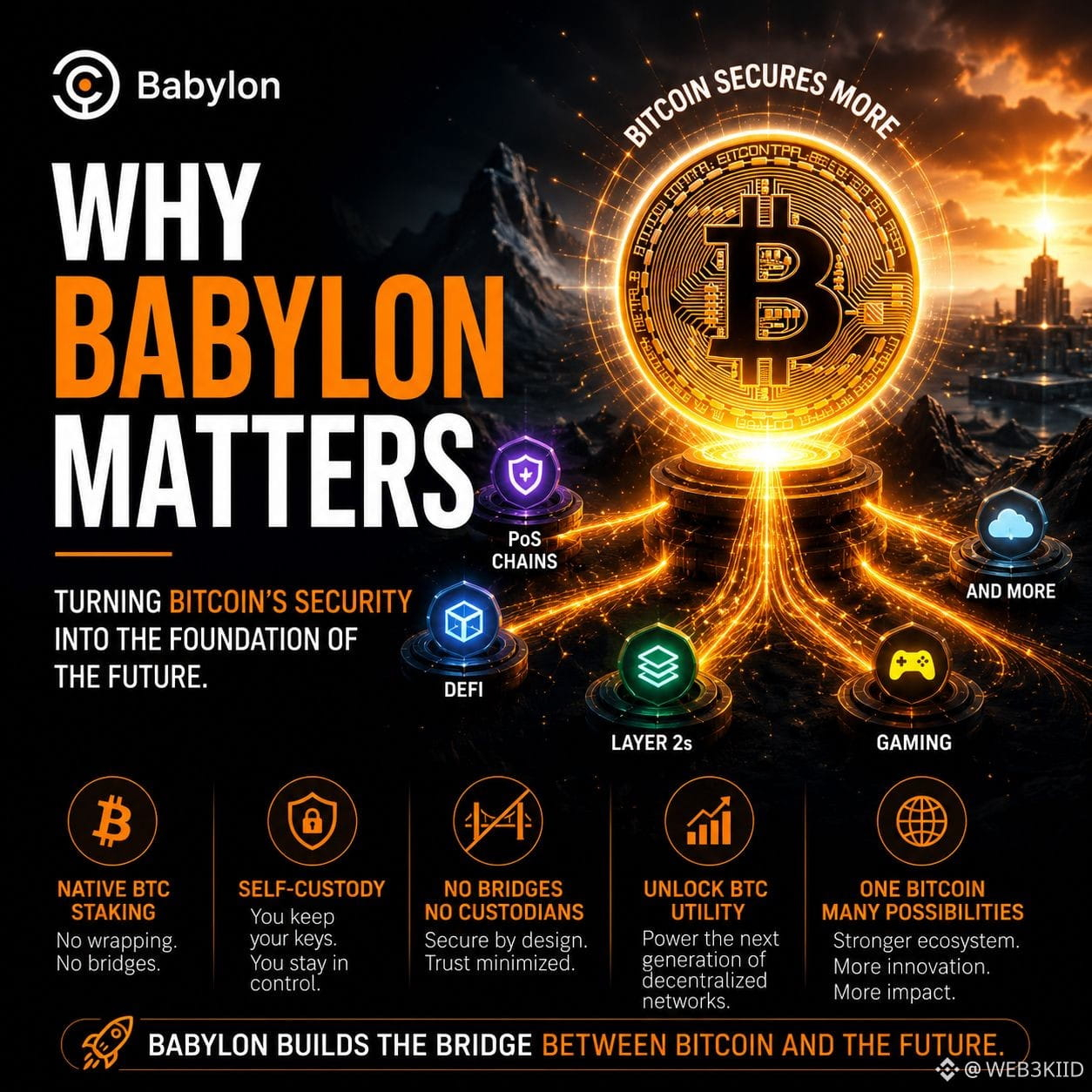
Et c’est l’une des raisons pour lesquelles je suis Babylon de plus près. L’objectif principal de Babylon est de permettre aux détenteurs de Bitcoin d’utiliser leur BTC pour contribuer à sécuriser d’autres réseaux blockchain, tout en gardant leurs pièces natives sur le réseau Bitcoin.
L’idée derrière les Trustless Bitcoin Vaults (TBV) ne consiste pas simplement à introduire un autre produit financier. Il s’agit d’explorer comment le Bitcoin natif peut participer à de nouvelles applications, tout en restant fidèle au modèle de confiance de Bitcoin, plutôt que de dépendre d’actifs tokenisés ou d’intermédiaires inutiles.
Et pour moi, c’est là que réside la véritable innovation. S’appuyer sur les points forts de Bitcoin plutôt que lui demander de changer.
À mesure que l’écosystème évolue, je pense que les projets qui se concentrent sur une infrastructure sécurisée plutôt que sur des récits à court terme auront le plus grand impact à long terme. Les TBV de Babylon constituent une étape intéressante dans cette direction, et je suis impatient de voir comment la technologie mûrit grâce aux retours de la communauté et à l’adoption dans le monde réel.
Question rapide : quel aspect de Babylon vous intéresse le plus ?
@babylonlabs_io #baby $BABY
Pendant des années, Bitcoin a acquis la réputation d’être la blockchain la plus sûre et la plus décentralisée. Pourtant, une seule question a continué de façonner la conversation autour de son avenir : Bitcoin peut-il devenir plus utile sans compromettre les principes qui ont fait son succès ?
Et c’est l’une des raisons pour lesquelles je suis Babylon de plus près. L’objectif principal de Babylon est de permettre aux détenteurs de Bitcoin d’utiliser leur BTC pour contribuer à sécuriser d’autres réseaux blockchain, tout en gardant leurs pièces natives sur le réseau Bitcoin.
L’idée derrière les Trustless Bitcoin Vaults (TBV) ne consiste pas simplement à introduire un autre produit financier. Il s’agit d’explorer comment le Bitcoin natif peut participer à de nouvelles applications, tout en restant fidèle au modèle de confiance de Bitcoin, plutôt que de dépendre d’actifs tokenisés ou d’intermédiaires inutiles.
Et pour moi, c’est là que réside la véritable innovation. S’appuyer sur les points forts de Bitcoin plutôt que lui demander de changer.
À mesure que l’écosystème évolue, je pense que les projets qui se concentrent sur une infrastructure sécurisée plutôt que sur des récits à court terme auront le plus grand impact à long terme. Les TBV de Babylon constituent une étape intéressante dans cette direction, et je suis impatient de voir comment la technologie mûrit grâce aux retours de la communauté et à l’adoption dans le monde réel.
Question rapide : quel aspect de Babylon vous intéresse le plus ?
@BabylonLabs_io #baby $BABY
Et c’est l’une des raisons pour lesquelles je suis Babylon de plus près. L’objectif principal de Babylon est de permettre aux détenteurs de Bitcoin d’utiliser leur BTC pour contribuer à sécuriser d’autres réseaux blockchain, tout en gardant leurs pièces natives sur le réseau Bitcoin.
L’idée derrière les Trustless Bitcoin Vaults (TBV) ne consiste pas simplement à introduire un autre produit financier. Il s’agit d’explorer comment le Bitcoin natif peut participer à de nouvelles applications, tout en restant fidèle au modèle de confiance de Bitcoin, plutôt que de dépendre d’actifs tokenisés ou d’intermédiaires inutiles.
Et pour moi, c’est là que réside la véritable innovation. S’appuyer sur les points forts de Bitcoin plutôt que lui demander de changer.
À mesure que l’écosystème évolue, je pense que les projets qui se concentrent sur une infrastructure sécurisée plutôt que sur des récits à court terme auront le plus grand impact à long terme. Les TBV de Babylon constituent une étape intéressante dans cette direction, et je suis impatient de voir comment la technologie mûrit grâce aux retours de la communauté et à l’adoption dans le monde réel.
Question rapide : quel aspect de Babylon vous intéresse le plus ?
@BabylonLabs_io #baby $BABY
Trustless Bitcoin Vaults (TBV)
100%
Bitcoin-backed borrowing
0%
the broader ecosystem vision
0%
1 Votes • Vote fermé
86
·
--
Haussier
Bitcoin a toujours eu un compromis intéressant.
Le réseau est exceptionnel pour préserver la valeur, mais l’utiliser dans des applications financières plus larges signifie souvent introduire des hypothèses de confiance supplémentaires.
C’est pourquoi je pense que les Trustless Bitcoin Vaults (TBV) méritent qu’on s’y intéresse, non pas parce qu’ils promettent des rendements plus élevés, mais parce qu’ils posent une question plus fondamentale : Bitcoin peut-il devenir plus utile sans demander aux utilisateurs de faire plus confiance ?
Ce qui m’intéresse, c’est que la conversation ne tourne pas autour du remplacement du design de Bitcoin. Il s’agit plutôt d’étendre ce que le BTC natif peut faire tout en gardant le modèle de sécurité de Bitcoin au cœur du système.
Après avoir lu l’approche de Babylon et exploré le testnet, un point ressort : l’objectif n’est pas simplement d’emprunter sur Bitcoin. Il s’agit de construire une infrastructure qui pourrait rendre le BTC natif plus actif dans la finance décentralisée, sans recourir à des représentations enveloppées.
Bien sûr, chaque nouvelle brique primitive implique des compromis, et le véritable test consistera à voir comment les TBV se comportent dans des conditions réelles et comment l’expérience utilisateur évolue grâce aux retours de la communauté.
Je suis curieux de voir comment <@babylonlabs_io >develops this further.<@babylonlabs_io #baby $BABY >
Bitcoin a toujours eu un compromis intéressant.
Le réseau est exceptionnel pour préserver la valeur, mais l’utiliser dans des applications financières plus larges signifie souvent introduire des hypothèses de confiance supplémentaires.
C’est pourquoi je pense que les Trustless Bitcoin Vaults (TBV) méritent qu’on s’y intéresse, non pas parce qu’ils promettent des rendements plus élevés, mais parce qu’ils posent une question plus fondamentale : Bitcoin peut-il devenir plus utile sans demander aux utilisateurs de faire plus confiance ?
Ce qui m’intéresse, c’est que la conversation ne tourne pas autour du remplacement du design de Bitcoin. Il s’agit plutôt d’étendre ce que le BTC natif peut faire tout en gardant le modèle de sécurité de Bitcoin au cœur du système.
Après avoir lu l’approche de Babylon et exploré le testnet, un point ressort : l’objectif n’est pas simplement d’emprunter sur Bitcoin. Il s’agit de construire une infrastructure qui pourrait rendre le BTC natif plus actif dans la finance décentralisée, sans recourir à des représentations enveloppées.
Bien sûr, chaque nouvelle brique primitive implique des compromis, et le véritable test consistera à voir comment les TBV se comportent dans des conditions réelles et comment l’expérience utilisateur évolue grâce aux retours de la communauté.
Je suis curieux de voir comment <@BabylonLabs_io >develops this further.<@BabylonLabs_io #baby $BABY >
Le réseau est exceptionnel pour préserver la valeur, mais l’utiliser dans des applications financières plus larges signifie souvent introduire des hypothèses de confiance supplémentaires.
C’est pourquoi je pense que les Trustless Bitcoin Vaults (TBV) méritent qu’on s’y intéresse, non pas parce qu’ils promettent des rendements plus élevés, mais parce qu’ils posent une question plus fondamentale : Bitcoin peut-il devenir plus utile sans demander aux utilisateurs de faire plus confiance ?
Ce qui m’intéresse, c’est que la conversation ne tourne pas autour du remplacement du design de Bitcoin. Il s’agit plutôt d’étendre ce que le BTC natif peut faire tout en gardant le modèle de sécurité de Bitcoin au cœur du système.
Après avoir lu l’approche de Babylon et exploré le testnet, un point ressort : l’objectif n’est pas simplement d’emprunter sur Bitcoin. Il s’agit de construire une infrastructure qui pourrait rendre le BTC natif plus actif dans la finance décentralisée, sans recourir à des représentations enveloppées.
Bien sûr, chaque nouvelle brique primitive implique des compromis, et le véritable test consistera à voir comment les TBV se comportent dans des conditions réelles et comment l’expérience utilisateur évolue grâce aux retours de la communauté.
Je suis curieux de voir comment <@BabylonLabs_io >develops this further.<@BabylonLabs_io #baby $BABY >

1
83
·
--
Haussier
La plupart des détenteurs de Bitcoin ont été confrontés au même dilemme :
Garder le BTC en attente pour préserver la sécurité, ou le transférer ailleurs et accepter des hypothèses de confiance supplémentaires.
C’est pourquoi les Trustless Bitcoin Vaults (TBV) me semblent une direction réellement pertinente, plutôt qu’un simple autre essai DeFi.
Au lieu de demander au Bitcoin de devenir quelque chose qu’il n’est pas, les TBV visent à élargir ce que le BTC natif peut faire, tout en respectant les principes qui ont rendu le Bitcoin précieux à la base : la sécurité, la transparence et la réduction au minimum de la confiance nécessaire.
Ce qui m’intéresse le plus n’est pas seulement l’emprunt adossé au Bitcoin : c’est la possibilité que des infrastructures comme les TBV puissent ouvrir de nouveaux cas d’usage financiers sans obliger les utilisateurs à renoncer au contrôle de leurs actifs.
Je suis actuellement en train d’explorer le testnet, de soumettre un retour détaillé, et de voir comment ce modèle évolue avec l’apport de la communauté.
Une question pour tout le monde :
Si les TBV sont largement adoptés, quel cas d’usage pensez-vous aura le plus grand impact à long terme ?
• Emprunt adossé au Bitcoin
• Gestion de trésorerie institutionnelle
• Liquidité DeFi
• Quelque chose d’autre ?
Discutons-en. 👇
@babylonlabs_io #baby $BABY
La plupart des détenteurs de Bitcoin ont été confrontés au même dilemme :
Garder le BTC en attente pour préserver la sécurité, ou le transférer ailleurs et accepter des hypothèses de confiance supplémentaires.
C’est pourquoi les Trustless Bitcoin Vaults (TBV) me semblent une direction réellement pertinente, plutôt qu’un simple autre essai DeFi.
Au lieu de demander au Bitcoin de devenir quelque chose qu’il n’est pas, les TBV visent à élargir ce que le BTC natif peut faire, tout en respectant les principes qui ont rendu le Bitcoin précieux à la base : la sécurité, la transparence et la réduction au minimum de la confiance nécessaire.
Ce qui m’intéresse le plus n’est pas seulement l’emprunt adossé au Bitcoin : c’est la possibilité que des infrastructures comme les TBV puissent ouvrir de nouveaux cas d’usage financiers sans obliger les utilisateurs à renoncer au contrôle de leurs actifs.
Je suis actuellement en train d’explorer le testnet, de soumettre un retour détaillé, et de voir comment ce modèle évolue avec l’apport de la communauté.
Une question pour tout le monde :
Si les TBV sont largement adoptés, quel cas d’usage pensez-vous aura le plus grand impact à long terme ?
• Emprunt adossé au Bitcoin
• Gestion de trésorerie institutionnelle
• Liquidité DeFi
• Quelque chose d’autre ?
Discutons-en. 👇
@BabylonLabs_io #baby $BABY
Garder le BTC en attente pour préserver la sécurité, ou le transférer ailleurs et accepter des hypothèses de confiance supplémentaires.
C’est pourquoi les Trustless Bitcoin Vaults (TBV) me semblent une direction réellement pertinente, plutôt qu’un simple autre essai DeFi.
Au lieu de demander au Bitcoin de devenir quelque chose qu’il n’est pas, les TBV visent à élargir ce que le BTC natif peut faire, tout en respectant les principes qui ont rendu le Bitcoin précieux à la base : la sécurité, la transparence et la réduction au minimum de la confiance nécessaire.
Ce qui m’intéresse le plus n’est pas seulement l’emprunt adossé au Bitcoin : c’est la possibilité que des infrastructures comme les TBV puissent ouvrir de nouveaux cas d’usage financiers sans obliger les utilisateurs à renoncer au contrôle de leurs actifs.
Je suis actuellement en train d’explorer le testnet, de soumettre un retour détaillé, et de voir comment ce modèle évolue avec l’apport de la communauté.
Une question pour tout le monde :
Si les TBV sont largement adoptés, quel cas d’usage pensez-vous aura le plus grand impact à long terme ?
• Emprunt adossé au Bitcoin
• Gestion de trésorerie institutionnelle
• Liquidité DeFi
• Quelque chose d’autre ?
Discutons-en. 👇
@BabylonLabs_io #baby $BABY
2
1
79
·
--
Bitcoin a toujours été la blockchain la plus sécurisée, mais parvenir à libérer sa valeur sans renoncer à la self-custody est resté un défi majeur.
C’est pourquoi les Trustless Bitcoin Vaults (TBV) ont retenu mon attention. Plutôt que de s’appuyer sur des dépositaires centralisés ou des actifs tokenisés, les TBV explorent un modèle dans lequel le BTC natif peut devenir productif tout en préservant les hypothèses de sécurité fondamentales de Bitcoin.
J’aime que @babylonlabs_io encourage l’innovation sans demander aux utilisateurs de faire des compromis sur la décentralisation. Si Bitcoin doit alimenter la prochaine génération de DeFi et d’applications cross-chain, les solutions qui respectent son modèle de confiance seront les plus importantes.
Je suis aussi impatient d’essayer le testnet natif de l’emprunt adossé à Bitcoin et de partager mes retours. Construire avec de vrais retours d’utilisateurs est la façon dont les protocoles solides évoluent.
Selon vous, quel sera le plus gros cas d’usage des TBV à l’avenir : l’emprunt, le staking, la garde institutionnelle, ou autre chose ?
@babylonlabs_io #baby $BABY
Bitcoin a toujours été la blockchain la plus sécurisée, mais parvenir à libérer sa valeur sans renoncer à la self-custody est resté un défi majeur.
C’est pourquoi les Trustless Bitcoin Vaults (TBV) ont retenu mon attention. Plutôt que de s’appuyer sur des dépositaires centralisés ou des actifs tokenisés, les TBV explorent un modèle dans lequel le BTC natif peut devenir productif tout en préservant les hypothèses de sécurité fondamentales de Bitcoin.
J’aime que @BabylonLabs_io encourage l’innovation sans demander aux utilisateurs de faire des compromis sur la décentralisation. Si Bitcoin doit alimenter la prochaine génération de DeFi et d’applications cross-chain, les solutions qui respectent son modèle de confiance seront les plus importantes.
Je suis aussi impatient d’essayer le testnet natif de l’emprunt adossé à Bitcoin et de partager mes retours. Construire avec de vrais retours d’utilisateurs est la façon dont les protocoles solides évoluent.
Selon vous, quel sera le plus gros cas d’usage des TBV à l’avenir : l’emprunt, le staking, la garde institutionnelle, ou autre chose ?
@BabylonLabs_io #baby $BABY
C’est pourquoi les Trustless Bitcoin Vaults (TBV) ont retenu mon attention. Plutôt que de s’appuyer sur des dépositaires centralisés ou des actifs tokenisés, les TBV explorent un modèle dans lequel le BTC natif peut devenir productif tout en préservant les hypothèses de sécurité fondamentales de Bitcoin.
J’aime que @BabylonLabs_io encourage l’innovation sans demander aux utilisateurs de faire des compromis sur la décentralisation. Si Bitcoin doit alimenter la prochaine génération de DeFi et d’applications cross-chain, les solutions qui respectent son modèle de confiance seront les plus importantes.
Je suis aussi impatient d’essayer le testnet natif de l’emprunt adossé à Bitcoin et de partager mes retours. Construire avec de vrais retours d’utilisateurs est la façon dont les protocoles solides évoluent.
Selon vous, quel sera le plus gros cas d’usage des TBV à l’avenir : l’emprunt, le staking, la garde institutionnelle, ou autre chose ?
@BabylonLabs_io #baby $BABY

1
64
·
--
Haussier
Un des changements les plus sous-estimés qui se produisent dans DeFi est le passage du staking passif au capital productif.
Bedrock a commencé par s'attaquer aux limitations de liquidité dans le staking, mais Bedrock 2.0 pousse l'idée plus loin : comment le même capital peut-il contribuer à la sécurité du réseau, rester liquide et participer à des opportunités supplémentaires en même temps ?
Ce qui m'intéresse le plus, ce n'est pas le rendement potentiel, mais l'impact à long terme sur l'efficacité du capital.
Si les protocols peuvent combiner avec succès le staking, la liquidité et le restaking sans créer de complexité inutile, cela pourrait redéfinir la manière dont les utilisateurs interagissent avec DeFi dans son ensemble.
Bedrock 2.0 fait partie d'une tendance plus large où les actifs inactifs deviennent de plus en plus productifs, et il sera intéressant de voir comment ce modèle évolue à mesure que l'adoption croît.
Penses-tu que l'efficacité du capital sera le principal avantage concurrentiel des protocols DeFi au cours des prochaines années ?
#Bedrock #Bedrock20 #DEFİ #Restaking #Web3 #bedrock $BR
Un des changements les plus sous-estimés qui se produisent dans DeFi est le passage du staking passif au capital productif.
Bedrock a commencé par s'attaquer aux limitations de liquidité dans le staking, mais Bedrock 2.0 pousse l'idée plus loin : comment le même capital peut-il contribuer à la sécurité du réseau, rester liquide et participer à des opportunités supplémentaires en même temps ?
Ce qui m'intéresse le plus, ce n'est pas le rendement potentiel, mais l'impact à long terme sur l'efficacité du capital.
Si les protocols peuvent combiner avec succès le staking, la liquidité et le restaking sans créer de complexité inutile, cela pourrait redéfinir la manière dont les utilisateurs interagissent avec DeFi dans son ensemble.
Bedrock 2.0 fait partie d'une tendance plus large où les actifs inactifs deviennent de plus en plus productifs, et il sera intéressant de voir comment ce modèle évolue à mesure que l'adoption croît.
Penses-tu que l'efficacité du capital sera le principal avantage concurrentiel des protocols DeFi au cours des prochaines années ?
#Bedrock #Bedrock20 #DEFİ #Restaking #Web3 #bedrock $BR
Bedrock a commencé par s'attaquer aux limitations de liquidité dans le staking, mais Bedrock 2.0 pousse l'idée plus loin : comment le même capital peut-il contribuer à la sécurité du réseau, rester liquide et participer à des opportunités supplémentaires en même temps ?
Ce qui m'intéresse le plus, ce n'est pas le rendement potentiel, mais l'impact à long terme sur l'efficacité du capital.
Si les protocols peuvent combiner avec succès le staking, la liquidité et le restaking sans créer de complexité inutile, cela pourrait redéfinir la manière dont les utilisateurs interagissent avec DeFi dans son ensemble.
Bedrock 2.0 fait partie d'une tendance plus large où les actifs inactifs deviennent de plus en plus productifs, et il sera intéressant de voir comment ce modèle évolue à mesure que l'adoption croît.
Penses-tu que l'efficacité du capital sera le principal avantage concurrentiel des protocols DeFi au cours des prochaines années ?
#Bedrock #Bedrock20 #DEFİ #Restaking #Web3 #bedrock $BR
1
82
·
--
Combien de collections NFT possèdes-tu ???
ETH, BNB ou SOL.
Combien de collections NFT possèdes-tu ???
ETH, BNB ou SOL.
ETH, BNB ou SOL.

8
129
·
--
Haussier
que penses-tu de #BTC dans les prochains mois ?
que penses-tu de #BTC dans les prochains mois ?

7
148
Connectez-vous pour découvrir plus de contenu
Rejoignez la communauté mondiale des adeptes de cryptomonnaies sur Binance Square
⚡️ Suviez les dernières informations importantes sur les cryptomonnaies.
💬 Jugé digne de confiance par la plus grande plateforme d’échange de cryptomonnaies au monde.
👍 Découvrez les connaissances que partagent les créateurs vérifiés.
Adresse e-mail/Nº de téléphone
Sujets d’actualité
ElSalvadorBTCHoldingsRiseTo7777
3,699 vues
106 mentions
🚨Puzzle des 7 777 BTC du Salvador
#elsalvadorbtcholdingsriseto7777
🇸🇻 Le Salvador vient d’atteindre 7 777 BTC — mais le chiffre ne raconte pas toute l’histoire.
De nouveaux rapports de suivi publiés aujourd’hui indiquent que les avoirs en Bitcoin du gouvernement s’élèvent à 7 777 BTC, soit environ 594 M$ au prix de marché communiqué.
En prenant un coût moyen d’environ 55 718 $/BTC, cela implique environ 162 M$ de gains latents.
Mais voici ce qui devient intéressant. 👀
Le titre qui circule aujourd’hui affirme qu’El Salvador a poursuivi sa stratégie de 1 BTC par jour pendant 916 jours.
La dernière évaluation du FMI apporte une précision importante :
Elle indique que la documentation fournie par les autorités salvadoriennes a confirmé que le Bitcoin accumulé depuis la première révision du FMI reflétait des dons privés — sans recours à des ressources publiques.
Donc, on ne devrait pas assimiler automatiquement :
« 7 777 BTC détenus par le gouvernement »
avec
« 7 777 BTC achetés avec l’argent du gouvernement ».
Ce ne sont pas les mêmes affirmations.
Le FMI précise aussi qu’il ne s’attend pas à une accumulation supplémentaire au-delà des dons documentés, tandis que les identités et le montant total de ces dons privés n’ont pas été divulgués publiquement dans la déclaration du FMI.
Cela laisse la question la plus intéressante :
Comment exactement le solde en BTC du Salvador a-t-il évolué, passant du niveau enregistré après la révision du FMI, pour atteindre aujourd’hui 7 777 BTC — et quelle part provient d’achats, de dons, ou de transferts entre portefeuilles contrôlés ?
C’est une question bien plus utile que de simplement compter les pièces.
$BTC $BNB $ETH
DYOR. Suivez les portefeuilles, la piste des financements et les divulgations principales — pas seulement le titre.
#ElSalvadorBTCHoldingsRiseTo7777 #MemeLaunchpads82%OfArcDayOneVolume #HyperliquidUSDCSupplyOvertakesSolana #SKPoliceRefer18PolymarketUsersToProsecutors
Stink meaner
·1 mentions J’aime
·683 vues
MemeLaunchpads82%OfArcDayOneVolume
12,781 vues
331 mentions
OstiumLoanDisputeHearingSetInNYFederalCourt
12,567 vues
276 mentions