

crypto mega Zeus
148 Publications

crypto mega Zeus
Signaler
Bloquer l’utilisateur
crypto enthusiastic, trader and investor
10 Suivis
1.1K+ Abonnés
663 J’aime
Publications
Tous
Citations
🚨 Le temps des 1000X arrive… Êtes-vous prêt(e) ?
Le prochain grand mouvement dans la crypto ne vous attendra pas.
Voici comment vous préparer :
💰 Constituez vos positions de manière stratégique.
📚 Sachez ce que vous détenez.
🧠 Ignorez la FOMO et les décisions émotionnelles.
🛡️ Gérez votre risque.
👀 Restez attentif(ve) aux opportunités.
Le but n’est pas de courir après la hausse — c’est d’être prêt(e) avant qu’elle n’arrive.
🔥 Si vous vous préparez au prochain grand mouvement, LIKEz ❤️ et ABONNEZ-VOUS ➕ à moi pour plus d’insights crypto.
$PEPE
🚨 Le temps des 1000X arrive… Êtes-vous prêt(e) ?
Le prochain grand mouvement dans la crypto ne vous attendra pas.
Voici comment vous préparer :
💰 Constituez vos positions de manière stratégique.
📚 Sachez ce que vous détenez.
🧠 Ignorez la FOMO et les décisions émotionnelles.
🛡️ Gérez votre risque.
👀 Restez attentif(ve) aux opportunités.
Le but n’est pas de courir après la hausse — c’est d’être prêt(e) avant qu’elle n’arrive.
🔥 Si vous vous préparez au prochain grand mouvement, LIKEz ❤️ et ABONNEZ-VOUS ➕ à moi pour plus d’insights crypto.
$PEPE
Le prochain grand mouvement dans la crypto ne vous attendra pas.
Voici comment vous préparer :
💰 Constituez vos positions de manière stratégique.
📚 Sachez ce que vous détenez.
🧠 Ignorez la FOMO et les décisions émotionnelles.
🛡️ Gérez votre risque.
👀 Restez attentif(ve) aux opportunités.
Le but n’est pas de courir après la hausse — c’est d’être prêt(e) avant qu’elle n’arrive.
🔥 Si vous vous préparez au prochain grand mouvement, LIKEz ❤️ et ABONNEZ-VOUS ➕ à moi pour plus d’insights crypto.
$PEPE

71
BTC comme votre banque
Et si Bitcoin n’était pas seulement votre investissement… mais votre banque ?
Pensez-y.
Une banque traditionnelle vous donne un numéro de compte.
Bitcoin vous donne une adresse de portefeuille.
Une banque peut limiter quand et comment vous déplacez votre argent.
Bitcoin vous permet d’envoyer de la valeur à travers le monde, 24h/24 et 7j/7.
Une banque peut geler un compte.
Bitcoin fonctionne sur un réseau décentralisé où vous contrôlez vos clés.
Et contrairement à une banque, Bitcoin ne demande pas l’autorisation d’exister.
Voilà la grande idée derrière le BTC :
Pas seulement de l’or numérique.
Pas seulement un actif de trading.
Une nouvelle façon de penser la détention et le déplacement de l’argent.
Bien sûr, le BTC comporte de vrais risques — la volatilité, les frais de transaction, les responsabilités en matière de sécurité et des transactions irréversibles. Donc « être sa propre banque » signifie aussi **assumer la responsabilité de son propre argent.**
La vraie question est :
Est-ce qu’on regarde Bitcoin comme un actif… alors qu’on devrait aussi le considérer comme une infrastructure financière ?
👇 Qu’est-ce que le BTC représente pour vous — un investissement, de l’argent, ou votre propre banque ?
#BTC #BinanceSquareFamily #CryptoNewss #Write2Earn!
BTC comme votre banque
Et si Bitcoin n’était pas seulement votre investissement… mais votre banque ?
Pensez-y.
Une banque traditionnelle vous donne un numéro de compte.
Bitcoin vous donne une adresse de portefeuille.
Une banque peut limiter quand et comment vous déplacez votre argent.
Bitcoin vous permet d’envoyer de la valeur à travers le monde, 24h/24 et 7j/7.
Une banque peut geler un compte.
Bitcoin fonctionne sur un réseau décentralisé où vous contrôlez vos clés.
Et contrairement à une banque, Bitcoin ne demande pas l’autorisation d’exister.
Voilà la grande idée derrière le BTC :
Pas seulement de l’or numérique.
Pas seulement un actif de trading.
Une nouvelle façon de penser la détention et le déplacement de l’argent.
Bien sûr, le BTC comporte de vrais risques — la volatilité, les frais de transaction, les responsabilités en matière de sécurité et des transactions irréversibles. Donc « être sa propre banque » signifie aussi **assumer la responsabilité de son propre argent.**
La vraie question est :
Est-ce qu’on regarde Bitcoin comme un actif… alors qu’on devrait aussi le considérer comme une infrastructure financière ?
👇 Qu’est-ce que le BTC représente pour vous — un investissement, de l’argent, ou votre propre banque ?
#BTC #BinanceSquareFamily #CryptoNewss #Write2Earn!
BTC comme votre banque
Et si Bitcoin n’était pas seulement votre investissement… mais votre banque ?
Pensez-y.
Une banque traditionnelle vous donne un numéro de compte.
Bitcoin vous donne une adresse de portefeuille.
Une banque peut limiter quand et comment vous déplacez votre argent.
Bitcoin vous permet d’envoyer de la valeur à travers le monde, 24h/24 et 7j/7.
Une banque peut geler un compte.
Bitcoin fonctionne sur un réseau décentralisé où vous contrôlez vos clés.
Et contrairement à une banque, Bitcoin ne demande pas l’autorisation d’exister.
Voilà la grande idée derrière le BTC :
Pas seulement de l’or numérique.
Pas seulement un actif de trading.
Une nouvelle façon de penser la détention et le déplacement de l’argent.
Bien sûr, le BTC comporte de vrais risques — la volatilité, les frais de transaction, les responsabilités en matière de sécurité et des transactions irréversibles. Donc « être sa propre banque » signifie aussi **assumer la responsabilité de son propre argent.**
La vraie question est :
Est-ce qu’on regarde Bitcoin comme un actif… alors qu’on devrait aussi le considérer comme une infrastructure financière ?
👇 Qu’est-ce que le BTC représente pour vous — un investissement, de l’argent, ou votre propre banque ?
#BTC #BinanceSquareFamily #CryptoNewss #Write2Earn!

41
Voir la traduction
🚨 Why You Should Be Paying Attention to Crypto Now
Don’t wait until everyone is talking about crypto.
Blockchain, Bitcoin, stablecoins, DeFi and digital assets are reshaping how money moves. 🌍
You don’t have to go all-in.
**Learn early. Understand the risks. Stay informed.
The biggest opportunity might be simply being prepared before the next wave arrives.
🚨 Why You Should Be Paying Attention to Crypto Now
Don’t wait until everyone is talking about crypto.
Blockchain, Bitcoin, stablecoins, DeFi and digital assets are reshaping how money moves. 🌍
You don’t have to go all-in.
**Learn early. Understand the risks. Stay informed.
The biggest opportunity might be simply being prepared before the next wave arrives.
Don’t wait until everyone is talking about crypto.
Blockchain, Bitcoin, stablecoins, DeFi and digital assets are reshaping how money moves. 🌍
You don’t have to go all-in.
**Learn early. Understand the risks. Stay informed.
The biggest opportunity might be simply being prepared before the next wave arrives.

1
45
Voir la traduction
🚨📢 2 serious ways to know we’re in a crypto bull market 👀
1. Bitcoin stops needing hype to move.
When BTC starts breaking major resistance, holding higher lows, and pulling liquidity into the market without endless “bull run” headlines… pay attention.
2. Altcoins start outperforming BTC.
When capital begins rotating from BTC → ETH → large caps → smaller alts, it shows risk appetite is expanding across the market.
The key? Don’t confuse one green week with a bull market.
Bull markets reveal themselves through sustained price structure + capital rotation. 📈
Are you watching these two signals?
🚨📢 2 serious ways to know we’re in a crypto bull market 👀
1. Bitcoin stops needing hype to move.
When BTC starts breaking major resistance, holding higher lows, and pulling liquidity into the market without endless “bull run” headlines… pay attention.
2. Altcoins start outperforming BTC.
When capital begins rotating from BTC → ETH → large caps → smaller alts, it shows risk appetite is expanding across the market.
The key? Don’t confuse one green week with a bull market.
Bull markets reveal themselves through sustained price structure + capital rotation. 📈
Are you watching these two signals?
1. Bitcoin stops needing hype to move.
When BTC starts breaking major resistance, holding higher lows, and pulling liquidity into the market without endless “bull run” headlines… pay attention.
2. Altcoins start outperforming BTC.
When capital begins rotating from BTC → ETH → large caps → smaller alts, it shows risk appetite is expanding across the market.
The key? Don’t confuse one green week with a bull market.
Bull markets reveal themselves through sustained price structure + capital rotation. 📈
Are you watching these two signals?

1
111
Leçon d’Arnold Haro : la règle que les traders en crypto doivent connaître
Arnold Haro n’avait que 23 ans.
Un jeune trader crypto qui s’est retrouvé au cœur d’une histoire qui devrait faire réfléchir chaque trader.
La plus grande leçon ne concerne pas un seul token, une seule opération ou l’effondrement d’un seul marché.
Elle concerne le risque.
La crypto peut évoluer très vite.
Votre portefeuille peut passer de +100 % à -80 %.
Une monnaie mème peut vous faire vous sentir génial aujourd’hui et vous amener à tout remettre en question demain.
C’est pourquoi les traders doivent comprendre une règle simple :
Ne laissez jamais le marché contrôler votre vie.
Ne mettez pas toute votre épargne dans une seule pièce.
Ne tradez pas avec de l’argent que vous ne pouvez pas vous permettre de perdre.
Ne demandez pas d’emprunt pour courir après une pompe.
Ne faites pas dépendre votre valeur personnelle de votre P&L.
Et ne laissez pas les réseaux sociaux vous convaincre que tout le monde s’enrichit pendant que vous décrochez.
Le marché créera toujours une autre opportunité.
Il y aura toujours un autre récit.
Encore une monnaie mème.
Encore un marché haussier.
Encore une entrée.
Vous n’avez pas besoin de gagner chaque transaction. Vous devez survivre assez longtemps pour pouvoir prendre la suivante.
L’histoire d’Arnold rappelle qu’il y a une vraie personne derrière chaque portefeuille.
Tradez intelligemment.
Gérez le risque.
Prenez vos profits.
Et surtout :
Ne laissez pas la crypto devenir toute votre vie.
Leçon d’Arnold Haro : la règle que les traders en crypto doivent connaître
Arnold Haro n’avait que 23 ans.
Un jeune trader crypto qui s’est retrouvé au cœur d’une histoire qui devrait faire réfléchir chaque trader.
La plus grande leçon ne concerne pas un seul token, une seule opération ou l’effondrement d’un seul marché.
Elle concerne le risque.
La crypto peut évoluer très vite.
Votre portefeuille peut passer de +100 % à -80 %.
Une monnaie mème peut vous faire vous sentir génial aujourd’hui et vous amener à tout remettre en question demain.
C’est pourquoi les traders doivent comprendre une règle simple :
Ne laissez jamais le marché contrôler votre vie.
Ne mettez pas toute votre épargne dans une seule pièce.
Ne tradez pas avec de l’argent que vous ne pouvez pas vous permettre de perdre.
Ne demandez pas d’emprunt pour courir après une pompe.
Ne faites pas dépendre votre valeur personnelle de votre P&L.
Et ne laissez pas les réseaux sociaux vous convaincre que tout le monde s’enrichit pendant que vous décrochez.
Le marché créera toujours une autre opportunité.
Il y aura toujours un autre récit.
Encore une monnaie mème.
Encore un marché haussier.
Encore une entrée.
Vous n’avez pas besoin de gagner chaque transaction. Vous devez survivre assez longtemps pour pouvoir prendre la suivante.
L’histoire d’Arnold rappelle qu’il y a une vraie personne derrière chaque portefeuille.
Tradez intelligemment.
Gérez le risque.
Prenez vos profits.
Et surtout :
Ne laissez pas la crypto devenir toute votre vie.
Arnold Haro n’avait que 23 ans.
Un jeune trader crypto qui s’est retrouvé au cœur d’une histoire qui devrait faire réfléchir chaque trader.
La plus grande leçon ne concerne pas un seul token, une seule opération ou l’effondrement d’un seul marché.
Elle concerne le risque.
La crypto peut évoluer très vite.
Votre portefeuille peut passer de +100 % à -80 %.
Une monnaie mème peut vous faire vous sentir génial aujourd’hui et vous amener à tout remettre en question demain.
C’est pourquoi les traders doivent comprendre une règle simple :
Ne laissez jamais le marché contrôler votre vie.
Ne mettez pas toute votre épargne dans une seule pièce.
Ne tradez pas avec de l’argent que vous ne pouvez pas vous permettre de perdre.
Ne demandez pas d’emprunt pour courir après une pompe.
Ne faites pas dépendre votre valeur personnelle de votre P&L.
Et ne laissez pas les réseaux sociaux vous convaincre que tout le monde s’enrichit pendant que vous décrochez.
Le marché créera toujours une autre opportunité.
Il y aura toujours un autre récit.
Encore une monnaie mème.
Encore un marché haussier.
Encore une entrée.
Vous n’avez pas besoin de gagner chaque transaction. Vous devez survivre assez longtemps pour pouvoir prendre la suivante.
L’histoire d’Arnold rappelle qu’il y a une vraie personne derrière chaque portefeuille.
Tradez intelligemment.
Gérez le risque.
Prenez vos profits.
Et surtout :
Ne laissez pas la crypto devenir toute votre vie.

1
103
🚨 **Investir dans la crypto n’a pas besoin de ressembler à un montagnes russes 24h/24.**
Si vous vérifiez constamment les graphiques et remettez en question chaque décision, essayez ces **2 règles simples :**
**1️⃣ Arrêtez de regarder chaque bougie.**\
Une bougie rouge ne veut pas dire que votre stratégie est en panne. Laissez à votre investissement le temps de respirer.
**2️⃣ Faites confiance à votre plan, pas à vos émotions.**\
Fixez vos objectifs, évaluez votre risque, et ne laissez pas la peur ou le FOMO décider à votre place.
Le marché continuera d’évoluer.\
Votre mission : rester concentré, continuer à apprendre et continuer à construire…
**Parce que le parcours ne s’arrête pas à un seul trade. Il continue. 🚀**
🚨 **Investir dans la crypto n’a pas besoin de ressembler à un montagnes russes 24h/24.**
Si vous vérifiez constamment les graphiques et remettez en question chaque décision, essayez ces **2 règles simples :**
**1️⃣ Arrêtez de regarder chaque bougie.**\
Une bougie rouge ne veut pas dire que votre stratégie est en panne. Laissez à votre investissement le temps de respirer.
**2️⃣ Faites confiance à votre plan, pas à vos émotions.**\
Fixez vos objectifs, évaluez votre risque, et ne laissez pas la peur ou le FOMO décider à votre place.
Le marché continuera d’évoluer.\
Votre mission : rester concentré, continuer à apprendre et continuer à construire…
**Parce que le parcours ne s’arrête pas à un seul trade. Il continue. 🚀**
Si vous vérifiez constamment les graphiques et remettez en question chaque décision, essayez ces **2 règles simples :**
**1️⃣ Arrêtez de regarder chaque bougie.**\
Une bougie rouge ne veut pas dire que votre stratégie est en panne. Laissez à votre investissement le temps de respirer.
**2️⃣ Faites confiance à votre plan, pas à vos émotions.**\
Fixez vos objectifs, évaluez votre risque, et ne laissez pas la peur ou le FOMO décider à votre place.
Le marché continuera d’évoluer.\
Votre mission : rester concentré, continuer à apprendre et continuer à construire…
**Parce que le parcours ne s’arrête pas à un seul trade. Il continue. 🚀**
1
88
Article
Voir la traduction
Why Accumulating BTC Now May Be a Macroeconomics Story, Not a Crypto StoryThere is a strange thing happening in Bitcoin.
The asset that was created as an alternative to the traditional financial system is becoming increasingly dependent on understanding that very system.
To understand Bitcoin today, you have to understand the Federal Reserve.
You have to understand Treasury issuance.
You have to understand interest rates.
You have to understand the dollar.
You have to understand global money supply.
You have to understand credit.
You have to understand what happens when liquidity disappears from financial markets—and what happens when it comes back.
And perhaps most importantly, you have to understand something most Bitcoin investors spend surprisingly little time studying:
cycles.
Because Bitcoin does not exist in a vacuum.
It exists inside the largest financial system in human history.
And that system expands and contracts.
Liquidity expands.
Liquidity contracts.
Credit expands.
Credit contracts.
Central banks tighten.
Eventually, financial conditions change.
Governments borrow.
Treasuries issue debt.
Banks create credit.
Investors move between cash, bonds, equities and alternative assets.
Then the cycle turns again.
Bitcoin sits inside all of it.
That is why the question facing Bitcoin investors in 2026 may not simply be:
“Where is Bitcoin going?”
A more useful question may be:
“Where are we in the global liquidity cycle?”
That question is much harder.
But it may also be much more important.
The Bitcoin story most people are telling is too small
Bitcoin is usually presented through one of three narratives.
The first is technological.
Bitcoin is decentralized money.
The second is scarcity.
There will only ever be 21 million Bitcoin.
The third is speculation.
Bitcoin has historically produced extraordinary returns—and extraordinary drawdowns.
All three narratives contain something important.
But none of them fully explains the extraordinary timing of Bitcoin's largest historical moves.
Because Bitcoin's history is also a history of monetary conditions.
Bitcoin was born in the aftermath of the 2008 financial crisis.
That timing matters.
In 2008, the world witnessed something that had previously existed largely inside textbooks and central-bank balance sheets.
The monetary system could expand at extraordinary speed when the financial system was under stress.
Interest rates could be pushed toward zero.
Central banks could purchase enormous quantities of financial assets.
Governments could run enormous fiscal deficits.
Banks could receive extraordinary liquidity support.
The monetary system could become dramatically more elastic.
And in January 2009, Bitcoin's genesis block was created.
Embedded inside that first block was a reference to a newspaper headline about bank bailouts.
Bitcoin did not emerge in an ordinary monetary environment.
It emerged at the moment the modern financial system demonstrated just how aggressively it could intervene when things broke.
That doesn't prove Bitcoin was destined to succeed.
It doesn't prove central-bank policy caused Bitcoin's rise.
But the historical coincidence is impossible to ignore.
Bitcoin was born into the age of monetary experimentation.
And ever since, its market history has unfolded alongside increasingly dramatic changes in global liquidity.
The first principle: Bitcoin has a liquidity problem
Here is where the story becomes uncomfortable.
Bitcoin is often described as an inflation hedge.
But Bitcoin can fall dramatically during periods of monetary stress.
That sounds contradictory.
It isn't.
Imagine an investor owns Bitcoin, technology stocks, emerging-market assets and other risk assets.
Then suddenly interest rates rise.
Credit becomes expensive.
The dollar strengthens.
Liquidity tightens.
Leverage gets unwound.
The investor needs cash.
What happens?
The investor doesn't necessarily sell the asset they dislike most.
They sell the asset that is liquid.
Bitcoin is extremely liquid.
So during an acute liquidity shock, Bitcoin can behave less like digital gold and more like a high-beta liquidity asset.
This is one of the reasons the distinction between long-term monetary thesis and short-term market behavior is so important.
A liquidity crisis can be bearish for Bitcoin even if the crisis eventually creates the conditions for a new liquidity response.
That distinction explains something that confuses many investors:
The same monetary system that can hurt Bitcoin in the short term can eventually create the environment in which Bitcoin performs strongly.
The timing is the difficult part.
The second principle: money does not move in a straight line
Look at the modern monetary system as a giant tide.
When the tide comes in, financial assets can benefit from an abundance of capital.
When the tide goes out, investors suddenly discover that liquidity was doing more work than they realized.
This is why macroeconomic cycles matter.
Consider the broad sequence:
Lower rates
↓
Easier financial conditions
↓
More borrowing and risk-taking
↓
Higher asset valuations
↓
Inflation / financial overheating
↓
Tighter monetary policy
↓
Higher real yields
↓
Deleveraging
↓
Liquidity contraction
↓
Economic and financial stress
↓
Policy response
↓
Liquidity expansion
And then the cycle begins again.
Bitcoin participates in this cycle.
But Bitcoin has one unusual characteristic.
Its supply cannot respond to higher demand in the way the supply of a conventional financial asset can.
There is no Bitcoin central bank.
There is no committee that can decide to issue another 5 million coins because demand suddenly increased.
Its monetary issuance is predetermined.
That creates an unusual collision:
elastic money meets inelastic supply.
And that is the foundation of the macro thesis.
The 2020 experiment was the clearest demonstration
If you want to understand the relationship between Bitcoin and liquidity, don't begin with a Bitcoin chart.
Begin with 2020.
The world shut down.
Economic activity collapsed.
Financial markets experienced an extraordinary shock.
Central banks responded.
Governments responded.
The Federal Reserve expanded its balance sheet dramatically.
Interest rates were pushed to exceptionally low levels.
Fiscal transfers put enormous amounts of purchasing power into the economy.
Financial conditions eventually loosened.
And risk assets exploded higher.
Bitcoin participated in that move.
Then something equally important happened.
Inflation became persistent.
The Federal Reserve reversed direction.
Rates rose.
Quantitative tightening began.
The dollar strengthened during parts of the tightening cycle.
Liquidity became more expensive.
Risk assets suffered.
Bitcoin suffered dramatically.
That sequence doesn't establish a simple mechanical rule that:
“More M2 equals higher Bitcoin.”
The real world is far more complicated.
But it demonstrates something much more useful:
Bitcoin's market regime can change when the monetary environment changes.
The M2 argument is useful—but incomplete
For years, one of the favorite charts in Bitcoin macro analysis has been Bitcoin versus global M2.
The logic is intuitive.
M2 broadly captures money and near-money deposits.
When money supply expands, more capital theoretically becomes available to pursue financial assets.
When money supply contracts, the opposite pressure can emerge.
And historically, Bitcoin has shown periods of substantial co-movement with global liquidity.
Coinbase Institutional has even constructed a global M2 liquidity index and reported a strong historical relationship between its measure and Bitcoin, while emphasizing that the relationship depends on how liquidity is measured and weighted. Coinbase
But there is a problem.
M2 is not liquidity itself.
It is one measurement of money.
Modern financial markets are considerably more complicated.
Liquidity also moves through:
repo markets;
derivatives;
bank balance sheets;
credit markets;
Treasury markets;
institutional financing;
securities lending;
collateral markets;
and other forms of market-based finance.
Fidelity Digital Assets has recently made precisely this argument: traditional M2 may no longer capture the full set of liquidity channels relevant to financial markets, particularly because modern liquidity is also created and absorbed through repo, derivatives and market-based financing. Fidelity Digital Assets
This matters enormously.
Because it means the serious Bitcoin macro thesis is not:
M2 goes up → Bitcoin goes up.
It is:
Financial liquidity changes → the opportunity set for scarce, liquid assets changes.
M2 is one window.
It is not the entire building.
And this is where the Federal Reserve enters the story
The Federal Reserve is not Bitcoin's central bank.
But it is impossible to understand the macro environment surrounding Bitcoin without watching the Fed.
As of September 23, 2026, Federal Reserve data showed reserve-bank credit of approximately $6.70 trillion and securities held outright of approximately $6.47 trillion. Reserve balances were around $2.93 trillion, while the Treasury General Account stood at roughly $947 billion. Federal Reserve
Those numbers are not Bitcoin numbers.
That is precisely the point.
Bitcoin investors should be watching the machinery around Bitcoin.
The Federal Reserve's balance sheet matters.
But the balance sheet alone is not enough.
The Treasury's cash balance matters.
Bank reserves matter.
The reverse repo facility matters.
Treasury issuance matters.
Interest rates matter.
Real yields matter.
The dollar matters.
Credit conditions matter.
And the interaction between all of these variables matters even more.
This is why a serious Bitcoin macro framework should never consist of one chart.
It should be a dashboard.
The liquidity dashboard
Imagine that instead of opening X every morning to find out whether someone is bullish on Bitcoin, you opened a macro dashboard.
You see:
Global liquidity: expanding or contracting?
U.S. financial conditions: tightening or easing?
Real yields: rising or falling?
Dollar: strengthening or weakening?
Credit: expanding or contracting?
Treasury liquidity: adding or removing pressure?
Fed balance sheet: expanding or shrinking?
Bitcoin exchange supply: rising or falling?
Long-term holder supply: increasing or decreasing?
Institutional demand: accelerating or weakening?
Suddenly Bitcoin becomes much easier to study.
Not easier to predict.
But easier to understand.
And understanding is more valuable than prediction.
The Treasury matters more than most Bitcoin investors realize
Here is another piece of the puzzle.
The U.S. government does not simply spend money.
It finances itself.
That means Treasury issuance becomes part of the liquidity story.
The Treasury General Account—the government's checking account at the Federal Reserve—can also influence the distribution of liquidity across the financial system.
When Treasury cash balances change, reserves and liquidity conditions can be affected through the plumbing of the financial system.
This is why someone studying Bitcoin purely through the Federal Reserve's balance sheet can miss important information.
The Fed is one actor.
The Treasury is another.
Commercial banks are another.
Money-market funds are another.
Global central banks are another.
And investors themselves are constantly reallocating capital.
The modern liquidity cycle is therefore less like a faucet and more like an enormous network of pipes.
Bitcoin is sitting somewhere downstream.
Then there is the dollar
The U.S. dollar is one of the most important variables in the global financial system.
A stronger dollar can tighten financial conditions internationally, particularly for borrowers and economies exposed to dollar funding.
And Bitcoin does not exist outside that dollar system.
This is why the dollar can become a strange paradox for Bitcoin.
Bitcoin may represent an alternative monetary asset.
Yet its global price is still predominantly quoted in dollars.
When dollar liquidity becomes scarce, Bitcoin can suffer.
When dollar conditions become less restrictive and global liquidity expands, Bitcoin can benefit.
Fidelity Digital Assets recently highlighted the same issue, noting that the dollar had strengthened materially from Bitcoin's October 2025 high and arguing that a stronger dollar can act as a tightening force for assets such as Bitcoin. Fidelity Digital Assets
So when someone says:
“Bitcoin is going up because people don't trust fiat currency.”
That may be part of the story.
But it isn't the whole story.
Sometimes Bitcoin is moving because the global price of liquidity is changing.
The real-yield problem
Now we arrive at one of the most important concepts in macroeconomics.
Real yields.
If an investor can hold a relatively low-risk asset and receive an attractive inflation-adjusted return, the opportunity cost of owning a non-yielding asset increases.
Bitcoin does not pay a coupon.
It does not generate corporate earnings.
It does not distribute cash flow.
Its investment case therefore depends heavily on what investors believe its monetary properties are worth.
When real yields rise significantly, the opportunity cost of holding Bitcoin can rise.
When real yields fall, that opportunity cost can decline.
Again, this is not a mechanical trading rule.
But it is part of the macro architecture.
The Bitcoin investor who ignores real yields is ignoring one of the most important competing Assets reported in July 2026 that nearly 15 million BTC had remained unmoved for at least 155 days, describing long Assets reported that, as of January 30, 2026, U.S. spot Bitcoin ETPs collectively held nearly 1.3 million BTC, equivalent to about 6.4% of circulating supply. It also reported that public companies holding's four-year cycle may be changing as the asset becomes larger, more liquid and more institutionally integrated. Its research points to lower volatility, greater institutional participation and different valuation behavior compared with earlier cycles. becoming a macro asset, then the Bitcoin chart itself may be one of the least useful forces in the global capital market.
Then Bitcoin's supply enters the equation
This is where the story gets particularly interesting.
Bitcoin has a predetermined issuance schedule.
Approximately every four years, the block subsidy is cut in half.
That means the flow of newly created Bitcoin entering the market declines.
But we should be careful here.
It is tempting to reduce the entire Bitcoin cycle to:
Halving → supply shock → price explosion.
History is not that clean.
There have been only a handful of Bitcoin halvings.
That is an extremely small sample from which to establish a robust causal law.
And the market surrounding Bitcoin has changed dramatically between those cycles.
Still, the halving matters.
Why?
Because Bitcoin's supply response is unusual.
Suppose demand increases.
A traditional commodity producer may increase production.
A company can issue more shares.
A central bank can expand the monetary base.
A cryptocurrency protocol with a predetermined issuance schedule has much less flexibility.
The supply side is constrained by design.
So the macro question becomes:
What happens when liquidity begins expanding at the same time that the growth rate of new Bitcoin supply is structurally declining?
That is the experiment worth watching.
But supply is not just the 21 million headline
There is another layer.
Not all Bitcoin is equally available for sale.
Some coins are held by long-term investors.
Some are held by companies.
Some are held by funds and exchange-traded products.
Some coins have not moved for years.
This is why the concept of liquid supply matters.
Fidelity Digital Assets reported in July 2026 that nearly 15 million BTC had remained unmoved for at least 155 days, describing long-term-holder supply as having reached a new all-time high. Fidelity Digital Assets
That does not mean those coins can never be sold.
It means they have not recently been participating in the active market.
This distinction matters.
The relevant question isn't simply:
“How many Bitcoin exist?”
It is:
“How much Bitcoin is actually available to absorb marginal demand at current prices?”
That is a much more sophisticated supply question.
And Bitcoin's market structure is changing
This is where comparing today's Bitcoin to 2017 becomes dangerous.
Bitcoin is no longer the same market.
Institutional access has expanded.
Public companies hold Bitcoin.
Spot Bitcoin exchange-traded products have created new channels for capital.
Market infrastructure is deeper.
The investor base is broader.
Volatility has changed.
And the traditional four-year cycle may not behave exactly as it did in earlier eras.
Fidelity Digital Assets reported that, as of January 30, 2026, U.S. spot Bitcoin ETPs collectively held nearly 1.3 million BTC, equivalent to about 6.4% of circulating supply. It also reported that public companies holding at least 1,000 BTC collectively held more than 1 million BTC. Fidelity Digital Assets
That changes the equation.
The marginal Bitcoin buyer is no longer necessarily a retail investor opening an exchange account after seeing a viral post.
It can be an institution allocating capital through a regulated investment vehicle.
It can be a corporation allocating part of its treasury.
It can be a fund manager responding to portfolio construction.
It can be an investor treating Bitcoin as a monetary or alternative asset.
The market is becoming institutionalized.
That does not eliminate volatility.
It changes the mechanism through which demand can arrive.
This is why the four-year cycle may be evolving
The old Bitcoin narrative is simple.
Halving.
Bull market.
Parabolic rise.
Peak.
Crash.
Bear market.
Accumulation.
Repeat.
There is historical evidence for something resembling this pattern.
But a pattern is not a law.
Fidelity Digital Assets has argued that Bitcoin's four-year cycle may be changing as the asset becomes larger, more liquid and more institutionally integrated. Its research points to lower volatility, greater institutional participation and different valuation behavior compared with earlier cycles. Fidelity Digital Assets
That creates an uncomfortable possibility.
Maybe Bitcoin's future is not necessarily another series of identical four-year bubbles.
Maybe the asset is gradually becoming something different.
Something less explosive.
Something more integrated into traditional capital markets.
Something increasingly sensitive to macroeconomic liquidity.
If that happens, the investor who studies Bitcoin only through its historical halving cycles may be studying yesterday's Bitcoin.
The most important chart may not be Bitcoin
Here is the uncomfortable conclusion.
If Bitcoin is increasingly becoming a macro asset, then the Bitcoin chart itself may be one of the least useful charts to watch in isolation.
Instead, watch the environment.
Watch liquidity.
Watch the dollar.
Watch real yields.
Watch credit.
Watch Treasury cash.
Watch global money supply.
Watch institutional flows.
Watch Bitcoin's liquid supply.
Then ask:
Are these variables moving in the same direction or fighting each other?
Because markets become interesting when several independent forces begin pointing toward the same regime.
That is when the probability distribution changes.
Not because one indicator says:
BUY.
But because the underlying environment begins changing.
The strongest argument against the thesis
Now let's do something that most Bitcoin articles don't do.
Let's try to destroy the thesis.
What if Bitcoin's historical relationship with liquidity was largely a product of one unusual monetary era?
What if the post-2008 period was exceptional?
What if Bitcoin's correlation with M2 was never causal?
What if institutional investors increasingly treat Bitcoin as a risk asset rather than a monetary asset?
What if inflation remains elevated and forces real yields higher liquidity is being redirected toward AI-related capital expenditure, while also noting that M somebody on social media has drawn a line on a chart pointing toward a response to the weaknesses of the monetary system may ultimately require a opening without pretending the evidence guarantees a particular Bitcoin outcome. The next installments can now go much?
What if the dollar remains strong?
What if global liquidity expands but flows into AI infrastructure, commodities, private credit or productive investment instead of Bitcoin?
These are not theoretical objections.
They are legitimate risks.
Fidelity Digital Assets has specifically pointed to the possibility that liquidity is being redirected toward AI-related capital expenditure, while also noting that M2 may not capture the full set of financial-market liquidity channels. Fidelity Digital Assets
This is why the thesis should never be:
“Liquidity is going up, therefore Bitcoin must go up.”
That is too simplistic.
The better thesis is:
Bitcoin's long-term monetary properties become particularly interesting when scarce supply meets expanding financial liquidity—but the transmission mechanism is neither immediate nor guaranteed.
That distinction separates analysis from advertising.
The accumulation question
And now we can finally return to the original question.
Why might someone consider accumulating Bitcoin during a period when the macro picture is still uncertain?
Not because Bitcoin cannot fall.
It can.
Not because the next halving guarantees another bull market.
It doesn't.
Not because M2 has become a magical Bitcoin price predictor.
It hasn't.
And not because somebody on social media has drawn a line on a chart pointing toward the sky.
The more serious argument is structural.
Bitcoin has a predetermined monetary policy.
The global financial system does not.
The supply of Bitcoin is constrained.
The supply of money and credit is elastic.
Bitcoin's market is becoming increasingly integrated into institutional finance.
And history has repeatedly demonstrated that financial conditions can change dramatically over relatively short periods.
That creates an unusual asymmetry of attention.
Most investors watch Bitcoin after liquidity has already changed.
The more interesting exercise is to understand the liquidity regime before the market fully reprices it.
That is what accumulation means in a macro framework.
It does not mean predicting the bottom.
It does not mean buying every dip.
It does not mean assuming Bitcoin can only rise.
It means recognizing that long-term positioning and short-term timing are two different problems.
The first is about understanding the asset.
The second is about predicting markets.
And predicting markets is extraordinarily difficult.
The real Bitcoin thesis
Maybe the biggest mistake is asking:
“Will Bitcoin go up?”
That question is almost impossible to answer consistently.
A better question is:
“What happens to a scarce, globally liquid, non-sovereign monetary asset when the world's financial system repeatedly expands and contracts the quantity of liquidity available to investors?”
Now we have something we can study.
We can go back to 2008.
We can examine 2013.
We can examine 2017.
We can examine 2020.
We can examine 2022.
We can examine 2025 and 2026.
We can map Bitcoin against liquidity.
We can study the Fed.
We can study Treasury operations.
We can study the dollar.
We can study real yields.
We can study credit.
We can study institutional flows.
We can study long-term holders.
And then we can ask whether the evidence supports the thesis.
That is a much more interesting investment conversation than:
“Bitcoin to $1 million.”
Because price targets are conclusions.
Macro analysis is a framework.
And frameworks survive longer than predictions.
The liquidity cycle is the story
The most important thing to understand is that liquidity doesn't move in a straight line.
It pulses.
It expands.
It contracts.
It disappears when everyone wants cash.
It returns when policymakers respond to financial stress.
And markets often begin moving before the average investor understands why.
That is why the next Bitcoin opportunity—if one develops—may not announce itself with a Bitcoin headline.
It may first appear somewhere else.
In Treasury markets.
In the dollar.
In real yields.
In bank reserves.
In credit spreads.
In global money supply.
In financial conditions.
And eventually, perhaps, in Bitcoin.
The irony is beautiful.
The asset created partly as a response to the weaknesses of the monetary system may ultimately require a deep understanding of that monetary system to understand its own cycles.
Bitcoin may be a crypto asset.
But increasingly, its biggest story may be macroeconomics.
And if that is true, then the most important Bitcoin research may not begin with Bitcoin at all.
It may begin with the liquidity cycle.
That is where this story starts.
$BTC
Why Accumulating BTC Now May Be a Macroeconomics Story, Not a Crypto Story
There is a strange thing happening in Bitcoin.
The asset that was created as an alternative to the traditional financial system is becoming increasingly dependent on understanding that very system.
To understand Bitcoin today, you have to understand the Federal Reserve.
You have to understand Treasury issuance.
You have to understand interest rates.
You have to understand the dollar.
You have to understand global money supply.
You have to understand credit.
You have to understand what happens when liquidity disappears from financial markets—and what happens when it comes back.
And perhaps most importantly, you have to understand something most Bitcoin investors spend surprisingly little time studying:
cycles.
Because Bitcoin does not exist in a vacuum.
It exists inside the largest financial system in human history.
And that system expands and contracts.
Liquidity expands.
Liquidity contracts.
Credit expands.
Credit contracts.
Central banks tighten.
Eventually, financial conditions change.
Governments borrow.
Treasuries issue debt.
Banks create credit.
Investors move between cash, bonds, equities and alternative assets.
Then the cycle turns again.
Bitcoin sits inside all of it.
That is why the question facing Bitcoin investors in 2026 may not simply be:
“Where is Bitcoin going?”
A more useful question may be:
“Where are we in the global liquidity cycle?”
That question is much harder.
But it may also be much more important.
The Bitcoin story most people are telling is too small
Bitcoin is usually presented through one of three narratives.
The first is technological.
Bitcoin is decentralized money.
The second is scarcity.
There will only ever be 21 million Bitcoin.
The third is speculation.
Bitcoin has historically produced extraordinary returns—and extraordinary drawdowns.
All three narratives contain something important.
But none of them fully explains the extraordinary timing of Bitcoin's largest historical moves.
Because Bitcoin's history is also a history of monetary conditions.
Bitcoin was born in the aftermath of the 2008 financial crisis.
That timing matters.
In 2008, the world witnessed something that had previously existed largely inside textbooks and central-bank balance sheets.
The monetary system could expand at extraordinary speed when the financial system was under stress.
Interest rates could be pushed toward zero.
Central banks could purchase enormous quantities of financial assets.
Governments could run enormous fiscal deficits.
Banks could receive extraordinary liquidity support.
The monetary system could become dramatically more elastic.
And in January 2009, Bitcoin's genesis block was created.
Embedded inside that first block was a reference to a newspaper headline about bank bailouts.
Bitcoin did not emerge in an ordinary monetary environment.
It emerged at the moment the modern financial system demonstrated just how aggressively it could intervene when things broke.
That doesn't prove Bitcoin was destined to succeed.
It doesn't prove central-bank policy caused Bitcoin's rise.
But the historical coincidence is impossible to ignore.
Bitcoin was born into the age of monetary experimentation.
And ever since, its market history has unfolded alongside increasingly dramatic changes in global liquidity.
The first principle: Bitcoin has a liquidity problem
Here is where the story becomes uncomfortable.
Bitcoin is often described as an inflation hedge.
But Bitcoin can fall dramatically during periods of monetary stress.
That sounds contradictory.
It isn't.
Imagine an investor owns Bitcoin, technology stocks, emerging-market assets and other risk assets.
Then suddenly interest rates rise.
Credit becomes expensive.
The dollar strengthens.
Liquidity tightens.
Leverage gets unwound.
The investor needs cash.
What happens?
The investor doesn't necessarily sell the asset they dislike most.
They sell the asset that is liquid.
Bitcoin is extremely liquid.
So during an acute liquidity shock, Bitcoin can behave less like digital gold and more like a high-beta liquidity asset.
This is one of the reasons the distinction between long-term monetary thesis and short-term market behavior is so important.
A liquidity crisis can be bearish for Bitcoin even if the crisis eventually creates the conditions for a new liquidity response.
That distinction explains something that confuses many investors:
The same monetary system that can hurt Bitcoin in the short term can eventually create the environment in which Bitcoin performs strongly.
The timing is the difficult part.
The second principle: money does not move in a straight line
Look at the modern monetary system as a giant tide.
When the tide comes in, financial assets can benefit from an abundance of capital.
When the tide goes out, investors suddenly discover that liquidity was doing more work than they realized.
This is why macroeconomic cycles matter.
Consider the broad sequence:
Lower rates
↓
Easier financial conditions
↓
More borrowing and risk-taking
↓
Higher asset valuations
↓
Inflation / financial overheating
↓
Tighter monetary policy
↓
Higher real yields
↓
Deleveraging
↓
Liquidity contraction
↓
Economic and financial stress
↓
Policy response
↓
Liquidity expansion
And then the cycle begins again.
Bitcoin participates in this cycle.
But Bitcoin has one unusual characteristic.
Its supply cannot respond to higher demand in the way the supply of a conventional financial asset can.
There is no Bitcoin central bank.
There is no committee that can decide to issue another 5 million coins because demand suddenly increased.
Its monetary issuance is predetermined.
That creates an unusual collision:
elastic money meets inelastic supply.
And that is the foundation of the macro thesis.
The 2020 experiment was the clearest demonstration
If you want to understand the relationship between Bitcoin and liquidity, don't begin with a Bitcoin chart.
Begin with 2020.
The world shut down.
Economic activity collapsed.
Financial markets experienced an extraordinary shock.
Central banks responded.
Governments responded.
The Federal Reserve expanded its balance sheet dramatically.
Interest rates were pushed to exceptionally low levels.
Fiscal transfers put enormous amounts of purchasing power into the economy.
Financial conditions eventually loosened.
And risk assets exploded higher.
Bitcoin participated in that move.
Then something equally important happened.
Inflation became persistent.
The Federal Reserve reversed direction.
Rates rose.
Quantitative tightening began.
The dollar strengthened during parts of the tightening cycle.
Liquidity became more expensive.
Risk assets suffered.
Bitcoin suffered dramatically.
That sequence doesn't establish a simple mechanical rule that:
“More M2 equals higher Bitcoin.”
The real world is far more complicated.
But it demonstrates something much more useful:
Bitcoin's market regime can change when the monetary environment changes.
The M2 argument is useful—but incomplete
For years, one of the favorite charts in Bitcoin macro analysis has been Bitcoin versus global M2.
The logic is intuitive.
M2 broadly captures money and near-money deposits.
When money supply expands, more capital theoretically becomes available to pursue financial assets.
When money supply contracts, the opposite pressure can emerge.
And historically, Bitcoin has shown periods of substantial co-movement with global liquidity.
Coinbase Institutional has even constructed a global M2 liquidity index and reported a strong historical relationship between its measure and Bitcoin, while emphasizing that the relationship depends on how liquidity is measured and weighted. Coinbase
But there is a problem.
M2 is not liquidity itself.
It is one measurement of money.
Modern financial markets are considerably more complicated.
Liquidity also moves through:
repo markets;
derivatives;
bank balance sheets;
credit markets;
Treasury markets;
institutional financing;
securities lending;
collateral markets;
and other forms of market-based finance.
Fidelity Digital Assets has recently made precisely this argument: traditional M2 may no longer capture the full set of liquidity channels relevant to financial markets, particularly because modern liquidity is also created and absorbed through repo, derivatives and market-based financing. Fidelity Digital Assets
This matters enormously.
Because it means the serious Bitcoin macro thesis is not:
M2 goes up → Bitcoin goes up.
It is:
Financial liquidity changes → the opportunity set for scarce, liquid assets changes.
M2 is one window.
It is not the entire building.
And this is where the Federal Reserve enters the story
The Federal Reserve is not Bitcoin's central bank.
But it is impossible to understand the macro environment surrounding Bitcoin without watching the Fed.
As of September 23, 2026, Federal Reserve data showed reserve-bank credit of approximately $6.70 trillion and securities held outright of approximately $6.47 trillion. Reserve balances were around $2.93 trillion, while the Treasury General Account stood at roughly $947 billion. Federal Reserve
Those numbers are not Bitcoin numbers.
That is precisely the point.
Bitcoin investors should be watching the machinery around Bitcoin.
The Federal Reserve's balance sheet matters.
But the balance sheet alone is not enough.
The Treasury's cash balance matters.
Bank reserves matter.
The reverse repo facility matters.
Treasury issuance matters.
Interest rates matter.
Real yields matter.
The dollar matters.
Credit conditions matter.
And the interaction between all of these variables matters even more.
This is why a serious Bitcoin macro framework should never consist of one chart.
It should be a dashboard.
The liquidity dashboard
Imagine that instead of opening X every morning to find out whether someone is bullish on Bitcoin, you opened a macro dashboard.
You see:
Global liquidity: expanding or contracting?
U.S. financial conditions: tightening or easing?
Real yields: rising or falling?
Dollar: strengthening or weakening?
Credit: expanding or contracting?
Treasury liquidity: adding or removing pressure?
Fed balance sheet: expanding or shrinking?
Bitcoin exchange supply: rising or falling?
Long-term holder supply: increasing or decreasing?
Institutional demand: accelerating or weakening?
Suddenly Bitcoin becomes much easier to study.
Not easier to predict.
But easier to understand.
And understanding is more valuable than prediction.
The Treasury matters more than most Bitcoin investors realize
Here is another piece of the puzzle.
The U.S. government does not simply spend money.
It finances itself.
That means Treasury issuance becomes part of the liquidity story.
The Treasury General Account—the government's checking account at the Federal Reserve—can also influence the distribution of liquidity across the financial system.
When Treasury cash balances change, reserves and liquidity conditions can be affected through the plumbing of the financial system.
This is why someone studying Bitcoin purely through the Federal Reserve's balance sheet can miss important information.
The Fed is one actor.
The Treasury is another.
Commercial banks are another.
Money-market funds are another.
Global central banks are another.
And investors themselves are constantly reallocating capital.
The modern liquidity cycle is therefore less like a faucet and more like an enormous network of pipes.
Bitcoin is sitting somewhere downstream.
Then there is the dollar
The U.S. dollar is one of the most important variables in the global financial system.
A stronger dollar can tighten financial conditions internationally, particularly for borrowers and economies exposed to dollar funding.
And Bitcoin does not exist outside that dollar system.
This is why the dollar can become a strange paradox for Bitcoin.
Bitcoin may represent an alternative monetary asset.
Yet its global price is still predominantly quoted in dollars.
When dollar liquidity becomes scarce, Bitcoin can suffer.
When dollar conditions become less restrictive and global liquidity expands, Bitcoin can benefit.
Fidelity Digital Assets recently highlighted the same issue, noting that the dollar had strengthened materially from Bitcoin's October 2025 high and arguing that a stronger dollar can act as a tightening force for assets such as Bitcoin. Fidelity Digital Assets
So when someone says:
“Bitcoin is going up because people don't trust fiat currency.”
That may be part of the story.
But it isn't the whole story.
Sometimes Bitcoin is moving because the global price of liquidity is changing.
The real-yield problem
Now we arrive at one of the most important concepts in macroeconomics.
Real yields.
If an investor can hold a relatively low-risk asset and receive an attractive inflation-adjusted return, the opportunity cost of owning a non-yielding asset increases.
Bitcoin does not pay a coupon.
It does not generate corporate earnings.
It does not distribute cash flow.
Its investment case therefore depends heavily on what investors believe its monetary properties are worth.
When real yields rise significantly, the opportunity cost of holding Bitcoin can rise.
When real yields fall, that opportunity cost can decline.
Again, this is not a mechanical trading rule.
But it is part of the macro architecture.
The Bitcoin investor who ignores real yields is ignoring one of the most important competing Assets reported in July 2026 that nearly 15 million BTC had remained unmoved for at least 155 days, describing long Assets reported that, as of January 30, 2026, U.S. spot Bitcoin ETPs collectively held nearly 1.3 million BTC, equivalent to about 6.4% of circulating supply. It also reported that public companies holding's four-year cycle may be changing as the asset becomes larger, more liquid and more institutionally integrated. Its research points to lower volatility, greater institutional participation and different valuation behavior compared with earlier cycles. becoming a macro asset, then the Bitcoin chart itself may be one of the least useful forces in the global capital market.
Then Bitcoin's supply enters the equation
This is where the story gets particularly interesting.
Bitcoin has a predetermined issuance schedule.
Approximately every four years, the block subsidy is cut in half.
That means the flow of newly created Bitcoin entering the market declines.
But we should be careful here.
It is tempting to reduce the entire Bitcoin cycle to:
Halving → supply shock → price explosion.
History is not that clean.
There have been only a handful of Bitcoin halvings.
That is an extremely small sample from which to establish a robust causal law.
And the market surrounding Bitcoin has changed dramatically between those cycles.
Still, the halving matters.
Why?
Because Bitcoin's supply response is unusual.
Suppose demand increases.
A traditional commodity producer may increase production.
A company can issue more shares.
A central bank can expand the monetary base.
A cryptocurrency protocol with a predetermined issuance schedule has much less flexibility.
The supply side is constrained by design.
So the macro question becomes:
What happens when liquidity begins expanding at the same time that the growth rate of new Bitcoin supply is structurally declining?
That is the experiment worth watching.
But supply is not just the 21 million headline
There is another layer.
Not all Bitcoin is equally available for sale.
Some coins are held by long-term investors.
Some are held by companies.
Some are held by funds and exchange-traded products.
Some coins have not moved for years.
This is why the concept of liquid supply matters.
Fidelity Digital Assets reported in July 2026 that nearly 15 million BTC had remained unmoved for at least 155 days, describing long-term-holder supply as having reached a new all-time high. Fidelity Digital Assets
That does not mean those coins can never be sold.
It means they have not recently been participating in the active market.
This distinction matters.
The relevant question isn't simply:
“How many Bitcoin exist?”
It is:
“How much Bitcoin is actually available to absorb marginal demand at current prices?”
That is a much more sophisticated supply question.
And Bitcoin's market structure is changing
This is where comparing today's Bitcoin to 2017 becomes dangerous.
Bitcoin is no longer the same market.
Institutional access has expanded.
Public companies hold Bitcoin.
Spot Bitcoin exchange-traded products have created new channels for capital.
Market infrastructure is deeper.
The investor base is broader.
Volatility has changed.
And the traditional four-year cycle may not behave exactly as it did in earlier eras.
Fidelity Digital Assets reported that, as of January 30, 2026, U.S. spot Bitcoin ETPs collectively held nearly 1.3 million BTC, equivalent to about 6.4% of circulating supply. It also reported that public companies holding at least 1,000 BTC collectively held more than 1 million BTC. Fidelity Digital Assets
That changes the equation.
The marginal Bitcoin buyer is no longer necessarily a retail investor opening an exchange account after seeing a viral post.
It can be an institution allocating capital through a regulated investment vehicle.
It can be a corporation allocating part of its treasury.
It can be a fund manager responding to portfolio construction.
It can be an investor treating Bitcoin as a monetary or alternative asset.
The market is becoming institutionalized.
That does not eliminate volatility.
It changes the mechanism through which demand can arrive.
This is why the four-year cycle may be evolving
The old Bitcoin narrative is simple.
Halving.
Bull market.
Parabolic rise.
Peak.
Crash.
Bear market.
Accumulation.
Repeat.
There is historical evidence for something resembling this pattern.
But a pattern is not a law.
Fidelity Digital Assets has argued that Bitcoin's four-year cycle may be changing as the asset becomes larger, more liquid and more institutionally integrated. Its research points to lower volatility, greater institutional participation and different valuation behavior compared with earlier cycles. Fidelity Digital Assets
That creates an uncomfortable possibility.
Maybe Bitcoin's future is not necessarily another series of identical four-year bubbles.
Maybe the asset is gradually becoming something different.
Something less explosive.
Something more integrated into traditional capital markets.
Something increasingly sensitive to macroeconomic liquidity.
If that happens, the investor who studies Bitcoin only through its historical halving cycles may be studying yesterday's Bitcoin.
The most important chart may not be Bitcoin
Here is the uncomfortable conclusion.
If Bitcoin is increasingly becoming a macro asset, then the Bitcoin chart itself may be one of the least useful charts to watch in isolation.
Instead, watch the environment.
Watch liquidity.
Watch the dollar.
Watch real yields.
Watch credit.
Watch Treasury cash.
Watch global money supply.
Watch institutional flows.
Watch Bitcoin's liquid supply.
Then ask:
Are these variables moving in the same direction or fighting each other?
Because markets become interesting when several independent forces begin pointing toward the same regime.
That is when the probability distribution changes.
Not because one indicator says:
BUY.
But because the underlying environment begins changing.
The strongest argument against the thesis
Now let's do something that most Bitcoin articles don't do.
Let's try to destroy the thesis.
What if Bitcoin's historical relationship with liquidity was largely a product of one unusual monetary era?
What if the post-2008 period was exceptional?
What if Bitcoin's correlation with M2 was never causal?
What if institutional investors increasingly treat Bitcoin as a risk asset rather than a monetary asset?
What if inflation remains elevated and forces real yields higher liquidity is being redirected toward AI-related capital expenditure, while also noting that M somebody on social media has drawn a line on a chart pointing toward a response to the weaknesses of the monetary system may ultimately require a opening without pretending the evidence guarantees a particular Bitcoin outcome. The next installments can now go much?
What if the dollar remains strong?
What if global liquidity expands but flows into AI infrastructure, commodities, private credit or productive investment instead of Bitcoin?
These are not theoretical objections.
They are legitimate risks.
Fidelity Digital Assets has specifically pointed to the possibility that liquidity is being redirected toward AI-related capital expenditure, while also noting that M2 may not capture the full set of financial-market liquidity channels. Fidelity Digital Assets
This is why the thesis should never be:
“Liquidity is going up, therefore Bitcoin must go up.”
That is too simplistic.
The better thesis is:
Bitcoin's long-term monetary properties become particularly interesting when scarce supply meets expanding financial liquidity—but the transmission mechanism is neither immediate nor guaranteed.
That distinction separates analysis from advertising.
The accumulation question
And now we can finally return to the original question.
Why might someone consider accumulating Bitcoin during a period when the macro picture is still uncertain?
Not because Bitcoin cannot fall.
It can.
Not because the next halving guarantees another bull market.
It doesn't.
Not because M2 has become a magical Bitcoin price predictor.
It hasn't.
And not because somebody on social media has drawn a line on a chart pointing toward the sky.
The more serious argument is structural.
Bitcoin has a predetermined monetary policy.
The global financial system does not.
The supply of Bitcoin is constrained.
The supply of money and credit is elastic.
Bitcoin's market is becoming increasingly integrated into institutional finance.
And history has repeatedly demonstrated that financial conditions can change dramatically over relatively short periods.
That creates an unusual asymmetry of attention.
Most investors watch Bitcoin after liquidity has already changed.
The more interesting exercise is to understand the liquidity regime before the market fully reprices it.
That is what accumulation means in a macro framework.
It does not mean predicting the bottom.
It does not mean buying every dip.
It does not mean assuming Bitcoin can only rise.
It means recognizing that long-term positioning and short-term timing are two different problems.
The first is about understanding the asset.
The second is about predicting markets.
And predicting markets is extraordinarily difficult.
The real Bitcoin thesis
Maybe the biggest mistake is asking:
“Will Bitcoin go up?”
That question is almost impossible to answer consistently.
A better question is:
“What happens to a scarce, globally liquid, non-sovereign monetary asset when the world's financial system repeatedly expands and contracts the quantity of liquidity available to investors?”
Now we have something we can study.
We can go back to 2008.
We can examine 2013.
We can examine 2017.
We can examine 2020.
We can examine 2022.
We can examine 2025 and 2026.
We can map Bitcoin against liquidity.
We can study the Fed.
We can study Treasury operations.
We can study the dollar.
We can study real yields.
We can study credit.
We can study institutional flows.
We can study long-term holders.
And then we can ask whether the evidence supports the thesis.
That is a much more interesting investment conversation than:
“Bitcoin to $1 million.”
Because price targets are conclusions.
Macro analysis is a framework.
And frameworks survive longer than predictions.
The liquidity cycle is the story
The most important thing to understand is that liquidity doesn't move in a straight line.
It pulses.
It expands.
It contracts.
It disappears when everyone wants cash.
It returns when policymakers respond to financial stress.
And markets often begin moving before the average investor understands why.
That is why the next Bitcoin opportunity—if one develops—may not announce itself with a Bitcoin headline.
It may first appear somewhere else.
In Treasury markets.
In the dollar.
In real yields.
In bank reserves.
In credit spreads.
In global money supply.
In financial conditions.
And eventually, perhaps, in Bitcoin.
The irony is beautiful.
The asset created partly as a response to the weaknesses of the monetary system may ultimately require a deep understanding of that monetary system to understand its own cycles.
Bitcoin may be a crypto asset.
But increasingly, its biggest story may be macroeconomics.
And if that is true, then the most important Bitcoin research may not begin with Bitcoin at all.
It may begin with the liquidity cycle.
That is where this story starts.
$BTC
The asset that was created as an alternative to the traditional financial system is becoming increasingly dependent on understanding that very system.
To understand Bitcoin today, you have to understand the Federal Reserve.
You have to understand Treasury issuance.
You have to understand interest rates.
You have to understand the dollar.
You have to understand global money supply.
You have to understand credit.
You have to understand what happens when liquidity disappears from financial markets—and what happens when it comes back.
And perhaps most importantly, you have to understand something most Bitcoin investors spend surprisingly little time studying:
cycles.
Because Bitcoin does not exist in a vacuum.
It exists inside the largest financial system in human history.
And that system expands and contracts.
Liquidity expands.
Liquidity contracts.
Credit expands.
Credit contracts.
Central banks tighten.
Eventually, financial conditions change.
Governments borrow.
Treasuries issue debt.
Banks create credit.
Investors move between cash, bonds, equities and alternative assets.
Then the cycle turns again.
Bitcoin sits inside all of it.
That is why the question facing Bitcoin investors in 2026 may not simply be:
“Where is Bitcoin going?”
A more useful question may be:
“Where are we in the global liquidity cycle?”
That question is much harder.
But it may also be much more important.
The Bitcoin story most people are telling is too small
Bitcoin is usually presented through one of three narratives.
The first is technological.
Bitcoin is decentralized money.
The second is scarcity.
There will only ever be 21 million Bitcoin.
The third is speculation.
Bitcoin has historically produced extraordinary returns—and extraordinary drawdowns.
All three narratives contain something important.
But none of them fully explains the extraordinary timing of Bitcoin's largest historical moves.
Because Bitcoin's history is also a history of monetary conditions.
Bitcoin was born in the aftermath of the 2008 financial crisis.
That timing matters.
In 2008, the world witnessed something that had previously existed largely inside textbooks and central-bank balance sheets.
The monetary system could expand at extraordinary speed when the financial system was under stress.
Interest rates could be pushed toward zero.
Central banks could purchase enormous quantities of financial assets.
Governments could run enormous fiscal deficits.
Banks could receive extraordinary liquidity support.
The monetary system could become dramatically more elastic.
And in January 2009, Bitcoin's genesis block was created.
Embedded inside that first block was a reference to a newspaper headline about bank bailouts.
Bitcoin did not emerge in an ordinary monetary environment.
It emerged at the moment the modern financial system demonstrated just how aggressively it could intervene when things broke.
That doesn't prove Bitcoin was destined to succeed.
It doesn't prove central-bank policy caused Bitcoin's rise.
But the historical coincidence is impossible to ignore.
Bitcoin was born into the age of monetary experimentation.
And ever since, its market history has unfolded alongside increasingly dramatic changes in global liquidity.
The first principle: Bitcoin has a liquidity problem
Here is where the story becomes uncomfortable.
Bitcoin is often described as an inflation hedge.
But Bitcoin can fall dramatically during periods of monetary stress.
That sounds contradictory.
It isn't.
Imagine an investor owns Bitcoin, technology stocks, emerging-market assets and other risk assets.
Then suddenly interest rates rise.
Credit becomes expensive.
The dollar strengthens.
Liquidity tightens.
Leverage gets unwound.
The investor needs cash.
What happens?
The investor doesn't necessarily sell the asset they dislike most.
They sell the asset that is liquid.
Bitcoin is extremely liquid.
So during an acute liquidity shock, Bitcoin can behave less like digital gold and more like a high-beta liquidity asset.
This is one of the reasons the distinction between long-term monetary thesis and short-term market behavior is so important.
A liquidity crisis can be bearish for Bitcoin even if the crisis eventually creates the conditions for a new liquidity response.
That distinction explains something that confuses many investors:
The same monetary system that can hurt Bitcoin in the short term can eventually create the environment in which Bitcoin performs strongly.
The timing is the difficult part.
The second principle: money does not move in a straight line
Look at the modern monetary system as a giant tide.
When the tide comes in, financial assets can benefit from an abundance of capital.
When the tide goes out, investors suddenly discover that liquidity was doing more work than they realized.
This is why macroeconomic cycles matter.
Consider the broad sequence:
Lower rates
↓
Easier financial conditions
↓
More borrowing and risk-taking
↓
Higher asset valuations
↓
Inflation / financial overheating
↓
Tighter monetary policy
↓
Higher real yields
↓
Deleveraging
↓
Liquidity contraction
↓
Economic and financial stress
↓
Policy response
↓
Liquidity expansion
And then the cycle begins again.
Bitcoin participates in this cycle.
But Bitcoin has one unusual characteristic.
Its supply cannot respond to higher demand in the way the supply of a conventional financial asset can.
There is no Bitcoin central bank.
There is no committee that can decide to issue another 5 million coins because demand suddenly increased.
Its monetary issuance is predetermined.
That creates an unusual collision:
elastic money meets inelastic supply.
And that is the foundation of the macro thesis.
The 2020 experiment was the clearest demonstration
If you want to understand the relationship between Bitcoin and liquidity, don't begin with a Bitcoin chart.
Begin with 2020.
The world shut down.
Economic activity collapsed.
Financial markets experienced an extraordinary shock.
Central banks responded.
Governments responded.
The Federal Reserve expanded its balance sheet dramatically.
Interest rates were pushed to exceptionally low levels.
Fiscal transfers put enormous amounts of purchasing power into the economy.
Financial conditions eventually loosened.
And risk assets exploded higher.
Bitcoin participated in that move.
Then something equally important happened.
Inflation became persistent.
The Federal Reserve reversed direction.
Rates rose.
Quantitative tightening began.
The dollar strengthened during parts of the tightening cycle.
Liquidity became more expensive.
Risk assets suffered.
Bitcoin suffered dramatically.
That sequence doesn't establish a simple mechanical rule that:
“More M2 equals higher Bitcoin.”
The real world is far more complicated.
But it demonstrates something much more useful:
Bitcoin's market regime can change when the monetary environment changes.
The M2 argument is useful—but incomplete
For years, one of the favorite charts in Bitcoin macro analysis has been Bitcoin versus global M2.
The logic is intuitive.
M2 broadly captures money and near-money deposits.
When money supply expands, more capital theoretically becomes available to pursue financial assets.
When money supply contracts, the opposite pressure can emerge.
And historically, Bitcoin has shown periods of substantial co-movement with global liquidity.
Coinbase Institutional has even constructed a global M2 liquidity index and reported a strong historical relationship between its measure and Bitcoin, while emphasizing that the relationship depends on how liquidity is measured and weighted. Coinbase
But there is a problem.
M2 is not liquidity itself.
It is one measurement of money.
Modern financial markets are considerably more complicated.
Liquidity also moves through:
repo markets;
derivatives;
bank balance sheets;
credit markets;
Treasury markets;
institutional financing;
securities lending;
collateral markets;
and other forms of market-based finance.
Fidelity Digital Assets has recently made precisely this argument: traditional M2 may no longer capture the full set of liquidity channels relevant to financial markets, particularly because modern liquidity is also created and absorbed through repo, derivatives and market-based financing. Fidelity Digital Assets
This matters enormously.
Because it means the serious Bitcoin macro thesis is not:
M2 goes up → Bitcoin goes up.
It is:
Financial liquidity changes → the opportunity set for scarce, liquid assets changes.
M2 is one window.
It is not the entire building.
And this is where the Federal Reserve enters the story
The Federal Reserve is not Bitcoin's central bank.
But it is impossible to understand the macro environment surrounding Bitcoin without watching the Fed.
As of September 23, 2026, Federal Reserve data showed reserve-bank credit of approximately $6.70 trillion and securities held outright of approximately $6.47 trillion. Reserve balances were around $2.93 trillion, while the Treasury General Account stood at roughly $947 billion. Federal Reserve
Those numbers are not Bitcoin numbers.
That is precisely the point.
Bitcoin investors should be watching the machinery around Bitcoin.
The Federal Reserve's balance sheet matters.
But the balance sheet alone is not enough.
The Treasury's cash balance matters.
Bank reserves matter.
The reverse repo facility matters.
Treasury issuance matters.
Interest rates matter.
Real yields matter.
The dollar matters.
Credit conditions matter.
And the interaction between all of these variables matters even more.
This is why a serious Bitcoin macro framework should never consist of one chart.
It should be a dashboard.
The liquidity dashboard
Imagine that instead of opening X every morning to find out whether someone is bullish on Bitcoin, you opened a macro dashboard.
You see:
Global liquidity: expanding or contracting?
U.S. financial conditions: tightening or easing?
Real yields: rising or falling?
Dollar: strengthening or weakening?
Credit: expanding or contracting?
Treasury liquidity: adding or removing pressure?
Fed balance sheet: expanding or shrinking?
Bitcoin exchange supply: rising or falling?
Long-term holder supply: increasing or decreasing?
Institutional demand: accelerating or weakening?
Suddenly Bitcoin becomes much easier to study.
Not easier to predict.
But easier to understand.
And understanding is more valuable than prediction.
The Treasury matters more than most Bitcoin investors realize
Here is another piece of the puzzle.
The U.S. government does not simply spend money.
It finances itself.
That means Treasury issuance becomes part of the liquidity story.
The Treasury General Account—the government's checking account at the Federal Reserve—can also influence the distribution of liquidity across the financial system.
When Treasury cash balances change, reserves and liquidity conditions can be affected through the plumbing of the financial system.
This is why someone studying Bitcoin purely through the Federal Reserve's balance sheet can miss important information.
The Fed is one actor.
The Treasury is another.
Commercial banks are another.
Money-market funds are another.
Global central banks are another.
And investors themselves are constantly reallocating capital.
The modern liquidity cycle is therefore less like a faucet and more like an enormous network of pipes.
Bitcoin is sitting somewhere downstream.
Then there is the dollar
The U.S. dollar is one of the most important variables in the global financial system.
A stronger dollar can tighten financial conditions internationally, particularly for borrowers and economies exposed to dollar funding.
And Bitcoin does not exist outside that dollar system.
This is why the dollar can become a strange paradox for Bitcoin.
Bitcoin may represent an alternative monetary asset.
Yet its global price is still predominantly quoted in dollars.
When dollar liquidity becomes scarce, Bitcoin can suffer.
When dollar conditions become less restrictive and global liquidity expands, Bitcoin can benefit.
Fidelity Digital Assets recently highlighted the same issue, noting that the dollar had strengthened materially from Bitcoin's October 2025 high and arguing that a stronger dollar can act as a tightening force for assets such as Bitcoin. Fidelity Digital Assets
So when someone says:
“Bitcoin is going up because people don't trust fiat currency.”
That may be part of the story.
But it isn't the whole story.
Sometimes Bitcoin is moving because the global price of liquidity is changing.
The real-yield problem
Now we arrive at one of the most important concepts in macroeconomics.
Real yields.
If an investor can hold a relatively low-risk asset and receive an attractive inflation-adjusted return, the opportunity cost of owning a non-yielding asset increases.
Bitcoin does not pay a coupon.
It does not generate corporate earnings.
It does not distribute cash flow.
Its investment case therefore depends heavily on what investors believe its monetary properties are worth.
When real yields rise significantly, the opportunity cost of holding Bitcoin can rise.
When real yields fall, that opportunity cost can decline.
Again, this is not a mechanical trading rule.
But it is part of the macro architecture.
The Bitcoin investor who ignores real yields is ignoring one of the most important competing Assets reported in July 2026 that nearly 15 million BTC had remained unmoved for at least 155 days, describing long Assets reported that, as of January 30, 2026, U.S. spot Bitcoin ETPs collectively held nearly 1.3 million BTC, equivalent to about 6.4% of circulating supply. It also reported that public companies holding's four-year cycle may be changing as the asset becomes larger, more liquid and more institutionally integrated. Its research points to lower volatility, greater institutional participation and different valuation behavior compared with earlier cycles. becoming a macro asset, then the Bitcoin chart itself may be one of the least useful forces in the global capital market.
Then Bitcoin's supply enters the equation
This is where the story gets particularly interesting.
Bitcoin has a predetermined issuance schedule.
Approximately every four years, the block subsidy is cut in half.
That means the flow of newly created Bitcoin entering the market declines.
But we should be careful here.
It is tempting to reduce the entire Bitcoin cycle to:
Halving → supply shock → price explosion.
History is not that clean.
There have been only a handful of Bitcoin halvings.
That is an extremely small sample from which to establish a robust causal law.
And the market surrounding Bitcoin has changed dramatically between those cycles.
Still, the halving matters.
Why?
Because Bitcoin's supply response is unusual.
Suppose demand increases.
A traditional commodity producer may increase production.
A company can issue more shares.
A central bank can expand the monetary base.
A cryptocurrency protocol with a predetermined issuance schedule has much less flexibility.
The supply side is constrained by design.
So the macro question becomes:
What happens when liquidity begins expanding at the same time that the growth rate of new Bitcoin supply is structurally declining?
That is the experiment worth watching.
But supply is not just the 21 million headline
There is another layer.
Not all Bitcoin is equally available for sale.
Some coins are held by long-term investors.
Some are held by companies.
Some are held by funds and exchange-traded products.
Some coins have not moved for years.
This is why the concept of liquid supply matters.
Fidelity Digital Assets reported in July 2026 that nearly 15 million BTC had remained unmoved for at least 155 days, describing long-term-holder supply as having reached a new all-time high. Fidelity Digital Assets
That does not mean those coins can never be sold.
It means they have not recently been participating in the active market.
This distinction matters.
The relevant question isn't simply:
“How many Bitcoin exist?”
It is:
“How much Bitcoin is actually available to absorb marginal demand at current prices?”
That is a much more sophisticated supply question.
And Bitcoin's market structure is changing
This is where comparing today's Bitcoin to 2017 becomes dangerous.
Bitcoin is no longer the same market.
Institutional access has expanded.
Public companies hold Bitcoin.
Spot Bitcoin exchange-traded products have created new channels for capital.
Market infrastructure is deeper.
The investor base is broader.
Volatility has changed.
And the traditional four-year cycle may not behave exactly as it did in earlier eras.
Fidelity Digital Assets reported that, as of January 30, 2026, U.S. spot Bitcoin ETPs collectively held nearly 1.3 million BTC, equivalent to about 6.4% of circulating supply. It also reported that public companies holding at least 1,000 BTC collectively held more than 1 million BTC. Fidelity Digital Assets
That changes the equation.
The marginal Bitcoin buyer is no longer necessarily a retail investor opening an exchange account after seeing a viral post.
It can be an institution allocating capital through a regulated investment vehicle.
It can be a corporation allocating part of its treasury.
It can be a fund manager responding to portfolio construction.
It can be an investor treating Bitcoin as a monetary or alternative asset.
The market is becoming institutionalized.
That does not eliminate volatility.
It changes the mechanism through which demand can arrive.
This is why the four-year cycle may be evolving
The old Bitcoin narrative is simple.
Halving.
Bull market.
Parabolic rise.
Peak.
Crash.
Bear market.
Accumulation.
Repeat.
There is historical evidence for something resembling this pattern.
But a pattern is not a law.
Fidelity Digital Assets has argued that Bitcoin's four-year cycle may be changing as the asset becomes larger, more liquid and more institutionally integrated. Its research points to lower volatility, greater institutional participation and different valuation behavior compared with earlier cycles. Fidelity Digital Assets
That creates an uncomfortable possibility.
Maybe Bitcoin's future is not necessarily another series of identical four-year bubbles.
Maybe the asset is gradually becoming something different.
Something less explosive.
Something more integrated into traditional capital markets.
Something increasingly sensitive to macroeconomic liquidity.
If that happens, the investor who studies Bitcoin only through its historical halving cycles may be studying yesterday's Bitcoin.
The most important chart may not be Bitcoin
Here is the uncomfortable conclusion.
If Bitcoin is increasingly becoming a macro asset, then the Bitcoin chart itself may be one of the least useful charts to watch in isolation.
Instead, watch the environment.
Watch liquidity.
Watch the dollar.
Watch real yields.
Watch credit.
Watch Treasury cash.
Watch global money supply.
Watch institutional flows.
Watch Bitcoin's liquid supply.
Then ask:
Are these variables moving in the same direction or fighting each other?
Because markets become interesting when several independent forces begin pointing toward the same regime.
That is when the probability distribution changes.
Not because one indicator says:
BUY.
But because the underlying environment begins changing.
The strongest argument against the thesis
Now let's do something that most Bitcoin articles don't do.
Let's try to destroy the thesis.
What if Bitcoin's historical relationship with liquidity was largely a product of one unusual monetary era?
What if the post-2008 period was exceptional?
What if Bitcoin's correlation with M2 was never causal?
What if institutional investors increasingly treat Bitcoin as a risk asset rather than a monetary asset?
What if inflation remains elevated and forces real yields higher liquidity is being redirected toward AI-related capital expenditure, while also noting that M somebody on social media has drawn a line on a chart pointing toward a response to the weaknesses of the monetary system may ultimately require a opening without pretending the evidence guarantees a particular Bitcoin outcome. The next installments can now go much?
What if the dollar remains strong?
What if global liquidity expands but flows into AI infrastructure, commodities, private credit or productive investment instead of Bitcoin?
These are not theoretical objections.
They are legitimate risks.
Fidelity Digital Assets has specifically pointed to the possibility that liquidity is being redirected toward AI-related capital expenditure, while also noting that M2 may not capture the full set of financial-market liquidity channels. Fidelity Digital Assets
This is why the thesis should never be:
“Liquidity is going up, therefore Bitcoin must go up.”
That is too simplistic.
The better thesis is:
Bitcoin's long-term monetary properties become particularly interesting when scarce supply meets expanding financial liquidity—but the transmission mechanism is neither immediate nor guaranteed.
That distinction separates analysis from advertising.
The accumulation question
And now we can finally return to the original question.
Why might someone consider accumulating Bitcoin during a period when the macro picture is still uncertain?
Not because Bitcoin cannot fall.
It can.
Not because the next halving guarantees another bull market.
It doesn't.
Not because M2 has become a magical Bitcoin price predictor.
It hasn't.
And not because somebody on social media has drawn a line on a chart pointing toward the sky.
The more serious argument is structural.
Bitcoin has a predetermined monetary policy.
The global financial system does not.
The supply of Bitcoin is constrained.
The supply of money and credit is elastic.
Bitcoin's market is becoming increasingly integrated into institutional finance.
And history has repeatedly demonstrated that financial conditions can change dramatically over relatively short periods.
That creates an unusual asymmetry of attention.
Most investors watch Bitcoin after liquidity has already changed.
The more interesting exercise is to understand the liquidity regime before the market fully reprices it.
That is what accumulation means in a macro framework.
It does not mean predicting the bottom.
It does not mean buying every dip.
It does not mean assuming Bitcoin can only rise.
It means recognizing that long-term positioning and short-term timing are two different problems.
The first is about understanding the asset.
The second is about predicting markets.
And predicting markets is extraordinarily difficult.
The real Bitcoin thesis
Maybe the biggest mistake is asking:
“Will Bitcoin go up?”
That question is almost impossible to answer consistently.
A better question is:
“What happens to a scarce, globally liquid, non-sovereign monetary asset when the world's financial system repeatedly expands and contracts the quantity of liquidity available to investors?”
Now we have something we can study.
We can go back to 2008.
We can examine 2013.
We can examine 2017.
We can examine 2020.
We can examine 2022.
We can examine 2025 and 2026.
We can map Bitcoin against liquidity.
We can study the Fed.
We can study Treasury operations.
We can study the dollar.
We can study real yields.
We can study credit.
We can study institutional flows.
We can study long-term holders.
And then we can ask whether the evidence supports the thesis.
That is a much more interesting investment conversation than:
“Bitcoin to $1 million.”
Because price targets are conclusions.
Macro analysis is a framework.
And frameworks survive longer than predictions.
The liquidity cycle is the story
The most important thing to understand is that liquidity doesn't move in a straight line.
It pulses.
It expands.
It contracts.
It disappears when everyone wants cash.
It returns when policymakers respond to financial stress.
And markets often begin moving before the average investor understands why.
That is why the next Bitcoin opportunity—if one develops—may not announce itself with a Bitcoin headline.
It may first appear somewhere else.
In Treasury markets.
In the dollar.
In real yields.
In bank reserves.
In credit spreads.
In global money supply.
In financial conditions.
And eventually, perhaps, in Bitcoin.
The irony is beautiful.
The asset created partly as a response to the weaknesses of the monetary system may ultimately require a deep understanding of that monetary system to understand its own cycles.
Bitcoin may be a crypto asset.
But increasingly, its biggest story may be macroeconomics.
And if that is true, then the most important Bitcoin research may not begin with Bitcoin at all.
It may begin with the liquidity cycle.
That is where this story starts.
$BTC
1
89
Voir la traduction
🌶️ I’d Rather Eat Pepper Than Revenge Trade 😂📉
One bad trade? Take the L and walk away.\
Don’t turn one loss into five more because your emotions said, “GET IT BACK!” 😭
Sometimes the best trade is closing the app, eating some pepper 🌶️, and protecting your account.
**No revenge trades. No emotional entries. Just discipline. 🧠📈**
🌶️ I’d Rather Eat Pepper Than Revenge Trade 😂📉
One bad trade? Take the L and walk away.\
Don’t turn one loss into five more because your emotions said, “GET IT BACK!” 😭
Sometimes the best trade is closing the app, eating some pepper 🌶️, and protecting your account.
**No revenge trades. No emotional entries. Just discipline. 🧠📈**
One bad trade? Take the L and walk away.\
Don’t turn one loss into five more because your emotions said, “GET IT BACK!” 😭
Sometimes the best trade is closing the app, eating some pepper 🌶️, and protecting your account.
**No revenge trades. No emotional entries. Just discipline. 🧠📈**
54
·
--
Haussier
Asset Heavy✓
Être très exposé aux actifs en tant que trader crypto peut être un piège.
Plus vous immobilisez de capital, moins vous avez de flexibilité lorsque le marché évolue.
Le cash = optionnalité.
Gardez suffisamment de liquidités pour :
- Saisir de nouvelles opportunités
- Gérer les baisses (drawdowns)
- Éviter les ventes forcées
- Rester patient quand le marché devient volatil
En crypto, **survivre et conserver sa flexibilité comptent autant que les rendements.
$BTC $ETH $SOL
Asset Heavy✓
Être très exposé aux actifs en tant que trader crypto peut être un piège.
Plus vous immobilisez de capital, moins vous avez de flexibilité lorsque le marché évolue.
Le cash = optionnalité.
Gardez suffisamment de liquidités pour :
- Saisir de nouvelles opportunités
- Gérer les baisses (drawdowns)
- Éviter les ventes forcées
- Rester patient quand le marché devient volatil
En crypto, **survivre et conserver sa flexibilité comptent autant que les rendements.
$BTC $ETH $SOL
Être très exposé aux actifs en tant que trader crypto peut être un piège.
Plus vous immobilisez de capital, moins vous avez de flexibilité lorsque le marché évolue.
Le cash = optionnalité.
Gardez suffisamment de liquidités pour :
- Saisir de nouvelles opportunités
- Gérer les baisses (drawdowns)
- Éviter les ventes forcées
- Rester patient quand le marché devient volatil
En crypto, **survivre et conserver sa flexibilité comptent autant que les rendements.
$BTC $ETH $SOL
50

Article
La plus grande catastrophe financière de tous les temps : que s’est-il vraiment passé en 1929 ?Imaginez voir la valeur de vos investissements chuter…
10 %.
20 %.
50 %.
Puis comprendre que l’effondrement n’est pas terminé.
C’était la réalité après le krach boursier de 1929 — l’une des effondrements financiers les plus dévastateurs de l’histoire moderne.
Mais voici la partie qui compte :
Le krach n’a pas été causé simplement par le fait que les gens décident soudainement de vendre.
C’était le résultat d’un système financier devenu dangereusement fragile.
🚨 Comment la bulle s’est construite
Pendant les années 1920, les cours des actions ont explosé.
Le Dow Jones Industrial Average est passé de 63 en août 1921 à 381 en septembre 1929 — soit environ une augmentation par six.
La plus grande catastrophe financière de tous les temps : que s’est-il vraiment passé en 1929 ?
Imaginez voir la valeur de vos investissements chuter…
10 %.
20 %.
50 %.
Puis comprendre que l’effondrement n’est pas terminé.
C’était la réalité après le krach boursier de 1929 — l’une des effondrements financiers les plus dévastateurs de l’histoire moderne.
Mais voici la partie qui compte :
Le krach n’a pas été causé simplement par le fait que les gens décident soudainement de vendre.
C’était le résultat d’un système financier devenu dangereusement fragile.
🚨 Comment la bulle s’est construite
Pendant les années 1920, les cours des actions ont explosé.
Le Dow Jones Industrial Average est passé de 63 en août 1921 à 381 en septembre 1929 — soit environ une augmentation par six.
10 %.
20 %.
50 %.
Puis comprendre que l’effondrement n’est pas terminé.
C’était la réalité après le krach boursier de 1929 — l’une des effondrements financiers les plus dévastateurs de l’histoire moderne.
Mais voici la partie qui compte :
Le krach n’a pas été causé simplement par le fait que les gens décident soudainement de vendre.
C’était le résultat d’un système financier devenu dangereusement fragile.
🚨 Comment la bulle s’est construite
Pendant les années 1920, les cours des actions ont explosé.
Le Dow Jones Industrial Average est passé de 63 en août 1921 à 381 en septembre 1929 — soit environ une augmentation par six.
63

Article
LE MINDSET QUI CRÉE UNE RICHESSE DURABLE DANS LA CRYPTO 📢 Toutes les industries ont des personnes dont l'état d'esprit et leurs façons de faire les choses les ont rendues exceptionnelles. Regardons cet homme
Thomas Addison : en observant le succès de cet homme, vous verrez qu'il croit réellement en ce qu'il fait. Il continue d'investir dans son invention, en apprenant de ses erreurs jusqu'à ce que l'une des plus grandes inventions au monde soit créée (ampoule), tout comme le créateur $BTC (Satoshi Nakamoto)
Vous savez que les personnes les plus riches dans la crypto ne sont pas les traders ni les investisseurs, mais celles qui ont aimé l'invention, qui ont adopté cette idée et qui continuent à soutenir la communauté des bâtisseurs dans l'industrie
LE MINDSET QUI CRÉE UNE RICHESSE DURABLE DANS LA CRYPTO 📢
Toutes les industries ont des personnes dont l'état d'esprit et leurs façons de faire les choses les ont rendues exceptionnelles. Regardons cet homme
Thomas Addison : en observant le succès de cet homme, vous verrez qu'il croit réellement en ce qu'il fait. Il continue d'investir dans son invention, en apprenant de ses erreurs jusqu'à ce que l'une des plus grandes inventions au monde soit créée (ampoule), tout comme le créateur $BTC (Satoshi Nakamoto)
Vous savez que les personnes les plus riches dans la crypto ne sont pas les traders ni les investisseurs, mais celles qui ont aimé l'invention, qui ont adopté cette idée et qui continuent à soutenir la communauté des bâtisseurs dans l'industrie
Thomas Addison : en observant le succès de cet homme, vous verrez qu'il croit réellement en ce qu'il fait. Il continue d'investir dans son invention, en apprenant de ses erreurs jusqu'à ce que l'une des plus grandes inventions au monde soit créée (ampoule), tout comme le créateur $BTC (Satoshi Nakamoto)
Vous savez que les personnes les plus riches dans la crypto ne sont pas les traders ni les investisseurs, mais celles qui ont aimé l'invention, qui ont adopté cette idée et qui continuent à soutenir la communauté des bâtisseurs dans l'industrie
85
#BinanceTurns9 Binance fête ses 9 ans - Conçu par vous
#BinanceTurns9 Binance fête ses 9 ans - Conçu par vous
1
18
·
--
Haussier
Vous ne rencontrez jamais le succès en crypto ou sur n’importe quel autre marché sans apprendre cette leçon cruciale
!
!
!
Essayer d’avoir du plaisir pendant que vous gagnez de l’argent : ce genre d’état d’esprit peut être très dangereux. Avoir du plaisir signifie que vous jouez avec une émotion joyeuse, ce qui est très mauvais en trading, car cette émotion vous mènera à prendre de très mauvaises décisions, comme ajouter à une position perdante. Vous ne voudriez pas accepter la perte, parce que vous êtes heureux et vous ne voudriez pas être triste. Le pire, c’est que ce type de mentalité va tromper votre cerveau en lui faisant croire que votre résultat en trading pour la journée, la semaine ou les mois est égal à votre mode de vie. Avec cet état d’esprit, vous allez maintenant agir en pilote automatique : vous commencez à acheter quand vous êtes heureux et à vendre quand vous êtes triste. Vous voyez alors le trading comme un jeu vidéo. Votre cerveau ne peut plus être patient avec quoi que ce soit concernant le marché : la bougie rouge devient alors une “récompense” et le vert devient le jour de la fête.
Nous sommes sur ce marché pour gagner notre autonomie financière, et pour y parvenir, il faut travailler, et le travail n’est jamais amusant. Apprenez à travailler mieux ✌️.
$BTC
Vous ne rencontrez jamais le succès en crypto ou sur n’importe quel autre marché sans apprendre cette leçon cruciale
!
!
!
Essayer d’avoir du plaisir pendant que vous gagnez de l’argent : ce genre d’état d’esprit peut être très dangereux. Avoir du plaisir signifie que vous jouez avec une émotion joyeuse, ce qui est très mauvais en trading, car cette émotion vous mènera à prendre de très mauvaises décisions, comme ajouter à une position perdante. Vous ne voudriez pas accepter la perte, parce que vous êtes heureux et vous ne voudriez pas être triste. Le pire, c’est que ce type de mentalité va tromper votre cerveau en lui faisant croire que votre résultat en trading pour la journée, la semaine ou les mois est égal à votre mode de vie. Avec cet état d’esprit, vous allez maintenant agir en pilote automatique : vous commencez à acheter quand vous êtes heureux et à vendre quand vous êtes triste. Vous voyez alors le trading comme un jeu vidéo. Votre cerveau ne peut plus être patient avec quoi que ce soit concernant le marché : la bougie rouge devient alors une “récompense” et le vert devient le jour de la fête.
Nous sommes sur ce marché pour gagner notre autonomie financière, et pour y parvenir, il faut travailler, et le travail n’est jamais amusant. Apprenez à travailler mieux ✌️.
$BTC
!
!
!
Essayer d’avoir du plaisir pendant que vous gagnez de l’argent : ce genre d’état d’esprit peut être très dangereux. Avoir du plaisir signifie que vous jouez avec une émotion joyeuse, ce qui est très mauvais en trading, car cette émotion vous mènera à prendre de très mauvaises décisions, comme ajouter à une position perdante. Vous ne voudriez pas accepter la perte, parce que vous êtes heureux et vous ne voudriez pas être triste. Le pire, c’est que ce type de mentalité va tromper votre cerveau en lui faisant croire que votre résultat en trading pour la journée, la semaine ou les mois est égal à votre mode de vie. Avec cet état d’esprit, vous allez maintenant agir en pilote automatique : vous commencez à acheter quand vous êtes heureux et à vendre quand vous êtes triste. Vous voyez alors le trading comme un jeu vidéo. Votre cerveau ne peut plus être patient avec quoi que ce soit concernant le marché : la bougie rouge devient alors une “récompense” et le vert devient le jour de la fête.
Nous sommes sur ce marché pour gagner notre autonomie financière, et pour y parvenir, il faut travailler, et le travail n’est jamais amusant. Apprenez à travailler mieux ✌️.
$BTC

240
·
--
Haussier
$BTC a le plus de chances de continuer à osciller entre un sommet à 67k et un creux à 61k pendant le reste des jours du mois. Un krach est en approche, mais probablement pas ce mois-ci ; il est plus probable que la tendance soit haussière tout au long du mois.
J’attends une confirmation pour ouvrir une position longue autour de 62 300 ; l’objectif est à 64 800
$BTC a le plus de chances de continuer à osciller entre un sommet à 67k et un creux à 61k pendant le reste des jours du mois. Un krach est en approche, mais probablement pas ce mois-ci ; il est plus probable que la tendance soit haussière tout au long du mois.
J’attends une confirmation pour ouvrir une position longue autour de 62 300 ; l’objectif est à 64 800
J’attends une confirmation pour ouvrir une position longue autour de 62 300 ; l’objectif est à 64 800
471
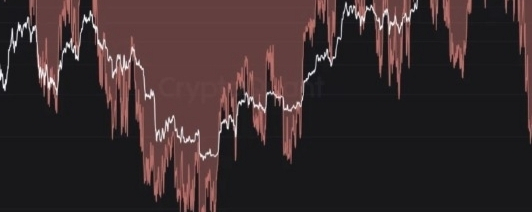
Article
pourquoi vous ne pourriez rien gagner avec la crypto 💩💩🚨🚨Les meilleurs altcoins vont bientôt dépasser l'ath précédent et
seront à 200k assez vite, puis vous pourrez avoir un autre bébé, tout cela va bientôt arriver, mais vous ne serez pas de la partie si vous ne survivez pas.
🚨🚨🚨🚨🚨🚨La clé est de gérer votre risque en conséquence
pourquoi vous ne pourriez rien gagner avec la crypto 💩💩🚨🚨
Les meilleurs altcoins vont bientôt dépasser l'ath précédent et
seront à 200k assez vite, puis vous pourrez avoir un autre bébé, tout cela va bientôt arriver, mais vous ne serez pas de la partie si vous ne survivez pas.
🚨🚨🚨🚨🚨🚨La clé est de gérer votre risque en conséquence
seront à 200k assez vite, puis vous pourrez avoir un autre bébé, tout cela va bientôt arriver, mais vous ne serez pas de la partie si vous ne survivez pas.
🚨🚨🚨🚨🚨🚨La clé est de gérer votre risque en conséquence
1
43
·
--
Haussier
Fomo est mort !!, $BTC prompt it 🚨🚨🚨💯😭
Je pense que cet effondrement montre maintenant ce qui compte vraiment.
L'engouement est bien loin et maintenant nous pouvons voir clairement ce que nous ne pouvions pas voir auparavant.
$ETH
Fomo est mort !!, $BTC prompt it 🚨🚨🚨💯😭
Je pense que cet effondrement montre maintenant ce qui compte vraiment.
L'engouement est bien loin et maintenant nous pouvons voir clairement ce que nous ne pouvions pas voir auparavant.
$ETH
Je pense que cet effondrement montre maintenant ce qui compte vraiment.
L'engouement est bien loin et maintenant nous pouvons voir clairement ce que nous ne pouvions pas voir auparavant.
$ETH
1
1
115
😕
😕

Roy Prochazka LhKH
·
--
Frère, c'est ce que je viens de vivre récemment, perdre plus de 4000 $ en contrats à terme 😔
78
·
--
Haussier
🚨Un moyen le plus rapide de perdre tout votre argent en crypto 🚨🚨🚨🚨🚨🚨💯💯💯💯📢📢📢
?
Comprendre comment les gens perdent leur argent en crypto est une chose très importante à faire pour pouvoir éviter de tels pièges essentiellement pour les nouveaux investisseurs qui n'ont pas beaucoup d'expérience sur le marché, vous devez comprendre que perdre tout votre argent en crypto est plus douloureux que la joie de gagner beaucoup d'argent en crypto, c'est pourquoi vous devez avoir une bonne stratégie de gestion des risques afin que perdre tout votre argent ne vous force pas à quitter le marché, croyez-moi, vous n'êtes pas prêt à perdre tout votre argent.
Il existe de nombreuses façons de perdre de l'argent en crypto-monnaie, mais le moyen le plus rapide de perdre de l'argent en crypto-monnaie est de
{penser que la crypto-monnaie vous rendra riche}
Vous m'avez bien entendu, penser que la crypto-monnaie vous rendra riche semble simple, mais une émotion très dangereuse y est toujours attachée, c'est la raison pour laquelle les gens surexploitent le trading à terme et finissent par faire exploser leur compte.
C'est la raison pour laquelle les gens mettent tout leur argent sur des pièces de monnaie mèmes frauduleuses et perdent tout leur argent
C'est la raison pour laquelle les gens ont peur des projets sans recherche et finissent par avoir des regrets
Les conséquences de cette seule pensée sont infinies, avoir à l'esprit que vous devez devenir riche en crypto-monnaie vous amènera toujours à prendre des risques stupides que vous finirez par regretter.
Restez en sécurité ✌️
#BTC
🚨Un moyen le plus rapide de perdre tout votre argent en crypto 🚨🚨🚨🚨🚨🚨💯💯💯💯📢📢📢
?
Comprendre comment les gens perdent leur argent en crypto est une chose très importante à faire pour pouvoir éviter de tels pièges essentiellement pour les nouveaux investisseurs qui n'ont pas beaucoup d'expérience sur le marché, vous devez comprendre que perdre tout votre argent en crypto est plus douloureux que la joie de gagner beaucoup d'argent en crypto, c'est pourquoi vous devez avoir une bonne stratégie de gestion des risques afin que perdre tout votre argent ne vous force pas à quitter le marché, croyez-moi, vous n'êtes pas prêt à perdre tout votre argent.
Il existe de nombreuses façons de perdre de l'argent en crypto-monnaie, mais le moyen le plus rapide de perdre de l'argent en crypto-monnaie est de
{penser que la crypto-monnaie vous rendra riche}
Vous m'avez bien entendu, penser que la crypto-monnaie vous rendra riche semble simple, mais une émotion très dangereuse y est toujours attachée, c'est la raison pour laquelle les gens surexploitent le trading à terme et finissent par faire exploser leur compte.
C'est la raison pour laquelle les gens mettent tout leur argent sur des pièces de monnaie mèmes frauduleuses et perdent tout leur argent
C'est la raison pour laquelle les gens ont peur des projets sans recherche et finissent par avoir des regrets
Les conséquences de cette seule pensée sont infinies, avoir à l'esprit que vous devez devenir riche en crypto-monnaie vous amènera toujours à prendre des risques stupides que vous finirez par regretter.
Restez en sécurité ✌️
#BTC
?
Comprendre comment les gens perdent leur argent en crypto est une chose très importante à faire pour pouvoir éviter de tels pièges essentiellement pour les nouveaux investisseurs qui n'ont pas beaucoup d'expérience sur le marché, vous devez comprendre que perdre tout votre argent en crypto est plus douloureux que la joie de gagner beaucoup d'argent en crypto, c'est pourquoi vous devez avoir une bonne stratégie de gestion des risques afin que perdre tout votre argent ne vous force pas à quitter le marché, croyez-moi, vous n'êtes pas prêt à perdre tout votre argent.
Il existe de nombreuses façons de perdre de l'argent en crypto-monnaie, mais le moyen le plus rapide de perdre de l'argent en crypto-monnaie est de
{penser que la crypto-monnaie vous rendra riche}
Vous m'avez bien entendu, penser que la crypto-monnaie vous rendra riche semble simple, mais une émotion très dangereuse y est toujours attachée, c'est la raison pour laquelle les gens surexploitent le trading à terme et finissent par faire exploser leur compte.
C'est la raison pour laquelle les gens mettent tout leur argent sur des pièces de monnaie mèmes frauduleuses et perdent tout leur argent
C'est la raison pour laquelle les gens ont peur des projets sans recherche et finissent par avoir des regrets
Les conséquences de cette seule pensée sont infinies, avoir à l'esprit que vous devez devenir riche en crypto-monnaie vous amènera toujours à prendre des risques stupides que vous finirez par regretter.
Restez en sécurité ✌️
#BTC

8
4
4
7k
·
--
Haussier
De 10 $ à 1 M$, voyez comment en faire votre réalité.
La seule chose qui limite votre capacité à gagner suffisamment d'argent sur ce marché est votre peur et votre cupidité, lorsqu'il s'agit de transformer une petite somme en une somme raisonnable, ce n'est qu'une question de temps et de votre capacité à apprendre la bonne façon d'allouer votre argent.
Si vous n'avez que 10 $ comme liquidité et que vous vous demandez si vous pouvez obtenir un rendement raisonnable de vos 10 $ ? La réponse est oui, et c'est ce que cet article est sur le point de vous montrer comment,
passer de 10 $ à 1 M$ est clairement un 100 000x, n'est-ce pas ? C'est un rendement fou, mais que se passe-t-il si je vous dis qu'il existe des moyens éprouvés de réaliser ce type de rendement en crypto, connaître le bon moment et avoir les bonnes informations fait partie des outils les plus puissants pour réaliser le meilleur rendement en crypto, en ce moment, les pièces meme et les pièces de jeu font partie des récits les plus en vogue qui peuvent vous rapporter un rendement sérieux si vous pouvez faire une bonne recherche et trouver la bonne.
trouvez un projet avec une capitalisation boursière inférieure à 1 million de dollars avec une équipe solide et une communauté dédiée, si vous êtes convaincu d'investir, mettez 5 $ et gardez les 5 $ en stable (USDT)
après avoir investi, ne vendez jamais jusqu'à ce que le prix monte très haut, de cette façon vous pouvez multiplier par 100 vos 5 $ et continuer à investir jusqu'à ce que votre objectif de 1 million de dollars soit atteint.
$BTC
De 10 $ à 1 M$, voyez comment en faire votre réalité.
La seule chose qui limite votre capacité à gagner suffisamment d'argent sur ce marché est votre peur et votre cupidité, lorsqu'il s'agit de transformer une petite somme en une somme raisonnable, ce n'est qu'une question de temps et de votre capacité à apprendre la bonne façon d'allouer votre argent.
Si vous n'avez que 10 $ comme liquidité et que vous vous demandez si vous pouvez obtenir un rendement raisonnable de vos 10 $ ? La réponse est oui, et c'est ce que cet article est sur le point de vous montrer comment,
passer de 10 $ à 1 M$ est clairement un 100 000x, n'est-ce pas ? C'est un rendement fou, mais que se passe-t-il si je vous dis qu'il existe des moyens éprouvés de réaliser ce type de rendement en crypto, connaître le bon moment et avoir les bonnes informations fait partie des outils les plus puissants pour réaliser le meilleur rendement en crypto, en ce moment, les pièces meme et les pièces de jeu font partie des récits les plus en vogue qui peuvent vous rapporter un rendement sérieux si vous pouvez faire une bonne recherche et trouver la bonne.
trouvez un projet avec une capitalisation boursière inférieure à 1 million de dollars avec une équipe solide et une communauté dédiée, si vous êtes convaincu d'investir, mettez 5 $ et gardez les 5 $ en stable (USDT)
après avoir investi, ne vendez jamais jusqu'à ce que le prix monte très haut, de cette façon vous pouvez multiplier par 100 vos 5 $ et continuer à investir jusqu'à ce que votre objectif de 1 million de dollars soit atteint.
$BTC
La seule chose qui limite votre capacité à gagner suffisamment d'argent sur ce marché est votre peur et votre cupidité, lorsqu'il s'agit de transformer une petite somme en une somme raisonnable, ce n'est qu'une question de temps et de votre capacité à apprendre la bonne façon d'allouer votre argent.
Si vous n'avez que 10 $ comme liquidité et que vous vous demandez si vous pouvez obtenir un rendement raisonnable de vos 10 $ ? La réponse est oui, et c'est ce que cet article est sur le point de vous montrer comment,
passer de 10 $ à 1 M$ est clairement un 100 000x, n'est-ce pas ? C'est un rendement fou, mais que se passe-t-il si je vous dis qu'il existe des moyens éprouvés de réaliser ce type de rendement en crypto, connaître le bon moment et avoir les bonnes informations fait partie des outils les plus puissants pour réaliser le meilleur rendement en crypto, en ce moment, les pièces meme et les pièces de jeu font partie des récits les plus en vogue qui peuvent vous rapporter un rendement sérieux si vous pouvez faire une bonne recherche et trouver la bonne.
trouvez un projet avec une capitalisation boursière inférieure à 1 million de dollars avec une équipe solide et une communauté dédiée, si vous êtes convaincu d'investir, mettez 5 $ et gardez les 5 $ en stable (USDT)
après avoir investi, ne vendez jamais jusqu'à ce que le prix monte très haut, de cette façon vous pouvez multiplier par 100 vos 5 $ et continuer à investir jusqu'à ce que votre objectif de 1 million de dollars soit atteint.
$BTC
369
·
--
Haussier
Ces pièces seront probablement multipliées par 20 avant la fin de 2025
1.$STX
2.$PEPE
3.Bonk
4.beamx
5.POL
6.$JASMY
7.FET
N'oubliez pas que la crypto est un marché très volatil et que si vous n'êtes pas encore un investisseur chevronné, le marché jouera probablement avec vos émotions, en essayant de vous faire vendre tôt ou de vous faire peur (peur et cupidité), mais le calme et la patience sont ce dont vous avez besoin, une fois que vous avez de bons projets dans votre portefeuille, il n'y a pas lieu de paniquer si vous faites vraiment la bonne chose. Restez en sécurité
Ces pièces seront probablement multipliées par 20 avant la fin de 2025
1.$STX
2.$PEPE
3.Bonk
4.beamx
5.POL
6.$JASMY
7.FET
N'oubliez pas que la crypto est un marché très volatil et que si vous n'êtes pas encore un investisseur chevronné, le marché jouera probablement avec vos émotions, en essayant de vous faire vendre tôt ou de vous faire peur (peur et cupidité), mais le calme et la patience sont ce dont vous avez besoin, une fois que vous avez de bons projets dans votre portefeuille, il n'y a pas lieu de paniquer si vous faites vraiment la bonne chose. Restez en sécurité
1.$STX
2.$PEPE
3.Bonk
4.beamx
5.POL
6.$JASMY
7.FET
N'oubliez pas que la crypto est un marché très volatil et que si vous n'êtes pas encore un investisseur chevronné, le marché jouera probablement avec vos émotions, en essayant de vous faire vendre tôt ou de vous faire peur (peur et cupidité), mais le calme et la patience sont ce dont vous avez besoin, une fois que vous avez de bons projets dans votre portefeuille, il n'y a pas lieu de paniquer si vous faites vraiment la bonne chose. Restez en sécurité
5
3.5k
Connectez-vous pour découvrir plus de contenu
Rejoignez la communauté mondiale des adeptes de cryptomonnaies sur Binance Square
⚡️ Suviez les dernières informations importantes sur les cryptomonnaies.
💬 Jugé digne de confiance par la plus grande plateforme d’échange de cryptomonnaies au monde.
👍 Découvrez les connaissances que partagent les créateurs vérifiés.
Adresse e-mail/Nº de téléphone