
크립토 거래노트
17 Publications

크립토 거래노트
Signaler
Bloquer l’utilisateur
바이낸스 가입·인증·보안·입출금을 공식 자료로 설명하는 독립 가이드. 공식 고객지원이 아닙니다. Independent guides on signup, verification and security.
0 Suivis
0 Abonnés
0 J’aime
Publications
·
--
La moyenne mobile simple peut augmenter même si le prix baisseMême si le dernier prix baisse, la moyenne mobile simple (SMA) sur 3 périodes peut augmenter. Cela s’explique par l’ajout d’une nouvelle valeur à la moyenne et le retrait d’une autre.
Supposons que les cours de clôture hypothétiques soient successivement de 80, 100 et 110. La SMA sur 3 périodes est alors de 96,67. Imaginons que le cours de clôture suivant soit de 105. Le prix a baissé par rapport au précédent, qui était de 110, mais le nouvel échantillon est composé de 100, 110 et 105. Comme l’ancienne valeur de 80 est retirée, la moyenne monte à 105. Il est donc tout à fait possible que 105 soit inférieur à 110, mais supérieur au 80 qui vient d’être retiré.
La moyenne mobile simple peut augmenter même si le prix baisse
Même si le dernier prix baisse, la moyenne mobile simple (SMA) sur 3 périodes peut augmenter. Cela s’explique par l’ajout d’une nouvelle valeur à la moyenne et le retrait d’une autre.
Supposons que les cours de clôture hypothétiques soient successivement de 80, 100 et 110. La SMA sur 3 périodes est alors de 96,67. Imaginons que le cours de clôture suivant soit de 105. Le prix a baissé par rapport au précédent, qui était de 110, mais le nouvel échantillon est composé de 100, 110 et 105. Comme l’ancienne valeur de 80 est retirée, la moyenne monte à 105. Il est donc tout à fait possible que 105 soit inférieur à 110, mais supérieur au 80 qui vient d’être retiré.
Supposons que les cours de clôture hypothétiques soient successivement de 80, 100 et 110. La SMA sur 3 périodes est alors de 96,67. Imaginons que le cours de clôture suivant soit de 105. Le prix a baissé par rapport au précédent, qui était de 110, mais le nouvel échantillon est composé de 100, 110 et 105. Comme l’ancienne valeur de 80 est retirée, la moyenne monte à 105. Il est donc tout à fait possible que 105 soit inférieur à 110, mais supérieur au 80 qui vient d’être retiré.
75
·
--
Un stablecoin ancré à 1 $ ne se vend pas nécessairement 1 $Un ancrage au dollar désigne la valeur qu’un stablecoin est conçu pour suivre. Pour évaluer une vente ou un remboursement, vérifiez le prix d’exécution et si vous pouvez obtenir un remboursement directement auprès de l’émetteur.
Prix cible et produit de la vente
Prenons un exemple fictif : un jeton vise une valeur de 1 $. Supposons qu’une vente de 1 000 jetons soit effectivement exécutée au prix de 0,997 $ par jeton. Le produit brut de la vente serait de 997 $, avant tout coût applicable. Le nombre de jetons multiplié par la valeur d’ancrage donnerait 1 000 $, mais ce n’est pas le prix utilisé pour la vente dans cet exemple.
Un stablecoin ancré à 1 $ ne se vend pas nécessairement 1 $
Un ancrage au dollar désigne la valeur qu’un stablecoin est conçu pour suivre. Pour évaluer une vente ou un remboursement, vérifiez le prix d’exécution et si vous pouvez obtenir un remboursement directement auprès de l’émetteur.
Prix cible et produit de la vente
Prenons un exemple fictif : un jeton vise une valeur de 1 $. Supposons qu’une vente de 1 000 jetons soit effectivement exécutée au prix de 0,997 $ par jeton. Le produit brut de la vente serait de 997 $, avant tout coût applicable. Le nombre de jetons multiplié par la valeur d’ancrage donnerait 1 000 $, mais ce n’est pas le prix utilisé pour la vente dans cet exemple.
56
·
--
Voir la traduction
휴대전화를 잃었을 때: 거래소 계정과 개인 지갑은 복구가 다릅니다거래소 계정과 개인 지갑은 같은 휴대전화에서 쓰더라도 복구 방식이 다를 수 있습니다. 앱에 다시 로그인하는 절차와 블록체인 자산을 움직일 권한을 되찾는 절차를 구분해 확인하세요.
거래소 계정: 서비스의 인증 절차부터
일반적인 수탁형 거래소 계정에서는 서비스 제공자가 개인키를 관리합니다. 사용자는 비밀번호·패스키·추가 인증 등으로 계정에 접근합니다. 이때 비밀번호를 잊거나 인증 기기를 잃었다면 해당 서비스가 제공하는 공식 계정 복구 절차가 출발점입니다.
신원 확인을 거쳐 접근을 되찾을 수 있는 경우가 있지만, 처리 기간이나 결과를 미리 단정할 수는 없습니다. 로그인 복구가 끝났다는 사실과 자산 출금이 즉시 가능한지도 따로 확인해야 합니다. 수탁형 서비스에는 운영사의 보안 사고나 계정 제한 같은 위험도 남습니다.
개인 지갑: 무엇으로 거래를 승인하는지 확인
비수탁형 지갑은 사용자가 개인키에 대한 통제권을 갖는 구조입니다. 복구 문구를 사용하는 지갑이라면, 그 문구는 단순히 앱 비밀번호를 바꾸는 데 쓰는 힌트가 아닙니다. 지갑 접근을 복원하는 핵심 정보이므로 거래소 로그인 비밀번호와 섞어 생각하면 안 됩니다.
예를 들어 기존 기기는 없어졌지만 올바른 복구 수단이 남아 있는 상황과, 복구 수단에도 접근할 수 없는 상황은 다릅니다. 일반적인 개인키 기반 지갑에서는 고객지원에 로그인 비밀번호 재설정을 요청하는 것만으로 잃어버린 개인키가 다시 생기지 않습니다.
다만 모든 지갑이 같은 복구 문구 방식을 쓰지는 않습니다. MPC나 스마트컨트랙트 지갑처럼 복구 설계가 다른 경우도 있습니다. 지갑 이름과 실제 설정을 확인한 뒤 그 지갑의 공식 복구 설명을 기준으로 판단하세요.
MPC 방식의 예를 보면, 거래 승인에는 설계상 정해진 수의 키 조각이 필요하고 그 조각을 보관하는 기기·참여자 구성도 지갑마다 다릅니다. 복구 문구를 직접 적지 않는다는 설명을 “복구 준비가 필요 없다”는 뜻으로 받아들이지는 마세요. 본인 지갑이 요구하는 기기·계정 접근과 백업 조건을 공식 안내에서 따로 확인해야 합니다.
기기 초기화 전에 복구 방법부터 확인
어떤 서비스의 계정인지, 어떤 지갑인지, 필요한 복구 수단을 어디서 확인할 수 있는지부터 정리합니다. 아직 기존 기기를 사용할 수 있다면 초기화나 앱 삭제 전에 공식 안내에서 필요한 준비를 확인하세요. 화면 잠금 비밀번호, 거래소 비밀번호, 지갑 복구 문구는 서로 대신할 수 있는 정보가 아닙니다. 복구 문구를 쓰는 지갑이라면 해당 지갑이 안내하는 안전한 백업 방법도 함께 확인하세요.
바이낸스 계정의 패스키를 쓰고 있다면, [패스키 저장 방식과 기기 변경 점검](https://www.binance.com/en-AE/square/post/386246417946758)도 함께 확인하세요. 지갑 복구와 별도로 준비할 계정 인증 항목을 다룹니다.
상담을 받더라도 비밀번호·일회용 인증 코드·개인키·복구 문구를 댓글이나 메시지로 보내지 마세요. 지갑 복구 과정에서 입력이 필요하다면, 직접 확인한 공식 앱의 복구 절차인지 먼저 살펴야 합니다. 이 글은 특정 지갑의 복구 성공을 약속하거나 보관 방식을 추천하는 안내가 아닙니다.
관리 주체와 복구 방식의 기본 차이: Binance Academy — Custodial vs. Non-Custodial Wallets.
https://www.binance.com/en/academy/articles/custodial-vs-non-custodial-wallets-what-s-the-difference
MPC의 키 조각·복구 설계 설명: Binance Academy — What Are Multi-Party Computation (MPC) Wallets?
https://www.binance.com/en/academy/articles/what-are-multi-party-computation-mpc-wallets
휴대전화를 잃었을 때: 거래소 계정과 개인 지갑은 복구가 다릅니다
거래소 계정과 개인 지갑은 같은 휴대전화에서 쓰더라도 복구 방식이 다를 수 있습니다. 앱에 다시 로그인하는 절차와 블록체인 자산을 움직일 권한을 되찾는 절차를 구분해 확인하세요.
거래소 계정: 서비스의 인증 절차부터
일반적인 수탁형 거래소 계정에서는 서비스 제공자가 개인키를 관리합니다. 사용자는 비밀번호·패스키·추가 인증 등으로 계정에 접근합니다. 이때 비밀번호를 잊거나 인증 기기를 잃었다면 해당 서비스가 제공하는 공식 계정 복구 절차가 출발점입니다.
신원 확인을 거쳐 접근을 되찾을 수 있는 경우가 있지만, 처리 기간이나 결과를 미리 단정할 수는 없습니다. 로그인 복구가 끝났다는 사실과 자산 출금이 즉시 가능한지도 따로 확인해야 합니다. 수탁형 서비스에는 운영사의 보안 사고나 계정 제한 같은 위험도 남습니다.
개인 지갑: 무엇으로 거래를 승인하는지 확인
비수탁형 지갑은 사용자가 개인키에 대한 통제권을 갖는 구조입니다. 복구 문구를 사용하는 지갑이라면, 그 문구는 단순히 앱 비밀번호를 바꾸는 데 쓰는 힌트가 아닙니다. 지갑 접근을 복원하는 핵심 정보이므로 거래소 로그인 비밀번호와 섞어 생각하면 안 됩니다.
예를 들어 기존 기기는 없어졌지만 올바른 복구 수단이 남아 있는 상황과, 복구 수단에도 접근할 수 없는 상황은 다릅니다. 일반적인 개인키 기반 지갑에서는 고객지원에 로그인 비밀번호 재설정을 요청하는 것만으로 잃어버린 개인키가 다시 생기지 않습니다.
다만 모든 지갑이 같은 복구 문구 방식을 쓰지는 않습니다. MPC나 스마트컨트랙트 지갑처럼 복구 설계가 다른 경우도 있습니다. 지갑 이름과 실제 설정을 확인한 뒤 그 지갑의 공식 복구 설명을 기준으로 판단하세요.
MPC 방식의 예를 보면, 거래 승인에는 설계상 정해진 수의 키 조각이 필요하고 그 조각을 보관하는 기기·참여자 구성도 지갑마다 다릅니다. 복구 문구를 직접 적지 않는다는 설명을 “복구 준비가 필요 없다”는 뜻으로 받아들이지는 마세요. 본인 지갑이 요구하는 기기·계정 접근과 백업 조건을 공식 안내에서 따로 확인해야 합니다.
기기 초기화 전에 복구 방법부터 확인
어떤 서비스의 계정인지, 어떤 지갑인지, 필요한 복구 수단을 어디서 확인할 수 있는지부터 정리합니다. 아직 기존 기기를 사용할 수 있다면 초기화나 앱 삭제 전에 공식 안내에서 필요한 준비를 확인하세요. 화면 잠금 비밀번호, 거래소 비밀번호, 지갑 복구 문구는 서로 대신할 수 있는 정보가 아닙니다. 복구 문구를 쓰는 지갑이라면 해당 지갑이 안내하는 안전한 백업 방법도 함께 확인하세요.
바이낸스 계정의 패스키를 쓰고 있다면, 패스키 저장 방식과 기기 변경 점검도 함께 확인하세요. 지갑 복구와 별도로 준비할 계정 인증 항목을 다룹니다.
상담을 받더라도 비밀번호·일회용 인증 코드·개인키·복구 문구를 댓글이나 메시지로 보내지 마세요. 지갑 복구 과정에서 입력이 필요하다면, 직접 확인한 공식 앱의 복구 절차인지 먼저 살펴야 합니다. 이 글은 특정 지갑의 복구 성공을 약속하거나 보관 방식을 추천하는 안내가 아닙니다.
관리 주체와 복구 방식의 기본 차이: Binance Academy — Custodial vs. Non-Custodial Wallets.
https://www.binance.com/en/academy/articles/custodial-vs-non-custodial-wallets-what-s-the-difference
MPC의 키 조각·복구 설계 설명: Binance Academy — What Are Multi-Party Computation (MPC) Wallets?
https://www.binance.com/en/academy/articles/what-are-multi-party-computation-mpc-wallets
59
·
--
Volume de 15 contrats, intérêt ouvert de 7 contrats : pourquoi est-ce possible sur un même marché ?Le volume des transactions peut augmenter alors que l’intérêt ouvert diminue. Le volume compte les contrats exécutés sur une période donnée, tandis que l’intérêt ouvert (OI) compte les contrats qui n’ont pas encore été clôturés ou réglés à un moment précis.
Comptons les contrats de bout en bout
Partons d’un marché à terme fictif où l’intérêt ouvert est nul. Supposons que seules les trois transactions ci-dessous aient lieu au cours de la même période de calcul. Toutes les unités sont exprimées en nombre de contrats ; il ne s’agit pas de chiffres réels du marché Binance ni d’un historique de transactions réel.
Volume de 15 contrats, intérêt ouvert de 7 contrats : pourquoi est-ce possible sur un même marché ?
Le volume des transactions peut augmenter alors que l’intérêt ouvert diminue. Le volume compte les contrats exécutés sur une période donnée, tandis que l’intérêt ouvert (OI) compte les contrats qui n’ont pas encore été clôturés ou réglés à un moment précis.
Comptons les contrats de bout en bout
Partons d’un marché à terme fictif où l’intérêt ouvert est nul. Supposons que seules les trois transactions ci-dessous aient lieu au cours de la même période de calcul. Toutes les unités sont exprimées en nombre de contrats ; il ne s’agit pas de chiffres réels du marché Binance ni d’un historique de transactions réel.
64
·
--
Voir la traduction
Crypto Market Cap vs. Price: Is a $1 Token Really Cheaper?When comparing a token priced at $1 with one priced at $100, check how many units exist as well as the unit price. A lower unit price does not, by itself, mean the asset is undervalued.
Put supply next to the price
Consider two fictional tokens, using prices and circulating supplies measured at the same time.
Token A: $1 per token × 1 billion circulating tokens = $1 billion market capitalization.
Token B: $100 per token × 5 million circulating tokens = $500 million market capitalization.
A has the lower unit price, yet its circulating market value is twice as large. Neither calculation tells us which project deserves that valuation.
A larger market cap is not a larger cash account
Market capitalization applies the current quoted price to the circulating supply. It does not measure how much cash investors have put in, and it is not a pool of money waiting to pay sellers.
Keep A’s supply unchanged and let its quoted price move from $1 to $1.10. Its calculated market cap increases from $1 billion to $1.1 billion. That arithmetic does not prove that buyers deposited another $100 million. The price can move as trades meet the orders available in the market.
For the same reason, multiplying all tokens by today’s quote does not mean all holders could sell at that price. The size and prices of available buy orders matter.
Market cap vs. FDV: check the supply not yet circulating
Suppose fictional token A has a maximum supply of 10 billion tokens. At the same $1 quote, a calculation using that maximum supply gives a fully diluted valuation, or FDV, of $10 billion. That is a scenario using today’s price, not a forecast of a future market cap.
Check the data provider’s definition: FDV may use total supply or maximum supply. Also check what supply is still locked, when it may become transferable and whether future issuance can change the figures. An unlock schedule is information about supply; it is not a guarantee that the price will fall on a particular date.
A useful comparison starts with three questions
Are the price and supply figures from the same point in time? Which supply definition is being used? Is there enough market liquidity for the size of transaction being considered?
These checks make the numbers more meaningful. They do not establish fair value or turn a low-priced token into a bargain. The two tokens and all dollar figures above are invented solely to explain the calculation; no purchase is being recommended.
Next in this series: APR versus APY, and how a token balance can grow while its dollar value falls.
Definition and supply distinctions: Binance Academy — Market Capitalization.
https://www.binance.com/en/academy/glossary/market-capitalization
Crypto Market Cap vs. Price: Is a $1 Token Really Cheaper?
When comparing a token priced at $1 with one priced at $100, check how many units exist as well as the unit price. A lower unit price does not, by itself, mean the asset is undervalued.
Put supply next to the price
Consider two fictional tokens, using prices and circulating supplies measured at the same time.
Token A: $1 per token × 1 billion circulating tokens = $1 billion market capitalization.
Token B: $100 per token × 5 million circulating tokens = $500 million market capitalization.
A has the lower unit price, yet its circulating market value is twice as large. Neither calculation tells us which project deserves that valuation.
A larger market cap is not a larger cash account
Market capitalization applies the current quoted price to the circulating supply. It does not measure how much cash investors have put in, and it is not a pool of money waiting to pay sellers.
Keep A’s supply unchanged and let its quoted price move from $1 to $1.10. Its calculated market cap increases from $1 billion to $1.1 billion. That arithmetic does not prove that buyers deposited another $100 million. The price can move as trades meet the orders available in the market.
For the same reason, multiplying all tokens by today’s quote does not mean all holders could sell at that price. The size and prices of available buy orders matter.
Market cap vs. FDV: check the supply not yet circulating
Suppose fictional token A has a maximum supply of 10 billion tokens. At the same $1 quote, a calculation using that maximum supply gives a fully diluted valuation, or FDV, of $10 billion. That is a scenario using today’s price, not a forecast of a future market cap.
Check the data provider’s definition: FDV may use total supply or maximum supply. Also check what supply is still locked, when it may become transferable and whether future issuance can change the figures. An unlock schedule is information about supply; it is not a guarantee that the price will fall on a particular date.
A useful comparison starts with three questions
Are the price and supply figures from the same point in time? Which supply definition is being used? Is there enough market liquidity for the size of transaction being considered?
These checks make the numbers more meaningful. They do not establish fair value or turn a low-priced token into a bargain. The two tokens and all dollar figures above are invented solely to explain the calculation; no purchase is being recommended.
Next in this series: APR versus APY, and how a token balance can grow while its dollar value falls.
Definition and supply distinctions: Binance Academy — Market Capitalization.
https://www.binance.com/en/academy/glossary/market-capitalization
65
·
--
Paramètres de sécurité Binance : clés d’accès, code anti-hameçonnage et changement d’appareilDans le menu de sécurité de Binance, les clés d’accès et les applications d’authentification servent à accéder au compte ou à autoriser des opérations importantes. Le code anti-hameçonnage est un code d’identification qui sert à vérifier les messages reçus. Avant de procéder à la configuration, distinguez les situations dans lesquelles chaque fonction est utilisée.
Vérifiez où votre clé d’accès est enregistrée et comment y accéder à nouveau, afin de pouvoir continuer à l’utiliser même après avoir changé d’appareil.
Commencez par choisir les étapes adaptées à votre situation
Si vous configurez la sécurité pour la première fois, vérifiez où votre clé d’accès sera enregistrée lors de son ajout, configurez un code anti-hameçonnage, puis vérifiez l’adresse e-mail associée et l’activité du compte.
Paramètres de sécurité Binance : clés d’accès, code anti-hameçonnage et changement d’appareil
Dans le menu de sécurité de Binance, les clés d’accès et les applications d’authentification servent à accéder au compte ou à autoriser des opérations importantes. Le code anti-hameçonnage est un code d’identification qui sert à vérifier les messages reçus. Avant de procéder à la configuration, distinguez les situations dans lesquelles chaque fonction est utilisée.
Vérifiez où votre clé d’accès est enregistrée et comment y accéder à nouveau, afin de pouvoir continuer à l’utiliser même après avoir changé d’appareil.
Commencez par choisir les étapes adaptées à votre situation
Si vous configurez la sécurité pour la première fois, vérifiez où votre clé d’accès sera enregistrée lors de son ajout, configurez un code anti-hameçonnage, puis vérifiez l’adresse e-mail associée et l’activité du compte.
75
·
--
Un même nom de jeton ne désigne pas forcément la même cryptomonnaie : trois vérifications à faire avant un dépôtMême si un jeton portant un nom familier apparaît dans votre portefeuille ou si quelqu’un vous propose de vous envoyer une cryptomonnaie portant le même nom, il est difficile de déterminer qu’il s’agit du même actif en se fiant uniquement au nom et au logo. La FAQ officielle de Binance explique également que plusieurs projets peuvent utiliser le même symbole de cotation.
Avant tout dépôt, vérifiez ensemble ces trois éléments : les informations officielles de l’actif, le réseau blockchain et, s’il s’agit d’un jeton basé sur un contrat intelligent, l’adresse du contrat sur ce réseau.
Un même nom de jeton ne désigne pas forcément la même cryptomonnaie : trois vérifications à faire avant un dépôt
Même si un jeton portant un nom familier apparaît dans votre portefeuille ou si quelqu’un vous propose de vous envoyer une cryptomonnaie portant le même nom, il est difficile de déterminer qu’il s’agit du même actif en se fiant uniquement au nom et au logo. La FAQ officielle de Binance explique également que plusieurs projets peuvent utiliser le même symbole de cotation.
Avant tout dépôt, vérifiez ensemble ces trois éléments : les informations officielles de l’actif, le réseau blockchain et, s’il s’agit d’un jeton basé sur un contrat intelligent, l’adresse du contrat sur ce réseau.
Avant tout dépôt, vérifiez ensemble ces trois éléments : les informations officielles de l’actif, le réseau blockchain et, s’il s’agit d’un jeton basé sur un contrat intelligent, l’adresse du contrat sur ce réseau.
64
·
--
Pourquoi un ordre au marché est-il exécuté à un prix différent de celui affiché ? Calcul avec 3 lignes de cotationSi vous avez passé un ordre après avoir vu 100 USDT, mais que le prix moyen d’exécution est de 101,8 USDT, vérifiez d’abord les cours affichés au moment de l’ordre et le détail réel de son exécution. L’écart de prix et les frais de transaction doivent être calculés séparément.
Le spread est l’écart entre les deux cours affichés à l’instant
Dans un carnet d’ordres fictif, si le cours acheteur le plus élevé est de 99 USDT et le cours vendeur le plus bas de 100 USDT, le spread, c’est-à-dire l’écart entre les cours acheteur et vendeur, est de 1 USDT. Le prix auquel se rencontrent les ordres qui cherchent à acheter ou à vendre immédiatement est donc différent. Il faut également distinguer le dernier prix exécuté affiché à l’écran des cours auxquels vous pouvez négocier actuellement.
Pourquoi un ordre au marché est-il exécuté à un prix différent de celui affiché ? Calcul avec 3 lignes de cotation
Si vous avez passé un ordre après avoir vu 100 USDT, mais que le prix moyen d’exécution est de 101,8 USDT, vérifiez d’abord les cours affichés au moment de l’ordre et le détail réel de son exécution. L’écart de prix et les frais de transaction doivent être calculés séparément.
Le spread est l’écart entre les deux cours affichés à l’instant
Dans un carnet d’ordres fictif, si le cours acheteur le plus élevé est de 99 USDT et le cours vendeur le plus bas de 100 USDT, le spread, c’est-à-dire l’écart entre les cours acheteur et vendeur, est de 1 USDT. Le prix auquel se rencontrent les ordres qui cherchent à acheter ou à vendre immédiatement est donc différent. Il faut également distinguer le dernier prix exécuté affiché à l’écran des cours auxquels vous pouvez négocier actuellement.
87
·
--
Voir la traduction
20% 손실 뒤 20% 반등하면 원금일까요?20% 하락 뒤 20% 반등을 계산하면 출발 금액으로 돌아오지 못합니다. 하락 전과 반등 전의 기준 금액이 달라지기 때문입니다.
추가 입출금·수수료·세금이 없는 가상의 평가액 100을 놓고 보겠습니다. 20% 하락하면 80입니다. 여기서 20% 상승하면 늘어나는 금액은 80의 20%인 16이므로, 평가액은 96이 됩니다. 처음의 100보다 아직 4가 적습니다.
80에서 다시 100이 되려면 20이 늘어야 합니다. 현재 금액을 기준으로 나누면 20 ÷ 80 = 0.25, 즉 25% 상승이 필요합니다. 하락할 때의 기준은 100, 반등할 때의 기준은 80이기 때문에 같은 20%가 서로 상쇄되지 않는 겁니다.
같은 가정으로 계산하면 10% 손실 뒤에는 약 11.11%, 20% 손실 뒤에는 25%, 50% 손실 뒤에는 100% 상승이 있어야 출발 금액으로 돌아옵니다.
직접 계산하려면 손실률을 소수로 바꿔 L이라고 두고, L ÷ (1 − L)을 구한 다음 100을 곱하세요. L은 0 이상 1 미만인 경우에 적용합니다. 20% 손실이라면 0.2 ÷ 0.8 × 100 = 25%입니다.
이 숫자는 만회할 목표 수익률이나 추가 매매 신호가 아닙니다. 같은 퍼센트라도 기준 금액이 달라진다는 계산일 뿐입니다. 실제 성과에는 비용과 입출금도 따로 반영해야 합니다. 거래 기록을 볼 때 수익률 옆에 시작 금액과 끝 금액을 함께 적으면 이런 착각을 줄일 수 있습니다.
계산의 기준: [Binance Academy의 ROI 설명](https://www.binance.com/en/academy/articles/how-to-calculate-return-on-investment-roi). 위 100→80→96 예제와 회복률은 별도로 구성하고 계산한 가상 사례입니다.
20% 손실 뒤 20% 반등하면 원금일까요?
20% 하락 뒤 20% 반등을 계산하면 출발 금액으로 돌아오지 못합니다. 하락 전과 반등 전의 기준 금액이 달라지기 때문입니다.
추가 입출금·수수료·세금이 없는 가상의 평가액 100을 놓고 보겠습니다. 20% 하락하면 80입니다. 여기서 20% 상승하면 늘어나는 금액은 80의 20%인 16이므로, 평가액은 96이 됩니다. 처음의 100보다 아직 4가 적습니다.
80에서 다시 100이 되려면 20이 늘어야 합니다. 현재 금액을 기준으로 나누면 20 ÷ 80 = 0.25, 즉 25% 상승이 필요합니다. 하락할 때의 기준은 100, 반등할 때의 기준은 80이기 때문에 같은 20%가 서로 상쇄되지 않는 겁니다.
같은 가정으로 계산하면 10% 손실 뒤에는 약 11.11%, 20% 손실 뒤에는 25%, 50% 손실 뒤에는 100% 상승이 있어야 출발 금액으로 돌아옵니다.
직접 계산하려면 손실률을 소수로 바꿔 L이라고 두고, L ÷ (1 − L)을 구한 다음 100을 곱하세요. L은 0 이상 1 미만인 경우에 적용합니다. 20% 손실이라면 0.2 ÷ 0.8 × 100 = 25%입니다.
이 숫자는 만회할 목표 수익률이나 추가 매매 신호가 아닙니다. 같은 퍼센트라도 기준 금액이 달라진다는 계산일 뿐입니다. 실제 성과에는 비용과 입출금도 따로 반영해야 합니다. 거래 기록을 볼 때 수익률 옆에 시작 금액과 끝 금액을 함께 적으면 이런 착각을 줄일 수 있습니다.
계산의 기준: Binance Academy의 ROI 설명. 위 100→80→96 예제와 회복률은 별도로 구성하고 계산한 가상 사례입니다.
96
·
--
Vous n’avez vérifié que le début et la fin de l’adresse de transfert ? 3 étapes pour prévenir l’empoisonnement d’adresseAprès avoir collé une adresse de transfert, vérifier seulement quelques caractères au début et à la fin peut vous faire passer à côté d’une attaque par empoisonnement d’adresse. Même si l’adresse apparaît dans l’historique récent de vos transactions, vérifiez qu’il s’agit bien de celle du destinataire auquel vous vouliez envoyer des fonds.
L’empoisonnement d’adresse est une technique qui consiste pour un attaquant à envoyer de petites sommes ou des jetons sans valeur depuis une adresse ressemblant à celle d’un destinataire habituel, afin que cette adresse apparaisse dans l’historique des transactions de l’utilisateur. L’objectif est de l’inciter à copier cette adresse depuis l’historique lors d’un prochain transfert. L’article officiel de sécurité de Binance recommande également de comparer l’adresse dans son intégralité, et pas seulement ses premiers et derniers caractères.
Vous n’avez vérifié que le début et la fin de l’adresse de transfert ? 3 étapes pour prévenir l’empoisonnement d’adresse
Après avoir collé une adresse de transfert, vérifier seulement quelques caractères au début et à la fin peut vous faire passer à côté d’une attaque par empoisonnement d’adresse. Même si l’adresse apparaît dans l’historique récent de vos transactions, vérifiez qu’il s’agit bien de celle du destinataire auquel vous vouliez envoyer des fonds.
L’empoisonnement d’adresse est une technique qui consiste pour un attaquant à envoyer de petites sommes ou des jetons sans valeur depuis une adresse ressemblant à celle d’un destinataire habituel, afin que cette adresse apparaisse dans l’historique des transactions de l’utilisateur. L’objectif est de l’inciter à copier cette adresse depuis l’historique lors d’un prochain transfert. L’article officiel de sécurité de Binance recommande également de comparer l’adresse dans son intégralité, et pas seulement ses premiers et derniers caractères.
L’empoisonnement d’adresse est une technique qui consiste pour un attaquant à envoyer de petites sommes ou des jetons sans valeur depuis une adresse ressemblant à celle d’un destinataire habituel, afin que cette adresse apparaisse dans l’historique des transactions de l’utilisateur. L’objectif est de l’inciter à copier cette adresse depuis l’historique lors d’un prochain transfert. L’article officiel de sécurité de Binance recommande également de comparer l’adresse dans son intégralité, et pas seulement ses premiers et derniers caractères.
78
·
--
Vous ne recevez pas l’e-mail de vérification Binance : étapes pour vérifier la réception et les erreurs de codeLes vérifications à effectuer ne sont pas les mêmes si vous ne recevez pas du tout l’e-mail de vérification de Binance ou si un message d’erreur s’affiche après avoir saisi le code reçu. Commencez par déterminer lequel de ces cas correspond au message d’erreur affiché à l’écran.
Si vous êtes en cours d’inscription, vérifiez l’adresse saisie. Si vous êtes en train de vous connecter, vérifiez l’adresse associée au compte existant. Les étapes ci-dessous permettent d’examiner progressivement le chemin de réception des e-mails et la demande d’authentification.
Commencez par déterminer où vous êtes bloqué
Vous ne recevez pas l’e-mail de vérification Binance : étapes pour vérifier la réception et les erreurs de code
Les vérifications à effectuer ne sont pas les mêmes si vous ne recevez pas du tout l’e-mail de vérification de Binance ou si un message d’erreur s’affiche après avoir saisi le code reçu. Commencez par déterminer lequel de ces cas correspond au message d’erreur affiché à l’écran.
Si vous êtes en cours d’inscription, vérifiez l’adresse saisie. Si vous êtes en train de vous connecter, vérifiez l’adresse associée au compte existant. Les étapes ci-dessous permettent d’examiner progressivement le chemin de réception des e-mails et la demande d’authentification.
Commencez par déterminer où vous êtes bloqué
77
·
--
Voir la traduction
Binance Referral Code: Sign-Up and Welcome Rewards ExplainedMarketing material for Binance; not investment advice.
This content is not intended for users in countries restricted under the Binance Affiliate Program. Check the current [restricted-countries guide](https://www.binance.com/en/support/faq/detail/4e65bc209c08424f85fec35accb0c8b0) for its scope.
During registration, check the signup route, the referral connection and any reward assigned to your account separately. A code can be linked successfully while a reward task is still unfinished.
If you are creating your first account, open the signup page below and keep the guide beside it. If you already use Binance, start with your existing account and the troubleshooting section further down.
[Create a Binance account](https://www.binance.com/register?ref=DE20OFFVIP)
Affiliate disclosure: This account may receive a commission when you sign up through this link under the applicable program. The referral code is DE20OFFVIP. Check the benefits and conditions displayed for your account.
Official information reviewed on 7 November 2026. Screens, regional availability and campaign terms can change.
What a Binance referral code does
A referral code records an invitation relationship. It helps distinguish who referred an account from which product or promotion the account can actually use. That distinction becomes useful when a signup page, a fee page and a rewards page show different information.
For example, a confirmation beside a referral field tells you about the connection. A trading-fee entry tells you what was charged for an execution. A voucher in the Rewards Hub has its own conditions. Reading each record for what it represents makes it much easier to understand the result.
Before you open the signup page
Check that the service you want is available where you actually live. An English article or a country code in a page address does not settle your eligibility. Use your real residence information and the requirements presented in the official account flow.
Have an email address or phone number you can continue to access. You may need it again for login and recovery. If you are unsure whether you already have an account, resolve that first rather than creating another one while comparing offers.
Decide whether you need a personal or entity account before proceeding. Binance's website registration guide says the account type cannot be changed after registration. A business account deserves its own setup process; it is not simply a personal account with a different display name.
How to use the referral link during signup
Choose your registration method. Follow the email, phone or supported social-signup option shown on the page. Read the terms before accepting them.Complete the contact and account steps. Check the email address carefully and follow the current password requirements.Confirm the referral connection. Binance's web guide describes an automatically filled code, a green tick and a Linked label when a referral link is connected. Read that status before finishing.Continue with identity verification and security. Creating an account does not complete KYC. Follow the verification requirements for your residence and enable the available account security controls.
Before continuing, confirm that the expected referral information appears in the official signup flow. Opening a different creator's link after a relationship is established is not a way to replace that relationship.
Welcome rewards: understanding the maximum 19,800 USD value
Binance's Affiliate-Boosted Welcome Bonus announcement describes rewards worth up to 19,800 USD: up to 100 USD in initial tasks and up to 19,700 USD in additional tasks after KYC. These are conditional rewards, not an automatic cash payment for registering.
Eligible newcomers must register through an affiliate admitted to the program, complete KYC within 30 days and finish their assigned tasks within the stated deadlines. Rewards can include trading-fee rebate vouchers and Earn trial funds. The announcement limits allocation to the first 1,000 eligible new referrals per affiliate in each 30-day cycle.
Task values, voucher types, allocation and regional eligibility can change. Read your actual Rewards Hub assignment before deciding whether to participate; the headline maximum is not the amount every account receives. The [official welcome-bonus announcement](https://www.binance.com/es-LA/support/announcement/detail/854ba3fda59648799882ff19b5296645) provides the program conditions.
How to read a reward without confusing it with cash
Start with the unit and the reward type. A number followed by USD can describe the stated value of a voucher, while a trial fund can provide temporary use under separate rules. The first practical question is what the reward lets you do.
Here is a hypothetical example, not a Binance offer: suppose a fee voucher has a face value of 50 USD and can reimburse eligible fees until it expires. If the qualifying fees you actually incur are 3 USD, the face value alone does not turn those 3 USD of fees into a 50 USD cash gift. You must read the reimbursement rules, cap and expiry together.
For a task-based offer, write down the required action, deadline and reward type on the same line. That small habit keeps the headline amount attached to its conditions. Do not add deposits or trades solely to chase a reward that would otherwise be irrelevant to your plans.
Comparing fees without mixing different costs
A useful comparison begins with the same product and the same transaction size. Spot execution fees, Futures execution fees and withdrawal costs describe different events. Comparing one against another will not tell you which account setup costs less.
For illustration, a 1,000 USDT execution at an assumed 0.1% fee rate produces a 1 USDT fee. This is arithmetic, not a statement of your current rate. Replace the assumed rate with the one displayed for your account and product. Then check how any separately applicable rebate or voucher is recorded.
Keep three figures separate: the amount charged when an order executes, any qualifying adjustment later recorded, and the cost you finally bear. A headline percentage cannot answer all three questions. This also helps you avoid treating an inviter's commission table as the discount available to a new user.
Already registered? Check which situation applies
A referral is already connected. Binance's Referral Pro FAQ says an established relationship cannot be changed or removed. Another signup link will not overwrite it.
No referral is connected. The FAQ describes limited post-registration binding: a parent account within 30 days of registration, no deposits or trades, no existing referral, no reuse of the KYC information on another account during the previous 180 days, and no wash-trader flag. All conditions must be met. Check the [current Referral Pro FAQ](https://www.binance.com/en-AE/support/faq/detail/6233094e540b4ea4ac50387d1518911b) before assuming the option applies.
You are considering starting over. Closing and recreating an account to change a referral can invalidate commissions and rebates. Use the normal login, recovery and support routes for an existing account.
If the expected reward is missing
First identify what is missing. Is the referral connection absent, is a task still incomplete, or has a completed reward not appeared? These are different questions and need different evidence.
Read the specific task text, completion status and deadline. If those do not explain the outcome, contact Binance support with the relevant private record. Do not publish identity documents, balances, verification codes or contact details in Square comments. A general question about a screen label is enough for a public discussion.
There is no need to place a trade to test a guide. You can review account status, conditions and security before making a separate decision about deposits or trading. Crypto prices can move sharply and trading can result in losses.
Useful references for the next screen
The [official website registration guide](https://www.binance.com/en/support/faq/detail/08f314ad219e45fc9b7a27b67801a5c4) illustrates the signup flow and Linked status. For Korean explanations of account setup, KYC and security, use [the Korean Binance signup guide](https://www.binance.com/en-AE/square/post/361929963714169). If your question is about leverage or margin rather than registration, the separate [Binance Futures guide](https://www.binance.com/en-AE/square/post/363972337065799) explains those mechanics.
Binance Referral Code: Sign-Up and Welcome Rewards Explained
Marketing material for Binance; not investment advice.
This content is not intended for users in countries restricted under the Binance Affiliate Program. Check the current restricted-countries guide for its scope.
During registration, check the signup route, the referral connection and any reward assigned to your account separately. A code can be linked successfully while a reward task is still unfinished.
If you are creating your first account, open the signup page below and keep the guide beside it. If you already use Binance, start with your existing account and the troubleshooting section further down.
Create a Binance account
Affiliate disclosure: This account may receive a commission when you sign up through this link under the applicable program. The referral code is DE20OFFVIP. Check the benefits and conditions displayed for your account.
Official information reviewed on 7 November 2026. Screens, regional availability and campaign terms can change.
What a Binance referral code does
A referral code records an invitation relationship. It helps distinguish who referred an account from which product or promotion the account can actually use. That distinction becomes useful when a signup page, a fee page and a rewards page show different information.
For example, a confirmation beside a referral field tells you about the connection. A trading-fee entry tells you what was charged for an execution. A voucher in the Rewards Hub has its own conditions. Reading each record for what it represents makes it much easier to understand the result.
Before you open the signup page
Check that the service you want is available where you actually live. An English article or a country code in a page address does not settle your eligibility. Use your real residence information and the requirements presented in the official account flow.
Have an email address or phone number you can continue to access. You may need it again for login and recovery. If you are unsure whether you already have an account, resolve that first rather than creating another one while comparing offers.
Decide whether you need a personal or entity account before proceeding. Binance's website registration guide says the account type cannot be changed after registration. A business account deserves its own setup process; it is not simply a personal account with a different display name.
How to use the referral link during signup
Choose your registration method. Follow the email, phone or supported social-signup option shown on the page. Read the terms before accepting them.Complete the contact and account steps. Check the email address carefully and follow the current password requirements.Confirm the referral connection. Binance's web guide describes an automatically filled code, a green tick and a Linked label when a referral link is connected. Read that status before finishing.Continue with identity verification and security. Creating an account does not complete KYC. Follow the verification requirements for your residence and enable the available account security controls.
Before continuing, confirm that the expected referral information appears in the official signup flow. Opening a different creator's link after a relationship is established is not a way to replace that relationship.
Welcome rewards: understanding the maximum 19,800 USD value
Binance's Affiliate-Boosted Welcome Bonus announcement describes rewards worth up to 19,800 USD: up to 100 USD in initial tasks and up to 19,700 USD in additional tasks after KYC. These are conditional rewards, not an automatic cash payment for registering.
Eligible newcomers must register through an affiliate admitted to the program, complete KYC within 30 days and finish their assigned tasks within the stated deadlines. Rewards can include trading-fee rebate vouchers and Earn trial funds. The announcement limits allocation to the first 1,000 eligible new referrals per affiliate in each 30-day cycle.
Task values, voucher types, allocation and regional eligibility can change. Read your actual Rewards Hub assignment before deciding whether to participate; the headline maximum is not the amount every account receives. The official welcome-bonus announcement provides the program conditions.
How to read a reward without confusing it with cash
Start with the unit and the reward type. A number followed by USD can describe the stated value of a voucher, while a trial fund can provide temporary use under separate rules. The first practical question is what the reward lets you do.
Here is a hypothetical example, not a Binance offer: suppose a fee voucher has a face value of 50 USD and can reimburse eligible fees until it expires. If the qualifying fees you actually incur are 3 USD, the face value alone does not turn those 3 USD of fees into a 50 USD cash gift. You must read the reimbursement rules, cap and expiry together.
For a task-based offer, write down the required action, deadline and reward type on the same line. That small habit keeps the headline amount attached to its conditions. Do not add deposits or trades solely to chase a reward that would otherwise be irrelevant to your plans.
Comparing fees without mixing different costs
A useful comparison begins with the same product and the same transaction size. Spot execution fees, Futures execution fees and withdrawal costs describe different events. Comparing one against another will not tell you which account setup costs less.
For illustration, a 1,000 USDT execution at an assumed 0.1% fee rate produces a 1 USDT fee. This is arithmetic, not a statement of your current rate. Replace the assumed rate with the one displayed for your account and product. Then check how any separately applicable rebate or voucher is recorded.
Keep three figures separate: the amount charged when an order executes, any qualifying adjustment later recorded, and the cost you finally bear. A headline percentage cannot answer all three questions. This also helps you avoid treating an inviter's commission table as the discount available to a new user.
Already registered? Check which situation applies
A referral is already connected. Binance's Referral Pro FAQ says an established relationship cannot be changed or removed. Another signup link will not overwrite it.
No referral is connected. The FAQ describes limited post-registration binding: a parent account within 30 days of registration, no deposits or trades, no existing referral, no reuse of the KYC information on another account during the previous 180 days, and no wash-trader flag. All conditions must be met. Check the current Referral Pro FAQ before assuming the option applies.
You are considering starting over. Closing and recreating an account to change a referral can invalidate commissions and rebates. Use the normal login, recovery and support routes for an existing account.
If the expected reward is missing
First identify what is missing. Is the referral connection absent, is a task still incomplete, or has a completed reward not appeared? These are different questions and need different evidence.
Read the specific task text, completion status and deadline. If those do not explain the outcome, contact Binance support with the relevant private record. Do not publish identity documents, balances, verification codes or contact details in Square comments. A general question about a screen label is enough for a public discussion.
There is no need to place a trade to test a guide. You can review account status, conditions and security before making a separate decision about deposits or trading. Crypto prices can move sharply and trading can result in losses.
Useful references for the next screen
The official website registration guide illustrates the signup flow and Linked status. For Korean explanations of account setup, KYC and security, use the Korean Binance signup guide. If your question is about leverage or margin rather than registration, the separate Binance Futures guide explains those mechanics.
32
·
--

Article
Voir la traduction
Binance Futures Guide: Account Setup, Margin and Trading CostsMarketing material for Binance; not investment advice.
This content is not intended for users in countries restricted under the Binance Affiliate Program. Check the current [restricted-countries guide](https://www.binance.com/en/support/faq/detail/4e65bc209c08424f85fec35accb0c8b0) for its scope.
The number beside “leverage” is easy to notice. The more useful number is the size of the position it creates. Put 100 USDT behind a hypothetical 500 USDT position, and a small price move is already being measured against five times the initial margin.
That is where this Binance Futures guide starts: with the amounts you are exposed to, then the account requirements, contract types and costs that can change the result. If you arrived while looking for a Binance signup guide, the account section below separates registration from access to derivatives.
Start with the contract, not just the coin name
Buying BTC on Spot and opening a BTC futures position are different transactions. A futures position gives exposure through a contract; it is not the same as owning BTC that you can withdraw. A long position benefits from a rise in the relevant price, while a short benefits from a fall, before costs. Either can lose money.
Read the full contract name. USDⓈ-M contracts commonly use a stablecoin such as USDT or USDC for margin and settlement, while COIN-M contracts use cryptocurrency. The collateral matters: when collateral is itself a volatile coin, its value in your preferred reporting currency can change too. Comparing two positions by the ticker alone misses that distinction.
Then establish whether you are looking at a perpetual contract or a dated contract. Funding is part of the perpetual-contract discussion; it should not be pasted indiscriminately onto every product called “futures.” Use the current specification for the actual contract.
Account setup: what registration does and does not complete
For a new personal account, choose a supported signup method on Binance, complete the requested contact verification and finish the account-creation steps. The website guide describes checking the referral field and its “Linked” confirmation when a referral is used. Check the recorded result before moving on; an article showing a code cannot prove what was saved on your account.
[Create a Binance account — signup page](https://www.binance.com/register?ref=DE20OFFVIP)
Affiliate link: this account may earn a commission if you register through it under the applicable program. Referral code: DE20OFFVIP. Using it is optional; check any benefit and eligibility in your own signup screen.
This is a general Binance registration link. It is not a promise that the code works in a separate Futures-referral field or that derivatives are available where you live. If you already have a Binance account, use that account and its recovery options.
Binance’s Futures opening guide describes a separate account-opening step, identity verification before trading, and a service agreement with risk acknowledgment. Use your real residence and experience information. A translated page or an accessible menu does not establish eligibility. Once logged in, read the terms and restrictions that apply to the account before deciding whether the product suits you.
Margin and leverage: a small example makes the difference clear
Imagine a linear contract with 500 USDT of exposure and 100 USDT of initial margin. That is a simplified 5x relationship. If the price moves 1% against the position, the price effect is approximately 5 USDT: 500 × 0.01. Relative to the initial margin, that is 5%, not 1%.
For clarity, this example leaves out fees, funding, additional margin and changing account conditions. It shows price sensitivity; it does not calculate a liquidation price.
A leverage setting describes one part of the setup. Maintenance margin is another: a position must continue to meet the applicable requirement. The permitted leverage and margin tier depend on the contract and position size, and Binance can revise those tiers. This is why “the platform offers X leverage” is a poor substitute for reading the selected contract’s current parameters.
A useful paper exercise is to write down three separate figures: position notional, initial margin and the loss from a small adverse move. If the third figure surprises you, the exposure is not yet clear enough. There is no need to fund a position to do this exercise.
Cross or isolated: follow the collateral
Cross margin draws on eligible collateral within the relevant cross-margin system. Isolated margin allocates collateral to a particular position. The practical question is where additional losses can draw their support from, not which label sounds safer.
When reviewing a position, note the margin mode alongside the collateral amount. Check whether extra margin has been added. If the selected product offers automatic margin additions, check that setting too. A description based only on the original amount can become misleading once the setup changes. Other positions and the selected account mode also matter when assessing shared collateral.
Neither choice removes liquidation risk. Binance distinguishes Mark Price from Last Price, and uses Mark Price for liquidation calculations. A chart displaying the latest trade therefore does not explain every liquidation event. Compare like with like: contract, price type, margin mode and time.
Read the fee by the event that created it
Execution: trading commission is associated with a filled trade. Look at maker/taker treatment, the product and the actual fee asset.
Funding: a perpetual position can pay or receive funding at settlement. Check that contract’s rate and timetable instead of assuming every contract uses the same interval.
Liquidation: a forced liquidation can produce a separate clearance charge. It belongs to a different event from an ordinary entry or exit.
BNB fee payment is another setting with its own conditions. The Futures fee FAQ describes sufficient BNB in the relevant Futures wallet and fallback to USDT when it is insufficient. That does not establish a referral benefit. Compare the current program, product and actual debit asset before combining any percentages.
For a simple reconciliation, group a position’s records by time and event. “What was this charge for?” comes before “Was the amount correct?” A funding debit beside a trading commission is not automatically a duplicate trading charge. Keep private account records private if you need support to explain a discrepancy.
A limit order is a price instruction, not a fee promise
A market order seeks available liquidity; a limit order sets a price condition. A limit order that immediately matches an existing order can be a taker. The word “limit” on its own does not prove that a maker fee will apply.
For example, suppose the lowest available sell price is 100. A buy limit at 101 may match that existing liquidity immediately. It need not sit on the order book waiting for a later seller. This is a hypothetical order-book example, not a quote or a suggestion to enter an order.
The same habit helps with stop-related orders: read the trigger condition separately from what is submitted after the trigger. A trigger price and the eventual fill price answer different questions. Check the selected order’s terms rather than treating a stop label as a guaranteed exit price.
Referral terms: read the benefit from the right side
A referral program can describe both what the inviter earns and what the invited user receives. Those are not interchangeable. If a headline points to an affiliate commission table, that table alone does not tell you your trading discount.
When comparing an offer, keep its product, qualifying account conditions and expiry together. A fee voucher is also different from cash available to withdraw. The reliable comparison is between the terms shown for your account, not two large numbers taken from unrelated promotions. Our [referral-code guide](https://www.binance.com/en-AE/square/post/385302178768265) explains the checks before and after signup.
Questions that come up before the first position
Can I use Futures as soon as I create an account? Registration is only one stage. Read the identity, regional and product requirements in your account and the Futures opening process.
Can I calculate liquidation by dividing 100% by leverage? That shortcut leaves out maintenance margin and other conditions. The simplified exposure example above explains price sensitivity, not a liquidation threshold.
Why does the balance change when I have not opened another trade? Start with the transaction record and the open position. A funding entry, a fee or a margin change needs its own explanation. Do not infer the cause from the balance total alone.
What should I finish before depositing? Understand the account’s security and recovery options, confirm the service you can use, and learn the asset and network requirements for any transfer you independently choose to make. A signup decision does not require an immediate deposit.
Futures can produce substantial losses. The most useful preparation is being able to explain your exposure, collateral and costs in ordinary numbers before deciding whether to take any risk.
Sources and revision note
Reviewed 7 November 2026. This revision replaces older promotional rate examples and a dated fee screenshot with worked examples of exposure and trading costs. Examples are hypothetical, not personal trade records.
[Website registration](https://www.binance.com/en/support/faq/detail/08f314ad219e45fc9b7a27b67801a5c4) · [Futures account requirements](https://www.binance.com/en/support/faq/detail/360033772992) · [Leverage and margin tiers](https://www.binance.com/en/support/faq/detail/360033162192) · [Futures fees](https://www.binance.com/en-NG/support/faq/detail/98488a516eb84e3eb34605683dffd554) · [Liquidation and Mark Price](https://www.binance.com/en-NG/support/faq/detail/360033525271) · [Futures margin modes](https://www.binance.com/en/support/faq/detail/360038075852) · [Contract parameters](https://www.binance.com/en/futures/trading-parameters/perpetual) · [Referral Pro terms](https://www.binance.com/en-AE/support/faq/detail/6233094e540b4ea4ac50387d1518911b)
Binance Futures Guide: Account Setup, Margin and Trading Costs
Marketing material for Binance; not investment advice.
This content is not intended for users in countries restricted under the Binance Affiliate Program. Check the current restricted-countries guide for its scope.
The number beside “leverage” is easy to notice. The more useful number is the size of the position it creates. Put 100 USDT behind a hypothetical 500 USDT position, and a small price move is already being measured against five times the initial margin.
That is where this Binance Futures guide starts: with the amounts you are exposed to, then the account requirements, contract types and costs that can change the result. If you arrived while looking for a Binance signup guide, the account section below separates registration from access to derivatives.
Start with the contract, not just the coin name
Buying BTC on Spot and opening a BTC futures position are different transactions. A futures position gives exposure through a contract; it is not the same as owning BTC that you can withdraw. A long position benefits from a rise in the relevant price, while a short benefits from a fall, before costs. Either can lose money.
Read the full contract name. USDⓈ-M contracts commonly use a stablecoin such as USDT or USDC for margin and settlement, while COIN-M contracts use cryptocurrency. The collateral matters: when collateral is itself a volatile coin, its value in your preferred reporting currency can change too. Comparing two positions by the ticker alone misses that distinction.
Then establish whether you are looking at a perpetual contract or a dated contract. Funding is part of the perpetual-contract discussion; it should not be pasted indiscriminately onto every product called “futures.” Use the current specification for the actual contract.
Account setup: what registration does and does not complete
For a new personal account, choose a supported signup method on Binance, complete the requested contact verification and finish the account-creation steps. The website guide describes checking the referral field and its “Linked” confirmation when a referral is used. Check the recorded result before moving on; an article showing a code cannot prove what was saved on your account.
Create a Binance account — signup page
Affiliate link: this account may earn a commission if you register through it under the applicable program. Referral code: DE20OFFVIP. Using it is optional; check any benefit and eligibility in your own signup screen.
This is a general Binance registration link. It is not a promise that the code works in a separate Futures-referral field or that derivatives are available where you live. If you already have a Binance account, use that account and its recovery options.
Binance’s Futures opening guide describes a separate account-opening step, identity verification before trading, and a service agreement with risk acknowledgment. Use your real residence and experience information. A translated page or an accessible menu does not establish eligibility. Once logged in, read the terms and restrictions that apply to the account before deciding whether the product suits you.
Margin and leverage: a small example makes the difference clear
Imagine a linear contract with 500 USDT of exposure and 100 USDT of initial margin. That is a simplified 5x relationship. If the price moves 1% against the position, the price effect is approximately 5 USDT: 500 × 0.01. Relative to the initial margin, that is 5%, not 1%.
For clarity, this example leaves out fees, funding, additional margin and changing account conditions. It shows price sensitivity; it does not calculate a liquidation price.
A leverage setting describes one part of the setup. Maintenance margin is another: a position must continue to meet the applicable requirement. The permitted leverage and margin tier depend on the contract and position size, and Binance can revise those tiers. This is why “the platform offers X leverage” is a poor substitute for reading the selected contract’s current parameters.
A useful paper exercise is to write down three separate figures: position notional, initial margin and the loss from a small adverse move. If the third figure surprises you, the exposure is not yet clear enough. There is no need to fund a position to do this exercise.
Cross or isolated: follow the collateral
Cross margin draws on eligible collateral within the relevant cross-margin system. Isolated margin allocates collateral to a particular position. The practical question is where additional losses can draw their support from, not which label sounds safer.
When reviewing a position, note the margin mode alongside the collateral amount. Check whether extra margin has been added. If the selected product offers automatic margin additions, check that setting too. A description based only on the original amount can become misleading once the setup changes. Other positions and the selected account mode also matter when assessing shared collateral.
Neither choice removes liquidation risk. Binance distinguishes Mark Price from Last Price, and uses Mark Price for liquidation calculations. A chart displaying the latest trade therefore does not explain every liquidation event. Compare like with like: contract, price type, margin mode and time.
Read the fee by the event that created it
Execution: trading commission is associated with a filled trade. Look at maker/taker treatment, the product and the actual fee asset.
Funding: a perpetual position can pay or receive funding at settlement. Check that contract’s rate and timetable instead of assuming every contract uses the same interval.
Liquidation: a forced liquidation can produce a separate clearance charge. It belongs to a different event from an ordinary entry or exit.
BNB fee payment is another setting with its own conditions. The Futures fee FAQ describes sufficient BNB in the relevant Futures wallet and fallback to USDT when it is insufficient. That does not establish a referral benefit. Compare the current program, product and actual debit asset before combining any percentages.
For a simple reconciliation, group a position’s records by time and event. “What was this charge for?” comes before “Was the amount correct?” A funding debit beside a trading commission is not automatically a duplicate trading charge. Keep private account records private if you need support to explain a discrepancy.
A limit order is a price instruction, not a fee promise
A market order seeks available liquidity; a limit order sets a price condition. A limit order that immediately matches an existing order can be a taker. The word “limit” on its own does not prove that a maker fee will apply.
For example, suppose the lowest available sell price is 100. A buy limit at 101 may match that existing liquidity immediately. It need not sit on the order book waiting for a later seller. This is a hypothetical order-book example, not a quote or a suggestion to enter an order.
The same habit helps with stop-related orders: read the trigger condition separately from what is submitted after the trigger. A trigger price and the eventual fill price answer different questions. Check the selected order’s terms rather than treating a stop label as a guaranteed exit price.
Referral terms: read the benefit from the right side
A referral program can describe both what the inviter earns and what the invited user receives. Those are not interchangeable. If a headline points to an affiliate commission table, that table alone does not tell you your trading discount.
When comparing an offer, keep its product, qualifying account conditions and expiry together. A fee voucher is also different from cash available to withdraw. The reliable comparison is between the terms shown for your account, not two large numbers taken from unrelated promotions. Our referral-code guide explains the checks before and after signup.
Questions that come up before the first position
Can I use Futures as soon as I create an account? Registration is only one stage. Read the identity, regional and product requirements in your account and the Futures opening process.
Can I calculate liquidation by dividing 100% by leverage? That shortcut leaves out maintenance margin and other conditions. The simplified exposure example above explains price sensitivity, not a liquidation threshold.
Why does the balance change when I have not opened another trade? Start with the transaction record and the open position. A funding entry, a fee or a margin change needs its own explanation. Do not infer the cause from the balance total alone.
What should I finish before depositing? Understand the account’s security and recovery options, confirm the service you can use, and learn the asset and network requirements for any transfer you independently choose to make. A signup decision does not require an immediate deposit.
Futures can produce substantial losses. The most useful preparation is being able to explain your exposure, collateral and costs in ordinary numbers before deciding whether to take any risk.
Sources and revision note
Reviewed 7 November 2026. This revision replaces older promotional rate examples and a dated fee screenshot with worked examples of exposure and trading costs. Examples are hypothetical, not personal trade records.
Website registration · Futures account requirements · Leverage and margin tiers · Futures fees · Liquidation and Mark Price · Futures margin modes · Contract parameters · Referral Pro terms
127
·
--
$ETH
ETH se négocie actuellement autour de 2 460 $, affichant une reprise à court terme après la baisse intrajournalière.
Si ETH franchit avec succès les principaux niveaux de résistance :
2 500 $ → 2 600 $ → 2 800 $ → 3 000 $
cela confirmerait une dynamique haussière plus forte et pourrait ouvrir la voie vers 3 200–3 500 $ dans la prochaine phase du cycle de marché. 🚀📈
À la baisse, 2 400–2 430 $ constitue une importante zone de support. Le maintien de cette zone préserverait la structure de reprise haussière.
Niveau clé de cassure : 2 600 $
Objectif psychologique majeur : 3 000 $ 🔥
#Ethereum #ETH $ETH
279
·
--
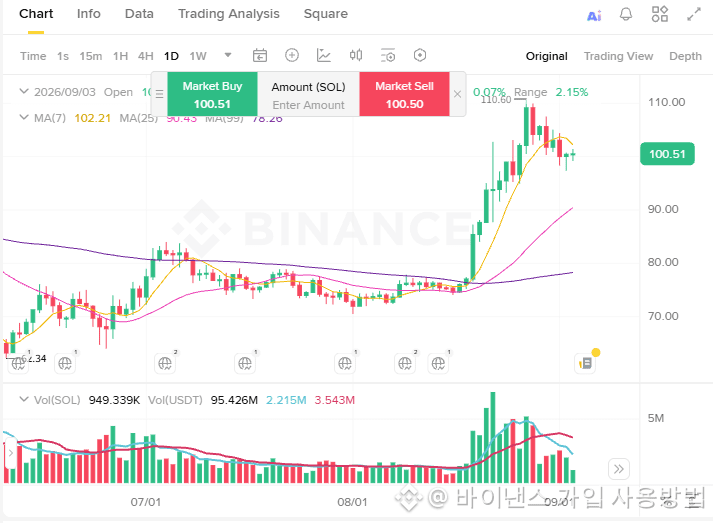
Analyse SOL/USDT (1D) :
Tendance générale : Tendance haussière forte, actuellement en repli / consolidation à court terme
Support : 97,0 $ – 98,0 $ (support clé à court terme)
Résistance : 103,0 $ – 105,0 $, puis 109,0 $ – 110,0 $ (MA)
Signaux : Le prix reste au-dessus des moyennes mobiles principales, ce qui maintient une structure haussière à moyen terme ; à court terme
La MA commence à devenir légèrement baissière
Volume : En hausse lors de la cassure, mais en baisse pendant le repli — le momentum se refroidit
Résumé : Biais globalement haussier tant que SOL reste au-dessus de 97 $. Une cassure sous 97 $ pourrait déclencher une correction plus profonde vers 93–95.
Surveillez une cassure au-dessus de 105 $ pour un possible retest de 110+ et la poursuite du mouvement haussier.
#solana $SOL
170
Connectez-vous pour découvrir plus de contenu
Rejoignez la communauté mondiale des adeptes de cryptomonnaies sur Binance Square
⚡️ Suviez les dernières informations importantes sur les cryptomonnaies.
💬 Jugé digne de confiance par la plus grande plateforme d’échange de cryptomonnaies au monde.
👍 Découvrez les connaissances que partagent les créateurs vérifiés.
Adresse e-mail/Nº de téléphone
Sujets d’actualité
A Packed Week of Earnings and Data Tests Markets
66,771 vues
421 mentions
Les résultats de Nvidia, le compte rendu de la Fed et l’introduction en Bourse d’Anthropic mettront à l’épreuve les actions de l’IA et les cryptomonnaies
Binance News
·146 mentions J’aime
·24k vues
AnthropicIPOTestsInvestorAppetiteForAI
129,730 vues
1,438 mentions
NvidiaBoardNotConsideringHuang’sReturnasCEO
695 vues
28 mentions